Interesting that DPI has removed files revenue files from their website that I used to disprove the narrative that schools are underfunded. I used the files to show that school districts have more inflation-adjusted money than in 2000. Wonder why they were removed? đ¤
k-12 tax & $pending climate: Property Tax Increase Blowback
But critics counter that a potential 50% jump in property-tax bills, even phased in over five years as envisioned, would overburden residents already feeling higher prices for groceries, gas and other essentials. Some opponents say the town should instead cut what they deem to be excessive local government salaries and bloat.
k-12 Tax & $pending climate: Failed Referendums
Nicole Pollack & Chris Rickert:
Brent Schultz, with his 2-year-old granddaughter, votes in Tuesday’s election at the Fitchburg Community Center. Voters in Fitchburg and Sun Prairie, two of the fastest-growing cities in Wisconsin, have both rejected operating referendums in recent years that city leaders said were needed to keep services in line with population growth.
In Sun Prairie, the vote wasnât even close: The cityâs $3.95 million operating referendum failed Tuesday by nearly 17 points.
The city of about 40,000 asked voters to increase their property taxes to continue city services at current levels, add a police officer and two firefighters and increase wages for part-time firefighters to accommodate a growing city.
With state revenue limits preventing the city from simply raising taxes on its own, failure to pass the referendum would mean âcuts to programs, services and staffing,â Mayor Steve Stocker warned.
Of the 11,735 Sun Prairie residents who voted on the question, 58.4%.rejected it compared to 41.6% voting in favor.
Madison man arrested after unnamed chemical found in UW-Madison research lab
A 41-year-old Madison man was arrested Friday after law enforcement officials found an unnamed chemical in a campus research lab.
Officers from the UW-Madison Police Department, along with investigators from the Madison Fire Department’s Hazardous Incident Team, responded to the lab for a report of an unknown odor coming from items in an office.
Evidence was collected and later tested positive for the presence of a chemical, UW-Madison Police spokesperson Marc Lovicott said without naming the chemical.
On Friday evening, after an investigation and a confession, a lab employee was arrested on tentative charges of second-degree reckless endangering safety and booked into the Dane County Jail, Lovicott said.
We should be spooked by the rate of Implementation Failure for literacy policy.
A recent study âcompared trends before and after dyslexia laws were enacted across 47 states, â and the findings were grim:
âFirst, more than half of the states with these new laws showed no significant shift in identifying learning disabilities related to reading. Some states identified more students, some fewer, but there was no consistent national pattern.
Second, reading achievement among students identified with learning disabilities often declined, rather than improved, after these laws passed in many states, including Alaska, Maine, Massachusetts, New York, Ohio and West Virginia.â
To the surprise of no one, the report highlights1Mississippi, Louisiana, and Alabama as bright spots. These Southern Surge states excel on implementation. Itâs the only way.
The study offers another reminder that policy alone is not progress. As the authors put it:
ââ-
1998! Money and school performance.
A.B.T.: âAinât been taught.â
3888 (!) Madison 4k to 3rd grade students scored lower than 75% of the students in the national comparison group during the 2024-2025 school year.
Madison taxpayers have long supported far above average (now > $26,000 per student) K-12 tax & spending practices. This, despite long term, disastrous reading results.
Madison Schools: More $, No Accountability
The taxpayer funded Madison School District long used Reading RecoveryâŚ
The data clearly indicate that being able to read is not a requirement for graduation at (Madison) East, especially if you are black or Hispanicâ
My Question to Wisconsin Governor Tony Evers on Teacher Mulligans and our Disastrous Reading Results
2017: West High Reading Interventionist Teacherâs Remarks to the School Board on Madisonâs Disastrous Reading Results
Madisonâs taxpayer supported K-12 school district, despite spending far more than most, has long tolerated disastrous reading results.
âAn emphasis on adult employmentâ
Wisconsin Public Policy Forum Madison School District Report[PDF]
WEAC: $1.57 million for Four Wisconsin Senators
Friday Afternoon Veto: Governor Evers Rejects AB446/SB454; an effort to address our long term, disastrous reading results
Booked, but canât read (Madison): functional literacy, National citizenship and the new face of Dred Scott in the age of mass incarceration.
When A Stands for Average: Students at the UW-Madison School of Education Receive Sky-High Grades. How Smart is That?
Legislative Letter to Jill Underly on Wisconsin Literacy.
What student attainment actually looks like
Student attainment follows a continuous distribution. The image below gives a much better representation of how it works.
Why this is a problem
Grades are just lines drawn on an underlying distribution. They donât correspond to sudden leaps in student attainment. When you treat them like they are discrete categories, it causes big distortions, as you can see in the image below.
Paul and George both have the same grade. But Paul has more in common with John, in the grade below. And George has more in common with Ringo, in the grade above.
Schools across America are quietly admitting that screens in classrooms made students worse off and are reversing years of tech-first policies
When McPherson Middle School in central Kansas banned cell phones in school four years ago, they didnât reconsider their school-issued Google Chromebooks that were actively being used in the classroom and at home. It wasnât until December of last year that it asked its 480 students to give up the laptops as well.
Administrators found that without their phones, students were using school laptops for distracting activities like watching YouTube or playing games, rather than learning. Some were even using their school Gmail accounts to tease other students, the New York Timesreported.
Now, the school has transitioned to using laptops only for specific teacher-assigned activities. Meanwhile, the unused laptops sit in carts in the back of classrooms, and children take notes the old-fashioned way: on pen and paper.
âThis technology can be a tool. It is not the answer to education,â said McPhersonâs principal, Inge Esping, who won Kansasâs middle school Principal of the Year award for 2025.
Students who want to use the laptops for extra work at home can also borrow a Chromebook from the school library, the Times reported.
ââ-
âGoogleâs education push has proved lucrative. Education accounts for 60% of global Chromebook market share as of 2025, boosting the Chromebook total market to $14 billion.â @marcoquiroz10
How dubious high school credentials like ladder safety are boosting Pennsylvaniaâs graduation rate
When Pennsylvania introduced new graduation requirements four years ago, lawmakers said there would be options for students who struggled with standardized tests to show they were ready for college or careers.
Monica Hawk, CEO of Philadelphiaâs One Bright Ray Community High School, understood the aim. But in her role running six accelerated high schools, she also had concerns. Some of her students were months or years behind in school before returning to get their diplomas. Few could pass state tests.
In addition, the new requirements would mean a new bureaucratic headache. And she wouldnât have more money, staff, or resources earmarked to help.
So Hawk focused her team on a graduation pathway established by the requirements that she called her schoolâs âfail-safe plan.â Students still have to pass their main classes. But the pathwayâs additional requirements have nothing to do with academic achievement.
Commentary on Wisconsin Teacher compensation; Staff Growth?
Mary Pat Dries, Brookfield âletter to the editorâ in the Journal-Sentinel
I hate to say “we told you so,” but we told you so! Do you remember in 2011, when there were mass protests for months at the Wisconsin State Capitol and democratic members of the Senate fled the state to deny a quorum for the Act 10 Bill?
Now 15 years later, a report from the Department of Public Instruction found that 1,700 potential teachers who finished an education degree in 2023-24 didnât go on to teach in Wisconsin (âReport highlights red flags for stateâs retention of new teachersâ).
A Green Bay based roundtable, led by State Superintendent Jill Underly, discussed reasons contributing to the teacher shortage in Wisconsin. It’s no surprise that compensation was a major factor pointing to budget short falls in school districts.
One statistic in this article stood out to me. When considering inflation, since 2010, before Act 10, teacher compensation has fallen $25,000 in 2024. If you were fresh out of college with loans for undergraduate and graduate degrees, would you stay in Wisconsin to teach?
âââ
If not to teacher salaries, where is this money going?
Wisconsin school spending exceeds pre-Act 10 levels even after inflation â Badger Institute
CourtWatchUS
I built CourtWatch.us â a free public database for American citizens who deserve safer communities.
You can track which judges released defendants who then got rearrested, skipped court, or violated their release conditions. All public records. All free.
I started with Orange County FL and will be expanding to all 67 Florida counties and eventually every state in the country. This first batch of info is from 2024 and since public reports are released in March/April for the previous year, data is behind. But I wanted to see if this is plausible. After adding 2024,I’ll add 2025 and then figure out how to get real-time-data uploaded.
It’s in beta â would love to know what you think đ
Numbers don’t lie, but criminals do.
courtwatch.us
Why Gen Z Is Unprepared for the Workplace
But the newest workplace generationâGen Zâis unlike anything weâve seen. Through a combination of having fewer real-world relationship experiences, spending their education years in remote environments, and learning to communicate largely through asynchronous methods, these 20-somethings have missed opportunities to develop the skills needed to navigate the complex world of work.
The result is that many are woefully unprepared for survivingâlet alone thrivingâin their jobs.
We already can see what this means for both employees and the organizations that hire them. For one thing young employees are struggling to fit into these organizations. There is a lot of turnover, because new hires who donât acclimate donât last long.
Whatâs more, whether they are pushed out or leave willingly, younger employees often go without a clear sense of what went wrong, so theyâll never get better. And those who do stay often find the experience unfulfilling and frustrating, while their bosses are at a loss, wondering why the new workers just donât get it.
a steady decline in textbook quality that no rational agent in the chain has any motive to reverse.
I was struck by how much the prose and content had been dumbed down. In places, it truly read like a middle-school textbook. I went back to the older editions I had kept, and a side-by-side comparison from 2000 forward shows a clear deterioration with each revision. In 2000, students were reading a serious work. The current edition is not.
As an economist, I suppose I should not be surprised. Four rational agents shape the outcome, and not one of them has any reason to defend quality.
The publisher maximizes revenue per student, not learning. Simpler prose and lighter material may reduce what students learn, but they raise adoption rates: instructors find the book âeasier to teach withâ and students complain less. Learning outcomes are an externality.
The instructor worries about teaching evaluations and grade inflation. Assign an easy textbook, and students are content; you hand out Aâs to most of them, and your workload drops. The instructor who assigns the harder book and earns lower evaluations bears a private cost for a public good. A textbook collective action problem.

Good point. I see five reasons:
1) When university was for 10-15% of the age cohort, the entering student could handle serious prose. Massification changed the median reader, and publishers adjusted to the actual audience.
2) Teaching evaluations, which became widespread in the 1970s and were tied to tenure decisions by the 1980s, gave the instructorâs natural desire to avoid complaints a formal channel into personnel files. Before that, students could grumble, but it went nowhere.
3) Grade inflation, kicked off during Vietnam (when failing a student could get him drafted), turned into a one-way ratchet that no department can unilaterally reverse. Also, by its very nature, grade inflation unravels over time.
4) The consolidation of textbook publishing into a handful of firms meant competition shifted from intellectual quality to ease of adoption.
5) And the decline in sustained reading among adolescents means students genuinely arrive less prepared for demanding text than they did forty years ago, which makes the dumbing down partly demand-driven, not just supply-driven.
Drawn by mission, kept by coaching
Part of an ongoing Badger Institute series about teacher loss in Wisconsin schools and what policy makers and administrators can do about it.
Facing an increasingly difficult market for hiring teaching talent, leaders of Wisconsin independent schools are developing useful strategies even as they look to the state for some fundamental policy and financial reforms.
âI think a teacherâs job is to be a lifelong learner themselves,â said one of those leaders, Kimberly Desotell, president of the GRACE Catholic schools system in Green Bay. âYou canât do the same thing you did today in teaching tomorrow. ⌠We always have to be improving.â
One key response: Retain the talent a school has through deliberate and sustained coaching to help educators grow better at the work they chose. Others: changes in the timing of student teaching, alteration of certification requirements, and closing the funding gap with traditional public schools.
Why Sal Khanâs AI revolution hasnât happened yet, according to Sal Khan
Three years ago, as Khan Academy founder Sal Khan rolled out an AI-powered tutoring chatbot, he predicted a revolution in learning.
So far, the revolution hasnât happened, he acknowledges.
âFor a lot of students, it was a non-event,â Khan told me recently about his eponymous chatbot, Khanmigo. âThey just didnât use it much.â
Khan gives this analogy: Imagine he walked into a class, sat in the back of the room, and waited for students to seek out help. âSome will; most wonât,â he said. Thatâs been the experience with AI tutoring, he said. It doesnât necessarily make students motivated to learn or fill in gaps in knowledge needed to ask questions.
Khanâs comments are an acknowledgement that AI has not quickly allowed for the creation of an effective super-tutor, as some initially hoped. Itâs an early indication of the limits of AI to drive massive learning gains, long an unrealized goal of various technologies. While Khan remains optimistic about various uses of AI in education, heâs also come to see its limits.
âI just view it as part of the solution; I donât view it as the end-all and be-all,â Khan said in our interview.
Universities are swapping exams, essays and grammar to make assessments more âculturally responsiveâ.
But Kingâs is not the only institution to have lowered standards in this way. Oxford and Cambridge are among the other universities moving away from exams. At the University of the West of England, students can write field-trip reports or book reviews, design a book jacket, write a pitch or record a podcast. These are no doubt fun activities. Some, perhaps, are challenging. But crucially, success does not depend on students having read extensively, thought deeply and marshalled their ideas, either under time pressure or in a longer written form.
Unsurprisingly, this is reflected in grade inflation. More than 75 per cent of all students now leave university with a first-class or 2:1 degree, with the most dramatic increase taking place between 2010 and 2020. Chinese students studying in the UK have wryly labelled Britainâs higher-education system âeasy in, easy outâ, because not only is it easier to get accepted on to courses than in the US or China, but assessments are also less stringent. In other words, easy admission is followed by low expectations and easy-to-meet academic standards.
So, the academics at Kingâs College are absolutely right to decry âdumbing downâ. But the fact that they had to take their complaints to the national press raises uncomfortable questions about who runs our universities. If lecturers themselves are not setting standards, expectations and assessment methods, then who is?
The Finland myth, East Asiaâs rise, and what makes education systems work with Montserrat Gomendio (Ep 68)
In this episode, Anna is joined by Dr. Montserrat (Montse) Gomendio, a former Secretary of State for Education in Spain. Montse is also a former Deputy Director of Education for the OECD, the international organization that administers the PISA test. Drawing on global data, including from PISA, Montse explains why some education systems consistently perform well while others struggle to improve.
41 high schoolers named National Merit finalists in Madison (287 Statewide)
The Madison School District had 41 high school students named 2026 National Merit Scholarship Program finalists, more than any other district in the state, the district said Wednesday.
West High School had the most finalists in the state with 27, followed by 10 finalists at Memorial High School and four at East.
âThese students have demonstrated extraordinary academic achievement, and this recognition is a testament to their hard work and the support of their families and teachers,â Superintendent Joe Gothard said in a statement. âWe are incredibly proud of each of them and look forward to seeing what they accomplish next.â
About 6,930 National Merit Scholarships will be awarded this year, including 2,500 single-payment $2,500 scholarships, 830 corporate-sponsored scholarships for students meeting specific criteria and about 3,600 college-sponsored merit scholarships.
âââ
287 Wisconsin students were named National Merit Semifinalists.
2026 Wisconsin cut score: 215. State average: 217.6 // median: 218.
| State | 2026 Cutoff | Change from 2025 | # Semifinalists (approx.) | Compared to Wisconsin |
|---|---|---|---|---|
| Alabama | 214 | 2 | 228 | -1 |
| Alaska | 215 | 1 | 31 | 0 |
| Arizona | 218 | 1 | 409 | 3 |
| Arkansas | 215 | 2 | 141 | 0 |
| California | 224 | 3 | 2,172 | 9 |
| Colorado | 219 | 1 | 287 | 4 |
| Connecticut | 223 | 2 | 193 | 8 |
| Delaware | 220 | 1 | 47 | 5 |
| Florida | 219 | 2 | 1,008 | 4 |
| Georgia | 220 | 2 | 620 | 5 |
| Hawaii | 219 | 2 | 60 | 4 |
| Idaho | 215 | 2 | 90 | 0 |
| Illinois | 222 | 2 | 748 | 7 |
| Indiana | 218 | 1 | 333 | 3 |
| Iowa | 214 | 2 | 138 | -1 |
| Kansas | 216 | 1 | 136 | 1 |
| Kentucky | 214 | 1 | 200 | -1 |
| Louisiana | 216 | 2 | 220 | 1 |
| Maine | 217 | 3 | 57 | 2 |
| Maryland | 224 | 2 | 348 | 9 |
| Massachusetts | 225 | 2 | 282 | 10 |
| Michigan | 220 | 2 | 470 | 5 |
| Minnesota | 219 | 2 | 266 | 4 |
| Mississippi | 213 | 1 | 153 | -2 |
| Missouri | 217 | 2 | 281 | 2 |
| Montana | 213 | 4 | 48 | -2 |
| Nebraska | 214 | 3 | 109 | -1 |
| Nevada | 214 | 0 | 185 | -1 |
| New Hampshire | 219 | 2 | 51 | 4 |
| New Jersey | 225 | 2 | 511 | 10 |
| New Mexico | 210 | -1 | 111 | -5 |
| New York | 223 | 3 | 992 | 8 |
| North Carolina | 220 | 2 | 523 | 5 |
| North Dakota | 210 | 0 | 26 | -5 |
| Ohio | 219 | 2 | 490 | 4 |
| Oklahoma | 212 | 1 | 214 | -3 |
| Oregon | 219 | 3 | 188 | 4 |
| Pennsylvania | 221 | 2 | 612 | 6 |
| Rhode Island | 219 | 2 | 50 | 4 |
| South Carolina | 215 | 1 | 225 | 0 |
| South Dakota | 211 | 3 | 46 | -4 |
| Tennessee | 219 | 2 | 306 | 4 |
| Texas | 222 | 3 | 1,673 | 7 |
| Utah | 213 | 2 | 199 | -2 |
| Vermont | 216 | 1 | 27 | 1 |
| Virginia | 224 | 2 | 489 | 9 |
| Washington | 224 | 2 | 388 | 9 |
| West Virginia | 210 | 1 | 66 | -5 |
| Wisconsin | 215 | 1 | 287 | |
| Wyoming | 210 | 1 | 20 | -5 |
| District of Columbia | 225 | 2 | 37 | 10 |
| U.S. Territories | 210 | 2 | 43 | -5 |
| Studying Abroad | 225 | 2 | 86 | 10 |
Is Schoolwork Optional Now?
William Liu is grateful that he finished high school when he did. If the latest AI tools had been around then, he told me, he might have been tempted to use them to do his homework. Liu, now a sophomore at Stanford, finished high school all the way back in 2024. âI have a younger sibling who is just graduating high school,â he said. âOur educational experience has been vastly different, even though weâre just two years apart.â
By the time Liu graduated, ChatGPT was already causing chaos in the classroom. But the automation of school is intensifying. If at first teachers worried about students using chatbots to write essays, now new agentic tools such as Claude Code are allowing students to outsource even more of their work to the machines. Need to take an online math quiz? Write a biology-lab report? Create a PowerPoint presentation for history class? AI can do all of this and more. One high schooler recently told me that he struggles to think of a single assignment that AI wouldnât be able to do for him.
As a measure of just how good AI has become at schoolwork, consider a new bot called Einstein. Several weeks ago, the tool went viral with big claims: âEinstein checks for new assignments and knocks them out before the deadline,â a website advertising the bot explained. All that a student had to do was hand over their credentials for Canvas, the popular learning-management platform, and Einstein promised to do the rest. No matter the task, the bot was game: Einstein boasted that it could watch lectures, complete readings, write papers, participate in discussion forums, automatically submit homework assignments. If a quiz or a final exam was administered online, Einstein was happy to do that too.
When I first came across Einstein, I was skeptical: Flashy AI demos have a way of overpromising and under-delivering. So I decided to test the tool out for myself. Because Iâm not a college student, I enrolled in a free online introductory-statistics class. The course website explained that the class was self-paced and that it could help undergraduates, postgraduates, medical students, and even lecturers build up basic statistical knowledge. I set the bot loose, and in less than an hour, Einstein had worked through all eight modules and seven quizzes. There were some hiccupsâthe bot took one quiz 15 timesâbut it ultimately earned a perfect score in the class. As for me? I hardly so much as read the course website.
Since 2013, performance on national tests in Mississippi has skyrocketed, while scores in blue states have lagged. What is it doing right?
And so thatâs a result that, in some ways, seemed predictable and even inevitable, because Mississippi is a pretty poor state. It doesnât spend a lot on education. But slowly but surely, they started turning things around. By 2019, they were about in line with the national average. And now, they are a top 10 state for fourth graders learning how to read.Natalie Kitroeff
Wow.
Sarah Mervosh
Yeah. And I think something even more impressive is if you adjust for poverty and other demographics, like race, Mississippi is the number one place in the country for fourth graders learning reading and math and the number one state for eighth grade math.Natalie Kitroeff
OK, just explain that for me. When you say, when you adjust for poverty, itâs number one for these metrics. What do you mean exactly by that?Sarah Mervosh
Some of the best states that traditionally are seen as having the best education are the richest states â places like Massachusetts or New Jersey â because rich kids just score higher. But if you adjust for the student population that theyâre serving. So how does a state serve its poor kids? Or if it has a lot of kids who are learning English.
So when you look at the students that it has, how does the state do? Mississippi does really well. Poor kids in Mississippi are scoring better on national tests in fourth grade than poor kids in almost any other state. So basically, what thatâs telling me is that Mississippi is one of the best places in the country for a poor child to get an education.Natalie Kitroeff
OK. So thatâs pretty remarkable. And all that is happening, of course, in a context where Americaâs schools are not doing well on the whole. The trends are bad. Test scores generally are down across the board.
250: American credulity, American dynamism
And yet, it was. America took the early internet more seriously than any other nation, and owned the new, digital era as a result. From 1997 to 2001, the United States spent an average of 1.1% of GDP on the Internet, or more than $300 billion in todayâs dollars. This investment laid a foundation robust enough to survive even a historic boom-and-bust cycle, and to support what would become the worldâs most important and largest companies.
Today, 19 of the worldâs top 25 companies are American, and none are Japanese.
America won not because it learned how to manufacture cars and consumer electronics better than Japan, but because the American economy was a more fertile ground for early internet companies like Netscape, AOL, Amazon, and Google â and because American capital markets exuberantly doused those companies, and hundreds more, with the capital they needed to build infrastructure, to recruit the worldâs top engineers, and to onboard millions of people onto the internet. Or in short, because Americaâs economy was dynamic enough to seize a new opportunity, and Japanâs was not.
Declining Taxpayer Funded âEfficiencyâ; Cost Disease
As Matt Yglesias rightly says, this is a worrying signal of declining state legitimacy: even the centre-left parties donât believe they can make the case for the state raising taxes and spending them on public goods
ââ
More.
The rise and fall of DEI at University of Michigan
U-M was not the only university working to address diversity, Schlissel said. What was different from other universities is that U-M generated a campuswide strategic plan focused on the DEI goal that was put into action within Michiganâs legal constraints.
After five years elapsed, an evaluation of the initiative showed some success but the percentage of underrepresented students increased for some but not as much for Black students, Schlissel said.
âIt was a mixed bag, but the idea was it would be a project that evolved,â Schlissel said.
Schlissel emphasized that he is no longer part of high-level university discussions. But his observation is that many reasons led to the national backlash against the DEI effort, including political divides, heightened identity politics, the tenor from Washington, universities not always openly debating challenging issues and a lack of a definition of what DEI really means.
USA 250: Aviation Innovation
Brian McGill, Danny Dougherty and Micah Maidenberg
The Wright brothers made history when they flew a gasoline-powered plane into the air for 12 seconds one morning in 1903. Little did they know that more than a century later, American scientists would operate robotic vehicles on Mars.
Innovation has been a defining feature in U.S. commercial aviation and government programs, helping them reach new heights. And despite numerous setbacks, including tragic accidents, the country has often been able to stay at the forefront of flight.
Companies often worked closely with government agencies to ramp up the industry and, at times, help the U.S. gain an edge over rivals. The U.S. Postal Service stoked the early airline business by hiring planes to ship mail; the Pentagonâs demand for rockets, satellites, fighter jets and more has boosted military and aerospace contractors.
Drones & School Security
The drones can dart across fields at 100 miles an hour, punch through windows and bowl over assailants.
The sleek, black machines arenât destined for battlefields in Ukraine or skies above the Middle East. Instead, they will hurtle through the hallways of high schools in Florida and Georgia.
Mithril Defense is deploying fleets of dronesâcalled âBlack Arrowsââfor schools as part of state-funded programs to increase security and reduce gun violence.
The machines can screech, flash strobe lights and shoot pepper gel to deter assailantsâwhile operated by pilots at the companyâs headquarters in Austin, Texas.
Executives from Mithril and law-enforcement officials said the drones could reduce student casualties by reaching attackers faster than police or school-resource officers.
âItâs revolutionary,â said Volusia County Sheriffâs Office Capt. Todd Smith, who oversees safety and security for the countyâs schools in Florida. The drones are expected to be installed in Deltona High School on Monday and be ready for use this fall. âThis is the future.â
Civics: “What I did not anticipate was resistance from within the Democratic Party itself”
During this campaign, I expected opposition from across the aisle. What I did not anticipate was resistance from within the Democratic Party itself. Too often, institutions that claim to champion diversity fall into patterns of tokenism elevating a few voices while sidelining broader movements for structural change.
In this race, that reality became clear. Efforts were made behind the scenes to influence endorsements, to pressure local leaders, and to shape the outcome in favor of a preferred candidate. These actions raise important questions about who truly holds power, and whose voices are heard within our political system.
At its core, this campaign stood for a simple but powerful idea: Our courts belong to the people. No political party, elected official or institution should dictate who serves as judge. That decision belongs to the voters.
This campaign began out of deep concern about government overreach, about the erosion of judicial independence, and about communities living in fear. It was fueled by the belief that our legal system must do better, and that the people most impacted by it must have a voice in shaping it.
Throughout this journey, I was inspired by the next generation of leaders in Dane County: leaders who are unafraid to challenge entrenched systems and demand something better. I was equally moved by the many community members, across backgrounds, who made space for this conversation and engaged with these ideas.
Former Wisconsin DPI Lawyer Ben Jones Elected Judge after being appointed by Gov Evers. April 7, 2026 election results.
more:
Also, keep in mindâthe Democrat leadership has only asked Swalwell to step away from the governorâs race and not to resign from Congress. That fact alone explains the true motivations here
—–
Eric Swalwell is illustrative of modern blackmail politics. He was being recorded with hookers. Obviously everyone knew. He goes along with the program, and is fine. Once he departs, then the walls come tumbling down. You think he’s the only Congress member compromised. No way.
Advocating for Wisconsin AB 818 / SB 818, the Demonstration Public School Act
We have raised nearly $52 million in private philanthropy over eleven years to bridge a gap that should never have been ours alone to bridge.
What distinguishes One City from other public charter schools in Wisconsin isnât just our academic growth. No other charter school in Wisconsin was established with the specific purpose of serving as a testing ground for innovation for others to learn from. One City was. Our 2017 charter application explicitly mentioned the concept of demonstration schools. This legislation doesnât create a new purpose for One City; it fulfills the purpose we were created for, and something I have dedicated my entire professional life to.
Once again, I didnât return home just to start a charter school. I came back to create a new pathway for charter schools to achieve their holistic mission and promise: to act as laboratories of innovation that help all public schools and the children they serve get better. The Demonstration Public School Act accomplishes this.
What the Demonstration Public School Act Will Do The Demonstration Public School Act does not allocate funds from school districts. It is an additional investment in research and development to establish a teaching-hospital-like model for K-12 education. Just as teaching hospitals improve medicine through combined treatment, research, and training, One City acts as a laboratory that develops innovations, validates them via a formal UW research partnership, and freely shares them with every public school district in Wisconsin. The bill mandates this. Dissemination is not optional; it is part of the contract. I have attached a document to this email that further describes our impact as a demonstration public school model.
The $4 million this legislation allocates annually would help us, if selected by the OEO, pursue a goal that should matter to every Wisconsin educator, policymaker, and parent: reaching 80% proficiency in ELA/Reading and Math among One City scholars within five to seven years. That is not just an aspiration. It is the minimum we will accept, because anything less leaves our children economically stranded in an AI-driven economy that is already eliminating entry-level jobs that once provided young people without college credentials a starting point. We are developing the model, the data, and the documentation so that what works here can be implemented in classrooms across Wisconsin.
Wisconsin Parents & High School Girls Sue New Richmond School District
The News: New Richmond Parents for Strong Schools has filed a federal lawsuit against the New Richmond School District, alleging that its bathroom policy violates the rights of high school girls under Title IX of the Education Amendments of 1972. WILL represents the Associationâwhich includes both parents and female studentsâseeking an end to the districtâs policy and a declaration that the girlsâ civil rights were violated by the districtâs actions.
The Quotes: WILL Deputy Counsel, Cory Brewer, stated, âGirls should feel safe at school and their privacy should be respected. New Richmond schools left parents and young girls no choice but to go to court and sue to end this ridiculous policy allowing biological boys into the girlsâ bathroom. WILL is proud to represent this association of parents and students to bring an end to this destructive and dangerous policy.â
WILL Client, High School Junior, Ella Frei, stated, âProtecting girls by not allowing boys in the girlsâ bathroom shouldnât be controversialâit should be common sense. We are not going to abandon our identity as girls or ignore the real privacy concerns the school district has forced on us.â
k-12 Tax & $pending Climate: The U.S. government added $1.2 trillion to the national debt over the past 6 months
The U.S. government added $1.2 trillion to the national debt over the past six months, borrowing $163 billion during March alone, the Congressional Budget Office reports.
At the current rate of borrowing, federal deficits are on track to top $2 trillion by October, the end of the current fiscal year.
But the presidentâs recent budget request â which lawmakers will use as a blueprint for the 12 fiscal year 2027 appropriations bills â calls for $2.1 trillion in discretionary spending alone, without touching entitlement program spending.
âBoth Congress and the President continue to ignore the urgent need to get our borrowing under control,â Maya MacGuineas, president of the Committee for a Responsible Federal Budget, said in a statement.
âAs lawmakers consider the budget process for the upcoming fiscal year, we hope that they come up with plans to reduce deficits from the too-high 6% of GDP to a more sustainable 3% of GDP; secure our nationâs ailing trust funds for Social Security, Medicare, and highways; and ultimately fix the broken process that got us into this mess.â
taxpayer funded âschools of Hopeâ and The Madison School District
The programs are shuttering at the end of this school year, the district confirmed Monday, after President Donald Trumpâs administration cut funding for AmeriCorps initiatives like United Wayâs Schools of Hope last year.
âWe are deeply grateful to United Way of Dane County, as well as the many volunteers who have supported our students,â Cindy Green, assistant superintendent of strategy and innovation, said in a statement. âWe are continuing to refine how tutoring is delivered to ensure it is closely aligned with what students are learning in the classroom and grounded in the Science of Reading and evidence-based approaches.â
Literacy-focused tutoring program Elementary Schools of Hope and math-focused Achievement Connections have served more than 113,000 Madison students over the past 28 years with the help of almost 23,000 community volunteers.
A Corporation for National and Community Service grant has funded Schools of Hope, providing AmeriCorps members who serve as tutor coordinators in elementary schools. United Way of Dane County matches the grant with additional funds.
The AmeriCorps grant funding was about $500,000 per year and will end in August.
ââ-
1998! Money and school performance.
A.B.T.: âAinât been taught.â
3888 (!) Madison 4k to 3rd grade students scored lower than 75% of the students in the national comparison group during the 2024-2025 school year.
Madison taxpayers have long supported far above average (now > $26,000 per student) K-12 tax & spending practices. This, despite long term, disastrous reading results.
Madison Schools: More $, No Accountability
The taxpayer funded Madison School District long used Reading RecoveryâŚ
The data clearly indicate that being able to read is not a requirement for graduation at (Madison) East, especially if you are black or Hispanicâ
My Question to Wisconsin Governor Tony Evers on Teacher Mulligans and our Disastrous Reading Results
2017: West High Reading Interventionist Teacherâs Remarks to the School Board on Madisonâs Disastrous Reading Results
Madisonâs taxpayer supported K-12 school district, despite spending far more than most, has long tolerated disastrous reading results.
âAn emphasis on adult employmentâ
Wisconsin Public Policy Forum Madison School District Report[PDF]
WEAC: $1.57 million for Four Wisconsin Senators
Friday Afternoon Veto: Governor Evers Rejects AB446/SB454; an effort to address our long term, disastrous reading results
Booked, but canât read (Madison): functional literacy, National citizenship and the new face of Dred Scott in the age of mass incarceration.
When A Stands for Average: Students at the UW-Madison School of Education Receive Sky-High Grades. How Smart is That?
Legislative Letter to Jill Underly on Wisconsin Literacy.
For college accreditation, long-overdue changes are coming
Starting next week, the Accreditation, Innovation, and Modernization (AIM) committee will consider a 151-page proposed amendment to the current regulations governing college accreditorsâthose higher education watchdogs that rarely bite. The draft language can and will change as the committee considers it, but itâs likely that the Education Department will move forward with the core of the proposed rule.
The proposal represents a massive step forward for what has been, frankly, a broken form of college oversight. Summarizing all 151 pages here would use up too much ink. Instead, Iâll focus on four major provisions that stood out as particularly impactful:
- Creating a smoother pathway for aspiring accreditors to gain recognition from the Education Department;
- Discouraging accreditors from ratcheting up degree or credential requirements for licensed professions;
- Requiring accreditors to look more keenly at student achievement outcomes at the colleges they oversee; and
- Improving transferability of credit between accredited colleges.
Letâs dive into each of the four provisions in turn.
Sliding Into Silence? We Are Speaking 300 Daily Words Fewer Every Year
Valerie Pfeiffer & Matthias R. Mehl &
Our lives are lived day by day, hour by hour, and minute by minute. This fine-grained, equally spaced resolution of time means we do not always perceive changes in the small, everyday things around us, like the slow deterioration of the road we drive on every day. Sometimes we need to take a step back and examine them from a more distant perspective, for example, when unexpectedly hitting a newly formed pothole.
Such an “unexpected pothole” was recently afforded to us when analyzing several data sets jointly within the scope of a registered replication report (Tidwell et al., 2025). These data feature estimates of daily spoken words for 2,197 participants based on a careful analysis of passively sampled ambient audio recordings of their daily lives. The participants, ranging in age from 10 to 94, were part of 22 studies conducted over the span of 14 years and resided (mostly) in the United States as well as Mexico, Australia, and Europe. The report yielded an estimate for the average number of spoken words per day of 12,792, an estimate noticeably lower than what a prior study from 2007 yielded using
the same method (M = 15,959; Mehl et al., 2007). After
verifying that this was not a mathematical error, we decided to put the hypothesis that we had lost words over time to the test.
By relating the estimates of participants’ daily spoken words to the year their data were collected, we discovered that for each year between 2005 and 2019 an average of 338 fewer words were spoken per day, b =
-338, 95% credible interval (Crl) = (-652, – 25), as estimated using Bayesian multilevel modeling. At first glance, 300 or so words seems like a small, insignificant loss, as if it would not make much of a difference. And indeed, this finding ultimately was buried in a publication full of seemingly more interesting, larger, and more controversial findings.
But, as trivial as 338 words a day may feel, the loss of these daily spoken words unavoidably adds up. It means that pach vegr wo shok more than 120000
How censorship seized America: Big Tech did the governmentâs bidding
In Joe Bidenâs presidency, two great forces pushed the information state to the limits of its power. The first came from the administrationâs response to the Covid-19 pandemic. The second came from its decision to use the arsenal of counterinsurgency against American citizens accused of domestic extremism. Both relied on the vast public-private apparatus of censorship and surveillance, originally built to combat foreign disinformation, to wage political battles at home.
The pandemic dumped jet fuel into the growing counter-disinformation machine while extending its controls into the physical world. That brought the information state into peopleâs everyday lives. This was something different from the drama of false allegations about Donald Trumpâs collusion with Russia that plagued the Trump presidency. Though Russiagate dominated the news cycle, it was essentially a political crime against abstractions like the ârule of lawâ and the âdemocratic process.â Normal people who did not devote their time to scrolling newsfeeds could mostly choose to ignore the sordid Trump-Russia drama. Covid lockdowns and vaccine mandates removed the ânormieâ exemption.
The senseless cruelty of preventing people from attending outdoor weddings and visiting sick relatives in their final moments. The images of authorities in New York City placing locks on childrenâs playgrounds. Authorities in Venice, California, using bulldozers to shovel thirty-seven tons of sand into the cityâs iconic skatepark to prevent kids from playing outdoors. Prolonged school closures that isolated children and caused generational learning losses, hurting poor and disadvantaged kids worst of all. The brazen flouting of these restrictions by the upper classes and political elites. At Barack Obamaâs 60th birthday party, for instance, where the former president and his hundreds of celebrity guests on Marthaâs Vineyard danced with their faces exposed while the army of workers hired for the event were forced to wear masks. The fact that the technique of lockdowns was imported into the United States from the authoritarian surveillance state of China, where the virus originated. The even more galling fact that mere discussion of the virusâ origins was labeled a racist conspiracy by the most venerated institutions of science and journalism.
By imposing excessive and arbitrary policies while attempting to conceal vital information about the pandemic, the state provoked a public backlash. In turn, government officials treated the backlash not as legitimate democratic dissent, but as proof that unregulated misinformation was fueling domestic extremism. They responded by doubling down on the same policies, tightening their information controls, and imposing new methods of digital cancellation like âdebankingâ that cut off peopleâs access to their own financial accounts. Official repression and popular revolt fed off each other in a cycle that radicalized both sides and laid bare the realities of mass manipulation and digital dependency in the information state.
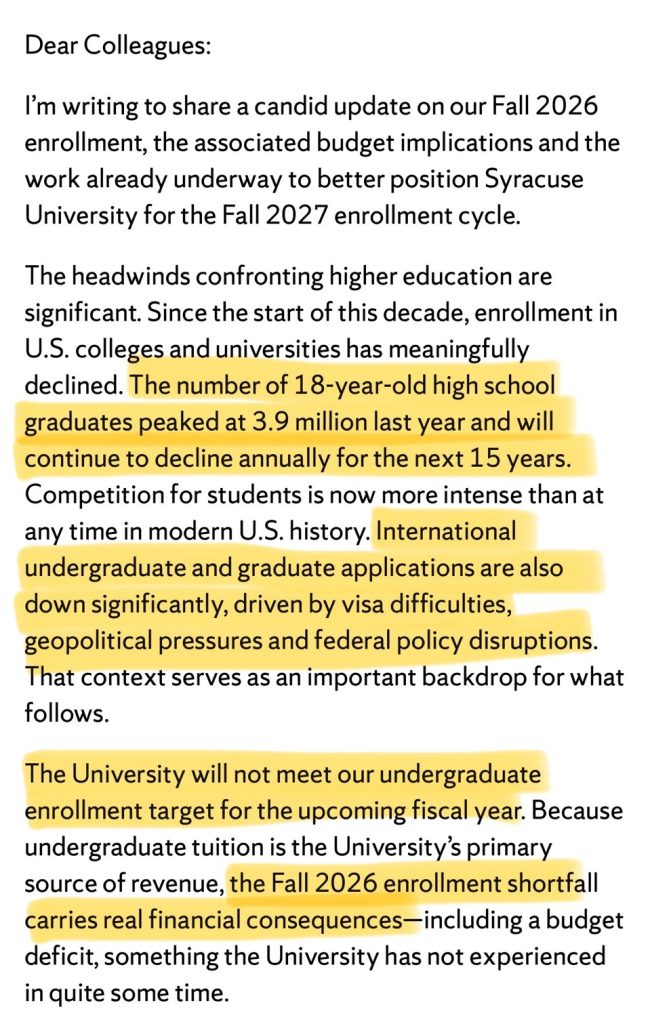
âcited declining enrollment and budget shortfalls as reasons for the staffing cutsâ
The Arrowhead School Board voted not to renew the contracts of four teachers despite community opposition.
Superintendent Conrad Farner cited declining enrollment and budget shortfalls as reasons for the staffing cuts.
Parents, students, and residents voiced strong support for the teachers during a public comment period.
The district aims to balance its budget and improve academic performance, which has seen fluctuating state report card scores.
The Arrowhead School Board voted not to renew the contracts of four teachers April 8 despite overwhelming opposition from parents, students and residents who packed the school’s South Campus library.
After deliberating in closed session for almost an hour and 40 minutes, the board came back into open session and unanimously approved issuing notices to consider not renewing the teaching contracts of social studies teacher Tim Tower, language arts teacher Katie Herrmann, science teacher Brian Corry and math teacher Mark Leoni. By the time the board’s vote took place just before 10:30 p.m., most of the crowd had gone home, leaving just a handful who stayed for the board’s decision.
During the public comment period earlier in the meeting, most of the 28 people who spoke â a mix of parents, residents, students and former Arrowhead staff â questioned the district’s rationale. Many of the comments drew loud rounds of applause.
ââ
Arrowhead has lost ~20% of its students in the past decade. It’s no surprise teachers will lose their jobs. And achievement has declined. If you can’t do basic things, you’ll lose students when parents have a choice.
Restorative Justice : Chaos In The Classroom
The shift from Zero Tolerance to Restorative Justice (RJ) represents one of the most significant pivots in educational history. Pushing for Marxists âequityâ has resulted in the violence we see in classrooms today and the #1 reason why teachers are quitting.
Timeline
2014: The U.S. Department of Education deemed zero-tolerance discipline policies racist and oppressive, citing their disproportionate impact on black and brown students, often resulting in higher rates of suspensions, expulsions, and disciplinary referrals. In an attempt to rectify these disparities, the Department issued guidance to replace zero-tolerance policies with Restorative Justice (RJ) approaches.
2016: Schools in all 50 states began adopting Restorative Justice policies because it is a cornerstone of Social Emotional Learning (SEL). Instead of creating safer environments as promised, our schools are more violent and chaotic than ever.
Only 17% of voters say schools are doing a good job at enforcing student behavior policies.
ââ
More.
Civics: Litigating Taxpayer Funded Colorado Censorship
Elon Muskâs xAI has filed a lawsuit challenging Coloradoâs landmark AI bill as the Trump administration and leading industry players try to stop US states from regulating the technology.
Coloradoâs bill, set to take effect in the summer, was the first state-level initiative passed to impose protections against âalgorithmic discriminationâ in AI systems.
Muskâs AI lab, which recently merged with rocket group SpaceX, says the bill would force it to âpromote the stateâs ideological views on various matters, racial justice in particularâ rather than its own âdisinterested pursuit of truthâ.
The lawsuit is the latest move in a battle between AI companies, President Donald Trumpâs administration and individual states over regulation of the burgeoning technology.
AI start-ups have pushed back against efforts to impose guardrails in California and New York, and Trumpâs AI advisers made clear they wanted the federal government to control regulation with a light-touch national framework.
Muskâs company, known for its model Grok, claims Coloradoâs bill would violate First Amendment free speech protections.
âIts provisions prohibit developers of AI systems from producing speech that the State of Colorado dislikes, while compelling them to conform their speech to a state-enforced orthodoxy on controversial topics of great public concern,â according to a filing in federal court on Thursday.
ââ
more.
Mississippi changed far more than just how reading is taught
No story has caught the imagination of education reformers this decade quite like the âMississippi miracle.â From 1998 to 2024, fourth-grade reading and math scores in my home stateâthe nationâs poorestârose from among the worst in the country to among the best. When adjusting for demographic factors such as poverty, weâre in first place.
Other states are now trying to emulate what Mississippi did. Those efforts largely revolve around adopting whatâs known as the âscience of readingââ a set of principles and teaching techniques, including phonics, that are grounded in decades of empirical research. Last fall, for example, the Wall Street Journal editorial boardmarveled that âeven California is now following Mississippiâs lead by returning to phonicsâ as Governor Gavin Newsom prepared to sign a major new reading bill into law. But what many outsiders fail to understand is that Mississippi changed far more than just how reading is taught. They therefore miss why and how our literacy approach succeeded.
ââ-
1998! Money and school performance.
A.B.T.: âAinât been taught.â
3888 (!) Madison 4k to 3rd grade students scored lower than 75% of the students in the national comparison group during the 2024-2025 school year.
Madison taxpayers have long supported far above average (now > $26,000 per student) K-12 tax & spending practices. This, despite long term, disastrous reading results.
Madison Schools: More $, No Accountability
The taxpayer funded Madison School District long used Reading RecoveryâŚ
The data clearly indicate that being able to read is not a requirement for graduation at (Madison) East, especially if you are black or Hispanicâ
My Question to Wisconsin Governor Tony Evers on Teacher Mulligans and our Disastrous Reading Results
2017: West High Reading Interventionist Teacherâs Remarks to the School Board on Madisonâs Disastrous Reading Results
Madisonâs taxpayer supported K-12 school district, despite spending far more than most, has long tolerated disastrous reading results.
âAn emphasis on adult employmentâ
Wisconsin Public Policy Forum Madison School District Report[PDF]
WEAC: $1.57 million for Four Wisconsin Senators
Friday Afternoon Veto: Governor Evers Rejects AB446/SB454; an effort to address our long term, disastrous reading results
Booked, but canât read (Madison): functional literacy, National citizenship and the new face of Dred Scott in the age of mass incarceration.
When A Stands for Average: Students at the UW-Madison School of Education Receive Sky-High Grades. How Smart is That?
Legislative Letter to Jill Underly on Wisconsin Literacy.
The first rule of career planning: Do not plan your career.
The world is an incredibly complex place and everything is changing all the time. You canât plan your career because you have no idea whatâs going to happen in the future. You have no idea what industries youâll enter, what companies youâll work for, what roles youâll have, where youâll live, or what you will ultimately contribute to the world. Youâll change, industries will change, the world will change, and you canât possibly predict any of it.
Trying to plan your career is an exercise in futility that will only serve to frustrate you, and to blind you to the really significant opportunities that life will throw your way.
Career planning = career limiting.
The sooner you come to grips with that, the better.
Numbers, Headlines & Legacy Media Veracity
The rule of byline inflation holds that the reliability of any news content is inversely proportional to the number of journalists credited with producing it. So it is with a front-page New York Times news article headlined âFor Military, Trump Seeks $1.5 Trillion.â
The article carries the names of an astonishing nine Times journalists. Thereâs a byline by Tony Romm, and âcontributed reportingâ credit from another eight individuals: Brad Plumer, Scott Dance, Maxine Joselow, Andrew Duehren, John Ismay, Sheryl Gay Stolberg, Lisa Friedman, and Michael C. Bender.
The Times article begins, âWith the United States at war with Iran and embroiled in conflicts around the world, the White House asked Congress on Friday to approve about $1.5 trillion for defense in the 2027 fiscal year. If enacted, that amount would set military spending at its highest level in modern history.â
âThe highest level in modern historyâ language is dramatic. Itâs also unusual. When the New York Times writes about Democrat-proposed welfare spending or proposed tax increases, it never, or hardly ever, uses nominal current dollars to claim the âhighest level in modern history.â
Civics: A Bad Day For Good Government
Yesterday, despite it being a glorious brisk and bright April day in Wisconsin, was a tough one for good government in a state that once prided itself on it.
But before we get to that letâs talk about the good news. These days the very definition of good government is one without Donald Trump in it. So, yesterdayâs twenty-point blow out victory for the Democratic-backed candidate for Supreme Court bodes well for November. This result was only partially about the court itself. It was mostly about liberals and some independents showing up to voice their extreme displeasure with Trump. It demonstrates once again that liberals are supercharged, traditional Republicans are dispirited and MAGA voters didnât know there was an election going on.
But look deeper and things arenât so great. Democrat Chris Taylor got 90% of the vote in Madison. Count me with the 10%. When Taylor represented Madisonâs uber-left east side in the State Assembly she was so extreme as to be regarded by many as unhinged from time to time. She does not have a judicial temperament. She told us in her campaign just exactly how sheâll vote on hot issues that will come before the court. And she now joins four other liberal justices who are just as partisan, if a bit less manic. All of the court liberals showed up at Taylorâs victory party to cheer her on as if this was just another partisan race and she had won another term in the Assembly. The court majority demonstrates again and again that they donât understand what the role of the court is.
DEI-focused âdiversity symposiumâ aimed at kids as young as 4
New York Cityâs most elite private schools will attend a âdiversity symposiumâ this week, hosted by a nonprofit critics say perpetuates antisemitic and anti-Western viewpoints while turning the ritzy institutes into âindoctrination centersâ by promoting diversity, equity and inclusion for kids starting at the pre-K level.
The stated agenda for the New York State Association of Independent Schools (NYSAIS) Diversity Symposium 2026, kicking off at the LycĂŠe Français De New York on April 9, is to âassess the current state of diversity, equity and inclusion in practice and pose the critically important question: where do we go from here?â
âNearly 60 colleges have adopted three-year bachelorâs degrees, a significant shift in higher educationâ
Students save time and money by graduating a year early, while colleges hope to attract more applicants and reduce dropout rates.
Quinn McDonald planned to spend the typical four years working toward a bachelorâs degree in criminal justice. Then he heard about a place where he could get the same degree in three.
âIt was the idea of being able to save a yearâ that grabbed his attention, said McDonald â a savings of not only time but tuition. And he could start earning a salary faster than if he spent four years in college.
So, last fall, McDonald joined the inaugural class of one of the nationâs first in-person programs approved to award bachelorâs degrees with fewer than the usual 120 credits, at Johnson & Wales University. Heâll need only 90 credits, putting him on track to graduate in 2028, after three years instead of the usual four or more.
Thatâs an option being made available by colleges and universities with astonishing speed: a new kind of bachelorâs degree muscling into the space between the traditional four-year version and the two-year associate degree. Three-year degrees have existed, but they simply jammed those 120 credits into fewer semesters.
Yale Law School is no longer number one.
Four years after a bevy of free speech scandals, several revealed in the pages of the Washington Free Beacon, shook the Ivy League school, Yale on Tuesday lost its spot atop the U.S. News & World Report law school rankings, which it had occupied for more than 35 years. Stanford is now the top law school, with Yale and the University of Chicago tied for second place. Harvard Law School, meanwhile, ranks number six.
Yale pulled out of the rankings in 2022 after its “peer assessment” score, a key metric in the ratings that reflects a law school’s reputation among academics at other institutions, dropped to its lowest point in over a decade. The peer assessment score was the single largest component in the U.S. News & World Report‘s law school rankings, accounting for 25 percent of the overall rank.
Yale’s decision prompted speculation at the time that the school was about to lose its number one spot. Heather Gerken, then the law school’s deanâshe has since left New Haven to lead the left-wing Ford Foundation after being passed over for the university’s presidencyâclaimed that the rankings were “profoundly flawed” and “disincentivize programs that support public interest careers.”
ARE WE IDIOCRACY YET?
Tracking how close reality is to Mike Judge’s 2006 prophecy
10 Great Innovations That Were Discovered by Mistake
Mistakes are in the DNA of the U.S.A.: Christopher Columbus was trying to find a westward route from Europe to Asia when he discovered the New World.
Since then, the U.S. has repeatedly proved itself to be the land of luck. Harnessing happenstance has led to inventions that have changed the worldâfrom extending the lives of cardiac patients to overhauling how humans eat. It even gave bored fingers little air bubbles to pop.
âPeople underestimate how improbable the improbable is,â says Christian Busch, a University of Southern California business-school professor and the author of âThe Serendipity Mindset.â
Call it what you will: chances, providence, fluke, good fortune. For 250 years, it hasnât been Archimedes in a bathtub, but tinkerers in workshops and scientists in labs, embracingâand capitalizing onâtheir blunders.
Here are 10 U.S. innovations born of mistakes:
75% of Truman scholarship reviewers are Democrats, analysis finds
Democrats dominate the Truman Scholarshipâs 17 regional review panels that make the final decision each year on who is awarded a lucrative, taxpayer-funded scholarship to attend graduate school.
In total, 60 are Democrats â roughly 75 percent of the reviewers â while 10 are Republicans, and 10 could not be categorized based on their public footprint, newly conducted research by The College Fixdetermined.
The Truman Scholarship program is currently facing serious oversight efforts from House Republicans, who want to fire its current leadership under a new bill introduced in mid-March by New York Rep. Elise Stefanik.
The bill would also require âthat no more than half of each board of interviewers who select Truman winners be from the same political party, to prevent interview panels from being dominated by one political party.â
The proposed legislation was prompted in part by a decadeâs worth of reporting by The College Fix about the scarcity of conservative students awarded the $30,000 scholarship. Of the 653 winners reviewed from 2015 to 2025, only 29 conservatives have been identified compared to 397 liberals.
The stated reason for this new retraction is fraudulent citations:
The journal, with guidance from an impartial field expert acting in the role of an independent Publishing Ethics Advisor, found that 22 citations were added to this paper at the article revision stage without justification to the handling editor. Additional 8 citations were added to this paper at author proof stage without the approval of the Editor. The new citations were inserted generically without being thoughtfully integrated into the paperâs narrative, thus lacking direct relevance to the specific points being made. The new citations mainly benefit the authors Muhammad A. Naeem and Sitara Karim.
#2: MIT Fraud Update
University of Minnesota Free Speech Incident
The Turning Point chapter at University of Minnesota (UMN) is calling on the university to reprimand students from the Planned Parenthood Generation Action Club for disrupting their meeting on March 18 and violating the Student Code of Conduct and Civic Engagement Policy.
According to an incident report from one of the Turning Point USA (TPUSA) student leaders, approximately ten students from the Planned Parenthood Generation Action Club (PPGA) at UMN interrupted the TPUSA meeting on March 18 at 6:30 p.m. The pro-choice protesters âflooded into the meeting room chanting, âAbortion is health careâ,â according to an Instagram post by TPUSA on March 20.
ââ-
It was true.
ââ-
I didnât know that aborted human body parts are sold by abortion clinics for profit.
No wonder the journalist who exposed it was hounded by the state.
ââ-
more.
Commentary on Universities of Wisconsin Fired President Jay Rothmanâs Contract
- It requires the president be evaluated annually but doesn’t specify documentation requirements or consequences for negative results. Rothman told the Journal Sentinel he received feedback verbally and got no indication his termination was under consideration. Board President Amy Bogost said Rothman was not left uninformed.
- It lacks a non-disparagement clause, leaving both sides open to litigating the separation publicly.
- Unlike many university presidents who hold a concurrent faculty tenure appointment, Rothman came from outside academia entirely. The contract says nothing about what happens to Rothman’s status after his presidency ends.
- There is no clear statement about which separation decisions require full board action and which can be handled by the board president.
Declining enrollment and k-12 budgets: Hustisford
Meryl Hubbard, Photojournalist Emmanuel Espino
The Hustisford School District is taking steps to dissolve after voters rejected an operational referendum. Parents say they are worried about the future.
Open the school!â Hundreds of parents demand Fairfax County add more 5-day school weeks
Thereâs a growing movement in Fairfax County where parents are demanding more five-day school weeks.
Right now, fewer than half of the school weeks have five days of instruction time in Fairfax County Public Schools.
Fairfax County School Board members tell 7News theyâve received thousands of messages from parents to add more five-day school weeks.
Several parents have complained about the current school calendar, including a local sports radio host.
âOpen the school!â said Danny Rouhier, on the Grant &Danny show on 106.7 The Fan. âWhere can I help you, people? I want to help this movement. The tired, irritated parents. Iâve got this microphone. I will use it every day for this. You, me, and Dupree. We can fight it until thereâs no more fight left, until they go to school five days a week, twice in one month, then we will take our next victory. Weâll keep climbing up that mountain until the children go to school sometimes.â
Fairfax County mother Stephanie Lundquist Arora says the school calendar is putting a burden on working parents and on kids.
L.A. Schoolsâ Gender Disclosure Policies
The policy has been challenged by parents who sued the district, the second-largest in the country, saying the measure contributed to the isolation of their child, who later died by suicide. The Justice Departmentâs investigation was sparked by the lawsuit, according to documents reviewed by The New York Times.
The 11-page policy at issue, which the Los Angeles Unified School District adopted in 2019, is meant to protect transgender students who may not have support for their gender identity at home. It includes guidance for teachers and faculty members to navigate matters of gender identity. The policy advises school officials to allow students to choose their pronouns and restrooms based on their gender identity, and to âtake into consideration the safety, health and well-being of the student in deciding whether to disclose the studentâs gender identity to parents.â
The Justice Department informed the district about the investigation in a letter on March 25. The investigation also includes a complaint from a female student that she was sexually assaulted after, she alleges, district officials ignored her warnings about the person accused of being the perpetrator.
The Small Private Colleges Dying in a Winner-Take-All University Marketplace
The financial troubles at St. Michaelâs College hit home for biology professor Declan McCabe when he noticed Buckthorn shrubs encroaching on walking trails near the house of the campus president.
Enrollment declines opened the door to maintenance staff layoffs, giving the invasive shrub the upper hand. McCabeâa roll-up-your-sleeves, get-it-done Irishmanâtaught his students to identify the woody plant and cut it back with handsaws and loppers. He turned the chore into lessons on the environment.
Tenured professors doubling as groundskeepers at a $70,000-a-year private college in New England is another sign of what is shaping up as the bleakest era for Americaâs smaller private schools.
Consolidation of the nationâs nearly trillion-dollar higher-education sector is driving a new winner-take-all market, benefiting Ivy League campuses, flagship public universities and schools with high-profile sports teams and renowned research institutions. They enjoy high demand and a surplus of full-tuition payers, while lesser-known campuses juggle cost cuts and steep tuition discounts, including at St. Michaelâs, to fill seats.
Shrinking enrollment at 442 private nonprofit collegesâout of 1,700 nationwideâis placing them at significant risk of closing or merging in the next decade, according to a forecast by the Huron Consulting Group, which advises schools on operations and mergers. Small and rural colleges, including many that survived the Great Depression, are especially vulnerable.
St. Michaelâs, one of the most well-respected institutions in northern New England, is among them. Enrollment is down by 45% over the past 10 years. The 120-year-old college has run recent budget deficits of $12 million and $9.4 million. It has sold property, rented out dorms, trimmed a third of its faculty, cut courses and about doubled its endowment withdrawals. In 2022, Moodyâscut St. Michaelâs once-robust bond rating to junk.
Some of the most popular graduate degrees donât pay off financially, study finds
Graduate degrees in medicine, law and pharmacy generally have the highest return on investment, a report found.
By contrast, advanced degrees in social work and psychology generally do not pay off financially.
â-
The Report:
Civics: âbut just a third of the races were competitiveâ
All 37 Dane County Board seats were on the ballot, but just a third of the races were competitive. Eight incumbents held on and two more were ousted, including one of the county’s most controversial figures. There will be a handful of new folks when the new board is sworn in on April 21. Let’s do the math.
Two fresh faces are stepping in where Dane County supervisors have moved up to state office.
Medical researcher Gussie Lewis will take over District 22 in DeForest, filling the shoes of longtime supervisor Maureen McCarville, who won election to the state Assembly in 2024. Lewis crushed her challenger, Stephen Ratzlaff, with more than 72% of the vote.
Donald Dantzler Jr. ran unopposed to represent District 33, which covers most of Fitchburg. He will fill the seat left by Randy Udell, who was also elected to the state Assembly in 2024.
Two newcomers on Madison’s west side were elected for the first time.
Aria Trucios, a nonbinary power plant operator, will represent District 9 after defeating clinical director Simran Arora with over 62% of the vote. Current Supv. Steven Peters did not run for reelection.
Teaching in an American University Feels Very Strange Right Now
Iâve been on the faculty at Duke University for five years now, and this past one has been the most challenging and the strangest by far.
Thatâs not about Duke. Itâs about higher education. Itâs about America. Itâs about dynamics â chiefly, this countryâs tilt toward authoritarianism and the rapidly accelerating advances of A.I. â that render our tomorrows even hazier than usual. None of us knows what weâre in for and up against, and that confusion crystallizes on college campuses, which are by definition gateways to the future. Theyâre supposed to leave students with maps, routes, a destination. Not with compasses whose needles gyrate this way and that.
Is college becoming less affordable? An update
But the decline in average net prices might mask different trends depending on income. Whose prices fell? Net prices depend on a familyâs financial situation, so it is useful to show how trends in net prices have varied by family income.
This report provides an update to previous studies I have conducted that document trends in net prices at four-year colleges and universities for families with different incomes. I collected pricing data from publicly available net price calculators that all colleges and universities are mandated to operate by federal legislation. I also use proprietary data from MyinTuition, a nonprofit organization of which I am the founder and CEO. This yearâs update continues to show that net prices are either stable or declining for all income levels other than the top income category. Even for that group, adjusting for inflation, net prices today are less than they were in the late 2010s.
Despite having the highest sticker prices, private institutions with very large endowments are the least expensive option for low-income students who are admitted and enroll. Net prices charged to those students at these institutions are in the vicinity of $5,000 per year. That amount typically is based on anticipated student earnings during the summer and school year through work-study funding with no expectation of payments from parents. The wealth available at these institutions enables them to use their resources to maintain these lower prices for lower-income students. The relatively small number of lower-income students who enroll in these highly selective wealthy institutions, though, is often a cause for concern.
K-12 Tax & Spending Climate: High Taxes & Economic Flight
As Democrats across the country seek to raise income taxes, the IRS on Friday released new data on state income migration that is a reality check on their ambitions. Even after the pandemic, high-tax states continue to lose tens of billions of dollars in taxable income to low-tax states.
The latest IRS data includes the adjusted gross income (AGI) of tax filers who moved between and within states between 2022 and 2023. Not surprisingly, overall migration ebbed from record highs in 2020 and 2021 during the Covid lockdowns. A mortgage lock-in effect and rising interest rates also resulted in fewer people moving.
Yet states with the highest taxes continue to lose the most income to other states. California lost on net $11.9 billion, mostly to Texas, Nevada and Arizona. Other big losers include New York ($9.9 billion), Illinois ($6 billion), Massachusetts ($4 billion), New Jersey ($2.6 billion), Maryland ($1.8 billion) and Minnesota ($1.5 billion). (See the nearby chart.)
Yale athletics allegedly pushed administrator to retire to open a job for deputyâs alleged romantic partner
EXCLUSIVE: Two of Yale’s top athletic officials bought a house together a year before one of them was hired by the university, a deed obtained by Fox News Digital shows. Former colleagues have alleged the two officials are in a romantic relationship, and alleged that a former administrator was pushed to retire to vacate a position for one of the partners.
Yale’s Executive Deputy Director/Chief Operating Officer of Athletics Ann-Marie Guglieri and Deputy Director of Athletics Mary Berdo, who are the second and third top-ranked positions in the athletic department under Athletic Director Victoria Chun, purchased a house together in Milford, Connecticut, in June 2018, the deed shows. Berdo was then hired by the university in April 2019.
Chun, Guglieri and Berdo previously worked together at Colgate Universityâs athletic department. Yaleâs then-president appointed Chun as athletics director in February 2018, and she joined Yale in July 2018. Guglieri started that same month.
LinkedIn hidden code secretly searches your browser for installed extensions
Every time you open LinkedIn in a Chrome-based browser, hidden JavaScript silently scans your computer for installed software without your knowledge, without your consent, and without a single word in LinkedInâs privacy policy.
A revealing investigation conducted by the European advocacy group Fairlinked e.V., under the campaign name âBrowserGate,â has uncovered what researchers describe as one of the largest corporate espionage and data breach scandals in digital history.
Microsoftâs LinkedIn, the worldâs largest professional networking platform with over one billion users, is running covert code that probes visitorsâ browsers for thousands of installed extensions, compiles the results, encrypts them, and transmits everything back to LinkedInâs servers and to third-party companies.
Former Wisconsin DPI Lawyer Ben Jones Elected Judge after being appointed by Gov Evers
Jones was appointed to the Branch 1 seat by Gov. Tony Evers last year after Susan Crawford was elected to the state Supreme Court. Prior to his appointment by Evers, he spent almost a decade as an attorney with the Wisconsin Department of Public Instruction under three state superintendents, including Evers.
For about six of those years at the Department of Public Instruction, Jones served as chief legal counsel, overseeing the Office of Legal Services. He previously worked in private practice representing primarily school districts and municipalities.
In a statement Wednesday, Ahsan said the campaign for Dane County Circuit Court taught her “profound and lasting lessons.”
“Efforts were made behind the scenes to influence endorsements, to pressure local leaders and to shape the outcome in favor of a preferred candidate,” she said. “These actions raise important questions about who truly holds power and whose voices are heard within our political system.”
âââ
More:
Then in 2017, he joined the Department of Public Instruction where he worked on operations, employment, educator misconduct and constitutional questions, he said.
One of the first major cases he worked on and won for the department was arguing in front of the state Supreme Court that the state superintendent of public instruction has the power to select their own attorney in legal cases, Jones said.
Jones said he and his department developed a legal strategy to defend diversity, equity and inclusion programs in Wisconsin schools that work to make kids feel safe and welcome.
âOne of the primary roles of DPI, and my role at DPI, was to protect kids. Thatâs first and foremost,â Jones said.
ââ-
Tony Eversâ DPI shelved teacher misconduct rules in 2018
Lawmakers launch audit of DPI following Cap Times investigation
Jill Underly absent from legislative hearing on educator misconduct
Wisconsin schools charge big money for teacher misconduct records
Cap Times investigation prompts bill aimed at teacher misconduct
200 teacher sexual misconduct, grooming cases shielded from public
2026 Madison School Board Election Results
Blair Mosner Feltham and Nicki Vander Meulen will retain their seats on the Madison School Board, defeating challengers Daniella Molle and Dana Colussi-Lynde in two contested races Tuesday.
In the Seat 6 election, Mosner Feltham, a teacher in the Sun Prairie Area School District, received 61.8% of the vote with 100% of precincts reporting. Daniella Molle, an education researcher at the University of Wisconsin-Madison, received 37.4% of the vote.
In the Seat 7 election, Vander Meulen, a defense attorney, received 56.7% of the vote with 100% of precincts reporting. Colussi-Lynde, an information technology manager, received 42.5% of the vote.
ââ-
1998! Money and school performance.
A.B.T.: âAinât been taught.â
3888 (!) Madison 4k to 3rd grade students scored lower than 75% of the students in the national comparison group during the 2024-2025 school year.
Madison taxpayers have long supported far above average (now > $26,000 per student) K-12 tax & spending practices. This, despite long term, disastrous reading results.
Madison Schools: More $, No Accountability
The taxpayer funded Madison School District long used Reading RecoveryâŚ
The data clearly indicate that being able to read is not a requirement for graduation at (Madison) East, especially if you are black or Hispanicâ
My Question to Wisconsin Governor Tony Evers on Teacher Mulligans and our Disastrous Reading Results
2017: West High Reading Interventionist Teacherâs Remarks to the School Board on Madisonâs Disastrous Reading Results
Madisonâs taxpayer supported K-12 school district, despite spending far more than most, has long tolerated disastrous reading results.
âAn emphasis on adult employmentâ
Wisconsin Public Policy Forum Madison School District Report[PDF]
WEAC: $1.57 million for Four Wisconsin Senators
Friday Afternoon Veto: Governor Evers Rejects AB446/SB454; an effort to address our long term, disastrous reading results
Booked, but canât read (Madison): functional literacy, National citizenship and the new face of Dred Scott in the age of mass incarceration.
When A Stands for Average: Students at the UW-Madison School of Education Receive Sky-High Grades. How Smart is That?
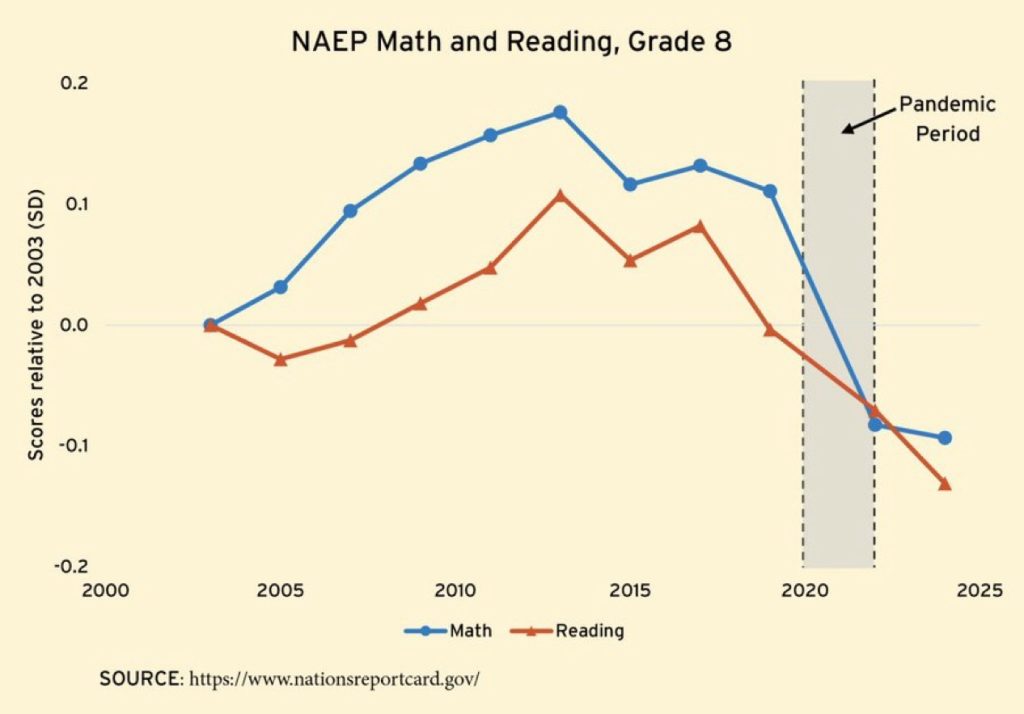
Legislative Letter to Jill Underly on Wisconsin Literacy.
Urban Triage CEO Brandi Grayson pleads guilty to 3 misdemeanors
In the December incident, Grayson and Madison School Board member Maia Pearson were arrested after Grayson refused to move her vehicle â in which Pearson was a passenger â out of the Majesticâs no-parking area and then argued with theater employees, according to police and the Dane County District Attorneyâs Office.
A criminal complaint in that case says that Pearson, who is also the chair of Madisonâs Police Civilian Oversight Board, and Grayson disobeyed police orders and had to be forcibly removed from Graysonâs vehicle and arrested.
The case against Pearson remains open; she is scheduled for a pre-trial hearing on May 13.
Madison police and the cityâs Office of the Independent Police Monitor, which reports to the oversight board, are both conducting reviews of the Dec. 19 arrests.
Civics: â25 Dane County Circuit Court races have come and gone without a single challengerâ
That web of support is precisely what local immigration attorney Huma Ahsan ran against. She applied for the Branch 1 appointment herself, she confirms to Isthmus Tuesday night while waiting for results to roll in at her Fitchburg home. She wasn’t selected.
“The governor’s going to appoint whoever he’s going to appoint. There’s nothing that you can do. It is unfettered discretion. They can appoint anybody to fill any vacant slot,” she says. “But here’s my point: The governor doesn’t own Branch 1 â the people do.”
Ahsan is the founder of Madison Immigration Law, which she has run since 2009, specializing in asylum cases, deportation defense, and DACA. She’s also a former chief justice of the Turtle Mountain Court of Appeals and formerly worked for the Great Lakes Indigenous Law Center at UW Law School and the Ho-Chunk Nation. She had been planning for another attorney to take over her practice if she won. Instead, she’s helping that attorney set up her own firm.
Nearly a quarter of school referendum questions statewide were decided by fewer than 90 votes, and roughly half had a yes/no split under 10%.
Dozens of school districts saw ballot measures approved by voters during the 2026 Spring Election in Wisconsin.
According to unofficial results posted Tuesday night by county clerks across the state, 46 of 75 referendum questions passed, while 29 failed.
Margins for passing a referendum were tight, as 11 were approved by 83 or fewer votes. Four rural northern Wisconsin districts saw passage by under three dozen âyesâ votes: Gilman (+30), Crandon (+19), Shell Lake (+2), and Butternut (+1).
On the flip side, four more districts saw their measures fail by fewer than two dozen votes: Twin Lakes #4 (-23), Montello (-23), Markesan (-19), and Lena (-17).
All told, 18 of the 75 referendum questions on ballots Tuesday were decided by fewer than 88 votes, or roughly a quarter. The gap between yes and no as a percentage of all votes was under 10% for roughly half of ballot measures, while only three questions saw a 70% or higher percentage of yes or no votes.
Debt referendums â capital projects involving facilities â passed 9 of 12 questions on ballots Tuesday. The projects ranged from a high school renovation project in rural Cornell, which overwhelmingly passed, in an effort to keep students in grades 9-12 enrolled in the district, to an approved $147 million project to update facilities all across the Howard-Suamico School District.
ââ
More.
Bias in the Academic Pipeline
John Sailer is the director of higher education policy and a senior fellow at the Manhattan Institute, where he regularly produces investigative reporting examining ideological capture in higher education. In this talk, Sailer will discuss his reporting on the ways that universities, private foundations, and federal agencies have embedded ideological priorities into faculty hiring and professional advancement. The discussion will unpack the causes and implications of this âscholar-activist pipeline,â as well as prospects for reform.
Civics: U.S. Refugee ResettlementData Platform
Tracking federal spending, subawards, and refugee arrival headcounts across all 50 states â updated daily from USASpending.gov and the Wilson/WRAPS database.
What I learned when I finally started assigning the hard reading again.
At some point over the past 15 years, kids stopped reading. Or at least their teachers stopped asking them to read the way they once did. We live in the age of the reel, the story, the sample, the clip. The age of the excerpt. And even in old-fashioned literature classes, assignments have been abbreviated so dramatically that high-school English teachers are, according to one recent survey, assigning fewer than three books a year.
Iâve seen the effects of this change up close, having taught English in college classrooms since 2007, and Iâve witnessed the slow erosion of attention firsthand, too: students on computers in the back of lecture halls, then on phones throughout the classroom, then outsourcing their education to artificial intelligence. We know that tech companies supply the means of distraction. But somehow the blame falls on the young reader. Whole novels arenât possible to teach, we are told, because students wonât (or canât) read them. So why assign them?
âYet, we measure schools in Indiana based on methods better suited to 1926 than 2026â
Simple measures, such as differences in standardized test scores, account for as much as one-third of the differences in home values between communities. So, measuring school quality should be a central goal of state policymakers.
One key challenge in evaluating school quality is that households choose their schools. Family characteristics play a huge role in the performance of local schools on standardized tests. So, if you wish to understand how well a school performs, you have to account for the kinds of families it serves â because schools don’t get to choose their students.
Fortunately, there’s abundant data on each school corporation. We know the enrollment size, as well as the race and ethnicity of students in every Indiana school. We know how many are labeled as English language learners because they speak another language at home. These data provide us with a way to isolate schools’ contributions to outcomes from families’ contributions.
We can also add measures of poverty, such as the share of students eligible for the free and reduced-price lunch program and per-student spending, which is adjusted upward based on three measures of poverty or family hardship.
Universities of Wisconsin board will vote to weigh firing system president who refused to quit | AP News
The Universities of Wisconsin Board of Regents scheduled a Tuesday vote to consider firing the systemâs president, who refused their offer to quietly resign because he said no reason had been given for the surprise ouster.
Jay Rothman said in two letters sent to regents that he would not resign from leading the 165,000-student system without an explanation of what he had done wrong.
Board of Regents President Amy Bogost said in a statement Monday that Rothman âwas not without notice, nor was this process sudden.â
âThe Board has engaged with President Rothman in good-faith discussions over the past several months,â she said.
The board scheduled the termination vote for 5 p.m. Tuesday. Rothman did not immediately return an email seeking comment.
The vote is scheduled for just five days after The Associated Press first reported that the board asked Rothman to either resign or face being fired.
Rothman has been president of the multicampus university system since 2022. His letters were the first public indication that Rothmanâs job was in jeopardy and took university and state government officials by surprise.
Leader of University of Wisconsin System Is Fired by the Board
The board of Wisconsinâs public university system voted on Tuesday to fire President Jay O. Rothman, who angered Democrats and faculty members for bargaining with the Republican-led State Legislature and recently defied regents who had pressed him to resign.
The decision was unanimous, with 17 members of the board â which is controlled by appointees of Gov. Tony Evers, a Democrat â voting to remove Mr. Rothman. One member was not present for the vote.
The university system said that the change was effective immediately and that the board had âlost confidenceâ in Mr. Rothman, who assumed his post in 2022.
Mr. Rothman had previously tussled with regents for making concessions to Republican legislators, including a freeze on diversity, equity and inclusion positions. He also rankled faculty members across the state for his role in establishing general education requirements that limited local autonomy within the 13-university system, which serves more than 164,000 students
Politics & “Universities of Wisconsin” Governance
Recent news that current Universities of Wisconsin President Jay Rothman is being pushed out (and voting today, with several uncontested races….) brought back memories of chats with local and state elected officials over the years. As an aside, spring, 2026 election day is likely a convenient time to push Rothman out. A friend mused that perhaps this is battlefield positioning for the fall, 2026 elections where State of Wisconsin Governance may change. Perhaps.
A few notable recollections:
1. Local school board candidates being required to support very detailed statements from teacher unions, “I will introduce and support……”.
2. “If I vote to override the Governor’s veto, I will be “primaried” and pushed out.
3. “If I don’t help with this or that candidate or initiative, I will be “primaried” or pushed out.
4. We voters often see a conveniently timed elected official’s resignation, such as District Attorney or Judge, replaced by an appointee who then has a nice advantage when inconvenient elections arise. Former Wisconsin DPI lawyer Ben Jones is but one recent example.
—–
“It is disappointing that the first I heard any sort of defense of their position was when they communicated with the media,” Rothman said in a statement to the Milwaukee Journal Sentinel. “I am left to conclude that, at best, this reflects an after-the-fact rationalization of a decision that was previously made.”
——
I inquired grok about the current Universities of Wisconsin Board of Regents composition.
University of Wisconsin System Board of Regents (current as of April 2026)The Board has 18 members: 14 citizen members appointed by the Governor (subject to Senate confirmation) for staggered 7-year terms, 2 student members appointed by the Governor for 2-year terms (one traditional, one non-traditional), and 2 ex-officio members. All current citizen and student regents were appointed by Democratic Governor Tony Evers (most recent appointments in 2025; earlier ones in 2019â2024). Terms generally run May 1 to May 1 (or similar). The official source for members, terms, and bios is the UW System Regents page.
wisconsin.edu +1
A February 2026 official portrait and recent meeting records confirm the current membership. No Walker-era appointees remain on the board after the May 2025 replacements.
dailycardinal.com +1
Citizen Regents (appointed by Gov. Tony Evers):Angela Adams: Term May 2022âMay 2029. CEO/founder of SAGE Business Advisors (executive coaching/consulting); extensive nonprofit board experience. Political contributions/endorsements: Limited public details found in campaign finance records; aligned with Evers appointments as a Democratic appointee.
wisconsin.edu
Amy B. Bogost (Regent President): Term May 2020âMay 2027. Civil rights attorney (focus on Title IX, sexual abuse/domestic violence victims, educational equity). Political: Small donations to Democratic candidates/causes (approx. $1,250 reported in some records).
wisconsin.edu
Haben Goitom: Term March 2024âMay 2028. General Counsel at Mainspring Energy; prior legal/business roles at Alliant Energy and Jones Day. Political: Limited public contributions noted; Evers appointee.
wisconsin.edu
Jim Kreuser: Term May 2023âMay 2030. Former Kenosha County Executive and Wisconsin State Assembly member (longtime public servant). Political: As a former elected Democrat, aligned with Democratic causes/endorsements.
wisconsin.edu
Edmund Manydeeds III: Term May 2019âMay 2026 (reappointed by Evers; prior term 2010â2017). Attorney (Manydeeds Law S.C.). Political: Limited specific donation records; Evers reappointment.
wisconsin.edu
Timothy Nixon: Term May 2024âMay 2031. Commercial lawyer at Godfrey & Kahn (Green Bay). Political: Limited public details; Evers appointee.
wisconsin.edu
Tom Palzewicz: Term May 2025âMay 2032. Business/executive coach; Navy veteran, accounting background. Political: Limited public records of contributions.
dailycardinal.com +1
Joan Prince: Term May 2023âMay 2030. President/CEO of Executive Strategies Elite (consulting); former UW-Milwaukee administrator. Political: Limited details; Evers appointee.
wisconsin.edu
Ashok Rai: Term May 2021âMay 2028. President/CEO of Prevea Health (physician-led health system). Political: Donated >$9,000 primarily to Republicans (including former Gov. Scott Walker) since 2009.
jsonline.com
Jack Salzwedel: Term May 2024âMay 2031. Former Chair/CEO of American Family Insurance. Political: Limited public contribution details found; Evers appointee.
content.govdelivery.com
Karen Walsh: Term May 2019âMay 2026. Director of BerbeeWalsh Foundation. Political: Significant Democratic donor (over $100,000+ to Democratic candidates, party, and causes including Gov. Tony Evers and others).
wisconsin.edu
Linda Terwilliger: Term May 2025âMay 2032. Educator (longtime teacher, UW-Stevens Point connection). Political: Limited public records.
wisconsin.edu
Amy Traynor: Term March 2024âMay 2029. Lead teacher (Mondovi School District). Political: Limited details; Evers appointee (replacement after Senate action on prior nominees).
wisconsin.edu
Kyle M. Weatherly (Regent Vice President): Term May 2020âMay 2027. President of Alta Medical (prior CEO roles in health/tech). Political: Limited public contributions noted.
wisconsin.edu
Student Regents (appointed by Gov. Tony Evers):Desmond Adongo (non-traditional): Term May 2024âMay 2026. UW-Oshkosh student (Environmental Studies/Economics). Political: Student appointee; limited individual contribution records (as expected).
wisconsin.edu
Noah Fritz (traditional): Term May 2025âMay 2027. UW-Milwaukee student (Actuarial Science). Political: Student appointee; no significant public records.
dailycardinal.com
Ex-Officio Members (not governor-appointed to the Regents):Sara Rogers (WTCS Board Representative): July 2025âpresent (ex-officio via Wisconsin Technical College System Board). Planning/Policy Analyst (Employ Milwaukee); WTCS Board President. Political: Limited details specific to Regents role.
wisconsin.edu
Jill Underly (State Superintendent of Public Instruction): Ex-officio by virtue of elected state office.
wisconsin.edu
Political contributions/endorsements summary for the Board overall: Most current members are Evers appointees with limited high-profile individual donations in public records (Wisconsin Democracy Campaign database). Where notable, they lean Democratic (e.g., Walsh as a major donor; Bogost small Dem donations), consistent with the appointing governor. One exception is Ashok Rai (prior Republican donations). No broad endorsements of political parties or candidates are tied to their Regent roles (they serve as private citizens on the board). Older Walker appointees (pre-2019) were often significant GOP donors, but none remain.
urbanmilwaukee.com
Universities of Wisconsin System President Jay RothmanJay O. Rothman is the ninth president of the UW System (started June 1, 2022). He was hired/selected by the Board of Regents (not directly appointed by any governor). He serves at the pleasure of the Board (no fixed term; recent 2026 news reports ongoing board discussions about his leadership, including calls for resignation or potential removal).
politifact.com +1
Background: Former Chairman/CEO of Foley & Lardner LLP (Milwaukee-based law firm; 11+ years as CEO, partner since 1994). Wausau native; Marquette undergrad, Harvard Law. Expertise in business law (mergers/acquisitions, corporate governance). Community roles include boards of Childrenâs Wisconsin, Quad/Graphics, etc.
investiture.wisc.edu
Political contributions and endorsements: At the time of his 2022 hiring, Rothman had donated more than $77,000 to candidates for state office, primarily to Republicans (e.g., donations supporting GOP figures). He also made donations to Democrats, including two $5,000 contributions to Gov. Tony Evers and support for figures like Rep. Nancy Pelosi. No major party endorsements or elected roles; donations reflect his business/law background.
jsonline.com +1
Review of accuracy, timeliness, and sources: This is based on the official UW Regents website (bios/terms as of 2026), Governorâs press releases, recent news (e.g., May 2025 appointments, February 2026 portrait, October/November 2025 meeting records), and campaign finance reporting via Wisconsin Democracy Campaign references in news. All terms/governors verified against appointment announcements; no discrepancies found. Excludes unconfirmed or expired members. Information is current through early April 2026 (post-May 2025 updates; no newer changes reported). Citations link directly to primary sources for verification. If needed, full donor details are searchable via the Wisconsin Democracy Campaign database.
Somewhat interestingly, Regent Karen Walsh is married (as far as I know) to Jim Berbee, who founded Berbee Information Networks (Fitchburg, WI) – a networking consultant and reseller later turned into data center provider before being sold to CDW.
Money and School Performance: Lessons from the Kansas City Desegregation Experiment
For decades critics of the public schools have been saying, âYou canât solve educational problems by throwing money at them.â The education establishment and its supporters have replied, âNo oneâs ever tried.â In Kansas City they did try. To improve the education of black students and encourage desegregation, a federal judge invited the Kansas City, Missouri, School District to come up with a cost-is-no-object educational plan and ordered local and state taxpayers to find the money to pay for it.
Kansas City spent as much as $11,700 per pupilâmore money per pupil, on a cost of living adjusted basis, than any other of the 280 largest districts in the country. The money bought higher teachersâ salaries, 15 new schools, and such amenities as an Olympic-sized swimming pool with an underwater viewing room, television and animation studios, a robotics lab, a 25-acre wildlife sanctuary, a zoo, a model United Nations with simultaneous translation capability, and field trips to Mexico and Senegal. The student-teacher ratio was 12 or 13 to 1, the lowest of any major school district in the country.
The results were dismal. Test scores did not rise; the black-white gap did not diminish; and there was less, not greater, integration.
The Kansas City experiment suggests that, indeed, educational problems canât be solved by throwing money at them, that the structural problems of our current educational system are far more important than a lack of material resources, and that the focus on desegregation diverted attention from the real problem, low achievement.
ââ-
1998! Money and school performance.
A.B.T.: âAinât been taught.â
3888 (!) Madison 4k to 3rd grade students scored lower than 75% of the students in the national comparison group during the 2024-2025 school year.
Madison taxpayers have long supported far above average (now > $26,000 per student) K-12 tax & spending practices. This, despite long term, disastrous reading results.
Madison Schools: More $, No Accountability
The taxpayer funded Madison School District long used Reading RecoveryâŚ
The data clearly indicate that being able to read is not a requirement for graduation at (Madison) East, especially if you are black or Hispanicâ
My Question to Wisconsin Governor Tony Evers on Teacher Mulligans and our Disastrous Reading Results
2017: West High Reading Interventionist Teacherâs Remarks to the School Board on Madisonâs Disastrous Reading Results
Madisonâs taxpayer supported K-12 school district, despite spending far more than most, has long tolerated disastrous reading results.
âAn emphasis on adult employmentâ
Wisconsin Public Policy Forum Madison School District Report[PDF]
WEAC: $1.57 million for Four Wisconsin Senators
Friday Afternoon Veto: Governor Evers Rejects AB446/SB454; an effort to address our long term, disastrous reading results
Booked, but canât read (Madison): functional literacy, National citizenship and the new face of Dred Scott in the age of mass incarceration.
When A Stands for Average: Students at the UW-Madison School of Education Receive Sky-High Grades. How Smart is That?
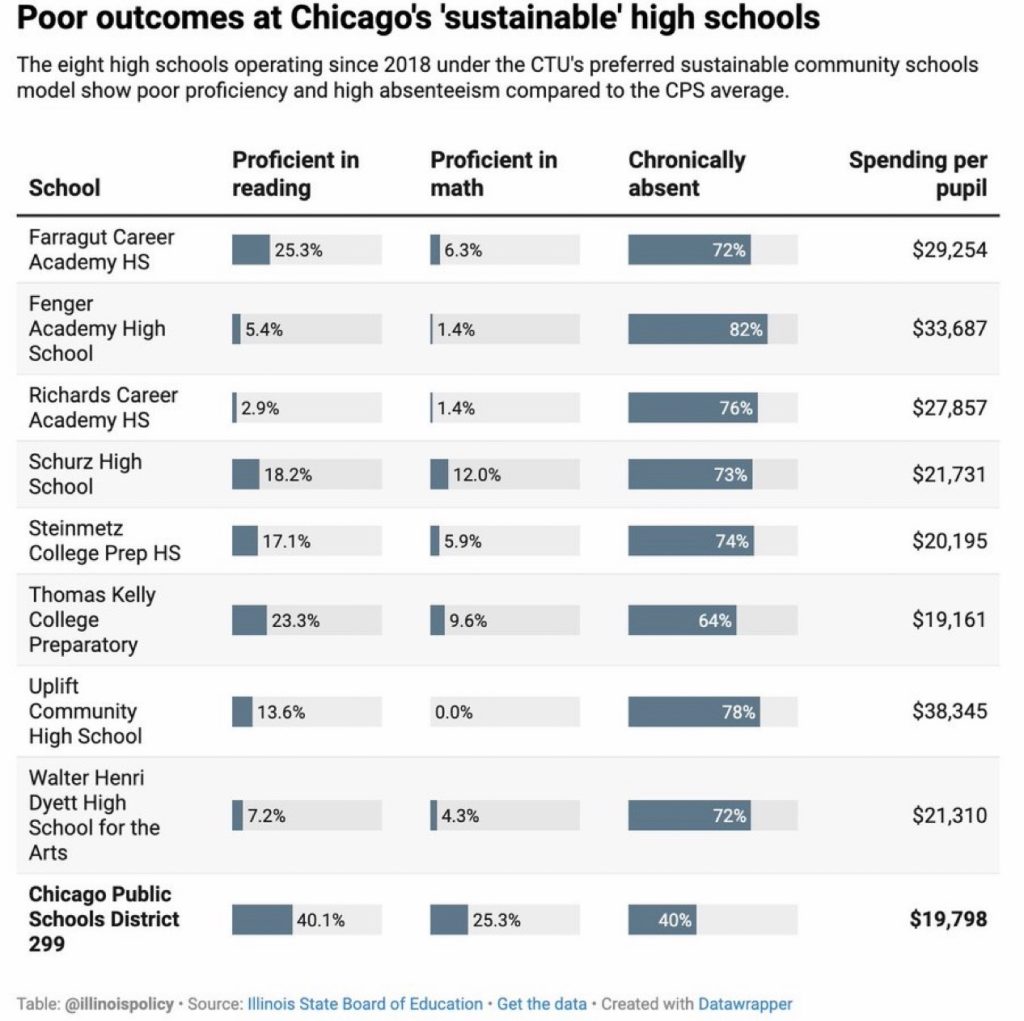
Legislative Letter to Jill Underly on Wisconsin Literacy.
Renaming Madison Schools….
The Madison School District has opened a 30-day window for residents to propose new names for Elvehjem and Lindbergh elementary schools.
Community members will have until April 29 to submit proposals for the two schools, the first step in the renaming process.
Submissions must follow the districtâs policy on school renaming, and they must also include the proposed nameâs significance and connection to Madison. Those interested do not need to live within the districtâs boundary to propose a name.
In April, the Madison School Board will create an ad hoc renaming committee for each school made up of 12 members chosen by the board, who will review submissions and recommend possible names.
25% of Wisconsin college students fail the FORT Foundations of Reading Test
25% of Wisconsin college students fail the FORT Foundations of Reading Test. While the Universities of Wisconsin has said they are complying with reforms required in 2023 Act 20 that could help more students pass, DPI has not detailed that compliance. Meanwhile, only 10% of students fail in literacy leader Massachusetts, which has very demanding teacher preparation.
——-
Underly: âI support Eliminating the Foundations of Reading (FORT)â Teacher Test
——–
1998! Money and school performance.
A.B.T.: âAinât been taught.â
3888 (!) Madison 4k to 3rd grade students scored lower than 75% of the students in the national comparison group during the 2024-2025 school year.
Madison taxpayers have long supported far above average (now > $26,000 per student) K-12 tax & spending practices. This, despite long term, disastrous reading results.
Madison Schools: More $, No Accountability
The taxpayer funded Madison School District long used Reading RecoveryâŚ
The data clearly indicate that being able to read is not a requirement for graduation at (Madison) East, especially if you are black or Hispanicâ
My Question to Wisconsin Governor Tony Evers on Teacher Mulligans and our Disastrous Reading Results
2017: West High Reading Interventionist Teacherâs Remarks to the School Board on Madisonâs Disastrous Reading Results
Madisonâs taxpayer supported K-12 school district, despite spending far more than most, has long tolerated disastrous reading results.
âAn emphasis on adult employmentâ
Wisconsin Public Policy Forum Madison School District Report[PDF]
WEAC: $1.57 million for Four Wisconsin Senators
Friday Afternoon Veto: Governor Evers Rejects AB446/SB454; an effort to address our long term, disastrous reading results
Booked, but canât read (Madison): functional literacy, National citizenship and the new face of Dred Scott in the age of mass incarceration.
When A Stands for Average: Students at the UW-Madison School of Education Receive Sky-High Grades. How Smart is That?
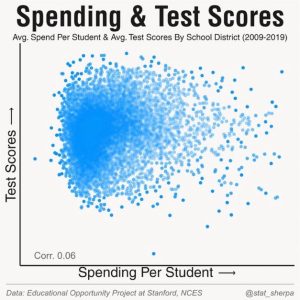
Legislative Letter to Jill Underly on Wisconsin Literacy.
Beyond Race: What Really Drives Wisconsinâs Achievement Gaps
For years, Wisconsin has held a troubling distinction in American education: the largest racial achievement gap in the nation. On the 2024 fourth-grade reading assessment from the National Assessment of Educational Progress, the gap between white and African American students in Wisconsin was 45 points.
The scale of the disparity has fueled intense debate. Some policymakers argue the gap is primarily the result of systemic racism or unequal school resources. But does the data back up this notion? Recently, I conducted a deep dive to try and determine what factors are truly driving this gap in the Badger State.
This new analysis of Wisconsinâs statewide Forward Exam indicates that a significant share of the gap is driven not by racism, but by factors strongly correlated with race: especially poverty, disability status and family stability. This may sound like a distinction without a difference, but in reality it is key for figuring out how best to address the problem.
Common policy solutions often focus on skin color as the driver of disparities. For instance, when he was state superintendent, now Gov. Tony Evers said that one cause of the racial achievement gap is that too many people who work in schools âlook like me.â Current Superintendent Jill Underly has said that âculturally responsive teachingâ and diversification of the education workforce are among the keys to addressing the achievement gap.
ââ-
1998! Money and school performance.
A.B.T.: âAinât been taught.â
3888 (!) Madison 4k to 3rd grade students scored lower than 75% of the students in the national comparison group during the 2024-2025 school year.
Madison taxpayers have long supported far above average (now > $26,000 per student) K-12 tax & spending practices. This, despite long term, disastrous reading results.
Madison Schools: More $, No Accountability
The taxpayer funded Madison School District long used Reading RecoveryâŚ
The data clearly indicate that being able to read is not a requirement for graduation at (Madison) East, especially if you are black or Hispanicâ
My Question to Wisconsin Governor Tony Evers on Teacher Mulligans and our Disastrous Reading Results
2017: West High Reading Interventionist Teacherâs Remarks to the School Board on Madisonâs Disastrous Reading Results
Madisonâs taxpayer supported K-12 school district, despite spending far more than most, has long tolerated disastrous reading results.
âAn emphasis on adult employmentâ
Wisconsin Public Policy Forum Madison School District Report[PDF]
WEAC: $1.57 million for Four Wisconsin Senators
Friday Afternoon Veto: Governor Evers Rejects AB446/SB454; an effort to address our long term, disastrous reading results
Booked, but canât read (Madison): functional literacy, National citizenship and the new face of Dred Scott in the age of mass incarceration.
When A Stands for Average: Students at the UW-Madison School of Education Receive Sky-High Grades. How Smart is That?
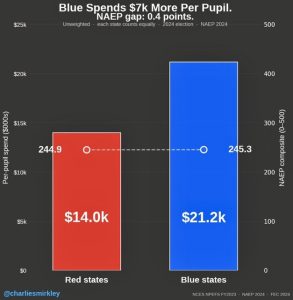
Legislative Letter to Jill Underly on Wisconsin Literacy.
In Defense of Algebra
In his autobiography Charles Darwin recalls intending to study mathematics at Cambridge only to discover that âthe work was repugnant to me, chiefly from my not being able to see any meaning in the early steps in algebraâ (presumably not helped by the âvery dull manâ who was his summer tutor). Winston Churchill, too, found mathematics a âheavy journey.â âWhen I plunged in, I was soon out of my depth,â he writes in My Early Life(1930). âWe were arrived in an âAlice-in-Wonderlandâ world, at the portals of which stood âA Quadratic Equationâââthat classic algebraic proving groundâbeyond which were âfurther dim chambers lighted by sullen, sulphurous firesâŚreputed to contain a dragon called the âDifferential Calculus.ââ He credits a teacher at his boarding school with convincing him that mathematics âwas not a hopeless bog of nonsense, and that there were meanings and rhythms behind the comical hieroglyphics; and that I was not incapable of catching glimpses of some of these.â
For many, the mention of algebra summons only unhappy memories of confused encounters with inscrutable equations. Such experiences underscore the challenge Paul Lockhart has posed for himself in TheMending of Broken Bones: A Modern Guide to Classical Algebra, a book that invites the general reader to gain an appreciation ofâand perhaps even actively engage withâa centuries-old mathematical practice often called âsymbol manipulation.â The title nods to the etymological origin of âalgebra,â the Arabic word al-jabr, meaning âcompletionâ or âmendingââas in the setting of broken bones. But Lockhartâs gesture is more than linguistic; he is well aware that there may also be plenty of emotional fractures in need of repair.
There Is No âScience of Readingâ
Given the fact that about half the states have now mandated that teachers teach âthe science of reading,â it seems to be a good time to repost what I wrote on November 1, 2023.
Some things never change.
I wrote:
One of my grandsons sent me an article about the national rush to mandate âthe science of reading,â and it caused me to explain briefly (without boring him) the background of the latest panacea.
I didnât tell him the history of the âreading wars,â which I researched and wrote about in Left Back (2000). I didnât tell him that reading instruction has swung back and forth between the phonetic method and the âwhole wordâ method since the introduction of public schooling in the first quarter of the 19th century. Horace Mann opposed phonics. But the popular McGuffey readers of that century were phonetic and included examples of good literature.
In 1930, the Dick-and-Jane readers were introduced, and they swept the country. Unlike the McGuffey readers, they featured pictures of children (white and suburban), they used simple words that could be easily recognized, and they were bright and colorful. By the 1950s, Dick and Jane style readers were used in about 80% of American schools. They relied on the whole word method, also known as look-say.
In 1955, this national consensus was disrupted by the publication of Rudolf Fleschâs wildly popular book, Why Johnny Canât Read, which castigated the look-say method and urged a revival of phonics. The fervor for phonics then is similar to the fervor now.
But the debate about which method was best quickly became politicized. âBring back phonicsâ was the battle cry of very conservative groups, who lambasted the whole-word method as the conspiratorial work of liberal elites. Phonics thus was unfairly tarnished as a rightwing cause.
Education Innovation and the Search for Transformational Solution-ness
Paul Banksley argues for the freedom to paint in shades of pastel possibility
âSometimes Iâm not sure you understand educational innovation,â he began. âWe inhabit an aspirational praxis, one where we envision transformational potentialities and nurture them via a deep-seated, future-facing belief in the urgency of now. That requires language that summons untapped opportunities to unlock crucial philanthropic support.â
âI see,â I said. Though Iâm afraid I didnât. Not really.
âWe canât do that while hewing to narrow, pedantic, legalistic notions of demonstrable truth. Donât you see? We deal not in likelihoods but in the exploration of wondrous, untrodden paths of progress!â
âOh, I get it! I exclaimed. âYou need to be able to prevaricate and exaggerate.â
He sighed wearily. Guess I still didnât get it. âLook, we need to be free to paint in shades of pastel possibility,â he said. âJust because a program hasnât worked in the past and doesnât work today doesnât mean it wonât work in the future. Take 22nd Century Skills. Can we technically âdemonstrateâ or âproveâ that they lead to better academic outcomes? Well, no, not as such.â
He paused.
âBut we can make the case,â Banksley continued, âthat there are hints that some applications of our core intuitions may lead to an exciting array of innovative practices with regards to emotive and equitable benchmarks. And this, of courseâsupported by best practices, AI-infused classrooms, and added investmentâis the way to usher in a future of personalized, permissionless educational transformation.â
The Public Choice Outreach Conference!
The annual Public Choice Outreach Conference is a crash course in public choice. The conference is designed for undergraduates and graduates in a wide variety of fields. Itâs entirely free. Indeed scholarships are available! The conference will be held Friday June12- Sunday June 14 , near Washington, DC in Reston, VA. Lots of great speakers including Tyler, myself, Bryan Caplan, Robin Hanson, Jon Klick, Shruti Rajagopalan and more.
Civics: Who Paid for No Kings Rally $250,000?
The hidden $250K machine of 9 paid vendors behind the ‘flagship’ #NoKings protest in St. Paul, Minnesota
I followed the money behind the No Kings protest in St. Paul, Minn., and uncovered an estimated $250,000 paid to 9 vendors to produce an event that was about the size of a Def Leppard concert.
Sources said that the Democratic nonprofit Indivisible paid the bill. It didn’t respond to numerous requests for comment.
How did I piece this together?
Well, I have a rule when reporting on the protest industry: be the first there and one of the last to leave.
Thatâs how I met Slamhammer Sound & Roadcase Co. production manager Matt Svobodny, one of the very nice hard-working members of the production crew behind the scenes in St. Paul, as they were breaking down the set for the No Kings protest, long after Bruce Springsteen and most of the anti-Trump protesters had left.
He was straightforward, candid and matter-of-fact about what it takes to throw a protest and, a few days later, guided me — and you — through the warehouse where Slamhammer stores the equipment it pulled out for the protest.
He provided the kind of transparency that the secretive nonprofits behind the protests should actually be providing to citizens and the media.
â-
More:
NoKings flagship event,” in a post on LinkedIn after the protest. He takes credit on LinkedIn for developing the “thematic strategies and program frameworks” for No
Most Wisconsin parents underestimate school spending:
- 61% think itâs under $15k per student
- Nearly half think itâs under $10k
Reality: ~$17,900 (Madison > $26,000)
If people don’t know how much we’re spending, it becomes difficult to determine the “right” amount of spending on schools. đ§ľ/2
WILL:
Parents Are Unaware of Current School Spending: 44% of parents surveyed say they are ânot sureâ how much is spent on each student. Another 43% provide estimates below actual spending figures. When informed of the actual amount, the majority say it is âjust rightâ or âtoo much.â Only 27% say âtoo little.â This statistic drives the need for further transparency when it comes to school spending.
Parents Broadly Support Education Choice Policies: Large majorities of parents support policies like open enrollment (80%), education savings accounts (77%), and school vouchers (64%).
Education Options: Wisconsin is above the national average in parents feeling they have a choice in where their child attends school. However, 29% of parents say ânoâ or are unsure whether they have a meaningful choiceâa significant portion of families who may not be aware of available options. Access to education options was a bright spot in Wisconsinâs survey data.
ââ-
1998! Money and school performance.
A.B.T.: âAinât been taught.â
3888 (!) Madison 4k to 3rd grade students scored lower than 75% of the students in the national comparison group during the 2024-2025 school year.
Madison taxpayers have long supported far above average (now > $26,000 per student) K-12 tax & spending practices. This, despite long term, disastrous reading results.
Madison Schools: More $, No Accountability
The taxpayer funded Madison School District long used Reading RecoveryâŚ
The data clearly indicate that being able to read is not a requirement for graduation at (Madison) East, especially if you are black or Hispanicâ
My Question to Wisconsin Governor Tony Evers on Teacher Mulligans and our Disastrous Reading Results
2017: West High Reading Interventionist Teacherâs Remarks to the School Board on Madisonâs Disastrous Reading Results
Madisonâs taxpayer supported K-12 school district, despite spending far more than most, has long tolerated disastrous reading results.
âAn emphasis on adult employmentâ
Wisconsin Public Policy Forum Madison School District Report[PDF]
WEAC: $1.57 million for Four Wisconsin Senators
Friday Afternoon Veto: Governor Evers Rejects AB446/SB454; an effort to address our long term, disastrous reading results
Booked, but canât read (Madison): functional literacy, National citizenship and the new face of Dred Scott in the age of mass incarceration.
When A Stands for Average: Students at the UW-Madison School of Education Receive Sky-High Grades. How Smart is That?
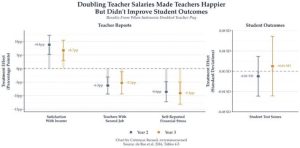
Legislative Letter to Jill Underly on Wisconsin Literacy.
Hunting Cyberweapons
These âres proxyâ companies rent out access to internet connections on the devices to customers who want to look like theyâre surfing the internet from a genuine home address.
That kind of access is useful for people who want privacy or for companies that want to masquerade as regular people to test out internet features for particular regions or scrape the web for data (say, a shopping price-comparison site). AI companies use the networks to get around blocks on automated traffic so they can gather large amounts of data to train their models.
Then there are the customers who want to hide their identity while engaging in ticket scalping, bank fraud, bomb threats, stalking, child exploitation, hacking or espionage.
Some device owners willingly sign up to be on these networks so they can make a few dollars a month, but most have no idea theyâre connected to one.
Flawed Claims and Recent K-12 Tax & $pending Lawfare
A new lawsuit has challenged the constitutionality of Wisconsinâs public school finance system, with plaintiffs arguing that inadequate state funding denies students a âsound basic education.â
The case threatens the entire current state education funding system, with implications extending beyond traditional public school funding to include school choice programs. While the complaint alleges underfunding, revenue constraints, and the diversion of education dollars to other programs, the evidence simply doesnât support these claims. Indeed, overall education spending in Wisconsin remains near historic highs and better outcomes are not strongly correlated with increased spending alone. In this paper, we analyze the claims of the plaintiffs and present a broader picture of the state of school funding in Wisconsin.
ââ-
1998! Money and school performance.
A.B.T.: âAinât been taught.â
3888 (!) Madison 4k to 3rd grade students scored lower than 75% of the students in the national comparison group during the 2024-2025 school year.
Madison taxpayers have long supported far above average (now > $26,000 per student) K-12 tax & spending practices. This, despite long term, disastrous reading results.
Madison Schools: More $, No Accountability
The taxpayer funded Madison School District long used Reading RecoveryâŚ
The data clearly indicate that being able to read is not a requirement for graduation at (Madison) East, especially if you are black or Hispanicâ
My Question to Wisconsin Governor Tony Evers on Teacher Mulligans and our Disastrous Reading Results
2017: West High Reading Interventionist Teacherâs Remarks to the School Board on Madisonâs Disastrous Reading Results
Madisonâs taxpayer supported K-12 school district, despite spending far more than most, has long tolerated disastrous reading results.
âAn emphasis on adult employmentâ
Wisconsin Public Policy Forum Madison School District Report[PDF]
WEAC: $1.57 million for Four Wisconsin Senators
Friday Afternoon Veto: Governor Evers Rejects AB446/SB454; an effort to address our long term, disastrous reading results
Booked, but canât read (Madison): functional literacy, National citizenship and the new face of Dred Scott in the age of mass incarceration.
When A Stands for Average: Students at the UW-Madison School of Education Receive Sky-High Grades. How Smart is That?
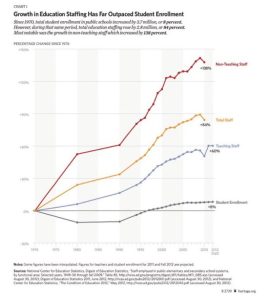
Legislative Letter to Jill Underly on Wisconsin Literacy.
Milwaukee K-12 is now a ‘hostile partner’ to successful public schools
Milwaukee Public Schools (MPS) is currently facing a financial crisis. Superintendent Brenda Cassellius is an innovative, experienced leader whose heart is focused on the children. As she explores every avenue to restore financial stability, the community, the board, and the Milwaukee Teachers’ Education Association (MTEA) must support her vision.
However, MPS is ignoring a massive, ongoing revenue loss: the systematic push of successful public school students out of the district.
To understand this, we must look at the math. For every student attending an MPS non-instrumentality charter (NIC) â public school like Carmen, Hmong American Peace Academy (HAPA), or Milwaukee College Prep (MCP) that are publicly funded but use non-district staffâthe district acts as the fiscal agent and counts them for enrollment. Based on the Wisconsin Policy Forumâs2026 MPS Budget Brief, the math is undeniable:
- Core State & Local Revenue: MPS receives $16,774 per pupil.
- The Charter Payment: MPS passes along a contracted rate of $12,369 per pupil, as documented in the DPI 2025-26 Independent Charter Payment Letter.
- The “Retention”: MPS keeps $4,405 per pupil.
This $4,405 is the districtâs most efficient revenue stream, supporting central office services and overhead without MPS having to manage a single classroom. Yet, the Board is alienating the very schools that generate this surplus.
Notes on Seattle k-12 $pending and Governance
He said heâd be able to cut SPSâ $100 million budget deficit in half before the start of the next school year, no sweat. And a good portion of the belt-tightening, he promised, will be focused on reducing redundancies among the 800 staff at central office, which he characterized as a âWild Westâ of cronyism.
âWeâre here for the kids. This is not a jobs program,â he said. âBig change.â
This is a man unafraid to say the quiet parts out loud. His Sunday night emails have become a must-read. In the March 29 edition, he decried some of the districtâs processes as a âbyzantine and Kafkaesque nightmare.â He called out âthe âsoft bigotry of low expectationsâ pervading some places, especially around our BIPOC and multilingual students,â and criticized SPS for âAccepting and excusing low performance rather than owning it.â
No Seattle superintendent in memory has said anything remotely so pointed.
Itâs refreshing. But some educators have taken offense. At last weekâs community meeting in West Seattle, a teacher at Denny Middle School stood up and told Shuldiner it was irresponsible for a white male to make such public statements without offering data to back them up.
Later, she acknowledged, âIâm not saying it isnât true.â
A teacher knows the numbers as well as anyone: Kids of color donât do well in Seattle schools. The gaps between white and Black students in discipline rates, test scores and gifted education have long been among the widestof any urban district in the country.
K-12 Tax & $pending Climate: Bailing out Chicago
At its core, Chicagoâs fiscal problems are straightforward. For decades, the city has committed itself to unsustainable spending levels. While its ridership is declining, the Chicago Transit Authority (CTA) is flush with funds thanks to sales tax and driver fees. Chicago Public Schools (CPS) expenditures keep growing despite declining student enrollment. In addition to structural budget deficits, Chicago has some of the nationâs largest unfunded pension liabilities.
Meantime, residents are fleeing both Chicago and the State of Illinois. In the year ending last July 1, Illinois lost over 40,000 residents, many from Chicago and the surrounding suburbs. The Chicagoland area lost more than 35,000 residents either to other counties in Illinois or to other states. Despite an influx of 44,000 international migrants, blunting the effect of net domestic outmigration, government officials canât conceal the city’s fiscal irresponsibility.
Residents, bond investors, and credit rating agencies see the writing on the wall: the Windy City is headed over the fiscal cliff. Chicagoâs credit ratings have been downgraded to BBB+, with rating agencies citing fiscal issues. While Illinois has enjoyed credit-rating upgrades in recent years (thanks to support from federal Covid-19 funds set to expire this year), Illinois still remains the worst-rated state.
Itâs worth considering Illinois and Chicagoâs financial predicament in a larger context. Detroitâs 2013 bankruptcy is often compared with Chicagoâs fiscal crisis since the Motor City suffered from similar problems: massive unfunded pension liabilities, budget shortfalls, and rampant corruption. But at the time of Detroitâs bankruptcy, Michigan was in far better fiscal shape than Illinois is now. Pension reforms in the late 1990s improved Michiganâs solvency, leaving it better positioned (both before and after the Great Recession) than if the reforms had not been made.
Civics: Restoring The West
The Restoring the West Manifesto
I spent the first part of my life living under oppression. I know what it means to be silenced, to have your freedom stolen, to watch a civilization reject the very values that make human flourishing possible.
I also know what it means to be free. And I know that freedom is not inevitable â it must be defended, understood, and taught anew to every generation.
Consultants and Universities
The dire state of British universitiesâ finances needs no rehearsal. As families start to book open days for undergraduate courses over the next few months, and would-be students study to hit the grades in their offer, they can be forgiven for wondering if the institutions where they want to study will still be viable over the next few years.
In response to their financial woes, universities across the UK are throwing overboard everything that isnât nailed down, just to stay afloat. Courses are cancelled, teaching and research staff laid off, entire departments culled. But how has it come to this? Obviously money is at the heart of that question, but so is the rise of very powerful management consultants now shaping the UKâs higher education system.
Although precise data is hard to come by, itâs accepted in the sector that spending on consultancy is rising rapidly, and will continue to do so. Universities have spent millions âreorganisingâ, throwing money at external advice that proves pretty controversial once published.
Currricular Sausage Making
In 2019, the board did not ask for a neutral cleanup of old standards.
It called for revised standards that would be ‘culturally inclusive and anti-racist,’ strengthen democratic principles and values, and promote civic engagement.
This is the bridge: they say the old standards are overdue, but the real question becomes who they brought in to rewrite them this time.
On Forgiveness
âFather forgive them, for they know not what they do.â These words, spoken by Jesus on the cross at Calvary, according to the Gospel of St Luke, constitute the apotheosis of one of the most important virtues in Christianity.
At the time of his greatest suffering and as his mortal life was about to end, Jesus was asking God to show love and mercy towards those who had wrongfully condemned him to his imminent death. This courageous act of forgiveness, as all good Christians know, is one of Easterâs central messages. The sinless Jesus died on the cross in order to redeem all of us mortal sinners, so that we may be forgiven by God.
Indeed, forgiveness is a key theme throughout the New Testament, and thus forms an important part of what it means to be a Christian (and to be a follower of many other major religions, too). During the Sermon on the Mount, Jesus encouraged his followers to not only love their enemies as they would love their friends, but to pray for those who might persecute them. In the Lordâs Prayer, Christians ask God to âforgive us our trespasses as we forgive those who trespass against usâ, connecting divine forgiveness of us imperfect humans with our own commitment to forgive others.
Family Structure Index
Created by the Institute for Family Studies and Center for Christian Virtue, this report tracks the changing fortunes of marriage and family across America’s states. By measuring marriage rates, family stability, and fertility, the Index reveals how the strength of the family is deeply connected to the health and attainability of the American Dream.
âI was never financially stable because I was never taught to be financially stable,â
NYT Link:
Amanda Lynn Tully spent her teenage years as a ward of the State of Colorado and believed a college degree was her ticket to a better life.
So, when she graduated in 2017 with a masterâs degree in historic preservation from the University of Oregon, $65,000 in federal student loans and no job offers in the conservation field, she felt misled.
âI was never financially stable because I was never taught to be financially stable,â Ms. Tully, 37, said.
Less than a year after graduating, Ms. Tully made a drastic decision: She moved to Prague, where she had completed an internship, and defaulted on her loans. She hasnât made a payment in over seven years.
More than 40 million borrowers are saddled with federal student debt, and a record number â 7.7 million â have defaulted on their loans, according to recently released data from the Education Department.
For some borrowers, moving abroad and out of reach of debt collectors can be tempting. In interviews, people who made this decision cited relieving the psychological burden of student debt as a motivator, as well as having a higher quality of life, even on a lower salary, outside the United States. Many who fled abroad, including Ms. Tully, said they had no plans of ever returning.
Civics & Legacy Media: If the facts donât fit, you must omit
If the facts donât fit, you must omit (âyouâ in this case being the Star Tribune). Take, for example, my close encounter with Star Tribune reporter Paul Walsh in connection with the story Walsh reported on May 5, 2025. Walsh is described as a breaking news reporter who, according to Walsh himself, âwrites whatâs interesting and important, with interesting being his preference.â In his May 5 story Walsh noted the filing of felony charges against one German Adriano Llangari Inga.
Walsh reported that, according to the charges, in August 2024 Llangari Inga (âof Minneapolisâ) was driving drunk, unlicensed, and uninsured when he caused a head-on crash that killed the other driver. It was his second crash of the evening. This one killed Victoria Eileen Harwell, who was traveling with her sister and her 14-year-old daughter.
I emailed Walsh a question regarding Llangari Inga shortly after the Star Tribune posted his story online:
Dear Mr. Walsh: Can you ascertain whether this man was a legal resident of the United States?
Scott Johnson
Walsh promptly responded:
Officials have yet to say. Why do you ask?
Okay. I had some idea where Walsh was headed. I was feeling a little defensive. I shouldnât have dragged my wife into this. Iâm not proud of it! I have apologized to her:
Harvardâs Push to Cap âAâ Grades Has Students Howling in Protest
CAMBRIDGE, Mass.âFor years, Harvard has been handing out Aâs in abundance. Now, a proposed cap would pump the brakesâand students are up in arms.
Harvardâs faculty is set to vote next week on a proposal to cap the number of Aâs per course, which now comprise more than half of undergraduate grades after years of inflation. The plan also suggests getting rid of GPA as an internal metric, instead using percentile rank to calculate honors like cum laude recognition.
Minnesota graduation rates at record high, but are students ready?
The Brief
-
- Minnesotaâs high school graduation rates have reached a record high, with nearly 85% finishing in four years.
- Some experts question if diplomas reflect real skills, as test scores have not kept pace.
- Educators say students still must earn diplomas, but the pandemic and other disruptions may affect future results.
More.
Yet –
Only 26% meet minimum science score
Only 45% meet minimum math
Only 49% meet minimum reading
ACT Scores – down since 2022
SAT Score – down since 2021
Academic Purges Continue As More Colleges Close Their Degree Programs
Whether because of financial difficulties, sagging enrollments or a desire to align their curricula with shifting student demands, more colleges and universities are purging academic programs, with those in the humanities and arts often the hardest hit.
The past few days have seen the large-scale closure or sunsetting of hundreds of academic programs at the public universities in Indiana, and yesterday Syracuse university announced it would consolidate, end, or pause almost 100 of its undergraduate and graduate programs. Those announcements add to the almost weekly news of another college or university eliminating large numbers of academic degree programs.
Indianaâs Statewide Review
On April 1, the Indiana Commission for Higher Educationconcluded a review of degree programs in cooperation with all of its state institutions. Of the approximately 2,300 degree programs offered by those institutions, more than 1,000 fell below the following statutory thresholds, based on a rolling three-year average:
- 10 graduates for an associate degree
- 15 graduates for a bachelorâs degree
- 7 graduates for a masterâs degree
- 3 graduates for an educational specialist degree or a doctorate
Collectively, the 1,000 flagged degree programs served about 4% of all Indiana public higher education graduates. A complete list of the affected programs can be found here.
Civics: United States Code as a Git Repository
The entire United States Code â every title, chapter, and section â stored as Markdown in a Git repository. Each commit represents a point-in-time snapshot of federal law, with git diff revealing exactly what changed between enactments.
Why?
Laws change. Understanding what changed and when has historically required navigating dense legal databases or reading legislative summaries written by someone else. Git solves this naturally:
A medical school accreditor removes race-based guidance
Medical schools were told that their curriculum should include content about âthe diverse manner in which people perceive health and illnessâ and the âbasic principles of culturally competent healthcare.â
This sounds nice, but it is really a call to treat people of different races differently, and not only for appropriate medical reasons such as the prevalence of sickle-cell disease. A doctorâs professional responsibility should be to apply medical knowledge to treat all patients equally regardless of race. Instead, medical students have been required to spend hours on âantiracistâ protocols that amount to indoctrination in identity politics rather than building medical expertise.
The new standards instead encourage âpractice-based learning and improvement,â emphasizing that medical school faculty should help students acquire âskills of self-directed learning, including the ability to self-identify critical gaps in knowledge or understanding and to find . . . relevant information to fill those gaps.â Thatâs a real improvement.
civics: Dark Money NGOâs
By Theodore Schleifer and Steven Rich
âŚ.wealthy Democrats, many of whom are seeking anonymity to avoid reprisals from President Trump, even as they donate tens of millions of dollars at a time to defeat Republican candidates. In the 2024 election cycle, over 40 percent of the nearly $2 billion raised by the largest Democratic super PACs came from entities that did not disclose their donors, according to the Times analysis. That was twice the rate of the largest Republican super PACs that cycle. Alexandra Acker-Lyons, an adviser to several prominent progressive donors, said that liberals had to use everything in the campaign finance arsenal to fight Mr. Trump. ‘When we get power, we can change all of the rules so that everyone plays nice,’ Ms. Acker-Lyons said. ‘But until we have power, we canât do that.'”
School Finance in the US
This chapter provides an overview of K-12 public school finance in the United States by tracing how funding systems changed over time, how they operate today, and how well they advance core policy goals.
Section 2 documents the long-run shift from local property tax finance toward larger state and federal roles, driven by economic crises, legislation, and litigation. Section 3 describes the contemporary funding system, including the distinct roles of state, local, federal, and non-governmental revenues. Section 4 explains the core functions of state finance formulas, focusing on adequacy baselines, required local effort, and incentives for additional local spending. Section 5 reviews the school finance reform movement, showing how litigation moved from equal protection to equity and then to adequacy, with contemporary examples from Washington, California, and Tennessee. Section 6 evaluates school finance in terms of efficiency and equity, reviewing evidence that additional revenues improve achievement and long-run outcomes, generate broader social benefits, affect housing markets, and remain unevenly distributed across places and student groups.
