Wisconsin students have struggled to recover since the pandemic, leaving the state ranked toward the bottom for academic growth in math and reading, a new report says.
The state ranks 33rd out of 38 states in math and 30th out of 35 states in reading, according to the Education Scorecard. The report, released annually, is a collaboration between the Harvard University, Stanford University and Dartmouth College.
There are no findings for Alaska, Colorado, Illinois, Kansas, Maine, Montana, New Mexico, New York, North Dakota, Oklahoma, Oregon, and Vermont due to data limitations, the report says.
The report describes a “learning recession” in the United States that began years before the pandemic in 2013, when math and reading scores stalled and then began to decline.
What does the report say about Wisconsin schools?
The report included mixed news for Wisconsin schools.
Chronic absenteeism, defined as missing more than 10% of classes, dropped from 22% in 2022 to 17% in 2025, but remains higher than pre-pandemic levels.
Wisconsin students are performing better at math than in 2022, but are 0.35 grade levels behind their peers from 2019. Students are reading 0.24 grade levels below 2022 levels and are about half a grade level behind 2019 numbers.
The Sun Prairie Area, Oshkosh Area and West Allis-West Milwaukee school districts are a full grade level behind 2019 math scores, the report says. Meanwhile, Kenosha, Green Bay Area and Sheboygan Area districts are a full grade level behind 2019 reading scores.
But Fond du Lac, Cedarburg, and Waukesha are above average in math and reading, and Racine is emerging as a leader in reading. Hamilton, Elmbrook and Verona Area students are excelling in math.
——-
⬇️Public-school kids in Milwaukee are 3.6 (!) grade levels behind in reading.
💰This year they spent over $25k per student.
——
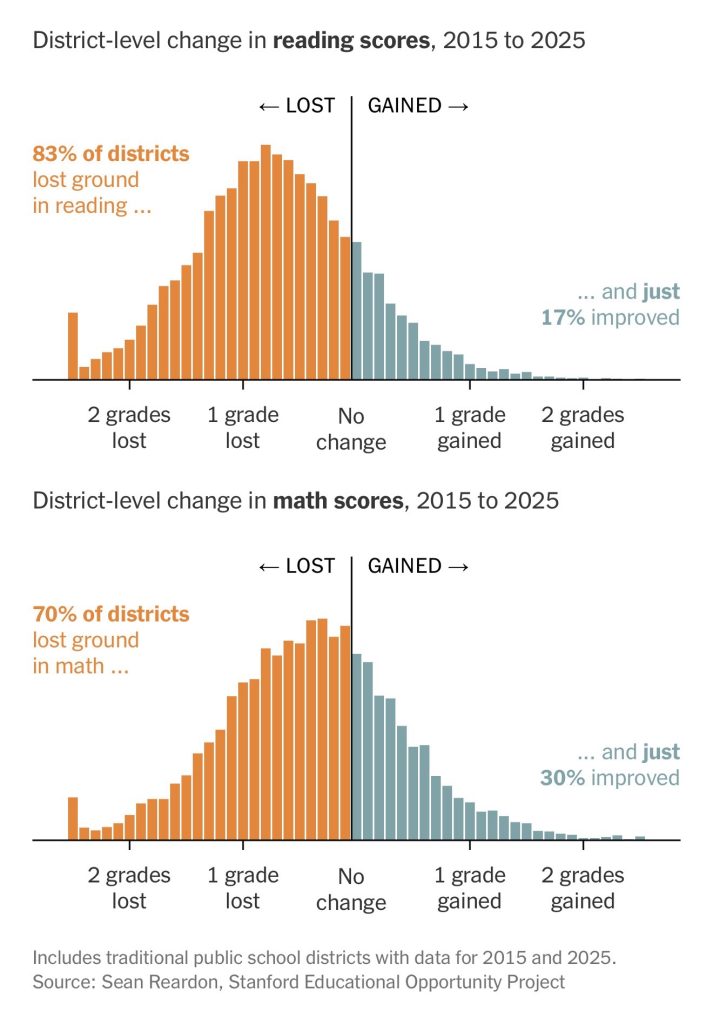
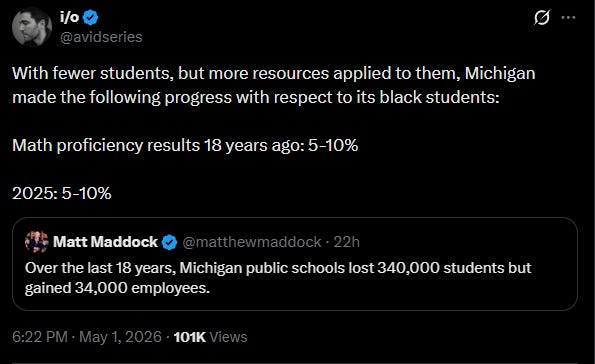
Your School District Is Probably Scoring Worse Than 10 Years Ago
More.
“That coincided with two events: an easing of federal school accountability under No Child Left Behind, which was replaced in 2015, and the rise of smartphones, social media and personalized school laptops. The pandemic then accelerated learning declines…. [No Child Left Behind] set a goal that all students would be proficient in reading and math, and schools that did not show progress could face penalties.
——-
Early Literacy Screener Map.
3,887 Madison 4 year old to third grade students scored lower than 75% of the students in the national comparison group.
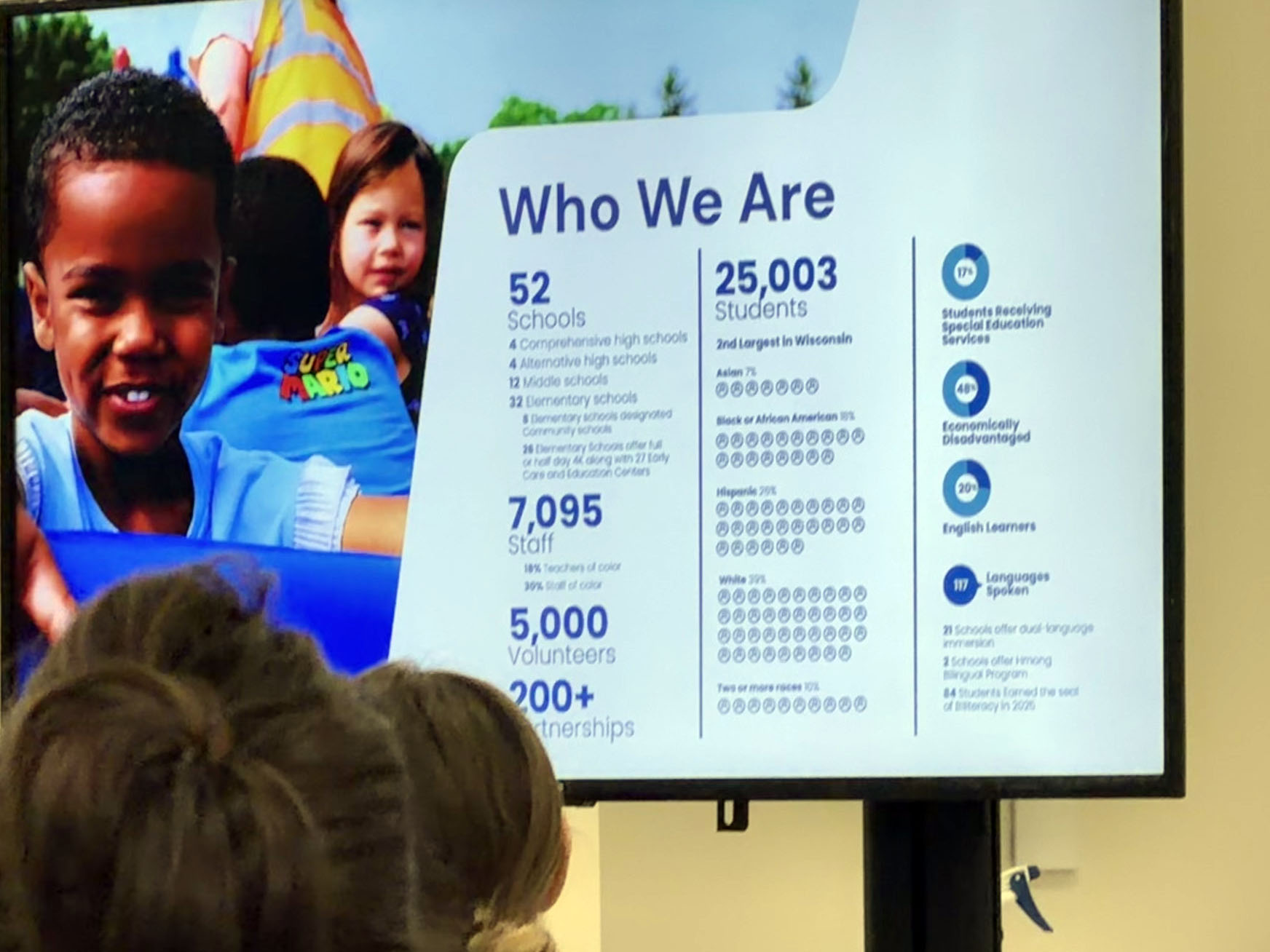
Madison taxpayers have long supported far above average k-12 tax & $pending. This despite our long term, disastrous reading results. May, 2026: 7,095 Staff for 25,003 students; $pending > $26k per student!
Madison Schools: More $, No Accountability
The taxpayer funded Madison School District long used Reading Recovery…
The data clearly indicate that being able to read is not a requirement for graduation at (Madison) East, especially if you are black or Hispanic”
A.B.T.: “Ain’t been taught.”
My Question to Wisconsin Governor Tony Evers on Teacher Mulligans and our Disastrous Reading Results
2017: West High Reading Interventionist Teacher’s Remarks to the School Board on Madison’s Disastrous Reading Results
Madison’s taxpayer supported K-12 school district, despite spending far more than most, has long tolerated disastrous reading results.
“An emphasis on adult employment”
Wisconsin Public Policy Forum Madison School District Report[PDF]
WEAC: $1.57 million for Four Wisconsin Senators
Friday Afternoon Veto: Governor Evers Rejects AB446/SB454; an effort to address our long term, disastrous reading results
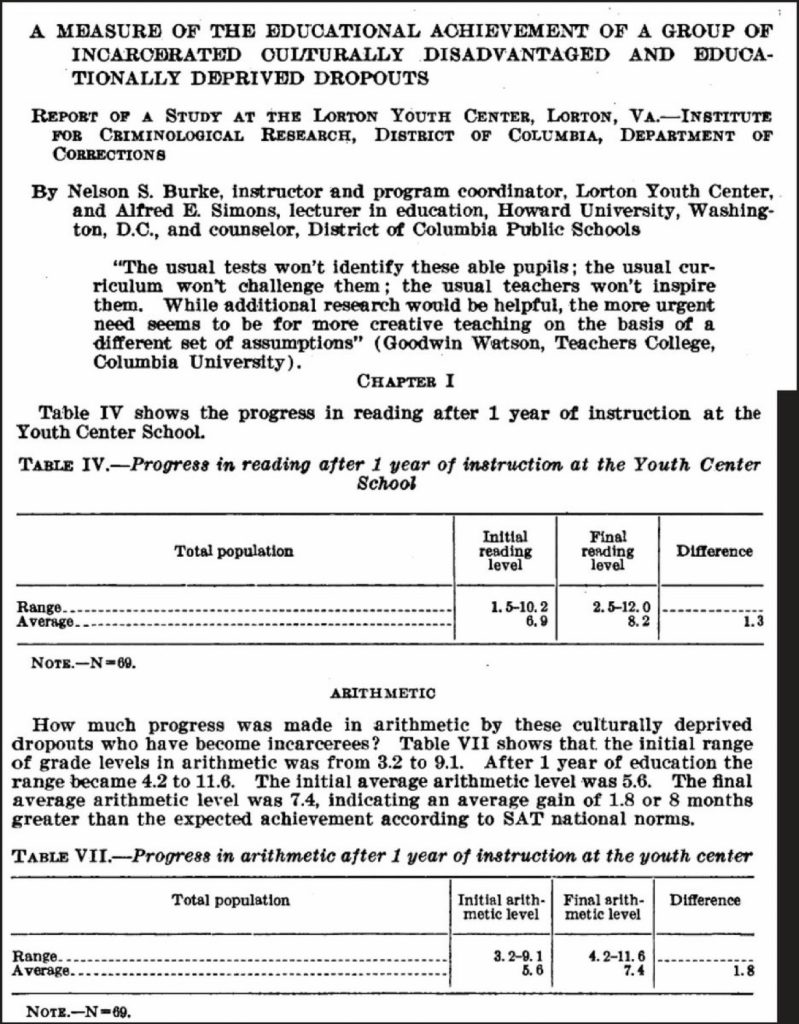
Booked, but can’t read (Madison): functional literacy, National citizenship and the new face of Dred Scott in the age of mass incarceration.
When A Stands for Average: Students at the UW-Madison School of Education Receive Sky-High Grades. How Smart is That?