K-12 Tax & $pending Climate: Workers are making more, but businesses are cutting back, research shows.
When the Minneapolis City Council approved a controversial $15 minimum wage in 2017, no one knew what would happen next.
Workers and business owners made dueling predictions of boom or bust that would result from the citywide wage hike. Cities with similar policies were still phasing in the $15 minimum, so it was impossible to say who was right.
Nearly a decade later, businesses in Minneapolis and St. Paul — which passed its own similar law in 2018 — say they’re stretched thinner than ever, and both cities have lost thousands of jobs.
Pressure on the hospitality industry is particularly acute. Restaurants and other leisure-related businesses say shrinking margins have left them less able to weather economic shocks, such as the federal immigration crackdown that forced many to temporarily close this winter.
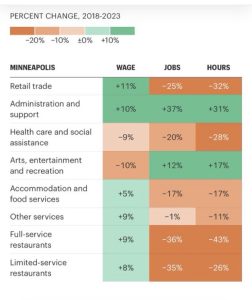
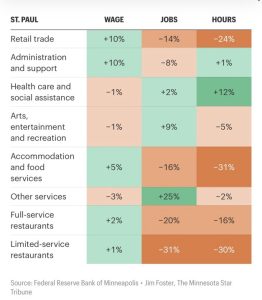
The Federal Reserve Bank of Minneapolis, which has studied the effects of the $15 minimum wage in Minneapolis since 2018, recently reported minimum wage policies have resulted in higher hourly pay but fewer available hours and positions. That has meant lower earnings: Between 2017 and 2021, the average decline in wage earnings across all industries was 1% in Minneapolis and about 2% in St. Paul. The research controlled for the effects of the COVID-19 pandemic and unrest after George Floyd’s murder in 2020.
——-
The results are in:
Minimum wage raises wages for those who can find jobs, but reduces the number of hours & the number of jobs.
You can still support this as a policy agenda, but when passed, I think cities policy makers pretended that the trade-off didn’t exist