“While enrollment has declined 24% since 2016, staffing has declined 14.7%”

Melissa Clucas:

Since the 2016-17 school year, enrollment in Marblehead Public Schools has declined from 3,144 students to a projected 2,389 students this year — a 24% decrease. This shift reflects long-term demographic changes in our town and is not indicative of a decline in school quality. Communities across Massachusetts and the nation are experiencing similar enrollment declines, driven by lower birth rates and aging populations. Public school participation in Marblehead has remained steady at 76% to 79% of school-aged residents for nearly a decade; the reality is simply that many households whose children once filled our classrooms have aged out. Since 2016, the share of residents age 65 and older has risen from 17.9% to 22.6% — meaning roughly 1,100 more Marblehead residents are now over age 65 than in 2016.

Proactive rightsizing: The district has not been idle in the face of these shifts. The consolidation of Bell, Coffin and Gerry into the Brown School was a significant, multiyear structural change driven by projected declines in enrollment. By reducing our building footprint, we eliminated the overhead of maintaining aging facilities and redundant programs. This was a proactive rightsizing of our infrastructure designed specifically to address the demographic shifts we are seeing today.

The staffing “delta”: While enrollment has declined 24% since 2016, staffing has declined 14.7%. That 9% gap understandably raises questions. Two factors explain most of it:

——-

More.

——-

Locally, Madison taxpayers are $pending more amidst flat to declining enrollment:

8,897 (!) Madison 4k to 3rd grade students scored lower than 75% of the students in the national comparison group during the 2024-2025 school year.

Madison taxpayers have long supported far above average (now > $26,000 per student) K-12 tax & spending practices. This, despite long term, disastrous reading results. 

Madison Schools: More $, No Accountability

24 Hours: Diversity Statements, Sausage Making and UW Madison’s Overton Window

I often find interesting talks when occasionally visiting today.wisc.edu. However, awareness of John Sailer’s March 4, 2026 talk arrived via email, with no presence – as far as I could find – on today.wisc.edu (search results for Sailer).

I did observe a related notice displayed on 5 March 2026: “Diversity/Equity/Inclusivity Statements for the Academic Job Market”, which further links to the Center for the Integration of Research, Teaching and Learning, or CIRTL.


Many, but not all images from John’s presentation can be viewed here.

Terms:

Scholar-activist pipeline | Diversity Statements | Cluster Hiring | Mellon Foundation | academic freedom | ideological filtering | NIH First | Career Investment

Screenshots:


K-12 Related Links:

“An emphasis on adult employment”

“The grant made me do it”: Small Learning Communities

Generous school spending doesn’t always deliver results

Matthew Yglesias

The growing progressive interest in exotic new tax-policy ideas — like Bernie Sanders and Ro Khanna saying they can raise trillions in revenue from a base of around 1,000 billionaires — shows a left that has lost faith in the idea of asking Americans to pay higher taxes in exchange for more and better public services. 

And whatever you think of the Sanders/Khanna proposal,1 it’s important to understand that this kind of plan doesn’t scale well to small states or to cities and counties since it can be relatively easy for people to leave to avoid the taxes. 

So, especially when it comes to local services, you really have to ask questions like “Can we make people feel that it’s worth paying more for this?” and “Can we get more value for the money that we are already spending?” Unlike with the federal government, where DOGE failed in part because it was based on wildly false premiseslocal governments actually spend a huge share of their budget on direct provision of labor-intensive public services. 

The most expensive of these line items is public school systems. 

Education spending presents us with something of a paradox. We know from small-scale studies that marginal increases in school spending produce positive results for children. In particular, fairly boring things like improving school HVAC systems are effective at promoting student learning, especially in low-socioeconomic-status schools.

——-

1998! Money and school performance.

A.B.T.: “Ain’t been taught.”

8,897 (!) Madison 4k to 3rd grade students scored lower than 75% of the students in the national comparison group during the 2024-2025 school year.

Madison taxpayers have long supported far above average (now > $26,000 per student) K-12 tax & spending practices. This, despite long term, disastrous reading results. 

Madison Schools: More $, No Accountability

The taxpayer funded Madison School District long used Reading Recovery

The data clearly indicate that being able to read is not a requirement for graduation at (Madison) East, especially if you are black or Hispanic”

My Question to Wisconsin Governor Tony Evers on Teacher Mulligans and our Disastrous Reading Results

2017: West High Reading Interventionist Teacher’s Remarks to the School Board on Madison’s Disastrous Reading Results 

Madison’s taxpayer supported K-12 school district, despite spending far more than most, has long tolerated disastrous reading results.

“An emphasis on adult employment”

Wisconsin Public Policy Forum Madison School District Report[PDF]

WEAC: $1.57 million for Four Wisconsin Senators

Friday Afternoon Veto: Governor Evers Rejects AB446/SB454; an effort to address our long term, disastrous reading results

Booked, but can’t read (Madison): functional literacy, National citizenship and the new face of Dred Scott in the age of mass incarceration.

When A Stands for Average: Students at the UW-Madison School of Education Receive Sky-High Grades. How Smart is That?

Legislative Letter to Jill Underly on Wisconsin Literacy

Civics: “and he was set free”

Lyndsey Fifield:

The courtroom had been packed all day but as case after case was handled, ours was the last one—now it was just the judge, court reporter, bailiff, the defendant, his lawyer, the Commonwealth attorney, and I.

The arresting officer wasn’t in the room. The other victim and her husband had been given a new court date and sent home.

I adjusted my baby against my chest and looked at her as she repeated the question: Do you see the man you reported to police in this room today?

Why was she doing this? What was she doing?

I was sweating in my oversized cashmere nursing sweater and I felt prickles down my back. Everyone was staring at me. I’m not a lawyer. She asked me a question… and she was “on my side” so I should answer it, right?

I adjusted my baby again to give myself a free hand—and I pointed to him.

——

@SteveDescano we don’t need you to feel sorry for us – we need you to stop letting violent criminals walk free.

Civics: Loopholes, delays, poor enforcement plague Mass. public records law

Boston Globe

“I’ve gotten nothing [that would] enable the transparency that is the point of the public records law,” McCarter said. “They don’t even pretend to comply, never mind do anything that would allow public oversight.”

McCarter is hardly alone in his frustrations. 

For nearly two centuries, Massachusetts law has guaranteed government records are open and accessible. But a Globe review has found the state’s public records law has often proved to be a promise written in sand.

“Massachusetts is one of the more secretive states. The governments have learned to game the system, and the law has little enforcement,” said David Cuillier, the director of the Freedom of Information Project at the Brechner Center for the Advancement of the First Amendment at the University of Florida.

In Massachusetts, the state law’s deadlines for fulfilling records requests can be ignored, workers can conspire to overestimate costs, elected officials can spend years fighting requests in court, or not bother releasing records at all. No one tracks whether local governments like cities and school districts follow the law; state agencies self-report requests, but not the reasons why they refuse them.

Can school board reform slate win in age of culture wars?

Daniel Buck:

  • A four-candidate reform slate is running for the Wauwatosa School Board.
  • The slate is focused on financial accountability, teacher retention, and academic performance.
  • The candidates point to falling student enrollment and rising staff numbers as an unsustainable budget issue.
  • If successful, the slate’s victory could signal a voter preference for governance over partisan culture war issues.

Chris Merker ran for school board last year and lost by a slim margin. This year, he thinks he can not only win a seat himself but help elect a four-candidate reform team to secure a governing majority on the Wauwatosa School Board.

A federal education policy analyst by day, I’m watching this race closely because it tests a national question in miniature: Can a slate focused on the nuts-and-bolts of good governance and financial accountability win in partisan times?

Civics: Who’s That Source?

Matt Taibbi:

Why this feature now? A large portion of what’s consumed as journalism is a pure partisan product, with ex-politicians reading out “news” stuffed with “facts” produced by de facto political action committees. Worse, the habit of relying on paid political mouthpieces comes at a time when stylistically, editors have less shame about presenting an “Experts Say” headline as a news event, when it’s really an op-ed or de facto advertisement. Some sites are shameless enough to shove “Experts Say” headlines into print without telling you which experts — a bottom-of-barrel sourcing technique we call “The Full Windbag.”

My Criticism of the Ivy League Isn’t Hypocrisy

Rob Henderson: 

When politicians who graduated from Ivy League schools speak out against them, they’re often called hypocrites. Think of Ted Cruz, Josh Hawley, JD Vance, Ron DeSantis and Elise Stefanik. In 2024, Rob McCarron, who heads the Association of Independent Colleges and Universities in Massachusetts, called it “unfortunate, and ironic, when individuals who have benefited greatly from a college education, and continue to reap those benefits, are the most vocal critics of higher education.”

“Toxic Empathy”: When ‘be nice’ becomes the whole ethic, we’re in trouble

Owen Anderson:

The appeal to pity is the modern left’s favorite fallacy.

In logic, it is called argumentum ad misericordiam. Instead of showing that a policy is just or true, the speaker points to suffering and insists compassion requires agreement. It works because it weaponizes one of the strongest moral instincts in the American people: mercy.

Deep empathy does not sneer at suffering. It refuses to treat feeling as the foundation of ethics.

The person making the appeal to pity is not merely expressing concern. He is using your compassion to secure special treatment, expanded power, or ideological conformity. And because America remains culturally shaped by Christianity — a faith that commands love of neighbor — the tactic often succeeds.

Allie Beth Stuckey and Joe Rigney have warned about what they call the weaponization of empathy. Empathy, properly understood, is the act of feeling the pain of another. It differs from sympathy, which acknowledges suffering without necessarily taking it on. Empathy attempts to enter another person’s emotional state.

But empathy rests on feeling, and feelings fluctuate. They can be misinformed. They can be manipulated. They can even be built on fiction.

Civics: Propaganda and the legacy media

Glenn Greenwald

I know it’s rude to mention it, but @TheAtlantic is run by Jeffrey Goldberg, the media figure most responsible for selling Americans the key Iraq War lie that Saddam was allied with Al Qaeda, and who joined the IDF (but never the US military) to work as an IDF prison guard. ii

Uta Frith: why I no longer think autism is a spectrum

Helen Amass

“I feel more and more under pressure to really think about this problem,” says Dame Uta Frith, referring to the exponential rise in the number of young people being diagnosed with autism.

According to the Institute for Fiscal Studies, the number of children with EHCPs for autism spectrum disorder almost tripled between 2015 and 2025, accounting for 40 per cent of the total increase in EHCPs.

It’s a rise that has placed unprecedented strain on schools – and led the government to include autism as a focus of an independent review into rising demand for services for mental health, ADHD and autism, which is set to report later this year.

That review is welcomed by Frith, who is emeritus professor in cognitive development at the Institute of Cognitive Neuroscience at University College London (UCL), and the person who pioneered much of the research that underpins our current understanding of autism.

She is, she says, “very happy to see that some action is being taken to understand why there has been such a dramatic increase in ASD diagnosis and why we have such long waiting lists. The current situation is dire, and something must be done.”

——

more.

K-12 Tax & $pending Climate: Minnesota Promise grants gave millions to small businesses. Here’s what happened when we vetted the recipients

Ryan Raiche:

But state records show the company has billed Medicaid nearly $4 million since 2023, including through a state housing program shut down last fall amid fraud concerns.

By phone, the company’s owner told 5 INVESTIGATES that when he applied, his business’ revenue was under the $750,000 limit to qualify. 

GOP State Representative Nolan West called the findings “inexcusable.”

“If you just have to fill out some paperwork and get five grand, I think a lot of people would take that deal,” he said. “It’s free money. Just file the paperwork.”

Another business, B&M Vital Homecare, received $47,000 — nearly the maximum grant amount — even though the state revoked its license two years ago for what officials described as a “serious issue” affecting client health and safety. 

Politics, Security and Taxpayers

Ashley Zavala:

California taxpayers have been paying for former Vice President Kamala Harris’ security detail as she travels out of state and, in some cases, out of the country to promote her book. 

Multiple sources who were unauthorized to speak publicly about security matters told KCRA 3 that dozens of California Highway Patrol officers have been traveling with her for all of the former vice president’s book tour appearances. State officials will not say exactly how many officers are assigned to her, how long the arrangement will last and how much taxpayer money is being used.

The Ivies Are Having Second Thoughts About Investing in Private Equity

Heather Gillers:

Private equity is on academic probation.

Princeton University is lowering expectations for its endowment’s returns because its private-capital investments have disappointed. Yale trimmed its portfolio of leveraged buyouts for the first time in a decade. Harvard says cashing out of some private-market investments early is now part of a long-term strategy.

Private equity has counted America’s wealthiest universities among its largest and most-loyal clients since the industry’s formative years. But the market for private-company investments has turned more crowded, and returns now struggle to match broader stock-market benchmarks such as the S&P 500.

University endowments grew to lean on the once-juicy returns of private equity to cover a larger slice of their overall budget. That strategy faltered when the long lockup investments returned an annualized 7.4% in the three years ended June 30, according to Cambridge Associates—much of it paper gains. Over that same period, the S&P 500 rose 19.7% a year.

“independent charter schools have the highest median performance relative to demographic expectations of any school sector”

Will Flanders:

We also look at Wisconsin’s largest school choice program–open enrollment. Here, you see the marketplace working as families move to school districts with better academic outcomes and graduation rates.

The Report:

WILL’s Apples to Apples report provides a rigorous, side-by-side comparison of academic performance across Wisconsin’s public, charter, and private choice schools. Because student achievement is strongly shaped by factors such as income, disability status, and English learner status, simple comparisons of raw test scores can be misleading.

This report addresses that problem by applying a consistent analytical framework that adjusts for key student and school characteristics, allowing for fairer comparisons across sectors. The 2026 edition uses the most recent data from Wisconsin DPI’s 2024–25 report cards and reflects important methodological updates, including the addition of disability rates as a control variable directly for the first time.

———

1998! Money and school performance.

A.B.T.: “Ain’t been taught.”

8,897 (!) Madison 4k to 3rd grade students scored lower than 75% of the students in the national comparison group during the 2024-2025 school year.

Madison taxpayers have long supported far above average (now > $26,000 per student) K-12 tax & spending practices. This, despite long term, disastrous reading results. 

Madison Schools: More $, No Accountability

The taxpayer funded Madison School District long used Reading Recovery

The data clearly indicate that being able to read is not a requirement for graduation at (Madison) East, especially if you are black or Hispanic”

My Question to Wisconsin Governor Tony Evers on Teacher Mulligans and our Disastrous Reading Results

2017: West High Reading Interventionist Teacher’s Remarks to the School Board on Madison’s Disastrous Reading Results 

Madison’s taxpayer supported K-12 school district, despite spending far more than most, has long tolerated disastrous reading results.

“An emphasis on adult employment”

Wisconsin Public Policy Forum Madison School District Report[PDF]

WEAC: $1.57 million for Four Wisconsin Senators

Friday Afternoon Veto: Governor Evers Rejects AB446/SB454; an effort to address our long term, disastrous reading results

Booked, but can’t read (Madison): functional literacy, National citizenship and the new face of Dred Scott in the age of mass incarceration.

When A Stands for Average: Students at the UW-Madison School of Education Receive Sky-High Grades. How Smart is That?

Legislative Letter to Jill Underly on Wisconsin Literacy

Understanding High Schools’ Effects on Longer-Term Outcomes

Preeya P. Mbekeani, John P. Papay, Ann Mantil & Richard J. Murnane:

Improving education and labor market outcomes for low-income students is critical for advancing socioeconomic mobility in the United States. We use longitudinal data on five cohorts of 9th grade students to explore how Massachusetts public high schools affect the longer-term outcomes of students, with a special focus on students from low-income families. Using detailed administrative and student survey data, we estimate school value-added impacts on college outcomes and earnings. Observationally similar students who attend a school at the 80th percentile of the value-added distribution instead of a school at the 20th percentile are 11% more likely to enroll in college, are 31% more likely to graduate from a four-year college, and earn 25% (or $10,500) more annually at age 30. On average, schools that improve students’ longer-run outcomes the most are those that improve their 10th grade test scores and increase their college plans the most.

———

Commentary.

Madison’s English 10.

1998! Money and school performance.

A.B.T.: “Ain’t been taught.”

8,897 (!) Madison 4k to 3rd grade students scored lower than 75% of the students in the national comparison group during the 2024-2025 school year.

Madison taxpayers have long supported far above average (now > $26,000 per student) K-12 tax & spending practices. This, despite long term, disastrous reading results. 

Madison Schools: More $, No Accountability

The taxpayer funded Madison School District long used Reading Recovery

The data clearly indicate that being able to read is not a requirement for graduation at (Madison) East, especially if you are black or Hispanic”

My Question to Wisconsin Governor Tony Evers on Teacher Mulligans and our Disastrous Reading Results

2017: West High Reading Interventionist Teacher’s Remarks to the School Board on Madison’s Disastrous Reading Results 

Madison’s taxpayer supported K-12 school district, despite spending far more than most, has long tolerated disastrous reading results.

“An emphasis on adult employment”

Wisconsin Public Policy Forum Madison School District Report[PDF]

WEAC: $1.57 million for Four Wisconsin Senators

Friday Afternoon Veto: Governor Evers Rejects AB446/SB454; an effort to address our long term, disastrous reading results

Booked, but can’t read (Madison): functional literacy, National citizenship and the new face of Dred Scott in the age of mass incarceration.

When A Stands for Average: Students at the UW-Madison School of Education Receive Sky-High Grades. How Smart is That?
Legislative Letter to Jill Underly on Wisconsin Literacy

“Schools have become laboratories for esoteric ideological projects, not centers of learning”

Jason Riley:

Far too many children are still assigned to substandard schools, and too many remain unable to read or do math at grade level. Meanwhile, educators and policymakers seem preoccupied with nonsense like helping students “transition” behind their parents’ backs or indoctrinating impressionable youngsters with social-justice poppycock to promote trendy political causes. American kids are outperformed by their foreign peers on international exams while we have to concern ourselves with whether school libraries make sexually explicit texts available to third-graders.

For a growing number of people in charge of the public education establishment, making sure that boys can play on girls’ sports teams has become more important than making sure students are acquiring basic academic skills that will enable them to learn a trade, complete college, become productive adults.

One of the few bright spots in our education system has been selective-enrollment public high schools, which use standardized tests and other objective measures to determine admissions. Examples include Boston Latin School in Massachusetts, Stuyvesant High School in Manhattan and Thomas Jefferson High School in Alexandria, Va., all of which boast long and proven records of providing a rigorous education for students from all backgrounds. Yet even this successful model is increasingly under attack, and its future is uncertain.

A new study from the Manhattan Institute details efforts in Chicago to eliminate selective public high schools. Much of the Chicago public school system is in shambles. Wirepoints, a government watchdog group, reported last year that the Chicago Public School system operated 53 schools in 2024 where not a single student tested proficient in math, and 17 schools in which no student tested proficient in reading. Mayor Brandon Johnson and other Democrats blame these outcomes on a lack of resources, but spending per pupil has almost doubled since 2017, and teacher pay in the Windy City is among the highest in the nation for large school districts after adjusting for cost of living.

——-

Daniel Friedman:

I believe the reason black and Latino kids do so much worse than white and Asian kids is that large urban public school districts that educate most of these students are incredibly wasteful with resources and adhere to politically progressive methods of teaching that stifle talented students and don’t help low performers. But it’s not a high bar to be better than schools in Central America or Africa.

———

1998! Money and school performance.

A.B.T.: “Ain’t been taught.”

8,897 (!) Madison 4k to 3rd grade students scored lower than 75% of the students in the national comparison group during the 2024-2025 school year.

Madison taxpayers have long supported far above average (now > $26,000 per student) K-12 tax & spending practices. This, despite long term, disastrous reading results. 

Madison Schools: More $, No Accountability

The taxpayer funded Madison School District long used Reading Recovery

The data clearly indicate that being able to read is not a requirement for graduation at (Madison) East, especially if you are black or Hispanic”

My Question to Wisconsin Governor Tony Evers on Teacher Mulligans and our Disastrous Reading Results

2017: West High Reading Interventionist Teacher’s Remarks to the School Board on Madison’s Disastrous Reading Results 

Madison’s taxpayer supported K-12 school district, despite spending far more than most, has long tolerated disastrous reading results.

“An emphasis on adult employment”

Wisconsin Public Policy Forum Madison School District Report[PDF]

WEAC: $1.57 million for Four Wisconsin Senators

Friday Afternoon Veto: Governor Evers Rejects AB446/SB454; an effort to address our long term, disastrous reading results

Booked, but can’t read (Madison): functional literacy, National citizenship and the new face of Dred Scott in the age of mass incarceration.

When A Stands for Average: Students at the UW-Madison School of Education Receive Sky-High Grades. How Smart is That?
Legislative Letter to Jill Underly on Wisconsin Literacy

Notes on the Mellon Grant Industrial Complex

Tyler Austin Harper

For Alexander’s courage, she was paid $2.2 million in combined compensation in 2024. One reason it’s hard to take this mumbo jumbo seriously is that supporters of elite “social justice” do things like call the fabulously rich leader of a billion-dollar philanthropy “courageous.”

more.

This is a hilarious illustration of Mellon’s power: guy has criticisms of my article (fair!) but admits donors having monopoly power is concerning. Then his friends yell at him, he apologizes for his white privilege, says I’m an enemy of racial justice, and deletes the article.

Universities, budgets and endowments

Sun Yu:

US university endowments have recorded their fastest spending growth since the global financial crisis as federal funding cuts and rising operating costs squeeze campus budgets.

A study of 657 institutions by the National Association of College and University Business Officers (Nacubo) with Commonfund showed their endowment withdrawals rose 11 per cent year on year in the 12 months to June 2025 — the sharpest increase since 2010.

The surge came as endowments funded an average of 15.2 per cent of universities’ operating expenses last year, up from 10.9 per cent in 2023.

——-

Commentary.

Florida public universities to pause hiring new H-1B workers until end of the year

Nancy Guan:

The moratorium follows Gov. Ron DeSantis’ criticisms of the H-1B program last fall. He pointed to employers who use the program to hire foreign workers at lower wages than U.S.-born workers. 

Connor O’Brien, a fellow at the non-partisan think tank Institute for Progress (IFP), said he recognized the concerns, but worried the hiring freeze goes too far. 

“The H-1B has long been abused by IT outsourcing firms sponsoring middle skill workers for underwhelming pay,” said O’Brien, “Unfortunately, the proposal, as currently written, would go much further than trimming back the questionable uses of the visa at state schools.”

O’Brien pushed for an exception for researchers, scientists and physicians, pointing out how a ban could affect medical institutions like University of Florida Health.

Advocating Open Enrollment

Christopher Wilson:

report from the nonpartisan California Legislative Analyst’s Office and a 2023 Reason Foundation study both found that the competitive effects of open enrollment also encourage public school districts to improve. In fact, when interviewed for a 2023 EdChoice report, public school district administrators in Arizona, North Carolina, Indiana, and Florida stated that open enrollment encouraged them to innovate by creating new programs and improving existing programs to better attract and retain students.

Research also shows that K–12 open enrollment is widely used and supported. Reason Foundation’s K–12 Open Enrollment by the Numbers: 2025 study found 22% of Delaware students and 28% of Colorado students in public schools used open enrollment to transfer and attend schools that were the right fit for them. Furthermore, according to a 2025 national poll by EdChoice, open enrollment is supported by 75% of school parents across party lines—80% of Republicans, 75% of Democrats, and 74% of independents—in favor of allowing families to attend public schools outside their assigned district’s boundaries. This bipartisan support led, in part, to open enrollment legislation being passed and signed into law in Idaho, Montana, and West Virginia (2023) and Nevada (2025).

Yet, as explained in this year’s edition of Public Schools Without Boundaries, Maryland is one of only four states that deprives students of any cross- or within-district open enrollment options, scoring a 0 out of Reason’s 100-point best practices criteria (an “F” letter grade). This leaves significant room for policy improvements across all seven key metrics that the study evaluates.

On chief Cassondra Curiel

Ezra Wallach:

United Educators of San Francisco President Cassondra Curiel was beaming Friday — not because it was 70 degrees in February, but because her union’s new contract had officially been ratified by 92% of teachers.

Following a four-day strike earlier this month, Curiel’s 6,000-member union received its chief demand from San Francisco Unified School District: fully funded healthcare for dependents. It was enough, the union leader said, for some of her members to start planning on conceiving children.

“It’s inspiring conversations amongst members who have been holding off or uncertain financially,” Curiel said. “That’s really a great thing for San Francisco, because it’s not just techies who live here.”

But the ripple effects of the strike carry on. SFUSD has said the terms of its new contract, which include raises of between 5% and 8.5% over the next two years, will cost $183 million(opens in new tab) through the 2027-28 school year. The district is now planning to issue preliminary lay-off notices for 42 positions, including instructional aides and art teachers.

Why China’s women are having fewer babies

Eleanor Olcott, Tina Hu and Haohsiang Ko:

In 2015, China welcomed almost 16.5mn babies. A decade later, that figure has more than halved to just under 8mn — a striking example of a demographic crisis that is poised to have long-term economic and societal consequences in the world’s second-largest economy.

While China is not alone in grappling with an ageing population, particularly in east Asia, the pace of ageing has been accelerated by the legacy of the “one-child” policy, a weak economy and a growing divide between young men and women’s prospects and intentions.

The “shockingly low number” of new births meant that the “total population will shrink much faster and will become more dominated by the elderly than even in recent pessimistic forecasts”, said Ernan Cui, an expert in Chinese demographics at the consultancy Gavekal Research.

What does an unconstitutional “gender support policy” look like? Below is one from Madison, Wis.

Dan Lennington:

Note that the plan tells teachers to actively deceive parents by referring to students one way in school & another way in front of family.

WILL:

“The Supreme Court reinforced that parents have enforceable rights to be involved in major decisions affecting their children’s health and wellbeing. Because of this clarification, WILL is providing school districts with guidance on how to respect parents’ rights and reduce the risk of legal challenges. The message is clear: school policies that allow students to socially transition without parental consent risk expensive lawsuits and significant liability.”

———

1998! Money and school performance.

A.B.T.: “Ain’t been taught.”

8,897 (!) Madison 4k to 3rd grade students scored lower than 75% of the students in the national comparison group during the 2024-2025 school year.

Madison taxpayers have long supported far above average (now > $26,000 per student) K-12 tax & spending practices. This, despite long term, disastrous reading results. 

Madison Schools: More $, No Accountability

The taxpayer funded Madison School District long used Reading Recovery

The data clearly indicate that being able to read is not a requirement for graduation at (Madison) East, especially if you are black or Hispanic”

My Question to Wisconsin Governor Tony Evers on Teacher Mulligans and our Disastrous Reading Results

2017: West High Reading Interventionist Teacher’s Remarks to the School Board on Madison’s Disastrous Reading Results 

Madison’s taxpayer supported K-12 school district, despite spending far more than most, has long tolerated disastrous reading results.

“An emphasis on adult employment”

Wisconsin Public Policy Forum Madison School District Report[PDF]

WEAC: $1.57 million for Four Wisconsin Senators

Friday Afternoon Veto: Governor Evers Rejects AB446/SB454; an effort to address our long term, disastrous reading results

Booked, but can’t read (Madison): functional literacy, National citizenship and the new face of Dred Scott in the age of mass incarceration.

When A Stands for Average: Students at the UW-Madison School of Education Receive Sky-High Grades. How Smart is That?

Legislative Letter to Jill Underly on Wisconsin Literacy

$pending on Bricks & Mortar vs Academics

Patrick Mcilheran

“MPS is operating 25 more schools than it needs. Schools operating at 50-60% capacity still require full heating, maintenance, and administrative costs. Every dollar spent maintaining underutilized infrastructure is a dollar not invested in” academics.

Corrinne Hess:

Nearly half of Wisconsin’s lowest performing schools are on Milwaukee’s north side

———-

Madison, too is $pending heavily on bricks and mortar despite flat to declining enrollment.

Canadian students’ math scores are falling. What B.C. schools and parents can do about it

Cheryl Chan

Her call to action is echoed, on a much larger scale, by math and education experts alarmed over Canadian students’ declining math performance on global tests. A recent report from the C.D. Howe Institute called it an “urgent national concern” that requires immediate action by provincial governments.

The report highlighted Canada’s performance over the past decade on two international assessments.

Results from the 2023 Trends In International Mathematics and Science Study showed Canadian Grade 4 students scored well below their peers from the U.S., England and Germany in most benchmark levels.

Canada had a better showing on the Programme for International Student Assessment, which assesses, in part, the math skills of 15-year-olds in 81 countries. In 2022, Canada ranked ninth.

——-

2014: 21% of University of Wisconsin System Freshman Require Remedial Math

How One Woman Rewrote Math in Corvallis

Singapore Math

Discovery Math

Connected Math (2006!)

Math Forum 2007

K-12 tax & $pending climate: Washington doubled spending over 10 years. Every major metric got worse, but Olympia still wants more –

Charlie Harger

Ten years ago, I wasn’t highly skeptical of state spending. I’m not so sure anymore.

I covered Olympia long enough to know that most of the people there genuinely want to help. The problems they’re wrestling with — homelessness, addiction, education, housing — are real and genuinely hard. A pandemic hit at the start of the decade and scrambled everything. The population grew. I get it.

But at some point, the results have to show up.

WA spending doubled. The numbers don’t lie

Washington spending has more than doubled in the past 10 years, from $81.8 billion to $173.5 billion. Some of that is inflation, and our population grew, too. Fair points. But even after you account for both, we’re spending about 40% more per person in real dollars than we were a decade ago.

And I keep waiting for the results to show up.

For that kind of money, it’s fair to expect something. Better schools. Less homelessness. Fewer people dying of overdoses. Easier commutes. Instead, just about every one of those metrics went in the wrong direction.

How Dartmouth College went all-in on AI

Jon Chesto

Dartmouth leaders are not mandating the use of AI, yetcritics on campus say they’ve had little opportunity to adapt to what they see as a massive change to how the college works. At stake, they say, is the tight-knit academic culture Dartmouth has nurtured in rural New Hampshire over nearly three centuries as a school that focuses on the liberal arts, with a small student body and deeply personal style of instruction. It’s the only Ivy League institution with “college,” rather than “university,” in its name.

“There is no escaping [AI], and they have to figure out how to use it wisely,” said Charles Fadel, the Boston-based founder of the nonprofit Center for Curriculum Redesign. “The hard part is to accept that you are going to lose something.”

The recent efforts at Dartmouth — touted as the birthplace of AI, thanks to a seminal 1956 research conference on campus — largely began with James Dobson. The English professor was appointed as the special adviser to the provost on AI and drafted a reportlast year on the adoption of the technology. It recommended investing in data infrastructure and a partnership with a company like Anthropic — creator of the chatbot Claude — that would gradually integrate the tech into most facets of campus life.

The report marked how far Dartmouth has to go. Dobson’s own department has integrated AI in most first-year writing courses, where students sometimes compare close readings of scholarly articles to artificial intelligence-generated summaries. But he said the majority of faculty still ban the use of generative AI in their syllabuses, a “totally unenforceable” measure, he added. And a survey showed that over half of participating professors had not changed their assessments to reflect AI as of last summer.

Understanding High Schools’ Effects on Longer-Term Outcomes

Preeya P. Mbekeani, John P. Papay, Ann Mantil & Richard J. Murnane:

Improving education and labor market outcomes for low-income students is critical for advancing socioeconomic mobility in the United States. We use longitudinal data on five cohorts of 9th grade students to explore how Massachusetts public high schools affect the longer-term outcomes of students, with a special focus on students from low-income families. Using detailed administrative and student survey data, we estimate school value-added impacts on college outcomes and earnings. Observationally similar students who attend a school at the 80th percentile of the value-added distribution instead of a school at the 20th percentile are 11% more likely to enroll in college, are 31% more likely to graduate from a four-year college, and earn 25% (or $10,500) more annually at age 30. On average, schools that improve students’ longer-run outcomes the most are those that improve their 10th grade test scores and increase their college plans the most.

———

1998! Money and school performance.

A.B.T.: “Ain’t been taught.”

8,897 (!) Madison 4k to 3rd grade students scored lower than 75% of the students in the national comparison group during the 2024-2025 school year.

Madison taxpayers have long supported far above average (now > $26,000 per student) K-12 tax & spending practices. This, despite long term, disastrous reading results. 

Madison Schools: More $, No Accountability

The taxpayer funded Madison School District long used Reading Recovery

The data clearly indicate that being able to read is not a requirement for graduation at (Madison) East, especially if you are black or Hispanic”

My Question to Wisconsin Governor Tony Evers on Teacher Mulligans and our Disastrous Reading Results

2017: West High Reading Interventionist Teacher’s Remarks to the School Board on Madison’s Disastrous Reading Results 

Madison’s taxpayer supported K-12 school district, despite spending far more than most, has long tolerated disastrous reading results.

“An emphasis on adult employment”

Wisconsin Public Policy Forum Madison School District Report[PDF]

WEAC: $1.57 million for Four Wisconsin Senators

Friday Afternoon Veto: Governor Evers Rejects AB446/SB454; an effort to address our long term, disastrous reading results

Booked, but can’t read (Madison): functional literacy, National citizenship and the new face of Dred Scott in the age of mass incarceration.

When A Stands for Average: Students at the UW-Madison School of Education Receive Sky-High Grades. How Smart is That?
Legislative Letter to Jill Underly on Wisconsin Literacy

“while keeping per-capita spending increases below the rate of inflation”

David Crane

The totality of these policies has proved poisonous to California citizens. Since Gov. Arnold Schwarzenegger left office in 2011, California’s budget has grown two and a half times (opens in new tab) to almost $300 billion. But no rider of BART, parent of a California student, or renter or prospective homebuyer in the state would say their life is two and a half times better.

Since taking office in 2019, Newsom has boosted staffing in the executive branch by 20% (opens in new tab) and added $11 billion to annual spending on compensation and benefits. When faced with recent deficits, he tapped budget reserves rather than freeze hiring or compensation. This isn’t incompetence — it’s political self-preservation.

Meanwhile, Texas and Florida have absorbed massive population growth (opens in new tab) while keeping per-capita spending increases below the rate of inflation. The difference isn’t the cost of living; it’s the cost of elected officials in California giving in to public employee unions. Breaking that cycle requires citizen action. Real change will come only when voters reward politicians who serve them instead of special interests. 

As Newsom eyes the White House in 2028, he faces a question that could define his candidacy: Should he roll over and endorse two new taxes and even higher spending? Or does he have the will to challenge the unions that have funded his campaigns (opens in new tab)?

“Since Gov. Arnold Schwarzenegger left office in 2011, California’s budget has grown two and a half times to almost $300 billion

Princeton University cuts expectation for endowment returns

Sun Yu:

Princeton University has cut the long-term return assumption on its $36bn endowment, as heavy exposure to crowded private equity investments weighs on its ability to repeat its past performance.

Christopher Eisgruber, Princeton’s president, said in his annual state of the University letter on Monday that “changing market fundamentals”, driven by excess capital in limited investment opportunities, would cause a persistent decline in long-term returns. The endowment has lowered its return expectations from 10.2 per cent to 8 per cent, though even the lower assumption “might be considered aggressive”.

The reduction could translate into $11bn less in endowment assets over the next decade, a figure exceeding the proceeds of the university’s past two big fundraising campaigns combined. As a result, Princeton had sought 5 to 7 per cent spending cuts across the university over the past 12 months, said Eisgruber, adding that the long-term decline in endowment return would require “more targeted, and in some cases deeper, reductions over a multiyear period”.

Princeton’s move underscores the challenges facing the endowment investment model, which relies heavily on illiquid but historically lucrative private assets. Higher interest rates have slowed exits in the short term by curbing initial public offerings and acquisitions, while an oversupply of capital has intensified competition for deals, compressing returns over the longer run.

The Waterpark Department

Brian Fraley:

The Wisconsin Department of Public Instruction is returning to the Wisconsin Dells for its 11th annual WISEdata Conference on March 18 and 19. This gathering of school administrators and data coordinators comes as the agency tells state lawmakers in Madison that it is facing a dire fiscal crisis that could lead to staff layoffs.

The conference serves as a technical training site for DPI staff and the local school district employees who manage state reporting systems. While the agency calls the event a “community” effort, the choice of venue follows a pattern of spending that has already frustrated the Legislature. The DPI selected the same resort, Chula Vista, where it spent $368,885 on a four-day workshop in June of 2024.

For this month’s event, the DPI says the costs of rooms and travel are not covered by the state. However, that does not mean the public is off the hook. Local school districts often pick up the tab for resort stays using property tax revenue or federal grants.

——-

Per-pupil spending is at its highest level since 2000 even after adjusting for inflation, according to data from DPI.

Legislative Letter to Jill Underly on Wisconsin Literacy

“can you train a model on Apple’s Neural Engine?”

Manjeet Singh:

Apple doesn’t want you to know the answer. They don’t publish the ANE’s ISA. They don’t document its internal architecture. They don’t even give you a way to program it directly — everything goes through CoreML, which adds layers of abstraction, optimization passes, and overhead that make it nearly impossible to understand what the hardware is actually doing.

So we reverse-engineered it.

Over several days, we mapped the entire software stack from CoreML down to the IOKit kernel driver, discovered how to compile and execute programs on the ANE without CoreML, cracked the binary format, measured the true peak performance (spoiler: Apple’s “38 TOPS” number is misleading), and ultimately got a neural network training on a chip designed exclusively for inference.

This is Part 1 of a three-part series. Here we cover the reverse engineering — how we peeled back the layers to understand what the M4 Neural Engine actually is and how to talk to it directly.

Time for UW-Madison to do away with ethnic studies requirement

Mike Nichols:

Time can be better spent on other things like AI

Here’s a question I hope somebody asks anyone who applies to be the next chancellor of the University of Wisconsin-Madison: Why in the world in 2026 should we continue to have an ethnic studies requirement for all undergrads?

Here’s another one: Do you even know what it is and what it entails?

The Property Tax Revolt

Riley Judd: in

In Florida, meanwhile, the effort to eliminate property taxes is being led by Governor Ron DeSantis (R), who pushed to end property taxes during the 2025 legislative session. Although lawmakers stopped short of doing so, they did establish a bipartisan committee to study the issue.

That committee has now approved a slate of property tax reform proposals—ranging from expanding homestead exemptions to eliminating nonschool homestead property taxes—that would go to voters in November if the proposals pass during the upcoming legislative session. Three measures are up for final consideration in the Florida House of Representatives, but none has companion legislation in the state Senate, putting their prospects for enactment this session in question.

Many of the bills have generated pushback from local leadersFire departments and emergency services are especially concerned because some proposals do not shield them from the impact of property tax cuts—unlike law enforcement and schools—leaving their budgets vulnerable.

Amid legislative uncertainty and concerns from local officials, property tax relief remains a priority for the Florida governor. His proposed budget includes $300 million to offset the effects of homestead property tax cuts for fiscally constrained counties. DeSantis has also said he would call a special session this year if lawmakers don’t put a constitutional amendment to eliminate property taxes on the November 2026 ballot during their regular session.

——-

As families are rocked with property tax increases… in large part due to @GovEvers 400 year increase… you have to start asking…….where is the money being spent?

———

8,897 (!) Madison 4k to 3rd grade students scored lower than 75% of the students in the national comparison group during the 2024-2025 school year.

Madison taxpayers have long supported far above average (now > $26,000 per student) K-12 tax & spending practices. This, despite long term, disastrous reading results. 

Outsourcing Our Children

F. Carolyn Graglia

Identifying the victims of career-oriented feminism.

This social experiment is, of course, the mother-child separation required by the feminist notion that a woman’s personal fulfillment requires her energetic participation in the workplace. Eberstadt calls defenders of this conceit “separationists”: those who believe that women’s freedom to work in the paid marketplace justifies separation from their children, and who refuse to consider whether the children and adolescents left behind by the adult exodus have suffered. She challenges a society, which only seems concerned with making it easier and cheaper for women to “combine work and family,” to consider how small children actually experience being in daycare all day. She makes the very sensible point that the daycare debate is never about what it feels like for the infant and children in day care, but always about what the outcomes are in terms of personality development and cognitive ability. “The daycare proof,” separationists believe, “is in the achievement pudding.” Separationists, however, are often not around children, who, in their lives, have been made “someone else’s problem.”

* * *

We have long known that being in day-care centers increases illnesses among children, but Eberstadt analyzes this problem from the child’s, not the adult’s, perspective. What must it be like for a sick child, dosed with Tylenol to disguise an illness before being dropped off at the center? “Anyone actually charged with the care of little children,” she observes, “knows that a sick baby or toddler is a uniquely pitiful thing, in part because such a child is too young to understand why.” Through the eyes of children, Eberstadt details the numerous areas in which their lives have worsened during the period when increasing numbers of mothers left the home, and she establishes the connections between parental absence and children’s present afflictions.

Parental absence, she demonstrates, is implicated in the savage behaviors of serial and teenaged killers and in increased feral behaviors ranging from elementary school violence to suicides (those born in the 1970s and 1980s are three to four times more likely to commit suicide than people of a comparable age who were born at mid-century). Parental absence is also implicated in the obesity epidemic among children, which occurred when adults were no longer around to police children’s eating habits and when shorter periods of breast-feeding by working mothers deprived babies of the protection against obesity that breast-feeding affords. She connects parental absence to the explosion in the number of children diagnosed with mental disorders: depression rates in children have risen tenfold since the end of World War II and children in single-parent families are two to three times more likely to have emotional and behavioral problems. And parental absence is again implicated in the staggering increase in the number of children and teenagers diagnosed with attention deficit disorder, attention deficit hyperactivity disorder, conduct disorder, oppositional defiance disorder, obsessive-compulsive disorder, and autism.

We can’t let the Kamloops child burial hoax continue unchecked

Cory Morgan:

Nearly five years later, not one grave has been proven — but millions in taxpayer dollars have vanished into what increasingly looks like a national hoax.

The hoax goes on.

It’s been nearly five years since the bombshell revelation was released that the graves of 215 children had been found at the site of the former Kamloops Residential School. Since then, the Tk’emlups te Secwepemc First Nation was given over $12 million to exhume and identify the remains. While the band made the money vanish, it didn’t move a single teaspoon of dirt trying to find a grave. The hoax of the child burials is now moving into fraud territory as some people are pocketing some serious coin from it.

We can’t just let this go. Bands across the nation are emulating the Tk’emlups approach as it’s a lucrative venture. It’s also causing more social division among people already in a societally dysfunctional state. At a couple of reserves with alleged grave sites, some excavations of alleged graves took place, only to discover that the graves did not exist. Rest assured, the bands won’t make that mistake again. They will just keep demanding money not to look.

Tk’emlups Chief Rosanne Casimir said in 2022 that the nation’s approach is an ongoing process of “exhumation to memorialization.” Ongoing indeed. Once questions began arising from people about how many children had been exhumed, the government leapt into the issue by sealing the records of the alleged Tk’emlups investigation. The band was supposed to produce regular reports of their progress in investigating the alleged graves as part of the conditions of their funding. Rather than admit the reports were either trash or non-existent, the government covered it up for the band. It’s not the band’s money. It’s taxpayers’ money, and we deserve to know where it went.

Plaintiff districts in Wisconsin funding suit outpace statewide per-pupil revenue

Wyatt Eichholz

A group of five school districts, along with teachers’ unions and other advocacy groups, is suing the Wisconsin Legislature, alleging that the state is failing to provide adequate public-school funding.

The complaint also criticizes the state’s funding of parental choice programs, claiming such programs take aid from public schools (in reality, they do not reducefunding available to districts).

——

Madison taxpayers have long supported far above average (now > $26,000 per student) K-12 tax & spending practices. This, despite long term, disastrous reading results. 

Parents prepare for court battle to protect children from BBC ‘pro-trans bias’

Patrick Sawer

The Bayswater Support Group (BSG), which represents more than 800 parents of primary-school-aged children and teenagers who believe they are transgender, has told Ofcom it will take legal action in the High Court unless it reverses its decision not to investigate their complaints about the corporation’s trans coverage.

The parents claim the broadcaster is promoting trans lifestyles to young people who are already vulnerable because of their age and mental health needs.

At times, the BBC has even appeared to encourage children to undertake irreversible medical transition, the parents claim.

The Telegraph revealed last November that among the parents’ complaints is that senior BBC managers dismissed their concerns and failed to take them seriously.

The Misuses of the University

Francois Furstenberg:

The aging history professor—his beard graying, his posture slouching—parks his 1997 Honda and walks to his office at Johns Hopkins. Along the way he passes two giant glass cubes that, for the last five years, have slowly risen on the edge of campus. Limp signs on the fencing announce the opening of the SNF Agora Institute, by which, he’s informed, the university is “building stronger global democracy.”

How’s that going? he wonders.

In 2017, the institute was endowed with a $150 million gift from a Greek shipping fortune. The cost of the building, designed by Renzo Piano, has probably exceeded the entire donation. Scheduled to open in 2023, it was originally budgeted at $100 million—before the postpandemic surge of inflation. Walking past, the professor wonders what the final price tag will be, and who will pay for the faculty and staff who’ve already been hired by the institute, not to mention the robust programming. How much will it even cost to clean all that glass?

He pictures the trustees and donors at the building’s inauguration, whenever that happens. There will be soaring paeans to values of openness and transparency. It’s a glass building, after all. To him, the gargantuan structure doesn’t signal ancient Greek democracy as much as a Singapore convention hall or the atrium of a Dubai tower. It’s the placeless architecture of 21st-century global capital. He calls it “Airport Sublime.”


The day before the fall semester begins, the professor attends a convocation for new undergraduates. They look as eager as he feels jaded.

Johns Hopkins is launching its 150th anniversary celebration. When it was founded in 1876, American universities were still mostly finishing schools for children of the nation’s elite. Hopkins introduced the modern research university to the US, importing the model from Germany, helping reshape American higher education in its image.

Gladys West, Virginia-Born Navy Scientist Who Got Belated Credit for Helping Create GPS, Dies at 95

James R. Hagerty

One frosty morning in January 1956, Gladys Brown and her younger brother, Nolan, drove north on Route 301 in Virginia. They needed a map to find their way to the Naval Proving Ground, a military research center on the banks of the Potomac River in Dahlgren, Va.

Brown, a 25-year-old mathematician later known by her married name of West, had worked for two years as a high-school teacher. Now she was starting a Navy job involving computers but had only a vague notion of what sort of mathematical work she would be doing. 

A curious chat with Madison’s well funded k-12 Superintendent-Achievement….?

Teagan King

The 2024 referendum passed by a wide margin, but some people are feeling surprised by what they’re having to contribute to it. Do you have any response to some taxpayers’ concerns?

We don’t assess properties, so we’re not increasing the property value, and if property value goes up, of course the tax rate is going to go up as well. We told our community it was going to be a pretty historic investment, and sometimes, until you see that actual bill and what that impact will be on your property, I can completely understand why many people have kind of felt that sticker shock. We’ve taken a lot of calls, we’ve done some explaining, and have tried to really share that some of this is due to just the broken system of school funding in the state of Wisconsin.

——-

1998! Money and school performance.

A.B.T.: “Ain’t been taught.”

8,897 (!) Madison 4k to 3rd grade students scored lower than 75% of the students in the national comparison group during the 2024-2025 school year.

Madison taxpayers have long supported far above average (now > $26,000 per student) K-12 tax & spending practices. This, despite long term, disastrous reading results. 

Madison Schools: More $, No Accountability

The taxpayer funded Madison School District long used Reading Recovery

The data clearly indicate that being able to read is not a requirement for graduation at (Madison) East, especially if you are black or Hispanic”

My Question to Wisconsin Governor Tony Evers on Teacher Mulligans and our Disastrous Reading Results

2017: West High Reading Interventionist Teacher’s Remarks to the School Board on Madison’s Disastrous Reading Results 

Madison’s taxpayer supported K-12 school district, despite spending far more than most, has long tolerated disastrous reading results.

“An emphasis on adult employment”

Wisconsin Public Policy Forum Madison School District Report[PDF]

WEAC: $1.57 million for Four Wisconsin Senators

Friday Afternoon Veto: Governor Evers Rejects AB446/SB454; an effort to address our long term, disastrous reading results

Booked, but can’t read (Madison): functional literacy, National citizenship and the new face of Dred Scott in the age of mass incarceration.

When A Stands for Average: Students at the UW-Madison School of Education Receive Sky-High Grades. How Smart is That?
Legislative Letter to Jill Underly on Wisconsin Literacy

“Rent Seeking” and the California Teachers Union

David Crane:

Now you know why the rent-seeking community descended on San Francisco this weekend for the CA Democratic convention. They cannot afford to allow anyone else pick the state’s political leadership. 

But notice also how little of the state’s population the rent-seekers represent: Less than 10 percent of the state’s population and just 20 percent of the state’s workers. But they control 100 percent of the state’s political power. That’s why they are California’s Oligarchy.

Yesterday this is how the Oligarchy voted for governor:

———-

“Rent Seeking

WEAC: $1.57 million for Four Wisconsin Senators

“An emphasis on adult employment”

Evidence on sex differences in sports performance

Jonathon W. Senefeld

Sex differences in sports performances continue to attract considerable scientific and public attention, driven in part by high profile cases of: 1) biological male (XY) athletes who seek to compete in the female category after gender transition, and 2) XY athletes with medical syndromes collectively known as disorders or differences of sex development (DSDs). In this perspective, we highlight scientific evidence that informs eligibility criteria and applicable regulations for sex categories in sports. There are profound sex differences in human performance in athletic events determined by strength, speed, power, endurance, and body size such that males outperform females. These sex differences in athletic performance exist before puberty and increase dramatically as puberty progresses. The profound sex differences in sports performance are primarily attributable to the direct and indirect effects of sex-steroid hormones and provide a compelling framework to consider for policy decisions to safeguard fairness and inclusion in sports.

Teacher sues Oakland School for the Arts for millions after firing

Jill Tucker:

“It was like everyone assumed he had done it,” said Kris Bradburn, an Oakland School for the Arts teacher from 2008 to 2022. The accusation “was like touching the third rail on BART — you’re just like dead. There’s no coming back from it.”

Taylor’s story made headlines at a critical moment. 

California schools, churches and Boy Scout groups were facing a wave of lawsuits after a 2019 law that expanded the statute of limitations to include decades-old sexual abuse. 

At the same time, students across the Bay Area, including those at Oakland School for the Arts, or OSA, staged walkouts and other protests in response to claims of widespread and unaddressed sexual harassment on campuses.

But then, much more slowly and quietly, the case against Taylor fell apart. 

k-12 Tax & $pending climate: The tech stampede from Seattle continues. What’s left? UW, with almost as many employees as students.

Alex Halverson:

Amazon hasn’t pursued future development in the city since its public spat with the City Council over a short-lived per-employee tax in 2018. Instead, it shifted its growth to Bellevue and Redmond, dubbing the entire Puget Sound region as its HQ1. The company has more than 14,000 employees in Bellevue, according to the city’s latest financial report.

Growth aside, Amazon’s workforce in Seattle has been shaped by other factors since its peak during the pandemic.

As the pandemic waned and workers continued to stay home, Amazon and other tech companies seriously reconsidered their space needs. While Microsoft was moving out of office towers in Bellevue, Amazon was mirroring those actions in Seattle. Since 2020, Amazon has left at least six office buildings near its headquarters, totaling about 1 million square feet. 

Amazon’s shrinking office footprint

Since 2020, Amazon has vacated six leased offices in the South Lake Union and Denny Triangle neighborhoods. It plans to leave a seventh office in May when the lease expires.

The company has also gone through massive waves of layoffs since 2020, the most recent of which affected about 3,300 employees in Seattle between October and January.

——-

Trivia: Amazon is no longer Seattle’s biggest employer.

State taxpayer-funded University of Washington (UW) now is.

Notes on the Rise of China’s Universities

Eleanor Alcott, Humza Jiliani and Andrew Jack:

Some of this research has translated into technological breakthroughs that have turbocharged Chinese industrial competitiveness — from labs that developed powerful battery technologies later used by leading companies in the electric vehicle sector, including CATL and BYD, to biotech companies such as BGI Genomics, which originated as a government-funded research institute working on human genomics. 

As China has climbed the rankings, many critics have pointed to the industrial scale of fraudulent or poor-quality research, driven in part by incentives that reward publication volume in tenure and promotion decisions. Even metrics designed to measure a piece of research’s impact, such as citations, have at times been distorted by Chinese-authored papers being unnecessarily cited by fellow academics to boost their rating.

Ivan Oransky, co-founder of Retraction Watch, which tracks publication trends, says: “China’s government has been intensively gaming those metrics using incentives that have led to widespread misconduct, including paper mill activity.” Paper mills are companies paid to create fake academic studies.

In 2024, he recorded nearly 3,000 retractions of Chinese-authored papers from journals, compared with 177 for US authors.

But Bethany Allen, head of the Australian Strategic Policy Institute’s China investigations programme, cautions against dismissing Chinese universities by focusing on the volume of low-quality papers.

The plot to replace teachers with tech

John Allen Wooden:

When the professional breaking point came for public middle-school teacher Benjamin Coleman, it wasn’t about lousy pay, meddling helicopter parents, or even the insidiously distracting smartphones. It was a school-mandated computer program that had hijacked his classroom — and ultimately drove him toward early retirement.

For 10 years, Coleman loved his job teaching math and technology in Fall River, Mass. He lived for the “teachable moments” when young minds lit up and grasped concepts during lively, spontaneous tangents from lesson plans. Then his district mandated that he use i-Ready, an online platform that delivers canned tests and “personalized learning” on internet-connected devices. Coleman wasn’t wild about it. His students began complaining bitterly. Many disengaged entirely or learned to game the system. 

Then a directive came down that usage of the system would increase. “The day that the principal told us that we needed to do i-Ready three times a week, that’s when I was done,” he tells me. “It was three hours a week for each class, when we only had five hours a week. So 60% of the teaching was going to be done by this computer that the kids absolutely hate. That’s not what I went to college for.”

Coleman’s story isn’t unusual. Across the United States, veteran teachers in public and private schools alike describe a quiet exodus from a profession radically transformed by i-Ready and other educational-technology, or “ed-tech,” platforms.  

Of course, American education has had a rough few decades; student achievement continues to fall ever further behind other developed nations. Partisan tribalists may blame their favorite villains — lazy union teachers and woke-ness for the Right, structural racism and poverty for the Left. But both political parties have been equally guilty of legislating more and more standardized testing over the past 25 years, creating an ideal environment for Big Tech to hawk “data-based” panaceas like i-Ready. 

Claude Blattman · AI for Researchers & Managers • Chris Blattman

Chris Blattman:

In January 2026 I started building AI workflows with Claude Code. What seemed impossible then — inbox triage, meeting capture, proposal drafting, project dashboards, trip planning — is running today. “Claude Blattman” isn’t real, but the tools are. I’ve never coded in my life, so if I can do this you can.

…Like most academics, the work that matters — the research, the writing, the thinking — gets buried under an avalanche of email, coordination, proposals, and administrative overhead. I manage a large portfolio of research projects simultaneously, each with distributed teams across multiple countries. I spend more time answering emails and writing grant reports than doing the science I was trained for.

For the past year I intensively used AI chatbots. They were invaluable — deep research, better drafts, faster brainstorming, decent writing feedback. But they were limited. The time savings were real but modest.

The Graveyard of Destructive Ideas

Victor Davis Hanson:

How do destructive ideas and bouts of collective madness so quickly become policy, law, and the status quo? After all, most have little public support—and are not Western nations supposedly rationally governed?

There is usually a multi-step process on the road to these self-destructive fits of society-wide insanity.

The suicidal impulse so often begins with left-leaning researchers in elite universities (i.e., the tenured in search of a novel, grant-getting theory). They begin insisting that a new existential threat requires immediate government intervention, novel legislation, ample funding, and public awareness of the impending danger.

So out of nowhere, the public is warned that the scorching planet will be inundated by rising seas in a mere decade. Or that millions of transgender youth are our next civil rights frontier, given that they suffer in silence without political advocacy, new laws, programs, and the chance for “life-saving,” powerful hormonal treatments and radical sex-reassignment surgeries. Indeed, the travel time from an outlandish idea by the faculty lounge to liberal status quo is a mere few years.

Next, the media, hand-in-glove with academia, springs into action to persuade the skeptical public to “follow the science” and “trust the experts.” It castigates any doubters as cranks or “conspiracy theorists” who spread “disinformation” and “misinformation”; or as racists, nativists, sexists, homophobes, and transphobes who must be silenced.

Hollywood and sports celebrities often piggyback on the frenzy, hijacking awards ceremonies and pre-game national anthems to out-virtue-signal each other, warning the public that they must adapt and change—or else!

The Slow Death of the Power User

Fireborn:

These were not professional circles. You didn’t need a CS degree. You needed curiosity and stubbornness and a tolerance for reading things that were too long and trying things that didn’t work on the first ten attempts. The culture valued that and passed it down. Kids learned by watching, by lurking in forums, by getting their stupid questions answered by people who then expected them to answer someone else’s stupid questions eventually. The knowledge propagated because the culture treated knowledge as worth propagating.

That culture didn’t die because the knowledge became irrelevant. It died because it became economically inconvenient. The platforms that replaced the open internet — YouTube, Reddit, Discord, eventually TikTok — are consumption platforms. Their business model requires passive engagement. A user who spends three hours going down a documentation rabbit hole, breaking things in a terminal, and actually understanding something is worth less to them than a user who watches three hours of content. They don’t ban technical material. They algorithmically deprioritize anything that demands active engagement, they reward passive consumption, and they shape the culture of their platform accordingly over years and years until the culture that emerges is one that treats passive consumption as the default relationship with technology

March 11 Madison School Board Candidate Forum

Cap Times:

Two Madison School Board seats will be decided by voters on April 7, and the Cap Times will bring together the candidates for each seat in a public forum on Wednesday, March 11, at La Follette High School.

The moderators will be Cap Times education reporter Erin Gretzinger and Taylor Kilgore of the Simpson Street Free Press, which provides journalism and writing training for Dane County students in grades 3 through 12.

The candidates for the two seats are:

Seat 6: Blair Mosner Feltham and Daniella Molle

Seat 7: Dana Colussi-Lynde and Nicki Vander Meulen

The forum is free and will run 7-8 p.m. in Room 1353 at La Follette High, 702 Pflaum Road. To get to Room 1353, enter the high school through its Arts Entrance from the main parking lot, and look for signs and greeters to guide you to the room.

——-

1998! Money and school performance.

A.B.T.: “Ain’t been taught.”

8,897 (!) Madison 4k to 3rd grade students scored lower than 75% of the students in the national comparison group during the 2024-2025 school year.

Madison taxpayers have long supported far above average (now > $26,000 per student) K-12 tax & spending practices. This, despite long term, disastrous reading results. 

Madison Schools: More $, No Accountability

The taxpayer funded Madison School District long used Reading Recovery

The data clearly indicate that being able to read is not a requirement for graduation at (Madison) East, especially if you are black or Hispanic”

My Question to Wisconsin Governor Tony Evers on Teacher Mulligans and our Disastrous Reading Results

2017: West High Reading Interventionist Teacher’s Remarks to the School Board on Madison’s Disastrous Reading Results 

Madison’s taxpayer supported K-12 school district, despite spending far more than most, has long tolerated disastrous reading results.

“An emphasis on adult employment”

Wisconsin Public Policy Forum Madison School District Report[PDF]

WEAC: $1.57 million for Four Wisconsin Senators

Friday Afternoon Veto: Governor Evers Rejects AB446/SB454; an effort to address our long term, disastrous reading results

Booked, but can’t read (Madison): functional literacy, National citizenship and the new face of Dred Scott in the age of mass incarceration.

When A Stands for Average: Students at the UW-Madison School of Education Receive Sky-High Grades. How Smart is That?
Legislative Letter to Jill Underly on Wisconsin Literacy

Madison School District acknowledges alleged dog food incident as parent seeks answers

Teagan King:

The Madison School District has broadly confirmed an incident involving a student eating dog food at school but didn’t give any additional information beyond the fact that a teacher has been placed on leave while the claim is investigated.

The mother of the student who was involved held a press conference Friday at the state Capitol, backed by state Rep. Shelia Stubbs, D-Madison, the Autism Society of Wisconsin, the NAACP and other supporters, in which she detailed what she believed happened, although the Wisconsin State Journal has been unable to confirm the allegation.

According to the mother, Debra Hawkes, a teacher left an opened can of dog food in the same room as Hawkes’ autistic 15-year-old son, which was discovered by the next teacher assigned to her son. That teacher took a photo of the can and sent it to the principal, Hawkes said, who told her about the incident the following week.

Erin Gretzinger:

“I should have got some answers by now. I should feel a little bit more comfort,” Hawkes said. “I do by the grace of God, but as far as Madison East High School, they didn’t give me nothing.”

Stubbs, who represents part of Madison’s east side in the state Legislature, said she was at “a complete loss of words” when she heard from Hawkes. The school district has given Hawkes the “bare minimum information,” Stubbs said.

“This is shameful, and this is unacceptable,” Hawkes said. “As a former special ed teacher, I’m appalled that this incident took place, and that families and students are suffering from mistreatment from staff and do not get the response that is necessary — and that is immediately.”

Civics: The Builder Class vs The Luxury Beliefs Class

Garry Tan:

Below the penthouse party, rubble, burned lots, and boarded storefronts stretch across neighborhoods where the cost of those cocktail-party convictions actually landed.

My father struggled with alcoholism. He put me and my brother through real trauma. As Asian Americans we just went into society assuming we were fine, and it came out in strange ways I didn’t have language for.

Then I sat down with Rob Henderson.

Henderson grew up in Los Angeles. Ten foster homes. Each of his three names, he told me, “were taken from adults that I no longer speak with and have essentially either neglected or abandoned me during my childhood.” Air Force at 17. Yale on the GI Bill. PhD from Cambridge. Along the way he spotted a pattern that explains why California keeps getting worse for the people politicians claim to help. He calls them luxury beliefs: ideas that cost nothing to hold if you’re rich and everything if you’re poor.

California is the world capital of luxury beliefs. And the body count is rising.

📚 Hillsdale College’s K-12 Curriculum School Program📚

Kathleen O’Toole:

Hillsdale College equips school founding groups and established brick-and-mortar public charter and private schools with the core curriculum and recommendations needed to build moral character, civic virtue, and rich knowledge in the liberal arts and sciences.

All Hillsdale College Curriculum School resources are provided at no cost to affiliated schools.

Curriculum schools receive:

📘 The K-12 Program Guide, a complete curriculum blueprint:

  • 688-page comprehensive guide
  • Covers K–12 in every core subject
  • Full scope & sequence
  • Vertically and horizontally aligned
  • Vetted Books & Primary Sources
  • Philosophical guidance on major subjects

Medicine & Marx

Amish Koka:

When President Xi Jinping addressed the 19th National Congress of the Communist Party of China last month, he spoke of “the scientific truth of Marxism-Leninism”.

Marxism (with Chinese characteristics), as President Xi went on to set out, is to be the foundation for a Healthy China. Who would dare today in the West to praise Karl Marx as the saviour of our wellbeing? Marx is long dead. He died physically on March 14, 1883. He died metaphysically in 1991, as the Soviet Union ebbed away into a newly independent Russian state. The Communist experiment had stuttered, faltered, and finally failed. It’s legacy? As Michel Kazatchkine wrote in The Lancet last month, the health system in the Soviet era “rapidly deteriorated” in its later years, leading to “inadequate availability of medical drugs and technologies, poorly maintained facilities, worsening quality of health care, and falling life expectancy”. But is it fair to consign Marx to the margins of the history of health? May 5, 2018, is the centenary of Marx’s birth. It is a moment to reappraise Marx’s contribution to medicine and to discover if his influence is quite as harmful as contemporary wisdom would suggest.

St. Paul Public Schools executive chief of schools to leave district

Imani Cruzen

St. Paul Public Schools’ executive chief of schools Andrew Collins’ last day with the district is March 13, according to district officials.

A part of the district’s senior executive leadership team, Collins oversees the district’s athletics director and its five assistant superintendents. He has worked in the district in various roles, including as a principal.

A new position for a senior executive officer of school leadership and operations will replace Collins’ role is currently accepting applications, with an expected July 1 start date.

“It’s been a distinct pleasure and absolute privilege to serve the students, families and staff of Saint Paul Public Schools,” Collins said in a statement Wednesday. “I wish them all the best as they end this school year. I also want to express my deep appreciation for and gratitude to our community, staff and many community partners who have contributed to our collective successes over the years. As I consider new opportunities, I am committed to continuing to serve, invest in and build a stronger future for our youth and their families.”

The Wisconsin Higher-Ed Reform Model

Daniel Buck

Presently, plummeting college enrollment strengthens any such conservative bargaining. While enrollment at UW-Madison has largely held steady, enrollment has collapsed across the rest of the system, and forecasts predict a continued downward trend. Reality is unforgiving, and fewer students will force difficult cuts whether the Left likes it or not.

As Shelton concedes, “UW-Oshkosh cut about 20 percent of its entire work­force, UW-Platteville laid off over one hundred staff, the chancellor at UW-Parkside upheld the dismissals of several beloved lecturers because of budget cuts, and, on my campus, our chancellor sought to eliminate degree options for students.”

If salaries or hiring are on the line, falling enrollments could force other useful housekeeping. Do you, dear professor, want to lose your job, or should we redirect grant funds from the DEI office? I’m not a betting man, but I know where I’d toss my chips here.

The second path for higher-education reform is simple opposition. At the Conservative Education Reform Network (which I direct), we’re fond of emphasizing that conservatives are often better at explaining what we’re against than what we’re for. Through our network, we want to leverage the intelligent thinking of our members to propose and implement positive changes in our K-12 schools and institutions of higher education.

Civics: Tech Companies Shouldn’t Be Bullied Into Doing Surveillance 

Matthew Guariglia:

Now, the U.S. government is threatening to terminate the government’s contract with the company if it doesn’t switch gears and voluntarily jump right across those lines.  

Companies, especially technology companies, often fail to live up to their public statements and internal policies related to human rights and civil liberties for all sorts of reasons, including profit. Government pressure shouldn’t be one of those reasons. 

Whatever the U.S. government does to threaten Anthropic, the AI company should know that their corporate customers, the public, and the engineers who make their products are expecting them not to cave. They, and all other technology companies, would do best to refuse to become yet another tool of surveillance.

Civics: In theory, the state Code of Judicial Conduct forbids judges and judicial candidates from engaging in most partisan conduct.

Chris Rickert:

“Given that, I think it’s safe to say that the Dane Dems does not traditionally endorse judicial candidates,” he said. “However, there is no rule that prohibits the party from endorsing in judicial races.”

Among the candidates the state Democratic Party has endorsed are the two most recent additions to the state Supreme Court, Janet Protasiewicz and Susan Crawford.

Grades now hyper-inflated at UW-Madison

Mike Nichols

Canadian universities have a remedy

Grade inflation continues unabated at the University of Wisconsin-Madison.

The average GPA for undergraduate students at Wisconsin’s flagship university increased to 3.48 in the recently completed fall semester — up from 3.28 just 10 years ago and close to the 3.5 midpoint between an A and B average, according to reports available from the Office of the Registrar.

My Question to Wisconsin Governor Tony Evers

(42 minutes); paraphrased:

30 years ago, Massachusetts adopted teacher content knowledge requirements (MTEL) and increased pay:

Roberta Schaefer:

Massachusetts undertook sweeping education reforms in 1993 that linked funding increases to comprehensive reforms, ranging from curriculum and accountability changes to a new three-part teacher licensure test whose pass rate was initially just 41 percent.

Today, Massachussetts has the highest performing public schools in the country. Can we do that here?


Time flies. My 2019 question to Governor Evers (Former Wisconsin Department of Public Instruction Superintendent).

2013: Alan Borsuk:

The Massachusetts test is about to become the Wisconsin test, a step that advocates see as important to increasing the quality of reading instruction statewide and, in the long term, raising the overall reading abilities of Wisconsin students. As for those who aren’t advocates (including some who are professors in schools of education), they are going along, sometimes with a more dubious attitude to what this will prove.

Legislation and Reading: The Wisconsin Experience 2004-.

Deeper dive: Wisconsin’s one attempt at implementing an elementary reading MTEL style content knowledge requirement: Foundations of Reading (FORT).

I also gave him a copy of Fast Lane Literacy – a big effort to accelerate learning to read.

Learn faster. Achieve escape velocity!

Madison leaders demand action on report that student was fed dog food

Erin Gretzinger:

As authorities investigate allegations that an East High School staff member fed dog food to a student, state Rep. Shelia Stubbs and other community leaders called on the Madison school district to expedite its review and release more information.

At the state Capitol Friday alongside Stubbs and others, Debra Hawkes said the staff member fed her 15-year-old son, Jaden, a can of wet dog food Feb. 13. Hawkes said her son is autistic and non-verbal.

Hawkes learned about the incident the following week and went to the high school several times asking for more information before meeting with the principal, she said.

“I should have got some answers by now. I should feel a little bit more comfort,” Hawkes said. “I do by the grace of God, but as far as Madison East High School, they didn’t give me nothing.”

Stubbs, who represents part of Madison’s east side in the state Legislature, said she was at “a complete loss of words” when she heard from Hawkes. The school district has given Hawkes the “bare minimum information,” Stubbs said.

“This is shameful, and this is unacceptable,” Hawkes said. “As a former special ed teacher, I’m appalled that this incident took place, and that families and students are suffering from mistreatment from staff and do not get the response that is necessary — and that is immediately.”

——-

1998! Money and school performance.

A.B.T.: “Ain’t been taught.”

8,897 (!) Madison 4k to 3rd grade students scored lower than 75% of the students in the national comparison group during the 2024-2025 school year.

Madison taxpayers have long supported far above average (now > $26,000 per student) K-12 tax & spending practices. This, despite long term, disastrous reading results. 

Madison Schools: More $, No Accountability

The taxpayer funded Madison School District long used Reading Recovery

The data clearly indicate that being able to read is not a requirement for graduation at (Madison) East, especially if you are black or Hispanic”

My Question to Wisconsin Governor Tony Evers on Teacher Mulligans and our Disastrous Reading Results

2017: West High Reading Interventionist Teacher’s Remarks to the School Board on Madison’s Disastrous Reading Results 

Madison’s taxpayer supported K-12 school district, despite spending far more than most, has long tolerated disastrous reading results.

“An emphasis on adult employment”

Wisconsin Public Policy Forum Madison School District Report[PDF]

WEAC: $1.57 million for Four Wisconsin Senators

Friday Afternoon Veto: Governor Evers Rejects AB446/SB454; an effort to address our long term, disastrous reading results

Booked, but can’t read (Madison): functional literacy, National citizenship and the new face of Dred Scott in the age of mass incarceration.

When A Stands for Average: Students at the UW-Madison School of Education Receive Sky-High Grades. How Smart is That?
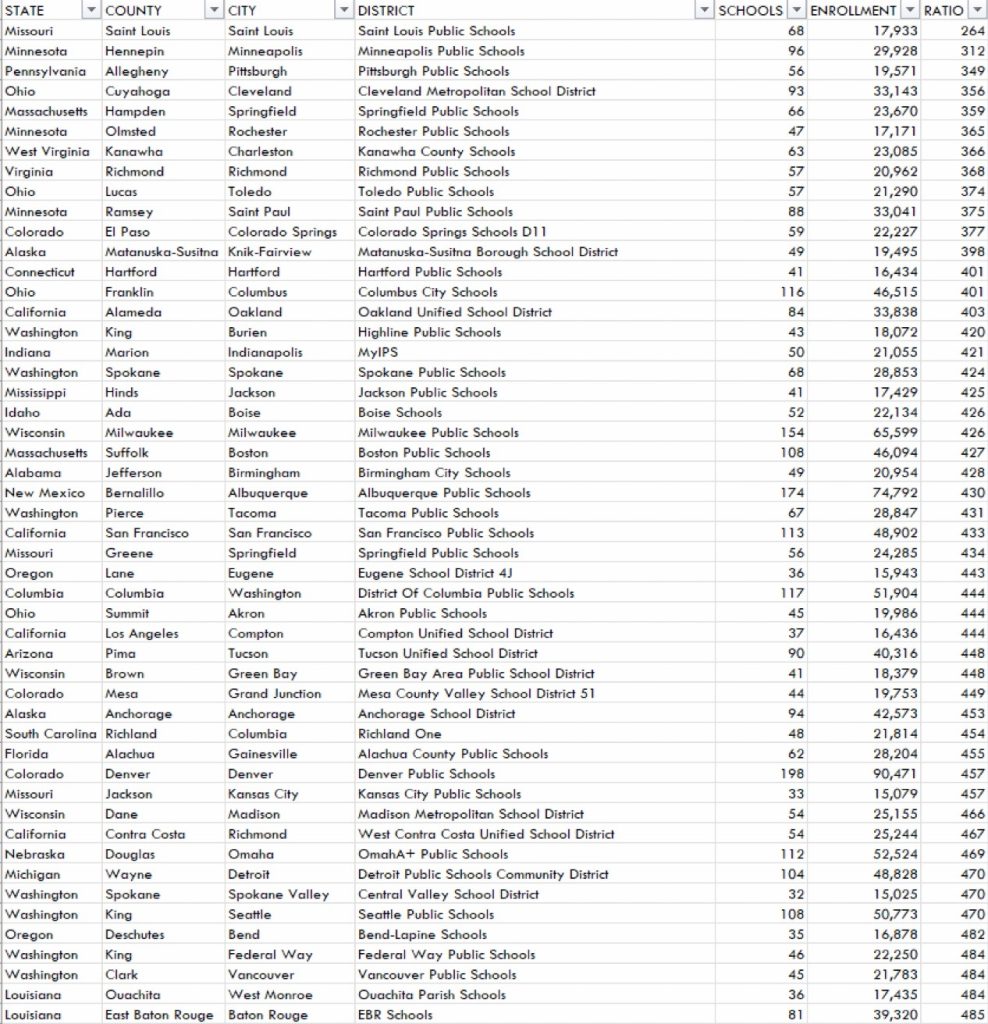
Legislative Letter to Jill Underly on Wisconsin Literacy

k-12 Tax & $pending Climate: Chicago’s Pay Day Loans

Chicago Tribune:

Hmm, we wondered. Why such a difference?

As it turns out, the Johnson administration wants to keep the cash-strapped city from having to make payments on these bonds for another three years. The extra amount the city is borrowing would go largely toward making interest payments on the debt through 2029.

In describing the arrangement to us, Fitch actually used the dreaded municipal-bond financing term, “scoop and toss.” As in the frowned-upon practice of refinancing existing debt and extending it into the future, thereby raising the total cost of whatever costs that initial debt was covering in the first place — a method Chicago mayors largely have eschewed since Richard M. Daley retired.

——

Cernovich:

The latest move is for Chicago to take on more debt, not pay it (not even interest) during Brandon Johnson’s reign. Yolo!

Large-scale online deanonymization with LLMs

Simon Lermen, Daniel Paleka:

We show that large language models can be used to perform at-scale deanonymization. With full Internet access, our agent can re-identify Hacker News users and Anthropic Interviewer participants at high precision, given pseudonymous online profiles and conversations alone, matching what would take hours for a dedicated human investigator. We then design attacks for the closed-world setting. 

Given two databases of pseudonymous individuals, each containing unstructured text written by or about that individual, we implement a scalable attack pipeline that uses LLMs to: (1) extract identity-relevant features, (2) search for candidate matches via semantic embeddings, and (3) reason over top candidates to verify matches and reduce false positives. Compared to prior deanonymization work (e.g., on the Netflix prize) that required structured data or manual feature engineering, our approach works directly on raw user content across arbitrary platforms. 

More: And right on schedule: there goes pseudonymity on the Internet.

The Dyslexia Myth

Julian Elliott

Parents are often relieved when their child who has trouble reading is finally diagnosed with dyslexia. At last, the problem has a name and expert diagnosis to go along with it. A dyslexic child can receive specialized instruction and gain extra access to staff support and resources. And the diagnosis offers an instant response to those who assume the child is stupid or lazy.

For these parents, their child’s dyslexia diagnosis is similar to a diagnosis of a bad knee. You visit your doctor to have your troublesome limb checked out, wondering whether the cause of your discomfort is an infection, a ligament injury, arthritis, or possibly a tumor of some kind. The doctor runs a series of tests, diagnoses the problem, and then recommends a course of treatment that has been found by detailed research to be effective.

But things aren’t quite so simple. The reality is that, as helpful as some parents may find it, the present system of dyslexia diagnosis is scientifically flawed, wasteful of resources, and inequitable in its social effects. The prohibitive cost of testing and other barriers means that most struggling children will never gain access to the relevant resources. In order to reform the current system, we must first dispel the myth that underpins it.  

“The present system of dyslexia diagnosis is scientifically flawed.”

“When it comes to dyslexia diagnosis, this expectation is misplaced.”

Dyslexia is sometimes understood as synonymous with reading disability—a severe difficulty with reading and spelling that persists despite appropriate instruction—and sometimes as a condition only experienced by some struggling readers, identified on the basis of cognitive tests. Parents tend to prefer the latter definition, which is why they sometimes pay thousands of dollars for a detailed psychological assessment involving multiple tests.

Massachusetts needs to catch up with Mississippi on reading instruction

Boston Globe:

2023 study of 19 teacher preparation programs in Massachusetts underscored the need for this requirement. That study, conducted by the National Council on Teacher Quality, gave grades of D or F to 15 of those 19 programs for their literacy training, while only 3 received an A or better. Several of the state’s largest teacher preparation programs, including at Boston University, Lesley University, and UMass Boston, were among the programs receiving failing or close-to-failing grades. (A number of teacher preparation programs refused to provide data to the council. And for a new report due in June, UMass Amherst claimed that its reading curricula was proprietary information, a view that was sharply questioned by the Commonwealth’s supervisor of public records, documents show.)

———

more.

———

1998! Money and school performance.

A.B.T.: “Ain’t been taught.”

8,897 (!) Madison 4k to 3rd grade students scored lower than 75% of the students in the national comparison group during the 2024-2025 school year.

Madison taxpayers have long supported far above average (now > $26,000 per student) K-12 tax & spending practices. This, despite long term, disastrous reading results. 

Madison Schools: More $, No Accountability

The taxpayer funded Madison School District long used Reading Recovery

The data clearly indicate that being able to read is not a requirement for graduation at (Madison) East, especially if you are black or Hispanic”

My Question to Wisconsin Governor Tony Evers on Teacher Mulligans and our Disastrous Reading Results

2017: West High Reading Interventionist Teacher’s Remarks to the School Board on Madison’s Disastrous Reading Results 

Madison’s taxpayer supported K-12 school district, despite spending far more than most, has long tolerated disastrous reading results.

“An emphasis on adult employment”

Wisconsin Public Policy Forum Madison School District Report[PDF]

WEAC: $1.57 million for Four Wisconsin Senators

Friday Afternoon Veto: Governor Evers Rejects AB446/SB454; an effort to address our long term, disastrous reading results

Booked, but can’t read (Madison): functional literacy, National citizenship and the new face of Dred Scott in the age of mass incarceration.

When A Stands for Average: Students at the UW-Madison School of Education Receive Sky-High Grades. How Smart is That?
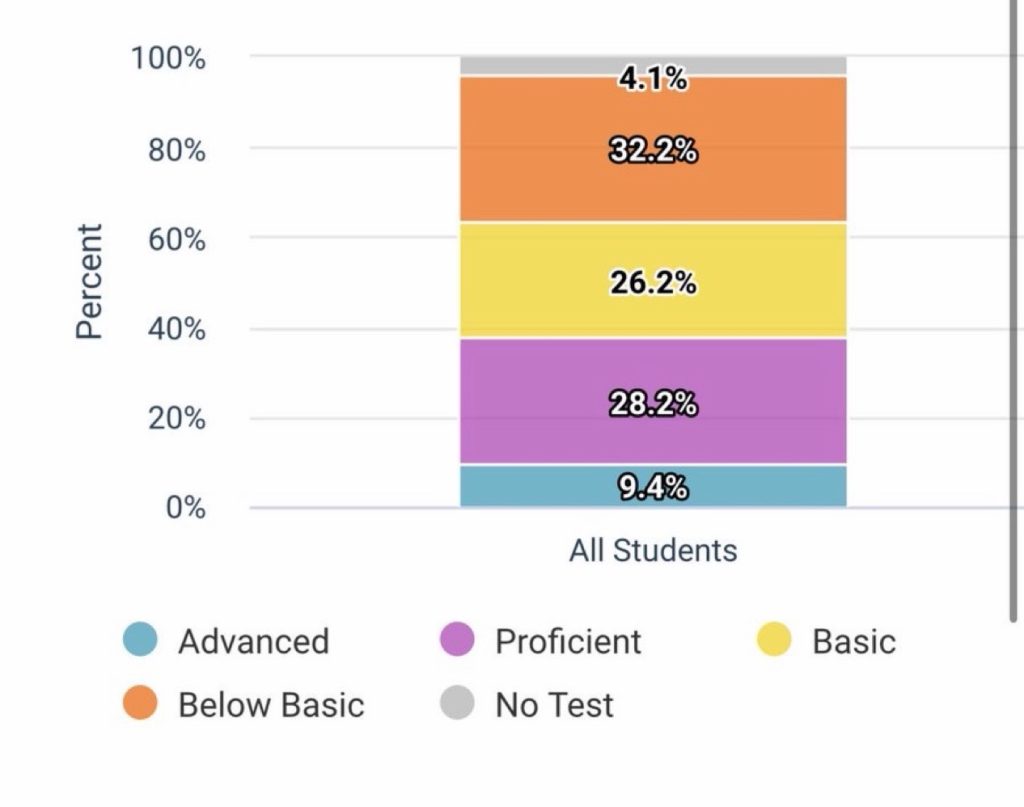
Legislative Letter to Jill Underly on Wisconsin Literacy

For College Applicants, Pressure to Make Summers Count Has Gotten Even Worse

Jasmine Li:

The country’s most ambitious high-schoolers now have one more thing to fret over: crafting their “summer story.”

Overachieving teenagers have long pursued a smorgasbord of résumé-polishing summer activities. But a range of impressive summer pursuits is no longer enough, some college advisers say. Students now feel pressure to specialize—as early as their freshman summer—in interests they want to pursue in college.

The idea, college advisers say, is to assemble a list of summer pursuits that show increasing mastery in a distinct specialty. That “narrative” can help students stand out in a sea of all-rounders, they say.

So many students now have high GPAs and strong test scores that the competition has extended to the summer, said Lisa Bain Carlton, a college counselor in Austin, Texas.

“A significant differentiator is: What have you done outside the classroom? And what does it tell us about what you’re going to do at our college?” Bain Carlton said. Summer activities have always played a role in college admissions, but now “it’s like a train that’s taken off and gotten faster and faster and faster,” she said.

The decline of confidence in higher ed

Nate Honeycut:

FIRE data shows one-third of Americans have no confidence in U.S. colleges and universities

Americans’ confidence in U.S. colleges and universities remains near historic lows. Although some have suggested that public opinion about higher education may be stabilizing or rising, our latest survey finds little evidence of meaningful recovery.Subscribe

In our latest poll, conducted in partnership with NORC at the University of Chicago, less than a third of Americans say they have “a great deal” or “quite a lot” of confidence in U.S. colleges and universities. That’s statistically indistinguishable from 2024 and 2025 levels. At the same time, almost the same proportion report having “very little” or no confidence at all.

These results stand in stark contrast to public opinion a decade ago. In 2015, 57% of Americans told Gallup they had a great deal, or quite a lot, of confidence in higher education, while just 10% expressed very little confidence. By 2018, these figures were starting to slip, with high confidence decreasing and low confidence increasing. Since then, the decline has accelerated. Compared to 2015, the share of Americans expressing high confidence has fallen by 26 percentage points, while the share expressing very little confidence has nearly tripled.

k-12 Rigor: 1912 edition

Chapter House:

In 1912, eighth graders in rural Kentucky were asked to define democracy, a republic, and an absolute monarchy, and provide examples of each.

Today, only 35% of high school seniors are proficient in reading.

You can read these words. That does not mean you are literate.

UCLA continues its “diversity” mania while damaging its reputation.

Richard K. Vedder

The DEI practices at America’s colleges and universities have been justly criticized for being anti-meritorious, unconstitutional, racist, and costly. However, a recent lawsuit against UCLA’s medical school suggests that its discriminatory admissions policies could potentially have negative public-health consequences, as well.

That’s quite an indictment against what has long been regarded as a premier medical school.

The Department of Justice argues that UCLA uses a “systemically racist” approach to med-school admissions.Last May, the groups Do No Harm and Students for Fair Admissions, as well as an unsuccessful white applicant, sued UCLA’s medical school, arguing that “various UCLA officials [had engaged] in intentional discrimination on the basis of race and ethnicity in the admissions process.” They have now been joined by the U.S. Department of Justice, which argues that the school uses a “systemically racist” approach in admissions, favoring Hispanic and black applicants over white and Asian ones. The government’s brief declares this to be a matter of public importance and seeks relief for future applicants who shouldn’t be forced to compete in a race-based system that may prejudice them.

The plaintiffs insist that UCLA must base admissions on individual ability and not on membership in some favored group.

The Edge of Mathematics

Matteo Wong

Terence Tao, the legendary mathematician, explains the promise of generative AI.

Wong: What improvements are you hoping or expecting to see from generative-AI models in the next year or two?

Tao: There’s a middle ground where we want to encourage responsible AI use and discourage irresponsible AI use. It is a delicate line to tread. But we’ve done it before. Mathematicians routinely use computers to do numerical work, and there was a lot of backlash initially when computer-assisted proofs first came out, because how can you trust computer code? But we’ve figured that out over 20 or 30 years. Unfortunately, the timelines are much more compressed now. So we have to figure out our standards within a few years. And our community does not move that fast, normally.

One very basic thing that would help the math community: When an AI gives you an answer to a question, usually it does not give you any good indication of how confident it is in this answer, or it will always say, I’m completely certain that this is true. Humans do this. Whether they are confident in something or whether they are not is very important information, and it’s okay to tentatively propose something which you’re not sure about, but it’s important to flag that you’re uncertain about it. But AI tools do not rate their own confidence accurately. And this lowers their usefulness. We would appreciate more honest AIs.

Civics: Amazon BUSTED for Widespread Scheme to Inflate Prices Across the Economy

Matt Stoller

The scale of the scheme is almost unfathomable; according to its latest investor reports, Amazon earned $426 billion of revenue in its 2025 North America online shopping business, which is about $3000 for every household in America. As Stacy Mitchell noted, prices for third party goods on the online platform, roughly 60% of its total sales, have been going up at 7% a year, more than twice the rate of inflation. And because this scheme impacts goods sold off of Amazon’s website as well, there’s a reasonable chance that it has had an impact on price levels overall in America. With a similar Pepsi-Walmart alleged conspiracy revealed earlier this year, it’s becoming increasingly clear that consolidation and price-fixing are linked to inflation.

How exactly does the scheme work? Long-standing readers of BIG may remember a piece in 2021 titled “Amazon Prime is an Economy-Distorting Lie” in which I laid out what’s happening. At the time, the D.C. Attorney General, a lawyer named Karl Racine, sued Amazon for prohibiting vendors that sold on its website from offering discounts outside of Amazon. Such anti-discounting provisions raise prices for consumers, and prevent new platforms from emerging to challenge Amazon. 

The key leverage point for Amazon is the scale of its Prime program, which has 200 million members nationwide. As Scott Galloway noted a few years ago, more U.S. households belong to Prime than decorate a Christmas tree or go to church. 

“Ghost Students” & Fraud

:

Who were Joe Haker’s students? They were what’s become known as “ghost students”: fraudsters, typically international, that apply for colleges under false or stolen identities while never intending to attend or gain a degree. The digital applications are often made easier by AI. The fraudsters portray themselves as in need of significant financial aid, wait for that aid to be disbursed, and then pocket the extra funds. They can also steal and sell student technology resources.

Fraudsters usually target fully online programs and community colleges, as it is easier for false students to slip by undetected. Mark Grant, with the Minnesota State College Faculty, said yesterday that some poor-quality work submitted by foreign ghost students is unfortunately indistinguishable with the legitimate work of some struggling students, making fraud discernment difficult for professors.

The enrollment fraud working group presented a recommendations report yesterday to the committee. Craig Munson, chief information security officer for Minnesota State, testified that the working group had created an Enrollment Fraud User Guide for Minnesota’s state colleges and universities. The User Guide, focused on cybersecurity and technical recommendations, was designed to be used by all 33 Minnesota state colleges and universities.

The working group recommended that the legislative committee expand the collaboration between higher education and the legislature by formalizing the fraud group as a standing committee and mandating a yearly fraud report to the legislature. They also recommended that fraud awareness training be provided to students and faculty members, that institutions be required to adopt the suggestions made in the Enrollment Fraud User Guide, that continued attempts at collaboration be made between the state and federal government, and that equity impact assessments take place before implementing any safeguards.

Epstein & University Influence

Joshua Chaffin, Neil Mehta & Douglas Belkin:

Just this week, Richard Axel, a Nobel laureate Columbia professor, and Lawrence Summers, the decorated economist and former Harvard president, stepped down from positions at their institutions because of their Epstein ties.

Axel said Tuesday that he would resign as co-director of Columbia’s Mind Brain Behavior Institute, calling his association with Epstein “a serious error in judgment.” Summers, meanwhile, said Wednesday that he would end his tenure as a Harvard professor at the end of the academic year. In November, he took leave from teaching duties, apologized and said he was “deeply ashamed” after the release of a batch of emails in which he asked Epstein for advice on “getting horizontal” with a woman he was pursuing.

Last week, Bard College retained a law firm to review President Leon Botstein’s ties to Epstein after the latest emails released by the Justice Department showed what appeared to be a warm personal relationship—even years after Epstein pleaded guilty in 2008 to charges of solicitation of prostitution and procurement of minors to engage in prostitution.

In a statement earlier this month, Botstein said Epstein wasn’t a friend and that his dealings with him were “only for the sole purpose of soliciting donations for the College.”

accounting and k-12 budget practices

Sara Sanford Freeman:

Minneapolis Public Schools (MPS) has announced changes to its Revenue Recognition practices; the move follows the dismissals of 3 senior finance ppl (incl CFO & Controller) in Dec & an increase to the deficit projection for next SY. Many indicator lights blinking red, but I want to unpack the RR piece. 1/

Meanwhile:

Low Tax States Gaining Babies in the Post-COVID Shuffle

Patrick T. Brown

In March 2020, life shut down, and many couples found themselves with a little extra time on their hands. Some of them welcomed a new member of the family nine months later, and those COVID babies are now getting old enough for kindergarten—and the geography of American family life has been indelibly changed in the meantime. 

Highlights

  1. Compared to their 2019 population levels, the 20 states that voted for former vice-President Kamala Harris in 2024 saw a decline in people in their 20s and kids under 10. Post This 
  2. States with cheaper housing tend to have better luck attracting or keeping parents of young kids. The majority of these states are politically red. Post This 
  3. For states that want to remain attractive to families, it’s vital to focus on the fundamentals of good governance—affordable housing, solid job growth, and the political center rather than either extreme. Post This 

As the Institute for Family Studies has highlighted, red states have higher birth rates than blue states. Red states also have seen higher rates of in-migration from other states than blue states in the years following the pandemic. There is clearly an increasing correlation between a state’s partisan valence and rates of family formation. We are seeing a kind of “big sort” of American families, which can help us predict where children will and won’t be seen and heard through the next decade. 

First, Honesty. Then, Multiplication Tables.

Bonnie Kristian

In many ways, what happened with math instruction in the United States mirrors better-known problems with how our children have been taught to read. 

As outlined in the deeply reported Sold a Story podcast, American reading instruction shifted from teaching phonics and reading fundamentals through rote practice to a more “vibes-based” approach centered on sight words and “balanced literacy” delivered in cozy classroom book corners. We chose to believe that exposing kids to good books would be enough to teach them to read and to love reading. It didn’t work.

Our trouble with math education is similar. This story hasn’t been as deeply reported yet, but it follows the same cultural trajectory. It even has a similar antihero, Jo Boaler, a professor of education at Stanford University, is seen by some in education as a ”beacon of hope.” But her critics allege that she “made bold assertions with scant evidence” which they feared would “water down math and actually undermine her goal of a more equitable education system.”

Boaler wrote a book called Math-ish that aims to help students find “joy, understanding and diversity in mathematics.” Influential in developing the pedagogical shifts that informed Common Core standards—and even in how teachers are trained to teach mathin states, like Texas, that haven’t adopted Common Core—Boaler aimed to help students experience math instruction more “broadly, inclusively, and with a greater sense of wonder and play.” 

That certainly sounds more delightful than a worksheet—even akin to the reading corners with twinkle lights and beanbag chairs. But seasoned math teachers told me they see it as a dereliction of duty. (The local educators I interviewed weren’t allowed to speak on record per school district policy.)

———

2014: 21% of University of Wisconsin System Freshman Require Remedial Math

How One Woman Rewrote Math in Corvallis

Singapore Math

Discovery Math

Connected Math (2006!)

Math Forum 2007

k-12 tax & $pending climate: Chicago credit rating downgraded by Fitch, KBRA

Justin Lawrence:

Chicago’s credit rating was downgraded by two agencies today, a rebuke that lands squarely in the middle of an ongoing budget fight between Mayor Brandon Johnson and the City Council.

The downgrade reflects mounting concern about the city’s reliance on borrowing and one-time revenue — and serves as a “wake-up call,” said one municipal finance expert, that political infighting is compounding Chicago’s long-standing structural deficit.

Despite the warning, Johnson and the City Council coalition that passed a budget over his objections sought to shift the blame to the other, a clear sign the 2027 budget process will be just as combustible as last year.

While the Council increased the city’s advance pension payment to shore up its four beleaguered retirement systems, it also kept $449 million in borrowing for operating costs that had been included in Johnson’s proposal.

The agency also downgraded the city’s outstanding bonds, from AAA to AA+,  tied to the Sales Tax Securitization Corporation, a vehicle created by former Mayor Rahm Emanuel to separate the city’s sales tax revenue from the general fund in order to borrow at lower rates. The city has increasingly relied on the STSC for new bond issuances.

KBRA, another credit rating agency, also downgraded the city’s general obligation bonds and assigned a BBB+ rating, just above non-investment grade status, to the upcoming sales. 

———

more.

civics: Epstein & the justice system

Julia Brown:

New documents — made public for the first time — show in greater detail how Epstein tried, and often succeeded, in influencing almost every level of the criminal justice system that threatened to disrupt his sex trafficking and money laundering empire.

Epstein’s efforts to corrupt the justice system is important because, had some of these figures rigorously investigated and monitored Epstein, he may not have been able to continue to sexually abuse women and girls for another decade.

This story is based on a Miami Herald review of thousands of documents released by the Justice Department, court records and interviews with key people involved in the Epstein case.

The documents — released in response to the Epstein Files Transparency Act passed by Congress last year — reveal how Epstein wooed state and federal prosecutors, assistant district attorneys, sheriff’s deputies, probation officers, federal marshals and customs and border patrol officers.

Why Universities Keep Losing the Argument

Samuel Goldman

In addition to its tension with underlying constitutional principle, this is almost certainly a counterproductive response to populist challenges. Bollinger’s response to collapsing trust is to insist that citizens and their direct or indirect representatives are entitled to only a nominal role in the direction of institutions that claim to act in their interest and spend money derived from taxes they pay. Rather than defusing the issue, he vindicates suspicion that academics believe they are philosopher kings.

Bollinger is also wrong to suggest that the status of a “branch” of government confers independence from the other branches. At one point he suggests that university presidents called before congressional committees should conduct themselves in a manner comparable to Supreme Court justices, who generally refuse to comment on their rulings in particular cases. Bollinger does not mention that Supreme Court justices are nominated by elected presidents, confirmed by elected senators, and subject to removal if their conduct is found outrageous. Judges are permitted a high level of discretion because they have been chosen and assessed by members of other branches, and because their personal conduct and institutional budgets are subject to external judgment. Bollinger is presumably not encouraging similar constraints on faculty members and administrators, which would go beyond even the oversight exercised by state governments over public universities.

What Bollinger really seems to have in mind for the academy is not a component of republican government at all. His discussion of “the university’s role as the fifth branch of the nation” evokes the medieval idea that the political community is divided into distinct “estates” that cooperate for certain purposes but are primarily accountable to their own members. Given the medieval origins of the university, it’s not surprising that there’s an affinity between the concepts. Still, a conception of the academy as an autonomous estate or guild is hard to square with a Constitution authorized by an undivided “we, the people.”

Civics: “Record increase in last four years driven primarily by illegal immigration”

Steven A. Camarota and Karen Zeigler:


The government’s January 2025 Current Population Survey (CPS) shows the foreign-born or immigrant population (legal and illegal together) hit 53.3 million and 15.8 percent of the total U.S. population in January 2025 — both new record highs. The January CPS is the first government survey to be adjusted to better reflect the recent surge in illegal immigrants. Unlike border statistics, the CPS measures the number of immigrants in the country, which is what actually determines their impact on society. Without adjusting for those missed by the survey, we estimate illegal immigrants accounted for 5.4 million or two-thirds of the 8.3 million growth in the foreign-born population since President Biden took office in January 2021. America has entered uncharted territory on immigration, with significant implications for taxpayers, the labor market, and our ability to assimilate so many people.


Highlights from the January 2025 data include:

  • At 15.8 percent of the total U.S. population, the foreign-born share is higher now than at the prior peaks reached in 1890 and 1910. No U.S. government survey or census has ever shown such a large foreign-born population.

——-

Meanwhile, foreign-born employment has been written UP by about 800,000 since Nov 2024 and now stands only about 100,000 less than on Liberation Day (rather than 670,000 loss).

K-12 Tax & $pending Climate: Wisconsin ranked among states with the highest property taxes

Chris Mueller

Wisconsin homeowners face one of the heaviest property tax burdens in the country, according to a new report from WalletHub.

The personal finance website compared property tax rates in all 50 states and the District of Columbia by using U.S. Census Bureau data, which it said shows the average U.S. household pays $3,119 a year in property taxes on their home.

“Some states charge no property taxes at all, while others charge an arm and a leg,” said Chip Lupo, a WalletHub analyst. “Americans who are considering moving and want to maximize the amount of money they take home should take into account property tax rates, in addition to other financial factors like the overall cost of living, when deciding on a city.”More: Journal Sentinel, experts answer data center questions at town hall

In Wisconsin, lawmakers have been trying to make a deal to lower surging property taxes. Assembly Speaker Robin Vos, a Republican, said Feb. 20 that it’s “very likely” lawmakers will return to pass a tax relief package in special session.

Gov. Tony Evers, a Democrat, said during his Feb. 17 State of the State addressthat he wouldn’t accept an earlier proposal from Republicans because it didn’t include a key demand: routing hundreds of millions in funding for a revenue stream for schools known as general school aids, which would also lower property tax rates.

——-

1998! Money and school performance.

A.B.T.: “Ain’t been taught.”

8,897 (!) Madison 4k to 3rd grade students scored lower than 75% of the students in the national comparison group during the 2024-2025 school year.

Madison taxpayers have long supported far above average (now > $26,000 per student) K-12 tax & spending practices. This, despite long term, disastrous reading results. 

Madison Schools: More $, No Accountability

The taxpayer funded Madison School District long used Reading Recovery

The data clearly indicate that being able to read is not a requirement for graduation at (Madison) East, especially if you are black or Hispanic”

My Question to Wisconsin Governor Tony Evers on Teacher Mulligans and our Disastrous Reading Results

2017: West High Reading Interventionist Teacher’s Remarks to the School Board on Madison’s Disastrous Reading Results 

Madison’s taxpayer supported K-12 school district, despite spending far more than most, has long tolerated disastrous reading results.

“An emphasis on adult employment”

Wisconsin Public Policy Forum Madison School District Report[PDF]

WEAC: $1.57 million for Four Wisconsin Senators

Friday Afternoon Veto: Governor Evers Rejects AB446/SB454; an effort to address our long term, disastrous reading results

Booked, but can’t read (Madison): functional literacy, National citizenship and the new face of Dred Scott in the age of mass incarceration.

When A Stands for Average: Students at the UW-Madison School of Education Receive Sky-High Grades. How Smart is That?

Legislative Letter to Jill Underly on Wisconsin Literacy

Civics: FBI obtained Kash Patel and Susie Wiles phone records during Biden administration

Jana Winter:

The FBI subpoenaed records of phone calls made by Kash Patel and Susie Wiles, now the FBI director and White House Chief of Staff, when they were both private citizens in 2022 and 2023 during the federal probe of Donald Trump, Patel told Reuters on Wednesday.

Reuters is the first to report on the FBI’s actions that took place during the Biden administration, largely when Special Counsel Jack Smith was investigating whether Trump had interfered with the 2020 election and had hidden classified documents at Mar-a-Lago, according to Patel. Smith was appointed to take over that probe in November 2022.

New Yorkers Don’t Know How Much They Spend on Education

Danyela Souza Egorov:

New York State leads the nation in education spending—more than $33,000 per-pupil, 91 percent above the national K-12 average. Yet according to a recent survey, most parents don’t know how much the state is shelling out.

50CAN, an education-advocacy group, recently released the second edition of its report on the “State of Educational Opportunity in America.” The report contains the results of the group’s survey of 23,000 parents across 50 states.

One question, which did not make the final report, asked parents to estimate how much is spent on each student in their state. New York’s results were shocking: Forty percent of the 415 respondents were “not sure,” while 29 percent guessed “less than $5,000.” Only 1 percent guessed the range (“$35,000 to under $40,000”) that accurately characterized last year’s per-pupil average ($36,293).

Why such a drastic underestimate? One possible explanation is the combination of declining student enrollment and a lack of clear academic improvements. Schools keep shrinking, and student performance hasn’t budged—so how could the state be leading the country in education spending?

“This disconnect between what’s spent and what people think is spent is longstanding in [New York]. The teachers’ unions and others have a self-interest in that narrative, so they can always ask for more and always blame the results on ‘scarce resources,’” Derrell Bradford, president of 50CAN, told me. “The truth is, after the pandemic, there are fewer students and more money in the system than there has ever been. It’s a shame kids aren’t getting the benefits while parents are kept in the dark about it.”

New York State has led the nation in per-pupil spending for 19 consecutive years. And no other large urban district spends nearly as much per student as New York City. In fiscal year 2022, for example, Gotham spent$38,163 per pupil, compared with $23,314 in second-place Los Angeles.

——-

30 October 2025 Madison School Board approves a $668,000,000 budget for 25,557 “full time equivalent” students.

Civics: Politics and the CDC

Josh Shapiro:

BREAKING: I’m suing the Trump Administration to challenge their illegal overhaul of the @CDCgov’s long-standing recommendations for children’s vaccinations.

Eric Mueller

compare the new CDC recommendations to Denmark’s recommendations for childhood vaccinations. are they not very similar now?

Deepseek & Claude

Peter O’Mallet

Deepseek got called out for scraping 150k Claude messages. So I’m releasing 155k of my personal Claude Code messages with Opus 4.5.

I’m also open sourcing tooling to help you fetch your data, redact sensitive info & make it discoverable on HF – link below to liberate your data!

How far back in time can you understand English?

Colin Gorrie: 

A man takes a train from London to the coast. He’s visiting a town called Wulfleet. It’s small and old, the kind of place with a pub that’s been pouring pints since the Battle of Bosworth Field. He’s going to write about it for his blog. He’s excited.

He arrives, he checks in. He walks to the cute B&B he’d picked out online. And he writes it all up like any good travel blogger would: in that breezy LiveJournal style from 25 years ago, perhaps, in his case, trying a little too hard.

But as his post goes on, his language gets older. A hundred years older with each jump. The spelling changes. The grammar changes. Words you know are replaced by unfamiliar words, and his attitude gets older too, as the blogger’s voice is replaced by that of a Georgian diarist, an Elizabethan pamphleteer, a medieval chronicler.

Taxpayers aren’t paying, so there have been few chances for residents to say whether they wanted the controversial surveillance network in the first place.

Oona Milliken & Isabella Aldrete

The Las Vegas Metropolitan Police Department (LVMPD) quietly entered an agreement in 2023 with Flock Security, an automated license plate reader company that uses cameras to collect vehicle information and cross-reference it with police databases. 

But unlike many of the other police departments around the country that use the cameras in their police work, Metro funds the project with donor money funneled into a private foundation. It’s an arrangement that allows Metro to avoid soliciting public comment on the surveillance technology, which critics worry could be co-opted to track undocumented immigrants, political dissidents and abortion seekers, among others.  

“It’s a short circuit of the democratic process,” Jay Stanley, a Washington D.C.-based lawyer for the American Civil Liberties Union (ACLU) who works on how technology can infringe on individual privacy and civil liberties, said in an interview with The Nevada Independent.

CIA World Factbook: 1990 – 2025

Archive

36 years of geopolitical intelligence preserved and structured for analysis. Every country, every field, every edition — parsed from the original CIA publications into a searchable, queryable archive.

The Los Angeles Unified School District is borrowing $250 million to settle sexual misconduct claims.

Kevin Dalton:

If you are wondering if this is in addition to the $500 million that the Los Angeles Unified School District borrowed less than a year ago to settle sexual misconduct claims, the answer is yes, the $250 million is in addition to the $500 million.

Experts say this will end up costing taxpayers more than $1 billion.

——-

200 Wisconsin teacher sexual misconduct, grooming cases shielded from public.

More.

“we’re just disguising mediocrity”

Megan McArdle:

“Lowering standards, eliminating standardized tests, inflating grades… We’re not building better students, we’re just disguising mediocrity. Real education demands honesty.”

More than 8% of incoming students at UC San Diego need remedial math classes — despite having passed calculus or statistics in high school. That should worry us a lot.

more.