‘Policy is Not Progress’
Karen Vaites, Curriculum Insight Project:
An important “Science of Reading Progress Report” just dropped from Fordham.
It’s full of lessons on the state of reading instruction. I’ll start with the ones that people aren’t (yet) talking about.
Curriculum advocates encourage the use of curricula which are “educative,” meaning they incorporate professional learning for teachers, and/or model good practice so effectively through their design that teachers learn through their use.
The report offers a proof point:
“Encouragingly, the survey data show that teachers who use UFLI tend to know more about the science of reading than the rest of the sample, as do teachers using CKLA-Amplify. In contrast, teachers who use Benchmark, Fountas and Pinnell, and i-Ready (the nation’s second most popular reading curriculum) tend to be less knowledgeable than their peers.”
Good stuff!
However…
The report carries this insight into its recommendations. Fordham calls to “Require districts to choose a science of reading–aligned curriculum from a state-approved list in grades K–3.”
Yet the report fails to mention (or grasp?) the disconnect between its observations about curriculum quality and the reality of state lists.
For starters, UFLI has faced many challenges getting onto state lists.
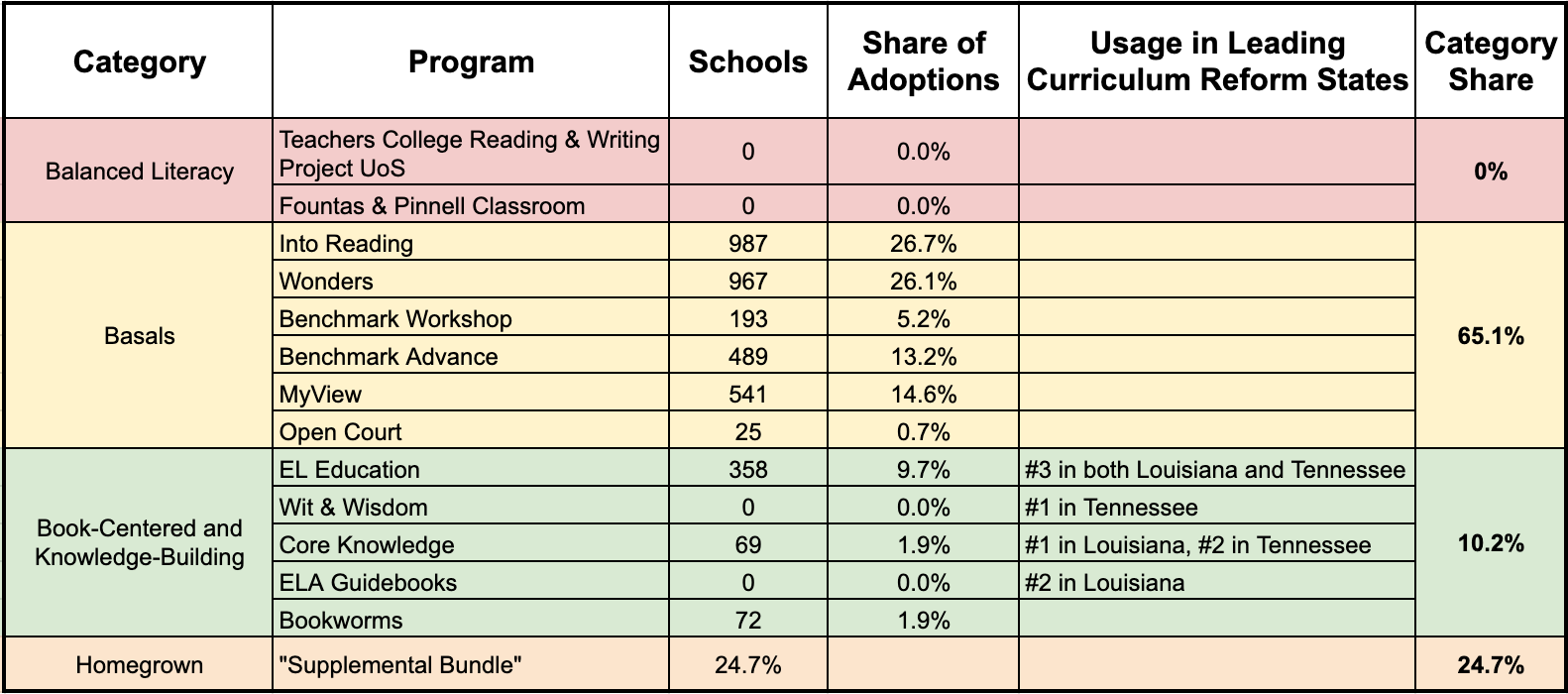
In addition, Benchmark Advance, which is called out by Fordham for its “unscientific methods,” is on numerous state lists, including Colorado and Virginia.
It’s one of the top curricula in Georgia, aided by Georgia’s state list:
———
Early Literacy Screener Map.
3,887 Madison 4 year old to third grade students scored lower than 75% of the students in the national comparison group.
Madison taxpayers have long supported far above average k-12 tax & $pending. This despite our long term, disastrous reading results.
Madison Schools: More $, No Accountability
The taxpayer funded Madison School District long used Reading Recovery…
The data clearly indicate that being able to read is not a requirement for graduation at (Madison) East, especially if you are black or Hispanic”
A.B.T.: “Ain’t been taught.”
My Question to Wisconsin Governor Tony Evers on Teacher Mulligans and our Disastrous Reading Results
2017: West High Reading Interventionist Teacher’s Remarks to the School Board on Madison’s Disastrous Reading Results
Madison’s taxpayer supported K-12 school district, despite spending far more than most, has long tolerated disastrous reading results.
“An emphasis on adult employment”
Wisconsin Public Policy Forum Madison School District Report[PDF]
WEAC: $1.57 million for Four Wisconsin Senators
Friday Afternoon Veto: Governor Evers Rejects AB446/SB454; an effort to address our long term, disastrous reading results
Booked, but can’t read (Madison): functional literacy, National citizenship and the new face of Dred Scott in the age of mass incarceration.
When A Stands for Average: Students at the UW-Madison School of Education Receive Sky-High Grades. How Smart is That?