School Information System

K-12 tax & $pending climate: inflation 101

Notes and links on the well funded Madison School District’s $607,000,000 November tax & $pending increase referendum along with the City of Madison’s vote on the same.

Share

Civics Education: Censorship in Brazil & the US

AGHamilton:

Wow. X has released one of the orders that they refused to comply with that led to Alexandre de Moraes shutting down X, freezing the local assets of Space X, and threatening fines for anyone that uses it via VPN.

The order gave X 2 hours to block a bunch of accounts without any specific justification, including the account of sitting Brazilian Senator Marcos Ribeiro do Val.

and:

Consider how crazy this is regardless of your views on X or Musk:

A judge ordered a bunch of accounts secretly closed and info about the owners to be sent to him without explaining what those accounts did wrong. Then when X tried to contest, he threatened their legal representative. When that one quit and they refused to give him a new target, he ordered for the platform to be shut down throughout the country, for the assets of a completely unrelated business to be seized because it shares an owner, and then threatened anyone who uses the platform via alternative methods with fines.

This goes beyond just abuse of power and there is no reasonable explanation for it.

Robert Sterling:

You guys keep telling me I’m too paranoid about losing free speech.

But I’m telling you: You’re not nearly paranoid enough.

And:

I will continue to beat the drum that we must restore real civics education in America. We’re currently witnessing what happens when you teach an entire generation to despise, rather than respect, the greatest (& most free, for now) nation on earth.

Paul Graham:

Robert Reich wrote in The Guardian that “regulators around the world should threaten Musk with arrest if he doesn’t stop disseminating lies and hate on X.” The US is part of the world. So are you saying the US government should threaten him with arrest, @rbreich?

Paul Thacker:

Professional Democrats, like Robert Reich, want to control what you can say.

They call it “moderation” but the end goal is censorship.

Bill Ackman:

More.

The Biden administration censored people. Any “disinformation expert” saying otherwise is spreading disinformation.

Meanwhile, curious US rhetoric.

Fabius Maximus:

Robert Reich thinks George Soros using his billons to make the West Leftists is fine. But Musk defending classical liberal values should be arrested or at least suppressed. Leftists now openly seek tyranny.

Maud Maron:

Who decides what is “misinformation” @RBReich?? How can you even pretend that bureaucrats and political apparatchiks wielding the awesome power of idea censorship is better than America’s commitment to Free Speech enshrined in the FIRST AMENDMENT of the Bill of Rights.

Nate Silver:

The misinformation people often have latent authoritarian tendencies actually scratch that I meant explicit ones.

Walter Kirn:

The last few days have seen an almost symphonic surge of attacks on our most fundamental rights, by officials, newspapers, politicians, celebrities, & academics. It’s not rhetoric anymore, it’s an organized massing of institutional forces prior to big moves which seem imminent

Share

Virginia Board of Education approves changes to accreditation, accountability systems

Nathanial Cline

 Virginia Board of Education on Wednesday approved the final touches on the state’s Every Student Succeeds Act plan, designed to address concerns with how schools were rated and student performance was measured to determine better how to direct state resources. 

During the special meeting in Richmond, the board approved Virginia’s ESSA plan, readiness weighting for different grade levels, and the overall school performance and support framework proposal as part of its package of accountability system changes.

Compared to the existing system, the new regulations are splitting the state’s accreditation system into two: an accreditation system, to assess whether schools meet all requirements laid out in state laws and regulations; and an accountability system, to provide “timely and transparent information on student and school performance.”

VDOE staff said this plan helps meet the board’s goals of setting and assisting students in meeting high expectations and supporting learning loss recovery by ensuring the school performance framework holds schools accountable for actual performance.

Share

D.E.I. Is Not Working on College Campuses. We Need a New Approach.

Paul Brest & Emily Levine:

These findings are discouraging, given that institutions of higher learning have spent several decades and vast sums of money establishing institutional infrastructures to promote diversity, equity and inclusion. Discouraging, but not surprising — because our inquiries revealed how exclusionary and counterproductive some of these programs can be.

Our committee was pressed by many of those we interviewed to recommend adding Jews and Israelis to the identities currently recognized by Stanford’s D.E.I. programs so their harms would be treated with the same concern as those of people of color and L.G.B.T.Q.+ people, who are regarded as historically oppressed. This move would be required of many California colleges and universities under a measure moving through the California Legislature. But subsuming new groups into the traditional D.E.I. regime would only reinforce a flawed system.

D.E.I. training originated in the corporate world of the 1960s and migrated to universities in subsequent decades, initially to rectify the underrepresentation of minority groups and then to mitigate the tensions associated with more diverse populations. In recent years, the goals of diversity and inclusion have become the bête noire of the political right, in part to avoid reckoning with our nation’s history of slavery and discrimination in ways that might cause, as some state laws have put it, “discomfort, guilt or anguish.” We do not share this view. We believe that fostering a sense of belonging among students of diverse backgrounds is a precondition for educational success. That said, many D.E.I. training programs actually subvert their institutions’ educational missions.

——-

More.

Share

Aan a Public School Ask Students to State their Religion?

Mark Movsesian:

Last month, at the end of a three-year saga, the U.S. Department of Education ruled on a complaint that New Jersey parents had filed against the Cedar Grove School District. The conflict is interesting for what it suggests about overreaching school administrators and about the capacity of persistent parents who believe their kids’ rights have been violated to get things done.

Back in 2021, without giving parents prior notice, the district surveyed elementary, middle and high school students about a variety of sensitive topics, including the students’ gender identity, race, ethnicity and, in the case of high school students, religious affiliation. The district argued that it was collecting the students’ information confidentially in the interests of promoting diversity, equity, and inclusion.

When they learned about the surveys, many parents objected. One of those parents was my colleague at St. John’s Law, Patricia Montana. As she recounts in a recent Legal Spirits podcast, with a little research, she discovered that the surveys violated several state and federal privacy laws, including, with respect to the question about religious affiliation, the federal Protection of Pupil Rights Amendment, or PPRA. The PPRA requires a school district that wishes to survey students on certain subjects, including religious affiliation, to notify parents in advance and allow parents an opportunity to opt their children out of participation.

Share

John Rawls and the death of Western Marxism

Joseph Heath:

Back when I was an undergraduate, during the final years of the cold war, by far the most exciting thing going on in political philosophy was the powerful resurgence of Marxism in the English-speaking world. Most of this work was being done under the banner of “analytical Marxism” (aka “no-bullshit Marxism”), following the publication of Gerald Cohen’s Karl Marx’s Theory of History: A Defence (and his subsequent elevation to the Chichele Professorship in Social and Political Philosophy at Oxford). Meanwhile in Germany, Jürgen Habermas’s incredibly compact Legitimationsprobleme im Spätkapitalismus promised to reinvigorate Marx’s analysis of capitalist crises in the language of contemporary systems theory. It was an exciting time to be a young radical. One could say, without exaggeration, that many of the smartest and most important people working in political philosophy were Marxists of some description.

So what happened to all this ferment and excitement, all of the high-powered theory being done under the banner of Western Marxism? It’s the damndest thing, but all of those smart, important Marxists and neo-Marxists, doing all that high-powered work, became liberals. Every single one of the theorists at the core of the analytic Marxism movement – not just Cohen, but Philippe van Parijs, John Roemer, Allen Buchanan, and Jon Elster – as well as inheritors of the Frankfurt School like Habermas, wound up embracing some variant of the view that came to be known as “liberal egalitarianism.” Of course, this was not a capitulation to the old-fashioned “classical liberalism” of the 19th century, it was rather a defection to the style of modern liberalism that found its canonical expression in the work of John Rawls.

If one felt like putting the point polemically, one might say that the “no-bullshit” Marxists, after having removed all of the bullshit from Marxism, discovered that there was nothing left but liberalism. This is not quite right though, because what they actually discovered was that the new, modernized, reinvigorated liberalism propounded by Rawls was both expressively and rhetorically superior to the reconstructed Marxism they had been trying to defend. So they switched allegiances (sometimes with fanfare, more often without).

Share

European Censorship, Elon Musk and the Telegram Arrest

Wall Street Journal:

Telegram’s largely hands-off approach to moderating content has made it popular among terrorists as well as genuine political dissidents. Journalists use the app to communicate with sources, though terrorist groups and authoritarian governments also use it to spread propaganda, as Russia has in Ukraine.

Paris prosecutors say Mr. Durov was detained in relation to an investigation into criminal activity on the platform, including child pornography, drug trafficking, money laundering and its refusal to cooperate with law enforcement. Those are serious offenses if true.

But many suspect this is merely a pretext because Europe is also imposing speech controls on other media platforms. France in 2020 sought to require sites to remove hate speech, though most of its law was blocked by the country’s top court. The European Parliament then stepped into the breach with its Digital Services Act, which compels platforms to curb harmful content, including so-called hate speech, disinformation and propaganda.

The European Commission is even conducting “stress tests” to ensure platforms police harmful content. Companies can be fined up to 6% of their worldwide revenue if deemed non-compliant. Thierry Breton, the European Commissioner for Internal Market and a former French telecom executive, is wielding the law as a cudgel to censor speech worldwide.

Civics Education: Censorship in Brazil & the US

Share

Notes on literacy and the taxpayer funded Wisconsin DPi

Jenny Warner:

DPI just put out Personal Reading plans guide for Wi, and in the reference section used a Book by Scanlon an advocate for three cueing. Here is a quote from the book. This quote is false because S often makes a z sound and we can teach that! @WisconsinDPI we outlawed 3 cueing!

Share

Colorado Reaches a Property-Tax Crossroads

Wall Street Journal:

Democratic Gov. Jared Polis called a special session this week to debate a tax-cut deal he struck with legislative leaders. In the short term, homeowners would get a roughly 10% tax-rate reduction—a welcome change after property values jumped as much as 63% in booming towns from 2021 to 2023.

More promising is the bill’s long-term relief. The agreement would cap the increase in local tax revenue at 10.5% over the two-year cycle when properties are reassessed, ensuring that the next upswing in home prices won’t hit tax bills as hard. Along with a 14% commercial-rate cut, these changes would return about $1.6 billion a year to property owners, says the Colorado Office of State Planning and Budgeting.

Once approved the cap would become part of Colorado’s Taxpayer Bill of Rights, which has served as a break on the state’s taxes. Any increase to its rates or assessment cap would require a ballot measure.

The proposal is the best offer to date from Mr. Polis, who has floated smaller relief in the past but has been pushed toward a more substantive tax reform. Advance Colorado, a free-market advocacy group, managed to put a pair of proposals on the ballot that would reduce residential and commercial property tax rates by 20% and 17%, respectively. But the group has agreed to pull the measures if Mr. Polis gets his own cut through the Democratic-controlled Legislature.

Share

I am homeschooled documentary

Share

Remedial free speech at the University of Wisconsin-Madison

Becky Jacobs:

As first-year and transfer students start classes this fall at the University of Wisconsin-Madison, they must watch a new presentation about freedom of expression on campus.

The seven videos cover the First Amendment, academic freedom, campus speakers, talking across differences, offensive speech, activism and civil disobedience. Chancellor Jennifer Mnookin provides introductory and closing remarks.

“To disagree with one another, with your professors, and even with me, it’s part of learning to think critically,” Mnookin says in one video. “I also ask you to disagree productively, with respect for our common humanity.”

UW-Madison created its “Free Expression” training as part of the deal reached in December between lawmakers and the Universities of Wisconsin over funding and diversity, equity and inclusion programs. UW system leaders agreed to “develop and implement on all campuses a module regarding freedom of expression for entering undergraduate students.”

Share

Civics: Lawfare and elections

Mark Penn:

and now a whole new team has been installed and the lawfare campaign resumed.

“You’ve had two Democratic candidates who’ve not been able to give unscripted interviews, which is extraordinary.”

Share

Free speech: X’s Lawsuit Against Media Matters Can Go Forward

Eugene Volokh:

From yesterday’s opinion by Judge Reed O’Connor (N.D. Tex.) in X Corp. v. Media Matters for America:

Plaintiff alleges that Defendants knowingly and maliciously fabricated side-by-side images of various advertisers’ posts on Plaintiff’s social media platform X depicted next to neo-Nazi or other extremist content, and portrayed these designed images as if they were what the average user experiences on the X platform. Plaintiff asserts that Defendants proceeded with this course of action in an effort to publicly portray X as a social media platform dominated by neo-Nazism and anti-Semitism, and thereby alienate major advertisers, publishers, and users away from the X platform, intending to harm it….

As the Court must accept all well-pleaded facts in the complaint as true and view them in the light most favorable to the plaintiff, for the reasons that follow, Defendants’ Motion [to Dismiss] is DENIED….

[1.] Tortious Interference with Contract

To allege a prima facie case of tortious interference with existing contractual relations, a plaintiff must plead “(1) an existing contract subject to interference, (2) a willful and intentional act of interference with the contract, (3) that proximately caused the plaintiff’s injury, and (4) caused actual damages or loss.”

Share

Notes on Chicago K-12 Tax & $pending Practices

Stuart Loren:

Some context: The average Chicago teacher salary is $94.3k compared to $63.8k for the average American (or 47.8% higher). As of 2019, the average Chicago teacher pension benefit was $6,376/month (eligible at age 55) vs $1,783/month for Social Security in 2024 (eligible at age 62).

I realize there is variation between individuals and the average, and the numbers get skewed by teachers with more tenure and higher pay. I also think teachers do vital work, and it can be a challenging profession. We need to be honest, though, about what we can afford as a city. Especially so given our structural deficits, unfunded pension liabilities, distressed credit ratings and an already uncompetitive and burdensome tax regime (sales + property + state income taxes, which together rank among the highest in U.S.).

Moreover, compared to other states, Illinois residents pay the 5th highest amount of their income toward public K-12 spending in the U.S. (at 4.5%, or $21.8k) – and spending is materially higher for CPS compared to the rest of state (at around $30k per pupil). Spending isn’t the main issue…

I get that many have taken a hit with inflation and

Share

Notes on phones in schools

Kayla Huynh:

Under a Madison Metropolitan School District rule, students are allowed to have their phones in school but must refrain from using their devices in a way that disrupts learning. The policy gives school leaders latitude in creating their own rules.

The Madison School Board considered updating the district’s cell phone policy in 2022 but board members made no change. The current policy was last revised in 2014, when Apple released the iPhone 6. Apple is expected to release the iPhone 16 this fall.

A Cap Times review of school policies found most schools in the district are adopting individual rules to deter students from being on their phones.

The policies vary district-wide. Some schools require students to keep their phones off and stored in their lockers. Others allow students to keep their phones throughout the school day as long as the devices are powered down or in silent mode.

Share

“challenges this presumption of innocence”

Jack Nicastro:

The Supreme Court disagrees. In 2013, the Court ruled in Maryland v. King that taking DNA upon arrest does not violate the Fourth Amendment’s protection against unreasonable searches and seizures. Since then, warrantless DNA collection and comparison has been widely practiced, much to the chagrin of civil liberties groups such as the American Civil Liberties Union.

According to data from the National Conference of State Legislatures, 20 states do not collect DNA upon any arrest. Of the remaining 30 states that do, most limit this collection to felony arrests, while eight also include specific misdemeanors. Even among felony arrests, the relevance of collecting DNA can vary widely: using DNA from a marijuana trafficking arrest to compare against samples from the crime scene of a serial murder is unjustifiable. 

Share

The future of Coursera’s only credible alternative for universities rests in the hands of 2U’s creditors.

Dhawal Shah

In 2021, the unprofitable 2U bought edX, an unprofitable non-profit, for a staggering $800 million. Even to my untrained eye, it seemed like a questionable decision.

In my analysis of the acquisition, I had highlighted the financial strain this acquisition would place on 2U, noting the additional $42 million of annual interest expense due to the loan taken to finance the purchase.

Last month, 2U filed for bankruptcy, primarily due to the significant debt it took on, particularly to finance the acquisition of edX.

Fast forward to 2024, and we’re faced with a harsh reality: 2U is bankrupt, edX seems to have stagnated, and Axim Collaborative (the  non-profit from the sale that retained the $800 million) has barely made a peep.

As one of the few voices who expressed skepticism from the outset (in a business sense), I feel compelled to break down this triple failure and the unfulfilled promises that accompanied it.

Share

Notes on k-12 models

Jeff Hagan:

Jennifer C. Berkshire and Jack Schneider, coauthors of A Wolf at the Schoolhouse Door, have written a new book, The Education Wars: A Citizen’s Guide and Defense Manual (both books are published by the New Press). In it, the two explore the seemingly sudden assault on public schools from Christian conservatives and fiscal conservatives and show that it is, in fact, not so sudden, but rather a sustained line of attack against which public school defenders have been fighting for decades

Share

K-12 spending growth vs teacher compensation

More.

The Mackinac Center.

Share

New UW-Madison protest policy ‘clearly unconstitutional,’ free speech expert says

Noe Goldhaber

The University of Wisconsin-Madison’s new protest policy may be unconstitutional, a free speech and constitutional law expert told The Daily Cardinal Thursday. 

UW-Madison updated its protest policy Wednesday to include restrictions on “expressive activity” within 25 feet of university facility entrances, size limitations for signs in buildings, specific sound amplification restrictions and restrictions on protest activity during select times on campus areas.  

Although the policy isn’t trying to limit “individuals speaking directly to one another” such as conversation, free speech and constitutional law expert Howard Schweber said a conversation between friends, the distribution of newspapers or pamphlets, singing or wearing political merchandise could all be prohibited within 25 feet of UW-Madison facility entrances.

Schweber said the university limiting “expressive activity” within 25 feet of building entrances is “extremely problematic, clearly unconstitutional” and “begging to invite some judge to strike them down.”

UW-Madison defines “expressive activity” as activities protected by the First Amendment including “speech, lawful assembly, protesting, distributing literature and chalking” in its updated policy.

Share

Are Wisconsin students really doing better? Or does it just look that way?

Alan Borsuk:

“Instead of focusing on declining academic achievement in Wisconsin, the Department of Public Instruction is working to hide the problem,” wrote Will Flanders, research director at the Wisconsin Institute for Law & Liberty, a conservative law firm and think tank. “Unfortunately, changing standards for political correctness and to avoid accountability will hurt students today, tomorrow and long into the future.” 

Has the actual achievement of students improved much, if at all? That’s a different question that can’t be answered yet.   

But Wisconsin’s measuring stick for student performance has been changed. And the categories for student performance have been renamed in, shall we say, kinder, gentler ways.  

Results from the state’s round of standardized tests — administered in the spring and known as the Forward tests for third- through eighth-graders and the ACT and PreACT Secure tests for high school students — have been distributed to school districts and schools and, in some places, to families. The overall results will not be made public until sometime this fall. But Wisconsin Department of Public Instruction leaders have released enough information to make clear that significant changes have been made in the accountability system.  

The changes — especially in where the bars are set for categorizing students’ performance — will make it difficult, at best, to compare this year’s results to prior years for the large majority of students in Wisconsin, including large numbers of private school students who take part in one of the state’s four school voucher programs.

———

“Instead of focusing on declining academic achievement in Wisconsin, the Department of Public Instruction is working to hide the problem,” wrote Will Flanders, research director at the Wisconsin Institute for Law & Liberty, a conservative law firm and think tank. “Unfortunately, changing standards for political correctness and to avoid accountability will hurt students today, tomorrow and long into the future.”  

———-

More.

Madison taxpayers of long supported far above average K – 12 spending.

The data clearly indicate that being able to read is not a requirement for graduation at (Madison) East, especially if you are black or Hispanic”

My Question to Wisconsin Governor Tony Evers on Teacher Mulligans and our Disastrous Reading Results

2017: West High Reading Interventionist Teacher’s Remarks to the School Board on Madison’s Disastrous Reading Results 

Madison’s taxpayer supported K-12 school district, despite spending far more than most, has long tolerated disastrous reading results.

“An emphasis on adult employment”

Wisconsin Public Policy Forum Madison School District Report[PDF]

WEAC: $1.57 million for Four Wisconsin Senators

Friday Afternoon Veto: Governor Evers Rejects AB446/SB454; an effort to address our long term, disastrous reading results

Booked, but can’t read (Madison): functional literacy, National citizenship and the new face of Dred Scott in the age of mass incarceration.

When A Stands for Average: Students at the UW-Madison School of Education Receive Sky-High Grades. How Smart is That?

Share

K-12 Tax & $pending climate: Madison’s 2 no votes on the November referendum

David Blaska summary:

Ike Knox and Barbara H-McK were the only two votes against putting the City of Madison’s $22 million property tax hike on the November 5 ballot. Here is Ald. Harrington-McKinney:

I am absolutely AGAINST, and will vote NO to any referendum that seeks to increase the levy or burden residents with additional property taxes. [To Mayor Satya] The primary reason for a NO vote on the referendum is that you have lost all credibility in being fiscally responsible in managing our money.

Echoing former mayor Paul Soglin (who always seems the equivalent of the UK’s shadow government), Ald. H-McK wonders why the City hasn’t lobbied Gov. Tony Evers, a Democrat, for some kind of assistance “years ago in preparation for this day.” The alder also indicts “lack of clarity” around funding the mayor’s pet project, bus rapid transit (BRT).  

Portraying grant moniesfrom any governmental agency does not make it ‘free’ money. Capital assets require maintenance and repair (operating expenses) whether it’s a building, elevator, fire alarm/suppression system, bridge, road, bus, bus stop, bike path, etc. Any ‘net new’ asset drives maintenance as well as requiring funding (reserves) for future replacement.  

A $200 million grant will eventually require funding sufficient capital reserves, which will be a net new obligation for City and taxpayers. When ridership is falling this is a huge risk, and obligation, to citizens. What is the ridership model for the next 5 years, what happens if ridership declines, what are mitigation plans if BRT is under water?

Madison’s well funded k-12 system and city government are seeking substantial 607M+ tax and spending increases via referendum this fall.

Share

Another Madison area Tax & $pending increase referendum

Chris Rickert:

Fitchburg is allowed a 3.847% increase to its levy, the city said in the news release, which would bring the levy to about $32.6 million. A successful referendum would bump that increase to 11.01% and the levy to about $36.2 million.

Baraboo

Madison’s well funded k-12 system and city government are seeking substantial 607M+ tax and spending increases via referendum this fall

Share

 A recent study indicates that as much as 25% of Generation Z job applicants have brought a parent with them to a job interview in the past year.

LZ Granderson:

Let’s start with employers saying younger applicants are unprepared. That should not be altogether surprising given the havoc the pandemic played on the world’s education system and the lives of young people during formative years. The ramifications stemming from years of interruption in learning and social development are beginning to show up in the workforce.

Last fall, when I started teaching a college class, it took weeks for me to get my students to make eye contact and speak in class to one another — and some of them want a career in communication. I’ve spoken to friends who are also educators, and they have seen the same.

Which is why some young people would opt to bring a familiar face into an unfamiliar setting. And in some cases, they’ll choose the only adults they interacted with in person while we were sheltered in place: their parents. The image doesn’t seem so ridiculous when you think about it like that. Because of the applicant’s understandable social awkwardness — anxiety, avoiding eye contact — the presence of a parent can bring reassurance. That doesn’t mean the young person can’t do the job without Mom or Dad. It means that job interviews are stressful. It means the pandemic’s full toll is still becoming apparent.

Commentary.

Share

California Law Schools Must Encourage Viewpoint Diversity:

Keith Hand:

Many law schools operate in a manner that reinforces ideological orthodoxy and chills dissenting views.

In June, the deans of over 100 law schools published a joint letter affirming that legal education should teach students “to disagree respectfully and engage with one another across ideological lines.” As thousands of new law students begin their professional education, in the midst of a divisive election cycle and debate over another round of contentious U.S. Supreme Court decisions, are law schools doing enough to train advocates for a pluralistic society in practice? …

Educational institutions, especially those training the nation’s future lawyers and judges, should work to counter the groupthink and polarization degrading our civic life. But in practice, many law schools operate in a manner that reinforces ideological orthodoxy and chills dissenting views on contentious legal issues.

Here in California, examples of such problems abound. Many law faculties lack meaningful ideological diversity. Institutionally sponsored events and social media overwhelmingly promote progressive speakers and perspectives. Administrators issue institutional statements on national and world events, leaving the impression that dissenting views are unwelcome. And, when students invite outside experts to present alternative perspectives, they sometimes face harassment and shout downs, as we witnessed at my law school, Stanford Law School, and other institutions in recent years. … As a state that prides itself on tolerance and openness, California can and should do better.

Share

Litigation over Race based taxpayer funded scholarships

Tomer Ronen:

The lawsuit claims Rothove contacted a UW-Madison official who said he was ineligible to apply for the program “because of his race.” Rothove is not a first-generation college student and does not meet the McNair federal income guidelines, according to the lawsuit.

“I was excited when I learned about the McNair Program because I thought it would be a great way to help me get into graduate school,” Rothove said. “But when I realized that I did not qualify because of my race it was devastating. This is the 21st Century — why are we continuing to separate and divide students?”

Share

California and cursive writing

Keiran Southern:

In an age of smartphones and TikTok, students in California are now required to learn an old-school skill — joined-up writing.

Cursive writing was largely abandoned in America after 2010 when many states adopted learning standards introduced by the Obama White House. In an era when children do most of their work digitally, its popularity declined. 

However, California has now become one of 23 states that require cursive handwriting to be taught, with supporters saying it helps a child’s development and is important for reading historical documents, such as the US Declaration of Independence.

Learning joined-up writing is now obligatory for students aged six to 12 after Gavin Newsom, the governor of California, signed a bill that took effect this month.

Share

Prompt Engineering Interactive Tutorial

Anthropic

This course is structured to allow you many chances to practice writing and troubleshooting prompts yourself. The course is broken up into 9 chapters with accompanying exercises, as well as an appendix of even more advanced methods. It is intended for you to work through the course in chapter order.

Share

Auditing the taxpayer funded Wisconsin DPI

Cleo Krejci

Following news of a financial crisis in Milwaukee Public Schools, a legislative committee has mandated a state audit of Wisconsin’s education department.

The co-chairs of the Joint Legislative Audit Committee said MPS’ financial issues that came to light this spring necessitate a deeper review of the Department of Public Instruction itself. The review by the Legislative Audit Bureau will probe for answers about how DPI monitors K-12 school finances.

“Clearly (the Department of Public Instruction) decided not to treat the infection it knew about at (Milwaukee Public Schools), and let it fester until it was too late,” State Sen. Eric Wimberger, R-Green Bay and co-chair of the audit committee, said Thursday.

Though the audit was approved Thursday, not all members of the legislative committee were in support of it. Sen. Robert Wirch, D-Somers, said he voted no because the audit was a “fishing expedition” that didn’t take the taxpayers into consideration.

“I believe in local control and local responsibility,” Wirch said. “A lot of people have lost their jobs over what happened in Milwaukee. We already have an audit that’s going to be happening.”

Details about what drove the financial crisis in Milwaukee are still murky. But what’s clear is the district was months late in submitting required financial information to the state, driving its superintendent and two other administrators to vacate their positions.

Share

Civics: Independence

Nicole Shanahan Video.

Meanwhile: Harris explains in exclusive CNN interview why she’s shifted her position on key issues since her first run for president

Share

Notes on the taxpayer funded Wisconsin DPI’s “Accountability System”

Will Flanders

How do we know DPI’s accountability system is broken? Below is a count of the schools that “Met Expectations” on the report card last year. 7 schools with >4.6% proficiency in ELA were in this category, as were 3 schools with 64-69% proficiency. The current system is useless.

Share

Notes on Ohio’s K-12 climate and 2025

Megan Henry:

“Ohio is on the cutting edge of implementing universal vouchers,” Collins said. “Ohio is the Wild West when it comes to universal vouchers.” 

Project 2025 would then take it a step further by expanding education savings accounts — something Ohio is also trying to do. Rep. Gary Click, R-Vickery, introduced House Bill 339 last year which would establish the noncharted educational savings account program.

The education savings account program started in August 2011 in Arizona and have grown in popularity in the past few years as more states move toward universal school vouchers. ESAs give families access to public per-pupil funds to be used for tuition for private schools, among other things. Arizona’s budget this summer faced a meltdown due to private charter school spending, which caused hundreds of millions in budget cuts to critical state programs and projects.

Share

Endangering Vulnerable Kids

Christina Buttons

Progressives have labeled Tim Walz a “champion of children,” citing policies he enacted as governor of Minnesota. Those policies, however, have endangered some of the state’s most vulnerable kids.

In May, Walz signed into law the Minnesota African American Family Preservation and Child Welfare Disproportionality Act, the most radical child-welfare-reform bill in the country. Inspired by activists’ complaints about racial disparities in the child-welfare system, the new law makes it harder to remove black or other “disproportionately represented” children from homes where they may have been neglected or abused. While supporters have argued that the law supports children’s welfare, in reality, it keeps black and minority kids in unsafe environments in the name of racial equity.

Activists seeking to reform Minnesota’s child-welfare system had long cited its racial disparities. Black children (including those of mixed race) make up 26.9 percent of the state’s child-protection cases (blacks constitute 11 percent of the state’s population overall); white children account for slightly less than half of all cases, though whites account for nearly 75 percent of the population. Reformers present these imbalances as evidence of racial bias, but black children nationally are three times more likely to die of suspected abuse or neglect than are white children.

Even before the passage of the law, Minnesota child-welfare professionals were more likely to leave black children in dangerous environments. According to a report by Safe Passage for Children of Minnesota, black children made up 26.1 percent of all child-maltreatment deaths between January 2015 and April 2022, well outpacing blacks’ share of the state population. The report’s authors note that “counties may have left Black children in high risk settings more frequently and for longer periods than children of other races and ethnicities.”

Share

In stark SCOTUS filing, DOJ challenges appeals court ruling against SAVE student loan plan

Chris Geidner

If the court does not vacate the Eighth Circuit’s injunction, in other words, DOJ urged the Supreme Court to take the cases on the merits and hear them in the fall to rule on the legality of the SAVE plan.

When lower courts are out of control, the Justice Department should say so — to hold the courts, including the Supreme Court, accountable and to inform the public. Prelogar’s request to the justices is a breath of fresh air in that respect. 

Share

Student behavior and mediocre pay are taking their toll

Matt Barnum:

The share of teachers who say the stress and disappointment of the job are “worth it” has fallen to 42%, which is 21 points lower than other college-educated workers, according to a poll by Rand, a nonprofit think tank. As recently as 2018, over 70% of teachers said the stress was worth it.

In surveys and interviews, teachers are most often pointing to a startling rise in students’ mental-health challenges and misbehavior as the biggest drivers of burnout. In the Rand survey, student behavior was the top source of teachers’ job stress.

High-school math teacher Cory Jarrell says he saw student behavior deteriorate, yet his school grew more lenient in administering consequences. He also didn’t feel like teaching offered much opportunity to advance in his career.

And then his district, Kansas City Public Schools, rolled out a new policy last year. Teachers couldn’t give students a zero for an assignment, even if they didn’t turn it in. This was the final straw.

“When I got into teaching my one thing was about learning and love of learning,” Jarrell said. “In the end, it was less about the learning and more about babysitting.”

He left teaching this summer.

Share

The Democratic Party’s Project 2025

Wall Street Journal:

What Kamala Harris will do if she wins the White House in 77 days is still mostly an open question, since she leapfrogged the primaries and didn’t have to argue over policy with any Democratic competitors. But for one clue as to Ms. Harris’s direction, look at what the Democratic base believes, since she has a history of following her party instead of leading it.

The 92-page document is filled with political rhetoric and exaggerations that present Mr. Biden as a working-class hero and Donald Trump as a richy-rich villain. But the platform is also a peek into an economic worldview in which the government is the answer, almost no matter the question. While private businesses are always “gouging” or adding “junk fees,” or otherwise trying to rip somebody off, Washington’s wise men are capable of providing for the American people, if only they have the power to pass the laws and regulations.

Here are only some of the promises:

• “Health care should be a right in America, not a privilege,” the platform says. “We’ll never quit fighting to protect and expand the Affordable Care Act.”

• “We support Medicaid expansion, encouraging states to provide health coverage to low-income Americans on the federal government’s tab.”

• “We’ll look to expand traditional Medicare coverage to include dental, vision, and hearing services.”

Share

Book Publishers Sue Florida, Alleging School Library Law Violates First Amendment

Jacob Gershman:

Major U.S. publishers are challenging a Florida law enacted last year that cracks down on sexual content in school libraries, alleging it has led to indiscriminate book-banning in violation of the First Amendment.

Florida’s statute, also known as HB 1069, requires districts to set up a process for a parent or resident of the county to contest school and classroom library materials that they believe contain pornographic or sexual content.

The country’s major publishing houses say Florida has unleashed a wave of censorship. The county school districts implementing the state law have eliminated hundreds of titles from their collections, according to the lawsuit, including, in some districts, the removal of literary classics such as Aldous Huxley’s “Brave New World,” Kurt Vonnegut’s “Slaughterhouse-Five,” Ernest Hemingway’s “For Whom the Bell Tolls” and Leo Tolstoy’s “Anna Karenina.”

“Plaintiffs take issue with the removal of books under the guise of ‘pornography’ that are not remotely obscene,” the lawsuit states.

The complaint, filed in Orlando federal court Thursday, puts Florida Gov. Ron DeSantis’s administration at the center of a broadening legal clash over who gets to decide what books belong on library and classroom shelves.

Share

Milwaukee Police Chief Jeffrey Norman appealed to the public to get involved in the lives of youth in the city.

Fox6:

In the letter, Norman shares recent examples of teens being arrested for using firearms, stealing cars and more. He urges the public, “We need you at the table.  Our youth need you at the table.  Be a part of the solution.  What are you doing to help?”

Share

Notes on higher education governance

Christopher Rufo:

The great @JordanBPeterson praises my work exposing corruption in elite academia, but expresses concern, even opposition, to my work reforming New College of Florida. He’s wrong. Let me explain why.

First, Peterson implies that “political control” over universities is illegitimate. It is not. New College of Florida is a public university, and public universities are the creation of the state—that is, they belong to and should reflect the values of the public. In Florida, voters elect their representatives, who, in turn, charter, fund, and govern the public universities. The takeover of New College was, in this manner, an expression of the democratic will, moving the public university in line with the wishes of the public.

It was always this way. When Thomas Jefferson wrote the charter for the University of Virginia, the first public university in the United States, he explicitly stated that the university should promote the virtues of the broader society and that the ultimate authority rested with the legislature. The university’s leadership, he insisted, “should at all times conform to such laws as the legislature may from time to time think proper to enact for their government, and the said University should, in all things, and at all times be subject to the controul of the legislature.”

Share

“I believe handouts are not the answer”

Nicole Shanahan:

Kamala Harris believes in using handouts as a tool to win elections. We’ve seen this tactic before, notably in Rome just before its fall. Her proposed housing policy is inflationary, as it fails to address the need to increase the supply of homes. As the daughter of a legal immigrant who worked hard to provide for us, I believe handouts are not the answer. Instead, sound policies that promote more homebuilding, reduce costs, and remove unnecessary government barriers would significantly improve housing affordability.

Share

Google and California’s New People’s Dailies

Wall Street Journal:

Local newsrooms have been struggling amid a decline in advertising revenue and subscribers in the internet age. This means less news about local events and less scrutiny of local officials. But the worst response would be to have government finance what would amount to state-sanctioned newsrooms.

Enter Democrats, who this month advanced legislation modeled on laws in Australia and Canada that would require large internet platforms to pay publishers a share of their advertising revenue. Google and others threatened to sue and remove links to California news sites if the law passed.

The new agreement between Google and Democrats averts a costly legal fight for both sides. Gov. Gavin Newsom proclaimed it would ensure “the survival of newsrooms.” Don’t bet on that if he means independent journalism. This collusion between Big Tech and Sacramento will turn media outlets into de facto government subsidiaries.

Share

Massachusetts Fumbles the Tax Ball

Wall Street Journal:

For the latest evidence that state tax policy influences taxpayer decisions, take a look at the National Football League. On Monday former New England Patriots coach and general manager Bill Belichick explained that states with millionaire surtaxes like Massachusetts are at a disadvantage in attracting the best free-agent players.

It’s “just another thing you’ve got to contend with in negotiations up there,” Mr. Belichick added. “It’s not like Tennessee or Florida or Nevada or some of these teams that have no state income tax. You get hit pretty hard on that with the [players’] agents. They’ll come and sledgehammer you down about . . . the tax they’re paying.”

Massachusetts used to have a 5% flat tax on all incomes above $8,000. But in 2022 the state imposed a four percentage point surtax on incomes over $1 million. The Patriots are way under the NFL salary cap and have money to outbid other teams for top talent. But they have recently lost out on free agents they were reported to be courting.

Taxes may not have played a role in those cases, and pro athletes make team decisions for many reasons, from championship prospects to management to weather. But most have a short career horizon for high-dollar earnings. The state tax delta is not a rounding error.

Share

Biden-Harris Administration: No Remorse for Free-Speech Abuses

James Freeman:

A few weeks ago Vice President Kamala Harris, who has been ducking the usual media scrutiny applied to presidential candidates, said, “I’ve talked to my team. I want us to get an interview scheduled before the end of the month.” The end of the month arrives on Saturday night. If the vice president deigns to sit down for an extended discussion with a member of the news media, the lucky reporter should demand to know why the Biden-Harris administration still won’t repudiate its abuse of First Amendment rights. The government’s refusal to admit fault for pressuring social-media companies to silence dissenting voices virtually guarantees that such abuses will happen again if she’s elected president.

Americans who treasure their rights to free speech desperately need independent and courageous journalists. We’re also going to need lawmakers to codify punishments for government officials who trample on our First Amendment liberties. It would also be nice to find someone with the resources and smarts to mount a new court challenge against the Biden-Harris administration. This column nominates a man whose company was on the receiving end of outrageous government coercion and knows the territory as well as anyone.

Victor Nava reports on him for the New York Post:

Share

No, intelligence is not like height

Sasha’s Gusev:

But over the past five years it has become clear that IQ and educational attainment are not like height in fundamental and meaningful ways, and the reason behind this difference is one of the most important and interesting results to come out of modern behavioral genetics. So let’s go through it piece by piece.

IQ is much less heritable and more confounded than height

We’ll start with the specific point made in The Atlantic article (and the Vox article that it is citing) that, unlike height, adding up all of the genetic variants only predicts a small fraction of IQ score. This is just objectively true: the largest genetic analysis of IQ scores built a predictor that had an accuracy of 2-5% in Europeans, depending on the target cohort [Savage et al. (2018) – Table S9] whereas the largest genetic analysis of height build a predictor that had an accuracy of 45% in Europeans [Yengo et al. (2022) – Figure 4A]. I’m quite certain that 45% is larger than 5% though perhaps the race scientists will come up with some new math to debunk this.

Share

Most of its new students are women

Teresa Watanabe:

The auditorium was packed with hundreds of high school girls from across the nation fangirling a YouTube idol they dream to emulate. 

There before them stood Katie Bouman, an associate professor of computing and mathematical sciences, electrical engineering and astronomy at Caltech in Pasadena, showing off images of a dark hole ringed by a fire-colored halo. In 2022, Bouman co-led a team of more than 300 researchers from 80 institutions to capture the world’s first image of the supermassive black hole at the center of the Milky Way galaxy.

Share

Notes on declining k-12 enrollment

Juana Summers, Jonaki Mehta and Katia Riddle

NPR’s Juana Summers talks with ProPublica ’s Alec MacGillis about his recent reporting on how declining enrollment is a crisis for American public schools

Share

A Medical Professor Learns That Dissent About Diversity Won’t Be Tolerated

George Leef:

In the good old days of American education, professors could speak their minds freely. Disagreements would often result, with others disputing the case that the speaker had made. The solid consensus, however, was that academic freedom must never be curtailed, since intellectual progress depends on the exchange of ideas, just as John Stuart Mill had argued in On Liberty.

Perhaps the most disturbing trend in our colleges and universities today is the erosion of support for free speech. Professors who now take controversial positions have to worry about more than mere disagreement; they have to worry about punishment for having expressed “wrong” thoughts. A host of topics are now treated as sacred cows, where the official, establishment view may not be questioned. At the top of that list is “diversity.” Because of the intellectual fragility of the diversity obsession, its defenders usually respond to criticism not with reason but with punishments.

Because of the intellectual fragility of the diversity obsession, its defenders respond to criticism not with reason but with punishments.Norman Wang is a professor at the University of Pittsburgh Medical Center (UPMC), where he has been on the faculty since 2008, specializing in cardiology. His troubles at the school began in March 2020, after he published an article in the Journal of the American Heart Association (JAHA) entitled “Diversity, Inclusion, and Equity: Evolving Race and Ethnicity Considerations for the Cardiology Workforce in the U.S. from 1969 to 2019.” The article had been reviewed and accepted in the usual process.

Share

Civics: Democrats Win Some, Lose Some Trying to Kick Rivals Off Ballots

James Freeman:

In a remarkably aggressive campaign to use the court system against political rivals, Democrats can’t win ’em all. But that doesn’t mean they’re not trying. The lawfare campaign against former President Donald Trump, including criminal prosecutions by Democratic prosecutors at various levels of government, succeeded in rallying Republican primary voters to his cause but may not succeed in denying him another term. Meanwhile Democrats’ legal campaign to disqualify other rivals proceeds apace. This campaign is among the reasons former Democrat Robert F. Kennedy Jr.is now endorsing Mr. Trump. The latest news buttresses the Kennedy argument that Democrats have taken a rather undemocratic turn.

Share

Notes on the possible reorganization of the Wauwatosa and Milwaukee schools

WTMJ4

A legal memo was released to TMJ4 Wednesday morning, which stated that reorganization of the two districts, or annexation of MPS schools by the Wauwatosa district is not possible under current state law. The memo states, “due to its classification as a first class city school district, MPS is not subject to the general school district reorganization provisions under Chapter 117 of the Wisconsin Statutes.”

The only way a merger or annexation would be possible is if the State Legislature changed an existing law or the Milwaukee Common Council changed city municipal boundaries.

Commentary.

Share

“State’s fictional test score gains”

Dale Chu:

The assessment world was set alight last week with the news of skyrocketing test gains in the Sooner State. Reading scores for Oklahoma’s third graders jumped from 29 percent proficient last year to 51 percent this year. Eighth graders bested their previous mark by double, spiking from 20 percent proficiency to 40 percent. While some welcomed the ostensibly good news, Harvard’s Andrew Ho described the gains as “nonsensical fiction.”

Which indeed they were. Rather than reflecting an actual improvement in student performance, the astronomical increases resulted from a lowering of the threshold required (i.e., adjusting the cut scores) to achieve proficiency. Had the scoring system not been changed, the results would have been similar or slightly below the previous year’s. To put things in context, the new cut scores are closer to the “NAEP Basic” mark, while the previous cut scores were on the cusp of “NAEP Proficient.” This is worth nothing because once upon a time, Oklahoma was among the leaders of the pack (see graph below) in benchmarking proficiency to the higher standard:

——

Wisconsin DPI’s ongoing rigor reduction and mulligan campaign.

Share

“property tax was an unrealized gains tax”

Collin Rugg:

NEW: CNBC host Joe Kernen rolls his eyes and laughs after Harris’ economic advisor Bharat Rama tries arguing in favor of Harris’ unrealized capital gains tax.

Rama sat in silence as the hosts poked fun after he tried saying that property tax was an unrealized gains tax.

“It’s probably unconstitutional… it’s not income.”

“And it’s never gonna happen.”

——

Vivek:

A tax on unrealized capital gains is a path to a market crash & potential Great Depression.

Madison’s well funded k-12 system and city government are seeking substantial 607M+ tax and spending increases via referendum this fall.

Share

Notes on k-12 perception (and reality)?

Mark Hlavacik, Jack Schneider

Over the past half-century, conventional wisdom has been that America’s schools are in crisis (Hlavacik, 2016). The narrative is so pervasive, in fact, that we would be surprised if it didn’taffect people’s views. But we wanted to know whether that narrative reflects people’s actual experiences. Is the national-level rhetoric a lagging indicator of real problems on the ground? Or are the concerns of politicians and policy makers driving a national story that’s out of sync with local reality?

To at least partially answer this question, we traced how five major print news sources — The Boston Globe, Newsweek, The Wall Street Journal, The New York Times, and USA Today— have spread the story that schools are failing across roughly three decades. Beginning in 1984, just after the publication of the A Nation at Riskreport sounded the alarm about public schools, we looked for different permutations of “failing schools” language all the way through the end of the Obama administration in 2017.

—-

Meanwhile, the taxpayer funded Wisconsin DPI continues its mulligan and rigor reduction journey.

Share

K-12 Governance and accountability: Virginia Edition

Www.

On Wednesday August 28, the Virginia Board of Education will hold a Special Session to consider the Statewide Comprehensive Support Plan. The Plan proposes the requirements that will be imposed on schools and districts when they do not meet the Board’s new rules for accreditation and accountability. 

—-

Andrew Rotherham:

Context missing here is in VA, today, about 60% of Black 8th-graders are below basic on math on NAEP. Some NAEP levels contested, there is NO debate that below basic is not catastrophic for life outcomes. Those aren’t @GovernorVA’s #s, that’s federal. 1/x

Commentary.

Meanwhile, Madison:

Madison taxpayers of long supported far above average K – 12 spending.

The data clearly indicate that being able to read is not a requirement for graduation at (Madison) East, especially if you are black or Hispanic”

My Question to Wisconsin Governor Tony Evers on Teacher Mulligans and our Disastrous Reading Results

2017: West High Reading Interventionist Teacher’s Remarks to the School Board on Madison’s Disastrous Reading Results 

Madison’s taxpayer supported K-12 school district, despite spending far more than most, has long tolerated disastrous reading results.

“An emphasis on adult employment”

Wisconsin Public Policy Forum Madison School District Report[PDF]

WEAC: $1.57 million for Four Wisconsin Senators

Friday Afternoon Veto: Governor Evers Rejects AB446/SB454; an effort to address our long term, disastrous reading results

Booked, but can’t read (Madison): functional literacy, National citizenship and the new face of Dred Scott in the age of mass incarceration.

When A Stands for Average: Students at the UW-Madison School of Education Receive Sky-High Grades. How Smart is That?

Share

Notes on Chicago k-12 finance practices

Austin Berg:

Mayor Brandon Johnson’s Chief Financial Officer Jill Jaworski started the Chicago office of PFM Financial Advisors in 2010. Under her leadership, that office was the financial advisor or co-financial advisor on $7.6B worth of CPS borrowing across 19 deals from 2011-2019.

If those deals stole money from the district, why did Johnson hire Jaworski?

And why isn’t Davis Gates calling on Jaworski to resign?

Because all the recent talk about bank deals is just scapegoating to divert attention from the main problem: the unsustainable debt and tax burden CTU is demanding to fund their political machine.

Share

As many kids fall behind, schools try a new approach to teach how to read

Only about one-third of elementary school students in the U.S. are reading at grade level, according to the recent National Assessment of Educational Progress. In response, many schools are rethinking how they teach kids to read.

In one New York City first grade classroom, Melissa Jones-Diaz goes letter by letter, teaching the specific rules that form the English language. For decades, most schools felt it was unnecessary to explicitly teach kids these rules, preferring to give students time with books on the belief they would most likely figure it out for themselves.

Now, specific, detailed instruction is taking over.

“It was a big shift in my teaching, in my understanding of how students learn to read,” Jones-Diaz said.

The Science of Reading isn’t so much a curriculum as a grassroots movement best known for arguing that phonics, or the relationship between letters and their sounds, is key to learning to read.

——-

Madison taxpayers of long supported far above average K – 12 spending.

The data clearly indicate that being able to read is not a requirement for graduation at (Madison) East, especially if you are black or Hispanic”

My Question to Wisconsin Governor Tony Evers on Teacher Mulligans and our Disastrous Reading Results

2017: West High Reading Interventionist Teacher’s Remarks to the School Board on Madison’s Disastrous Reading Results 

Madison’s taxpayer supported K-12 school district, despite spending far more than most, has long tolerated disastrous reading results.

“An emphasis on adult employment”

Wisconsin Public Policy Forum Madison School District Report[PDF]

WEAC: $1.57 million for Four Wisconsin Senators

Friday Afternoon Veto: Governor Evers Rejects AB446/SB454; an effort to address our long term, disastrous reading results

Booked, but can’t read (Madison): functional literacy, National citizenship and the new face of Dred Scott in the age of mass incarceration.

When A Stands for Average: Students at the UW-Madison School of Education Receive Sky-High Grades. How Smart is That?

Share

The staggering death toll of scientific lies

Kelsey Piper:

I learned about the Poldermans case when I reached out to some scientific misconduct researchers, asking them a provocative question: Should scientific fraud be prosecuted? 

Unfortunately, fraud and misconduct in the scientific community isn’t nearly as rare as one might like to believe. We also know that the consequences of being caught are frequently underwhelming. It can take years to get a bad paper retracted, even if the flaws are readily apparent. Sometimes, scientists alleged to have falsified their data file frivolous lawsuits against their peers who point it out, further silencing anyone who would speak out about bad data. And we know that this behavior can have high stakes, and can dramatically affect treatment options for patients

In cases where research dishonesty is literally killing people, shouldn’t it be appropriate to resort to the criminal justice system?

Share

K-12 tax & $pending climate: “The trust fund is filled with worthless paper, so emptying it out will have no effect”

David Rose:

The true problem is the accumulation of ever more federal debt to provide revenue to allow the trust fund to redeem its claims on the Treasury. As total baby boomer benefits payments mount, the Treasury has had to issue bonds at an accelerating rate. This is why it only took 260 days to go from a national debt of $34 to $35 trillion a few weeks ago.  

In the absence of significant reform, growing shortfalls will have to be covered by evermore newly issued debt or monetized debt. In either case, the effect on long term interest rates will be the same: they will rise from either increased demand in the credit market arising from additional federal borrowing or, if the Fed decides to monetize these new debt instruments, decreased supply in the credit market arising from creditors requiring a premium for expected inflation. 

This latter effect arises because creditors will only buy a bond if its price is low enough to ensure a return that is high enough to protect the real purchasing power of their investment. This phenomenon is what economists call the Fisher effect.  

Share

The missing shop class

Mike Rowe:

In the long history of public education, it’s hard to imagine a more boneheaded ruling than the completely hairbrained and totally demented decision to remove shop class from high school. I’m still not sure exactly who to blame for this travesty, but even if I did, it wouldn’t matter. Because getting shop class back into public schools is never going to happen. But – getting students back into shop class is another matter entirely. In fact, that’s happening as we speak, and one of the people responsible for that miracle is this week’s guest. His name is Brent Haken, and he’s the perfect person for me to introduce as we approach another Labor Day, and the sixteenth anniversary of mikeroweWORKS.

Brent started his career in education as a farmer, which probably explains his extraordinary success as a teacher, principal, supervisor, and now, the state director of career and technical education in Oklahoma. What he’s accomplished in Oklahoma – in particular at Central Tech – could and should be replicated all over America. In short, Central Tech is a school for students who desire real-world opportunities, hands-on learning, and a relevant curriculum that anyone can put to immediate use. Everything from nursing to truck driving to welding. The school pride is palpable. Students graduate not at the end of a term, but when they have mastered the necessary skills. Thus, a nursing program that might typically go for 18 months, can be completed in half that time, if the student excels. Meritocracy abounds. Healthy competition keeps students at the top of their game, and there’s a student waiting list every year.

Share

Tracking Movement of Illegal Aliens From NGOs to the U.S. Interior

Oversight Project:

The investigation found approximately 30,000 cell phone devices in the NGO facilities and traced the location of those devices in the U.S. during the month of January 2022. We assign a high degree of confidence to the assumption that the vast majority of these devices belong to individuals who illegally crossed the border. This is based on first-hand observation of facilities in which illegal aliens invariably outnumber facility workers and volunteers by many degrees. Additionally, based on the travel patterns and the end location of these devices, we assume that the vast majority of the devices reflect a migration pattern from the border of illegal aliens as opposed to a consistent travel pattern of NGO workers traveling from around the country to the border and back.

Share

K-12 Tax & $pending Climate: “Brace yourself for an ‘avalanche’ of dollar selling?”

George Steer:

Morgan Stanley’s former currency supremo reckons the greenback’s recent slide may yet turn into an “avalanche” as dollar depositors with a nervous eye on America’s rising trade and budget deficits and “no loyalty” to the world’s de facto reserve currency begin to flee. Per his latest note:

Share

Capt. Grace Hopper on Future Possibilities: Data, Hardware, Software, and People (1982)

Video:

On August 26, 2024, the National Security Agency (NSA) released a digital copy of a videotaped lecture, “Future Possibilities: Data, Hardware, Software, and People” that Rear Adm. Grace Hopper gave to the NSA workforce on August 19, 1982. This lecture highlights technological foundational principles, valuable perspectives on leadership and shared experiences overcoming challenges in computer science and math. The legacy of Rear Adm. Grace Hopper continues to echo across the intelligence community to light the path for women in STEM.

Share

The Causes and Consequences of U.S. Teacher Strikes

Melissa Arnold Lyon, Matthew A. Kraft & Matthew P. Steinberg

U.S. has witnessed a resurgence of labor activism, with teachers at the forefront. We examine how teacher strikes affect compensation, working conditions, and productivity with an original dataset of 772 teacher strikes generating 48 million student days idle between 2007 and 2023. Using an event study framework, we find that, on average, strikes increase compensation by 8% and lower pupil-teacher ratios by 0.5 students, driven by new state revenues. We find little evidence of sizable impacts on student achievement up to five years post-strike, though strikes lasting 10 or more days decrease math achievement in the short-term.

Share

Plagiarism

Aaron Sibarium:

Robin DiAngelo, the best-selling author of White Fragility, is a big believer in citing minorities.

In an “accountability” statement on her website, which makes repeated reference to her Ph.D., DiAngelo, 67, tells “fellow white people” that they should “always cite and give credit to the work of BIPOC people who have informed your thinking.”

It doesn’t matter if their contribution is just a few words. “When you use a phrase or idea you got from a BIPOC person,” DiAngelo says, referring to black, indigenous, and other people of color, “credit them.”

But the white diversity trainer has not always taken her own advice. According to a complaint filed last week with the University of Washington, where DiAngelo received her Ph.D. in multicultural education, she plagiarized several scholars—including two minorities—in her doctoral thesis.

The 2004 dissertation, “Whiteness in Racial Dialogue: A Discourse Analysis,” lifts two paragraphs from an Asian-American professor, Northeastern University’s Thomas Nakayama, and his coauthor, Robert Krizek, without proper attribution, omitting quotation marks and in-text citations.

Share

Milwaukee k-12 governance and $pending

John Jagler:

MPS is breaking the law. The shared revenue bill, signed into law as Act 13, included a provision that:
“Beginning January 1, 2024, the school board shall ensure that not fewer than 25 school resource officers are present at schools during normal school hours”.

I want to assure you that the safety of our students and staff has been and continues to be of the utmost importance.

Share

The Legally Dubious Campaign Against Kentucky School Choice

Corey DeAngelis and Dean McGee

Kentucky voters will decide the fate of educational opportunity in their state this November when they vote on Amendment 2, a ballot measure intended to pave the way for school-choice initiatives that would open doors for families. Opponents of Amendment 2 seem to be resorting to illegal tactics to stop it.

Kentucky law broadly prohibits the use of tax dollars “to advocate, in partial terms, for or against any public question that appears on the ballot.” Officials critical of school choice are doing so anyway.

——

Commentary.

Share

Civics – Michigan Lawfare: Cornell West edition

Isabella Volmert:

Independent presidential candidate Cornel West must appear on the ballot in the battleground state of Michigan, a judge ruled about a week after West was disqualified.

Court of Claims Judge James Robert Redford wrote in a decision released Saturday that West’s campaign submitted the proper number of signatures to qualify for the ballot and that presidential candidates are not required to file affidavits of identity. The ruling came after the Michigan Bureau of Elections informed West on Aug. 16 that he would not be certified because the affidavit of identity he submitted was not properly notarized. 

Redford also rejected the state’s findings that West’s affidavit was incorrectly notarized. 

West, a leftist academic, progressive activist and long-shot presidential candidate, is at the center of multiple legal and political battles as Democrats and Republicans seek to use the impacts of third-party candidates who could take support from their opponents. Republican allies in states such as Arizona have sought to keep West on the ballot amid Democratic fears he could siphon votes from Vice President Kamala Harris.

Meanwhile, in Georgia:

Marc Elias’s Democracy Docket is promoting a big DNC lawsuit against the new election rules in Georgia.

They’ve brought in former Clinton Solicitor General Seth Waxman.

As some are fond of saying, this is why we can’t have nice things, can’t have commonsense things.

Governor Kemp and GA AG Chris Carr should be fighting this tooth and nail to protect sensible rules to guarantee election integrity.

Share

Wauwatosa schools’ $4,000,000 budget error

Alec Johnson:

New Wauwatosa School District chief financial officer Scot Ecker said in a report to the School Board’s finance and resource committee that there was an over $4 million error in budgeting for the 2024-25 school year. This comes as district voters prepare to vote in November on a referendum seeking tens of millions of dollars in additional operating funds, as well as for capital projects.

Share

“midwits” in US government, politics, and policy

Steve Hsu:

In my view we’re in late stage imperial decline. This is the “looting and grifting” stage, and it’s very rare for really talented people to want to go into government – they’re much more likely to be found in tech startups or maybe in academic labs or at hedge funds. There is no Kissinger or even Hermann Kahn or George Kennan in public service.

It’s not the structure of the US system, it has more to do with the vibes of this era. PRC is in a totally different phase – lots of kids there want to work hard to build their Nation and still believe in heroic ideals.

This follows the general pattern of imperial growth and decline:

——-

Madison taxpayers of long supported far above average K – 12 spending.

The data clearly indicate that being able to read is not a requirement for graduation at (Madison) East, especially if you are black or Hispanic”

My Question to Wisconsin Governor Tony Evers on Teacher Mulligans and our Disastrous Reading Results

2017: West High Reading Interventionist Teacher’s Remarks to the School Board on Madison’s Disastrous Reading Results 

Madison’s taxpayer supported K-12 school district, despite spending far more than most, has long tolerated disastrous reading results.

“An emphasis on adult employment”

Wisconsin Public Policy Forum Madison School District Report[PDF]

WEAC: $1.57 million for Four Wisconsin Senators

Friday Afternoon Veto: Governor Evers Rejects AB446/SB454; an effort to address our long term, disastrous reading results

Booked, but can’t read (Madison): functional literacy, National citizenship and the new face of Dred Scott in the age of mass incarceration.

When A Stands for Average: Students at the UW-Madison School of Education Receive Sky-High Grades. How Smart is That?

Share

Censorship and meta (Facebook, instagram)

House Judiciary:

Mark Zuckerberg just admitted three things:

  1. Biden-Harris Admin “pressured” Facebook to censor Americans.
  2. Facebook censored Americans.
  3. Facebook throttled the Hunter Biden laptop story.

Zuckerberg’s letter.

Nicole Shanahan:

Facebook can start by making every government contract and request for speech suppression public and open source. Nothing should be hidden.

Alex Berenson:

Aside from @finkd himself, no one deserves more credit for Meta’s new commitment to free speech than @elonmusk – his speech advocacy stiffened Zuck’s backbone and showed him free speech is philosophically crucial to any social media platform.

Steve Hsu:

Is suppression of the 2020 Biden laptop story (by ALL major platforms – in this case Meta) the greatest example of election interference ever?

Lauren Irwin:

“Mark Zuckerberg just admitted three things: 1. Biden-Harris Admin ‘pressured’ Facebook to censor Americans. 2. Facebook censored Americans. 3. Facebook throttled the Hunter Biden laptop story,” the panel wrote.

Share

Civics: notes on the legacy media

Nate Silver:

It’s interesting that so many of these plagiarism stories, often quite well-reported, are broken either by the Free Beacon or by student newspapers instead of the big news brands

Steve Hsu

Your confidence level in mainstream media reporting is what is miscalibrated.

Share

Civics: Reflecting on the Great Famine

Nicole Shanahan:

This agenda risks repeating the tragic mistakes that led to the Great Famine my family endured in China at the turn of the 1960s. She is ushering in an era of widespread chaos and xenophobia, fueled by poor economic policies and divisive rhetoric toward fellow Americans. I know this because I was once used as a front for these people, who promised that after defeating Donald Trump, they would focus on meaningful policies like regenerative farming and criminal justice reform. They lied, delivering instead chaos, open borders, unnecessary social controls, and a surge in violent street crime.

Share

Civics: Hall of mirrors

John Schindler:

As Ben Rhodes, Obama’s mini-me whose main task was selling JCPOA to the media, infamously explained after the Iran Deal was done, reporters are malleable idiots who “literally know nothing.” It may not be irrelevant that Rhodes was so anti-Israel that his nickname in the West Wing was “HAMAS.”

Share

Air purifier use at daycare centres cut kids’ sick days by a third

YLE:

Use of air purifiers at two daycare centres in Helsinki led to a reduction in illnesses and absences among children and staff, according to preliminary findings of a new study led by E3 Pandemic Response.

Air purifiers of various sizes and types were placed in two of the city’s daycare centres during cold and flu seasons.

The initial results from the first year of research are promising, according to researcher Enni Sanmark, from HUS Helsinki University Hospital.

“Children were clearly less sick in daycare centres where air purification devices were used — down by around 30 percent,” Sanmark explained.

The air purifiers were changed at two daycare centres serving as a control in the experiment, in order to rule out the effect that possible epidemic fluctuations could have on the results. The study’s next phase will continue until April.

Share

Civics: the fair election fund

www

That’s where the Fair Election Fund comes in. We’re making a major investment to expose cheating in our elections… and we want to hear from you.

If you have knowledge of abuses in the system, your voice could be what helps preserve our democracy.

AND THOSE WILLING TO SPEAK OUT WILL BE REWARDED WITH PAYMENT FROM OUR $5 MILLION DOLLAR FUND.

We’ll shine a light on the corruption and stop it. This is how we restore trust. Because America is worth it.

Share

S.F. school board president abruptly resigns as city schools face yet another big challenge

Jill Tucker

The president of the San Francisco school board abruptly resigned Friday, citing health and personal reasons, a decision that adds another element of drama to a district facing one of the most difficult years in recent memory

Lainie Motamedi submitted her resignation Friday morning, with her departure from public office effective as of noon. 

Mayor London Breed will immediately appoint Phil Kim, a former teacher and public education administrator, to fill the position and serve until the next citywide election after this November. That could be a special election if one is called, or in June 2026.

Breed appointed Motamedi to the position in the wake of a divisive school board recall before she won election to the seat in 2022.

The resignation comes as the district faces the likely closure of schoolsacross the city and painful budget cuts needed to stave off insolvency and a state takeover.

Share

Sausage making and reduced rigor at the taxpayer funded Wisconsin Department of Public Instruction

Quinton Klabon:

breezy @WisconsinEye @emrichards chat with DPI, CESA

  • names like Basic, Proficient “blame and shame”
  • not hiding data
  • screeners help parents, too
  • “no easy way” for parents to pick schools (point of report card)
  • parents know if kids are on pace (wrong, says research)

——

More.

——

Yet:

Madison taxpayers of long supported far above average K – 12 spending.

The data clearly indicate that being able to read is not a requirement for graduation at (Madison) East, especially if you are black or Hispanic”

My Question to Wisconsin Governor Tony Evers on Teacher Mulligans and our Disastrous Reading Results

2017: West High Reading Interventionist Teacher’s Remarks to the School Board on Madison’s Disastrous Reading Results 

Madison’s taxpayer supported K-12 school district, despite spending far more than most, has long tolerated disastrous reading results.

“An emphasis on adult employment”

Wisconsin Public Policy Forum Madison School District Report[PDF]

WEAC: $1.57 million for Four Wisconsin Senators

Friday Afternoon Veto: Governor Evers Rejects AB446/SB454; an effort to address our long term, disastrous reading results

Booked, but can’t read (Madison): functional literacy, National citizenship and the new face of Dred Scott in the age of mass incarceration.

When A Stands for Average: Students at the UW-Madison School of Education Receive Sky-High Grades. How Smart is That?

Share

Kentucky School Districts and Lieutenant Governor Engage in Illegal Election Interference

Liberty Justice Center:

Kentucky law prohibits the use of public resources—which include government officials’ and school districts’ official social media accounts, websites, and staff time—to advocate for or against proposed ballot measures. Doing so constitutes illegal election interference—and, under Kentucky Supreme Court precedent, is grounds for legal action by taxpayers.

Government officials across Kentucky—including multiple school district administrators and the state’s Lieutenant Governor—have violated this law by engaging in political advocacy against Amendment 2.

The Pulaski County School District violated Kentucky law by using its official websites, social media pages, and physical buildings to display messages urging Kentuckians to vote against Amendment 2. It also violated the First Amendment by deleting Facebook comments that criticized its illegal use of public resources for political advocacy. On August 16, the district also blocked Mr. DeAngelis from its page and—after receiving numerous critical comments from others—froze any additional comments on its posts. Mr. DeAngelis remained blocked from the district’s page until August 21.

——-

More.

Share

Civics: DNC Lawfare on election ballots

WILL

In the brief, we outline that the United States Supreme Court has explained that ballot access must be genuinely open to all, subject to reasonable requirements. The DNC advances a new reading of Wis. Stat. § 8.18 that would effectively prevent any small or new party from getting on the presidential ballot. It is not reasonable.

We further argue that the DNC has not alleged that nomination papers are deficient; instead, he appears to claim that the Green Party candidates for President and Vice President, Jill Stein and Butch Ware, are either “conclusively . . . ineligible to be nominated or elected” or not qualified to hold office. But they meet all qualifications set forth in the United States Constitution. Wisconsin has no power to add to these requirements outlined in the US Constitution.

About WILL: WILL is a respected and reputable state-based law and policy center in Wisconsin. We have argued and won multiple cases at the Wisconsin Supreme Court and beyond. We have also received national recognition for our work assessing the 2020 presidential election and our comprehensive report is often used to counter claims made about the election being “stolen.”

Marissa Hansen:

According to the search warrant for Elizabeth Campos Chief of Staff and former Democrat Chair Manuel Medina, found 65 cell phones some 41 computers, digital and other storage devices in Medina’s home.

Share

Parenting

Zvi:

  1. What makes someone a better parent? Haidt says right wingers and religious folks make better parents, citing that they are increasingly happier and more rooted in communities, liberal kids are more depressed and more vulnerable to phones. But while we should and do care a lot about it, being a good parent is not primarily about whether your kids are happy now. There are realistic margins where it is highly correct to make kids less happy now to give them better futures, and instill in them better skills, values and habits.
  2. (0:01:20) Tyler says then, why not be a right winger, isn’t this the most important thing? Haidt says no, values do not work that way, you don’t get to simply adapt the ones with better outcomes. He is right. Haidt will note later he is now a centrist, seeing both extremes as too illiberal, which he largely attributes to social media. Also being sufficiently conscious of the need for community and the dangers of phones and dangers of identitarianism (which he discusses later) can plausibly screen off the related mechanisms.
  3. (0:02:00) Tyler asks who Haidt has met who is most wise, Haidt names two and finds many role models for wisdom. I notice that I find the opposite. I know plenty of very high intelligence (INT) people but find it hard to name very high wisdom (WIS) people I have met. Who is the wise man among us? Perhaps my standards are wrong.
  4. (03:15) Asked about Covid reactions, Haidt attributes the right-wing reaction to concerns about government control rather than purity, notes purity can also be high on the left with spirituality and yoga. I notice he does not mention wokeness or cancel culture as having a strong purity component, despite describing what is happening on campus as psychologically akin to the Chinese Cultural Revolution.
  5. (07:30) Haidt values the Bible because of the need of every culture to have shared stories and reference points, comparing it to Homer and the Greek myths for ancient Greece and Rome. I agree that we need these shared reference points, and I increasingly worry about the fragmentation there, not only away from the Bible but also away from sharing popular culture stories as well, if we also increasingly don’t watch the same TV shows or movies or even play similar video games. If the AI is making up stories and games for you, then they will be different from someone else’s stories and games. Haidt says Babel is the Bible story he gets the most from, whereas he doesn’t get Job. I can guess what he draws from Babel but I think I got those bits from elsewhere.
  6. (09:00) Haidt opposes identitarianism in the sense of putting identity first as an analytical lens, and especially orienting others in this way, often in a mandatory way. He also warns of monomania, a focus on one thing, and notices that it seems rather terrible to teach young people that life is centrally about ranking people according to how good the various races are, no matter which races are put on top.
  7. (11:00) Tyler asks about ‘the disability concept,’ notes that people with say Tourette Syndrome do not obviously have worse outcomes, so do we ‘need some kind of identitarian movement’ to avoid this being called inferior, as ‘both the left and the right go along with this’? Should we be outraged? That… doesn’t seem like what is going on at all, to me? I would ask, don’t we already have such a movement, and isn’t its core strategy to label those who disagree with them or fail to ensure equality of their outcomes as exhibiting ableism? And is not this strategy sufficiently effective that one could reasonably worry about the consequences of saying various things in response? Haidt instead responds that identitarian political movements organizing for politics is fine, it just doesn’t belong in a classroom, citing past rights movements. And he asks, does turning up your identity in the sense of ‘I am a person with ADHD’ lead to better outcomes? He says we don’t know, but that it is ancient wisdom that it is our interpretation of things that upsets us, that such thinking is probably bad for you but he could be wrong. Haidt strikes me as someone who feels unable to speak their mind on this, who is choosing his words carefully and out of fear.
  8. (13:10) Tyler asks, why won’t AI soon solve the screen time problem? The AI agent will process the information and then talk to you. Skipping ahead first to his next question, he asks (in a clearly actually curious tone) “Screen time seems super inefficient. You spend all this time — why not just deal with the digest? Maybe in two, three years, AI cuts your screen time by 2X or 3X. Why is that so implausible?”
  9. Haidt absolutely nails the response, pointing out that Tyler is plausibly the fastest and most prolific processor of information on the planet, and he is modeling screen time as someone attempting to efficiently process incoming information to complete a fixed series of tasks. If AI can process information and help you complete those tasks twice as fast, then you could finish your screen tasks in half the time.
  10. For Tyler specifically, I buy that this is a lot of what he does with screens, although even then I would ask whether he would want an AI to speed up his watching of movies or NBA games. But let’s exclude those cases from the analysis, since the concern is about phones, and say that mundane AI doubles Tyler’s productivity in using screens to process information and complete tasks. What will happen to Tyler? Well, obviously, he will follow the supply and demand curves, and respond to decreased cost of information by increasing his consumption of information and resulting completion of tasks. It is entirely non-obvious that we should expect this to involve less time on screens, especially if we should effectively include ‘talking to an AI to complete tasks and seek information’ as part of screen time.
  11. When thinking about my own consumption, and wow do I have a lot of screen time, I would first strongly say that I think all my interactions with AI should effectively count as screen time. I almost never talk to the AI with voice rather than text, better tech does not seem like it would change that so much, and if I did it would not be functionally different. I also notice that over time, as the efficiency of screens has gone up, my time allocation to screens as responded by rising, not by falling. The ability to use LLMs has definitely net increased my screen time so far. I can imagine ways to reverse this trend, using AI to arrange to be more social and interact more with the world, but at minimum that seems like it requires an active effort, and it does not seem like the way to bet.
  12. Tyler later emphasizes once again converting to spoken word. That’s worse, you do get how that’s worse? Why would we want to lower the bandwidth, even if you like voice interactions? Even if it wasn’t worse, why the repeated emphasis on earbuds and voice? That is all still ‘screen time’ for all practical purposes, and one could see that as being even more of a steady stream of interruption.
  13. For an average person, or an average child, the picture here looks gloomier still, to me. Time spent on television or watching videos or playing games will be made more addictive and to involve better selection via AI, and improve in quality in various senses, but that should tend to increase rather than decrease consumption. A better AI for TikTok that finds better matches to what you want is not going to reduce time on TikTok. Yes, we can get the same level of informed or handle the same number of emails in less time in that future, but our requirements and usage will expand to match. Historical parallels suggest the same, as screens improve we consume more screen time not less. So the question here is whether the new uses are transformative of our ‘screen time’ experience such that they are positive uses of time, especially for children?
  14. Returning back to the first question here, Haidt says the primary problem with screens is opportunity cost of time, that they are experience blockers, and half his book is about the importance of play. Kids used to play for hours a day, even though that involved ‘real danger,’ and now they do not do that. Yet we refuse to let kids be kids, do not permit them to go play unsupervised, often this is even illegal. I see this as the best counter-argument against ‘the phones did it,’ if the kids wouldn’t be allowed to play anyway then of course they will be on their phones and computers and televisions. He also points out a bit later that video games used to be scarce and physical enough to encourage playing with friends and being somewhat social, and now you play alone or online (online can still be socially valuable, but is even at its best missing key elements.) AI, Haidt says, is not going to return children to a play-based childhood, it is not going to get you to spend time with friends.
  15. Could AI instead be implemented in ways that simulate true play, that involve physical activity, that gives you virtual people to interact with that challenge you and train your social skills and other talents? That is definitely technologically feasible if we want it enough. But will the market give that to us, in practice? Will we choose to consume it? What we have seen so far should make us highly skeptical.
  16. Haidt agrees with that prediction: “In theory, I’m sure you’re going to say, “Well, why can’t we just train an AI friend to be like a real friend and get in fights with you sometimes?” Maybe in theory that’s possible, but that’s not what it’s going to be. It’s going to be market-driven. It’s going to be friends and lovers who are incredibly great for you. You never have to adjust to them. You never have to learn how to deal with difficult people, and it’s going to be a complete disaster for human development.”
  17. (17:00) Tyler then responds with a statement that I think generalizes a lot of his perspective on so many things: “Complete disaster strikes me as too strong a term for something that hasn’t happened yet. I think you’re much too confident about that.
  18. I do actually think Haidt is overconfident here, if we confine to the kind of mundane AI (e.g. GPT-5-style) that is under discussion here, with an otherwise untransformed world. But I see the bolded sentence and paraphrases of it often used, by Tyler and by others, to dismiss concerns about future outcomes, in various ways, and especially to dismiss existential risks. If it has not happened yet, this reasoning goes, then how do you know what the consequences would be? How would you even dare to say such a thing is a plausible outcome requiring us to pay real costs to try and prevent it? And my answer is, again and again, that sometimes and in some ways you should be highly uncertain about future outcomes, especially when you lack parallels, but that one still has to use reason and consider how things might work and form probability estimates and not make excuses to look away.
  19. There are indeed many things that have not happened yet, that I am confident would be ‘a complete disaster’ if they did happen, or that were clearly highly predictable ‘complete disasters’ before they happened. A large asteroid impact. A widescale global thermonuclear war and many other wars too. A pandemic, consider Covid predictions in January 2020. Various political proposals, especially for redistributions of wealth or widescale political violence. Getting rid of gifted and talented education programs and magnet schools, or not teaching kids advanced skills in the name of ‘equity,’ or many other educational reform proposals. Having the As play three years in a minor league ballpark in Sacramento. The correct response to a large percentage of movie previews. Etc.
  20. (17:30) Haidt then responds a different way: “What do you mean it hasn’t happened yet?” And Tyler clarifies the real question, which is: If screens are making children so miserable, why won’t they use new AI innovations to fix that? Why are they so ‘failing to maximize’? To which the obvious retort is, it is not like there are no alternatives or innovations available now, yet the kids remain miserable. They are not maximizing now. The ‘market’ here has failed us. Children, even more than adults, do not optimize their consumption basket taking into account all dynamics and long term effects, mostly they (as per our experiments, this is not speculation) end up using apps with Skinner boxes and delayed variable rewards and minimal active thinking and applications of various forms of social pressure and so on, in ways that have network effects and punish non-participants, in ways that in practice make people miserable. If you think ‘AI innovations’ will break us out of that, why do you think that? What would that look like?
  21. (18:00) Hadit responds by highlighting the collective action aspect, pointing out the Leonardo Bursztyn paper that many kids would love if everyone else would quit too but otherwise they can’t afford to, even TikTok has strong network effects from shared cultural knowledge.
  22. (20:15) Tyler challenges the importance of face-to-face interaction by noticing that the pandemic didn’t damage well-being for kids too much. Haidt points out that time spent with friends was dramatically down already by 2019, starting in 2012 with smartphones. Tyler counters that time in school is time with people and friends, so the decline in 2020 must have been dramatic, yet well-being problems did not change much.
  23. I note that I would be prepared to defy the data (if I need to do that) that mental well-being did not decline a lot for kids, or for everyone else, in 2020 and 2021? I mean, what? Alternatively, we actually have an explanation for this, which is that schools are very bad for children’s mental health, as you would expect given what physically takes place there and how they treat children in most schools. So in 2020, yes we had less social interaction which was bad, but also we had less de facto torture of children via school, which was good, and it roughly cancelled out.
  24. (22:15) Haidt points out time use studies don’t count school as time with friends, that we are talking time out of school. He also points out that time within school is now largely spent with phones, not interacting with friends or those physically next to you, most students check their texts during class. So to the extent that time used to count, now it mostly doesn’t. After 2012, academic achievement goes down, loneliness in school goes up.
  25. I would say: You can sort of count time when you are forcibly imprisoned next to arbitrary other people as social time, but that stops working if you instead have the option to ignore them and be on your phone. Also we should totally ban phones in schools, as I’ll discuss later, how is this even a question if teachers are otherwise losing the fight on texting during class, if you don’t think we should ban the phones then at that point we should instead dismantle the schools, what is the point.
  26. (24:15) Tyler reiterates that this was a rather strong natural experiment via shutting down schools. I agree, and I do think Tyler has a good point that school time is more social than time spent isolating in a pandemic even with ubiquitous phone use. My response to that is noted above: That the schools are toxic and depressing. Which Haidt points out. As he says, it’s not a clean experiment.
  27. (25:30) Tyler asks why around 1900 European culture became more neurotic, depressive, negative and hostile, and then 1700s weirdness, and asks aren’t big shifts in mood often happening for small reasons, why attribute it to the phones? Why not simply say that big mood shifts we can’t explain are the norm?
  28. But this isn’t history. It is now, and we can observe it in real time, and we indeed have a very good explanation of what happened. It is fine to say we do not today know what caused some previous shifts but why should we then feign ignorance over this one? Yes, in theory it could have been something else that happened at the same time, but so what? And even if it was, shouldn’t we assume that this something that changed was related to the change from phones or social media anyway? What changes in the early 2010s culture weren’t related to that?
  29. Tyler keeps pounding on this later, so I want to say clearly: If there was an ‘exogenous mood shift’ in the 2010s, then all plausible candidates for it, including the rise of both wokeness and Trump and the loss of credibility of elites, are causally heavily intertwined with phones and social media. I also want to note that if everyone else is on their phones all the time, your social activities are already crippled by negative network effects, so you might be in a no-win situation, where not using phones would also cripple your social life.
  30. (27:15) Haidt responds also that this happened very quickly, in a single year, what is an example of those that we can’t explain? Tyler says, they kill the British king, the French Revolution. But of course such events are usually a long time coming, and also it is not like we lack an explanation. We know many things that helped cause the French Revolution, this is not a mystery, and it is no mystery why we saw rapid changes once it started. I looked up English kings that got killed to see which ones would count here, which leaves Edward II, Richard II, Henry VI and Charles I. In three cases, it seems like clear reaction to a perception of tyrannical actions by the King, and in the fourth by a dynastic civil war? Is any of that a mystery?
  31. (29:00) Tyler says there are two pieces of evidence that don’t seem to support Haidt’s story out of sample. First, he says, the impact is mostly the Anglosphere and Nordics, so why shouldn’t we say this is a ‘negative mood for reasons we mostly don’t understand’?
  32. (30:00) Both agree girls are more mimetic, and this is one cause of them being impacted more by whatever is happening.
  33. (30:30) Haidt says within the last two months he has learned that conservatives and religious people are protected, and that there is a huge religious impact here: “But that hides the fact that in Eastern Europe, which is getting more religious, the kids are actually healthier now than they were 10 years ago, 15 years ago. Whereas in Catholic Europe, they’re a little worse, and in Protestant Europe, they’re muchworse… It’s rather, everyone in the developed world, even in Eastern Europe, everyone — their kids are on phones, but the penetration, the intensity, was faster in the richest countries, the Anglos and the Scandinavians. That’s where people had the most independence and individualism, which was pretty conducive to happiness before the smartphone. But it now meant that these are the kids who get washed away when you get that rapid conversion to the phone-based childhood around 2012. What’s wrong with that explanation?”
  34. It seems important to be precise here. What this is saying is that it is the combination of smartphones and individualism that causes the issue. It seems reasonable to have the problems arrive and have biggest impact in the Anglosphere first, where we are richer and most individualistic, and the internet is in our language and we adapt such things faster and have freer societies and more free market attitudes, and already had less emphasis on socialization in various forms including declines in religiosity. (I wrote most of that before hearing Haidt’s explanation, then moved it later.)
  35. I do agree that this is still the strongest argument against attributing too much of this to phones alone, but similar concerns are being raised around the world, and I generally don’t see this point as being that strong at this point.
  36. (31:40) Tyler notes that old Americans also seem grumpier. I would say that this is also plausibly downwind of phones and social media. Even if they are not using the devices directly, they see the impact in a rapidly changing culture, in transformed politics and the widespread assertiveness of wokeness, even if you think wokeness is correct and vital you know that putting it in the faces of old people is going to make them grumpier, whether you consider that a cost or a benefit is up to you.
  37. (31:45) Tyler also notes that phone usage explains only a small part of variance in happiness outcomes. Haidt agrees that the overall correlation coefficient is only something like 0.04, but if you focus on social media and girls the correlation coefficient gets up to something like 0.17, that even the skeptics are at between 0.1 and 0.15 without splitting by gender. As noted above, a lot of the impacts here are cultural shifts and network effects, so the coefficient could easily fail to capture a lot of the impact here. We also have to ask what directions causation goes to what extent. It is plausible that being depressed causes you to spend either more time or less time on social media, I can think of mechanisms for both.
  38. (34:10) Tyler asks, why no talk in your book about the extremely large benefits of social media? Which certainly sounds to me like ‘but you will be so much more cool if you smoke and drink with us cool kids,’ but yes, fair, and Haidt says tell me about it, especially for 11-13 year olds.
  39. Tyler makes a pretty bold claim here: “At Emergent Ventures, we support many teenagers, young women. Many of them not 13 years old, but very often 16 to 19 years old. They’re doing science. They’re remarkably smart. They get in touch with their collaborations and with each other using social media. They exchange information. They’re doing phenomenally well. They’re an incredible generation, smarter, more dynamic, probably more productive than any other scientific generation ever, and that’s because of social media.”
  40. I can totally buy that there are a lot of very smart teenagers out there, that those that are bold and talented and ambitious benefit from using social media to find collaborations. But… the most dynamic and scientifically productive generation? Oh my is citation needed here, I do not believe this, I do not see evidence of this. What seems more likely here is that Tyler gets to see the success stories, the most extraordinary people who make the tech work for them, and does not see others that do not? And of course it is not clear how much of that, even if true, would be due to social media. Yes, it makes it easier to find collaborations, but it also destroys rival means of finding such collaborations, and so on. With earlier tech there were already plenty of places to find like-minded people, and indeed it was in many ways easier to focus on that without distractions, because you were going to dedicated places, both real and virtual.
  41. (35:00) Haidt says he does have a section on benefits, which (matching Tyler’s statement) is almost always for older teenagers, he can see the collaboration story for them, but for 11-13 year olds they have different needs. And Haidt points out that the rival methods social media is crowding out, even on the internet, were superior especially for that group, that the overall non-social-media internet is great.
  42. (36:30) Tyler clarifies that Twitter is how these kids meet, and Haidt confirms Twitter is social media. I am not as sure about that. I see Twitter as a hybrid, that can be used in any mix of both, and as much less of the bad thing than other social media, but of course I am biased, it is vital for my work. I would be happy for a compromise that said kids get Twitter at 13 outside of school hours, say, but other ‘purer’ social media only at 18. Or even better, as per later discussions, you can get only the non-algorithmic ‘following’ version of Twitter at 13.
  43. (36:45) Tyler once again: “It could be the case, maybe only 5 percent of teenagers benefit from this Twitter function, but that could, by far, outweigh the costs, right?” This seems to be a common pattern in Tyler’s thinking that is behind many of his weirdest takes, where he finds things he thinks are massively oversized in their benefits because in a small minority they promote the kinds of talent development or inspiration or capital formation (or what not) that he thinks is most important, and he is willing to throw the rest of life under the bus to get it – see for example discussions over congestion pricing in New York City. It is of course possible that the benefits outweigh the costs even when benefits are concentrated like this, but (aside from not being confident that the
  44. In this case, one easy response is to say that this is the kind of child who should have special technical chops and determination and be impossible to stop, and who would rise to the challenge if we tried to stop them, the way hacker kids got around restrictions in the 1980s. If they’re all that do you think you can keep them off Twitter? So the correct solution would be to not let kids have social media, and then be fine when they got onto Twitter anyway. Or of course you could soon have an AI check their usage to confirm they were using it For Science.
  45. (37:10) Tyler agrees that girls 12-14 are likely worse off because of Instagram. He dodges the question of TikTok, but it seems like his objection at that age is entirely about Twitter? Haidt says that we must talk price, the question is whether the age threshold should be 14 or 16, and he thinks that algorithmic feeds should be gated to age 16.
  46. (37:45) Tyler says these kids start doing their online science thing at 13 even if he only sees them at 16, alternatives would be much harder. Haidt points out they could meet in other ways, says it would only be a little harder.
  47. (38:25) Tyler asserts they ‘all make this decision’ to switch Twitter to a non-algorithmic feed. So the common ground seems very obvious here?
  48. (38:45) Haidt claims Gen-Z spends a huge portion of their time and attention managing their network connections, it is the first and last thing they do every day. If true (and I think it is) this seems horrible, they are paying very high maintenance costs and not getting much in social benefits in return, in a way that makes it very costly to opt out. He literally estimates 5-10 hours a day for these activities plus consuming content to keep up. One way to look at this is that we have raised social signaling costs that people can pay and made such payments highly visible, with the opportunities to do this becoming available at random times, and one can see why this would be bad, the worst kind of anxiety-infused life-consuming Skinner box. Haidt refers to Collision noticing no major person in software is under 30, that Gen-Z aren’t starting companies and doing things. What young people are impacting the world?
  49. (40:10) Tyler says young people are doing well where we can measure success, such as at chess. But chess is almost a failure mode for our brightest minds, in many senses, and also illustrates how much current generations are drawn to obsessing over improving legible numbers in various ways that don’t depend on learning through child-style play. Tyler says that these people aren’t founding companies because you need all these synthetic abilities and the nature of production has changed. But one might also say it is the path to developing those styles of abilities that has been effectively blocked by time on phones. Haidt points out that GenZ talent tends to disappear into the prestige economy of social media itself, to likes and followers.
  50. (41:30) Tyler says many at OpenAI and Anthropic are ‘extremely young’ and doing amazing things, that is historically common in software so hard to know how this compares. He again points to Emergent Ventures and says they’re so much smarter and more productive and attentive and disciplined than kids in his day. But how would one know that? I would argue that instead those kids have been better selected. Haidt agrees that this sounds like selection.
  51. (42:45) Tyler once again goes back to, whatever problems there are, why not just think we’ll adjust to them? We adjusted to agriculture and fire and cities, that often the early ride is bumpy but it turns out fine. Sounds a lot like what he says about AI, this super strong prior that people adjust to things and then we’ll be better off. One response would be yes, we adjust, but taking social media away from kids like we took away leaded gasoline is exactly the kind of way in which we adjust.
  52. (43:30) Haidt learns not to trifle with Cowen in adjustment trivia by asking about scurvy. I wonder how the British Navy forgetting why their cure worked and reintroducing scurvy fits into this, but they did rediscover the issue eventually, but it does seem like a poor example, because there are various ways to efficiently fix the issue, the issue is very clear when it is happening, and people have heavy incentive to find an answer. The obvious current lack of adjustment question would likely be fertility, if AI proves somehow not to be transformational. Are we going to adjust? How fast, and how?
  53. (45:00) Tyler says, this 5-10 hour flow of message, the AI will do that for you, and you’ll have a lot more time again. Alas, I think Tyler misunderstands the purpose of that flow of messages. The reason it is a 5-10 hour flow of messages is that this is costly signaling. If everyone hands their message flow to the AI, then the response will be, oh if she cared about me she wouldn’t let the AI handle the messages, or she would but then she would spend time customizing her replies, the replies are either too fast and the AI is doing them without her in the loop or too slow and she is not giving me attention, which means she does not care enough about me.
  54. And so on. This is not the kind of trap that efficiency gains can solve, the thing will eat any gains, that is exactly why the situation got worse when the tools got better. Similarly, when Tyler says Gemini will ‘give them a digest’ of what is going on in their friend’s lives, so they can keep up for when you meet in person, well guess what? Now the standard is ‘show me you did not only read the digest.’
  55. Could you imagine a world in which AI is so good that no one can tell the difference? You can, but then one must ask why we are even still around and what is our purpose in life and our way of producing things and so on. If we are not even handling our own social communications, are we even ourselves anymore? I don’t know. It is weird.
  56. This seems like a very particular goldilocks scenario to me, where the AIs are exactly good enough and given exactly enough leeway and authority to free us where we want to be free, but somehow the world remains fully normal and economic normal, and I don’t have reason to think the zone in question exists at all unless we are engineering it very intentionally. It feels like wishcasting even above and beyond the parts where one doesn’t want to look at existential, catastrophic and systemic risks. I’d love to get the AIs to do the work we dislike and for us to live the parts of our lives we like without AI, but… how? What is the plan, in detail? Can we write stories in that world, maybe, and make them make sense? Seems hard.
  57. Later Tyler suggests for example people saying “‘I’m going to form like a little polycule but without sex, and my polycule will be based around not doing so much social media.’ Like my friends and I in high school — we didn’t go to parties. We seceded from that.” This was young Tyler’s solution to the collective action problem, a small group took the collective action, nice solution if everyone is fine with that being the entire collective. And yes, some people will always (in normal worlds) be able to form close-knit groups that ignore everyone else, and a small group of friends can do very well on all fronts, but that has always been highly limited as a strategy, most kids and people are incapable of it or won’t do it under the pressure.
  58. Yes, as Tyler says, meeting up with your friends is fun, but when he says ‘kids will find ways of doing this,’ they are not currently finding ways of doing this. Time with friends is way down. Most social activities are way down. Relationships, sex and children are way down. That does not mean we will never adjust, but I see no reason to expect adjustments that fix this. There are lots of things that people used to enjoy a lot or benefit from, that we stopped doing at various points in history, and I do not expect most of them to come back.
  59. (46:15) Haidt frames this as, there’s going to continue to be a ‘dip’ in terms of mental health impact, but that Tyler might be right, we could get superhuman generations in 30-50 years. Well, yes, we could get a lot of very exceptional things in 30-50 years if AI continues to improve.
  60. (47:30) Flagging the huge agreement by all three of us that there is far too much homework, especially in the early grades. My kids school has them do homework with the justification that they need to learn how to do homework, the generalized version of which I would call the worst argument in the world if Scott Alexander hadn’t used that term first for the non-central fallacy. Perhaps instead the worst justification in the world? Which is ‘you need to endure bad thing X now on purpose, so that you get the benefit that it will then be less bad when bad thing X happens to you again later.’ Madness.
  61. (48:00) Haidt frames his book as offering four norms that solve collective action problems and that would help get children time and ability to play as they need to, with number one being no smartphone before high school, let them use flip phones. Second, no social media until sixteen. Third is phone-free schools. Fourth is far more childhood independence, a la Free-Range Kids and Lenore Skenazy.
  62. I am strongly in favor of all four planks as norms to strive for, especially taken together, and for the laws to at least facilitate all this. We need to stress the fourth one most of all, you can only take away the phones if kids can otherwise use that time.
  63. (51:05) Tyler asks the right question on the social media rule, who is enforcing these norms? The government or the parents? For the others it is easier to see. For free range kids it is sufficient that the government allowing and encouraging it. For phones in schools that is clearly on the schools and thus mostly the government.
  64. (51:15) Haidt responds that parents cannot enforce this alone without outside help. Quite right, at least once you let them have a phone or computer. So what should we do? Right now, Haidt notes, even the kids below 13, that they are supposed to not allow, do not get kicked out even when it is obvious. Haidt wants to raise the age to 16 and see it enforced as his number one option.
  65. (52:00) Tyler makes clear he is totally opposed to the government telling parents they can’t let their kids use social media. He says ‘so the government will stop me from raising my 15-year-old the way I want to. I’m totally against that.’ I don’t see Tyler generalizing this principle enough, if so? Either way, we agree the social media decision needs to be up to the parents, at least at age 15. That you should require very clear opt-in from the parents, but if you have it, then go ahead.
  66. The emphasis on ‘sign a contract to hand over data’ is weird. This cannot be the true objection, can it? Shouldn’t we draw the line where we actually care?
  67. (53:40) Tyler says, Instagram has parental controls but no one uses them. Haidt points out few people are able to use such controls well. I would add, the implementation matters. The defaults matter a ton. Having something in an options menu sounds like a good libertarian solution but in practice adaptation of that will always be very low. Defaults or GTFO. If you made it such that the parents had to give very clear permission for a kid-friendly account, and then again give very clear permission for a fully unlocked account, and you actually made this hard to spoof or to happen without the parents being aware, then you would have something. You need something like the Certificate of Dumb Investment, where you impose some trivial but real inconveniences in the process.
  68. (54:10) Haidt asks the obvious question, what about PornHub? And Tyler says, no, you’re trying to shift it to me, but fundamentally it has to be either up to parents or up to government, and if it is up to parents it will not matter much, and points out Haidt is at least raising the intervention possibility.
  69. And I say, no, it is not a binary choice. It is at least a tertiary choice, with a middle third option. If you leave it ‘up to the parents’ as in the parents can in theory tell the child what to do, then that is better than saying the child has a ‘right’ to do it, but in practice we all know that won’t work here. If we say ‘the government bans it’ then that is not good either, although ‘it is banned but parents who want to make it happen anyway by giving them accounts and logins that technically are in the parent’s names can’t actually get stopped or punished in a real way, at most we ever impose a modest fine’ might be a practical response.
  70. The third option is that the parents can give the kid an account, but we impose real friction costs of doing so as part of actually enforcing it, in a way that if the kid tries to do it without permission and isn’t unusually savvy, they will definitely get caught. And that the parents have that extra push not to do it, they can’t just go ‘oh fine, it’s easier to let you, sure’ and that’s it. They have to mean it. And have the services actually enforce these rules and procedures often enough that if you don’t go through the hoops, your account might well get deleted.
  71. (55:00) Haidt says a lot about how the government is not doing anything to enable safeguards. Tyler points out that any version of this is effectively a ban, that it would bankrupt such companies if they could be sued every time a kid got on without permission. Haidt says he is not saying that the government should decide, but he thinks parents should be able to sue these companies, that we should sue them over things like constant refresh and endless scroll as well, that section 230 should only apply to what people post.
  72. Presumably this is one of those ‘either our legal system has rules for liability that work, or it does not’ situations? As in, if parents sue over their child having access without permission, then that should not automatically entitle them to thousands or millions in damages, they should have to demonstrate that the company was negligent in allowing this. And if they sue over the endless scroll, our legal system should say that is a dumb lawsuit, and toss it. When tech companies say they cannot survive ordinary liability law, that implies strongly that either we should change that underlying law for all cases, or there is something deeply wrong with the business. And we should check to see if what the tech company is doing is regulatory arbitrage.
  73. Tyler doubles down, says even if Meta was 99% effective, they’d still be sued into oblivion on the other 1%. Whereas Haidt says correctly, that would be incredible, great success, we happily accept a 1% or even 5%-10% failure rate here. And Haidt says, again I believe correctly, that if Meta did have a 95% or 99% success rate, that success rate would be a strong defense in a lawsuit. Or, alternatively, we could perhaps write a safe harbor rule here to ensure this? As in, you are required to ensure that your system is 95% effective, meaning that for every 5 kids that are on your platform, there are 95 that attempted to get on the platform without permission beyond ‘I tried to sign up, told the truth and was told no,’ and failed to do so, or something similar.
  74. I think this is actually a lot easier and less tricky than PornHub. With social media the whole point is a persistent identity. It seems reasonable to provide age verification or parental permission once. Whereas with PornHub, as Snoopy once said, there are some times that you prefer not to be recognized. It would be a major imposition and security risk to require providers of pornography to verify identity.
  75. I also don’t feel like the full solution space of this problem is being searched. There feel like there should actually be good technical solutions available.

As a bonus, here are two sections that would have been in my next childhood roundup:

Ban Phones in Schools

England to give the power to ban mobile phone use on primary and secondary school grounds, students will have to switch them off or risk confiscation. Reactions like this always confuse me:

However, teachers’ unions said that the crackdown was misguided because most schools already imposed a ban. Geoff Barton, general secretary of the Association of School and College Leaders, branded the reform a “non-policy for a non-problem” and said ministers should focus on limiting children’s access to social media platforms.

I fail to see why this is an issue? I am pretty sure this is not a ‘non-problem.’

Jay Van Bavel: My kids go to a public middle school in NYC where they lock up their phones for the day. This is what the school observed:

“Overall, the program has been a massive success. We are happy to share that we continue to see the benefits of using Yondr, with increased student engagement in the classroom, less time spent in the bathrooms and hallways, more genuine connections within the community and a decrease in reports of cyberbullying.”

We need some RCTs on removing smartphones from entire schools or classrooms to see the impacts (which are often network effects, rather than on individuals).

Some parents worry this will mean they can’t find their kids in case of an emergency.

Not true.

The kids carry the pouches and parents can still easily track their location (if necessary). In an emergency kids can just break open the pouch. It only costs ~$20 to replace.

Sounds good to me as a way to quiet the concerns. It should not be actually necessary to carry the pouches, and I think psychologically it would be better not to do that so kids are not tempted to break the pouch and don’t have to spend willpower to avoid it.

Phil McRae: SMARTPHONE BAN

In the US, a teacher (Mary Garza) instructed her students to set their phones to loud mode. Each time a notification was received they’d stand up & tally it under a suitable category. This occurred during ONE class period. Each mark is a learning disruption

A story confirmed to not mean anything.

Eliezer Yudkowsky: “I grew up in the City Where Nobody Can Sneak Up On Anybody, forced to wear a little hat that went ‘ding ding’ every 2 seconds anytime I went outside my house. I hated that hat. When I was six years old, enough deaf people had moved into the City that the hat acquired flashing LED lights.

Thankfully when we started to get deaf and blind people they stuck to their own city subsection and we didn’t *all* have to wear the vibrating boots that let people feel us coming through their toes… anyways, I hated that City and I told anyone I met that as soon as I was thirteen and had my own bank account I was moving somewhere, anywhere else; and they’d always nod wisely and say, ‘Valid.’

And then I turned thirteen and moved out and it was awesome. Every city is a quiet city for me now. I decided that I’d make my own kids grow up wearing hats that said ‘ding ding’, just so they could appreciate the quiet when they grew up. And for this, they make me move to the City of Clever Parenting Ideas?”

This story doesn’t mean anything, so please don’t try to decode it.

Did you know that Snapchat+, the $4/month subscription service, offers friend rankings? You can check how often a friend interacts with you relative to how often they interact with others. This often goes exactly the way you would think, with both friend and relationship drama ensuing when someone is not ranked high enough.

Even without Snapchat+, the app can show teens where they stand with friends via emojis. This occurs if two people are on each other’s private eight-person best-friend lists.

A yellow heart indicates “Besties” status—these two have sent the most snaps to each other. If they’re besties for at least two consecutive months, they graduate to “Super BFF,” indicated by two red hearts.

Jonathan Haidt: I have said much less about Snapchat than other apps because I know less. But the more I learn, the worse it looks. It’s not just the streaks, designed to hook kids. Their “solar system” maps are even worse.

Katy Potts: I call it the “anxiety app” in online safety training I run – grim – unbelievable they get away with it.

This is the kind of social information where we benefit from lack of clarity. There is a reason groups strive to avoid a known pecking order outside of the top and bottom ranks. Even if you know you are not so relatively close, you don’t need the details in your face, and real ambiguity is even better. For teens I am confident this is far worse, and also it will lead to people strategically gaming the system to get the outcome they want, and every implementation of that I can imagine only makes the whole thing worse.

Jonathan Haidt went on the Free Press podcast, in addition to the one with Tyler Cowen. On TFP, he laid out the case that smartphones are the primary thing ruining childhood this way.

Suppose a salesman in an electronics store told you he had a new product for your 11-year-old daughter that’s very entertaining—even more so than television—with no harmful side effects of any kind, but also no more than minimal benefits beyond the entertainment value. How much would this product be worth to you?

What the smartphone user gives up is time. A huge amount of it.

Around 40 hours a week for preteens like your daughter. For teens aged 13 to 18, it’s closer to 50 hours per week. Those numbers—six to eight hours per day—are what teens spend on all screen-based leisure activities.

I should note that researchers’ efforts to measure screen time are probably yielding underestimates. When the question is asked differently, Pew Research finds that a third of teens say they are on one of the major social media sites “almost constantly,” and 45 percentof teens report that they use the internet “almost constantly.”

As I said in the main part of the post, if kids are indeed being allowed to spend that kind of time on their phones, that seems obviously deeply unhealthy, and the decision to permit this seems bonkers levels of nuts. No, I do not need a study to see this.

If you are spending that much time on a phone, then unless something is deeply engrossing in a way that for example school almost always isn’t, every minute that you are not on your phone, you are spending part of that minute jonesing for your phone. You are thinking about pulling out your phone. You are using willpower not to.

There aren’t zero useful things to do with phones, but at that point, come on.

There is also this. You can say it isn’t smartphones. It’s obviously largely smartphones.

I do not buy that this can be explained by ‘some unexplained shift in mood.’

Haidt also wrote a book, The Anxious Generation. As I noted earlier I haven’t had opportunity to read it. Candice Odgers reviews it here in Nature. Here is the teaser line of the review.

The evidence is equivocal on whether screen time is to blame for rising levels of teen depression and anxiety — and rising hysteria could distract us from tackling the real causes.

Remember The Law of No EvidenceAny claim there is “no evidence” of something is evidence of bullshit.

One could add a corollary, The Law of Distracting Us From the Real Issue. Which henceforth is: If someone warns that paying attention to X could distract us from the real issue, that is evidence that X is the real issue.

This is because the phrase in question is an attempt at deep magick, to act as if evidence has been presented or an argument made and social cognition has rendered a verdict, when none of that was otherwise the case.

There are of course many cases where X is indeed a distraction from the real issue Y. What these cases mostly have in common is no one using the phrase ‘could distract us from the real issue.’

One could also point out that phones are themselves a massive distraction and time sink, thus even if something else is ‘at fault’ somehow, getting rid of the phones would be a first step to addressing it. Candice doesn’t even have any real objections to Haidt’s actual proposals, calling them mostly reasonable, or objecting to them on the grounds that they would be insufficient because teens would work around them. Which is not exactly making me want to instead do nothing.

Candice does of course pull out the no evidence card as well, saying studies fail to find effects and so on. Yeah, I don’t care. The studies are asking the wrong questions, this is dumb. Then of course she says ‘there are, unfortunately, no simple answers,’ so I am confused what we are even at risk of being distracted from. What does she offer?

Researchers cite access to guns, exposure to violence, structural discrimination and racism, sexism and sexual abuse, the opioid epidemic, economic hardship and social isolation as leading contributors.

The idea that kids today have more contact with guns, violence, structural discrimination and racism, sexism and sexual abuse than they did in the past is obviously backwards. Yes, of course those things continue to make the world worse, but they are much better than they used to be, so it can’t explain a new trend.

Economic hardship is complicated, as I’ve discussed in the past, but certainly there has not been a dramatic rise in economic hardship starting in the mid-2010s.

That leaves the opioid epidemic and social isolation, which are indeed getting worse.

Of course, citing ‘social isolation’ while denying that phones are at fault is a pretty rich thing to say. I am pretty sure a new activity soaking up most non-school hours is going to be bad for social isolation.

The opioid epidemic is bad, but this can’t be primary. The fall in child well-being doesn’t map onto the opioid epidemic. The rate of opioid abuse under 18 is relatively low, only about 1.6%. Even if you include parents, the numbers don’t add up, and the maps don’t match.

Yes, there is narrative among the youth that all these things are worse than ever. And that narrative is bad for mental health. But do you know what is a prime driver of that? Social media and everyone constantly being on their phones. And you know what else? Articles and academics like this one, pushing a narrative that is patently false, except where it is self-fulfilling.

There is an alternative hypothesis that does make sense. One could say that kids are on their phones this much exactly because we do not let kids be kids. If kids are not allowed to go off and do things, then of course they will end up on their phones and computers. We give them no other options.

So yes, we should cover that base as well. Let kids be kids.

The contrast between this and Tyler Cowen’s must better challenges is very clear.

Let Kids be Kids

People have gone completely insane. Do not put up with this insanity.

I mean, this would be insane at any age, but thirteen? At thirteen I do not even feel entitled to know which friend’s house my children are going to.

Hannah Posts: It would never occur to me that this would be unexpected or inappropriate. If I’m at Mary Ann’s house playing dolls, ofc her mother’s dearest old friend Miss Margaret would be in the kitchen chatting.

Can you imagine getting that call? Your kid is over at a friend’s house and their mom calls you to ask if her sister can stop by for a coffee

Andrew Rettek: parents like this don’t just stiffle their own kids, they mess with your kids, calling the ~cops if you give your kids “too much” autonomy. And they teach childless people, including their own kids, that this is reasonable behavior and anything less is negligent.

We used to let kids babysit other kids. I remember having at least one sitter, a neighbor from upstairs, who was only twelve or so. As opposed to now, when someone is terrified their 13-year-old is in a house with a friend, their mom and an uncleared third adult. We still use the term ‘babysitter’ but it means paying an adult at least $25 an hour, rather than letting kids learn some responsibility and earn some cash. It is all so insane. I would of course happily let a normal (non-adult) babysitter take the job for my kids, if I could find them and was confident no one would call the cops.

Also, let your kids pay cash or have their own debit card?

Patrick McKenzie: An anecdotally common user behavior I wouldn’t have guessed: many children old enough to go out with friends but not old enough to have independent purchasing power (or payment methods) now order in restaurants via a text message to Mom, who places order through app and pays.

At minimum this requires Mom to be by the phone willing to respond. That is not always an option. What do you do when she is busy?

Also you should not be tracking your kids and their spending like this. If you are old enough to go out with friends, and it is worth spending money to go to a place to eat, then give the kid the money. Don’t scrutinize their food orders. The responses seem confused by this as well.

In reasons you don’t need to devote crazy amounts of attention to your kids news:

Robert Wiblin: If incremental parenting effort for infants had large benefits you’d expect second and third children to do worse than they in fact do, seeing as how they have to share their parents’ attention with siblings while firstborns do not.

They do [a bit worse] but the effect is pretty modest given the reduction in parental effort is presumably large (20%, 30%, maybe more). (Though I guess one could argue it’s offset by learning effects.)

Daniel Eth: Unless there was a similar-sized effect in the opposite direction from better parenting due to learning.

Another hypothesis is that having older siblings is actively helpful, and this makes up for some of the difference. I generally am inclined to believe this.
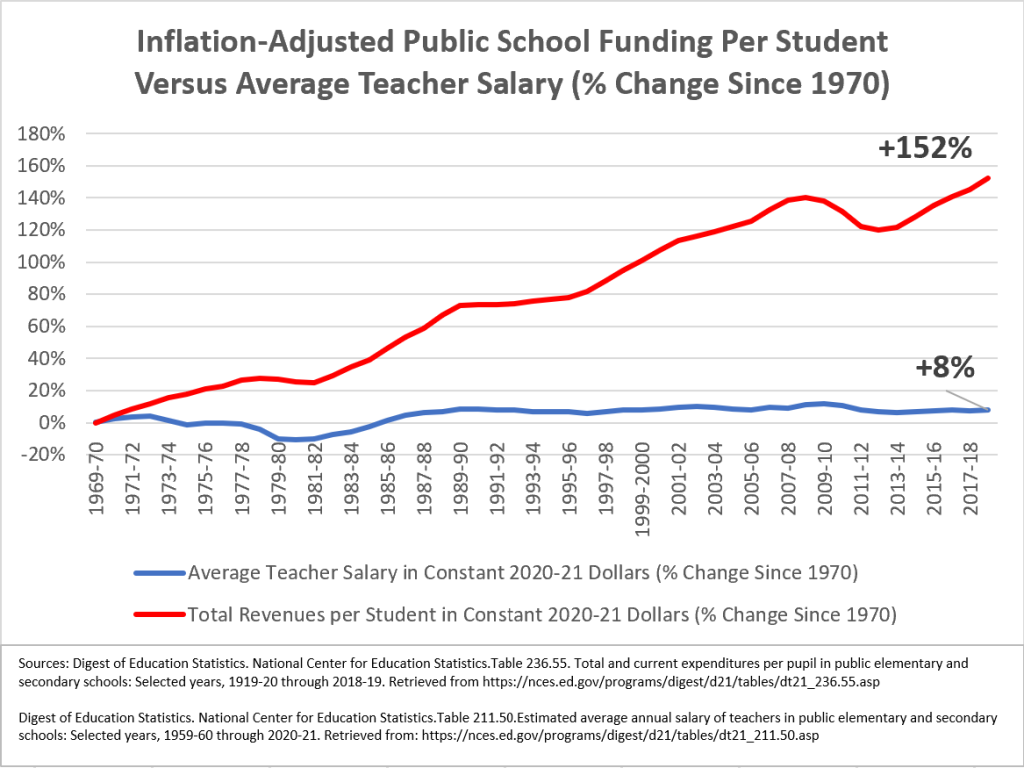
Share

Civics & Pavel Durov

Oblomovka:

But, crucially, they could not do this in every case. The reasons when they could not were primarily bureaucratic and technical. The drug dealers might have got smart and decided to change the key on their network, and neither RIM or the cops had a device to extract the key from. Or the authorities might want info on a corporate BlackBerry, which was uncrackable by BlackBerry using their existing infrastructure. Or a BlackBerry’s shared key might have been set by the phone company, not RIM, so RIM couldn’t directly co-operate, and needed to refer them back to the telco — who might have just cluelessly bounced them back to RIM. That kind of shuttlecock-up happens all too often, and it’s easy for the tech company to take the blame.

Share

Cleveland’s new all-girls public school starts this year

Michael Indriolo

The tuition-free public charter school is starting this year in partnership with the all-boys Ginn Academy, a school noted for its strong athleticsand a graduation rate that outpaces the Cleveland Metropolitan School District’s average

Ginn-Thompson is currently accepting applications for its 2024-2025 school year, which will start on Sept. 4. The school, which can accommodate about 150 students, has recruited about 60 students in the eight days since it opened enrollment, according to Ginn-Thompson Vice President Sherree Ray Dillions. The school is only serving grades 6-10 this year but plans to expand to 11th and 12th grade next year.

Share

Generative AI Can Harm Learning

Hamsa Bastani, Osbert Bastani, Alp Sungu, Haosen Ge, Özge Kabakcı and Rei Mariman:

Generative artificial intelligence (AI) is poised to revolutionize how humans work, and has already demonstrated promise in significantly improving human productivity. However, a key remaining question is how generative AI affects learning, namely, how humans acquire new skills as they perform tasks. This kind of skill learning is critical to long-term productivity gains, especially in domains where generative AI is fallible and human experts must check its outputs. We study the impact of generative AI, specifically OpenAI’s GPT-4, on human learning in the context of math classes at a high school. In a field experiment involving nearly a thousand students, we have deployed and evaluated two GPT based tutors, one that mimics a standard ChatGPT interface (called GPT Base) and one with prompts designed to safeguard learning (called GPT Tutor). These tutors comprise about 15% of the curriculum in each of three grades. Consistent with prior work, our results show that access to GPT-4 significantly improves performance (48% improvement for GPT Base and 127% for GPT Tutor). However, we additionally find that when access is subsequently taken away, students actually perform worse than those who never had access (17% reduction for GPT Base). That is, access to GPT-4 can harm educational outcomes. These negative learning effects are largely mitigated by the safeguards included in GPT Tutor. Our results suggest that students attempt to use GPT-4 as a “crutch” during practice problem sessions, and when successful, perform worse on their own. Thus, to maintain long-term productivity, we must be cautious when deploying generative AI to ensure humans continue to learn critical skills.

Share

Notes on Technology and K-12 education

Frederick Hess:

A decade ago, I was writing a book that asked why education technology so rarely delivers on its promise, even as innovative educators were urging schools to ensure that every student had a phone and bragging about student writing assignments that incorporated tweets and texts. Of course, as the grim consequences of phones in school became clear, those devotees quietly began plugging virtual reality, TikTok, AI, and other new enthusiasms.

While technology has a useful role to play in schooling (we’ll get to this momentarily), experience has offered much cause for skepticism.

Share

Scientific fraud kills people. Should it be illegal?

by Kelsey Piper

You probably haven’t heard of cardiologist Don Poldermans, but experts who study scientific misconduct believe that thousands of people may be dead because of him. 

Poldermans was a prolific medical researcher at Erasmus Medical Center in the Netherlands, where he analyzed the standards of care for cardiac surgery, publishing a series of definitive studies from 1999 until the early 2010s.

One crucial question he studied: Should you give patients a beta blocker, which lowers blood pressure, before certain heart surgeries? Poldermans’s research said yes. European medical guidelines (and to a lesser extent US guidelines) recommended it accordingly

The problem? Poldermans’s data was reportedly fake. A 2012 inquiry by Erasmus Medical School, his employer, into allegations of misconductfound that he “used patient data without written permission, used fictitious data and… submitted to conferences [reports] which included knowingly unreliable data.” Poldermans admitted the allegations and apologized, while stressing that the use of fictitious data was accidental.

Share

“The most profitable thing today in America is a sick child”

RFK, Jr.

“We need to get the corruption out of FDA, out of NIH, out of CDC”

“They have become sock puppets for the industries they’re supposed to regulate”

“Right now, 75% of FDA’s budget is coming from pharmaceutical companies. That is a perverse incentive.

Scientists and officials at NIH who incubate drugs for the pharmaceutical companies get to collect lifetime royalties from those products.

Share

K-12 Tax & $pending climate: U.S. Treasuries not the safe bet they once were, research says

Ann Saphir and Howard Schneider:

“In this environment, large-scale asset purchases by central banks in response to a large government spending increase have undesirable public finance implications,” they wrote. “These purchases, which provide temporary price support, destroy value for taxpayers but subsidize bondholders” and may also encourage governments to overestimate their true fiscal capacity, they wrote.

——-

Notes on the upcoming $607,000,000 (!) Madison k-12 tax & $pending increase referendum – achievement?

More.

Share

“Build an app, go to jail”

Balaji summary and notes:

The backlash against France’s decision to arrest Telegram CEO @durov is massive: @elonmusk, @VitalikButerin, @balajis, etc.

The impact on the tech and political scene might be very bad and difficult to change in the mind of many investors and entrepreneurs in the fields of AI, Blockchain, etc.

I really wonder if all things at stake have been well considered by the decision makers of this arrest decision

A couple of posts below to show the current mood in the tech world 👇

Paul Graham:

It’s hard to imagine a country both arresting the founder of Telegram and being a major startup hub.

Edward Snowden:

First they came for Tiktok, and I did not speak out—
     Because I was not twelve years old. Then they came for the Telegram, and I did not speak out—
     Because I was using some other app or sth idk. Then they came for literally every other platform for dissent, and I did not speak out—
     because bro how tf could i that’s the entire point wake up wake up wa—

More:

Musk should immediately ban from X anyone who calls for his arrest or engages in “disinformation” about his company.

See how that works?

Share

Notes on meta’s instagram and illicit child content

WSJ: “Instagram Connects Vast Pedophile Network”

Top takeaways from the report:

1. Instagram’s algorithms actively promote illicit content.

As reported by the WSJ: “Pedophiles have long used the internet, but unlike the forums and file-transfer services that cater to people who have interest in illicit content, Instagram doesn’t merely host these activities Instagram connects pedophiles and guides them to content sellers via recommendation systems.”

“Even glancing contact with an account in Instagram’s pedophile community can trigger the platform to begin recommending that users join it.”

2. Instagram allows explicit hashtags which connect users to accounts that advertise child-sex material for sale.

“The researchers found that Instagram enabled people to search explicit hashtags such as #pedowhore and #preteensex and connected them to accounts that used the terms to advertise child-sex material for sale.”

David Sacks:

Party affiliation is now entirely correlated with trust in MSM. Republicans realize it’s propaganda. Independents are on the path. Democrats are the people still plugged into the Matrix.

Share

Civics: “The piece became one of eight Bezos’ Washington Post articles to which corrections would be added”

Matt Taibbi:

The accounts you identified as pushing “Russian influence operations” actually belonged to people like Consortium editor Joe Lauria, Chicago-based lawyer Dave Shestokas, and a onetime refugee from Lebanon named Sonia Monsour. None had any connection to Russia.

Share

Campus free speech: Vanderbilt edition

Alan Blinder:

This month, Vanderbilt required all first-year undergraduate students to attend mandatory meetings about the university’s approach to free speech, with the hope that clear expectations — and explanations for them — would help administrators keep order after protests rocked American campuses toward the end of the last academic year.

“The chaos on campuses is because there’s lack of clarity on these principles,” Dr. Diermeier said in an interview.

There is no guarantee that the pre-emptive, plain-spoken meetings will work. Many student activists and professors at Vanderbilt have condemned the university’s rules as suppressing their speech, and even universities with histories of hard-nosed tactics have struggled with demonstrations.

Share

“Age appropriate design”

Mike Masnick:

Dear California Governor Newsom and Attorney General Bonta: you really don’t have to be the opposite end of the extremists in Florida and Texas. You don’t have to lie to your constituents and pretend losses are wins. Really. Trust me.

You may recall that the Attorneys General of Texas and Florida have taken to lying to the public when they lose big court cases. There was the time when Texas AG Ken Paxton claimed “a win” when the Supreme Court did exactly the opposite of what he had asked it to do.

Or the time when Florida AG Ashley Moody declared victory after the Supreme Court made it quite clear that Florida’s social media law was unconstitutional, but sent it back to the lower court to review on procedural grounds.

And now it looks like Newsom and Bonta are doing the same sort of thing, claiming victory out of an obvious loss, just on the basis of some procedural clean-up (ironically, the identical procedural clean-up that Moody declared victory over).

As you’ll recall, we just wrote about the Ninth Circuit rejecting California’s Age Appropriate Design Code (AADC) as an obvious First Amendment violation (just as we had warned both Bonta and Newsom, only to be ignored). However, because of the results in the Supreme Court decision in Moody, the Ninth Circuit sent some parts of the law back to the lower court.

The details here are kind of important. In the Moody decision, the Supreme Court said for there to be a “facial challenge” against an entire law (i.e., a lawsuit saying “this whole law is unconstitutional, throw it out”), the lower courts have to consider every part of the law and whether or not every aspect and every possible application is unconstitutional. In the Texas and Florida cases, the Supreme Court noted that the lower courts really only reviewed parts of those laws and how they might impact a few companies, rather than really evaluating whether or not some of the laws were salvageable.

Share

“The city needs a hard stop on the current ways they are spending our money.”

Nicholas Garton:

Still, Couture said she plans to vote “no” on the property tax referendum.

“Am I surprised that these are the threatened services? Not a bit,” she said. “The city needs a hard stop on the current ways they are spending our money.”

——

Notes on the upcoming $607,000,000 (!) Madison k-12 tax & $pending increase referendum – achievement?

——-

Madison taxpayers of long supported far above average K – 12 spending.

The data clearly indicate that being able to read is not a requirement for graduation at (Madison) East, especially if you are black or Hispanic”

My Question to Wisconsin Governor Tony Evers on Teacher Mulligans and our Disastrous Reading Results

2017: West High Reading Interventionist Teacher’s Remarks to the School Board on Madison’s Disastrous Reading Results 

Madison’s taxpayer supported K-12 school district, despite spending far more than most, has long tolerated disastrous reading results.

“An emphasis on adult employment”

Wisconsin Public Policy Forum Madison School District Report[PDF]

WEAC: $1.57 million for Four Wisconsin Senators

Friday Afternoon Veto: Governor Evers Rejects AB446/SB454; an effort to address our long term, disastrous reading results

Booked, but can’t read (Madison): functional literacy, National citizenship and the new face of Dred Scott in the age of mass incarceration.

When A Stands for Average: Students at the UW-Madison School of Education Receive Sky-High Grades. How Smart is That?

Share

More on Wisconsin’s reduced rigor

Quinton Klabon:

AFTER DECADE OF AIMING HIGH, WISCONSIN LOWERS STANDARDS FOR STUDENTS
@alanjborsuk devastates Wisconsin DPI for lowering state test standards.

  • me: Minimal, Proficient ~10%-20% shift
  • categories don’t match grade level, so useless
  • IRG records request unfilled since April

——

Commentary.

MTEL and the Foundations of Reading

——

Madison taxpayers of long supported far above average K – 12 spending.

The data clearly indicate that being able to read is not a requirement for graduation at (Madison) East, especially if you are black or Hispanic”

My Question to Wisconsin Governor Tony Evers on Teacher Mulligans and our Disastrous Reading Results

2017: West High Reading Interventionist Teacher’s Remarks to the School Board on Madison’s Disastrous Reading Results 

Madison’s taxpayer supported K-12 school district, despite spending far more than most, has long tolerated disastrous reading results.

“An emphasis on adult employment”

Wisconsin Public Policy Forum Madison School District Report[PDF]

WEAC: $1.57 million for Four Wisconsin Senators

Friday Afternoon Veto: Governor Evers Rejects AB446/SB454; an effort to address our long term, disastrous reading results

Booked, but can’t read (Madison): functional literacy, National citizenship and the new face of Dred Scott in the age of mass incarceration.

When A Stands for Average: Students at the UW-Madison School of Education Receive Sky-High Grades. How Smart is That?

Share

Notes on Madison’s tax and $pending increases amidst declining enrollment

Michael Smith & Janet Lorin:

Vanderbilt University is asking local Florida officials to approve its proposal to build a $520 million campus in the wealthy Palm Beach area, tapping into a growing region transformed by new outposts of financial firms.

The Nashville-based school envisions buildings totaling 300,000 square feet for 1,000 students and more than 100 faculty. The site in West Palm Beach was previously targeted by the University of Florida for a similar project that ultimately failed.

Share

K-12 tax & $pending climate: housing costs and regulation

Casey Mulligan:

I’ll let others argue the effect of inflation on housing costs. Here are 16 other ways that Biden-Harris made new houses more expensive, whether owned or rented. They tightened regulations on:

Share

Mayoral candidate vows to let VIC, an AI bot, run Wyoming’s capital city

Dan Rosenzweig-Ziff and Jenna Sampson

Mayoral candidate Victor Miller, a bespectacled librarian with an AI obsession, stood between an American flag and a Wyoming flag, preaching what he sees as the untapped potential of artificial intelligence in government.

AI would be objective. It wouldn’t make mistakes. It would read hundreds of pages of municipal minutiae quickly and understand them. It would, he said, be good for democracy.

Miller made this pitch at a county library in Wyoming’s capital on a recent summer Friday, with a few friends and family filling otherwise empty rows of chairs. Before the sparse audience, he vowed to run the city of Cheyenne exclusively with an AI bot he calls “VIC” for “Virtual Integrated Citizen.”

Share

Civics: elections and the legacy media

RFK, Jr.

During his 10-month presidential campaign in 1992, Ross Perot gave 34 interviews on mainstream networks. In contrast, during this 16 months since I declared, ABC, NBC, CBS, MSNBC, and CNN combined give only two live interviews for me. Those networks instead ran a continuous daily use of hit pieces with inaccurate, often vile pejoratives, and defamatory smears. Some of those same networks had colluded with the DNC to keep me off the debate stage. Representatives of those networks are in this room right now, and I’ll just take a moment to ask you to consider the many ways that your institutions have abdicated this really sacred responsibility, the duty of free press to safeguard democracy and to challenge always the party in power. Instead of maintaining that posture of fear and skepticism to authority, your institutions that made themselves government mouthpieces. You didn’t alone cause the devolution of American democracy but you could have prevented it. The Democratic Party’s censorship of social media was more of an naked exercise of executive power.”


More:

Each time that our volunteers turned in those towering boxes of signatures needed to get on the ballet, the DNC dragged us into court, state after state, attempting to erase their work and to subvert the will of the voters who signed those petitions. It deployed DNC aligned judges to throw me and other candidates off the ballet, and to throw President Trump in jail. It ran a sham primary that was rigged to prevent any serious challenge to President Biden.

And:

This is the part that worries me the most: she uses messaging in a way to get populations of young, unknowing, innocent people on these false virtue signal ambitions and take on policies that will really hurt them in the future.”

Ann Althouse:

Here’s his full speech, which I thought was excellent:


Michael Tracy:

The Democratic and Republican Parties both have a long history of working feverishly to block Third Party candidates from ballots. RFK insisted he was uniquely positioned to surmount these deeply ingrained legal and political obstacles. Then he decided to pick a running mate who’s a billionaire Google heiress from California, which posed problems for him Constitutionally, as he’s also a resident of California.

Share

School choice is a life preserver, not an anchor 

Will Flanders & Nic Kelly:

Recently, the Wisconsin Policy Forum released a comprehensive overview of the education landscape in Milwaukee. The report is likely eye-opening for many—and shows just how far behind Milwaukee’s students are in comparison to the rest of the state and the nation. But, much of the media coverage of this report seems to focus on the notion that education reform has failed in the city. For instance, the Journal Sentinel headline calls back to the birth of the private school choice program in Milwaukee thirty years ago as a starting point for this failure. But the reality is far more nuanced, and Milwaukee’s choice and charter schools ought to get credit for doing a better job on average. 

One need only dig deeper into the Policy Forum’s report to see evidence of this.  The share of students in highly rated schools in the choice program (58.4%) and charter schools (76.1%) is far higher than the share of students in MPS in such schools (20.4%). The same story holds in WILL’s annual Apples to Apples report which aims to put schools on a level playing field by controlling for demographic factors in a statistical model. This report regularly finds a performance advantage for choice and charter schools that is statistically significant.  

Share

More on the Wisconsin DPI and reduced rigor

Alan Borsuk:

Before the 2012 changes in cut scores, Wisconsin was regarded by some national education experts as having some of the lowest bars in the country for defining students as proficient or advanced. For example, the percentages of Wisconsin students who were categorized as proficient in reading and math, using the state’s definitions, were much higher than the percentages who were considered proficient using the definitions by the National Assessment of Educational Progress, a widely followed program used in all 50 states.  

NAEP is acknowledged by all sides to be a tough grader. To be labeled as “proficient” on NAEP tests requires a student to do much better than is true on the tests in many states. NAEP leaders say that labeling a student proficient on a NAEP test is not the same as labeling a student as being at grade level. NAEP is, in fact, considerably more stringent.   

In Wisconsin in the early 2010s, there was advocacy to raise the bar on student success, with the goal of leading more students to graduate from high school ready for college or careers. The state superintendent of public instruction at the time, Tony Evers (who, of course, is governor now), “NAEPified” Wisconsin’s cut scores. This was in line with education trends across the country at the time.  

——-

Commentary.

MTEL and the Foundations of Reading

——

Madison taxpayers of long supported far above average K – 12 spending.

The data clearly indicate that being able to read is not a requirement for graduation at (Madison) East, especially if you are black or Hispanic”

My Question to Wisconsin Governor Tony Evers on Teacher Mulligans and our Disastrous Reading Results

2017: West High Reading Interventionist Teacher’s Remarks to the School Board on Madison’s Disastrous Reading Results 

Madison’s taxpayer supported K-12 school district, despite spending far more than most, has long tolerated disastrous reading results.

“An emphasis on adult employment”

Wisconsin Public Policy Forum Madison School District Report[PDF]

WEAC: $1.57 million for Four Wisconsin Senators

Friday Afternoon Veto: Governor Evers Rejects AB446/SB454; an effort to address our long term, disastrous reading results

Booked, but can’t read (Madison): functional literacy, National citizenship and the new face of Dred Scott in the age of mass incarceration.

When A Stands for Average: Students at the UW-Madison School of Education Receive Sky-High Grades. How Smart is That?

Share

Civics: Lawfare and elections – Wisconsin Supreme Court

Skylar Croy:

Unprecedented is an understatement.

No. 2024AP1643-OA Strange v. Wisconsin Elections Comm’n

A petition for leave to commence an original action under Wis. Stat. § (Rule) 809.70 has been filed on behalf of petitioner, David Strange, individually and as Deputy Operations Director-Wisconsin for the Democratic National Committee. The petition names as respondents: (1) Wisconsin Elections Commission (WEC); (2) Megan Wolfe, in her official capacity as Administrator of WEC; (3-8) Don Millis, Robert Spindell, Jr., Marge Bostelmann, Ann Jacobs, Mark Thomsen, and Carrie Riepl, in their official capacities as Commissioners of WEC; and (9) the Wisconsin Green Party.

IT IS ORDERED that by 11:00 a.m. on today’s date, the petitioner shall provide this court, in writing, with the name, physical address, and email address of an attorney or other representative of each respondent who is authorized to accept service of orders issued by this court.

REBECCA GRASSL BRADLEY, J. (dissenting). The majority issues an unprecedented order directing the petitioner-within two hours-to give the court contact information for the respondents, which is currently absent from the record because no one has entered an appearance on behalf of any of those parties. How is the petitioner— an employee of the Democratic National Committee (DNC)-supposed to know the name or physical address of an “attorney or other representative of each respondent who is authorized to accept service of orders issued by this

For those following along at home, the Democrats are picky on a small independent third party that hasn’t even had a chance to obtain a lawyer.

WILL:

To go directly to the Wisconsin Supreme Court and seek far-reaching, antidemocratic relief is inappropriate. Truly demonstrating that history repeats itself: four years ago, the Wisconsin Elections Commission rejected the Green Party’s effort to get on the ballot.

More:

And:

We are back to the $1 trillion every 90 days

Thomas Massie:

Democrats tried to keep him from testifying that day because he tells it like it is. Here’s the clip

Jill Stein:

We may disagree with RFK Jr. about many things, but he’s right about how the Democratic Party uses lawfare and dirty tricks to suppress democratic competition and voter choice.

The Dems preach about “saving democracy”, but in reality they’re working overtime to stamp it out.

Share