Aaron Brown, Michael Mendelson and Clifford Asness:
The cost-disease sectors generally—healthcare, higher education, anything where Baumol’s curse (upward salary pressure in fields without productivity gains) meets a regulatory cartel. These will not be fixed by any single intervention because the political coalition that benefits from the status quo is too large and too local. Housing in San Francisco will not become affordable until incumbent homeowners accept that the common good requires slower increases in house prices, which is to say, probably never. They got rich by closing the door behind them, and they would like that door to stay closed.
The two real affordability problems map to two different boxes. The destitute tail needs the cheap fixes plus targeted real-money transfers. The squeezed-talent class needs the structural fixes, which are not cheap politically even when they are nearly free fiscally. Almost everything else either fixes itself or shouldn’t be fixed.
The part nobody mentions.
Here is the move that the affordability discourse pulls off most quietly. The implicit assumption in essentially every affordability story is that we’re at year zero. That the problem has been ignored. That nobody has tried to do anything about it. That If Congress Would Only Act, things would get better.
Congress has been acting. Continuously. For decades. On every single one of these problems.
Take student loans, where we started. The federal government has been “addressing” student-loan affordability since the Higher Education Act of 1965. Pell Grants in 1972. Expanded loan eligibility in 1978 and 1992. Income-based repayment in 1994 and again in 2009. Public Service Loan Forgiveness in 2007. The federal takeover of the entire loan program in 2010. The SAVE plan in 2023. Broad-based forgiveness attempts from 2022 through 2024. The cumulative federal effort over those six decades runs into the trillions in subsidies, forgiveness, and forgone interest.
And what happened? Tuition rose at roughly twice the rate of general inflation for the entire period during which the federal government was “making college more affordable.” The standard explanation is that subsidizing demand for an inelastic good causes the price to rise to capture the subsidy. Schools raised tuition because students could borrow more. Students borrowed more because schools raised tuition. The aid rose to chase the price. The price rose to absorb the aid.
———
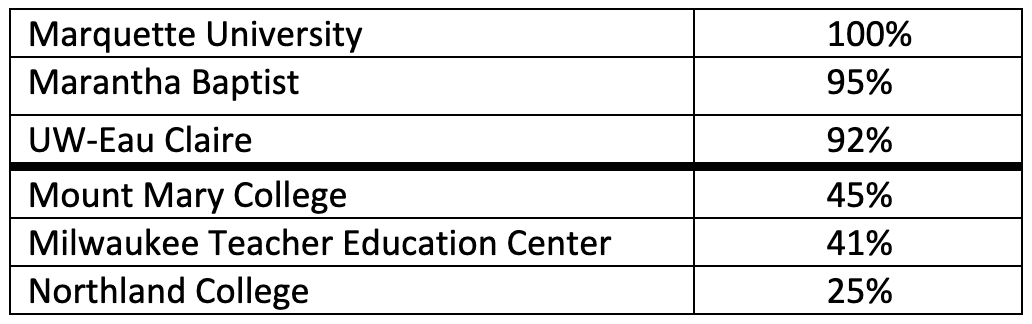
Map: Foundations of Reading Results: 2015–2024
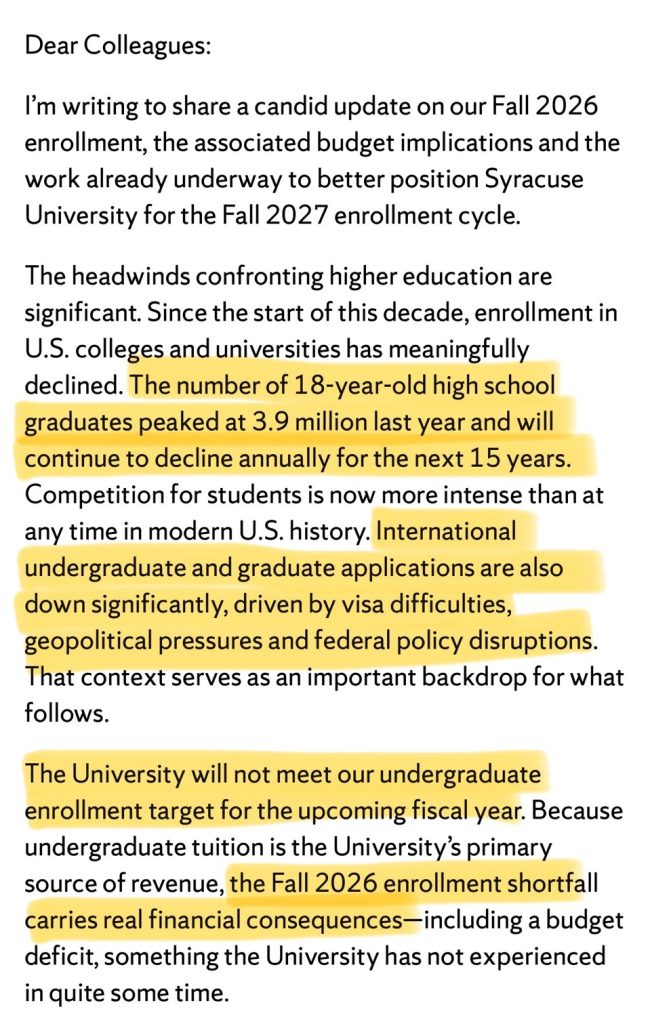
Where have all the students gone?
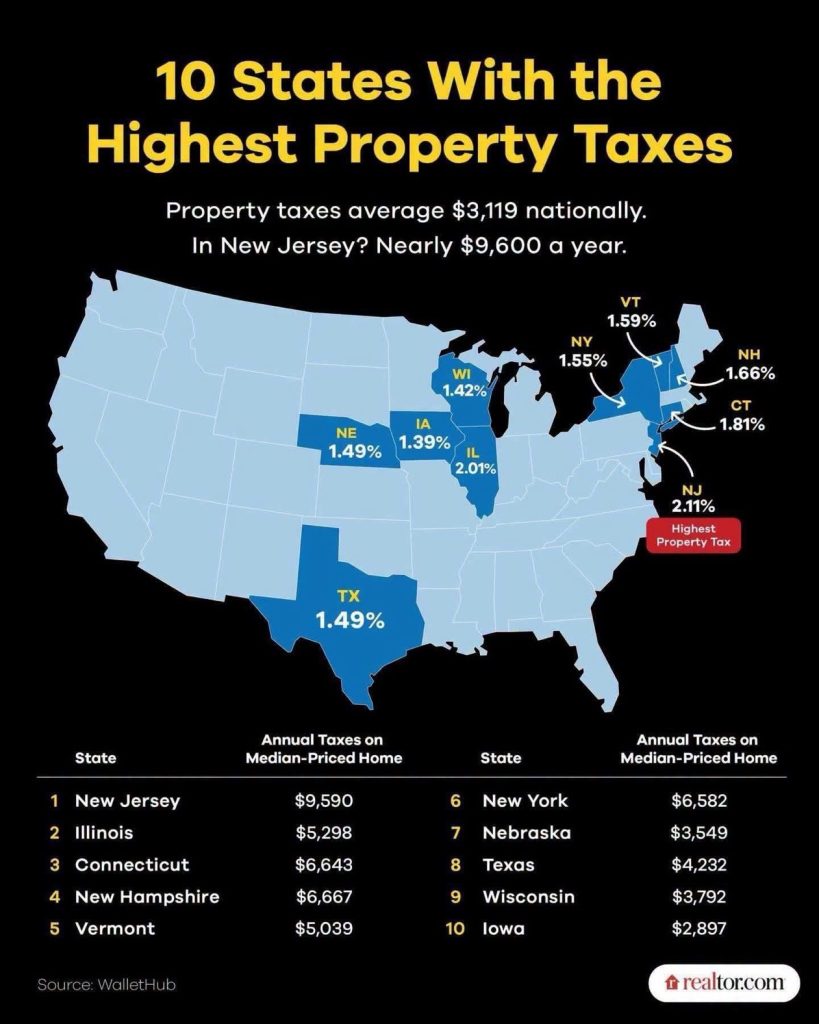
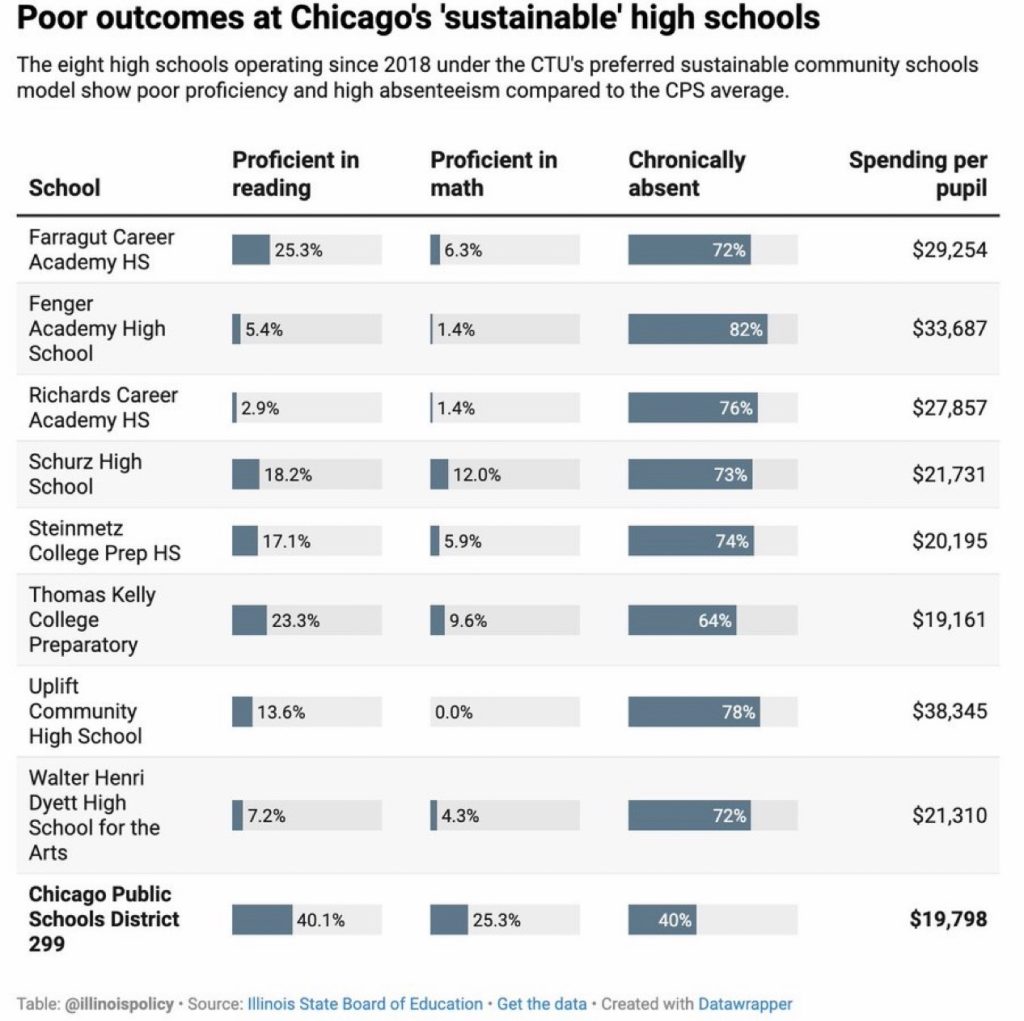
2026-2027 Madison K-12 $pending continues to grow, fueled by a 9.7% (!) property tax increase. Total spending will be at least $706,000,000 for 25,003 students, or $28,236 per student.
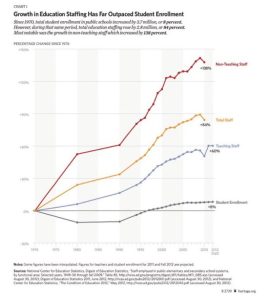
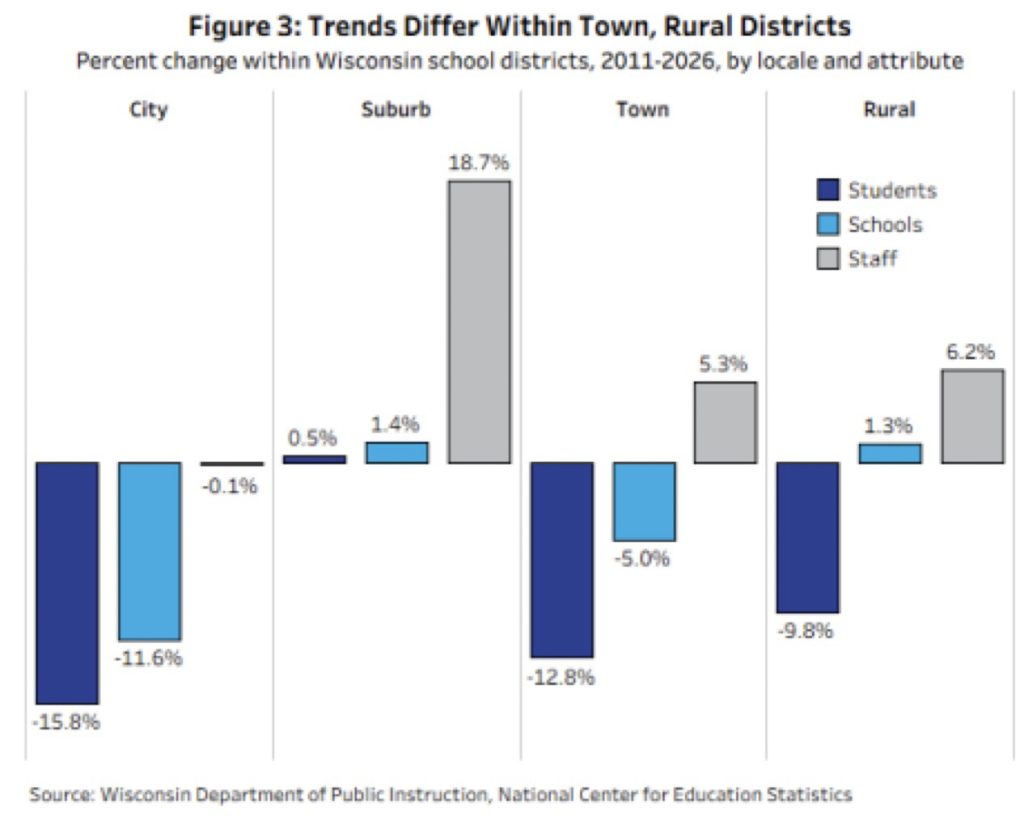
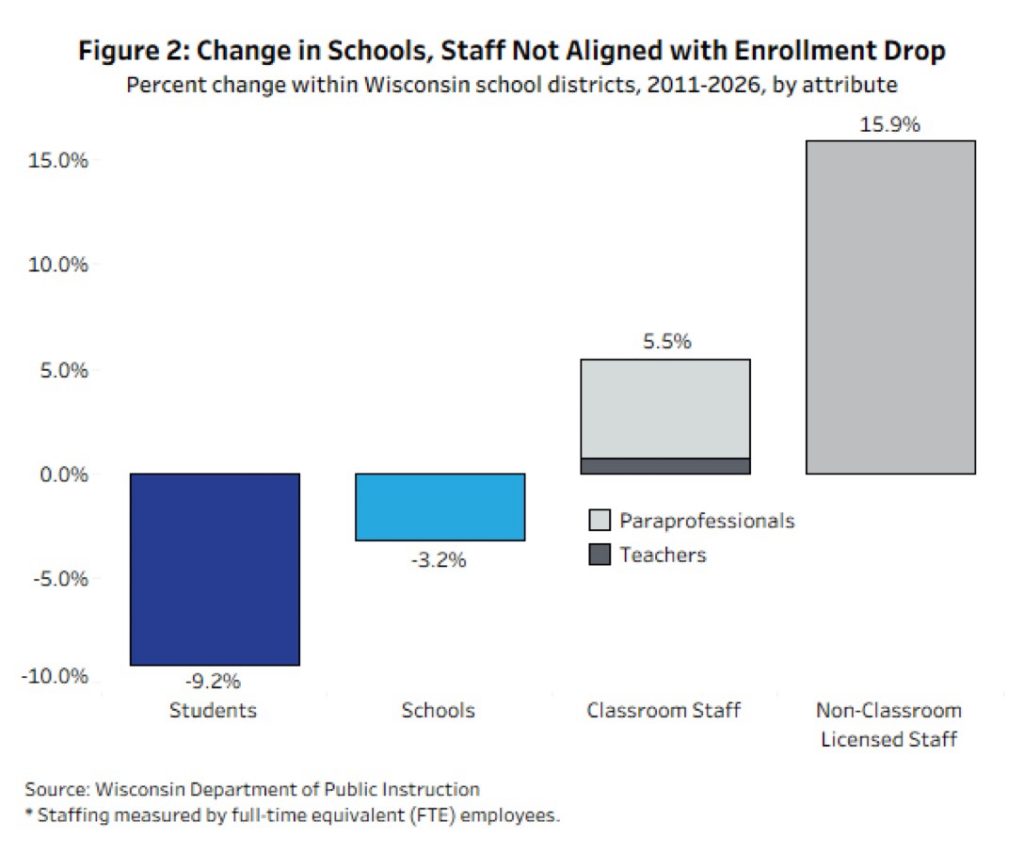
May 2026 Madison School District Presentation: 7,095 adults for 25,003 students (3.52 students per adult!)
Early Literacy Screener Map.
More. Act 20.
3,887 Madison 4 year old to third grade students scored lower than 75% of the students in the national comparison group.
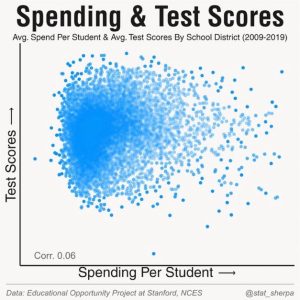
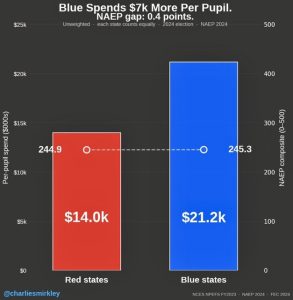
Madison taxpayers have long supported far above average k-12 tax & $pending. This despite our long term, disastrous reading results. May, 2026: 7,095 Staff for 25,003 students; $pending > $26k per student!
Madison Schools: More $, No Accountability
The taxpayer funded Madison School District long used Reading Recovery…
The data clearly indicate that being able to read is not a requirement for graduation at (Madison) East, especially if you are black or Hispanic”
My Question to Wisconsin Governor Tony Evers on Teacher Mulligans and our Disastrous Reading Results
2017: West High Reading Interventionist Teacher’s Remarks to the School Board on Madison’s Disastrous Reading Results
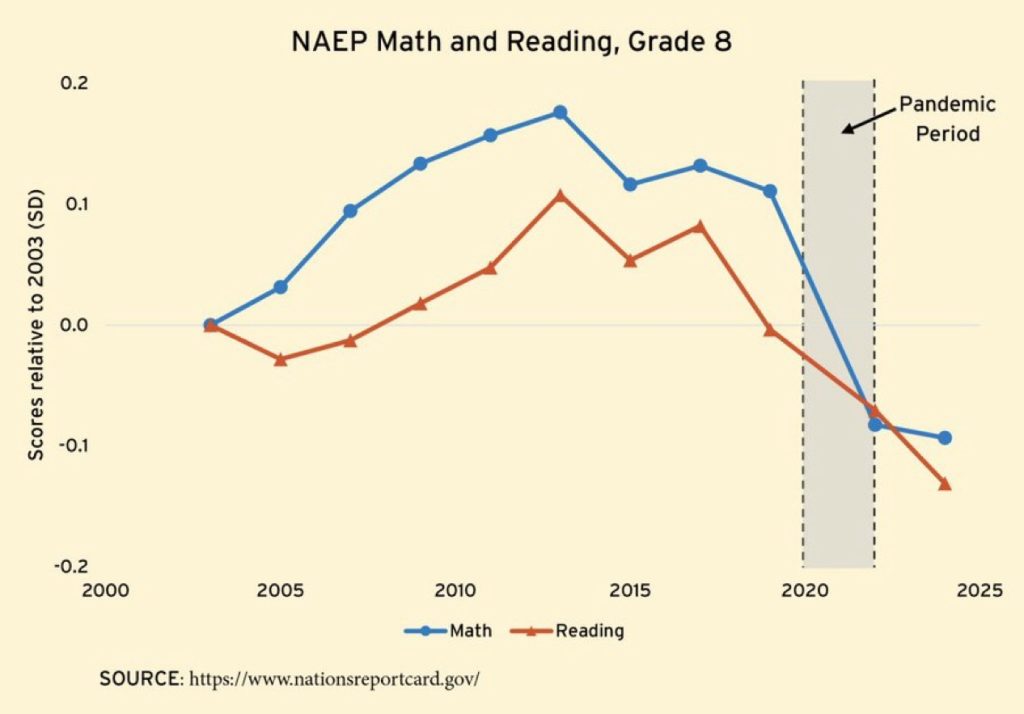
Madison’s taxpayer supported K-12 school district, despite spending far more than most, has long tolerated disastrous reading results.
“An emphasis on adult employment”
Wisconsin Public Policy Forum Madison School District Report[PDF]
WEAC: $1.57 million for Four Wisconsin Senators
Friday Afternoon Veto: Governor Evers Rejects AB446/SB454; an effort to address our long term, disastrous reading results
Booked, but can’t read (Madison): functional literacy, National citizenship and the new face of Dred Scott in the age of mass incarceration.
When A Stands for Average: Students at the UW-Madison School of Education Receive Sky-High Grades. How Smart is That?