School Information System

K-12 Tax & $pending Climate: California’s growing burden

Tyler Cowen:

California’s highest income tax rate is 13.3%. That is in addition to a top federal tax rate of 37%. California also has a state sales tax rate of 7.25%, and many localities impose a smaller sales tax. So if a wealthy person earns and spends labor income in the state of California, the tax rate at the margin could approach 60%. Then there is the corporate state income tax rate of 8.84%, some of which is passed along to consumers through higher prices. That increases the tax burden further yet.

——

Commentary.

More.

Share

Why should we respect scientists when their role in the Covid lab leak debate revealed a worrying attachment to China

Juliet Samuel

In a shrinking list of trusted authorities, scientists remain close to the top. The government, the church, the media and even the Post Office might all have had their scandals but, outside climate-denying, antivax circles, “the science” was still sacrosanct. Then along came Covid and raised the scientific establishment to the status of government, judge and jury.

Now the backlash has begun. It may not have reached the establishment, where “the science” is still regarded as akin to the Gospel, but distrust of science and scientists is on its way to becoming mainstream. And like all the other flawed institutions struggling to adapt to the new world of decentralised information and fragmenting authority, the scientific establishment thoroughly deserves its fate.

Share

Notes on Milwaukee k-12 spending, staffing and enrollment

Patrick Mcilheran

Wisconsin’s largest school district is planning to ask its voters to approve a $252 million annual increase in its revenue — and, consequently, spending — in an upcoming referendum.

That district, Milwaukee Public Schools, has seen a sharp increase in spending in the two most recent years of state data after nearly a decade of spending that mostly kept up with but did not exceed inflation.

That, in turn, followed years of steady increases in spending above the rate of inflation and, then, coinciding with the Walker-era Act 10 reforms that coupled a cut in state school aid with tools to allow districts to save money on benefits costs, a sharp drop in spending.

MPS’ referendum is set for April 2. It will ask voters whether MPS can exceed its “revenue limit” permanently. The increase would phase in over four years, starting with what MPS says would be $140 million in new annual revenue in the 2024-25 school year and ramping up to $252 million a year by 2027-28.

District officials say that state funding is inadequate because it has not kept pace with inflation.

Share

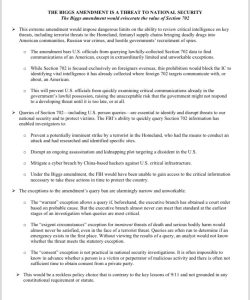
Civics: Warrantless Surveillance

Justin Amash:

Imagine saying that the Fourth Amendment‘s warrant requirement should be ignored because it doesn’t “serve the national security interests of the United States.” This is like Mike Rogers-level idiocy.

—-

More.

Share

How China Miscalculated Its Way to a Baby Bust

Liyan Qi:

China’s baby bust is happening faster than many expected, raising fears of a demographic collapse. And coping with the fallout may now be complicated by miscalculations made more than 40 years ago.

The rapid shift under way today wasn’t projected by the architects of China’s one-child policy—one of the biggest social experiments in history, instituted in 1980. At the time, governments around the world feared overpopulation would hold back economic growth. A Moscow-trained missile scientist led the push for China’s policy, based on tables of calculations that applied mathematical models used to calculate rocket trajectories to population growth.

Four decades later, China is aging much earlier in its development than other major economies did. The shift to fewer births and more elderly citizens threatens to hold back economic growth. In a generation that grew up without siblings, young women are increasingly reluctant to have children—and there are fewer of them every year. Beijing is at a loss to change the mindset brought about by the policy.

Births in China fell by more than 500,000 last year, according to recent government data, accelerating a population drop that started in 2022. Officials cited a quickly shrinking number of women of childbearing age—more than three million fewer than a year earlier—and acknowledged “changes in people’s thinking about births, postponement of marriage and childbirth.”

Some researchers argue the government underestimates the problem, and the population began to shrink even earlier.

Share

Becoming Disillusioned with Teaching by Matthew

Cliff Williams

“In place of ideas and curiosity and the beautiful blooming of young people discovering life, I felt as though I was dying in front of them.”

Edited by Cliff Williams from a recorded and transcribed conversation with Matthew on December 13, 2023. He was in his early thirties when we talked. “Matthew” is a pseudonym.

Becoming a Teacher

Matthew’s road to teaching began four or five years after he finished college. “I had studied writing when I was in college, but didn’t know what I wanted to do with it. I worked as a barista for a while. Then I spent several years doing various marketing jobs. I did copy writing, I wrote blog posts for businesses, and for a time I was a brand manager.

“After spending a few years in the world of marketing, I got jaded with it. I didn’t believe that more things needed to be sold. So I left marketing and started working at a bookstore.

“When I was in college, one of my professors had us read Marilynne Robinson’s novel, Gilead. I wasn’t ready for it at the time, but when I read it again after college, I fell in love with it. Then when a friend who also worked at the bookstore told me about Robinson’s new collection of essays, What Are We Doing Here?: Essays, I read it too. 

“That book expresses Robinson’s frustration with the way the humanities were treated by government institutions and businesses, even by the educational system itself. She advocated for the beauty of reading and writing, and wrote eloquently about deeply human things.

Share

Notes on changes in Wisconsin taxpayer K-12 funding policies

WILL:

The Assembly is currently considering AB900—a bill that would “decouple” public school spending from spending on the voucher and independent charter school programs. While the concept likely sounds quite confusing, it’s actually relatively straightforward, and will benefit public schools, taxpayers, and choice schools as well. We’ll explain how below. 

PUBLIC SCHOOLS 

Currently, when a student leaves for the state’s school choice programs and some independent charters, state aid to school districts is reduced to make up for the cost to the state of that student.  This loss of state aid is allowed to be made up for with a revenue limit adjustment that raises property taxes in the district.  AB900 would change this.  School districts would no longer see their aid reduced for the cost of the voucher or charter students, leading to a property tax cut and access to more state aid. Instead, choice and charter schools would be funded by the state.  In addition, the bill includes a provision for school districts to recoup 25% of the revenue limit authority they used to receive for voucher students—leading to additional revenue per pupil for the vast majority of districts in the state.   

We have included an attachment that shows what the bill would result in for every district. This comes from a memo produced by the Legislative Fiscal Bureau.  To help with understanding, consider the example from Green Bay reproduced below: 

——-

Legislation and Reading: The Wisconsin Experience 2004-

Underly and our long term disastrous reading results….

WEAC: $1.57 million for Four Wisconsin Senators

Legislation and Reading: The Wisconsin Experience 2004-

“Well, it’s kind of too bad that we’ve got the smartest people at our universities, and yet we have to create a law to tell them how to teach.”

The data clearly indicate that being able to read is not a requirement for graduation at (Madison) East, especially if you are black or Hispanic”

My Question to Wisconsin Governor Tony Evers on Teacher Mulligans and our Disastrous Reading Results

2017: West High Reading Interventionist Teacher’s Remarks to the School Board on Madison’s Disastrous Reading Results 

Madison’s taxpayer supported K-12 school district, despite spending far more than most, has long tolerated disastrous reading results.

“An emphasis on adult employment”

Wisconsin Public Policy Forum Madison School District Report[PDF]

WEAC: $1.57 million for Four Wisconsin Senators

Friday Afternoon Veto: Governor Evers Rejects AB446/SB454; an effort to address our long term, disastrous reading results

Booked, but can’t read (Madison): functional literacy, National citizenship and the new face of Dred Scott in the age of mass incarceration.

When A Stands for Average: Students at the UW-Madison School of Education Receive Sky-High Grades. How Smart is That?
Share

Civics: Notes on Endorsements

Vivek Ramaswamy

I’m honored by the influx of endorsement requests. But let’s be honest, most endorsements are meaningless, so here’s what we’re doing: any candidate whom I endorse in this cycle will make a hard commitment to the following principles.

Share

With violence at Brockton High School a near-daily problem, teachers are at a breaking point

Shannon Larson 

In December 2022, his arm was broken trying to break up a fight after school, a day after he had remarked to other teachers that it was only a matter of time before someone got “seriously hurt — or God forbid — killed,” he recalled.

More than a year has passed since then, but the disruptions from the pandemic seem to have intensified, pushing teachers and staff to a breaking point. They recounted their experiences in interviews and in emotional testimony at a recent Brockton School Committee meeting, describing students vaping and dealing drugs, engaging in violent behavior that was recorded by crowds of onlookers, having sex in empty classrooms, and verbally harassing faculty.

Share

Cousins are disappearing. Is this reshaping the experience of childhood?

Natalie Stechyson

It’s something her own children won’t experience.

Lancastle’s older brother and sister don’t have children and her husband is an only child. So Nicholas, 9, and Charlie, 7, don’t have any cousins at all — a growing trend as the decreasing fertility rate causes extended families to narrow over time, sociologists and demographers say.

Worldwide, families are shrinking, according to a kinship study published in December in the Proceedings of the National Academy of Sciences USA. That study, using international demographic data for every country in the world, projected a 38 per cent global decline in living relatives for individuals aged 65 by the year 2095, compared to 1950.

——

Choose life.

Share

Baby Bust’: Why Fewer Young People Expect to Become Parents

Wharton:

Jeffrey Klein: In your new book, Baby Bust, you raise some provocative issues about work and family…. As I read this book, I really felt you were compelled to write it. So, what do you find compelling about this topic?

Stewart D. Friedman: There’s both a personal reason and a professional one. I originally got into this topic area when my first son was born, now 26 years ago. When I met him for the first time, I was overwhelmed by a question that I just couldn’t get out of my head: “What am I going to do to make the world a safe place for him to grow up in?” This is a question that I hadn’t really thought much about before I met him, but I couldn’t stop thinking about it. When I got back into my Wharton classroom about a week later, I framed the question in a slightly different way for the students, the future business leaders of the world: How are you thinking about the development, not so much of talent in the next generation, but of people? What does that mean for you professionally as well as personally, and how are you going to figure out how to do that in your own world?

That created quite a stir in the classroom. First of all, they had prepared a case on motivation and reward systems, and I had put that aside for the day. They weren’t very happy about that. But some people were quite upset about the fact that I was talking about family and kids. Others were upset because they didn’t really want to hear about my personal life. But quite a few were really grateful and interested in the questions that I was challenging them with as I just started to rant on this issue, completely unprepared.

Share

7 tips for improving news coverage of private school choice

Denise-Marie Ordway

About half of U.S. states offer private school choice programs, which help families pay for private school. It’s a highly politicized, complicated issue involving multiple types of tuition assistance, hundreds of thousands of children and billions of taxpayer dollars.

It’s also an issue journalists need to examine closely. News coverage grounded in academic research is particularly important as more states consider starting these programs and lawmakers in states that have them push to expand.

How can journalists strengthen their coverage? We put this question to seven university professors who study private school vouchers and other private school choice programs. Here’s their advice:

1. Explain how the various private school choice programs differ.

In the U.S., the three most common private school choice programs are tuition vouchers, tax-credit scholarships and education savings accounts, or ESAs. Journalists often refer to them all as “voucher” programs, but there are key differences.

“ESAs are radically different from school vouchers,” Patrick J. Wolf, a professor of education policy and the 21st Century Endowed Chair in School Choice at the University of Arkansas, wrote to The Journalist’s Resource.

In our roundup of research on private school choice, we briefly explain these three programs:

Share

The Forgotten History of the Chapter

Nicholas Dames

It is hard to see chapters, such is their banal inevitability. The chapter possesses the trick of vanishing while in the act of serving its various purposes. In 1919, writing in the Nouvelle revue françaiseMarcel Proust famously insisted that the most beautiful moment in Gustave Flaubert’s Sentimental Education was not a phrase but a blanc, or white space: a terrific, yawning fermata, one “sans l’ombre de transition,” without, so to speak, the hint of a transition. It is the hiatus, Proust explains, that directly ensues from a scene set during Louis Napoleon’s 1851 coup, in which the protagonist Frédéric Moreau watches the killing of his radical friend Dussardier by Sénécal, a former militant republican turned policeman for the new regime. After this sudden and virtuosic blanc, Frédéric is in 1867; sixteen aimless years elapse in the intervening silence. It is, Proust argues, a masterful change of tempo, one that liberates the regularity of novelistic time by treating it in the spirit of music. And yet this blanc is not entirely blank. What Proust neglects to mention, whether out of forgetfulness or disdain for such editorial and typesetting detail, is that the hiatus he is praising here is a chapter break. 

Share

“All three finalists either declined the Wisconsin State Journal’s interview requests prior to the panel interviews or did not respond to requests”

Abbey Machtig:

However, only two of those panels, one with students and one with parents, were available to watch via livestream. Members of the public and the media could not attend in person.

Nichols told the State Journal the board wanted to match the interview process from previous superintendent searches and “maintain the parts of our interviews we historically have made more public and then which were more internal anyway.”

“When you add a more public component to interviewing, I think generally it can add as a potential distraction from the interview itself.”

Share

Harvard Extension School Administrator Accused of Plagiarism in Anonymous Complaint

Tilly R. Robinson and Neil H. Shah

Harvard Extension School administrator Shirley R. Greene was accused of 42 instances of plagiarism in her 2008 University of Michigan dissertation in a complaint sent to the University Friday — the latest in a string of anonymous plagiarism complaints against Black Harvard officials.

All three anonymous complaints — against former University President Claudine Gay, Harvard Chief Diversity Officer Sherri A. Charleston, and now Greene, who handles Title IX complaints at the Extension School — were leveled at Black women who hold or held leadership positions at the University.

Unlike Gay, Charleston and Greene are administrators and do not hold academic appointments at Harvard.

The complaint was submitted anonymously to the chair of the Faculty of Arts and Sciences’ professional conduct committee Friday afternoon and obtained by The Crimson.

Share

Green Bay k-12 superintendent commentary

Danielle DuClos:

Green Bay School District Superintendent Claude Tiller is under review for comments he made on an Atlanta-based talk radio show last week, according to the Green Bay School Board.

Tiller was in Atlanta on Feb. 6 to recruit teachers from Morehouse College, Clark Atlanta University and Spelman College, according to his X, formerly known as Twitter, account. While there, he was a guest on a WAOK 1380 radio talk show “REALationship Talk.”

The Feb. 6 show, hosted by Adrienne Berry, focused on navigating educational leadership, according to the station’s Facebook page. Berry did not immediately respond to the Press-Gazette’s phone call or social media messages.

——

More.

Share

Do Not Trust Appearances: My Visit to Deep Springs College

Harrison Barnes:

Back in the late 1980s, I had come here to visit Deep Springs College. This college was really a commune of sorts, which was in the middle of the desert, a few hours outside of Las Vegas. At that time, the school boasted the highest SAT scores of any college in the United States and it was very small. In fact, if I recall correctly, there were only about 25 students in the entire school, which was itself supported by an endowment. Tuition was free. In order to attend the school, the students were required to take on various jobs on a farm that the school had established in the middle of the desert. There, the school was supposed to teach its students important real world skills such as self-reliance and resourcefulness, among other abilities. According to the school’s website:

Deep Springs is an all-male liberal arts college located on a cattle-ranch and alfalfa farm in California’s High Desert. Electrical pioneer L.L. Nunn founded the school in 1917 on the three pillars of academics, labor, and self-governance in order to help young men prepare themselves for lives of service to humanity. The school’s 26 students, along with its staff and faculty, form a close community engaged in this intense project.

Deep Springs operates on the belief that manual labor and political deliberation are integral parts of a comprehensive liberal arts education.

Each student attends for two years and receives a full scholarship valued at over $50,000 per year. Afterwards, most complete their degrees at the world’s most prestigious four year institutions.

Share

New Bill Would Require Phonics-Based Reading Instruction in California

by Carolyn Jones • CalMatters

An Assembly bill introduced this week would require all California schools to teach students to read using the “science of reading,” a phonics-based approach that research shows is a more effective way to teach literacy.

AB 2222, introduced by Assemblymember Blanca Rubio, a Democrat from West Covina, is backed by Marshall Tuck, who ran for California superintendent of public instruction in 2018. Tuck is now the chief executive officer of EdVoice, an education policy organization. It’s also backed by the advocacy groups Decoding Dyslexia California and Families in Schools.

Many schools in California have already transitioned to the science of reading approach, but some are still using a method known as balanced literacy or whole language, which emphasizes sight recognition of words in addition to phonics. The battle over the best way to teach children to read has been heated, because the stakes are so high: strong literacy skills are linked to higher graduation rates, better employment opportunities, the chances of being incarcerated and the state’s overall economy.  

Share

Cousins are disappearing. Is this reshaping the experience of childhood?

Natalie Stechyson:

Lancastle’s older brother and sister don’t have children and her husband is an only child. So Nicholas, 9, and Charlie, 7, don’t have any cousins at all — a growing trend as the decreasing fertility rate causes extended families to narrow over time, sociologists and demographers say.

Worldwide, families are shrinking, according to a kinship study published in December in the Proceedings of the National Academy of Sciences USA. That study, using international demographic data for every country in the world, projected a 38 per cent global decline in living relatives for individuals aged 65 by the year 2095, compared to 1950.

The composition of family networks is also expected to change, with grandparents and great-grandparents living longer, but the number of cousins, nieces and nephews declining, the authors noted.

Share

Ten years into my college teaching career, students stopped being able to read effectively.

Adam Kotsko:

The response of my fellow academics, however, reassures me that I’m not simply indulging in intergenerational grousing. Anecdotally, I have literally never met a professor who did not share my experience. Professors are also discussing the issue in academic trade publications, from a variety of perspectives. What we almost all seem to agree on is that we are facing newobstacles in structuring and delivering our courses, requiring us to ratchet down expectations in the face of a ratcheting down of preparation. Yes, there were always students who skipped the readings, but we are in new territory when even highly motivated honors students struggle to grasp the basic argument of a 20-page article. Yes, professors never feel satisfied that high school teachers have done enough, but not every generation of professors has had to deal with the fallout of No Child Left Behind and Common Core. Finally, yes, every generation thinks the younger generation is failing to make the grade—except for the current cohort of professors, who are by and large more invested in their students’ success and mental health and more responsive to student needs than any group of educators in human history. We are not complaining about our students. We are complaining about what has been taken from them.

Share

These Families Are Shutting Down the Bank of Mom and Dad

Veronica Dagher:

Nancy Clark and her then-28-year-old son, Reid Clark, had just sat down to dinner in June 2022 when the conversation turned to when he would move out. The topic had come up before, but this time they decided to set a date one year later.

Nancy, now 60, said she remembers thinking: “I know that becoming financially independent needs to feel a little painful.”

Reid set off on his own last June. He ditched a job managing his family’s three ice cream shops in New Hampshire for a gig as the assistant to a professional ice hockey team’s mascot in St. Paul, Minn. He also works at an M&M’s store.

Nancy bought him groceries when he moved in and occasionally gives $50. By this June, Reid will no longer get any financial help if he’s short. He hasn’t needed to hit up his mom for rent money in the past few months. “I want to chart my own path in life,” he said.

Taking such a gradual approach and framing the conversation around gaining financial independence give it a positive spin, said Rocky Fittizzi, a wealth strategies adviser at Bank of America Private Bank. Telling your children you’re cutting them off suggests it is a punishment.

Share

Censorship and Amazon policies

YouTube

Chris Gore and Alan Ng rant about Amazon Studios’ new DEI rules, how DEI will be the death of creativity and why Hollywood is no longer the dream.

Share

How To Be Someone People Love To Talk To

Bakadesuyo:

First impressions really are a big deal and talking to new people can be daunting, no doubt. What’s the answer?

It’s simple, really. Research shows that if you expect people will like you, they probably will:

Social optimists, of course, are in the happy position of expecting to be accepted and finding that, generally speaking, they are. Social pessimists, though, face the dark side of what sociologist Robert K. Merton—who coined the expression ‘self-fulfilling prophecy’—has called a ‘reign of error’. Expectation of rejection leads to the projection of colder, more defensive behaviour towards others, and this leads to actual rejection.

Don’t take the cliche advice and “just be yourself.” Put some effort into being warm and open. Ironically, studies show putting your best foot forward actually reveals the real you:

Share

An ideal might be 20% of Americans with a college degree—meaning a reduction of slots by approximately half.

Christopher Rufo:

In 1970, 10% of Americans had a college degree. Today, 40% of Americans have a college degree.

This means, by simple math, that the average intelligence of college graduates has plummeted and, simultaneously, creates a large cohort of Americans who feel entitled to “college-worthy professions” without the intellectual aptitude for them. Hence, the explosion of email jobs, DEI offices, and administrative positions—which are the most susceptible to capture by resentment ideology.

Meanwhile, the cost of this college-degree bubble is shifted onto taxpayers, as the $1.6 trillion student loan scheme is funded, subsidized, and guaranteed by the federal government.

Share

46% of Americans didn’t read a book in 2023

Nathan Bransford:

First up, some stats that are as bracing as the January weather outside (not really, I live in Southern California) to kick off our roundup. A full 46% of Americans did not finish a book last year and 5% more read just one, so if you read two books you’re in the top half of American readers. If you read more than fifty, congrats you’re a book one per-center! Meanwhile, 42% read on paper, 22% digital, and 19% audiobooks, with e-books attracting the heaviest readers.

Lincoln Michel dives a level below the stats and notes that while it’s a tad obscured how they categorize the genres, a quite robust 12% of readers read literary fiction–the same as the number that read science fiction and more than the 11% who read romance–puncturing some of the “we write books people actually read” sneers among certain genre 

Share

No data? No problem! Undisclosed tinkering in Excel behind economics paper

Retraction Watch:

Last year, a new study on green innovations and patents in 27 countries left one reader slack-jawed. The findings were no surprise. What was baffling was how the authors, two professors of economics in Europe, had pulled off the research in the first place. 

The reader, a PhD student in economics, was working with the same data described in the paper. He knew they were riddled with holes – sometimes big ones: For several countries, observations for some of the variables the study tracked were completely absent. The authors made no mention of how they dealt with this problem. On the contrary, they wrote they had “balanced panel data,” which in economic parlance means a dataset with no gaps.

“I was dumbstruck for a week,” said the student, who requested anonymity for fear of harming his career

Share

Bill and Melinda Gates Foundation: Over 35 thousand grants, 90+ billion USD…

Wouter Aukema:

Every bubble is a grant.

Fully interactive dashboard with details up to 31-jan-2024, filters to search by year, country or full-text across all fields.

Share

Worse than Plagiarism: False Firstness Claims and Dismissive Literature Reviews

Richard Phelps:

Recent revelations of suspicious, unattributed text borrowings at academe’s pinnacle of prestige—the president’s office at Harvard University—once again draws attention to the pestilence of plagiarism. Plagiarism scandals among elites are nothing new, of course, and pop up frequently in the news both here and abroad, often with serious negative consequences for the accused.[1]

Of course, plagiarism is unethical—it misdirects credit for the work and misrepresents the accomplishments of the perpetrator. But I will argue it is not the worst sin scholars commit in reference to the wider research literature, though it is more likely to be punished.

Plagiarism stands out among the pantheon of unethical scholarly shortcuts in part because it is relatively easy to catch, and with improving internet textual search tools, it is getting even easier. To catch a plagiarist, one only needs to find the original copied source.

Though malevolent, each incidence of plagiarism misrepresents only one piece of work in the wider research literature. Other, rarely punished research behaviors can misrepresent several other works, even entire research literature.

With a dismissive literature review, an author declares at the outset of an article that previous research on the topic is either nonexistent or no good. Typically, no evidence supports the claim, such as where or how—or even if—the author looked for previous work.

Share

College Financial-Aid Applications Fall 57%

Oyin Adedoyin:

As of late January, about 700,000 seniors had completed applications, down from roughly 1.5 million applicants the same time last year, according to the National College Attainment Network’s analysis of Education Department data.

The rollout stands to be one of the biggest shocks to college admissions in decades, administrators said. Financial-aid packages may not go out until after the date students are normally expected to put down deposits. Some schools have already pushed back the deadline to accept offers of admissions, and more are expected to follow suit.

“Everyone wants answers. Everyone wants to know how and when. And we don’t have answers,” said Mj Huebner, vice president of admission and financial aid at Kalamazoo College. The school told applicants they won’t have to commit until June 1, a month later than usual.

The Government Accountability Office launched an investigation into this year’s Fafsa rollout, following a request from Republican lawmakers.

The Fafsa is used to apply for federal grants and loans. Applications usually open Oct. 1. Half of high-school seniors complete it between then and the end of December. Some schools give out aid packages as early as November. This year, the form wasn’t available until the end of December, and even then families didn’t have full access until January, though families still have time to apply.

Share

“diminishes our district’s ability to maintain our high standard for 4K services that are needed for our families” – credentialism

Rich Kremer:

The Wisconsin Association of School Boards, the Wisconsin Educational Association Council teachers union and Wisconsin State Reading Association have registered against the bill. The Wisconsin Child Care Administrators Association and the Wisconsin Early Childhood Association have registered in support.

Wisconsin Early Childhood Association Co-Director Paula Drew told legislators that while the organization “acknowledges that the way childcare is funded is flawed” in Wisconsin, the bill is “pitting public schools against local childcare providers.”

“While equitable 4K funding for community 4K childcare is an important piece, it’s not the silver bullet to solve the current childcare crisis,” Drew said. “Above all, there must be an ongoing state investment to stabilize childcare infrastructure in Wisconsin.”

SB 973

Legislation and Reading: The Wisconsin Experience 2004-

Underly and our long term disastrous reading results….

WEAC: $1.57 million for Four Wisconsin Senators

Legislation and Reading: The Wisconsin Experience 2004-

“Well, it’s kind of too bad that we’ve got the smartest people at our universities, and yet we have to create a law to tell them how to teach.”

The data clearly indicate that being able to read is not a requirement for graduation at (Madison) East, especially if you are black or Hispanic”

My Question to Wisconsin Governor Tony Evers on Teacher Mulligans and our Disastrous Reading Results

2017: West High Reading Interventionist Teacher’s Remarks to the School Board on Madison’s Disastrous Reading Results 

Madison’s taxpayer supported K-12 school district, despite spending far more than most, has long tolerated disastrous reading results.

“An emphasis on adult employment”

Wisconsin Public Policy Forum Madison School District Report[PDF]

WEAC: $1.57 million for Four Wisconsin Senators

Friday Afternoon Veto: Governor Evers Rejects AB446/SB454; an effort to address our long term, disastrous reading results

Booked, but can’t read (Madison): functional literacy, National citizenship and the new face of Dred Scott in the age of mass incarceration.

When A Stands for Average: Students at the UW-Madison School of Education Receive Sky-High Grades. How Smart is That?

Share

While there is a cure for STDs, there is no cure for stupidity.

Carl Trueman:

The problems with the sexual revolution are embarrassingly obvious. A philosophy of sex that views it as recreational and focused on personal satisfaction tilts inevitably toward seeing the other person as an object to be used. That is why sexual liberation has not proved the gateway to a feminist utopia but has instead favored men. It has also further downgraded children to those who interfere with self-fulfillment. Human bodies do not do well when we use them in any way we wish, especially in the sexual realm. Active gay men are seventeen times more likely to develop anal cancer than their heterosexual counterparts. Even the government acknowledges that, though it is strangely coy about offering the obvious advice. It is hard to imagine the government blithely reporting that statistic relative to any other human activity without also strongly advising people to desist from the problematic behavior. And we have yet to see the full effect of the free-floating sexual life of no commitments on that other current health problem: loneliness. I’d wager it will intensify, not mitigate, the problem of late-life isolation and despair. And yet the revolution continues apace, with each catastrophe simply one more glitch for the experts to solve.

Human history indicates that the self-evident nonsense of an idea is seldom a barrier to it becoming the dominant philosophy of its age. That man is born free and is everywhere in chains is one. That sex is a cost-free, light recreation is another. And we are paying a heavy price for this sexual fantasy, with no sign as yet that our scientific experts are willing to step up and play the role of moral conscience on anything but those issues where they can safely affirm the tastes of the day, such as recreational drugs, fruit-flavored vapes, and alcohol.

Share

Why did the legislature remove third-grade literacy as a goal?

Catrin Wigfall:

There is no doubt that the 2023 legislative session was “transformational.” I have written here about the numerous new education mandates that the DFL-controlled legislature passed and what they mean for Minnesota students, families, and educators. 

But there were also things removed — such as the goal to support third-grade students in achieving grade-level literacy. As of spring 2023 test results, less than half (47.1 percent) of third-grade students statewide are reading at grade level as measured by the Minnesota Comprehensive Assessment (MCA).

—-

Legislation and Reading: The Wisconsin Experience 2004-

Underly and our long term disastrous reading results….

WEAC: $1.57 million for Four Wisconsin Senators

Legislation and Reading: The Wisconsin Experience 2004-

“Well, it’s kind of too bad that we’ve got the smartest people at our universities, and yet we have to create a law to tell them how to teach.”

The data clearly indicate that being able to read is not a requirement for graduation at (Madison) East, especially if you are black or Hispanic”

My Question to Wisconsin Governor Tony Evers on Teacher Mulligans and our Disastrous Reading Results

2017: West High Reading Interventionist Teacher’s Remarks to the School Board on Madison’s Disastrous Reading Results 

Madison’s taxpayer supported K-12 school district, despite spending far more than most, has long tolerated disastrous reading results.

“An emphasis on adult employment”

Wisconsin Public Policy Forum Madison School District Report[PDF]

WEAC: $1.57 million for Four Wisconsin Senators

Friday Afternoon Veto: Governor Evers Rejects AB446/SB454; an effort to address our long term, disastrous reading results

Booked, but can’t read (Madison): functional literacy, National citizenship and the new face of Dred Scott in the age of mass incarceration.

When A Stands for Average: Students at the UW-Madison School of Education Receive Sky-High Grades. How Smart is That?

Share

Write Less, Teach more

Ms Jasmine:

Mock exams. Days, weeks, and months of preparation, ensuring our students feel ready to take on the reality of exam conditions. We believe they’re up to the task. Their exercise books? Immaculate. Extended writing? Reams worth. And every SLT book look is 100% green.  All of this outward evidence available to us, calling us to the land of 100% 4+, only to have their mocks come back and it’s as if everything we taught them has disappeared. ‘This is shown in the quote’ when the last three essays have used context to embed them; summarising the story when their books have in-depth analysis of methods, alternative interpretations and ‘critical’ evaluations. So– what happened between that RAGd book look and the exam? We focused on their performance in the moment, emphasising speed and quantity, and looked for superficial behaviours, in hopes that they equated with a final demonstration, but in ignorance of the reality that long term learning doesn’t necessarily follow the temporary performance in lessons.

Share

Notes on Meritocracy

Nicola Woolcock:

A University of Cambridge academic has suggested that a meritocracy would reduce the number of black Harvard professors to almost zero.

Nathan Cofnas, an early career fellow at the faculty of philosophy, wants a “hereditarian revolution” and for a culture of “race realism” that acknowledges differences between ethnicities.

However, in a blog he says that many supporters of his theories are less intelligent than people who are more “woke”.

Cofnas, who was hired by the university in 2022, said that, without imposed diversity in recruiting, that black people “would disappear from almost all high-profile positions outside of sports and entertainment”.

——

Commentary.

Share

“Which is the same as killing them, by COVID standards, since people with less education”

Philip Greenspun:

So the poor kids are now likely to have both intensified poverty and intensified ignorance as factors in shortening their lives (plus the Biden-era flood of migrants, who are correlated with unemployment and incarceration for the low-skilled native-born).

The NYT journalists and editors don’t mention what happened in the one state where school closure was limited by the governor to about 3 months: Florida. Digging into their cited data source, characterized as a “national study” and with analysis “led by researchers at Stanford and Harvard”, it appears that Florida was ignored by the academic worthies (maybe anti-Science DeSantis suppressed data?).

Sweden recently showed a decline in PISA scores, suggesting that keeping schools open is just as bad for kids as closing them.

Share

Woke Kindergarten critic put on leave by Bay Area school district amid national backlash

Jill Tucker

The East Bay teacher who publicly questioned spending $250,000 on an anti-racist teaching training program was placed on administrative leave Thursday, days after he shared his concerns over Woke Kindergarten in the Chronicle.

Hayward Unified School District teacher Tiger Craven-Neeley said district officials summoned him to a video conference Thursday afternoon and instructed him to turn in his keys and laptop and not return to his classroom at Glassbrook Elementary until further notice.

They did not give any specifics as to why he was placed on paid leave, other than to say it was over “allegations of unprofessional conduct,” Craven-Neeley said.

Share

Physics for Mathematicians – Introduction

Nicolas James Marks Ford

A few years ago, before finishing graduate school, I embarked on a quest to understand quantum field theory and the standard model of particle physics. My first project for this blog is going to be about the physics I learned along the way. My training is as a mathematician, and these articles are written with an audience in mind that’s a lot like me when I first started trying to learn this stuff. In particular, this means that I’m going to be assuming familiarity with some mathematical machinery that isn’t always part of the standard presentation of these ideas.

The point of this isn’t to exclude people (although sadly it probably will) but because I’m trying to fill a gap that I saw when I was trying to absorb this material from physics books. A lot of explanations of the “mathier” parts of physics are, despite their mathiness, written with an audience of physicists in mind, and so naturally emphasize the aspects of the situation which are relevant to solving physical problems. If your goal is to solve physical problems — as it should be for most of the people who learn physics — then this is the right thing to do. But for the reader who understands the mathematical machinery from a more general context, reading these sorts of explanations can be a bit of a slog, and it can often be unclear which parts of the text are “just math” and which parts are “doing physics.” My aim is to present these ideas in a way that makes that distinction clear.

Share

The Past and Future of Education Reform

Frederick M. Hess and Michael Q. McShane

When the French statesman Charles-Maurice de Talleyrand was asked for his thoughts on the Bourbon royal family in exile, he replied, “Ils n’ont rien appris, ni rien oublié.” They have learned nothing, and forgotten nothing. The Bourbons hadn’t learned the lessons of the French Revolution or grasped what it revealed about their nation. Worse, they carried an enduring grudge for all that the Jacobins had done. It was the worst possible combination, a recipe for disaster.

Too often, as we note in our new book Getting Education Right, Talleyrand’s Bourbons have served as the role model for the right when it comes to education reform. Since the Reagan era, the right’s education reformers have repeatedly fallen victim to the siren songs of compromise, swallowing their principles and endorsing heavy-handed government schemes in the service of not-so-bipartisan bipartisanship. Meanwhile, populists have kept the receipts, fueling frustration and justifiable distrust.

Share

Fake research papers flagged by analysing authorship trends

Dalmeet Singh Chawla

Previous efforts to detect the products of paper mills have tended to focus on analysing the content of the manuscripts. One online tool, for example, searches papers for tortured phrases — strange alternative turns of phrase for existing terminology produced by software designed to avoid plagiarism detection. Another tool, being piloted by the International Association of Scientific, Technical, and Medical Publishers (STM), flags when identical manuscripts are submitted to several journals or publishers at the same time.

An approach that instead analyses the relationships between authors could be valuable as paper mills become better at producing convincing text, says Hylke Koers, chief information officer at the STM, who is based in Utrecht, the Netherlands. “This is the kind of signal that is much more difficult to work around or outcompete by clever use of generative AI.”

Share

An analysis of the great worldwide baby bust and a critique of pronatalism

Pete:

The problem of collapsing world-wide birth-rates is a complex topic but I will state my thesis baldly at the beginning: there is a large overlap between the things that underpin long-standing worldwide birth-rate declines and the things that underpin our prosperity. As the biologist John Aitken has put it:- ‘The fundamental cause of human fertility decline is prosperity.’ Therefore, birth-rate declines are hard to undo and reverse because to unpick low-fertility risks also unpicking our prosperity too. Therefore, pronatalists face an uphill battle, to put it mildly. Pronatalism (a term used to describe advocates for policies geared towards increasing fertility rates) is nothing new but has gained greater salience in recent years due to rapidly rising old age dependency ratios across the OECD countries in particular. The Economist reports that the share of countries with pro-natalist policies has grown from 20% in 2005 to 28% in 2019. In any analysis of the merits or demerits of pronatalism it is important to differentiate between liberal and illiberal forms of pronatalism. In its illiberal guise, pronatalism can be motivated by an ugly ethno-nationalist undercurrent which views pronatalism as a means of avoiding what it perceives to be the evils of mass-immigration, which is seen in catastrophic terms as tantamount to ethnic replacement and racial/civilisational suicide. But this form of pronatalism is, at best, a fringe view in this country and I’m not going to waste my time critiquing a set of views which are not held by anyone with any real influence or power. 

My critique is aimed at the less sinister and more liberal form of pronatalism which holds sway over a greater swathe of policy-makers. There are bad-faith criticswho will try to collapse the two forms of pronatalism into one and pretend that all forms of pronatalism are inherently morally suspect, but this is not a view I subscribe to. My critique of liberal pronatalism is not that it is inherently morally problematic to utilise various policies to try to encourage more people to have children.  Pronatalism, in its liberal form, is a perfectly legitimate set of policy aims. My argument is pragmatic, not moralistic. My argument is that liberal pronatalism is simply not going to work. As the authors of Empty Planet’ explain:- ‘the “low-fertility trap” ensures that, once having one or two children becomes the norm, it stays the norm. Couples no longer see having children as a duty they must perform to satisfy their obligation to their families or their god. Rather, they choose to raise a child as an act of personal fulfilment. And they are quickly fulfilled.’

Share

Young Americans learn and grow by being exposed to a wide range of perspectives.

James Fishback

You can’t make this up. The National Speech & Debate Assoc. ELIMINATED a high school debate topic about civil disobedience because it “was putting new students in a position to argue or listen to arguments that are not aligned with their own beliefs about issues of social equity and justice…”

Share

Disrupting the School Discipline Dilemma

Luis Rodriguez

Dr. Rodriguez will share findings from a study that sheds light on the often-overlooked role of school support staff in mitigating the prevalence of and racial disparities in exclusionary discipline in public middle and high schools in New York City. Findings from the study underscore the importance of expanding the presence of support staff within schools and emphasize the necessity for greater diversity among school personnel.

Share

UW Athletics operates a Canvas monitoring program for student athletes. That raises privacy concerns for their classmates.

Natasha Hicks:

A Canvas program allowing University of Wisconsin Athletics advisors to monitor the educational progress of student athletes is raising concerns about surveillance and privacy in UW-Madison classrooms.

Dorothea Salo, a UW-Madison School of Information professor, recently got an email from UW-Madison Vice Provost John Zumbrunnen about a “Canvas Observer Role” in one of her courses. She said the role allows learning specialists from UW Athletics to directly monitor student athletes’ progress in Canvas.

Observers are able to access class assignments, calendars, discussions — including posts from the entire class — and more. Other students in the course aren’t notified there’s an observer in it.

Salo said it’s not the first time she has received this email. This, alongside her past Canvas-related research, has her worried about the student athlete observer role and Canvas’ lack of data transparency as a whole. 

Share

Literacy or Loyalty? Mulligans?

Lauren Gilbert:

In a discrete choice experiment in which bureaucrats in education were asked to make trade-offs between foundational literacy, completion of secondary school, and formation of dutiful citizens, respondents valued dutiful citizens 50% more than literate ones. For many policy makers, the goal is not the production of knowledge, but the fostering of nationalism.

This may sound like an odd set of priorities, but both European and Latin American countries had similar priorities when they expanded their education systems to serve more than a small elite around the turn of the 20th century. The goal was not to produce scientists or entrepreneurs but to inculcate a reliable workforce that would support the state.

—-

Commentary

This is part of why I think modernity was born out of the Reformation and the response thereto. Education is always in danger of falling afoul of the state – either banned for any appreciable number of folks or for being required to emphasize the propaganda and justifications of the state. China, for instance, had everything needed for mass literacy – printing, a large scholar class, and even some reverence for written words. But instead the state used education largely to staff the bureaucracy on the basis of who could make Confucian piety sound the best and who had memorized the most Legalistic commentary. 

The Protestant Reformation, most notably in Scotland, has this radical idea that even the poor dirt farmers of society need to be literate and educated enough to understand holy scriptures to grasp Reformed doctrine. And that understanding had to be enough to end with a “credible profession of faith” the evidenced understanding and (at least in theory), not just vain repetitions. 

And this is part of why I think the West achieved so much, there really was an ideology of learning for a higher purpose and enough teachers bought that they were dealing with the immortal souls of their pupils that the fundamentals could not be short changed merely to maintain discipline or orthodoxy.

——

Legislation and Reading: The Wisconsin Experience 2004-

Underly and our long term disastrous reading results….

WEAC: $1.57 million for Four Wisconsin Senators

Legislation and Reading: The Wisconsin Experience 2004-

“Well, it’s kind of too bad that we’ve got the smartest people at our universities, and yet we have to create a law to tell them how to teach.”

The data clearly indicate that being able to read is not a requirement for graduation at (Madison) East, especially if you are black or Hispanic”

My Question to Wisconsin Governor Tony Evers on Teacher Mulligans and our Disastrous Reading Results

2017: West High Reading Interventionist Teacher’s Remarks to the School Board on Madison’s Disastrous Reading Results 

Madison’s taxpayer supported K-12 school district, despite spending far more than most, has long tolerated disastrous reading results.

“An emphasis on adult employment”

Wisconsin Public Policy Forum Madison School District Report[PDF]

WEAC: $1.57 million for Four Wisconsin Senators

Friday Afternoon Veto: Governor Evers Rejects AB446/SB454; an effort to address our long term, disastrous reading results

Booked, but can’t read (Madison): functional literacy, National citizenship and the new face of Dred Scott in the age of mass incarceration.

When A Stands for Average: Students at the UW-Madison School of Education Receive Sky-High Grades. How Smart is That?

Share

Universities are failing to boost economic growth

The Economist:

In practice, however, the great expansion of higher education has coincided with a productivity slowdown. Whereas in the 1950s and 1960s workers’ output per hour across the rich world rose by 4% a year, in the decade before the covid-19 pandemic 1% a year was the norm. Even with the wave of innovation in artificial intelligence (ai), productivity growth remains weak—less than 1% a year, on a rough estimate—which is bad news for economic growth. A new paper by Ashish Arora, Sharon Belenzon, Larisa C. Cioaca, Lia Sheer and Hansen Zhang, five economists, suggests that universities’ blistering growth and the rich world’s stagnant productivity could be two sides of the same coin.

Share

Hiring for “global challenge,” including artificial intelligence.

Gavin Escott and  Liam Beran

University of Wisconsin-Madison Chancellor Jennifer Mnookin unveiled a faculty hiring initiative in areas of “global challenge” in a Thursday afternoon UW Board of Regents meeting.

The Wisconsin Research, Innovation and Scholarly Excellence (RISE) initiative will hire between 120 and 150 new faculty over the next three to five years, increasing regular hiring by around 40%.

“Over the next three-to-five years, RISE will accelerate the growth of UW-Madison’s network of AI innovators, adding up to 50 new faculty positions,” a UW-Madison press release read. 

Artificial intelligence will be the first RISE initiative, according to the press release. RISE will ultimately comprise of three to five areas of focus, with future initiatives determined through a collaborative cross-campus process. 

Share

Science replaced by ‘ideology,’ says longtime teacher leaving Minnesota

Luz Collin:

A longtime educator said his faith and morals left with him little choice but to leave Minnesota at the end of this school year. He’ll start a new teaching job in North Dakota this fall.

Carl Williams, a teacher of 22 years who has spent the last 11 in the Belgrade-Brooten-Elrosa district, joined Liz Collin Reports this week.

“I just love teaching. I have a passion for teaching, and I just love my students,” Williams said.

Williams said he has observed a “push away from scientific knowledge and more towards ideological knowledge” in Minnesota’s schools.

Share

Your appendix is not, in fact, useless. This anatomy professor explains

Selena Simmons-Duffin

How did scientists get the idea that the appendix was useless?

There had been a lot of discussion about what the appendix might do as a function, whether it served a function, prior to [Charles] Darwin’s time. The [fact] that we can live without it does provide some support for the idea that it’s vestigial and it doesn’t really do anything. And so Darwin’s interpretation of it as a vestige was reasonable at the time, given the information that he had. 

But now with modern technology, we can see things like the microanatomy and the biofilms in the appendix, and we have a better understanding of what it is and what it’s doing.

How has the appendix evolved over time? 

If you map the distribution of appendices across a phylogeny — a tree of mammal life — you can interpret that the appendix has actually evolved independently. It has appeared independently multiple times throughout mammalian evolution. So that is evidence that it must serve some adaptive function. It’s unlikely that the same type of structure would keep appearing if it wasn’t serving some beneficial role.

Share

ABA Gives Final Approval To Law School Free Speech Accreditation Standard

Paul Caron:


Law schools will now be asked to explicitly protect free speech rights for faculty, students and staff as part of the ABA accreditation process. … The ABA House of Delegates on Monday voted [Resolution 300] in favor of the creation of the law school standards regarding academic freedom and freedom of expression at its midyear meeting in Louisville, Kentucky. …

The proposal follows protests that disrupted conservative speakers at Stanford Law School and Yale Law School and continuing tensions on campuses since Hamas attacked Israel last fall. Standard 208, however, forbids disruptive activities that hinder free expression or impede law school activities.

Share

Converting hundreds of compositions by Johann Sebastian Bach into mathematical networks reveals that they store lots of information and convey it very effectively

By Karmela Padavic-Callaghan

Kulkarni and her colleagues also used information networks to compare Bach’s music with listeners’ perception of it. They started with an existing computer model based on experiments in which participants reacted to a sequence of images on a screen. The researchers then measured how surprising an element of the sequence was. They adapted information networks based on this model to the music, with the links between each node representing how probable a listener thought it would be for two connected notes to play successively – or how surprised they would be if that happened. Because humans do not learn information perfectly, networks showing people’s presumed note changes for a composition rarely line up exactly with the network based directly on that composition. Researchers can then quantify that mismatch.

In this case, the mismatch was low, suggesting Bach’s pieces convey information rather effectively. However, Kulkarni hopes to fine-tune the computer model of human perception to better match real brain scans of people listening to the music.

Share

K-12 Essex III Audit

Quinton Klabon:

The coronavirus pandemic was a 2-year catastrophe for children. Students suffered through virtual schooling, quarantined teachers, and emotional misery. Academic results, the lowest this century, still have not recovered.

After sending $860 million to help Wisconsin public schools manage through spring 2021, Congress sent a final $1.49 billion to get students back on track.

The goal? Do whatever it takes to catch kids up by September 2024.

The problem? No one knows how schools have directed it or not directed it…until now.

Share

Denmark Eliminates Google Chromebooks & Platforms due to privacy issues

The Privacy Dad:

This week saw a conclusion on the Danish Chromebook case. The result, long-awaited by father and privacy activist Jesper Graugaard, shows that the Danish Data Protection Authority has issued an injunction regarding the tracking of children’s personal data via Chromebook and Google platforms in schools.

From 1 August 2024 onwards, Danish schools will no longer be allowed to enable Chromebooks and Google platforms to collect students’ personal data for processing. Each municipality will need to give an indication of how they will comply to this injunction by 1 March 2024.

For activist Graugaard, the decision comes as a relief. He began his crusade against Chromebooks in school in his home town Elsinor over four years ago. While this week’s report makes no reference to Jesper’s initiatives, it is clear that this injunction could not have been issued without his tireless and sometimes solitary activism.

Share

Escalation Risks from Language Models in Military and Diplomatic Decision-Making

Juan-Pablo Rivera, Gabriel Mukobi, Anka Reuel, Max Lamparth, Chandler Smith, Jacquelyn Schneider

Governments are increasingly considering integrating autonomous AI agents in high-stakes military and foreign-policy decision-making, especially with the emergence of advanced generative AI models like GPT-4. Our work aims to scrutinize the behavior of multiple AI agents in simulated wargames, specifically focusing on their predilection to take escalatory actions that may exacerbate multilateral conflicts. Drawing on political science and international relations literature about escalation dynamics, we design a novel wargame simulation and scoring framework to assess the escalation risks of actions taken by these agents in different scenarios. Contrary to prior studies, our research provides both qualitative and quantitative insights and focuses on large language models (LLMs). We find that all five studied off-the-shelf LLMs show forms of escalation and difficult-to-predict escalation patterns. We observe that models tend to develop arms-race dynamics, leading to greater conflict, and in rare cases, even to the deployment of nuclear weapons. Qualitatively, we also collect the models’ reported reasonings for chosen actions and observe worrying justifications based on deterrence and first-strike tactics. Given the high stakes of military and foreign-policy contexts, we recommend further examination and cautious consideration before deploying autonomous language model agents for strategic military or diplomatic decision-making.

Share

ABA Adopts New Academic Freedom / Freedom of Expression Requirement for Law School Accreditation

Eugene Volokh:

This apparently just happened; here’s the full American Bar Association standard (and see this ABA Journal article):

Standard 208: Academic Freedom and Freedom of Expression

[a] A law school shall adopt, publish, and adhere to written policies that protect academic freedom. A law school’s academic freedom policies shall:

[1]​ Apply to all full and part-time faculty, as well as to all others teaching in law school courses;

[2] Apply to conducting research, publishing scholarship, engaging in law school governance, participating in law related public service activities, curating library collections and providing information services, and exercising teaching responsibilities, including those related to client representation in clinical programs; and

Share

Young Kansas City Chiefs Fan Sues Deadspin Over Racism Allegations

Eugene Volokh:

From the Complaint filed today in Armenta v. G/O Media Inc. (Del. Super. Ct.):

Nine-year-old H.A. loves the Kansas City Chiefs—and he loves his family’s Chumash-Indian heritage. On November 26, 2023, H.A. displayed that love by attending the Chiefs-Raiders NFL football game wearing a Chiefs jersey and necklace, his face painted half-red and half-black, and a costume headdress— just as Chiefs fans and other avid sports fans have done for decades.

During the CBS television broadcast, H.A. was shown for three seconds, where the audience can clearly see his red-and-black face paint. Immediately thereafter, CBS panned to a Raiders fan in black-and-white face paint. Together, they represented fervent fans with their faces painted for game-day battle, each wearing their team’s respective colors and costume garb ….

Those few seconds provided just the opportunity for Deadspin Senior Writer Carron Phillips to, on behalf of himself and his employer Deadspin, maliciously and wantonly attack a nine-year-old boy and his parents for Phillips’ own race-drenched political agenda. By selectively capturing from the CBS broadcast an image of H.A. showing only the one side of his face with black paint on it—an effort that took laser-focused precision to accomplish given how quickly the boy appeared on screen—Phillips and Deadspin deliberately omitted the half of H.A.’s face with red paint on it.

Share

The Global Distribution of College Graduate Quality

Paolo Martellini, Todd Schoellman, and Jason Sockin.

We measure college graduate quality—the average human capital of a college’s graduates—for graduates from 2,800 colleges in 48 countries. Graduates of colleges in the richest countries have 50% more human capital than graduates of colleges in the poorest countries. Migration reinforces these differences: emigrants from poorer countries are highly positively selected on human capital. Finally, we show that these stocks and flows matter for growth and development by showing that college graduate quality predicts the share of a college’s students who become inventors, engage in entrepreneurship, and become top executives both within and across countries.

Commentary.

Share

The Tragedy of Mathematics in Russia

old.math

Tsunami swept over the Russian mathematical community in 1999 after publication of the complete shorthand notes of the meetings of the notorious Emergency Commission of the Academy of Sciences of the USSR on the case of Academician Luzin [1]. Soon the article [2] appeared in the USA which revealed the personal testimony of G. G. Lorentz (1910–2006) about the mathematical life of that time in the USSR.1The Commission for the “hearing of the case of Ac[ademician] Luzin” was convened by the Presidium of the Academy of Sciences of the USSR after the article “Enemies under the Mask of a Soviet Citizen” in the Pravda newspaper on July 3, 1936.Luzin was accused of all theoretically possible instances of misconduct in science and depicted as an enemy that combined “moral unscrupulousness and scientific dishonesty with deeply concealed enmity and hatred to every bit of the Soviet life.” It was alleged that he publishes “would-be scientific papers,” “feels no shame in declaring the discoveries of his students to be his own achievements,” and stands close to the ideology of the “black hundred,” orthodoxy, and monarchy “fascist-type modernized but slightly.” The closing of the lampoon read:

Share

“we see school districts casting the blame for budget shortfalls on what is often a small number of choice students”

WILL:

Decoupling public school funding from choice funding is a win-win from the perspective of both public-school districts and choice/charter schools. School districts will no longer face the uncertainty of voucher enrollment numbers when crafting their budgets for the upcoming school year. In an era of declining enrollment across Wisconsin, this additional stability is important. In most cases, school districts will have access to more state aid than they did before—essentially offering a modest budget boost at a time when many districts are worried about their fiscal reality. And a recent memo from the Legislative Fiscal Bureau confirms that no school district will be left with less funding under this legislation.

Because school districts have the ability to raise property taxes to make up for lost revenue from school choice, this legislation will also result in property tax cuts for most Wisconsin families.

Share

$pending, governance and achievement – Chicago k-12 edition

Share

Civics: The United States of Nullification

Lance Morrow:

impulse to dial everything, immediately, up to 10. Cancel. Take no prisoners. Nullification has become the national fashion—civics as road rage. Brisk currents of stupidity ride the air, mingling with occasional whiffs of insanity. Nullification is the policy of people who think, if they think at all, in crude cartoons.

Share

Summon a Demon and Bind it: A Grounded Theory of LLM Red Teaming in the Wild

Nanna Inie, Jonathan Stray, Leon Derczynski

Engaging in the deliberate generation of abnormal outputs from large language models (LLMs) by attacking them is a novel human activity. This paper presents a thorough exposition of how and why people perform such attacks. Using a formal qualitative methodology, we interviewed dozens of practitioners from a broad range of backgrounds, all contributors to this novel work of attempting to cause LLMs to fail. We relate and connect this activity between its practitioners’ motivations and goals; the strategies and techniques they deploy; and the crucial role the community plays. As a result, this paper presents a grounded theory of how and why people attack large language models: LLM red teaming in the wild.

Share

“Less Affirmation And Insist on More work”

Frederick Hess:

Recently, I offered a not-so-sophisticated explanation for the histrionics we’ve seen at elite colleges: too many students are simply aimless, lonely, and bored. Well-meaning concern about the mental and emotional state of college students today has fueled a lot of affirmation and hand-holding. But much of this may ultimately be counterproductive, exacerbating fragility rather than supporting well-being.

After all, on the merits, it’s hard to look at elite college students and conclude they’re overworked or overstressed. As I note:

Share

University administrators double in number every 12 years

Philip Mousavizadeh:

Over the last two decades, the number of managerial and professional staff that Yale employs has risen three times faster than the undergraduate student body, according to University financial reports. The group’s 44.7 percent expansion since 2003 has had detrimental effects on faculty, students and tuition, according to eight faculty members. 

In 2003, when 5,307 undergraduate students studied on campus, the University employed 3,500 administrators and managers. In 2019, before the COVID-19 pandemic’s effects on student enrollment, only 600 more students were living and studying at Yale, yet the number of administrators had risen by more than 1,500 — a nearly 45 percent hike. In 2018, The Chronicle of Higher Education found that Yale had the highest manager-to-student ratio of any Ivy League university, and the fifth highest in the nation among four-year private colleges. 

Share

The British Library cyber breach was an attack on the world’s knowledge

Nilanjana Roy

On October 29 last year, the British Library in London posted on X saying that the institution was struggling with “technical issues”. As these continued day after day, it became clearer to the library’s readers and thousands of scholars what had actually happened: the BL had fallen prey to a massive cyber attack, carried out by a criminal group that has become notorious for such things. 

The BL holds something like 170mn items; essential digital archives, entire collections of texts and images and access to online learning resources were severely disrupted. Librarians and readers could no longer retrieve books, and after the BL declined to pay the ransom that had been demanded, the attackers dumped enormous quantities of employees’ personal data on to the dark web. 

Six weeks later, the BL’s chief executive Roly Keating wrote in a blog post: “The people responsible for this cyber attack stand against everything that libraries represent: openness, empowerment, and access to knowledge.”

Share

Not a single student can do math at grade level in 53 Illinois schools. For reading, it’s 30 schools 

Ted Dabrowski and John Klingner

Spry Community Links High School, in the Heart of Little Village in Chicago, says its vision is to “provide a challenging and supportive environment…to enable our students to succeed in the 21st century.” Number one on the school’s focus list? “Increasing reading and math scores to or above grade level.”

But a look at state data that tracks reading and math scores for each Illinois school reveals two frightening facts about Spry. Not a single one of its 88 kids at the school can read at grade level. It’s the same for math. Zero kids are proficient.

Spry is one of 30 schools in Illinois where not a single student can read at grade level. Twenty-two of those schools are part of the Chicago Public Schools and the other eight are outside Chicago. 

Share

Eliminating Citywide San Francisco School Board elections

Jill Tucker

A Bay Area attorney is demanding that San Francisco school officials make the seismic shift from citywide board elections to smaller district races by November or face a massive and expensive legal battle that could result in paying millions of dollars in legal fees.

In a testament to the power of a landmark state voting law, the seven-member school board is expected to accede to the lawyer’s demands — approving a hurried adoption of individual district elections based on legal advice and the likelihood of losing a court fight, the Chronicle learned Tuesday.

The district is also expected to pay up to $40,000 to the attorney who pointed out possible violations of the California Voting Rights Act, which was passed in 2002 and was intended to give minority voters in the state better representation by redrawing election maps. 

Share

Censorship “at scale” and the National Science Foundation

Committee on the Judiciary and the Select Subcommittee on the Weaponization of the Federal Government

SUMMARY
“Our misinformation service helps policy makers at platforms who want to . . . push responsibility for difficult judgments to someone outside the company . . . by externalizing the difficult responsibility of censorship.”

– Speaker’s notes from the University of Michigan’s first pitch to the National Science Foundation (NSF) about its NSF-funded, AI-powered WiseDex tool.1

This interim report details the National Science Foundation’s (NSF) funding of AI- powered censorship and propaganda tools, and its repeated efforts to hide its actions and avoid political and media scrutiny.
In the name of combatting alleged misinformation regarding COVID-19 and the 2020 election, NSF has been issuing multi-million-dollar grants to university and non-profit research teams. The purpose of these taxpayer-funded projects is to develop artificial intelligence (AI)- powered censorship and propaganda tools that can be used by governments and Big Tech to shape public opinion by restricting certain viewpoints or promoting others.

Share

The Real Student Loan Crisis Isn’t From Undergraduate Degrees

Emma Camp:

More than anything, Heather Lowe didn’t want her children to grow up in poverty.

The 27-year-old had already had more interactions with social services than most ever will. As a child, she had been in and out of foster care and witnessed her parents’ struggle with drug addiction. She had her first child at 19. She soon found herself bouncing between homeless shelters with her infant son. She even did a stint at a domestic violence shelter.

“I needed to do better for my kids. I needed to do better even for myself,” she says. “A lot of people were very much like, ‘All you’ll ever be is a single parent. And you’ll be an uneducated person for the rest of your life.'”

When her son was 2 years old, she went back to school, finishing several associate degrees and then completing a bachelor’s in psychology from California Lutheran University. But even then she struggled to find work that paid enough

Share

“Is the [Biden] Admin asking us to remove books”?

The Amazon Files:

Never-before-released internal emails subpoenaed by @JudiciaryGOP reveal that the Biden White House pressured Amazon to censor books that expressed views the White House did not approve of.

Share

Magic for English Majors; Programming in prose in an AI-haunted world

Ethan Mollick:

I always thought reading science fiction would prepare us for the future, but fantasy novels might be better suited to understanding our suddenly AI-haunted world.

There are now advanced and useful systems whose exact operations remain mysterious, even to those who built them. While one can understand the technical aspects of building Large Language Models like ChatGPT, the precise capabilities and limitations of these AIs are often only uncovered through trial and error. And having both conducted academic studies and developed magic spells for fictional fantasy games, working with ChatGPT often feels more like the latter.

Consider that ChatGPT outputs are created by prompts invoking webs of tenuous connections, basically programs in prose form. And since the way that the AI makes these connections are not always clear, creating good prompts requires exploring the AI with language (here are some hints to get started in your explorations). Once discovered, new invocations are often kept secret to gain an advantage in a job, or else shared online through secretive chat groups. But the magic analogy goes beyond secret knowledge and esoteric schools: There are certain words that ChatGPT cannot seem to remember or understand (ask it what Skydragon means). There are glyphs that other AIs cannot see. Still other AIs seem to have invented their own languages by which you can invoke them. You can bind autonomous vehicles in circles of salt. As science fiction author Arthur C. Clarke’s Third Law states: “Any sufficiently advanced technology is indistinguishable from magic.”

Share

Permission to Speak

helen dale

We live in a world of mutually assured cancellation. Piled-on abuse and career destruction are now standard when dealing with political or intellectual opponents.

wrote about this on my personal Substack last month. There, I drew on the escalating—and global—war of words and deeds over Israel-Palestine. Finally, conservatives and dissenting liberals had found a way to wound the woke and radical left, and they were proceeding to dish it out in spades. Many lefties, who’d never had to mind their Ps & Qs before, fell to bits quite badly in public. Alternatively—as this activist complains—others simply “refused to speak about Palestine” at all.

Well, that’s what happens if you suspect articulating your views will get you sacked. Welcome to the party, pal (with apologies to Bruce Willis).

However, I need not have drawn upon the hour’s global conflict (Ukraine was unceremoniously sidelined last October). I could have used what was—and in some ways still is—going on at Substack to illustrate the world in which we now live. I watched that controversy as it unfolded.

The contretemps started in November last year with this Atlantic article and then made the rounds of the houses on Substack itself and in other outlets. The essence was this: there are Nazi newsletters on Substack. If the company didn’t at least demonetise them, then multiple writers—some of them popular, bearing Substack’s in-house “bestseller” ticks—would leave. Whether anyone has left yet is unclear, although some people have turned off paid subscriptions. Paid subscriptions are, of course, how Substack makes its money.

Share

Cause, Effect, and the Structure of the Social World

Megan T. Stevenson

This Article is built around a central empirical claim: most reforms and interventions in the criminal legal space are shown to have little lasting effect when evaluated with gold standard methods. While this might be disappointing from the perspective of someone hoping to learn what levers to pull to achieve change, I argue that this teaches us something valuable about the structure of the social world. When it comes to the type of limited-scope interventions that lend themselves to high-quality evaluation, social change is hard to engineer. Stabilizing forces push people back toward the path they would have been on absent the intervention. Cascades—small interventions that lead to large and lasting changes—are rare. And causal processes are complex and context dependent, meaning that a success achieved in one setting may not port well to another.

This has a variety of implications. It suggests that a dominant perspective on social change—one that forms a pervasive background for academic research and policymaking—is at least partially a myth. Understanding this shifts how we should think about social change and raises important questions about the process of knowledge generation.

Share

Notes on US social media usage

Jeffrey Gottfried:

Social media platforms faced a range of controversies in recent years, including concerns over misinformationand data privacy. Even so, U.S. adults use a wide range of sites and apps, especially YouTube and Facebook. And TikTok – which some Congress members previously called to ban – saw growth in its user base.

These findings come from a Pew Research Center survey of 5,733 U.S. adults conducted May 19-Sept. 5, 2023.

Share

Ai Weiwei Says Censorship in the West Is ‘Sometimes Even Worse’ Than in Mao’s China

Alex Greenberger

This past weekend, Ai Weiwei, a prominent artist whose gallery delayed his show after he tweeted about the war in Gaza, compared censorship in the West to forms of political oppression he experienced in China under Mao Zedong, describing the situation as “sometimes even worse” that what he faced growing up.

“Today I see so many people by giving their basic opinions, they get fired, they get censored,” he told Sky News. “This has become very common.”

By way of example, he spoke about the case of two New York University professors who were fired after making Gaza-related comments. The situation is “a cultural revolution, which is really trying to destroy anybody who have different attitudes, not even a clear opinion,” Ai said. “So I think that this is such a pity, that it happened in the West, so broadly in universities, in media, in every location.”

Share

University Budget Cuts Were Overdue

Neetu Arnold:

These cuts were a long time coming—higher education is facing anenrollment cliff, even as it continues to spend on administration and student services like there’s no tomorrow. Pandemic-era emergency funding could only hold off the reckoning for so long. As university administrators rush to blame their state governments for providing insufficient funds, state legislators should remain staunch in enforcing fiscal discipline on universities. There’s still a long way to go to make higher education cost-effective.

Though university administrators and faculty consider these budget cuts to be nothing short of catastrophic for university operations, some of the cuts appear quite reasonable. For instance, Penn State plans to scale back branch campus operations and cut duplicate programs. This is a necessary step in the right direction—Pennsylvania is known as the “state with too many campuses,” and steep enrollment declines at branch campuses justify reducing their operations.

But even when making the right decisions, universities are too trepidatious. UNH, for example, will cut certain programs at its Aulbani J. Beauregard Center for Equity, Justice, and Freedom. Yet they have not indicated whether only staff or the entire department would be cut. This is not nearly far enough: Not only are diversity, equity, and inclusion (DEI) administrative units like the Beauregard Center unnecessary and expensive, but they are also harmful to the campus environment. DEI initiatives have led universities to monitor what students and faculty say through bias reporting systems and filtered faculty hiring based on race and political views. Budget cuts should not be needed to cut down on these departments—they should never have been created in the first place.

Share

Houston’s “New Education System”

Dominic Anthony Walsh:

At Love Elementary in the Heights area of Houston’s Northside, parents filled the cafeteria on Thursday, Jan. 25 to hear administrators pitch the New Education System (NES). Love is among 24 Houston ISD campuses that would have performed poorly on the Texas Education Agency’s revamped accountability system and now have the option to apply for the NES reform program — but most folks at Love weren’t very interested in the pitch. 

“It was very clear that 99.9% of the parents wanted to keep this school the way that it is,” said Pablo Lambea, parent of a Love Elementary first grader, arguing that “NES is eliminating basically any human element from the classroom and only teaching towards the test results.”

Several parents invited Houston Public Media to a second NES information meeting on Feb. 1, but the district denied access. A Houston ISD spokesperson wrote that “these are meetings for the school community and are not open to the press.” The first meeting at Love Elementary was recorded and can be viewed at this link.

Share

Notes on the Milwaukee tax & spending increase referendum

City Forward Collective:

Milwaukee’s vitality hinges on a robust K-12 school ecosystem — and that includes a thriving Milwaukee Public Schools (MPS). However, recent announcements from the School Board paint a daunting picture — a projected budget shortfall exceeding $1.2 billion over the next five years, including a staggering $200 million gap looming for the upcoming school year.

In response, the School Board is urgently seeking voter approval on April 2nd for over a quarter-billion dollars in permanent, new revenues through a property tax increase to address these financial challenges. However, Milwaukee’s students, families, and taxpayers rightfully expect more than an expensive band-aid to our school district’s fiscal and academic crises.

CFC’s Bottom Line

  1. The Milwaukee Board of School Directors must go beyond just seeking more funds from Milwaukee families, residents, and taxpayers, and present a well-defined and comprehensive plan for addressing its academic and financial challenges.
  2. MPS should outline precisely how the proposed new revenues will be used to directly and dramatically improve academic outcomes for all Milwaukee students.
Share

A neural network trained on the experiences of a single young child managed to learn one of the core components of language: how to match words to the objects they represent.

Cassandra Willyardarchive

Human babies are far better at learning than even the very best large language models. To be able to write in passable English, ChatGPT had to be  trained on massive data sets that contain millions or even a trillion words. Children, on the other hand, have access to only a tiny fraction of that data, yet by age three they’re communicating in quite sophisticated ways.

A team of researchers at New York University wondered if AI could learn like a baby. What could an AI model do when given a far smaller data set—the sights and sounds experienced by a single child learning to talk?

Advertisement

A lot, it turns out.  The AI model managed to match words to the objects they represent.  “There’s enough data even in this blip of the child’s experience that it can do genuine word learning,” says Brenden Lake, a computational cognitive scientist at New York University and an author of the study. This work, published in Science today, not only provides insights into how babies learn but could also lead to better AI models.

Share

Dartmouth will reactivate the standardized testing requirement for undergraduate admission 

Admissions:

When Dartmouth suspended its standardized testing requirement for undergraduate applicants in June 2020, it was a pragmatic pause taken by most colleges and universities in response to an unprecedented global pandemic. At the time, we imagined the resulting “test-optional” policy as a short-term practice rather than an informed commentary on the role of testing in our holistic evaluation process. Nearly four years later, having studied the role of testing in our admissions process as well as its value as a predictor of student success at Dartmouth, we are removing the extended pause and reactivating the standardized testing requirement for undergraduate admission, effective with the Class of 2029. For Dartmouth, the evidence supporting our reactivation of a required testing policy is clear. Our bottom line is simple: we believe a standardized testing requirement will improve—not detract from—our ability to bring the most promising and diverse students to our campus.

Share

Civics: “Refusing to comply with a Congressional subpoena is a federal crime”

Alex Berenson:

In September, a jury in Washington, D.C. convicted Peter Navarro, a former advisor to Donald Trump, of contempt of Congress for refusing to testify to the House committee investigating the Jan. 6 protests and attack on the Capitol. A judge has sentenced Navarro to four months in jail. Trump aide Steve Bannon has also been convicted for failing to testify to the Jan. 6 committee. 

But the Biden Administration has already told Slavitt he need not fear similar charges. It claims the subpoena is not legally valid and cannot be enforced.

In a letter to Slavitt’s attorneys, Richard Sauber, a White House lawyer, said the Biden Administration’s Department of Justice will not prosecute Slavitt – or even bring a civil case against him.

“The Department has advised me of its position that Mr. Slavitt cannot be prosecuted for contempt of Congress, punished through the use of any inherent congressional contempt authority, or held liable in a civil enforcement action for failing to appear at his scheduled deposition,” Sauber wrote.

Share

Civics: Oversight Project Investigation Uncovers Shocking Facts About Who’s Facilitating Biden Border Crisis

Heritage Oversight:

The Heritage Foundation’s Oversight Project, and Border Security and Immigration Center, today released new information documenting the scope not just of the Biden border crisis, but the role of non-governmental organizations in facilitating and continuing it.    

In a new memo titled, “Tracking Movement of Illegal Aliens from NGOs to Interior of USA”, the Oversight Project unveiled new data showing the massive numbers of illegal aliens who have made their way to NGO facilities physically located along the border and in border states, and subsequently traveled throughout the United States.  

As part of the Oversight Project’s work to document NGO involvement in the border crisis, the Project launched an investigation which ultimately obtained a sampling of approximately 30,000 unique and anonymized mobile devices that were geofenced to a number of these NGOs along the border. These locations were chosen based on human source information, as well as open-source intelligence, that they may be involved in helping illegal aliens travel from the border to various parts of the interior. Device pings were captured throughout the month of January 2022, in four different phases:

Share

Ofsted inspectors ‘make up evidence’ about a school’s performance when IT fails

Anna Fazackerly:

Ofsted inspectors have been forced to “make up” evidence because the computer system they use to record inspections sometimes crashes, ­wiping all the data, an Observer ­investigation has found.

Since 2018, inspectors have made live notes on laptops or tablets as they interview staff and observe ­lessons after Ofsted invested in a new ­electronic evidence gathering (EEG) digital platform. However, our investigation has discovered the technology has had serious issues from the beginning, sometimes crashing unexpectedly and losing all notes from interviews, or even whole days of evidence, so that inspectors have to replace those notes from memory without telling the school.

The Observer spoke to several current or recent inspectors on condition of anonymity who said such problems had been “common” for years, and that senior leaders within Ofsted were aware of this, but “there has been a lot of covering up”.

After this story was initially published a spokesperson for Ofsted told The Observer that chief inspector Sir Martyn Oliver “is initiating a rapid review to satisfy himself that the EEG and the guidance to inspectors is robust”. The spokesperson added that if schools or inspectors have concerns “we would want to hear about them directly, so we can respond appropriately”.

Share

An Eyewitness to the Chicago School Shooting

Florian Sohnke:

The Innovations shooting should raise questions about where charter schools are located

In the early afternoon of January 26, 2024, two Innovations High School students were slain after being ambushed by masked gunmen. A reader who was a witness to the incident as it unfolded, submitted his account and his views on the Loop location of Innovations.

On Friday, I had lunch at Oasis Café — an excellent Middle Eastern restaurant on North Wabash Avenue. Oasis is located in the back of a tiny mall where vendors sell jewelry and wristwatches. Lingering to examine a Seiko on my way out, I heard loud percussive sounds that I initially assumed were construction noise. Moments later, I realized a shooting had occurred directly outside. I could see at least one person dead or dying on the sidewalk across the street. I would learn later there were two shooting victims. It was a deeply jarring and upsetting experience.

For a few moments, I stood looking out the window — waiting for police to arrive; waiting to see if there would be more shots. A wristwatch vendor and a jewelry vendor stood beside me.

“Are those students at the school?” one of the vendors asked.

I looked across the street, where carnage, chaos, and wailing now covered the sidewalk. I could see buildings and stores and what looked like the entrances to offices or apartments. What I could not see, however, was anything that resembled a school.

Share

University ‘concerned’ about cap on international students

Sofia Tosolo

An immediate cap on international student visas has been imposed by the Federal Government.

Marc Miller, minister of immigration, refugee, and citizenship, announced on Jan. 22 there will be no further growth in the number of international students in Canada over the next two years. This announcement comes as the Government is looking to address burdens on health care and housing services nationwide.

Provost Matthew Evans stressed the importance of increasing international student enrollment to alleviate the University’s $48 million deficit. The University aims to return to pre-COVID-19 levels of international student enrollment.

International student intake in Ontario will be slashed by as much as 50 per cent according to a report from The Globe and Mail.

Share

Family Profiles

BGSU:

Original reports summarizing and analyzing nationally representative data with the goal to provide the latest analysis of U.S. families. These profiles examine topics related to the NCFMR’s core research themes.

Share

Milwaukee per $tudent spending 15th in the USA

More on Taxpayer funded $pending growth.

Share

Notes on surviving a teacher strike

Rob Manning:

In case you hadn’t noticed, teacher strikes are back. 

This past fall, Portland teachers went out on a strike that canceled 11 school days and stretched the capacity, knowledge, and patience of my team in unprecedented ways.

The Newton, Mass. teachers were the latest — the fifth recent strike in the state. 

As an education editor, teachers strikes are something you may be called on to cover. 

As with anything, there are better and worse ways to go about it. 

——

Related: Act 10

WEAC: $1.57M for four state senators.

Share

Lates Madison crime data

WiSJ:

Madison police last week unveiled its 2023 crime numbers, which showed that violent crimes like robberies declined from the previous year. But some crimes, including homicides, went up. 

So it safer in Madison than it was a decade ago? Here are the numbers since 2013, broken down by crime.

Homicides in Madison

There were four more homicides last year than in 2022. Four of those homicides were related to a domestic violence situation. Police have cleared 8 of the 10 cases. Wisconsin reached a 22-year high in domestic violence cases in 2022.

——-

Related: police calls-Madison High Schools 1996-2006.

More.

Gangs and school violence forum.

Share

Notes on 3 taxpayer supported Madison k-12 Superintendent candidates

Abbey Machtig:

The community will be able to hear from the three finalists for Madison School District superintendent in a series of public interviews this week.

Yvonne Stokes, Mohammed Choudhury and Joe Gothard will be interviewed in person by two panels on Tuesday. The public can watch the interviews through a livestream. The livestream can be found via go.madison.com/finalists. The district said one panel will be made up of students and the other will be made up of parents and caregivers. Public feedback is welcome.

——

More:

——

More:

Choudhury did not respond to an interview request from the Cap Times. He told the Post, however, that he had “inherited a dysfunctional department with a workforce accustomed to inefficiency — and that his detractors are unwilling to embrace the change he is determined to bring to Maryland.”

——

Yet:

——-

Madison has long spent far more than most taxpayer supported k-12 systems, now at least 22 to 29k per student, depending on the district numbers used.

——-

Legislation and Reading: The Wisconsin Experience 2004-

Underly and our long term disastrous reading results….

WEAC: $1.57 million for Four Wisconsin Senators

Legislation and Reading: The Wisconsin Experience 2004-

“Well, it’s kind of too bad that we’ve got the smartest people at our universities, and yet we have to create a law to tell them how to teach.”

The data clearly indicate that being able to read is not a requirement for graduation at (Madison) East, especially if you are black or Hispanic”

My Question to Wisconsin Governor Tony Evers on Teacher Mulligans and our Disastrous Reading Results

2017: West High Reading Interventionist Teacher’s Remarks to the School Board on Madison’s Disastrous Reading Results 

Madison’s taxpayer supported K-12 school district, despite spending far more than most, has long tolerated disastrous reading results.

“An emphasis on adult employment”

Wisconsin Public Policy Forum Madison School District Report[PDF]

WEAC: $1.57 million for Four Wisconsin Senators

Friday Afternoon Veto: Governor Evers Rejects AB446/SB454; an effort to address our long term, disastrous reading results

Booked, but can’t read (Madison): functional literacy, National citizenship and the new face of Dred Scott in the age of mass incarceration.

When A Stands for Average: Students at the UW-Madison School of Education Receive Sky-High Grades. How Smart is That?

Share

Harvard Faces New Threat of State Tax on $51 Billion Endowment

Janet Lorin:

One would hit Harvard and 10 other private colleges that have more than $1 billion in assets.

Share

Notes on cost disease in education

Bryan Caplan:

On the growth of higher ed expenditures, for years, I bought into the lagging productivity view as forwarded by Richard Vedder and others. In fact, William Poole, while still president of the St. Louis Fed, delivered a speech on this topic to a small luncheon group at WKU with our university president sitting right there. It was fairly humorous seeing our president’s reaction. However, I realized that in assessing productivity, Vedder, Poole, and others (like myself) routinely treated education as the sole product/service.  Yes, we had always acknowledged a “consumption” component to student demand, but we treated that as a nuisance element, not as an integral feature of the market. That was probably not a bad assumption back in the mid-20th century and earlier.  Over the last 50ish years, the consumption element has become increasingly important but remains ignored as merely a nuisance factor. Even the educational part itself has taken on more of a consumption aspect as students have opted into degrees that are more about avocation than serious academic study or vocation.

For all my grousing about the lack of student interest and “why are they even here,” the puzzle existed only because of my underlying, single-product assumption. There is a large demand for the consumption aspects of the higher ed “experience.” The U.S. is a rich society, and students (and their families through intra-household economics) want to consume the college product/service bundle – the “college experience” as even this verbiage began to reflect the shift toward non-educational, “summer camp”/ consumption. It is related to what we have observed at lower levels of education where the reason there isn’t more learning has little to do with teaching methods or school systems but the lack of interest by students and their parents in the educational component. For many parents, school is mainly about cheap day care. That’s a point that I make in my 1999 Spoiled Rotten: Affluence, Anxiety, and Social Decay in America.

Yes, $1.5+ trillion in student loan guarantees helps bolster this demand, but $1.5 trillion in loan guarantees is not the same as handing out $1.5 trillion in direct subsidies (grants), at least not yet. During most of this growth period in demand, the majority of students/parents expected to repay these loans. That may have changed more recently.

Share

Civics: The Real Reason We’re Stuck with Trump v. Biden

Geoffrey Cowan:

More than five decades ago, I had a role in drafting important aspects of the process that, with some adjustments, still governs how both parties choose their presidential nominees. The goal of the reform commission led the Democratic Party to eliminate the “smoke-filled rooms” that had enabled party leaders (or “bosses”) to pick the presidential nominee without input from voters. The new rules, adopted in a close vote by the delegates at the Democratic convention in Chicago in 1968, said that nominees should be chosen by convention delegates and that “all delegates … must be selected through a process open to full public participation in the calendar year of the convention.” The rule had two aims: to create an open process such as a primary or caucus, and also make sure that the selection took place in the calendar year of the election.

Share

Here’s what’s in the Newton teachers deal and plan for a return to work

By Christopher Huffaker

Newton’s teachers and School Committee reached a tentative deal late Friday to end the district’s 11-day strike, returning students to classrooms Monday morning.

In addition to an agreement on the teachers’ next contract, the two sides had to reach an accord on the transition back to school — including on how much the union will pay the district for costs associated with the strike, like police details at rallies.

The contract agreement still needs to be ratified by the union, but the School Committee met Saturday morning to approve memorandums of understanding for both deals (the deal still must be officially ratified by the union and the School Committee must publicly vote on it). Here’s what they are:

Share

Teaching Techniques

Share

“Instituting Skill-Based Hiring Practices”

Austin Browne:

Massachusetts will no longer require a college degree for a large majority of government jobs due to a new state executive order intended to make the commonwealth more “inclusive.”

Governor Maura Healey signed the order, titled “Instituting Skill-Based Hiring Practices,” on Jan 25. The document asserts that “skills-based hiring practices will strengthen the Commonwealth’s workforce, increase access to quality jobs for nontraditional candidates with varied backgrounds and work experiences, and reduce structural barriers that result in inequities in pay and access to employment.”

It also contends that such practices will build a “workforce that is representative of the diversity of the state.”

The guideline directs hiring managers to “consider the full set of competencies that candidates bring to the job beyond traditional education.”

—-

Related: Teacher Content Knowledge Requirements.

And the “Foundations of Reading” elementary teacher content knowledge exam.

Share

When voting begins April 1, Harvard alumni will have eight Harvard Alumni Association-nominated candidates to pick from for five open seats on the board.

Emma H. Haidar and Cam E. Kettles

Four veteran alumni endorsed by Ackman — one of the University’s most vocal online critics — staged a public petition campaign under the moniker “Renew Harvard” centered around campus antisemitism and free speech issues. The slate included A. Zoe Bedell, Alec D. Williams, Julia I. Pollak ’09, and Logan Leslie ’15.

Samuel W. Lessin ’05 staged a separate petition bidwhich attracted attention after he was endorsed by Zuckerberg, the founder of Meta and a Harvard dropout. The Chan Zuckerberg Initiative, run by Zuckerberg and Priscilla Chan ’07, pledged to donate $500 million to Harvard over the next 15 years to support the Kempner Institute for the Study of Natural and Artificial Intelligence at Harvard.

Harvey A. Silverglate — co-founder of the Foundation for Individual Rights and Expression — and Federal Judge Harris Hartz also staged unsuccessful campaigns for the governing board. Silverglate ran for the board in 2009 and 2022, but was unsuccessful both years.

Lessin received 2901 petitions, Pollak received 2732 petitions, Leslie received 2301 petitions, Bedell received 2277 petitions, and Silverglate received 457 petitions.

Share

Civics: Open Records and the FBI

Judicial Watch:

Judicial Watch announced today it filed a Freedom of Information Act (FOIA) lawsuit on behalf of Aaron Babbitt, the late Ashli Elizabeth Babbitt’s husband, and Ashli Babbitt’s estate against the U.S. Department of Justice (DOJ) for all FBI files on Ashli Babbitt (Estate of Ashli Babbitt and Aaron Babbitt et al. v. U.S. Department of Justice (No. 24-cv-0119)). Ashli Babbitt, a U.S. Air Force veteran, was shot and killed inside the U.S. Capitol by then-Capitol Police Lt. Michael Byrd on January 6, 2021.

The lawsuit was filed in the U.S. District Court for the Southern District of California to compel production of the FBI files on Ashli Babbitt and Aaron Babbitt after the FBI denied two February 27, 2023, FOIA requests to the FBI and subsequently failed to respond to an appeal of the denial for:

Share

The nonbinding measure calls for teaching Algebra 1 to eighth graders, a worthwhile pursuit to enhance public education and to potentially staunch declining district enrollment

San Francisco Chronicle:

Whether to offer Algebra I to eighth graders has been a point of contention for years within the San Francisco school district.

In 2014, the Board of Education voted to not offer Algebra I until high school to delay the tracking of students into different academic levels and to boost the enrollment of Black, Latino and low-income students in higher-level math classes. Despite these good intentions, however, the change has had little to no impact on improving pass rates, proficiency or enrollment in higher math classes by underrepresented students, according to a Stanford University study.

Many parents have been clamoring for the district to reinstate eighth-grade algebra because it allows students to take calculus by the time they are seniors without having to double up on math classes or go outside the district. Parents with the means can send their kids to private classes for algebra, giving them a leg up on families who can’t afford such a luxury.

Share

“As a PhD candidate in UW-Madison’s microbiology program, Conley has had two children during her time in graduate school”

Nick Bumgardner

Her program’s principal investigator was able to move funds to give Conley six weeks of paid leave, but she considers herself “privileged” and sees her experience as the “best-case scenario.”

“I’ve spoken with so many parents who have not had the experience I have had,” Conley said. “[They] have been put in a very difficult situation, and their families and have lost health insurance, [they] have lost their place in their academic program, have lost funding,” Conley said.

Volunteers from WISPO have also been key organizers in the TAA’s diaper distribution program. Volunteers give 100 free diapers, per child, per month, to graduate student families in need, according to Denne and Conley. 

“The program needed a lot more support, and so we partnered with [the TAA] to kind of revitalize that program and get it to a much more sustainable place,” Conley said. “I am proud to say that that program is doing really well today and actually is growing literally exponentially every month.”

Share

CTU’s Warpath to Eliminate All Choices for Chicago Families

Katie Clancy:

What the CTU seeks is complete and unchallenged domination over education

It has never been a secret that the leaders of the Chicago Teachers Union (CTU) actively work against the families they pretend to serve. 

And with their chosen candidate, Mayor Brandon Johnson, at the helm, and a weak governor, J.B. Pritzker, desperate for progressive adoration, the CTU only became more empowered and more determined to eliminate all choices for Chicago families.

First, CTU successfully lobbied against and eventually helped kill the Invest in Kids Act, which, since its inception in 2017, has uplifted over 40,000 students across the state and allowed families to send their kids to a school that better fit their educational needs. In the 2023-24 school year alone, over 9,000 families benefited from a scholarship through the Invest in Kids Act and left 25,000 families, desperate for better educational choices, on the waiting list. 

Despite the majority of Illinois voters supporting this lifeline for families, Governor Pritzker and the General Assembly obeyed the teachers unions and declined to extend the program. Now, the union’s latest strategy for complete domination over the education system is the elimination of the selective enrollment process in Chicago Public Schools (CPS). This latest stunt is once again out of touch with 82 percent of Chicago voters who are in support of the current school choice system in CPS.

Share