School Information System

The Puzzling Politics of School Choice

George Lightbourn, via a kind reader’s email:

I don’t think it would be possible to make things any more confusing for Milwaukee parents. Their children have become political pawns in a political chess match and it will surprise no one to learn that this group of poor, minority parents is being treated quite shabbily.

The politics that these people are caught up in is being run out of the State Capitol. Governor Doyle went out of his way to tuck a decidedly non-fiscal item into his budget that stands to affect all school choice children. Specifically, he added a long list of regulatory requirements that the schools participating in the Milwaukee’s school choice program would have to follow. Governor Doyle’s list of regulations is torn directly out of the Milwaukee Teachers Education Association play book. After all, MTEA worked hard to deliver a totally Democrat state government and they expect a pay off for their effort. And to the glee of MTEA, Governor Doyle delivered.

Lest anyone be deceived, the aim of MTEA has always been to shut down the private school choice program. They want to get all of the kids back into public schools. Their hope is that these new regulations the Governor put in his budget will make it onerous enough for the choice schools that they will be forced to opt out of the choice program. There is logic to the MTEA reasoning given that choice schools operate on tiny budgets that are already strained.

Share

The Union War on Charter Schools

Jay Greene:

On education policy, appeasement is about as ineffective as it is in foreign affairs. Many proponents of school choice, especially Democrats, have tried to appease teachers unions by limiting their support to charter schools while opposing private school vouchers. They hope that by sacrificing vouchers, the unions will spare charter schools from political destruction.


But these reformers are starting to learn that appeasement on vouchers only whets unions appetites for eliminating all meaningful types of choice. With voucher programs facing termination in Washington, D.C., and heavy regulation in Milwaukee, the teachers unions have now set their sights on charter schools. Despite their proclamations about supporting charters, the actions of unions and their allies in state and national politics belie their rhetoric.


In New York, for example, the unions have backed a new budget that effectively cuts $51.5 million from charter-school funding, even as district-school spending can continue to increase thanks to local taxes and stimulus money that the charters lack. New York charters already receive less money per pupil than their district school counterparts; now they will receive even less.


Unions are also seeking to strangle charter schools with red tape. New York already has the “card check” unionization procedure for teachers that replaces secret ballots with public arm-twisting. And the teachers unions appear to have collected enough cards to unionize the teachers at two highly successful charter schools in New York City. If unions force charters to enter into collective bargaining, one can only imagine how those schools will be able to maintain the flexible work rules that allow them to succeed.

Share

Severson on McKenna

Jim, thank you for posting the link to this fascinating set of rants on the MMSD school board. I STRONGLY suggest that people watch the committee meeting video that is available at: http://mediaprodweb.madison.k12.wi.us/Board+Meetings
Simply put, many of the critiques that Severson complains are not happening are in fact very much alive in school board debate, whether it comes to what needs to happen to improve the math curriculum to the reviews and changes in fiscal practice that are making it possible to close the spending gap without further trashing programs. I guess that Don was napping during the three meetings when the discussions were underway?
Or, I may be wrong. This may not be a manipulation of the truth for political purposes. You be the judge – watch the video – and see whether nothing is being done on significant issues as Severson asserts.

Share

Don Severson Talks with Vicki McKenna on the Madison Public Schools

25.3MB mp3 audio file. The discussion begins about four minutes into the audio clip. Topics include: spending, program/curriculum assessment, reading results, the District’s strategic planning process, the QEO and possible state budget changes that could raise local property taxes.

Share

More on a Possible Mayoral Takeover of the Milwaukee Schools

Bruce Murphy:

Four weeks ago, I did a column arguing the mayor should take over Milwaukee Public Schools. I didn’t get much from readers disputing my reasoning. Rather, I was told by some insiders that the issue was moot because Tom Barrett doesn’t want to take over the schools.
Wrong. He’s interested, and that’s what last week’s report on the finances of MPS was really all about. Coverage by the Milwaukee Journal Sentinel went into great depth on the minutia of money that could be saved (which was less impressive than it sounds) while underplaying the real game plan: to lay the groundwork for a governance change.
Barrett is a consensus builder who never moves quickly. He has methodically traveled to Chicago and Washington, D.C., to learn about how a mayoral takeover worked there. He met with President Barack Obama’s education secretary, Arne Duncan, who supports this kind of governance change. “It’s no secret Barrett has met with these people,” says his chief of staff, Pat Curley. “You have to look at whether the current model (for MPS) works.”
There’s pressure on Barrett from the business community to do something about MPS to ensure that graduates have the skills needed to function in the workplace. Last week’s report by McKinsey & Co. was paid for by the Bader, Bradley, Argosy, Northwestern Mutual Life and Greater Milwaukee foundations, which range from liberal to conservative to centrist in their views, but all have businesspeople on their boards. The first paragraph of the report notes that the economic future of Milwaukee depends on the ability of the schools “to prepare well-educated, highly trained and skilled graduates.”

Share

Michigan Charter school report OK’d

Peggy Walsh-Sarnecki:

The state Board of Education approved a controversial report on charter schools Tuesday, but it agreed to search for a better comparison for next year’s report.
The Free Press raised questions about the report in advance of the meeting, noting that charter schools’ scores are more likely to fall short of the test scores of the districts in which they sit.
The Michigan Department of Education’s annual report to the Legislature compares all charters to 20 school districts that contain 75% of the state’s charter schools. By that measure, charter schools generally outperformed traditional public schools.

Share

Despite initial low test scores, Madison’s Nuestro Mundo gains fans

Samara Kalk Derby:

It’s Thursday afternoon at Madison’s Nuestro Mundo Elementary School and teacher Christina Amberson, “Maestra Cristina” to her kindergarten students, speaks in rapid-fire Spanish. If you didn’t know better, you would assume Spanish was Amberson’s native language. But her impeccable Spanish is a product of many years of studying and teaching abroad in a number of Spanish-speaking countries.


Children respond only in Spanish. The only time they speak English is when English-speaking children are sitting together at tables. If Amberson overhears, she reminds them to use their Spanish.


Amberson’s kindergartners — a nearly even mix of native Spanish speakers and native English speakers — seem more confident with their language than a typical student in a high school or college Spanish class.


Everything posted on the dual-language immersion school’s bulletin boards or blackboards is in Spanish except for a little section of photos and articles about “El Presidente Barack Obama.”

It is ironic that WKCE results are used in this way, given the Wisconsin DPI’s statement: “Schools should not rely on only WKCE data to gauge progress of individual students or to determine effectiveness of programs or curriculum”. Much more on the WKCE here. The Madison School District is using WKCE data for “Value Added Assessment“.

Share

Wisconsin Education Superintendent may use power to impose major change on MPS

Alan Borsuk:

Elizabeth Burmaster, the outgoing state superintendent of public instruction, on Tuesday emphasized the need for a united effort to make quick, major changes to MPS but for the first time hinted that she could use broad powers to make improvements unilaterally if needed.


In her first interview since the release of a consultants report last week that said Milwaukee Public Schools could save as much as $103 million a year by changes in its financial practices, Burmaster said she wants to see major changes in the way MPS teaches reading and language arts; more time in schools for students; more efforts to improve the quality of teaching; and, in general, a more consistent effort to attain quality across the 80,000-student system.


She said changes in the district’s business operations are also needed.


Burmaster said an MPS-improvement plan should be set by July and implemented by the start of the 2009-’10 school year. She leaves office July 6, but her successor, Tony Evers, is expected to pursue a similar course and some of what she called for is in line with relatively tough stands on MPS that Evers took during his campaign leading up to last week’s election.


He could not be reached Tuesday.

Share

Charter schools are the way to go

Jed Wallace:

President Obama recently electrified the school reform community by calling for the growth of charter schools while ensuring that they are held to the highest standards of accountability.
His announcement represented a watershed moment for the charter school movement, because it confirmed that the political establishment has finally recognized what hundreds of thousands of California parents have long known: that the charter school movement is the most important school reform effort of our time.
Charter schools also offer the greatest hope for reforming public education in Los Angeles. The data coming in is simply irrefutable: More than 70 percent of charter schools in Los Angeles outperform their nearby district public schools. This past week, 10 of Los Angeles’s 12 recently recognized California Distinguished Schools were charter schools. On a statewide level, 12 of the state’s 15 highest-performing public schools serving low-income students are charter schools.

Share

Stimulus, Splurge & The Status Quo

Lisa Falkenberg:

Can you still call it “stimulus” funding if it’s being used for a purpose no more stimulating that maintaining the status quo?


The obvious answer, being shouted from schoolhouse rooftops by superintendents and the Texas Democratic congressional delegation, is no.


But that’s in large part what lawmakers are in the process of doing with federal stimulus dollars meant for Texas schools.


It’s a kind of switcheroo in which state Senate budget-writers cleaned out the state’s main public school fund, and one for school technology, sprinkled the dollars elsewhere in the budget, and then replenished the state school funds with about $2 billion in federal stimulus money.


In elementary math, that would be one, minus one, plus one equals one. In terms of state schools funding, Texas schoolchildren gain zero.


The Senate, led by Lt. Gov. David Dewhurst and Senate Finance Chair Steve Ogden, R-Bryan, approved the budget. It’s expected to be considered by the full House Friday.
Some argue the maneuver is a fiscally conservative, forward-thinking method of protecting the state’s rainy day fund this session so we’ll have about $9 billion of it next session to deal with whatever budget calamities arise.

Share

Positive Behavior Intervention and Support (PBIS) Implementation in the Madison Middle Schools

3.3MB PDF File:

The attached report provides information about the PBIS model and referral information from each of the middle schools.
The data for this report comes from both information that has been entered in to Infinite Campus and school based alternate data collection system, Documenting behavior referrals is inconsistent across middle schools both in terms of what is recorded and where it is recorded.
This is an issue we will address as we move forward,
Also included in the report is a variety of “tools” recommended for use by the PBIS network and examples of how these tools are being used in the schools, One of the tools included for each school is the Self-Assessment Survey School Wide System Analysis, Each staff member at an individual school has been given the opportunity to rate if they feel that various systems in their school are in place, A fully implementing school will have scores at 80% or above on all scales, This tool is used to assist schools in future planning, pointing out areas of need as well as strength,
Another tool included is “Tier Analysis”, The goal is to have the following percentages represented at an individual school:
Tier 1 – Universal systems (students receiving 0-1 behavior referral, and needing only universal supports) = 80-90% of students
Tier 2 – Secondary systems (students receiving 2-5 behavioral referrals and needing some form of secondary intervention) = 5-10% of students
Tier 3 – Tertiary systems (students receiving 6+ behavioral referrals and needing some form of tertiary intervention) = 1-5 % of students
As schools reach high fidelity implementation levels at each tier, further training and support is provided at the following tier next more intensive tier.

The report includes data from all Madison middle schools.

Share

The Safety Lessons of Columbine, Re-Examined

Stephanie Simon:

The carnage at Columbine High on April 20, 1999, prompted a swift and aggressive response around the U.S.
Hundreds of millions of dollars flooded into schools after two seniors stalked the halls of Columbine in trench coats, killing 12 students and a teacher before committing suicide in the school library.
The money — federal, state and local — bought metal detectors, security cameras and elaborate emergency-response plans. It put 6,300 police officers on campuses and trained students to handle bullying and manage anger.
Ten years later, the money is drying up. The primary pot of federal grants has been cut by a third, a loss of $145 million. The Justice Department has scrapped the cops in schools program, once budgeted at $180 million a year. States are slashing spending, too, or allowing districts to buy textbooks with funds once set aside for security measures.
Money is so tight that the Colorado district that includes Columbine High, which reopened four months after the shootings, has canceled its annual violence-prevention convention. Miami can afford to send just half as many students as it used to through anger-management training. Many educators and security consultants find the cutbacks frightening.

Share

Commentary: Charter Schools offer hope to public education

Eugene Paslov:

Charter schools offer hope for the future of our public education system. Charter schools promise options and opportunities for students and their parents that include diverse curricula — arts and humanities, career and vocational choices. They have unique delivery systems — distance learning, Montessori programs, special needs, and a mix of accelerated traditional and university courses. All meet high standards; all are accountable; all are independent and are defined as public schools, although with a new, expanded concept of public schools.
There are 25 charter schools in Nevada, two in Carson City, several in Washoe, Douglas and Lyon counties. (Nationally there are over 3,000 charter schools and the movement is fast growing.) Charter school growth has not been as robust in this state as in others, but it continues to receive support from the Legislature. In this legislative session there is a bill (AB489), that if passed will create an 18th school district for charter schools and will enable this new school district to authorize new charters.
I serve on the Silver State Charter High School Board in Carson City. This charter, a public school sponsored by the State Board of Education, is a distance learning school in which students interact with their teachers online as well as meet with them in person. The state has identified the school as “exemplary.” It is well managed and has a dedicated, licensed faculty and support staff. This charter school is a life-saver for over 500 kids and their parents.

Share

Math on the Madison School Board’s Agenda this Evening

The Madison School District Board of Education will discuss this “Administrative Response” to the recent Math Task Force [452K PDF]. Links: Math Task Force, Math Forum and a letter to Isthmus from a group of West High School Math Teachers.

Share

District-Wide Reform of Mathematics and Science Instruction: Case Studies of Four SCALE Partner Districts

William Clune:

This paper is a synthesis of case studies of four districts that implemented multifaceted reforms aimed at offering rigorous instruction in mathematics and science for all students as part of a National Science Foundation-supported partnership. A common theory of action aimed for a rigorous curriculum, professional development delivered close to the point of instruction, monitoring of instructional quality, and system coordination. Immersion units would offer an in-depth experience in scientific inquiry to all students. The theory of action was successful in many ways. Excellent access to top management allowed the partnership to assist with multiple aligned dimensions of instructional guidance. The biggest obstacles were turnover in district leadership, loose coupling across departments, attenuation of vertical alignment through overload of instructional guidance, and insufficient budget for adequate school site support (e.g., coaches). Greater coherence resulted from delivery of instructional guidance closer to schools and teachers, as with science immersion. The study suggests that complete, affordable packages of instructional guidance delivered to the school level district-wide might be the best model for district reform.

Related: Math Forum, Madison School District’s Math Task Force and the significant role that the UW-Madison School of Education has had in Madison School District curriculum decisions (see links and notes in this post’s comments)

Share

“Hand in Hand: Academic & Social Success”

Wisconsin Center for Education Research, via a kind reader’s email:

Recent developments in social and emotional learning (SEL) have pointed to the reciprocal relations between children’s academic functioning and their socio-emotional health. Professional literature in this field points to the need for including students’ academic skills and competencies as part of mental health intervention research.
University of Wisconsin-Madison psychologist and professor Thomas R. Kratochwill says educators cannot afford to continue offering mental health services for K-12 students in isolation. These services need to be reframed, mainstreamed, and folded into schools’ broader academic mission.
The good news is that schools already have resources, supports, and opportunities that may provide entry points for delivery of expanded mental health services. Virtually all elementary and secondary schools in the U.S. have school psychologists and provide mental health services, Kratochwill says. The bad news is that the proportion of students needing services continues to outpace supply, and mental health services often remain separate from academic programs. Knowledge about mental health programs and educational achievement have developed in isolation from each other.
To identify research directions for future studies of school-based mental health services, Tom Kratochwill and colleagues reviewed scholarly literature to identify evidence- based interventions that target a combination of students’ academic-educational functioning and their mental health functioning.
They studied 2000 articles published between 1990 and 2006; only 64 studies met the methodological criteria for inclusion in this review. Of those 64 studies, 24 tested the effects of a program on both academic and mental health outcomes, while 40 examined mental health outcomes only.
Schools are increasingly held accountable for achieving academic outcomes. Given that, Kratochwill says he was surprised that most of the mental health studies did not include academically relevant outcomes. That means that the impact of school-based mental health interventions on educationally relevant behaviors is under researched and may be poorly understood.
Many children receive mental health services in school settings. Although studies of social and emotional learning have linked social and academic competence, the impacts of mental health interventions on academics, and of academic interventions on mental health, are understudied.
Kratochwill argues for a multi-tiered intervention approach in schools. Varying levels of service intensity are available over time and in different grades for students, especially during transitional periods.
Because schools and districts have tight budgets, it’s important to know which students might benefit most from different types of intervention. And to streamline or adapt effective interventions for dissemination on a larger scale, it’s important to understand how various interventions produce positive outcomes.

Share

Charter Schools Always Face a Financial Struggle

Kevin Ferris:

As I walked the halls of First Philadelphia Charter School for Literacy recently with the school’s CEO Stacey Cruise-Clarke, I was struck as she reprimanded a student for “yelling.” I hadn’t heard a thing.
In the school’s cavernous facility there are 30 classrooms, a performance art center, a gym, a literacy center, and nearly 700 students in uniform. It is an oasis in a city that witnesses thousands of assaults in its public schools each year and has engaged in a running debate over whether to arm school security guards. The charter school was founded nearly seven years ago, and is very lucky to own its facilities.
Typically, banks are reluctant to lend to charters because they have little collateral, no long-term funding, and a five-year license to operate that may not be renewed. That is the reality that will confront President Barack Obama if he tries to make good on his promise to expand charter schools. These schools serve a public good, but they are also risky borrowers.
What’s more, while charters receive per-pupil funding from the state, they aren’t given start-up money to buy or lease classroom space — one of the misguided restrictions put on charters that hamper their growth. The president may want more charters — see, for example, his March 10 speech, where he called for increasing the number of charters in states that imposed limits — but is he willing to do more to help charters cover capital costs? At the moment, private organizations step in to fill the void in public funding for these public schools.

Share

Washington DC Schools Chancellor Rhee Works to Overhaul Teacher Evaluations

Bill Turque:

While talks between D.C. Schools Chancellor Michelle A. Rhee and the Washington Teachers’ Union remain stalemated over salary and job security issues, one critical question is not even on the bargaining table: how the District’s educators will be evaluated.
For months, Rhee and her chief “human capital” assistant, Jason Kamras, have been working on an overhaul of the evaluation system that would expand the ways teachers are assessed. In addition to a system of classroom observations and conferences, it is likely to include methods to track how students’ standardized test scores grow over time. Several major school systems, including those in Houston, Chicago and Milwaukee, have started limited use of this new “value-added” approach.
Rhee is under no obligation to bargain with the union on evaluations, though the union wants to see it on the table and said so in the contract proposal it delivered a few weeks ago. Congress gave the school system sole authority over the issue in the mid-1990s after the WTU refused to renegotiate the then-existing evaluation system with the District.

Share

Many Skeptical That Milwaukee Public Schools Will Change

Erin Richards:

Several Milwaukee School Board members bristled at not receiving or being briefed in advance on a consultants’ report that claims the city’s public schools could be saving more than $100 million per year if its bureaucracy was run more efficiently.
Some said they had already pushed for reform on many of the reported problem spots: streamlining purchasing, selling unused land and curtailing large salaries.
Outside the system, many wanted to know what makes this report – another in a long line of analyses that paint a dismal picture of MPS – different from the others. What, if anything, will be done about the wasteful spending practices the report outlines? And how soon?
Tim Sheehy, president of the Milwaukee Metropolitan Association of Commerce, called the report “eye-popping, but not unexpected.”

Share

The Money Myth in Improving Schools

Jay Matthews:

Hard battles lost long ago leave a mark. (The worst for me was the 1973 Super Bowl.) University of California at Berkeley professor W. Norton Grubb, for instance, still replays the 1971 Serrano v. Priest decision by the California Supreme Court. It threw out the state’s education financing system based on property taxes. He thought the decision was going to make heroes of school financing experts like him who would, he hoped, “improve the minutiae of finance formulas, and equitable and powerful schooling would spread to all children.”
Except that didn’t happen. Federal courts and the property-tax-limiting ballot Proposition 13 got in the way, and Grubb eventually learned his dream was based on a misunderstanding, what he calls the money myth, which he uses as the title of a very detailed and enlightening new book.
The myth, he says, is “the idea that more money leads to improved outcomes, that the solution to any educational problem requires increased spending.”
The Money Myth,” published by the Russell Sage Foundation, has a subtitle, “School Resources, Outcomes and Equity,” which sounds like a really bad homework assignment. But once you get into it, it is hard to put down. Grubb makes a daring attempt to identify exactly which approaches will improve our children’s academic performance, and by how much.

Share

Providence, RI School District to End Teacher Bumping; Plans to Fill Vacancies Based on Qualifications.

AP:

Providence schools are set to phase out so-called “bumping” by filling teaching vacancies based on instructors’ qualifications instead of their senior status.
Superintendant Tom Brady said in a letter Wednesday to staff that six schools in the district will end the practice of seniority-based staffing decisions.
The change goes into effect in the next school year. The rest of the district is to use the new plan beginning in the 2010-2011 academic year.

Documents:

Share

School of Second Chances

Kevin Houppert:

he six teenage boys, incarcerated at the District’s Oak Hill juvenile detention facility in Laurel file into their classroom after lunch one late January afternoon. They are surprised to see strangers — five women and two men — sitting in the chairs that the boys typically occupy.


The students find some empty seats and shrug out of their matching brown coats and mismatched scarves. They are curious about the visitors in a lean-back, fold-your-arms, prove-it kind of way.


“I’m James Forman,” begins a 40-something man. “I’m a professor at Georgetown Law School and — ”


“You related to the James Forman?” interrupts 17-year-old Carleto Bailey.


“I’m James Forman Jr.”


“That your father? James Forman your dad?” Carleto demands.

Share

Nation’s top educator warn states against taking money from their youngest students

WBIR.com:

The nation’s top educator headed back to class Wednesday warning states against taking money from their youngest students.
“We’re not going to balance the budget on the backs of our young children. We just can’t afford to do this,” said Secretary of Education Arne Duncan.
All but 12 states pay for pre-k programs.
The federal government also funds head start, for low-income kids.
Last year, states added more than 100,000 new preschoolers and spent a billion more on them than the year before.
But with five billion in federal stimulus money on the way at least nine states may cut their own funding so there’s little if any net benefit.
Advocates say that would hurt the middle class.
“Children whose families are just above the poverty line all the way up to the median income have less chance of being in a good preschool program than children in poverty. And for children in poverty, it’s less than 50 percent,” said Steve Barnett of the National Institute for Early Education Research

Share

An Interview with US Education Secretary Arne Duncan

Science:

What do we know works to improve student achievement in K-12 STEM [science, technology, engineering, and mathematics] education?
A.D.: I’d say great teachers, who know the content.
How do we know that?
A.D.: I think that’s true in any subject area. If you get outstanding teachers, kids learn.
What’s the evidence for that?
A.D.: Lots of evidence points to the fact that great teachers have an impact.
What is it about effective teachers that makes a difference?
A.D.: Lots of factors. It’s not one. In this area, it sounds like common sense, but still, having teachers that truly know the content is critically important. You can’t teach what you don’t know. So that’s a starting point. Beyond that, what do great teachers look like? They are passionate, they have high expectations–this is a calling, not a job. They go way beyond the call of duty to make sure that students are getting what they need. And they are really able to differentiate instruction, to work with kids who are struggling and those who are on track to becoming the next generation of chemists and physicists.
You mentioned content. But there are studies that have found what teachers majored in in college doesn’t necessarily affect their ability to improve student achievement.
A.D.: You’re right. I’m not talking about what you major in. I’m saying that you can’t teach physics if you don’t know physics. You don’t have to have majored in physics. Maybe you come out of industry, or out of some other place. I worry a lot about how many folks are teaching classes in which they are not experts in the content. To me, that’s a big part of the problem. We don’t have enough teachers today who are experts in math and science. This is not just high school, it’s also fifth, sixth, seventh grade.

Share

Math Performance Anxiety

Debra Saunders:

n the 1990s, the Math Wars pitted two philosophies against each other. One side argued for content-based standards – that elementary school students must memorize multiplication tables by third grade. The other side argued for students to discover math, unfettered by “drill and kill” exercises.
When the new 1994 California Learning Assessment Test trained test graders to award a higher score to a child with a wrong answer (but good essay) than to a student who successfully solved a math problem, but without a cute explanation, the battle was on. New-new math was quickly dubbed “fuzzy crap.” By the end of the decade, repentant educators passed solid math standards.
Yet the Math Wars continue in California, as well as in New Jersey, Oregon and elsewhere. In Palo Alto, parent and former Bush education official Ze’ev Wurman is one of a group of parents who oppose the Palo Alto Unified School District Board’s April 14 vote to use “Everyday Mathematics” in grades K-5. Wurman recognizes that the “fuzzies” aren’t as fuzzy as they used to be, but also believes that state educators who approve math texts “fell asleep at the switch” when they approved the “Everyday” series in 2007.
The “Everyday” approach supports “spiraling” what students learn over as long as two or more years. As an Everyday teacher guide explained, “If we can, as a matter of principle and practice, avoid anxiety about children ‘getting’ something the first time around, then children will be more relaxed and pick up part or all of what they need. They may not initially remember it, but with appropriate reminders, they will very likely recall, recognize, and get a better grip on the skill or concept when it comes around again in a new format or application-as it will!” Those are my italics – to highlight the “fuzzies’ ” performance anxiety.

Related: Math Forum.

Share

US schools chief says kids need more class time

Kristen Wyatt:

American schoolchildren need to be in class more — six days a week, at least 11 months a year — if they are to compete with students abroad, Education Secretary Arne Duncan said Tuesday.
“Go ahead and boo me,” Duncan told about 400 middle and high school students at a public school in northeast Denver. “I fundamentally think that our school day is too short, our school week is too short and our school year is too short.”
“You’re competing for jobs with kids from India and China. I think schools should be open six, seven days a week; eleven, twelve months a year,” he said.
Instead of boos, Duncan’s remark drew an unsurprising response from the teenage assembly: bored stares.
The former Chicago schools superintendent praised Denver schools for allowing schools to apply for almost complete autonomy, which allows them to waive union contracts so teachers can stay for after-school tutoring or Saturday school.

It is indeed, time to move away from the current, 19th century agrarian model.

Share

Online charter school rings bell with parents, students

Noreen S. Ahmed-Ullah:

Learning at home in her pajamas before a computer screen, Emily Brown’s youngest daughter is picking up things in 6th grade that her older daughter is attempting as a freshman at a Catholic school.
For the former teacher, that’s evidence enough that Chicago Virtual Charter School is working.
“The curriculum is better here,” Brown said. “It’s a grade level higher.”
The school, the city’s only online program for kindergarten through high school, has become an alternative to traditional public schools for parents such as Brown who believe regular schools often don’t challenge children enough or don’t give slow learners the extra time they need.

Share

Study Finds Millions in Waste in the Milwaukee Public Schools

Alan Borsuk:

Milwaukee Public Schools could save as much as $103 million a year if it operated like a well-run business, according to a much-anticipated report that has Gov. Jim Doyle and Milwaukee Mayor Tom Barrett taking steps that could lead to a takeover of the system.
The report, released Thursday, concludes that MPS does not have a culture aimed at achieving good results, and is in tenuous financial shape that will worsen without systemic changes.
The report mostly sidesteps the academic side of MPS, concentrating instead on business operations, from busing to lunch programs to purchasing practices to health insurance policies. It found waste in every area – inefficient payroll processing, overqualified maintenance teams, even pencil sharpeners that cost more than $100. The report also found more than five dozen central office jobs with six-figure salaries.
Spending outside the classroom is about a third of total MPS spending.
“To free up funds needed to close its worrisome academic achievement gaps, MPS must first get its financial house in order,” the report says.
Invoking powers granted the state by federal law, Doyle and Barrett said they will move within several weeks to create a council of community leaders to pursue major changes in the way MPS conducts business – and, ultimately, how well it educates children.

Share

High School Dropouts: A Scandal More Shameful than AIG and Just as Costly for Taxpayers

Keli Goff:

They say there are two things you should never discuss on a first date or at a dinner party: religion and politics. But there has always been another subject that is so taboo that most people would rather arm wrestle over the other two than dare mention it.
That subject is class.
Americans have never liked discussing class status. Unlike our founding cousins over in England where your status is something bestowed upon you by birth, here we believe in a little something called the American Dream; the idea that any person regardless of race, religion or socio-economic background can become anything they want to be, including president.
But unfortunately that Dream is becoming increasingly out of reach for millions of Americans.
Though Madoff and the Wall Street meltdown have forced some of us to finally become more aware of the world beyond our comfortable middle and upper-middle class bubbles, another issue has been lurking for years that threatens to bring about even greater financial Armageddon for our country down the road: America’s burgeoning dropout epidemic. Before you decide that this issue has nothing to do with you (and therefore decide to move on from this blog post) consider these facts for a moment:

Share

Big Tax Jumps Loom in 10 States, including Wisconsin

Leslie Eaton:

A free fall in tax revenue is driving more state lawmakers to turn to broad-based tax increases in a bid to close widening budget gaps.
At least 10 states are considering some kind of major increase in sales or income taxes: Arizona, Connecticut, Delaware, Illinois, Massachusetts, Minnesota, New Jersey, Oregon, Washington and Wisconsin. California and New York lawmakers already have agreed on multibillion-dollar tax increases that went into effect earlier this year.
Fiscal experts say more states are likely to try to raise tax revenue in coming months, especially once they tally the latest shortfalls from April 15 income-tax filings, often the biggest single source of funds for the 43 states that levy them.
The squeeze is especially severe in states hit hardest by the recession, such as Arizona, where sales-tax revenue has fallen by 10.5%, income-tax collections are down 15.7% this fiscal year, and the government faces a $3.4 billion budget gap next year. But such shortfalls are likely to be widespread; federal income-tax receipts from individuals have dropped more than 15% in the past six months, according to Congressional Budget Office estimates.

Share

Teachers union sent scripted questions to New York City Council members

Elizabeth Green:

At today’s education committee hearing, City Council members took turns questioning Department of Education officials on the rise of charters schools. Their questions were passionate, specific, and universally accusatory. They may have also been scripted.
Just before the hearing began, a representative of the city teachers union, which describes itself as in favor of charter schools, discreetly passed out a set of index cards to Council members, each printed with a pre-written question.
One batch of cards offered questions for the Department of Education, all of them challenging the proliferation of charter schools. “Doesn’t the Department have a clear legal and moral responsibility to provide every family in the city guaranteed seats for their children in a neighborhood elementary school?” one card suggested members ask school officials. “Isn’t the fundamental problem here the Department’s abdication of its most important responsibility to provide quality district public schools in all parts of the city?” another card said. (View more of the cards in the slideshow above.)
Several council members picked up on the line of thought. “Shouldn’t we aspire to have every school in the city good enough for parents to feel comfortable sending their children?” Melinda Katz, a Council member from Queens, said in questioning school officials. “I remember when Joel Klein became the chancellor,” the committee chair, Robert Jackson, said. “Back then, he used to talk about making every neighborhood school a good school where every parent would want to send their children. I don’t hear him talk about that anymore.”
Asked about the cards, union president Randi Weingarten provided a statement saying that she regretted the tactic. “We are often asked by the council for information and ideas about various issues. Additionally, when I am available, I often respond to what others testify to. In this instance, I was in Washington and couldn’t be at City Hall,” she said in the statement. “I am proud of the testimony we gave today, but I regret the manner in which our other concerns were shared.”

Share

Evers Wins Wisconsin Education Post

Amy Hetzner:

Staving off a spirited run by a political newcomer, Tony Evers went from understudy to Wisconsin’s next schools chief Tuesday with the backing of the state’s largest teachers union and other professional educators throughout the state.


In doing so, he beat back a challenge from Rose Fernandez, a parent advocate and former pediatric trauma nurse who tried to capitalize on discontent with the educational status quo.


Evers won with the significant help of the Wisconsin Education Association Council and its affiliates throughout the state, which contributed nearly $700,000 toward his campaign.


Evers credited his victory to people’s trust in his ability to help improve state schools.


“People recognize that in order to make the changes necessary, we need a candidate with a broad base of support behind him, and we need a candidate with experience behind him,” he said.


Evers, 57, was considered the front-runner in the race ever since he declared his candidacy in October.

Share

UC Berkeley professor takes on school spending
In his book, “The Money Myth: School Resources, Outcomes, and Equity,” W. Norton Grubb argues that how much is spent is less important than how it is spent

Mitchell Landsberg:

SDo we spend enough on public education? What does it mean that California has fallen from near the top of per-pupil spending in the United States to very near the bottom?
Money has long been at the center of debates over education. Now a book from a UC Berkeley professor argues that the entire debate is wrongheaded.
In “The Money Myth: School Resources, Outcomes, and Equity” (Russell Sage Foundation, 2009), W. Norton Grubb argues that how much we spend is less important than how we spend it. For decades, Grubb says, school spending has inexorably risen, while student achievement has stayed relatively stagnant. Maybe it’s time to look at which expenditures actually improve education, he argues, and which are a waste. The Times’ Mitchell Landsberg spoke to Grubb about his book.
Let me try to boil down the message in your book: Money matters, but only if it’s spent well. Is that right?
That’s certainly one of the conclusions, absolutely. And again, this phrase that I use constantly in the book is, “It’s often necessary, but it’s not sufficient.” So it’s finding what the necessary resources are in the school and then directing money and other resources — like leadership, vision, cooperation, collaboration — to them that makes a difference. And part of the point is an attempt to move the debates away from money to resources, because a lot of the debates in school finance have just been about money.

Share

Denver Public Schools’ eager to prove its renewal

Jeremy Meyer:

By taking the nation’s education secretary to visit two Denver schools undertaking significant reforms, U.S. Sen. Michael Bennet aims to demonstrate why Colorado’s innovation should be rewarded with government cash.
But while Denver schools showed some encouraging improvement when Bennet was superintendent, there remains a question whether there is substance behind the buzz at Denver Public Schools.
The two schools Secretary Arne Duncan will visit today — Montclair Elementary and Bruce Randolph schools — have made intentional moves to free themselves from district and union rules. Duncan will be watching that kind of innovation as his department decides how to divide $5 billion in stimulus funds nationwide through a program called “Race to the Top.”
“This allows the secretary to point to something tangible that should be rewarded in this new world order,” said Joe Williams, director of Democrats for Education Reform. “People watched (President Barack) Obama run on a campaign of change. This is kind of an attempt to show people what that looks like on the ground.”
But at both schools, the reforms are in their infancy. One has had some modest success, but scores are still low.

Share

Democrats and Poor Kids

Wall Street Journal Editorial:

Education Secretary Arne Duncan did a public service last week when he visited New York City and spoke up for charter schools and mayoral control of education. That was the reformer talking. The status quo Mr. Duncan was on display last month when he let Congress kill a District of Columbia voucher program even as he was sitting on evidence of its success.
U.S. Secretary of Education Arne Duncan, left, and Maryland Gov. Martin O’Malley, read to first graders at Doswell Brooks Elementary School in Capitol Heights, Md. on Wednesday, April 1, 2009.
In New York City with its 1.1 million students, mayoral control has resulted in better test scores and graduation rates, while expanding charter schools, which means more and better education choices for low-income families. But mayoral control expires in June unless state lawmakers renew it, and the United Federation of Teachers is working with Assembly Speaker Sheldon Silver to weaken or kill it.
President Obama’s stimulus is sending some $100 billion to the nation’s school districts. What will he demand in return? The state budget passed by the New York legislature last week freezes funding for charters but increases it by more that $400 million for other public schools. Perhaps a visit to a charter school in Harlem would help Mr. Obama honor his reform pledge. “I’m looking at the data here in front of me,” Mr. Duncan told the New York Post. “Graduation rates are up. Test scores are up. Teacher salaries are up. Social promotion was eliminated. Dramatically increasing parental choice. That’s real progress.”

Share

An Update on the Madison School Board Election

Royston Sim:

One of the most striking things about Tuesday’s contested Madison School Board race is that challenger Donald Gors does not cite any policy differences he has with incumbent Arlene Silveira, who is the board’s president.


“I don’t disagree with anything,” Gors said in an interview after a candidate forum Saturday morning. “It’s just that there are differences in people and what they offer.”


That sentiment showed at the forum attended by about 10 people at the Lakeview Branch of the Madison Public Library, where the candidates presented their positions on a range of issues. For the most part, Gors did not disagree with Silveira, although he did emphasize different things.


“School safety is job one,” said Gors, 58, reiterating a theme that he has raised in what has been limited coverage of a quiet race. He runs two businesses out of his home. He is a distributor for Eco Friendly Indoor Solutions and owns ClearViewCleanWindows.


Gors, who has a daughter at Memorial High School, said schools could install automatic sensors and door locks for security. More importantly, he added, all staff in school buildings should develop a culture of promoting a safe environment at all times.


Silveira, meanwhile, called for a multi-faceted approach toward safety, encompassing facilities, school programs and students.

Share

Discord builds over new downtown Los Angeles arts school

Mitchell Landsberg:

A tug of war erupted last week over L.A.’s new downtown arts high school, with some of its biggest supporters declaring that they had given up on the Los Angeles Unified School District and wanted the $242-million campus turned over to a charter school organization. In response to the critics, who included philanthropist Eli Broad, Supt. Ramon C. Cortines shot back: “There is not a for-sale sign on it.”


The tension had been building for months, fueled in part by the district’s plan to reserve most of the school’s seats for students from the surrounding neighborhood rather than open it up to the most talented students districtwide. It bubbled over after two star principals from the East Coast turned down offers to take charge, leaving the school leaderless less than six months before it opens in September.


“This pace is so slow that we have lost total confidence that the district could open this school in September as a really excellent place for students,” said Maria Casillas, president of Families in Schools, a nonprofit organization that encourages parental involvement in education. She is on the board of Discovering the Arts, an organization created to support the downtown arts school, and was on a design team for the school until she recently resigned in frustration.


Casillas and others have reached out to Judy Burton, the president and chief executive of the Alliance for College Ready Public Schools, a successful charter organization, in hopes that she could run the arts school with Board of Education approval. Burton, a former top official at L.A. Unified, said she would do so only in partnership with the district, and with the blessing of Cortines and board President Monica Garcia.

Share

School districts have nearly $1 billion in reserve

Tim Pugmire:

At a time when many Minnesota school boards have been cutting programs and laying off teachers, school districts as a whole are sitting on record budget reserves.
Total general fund reserves for the state’s 340 school districts and 153 charter schools grew last year to nearly $1 billion.
Some state lawmakers have noticed the money. And they say schools are well positioned to absorb a financial hit to help erase the state’s $4.6 billion budget deficit.
St. Paul, Minn. — Gov. Tim Pawlenty and House Democrats want to delay payments to school districts as part of their budget plans. Lawmakers have used the accounting shift before to help balance the books.
Holding back some of the promised funding until the second year of the two-year budget cycle comes at a cost.
Some school districts would be forced to take out loans to pay their bills. But some lawmakers say many districts could handle the shift by tapping into budget reserves.

Share

Study Supports Washington, DC School Vouchers

Maria Glod:

A U.S. Education Department study released yesterday found that District students who were given vouchers to attend private schools outperformed public school peers on reading tests, findings likely to reignite debate over the fate of the controversial program.

The D.C. Opportunity Scholarship Program, the first federal initiative to spend taxpayer dollars on private school tuition, was created by a Republican-led Congress in 2004 to help students from low-income families. Congress has cut off federal funding after the 2009-10 school year unless lawmakers vote to reauthorize it.

Overall, the study found that students who used the vouchers received reading scores that placed them nearly four months ahead of peers who remained in public school. However, as a group, students who had been in the lowest-performing public schools did not show those gains. There was no difference in math performance between the groups.

Share

An Update on the April 7, 2009 Madison School Board Race

Royston Sim:

Mathiak said the district needs to restructure how it approaches school funding.


“We will not cut something for another,” Mathiak said. “We need to change the way we use resources and find other ways to manage them without hurting people. We have to make things more efficient.”


The candidates agreed that schools need to reach out to parents of minorities and form more community partnerships with businesses and groups.


Silveira said schools need to cultivate trust, understand what works for parents and how to make them comfortable. She cited south-side Franklin Elementary, which has parent engagement groups, as a positive example that other schools should emulate.


“It’s very important to remember there isn’t one model, we have to develop trust and understanding between schools and parents,” Silveira said.


One area where Gors and Silveira differed greatly was on the need for continuity in leadership.

Share

An Interview with Eli Broad

Steve Pearlstein interviews Eli Broad on Education:


Broad discusses school choice, differential pay for math, science and Michelle Rhee.

Share

A Discussion of New York City School Reforms

Jennifer Medina:

This week brought their latest display of strange bedfellows, as the couple, Schools Chancellor Joel I. Klein and the Rev. Al Sharpton, co-sponsored a conference of the Education Equality Project, at which the audience included the left-leaning mayor of Los Angeles, Antonio R. Villaraigosa, and Newt Gingrich, the Republican former House speaker.


The pair is not lacking for shtick — rarely do they conclude a public performance without referring to themselves as looking something akin to a before-and-after advertisement for hair transplants. (Mr. Klein has a rather sparse scalp next to Mr. Sharpton’s signature bouffant.)


Since forming the alliance nearly a year ago, Mr. Klein and Mr. Sharpton have raised more than $1 million to promote school improvement across the country.


With a coalition that includes several black and Hispanic elected Democratic officials at all levels, the group has embraced many policies once anathema to the Democratic Party — including increasing the number of charter schools, providing performance pay for teachers and expanding the use of data to measure performance at every level of the schools.

Share

Michigan State Test Scores Released

Michigan Department of Education:

Scores on the statewide math tests have risen for the fourth consecutive year, the Michigan Department of Education announced today. Students’ scores in social studies and writing rose overall, as well.
Over 75 percent of students in grades 3-8 tested as “proficient or above” on the Michigan Educational Assessment Program (MEAP) math tests given in the Fall of 2008, including 91 percent of third graders. The greatest improvement was among seventh graders, where 83 percent scored proficient or above, compared to 73 percent the year before.
“There is a direct connection between our kids learning more in the classroom and getting the jobs we need in Michigan’s economy,” said Governor Jennifer M. Granholm. “We are glad to see these signs of success but we know we have a lot of work to do to give Michigan the best educated workforce in the nation and that must be our goal.”
Michigan students were tested in October 2008 on skills learned through the end of the previous year. Students’ MEAP scores are divided into four performance levels: Not Proficient, Partially Proficient, Proficient, and Advanced. Students who place in either the Proficient or Advanced levels are considered to be “proficient or above” in that subject.

Share

Education Secretary Says Aid Hinges on New Data

Sam Dillon:

Secretary of Education Arne Duncan told the nation’s governors on Wednesday that in exchange for billions of dollars in federal education aid provided under the economic stimulus law, he wants new information about the performance of their public schools, much of which could be embarrassing.
In a “Dear Governor” letter to the 50 states, Mr. Duncan said $44 billion in stimulus money was being made available to states immediately. To qualify for a second phase of financing later this year, however, governors will need to provide reams of detailed educational information.
The data is likely to reveal that in many states, tests have been dumbed down so that students score far higher than on tests administered by the federal Department of Education.
It will also probably show that many local teacher-evaluation systems are so perfunctory that they rate 99 of every 100 teachers as excellent and that diplomas often mean so little that millions of high school graduates each year must enroll in remediation classes upon entering college.

Wisconsin’s academic standards have been criticized by the Fordham foundation, among others.
aSam Dillon:

Secretary of Education Arne Duncan told the nation’s governors on Wednesday that in exchange for billions of dollars in federal education aid provided under the economic stimulus law, he wants new information about the performance of their public schools, much of which could be embarrassing.
In a “Dear Governor” letter to the 50 states, Mr. Duncan said $44 billion in stimulus money was being made available to states immediately. To qualify for a second phase of financing later this year, however, governors will need to provide reams of detailed educational information.
The data is likely to reveal that in many states, tests have been dumbed down so that students score far higher than on tests administered by the federal Department of Education.
It will also probably show that many local teacher-evaluation systems are so perfunctory that they rate 99 of every 100 teachers as excellent and that diplomas often mean so little that millions of high school graduates each year must enroll in remediation classes upon entering college.

Wisconsin’s academic standards have been criticized by the Fordham foundation, among others.
Robert Tomsho has more.

Share

Wisconsin Lags in Closing the Education Gap – Education Trust

Alan Borsuk:

Wisconsin is not making as much progress raising student achievement and closing the gaps between have and have-not students as the nation as a whole, according to a report released Tuesday by the Education Trust, an influential, Washington-based nonprofit group.

As with other reports in recent years, the analysis showed the achievement of African-American students remains a major issue overall and that the gaps between black students and white students in Wisconsin are among the largest in the United States.

But it also analyzed the progress made in recent years and found Wisconsin lagging when it came to all racial and ethnic groups – and the news was generally not good across a wide range of measures.

Daria Hall, director of kindergarten through 12th-grade policy for the Education Trust, said, “What you see is when you look at any of the critical milestones in education – fourth-grade reading, eighth-grade math, high school graduation, collegiate graduation – Wisconsin and African-American students in particular are far below their peers in other states. This shows that while there has been some improvement, it is not nearly fast enough for the state’s young people, communities or the economy as a whole.”

For example, consider reading scores for fourth-graders in 1998 and in 2007 in the testing program known as the National Assessment of Education Progress. White students nationwide improved their scores seven points over the nine-year period (on a scale where average scores were in the low 200s), while in Wisconsin, the improvement was one point. For black fourth-graders, the nationwide gain was 11 points, while in Wisconsin it was four. And for low-income students in general, the national gain was 10 points, while in Wisconsin it was two points.

Wisconsin lagged the nation when it came to similar comparisons involving the graduation rate for black students, the percentages of black and Hispanic students graduating college within six years of finishing high school and the degree to which there had been improvements in recent years in the size of black/white achievement gaps.

This pdf chart compares the 50 States and the District of Columbia.


Related: Tony Evers and Rose Fernandez are running for Wisconsin DPI Superintendent in the April 7, 2009 spring election. Capital Newspapers’ Capital Times Editorial Board endorsed Tony Evers today.

Watch or listen to a recent debate here. SIS links on the race.

Share

Milwaukee’s Howard Fuller & School Vouchers

Bruce Murphy:

c Schools, he was seen by some liberal critics as a right wing-toady who had betrayed his old ideology by getting in bed with conservative school choice supporters. That view was always simplistic, as his bold call for reform of school choice, announced last week, proved once again. His new position – which could greatly alter the politics of school choice – raises many questions.

For starters, why the seeming flip-flop by Fuller? The answer is that he’s never been an ideologue. The old Fuller, after all, was a Democrat. He worked to get Democrat Tony Earl elected in 1982 and was rewarded with a position running the state’s Department of Employment Relations. And his commitment to public schools was personified by his work as MPS superintendent from 1991-1995, which included championing an über-liberal referendum to spend some $400 million to construct new schools, which was defeated by the taxpayers.

But Fuller was more often a critic of MPS, among other things proposing (in the late 1980s) to create an all-black school district that would be carved out of MPS. (That idea, too, went down in flames.) Fuller was always a supporter of alternative schools – or any schools, really – that would provide a good education for minority and low-income students. And he was always willing to work with business leaders and politicians of either party to accomplish his ends. For at least the last 10 years, that has meant mostly Republicans, as he embraced school choice as the solution to urban education in Milwaukee.

But the latest results of the five-year study on school choice, reported last week in the Milwaukee Journal Sentinel, showed there is no statistically significant difference in achievement between MPS and voucher schools. The schools are cheaper, but because of the partisan legislation battles over voucher funding, the program’s complicated funding formula awards most of the savings (some $82 million a year) to every place in the state but Milwaukee. This city’s property taxpayers are paying $45 million more annually for a program that appears to be having little positive impact on education.

Share

An Interview with Madison School Board Candidate Don Gors


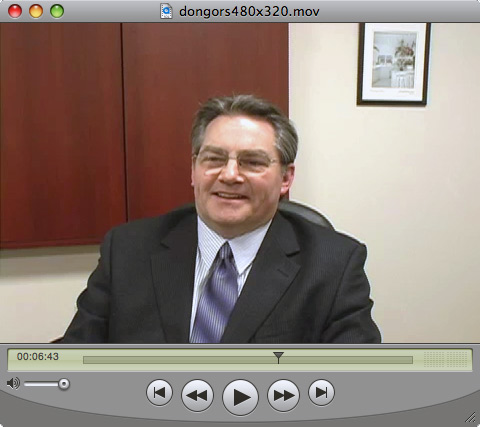
Click to watch or listen (5MB mp3). Gors is running against incumbent Madison School Board President Arlene Silveira. Vote April 7.

Websites: Donald Gors and Arlene Silveira.

Share

Education Chief Urges Mayoral Control Of Schools

AP:

Education Secretary Arne Duncan says big city mayors should take control of their school systems.

Duncan said Tuesday that there’s too much turnover among superintendents in cities where the mayor is not in charge of the schools. He says strong leadership is needed to carry out reform in big cities, where children are struggling the most.

Currently, mayors control the public schools in only a few cities while most others are run by school boards. Duncan told the U.S. Conference of Mayors that if the number doesn’t rise, he will have failed as secretary.

Fascinating: Duncan is a former Chicago Public Schools CEO. His governance point is well worth discussin.

Share

Advanced Placement Annual Conference

The College Board, via a kind reader’s email:

The AP Annual Conference is a forum for all members of the AP and Pre-AP communities, worldwide, to exchange experiences, strengthen professional ties, and gain a better sense of how they can help their students to prepare for college success.

Share

Greens in cafe – culture call for school lunc

Timothy Chui:

Schools with cafeterias can reduce food wastage and save about 2.14 million disposable lunch boxes heading for landfills every year, Greeners Action project officer Yip Chui-man said yesterday.

Roughly 380,000 primary school students take lunch everyday, according to Yip, who said over one-third of 13,000 disposable lunch boxes went straight into the garbage, a February to March survey of 212 primary schools showed.

The survey suggested most primary schools want more funding to introduce canteens in a bid to cut down on waste.

With a mere 5 percent drop in the amount of disposable lunch boxes being junked, compared to seven years ago, Yip is calling on the Education Bureau and the Environmental Protection Department to set up regulations to control lunch-time garbage.

A resounding 95 percent of primary schools want public money to outfit them with a cafeteria.

Share

Dallas-Fort Worth school districts struggle as need for bilingual classes grows

Holly Yan:

Bilingual education is supposed to be expanding to more languages – such as Vietnamese and Arabic – but many school districts can’t find the teachers to handle the two-language classes.
“The teacher shortage that was there for Spanish now translates to other languages,” said Shannon Terry, Garland ISD’s director of English as a Second Language (ESL) and bilingual education.
Area districts are recruiting for next school year, searching for tough-to-staff areas such as math and science. But bilingual teachers are also in high demand.
The state requires any school district that has at least 20 students in a grade level who speak a language other than English to provide a bilingual program in that language.
In 2007, the State Board for Educator Certification expanded the bilingual program to include Vietnamese, Arabic, Chinese, Japanese and Russian. But that doesn’t mean more diverse teachers are lining up for jobs.
“It’s not common knowledge,” said Terry. “The universities aren’t designing programs necessarily yet to support teachers in securing those credentials.”

The Madison School District, in response to Nuestro Mundo’s desire for a middle school charter, plans to implement dual immersion across the District.

Share

Rendell, Nutter fill out Pennsylvania school reform panel

Martha Woodall:

Saying it was time “for a fresh look” at the Philadelphia School District, Gov. Rendell and Mayor Nutter yesterday named two lawyers and an educator who was trained as an artist to the School Reform Commission.
With the appointments, Rendell and Nutter have remade the five-member commission – established after the 2001 state takeover of the schools – signaling a new era in leadership of the 167,000-student district.
They announced their selections at a briefing packed with politicians and educational activists at the High School of the Future in West Philadelphia.
Rendell also announced he had nominated Sandra Dungee Glenn, the former commission chairwoman, to the state Board of Education.
“Your work is not done,” Rendell told Dungee Glenn, who had been part of the district’s governance for nearly a decade and attended the briefing.
Nutter named Robert L. Archie Jr., a partner at Duane Morris L.L.P., and Johnny Irizarry, director of the Center for Hispanic Excellence at the University of Pennsylvania, to four-year terms.

Share

Teacher Unions vs. Poor Kids

Nat Hentoff:

The “education president” remained silent when his congressional Democrats essentially killed the Opportunity Scholarship Program (OSP) in the city where he now lives and works.


Of the 1,700 students, starting in kindergarten, in this private-school voucher program, 90 percent are black and 9 percent are Hispanic.


First the House and then the Senate inserted into the $410-billion omnibus spending bill language to eliminate the $7,500 annual scholarships for these poor children after the next school year.


A key executioner in the Senate of the OSP was Sen. Dick Durbin, Illinois Democrat. I have written admiringly of Durbin’s concern for human rights abroad. But what about education rights for minority children in the nation’s capital?


Andrew J. Coulson, director of the Cato Institute (where I am a senior fellow) supplied the answer when he wrote: “Because they saw it as a threat to their political power, Democrats in Washington appear willing to extinguish the dreams of a few thousand poor kids to protect their political base.”

Share

Students Speak Out on AP and the Challenge Index

Jay Matthews:

Advanced Placement English teacher Allison Beers asked her 11th-grade students at Eleanor Roosevelt High School in Prince George’s County to critique my annual rankings, in The Washington Post and Newsweek, of public high schools. I use the Challenge Index, a measure of participation in AP and other college-level tests. Here are excerpts of comments from several students, with some comments from me:

Share

Key Milwaukee voucher advocate says more regulation, standards for program needed

Alan Borsuk:

Calling this a potentially historic moment in Milwaukee education, a key leader of the private school voucher movement called Thursday for major increases in regulation of the participating schools and for a new focus on quality across all the channels of schooling in the city.
Howard Fuller, the former Milwaukee Public Schools superintendent who is now a central figure nationally in advocating for school choice, said he wants school leaders to join with Gov. Jim Doyle, legislative leaders and others in working out new ways to assure that students of all kinds have quality teachers in quality schools.
“We can’t just keep wringing our hands about these terrible schools,” Fuller said. “We have a moral responsibility to our children to not accept that.”
He said that he believes Doyle is seeking higher quality and more accountability and transparency for the 120 private schools in Milwaukee that have more than 20,000 students attending, thanks to publicly funded vouchers. Fuller said he was in general agreement on those goals.
Doyle has presented “an opportunity to come together and do something that is truly constructive for our children,” Fuller said. “I think it is one of those historic moments that don’t come all the time.”
Fuller was reacting both to a new set of studies of the voucher program and to a dramatically different situation for voucher supporters in the state Capitol.

Share

When Private Schools Take Public Dollars: What’s the Place of Accountability in School Voucher Programs?

Chester E. Finn, Jr., Christina M. Hentges, Michael J. Petrilli and Amber M. Winkler [458K PDF]:

Of all the arguments that critics of school voucher programs advance, the one that may resonate loudest with the public concerns school accountability. Opponents say it’s not fair to hold public schools to account for their results (under No Child Left Behind and similar systems) and then let private schools receive taxpayer dollars–however indirectly–with no accountability at all. We at the Thomas B. Fordham Institute don’t buy that argument entirely. Private schools participating in voucher programs, tax-credit programs, scholarship programs and such are accountable to parents via the school choice marketplace. But we don’t dismiss it, either. For both substantive and strategic reasons, we believe it’s time for school choice supporters to embrace accountability, done right.
For too long, school choice supporters have been stuck in a tired internal debate that hobbles the advance of vouchers and other worthy forms of school choice. Staunch free-marketers say “leave the schools alone and let the parents decide.” More left-leaning critics say “if they won’t play by the same rules as public schools don’t give them any assistance at all.” Yet this debate has become ever more archaic in a society preoccupied with student achievement, school performance, results based accountability, international competitiveness and institutional transparency.
It’s time for the school choice movement to wake up–and catch up to the educational demands and expectations of the 21st century. It’s paradoxical to us that even as the demands on K-12 education are escalating and important new forms of choice are emerging (not just vouchers for choice’s sake but private schooling as a decent option for kids otherwise stuck in failing public schools, means-tested scholarships for low-income families, corporate and individual tax credit and deduction programs, specialized vouchers for disabled youngsters, and more) the accountability and-transparency discussion seems mired in the 1970s.
Let’s restart the discussion. But what does “accountability, done right” looklike in practice? To find out, we sought the assistance of 20 experts in the school choice world–scholars, advocates, program administrators, private school representatives–to help us wrestle with the thorny issues that together embody the accountability question writ large. In this paper, we present their insights, opinions, and advice about how accountability for voucher programs should be structured. We then synthesize their views and offer our own take. Here’s an overview.

Share

School-Voucher Movement Loses Ground After Democratic Gains

Robert Tomsho:

The school-voucher movement is under assault, as opponents have cut federal funding and states move to impose new restrictions on a form of school choice that has been a cornerstone of the conservative agenda for education overhaul.
Vouchers — which give students public money to pay private-school tuition — have grown since a 2002 Supreme Court decision upheld their use in religious schools. About 61,700 students use them in the current school year, up 9% from last year, according to the Alliance for School Choice, a voucher advocate.
But earlier this month, Congress voted to stop funding a voucher program for the District of Columbia. Two other prominent voucher programs — in Milwaukee and Cleveland — are facing statehouse efforts to impose rules that could prompt some private schools to stop taking voucher students.
Pressure is mounting from other corners as well. President Barack Obama has said he opposes vouchers, and the stimulus bill he signed in February bars its funds from being used to provide financial aid to students attending private schools. On Wednesday, the Arizona Supreme Court ruled that two state voucher programs, benefiting foster children and disabled students, violated Arizona’s state constitution.

Share

It’s Not OK To Treat People Special Based on Race, But it is OK based on the “Neighborhood”

Legal Pad (Cal Law) via a kind reader’s email:

That’s the gist we got out of the First District’s ruling today, in a constitutional challenge to Berkeley’s way-complicated system for assigning students to different elementary schools, and to different programs in high school. The upshot: The appeals court unanimously said Berkeley’s system is A-OK, despite Prop 209, because it doesn’t consider a student’s own race at all. Instead, all students in a neighborhood are treated the same — and the way the neighborhood is treated is based on a bunch of things, like average income level, average education level, and the neighborhood’s overall racial composition. The court’s opinion calls things like this “affirmative policies” fostering social diversity. That term doesn’t sound familiar at all.

The Opinion 49K PDF
Perhaps this is what new Madison School District Superintendent Dan Nerad had in mind:

Still, Nerad has clearly taken notice. Given the new numbers, he plans to ask state lawmakers to allow Madison to deny future requests based on family income levels, rather than race, to prevent disparities from further growing between Madison and its suburbs.

2009/2010 Madison Open Enrollment information. Much more on Wisconsin Open Enrollment here.

Share

Giving up A’s and B’s for 4’s and 3’s…..

Winnie Hu:

There is no more A for effort at Prospect Hill Elementary School.
Parents have complained that since the new grading system is based on year-end expectations, 4s are generally not available until the final marking period.
In fact, there are no more A’s at all. Instead of letter grades in English or math, schoolchildren in this well-to-do Westchester suburb now get report cards filled with numbers indicating how they are faring on dozens of specific skills like “decoding strategies” and “number sense and operations.” The lowest mark, 1, indicates a student is not meeting New York State’s academic standards, while the top grade of 4 celebrates “meeting standards with distinction.”
They are called standards-based report cards, part of a new system flourishing around the country as the latest frontier in a 20-year push to establish rigorous academic standards and require state tests on the material.
Educators praise them for setting clear expectations, but many parents who chose to live in Pelham because of its well-regarded schools find them confusing or worse. Among their complaints are that since the new grades are based on year-end expectations, 4s are generally not available until the final marking period (school officials are planning to tweak this aspect next year).
“We’re running around the school saying ‘2 is cool,’ ” said Jennifer Lapey, a parent who grew up in Pelham, “but in my world, 2 out of 4 is not so cool.”

Much more on standards based report cards here.

Share

Goal of Preschool for All Tests Education System

Robert Tomsho:

When Mateus Bontempo started preschool at a public school in Long Branch, N.J., he rarely talked and was so shy he’d stand in the classroom doorway until a teacher came to escort him inside.
Anna Dasilva, his mother, says educators worked with Mateus on his social skills, sometimes taking him to other classrooms to meet new children. Four years later, the eight-year-old third grader plays trumpet, participates in math competitions and performs in plays. “They really helped him along,” says Mrs. Dasilva, who thinks all children should have the same preschool opportunity.
So does President Barack Obama. As one of the main goals of his education plan, he wants to spend $10 billion to encourage states to offer universal preschool and expand federal early-learning programs like Head Start. The recently passed stimulus bill includes half that spending goal, or $5 billion, for Head Start and related early-childhood efforts.
But the current economic crisis may blunt state-level efforts to broaden access to preschool. Even in better times, building a “universal” preschool system would likely be a slow and expensive proposition, given the patchwork nature of what currently exists.
And as state and federal efforts target early learning programs toward disadvantaged students, some middle-class parents feel that their children are being left out. According to a recent study by Pre-K Now, families earning more than about $40,000 a year are already ineligible for free preschool in most of the 20 states that use income to determine eligibility.

Share

L.A. district to end high-profile dropout-prevention program

Howard Blume:

A high-profile and lauded dropout-prevention program is falling victim to budget cuts — although top Los Angeles school officials insist that they’ll provide a more effective program in its place.
The precarious Diploma Project is emblematic of the financial crisis slowly working its way across the nation’s second-largest school system as ripples of a statewide budget shortfall touch counselors, teachers and other school employees whose work directly affects children enrolled in the Los Angeles Unified School District.
Nearly 9,000 employees — about 10% of the full-time workforce — received notice of a possible layoff this month as the district seeks to cut hundreds of millions of dollars from its nearly $6-billion general fund. But there’s more going on than financial pain.
Reshaping system
After taking the helm in January, Supt. Ramon C. Cortines, one of the country’s most experienced educators, has attempted to reshape the school system. Cortines is seizing the moment to trim or gut some of the central bureaucracy, while also moving dollars and responsibility to schools. The superintendent wants schools to decide for themselves whether to pay for additional counselors, arts programs and librarians, among other things.
The new setup must save money, but it also should be more effective, he said.

Share

The Education Wars

Dana Goldstein:

Like any successful negotiator, Randi Weingarten can sense when the time for compromise is nigh. On Nov. 17, after the Election Day dust had cleared, Weingarten, the president of both the American Federation of Teachers (AFT) and its New York City affiliate, the United Federation of Teachers, gave a major speech at the National Press Club in Washington, D.C. In attendance were a host of education-policy luminaries, including Weingarten’s sometimes-foe Mayor Michael Bloomberg of New York City, Service Employees International Union President Andy Stern, National Education Association (NEA) President Dennis van Roekel, and Rep. George Miller of California.
“No issue should be off the table, provided it is good for children and fair for teachers,” Weingarten vowed, referencing debates within the Democratic coalition over charter schools and performance pay for teachers — innovations that teachers’ unions traditionally held at arm’s length.
The first openly gay president of a major American labor union, Weingarten is small — both short and slight. But she speaks in the commanding, practiced tones of a unionist. In speeches, newspaper op-eds, and public appearances, Weingarten, once known as a guns-blazing New York power broker, has been trying to carve out a conciliatory role for herself in the national debate over education policy. It is a public-relations strategy clearly crafted for the Obama era: an effort to focus on common ground instead of long-simmering differences.
Notably absent from the audience for Weingarten’s post-election speech was D.C. Schools Chancellor Michelle Rhee. In the summer of 2007, Rhee, a Teach For America alumna and founder of the anti-union New Teacher Project, took office and quickly implemented an agenda of school closings, teacher and principal firings, and a push toward merit pay. These actions met with their fair share of outrage from both parents and teachers and especially from the local teachers’ union. At the time of Weingarten’s speech, Rhee and the AFT-affiliated Washington Teachers’ Union (WTU) were stalemated over a proposed new contract for teachers.

Share

Keeping coaches in check

Rosanlind Rossi & Steve Tucker:

Chicago public school coaches are in for a crackdown under a proposed city policy that explicitly bans everything from pushing, pinching or paddling athletes to “displays of temper.”
The massive overhaul of the Chicago Public High Schools Athletic Association bylaws follows allegations that began emerging last fall that at least four CPS coaches had paddled or hit athletes.
The new policy creates the possibility that coaches can be banned for life for just one rule violation. Previously, such punishment followed only “knowing and repeated” rule violations.
It also mandates annual coaching training, requires that all coaches undergo criminal background checks and fingerprint analysis, and establishes a “pool” of thoroughly screened candidates from which principals must now pick their coaches.
Prohibitions against corporal punishment and even “forcing a student to stand or kneel for an inordinate time” were listed elsewhere in CPS policy, but after the paddling scandal, CPS wanted to take a clear stand against a wide variety of corporal punishment, said CPS counsel Patrick Rocks.

Share

Public money for private schools?
Lawmaker: S.C.’s schools fail minorities; state should subsidize private school choice.

Roddie Burris:

State Sen. Robert Ford is putting a new face on the long-running fight over whether to spend public education dollars to pay for private schools.
To the dismay of his African American colleagues, the Charleston Democrat is hawking a bill that would give students a publicly paid scholarship or tuition grant to go to a private school.
So far, the push for school choice has had mostly white faces out front. But Ford, who is seeking the Democratic nomination for governor, is making the case that the students who would benefit most from a voucher-style program in South Carolina are African Americans who attend poorly performing schools.
He dismisses those who say his program would hurt already struggling public schools, framing the argument as a choice between protecting schools or giving children the lifeline they need to succeed.
“You’re damn right I’m hurting public education, because public education is hurting our kids,” Ford said.

Share

In Favor of Arlene Silveira for the Madison School Board

The Capital Times:

Races for the Madison School Board, once among the most intense of local electoral competitions, have been a lot quieter in recent years. The more cooperative and functional character of the board, combined with a more responsive approach to community concerns, is confirmed by the fact that many voters are unaware that there is even a contest for one of the two seats that will be filled April 7.
While Seat 2 incumbent Lucy Mathiak, a serious and engaged board member, is unopposed, School Board President Arlene Silveira faces Donald Gors for Seat 1.
We’re glad that Gors, a parent and business owner, is making the race. It is good to have the competition. But even as he launched his run, Gors admitted, “I don’t really know anything about the people on the board or where they stand.”

Watch or listen to a recent conversation with Arlene here.

Share

Saying “When” on DC School Vouchers

Jay Matthews:

I’m not trying to be a hypocrite. I have supported D.C. school vouchers. The program has used tax dollars well in transferring impoverished students to private schools with higher standards than D.C. public schools. But it has reached a dead end. Congress should fund the 1,713 current voucher recipients until they graduate from high school but stop new enrollments and find a more promising use of the money.
That exasperation you hear is from my friend and former boss, the brilliant Washington Post editorial writer who has been eviscerating Democrats in Congress for trying to kill D.C. vouchers. We don’t identify the authors of our unsigned editorials, but her in-your-face style is unmistakable and her arguments morally unassailable.
My problems with what is formally known as the D.C. Opportunity Scholarship Program are political and cultural, not moral. The program provides up to $7,500 a year for private-school tuition for poor children at an annual cost of about $12 million. Vouchers help such kids, but not enough of them. The vouchers are too at odds with the general public view of education. They don’t have much of a future.

Share

CNA program a boon to Oregon High School students

Gayle Worland:

Kayla Crowley, 18, is healthy, but she’s lying in a financial institution with a thermometer in her mouth.
Two mornings a week, this basement room in the Oregon Community Bank and Trust has served as a bustling training area — not for lending money, but for lending a hand.
Crowley and 10 other students from Oregon High School are earning both high school and college credit while they prepare for a booming job category: nursing assistant. While courses such as this take place across the region, the Oregon class “has been a real community effort,” said Bill Urban, coordinator for Oregon’s School 2 Career program, which matches students with on-the-job training.
The bank donated space. Meriter loaned two hospital beds. Oregon Manor contributed two wheelchairs and a Hoyer patient lift.

Share

Can AFT president Randi Weingarten satisfy teachers and reformers at the same time?

Andrew Rotherham & Richard Whitmire:

Randi Weingarten, the notoriously feisty president of the second-largest national teachers’ union, the American Federation of Teachers (AFT), received a hero’s welcome at the National Press Club last November. In her speech, she vowed to give ear to almost any tough-minded school reform, and, in a line that thrilled many reformers, promised that the AFT will not protect incompetent teachers: “Teachers are the first to say, ‘Let’s get incompetent teachers out of the classroom.'”
Weingarten would seem to be donning the reformist mantle of a previous AFT president, Al Shanker, a highly regarded reformer who shook up pro-union liberals by reminding everyone that tough school discipline and achievement standards were civil rights fundamentals. But an approach that worked during Shanker’s tenure is more difficult now, with the reformers and unionists pitched in a bare-knuckled fight that is not about lofty, system-changing goals as much as about the thorny specifics of state and local education policy. Caught up in a contentious situation with the Washington, D.C. school system that has challenged her reformist credentials, Weingarten’s attempt to satisfy both sides of the debate is being put to the test–the result of which could dictate the future of education reform across the country.

Joanne Jacobs has more.

Share

Wisconsin State Budget Forum, Wed. April 1, Wright Middle School, 6 p.m.

Joe Quick:

Dear MMSD Advocate,
Every two years, state government adopts a biennial budget that funds nearly every program in state government. Gov. Jim Doyle’s budget mostly protects K-12, but many K-12 programs were cut by 1%. Due to the floundering national/state economy millions of dollars in federal stimulus funds for Wisconsin are being used to provide a one-time boost to state funding for schools over the next two years.
Short-term, there are some important items in the budget that will help MMSD; but long-term, little is being done to end the annual ritual of either going to referendum or determining what programs and services for students must be cut to balance the local budget.
In the two-year legislative cycle, April in odd years is probably the most important time to contact your legislator to advocate for school programs. Whether it’s SAGE, the K-3 class size reduction program funded by the state, or funding for students in special education — the biennial budget provides the resources.
If you want to advocate to protect school programs/services, please come to the State Budget Forum on April 1st (see attached flier [54K PDF]) to learn about the issues, receive information to help you with that advocacy and find out what is being done to bring about comprehensive school funding reform.
Please forward this information to others who might be interested. Hope to see you April 1st,
Joe Quick
Legislative Liaison/Communication Specialist
Madison Schools
608 663-1902

Share

Andrekopoulos likes the idea of “year-round” classes for Milwaukee Public Schools

Alan Borsuk:

Although Milwaukee Public Schools Superintendent William Andrekopoulos is talking up the idea of converting almost the entire public school system to a year-round schedule, a new study of MPS schools finds mixed evidence, at best, that it increases academic success.
The study, conducted by Bradley R. Carl, a University of Wisconsin-Madison researcher, finds little difference in the annual improvement between students on year-round schedules and those on the traditional September to June calendar. The study, completed in February, can be found on the MPS Web site.
Andrekopoulos enters the week still promoting the year-round idea, although it got a tepid reception last week and, in addition to Carl’s research, there is no agreement among researchers nationally that the revamped schedule improves results.
The superintendent pointed to evidence in the Carl study that students who remained in the same school for two years made bigger gains under the year-round schedule, in which they get shorter summer vacation and longer breaks during the rest of the year.
He said the results showed the importance of reducing the very high percentage of MPS students who change schools frequently – more than 30% are in a different school each September than they were in the year before, not including those who get promoted. A year-round schedule across the city would reduce mobility, Andrekopoulos suggested.

Share

Madison School District Candidate Forum 4/4/2009

via Laurel Cavalluzzo:

WHAT: Board of Education Candidate Forum
with Arlene Silveira Lucy Mathiak Donald Gors
WHEN:  April 4, 2009 10-noon
WHERE:  Lakeview Public Library
2845 N Sherman Ave. [Map]
Madison, WI 53704
(608) 246-4547
 
Open to the public
Learn more about candidate’s positions on issues important to our schools and our communities.
 
SPONSERED BY:
Lakewood Gardens Neighborhood Committee
WI Charter School Assn
Nuestro Mundo, Inc.

Share

Education’s Ground Zero: Michelle Rhee in Washington, DC

Nicholas Kristof:

The most unlikely figure in the struggle to reform America’s education system right now is Michelle Rhee.
She’s a Korean-American chancellor of schools in a city that is mostly African-American. She’s an insurgent from the school-reform movement who spent her career on the outside of the system, her nose pressed against the glass — and now she’s in charge of some of America’s most blighted schools. Less than two years into the job, she has transformed Washington into ground zero of America’s education reform movement.
Ms. Rhee, 39, who became Washington’s sixth school superintendent in 10 years, has ousted one-third of the district’s principals, shaken up the system, created untold enemies, improved test scores, and — more than almost anyone else — dared to talk openly about the need to replace ineffective teachers.
“It’s sort of a taboo topic that nobody wants to talk about,” she acknowledged in an interview in her office, not far from the Capitol. “I used to say ‘fire people.’ And they said you can’t say that. Say, ‘separate them from the district’ or something like that.”

Share

A Chat with Arlene Silveira


Click above to watch, or CTRL-click to download this mpeg4 or mp3 audio file. You’ll need Quicktime to view the video file.
Madison School Board President Arlene Silveira is up for re-election on April 7, 2009. Arlene graciously agreed to record this video conversation recently. We discussed her sense of where the Madison School District is in terms of:

  1. academics
  2. finance
  3. community support/interaction
  4. Leadership (Board and Administration)

We also discussed what she hopes to accomplish over the next three years.
Arlene’s opponent on April 7, 2009 is Donald Gors. The Wisconsin State Journal recently posted a few notes on each candidate here.
I emailed Arlene, Donald Gors and Lucy Mathiak (who is running unopposed) regarding this video conversation. I hope to meet Lucy at some point over the next few weeks. I have not heard from Donald Gors.
Arlene and Lucy were first elected in April, 2006. There are many links along with video interviews of both here.

Share

2009 Wisconsin DPI Superintendent Candidate Debate Tony Evers and Rose Fernandez


Via Wisconsin Public Television. CTRL Click here to download the 382MB 60 minute event video, or this 26MB mp3 audio file.
Candidate websites: Tony Evers & Rose Fernandez
Amy Hetzner:

Rose Fernandez regularly refers to herself as an outsider in the race to become the state’s next schools chief.
The implication is that her April 7 opponent, Deputy Superintendent of Public Instruction Tony Evers, is an insider who is unlikely to change what is happening with education in the state.
The outsider candidate who can change things and shake up the status quo has long been a popular thrust in political campaigns. President Barack Obama, although a U.S. senator at the time, used aspects of the tactic in his campaign last fall.
But some wonder whether it will have the same impact in what is likely to be a low-turnout election April 7.
“The advantage to the insider is being able to draw off of established, organizational support,” said Charles Franklin, a political science professor at the University of Wisconsin-Madison. “The outsider’s goal is to try to become visible enough that people unhappy with the status quo can voice their outsider outrage.”
From her Web site address – www.changedpi.com – to frequently tying her opponent to the state’s largest teachers union, the Wisconsin Education Association Council, Fernandez appears to be trying to capitalize on one of her many differences with her opponent.
“There are perils with entrenchment,” said Fernandez, a former pediatric trauma nurse and past president of the Wisconsin Coalition for Virtual School Families. “With that there comes an inability to see the problems as they really are.”
But being an outsider also has some disadvantages, which Evers is trying to play up as well.
At a recent appearance before the Public Policy Forum, Evers puzzled about Fernandez’s stance against a provision in Gov. Jim Doyle’s bill that he said was supported by voucher school proponents while she expressed support for voucher schools.

Share

Change Pay, Change Teaching?

Amanda Paulson:

Taylor Betz will make a lot more as a high school math teacher this year than her normal salary might suggest.
There’s the $2,300 bonus she gets for working at a “hard-to-serve school,” the $2,300 for filling a “hard-to-staff position,” the $2,300 that all teachers at her school are likely to get for raising student scores on state tests, the $2,300 “beating the odds” bonus she gets for significantly raising the math scores of her own students, and a few smaller bonuses.
Given the extra money, it’s easy to see why a teacher like Ms. Betz would be an enthusiastic supporter of the “pay for performance” system that Denver has adopted. But even though such systems are proliferating, they’re still both highly controversial and little understood.
Performance pay is one of several areas getting attention right now as education reformers zero in on high-quality teaching as the key to helping students learn. The thinking goes like this: It takes good teachers to improve student achievement, and it will take better pay to lure and keep good teachers.
Not only that, advocates of these plans say, but pay should be more directly linked to how well teachers do. And one way to make that link is by looking at students’ scores on standardized tests.

Joanne has more.

Share

Some Rich Districts Get Richer as Aid Is Rushed to Schools

Sam Dillon:

Dale Lamborn, the superintendent of a somewhat threadbare rural school district, feels the pain of Utah’s economic crisis every day as he tinkers with his shrinking budget, struggling to avoid laying off teachers or cutting classes like welding or calculus.
Just across the border in Wyoming, a state awash in oil and gas money, James Bailey runs a wealthier district. It has a new elementary school and gives every child an Apple laptop.
But under the Obama administration’s education stimulus package, Mr. Lamborn, who needs every penny he can get, will receive hundreds of dollars less per student than will Dr. Bailey, who says he does not need the extra money.
“For us, this is just a windfall,” Dr. Bailey said.
In pouring rivers of cash into states and school districts, Washington is using a tangle of well-worn federal formulas, some of which benefit states that spend more per pupil, while others help states with large concentrations of poor students or simply channel money based on population. Combined, the formulas seem to take little account of who needs the money most.
As a result, some districts that are well off will find themselves swimming in cash, while some that are struggling may get too little to avoid cutbacks.

Share

A Summary of the Wisconsin DPI Superintendent Candidate Event

Greg Bump:

WisPolitics: Evers, Fernandez question each other in We The People debate
3/20/2009
By Greg Bump
WisPolitics
Tony Evers questioned opponent Rose Fernandez’s qualifications for the state’s top education spot Friday night, while Fernandez countered by trying to portray him as a crony of Wisconsin’s largest teacher’s union.
The two, vying for the post of superintendent of Public Instruction, laid out competing visions in a We The People debate.
Evers, the deputy superintendent at DPI, touted his 34 years of experience in education while contrasting his resume with the credentials of Fernandez, who is a nurse by trade and has never worked in a public school.
Fernandez, a virtual school advocate, countered by continually trying to lay problems with the state’s educational system at the feet of Evers, who has held the No. 2 post at the agency for eight years.
Given the opportunity to question each other, Evers pointed out Fernandez represented virtual schools and has zero experience in the administration of public schools. He asked how parents with children in public schools can trust her to invest in their education rather than funneling money toward special interests.
“My own special interest is the boys and girls growing up in the state of Wisconsin,” Fernandez shot back.
Fernandez then stressed Evers’ endorsement by the Wisconsin Education Association Council and the “hundreds of thousands of dollars” the union has spent to support his campaign. She asked him to list three reforms he has supported that WEAC opposed.
Evers answered that the union was unhappy with a settlement DPI reached on allowing virtual schools — in which districts allow students to take courses on-line — to continue. He also said he has been a strong advocate of charter schools — which operate without some of the regulations of other public schools — something the union has opposed.
“I started charter schools. I know what charter schools are about,” Evers said. “I don’t need a lecture about charter schools.”
Evers also stressed his support from school boards, child advocates, parents and others.
“That’s why you have to have a broad coalition,” Evers said. “This isn’t about this overwhelming group of people driving policy at the state level. That just isn’t fact.”
Fernandez ripped DPI for not doing enough to help the struggling Milwaukee Public School system address issues like dropout rates and the achievement gap for minority students.
Evers countered that he has worked on the issue with educators in Milwaukee, but there are also socioeconomic factors that are hampering achievement.
“Laying this issue on my lap is irrational,” Evers said.
Fernandez also brought up a piece of Evers’ campaign lit that referred to voucher schools in Milwaukee as “a privatization scheme.”
“Some of the schools have been scheming, and those schools we have drummed out of the program,” Evers replied.
Evers warned that Fernandez would run DPI through the prism of the “special interest” of choice schools.
Both candidates agreed that a merit pay system for educators could have benefit, but they disagreed on the details. Fernandez indicated that she would base her merit pay system more on classroom outcomes, while Evers stressed that rewards for training were equally important.
They differed more prominently on the qualified economic offer, which Gov. Jim Doyle has proposed eliminating in his 2009-11 budget plan. Fernandez wants to retain it, saying that without the control on teacher compensation, property taxes could rise sharply.
“Children may become the enemy of the taxpayer,” she said.
Evers said he has bargained on both sides of the table, and he opposes the QEO because it hurts the state’s ability to stay competitive in teacher pay.
Evers embraced the coming federal stimulus cash, which will pump $800 million into state schools as “a historic event” that acknowledges “educators are the lever that can turn our economy around.” He said he would appoint a trustee to oversee the allocation of the funds in Milwaukee schools to ensure the money is getting to the classrooms.
In contrast, Fernandez said she looked upon the federal stimulus with caution in that it is one-time funding that won’t be there in the future
And while Evers touted the state’s ACT and SAT scores as being among the highest in the nation, Fernandez said those tests are only administered to college-bound students and aren’t indicative of the academic struggles in districts like Milwaukee.
We the People/Wisconsin is a multi-media that includes the Wisconsin State Journal, Wisconsin Public Television, Wisconsin Public Radio, WISC-TV, WisPolitics.com and Wood Communications Group.

Share

Wisconsin DPI Superintendent Candidate Tony Evers Advocates Charter Schools

Tony Evers campaign, via email:

Tony Evers today pledged to continue his long commitment to Wisconsin’s charter schools, which provide innovative educational strategies. Dr. Evers has played a major educational leadership role in making Wisconsin 6th in the nation, out of all 50 states, in both the number of charter schools and the number of students enrolled in charter schools.
“We are a national leader in charter schools and I will continue my work for strong charter schools in Wisconsin,” Evers said. “As State Superintendent, I will continue to promote our charter schools and the innovative, successful learning strategies they pursue as we work to increase achievement for all students no matter where they live.”
Evers, as Deputy State Superintendent, has been directly responsible for overseeing two successful competitive federal charter school grants that brought over $90 million to Wisconsin. From these successful applications, Evers has recommended the approval of over 700 separate planning, implementation, implementation renewal, and dissemination grants to charter schools around the state since 2001.
During the past eight years, the number of charter schools in Wisconsin has risen from 92 to 221 – an increase of almost 150%. The number of students enrolled in charter schools has increased from 12,000 students in 2001 to nearly 36,000 today.
Evers has also represented the Department of Public Instruction on State Superintendent Elizabeth Burmaster’s Charter School Advisory Council. The council was created to provide charter school representatives, parents, and others with the opportunity to discuss issues of mutual interest and provide recommendations to the State Superintendent.

Share

Boosting Schools Without Spending a Dime — Your Ideas

Jay Matthews:

My suggestions last month [Metro Monday column, Feb. 16] for raising achievement in budget-cutting times inspired an outpouring of reader ideas. Some were interesting, such as tougher honor rolls, more reading clubs and more speaking practice. Some were wild, such as my favorite, eliminating school buses.
A lot of people yearned, as I did, for simpler approaches that drew parents into schooling, thus strengthening family ties and improving education while saving money. Most of us admitted that few, if any, of our suggestions will be adopted, but keep in mind that hardly anyone believed the Boston Red Sox would ever win the World Series again.
I had seven ideas: replace elementary school homework with free reading; eliminate barriers to charter school growth; have teachers call parents to praise their kids; have parents e-mail educators to laud their teaching; require high school students to read at least one nonfiction book; call on every child in every class; and declare a national holiday on which everyone reads. As I expected, my charter school notion was unpopular, but President Obama has since made it a top priority anyway. Good luck with that, Mr. President. All the rest won reader support, particularly the first idea on homework. I will get to that after we review the most intriguing of your suggestions.

Share

Wisconsin’s Budget Picture

Christian Schneider:

We’ve made the case numerous times on this blog that Governor Doyle’s proposed budget uses too much one-time money to balance the state budget. Just yesterday, the Legislative Fiscal Bureau estimated the structural deficit for 2011-13 at $1.5 billion – and keep in mind, that’s with $3 billion in new ongoing taxes added to the rolls.
It seems that some local government officials are starting to pick up on the house of cards Doyle has built. In Madison ( of all places), a school board member has written a criticism of Doyle’s use of one-time money, understanding the peril which awaits school budgets in the future:

Share

Study: Charter school students may be more likely to graduate, go to college

Martha Woodall:

Charter schools generally cannot take credit for boosting test scores, but there is intriguing evidence that students at charter high schools may be more likely to graduate and attend college, a national study concludes.
The Rand Corp. study, which was released Wednesday, examined charters in eight states. Rand, a nonprofit research organization in Santa Monica, Calif., also examined charters in Chicago, San Diego, Denver, Milwaukee, Pennsylvania, Ohio, Texas and Florida.
A year ago, a Rand report on charter schools in Philadelphia found that their students performed about the same as students in district-run schools.
Charter school research has become politically charged, with dueling views. Some reports have concluded that students at the nation’s 4,100 charter schools outperform their counterparts in traditional public schools. Other investigators have said charter students do no better than public school students and often do worse.
Researchers involved with the Rand report said they had used performance data of individual students over time to try to evaluate charter schools more accurately. Their work received financial support from several nonprofit foundations, including the Bill and Melinda Gates Foundation and the William Penn Foundation. Bill Gates supports charter schools, and the Gates Foundation has provided millions of dollars to help successful ones expand.

Ron Zimmer, Brian Gill, Kevin Booker, Stephane Lavertu, Tim R. Sass, John Witte:

The first U.S. charter school opened in 1992, and the scale of the charter movement has since grown to 4,000 schools and more than a million students in 40 states plus the District of Columbia. With this growth has also come a contentious debate about the effects of the schools on their own students and on students in nearby traditional public schools (TPSs). In recent years, research has begun to inform this debate, but many of the key outcomes have not been adequately examined, or have been examined in only a few states. Do the conflicting conclusions of different studies reflect real differences in effects driven by variation in charter laws and policies? Or do they reflect differences in research approaches — some of which may be biased? This book examines four primary research questions: (1) What are the characteristics of students transferring to charter schools? (2) What effect do charter schools have on test-score gains for students who transfer between TPSs and charter schools? (3) What is the effect of attending a charter high school on the probability of graduating and of entering college? (4) What effect does the introduction of charter schools have on test scores of students in nearby TPSs?

Share

57 apply to operate new Milwaukee voucher schools

Alan Borsuk:

In each recent year, the number of people saying they are opening voucher schools was similar to this year’s total and the number who made it into operation was in the single digits. The schools have substantial hurdles to clear, including getting a building that meets codes and signing up students and teachers.
In addition to the 57 new applicants, just about all of the current roster of voucher schools – around 120, including a few that do not appear to be operating at the moment – have applied to remain in the program next year.
Rising ranks of students
Put it all together and DPI is forecasting the number of low-income students using the state voucher program next year will be equal to about 20,500 full-time students, up from about 19,500 this year, an increase that is line with the pattern of recent years. (The actual number of students is higher than the “full time equivalent” figure because four-year-old kindergartners are funded at a fraction of other students. The actual number in September was 20,244.)

Share

Advocating Rose Fernandez for Wisconsin DPI Superintendent

Wisconsin State Journal Editorial:

Wisconsin voters have a clear choice in the April 7 race for state superintendent of the Department of Public Instruction.
The race features a consummate and careful insider, Tony Evers, versus a spirited and straightforward outsider, Rose Fernandez.
The State Journal endorses Fernandez.
The pediatric nurse and mother of five will be a strong advocate for change — someone who will use the mostly symbolic post of state schools superintendent as a bully pulpit to press for reforms, many of which President Barack Obama favors.
With so many high school students failing to graduate in Milwaukee, with so much at stake for Wisconsin in the changing, knowledge-based economy, Fernandez is the best candidate to invigorate DPI.
Fernandez, of Mukwonogo, drew public attention last year for her advocacy of public online charter schools. She helped push for a bipartisan legislative compromise that allowed virtual schools to continue serving thousands of students online with more accountability.

Share

Madison Schools to Deny Open Enrollment Applications Based on Income?

Seth Jovaag, via a kind reader’s email:

In February 2008, the Madison school board – facing mounting legal pressure – overturned a policy that allowed the district to deny transfer requests based on race. Before that, white students were routinely told they couldn’t transfer. Madison was the only district in the state with such a policy, which aimed to limit racial inequalities throughout the district, said district spokesman Ken Syke.
With that policy gone, Madison saw a nearly 50 percent increase in students asking to transfer, from 435 to 643.
Madison superintendent Daniel Nerad notes that Madison’s numbers had been steadily increasing for years. But he acknowledged that the policy change likely explains some of this year’s jump.
“I think we do see some effect of that, but I’m not suggesting all of it comes from that, because frankly we don’t know,” he said.
Still, Nerad has clearly taken notice. Given the new numbers, he plans to ask state lawmakers to allow Madison to deny future requests based on family income levels, rather than race, to prevent disparities from further growing between Madison and its suburbs.
Other districts that border Madison – including Monona Grove, Middleton and McFarland – are seeing more transfer requests from Madison this year, too.
“The change Madison made … that certainly increased the application numbers,” said McFarland’s business director, Jeff Mahoney.
In addition, Verona school board member Dennis Beres said he suspects many Madison parents are trying to transfer their kids from the chronically overcrowded Aldo Leopold elementary school, which is just two miles northeast of Stoner Prairie Elementary in Fitchburg.

Fascinating. I would hope that the Madison School District would pursue students with high academic standards rather than simply try, via legislative influence and lobbying, to prevent them from leaving…. The effects of that initiative may not be positive for the City of Madison’s tax base.
Related: 2009/2010 Madison Open Enrollment applications. Much more on open enrollment here.

Share

Madison School Superintendent Dan Nerad on Poverty and Enrollment: “For every one student that comes into the MMSD, three leave it”

Kristin Czubkowski, via Jackie Woodruff:

All of the speakers were good, but I will admit I really enjoyed listening to Madison Metropolitan School District Superintendent Dan Nerad talk on the issue of poverty in our schools.

“Oftentimes, the statement is used as follows: Our children are our future. In reality, we are theirs.”

Nerad made one more point I found interesting, which was his explanation for why for every one student that comes into the MMSD, two to three students leave it. While MMSD has been well-recognized for having great schools and students, many of the schools have high concentrations of poverty (17 of 32 elementary schools have more than 50 percent of students on free or reduced lunch programs), which Nerad said can lead to perception issues about how MMSD uses its resources.

“From my perspective, it’s a huge issue that we must face as a community — for every one child coming in, two to three come out right now. I worry that a lot of it is based on this increasing poverty density that we have in our school district … Oftentimes that’s based on a perception of quality, and it’s based on a perception based on that oftentimes that we have more kids in need, that we have more kids with more resource needs, and oftentimes people feel that their own children’s needs may not be met in that equation.”

Recent open enrollment data.

Share

Advocating Mayoral Control of Schools – in Milwaukee

Bruce Murphy:

Not long ago, the idea of placing the Milwaukee Public Schools under control of the city’s mayor was getting considerable discussion. Then two things happened. The Public Policy Forum did a study of other cities, which found no clear-cut answers as to whether a governance change improved their school districts.
The Forum also convened a panel of community leaders to discuss this, and the feeling was unanimous that this would make no difference to the success of MPS. From teachers union head Dennis Oulahan to business leader Tim Sheehy, there was not “a great deal of support for a change in governance,” moderator Mike Gousha concluded.
That seems to have killed the idea. After all, if the experts agree it wouldn’t do anything, and the study is equivocal, it must be a bad idea, right?
Wrong. The idea has great merit, and nothing in the study – or the statements of experts – proves otherwise. A system in which, say, the mayor appoints the school board members, much as he appoints the Fire and Police Commission, could have many benefits, including:
More attention to the problem: School Board members are elected in low-turnout elections in which a minuscule percentage of city residents vote. Mayoral elections are high-interest affairs that would automatically elevate the issue of education, while making the city’s most important officeholder accountable for the schools. We vote for the mayor based on how he does on property taxes and crime, but not on education, which is just as important to the city’s success. Why put so little value on the schools?
A less parochial school board. The teachers union routinely gets candidates elected who readily vote for increases in salaries and benefits. The typical opponent of the union is the business community. The board has swung back and forth between these interests, as their respective candidates get elected. By contrast, the mayor is answerable to the full spectrum of voters. His choices for the board are likely to be more independent.

Share

Hudson, New Hampshire Fights Free Kindergarten

Dan Gorenstein:

itizens of Hudson, N.H., are backing their school board’s decision to reject an unfunded state mandate to provide free kindergarten. The case gets a hearing Wednesday.

Hudson School District web site. Many links here, and here.

Share

A Look at Wisconsin State Tax Funded K-12 Spending

TJ Mertz:

Not only is one time revenue being used for ongoing expenses (which may be acceptable in these economic circumstance), but all this revenue is being used to offset state funds. When combined with the “current law” revenue cap increases estimated at $277 and $286 per member for the two years, this shifts the burden to local property taxpayers in significant ways.
However things go down, the state will move further from the 2/3 support concept and consequently the local property tax portion of school revenues will be increasing at a faster rate than the state portion (unless districts don’t tax to the limit, but that has some bad effects in subsequent years). I am still confused about the Governor’s and the LFB thoughts on IDEA and Title I, which appear to be at least partially contrary to the “supplement not supplant” provisions. I do know that there is lobbying going on from many quarters to expand the loopholes and allow more of the stimulus money to be used to fund existing, not expanded programs and services.
There are also some positives. Revenue cap increases are included at past levels, school safety, nurses and transportation are eased; the low revenue ceiling is raised, Special Education isn’t actually cut, SAGE and 4 K are given increases, albeit insufficient ones. It could be worse.

Share

Madison School District Cuts Busing Costs by $926,343,09


Thanks to Erik Kass for sending this along.

Share

We Should Not Be Surprised at These Outcomes, When We Teach our Children PowerPoint

A recently released “slideument” from General Motors. This document [PDF or [PPT] “explains” their March, 2009 buyer and dealer incentives. Via the Truth About Cars.
Related: “The Cognitive Style of Powerpoint“, “slideuments“, PowerPoint and Military Intelligence, PowerPoint does Rocket Science and Two Decades of PowerPoint, is the World a Better Place?
I am frequently amazed at the information sent around in such slideuments.

Share

Will school finances end in tragedy?

Maya Cole:

The headlines are dramatic: a state running billions in debt with declining revenue and a legislature waiting anxiously for federal money to show up.
“All the world’s a stage” — beyond a doubt. The feat is to decide whether this is a comedy or tragedy amid a dismal economy and different players.
Like stock characters, lobbyists continue to collect in the halls of government to sell their wares.
The predictable talk of paying for education plays to the citizenry. Don’t raise taxes and do more with less — it’s the same old dichotomy. Lately there’s new irony, as suggested by Gov. Jim Doyle, that school boards should go to the table with “more creative ways” to bargain and without the QEO (qualified economic offer).
We’ve been focusing in the wrong place, according to Doyle. All we need is a “creative teacher compensation package.” Problem solved. So school boards just need to get more creative and drop the discussion on school finance and educational excellence? Talk about a plot twist!
The cynical souls suggest that now is the time for caution and control, no time to attempt school finance reform, though the current formula was a short-term solution whence it began. They heed us to plod along with conventional plans and wait for — who and when? Next year? The year after?

Share

Oakland officials sue over charter school funding

Jill Tucker:

The Oakland school board has sued State Superintendent of Public Instruction Jack O’Connell, saying he violated state law and financial common sense when he gave city charter schools $450,000 out of the district’s bank account.
The lawsuit, filed Thursday, is the latest volley in a fight for power and authority over the Oakland schools. O’Connell has controlled the purse strings since the state bailed out the nearly bankrupt district with a $100 million loan in 2003.
O’Connell said giving additional funding to the district’s 32 charters schools – about $60 for each of their 7,500 students – was an equity issue. The alternative public schools were left out of a parcel tax passed by voters a year ago.
“Clearly all of the public schools in Oakland are deserving of resources, including the district’s charter schools,” said O’Connell spokeswoman Hilary McLean.

Share

Duncan: Schools must improve to get stimulus money

Libby Quaid:

Education Secretary Arne Duncan says schools must make drastic changes to get money from a special $5 billion fund in the economic stimulus bill.
“We’re going to reward those states and those districts that are willing to challenge the status quo and get dramatically better,” Duncan said Monday at the White House.
Those who keep doing the same old thing, however, won’t be eligible for the money, he said.
Schools will be getting tens of billions more dollars through regular channels. On top of that, Duncan will have an unprecedented $5 billion to award for lasting reforms.
To get an award, schools and states must show they have been spending their money wisely. They are supposed to find innovative ways to close the achievement gap between black and Latino children who lag behind their white counterparts in more affluent schools.
Specifically, states are supposed to:

  • Improve teacher quality and get good teachers into high-poverty schools;
  • Set up sophisticated data systems to track student learning;
  • Boost the quality of academic standards and tests;
  • Intervene to help struggling schools.

It will be interesting to see how real this is.

Share

Obama’s Education Chief Knows Stars Are Aligned for Real Change

Gerald Seib:

U.S. Treasury Secretary Timothy Geithner may be the Obama cabinet member facing the biggest crisis — the economic one — but Education Secretary Arne Duncan may be the one holding the biggest opportunity in his hands.
It is this: He inherits the best chance in a generation to really shake up an American education system that is uneven and underperforming. And he knows it.
“I see this as an extraordinary opportunity,” Mr. Duncan says in an interview. “We have a couple of things going in our direction that create what I call the perfect storm for reform.”
If the economy ever heals, and if Afghanistan doesn’t blow up, this quest to change the way Americans educate their kids may emerge as one of the biggest dramas of the Obama term. Here are the components of that perfect storm for change that Mr. Duncan describes:
There’s virtually a national consensus — one that certainly includes business leaders panting for a better-prepared work force — that America’s ossified education system needs a big shake-up. Moreover, a bipartisan trail toward real change was blazed by the Bush administration (which gets too little credit for doing so).

Share

Sweden’s School Choice: Vouchers for All

Education is so important that you cannot leave it to just one producer” – Sweden’s former Education Minister, Per Unckel; Video by Lance Izumi. Izumi is co-author of “Not as Good as You Think: Why the Middle Class Needs School Choice“.

Share

Milwaukee Schools Chief Seeks to Disrupt the Status Quo

Alan Borsuk:

Superintendent William Andrekopoulos on Sunday called for using tens of millions of dollars in federal economic stimulus money “to disrupt the status quo” in Milwaukee Public Schools in a bid to increase student achievement.
Making school days for kindergarten through eighth grader longer by something less than an hour a day and pushing the entire MPS system to switch to a “year-round” schedule, in which summer vacation is shortened, were two of the ideas suggested by Andrekopoulos.
He also called for improving teaching quality by giving staff members more time to prepare for class and collaborate with other teachers and by providing teachers more training.
Andrekopoulos said the short time frame being set for spending economic stimulus money and the urgency of improving student achievement mean that MPS should aim to implement the changes by the start of the coming school year. Decisions must be made by about May 1, he said.
A set of public meetings will be held, beginning Wednesday, to get public reaction and allow people to make their own suggestions on what MPS should do.

Share

Why is NEA cheering Obama’s education ideas?

Elizabeth Hovde:

The National Education Association appears to be humming “Stand By Your Man,” even after President Barack Obama promoted both merit pay and an expansion of charter schools in his recent comments about education.
What gives? Whenever a conservative leader talks about pay differences for educators instead of one-size-fits-all raises, teachers’ unions say “no,” “no” and, “hell, no.” And whenever a Republican supports charter schools, NEA members start calling politicians enemies of public schools.
In a statement released after Obama’s “cradle-to-career” education speech last week, NEA President Dennis Van Roekel welcomed Obama’s “vision” for strengthening public education and said, “He’s off to a solid start. … His ‘cradle-to-career’ proposal mirrors what NEA and its 3.2million members have been advocating.”
The union clearly heard what it wanted to hear (more money) and ignored much of Obama’s talk. Merit pay, charter school expansion and more school accountability are not what the union has been advocating. Given the NEA’s glowing review, I wondered if the union would even have blinked if the president demanded an end to undemocratic, mandatory unionism. (That was not on Obama’s radar, needless to say.)

Share

MPS’ Parental Enticement Program Spent Freely, Widely But, oh, the questionable expenditures. Now some are banned.

Mike Nichols:

Tax dollars intended to help parents improve their children’s academic achievement have for years routinely been spent by Milwaukee public schools on everything from roller skating to bowling to water-park field trips, an investigation by Wisconsin Interest has found.
Thousands of dollars were also spent on fast food, DJs, prizes, gift certificates and other goodies and giveaways. One school spent $556 in parental-involvement money to buy 250 pumpkins. Another spent $686 for a Milwaukee Bucks “Family Night.”
Even when a clear academic purpose is evident, there are often questions about excess. Two schools, according to invoice descriptions, spent more than $17,000 to rent hotel and banquet-hall space for student recognition ceremonies.
Research, as well as common sense, has long shown that having engaged and informed parents is one of the most important ways to increase a child’s success in school – and in life. Recognizing that, the federal government has funneled “parental involvement” tax dollars to many school districts across the country.
This year alone, schools run by MPS will receive $38.2 million from the federal government’s Title I program. Like other large districts, MPS must set aside at least 1% for parental-involvement initiatives. The district goes further and sets aside 2% – which would amount to about $764,000 in the 2008-2009 school year.

Share

Minnesota Democrats Propose $1 Billion Education Cut

Tom Scheck:

Democrats in the Minnesota Senate are proposing deep cuts in education funding to help balance the state’s budget. Their plan includes a cut in early education through 12th grade funding of nearly $1 billion dollars. They would also cut state funding for higher education by $221 million dollars. The Senate DFL plan is the first proposal from state lawmakers to erase the state’s $4.6 billion deficit.
The plan would cut spending by 7 percent across all budget areas. The largest programs hit are schools, health and human services and aid to local government. In total, the plan cuts $2.4 billion in spending. The plan also relies on $2 billion in unspecified new revenue.
At a news conference, DFL Senate Majority Leader Larry Pogemiller said the cuts are needed to stabilize the budget in the long term. He said Governor Pawlenty’s proposal to use one-time money, accounting shifts and spending cuts does not adequately address the problem.
“It’s a day of reckoning for Minnesotans, both for elected officials both in the executive branch and the legislative branch,” Pogemiller said. “We need to do our duty to balance the state budget for the long-term financial health of the state.”
What is most notable is that Senate Democrats are proposing $1 billion in cuts to early childhood education and K thru 12 schools. K-12 funding is required under the Minnesota Constitution and lawmakers have been reluctant to cut those programs for fear of angering voters. Senate Education Finance Chair Leroy Stumpf, of Plummer, said the depth of the budget problem, along with a sputtering economy, mean all programs have to be on the table.

Share

Teachers to Face Individual, School Evaluations of Student Success

Bill Turque:

District teachers will be evaluated on their individual effectiveness and their school’s overall success in improving student performance under an assessment system to be unveiled this fall, Schools Chancellor Michelle A. Rhee said yesterday.
In her most detailed public comments to date on planned changes to the evaluation system, Rhee said at a D.C. Council hearing that the approach would combine standardized test scores where practical, intensive classroom observation and “value added” measurements of students’ growth during the year.
Teachers would also be allowed to set buildingwide goals for achievement that would be used in evaluating their performance.
Rhee said the Professional Performance Evaluation Program, which the District has used in recent years, is inadequate and does not reflect a teacher’s worth or how much he or she has helped students grow. She said the federal No Child Left Behind law, as written, is too narrowly focused on test results and not student progress from year to year.

Share