School Information System

The cost of a 4-year, public college has increased 158% since the early 1990s.

Jordan Uhl:

I’m one of the 43.4 million Americans who owe more than a collective $1.7 trillion in student loan debt. Feels great. The average federal balance is $37,014 per borrower, with the total (including private loans) balance a few thousand more.

According to the College Board’s 2021 Trends In College Pricing Report, the average annual tuition and fees at public, 4-year colleges have risen from $4,160 to $10,740—a 158% increase, since the early 1990s. At private institutions there has been a 96.6% increase during that same period, with tuition and fees increasing from $19,360 to $38,070.

Share

The EU’s top court says mass surveillance is banned. Governments do it anyway.

Vincent Manancourt

Jack Murphy* was suspicious. His ex-girlfriend, Eve Doherty, seemed to know a lot about who he was calling. 

His suspicions were merited. Doherty had been using her job in the Irish police force to access his phone records, an investigation by the local judiciary revealed. Doherty was disciplined and transferred in 2011.

Three years later, in 2014, the European Court of Justice (CJEU) ruled that the Irish law that forced telcos and internet service providers to hang on to traffic and location data was contrary to EU law, and so was the EU directive it was based on. The data retention regime allowed government agencies to access citizens’ data in ways that violated their privacy — like what Doherty was doing when she accessed those phone records of her ex-boyfriend.

And yet, the risk of similar cases — of police officers overstepping their powers to access phone records — still lingers today.

The landmark 2014 ruling was followed by a bevy of subsequent judgments from the EU’s highest court that reinforced its message to stop blanket data retention. But it didn’t stop Ireland from keeping its mass surveillance of phone and internet data, including who you call and where you are, largely intact.

“In Ireland, we’ve been in a period of lawlessness, at least since 2001,” said TJ McIntyre, chair of Digital Rights Ireland, the non-profit organization whose legal complaint brought down the EU Data Retention Directive in the landmark 2014 case.

Share

Working Parents & Summer Childcare

Callum Borchers:

Don’t even get them started on time-off requests, an especially contentious subject in sunny weather. They say colleagues’ family vacations routinely get approved before their own romantic getaways or solo excursions because managers (who often have kids, too) prioritize time with children.

One thing many parents and non-parents can agree on: The always-on culture of work—made worse by the pandemic—is largely to blame for fueling resentment.

Share

19 new Madison K-12 Principals

Scott Girard:

More than one-third of the Madison Metropolitan School District buildings will have a different principal in the 2022-23 school year than the person in that role last fall.

Among the 19 of 50 principals who left the school they were at last fall are six who left their building mid-year, while the rest finished the school year but left this summer. At least two of them retired, six will be principals at a different MMSD school, five will be principals at schools outside of Madison, one has taken a central office position in a nearby district and one left for a role with the state.

The Cap Times could not determine what the next step is for four of the people who left the principal roles they were in to begin last school year. They did not respond to messages on social media and a search of LinkedIn profiles and news reports did not indicate their new role.

The data clearly indicate that being able to read is not a requirement for graduation at (Madison) East, especially if you are black or Hispanic”

2017: West High Reading Interventionist Teacher’s Remarks to the School Board on Madison’s Disastrous Reading Results 

Madison’s taxpayer supported K-12 school district, despite spending far more than most, has long tolerated disastrous reading results.

My Question to Wisconsin Governor Tony Evers on Teacher Mulligans and our Disastrous Reading Results

“An emphasis on adult employment”

Wisconsin Public Policy Forum Madison School District Report[PDF]

WEAC: $1.57 million for Four Wisconsin Senators

Friday Afternoon Veto: Governor Evers Rejects AB446/SB454; an effort to address our long term, disastrous reading results

Booked, but can’t read (Madison): functional literacy, National citizenship and the new face of Dred Scott in the age of mass incarceration.

No When A Stands for Average: Students at the UW-Madison School of Education Receive Sky-High Grades. How Smart is That?

Share

Governments are ignoring the lockdown effect on education

The Economist

Then the pandemic struck and hundreds of millions of pupils were locked out of school. At first, when it was not yet known whether children were vulnerable to covid-19 or were likely to spread the virus to older people, school closures were a prudent precaution. But in many places they continued long after it became clear that the risks of reopening classrooms were relatively small. During the first two years of the pandemic more than 80% of schooldays in Latin America and South Asia were disrupted by closures of some sort. Even today schools in some countries, such as the Philippines, remain shut to most pupils, leaving their minds to atrophy.

Globally, the harm that school closures have done to children has vastly outweighed any benefits they may have had for public health. The World Bank says the share of ten-year-olds in middle- and low-income countries who cannot read and understand a simple story has risen from 57% in 2019 to roughly 70%. If they lack such elementary skills, they will struggle to earn a good living. The bank estimates that $21trn will be wiped off their lifetime earnings—equivalent to about 20% of the world’s annual gdp today.

The data clearly indicate that being able to read is not a requirement for graduation at (Madison) East, especially if you are black or Hispanic”

2017: West High Reading Interventionist Teacher’s Remarks to the School Board on Madison’s Disastrous Reading Results 

Madison’s taxpayer supported K-12 school district, despite spending far more than most, has long tolerated disastrous reading results.

My Question to Wisconsin Governor Tony Evers on Teacher Mulligans and our Disastrous Reading Results

“An emphasis on adult employment”

Wisconsin Public Policy Forum Madison School District Report[PDF]

WEAC: $1.57 million for Four Wisconsin Senators

Friday Afternoon Veto: Governor Evers Rejects AB446/SB454; an effort to address our long term, disastrous reading results

Booked, but can’t read (Madison): functional literacy, National citizenship and the new face of Dred Scott in the age of mass incarceration.

No When A Stands for Average: Students at the UW-Madison School of Education Receive Sky-High Grades. How Smart is That?

Share

Civics: open records transparency takes a hit in Wisconsin

Mitchell Schmidt:

Bill Lueders, president of the Wisconsin Freedom of Information Council, described the court’s ruling as “a body blow to the state’s traditions of open government.”

“It undermines the provision in the open records law that allows litigants to recover actual costs and attorney’s fees in cases in which access to records is wrongfully denied,” Lueders said in a statement. “The court’s conservative majority has created new opportunities for authorities to deprive the public of access to public information.”

Both Kamenick and Lueders called on state lawmakers to pass legislation clarifying state records laws in light of Wednesday’s ruling.

Share

A dropout wins a Fields Medal.

Jordana Cepelewicz:

Huh, 39, has now been awarded the Fields Medal, the highest honor in mathematics, for his ability to wander through mathematical landscapes and find just the right objects — objects that he then uses to get the seemingly disparate fields of geometry and combinatorics to talk to each other in new and exciting ways. Starting in graduate school, he has solved several major problems in combinatorics, forging a circuitous route by way of other branches of math to get to the heart of each proof. Every time, finding that path is akin to a “little miracle,” Huh said.

One might say the same of his path into mathematics itself: that it was characterized by much wandering and a series of small miracles. When he was younger, Huh had no desire to be a mathematician. He was indifferent to the subject, and he dropped out of high school to become a poet. It would take a chance encounter during his university years — and many moments of feeling lost — for him to find that mathematics held what he’d been looking for all along.

That poetic detour has since proved crucial to his mathematical breakthroughs. His artistry, according to his colleagues, is evident in the way he uncovers those just-right objects at the center of his work, and in the way he seeks a deeper significance in everything he does. “Mathematicians are a lot like artists in that really we’re looking for beauty,” said Federico Ardila-Mantilla, a mathematician at San Francisco State University and one of Huh’s collaborators. “But I think in his case, it’s really pronounced. And I just really like his taste. He makes beautiful things.”

“When I found out that he came to mathematics after poetry, I’m like, OK, this makes sense to me,” Ardila added.

Share

K-12 Tax & Spending Climate: comparing the 50 States’ economic prospects

Josh Mitchell:

The states that gained the most mi­grants levied an av­er­age max­i­mum in­come-tax rate of 3.8% on in­di­vid­u­als. Four—Flor­ida, Texas, Ten­nessee and Nevada—charged no in­come tax at all. The 10 states that lost the most res­i­dents to moves have an av­er­age tax rate of 8.0%.

Share

Notes on the 2022 NEA convention; “enemies list”

Mike Antonucci:

I provided in-person gavel-to-gavel coverage of every National Education Association Representative Assembly from 1998 — the year of the failed merger attempt with AFT — through 2016. NEA denied me a press credential thereafter due to my partnership with The 74, which they said “does not meet journalistic standards as a credible news outlet.”

In truth, it was a bit of a relief. The convention was tedious and became more and more stage-managed as the years went on. It was also an expensive trip and a week of little rest and bad food.

Thanks to Terry Stoops of the John Locke Foundation and his sources, we now have a complete list of the new business items NEA delegates are debating this week. For this first time, the union has seen fit to hide this information behind a firewall, making it available only to the delegates themselves.

You can take a look at Terry’s Twitter threadto see the items he highlighted, but I’ll point to these few for now:

NBI 15 – The latest in a long history of creating enemies lists (this one from 1998):

“NEA shall compile research to create fact sheets about the largest 25 organizations that are actively working to diminish a students’ right to honesty in education, freedom of sexual and gender identify, and teacher autonomy.”

NBI 31 – The return of merger!

“I move that the NEA create a committee and a plan to work with AFT to strongly consider a national merger of the two education unions.”

NBI 37 – Another in long history of fringe NBIs that never pass from activists in the Oakland Education Association:

“The NEA will work with state affiliates to support a national policy of mandatory masking and COVID vaccines in schools, as well as high-quality virtual education for immuno-compromised students and all families who want it by publicizing successful virtual education programs in public schools throughout the nation in existing media outlets.”

NBI 44 – Offers sample contract language to institute bereavement leave for “pregnancy loss and failed fertility treatments.” Doesn’t open can of worms by including bereavement leave for abortions.

NBI 63 – More sample contract language, this time suggesting “mother” be replaced with “birthing parent” and “father” with “non-birthing parent.” The NBI’s sponsors will need bereavement leave when this gets voted down.

NBI 77 – Wrote about this when the California Teachers Association sent it to committee. Now it’s aiming for nationwide application:

Summary:

The purpose of the four-day assembly is to elect officers, approve the union’s budget and set national policy for the coming school year. In practice, however, the agenda is largely decided by the union’s executive officers, staff and 172-member board of directors. The election results are usually a foregone conclusion, and the budget is always approved with no alterations.

Where the delegates get their say is in the introduction, debate and votes on “new business items.” These are actions that are “specific in nature and terminal in application, shall concern issues beyond one affiliate and shall not call for NEA to do work that is already in progress.” It takes just 50 delegate signatures on a petition to get an item to the floor for debate and vote.

The focus of these items runs the gamut, from battling institutional racism to supporting a national opt out/test refusal movement to calling for Arne Duncan to resign as President Barack Obama’s secretary of education. Many have no relation to education or labor at all.

Though approval of new business items is the expressed will of the delegates, execution of the actions demanded usually falls very short of impactful. The 2021 assembly debated 66 items. Of these, 11 were ruled out of order or withdrawn. Ten were voted down. A full 22 were referred to an NEA standing committee without a recommendation. That left only 23 that were approved. Of those, nine called on NEA to use its print and social media outlets to publicize something.

Share

That Fancy University Course? It Might Actually Come From an Education Company.

Lisa Bannon and Rebecca Smith:

American universities are searching for ways to generate more revenue. As a result, hundreds of schools—including Vanderbilt University, the University of California, Berkeley, and the University of North Carolina at Chapel Hill—are teaming up with for-profit companies such as 2U to provide online programs.

As part of the arrangement, one that is reshaping higher education, universities sometimes hand over to companies a great deal of control of student recruitment and instructional design, especially for nondegree programs. For their work, the companies receive hefty shares of tuition dollars.

Much of this isn’t clear to prospective and current students. Universities often cooperate with companies in ways that can blur the lines for students between schools and recruiters.

2U, based in Lanham, Md., has emerged as a leader in the booming field, employing aggressive recruiting practices and in some cases playing down its role, according to interviews with current and former 2U employees and students.

Christopher “Chip” Paucek, 2U’s chief executive and a co-founder, said the company is providing valuable services to universities that many can’t do themselves. “For the last 14 years, 2U has worked to expand access to high-quality online education for learners around the world, enabling hundreds of thousands of students to transform their lives,” Mr. Paucek said in a written statement.

Christina Denkinger wanted something new after 14 years as an elementary-school teacher in Portland, Ore. After shopping around for a course in data analytics last fall, she requested information through a University of Oregon website portal for an online training program, called a boot camp, offered by the university’s continuing-education division.

Share

Notes on the media and taxpayer supported disinformation

Share

Notes on “Literary Gatekeepers”

Kat Rosenfeld:

Gullaba’s agent knew he had something special, and he was excited for a big submission push. But on the eve of sending the manuscript out to publishers, the agent suggested Gullaba update his bio to emphasize his racial identity. Publishers, he reasoned, would be excited to support a young black writer fresh on the literary scene.

There was a problem: Gullaba is Filipino.

“We had never met in person,” he tells me, laughing. “I guess you can’t really judge who’s black or not based on a name like Alberto, and Gullaba is just ethnically ambiguous enough that it could be from Africa? I don’t know.”

What was clear, immediately, was that something had changed. The agent wasn’t excited anymore. Actually, he seemed downright nervous, and he started asking for significant changes to the manuscript.

“The guy’s frightened,” Gullaba says. “God bless him, that’s the reality of that world.”

At first, Gullaba was asked to add an Asian character—east Asian, specifically, perhaps a Pacific Islander. Then it was suggested that Titus’ wingman, the biggest secondary character, should also be assigned an Asian identity. And there was one more bizarre twist: Another agency employee, who we’ll call Sally, was brought in at the eleventh hour to read the book and provide additional feedback.

Share

Money & college sports

Brianna Hatch:

Two California universities announced Thursday they are leaving the Pac-12 athletic conference to join the Big Ten. The move is poised to send shockwaves through higher education — with revenue gains, athletes’ well-being, and the organization of college athletics as a whole at stake.

The University of California at Los Angeles and the University of Southern California will become the 15th and 16th members of the Big Ten, effective 2024, the conference announced Thursday. The move comes less than a year after the Universities of Oklahoma and Texas at Austin announced

Share

Model school board policies

WILL:

The ongoing discussions about public school education continues to be divisive and difficult. The Wisconsin Institute for Law and Liberty (WILL) provides these model school board policies as an addition and alternative to the limited options that school boards have access to. WILL offers these model policies with goals of increasing parents’ rights and involvement, creating transparency, optimizing student academic achievement and improving school governance.

Share

New low in newspaper (16%) confidence

Gallup:

Gallup summarizes Americans’ overall confidence in institutions by taking an average of the ratings of the 14 institutions it measures consistently each year — all but small business and large technology companies. This year’s 27% average of U.S. adults expressing “a great deal” or “quite a lot” of confidence in those 14 institutions is three points below the prior low from 2014.

Share

The right to read!

Kay Hymowitz

I am overstating, but not by much. A significant number of American students are reading fluently and with understanding and are well on their way to becoming literate adults. But they are a minority. As of 2019, according to the National Association of Education Progress (NAEP), sometimes called the Nation’s Report Card, 35 percent of fourth-graders were reading at or above proficiency levels; that means, to spell it out, that a strong majority—65 percent, to be exact—were less than proficient. In fact, 34 percent were reading, if you can call it that, below a basic level, barely able to decipher material suitable for kids their age. Eighth-graders don’t do much better. Only 34 percent of them are proficient; 27 percent were below-basic readers. Worse, those eighth-grade numbers represent a decline from 2017 for 31 states.

As is always the case in our crazy-quilt, multiracial, multicultural country, the picture varies, depending on which kids you’re looking at. If you categorize by states, the lowest scores can be found in Alabama and New Mexico, with just 21 percent of eighth-graders reading proficiently. The best thing to say about these results is that they make the highest-scoring state—Massachusetts, with 47 percent of students proficient—look like a success story rather than the mediocrity it is.

The findings that should really push antiracist educators to rethink their pedagogical assumptions are those for the nation’s black schoolchildren. Nationwide, 52 percent of black children read below basic in fourth grade. (Hispanics, at 45 percent, and Native Americans, at 50 percent, do almost as badly, but I’ll concentrate here on black students, since antiracism clearly centers on the plight of African-Americans.) The numbers in the nation’s majority-black cities are so low that they flirt with zero. In Baltimore, where 80 percent of the student body is black, 61 percent of these students are below basic; only 9 percent of fourth-graders and 10 percent of eighth-graders are reading proficiently. (The few white fourth-graders attending Charm City’s public schools score 36 points higher than their black classmates.) Detroit, the American city with the highest percentage of black residents, has the nation’s lowest fourth-grade reading scores; only 5 percent of Detroit fourth-graders scored at or above proficient. (Cleveland’s schools, also majority black, are only a few points ahead.)

In April 2020, the Sixth Circuit Court of Appeals ruled in favor of former students suing Detroit schools for not providing an adequate education. The suit cited poor facilities and inadequate textbooks, but below-basic literacy skills were the primary academic complaint. One of the plaintiffs was a former Detroit public school student who went on to community college and ended up on academic probation, in need of a reading tutor. His story is typical enough as to be barely worth mentioning—except for the fact that he graduated at the top of his public high school class. And as if this isn’t bad enough, the numbers appear likely to get worse, with the impact of Covid-19 disruptions.

The data clearly indicate that being able to read is not a requirement for graduation at (Madison) East, especially if you are black or Hispanic”

2017: West High Reading Interventionist Teacher’s Remarks to the School Board on Madison’s Disastrous Reading Results 

Madison’s taxpayer supported K-12 school district, despite spending far more than most, has long tolerated disastrous reading results.

My Question to Wisconsin Governor Tony Evers on Teacher Mulligans and our Disastrous Reading Results

“An emphasis on adult employment”

Wisconsin Public Policy Forum Madison School District Report[PDF]

WEAC: $1.57 million for Four Wisconsin Senators

Friday Afternoon Veto: Governor Evers Rejects AB446/SB454; an effort to address our long term, disastrous reading results

Booked, but can’t read (Madison): functional literacy, National citizenship and the new face of Dred Scott in the age of mass incarceration.

No When A Stands for Average: Students at the UW-Madison School of Education Receive Sky-High Grades. How Smart is That?

Share

Los Angeles Schools Vaccine Requirement tossed

Share

Tornado!

Share

Modeling Fallacy

David Bell:

Last week, the Lancet published a modeling studyby Oliver Watson and others from Imperial College London, funded by, among others, the Bill & Melinda Gates Foundation. This predictive model from Imperial College suggests that COVID-19 vaccination introduced at the end of 2020 saved 14.4 to 19.8 million lives in the subsequent 12 months. A summary is provided here. The Imperial College modeling team previously massively overstated anticipated COVID-19 deaths in 2020. 

Models should pass basic credibility criteria to be published, based on plausibility. Alternatively, a lack of coherence with real-world data or known biology should be stated. For reasons upon which one can only speculate, the Lancet again seems not to have actually assessed the credibility of the paper prior to publication. This matters, as others who lack an apparent basic understanding of scientific process, such as The Economist and various commentators on social media, then disseminate the model’s predictions as fact. 

People can die when public health is twisted in this way.

Vaccination against SARS-CoV-2 commenced in late 2020, and significant vaccination rates were not achieved in most populations until at least a few months into 2021. In a respiratory virus outbreak the most vulnerable, most likely to die, are likely to be overrepresented in mortality in year one. However, this first year did not produce anything like the mortality claimed to have been ‘saved’ by the vaccines in 2021. Lockdowns and other nonpharmaceutical interventions don’t account for this.

Share

Reflections on July 4th

Michael Walsh:

Before 1776 what eventually became the U.S.A. was a collection of British colonies; in 1619, when black Africans aboard a Portuguese slave ship, taken as bounty by English privateers (aka “pirates”), came ashore in the New World, they did so near Hampton in the British colony of Virginia. At that point, there was nothing “American” about it, other than its location. (The Portuguese, by the way, were among history’s worst black-African slavers, directing the  bulk of the transatlantic slave trade to their colony, Brazil. Yet somehow slavery is “America’s original sin.”)

Instead, slavery was a cause for which hundreds of thousands of Americans died. On these first few days in July 1863, in the midst of the Civil War that may have started as a rebellion but turned into a war to free the slaves, Union generals Ulysses S. Grant and George Meade electrified the nation with the news of their twin victories at Vicksburg, the last of the southern citadels on the Mississippi River, and at Gettysburg, a small town in southern Pennsylvania where Robert E. Lee’s defective generalship finally caught up to his inflated reputation, and killed the Confederacy’s hopes at point-blank range during Pickett’s Charge. It was a blunder that made Grant’s worst military decision, Cold Harbor, look almost sensible.

This is the same Grant who called the “cause” of the Confederacy “one of the worst for which a people ever fought, and one for which there was the least excuse.” In a forgotten bit of history, the capture of Vicksburg also vindicated General Winfield Scott’s “Anaconda Plan,” which advocated choking the South to death by blockading its ports and seizing its principal waterways. Which is exactly what Grant—who served under “Old Fuss and Feathers” in the Mexican War—did.

Share

Losing control of language

Michael O’Dwyer:

“It’s difficult to stop title inflation as [it is] quite a powerful recruitment tool and cheaper than paying properly,” said one salaried partner whose job title has been upgraded at EY.

Share

Civics: “A deep distrust of white liberals”

Musa al-Gharbi

Indeed, Thomas’ embrace of the Republican Party is consonant with a deep mistrust of white liberals, the institutions they control and the policies they try to advance in the name of “social justice.” 

This mistrust was widely shared among Black activists of his generation — and is in keeping with Thomas’ Supreme Court decisions, including overturning Roe. If anything, the racialized attacks many liberals directed at Thomas in the wake of the Dobbs v. Jackson ruling confirm the pessimistic view of race relations that prevailed among many of the Black thinkers who shaped Thomas’ worldview and is exhibited by Thomas himself. 

For instance, Thomas was deeply inspired by Malcolm X. He had a poster of Malcolm X that hung in his dorm room. He memorized many of his speeches by heart, and he continues to evoke him frequently to this day.

It was Malcolm X, of course, who famously declaredthat, “In this deceitful American game of power politics, the Negros (i.e. the race problem, the integration and civil rights issues) are nothing but tools, used by one group of whites called Liberals against another group of whites called Conservatives, either to get into power or to remain in power.”

Share

A new university provides intellectual nourishment—and hope for the future.

Jacob Howland:

Last week, while we were teaching in the forbiddencourses program of UATX (commonly referred to as the University of Austin), the economist Deirdre McCloskey told me a story. The year was 1969, and an official from Princeton had come to the Institute for Advanced Study to discuss the university’s decision to establish an African-American Studies program. Students in Cornell’s Afro-American Society had recently engineered an armed takeover of Willard Strait Hall. Met with skepticism about the proposal, the exasperated official finally blurted out, “But the black students have the guns!” To which economist Alexander Gerschenkron replied, “When I hear the word ‘guns,’ I reach for my culture.”

On hot-button political issues, Americans today have itchy trigger fingers. Chalk it up to poor education. Academia, which is upstream of culture and politics alike, has become a den of ideological uniformity and score-settling snitching that promotes the forceful (and sometimes violent) suppression of speech. But while most colleges and universities are effectively teaching students to reach for their guns, some teach them to reach for their culture. That means cultivating the citizenly virtues of interpretive charity, intellectual humility, and open-mindedness without which politics in the proper sense—the collective determination of matters of common concern through public debate—becomes impossible.

UATX’s forbidden courses program, which brought together undergraduates from leading colleges and universities, lived up to its name. Ayaan Hirsi Ali’s course analyzed “key foundations of critical thinking, argumentation, reasoned debate, and freedom of expression, as these pertain to some of the most controversial issues of our day.” Students studied logical argumentation and read John Stuart Mill’s On Liberty in preparation for exploring theses like “Islam is a religion of peace” and “transgender women are women” from opposing perspectives. Kathleen Stock’s course on varieties of feminism examined “what kind of metaphysical and political subject is being implicitly conjured in the background under the heading ‘woman,’ and whether it is a coherent one.” Writer Thomas Chatterton Williams introduced his class to the “pain, rage, and hope of America’s most loyal critics,” including Frederick Douglass, W. E. B. Dubois, Booker T. Washington, Richard Wright, and James Baldwin. McCloskey’s course asked whether capitalism has been a tragedy or a triumph. Historian Niall Ferguson led an examination of free and unfree societies in the twentieth century.

Share

Civics: Notes on our federal government

Francis Menton:

Of the three decisions discussed, the one likely to have the most far-reaching impact is West Virginia. During his first days and weeks in office, President Biden issued one Executive Order after another instructing every part of the bureaucracy to figure out any way it could to implement the “climate” agenda. Statutory authorization? Who needs that? Now, not only is EPA’s most expansive regulatory initiative getting shut down, but multiple other agencies have comparable gambits likely to fail in the courts. Most famously, the SEC is now out with 100 pages or so of new proposed regulations, mandating corporate disclosures of “emissions”; and the Federal Reserve supposedly is adopting saving the climate as a third of its missions (the other two being price stability and full employment). More such dubious initiatives are under way in agencies from the Department of Energy to the Department of the Interior.

A major transformation of the economy requires specific legislation duly enacted by Congress. Who could have though of such a crazy idea?

Share

Happy 4th of July

Share

Civics: picketing rights

Eugene Volokh:

So the rule seems clear: Content-neutral bans on residential picketing are constitutionally permissible. And that would apply whether the residence is that of an abortion provider or that of a Justice who ruled that the Constitution doesn’t secure abortion rights. Perhaps Justices Brennan and Marshall (and possibly Stevens, though his position in Frisby was more complex) were right to reject this, and to conclude that people should be free to picket outside the homes of everyone (again, abortion providers or others). But the current rule upholding residential picketing bans has been useful to abortion providers as well as others.

UPDATE: For more on whether the bans being discussed in this situation are indeed content-neutral and therefore valid, see this post as to Maryland and this post as to Virginia. (Summary: Maryland law very likely invalid, Virginia law likely invalid, Montgomery County ordinance likely valid.)

Share

What Does it Mean to Tell the Truth?’: East High class publishes book

Scott Girard:

While lesson planning late on a Sunday night last year, East High School social studies teacher Anisa Yudawanti texted a friend, teacher Amy Wilson, with a “wild idea.”

Months later, Yudawanti’s freshmen students and Wilson’s second- and third-graders at John Muir Elementary School held copies of the books they co-created, “What Does it Mean to Tell the Truth?”

“I was asking students for a very different kind of demonstration of learning, a very different kind of assignment that was very closely tied to their personal dreams, their ideas,” Yudawanti said. “A lot of them were not used to that and I think that was a really exciting thing to do.”

Share

Teaching all aspects of the U.S.’s story will help de-politicize education and foster democracy.

William J. Bennett:

All Americans should be concerned about any indoctrination of children. But content addressing America’s difficult history of race relations, including today’s challenges, isn’t necessarily evidence of that. Achievements in the realm of civil rights have happened through an imperfect process spanning more than two centuries. The struggles of Americans like King and Frederick Douglass are lessons in striving toward the “more perfect union” of the Founders’ imagination. And they are worth teaching.

The American public-school system must teach both the galling and glorious aspects of U.S. history. As Virginia Gov. Glenn Youngkin has said, “We can teach all of our history, the good, the bad, and Virginia’s children will be better for it.” While it isn’t always a comfortable process, teaching children America’s complete history in an age-appropriate way, with parental awareness, is necessary for their own sake and for our country’s.

Doing so will help take politics out of education. It will prepare kids for the real world, where preventing hurt feelings doesn’t take precedence over facing uncomfortable facts. And it will instill in our children the ability to entertain ideas they may disagree with—an essential condition for a functioning democracy.

American exceptionalism is real, but fragile. Teaching the full story of American history will encourage the next generations of Americans in their own progress toward a more perfect union. America is still, as Lincoln said, “the last best hope of Earth.” If we tell the full story of the American past, it will help write a bright story of the American future.

Share

Language maps

Share

Civics: Advocating open press access in the White House

Steven Nelson:

TV correspondents, famed veteran reporters and leaders of the White House Correspondents’ Association rallied behind the call to end year-old restrictions on venues such as the East Room that in past administrations were “open press.”

Biden aides have refused to tell the Correspondents’ Association the selection criteria for presidential events and individual reporters have received an array of conflicting explanations, resulting in a widespread belief that the practice is meant to shape the variety of questions presented to the president.

“The current method of allowing a limited number of reporters into these events is not only restrictive and antithetical to the concept of a free press, but it has been done without any transparent process into how reporters are selected to cover these events,” the letter says.

Share

Mavis Beacon

Natasha Piñon:

The world’s most famous typing teacher was born in a garage in Sherman Oaks, Calif., more than three decades ago. 

Her creators named her Mavis Beacon and she would go on to teach a generation to type with her trademark tranquility while coaching millions of students through the basics of QWERTY. 

In the many years since, she’s come to represent excellence in typing, used as a shorthand for speed everywhere from the Tonight Show to The Office. As Jim once complimented Pam, arguably one of the most famous characters ever to hold down a typing-centric job: “Mavis Beacon doesn’t even type 90!”

The twist? She wasn’t real.

Share

The Far Right and Far Left Agree on One Thing: Women Don’t Count

Pamela Paul:

But today, a number of academics, uber-progressives, transgender activists, civil liberties organizations and medical organizations are working toward an opposite end: to deny women their humanity, reducing them to a mix of body parts and gender stereotypes.

As reported by my colleague Michael Powell, even the word “women” has become verboten. Previously a commonly understood term for half the world’s population, the word had a specific meaning tied to genetics, biology, history, politics and culture. No longer. In its place are unwieldy terms like “pregnant people,” “menstruators” and “bodies with vaginas.”

Planned Parenthood, once a stalwart defender of women’s rights, omits the word “women” from its home page. NARAL Pro-Choice America has used “birthing people” in lieu of “women.” The American Civil Liberties Union, a longtime defender of women’s rights, last month tweeted its outrage over the possible overturning of Roe v. Wade as a threat to several groups: “Black, Indigenous and other people of color, the L.G.B.T.Q. community, immigrants, young people.”

It left out those threatened most of all: women. Talk about a bitter way to mark the 50th anniversary of Title IX.

Share

Civics: Democrats kick Green Party off North Carolina ballot

David Larson:

These allegations were submitted to the board by Jacquelyn Lopez of the Elias Law Group on behalf of the N.C. Democratic Party’s deputy get-out-the-vote director, Michael Abucewicz. The accusations — which include that the Green Party misrepresented itself to get some to sign and that they turned in fraudulent sheets of signatures — can be read here

But Matthew Hoh, the Green Party’s U.S. Senate candidate — who will now be unable to get on the ballot with Republican Ted Budd, Democrat Cheri Beasley, and Libertarian Shannon Bray — said the national Democratic Senatorial Campaign Committee, the Elias Law Group, and the N.C. Democratic Party were less concerned with exposing fraud than keeping Hoh off the ballot to protect Beasley’s vote share. And they used dishonest tactics to get the job done, Hoh said.

Share

We can’t solve problems if our children can’t read

Kaleem Caire:

I have grave concern for our children in Dane County and Wisconsin.

We face no greater long-term crisis in America than the widespread underperformance, diminishing motivation and poor preparation of children and young people in our nation’s K-12 schools, and the rapidly declining number of educators available to teach our children.

Student performance in Dane County is troubling. In spring 2021, near the conclusion of our first full pandemic-impacted school year, the Wisconsin Department of Public Instruction’s website shows that the percentage of proficient readers in grades three, four and five of public elementary schools across Dane County’s 16 school districts was only:

7% of Black students (5% in Madison alone).
13% of Latino students (7% in Madison).
37% of Asian students (25% in Madison).
42% of white students (41% in Madison).
26% of multiracial students (16% in Madison)

This means they tested at or above grade level on the English language arts section of the state’s Forward exam, administered annually to children in Wisconsin in grades three through eight and 10. The remaining students tested below grade level.

The results were very similar statewide in grades three through eight, across all 423 public school districts and 32 independent public charter schools in Wisconsin.

If the percentages above aren’t shocking enough, consider this: When you look at the educational performance of Black students in Dane County by the conclusion of third grade — when reading shifts from learning how to read to reading to learn — just 10% move on every year to fourth grade as proficient readers. Among the remaining 90%, 30% have a partial understanding of reading and language arts while the remaining 60% struggle to read well at all.

We are talking thousands of children attending public schools in Dane County and our state who are way behind academically. Every demographic is affected by this. The matter has only been made much worse by the pandemic, and by the lack of enough educators to effectively address the problem. The situation is worsening by the day and year. It is not getting any better.

All in favor of teaching civics in Wisconsin high schools, say aye — ‘Aye!’

The future of our community hangs in the balance. The massive numbers of job openings across our region and this country are not because people don’t want to work. We haven’t prepared our young people well enough for the jobs that are available, and we have not helped enough of them develop the skills to create a job for themselves.

We cannot build a future and solve the growing numbers of geopolitical, environmental, housing, food insecurity and public health crises with thousands of children who cannot effectively read a restaurant menu, or who attend schools that aren’t preparing them to solve these problems.

We must do better, and I welcome that conversation.

The data clearly indicate that being able to read is not a requirement for graduation at (Madison) East, especially if you are black or Hispanic”

2017: West High Reading Interventionist Teacher’s Remarks to the School Board on Madison’s Disastrous Reading Results 

Madison’s taxpayer supported K-12 school district, despite spending far more than most, has long tolerated disastrous reading results.

My Question to Wisconsin Governor Tony Evers on Teacher Mulligans and our Disastrous Reading Results

“An emphasis on adult employment”

Wisconsin Public Policy Forum Madison School District Report[PDF]

WEAC: $1.57 million for Four Wisconsin Senators

Friday Afternoon Veto: Governor Evers Rejects AB446/SB454; an effort to address our long term, disastrous reading results

Booked, but can’t read (Madison): functional literacy, National citizenship and the new face of Dred Scott in the age of mass incarceration.

No When A Stands for Average: Students at the UW-Madison School of Education Receive Sky-High Grades. How Smart is That?

Share

“Employees outside the U.S., including China- based employees , can have access to TikTok U.S. user data subject to…”

TikTok:

  1. Do any ByteDance employees have a role in shaping TikTok’s algorithm?

Subjectto the controls described in our response to question 1, ByteDance engineers around the world may assist in developing those algorithms, however our solution with Oracle will ensure that training of the TikTok algorithm only occurs in the Oracle Cloud Infrastructure and will also ensure appropriate third-party security vetting and validation ofthe algorithm. For more information about how TikTok’s algorithm recommends content, please see our Newsroom post: https://newsroom.tiktok.com/en-us/how-tiktok recommends videos-for-you.

  1. Do any Douyin employees have any access to American user data or a role in shaping TikTok’s algorithm?

ByteDance developed the algorithms for both Douyin and TikTok , and therefore some of the same underlying basic technology building blocks are utilized by both products , but TikTok’s business logic , algorithm , integration , and deployment of systems is specific to the TikTok application and separate from Douyin .

Share

Notes on higher education governance diversity: Florida edition

By Susan Svrluga and Lori Rozsa:

In June, DeSantis lauded work experience over “a magic piece of paper which likely would have cost too much anyway” when he signed a law allowing state agencies to substitute work experience, including military experience, for college degrees in hiring.

“Give me somebody that served eight years in the Navy or the Marine Corps. That education is going to be much more beneficial and pertinent than someone that went $100,000 in debt to get a degree in zombie studies,” DeSantis said.

He has also pledged to keep tuition at public colleges and universities low, and this week, he changed rules for the state’s Bright Future scholarships to allow work experience by high school students to count toward required community service.

Still, his proposals to rein in the independence of those schools have alarmed some academics in Florida and beyond. In other parts of the country, some legislators and governors are pushing for more autonomy over hiring and firing state employees. Tenure is coming under increasing criticism. And a number of states have passed bills to prevent colleges from teaching “divisive concepts.”

Last month, the accrediting agency announced that it would take no further action after a committee visited the University of Florida toevaluate whether the school was in compliance with standards requiring integrity and academic freedom and reviewed new procedures. School officials said in a statement that the outcome “affirms the university’s commitment to the academic freedom of its faculty members and the First Amendment’s guarantees of the right of free speech.”

It remains to be seen whether other jurisdictions follow Florida’s example on accreditation, Kelchen said. But he noted DeSantis’s significant national clout and said scrutiny of higher education sends a clear “message to the political base during an election year that ‘we care about your priorities.’ ”

Share

Civics: “rule making” vs legislation

Mario Loyola and Eric Groten

The EPA’s attempt to impose such a scheme on states was particularly bold because Congress had just declined to enact a similar scheme. After the 2008 election, Democrats introduced the Waxman-Markey bill, a sweeping cap-and-trade scheme to reduce carbon emissions dramatically. Even with Democratic supermajorities in both houses, Congress failed to pass the bill.

After his party lost the House in 2010 President Obama turned to the EPA, which in 2015 promulgated the Clean Power Plan. The basic idea of the CPP was to pressure states into shutting down coal and (eventually) natural-gas plants and switch to renewable electricity sources. The agency resorted to an obscure provision of the original Clean Air Act that lay largely dormant for decades. It empowers the EPA to designate a “best system of emissions reduction,” or BSER, for existing facilities. The provision had been used only a handful of times, mostly for solid-waste incinerators, to reduce emissions “inside the fence line” of the facility itself.

The EPA decided that BSERs could extend beyond the fence line to the whole economy. The CPP would have imposed costly technological requirements within its purview, but also imposed standards that would force states to switch to natural gas and eventually renewables. The agency even planned to adopt nationwide standards on how and when you are allowed to use electricity in your own house. 

There were a host of statutory and constitutional problems with this scheme, and the Supreme Court stayed it in 2016. In 2019, the Trump administration replaced it with the Affordable Clean Energy rule. That rule held to the traditional “inside the fence line” approach and accordingly focused on modest emissions improvements at coal plants. On the last day of Mr. Trump’s presidency, however, the powerful U.S. Circuit Court of Appeals for the District of Columbia vacated the Trump rule.

The data clearly indicate that being able to read is not a requirement for graduation at (Madison) East, especially if you are black or Hispanic”

2017: West High Reading Interventionist Teacher’s Remarks to the School Board on Madison’s Disastrous Reading Results 

Madison’s taxpayer supported K-12 school district, despite spending far more than most, has long tolerated disastrous reading results.

My Question to Wisconsin Governor Tony Evers on Teacher Mulligans and our Disastrous Reading Results

“An emphasis on adult employment”

Wisconsin Public Policy Forum Madison School District Report[PDF]

WEAC: $1.57 million for Four Wisconsin Senators

Friday Afternoon Veto: Governor Evers Rejects AB446/SB454; an effort to address our long term, disastrous reading results

Booked, but can’t read (Madison): functional literacy, National citizenship and the new face of Dred Scott in the age of mass incarceration.

No When A Stands for Average: Students at the UW-Madison School of Education Receive Sky-High Grades. How Smart is That?

Share

“But the project was an utter failure”

Brian Gitt:

I started to realize that I had accepted as true certain claims about energy and our environment. Now I began to see those claims were false. For example:

  • I used to think solar and wind power were the best ways to reduce CO2 emissions. But the biggest reduction in CO2 emissions during the past 15 years (over 60%) has come from switching from coal to natural gas. 
  • I used to think that the world was transitioning to solar, wind, and batteries. This, too, was false. Trillions of dollars were spent on wind and solar projects over the last 20 years, yet the world’s dependence on fossil fuels declined only 3 percentage points, from 87% to 84%
  • I used to believe nuclear energy was dangerous and nuclear waste was a big problem. In fact, nuclear is the safest and most reliable way to generate low-emission electricity, and it provides the best chance of reducing CO2 emissions.

It’s now clear I was chasing utopian energy. I was using green energy myths as moral camouflage, and I was able to believe those myths as long as I remained ignorant about the real costs and benefits of different energy sources. 

I’ve dedicated most of my life to protecting the environment. But I was wrong about the best ways to do it. I thought I was acting morally and protecting the well-being of people and the planet. In fact, I was harming both.

Share

K-12 Tax & Spending Climate: population decline and growth

Share

Taxpayer Supported Loudoun County School District Litigation

America First Legal

Unlawful actions by the most notorious school district in America include:

  • Knowingly, systematically, and willfully violating the Plaintiffs’ fundamental constitutional rights to care for, nurture, and direct the education, moral instruction, and upbringing of their children;
  • Knowingly, systematically, and willfully taking advantage of the schools’ coercive power over children to impose a woke social, political, and psychological ideology and agenda, and thereby to shape and control student attitudes, beliefs, and behavior relating to, inter alia, human sexuality, equal rights, and the relationship between a parent and his or her child;
  • Requiring schools and teachers as a matter of policy to deceive parents and secretly promote and facilitate a child’s “gender transition”;
  • Requiring schools as a matter of policy to provide children with psychological or psychiatric counseling and treatment without parental knowledge or consent;
  • Soliciting and obtaining information about student attitudes, habits, traits, opinions, beliefs or feelings regarding sensitive regulated topics such as sex, religion, race, and familial relationships without either express prior parental consent or a direct relationship to academic instruction;
  • Knowingly, systematically, and willfully using “social and emotional learning” and other similar methods and techniques for the purpose of affecting childrens’ behavioral, emotional, or attitudinal characteristics related, inter alia, to race and sexuality, without prior parental consent or any direct relationship to academic instruction;
  • Invidiously using racial “balancing” and quotas to favor some children at the expense of others;
  • Intentionally failing to provide Plaintiffs with a safe and orderly learning environment for their children;
  • Illegally hiding information about school operations and curriculum from parents;
  • Illegally charging exorbitant fees and/or claiming legally deficient exemptions to Freedom of Information Act Requests;
  • Illegally failing to comply with multiple Virginia laws mandating parental notifications and involvement in surveys and teaching related to sensitive personal subjects including human sexuality and race;
  • Illegally implementing race-based quota systems for entry into advanced level classes and admission to the Academies of Loudoun; and
  • Retaliating and discriminating against parents and children whose beliefs do not align with the woke LCPS agenda;
Share

Swedish study: open schools likely protected emotional well-being of middle school students

Anthony LaMesa:

Findings highlight importance of “normalcy” for children

A recently published journal article concluding Swedish primary school children suffered no learning loss drew international attention, but foreign observers of Sweden’s responsible decision to keep most schools open may have missed a journal article published in December 2021 with good news about the emotional well-being of the country’s middle school students: they didn’t suffer more emotional problems during the early pandemic than would otherwise be expected “due to typical mean-level changes during development.”

Analyzing data from 30 middle schools in western Sweden, the “study’s aim was to compare Swedish middle school students’ (grade 4–5) psychosocial well-being before the pandemic to approximately a year into the pandemic.” The authors concluded that “when students continue attending school, their psychosocial well-being does not worsen as it does for students experiencing school closures.”

Students’ emotional problems showed no differences, whilst small differences in student’s relationships to significant others and factors of psychological adjustment may be partially due to typical mean-level changes during development (Meeus, 2016). Meaningful differences in students’ school adjustment are plausibly attributed to disruptions caused by the pandemic. Holistically, students do not seem to be doing poorly. This study together with Chen et al. (2021) has shown that when students continue attending school, their psychosocial well-being does not worsen as it does for students experiencing school closures (Cresswell et al., 2021Viner et al., 2021).

The researchers compared data from October 2019-January 2020 (T1) to data from November 2020-February 2021 (T2):

Share

Governance and Covid Practices

Beth Mole:

Fauci subsequently went back on Paxlovid for another five-day course. “Right now, I’m on my fourth day of a five-day course of my second course of Paxlovid,” he said Tuesday. “And, fortunately, I feel reasonably good, I mean, I’m not completely without symptoms, but I certainly don’t feel acutely ill.”

Conflicting treatment advice

Fauci’s second course of treatment conflicts with the stance of the US Food and Drug Administration and the Centers for Disease Control and Prevention. In a May 24 health advisory, the CDC wrote, “There is currently no evidence that additional treatment for COVID-19 is needed for COVID-19 rebound. Based on data available at this time, patient monitoring continues to be the most appropriate management for patients with recurrence of symptoms after completion of a treatment course of Paxlovid.”

Share

Free Speech And Cancel Culture at the DC area law schools

David Lat:

The nation’s capital is also the latest front in the law-school culture wars. Two law schools in D.C., American University Washington College of Law and the George Washington University Law School, have experienced free speech and cancel culture controversies in the past week. Here’s what’s going at American University (“AU”), per Karen Sloan of Reuters:

American University is investigating eight law students after a conservative classmate claimed they harassed him during an online group chat about the U.S. Supreme Court’s Dobbs v. Jackson Women’s Health Organization decision, one of the students under investigation confirmed Monday.

The incident followed the May 2 leak of a draft of the decision, which was released in final form on Friday and overturned Roe v. Wade, reversing a Constitutional right to an abortion.

A male law student who described himself as Republican and “deeply religious” filed a complaint with the university alleging his classmates harassed and threatened him due to his political affiliation and religion, according to a May 25 letter from the university’s Office of Equity & Title IX.

The Foundation for Individual Rights and Expression (“FIRE”), which is assisting one of the students under investigation, has published an article about the episode, which links to a transcript of the GroupMe chat in question. As even cursory review of the chat reveals, it contains nothing remotely “harassing” or “threatening”; it’s just a heated disagreement between law students about a controversial topic. And it’s not even that heated, to be honest; the NYU Law listserv dust-up, which led to accusations of anti-Semitism, was far more contentious.

There are no threats, explicit or implicit, in the chat. Yes, there are some comments that are rude and uncivil—e.g., “can we shut the f**k up about personal opinions while people process this,” “no one asked for your personal opinion,” “[you should] have the decency to shut up while people come to terms with the fact that they’ve just lost a constitutional right”—but none of this rises to the level of harassment or threats.

Share

Commentary on Regulatory Process and the COVID vaccine for small children

Share

Civics: using software and public data to evaluate influence

Paul Thacker:

RICH: Correct. My initial efforts were to make an interactive geospatial visualization where you could watch payments drop like raindrops over time and visually recognize patterns. For example, there’s this spike in food and beverage payments at the end of December every year and this coincides with payments for speaker’s fees happening all across the country.

So you start to understand that one doctor was likely speaking to all these other doctors who got dinners and drinks that day.

I want to make it easier to explore the financial relationships between authors of articles in medical journals and industry, mostly drug and device companies.

Share

“Americans are widely opposed to allowing transgender female athletes to compete on women’s and girls’ sports teams”

Melissa Block:

The NPR/Ipsos poll shows that nearly two-thirds of Americans (63%) are opposed to allowing transgender women and girls to compete on teams that align with their gender identity, while 24% overall support that.

Among Democrats, opinion is fairly split: a plurality, 46%, support trans female athletes’ right to compete on women’s and girls sports teams, while 41% oppose it.

Independent voters oppose trans female athletes right to compete by 3:1 (21% support; 63% oppose).

Among Republicans, support plummets to just 4%, while 88% oppose.

Share

What Are Historians Good For?

Len Gutkin:

Two summers ago, The Review published a fascinating essay by the historian Daniel Steinmetz-Jenkins on the question of “presentism” in the discipline of history. (In her 2002 article “Against Presentism,” Lynn Hunt defined the object of her attack in two ways: “1. the tendency to interpret the past in presentist terms; and 2. the shift of general historical interest toward the contemporary period and away from the more distant past.”) The topic felt newly urgent, motivated by questions about whether Trumpism could be illuminated by analogies to European fascism as well as by a series of highly publicized debates around

Share

High schooler designs new ‘I Voted’ stickers for Madison elections

Scott Girard

Katina Maclin won’t be able to vote this fall, but her ideas will be present at every polling place in the city of Madison.

The high school junior, who recently moved from Sun Prairie to Glendale, designed two new voting-themed stickers for voters to consider grabbing after filling out their ballot.

“It speaks to how everyone can have an impact,” Maclin told the Cap Times. “What young people can contribute is something that we should take into consideration.”

The data clearly indicate that being able to read is not a requirement for graduation at (Madison) East, especially if you are black or Hispanic”

2017: West High Reading Interventionist Teacher’s Remarks to the School Board on Madison’s Disastrous Reading Results 

Madison’s taxpayer supported K-12 school district, despite spending far more than most, has long tolerated disastrous reading results.

My Question to Wisconsin Governor Tony Evers on Teacher Mulligans and our Disastrous Reading Results

“An emphasis on adult employment”

Wisconsin Public Policy Forum Madison School District Report[PDF]

WEAC: $1.57 million for Four Wisconsin Senators

Friday Afternoon Veto: Governor Evers Rejects AB446/SB454; an effort to address our long term, disastrous reading results

Booked, but can’t read (Madison): functional literacy, National citizenship and the new face of Dred Scott in the age of mass incarceration.

No When A Stands for Average: Students at the UW-Madison School of Education Receive Sky-High Grades. How Smart is That?

Share

“Why Have College Completion Rates Increased?

Denning, Jeffrey T., Eric R. Eide, Kevin J. Mumford, Richard W. Patterson and Merrill Warnick:

We document that college completion rates have increased since the 1990s, after declining in the 1970s and 1980s. We find that most of the increase in graduation rates can be explained by grade inflation and that other factors, such as changing student characteristics and institutional resources, play little or no role. This is because GPA strongly predicts graduation, and GPAs have been rising since the 1990s. This finding holds in national survey data and in records from nine large public universities. We also find that at a public liberal arts college grades increased, holding performance on identical exams fixed.

Share

16-year-old charged with attempted homicide wants case moved to juvenile court

Ed Treleven:

16-year-old boy charged last week with attempted homicide after a homeowner said the boy fired a gunshot at him during a brief struggle at a Southwest Side home is seeking to have his case transferred to juvenile court.

A judge ruled Tuesday that there was enough evidence to find Quamaine Kelly, of Calumet City, Illinois, likely committed the crime. Kelly was charged last week with attempted first-degree intentional homicide for firing a gunshot inside the garage of a home in the 7500 block of Crawling Stone Road on Jan. 15, while allegedly trying to steal a car

Share

The White Houses’s new regulations will gut due-process rights for college students accused of sexual misconduct.

Emily Yoffe:

a good summary of the Biden proposals.) 

“It’s a document that validates all of the concerns we had about due process and free speech being on the chopping block,” says Joe Cohn, legislative and policy director at The Foundation for Individual Rights and Expression.  He adds that the administration is giving schools the blessing of the Department of Education “to cut many corners that are essential for fundamental fairness.”

As vice president, Biden made clear that campuses were just the first stop in an effort to remake throughout society how males and females interact. He said in a 2015 speech at Syracuse University about sexual misconduct, “We need a fundamental change in our culture. And the quickest place to change culture is to change it on the campuses of America.” 

Then just before entering the 2020 presidential race, Joe Biden was accused by several women of unwanted touching and hair sniffing. Biden didn’t quite apologize, but explained that all his physical contacts were well-meant gestures of friendship and support. This was followed by a more serious allegation of assault, a charge he credibly denied. But a male student accused of such acts under Obama administration campus policies would have faced potential expulsion and been subjected to a grueling investigation, often conducted with a presumption of guilt. A lack of intent to harm, as Biden claimed for himself, would provide no defense—the administration’s policy demanded elevating the subjective feelings of the complainant.

Share

Purdue Backs Off Income-Share Agreements

Josh Moody:

An early adopter of income-share agreements, Purdue has paused new enrollments in its plan, citing servicing challenges amid the switch to a new vendor. Critics won’t be sad to see them go.

Purdue University has paused new enrollments in its income-share agreement program, a financing mechanism both praised as a bold experiment to make college more accessible and criticized as a predatory scheme that traps students in dodgy and expensive contracts.

Known as Back a Boiler, the program was quietly paused earlier this month, with a message posted on Purdue’s website around the same time that President Mitch Daniels announced his forthcoming retirement and a successor was selected through a secretive search process.

Purdue officials say suspending Back a Boiler is a technical matter, citing a change from one vendor to a different one that doesn’t originate new income-share agreements but will continue to service existing ones. Critics, however, believe that pausing new enrollments marks the death of the Back a Boiler program.

Other higher ed observers wonder what the pause signals for the future of such agreements.

Share

Latinos want school choice and Texas leaders should listen

Valeria Gurr

Over the last few years, states have taken unprecedented steps to expand parent choice in education for America’s families.

Across the nation, Education Savings Accounts and tax-credit scholarships are being created, expanded or improved to make educational freedom attainable for all.

Share

Should State Universities Have Official Positions on Whether Constitution Should Be Read as Protecting Abortion?

Eugene Volokh:

I don’t think that a public university’s “mission and values” should be to promote a reading of the Constitution as securing abortion rights, or as not securing abortion rights, as opposed to promoting research on this and related questions. And while of course a public university that runs hospitals should generally perform legal medical procedures, and train doctor with regard to legal medical procedures, I don’t think that justifies the university taking a stand on whether such legality is determined by state legislatures or by Supreme Court Justices.

That’s especially so when, as the UCLA Chancellor’s follow-up letter points out, “The decision is not expected to affect women’s reproductive rights in California,” so UC doesn’t even have much of a direct interest in the outcome of Dobbs as it affects its own operations. (There may be more room for statements by a public university president as to political decisions that do directly affect the operations of the university, such as changes in funding, statutes related to student admissions, and the like.)

More broadly, I tend to agree with the 1970 statement by the Office of the UC President:

There are both educational and legal reasons why the University must remain politically neutral. Educationally, the pursuit of truth and knowledge is only possible in an atmosphere of freedom, and if the University were to surrender its neutrality, it would jeopardize its freedom. Legally, Article IX, section 9, of the State Constitution provides in part that “The University shall be entirely independent of all political or sectarian influence and kept free therefrom in the appointment of its regents and in the administration of its affairs…”

Share

They Questioned Gender-Affirming Care. Then Their Kids Were Kicked Out of School.

Leighton Woodhouse:

A few weeks later, one of Charlotte’s teachers asked the kids to introduce their stuffed animals with their pronouns. “The six-year-olds were like, ‘What’s a pronoun?’” Beka said.

A former MCDS teacher whose daughter attended the school said his little girl was similarly confused when MCDS “started introducing gender, and you can be whoever you want, and it’s fluid. She started taking that on.”

The former teacher, who declined to speak openly, said his daughter was hardly alone. A group of girls in her class started to think of themselves as gay, and then transgender. By the fourth grade, his daughter was “dating” other girls in her class. By sixth grade—last year—she had adopted male pronouns and a boy’s name, and had started wearing a breast binder.

“You could see the old going away,” the former teacher said. “It was intense. And it was just sobering to go to these meetings week after week after week, and just talk about the same thing over and over.”

Share

An Interview with Christopher Rufo

Glenn Greenwald:

Whether one agrees or disagrees with his work, there is no denying that the writer, documentarian, and activist Chris Rufo has had an extremely significant impact on our political discourse, debates and even our laws. Even large liberal outlets which seek to demonize him — such as the New Yorker and New York Times — acknowledge the immensely consequential nature of his work, especially on debates about what is taught in schools about race and LGBT issues. With this significance in mind, I spoke to Rufo about his core worldview and the goals of his political work. It was a spirited and in-depth discussions that focused on some of our differences and the questions many have about his aspirations.

Share

Notes on renaming Madison’s Jefferson Middle School

Scott Girard:

The effort to consider a new name for Madison’s Jefferson Middle School is on pause until October, following low attendance by members of the ad hoc committee appointed for the effort.

The School Board appointed the committee in March after Jefferson principal Sue Abplanalp made a renaming request to the board Feb. 28. The district received 42 proposals for new names by the April 8 deadline, but the ad hoc committee has yet to discuss any of them other than eliminating a few proposals to honor people who are still alive.

The committee was supposed to have 12 members, but had dropped to nine as of Tuesday’s meeting, according to Barb Osborn, secretary to the Board of Education. Two of those members had yet to turn in their rubric rankings of the remaining proposals for a new name, leaving the committee unable to move to next steps.

The data clearly indicate that being able to read is not a requirement for graduation at (Madison) East, especially if you are black or Hispanic”

2017: West High Reading Interventionist Teacher’s Remarks to the School Board on Madison’s Disastrous Reading Results 

Madison’s taxpayer supported K-12 school district, despite spending far more than most, has long tolerated disastrous reading results.

My Question to Wisconsin Governor Tony Evers on Teacher Mulligans and our Disastrous Reading Results

“An emphasis on adult employment”

Wisconsin Public Policy Forum Madison School District Report[PDF]

WEAC: $1.57 million for Four Wisconsin Senators

Friday Afternoon Veto: Governor Evers Rejects AB446/SB454; an effort to address our long term, disastrous reading results

Booked, but can’t read (Madison): functional literacy, National citizenship and the new face of Dred Scott in the age of mass incarceration.

No When A Stands for Average: Students at the UW-Madison School of Education Receive Sky-High Grades. How Smart is That?

Share

Civics: Governance Clarity Survey

Share

Civics: notes on “the great reset”

Victor Davis Hanson:

The reactive makeover that followed from the Obama-Clinton “reset” was unfortunately an utter failure. Its pompous declarations and talk of “listening” and “outreach” ended in fresh Russian aggressiveness, most notably in the 2014 Russian invasions of both Crimea and eastern Ukraine. Such appeasement created the original seeds for Putin’s eventual spring 2022 catastrophic Russian invasion of most of Ukraine and attack on Kyiv. In addition, Russia earlier in 2013 had reentered the Middle East, on Secretary of State John Kerry’s 2011 invitation, after a three-decade hiatus. Then followed Russia’s informal partnerships with both Iran and China, and Moscow’s much greater and more comprehensive crackdowns on internal dissidents. In all talks of the Great Reset, we should then recall that Vladimir Putin apparently interpreted “reset” as American laxity to be leveraged rather than as magnanimity to be reciprocated. In cruder terms, Americans speaking loudly while carrying a twig was no way to “reset” Putin.

Share

12M fatherless boys

Dan hart:

The result of this implosion of intact families has been absolutely catastrophic on society, particularly on boys. A recent study conducted by the Institute for Family Studies found stark disparities among fatherless boys compared to their peers with fathers in college graduation (14% versus 35%), idleness at ages 25-29 (defined as not working and not looking for work—19% versus 11%), and who have been incarcerated by ages 15-19 (31% versus 21%) and ages 28-34 (21% versus 10%).

Common sense tells us why this is the case. As Adam B. Coleman has astutely observed, involved fathers provide critical guidance to their sons in a host of ways. In particular, they offer:

  • “a blueprint for manhood”;
  • “a source of protection” and a “source of security” from the outside world;
  • “a builder of confidence and a teacher for how to regulate your emotions in stressful situations”; and
  • “the son’s purpose compass as he helps guide him throughout the trials of adolescence towards purposeful adulthood.”

This fatherly nurturing is especially critical during a boy’s childhood and as they approach the teen years. As Family Research Council’s senior research fellow George Barna has written, “Because a worldview is fully developed before the age of 13, young children listen to and watch their parents for clues on how to live an appropriate and successful life.”

Share

Modern city dwellers have lost about half their gut microbes

Elizabeth Pennisi:

In their past work comparing primate gut microbiomes, Moeller and colleagues simply looked at genetic markers that broadly identified what genera of bacteria or other microbes were present. Moeller has now taken a closer look at exactly what microbial species have gone missing from the human gut by trying to compile the full genomes of current gut microbes in our closest relatives. “You can tell what went extinct [in humans] by looking at what’s in other primates,” Moeller says.

Share

Princeton and Justice

Richard Vedder:

Presidents of prestigious universities often make outrageous decisions inconsistent with such bedrock values as freedom of expression and providing the accused with traditional American due process. The shameful manner in which Princeton University fired Joshua Katz, a distinguished scholar and winner of several teaching awards, leads me to consider Christopher Eisgruber to be the worst Ivy League president, eclipsing even the earlier shenanigans of Yale’s Peter Salovey.

For those unfamiliar with the case, Prof. Katz was fired over alleged improprieties related to an offense—having consensual sexual relations with a 21-year-old girl—that took place over 15 years ago (!). Only after Katz started saying things that the Princeton administration did not like did it punish him for that incident. Fully a dozen years after the 2006 transgression, it suspended Katz without pay for one year. Then, in 2020, Katz expressed his disapproval of so-called anti-racist demands made by some members of the Princeton community after the George Floyd killing. That led to a story in The Daily Princetonian about the 2006 incident, prompting the school to reopen the case, accuse Katz of new improprieties related to the incident, and fire him. (See Katz’s op-ed in the Wall Street Journal for more details.)

Princeton’s invidious ousting of Katz is objectionable on at least six grounds:

Certain discussions of racial issues are verboten at Princeton, despite university policies to the contrary.

1. It is clearly racist inasmuch as it implicitly asserts that certain discussions of racial issues are verboten at Princeton, despite university policies to the contrary.

2. More generally, it suggests that members of the Princeton community should be at least partially assessed on biological characteristics, such as race, gender, and sexual preference, rather than predominantly on the basis of academic merit and productivity.

3. It exhibits the cowardice of university administrators afraid of offending the fashionably woke progressive leaders of the university community.

4. It shows a hostility towards unfettered academic discourse and is completely inconsistent with Princeton’s fine version of the Chicago Principles celebrating free inquiry and expression, not to mention the First Amendment.

5. Due process standards were ignored—for example, the notion that an accused person cannot be put in double jeopardy (i.e., tried twice for the same offense).

6. It reinforces the rent-seeking behavior of certain members of Princeton University, who are undoubtably given special protection and clout because their politically favored support of minorities has effectively given them privileged status.

Share

K-12 Tax & Spending Climate: ‘I can’t afford to eat’: Baton Rouge shoppers, grocery stores struggling under weight of inflation

Bethany Bissel & Robert Stewart:

Jada Gabriel goes grocery shopping for her family of four every two weeks. On her last trip, she noticed the price of butter had increased.

“It was normally 98 cents,” said Gabriel, an ophthalmic technician who was on a shopping trip Wednesday at the Hi Nabor Supermarket on Winbourne Avenue. “Now it’s $1.18.”

While Gabriel hasn’t changed her shopping schedule, she has been buying less at the store and is strategizing her family’s meals so each grocery trip lasts longer.

She doesn’t purchase as many snacks and treats, and she only buys meat items like ground beef that she can use to prepare multiple dishes. She buys the smallest tube to avoid high meat prices, and it only lasts a couple of meals.

“Talking about it stresses me out,” Gabriel said. “I can’t afford to eat.”

Gabriel isn’t alone. Baton Rouge area shoppers and grocery stores are shifting their strategies to combat the worst inflation in the U.S. in decades, which is having an outsized impact on food prices.

The Consumer Price Index, a mechanism for measuring how much average consumers are paying for goods and services, was up by 8.6% year-over-year in May, the steepest climb since 1981. Food prices alone have risen by more than 10% from last year, according to the Bureau of Labor Statistics.

Share

Democrat party embraces TikTok, despite privacy issues

Politico

One way: the Democratic National Committee has set up a TikTok account after advising campaigns in 2020 to avoid the app. The committee is taking security precautions. It has dedicated devices for TikTok specifically that are isolated from “other DNC assets/processes/business as a mitigation to the privacy risk,” the committee said.

“The DNC’s privacy concerns with regard to TikTok remain unchanged,” said DANIEL WESSEL, the committee’s deputy communications director. “We take additional precautions when developing content and communicating with voters through that medium, and advise campaigns to take similar precautions.”

But the use of TikTok by the DNC still represents an evolution in the larger attitude the party has adopted with respect to the platform. Other prominent Democrats like Georgia gubernatorial candidate STACEY ABRAMSand Sen. JON OSSOFF (D-Ga.) have also joined TikTok. And the White House has participated in videos with creators like comedian BENNY DRAMA, the JONAS BROTHERS, and science guy BILL NYE — all of whom uploaded the TikToks to their own accounts with wide reach. The White House also gave TikTok stars a briefing on the war in Ukraine, the Washington Post first reported in March.

Share

Governance Reform: NASA example

Lori Garver:

We had lost nearly the entire launch market to the French, Chinese, and Russians in the late ’90s, and winning back that market share by paying [private US companies] to take cargo and astronauts to the space station was a big economic boom for the nation.

A few years ago, you said that NASA needs to abandon its “socialist” approach to space exploration. What did you mean by that, and do you still believe that?

That was in direct response to the Space Launch System and Orion, which were started by Congress after our proposal [to defund them] had not been accepted. Really, the shuttle, the Constellation program, which the Bush administration established to follow the shuttle, and then SLS/Orion, were all done in a government-directed way that mimics a Soviet approach.

NASA collaborated on a commercial crew program with SpaceX, and now Boeing, to transport astronauts to the International Space Station. Would you say that was a prescient approach, following subsequent troubles with Russia and how it’s harder to get flights on Soyuz spacecraft?

I guess I feel less “prescient” than it was just so obvious to me, and to a lot of people, that we didn’t want to count on the Russians forever. For one, they were a monopoly provider. They kept increasing their prices, and there was absolutely nothing we could do about it. We needed our own systems, and ideally more than one.

Look, we had the experience with the shuttle: The government developed one. We had two accidents. After each of the accidents, it stood down for more than two years. So it was a bit surprising that the concept seemed so controversial.

Share

Ongoing Taxpayer supported Madison K-12 school spending growth: 2022-2023 budget (amidst declining enrollment)

Elizabeth Beyer:

An average home valued at $376,765 could see a property tax increase of up to $106, meaning the school portion of the tax bill would be roughly $3,926 in December, compared with $3,820 this past year.

The district’s total property tax levy would increase 2.77% over the previous year, to roughly $366.8 million.

Scott Girard:

The $621.4 million budget includes investments in programs like full-day 4-year-old kindergarten, early literacy and reading curricula, mental health resources for students and improving some of the mechanical systems in school buildings.

Much of it is funded through one-time federal COVID-19 relief dollars, which presented administrators with difficult choices as they sought to avoid creating a “fiscal cliff” with ongoing expenditures funded through one-time money that will not be there in the future.

MTI and staff, however, have argued that anything less than a 4.7% increase in base wage is effectively a pay cut given the significant level of inflation this year. While the “steps and lanes” provide an average of a 2% increase for staff, not all staff members receive any increase through that mechanism.

The union has expressed concerns that without the full increase, the district will continue to lose staff members at a time when staffing shortages have already made it an extremely difficult working environment.

MMSD considers $1,000 bonuses to staff who worked this spring

The data clearly indicate that being able to read is not a requirement for graduation at (Madison) East, especially if you are black or Hispanic”

2017: West High Reading Interventionist Teacher’s Remarks to the School Board on Madison’s Disastrous Reading Results 

Madison’s taxpayer supported K-12 school district, despite spending far more than most, has long tolerated disastrous reading results.

My Question to Wisconsin Governor Tony Evers on Teacher Mulligans and our Disastrous Reading Results

“An emphasis on adult employment”

Wisconsin Public Policy Forum Madison School District Report[PDF]

WEAC: $1.57 million for Four Wisconsin Senators

Friday Afternoon Veto: Governor Evers Rejects AB446/SB454; an effort to address our long term, disastrous reading results

Booked, but can’t read (Madison): functional literacy, National citizenship and the new face of Dred Scott in the age of mass incarceration.

No When A Stands for Average: Students at the UW-Madison School of Education Receive Sky-High Grades. How Smart is That?

Share

Arizona’s new school choice legislation

“Fuzzy slippers

With public schools becoming untenable for many parents, Arizona’s GOP legislature set to work on a school choice bill that will give parents the opportunity to send their child to the school of their choice. The bill is heading for Republican Arizona governor Doug Ducey’s desk, and he is expected to sign it in the coming days.

Share

Betsy DeVos’s Mission to Rescue Teachers Unions’ ‘Hostages’

Jason Riley:

The philanthropist and veteran school-reform advocate who served as education secretary under President Trump says the Covid pandemic was an inflection point. “During the last two years, the failings of the school system have been laid bare to families in a way like never before,” Betsy DeVos told me by phone on Monday. “I think it’s hastening the moment in time when we will be able to get significant policy change implemented to support families and kids rather than the system.”

That “system” is the subject of Mrs. DeVos’s new book, “Hostages No More: The Fight for Education Freedom and the Future of the American Child.” The title is taken from Horace Mann, the 19th-century politician and educator who is widely credited with founding the public-school apparatus. “We who are engaged in the sacred cause of education,” Mann once wrote, “are entitled to look upon all parents as having given hostages to our cause.” In a book that is part memoir and part school-reform manifesto, Mrs. DeVos makes a compelling case for freeing the hostages.

Share

Innovative teachers tell me that unions don’t bother them but that unhelpful administrators do

Jay Matthews:

My favorite breakfast table reading, the editorial page of the Wall Street Journal, recently explained why teacher unions are preventing improvement in our schools. That conclusion was wrong, but, sadly, many people agree with it.

The June 7 editorial, “The Parental School-Board Revolt Continues,” celebrates recent election victories of school board candidates backed by parents. They want something done about school closings and curriculum they feel are hurting their kids.

Share

Notes on Taxpayer supported Madison K-12 spending plans amidst declining enrollment

Scott Girard:

While there is a large influx of federal COVID-19 relief funding, officials have expressed hesitancy at using that one-time money for ongoing operational costs like salaries.

“You’re going to hear no argument from us that our teachers and our staff deserve better,” LeMonds said at one of MTI’s rallies in May. “The fiscal reality is, we are looking at a very regressive state budget and it has put us in a position where — I know our superintendent has mentioned this on several occasions — we’re needing to choose between what is right and what is right.”

Many other districts in the state, however, have already agreed to the 4.7% number, including the other four districts that along with MMSD make up the “big five” largest districts.

MTI has also asked for a $5 an hour increase in the salary schedule for special education assistants and school security assistants, who are hourly employees. That salary schedule is part of the Employee Handbook, which has changes approved by the School Board.

It cannot, however, be directly negotiated between MTI and MMSD under Act 10, which limited the collective bargaining rights of public sector unions.

Officials indicated during a discussion earlier this month, however, that they were looking to find some increase, with the full $5 an hour increase estimated to cost about $3.3 million.

The data clearly indicate that being able to read is not a requirement for graduation at (Madison) East, especially if you are black or Hispanic”

2017: West High Reading Interventionist Teacher’s Remarks to the School Board on Madison’s Disastrous Reading Results 

Madison’s taxpayer supported K-12 school district, despite spending far more than most, has long tolerated disastrous reading results.

My Question to Wisconsin Governor Tony Evers on Teacher Mulligans and our Disastrous Reading Results

“An emphasis on adult employment”

Wisconsin Public Policy Forum Madison School District Report[PDF]

WEAC: $1.57 million for Four Wisconsin Senators

Friday Afternoon Veto: Governor Evers Rejects AB446/SB454; an effort to address our long term, disastrous reading results

Booked, but can’t read (Madison): functional literacy, National citizenship and the new face of Dred Scott in the age of mass incarceration.

No When A Stands for Average: Students at the UW-Madison School of Education Receive Sky-High Grades. How Smart is That?

Share

School Lunch Feedback

Ben Chapman:

School lunches in the U.S. can get a bad rap: pizza day is OK; everything else is meh. And schools regularly chew over the dispiriting stats on fare that goes from tray to trash. According to a USDA study, about a quarter of school food ends up in the garbage.

So now, Portland and a growing number of districts nationwide are revamping their menus by relying on the opinions of students themselves. Students can be unsparing food critics, Ms. McLucas said, as the carrot hot dog debacle in 2019 attested. That item, which consisted of a roasted vegetable placed inside a typical hot dog bun, lasted for one day before it was removed from the menu.

“Kids didn’t want the carrot,” she said.

Broadening the cafeteria menu is tricky. President Harry Truman signed the National School Lunch Act in 1946 and now more than 30 million students eat lunch at school. As popular as the program is, it isn’t known for its flair. Currently, the top two most popular items are cheese pizza and fried foods, with french fries a top “vegetable,” according to Harris School Solutions, an Ottawa-based technology provider that tracks data on school meals.

Share

Would Universities Defend Dissident Voices?

Wall Street Journal:

Lively and Fearless Freedom

If I were to find myself in the cross-hairs of the social-media mob, any call for defense from my university would likely fall on deaf ears. Defending me amid such an attack would not serve the school’s interests. Colleges today are often more concerned with placating a political mob than being a robust and uninhibited venue for speech.

Any optimism should turn to pessimism when considering whether an institution will defend the right to express diverse and unpopular opinions. Outside academia, private businesses have no responsibility to defend their employees’ opinions, since their chief responsibility is their bottom line. But publicly funded universities have a duty to support the First Amendment, and even private universities should seriously uphold their role as places for the free exchange of ideas.

My university does not have to defend my ideas, but it must defend the freedom to express those ideas. All educational institutions should take a lesson from the University of Chicago and adopt the Chicago Principles: a commitment to recognize the responsibility to “promote a lively and fearless freedom of debate and deliberation, but also to protect that freedom when others attempt to restrict it.” Anything but a total commitment to these principles would be antithetical to the mission of an educational institution.

—Richard Hammond III, Ohio State University, political science and French

Share

Governance: Notes on Bullying as a Tactic

Glenn Reynolds:

I’m not talking so much about the opinion itself. I’m talking about the Supreme Court majority’s demonstration that it will do what it thinks is right despite unprecedented pressure from the media, from Democrats in Congress, from “activist” groups and even from angry mobs and attempted assassins who show up at their homes.

This is a big deal. When, as reported by Jan Crawford, a coordinated bullying campaign flipped Chief Justice John Roberts’ position in NFIB v. Sebelius, the ObamaCare case from 2012, many observers, especially on the right, lost faith in the court’s independence. And the perception that the court could be bullied, naturally, was a guarantee that people would try bullying it again.

And they did, in spades. Activist groups sent mobs to protest at the homes of justices expected to vote to overturn Roe, even though that sort of pressure on federal judges is a crime. (Unsurprisingly, Attorney General Merrick Garland’s Department of Justice appears to have done nothing.) In an unprecedented breach of confidentiality, an insider at the court — we still don’t know who, for some reason — leaked a draft opinion that became a rallying point for Democrats and the left.

Share

“Illusion of consensus”

Share

Faculty salaries drop a bit

AAUP:

  • From 2020–21 to 2021–22, average salaries for full-time faculty members increased 2.0 percent, consistent with the flat wage growth observed since the Great Recession of the late 2000s.
  • Real wages for full-time faculty fell below Great Recession levels in 2021, with average salary falling to 2.3 percent below the 2008 average salary, after adjusting for inflation.
  • Real wages for full-time faculty members decreased 5.0 percent after adjusting for inflation, the largest one-year decrease on record since the AAUP began tracking this measure in 1972.
Share

The Billionaire Family Pushing Synthetic Sex Identities (SSI)

Jennifer Bilek:

One of the most powerful yet unremarked-upon drivers of our current wars over definitions of gender is a concerted push by members of one of the richest families in the United States to transition Americans from a dimorphic definition of sex to the broad acceptance and propagation of synthetic sex identities (SSI). Over the past decade, the Pritzkers of Illinois, who helped put Barack Obama in the White House and include among their number former U.S. Secretary of Commerce Penny Pritzker, current Illinois Gov. J.B. Pritzker, and philanthropist Jennifer Pritzker, appear to have used a family philanthropic apparatus to drive an ideology and practice of disembodiment into our medical, legal, cultural, and educational institutions.

I first wrote about the Pritzkers, whose fortune originated in the Hyatt hotel chain, and their philanthropy directed toward normalizing what people call “transgenderism” in 2018. I have since stopped using the word “transgenderism” as it has no clear boundaries, which makes it useless for communication, and have instead opted for the term SSI, which more clearly defines what some of the Pritzkers and their allies are funding—even as it ignores the biological reality of “male” and “female” and “gay” and “straight.”

The creation and normalization of SSI speaks much more directly to what is happening in American culture, and elsewhere, under an umbrella of human rights. With the introduction of SSI, the current incarnation of the LGBTQ+ network—as distinct from the prior movement that fought for equal rights for gay and lesbian Americans, and which ended in 2020 with Bostock v. Clayton County, finding that LGBTQ+ is a protected class for discrimination purposes—is working closely with the techno-medical complex, big banks, international law firms, pharma giants, and corporate power to solidify the idea that humans are not a sexually dimorphic species—which contradicts reality and the fundamental premises not only of “traditional” religions but of the gay and lesbian civil rights movements and much of the feminist movement, for which sexual dimorphism and resulting gender differences are foundational premises.

Share

More notes on Wayne Strong

David Blaska:

A political adversary once described the Head Groundskeeperhereabouts as the only survivor of a heart donor operation. Even so, the prothesis replacing the original equipment does bleed for the kids stealing cars in Madison. They are victims, alright. Victims of critical race theory.

This past Monday 06-20-22, four kids under age 15 hot wired an SUV and crashed it into a parked vehicle. (They can’t drive worth a lick, their morals are deplorable, but credit their ingenuity!) The previous week, four more kids crash a stolen car on the Beltline and fled into a movie theater, hoping to blend in. (Didn’t Lee Harvey Oswald try the same gambit?)

→ Police investigate increase in car thefts.

Which is why losing Wayne Strong hurts. Still have his yard sign when he campaigned for Madison school board. We recall his victory party when it seemed he would win until very late returns came in. (Where is Rudy Giuliani when you really need him?)

Wayne passed away Monday, too young at age 62. May explain why he originally heeded my exhortations to run for city council in Spring 2021 but backed out days later, saying the time was not right. Did not appreciate his health issues.

Wayne Strong was the very definition of a strong male role model.For decades he coached young men and women in the South Side Raiders football and cheerleader teams. In his day job at the Madison Police Department he rose to the rank of lieutenant. He was one of the original school resource police officers. The WI State Journal said of Wayne Strong:

The data clearly indicate that being able to read is not a requirement for graduation at (Madison) East, especially if you are black or Hispanic”

2017: West High Reading Interventionist Teacher’s Remarks to the School Board on Madison’s Disastrous Reading Results 

Madison’s taxpayer supported K-12 school district, despite spending far more than most, has long tolerated disastrous reading results.

My Question to Wisconsin Governor Tony Evers on Teacher Mulligans and our Disastrous Reading Results

“An emphasis on adult employment”

Wisconsin Public Policy Forum Madison School District Report[PDF]

WEAC: $1.57 million for Four Wisconsin Senators

Friday Afternoon Veto: Governor Evers Rejects AB446/SB454; an effort to address our long term, disastrous reading results

Booked, but can’t read (Madison): functional literacy, National citizenship and the new face of Dred Scott in the age of mass incarceration.

No When A Stands for Average: Students at the UW-Madison School of Education Receive Sky-High Grades. How Smart is That?

Share

Civics: media influence and medicine

Paul Thacker:

I was on an email list of emergency physicians from around the country. One of the doctors wrote that a rumor was circulating that Genentech had funded part of the American Heart Association’s new building. He said the rumor just wasn’t true. 

I decided to look into it further, and spoke to Jerome Hoffman, at UCLA. He was one of the few physicians on an American Heart Association panel to evaluate tPA who didn’t take any money from Genentech. Hoffman also happened to be one of the few physicians who voted against promoting tPA for stroke.

I called the American Heart Association and found out that they were taking Genentech money, and when I asked them about any financial conflicts among their panelists, they said, “Oh, no, no, no. When we put people on a panel, we insist on financial disclosure.” 

I said, “Fine, would you send me those disclosures?” 

They said, “We don’t disclose disclosures.”

DICHRON: [Laughs] Disclosing disclosures would be a disclosure too far.

LENZER: [Laughs] Yeah! I had to figure out where the panelist’s money came from by searching through medical studies. Some doctors came clean when I called them, but a couple denied that they got money.

I’ll never forget one. He absolutely denied taking any money. And then I showed him that he was the principal investigator on a study funded by Genentech that he published in JAMA. And his answer was, “Oh, I forgot. I didn’t know I was listed as principal investigator on that study.” 

Some doctors get irate and deny conflicts of interest, yet I find out that they are getting millions of dollars from companies. When you start to ask questions … people who get the most aggressive and threaten to sue … Oh, it’s a red flag.

DICHRON: You’ve also gone after the media for failing to disclose the financial conflicts of the experts they quote. In 2008, you and Shannon Brownlee exposed The Infinite Mind, an award-winning radio series that ran on NPR stations. I used to listen that show all the time. 

You wrote for Slate about a program they ran on Prozac, and all three guests they interviewed had ties to Eli Lilly, which made Prozac. Well, first off, the show itself was funded in part by Lilly, and the host of the show, Dr. Fred Goodwin, also had Lilly ties.

Share

Civics: Voters vs Legacy Media perspective

Share

Civics: New York Times vs Twitter, round two

Eriq Gardner:

Some of America’s most august media companies are struggling to get reporters off social media, where advocacy and backbiting have become a reputational risk. A series of legal tests could make that much harder.

Related: The motion has been brought by the Reporters Committee for Freedom of the Press. The ACLU supports the motion as an amicus. The RCFP has set up a page devoted to its efforts to unseal the records here. SDNY prosecutors resist it.

Share

Civics: Andrew Yang abortion commentary on political rhetoric vs actions

Ann Althouse

A key I use to understanding puzzles like this is: People do what they want to do. What have they done? Begin with the hypothesis that what they did is what they wanted to do. If they postured that they wanted to do something else, regard that as a con. Work from there. The world will make much more sense.

2013: Then Senate Majority Leader Harry Reid lead a vote to eliminate the filibuster for Judicial nominees in 2013.

Roll Call:

The Senate voted, 52-48, to effectively change the rules by rejecting the opinion of the presiding officer that a supermajority is required to limit debate, or invoke cloture, on executive branch nominees and those for seats on federal courts short of the Supreme Court.

Three Democrats — Carl Levin of Michigan, Joe Manchin III of West Virginia, and Mark Pryor of Arkansas — voted to keep the rules unchanged.

The move came after Majority Leader Harry Reid, D-Nev., raised a point of order that only a majority of senators were required to break filibusters of such nominees. Presiding over the Senate as president pro tem, Judiciary Chairman Patrick J. Leahy of Vermont issued a ruling in line with past precedent, saying that 60 votes were required. Leahy personally supported making the change.

Voting against Leahy’s ruling has the effect of changing the rules to require only a simple majority for most nominations.

Wisconsin Senator Tammy Baldwin voted in favor of eliminating the filibuster.

More, here

Obama Promised To Sign The Freedom Of Choice Act On Day One, Hasn’t Touched The Issue Since

Notes:

I’m trying to understand this new Marist poll, which was conducted on June 24th and 25th. The Supreme Court decision came out on the morning of June 24th. Of course, there was also the leak of what turned out to be the majority opinion. That happened on May 2nd.

In the May 12 memo, Meta said it had previously allowed open discussion of abortion at work but later recognized that it had led to “significant disruptions in the workplace given unique legal complexities and the number of people affected by the issue.” The policy had led to a high volume of complaints to the human resources department, and many internal posts regarding abortion were taken down for violating the company’s harassment policy, the memo said.

I know motherhood is not easy. It is a profoundly daunting task to be charged with the spiritual and physical well-being of tiny humans. I also know that most law firms (and most jobs) might not joyfully celebrate an infant’s contributions to a discussion. Tragically, the availability of abortion has made the workplace less friendly to women and mothers. Even in the best of circumstances, being a parent is demanding. And it becomes infinitely harder for single mothers, like my mom, many of whom do not have the support of a family, community, or church. Yet the abortion-on-demand regime imposed by Roe v. Wade is no answer. As Chief Justice Roberts pointed out at oral argument in Dobbs, the United States is less protective of the unborn than almost any nation in the world. Only a few countries (six to be precise) allow for elective, on-demand abortions throughout all nine months of pregnancy—including the United States along with China and North Korea. Not a single European nation goes as far as Roe, and most countries either do not allow elective abortions or limit abortions to twelve weeks.

Of course, it’s also perfectly obvious that these sex-strike organizers are doing exactly what social conservatives want: abstaining from sex unless they are open to the gift of life. And what a kick in the head it would be if it turned out that what makes sex as valuable to a women as it is to a man is this potential for creating a child.

Flashback: When Biden opposed Roe; when Trump supported it

forthcoming article in the Columbia Law Review by Professors David S. Cohen, Greer Donley, and Rachel Rebouché surveys some of the new abortion “battlegrounds” we can expect to see. In this article they write:

In this post-Roe world, states will attempt to impose their local abortion policies as widely as possible, even across state lines, and will battle one another over these choices; at the same time, the federal government may intervene to thwart state attempts to control abortion law. In other words, the interjurisdictional abortion wars are coming. . . .

The article provides a useful overview of many of the legal issues that will arise in these “interjurisdictional abortion wars,” in which the central legal questions will not concern substantive due process, but the scope of federal preemption, the autonomy of federal lands and enclaves, and the ability of states to limit interstate shipment of abortion medications, constrain interstate travel, or otherwise extraterritorialize their abortion laws. As I noted here, the White House has been consulting with academics to examine some of these questions, and I expect we will see the first rounds of litigation on some of these questions quite soon.

Perhaps anticipating some of these issues, it is notable that (as my co-bloggers have noted) Justice Kavanaugh made explicit reference to the constitutional right to interstate travel in his Dobbs concurrence. It may also be notable that Court’s conservative justices tend to split on questions of federal preemption (as we saw in Virginia Uranium v. Warren in 2019).

This shouldn’t have been hard to figure out. Any judge who considers himself or herself an originalist was going to believe that Roe is bad law because there wasn’t remotely colorable warrant for it under the Constitution. There might have been varying views on what deference was owed to precedent or other tactical questions; there wasn’t any meaningful disagreement on the core matter. The dance that went on is that Democrats would try to get conservative nominees to say that Roe had been a precedent for a long time. The nominees would agree while not going any further. They’d often cite — correctly — the refusal to comment on contested questions going back to Ruth Bader Ginsburg’s confirmation hearings.

Although Blake included it in his quote from Ginsburg’s speech, he doesn’t otherwise mention no-fault divorce. Let’s talk about why Ginsburg connected the no-fault divorce movement with the abortion-rights movement — and why these movements happened in the same time frame. One could say both movements pushed government out of the intimate sphere that belongs to the individual. Another way to put that was both movements served the agenda of the sexual revolution.

Ilya Somin:

Several of the items on the above list highlight inconsistencies by pro-choice liberals. But there is no shortage of similar inconsistency on the right. Consider, for example, conservatives who oppose mask and vaccine mandates on grounds of bodily autonomy, but strongly support the War on Drugs and laws banning prostitution.

Some will object that many of the cases described above must be ruled out because they involve restrictions on activities that are dangerous to health or safety (e.g. – prostitution, taking risky illegal drugs, and so on). If an activity is too dangerous, then government should be able to ban it in order to protect people from their own worst impulses.

But if that’s your view, you’re not really a supporter of “my body, my choice.” Rather, you believe people should only be allowed to make choices that the government (or perhaps some group of experts) deems sufficiently safe. Among other flaws, such paternalism overlooks the possibility that people may legitimately differ over the amount of risk they are willing to accept.

It is time to heed the Constitution and return the issue of abortion to the people’s elected representatives. “The permissibility of abortion, and the limitations, upon it, are to be resolved like most important questions in our democracy: by citizens trying to persuade one another and then voting.” Casey, Scalia, J concurring in judgment in part and dissenting in part. That is what the Constitution and the rule of law demand
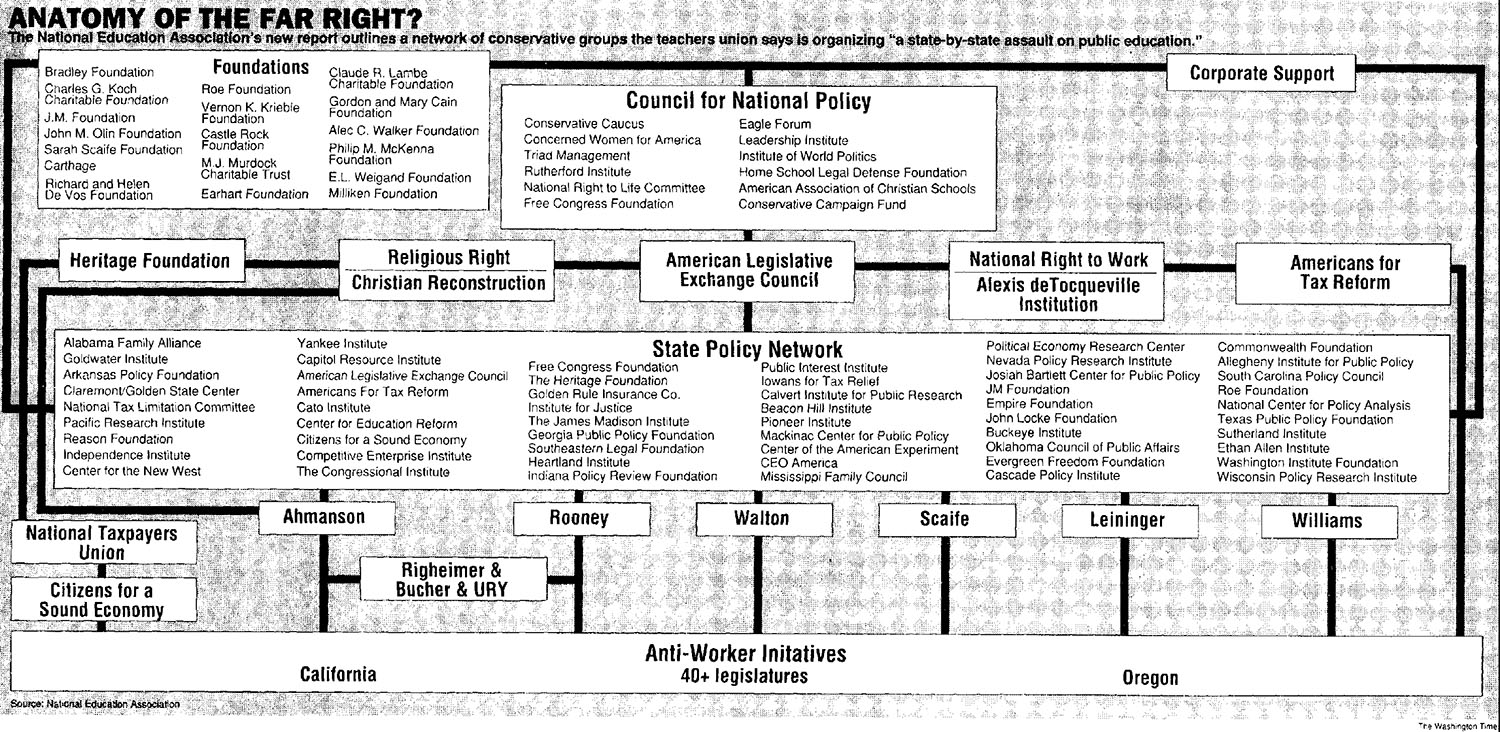
Share

Hysteria and covid

Brad Neaton:

But then of course it was only a few weeks later that the rational playbook was thrown out the window and pseudoscience and magical thinking were widely adopted to justify shutting down society and quarantining even the healthy.

“This is just mind-boggling: This is the mother of all quarantines,” University of Michigan medical historian Howard Markel was quoted as saying in the Washington Post. “I could never have imagined it.” 

“The first and golden rule of public health is you have to gain the trust of the population, and this is likely to drive the epidemic underground,” saidLawrence O. Gostin, a professor of global health law at Georgetown University. “The truth is [these] kinds of lockdowns are very rare and never effective.”

Share

Civics: Taxpayer funded institutional battles

Share

Notes on Catholic School Enrollment

Matt Barnum:

Catholic schools are serving tens of thousands fewer students than they were before the pandemic, indicating that these schools have typically not been the destination for students across the U.S. forgoing public schools.

Catholic enrollment cratered during the 2020-21 school year, when those schools saw their biggest enrollment decline in many decades. In the most recent school year, Catholic schools experienced a substantial, but incomplete, enrollment rebound.

Advocates for Catholic education say the schools — which have been hemorrhaging students for decades — need to capitalize on the one-year uptick to keep new families and win over others.

“When I see this data from a Catholic school perspective, I think it’s a hopeful sign because it means we have, as Catholic school leaders, the potential to regrow enrollment and to build back up from a point that had been a historic low,” said Kathleen Porter-Magee, superintendent of a network of Catholic schools in New York City and Cleveland.

Share

Notes on Cameras Everywhere

Pete Warden

So, that’s why I believe we’re going to end up in a world where we’re each surrounded by thousands of cameras. What does that mean? As an engineer I’m excited, because we have the chance to make a positive impact on peoples’ lives. As a human being, I’m terrified because the potential for harm is so large, through unwanted tracking, recording of private moments, and the sharing of massive amounts of data with technology suppliers.

Share

K-12 Tax & Spending Climate: Chicago Loses a Business Citadel

Wall Street Journal:

In 2020, $2.4 billion in net adjusted gross income moved to Florida from Illinois, about $298,000 per tax filer. Illinois has lost about 60,000 black residents in the last decade, while Florida has gained 280,000.

Mr. Griffin has spent tens of millions of his personal fortune trying to rescue Illinois from bad progressive governance. Maybe he figures it’s time to cut his losses.

Share

Tracking Online Discourse

Share

Civics: Inflation and Politics:

Joel Kotkin:

Yet the left’s own agenda still could dominate the future. In France’s presidential and legislative elections, former Trotskyist firebrand Jean-Luc Mélenchon and his alliance did exceptionally well among young people, particularly in the heavily immigrant working-class banlieues. His politics are, if anything, well to the left of the traditional Socialists, now essentially extinct. Even the ill-fated Jeremy Corbyn won more than 60 per cent of the under-40 vote in the 2017 UK election, while the Conservatives got just 23 per cent. In Germany, the Green Party enjoys wide support among the young, and seems likely to push the European giant further to the left. Similarly, in Britain inflation is also stirring labour to action, as evidenced by the rail strikes, which could set a new pattern in the coming months.

Even in America, socialism is gaining adherents, particularly among the young. In the 2016 primaries, the openly socialist Bernie Sanders outpolled Hillary Clinton and Donald Trump combined among under-30 voters, a performance he repeated in the early 2020 primaries. Indeed, millennials – now the nation’s largest voting bloc – say that they prefer socialism to capitalism.

The persistent labour shortages seem likely to continue – by 2030, Korn Ferry projects there will be a deficit of at least six million workers. It did briefly create higher wages for workers, but much of that has been overcome by inflation. Overall, in the US at least, the workers’ share of national output, which rose briefly during the pandemic, has fallen back to historic lows. Many are not even taking jobs on offer in the ‘gig’ economy, where pay and hours are often uncertain. The end of lockdowns did little to slow the ‘great resignation’ as more Americans left the workforce, expanding the pressure on welfare benefits for those who choose not to work.

Share

Notes on China’s birthRate and economic prospects

Peter Zeihan:

A replacement birthrate is 2.1 children per woman. China slipped below that in the 1990s. Birthrates in Beijing and Shanghai are now the lowest in the world. China’s labor force and overall population peaked in the 2010s, heralding the fastest increases in labor costs in the world. Ever. The average Chinese citizen aged past the average American citizen sometime around 2018. Recent analysis by the South China Morning Post of data from the Chinese census authority suggests China’s population will be half the size in 2050 compared to today.

It’s (far) worse than it sounds. Nearly all of China’s 600 million-strong population growth since 1970 isn’t from more births, but from longer lifespans and fewer deaths. Any disruptions in the flows of foods and fuels that enable modernity will earn the Chinese another “world’s best” title; Not only is China the fastest-aging population in human history, soon it will also be the fastest-collapsing.

Even that assumes nothing else goes even a little bit wrong.

China also imports the vast majority of its energy as well as the inputs used to grow its food. China depends on trade to keep its population not simply wealthy and healthy, but alive. Remove international links, and Chinese mortality levels will rise even as baked-in demographic trends mean birthrates will continue to fall.

What might we see break first?

Share

Whether We Say It or Not, Our Culture Provides Cover for Groomers

Pedro Gonzalez:

Last week, Hawaii high school teacher Alden Bunag was arrestedand made his initial court appearance on June 16. Among other things, he admitted to prosecutors that he made a sex video with a 13-year-old boy who was a former student and sent it to others, including another teacher in Philadelphia.

This sordid case has brought to the fore of the culture war the terms “grooming” and “groomer” to describe efforts to sexualize children. The controversy around them stems from the fact that they cut to an uncomfortable truth: those championing the latest sexual revolution often have sexual improprieties they project onto others, as was the case with Bunag, whose social media posts display outspoken opposition to the use of the word “groomer.”

This story began last year with a different investigation. Federal agents received a tip about a teacher, Andrew Wolf of Springside Chestnut Hill Academy, a private school in Philadelphia, who had allegedly uploaded child pornography.

Share

One of the most-used tools on the internet is not what it used to be. Google

Charlie Warzel:

Virtually everything I found was unhelpful, so we did the old-fashioned thing and called a professional. The emergency came and went, but I kept thinking about those middling search results—how they typified a zombified internet wasteland.

In February, an engineer named Dmitri Brereton wrote a blog post about Google’s search-engine decay, rounding up leading theories for why the product’s “results have gone to shit.” The post quickly shot to the top of tech forums such as Hacker News and was widely shared on Twitter and even prompted a PR response from Google’s Search liaison, Danny Sullivan, refuting one of Brereton’s claims. “You said in the post that quotes don’t give exact matches. They really do. Honest,” Sullivan wrote in a series of tweets.

Brereton’s most intriguing argument for the demise of Google Search was that savvy users of the platform no longer type instinctive keywords into the search bar and hit “Enter.” The best Googlers—the ones looking for actionable or niche information, product reviews, and interesting discussions—know a cheat code to bypass the sea of corporate search results clogging the top third of the screen. “Most of the web has become too inauthentic to trust,” Brereton argued, therefore “we resort to using Google, and appending the word ‘reddit’ to the end of our queries.” Brereton cited Google Trends data that show that people are searching the word reddit on Google more than ever before.

Share

Civics: declining trust in legacy media

Joe Concha:

“In 2004, one reporter in eight lived in New York, Washington, or Los Angeles,” Schieffer notes in his must-read book “Overload: Finding the Truth in Today’s Deluge of News.” “That number is now down to one-in-five who live in those three places.”

Schieffer saw another problem: The massive decrease of local reporters due to shrinking budgets. 

He writes, “While no solutions seem obvious, there is general agreement throughout the industry that if local newspapers go away and some entity does not rise to do what we have come to expect of them—that is, keep an eye on local government—we will experience corruption at levels we have never seen.”

Since 2004, approximately 1,800 newspapers have shut down because of the collapse of print advertising and readers turning to more convenient online consumption. Fewer reporters and editors has resulted in less trust as news gathering becomes more and more confined to two or three cities. 

Overall, according to Pew, just 29 percent of U.S. adults say they have at least a fair amount of trust in the information they receive. In 1976 in the post-Watergate era, trust in the media stood at 72 percent, or 43 points higher.

Share

Race based school events

Share

A Comparison of Wisconsin Taxpayer Supported K-12 District Achievement

Share

Civics: legacy media vs voter priorities

Share

Post-recall S.F. school board rescinds vote to cover controversial Washington High mural

Jill Tucker:

The San Francisco school board voted Wednesday to nullify a previous board decision to cover up a controversial mural at Washington High School. The move followed nearly three years of legal battles, debate and controversy.

In a 4-3 vote, the board followed a judge’s order to vacate their previous decision to cover the historic fresco, which features the life of George Washington and includes images of slavery and white settlers stepping over a dead Native American.

The original controversy over covering the mural, which grabbed international headlines, pitted the issue of racial equity against artistic freedom and historic preservation at a time of reflection over race and reparations for historic atrocities and public displays associated with America’s ugly past.

The board majority initially voted to paint over the mural in 2019 before reversing course and deciding to cover it up with curtains or panels. That decision was challenged in court and the district lost. The district then appealed, but later decided to settle the case and abide by the judge’s ruling.

Share

The Future is Vast: Longtermism’s perspective on humanity’s past, present, and future

Max Roser:

‘Longtermism’ is the idea that people who live in the future matter morally just as much as those of us who are alive today.11 When we ask ourselves what we should do to make the world a better place, a longtermist does not only consider what we can do to help those around us right now, but also what we can do for those who come after us. The main point of this text – that humanity’s potential future is vast – matters greatly to longtermists. The key moral question of longtermism is ‘what can we do to improve the world’s long-term prospects?’.

Share

Advocating “data first” DIE: diversity, inclusion and equity

Roland Fryer:

One of the most important developments in the study of racial inequality has been the quantification of the importance of pre-market skills in explaining differences in labor market outcomes between Black and white workers. In 2010, using nationally representative data on thousands of individuals in their 40s, I estimated that Black men earn 39.4% less than white men and Black women earn 13.1% less than white women. Yet, accounting for one variable–educational achievement in their teenage years––reduced that difference to 10.9% (a 72% reduction) for men and revealed that Black women earn 12.7 percent more than white women, on average. Derek Neal, an economist at the University of Chicago, and William Johnson were among the first to make this point in 1996: “While our results do provide some evidence for current labor market discrimination, skills gaps play such a large role that we believe future research should focus on the obstacles Black children face in acquiring productive skill.”

Recently, I worked with a network of hospitals determined to rid their organization of gender bias. The basic facts were startling: Women earned 33% less than men when they were hired and their wages increased less than men once on the job. Yet, accounting for basic demographic variables known about individuals prior to hiring, these differences decreased by 74%. A problem remained, but it was an order of magnitude smaller than the unadjusted numbers implied.

Find the root causes of bias

Social scientists tend to categorize bias into one of three flavors: preference, information, and structural. Preference bias is good old-fashioned bigotry. If company A prefers group W over group B then they will hire and promote them more even if they are similarly qualified.

Information bias arises when employers have imperfect information about workers’ potential productivity and use observable proxies, like gender or race, to make inferences (gender stereotypes are a classic example).

Structural bias occurs when companies institute practices, formally or informally, that have a disparate impact on particular groups, even when the underlying practices are themselves group blind. Employee referral programs can fall into this category.

Share

Civics: Election Hypocrisy Montage

Ann Althouse:

It’s just amazing that they let Democrats go on so long about how horrible it is to deny the results of an election. They’ve been allowed to deny that they too are deniers. They’ve been denier deniers.

Share

A ruling in just one sport is part of a broader cultural cascade

Ethan Strauss:

On Monday, Wetzel wrote a Yahoo! column on a ruling that appears to resolve the Lia Thomas saga. His insight on this issue is the key one, in my opinion. It not only explains what the recent ruling means, but tells you what’s about to go down in all kinds of sports. 

Quite suddenly, according to Wetzel, we’re about to see one of those preference cascades I often mention. A domino has tipped over and bureaucracies around the world are now unapologetically dismantling a movement so powerful that nobody at ESPN dared question it openly. Last week, it was impossible to fight. This week, it’s impossible to save. That’s one hell of a shift. 

There’s an upshot to all of it, far beyond the sports specific aspect Wetzel noticed. Wokeness, successor ideology, political correctness, whatever you want to call it, it’s vulnerable. Indeed, it was just stopped cold by a federation based in the city of Lausanne, Switzerland. If what looks indomitable one day in America can get completely wrecked by bureaucrats off of Lake Geneva on the next, then what does that mean? What other seemingly strong causes, movements and mainstream political assumptions are actually built on the softest sand?

Share