School Information System

The Changing Face of Madison’s Schools

Sandy Cullen:

Other school districts surrounding Madison also are seeing an increase in minority and low-income students.
In Sun Prairie and Verona, the percentage of minority students is more than five times what it was in the early 1990s, while the percentage of low-income students in Verona has more than doubled. Both districts also have seen significant growth in the number of Hispanic students who are not proficient in English.
Private schools in the Madison area also are seeing increases in their percentage of minority students. In the last seven years, minority enrollment increased 54 percent at Edgewood High School, where minorities now make up nearly 12 percent of the student body. At Madison Country Day School, in the Waunakee School District, 17 percent of its 247 students are minorities, up from 15 percent in 1997.
Between 1997 and 2004, enrollment at private schools in the Madison School District increased by 400 students, according to figures compiled by the district. Edgewood spokeswoman Kate Ripple said most Madison students who enroll in the private Catholic high school do so because of its faith component.

Share

Building Knowledge: The Case for Bringing Content into the Language Arts Block

E.D. Hirsch, Jr.:

I am sure that the power of vested interests is vastly exaggerated compared with the gradual encroachment of ideas…. Soon or late, it is ideas, not vested interests, which are dangerous for good or evil.
—J. M. Keynes
The General Theory of Employment,
Interest, and Money
Consider the following sentence, which is one that most literate Americans can understand, but most literate British people cannot, even when they have a wide vocabulary and know the conventions of the standard language:
Jones sacrificed and knocked in a run.
Typically, a literate British person would know all the words in the sentence yet wouldn’t comprehend it. (In fairness, most Americans would be equally baffled by a sentence about the sport of cricket.)

Share

Views on California’s Proposition 82 (preschool for all 4 year olds)

Two articles on Proposition 82:

  • Dana Hull:

    It sounds like a no-brainer for advocates of early childhood education: a state ballot initiative that would offer preschool to every 4-year-old in California, free of charge to parents. What preschool wouldn’t be all for that?
    But as the June 6 election approaches, an increasingly vocal number of preschools are lining up against it.
    Some Montessori schools fear Proposition 82, dubbed the Preschool for All Act, would lead to state standards that could compromise their teaching methods and mixed-age classrooms. Faith-based preschools say they would be at a competitive disadvantage because the measure wouldn’t fund schools that offer religious instruction. Others worry a requirement that teachers earn a bachelor’s degree would drive them out of business.
    “I am going to vote no, and I am very much in favor of universal preschool,” said Bonnie Mathisen, director of Discovery Children’s House, a Montessori school in Palo Alto. “I just feel that Prop. 82 is not the right way to go about it. When you get down to the nitty-gritty, a lot of preschools will be left out.”

  • Dana Hull:

    The children, ages 3 to 6, are part of a class of 28 at Casa di Mir Montessori School in Campbell. While many schools group children by age, Montessori believes children of different ages teach, help and learn from each other.
    Tara started the year as a kindergartner at a local elementary school, where her parents were stunned to learn there was homework. She rebelled against its structure, and her parents struggled with what to do. In January, they enrolled Tara at Casa di Mir.
    “Montessori is perfect for her,” says Haleh, Tara’s mom. “They don’t ring a bell to start class; they play a flute. She wrote a four-page journal about cats.”

  • Joanne Jacobs has more
Share

“Standardize Education”

Paul Hoss:

The Times is to be congratulated for its tough-love posture on No Child Left Behind legislation (editorial, April 9). Too many states shortchange too many students with “loophole” diplomas by lowering their standards on their way to the deadline of 2014 for all students being “proficient” in math and English. This inevitable fiasco could be avoided if the U.S. went to a national curriculum, with corresponding assessments and standards to be met by all students nationwide. Talk about equity and equal access for all.
Singapore, Hong Kong, Taiwan, South Korea and Japan — the top five performers on math exams — all benefit from this standardization of what’s expected in their schools. So could the United States.

Share

Math Rebellion Up North: Ashland Students Favor New Algebra Course, Fewer Enroll in Core Plus

Kevin O’Brien:

An overwhelming majority of Ashland students who were given the choice between traditional math and the Core Plus curriculum decided to take algebra I courses next school year, according to a report given Monday by Ashland High School Principal Steve Gromala.
In a report to the Ashland School Board, it was noted that 83 percent of students signed up for algebra I, which was offered for the first time in several years after parents and board members demanded an alternative to the Core Plus curriculum.
A total of 170 students, including 115 incoming freshmen and 55 of next year’s sophomores, enrolled in the newly offered algebra I course for the 2006-07 school year. By comparison, 34 students enrolled in Core Plus 1.
The addition of algebra I next school year is the first step toward offering a dual-track math curriculum that will allow incoming freshmen to choose between algebra classes and Core Plus. Additional classes such as geometry, algebra II and pre-calculus will be added in future years as students advance.

(more…)

Share

Computers May Not Boost Student Achievement

Greg Toppo:

Give a kid a laptop and it might not make any difference.
That’s the message from research presented here Monday, which suggests that spending millions of dollars to bring technology into kids’ homes and schools has decidedly mixed results.
Taxpayer-supported school computer and Internet giveaways are political gold, but studies have questioned whether they actually help student achievement. This research, presented at the American Educational Research Association’s annual meeting, confirms skeptics’ doubts.
In one study, researchers from Syracuse and Michigan State universities examined a program that gave laptop computers to middle-school students in Ohio in 2003. Preliminary findings are mixed.
“Overall, we don’t know if it is a worthwhile investment,” says Syracuse researcher Jing Lei.

We should not spend money on these things unless and until we get the basics right (Math, reading/writing and science).

Share

Fairfax Success Masks Gaps for Black Students

Maria Glod:

Black students in Fairfax County are consistently scoring lower on state standardized tests than African American children in Richmond, Norfolk and other comparatively poor Virginia districts, surprising Fairfax educators and forcing one of the nation’s wealthiest school systems to acknowledge shortcomings that have been masked by its overall success.
Even within Fairfax schools, black elementary school students are outperformed on reading and math tests by whites and some other students, including Hispanics, poor children and immigrants learning English.

Well worth reading.

Share

Omaha Schools Split Along Ethnic Lines

AP:

In a move decried by some as state-sponsored segregation, the legislature voted Thursday to divide the Omaha school system into three districts — one mostly black, one predominantly white and one largely Hispanic.
tate Sen. Pat Bourne of Omaha decried the bill, saying, “We will go down in history as one of the first states in 20 years to set race relations back.”
“History will not, and should not, judge us kindly,” said state Sen. Gwen Howard of Omaha.
There is no intent to create segregation,” said state Sen. Ernie Chambers (Omaha), the legislature’s only black senator and a longtime critic of the school system.
He argued that the district is already segregated, because it no longer buses students for integration and instead requires them to attend their neighborhood school.
Chambers said the schools attended largely by minorities lack the resources and well-qualified teachers provided others in the district. He said the black students he represents in north Omaha would receive a better education if they had more control over their district.

Share

San Diego School District Overhauls Physics Curriculum

Robert Tomsho:

When San Diego’s school district began overhauling its science-education curriculum five years ago, it wanted to raise the performance of minority, low-income and immigrant students.
But parents in middle- and upper-income areas, where many students were already doing well, rebelled against the new curriculum, and a course called Active Physics in particular. They called it watered-down science, too skimpy on math.
A resistance movement took hold. Some teachers refused to use the new textbooks, which are peppered with cartoons. They gathered up phased-out texts to use on the sly. As controversy over the issue escalated, it played a part in an election in which the majority of the school board was replaced. Now, further curriculum changes are under consideration.
The skirmishes in the nation’s eighth-largest urban school district reflect a wider battle over how to make science classes accessible to a broader array of students while maintaining their rigor.
Amid mediocre U.S. scores on international science tests and predictions of future shortages of scientists and engineers, policy makers have begun requiring more science in schools. By 2011, 27 states will require high-school students to take at least three science courses to graduate. In 1992, only six had such requirements.

Share

Parents Weigh in on Middle Schools

Aruna Jain:

Last year, Joan Blair’s daughter enrolled at A. Mario Loiederman Middle School, the new creative and performing arts school in Silver Spring. She is learning high-school-level Spanish, ranks above grade level in math, and takes theater and arts courses that she loves. But her science and social studies classes, where students of different academic levels are grouped together, are not rigorous enough, Blair said.
“As a teacher, how are you going to meet the needs of all students if they are all mixed together?” Blair asked.
She was among the more than 100 parents, teachers and educators who filed into Francis Scott Key Middle School in Silver Spring on a recent Monday night to offer concerns and suggestions at a community outreach session aimed at helping the Montgomery County school system improve its middle schools. The event was the last of three such sessions that drew crowds of county residents and educators eager to participate in a middle school reform initiative launched last fall.
The initiative was partially prompted by a middle school audit released last year that showed a lag in achievement, particularly among African American and Hispanic students, students learning English, students with disabilities and those living in poverty. The independent audit found that county middle schools are not consistent in the application of curriculum standards, the quality of school improvement programs, teacher training opportunities and discipline procedures.

Share

LA Mayor’s Public School Takeover Plans

Joel Rubin and Duke Helfand:

Villaraigosa’s advisors look at extending the academic year and selling the headquarters.
As Mayor Antonio Villaraigosa pursues control of the Los Angeles school system, his advisors are considering wide-ranging changes that could gut the central bureaucracy, sell the district’s headquarters, keep students in class until 5 p.m. and extend the academic year to 10 1/2 months.

Share

A Parent’s Questions About the Elimination of Honors Courses

Jay Matthews:

Like many journalists, I love to read other people’s mail. West Potomac High School parent John Dickert kindly sent me an exchange of messages with Ann Monday, assistant superintendent for instructional services for the Fairfax County public schools. Their dialogue shows why Fairfax County educators disagree with many parents over the new policy of eliminating honors courses in 11th grade and leaving students a choice of a regular class or an Advanced Placement course in humanities subjects such as history.

Share

San Francisco Schools: Student Funding Follows Kids

Lisa Snell:

San Francisco is one of a handful of public school districts across the nation that mimic an education market. In these districts, the money follows the children, parents have the right to choose their children’s public schools and leave underperforming schools, and school principals and communities have the right to spend their school budgets in ways that make their schools more desirable to parents.
Thanks to weighted funding, schools get more money for harder-to-educate students. Principals decide how to allocate funds.
In San Francisco the weighted student formula gives each school a foundation allocation that covers the cost of a principal’s salary and a clerk’s salary. The rest of each school’s budget is allocated on a per student basis. There is a base amount for the “average student,” with additional money assigned based on individual student characteristics: grade level, English language skills, socioeconomic status, and special education needs.
. . . The more students a school attracts, the bigger the school’s budget. So public schools in San Francisco now have an incentive to differentiate themselves from one another. Every parent can look through an online catalog of niche schools that include Chinese, Spanish, and Tagalog language immersion schools, college preparatory schools, performing arts schools that collaborate with an urban ballet and symphony, schools specializing in math and technology, traditional neighborhood schools, and a year-round school based on multiple-intelligence theory. Each San Francisco public school is unique. The number of students, the school hours, the teaching style, and the program choices vary from site to site

Via Joanne Jacobs

Share

NY City Grades School Principals

Elissa Gootman:

New York City will give grades from A to F each year and principals at failing schools could be removed.

Share

Advanced Placement’s Growth Places it Under Scrutiny

Ms Cornelius:

Today’s New York Times has an interesting article about whether the Advanced Placement program is actually worthy of its reputation.
The Advanced Placement program, administered by the College Board, began 50 years ago as a way to give a select few high school students a jump-start on college work. But in recent decades, it has morphed into something quite different – a mass program that reaches more than a million students each year and is used almost as much to impress college admissions officers and raise a school’s reputation as to get college credit. As the admissions race has hit warp speed, Advanced Placement has taken on new importance, and government officials, educators and the College Board itself have united behind a push to broaden access to A.P. courses as a matter of equity in education.

Share

Leopold Additions Included in 2006 MMSD Operating Budget

Channel3000:

The Madison school board voted 4–3 Monday night to include additions to Leopold Elementary School in next year’s operating budget.
A final vote will come at a later meeting, but this essentially means that construction can start with our without a referendum.

Background on Leopold here. Johnny Winston, Jr., Juan Jose Lopez, Bill Keys and Shwaw Vang voted for the motion while Carol Carstensen, Lawrie Kobza and Ruth Robarts voted against it, preferring, I’m told, to consider this question with the entire 2006/2007 budget, which the board has not yet seen.
Student rep Connor Gants pointed out (he also voted for it) that the motion does not really matter as it could be changed when the 2006/2007 budget is actually approved. More on the budget, here.
Channel3000 has an update here.

Share

LA Charters & Public School Transformation

Eduwonk:

Steve Barr is winning. Also, note the LA Times descriptor of charters, long at 22 words but not too shabby though it doesn’t get at the open admissions issue. Incidentally, per the posts below and the need to change public schools, this is the equation that ought to scare the teachers’ unions into moving on the issue: Steve Barr, strong union proponent, Teamster, along with a very big coalition of almost entirely minority parents is at odds with the teachers’ union and the school district in LA. You don’t need to be an ace political consultant to see the problem there…And if Barr doesn’t succeed, these guys (Clint Bolick, Ken Starr, and company) are more than willing to help out..

Share

Students’ lawsuit threats kept secret

Katherine Goodloe of Milwaukee Journal Sentinel Reports:
Federal agency decides in Cedarburg case that releasing documents violated privacy rights.
Cedarburg – The next time a student threatens to sue a public school district, taxpayers probably won’t know anything about it.
That’s because the entire process can be kept secret unless the dispute enters a courtroom, after the U.S. Department of Education found that releasing notices of claim filed by two students in the Cedarburg School District violated federal student privacy rights. The finding directly conflicts with the state’s long-standing practice that such notices – which serve as precursors to lawsuits – are considered public documents.
more….

Share

Affordable Health Care: Four Wisconsin Proposals

A forum hosted by Progressive Dane and The Edgewood College Human Issues Program.
Thursday, April 6th 6:30 to 8:30 at Edgewood College’s Anderson Auditorium, in the Predolin Humanities Center.
Access to health insurance has become a national crisis, but there are bold, creative proposals to fix it. Please join us to hear four great proposals to make affordable health care widely available locally and statewide. Representatives from each plan will briefly describe their proposal, followed by ample time for audience questions and open discussion.
Co-Sponsors include: The League of Women Voters, The Democratic Party of Dane County, The South Central Federation of Labor, The Four Lakes Green Party, and The Center for Patient Partnerships at the UW-Madison.
The presenters and four major health care plan proposals are:

(more…)

Share

Wisconsin Charter School Update

(more…)

Share

Lawmakers Try to Expel Junk Food From Schools

AP:

Trying to shrink the growing waistlines of children, lawmakers want to expel soda, candy bars, chips and other junk food from the nation’s schools.
Dangerous weight is on the rise in kids. This week, the federal Centers for Disease Control and Prevention said the rate of obese and overweight kids has climbed to 18 percent of boys and 16 percent of girls. Four years ago, the number was 14 percent.
Lawmakers blame high-fat, high-sugar snacks that compete with nutritious meals in schools.
“Junk food sales in schools are out of control,” Senator Tom Harkin, D-Iowa, senior Democrat on the Senate Agriculture, Nutrition and Forestry Committee, said Thursday. “It undercuts our investment in school meal programs and steers kids toward a future of obesity and diet-related disease.”

Share

What’s Wrong with America’s High Schools?

Time.com:

Shawn’s friends are not alone in their exodus. Of the 315 Shelbyville students who showed up for the first day of high school four years ago, only 215 are expected to graduate.
In today’s data-happy era of accountability, testing and No Child Left Behind, here is the most astonishing statistic in the whole field of education: an increasing number of researchers are saying that nearly one out of three public high school students won’t graduate, not just in Shelbyville but around the nation.
For Latinos and African-Americans, the rate approaches an alarming 50 percent. Virtually no community, small or large, rural or urban, has escaped the problem.
There is a small but hardy band of researchers who insist the dropout rates don’t quite approach those levels. They point to their pet surveys that suggest a rate of only 15 percent to 20 percent.

Share

Priorities for upcoming budget

In the upcoming budget deliberations, I urge the board to direct as many available funds as possible to proven in-school programs which support the board’s three stated goals:

* All students complete 3rd grade able to read at grade level or beyond.
* All students complete Algebra by the end of 9th grade and Geometry by the end of 10th grade.
* All students, regardless of racial, ethnic, socioeconomic or linguistic subgroup, attend school at a 94 percent attendance rate at each grade level.


On the flip side, I urge the board to avoid cuts in proven in-school programs that support these goals.
To go a step further, I urge the board to initiate new in-school programs and expand those MMSD programs already proven to succeed.

Share

New York City Tries More Ways to Fix Schools

David Herszenhorn:

The New York City schools chancellor, Joel I. Klein, is once again rethinking the nation’s largest school system.
He has hired Chris Cerf, former president of Edison Schools, the commercial manager of public schools in 25 states. He has retained Alvarez & Marsal, a consulting firm that revamped the school system in St. Louis and is rebuilding the system in New Orleans. And he has enlisted Sir Michael Barber, a former adviser to Prime Minister Tony Blair of England who is now at McKinsey & Company in London.
They are evaluating everything from how textbooks and paper are bought, to how teacher training programs are chosen, to how students, teachers, principals and schools are judged. They are running focus groups of dozens of principals, and they are studying districts in England, Canada and California.
Their primary goal is to find ways to relax much of the very centralization put in place by the Bloomberg administration and give principals a far freer hand, provided the schools can meet goals for attendance, test scores, promotion rates and other criteria.

Share

Cole asks for recount

Maya Cole released the following to the media this afternoon:

Feeling obligated to her supporters, Maya Cole filed a petition for a recount in her election loss for a school board seat on April 4.
“As a public candidate, I feel compelled to respond to the dozens of people who asked me to seek a recount,” Cole said in a press statement.
“This election truly illustrates that every vote counts. I don’t want any voter who made an effort to go to the polls to feel as if there was any question about the accuracy of the result,” she said. “This race was just so close.”
Cole lost the contest for Madison School Board Seat 1 to Arlene Silveira by 86 votes, 17,933 to 17,847, a margin of .24 percent.
“I called Arlene to let her know about the recount. I have no hard feelings toward her. I wished her the best of luck on the board, because only a fluke would change the result,” Cole added.
Cole filed a petition for a recount on Friday afternoon with the Madison city clerk’s office.

The State Journal has more.

Share

MMSD decides to comply with ethics policy

I sent the following letter to board president Carol Carstensen a few days ago:

In correspondence with MMSD Attorney Clarence Sherrod, I learned that the district and board have not complied with Board Policy 9000A 4, which reads:

Board members, the Superintendent, the Assistant Superintendent for Business Services, and all employees with District purchasing authority shall (1) file a Statement of Economic Interests with the Legal Counsel of the Board prior to April 30th of each year and (2) file a disclosure form with the Assistant Superintendent for Business Services or her/his designee within 30 days after entering into an employment or independent contractor agreement contemplating annual compensation of $1,000.00 or more.

When I requested copies of the Statements of Economic Interests filed in compliance with 9000A 4, Attorney Sherrod provided . . . copies. I summarized the filings by individual and year in the attached table. As you can see, very few board members or employees filed annually.
Board Policy 9000A provides the following sanctions for failure to comply:

Employees violating this policy or procedure are subject to discipline, up to and including dismissal. Board members who fail to file the required Statement of Economic Interest shall not be paid until such filing is effected.

I request that you, as Board president, direct the MMSD to comply with Board Policy 9000A 4 by April 30th, 2006, and annually thereafter, so that a formal complaint or other action will not be necessary.

(more…)

Share

IBM Helping Employees Move into Classrooms

Natalie Gott:

After more than three decades at IBM, Larry Leise and Susan Luerich could be planning a leisurely retirement. Instead, the married couple are headed back to college, with plans to start new careers in retirement as high school science teachers.
“Seeing the proverbial light bulb come on (in a student), there is no better feeling,” said Luerich, 54. “It’s a way to give back.”
And their bosses at IBM Corp. are only too happy to help.
Luerich and Leise, 58, are among the first batch of IBM employees taking the company up on its offer to pay for the college classes needed to leave Big Blue behind for a math or science classroom, where a shortage of qualified teachers concerns a company that thrives on high-tech innovation.

Share

Should Schools Be Included in Taxpayer Amendment

Mike Ellis:

Unfortunately, it appears the controls proposed for school districts under the constitutional amendment could undo all that. Just as troubling, it also appears the amendment could seriously disequalize taxes and spending across school districts in Wisconsin – something that itself would appear to violate an existing constitutional mandate that requires school districts to be “as nearly uniform as practical.”
When the proposed amendment was introduced last month, I asked the Legislative Fiscal Bureau to analyze its effect on school levies compared to the statutory revenue controls in current law. Because the proposed constitutional limits would not be in effect until the 2009-10 fiscal year, the bureau analysis estimated the effect of the amendment if it had been in effect for the current school year rather than the current statutory controls.
According to the Fiscal Bureau analysis, “In the absence of the statutory revenue limits, the total allowable levy under the joint resolutions would have been $3.71 billion, which would have been an increase of $117.8 million compared to the actual 2005-06 levy.”
That begs the question, why would we amend the constitution to increase property taxes more than $100 million? How can that be labeled taxpayer protection?

Share

Cole on fence over recount

Cole on fence over recount

Madison School Board candidate Maya Cole said today that she is still trying to decide whether to ask for a recount of the vote in her race.
Cole lost Tuesday’s election to Arlene Silveira by 86 votes, less than one quarter of 1 percent of the almost 36,000 votes cast.
“My opinion is that I don’t think a recount is going to bring about a change” in the outcome, Cole said in a telephone interview, adding that she doesn’t want to waste time or money.
But Cole also said she has had some 20 people contact her since the election to urge her to ask for a recount.
It is hard to get people to vote at a time when national voting scandals have eroded confidence in the political process, she said, adding that she wants her next move, whatever it is, to still encourage her supporters to stay engaged. “I don’t want people to feel like their vote didn’t count.”
Cole said she hopes she and her top advisers will have a consensus by later today or Friday.
Published: April 6, 2006
http://www.madison.com/tct/news/index.php?ntid=79201&ntpid=2

Share

Struggling Students Want Vocational Education, Poll Shows

Mitchell Landsberg:

The poll of California 9th- and 10th-graders, conducted for the James Irvine Foundation, found that six in 10 students didn’t particularly like school and weren’t motivated to succeed. But of those disaffected students, more than 90% said they would be more motivated if their school offered classes relevant to their future careers.
The poll was conducted to coincide with the launch of an Irvine Foundation center dedicated to encouraging the growth of career-oriented education in California. The foundation is spending $6 million on a new San Francisco-based center called ConnectEd: The California Center for College and Career.

Share

Program on Vouchers Draws Minority Support

Diana Jean Schemo:

Washington’s African-American mayor, Anthony A. Williams, joined Republicans in supporting the program, prompted in part by a concession from Congress that pumped more money into public and charter schools. In doing so, Mr. Williams ignored the ire of fellow Democrats, labor unions and advocates of public schools.
“As mayor, if I can’t get the city together, people move out,” said Mr. Williams, who attended Catholic schools as a child. “If I can’t get the schools together, why should there be a barrier programmatically to people exercising their choice and moving their children out?”
School-choice programs have fervent opponents, and here, public school officials worry that the voucher program will diminish the importance of the neighborhood school, though the program serves only a relative few of the district’s 58,000 students. National critics of school choice like Reg Weaver, president of the country’s largest teachers’ union, the National Education Association, accused voucher supporters of “exploiting the frustration of these minority parents to push for a political agenda” intended to undermine public schools.

Share

Trends in International Mathematics & Science Study

Institute of Educational Sciences:

The new TIMSS 1999 Video Study report on eighth-grade science teaching examines how students in 5 countries, including the United States, experience science as it is actually taught.

Share

2004 US Census Data on Public School Financing

US Census Bureau:

Education finance data include revenues, expenditures, debt, and assets (cash and security holdings) of elementary and secondary public school systems. These data are available in viewable tables and downloadable files. Information related to file layouts and definitions can be found in the Technical Documentation below.

Share

“Autism epidemic doubted”

Susanne Rust:

Indeed, special education figures that are being used to suggest an autism explosion are faulty and confounded, said Paul Shattuck, a researcher at the university’s Waisman Center and author of the study, which appears in today’s issue of the journal Pediatrics.

From 1993 to 2003, statistics compiled by the U.S. Department of Education showed a 657% increase in autism across the country – an explosive jump that signaled an epidemic to many.

But Shattuck discovered that, at least in most cases, the numbers are not only misleading, they’re likely inaccurate. On one hand, they don’t support a dramatic increase in autism prevalence, but on the other, the figures could be underestimating the absolute number of children with the condition.

Share

New Issue of Teacher’s College Record

The new issue of the online Teacher’s Collge Record includes two video clips of AERA President and Madison’s own Gloria Ladson-Billings on education and social justice and two essays from James B. Conant on “Public Education and the Structure of American Society.” I believe that these are all in the free content area, although you may need to register. http://www.tcrecord.org/
TJM

Share

A Study of Core Plus Mathematics Students Attending Michigan State University

Richard O. Hill and Thomas H. Parker: Department of Mathematics – Michigan State University [Complete Study: PDF]:

One measure of the effectiveness of a high school mathematics program is the success students have in subsequent university mathematics courses. As part of a large-scale study of Michigan students, we analyzed the records of students arriving at Michigan State University from four high schools which adopted the Core-Plus Mathematics program. Those students placed into, and enrolled in, increasingly lower level courses as the implementation progressed; the downward trend is statistically very robust (p < .0005). The grades these students earned in their university mathematics courses were also below average (p < .01). ACT scores suggested the existence but not the severity of these trends. Over the past two decades there has been a growing awareness of the inadequacy of the mathematical skills of American high school graduates. That was the assessment of the 1983 report A Nation at Risk [9]. Many subsequent studies point to the same conclusion. The most recent National Assessment of Educational Progress (NAEP) Report [2] concluded that only 17 percent of US twelfth graders were proficient at mathematics (1). International comparisons also indicate a relatively low level of mathematics achievement by US high schoolstudents. The Third International Mathematics and Science Study (TIMSS) assessed the ‘Mathematics Literacy’ of end-of -secondary students in 22 countries and found that US students statistically outperformed only two countries, Cyprus and South Africa [13]. Related studies suggest that the mathematics courses taken by American high school students are often at a lower level than those taken by their international peers, and that US high schools are offering a wide assortment of courses which lack the focus and coherence found in many foreign curricula [14]. This situation has been of particular concern on college and university campuses, where large numbers of students require remedial courses to bring their mathematical knowledge and skills up to what is required for college-level mathematics and science courses.

Share

Election & SIS Commentary

I would like to thank the four candidates for their hard work and unflagging good cheer. Congrats, Arlene and Lucy. I direct special heartfelt warm thanks to you, Jim, for all the time, effort and good will that you put into providing this site and also to all its regular contributors. This forum is such a useful public service. For me it has been a lifeline. You have successfully brought many important issues into public view for a much-needed airing. Judging from yesterday’s results, people are starting to pay attention. Please let’s keep it up. Much more work ahead.

Share

A Look at Differences in The Mathiak / Cole Vote

Click to view a ward by ward analysis of the differences in the Mathiak / Cole vote. City of Madison Ward map is available here.

Share

Congratulations to Arlene and Lucy

And thank you to Juan and Maya.
I hope that everyone who posts on the blog and who worked in the campaigns will do everything possible to help Lucy and Arlene accomplish what they articulated for the MMSD in their campaigns.

Share

Voting

I just voted. We like to bring our children to vote, so we waited till after preschool. My parents did the same thing.
I love voting. I love being part of a democracy. Usually, even when I think my candidates will lose, I leave the polling place with a little spring in my step. I especially love school board election, in part because I study school board elections. Today was different.
This was the first time I have decided who to vote for while in the booth. It is a strange election. On one hand I could rejoice that I can see good things about more than one candidate, but that’s not what I’m feeling. There has been too much bitterness and nastiness and the lines have been drawn boldly, but strangely. Some have called it the status quo vs. change, but I think even the status quo candidates think that MMSD can do better in a multitude of areas.
What has been called the “transparency” issue has loomed large. I prefer to think of this as being about how much deference should be given to the administration and how active a role should the board take. The3 budget and MTI negotiations are part of this, but it is bigger. This issue also presents problems. If you support expanded roles for the board (as I do), then the question of who fills these roles becomes very important. It isn’t enough to just support those who agree with you about the roles of the board, you have to look closely at what they (and their opponents) would do with that power.
An example of the strange ways the lines have been drawn is the ability grouping issue. Both ability grouping and mixed ability grouping are the status quo in MMSD. Neither has a whole lot to do with the deference issues that seemed so central to the races a few weeks ago, but the lines have been drawn and some of us are uncomfortable with the choices we now face.
Lastly there is the issue of supporters. It is a strange time when self-proclaimed conservatives actively support self-proclaimed progressives. I don’t even know what this means, except that perhaps true conservatives see no chance of electing one of their own (and whatever you think of Mathiak and Cole, they are not movement conservatives).
I also love the secret ballot, so I’m going to leave it at this. I’d love to hear from others who also struggled with these choices.
TJM

Share

MATHIAK AND COLE WILL PROTECT PROGRAMS

I believe there has been enough ineffective communication on the school board and I am ready for decisions based on solid data and careful discussion. I believe that Maya Cole and Lucy Mathiak will both bring that to the board.
I am also certain that if we do not vote for them, we will endanger the strings programs, the TAG program and others that current board members deem unnecessary, even though they serve a diverse population of students.
We are a family looking for other educational options for our kids because we are tired of fighting to get our children’s needs met in the Madison Schools. We are tired of “being patient,” as one teacher told us. We are ready for our children to have access to challenges. Cole and Mathiak will serve the board well in examining the current school district agenda and exposing the truth.
– Elizabeth A. Dohrn, Madison
March 30, 2006 – WI State Journal

Share

The Power of Blogs

Marisue, Your comments are closed so I have to open a new post. Curiously, you as one of the regular posters here complain about the influence of blogs and talk radio. I saw lots of your candidates’ supporters at the 92.1 radio forum and many of your associates, especially from the special ed bloc, post here regularly.
So what’s the beef exactly–that folks can speak their minds freely and reference materials and sources not otherwise available in the echo chamber that has until recently been our political scene here in Madison?
I am happy to have this place to debate ideas. I welcome the disagreement so long as it isn’t personal. I think that’s something alot of folks have gotten sick of with the way the current board majority functions–if you don’t fall in step, you’re attacked personally.
So let’s keep talking, posting new data, pushing for answers together–here, and hopefully before a school board dedicated to those same principles.

Share

VOTE

Arguably every school board election is important, but this one is critical—this is a race for control of the majority. Maya Cole and Lucy Mathiak, two admirable, excellent candidates on their own, if elected today will shift the majority, in combination with Ruth Robarts and Lawrie Kobza. The result will be a new day in district politics. This new era will be marked by civility, public accessibility, accountability and cooperation, a far cry from the way the current board majority has run things. But BOTH Lucy and Maya must be elected for this to happen.
Arlene Silveira, Maya Cole’s worthy opponent, is firmly in the Carstensen, Keys, Lopez, Vang and Winston camp. Arlene has their support along with the endorsement of MTI. I have been impressed with her easy, professional manner. However, I disagree strongly not only with her blanket commitment to heterogeneity but also as to what her election would represent–business as usual,
If nothing else, this race has shaken up Madison politics. So-called progressives smear a graduate of Camp Wellstone/social justice activist as conservative. The liberal newspaper endorses what would in any other year have been described as the “pro-business” candidate while the conservative paper endorses her opponent, the stay-at-home mom. Local “progressives” spread rumors about PAC money from conservatives despite the strenous protests of an incredibly independent candidate who has always disavowed PAC money.
The only way I can really make sense out of it is that it’s outcome-based –do you want the board to continue on the current path, or is it time for a change? Thus, the CapTimes can endorse Mathiak and Silveira because this will keep the status quo in charge. The WSJ wants to see a change so endorses Cole and Mathiak.
Today is a perfect early spring day in our fair city. My neighborhood will echo with the happy shouts and laughter from the Randall playground when I leave the house this morning. Please take the time to stop by your ward and vote. This is for them.
One last thought: thank you to the candidates and all the members of the school board. While I may disagree profoundly with some of you, I have the greatest respect for your commitment to our schools and dedication to public service.

Share

NEW IDEAS NEEDED TO KEEP QUALITY SCHOOLS – Mathiak and Cole

Madison public schools have been ranked among the best in the country. That is one of the reasons we moved here 16 years ago. Unfortunately, financial pressures from state-imposed caps, coupled with bad curriculum decisions, have our district moving in the wrong direction.
We need strong leadership from the school board, board members who will connect with the public and find solutions that meet the needs of all of our students, new ideas and fresh perspectives. That’s why I am voting for Maya Cole and Lucy Mathiak. We can do better for our children and our community. We must.
– Jane Doughty, Madison
March 30, 2006 WI State Journal

Share

CURRENT BOARD FAILS OUR MINORITY STUDENTS

Dear Editor,
For the past five years I’ve been a volunteer tutor at a Madison elementary school with high minority enrollment, and I’ve seen firsthand how the district has failed to respond adequately to its changing demographics.
Minority students remain underserved and under-educated by a rigid, one-size- fits-all curriculum that promotes politically correct symbolism more than solid academic progress by all its students.
The district desperately needs new leadership that will focus on matters of substance instead of better public relations, as advocated by Arlene Silveira. I urge readers to vote for Maya Cole and Lucy Mathiak. If elected, they, along with Lawrie Kobza and Ruth Robarts, could form a new board majority that would improve public education in Madison.
– Carl Silverman, Madison
March 30, 2006 WI State Journal

Share

Mathiak and Cole Support Increased Educational Opportunities for All Students

Dear Editor,
I was glad to see the Capital Times’ endorsement of Lucy Mathiak for the Madison School Board. Mathiak will tackle the problems facing our school district with vigor and clarity, and she will demand accountability from administrators. Mathiak’s advocacy in our schools represents a wide range of needs and interests; she wants to ensure the best academic opportunities for all students.
Unfortunately, parents from Madison Partners for Inclusive Schools have mischaracterized Mathiak, as well as candidate Maya Cole, as wanting to limit students’ access to educational opportunity. Nothing could be further from the truth. Mathiak and Cole are skeptical of the District’s push toward compulsory heterogeneous classrooms precisely because this practice hobbles many students’ opportunities to learn. Administrators of our middle and high schools have eliminated course options in core subjects, reduced the choice of instructional levels, and prohibited motivated students from advancing with appropriate curriculum and learning peers.
Administrators have argued that advanced academic programs segregate students unfairly, since the advanced classes have been populated mainly by white, middle-class children. They think to address this injustice by doing away with the programs. This tactic reveals a prejudice of low expectations on their part: they apparently do not expect that low-income, minority students will ever qualify for advanced placement.
In fact, depriving gifted children of support and opportunity at school most hurts those gifted students from low-income families and traditionally marginalized groups. Families with money and connections can get educational enrichment for their children outside of school; families struggling to make ends meet cannot. The District’s own report on high school dropouts identifies 27% of them as having shown high ability as younger children; a large portion of these were minority students. Nurturing these students by identifying them early on, grouping them with learning peers, and pulling them into advanced, accelerated classes might have kept them engaged in school and fostered their potential.
Proponents of “equalizing” educational opportunity believe that filling classrooms with children of widely ranging abilities will help motivate students at risk. But, they have not evaluated the data to see if this is actually so. Administrators are moving ahead to expand the standard course/heterogeneous classroom initiative without studying whether or not it has helped struggling students to succeed. In contrast, supporters of Mathiak in the Madison TAG Parents group have compiled a long list of studies on the issue of heterogeneous classrooms vs. ability grouping. Jeff Henriques, a leader of the TAG Parents group, provided not only a summary of this research with citations and abstracts from some 60 articles, but also hard copies of approximately 40 papers to the School Board earlier this year. I myself have sent similar information, in smaller doses, to various school officials. Anyone looking for these sources can easily find them on the TAG Parents’ website.
Lucy Mathiak and Maya Cole will not endorse curriculum policy without taking a hard look at the data and carefully considering the complex issues involved. Our diverse student body has diverse learning needs. We need equal opportunity for every child, not the same education for all.
Sincerely,
Lorie Raihala
Madison

Share

KEEP DIVERSITY IN THE CLASSROOM

The school board race has exposed beliefs among some citizens that I thought I had escaped by moving to a progressive city.
The people of Madison should be proud of the school board’s efforts to create a real world environment for our kids in the classroom, a real world made up of all types of learners of all economic backgrounds. To say that a teacher cannot teach a variety of students in the same classroom is an insult to Madison’s teachers.
Creating homogeneous classrooms would harm all students because it would deprive them of learning the skill and art of “getting along” with those who are different. The attitude that students should be segregated is outdated and prejudicial. It is also against the law. Students learn and absorb so much more in school than the content of a lesson.
I will vote for Arlene Silveira and Juan Jose Lopez because they are committed to maintaining an inclusive environment in our classrooms.
– Beth Moss, Madison
Letter to the Editor
Wisconsin State Journal, March 30, 2006

Share

Mathiak, Cole Will Restore Leadership

Now is the time for independent voices with fresh perspectives on the Madison School Board. Lucy Mathiak and Maya Cole offer both.
These two talented, qualified, progressive candidates will put children’s education and classroom support first, work hard to grow Madison’s schools of excellence and build community support for public education.
During March, the Madison School Board has had no discussions about next year’s $320 million-plus budget that will include more than $8 million in educational cuts. They won’t do this until late April. Meanwhile, administrators will mail staff cuts and levels to school principals on April 3.
Where is the public discussion about the budget? Where are the school board discussions on important issues of budget and curriculum policy, especially important during tight financial times?
Mathiak and Cole will bring leadership and governance of our schools back to the school board and back to the public.
Letter to Editor
Thursday, March 30, 2006 WI State Journal

Share

Wisconsin State Journal Endorses Maya Cole and Lucy Mathiak

The Madison School Board can no longer afford to do business as usual.
More to the point, families in the Madison School District can no longer afford a school board unwilling to take bolder action.
For that reason, voters should elect to the board on Tuesday two candidates promoting change: Maya Cole and Lucy Mathiak.
From Wisconsin State Journal, April 2, 2006
At stake is the School Board’s ability to pull the district’s budget out of quicksand, address shifting demographics, narrow the achievement gap between minority and white students and restore the public’s trust.
Cole, 43, is a stay-at-home mom with three sons from 6 to 9 years of age. She has been involved in a variety of school and political organizations, from the Franklin/Randall Parent Teacher Organization to Mothers Acting Up, a group encouraging mothers to be politically active on behalf of children.
Mathiak, 50, is an assistant dean at the University of Wisconsin’s College of Letters and Science. She has two teen-age sons, and her husband has two older daughters. She has been involved in several East High School organizations.
Cole and Mathiak come to the school board race from different backgrounds. But both believe that challenges closing in on the Madison schools demand action that the current majority on the School Board is failing to take.
They are right.
Their opponents, in contrast, are far too comfortable with the status quo. Running against Cole for Seat No. 1 on the board, being vacated by Bill Keys, is Arlene Silveira, 47, a marketing director for Promega Corp. of Fitchburg, and president of the Cherokee Middle School Parent-Teacher Organization. While Silveira would bring a welcome business perspective to the board, she lacks Cole’s drive to change the board approach.
Mathiak’s opponent for Seat No. 2 is incumbent Juan Lopez, a board member for 12 years who is too wedded to the way things have been done.
The Madison School Board is in an unenviable position. Outdated and unproductive state school financing rules have put school districts like Madison in a perpetual financial squeeze.
Meanwhile, the makeup of the district’s population has been shifting. Minorities compose a greater proportion of the student population, and the population is shifting from where the schools are to where they aren’t. In addition, the achievement gap between minority and white students continues to suggest that Madison’s schools are failing to deliver for too many students.
The board has cut, combined and conserved to hold costs down, and it has made some encouraging progress on closing the achievement gap. However, the board’s majority continues to shrink from new approaches, preferring to blame the state for a lack of money.
Yes, the Legislature should address school funding. But waiting for a magic solution from the Capitol only compounds the problem. Rather than looking to the state for answers, the board should look to itself.
The times require bold action. Between the two of them, Cole and Mathiak have some enlightened ideas, including plans to make the school budget process simpler, improve oversight of the budget and curriculums, reach minority students with more effective teaching and fairer discipline, challenge students with higher standards and consider the consolidation of administrative staff in the district’s central office.
A year ago the State Journal endorsed incumbents in two school board races on the belief that the board would continue to set priorities and address challenges. But since then, a lack of public trust in the board contributed to the failure of two out of three questions on a school referendum, and the board’s majority appeared to stick its head in the sand during the budget process.
It is obvious now that change is required.
Cole and Mathiak can supply new direction.

Share

The real race and the real story

Lets face it. We all take sides whether in the school yard, the Board room or the School Board Race.
Already, we see the lines of division. The Mathiak/Cole group on one side, the Lopez/ Silveira group on the other. What is ultimately at stake is the best interests of our children.
What do we do? In the case of the School Board race, I believe it all comes down to Who gets to run the show. And blame is at the root of it all.
As I look over all the candidates, skills, commitment, ability to articulate, ability to form solid opinions and positions I know who I will vote for. But when I lift the covers and look underneath something smells very fishy to me, it looks like one of the factions in the School Board race wants to change Superintendents. The BLAME game. We hear statements like, “We got here because he is in bed with the Teachers Union”; or “He doesn’t make good fiscal decisions”; or “He is responsible for cutting this or that, that “I” want for my child!”
An opinion piece in the April 1 Wall Street Journal by the School Board President of the Glen Ridge Board of Education in Glen Ridge, NJ states the case very well. She says “…Anyone with even a passing familiarity with New Jersey’s property tax woes knows that the real problem is not superintendents’ contracts, but legislators’ unwillingness to fix a school funding system that is irretrievably broken…” She went on, “Superintendents are responsible to local boards and taxpayers and on call 24/7. They build budgets, negotiate contracts, meet with parents, serve as the ‘public face’ of their districts, deal with facilities and construction projects, hire, evaluate and mentor administrators, observe teachers, and much more.”
On April 4 we have decision to make. Do we start over, as Ms. Cole says, and tear down what we have? Or, as Ms. Silveira says, do we build from a strong foundation? Do we bring in new talent as urged by Ms. Mathiak who has no public service record, or go with a proven child advocate, namely Juan Jose Lopez, who has a solid track record in the district?
These are the questions we must ask ourselves. We need to remember; when challengers to the current system say that we are spending more than we take in, keep in mind who made that misleading claim since our own legislature has mandated spending caps and rules that FORCE us to spend more annually than we take in. Some $8 million more.
This is not the fault of the Board or the Superintendent. And, although candidates for “change” Cole and Mathiak — state that they want to review the budget for more effective ways to use existing funds, I doubt that the current School Board hasn’t already examined all the options. Ms. Cole wants some type of 5 year plan to deal with the $40 million budget. That still leaves $8 million less per year to run the public schools. Ms. Mathiak, who wants to sell the Doyle building, is essentially saying, ?OK, here are a few bucks for this year and a de-centralized administration for the future. This makes no sense at all. It is hard enough to find the right person in one building let alone the communication nightmares we will would encounter as the school staff tries to work together from disparate locations.
The only plan that will help the budget crisis that our schools are in is for us citizens to elect public officials, local and statewide, who will give us more realistic budgets for our schools!
What to do. I am biased. I want stability, I want representatives that know change comes not from wholesale “slaughter” of our current system during an ongoing fiscal crisis, but from within. I want representatives for MY CHILDREN and ALL THE CHILDREN of Madison. I will vote for stability and sanity. Please join me in voting for the best interests of our children and vote on April 4 for Juan Lopez and Arlene Silveira.
David Wandel,
Past PTO President, Midvale/Lincoln,
Commissioner, Community Services Commission and Community Activist

Share

Endorsements come in many colors

In campaigning for the Madison School Board, I learned something that may be useful for voters. There are two very different kinds of political endorsements.
Endorsements that candidates seek. Some candidates seek the endorsement of organizations. In these situations, the organizations endorse the candidate only if the candidate passes its litmus tests. Madison Teachers Inc. (MTI) has this kind of process. Candidates are invited to complete a very long and detailed questionnaire and must appear before the Political Action Committee (PAC) to explain their answers. Endorsed candidates receive direct financial assistance from the PAC and help with the campaign (leafleting neighborhoods and get-out-the-vote phone banks). The PAC also buys “independent” radio and newspaper ads supporting the endorsed candidate.
Endorsements that candidates do not seek.. There is, however, a second kind of endorsement. Candidates who run as “independents” do not seek organizational endorsements and PAC funds. They do not make promises to move the organization’s agenda forward. They make clear that they are not seeking PAC funds. Nonetheless, the organization decides independently to support the candidate. The organization decides without consulting the candidate. It exercises its independent right to buy ads in support of a candidate. In the April election, ads from the “Get Real” organization are an example of the second kind of endorsement.
Big picture? Independent candidates–as in the April 4 school board race—offer value choices to voters. They stand as individuals. They ask for support for their goals. The only promises that they make are the promises to the voters. If elected, they are free to work for the values that the voters shared. They are not in the position of the candidates who owe their election, at least in part, to organizations that have their own interests.

Share

For The Record

Sunday 10 a.m., Channel 3’s For the Record will feature a debate among the four candidates for school board.
Here is my email to Neil Heinen regarding the station’s coverage including a discussion of some of the issues at stake in the race: To: Neil Heinen Subject: Sunday show
Dear Neil,
A new post up on SIS (https://www.schoolinfosystem.org/) discusses a debate at East yesterday covered by your station. Thank you for this and for dedicating Sunday’s show to the race.
One point that I’m not sure was reported correctly however, is the assertion in your coverage that the current board has not said who they support. The five-member majority has clearly stated their support for Silveira and Lopez (who is of course part of that majority and a candidate) while Robarts and Kobza have stated their support for Mathiak and Cole.
This race truly is for control of the majority and will dictate how we go forward on matters of heterogeneous classrooms (the dismantling of honors and possibly AP at West is part of that), school boundary changes, the construction of new and closure of existing schools, budget concerns, how to responsibly provide teachers health insurance, etc.
The Silveira/Lopez line is that Mathiak and Cole are focused merely on “process”. This significantly minimizes what’s at stake. The board is currently divided and removed from community input. For instance, when a school board member can’t get an item on the agenda because she’s in the minority, or she can’t get information she has requested from the superintendent, we’ve got closed, dysfunctional governance. Mathiak and Cole may not always vote the same with each other or Kobza or Robarts, but the four of them are dedicated to transparency and public participation. With that, I believe the community will be better informed and more likely to support the hard decisions facing our district as we go forward into a land of $40 million more in budget cuts over the next five years.
But there’s an even bigger topic that might be coming up soon. I’d appreciate if you could ask the candidates what they’d look for in a new superintendent. Rainwater has made no secret of his plan to retire in the not too distant future and it’s no stretch to believe that the next board majority will determine whether we hire someone like Art or someone who is less, shall we say, autocratic/didactic, someone who takes his direction FROM the board on policy matters rather than dictating it TO them?
Let me close by focusing on hetergeneous classes. The trend everywhere else is to have more not less AP and honors classes. I met a woman recently who is an education professor at Marquette. She was shocked to learn of MMSD’s policy changes, pointing out that in Milwaukee even the most impoverished schools have AP, with the focus being how to increase participation by more students, especially minority students. Extending the K-8 model into high school is irresponsible. The data clearly indicate that this model is failing our students. Indeed, even at West, the internal data show that the one-size-fits-all English 9 and now English 10 doesn’t work as advertised. Our children attend Stanford and Macalester. Almost all their classmates have had the full range of AP courses in their high schools, even those coming from small towns. Especially in science and math, this is critical. Success after MMSD is a measure that doesn’t get much play, but it really should be the ultimate measure of our students’ success, not just those who go on to college and post-graduate careers, but all our students. Are they prepared to participate meaningfully in society. Do they have the skills they need to be good critical thinkers, to make informed decisions.
As our district grows increasingly more diverse ethnically, and as the disparity socieconomically widens, we have to ask whether we can meet all students’ needs with the little red school house approach, if that model ever worked in a town our size. More important, perhaps, will be how the community will perceive this—a posting a few months back on SIS looked at the district’s demographic data and demonstrated that brain flight has already happened out of the West HS district. Folks will be voting with their feet if they feel those setting policy don’t care about all the children.
How we see ourselves and whether Madison continues to draw new folks to our community depends heavily on the strength of our schools. Obviously I believe we need a fresh start, but however you come down on it, the stakes are high.
Best,
Joan

Share

Northside Candidate Forum of 30-Mar-2006

The Northside Coalition sponsored a Candidate Forum on March 30, 2006 at the Warner Park Community Center.
The video of the forum QT Video is 170MB and 1 hour 50 minutes long. Click on the image at left to watch the video. The video will begin to play almost immediately so you can watch the forum as it continues to download; at DSL speeds, you should not experience any disruptions. The video contains chapter headings which allow quick navigation to each section and question asked (after that portion of the video has been downloaded), so you will be able to quickly view those portions of interest to you.
The candidates are, from left to right, Maya Cole and Arlene Silveira, vying for Seat 1, and Juan Lopez and Lucy Mathiak, vying for Seat 2.
One caveat. I was unsuccessful in my attempt to have the forum preceedings paused to allow me to change video tapes. Therefore, there is a 30 second gap in the video during the public questions portion, wherein a question was asked concerning the Reading Recovery program. The question itself was not recorded, and only a portion of Arlene Silveira’s response is present. The responses by Maya Cole, Juan Lopez, and Lucy Mathiak are complete.
If anyone recalls the missing question, please include it in a comment to this entry.

Share

Get Real PAC Money

This past Monday, I learned that the PAC Get Real planned to take out independent ads urging people to vote for Maya Cole and me for school board.
I have spoken with Get Real members and have been clear with Get Real and its leadership from the start: I do not accept PAC money or group endorsements. Its members need to read my responses to MTI and other campaign statements to see if they agree with my positions before offering support, because there are issues on which I do NOT agree with Get Real or its individual members. I am talking to all groups who invite me because I want all voters to understand what I believe and stand for.
After learning about the planned ads, I called Nancy Harper, as did several other people including Maya Cole, Ruth Robarts, and Lawrie Kobza. Some of us also called current Get Real president, Sam Johnson. Our message was clear and simple: you do not have permission to use our names, and we do not want you to run an ad in our behalf. They didn’t listen.
I, and other people, then consulted the editors of the two dailies and Isthmus to ask what recourse we had under the circumstances. It turns out that we have no recourse, legal or otherwise, if an independent political group wishes to post an ad using our names. That information was confirmed by my consultation with a lawyer.
While I support freedom of speech, I am deeply disappointed that Get Real chose to insert itself into my campaign at this time and in this way. And troubled that there is no way to prevent the false impression that I sought and accepted their endorsement.

Share

Why I’m Voting for Mathiak and Cole on April 4

I think the State Journal received so many pro-Mathiak/Cole letters, they had to leave a lot of them out! Here’s my 200-word submission that didn’t make the cut:
Dear WSJ,
I am voting for Lucy Mathiak and Maya Cole on April 4. As a long time advocate for academic excellence for all students, I believe these courageous and independent-thinking women understand the complexity of the issues and will not settle for simplistic solutions. They understand, for example, that we cannot honor, much less celebrate, much less meet the educational needs of our diverse student population by treating all students the same. Cookie-cutter curricula and one-size-fits-all classrooms in our middle and high schools may make some adults feel good; but research shows clearly that those simple-minded approaches meet no student’s needs well. As Jefferson said, “Nothing is so unequal as the equal treatment of unequals.”
I am also deeply concerned about the longstanding culture of bullying on the BOE. I believe it has rendered the Board completely ineffective. I am convinced that a change of membership is the only way to bring back respectable and respectful behavior — not to mention increased transparency of operations and a thoroughgoing accountability to the public.
I am voting for Lucy Mathiak and Maya Cole because I believe that, as our elected officials, they will insist on data-based decision-making and refuse to collude with the current culture of secrecy.

Laurie Frost
Madison

Share

What would Juan and Arlene do?

Maya and Lucy have been clear about wanting a different budget process and document that might reflect the district’s commitments, policies, and activities. The current budget document and process don’t. The process uses a black box into which the administration inserts last year’s expenditures and presto! this year’s cuts come out.
I can’t find Juan or Arlene saying much about changing the budget process or document. Could those of you who support them (or even those who don’t) cite their discussions or suggestions on the budget process and document? Maybe I’m just not looking in the right places.

Share

VOTE FOR COLE AND MATHIAK

VOTE FOR COLE AND MATHIAK
This was a letter to the editor published in the Wisconsin State Journal, March 30, 2006
Dear Editor,
The best reason to vote for Maya Cole and Lucy Mathiak: Electing both will change the majority on the school board. Together, Maya and Lucy will restore decorum to a board now typified by bullying and rigidity. Open government, accessible to all, and transparent decision-making will be the new order. Instead of simply rubberstamping administration and union positions, Lucy and Maya will work hard to build consensus, to develop creative answers to knotty issues like budget constraints, curriculum standards, equity; and they will support their decisions with real data gleaned from outside the current echo chamber. A vast improvement over the status quo, they will also exercise genuine oversight, making the board, not the superintendent or the union president, the final arbiter of district policy.
These are women of high standards, integrity and a refreshing honesty, both deeply committed to educating our children. Please join me in voting for Cole and Mathiak on April 4th. Together, they will transform board governance by resurrecting civility, accountability and public accessibility so that our schools can best prepare all children for their and our future.
Joan Knoebel

(more…)

Share

Channel 3000 on the school board election

Yesterday, Juan Jose Lopez and I had the honor of debating in Mr. Borowski’s AP American Government and Politics class. The debate was open to anyone at East High School who wanted to attend. The students organized it, wrote and asked the questions, and managed one of the best debates that we’ve had since the campaign season began. Kudos to East and the class. Here is the Channel 3000 report ( Neil Heinen’s Sunday morning show will be taped dialogue with all 4 candidates)
School Board Candidates Face Off In Debate
Two Seats Are Open On Board

UPDATED: 9:25 am CST March 31, 2006
MADISON, Wis. — School board candidates up for election next Tuesday brought their debate to a Madison high school classroom on Thursday.
Incumbent board member Juan Jose Lopez and challenger Lucy Mathiak debated in a Madison East High School civics class.
During the debate, the students asked questions about some of their concerns, including curriculum questions about math and advanced placement classes.
Candidates responded by expressing their hopes and intentions for the district, WISC-TV reported.
Lopez said that he supports where the district is headed and that focusing on certain expectations have translated into the schools’ success.
“I’ve focused on student achievement. Student achievement is one of the most important things for young people in this community,” he said. “We value public education. We value excellence. We value what’s important to our young people in this community. Our public schools are No. 1 because that’s what we value.”
Mathiak said that she supports changes in district policy on things like the budget. She said that it’s important to plan for the future to keep the city’s schools ahead of the curve, WISC-TV reported.
“In Madison, we take a lot of pride in having strong schools,” she said. “We have excellent teachers, we have very strong programs, but I don’t think we can afford to be complacent. And by that, I mean we cannot afford to sit back and think that we have always had great schools so we always will”
Retiring school board member Bill Keys said that what’s at stake in this election is really an attitude toward public education.
“It’s going to have a decades-long impact to make the right kind of vote,” Keys said. “They should make an informed vote. They should read the literature.”
The two open seats for the school board have four candidates. Mathiak and Lopez are competing for one seat and Maya Cole and Arlene Silveira for the seat that Keys is vacating.
Lopez and Silveira have endorsements from Madison Teacher’s Inc., the teachers’ union. Mathiak and Silveira have been endorsed by the Capitol Times in their respective races.
The current board is split on who it will endorse, WISC-TV reported.

Share

Monona Referendum: Mayor vs. School Board

WKOW-TV:

The Monona Grove School District referendum is just five days away, and the tension has just gotten thicker.
The issue has split the community, and now it has Monona’s Mayor and the School Board divided.
Both sides issued statements today and exchanged some heated words.
The Board accused the Mayor and Council of meddling in the District’s business, and Mayor Robb Kahl says the Board is personally attacking him.
This all started after the Mayor came out and publicly opposed the $29 million referendum, saying there’s a cheaper solution.
“When you can find a solution for about half that cost, it’s something where I don’t think I had a choice but to come out and make that known,” says Mayor Kahl.

Share

A Teacher on Education Schools

Ms. Cornelius:

Help me with something. What makes ed schools so special? In all seriousness are ed schools truly needed and if so, why? Why can students not have a liberal arts major and an education minor, student teach and then go into the classroom with full knowledge of the subject they are teaching. I guess a better question might be if I were to be a teacher what classes do I take as an undergrad and how many (and which) of those classes are truly meaningful and challenging? Which of the classes truly prepare me to teach?
…Just something I have wondered about — Today, it might help more people want to become teachers if they could teach something they were passionate about. Again, I do not know what classes education majors are required to take.
This is a serious question that deserves careful consideration, by people who have been in education schools and then tested out the theories taught there in the classroom. Unfortunately, serious and civil discussion is all too lacking. So let’s try. Here’s an expanded version of a comment I made:

Share

John Nichols: Maya Cole’s no closet conservative

Capital Times, March 30, 2006
By John Nichols
Paul Wellstone has been dead for a long three years, and yet there is rarely a national political debate that does not cause me to think: What would Wellstone do?
The late Minnesota senator was an epic political figure, who fought not just against right-wing Republicans but against those in his own Democratic Party who would warp it into a pale reflection of the GOP. Wellstone’s willingness to challenge the accepted political “wisdom” of the moment often put him at odds with folks he expected or at least hoped would be his supporters.
Madison School Board candidate Maya Cole, a graduate of “Camp Wellstone,” the candidate training program developed by the former senator’s family and friends to train a new generation of rabble-rousing contenders, knows that feeling. She’s a passionate progressive who has poured her energies into struggles to stop the war in Iraq, reduce gun violence, defend voting rights, challenge racism and reorder economic priorities so that society will be more just.

(more…)

Share

Performance and Achievement Meeting of 27-Mar-2006 Available

The Performance and Achievement Meeting of 27-Mar-2006 is now available. Julie Palkowski, the District’s Fine Arts Coordinator, made a presentation on the current Elementary Schools Strings program, and discussed future directions.

Share

Facts and Folly – Thomas L. Friedman, NYT

I was leaving for a trip the other day and scooped up some reading material off my desk for the plane ride. I found myself holding three documents: one was the Bush administration’s National Security Strategy for 2006; another was a new study by the Economic Strategy Institute entitled “America’s Technology Future at Risk,” about how America is falling behind the world in broadband. And the third was “Teaching at Risk,” a new report by the Teaching Commission, headed by the former I.B.M. chairman Louis Gerstner Jr., about the urgent need to upgrade the quality and pay of America’s K-12 teachers.
The contrast was striking. The Bush strategy paper presupposes that we are a rich country and always will be, and that the only issue is how we choose to exercise our power. But what the teaching and telecom studies tell us is that key pillars of U.S. power are eroding, and unless we start tending to them in a strategic way, we aren’t going to be able to project power anywhere.

(more…)

Share

MMSD Solicits Comments on Food Policy

Please share your opinion on the MMSD’s proposed food policy at http://www.mmsd.org/topics/food/food_survey.htm you can agree/disagree and comment on each section of the policy as well as see it. This is especially important because the policy has been changed since the final draft came out of Student Senate and thus bans pretty much all soda and candy/baked goods sales in the schools.

Share

MTI on Inclusion

For what it’s worth, this comes up when you Google for Madison and inclusion [pdf version]:
From a 1996 MTI document. Note the emphasis on appropriate support and funding, and the statement “MTI opposes the exclusive use of any full inclusion model.” Can anyone posting to this blog tell us whether this is still the MTI position (and I am not criticizing it) and what this means for the push to extend heterogeneous classrooms to all Madison Schools, as one of a parent noted in board testimony in early February?

  1. MTI believes that Inclusion exists when student(s) with disability(ies) attend age appropriate regular education class(es), with appropriate support and funding.
  2. MTI believes that Inclusion is one option in the full continuum of services and full range of delivery models available to students with disabilities as determined by the Individualized Educational Plan (IEP).
  3. MTI believes that Inclusion requires additional Federal and State funding. This funding is mandatory prior to the implementation of Inclusion and will continue for as long as this option exists.
  4. MTI believes that coordinated planning time for all educational employees involved is a requirement for successful Inclusion.
  5. MTI believes that the impact of Inclusion must be bargained.
  6. MTI believes that regular educators, special educators and support personnel must be involved as full partners in the planning for and implementation of Inclusion.
  7. MTI believes that inservice education for all educational employees involved in the implementation of Inclusion must be provided.
  8. MTI believes that modification in class size, scheduling, and curriculum design may be needed to accommodate the shifting demands that Inclusion creates.

Madison Teachers Inc. believes the prime consideration in the placement of all students should be the welfare of each student thereby requiring a full continuum of placement options. MTI opposes the exclusive use of any full inclusion model. Any decision concerning the placement of an exceptional student must be a majority opinion of those participating in the Individualized Education Plan (IEP) team meeting. MTI further believes that adequate safeguards must be provided for the classroom teacher to ensure that a proper classroom atmosphere be maintained at all times.

Share

Response to Betzinger et al on Heterogeneous Grouping

March 29, 2006
To the Editor of the Capital Times:
I read with interest the March 28 letter from Betzinger et al regarding heterogeneous grouping.
Using inflammatory “tracking” vs. “inclusion” rhetoric, the authors clearly misrepresent my position on the current debate, which was posted through the Isthmus on-line questions to candidates two weeks ago. I have stated my position in front of the board and in several forums attended by their group. I also have asked for dialogue with Barb Katz on more than one occasion and she has declined my request to learn more about her position.
Under the circumstances, I can only believe that the authors would prefer not to be confused by the record, which is:
Mathiak: Despite noble rhetoric in favor of this plan, I have deep reservations about the current push for “mixed ability grouping” (a.k.a. “heterogeneous grouping”). The district has failed to clarify whether the goal is to achieve a perfect demographic balance in each classroom or address the historic segregation of Madison’s advanced academic programs.
These are two very different objectives that would require different strategies to succeed.
Since 2000, the district has known that 27% of high school drop outs scored above the 84th percentile in the 5th grade math test; this group includes a large number of low income and minority students. If the district wanted to desegregate advanced academics it would require:

  • Early testing of all students to identify and nurture high ability students of color and low income students.
  • Reform of the middle school and high school guidance system to encourage rather than discourage advanced classes among students of color and low income students.
  • Creation of enough places in advanced classes to accommodate all students capable of success.

If the goal is to achieve a perfect population mix, we need to have a plan that meets the needs of all of the students in that mix. This means addressing several factors identified in successful models but which are not part of Madison’s current public school practice including:

  • The ability to control who attends the school and under what terms
  • The ability to require teachers to be trained in and to implement differentiated curriculum (one expert recently testified that this takes ten or more years to put in place).
  • Generous levels of in-stepping for students who are significantly above grade level.
  • Adequate numbers of support staff — social workers, psychologists, learning disabilities specialists, librarians, TAG specialists, and other core staff — to allow teachers to teach to all levels.
Share

TODAY’S CAPITAL TIMES LETTERS TO THE EDITOR

Beth Swedeen: Silveira best pick for School Board
A letter to the editor
Dear Editor: Arlene Silveira is the best choice for Madison School Board. She has shown her commitment to the overall issues facing the district through activities such as the effort to support a referendum last year and tireless work on the boundary task force. Instead of flip-flopping on tough issues, like whether a new school should be built to alleviate Leopold crowding, she has taken consistent stands and done the research to support her positions.
She doesn’t use jargon like “transparency” as an excuse to put off hard decisions. She has listened with respect to many stakeholders: parents, community leaders, school staff and those whose voice isn’t always heard. Because she has an asset-based approach, she will work for constant improvement in the district, not just for the sake of change.
Beth Swedeen
Madison
Published: March 29, 2006
The Capital Times
Michael Maguire: No business as usual for Cole, Mathiak
A Letter to the Editor
Dear Editor: The recent years’ actions of our Madison School Board create a nice template for a new reality television series, “School Boards Behaving Badly!”
The passionate, yet appropriately measured, and get-things-done approaches of Ruth Robarts and Lawrie Kobza would be complemented quite well by Maya Cole and Lucy Mathiak.
Cole is a bright, out-of-the-box child advocate who has a very clear focus on short-, mid- and long-tem thinking about how to tackle the school district’s toughest, high-priority issues of budgeting and enrollment. She brings no baggage of influences created by long-term relationships with district personnel, the major point of contention I have with Arlene Silveira’s candidacy. I worked with Arlene on the Memorial/West Task Force and I know that she has some good ideas.
With Maya Cole, district stakeholders can be assured that there are no favors to be made in doing what’s best for our district’s children, their families and taxpayers.
Lucy Mathiak is simply the better candidate. To date, she’s only delivered a no-nonsense, non-emotional vision for good district planning that, like Cole, is not burdened with a “business-as-usual” approach often assumed by incumbent board members.
Let’s create a majority of transparent doers on the School Board! Vote Cole and Mathiak!
Michael Maguire
Madison
Published: March 29, 2006
The Capital Times

Share

Ruth Robarts: Cole, Mathiak Offer Fresh Perspectives For School Board

From The Capital Times, Tuesday, March 28, 2006
Dear Editor: Old problems facing the Madison school district will continue and worsen unless the School Board opens its mind to new solutions.
We must raise public confidence in our decision-making, in order to gain support for the programs that our children need and the construction of new schools that is on the horizon. An open process that considers all the options would greatly increase confidence in our decisions, the likelihood of passing well-conceived referendums and business support.
I am supporting Maya Cole and Lucy Mathiak in the April 4 board election because both candidates bring new perspectives and independent thinking to the important public discussion of the future of our schools. Both worked their way through public schools and have children in our schools. Both volunteer in the schools. Both are committed to giving the public a bigger role in setting the course of the Madison schools. Both are aggressively looking for new approaches, and both understand that board members are the voice of the community when it comes to choosing curriculum to meet our children’s needs.
At the same time, Maya Cole and Lucy Mathiak are very much individuals. They offer different skills and work experiences. They think their own thoughts and communicate with a wide range of different friends, neighbors and colleagues. They are not clones of each other or anybody. They offer us a new synergy on the School Board.
Albert Einstein said, “We can’t solve problems by using the same kind of thinking we used when we created them.” He was talking to us. Let’s give his idea a serious try.

Share

Michael Maguire: No business as usual for Cole, Mathiak

From The Capital Times, March 29, 2006
Dear Editor: The recent years’ actions of our Madison School Board create a nice template for a new reality television series, “School Boards Behaving Badly!”
The passionate, yet appropriately measured, and get-things-done approaches of Ruth Robarts and Lawrie Kobza would be complemented quite well by Maya Cole and Lucy Mathiak.
Cole is a bright, out-of-the-box child advocate who has a very clear focus on short-, mid- and long-tem thinking about how to tackle the school district’s toughest, high-priority issues of budgeting and enrollment. She brings no baggage of influences created by long-term relationships with district personnel, the major point of contention I have with Arlene Silveira’s candidacy. I worked with Arlene on the Memorial/West Task Force and I know that she has some good ideas.
With Maya Cole, district stakeholders can be assured that there are no favors to be made in doing what’s best for our district’s children, their families and taxpayers.
Lucy Mathiak is simply the better candidate. To date, she’s only delivered a no-nonsense, non-emotional vision for good district planning that, like Cole, is not burdened with a “business-as-usual” approach often assumed by incumbent board members.
Let’s create a majority of transparent doers on the School Board! Vote Cole and Mathiak!
Michael Maguire
Madison

Share

INCLUSIVE EDUCATION AS A CIVIL RIGHTS ISSUE

A letter to the editor
Dear Editor: We are dismayed that two of the candidates running for the Madison School Board, Lucy Mathiak and Maya Cole, would work toward reversing access for students by promoting ability-grouping and tracking. In fact, Cole called the district’s efforts to provide more heterogeneous classes that all students could access “worrisome.”
Consider these points:
• The research has clearly shown that ability-grouping and tracking lead to unequal educational opportunities for students, particularly students of color, poor students and students with disabilities.
• Madison schools are regularly studied and visited by other urban districts looking for successful ways to increase inclusion.
• Only nine-tenths of 1 percent of MMSD’s African-American students are taking advanced placement classes, while more than 30 percent receive special education support.
• The achievement gap between white, middle-income students and all other students in the district is just starting to show improvement.
This is an issue of civil rights and full access for traditionally marginalized groups. Mathiak, Cole and their supporters can point to no hard data showing that including all students in classes with appropriate supports, services and differentiated curriculum harms the highest echelon. At most, they claim that some high-achieving students may be “bored.” Hardly a concern when the dropout rates, AP course access, and postgraduate outcomes for traditionally marginalized students continue to be both a nationwide and an MMSD problem.
Using words like “cookie cutter” approach and “one size fits all,” they portray the issue of access as one of “dumbing down” to low achievers. Nothing could be further from the truth in successful differentiated classes, where all students access curriculum at the learning levels that are appropriate for their individual needs and goals.
In fact, teaching in a fully inclusive model requires the best-trained, most creative and hardest-working school staff available. While Mathiak and Cole say it sounds good in theory, we have seen effective inclusive education in classrooms all over the district.
That’s why Madison Partners supports strong leadership, high-level training and total team teaching as strategies to improve Madison schools and outcomes for all students. Just because inclusive strategies are challenging doesn’t mean these research-proven methods aren’t worth doing.
We encourage the community to step forward on this critical civil rights issue.
Kelli Betzinger, Kristina Grebener, Helen Hartman, Barb Katz, Jane and Randy Lambert, Lisa and Mike Pugh, Tom Purnell, Beth Swedeen and Terry Tuschen on behalf of Madison Partners for Inclusive Schools
Published: March 28, 2006
Copyright 2006 The Capital Times

Share

New Berlin School District Sells Naming Rights

Reid Epstein:

While other public schools have named sports stadiums after major donors, New Berlin is believed to be the first Wisconsin district to actively solicit naming rights sponsors for other areas of its schools.
The InPro corporate sponsorship, which is worth $150,000 to the district, is the first of what New Berlin school officials hope will be a gravy train of private money for the Reagan school and the district’s high school additions.
Quite literally, the names of everything from conference rooms to weight rooms are for sale.

Share

Mathiak wins Capital Times endorsement

Under the headline, Mathiak for School Board, the Capital Times editors, wrote:

Lucy Mathiak sounds in many ways like a veteran member of the Madison School Board. She knows the budget, she is well versed regarding major debates about boundaries, curriculum, construction and referendums, and she well understands the complex personal and political dynamics of the current board. But Mathiak is not a board member. Rather, she is a first-time candidate challenging a board veteran, Juan Jose Lopez, whom this newspaper has always backed in the past. It is a measure of how impressive Mathiak is that we are endorsing her this year, despite our respect for Lopez. Mathiak is a super-engaged parent and citizen who, while raising two children, earning a doctorate in history and working as director of communications and college relations for the University of Wisconsin’s College of Letters & Science, has taken a remarkably active role in the debate over public education for the better part of two decades. . . .

Share

Board of Ed Elections

The recent years’ actions of our MMSD Board of Ed create a nice template for a new reality television series, “School Boards Behaving Badly!”
The passionate, yet appropriately measured and get-things-done approaches of Ruth Robarts and Laurie Kobza would be complemented quite well by Maya Cole and Lucy Mathiak.
Cole is a bright, out-of-the-box child advocate who has a very clear focus on short-, mid- and long-term thinking about how to tackle MMSD’s toughest, high-priority issues of budgeting and enrollment. She brings no baggage of influences created by long-term relationships with MMSD personnel, the major point of contention I have with Arlene Siveira’s candidacy. I worked with Arlene on the Memorial/West Task Force and I know that she has some good ideas.
With Maya Cole, district stakeholders can be assured that there are no favors to be made in doing what’s best for our district’s children, their families, and taxpayers.
Lucy Mathiak is simply the better candidate. To date, she’s only delivered a no-nonsense, non-emotional vision for good district planning that, like Cole, is not burdened with a ‘business-as-usual’ approach often assumed by incumbent board members.
Let’s create a majority of transparent do-ers on the BOE! Vote Cole & Mathiak!

Share

Johnny’s Big Idea

As a member of the Memorial/West Task Force, I recently received an e-mail for BOE member Johnny Winston. Doing his best caped crusader, Johnny pontificates to us about saving the day for Leopold families. To wit,
[title of his e-mail] “The Leopold Community Needs School Board Leadership
By Johnny Winston, Jr., Vice President of the Madison School Board” and,
“I pledge to provide strong leadership in both the short and long-range plans for Leopold Elementary school and the affected communities.”
Johnny’s BID IDEA is to build more space at Leopold. Like we haven’t proposed that before.
Among the proclamations he made in his mini missive was this sign off: “The time is now for the Madison school board to provide the leadership necessary to solve Leopold Elementary School’s current overcrowding and the welcomed challenges that growth brings.”

(more…)

Share

REFLECTIONS ON ISTHMUS ARTICLE, “THE FATE OF THE SCHOOLS” BY 22 PARENTS AND COMMUNITY MEMBERS

Last Thursday, the Isthmus newspaper published an extensive article by Jason Shepard entitled “The Fate of the Schools.” While the article covered many areas of interest regarding the school district and the upcoming school board elections, we have significant concerns about the way in which the article was written. These concerns include:
CONTEXT:
• The data in the article were used inappropriately. This story compares Madison’s schools with the small, suburban, middle-class districts surrounding it. A more comparable study would have looked at other districts with similar proportions of low-income students, such as Green Bay, LaCrosse, Racine and Milwaukee. The data also was not dis-aggregated. If it had been, it would have revealed that Madison’s white, non-poor children do as well as and even surpass both Dane County and larger districts in Wisconsin. Of that group, 96% of the “non-low-income” students scored proficient or advanced.
• Additionally, MMSD has 35% of the county’s 3rd graders – and 70% of the county’s low-income 3rd graders. On the math scores quoted in the article, it wasn’t pointed out that while Madison “only matches” the state average, Madison’s overall poverty rate is 30 percent higher. Madison continues to score above state and national averages on the ACT exam each year, despite the fact that more low-income and non-white students are taking the exam each year. MMSD had 69% of all the National Merit Semifinalists in the county this year (with only about 40% of the students).
SOURCES:
• The top sources of information listed in the article when talking about diminishing public support for MMSD and data on the schools come from two sources: talk radio and the SIS blog, neither of which are primary sources. Also, no grassroots parent groups or civic groups were interviewed other than SIS. And, no educational experts from curriculum and instruction at UW-Madison were interviewed, yet it is listed as the number one Graduate School of Curriculum and Instruction in the United States (U.S. News and World Report, 2006).
• We acknowledge that many families have opted-out of the district, for a variety of reasons. However, the overall trends for enrollment in and outside of Madison also reflect the growth and availability of new housing. It is very difficult to pull out whether the bulk of the enrollment choices were based on perceived educational quality of MMSD or for a larger house with more young families in the neighborhood. Just as anecdotal evidence from SIS and other sources indicate disengagement from MMSD, we could assert, with just as much authority that, based on our own experiences with people we know, families continue to move into MMSD for its breadth of instruction, diversity, and high quality teachers and staff.
ACCURACY:
• On the issue of equity, MMSD should not be blamed for segregated housing in Madison. And in fact, many of the board members have supported increased resources to schools with high poverty rates, not just Ruth Robarts and Lawrie Kobza. The formation of a new equity task force came from Carol Carstensen. Lawrie Kobza voted against its formation.
We raise these concerns in the interest of fairness, to give our fellow SIS readers a broader understanding of the issues covered in the article.
Submitted by: Francoise Davenport, Kirsten Engel, Jerry Eykholt, Kristina Grebener, Andrew Halada, Denise Halada, Molly Immendorf, Barbara Katz, Ed Kuharski, Jane Lambert, Randy Lambert, Beth Moss, Duncan Moss, Marge Passman, Lisa Pugh, Thomas Purnell, Fred Swanson, Beth Swedeen, Terry Tuschen, Barbara Wagner, Margaret Walters, and Andrea Wipperfurth.
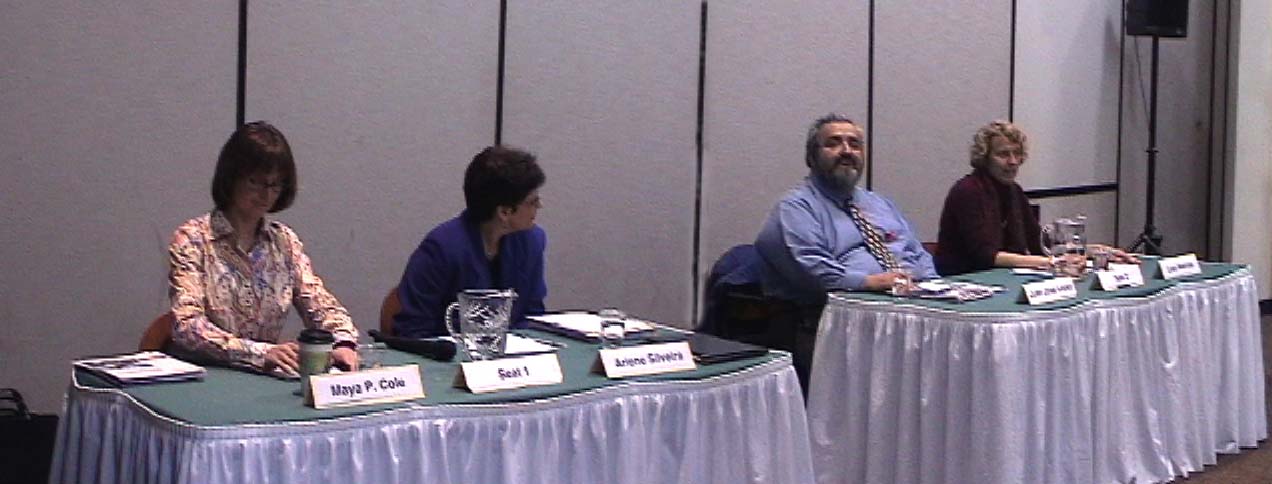
Share

Educational Flatline in Math and Reading Bedevils USA

Greg Toppo:

Despite nearly 30 years of improvements in U.S. children’s overall quality of life, their basic academic skills have barely budged, according to research led by a Duke University sociologist.
The “educational flatline,” as measured by scores on math and reading exams, defies researchers’ expectations, because other quality-of-life measures, such as safety and family income, have improved steadily since 1975.
More recently, even areas that had worsened in the 1970s and 1980s, such as rates of teen suicide, have improved dramatically, so researchers had expected that education improvements would soon follow. They didn’t.

2006 Child Well-Being Results.
The Educational Flatline, Causes and Results:The Education Flatline: Causes and Solutions

Share

Marisue, will you open your posts for comments?

I noticed that you haven’t left your last couple of posts open for comments. I hope that you just forgot and didn’t do it to keep people from engaging you in a discussion.
If the comments were open, I’d have asked you whether you will be asking the board tonight to support the MMSD string program. Will you be?

Share

Task Forces Are an Important Mechanism for Bringing People With Different Perspectives Together to Work on Important Issues – What About Music and Art Education?

Tonight the School Board’s Performance and Achievement Committee will discuss a status report on the elementary strings class, which they received last Thursday.
This report describes the current course, but the report a) is not an assessment of the course and b) says nothing about the future of the course. (Mr. Rainwater told me the committee only asked for a status report.) I have been one of hundreds of advocates for this course over the past 5 springs, and I see the same thing unfolding again this year that I have in the 4 previous springs without any work from the preceding year on this academic course. This course is much loved by generations of people who live in Madison, many who do not have children in the schools but do vote.
Not included with the status report is a draft vision statement developed by a group of string teachers. It’s long, needs more discussion with string teachers and the community (all string teachers have seen this) but with this draft statement a) these teachers tried to come up with something meaningful, which top management asked them to do and b) these teachers have had less than two hours of group time to even discuss what the future could be and that ended abruptly in December with no further next steps. These same teachers were given no time to work together on what adjustments needed to be made to curriculum when class time is cut in half. In June, they asked the interim FAC, who forwarded this request to Supt. Rainwater. The meetings did not take place. I don’t feel this should happen, especially when drastic curriculum changes are being considered.
For five years, hundreds of students, parents, community members and community organizations have asked for your help – either restructuring the course of redesigning this course, but working with the community in some way to keep arts strong, because it’s so important for achievement.
I and others have been strong proponents of making the course work in our current financial situation. Over these five years, I feel we have lost opportunities to develop relationships which are important for acquiring funds, to assess and redesign the K-5 music education curriculum, to develop funding sources for small group lessons for children afterschool to further strengthen what they learn during the school day.
Last year the elementary strings course reached about 1,800 students in 27 schools. Nearly 600 children (42% of the low income children in Grades 4 & 5 participated in this course). This year the course is teaching 1,650 students. The status report does not say how many low income. I do know from conversations with the Fine Arts Coordinator and with teachers that more low income children indicated an interest in taking elementary strings than were in the class for many reasons, I am sure.
I think elementary strings is an example where there have been hundreds of advocates for keeping this course, but minimal positive response and support from the School Board to bring the professionals and advocates together to work on this and other music and art issues. We have task forces for boundary changes, afterschool, live animals in the classroom, equity, etc. Given the community’s love of the arts, such a task force seems right for the arts.
I’d like to see the dialogue change this year for elementary strings and for music and art education to one where we talk about how can we work together. I would like to see the School Board consider a community task force under the oversight of the Performance and Achievement and the Partnership Committees that would bring advocates for music and art education and professionals together to work on this issue. I would like to see such a committee work on short-term issues re the elementary strings course, but also develop a 5 year fine arts strategic community plan. I have spoken with teachers, music organizations, private music teachers, the Fine Arts Coordinator and the Superintendent about the need for this. I have heard positive responses from community members and teachers, interest from the Fine Arts Coordinator.
I feel such a committee needs to be led by well-known community leaders who support the arts and arts education in the schools, because developing relationships within the community will be important for partnerships and possible fundraising.
I also think such a committee is important for credibility and for continuity. Over 5 years, MMSD has had 3 fine arts coordinators with one year without a fine arts coordinator. In spring 2003, the last fine arts coordinator was getting up to speed, in the 04-05 school year a teaching team was to help with coordination when the fine arts coordinator position was cut but this group was not put in place, and now the district has a new fine arts coordinator, who is working hard, meeting the community, teachers, helping in many ways. I think this is a critical position on the district and an important member to be on a community fine arts education committee.
Lastly, without classes during the day for elementary strings, there is no way to reach as many low-income children as the course currently reaches. Also, the district loses something special. Hundreds of children have asked the Board for help. I hope they do.
I will commment on this at the School Board meeting tonight. I have taken to writing on the blog vs. speaking at School Board meetings, because, after 5 years, and personal attacks, it takes too much out of me.

Share

Live Animal Discussions Important – It’s the Lack of Budget Discussion that Concerns Me and the Likely $8 Million in Cuts Going to Schools on Monday, April 3rd

Dear School Board Members:
When I looked at the School Board calendar for March, what jumped out at me was the lack of any Finance and Operations committee meetings on 06-07 budget issues even though a) allocations go to schools on April 3rd and b) tonight the School Board majority will likely vote to pay for the debt service on an addition to Leopold with what could amount to an additional $350,000 cut from the operating budget.
What I did see were meetings on Live Animals in the Classroom. My concern was not so much that I saw Live Animals in the Classroom on the agenda (although I wish this issue had been resolved positively and fairly when it first came up 1.5 years ago, I support and mean no disrespect to the members or the work of this committee) but that budget discussions were missing. Earlier this calendar year I was left with the impression that the Superintendent had informed the School Board that March would be filled with discussions about the budget.
I did see important issues such as the Equity Task Force meeting and board discussions about boundaries and schools, but I did not see any discussions about the budget scheduled, and I do not yet see any formal meetings re the budget on the School Board calendar as yet.
In her email to PTO Presidents, Carol Carstensen said the School Board decided not to consider cuts until after the School Board has the entire budget and they will have the document sooner this year rather than later this year, but not until the end of April, or thereabouts. I and others have made suggestion along these lines in previous years – you do want to discuss cuts in the context of the entire budget; however, the devil is in the details and that is where I have concerns.
The budget timeline the School Board is working from says the administration is going to send out allocations to schools on April 3rd. Straight forward administrative task – once again the devil is in the details. In his email to me, Superintendent Rainwater said that the timing of allocations is driven by the union contract deadlines for layoff notices (late May) and surplus notices (July 1 but MMSD gives them in mid-April). Also, Mr. Rainwater informed the School Board earlier this year that the District would be facing $8 million in cuts next year.
Now, as the Superintendent informed me, many things go into allocations. However, he will have $8 million less next year than he felt would be needed, so $8 million in cuts will have to be made. The question is when and how will these cuts be made? If the union deadlines drive the April 3rd date, then I would expect cuts will be included with the allocations that go out to schools on April 3rd as has been the case in preceeding years. If that is the same this year, I feel the School Board and the public needed to know what budget framework is being used to send out the allocations – class sizes, courses, etc. I feel there needed to be public discussions about this.
School Board members tell the public that final decisions about cuts are their decisions. That’s true, but in practice it is not. By the time allocations are determined in mid-May, there will be little opportunity for the public or the School Board to have much, if any discussion about the budget and the $8 million in cuts. I don’t agree with that. I think it is bad policy.
I believe live animals in the classroom are important. Re this issue, I only wish that more progress had been made by now – I looked up references to this as far back as Fall 2004. My daughter attended Franklin Elementary School and visited Mary Powell’s classroom – so did I! Re. live animals in the classroom, I think we need a board policy that makes this experience part of our children’s education. I guess I thought the existing policy, as Mary Powell pointed out in Fall 2004, addressed the issue.
Sincerely,
Barb Schrank

Share

Cap Times Heartily Endorses Silveira for Seat #1

A Cap Times editorial
It has been a good long while since Madison Metropolitan School District voters have had an opportunity to vote for a new School Board candidate who is as prepared as Arlene Silveira is to hit the ground running and to have an immediately positive impact on the process.
The parent of an 8th-grader, Silveira currently serves as the president of the Cherokee Middle School PTO and is the past president of the Leopold Elementary School PTO. She’s been a highly engaged member of the school district’s West/Memorial demographics task force and has worked closely with the Madison Foundation for Public Schools. She’s on the steering team of Madison CARES, the group set up to inform voters about referendum issues. She’s a regular at School Board meetings, and she showed up for her Capital Times endorsement interview with a copy of the budget in hand and a clear familiarity with the document.
To a board where new members are often marginalized by a demanding learning curve, particularly when it comes to budget issues, Silveira will bring knowledge, skills and contacts that are likely to make her a more significant contributor than several veteran members.
That’s important, because difficult budget, referendum timing and curriculum issues are on the agenda immediately and this board is no place for a newcomer who will simply fall in line with one of the two relatively well-defined factions that have developed around Carol Carstensen, the current board president, and Ruth Robarts, the loudest and most frequent critic of the board majority and school district administrators.
Silveira is backed by Carstensen and other members of the board majority, while her opponent, Maya Cole, is backed by Robarts and board member Lawrie Kobza. But Silveira, who works for the Promega Corp., is too sharp and too concerned about issues facing the school district to fit easily into one of the board’s existing camps. Her own experiences as the mother of a Latina daughter in the public schools, as an active parent at the elementary and middle school levels, and as a member of bodies charged with advising the board on critical issues regarding overcrowding and new construction, have made her exceptionally sensitive with regard to the achievement gap, to curriculum and to spending matters that have divided the board in the past. As such, she is refreshingly blunt about her desire to build new coalitions so that the board can present a more coherent message to the community particularly when it comes time for referendum votes.
It is this combination of experience and independence that underpins our faith that Silveira is the better choice in the contest for Seat One on the board, which is being vacated by former board President Bill Keys. We think her no-nonsense approach will help the board overcome some of the pettiness that has distracted it in recent years, and we are excited by the prospect that as a savvy newcomer she will forge an effective working relationship with Kobza, who has much to contribute.
The only qualm we have about endorsing Silveira has nothing to do with her. Rather, it has to do with her opponent.
Maya Cole is an exceptionally appealing candidate. Like Silveira, she is a genuine progressive, with a track record of activism that is as long as it is impressive. Cole would be a fine School Board member, and we hope that she will run again in the future.
But, at this essential turning point for the schools, we are convinced that Silveira is better prepared to join the board as a fully prepared and fully engaged member. She is ready to serve as the progressive coalition builder that the board needs to get focused and to win the confidence of all the constituencies students, staff, parents, taxpayers whose support is essential to maintaining one of America’s great urban school systems.
Published: March 27, 2006
Copyright 2006 The Capital Times

Share

Longtime advocates for academic rigor and educational excellence back Mathiak and Cole

Recent post from the Madison United for Academic Excellence (MUAE) list serve:
Dear MUAE Friends,
When we volunteered to oversee a District-wide “TAG” parents email list back in 2002, it was in part to help out the District “TAG” staff and in part to make the list available for explicit “TAG” advocacy efforts. We never expected that it (or we) would become explicitly political; but then, never in million years did we expect to have the crystal clear choice in BOE candidates that we have before us this year.
As fellow members of this on-line community, we think you need to know that Juan Lopez — however laudable his other views and positions may be — has the most extreme and consistent anti-“TAG” voting record of any BOE member who has served on the Board in the ten years that we have been involved with the issues. Juan once actually said to Jeff in a budget-focused BOE meeting, when Jeff was arguing in support of “TAG” funding, something like “Jeff, why should I support this? It has nothing to do with minority students.” Not surprisingly, Juan has shown absolutely no interest whatsoever in the District dropout data that we have “put out there” many times in the past three years.
In very stark contrast, we first met Lucy Mathiak almost ten years ago, when we were still relatively new Franklin ES parents. We had attended a couple of District-wide “TAG” parent meetings and wanted to do some organizing and educating within the Franklin community. Someone gave us Lucy’s name as a very well-informed east side parent and excellent speaker. We invited her to a meeting; she came; she educated us about Standard t and how to influence our school’s SIP (“School Improvement Plan”); and she inspired us to greater things, as both parents and education advocates. In a word, we were thrilled last fall when we learned that Lucy had decided to run for School Board.
It is our firm belief that if the District’s academically talented and motivated students are to have a fighting chance at having their educational needs met in our schools, they need a strong voice and representation on the BOE. They need someone on the BOE who understands their lived experience; someone who understands the issues facing the District in a way that includes them. Lucy Mathiak thoroughly understands these students, their needs, and the issues, in part, because she has lived them as a parent. As we see it, Lucy has the experience, the knowledge, the commitment, and the deep confidence to make sure that the brightest students of all colors and backgrounds are well taken care of by the Madison schools. In our opinion, no one else even comes close. For voters who care about academic excellence for all, the choice couldn’t be more clear.

VOTE FOR LUCY MATHIAK FOR MADISON SCHOOL BOARD SEAT #2 ON TUESDAY, APRIL 4.
What about the race for Seat #1? The truth is, we do not know either Maya Cole or Arlene Silveira nearly as well as we feel we know Juan and Lucy. Nevertheless, we know who we are voting for.
Consider the following paragraph from an op ed piece of Arlene’s that appeared in the Wisconsin State Journal in January:

Racial and economic achievement gaps.
The School Board must address differences in proficiency levels and graduation rates between racial and ethnic groups. In addition to continuing efforts such as School of Hope, small class sizes and cultural competence training opportunities for teachers and support staff, we must develop partnerships with community groups and provide venues for parents to come together to help the district find ways to allow all children to succeed. With the high mobility rates of some students, we must look at ways to help stabilize students’ school experience. The board cannot be proud of the district’s progress until all groups of students achieve equal success in all academic disciplines throughout their school careers.

(bold added)

Frankly, that last line scares us. We have asked Arlene more than once what she means by it, but she has yet to respond. Arlene is openly pro-heterogeneous classrooms, we know that; but her vision sounds like Camazotz, the evil place in “A Wrinkle In Time.”
In contrast, we have spoken at length with Maya about her candidacy, her vision for the BOE and the District, and her own experiences as a parent. It is our very strong impression that she has started down the road that the rest of us are already on and that — like Lucy — she “gets it.” Maya is a courageous and independent thinker who will insist on data and documentation and who will not be cowed by bullies. She understands the need for increased transparency and increased accountability on the BOE and in the District administration. She does not support cookie-cutter curricula. She does not support heterogeneous classes. Like Lucy, she wants to find ways to increase minority participation in “high end” classes, not get rid of the classes according to some misguided notion of what constitutes educational equity. If you care enough about rigorous curricula and high academic standards to be on this list serve, then Maya Cole is the one for you.
VOTE FOR MAYA COLE FOR MADISON SCHOOL BOARD SEAT #1 ON TUESDAY, APRIL 4.

There is one more reason why we are voting for Lucy and Maya on April 4. As longtime observers of the Madison School Board, we are deeply concerned about the culture of bullying and secrecy that exists in the Doyle Building and on the BOE. We feel it has paralyzed the Board and rendered it completely ineffective. We are convinced that a change of BOE membership is the only way to bring back respectable and respectful behavior — not to mention increased transparency of operations and a thoroughgoing accountability to the public — to the task of educating our children.
Many thanks for your consideration,
Laurie Frost, Ph.D., and Jeff Henriques, Ph.D.
West HS and Hamilton MS Parents
Former Franklin-Randall ES parents
Former Franklin-Randall PTSO Board member (Diversity and Community-Building Committee Chair) (LF)
West HS PTSO Board Member (Treasurer) (JH)
Advisory Board Member, Wisconsin Center for Academically Talented Youth (WCATY) (LF)
Madison United for Academic Excellence

Share

MAFAAC & Communities United School Board Candidate Forum Audio

MAFAAC (the Madison Area Family Advisory/Advocacy Committee) and Communities United (a broadly-based coalition of groups and individuals representing Madison’s minority communities, and other citizens working on behalf of social justice and civil rights) held a school board candidate forum yesterday. MP3 Audio clips are avaible below:

  • Opening Statements: [10.7MB mp3]
  • Question 1: What do you think the causes are of the achievement gap? [7MB mp3]
  • Question 2: What role do community groups play in addressing the achievement gap? [4MB mp3]
  • Question 3: How would you rate the leadership of Superintendent Art Rainwater? [7.5MB mp3]
  • Question 4: What are the sources of the discord, the disagreement on the board? [7.5MB mp3]
  • Question 5: Barbara Golden Statement on Dissent, David (I could not catch his last name) has a question on the budget & Candidate Responses to the budget priorities. [6MB mp3]
  • Question 6: Latinos Unite for Change in the Classroom. What are you going to do to support the needs of the ELL students? [3.5MB mp3]
  • Question 7: The district insists that a young child go through an ESL program. The parents disagree. What is your role if someone brings you a case like this? [4.5MB mp3]
  • Question 8: The chair of Communities United’s Statement and Question: What specifically would you do to insure that there is equity in the (District’s) programs. [8.5MB]
  • Question 9: Audience questions regarding heterogeneous vs homogeneous classrooms; can people in the community who care about an issue like heterogeneity, get that in front of the school board? The way the board is currently comprised, the answer is no. [10.5MB mp3]
  • Complete Event: 2 hours, 30 Minutes [65MB mp3]
Share

“D.C.’s Distinction: $16,344 Per Student, But Only 12% Read Proficiently”

Education & Academia:

he District of Columbia spends far more money per student in its public elementary and secondary schools each year than the tuition costs at many private elementary schools, or even college-preparatory secondary schools. Yet, District 8th-graders ranked dead last in 2005 in national reading and math tests.
Not one U.S. state can boast that a majority of the 8th-graders in its public schools last year had achieved grade-level proficiency or better in either reading or math.
How much money did your state spend per pupil while failing to adequately educate in reading and math the majority of students in its public schools? The answers are in the chart below.

Wisconsin ranked 11th in per student spending ($9,805 – Madison spends about $13,107 per student (321M budget [pdf]) / 24,490). Via Joanne, who notes that there is not much correlation between spending and NAEP test performance. UW-Madison emeritus professor Dick Askey discussed NAEP scores with respect to math performance recently.

Share

Bridgette and Gregg White: Silveira best choice for School Board

A letter to the editor
Dear Editor: We believe supporting Arlene Silveira for Madison School Board is the best choice.
Large organizations like the school district need care and attention. Silveira has communicated with broad constituencies in her PTO, referendum and task force work awareness. She seems to know that you have to problem-solve and promote at the same time in order to keep the school system from suffering the consequences of many modern institutions.
We urge a vote for Silveira on April 4 so that our schools keep delivering the value they are known for.
Bridgette and Gregg White
Madison
Published: March 24, 2006
The Capital Times

Share

MSCR committee planting questions at School Board forum

Ruth Robarts originally posted the following:
On March 30, the North Side Planning Council will host a public forum for school board candidates at the Warner Park Community Recreation Center starting at 7 p.m. Usually, the NSCP moderates a panel discussion with the school board candidates. During the forum, the candidates respond to a set of questions developed by NSCP. When time permits, the moderator facilitates questions from the audience.
There’s a new twist this year. A citizen advisory committee for the Madison School Community Recreation (MSCR) program is planning to bring a list of its own questions.
On Tuesday, March 28 the MSCR Citizen’s Advisory Committee will meet to “develop questions to ask Board of Education candidates” at the NSCP forum, according to the official agenda of the committee.
The citizen members of the advisory committee are all appointed by the Board of Education. Board member Johnny Winston, Jr., is currently the representative of the school board on the committee. Senior staff from MSCR participate in these meetings.

Share

MSCR committee planting questions at School Board forum

On March 30, the North Side Planning Council will host a public forum for school board candidates at the Warner Park Community Recreation Center starting at 7 p.m. Usually, the NSCP moderates a panel discussion with the school board candidates. During the forum, the candidates respond to a set of questions developed by NSCP. When time permits, the moderator facilitates questions from the audience.
There’s a new twist this year. A citizen advisory committee for the Madison School Community Recreation (MSCR) program is planning to bring a list of its own questions.
On Tuesday, March 28 the MSCR Citizen’s Advisory Committee will meet to “develop questions to ask Board of Education candidates” at the NSCP forum, according to the official agenda of the committee.
The citizen members of the advisory committee are all appointed by the Board of Education. Board member Johnny Winston, Jr., is currently the representative of the school board on the committee. Senior staff from MSCR participate in these meetings.

Share

The fate of the schools

Will the Madison district sink or swim?
April 4th elections could prove pivotal

At the end of an especially divisive Madison school board meeting, Annette Montegomery took to the microphone and laid bare her frustrations with the seven elected citizens who govern Madison schools.
“I don’t understand why it takes so long to get anything accomplished with this board!” yelled Montgomery, a Fitchburg parent with two children in Madison’s Leopold Elementary School. She pegged board members as clueless about how they’ve compromised the trust of the district’s residents.
“You don’t think we’re already angry? What do we have to do to show you, to convince you, how angry we are? If I could, I’d impeach every single one of you and start over!”
Impeachment isn’t being seriously considered as solution to the Madison Metropolitan School District’s problems. But infighting and seemingly insurmountable budget problems have increasingly undercut the board’s ability to chart a positive course for Madison schools.

And that’s not good, given the challenges on the horizon for a district of 24,490 kids with a $319 million budget. These include declining enrollment of upper- and middle-class families; continuing increases in low-income families and racial minorities; an overall stagnant enrollment which limits state funding increases; and prolonged battles with parent groups over everything from boundary changes to curriculum choices.
By Jason Shepard, Isthmus, March 23, 2006

(more…)

Share

MMSD administrators will propose cutting 92 positions

According to a document apparently floating around the Doyle Administration Building and MTI offices, the MMSD administration will recommend cutting 92 positions when the Board of Education meets on April 3.
Disappointment best describes my reaction. I’m not surprised, of course. I’m not even upset that the union has the information even before the board, since it might be wise to alert John Matrhews rather than surprise him on April 3.
I’m disappointed. Disappointed because the board and administration have not listened to a single plea about following a new budget process. This is the same-old same-old. The administration puts last year’s spending into a black box. And presto! Cuts come out.
For years, those of us on schoolinfosytem.org and others throughout the community have begged and pleaded for a more understandable budget process, for input on the budget from the community, for a budget that reflects some set of priorities, and this year a budget that reflects the $100 budget exercise.
We should have saved our breath.
The administration and board don’t hear.
They only want to talk AT us — to tell us that we don’t understand the state budget, don’t understand the district’s changing demographics, don’t understand the complexity of school issues – like we’re all dummies.
But we DO understand all of that!
What we don’t understand is the MMSD budget process, the MMSD budget document, and the MMSD budget priorities. And to tell you my frank opinion, neither does a single soul on the board because they too never get to see inside the black box and they have no priorities to reflect in the budget.
It’s time to throw the bums out and replace them with board members who will listen, respond, and create an open process and understandable budget.

Share

“Expectations for Our Teachers Are Misplaced”

Arthur Levine, writing in the Chronicle of Higher Education:

Several years ago, I was part of a group that a philanthropist had assembled to review his foundation’s education agenda. In the course of a two-day meeting, the conversation turned negative only once, when education schools were discussed.
The philanthropist said he had given up on education schools, preferring to work with business schools or organizations outside of colleges and universities. A former governor who was known to be a thoughtful education-policy leader chimed in, calling the flagship education school in his state largely irrelevant. A major school-system superintendent reported having told the two education schools in his area that if they were unable to turn one of his high schools around, they should go out of business. Dismissively he said that only one of the education schools was even trying. A union leader nodded in agreement, something the superintendent had rarely experienced.
This is an age of finger-pointing. As profound demographic, economic, global, and technological changes rack the country, all of our social institutions — created to serve a disappearing world — perform less well than they once did. As they try to adjust to a society in motion, they appear to be broken and unable to fix themselves. Thus we say the government is broken. The American family is broken. So it is with the education school.
The response by the public is to withdraw. As it does, we increasingly see the institution in distorted caricature, and we develop unrealistic expectations for what it should be able to accomplish. We blame the institution for all of the problems in its field and deem its inability to change willful.

Share

Dumbing Down Proficient: Intel, State Farm Heads Say Easy State Tests Sap U.S. Education

Bloomberg:

After only 50 percent of Arizona’s eighth-grade public school students passed a standardized reading test, state education officials took decisive action: They made the exam easier. Last year, 71 percent of students were rated “proficient” in reading.
As students throughout the U.S. undergo the latest round of tests this month, corporate leaders including Craig Barrett, chairman of Intel Corp., and Edward Rust, chief executive officer of State Farm Mutual Automobile Insurance Co., say they’re concerned about slipping standards among states. They’re exploring whether to renew a decade-old push for national tests.

A commenter over at Joanne Jacobs notes that “Every state must participate in the NAEP every year”.

Share

“Public education is the foundation of our democracy”

George Lucas, writing about education and his Foundation (via Maya Cole’s post on Effective School Boards:

Public education is the foundation of our democracy — the stepping stones for our youth to reach their full potential. My own experience in public school was quite frustrating. I was often bored. Occasionally, I had a teacher who engaged my curiosity and motivated me to learn. Those were the teachers I really loved. I wondered, “Why can’t school be exciting all of the time?” As a father, I’ve felt the imperative to transform schooling even more urgently.
Traditional education can be extremely isolating — the curriculum is often abstract and not relevant to real life, teachers and students don’t connect with resources and experts outside of the classroom, and schools operate as if they were separate from their communities.
Project-based learning, student teams working cooperatively, students connecting with passionate experts, and broader forms of assessment can dramatically improve student learning. New digital multimedia and telecommunications can support these practices and engage our students. And well-prepared educators are critical.
Our Foundation documents and disseminates the most exciting classrooms where these innovations are taking place. By shining the spotlight on these inspiring teachers and students, we hope others will consider how their work can promote change in their own schools.

Share

WIBA Interview with School Board Candidates Lucy Mathiak and Maya Cole

12MB mp3 audio file from today’s WIBA interview.

Share

SHOULD LEOPOLD EXPANSION BE PAID FOR OUT OF THE OPERATING BUDGET?

A proposal is before the Madison Metropolitan School Board to approve a $2.8 million addition to Leopold funded under the revenue caps. The Board may vote on this proposal on Monday, March 27. While the Leopold overcrowding is a serious problem that absolutely must be addressed, the question for the Board is whether this should be addressed by cutting an additional $343,000 (the yearly debt service on the $2.8 million loan) from programs and services from our operating budget.
What would we have to cut to pay for this? We don’t know yet, but examples of items that could be proposed for cuts include:

  • Elimination of the entire elementary strings programs (approx. $250,000)
  • Elimination of High School Hockey, Gymnastics, Golf, and Wrestling ($265,000)
  • Reduction of 4 Psychologists or Social Workers ($277,000)
  • Reduction of 7 Classroom Teachers ($350,000)

While no one wants to pit one educational need against another, that is what happens in the budgeting process when we are constrained by revenue caps. Paying for necessary physical improvements to Leopold now out of the operating budget means that other programs will be cut. On the other hand, failure to make those physical improvements now out of the operating budget means that either Leopold students will be required to deal with very overcrowded conditions without any assurance that a referendum to pay for a solution to the overcrowding will pass, or that boundary changes will have to be made that will affect many students in the West attendance area.
Difficult decisions must be made on what to fund out of our operating budget, and ultimately it comes down to a question of how we prioritize our District’s different educational needs. I would appreciate readers’ thoughts (click the comments below) on how to prioritize these needs and whether they believe the Leopold expansion should be paid for out of the operating budget.

Share

MMSD Staffing Resources/Cuts Go To Schools April 3rd – Where’s the School Board, Where’s the Board Governance?

It’s nearly the end of March, and there’s a strange quiet at the Madison School Board. Every March for the past five plus years has meant public School Board discussions and meetings about next year’s budget, budget cuts and referendum. Earlier this year, Superintendent Rainwater informed the School Board there would be budget discussions throughout the month of March. Yet, here we are at the end of March – silence on a $320+ million budget, but cuts are being planned just out of the public’s eye while pets in the classroom take front and center stage.
Funny – isn’t there a school board election on April 4th?
On Monday, April 3rd, on the eve of the 2006 spring school board election, MMSD school principals will receive their staffing allocations for the 2006-2007 school year according to the District’s published budget timeline (updated March 15, 2006). The administration will provide school principals with the number of staff they will have for next year, and the principals will need to provide the Human Resources Department of MMSD with information on April 10th about how they will use the staff – number of teachers, social workers, psychologists, etc. For the most part principals have little say about how their staffing is allocated, especially in the elementary school. These dates are driven in part by teacher contract requirements for surplus notices and layoff notices that are due in late May.
Earlier this year, the Superintendent advised the School Board that $8 million in cuts will be needed next year. That means the staffing allocations going out on April 3rd will need to include these cuts. There are also plans afoot to avoid a referendum to add an addition to Leopold and borrow the money in a way that does not require a referendum. However, this approach will negatively affect the operating budget. The estimated additional cost will mean $350,000 in cuts on top of the $8 million in cuts estimated for next year. Where will those $350,000 in additional cuts come from – you can expect more cuts in teachers in the classroom, districtwide classes such as elementary strings, social workers, TAG resources, books, larger class sizes.
In opinion, this is one of the worst, closed budget processes I have seen in years. On March 9th, I blogged about five points that I feel are important considerations in a budget process, especially when we are in a financial crisis. Our School Board majority is missing most, if not all of them and will not even discuss budget items in March! Parents and the community ought to be alarmed. Madison will have to pass referendums to keep our schools strong in these punative financial times that Madison and all WI schools are facing. Conducting Board budget business in this way – behind closed doors, will not build community confidence and will not pass referendums!
I asked Superintendent Rainwater where was the cut list and what budget was he using to determine the allocations. He said this year the Board would be discussing cuts in the context of the entire budget? Huh? Decisions about cuts and reductions in allocations are being made now – what budget is being used? Why isn’t the School Board publicly discussing the budget? Who’s making the decisions and governing the school district – not the current School Board majority. We need a School Board majority that will do the business the public entrusted them with and who will do their work in public.

Share

Candidates Split on District’s Direction

Susan Troller:

It’s an old truism that our strengths are our weaknesses. When a citizen runs for local office, he or she is likely to learn that in the glare and scrutiny of the campaign, the very qualities that make them an appealing candidate may cause some anguish in the tussle and turmoil of the race.
Madison School Board candidates Maya Cole and Arlene Silveira have both taken some flak: Cole for a hurtful comment that infuriated supporters of the Leopold Elementary School addition and Silveira for her business background and thoughtful style that has been occasionally characterized as too corporate.
For both, issues of personality have become a part of a race that offers significant differences in perspective on the school district as well as distinct choices of style and personality.

It’s interesting that the Cap Times raised this issue, given that Maya’s drawn quite a bit of partisan attention at recent (mostly thinly attended) candidate forums (Ideally, these things should be cordial, but that has not always been the case). A reader emailed this link to the first post failed May, 2005 Referenda Long Range Planning Committee meeting. This is the meeting where a number of people spoke, including Seat 1 candidate and very active referenda supporter (Madison Cares, a group Arlene spearheaded, spent over $40K promoting passage of the questions – fwiw, I told Carol I thought that all 3 questions would pass while she was leafletting the Farmer’s Market, up until the ballot error/reprinting problem) Arlene Silveira.
The Cap Times’ article discussed Board members behaving poorly toward one another:

She said she was surprised by the number of people who follow the School Board meetings on television, and said that some of the occasionally fractious behavior on the part of board members diminishes the group’s credibility. “That must stop,” she [Arlene] said firmly.

Certainly, this video fuels the discussion, with Arlene first up.
From my perspective, the Fitchburg school saga must include the mid-1990’s MMSD turn-down of Bill Linton’s offer of free land near Promega (Current President Carol Carstensen and incumbent Juan Jose Lopez were on the board at the time). That land became the private Eagle School. A Promega partnership may well have spawned more by today. Interestingly, I learned about this years ago, while waiting for luggage at the Dane County Airport next to then Superintendent Cheryl Wilhoyte. She seemed excited about the possibilities.

Share

Young Madison Activists Reflect On Resistance

Three years ago, a group of fifth-graders at Madison’s Crestwood Elementary School took on “The Man,” as they like to put it.
The students, dubbed the “Recess Rebels,” tried to restore an outdoor recess that administrators had removed in a restructuring of the school day.
They didn’t win, but they claimed a few victories along the way, such as forcing a districtwide vote by all elementary teachers on the issue.
The students, now eighth-graders at Jefferson Middle School, have given up the fight but not the passion.
Six of them will present a 90-minute workshop Thursday at the National Service Learning Conference in Philadelphia titled “Taking a Stand: Empowering Youth in the Community.” The students wrote a proposal for the workshop and were accepted to present.
About 2,000 educators and 1,000 students are expected to attend the conference, which promotes an educational method in which students identify and address community needs. Former President Clinton is the keynote speaker.
By Doug Erickson, Wisconsin State Journal, March 21, 2006
derickson@madison.com 608-252-6149

(more…)

Share

Madison Schools’ Potential Food Policy Update

Channel3000:

A new controversial, food policy proposal in the Madison Metropolitan School District could take food out of children’s mouths and funding for clubs, activities and supplies.
The district’s Board of Education will consider district-wide recommendations on food policy within the next few days that might include a ban on candy, soda and snack food sales during school hours, according to the student representatives to the board.
The administrator writing the final recommendations refused to reveal if a ban will be part of the proposed policy, WISC-TV reported.
Supporters of the proposal argue that the food policy is to promote healthy eating and food safety.
A ban would impact food sales in school cafeterias and vending machines, as well as fundraisers sponsored by school clubs and extracurricular activities.

UPDATE: Bill Novak has more:

The school sale of junk food, candy and sugar-filled soft drinks could be affected by food policy changes to be considered by the Madison School Board.
The School Board is expected to consider new food policy recommendations within the week.
Madison Metropolitan School District spokesman Ken Syke confirmed the food policy is on the table but wouldn’t release details on what recommendations are in the new report.
“It’s a comprehensive food policy, and many different groups weighed in on it,” Syke said. “Does it ban junk food? I can’t say.”

Share

Supporting Neighborhood Schools

Seat 1 School Board Candidate Maya Cole:

Boundary changes create a larger effect on a district than the direct impact on the children and their families.

  • Neighborhood schools are vital for a community.
  • Transportation costs eat away at a budget.
  • Kids don’t get the daily benefit from a walk to school every day.

These are a few reasons that I feel strongly that we need to support and maintain all of our neighborhood schools.
I think it’s important to keep in mind that Madison has become a growing urban school district. Our community has undergone radical transformation in the past 20 years, and any plan to address the community’s educational needs must take those changes into account.
My vision is to continue the work of the long-range planning groups and expand it to form a strategic plan along the lines of the University of Wisconsin strategic planning. Long-term goals for the district, in my opinion, should be at least ten years or more.

Share

Why You Should Choose Math in High School

Espen Andersen, Associate Professor, Norwegian School of Management and Associate Editor, Ubiquity:

[The following article was written for Aftenposten, a large Norwegian newspaper. The article encourages students to choose math as a major subject in high school – not just in preparation for higher education but because having math up to maximum high school level is important in all walks of life. Note: This translation is slightly changed to have meaning outside a Norwegian context.]
Why you should choose math in high school
A recurring problem in most rich societies is that students in general do not take enough math – despite high availability of relatively well-paid jobs in fields that demand math, such as engineering, statistics, teaching and technology. Students see math as hard, boring and irrelevant, and do not respond (at least not sufficiently) to motivational factors such as easier admission to higher education or interesting and important work.

Share

Candidates agree education is at crossroads

Madison School Board candidates Juan Jose Lopez and Lucy Mathiak look at what is happening in schools here in very different ways, but on at least one issue they are in complete agreement: Public education here and throughout the Badger State is at a critical crossroads.
But the two candidates vying for School Board Seat No. 2, which Lopez has held since 1994, have quite distinct notions about the nature of the challenges facing the Madison Metropolitan School District.
By Susan Troller, The Capital Times, March 21, 2006

(more…)

Share