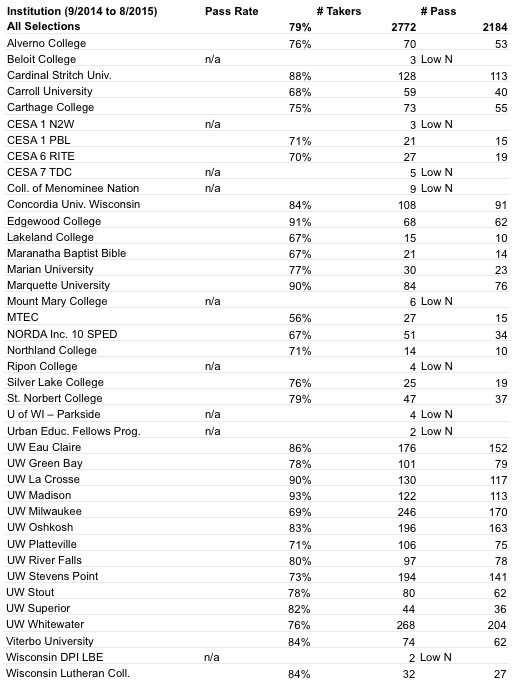
School Information System

Individuals with social phobia have too much serotonin — not too little

Uppsala University:

Previous studies have led researchers to believe that individuals with social anxiety disorder or social phobia have too low levels of the neurotransmitter serotonin. A new study, however, shows that the situation is exactly the opposite. Individuals with social phobia make too much serotonin. The more serotonin they produce, the more anxious they are in social situations.

Share

You Draw It: How FamilyIncome Predicts Children’sCollege Chances

The Upshot:

How likely is it that children who grow up in very poor families go to college? How about children who grow up in very rich families?

We’d like you to draw your guess for every income level on the chart below.

If you think the chances of enrolling in college (or vocational school) are about the same for everyone, you should draw something like this: . If you think the odds are especially harsh for children from the poorest families, but higher for middle- and higher-income children, your drawing would instead look like this: . Or here is one for a situation in which chances level off after a certain income threshold: .

Share

‘More Oxbridge graduates teaching in state schools than independent sector’

Richard Adams:

The number of Oxbridge graduates teaching in state schools has overtaken those in independent schools, according to analysis by the Sutton Trust, suggesting that high-profile efforts to attract graduates into teaching have paid off.

Using data from a survey of 700 state secondary school teachers, the Sutton Trust study extrapolated that there are 11,000 with degrees from Oxford or Cambridge on staff in England – more than double the number found by a similar survey in 2003.

Share

Moms, Let Dad Be Dad

Sue Shellenbarger:

When Kathryn Kerns asked 30 teens and preteens to come to her laboratory and talk about their parents, many of their dads scored low on a standard yardstick her research team was using to evaluate the parent-child bond.

The children described rich, warm relationships with their fathers, however, says Dr. Kerns, a professor of psychological sciences at Kent State University in Ohio. They said things like, “My dad gives me encouragement to do things,” or, “My dad tells me he thinks I can do well.”

Share

Belle Sherman pupils get schooled in computer coding

Kelsey O’Connor:

A roomful of second- and third-graders could barely sit still Tuesday at Belle Sherman Elementary School as they waited for their after-school class to begin.

“How many of you know what an algorithm is?” Cornell University graduate Arjan Nirh asked the group.
More than half of the 40 7- and 8-year-olds raised their hands.

Share

UC teaching faculty members not to criticize race-based affirmative action, call America ‘melting pot,’ and more

Eugene Volokh:

One of the latest things in universities, including at University of California (where I teach) is condemning “microaggressions,” supposed “brief, subtle verbal or non-verbal exchanges that send denigrating messages to the recipient because of his or her group membership (such as race, gender, age or socio-economic status).” Such microaggressions, the argument goes, can lead to a “hostile learning environment,” which UC — and the federal government — views as legally actionable. This is stuff you could get disciplined or fired for, especially if you aren’t a tenured faculty member.

Share

N.J. Charter Schools Receive Less Money From Private Sources Than N.J.’s Traditional Schools

Laura Waters:

Researchers at the University of Arkansas studied 15 states, including New Jersey, and found that traditional public schools receive more than $2,700 more per student than charters, even with non-public dollars included. The data analyzed is from the 2010-11 school year, the most recent available at the time the study began.

New Jersey was one of only three states in the study where charter schools received less in non-public revenue per pupil than traditional public schools. Traditional public schools received 1.3 percent of funding from private sources, while charters got 1 percent from non-public sources.

Share

The Decline Annoying Real Things About Real Places

Charles King:

In October 2013, the U.S. Department of State eliminated its funding program for advanced language and cultural training on Russia and the former Soviet Union. Created in 1983 as a special appropriation by Congress, the so-called Title VIII Program had supported generations of specialists working in academia, think tanks, and the U.S. government itself. But as a State Department official told the Russian news service RIA Novosti at the time, “In this fiscal climate, it just didn’t make it.” The program’s shuttering came just a month before the start of a now well-known chain of events: Ukraine’s Euromaidan revolution, Russia’s annexation of Crimea, and the descent of U.S.-Russian relations to their lowest level since the Cold War. The timing was, to say the least, unfortunate.

Share

N.J. Teachers’ Pension Woes: the Need for Context and Reform (a response)

Laura Waters:

Leslie Kan, who blogs about teacher pensions for Bellwether, writes that “New Jersey teacher are furious” because “Governor Christie has shortchanged the pension fund” and they’re expressing their anger by wearing black tee-shirts that show the number of pension payments they’ve made into the system. Kan is on their side: evil Christie promised to make certain pension payments through the 2011 pension reform legislation but he’s “break[ing] his own promise.”

Even worse, she writes, teachers don’t understand that they’re loss is greater than the missed pension payments. They don’t know, she says (and maybe it’s just me who detects a note of condescension here), that they “will actually end up paying out more towards the system in contributions plus interest than what they will get back in benefits. And, “while Governor Christie has shortchanged the pension fund, the system itself is shortchanging the majority of New Jersey teachers. Unfortunately, because of the lack of transparency and byzantine nature of pension systems, many teachers may not realize this.”

Share

Schools ‘ignore bad behaviour’ to fool Ofsted inspectors, says classroom tsar

Richard Adams:

Some schools and teachers ignore the magnitude of bad behaviour taking place in their classrooms, flattering official statistics and fooling Ofsted inspectors, according to the government’s newly appointed expert on pupil behaviour.

“When Ofsted come calling, loads and loads of schools hoover up the naughtiest kids before inspections,” said Tom Bennett, named by education secretary Nicky Morgan as head of a task force to improve teacher training on classroom behaviour in England.

“From my own experience I’ve known schools that have had very patchy behaviour but they’ve had good ratings simply because the inspectors have only seen certain lessons or certain situations, which are often quite artificial.”

According to Bennett, who also spent six years running nightclubs in Soho, the official paper trail a school is supposed to leave will simply not exist, “because if a school is very bad at recording bad behaviour then it will look pristine. Whereas the opposite might be true”.

Share

UK Schools ‘ignore bad behaviour’ to fool Ofsted inspectors, says classroom tsar

Richard Adams:

Some schools and teachers ignore the magnitude of bad behaviour taking place in their classrooms, flattering official statistics and fooling Ofsted inspectors, according to the government’s newly appointed expert on pupil behaviour.

“When Ofsted come calling, loads and loads of schools hoover up the naughtiest kids before inspections,” said Tom Bennett, named by education secretary Nicky Morgan as head of a task force to improve teacher training on classroom behaviour in England.

“From my own experience I’ve known schools that have had very patchy behaviour but they’ve had good ratings simply because the inspectors have only seen certain lessons or certain situations, which are often quite artificial.”

According to Bennett, who also spent six years running nightclubs in Soho, the official paper trail a school is supposed to leave will simply not exist, “because if a school is very bad at recording bad behaviour then it will look pristine. Whereas the opposite might be true”.

Share

A Vision For Teacher Training At MIT: West Point Meets Bell Labs

Claudio Sanchez:

For decades, Arthur Levine, the former president of Teachers College, Columbia University, has tried to imagine a new kind of institution for training teachers. He envisions a combination West Point and Bell Labs, where researchers could study alongside future educators, learning what works and what’s effective in the classroom. That idea is now set to become a reality.

Share

All Possible Humanities Dissertations Considered as Single Tweets

Stephen Burt:

This pedestrian term is actually the key to my historical period.

A disputatious panel at last year’s professional conference revealed the surprising state of the field (it’s as bad as you think).

My historical period, properly understood, includes yours.

What looked like a moment of failure, confusion, or ugliness in this well-known work is better seen as directions for reading the whole.

A problem you thought you could solve defines your field; you can’t imagine the field without the problem.

The only people able to understand this work properly cannot communicate that understanding to you.

Those two apparently incompatible versions of a thing are better regarded as parts of the same, larger thing.

Share

The USC Roski Fiasco Points to the Corrosion of Art Education Nationwide

Sean Patrick Carney:

Last month’s bold decision by an entire MFA class to drop out in protest over mistreatment by school administrators dramatically highlights systemic problems in art education from coast to coast.

Seven graduate students at the University of Southern California’s Roski School of Art and Design left the school on May 15 over the school administration’s changes to their promised funding, faculty and curriculum. The decision, by students Julie Beaufils, Sid Duenas, George Egerton­Warburton, Edie Fake, Lauren Davis Fisher, Lee Relvas, and Ellen Schafer, came as a shock, to say the least.

Over the last several years, USC’s MFA program has been viewed as a model of what a graduate experience in studio art should look like: generous scholarship packages, teaching assistantships with cash awards, close ties to Los Angeles cultural institutions like MOCA, and a who’s-who list of visiting artists and faculty (see Entire 2016 MFA Class Drops Out of USC’s Roski School of Art and Design).

Ten current and former USC faculty members recently issued a statement of support of the students, also calling out the disconnected administration.

Share

Scott Walker Is Undermining Academic Freedom at the University of Wisconsin

Nancy Kendall:

Walker has said that the proposed tenure changes will provide “more autonomy” for the UW system’s Board of Regents (the governing body that oversees the UW system) and for chancellors to manage the cuts. It would do so by allowing tenured faculty to be laid off at the discretion of the chancellors and Board of Regents.

As a faculty member at UW-Madison, I am heartbroken that my state government has seemingly decided to undermine, instead of prioritizing, the K-16 education system.

As a researcher whose work examines the politics of education in the U.S. and around the world, I am deeply concerned by the threat this legislative shift poses to the ability of public university faculty to conduct research about politically inconvenient facts and teach in politically disfavored fields: the core purposes of faculty tenure and shared governance in public universities.

Share

British Novelist to American Grads: There’s Nothing Virtuous about Being Offended

Ian McEwan:

McEwan did not shy away from addressing the current temper on campus, choosing to focus on the creeping group-think in faculty lounges and discussion sections instead of the all too easy targets of Russian crackdowns on free speech or the “industrial scale” state-sponsored censorship in China. McEwan directly confronted the problem of a country rooted in the tradition of free expression under the First Amendment meekly submitting to what he called “bi-polar thinking” — the eagerness of some to “not side with Charlie Hebdo because it might seem as if we’re endorsing George Bush’s War on Terror.”

McEwan criticized the cowardly behavior of six writers who withdrew from the PEN American Center’s annual gala over their discomfort with the organization’s support for Charlie Hebdo. He argued that the time to “remember your Voltaire” is precisely when confronted with scathing speech that “might not be to your taste” and said he was disappointed that “so many authors could not stand with courageous fellow writers and artists at a time of tragedy.”

Share

Nevada needs Neerav

Michael Goldstein:

lighting the world on fire.

Some outliers exist. There’s a low tail, of course, and a battle over whether regulators can shut ’em down fast enough.

There’s a high tail, too—KIPP, Uncommon, AF, YES, Success, High Tech High, Collegiate, etc. Reformy non-profits and ed-tech ventures sometimes supply these exemplars with services, and are sometimes spun out of them.

A lot of the leaders from these top-performing schools show up the day before each New Schools Venture Fund Annual Summit for a smaller get-together. Education reform opponents might liken these meetings to a scene from The Godfather in which crime families gather to discuss how to more effectively commit crimes. My memories of these edu-meetings are less “consiglieres whispering advice to nattily attired bosses” and more “nerdy do-gooders meeting in hallways, excitedly trading tips about English curriculum while trying to keep up with emails from teachers back home (the real work).”

But I recall one gathering with a bit of mafioso feel. Katrina had recently wiped out New Orleans public schools. The big national reformers like TNTP, TFA, and NLNS were already planning big NOLA expansions. Now the smaller organizations, along with each charter “family,” was implored:

Share

Why Scientific American’s Predictions from 10 Years Ago Were So Wrong

Sarah Zhang:

Recently, we did an experiment: We took an outdated issue of a respected popular science magazine, Scientific American, and researched exactly what happened to the highly-touted breakthroughs of the era that would supposedly change everything. What we discovered is just how terrible we are at predicting the long arc of scientific discovery.

The daily churn of science news tends toward optimism. You know what I’m talking about: New cure! New breakthrough smashing Moore’s law! New revolutionary technology! I write about science, and I am always uncomfortable trying to predict how a new piece of research will change the future.

That’s because science can be wrong. It can go down dead ends. And even when it doesn’t, almost everything is more complicated and takes longer than we initially think. But just how wrong and how long?

Share

Academic publishers reap huge profits as libraries go broke

CBC:

Think it’s hard to make money in publishing in the digital age? Well, huge profits are still to be had – if you’re a publisher of academic research journals.

While traditional book and magazine publishers struggle to stay afloat, research publishing houses have typical profit margins of nearly 40 per cent, says Vincent Larivière, a researcher at the University of Montreal’s School of Library and Information Science.

Share

The Oligopoly of Academic Publishers in the Digital Era

Vincent Larivière, Stefanie Haustein & Philippe Mongeon

The consolidation of the scientific publishing industry has been the topic of much debate within and outside the scientific community, especially in relation to major publishers’ high profit margins. However, the share of scientific output published in the journals of these major publishers, as well as its evolution over time and across various disciplines, has not yet been analyzed. This paper provides such analysis, based on 45 million documents indexed in the Web of Science over the period 1973-2013. It shows that in both natural and medical sciences (NMS) and social sciences and humanities (SSH), Reed-Elsevier, Wiley-Blackwell, Springer, and Taylor & Francis increased their share of the published output, especially since the advent of the digital era (mid-1990s). Combined, the top five most prolific publishers account for more than 50% of all papers published in 2013. Disciplines of the social sciences have the highest level of concentration (70% of papers from the top five publishers), while the humanities have remained relatively independent (20% from top five publishers). NMS disciplines are in between, mainly because of the strength of their scientific societies, such as the ACS in chemistry or APS in physics. The paper also examines the migration of journals between small and big publishing houses and explores the effect of publisher change on citation impact. It concludes with a discussion on the economics of scholarly publishing.

Share

In Norway, where college is free, children of uneducated parents still don’t go

Jon Marcus:

There’s a saying in famously egalitarian Norway that Curt Rice, the American-born incoming president of the country’s third-biggest university, likes to rattle off: “We’re all sitting in the same boat.”

What it means, said Rice, is that, “To single out anyone, we’re against that. That just does not sit well in the Norwegian soul.”

So all Norwegians have the same tuition-free access to college, no matter what their backgrounds. Every student gets the same allowance for living expenses.
The Atlantic

This story also appeared in The Atlantic

But something surprising is happening in Norway, which explains a similar phenomenon in the United States that has been thwarting efforts to increase the number of Americans pursuing higher education.

Share

I’m a professor. My colleagues who let their students dictate what they teach are cowards.

Koritha Mitchell:

I’m a tenured professor at Ohio State University. I have taught at the college level for more than 15 years — more than five as graduate student instructor, seven as a tenure-track professor, and three with tenure.

I’m a liberal professor, and my liberal students terrify me

I was a liberal adjunct professor. My liberal students didn’t scare me at all.

When I read about professors being afraid of their own students and changing what they teach in response to that fear, I’m struck by two things. First, I understand why they’re afraid. After my decade and a half in the classroom, I can confidently add to the chorus suggesting that universities increasingly treat students like consumers. As administrators seem more concerned with enrollment dollars than students’ learning, instructors receive a clear message: “The customer is always right.”

Share

Massive endowments, massive tuition, massive debt: Our colleges are out of control and crushing students

Paul Campos:

Prostitution comes in many forms. Consider the story of a New York University student, who finds that her school — the most expensive in the country — has raised prices yet again, and that she needs $2,000 she doesn’t have to remain enrolled. She visits the financial aid office, where an administrator literally laughs in her face. “He couldn’t believe,” she says, “that anyone would have trouble raising such a small amo

Share

Cheating found to be rife in British schools and universities

Richard Adams:

British education is experiencing an epidemic of trickery and cheating, ranging from primary school teachers rigging key assessments through to 40,000 university undergraduates disciplined for plagiarism over the past four years.

An investigation by Channel 4 Dispatches, to be screened on Monday night, describes how shady practices and in some cases outright fraud are woven into the fabric of UK education as the use of exam results, league tables and performance indicators increases the pressure on students, teachers and institutions to succeed.

Share

We Have Entered In Age Of Willful Ignorance

Lee McIntyre:

o see how we treat the concept of truth these days, one might think we just don’t care anymore. Politicians pronounce that global warming is a hoax. An alarming number of middle-class parents have stopped giving their children routine vaccinations, on the basis of discredited research. Meanwhile many commentators in the media — and even some in our universities — have all but abandoned their responsibility to set the record straight. (It doesn’t help when scientists occasionally have to retract their own work.)

Share

Student “safety” has become a real threat to free speech on campus

The Economist:

FOR an hour or two on a foggy morning last December, some students at the University of Iowa (UI) mistook one of their professors, Serhat Tanyolacar, for a fan of the Ku Klux Klan. MrTanyolacar had placed a canvas effigy based on Klan robes, screen-printed with news cuttings about racial violence, on the Pentacrest, the university’s historic heart. The effigy had a camera in its hood to record public reactions.

The reaction among some black students was to fear for their safety, and that is not surprising. What is more of a puzzle—for anyone outside American academia, at least—is that students and UI bosses continued denouncing Mr Tanyolacar for threatening campus safety even after the misunderstanding was cleared up. In vain did the Turkish-born academic explain that he is a “social-political artist”, using Klan imagery to provoke debate about racism. Under pressure from angry students, university chiefs issued two separate apologies. The first expressed regret that students had been exposed to a “deeply offensive” artwork, adding that there is no room for “divisive” speech at UI. The second apologised for taking too long to remove a display which had “terrorised” black students and locals, thereby failing to ensure that all students, faculty, staff and visitors felt “respected and safe”. An unhappy Mr Tanyolacar feels abandoned by the university. He left Iowa earlier this month, when his visiting fellowship came to an end, and has suspended his teaching career.

Share

“It’s gonna be forever or it’s gonna go down in flames”: Tenure and (In)justice

Kelly Baker

I don’t have tenure nor a tenure-track job. I was a graduate student, an adjunct, and then a full-time lecturer. My employment in academia was only ever in those positions we call contingent: the contractual, non-tenure track jobs that are either part-time or full-time. Almost two years ago, I quit my lecturer gig to become a freelance writer. I’m off the path that graduate school groomed me for, the tenure-track job. I used to believe that somehow my story was the exception, that most other religious studies PhDs moved onto tenure-track jobs while I fell off the beaten path. Now I realize that I’m not alone and that the opposite is true: contingency is now the exploitative norm in higher education rather than the exception.

In 2011, the American Association of University Professors (AAUP) estimated that 70% of academic laborers were non-tenure track (NTT) faculty while the Coalition of the Academic Workforce (CAW) places the estimate closer to 75%.v Tenure, once a definitive component of employment in higher education, is on the decline while contingent positions have increased dramatically over the last forty years. PrecariCorps, a non-profit foundation aiding adjuncts, estimates that since 1975 part-time NTT faculty increased 286% and full-time NTT faculty increased 259%. Full-time tenured and tenure-track faculty increased by a mere 23% over the same time period. In 2003, twelve years ago, the AAUP noted ominously that at most institutions, “the number of tenure-track positions now available is insufficient to meet institutional teaching and research needs.” The majority of faculty lack the protections of tenure, and they are often an exploited majority.

Share

Ohio School District Bets on Technology in Creating New Learning Model

Caroline Porter:

After a recent high-tech makeover at Reynoldsburg City Schools in this working-class suburb of Columbus, many staples of traditional education are gone.

There are no desks permanently lined up in rows and, in one building, no bells signaling the end of class. College isn’t some far-off place: Students can take classes from a community college on school premises. Most students don’t even have to take gym in high school.

At the heart of the overhaul that is aimed at all grades is a personalized learning model combining computer-based and in-person instruction that the district says has held down costs, sustained above-average test scores and put students in greater control of their learning.

Share

Madison public school students will no longer be allowed to wear clothing with Native American athletic team names, logos or mascots

Cassidy McDonald:

Madison public school students will no longer be allowed to wear clothing with Native American athletic team names, logos or mascots that depict “negative stereotypes” while at school, after the Madison School Board voted to enact the rule in a unanimous vote last month.

The policy, which goes into effect this fall, might be the first of its kind for a school district, according to students who drafted the proposal.

The new policy also mandates that Madison schools ask visiting teams to leave Native American mascots and logos at home when they play a Madison school. If the other school does not comply, the game may be canceled.

And it would ban other clothing with “negative stereotypes” of race, gender, religion and other characteristics.

Gabriel Saiz, a junior at West High School and a member of the Ponca Tribe, worked with student government and other Native American students to draft the new policy and propose it to the board. He said the proposal wasn’t based on anything he’d seen before.

Share

The Carework and Codework of the Digital Humanities

Lauren Klein:

When it comes to the digital humanities, my most strongly-held belief is that the field, in its most powerful instantiation, can perform a double function: facilitating new digital approaches to scholarly research, and just as powerfully, calling attention to what knowledge, even with these new approaches, still remains out of reach. I will illustrate this double function through the example of the TOME project, a digital tool that I’ve been developing with my colleague at Georgia Tech, Jacob Eisenstein, and a team of several graduate and undergraduate students. Our tool employs topic modeling, a technique that derives from the field of machine learning, to support the interactive thematic exploration of digitized archival collections. (And more on that soon).

But since our test archive consists of a set of abolitionist newspapers, including many held at the AAS, I thought I’d use this particular occasion to work through some of the things that our tool, and the process of its development, have taught us about nineteenth century knowledge production, before considering how digital tools, more generally, do—and do not—help to bring that process of knowledge production to light.

Share

The Harvard IKB School of Engineering

Jeffrey Sachs:

The good people of Dusseldorf, Germany, and specifically the IKB Bank, which specializes in loans to small and medium-size businesses, has kindly endowed Harvard University’s engineering school with a gift of $400m. Harvard President Faust announced the endowment on June 3, the most generous in the University’s history. Strangely, though, the Harvard Engineering School was renamed after hedge-fund manager John A. Paulson, not IKB, and thereby hangs a tale.

You see, the gift by Dusseldorf was not made in its own name. In fact, the money en route to Harvard was taken from IKB through an infamous swindle. Back in early 2007, before the 2008 financial crash, hedge fund manager John Paulson approached Goldman Sachs with the idea of ripping off unknowing investors to the tune of $1 billion. In essence, Paulson would assemble a $1 billion portfolio of toxic assets (known as Abacus) that Goldman Sachs would market to its unsuspecting clients. Paulson would bet against the portfolio, so that the investors’ $1 billion loss would be Paulson’s gain. Goldman would pocket some fees for its service in this treachery against its own clients.

Share

Best classes money can buy

Liu Xin:

While most seniors in high schools are nervously awaiting the results for the national college entrance exams they wrote on June 7, Gao Ge, a graduate of Shanghai Datong High School, can relax. He has already received offers from many universities, including Carnegie Mellon and Tufts.

Gao is one of the first graduates of the Vermont International Academy program in the school, which offers American-style high-school education to Chinese students.

Gao will also be one of the last graduates of the program.

Beijing and Guangzhou have announced that they will no longer approve international programs like Gao’s in public high schools. Shanghai has reportedly made the same decision.

Share

Long Sentences

Norman:

Share

Mearcstapa: Boundary Patrollers

Tom:

When I used to teach Beowulf to undergraduates, I often compared the first parts of the poem to a classic American Western: Grendel and his mother were the outlaws who had harassed and taken over the town, scary liminal figures (OE mearcstapa: boundary-walkers) whose very existence proclaimed that there was something rotten in Denmark. Beowulf himself was also an outsider, like the gun-toting loner who cleans up the Western town, one who can’t really ever fit in. Like the gunfighter riding off into the sunset, he is too much the outsider to be integrated into the community; Beowulf has become too much like the monsters he fights.

I hesitate, in some ways, to begin a “Post-Academic” blog, and to even make the attempt to forge a “post-academic” identity for myself, in part because such an identity positions itself so clearly as just the sort of liminal figure embodied by Beowulf—or Grendel. Which kind of figure I am, after all, may only be a matter of perception or perspective. But Beowulf and Grendel both are symptoms of the rottenness at the heart of Heorot; they are, in a sense, generated by the very structure of the story they find themselves caught up in. I feel a kind of kinship with them both.

And thus perhaps I must speak, or write, precisely because I find myself peculiarly positioned on the borders of academia. Like Beowulf, or Grendel, perhaps I may see more clearly to the heart of matters than do those who live them more from the inside.

Share

Education & Excellence

John Gardner:

We have to face the fact that most men and women out there in the world of work are more stale than they know, more bored than they would care to admit. Boredom is the secret ailment of large-scale organizations. Someone said to me the other day “How can I be so bored when I’m so busy?” And I said “Let me count the ways.” Logan Pearsall Smith said that boredom can rise to the level of a mystical experience, and if that’s true I know some very busy middle level executives who are among the great mystics of all time.

We can’t write off the danger of complacency, growing rigidity, imprisonment by our own comfortable habits and opinions. Look around you. How many people whom you know well — people even younger than yourselves –are already trapped in fixed attitudes and habits. A famous French writer said “There are people whose clocks stop at a certain point in their lives.” I could without any trouble name a half of a dozen national figures resident in Washington, D.C., whom you would recognize, and could tell you roughly the year their clock stopped. I won’t do it because I still have to deal with them periodically.

I’ve watched a lot of mid-career people, and Yogi Berra says you can observe a lot just by watching. I’ve concluded that most people enjoy learning and growing. And many are dearly troubled by the self-assessments of mid-career.

Share

What’s Wrong With Deep Learning?

Yan LeCun. PDF.

Share

Exams Around The World

Terrance Ross:

Examinations, tests, assessments—whatever the nomenclature, it’s hard to imagine schooling without them. Testing is the most popular method of quantifying individuals’ knowledge, often with the intention of objectively measuring aptitude and ability.

Test-taking is a dreaded experience that the country’s kids and young adults share with their counterparts across the globe. The ritual at its core doesn’t vary much: Students sit at a table or a computer desk (or sometimes, as shown below, on the floor), pencil and/or mouse in hand, the clock ticking away mercilessly. America for its part is home to what The Atlantic has described as an “alphabet soup” of standardized tests, including: the NAEP, SBAC, PARCC, ACT, and, of course, SAT. Testing has become increasingly notorious in the U.S., to the point that tens of thousands of parents across the country have opted their kids out of standardized tests.

In America, perhaps all the testing helps explain why “all-nighters” and Adderall abuse are the norm on many college campuses. But there is an unhealthy obsession with acing the test abroad, too. Fraudulent college applications are reportedly rampant among students in China—the birthplace of the standardized test—aspiring to attend school in the U.S. And hundreds of people in India were recently arrested in connection with a massive cheating scandal. (Many of those arrested were believed to be family members of the 10th-grade test-takers.) Meanwhile, as NPR has reported, “the relentless focus on education and exams is often to blame” for suicide among teens in South Korea, the leading cause of death for that demographic.

Share

 “Skip the content in school. We’ll teach it to you at Goldman Sachs.”

Alyssa Abkowitz:

Goldman Sachs Group Chief Executive Lloyd Blankfein Wednesday gave business students at Tsinghua University a piece of advice that would make most teachers cringe: “Skip the content in school. We’ll teach it to you at Goldman Sachs.”

Mr. Blankfein, an advisory member of Tsinghua’s School of Economics and Management, told the audience that it was more important to first become an interesting person. “You have to know the content of your field, but you also have to be a complete person, the kind of person that other people want to deal with,” he said.

His conversation with Tsinghua School of Economics and Management dean Qian Yingyi came on the heels of the gaokao, China’s notoriously difficult college-entrance exam, and SAT testing weekends, when millions of high school students sat for exams in hopes of getting good scores to boost their university applications. There have been cheating concerns surrounding some college exams, particularly at schools abroad, as competitiveness among foreign applicants heightens.

Share

Universities are the new multinational corporations

Jason Lane:

A growing number of colleges and universities are emerging as multinational organizations—creating start-up versions of themselves in foreign countries.

Those vacationing in western France may drive past a campus of Georgia Institute of Technology. Similarly, those visiting Italy may come across a Johns Hopkins nestled in Bologna; or if you are a visitor to Rwanda, you may come across a Carnegie Mellon University campus.
According to the Cross-Border Education Research Team (C-BERT) at SUNY-Albany, 51 US universities now operate 83 branch campuses outside of the United States. Arkansas State has recently announced it will build a campus in Mexico. Qatar is already home to campuses from six American universities.

Share

How our cars, our neighborhoods, and our schools are pulling us apart

Emily Badger:

Americans are pulling apart. We’re pulling apart from each other in general. And, in particular, we’re pulling apart from people who differ from us.

The evidence on this idea is varied, broad and often weird.

We are, as Robert Putnam famously put it, less likely to join community bowling leagues.

We’re more likely, as I mentioned yesterday after a police confrontation with a group of black teens at a private swimming pool, to swim in seclusion, in gated community clubs and backyard pools that have taken the place of public pools.

We’re more likely to spend time isolated in our cars, making what was historically a communal experience — the commute to work — a private one. In 1960, 63 percent of American commuters got to work in a private car.

Now, 85 percent of us do. And three-quarters of us are riding in that car alone.

Share

Bye, Bye, American History Professors and historians urged opposition to the College Board’s new curriculum for teaching AP U.S. History.

Daniel Menninger:

The memory hole, a creation of George Orwell’s novel “Nineteen Eighty-Four,” was a mechanism for separating a society’s disapproved ideas from its dominant ideas. The unfavored ideas disappeared, Orwell wrote, “on a current of warm air” into furnaces.

Share

Charter Schools 101: The basics behind a hot education topic

Alan Borsuk:

Amid the many education issues now in flux, the future of charter schools seems to attract a high degree of heat and, frequently, misunderstanding. So I thought it might be good to offer a Charter Schools 101 primer.

Q.Just what is a charter school?

A. Launched in Minnesota about 25 years ago, the idea was to offer kids independent, publicly funded schools with creative, different programs. The movement grew rapidly. More than 2.5 million students nationwide were in charter schools in 2013-’14.

Q.Why are they called “charter” schools?

A. Let’s say you and I have an idea for a school. We go to a government body (usually a school board, but, around here, a few other bodies, such as Milwaukee city government), and say, hey, give us permission to open this school, give us money and we’ll give you something different with good results. (At least, that’s the ideal.) Down the road — usually after five years — you can either give us a green light to continue or you can cut off our money, based on our record. If the government body says OK, then we formalize an agreement that is called our charter.

Generally, I’m describing what we’ll call an independent charter. There are quite a few charters created within school districts as alternatives to their traditional programs. Most of the charter schools in Wisconsin fit this description.

A significant difference between school district charters and independent charters is whether the teachers are employees of the district or whether they are hired (and potentially fired) by the individual school. Almost all of the controversy around charter schools involves independent schools.

Share

How Adulthood Happens

David Brooks:

Every society has its rites of passage, marking the transition from youth to adulthood. Most of these rites of passage are ritualized and structured, with adult supervision and celebration. But the major rite of passage in our society is unritualized, unstructured and unnamed. Most of the people in the middle of it don’t even know it is going on. It happens between ages 22 and 30.

The people who endure this rite of passage have often attended colleges where they were not taught how to work hard. As Richard Arum and Josipa Roksa write in their book “Aspiring Adults Adrift,” the average student at a four-year college studies alone just over one hour per day. That is roughly half of how much students were compelled to study just a generation ago.

Share

Credentialism: Nearly 30 Percent of Workers in the U.S. Need a License to Perform Their Job: It Is Time to Examine Occupational Licensing Practices

Melissa S. Kearney, Brad Hershbein and David Boddy:

With such large potential consequences for worker opportunities and consumer prices, balancing the pros and cons of licensing would seem to be critical, but remarkably the status quo seldom takes such a careful approach.

Thoughtful reform of state occupational licensing practices should garner support from across the political spectrum. A call for evaluating the benefits and costs of widespread occupational licensing should appeal to those interested in expanding the employment prospects of low- and middle-income workers and keeping prices more affordable to low- and middle-income consumers. Simultaneously, the issue should draw interest from those committed to expanding economic opportunities by promoting entrepreneurship, the creation of small businesses, and giving individuals the ability to pursue their vocational interests.

Related: from Janet Mertz (2009).

Recent rhetoric.

Share

Free-range kids used to be the neighborhood norm

Jim Stingl:

Finally someone put a name to my carefree childhood of the 1960s. I was a free-range kid. We all were back then.

From the time we were old enough to attend school, we roamed our neighborhood and rode our bikes and played games — all outside the view of our parents who loved us but didn’t hover over us in constant fear.

By the time my wife and I were raising our own kids in the 1980s and ’90s, we were feeling a growing vague sense of peril that called us to keep our kids closer and in organized sports leagues.

Today, an unattended child is likely to result in a call to the police. In a recent high-profile case, a Maryland couple who allowed their 10-year-old son and 6-year-old daughter to walk home alone from the park were investigated by Child Protective Services.

Last week, the agency issued a directive saying they need not be involved in cases like this unless the kids have been harmed or face a substantial risk of harm.

That’s good news to journalist Lenore Skenazy, founder of the free-range kids movement that was born several years ago when she wrote a column about letting her 9-year-old son ride the subway alone in New York, where she lives.

“Two days later I found myself decried as ‘America’s worst mom’ on the ‘Today’ show, MSNBC, Fox News and NPR,” she wrote in a column earlier this year. Skenazy has written a book, “Free-Range Kids,” and hosts a reality show, “World’s Worst Mom.”

On Friday I called Skenazy, and found her busy defending herself from charges that she made up a nightmare scenario faced by free-range parents in Florida. Her viewpoint on kids has made her a lightning rod.

Share

The fortysomething parents are not alright

Emma-Katr Symons:

As birth rates in the US continue to fall, an educated older parent-driven ‘‘baby boom’’ is underway.
According to the National Center for Health Statistics, the number of first-time moms aged 35 and older is nine times higher than in the 1970s.

Share

11-Year-Old Boy Played in His Yard. CPS Took Him, Felony Charge for Parents.An interview with two parents who lost their kids… over nothing.

Lenore Skenazy:

They were put in handcuffs, strip searched, fingerprinted, and held overnight in jail.

It would be a month before their sons—the 11-year-old and his 4-year-old brother—were allowed home again. Only after the eldest spoke up and begged a judge to give him back to his parents did the situation improve.

I spoke with Cindy about her family’s horrible ordeal.

“My older one was the so-called ‘victim,'” she said during a phone interview. But since she and her husband were charged with felony neglect, the younger boy had to be removed from the home, too.

Share

I Taught Math on Capitol Hill. Here’s How it Went

aeva Mskowitz:

A few weeks ago, I traveled down to Washington, D.C., with five other Success Academy educators and ten fifth graders to deliver a math lesson on Capitol Hill. Actually, it was more than just a math lesson — it was a demonstration of just how effective great teaching can be.

We wanted to peel back the curtain to show exactly how Success Academy teachers get outstanding achievement results for an inner-city student body made up predominantly of low-income minority children. Last year, 94% of our students passed New York’s proficiency exams, compared with 36% of students across the state.

Share

The Type of Parents Most Likely to Have a Child with Autism

Beth Greenfield:

“The size of the study speaks to the definitiveness of the findings,” says co-author Michael Rosanoff, director of public health research for Autism Speaks, the organization that funded the study. “We can now say confidently that advanced paternal and maternal age is a risk factor for autism.” Such findings are not new, he tells Yahoo Parenting, but this is by far the most sweeping of its kind.

It also turned up some new correlations: In addition to finding that autism rates were 66 percent higher among children born to dads over the age of 50 than those in their 20s (and 28 percent higher for dads in their 40s), researchers found rates were 18 percent higher with teen moms than those with moms in their 20s.

Share

Why can Palo Alto grade schoolers read Mandarin better than students in AP Chinese classes?

Joyce Gemperlin:

Two studies led by Amado Padilla show that young immersion program students achieve proficiency in Mandarin without falling behind in other subjects.

Stanford Graduate School of Education researchers found that 4th and 5th graders in a Palo Alto, Calif., Mandarin immersion program attained a level of linguistic competency comparable with that of nearby high schoolers completing the 4th and 5th level Advanced Placement Mandarin courses.

Some of those Ohlone Elementary School immersion students even outperformed the teenagers in reading. Perhaps most startling, there was little difference in achievement between the heritage learners at Ohlone and their classmates who had no previous exposure to Mandarin.

Share

China’s Robot Revolution 

Martin Ford:

OVER the last decade, China has become, in the eyes of much of the world, a job-eating monster, consuming entire industries with its seemingly limitless supply of low-wage workers. But the reality is that China is now shifting its appetite to robots, a transition that will have significant consequences for China’s economy — and the world’s.

In 2014, Chinese factories accounted for about a quarter of the global ranks of industrial robots — a 54 percent increase over 2013. According to the International Federation of Robotics, it will have more installed manufacturing robots than any other country by 2017.

Midea, a leading manufacturer of home appliances in the heavily industrialized province of Guangdong, plans to replace 6,000 workers in its residential air-conditioning division, about a fifth of the work force, with automation by the end of the year. Foxconn, which makes consumer electronics for Apple and other companies, plans to automate about 70 percent of factory work within three years, and already has a fully robotic factory in Chengdu.

Share

College for all, the Europeans, and path dependency

Jane the actuary:

Remember when Bernie Sanders proposed his College for All Act? I had initially thought of it as so unserious as to not even merit any attention, but it seems relevant in light of the “I defaulted and I’m proud” op-ed from last weekend.

First, the Sanders plan: given that public colleges are financed and governed at the state level, and private colleges, well, privately, his attempt to fund and govern colleges at the federal level is a bit convoluted. Here are the key bits:

1) beginning in 2016, the federal government is to provide grants, with the state matching at a 67%/33% rate, equivalent to the amount that (including the states’ required portion) covers tuition and required fees at that state’s public universities for that year. (The fiscal years are a bit off, or else the phrasing, presumably due to poor drafting — are the grants meant to equal the amount that the universities charged the prior year, or amounts that the universities determine that they would have charged, absent this bill?)

Share

K-12 Tax & Spending Climate: Fed Policy May Have Widened America’s Wealth Inequality, Philadelphia Fed Paper Says

Pedro Nicolaci Di Costa:

Federal Reserve policies launched in a historic economic slump may have exacerbated wealth disparities in the U.S., according to new research from the Philadelphia Fed.

“Monetary policy currently implemented by the Federal Reserve and other major central banks is not intended to benefit one segment of the population at the expense of another by redistributing income and wealth,” writes economist Makoto Nakajima in the second quarter edition of the regional central bank’s Business Review.

“However, it is probably impossible to avoid the redistributive consequences of monetary policy,” the paper says.

Meanwhile, local property taxes continue to grow.

Much more on recent tax and spending growth, here.

Share

Student-Loan Refinancing Boom Could Cost U.S. Taxpayers Billions

Janet Lorin:

Chris Winiarz, a 31-year-old money manager with a Northwestern MBA, jumped at a student-loan deal of a lifetime.
A startup called SoFi offered to refinance his $45,000 in federal debt, slashing his interest rate to 2.69 percent from 6.55 percent. Winiarz will pay off his obligation three years early, saving about $9,500 and helping pay for an engagement ring for his girlfriend. The company even threw in a free bottle of artisan olive oil.

“I really should have done this a lot sooner,” said Winiarz, who helps oversee the University of California’s endowment and pension investments.

In a growing refinancing boom, a new generation of private lenders — backed by hedge-fund billionaires and Silicon Valley royalty — is targeting successful graduates with professional degrees and student loans. For the borrowers, “it’s an uncashed lottery ticket,” said Brendan Coughlin, head of education finance for Citizens Financial Group Inc.

Share

Lifelong Math Tax: Rental America: Why the poor pay $4,150 for a $1,500 sofa

Chico Harlan:

At Buddy’s, a used 32-gigabyte, early model iPad costs $1,439.28, paid over 72 weeks. An Acer laptop: $1,943.28, in 72 weekly installments. A Maytag washer and dryer: $1,999 over 100 weeks.

Abbott wanted a love seat-sofa combo, and she knew it might rip her budget. But this, she figured, was the cost of being out of options. “You don’t get something like that just to put more burden on yourself,” Abbott said.

Five years into a national economic recovery that has further strained the poor working class, an entire industry has grown around handing them a lifeline to the material rewards of middle-class life. Retailers in the post-Great Recession years have become even more likely to work with customers who don’t have the money upfront, instead offering a widening spectrum of payment plans that ultimately cost far more and add to the burdens of life on the economy’s fringes.

Related Math Forum and Connected Math.

Share

College is not a commodity. Stop treating it like one.

Hunter Rawlings:

Pick up any paper or magazine, and you’re likely to see a front-page article on college: It costs too much, spawns too much debt, is or isn’t worth it.

I entered academia 52 years ago as a student of Latin and Greek expecting to enter a placid sector of American life, and now find my chosen profession at the center of a media maelstrom. With college replacing high school as the required ticket for a career, what used to be a quiet corner is now a favorite target of policymakers and pundits. Unfortunately, most commentary on the value of college is naive, or worse, misleading.

Here’s what I mean. First, most everyone now evaluates college in purely economic terms, thus reducing it to a commodity like a car or a house. How much does the average English major at college X earn 18 months after graduation? What is the average debt of college Y’s alumni? How much does it cost to attend college Z, and is it worth it? How much more does the “average” college grad earn over a lifetime than someone with only a high school degree? (The current number appears to be about $1 million.) There is now a cottage industry built around such data.

Share

The SAT: A New Core Subject in Schools

James Murphy:

Last week, two major education companies unveiled a set of resources that they’ve pledged will help all kids—rich or poor—succeed on the SAT. After decades of denying the value of test prep, the College Board, which administers the SAT, is now promoting interactive, high-quality training materials, including drills keyed to students’ abilities and instructional videos. The materials were developed by Khan Academy, the free, online education company used by more than 15 million students globally; all the content was written or approved by the College Board itself. And they are, like Khan Academy, completely free.

The unveiling occasioned the expected cheers and doubts, but to evaluate the Khan Academy’s “Official SAT Practice” resources one must understand that they are part of a much bigger plan. It’s a plan that may help get thousands of poor students on track to success. But it will also give the College Board an even larger role in America’s high schools and the lives of students.

Share

Why College Professors Are Afraid to Teach Millennials

Edward Morrisey:

Hungry for love and it’s feeding time, Alice Cooper wrote in his 1991 classic song, “Feed My Frankenstein.” Academia has created its own Frankenstein with its speech codes, groupthink enforcement, and discouraging of dissent. This Frankenstein isn’t hungry for love – it’s hungry for power. And academics themselves have belatedly discovered that they’re on the menu.

The most recent to find himself not the last up against the wall in this anti-free speech revolution is “Edward Schlosser,” a professor writing under a pseudonym at Vox, for reasons that become apparent almost immediately. Schlosser admits that he lives in fear of students who share his political point of view, and has to change his curriculum continuously to keep from running afoul of their potential for hurt feelings.

Share

The Logic Of Stupid Poor People

Tressiemc:

My family is a classic black American migration family. We have rural Southern roots, moved north and almost all have returned. I grew up watching my great-grandmother, and later my grandmother and mother, use our minimal resources to help other people make ends meet. We were those good poors, the kind who live mostly within our means. We had a little luck when a male relative got extra military pay when they came home a paraplegic or used the VA to buy a Jim Walter house (pdf). If you were really blessed when a relative died with a paid up insurance policy you might be gifted a lump sum to buy the land that Jim Walters used as collateral to secure your home lease. That’s how generational wealth happens where I’m from: lose a leg, a part of your spine, die right and maybe you can lease-to-own a modular home.

Share

Children from poorer families perceived by teachers as less able, says study

Richard Adams:

Children from disadvantaged backgrounds or with special needs may be marked down in critical primary school assessments because of unconscious bias affecting their teachers, according to research published on Tuesday.

The research also suggests familiar gender stereotypes – that boys are good at maths and girls are better at reading – may create a vicious cycle, and that this may “continue to play a part in creating and perpetuating inequalities”.

The work by University College London’s Institute of Education compared results from standardised tests by nearly 5,000 primary school pupils in England with assessments of their ability by their teachers. It found significant differences in how the pupils performed compared with their teachers’ judgment.

Related. Tyranny of low expectations.

Poverty & Education Forum (2005):

Rafael Gomez organized an excellent Forum Wednesday evening on Poverty and Education. Participants include:

Tom Kaplan: Associate Director of the Institute for Research on Poverty kaplan at ssc.wisc.edu

Ray Allen, Former Madison Board of Education Member, Publisher – Madison Times

Maria Covarrubias: A Teacher at Chavez Elementary mcovarrubias at madison.k12.wi.us

Mary Kay Baum: Executive Director; Madison-Area Urban Ministry mkb at emum.org

Bob Howard: Madison School District rhoward at madison.k12.wi.us

Share

How My Father Gave Me A Terrifying Lesson at 10

BBC:

Even the pit ponies were blasted to oblivion in the Peckfield explosion and 90 children, mostly from one village, were left fatherless. When it went wrong down a pit, it went wrong big time and every member of every family involved in the industry was acutely aware of it.
Who in their right mind would take a 10-year-old boy down a working coal mine?

Strange then that on this particular Sunday the old man should have taken it into his head to take me down the pit with him that day. I don’t know how he wangled it. It would never be allowed in today’s litigious and safety-conscious times. It was the maddest thing he’d ever done.
Who in their right mind would take a 10-year-old boy down a working coal mine? I knew it was dangerous because I overheard things.

Uncle Goldie, dad’s brother, often called round to our house and the two of them invariably got talking about the pit. “Ah see Leetning lost three on t’ thutty-niners t’ other week, Poke. Bloody belt’ll kill some’dy sooin, tha knows.”

Share

Poor Grades From the Public

Jacqueline Thomsen:

A national poll released by the Robert Morris University Polling Institute Monday found that only a little more than half of respondents viewed the college selection process favorably and less than half thought colleges were doing enough to help graduates find jobs. Those involved with the poll said the results indicated a need for institutions to keep up with the changing view of higher education as a way to find employment rather than earn a degree.

Share

NJ Supreme Court: deal with unions “does not create legally enforceable contract.” I.e, Christie wins on pensions

New Jersey Supreme Court (PDF):

Because of the importance of maintaining the soundness of the pension funds, the loss of public trust due to the broken promises made through Chapter 78’s enactment is staggering. The Court recognizes that the present level of the pension systems’ funding is of increasing concern. But this is a constitutional controversy that has been brought to the Judiciary’s doorstep, and the Court’s obligation is to enforce the State Constitution’s limitations on legislative power. The State Constitution simply does not permit Chapter 78’s payment provisions to have any more binding effect than that of a contract that is subject to appropriation. To be clear, the Court emphasizes that it is not declaring Chapter 78 unconstitutional. Chapter 78 remains in effect, as interpreted, unless the Legislature chooses to modify it. There is therefore no need to address severability or the mutuality of obligations and the Court leaves those considerations for the political branches. The Court also emphasizes that its analysis does not conflate the issue of the State’s obligation to pay pension benefits with the issue whether Chapter 78 legally binds the State annually to make the scheduled payments into the pension systems. The Court’s holding is, simply, that Chapter 78 cannot constitutionally create a legally binding, enforceable obligation on the State to annually appropriate funds as Chapter 78 purports to require. (pp. 53-61)
10. That the State must get its financial house in order is plain. The need is compelling in respect of the State’s ability to honor its compensation commitment to retired employees. But the Court cannot resolve that need in place of the political branches. They will have to deal with one another to forge a solution to the tenuous financial status of New Jersey’s pension funding in a way that comports with the strictures of our Constitution. The Debt Limitation Clause and the Appropriations Clause envisioned no role for the Judiciary in the annual budget-making process and prevent it from having to perform the unseemly role of deciding in that process whether a failure to fully fund a statutory program, including one labeled a contract, was reasonable and necessary. A Contracts Clause analysis would require annual incursions by the Judiciary into second-guessing spending priorities and perhaps even revenue-raising considerations in recurring years. Under the Debt Limitation Clause and the Appropriations Clause, the responsibility for the budget process remains squarely with the Legislature and Executive, the branches accountable to the voters through the electoral process. This is not an occasion for the Judiciary to act on the other branches’ behalf. (pp. 61-68)

Via Laura Waters.

NJEA statement.

Share

Obama Administration Opens Door for More Student-Debt Forgiveness

Josh Mitchell:

Federal officials acknowledged the potentially high cost of the policy. In the case of Corinthian alone, the Education Department said 350,000 Americans who owe roughly $3.5 billion in loans could be eligible for forgiveness. In all, Americans owe more than $1.2 trillion in outstanding student debt.

Federal officials declined to disclose the potential total amount of loans that could be eligible for forgiveness.

Education Secretary Arne Duncan said in a conference call with reporters that the administration is “determined to crack down on colleges that leave students with huge debt, worthless degrees and few job prospects.”

Under Secretary of Education Ted Mitchell said the agency realized the move could invite applications from across higher education, whether from community college students or law-school graduates. The agency said it would hire a “special master” to figure out many of the details, including what standards the department should use to determine whether a school had violated state law. The department also would likely hire additional personnel to handle the applications.

Share

The Online Privacy Lie Is Unraveling Posted

Natasha Lomas:

A new report into U.S. consumers’ attitude to the collection of personal data has highlighted the disconnect between commercial claims that web users are happy to trade privacy in exchange for ‘benefits’ like discounts. On the contrary, it asserts that a large majority of web users are not at all happy, but rather feel powerless to stop their data being harvested and used by marketers.

The report authors’ argue it’s this sense of resignation that is resulting in data tradeoffs taking place — rather than consumers performing careful cost-benefit analysis to weigh up the pros and cons of giving up their data (as marketers try to claim). They also found that where consumers were most informed about marketing practices they were also more likely to be resigned to not being able to do anything to prevent their data being harvested.

Share

On US High School Graduation Rates

Anya Kamenetz:

Oregon has the nation’s second-worst graduation rate, at 69%. One school is intervening at an even younger age: preschool.

Share

A better user interface for math

Chiara Piccinotti:

A better user interface than what, you might ask…
The answer: Better than numbers and symbols and equations.

It’s quite an insight really — symbolic systems as a “user interface” — and it’s absolutely true.

I’ve been noodling on this one for quite some time now. I have always been “good at math” — good enough that I was always a step ahead of my teachers in high school when we were learning calculus or geometry, and I later majored in math in undergrad. However, I’ve always sucked at arithmetic. Give me a bill and it will take me several minutes and a pencil to calculate and add up the tip.

If you ask me why, I’ll tell you that my brain has a bad user interface when it comes to math.

I just don’t think about it the right way. I can add double digits intuitively, and then I have rely on a small set of memorized facts to get me the rest of the way… simple multiplication tables, adding zeros to multiply by ten… Armed with this limited tool box, I try to break down complicated problems into smaller ones and then recombine them. But the process is inefficient and requires a lot of working memory. I keep forgetting where I was and having to start over.

Share

Library as Infrastructure

Shannon Mattern:

Melvil Dewey was a one-man Silicon Valley born a century before Steve Jobs. He was the quintessential Industrial Age entrepreneur, but unlike the Carnegies and Rockefellers, with their industries of heavy materiality and heavy labor, Dewey sold ideas. His ambition revealed itself early: in 1876, shortly after graduating from Amherst College, he copyrighted his library classification scheme. That same year, he helped found the American Library Association, served as founding editor of Library Journal, and launched the American Metric Bureau, which campaigned for adoption of the metric system. He was 24 years old. He had already established the Library Bureau, a company that sold (and helped standardize) library supplies, furniture, media display and storage devices, and equipment for managing the circulation of collection materials. Its catalog (which would later include another Dewey invention, the hanging vertical file) represented the library as a “machine” of uplift and enlightenment that enabled proto-Taylorist approaches to public education and the provision of social services. As chief librarian at Columbia College, Dewey established the first library school — called, notably, the School of Library Economy — whose first class was 85% female; then he brought the school to Albany, where he directed the New York State Library. In his spare time, he founded the Lake Placid Club and helped win the bid for the 1932 Winter Olympics.

Share

Kids these days!

Adam Kotsko:

Campus culture has been much-discussed in recent weeks, as a growing consensus has emerged that today’s college students, though well-meaning, are often prone to overreaction and oversimplification of complex political and moral issues. The result is hurt feelings in the campus community and, all too often, shattered careers for professors.

Let’s grant that this diagnosis is partially correct. It does seem to be the case that campus political activism is often characterized by lack of nuance and by massive impatience. Student groups sometimes seem to choose “targets of opportunity” without any clear overarching strategy. Online activist culture has arguably contributed to this situation by substituting clever memes and carefully orchestrated outrage for actual political analysis. The result is an approach to political advocacy that does little to foster a community based on dialogue and mutual understanding.

The thing about this diagnosis is that, aside from the online aspect, pundits from time immemorial have said similar things about college students. This is because college students are adolescents who have often been thrown into a very intense and confusing social situation without much in the way of preparation. Simplistic moralizing and group identities based more on common enemies than shared substance are part of the natural growing pains. I went through a phase much like that described by the David Brookses of the world, and now I’m not like that anymore. Surely many of us can say the same, if we’re honest.

The hope, obviously, is that the end result of a college education would be, in part, a more sophisticated grasp of political realities, institutional structures, moral ambiguities, etc., etc. For me, the question is not whether college students are acting like college students, but whether our institutions of higher learning are helping them toward that laudable goal of political maturity.

Share

K-12 Tax & Spending Climate: New York City taxpayers are headed for a collision with the ACA’s Cadillac Tax on high-cost health plans.

Yevgeny Feyman, via a kind reader:

Last year, as part of a contract deal with the teachers’ union, Mayor Bill de Blasio announced that he and the city’s unions had agreed to cut $3.4 billion in worker health-care costs over four years. Even with these “savings,” though, Gotham’s health-insurance spending is projected to grow 6 percent annually through 2018—totaling a whopping $6.2 billion that year. According to the Citizens Budget Commission, more than 90 percent of city employees are enrolled in plans that require no premium contributions from workers. Most other city governments require employees to pay something toward their health-care costs. In the private sector, such contributions are standard.

The massive cost of paying full freight for nearly half a million employees’ health care is one reason why the city budget will run a $1.4 billion deficit in 2018, according to de Blasio administration projections. Even without the looming Cadillac Tax, the city’s budgetary status quo is unsustainable. Making these expensive benefits even more costly is a recipe for fiscal disaster.

The ACA imposes a 40 percent excise tax on the value of health insurance costing $10,200 or more for individual plans and $27,500 or more for family plans. And because the tax is indexed to the general rate of inflation rather than to faster-growing health-care inflation, it will hit more plans each year. Researchers from the Johns Hopkins School of Public Health estimate that the tax will affect 75 percent of employer-provided plans within a decade of its implementation. It likely won’t take that long for the tax to hit New York’s typical HMO coverage plans for city workers. In 2013, one plan offered to workers cost $6,600 annually for individual coverage. Assuming that these premiums grow at the same rate as overall costs for the city’s health insurance, such a plan would cost over $9,000 annually by 2018. In just a few years, these plans would cross the Cadillac Tax threshold. Who will bear the burden? With no required contributions from city employees, local taxpayers will be on the hook.

Share

Distrust and Disorder: A Racial Equity Policy Summons Chaos in the St. Paul Schools

Susan Du, via a kind reader:

A student walks down a Harding High hallway wearing headphones, chanting along to violent rap lyrics. Teacher Erik Brandt taps him on the shoulder. Turn it down, he gestures.

The kid stares at Brandt with chilling intensity. He points at the older man, fingers bent in the shape of a gun, and shoots. Then moves on.

Within Harding’s corridors is a turbulent clutter of students who push and cuss and bully their way from one end of the building to another. Brandt, a finalist for Minnesota’s Teacher of the Year and a 20-year veteran of the English department, doubles as a hall monitor. It is his job to somehow tame them.

When the bell rings, the majority trickle into classrooms. But 50 or so roamers remain. They come to school for breakfast and lunch and to wander the halls with their friends. He commands them to get to class, but his authority is empty.

Brandt, a bespectacled Shakespeare devotee who leads Harding’s International Baccalaureate program, doesn’t know the majority of kids in this school of 2,000 on St. Paul’s East Side. Calling the principal on dozens of kids each day is impractical. Written requests for disciplinary action are a toothless paper trail of unenforceable consequence.

Harding isn’t much different than most big city schools. It squats in St. Paul’s most economically depressed zip code, where 83 percent of kids receive free or reduced-price lunch. This is a multi-ethnic, multi-national place, the majority the sons and daughters of Asian immigrants.

Share

Why I Defaulted on My Student Loans

Lee Siegel:

Years later, I found myself confronted with a choice that too many people have had to and will have to face. I could give up what had become my vocation (in my case, being a writer) and take a job that I didn’t want in order to repay the huge debt I had accumulated in college and graduate school. Or I could take what I had been led to believe was both the morally and legally reprehensible step of defaulting on my student loans, which was the only way I could survive without wasting my life in a job that had nothing to do with my particular usefulness to society.

I chose life. That is to say, I defaulted on my student loans.

As difficult as it has been, I’ve never looked back. The millions of young people today, who collectively owe over $1 trillion in loans, may want to consider my example.

Share

They really are the party of stupid: The real story behind Scott Walker’s war on higher education

Heather Cox Richardson:

Movement Conservatives made Reagan’s anti-intellectualism an article of faith. Although George W. Bush held degrees from both Yale and Harvard, his supporters portrayed him as an outsider from Texas, cutting brush on his newly purchased Texas ranch. Movement Conservative personalities increasingly made whipping boys of members of the “liberal academy,” with hosts like Rush Limbaugh claiming that leftists professors were conditioning people to accept collectivism by “taking hold of the education system, the university, academia system.” Gradually, Buckley’s premise took hold: that universities were, by definition, not places where scholars who believed in a wide range of roles for the federal government in society taught their research. Universities were nests of socialists.

Walker’s Act 10 for higher education is not just about tenure. Its attack on the university that gave birth to the original Wisconsin Experiment is the logical outcome of eighty years of maligning universities as hotbeds of socialism in an attempt to undercut workers’ influence in government. It is a decisive power play in the struggle over the nature of the American government. Should workers have political power, or should a few rich men alone determine government policies? Walker’s stand is clear. He has long worked in lockstep with ALEC, the American Legislative Exchange Council, through which corporations write legislation that goes to legislatures for approval. He is backed by the billionaire Koch brothers, who have indicated they would like to see him in the White House.

Share

How To Raise A Black Son In America

Vox:

It’s been said again and again and again — more frequently and publicly since unarmed black teen Trayvon Martin was gunned down by a neighbor who perceived him as a threat in 2013 — but probably for as long as black people have been in America: black kids just can’t do the same things white kids can. At least not if they want to survive.

A TED Talk by Harvard University doctoral candidate Clint Smith is a recent, and especially thoughtful, personal narrative about this topic. Filmed March 2015 at TED2015, it’s titled “How to raise a black son in America.”

Smith starts by explaining what inspired him to think about this topic, making reference to the recent series of high profile police-involved deaths of unarmed African Americans, which have inspired protests in Ferguson, Missouri; New York City; and Baltimore:

Share

To Sleep, Perchance

The Economist:

PITY the poor pineal gland, tucked behind the thalamus in a gap between the brain’s hemispheres. It has a simple task—to make melatonin, a hormone that regulates sleep. In days gone by, it would start doing so after sunset, ramp up to a maximum in the middle of the night, and then taper off toward the morning. The result was regular, dependable periods of sleep and wakefulness.

Modern life, though, is confusing for the pineal because its signal to start work is the absence of light—specifically, of blue light. This part of the spectrum radiates by the bucketful from light-emitting diodes in the screens of phones, tablets and laptop computers. As far as the gland is concerned, that turns night into day. Study after study has suggested night-time use of screen-based gadgets has a bad effect on peoples’ sleep. Indeed, things are getting worse as screens get smaller and are thus held closer to the eyes. As a consequence there is a tidy market in devices and apps which regulate the amount of blue light a screen emits.

Share

New Jersey’s “Value Added” Teacher Assessment Program

Laura Waters:

Education News looks at the first results of N.J.’s value-added teacher evaluations, which “found that overall, 23.4% of teachers received “highly effective ratings; 73.9% of teachers were rated “effective”; 2.5% were rated “partially effective”, a rating which can affect tenure; and .02%, about 200 total teachers in the state, were rated “ineffective.” Also see NJ Spotlight, the Record, Here’s the DOE report.

Share

Commentary On School Voucher Effectiveness & Economics

Chris Rickert:

But there’s still little doubt vouchers mean taxpayers are going to be on the hook for educating some indeterminate number of additional kids than they would be in the absence of vouchers.

That isn’t necessarily a bad thing, according to Jim Bender, president of the pro-voucher School Choice Wisconsin. He notes that government doesn’t force citizens to prove they’ve been unable to pay for other basics in order to be eligible for taxpayer help. People applying for food stamps, for example, don’t have to prove starvation or that they haven’t visited a grocery store in the prior year.

Are vouchers a good deal financially?

The answer to that is about as muddled as the answer to whether voucher schools provide an educational product that is any better, on the whole, than the one provided by public schools.

Ultimately, it probably comes down to whether you think parents should be able to choose their kids’ schools when taxpayers are flipping the educational bill.

Madison spends more than $15,000 per student.

Voucher schools operate on substantially smaller budgets.

Mr Rickert neglects to mention and compare total Wisconsin K-12 spending.

Share

French education High flyers and sad failures

The Economist:

Each year 122,000 pupils—17% of the total—leave school with no high-school diploma. Last year the French army evaluated national levels of reading and comprehension during a compulsory day of military and civic service for 17-year-olds. It found that one in ten attendees could not understand basic French. Such difficulties are concentrated in the outer-city banlieues, where family support is minimal and schools tend to get the least experienced teachers. But even the average is dropping. According to PISA, an international comparison of education standards run by the OECD, a club mostly of rich countries, French 15-year-olds’ standards of written comprehension and mathematics have fallen since 2000.

Share

In schools, the adults need supervision

Christian Schneider:

It’s not nearly as funny, however, when real-world students demand a substandard education. Last week, students from South Division High School walked out of class to protest a legislative plan that would allow private school operators to take over five of the worst-performing schools in Milwaukee Public Schools. The protest combined two of teenagers’ favorite things — demonstrating unearned self-righteousness and getting a day off school.

In opposing the Opportunity Schools and Partnership Program, the South Division students were sticking up for a status quo in which a scant 10.8% of them tested “proficient” or above in reading last year. If Gov. Scott Walker’s budget cuts had forced the school to eliminate the use of verbs, the reading scores could hardly be worse.

Of course, the Milwaukee Teachers Education Association would have us believe that the student walkout was a spontaneous demonstration — as if students at a school where 4.3% of students are proficient in math are intimately attuned to the arcane school finance details passed by the Legislature’s Joint Finance Committee. Perhaps it was just coincidence that the kids just happened to be carrying around the same union signs that have popped up at other recent demonstrations around the city.

And the details of the OSPP plan are important. Under the proposal, the Milwaukee County executive would pick a commissioner to oversee the takeover of the city’s five worst-performing schools. Control of those schools would be transferred to current operators of either high-performing private schools or certain types of charter schools. The new operators would put in place systems that have proved effective in their existing schools.

Share

Campus Censorship is The Feds’ Fault

Robby Soave:

A candid admission from an anonymous academic in Vox—“I’m a liberal professor, and my liberal students terrify me”—has higher ed spectators on all sides of the ideological spectrum concerned that students’ increasing aversion to offended-ness is forcing academics to dumb down their courses.

But while just about everybody agrees there’s a problem, sheer outrage is incapable of solving it. That’s because federal bureaucrats have declared war on campus free speech and universities would be crazy to defy them, short of a Congressional mandate to do so.

Watch what you say didn’t become the unofficial motto of American campuses by accident, and hyper-offended students don’t strike fear into the hearts of the professoriate because they are physically imposing. Rather, it’s the explicit threat of formal, government-backed sanction that gives a minority of easily-agitated agitators veto power over all aspects of campus life, from the classroom to the dorm room to the rec room. (Not even movie night is safe.)

Vox’s fearful professor has a lot of company these days—many of his colleagues also feel the pressure to self-censor. “we’ve seen bad things happen to too many good teachers—adjuncts getting axed because their evaluations dipped below a 3.0, grad students being removed from classes after a single student complaint, and so on,” he wrote.

Since students have tremendous authority to make life hell for professors, academics are increasingly unwilling to risk irritating them. This can mean ejecting Mark Twain (racially problematic), Greek literature (sexually problematic), and even Shakespeare (racially and sexually problematic) from the lesson plan, just to be on the safe side.

Share

states lacked expertise to improve worst schools

Lyndsey Layton:

The Obama administration handed out more than $3 billion to the states and the District of Columbia to help them turn around their worst-performing schools as part of the federal stimulus spending that took place after the 2008 recession.

But most states lacked the capacity to improve those schools, according to a new analysis by federal researchers.

Although turning around the worst schools was a priority for nearly every state, most did not have the staff, technology and expertise to pull those schools out of the bottom rankings, according to a brief released Tuesday by the Institute of Education Sciences, the research arm of the U.S. Education Department.

With funds allocated by Congress under the American Recovery and Reinvestment Act of 2009, the Obama administration spent $3.5 million on School Improvement Grants to states, directing them to focus the money on their lowest-performing schools.

School Improvement Grants had been part of No Child Left Behind, the 2002 federal education law. But stimulus spending increased the budget for the grants sixfold.

Share

Commentary on Madison’s long term Reading “Tax” & Monolithic K-12 System

Possible de-regulation of Wisconsin charter school authorizations has lead to a bit of rhetoric on the state of Madison’s schools, their ability to compete and whether the District’s long term, disastrous reading results are being addressed. We begin with Chris Rickert:

Madison school officials not eager to cede control of ‘progress’:

Still, Department of Public Instruction student achievement data suggest independent charter schools overseen by UW-Milwaukee since 1999 provide better educations than Milwaukee public schools.

And if the UW System gets the authority to create a new office for approving charter schools in Madison, it wouldn’t be the first time a local or state government function was usurped by unelected and allegedly unaccountable people at higher levels of government who are aiming to eliminate injustice. U.S. presidents sent federal authorities to the South during the civil rights era. Appointed state and federal judges have been asked to overturn local and state abortion-related ordinances and laws. Last year, a federal judge struck down Wisconsin’s voter-approved gay marriage ban.

The injustice in the Madison School District is, of course, its decades-long failure to close achievement gaps between white students and students of color and between middle class and poor students.

Cheatham told this newspaper that “we are making progress on behalf of all children.”

Apparently, the district feels it should be the only educational organization in Madison with the opportunity to make such progress.

That’s because control over education might be as high a priority for the district as improving education.

David Blaska:

It is a worthy debate, for there is little doubt that the full school board, its superintendent, its teachers union, the Democratic Party, Mayor Soglin, and probably the majority of Madisonians share Ed’s sentiments. For the festive rest of us, the white lab coats at the Blaska Policy Research Werkes have developed an alternative Top Ten, dedicated to the late Larry “Bud” Melman.

1) Attack the motives of your adversaries. “What’s tougher is buying into [the] interpretation that the Joint Finance Committee Republicans are the good guys here, struggling mightily to do what’s right for our kids,” Ed Hughes says. “My much different interpretation is that the Joint Finance proposal is simply another cynical attack on our neighborhood public schools and is motivated both by animus for Madison and by an unseemly obsession with privatizing public education, particularly in the urban areas of our state.”

Unseemly! Particularly in urban Milwaukee, where the public school district as a whole has received a failing grade from the Department of Public Instruction, and in Madison, with a yawning chasm between black and white student achievement.

2) Nobody asked our permission. Ed complains that nobody consulted MMSD about its “strategies for enhancing student achievement, promising practices, charter school philosophy, or anything else.” Um, sometimes results speak louder than pretty words on paper, Ed.

Madison School Board Member Ed Hughes:

So we have two contrasting interpretations of the proposal. As it happens, I am right and Rickert is wrong. To help Rickert see the error of his ways, here’s a Letterman-like list of the top ten reasons why the Joint Finance proposal to establish a so-called “Office of Educational Opportunity” within the office of the UW System President is a cynical ploy to stuff Madison with charter schools for the sake of having more charter schools rather than a noble effort to combat injustice:

Mr. Hughes, in 2005:

This points up one of the frustrating aspects of trying to follow school issues in Madison: the recurring feeling that a quoted speaker – and it can be someone from the administration, or MTI, or the occasional school board member – believes that the audience for an assertion is composed entirely of idiots.

Finally, then Ripon Superintendent Richard Zimman, in 2009:

Zimman’s talk ranged far and wide. He discussed Wisconsin’s K-12 funding formula (it is important to remember that school spending increases annually (from 1987 to 2005, spending grew by 5.10% annually in Wisconsin and 5.25% in the Madison School District), though perhaps not in areas some would prefer.

“Beware of legacy practices (most of what we do every day is the maintenance of the status quo), @12:40 minutes into the talk – the very public institutions intended for student learning has become focused instead on adult employment. I say that as an employee. Adult practices and attitudes have become embedded in organizational culture governed by strict regulations and union contracts that dictate most of what occurs inside schools today. Any impetus to change direction or structure is met with swift and stiff resistance. It’s as if we are stuck in a time warp keeping a 19th century school model on life support in an attempt to meet 21st century demands.” Zimman went on to discuss the Wisconsin DPI’s vigorous enforcement of teacher licensing practices and provided some unfortunate math & science teacher examples (including the “impossibility” of meeting the demand for such teachers (about 14 minutes)). He further cited exploding teacher salary, benefit and retiree costs eating instructional dollars (“Similar to GM”; “worry” about the children given this situation).

Madison has long tolerated disastrous reading results.

Share

If College Is The Same As High School, We Can Cut One

Georgi Boorman:

Recently I discussed how the College Board’s Advanced Placement program, pushed and sponsored by big government, fails at preparing high school students for college, much less earning them college credit that might reduce their college spending.

Well, federal legislators are at it again, this time with a bipartisan bill called the “Go to High School, Go to College Act.” It would allow Pell Grants to fund college coursework in low-income high schools. Theoretically, such courses would provide students transferable credits to college, “if and when they do attend.”

Sen. Rob Portman, a bill cosponsor, said “This, in our view, is one way not just to get kids college-bound but to keep them in high school.” Does helicopter-dropping college-track programs into poor, struggling schools sound familiar? Does it sound an awful lot like Advanced Placement (AP), but with a different source of funding? Yes. Yes, it does.

I’m not opposed to dual-credit programs or ones aimed at jump-starting college education. They can be quite useful for students who might, for instance, write at a college level but do algebra at a high-school level. I personally benefited from a Washington State program called Running Start, which allowed me to attend community college full time during my junior and senior years of high school, allowing me to graduate two years early with nearly half the debt of a traditional college attendee.

Share

Commentary on Proposed Changes to Wisconsin’s K-12 Governance Model

Alan Borsuk:

Voucher students in schools statewide will do better than voucher students in Milwaukee. Why do I say that? Not for the reasons you might guess. The statewide program has a requirement that a participating private school had to be in operation on May 1, 2013. That means there will not be a rush of start-up schools. The list of participating schools outstate will look a lot like a roster of Catholic, Lutheran and other well-grounded schools, I bet. The large majority of problems in Milwaukee’s voucher program, including both poor academic results and financial messes, have involved schools that opened after the program was launched.

The standardized testing program statewide is in a mess. We pretty much killed off our old tests. We’re killing off the one we tried this spring. So what’s next? That’s not set yet and, among other things, you have to wonder who’s going to take the results seriously when there are different tests every year.

Accountability overall is in a mess.Beyond the budget process, the Legislature was unable to agree on how to revise the system for rating schools and for doing something about low-rated schools. Which means not much will be done about those schools in the foreseeable future — including, low-performing voucher schools in Milwaukee. Some Republican legislative leaders have said doing something about those schools is a high priority. Nothing in the budget or other legislative action backs that up.

Suddenly, county executives are important. As the budget stands, both the Milwaukee and Waukesha county executives will be given unprecedented and hefty powers to deal with schools. Who knew they were qualified to be school system leaders? Wow.

Share

Harvard’s Chinese Exclusion Act

Kate Bachelor:

Getting into Harvard is tough enough: Every year come the stories about applicants who built toilets in developing countries, performed groundbreaking lunar research, or won national fencing competitions, whatever it takes to edge out the competition. So you can imagine that the 52-year-old Florida businessman and author Yukong Zhao is incensed that gaining admission may be even harder for his children—because of their race.

“It’s not a political issue,” he says. “It’s a civil-rights issue.”

Mr. Zhao helped organize 64 groups that last month asked the Education Department to investigate Harvard University for discriminating against Asian-Americans in admissions. The allegation is that Harvard is holding Asian-Americans to higher standards to keep them from growing as a percentage of the student body. The complaint, filed also with the Justice Department, follows a lawsuit against the university last fall by the nonprofit Students for Fair Admissions.

First, a few facts. Asian-Americans are the fastest-growing segment of the U.S. population, and the share of college-age Asian-Americans climbed to 5.1% in 2011 from 3% in 1990. Yet according to independent research cited in the complaint, members of this 5% make up roughly 30% of National Merit semifinalists, a distinction earned by high-school students based on PSAT scores. Asian-American students seem to win a similar share of the Education Department’s Presidential Scholar awards, “one of the nation’s highest honors for high-school students,” as the website puts it. By any standard, Asian-Americans have made remarkable gains since 1950. They constituted 0.2% of the U.S. population then, due in part to the legacy of the Chinese Exclusion Act of 1882.

Share

Cheating Concerns in Asia Cloud SAT Testing

Te-Ping Chen & Abby Schultz:

Worries over cheating on the SAT college-entrance exam by students in Asia are raising fresh questions about the test’s security as the number of foreign applicants to American universities surges.

Students and test-prep advisers say it is becoming easier than ever for foreign students to game the test, with answers becoming available ahead of the exams, especially in Asia. The nonprofit College Board, which runs the SAT, has delayed thousands of scores in Asia this school year as it investigates.

All the students who took the SAT in May at two major international schools in China—including the Western Academy of Beijing—had their scores withheld by the College Board pending investigation. Scores were also held back at several other international schools in China, which are typically attended by foreign passport holders.

Share

Brains, Schools and a Vicious Cycle of Poverty

Alison Gopnik:

A fifth or more of American children grow up in poverty, with the situation worsening since 2000, according to census data. At the same time, as education researcher Sean Reardon has pointed out, an “income achievement gap” is widening: Low-income children do much worse in school than higher-income children.

Since education plays an ever bigger role in how much we earn, a cycle of poverty is trapping more American children. It’s hard to think of a more important project than understanding how this cycle works and trying to end it.

Neuroscience can contribute to this project. In a new study in Psychological Science, John Gabrieli at the Massachusetts Institute of Technology and his colleagues used imaging techniques to measure the brains of 58 14-year-old public school students. Twenty-three of the children qualified for free or reduced-price lunch; the other 35 were middle-class.

The scientists found consistent brain differences between the two groups. The researchers measured the thickness of the cortex—the brain’s outer layer—in different brain areas. The low-income children had developed thinner cortices than the high-income children.

Share

The Twilight of The professors

Michael Schwalbe:

Twenty-eight years ago Russell Jacoby argued in The Last Intellectuals that the post-WWII expansion of higher education in the U.S. absorbed a generation of radicals who opted to become professors rather than freelance intellectual troublemakers. The constraints and rewards of academic life, according to Jacoby, effectively depoliticized many professors of leftist inclinations. Instead of writing in the common tongue for the educated public, they were carrot and sticked into writing in jargon for tiny academic audiences. As a result, their political force was largely spent in the pursuit of academic careers.

Jacoby acknowledges that universities gave refuge to dissident thinkers who had few other ways to make a decent living. He also grants that careerism did not make it impossible to publish radical work or to teach students to think critically about capitalist society. The problem is that the demands of academic careers made it harder to reach the heights achieved by public intellectuals of the previous generation. We thus ended up with, to paraphrase Jacoby, a thousand leftist sociologists but no C. Wright Mills.

Share

25 Amazing Essays about History

The Electric Typewriter.

Share

College Dropouts Thrive in Tech

By DAISUKE WAKABAYASHI:

Near the end of his freshman year at the Massachusetts Institute of Technology, Ari Weinstein was offered $100,000 to drop out of school.

Mr. Weinstein, now 20, had grown up immersed in technology. He created a website at age 7, started a software company in high school and released an iPhone app his first week at MIT. The rest of his freshman year, he juggled classwork along with tending to the app.

Share

Caixin Magazine: Scott Rozelle, Not Just a Spectator

REAP:

Rozelle also compared vocational training in China and Germany. He believes that German vocational training emphasizes building foundational knowledge and cultivating learning ability as the best way to prepare individuals for future technology and skills. “Chinese vocational training focuses excessively on training for a single occupation, training workers in only in skills that currently in demand but can be outdated in the blink of an eye.”

In December 2014, the Ministry of Education finally issued a document setting forth strict rules declaring that in addition to teaching technical skills, vocational schools also have to teach language, mathematics, English, computer skills, physical education, history, and other common fundamental courses. In vocational middle schools these basic classes should take up one third of total instruction time, and in vocational high schools these courses must make up no less than one quarter of total instruction.

After having worked with people on the ground in China for the last three decades, Rozelle does not begrudge praise for Chinese officials, especially basic-level cadres; “many of them are hard-working, intelligent, and eager to do good.” However, Rozelle is occasionally dismayed by the excessive misgivings of officials in some areas. In Qinghai province, while carrying out an experiment to test the effectiveness of computer-assisted learning software in helping Tibetan students to learn Mandarin. Although “the local governor liked it very much,” due to his American citizenship and the foreign background of those in the Rural Education Action Program team, his research was temporarily halted. “Let’s take a break for a semester, then see if we can start again.” In the next two days, Rozelle rushed to Shangluo, in Shaanxi province. There, he and the National Health and Family Planning Commission started a new experiment. This experiment prepares for the future transformation and training of rural cadres responsible for enforcing the One Child Policy, and enable them to become trainers in charge of educating village families–especially grandparents raising migrant children–in accurate information about child development and skills for raising babies.

Rozelle said, “I have heard too many grandparents in rural China ask me in surprise, ‘why should we talk to an infant? Why should we sing to them? Why should we give them toys to play with?’” He found that by the age of four, a significant IQ gap had already appeared between rural children–who in the first four months after birth lack sufficient stimuli–and urban children–whose parents interacted with them from a young age.

“We all say that we cannot let children lose before they get to the starting line. This starting line begins much earlier than we thought,” Rozelle said.

Share

How do US black students perform at school?

Ebony McGee:

The answer is complicated.

Increasing school resegregation – the renewal of segregation – and the continuing inequality of black students is resulting in lower achievement and graduation rates, signalling a reversal of civil rights gains.

Achievement disparities, referred to widely as the black-white achievement gap or test-score gap, frequently position black students at the low end of the scale and white (and Asian) students at the top.

This situation often engenders simplistic individual and group explanations for the gap, which frequently frame the lives and educational experiences of black children in ways that involve a deficit of some sort.

However, there are enormous variations in these students’ social, economic, historic, political and educational opportunities.

When gaps in achievement are addressed without a deliberate investigation of racial inequities, students, parents, teachers and neighbourhoods tend to be blamed for the poor educational outcomes of black students.

I contend that inquiries into how black students perform in school must include investigation of the harsh disciplinary sanctions in public schools for black students, the disinvestment in black neighbourhoods and why the least prepared teachers are those most likely to serve black students.

Share

What learning cursive really taught me

Anne Quito:

Since cursive writing was omitted when the Common Core academic standards was drafted in the US in 2010, the debate on the value of learning penmanship has raged.

Some argue that the skill is obsolete, akin to learning how to use an abacus in the age of supercomputers. “[The] time kids spend learning to write curvy, connected words, is time kids could be spending learning the basics of programming and any number of other technology skills they’ll need in our increasingly connected world,” wrote blogger and podcast host Justin Pot in a spirited editorial rejecting the utility of such “anachronistic skill.”

Share

Wisconsin Lawmakers Take Aim at Tenure and Shared Governance

Eric Kelderman:

Faculty members at the University of Wisconsin were disheartened on Friday after a state legislative committee approved proposals that would limit the faculty’s role in shared governance and eliminate laws protecting tenure.

The proposed changes, which some see as an attack on academic freedom, came from the Legislature’s Joint Finance Committee, which is working to finalize the state budget. Both chambers will still have to approve the budget before it goes to the governor, who could alter the document further with his line-item veto power.

The university system’s president and Board of Regents have promised to adopt new tenure protections in the university’s policies. But some faculty members have lost trust in the system’s leaders, whom they blame for leading a misguided attempt to free the system from many state regulations as a “public authority.”

Share

Nevada Enacts First Nearly Universal Education Savings Account

Jason Bedrick:

On Tuesday, Nevada Gov. Brian Sandoval signed into law the nation’s fifth education savings account (ESA) program, and the first to offer ESAs to all students who previously attended a public school. Earlier this year, Sandoval signed the state’s first educational choice law, a very limited scholarship tax credit. Despite their limitations, both programs greatly expand educational freedom, and will serve as much-needed pressure-release valves for the state’s overcrowding challenge.

Share

How to Find Your Place in the World After Graduation

Pamela Druckerman:

Your first attempt will be terrible. A large part of the creative process is tolerating the gap between the glorious image you had in your mind, and the sad thing you’ve just made. Remember that everything great you see started out as someone else’s bad first draft. Version No. 20 of your work may still not be brilliant. But version No. 1 almost definitely won’t be. And if you think it is, look again. Whenever someone sends me a manuscript and says, “It just flowed out of me,” I usually think: Let it flow back into you for a while.

Everything that happens is potential inspiration. Or as Nora Ephron reminded us, “Everything is copy.” When someone tells you a story, you notice a recurring theme in conversations, or you turn a corner and see something that moves you — use it. In fact, when you’re deep into a project, information about it will pour into your life. Write your thoughts down immediately. One of the great joys of a creative life is that your observations and loose moments aren’t lost forever; they live in your work.

Share

Embattled CPS CEO Barbara Byrd Bennett resigns in wake of federal probe

Lauren FitzPatrick:

Embattled Chicago Public Schools CEO Barbara Byrd-Bennett has resigned in the wake of the federal probe of a $20.5 million no-bid contract CPS handed her former employer, the mayor’s office announced Sunday night.

Byrd-Bennett went on paid leave in mid-April, days after federal investigators sent subpoenas to CPS seeking records about her, top aides she brought to Chicago and three companies owned by her former employers, Gary Solomon and Thomas Vranas.

Appointed to the city’s top schools job by Mayor Rahm Emanuel in the wake of a historic 2012 teachers’ strike, Byrd-Bennett was once employed by two of Solomon and Vranas’ firms, SUPES and Synesi. Had she not resigned, her contract with CPS would have allowed her to remain CPS’s $250,000-a-year CEO through June 30, 2016.

Share

The Hidden Portion of Student-Loan Debt

Lance Lambert

More than six years after the 2008 financial crisis, American families have reduced household debt by about $900 billion.

But one type of debt has been difficult to clear: student loans. That debt continued to grow during and after the downturn, and is now greater than both auto-loan and credit-card debt.

As of the end of 2014, outstanding student-loan debt topped $1.3 trillion. About $1.1 trillion of the total came from federal student-loan programs; the remainder was from private lenders.

Those figures, however, don’t include other means of financing a college education. For example, students whose parents take out home-equity loans, or students who use credit cards to foot tuition bills, are not included in the student-loan-debt total.

How much of the pie is missing?

No data have been gathered on alternative methods of financing college, so “it’s a hard market to gauge,” says Eric Pajonk, a spokesman for the Federal Reserve Bank of New York. New research is underway to grasp the scale of alternative financing, he says, but there’s no timetable for when the results might be available.

Share

Title IX Investigation Opened Against Female Northwestern Professor Over Column, Tweet

Ben Mathis-Lilly:

Later in the piece, she argued that students “so committed to their own vulnerability, conditioned to imagine they have no agency, and protected from unequal power arrangements in romantic life” will struggle to deal with the problems and conflicts of the real world.

On Friday, Kipnis published another piece in the Chronicle, revealing that, in a twist that’s ironic on more than one level, she is now the subject of an investigation into graduate student complaints that her earlier column and a subsequent tweet violated Title IX, the law that prohibits sex descrimination in education. Her piece, in addition to pointing out the absurdity of being charged with discriminatory behavior because of an essay, alleges an investigatory process that’s ridiculously opaque for the accused:

Share

Bureaucracy: why won’t scholars break their paper chains?

Eliane Glaser:

Time allocation forms, research excellence framework documentation, module monitoring, and research funding applications: these Gradgrindian horrors are the subject of many a senior common room rant, and they have been extensively documented in these pages. Academics are spending less and less time thinking, reading and writing, and ever more time filling out forms. It seems clear that bureaucracy is somehow intertwined with the transformation of what were once institutions devoted to the pursuit of knowledge into commercial enterprises. Yet for me, two conundrums remain. If the “modernisation” of higher education is supposedly all about efficiency and productivity, why are managers imposing tasks that are by any common-sense measure a complete waste of time? And if academics are so demonstrably fed up with demands to fill out yet another piece of pointless paperwork, why do we continue to consent?

As part of a knowledge exchange project at my university – itself arguably a product of the bureaucratic imperative to measure “impact” – I organised a modest survey of academic bureaucracy: first, to identify the bureaucratic activities carried out by colleagues at my institution and beyond; second, to attempt to identify their source and apparent motivation; and third – crucially – to probe the underlying factors that might explain the curious fact of academic compliance.

Share