School Information System

A TASTE OF WISCONSIN CULTURE BRINGS PROCEEDS TO THOSE IN NEED

Bulleh Bablitch:

Local brat/hot dog sale donates proceeds to Project Liberia
WHAT: A good ol’ fashioned Wisconsin cookout, complete with brats, hot dogs and soda,
will donate proceeds to Project Liberia , a burgeoning non-profit organization, dedicated to helping children and families in Liberia , West Africa recover from a devastating civil war.
WHEN: Saturday, July 26 10:30 a.m.-5 p.m.
WHERE: Super Wal-Mart 2101 Royal Ave., Monona
WHO: Supporters of Project Liberia and Sports for Africa
WHY: Project Liberia is a collection of individual programs designed to meet some of
the most pressing needs for a nation recovering from a devastating civil war. Each venture — from building a community center, developing a micro-loan system and bringing sports equipment to children in villages and orphanages — has been developed to enhance the physical, mental, emotional and spiritual fiber of the people of Liberia. 501(c)(3) status pending.

Bulleh Bablitch, Project Liberia, Inc. 608-577-6711

Share

Autism is “A Fraud, a Racket”

From Media Matters:

On July 16, the No. 3 syndicated radio talk show host in the country, Michael Savage, made the following statement on autism:
“Now, you want me to tell you my opinion on autism? … A fraud, a racket.”
Savage went on to say:
Now, the illness du jour is autism. You know what autism is? I’ll tell you what autism is. In 99 percent of the cases, it’s a brat who hasn’t been told to cut the act out. That’s what autism is.
What do you mean they scream and they’re silent? They don’t have a father around to tell them, “Don’t act like a moron. You’ll get nowhere in life. Stop acting like a putz. Straighten up. Act like a man. Don’t sit there crying and screaming, idiot.”
Autism — everybody has an illness. If I behaved like a fool, my father called me a fool. And he said to me, “Don’t behave like a fool.” The worst thing he said — “Don’t behave like a fool. Don’t be anybody’s dummy. Don’t sound like an idiot. Don’t act like a girl. Don’t cry.” That’s what I was raised with. That’s what you should raise your children with. Stop with the sensitivity training. You’re turning your son into a girl, and you’re turning your nation into a nation of losers and beaten men. That’s why we have the politicians we have.
During the same broadcast, Savage also attacked those in “the minority community” who suffer from asthma. He stated: “[W]hy was there an asthma epidemic amongst minority children? Because I’ll tell you why: The children got extra welfare if they were disabled, and they got extra help in school. It was a money racket. Everyone went in and was told [fake cough], ‘When the nurse looks at you, you go [fake cough], “I don’t know, the dust got me.” ‘ See, everyone had asthma from the minority community.”
Michael Savage’s mean-spirited comments are disgusting and are an affront to basic decency.
Find your local Savage Station, log into our calling tool and tell your Savage station manager what you think of Savage’s tirade.

Share

Madison Schools TV is Changing

Via a Marcia Standiford email (note that this change is driven by a massive telco giveaway signed into law by Wisconsin Governor Doyle recently):

Dear Parents and Friends of MMSD-TV:
Have you enjoyed seeing your child on MMSD-TV? Do you appreciate having access to live coverage of school board meetings?
Channels 10 and 19, the cable TV service of the Madison Metropolitan School District, are moving. As a result of a recent law deregulating cable television, Charter Cable has decided to move our channels to digital channels 992 and 993 effective August 12, 2008.
What will this mean for you?
To continue seeing Madison Board of Education meetings, high school sporting events, fine arts, school news, newscasts from around the world or any of the other learning services offered by MMSD-TV, you will need a digital TV or digital video recorder (DVR) with a QAM tuner. If you do not have a digital TV, you will need to obtain a set-top digital converter box from Charter. Charter has agreed to provide the box at no charge for the first six months of service to customers UPON SPECIFIC REQUEST, after which Charter will add a monthly fee to your bill for rental of the box.
Be advised, however, that the Charter box is NOT the same box being advertised by broadcasters as a way of receiving digital over-the-air signals after the national conversion to digital which will take place in February, 2009.

(more…)

Share

Referendum Climate: Madison Mayor Orders 5% Cut in 2009 City Budget

A possible Fall 2008 Madison School District Referendum may occur amid changes in City spending (and property taxes). Mayor Dave Cieslewicz’s Memo to City Managers includes this [PDF]:

This is the most challenging budget year I have seen in six years and it appears to be among the most challenging in two decades or more. High fuel prices combined with lagging revenues associated with the economic downturn and increases in debt service and other costs will force us to work hard just to maintain current services. Other typical cost increases in areas such as health insurance and wages will create additional pressure on our budget situation.
Based on current estimates, our “cost to continue” budget would result in an unacceptably high increase of about 10% for taxes on the average home and a levy increase of around 15%.

Via Isthmus.
Related:

One would hope that a referendum initiative would address a number of simmering issues, including math, curriculum reduction, expanded charter options, a look at the cost and effectiveness of reading recovery, perhaps a reduction in the local curriculum creation department and the elimination of the controversial report card initiative. Or, will we see the now decades old “same service approach” to MMSD spending growth?

Share

Madison School Board Update

Hi all,
I hope you are enjoying you summer. Below is the school board update. Please let me know if you have any questions.
1. Our new superintendent, Dan Nerad, took over on July 1. Dan has spent a great deal of time meeting with board members, staff and community members. The transition has gone really well. One of the reasons for the seamless transition is that Dan committed 10 days prior to starting in Madison, to visit the district and meet people and learn about many of the programs/plans. He also spent a few weekends in Madison attending school and neighborhood events.
2. You will start to hear talk of a referendum in November as there is a community group starting to form in support of this action. At this point in time, the Board has not had any discussions on a future referendum. We will have a meeting on July 28 to start the discussion on this topic. The budget gap for the 09/10 school year is projected to be approximately $9.2M. Dan Nerad has our business office reviewing numbers in preparation for our discussion. IF, after our discussions and public hearing, we vote to go to referendum in November, the question(s) are due to the clerk’s office in early September. There will be an opportunity for public input. There is quite a bit of discussion that will take place in a short period of time. If you have any questions/comments, please let me know.

(more…)

Share

Madison teacher’s impact fondly recalled

Tamira Madsen
In his job as an educator, Ted Widerski left an indelible imprint on the lives of many Madison Metropolitan School District students. Friends and family are remembering Widerski as an exemplary teacher and person as they come to terms with his unexpected death at age 56 on June 29. Widerski suffered a massive heart attack at his Cambridge home.
Widerski was so influential to Bailey Wundrow during her prep years at La Follette High School that she followed in his footsteps and became a math teacher. Besides being Wundrow’s homeroom teacher for four years, Widerski laid a strong foundation for Wundrow with math as she prepared to pursue an education degree at his alma mater, the University of Wisconsin-Madison.
Wundrow, a 2002 La Follette graduate, recently completed her second year teaching math at Verona High School. She said Widerski set an example she wanted to follow. “He enjoyed what he did every day,” Wundrow said. “He sold me on that end of teaching. He wrote me a letter of recommendation for (UW) Madison and I told him I wanted to teach. He always joked, ‘I’ll wait and when I retire and you graduate, you can have my job.’ ”
Widerski got a bachelor’s degree in 1973 from UW-Madison and received a master’s degree in math education from UW-Milwaukee in 1976. He taught in Green Bay and Waterloo and eventually became a school principal in Waterloo before starting in Madison 12 years ago. Widerski taught at La Follette for seven years and joined the school district’s Talented and Gifted (TAG) program three years ago as a resource teacher. Widerski oversaw programming for talented students at the middle and high school levels.
He also was instrumental in creating the district’s first MathFests, events that gave students the opportunity to compete individually and in groups to decipher math problems. Welda Simousek, who will retire in August as coordinator of the Talented and Gifted program, said her staff will create a fund in Widerski’s name so the MathFest competition can be held on an annual basis.

Share

School Choice: Is Milwaukee still state-of-the-art

Anneliese Dickman:

Milwaukee has long been called “ground zero” of education reform in America, due mostly to our nearly two-decade-long “experiment” with publicly-funded private school vouchers. Now New Orleans, LA (NOLA) threatens to revoke our title as the epicenter of school choice by heeding the lessons learned here in Milwaukee and advancing the policy design with its new voucher program.
Governor Bobby Jindal of Louisiana is set to sign the nation’s fifth voucher program into law, allowing impoverished students in under-performing New Orleans public schools to leave for other options. The NOLA program’s legislation looks designed to avoid many of the failings of Milwaukee’s program: it borrows certain elements of our program, building on Milwaukee’s strengths, yet limits our deficiencies.

Share

The Third World Challenge

Bob Compton, via a kind reader’s email:

ersonally, I know that China and India are not “Third World” countries, but that is because I’ve traveled to those countries and I deeply admire their cultures and their people.
The inspiration for the name “Third World Challenge” came a statement made to me by a professor at the Harvard Graduate School of Education when I showed my film Two Million Minutes for the HGSE faulty. “We have nothing to learn from education systems in Third World countries,” he intoned with much gravitas, “Much less a Third World country that lacks freedom of speech.” To my surprise, no other faculty member rose to challenge that statement.
While I certainly expected a more open-minded and globally aware audience at Harvard, I have now screened my film around the country and a surprisingly large segment of the American population believes India and China’s K-12 education systems are inferior to that of the United States. While no American makes the statement with the boundless hubris of a Harvard professor, the conclusion often is the same – America is number one in education and always will be.
This of course is not true. American students’ academic achievement has been declining vis-à-vis other developed countries for more than 20 years. What is now surprising and worrisome is US students are even lagging the developing world.

Share

New Schools for Poor?

Nancy Mitchell:

Some prominent Denver foundations are working on a plan that could create new schools for thousands of poor children in Colorado in the next few years.
The loose-knit group, called the New Schools Collaborative, includes the Piton Foundation, the Donnell-Kay Foundation and the Daniels Fund, names known for their work in urban education.
The idea is to pool money and knowledge to help jump-start the creation or replication of schools that have proved successful with students from low-income families.
That includes expanding homegrown models such as West Denver Preparatory Charter School on South Federal Boulevard, which Head of School Chris Gibbons wants to grow from a single school to three by 2015.

Share

The Madison School District Seeks Proposals for Community Service Activities

MMSD:

Community service nonprofits can soon apply for funding to carry out projects that serve school-age children or their parents in the Madison School District.
The school district is requesting the proposals because a portion of the MMSD budget is designated by Wisconsin statute to be used for community activities which support the well-being of district students and/or their parents. The amount of available funding is $290,000.
This is the first time that this funding has been opened up to all eligible organizations.

Share

LA Tries to Put the “Wow” in School Lunches

Mary MacVean:

Mark Baida was pleased with his latest taste test: lots of empty little black trays, sometimes stacked three deep in front of his guinea pigs, a group of Garfield High School students.
But the pressure is on the new executive chef of the Los Angeles Unified School District: Demands are growing from parent groups, the school board and students for food that is delicious, healthful, served quickly — and really, really inexpensive. In the last few years, the school board has banned soda and set standards for salt and fat, among other things. Now the aim is to make it more appealing too.

Share

And the Band Honked On: A Professional Musician Teaches 6th Graders

Daniel Wakin:

It was early in the school year. A young professional French horn player named Alana Vegter, a thoroughbred musician trained by elite teachers, took a handful of trumpet and trombone players into an equipment supply room. Speaking in the flat tones of the Chicago suburb where she grew up, Ms. Vegter tried to coax notes out of each player. A tall sixth-grade trumpeter named Kenny Ocean, his pants sagging around his hips, played too high, then too low. A smile spread across his face when he hit it right.
“You see, every time you do it, it gets easier,” Ms. Vegter said. On her cue they all bleated together. “I’m starting to hear everybody making nice, healthy sounds,” she said, half in praise, half in hope.
So began Ms. Vegter’s year in Ditmas Junior High School, Intermediate School 62, in the Kensington section of Brooklyn. It was a year that would teach her the satisfaction of tiny victories in a place where homelessness means that some kids cannot take their instruments home to practice, where chronic asthma forces some to switch from wind instruments to percussion, where the roar of a lunchroom leaves a newcomer stunned.
Ms. Vegter, 25, was there as part of a well-financed experiment by some of the nation’s most powerful musical institutions. The experiment is called, clumsily, the Academy — a Program of Carnegie Hall, the Juilliard School and the Weill Music Institute (the institute being an arm of Carnegie).
In its second season, which ended this month, the academy extended fellowships to 34 graduates of leading music schools to receive high-level coaching and lessons in a two-year program. They play concerts on Carnegie’s stages and participate in master classes. Part of the deal is a commitment to teach one and a half days a week at a New York public school, which pays the academy $13,200 for the service.

Clusty Search: Lemont High School Band.

Share

MasterCard to Donate $200,000 for St. Louis Math Education

Matt Allen:

MasterCard Worldwide is donating nearly $200,000 in grants this year as part of its St. Louis corporate giving program, Project Math, which helps advance math education in the St. Louis area.
Among those who are currently receiving funding from MasterCard as part of Project Math are the Wentzville School District, The Magic House, Big Brothers Big Sisters of Eastern Missouri and the Missouri Colleges Fund. Junior Achievement of Mississippi Valley Inc. received a $50,000 grant in March enabling the organization to reach more than a dozen St. Louis area schools.

Share

Who can make school boards stronger?

Laura Diamond:

A group of education and business leaders are trying to improve school boards across Georgia.
This new Commission for School Board Excellence was formed at the request of the State Board of Education. The group includes representatives from the Georgia and Metro Atlanta Chambers of Commerce and the Southern Association of Colleges and Schools (SACS).
The new group listed a few places where weak board struggle: micromanagement of staff, poor decision-making and mismanaging money.
These are severe problems. This new group may have good ideas on how to help school boards, but do you think board members will listen to the advice?

Related: How to Reform Your Local School Board by Steve Loehrke.

Share

Real World Skills School Projects

Anita Clark:

When a local businessman asked teacher Dick Anderson if his woods technology students could build a covered bridge, Anderson said “sure.”
He envisioned an ornamental garden structure.
Instead, what the client wanted — and what the high school students built — is a 14-ton, 44-foot long timber-frame covered bridge that spans a ravine and can carry fully loaded trucks.

Share

High school, city farm to build “green” garage

Karen Herzog:

A partnership between a city farm and a Milwaukee trade school will build an urban agricultural training space atop a “green” garage in the Riverwest neighborhood, complete with year-round, rooftop garden.
The project, called Growing Spaces, is a joint venture of the non-profit farm Growing Power Inc., 5500 West Silver Spring Road, and Bradley Tech High School, 700 S. 4th St. Details are to be announced at a 3 p.m. press conference today at the school.
Bradley Tech seniors in carpentry, electrical and plumbing classes will build the 3.5-bay garage beside a private home in Riverwest, starting in the fall. The homeowner, Kate Halfwassen, will coordinate the project and lease the garage back to Growing Power in what amounts to at least a five-year donation of the space, Halfwassen said Tuesday.

Share

Little interest again in Richmond superintendent

inrich.com:

Richmond’s School Board yesterday held the last of four meetings asking city residents what they want to see in a superintendent — and again drew only a small group.
About two dozen people showed up at Linwood Holton Elementary School for the session.
“We need someone who is very top notch,” Tammy Williams, a parent from South Richmond, told the board. “We need someone who can concentrate on the entire system.”

Share

Do We Really Need School Boards?

Marilla Stephenson:

A school board expert from Iowa who spoke at a conference in Dartmouth earlier this month noted that elected school boards in both Canada and the United States are increasingly being replaced by appointed bureaucrats.
Mary L. Delagardelle, who is in favour of elected boards, warned that “giving up elected school boards . . . is also giving up a little piece of democracy.”
True enough. But we have surely reached the point in Nova Scotia, after a decade of troubles with school boards, where a little less democracy would be welcome change.

Share

Wisconsin Host schools and families needed for Japanese teachers

SEAchange online:

A father from Thailand recently observed the power of international exchange programs in an e-mail to Wisconsin staff about his daughter’s visit to the state: “She has learned many things and felt very connected to her host, friends and you. I think this is the best part of this program: to get people to know each other, understand each other and feel that they belong to the same family. It is very amazing that only few weeks can make this strong relationship.”
Another opportunity to build international relationships is now here. Schools and districts have until June 6 to apply to host visiting teachers from Japan this fall.
The Japan-Wisconsin Education Connection, now in its 12th year, gives a select number of K-12 Wisconsin school districts the opportunity to host a talented elementary, junior or senior high school teacher from Japan.

Share

Local Politics: Madison Mayor Dave Meets with MTI’s John Matthews & Former WEAC Director Mo Andrews

Jason Joyce’s useful look at Madison Mayor Dave Cieslewicz’s weekly schedule often reveals a few nuggets of local political trivia. Today, the Mayor met with Madison Teachers, Inc. Executive Director John Matthews and former WEAC Executive Director Morris (Mo) Andrews.
Related links:

Might parents and taxpayers have a meeting?

Share

Shaved Heads and Fund Raising for Becky Buchman at Madison’s Cherokee Middle School

WKOW-TV:

The school year started with tragedy for Cherokee Middle School when their librarian was killed in an accident right in front of the school.
Friday, students and staff remembered Becky Buchman with a fundraiser in her honor.
Three students and nine staff members shaved their heads to raise funds for a memorial in honor of the beloved librarian.


Donations can be sent to

Cherokee Middle School
4301 Cherokee Dr.
Madison, WI 53711

Download (CTRL-Click) this mpeg4 video clip for your iPod, iPhone or other portable device.

Share

Public school, church plant seeds of learning

Tom Heinen:

As part of nearby Trinity Presbyterian Church’s adopt-a-school partnership with Townsend Street School, about 50 fifth-grade students from the public school are growing flowers and vegetables in eight raised planting beds and learning about science and nature from church volunteers in the garden and in their classrooms. Last fall, the class “put the garden to bed” by pulling vegetation and laying straw.
“A lot of these kids don’t have experience in tending anything, in watching something grow,” said Trudy Holyst, a church member and research chemist at the Blood Center of Wisconsin who goes into the two fifth-grade classrooms about twice a month to teach basic botany and scientific observation. “They’ve done a really good job. Almost all the seeds we started in the classroom have germinated.”

Share

Teach For America’s Growth

Sam Dillon:

Teach for America, the program that recruits top college graduates to teach for two years in public schools that are difficult to staff, has experienced a year of prodigious growth and will place 3,700 new teachers this fall, up from 2,900 last year, a 28 percent increase.
That growth was outpaced, however, by a surge in applications from college seniors. About 24,700 applied this spring to be teachers, up from 18,000 last year, a 37 percent increase, according to figures released by the organization on Wednesday.
The nonprofit program sent its first 500 recruits into American public school classrooms in 1990. It has a large recruiting staff that visits campuses, contacting top prospects and recruiting aggressively. Founded by a Princeton graduate, it has always carefully sifted through applicants’ grade-point averages and other data in recruiting. But with the numbers of applicants increasing faster than the number of teachers placed, it was even more selective this year than before, the organization said.

Share

Art Project at Winnequah

Peter Sobol:

Kristin is spearheading an effort to bring artists Jeanne and David Aurelius to the district next fall for an artist-in-residence program with the goal of rendering a large tile mural in the Winnequah cafeteria. The project is meant to enhance the environment at Winnequah and mark the transition to an elementary school.
The project involves the artists working with the elementary students to select a theme, create the artistic elements and merge them into the overall design, manufacture the individual tiles (one per student) and then install them as a mural. The result is a unique and permanent creation that is an expression of the students and the school community.
More details of the process can be found on the Clay Bay Pottery website.

Share

Empty Nest Cure: Texas Mother Finds Meaning as a Mentor

Sue Shellenbarger:

After children leave home, many parents with empty nests must search hard for new pursuits to give their lives meaning. After Pat Rosenberg’s two daughters left for college, Ms. Rosenberg, 61, a longtime volunteer in the Houston public schools, found new purpose in mentoring a student — a poor teenager who, by his own account, was drifting toward a life of crime in his tough inner-city neighborhood.
In his unusual relationship with Ms. Rosenberg and other adult mentors, Tristan Love, now 18, says he found the strength to turn his life around, becoming a sought-after public speaker committed to attending college and pursuing a career in law. Ms. Rosenberg tells the story:
The Challenge: “We moved to Houston in 1986 for my husband David’s career, before our two daughters entered school. I got deeply involved in the schools right away and stayed involved as our daughters’ grew up. I was a room mother and headed the Parent Teacher Organization (PTO) in both middle school and high school. When they were at school, I was often at school, too.
“After our second daughter left for college 2-1/2 years ago, our house became incredibly quiet. It was a real period of adjustment. All of a sudden, this person who has been sitting at your dinner table with you, and going out and coming home late, and keeping you worried all the time, is gone.

Share

Milwaukee Lawyer Created School as a Pathway to College

Dani McClain:

At 27, Deanna Singh is determined to change the dismal statistic that only 5% of African-American adults in Milwaukee have a four-year college degree.
So determined that she has launched her own charter school, where her inaugural sixth-grade students already identify their class by the year they will graduate from college.
She aims to build a culture that refuses to accept what she witnessed years ago as a volunteer in Washington, D.C., schools – 11th- and 12th-graders who could barely read or write.
Both students and staff at her Milwaukee Renaissance Academy, 2212 N. 12th St., follow the succinct dictum of a mural in the school’s stairwell: “No excuses!”
High expectations propelled Singh from her father’s north side gas station – where she spent much of the first five years of her life – through Elmbrook Schools and on to the top-notch East Coast universities where she received her college and law degrees.

Share

Sadly, kids’ struggle with writing goes on

In light of West High School Principal Ed Holmes’s budgetary decision to shut down the Writing Lab after almost 40 years in existence, I share this recent column from Barbara Wallraff, who writes the column Word Court.
America’s eighth-graders and high school seniors got their writing “report cards” the other day — the results for the writing part of the 2007 National Assessment of Educational Progress were announced. Just a third of eighth-grade students and a quarter of high school seniors are “proficient” in writing. Oh, dear! And yet federal authorities consider this encouraging news — that’s how bad the situation is.
Granted, the average scores are a few points higher than they were when the test was given in 2002. And the improvement is almost across the board, at least among the eighth-graders. Students in every ethnic group except American Indians are doing better, and the gap white and black eighth-graders is narrowing. Also granted, better is better — and mountains of behavior modification research demonstrate that praising successes is a more effective way to bring about change than criticizing failures.
But still, isn’t cheering because a third of the kids are doing well like congratulating ourselves that we made it a third of the way to the finish line in a race? Or that we managed to pay a third of our bills? Speaking of thirds, a 2003 survey by the College Board concluded that a third of employees at America’s blue-chip corporations are pretty bad at writing and need remedial training. And speaking of writing, can everybody see the handwriting on the wall? The message is terribly disheartening. Writing isn’t just a skill that people tend to need to earn a good living — it’s one of our basic means of communication.
The question is what to do about the two-thirds or three-quarters of our young people who are less than proficient. Keeping on doing whatever we’ve been doing isn’t suddenly going to start yielding different results. Admittedly, the sorry state of America’s writing skills is a vast, long-term problem to which experts have devoted whole careers. So who am I to propose a solution?
Writing is different from other skills. In math, you either get the concept or you don’t. In history, you either know who did what when or you don’t. But writing isn’t right or wrong, just better or worse. Learning to write is something each of us does individually, in our own way — which makes me suspect that sweeping initiatives, no matter how brilliant and well-funded (hah!), aren’t what’s needed.
May I suggest, instead, that anybody who has the time , energy and interest in young people encourage them, one at a time, to write — and read? (Reading skills and writing skills go hand in hand.) Ask kids to write you emails. Lend them a favorite book , and tell them what the book has meant to you. Ask them about what they’ve been reading.
If you’re a parent, you’re probably doing this for your own kids, and you probably know the statistics about what a huge advantage it gives kids if their parents take an interest in their education. If you’re only, or also, a concerned citizen — well, there are plenty of kids who aren’t lucky enough to be growing up in your family. Wouldn’t it make you proud to help a few of them?
For more:

Share

Green Charter School News

Environmental Charter High School (CA)
Michael Frome Academy (MN)
“Hands On, Feet Wet” at River Crossing Charter School (WI)
Yuba Environmental Science Charter Academy (CA)
Prairie Crossing Charter School (IL)
Laura Jeffrey Academy (MN)
Keyes to Learning Charter School (CA)

(more…)

Share

Stein Scholars Get Help with College Costs

Felicia Thomas-Lynn:

f all goes well, Deja Daniel’s dream of earning a degree won’t be obscured by the nightmare of mounting college-loan debt that often dogs new graduates for many years.
At age 17, the high school senior is getting in on the ground level of a multifaceted program that allows her to earn money for college, and apply for scholarships and financial aid, while academically preparing her for the rigors of college-level work.
“I was already looking at college, but the program has made it easier for me,” said Daniel, one of the first Stein Scholars, named in honor of late philanthropist Marty Stein.
Stein left a portion of his estate to be used for the scholarship program, administered through the Boys & Girls Clubs of Greater Milwaukee.
“We aren’t just interested in getting kids to college, but we want to see them graduate from college,” said Naryan Leazer, director of the program for juniors and seniors.

Share

Uncontested election gives new board members opportunities

Susan Troller:

Without opponents in their races for Madison School Board seats, candidates Ed Hughes and Marjorie Passman have spent more time identifying issues that unite rather than divide them.
Although both candidates said they were concerned by the lack of interest in this spring’s school board race, they admitted that it had offered some unique opportunities.
“In a contested election, there’s a tendency to pigeonhole the candidates,” Hughes, a Madison attorney who is running for his first elected office, said in a recent interview.
Hughes said that in a more normal election, Passman’s extensive classroom experience and passionate enthusiasm for teaching and teachers would have labeled her as the teachers’ union candidate.
“She would have been pushed towards MTI. It’s likely I would have been pushed in the other direction. It’s far more subtle than that and it’s not fair to either one of us,” he observed.

Share

School Board? Who…. me?

Erin Richards:

According to the Wisconsin Association of School Boards, candidates for local office should have these qualifications:

  1. A belief that all kids are entitled to a good education
  2. An open mind
  3. A willingness to attend seminars to help them make intelligent decisions about school affairs
  4. An ability to work with other school board members
  5. Time

There are a few others, but you get the idea; it’s not like you need a graduate degree in economics for this gig. So why, according to a recent Journal Sentinel analysis, are almost 70% of local school board races in the five-county metro area going uncontested?
Seems like with all the concern over achievement rates, No Child Left Behind testing and cuts to school programs that more people, rather than fewer, would be interested in having a vote on what happens to their local district. One person has told us that part of it may be because so many schools have cut civics courses that illuminate how local government works.

Share

2008 Wisconsin Charter Schools Conference

Ingrid Beamsley:

April 21-22 at the Madison Concourse Hotel [map].
Wisconsin State Superintendent Elizabeth Burmaster will open the conference with her keynote presentation on Monday morning.
Dean Kern, Director of the Charter Schools Program at the U.S. Department of Education will also be speaking on Monday.
Speakers and Schedule.
Howard Fuller, Founder & Director at the Institute for the Transformation of Learning at Marquette University will provide a keynote presentation Monday during lunch. See an on-line video interview with Howard Fuller by Alan Borsuk of the Milwaukee Journal Sentinel.
Be sure not to miss these presentations.
Remember to Register!
Wisconsin Charter Schools Association
PO Box 1704
Madison, WI 53701-1704
Phone: 608-661-6946
www.wicharterschools.org

Share

LVM Dreams Big

Susan Troller:

First it was the doors to the classroom that swung open for kids in wheelchairs. Now it’s access to the playground, especially at Elvehjem Elementary School, where there’s boundless enthusiasm for the Boundless Playground project.
The project aims to get students with disabilities playing side by side with the rest of the kids, Shelly Trowbridge, one of the parent organizers of LVM Dreams Big said in a recent interview.
On Friday, local supporters of the project held a chili dinner at the school. It included ceramic bowls made by students and a silent auction with artwork by students and community members. It was the latest in an ambitious series of family-oriented fundraisers that are aimed at building a community as well as a playground.
The nonprofit group (www.playgroundsupport.com) has raised over $81,000 in cash and in-kind contributions toward a goal of $200,000 to build the state’s first barrier-free Boundless Playground next summer on the Elvehjem School grounds. There are about 100 such play structures nationwide, but none in Wisconsin.

www.playgroundsupport.com

Share

Program at Masconomet High helps blaze college path for urban minority teens

David Cogger:

Decked out in a red Ecko Unlimited T-shirt, baggy jeans, and a pair of Jordans, Adam Farward drops one shot after another from outside the paint through the basketball hoop. As he runs off the gym floor at Masconomet Regional High School, he boasts: “You’re looking at the future of the NBA.”
Farward is one of five minority students attending high school in Topsfield as part of A Better Chance, a residential program for academically talented youth from underserved communities often plagued by drugs and violence. At many other high schools, Farward and his fellow ABC classmates would blend right in, but Masco is not exactly the United Nations.
ABC plucks some of the best and brightest from urban areas and offers them a chance to live in places such as Topsfield and enroll in college preparatory high schools and boarding schools. Masco has been involved with ABC since 1973 and has graduated 60 students, all male because of housing limitations. It is the only public school in the northern suburbs involved in the program.
Kenneth Karas is a typical, high-achieving Masco senior. He’s a standout on the school’s varsity wrestling team, an award-winning artist, and he has dreams that include becoming a doctor. Karas is in the midst of that nervous time waiting for offers of admission to college. He has his heart set on attending Northeastern.

Share

Madison West High Drama Benefit

via a Cyndie Spencer email:

Once again, excuse the duplicates… this is another great cause for West High School. Denny and i are planning to attend….
Please join Friends of West High Drama Friday March 7, 2008 at 7 PM at the Madison Club for a fundraiser to upgrade the sound system in the West High Auditorium. (see attached invite). We’ve planned a fun, welcoming and relaxing evening to celebrate the amazing student talent at West. We very much hope you can attend!
Meet the cast of West’s spring musical “A Chorus Line”. Hear them sing selections from the show as well as entertain you with some of the best “Singing Valentines” from West’s celebration of Valentine’s Day.
Enjoy delicious appetizers/dessert & bid on a few select auction items (condo in Myrtle Beach; theater tickets & dinner). Cash bar available.
Tickets are $35/person ($25 tax deductible). While tickets will be available at the door, your advance purchase helps us enormously in our planning. If you cannot attend but would like to contribute, please send your contribution made out to FMPS-Friends of West High Drama to Kay Plantes, 3432 Sunset Dr, Madison WI 53705.
We thank you in advance for your support. Your attendance and/or contribution are very much needed to improve the quality of life at West H.S. for all students.
Questions or to unsubscribe from this email, please reply to the address above or call Ruth Saecker (608-233-6943).

Share

Ten Tips for Picking a Good School

Jay Matthews:

This is the time of year many parents seek advice on how to find a good elementary, middle or high school, public or private, for their children. Usually I send them a Washington Post article I wrote on this subject three years ago. But this is such an important topic to so many families, I decided to update my thoughts. Here are 10 suggestions, in no particular order. As you’ll see in recommendation number 10, your own thoughts and feelings should always be the deciding factor.
1. Buy an expensive house and you can be almost sure that the local school will be good.
This is an admittedly cynical notion, but there is truth in it. Newcomers often say to themselves, “Let’s find a school or school district we like and then find the house.” Yet most school systems in this area are so good, and parental affluence is so closely tied to educational quality, that if you buy a pricey house, the nearest school is almost guaranteed to be what you are looking for.
2. Look at the data.
In my opinion, based on 22 years of visiting schools and looking at data, the two largest school districts in the Washington area, Fairfax and Montgomery counties, are so well run that even their low-income neighborhoods have schools and teachers that compare with the best in the country. I think the same is true for public schools in Arlington, Clarke, Loudoun and Prince William counties, and the cities of Falls Church and Alexandria. (I’m based in Northern Virginia, so I have closer first-hand knowledge of school systems on that side of the Potomac River.) I also think all the D.C. public schools west of Rock Creek Park are as good as those in the suburbs.
My beliefs are influenced by data on how much schools challenge all of their students, even those with average records of achievement, to take college-level courses and tests before they finish high school. I call this the Challenge Index. (For more on the index, see recommendation No. 9 below.) I want to stress that other systems in the area have some fine public schools. Case in point: All four public high schools in Calvert County appear to be pushing students solidly toward college-level work. There are also some good charter schools. But in some places, you have to look more carefully to find them.

Share

An Interview with Todd McIntyre: About www.AppliedGiftedEd.com

Michael Shaughnessy:

3) What information are most parents and teachers seeking the most?
The first thing that parents want to know once we start talking about their situation with the district is whether or not they are crazy.
Oftentimes the situation the parent describes to me during an initial conversation defies any sort of logic – for example, the 3rd grade child is two or three grades above level in several, perhaps all, his or her courses.
The educational services the gifted child needs are not offered or even discussed with the parent because the district holds a vague concern about some future social experience such as the Senior Prom or driving a car. Parents often aren’t sure how to respond effectively to those sorts of statements.
The second thing parents want to know is what they can do about it. There are many options available, but there is a specific order in which any of the available options should be done.The starting point for the initial conversation is always the same: What are the gifted child’s present levels of educational performance? Phrased another way, the starting question for advocacy is this: How much of the district’s curriculum does the child already know?
At my Intermediate Unit and district-oriented trainings, teachers and administrators want to know about present levels of educational performance testing. Districts tend to make this kind of testing more complicated than it needs to be. Teachers and administrators also want the regulations and requirements explained to them in practical day-to-day terms

www.appliedgifteded

Share

Madison School Board to Discuss Credit for Non-MMSD Courses Today @ 5:00p.m.

The Performance & Achievement committee meets today at 5:00p.m. [Directions & Map] to discuss a policy on credit for non-MMSD courses. Janet Mertz has been following this issue for years, in an effort to support a “clearly written policy” on such courses. Read Janet’s summary after the most recent discussion of this matter (26 November 2007):

Madison School Board Performance & Achievement Committee Meeting 11/26/2007At the November 26, 2007 meeting of the MMSD BOE’s Performance and Achievement Committee [18MB mp3 audio], the District’s Attorney handed out a draft of a policy for the District’s Youth Options Program dated November 20, 2007. It is a fine working draft. However, it has been written with rules making it as difficult as possible for students to actually take advantage of this State-mandated program. Thus, I urge all families with children who may be affected by this policy now or in the future to request a copy of this document, read it over carefully, and then write within the next couple of weeks to all BOE members, the District’s Attorney, Pam Nash, and Art Rainwater with suggestions for modifications to the draft text. For example, the current draft states that students are not eligible to take a course under the YOP if a comparable course is offered ANYWHERE in the MMSD (i.e., regardless of whether the student has a reasonable method to physically access the District’s comparable course). It also restricts students to taking courses at institutions “located in this State” (i.e., precluding online courses such as ones offered for academically advanced students via Stanford’s EPGY and Northwestern’s CTD).

The Attorney’s memorandum dated November 21, 2007 to this Committee, the BOE, and the Superintendent outlined a BOE policy chapter entitled “Educational Options” that would include, as well, a policy regarding “Credit for Courses Taken Outside the MMSD”. Unfortunately, this memo stated that this latter policy as one “to be developed”. It has now been almost 6 years (!) since Art Rainwater promised us that the District would develop an official policy regarding credit for courses taken outside the MMSD. A working draft available for public comment and BOE approval has yet to appear. In the interim, the “freeze” the BOE unanimously approved, yet again, last winter has been ignored by administrators, some students are leaving the MMSD because of its absence, and chaos continues to rein because there exists no clearly written policy defining the rules by which non-MMSD courses can be taken for high school credit. Can anyone give us a timetable by which an official BOE-approved policy on this topic will finally be in place?

Links:

Meanwhile, online learning options abound, including the news that National Geographic has invested in education startup ePals. Madison, home of a 25,000 student public school system, offers a rich learning environment that includes the University of Wisconsin, MATC and Edgewood among others.

Share

Arts Task Force Urges Community Participation

Kristopher Schiltz:

A School Board-supported task force is calling on the community to step up their support for arts education or risk losing vital programs to budget

audio. More here from a UW Journalism class coverage of the Madison School District.

Share

KIPP: McDonogh 15 School For the Creative Arts

Bob Lefsetz pays a visit (via email):

After breakfast at Mother’s, Marty, Felice and myself took a cab deep into the French Quarter to the McDonogh School, where the Mr. Holland’s Opus Foundation was presenting the music program with a slew of instruments. That’s what the Mr. Holland’s Opus Foundation does, grant instruments to school music programs. It was started by Michael Kamen, who composed the music for the movie. He wanted students to have the same opportunity he had, to learn an instrument in school, to be fulfilled, to be enriched. Felice runs the Foundation.
I’d been hearing about all the great work the Foundation had been doing in New Orleans for two years. And on a site visit a couple of months back, Tricia had encountered Kelvin Harrison and his program. She believed they were worthy, they deserved the instruments. The program had started after Katrina with no instruments. Mr. Harrison had taught his students on recorders when the ordered instruments hadn’t arrived. But now he was up and running, he needed more. And that’s why we were there.
The environment in the building was completely different from my educational experience. Instead of sterility, I found vibrancy. Silhouettes graced the cafeteria, with explanations of each. One student said his creation was as big as the 24″ rims on his older brother’s car. That cracked me up. But I loved the banner on the far side of the room: “Climb the mountain to college.” There were aphorisms all over the place. Informing the students to pay attention now, to apply themselves now, to prepare, for otherwise, in the future, they’d be left out.
And after reading the display about Black History Month, learning exactly who Booker T. Washington was, we ascended the stairs to the third floor, where Mr. Harrison was warming up the band. Brass members were playing notes. I prepared myself. This was going to be awful. An endurance test. You know what it’s like being in the vicinity of someone learning an instrument. You want to support them, but the sound is grating, you can’t read, you can’t watch television, you just want the noise to stop.
After quieting everybody down, Mr. Harrison looked at the assembled multitude and said the band was going to play a couple of numbers. They were going to start with “Oye Como Va”.
Oh, I know it wasn’t a Santana original. But that’s where I heard it. Coming out of John “Muddy” Waters’ room in the dorm all of freshman year. I’ve come to love “Abraxas”. I bought it on vinyl. And have a gold CD. I’ve got all the MP3s. I love “Oye Como Va”. I was trepidatiously excited. Then the two players on keys rolled out the intro, the drummers started hitting the accents, the horn players lifted their instruments to their lips and the band started to swing!
I couldn’t believe it! Fifth graders? My high school’s band wasn’t this good. This was good enough for college! The flutes are wailing. I notice the drummer is a girl. And yes, that tiny figure behind the keyboard, she’s hitting every note. Trombone players got up and soloed. Tears started coming to my eyes. This was education! If I could play in a band like this, I’d want to come to school!
And when they finished, there was raucous applause. And then they lit into Herbie Hancock’s “Watermelon Man”. These little kids, they had soul!

(more…)

Share

One Dad’s Campaign to Save America

Jay Matthews:

Bob Compton may be wrong about American students losing out to our hard-working Indian and Chinese competitors, but he is astonishingly sincere in his views. Even if his country doesn’t react to the international threat, he will. He has hired special tutors for his daughters, even though they already have top grades at a premier private school.
Compton, 52, is a high-tech entrepreneur and investor based in Memphis. His documentary film, “Two Million Minutes,” has become a key part of a campaign known as ED in ’08, which aims to push the next president toward big changes in U.S. schools. Compton and the ED in ’08 backers, including billionaire Bill Gates, support the growing movement for more instructional and study time. Compton’s message is that American kids are wasting much of their four years of high school–about 2 million minutes–on sports and jobs and television while Chinese and Indians are studying, studying some more and then checking in with their tutors to see what they still need to study.
I am not friendly to Compton’s argument. I think the Chinese and Indian threat to the American economy is a myth. I have been convinced by economists who argue that the more prosperous they are, the more prosperous we are, since they will have more money to buy our stuff. I also believe that prosperity in previously troubled countries such as China and India promotes democracy and peace.
I do, however, like Compton a lot, and agree with him that our high schools need to be much better–not in order to beat the international competition but to end the shame of having millions of low-income students not getting the education they deserve. I admire a dad who applies his arguments to his own life in ways I never would. He is significantly increasing the amount of time his children are devoting to their studies, whether they like it or not.

Share

Sable Flames Annual Second Alarm Scholarship Benefit on Saturday 2/23

via a Johnny Winston, Jr. email

On Saturday, February 23, 2008 at the Edgewater Hotel at 666 Wisconsin Avenue [Map] in Downtown Madison, The Sable Flames, Inc. (African American firefighters for the City of Madison) will present its Fifteenth Annual “Second Alarm Scholarship Benefit” at 8:00 p.m. until 1 a.m.
Entertainment for this year’s event features a disc jockey (DJ Surprise) and dance music; complimentary hors d’oeuvres, door prizes, music, dancing and a cash bar will be provided. A mature audience and dress attire is requested.
Tickets are available from members of The Sable Flames, Inc. or can be purchased at the door. The cost of the event is $25 in advance and $30 at the door. Tickets are tax-deductible and can be purchased as a donation if you cannot attend the event. The Sable Flames, Inc. is a non-profit, tax-exempt organization.
For tickets and additional information, please contact Mahlon Mitchell at 698-2333 or Johnny Winston, Jr. at 347-9715 or johnnywinstonjr@hotmail.com.
Please feel free to send this message to other interested persons, organizations or parties. My apologies for any duplicate messages or cross-postings.

Share

Madison hosts all-city Scrabble tournament

Emily Mills:

Break out the dictionaries and the little wooden squares because it’s time for a Madtown Scrabble smackdown!
A citywide Scrabble tournament, organized by Madison Family Literacy, aims to help raise funds for reading and education programs for adults and children in the city. The tournament runs from February 23-24 at the Hilldale Shopping Center, and kicks off with a challenge game between Mayor Dave and whoever makes the highest bid for the honor of schooling him at wordplay.
Started in 1999 as part of the federal Even Start program, Madison Family Literacy (MFL) grew out of a need to restructure and move ahead when federal funds began to dry up for the various original branches of the organization. The programs provide adult education courses in English literacy, high school equivalency, employment readiness, childhood development and other essential skills to various at-risk and lower income families throughout Madison. They also provide daily early childhood classes for up to 50 children. And though many local and national groups, including Attic Angels, Returned Peace Corps Volunteers and the Barbara Bush Foundation have chipped in to help keep the program afloat, finances remain tight.
Patti La Cross, the current coordinator, explains: “In the past four years, several things have happened: The federal budget for Even Start was reduced by about 70% and in succession the two other Madison Even Start grants were reaching the end of their four-year cycles. So, we voluntarily merged, eventually becoming One Grant — Madison Family Literacy — and serve the city’s least educated, lowest income families on just over 1/3 of the original funds. And our success at meeting or exceeding all our performance indicators still went up!”
In addition to those families it was already serving, the program took on over 30 Hmong refugee families who began moving into subsidized housing in Madison back in July of 2004. Despite less money coming in and being told to cut back, MFL actually added services for these and other ethnic groups in the area.

Share

Md. Moves to Recruit 1,000 Foster Parents by 2010

Ovetta Wiggins:

Maryland has launched an aggressive campaign to increase the number of foster families, aiming to recruit at least 1,000 foster parents by 2010.
More than 10,000 children in Maryland are in out-of-home placements, and about 20 percent are in group homes.
“That’s too many,” said Norris West, a spokesman for the Maryland Department of Human Resources, which places children in foster homes and group homes. “One thousand by 10 is a way to come up with a better balance.”
Maryland has 2,800 foster families, and the campaign seeks to increase that number by 35 percent in two years.
Department Secretary Brenda Donald said Maryland is trying to reverse an alarming trend: One thousand foster parents were lost from 2003 to 2007.

Share

Race out as reason to deny Madison school transfers

Susan Troller:

Madison School Board members voted Monday night to halt the practice of using race as a reason to deny transfers by white students to other school districts for the current open enrollment period, which began Monday and continues through Feb. 22. [About open enrollment: Part and Full Time]
The decision was made by unanimous vote during the board’s regular meeting, following a closed-door session with district superintendent Art Rainwater and the district’s legal staff.
Last year, the portion of the district’s open enrollment policy focusing on achieving racial balance in district schools affected about 120 students whose requests for transfer were denied, Rainwater said in a short interview following the meeting.
He said he had no idea how many students might be affected during the current enrollment period.
He also said that the Madison district has been closely following state statute regarding open enrollment, although it is the only district in the state to have denied transfers based on race.
“We take the laws of the state of Wisconsin very seriously,” Rainwater said. “I guess I’d question why in the past the other districts weren’t following the law as it’s written.”

Background: Madison Schools’ Using race to deny white student transfers to be topic for the School Board by Andy Hall

Share

School Programs Hope Babies in the Classroom Will Reduce Bullying

Nick Wingfield:

It’s just Nolan Winecka’s second time teaching a class of fifth graders at Emerald Park Elementary School in this Seattle suburb, and it shows as he stares nervously at the two dozen kids surrounding him.
He burps. And the class erupts in giggles.
Nolan is 6 months old and hasn’t had any formal pedagogical training. But to the group that put him in the classroom, he has everything he needs to help teach children an unconventional subject. A Canadian nonprofit group, Roots of Empathy, is now bringing to the U.S. a decade-old program designed to reduce bullying by exposing classrooms to “empathy babies” for a whole school year.
Nolan is one of 10 babies in a test of this latest education craze in Seattle-area schools. In all, more than 2,000 empathy babies are cooing, crawling and crying in classrooms in Canada, Australia, New Zealand and the U.S. The idea is that children — typically from kindergarten to eighth grade — can learn by observing the emotional connection between the babies and their parents, who volunteer for the program and who are with them in the classroom. It’s part of a wave of programs aimed at boosting the “emotional literacy” of youngsters in schools by getting them to recognize and talk about their feelings rather than act out aggressively.

Share

Group to Monitor the Milwaukee Public Schools

Alan Borsuk:

An impressive group of what Sister Joel Read called “good, critical friends” came together Monday to announce that it was launching an effort aimed at providing both support and pressure for Milwaukee Public Schools to meet the ambitious goals of its new strategic plan.
Representatives of the business community, labor, education institutions, community groups and the state and local political worlds took part in the session at the new downtown headquarters of Manpower International, led by Read, the retired president of Alverno College.
“You’ve got a buy-in here,” said Mayor Tom Barrett, who will be a member of the committee, known as the Accountability and Support Group. “We all know what’s at stake here – the future of the city.”
Jeff Joerres, chief executive officer of Manpower, told the group that life needs to be put into the strategic plan because the future of the economy of the city depends on education and commitment to success. There is no option about whether to make sure there is momentum in improving education, he said.
The group will meet quarterly to look at how things are going in MPS, beginning in May, Read said. She said she expected the meetings to be demanding and detailed.
“We’ll do the things that good, critical friends do,” she said.
Circuit Judge Carl Ashley, a member of the group, said this is a time of necessity and opportunity for MPS – necessity because of the importance of improving educational results, and opportunity because “there is a coordinated community response” to what is going on.

Related editorial:

A new citizens’ committee reviewing plans for improving instruction must insist that MPS reach its high goals.

Share

Green Charter Schools Meeting

You’re invited to an important discussion about “green” public schools with environment-focused educational programs and practices.
Date: February 11, 2008 (Monday Afternoon)
Time: 1:30pm to 3:30pm
Site: U.W.- Madison Arboretum
Join this facilitated discussion among educators, students, environmental leaders, policymakers, green charter school friends, news media, school officials, and founding directors of the new Green Charter Schools Network.
Discussion & Reception
Facilitator: Doug Thomas, Director, EdVisions
Share your opinions about:
Green Charter School Choices in Public Education
Student Experiences at Green Charter Schools including River Crossing Charter School Students
What’s It Mean to Be an Educated Person?
Creating the Capacity for Change
Young People and the Environmental Legacies of:
Aldo Leopold
Gaylord Nelson
Sigurd Olson
Innovating with School and Schooling — “Innovating” linked at Education / Evolving
VICTORIA RYDBERG and STUDENTS from River Crossing Charter School will join us at the February 11 discussion along with TIA NELSON, Gaylord Nelson’s daughter; JEFF NANIA, Director, Wisconsin Waterfowl Association; SARA LAIMON, Teacher, Environmental Charter High School, L.A., California; JIM McGRATH, JULIE SPALDING, & JIM TANGEN-FOSTER, Educators & Founders of Green Charter Schools; STEFAN ANDERSON, Headmaster, Conserve School, and many other environmentalists and educators.
Please RSVP to sennb@charter.net or 608 238 7491

Share

People Making A Difference: Connie Ferris Bailey

WKOW-TV:

Nationally, about half a million teens drop out of school every year. Without a diploma, many can’t find work, some end up in jail.
A Madison-based charity gives troubled teens hope for a better future.
Connie Ferris Bailey is the executive director of “Operation Fresh Start“. The local charity strives to keep teens in school, employed and out of trouble.
In 37 years, 7,000 young people helped build 190 affordable homes in Dane County.
Typically, these young adults come from low-income families, struggle with school, and may have a criminal record.
Teens commit to at least 900 hours of paid work. They also receive a minimum of $2,365 for college.

Share

School For Autistic Children Raising $250,000 For Operational Costs

channel3000:

WISC-TV first told the story of Common Threads back in October when the school opened.
Common Threads is a place where children can learn to overcome some of the communications challenges of autism.
It also provides support and services for families who aren’t able to get it anywhere else.
“I don’t know what else we’d do,” said mother Krysia Braun. “Honestly I’d probably have to go to preschool with him in order to make sure that he was getting the most out of it. If you’re going to spend money to go to private school, the kids need the support, and we find it at Common Threads”
On Sunday, the school held a fundraiser hoping to raise the $250,000 needed for the school’s operational costs.
“It’s necessary to help with our operating expenses during the first year of startup,” said Common Threads executive director Jackie Moen. “We are assimilating the children in slowly so they are fully supported and then they feel comfortable and understood and then we’ll bring in perhaps one to two children a week.”

Share

Bill Strickland: Rebuilding America, one slide show at a time

TedTalks:

With subtle accompaniment by longtime friend Herbie Hancock, and a slide show that has opened the minds (and pocketbooks) of CEOs across the country, Bill Strickland tells a quiet and astonishing tale of redemption through arts, music and unlikely partnerships.
Why you should listen to him:
Bill Strickland’s journey from at-risk youth to 1996 MacArthur ‘genius’ grant recipient would be remarkable in itself, if it were not overshadowed by the staggering breadth of his vision. While moonlighting as an airline pilot, Strickland founded Manchester Bidwell, a world-class institute in his native Pittsburgh devoted to vocational instruction in partnership with big business- and, almost incidentally, home to a Grammy winning record label and a world class jazz performance series. Yet its emphasis on the arts is no accident, as it embodies Strickland’s conviction that an atmosphere of high culture and respect will enervate even the most troubled students.
With job placement rates that rival most universities, Manchester Bidwell’s success has attracted the attention of everyone from George Bush, Sr. (who appointed Strickland to a six year term on the board of the NEA) to Fred Rogers (who invited Strickland to demonstrate pot throwing on Mister Rogers’ Neighborhood). And though cumbersome slide trays have been replaced by PowerPoint, the inspirational power of his speeches and slide shows are the stuff of lecture circuit legend.

Share

On Madison Boundary Changes

Dear Board,
As the opening of a new school is coming close, I was surprised to some extent that the plans were changed with such a short amount of time left before the new year.
So………..I dug up my West Side Long Term Planning Binder and reviewed all the data presented to us, as a member of that committee, and remembered the HOURS we spent debating and reviewing the pros and cons of each plan. I believe this is a very hard process and I am sad it is being altered at this late date.
I think one thing many of us felt on the Long Range Planning Committee was even with the new school and addition to Leopold we did not devise a Long Term Plan. My #1 suggestion to the board would be to revisit the plan of “making the map look better” and balancing the income levels but TO MAKE IT A LONG TERM plan and say in 6 years this is what we are going to do. (and stick to it) I think when you spring it on families that in a few months Johnny has to switch schools, we parents are too invested and comfortable with the school and protest the change. But if a 6 Year Plan was in place with some options to start at the new school, grandfather for a couple of years the protest would be great but families would have lots of time to accept the change and deal with it. It would also be a LONG TERM PLAN.

(more…)

Share

Madison Superintendent Candidate Dan Nerad’s Public Appearance


Watch a 28 minute question and answer session at Monona Terrace yesterday
, download the .mp4 video file (168mb, CTRL-Click this link) or listen to this 11MB mp3 audio file. Learn more about the other candidates: Steve Gallon and Jim McIntyre.
I spoke briefly with Dan Nerad yesterday and asked if Green Bay had gone to referendum recently. He mentioned that they asked for a fifth high school in 2007, a $75M question that failed at the ballot. The Green Bay Press Gazette posted a summary of that effort. The Press Gazette urged a no vote. Clusty Search on Green Bay School Referendum, Google, Live, Yahoo.
Related Links:

  • Dr. Daniel Nerad, Superintendent of Schools — Green Bay Area Public School District, Green Bay, Wisconsin [Clusty Search / Google Search / Live Search / Yahoo Search ]
  • Desired Superintendent Characteristics
  • Five Candidates Named
  • Learn more about the three candidates
  • NBC15
  • Hire the best
  • Susan Troller:

    Dan Nerad believes it takes a village to educate a child, and after three decades of being a leader in Green Bay’s schools, he’d like to bring his skills here as the Madison district’s next superintendent.
    Nerad, 56, is superintendent of the Green Bay public school system, which has just more than 20,000 students.
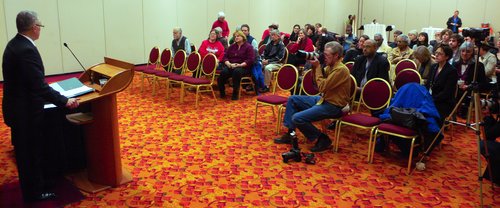
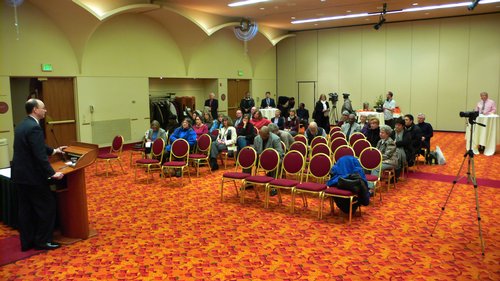
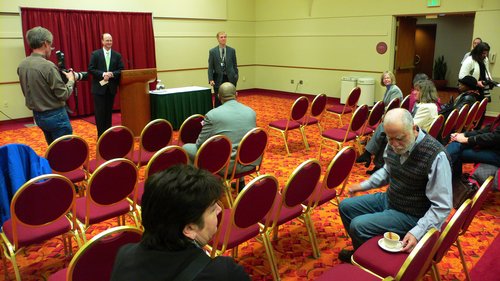
    At a third and final public meet-and-greet session for the candidates for Madison school superintendent on Thursday at the Monona Terrace Convention Center, Nerad spoke of his passion for helping students and his philosophies of educational leadership.
    Speaking to a crowd of about 70 community members, Nerad began his brief remarks by quoting Chief Sitting Bull, “Let us put our minds together and see what kind of life we can make for our children.”
    “I believe the ‘us’ must really be us — all of us — working to meet the needs of all children,” he said. Several times during his remarks, he emphasized that education is an investment in work force development, in the community and in the future.
    He also said that he believes it’s a moral commitment.
    Nerad talked about his efforts to create an entire district of leaders, and the importance of a healthy, collaborative culture in the schools. He said he saw diversity as “a strong, strong asset” because it allows kids to learn in an atmosphere that reflects the world they are likely to live in.


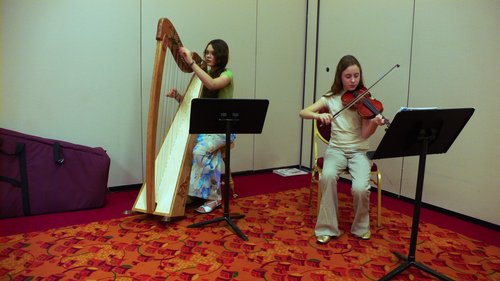
Emma Carlisle and Cora Wiese Moore provided music during the event. Both attend Blackhawk Middle School.

Share

Madison Superintendent Candidate James McIntyre’s Public Appearance


Watch a 28 minute question and answer session at Monona Terrace yesterday
, download the .mp4 video file (195mb, CTRL-Click this link) or listen to this 12.3MB mp3 audio file. Watch [64MB mpeg4 download – CTRL-Click]or listen to a short, informal chat. Learn more about the other candidates: Steve Gallon and Dan Nerad
Related Links:

  • Dr. James McIntyre, Chief Operating Officer – Boston Public Schools, Boston, Massachusetts [Clusty Search / Google Search / Live Search / Yahoo Search]
  • Desired Superintendent Characteristics
  • Five Candidates Named
  • Learn more about the three candidates
  • WKOW-TV
  • NBC15
  • Hire the best
  • Susan Troller:

    The students in an alternative high school in East St. Louis inspired Jim McIntyre when he was their teacher and continue to inspire him today as an administrator in the Boston public school system.
    McIntyre, 40, spoke late Wednesday afternoon at Monona Terrace to a crowd of around 50 people at the second of three public meet-and-greet sessions for the final candidates vying for the job of Madison school superintendent.
    “Teaching in East St. Louis was a life-changing experience,” McIntyre explained.
    “Many of my students were children who lived under very, very difficult circumstances. When you were able to eliminate some of the distractions they faced and get them engaged in school, they were smart, talented students,” he said.
    But for some, the odds were so difficult, and their lives so daunting that hope was hard to maintain.
    “My brightest student, my best student, took his own life because he just didn’t see any future. It’s with me every day,” McIntyre said.
    McIntyre, 40, is currently the chief operating officer of the Boston public school system, which has an operating budget of about $800 million. Before becoming chief operating officer about two years ago, McIntyre was budget director of the district, which serves about 57,000 students, for 8 years.
    He says he tries to bring a student-centered focus to his job managing facilities, food service, safety, transportation and all other aspects of his job.

Share

Madison Superintendent Candidate Steve Gallon’s Public Appearance


Watch a 28 minute question and answer session at Monona Terrace yesterday
, download the .mp4 video file (175mb, CTRL-Click this link) or listen to this 11.3MB mp3 audio file. Learn more about the other candidates: Jim McIntyre and Dan Nerad.
Related Links:

  • Dr. Steve Gallon, District Administrative Director – Miami/Dade Public Schools, Miami, Florida [Clusty Search / Google Search / Live Search / Yahoo Search]
  • Desired Superintendent Characteristics
  • Five Candidates Named
  • Learn more about the three candidates
  • WKOW-TV
  • NBC15
  • Hire the best
  • Susan Troller:

    As a life-long resident of southern Florida, school superintendent candidate Steve Gallon III grimaced, then grinned, when asked about how he liked Wisconsin weather.
    Known as a motivational speaker as well as a top teacher, principal and administrator in the Miami/Dade County public school system, Gallon quickly got back on message: He sees his experiences as an educator and a leader as a good match for the school district here, especially given its rapidly changing demographics and challenges in funding.
    He said the issue of underperforming students is not so much one of ethnicity but of economics.
    “What we have to do is embrace the reality that gaps in achievement exist,” Gallon said. Much of it, he said, has to do with economic disadvantage.
    “It’s the 800-pound gorilla in the room. You must acknowledge that work needs to be done before you’re going to be successful in dealing with it,” he said.
    Gallon, 39, is one of three finalists for the position of school superintendent here. He talked with community members and the media in a meet and greet session late Monday afternoon at Monona Terrace. There will be similar sessions today and Wednesday for candidates James McIntyre, chief operating officer for the Boston public schools and Daniel Nerad, superintendent of the Green Bay district.
    In responses to questions from the audience, Gallon applauded the notion of working closely with the resources of the University of Wisconsin, said he believed in the least restrictive environment for special education students and cautioned that problems facing schools in terms of funding weren’t likely to be solved easily.

Share

Top Issue For D.C. Schools? Parents.

David Nakamura and Jennifer Agiesta:

Seven in 10 D.C. residents believe the city’s public schools are performing inadequately, with the lack of parental involvement still cited as the biggest problem facing the nearly 50,000-student system, a Washington Post poll has found.

Share

www.dyslexia.com/

  1. A fantastic site and resource for LD (learning differently) in general.
  2. In addition, the Davis Technique works! The nearest provider is in Waukesha, but parents can learn about and use the technique.

  3. The Davis program was adapted by a teacher for use in the general reading curriculum grades K-2 at low cost. A CA research study showed its use resulted in no references for special ed and increased references for T&G tracks compared to the control group.

http://www.dyslexia.com/

Share

A Discussion on School Models (Traditional, Charter and Magnet)


Madison Superintendent Art Rainwater and Rafael Gomez held an interesting discussion on school models recently [Announcement].

Read the transcript
Watch the Video
or listen to the event (41mb mp3 audio)


Related:

Share

Math 234 at the University of Wisconsin Madison for High School Students

Via Ted Widerski’s email:

The UW Math dept has decided to offer a section of Math 234 (3rd semester Calculus) at 7:45 am in the fall of 2008. This course will be taught by Professor Andreas Seeger and will meet at 7:45 – 8:35 on MWF for 3 credits. The UW has chosen this time as being somewhat convenient for high school students, as many students can take this course and return to their high school in time for 2nd period.
Madison Schools have 26 students in grades 11 or below that will be completing Calculus II this year. Combined with students in neighboring school districts, there is a possibility that a large percentage of the class will be made of area high school students.
For those students that plan to elect this course, each District has a deadline for accessing the Youth Options [Clusty | Google] program. In Madison, that deadline is March 1. Therefore, I would encourage you to speak with students and parents in your building and make them aware of this opportunity. Also, please pass on this info to other key people in your building such as guidance counselors, math department chairs and Calculus teachers.
If you have questions or concerns, feel free to contact me.
Ted Widerski
Talented and Gifted Resource Teacher
Madison Metropolitan School District
545 W Dayton Street
Madison, WI 53703
(608)442-2152

Related: Credit for non-mmsd courses.

Share

To the Superintendent Selection Committee of Madison Metropolitan Schools

via email (with an opportunity to sign on below):

As you make your selection for the next Superintendent of MMSD, we ask you to choose a candidate that will be able to address the needs of all students, including those of gifted and talented (GT) students. We strongly urge you to hire a candidate that is knowledgeable of and open to the special needs of gifted learners.
The following are reasons this is necessary. References for these points are attached.
Approximately 1 out of every 5 drop-outs is gifted.
Giftedness occurs in all racial and socioeconomic groups. It is short-sighted to ignore the needs of the gifted as we increase in low-income enrollment, and creates even more disparity as those who have resources have other choices.
The statistics for Madison’s gifted low-income and minority student drop-outs may be significantly higher than 1 out of 5.
GT students may learn poorly when taught at standard grade level and rate.
It may be thought that the experience of gifted in heterogeneous classrooms is that of the pleasure of excelling above everyone. However, as one GT teacher at Appleton’s gifted school observed, it is the experience of a 5th grader whose teacher inexplicably teaches 1st grade curriculum.

(more…)

Share

Tutoring the 3-Rs and developing other “literacies”

Bob Parvin:

This site is about literacy–basic reading and writing and numeracy, and other “literacies:” celestial, geographic, economic, biological, nutritional, etc.
I am a retired resident of San Francisco with a long-time interest in child and adult literacy. I am offering my free program on the Web to help parents and tutors teach children to read, write, spell, and reckon. I have also included a program on English grammar and composition for good measure. In addition I have Web pages reflecting my interest in other subjects in which I want to be “literate.”
If you have an interest in any these subjects, I invite you to check them out:

Tutoring for Mastery of Reading and Writing and Arithmetic
Tutoring English Grammar and Composition
Finding and Reading eBooks
Beginning Urban Skywatching
Physical Geography of the U.S.
Economic Literacy
Global Warming and Warning
Approaching the Bible
Islam: One American’s Findings
DNA: Life’s Common Denominator
Nutrition: What should we eat?
Help for Microsoft Windows XP
Bread Machine Baking
Tips for No-Knead Bread Baked in a Pot
Links to Video Performances of Great Arias
The Home Library, an electronic home reference library
Recollections of an Old Farm Boy

Share

Why the Public Schools?

Laurent Lafforgue:

Since my forced resignation from the High Council of Education, I have received hundreds of testimonials from teachers, parents, students and plain citizens of all social groups. Among these messages I have been particularly struck by those parents who have written me, in substance, “We have been so deceived, and we are so appalled, by what has become of the schools that we have decided to remove our children from there, and to teach them ourselves.” Or, “We have joined with other parents and are pooling our talents to form our own classes for our children”. Or, again, “Despite the financial sacrifice it represents, we have placed our children into private schools.” And finally, those most numerous messages which say: “Our children go to school, yes, but every evening we put them to work using old textbooks, and do what we can to give them the kind of rigorous instruction that is no longer given in their classes. But what a labor for them, and what a responsibility for us!”
That parents should go so far as to remove their children from school, to teach them themselves, at home, or to form parallel classes for them in which they, themselves, are the teachers, to prefer a school to which they must pay the fee to the free public school, or to impose on their children and themselves the burden of a night school added to the day school they consider to be nothing but a holding pen, all this became and remains for me a theme of profound dismay. And I notice as well that these are surely the parents who enjoy a high level of education and – for those who can pay the fees of a private school – of income. And then I think of the other children, who do not have the benefits of having been born into families similarly favored.
Students, all the students, are the primary victims of the destruction of the school. This destruction has resulted from educational policies of all the governments of the last few decades. It is not the teachers who are responsible for it, for they are victims themselves: firstly in that they have been prevented from teaching correctly, by the publication of national curricula which are increasingly disorganized, incoherent and emptied of content; then because the knowledge gaps accumulated by their students over the course of years have made the conditions of teaching ever more difficult, and have exposed them to incidents of increasing incivility and violence on the part of adolescents who have never been taught either the elementary understandings, the habits of work, or the self-control which are indispensable to the progress of their studies; and finally because the younger generation of teachers has suffered from an already degraded educational program, so that their own understanding is less certain than that of their elders, and, with the exception of some well tempered characters, has been disoriented by the absurd training so prodigally distributed by the teachers colleges.

Clusty Search: Laurent Lafforgue.

Share

More Leaders Need Apply

Wisconsin State Journal Editorial:

If there ‘s one institution in Madison that needs strong leaders to tackle huge challenges, it ‘s the city ‘s school district.
Unfortunately, only two people are seeking two open School Board seats in the coming spring election. The deadline for declaring a candidacy was Wednesday.
That means voters won ‘t have any choice in who will serve, barring any late write-in campaigns.
That ‘s a shame — one that Madison can ‘t afford to repeat.
he rigors of a campaign test potential board members and help the community choose which direction to take the district.
Competitive School Board campaigns also draw considerable and much-needed attention to huge local issues, such as the increasing number of children who show up for kindergarten unprepared, rising health insurance costs for school employees, shifting demographics, school security and tight limits on spending.

Share

Complete the Madison School District’s Fine Arts Survey

There’s still time to complete the MMSD Board of Education Community Fine Arts Task Force’s Arts Education Survey.
Access to the on-line surveys will remain open through December 31, 2007. Input from the community is very important and will help inform and strengthen the Task Force?s recommendations on arts education (dance, music, theater, visual arts). The results of this work will be compiled and presented to the Madison Metropolitan School District Board of Education next spring and shared with the public. All individual answers will be kept confidential. In appreciation of your time in completing the on-line survey, your name, if provided at the end of the survey, will be entered into a drawing for a chance to win a pair of complimentary tickets to a Madison performance or admission to local arts venues.
If you have any questions, please feel free to contact task force members at fineartstaskforce@madison.k12.wi.us.
here are three distinct surveys. Please select the one on-line survey that best represents you. Click here for the survey, available in English, Spanish, and Hmong: http://mmsd.org/boe/finearts/.

Share

Anaheim YMCA invests in kids’ education

Ruben Vives:

Long after the final bell at Thomas Jefferson Elementary School in Anaheim, more than 100 students from first through sixth grade sit quietly at their desks. The only sounds are of pencils moving, chairs squeaking and the occasional whisper.
This is homework time for one of the 46 schools where 4,800 students are enrolled in Anaheim Achieves, an after-school program operated by the Anaheim Family YMCA.
In room 16, first-graders have finished their homework assignments and are drawing a picture of a cat from a book. Some glance at others’ work. Some giggle. Some are fully absorbed. Once done, students must write a sentence describing what is happening in the picture.
“It helps them with their comprehension skills,” said Julia Turchek, a first-grade teacher who volunteers every Monday and Wednesday.
Now in its ninth year, the program works closely with several Orange County school districts, such as Magnolia, Savanna, Centralia and Anaheim, and collaborates with other support groups, including the city of Anaheim, Orange County Department of Education, Boys and Girls Clubs of America and AmeriCorps. Together they help address the academic and mentoring needs of children.

Share

Parents taking school concerns to Capitol

Norman Draper:

It wasn’t enough for Beverly Petrie and her fellow school activists to help the Stillwater district reap some funding in the Nov. 6 election. After they fought for the levy, they figured there was more to be done. So, they decided to set their sights on lobbying the Legislature on behalf of the district this winter.
“One of the things we heard a lot during the [levy] campaign is people believe it’s the state’s responsibility to pay for public schools,” Petrie said. “So, hearing that so often during the campaign, it’s hard for us to let it all collapse at this point.”
Thus began Stillwater schools’ legislative action committee, still without an official name or agenda.
Around the Twin Cities, parents are banding together to take the cause of their school districts to the Capitol. Often, they’re trying to help secure more funding. With the beginning of the legislative session about two months away, such groups are now holding their first meetings and formulating legislative platforms.

Share

Top 10 Education Concerns

Michael Shaughnessy interviews the Washington Post’s Jay Matthews:

7) What do you see as the top ten concerns in education? What are the biggest concerns in the Washington Circle?

My concerns or Washington’s? I will go with mine:

  1. Low standards and expectations in low-income schools.
  2. Very inadequate teacher training in our education schools.
  3. Failure to challenge average students in nearly all high schools with AP and IB courses.
  4. Corrupt and change-adverse bureaucracies in big city districts.
  5. A tendency to judge schools by how many low income kids they have, the more there are the worse the school in the public mind.
  6. A widespread feeling on the part of teachers, because of their
    inherent humanity, that it is wrong to put a child in a challenging situation where they may fail, when that risk of failure is just what they need to learn and grow.

  7. The widespread belief among middle class parents that their child must get into a well known college or they won’t be as successful in life.
  8. A failure to realize that inner city and rural schools need to give students more time to learn, and should have longer school days and school years.
  9. A failure to realize that the best schools–like the KIPP charter schools in the inner cities—are small and run by well-recruited and trained principals who have the power to hire all their teachers, and quickly fire the ones that do not work out.
  10. The resistance to the expansion of charter schools in most school district offices.

Matthews list is comprehensive and on target.

Share

Elvehjem Boundless Playground Fundraiser Tonight

Via a reader’s email:

LVM Dreams Big is working to bring the FIRST Boundless Playground to the state of Wisconsin by 8/8/08!
Join our effort to kick down physical barriers and raise a play structure that opens a world of play to all children.
Please help us build the dream so that children of all abilities can reach the highest heights and learn the lessons of childhood through play.
Since forming in 2005, the committee has worked to raise funds to support the mission of improving accessibility while also promoting physical fitness and increasing safety for all children.

December 4th 5:30-7:30 Great Dane Night! Spend an evening at the Great Dane Brew Pub [Map] – free food, fun and a very special guest! Donation Stations will also be available to help build the FIRST Boundless Playground in the state of Wisconsin!

Share

Teachers draft reform plan

Howard Blume:

In this education nirvana, teachers would decide what to teach and when. Teachers and parents would hire and fire principals. No supervisors from downtown would tell anyone — neither teachers nor students — what to wear.
These are among the ideas a delegation of teachers and their union officers are urging L.A. schools Supt. David L. Brewer to include in the school reform plan he will present to the school board Tuesday.
If Brewer passes on the delegation’s proposals, the union can go directly to the seven-member Board of Education. Employee unions recently have had success in getting the board to overrule the superintendent on health benefits for some part-time workers and on school staffing.
At stake now is the Los Angeles Unified School District’s effort to turn around its 34 most troubled middle and high schools. The data suggests the urgency: As many as three-quarters of the students in these “high priority schools” scored well below grade level across multiple subjects on last year’s California Standards Tests.
Whatever remedy emerges is likely to become a blueprint for widespread reform efforts. Brewer and his team are working on their 11th draft; the drafts have evolved significantly since September because of resistance inside and outside the school system.

Share

Unemployment Training (The Ideology of Non-Work Learned in Urban Schools)

Via a kind reader email: Martin Haberman:

For many urban youth in poverty moving from school to work is about as likely as having a career in the NBA.While urban schools struggle and fail at teaching basic skills they are extremely effective at teaching skills which predispose youth to fail in the world of work.The urban school environment spreads a dangerous contagion in the form of behaviors and beliefs which form an ideology.This ideology “works” for youngsters by getting them through urban middle and secondary schools.But the very ideology that helps youth slip and slide through school becomes the source of their subsequent failure.It is an ideology that is easily learned, readily implemented, rewarded by teachers and principals, and supporting by school policies.It is an ideology which schools promulgate because it is easier to accede to the students’ street values than it is to shape them into more gentle human beings.The latter requires a great deal of persistent effort not unlike a dike working against an unyielding sea.It is much easier for urban schools to lower their expectations and simply survive with youth than it is to try to change them.
The ideology of unemployment insures that those infected with it will be unable to enter or remain in the world of work without serious in-depth unlearning and retraining.Urban youth are not simply ill prepared for work but systematically and carefully trained to be quitters, failures, and the discouraged workers who no longer even seek employment.What this means is that it is counterproductive to help urban schools do better at what they now do since they are a basic cause of their graduates living out lives of hopelessness and desperation.
The dropout problem among urban youth–as catastrophic as it is–is less detrimental than this active training for unemployment.We need be more concerned for “successful” youth who graduate since it is they who have been most seriously infected.They have been exposed longest, practiced the anti-work behaviors for the longest period, and been rewarded most.In effect, the urban schools create a pool of youth much larger than the number of dropouts who we have labeled as “successful” but who have been more carefully schooled for failure.

Clusty Search on Martin Haberman. Haberman is a Distinguished Professor of Education at the University of Wisconsin-Milwaukee.

Share

Update on Credit for non-MMSD Courses, including Youth Options Program:

Madison School Board Performance & Achievement Committee Meeting 11/26/2007At the November 26, 2007 meeting of the MMSD BOE’s Performance and Achievement Committee [18MB mp3 audio], the District’s Attorney handed out a draft of a policy for the District’s Youth Options Program dated November 20, 2007. It is a fine working draft. However, it has been written with rules making it as difficult as possible for students to actually take advantage of this State-mandated program. Thus, I urge all families with children who may be affected by this policy now or in the future to request a copy of this document, read it over carefully, and then write within the next couple of weeks to all BOE members, the District’s Attorney, Pam Nash, and Art Rainwater with suggestions for modifications to the draft text. For example, the current draft states that students are not eligible to take a course under the YOP if a comparable course is offered ANYWHERE in the MMSD (i.e., regardless of whether the student has a reasonable method to physically access the District’s comparable course). It also restricts students to taking courses at institutions “located in this State” (i.e., precluding online courses such as ones offered for academically advanced students via Stanford’s EPGY and Northwestern’s CTD).
The Attorney’s memorandum dated November 21, 2007 to this Committee, the BOE, and the Superintendent outlined a BOE policy chapter entitled “Educational Options” that would include, as well, a policy regarding “Credit for Courses Taken Outside the MMSD”. Unfortunately, this memo stated that this latter policy as one “to be developed”. It has now been almost 6 years (!) since Art Rainwater promised us that the District would develop an official policy regarding credit for courses taken outside the MMSD. A working draft available for public comment and BOE approval has yet to appear. In the interim, the “freeze” the BOE unanimously approved, yet again, last winter has been ignored by administrators, some students are leaving the MMSD because of its absence, and chaos continues to rein because there exists no clearly written policy defining the rules by which non-MMSD courses can be taken for high school credit. Can anyone give us a timetable by which an official BOE-approved policy on this topic will finally be in place?
Links:

Share

Minnesota’s Science, Technology, Engineering and Mathematics Forums

John Katsantonis:

In the process of researching where the U.S. ranks internationally in science and math education, I discovered that one of the Democratic presidential candidates (the one who’s governor of a Southwestern state) keeps citing our nation’s current rank as No. 29 (or, on a good day, No. 28) after our having been No. 1 throughout the world.
Apparently neither statistic is true, however, which suggest that it may be Bill Richardson himself who needs a bit of remedial math.
This is not the first time our national educational system has been politicized. Fifty years ago, a global scientific effort called the International Geophysical Year (IGY) encompassed 11 Earth sciences: aurora and airglow, cosmic rays, geomagnetism, gravity, ionospheric physics, longitude and latitude determinations (precision mapping), meteorology, oceanography, seismology and solar activity.
The Soviet Union celebrated IGY by launching the first artificial satellite (Sputnik) one month into the event on Oct. 1, 1957. We countered with the discovery of the Van Allen radiation belts and the discovery of mid-ocean submarine ridges, which was an important confirmation of plate tectonics.
Immediately following the successful orbiting of Sputnik, attendant paranoia regarding U.S. loss of the space race converted our collaboration with the country into a major retooling of the nation’s school curricula. The focus would now be on science and mathematics.
It’s impossible to deny a general decline in these areas nationally versus India and a handful of other countries that emphasize science, technology, engineering and mathematics (STEM) education on a cultural level. In recent years, Minnesota has been adamant and resolute about creating and maintaining collaboration between the private and public sectors to improve these areas of learning among K-12 students statewide.

Share

Drama at East and West

Need a Little Drama in Your Life?
Come support the drama communities at East and West!
At West HS [Map] — “I Hate Hamlet”
Friday, November 9, 7:30
Saturday, November 10, 7:30
Tickets $5.00
At East HS [Map] — “The Crucible”
Thursday, November 15, 7:30
Friday, November 16, 7:30
Saturday, November 17, 2:30 and 7:30
Tickets $5.00

Share

WestFest 2007: 11/17/2007 1 to 5p.m.

Introducing WestFest – an assortment of vendors with a variety of products all in one place, designed to make shopping easier for you! The best part of all is that your purchases will directly benefit West High clubs, sports, PTSO & MWABA.

200K PDF Flyer. Map

Share

Video/Audio: Madison United for Academic Excellence Meeting on Charter Schools 10/29/2007

mp3 audio file

Paula Sween and Dory Witzeling from the Odyssey-Magellan charter school for gifted students in grades 3-8 in Appleton and Senn Brown of the Wisconsin Charter Schools Association participated in a recent Madison United for Academic Excellence event. Ms. Sween was one of the founders of the Odyssey-Magellan program. She is currently the TAG Curriculum Coordinator for the Appleton school district. Ms. Witzeling is a teacher and parent at the school.
Click on the photo to view the video.
Share

Parents & School District Clash in Galveston

Rhiannon Meyers:

The public school district has officially demanded that parent Sandra Tetley remove what it says is libelous material from her Web site or face a lawsuit for defamation.
Tetley received a letter Monday from the district’s law firm demanding she remove what it termed libelous statements and other “legally offensive” statements posted by her or anonymous users, and refrain from allowing such postings in the future. If she refuses, the district plans to sue her, the demand letter states.
Tetley said she’ll review the postings cited by David Feldman of the district’s firm Feldman and Rogers. She’ll consider the context of the postings and consult attorneys before deciding what to delete.
“If it’s not worth keeping in there, I’ll take it out,” she said. “If in fact it is libelous, I have no problem taking it down.”
Libel Or Opinion?
Feldman said Tetley’s Web site — www.gisdwatch.com — contained the most “personal, libelous invective directed toward a school administrator” he’s seen in his 31-year career.

More here.
Galveston Alliance for Neighborhood Schools website.

Share

Open Source Reading Instruction

free-reading.net:

Free-Reading is an “open source” instructional program that helps teachers teach early reading. Because it’s open source, it represents the collective wisdom of a wide community of teachers and researchers. It’s designed to contain a scope and sequence of activities that can support and supplement a typical “core” or “basal” program.

Via a reader’s email.

Share

Fear and Allergies in the Lunchroom

Claudia Kalb:

About 11 million Americans suffer from food allergies, and their numbers are climbing. Allergists also say they’re seeing more children with multiple allergies. Why do allergies appear to be on the rise? One of the most intriguing theories, dubbed the “hygiene hypothesis,” is that we’ve all become too clean. The immune system is designed to battle dangerous foreign invaders like parasites and viruses and infections. But clean water, antibiotics and vaccines have eliminated some of our most toxic challenges. Research even posits that kids born by Caesarean section, which have risen 40 percent in the last decade, could be at higher risk for allergies, perhaps because they were never exposed to healthy bacteria in their mothers’ birth canals.

Share

A Taste of College Work Provides Just the Spark

Anita Weier
A class started by a UW-Madison professor four years ago to give disadvantaged people a university experience has blossomed, resulting in about 40 of 100 “graduates” going on to college at the University of Wisconsin and elsewhere.
It’s also inspiring the current Odyssey class of 31, who gather every Wednesday night in a classroom at the Harambee Center in south Madison to stimulate their minds and learn literature and writing techniques, as well as history and philosophy.
“These are people who don’t have money but have extraordinary potential. We give them a chance and it’s amazing what can happen,” literature professor Emily Auerbach said before a recent class began. “This gives them a sense of the riches they can find.”

Read more about The Odyssey Project … and consider making an end-of-year contribution.

Share

“Math Power: How to Help Your Child Love Math Even If You Dont’

“Math Power: How to Help Your Child Love Math Even If You Dont’,” the only
book by a mathematician written for parents of children aged 1-10, is
about to go out of print for the second time. Both times the publisher
sold its trade books to another publisher just as it was published, so
none of the four publishers made any effort to publicize it. This time,
however, I have a good offer to buy the remaining copies. I really want
it to get into as many libraries as possible — and many hands. There
are many copies left.
If you can get a library to offer me a thank you note and give me the
address, I will send that library an autographed copy free for the tax
deduction. If you want an autographed copy, I will be glad to send you a
copy for $10. The price on the cover is $19.95, and it’s fine to resell
them at this time. If you can find an outlet or use them yourself, I can
send a box of 18 books for $140. (No autographs on those books because
they will be inside the box.) There are MANY boxes available.
“Math Power” had excellent reviews from both sides of the “Math Wars” when
it first appeared in 1997, and another from “The Library Journal,” but
without some publisher publicity, books don’t sell. It may be that math
is not a popular subject in this culture; there is other evidence.

(more…)

Share

Madison United for Academic Excellence Meeting on Charter Schools

Please join us at the next Madison United for Academic Excellence meeting on Monday, October 29, at 7:00 p.m. in the Wright Middle School LMC, 1717 Fish Hatchery Road. Our guests will be Paula Sween and Dory Witzeling from the Odyssey-Magellan charter school for gifted students in grades 3-8 in Appleton and Senn Brown of the Wisconsin Charter Schools Association. Ms. Sween was one of the founders of the Odyssey-Magellan program. She is currently the TAG Curriculum Coordinator for the Appleton school district. Ms. Witzeling is a teacher and parent at the school.
All are welcome!

Share

Madison High School Police Calls & Discipline Rates:
Comparing 2001/2002 and 2005/2006

Madison Parent’s School Safety Site:

When there’s violence at school, parents want answers to their questions about school safety. If parents are told “our school is safer than other schools”, where’s the data that supports that vague reassurance? Police call-for-service data (as posted on this site from time to time) is one indicator of school crime, but it’s only part of the picture, and may not be a reliable basis of comparing school to school – or even comparing whether the safety situation in one particular school is improving or deteriorating.
We looked at police call data for East, LaFollette, Memorial and West High Schools in 2001-02, and in 2005-06. (Data notes: This data was obtained by public records request to the Madison Police Department. Due to the format in which the data was provided, the call totals for each school are for calls made to the block in which each school is located, rather than the specific street address of the school. Calls for each year were tallied over a July 1 through June 30 period in order to track the corresponding school years used for comparison below. Variations in school enrollment between the comparison years aren’t reported here since they don’t appear to affect the analysis or conclusions, but that information is readily accessible on the DPI web site. The DPI web site is also the source of the discipline data presented below.)

Share

Fixing the Milwaukee Public Schools: The Limits of Parent-Driven Reform

David Dodenhoff, PhD.:

The Milwaukee Public Schools (MPS) district, like many of its big-city counterparts in other states, continues to suffer from poor student performance. Student test scores and dropout rates are at deplorable levels, both in absolute terms and in comparison with the rest of Wisconsin. This fact has led to a veritable cottage industry dedicated to improving educational outcomes in Milwaukee. The district itself has embraced two reforms in particular: public school choice and parental involvement.
Advocates of public school choice claim that by permitting parents to choose among a variety of public school options within the district, competition for students will ensue. This should improve school effectiveness and efficiency, and ultimately lead to better student outcomes.
Proponents of parental involvement argue that even first-rate schools are limited in their effectiveness unless parents are also committed to their children’s education. Thus, the parental involvement movement seeks to engage parents as partners in learning activities, both on-site and at home. Research has shown that such engagement can produce higher levels of student performance, other things being equal.
Research has also shown, however, that both reforms can be stifled in districts like MPS, with relatively large percentages of poor, minority, single-parent families, and families of otherwise low socioeconomic status. With regard to public school choice, many of these families:

  • may fail to exercise choice altogether;
  • or
    may exercise choice, but do so with inadequate or inaccurate information;

  • and/or
    may choose schools largely on the basis of non-academic criteria.

As for parental involvement, disadvantaged parents may withdraw from participation in their child’s education because of lack of time, energy, understanding, or confidence.
This study offers estimates of the extent and nature of public school choice and parental involvement within the MPS district. The basic approach is to identify the frequency and determinants of parental choice and parental involvement using a national data set, and extrapolate those results to Milwaukee, relying on the particular demographics of the MPS district.

Alan Borsuk has more along with John McAdams:

Rick Esenberg has beat us to the punch in critiquing the methodology of this particular study. As he points out, it’s not a study of private school choice, only a study of choice within the public sector.

George Lightburn:

ecently, the Wisconsin Policy Research Institute (WPRI) released a report entitled, Fixing Milwaukee Public Schools: The Limits of Parent-Driven Reform. Unfortunately, the headline in the Milwaukee Journal Sentinel read, “Choice May Not Improve Schools.” That headline not only misrepresented the study, it energized those who are dying to go back to the days when parents were forced to send their children to whichever MPS school the educrats thought best.
So that there is no misunderstanding, WPRI is unhesitant in supporting school choice. School choice is working and should be improved and expanded. School choice is good for Milwaukee’s children.
Here are the simple facts about the WPRI study:
1. The study addressed only public school choice; the ability of parents to choose from among schools within MPS. The author did not address private school choice.

A Capitol Times Editorial:

Credit is due the Wisconsin Policy Research Institute for releasing a study that confirms what the rest of us have known for some time: So-called “school choice” programs have failed to improve education in Milwaukee.
The conservative think tank funded by the Bradley Foundation has long been a proponent of the school choice fantasy, which encourages parents to “shop” for schools rather than to demand that neighborhood schools be improved — and which, ultimately, encourages parents to take publicly funded vouchers and to use the money to pay for places in private institutions that operate with inadequate oversight and low standards for progress and achievement.

Share

A Little Help Can Go a Long Way for Schools

Anjuman Ali:

Madison’s schools are doing a remarkable job of educating children despite challenges posed by changing demographics and shrinking budgets.
But schools need our help to keep giving kids the skills and knowledge they need to succeed in life.
I learned this by being principal for a day at Wright Middle School on the city’s South Side. The program, organized by the Foundation for Madison’s Public Schools, allows business and community leaders to walk a day in the shoes of principals in Madison’s public schools.
At Wright, I interacted with an extraordinary group of educators and staff, including Principal Nancy Evans, observed classes and met students whose enthusiasm, creativity and challenges provided a glimpse into this city and this state’s future.
A majority of children at Wright live in poverty and a majority needs help in reading and math. And their numbers are growing not just at this charter school, but also in other Madison public schools.

Share

Madison School District Proposed Final 2007-2008 Budget: $349M

The Madison School District’s Administration proposed a $349,562,776 final 2007-2008 budget last night [$14,404.26/student (24,268)]. This represents an increase of $10,136,058 from the adopted current year budget ($339,427,718). It also represents a $16,460,911 increase (4.94%) over the 2006-2007 revised budget. [Citizen’s Budget]
MMSD Budget Amendments and Tax Levy Adoption for 2007-2008 11.6MB PDF
It will be interesting to see where these additional funds are spent. Send your thoughts to the Madison School Board: comments@madison.k12.wi.us
Superintendent Rainwater mentioned last night that 55 additional students “open enrolled” out of the MMSD this year, taking their spending authority with them. The numbers are evidently “trending up”.

Share

Student / Staff Safety Options

Via a reader’s email:

An information page on restraining orders from the Dane County Clerk of Court
The statute for harassment restraining orders is Wis. Stat. sec. 813.125. Clusty / Google / Live / Yahoo
Guide for citizens [PDF].
Madison School District Code of Conduct.

Share

I Just Couldn’t Sacrifice My Son

David Nicholson:

When a high school friend told me several years ago that he and his wife were leaving Washington’s Mount Pleasant neighborhood for Montgomery County, I snickered and murmured something about white flight. Progressives who traveled regularly to Cuba and Brazil, they wanted better schools for their children. I saw their decision as one more example of liberal hypocrisy.
I was childless then, but I have a 6-year-old now. And I know better. So to all the friends — most but not all of them white — whom I’ve chastised over the years for abandoning the District once their children reached school age:
I’m sorry. You were right. I was wrong.
After nearly 20 years in the city’s Takoma neighborhood, the last six in a century-old house that my wife and I thought we’d grow old in, we have forsaken the city for the suburbs.

Related:

Megan McArdle has more.

Share

Cleveland School Gets $2.5M for Security

Joe Milicia:

The state will provide $2.5 million to Cleveland schools to upgrade security after a student gunman shot and wounded two teachers and two students before he killed himself, the governor’s office said Friday.
The money would be available for security upgrades selected by the district, which has identified installing metal detectors in all of the district’s 110 schools as a top priority, Keith Dailey, spokesman for Gov. Ted Strickland said Friday.

Share

Madison School Board Forum – Today

Madison School Board:

The Members of the Madison School Board have agreed to attend and participate in the Northside Planning Council and the East Attendance Area Parent/Teacher Organization Coalition (NPC/EAAPTO) Forum to be held on Sunday, October 21, 2007 (3:00p.m. at the UW Memorial Union’s Tripp Commons). This joint meeting of the NPC/EAAPTO Coalition and the members of the School Board constitutes an open meeting of the members of the Madison School Board for which public notice must be given pursuant to Wisconsin Statute § 19.82 through § 19.84.

Map & Directions to the UW Memorial Union. Maya Cole has more.
Andy Hall:

But do small, neighborhood schools really lead to higher achievement levels for students?
“I don ‘t think there ‘s any hard-core answer to that, ” said Allan Odden, a UW-Madison education professor and nationally recognized expert in education policy and reform.
Research so far, Odden said, fails to show a clear link between achievement and school size, particularly within the range of sizes in Madison.
The district ‘s smallest elementary school is Nuestro Mundo, with 181 students, and largest is Leopold, with 718.
Odden does offer an opinion, though, of Madison ‘s turmoil over neighborhood schools.
“What I would say is the city has too many schools in some neighborhoods and it costs too much to keep some of them open, ” Odden said. “The issue to me here is not effectiveness (of small schools compared to larger schools). The issue to me is budget and politics. ”
The other trade-off, in some neighborhood schools, is that students may be packed into classrooms or have inferior bathrooms or gyms, compared to their peers in larger, newer buildings.

This is an issue. The classroom fixtures in new school structures (far west elementary building) are quite different than those found in most facilities.

Share

4GW at work in a community near you

Fabius Maximus:

Part V of this series provoked many emails requesting more symptoms showing the decline of the State (DOTS) in America. I wish all the questions I received were so easy to answer. This essay will give some general background and a specific example.
The ur-text for DOTS is Martin van Creveld’s The Rise and Decline of the State. [DNI Editor’s note: See also van Creveld’s “The Fate of the State”] He gives vast evidence of DOTS in America, such as the shifting of core functions like primary education and security from public to private entities – either for profit companies or non-government organizations (NGO’s).
The privatization of education is a major media story, especially efforts by the government to resist the rise of home teaching and for-profit schools. The privatization of security has occurred more quietly and is perhaps more significant. Private security detectives/guards outnumber police in America by approximately 1.1 million to 800 thousand, and their numbers are growing faster. The total number of private guards does not even include in-house guards, such as for companies and schools – nor mercs, such as those Blackwater brought in to guard the mansions of New Orleans following Katrina.

Clusty search on Fabius Maximus.

Share

The Need for Better PR & Madison High School Redesign Notes

Jason Shephard:

Beebe made his pitch at a meeting of the school board’s communications committee chaired by Beth Moss, who says one of her top priorities this year is developing strategies to more aggressively seek changes in state funding.
“We’re going to have to continue to cut the budget annually, and it’s going to be worse and worse,” laments Moss, a school board newcomer elected in April. She fears the district will have no choice but to begin “dismantling programs.
As for the perennial issue of school funding, Moss and others are gearing up for a Nov. 15 state Senate education committee hearing. Tom Beebe’s group supports a proposal to hike state funding for K-12 education by $2.6 billion a year, based on a model developed by UW-Madison professor Allan Odden.
But as Beebe was asking the Madison district to join his group as a paying member, Rainwater expressed “serious doubts” about the plan and questioned whether Madison schools would benefit. The funding scheme, Beebe admitted, could potentially lead to an initial decrease in state funding to Madison.
“In the first year, Madison gets screwed for political reasons,” Beebe told the committee — hardly the best message to send when seeking money from a cash-strapped district.
Beebe might benefit from a lesson in better communication. Or maybe he believes that sometimes, the best PR strategy is telling it like it really is.

I continue to believe that the odds of successfully influencing the State Legislature – in Madison’s favor – are long. Better to spend the effort locally on community partnerships and substantively addressing the many issues facing our public schools (such as academic preparation in elementary and middle schools so that students are prepared for high school, rather than watering down high school curriculum). Madison spends more per student (about $13,997) than the average Wisconsin School District (11,085).
Tom Beebe Audio / Video.

Share

West High / Regent Neighborhood Crime Discussion

Parents, staff and community officials met Wednesday night to discuss a number of recent violent incidents at and near Madison West High School [map]
I took a few notes during the first 60 minutes:
Madison Alders Robbie Webber and Brian Solomon along with James Wheeler (Captain of Police – South District), Luis Yudice (Madison School District The Coordinator of Safety And Security), Randy Boyd (Madison Metro Security) and West Principal Ed Holmes started the meeting with a brief summary of the recent incidents along with a brief school climate discussion:
James Wheeler:

Police beat officer and Educational Resource Office (ERO) patrol during West’s lunch period.
“There have been complaints from the houses around the school” so MPD increased patrols to “make a statement last week”.
Still a relatively safe neighborhood.
3 arrests at Homecoming.
Made a drug dealing arrest recently.
People do see drug dealing going on and have reported it.
There have been additional violent incidents, especially at the Madison Metro transfer points

Ed Holmes

Behavior is atypical of what we have seen on the past . Perpetrators are new to West.
Emphasized the importance of a safe learning environment.
Make sure there are police and school consequences and that they are severe. These crimes are unacceptable and should not be tolerated.

Randy Boyd (Madison Metro)


60+ bus runs daily for the school system.
There have been some serious fights at the transfer points. Cameras are in place there.
Main problem is confidentiality due to the students age. Can track them via bus passes.
Adding DSL so that the police precinct can monitor the transfer points. Incidents are about the same as last year but the numbers are going up.
Baptist church elders have helped patrol the South Transfer Point. We are looking for more community help.

Luis Yudice

Big picture perspective:
Our community really has changed a lot within the past five years. I sense a great deal of stress within the police department.
Citywide issues
Increasing violence involving girls. He has looked at a lot of data with the District Attorney’s office. Girls are extremely angry.
Angry parents are coming into the schools.
Increasing issues in the neighborhood that end up in the schools. Mentioned South Transfer Point beating and that Principal Ed Holmes mediated the situation at an early stage.
Growing gang violence issue particularly in the east side schools. We do have gang activity at Memorial and West but most of the issues are at Lafollete and East. Dealing with this via training and building relationships
What the school are experiencing is a reflection of what is going on in the community.

Parents:

Parent asked about weapons in school, metal detectors and k9 units.
Response:


Do we have weapons in school? Yes we find knives in all the schools. No guns. Unfortunate fact is that if a kid wants to get their hand on a gun, they can. They are available.

Ed Holmes:

“We took away a gun once in my 18 years”.
I want to get across to the students – if they see something they have to report it. We have 2100 students and 250 staff members.

Parents:

Kids are afraid of the bathrooms
Another lunch assault that has not been reported.
Incidents are much higher than we know because many incidents are not reported.

A parent asked why the District/Police did not use school ID photos to help victims find the perpetrators? Ed Holmes mentioned that District has had problems with their photo ID vendor.

Madison School Board member (and West area parent) Maya Cole also attended this event.

Share

Involving the Community (in High School Reform)

I will periodically provide updates for the community so that you can read what the Board of Education (BOE) is working on during the year. I also do so when I have particular interest in, or concerns regarding, decisions made on behalf of the Madison Metropolitan School District (MMSD).
One area that I believe is of utmost importance and may be on the mind of the public is high school reform.
I am particularly interested in answering two questions as they relate to this issue.
First, what are the problem(s) we are trying to address as a district in our high schools?
Second, how does the current high school framework align with the skills and knowledge required by colleges and employers and in the overall reform movement of standards and accountability?
To address this issue as a board member, I look for specific timelines, benchmarks and periodic updates.
I think it would well serve the community and the entire board to know exactly where we are in the process. Originally, high school reform in MMSD was presented to the community in a BOE Special Meeting and referred to as a “blank slate.”
Recently, the district submitted an application for a Small Learning Communities (SLC) federal grant. It was not awarded. It was at this time that I had requested that the BOE review the process of high school reform in MMSD at a BOE Special Meeting. I have also raised concerns that the administration has decided to apply for the grant again. The board has been told that we have a good chance that we will get the grant on the second round. I have again requested that the board meet as soon as possible.
However, as a board member of seven – there must be four BOE members willing to submit such a request to put this topic on the agenda. So far, I am the only member requesting this motion.
I raise this issue because of my firmly held belief that my role as a BOE member is to represent the community and provide, to the best of my ability, an accessible, open process when major decisions are made on behalf of the community.
It appears that as of today, the grant will be resubmitted before the only scheduled BOE meeting on high school reform on the 19th of November.
A little history. The high school reform process should be transparent and accessible to the entire community. I am trying to get a handle on this process myself. Here is a look at what has transpired so far:

(more…)

Share

Desired Superintendent Characteristics

The Board of Education of the Madison Metropolitan School District, after consulting staff, students, parents and community members, seeks an educational leader who is student-centered and demonstrates the following characteristics:
Possessing:

  • Leadership experience and demonstrated success in a diverse community and school district

  • Leadership experience and demonstrated success in challenging and engaging students at all points along the educational performance continuum

  • Effective communication skills

  • Strong collaborative and visionary leadership skills

  • Unquestioned integrity

  • Excellent organizational and fiscal management skills

Ability to:

  • Deal directly and fairly with faculty, staff, students, parents and community members

  • Be accessible, open-minded and consider all points of view before making decisions

  • Build consensus and support for a shared vision for the future

  • Develop positive working relationships with a wide variety of constituent groups

The individual selected is expected to be highly visible in and engaged with the schools and community. Successful experience as a superintendent or district level administrator in a similar urban environment and school district size is preferred.
Hazard, Young, Attea & Associates, Ltd. Executive Summary 960K PDF File:

This report summarizes the findings of the Leadership Profile Assessment conducted by Hazard, Young, Attea & Associates, Ltd. (HYA) for the Board of Education of Madison Metropolitan School District (MMSD). The data contained herein were obtained from reviewing approximately 185 completed Leadership Profile Assessment forms, 220 emailed responses and interviews with approximately 240 persons identified b y the Board, in either individual, focus group or community input settings, on September 19 and 20, 2007. The questionnaire, interviews and focus groups were structured to gather data to assist the Board in detennining the primary characteristics it might seek in its next superintendent of schools. Through this process, the consultants attempted to identify the personal and professional characteristics desired in the superintendent, as well as the skill sets necessary to maintain what constituent groups value and to address current and emerging issues which the District might be facing.
Information obtained through interviews, emails and completed questionnaires reflects similar views from all groups with respect to the multiple strengths of MMSD. Respondents were extremely proud of their District’s national recognition for educational excellence. They voiced pride in their students’ excellent test scores, the District’s exceedingly high number of National Merit Semifinalists and its ability to provide top quality academic programs in an environment of rapidly changing demographics. Given the changes in the socio-economic, racial and ethnic make-up of the student body, residents identified as major strengths the District’s commitment to reduce the achievement gap between Caucasian and minority students, its willingness to address issues of diversity and its provision of training in best practices to assist staff in meeting the special needs of a diverse student population.
Respondents also pointed to MMSD’ s commitment to neighborhood schools, retention of small class sizes in most elementary schools, rigorous curriculum, support of music programs and the arts, broad range of sports and other extra-curricular activities, high expectations of a well educated parent constituency and its excellent special education program with the focus on the inclusion of students in regular classrooms. Residents cited the strong support for the District by caring, involved parents and by a community that values high academic standards and achievement. Other strengths cited included the District’s bright, motivated students and its highly competent, dedicated, hard-working teachers and support staff committed to the success of all students. Building administrators were commended for their dedication, accessibility and innovative leadership in providing programs that reflect the needs of their individual school populations. All respondents cited MMSD’s proximity to and partnership with UW-Madison and Edgewood College as invaluable assets.
The over-arching challenge cited by all respondents centered on the MMSD’ s future ability to maintain its excellent academic programs and student performance, given the District’s insufficient financial resources, significant budget cuts and ever-growing low-income and ELL student populations. These concerns are interrelated and if not addressed successfully could eventually become the self-fulfilling cause of what respondents feared the most: the exodus of a considerable number of high-performing upper/middle class students to private or suburban schools as a “bright flight” mentality overrides parental desire to provide children with a “real world” enviromnent of socio-economic, ethnic and racial diversity.
Concern over the funding issue was expressed in several ways: failure to cut the personnel costs of a “top heavy” central office, more equitable funding of the various schools, state level politics that restrict local access to property taxes and fail to increase state funding, the cost of responding to the arbitrary mandates of t he NCLB law, the future need for a referendum to increase property taxes and a strong teachers’ union perceived as placing its salary/benefit issues, restrictions on management prerogatives and undue influence over the Board ahead of the District’s interests. The impact of continued budget cuts strikes at the quality and reputation of the educational program, with fear of an erosion of the comprehensive curriculum and after-school activities, reduction in aides who help classroom teachers with ELL and special education students; curtailment of music, fine arts and gifted programs; increases in class size; lack of classroom supplies; postponed maintenance and renovation of aging facilities; need to update technology and the lack of long-range financial planning as the District confronts one financial crisis after another.
Concern over the impact of the changing demographics was also expressed in various ways: fear that the rising cost of responding to the special needs of an increasingly diverse student population and efforts to close the achievement gap will reduce the dollars available to maintain electives and enrichment programs for regular and gifted students; the changing school culture in which gang activity, fights between students, a pervasive lack of respect by students toward authority are perceived as the norm, which in turn generates fear that the schools are no longer as safe as they used to be; the need to provide more relevant programs for the non-college bound students and the need to address the high minority student dropout rate. Concern that students from minority group populations are disproportionately disciplined, suspended and/or expelled was also expressed.
Almost all constituent groups felt that the Board and Administration need to gain the trust of parents and the community through communication that clearly identifies the fiscal issues and the criteria on which funding and budget decisions are based. Many expressed the view that the Board and Administration’s lack of transparency in district decision-making and show of disrespect toward those who question administrative proposals have eroded constituent support. A concerted effort by the Board and Administration to become more creative in publicizing the successes of MMSD’s outstanding educational opportunities might encourage mor e young upper/middle class families to move into the District and convince others to remain.
Respondents agreed on many of the attributes that would assist a new superintendent in addressing the issues confronting MMSD. They want a student-centered, collaborative educational leader of unquestioned integrity with superior communication, interpersonal and management skills. He/she should have strategic plmming skills and feel comfortable with the involvement of parents, teachers and community members in shaping a vision for the District’s future direction. The successful candidate should be a consensus builder who has had experience in meeting the needs of an ethnically and socio-economically diverse student population. He/she should b e sensitive and proactive in addressing diversity issues and a strong advocate of effective programs for ELL and gifted students and of inclusion programs for special education students. The new superintendent should be open to new ideas and encourage staff to take risks with research-based initiatives that engage students in learning and maintain high academic expectations as they work together toward common goals. When confronted with controversial issues, he/she should be willing to seek the views of those affected, examine all options and then make the tough decisions. The new superintendent should have the courage of his/her convictions and support decisions based on what is best for all students
The successful individual should have a firm understanding of fiscal management and budgets, K-12 curriculum and best practice and the importance of technology in the classroom. He/she should be a strong supporter of music, fine arts and after-school activities. The new superintendent should have successful experience dealing collaboratively with a Board and establishing agreement on their respective govemance roles. He/she should have a proven record of recruiting minority staff and hiring competent people who are empowered to strive for excellence and are held accountable.
He/she should b e visible in the school buildings and at school events, enjoy interacting with students and staff, be actively involved in the community and seek opportunities to develop positive working relationships with state and local officials, business and community groups. The individual should be a personable, accessible, open-minded leader who engages staff, students, parents and the community in dialogue, keeps them well informed and responds respectfully to inquiries in a timely, forthright manner.
While it is unlikely tofind a candidate who possesses all of the characteristics desired by respondents, HYA and the Board intend to meet the challenge of finding an individual who possesses many of the skills and character traits required to address the issues described b y the constituent groups. We expect the new superintendent to provide the leadership that inspires trust and unites the community in its support for MMSD’s efforts to achieve an even higher level of performance for its students and staff.
Respectfully submitted,
Marvin Edwards
Jim Rickabaugh
Joan Levy

960K Executive Summary.
Share

Analysis of Local Schools & Districts Based on 2007 WKCE Data

Madtown Chris, via email:

The 2007 state testing data is out and I thought I’d take another look. Again I’m looking here at Dane County area schools only compared with each other and state-wide as well. The data you will see only includes non-poor students — you can read more about why below.
Some Madison Elementary Schools are Tops
As you can see, Madison schools are simultaneously excellent and terrible. The top 8 are MMSD schools as are 6 of the bottom 10. Wow!
Not only does MMSD have top elementary schools in the area but the top 8 are above the 95% percentile statewide. That means those 8 schools are better (with respect to my measurements) than 95% of the other elementary schools in Wisconsin.
Furthermore, MMSD schools Lowell, Randall, and Van Hise are the #1, #2, and #3 elementary schools STATEWIDE. Yes you heard right. According to my ranking those are the 3 best elementary schools in the state for non-poor students.
Of the top 25 schools statewide, 7 are MMSD schools. No other area schools make the top 25.
You might consider moving to one of those attendance areas because these schools and the students in them are really, really good.

Much more on the WKCE here [RSS].

Share

Our Schools Must Do Better

Via a reader’s email: Bob Hebert:

I asked a high school kid walking along Commonwealth Avenue if he knew who the vice president of the United States was.
He thought for a moment and then said, “No.”
I told him to take a guess.
He thought for another moment, looked at me skeptically, and finally gave up. “I’m sorry,” he said. “I don’t know.”
The latest federal test results showed some improvement in public school math and reading scores, but there is no reason to celebrate these minuscule gains. We need so much more. A four-year college degree is now all but mandatory for building and sustaining a middle-class standard of living in the U.S.
Over the next 20 or 30 years, when today’s children are raising children of their own in an ever more technologically advanced and globalized society, the educational requirements will only grow more rigorous and unforgiving.
A one- or two-point gain in fourth grade test scores here or there is not meaningful in the face of that overarching 21st-century challenge.
What’s needed is a wholesale transformation of the public school system from the broken-down postwar model of the past 50 or 60 years. The U.S. has not yet faced up to the fact that it needs a school system capable of fulfilling the educational needs of children growing up in an era that will be at least as different from the 20th century as the 20th was from the 19th.
“We’re not good at thinking about magnitudes,” said Thomas Kane, a professor of education and economics at the Harvard Graduate School of Education. “We’ve got a bunch of little things that we think are moving in the right direction, but we haven’t stepped back and thought, ‘O.K., how big an improvement are we really talking about?’ ” Professor Kane and I were discussing what he believes are the two areas that have the greatest potential for radically improving the way children are taught in the U.S. Both are being neglected by the education establishment.

Herbert is spot on. The same old, same old (or, “Same Service”) strategy at ever larger dollar amounts has clearly run its course.
Herbert’s words focus on addressing teacher quality

“Concerned about raising the quality of teachers, states and local school districts have consistently focused on the credentials, rather than the demonstrated effectiveness — or ineffectiveness — of teachers in the classroom.”

, and alternative school models:

The second area to be mined for potentially transformative effects is the wide and varied field of alternative school models. We should be rigorously studying those schools that appear to be having the biggest positive effects on student achievement. Are the effects real? If so, what accounts for them?
The Knowledge Is Power Program (KIPP), to cite one example, is a charter school network that has consistently gotten extraordinary academic results from low-income students. It has worked in cities big and small, and in rural areas. Like other successful models, it has adopted a longer school day and places great demands on its teachers and students.
Said Professor Kane: “These alternative models that involve the longer school day and a much more dramatic intervention for kids are promising. If that’s what it takes, then we need to know that, and sooner rather than later.”

Share

An Update on the Foundation For Madison Public Schools

Susan Troller:

“Be true to your school” could be the motto of a challenge the Foundation for Madison’s Public Schools has issued to friends and supporters of public education here.
According to Martha Vukelich-Austin, foundation president, it’s taken less than 10 months for over half the schools in Madison to meet a challenge grant aimed at helping build individual endowments at every local elementary, middle and high school in the city.
The foundation is an independent, nonprofit community group that raises money to help support public education in Madison.
The grant promises to match every dollar raised at each individual school with 50 cents from the Madison Community Foundation — which manages the funds for the Foundation for Madison Public Schools — up to $3,750 at each of 48 schools. Pledges totalling up to $180,000 will yield an extra $90,000 for the schools, for a total of $270,000 to be divided among 48 schools.
…….
For example, Mendota Elementary School, with one of Madison’s highest poverty rates among its students but strong academic scores, had an endowment of $36,745 as of the second week in September. Other elementary schools with impressive endowments include Thoreau, with $54,968, and Shorewood, with $39,047.
East High School has an endowment of $82,944, and tiny Shabazz City High has an endowment of $63,027, compared with West High School’s $26,800, Memorial High School’s $26,397 and La Follette High School’s $13,632.
Among middle schools, Cherokee and Spring Harbor lead the pack with $63,886 and $59,855 respectively.

Local entrepreneur John Taylor provided a $250K “Challenge Grant” in December, 2003. It would be interesting to add his perspective to the the conversation. Clusty Search on John Taylor.

Share

Donor Of New Atlases Says Schools Shrugged Them Off

Susan Troller:

Don Becker finds it odd and annoying that in a time of dwindling resources and a beleaguered budget he’s had trouble giving money to Madison’s public schools.
It’s not that he hasn’t tried, and hasn’t been successful in the past, at providing help to a number of schools on items ranging from books to bus rides to practice shirts for girls’ athletic teams.
But when it came to signing a check for $2,500 last year to buy updated atlases for classrooms at Muir Elementary School, Becker’s money disappeared into a bureaucratic hole at the Doyle Administration Building for months on end. When he tried to follow up on what happened to his donation, he said he was given several different explanations for the delay in purchasing the books.
The bottom line was that when his wife went back this fall to volunteer in her favorite classroom, there was still no sign of the atlases.
Last week, in frustration, Becker called Rand-McNally, the publisher, and bought the atlases himself at what he says is a better price than the district had negotiated. Then he asked for his money back.
According to Becker, he was initially told by Steve Hartley, the district’s chief of staff, that although he would get his donation returned, the district would not provide its sales tax certificate number to Rand-McNally so that the $127 tax charged to Becker for the purchase of the atlases could be reimbursed.

Share

Five Ways to Boost Charter Schools

Jay Matthews:

Sara Mead and Andrew J. Rotherham, two of my favorite educational researchers, have inspired me to save the charter school movement with five brilliant if perhaps too far-sighted suggestions for reform.
The Washington-based think tank Education Sector www.educationsector.org has just published their paper, “A Sum Greater Than the Parts: What States Can Teach Each Other About Charter Schooling.” They may be horrified by what I have done with their facts and insights, but I think my ideas will push charters in the right direction — more good ones and fewer bad ones.
In theory, charter schools are a great idea. There are now more than 4,000 of them with more than 1 million students in 40 states and the District. These independent public schools give smart educators with fresh ideas a chance to show what they can do without the deadening hand of the local school system bureaucracy around their necks. They also give public school parents more choice. The problem is, as one former state charter school official told me, there are a lot of loons out there starting charter schools. We don’t seem to be able to get rid of their loony schools as easily as the original advocates of charter schools promised. That is one reason why charter schools, despite including some of the best public schools I have ever seen, do no better on average than regular public schools in raising student achievement.
Here are my suggestions for fixing that situation, based largely on what I learned from Mead and Rotherham:
1. Stop letting local school boards authorize charters. Mead, a senior research fellow at the New America Foundation, and Rotherham, co-director of Education Sector and a member of the Virginia Board of Education, used a grant from the Annie E.Casey Foundation to analyze reports they oversaw on charter schools in California, Minnesota, Arizona, Ohio, Texas, Colorado, Florida and Michigan and four cities: New York, Indianapolis, Chicago and the District. They conclude that “perhaps the most significant lesson of the charter school movement to date” is that the number and quality of charter schools depend on who does the authorizing and how well they do it. State school boards, universities and independent bodies like the D.C. Public Charter School Board appear to do a better job of authorizing charters than local school boards, which see charters as competition for students, funds and prestige. California, Colorado and Florida have built strong charter systems with local school boards as the prime authorizers, but only by creating alternative authorizers for charter proposals that get turned down by local school boards.

The complete report is available here: Education Sector Reports: Charter School Series
A Sum Greater Than the Parts: What States Can Teach Each Other About Charter Schooling
, by Sara Mead and Andrew Rotherham.

Share

More Notes on the Madison Superintendent Search

Rebecca Kremble: [Additional Links & Background here]

Last week, the consultants hired to organize the superintendent search conducted 31 hour-long individual and focus group sessions to gather information from concerned citizens and stakeholders about the strengths and challenges of the Madison School District, as well as characteristics we would like to see in the next superintendent.
I attended three of these sessions — two general community sessions and the Parent-Teacher Organization representatives ‘ focus group.
Many different opinions were expressed on a broad array of topics, but in each there was widespread agreement about two issues: the need for a more transparent budget process and the vastly underused resource of potential partnerships with parents, businesses and community members who are willing to participate in the creation of a thriving public education system that benefits all of our students.
Many people also expressed the perception that the School Board is powerless in relation to the administration. This perception is fueled by the fact that the board as a whole is actually not connected to its source of power (the residents of the district) in any broad-based, comprehensive way.
It is time for concerned citizens to find common ground on district-wide issues so that we can give the board the support it needs to make principled, proactive decisions about the future of our schools, instead of making decisions that falsely pit schools against each other or that divide taxpayers who have children in public schools from those who do not.
The district is at a point of great opportunity with the promise of a new superintendent, the pressures of a possible referendum, and a School Board that seems willing to engage the public in productive dialogue based on shared concerns rather than divisive ones. (At its planning meeting with the search consultants, the board requested that the written surveys be returned to them so that they could use the input for planning purposes not connected with the superintendent search.)

(more…)

Share