School Information System

CALL FOR PAPERS

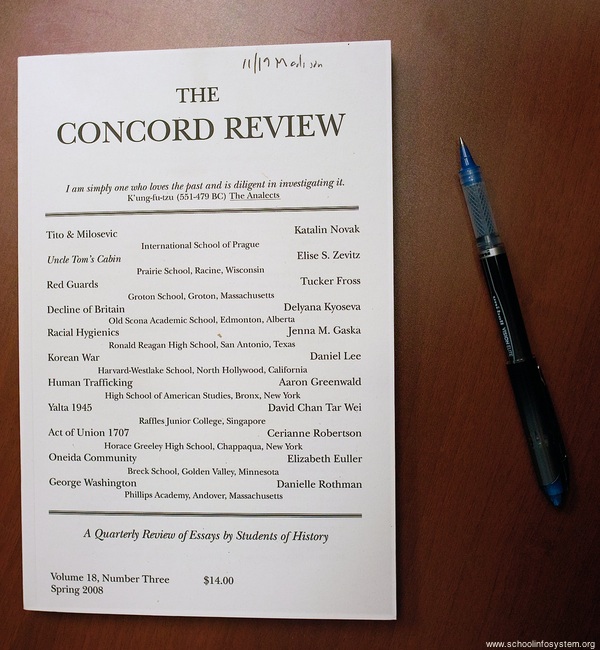
News from The Concord Review:

We are looking for the best history research papers we can find by secondary students from anywhere in the English-speaking world. Papers may be on any historical topic, ancient or modern, domestic or foreign, and should be 4,000-6,000 words or more [one of our Emerson Prize winners this year had 15,292 words on the Soviet-Afghan War by Colin Rhys Hill of Atlanta, Georgia…see our website], and with Chicago-style (Turabian) endnotes and bibliography. Authors should send a printed copy to the address below, and may include a Macintosh disk with the paper in Microsoft Word.
We have published 857 exemplary history papers by high school students from 44 states and 35 other countries since 1987. There is a submission form on our website and 60 examples of papers we have published. The submission fee is $40, to The Concord Review, and the author receives the next four issues of the journal. We publish about 7% of the papers we receive.
John Silber of Boston University wrote that: “The Concord Review is one of the most imaginative, creative, and supportive initiatives in public education. It is a wonderful incentive to high school students to take scholarship and writing seriously.” Denis Doyle wrote that: “One of the most remarkable publications in American education sails proudly on though it is virtually unsung and almost unnoticed except among a small coterie of cognoscenti: The Concord Review. It is time once again to sing its praises and bring it to the attention of the larger audience it so richly deserves.”

fitzhugh@tcr.org

Share

Tracking and Inequality: New Directions for Research and Practice Presentation by UW School of Education Professor Adam Gamoran

via a kind reader’s email:

Good afternoon. We’d like to invite you to Memorial High tomorrow afternoon for a discussion hosted by our Equity Team. Professor Adam Gamoran, Interim Dean of the UW School of Education, will be presenting paper titled Tracking and Inequality: New Directions for Research and Practice. His article is attached. We will begin at 4:15pm and should end around:15pm, and we’ll meet in the Wisconsin Neighborhood Center, which is in the Southwest corner of the building. Please park on the Mineral Point Rd. side of the building, and enter through the doors closest to Gammon Rd. There will signs to direct you from there. Have a good week, and we hope to see you tomorrow afternoon…Jay

Jay Affeldt
James Madison Memorial High School
Professional Development School Coordinator
Project REAL SLC Grant Coordinator
201 South Gammon Road
Madison, WI 53717
jaffeldt@madison.k12.wi.us
608-442-2203 fax
608-663-6182 office

Share

Schools aim to make lunches healthy, tasty

Amy Hetzner:

Before the first lunch period begins at Oconomowoc High School, students sidle up to see what chef Brian Shoemake is cooking.
“Chicken pasta broccoli bowl,” Shoemake says in answer to an inquiry. “I’ll get you to eat your broccoli.”
Well, maybe not that student. But in the 15 minutes that ensue, Shoemake manages to fill the bowls of at least 60 others with steaming rotini, strips of chicken breast, their choice of Alfredo sauce and, yes, freshly cooked broccoli spears.
The addition of Shoemake to the lunch lineup this school year is part of a larger effort at the school.
Like a number of schools throughout the state, Oconomowoc High School is trying to tackle that seemingly intractable barrier in the fight to improve childhood nutrition: the school lunch.
“Student tastes have changed so much in the last 10 years,” said Brenda Klamert, director of child nutrition services for the Oconomowoc Area School District. “They’re looking for healthy foods.”
Schools have been slow to meet the demand.
Sure, many have added salad bars. But most lunches remain high in saturated fat and cholesterol and low in fiber- and nutrient-rich food, according to the Physicians Committee for Responsible Medicine. The Washington-based group advocates a more vegetarian approach.

Share

Action Needed, Please Sign on…. Math Teacher Hiring in the Madison School District

via a kind reader’s email: Janet Mertz and Gabi Meyer have written a letter about new math hires that they would like you to sign on to. Please send your name, your school(s), and any relevant identifying information or affiliation to:

mertz@oncology.wisc.edu

Dear Superintendent Nerad and members of the Board of Education:

To address as quickly as possible the MMSD’s need for more middle school teachers with outstanding content knowledge of mathematics, we, the undersigned, urge you to consider filling any vacancies that occur in the District’s middle schools for the coming academic year with applicants who majored in the mathematical sciences or related fields (e.g., statistics, computer science, physics) in college, but may be currently deficient in teaching pedagogy. You might advertise nationally in appropriate places that applications from such candidates would be welcome. In recent years, many outstanding graduates with such backgrounds went into the computing, consulting, and financial industries. However, in the current economic climate, such jobs are much less available, especially to new college graduates. Thus, jobs in the teaching profession may be viewed much more favorably now by folks trained in the mathematical sciences despite the significantly lower salary. One indication of this is the fact that applications to Teach for America were up 42% this year. Teach for America had to reject over 30,000 applicants this spring, including hundreds of graduates from UW-Madison, due to the limited numbers they can train and place. Undoubtedly, some of these applicants were math majors who would be happy to live in Madison. Math for America, a similar program that only accepts people who majored in the mathematical sciences, likely also had to turn away large numbers of outstanding applicants. Possibly, the MMSD could contact Teach for America and Math for America inquiring whether there might be a mechanism by which your advertisement for middle school math teachers could be forwarded to some of the best of their rejects. As these programs do, the MMSD could provide these new hires with a crash course in teaching pedagogy over the summer before they commence work in the fall. They could be hired conditionally subject to completing all of the requirements for state teacher certification within 2 years and a commitment to teach in the MMSD for at least 3-5 years.

While the District’s proposal to provide additional content knowledge to dozens of its current middle school teachers of mathematics might gradually improve the delivery of mathematics to the District’s students, it would take numerous years to implement, involve considerable additional expense, and may still not totally solve the long-term need for math-qualified teachers, especially in view of the continuing wave of retirements. The coincidence of baby boomer retirements with the current severe economic recession provides a rare opportunity to fill our middle schools now with outstanding mathematics teachers for decades to come, doing so at much lower cost to the District since one would be hiring new, B.A.-level teachers rather than retraining experienced, M.A.-level ones. Thus, we urge you to act on this proposal within the next few weeks, in possible.

Sincerely,

Ed Hughes comments over at Madison United for Academic Excellence:

It is interesting to note that state law provides that “A school board that employs a person who holds a professional teaching permit shall ensure that no regularly licensed teacher is removed from his or her position as a result of the employment of persons holding permits.”

Share

Teach for (Some of) America

Wall Street Journal Editorial:

Here’s a quiz: Which of the following rejected more than 30,000 of the nation’s top college seniors this month and put hundreds more on a waitlist? a) Harvard Law School; b) Goldman Sachs; or c) Teach for America.


If you’ve spent time on university campuses lately, you probably know the answer. Teach for America — the privately funded program that sends college grads into America’s poorest school districts for two years — received 35,000 applications this year, up 42% from 2008. More than 11% of Ivy League seniors applied, including 35% of African-American seniors at Harvard. Teach for America has been gaining applicants since it was founded in 1990, but its popularity has exploded this year amid a tight job market.


So poor urban and rural school districts must be rejoicing, right? Hardly. Union and bureaucratic opposition is so strong that Teach for America is allotted a mere 3,800 teaching slots nationwide, or a little more than one in 10 of this year’s applicants. Districts place a cap on the number of Teach for America teachers they will accept, typically between 10% and 30% of new hires. In the Washington area, that number is about 25% to 30%, but in Chicago, former home of Secretary of Education Arne Duncan, it is an embarrassing 10%.

Share

Colleges Ask Donors to Help Meet Demand for Aid

Stephanie Strom:

Faced with one of the most challenging fund-raising environments anyone can remember, colleges and universities are appealing to donors to help meet the swelling demand for financial aid.


Using such demand “as a fund-raising tool totally makes sense in this environment,” said Richard J. Krasney, a wealth manager and philanthropy adviser. “More than ever, people want to know that their money is being used to address current needs.”


Hampshire College in Amherst, Mass., has increased its financial aid budget for the coming school year by 7.5 percent, to $21.5 million, a point its fund-raisers are making to donors.


“The incoming student body for the fall of 2009 will have higher financial needs than in the past,” said Clay Ballantine, Hampshire’s chief advancement officer. “I tell donors these are excellent students and we want to take financial concerns out of their decision-making process, and we’re looking to you to provide a gift that will help us do that.”

Share

Eli Broad dangles a carrot in front of Los Angeles Unified

Howard Blume:

Los Angeles philanthropist Eli Broad will help pay for a New York-based arts program that benefits poor and minority students — and he said Friday that he and other donors would provide similar funding here if the Los Angeles school district can better manage its own arts programs, especially the new downtown arts high school.
The Broad Foundation has pledged to contribute $425,000 so the Juilliard School can allow dozens of public school students to receive up to four years of free musical training. Broad said he decided to make the gift after reading a newspaper article about the program canceling auditions in a tight budget year.
“It really moved me,” Broad said. “I was saddened they were going to cut out these minority kids.”
But Broad also made a point about problem-plagued Central L.A. Area High School No. 9, the high-concept arts specialty school that is scheduled to open in the fall even though it still lacks an executive director, a permanent principal, a staff and an arts curriculum.
“It’s clear that if you have a quality arts high school, especially one that is educating kids from minority communities, there will be philanthropic funds forthcoming, as evidenced from our willingness to give money to Juilliard,” Broad said.
Such funding will be crucial for the new campus, he said, adding that it will cost more to run than other public high schools. “It will need some philanthropic support, not only from us but from others,” he said.

Share

An Update on the April 7, 2009 Madison School Board Race

Royston Sim:

Mathiak said the district needs to restructure how it approaches school funding.


“We will not cut something for another,” Mathiak said. “We need to change the way we use resources and find other ways to manage them without hurting people. We have to make things more efficient.”


The candidates agreed that schools need to reach out to parents of minorities and form more community partnerships with businesses and groups.


Silveira said schools need to cultivate trust, understand what works for parents and how to make them comfortable. She cited south-side Franklin Elementary, which has parent engagement groups, as a positive example that other schools should emulate.


“It’s very important to remember there isn’t one model, we have to develop trust and understanding between schools and parents,” Silveira said.


One area where Gors and Silveira differed greatly was on the need for continuity in leadership.

Share

An Interview with Eli Broad

Steve Pearlstein interviews Eli Broad on Education:


Broad discusses school choice, differential pay for math, science and Michelle Rhee.

Share

An Interview with Madison School Board Candidate Don Gors


Click to watch or listen (5MB mp3). Gors is running against incumbent Madison School Board President Arlene Silveira. Vote April 7.

Websites: Donald Gors and Arlene Silveira.

Share

Education Chief Urges Mayoral Control Of Schools

AP:

Education Secretary Arne Duncan says big city mayors should take control of their school systems.

Duncan said Tuesday that there’s too much turnover among superintendents in cities where the mayor is not in charge of the schools. He says strong leadership is needed to carry out reform in big cities, where children are struggling the most.

Currently, mayors control the public schools in only a few cities while most others are run by school boards. Duncan told the U.S. Conference of Mayors that if the number doesn’t rise, he will have failed as secretary.

Fascinating: Duncan is a former Chicago Public Schools CEO. His governance point is well worth discussin.

Share

Third Party Group Leafletting for Wisconsin DPI Candidate Tony Evers

Advancing Wisconsin is leafletting (and profiling voters with handheld devices) for Wisconsin DPI Candidate Tony Evers (opposed by Ruth Fernandez) (watch a recent debate), Supreme Court Candidate Shirley Abrahamson (opposed by Randy Koschnick) and Dane County Incumbent Executive Kathleen Falk (opposed by Nancy Mistele).

Share

US Library of Congress Joins iTunes

Jeff Gamet:

The U.S. Library of Congress audio archives are becoming even more accessible now that the recordings are being added to Apple’s iTunes Store. The move is part of an effort to bring some 15.3 million digital recordings to the public in an easy to access manner.

Matt Raymond, the Library of Congress director of communications, said “Our broad strategy is to ‘fish where the fish are,’ and to use the sites that give our content added value — in the case of iTunes, ubiquity, portability, etc.”

So far, there are about 39 podcasts available, and more files are on the way, according to Macworld. The Library of Congress is also adding its video library to YouTube.

“These services are a place to start learning, but our agreements are not exclusive, so other services are certainly possible in the future,” said Michelle Springer, Library Web Service Division digital initiatives project manager.

Share

In Favor of Arlene Silveira for the Madison School Board

The Capital Times:

Races for the Madison School Board, once among the most intense of local electoral competitions, have been a lot quieter in recent years. The more cooperative and functional character of the board, combined with a more responsive approach to community concerns, is confirmed by the fact that many voters are unaware that there is even a contest for one of the two seats that will be filled April 7.
While Seat 2 incumbent Lucy Mathiak, a serious and engaged board member, is unopposed, School Board President Arlene Silveira faces Donald Gors for Seat 1.
We’re glad that Gors, a parent and business owner, is making the race. It is good to have the competition. But even as he launched his run, Gors admitted, “I don’t really know anything about the people on the board or where they stand.”

Watch or listen to a recent conversation with Arlene here.

Share

In tough times, private schools take innovative approaches to fundraising

Carla Rivera:

Most solicitations don’t begin with the words “don’t give,” but that’s the approach being used this year by the private Oakwood School in a clever, celebrity-packed appeal timed to its annual fundraising drive.
In the 3 1/2-minute video, Danny DeVito, Jason Alexander, Steve Carell and other Hollywood stars voice such sentiments as “The economy is in the toilet, so don’t give” and “You’d be stupid to give” before getting to the real point: “Unless you care about your children and their future,” and “Unless you care about families who had a hard year and need some help with tuition.”
Created by parent volunteers, the video is an example of the inventive methods private schools are using this spring to generate giving at a time when traditional benefactors may be hard-pressed themselves.
Oakwood’s “Don’t Give” campaign was a precursor to its major fundraiser, a star-studded event Saturday at The Lot in West Hollywood, featuring comedy, music and an auction. The video was meant to be an internal communication but was distributed on YouTube, said James Astman, Oakwood’s head of school.

Share

Organizers looking to West High alumni to finance new entrance

Gayle Worland:

West High School students will have a grand new entrance to come through next fall. But to help finance it, organizers are looking down the street and across the country — to alumni.
Later this month, about 20,000 West High graduates will find in their mailboxes a donation plea for “The Ash Street Project,” a $400,000, front yard reconfiguration of a building that many consider a Near West Side landmark. Designed by Madison landscape architect Ken Saiki, a West High alum, the new entry will have a symmetrical, formal staircase, decorative walkway and performance area.
Referendum funds and grants will cover $250,000 to replace the school’s crumbling steps and make the new entry comply with the federal Americans with Disabilities Act. But it’s up to West to raise another $150,000 to fund Saiki’s design, a vision approved by a community committee, said Principal Ed Holmes.
“Technically the district money is enough to take down what we have and put it back the way it is,” Holmes said. “It’s time for a renovation, kind of a starting over. The Ash Street entrance is really the symbol and the image of West High School that people have had over the generations.”

Share

Core Knowledge Foundation Blog, Take That, AIG!

Published by Robert Pondiscio on March 20, 2009 in Education News and Students:

An upstate New York high school student could teach a course in character to the bonus babies of AIG. Nicole Heise of Ithaca High School was one of The Concord Review’s six winners of The Concord Review’s Emerson Prize awards for excellence this year. But as EdWeek’s Kathleen Kennedy Manzo tells the story, she sent back her prize, a check for $800, with this note:
“As you well know, for high school-aged scholars, a forum of this caliber and the incentives it creates for academic excellence are rare. I also know that keeping The Concord Review active requires resources. So, please allow me to put my Emerson award money to the best possible use I can imagine by donating it to The Concord Review so that another young scholar can experience the thrill of seeing his or her work published.”
The Concord Review publishes research papers by high school scholars. It’s a one-of-a-kind venue for its impressive young authors. Manzo notes TCR “has won praise from renowned historians, lawmakers, and educators, yet has failed to ever draw sufficient funding…It operates on a shoestring, as Founder and Publisher Will Fitzhugh reminds me often. Fitzhugh, who has struggled for years to keep the operation afloat, challenges students to do rigorous scholarly work and to delve deeply into history. His success at inspiring great academic work is juxtaposed against his failure to get anyone with money to take notice.”
Young Ms. Heise noticed. Anyone else?

“Teach by Example”
Will Fitzhugh [founder]
Consortium for Varsity Academics® [2007]
The Concord Review [1987]
Ralph Waldo Emerson Prizes [1995]
National Writing Board [1998]
TCR Institute [2002]
730 Boston Post Road, Suite 24
Sudbury, Massachusetts 01776 USA
978-443-0022; 800-331-5007
www.tcr.org; fitzhugh@tcr.org
Varsity Academics®

Share

Wisconsin State Budget Forum, Wed. April 1, Wright Middle School, 6 p.m.

Joe Quick:

Dear MMSD Advocate,
Every two years, state government adopts a biennial budget that funds nearly every program in state government. Gov. Jim Doyle’s budget mostly protects K-12, but many K-12 programs were cut by 1%. Due to the floundering national/state economy millions of dollars in federal stimulus funds for Wisconsin are being used to provide a one-time boost to state funding for schools over the next two years.
Short-term, there are some important items in the budget that will help MMSD; but long-term, little is being done to end the annual ritual of either going to referendum or determining what programs and services for students must be cut to balance the local budget.
In the two-year legislative cycle, April in odd years is probably the most important time to contact your legislator to advocate for school programs. Whether it’s SAGE, the K-3 class size reduction program funded by the state, or funding for students in special education — the biennial budget provides the resources.
If you want to advocate to protect school programs/services, please come to the State Budget Forum on April 1st (see attached flier [54K PDF]) to learn about the issues, receive information to help you with that advocacy and find out what is being done to bring about comprehensive school funding reform.
Please forward this information to others who might be interested. Hope to see you April 1st,
Joe Quick
Legislative Liaison/Communication Specialist
Madison Schools
608 663-1902

Share

Madison School District Candidate Forum 4/4/2009

via Laurel Cavalluzzo:

WHAT: Board of Education Candidate Forum
with Arlene Silveira Lucy Mathiak Donald Gors
WHEN:  April 4, 2009 10-noon
WHERE:  Lakeview Public Library
2845 N Sherman Ave. [Map]
Madison, WI 53704
(608) 246-4547
 
Open to the public
Learn more about candidate’s positions on issues important to our schools and our communities.
 
SPONSERED BY:
Lakewood Gardens Neighborhood Committee
WI Charter School Assn
Nuestro Mundo, Inc.

Share

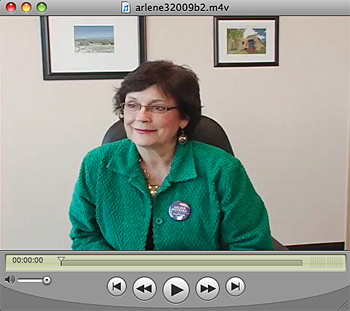
A Chat with Arlene Silveira


Click above to watch, or CTRL-click to download this mpeg4 or mp3 audio file. You’ll need Quicktime to view the video file.
Madison School Board President Arlene Silveira is up for re-election on April 7, 2009. Arlene graciously agreed to record this video conversation recently. We discussed her sense of where the Madison School District is in terms of:

  1. academics
  2. finance
  3. community support/interaction
  4. Leadership (Board and Administration)

We also discussed what she hopes to accomplish over the next three years.
Arlene’s opponent on April 7, 2009 is Donald Gors. The Wisconsin State Journal recently posted a few notes on each candidate here.
I emailed Arlene, Donald Gors and Lucy Mathiak (who is running unopposed) regarding this video conversation. I hope to meet Lucy at some point over the next few weeks. I have not heard from Donald Gors.
Arlene and Lucy were first elected in April, 2006. There are many links along with video interviews of both here.

Share

Students See Value in History-Writing Venue

Education Week “Curriculum Matters”
Kathleen Kennedy Manzo 17 March 2009:

It is difficult to figure why some education ventures attract impressive financial and political support, while others flounder despite their value to the field. For years, I’ve written about The Concord Review and the really amazing history research papers it publishes from high school authors/scholars.
The Review has won praise from renowned historians, lawmakers, and educators, yet has failed to ever draw sufficient funding. The range of topics is as impressive as the volume of work by high school students: In 77 issues, the 846 published papers have covered topics from Joan of Arc to women’s suffrage, from surgery during the Civil War to the history of laser technology. (The papers average more than 7,000 words, and all have been vetted for accuracy and quality. Many of the students do these research papers for the experience and knowledge they gain, not for school credit.)
But here’s the kicker: It operates on a shoestring, as Founder and Publisher Will Fitzhugh reminds me often. Fitzhugh, who has struggled for years to keep the operation afloat, challenges students to do rigorous scholarly work and to delve deeply into history. His success at inspiring great academic work is juxtaposed against his failure to get anyone with money to take notice.
Well, if the grown-ups in the world have failed to recognize and reward the Review for its 22 years of contributions, the students themselves have not.
Fitzhugh has shared many of the letters he receives from students whose work has been published in The Concord Review over the years. Yesterday, he shared with me one of the most memorable of those letters, which arrived recently at his Sudbury, Massachusetts, office.
Nicole Heise won one of the Review’s Emerson Prize awards for excellence this year. The senior at Ithaca High School in Upstate New York sent the check back, with this note:
“As you well know, for high school-aged scholars, a forum of this caliber and the incentives it creates for academic excellence are rare. I also know that keeping The Concord Review active requires resources. So, please allow me to put my Emerson award money to the best possible use I can imagine by donating it to The Concord Review so that another young scholar can experience the thrill of seeing his or her work published.”

(more…)

Share

Paying It Forward as a Full-Time Job

Elizabeth Garone:

When Trevor Patzer was growing up in Ketchum, Idaho, he received an unusual offer from family friend Ric Ohrstrom: get admitted to New Hampshire’s prestigious St. Paul’s School, and Mr. Ohrstrom would foot the entire bill for his schooling there.
Mr. Patzer was accepted and graduated three years later. He says the experience of someone offering to pay for his high-school education had a profound effect on him, and the gift was always in the back of his mind, even as he moved to college and into the work world.
After graduating from Brown University, Mr. Patzer, now 35, headed off to Andersen Consulting to be a systems integration consultant. “It was that or investment banking,” he says. But it didn’t take him long to realize that there was more to life than “coding someone else’s computers,” he says. “I knew it wasn’t the best fit for me. I’m a people person.” Still, he kept plugging away in consulting for two more years.
During one of his vacations in 1998, he decided to visit Nepal and see “the biggest mountain in the world.” While there, Mr. Patzer had another life-changing experience and it had little to do with the majestic awe of Mount Everest. His tour guide for the trip was Usha Acharya, an author and the wife of Nepal’s former ambassador to the United Nations. While they took in various historic sites together, she talked to Mr. Patzer about the plight of poor children in Nepal. He decided on the spot that he wanted to fund the education of a Nepalese child, in the same spirit Mr. Ohrstrom had funded his education. When Mr. Patzer asked Ms. Acharya if she knew of such a child, she spoke of a young girl who could benefit from his philanthropy.

Share

Runaway daughters

Katharine Mieszkowski:

Debra Gwartney was trying to escape a failed marriage when she moved from Tucson, Ariz., to Eugene, Ore., in the early ’90s with her four daughters in tow. What the newly single mother didn’t foresee was that, as she fled from her past to a different city and job, her relationship with her girls would be forever transformed, too. Enraged by the divorce and the move, her two oldest daughters, Amanda and Stephanie, soon ran away, seeking adventure on the streets and shelter in abandoned buildings with other teenagers like them.
In “Live Through This: A Mother’s Memoir of Runaway Daughters and Reclaimed Love,” Gwartney relives the private desperation and shame of being a mother whose teenage daughters disappear for days at a time, only dropping in occasionally when no one else is home to stock up on supplies, leaving empty beer cans, fetid clothes, empty cigarette boxes and puddles of brilliant Manic Panic hair dye behind. As the girls’ absences stretch to weeks and months, Gwartney recalls her frantic searches for them, first in Eugene and then in San Francisco. Along the way, she delves into her own culpability in the family dynamic that drove them away.
A former correspondent for the Oregonian and Newsweek, Gwartney wrote about her relationship with her eldest daughter, Amanda, in Salon back in 1998. Debra, Amanda and Stephanie also appeared together on “This American Life” in March 2002, in an episode tellingly titled “Didn’t Ask to Be Born.”

Share

60 Minutes on Lowering the Drinking Age

Radley Balko:

The video below aired a couple of weeks ago, but it’s a pretty good look at the drinking age debate, with lots of camera time for Amethyst Initiative founder John McCardell.
(Note: If video isn’t working below, you can watch it here.)
One quibble: At one point in the segment, Lesley Stahl suggests that the “conundrum” for policymakers is that raising the drinking age has reduced alcohol-related traffic fatalities, but may be contributing to fatalities associated with underage binge drinking.
But there may not be a conundrum at all. When I interviewed McCardell for the February issue of Reason, he explained why the argument that raising the drinking age is responsible for the 20-year drop in highway deaths doesn’t hold water:

Share

Advocating More Madison Charter Schools

Wisconsin State Journal Editorial, via a kind reader’s email:

Madison needs to get past its outdated phobia of charter schools.
Charter schools are not a threat to public schools here or anywhere else in Wisconsin. They are an exciting addition and asset to public schools — a potential source of innovation, higher student achievement and millions in federal grants.
And when charter schools do succeed at something new, their formula for success can be replicated at traditional schools to help all students.
That’s what’s starting to happen in Madison with the success of a dual-language charter elementary school called Nuestro Mundo. Yet too many district officials, board members and the teachers union still view charters with needless suspicion.
Madison’s skeptics should listen to President Barack Obama, who touts charter schools as key to engaging disadvantaged students who don’t respond well to traditional school settings and curriculums. Obama has promised to double federal money for charter school grants.
But Madison school officials are ignoring this new pot of money and getting defensive, as if supporting charter schools might suggest that traditional schools can’t innovate on their own.
Of course traditional schools can innovate. Yet charter schools have an easier time breaking from the mold in more dramatic ways because of their autonomy and high level of parent involvement.
Several School Board members last week spoke dismissively of a parent-driven plan to create a dual-language charter school within a portion of Sennett Middle School. Under the proposal, Nuestro Mundo would feed its bilingual students into a charter at Sennett starting in the fall of 2010.

I continue to believe that our community and schools would be better off with a far more diffused governance structure, particularly in the management of more than $415,699,322 (current 08/09 budget) for a 24,189 student district. Related: the failed Madison Studio Charter School application.

Share

Madison School Board: Legislative Session and Fine Arts Task Force

Legislative Informational Community Session: We are holding a special Board meeting to focus on legislative issues on Wednesday April 1 at 6:00pm at Wright Middle School. At this session we will provide updates on school funding and state budget issues that affect the MMSD. We will discuss and share strategies on how the community can get involved in advocating for our schools.
Fine Arts Task Force (FATF) Informational Community Sessions: The focus of each session will be a presentation of the findings and recommendations of the FATF followed by an opportunity for discussion. The Executive Summary and complete FATF report can be found at http://www.madison.k12.wi.us/boe/finearts/ Tuesday, March 10, 6:00-8:00pm, Memorial High School. Thursday, March 12, 6:00-8:00pm, La Follette High School LMC.

Share

Jane Pettit might see good – and bad – at Bradley Tech High School

Alan Borsuk:

Dear Mrs. Pettit,
Ald. Bob Donovan wrote recently that Bradley Tech High School, the school you made happen with a $20 million gift, is “a disgrace that is likely causing Jane Pettit to turn over in her grave.”
Fran Croak, who, unlike Donovan, knew you well as your lawyer and close adviser, is confident you’re resting comfortably, because there are a lot of good things going on at the school, which is named after your father and your uncle. Unlike Donovan, he spends time in the building and is a member of the commission of community leaders that oversees what’s going on.
I thought I’d fill you in on things I saw and heard when I spent a few hours at Tech the other day, as well as in other visits over the years, in case that’s helpful in making up your own mind whether to be pleased or horrified.
The community at large appears to be on the horrified side – at least if you listen to the radio talk shows and some similar chatter. But the folks at the school, both adults and kids, are convinced Bradley Tech is pretty much your typical school, except better than some others. They feel like the kid who incurs the teacher’s wrath even though everyone else did worse things – except in this case, it’s the wrath of the TV helicopters circling overhead after a fight in the school.
Of course, high schools these days – even in the suburbs (did you hear about the New Berlin Eisenhower mess?) – aren’t like they were when you were a student.
There are good aspects to that. A lot of kids, at Bradley Tech and elsewhere, are doing more sophisticated work than you did in high school, not only because of the changes in technology, but because expectations are so different. College wasn’t a must in your day the way it is in the eyes of many kids now, including some at Bradley Tech.

Share

Achievement Effects of Four Early Elementary School Math Curricula Findings from First Graders in 39 Schools

Roberto Agodini, Barbara Harris, Sally Atkins-Burnett, Sheila Heaviside, Timothy Novak, Robert Murphy and Audrey Pendleton [693K PDF]:

Many U.S. children start school with weak math skills and there are differences between students from different socioeconomic backgrounds–those from poor families lag behind those from affluent ones (Rathburn and West 2004). These differences also grow over time, resulting in substantial differences in math achievement by the time students reach the fourth grade (Lee, Gregg, and Dion 2007).
The federal Title I program provides financial assistance to schools with a high number or percentage of poor children to help all students meet state academic standards. Under the No Child Left Behind Act (NCLB), Title I schools must make adequate yearly progress (AYP) in bringing their students to state-specific targets for proficiency in math and reading. The goal of this provision is to ensure that all students are proficient in math and reading by 2014.
The purpose of this large-scale, national study is to determine whether some early elementary school math curricula are more effective than others at improving student math achievement, thereby providing educators with information that may be useful for making AYP. A small number of curricula dominate elementary math instruction (seven math curricula make up 91 percent of the curricula used by K-2 educators), and the curricula are based on different theories for developing student math skills (Education Market Research 2008). NCLB emphasizes the importance of adopting scientifically-based educational practices; however, there is little rigorous research evidence to support one theory or curriculum over another. This study will help to fill that knowledge gap. The study is sponsored by the Institute of Education Sciences (IES) in the U.S. Department of Education and is being conducted by Mathematica Policy Research, Inc. (MPR) and its subcontractor SRI International (SRI).
BASIS FOR THE CURRENT FINDINGS
This report presents results from the first cohort of 39 schools participating in the evaluation, with the goal of answering the following research question: What are the relative effects of different early elementary math curricula on student math achievement in disadvantaged schools? The report also examines whether curriculum effects differ for student subgroups in different instructional settings.
Curricula Included in the Study. A competitive process was used to select four curricula for the evaluation that represent many of the diverse approaches used to teach elementary school math in the United States:

The process for selecting the curricula began with the study team inviting developers and publishers of early elementary school math curricula to submit a proposal to include their curricula in the evaluation. A panel of outside experts in math and math instruction then reviewed the submissions and recommended to IES curricula suitable for the study. The goal of the review process was to identify widely used curricula that draw on different instructional approaches and that hold promise for improving student math achievement.

Share

Beautiful Minds

Joyce Kam:

There is a disconnect between high school and university that often catches out those unprepared for academic rigour. Not any more. Not if you are smart. Hong Kong University of Science and Technology is inviting top high-school students worldwide to spend three weeks on its campus for a crash course interspersed with liberal doses of fun.
Its Talented Youth Summer Program aims to give students a foretaste of university life, cultivating essential university habits such as academic absorption and reflection, as well as insight into what makes the city tick.
“Programs for gifted children are rare in Hong Kong (administrative region, China), so we wanted to launch a pilot scheme since we have the right resources,” said Helen Wong Hom- fong, the program’s associate director. “We welcome students from all disciplines as long as they are willing to be challenged academically.”
The university will, of course, be going all out to make a suitable impression on the bright young minds by relying on its traditional strengths, with Wong saying the program’s main focus will be on the roles of science and technology throughout the history of civilization as they have always been the driving force.
“The curriculum consists of one core course on the main theme and one elective course, in addition to city tours and a talent show,” she said.

Share

Madison School District Elementary Parent Survey

via a kind reader’s email:

You are invited to participate in the MMSD climate survey for elementary parents. Your feedback is important. Please click the link below to begin the survey.
http://www.zoomerang.com/Survey/?p=U2BJLUT3TE6U

Share

Get Lit Players bring poetry’s emotions to other L.A. teenagers


Scott Gold:

For as long as he can remember, Dario Serrano’s life was all screeching tires and echoing gunshots, babies’ cries and barking dogs, a symphony, as he puts it, of “hood rats and gangsters,” of “vatos and payasos” — dudes and numskulls, loosely translated.
By high school, he’d pretty much given up on himself. He bounced around between three schools. He started selling pot, though he always seemed to smoke more than he sold. His GPA fell to 0.67, which is about as bad as you can get and still be showing up.
Literature, it is fair to say, was not resonating. “I mean, ‘The Great Gatsby’?” he says incredulously, and when he puts it like that, Lincoln Heights does feel pretty far from Long Island.
When a friend suggested that poetry might be his thing, Serrano scoffed. Grudgingly, he started tagging along to a poetry club, and one day last year he took his lunch break in a classroom where a teen troupe called Get Lit was holding auditions.
Get Lit’s artistic director, an African American artist named Azure Antoinette, performed an original composition called “Box,” a denunciation of anyone who would define her by the color of her skin, who would lump together, thoughtlessly, faces of color:

Share

Dane County Transition School Pay it Forward Campaign 2/23/2009

via a Judy Reed email:

On behalf of all of us at Dane County Transition School (DCTS), I would like to take this opportunity to personally invite you to attend the launch of the DCTS Pay It Forward campaign on February 23, 2009 at 10am at the Villager Mall, 2234C South Park Street. Steve Goldberg from CUNA Mutual Group, students from DCTS, VISTA’s Dustin Young and Dean Veneman from the Alexander Foundation will each speak at the Pay If Forward launch.
The Pay It Forward Initiative is a national movement with a very simple concept: do one kind deed for three people and ask each of those people to Pay It Forward by doing another kind deed for three other individuals. Simple. DCTS believes we can make the world a better place one kind deed at a time and the more people who believe, the larger difference we can make.
DCTS would like to celebrate with all of the Partners who believe in the concept of Pay It Forward and in promoting this altruistic effort. (See attached banner for detail listing of over 80 Partners) Imagine all those kind acts and smiles that will begin right here in the Villager Mall.
DCTS has always been a school that believes in the promise of each individual and in the power of good deeds, which is why DCTS is formally launching this Pay It Forward campaign. We truly hope that you can join us for this unique event!
Sincerely,
Judy Reed, Principal
Dane County Transition School – 2326 South Park Street – Madison, WI
(608) 698-6321 – www.dcths.org

Share

Wisconsin DPI Superintendent: It looks like an interesting race

Despite being outspent $96,129 to $10,500 (WisPolitics) by Tony Evers, Rose Fernandez obtained 31% of yesterday’s vote. Tony Evers received 35%. Here’s a roundup of the election and candidates:

  • WisPolitics
  • Amy Hetzner:

    On Tuesday, he finished just ahead of Rose Fernandez, a former pediatric trauma nurse and parent advocate, in a five-person field.
    Although she finished the night in second place, Fernandez, 51, characterized her performance as “a victory for real people over the special interests.”
    In addition to being first to declare his candidacy, Evers also captured endorsements – and contributions – from the Wisconsin Education Association Council as well as other labor and education-based groups. WEAC PAC, the political arm of the state’s largest teachers union, contributed $8,625 to Evers’ campaign, in addition to spending nearly $180,000 on media buys for the candidate, according to campaign filings earlier this month.
    By contrast, the Fernandez campaign spent $20,000. She said that her message of calling for merit pay for teachers and choices for parents had resonated with voters.
    “Tonight, we have all the momentum,” she said. “This is going to be a real choice. It’s going to be a choice between special interests and the status quo, the bureaucracy that is entrenched at the Department of Public Instruction, vs. a focus on the results we are looking for in our investment in education, a push for higher standards instead of higher taxes.”
    Evers, 57, has distanced himself somewhat from the current schools superintendent, Elizabeth Burmaster, saying it’s time to be more aggressive about reforming Milwaukee Public Schools and calling for an increase in the state’s graduation rate.
    On Tuesday, he denied Fernandez’s charge of favoring special interests

  • Google News
  • John Nichols on the history of the DPI Superintendent.
Share

2009 Wisconsin Department of Instruction (DPI) Superintendent Candidates: Primary Election Tuesday 2/17/2009

Five candidates are on the statewide primary ballot this Tuesday, February 17, 2009. One of them will replace outgoing Superintendent Libby Burmaster. The candidates are

Wisconsin voter information, including polling locations can be found here. Much more on the Wisconsin DPI here. Wisconsin’s curricular standards have been criticized for their lack of rigor.

Share

Gates Advocates Charter School Growth

Bill Gates 2009 Letter:

These successes and failures have underscored the need to aim high and embrace change in America’s schools. Our goal as a nation should be to ensure that 80 percent of our students graduate from high school fully ready to attend college by 2025. This goal will probably be more difficult to achieve than anything else the foundation works on, because change comes so slowly and is so hard to measure. Unlike scientists developing a vaccine, it is hard to test with scientific certainty what works in schools. If one school’s students do better than another school’s, how do you determine the exact cause? But the difficulty of the problem does not make it any less important to solve. And as the successes show, some schools are making real progress.
Based on what the foundation has learned so far, we have refined our strategy. We will continue to invest in replicating the school models that worked the best. Almost all of these schools are charter schools. Many states have limits on charter schools, including giving them less funding than other schools. Educational innovation and overall improvement will go a lot faster if the charter school limits and funding rules are changed.
One of the key things these schools have done is help their teachers be more effective in the classroom. It is amazing how big a difference a great teacher makes versus an ineffective one. Research shows that there is only half as much variation in student achievement between schools as there is among classrooms in the same school. If you want your child to get the best education possible, it is actually more important to get him assigned to a great teacher than to a great school.
Whenever I talk to teachers, it is clear that they want to be great, but they need better tools so they can measure their progress and keep improving. So our new strategy focuses on learning why some teachers are so much more effective than others and how best practices can be spread throughout the education system so that the average quality goes up. We will work with some of the best teachers to put their lectures online as a model for other teachers and as a resource for students.

Share

Madison’s Cherokee PTO/Math Meeting Cancelled Tonight

Weather conditions have caused this evening’s Cherokee Middle School PTO/Math Meeting to be cancelled. The event will be rescheduled soon, hopefully in February.
Much more on the Madison School District’s Math Task Force Report here.

Share

Madison Math Task Force Public Session Wednesday Evening 1/14/2009

The public is invited to attend the Cherokee Middle School PTO’s meeting this Wednesday, January 14, 2009. The Madison School District will present it’s recent Math Task Force findings at 7:00p.m. in the Library.
Cherokee Middle School
4301 Cherokee Dr
Madison, WI 53711
(608) 204-1240

Notes, audio and links from a recent meeting can be found here.
A few notes from Wednesday evening’s meeting:

  • A participant asked why the report focused on Middle Schools. The impetus behind the effort was the ongoing controversy over the Madison School District’s use of Connected Math.
  • Madison’s math coordinator, Brian Sniff, mentioned that the District sought a “neutral group, people not very vocal one end or the other”. Terry Millar, while not officially part of the task force, has been very involved in the District’s use of reform math programs (Connected Math) for a number of years and was present at the meeting. The 2003, $200,000 SCALE (System-Wide Change for All Learners and Educators” (Award # EHR-0227016 (Clusty Search), CFDA # 47.076 (Clusty Search)), from the National Science Foundation) agreement between the UW School of Education (Wisconsin Center for Education Research) names Terry as the principal investigator [340K PDF]. The SCALE project has continued each year, since 2003. Interestingly, the 2008 SCALE agreement ([315K PDF] page 6) references the controversial “standards based report cards” as a deliverable by June, 2008, small learning communities (page 3) and “Science Standards Based Differentiated Assessments for Connected Math” (page 6). The document also references a budget increase to $812,336. (additional SCALE agreements, subsequent to 2003: two, three, four)
  • Task force member Dr. Mitchell Nathan is Director of AWAKEN [1.1MB PDF]:

    Agreement for Releasing Data and Conducting Research for
    AWAKEN Project in Madison Metropolitan School District
    The Aligning Educational Experiences with Ways of Knowing Engineering (AWAKEN) Project (NSF giant #EEC-0648267 (Clusty search)) aims to contribute to the long-term goal of fostering a larger, more diverse and more able pool of engineers in the United States. We propose to do so by looking at engineering education as a system or continuous developmental experience from secondary education through professional practice….
    In collaboration with the Madison Metropolitan School District (MMSD), AWAKEN researchers from the Wisconsin Center for Educational Research (WCER) will study and report on science, mathematics, and Career and Technical Education (specifically Project Lead The Way) curricula in the district.

  • Task force member David Griffeath, a UW-Madison math professor provided $6,000 worth of consulting services to the District.
  • Former Madison Superintendent Art Rainwater is now working in the UW-Madison School of Education. He appointed (and the board approved) the members of the Math Task Force.

Madison School Board Vice President Lucy Mathiak recently said that the “conversation about math is far from over”. It will be interesting to see how this plays out.
I am particularly interested in what the ties between the UW-Madison School of Education and the Madison School District mean for the upcoming “Strategic Planning Process” [49K PDF]. The presence of the term “standards based report cards” and “small learning communities” within one of the SCALE agreements makes me wonder who is actually driving the District. In other words, are the grants driving decision making?
Finally, it is worth reviewing the audio, notes and links from the 2005 Math Forum, including UW-Madison math professor emeritus Dick Askey’s look at the School District’s data.
Related: The Politics of K-12 Math and Academic Rigor.

Share

Mathmetician The Best Job in the US; Madison Math Task Force Community Meetings Tonight & Tomorrow

Sarah Needleman:

Nineteen years ago, Jennifer Courter set out on a career path that has since provided her with a steady stream of lucrative, low-stress jobs. Now, her occupation — mathematician — has landed at the top spot on a new study ranking the best and worst jobs in the U.S.
“It’s a lot more than just some boring subject that everybody has to take in school,” says Ms. Courter, a research mathematician at mental images Inc., a maker of 3D-visualization software in San Francisco. “It’s the science of problem-solving.”
The study, to be released Tuesday from CareerCast.com, a new job site, evaluates 200 professions to determine the best and worst according to five criteria inherent to every job: environment, income, employment outlook, physical demands and stress. (CareerCast.com is published by Adicio Inc., in which Wall Street Journal owner News Corp. holds a minority stake.)
The findings were compiled by Les Krantz, author of “Jobs Rated Almanac,” and are based on data from the U.S. Bureau of Labor Statistics and the Census Bureau, as well as studies from trade associations and Mr. Krantz’s own expertise.
According to the study, mathematicians fared best in part because they typically work in favorable conditions — indoors and in places free of toxic fumes or noise — unlike those toward the bottom of the list like sewage-plant operator, painter and bricklayer. They also aren’t expected to do any heavy lifting, crawling or crouching — attributes associated with occupations such as firefighter, auto mechanic and plumber.
The study also considers pay, which was determined by measuring each job’s median income and growth potential. Mathematicians’ annual income was pegged at $94,160, but Ms. Courter, 38, says her salary exceeds that amount.

Related:

Parents and citizens have another opportunity to provide input on this matter when Brian Sniff, Madison’s Math Coordinator and Lisa Wachtel, Director of Madison’s Teaching & Learning discuss the Math Report at a Cherokee Middle School PTO meeting on January 14, 2009 at 7:00p.m.

Share

Baltimore Symphony Trains Disadvantaged Kids

Weekend Edition:

On a block with boarded-up row houses and broken windows sits Baltimore’s Harriet Tubman Elementary School. Practically all of the students at the school get free or reduced-price lunches. Some of the kids live in homeless shelters.
But a remarkable new music program lives inside the school’s unremarkable walls. OrchKids is a collaboration between the Baltimore Symphony Orchestra and the school. The idea is to introduce disadvantaged students to classical music, and maybe change their lives in the process.
The Baltimore Symphony’s Dan Trahey runs the OrchKids program. This is the first year of the project, which has started with the younger students — mostly first-graders. Each year, it’ll grow to eventually encompass the whole school.
Trahey has an advanced music degree and is a trained orchestra musician. Before taking over OrchKids, he says he felt like he was performing for the wrong audience — symphony subscribers who really didn’t need the music.

Share

Blue Man Group Creates High-Tech NYC Preschool

Margot Adler:

You may have come across Blue Man Group over the years — the humanoid trio with blue heads who play weird instruments on stage and do crazy things. But Blue Man Group is no longer three quirky performance artists; they are a multimillion dollar operation with seven companies in North America, Europe and Japan.
The original founders of the group have started a preschool in New York’s East Village that is called — appropriately — Blue School.
At first glance, Blue School seems very normal in comparison to the blue-headed performance artists. There are cheery classrooms, books, clay, blocks — all the things expected in a good preschool. There are a few Blue Man things, like the speaking tubes that snake along the ceiling and allow kids to speak to each other from a distance.

Share

Madison School District seeks input on proposed math changes

Andy Hall:

A series of potentially controversial proposals will be outlined next week as residents are invited to help shape how math is taught in the Madison School District.
Among the recommendations from a task force that recently completed a one-year study:
• Switch to full-time math teachers for all students in grades five through eight.
• The math task force’s executive summary and full report
• Substantially boost the training of math teachers.
• Seriously consider selecting a single textbook for each grade level or course in the district, rather than having a variety of textbooks used in schools across the district.
The task force was created in 2006 by the Madison School Board to independently review the district’s math programs and seek ways to improve students’ performance.

Related links:

Share

Scientist sets High Expectations for Milwaukee High School

Alan Borsuk:

High expectations. High performance.
It’s been that way throughout Patricia Hoben‘s life.
A doctorate in biophysics and biochemistry from Yale. Influential work as a science adviser in Washington.
And now: founder and head of a small high school on the south side, where low-income students are being pushed to commit themselves to two things: High expectations. High performance.
In its second year, many of the 140 students of Carmen High School of Science & Technology show signs they are making those commitments. And Hoben shows the traits that make schools like this succeed: Unrelenting dedication, clear vision, an ability to bring people together, and a positive outlook.
Hoben’s personal path to founding the charter school is definitely different from the personal paths, up to this point, of Carmen’s students, more than 90% of them Latino, almost 90% low-income.
That hasn’t stopped them from coming together. It’s too early to see definite results, but the school seems to have its act together more than many schools with such short histories.
Attendance is high, averaging 92%. There is a serious-minded feeling in classrooms and even (comparatively speaking) in the lunchroom. Kids appear to be on-task a high portion of the time. The dress code includes ties for the boys and buttoned shirts with collars for both boys and girls. The aim here is to give teens from an impoverished neighborhood something much like a private high school experience.

Share

Geoffrey Canada Talks about Schools & Harlem

GEL Video:

In one of the all-time most popular Gel talks, Geoffrey Canada describes how his nonprofit, the Harlem Children’s Zone, works to help young people in inner-city Harlem. Canada issues a sober indictment of failing schools, then describes the solution he has created.
Canada was recently profiled in the book Whatever It Takes, on Fresh Air with Terry Gross, and two years ago on 60 Minutes. If you don’t know about Geoffrey Canada, you should. This video is a good place to start.

Share

An Article Full of “Good Cheer” – Merry Christmas! Bringing the Power of Education to Children around the World

Knowledge @ Wharton via a kind reader’s email:

After a trek in the Himalayas brought him face-to-face with extreme poverty and illiteracy, John Wood left his position as a director of business development at Microsoft to found Room to Read, an award-winning international education organization. Under his leadership, more than 1.7 million children in the developing world now have access to enhanced educational opportunities. Room to Read to date has opened 725 schools and 7,000 bilingual libraries, and funded more than 7,000 scholarships for girls. Wood talked with Knowledge@Wharton about the launch of Room to Read, the book he wrote called Leaving Microsoft to Change the World and his personal definition of success.
Knowledge@Wharton: Our guest today is John Wood, founder of Room to Read. John, thank you so much for joining us.
John Wood: Thank you.
Knowledge@Wharton: I read your book back in 2006. You began it with the epiphany you had during your trip to Nepal which inspired you to do what you’re doing now and led to the creation of Room to Read. Can you tell us a little bit about that story?
Wood: Certainly. The book is called Leaving Microsoft to Change the World. The nice thing is I got that title before Bill Gates could get that title for his book, because, of course, Bill has now left Microsoft and is going to do amazing things to change the world through the Gates Foundation. My own personal journey to devoting my life to education was undertaken because, in so many places where I’ve traveled, whether it be post-Apartheid South Africa or post-Khymer Rouge Cambodia or the mountains of Nepal, you just find so many kids who have so little opportunity to gain the gift of education. To me, it just seemed like a very cruel Catch-22, that you would meet people who say, “We are too poor to afford education, but until we have education, how will we ever not be poor.” Throughout places I traveled, be it India, Nepal, Cambodia or Vietnam, I kept meeting kids who wanted to go to school but they couldn’t afford it. I would have kids ask me for a pencil. I thought, “How could something so basic be missing?”

Share

Seeking a Corwin Kronenberg Contact

Gayle Strawn emailed asking if anyone has contact information for Corwin Kronenberg
Contact Gayle at gstrawn@franchisetimes.com or 612-767-3203

Share

Math Task Force Feedback Sessions Slated for January

Last year the MMSD School Board appointed a committee to look at the math curriculum in the district. The task force recently presented their findings to the School Board. We accepted their report and referred it to the Superintendent for recommendations. The next step in the process is a community input session.
Sessions were originally scheduled for December 8 and 9. Those sessions have been postponed until January in order to better publicize the sessions and avoid conflicts with holiday-season events. The dates have not yet been selected, and I will post the dates, places, and times when they have been confirmed.
If you want to comment directly on the math curriculum/task force recommendations, you can send e-mail comments@madison.k12.wi.us or post here. I’ll make sure the Superintendent receives your feedback.

Share

Schools of Hope project aims to improve Madison students’ algebra performance

Andy Hall:

Three weeks after its launch, the program at La Follette is operating smoothly, according to officials and students at the school.
Joe Gothard, who is in his second year as La Follette principal, said he sought to bring the tutoring program to the school to involve the community in raising achievement levels.
“We’re not going to settle for our students of color to be unsuccessful,” Gothard said.
Over the past several years, the school’s African American students have been less likely than their peers to complete algebra by 10th grade, although in some years the rate still exceeds the overall average for African American students in the Madison School District.
Gothard is troubled by the patterns on another measure of student achievement, the Wisconsin Knowledge and Concepts Examination, which show that the proportion of 10th graders demonstrating math proficiency ranks lower at La Follette than at any other major high school in Dane County. Just 53 percent of La Follette students received ratings of proficient or advanced on the test, compared to 65 percent in the district and 69 percent in the state.
“Initially there’s that burning in your stomach,” Gothard said, describing his reaction to such data, which was followed by a vow: “We are not going to accept going anywhere but up.”

Share

Become an AP Exam Reader

The College Board, via email:

In June, AP teachers and college faculty members from around the world gather in the United States for the annual AP Reading. There they evaluate and score the free-response sections of the AP Exams. AP Exam Readers are led by a Chief Reader, a college professor who has the responsibility of ensuring that students receive grades that accurately reflect college-level achievement. Readers describe the experience as an intensive collegial exchange, in which they can receive professional support and training. More than 10,000 teachers and college faculty participated in the 2008 Reading. Secondary school Readers can receive certificates rewarding professional development hours and Continuing Education Units (CEUs) for their participation in the AP Reading. In addition, Readers are provided an honorarium of $1,555 and their travel expenses, lodging, and meals are reimbursed.
Readers are particularly needed for the following AP courses:
Chinese Language and Culture
Japanese Language and Culture
World History

Share

Will Fitzhugh’s Madison Talk – Audio


Author, publisher, entrepreneur and good guy Will Fitzhugh recently visited Madison. Listen to the 90 minute event via this 41MB mp3 audio file [CTRL-Click to Download]. (Please note that the audio level varies a bit during the talk – sorry). Video version is available here.
I’d like to thank www.activecitizensforeducation.org, www.madisonunited.org and supporters who wish to remain anonymous for making Will’s visit a reality.

Share

Anything but Knowledge

Why Johnny’s Teacher Can’t Teach” (1998)
from The Burden of Bad Ideas
Heather Mac Donald
Chicago: Ivan R. Dee, 2000, pp. 82ff.
America’s nearly last-place finish in the Third International Mathematics and Sciences Study of student achievement caused widespread consternation this February, except in the one place it should have mattered most: the nation’s teacher education schools. Those schools have far more important things to do than worrying about test scores–things like stamping out racism in aspiring teachers. “Let’s be honest,” darkly commanded Professor Valerie Henning-Piedmont to a lecture hall of education students at Columbia University’s Teachers College last February. “What labels do you place on young people based on your biases?” It would be difficult to imagine a less likely group of bigots than these idealistic young people, happily toting around their handbooks of multicultural education and their exposés of sexism in the classroom. But Teachers College knows better. It knows that most of its students, by virtue of being white, are complicitous in an unjust power structure.
The crusade against racism is just the latest irrelevancy to seize the nation’s teacher education schools. For over eighty years, teacher education in America has been in the grip of an immutable dogma, responsible for endless educational nonsense. That dogma may be summed up in the phrase: Anything But Knowledge. Schools are about many things, teacher educators say (depending on the decade)–self-actualization, following one’s joy, social adjustment, or multicultural sensitivity–but the one thing they are not about is knowledge. Oh, sure, educators will occasionally allow the word to pass their lips, but it is always in a compromised position, as in “constructing one’s own knowledge,” or “contextualized knowledge.” Plain old knowledge, the kind passed down in books, the kind for which Faust sold his soul, that is out.
The education profession currently stands ready to tighten its already viselike grip on teacher credentialing, persuading both the federal government and the states to “professionalize” teaching further. In New York, as elsewhere, that means closing off routes to the classroom that do not pass through an education school. But before caving in to the educrats’ pressure, we had better take a hard look at what education schools teach.
The course in “Curriculum and Teaching in Elementary Education” that Professor Anne Nelson (a pseudonym) teaches at the City College of New York is a good place to start. Dressed in a tailored brown suit, and with close-cropped hair, Nelson is a charismatic teacher, with a commanding repertoire of voices and personae. And yet, for all her obvious experience and common sense, her course is a remarkable exercise in vacuousness.

(more…)

Share

You are Invited: Varsity Academics in Madison Tonight, 11/19 @ 7:00p.m.

Wednesday, November 19, 2008; 7:00p.m. in Madison. [PDF Flyer]
Lecture Hall 1345
Health Sciences Learning Center (HSLC)
750 Highland Avenue Madison, WI [Map]

We hope that Mr. Fitzhugh’s appearance will create new academic opportunities for Wisconsin students.

Parking

Metered parking is available at the University Hospital (UWHC) Patient/Visitor Lot [Map], just south of the HSLC. Free parking is available in Lot 85, across the street from the HSLC and next to the Pharmacy Building at 2245 Observatory Drive [Map].

About the Speaker:

Low standards led Will Fitzhugh to quit his job as a history teacher in 1987 and begin publishing the journal [The Concord Review] out of his home in Concord, Mass.

Concerned that schools were becoming anti-intellectual and holding students to low standards, he thought the venture could fuel a national–even international–interest in student research and writing in the humanities.
“As a teacher, it is not uncommon to have your consciousness end at the classroom wall. But I came to realize that there was a national concern about students’ ignorance of history and inability to write,” he said.
During his 10 years of teaching at Concord-Carlisle High School, the 62-year-old educator said in a recent interview, he always had a handful of students who did more than he asked, and whose papers reflected serious research.

Those students “just had higher standards, and I was always impressed by that,” Mr. Fitzhugh said. “I figured there have got to be some wonderful essays just sitting out there. I wanted to recognize and encourage kids who are already working hard, and to challenge the kids who are not.”

Fitzhugh will discuss the problems of reading, writing and college readiness at the high school level. There will be an extended discussion period.

For more information, or to schedule some time with Mr. Fitzhugh during
his visit, contact Jim Zellmer (608 213-0434 or zellmer@gmail.com), Lauren Cunningham (608 469-4474) or Laurie Frost (608 238-6375).

Share

Obama and the War on Brains

NICHOLAS D. KRISTOF
Barack Obama’s election is a milestone in more than his pigmentation. The second most remarkable thing about his election is that American voters have just picked a president who is an open, out-of-the-closet, practicing intellectual.
We can’t solve our educational challenges when, according to polls, Americans are approximately as likely to believe in flying saucers as in evolution, and when one-fifth of Americans believe that the sun orbits the Earth.
Yet times may be changing. How else do we explain the election in 2008 of an Ivy League-educated law professor who has favorite philosophers and poets?
Granted, Mr. Obama may have been protected from accusations of excessive intelligence by his race. That distracted everyone, and as a black man he didn’t fit the stereotype of a pointy-head ivory tower elitist.
An intellectual is a person interested in ideas and comfortable with complexity. Intellectuals read the classics, even when no one is looking, because they appreciate the lessons of Sophocles and Shakespeare that the world abounds in uncertainties and contradictions….

Share

BIBLIOPHOBIA
Will Fitzhugh in Madison 11/19 @ 7:00p.m.

Madison meeting details here
The Boston Globe reported recently that Michelle Wie, the 16-year-old Korean-American golfing phenomenon, not only speaks Korean and English, but has also taken four years of Japanese, and is beginning to study Mandarin. She is planning to apply early to Stanford University. I would be willing to bet, however, that in high school her academic writing has been limited to the five-paragraph essay, and it is very likely that she has not been assigned a complete nonfiction book.
For the last two years, and especially since the National Endowment for the Arts unveiled the findings of its large ($300,000) study of reading of fiction in the United States, I have been seeking funding for a much smaller study of the assignment of complete nonfiction books in U.S. public high schools. This proposed study, which education historian Diane Ravitch has called “timely and relevant,” has met with little interest, having so far been turned down by the National Endowment for the Humanities as well as a number of foundations and institutes both large and small.
Still, I have a fair amount of anecdotal evidence some of it from people who would be quite shocked to hear that high school English departments were no longer assigning any complete novels that the non-assignment of nonfiction books on subjects like history is unremarkable and, in fact, accepted.
A partner in a law firm in Boston, for instance, told me there was no point in such a study, because everyone knows history books aren’t assigned in schools. This was the case, he said, even decades ago at his own alma mater, Phillips Academy in Andover, Massachusetts, where he was assigned only selections, readings, and the like, never a complete book. A senior fellow at the Manhattan Institute, said when I lamented that I couldn’t find anyone who agrees that high school students should read at least one nonfiction book, “The only hope is parents introducing their kids to reading, and that’s a mighty slim hope.”

(more…)

Share

A School District Asks: Where Are the Parents?

Winnie Hu:

Then teachers and administrators noticed something else: Jericho High School’s 90-member orchestra had become 70 percent Asian-American (the student body over all is about 30 percent Asian-American), but it still played for a mostly white audience at concerts with many empty seats.
The Chinese and Korean families that flocked to Jericho for its stellar schools shared their Jewish and Italian predecessors’ priorities on excellent education. But the new diversity of the district has revealed a cultural chasm over the meaning of parental involvement. Many of the Asian-Americans whose children now make up a third of the district’s enrollment grew up in places where parents showed up on campus only when their children were in trouble.
“They think, ‘My kids are doing well — why should I come?’ ” said Sophia Bae, 38, a Korean immigrant who shied away from P.T.A. meetings when she first moved here from Queens four years ago. Now a member of the organization, she invites other Koreans to her home and encourages them to participate in pretzel sales. “They don’t realize it’s necessary to come and join the school to understand their kids’ lives.”
Parental involvement is a perennial struggle in poor urban neighborhoods, where many innovative school leaders have run parent academies and strongly encouraged school visits or committee membership in hopes of mimicking the success of the suburbs. Now Jericho is taking a page from that handbook, trying to lure Asian parents into the schools with free English classes and a multicultural advisory committee that, among other things, taught one Chinese mother what to wear and what to bring to a bar mitzvah. The P.T.A. has been trying to recruit more minority members and groom them for leadership roles.

Share

Madison Business Employees Help Tutor Students; Local Reading Scores

Channel3000:

Years after graduation, he’s hearing the ring of the school bell at Sherman Middle School on Madison’s north side.
“I’ve had an effect on a number of the kids’ math scores,” said Schmidt, 44, whose background is in computer software design. “I know they’re doing better because they tell me they’re doing better.”
He said that he isn’t happy to take the credit, which is something that almost has to be pulled out of him. But the five students who he tutors weekly in math as part of the “Schools of Hope” tutoring program sing his praises when he’s out of the room.
“Monty’s awesome,” said seventh-grader Henrietta Allison.
“They know that when he comes in on Monday, he’s going to be asking, ‘Did you do your homework? What are you missing?'” said teacher Chrissy Mitlyng. “They expect that, and I think that’s a really good relationship to have.”
Teachers report that students who work with the tutors are more confident after their sessions, and are more likely to speak up in class and participate in group work. While classroom confidence might be the most notable impact, it trickles down to fill the racial achievement gap the program was designed to help close, WISC-TV reported.
In 1995, 28.5 percent of black students in the Madison Metropolitan School District tested below the minimal standard on the third grade reading test, along with 9.7 percent of Latino students, 24.2 percent of Asian students and 4.1 percent of white students.

Related: When all third graders read at grade level or beyond by the end of the year, the achievement gap will be closed…and not before:

On November 7, Superintendent Art Rainwater made his annual report to the Board of Education on progress toward meeting the district’s student achievement goal in reading. As he did last fall, the superintendent made some interesting claims about the district’s success in closing the academic achievement gap “based on race”.
According to Mr. Rainwater, the place to look for evidence of a closing achievement gap is the comparison of the percentage of African American third graders who score at the lowest level of performance on statewide tests and the percentage of other racial groups scoring at that level. He says that, after accounting for income differences, there is no gap associated with race at the lowest level of achievement in reading. He made the same claim last year, telling the Wisconsin State Journal on September 24, 2004, “for those kids for whom an ability to read would prevent them from being successful, we’ve reduced that percentage very substantially, and basically, for all practical purposes, closed the gap”. Last Monday, he stated that the gap between percentages scoring at the lowest level “is the original gap” that the board set out to close.
Unfortunately, that is not the achievement gap that the board aimed to close.
……
What the superintendent is saying is that MMSD has closed the achievement gap associated with race now that roughly the same percentage of students in each subgroup score at the minimal level (limited achievement in reading, major misconceptions or gaps in knowledge and skills of reading). That’s far from the original goal of the board. We committed to helping all students complete the 3rd grade able to read at or beyond grade level as demonstrated by all students in all subgroups scoring at proficient or advanced reading levels on the WRCT.

More here and here.

Share

Charter School Fights for Funding

AP:

Advocates of a new charter school in this city’s Potowomut neighborhood are fighting for state help after winning a $750,000 federal grant.
Backers of the proposed Nathanael Greene/Potowomut Academy of Technology and Humanities said they were disappointed with budget cuts the state Board of Regents budget made to charter schools.
The group is vowing to pressure lawmakers to include funding for the school in the state budget.

Share

No middle school report cards??!!

I received a newsletter in the mail yesterday from Toki Middle School, where my son is now a sixth-grader. The principal’s letter says:
“With the introduction of standards-based middle school report cards, we decided to send first quarter progress reports only to students currently not meeting grade level standards in curricular areas.”
So, assuming my child meets the standards, he just doesn’t matter? He’s not worth the time to figure out how to fill out the new report cards? The teachers are taking an extra half day today (early release: 11:30) to work more on dealing with these new report cards – and they’ve already taken at least one or two other days – but it’s still too hard to give my child a report card?
What if I want to know how well my child is doing? What if I want to know if he’s EXCEEDING the standards? Oh, wait…. I forgot. MMSD doesn’t care if he exceeds them. They just want to know if he MEETS them. God forbid I learn how MUCH he’s exceeding them by, or if he’s just skating and is merely meeting the standards. Or if he excels in one subject but is simply OK in another. We went through this in elementary school, so I suppose it should be no surprise that it’s happening in middle school.
I know there’s a teacher conference coming up, but if they’re not giving us report cards, then I’m thinking 15 minutes isn’t enough time to really lay out my child’s strengths and weaknesses in several different subjects. It’s not enough time for the teacher to give me a thorough assessment of my child’s progress. Oh, wait….I forgot. MMSD doesn’t care about giving me a thorough assessment. Judging from our experience in elementary school, the teachers just want you in and out of there as quickly as possible. They don’t want to answer my questions about how we can help him at home so he can do better in any subjects. (“Your son is a joy to have in class. He’s doing well in all subjects. He talks a little too much, but we’re working on that. Thanks for coming!”)
They DID send home a note asking if I needed to meet with any of his Unified Arts teachers (in addition to just his homeroom teacher) – but I checked no, because I assumed we’d be getting report cards with information from all his teachers! Nice of MMSD to wait until AFTER those papers had been turned in to let us know we wouldn’t be GETTING report cards. (Yes, I’ll be emailing the principal to let her know I’ve changed my mind.)
Oh, and I CAN sign in to Infinite Campus to see what’s going on with my child’s record (which hopefully is updated more often that the Toki Web site, which we were told would be updated every three or four weeks, but hasn’t been updated since before the beginning of school). But to do this, I have to **go into the school during school hours** with a photo ID. I can’t just use social security numbers or anything else to access this online. Could they be more clear in the message that they’d rather you not use Infinite Campus?
Isn’t it bad enough that MMSD doesn’t do thorough third-quarter report cards, because they believe not enough time has elapsed between the second and third quarters to make any discernible improvement? If my child isn’t making any improvement, if my child’s work isn’t worthy of a report card, then WHAT’S HE DOING IN SCHOOL?
We moved here four years ago, so looking forward to the “great” Madison schools. We couldn’t have been more wrong. My bright children are lagging. My sixth-grade son who tested as gifted before we moved to Madison is no longer (witness his dropping test scores – oh, wait…they’re still average or above, so MMSD doesn’t care).
I’ve brought up my concerns repeatedly. I’ve offered constructive suggestions. I’ve offered to help, at school and at home. I did two years as a PTO president in the elementary school and struggled unsuccessfully to get improvements. I might as well have thrown myself in front of a semi truck for all the good it’s done and for how beaten down I feel by this school system. The minute this housing market turns around, I’m investigating the nearby schooling options with an eye toward getting the heck out of here. I’m SO FED UP with MMSD and it’s reverse-discrimination against children who are average and above.
Class-action lawsuit, anyone?

Share

November 2008 Madison School District Referendum Watch List Report Card

Active Citizens for Education presents this “Watch List Report Card” as a means of reporting relevant information, facts and analyses on topics appropriate for consideration by taxpayers in voting on the Madison Metropolitan School District referendum question November 4, 2008. This document is dynamic in nature, thus it is updated on a regular basis with new information and data. Questions, analyses, clarifications and perspectives will be added to the entries as appropriate. Review Ratings will be applied to report the progress (or lack thereof) of the Board of Education and Administration in its plans, data, information, reports and communications related to the referendum.
Complete PDF Document. Madison School District Revenue Summary 2005-2011 PDF

Share

In Support of the November, 2008 Madison Schools’ Referendum

In just a few days we have the opportunity and the responsibility to show our continuing support for Madison Public Schools by voting yes for the school district referendum. Please remember to vote for the referendum as you do your balloting and please talk with friends and family and urge their support for the referendum also.
In case you didn?t see the Wisconsin State Journal endorsement of the referendum, please click on the following link. For the Cap Times endorsement, click on this link. Then, read my guest column which appeared in the State Journal on October 10 and the Cap Times on October 22; here is the link to that letter. Cumulatively, these three pieces help explain the educational importance of the district initiative and the responsibility of Madison residents to support it.
If Madison residents need help understanding the property tax implications of the referendum, the following paragraphs may help some.
Passage of the referendum will permanently increase the revenue cap for operating costs by $5 million in 2009-2010, and by $4 million in both 2010-11 and 2011-12 for a total request of $13 million over the three-year period.
The average Madison homeowner would see their tax bill increase by $27.50 in 2009; $43.10 in 2010; and $20.90 in 2011. However, in 2008, school property taxes on the average home will decrease about $40. Therefore, in 2011, average homeowners will pay $51.50 more in school taxes than they paid in 2007. That means many of us will still pay less school tax in 2011 than we paid in 1994. Unbelievable, but true.
In 1993-94 Madison’s mil rate for its schools was 19.15; in 2007 it was 10.08, almost half of what it was. Unless your home assessment has doubled in that period of time (which it may have), your school property tax has gone down. If your home assessment doubled, your school property tax would be about the same now as it was in 1993-94. Again, even with passage of the referendum, many Madison taxpayers will be paying less in school taxes in 2011 than they did in 1994.
Thank you for your continued support of Madison Schools and Madison kids. Together we make the community a stronger, more vibrant place for all of us to live.
Barbara Arnold, member of GRUMPS (Grandparents United For Madison Public Schools) Steering Committee and a former President of the Madison Board of Education
barbaraarnold@charter.net

Share

THE REAL WEALTH OF THE NATION; Green Charter School Conference – Madison 11/7 – 11/8

Tia Nelson:

Wisconsin has long been an incubator for prescient ideas about the connection between human society and the natural environment.
John Muir’s boyhood in the backwoods near Portage, Wis., provided a foundation for his early leadership in a dawning environmental protection movement.
A Sand County Almanac, Aldo Leopold’s description of the area around his Sauk County, Wis., home, has inspired natural stewardship throughout the world and is required reading for anyone with an interest in conservation.
My father, the late U.S. Sen. Gaylord Nelson, launched the first Earth Day on April 22, 1970, as an annual day of observance and nationwide teach-in about environmental issues because he recognized the significance of educating children and young adults about the natural world.
Today, as we reap the effects of pernicious economic activity, a failing energy policy and atmospheric warming, I find my father’s words both foreboding and reassuring:
“Forging and maintaining a sustainable society is The Challenge for this and all generations to come. At this point in history, no nation has managed to evolve into a sustainable society. We are all pursuing a self-destructive course of fueling our economies by drawing down our natural capital–that is to say, by degrading and depleting our resource base–and counting it on the income side of the ledger. … [T]he real wealth of a nation is its air, water, soil, forests, rivers, lakes, oceans, scenic beauty, wildlife habitats, and biodiversity.”
Papa often talked about the importance of raising the next generation with environmental ethics so they make informed decisions about the use of our natural resources, which are the authentic foundation of a healthy economy. Imagine a robust and equitable economy with clean and abundant energy resources, sustainably managed farms and forests, where innovation and green jobs give us healthy choices that can lead us to a better future.

(more…)

Share

German Embassy Promoting (& Funding) German Language Programs

German Missions to the United States:

PASCH-Partnerschools
“Education creates prospects – multilingualism opens new horizons. With our partner schools abroad we not only want to give children access to the German language and education but also to awaken an interest in and understanding for each other. Openness to cultural diversity and tolerance towards other people’s distinctiveness are not mutually exclusive. To help children grasp this even better we need, more than ever, places where they can meet, learn and be creative together. The earlier we realize that we are an international learning community, the more capable we will be of solving our shared problems. Our partner schools abroad want to contribute towards that goal.”
— Federal Foreign Minister Frank-Walter Steinmeier
Federal Foreign Minister Frank-Walter Steinmeier has launched the “Schools: Partners for the Future” Initiative. Its goal is to build up a worldwide network of at least 1000 partner schools through which to awaken young people’s interest in and enthusiasm for modern-day Germany and German society. Additional funds to the tune of 45 million euro have been earmarked for the initiative in 2008. It will be coordinated by the Federal Foreign Office and implemented in cooperation with the Central Agency for Schools Abroad, the Goethe-Institut, the Educational Exchange Service of the Standing Conference of the Ministers of Education and Cultural Affairs of the Länder in the Federal Republic of Germany and the German Academic Exchange Service.

PDF Brochure and Teacher’s Abroad.
The Smith Academy of International Languages in Charlotte, NC received a $22,101 grant recently:

Ambassador Klaus Scharioth visited the Smith Academy of International Languages in Charlotte, North Carolina, to present a check for $22,101 on September 22, 2008. The school is one of the 16 new members in the US of the worldwide partner school network, which currently has around 500 partner schools.

Share

Input Sought for Arts and Creativity Meeting

Wisconsin Department of Public Instruction:

Educators and community members are invited to provide examples of promising programs focusing on the arts and creativity in schools, communities, or the workplace. The information will be used to help Wisconsin infuse creativity, the arts, innovation, and entrepreneurship into education at the state and local levels in Wisconsin.
The request comes from the Wisconsin Task Force on Arts and Creativity in Education, which has worked over the past six months toward a statewide plan to strengthen arts and creativity education in the state.

Share

Starting Over (Again) in New Orleans

Caitlin Corrigan:

Aug. 29, 2008, marked the end of the second week of my second year teaching at Craig Elementary school, one of nearly 35 public schools that make up the Recovery School District, a state run system created in 2005 to reform New Orleans’ failing schools.
The date had a much greater significance for my students and our city, of course — it was both the three year anniversary of Hurricane Katrina’s devastating landfall, and the day before Mayor C. Ray Nagin would declare a mandatory evacuation in preparation for what could be “the storm of the century,” Hurricane Gustav.
As we neared dismissal that day, my students buzzed around the wooden shelves that housed their binders of classwork.

Share

Arts Task Force to present findings and recommendations to Madison School Board: Presentation at 6 pm, Monday, October 6, 2008

Doyle Administration Building, 545 West Dayton Street, Madison [Map]

“The arts are not a luxury; they are essential”. State Supt. of Public Instruction Elizabeth Burmaster
Being concerned about the effect of cuts to funding, staffing and instruction time on arts education and the effect of these cuts on low-income students and students of color, the Madison Metropolitan School District’s (MMSD) Board of Education formed the district’s Fine Arts Task Force in January 2007 to respond to three charges:

  1. Identify community goals for Madison Metropolitan School District K-12 Fine Arts education including curricular, co-curricular and extra-curricular.
  2. Recommend up to five ways to increase minority student participation and participation of low-income students in Fine Arts at elementary, middle and high school levels.
  3. Make recommendations regarding priorities for district funding of Fine Arts.

Members of the Task Force will present the findings and recommendations to the MMSD School Board on Monday, October, 6, 2008, at 6:15 pm, in the McDaniels Auditorium of the Doyle Administration Building, 545 West Dayton Street, Madison.
Students, parents and the general public are encouraged to attend to show support for the role of the arts in ensuring a quality education for every MMSD student. Attendees can register in support of the report at the meeting.
Nineteen community members, including 5 MMSD students, were appointed by the School Board to the Task Force, which met numerous times from February 2007 through June 2008. The Task Force received a great deal of supportive assistance from the Madison community and many individuals throughout the 16 month information gathering and , deliberation process. More than 1,000 on-line surveys were completed by community members, parents, artists, arts organizations, students, administrators and teachers, providing a wealth of information to inform the task force?s discussions and recommendations.
The full Task Force report and appendices, and a list of Task Force members, can be found at http://mmsd.org/boe/finearts/.
Fine Arts Task Force Report [1.62MB PDF] and appendices:

For more information, contact Anne Katz, Task Force co-chair, 608 335 7909 | annedave@chorus.net.

Share

3 Madison schools offer free fresh fruit, veggies

The Capital Times:

The Fresh Fruit and Vegetable Program has expanded to 56 schools in Wisconsin this year, including three Madison elementary schools, providing free fresh fruit and vegetables during the school day to all students wanting a quick nutritious snack.
The state received $870,994 in the national farm bill for the program, which works out to $51 per student for the 17,000 state students served.
The program started in 2002 as a way to combat obesity in kids. Funding is geared to schools with a higher incidence of students from economically disadvantaged families.
Madison schools getting funding through the program for fresh fruits and vegetables include Falk Elementary ($15,700), Glendale Elementary ($20,696) and Hawthorne Elementary ($16,312).

Share

Working Without a Safety Net: How Charter School Leaders Can Best Survive on the High Wire

Christine Campbell & Betheny Gross, via a kind reader’s email:

When charter school directors step into the job, they step onto a high wire with no safety net below them. Though they take on a broader set of responsibilities than traditional public school leaders, charter directors rarely have the “back office” administrative support of a district central office. Instead, it is up to them to secure and manage facilities, recruit students and teachers, raise and manage funds, and coordinate curriculum and instruction.
How are charter school leaders facing this challenge? In Working Without a Safety Net: How Charter School Leaders Can Best Survive on the High Wire, authors Christine Campbell and Betheny Gross explain that today’s charter school directors, though deeply motivated by their school’s mission and the students they serve, can have their confidence shaken by many of the extras they face.
Drawing from a six-state survey, the authors find that, like traditional public school principals, today’s charter school directors often come to their positions from other jobs in education and with training from schools of education. However, charter school leaders tend to be younger and newer to leadership positions; many have only a couple years of experience in school administration.

Share

Referendum Climate: A Look at the US Government Budget

.

NY Times Graphics.
Related:

Further proof that there is no free lunch. The ongoing calls for additional state redistributed tax dollars for K-12 public education will likely have an effect on other programs, as this information illustrates. I do think that there should be a conversation on spending priorities.

The current financial system “crisis” presents parents with an excellent opportunity to chat with our children about money, banks, politics and taxes (When you deposit the baby sitting money, where does it go? What happens if the funds are no longer in the bank?). It is a rather potent mix. Much more, here.

Share

Packers Launch Anti-Steroid Initiative in 7 Wisconsin High Schools

Green Bay Packers:

The Green Bay Packers will partner with seven Wisconsin high schools to implement the NFL ATLAS & ATHENA Schools Program, a nationally-acclaimed initiative designed to promote healthy living and reduce the use of steroids and other drugs among high school athletes.
The high schools, Ashwaubenon, Columbus, De Pere, Gibraltar, New Holstein, Two Rivers and West De Pere, will complete the program sessions during the 2008-09 school year. The schools were chosen based on interviews with program administrators and school-wide commitment from the principal, athletic director and coaches.
This local opportunity was created as a result of a $2.8 million grant from the NFL Youth Football Fund to Oregon Health & Science University (OHSU). The Green Bay Packers, other NFL teams and the NFL Players Association all contribute to the NFL Youth Football Fund. The NFL grant is one of a series of improvements to the NFL and NFL Players Association’s policy and program on anabolic steroids and related substances. It will be used to disseminate ATLAS and ATHENA to 36,000 high school athletes and 1,200 coaches in 80 high schools during the 2008-2009 school year. Participating teams include the Arizona Cardinals, Baltimore Ravens, Chicago Bears, Kansas City Chiefs, Miami Dolphins, Minnesota Vikings, Oakland Raiders, Pittsburgh Steelers, San Diego Chargers, San Francisco 49ers, Seattle Seahawks, St. Louis Rams, and Washington Redskins.

Share

Madison 2008 Referendum: Watch List Report Card

10/6/2008 update
Active Citizens for Education presents this “Watch List Report Card” as a means of reporting relevant information, facts and analyses on topics appropriate for consideration by taxpayers in voting on the Madison Metropolitan School District referendum question November 4, 2008.
This document is dynamic in nature, thus it is updated on a regular basis with new information and data. Questions, analyses, clarifications and perspectives will be added to the entries as appropriate. Review Ratings will be applied to report the progress (or lack thereof) of the Board of Education and Administration in its plans, data, information, reports and communications related to the referendum.
The question which shall appear on the ballot is as follows:

“Shall the following Resolution be approved?
RESOLUTION AUTHORIZING THE SCHOOL DISTRICT BUDGET TO EXCEED REVENUE LIMIT FOR RECURRING PURPOSES
BE IT RESOLVED by the School Board of the Madison Metropolitan School District, Dane County, Wisconsin that the revenues included in the School District budget be authorized to exceed the revenue limit specified in Section 121.91, Wisconsin Statutes, for recurring purposes by: $5,000,000 beginning in the 2009-2010 school year; an additional $4,000,000 beginning in the 2010-2011 school year (for a total of $9,000,000); and an additional $4,000,000 beginning in the 2011-2012 school year (for a total of $13,000,000 in 2011-2012 and each year thereafter).”

(Source: MMSD Administration 09/15/08)
Continue reading here (277K PDF).

Share

Beware of the Easy School Fix

Jay Matthews:

When fixing schools, beware of miracle cures. Every week people send me ideas they say will change the future of education and lead all humanity to enlightenment. So, when management expert William G. Ouchi let me look at his new work on the surprising power of total student loads per teacher, or TSL, I was skeptical.
He says when middle or high school principals are given control of their schools’ budgets — a rare occurrence in big districts — they tend to make changes in staffing, curriculum and scheduling that sharply reduce TSL, the number of students each of their teachers is responsible for. Some urban districts have TSLs approaching 200 kids per teacher. But after principals get budgeting power, the load drops sharply, sometimes to as low as 80 kids per instructor. When that happens, the portion of students scoring “proficient” on state tests climbs. A group of New York schools had a surge of 11 percentage points after they reduced average TSL by 25 students per teacher.
I hear the mumbles out there. Yes, correlation is not causation. Test scores are not a perfect measure. Many other factors could explain the rise in achievement. For instance, the principals might be using their new powers to hire good teachers and fire bad ones.

Share

Weekly Update

This past week on the board I have moved in varied circles, hopefully which may lead our district in a new and better direction as we improve our connections with the broader community.
Early in the week the Madison Board of Education approved the submission of two resolutions for the state school board association’s annual meeting. I was happy to be an author of one and to get assistance from the Middleton/Cross Plains board on the second.
One meeting that I’m always happy to attend is with community organizers and childcare providers working to bring quality early childhood education to all students in Madison. We met at a local business, Ground Zero coffee shop, and enjoyed much in the way of conversation and goal-setting. If you would like to learn how to get involved in this effort feel free to contact me and I will put you in touch with some great people working on behalf of young children and through an investment in our future.
In addition, I may start holding listening sessions at local businesses to better communicate with the community.
Personal blog, RSS Feed.

Share

Education Awareness Building in Hawaii

The Learning Coalition:

Everyone seems to have an opinion about education and they seem more than happy to share it. Nelson Mandela called education the most powerful tool you can use to change the world, while Mark Twain joked that he never let his schooling interfere with his education.
One thing we can agree on: We all want our children to have the best education possible — one that will help them to achieve their potential in life, no matter which path they choose.
Our kids in Hawaii deserve our best efforts to give them a good start on life, and we have a unique opportunity to do just that. With a culturally rich and ethnically diverse student population, Hawaii represents a microcosm of the world’s future. We have teachers, principals and administrators deeply committed to equipping our children with the knowledge and skills they’ll need, and parents ready to support them in their efforts. We have a Board of Education responsible for setting policies and standards to ensure all children a quality education, regardless of their economic background or ZIP code. By working together and coordinating our efforts, we have the potential to transform our island state into an educational model for others to emulate.

Share

Inside Bay Area KIPP Schools

Jay Matthews:

One of the benefits of finding public schools that work is the chance to study them and discover exactly what they are doing that other schools are not doing. Sadly, this rarely seems a blessing to the educators at those schools, who have to fill out surveys, sit for long interviews and have strangers recording their every move. Often they feel like Michael Phelps might have felt, told to take a drug test every time he won an Olympic gold medal.
I sense these often intrusive assessments have been particularly galling for many teachers at KIPP (Knowledge Is Power Program). It has become the most studied school network in the country, one more indication that it is probably also the best. KIPP serves children from mostly low-income minority families at 66 schools in 19 states and the District, a network way too big for most researchers to handle. But since KIPP began to expand in 2001 from the two successful charter middle schools created by co-founders Dave Levin and Mike Feinberg, scholars have been examining pieces of the growing enterprise.
KIPP has cooperated with the research; one of its “Five Pillars” — its philosophy of success — is “Focus on Results.” Five independent studies of KIPP have been done so far. A sixth has just been released, available at http://policyweb.sri.com/cep/publications/SRI_ReportBayAreaKIPPSchools_Final.pdf.

Share

Madison Superintendent Dan Nerad’s Remarks at a Dane County Public Affairs Council Event

Watch the 70 minute presentation and discussion or listen to this 29MB mp3 file

I took a few notes (with apologies for their brevity):

Dan Nerad:

Revisit strategic plan in January with local stakeholders. Preferred to lead with strategic plan but budget came first.
Hopes (MMSD) literacy programs are maintained.
He wants to listen to the community.
The District’s mission is teaching and learning.
The District has several strengths and some notable weaknesses, including achievement gaps.
Schools have a broader mission than workforce development, including helping students be good people.
Achievement gap is a significant issue. There is a compelling need to face an issue that affects Madison’s viability. These are not quick fix kind of issues. We need to talk more openly about this.
If I speak openly, I hope that people will be supportive of public education.
He wishes to reframe conversation around improvements for all students.
Five areas of discussion:

  1. 4k community conversation
  2. SLC grant (More here).  Use the grant to begin a conversation about high schools. The structure has been in place for over 100 years. Discussed kids who are lost in high school.
  3. Curriculum can be more workforce based. Green bay has 4 high schools aligned with careers (for example: Health care).
  4. Revisit school safety
  5. Curriculum
    – safety plan and response system
    – schools should be the safest place in the community
    – technology is not the complete answer
    math task force; Madison high school students take fewer credits than other Wisconsin urban districts
    – reaffirms notable  math achievement gap

  6. Fine Arts task force report: Fine arts help kids do better academically,

Erik Kass, Assistant Superintendent of Business Services:

Discussed budget gaps.
Plans to review financial processes.
He previously worked as a financial analyst.
Goal is to provide accurate, honest and understandable information.

Jonathan Barry posed a useful question (46 minutes) on how the current MTI agreement prohibits participation in alternative programs, such as Operation Fresh Start (“nobody shall educate that is not a member of Madison Teachers”). Barry mentioned that a recent United Way study referenced 4,000 local disconnected youth (under 21). This topic is relevant in a number of areas, including online learning and credit for non-MMSD courses. This has also been an issue in the local lack of a 4K program.

Share

Issues 08: Education

Tom Ashbrook @ OnPoint:

Crisis in the financial markets on a scale not seen since the Great Depression. And Americans awakening to challenges that go to the bedrock of the nation’s strength.
Nothing is ultimately more bedrock than the education of our children — the readiness of our citizens and coming generations to compete and lead in a global economy. To carry the responsibilities of democracy.
Where do McCain and Obama stand? This hour, we’ll ask their top advisers where McCain and Obama would lead on a basic issue for America — education.

Share

Madison CAST November, 2008 Referendum Neighborhood & PTO Newsletter

We are asking if you would put this in your school newsletters and share it with your members as we need your help to spread the word about the referendum to your friends and neighbors. Please feel free to share the attached with your neighborhood newsletters as well.
Jackie Woodruff jkwoodruff@charter.net
Communites and Schools Together Treasurer
On November 4, 2008 voters in the Madison school district will decide on a funding referendum that is crucial to the future of our children and our community.
Good schools are the backbone of a healthy community. Our public schools are essential for expanding prosperity, creating opportunity, overcoming inequality, and assuring an informed, involved citizenry. Madison’s public schools have been highly successful and highly regarded for many years. We’ve learned that quality public education comes from well-trained teachers, the hard work of our students and teachers, and also from a steady commitment from the community at large.
After several public forums, study, and deliberation, the Board of Education has unanimously recommended that our community go to referendum, to allow the board to budget responsibly and exceed the revenue caps for the 2009-2012 school years. The referendum is a compromise proposal in that it seeks to offset only about 60% of the estimated budget shortfall in order to keep tax increases low.
The projection is that school property taxes would increase by less than 2%. Even with increased property values and a successful referendum, most property owners will still pay less school property taxes than they did in 2001.
Most importantly, this November 4th, the voters in Madison can recommit to public education and its ideals by passing a referendum for the Madison Metropolitan School District.
Thank you so much for your work and support for Madison’s Public Schools, Communities and Schools Together (CAST) – a grassroots organization devoted to educating and advocating on behalf of quality schools — needs your help in support of the November referendum. We need volunteers to help distribute literature, put up yard signs, host house parties for neighbors, write letters to the editor–but most of all we need your support by voting YES on the referendum question.
Keep our schools and communities strong by supporting the referendum. To learn more, donate to the campaign or get involved–visit Community and Schools Together (CAST) at www.madisoncast.org.

Share

School District Steps Back from Controversial Math Curriculum

Janese Heavin via a kind reader’s email:

Columbia Public Schools’ chief academic officer said the district is ready to compromise with the community when it comes to elementary math. But Sally Beth Lyon, who oversees district curricula, stopped short of saying concepts-based math would be replaced by a more traditional program.
“We’re going to figure out how to get something done so we can all move forward,” she told the Tribune. “We’re still at the table and will discuss the best way to move forward and include and acknowledge the community concerns we’re hearing.”
Lyon’s comments followed last night’s Board of Education meeting, where board member Ines Segert accused the district of appointing people to district math committees who are biased toward investigative math programs and not appointing mathematicians who favor more traditional math instruction.
Segert cited three University of Missouri math education professors who serve on district committees and have received grant funds to train Columbia teachers how to use concepts-based math materials. “They instruct teachers in a certain ideology that happens to be used in these textbooks we have in class,” said Segert, a vocal advocate of returning traditional math to classrooms.

Related:

Lyon’s comments followed what was almost a scolding from board member Ines Segert during last night’s board meeting. Segert criticized the district for appointing math education professors on math committees who seem to benefit from investigative math curriculum. She also accused the district of giving people incomplete data and summaries that skew results to justify current practices.
Lyon denied that anyone making curricula decisions receive district dollars. Any grant money they get comes from federal and state sources, she said.

Related: Madison School District Math Task Force Discussion.

Share

Property Tax Effect – Madison School District

As the cost of running the district continues to rise, and as Madison homeowners and families find it increasingly difficult to make ends meet, it is easy to think that our property taxes are also ever rising. But that’s not the case, at least as regards the portion that goes toward our schools. Over the past 15 years, the schools’ portion of Madison property taxes has declined 6%, on average. The decrease is 9% if you adjust for today’s higher enrollment figures (1993 = 23,600; 2007 = 24,200). And it plunges to a 36% decrease if you adjust for inflation; (a dollar today is worth 30% less than it was 15 years ago).
The chart below, based on local funding of MMSD and data from the city assessor’s office, shows the recent history of school mill rates, the rate that is applied to your assessed property value to determine how much you contribute towards Madison schools (10 mills = 1.0% of the assessed property value). The reported rate has dropped from 20 mills to 10, but property values have doubled thanks to the general rise in home prices (termed “revaluations” by the assessor’s office), so the rate is more appropriately captured below by the “Net of Revaluations” line. That line is then adjusted for school enrollment (the red line), and inflation (the heavier blue line).
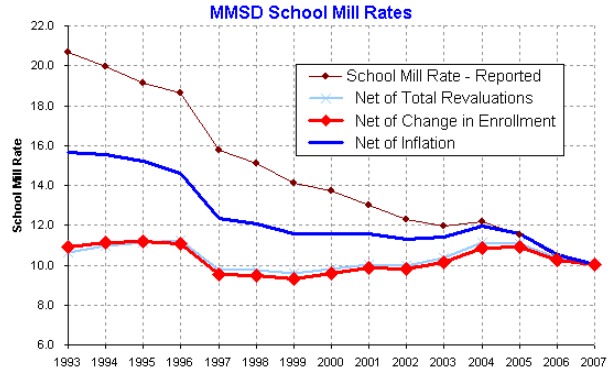
There are three important caveats to the above statements: 1.) school taxes are lower on average, but if your home has increased in value by more than about 110% since 1993, then you will be paying more for schools; 2.) it is the schools portion of property taxes that is lower on average; the remaining portion of property taxes that pays for the city, Dane County, Wisconsin, and MATC, has risen; 3.) other sources of Madison school funding (state and federal funds, and grants and fees) have also gone up; (I have not done the much more complicated calculation of real increase in funding there).
That the infamous schools’ portion of property taxes has declined over these past 15 years is quite a surprising result, and certainly counterintuitive to what one might expect. How is this possible? First, the school finance structure put in place by the state years ago has worked, at least as far as holding down property taxes. The current structure allows about a 2% increase in expense each year, consistent with the CPI (Consumer Price Index) at the state level. (In fact, local funding of the MMSD has increased from $150 million in 1993 to $209 million in 2007, equivalent to about a 2.4% increase each year.) Of course, the problem is that same structure allows for a 3.8% wage hike for teachers if districts wish to avoid arbitration, an aspect that has essentially set an effective floor on salary increases (with salaries & benefits representing 84% of the district budget). The difference between the revenue increases and the pay increases, about 1-2% annually, is why we face these annual painful budget quandaries that can only be met by cuts in school services, or by a referendum permitting higher school costs, and taxes.
The second reason today’s property taxes are lower than they have been historically is growth, in the form of new construction (i.e. new homes & buildings, as well as remodelings). What we each pay in school property taxes is the result of a simple fraction: the numerator is the portion of school expenses that is paid through local property taxes, while the denominator is the tax base for the entire city (actually the portion of Madison and neighboring communities where kids live within the MMSD). The more the tax base grows, the larger the denominator, and the more people and places to share the property taxes with. Since 1993, new construction in Madison has consistently grown at about 3% per year. Indeed, since 1980 no year has ever seen new construction less than 2.3% nor more than 3.9%. So every year, your property taxes are reduced about 3% thanks to all the new construction in town. I leave it to the reader to speculate how much the pace of new construction and revaluations will decline if the schools here should decline in quality.
FYI, the figure below shows how new construction and revaluations have behaved in Madison since 1984, as well as total valuations (which is the sum of the two).
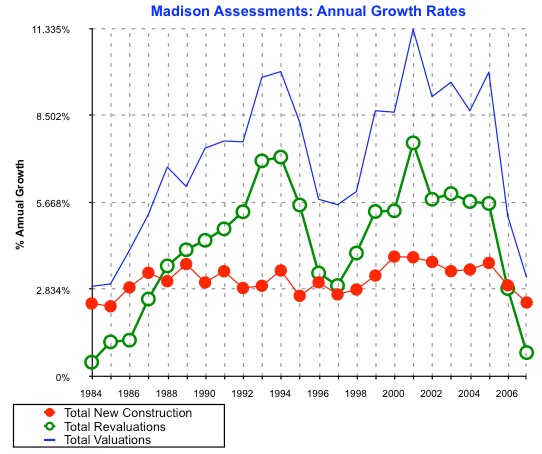
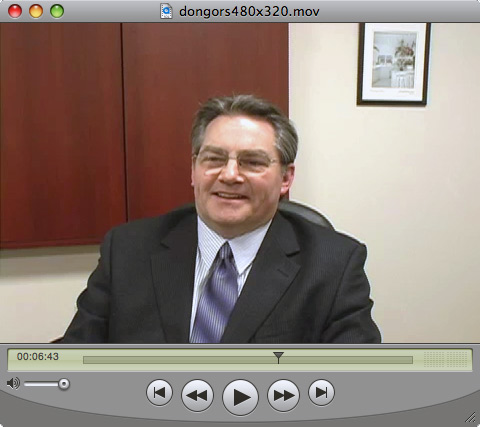
Share

Sex ed in schools: Little connection between what’s taught, teen behavior

Sharon Jayson:

Another pregnant teenager in the limelight has focused new attention on just how much teens know about sex and when they know it.
This pregnant teen, of course, is the 17-year-old daughter of Republican vice presidential nominee Sarah Palin, and the pregnancy has reignited the national debate over two different approaches to sex education: abstinence-only vs. comprehensive. But as it turns out, there’s no systematic tracking of what U.S. schools are teaching kids about sex — and either way, there seems to be little connection between what they’re taught and their behaviors, researchers say.

Share

You’re invited to attend the first national GREEN CHARTER SCHOOLS CONFERENCE November 7-9, 2008 in Madison, Wisconsin

The conference is presented by the Green Charter Schools Network, UW-Madison’s Nelson Institute for Environmental Studies, and many partnering educational and environmental organizations.
SEE CONFERENCE PROGRAM & ONLINE REGISTRATION HERE
Conference Keynoters:
William Cronon is UW-Madison Professor of History, Geography & Environmental Studies. His research seeks to understand the history of human interactions with the natural world and how we depend on the ecosystems around us to sustain our material lives, He is the author of several books, including Uncommon Ground: Rethinking the Human Place in Nature and Nature’s Metropolis: Chicago and the Great West.
Morgan Brown — Assistant Commissioner Morgan Brown oversees charter school programs, special education policy, food and nutrition services, adult basic education, and American Indian education programs at the Minnesota Department of Education (MDE). Previously, he served as the Assistant Deputy Secretary for the Office of Innovation & Improvement at the U.S. Department of Education.

Share

Healthy school meal vs a Big Mac. Which one wins? Ask your inner child

Tim Hayward:

England is bringing in ‘the most robust nutrient standards for school lunches in the world’ – but we might have to force them down children’s throats
This week “the most robust nutrient standards for school lunches in the world” come into force in English primary schools. The new menus announced by the schools secretary, Ed Balls, include healthy versions of lunchroom standards – “from traditional roasts to chilli con carne and shepherd’s pie; from homemade salmon fingers and stir fries to risotto, with fresh fruit, vegetables and salads”.
Junk food is already banned from school canteens and vending machines – but the new standards specify the maximum (fat, saturated fat, sugar, salt) and minimum (carbohydrate, protein, fibre, vitamin A, vitamin C, folate, calcium, iron, zinc) nutrient value of an average school lunch.
Getting high-quality food into schools is only half the issue. According to Balls, many children who eat healthy lunches at primary school stop when they go to senior school – put off by long queues, unpopular menus or having to eat in the same room as teenagers six or seven years older. The guidelines move into new territory by suggesting kids won’t be put off school meals if they are treated “like the paying customers they are”.

Share

Madison Police Chief Noble Wray Sees “Serious Gang Connection” in Crime Hike

Kristin Czubkowski:

Making connections among various types of crimes and ways to remedy them was the theme of the night as Police Chief Noble Wray gave a talk on public safety in Madison to the City Council Wednesday night.
Statistically, crime in Madison was a mixed bag in 2007, Wray said. While overall crime was up 5.5 percent from 2006, according to the FBI’s Uniform Crime Reports, that increase stemmed primarily from an 8.3 percent increase in property crimes such as burglary, theft and arson. By contrast, violent crime, which includes acts such as homicide, rape and aggravated assault, decreased 14.2 percent in 2007.
Wray explained that the rising rates of property crimes came from the increased theft of precious metals, in particular copper, as well as thefts of big-ticket items such as televisions from businesses, which were directly related to gang activity and the drug trade, he said.
“This is the first time that I’ve noticed this, and I’ve worked for the Madison department for 24 years, that there is a serious gang connection with these (burglaries),” he said. “We haven’t had that in the past.”

Related:

Share

Wheelbarrow

There is an old story about a worker, at one of the South African diamond mines, who would leave work once a week or so pushing a wheelbarrow full of sand. The guard would stop him and search the sand thoroughly, looking for any smuggled diamonds. When he found none, he would wave the worker through. This happened month after month, and finally the guard said, “Look, I know you are smuggling something, and I know it isn’t diamonds. If you tell me what it is, I won’t say anything, but I really want to know. The worker smiled, and said, “wheelbarrows.”
I think of this story when teachers find excuses for not letting their students see the exemplary history essays written by their high school peers for The Concord Review. Often they feel they cannot give their students copies unless they can “teach” the contents. Or they already teach the topic of one of the essays they see in the issue. Or they don’t know anything about one of the topics. Or they don’t have time to teach one of the topics they see, or they don’t think students have time to read one or more of the essays, or they worry about plagiarism, or something else. There are many reasons to keep this unique journal away from secondary students.
They are, to my mind, “searching the sand.” The most important reason to show their high school students the journal is to let them see the wheelbarrow itself, that is, to show them that there exists in the world a professional journal that takes the history research papers of high school students seriously enough to have published them on a quarterly basis for the last 21 years. Whether the students read all the essays, or one of them, or none of them, they will see that for some of their peers academic work is treated with respect. And that is a message worth letting through the guard post, whatever anyone may think about, or want to do something with, the diamonds inside.
Will Fitzhugh
The Concord Review
And of course some teachers are eager to show their students the work of their peers….
The Concord Review — Varsity Academics®

I am happy to send along this letter describing both “logistical” and pedagogical dimensions of how I have used The Concord Review in class since employing the first class sets in the 1988-1989 academic year. You know from the fact that we have expanded our class subscription “coverage” from all U.S. History classes to all U.S. History and World History since 1500 classes that we have been very satisfied with the Review. In fact, I am glad to say that, due to an expanding school enrollment, our class set for this year will number about 80 subscriptions.

(more…)

Share

In Support of the November, 2008 Madison School District Referendum

Community and Schools Together:

We have a referendum!
Community and Schools Together (CAST) has been working to educate the public on the need to change the state finance system and support referendums that preserve and expand the good our schools do. We are eager to continue this work and help pass the referendum the Madison Metropolitan School District Board of Education approved on Monday, August 25, 2008.
“The support and interest from everyone has been great,” said Franklin and Wright parent and CAST member Thomas J. Mertz. “We’ve got a strong organization, lots of enthusiasm, and we’re ready to do everything we can to pass this referendum and move our schools beyond the painful annual cuts. Our community values education. It’s a good referendum and we are confident the community will support it.”
Community and Schools Together (CAST) strongly supports the Madison Metropolitan School District Board of Education’s decision to place a three-year recurring referendum on the November 4, 2008 ballot. This is the best way for the district to address the legislated structural deficit we will face over the next few years.

Much more on the November, 2008 Referendum here.

(more…)

Share

Taxpayers should NOT be asked to give the Madison School Board a blank check!

Active Citizens for Education (ACE) calls for the Madison Metropolitan School District Board of Education to delay making specific decisions for the presentation of a recurring referendum to the taxpayers for a vote on the November election ballot.
Passage of a recurring referendum on the November 2008 ballot would allow the board and school administration to permanently exceed the state mandated revenue spending caps. Such a move to fix a so-called current “budget gap” would allow the board and administration to exceed annual spending caps permanently, every year into the future. This would virtually give the board a “blank check” from district taxpayers to plug future budget gaps or shortfalls. It could prevent the board and administration from having to carefully and thoughtfully budget, like every taxpayer must do when their household budget faces tough economic times and shortfalls.
The plans and communications presented in recent weeks by the board and administration provide greater hope for more effective decision-making now and in the future. The recommendations for changes in policy and accountability options in community services, transportation, lease contracts, fund balances and capital expansion (maintenance) will have positive impacts on reducing the so-called “budget gap.”
The Board must earn the trust of the taxpayers by clearly showing that they can be “good stewards” of taxpayer dollars. Past experience has not earned that trust! If a referendum is ultimately required to fix upcoming budgets, it should be a non-recurring referendum, thereby preventing ‘mortgaging’ the future with year-after-year, permanent increases in spending authority.
The Board and administration must correct the absence of specific processes and strategies for analysis and evaluation of business and educational services, programs, practices and policies. Urgent and substantial investments of time and work are critical for these processes to evolve into hard evidence. This evidence is absolutely necessary to show the public that serious steps are under way to provide clear, concrete data and options for identifying the most effective and efficient results-oriented management of the financial resources of the district. It must be shown that the resources will be directly applied to improvements in student learning and achievement.

(more…)

Share

Independent Group Seeks Change in the Milwaukee Public Schools

Dani McClain:

A new group calling itself the Milwaukee Quality Education Initiative has joined the accelerating, behind-the-scenes conversations about the future of the city’s schools, and is hosting a retreat this weekend at the Wingspread Conference Center in Racine.
The group’s goal is to brainstorm ways to improve K-12 education in the city, including public, voucher and charter schools, Metropolitan Milwaukee Association of Commerce President Tim Sheehy said Friday.
“We didn’t come down here to blow up MPS,” he said Friday when reached at Wingspread. “We came down here to figure out what action steps we might take to reach a starting point to a broader conversation in the city.”
Sheehy, voucher school advocate and former MPS superintendent Howard Fuller and former state Secretary of Commerce Cory Nettles launched the group several months ago but hadn’t made their efforts known to the larger public, Fuller said. He added that their work hasn’t been particularly influenced by events this week such as Mayor Tom Barrett’s call for an independent audit of MPS or a Journal Sentinel investigation of the district’s Neighborhood Schools Initiative.

Share

A remarkable legacy as education champion

Des Moines Register:

Marvin Pomerantz will be remembered for many accomplishments: successful self-made businessman, powerhouse in Iowa politics, generous philanthropist. But his greatest public achievement is his longstanding commitment to improving the quality of education for all Iowa youngsters.
Pomerantz, a Des Moines resident who died Thursday at age 78, was one of nine children of Polish Jewish immigrants. He graduated from Roosevelt High School in Des Moines and the University of Iowa, and wanted others to benefit from getting an outstanding education, just as he had.

Share

Free digital texts begin to challenge costly college textbooks in California

Gale Holland:

Would-be reformers are trying to beat the high cost — and, they say, the dumbing down — of college materials by writing or promoting open-source, no-cost online texts.
The annual college textbook rush starts this month, a time of reckoning for many students who will struggle to cover eye-popping costs of $128, $156, even $198 a volume.
Caltech economics professor R. Preston McAfee finds it annoying that students and faculty haven’t looked harder for alternatives to the exorbitant prices. McAfee wrote a well-regarded open-source economics textbook and gave it away — online. But although the text, released in 2007, has been adopted at several prestigious colleges, including Harvard and Claremont-McKenna, it has yet to make a dent in the wider textbook market.
“I was disappointed in the uptake,” McAfee said recently at an outdoor campus cafe. “But I couldn’t continue assigning idiotic books that are starting to break $200.”
McAfee is one of a band of would-be reformers who are trying to beat the high cost — and, they say, the dumbing down — of college textbooks by writing or promoting open-source, no-cost digital texts.

Yian Mui & Susan Kinzie:

The rising cost of college textbooks has driven Congress and nearly three dozen states — including Maryland and Virginia — to attempt to curtail prices and controversial publishing practices through legislation. But as the fall semester begins, students are unlikely to see much relief.
Estimates of how much students spend on textbooks range from $700 to $1,100 annually, and the market for new books is estimated at $3.6 billion this year. Between 1986 and 2004, the price of textbooks nearly tripled, rising an average of 6 percent a year while inflation rose 3 percent, according to a 2005 report by the Government Accountability Office. In California, the state auditor reported last week that prices have skyrocketed 30 percent in four years.
“It’s really hard just paying for tuition alone,” said Annaiis Wilkinson, 19 and a student at Trinity Washington University who spends about $500 a semester on books. “It really sets people back.

Well worth looking into, including in the K-12 world.

Share

(Madison) School Referendum News

I have appreciated having the opportunity to talk about our schools with you and value your insights, so I wanted to let you know where matters stand on the possibility of a school spending referendum on the November ballot.
As you probably know, Superintendent Dan Nerad submitted his recommendations to the Board at a School Board meeting Monday night (1MB PDF, 3 year financial forecast PDF). In summary, the structural deficit the school funding law imposes on districts as well as increased fixed costs result in a projected budget deficit of $8.1 million for the 2009-2010 school year, $4.4 million for the 2010-2011 school year, and $4.3 million for the 2011-2012 school year, calculated on a same-service basis.
To meet these gaps, the superintendent recommends that the Board approve a referendum asking the voters to authorize the district to exceed our spending limits by $5 million next year, and $4 million in each of the following two years. This would be a recurring referendum, meaning that the authorization for the increased spending in the specified amounts would continue indefinitely.
The amount of extra spending authority we would seek is less than the projected budget gaps. The idea is that this a shared-sacrifice sort of proposal – we would be asking the community to permit us to erase some of the gap through additional taxes while we pledge to address the remainder through seeking out savings and efficiencies that will not have a detrimental impact on classroom learning. As is probably apparent, the referendum is not designed to allow us to restore in a significant way any of the painful cuts we have made in previous years.

(more…)

Share

A Mother on Fire storms into public education

Mary MacVean:

The writer and performer Sandra Tsing Loh chronicles her adventure, as she travels from being a mother who turned the job of finding a school for their daughters over to her husband to being a Mother on Fire, the title of her new book.
Like so many parents who live in large, urban school districts, Loh at first sees maneuvering through Los Angeles Unified as impossible, with options that seem to be restricted to “frightening unknown elementaries no one had ever heard of.”
At one point during the search for a kindergarten, she writes, “Everything I assumed about my life is wrong.” But maneuver through the system — and her midlife crisis — she does, encountering API scores (“1 API point = $1,000 worth of real estate,” she concludes), magnet applications, high-stakes educational activities for children, private school testing. In the end, Loh has become a vocal public school advocate.

www.sandratsingloh.com

Share

Transcript: Madison School Board 7/28/2008 Referendum Discussion

Meeting Transcript:

We begin the presentation by focusing on why is there a problem. And we wanna first and foremost point out that the issues affecting this school district are issues that are also occurring in other school districts in the state. While there may be some circumstances, and there are circumstances that are unique to one place or another, we know that this funding dilemma and the gap that exists between what the current state funding formula provides and how expenses are being dealt with in school district is not unique to this school district. Although we have our story here that is certainly unique. And again I want to emphasize that it really lies at the heart of it is the constraint between the current formula that was put into place in 1993 which basically asserted that the state provide more resources to schools through the two thirds funding if, in turn, school districts would control their costs in two ways. One was through the revenue cap and the second was through the qualified economic offer. And so that was the kind of exchange or the quid pro quo that was made at that time in public policy; to be able to provide more state funding for schools at the same time to place limitations on how much a school district could spend.
In the document we point out examples of this dilemma as it is affecting some of the top ten school districts in the state. Ranging in, for example Waukesha school district of 2.6 million dollar program and service reduction for the 08/09 school year. The district that I am most recently familiar with, Greenbay with a 6.5 million program and service reduction. And just to point out the difference we mentioned we seen there, we use a wording increase revenue authority that represents their gap but that’s also, its described that way because of having more authority through a successfully passed referendum to exceed the revenue cap within that community. So that is what’s meant by an increase revenue of authority.
Now the funding formula is one that school districts across the state are wrestling with. You know the history that this school district has had in terms of the types of decisions that have been made which we are going to underscore in just a minute to accommodate that funding formula but as I turn this over to Eric for the bulk of the rest of the presentation, I’ll conclude its all with the idea yes there is a need to have school funded but its around the assertion that our kids have to have a high quality education to be successful in the world that they are growing into. And yes we do have a fiscal responsibility to use community resources in the most cost effective manner and the reality of it is there are constraints in meeting that proposition. So with that, and I will return for the conclusion, I’ll turn it to Eric who will provide us with more detail of the nature of the problem.

Related:

Share

Businesses Partner in Education with Calcasieu Schools

Amanda Ward:

As we get ready to send our students back to school, two separate businesses are doing their parts to partner in education.
Hundreds of students and their parents packed the Pryce-Miller recreation center in Lake Charles for the Back to School Bash with free school supplies and backpacks from PPG as well as information about healthcare and education support services and loads of fun. The children are excited about going back to school for several different reasons.
Kayman St. Junious said, He loves “going to P.E.”
Austin Delafosse said, Science is his favorite subject, because “you get to make objects.”

Share

Dreams for school’s accessible playground prove boundless

The Capital Times:

Members of the Elvehjem Elementary School community, including students, teachers, parents and other supporters of a unique idea, watched Friday as groundbreaking occurred for a playground designed to be inclusionary to all.
The new playground is designed for use by all kids, including those with disabilities who could not participate in play with their peers on older models of playgrounds.
Last year members of the Elvehjem community decided to enter a national contest for a Boundless Playground and submitted an essay they hoped would win the day for the east side school. But they fell just short, finishing third out of 900 entries.

Share

School needs bold blueprint, not formula fiddling

Jim Wooten:

Governors one after another have tinkered with public education inputs and funding formulas, promising all the while to succeed where their predecessors had failed. Had those approaches worked —- more inputs and revised formulas recommended by blue ribbon commissions —- schools would be fixed by now.
They aren’t.
It’s the model that’s broken, not the funding formulas.
Across the country industries beset by new marketplace dynamics —- industries that include newspapers, health care providers and all others, automobiles among them, that compete globally —- are frantically at work reinventing their business models.
Education’s marketplace changed decades ago. The best hope now is to stop fighting the marketplace and, instead, let competition work. Give parents choice —- and the means to exercise it. Improve public schools, yes. But don’t keep children prisoners until the system is perfected.

Share

Keeping The Concord Review Afloat

Kathleen Kennedy Manzo:

A year ago, Will Fitzhugh was wondering if the next issue of The Concord Review, the renowned history journal he founded in 1987 to recognize high school students’ outstanding history research papers, would be the last. On a tattered shoestring budget, Fitzhugh has just published the Summer 2008 edition [18/4], and with some support from schools and other fans in the private sector, he has hopes for four more issues over the next year.
But the former high school history teacher is proceeding mostly on a wing and a prayer, and a driving passion for promoting rigorous academic work for teenagers. Last year, the salary for the curmudgeonly 71-year-old was a measly $8,600. This for a scholar who has won widespread praise among education thinkers in the country for demanding, and rewarding, excellence and earnestness in the study of history. Thousands of high school students—mostly from private schools, but many from public schools, including diverse and challenged ones—have responded with work that has impressed some prominent historians and many college-admissions officers.
So how is it that such an undertaking is only scraping by, while other worthy programs, such as the National Writing Project and the Teaching American History Grants, manage to garner millions of dollars each year in federal and foundation support?
Right now, the Review is staying afloat on the commitment of Fitzhugh and some 20 secondary institutions that have ponied up $5,000 each to join a consortium that was created a year ago to cover the costs of publishing the journal. The National Writing Board, also founded by Fitzhugh, brings in some money from students who pay for an evaluation of their research papers that can be sent in with their college applications.
Why is it that some extraordinary efforts in education, which seem to have vision and the right end goal, struggle so?

Share

100 Black Men Back to School Picnic on Saturday August 23rd at Demetral Park at 10:30 a.m.

2008 Back to School Picnic
100 Black Men of Madison 12th Annual Back to School Picnic will be held on Saturday August 23rd, rain or shine at Demetral Park located on Commercial and Packers Avenue at 10:30 am.
Over 1,500 free backpacks filled with school supplies will be distributed to students in kindergarten thru eighth grade.
In addition, free hamburgers, hot dogs and beverages will be served. This event is first come, first served. Students must be in attendance to receive a backpack.
The purpose of this event is to assist students at the beginning the school year with the supplies needed for academic success and to reduce the achievement gap.
For more information please contact, Wayne Canty at 285-6753 or wcanty@kraft.com.
http://www.100blackmenmadison.org/

Share

School Board to Focus on Money

Andy Hall:


In the first major test for newly hired Superintendent Daniel Nerad, Madison school officials this week will begin public discussions of whether to ask voters for additional money to head off a potentially “catastrophic” $8.2 million budget gap for the 2009-10 school year.
The Madison School Board’s meetings in August will be dominated by talk of the possible referendum, which could appear on the Nov. 4 ballot.
The public will be invited to speak out at forums on Aug. 12 and 14.

Related:

Props to the District for finding a reduced spending increase of $1,000,000 and looking for more (The same service budget growth, given teacher contract and other increases vs budget growth limits results in the “gap” referred to in Hall’s article above). Happily, Monday evening’s referendum discussion included a brief mention of revisiting the now many years old “same service” budget approach (28mb mp3, about 30 minutes). A question was also raised about attracting students (MMSD enrollment has been flat for years). Student growth means additional tax and spending authority for the school district.
The Madison school board has been far more actively involved in financial issues recently. Matters such as the MMSD’s declining equity (and related structural deficit) have been publicly discussed. A very useful “citizen’s budget” document was created for the 2006-2007 ($333M) and 2007-2008 ($339M) (though the final 2007-2008 number was apparently $365M) budgets. Keeping track of changes year to year is not a small challenge.

Share

2008 Streetball & Block Party next Saturday August 9th at Penn Park; 12 noon to 7 pm

Via a Johnny Winston, Jr. email:

The Johnny Winston, Jr. 2008 Streetball and Block Party will be held on Saturday August 9th from 12 noon to 7:00 p.m. at Penn Park (South Madison – Corner of Fisher and Buick Street). “Streetball” is a full court, “5 on 5” Adult Men’s Basketball tournament featuring some of the best basketball players in the City of Madison, Milwaukee, Beloit, Rockford and other cities. The rain date for basketball games only is Sunday August 10th.
The “block party” activities for youth and families include: old and new school music by D.J. Double D and Speakerboxx DJ’s; funk and soul music by the Rick Flowers Band, youth drill and dance team competition, free bingo sponsored by DeJope Gaming; face painting and youth activities sponsored by Madison School and Community Recreation, YMCA of Dane County, Dane County Neighborhood Intervention Program; The Boys & Girls Club of Dane County, the Madison Children’s Museum, pony rides by “Big Bill and Little Joe” and more. This event includes information booths and vendors selling a variety of foods and other items.
This is a safe, family event that has taken the place of the “South Madison Block Party.” The Madison Police Department and other neighborhood groups are supporting this as a positive activity for the South Madison community. Over the past seven years, $10,000 has been donated to charitable programs that benefit South Madison and support education such as the Boys & Girls Club and the Southside Raiders Youth Football and Cheerleading Teams.
In all, this event will provide a wonderful organized activity for neighborhood residents to enjoy this summer. If you have any questions, would like to volunteer or discuss any further details, please feel free to call (608) 347-9715; e-mail at: johnnywinstonjr@hotmail.com or www.madisonstreetball.com. Hope to see you there!
Please feel free to forward this information to other interested persons or organizations.

Share

Time to Eliminate Taj Mahal School Building Projects

Open Education:

As education expenses continue to grow, strapped taxpayers have begun pushing back on state and local governments. In the tiny State of Maine, many school districts are finding that passing a school budget for the upcoming school year a sincere challenge.
Even the tiny town of Monmouth, home to one of Maine’s finest public school systems, has seen such a rebellion, leaving school officials without a school budget for 2008-09. With another school year set to begin in less than a month’s time, Monmouth finds itself in an extremely challenging position.

Share