School Information System

Bullying, Thefts Persist Despite Drop in Violence

Valerie Strauss:

Even though spasms of intense violence erupt on campuses occasionally and linger in the social consciousness, violence at schools across the country has been decreasing for a number of years.
That doesn’t necessarily mean schools are safe havens. Consider:
— Eighty-six percent of public schools in 2005-06 reported that one or more violent incidents, thefts of items valued at $10 or greater or other crimes had occurred — a rate of 46 crimes per 1,000 enrolled students.
— Almost a third of students ages 12 to 18 reported being bullied inside school.
— Nearly a quarter of teenagers reported the presence of gangs at their schools.

Indicators of School Crime and Safety.

Share

Radical idea: Ask what we get for the money

Daniel Weintraub:

No matter what happens in the special election May 19, California’s government finances will remain a mess. It took years of mismanagement and economic misfortune for the state to dig itself into this hole, and it is going to take many years to climb out of it.
As the climbing begins, the state needs to make fundamental changes in the way it collects and spends the taxpayers’ money. Otherwise, the next generation of lawmakers will repeat the same old mistakes as their predecessors.
Proposition 1A, with its rainy-day fund, would be one improvement, requiring lawmakers to set money aside in good times to cushion the blow of the next downturn. A bipartisan commission that has been studying the tax system will soon release its recommendations on how to make California’s revenue collections fairer and more stable. That could also improve things.

Share

World-Class Knowledge
Annual Geography Bee Tests Students’ Grasp of the Globe

Maria Glod:

Politicians fret these days about how U.S. students stack up in math and science compared with peers in India, China, Singapore and elsewhere. Some of them wonder how many American children could find those countries on a globe. Such talk is driving an effort in Congress to ensure that students learn more about other countries and cultures.
Critics of the No Child Left Behind law, which requires annual math and reading tests in grades three through eight and once in high school, say it has pushed subjects including geography, history and art to the side.
Rep. Chris Van Hollen (D-Md.) and other lawmakers are trying to change that with a bill called the Teaching Geography is Fundamental Act. The legislation would provide funds for teacher training, research and development of instructional materials.
Van Hollen said he has been distressed by surveys showing that students in the United States have a poor grasp of geography. He said the bill has bipartisan support and 70 co-sponsors.

Share

In Favor of Everyday Math; Middleton Cross Plains Math Scores Soar

Angela Bettis:

The most recent research from the U.S. Department of Education shows that American 15-year-olds are behind their International counterparts when it comes to problem solving and math literacy.


The report showed the U.S. ranks 24th out of 29 nations.


But a math program, gaining in popularity, is trying to change that.
The program is called Everyday Math.


Lori Rusch is a fourth grade teacher at Middleton’s Elm Lawn Elementary. This year she teaches an advanced math class.


On Monday, students in Rusch’s class were mastering fractions and percentages.


But her students began learning fractions and percentages in first grade.

“We’ve been incredibly successful with it,” said Middleton’s curriculum director George Marvoulis. “Our students on all of our comparative assessments like WKCE, Explorer Plan, ACT, our students score higher in math than any other subject area so we’ve been very pleased.”


According to Marvoulis, Middleton was one of the first school districts in the nation to use the Everyday Math program in 1994.


“The concept is kind of a toolbox of different tools they can use to solve a problem,” explained Marvoulis.

Related: Math Forum and Clusty Search on Everyday Math.

Share

Madison School District 2009-2010 Budget Discussion

44MB mp3 audio file. The April 30, 2009 meeting discussed:

  1. undo class and a half for SAGE schools
  2. not extend class and a half for non-SAGE schools
  3. restore funding for Ready Set Go conferences

The board also discussed member compensation, future proposals from task forces such as the fine arts and math along with the strategic plan.
Via a kind reader’s email.

Share

An Update on the Madison School District’s 4 year old Kindergarten Plans

Dan Nerad 100K PDF:

The 4K steering committee had four meetings reviewing prior history, leaming from other districts, and looking at what needs to be accomplished prior to start up. At the last meeting we came to consensus on a time-line. As a result, the steering committee is recommending that the Board of Education make a commitment in May to begin 4K no later than fall, 2010.
The next 4K meeting is tentatively scheduled for Monday, May 11, from 9:30 to 11:30, site to be determined. At this meeting we will divide into working subcommittees focused around the Tasks Ahead piece developed in previous meetings. Attached is a list of the tasks.
The steering committee is a terrific group of individuals to work with and there is no lack of enthusiasm and passion for this initiative.

Share

The Madison School District on WKCE Data

Madison School District 1.5MB PDF:

The 2008-09 school year marked the fourth consecutive year in which testing in grades 3 through 8 and 10 was conducted in fulfillment of the federal No Child left Behind law. The Wisconsin Knowledge and Concepts Exams (WKCE) is a criterion-referenced test (CRT) where a student’s performance is compared to a specific set of learning standard outcomes. The WKCE-CRT includes testing in all seven grade levels reading and math and in grades 4, 8 and 10 additional testing in language arts, science and social studies. Just under 12,400 MMSD students participated in this year’s WKCE-CRT.


Under NClB, schools are required to test 95% of their full academic year (FAY) students in reading and math. Madison’s test participation rates exceeded 95% in all grade levels. Grades 3 through 8 achieved 99% test participation or higher while the District’s 10th graders reached 98% in test participation.


In general, performance was relatively unchanged in the two academic areas tested across the seven grade levels. In reading, across the seven grades tested four grade levels had an increase in the percentage of students scoring at the proficient or higher performance categories compared with the previous year while three grades showed a decline in the percentage. In math, three grades increased proficient or higher performance, three grades declined, and one remained the same.


The changing demographics of the district affect the overall aggregate achievement data. As the district has experienced a greater proportion of students from subgroups which are at a disadvantage in testing, e.g., non-native English speakers, or English language learners (Ells), the overall district averages have correspondingly declined. Other subgroups which traditionally perform well on student achievement tests, i.e., non-low income students and white students, continue to perform very high relative to statewide peer groups. Therefore, it is important disaggregate the data to interpret and understand the district results.

Jeff Henriques recently took a look at math performance in the Madison School District.

Schools should not rely on only WKCE data to gauge progress of individual students or to determine effectiveness of programs or curriculum

Share

Is new board president Bonds a ‘clean slate’ for the Milwaukee Public Schools?

Alan Borsuk:

New Milwaukee School Board President Michael Bonds took a stand Wednesday in support of major changes in the direction of Milwaukee Public Schools, calling for a hiring freeze in the central office, more school closings and less busing.
Bonds said MPS could save millions of dollars by taking a series of steps, including some similar to what was in a stinging consultant’s report done for Gov. Jim Doyle and Milwaukee Mayor Tom Barrett.
Bonds said he was sending letters to Doyle and Barrett, asking for weekly meetings with them or their representatives to develop a unified effort to improve education in Milwaukee. He also held out the prospect of involvement by city and state representatives in MPS decision-making.
He said MPS should not seek or expect more money from the state, both because it is not realistic and because the district needs to do more to control its own spending.
“I still think we have millions in unrealized efficiencies,” he said.

Share

Mandated K-12 Testing in Wisconsin: A System in Need of Reform

Mark C. Schug, Ph.D., M. Scott Niederjohn, Ph.D.:

By law public schools in Wisconsin must administer a rigid, comprehensive set of tests. In the fall of every school year students are tested in reading, math, language, science and social studies. Test results from each district and each school are posted on the Internet, passed along to the federal government to comply with No Child Left Behind requirements and are made available to parents. In an era where measurable student performance is essential, it is expected that Wisconsin’s elaborate system of testing will tell us how Wisconsin students are performing. Unfortunately the testing required by Wisconsin state law is not very good.
The purpose of state standards and state-mandated testing is to increase academic achievement. Does Wisconsin’s elaborate system of testing advance this goal? From every quarter the answer is a clear no. That is the consensus of independent, third-party evaluators. Wisconsin’s massive testing program has come under fire from the U.S. Department of Education which said that Wisconsin testing failed to adequately evaluate the content laid out in the state’s own standards. Further, a joint report issued by the independent Fordham Institute and the Northwest Evaluation Association performed a detailed evaluation of testing in every state and ranked Wisconsin 42nd in the nation. The Fordham Institute gave Wisconsin’s testing a grade of “D-minus.”
Perhaps even more troublesome is that many Wisconsin school districts find the testing system inadequate. Over 68% of Wisconsin school districts that responded to a survey said they purchase additional testing to do what the state testing is supposed to do. These districts are well ahead of the state in understanding the importance of timely, rigorous testing.
This report lays out the thirty-year history of testing in Wisconsin and the criticism of the current testing requirement. It is the first of two reports to be issued regarding Wisconsin’s testing program. The second report will show how a new approach to testing will not only meet the standards that parents, teachers and the public expect, but will also allow teachers and policy makers to use testing to actually increase the achievement of Wisconsin’s children.

Share

2009 USA Today College All-Stars

Mary Beth Marklein:

The nation’s most gifted college students rightly take pride in their academic achievements, be they in the area of environmental policy, medical research or the classics.
But give them the chance to talk about their proudest accomplishments, and a refreshingly eclectic set of extracurricular interests and talents slips into view.
Matthew Baum, a soon-to-be Yale University graduate whose research on Fragile X Syndrome may someday lead to better treatments for mental retardation, is a wrestler on the side and started a club for beer aficionados. Harvard chemistry major Allen Cheng, 20, who envisions a career as a physician-scientist, finds pleasure in kendo, a form of fencing based on the art of Japanese samurai swordsmanship. And when Aaron Krolikowski is not advocating for environmental justice, he just might be on stage with the Buffalo Chips, a collegiate male a cappella group.
“Music has always been an important part of who I am,” says Krolikowski, 22, who will graduate next month from the University at Buffalo and hopes to serve someday in state public office. Writing and arranging music is an escape, he says, and performing is “exhilarating.”

Share

School Reform Talk Is Good, Now Let’s See the Walk

Wall Street Journal Editorial:

Secretary of Education Arne Duncan tells us that “School Reform Means Doing What’s Best for Kids” (op-ed, April 22). His cry for “doing what’s best for kids” rings a bit hollow when he failed to do what is best for the 1,700 low-income kids in Washington, D.C. who were counting on him. Those kids were given a lifeline — a voucher to escape schools that continually failed them, schools in a district to which neither Mr. Duncan nor his boss would send their own children. When crunch time arrived, politics trumped educational freedom, at least when it came to poor, inner-city kids in the District of Columbia.
Mr. Duncan speaks eloquently about how the public education establishment must change. He correctly says “we need a culture of accountability in America’s education system if we want to be the best in the world.” But what greater accountability can there be than that which comes from customers exercising free choices? True accountability in education will only come about when all parents are empowered to choose what they deem is best for their own children, not just those, like President Obama, Mr. Duncan, and most readers of the Wall Street Journal, who have financial means. So my question is, “When will the Obamas, Duncans, et. al. stand up for low-income parents so that they, too, can make choices that are best for their kids?”

Share

Rancor Where Private-School Parents Make Public-School Decisions

Peter Applebome:

If you wanted to help a Martian understand this sliver of the planet in Rockland County, you might do two things.
First, you would take him (or her or it) to the cavernous Foodmart International on the main drag, Route 59.
The shoppers chatter in the broad, chilly aisles in every language under the sun. The wares include Cuban bread, Thai jasmine rice, Vietnamese chili-garlic sauce, Chinese kidney and liver herb extract, Haitian sugar, Salvadoran pickled vegetables, Honduran cream, Malaysian papaya pudding — like the provisions for some modern ark.
Then, you would head a mile or so down the road toward Monsey, where you would see gaggles of observant Jews in traditional garb walking on the street, pushing strollers, popping into shops offering kosher pizza, falafel and ice cream.
This would be helpful in understanding not just this area, but disputes along sensitive cultural fault lines that are playing out in several suburban communities. In fact, the East Ramapo school district here is going through the same drama as the district in Lawrence, on Long Island.

Share

Moorpark High School wins National Academic Decathlon for fourth time

Seema Mehta:

Amid cheers and leaps of excitement, Moorpark High School had won the National Academic Decathlon, the fourth time the team has won the highest prize.
“There is joy, there is happiness and there is the academic decathalon,” said 17-year-old Zyed Ismailjee, who started sobbing when the results were announced during an awards luncheon in Memphis, Tenn., this afternoon.
Team mates hoisted each other into the air, and the coach lept on to his chair in celebration. Team members also won 30 medals in individual events, as well as several college scholarships.
Moorpark High School has long been among the strongest teams in state and national competitions. The school won a narrow national victory last year over Waukesha West High School of Wisconsin. Today’s win marks the fourth national title for Moorpark.

Share

There Once Was a Wall of Shame


Edward Rothstein:

But the museum also reminds us that East Germany claimed to be engaged in a social experiment based on a utopian vision. A survey of mandated salaries demonstrates that ideological preferences were rewarded over rarefied achievement and training. A picture from a day care center shows children lined up on a “potty bench,” where “everyone remained seated until the last one was done.” This was more than toilet training, the museum tells us: “It also was the first step to social education.”
You can also see the effects of that social education, as its moralism was mixed with tyranny, individuality suppressed in favor of legislated social virtue. Such imposed uniformity could not have been alien to a culture that had nurtured enforced compliance earlier in the century under another regime; here its darkest side can be seen in displays of equipment and eavesdropping devices of the Stasi, the feared secret police. But you can also see evidence of rebellion against such constraints: the persistent interest in Western rock music and fashion and even an East German nudist movement.

Share

Don’t boycott school lunch, district tells Nuestro Mundo

Mary Ellen Gabriel:

A group of fourth-graders at Nuestro Mundo Elementary School had planned to remain in their classroom through lunch and recess Friday, enjoying a meal of fresh fruit, vegetables and homemade pasta at cloth-covered tables with flower centerpieces.


The group from Joshua Forehand’s class, which calls itself BCSL (“Boycott School Lunch”) formed to protest what they see as unhealthy food offered in the school’s cafeteria, but they scrapped their plan to host a “Good Real Food” picnic after Assistant Superintendent Sue Abplanalp called school administrators and parents to discourage it.


“There were too many obstacles,” Abplanalp said in an interview, citing the possibility of allergy-causing ingredients in shared homemade food, lack of adequate supervision, and the presence of the news media as major concerns.


“We want students’ voices to be heard. This just seemed to come together too fast, without various issues being addressed.”


When asked if the district feared negative publicity, Abplanalp said no. Instead she cited student privacy as a major concern.


“We have strict guidelines about the media interviewing students on school grounds. The principal maintains a list of kids whose parents have given permission for media exposure.”

Share

On Wisconsin’s State K-12 Education Budget

Bob Godfrey:

Following several hours of impassioned testimony from administrators, parents, and staff from school districts throughout the state, both large and small, at this week’s School Finance Network Assembly Hearing, it ended, unfortunately, on what could be charitably characterized as a flat note. Despite the hard work of disparate leaders of education groups meeting constantly for the past couple of years to come up with a thoroughly conceptualized school finance reform plan to present to the legislature, a committee composed of organizations in the School Finance Network who have often been traditionally at odds with each other in the past (for example WEAC and WASB ), came to the hearing armed with numbers vetted by both economists at the UW-Madison and the state Legislative Fiscal Bureau, including a number of suggestions for how to pay for this reform. However, the Committee on Education made it clear they were not going to take any action on this plan for the upcoming budget legislation hearings for the 2009-2011 budget. And most discouragingly there were, was, as far as I’m aware, no newspaper coverage of this event. I saw only one Madison tv crew present. They covered some of the personal testimony at the beginning but were not around to hear the actual presentation of the plan itself, which came late in the proceedings, too late to make it into the evening broadcast.

Share

MPS juniors get school day to take free ACT college entrance exam

Alan Borsuk:

Earth Day is one thing, but for Milwaukee Public Schools high school students, Wednesday was also ACT day.
For the first time, every junior in MPS was given the opportunity to take the ACT college entrance exam for free and on a normal school day. MPS officials said indications were that a very large percentage of them did that.
Terry Falk, the School Board member who initiated the plan, said his goal was to get more students, teachers and administrators to take college-readiness more seriously.
“In the long run, it’s about holding kids to higher standards,” he said.
Falk said he also hoped the step would lead state and local school officials to pay more attention to the performance of students beyond the point early in 10th grade when they take the last round of state standardized tests.
Falk and other MPS officials said the testing Wednesday went smoothly.

Share

The roots of Thailand’s tension

Charles Morrison:

The Thai political crisis reflects powerful forces that are reshaping the political landscape of parts of Southeast Asia. Increased levels of education and awareness, economic development, and new technologies are all helping to bring demanding new voices into politics, often threatening established elites and traditional power-sharing arrangements.
Although true reforms have eluded the Philippines, and Myanmar has remained mired under military rule, Indonesia has already undergone a major – and so far quite successful – democratic transformation, and Malaysia seems poised for change.

Share

Open Education 2009

Vancouver, BC:

For the first time in its six year history, the international Open Education Conference is moving! After five years at the historic Utah State University campus, this year’s conference will be held in beautiful British Columbia, Canada, hosted by the University of British Columbia.
The Call for Papers is now available!
Read about this year’s incredible Keynote Speakers!

Share

Three Madison Students Among Presidential Scholar Finalists

Three Madison high school seniors are among 12 statewide to be named semifinalists in the 2009 Presidential Scholars program, one of the nation’s highest honors for high school students.
Suvai Gunasekaran and Hannah Postel, both Memorial High School students, and Chelli Riddiough, a student at West, will compete with close to 500 other U.S. semifinalists for the Presidential Scholar title.
The Commission on Presidential Scholars makes the final selection of the 121 academic scholars — one male and one female from each state, the District of Columbia, the Commonwealth of Puerto Rico, and from families of U.S. citizens living abroad. Up to 20 Presidential Scholars in the Arts also are chosen.
Other Wisconsin semifinalists include: Joseph Balistreri, Fox Point; Nicholas Blecha, De Pere; Wyatt Brothers, Oshkosh; Sean Conley, Milwaukee; Anthony Hoffman, Menomonie; Elizabeth Huston, Stevens Point; Evan Liang, Oneida; Philip Streich, Platteville; and Amy Yin, Onalaska.

Share

Cornell ’69 And What It Did

Donald Downs:

Forty years ago this week, an armed student insurrection erupted on the Cornell campus. I was a sophomore on campus at the time and later wrote a book on the events, Cornell ’69: Liberalism and the Crisis of the American University. To some the drama represented a triumph of social justice, paving the way for a new model of the university based on the ideals of identity politics, diversity, and the university as a transformer of society. To others, it fatefully propelled Cornell, and later much of American higher education, away from the traditional principles of academic freedom, reason, and individual excellence. “Cornell,” wrote the famous constitutional scholar Walter Berns, who resigned from Cornell during the denouement of the conflict, “was the prototype of the university as we know it today, having jettisoned every vestige of academic integrity.”
In the wee hours of Friday, April 19, 1969, twenty-some members of Cornell’s Afro-American Society took over the student center, Willard Straight Hall, removing parents (sometimes forcefully) from their accommodations on the eve of Parents Weekend. The takeover was the culmination of a year-long series of confrontations, during which the AAS had deployed hardball tactics to pressure the administration of President James Perkins into making concessions to their demands. The Perkins administration and many faculty members had made claims of race-based identity politics and social justice leading priorities for the university, marginalizing the traditional missions of truth-seeking and academic freedom.
Two concerns precipitated the takeover: AAS agitation for the establishment of a radical black studies program; and demands of amnesty for some AAS students, who had just been found guilty by the university judicial board of violating university rules. These concerns were linked, for, according to the students, the university lacked the moral authority to judge minority students. They declared that Cornell was no longer a university, but rather an institution divided by racial identities.

(more…)

Share

School Reform Means Doing What’s Best for Kids

Arne Duncan:

As states and school districts across America begin drawing down the first $44 billion in education funds under the American Recovery and Reinvestment Act, they should bear in mind the core levers of change under the law. In order to drive reform, we will require an honest assessment by states of key issues like teacher quality, student performance, college-readiness and the number of charter schools. We’ll also have a strategy to address low-performing schools and provide incentives to compel improvement.


When stakeholders — from parents and business leaders to elected officials — understand that standards vary dramatically across states and many high-school graduates are unprepared for college or work, they will demand change. In fact, dozens of states are already independently working toward higher standards in education. Union leaders have also signed on.


When parents recognize which schools are failing to educate their children, they will demand more effective options for their kids. They won’t care whether they are charters, non-charters or some other model. As President Barack Obama has called for, states should eliminate restrictions that limit the growth of excellent charter schools, move forward in improving or restructuring chronically failing schools, and hold all schools accountable for results.

Share

The Economic Impact of the Achievement Gap in America’s Schools

McKinsey [772K PDF]:

McKinsey’s report, The Economic Impact of the Achievement Gap in America’s Schools, examines the dimensions and economic impact of the education achievement gap. While much controversy exists on the causes of the gap and on what the nation should do to address it, the full range of the achievement gap’s character and consequences has been poorly understood.

This report examines the dimensions of four distinct gaps in education: (1) between the United States and other nations, (2) between black and Latino students and white students, (3) between students of different income levels, and (4) between similar students schooled in different systems or regions.

The report finds that the underutilization of human potential as reflected in the achievement gap is extremely costly. Existing gaps impose the economic equivalent of a permanent national recession—one substantially larger than the deep recession the country is currently experiencing. For individuals, avoidable shortfalls in academic achievement impose heavy and often tragic consequences via lower earnings, poor health, and higher rates of incarceration.

Share

Abolish Local School Districts?

The Economist:

Today is the conference for which I’ve travelled to New York. It’s at the Rubin Museum, a small, new venue devoted to Himalayan art, which certainly beats the usual hotel. We see the galleries at each coffee break, and at the end of the day there is a guided tour for those inspired to learn more about the art.
The conference features a stellar cast of speakers: educators, researchers and some hard-headed business types too. Lou Gerstner, an ex-CEO of IBM, enthusiastically pitches his plan for school reform: he wants the 15,000 local school districts abolished and replaced by around 70 (the states plus a couple of dozen big cities), national standards in core subjects introduced, with all children tested against them, and teachers paid much, much more.
Jim Rohr of PNC Financial Services talks about “Grow Up Great“, the bank’s $100m, 10-year investment in early-childhood education, which gives grants to non-profit school-readiness programmes, and sponsors employees to volunteer their time and services. One delegate asks about the lessons learned; Mr Rohr gets a laugh of recognition when he says that the main one is that volunteers face a hideous maze of bureaucratic regulations and permissions–and all because they wanted to help.

Share

The State of Education in New York City

The Economist:

As The Economist’s education correspondent, I’ve been invited by Economist Conferences, one of the businesses in the Economist group, to chair a conference in New York entitled “Global Education 2020“. It’s just one day, but if I’m going to make the trip from London, I may as well stay longer and visit some schools. Those in the city’s poor neighbourhoods have long been known for having serious problems–violence, astronomical drop-out rates and abysmal standards of achievement–but in the last few years exciting things have been happening under Joel Klein, the chancellor of the city ‘s department of education, and I want to see some of the success stories with my own eyes.
Monday morning, and I’m off to Starbucks on 93rd and Broadway to meet Wendy Kopp, the Princeton graduate who in 1990 founded Teach for America (TFA), a non-profit organisation that recruits top-notch graduates from elite institutions and gets them to teach for two years in struggling state schools in poor areas. I know the basics already–TFA been widely copied, including in England. But I quickly realise that I’ve misunderstood TFA’s true purpose.
All three are tired. Their classrooms are not much like the rest of the school where they work, and their heroic efforts are only supported by Chester and each other, not by their co-workers. “The first year was unbelievably bad,” one tells me. “So many years with low expectations meant a lot of resistance from the kids. Eventually they saw the power and the growth they were capable of–but during the first few months we were just butting heads every day.”

Share

Dave Cullen: The Lessons of Columbine

Lynn Neary:

Ten years ago Monday, news started trickling out of Colorado about a shooting at a high school called Columbine. It didn’t take long for the news media to descend, and reporter Dave Cullen was one of the first journalists on the story.
Cullen would go on to spend another nine years delving deeper into the massacre than perhaps any other journalist. He presents his account of the tragedy — and examines some of the myths and mistakes surrounding the shootings — in his new book, Columbine.
The book walks readers through the events of that day, laying out Eric Harris and Dylan Klebold’s murderous plan, which left 15 people dead (including the killers) and 23 injured.

Share

Tonight’s Madison School Board Meeting at O’Keefe Middle School

The meeting, which will discuss math (TJ Mertz comments), non-SAGE schools and many other topics. The meeting begins at 6:00p.m.
O’Keeffe Middle School
510 South Thornton Ave. [Map]
Madison, WI 53703
Library Media Center
The meeting agenda can be found here.

Share

California Schools Superintendent Wants to Water Down Academic Standards in Name of “21st-Century Skills”

Bill Evers:

California State Schools Superintendent Jack O’Connell spoke to the annual EdSource Forum in Irvine today (April 17).
O’Connell, who holds a nonpartisan office, began his speech with political partisanship:

President Obama won a mandate for change that has placed him in a position to cause a massive shift in the way our government operates and in the manner in which it serves the needs of its citizens….
In just the first few months of this Administration, I can easily and confidently say that we have seen a dramatic shift in the willingness of this White House to be a partner to states — this is a welcome difference from the previous Administration….

There was more, but you get the general idea.
O’Connell then went on to identify “four key areas” that the Obama administration wants states to concentrate on:

Share

2009 Inter-School Scrabble Championship

BroadLearning Education & Mattel:

The Sixth Inter-School Scrabble Championship 2009 is approaching! Being the organizers, Mattel and BroadLearning are delighted to invite all primary and secondary schools in Hong Kong to join our Scrabble Championship 2009.
The Scrabble Championship gives a valuable opportunity for our students to play and learn at the same time in a fun and exciting environment. The Championship has shown great success since its first launch in Hong Kong 5 years ago. Throughout these years, we really wish to see that our students can enjoy the game and develop their interest and confidence in learning the language with fun.
The championship in 2009 will be open for 2 categories: the Senior Primary students (P4-P6) and the Junior Secondary students (F1-F3). There will be the Semi-Finals and the Grand-Final. Details of date and venue will be coming up soon. We’ll start to invite registration for the Scrabble Championship in early January 2009 by email and fax. You may also visit our website http://eclass.com.hk or http://scrabble.broadlearning.net for any updates.

Share

Why Your Taxes May Double

David Walker:

Even under the best of economic circumstances, tax season is a tense time for American households. The number of hours we collectively spend working on our returns is probably a lot more than government agencies claim.
The burden in financial terms is even greater: A recent independent survey found that the average American’s total federal, state and local tax bill roughly equals his or her entire earnings from January 1 up until right before tax day.
Now imagine that tax bill doubling over time.
In recent years, the federal government has spent more money than it takes in at an increasing rate. Total federal debt almost doubled during President George W. Bush’s administration and, as much as we needed some stimulus spending to boost the economy, the nonpartisan Congressional Budget Office now estimates total debt levels could almost double again over the next eight years based on the budget recently outlined by President Obama.
Regardless of what politicians tell you, any additional accumulations of debt are, absent dramatic reductions in the size and role of government, basically deferred tax increases. Remember the old saw? “You can pay me now or you can pay me later, with interest.”
To help put things in perspective, the Peterson Foundation calculated the federal government accumulated $56.4 trillion in total liabilities and unfunded promises for Medicare and Social Security as of September 30, 2008. The numbers used to calculate this figure come directly from the audited financial statements of the U.S. government.

Editor’s Note: David M. Walker served as comptroller general of the United States and head of the Government Accountability Office from 1998 to 2008. He is now president and CEO of the Peter G. Peterson Foundation.
On a related note, the Madison School Board will be discussing an “Update on planning regarding funds that MMSD may be eligible to receive under the American Recovery and Reinvestment Act“.

Share

Madison School District Math Program: Proposal to Increase Teacher Training and Teaching & Learning Staff

Monday evening’s Madison School Board meeting will discuss a proposal to increase math teacher training and add staff to the Teaching & Learning Department. 215K PDF.

Interestingly, the latest document includes these words:

MMSD Teaching & Learning Staff and local Institute of Higher Education (IHE) Faculty work collaboratively to design a two-year professional development program aimed at deepening the mathematical content knowledge of MMSD middle school mathematics…

It is unusual to not mention the University of Wisconsin School of Education in these documents…. The UW-Madison School of Education has had a significant role in many Madison School District curriculum initiatives.

Related:

Share

Leadership Institute for Superintendents: Systemic Reform in School Districts and Schools

Harvard Graduate School of Education, via email:

Superintendents today are faced with the challenge of developing quality school systems that create opportunities for success for all of their students. In the complicated environment of standards-based reform, superintendents need to be able to improve their district as a whole.
To do this, they must understand how to work with the leaders in their district to improve the whole system–and refuse to settle for just a few good schools. They must inspire a sense of urgency and convince those they work with to embrace the goal of all students graduating, ready for post secondary education, without remediation.
This is critical in order to have opportunity in the workplace, fulfill civic responsibilities, and lead a good life. How do you make this happen in an environment where resources are scarce, competing interests for resources are many, and the capacity for change is limited within the traditional approaches that are no longer applicable in a rapidly changing society?

Share

An Update on the Madison School District’s Strategic Planning Process

The Madison School District’s strategic planning group will meet next week and review the work to date, summarized in these documents:

Much more on the Madison School District’s Strategic Planning Process here.
It is important to note that this work must be approved (and perhaps modified) by the school board, then, of course, implemented by the Administration.

Share

The Puzzling Politics of School Choice

George Lightbourn, via a kind reader’s email:

I don’t think it would be possible to make things any more confusing for Milwaukee parents. Their children have become political pawns in a political chess match and it will surprise no one to learn that this group of poor, minority parents is being treated quite shabbily.

The politics that these people are caught up in is being run out of the State Capitol. Governor Doyle went out of his way to tuck a decidedly non-fiscal item into his budget that stands to affect all school choice children. Specifically, he added a long list of regulatory requirements that the schools participating in the Milwaukee’s school choice program would have to follow. Governor Doyle’s list of regulations is torn directly out of the Milwaukee Teachers Education Association play book. After all, MTEA worked hard to deliver a totally Democrat state government and they expect a pay off for their effort. And to the glee of MTEA, Governor Doyle delivered.

Lest anyone be deceived, the aim of MTEA has always been to shut down the private school choice program. They want to get all of the kids back into public schools. Their hope is that these new regulations the Governor put in his budget will make it onerous enough for the choice schools that they will be forced to opt out of the choice program. There is logic to the MTEA reasoning given that choice schools operate on tiny budgets that are already strained.

Share

Positive Behavior Intervention and Support (PBIS) Implementation in the Madison Middle Schools

3.3MB PDF File:

The attached report provides information about the PBIS model and referral information from each of the middle schools.
The data for this report comes from both information that has been entered in to Infinite Campus and school based alternate data collection system, Documenting behavior referrals is inconsistent across middle schools both in terms of what is recorded and where it is recorded.
This is an issue we will address as we move forward,
Also included in the report is a variety of “tools” recommended for use by the PBIS network and examples of how these tools are being used in the schools, One of the tools included for each school is the Self-Assessment Survey School Wide System Analysis, Each staff member at an individual school has been given the opportunity to rate if they feel that various systems in their school are in place, A fully implementing school will have scores at 80% or above on all scales, This tool is used to assist schools in future planning, pointing out areas of need as well as strength,
Another tool included is “Tier Analysis”, The goal is to have the following percentages represented at an individual school:
Tier 1 – Universal systems (students receiving 0-1 behavior referral, and needing only universal supports) = 80-90% of students
Tier 2 – Secondary systems (students receiving 2-5 behavioral referrals and needing some form of secondary intervention) = 5-10% of students
Tier 3 – Tertiary systems (students receiving 6+ behavioral referrals and needing some form of tertiary intervention) = 1-5 % of students
As schools reach high fidelity implementation levels at each tier, further training and support is provided at the following tier next more intensive tier.

The report includes data from all Madison middle schools.

Share

The Safety Lessons of Columbine, Re-Examined

Stephanie Simon:

The carnage at Columbine High on April 20, 1999, prompted a swift and aggressive response around the U.S.
Hundreds of millions of dollars flooded into schools after two seniors stalked the halls of Columbine in trench coats, killing 12 students and a teacher before committing suicide in the school library.
The money — federal, state and local — bought metal detectors, security cameras and elaborate emergency-response plans. It put 6,300 police officers on campuses and trained students to handle bullying and manage anger.
Ten years later, the money is drying up. The primary pot of federal grants has been cut by a third, a loss of $145 million. The Justice Department has scrapped the cops in schools program, once budgeted at $180 million a year. States are slashing spending, too, or allowing districts to buy textbooks with funds once set aside for security measures.
Money is so tight that the Colorado district that includes Columbine High, which reopened four months after the shootings, has canceled its annual violence-prevention convention. Miami can afford to send just half as many students as it used to through anger-management training. Many educators and security consultants find the cutbacks frightening.

Share

School Spotlight: DeForest students spread their study of genocides

Pamela Cotant:

Students in the New Reflections program of DeForest High School not only tackled the wrenching subject of genocide, they put on a symposium to let others know about the atrocities they researched.
The 20 juniors and seniors in DeForest’s alternative high school program set up informational booths in the basement of the DeForest Public Library, where their classes are held. They invited parents, school staff members, School Board members and others to view their displays and multimedia presentations.
“Most high schoolers are never in that position where they are the experts,” said alternative school teacher Jen McGorray. “They took this project and ran with it and made it their own.”

Share

Providence, RI School District to End Teacher Bumping; Plans to Fill Vacancies Based on Qualifications.

AP:

Providence schools are set to phase out so-called “bumping” by filling teaching vacancies based on instructors’ qualifications instead of their senior status.
Superintendant Tom Brady said in a letter Wednesday to staff that six schools in the district will end the practice of seniority-based staffing decisions.
The change goes into effect in the next school year. The rest of the district is to use the new plan beginning in the 2010-2011 academic year.

Documents:

Share

Student Strip Search Case Heads to US Supreme Court

Robert Barnes:

April Redding was waiting in the parking lot of the middle school when she heard news she could hardly understand: Her 13-year-old daughter, Savana, had been strip-searched by school officials in a futile hunt for drugs.


It’s a story that amazes and enrages her still, more than six years later, though she has relived it many times since.


Savana Redding was forced to strip to her underwear in the school nurse’s office. She was made to expose her breasts and pubic area to prove she was not hiding pills. And the drugs being sought were prescription-strength ibuprofen, equivalent to two Advils.


“I guess it’s the fact that they think they were not wrong, they’re not remorseful, never said they were sorry,” April Redding said this week, as she and Savana talked about the legal fight over that search, which has now reached the Supreme Court.

Share

Denver Public Schools’ eager to prove its renewal

Jeremy Meyer:

By taking the nation’s education secretary to visit two Denver schools undertaking significant reforms, U.S. Sen. Michael Bennet aims to demonstrate why Colorado’s innovation should be rewarded with government cash.
But while Denver schools showed some encouraging improvement when Bennet was superintendent, there remains a question whether there is substance behind the buzz at Denver Public Schools.
The two schools Secretary Arne Duncan will visit today — Montclair Elementary and Bruce Randolph schools — have made intentional moves to free themselves from district and union rules. Duncan will be watching that kind of innovation as his department decides how to divide $5 billion in stimulus funds nationwide through a program called “Race to the Top.”
“This allows the secretary to point to something tangible that should be rewarded in this new world order,” said Joe Williams, director of Democrats for Education Reform. “People watched (President Barack) Obama run on a campaign of change. This is kind of an attempt to show people what that looks like on the ground.”
But at both schools, the reforms are in their infancy. One has had some modest success, but scores are still low.

Share

Discord builds over new downtown Los Angeles arts school

Mitchell Landsberg:

A tug of war erupted last week over L.A.’s new downtown arts high school, with some of its biggest supporters declaring that they had given up on the Los Angeles Unified School District and wanted the $242-million campus turned over to a charter school organization. In response to the critics, who included philanthropist Eli Broad, Supt. Ramon C. Cortines shot back: “There is not a for-sale sign on it.”


The tension had been building for months, fueled in part by the district’s plan to reserve most of the school’s seats for students from the surrounding neighborhood rather than open it up to the most talented students districtwide. It bubbled over after two star principals from the East Coast turned down offers to take charge, leaving the school leaderless less than six months before it opens in September.


“This pace is so slow that we have lost total confidence that the district could open this school in September as a really excellent place for students,” said Maria Casillas, president of Families in Schools, a nonprofit organization that encourages parental involvement in education. She is on the board of Discovering the Arts, an organization created to support the downtown arts school, and was on a design team for the school until she recently resigned in frustration.


Casillas and others have reached out to Judy Burton, the president and chief executive of the Alliance for College Ready Public Schools, a successful charter organization, in hopes that she could run the arts school with Board of Education approval. Burton, a former top official at L.A. Unified, said she would do so only in partnership with the district, and with the blessing of Cortines and board President Monica Garcia.

Share

The Orwellian language of Wall Street finds its way to the Treasury Department.

Daniel Gross:

In his timeless 1946 essay “Politics and the English Language,” George Orwell condemned political rhetoric as a tool used “to make lies sound truthful” and “to give an appear­ance of solidity to pure wind.” Were he alive today, Orwell might well be moved to pen a com­panion piece on the use of financial lingo. Remember those toxic assets? The poorly performing mortgages and collateralized debt obligations festering on the books of banks that made truly exe­crable lending decisions? In the latest federal bank rescue plan, they’ve been transformed into “legacy loans” and “lega­cy securities”–safe for professional in­vestors to purchase, provided, of course, they get lots of cheap government credit.
It’s as if some thoughtful person had amassed, through decades of careful hus­bandry, a valuable collection that’s now being left as a blessing for posterity. Using the word legacy to describe phenomena that are causing financial car­nage is “crazy,” according to George Lakoff, a Berkeley professor of cognitive science and linguistics, because “legacy typically suggests something positive.” More insidiously, the word is frequently deployed to deflect blame. Legacy finan­cial issues are, by definition, holdovers from prior regimes. Word sleuths advise me that legacy derives from an ancient In­do-Aryan root meaning, “It wasn’t my fault, and I should still get a bonus this year even though we lost billions of dollars.”

Share

Class Trip


A rite of spring, perhaps.

Share

Social Media Course Defended on Twitter

Jessica Shepherd, via a kind reader’s email:

Lecturers criticised for setting up £4,000 social media degree are fighting back on Twitter

Academics criticised for offering a masters degree covering Twitter and other social networking websites are defending themselves against the media onslaught – where else, but on Twitter.

Students on the £4,000 one-year Social Media degree, offered by Birmingham City University, will explore how we communicate on the websites and how they can be used for marketing.

Other modules on the course will teach students how to start a blog and podcasting techniques. The course is being advertised through a video on the university’s website.

The course convenor, Jon Hickman, who is posting regularly today on his Twitter feed, responded to media coverage of the course, saying it was not for “IT geeks”.

Share

A Discussion of New York City School Reforms

Jennifer Medina:

This week brought their latest display of strange bedfellows, as the couple, Schools Chancellor Joel I. Klein and the Rev. Al Sharpton, co-sponsored a conference of the Education Equality Project, at which the audience included the left-leaning mayor of Los Angeles, Antonio R. Villaraigosa, and Newt Gingrich, the Republican former House speaker.


The pair is not lacking for shtick — rarely do they conclude a public performance without referring to themselves as looking something akin to a before-and-after advertisement for hair transplants. (Mr. Klein has a rather sparse scalp next to Mr. Sharpton’s signature bouffant.)


Since forming the alliance nearly a year ago, Mr. Klein and Mr. Sharpton have raised more than $1 million to promote school improvement across the country.


With a coalition that includes several black and Hispanic elected Democratic officials at all levels, the group has embraced many policies once anathema to the Democratic Party — including increasing the number of charter schools, providing performance pay for teachers and expanding the use of data to measure performance at every level of the schools.

Share

An Interview with Madison School Board Candidate Don Gors


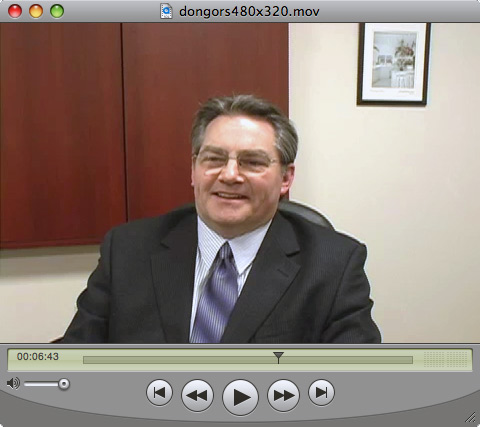
Click to watch or listen (5MB mp3). Gors is running against incumbent Madison School Board President Arlene Silveira. Vote April 7.

Websites: Donald Gors and Arlene Silveira.

Share

Third Party Group Leafletting for Wisconsin DPI Candidate Tony Evers

Advancing Wisconsin is leafletting (and profiling voters with handheld devices) for Wisconsin DPI Candidate Tony Evers (opposed by Ruth Fernandez) (watch a recent debate), Supreme Court Candidate Shirley Abrahamson (opposed by Randy Koschnick) and Dane County Incumbent Executive Kathleen Falk (opposed by Nancy Mistele).

Share

Advanced Placement Annual Conference

The College Board, via a kind reader’s email:

The AP Annual Conference is a forum for all members of the AP and Pre-AP communities, worldwide, to exchange experiences, strengthen professional ties, and gain a better sense of how they can help their students to prepare for college success.

Share

US Library of Congress Joins iTunes

Jeff Gamet:

The U.S. Library of Congress audio archives are becoming even more accessible now that the recordings are being added to Apple’s iTunes Store. The move is part of an effort to bring some 15.3 million digital recordings to the public in an easy to access manner.

Matt Raymond, the Library of Congress director of communications, said “Our broad strategy is to ‘fish where the fish are,’ and to use the sites that give our content added value — in the case of iTunes, ubiquity, portability, etc.”

So far, there are about 39 podcasts available, and more files are on the way, according to Macworld. The Library of Congress is also adding its video library to YouTube.

“These services are a place to start learning, but our agreements are not exclusive, so other services are certainly possible in the future,” said Michelle Springer, Library Web Service Division digital initiatives project manager.

Share

Europe and the Financial Crisis: US High School Students Take on The Euro Challenge

Comtex:

Is the global economy heading from recession to depression? Why did a crisis in US mortgage markets wreak havoc in economies across Europe? The Euro Challenge, an academic contest now in its fourth year, pits teams of high school students against each other as they answer economic and financial questions to showcase their knowledge of everything from ballooning government deficits to rising unemployment.
This year, 72 high school teams from nine states (Connecticut, Florida, Michigan, New Jersey, New York, North Carolina, Massachusetts, Illinois and Pennsylvania) will compete in the Euro Challenge, which fosters a better understanding of the European and transatlantic economy and supports local learning objectives in the field of economics and finance. Regional rounds kick off on March 30 and culminate in the finals at the Federal Reserve Bank of New York on April 29.

Share

Obama Dialogue with a Teacher

Michael Fletcher & Jose Antonio Vargas:

Arguably the most animated and substantial exchange was between the president and a longtime teacher from Overbrook High School in West Philadelphia who was seated a few feet behind him. The teacher asked Obama for his definition of “a charter school” and “an effective teacher.” While Obama quickly dispensed with the first part of the question, he could not get the teacher to answer when he asked whether in her 15 years on the job she has encountered colleagues who she would not want to teach her own children.
“My point is that if we’ve done everything we can to improve teacher pay and teacher performance and training and development, some people just aren’t meant to be teachers, just like some people aren’t meant to be carpenters, some people aren’t meant to be nurses. At some point, they’ve got to find a new career,” he said.

Share

Key Milwaukee voucher advocate says more regulation, standards for program needed

Alan Borsuk:

Calling this a potentially historic moment in Milwaukee education, a key leader of the private school voucher movement called Thursday for major increases in regulation of the participating schools and for a new focus on quality across all the channels of schooling in the city.
Howard Fuller, the former Milwaukee Public Schools superintendent who is now a central figure nationally in advocating for school choice, said he wants school leaders to join with Gov. Jim Doyle, legislative leaders and others in working out new ways to assure that students of all kinds have quality teachers in quality schools.
“We can’t just keep wringing our hands about these terrible schools,” Fuller said. “We have a moral responsibility to our children to not accept that.”
He said that he believes Doyle is seeking higher quality and more accountability and transparency for the 120 private schools in Milwaukee that have more than 20,000 students attending, thanks to publicly funded vouchers. Fuller said he was in general agreement on those goals.
Doyle has presented “an opportunity to come together and do something that is truly constructive for our children,” Fuller said. “I think it is one of those historic moments that don’t come all the time.”
Fuller was reacting both to a new set of studies of the voucher program and to a dramatically different situation for voucher supporters in the state Capitol.

Share

L.A. district to end high-profile dropout-prevention program

Howard Blume:

A high-profile and lauded dropout-prevention program is falling victim to budget cuts — although top Los Angeles school officials insist that they’ll provide a more effective program in its place.
The precarious Diploma Project is emblematic of the financial crisis slowly working its way across the nation’s second-largest school system as ripples of a statewide budget shortfall touch counselors, teachers and other school employees whose work directly affects children enrolled in the Los Angeles Unified School District.
Nearly 9,000 employees — about 10% of the full-time workforce — received notice of a possible layoff this month as the district seeks to cut hundreds of millions of dollars from its nearly $6-billion general fund. But there’s more going on than financial pain.
Reshaping system
After taking the helm in January, Supt. Ramon C. Cortines, one of the country’s most experienced educators, has attempted to reshape the school system. Cortines is seizing the moment to trim or gut some of the central bureaucracy, while also moving dollars and responsibility to schools. The superintendent wants schools to decide for themselves whether to pay for additional counselors, arts programs and librarians, among other things.
The new setup must save money, but it also should be more effective, he said.

Share

Public money for private schools?
Lawmaker: S.C.’s schools fail minorities; state should subsidize private school choice.

Roddie Burris:

State Sen. Robert Ford is putting a new face on the long-running fight over whether to spend public education dollars to pay for private schools.
To the dismay of his African American colleagues, the Charleston Democrat is hawking a bill that would give students a publicly paid scholarship or tuition grant to go to a private school.
So far, the push for school choice has had mostly white faces out front. But Ford, who is seeking the Democratic nomination for governor, is making the case that the students who would benefit most from a voucher-style program in South Carolina are African Americans who attend poorly performing schools.
He dismisses those who say his program would hurt already struggling public schools, framing the argument as a choice between protecting schools or giving children the lifeline they need to succeed.
“You’re damn right I’m hurting public education, because public education is hurting our kids,” Ford said.

Share

Saying “When” on DC School Vouchers

Jay Matthews:

I’m not trying to be a hypocrite. I have supported D.C. school vouchers. The program has used tax dollars well in transferring impoverished students to private schools with higher standards than D.C. public schools. But it has reached a dead end. Congress should fund the 1,713 current voucher recipients until they graduate from high school but stop new enrollments and find a more promising use of the money.
That exasperation you hear is from my friend and former boss, the brilliant Washington Post editorial writer who has been eviscerating Democrats in Congress for trying to kill D.C. vouchers. We don’t identify the authors of our unsigned editorials, but her in-your-face style is unmistakable and her arguments morally unassailable.
My problems with what is formally known as the D.C. Opportunity Scholarship Program are political and cultural, not moral. The program provides up to $7,500 a year for private-school tuition for poor children at an annual cost of about $12 million. Vouchers help such kids, but not enough of them. The vouchers are too at odds with the general public view of education. They don’t have much of a future.

Share

Can AFT president Randi Weingarten satisfy teachers and reformers at the same time?

Andrew Rotherham & Richard Whitmire:

Randi Weingarten, the notoriously feisty president of the second-largest national teachers’ union, the American Federation of Teachers (AFT), received a hero’s welcome at the National Press Club last November. In her speech, she vowed to give ear to almost any tough-minded school reform, and, in a line that thrilled many reformers, promised that the AFT will not protect incompetent teachers: “Teachers are the first to say, ‘Let’s get incompetent teachers out of the classroom.'”
Weingarten would seem to be donning the reformist mantle of a previous AFT president, Al Shanker, a highly regarded reformer who shook up pro-union liberals by reminding everyone that tough school discipline and achievement standards were civil rights fundamentals. But an approach that worked during Shanker’s tenure is more difficult now, with the reformers and unionists pitched in a bare-knuckled fight that is not about lofty, system-changing goals as much as about the thorny specifics of state and local education policy. Caught up in a contentious situation with the Washington, D.C. school system that has challenged her reformist credentials, Weingarten’s attempt to satisfy both sides of the debate is being put to the test–the result of which could dictate the future of education reform across the country.

Joanne Jacobs has more.

Share

Wisconsin State Budget Forum, Wed. April 1, Wright Middle School, 6 p.m.

Joe Quick:

Dear MMSD Advocate,
Every two years, state government adopts a biennial budget that funds nearly every program in state government. Gov. Jim Doyle’s budget mostly protects K-12, but many K-12 programs were cut by 1%. Due to the floundering national/state economy millions of dollars in federal stimulus funds for Wisconsin are being used to provide a one-time boost to state funding for schools over the next two years.
Short-term, there are some important items in the budget that will help MMSD; but long-term, little is being done to end the annual ritual of either going to referendum or determining what programs and services for students must be cut to balance the local budget.
In the two-year legislative cycle, April in odd years is probably the most important time to contact your legislator to advocate for school programs. Whether it’s SAGE, the K-3 class size reduction program funded by the state, or funding for students in special education — the biennial budget provides the resources.
If you want to advocate to protect school programs/services, please come to the State Budget Forum on April 1st (see attached flier [54K PDF]) to learn about the issues, receive information to help you with that advocacy and find out what is being done to bring about comprehensive school funding reform.
Please forward this information to others who might be interested. Hope to see you April 1st,
Joe Quick
Legislative Liaison/Communication Specialist
Madison Schools
608 663-1902

Share

Madison School District Candidate Forum 4/4/2009

via Laurel Cavalluzzo:

WHAT: Board of Education Candidate Forum
with Arlene Silveira Lucy Mathiak Donald Gors
WHEN:  April 4, 2009 10-noon
WHERE:  Lakeview Public Library
2845 N Sherman Ave. [Map]
Madison, WI 53704
(608) 246-4547
 
Open to the public
Learn more about candidate’s positions on issues important to our schools and our communities.
 
SPONSERED BY:
Lakewood Gardens Neighborhood Committee
WI Charter School Assn
Nuestro Mundo, Inc.

Share

A Chat with Arlene Silveira


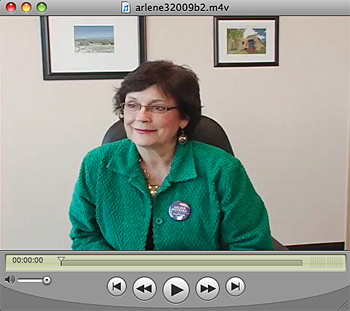
Click above to watch, or CTRL-click to download this mpeg4 or mp3 audio file. You’ll need Quicktime to view the video file.
Madison School Board President Arlene Silveira is up for re-election on April 7, 2009. Arlene graciously agreed to record this video conversation recently. We discussed her sense of where the Madison School District is in terms of:

  1. academics
  2. finance
  3. community support/interaction
  4. Leadership (Board and Administration)

We also discussed what she hopes to accomplish over the next three years.
Arlene’s opponent on April 7, 2009 is Donald Gors. The Wisconsin State Journal recently posted a few notes on each candidate here.
I emailed Arlene, Donald Gors and Lucy Mathiak (who is running unopposed) regarding this video conversation. I hope to meet Lucy at some point over the next few weeks. I have not heard from Donald Gors.
Arlene and Lucy were first elected in April, 2006. There are many links along with video interviews of both here.

Share

Teachers Alleging Attacks by Youths Find Themselves Scrutinized

Bill Turque:

Woodson Academy teacher William Pow had just finished writing on the blackboard one January afternoon, he said, when he turned to face his algebra class and saw the textbook “Mathematics in Life” hurtling toward his head.
He ducked, he said, but it caught him in the neck and shoulder. His colleagues at Woodson have not been as lucky. English teacher Randy Brown said he was hit just above the left ear by a book thrown by a student last month. He was treated for a concussion and said he has since suffered from headaches and nausea.
“They think it’s a game to hit people in the head,” said Brown, who, like Pow, has not returned to school.
They say the 260-student ninth-grade academy, housed at Ronald H. Brown Middle School in Northeast Washington while a new Woodson High is under construction, is overcrowded and dangerous. Brown and Pow count five other teachers or administrators who they said have been attacked this academic year, including one who was pelted by textbooks and another pinned to a desktop and choked. Other teachers, Brown and Pow said, are routinely subjected to verbal threats of violence.

Share

Wisconsin DPI Superintendent Candidate Tony Evers Advocates Charter Schools

Tony Evers campaign, via email:

Tony Evers today pledged to continue his long commitment to Wisconsin’s charter schools, which provide innovative educational strategies. Dr. Evers has played a major educational leadership role in making Wisconsin 6th in the nation, out of all 50 states, in both the number of charter schools and the number of students enrolled in charter schools.
“We are a national leader in charter schools and I will continue my work for strong charter schools in Wisconsin,” Evers said. “As State Superintendent, I will continue to promote our charter schools and the innovative, successful learning strategies they pursue as we work to increase achievement for all students no matter where they live.”
Evers, as Deputy State Superintendent, has been directly responsible for overseeing two successful competitive federal charter school grants that brought over $90 million to Wisconsin. From these successful applications, Evers has recommended the approval of over 700 separate planning, implementation, implementation renewal, and dissemination grants to charter schools around the state since 2001.
During the past eight years, the number of charter schools in Wisconsin has risen from 92 to 221 – an increase of almost 150%. The number of students enrolled in charter schools has increased from 12,000 students in 2001 to nearly 36,000 today.
Evers has also represented the Department of Public Instruction on State Superintendent Elizabeth Burmaster’s Charter School Advisory Council. The council was created to provide charter school representatives, parents, and others with the opportunity to discuss issues of mutual interest and provide recommendations to the State Superintendent.

Share

Madison Schools to Deny Open Enrollment Applications Based on Income?

Seth Jovaag, via a kind reader’s email:

In February 2008, the Madison school board – facing mounting legal pressure – overturned a policy that allowed the district to deny transfer requests based on race. Before that, white students were routinely told they couldn’t transfer. Madison was the only district in the state with such a policy, which aimed to limit racial inequalities throughout the district, said district spokesman Ken Syke.
With that policy gone, Madison saw a nearly 50 percent increase in students asking to transfer, from 435 to 643.
Madison superintendent Daniel Nerad notes that Madison’s numbers had been steadily increasing for years. But he acknowledged that the policy change likely explains some of this year’s jump.
“I think we do see some effect of that, but I’m not suggesting all of it comes from that, because frankly we don’t know,” he said.
Still, Nerad has clearly taken notice. Given the new numbers, he plans to ask state lawmakers to allow Madison to deny future requests based on family income levels, rather than race, to prevent disparities from further growing between Madison and its suburbs.
Other districts that border Madison – including Monona Grove, Middleton and McFarland – are seeing more transfer requests from Madison this year, too.
“The change Madison made … that certainly increased the application numbers,” said McFarland’s business director, Jeff Mahoney.
In addition, Verona school board member Dennis Beres said he suspects many Madison parents are trying to transfer their kids from the chronically overcrowded Aldo Leopold elementary school, which is just two miles northeast of Stoner Prairie Elementary in Fitchburg.

Fascinating. I would hope that the Madison School District would pursue students with high academic standards rather than simply try, via legislative influence and lobbying, to prevent them from leaving…. The effects of that initiative may not be positive for the City of Madison’s tax base.
Related: 2009/2010 Madison Open Enrollment applications. Much more on open enrollment here.

Share

Madison School Superintendent Dan Nerad on Poverty and Enrollment: “For every one student that comes into the MMSD, three leave it”

Kristin Czubkowski, via Jackie Woodruff:

All of the speakers were good, but I will admit I really enjoyed listening to Madison Metropolitan School District Superintendent Dan Nerad talk on the issue of poverty in our schools.

“Oftentimes, the statement is used as follows: Our children are our future. In reality, we are theirs.”

Nerad made one more point I found interesting, which was his explanation for why for every one student that comes into the MMSD, two to three students leave it. While MMSD has been well-recognized for having great schools and students, many of the schools have high concentrations of poverty (17 of 32 elementary schools have more than 50 percent of students on free or reduced lunch programs), which Nerad said can lead to perception issues about how MMSD uses its resources.

“From my perspective, it’s a huge issue that we must face as a community — for every one child coming in, two to three come out right now. I worry that a lot of it is based on this increasing poverty density that we have in our school district … Oftentimes that’s based on a perception of quality, and it’s based on a perception based on that oftentimes that we have more kids in need, that we have more kids with more resource needs, and oftentimes people feel that their own children’s needs may not be met in that equation.”

Recent open enrollment data.

Share

Hudson, New Hampshire Fights Free Kindergarten

Dan Gorenstein:

itizens of Hudson, N.H., are backing their school board’s decision to reject an unfunded state mandate to provide free kindergarten. The case gets a hearing Wednesday.

Hudson School District web site. Many links here, and here.

Share

Verona High school students study the federal stimulus bill

Gena Kittner:

It’s 7:30 in the morning and about 30 high school students are chomping on doughnuts and debating the merits of federal dollars used to fund everything from building child-care centers on U.S. Army bases to lead reduction programs.
The scene is a weekly occurrence at Verona High School where advanced placement students are analyzing the 407-page American Recovery and Reinvestment Act — commonly known as the stimulus bill — as part of an extra credit project.
The students must report the dollar amount appropriated under each title, summarize that section and react to how the money’s being spent.
“I frankly don’t see how that will help the economy or is a pressing need,” Kaitlin McLean, a Verona senior, said of about $90 million going to facilities that deal with passports and training. “Couldn’t $90 million be used to create jobs somewhere else?”
The goal is to have the entire document read by April 3 — an ambitious objective considering many legislators probably haven’t done the same.

Steve Coll has been blogging (and reading) the stimulus/splurge documents.

Share

Pennsylvania’s Cyber Charter Schools

Daveen Rae Kurutz:

When thousands of students ditch home computers and gather in makeshift classrooms across the state today, the future of their cyber charter schools is uncertain.
Testing begins on reading and math portions of the Pennsylvania System of School Assessment, the measure by which the state determines whether public schools are making “adequate yearly progress” under the federal No Child Left Behind Act. Last year, only three of the state’s 11 cyber schools — which educate more than 19,000 students — achieved AYP.
Traditional schools that fail to do so face corrective action from the state that increases in severity each succeeding year, up to a state takeover. Cyber schools face the threat of the state not renewing their five-year charters, effectively shutting them. Six charters are up in the next two years, and test scores will be a big factor in renewals, said Leah Harris, spokeswoman for the Pennsylvania Department of Education.

Bill Tucker has more.

Share

Our Lady Queen of Peace School Principal Steve Bolser dies

George Hesselberg:

Steve Bolser, the man with the Snoopy tie and the Charlie Brown “Never, ever give up” attitude, the principal at “QP” who really was a pal, died Saturday, a year after being told he had a cancerous brain tumor.
Bolser, 56, was the principal at the 470-student Our Lady Queen of Peace School since 1994 but had been in Catholic education for many years, working as a teacher at Edgewood Campus School and as principal of Edgewood High School.
The news of his illness was delivered last year while students were already coping with the death of a fellow student from brain cancer, and after Bolser had brought in specialists to train staff on how best to help children cope with illness and death.
“We were very grateful that along the whole journey the family was in constant communication with us, our pastor, and it was their desire to keep everyone full informed, it was a huge gift to everyone,” said Patty Chrsyt, acting principal at the school.
Bolser had a combination of teaching gifts to go along with his faith, she said, that endeared him to student and staff alike.

Share

Duncan: Schools must improve to get stimulus money

Libby Quaid:

Education Secretary Arne Duncan says schools must make drastic changes to get money from a special $5 billion fund in the economic stimulus bill.
“We’re going to reward those states and those districts that are willing to challenge the status quo and get dramatically better,” Duncan said Monday at the White House.
Those who keep doing the same old thing, however, won’t be eligible for the money, he said.
Schools will be getting tens of billions more dollars through regular channels. On top of that, Duncan will have an unprecedented $5 billion to award for lasting reforms.
To get an award, schools and states must show they have been spending their money wisely. They are supposed to find innovative ways to close the achievement gap between black and Latino children who lag behind their white counterparts in more affluent schools.
Specifically, states are supposed to:

  • Improve teacher quality and get good teachers into high-poverty schools;
  • Set up sophisticated data systems to track student learning;
  • Boost the quality of academic standards and tests;
  • Intervene to help struggling schools.

It will be interesting to see how real this is.

Share

Obama’s Education Chief Knows Stars Are Aligned for Real Change

Gerald Seib:

U.S. Treasury Secretary Timothy Geithner may be the Obama cabinet member facing the biggest crisis — the economic one — but Education Secretary Arne Duncan may be the one holding the biggest opportunity in his hands.
It is this: He inherits the best chance in a generation to really shake up an American education system that is uneven and underperforming. And he knows it.
“I see this as an extraordinary opportunity,” Mr. Duncan says in an interview. “We have a couple of things going in our direction that create what I call the perfect storm for reform.”
If the economy ever heals, and if Afghanistan doesn’t blow up, this quest to change the way Americans educate their kids may emerge as one of the biggest dramas of the Obama term. Here are the components of that perfect storm for change that Mr. Duncan describes:
There’s virtually a national consensus — one that certainly includes business leaders panting for a better-prepared work force — that America’s ossified education system needs a big shake-up. Moreover, a bipartisan trail toward real change was blazed by the Bush administration (which gets too little credit for doing so).

Share

Milwaukee Schools Chief Seeks to Disrupt the Status Quo

Alan Borsuk:

Superintendent William Andrekopoulos on Sunday called for using tens of millions of dollars in federal economic stimulus money “to disrupt the status quo” in Milwaukee Public Schools in a bid to increase student achievement.
Making school days for kindergarten through eighth grader longer by something less than an hour a day and pushing the entire MPS system to switch to a “year-round” schedule, in which summer vacation is shortened, were two of the ideas suggested by Andrekopoulos.
He also called for improving teaching quality by giving staff members more time to prepare for class and collaborate with other teachers and by providing teachers more training.
Andrekopoulos said the short time frame being set for spending economic stimulus money and the urgency of improving student achievement mean that MPS should aim to implement the changes by the start of the coming school year. Decisions must be made by about May 1, he said.
A set of public meetings will be held, beginning Wednesday, to get public reaction and allow people to make their own suggestions on what MPS should do.

Share

Why is NEA cheering Obama’s education ideas?

Elizabeth Hovde:

The National Education Association appears to be humming “Stand By Your Man,” even after President Barack Obama promoted both merit pay and an expansion of charter schools in his recent comments about education.
What gives? Whenever a conservative leader talks about pay differences for educators instead of one-size-fits-all raises, teachers’ unions say “no,” “no” and, “hell, no.” And whenever a Republican supports charter schools, NEA members start calling politicians enemies of public schools.
In a statement released after Obama’s “cradle-to-career” education speech last week, NEA President Dennis Van Roekel welcomed Obama’s “vision” for strengthening public education and said, “He’s off to a solid start. … His ‘cradle-to-career’ proposal mirrors what NEA and its 3.2million members have been advocating.”
The union clearly heard what it wanted to hear (more money) and ignored much of Obama’s talk. Merit pay, charter school expansion and more school accountability are not what the union has been advocating. Given the NEA’s glowing review, I wondered if the union would even have blinked if the president demanded an end to undemocratic, mandatory unionism. (That was not on Obama’s radar, needless to say.)

Share

Congress vs. Washington DC Kids

Andrew Coulson:

Congressional Democrats succeeded this week in crippling a school choice program operating in the nation’s capital. For the last five years, the D.C. Opportunity Scholarships have made private schooling affordable to 1,700 poor children. Rather than reauthorizing the program for another five-year term, Democrats have all but ensured it will die after next year.
House Appropriations Committee Chairman David R. Obey, Wisconsin Democrat, has asked D.C. Public Schools Chancellor Michelle Rhee to prepare for the return of voucher students to the city’s broken public schools.
Sen. Ted Kennedy’s office claims the senator opposed the voucher program from the start because it “takes funds from very needy public schools to send students to unaccountable private schools.” (The House Budget Committee holds hearings today on the U.S. Education Department budget).
But just how needy are D.C. public schools? To find out, I added up all the K-12-related expenditures in the current D.C. budget, excluding preschool, higher-education and charter school items. The total comes to $1.29 billion. Divide that by the official enrollment count of 48,646 students, and it yields a total per-pupil spending figure of $26,555.

Share

Obama on Math

Michael Alison Chandler:

President Obama outlined his reform agenda yesterday for the nation’s public schools in a speech before the US Hispanic Chamber of Commerce. He promoted extending the school day, adopting performance pay for teachers, and encouraging the proliferation of charter schools, to name a few.
But what did he say about math, you are wondering.
Here it is – the math report. Obama’s speech mentioned math education explicitly four times:
1. He reminded the nation that economic development and academic achievement go hand in hand and that the federal government can play a significant role.
“Investments in math and science under President Eisenhower gave new opportunities to young scientists and engineers all across the country. It made possible somebody like a Sergei Brin to attend graduate school and found an upstart company called Google that would forever change our world,” he said.

Share

Written Bomb Threat at Madison West High School: Letter to Parents

Principal Ed Holmes [9K PDF] via a kind reader’s email:

When Madison Schools receive any information that jeopardizes or threatens the safety of our schools, we immediately report the incident to Madison Police and consult with them to determine what the best course of action should be.
The Madison School District has well-defined protocols that are implemented anytime a threat is made against schools. The decisions regarding a response to safety situations are always made in close consultation with the Madison Police Department and other law enforcement agencies.
The safest place for students is in school where we provide structure and supervision. Therefore any decision to remove students from that environment has to be weighed carefully with a potential for placing them in a less structured environment that potentially raises other safety concerns.
These procedures were followed today at West High in response to a written bomb threat.
After consulting with District Administration, the building was searched at 6:00 a.m. using trained Madison Metropolitan School district engineers, architects and custodial supervisors. This procedure has been used in other schools under similar circumstances. Our goal is to maintain a safe educational environment for all students and staff. We have an excellent relationship with our students and encourage them to talk with us about possible issues. We ask you, as families, to help keep our lines of communication open by encouraging your students to talk about their concerns.
West High continues to be a safe place. We pledge that we will continue to focus our time, attention, and resources to keep it so.
Ed Holmes, Principal
Madison West High School [Map]

Related: Police calls near Madison high schools 1996-2006 and recent Madison police calls (the event referenced in the letter above is not present on the police call map as of this morning (3/13/2009)).

Share

Dissolving School Boards: For More Mayors, School Takeovers Are a No-Brainer Oversight by City Hall Can Help Push Through Reforms, but Some Parents and Teachers See Too Much Bullying

John Hechinger & Suzanne Sataline:

More U.S. cities are considering scrapping a longstanding tradition in American education, the elected school board, and opting to let mayors rule over the classroom.
Dallas and Milwaukee are currently mulling mayoral control of the city’s schools, and Detroit is under pressure to try it — for the second time. A dozen major school systems, including New York, Boston, Chicago and Washington, D.C., already have a form of mayoral control.
Advocates say the structure, in which mayors generally appoint school boards and have the power to pick superintendents, enables tough-minded reforms by promoting stable leadership and accountability. Giving the idea more currency, U.S. Education Secretary Arne Duncan, until recently the Chicago schools chief, is a fan and product of mayoral control. And, this week, President Barack Obama promoted some controversial initiatives that have been pushed heavily in districts with mayoral control: charter schools, merit pay for teachers, and accountability, based on rigorous testing standards.
“I would anticipate that over the next few years we will see a new wave” of switches to mayoral authority, says Kenneth Wong, director of Brown University’s urban education policy program, who studies mayoral control of schools.
But critics say that results on student achievement are mixed, and mayoral control can shut out dissent, especially from parents and teachers. That concern is fueling a debate over the reauthorization of a seven-year-old state law this June that gives New York City Mayor Michael Bloomberg control over the city’s schools. His hard-charging chancellor, Joel Klein, who has introduced more school and teacher accountability, has also alienated some politicians and parents, leading to questions about whether the law should be changed or eliminated.

Share

Madison Says No to a Nuestro Mundo Charter Middle School, Opting for Dual Immersion Across the District

TJ Mertz comments on Monday’s Madison School Board meeting:

At Monday’s Board of Education Meeting an administrative recommendation to move forward with planning for a dual language district middle school program at Sennett was approved by a vote of 7-0 and the request for a memo of understanding with Nuestro Mundo Inc in order to qualify a charter dual language immersion middle school program for planning grants was not acted on. The lack of action was an expression of non support for the charter, as the comments by the Board members made clear.

I applaud the Board for their action and inaction.

Background here.

Share

Intel Science Winners Announced: Two from Wisconsin

Brooke Crothers:

Intel has announced the winners of the pre-college Intel Science Talent Search 2009.
The winner, Eric Larson, 17, of Eugene, Ore., was awarded a $100,000 Intel Scholarship. Larson won for his research project “classifying mathematical objects called fusion categories. Eric’s work describes these in certain dimensions for the first time,” Intel said in a statement.
Larson’s background is described on this Siemens Foundation site, which discussed his project and his background last year. The Siemens post states that Larson, in addition to his mathematics prowess, is a piano player and a four-time winner of the Oregon Junior Bach Festival.
He is the son of Steven Larson and Winifred Kerner of Eugene, both members of the music faculty at the University of Oregon, according to the The Oregonian newspaper.

Philip Streich, 18, of Platteville, Wis placed third (home school) and Gabriela Farfan of Madison placed tenth (Madison West High School). Congratulations all around!

Share

As LAUSD layoffs loom, debate over teacher seniority resurfaces

Jason Song & Seema Mehta:

Richard Rivera joined the Algebra Project at exactly the wrong time.
After three years at charter schools, Rivera returned to the Los Angeles Unified School District last year as a math coach — a kind of roving instructor and supervisor — at Luther Burbank Middle School in Highland Park. He also agreed to work on the Algebra Project, a new program designed to keep low-achieving students involved in math.
But even though Rivera spent a decade teaching in the district, he lost his seniority with L.A. Unified because of his foray into the charter world. Because the district lays off teachers based on the amount of time they’ve worked for the school system, Rivera is now in danger of losing his job, and the Algebra Project might stall before it even begins.
If Rivera and other younger teachers involved in the program leave, the school goes “right back to square one,” said John Samaniego, the principal at Burbank, where test scores have slowly been rising.
Samaniego’s dilemma is common throughout the state as districts prepare to issue preliminary layoff notices to teachers by Friday and principals try to determine their plans for next year. The Los Angeles Board of Education is scheduled to vote today on whether to issue these notices to about 9,000 employees, including 5,500 teachers, because of an expected $700-million budget shortfall.

Share

Sun Prairie sells naming rights to baseball field

Gena Kittner:

With the announcement of the new Summit Credit Union Baseball Field, Sun Prairie has likely become the first Dane County school district to sell the naming rights for a specific school facility.
And the high school’s varsity baseball field could be just the beginning: District officials want to sell naming rights to everything from the classrooms and the cafeteria to trophy cases and field lights at the new high school slated to open in the fall of 2010.
“Our goal is to have as many of the big items named before the school opens,” said Jim McCourt, Sun Prairie School Board treasurer and member of the Naming Rights Subcommittee.
The subcommittee has a tentative goal of selling more than $3 million in naming rights. However, district officials say business or individual monikers would be presented tactfully, such as a plaque bearing a person’s name on the back of an auditorium seat or above a classroom doorway.
“It’s not like we’re going to have banners all over the school,” McCourt said.
On Tuesday the district announced Summit Credit Union as the first company to be granted naming rights for a district facility, under the new policy to allow for names of businesses attached to facilities, in exchange for donations.
The School Board approved the naming rights agreement with Summit on Monday night, which will be in effect for 20 years. The credit union donated $99,537, which pays for about a third of the cost of the field that will have artificial turf on the infield.

Share

Obama Education Push to Include Merit Pay

Laura Meckler:

President Barack Obama is laying out his “cradle to career” agenda for education Tuesday, including a controversial plan to boost pay for teachers who excel.
The White House plan also includes new incentives for states to boost quality in their preschool programs, to raise standards for student achievement and to reduce the high school drop-out rate. And the president is fleshing out his plan to increase financial aid for college students, senior administration officials said.
In a speech to the U.S. Hispanic Chamber of Commerce, the president will also call on Americans to take responsibility for their children’s education and their own, the officials said.
The speech will build on comments made during his address to Congress, where Mr. Obama dramatically declared that those who drop out of school are failing not just themselves, but their country.
The speech was described by three administration officials speaking on condition of anonymity in advance of the official announcement, and in a fact sheet provided by the White House.
The merit pay proposal would significantly expand a federal program that increases pay for high-performing teachers to an additional 150 school districts, officials said. “What he’ll be calling for…is to reward good teachers that are improving student outcomes,” said one official.

Share

New superintendent Gray injects optimism into Waukesha schools

Erin Richards:

From the start, Todd Gray knew it wasn’t going to be easy.
On the day he signed the Waukesha Public School District superintendent’s contract, he was told that he might have to close one or two schools because of finances – something nobody brought up in his interviews.
Eight months later, Gray hasn’t closed those schools. Instead, he’s trying to create new ones as part of a sweeping reform effort for Waukesha that may include the implementation of 4-year-old kindergarten, a new middle school structure and expanded business partnerships with the community.
Gray’s emphasis on collaboration and innovation, and his fiscal skills gleaned from years as a certified public accountant, might make him the adrenaline shot that Waukesha’s schools have needed for years.
His guiding principles are inclusive and simple: We can educate kids better, and we can do it for less money.
“Whatever we throw out has to improve education and fit our current goals,” said Gray, who grew up near Lake Geneva and had worked as a deputy superintendent for Oshkosh schools.
When he started in Waukesha this past summer, Gray inherited a report from the former superintendent that suggested closing a school or two to consolidate space and save money. He distanced himself from it, spending weeks studying alternatives.

Share

Watch the Madison School District Discuss the Proposed Middle School Charter School Online

via MMSDTV. Much more on the proposed Middle School Spanish immersion charter school here.

Share

Obama and the Schools

Wall Street Journal Editorial:

Education Secretary Arne Duncan said last week that poor children receiving federally financed vouchers to attend private schools in Washington, D.C., shouldn’t be forced out of those schools. Bully for Mr. Duncan. But the voice that matters most is President Obama’s, and so far he’s been shouting at zero decibels.
His silence is an all-clear for Democrats in Congress who have put language in the omnibus spending bill that would effectively end the program after next year. Should they succeed, 1,700 mostly black and Hispanic students who use the vouchers would return to the notoriously violent and underperforming D.C. public school system, which spends more money per pupil than almost any city in the nation yet graduates only about half of its students.
The D.C. voucher program has more than four applicants for every available slot. Parental satisfaction is sky high. And independent evaluations — another is scheduled for release later this month — show that children in the program perform better academically than their peers who do not receive vouchers. This is the kind of school reform that the federal government should encourage and expand.

Share

U.S. to Nation’s Schools: Spend Fast, Keep Receipts

Sam Dillon:

Arne Duncan, the secretary of education, sent a message to the nation’s school officials last week: Heads up! We’ll be sending you billions of dollars by month’s end. Spend the money quickly but wisely. And keep receipts; we’ll be asking.
The message, which went out Friday in documents e-mailed to governors, state education commissioners and thousands of school superintendents, provided the first broad guidelines for how the Education Department intends to channel $100 billion to the nation’s 14,000 school districts over the next few months. The expenditure is part of the Obama administration’s economic stimulus package.
Some $44 billion will be made available to states before the end of this month, Mr. Duncan said, in the hope that layoffs can be averted. Hundreds of thousands of job losses in schools had been projected for the fall because of growing state budget deficits caused by a steep drop in tax revenues.
More school stimulus money will be distributed in the spring through the fall, the documents said, after states apply for the financing and provide Congressionally mandated “assurances” to Mr. Duncan that they are complying with federal education laws.

Share

Advocating More Madison Charter Schools

Wisconsin State Journal Editorial, via a kind reader’s email:

Madison needs to get past its outdated phobia of charter schools.
Charter schools are not a threat to public schools here or anywhere else in Wisconsin. They are an exciting addition and asset to public schools — a potential source of innovation, higher student achievement and millions in federal grants.
And when charter schools do succeed at something new, their formula for success can be replicated at traditional schools to help all students.
That’s what’s starting to happen in Madison with the success of a dual-language charter elementary school called Nuestro Mundo. Yet too many district officials, board members and the teachers union still view charters with needless suspicion.
Madison’s skeptics should listen to President Barack Obama, who touts charter schools as key to engaging disadvantaged students who don’t respond well to traditional school settings and curriculums. Obama has promised to double federal money for charter school grants.
But Madison school officials are ignoring this new pot of money and getting defensive, as if supporting charter schools might suggest that traditional schools can’t innovate on their own.
Of course traditional schools can innovate. Yet charter schools have an easier time breaking from the mold in more dramatic ways because of their autonomy and high level of parent involvement.
Several School Board members last week spoke dismissively of a parent-driven plan to create a dual-language charter school within a portion of Sennett Middle School. Under the proposal, Nuestro Mundo would feed its bilingual students into a charter at Sennett starting in the fall of 2010.

I continue to believe that our community and schools would be better off with a far more diffused governance structure, particularly in the management of more than $415,699,322 (current 08/09 budget) for a 24,189 student district. Related: the failed Madison Studio Charter School application.

Share

Decision could pave way for 4-year-old kindergarten

Doug Erickson:

A family’s federal court victory over the Madison School District in a disability rights lawsuit could push forward efforts in the district to start a 4-year-old kindergarten program, the attorney representing the family predicts.
On Feb 25, U.S. District Judge Barbara Crabb ruled that the district violated the federal law governing children with disabilities when it refused to pay a portion of the private preschool tuition for a 4-year-old with a learning disability.
The child needed to participate in activities with non-disabled peers to improve his social behavior, according to the lawsuit filed by his parents.
The preschool was an appropriate setting for this to happen, and the district did not offer any alternatives, Crabb ruled.
The Individuals with Disabilities Education Act requires districts to provide disabled 3- and 4-year-olds with an appropriate preschool education at no charge

Share

Vouchers vs. the District with ‘More Money than God’

Andrew Coulson, via a kind reader’s email:

This week, education secretary Arne Duncan referred to DC public schools as a district with ” more money than God.” Perhaps he was thinking of the $24,600 total per-pupil spending figure I reported last year in the Washington Post and on this blog. If so, he’s low-balling the number. With the invaluable help of my research assistant Elizabeth Li, I’ve just calculated the figure for the current school year. It is $28,813 per pupil.
In his address to Congress and his just-released budget, the president repeatedly called for efficiency in government education spending. At the same time, the Democratic majorities in the House and Senate have been trying to sunset funding for the DC voucher program that serves 1,700 poor kids in the nation’s capital. So it seems relevant to compare the efficiencies of these programs.
According to the official study of the DC voucher program, the average voucher amount is less than $6,000. That is less than ONE QUARTER what DC is spending per pupil on education. And yet, academic achievement in the voucher program is at least as good as in the District schools, and voucher parents are much happier with the program than are public school parents.
In fact, since the average income of participating voucher families is about $23,000, DC is currently spending about as much per pupil on education as the vouchers plus the family income of the voucher recipients COMBINED.

Share

On Education Spending Facts, not faith Obama pours money into discredited programs

Bruce Fuller:

President Obama’s massive education initiative detailed in his proposed budget aims at the right challenge – lifting our schools and narrowing achievement gaps. But huge chunks of his eye-popping $131 billion package, now before Congress, would go for stale federal programs that have long failed to elevate students’ learning curves.
Mr. Obama promised a sharp break from President Bush, who often bent scientific findings to advance his favored dogma. Instead, “it’s about ensuring that facts and evidence are never twisted or obscured by politics or ideology,” Obama promised at his inauguration.
Few question the president’s plea to improve the quality of our schools and colleges, racheting-up our economy’s competitiveness. This requires not just retooling auto factories or investing in solar power, but enriching the nation’s human capital as well.
To boost school quality Obama declared that he would only fund programs that lift pupil performance. “In this budget,” he declared before the Congress, “we will end education programs that don’t work.” Music to the ears of the empirically minded.
But hard-headed scholars are scratching those craniums over Obama’s desire to spend billions more on disparate federal programs that have delivered little for children or teachers over the past decade.
Take Washington’s biggest schools effort: the $14 billion compensatory education program, known as Title I, supporting classroom aides and reading tutors for children falling behind. A 1999 federal evaluation showed tepid results at best, largely because local programs fail to alter core classroom practices or sprout innovative ways of engaging weaker students.

Bruce Fuller, professor of education and public policy at the UC Berkeley, is author of “Standardized Childhood.”

Share

Against Virtual Schools: K12 should not take tax money from local schools

Tim Schilke:

The Wisconsin Virtual Academy, sponsored by the Northern Ozaukee School District, just completed its busiest time of year. As Wisconsin progressed through the open school enrollment period for the 2009-2010 school year, the WIVA bombarded homes around the state with mailings, advertising itself as an online alternative to local schools. School administrators traveled to dozens of locations around the state, offering introductory sessions designed to entice students away from brick and mortar schools, in favor of clicking, scrolling and remotely conferencing through virtual classes.
Wisconsin’s open enrollment provides more than $6,000 per student in transfer fees to the recipient school district, on behalf of students whose parents choose to send them to public schools outside of their local community. Open enrollment in general carries many benefits for students, providing alternatives in heavily populated areas like Milwaukee, where many different school districts of varying quality and program offerings exist in close proximity. But the WIVA, operated by the McFarland School District, has no geographical association with the majority of its students.
School districts in southern Ozaukee County require between $11,000 and $13,000 in tax revenue per student, collected from federal, state, and property taxes, and other sources. The Wisconsin Virtual Academy receives only the 2008-2009 state transfer payments of $6,322 per student. Unlike traditional schools, the state payment fully funds the virtual program, and coincidentally still provides ample profit for the virtual program’s curriculum and software vendors. But any such comparison between a virtual school and a more traditional brick and mortar facility is probably not comparing apples to apples, considering teacher-to-student ratios and well-rounded learning experiences.
The WIVA is operated in partnership with a company called K12, Inc., which even hosts the WIVA’s promotional Web site on behalf of the school district. K12 is a publicly-traded, for-profit company based in Virginia, and for the record, the company has no shortage of profit. For the fiscal year ended June 30, 2008, K12 reported net income of $18 million, on revenues of $226 million, primarily collected from states like Wisconsin, which make tax dollars available to virtual schools.

Share

Student Beaten in Toki Middle School Bathroom

WKOW-TV via a kind reader’s email:

Parents of students at a Madison middle school worry about safety after a child was beat up in one the school’s bathroom.
The incident happened last week Thursday.
According to a letter sent home to parents Monday, a group of students followed a male student into the boy’s bathroom where another student assaulted him.
The group blocked entrance to the bathroom.
Surveillance cameras show the beating along with a group of witnesses cheering on the violence.
Toki [Map] Principal Nicole Schaefer says the school sent the letter to alert parents that the proper actions were taken and assure them the school is safe.
Schaefer would not tell 27 News if any students were suspended or if the victim is back in school.

Toki Middle School Restorative Justice Plan [82K PDF]:

Judicious discipline is a three pillared process set on a solid educational foundation. The first pillar is prevention through education and positive behavior supports; the second pillar is equity through fair and consistent consequences, and the third pillar is restoration through empathy, forgiveness and conflict resolution. The educational foundation that these pillars stand on is curriculum, instruction and assessment practices that are engaging, rigorous, culturally responsive, and individualized. In summary, kids who are engaged in learning are less likely to engage in misconduct.
The backbone of our discipline policy is that all staff and students must be treated with dignity and respect, including those who harm others. We want everyone to know that misconduct is never acceptable, but always fixable. We will be warm but strict, and follow through with clear, fair and consistent consequences, but also encourage students to repair the harm they caused, earn forgiveness, and restore their reputations.
When a student engages in misconduct, we must care for two interests:

  1. The student who misbehaves – We teach the student how to repair the harm, earn forgiveness, and restore his or her reputation
  2. All other students – We protect their health, safety, property, and opportunity to learn in an environment free from distractions

Therefore, when a student engages in misconduct, he or she has two options:

  1. Fix the harm (ex: Apology, Mediation, Repair or Replace, Community service, Extended learning)
  2. Accept a consequence (ex: Lunch detention, After school detention, In school suspension, Out of school suspension, Suspension alternatives)

The consequences for misconduct will vary, depending on how the behavior harms the health, safety, property and learning opportunities of other students. Although choosing to “fix the harm” may reduce or replace consequences for less harmful misconduct, behaviors that significantly or severely harm others will result in mandatory suspension days, up to a recommendation for expulsion.

40 students ( 2008/2009 student population is 538) open enrolled out of Toki Middle school for the 2009/2010 term according to this Madison School District document. Much more on Toki here.


Share

Parents Sue Trustees Over Prep School’s Shutdown

Geraldine Fabrikant:

When the students of the Conserve School in Wisconsin poured into the auditorium on a blustery morning early this year, they had no inkling of what would follow.
Stefan Anderson, the headmaster, told them that the trustees were essentially shutting down the prep school because of the dismal economic climate. Its four-year program would be converted to a single semester of study focused on nature and the environment.
“We thought we would hear they were cutting financial aid,” recalled Erty Seidel, a senior on the wooded campus, which is filled with wildlife and sprawls across 1,200 acres in Land O’ Lakes.
Greta Dohl, a student from Iron River, Mich., in her third year at the school, broke down and cried. “I was absolutely heartbroken,” she said of the closing.
Now students and parents are banding together and challenging the action, contending the school’s underlying financial condition does not look so dire. In fact, the school’s endowment would be the envy of many a prep school. With $181 million and 143 students, it has the equivalent of more than $1 million a student.
In a lawsuit filed in State Circuit Court in Wisconsin, the parents argue that the trustees are acting in their own interests — as officials of a separate, profit-making steel company — and want them removed from oversight of the school.

Share

Madison School Board: Legislative Session and Fine Arts Task Force

Legislative Informational Community Session: We are holding a special Board meeting to focus on legislative issues on Wednesday April 1 at 6:00pm at Wright Middle School. At this session we will provide updates on school funding and state budget issues that affect the MMSD. We will discuss and share strategies on how the community can get involved in advocating for our schools.
Fine Arts Task Force (FATF) Informational Community Sessions: The focus of each session will be a presentation of the findings and recommendations of the FATF followed by an opportunity for discussion. The Executive Summary and complete FATF report can be found at http://www.madison.k12.wi.us/boe/finearts/ Tuesday, March 10, 6:00-8:00pm, Memorial High School. Thursday, March 12, 6:00-8:00pm, La Follette High School LMC.

Share

Throwing billions at schools won’t fix them

Pedro Noguera:

The American Recovery and Reinvestment Act, President Obama’s stimulus package, could serve as a historic investment in our children’s future, an initiative that could very well change the course of our nation.
It is an opportunity that cannot be squandered.
However, there is good reason for concern that the funds made available for education under the act will not result in the change we need.
Over the past eight years, educational progress in the United States has been modest at best. According to a national study by the Gates Foundation (“The Silent Epidemic,” 2006), dropout rates in many of our nation’s largest cities are 50 percent or higher.
Similarly, large numbers of students lack proficiency in reading and math in many school districts across the country, and many who graduate and go on to college are largely unprepared for the rigors of college-level course work.
Seven years after the adoption of the No Child Left Behind law, it is clear we are still leaving many children behind.
Tinkering with existing policy is unlikely to produce different results. The Obama administration needs a bold new strategy for reforming our public education system if it hopes that our schools are going to play a more significant role in moving the nation forward. However, so far, and certainly it is still is early in the term of this administration, no new vision or strategy for reforming the nation’s schools has been articulated.
There is justifiable reason to be concerned that by calling for funds from the stimulus package to be spent quickly on “shovel-ready” projects in order to produce the jobs that are so desperately needed, the administration will not have the time to develop a thoughtful strategy that can guide the reform of the nation’s public schools.

Pedro Noguera is a professor at New York University and director of the Metropolitan Center for Urban Education. He is editor of “Unfinished Business: Closing the Achievement Gap in Our Nation’s Schools” and author of “The Trouble With Black Boys: And Other Reflections on Race, Equity and the Future of Public Education.”

Share

US Education Secretary Duncan Advocates for the Stimulus

Bill Turque & Maria Glod:

To help struggling schools, the federal government will use stimulus funding to encourage states to expand school days, reward good teachers, fire bad ones and measure how students perform compared with peers in India and China, Education Secretary Arne Duncan said yesterday.
History has shown that money alone does not drive school improvement, Duncan said, pointing to the District of Columbia, where public school students consistently score near the bottom on national reading and math tests even though the school system spends more per pupil than its suburban counterparts do.
“D.C. has had more money than God for a long time, but the outcomes are still disastrous,” Duncan said in an interview with Washington Post editors and reporters. He said the unprecedented influx of cash, which will begin to flow in the next 30 to 45 days, would target states, local school systems and nonprofit organizations willing to adopt policies that have been proven to work.
“The challenge isn’t an intellectual one, it’s one of political courage,” said Duncan, who developed a reputation for a willingness to experiment and disrupt the status quo in seven years as chief executive of Chicago schools.

Share

Grading system change debated: Will city’s method make difference?

Joe Smydo:

David Chard, dean of the Simmons School of Education and Human Development at Southern Methodist University in Dallas, says there’s little difference between most grading scales.
“It’s like Celsius and Fahrenheit. It’s exactly the same thing,” he said.
Bob Schaeffer, public education director for the advocacy group FairTest, said a debate over grading scales often reveals the “tyranny of false precision.”
“These numbers were not handed down by God on a stone tablet,” he said.
To Robert Marzano, a Denver-based education researcher, the typical grading scale is an incomplete measure of student achievement. He recommends bar graphs measuring student achievement on various course topics.
As officials in the Pittsburgh Public Schools prepare to drop a controversial grading scale for a 5-point scale they’re calling fairer and more accurate, Dr. Chard, Dr. Marzano and Mr. Schaeffer cautioned that no version is perfect.
All require some degree of teacher subjectivity, and all require careful, thoughtful application, Dr. Chard said.
Mr. Schaeffer said grading scale controversies generate “much more heat than light,” yet Dallas and Fairfax, Va., also are in the midst of them now.
Dr. Marzano said as many as 3,000 schools or districts have made some of the improvements he favors, such as expanded report cards with bar graphs breaking down student achievement at the topic level while still giving overall course averages and letter grades. He said the bar graphs can correspond to five-point scales measuring achievement in the topic areas.

The Madison School District’s move toward “Standards Based” report cards has not been without some controversy.

Share

Teenagers With Souls of Poets Face Off

Liz Robbins:

It was a rainy Friday evening in Chelsea, and nobody wanted to go home, preferring instead to spit poems from the depths of their tortured teenage souls.
The finals of the New York Knicks Poetry Slam Program were in four days, and a handful of high school poets from around New York City had gathered at the headquarters of Urban Word, a literary arts organization for young people, to cheer Tia-Moné Llopiz as she cried out again in eloquent anguish over her mother’s death.
They needed to hear Cynthia Keteku, known as Ceez, come to grips with her girlfriend’s dumping her for a boy.
And they could not help but hear Elton Ferdinand III — even through the walls of the director’s office — crescendo to a state of raging guilt over his mute uncle in Guyana, a man misunderstood.
In their search for identity and their quest to be understood, the teenagers mold metaphors from their jagged-edge experiences and bend rhymes to their own rhythm.
“Ladies and gents, this is more than a silly teen’s heartbreak,” intoned Lauren Anderson, 16, who attends the Beacon School.

Share

More on DC Vouchers: “Will Obama Stand Up for These Kids?”

William McGurn:

Dick Durbin has a nasty surprise for two of Sasha and Malia Obama’s new schoolmates. And it puts the president in an awkward position.
The children are Sarah and James Parker. Like the Obama girls, Sarah and James attend the Sidwell Friends School in our nation’s capital. Unlike the Obama girls, they could not afford the school without the $7,500 voucher they receive from the D.C. Opportunity Scholarship program. Unfortunately, a spending bill the Senate takes up this week includes a poison pill that would kill this program — and with it perhaps the Parker children’s hopes for a Sidwell diploma.
Sarah and James Parker attend Sidwell Friends School with the president’s daughters, thanks to a voucher program Sen. Dick Durbin wants to end.
Known as the “Durbin language” after the Illinois Democrat who came up with it last year, the provision mandates that the scholarship program ends after the next school year unless Congress reauthorizes it and the District of Columbia approves. The beauty of this language is that it allows opponents to kill the program simply by doing nothing. Just the sort of sneaky maneuver that’s so handy when you don’t want inner-city moms and dads to catch on that you are cutting one of their lifelines.
Deborah Parker says such a move would be devastating for her kids. “I once took Sarah to Roosevelt High School to see its metal detectors and security guards,” she says. “I wanted to scare her into appreciation for what she has at Sidwell.” It’s not just safety, either. According to the latest test scores, fewer than half of Roosevelt’s students are proficient in reading or math.
That’s the reality that the Parkers and 1,700 other low-income students face if Sen. Durbin and his allies get their way. And it points to perhaps the most odious of double standards in American life today: the way some of our loudest champions of public education vote to keep other people’s children — mostly inner-city blacks and Latinos — trapped in schools where they’d never let their own kids set foot.

Share

Schools Crunch Calculus on Stimulus

Anne Marie Chaker:

Schools struggling with some of their worst budget crises in generations are taking stock of President Obama’s stimulus package — hoping the money will restore funding for things like textbooks, teacher salaries and tuition.
The $100 billion in funding dedicated to education touches programs for almost every age group, from early-childhood programs to financial aid for college students. While the money, part of the $787 billion stimulus package, may not result in a full turnaround, districts say, it will help stop some of the bleeding.
Michael Klein
“It’s going to mean a softer landing for us,” says Jack O’Connell, state superintendent of public instruction in California. That state is facing an $11.6 billion cutback in public-education funding, affecting the remainder of this school year as well as next. In some cases, Mr. O’Connell says, “instead of a superintendent having to decide between textbooks or a math teacher, we’ll be able to do both. Or, it will mean a longer bus ride for kids, instead of eliminating transportation.”
When addressing education in the stimulus package, the president last week told a joint session of Congress, “We have provided the resources necessary to prevent painful cuts and teacher layoffs that would set back our children’s progress.”

Share

Winterhouse Writing Awards

aiga.org:

The Winterhouse Awards for Design Writing & Criticism seek to increase the understanding and appreciation of design, both within the profession and throughout American life. A program of AIGA, these annual awards have been founded by Jessica Helfand and William Drenttel of the Winterhouse Institute to recognize excellence in writing about design and encourage the development of young voices in design writing, commentary and criticism.
The 2009 awards will be open for entries beginning March 2.
Read about the members of the 2009 jury.
THE TWO TYPES OF AWARDS ARE:
Writing Award of $10,000
Open to writers, critics, scholars, historians, journalists and designers and given for a body of work.
Education Award of $1,000
Open to students (high school, undergraduate or graduate) whose use of writing, in the interest of making visual work or scholarship or cultural observation, demonstrates extraordinary originality and promise.
This awards program is part of a larger AIGA initiative to stimulate new levels of design awareness and critical thinking about design.

Share

The riddle of education: Why is it the last priority?

Alexandra Marshall:

ALTHOUGH it wasn’t favored to win, and it didn’t, “The Class” was film critics’ “should win” pick for best foreign-language film. Because this deeply engaging movie addresses the subject of teaching underserved public school students, it points to the obvious larger question of why education itself so often should win, but doesn’t.
In the compromised version of the economic stimulus package, it was reported by the Los Angeles Times, education spending was “one of the main sticking points” in securing the necessary votes. While protecting funds for other needs such as healthcare, housing, transportation, green energy, infrastructure, the auto industry, and even banking, why cut education? Why are teaching and learning so routinely deemed expendable when everyone agrees they shouldn’t be?
In a bracingly effective way, “The Class” confronts this riddle with the vivid example of a middle school French teacher in an immigrant neighborhood on the outskirts of Paris. François Bégaudeau is this teacher as well as the author of “Entre les Murs,” the acclaimed novel/memoir on which the film is closely based. Onscreen, he and his actual students make the hectic “ordinaire tragi-comique” of the book three-dimensional. And under the sly direction of Laurent Cantet, their fragmented classroom interactions yield a film celebrated as “seamless” by actor Sean Penn, who headed the jury awarding it the Cannes Festival’s Palme d’Or for best picture.

Alexandra Marshall, a guest columnist, is the author of “The Court of Common Pleas” and four other novels.

Share