School Information System

On Wisconsin’s State K-12 Education Budget

Bob Godfrey:

Following several hours of impassioned testimony from administrators, parents, and staff from school districts throughout the state, both large and small, at this week’s School Finance Network Assembly Hearing, it ended, unfortunately, on what could be charitably characterized as a flat note. Despite the hard work of disparate leaders of education groups meeting constantly for the past couple of years to come up with a thoroughly conceptualized school finance reform plan to present to the legislature, a committee composed of organizations in the School Finance Network who have often been traditionally at odds with each other in the past (for example WEAC and WASB ), came to the hearing armed with numbers vetted by both economists at the UW-Madison and the state Legislative Fiscal Bureau, including a number of suggestions for how to pay for this reform. However, the Committee on Education made it clear they were not going to take any action on this plan for the upcoming budget legislation hearings for the 2009-2011 budget. And most discouragingly there were, was, as far as I’m aware, no newspaper coverage of this event. I saw only one Madison tv crew present. They covered some of the personal testimony at the beginning but were not around to hear the actual presentation of the plan itself, which came late in the proceedings, too late to make it into the evening broadcast.

Share

State schools to get $366 million in stimulus aid; Madison gets $11.7M

Gayle Worland:

The Madison School District will spend the next couple of months figuring out how best to spend a two-year, nearly $11.7 million windfall in federal stimulus money, Madison’s school superintendent said Thursday.
More money for early-learning programs, possibly including 4-year-old kindergarten, is one of many ideas on the table, Superintendent Dan Nerad said.
“We have to be deliberative about our planning,” he said. “If we had the benefit of more time, we could have a longer conversation. But we’re going to have a good conversation, with a lot of good ideas. We’ve been waiting for the regulations, to make sure that we weren’t putting things out there that couldn’t be included in the final package.”

Related: China increases gold reserves.

Share

How Members of the 111th Congress Practice Private School Choice

Lindsey Burke:

Policies that give parents the ability to exercise private-school choice continue to proliferate across the country. In 2009, 14 states and Washington, D.C., are offering school voucher or education tax-credit programs that help parents send their children to private schools. During the 2007 and 2008 legislative sessions, 44 states introduced school-choice legislation.[1] In 2008, private-school-choice policies were enacted or expanded in Arizona, Florida, Georgia, Louisiana, Pennsylvania, and Utah[2]–made possible by increasing bipartisan support for school choice.[3]


On Capitol Hill, however, progress in expanding parental choice in education remains slow. Recent Congresses have not implemented policies to expand private-school choice. In 2009, the 111th Congress has already approved legislative action that threatens to phase out the D.C. Opportunity Scholarship Program (OSP), a federal initiative that currently helps 1,700 disadvantaged children attend private schools in the nation’s capital.


Congress’s Own School Choices


At the same time, many Members of Congress who oppose private-school-choice policies for their fellow citizens exercise school choice in their own lives. Senator Richard Durbin (D-IL), the chief architect of the language that threatens to end the OSP, for instance, sends his children to private school[4] and attended private school himself.[5]

Washington Post editorial: “Only for the Privileged Few?“:

NEW SURVEY shows that 38 percent of members of Congress have sent their children to private school. About 20 percent themselves attended private school, nearly twice the rate of the general public. Nothing wrong with those numbers; no one should be faulted for personal decisions made in the best interests of loved ones. Wouldn’t it be nice, though, if Congress extended similar consideration to low-income D.C. parents desperate to keep their sons and daughters in good schools?


The latest Heritage Foundation study of lawmakers’ educational choices comes amid escalating efforts to kill the federally funded D.C. Opportunity Scholarship Program that helps 1,700 disadvantaged children attend private schools. Congress cut funding beyond the 2009-10 school year unless the program, which provides vouchers of up to $7,500, gets new federal and local approvals. Education Secretary Arne Duncan cited that uncertainty as the reason for his recent decision to rescind scholarship offers to 200 new students. Senate hearings on the program’s future are set for this spring, and opponents — chiefly school union officials — are pulling out all the stops as they lobby their Democratic allies.

Share

Educator offers a radical approach

Jeremy Meyer:

Michelle Rhee, a national firebrand for education reform, urged Colorado educators and lawmakers Thursday night to continue their efforts to change the state of education.
Rhee — chancellor of Washington, D.C., schools who closed 23 schools in her first year, fired 36 principals and proposed paying more money to good teachers and firing the bad ones — spoke at a meeting of the Democrats for Education Reform in the auditorium of the Denver Newspaper Agency building.
The standing-room-only crowd included Lt. Gov. Barbara O’Brien, state Senate President Peter Groff and U.S. Rep. Jared Polis.
“We have public schools so that every kid can have an equal shot in life,” Rhee said. “That is not the reality for children in Washington, D.C., today or many children in urban cities today. That is the biggest social injustice imaginable.”
Rhee said radical changes are necessary. “Unless we do something massive about this right now, unless we are willing to turn the system on its head . . . then all of the ideals of this country are actually hollow,” she said.

Share

Charter Schools Face High Demand, but Few Seats
Obama Wants to Expand the Alternative Program, but Laws, Labor Unions Will Make That Hard to Achieve

Robert Tomsho:

The waiting lists for charter schools, already notoriously long, look like they are about to get longer.
President Barack Obama and Arne Duncan, his new education secretary, are trying to entice states into opening more of the alternative schools. But despite brisk enrollment growth and long waiting lines for many existing charter schools, states appear to be in no hurry to oblige.
With 1.4 million students in 4,600 schools, charters are by far the most significant achievement of the “choice” movement that strives to promote educational gains through school competition. Enrollment in charter schools, which are publicly funded, has more than doubled in the last six years.
But obstacles loom to accommodating more charter-school students. The recession has intensified school districts’ concerns about competing for public funds with charter schools. Some charter-school supporters say such schools need more oversight. But unions are using any missteps at charter schools, which aren’t typically unionized, to oppose their expansion.

Share

Taking School Choice for Granted

Lindsey Burke & Dan Lips:

President Obama, Education Secretary Arne Duncan, and most members of Congress have never known the sense of desperation that LaTasha Bennett feels.
Bennett is one of hundreds of Washington, D.C., parents who recently opened a letter from the U.S. Department of Education with devastating news: Her child was no longer eligible to receive a private-school scholarship for the upcoming school year. This sent Bennett and other parents scrambling to find their children spots in good public schools — a challenge in a city where few students read at grade level and barely half graduate from high school.
President and Mrs. Obama faced the same problem when they moved to the District in January, but they were able to afford a private school for their daughters. And for Secretary Duncan and his wife, finding a good school was a top concern when deciding where to live in the D.C. area. They wound up choosing Arlington, Va., a community with good public schools. Duncan recently told Science magazine: “My family has given up so much so that I could have the opportunity to serve; I didn’t want to try to save the country’s children and our educational system and jeopardize my own children’s education.”

George Will has more:

He has ladled a trillion or so dollars (“or so” is today’s shorthand for “give or take a few hundreds of billions”) hither and yon, but while ladling he has, or thinks he has, saved about $15 million by killing, or trying to kill, a tiny program that this year is enabling about 1,715 D.C. children (90 percent black, 9 percent Hispanic) to escape from the District’s failing public schools and enroll in private schools.


The District’s mayor and school superintendent support the program. But the president has vowed to kill programs that “don’t work.” He has looked high and low and — lo and behold — has found one. By uncanny coincidence, it is detested by the teachers unions that gave approximately four times $15 million to Democratic candidates and liberal causes last year.


Not content with seeing the program set to die after the 2009-10 school year, Education Secretary Arne Duncan (former head of Chicago’s school system, which never enrolled an Obama child) gratuitously dashed even the limited hopes of another 200 children and their parents. Duncan, who has sensibly chosen to live with his wife and two children in Virginia rather than in the District, rescinded the scholarships already awarded to those children for the final year of the program, beginning in September. He was, you understand, thinking only of the children and their parents: He would spare them the turmoil of being forced by, well, Duncan and other Democrats to return to terrible public schools after a tantalizing one-year taste of something better. Call that compassionate liberalism.

Share

Financial Manager Targets Detroit Schools

Noah Ovshinsky:

Detroit’s public schools are under the microscope — and a new state-appointed emergency financial manger is addressing a $300 million deficit. In the month Robert Bobb has been on the job, he has proposed closing up to 50 schools in the next two years.

Share

How to Raise the Standard in America’s Schools

Walter Isaacson:

National standards have long been the third rail of education politics. The right chokes on the word national, with its implication that the feds will trample on the states’ traditional authority over public schools. And the left chokes on the word standards, with the intimations of assessments and testing that accompany it. The result is a K-12 education system in the U.S. that is burdened by an incoherent jumble of state and local curriculum standards, assessment tools, tests, texts and teaching materials. Even worse, many states have bumbled into a race to the bottom as they define their local standards downward in order to pretend to satisfy federal demands by showing that their students are proficient.
It’s time to take another look. Without national standards for what our students should learn, it will be hard for the U.S. to succeed in the 21st century economy. Today’s wacky patchwork makes it difficult to assess which methods work best or how to hold teachers and schools accountable. Fortunately, there are glimmers of hope that the politics surrounding national standards has become a little less contentious. A growing coalition of reformers — from civil rights activist Al Sharpton to Georgia Republican governor Sonny Perdue — believe that some form of common standards is necessary to achieve a wide array of other education reforms, including merit pay for good teachers and the expansion of the role of public charter schools. (See pictures of inside a public boarding school.)
The idea of “common schools” that adopt the same curriculum and standards isn’t new. It first arose in the 1840s, largely owing to the influence of the reformer Horace Mann. But the U.S. Constitution leaves public education to the states, and the states devolve much of the authority to local school districts, of which there are now more than 13,000 in the U.S. The Federal Government provides less than 9% of the funding for K-12 schools. That is why it has proved impossible thus far to create common curriculum standards nationwide. In 1989, President George H.W. Bush summoned the nation’s governors to Charlottesville, Va., to attempt a standards-based approach to school reform. The result was only a vague endorsement of “voluntary national standards,” which never gained much traction. In 1994, President Bill Clinton got federal money for standards-based reform, but the effort remained in the hands of the states, leading to a wildly varying hodgepodge of expectations for — as well as ideological battles over — math and English curriculums.

Share

School Reform Means Doing What’s Best for Kids

Arne Duncan:

As states and school districts across America begin drawing down the first $44 billion in education funds under the American Recovery and Reinvestment Act, they should bear in mind the core levers of change under the law. In order to drive reform, we will require an honest assessment by states of key issues like teacher quality, student performance, college-readiness and the number of charter schools. We’ll also have a strategy to address low-performing schools and provide incentives to compel improvement.


When stakeholders — from parents and business leaders to elected officials — understand that standards vary dramatically across states and many high-school graduates are unprepared for college or work, they will demand change. In fact, dozens of states are already independently working toward higher standards in education. Union leaders have also signed on.


When parents recognize which schools are failing to educate their children, they will demand more effective options for their kids. They won’t care whether they are charters, non-charters or some other model. As President Barack Obama has called for, states should eliminate restrictions that limit the growth of excellent charter schools, move forward in improving or restructuring chronically failing schools, and hold all schools accountable for results.

Share

The Economic Impact of the Achievement Gap in America’s Schools

McKinsey [772K PDF]:

McKinsey’s report, The Economic Impact of the Achievement Gap in America’s Schools, examines the dimensions and economic impact of the education achievement gap. While much controversy exists on the causes of the gap and on what the nation should do to address it, the full range of the achievement gap’s character and consequences has been poorly understood.

This report examines the dimensions of four distinct gaps in education: (1) between the United States and other nations, (2) between black and Latino students and white students, (3) between students of different income levels, and (4) between similar students schooled in different systems or regions.

The report finds that the underutilization of human potential as reflected in the achievement gap is extremely costly. Existing gaps impose the economic equivalent of a permanent national recession—one substantially larger than the deep recession the country is currently experiencing. For individuals, avoidable shortfalls in academic achievement impose heavy and often tragic consequences via lower earnings, poor health, and higher rates of incarceration.

Share

Billions “Wasted” on Scottish Education

Lorraine Davidson:

“It is clear from the research that the extra spending is simply not delivering value for money,” Geoff Mawdsley, director of Reform Scotland, said. “Put another way, billions of pounds have been spent in the last decade to little or no effect.”
While spending per pupil has risen from £2,092 to £4,638 at primary level and from £3,194 to £6,326 at secondary schools, the proportion of those gaining five good grades at the end of fourth year has fallen from 47 per cent to 46 per cent.
Reform Scotland also claimed that data it had obtained showed that pupils in England who had been lagging behind Scotland in 1998 are now ahead, with the number achieving equivalent grades rising from 36 per cent to 48 per cent.
The Scottish education system has long been regarded as among the best in the world, but the report claims that this view is now a myth.
Mr Mawdsley called on the Scottish government to publish more information about pupils’ performance. “Using the measure of the pupils attaining five good grades by S4, including maths and English, would be a good start,” he said.

Share

Madison School District Superintendent Dan Nerad on Local Stimulus / Splurge Spending

4.6MB mp3 audio file. Roughly 11M over two years plus grant opportunities. Much more on the stimulus / splurge here.

Share

Tonight’s Madison School Board Meeting at O’Keefe Middle School

The meeting, which will discuss math (TJ Mertz comments), non-SAGE schools and many other topics. The meeting begins at 6:00p.m.
O’Keeffe Middle School
510 South Thornton Ave. [Map]
Madison, WI 53703
Library Media Center
The meeting agenda can be found here.

Share

California Schools Superintendent Wants to Water Down Academic Standards in Name of “21st-Century Skills”

Bill Evers:

California State Schools Superintendent Jack O’Connell spoke to the annual EdSource Forum in Irvine today (April 17).
O’Connell, who holds a nonpartisan office, began his speech with political partisanship:

President Obama won a mandate for change that has placed him in a position to cause a massive shift in the way our government operates and in the manner in which it serves the needs of its citizens….
In just the first few months of this Administration, I can easily and confidently say that we have seen a dramatic shift in the willingness of this White House to be a partner to states — this is a welcome difference from the previous Administration….

There was more, but you get the general idea.
O’Connell then went on to identify “four key areas” that the Obama administration wants states to concentrate on:

Share

Why Your Taxes May Double

David Walker:

Even under the best of economic circumstances, tax season is a tense time for American households. The number of hours we collectively spend working on our returns is probably a lot more than government agencies claim.
The burden in financial terms is even greater: A recent independent survey found that the average American’s total federal, state and local tax bill roughly equals his or her entire earnings from January 1 up until right before tax day.
Now imagine that tax bill doubling over time.
In recent years, the federal government has spent more money than it takes in at an increasing rate. Total federal debt almost doubled during President George W. Bush’s administration and, as much as we needed some stimulus spending to boost the economy, the nonpartisan Congressional Budget Office now estimates total debt levels could almost double again over the next eight years based on the budget recently outlined by President Obama.
Regardless of what politicians tell you, any additional accumulations of debt are, absent dramatic reductions in the size and role of government, basically deferred tax increases. Remember the old saw? “You can pay me now or you can pay me later, with interest.”
To help put things in perspective, the Peterson Foundation calculated the federal government accumulated $56.4 trillion in total liabilities and unfunded promises for Medicare and Social Security as of September 30, 2008. The numbers used to calculate this figure come directly from the audited financial statements of the U.S. government.

Editor’s Note: David M. Walker served as comptroller general of the United States and head of the Government Accountability Office from 1998 to 2008. He is now president and CEO of the Peter G. Peterson Foundation.
On a related note, the Madison School Board will be discussing an “Update on planning regarding funds that MMSD may be eligible to receive under the American Recovery and Reinvestment Act“.

Share

An Update on the Madison School District’s Strategic Planning Process

The Madison School District’s strategic planning group will meet next week and review the work to date, summarized in these documents:

Much more on the Madison School District’s Strategic Planning Process here.
It is important to note that this work must be approved (and perhaps modified) by the school board, then, of course, implemented by the Administration.

Share

The Puzzling Politics of School Choice

George Lightbourn, via a kind reader’s email:

I don’t think it would be possible to make things any more confusing for Milwaukee parents. Their children have become political pawns in a political chess match and it will surprise no one to learn that this group of poor, minority parents is being treated quite shabbily.

The politics that these people are caught up in is being run out of the State Capitol. Governor Doyle went out of his way to tuck a decidedly non-fiscal item into his budget that stands to affect all school choice children. Specifically, he added a long list of regulatory requirements that the schools participating in the Milwaukee’s school choice program would have to follow. Governor Doyle’s list of regulations is torn directly out of the Milwaukee Teachers Education Association play book. After all, MTEA worked hard to deliver a totally Democrat state government and they expect a pay off for their effort. And to the glee of MTEA, Governor Doyle delivered.

Lest anyone be deceived, the aim of MTEA has always been to shut down the private school choice program. They want to get all of the kids back into public schools. Their hope is that these new regulations the Governor put in his budget will make it onerous enough for the choice schools that they will be forced to opt out of the choice program. There is logic to the MTEA reasoning given that choice schools operate on tiny budgets that are already strained.

Share

US Education Chief to Spend Billions Transforming US Schools

Oliver Staley & Molly Peterson:

Education Secretary Arne Duncan plans to spend a record $5 billion to transform U.S. schools by rewarding states for innovation, providing merit pay to teachers and creating a national scorecard to identify failing schools.
The Education Department has already distributed $44 billion of its $100 billion in stimulus funds to stave off the firing of teachers, Duncan said yesterday in an interview in Washington. An additional $5 billion will be given as an incentive to states that are “fundamentally willing to challenge the status quo,” he said.
Duncan, 44, the former head of Chicago’s public schools, said the retirement of 1 million teachers in the “next couple of years” gives the U.S. an opportunity to attract and retain a new generation of educators. He said he plans to enlist President Barack Obama and First Lady Michelle Obama to help recruit teachers, and then reward the newcomers for working in struggling schools and districts.
“Talent matters tremendously,” Duncan said. “If we can bring in this next generation of extraordinary talent, we can transform education, and our ability to do that over the next couple of years will shape education in this country for the next 25 or 30 years.”

Share

Severson on McKenna

Jim, thank you for posting the link to this fascinating set of rants on the MMSD school board. I STRONGLY suggest that people watch the committee meeting video that is available at: http://mediaprodweb.madison.k12.wi.us/Board+Meetings
Simply put, many of the critiques that Severson complains are not happening are in fact very much alive in school board debate, whether it comes to what needs to happen to improve the math curriculum to the reviews and changes in fiscal practice that are making it possible to close the spending gap without further trashing programs. I guess that Don was napping during the three meetings when the discussions were underway?
Or, I may be wrong. This may not be a manipulation of the truth for political purposes. You be the judge – watch the video – and see whether nothing is being done on significant issues as Severson asserts.

Share

Don Severson Talks with Vicki McKenna on the Madison Public Schools

25.3MB mp3 audio file. The discussion begins about four minutes into the audio clip. Topics include: spending, program/curriculum assessment, reading results, the District’s strategic planning process, the QEO and possible state budget changes that could raise local property taxes.

Share

Wisconsin law restricting teacher raises (to at least 3.8%) likely to be repealed

Amy Hetzner:

A state law used to settle contracts and restrict teacher compensation in school districts from Wauwatosa to Cedarburg to New Berlin could be repealed this year, now that Democrats control both houses of the Legislature and the governor’s mansion.


The Legislature’s Joint Finance Committee took the most significant step toward eliminating the qualified economic offer (QEO) law since Gov. Jim Doyle took office simply by keeping the repeal proposal in the budget that it will begin considering Thursday. Prior attempts by Doyle to repeal the QEO as part of the biennial budget process were rejected by the committee when it was under bipartisan and Republican rule.


But now that the process is controlled by Democrats, who typically are more favorable to teacher- and labor-backed issues, state Sen. Luther Olsen (R-Ripon) called the chances the QEO will be eliminated this year “100%.” Passing the measure with the budget is viewed as easier than proposing it as an individual bill.


“The teachers union has wanted to get rid of this for a long time,” Olsen said. “They finally got the Democrats in power to do it. The Democrats plan to get rid of the QEO. The governor will get rid of the QEO.”


In place since 1993, the QEO was implemented as part of a three-pronged approach to change how public schools are funded in the state.

Share

More on a Possible Mayoral Takeover of the Milwaukee Schools

Bruce Murphy:

Four weeks ago, I did a column arguing the mayor should take over Milwaukee Public Schools. I didn’t get much from readers disputing my reasoning. Rather, I was told by some insiders that the issue was moot because Tom Barrett doesn’t want to take over the schools.
Wrong. He’s interested, and that’s what last week’s report on the finances of MPS was really all about. Coverage by the Milwaukee Journal Sentinel went into great depth on the minutia of money that could be saved (which was less impressive than it sounds) while underplaying the real game plan: to lay the groundwork for a governance change.
Barrett is a consensus builder who never moves quickly. He has methodically traveled to Chicago and Washington, D.C., to learn about how a mayoral takeover worked there. He met with President Barack Obama’s education secretary, Arne Duncan, who supports this kind of governance change. “It’s no secret Barrett has met with these people,” says his chief of staff, Pat Curley. “You have to look at whether the current model (for MPS) works.”
There’s pressure on Barrett from the business community to do something about MPS to ensure that graduates have the skills needed to function in the workplace. Last week’s report by McKinsey & Co. was paid for by the Bader, Bradley, Argosy, Northwestern Mutual Life and Greater Milwaukee foundations, which range from liberal to conservative to centrist in their views, but all have businesspeople on their boards. The first paragraph of the report notes that the economic future of Milwaukee depends on the ability of the schools “to prepare well-educated, highly trained and skilled graduates.”

Share

Despite initial low test scores, Madison’s Nuestro Mundo gains fans

Samara Kalk Derby:

It’s Thursday afternoon at Madison’s Nuestro Mundo Elementary School and teacher Christina Amberson, “Maestra Cristina” to her kindergarten students, speaks in rapid-fire Spanish. If you didn’t know better, you would assume Spanish was Amberson’s native language. But her impeccable Spanish is a product of many years of studying and teaching abroad in a number of Spanish-speaking countries.


Children respond only in Spanish. The only time they speak English is when English-speaking children are sitting together at tables. If Amberson overhears, she reminds them to use their Spanish.


Amberson’s kindergartners — a nearly even mix of native Spanish speakers and native English speakers — seem more confident with their language than a typical student in a high school or college Spanish class.


Everything posted on the dual-language immersion school’s bulletin boards or blackboards is in Spanish except for a little section of photos and articles about “El Presidente Barack Obama.”

It is ironic that WKCE results are used in this way, given the Wisconsin DPI’s statement: “Schools should not rely on only WKCE data to gauge progress of individual students or to determine effectiveness of programs or curriculum”. Much more on the WKCE here. The Madison School District is using WKCE data for “Value Added Assessment“.

Share

Wisconsin Education Superintendent may use power to impose major change on MPS

Alan Borsuk:

Elizabeth Burmaster, the outgoing state superintendent of public instruction, on Tuesday emphasized the need for a united effort to make quick, major changes to MPS but for the first time hinted that she could use broad powers to make improvements unilaterally if needed.


In her first interview since the release of a consultants report last week that said Milwaukee Public Schools could save as much as $103 million a year by changes in its financial practices, Burmaster said she wants to see major changes in the way MPS teaches reading and language arts; more time in schools for students; more efforts to improve the quality of teaching; and, in general, a more consistent effort to attain quality across the 80,000-student system.


She said changes in the district’s business operations are also needed.


Burmaster said an MPS-improvement plan should be set by July and implemented by the start of the 2009-’10 school year. She leaves office July 6, but her successor, Tony Evers, is expected to pursue a similar course and some of what she called for is in line with relatively tough stands on MPS that Evers took during his campaign leading up to last week’s election.


He could not be reached Tuesday.

Share

Stimulus, Splurge & The Status Quo

Lisa Falkenberg:

Can you still call it “stimulus” funding if it’s being used for a purpose no more stimulating that maintaining the status quo?


The obvious answer, being shouted from schoolhouse rooftops by superintendents and the Texas Democratic congressional delegation, is no.


But that’s in large part what lawmakers are in the process of doing with federal stimulus dollars meant for Texas schools.


It’s a kind of switcheroo in which state Senate budget-writers cleaned out the state’s main public school fund, and one for school technology, sprinkled the dollars elsewhere in the budget, and then replenished the state school funds with about $2 billion in federal stimulus money.


In elementary math, that would be one, minus one, plus one equals one. In terms of state schools funding, Texas schoolchildren gain zero.


The Senate, led by Lt. Gov. David Dewhurst and Senate Finance Chair Steve Ogden, R-Bryan, approved the budget. It’s expected to be considered by the full House Friday.
Some argue the maneuver is a fiscally conservative, forward-thinking method of protecting the state’s rainy day fund this session so we’ll have about $9 billion of it next session to deal with whatever budget calamities arise.

Share

Charter Schools Always Face a Financial Struggle

Kevin Ferris:

As I walked the halls of First Philadelphia Charter School for Literacy recently with the school’s CEO Stacey Cruise-Clarke, I was struck as she reprimanded a student for “yelling.” I hadn’t heard a thing.
In the school’s cavernous facility there are 30 classrooms, a performance art center, a gym, a literacy center, and nearly 700 students in uniform. It is an oasis in a city that witnesses thousands of assaults in its public schools each year and has engaged in a running debate over whether to arm school security guards. The charter school was founded nearly seven years ago, and is very lucky to own its facilities.
Typically, banks are reluctant to lend to charters because they have little collateral, no long-term funding, and a five-year license to operate that may not be renewed. That is the reality that will confront President Barack Obama if he tries to make good on his promise to expand charter schools. These schools serve a public good, but they are also risky borrowers.
What’s more, while charters receive per-pupil funding from the state, they aren’t given start-up money to buy or lease classroom space — one of the misguided restrictions put on charters that hamper their growth. The president may want more charters — see, for example, his March 10 speech, where he called for increasing the number of charters in states that imposed limits — but is he willing to do more to help charters cover capital costs? At the moment, private organizations step in to fill the void in public funding for these public schools.

Share

Many Skeptical That Milwaukee Public Schools Will Change

Erin Richards:

Several Milwaukee School Board members bristled at not receiving or being briefed in advance on a consultants’ report that claims the city’s public schools could be saving more than $100 million per year if its bureaucracy was run more efficiently.
Some said they had already pushed for reform on many of the reported problem spots: streamlining purchasing, selling unused land and curtailing large salaries.
Outside the system, many wanted to know what makes this report – another in a long line of analyses that paint a dismal picture of MPS – different from the others. What, if anything, will be done about the wasteful spending practices the report outlines? And how soon?
Tim Sheehy, president of the Milwaukee Metropolitan Association of Commerce, called the report “eye-popping, but not unexpected.”

Share

The Money Myth in Improving Schools

Jay Matthews:

Hard battles lost long ago leave a mark. (The worst for me was the 1973 Super Bowl.) University of California at Berkeley professor W. Norton Grubb, for instance, still replays the 1971 Serrano v. Priest decision by the California Supreme Court. It threw out the state’s education financing system based on property taxes. He thought the decision was going to make heroes of school financing experts like him who would, he hoped, “improve the minutiae of finance formulas, and equitable and powerful schooling would spread to all children.”
Except that didn’t happen. Federal courts and the property-tax-limiting ballot Proposition 13 got in the way, and Grubb eventually learned his dream was based on a misunderstanding, what he calls the money myth, which he uses as the title of a very detailed and enlightening new book.
The myth, he says, is “the idea that more money leads to improved outcomes, that the solution to any educational problem requires increased spending.”
The Money Myth,” published by the Russell Sage Foundation, has a subtitle, “School Resources, Outcomes and Equity,” which sounds like a really bad homework assignment. But once you get into it, it is hard to put down. Grubb makes a daring attempt to identify exactly which approaches will improve our children’s academic performance, and by how much.

Share

More on the Obama Administration’s Opposition to Washington, DC Vouchers

Russ Whitehurst:

The Institute of Education Sciences (IES) within U.S. Department of Education released a study on April 3 of the D.C. Opportunity Scholarship Program, which provides up to a $7,500 annual voucher for students from low-income families in the District of Columbia to attend private schools. Notably, the study found that students who won the lottery to receive the limited number of available vouchers had significantly higher reading achievement after three years than students who lost the lottery.
Yet last month Congress voted to eliminate funding for the program. Columnists for the Wall Street Journal and the Denver Post, accompanied by the blogosphere, have alleged that Secretary of Education Arne Duncan sat on the evidence of the program’s success. The WSJ writes that, “… in November preliminary results were presented to a team of advisers who work with the Education Department to produce the annual evaluation. Since Education officials are intimately involved in this process, they had to know what was in this evaluation even as Democrats passed (and Mr. Obama signed) language that ends the program after next year.” The Denver Post questions the Secretary’s denial of having known the results of the study prior to congressional action, asserting that he was, “at best … willfully ignorant.”
As director of IES through November 2008, I was responsible for the evaluation that is at the center of the controversy. Given the established procedures of IES it is extremely unlikely that Secretary Duncan would have known the results of the study until recently.

David Harsanyi:

Secretary of Education Arne Duncan argues that we have an obligation to disregard politics to do whatever is “good for the kids.”
Well then, one wonders, why did his Department of Education bury a politically inconvenient study regarding education reform? And why, now that the evidence is public, does the administration continue to ignore it and allow reform to be killed?
When Congress effectively shut down the Washington, D.C., voucher program last month, snatching $7,500 Opportunity Scholarship vouchers from disadvantaged kids, it failed to conduct substantive debate (as is rapidly becoming tradition).
Then The Wall Street Journal’s editorial board reported that the Department of Education had buried a study that illustrated unquestionable and pervasive improvement among kids who won vouchers, compared with the kids who didn’t. The Department of Education not only disregarded the report but also issued a gag order on any discussion about it.

Share

Nation’s top educator warn states against taking money from their youngest students

WBIR.com:

The nation’s top educator headed back to class Wednesday warning states against taking money from their youngest students.
“We’re not going to balance the budget on the backs of our young children. We just can’t afford to do this,” said Secretary of Education Arne Duncan.
All but 12 states pay for pre-k programs.
The federal government also funds head start, for low-income kids.
Last year, states added more than 100,000 new preschoolers and spent a billion more on them than the year before.
But with five billion in federal stimulus money on the way at least nine states may cut their own funding so there’s little if any net benefit.
Advocates say that would hurt the middle class.
“Children whose families are just above the poverty line all the way up to the median income have less chance of being in a good preschool program than children in poverty. And for children in poverty, it’s less than 50 percent,” said Steve Barnett of the National Institute for Early Education Research

Share

An Interview with US Education Secretary Arne Duncan

Science:

What do we know works to improve student achievement in K-12 STEM [science, technology, engineering, and mathematics] education?
A.D.: I’d say great teachers, who know the content.
How do we know that?
A.D.: I think that’s true in any subject area. If you get outstanding teachers, kids learn.
What’s the evidence for that?
A.D.: Lots of evidence points to the fact that great teachers have an impact.
What is it about effective teachers that makes a difference?
A.D.: Lots of factors. It’s not one. In this area, it sounds like common sense, but still, having teachers that truly know the content is critically important. You can’t teach what you don’t know. So that’s a starting point. Beyond that, what do great teachers look like? They are passionate, they have high expectations–this is a calling, not a job. They go way beyond the call of duty to make sure that students are getting what they need. And they are really able to differentiate instruction, to work with kids who are struggling and those who are on track to becoming the next generation of chemists and physicists.
You mentioned content. But there are studies that have found what teachers majored in in college doesn’t necessarily affect their ability to improve student achievement.
A.D.: You’re right. I’m not talking about what you major in. I’m saying that you can’t teach physics if you don’t know physics. You don’t have to have majored in physics. Maybe you come out of industry, or out of some other place. I worry a lot about how many folks are teaching classes in which they are not experts in the content. To me, that’s a big part of the problem. We don’t have enough teachers today who are experts in math and science. This is not just high school, it’s also fifth, sixth, seventh grade.

Share

US schools chief says kids need more class time

Kristen Wyatt:

American schoolchildren need to be in class more — six days a week, at least 11 months a year — if they are to compete with students abroad, Education Secretary Arne Duncan said Tuesday.
“Go ahead and boo me,” Duncan told about 400 middle and high school students at a public school in northeast Denver. “I fundamentally think that our school day is too short, our school week is too short and our school year is too short.”
“You’re competing for jobs with kids from India and China. I think schools should be open six, seven days a week; eleven, twelve months a year,” he said.
Instead of boos, Duncan’s remark drew an unsurprising response from the teenage assembly: bored stares.
The former Chicago schools superintendent praised Denver schools for allowing schools to apply for almost complete autonomy, which allows them to waive union contracts so teachers can stay for after-school tutoring or Saturday school.

It is indeed, time to move away from the current, 19th century agrarian model.

Share

Online charter school rings bell with parents, students

Noreen S. Ahmed-Ullah:

Learning at home in her pajamas before a computer screen, Emily Brown’s youngest daughter is picking up things in 6th grade that her older daughter is attempting as a freshman at a Catholic school.
For the former teacher, that’s evidence enough that Chicago Virtual Charter School is working.
“The curriculum is better here,” Brown said. “It’s a grade level higher.”
The school, the city’s only online program for kindergarten through high school, has become an alternative to traditional public schools for parents such as Brown who believe regular schools often don’t challenge children enough or don’t give slow learners the extra time they need.

Share

Study Finds Millions in Waste in the Milwaukee Public Schools

Alan Borsuk:

Milwaukee Public Schools could save as much as $103 million a year if it operated like a well-run business, according to a much-anticipated report that has Gov. Jim Doyle and Milwaukee Mayor Tom Barrett taking steps that could lead to a takeover of the system.
The report, released Thursday, concludes that MPS does not have a culture aimed at achieving good results, and is in tenuous financial shape that will worsen without systemic changes.
The report mostly sidesteps the academic side of MPS, concentrating instead on business operations, from busing to lunch programs to purchasing practices to health insurance policies. It found waste in every area – inefficient payroll processing, overqualified maintenance teams, even pencil sharpeners that cost more than $100. The report also found more than five dozen central office jobs with six-figure salaries.
Spending outside the classroom is about a third of total MPS spending.
“To free up funds needed to close its worrisome academic achievement gaps, MPS must first get its financial house in order,” the report says.
Invoking powers granted the state by federal law, Doyle and Barrett said they will move within several weeks to create a council of community leaders to pursue major changes in the way MPS conducts business – and, ultimately, how well it educates children.

Share

High School Dropouts: A Scandal More Shameful than AIG and Just as Costly for Taxpayers

Keli Goff:

They say there are two things you should never discuss on a first date or at a dinner party: religion and politics. But there has always been another subject that is so taboo that most people would rather arm wrestle over the other two than dare mention it.
That subject is class.
Americans have never liked discussing class status. Unlike our founding cousins over in England where your status is something bestowed upon you by birth, here we believe in a little something called the American Dream; the idea that any person regardless of race, religion or socio-economic background can become anything they want to be, including president.
But unfortunately that Dream is becoming increasingly out of reach for millions of Americans.
Though Madoff and the Wall Street meltdown have forced some of us to finally become more aware of the world beyond our comfortable middle and upper-middle class bubbles, another issue has been lurking for years that threatens to bring about even greater financial Armageddon for our country down the road: America’s burgeoning dropout epidemic. Before you decide that this issue has nothing to do with you (and therefore decide to move on from this blog post) consider these facts for a moment:

Share

Big Tax Jumps Loom in 10 States, including Wisconsin

Leslie Eaton:

A free fall in tax revenue is driving more state lawmakers to turn to broad-based tax increases in a bid to close widening budget gaps.
At least 10 states are considering some kind of major increase in sales or income taxes: Arizona, Connecticut, Delaware, Illinois, Massachusetts, Minnesota, New Jersey, Oregon, Washington and Wisconsin. California and New York lawmakers already have agreed on multibillion-dollar tax increases that went into effect earlier this year.
Fiscal experts say more states are likely to try to raise tax revenue in coming months, especially once they tally the latest shortfalls from April 15 income-tax filings, often the biggest single source of funds for the 43 states that levy them.
The squeeze is especially severe in states hit hardest by the recession, such as Arizona, where sales-tax revenue has fallen by 10.5%, income-tax collections are down 15.7% this fiscal year, and the government faces a $3.4 billion budget gap next year. But such shortfalls are likely to be widespread; federal income-tax receipts from individuals have dropped more than 15% in the past six months, according to Congressional Budget Office estimates.

Share

Teachers union sent scripted questions to New York City Council members

Elizabeth Green:

At today’s education committee hearing, City Council members took turns questioning Department of Education officials on the rise of charters schools. Their questions were passionate, specific, and universally accusatory. They may have also been scripted.
Just before the hearing began, a representative of the city teachers union, which describes itself as in favor of charter schools, discreetly passed out a set of index cards to Council members, each printed with a pre-written question.
One batch of cards offered questions for the Department of Education, all of them challenging the proliferation of charter schools. “Doesn’t the Department have a clear legal and moral responsibility to provide every family in the city guaranteed seats for their children in a neighborhood elementary school?” one card suggested members ask school officials. “Isn’t the fundamental problem here the Department’s abdication of its most important responsibility to provide quality district public schools in all parts of the city?” another card said. (View more of the cards in the slideshow above.)
Several council members picked up on the line of thought. “Shouldn’t we aspire to have every school in the city good enough for parents to feel comfortable sending their children?” Melinda Katz, a Council member from Queens, said in questioning school officials. “I remember when Joel Klein became the chancellor,” the committee chair, Robert Jackson, said. “Back then, he used to talk about making every neighborhood school a good school where every parent would want to send their children. I don’t hear him talk about that anymore.”
Asked about the cards, union president Randi Weingarten provided a statement saying that she regretted the tactic. “We are often asked by the council for information and ideas about various issues. Additionally, when I am available, I often respond to what others testify to. In this instance, I was in Washington and couldn’t be at City Hall,” she said in the statement. “I am proud of the testimony we gave today, but I regret the manner in which our other concerns were shared.”

Share

Evers Wins Wisconsin Education Post

Amy Hetzner:

Staving off a spirited run by a political newcomer, Tony Evers went from understudy to Wisconsin’s next schools chief Tuesday with the backing of the state’s largest teachers union and other professional educators throughout the state.


In doing so, he beat back a challenge from Rose Fernandez, a parent advocate and former pediatric trauma nurse who tried to capitalize on discontent with the educational status quo.


Evers won with the significant help of the Wisconsin Education Association Council and its affiliates throughout the state, which contributed nearly $700,000 toward his campaign.


Evers credited his victory to people’s trust in his ability to help improve state schools.


“People recognize that in order to make the changes necessary, we need a candidate with a broad base of support behind him, and we need a candidate with experience behind him,” he said.


Evers, 57, was considered the front-runner in the race ever since he declared his candidacy in October.

Share

UC Berkeley professor takes on school spending
In his book, “The Money Myth: School Resources, Outcomes, and Equity,” W. Norton Grubb argues that how much is spent is less important than how it is spent

Mitchell Landsberg:

SDo we spend enough on public education? What does it mean that California has fallen from near the top of per-pupil spending in the United States to very near the bottom?
Money has long been at the center of debates over education. Now a book from a UC Berkeley professor argues that the entire debate is wrongheaded.
In “The Money Myth: School Resources, Outcomes, and Equity” (Russell Sage Foundation, 2009), W. Norton Grubb argues that how much we spend is less important than how we spend it. For decades, Grubb says, school spending has inexorably risen, while student achievement has stayed relatively stagnant. Maybe it’s time to look at which expenditures actually improve education, he argues, and which are a waste. The Times’ Mitchell Landsberg spoke to Grubb about his book.
Let me try to boil down the message in your book: Money matters, but only if it’s spent well. Is that right?
That’s certainly one of the conclusions, absolutely. And again, this phrase that I use constantly in the book is, “It’s often necessary, but it’s not sufficient.” So it’s finding what the necessary resources are in the school and then directing money and other resources — like leadership, vision, cooperation, collaboration — to them that makes a difference. And part of the point is an attempt to move the debates away from money to resources, because a lot of the debates in school finance have just been about money.

Share

Serve America Lets Congress Take Another Bow

Gene Healy:

Last week, the House passed the Serve America Act (SAA), which will triple the number of federally funded “volunteer” positions, create a “Clean Energy Corps” to weatherize homes, and make September 11th a “National Day of Service.”
Like many federal assaults on the taxpayer, the SAA is a bipartisan offense: It passed by huge margins in both houses. Sen. Ted Kennedy, D-MA, the primary sponsor, got a standing ovation after the vote was in, and co-sponsor Orrin Hatch, the Utah Republican, gushed that “the whole Kennedy family has been a service family.”
Hatch’s statement neatly captures the fallacy behind the act – the notion that service to America is principally service to the American state.
The SAA is more carrot than stick, subsidizing volunteerism rather than mandating it. But the Obama administration prefers a more coercive approach if and when they can get away with it. Obama’s campaign-trail plan would have forced schools to require 50 hours of community service a year, making charity as popular among teens as study hall and mandatory pep rallies.

Share

Denver Public Schools’ eager to prove its renewal

Jeremy Meyer:

By taking the nation’s education secretary to visit two Denver schools undertaking significant reforms, U.S. Sen. Michael Bennet aims to demonstrate why Colorado’s innovation should be rewarded with government cash.
But while Denver schools showed some encouraging improvement when Bennet was superintendent, there remains a question whether there is substance behind the buzz at Denver Public Schools.
The two schools Secretary Arne Duncan will visit today — Montclair Elementary and Bruce Randolph schools — have made intentional moves to free themselves from district and union rules. Duncan will be watching that kind of innovation as his department decides how to divide $5 billion in stimulus funds nationwide through a program called “Race to the Top.”
“This allows the secretary to point to something tangible that should be rewarded in this new world order,” said Joe Williams, director of Democrats for Education Reform. “People watched (President Barack) Obama run on a campaign of change. This is kind of an attempt to show people what that looks like on the ground.”
But at both schools, the reforms are in their infancy. One has had some modest success, but scores are still low.

Share

Democrats and Poor Kids

Wall Street Journal Editorial:

Education Secretary Arne Duncan did a public service last week when he visited New York City and spoke up for charter schools and mayoral control of education. That was the reformer talking. The status quo Mr. Duncan was on display last month when he let Congress kill a District of Columbia voucher program even as he was sitting on evidence of its success.
U.S. Secretary of Education Arne Duncan, left, and Maryland Gov. Martin O’Malley, read to first graders at Doswell Brooks Elementary School in Capitol Heights, Md. on Wednesday, April 1, 2009.
In New York City with its 1.1 million students, mayoral control has resulted in better test scores and graduation rates, while expanding charter schools, which means more and better education choices for low-income families. But mayoral control expires in June unless state lawmakers renew it, and the United Federation of Teachers is working with Assembly Speaker Sheldon Silver to weaken or kill it.
President Obama’s stimulus is sending some $100 billion to the nation’s school districts. What will he demand in return? The state budget passed by the New York legislature last week freezes funding for charters but increases it by more that $400 million for other public schools. Perhaps a visit to a charter school in Harlem would help Mr. Obama honor his reform pledge. “I’m looking at the data here in front of me,” Mr. Duncan told the New York Post. “Graduation rates are up. Test scores are up. Teacher salaries are up. Social promotion was eliminated. Dramatically increasing parental choice. That’s real progress.”

Share

A Kentucky View of the “Nation’s Report Card” (NAEP)

Freedom Kentucky, via a kind reader’s email:

The NAEP is a federally administered academic testing program for school systems throughout the nation. NAEP documents often refer to the assessments as “The Nation’s Report Card”.
The NAEP has been of considerable interest in many states, including Kentucky, as it generally offers the only state-to-state comparisions available for fourth and eighth grade academic performance. However, there are often considerable problems involved with making these comparisons, as discussed below.
The NAEP is operated by the US Department of Education at the direction of the Congress. It is administered by the National Center for Education Statistics. Since 1988, NAEP policy has been determined by the congressionally created non-partisan National Assessment Governing Board.
Over the years the NAEP has periodically assessed various academic areas.
The NAEP began in 1969 as a strictly nation-wide test, prohibited by law from producing scores for either individual states or local school jurisdictions. The testing samples were drawn from across the entire nation in such a way that the results would actually provide invalid scores even if the students from each state could be separately identified. In succeeding years, more testing has been added to cover both state level results and, most recently, results for some of the nation’s largest urban school districts.

Share

An Update on the Madison School Board Election

Royston Sim:

One of the most striking things about Tuesday’s contested Madison School Board race is that challenger Donald Gors does not cite any policy differences he has with incumbent Arlene Silveira, who is the board’s president.


“I don’t disagree with anything,” Gors said in an interview after a candidate forum Saturday morning. “It’s just that there are differences in people and what they offer.”


That sentiment showed at the forum attended by about 10 people at the Lakeview Branch of the Madison Public Library, where the candidates presented their positions on a range of issues. For the most part, Gors did not disagree with Silveira, although he did emphasize different things.


“School safety is job one,” said Gors, 58, reiterating a theme that he has raised in what has been limited coverage of a quiet race. He runs two businesses out of his home. He is a distributor for Eco Friendly Indoor Solutions and owns ClearViewCleanWindows.


Gors, who has a daughter at Memorial High School, said schools could install automatic sensors and door locks for security. More importantly, he added, all staff in school buildings should develop a culture of promoting a safe environment at all times.


Silveira, meanwhile, called for a multi-faceted approach toward safety, encompassing facilities, school programs and students.

Share

School districts have nearly $1 billion in reserve

Tim Pugmire:

At a time when many Minnesota school boards have been cutting programs and laying off teachers, school districts as a whole are sitting on record budget reserves.
Total general fund reserves for the state’s 340 school districts and 153 charter schools grew last year to nearly $1 billion.
Some state lawmakers have noticed the money. And they say schools are well positioned to absorb a financial hit to help erase the state’s $4.6 billion budget deficit.
St. Paul, Minn. — Gov. Tim Pawlenty and House Democrats want to delay payments to school districts as part of their budget plans. Lawmakers have used the accounting shift before to help balance the books.
Holding back some of the promised funding until the second year of the two-year budget cycle comes at a cost.
Some school districts would be forced to take out loans to pay their bills. But some lawmakers say many districts could handle the shift by tapping into budget reserves.

Share

An Update on the April 7, 2009 Madison School Board Race

Royston Sim:

Mathiak said the district needs to restructure how it approaches school funding.


“We will not cut something for another,” Mathiak said. “We need to change the way we use resources and find other ways to manage them without hurting people. We have to make things more efficient.”


The candidates agreed that schools need to reach out to parents of minorities and form more community partnerships with businesses and groups.


Silveira said schools need to cultivate trust, understand what works for parents and how to make them comfortable. She cited south-side Franklin Elementary, which has parent engagement groups, as a positive example that other schools should emulate.


“It’s very important to remember there isn’t one model, we have to develop trust and understanding between schools and parents,” Silveira said.


One area where Gors and Silveira differed greatly was on the need for continuity in leadership.

Share

An Interview with Eli Broad

Steve Pearlstein interviews Eli Broad on Education:


Broad discusses school choice, differential pay for math, science and Michelle Rhee.

Share

Education Secretary Says Aid Hinges on New Data

Sam Dillon:

Secretary of Education Arne Duncan told the nation’s governors on Wednesday that in exchange for billions of dollars in federal education aid provided under the economic stimulus law, he wants new information about the performance of their public schools, much of which could be embarrassing.
In a “Dear Governor” letter to the 50 states, Mr. Duncan said $44 billion in stimulus money was being made available to states immediately. To qualify for a second phase of financing later this year, however, governors will need to provide reams of detailed educational information.
The data is likely to reveal that in many states, tests have been dumbed down so that students score far higher than on tests administered by the federal Department of Education.
It will also probably show that many local teacher-evaluation systems are so perfunctory that they rate 99 of every 100 teachers as excellent and that diplomas often mean so little that millions of high school graduates each year must enroll in remediation classes upon entering college.

Wisconsin’s academic standards have been criticized by the Fordham foundation, among others.
aSam Dillon:

Secretary of Education Arne Duncan told the nation’s governors on Wednesday that in exchange for billions of dollars in federal education aid provided under the economic stimulus law, he wants new information about the performance of their public schools, much of which could be embarrassing.
In a “Dear Governor” letter to the 50 states, Mr. Duncan said $44 billion in stimulus money was being made available to states immediately. To qualify for a second phase of financing later this year, however, governors will need to provide reams of detailed educational information.
The data is likely to reveal that in many states, tests have been dumbed down so that students score far higher than on tests administered by the federal Department of Education.
It will also probably show that many local teacher-evaluation systems are so perfunctory that they rate 99 of every 100 teachers as excellent and that diplomas often mean so little that millions of high school graduates each year must enroll in remediation classes upon entering college.

Wisconsin’s academic standards have been criticized by the Fordham foundation, among others.
Robert Tomsho has more.

Share

Wisconsin Lags in Closing the Education Gap – Education Trust

Alan Borsuk:

Wisconsin is not making as much progress raising student achievement and closing the gaps between have and have-not students as the nation as a whole, according to a report released Tuesday by the Education Trust, an influential, Washington-based nonprofit group.

As with other reports in recent years, the analysis showed the achievement of African-American students remains a major issue overall and that the gaps between black students and white students in Wisconsin are among the largest in the United States.

But it also analyzed the progress made in recent years and found Wisconsin lagging when it came to all racial and ethnic groups – and the news was generally not good across a wide range of measures.

Daria Hall, director of kindergarten through 12th-grade policy for the Education Trust, said, “What you see is when you look at any of the critical milestones in education – fourth-grade reading, eighth-grade math, high school graduation, collegiate graduation – Wisconsin and African-American students in particular are far below their peers in other states. This shows that while there has been some improvement, it is not nearly fast enough for the state’s young people, communities or the economy as a whole.”

For example, consider reading scores for fourth-graders in 1998 and in 2007 in the testing program known as the National Assessment of Education Progress. White students nationwide improved their scores seven points over the nine-year period (on a scale where average scores were in the low 200s), while in Wisconsin, the improvement was one point. For black fourth-graders, the nationwide gain was 11 points, while in Wisconsin it was four. And for low-income students in general, the national gain was 10 points, while in Wisconsin it was two points.

Wisconsin lagged the nation when it came to similar comparisons involving the graduation rate for black students, the percentages of black and Hispanic students graduating college within six years of finishing high school and the degree to which there had been improvements in recent years in the size of black/white achievement gaps.

This pdf chart compares the 50 States and the District of Columbia.


Related: Tony Evers and Rose Fernandez are running for Wisconsin DPI Superintendent in the April 7, 2009 spring election. Capital Newspapers’ Capital Times Editorial Board endorsed Tony Evers today.

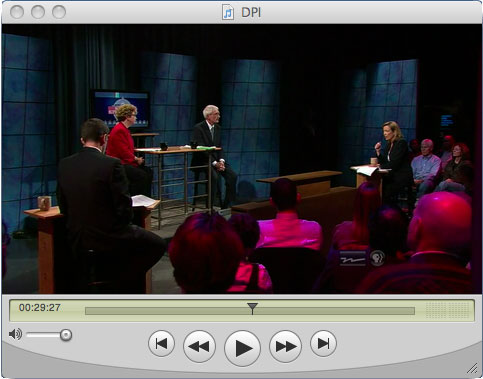
Watch or listen to a recent debate here. SIS links on the race.

Share

Milwaukee’s Howard Fuller & School Vouchers

Bruce Murphy:

c Schools, he was seen by some liberal critics as a right wing-toady who had betrayed his old ideology by getting in bed with conservative school choice supporters. That view was always simplistic, as his bold call for reform of school choice, announced last week, proved once again. His new position – which could greatly alter the politics of school choice – raises many questions.

For starters, why the seeming flip-flop by Fuller? The answer is that he’s never been an ideologue. The old Fuller, after all, was a Democrat. He worked to get Democrat Tony Earl elected in 1982 and was rewarded with a position running the state’s Department of Employment Relations. And his commitment to public schools was personified by his work as MPS superintendent from 1991-1995, which included championing an über-liberal referendum to spend some $400 million to construct new schools, which was defeated by the taxpayers.

But Fuller was more often a critic of MPS, among other things proposing (in the late 1980s) to create an all-black school district that would be carved out of MPS. (That idea, too, went down in flames.) Fuller was always a supporter of alternative schools – or any schools, really – that would provide a good education for minority and low-income students. And he was always willing to work with business leaders and politicians of either party to accomplish his ends. For at least the last 10 years, that has meant mostly Republicans, as he embraced school choice as the solution to urban education in Milwaukee.

But the latest results of the five-year study on school choice, reported last week in the Milwaukee Journal Sentinel, showed there is no statistically significant difference in achievement between MPS and voucher schools. The schools are cheaper, but because of the partisan legislation battles over voucher funding, the program’s complicated funding formula awards most of the savings (some $82 million a year) to every place in the state but Milwaukee. This city’s property taxpayers are paying $45 million more annually for a program that appears to be having little positive impact on education.

Share

An Interview with Madison School Board Candidate Don Gors


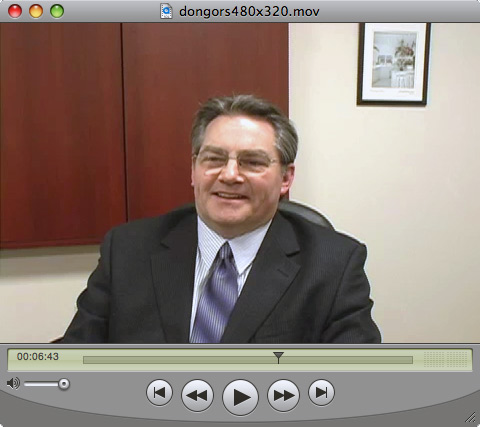
Click to watch or listen (5MB mp3). Gors is running against incumbent Madison School Board President Arlene Silveira. Vote April 7.

Websites: Donald Gors and Arlene Silveira.

Share

Education Chief Urges Mayoral Control Of Schools

AP:

Education Secretary Arne Duncan says big city mayors should take control of their school systems.

Duncan said Tuesday that there’s too much turnover among superintendents in cities where the mayor is not in charge of the schools. He says strong leadership is needed to carry out reform in big cities, where children are struggling the most.

Currently, mayors control the public schools in only a few cities while most others are run by school boards. Duncan told the U.S. Conference of Mayors that if the number doesn’t rise, he will have failed as secretary.

Fascinating: Duncan is a former Chicago Public Schools CEO. His governance point is well worth discussin.

Share

Third Party Group Leafletting for Wisconsin DPI Candidate Tony Evers

Advancing Wisconsin is leafletting (and profiling voters with handheld devices) for Wisconsin DPI Candidate Tony Evers (opposed by Ruth Fernandez) (watch a recent debate), Supreme Court Candidate Shirley Abrahamson (opposed by Randy Koschnick) and Dane County Incumbent Executive Kathleen Falk (opposed by Nancy Mistele).

Share

Lower property values hurt schools

Greg Toppo & Jack Gillum:

Way back when times were good — last April — builders showed up one day at Forest Grove Middle School and gutted a little-used classroom off the gym.
Four months and a half-million dollars later, they had transformed the space into a bubbling mini-marine biology laboratory, with five huge, blue plastic tanks for local marine life and a refrigerated tank that replicates the cold-water ecosystem off Maine.
For the first time, teacher Kevin Stinnette said, his students could do hands-on lessons with cold-water species such as frilled anemones and Acadia hermit crabs.
Then the mortgage meltdown hit central Florida, and the crabs and anemones weren’t the only ones hit with cold water. Here as elsewhere across America, hard times have forced schools to trim budgets, freeze hiring and, in a few cases, make substantial job cuts, raising doubts about the future of a range of programs, including the new marine lab.
Already, St. Lucie schools have lost $22 million in tax revenue from lower property values, and the district is staring at a 25% budget cut in the fall. It has frozen salaries and put central office employees on a four-day workweek. Enrollment is down only slightly but if things get much worse, schools in St. Lucie may cut athletics, after-school activities and summer school to the bone — or even consider a four-day week for students.

Share

Teacher Unions vs. Poor Kids

Nat Hentoff:

The “education president” remained silent when his congressional Democrats essentially killed the Opportunity Scholarship Program (OSP) in the city where he now lives and works.


Of the 1,700 students, starting in kindergarten, in this private-school voucher program, 90 percent are black and 9 percent are Hispanic.


First the House and then the Senate inserted into the $410-billion omnibus spending bill language to eliminate the $7,500 annual scholarships for these poor children after the next school year.


A key executioner in the Senate of the OSP was Sen. Dick Durbin, Illinois Democrat. I have written admiringly of Durbin’s concern for human rights abroad. But what about education rights for minority children in the nation’s capital?


Andrew J. Coulson, director of the Cato Institute (where I am a senior fellow) supplied the answer when he wrote: “Because they saw it as a threat to their political power, Democrats in Washington appear willing to extinguish the dreams of a few thousand poor kids to protect their political base.”

Share

Obama Dialogue with a Teacher

Michael Fletcher & Jose Antonio Vargas:

Arguably the most animated and substantial exchange was between the president and a longtime teacher from Overbrook High School in West Philadelphia who was seated a few feet behind him. The teacher asked Obama for his definition of “a charter school” and “an effective teacher.” While Obama quickly dispensed with the first part of the question, he could not get the teacher to answer when he asked whether in her 15 years on the job she has encountered colleagues who she would not want to teach her own children.
“My point is that if we’ve done everything we can to improve teacher pay and teacher performance and training and development, some people just aren’t meant to be teachers, just like some people aren’t meant to be carpenters, some people aren’t meant to be nurses. At some point, they’ve got to find a new career,” he said.

Share

Key Milwaukee voucher advocate says more regulation, standards for program needed

Alan Borsuk:

Calling this a potentially historic moment in Milwaukee education, a key leader of the private school voucher movement called Thursday for major increases in regulation of the participating schools and for a new focus on quality across all the channels of schooling in the city.
Howard Fuller, the former Milwaukee Public Schools superintendent who is now a central figure nationally in advocating for school choice, said he wants school leaders to join with Gov. Jim Doyle, legislative leaders and others in working out new ways to assure that students of all kinds have quality teachers in quality schools.
“We can’t just keep wringing our hands about these terrible schools,” Fuller said. “We have a moral responsibility to our children to not accept that.”
He said that he believes Doyle is seeking higher quality and more accountability and transparency for the 120 private schools in Milwaukee that have more than 20,000 students attending, thanks to publicly funded vouchers. Fuller said he was in general agreement on those goals.
Doyle has presented “an opportunity to come together and do something that is truly constructive for our children,” Fuller said. “I think it is one of those historic moments that don’t come all the time.”
Fuller was reacting both to a new set of studies of the voucher program and to a dramatically different situation for voucher supporters in the state Capitol.

Share

When Private Schools Take Public Dollars: What’s the Place of Accountability in School Voucher Programs?

Chester E. Finn, Jr., Christina M. Hentges, Michael J. Petrilli and Amber M. Winkler [458K PDF]:

Of all the arguments that critics of school voucher programs advance, the one that may resonate loudest with the public concerns school accountability. Opponents say it’s not fair to hold public schools to account for their results (under No Child Left Behind and similar systems) and then let private schools receive taxpayer dollars–however indirectly–with no accountability at all. We at the Thomas B. Fordham Institute don’t buy that argument entirely. Private schools participating in voucher programs, tax-credit programs, scholarship programs and such are accountable to parents via the school choice marketplace. But we don’t dismiss it, either. For both substantive and strategic reasons, we believe it’s time for school choice supporters to embrace accountability, done right.
For too long, school choice supporters have been stuck in a tired internal debate that hobbles the advance of vouchers and other worthy forms of school choice. Staunch free-marketers say “leave the schools alone and let the parents decide.” More left-leaning critics say “if they won’t play by the same rules as public schools don’t give them any assistance at all.” Yet this debate has become ever more archaic in a society preoccupied with student achievement, school performance, results based accountability, international competitiveness and institutional transparency.
It’s time for the school choice movement to wake up–and catch up to the educational demands and expectations of the 21st century. It’s paradoxical to us that even as the demands on K-12 education are escalating and important new forms of choice are emerging (not just vouchers for choice’s sake but private schooling as a decent option for kids otherwise stuck in failing public schools, means-tested scholarships for low-income families, corporate and individual tax credit and deduction programs, specialized vouchers for disabled youngsters, and more) the accountability and-transparency discussion seems mired in the 1970s.
Let’s restart the discussion. But what does “accountability, done right” looklike in practice? To find out, we sought the assistance of 20 experts in the school choice world–scholars, advocates, program administrators, private school representatives–to help us wrestle with the thorny issues that together embody the accountability question writ large. In this paper, we present their insights, opinions, and advice about how accountability for voucher programs should be structured. We then synthesize their views and offer our own take. Here’s an overview.

Share

School-Voucher Movement Loses Ground After Democratic Gains

Robert Tomsho:

The school-voucher movement is under assault, as opponents have cut federal funding and states move to impose new restrictions on a form of school choice that has been a cornerstone of the conservative agenda for education overhaul.
Vouchers — which give students public money to pay private-school tuition — have grown since a 2002 Supreme Court decision upheld their use in religious schools. About 61,700 students use them in the current school year, up 9% from last year, according to the Alliance for School Choice, a voucher advocate.
But earlier this month, Congress voted to stop funding a voucher program for the District of Columbia. Two other prominent voucher programs — in Milwaukee and Cleveland — are facing statehouse efforts to impose rules that could prompt some private schools to stop taking voucher students.
Pressure is mounting from other corners as well. President Barack Obama has said he opposes vouchers, and the stimulus bill he signed in February bars its funds from being used to provide financial aid to students attending private schools. On Wednesday, the Arizona Supreme Court ruled that two state voucher programs, benefiting foster children and disabled students, violated Arizona’s state constitution.

Share

It’s Not OK To Treat People Special Based on Race, But it is OK based on the “Neighborhood”

Legal Pad (Cal Law) via a kind reader’s email:

That’s the gist we got out of the First District’s ruling today, in a constitutional challenge to Berkeley’s way-complicated system for assigning students to different elementary schools, and to different programs in high school. The upshot: The appeals court unanimously said Berkeley’s system is A-OK, despite Prop 209, because it doesn’t consider a student’s own race at all. Instead, all students in a neighborhood are treated the same — and the way the neighborhood is treated is based on a bunch of things, like average income level, average education level, and the neighborhood’s overall racial composition. The court’s opinion calls things like this “affirmative policies” fostering social diversity. That term doesn’t sound familiar at all.

The Opinion 49K PDF
Perhaps this is what new Madison School District Superintendent Dan Nerad had in mind:

Still, Nerad has clearly taken notice. Given the new numbers, he plans to ask state lawmakers to allow Madison to deny future requests based on family income levels, rather than race, to prevent disparities from further growing between Madison and its suburbs.

2009/2010 Madison Open Enrollment information. Much more on Wisconsin Open Enrollment here.

Share

Public money for private schools?
Lawmaker: S.C.’s schools fail minorities; state should subsidize private school choice.

Roddie Burris:

State Sen. Robert Ford is putting a new face on the long-running fight over whether to spend public education dollars to pay for private schools.
To the dismay of his African American colleagues, the Charleston Democrat is hawking a bill that would give students a publicly paid scholarship or tuition grant to go to a private school.
So far, the push for school choice has had mostly white faces out front. But Ford, who is seeking the Democratic nomination for governor, is making the case that the students who would benefit most from a voucher-style program in South Carolina are African Americans who attend poorly performing schools.
He dismisses those who say his program would hurt already struggling public schools, framing the argument as a choice between protecting schools or giving children the lifeline they need to succeed.
“You’re damn right I’m hurting public education, because public education is hurting our kids,” Ford said.

Share

In Favor of Arlene Silveira for the Madison School Board

The Capital Times:

Races for the Madison School Board, once among the most intense of local electoral competitions, have been a lot quieter in recent years. The more cooperative and functional character of the board, combined with a more responsive approach to community concerns, is confirmed by the fact that many voters are unaware that there is even a contest for one of the two seats that will be filled April 7.
While Seat 2 incumbent Lucy Mathiak, a serious and engaged board member, is unopposed, School Board President Arlene Silveira faces Donald Gors for Seat 1.
We’re glad that Gors, a parent and business owner, is making the race. It is good to have the competition. But even as he launched his run, Gors admitted, “I don’t really know anything about the people on the board or where they stand.”

Watch or listen to a recent conversation with Arlene here.

Share

Saying “When” on DC School Vouchers

Jay Matthews:

I’m not trying to be a hypocrite. I have supported D.C. school vouchers. The program has used tax dollars well in transferring impoverished students to private schools with higher standards than D.C. public schools. But it has reached a dead end. Congress should fund the 1,713 current voucher recipients until they graduate from high school but stop new enrollments and find a more promising use of the money.
That exasperation you hear is from my friend and former boss, the brilliant Washington Post editorial writer who has been eviscerating Democrats in Congress for trying to kill D.C. vouchers. We don’t identify the authors of our unsigned editorials, but her in-your-face style is unmistakable and her arguments morally unassailable.
My problems with what is formally known as the D.C. Opportunity Scholarship Program are political and cultural, not moral. The program provides up to $7,500 a year for private-school tuition for poor children at an annual cost of about $12 million. Vouchers help such kids, but not enough of them. The vouchers are too at odds with the general public view of education. They don’t have much of a future.

Share

Madison School District Candidate Forum 4/4/2009

via Laurel Cavalluzzo:

WHAT: Board of Education Candidate Forum
with Arlene Silveira Lucy Mathiak Donald Gors
WHEN:  April 4, 2009 10-noon
WHERE:  Lakeview Public Library
2845 N Sherman Ave. [Map]
Madison, WI 53704
(608) 246-4547
 
Open to the public
Learn more about candidate’s positions on issues important to our schools and our communities.
 
SPONSERED BY:
Lakewood Gardens Neighborhood Committee
WI Charter School Assn
Nuestro Mundo, Inc.

Share

A Chat with Arlene Silveira


Click above to watch, or CTRL-click to download this mpeg4 or mp3 audio file. You’ll need Quicktime to view the video file.
Madison School Board President Arlene Silveira is up for re-election on April 7, 2009. Arlene graciously agreed to record this video conversation recently. We discussed her sense of where the Madison School District is in terms of:

  1. academics
  2. finance
  3. community support/interaction
  4. Leadership (Board and Administration)

We also discussed what she hopes to accomplish over the next three years.
Arlene’s opponent on April 7, 2009 is Donald Gors. The Wisconsin State Journal recently posted a few notes on each candidate here.
I emailed Arlene, Donald Gors and Lucy Mathiak (who is running unopposed) regarding this video conversation. I hope to meet Lucy at some point over the next few weeks. I have not heard from Donald Gors.
Arlene and Lucy were first elected in April, 2006. There are many links along with video interviews of both here.

Share

2009 Wisconsin DPI Superintendent Candidate Debate Tony Evers and Rose Fernandez


Via Wisconsin Public Television. CTRL Click here to download the 382MB 60 minute event video, or this 26MB mp3 audio file.
Candidate websites: Tony Evers & Rose Fernandez
Amy Hetzner:

Rose Fernandez regularly refers to herself as an outsider in the race to become the state’s next schools chief.
The implication is that her April 7 opponent, Deputy Superintendent of Public Instruction Tony Evers, is an insider who is unlikely to change what is happening with education in the state.
The outsider candidate who can change things and shake up the status quo has long been a popular thrust in political campaigns. President Barack Obama, although a U.S. senator at the time, used aspects of the tactic in his campaign last fall.
But some wonder whether it will have the same impact in what is likely to be a low-turnout election April 7.
“The advantage to the insider is being able to draw off of established, organizational support,” said Charles Franklin, a political science professor at the University of Wisconsin-Madison. “The outsider’s goal is to try to become visible enough that people unhappy with the status quo can voice their outsider outrage.”
From her Web site address – www.changedpi.com – to frequently tying her opponent to the state’s largest teachers union, the Wisconsin Education Association Council, Fernandez appears to be trying to capitalize on one of her many differences with her opponent.
“There are perils with entrenchment,” said Fernandez, a former pediatric trauma nurse and past president of the Wisconsin Coalition for Virtual School Families. “With that there comes an inability to see the problems as they really are.”
But being an outsider also has some disadvantages, which Evers is trying to play up as well.
At a recent appearance before the Public Policy Forum, Evers puzzled about Fernandez’s stance against a provision in Gov. Jim Doyle’s bill that he said was supported by voucher school proponents while she expressed support for voucher schools.

Share

Some Rich Districts Get Richer as Aid Is Rushed to Schools

Sam Dillon:

Dale Lamborn, the superintendent of a somewhat threadbare rural school district, feels the pain of Utah’s economic crisis every day as he tinkers with his shrinking budget, struggling to avoid laying off teachers or cutting classes like welding or calculus.
Just across the border in Wyoming, a state awash in oil and gas money, James Bailey runs a wealthier district. It has a new elementary school and gives every child an Apple laptop.
But under the Obama administration’s education stimulus package, Mr. Lamborn, who needs every penny he can get, will receive hundreds of dollars less per student than will Dr. Bailey, who says he does not need the extra money.
“For us, this is just a windfall,” Dr. Bailey said.
In pouring rivers of cash into states and school districts, Washington is using a tangle of well-worn federal formulas, some of which benefit states that spend more per pupil, while others help states with large concentrations of poor students or simply channel money based on population. Combined, the formulas seem to take little account of who needs the money most.
As a result, some districts that are well off will find themselves swimming in cash, while some that are struggling may get too little to avoid cutbacks.

Share

A Summary of the Wisconsin DPI Superintendent Candidate Event

Greg Bump:

WisPolitics: Evers, Fernandez question each other in We The People debate
3/20/2009
By Greg Bump
WisPolitics
Tony Evers questioned opponent Rose Fernandez’s qualifications for the state’s top education spot Friday night, while Fernandez countered by trying to portray him as a crony of Wisconsin’s largest teacher’s union.
The two, vying for the post of superintendent of Public Instruction, laid out competing visions in a We The People debate.
Evers, the deputy superintendent at DPI, touted his 34 years of experience in education while contrasting his resume with the credentials of Fernandez, who is a nurse by trade and has never worked in a public school.
Fernandez, a virtual school advocate, countered by continually trying to lay problems with the state’s educational system at the feet of Evers, who has held the No. 2 post at the agency for eight years.
Given the opportunity to question each other, Evers pointed out Fernandez represented virtual schools and has zero experience in the administration of public schools. He asked how parents with children in public schools can trust her to invest in their education rather than funneling money toward special interests.
“My own special interest is the boys and girls growing up in the state of Wisconsin,” Fernandez shot back.
Fernandez then stressed Evers’ endorsement by the Wisconsin Education Association Council and the “hundreds of thousands of dollars” the union has spent to support his campaign. She asked him to list three reforms he has supported that WEAC opposed.
Evers answered that the union was unhappy with a settlement DPI reached on allowing virtual schools — in which districts allow students to take courses on-line — to continue. He also said he has been a strong advocate of charter schools — which operate without some of the regulations of other public schools — something the union has opposed.
“I started charter schools. I know what charter schools are about,” Evers said. “I don’t need a lecture about charter schools.”
Evers also stressed his support from school boards, child advocates, parents and others.
“That’s why you have to have a broad coalition,” Evers said. “This isn’t about this overwhelming group of people driving policy at the state level. That just isn’t fact.”
Fernandez ripped DPI for not doing enough to help the struggling Milwaukee Public School system address issues like dropout rates and the achievement gap for minority students.
Evers countered that he has worked on the issue with educators in Milwaukee, but there are also socioeconomic factors that are hampering achievement.
“Laying this issue on my lap is irrational,” Evers said.
Fernandez also brought up a piece of Evers’ campaign lit that referred to voucher schools in Milwaukee as “a privatization scheme.”
“Some of the schools have been scheming, and those schools we have drummed out of the program,” Evers replied.
Evers warned that Fernandez would run DPI through the prism of the “special interest” of choice schools.
Both candidates agreed that a merit pay system for educators could have benefit, but they disagreed on the details. Fernandez indicated that she would base her merit pay system more on classroom outcomes, while Evers stressed that rewards for training were equally important.
They differed more prominently on the qualified economic offer, which Gov. Jim Doyle has proposed eliminating in his 2009-11 budget plan. Fernandez wants to retain it, saying that without the control on teacher compensation, property taxes could rise sharply.
“Children may become the enemy of the taxpayer,” she said.
Evers said he has bargained on both sides of the table, and he opposes the QEO because it hurts the state’s ability to stay competitive in teacher pay.
Evers embraced the coming federal stimulus cash, which will pump $800 million into state schools as “a historic event” that acknowledges “educators are the lever that can turn our economy around.” He said he would appoint a trustee to oversee the allocation of the funds in Milwaukee schools to ensure the money is getting to the classrooms.
In contrast, Fernandez said she looked upon the federal stimulus with caution in that it is one-time funding that won’t be there in the future
And while Evers touted the state’s ACT and SAT scores as being among the highest in the nation, Fernandez said those tests are only administered to college-bound students and aren’t indicative of the academic struggles in districts like Milwaukee.
We the People/Wisconsin is a multi-media that includes the Wisconsin State Journal, Wisconsin Public Television, Wisconsin Public Radio, WISC-TV, WisPolitics.com and Wood Communications Group.

Share

Wisconsin DPI Superintendent Candidate Tony Evers Advocates Charter Schools

Tony Evers campaign, via email:

Tony Evers today pledged to continue his long commitment to Wisconsin’s charter schools, which provide innovative educational strategies. Dr. Evers has played a major educational leadership role in making Wisconsin 6th in the nation, out of all 50 states, in both the number of charter schools and the number of students enrolled in charter schools.
“We are a national leader in charter schools and I will continue my work for strong charter schools in Wisconsin,” Evers said. “As State Superintendent, I will continue to promote our charter schools and the innovative, successful learning strategies they pursue as we work to increase achievement for all students no matter where they live.”
Evers, as Deputy State Superintendent, has been directly responsible for overseeing two successful competitive federal charter school grants that brought over $90 million to Wisconsin. From these successful applications, Evers has recommended the approval of over 700 separate planning, implementation, implementation renewal, and dissemination grants to charter schools around the state since 2001.
During the past eight years, the number of charter schools in Wisconsin has risen from 92 to 221 – an increase of almost 150%. The number of students enrolled in charter schools has increased from 12,000 students in 2001 to nearly 36,000 today.
Evers has also represented the Department of Public Instruction on State Superintendent Elizabeth Burmaster’s Charter School Advisory Council. The council was created to provide charter school representatives, parents, and others with the opportunity to discuss issues of mutual interest and provide recommendations to the State Superintendent.

Share

Wisconsin’s Budget Picture

Christian Schneider:

We’ve made the case numerous times on this blog that Governor Doyle’s proposed budget uses too much one-time money to balance the state budget. Just yesterday, the Legislative Fiscal Bureau estimated the structural deficit for 2011-13 at $1.5 billion – and keep in mind, that’s with $3 billion in new ongoing taxes added to the rolls.
It seems that some local government officials are starting to pick up on the house of cards Doyle has built. In Madison ( of all places), a school board member has written a criticism of Doyle’s use of one-time money, understanding the peril which awaits school budgets in the future:

Share

Advocating Rose Fernandez for Wisconsin DPI Superintendent

Wisconsin State Journal Editorial:

Wisconsin voters have a clear choice in the April 7 race for state superintendent of the Department of Public Instruction.
The race features a consummate and careful insider, Tony Evers, versus a spirited and straightforward outsider, Rose Fernandez.
The State Journal endorses Fernandez.
The pediatric nurse and mother of five will be a strong advocate for change — someone who will use the mostly symbolic post of state schools superintendent as a bully pulpit to press for reforms, many of which President Barack Obama favors.
With so many high school students failing to graduate in Milwaukee, with so much at stake for Wisconsin in the changing, knowledge-based economy, Fernandez is the best candidate to invigorate DPI.
Fernandez, of Mukwonogo, drew public attention last year for her advocacy of public online charter schools. She helped push for a bipartisan legislative compromise that allowed virtual schools to continue serving thousands of students online with more accountability.

Share

Madison Schools to Deny Open Enrollment Applications Based on Income?

Seth Jovaag, via a kind reader’s email:

In February 2008, the Madison school board – facing mounting legal pressure – overturned a policy that allowed the district to deny transfer requests based on race. Before that, white students were routinely told they couldn’t transfer. Madison was the only district in the state with such a policy, which aimed to limit racial inequalities throughout the district, said district spokesman Ken Syke.
With that policy gone, Madison saw a nearly 50 percent increase in students asking to transfer, from 435 to 643.
Madison superintendent Daniel Nerad notes that Madison’s numbers had been steadily increasing for years. But he acknowledged that the policy change likely explains some of this year’s jump.
“I think we do see some effect of that, but I’m not suggesting all of it comes from that, because frankly we don’t know,” he said.
Still, Nerad has clearly taken notice. Given the new numbers, he plans to ask state lawmakers to allow Madison to deny future requests based on family income levels, rather than race, to prevent disparities from further growing between Madison and its suburbs.
Other districts that border Madison – including Monona Grove, Middleton and McFarland – are seeing more transfer requests from Madison this year, too.
“The change Madison made … that certainly increased the application numbers,” said McFarland’s business director, Jeff Mahoney.
In addition, Verona school board member Dennis Beres said he suspects many Madison parents are trying to transfer their kids from the chronically overcrowded Aldo Leopold elementary school, which is just two miles northeast of Stoner Prairie Elementary in Fitchburg.

Fascinating. I would hope that the Madison School District would pursue students with high academic standards rather than simply try, via legislative influence and lobbying, to prevent them from leaving…. The effects of that initiative may not be positive for the City of Madison’s tax base.
Related: 2009/2010 Madison Open Enrollment applications. Much more on open enrollment here.

Share

Advocating Mayoral Control of Schools – in Milwaukee

Bruce Murphy:

Not long ago, the idea of placing the Milwaukee Public Schools under control of the city’s mayor was getting considerable discussion. Then two things happened. The Public Policy Forum did a study of other cities, which found no clear-cut answers as to whether a governance change improved their school districts.
The Forum also convened a panel of community leaders to discuss this, and the feeling was unanimous that this would make no difference to the success of MPS. From teachers union head Dennis Oulahan to business leader Tim Sheehy, there was not “a great deal of support for a change in governance,” moderator Mike Gousha concluded.
That seems to have killed the idea. After all, if the experts agree it wouldn’t do anything, and the study is equivocal, it must be a bad idea, right?
Wrong. The idea has great merit, and nothing in the study – or the statements of experts – proves otherwise. A system in which, say, the mayor appoints the school board members, much as he appoints the Fire and Police Commission, could have many benefits, including:
More attention to the problem: School Board members are elected in low-turnout elections in which a minuscule percentage of city residents vote. Mayoral elections are high-interest affairs that would automatically elevate the issue of education, while making the city’s most important officeholder accountable for the schools. We vote for the mayor based on how he does on property taxes and crime, but not on education, which is just as important to the city’s success. Why put so little value on the schools?
A less parochial school board. The teachers union routinely gets candidates elected who readily vote for increases in salaries and benefits. The typical opponent of the union is the business community. The board has swung back and forth between these interests, as their respective candidates get elected. By contrast, the mayor is answerable to the full spectrum of voters. His choices for the board are likely to be more independent.

Share

Hudson, New Hampshire Fights Free Kindergarten

Dan Gorenstein:

itizens of Hudson, N.H., are backing their school board’s decision to reject an unfunded state mandate to provide free kindergarten. The case gets a hearing Wednesday.

Hudson School District web site. Many links here, and here.

Share

Verona High school students study the federal stimulus bill

Gena Kittner:

It’s 7:30 in the morning and about 30 high school students are chomping on doughnuts and debating the merits of federal dollars used to fund everything from building child-care centers on U.S. Army bases to lead reduction programs.
The scene is a weekly occurrence at Verona High School where advanced placement students are analyzing the 407-page American Recovery and Reinvestment Act — commonly known as the stimulus bill — as part of an extra credit project.
The students must report the dollar amount appropriated under each title, summarize that section and react to how the money’s being spent.
“I frankly don’t see how that will help the economy or is a pressing need,” Kaitlin McLean, a Verona senior, said of about $90 million going to facilities that deal with passports and training. “Couldn’t $90 million be used to create jobs somewhere else?”
The goal is to have the entire document read by April 3 — an ambitious objective considering many legislators probably haven’t done the same.

Steve Coll has been blogging (and reading) the stimulus/splurge documents.

Share

Pennsylvania’s Cyber Charter Schools

Daveen Rae Kurutz:

When thousands of students ditch home computers and gather in makeshift classrooms across the state today, the future of their cyber charter schools is uncertain.
Testing begins on reading and math portions of the Pennsylvania System of School Assessment, the measure by which the state determines whether public schools are making “adequate yearly progress” under the federal No Child Left Behind Act. Last year, only three of the state’s 11 cyber schools — which educate more than 19,000 students — achieved AYP.
Traditional schools that fail to do so face corrective action from the state that increases in severity each succeeding year, up to a state takeover. Cyber schools face the threat of the state not renewing their five-year charters, effectively shutting them. Six charters are up in the next two years, and test scores will be a big factor in renewals, said Leah Harris, spokeswoman for the Pennsylvania Department of Education.

Bill Tucker has more.

Share

A Look at Wisconsin State Tax Funded K-12 Spending

TJ Mertz:

Not only is one time revenue being used for ongoing expenses (which may be acceptable in these economic circumstance), but all this revenue is being used to offset state funds. When combined with the “current law” revenue cap increases estimated at $277 and $286 per member for the two years, this shifts the burden to local property taxpayers in significant ways.
However things go down, the state will move further from the 2/3 support concept and consequently the local property tax portion of school revenues will be increasing at a faster rate than the state portion (unless districts don’t tax to the limit, but that has some bad effects in subsequent years). I am still confused about the Governor’s and the LFB thoughts on IDEA and Title I, which appear to be at least partially contrary to the “supplement not supplant” provisions. I do know that there is lobbying going on from many quarters to expand the loopholes and allow more of the stimulus money to be used to fund existing, not expanded programs and services.
There are also some positives. Revenue cap increases are included at past levels, school safety, nurses and transportation are eased; the low revenue ceiling is raised, Special Education isn’t actually cut, SAGE and 4 K are given increases, albeit insufficient ones. It could be worse.

Share

Will school finances end in tragedy?

Maya Cole:

The headlines are dramatic: a state running billions in debt with declining revenue and a legislature waiting anxiously for federal money to show up.
“All the world’s a stage” — beyond a doubt. The feat is to decide whether this is a comedy or tragedy amid a dismal economy and different players.
Like stock characters, lobbyists continue to collect in the halls of government to sell their wares.
The predictable talk of paying for education plays to the citizenry. Don’t raise taxes and do more with less — it’s the same old dichotomy. Lately there’s new irony, as suggested by Gov. Jim Doyle, that school boards should go to the table with “more creative ways” to bargain and without the QEO (qualified economic offer).
We’ve been focusing in the wrong place, according to Doyle. All we need is a “creative teacher compensation package.” Problem solved. So school boards just need to get more creative and drop the discussion on school finance and educational excellence? Talk about a plot twist!
The cynical souls suggest that now is the time for caution and control, no time to attempt school finance reform, though the current formula was a short-term solution whence it began. They heed us to plod along with conventional plans and wait for — who and when? Next year? The year after?

Share

Duncan: Schools must improve to get stimulus money

Libby Quaid:

Education Secretary Arne Duncan says schools must make drastic changes to get money from a special $5 billion fund in the economic stimulus bill.
“We’re going to reward those states and those districts that are willing to challenge the status quo and get dramatically better,” Duncan said Monday at the White House.
Those who keep doing the same old thing, however, won’t be eligible for the money, he said.
Schools will be getting tens of billions more dollars through regular channels. On top of that, Duncan will have an unprecedented $5 billion to award for lasting reforms.
To get an award, schools and states must show they have been spending their money wisely. They are supposed to find innovative ways to close the achievement gap between black and Latino children who lag behind their white counterparts in more affluent schools.
Specifically, states are supposed to:

  • Improve teacher quality and get good teachers into high-poverty schools;
  • Set up sophisticated data systems to track student learning;
  • Boost the quality of academic standards and tests;
  • Intervene to help struggling schools.

It will be interesting to see how real this is.

Share

Obama’s Education Chief Knows Stars Are Aligned for Real Change

Gerald Seib:

U.S. Treasury Secretary Timothy Geithner may be the Obama cabinet member facing the biggest crisis — the economic one — but Education Secretary Arne Duncan may be the one holding the biggest opportunity in his hands.
It is this: He inherits the best chance in a generation to really shake up an American education system that is uneven and underperforming. And he knows it.
“I see this as an extraordinary opportunity,” Mr. Duncan says in an interview. “We have a couple of things going in our direction that create what I call the perfect storm for reform.”
If the economy ever heals, and if Afghanistan doesn’t blow up, this quest to change the way Americans educate their kids may emerge as one of the biggest dramas of the Obama term. Here are the components of that perfect storm for change that Mr. Duncan describes:
There’s virtually a national consensus — one that certainly includes business leaders panting for a better-prepared work force — that America’s ossified education system needs a big shake-up. Moreover, a bipartisan trail toward real change was blazed by the Bush administration (which gets too little credit for doing so).

Share

Why is NEA cheering Obama’s education ideas?

Elizabeth Hovde:

The National Education Association appears to be humming “Stand By Your Man,” even after President Barack Obama promoted both merit pay and an expansion of charter schools in his recent comments about education.
What gives? Whenever a conservative leader talks about pay differences for educators instead of one-size-fits-all raises, teachers’ unions say “no,” “no” and, “hell, no.” And whenever a Republican supports charter schools, NEA members start calling politicians enemies of public schools.
In a statement released after Obama’s “cradle-to-career” education speech last week, NEA President Dennis Van Roekel welcomed Obama’s “vision” for strengthening public education and said, “He’s off to a solid start. … His ‘cradle-to-career’ proposal mirrors what NEA and its 3.2million members have been advocating.”
The union clearly heard what it wanted to hear (more money) and ignored much of Obama’s talk. Merit pay, charter school expansion and more school accountability are not what the union has been advocating. Given the NEA’s glowing review, I wondered if the union would even have blinked if the president demanded an end to undemocratic, mandatory unionism. (That was not on Obama’s radar, needless to say.)

Share

Wisconsin DPI Superintendent Debate Friday 3/21/2009

AP:

A debate between the two candidates for Wisconsin state superintendent will be broadcast statewide Friday night on public television and radio.
Tony Evers and Rose Fernandez are running to be the next superintendent of the Department of Public Instruction. The election for the nonpartisan position is April 7.
Evers currently serves as the deputy superintendent. Fernandez is a leading advocate of virtual schools.

Share

Congress vs. Washington DC Kids

Andrew Coulson:

Congressional Democrats succeeded this week in crippling a school choice program operating in the nation’s capital. For the last five years, the D.C. Opportunity Scholarships have made private schooling affordable to 1,700 poor children. Rather than reauthorizing the program for another five-year term, Democrats have all but ensured it will die after next year.
House Appropriations Committee Chairman David R. Obey, Wisconsin Democrat, has asked D.C. Public Schools Chancellor Michelle Rhee to prepare for the return of voucher students to the city’s broken public schools.
Sen. Ted Kennedy’s office claims the senator opposed the voucher program from the start because it “takes funds from very needy public schools to send students to unaccountable private schools.” (The House Budget Committee holds hearings today on the U.S. Education Department budget).
But just how needy are D.C. public schools? To find out, I added up all the K-12-related expenditures in the current D.C. budget, excluding preschool, higher-education and charter school items. The total comes to $1.29 billion. Divide that by the official enrollment count of 48,646 students, and it yields a total per-pupil spending figure of $26,555.

Share

MPS’ Parental Enticement Program Spent Freely, Widely But, oh, the questionable expenditures. Now some are banned.

Mike Nichols:

Tax dollars intended to help parents improve their children’s academic achievement have for years routinely been spent by Milwaukee public schools on everything from roller skating to bowling to water-park field trips, an investigation by Wisconsin Interest has found.
Thousands of dollars were also spent on fast food, DJs, prizes, gift certificates and other goodies and giveaways. One school spent $556 in parental-involvement money to buy 250 pumpkins. Another spent $686 for a Milwaukee Bucks “Family Night.”
Even when a clear academic purpose is evident, there are often questions about excess. Two schools, according to invoice descriptions, spent more than $17,000 to rent hotel and banquet-hall space for student recognition ceremonies.
Research, as well as common sense, has long shown that having engaged and informed parents is one of the most important ways to increase a child’s success in school – and in life. Recognizing that, the federal government has funneled “parental involvement” tax dollars to many school districts across the country.
This year alone, schools run by MPS will receive $38.2 million from the federal government’s Title I program. Like other large districts, MPS must set aside at least 1% for parental-involvement initiatives. The district goes further and sets aside 2% – which would amount to about $764,000 in the 2008-2009 school year.

Share

Minnesota Democrats Propose $1 Billion Education Cut

Tom Scheck:

Democrats in the Minnesota Senate are proposing deep cuts in education funding to help balance the state’s budget. Their plan includes a cut in early education through 12th grade funding of nearly $1 billion dollars. They would also cut state funding for higher education by $221 million dollars. The Senate DFL plan is the first proposal from state lawmakers to erase the state’s $4.6 billion deficit.
The plan would cut spending by 7 percent across all budget areas. The largest programs hit are schools, health and human services and aid to local government. In total, the plan cuts $2.4 billion in spending. The plan also relies on $2 billion in unspecified new revenue.
At a news conference, DFL Senate Majority Leader Larry Pogemiller said the cuts are needed to stabilize the budget in the long term. He said Governor Pawlenty’s proposal to use one-time money, accounting shifts and spending cuts does not adequately address the problem.
“It’s a day of reckoning for Minnesotans, both for elected officials both in the executive branch and the legislative branch,” Pogemiller said. “We need to do our duty to balance the state budget for the long-term financial health of the state.”
What is most notable is that Senate Democrats are proposing $1 billion in cuts to early childhood education and K thru 12 schools. K-12 funding is required under the Minnesota Constitution and lawmakers have been reluctant to cut those programs for fear of angering voters. Senate Education Finance Chair Leroy Stumpf, of Plummer, said the depth of the budget problem, along with a sputtering economy, mean all programs have to be on the table.

Share

Obama on Math

Michael Alison Chandler:

President Obama outlined his reform agenda yesterday for the nation’s public schools in a speech before the US Hispanic Chamber of Commerce. He promoted extending the school day, adopting performance pay for teachers, and encouraging the proliferation of charter schools, to name a few.
But what did he say about math, you are wondering.
Here it is – the math report. Obama’s speech mentioned math education explicitly four times:
1. He reminded the nation that economic development and academic achievement go hand in hand and that the federal government can play a significant role.
“Investments in math and science under President Eisenhower gave new opportunities to young scientists and engineers all across the country. It made possible somebody like a Sergei Brin to attend graduate school and found an upstart company called Google that would forever change our world,” he said.

Share

Examining Obama’s Education Numbers

Larry Abramson:

In his education speech earlier this week, President Barack Obama described the U.S. education system in some pretty dire terms. He used some dramatic numbers to back up his claims.

audio

Share

Middleton-Cross Plains schools ask voters for funds to ease overcrowding

Samara Kalk Derby:

No time is really a good time to ask taxpayers to vote on three expensive school referendums, but in the current economic climate, Ellen Lindgren hopes Middleton and Cross Plains voters choose hope over fear.
“Some people think that it’s bad timing,” said Lindgren, president of the Middleton-Cross Plains Area School Board. “But unfortunately we didn’t have a say on when the economy tanks.”
The Middleton-Cross Plains Area School Board voted in November to ask taxpayers for extra spending to ease overcrowding in Middleton elementary and middle schools.
“We are out of space, and we have a need to provide for basic classrooms for students,” said Middleton-Cross Plains Area School District Superintendent Don Johnson.
Johnson said the district’s elementary schools are about 350 students over capacity, and the middle schools are struggling with about 150 more children than they can fit in the space.
The district will also ask voters on April 7 for funds to beef up security and to purchase instructional materials, including textbooks and computers.

Share

An Interview with US Education Secretary Arne Duncan

The NewsHour:

JUDY WOODRUFF: Next, the new secretary of education and what’s on his plate. President Obama earlier this week called for big changes in education. The NewsHour’s special correspondent for education, John Merrow, has a look at how the president’s point-man plans to approach that.
JOHN MERROW, NewsHour Correspondent: This time last year, former pro basketball player Arne Duncan was leading the Chicago public schools and occasionally playing basketball with friends, including then-Senator Barack Obama. A lot has changed since then.
BARACK OBAMA, President of the United States: I think we are putting together the best basketball-playing cabinet in American history.
JOHN MERROW: Thanks to President Obama, Arne Duncan has the opportunity to become the most powerful U.S. secretary of education ever.
ARNE DUNCAN, Secretary of Education: This was not something I aspired to do. Frankly, were it anyone but him, I wouldn’t probably do it.

Share

The Insider vs. the Upstart: Wisconsin DPI Superintendent Race

Erik Gunn:

It’s a classic political face-off: a seasoned professional with a mile-long résumé and a host of influential backers versus a relative neophyte with a fervent grassroots base.
It happened in last year’s presidential contest between Hillary Clinton and Barack Obama, and it’s happening in Wisconsin now, in the race to run the state Department of Public Instruction.
Standing in for Clinton is Tony Evers (tonyevers.com), currently deputy superintendent to retiring DPI head Elizabeth Burmaster. Evers, 57, is the choice of the state’s education establishment, including unions and professional groups representing teachers and administrators.
This kind of backing has been critical to Burmaster and her predecessors, who’ve had little trouble dispatching challengers over the last two decades. The easy analysis is that heavy union spending should ensure Evers’ victory April 7.
That is, unless Rose Fernandez (changedpi.com) pulls an Obama.
Fernandez, 51, who finished a close second in the five-way Feb. 17 primary, is a pediatric nurse who became a parent activist on behalf of families of children enrolled in “virtual” schools. She led the charge for the online academies after their existence was threatened by a court ruling sought by DPI.
The race is officially nonpartisan, and both candidates eschew identifying with political parties. But as in past races, the candidates and their supporters seem to fall into two camps: center/left (Evers) or right (Fernandez). And the campaigns reflect the ideological fissures dominating discourse regarding education reform.

Share

Dissolving School Boards: For More Mayors, School Takeovers Are a No-Brainer Oversight by City Hall Can Help Push Through Reforms, but Some Parents and Teachers See Too Much Bullying

John Hechinger & Suzanne Sataline:

More U.S. cities are considering scrapping a longstanding tradition in American education, the elected school board, and opting to let mayors rule over the classroom.
Dallas and Milwaukee are currently mulling mayoral control of the city’s schools, and Detroit is under pressure to try it — for the second time. A dozen major school systems, including New York, Boston, Chicago and Washington, D.C., already have a form of mayoral control.
Advocates say the structure, in which mayors generally appoint school boards and have the power to pick superintendents, enables tough-minded reforms by promoting stable leadership and accountability. Giving the idea more currency, U.S. Education Secretary Arne Duncan, until recently the Chicago schools chief, is a fan and product of mayoral control. And, this week, President Barack Obama promoted some controversial initiatives that have been pushed heavily in districts with mayoral control: charter schools, merit pay for teachers, and accountability, based on rigorous testing standards.
“I would anticipate that over the next few years we will see a new wave” of switches to mayoral authority, says Kenneth Wong, director of Brown University’s urban education policy program, who studies mayoral control of schools.
But critics say that results on student achievement are mixed, and mayoral control can shut out dissent, especially from parents and teachers. That concern is fueling a debate over the reauthorization of a seven-year-old state law this June that gives New York City Mayor Michael Bloomberg control over the city’s schools. His hard-charging chancellor, Joel Klein, who has introduced more school and teacher accountability, has also alienated some politicians and parents, leading to questions about whether the law should be changed or eliminated.

Share

Madison Says No to a Nuestro Mundo Charter Middle School, Opting for Dual Immersion Across the District

TJ Mertz comments on Monday’s Madison School Board meeting:

At Monday’s Board of Education Meeting an administrative recommendation to move forward with planning for a dual language district middle school program at Sennett was approved by a vote of 7-0 and the request for a memo of understanding with Nuestro Mundo Inc in order to qualify a charter dual language immersion middle school program for planning grants was not acted on. The lack of action was an expression of non support for the charter, as the comments by the Board members made clear.

I applaud the Board for their action and inaction.

Background here.

Share

On Obama’s Education Speech: “You had Me at Reform”

Andrew Rotherham:

The President’s speech today includes a lot of interesting tidbits, a shout-out for performance pay, a call to lift charter school caps, and even a very pro-Broad Prize signal embedded in the data section. I’ve been lukewarm on some of the stimulus, more on that later, but this is an important speech. They’re scrambling on 16th Street…
Update: It’s on? AP’s Libby Quaid breaks some news on the lines that are being drawn:
[National Education Association President Dennis] Van Roekel insisted that Obama’s call for teacher performance pay does not necessarily mean raises or bonuses would be tied to student test scores. It could mean more pay for board-certified teachers or for those who work in high-poverty, hard-to-staff schools, he said.
However, administration officials said later they do mean higher pay based on student achievement, among other things.
Hmmm…doesn’t seem like they both can be right…

Share

As LAUSD layoffs loom, debate over teacher seniority resurfaces

Jason Song & Seema Mehta:

Richard Rivera joined the Algebra Project at exactly the wrong time.
After three years at charter schools, Rivera returned to the Los Angeles Unified School District last year as a math coach — a kind of roving instructor and supervisor — at Luther Burbank Middle School in Highland Park. He also agreed to work on the Algebra Project, a new program designed to keep low-achieving students involved in math.
But even though Rivera spent a decade teaching in the district, he lost his seniority with L.A. Unified because of his foray into the charter world. Because the district lays off teachers based on the amount of time they’ve worked for the school system, Rivera is now in danger of losing his job, and the Algebra Project might stall before it even begins.
If Rivera and other younger teachers involved in the program leave, the school goes “right back to square one,” said John Samaniego, the principal at Burbank, where test scores have slowly been rising.
Samaniego’s dilemma is common throughout the state as districts prepare to issue preliminary layoff notices to teachers by Friday and principals try to determine their plans for next year. The Los Angeles Board of Education is scheduled to vote today on whether to issue these notices to about 9,000 employees, including 5,500 teachers, because of an expected $700-million budget shortfall.

Share

On Obama’s Education Speech

Jay Matthews:

President Obama’s education speech this morning was, in my memory, the largest assemblage of smart ideas about schools ever issued by one president at one time. Everyone will have a different favorite part — performance pay models for teachers, better student data tracking systems, longer school days and years, eliminating weak state testing standards, more money for schools that improve, more grants for fresh ideas, better teacher training, more charter school growth, faster closing of bad charters and many more.
The speech puts Obama without any further doubt in the long line of Democratic party leaders who have embraced accountability in schools through testing, even at the risk of seeming to be in league with the Republican Party. His explicit endorsement of the tough Massachusetts testing system — a favorite of GOP conservatives — will irritate many teachers and education activists in his own party, but that group of Democrats has not had a champion who has ever gotten closer to the presidency than former Vermont governor Howard Dean, and we know how his candidacy turned out.
The problem, which the president did not mention, is that he has limited power to make any of these things happen. His speech was full of encouraging words to state and school district officials, who will be the true deciders. True, he has some money to spread around for new ideas. But the vast bulk of the budget stimulus dough will go, as he said, to saving jobs in school systems.

Scott Wilson has more.

Share

Obama Education Push to Include Merit Pay

Laura Meckler:

President Barack Obama is laying out his “cradle to career” agenda for education Tuesday, including a controversial plan to boost pay for teachers who excel.
The White House plan also includes new incentives for states to boost quality in their preschool programs, to raise standards for student achievement and to reduce the high school drop-out rate. And the president is fleshing out his plan to increase financial aid for college students, senior administration officials said.
In a speech to the U.S. Hispanic Chamber of Commerce, the president will also call on Americans to take responsibility for their children’s education and their own, the officials said.
The speech will build on comments made during his address to Congress, where Mr. Obama dramatically declared that those who drop out of school are failing not just themselves, but their country.
The speech was described by three administration officials speaking on condition of anonymity in advance of the official announcement, and in a fact sheet provided by the White House.
The merit pay proposal would significantly expand a federal program that increases pay for high-performing teachers to an additional 150 school districts, officials said. “What he’ll be calling for…is to reward good teachers that are improving student outcomes,” said one official.

Share

A cruel school move

Chicago Tribune Editorial:

We wrote last week about Democratic efforts to strip 1,900 low-income Washington children of $7,500 “opportunity scholarships” to attend private schools.
It’s an experiment in school vouchers, an experiment with little potential downside. But it’s an experiment that was launched in 2004 by a Republican-controlled Congress. Today it’s on the verge of extinction because the Democratic-controlled Congress wants to do the bidding of public-school teachers unions. The unions see vouchers that let poor kids go to private schools as aiding the enemy.
Language passed by the House as part of a massive $410 billion spending bill would effectively doom the federally funded program. The 1,900 kids would have to leave their schools and re-enter public schools in Washington, which has some of the worst schools in the nation.
The measure, by the way, is referred to as “the Durbin language” for sponsoring Sen. Dick Durbin of Illinois.

Share

Obama and the Schools

Wall Street Journal Editorial:

Education Secretary Arne Duncan said last week that poor children receiving federally financed vouchers to attend private schools in Washington, D.C., shouldn’t be forced out of those schools. Bully for Mr. Duncan. But the voice that matters most is President Obama’s, and so far he’s been shouting at zero decibels.
His silence is an all-clear for Democrats in Congress who have put language in the omnibus spending bill that would effectively end the program after next year. Should they succeed, 1,700 mostly black and Hispanic students who use the vouchers would return to the notoriously violent and underperforming D.C. public school system, which spends more money per pupil than almost any city in the nation yet graduates only about half of its students.
The D.C. voucher program has more than four applicants for every available slot. Parental satisfaction is sky high. And independent evaluations — another is scheduled for release later this month — show that children in the program perform better academically than their peers who do not receive vouchers. This is the kind of school reform that the federal government should encourage and expand.

Share

U.S. to Nation’s Schools: Spend Fast, Keep Receipts

Sam Dillon:

Arne Duncan, the secretary of education, sent a message to the nation’s school officials last week: Heads up! We’ll be sending you billions of dollars by month’s end. Spend the money quickly but wisely. And keep receipts; we’ll be asking.
The message, which went out Friday in documents e-mailed to governors, state education commissioners and thousands of school superintendents, provided the first broad guidelines for how the Education Department intends to channel $100 billion to the nation’s 14,000 school districts over the next few months. The expenditure is part of the Obama administration’s economic stimulus package.
Some $44 billion will be made available to states before the end of this month, Mr. Duncan said, in the hope that layoffs can be averted. Hundreds of thousands of job losses in schools had been projected for the fall because of growing state budget deficits caused by a steep drop in tax revenues.
More school stimulus money will be distributed in the spring through the fall, the documents said, after states apply for the financing and provide Congressionally mandated “assurances” to Mr. Duncan that they are complying with federal education laws.

Share

Decision could pave way for 4-year-old kindergarten

Doug Erickson:

A family’s federal court victory over the Madison School District in a disability rights lawsuit could push forward efforts in the district to start a 4-year-old kindergarten program, the attorney representing the family predicts.
On Feb 25, U.S. District Judge Barbara Crabb ruled that the district violated the federal law governing children with disabilities when it refused to pay a portion of the private preschool tuition for a 4-year-old with a learning disability.
The child needed to participate in activities with non-disabled peers to improve his social behavior, according to the lawsuit filed by his parents.
The preschool was an appropriate setting for this to happen, and the district did not offer any alternatives, Crabb ruled.
The Individuals with Disabilities Education Act requires districts to provide disabled 3- and 4-year-olds with an appropriate preschool education at no charge

Share