School Information System

Facebook Target of FTC Privacy Complaint

David Coursey:

Ten privacy groups have filed a complaint with the Federal Trade Commission over recent changes to Facebook’s privacy policy.
Led by the Electronic Privacy Information Center (EPIC), the groups criticize Facebook for changes that made previously private information public.
“More than 100 million people in the United States subscribe to the Facebook service,” Marc Rotenberg, EPIC’s executive director, said Thursday in a prepared statement. “The company should not be allowed to turn down the privacy dial on so many American consumers.”
In response, Facebook said it was “disappointed” that EPIC took its complaints to the FTC instead of the company itself.

Share

The education gap of greatest concern is the out-of-wedlock birthrate

Edward Hayes:

Before Pearl Harbor was attacked in 1941, the out-of-wedlock birthrate for African-Americans was nineteen percent. According to the National Center for Health Statistics, in 2004 the illegitimate black birthrate was 69.4 percent. In contrast, the out-of-wedlock rates that year for Caucasians and Hispanics were 25 and 45 percent respectively. Consequently, in America well over half of our minority population enters the education sweepstakes with one parent tied behind their back. Our largest minorities groups have a parent gap that not only precedes the performance differential in math in reading, it guarantees it.
We are living in a moment in time where otherwise reasonable people debate the merits of raising a child in a same-sex-marriage home. Consequently, it is culturally reasonable to argue whether wealthy Americans can raise children in single-parent homes without handicapping their education. That said, it is criminally insane to suggest that a single parent of limited means is doing anything other than providing a rough life for both child and mother. Frankly, I have had it with televised images of sobbing single parent mothers lamenting the demise of their fatherless children because of the misdeeds of someone else’s single-parent child.

Share

School fees

Financial Times:

Arriving in Christmas mail, the heaviest letter of them all: next term’s school fees. A century ago, the cost of a private education at a secondary British school was about seven guineas, roughly £7.35 or one and half ounces of gold. Today, the average bill is £4,000 a term, or six ounces of gold. At the most prestigious boarding schools, such as Eton, a term’s fees can reach £9,000 (before extras). That takes the total cost of a private secondary education to as much as £135,000 – about half a gold ingot.
Talk about a heavy load. During the past decade, school fees have risen by three-quarters. Broader UK inflation, meanwhile, has been about 20 per cent. Everything is relative, however, and by some measures school fees have actually fallen. Take what is typically the largest asset owned by a private educating family, their home. Now match it against their largest cost. In 1999, the value of an average UK house was equivalent to five years of Eton fees. Today it would buy almost 6 years.

Share

Auditioning Their Hearts Out, for High School

Jennifer Medina:

Like a Lincoln Center hopeful, Aislee Nieves spends most afternoons in her cramped living room, the couch pulled aside so she can perfect her pointed toes and pirouettes. A spreadsheet tells her the tryouts she has attended, where and when the next one is and the one after that.
On a recent Sunday she flitted about her apartment in Sunset Park, Brooklyn, collecting what she needed that day: ballet slippers, leotard, footless tights, all slipped into her bright green knapsack.
“Mommy, you have the admission ticket? And my transcript?” she asked, her 13-year-old voice betraying a slight edginess.
Yes, yes, her mother, Blanca Vasquez, answered. After all, they had been auditioning for high school nearly every weekend for the last month.
The high school admission process in New York City is notoriously dizzying, with each eighth grader asked to rank up to a dozen choices, and the most competitive schools requiring tests, essays or interviews. But for hundreds of students who sing, dance, act or play an instrument, trying out for the ninth grade is now an all-consuming routine.

Share

The GMAT Sentence Correction Challenge

Nick Saint:

What does mastery of the finer points of English grammar have to do with succeeding in business?
Nothing.
But if you want to get into a top business school, you need to do well on the GMAT. And that means tangling with some very ugly verbal questions.
Specifically, it means psychoanalyzing the folks who put the test together, who sometimes don’t include a correct English answer as one of the options.
When there’s no right answer to a question (which there often isn’t in business), you have to figure out the least-wrong answer–without being driven insane by rage at the stupidity of your questioner. Thus, the GMAT tests your aptitude for all sorts of things you WILL need in business.

Share

The Explosion of Charter Schools in America

US News & World Report:

With 809, California leads the nation in the number of charter schools. In less than 20 years, the education activists have started nearly 5,000 of these institutions, which are publicly financed and free for students to attend but independently operated.

Share

When College Students Start to Think

Christian Schneider:

University of Wisconsin campuses have a well-deserved reputation for being safe havens for liberal thought. But at the UW-Fox Valley, something odd is happening – it appears a backlash is underway.
It all began in November, when Campus Dean Dr. James Perry suggested on his blog that the campus should have more “green” parking spaces. Apparently, the campus has set aside certain choice parking spots for students with Priuses (Prii?) or other “low emitting and fuel efficient” (LEFEV) vehicles. Dr. Perry suggested expanding the number of “green” spaces, to encourage more students to buy these cars, saying:

Share

A holiday guide to books for kids

Jay Matthews:

I share this secret only with recluses like myself who lack the imagination to conceive of any gift better than a book. If you are buying for a child — particularly if you are in a last-minute Christmas shopping panic — scan this list compiled by a company called Renaissance Learning.
It is an amazing document. Parents who keep track of what their children are doing in school, particularly in this area, might be vaguely aware of Renaissance Learning and its famous product, Accelerated Reader, the most influential reading program in the country. It was started 23 years ago by Judi Paul and her husband, Terry, after she invented on her kitchen table a quizzing system to motivate their children to read.
Students read books, some assigned but many chosen on their own, and then take computer quizzes, either online or with Accelerated Reader software, to see whether they understood what they read. Students compile points based in part on the difficulty and length of each book and sometimes earn prizes from their schools.

Share

Massachusetts Father Angered At School Over Controversy About Son’s Jesus On Cross Drawing

ABC News:

A Taunton, Massachusetts father is furious that his 8-year-old son was sent home from school and required to undergo a psychological evaluation.
All this comes the boy drawing a picture of Jesus on the cross. It was part of a second grade Christmas assignment.
The student was ordered into counseling by his principal. After the little boy did go into counseling, and the doctor said he was fine, but his father says his son is now uncomfortable in school.
Chester Johnson, father: “I want to transfer him to another school and I want something done about this. They owe my family an apology and they owe me an apology.”

Share

Book Whisperer: Are good readers born or made?

Donalyn Miller via Valerie Strauss:

My guest today is Donalyn Miller, a sixth-grade language arts teacher in Texas and literacy expert. She is the author of “The Book Whisperer: Awakening the Inner Reader in Every Child,” and writes about literacy for teachermagazine.org.
By Donalyn Miller
A recent Carnegie Mellon University research study indicates that children engaged in a 100-hour intensive reading remediation program improved both their reading ability and the white matter connections in their brains.
While the study shows promise for educators and clinicians who work with developing readers, one casual mention in the study stood out for me– the 25 children designated as “excellent readers” in the control group still outperformed the 35 third and fifth graders who participated in the remediation program.
The widespread belief that some readers possess an innate gift, like artists or athletes, sells many children short. I often hear parents claim, “Well, my child is just not a reader,” as if the reading fairy passed over their child while handing out the good stuff.

Share

Keeping Score When It Counts: Assessing the 2009‐10 Bowl‐bound College Football Teams – Academic Performance Improves but Race Still Matters

Institute for Diversity and Ethics in Sports [182K PDF]:

Overall academic progress continued while the gap between white and African‐American football student‐athletes increased slightly for the 67* Football Bowl Subdivision (FBS) schools (formerly known as Division I‐A schools) playing in this year’s college football bowl games according to a study released today by The Institute for Diversity and Ethics in Sport (TIDES) at the University of Central Florida.
Richard Lapchick, the Director of TIDES and the primary author of the study Keeping Score When It Counts: Assessing the 2009‐10 Bowl‐bound College Football Teams – Academic Performance Improves but Race Still Matters, noted that, “The academic success of big time college student‐athletes that grew continuously under the leadership of the late Dr. Myles Brand continued this year and will be part of his legacy. The new study shows additional progress and reinforces the success of Dr. Brand’s academic reform package. This year, 91 percent (61 of the 67 schools), the same as in the 2008‐09 report and up from 88 percent in the 2007‐08 report, had at least a 50 percent graduation rate for their football teams; approximately 90 percent of the teams received a score of more than 925 on the NCAA’s Academic Progress Rate (APR) versus 88 percent in the 2008‐09 report.”
The NCAA created the APR in 2004 as part of an academic reform package designed to more accurately measure student‐athlete’s academic success as well as improve graduation rates at member institutions.
Lapchick added that, “In spite of the good news, the study showed that the disturbing gap between white and African‐American football student‐athletes remains a major issue; 21 teams or 31 percent of the bowl‐bound schools graduated less than half of their African‐American football student‐athletes, while only two schools graduated less than half of their white football student‐athletes.”

Share

Beyond the Classroom: Using Title IX to Measure the Return to High School Sports

Betsey Stevenson [317K PDF]:

Previous research has found that male high school athletes experience better outcomes than non-athletes, including higher educational attainment, employment rates, and wages. However, students self-select into athletics so these may be selection effects rather than causal effects. To address this issue, I examine Title IX which provides a unique quasi- experiment in female athletic participation. Between 1972 and 1978 U.S. high schools rapidly increased their female athletic participation rates–to approximately the same level as their male athletic participation rates–in order to comply with Title IX. This paper uses variation in the level of boys’ athletic participation across states before Title IX as an instrument for the change in girls’ athletic participation over the 1970s. Analyzing differences in outcomes for both the pre- and post-Title IX cohorts across states, I find that a 10-percentage point rise in state-level female sports participation generates a 1 percentage point increase in female college attendance and a 1 to 2 percentage point rise in female labor force participation. Furthermore, greater opportunities to play sports leads to greater female participation in previously male-dominated occupations, particularly for high-skill occupations.

Share

Kills 99.9% of Germs — Under Some Lab Conditions

Carl Bialik:

A decade of pesky germs, from SARS to avian flu to H1N1, has given rise to dozens of products bragging about their microbe-killing properties. Everything from hand-sanitizing liquids to products like computer keyboards, shopping carts and tissues tout that they kill 99.9%, or 99.99%, of common bacteria and fungi.
But some of these numbers look like the test scores in a class with a very generous grading curve. They often don’t include all pesky germs, and are based on laboratory tests that don’t represent the imperfections of real-world use. Human subjects, or countertops, in labs are cleaned first, then covered on the surface with a target bug. That is a far cry from a typical kitchen or a pair of grimy hands.

Share

In study, 1 in 7 U.S. teens say they’re recipients of ‘sexting’

Donna St. George:

About 1 in 7 American teens with cellphones say they have received nude or nearly nude photos by text message, according to a new survey on the phenomenon known as “sexting.”
Helping to define the little-understood trend in teen life, the poll found that 15 percent of adolescents ages 12 to 17 have received sexually suggestive photos or videos on their personal cellphones. Just 4 percent acknowledged sending out a naked image.
Older teens were more likely to report sexting, with 30 percent of 17-year-olds saying they had received such photos, compared with 4 percent of 12-year-olds, according to the report by Pew Research Center’s Internet & American Life Project.
The provocative photos are usually sent as part of a romantic relationship — or one that is wished-for, the study found.

Share

Mesquite ISD a pioneer on dealing with student concussions

Karel Holloway:

With a concussion, there is no obvious injury – no blood, no swelling, no arm at an awkward angle.
Coaches and athletic trainers have to look for subtle signs from an athlete, such as a shake of the head, a vacant expression or a long pause before a football player lines up for the next play.
Until the past few years, a student athlete in Mesquite might have gone back into the game after a quick assessment. But that’s changing as officials realize how common concussions are and how profound their effects can be over time.
“If a kid suffers a concussion in Mesquite, they are going to miss a minimum of two weeks,” said Bucky Taylor, Mesquite High School’s head athletic trainer.

Share

Will Cleveland High School Become Seattle Superintendent Maria Goodloe-Johnson’s Crown Jewel or Albatross?

Nina Shapiro:

As Seattle Public Schools released new details about its latest transformation plan for perpetually-troubled Cleveland High School over the past week, there’s been a collective eye roll among some teachers there.
“I’ve been here for 15 years and every other year we do this,” says math teacher David Fisher, referring to a long string of ballyhooed overhauls that the Beacon Hill school has embarked on at the behest of the district.
One thing is different: The district is promising to pour money into this reinvention of Cleveland as the School of Science, Technology, Engineering and Mathematics (STEM). It proposes to spend more than $4 million over the first three years, according to a report at last Wednesday’s school board meeting by Superintendent Goodloe-Johnson. That’s a lot of money for a school that is already up and running. (See the breakdown of spending on page 8 of this pdf.)

Melissa Westbrook has more.

Share

Finally some sense about 21st century skills–part two, the Wagner book

Jay Matthews:

My wife was enjoying a quiet flight back to Washington after a week off in California when I, sitting next to her, started thrashing around. I was reading a book, but in a way that any person would find disturbing. I was marking and remarking pages. I was filling margins with unreadable scrawls. I was flipping back and forth. I was talking to myself: “Whoa! No! Yes!”
“What is that?” she asked.
It’s a good question. The simple answer is: the latest book by school improvement activist Tony Wagner: “The Global Achievement Gap: Why Even Our Best Schools Don’t Teach the New Survival Skills Our Children Need.” Wagner is co-director of the Change Leadership Group at the Harvard Graduate School of Education. He is also a great writer and speaker. I consider this book more of an experience than a read.
My habit is to write on the last page, next to the inside of the back cover, any column ideas that come to me from a book. The last page of my copy of Wagner’s book is a maze of my jottings. I have been making fun of the 21st century skills movement as a high-cost, high-level, often incomprehensible conversation among people who have forgotten to explain what it means to teachers.

Share

Psychology Alone in the crowd

The Economist:

ON THE surface, Framingham, Massachusetts looks like any other American town. Unbeknown to most who pass through this serene place, however, it is a gold mine for medical research. Since 1948 three generations of residents in Framingham have participated in regular medical examinations originally intended to study the spread of heart disease. In the years since, researchers have also used Framingham to track obesity, smoking and even happiness over long periods of time. Now a new study that uses Framingham to analyse loneliness has found that it spreads very much like a communicable disease.
Feeling lonely is more than just unpleasant for those who yearn to be surrounded by warm relationships–it is a health hazard. Numerous studies show that loneliness reduces fruit-fly lifespans, increases the chances of mice developing diabetes, and causes a host of adverse effects in people, including cardiovascular disease, obesity and weakening of the immune system. Simply being surrounded by others is no cure. In people, the mere perception of being isolated is more than enough to create the bad health effects. However, in spite of its significant impact, precious little is known about how loneliness moves through communities.

Share

K-12 Tax & Spending Climate: Public United States Debt Rose from 41 to 53% of the Gross Domestic Product in the Past Year

Peterson-Pew Commission on Budget Reform PDF Report

Over the past year alone, the public debt of the United States rose sharply from 41 to 53 percent of gross domestic product (GDP). Under reasonable assumptions, the debt is projected to grow steadily, reaching 85 percent of GDP by 2018, 100 percent by 2022, and 200 percent in 2038.
However, before the debt reached such high levels, the United States would almost certainly experience a debt- driven crisis–something previously viewed as almost unfathomable in the world’s largest economy. The crisis could unfold gradually or it could happen suddenly, but with great costs either way. The tipping point is impossible to predict, but the United States is already hearing con- cerns about its fiscal management from some of its largest creditors, and the country is uncomfortably vulnerable to shifts in confidence around the world.

Wisconsin ranks 10th amongst the States in State-Local debt service. Exploding debt levels mean that it is highly unlikely school districts will see significant new revenues. Like many organizations, they must change and spend precious dollars where most needed and automate elsewhere (virtual learning tools are a natural, as this post demonstrates).

Share

Are Colorado’s Education school graduates ready to teach reading and mathematics in elementary classrooms?

National Council on Teacher Quality [PDF report]:

Improving teacher effectiveness is hgh on the list of most education reformers in colorado, as it is nationally. Effective teaching in the elementary years is of vital importance to ensure not only that children master fundamental skills, but that performance gaps narrow rather than widen beyond repair. We now know that disadvantaged students can catch up academically with their more advantaged peers if they have great elementary teachers several years in a row.
It is for these reasons that the National Council on Teacher Quality (NCTQ), a nonpartisan research and advocacy group dedicated to the systemic reform of the teaching profession, evaluates the adequacy of preparation provided by undergraduate education schools. These programs produce 70 percent of our nation’s teachers. We think it is crucial to focus specifically on the quality of preparation of future elementary teachers in the core subjects of reading and mathematics.
Teacher preparation programs, or “ed schools” as they are more commonly known, do not now, nor have they ever, enjoyed a particularly positive reputation. Further, there is a growing body of research demonstrating that teacher preparation does not matter all that much and that a teacher with very little training can be as effective as a teacher who has had a lot of preparation. As a result, many education reformers are proposing that the solution to achieving better teacher quality is simply to attract more talented people into teaching, given that their preparation does not really matter.
In several significant ways, we respectfully disagree. NCTQ is deeply committed to high-quality formal teacher preparation, but, importantly, we are not defenders of the status quo. We also do not believe that it is a realistic strategy to fuel a profession with three million members nationally by only attracting more elite students. Yes, we need to be much more selective about who gets into teaching, and we strenuously advocate for that goal. But even smart people can become better teachers, particularly of young children, if they are provided with purposeful and systematic preparation.
NCTQ has issued two national reports on the reading and mathematics preparation of elementary teachers in undergraduate education schools. The first, What Education Schools Aren’t Teaching about Reading and What Elementary Teachers Aren’t Learning was released in May 2006.1 The second, No Common Denominator: The Preparation of Elementary Teachers in Mathematics by America’s Education Schools, followed just over two years later.2 These reports provide the methodological foundations for this analysis of teacher preparation in every undergraduate program in Colorado.

Share

Salman Khan, math master of the Internet

James Temple:

During the years Salman Khan spent scrutinizing financials for hedge funds, he rationalized the profit-obsessed work by telling himself he would one day quit and use his market winnings to open a free school.
It began with long-distance tutoring in late 2004. He agreed to help his niece Nadia, then a seventh-grader struggling with unit conversion, by providing math lessons over Yahoo’s interactive notepad, Doodle, and the phone.
Nephews and family friends soon followed. But scheduling conflicts and repeated lectures prompted him to post instructional videos on YouTube that his proliferating pupils could watch when they had the time.
They did – and before long, so did thousands of others. Today, the Mountain View resident’s 800-plus videos are viewed about 35,000 times a day, forming a virtual classroom that dwarfs any brick and mortar school he might have imagined. By using the reach of the Internet, he’s helped bring education to the information-hungry around the world who can’t afford private tutors or Kaplan prep courses.

www.khanacademy.org/.

Share

Years Of Schooling Leaves Some Students Illiterate

Scott Simon:

Author Beth Fertig says that as many as 20 percent of American adults may be functionally illiterate. They may recognize letters and words, but can’t read directions on a bus sign or a medicine bottle, read or write a letter, or hold most any job. Her new book, Why cant U teach me 2 read, follows three young New Yorkers who legally challenged the New York City public schools for failing to teach them how to read — and won. Host Scott Simon talks to Fertig about her book.
….
SIMON: The No Child Left Behind Act is often criticized. But you suggest in this book that it perhaps did force teachers to not just let a certain percentage of students slip through the cracks.
Ms. FERTIG: That is the one thing that I do hear from a lot of different people is, by not just looking at how a whole school did and saying, you know, 60 or 70 percent of our kids passed the test, they now have to look at how did our Hispanic kids do, how did our black students do, how did our special ed students do, how did English language learners do – students who aren’t born to parent who speak English.
And this way, by just aggregating the data, they’re able to see which kids are falling behind and hopefully target them and give them more interventions, more help with their reading. And the ideal is that a child like Umilka isn’t going to be caught, you know, in high school and they’re going to figure out then that they weren’t reading.
SIMON: You make a point in the book you can’t get a job cracking rocks these days without having to probably fill out a computer form as to how many rocks you cracked.
Ms. FERTIG: Exactly. Antonio is now working at UPS as a loader. He had to take a basic orientation test. And because he had improved his reading skills to a fourth or fifth grade level, he was able to pass that. But he feels stuck now.

Related: Madison School District Reading Recovery Review & Discussion.

Share

Reading Recovery Discussed at the 12/7/2009 Madison School Board Meeting and Administration Followup


Click for a Reading Recovery Data Summary from Madison’s Elementary Schools. December 2009

Madison School Board 24MB mp3 audio file. Madison Superintendent Dan Nerad’s December 10, 2009 memorandum [311K PDF] to the board in response to the 12/7/2009 meeting:

Attached to this memo are several items related to further explanation of the reason why full implementation is more effective for Reading Recovery and what will happen to the schools who would no longer receive Reading Recovery as part of the administrative recommendation. There are three options for your review:

  • Option I: Continue serving the 23 schools with modifications.
  • Option II: Reading Recovery Full Implementation at Title I schools and Non-Title I Schools.
  • Option III: Serving some students in all or a majority of schools, not just the 23 schools who are currently served.

The first attachment is a one-page overview summary ofthe MMSD Comprehensive Literacy Model. It explains the Balanced Literacy Model used in all MMSD elementary schools. It also provides an explanation of the wrap around services to support each school through the use of an Instructional Resource Teacher as well as Tier II and Tier III interventions common in all schools.
The second attachment shows the detailed K-5 Title I Reading Curriculum Description in which MMSD uses four programs in Title I schools: Rock and Read, Reading Recovery, Apprenticeship, and Soar to Success. As part of our recommendation, professional development will be provided in all elementary schools to enable all teachers to use these programs. Beginning in Kindergarten, the four instructional interventions support and develop students’ reading and writing skills in order to meet grade level proficiency with a focus on the most intensive and individualized wrap around support in Kindergarten and I” Grade with follow up support through fifth grade.
Currently these interventions are almost solely used in Title I schools.
The third attachment contains three sheets – the frrst for Reading Recovery Full Implementation at Title I schools, the second for No Reading Recovery – at Title I Schools, and the third for No Reading Recovery and No Title I eligibility. In this model we would intensify Reading Recovery in a limited number of schools (14 schools) and provide professional development to support teachers in providing small group interventions to struggling students.
The fourth attachment is a chart of all schools, students at risk and students with the highest probability of success in Reading Recovery for the 2009-10 school year. This chart may be used if Reading Recovery would be distributed based on student eligibility (districtwide lowest 20% of students in f rst grade) and school eligibility (based on the highest number of students in need per school).
Option I: Leave Reading Recovery as it currently is, in the 23 schools, but target students more strategically and make sure readiness is in place before the Reading Recovery intervention.

Related: 60% to 42%: Madison School District’s Reading Recovery Effectiveness Lags “National Average”: Administration seeks to continue its use.
Props to the Madison School Board for asking excellent, pointed questions on the most important matter: making sure students can read.

Share

Poor Children Likelier to Get Antipsychotics

Duff Wilson:

New federally financed drug research reveals a stark disparity: children covered by Medicaid are given powerful antipsychotic medicines at a rate four times higher than children whose parents have private insurance. And the Medicaid children are more likely to receive the drugs for less severe conditions than their middle-class counterparts, the data shows.
Those findings, by a team from Rutgers and Columbia, are almost certain to add fuel to a long-running debate. Do too many children from poor families receive powerful psychiatric drugs not because they actually need them — but because it is deemed the most efficient and cost-effective way to control problems that may be handled much differently for middle-class children?
The questions go beyond the psychological impact on Medicaid children, serious as that may be. Antipsychotic drugs can also have severe physical side effects, causing drastic weight gain and metabolic changes resulting in lifelong physical problems.

Share

Bill gives Milwaukee Mayor Barrett mega power over schools

Larry Sandler & Erin Richards:

Milwaukee Mayor Tom Barrett would have more power over the Milwaukee Public Schools superintendent and budget than nearly any other U.S. mayor holds over a big-city school system, under a bill the Legislature is to consider Wednesday.
“If they go ahead with the present plan, it will make for one of the most powerful education mayors in the country,” said Joe Viteritti, a professor of public policy at Hunter College who led a commission to study mayoral control in New York City and has edited a book, “When Mayors Take Charge.”
The bill, sponsored by state Sen. Lena Taylor (D-Milwaukee), would allow the mayor to appoint the superintendent without confirmation by the School Board or Common Council, and would let the superintendent set the school budget and tax levy without a vote by the board or council.
Elected School Board members – who now select the superintendent and approve the budget – would be limited to an advisory role on the budget and would control only such functions as student discipline, community outreach and adult recreation.

Share

America’s Best High Schools; Thomas Jefferson High School for Science and Technology is #1

US News & World Report:

We looked at more than 21,000 public high schools in 48 states and the District of Columbia. The following are the 100 schools that performed the best in our three-step America’s Best High Schools ranking analysis.

Kenneth Terrell:

Thomas Jefferson High School for Science and Technology in Alexandria, Va., the top school in U.S. News & World Report’s America’s Best High Schools rankings, is designed to challenge students. A course load of offerings that include DNA science, neurology, and quantum physics would seem to be more than enough to meet that goal. But students and the faculty felt those classes weren’t enough, so they decided to tackle another big question: What are the social responsibilities of educated people? Over the course of the school year, students are exploring social responsibility through projects of their own design, ranging from getting school supplies for students with cerebral palsy in Shanghai to persuading their classmates to use handkerchiefs to reduce paper waste. The One Question project demonstrates the way “TJ,” as it’s referred to by students and teachers, encourages the wide-ranging interests of its students.
“None of our students has the same passion,” says TJ Principal Evan Glazer. “But having a passion is widely accepted and embraced.”
This enthusiasm has placed TJ at the top of the America’s Best High Schools ranking for each of the three years that U.S. News has ranked high schools. U.S. News uses a three-step process that analyzes first how schools are educating all of their students, then their minority and disadvantaged students, and finally their collegebound students based on student scores on statewide tests, Advanced Placement tests, and International Baccalaureate tests.

Wisconsin high schools ranked 44th among the 50 states. No Dane County schools made the list.

Share

Test Your IQ

Pew Research Center. The results – at the end – are rather shocking…. or not.

Share

Why gifted classes are not enough: the Warren Buffett case

Jay Matthews:

lexandria School Superintendent Mort Sherman has discovered that the city’s gifted education program needs revision. Sherman likes to poke at beehives. Few issues inspire as much angry mail as changing gifted programs. He wants to find ways to get more black and Hispanic kids into the program, but if I were he, I would go much further than that.
Start with the story of one particularly troublesome Washington area gifted child, Warren Buffett, as described in the biography “The Snowball,” by Alice Schroeder. By age 13, Buffett, later to be the richest man in the world and a Washington Post Co. board member, had had it with school. I wonder whether it might have been better if his parents had let him quit right then.
At newspaper gatherings, Buffett sometimes mentions the Washington Post paper route he had as a boy. It sounds quaint and charming, until you read the book and discover that the kid had so many routes that his annual income (including proceeds from his tenant farm and other investments) was greater than that of his teachers at Deal Junior High and Wilson High in the District. His father was a congressman. His family was comfortable. But he had made all that money himself as a boy genius entrepreneur. By age 14, he had filed his first tax return.

Share

Women, Literacy And Angry Young Men

Strategy Page:

Americans serving in Iraq and Afghanistan are amazed at how poor these places are, and how difficult it is to make a living. On top of that, there are lots of children, who are destined to be even less well off than their parents. This is one reason for Islamic terrorism. There are too many Moslems. At least in the sense that the economies of Islamic countries cannot create enough jobs for all the young people coming of age. Consider that for the last fifty years, the population of all Moslem countries has tripled. That’s population growth that is more than double the rate of the world as a whole, and about ten times the rate of Europe. It’s about five times the rate in the United States.
Many of those unemployed young men are angry, and making war is a typical activity of angry young men. But the women are not too happy either, and this is becoming a major threat to Islamic terrorists. In Islamic societies, women’s activities are greatly restricted. One thing they are encouraged to do is have lots of children. Many women in Islamic countries are rebelling against this. You don’t hear much about this, because women don’t rebel in the same loud, headline grabbing way that men do. What unhappy women often do is stop having children. Not so easy to do, you think? Well, think again.

Share

Tracking/Grouping Students: Detracked Schools have fewer advanced math students than “tracked schools”

Tom Loveless:

What are the implications of “tracking,” or grouping students into separate classes based on their achievement? Many schools have moved away from this practice and reduced the number of subject-area courses offered in a given grade. In this new Thomas B. Fordham Institute report, Brookings scholar Tom Loveless examines tracking and detracking in Massachusetts middle schools, with particular focus on changes that have occurred over time and their implications for high-achieving students. Among the report’s key findings: detracked schools have fewer advanced students in mathematics than tracked schools. The report also finds that detracking is more popular in schools serving disadvantaged populations.

Valerie Strauss:

A new report out today makes the case that students do better in school when they are separated into groups based on their achievement.
Loveless found that de-tracked schools have fewer advanced students in math than do tracked schools–and that de-tracking is more popular in schools that serve disadvantaged students.

Chester Finn, Jr. and Amber Winkler [1.3MB complete report pdf]:

By 2011, if the states stick to their policy guns, all eighth graders in California and Minnesota will be required to take algebra. Other states are all but certain to follow. Assuming these courses hold water, some youngsters will dive in majestically and then ascend gracefully to the surface, breathing easily. Others, however, will smack their bellies, sink to the bottom and/or come up gasping. Clearly, the architects of this policy have the best of intentions. In recent years, the conventional wisdom of American K-12 education has declared algebra to be a “gatekeeper” to future educational and career success. One can scarcely fault policy makers for insisting that every youngster pass through that gate, lest too many find their futures constrained. It’s also well known that placing students in remedial classes rarely ends up doing them a favor, especially in light of evi- dence that low-performing students may learn more in heterogeneous classrooms.
Yet common sense must ask whether all eighth graders are truly prepared to succeed in algebra class. That precise question was posed in a recent study by Brookings scholar Tom Loveless (The 2008 Brown Center Report on American Education), who is also the author of the present study. He found that over a quarter of low-performing math students–those scoring in the bottom 10 percent on NAEP–were enrolled in advanced math courses in 2005. Since these “misplaced” students are ill-pre- pared for the curricular challenges that lie ahead, Loveless warned, pushing an “algebra for all” policy on them could further endanger their already-precarious chances of success.
When American education produced this situation by abolishing low-level tracks and courses, did people really believe that such seemingly simple–and well-meanin –changes in policy and school organization would magically transform struggling learners into middling or high-achieving ones? And were they oblivious to the effects that such alterations might have on youngsters who were al- ready high-performing?

Related: English 10.

Share

Facebook’s New Privacy Changes: The Good, The Bad, and The Ugly

Kevin Bankston:

Five months after it first announced coming privacy changes this past summer, Facebook is finally rolling out a new set of revamped privacy settings for its 350 million users. The social networking site has rightly been criticized for its confusing privacy settings, most notably in a must-read report by the Canadian Privacy Commissioner issued in July and most recently by a Norwegian consumer protection agency. We’re glad to see Facebook is attempting to respond to those privacy criticisms with these changes, which are going live this evening. Unfortunately, several of the claimed privacy “improvements” have created new and serious privacy problems for users of the popular social network service.

The new changes are intended to simplify Facebook’s notoriously complex privacy settings and, in the words of today’s privacy announcement to all Facebook users, “give you more control of your information.” But do all of the changes really give Facebook users more control over their information? EFF took a close look at the changes to figure out which ones are for the better — and which ones are for the worse.

Our conclusion? These new “privacy” changes are clearly intended to push Facebook users to publicly share even more information than before. Even worse, the changes will actually reduce the amount of control that users have over some of their personal data.

Share

Latest cause of foreclosures: Kids didn’t learn it in school

Jo Egelhoff:

Nanny State Update: I don’t get this. Why would instructions be issued to teach kids – to be required to teach kids – about taking out a mortgage and the risks of a home loan?.
Why would teachers need to be told to teach kids about money management? How much more of this stuff are these poor teachers going to be mandated to teach?
The state’s Model Academic Standards for Personal Financial Literacy are extensive and detailed. A quick glance at the Table of Contents tells you DPI has it covered. Peek inside (Credit and Debt management, pp. 8 – 10) and you’ll see tons of objectives and sub-objectives for 4th graders, 8th graders and 12th graders. Check it out. Yes, I think we’re covered!

Basic knowledge of Math should be sufficient to help all of us understand loans that make sense, vs those that don’t. I continue to be amazed at the financial pitches that apparently work: $89/month for a new Honda Civic (fine print: big down payment and a balloon payment after x years).

Share

Expand charter schools? Here’s how

Nelson Smith:

ducation reform advocates have been cheered by the election of Chris Christie as New Jersey’s next governor. A key plank of his education plan is creating more high-quality public charter schools — a goal shared with the administration of President Obama.
Since the first charter school law was passed in 1991, the movement has enjoyed bipartisan support at the federal and state levels. Now, in part because of the emphasis on charters in the administration’s “Race to the Top” competition, we’re seeing a firestorm of renewed interest in many states.
As Carlos Lejnieks, chairman of the a, rightly says, we need to move charters “from mediocre to good; from good to great; and from great to growth.” The good news is that New Jersey has assets to build from and is already doing some things right.
From Ryan Hill and Steve Adubato in Newark to Gloria Bonilla-Santiago in Camden, some of the nation’s leading charter leaders are in New Jersey. In terms of policy, there is no statewide “cap” on the number of charter schools that can be created; the New Jersey Department of Education has created a reasonably rigorous process for approving new charters while adding greater numbers of new schools in recent years; and the statewide public school-finance reforms enacted in 2008 helped establish a more level playing field for charters that had suffered huge disadvantages under the previous funding program.

Share

Online Education and the Market for Superstar Teachers

Alex Tabarrok:

I have argued that universities will move to a superstar market for teachers in which the very best teachers use on-line instruction and TAs to teach thousands of students at many different universities. The full online model is not here yet but I see an increasing amount of evidence for the superstar model of teaching. At GMU some of our best teachers are being recruited by other universities with very attractive offers and some of our most highly placed students have earned their positions through excellence in teaching rather than through the more traditional route of research.
I do not think GMU is unique in this regard–my anecdotal evidence is that the market for professors is rewarding great teachers with higher wages and higher placements than in earlier years.
The online aspect, which enhances the market for superstars, is also growing. Here from a piece on online education in Fast Company are a few nuggets on for-profit colleges which have moved online more quickly than the non-profits.

Share

An undesirable inheritance
Children of illegal immigrants twice as likely as other kids to face poverty

N.C. Aizenman:

Eight-year-old Alex picked up a 75-cent can of fruit punch from one of the grocery store’s shelves and called excitedly to his mother in Spanish.
Maria, 38, gave her stocky third-grader a sympathetic smile. She’d already made Alex and his 3-year-old sister, Emelyn, walk 30 minutes under a broiling sun from their house in suburban Maryland to the Safeway, the closest place that accepts Emelyn’s federal milk and cereal vouchers. Then they’d trekked 20 minutes more to this cheaper Latino grocery so Maria, an illegal immigrant from Mexico who can’t afford a car and wouldn’t be eligible for a driver’s license anyway, could save $3.40 on chicken.
“At home, my son,” Maria said soothingly. “When we get home, you can drink some water.”

Share

A New Front in War on Cavities

Shirley Wang:

Cavities have made a dismaying comeback in children in recent years, and the search is on among scientists to find new ways to fight tooth decay.
The prevalence of cavities in children aged 2 to 5 decreased steadily through the 1970s and 1980s, thanks largely to the expansion of water fluoridation and to advances in treatment and prevention, dental experts say. The trend appeared to hit a low around the mid-1990s, when about 24% of young children had cavities, according to data from the Centers for Disease Control and Prevention.
But tooth decay then began heading higher. A CDC survey found that 28% of small children–a significant increase, according to the agency–had cavities in the five years ended 2004, the latest data available. The reasons for the increase aren’t entirely clear. But dental experts suggest it may be due to children drinking more bottled water that doesn’t contain fluoride, and to changes in dietary habits.

Share

The dumbing down of education

Peggy Alley:

Childs Walker’s article “Poor, minority students lose ground in college, study says” (Dec. 4) was quite chilling for anyone who has watched the demise of our public school system. The thinking seems to be that if minorities can’t pass tests than the tests must be too difficult and should be made easier. That has become American education’s mindset and has produced high school graduates who can’t read, write, do basic math or think for themselves. It is much easier to dumb down education than to address the real problems of lack of parenting skills and inadequate teaching methods.
Of course America will be at a competitive disadvantage; while the rest of the world is raising educational standards, we are focused on making sure minority testing and graduate percentage rates are as high as non-minorities no matter how closing the gap is achieved.

Share

Catholic education, then and now

Colman McCarthy:

Models of academic longevity, Peter Walshe, Michael True and Tom Lee have a combined 114 years of teaching at Catholic colleges and universities. Having transitioned from full-time classroom toil, they are among the emeriti: seasoned and serene veterans buoyed by the satisfactions of the professorial life that they treasured through the decades.
Convivial and opinionated, part of the liberal wing of Catholic academia, they are the kind of old hands you would hunt down for reflections on the state of Catholic higher education. Going back awhile, I’ve had many conversations with each of the professors on their campuses: Walshe at the University of Notre Dame, True at Assumption College in Worcester, Mass., and Lee at St. Anselm College in Manchester, N.H.
For this essay, I asked each of the three to focus on the positives and negatives they came upon at their schools.

Share

The School Turnaround Folly

Andrew Smarick:

The Obama administration’s Department of Education recently launched what I believe will become its most expensive, most lamentable, and most avoidable folly. Declaring that, “as a country, we all need to get into the turnaround business,” Education Secretary Arne Duncan announced the availability of $3.5 billion in School Improvement Grants.
Years of research have clearly demonstrated that efforts to fix our most persistently failing schools seldom work. Moreover, turnarounds in other fields and industries have the same distressing track record. (This Education Next article fully discusses this matter.)
If the secretary’s declaration were merely rhetorical, it would only demonstrate a lack of appreciation for the sad history of turnarounds. But it’s entirely more worrisome than that. During a speech at the 2009 National Charter Schools Conference, Duncan encouraged the nation’s best charter school operators to move away from their magnificent core competency–starting new schools for disadvantaged students–and get into the turnaround business. If they unwisely take him up on the offer, the opportunity costs could be staggering.
And of course, there is the matter of money. At $3.5 billion, this grant program is mammoth, meaning we are about to spend an enormous sum of money on a line of work with a remarkable track record of failure. Exacerbating the problem, the final guidelines allow for tepid interventions (the “transformation” model) to qualify as a turnaround attempt. While districts could choose to pursue more radical activities, history teaches us that few will.

Share

The school bell rings and students stay to study

http://www.latimes.com/news/local/la-me-deanza6-2009dec06,0,3692913.story?track=rss:

After-school programs at De Anza Elementary in Baldwin Park keep students, faculty and even families focused on education.
The bell signaling the end of the school day at De Anza Elementary in Baldwin Park rang more than an hour ago. But hundreds of students are still at school, studying vocabulary, practicing math and completing homework under the supervision of teachers.
With the help of state grants, federal funds and teacher volunteers, nearly half of De Anza’s students spend extra hours every week learning at school — hours well beyond the traditional school day.
“Until six o’clock at night, you would think we’re still in session,” said Principal Christine Simmons. “Seeing the campus so alive like that, and seeing the parents and students so excited, just makes me and all the teachers want to work harder.”
The result, according to the state Department of Education, is a dramatic improvement in student achievement.

Share

Do Law Schools Average LSAT Scores?

Infinite Loathing:

I wanted to write about why that couple that crashed the President’s first state dinner should be strung up and publicly flogged for days on end. But editorial rejected it because they wanted to me write something about the LSAT.
So then I offered to write an analysis of why our failure to punish a couple who crash a President’s state dinner in hopes of landing a Bravo reality show indicates that the post WWII American empire is dead, dead, dead. That was rejected by editorial on grounds that it was the same as the first story (which it kind of was, but still), and because they wanted something about the LSAT.
Instead, I’ve been “asked” to write a piece far more complicated, which will inevitably be rife with speculation and controversy. Thus, I wade into the sordid issue of averaging LSAT scores.
Once upon a time, law schools used the average of your LSAT scores in the admissions process, and none of us even bothered to ask why.

Share

The So-Called Boy Mystery

Dr. Sara Goldrick-Rab:

The U.S. Commission on Civil Rights recently announced that it would investigate whether some colleges are discriminating against women in an effort to generate a more gender-diverse student population. Reaction was mixed, with some saying it’s about time that the “crisis with boys” in higher education is acknowledged and addressed, and others expressing some disbelief and ridicule that the gender wars have come to this.

But part of the overall response really stuck in my craw–the oft-repeated claim that we “just don’t know” what’s going on with boys. According to many, sources for the gender differential in higher education are a complete “mystery,” a puzzle, a whodunit that we may be intentionally ignoring.

Yes, there are numerous potential explanations for the under-representation of men in higher education–and in particular the growing female advantage in terms of bachelor’s degree completion. For example, it could be that boys and girls have differing amounts of the resources important for college success (e.g. levels of financial resources or parental education) or that the usual incentives for college-going (e.g. labor market returns) have differential effects by gender (why, laments the Wall Street Journal, don’t boys “get” the importance of attending college?). It’s also possible that changes in the labor force or marriage markets, gender discrimination, or societal expectations play a role–or that the reasons have to do with the growth of community colleges, changes in college affordability, or shifts in the available alternatives to college (e.g. the military).

Share

A New Look for Graduate Entrance Test

Tamar Lewin:

After two false starts, the Graduate Record Exam, the graduate school entrance test, will be revamped and slightly lengthened in 2011 and graded on a new scale of 130 to 170.
The Educational Testing Service, which administers the G.R.E., described its plans Friday at the annual meeting of the Council of Graduate Schools in San Francisco, calling the changes “the largest revisions” in the history of the test.
Although the exam will still include sections on verbal reasoning, quantitative reasoning and analytical writing, each section is being revised. The new verbal section, for example, will eliminate questions on antonyms and analogies. On the quantitative section, the biggest change will be the addition of an online calculator. The writing section will still have two parts, one asking for a logical analysis and the other seeking an expression of the student’s own views.
“The biggest difference is that the prompts the students will receive will be more focused, meaning that our human raters will know unambiguously that the answer was written in response to the question, not memorized,” said David G. Payne, who heads the G.R.E. program for the testing service.
For security reasons, he said, new content would be introduced and the sequence of questions scrambled every two hours. The new test will be three and a half hours.

Share

Taking the Magic out of College

Lauren Edelson:

I DRINK in the tour guide’s every word as he shows my group around Middlebury College’s campus. He tells us about the school’s new science building and gives us the scoop on nearby ski mountains. Dreamily, I imagine my future self: a year older, strolling to class past this very same scene. I’m about to ask about science research opportunities when he points to a nearby field and mentions the sport students play there: a flightless version of J. K. Rowling’s Quidditch game — broomsticks and all.
Back when I was a junior, before I’d printed off an application or visited a campus, I had high expectations for the college application process. I’d soak up detailed descriptions of academic opportunity and campus life — and by the end of it, I’d know which college was right for me. Back then, I knew only of these institutions and their intimidating reputations, not what set each one apart from the rest. And I couldn’t wait to find out.
So I was surprised when many top colleges delivered the same pitch. It turns out, they’re all a little bit like Hogwarts — the school for witches and wizards in the “Harry Potter” books and movies. Or at least, that’s what the tour guides kept telling me.

Share

Longer day might be worth a try

Jay Matthews:

I got an advance look at the first count of U.S. public schools that have significantly expanded learning time. The report, released Monday by the National Center on Time & Learning, reveals that a surprisingly large number — 655 — give students an average of 25 percent more time than the standard 6 1/2 hours a day, 180 days a year. But I was disappointed that only about 160 in that group are regular public schools.
The District has 18 schools on the list, more than in all but 10 states. But they are charter public schools. The majority of D.C. children are in regular schools. They have not had a chance to see what a big jump in learning time might do for them.
The Washington area suburbs are also disappointing. Maryland has only two schools on the list, both charters in Baltimore. One — the KIPP Ujima Village Academy — has cut back its hours under union pressure to pay teachers the standard hourly rate for the extra time. The only Virginia schools on the list are the two An Achievable Dream schools set up by the Newport News school district to help impoverished students.
I like longer school days because I have seen them help bring significant increases in achievement in several charter school networks, including Achievement First, Uncommon Schools, YES and KIPP. Most important are their great teachers, the flame of learning. But increased time is the fuel.

Share

Quality of education future teachers receive being questioned

Georgette Eva:

We’ve all had that boring class that we just need to get over with, to get the grade and go. Then, we’ve had those classes that surprise us, the ones that interest us despite our prior indifference. For me, the biggest factor of the class, other than if it’s at 8 a.m., is the professor.
A professor’s own knowledge and interest is pretty evident in the way they handle the class. They’re the ones who can make learning about a new subject fascinating or dull.
Recently, Secretary of Education Arne Duncan decried the quality of today’s educators in a speech to Columbia University’s Teachers College, and he questions their preparedness in teaching future generations. “By almost any standard,” he said, “many if not most of the nation’s 1,450 schools, colleges and departments of education are doing a mediocre job of preparing teachers for the realities of the 21st century classroom.”
If our future teachers aren’t getting the knowledge they need to prepare for their careers, then what does that mean for their future classrooms? Would this “mediocre job” be passed down to those unwitting students of the 21st century? Obviously, times have changed. We’re living in a world of fast and easy communication, which is exemplified in the classroom. Classrooms don’t run the same way as they did a decade ago.
Teachers are using PowerPoints, podcasts, and the internet to transfer information. Classrooms are more internationally aware (or should be).

Share

Strongest voucher Milwaukeeschools thrive

Alan Borsuk:

Michelle Lukacs grew up in Mequon and worked as a teacher in Milwaukee. Then she was a teacher and guidance counselor in Jefferson. She got a school principal’s license through a program at Edgewood College in Madison.
She moved back to Milwaukee and decided to open a school as part of the publicly funded private school voucher program. She called it Atlas Preparatory Academy because she liked the image of Atlas holding the whole world up and because it was the name of a refrigeration company her husband owns.
On the first day of classes in September 2001, Atlas had 23 students in leased space in an old school building at 2911 S. 32nd St.
This September, Atlas had 814 students, a growth of 3,439% over eight years. It now uses three buildings on the south side and has grown, grade by grade, to be a full kindergarten through 12th-grade program.
Atlas’ growth is explosive, even within the continually growing, nationally significant voucher program. Voucher enrollment over the same period has roughly doubled from 10,882 in September 2001 to 21,062 this fall.
The Atlas story underscores an interesting trend: The number of voucher schools in recent years has leveled off, and this year, fell significantly. But the total number of students using vouchers to attend private schools in the city has gone up, and a few schools have become particular powerhouses, at least when it comes to enrollment.

Share

In Search of Education Leaders

Bob Herbert:

For me, the greatest national security crisis in the United States is the crisis in education. We are turning out new generations of Americans who are whizzes at video games and may be capable of tweeting 24 hours a day but are nowhere near ready to cope with the great challenges of the 21st century.
An American kid drops out of high school at an average rate of one every 26 seconds. In some large urban districts, only half of the students ever graduate. Of the kids who manage to get through high school, only about a third are ready to move on to a four-year college.
It’s no secret that American youngsters are doing poorly in school at a time when intellectual achievement in an increasingly globalized world is more important than ever. International tests have shown American kids to be falling well behind their peers in many other industrialized countries, and that will only get worse if radical education reforms on a large scale are not put in place soon.
Consider the demographics. The ethnic groups with the worst outcomes in school are African-Americans and Hispanics. The achievement gaps between these groups and their white and Asian-American peers are already large in kindergarten and only grow as the school years pass. These are the youngsters least ready right now to travel the 21st-century road to a successful life.

Share

60% to 42%: Madison School District’s Reading Recovery Effectiveness Lags “National Average”: Administration seeks to continue its use

via a kind reader’s email: Sue Abplanalp, Assistant Superintendent for Elementary Education, Lisa Wachtel, Executive Director, Teaching & Learning, Mary Jo Ziegler, Language Arts/Reading Coordinator, Teaching & Learning, Jennie Allen, Title I, Ellie Schneider, Reading Recovery Teacher Leader [2.6MB PDF]:

Background The Board of Education requested a thorough and neutral review of the Madison Metropolitan School District’s (MMSD) Reading Recovery program, In response to the Board request, this packet contains a review of Reading Recovery and related research, Madison Metropolitan School District (MMSD) Reading Recovery student data analysis, and a matrix summarizing three options for improving early literacy intervention. Below please find a summary of the comprehensive research contained in the Board of Education packet. It is our intent to provide the Board of Education with the research and data analysis in order to facilitate discussion and action toward improved effectiveness of early literacy instruction in MMSD.
Reading Recovery Program Description The Reading Recovery Program is an intensive literacy intervention program based on the work of Dr. Marie Clay in New Zealand in the 1970’s, Reading Recovery is a short-term, intensive literacy intervention for the lowest performing first grade students. Reading Recovery serves two purposes, First, it accelerates the literacy learning of our most at-risk first graders, thus narrowing the achievement gap. Second, it identifies children who may need a long-term intervention, offering systematic observation and analysis to support recommendations for further action.
The Reading Recovery program consists of an approximately 20-week intervention period of one-to-one support from a highly trained Reading Recovery teacher. This Reading Recovery instruction is in addition to classroom literacy instruction delivered by the classroom teacher during the 90-minute literacy block. The program goal is to provide the lowest performing first grade students with effective reading and writing strategies allowing the child to perform within the average range of a typical first grade classroom after a successful intervention period. A successful intervention period allows the child to be “discontinued” from the Reading Recovery program and to function proficiently in regular classroom literacy instruction.
Reading Recovery Program Improvement Efforts The national Reading Recovery data reports the discontinued rate for first grade students at 60%. In 2008-09, the discontinued rate for MMSD students was 42% of the students who received Reading Recovery. The Madison Metropolitan School District has conducted extensive reviews of Reading Recovery every three to four years. In an effort to increase the discontinued rate of Reading Recovery students, MMSD worked to improve the program’s success through three phases.

Reading recovery will be discussed at Monday evening’s Madison School Board meeting.
Related:

  • University of Wisconsin-Madison Psychology Professor Mark Seidenberg: Madison schools distort reading data:

    In her column, Belmore also emphasized the 80 percent of the children who are doing well, but she provided additional statistics indicating that test scores are improving at the five target schools. Thus she argued that the best thing is to stick with the current program rather than use the Reading First money.
    Belmore has provided a lesson in the selective use of statistics. It’s true that third grade reading scores improved at the schools between 1998 and 2004. However, at Hawthorne, scores have been flat (not improving) since 2000; at Glendale, flat since 2001; at Midvale/ Lincoln, flat since 2002; and at Orchard Ridge they have improved since 2002 – bringing them back to slightly higher than where they were in 2001.
    In short, these schools are not making steady upward progress, at least as measured by this test.
    Belmore’s attitude is that the current program is working at these schools and that the percentage of advanced/proficient readers will eventually reach the districtwide success level. But what happens to the children who have reading problems now? The school district seems to be writing them off.
    So why did the school district give the money back? Belmore provided a clue when she said that continuing to take part in the program would mean incrementally ceding control over how reading is taught in Madison’s schools (Capital Times, Oct 16). In other words, Reading First is a push down the slippery slope toward federal control over public education.

    also, Seidenberg on the Reading First controversy.

  • Jeff Henriques references a Seidenberg paper on the importance of phonics, published in Psychology Review.
  • Ruth Robarts letter to Isthmus on the Madison School District’s reading progress:

    Thanks to Jason Shepard for highlighting comments of UW Psychology Professor Mark Seidenberg at the Dec. 13 Madison School Board meeting in his article, Not all good news on reading. Dr. Seidenberg asked important questions following the administrations presentation on the reading program. One question was whether the district should measure the effectiveness of its reading program by the percentages of third-graders scoring at proficient or advanced on the Wisconsin Reading Comprehension Test (WRCT). He suggested that the scores may be improving because the tests arent that rigorous.
    I have reflected on his comment and decided that he is correct.
    Using success on the WRCT as our measurement of student achievement likely overstates the reading skills of our students. The WRCT—like the Wisconsin Knowledge and Concepts Examination (WKCE) given in major subject areas in fourth, eighth and tenth grades— measures student performance against standards developed in Wisconsin. The more teaching in Wisconsin schools aims at success on the WRCT or WKCE, the more likely it is that student scores will improve. If the tests provide an accurate, objective assessment of reading skills, then rising percentages of students who score at the proficient and advanced levels would mean that more children are reaching desirable reading competence.

  • Madison teacher Barb Williams letter to Isthmus on Madison School District reading scores:

    I’m glad Jason Shepard questions MMSD’s public display of self-congratulation over third grade reading test scores. It isn’t that MMSD ought not be proud of progress made as measured by fewer African American students testing at the basic and minimal levels. But there is still a sigificant gap between white students and students of color–a fact easily lost in the headlines. Balanced Literacy, the district’s preferred approach to reading instruction, works well for most kids. Yet there are kids who would do a lot better in a program that emphasizes explicit phonics instruction, like the one offered at Lapham and in some special education classrooms. Kids (arguably too many) are referred to special education because they have not learned to read with balanced literacy and are not lucky enough to land in the extraordinarily expensive Reading Recovery program that serves a very small number of students in one-on-on instruction. (I have witnessed Reading Recovery teachers reject children from their program because they would not receive the necessary support from home.)
    Though the scripted lessons typical of most direct instruction programs are offensive to many teachers (and is one reason given that the district rejected the Reading First grant) the irony is that an elementary science program (Foss) that the district is now pushing is also scripted as is Reading Recovery and Everyday Math, all elementary curricula blessed by the district.
    I wonder if we might close the achievement gap further if teachers in the district were encouraged to use an approach to reading that emphasizes explicit and systematic phonics instruction for those kids who need it. Maybe we’d have fewer kids in special education and more children of color scoring in the proficient and advanced levels of the third grade reading test.

Share

KIPP has optimized the Standards v1.0 school

Tom Vander Ark:

Standards and common assessments were introduced 15 years ago. KIPP took the expectations expressed by state tests seriously and made numerous process improvements to the old model of school. At the middle school I visited Monday, 100% of the Kipsters had passed the state math test.
This KIPP school gives uniform weekly quizzes in every state tested subject and relentlessly evaluates the data from every classroom and student. The school only hires new teachers, trains them on data-driven instruction, and expects hard work (e.g., to go along with their bonus plan, a sign in the principal’s office read, “New Incentive Plan: Work or Get Fired”)
This is the best of the batch-print model. Kids sit obediently in rows in classrooms of 25 students. One teacher per subject per grade yields direct accountability for results. Their homegrown curriculum is mostly worksheets. Quizzes are paper based. Scores are tabulated on a spreadsheet. No fancy learning management system at work here–they just figure out what the state wants, teach it and test it. They are fantastic executors–a critical innovation in a sector that is commonly sloppy and uneven in delivery.

Share

The Coming Crescendo of China

Nick Frisch:

Piano notes drift up the stairs in a Beijing branch of the Liu Shih Kun Piano School. Perched near the East Glorious Gate of the Forbidden City, the school does a brisk business educating the children of the affluent. In a practice room downstairs, a little girl is flanked by two adults–her teacher and her mother, who watches the proceedings intently. Lessons cost about 150 yuan ($22) per hour, and upright pianos sell for more than 13,000 yuan, substantial sums even for upper or middle-class families.
Still, they come en masse with their children. “Almost every student is accompanied here by the parents,” explains Ba Shan, the young woman manning the reception desk at the school founded by one of China’s first famous pianists. “Almost all of them have pianos at home, too.”
Between several established chains like Liu Shih Kun, thousands of individual schools and uncountable private teachers, there are still no firm figures on the actual number of music students in China. In an interview with the New York Times this year, Jindong Cai, a conductor and professor at Stanford University, estimated that there are 38 million students studying piano alone. A 2007 estimate put violin students at 10 million. And the trend is clearly upward.

Share

Australia’s child-migration horror

The Economist:

CEREMONIES in the Great Hall of Parliament House in Canberra are typically attended by visiting royals, heads of state and other dignitaries. On November 16th several hundred ordinary, middle-aged Australians, with pain in their faces and tears in their eyes, packed the hall to witness a ceremony devoted to them. It seemed a miracle that many were there at all. Shipped from Britain as youngsters, or plucked from broken homes and single mothers in Australia, some suffered childhoods spent in orphanages where violence, sexual abuse and humiliation were rife. Some of their peers killed themselves.
After years of campaigning, survivors gathered to hear Kevin Rudd, the prime minister, offer a formal apology for this “great evil”. It was the second such apology Mr Rudd has offered in under two years. Early last year, he began his government’s first term by apologising to the “stolen generations”: children, many of mixed race, taken by the authorities from aboriginal families. In all, by 1970 over 500,000 “stolen”, migrant and non-indigenous children had been placed in church, charity and government institutions.
Mr Rudd’s latest apology has focused attention on Britain’s grim “child migration” scheme, under which children as young as three were sent to the former colonies of Canada, Australia, New Zealand and South Africa, often without their parents’ knowledge or consent. One motive was racial: the young countries wanted “British stock”. Australia took about 10,000 children, most of them after Canada reduced its intake in the 1940s.

Share

Focus on raising well-rounded children

South China Morning Post Editorial:

The voucher subsidy scheme for non-profit kindergartens triggered an uproar when it was announced three years ago, amid fears that an exodus of students would force profit-making schools to close and claims of discrimination against middle-class families. But critics failed to reckon with parents who believe it is never too soon to imbue the work ethic. As we reported yesterday, the voucher scheme is subsidising a new class of preschoolers, aged from three to six, who spend the entire day in two separate kindergartens – one for profit and one not.
Their parents claim the vouchers for half the cost of a half day at a local non-profit kindergarten, and can also afford to enrol them in international classes at profit-making private kindergartens for the other half day. One father concerned argues that twice the time spent interacting with other children and teachers is better than half a day watching television. Moreover, these children are exposed at an early age to two languages – English and either Cantonese or Putonghua – in a school environment. Thus the obsession with grades now extends almost from the nursery door to young adulthood.

Share

Pricey preschools: Nobody’s, everybody’s fault

William Shireman:

It costs $12,000 to $20,000 to send one child to a preschool in San Francisco, a little less if you join a co-op. That’s insane.
I’m sure it’s not the schools’ fault. Schools have to pay San Francisco prices, rent San Francisco space and follow San Francisco regulations. And why shouldn’t they reap the benefits of the intense competition that keeps prices high?
I’m sure it’s not the regulators’ fault. They need to set and enforce the rules that keep our kids safe.
I’m sure it’s not the parents’ fault. They – we – just want the best for our kids, and we’re willing to pay for it if possible.
It’s nobody’s fault. Which makes it everybody’s fault.

Share

California student debt among lowest in U.S.

Kathleen Pender:

Here’s one survey colleges in California should feel proud to rank consistently low on: the average debt of their graduates.
In 2008, an estimated 48 percent of students graduating from four-year public and private schools in California had debt, and their loans averaged $17,795 per person. Only six states had lower average debt.
Nationwide, about two-thirds of students graduating in 2008 came out with debt, averaging $23,200, up from $18,650 four years ago, according to a study released Tuesday by Berkeley-based Project on Student Debt.
The national numbers came from a survey of students conducted every four years by the federal government. The government does not break out debt for all states or individual schools. To get those numbers, the Project on Student Debt used unaudited data filed voluntarily by 922 public and private nonprofit schools, about half of all such schools.

Share

Step-by-Step Math

Wolfram|Alpha:

Have you ever given up working on a math problem because you couldn’t figure out the next step? Wolfram|Alpha can guide you step by step through the process of solving many mathematical problems, from solving a simple quadratic equation to taking the integral of a complex function.
When trying to find the roots of 3×2+x-7=4x, Wolfram|Alpha can break down the steps for you if you click the “Show steps” button in the Result pod.

Share

The Puzzle of Boys Scholars and others debate what it means to grow up male in America

Thomas Bartlett:

My son just turned 3. He loves trains, fire trucks, tools of all kinds, throwing balls, catching balls, spinning until he falls down, chasing cats, tackling dogs, emptying the kitchen drawers of their contents, riding a tricycle, riding a carousel, pretending to be a farmer, pretending to be a cow, dancing, drumming, digging, hiding, seeking, jumping, shouting, and collapsing exhausted into a Thomas the Tank Engine bed wearing Thomas the Tank Engine pajamas after reading a Thomas the Tank Engine book.
That doesn’t make him unusual; in fact, in many ways, he couldn’t be more typical. Which may be why a relative recently said, “Well, he’s definitely all boy.” It’s a statement that sounds reasonable enough until you think about it. What does “all boy” mean? Masculine? Straight? Something else? Are there partial boys? And is this relative aware of my son’s fondness for Hello Kitty and tea sets?
These are the kinds of questions asked by anxious parents and, increasingly, academic researchers. Boyhood studies–virtually unheard of a few years ago–has taken off, with a shelf full of books already published, more on the way, and a new journal devoted to the subject. Much of the focus so far has been on boys falling behind academically, paired with the notion that school is not conducive to the way boys learn. What motivates boys, the argument goes, is different from what motivates girls, and society should adjust accordingly.

Share

Why English Is One of the Most Difficult Languages to Learn…

Appleseeds:

We polish Polish furniture.
He could lead if he got the lead out.
A farm can produce produce.
The dump was so full, it had to refuse refuse.

Share

Balance Saturday School with positive options

Olivia Martin:

Anyone who has ever had to go to Saturday School knows the grind: Arrive at 9 in the morning, spend three hours sitting at a table looking as if you’re doing something productive, take the usual 15-minute break and, of course, scoff at the random troublemaker who tries to set the clock ahead an hour so everyone can leave early.
I’m all too familiar with this routine. During my 17th hour of my sixth session in Room 201 at Las Lomas High School on a Saturday morning, a thought struck me: How is this type of punishment possibly going to help me not disrupt class and not get more tardies in the future? Obviously, this method is not completely working for me because I’ve had a total of six Saturday Schools in my two years at Las Lomas.
Maybe Saturday School is a wake-up call to some impolite students, but it’s not enough. Fear doesn’t seem to solve the problem. Acknowledges Associate Principal Mark Uhrenholt, “As the year goes on, there will be more repeat offenders.”

Share

Madison African American Test Scores Lower than Kenosha’s and for some, lower than Beloits

Susan Troller, via a kind reader’s email:

Madison’s achievement gap — driven in large part by how well white students perform on the Wisconsin Knowledge and Concepts Exam — is significant compared to other urban districts in the state with high minority populations. White students here perform significantly better on the annual tests than students in Milwaukee, Racine, Kenosha and Beloit and scores for Madison’s black students are somewhat better than in Milwaukee or Racine. But black students’ scores in Madison are lower than Kenosha’s and, among younger students, lower than Beloit’s, too.
The point spread between the scores of Madison’s white and black sophomore students on the WKCE’s 2008 math test was a whopping 50 points: 80 percent of the white students taking the test scored in the advanced and proficient categories while just 30 percent of the black students scored in those categories. It’s a better performance than in Milwaukee, where just 19 percent of black students scored in the advanced and proficient categories, or Racine, where 23 percent did, but it lags behind Kenosha’s 38 percent. None of the scores are worth celebrating.
Adam Gamoran, director of the Wisconsin Education Research Center at the University of Wisconsin-Madison, is a nationally known expert whose work has often explored issues related to the achievement gap. He says racism, overt or inadvertent, may make school feel like a hostile environment for black students, and that it needs to be recognized as a potential factor in the achievement gap.
“It would be naive to say it doesn’t exist, and that it’s not a problem for a certain number of students,” Gamoran says. He cites disproportionate disciplinary actions and high numbers of black students referred to special education, as indicators of potential unequal treatment by race.
Green, who attended Madison’s public schools, says when black students are treated unfairly it’s a powerful disincentive to become engaged, and that contributes to the achievement gap.
“There’s plenty of unequal treatment that happens at school,” says Green who, while in high school at La Follette, wrote a weekly, award-winning column about the achievement gap for the Simpson Street Free Press that helped her land a trip to the White House and a meeting with Laura Bush.
“From the earliest grades, I saw African-American males especially get sent out of the classroom for the very same thing that gets a white student a little slap on the wrist from some teachers,” she says. “It’s definitely a problem.”
It manifests itself in students who check out, she says. “It’s easy to live only in the present, think that you’ve got better things to do than worry about school. I mean, it’s awfully easy to decide there’s nothing more important than hanging out with your friends.”
But Green advocates a doctrine of personal responsibility. She encourages fellow minority students to focus on academic ambitions, starting with good attendance in class and following through with homework. She also counsels students to take challenging courses and find a strong peer group.
“The bottom line, though, is that no one’s going to get you where you’re going except you,” she says

Related: “They’re all rich, white kids and they’ll do just fine” — NOT!.

Share

Growing Momentum on Public School Governance Changes: Mayoral Control & National Standards

Steve Schultze:

“Is this level of recklessness something a citizen should even have to contemplate?” asked Lubar, the founder and chairman of Milwaukee investment firm Lubar & Co. In an April 2008 speech, Lubar said Milwaukee County government was such a mess it wouldn’t work even “if Jesus was the county executive and Moses chaired the board of supervisors.”
The current system favors elected officials, public employees and unions, he said Tuesday.
“There are a lot of reasons why the unions and others who want power and want control are going to fight this,” Lubar said. He said change would be difficult, but insisted that a radical overhaul of county government was possible. He called for the election of a governor and legislators who support the overhaul as the best way to bring about the change.
Lubar also endorsed mayoral control of Milwaukee Public Schools, saying he supported the plan advocated by Barrett and Gov. Jim Doyle to give the Milwaukee mayor the power to appoint the MPS superintendent.

Leah Bishop:

Marshall is among a team of educators, scholars and school administrators collaborating to develop a national K-12 standard for English-language arts and mathematics.
“The reason for the initiative is that we have 50 states and 50 sets of standards, which means that a student in Mississippi isn’t necessarily learning the same kind of things as students in Georgia,” Marshall said.
Marshall said students in each state are learning on different levels largely because of notions of equality, access and mobility.
The set of standards provides a better understanding of what is expected of both teachers and students. Though curriculums will not be regulated, there will be a criteria for what needs to be taught.
“The standards are more statements of what students should know and be able to do, not how they are going to learn,” Marshall said.

Anthony Jackson:

To succeed in this new global age, our students need a high level of proficiency in the English Language Arts. The ability of schools to develop such proficiency in students requires the kind of fewer, clearer and higher common core ELA standards that the Common Core State Standards Initiative is constructing. Moreover, benchmarking these standards to exemplary ELA standards from other countries appropriately sets expectations for student performance at a world-class level.
As the comment period ends, we would like to urge that the final common core ELA standards ensure that our students learn not just from the world but about the world. Internationally benchmarked standards will ensure that U.S. students are globally comparable, but not globally competent or globally competitive. For the latter, common core ELA standards must explicitly call out the knowledge and skills that enable students to effectively read, write, listen and speak within the global context for which they will be prepared, or be passed by, in the 21st century. English language arts offers students the chance to deepen their insight into other cultures, effectively gather and weigh information from across the world, and learn how to create and communicate knowledge for multiple purposes and audiences. To support students’ development of the English language skills required in a global economic and civic environment, we urge the English Language Arts Work Group to consider integrating within the common core ELA standards the following essential skills.

My sense is, at the end of the day, these initiatives will simply increase power at the school administrative level while substantially reducing local school board governance. I understand why these things are happening, but have great doubts that our exploding federalism will address curricular issues in a substantive manner. I continue to believe that local, diffused governance via charters and other models presents a far better model than a monolith.
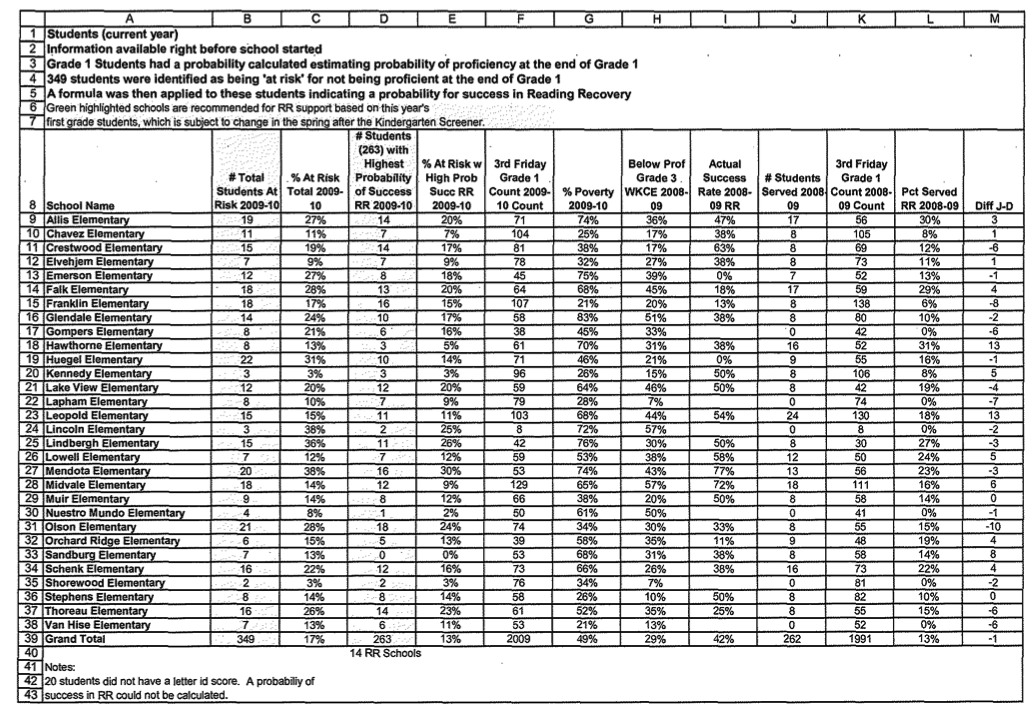
Share

He’s redefining acceptance at Harvard

Tracy Jan:

He set his sights on Harvard University while in middle school, after stumbling across it in the encyclopedia. Though he lived in a nearby town, the son of a gas station owner had never visited the campus. The nuns at his Catholic high school refused to write him recommendations, proclaiming the college full of atheists, communists, and rich snobs.
Not only did William Fitzsimmons get in, one of just a handful of students on a nearly full scholarship the 1960s, he has spent his nearly four-decade career in Harvard admissions helping transform a bastion of privilege into one more accessible to students from backgrounds like his.
Now, as the admissions season kicks into high gear, the 65-year-old dean traverses the country on recruiting trips, sharing his tale of how a working-class youth managed to make the trip from the modest streets of Weymouth to Harvard Yard, just 15 miles away but seemingly a world apart. It’s a story line he imparts frequently to put Harvard on the radar of students who might have dismissed an Ivy League education as a pipe dream.

Share

Educational Innovation: It Takes a Child to Raise a Village

Patty Seybold:

All over the world, in poor and rich countries alike, families take their children out of school in order to contribute to the livelihood of the family. They’re not opposed to education, but the family needs the extra hands that the child can provide in order to make ends meet. There are many educational innovations that are aimed at improving the ability of the child, once educated, to earn a decent income. But nobody has focused on the issue of replacing or improving the family’s income while they send their kids to school.
By contrast, the innovations that have been developed by the Uganda Rural Development and Training program and employed at the URDT Girls’ School are special in that they increase the family income, not years later, but while the child is still in school. On average, the incomes of families whose children are enrolled at the URDT Girls School increase by 20% while their daughters are still in school.
Think about that for a minute. What that does is eliminate the need to have the girls drop out of school in order to contribute to the family’s income. Imagine the implications for the rest of the world if all families benefited by keeping their children in school rather than by having them drop out to go to work.

Share

Poking fun at students and their excuses to not take exams

Doug Moe:

Final exams are looming on the UW-Madison campus. A time of stress, cramming and little sleep.
It’s tough on students. But it’s even tougher on their grandmothers.
Last spring, students at the School of Human Ecology could walk into their school’s building on Linden Drive and see in the entry an exhibit detailing just how perilous exam time is for the grandmothers of college students.
“I don’t remember what inspired me,” Dave Riley, the man responsible for the exhibit, was saying this week.
Riley is a professor in the school. Years earlier he had read an article originally published in the Connecticut Review titled, “The Dead Grandmother/Exam Syndrome and the Potential Downfall of American Society.”
The crux of the article can be summed up in one sentence near the top: “A student’s grandmother is far more likely to die suddenly just before the student takes an exam, than at any other time of year.”

Share

Mr. President: Be the bad guy, start closing schools.

Jay Matthews:

Many fine people, including President Obama, are trying to make public schools better, but I don’t see much progress. Cities like New York, reporting impressive achievement gains, seem to have trouble with their data. The results from great charter schools are neutralized by the results from bad ones. New ideas are everywhere, but most are bloodless, hard to understand, difficult to visualize.
Here is one idea that is starkly different: Mr. President, you have to be the Grim Reaper, the Terminator. Get out there and start closing schools that don’t work. I know a way you can do it that will win applause from everybody.
The trick here is that I do NOT want you to close regular public schools. There are plenty of them that are doing a terrible job — too many, actually, for even a president to tackle. As a constitutional scholar, you know you don’t have the power to shut them down anyway. That’s the job of the states and cities.
But there is now this peculiar kind of public school called a charter school. It uses tax dollars, but is independent of school district rules. There are only 5,000 of them in the country, compared to more than 90,000 regular public schools.
The beautiful part of my plan is that you have been a huge charter school supporter. In your signature speech on school reform, delivered March 10 in Washington, you celebrated charters that gave creative educators “broad leeway to innovate.” But you also said “any expansion of charter schools must not result in the spread of mediocrity, but in the advancement of excellence.” To do that, you said, we should “close charter schools that aren’t working.”

Share

In defense of the good school promise

Tom Vander Ark:

While channel surfing on Thanksgiving morning, I found a school board association meeting where a famous prof was railing on standards and testing with lots of applause from the audience (in a state contemplating delaying college-ready math and science standards until 2015). I agreed with many of his assertions like “America is still best at encouraging differences and entrepreneurship” and “we want to teach everything.” He went to deride standards, testing and a system where everything was “reduced to a single number.” Since lots of my friends are in his camp and want to pitch No Child Left Behind and add more services, it reminded me of why we have NCLB and what the new version should look like.
The primary reason we have a federal law like NCLB is that school boards (and state boards) allowed generations of chronic failure. They cut bad employment deals and asked for more money when things didn’t go well. Teachers that could went to the suburbs. Most low income and minority kids were getting left behind. Anyone committed to equity could see things had to change.
NCLB reflected a consensus that 1) measurement and transparency would help us understand the problem, 2) that a basic template for school accountability would ensure that things would get better for underserved students, and 3) the federal government should play a bigger role in ensuring equity and excellence.

Share

Advocating for Girls’ Sports With a Sharp Tongue

Katie Thomas:

Few girls who play sports in suburban Philadelphia would recognize Robert H. Landau, but many coaches and athletic directors know that spotting him in the bleachers could spell trouble.
With a sharp tongue, a refusal to compromise and a well-honed sense of injustice, Landau is that familiar breed of community activist with a knack for pushing public officials over the edge. His specialty is girls’ sports, and his targets are usually wealthy public schools from the Main Line suburbs that pride themselves on being progressive and fair in offering a rich array of opportunities.
No slight to girls is too small for Landau to take on. His victories range from the momentous to the less obvious, like forcing his daughters’ school district to provide more athletic choices, pressuring leagues to showcase their title games and getting a school mascot to perform at their games.
Landau’s complaint against Haverford High School — over issues like publicity for and scheduling of boys’ and girls’ basketball games — has upset even those who would otherwise support him.

Share

NEA is the Largest Political Spender in America

Mike Antonucci:

Since the rise of the Internet, we have been able to more easily track political spending. The Center for Responsive Politics has led the way in documenting and accounting for all the different ways money is spent on federal campaigns. Alas, tracking similar spending at the state level has been more of a hit-or-miss proposition. Disclosure laws vary from state to state, and electronic reporting of results has been sporadic.
Until now. CRP joined forces with the National Institute on Money in State Politics to produce the first comprehensive report of political spending at both the state and national levels. The organizations combined spending on candidates, parties and ballot initiatives to come up with a total for each of the nation’s special interest groups. The results should give pause to those who think the biggest political spenders must be Big Oil, Wal-Mart and the pharmaceutical, banking and tobacco industries.
By far the largest political spender for the 2007-08 election cycle was the National Education Association, with more than $56.3 million in contributions. The teachers’ union outdistanced the second-place group by more than $12 million.
Believe it or not, the report understates NEA’s spending, since it places political expenditures made in concert with the American Federation of Teachers in a separate category. “NEA AFT’ ranked 123rd in the nation, contributing more than $3.3 million to campaigns in Colorado, Florida and Oregon. (AFT ranked 25th with almost $13.8 million in contributions.)
Just to put this in perspective, America’s two teachers’ unions outspent AT&T, Goldman Sachs, Wal-Mart, Microsoft, General Electric, Chevron, Pfizer, Morgan Stanley, Lockheed Martin, FedEx, Boeing, Merrill Lynch, Exxon Mobil, Lehman Brothers, and the Walt Disney Corporation, combined.

Share

The march of English yields surprising losers

Michael Skapinker:

Anthony Bolton, veteran star stock-picker at Fidelity International, is moving to Hong Kong to set up a China fund. He is following Michael Geoghegan, HSBC’s chief executive, who has already announced he is moving from London to Hong Kong. “The centre of gravity is clearly shifting,” Mr Bolton says.
It certainly looks that way, although it is worth recalling that it was not that long ago that Japan was tipped to be the new number one. Economies have their ups and downs – look at Dubai.
What we can forecast with some confidence is that English will remain the world’s leading language for as long as anyone reading these words is alive. Economies can tip into crisis, fund managers can switch their investments at the click of a button and executives can relocate to the other side of the world, but it takes a lot more to topple the global language.
If Mandarin – or Spanish, or Arabic – is to replace English as the world’s lingua franca, children in São Paulo, St Petersburg and Auckland had better start learning it now. Forget all those advertisements promising you can learn a language in three months. You can’t. You may be able to summon up a few phrases. Perhaps you could engage a taxi driver in a minute of conversation before you seize up.

Share

The College Fear Factor: How Students and Professors Misunderstand One Another

Rebecca Cox:

They’re not the students strolling across the bucolic liberal arts campuses where their grandfathers played football. They are first-generation college students–children of immigrants and blue-collar workers–who know that their hopes for success hinge on a degree.
But college is expensive, unfamiliar, and intimidating. Inexperienced students expect tough classes and demanding, remote faculty. They may not know what an assignment means, what a score indicates, or that a single grade is not a definitive measure of ability. And they certainly don’t feel entitled to be there. They do not presume success, and if they have a problem, they don’t expect to receive help or even a second chance.
Rebecca D. Cox draws on five years of interviews and observations at community colleges. She shows how students and their instructors misunderstand and ultimately fail one another, despite good intentions. Most memorably, she describes how easily students can feel defeated–by their real-world responsibilities and by the demands of college–and come to conclude that they just don’t belong there after all.
Eye-opening even for experienced faculty and administrators, The College Fear Factor reveals how the traditional college culture can actually pose obstacles to students’ success, and suggests strategies for effectively explaining academic expectations.

Share

Charter schools: Two studies, two conclusions

Nick Anderson:

As President Obama pushes for more charter schools, the education world craves a report card on an experiment nearly two decades old. How are these independent public schools doing? The safest and perhaps most accurate reply — it depends — leaves many unsatisfied.
This year, two major studies offer contradictory conclusions on a movement that now counts more than 5,000 charter schools nationwide, including dozens in the District and Maryland and a handful in Virginia.
Margaret Raymond, director of Stanford University’s Center for Research on Education Outcomes, reported in June that most charter schools deliver academic results that are worse or no better than student accomplishments in regular public schools. She relied on test data from 15 states (not including Maryland or Virginia) and the District.
Caroline M. Hoxby, a Stanford economist, reported in September that charter school students are making much more progress than peers who sought entry to those schools by lottery but were turned down. She drew on test data from New York City.

Share

“Helping Parents Better Understand Public Education”

Brittany Brown:

Parents for Public Schools is recruiting Pine Belt parents to attend a free, two-day leadership institute this spring designed to help parents better understand public education.
“Most of the time, they do not understand the language or acronyms used in education,” said Victoria Peters, a parent coach with the organization who works in the Pine Belt.
“We know parents have something to say, but the reason we don’t hear them is because they don’t know what to say to give feedback.”
The institute is sponsored by Parents for Public Schools, a national organization based in Jackson that promotes parent involvement and leadership in schools. It will be held Feb. 26-27, March 26-27 and April 16-17 at the Hilton in Jackson. The deadline to apply is Dec. 14.
Peters said 30 parents will be selected to attend a variety of interactive workshops and breakout sessions.
“We want a diverse group of parents,” she said.

Amazing….

Share

The masters of education With the Gates Foundation grant in hand, Memphis City Schools will funnel incentives to develop the best and brightest teachers and seed the system with role models

Jane Roberts:

Kimberly Hamilton arrives and leaves work in the dark so often, custodians at Winchester Elementary School are on alert not to lock her in or out.
“If I leave at 5 o’clock, someone’s putting a hand to my forehead to see if I have a fever,” she says, laughing at the absurdity, but serious about the hours it takes to move children from barely proficient to mastery.
She teaches her third-graders to get along with others, be good citizens, live in a violent society and dream for the future.
The $90 million grant the Bill & Melinda Gates Foundation awarded this month to Memphis City Schools to improve the effectiveness of its teachers offers Hamilton the biggest one-time raise she could ever hope for in public education, going from the $49,000 she earned last year to the $75,000 base pay proposed for the district’s most talented teachers.

Share

Making the Home-School Connection

Erin Richards:

Milwaukee Public Schools will spend some $4 million in federal stimulus money over two years to support a major parental involvement program in 35 schools
First of four parts
Lennise Crampton, a 40-year-old Milwaukee mother of eight, sometimes wonders how her children would have performed in school if she’d known how to be a better parent from the start.
A single mother until she married this year, Crampton usually managed decent meals and clothing and getting her kids to class. It was up to the school, she thought, to handle the education part.
Then in December of 2005, a representative from Lloyd Street School marched up to Crampton’s door and asked her to participate in a program that improves relationships between teachers, schools and families.
Crampton started coming to weekly meetings at Lloyd, where her two youngest attended. She learned about training she could get as a low-income parent. She learned how to engage in her children’s academics at home and how to advocate for their needs at school.
“These little ones get the best of the best now,” she said. “If it applies to my children’s academics, I’m on it.”

Share

Pilot program adds finance to school curriculum

Jonathan Tamari:

With New Jersey high schools already facing a new mandate to teach students financial literacy, at least six school districts will be able to participate in a pilot program that establishes a class on the topic for seniors.
The state Department of Education in June added economics and financial literacy instruction to the state’s high school graduation requirements.
At the same time, a bill working its way through the Legislature aimed to create a financial literacy pilot program, establishing a course on the subject in six districts. Those schools would receive advice and support from the state in establishing those classes.
Gov. Corzine signed the pilot-program bill on Nov. 20. The program, which will set up courses for high school seniors, will cover topics such as budgeting, savings and investment, and credit-card debt.
“So many young New Jerseyans find out all too late that living in a credit-card culture carries a price,” said Senate Majority Leader Stephen Sweeney (D., Gloucester), one of the law’s sponsors.

I would hope that essential financial calculations would be covered in Math class.

Share

Lodi’s Internation Education Week broadens students’ horizons

Pamela Cotant:

When Max Love attended the annual International Education Week at Lodi High School as a student there, it fueled his interest in global learning and led to his desire to serve in the Peace Corps in Eastern Europe.
A 2009 Lodi High School graduate, he returned to the event this year as a guest speaker on multicultural and international education. Now a UW-Madison student in Middle Eastern studies, he received a scholarship to study Arabic and wanted to let students know about the opportunities that exist.
“It’s immeasurable,” said Love about the effect of International Education Week.
It’s the fourth year of the event, which just concluded after featuring more than 35 speakers from around the world, an international film festival, international cuisine, an Indian dance troupe and other activities.

Share

Servant to Schoolgirl

David Pilling:

It was during the 1999 Maghi festival, whose revelries grip western Nepal in mid-January each year, that Asha Tharu’s parents sold her. Asha, who was then five years old, fetched $40. In return for the money, Asha was sent to work for a year as a bonded labourer at the house of her new owner in Gularia, a town near her village of Khairapur.
“I had to get up very early and I had to clean the pots, clean the rooms and wash the clothes,” recalls Asha, now a bright 15-year-old. “I worked all day and I didn’t get enough sleep.”
I have come along jolting, unmade roads from Nepalgunj in western Nepal to meet Asha at her sister-in-law’s hut, a rather beautiful dwelling of unbaked mustard-yellow bricks, more African in appearance than Asian. In the main living area are two large, exquisitely fashioned mud urns built into the walls for storing rice. In the unfurnished room where the family sleeps, Asha sits on the dirt floor and tells me about her new life. She says she is happy in school and that, on the weekends, she works in a brick factory, earning $1.30 for an eight-hour shift. That is enough to buy rice and to help her elder sister pay for school.
More than anything, Asha remembers the petty slights she endured during her eight years of servitude, which ended last year when her “master” agreed to release her. “They would give me scraps. I used to feel very hurt by that, receiving the left-overs of guests or the elder family,” she says, glancing occasionally at the dusty ground outside the mud hut where she now lives. “Sometimes I’d get rotten food, or half-stomach food, not enough to stop my hunger,” she says. “They would hit me or shout at me if I dared complain.”

Share

Networked Learners

Lee Rainie:

In the opening keynote, “Networked Learners,” Lee Rainie will discuss the latest findings of the Pew Research Center’s Internet & American Life Project about how teenagers and young adults have embraced technology of all kinds — including broadband, cell phones, gaming devices and MP3 players. He will describe how technology has affected the way “digital natives” search for, gather and act on information.
The 2009 MVU Online Learning Symposium will explore how young people are using new media and communication tools to build social networks, create content and learn from their peers. This new environment has significant implications for learning and teaching, and it creates new challenges for students, parents, educators and policy makers.
New this year: The 2009 symposium is being offered in an alternative live Web-accessible format for those who cannot attend in person. Online attendees will see, via Mediasite simulcast, both keynotes, the closing panel discussion and three breakout sessions.

Share

Calvert high school turns them lose at lunch

Jenna Johnson:

It’s lunchtime at Patuxent High School in Southern Maryland, but it looks and sounds more like recess.
Students lounge in hallways and classrooms with sack lunches and trays of food. They play Frisbee, get dating advice from teachers, hold club meetings, cram for afternoon quizzes, play video games or catch up on sleep.
Two years ago, Patuxent Principal Nancy Highsmith released students from the confines of the cafeteria and replaced the multiple 30-minute lunch periods with one hour-long, schoolwide lunch. With some creative scheduling class time has remained the same, she said, and the middle-of-the-day burst of freedom has increased club participation, taught time management skills and given stressed-out students time to chill.
But there’s an ulterior motive: raising test scores, grades and graduation rates.

Share

Special education, for some, gets costly

Sarah Palermo:

Educating children with disabilities is expensive.
This year, the Keene School District will spend about $13.7 million for services ranging from special education teachers to speech and physical therapists.
That figure also includes funds for programs that serve children with severe disabilities, programs that are so specialized the district can’t run them in Keene.
As expensive as those programs can be — hundreds of thousands of dollars for one year, in some cases — the cost is more easily absorbed in a city the size of Keene than in some of the neighboring towns.
Sometimes, the annual school district meeting in a small town can sound like a game of “what if”:
What if a child with a severe disability moves into our town?
Paying for one student to attend a specialized program, like the school at Crotched Mountain Rehabilitation Center in Greenfield, could double the special education budget of some districts.
Out-of-district placements this year range from $30,000 to $375,000 in the Chesterfield, Harrisville, Marlow, Marlborough, Nelson and Westmoreland school districts, according to Timothy L. Ruehr, the districts’ business manager.

Share

Through Letters, a Family History Unveiled

Bob Davis:

A reporter’s seven-year correspondence with his 93-year-old cousin, illustrator Sam Fink, reveals a family’s past and the beauty in old-fashioned letter writing
Shortly before Christmas 2002, I received my first letter from Sam Fink. On the envelope, he had drawn an elephant and colored it with orange, yellow, brown and blue crayons. “Good to remember. Happy New Year,” he wrote above the address.
The letter was equally charming. He wrote about his son, David, who lived in Israel with a brood of grandchildren and great grandchildren. “When I visit my family in Jerusalem twice a year for a two-week stay, instead of asking about their lives, I share mine,” Sam wrote. “In most instances, young people do not know how to share with old people.” He signed it, “Your cousin, somehow, once removed, second, or whatever the term…Sam Fink.”
That letter marked the start of a seven-year correspondence I have had with Sam, who is a family success story — a noted illustrator who has drawn popular books about the Constitution and the Bill of Rights. He was my father’s first cousin, and though I hadn’t seen him more than a dozen times in my life, a family photo my wife had mailed as a holiday card caught his interest and prompted him to write me.

Share

Should We Inflate Advanced Placement (AP) Grades?

Jay Matthews:

The Rochester, N.Y., public schools do a fine job. Their leaders often have great ideas. But according to Rochester school board member Mike Reno, they are talking about doing something to their Advanced Placement courses that could be troublesome, even though I once thought it was a good idea. (Some people who know me say that is the very definition of a bad idea.)
Here is what Reno revealed in an email to me:
“Our district, in an effort to increase AP participation, is proposing to lower the grading scale for AP classes. The idea is based on the notion that kids in Rochester don’t want to take AP classes because they are afraid that the tougher work will lead to a lower grade, and they don’t want to damage their GPA for fear it will harm their college entrance chances. The district’s logic suggests by that lowering the grading scale, students will have a better chance of getting a better grade, and therefore be more willing to take the class.
“This is not their brainchild. They claim other districts are doing it. They are calling it internal weighting. They believe this is a better approach than grade weighting, where an A in an AP class would be worth, say, 5.0 instead of 4.0. The district argues that colleges strip off weighted grades, whereas an internal weight benefits the student during college entrance. (I believe grade weighting has value when calculating class ranking, vals, sals, top scholars, etc, but think colleges are free to recalculate anything they’d like). Am a crazy to think this is a bunch of nonsense?”

Share

Underground Psychology: Researchers have been spying on us on the subway. Here’s what they’ve learned.

Tom Vanderbilt:

Spend enough time riding the New York City subway–or any big-city metro–and you’ll find yourself on the tenure-track to an honorary degree in transit psychology. The subway–which keeps random people together in a contained, observable setting–is a perfect rolling laboratory for the study of human behavior. As the sociologists M.L. Fried and V.J. De Fazio once noted, “The subway is one of the few places in a large urban center where all races and religions and most social classes are confronted with one another and the same situation.”
Or situations. The subway presents any number of discrete, and repeatable, moments of interaction, opportunities to test how “situational factors” affect outcomes. A pregnant woman appears: Who will give up his seat first? A blind man slips and falls. Who helps? Someone appears out of the blue and asks you to mail a letter. Will you? In all these scenarios much depends on the parties involved, their location on the train and the location of the train itself, and the number of other people present, among other variables. And rush-hour changes everything.

Share

Off the Shelf: Fear and Loathing in High School

Taffy Brodesser-Akner:

If you went to my high school and weren’t in attendance on the first day back from summer break — say, you had been on vacation with your parents an extra day, or you had come down with the flu — a rumor that you were pregnant and out getting an abortion went hastily through the locker-lined halls. In 10th grade, it happened to me (I had been sick), and, from then on, I wanted to write about a popular girl who is mistaken for pregnant by her schoolmates. The girl must hand in her homecoming crown, withdraw from student government, where she is president, and give up her football-captain/quarterback boyfriend.
Years went by, and I did become a writer — a screenwriter, not a novelist. I wrote this story to mixed reviews. “Interesting premise,” said one agent. “But not much story there.” I chalked it up to the particular necessities of those who buy and produce screenplays: They need shocking, cinematic events. They need things to blow up.
I decided to write the story as a young adult novel. I have always loved and admired YA novels, as much for their alternate themes of devastation and lightheartedness as for how influential they can be in their readers’ lives. I sat down to write the story and finished it in a couple of months. But before I sent it to an agent who was interested, I did something I never thought I could do: I deleted it.

Share

Alexandria rethinks gifted education: more diversity sought in classes Virginia also will study ways to boost minority enrollment

Michael Alison Chandler:

When Alexandria Superintendent Morton Sherman walks the halls of the city’s schools and peers into classrooms, he can often guess whether the class he’s watching is gifted.
“Standing at the door, looking through the glass, you can tell what kind of class it is” by looking at the colors of the students, he said. “It shouldn’t be that way.”
Alexandria is a majority-minority school system, except in its gifted program. White students, 25 percent of the total enrollment, are 58 percent of those labeled “gifted.” Hispanics and African Americans, 25 and 40 percent of enrollment, respectively, account for about 10 and 20 percent of those in gifted classes.
Sherman, at the helm for a little more than a year, is bringing fresh attention to equity issues that have long confounded the small urban school system, where half of the 11,000 students live in poverty.

Share

Too hard to pick the right high school

Jay Matthews:

Near the end of her struggle to find the right high school for a son who did not always share her tastes, Tracey Henley was overjoyed to discover that some of her son’s best friends had endorsed her choice, and his resistance had vanished. “So now we don’t have to forge his signature on the form, always a plus,” she said.
Where had this painful sifting of options occurred? Was it some struggling urban district? No, Henley lives in Montgomery County, like much of suburban Washington a mecca for those seeking the best in public education. Her story illustrates that in even the best possible circumstances, parents often have to work very hard to find the place that fits their child. I, like Henley, wonder if there is a better way to do this.
Henley’s son is an eighth grader at Sligo Middle School in Silver Spring. He has attention deficit disorder, but the meds have been effective and through elementary school he performed well above grade level in all subjects. Then he entered middle school and “we were really unprepared for just how much his already-poor executive management functions would collapse in the face of increased expectations,” Henley said.

Share

A lesson in incompetence: How 1 in 3 schools fails to provide adequate teaching Read more: http://www.dailymail.co.uk/news/article-1230668/How-1-3-schools-fails-provide-adequate-teaching.html#ixzz0Xsqow7u6

Laura Clark:

  • Half of academies are substandard
  • Countless school graduates start work without 3Rs
  • £5billion wasted on adult literacy classes

More than two million children are being taught in schools that are mediocre or failing, inspectors said yesterday.
A ‘stubborn core’ of incompetent teachers is holding pupils back and fuelling indiscipline and truancy, Ofsted warned.
Despite a raft of national initiatives, a third of schools still fail to offer a good education.

Share

Rodin’s Sonnets in Stone

Lucy Farmer:

It was in the Musée Rodin that I first realised what Art was capable of. Trailing along behind Monsieur S., our strenuously Francophile teacher in his sadly unironic beret, we had already “done” Notre Dame. Then came a route march through the Louvre. Before its airy makeover with the glass pyramid, the Louvre felt like the worst kind of museum-punishingly vast, the walls of its interminable corridors lined with dukes with beards like spades and spoilt, mean-mouthed women in poodle wigs. After some hours, footsore and deafened by culture, we got to the “Mona Lisa”. I remember thinking how small she was. And how podgy. The famous smile hinted at embarrassment that all these people would bother coming so far to see her, when really she was nothing special. We adored Monsieur S. and we listened to him hold forth, complete with faux-Gallic gesticulations, about a turning point in the history of portraiture, the subtle handling of flesh tones, blah blah. But it was no good. The “Mona Lisa” was such a masterpiece, we could hardly see her. Or discover her secret for ourselves, as teenagers badly need to do, whether in love or art.
The last thing we wanted at the end of that day was another damned museum. But with the light fading to the freckled silver that makes the Parisian skyline look like an early photographic print, we found ourselves in rue de Varenne. You have to cross a cobbled yard to get to the front door of the Hotel Biron. The Biron is actually a perfect small chateau, like a doll’s house lowered from heaven into seven acres of exquisite formal gardens in Faubourg Saint-Germain. Built circa 1730, it was first a private house, then a school. By 1905 it was in disrepair and the rooms were let out to several tenants. At one point, they included Jean Cocteau, Henri Matisse, Isadora Duncan, the poet Rainer Maria Rilke and Rodin himself. The queue for the bathroom must have been quite something.

Share

Field Study: Just How Relevant Is Political Science?

Patricia Cohen:

After Senator Tom Coburn, Republican of Oklahoma, this month proposed prohibiting the National Science Foundation from “wasting any federal research funding on political science projects,” political scientists rallied in opposition, pointing out that one of this year’s Nobel winners had been a frequent recipient of the very program now under attack.
Yet even some of the most vehement critics of the Coburn proposal acknowledge that political scientists themselves vigorously debate the field’s direction, what sort of questions it pursues, even how useful the research is.
Much of the political science work financed by the National Science Foundation is both rigorous and valuable, said Jeffrey C. Isaac, a professor at Indiana University in Bloomington, where one new winner of the Nobel in economic science, the political scientist Elinor Ostrom, teaches. “But we’re kidding ourselves if we think this research typically has the obvious public benefit we claim for it,” he said. “We political scientists can and should do a better job of making the public relevance of our work clearer and of doing more relevant work.”

Share

Faced with suit, Elmbrook now will allow girls to join hockey cooperative

Amy Hetzner:

Faced with a federal lawsuit alleging gender discrimination, the Elmbrook School District has reversed an earlier decision and will allow students from both its high schools to join a girls ice hockey cooperative.
Brookfield Central High School freshman Morgan Hollowell and her father, James, sued the School District last month after it refused to join a cooperative with other school districts to offer girls ice hockey, even though the district participates in a similar cooperative for boys ice hockey.
At the time, Elmbrook Superintendent Matt Gibson said the district chose not to join the girls cooperative because too few students were interested in playing the sport and it would be difficult for the district to supervise.

Share

NCTE Presentation: College Readiness & The Research Paper

nctepa2009actual From the presentation

Preparation: John Robert Wooden, revered and very successful basketball coach at UCLA, used to tell his players: “If you fail to prepare, you are preparing to fail.”
and,
Premise: The majority of U.S. public high school students now graduate without ever having read a single (1) complete nonfiction book, or written one (1) serious (e.g. 4,000+ words, with endnotes and bibliography) research paper.
and,
Elitism” is making the best form of education available to only a few. The democratic ideal of education is to make the best form of education available to all. The democratic ideal is not achieved, and elitism is not defeated, by making the best form of education available to almost nobody.
Kieran Egan, Simon Fraser University, Vancouver, British Columbia

Download the 200K presentation PDF here.

Share

High school research papers: a dying breed

Jay Matthews:

Doris Burton taught U.S. history in Prince George’s County for 27 years. She had her students write 3,000-word term papers. She guided them step by step: first an outline, then note cards, a bibliography, a draft and then the final paper. They were graded at each stage.
A typical paper was often little more than what Burton describes as “a regurgitated version of the encyclopedia.” She stopped requiring them for her regular history students and assigned them just to seniors heading for college. The social studies and English departments tried to organize coordinated term paper assignments for all, but state and district course requirements left no room. “As time went by,” Burton said, “even the better seniors’ writing skills deteriorated, and the assignment was frustrating for them to write and torture for me to read.” Before her retirement in 1998, she said, “I dropped the long-paper assignment and went to shorter and shorter and, eventually, no paper at all.”
Rigorous research and writing instruction have never reached most high-schoolers. I thought I had terrific English and history teachers in the 1960s, but I just realized, counting up their writing assignments, that they, too, avoided anything very challenging. Only a few students, in public and private schools, ever get a chance to go deep and write long on a subject that intrigues them.
We are beginning to see, in the howls of exasperation from college introductory course professors and their students, how high a price we are paying for this. It isn’t just college students who are hurt. Studies show research skills are vital for high school graduates looking for good jobs or trade school slots.

(more…)

Share

What Does Youth Want?

Alan Borsuk:

The loser now will be later to win, the noted social commentator Bob Dylan predicted in 1964 in his generation-defining “The Times They Are A-changin.”
In Wisconsin, both Republicans and gay rights activists can take encouragement from those words.
And both can be encouraged by the results of a statewide public opinion poll conducted in September for the Wisconsin Policy Research Institute by the UW-Madison Political Science Department.
Less than a year after Barack Obama won Wisconsin in the 2008 presidential race by 17 points and Democrats captured the state Assembly after 14 years of Republican control, favorable opinions on Obama have softened, and the political affiliation of the poll respondents suggests a modest swing to the Republicans.
Furthermore, while younger voters voted heavily for Obama and Democrats in 2008, the WPRI poll shows little substantial difference among younger, middle-aged and older voters on party affiliation. Democrats continued to draw more favorable responses than Republicans, but the results suggest Republicans are gaining ground.
For example, in the November 2008 exit polls, Wisconsin voters age 18 to 29 preferred Obama over Republican John McCain by 29 points, a 64%-35% margin. But in the WPRI poll, less than a year later, sentiment on Obama was remarkably similar across age groups.
Among the 700 randomly selected Wisconsin adults for the telephone survey, 57% said they strongly approved or somewhat approved of the presidents performance. And the comparable figures by age group were 59% for the younger group, 58% for those 36 to 64, and 54% for those 65 and over.

Share

Better Letters Handrwiting App for iPhone & iPod Touch

Better Letters Website:

Better Letters was created to improve handwriting. It was inspired by the instructional handwriting font work of UK handwriting specialist Christopher Jarman. The app provides instructional lectures, both audio and written, along with practice fonts providing choices of writing style, guidelines, and directional arrows.
With Better Letters, your iPhone or iPod Touch becomes a personal handwriting trainer.
Research shows that the fastest, clearest handwriters join some letters, not all of them: making the easiest joins and skipping the rest. Also, the fastest and clearest writers tend to use the simplest letter shapes, avoiding the complex and accident-prone letter formations of conventional cursive.
In fact, the earliest published handwriting books (half a millennium ago) taught a semi-joined style of this type – called “Italic” in reference to the style’s origins in Renaissance Italy – well before today’s more complicated cursive came along.

; via a Kate Gladstone email, who notes:

Better Letters is a multi-featured suite of handwriting instruction/improvement resources, developed by — of all places — a medical software company, Deep Pocket Series, which describes this app as a “personal handwriting trainer.” (In addition to MDs, the company is also marketing this app to teachers, administrators, teens, and parents of elementary/middle school children.)
In addition to MDs, the company is also marketing this app to teachers, administrators, teens, and parents of elementary/middle school children

Share

Educational exchanges can help Michigan grow

Muskegon Chronicle Editorial:

A lot of phrases come to mind when you think about Michigan these days, but leader in international education probably isn’t at the top of the list.
A new report, released during International Education Week, says the University of Michigan and Michigan State University are among the national leaders for educational exchange.
The Institute of International Education report, “Open Doors 2009,” listed the University of Michigan as sixth in the nation in the number of international students attending the university in 2008-09. U-M had 5,790 foreign students. The University of Southern California led with 7,482. MSU was 10th with 4,757 foreign students.
The state is ranked eighth in the nation with 23,617 foreign students studying at our colleges and universities, an increase of 3.3 percent. Joining U-M and MSU as leading host campuses are Wayne State, Western Michigan and Eastern Michigan universities.
The foreign students spent about $592.4 million in Michigan on tuition and living expenses in 2008-09 — a half-billion dollars is nothing to sneeze at.
Overall, 671,616 international students attended U.S. colleges, up 8 percent from a year ago. The foreign students mainly chose business and engineering courses and California and New York City were their top destinations.
Most of the foreign students come from India followed by China, South Korea, Canada and Japan. But in Michigan, Chinese students make up 18 percent of the foreign students followed by India at 16.5 percent; South Korea, 12.5 percent; Canada, 12 percent; and Taiwan, 3.9 percent.

Share

Tips for the Admissions Test … to Kindergarten

Sharon Otterman:

Kayla Rosenblum sat upright and poised as she breezed through the shapes and numbers, a leopard-patterned finger puppet resting next to her for moral support.
But then came something she had never seen before: a visual analogy showing a picture of a whole cake next to a slice of cake. What picture went with a loaf of bread in the same way?
Kayla, who will be 4 in December, held her tiny pointer finger still as she inspected the four choices. “Too hard,” she peeped.
Test preparation has long been a big business catering to students taking SATs and admissions exams for law, medical and other graduate schools. But the new clientele is quite a bit younger: 3- and 4-year-olds whose parents hope that a little assistance — costing upward of $1,000 for several sessions — will help them win coveted spots in the city’s gifted and talented public kindergarten classes.

Share

Teaching the Golden Rules

Alina Dizik:

Creating a course to teach corporate social responsibility isn’t as easy to do as, say, honing a curriculum for Finance 101.
After all, integrating public and societal interests into corporate decision-making strategies is tricky. Teaching students to become socially responsible managers first requires dispelling previous notions about where personal values fit in the workplace, says Daylian Cain, assistant professor of organizational behavior at the Yale School of Management. Acting on your values is more complex than it might seem.
In an interview, Mr. Cain, who specializes in conflict of interest issues, spoke about imparting these ideals.

Share

From Oxford to Wall Street

Elliot Gerson:

Tonight, 32 young Americans will win Rhodes Scholarships. Their tenures at Oxford are funded by the legacy of the British imperialist Cecil Rhodes, a man whose life would not be honored today were it not for his vision that young people of outstanding intellect, leadership and ambition could make the world a better place.
For more than a century Rhodes scholars have left Oxford with virtually any job available to them. For much of this time, they have overwhelmingly chosen paths in scholarship, teaching, writing, medicine, scientific research, law, the military and public service. They have reached the highest levels in virtually all fields.
In the 1980s, however, the pattern of career choices began to change. Until then, even though business ambitions and management degrees have not been disfavored in our competition, business careers attracted relatively few Rhodes scholars. No one suggested this was an unfit domain; it was simply the rare scholar who went to Wall Street, finance and general business management. Only three American Rhodes scholars in the 1970s (out of 320) went directly into business from Oxford; by the late 1980s the number grew to that many in a year. Recently, more than twice as many went into business in just one year than did in the entire 1970s.

Share

Formation of China’s Ivy League hailed

China Daily:

China’s Ministry of Education voiced on Monday its support for the formation of C9, an academic conference comprising nine domestic prestigious universities and referred to as China’s Ivy League by some experts.
Xu Mei, the ministry’s spokeswoman, said the establishment of the conference is a “helpful attempt that is conducive to the country’s construction of high-quality colleges, cultivation of top-notch innovative talents and enhanced cooperation and exchanges between Chinese universities and their foreign counterparts.”
On October 12, nine institutions of higher learning including the elite Peking University and Tsinghua Univerisity signed cooperative agreements that featured flexible student exchange programs, deepened cooperation on the training of postgraduates, and establishment of a credit system that allows students to win credits through attending classes in member universities of C9.

Share

Computer pioneer Sir Maurice Wilkes: vision and vacuum tubes

Jack Schofield:

Sir Maurice Wilkes, 96, one of the pioneers of British computing, strolls through the history the he helped create
Walk round the National Museum of Computing at Bletchley Park and sooner or later you’ll hear a cry of recognition and someone will say: “I remember using one of those.” It probably doesn’t happen often to The Millionaire, a mechanical calculator that went into production in 1893, but Sir Maurice Wilkes spotted it, adding: “We used to have one in the lab. I hope it’s still there.”
In this case, “the lab” was what became the Cambridge University Computer Lab, which Wilkes headed from 1945 until 1980. It was where he built Edsac, one of the world’s first electronic computers, using sound beams traversing baths of mercury for the memory units. Edsac (Electronic Delay Storage Automatic Calculator) first ran in May 1949, so this year a dinner was held to celebrate its 60th birthday. And, of course, to celebrate Wilkes himself, who is a bright, sharp 96 years of age, and has seen most of the history of computing at first hand.
How sharp? On seeing the museum’s air traffic control display, which fascinates many visitors, he immediately asks: “Where’s the radar?” Ah, well, there isn’t one. The displays are running real radar sequences but they’re recorded. Wilkes, the consummate hardware guy, doesn’t just see the screen, he looks to see how the whole system fits together.

Share