School Information System

Madison School District Student Fee(s) Analysis

The Madison Board of Education Finance and Operations Committee will discuss student fees during their meeting tonight. Committee Chair Johnny Winston, Jr. kindly asked Barbara Lehman to forward two documents:

Share

Data on AP Courses

The Department of Public Instruction web site includes data on AP courses offered going back to 1996-1997 through 2003-2004. (I apologize in advance for the long URL) The data is presented on statewide and individual district and school levels, which makes comparison possible:
http://data.dpi.state.wi.us/data/graphshell.asp?fullkey=02326903ZZZZ&DN=Madison+Metropolitan&SN=None+Chosen&TYPECODE=6&CTY=13&ORGLEVEL=DI&GRAPHFILE=GCOURSEOFFER

The page also has a utility that allows comparisons between districts and schools using pre-defined sets (ex. Big Eight) or user choice.
The user will need to use the links to view data for individual subject areas (math, foreign languages, English, etc.). The menu pick for statewide data is in the left hand column of the page. If I read it correctly, the number of AP course offerings is going up across the state, down in the Madison Metropolitan School District. At least in English AP offerings.
I note that haven’t had time to do a thorough analysis and have some questions about the data, and encourage others to do the same. I believe that there is some useful information through this source.

Share

Schoolhouse Blogs

Edward Moyer:

As blogging enters the classrooom and takes its place alongside reading, writing and ‘rithmetic, adult Web surfers have the chance to relive the trials and tribulations of the wonder years.

Share

Book: Top of the Class

Soo Kim Abboud and Jane Y Kim:

Asians and Asian-Americans make up 4 percent of the U.S. Population, and 20 percent of the Ivy League. The authors contend that Asian-Americans are no more intelligent than any other race or ethnic group, but that their parents have instilled in them a love of learning.

Share

A Few Notes on the Superintendent’s Evaluation & Curriculum

Several writers have mentioned the positive news that the Madison Board of Education has reviewed Superintendent Art Rainwater for the first time since 2002. I agree that it is a step in the right direction.
In my view, the first responsibility of the Board and Administration, including the Superintendent is curriculum: Is the Madison School District using the most effective methods to prepare our children for the future?
There seems to be some question about this:

  • Language: The District has strongly embraced whole language (Troy Dassler notes in the comments that he has been trained in balanced literacy). I would certainly be interested in more comments on this (and other) point(s). [Ed Blume mentions that “”Balanced literacy” became the popular new term for whole language when whole language crumbled theoretically and scientifically.”] UW Professor Mark Seidenberg provides background on whole language and raises many useful questions about it. Related: The District has invested heavily in Reading Recovery. Ed Blume summarized 8 years of District reading scores and notes that Madison 3rd graders rank below state wide average for children children in the advanced and proficient categories. (Madison spends about 30% more than the state average per student)
  • Math: The District embraces Connected Math. UW Math Professor Dick Askey has raised a number of questions about this curriculum, not the least of which is whether our textbooks include all of the corrections. A quick look at the size of the Connected Math textbooks demonstrates that reading skills are critical to student achievement.
  • Sherman Middle School’s curriculum changes
  • West High School’s curriculum changes and families leaving
  • Same Service Budget Approach“: I think the District’s annual same service approach reflects a general stagnation.

(more…)

Share

Third Grade Reading Scores

Madison third graders rank BELOW the state-wide average for children in the advanced and proficient categories.
Nearly one-third of the African-American third graders read at basic or below. (And basic is below grade level.)
African-American third grades still trail white students by a substantial margin.
Schools at the bottom in 1978-79 are still at the bottom in 2004-2005.
Click here to view an Excel file with eight years of reading scores.

(more…)

Share

Superintendent’s Evaluation: What’s Missing?

For the first time since 2002, the Madison School Board has produced a performance evaluation of Superintendent Art Rainwater. It’s a small step in the right direction. However, it’s important to understand how the evaluation fails to meet the requirements of the district’s employment contract with the superintendent.
The contract requires the Board to set specific, measurable goals for the superintendent by the first day of each school year. That did not happen.

(more…)

Share

Families Leaving West?

Many good things are happening in the Madison Metropolitan School District! This viewpoint and the things we see conflict with the stated concern by some families as they tell us that they will be leaving the district rather than attend West high school. The one reason common to families is that they want their child to have a chance to take AP courses (limited numbers offered at West, in contrast to the other MMSD high schools) for the academic challenge offered to prepare their child for application to competitive colleges. (This viewpoint seems to be paired with a concern that the Small Learning Community approach at West may result in decreased opportunities for other challenging course work). It seems so sad that these families are choosing to leave the district. The contributions that children and parents have made to the district will be greatly missed.
AP offerings seem to be the norm across the nation, yet at least one West staff member opposes these offerings. Can we have an open discussion about issues of concern??? What are the pros and cons of increased AP offerings? Is it important to attempt to retain families currently attending our schools? What do you think? If you have a special interest in this issue, you may want to check below for additional information. . . .

(more…)

Share

Seidenberg’s Recent “Informal Talk on Reading Education”

University of Wisconsin Psychology Professor [Language and Cognitive Neuroscience Lab] Mark Seidenberg recently gave a lecture on reading education at the University Club:

Whole Language was a massive, uncontrolled experiment, with millions of children as unwitting subjects.
How it’s done: Someone gets an idea

  • Often a Guru. Many Gurus in reading instruction.
  • Guru has brilliant insight about how children learn, how to teach reading – Their own personal theory
  • The idea may be personally promoted by the guru, with direct appeals to teachers
  • The idea is implemented on a vast scale, based on intuitions that it is good.

860K PDF Version of the lecture.

Share

Comments on Superintendent Evaluation

Thanks to both Johnny & Ruth for posting the news of the superintendent’s evaluation.
Since neither left their posts open for comments, I’ll offer a comment and encourage others to use this post for additional comments.
I’m particularly pleased that the board said that it “would like the Superintendent to develop targets and measures for each priority and to provide an annual report on our performance in each area.”
I’ve argued before (Was the board actually listening!) that the priorities have no power without measurable, time-specific goals. Now maybe they will.

Share

Superintendent Evaluation: Board President’s News Release

Madison Board of Education President Carol Carstensen released this Report on Evaluation of the Superintendent earlier today. (PDF), or click below to read the release.

(more…)

Share

Report on Evaluation of the Superintendent

News Statement from the Madison Board of Education
Report on Evaluation of the Superintendent
Hiring, supervising and evaluating the Superintendent are major responsibilities for the Board of Education. It is important to remember that this is a collective task for the Board and represents the combined views of seven very different individuals.
Download file

(more…)

Share

Jan Davidson’s low cost suggestions for improving education

When Dr. Jan Davidson spoke this week in Madison, she shared with her audience of parents, teachers, and administrators 12 low cost ideas for improving the educational opportunities of our academically advanced students.
What can schools do?
What can schools — schools that don’t have extra funds, but really care about the learning of their bright students — do?

1. Early Entrance to kindergarten — if a child is developmentally ready before the age or date specified, she can enter school early.
2. Pre-assessments are done before a unit or a course — if a student demonstrates mastery, he is able to move to a more advanced course.
3. Self-contained classes for the gifted, particularly in core curriculum subjects.
4. Multi-age, self-contained gifted classes are even more effective.
5. Subject acceleration is encouraged when a student is proficient in a particular subject.
6. Grade acceleration is encouraged when a student demonstrates proficiency in a particular grade level.
7. Opportunities for dual enrollment are available to students, e.g., taking some high school courses when a student is in middle school.
8. Advanced Placement (AP) courses and/or International Baccalaureate (IB) program are available to students.
9. Provide counselors who are trained to counsel gifted students, including advising them of talent development opportunities.
10. Work with the Talent Searches and give students credit for the credits they earn in their academic summer programs.
11. Create a school culture that values intellectual discovery and achievement, where students encourage one another to accomplish more than they would on their own.
12. Administrators and teachers who are knowledgeable about the wide range of exceptional abilities among bright students and are flexible in addressing the individual student’s learning needs.
Dr. Davidson will be posting her lecture slides online at the Genius Denied website

Share

Thinking Different: Little Rock Principal and Teacher Incentives

Daniel Henninger:

She went to the Public Education Foundation of Little Rock. The Foundation had no money for her, and the Little Rock system’s budget was a non-starter. So the Foundation produced a private, anonymous donor, which made union approval unnecessary.
Together this small group worked out the program’s details. The Stanford test results would be the basis for the bonuses. For each student in a teacher’s charge whose Stanford score rose up to 4% over the year, the teacher got $100; 5% to 9% — $200; 10% to 14% — $300; and more than 15% — $400. This straight-line pay-for-performance formula awarded teachers objectively in a way that squares with popular notions of fairness and skirts fears of subjective judgment. In most merit-based lines of work, say baseball, it’s called getting paid for “putting numbers on the board.”
Still, it required a leap of faith. “I will tell you the truth,” said Karen Carter, “we thought one student would improve more than 15%.” The tests and financial incentives, however, turned out to be a powerful combination. The August test gave the teachers a detailed analysis of individual student strengths and weaknesses. From this, they tailored instruction for each student. It paid off on every level.

(more…)

Share

A Profile of 2004 American High School Seniors

National Center for Education Statistics:

More than two-thirds of students who were high school seniors in 2004 expected to complete a bachelor’s degree, and 35 percent planned to get a graduate or professional degree. But nearly two-thirds of the students who expected to get a four-year degree had not mastered intermediate level mathematics concepts as 12th graders, and nearly a third could not consistently solve simple problems based on low-level mathematical concepts, according to a study released Friday by the U.S. Education Department.

Via Inside Higher Ed.

Share

Mr. Mom’s – Due Process Must Happen

It is no longer a secret that Mr. Mom’s Transportation Services currently faces significant challenges. Probably the biggest challenge for this small, local, minority owned business came from the school board last spring (2004). Mr. Mom’s and Badger Bus services were denied district transportation contracts. Our community was angered by this. In 2004, the Board received dozens of e-mails criticizing our decisions regarding contracts with local businesses. Here are some examples of the e-mails the school board members received:

(more…)

Share

Tell Family Stories To Your Kids

Jennifer Harper:

Granddad’s first job, the old homestead, mom’s legendary cooking: Family stories make effective armor for children in an unsure world, according to a three-year study of 40 families by Emory University.
It found that children who share in those endearing and even heroic memories can grow strong and resilient for a simple reason: They have proof from mom and dad that family life goes on, despite negative outside events.

This is right on. I have direct experience with this, via my parents and grandparents.

Share

Madison Schools Transport Update: Cullen and Pommer on Mr. Mom’s

Sandy Cullen:

The district is investigating how long the company was without insurance and also is looking into reports that some bus drivers did not have valid driver’s licenses, Rainwater said.
Also last month, the brakes failed on a bus returning students to Spring Harbor Middle School after a field trip, Rainwater said. No students were injured, and the bus did not crash.
Attorney Clarence Sherrod said the district is in the process of preparing a notice of default, which could lead to termination of Mr. Mom’s two contracts with the district.
Under the terms of its contracts, Mr. Mom’s will have 20 days to respond to the default notice.

Matt Pommer has more:

Price provided copies of the safety audits done on the five bus firms that serve the Madison district in response to questions raised Monday by School Board member Ruth Robarts.
The reports showed that other bus firms last year had far smaller percentages of buses needing repairs in inspections by the State Patrol. Two of 15 Badger buses needed work; one of 20 Rite-Way vehicles needed repairs; eight of 23 Durham buses failed; and five of 21 First Student buses inspected needed work.

Share

Persistence

Vernice Jones:

I left the Dominican Republic to come to the United States in 7th grade. I was put in a special education class. I wasn’t slow, but I was quiet – you know different culture? I was very introverted. I’ll always remember that class. Other kids used to tease all of us. It’s interesting how people can get lost that way.
I befriended a teacher who took me under his wing. He encouraged me to participate in class. It was just a matter of confidence. If we were going to do something in science, he would encourage me to do a project and present it. He helped me come out of my shell.

Via Joanne.

Share

3 of 4 Middleton-Cross Plains Referenda Fail

Barry Adams:

Voters in the Middleton-Cross Plains School District narrowly approved Tuesday more elementary space and upgrades to heating and air conditioning at two schools but overwhelmingly rejected three other questions in a $53 million referendum package.
Voters said no to a $36 million combined elementary and middle school, a $5.8 million transportation garage and increases in state-imposed revenue caps.
“I’m really not surprised because of the bottom-line price,” School Board member Ellen Lindgren said. “I think we’ll have to take quite a bit of time analyzing why they voted the way they did.”

Channel3000 has more.

Share

Budgets and Account Structures – How Can We Find Out What a Budget is for a Curriculum, Service?

The expenditure side of the MMSD budget appears to be organized around departments – general administration, business services, student services, elementary education, etc. Within each department, expenditures seem to be organized according to an accounting structure, which I believe is dictated by DPI requirements.
Ed Blume has been asking questions about library and other program/services expenditures. The response from the administration, “…There are no specific accounts in the financial statements that report the expenditures against this receipt. Library expenditures are part of the central library and included in each building as part of the building formula accounts…” This seems to be an accounting response to a budget question.
In the chart of accounts why aren’t there, or are there, “tags” (my word) that enable financial information to be organized in a way that if either a board member or the public wants to know what is being spent on library services, reading recovery, math instruction, other projects, this information can be provided?

Share

Update: Mr. Mom’s Bus Company Contract with the Madison School District

As reported in The Capital Times, I recently questioned Superintendent Art Rainwater about the process that the district used to determine that Mr. Mom’s bus company was qualified to bid for contracts to transport our students in the years from 2005-06 through 2010-11. The process is known as the “pre-qualification evaluation”.
In a memo today, Assistant Superintendent for Business Services Roger Price told the Board of Education that the pre-qualification evaluation for companies who wanted to bid on these six year transportation contracts was conducted in December of 2004. The process resulted in qualifying five companies to bid for the contracts. Mr. Price noted that “all vendors had some vehicles fail inspection” on the most recent inspections by the State Patrol.
His materials show very different failure rates for the companies.
Riteway: .5% failure rate (19 vehicles passed, 1 failed)
Badger Bus: 13% failure rate (13 vehicles passed, 2 failed)
First Student: 19% failure rate (21 vehicles passed, 5 failed)
Durham: 26% failure rate (23 passed, 8 failed)
Mr. Mom’s: 75% failure rate (2 passed, 8 failed)
When the Board of Education voted on the contracts, it did not receive this information.

Share

School Board Governance Perspectives

Last night’s Madison Board of Education meeting provided an illuminating look at two rather different perspectives on governance. The Board voted 4 (Carstensen, Keys, Lopez and Winston) – 3 (Kobza, Robarts, Vang) to support the Administration’s approach to the growing problems with Mr. Mom’s Transport Service (I believe there were two votes on this question – the minutes are not available as of this writing).

Many points were discussed, including the District’s pre-contract vetting of Mr. Mom’s and whether, given recent experience, the Administration should be allowed to subcontract with Badger Bus via Mr. Mom’s (Badger Bus is replacing Mr. Mom’s service on many routes). The District recently signed a five year agreement with Mr. Mom’s Transport Service.
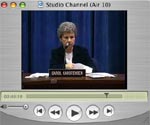
The motion passed 4-3 to allow the Administration to Subcontract Badger Bus service via Mr. Mom’s (again, I think there was a 2nd vote on this). Watch the debate here

For what it’s worth, I’m actually in favor of long term (5 year) contracts. They, hopefully allow vendors to optimize and perhaps manage costs more effectively. The subcontract to Badger Bus via Mr. Mom’s, given the issues, seems unusual.

UPDATE: The 4-3 vote was on a Kobza motion, seconded by Robarts to contract directly with Badger Bus, rather than using a subcontract via Mr. Mom’s. After this motion was defeated 4-3 (Kobza, Robarts, Vang), as noted above, the Board voted 5 – 2 (Kobza joined Carstensen, Keys, Lopez and Winston) to support the Administration’s proposed subcontract with Badger Bus via Mr. Moms.

Share

Middleton-Cross Plains School Referenda

Channel 3000:

Some in the district are concerned that there would be too many kids of widely varying age groups on the same campus, but Supt. Bill Reis sees benefits in kids staying at one school for nine years.
“So we’ll get to know families, teachers, get to know kids,” said Reis. “There will be communication elementary to middle school so that transition, I think, will be more successful.”
But at least one Middleton resident opposes the idea.
“Mostly I’m looking at physical problems,” said Karl Schroeder. “You already have harassment in your own age group. Now, you’re just adding on to that.”
Enrollment figures released to News 3 show just a one-student increase in the school district from one year ago, but explosive future population growth seems imminent.

Share

MMSD Budget Mysteries #2

Mystery fans, you’re joining this budget baffler in mid-case. I previously sent the following e-mail to Superintendent Rainwater:

I received an inquiry about library aids from a district employee, and I can’t find the answer. Maybe you and Roger Price [Assistant Superintendent for Business Services] can help.
The DPI Web site shows that the MMSD received $675,055 in library aids from the Common School Fund for the school year 2004-05. The DPI site also notes that the funds are paid by May 1 and have to be expended by June 30 of the year they were received.

I was able to find that the MMSD shows library aid revenue of $568,560 for 2004-2005 on page 238 in the 2005-2006 Budget & District Profile.

However, I cannot find an expenditure for the funds. On page 103 of the same document, I can find a total of $242,700 for “Major Non-salary Expenditures” in the Division of Library Media Services. The same page shows “Other expenses,” including equipment and supplies, of $181,270 under a heading called General and another expenditure of $46,720 under the heading Community services. Those three amounts total $470,720.

Can you please explain why DPI shows a payment of $675,055 and the budget book shows an expenditure of only $568,560 for library aids?

Can you also tell me and the district employee where in the 2005-2006 Budget and District Profile I can find how the library aids were expended to total either $675,055 or $568,560?

The district employee was also under the impression that library aids were distributed to individual schools, but was told by the school librarian that the school had not received any funds prior to June 1. Could you possibly provide a list of library aids received by each school in the MMSD, if that’s the way the MMSD uses the funds?

As always, I appreciate your time and attention.

(more…)

Share

Madison Schools Superintendent Art Rainwater’s October Message


Art Rainwater’s October Message. Quicktime Video

Share

State Superintendent Burmaster’s Message for the Week

This is Elizabeth Burmaster’s weekly message for October 9-15.
Gifted Education Week is Oct. 9-15
Wisconsin’s observance of Gifted Education Week reinforces our commitment to educating gifted and talented children to their full potential, Through education, today’s young people who are highly capable intellectually, academically, creatively, artistically or through leadership will become tomorrow’s inventors, leaders, and poets. We certainly want our best and brightest working in our schools, medical facilities, businesses, and communities and contributing their talents to the betterment of our society.
Educators have an important role in identifying and meeting the needs of gifted and talented children, The diversity of those recognized as gifted and talented should reflect the diversity of our student population. To ensure that we identify and educate all gifted and talented children no matter where they live, their family’s socio-economic background, their racial or ethnic heritage, the language spoken at home, or their disability status, we must continuously learn to recognize new cues, especially those that are creative or artistic, to identify students who need more opportunities to grow and develop.

(more…)

Share

Schools Try Recess First, Lunch Later

Amy Hetzner:

Proponents of holding recess before lunch say it helps reduce food waste in the cafeteria, increases students’ caloric and calcium consumption and can provide a calming buffer between frenetic play and quiet classroom work.
Food service and school nutrition groups have been busily advocating for more schools to change their schedules to reap the benefits.

Share

Take Nothing from the MMSD at Face Value – Part 2

I previously posted a warning to take nothing from the MMSD at face value.
Here’s another reason.
The MMSD claims that capacity at Lapham Elementary stands below 67%. However, the MMSD reports Lapham’s maximum capacity at 304 students, and this year’s attendance at 252 students, giving Lapham a current enrollment of 82.9% of capacity.
It’s easy to believe that the MMSD administration has a hidden agenda to close an east side school when the administration plays with the truth.
Click here for a chart of enrollment and capacity.

Share

Wisconsin School Spending Increases 4.6%, largest since 2001-2002

Wistax:

Wisconsin public school spending rose 4.6% in 2004-05, the largest increase since 2001-02 (5.7%). Spending on instructional support for such items as staff training, library services and athletics rose 7.7%. Expenditures for instruction and for building and grounds were both up 4.8%.
Spending per student rose 4.8%, slightly faster than the total because enrollments in the state’s public schools fell 0.3% in 2004-05 to 869,961. In 2004-05, Wisconsin school districts budgeted to spend $10,367 per student, or $477 more than the year before (The Madison School District’s per student spending is about 30% higher than the state average). The majority of expenditures were for instructional costs, which climbed 5.0% to $6,068 per student. Expenditures for instructional salaries and benefits ($5,428) rose 4.6%, higher than the annual average of 3.9% during the previous five years. Per student expenditures for transportation ($408, +2.5%) and administration ($785, +3.8%) increased at below-average rates, WISTAX noted.

Share

More on East / West Task Forces

Sandy Cullen:

Elementary schools considered most at risk are Emerson, Lapham and Lowell – which are at or below 67 percent of their capacity for students – as well as Lindbergh, Cohen said.
“We’re rallying around Lindbergh,” he said, adding that the school serves “probably the most fragile” population of low-income and minority families, including many from Kennedy Heights just across the street from the school.
Mary Gulbrandsen, director of student services and chief of staff to Superintendent Art Rainwater, said the Madison School District has no hidden agenda to close one or more East Side schools, as some parents fear.

Much more here.

Share

The Social Logic of Ivy League Admissions

Malcolm Gladwell:

“As a hypothetical example, take the University of Pennsylvania and Penn State, which are two schools a lot of students choose between,” Krueger said. “One is Ivy, one is a state school. Penn is much more highly selective. If you compare the students who go to those two schools, the ones who go to Penn have higher incomes. But let’s look at those who got into both types of schools, some of whom chose Penn and some of whom chose Penn State. Within that set it doesn’t seem to matter whether you go to the more selective school. Now, you would think that the more ambitious student is the one who would choose to go to Penn, and the ones choosing to go to Penn State might be a little less confident in their abilities or have a little lower family income, and both of those factors would point to people doing worse later on. But they don’t.”
Krueger says that there is one exception to this. Students from the very lowest economic strata do seem to benefit from going to an Ivy.

More on Gladwell.

Share

MMSD Budget Mysteries #1

This is the first installment of a series on the mysteries of the MMSD Budget.
Mystery #1: The MMSD received $$1,373,333 from a TEACH Grant Fund, and only spent $63,741. The budget document shows no other transfers or expeditures out of the $1,373,333. Where did the balance ($1,309,592) go?
To help solve this mystery, the revenue of $1,373,333 is shown on page 2 of the 2005-2006 Budget Financial Summaries. The expenditure of $63,741 is listed under expenditures for CFO/COO-Summary on page 50 of the same document.
Good sluething, all you Sherlock Holmes wannabe’s.

Share

Gifted Education Week

October 9-15 has been declared “Gifted Education Week” in Wisconsin by both Governor Jim Doyle and DPI Superintendent Libby Burmaster. Why not “celebrate” by attending one of the following events with Dr. Jan Davidson, co-author of “Genius Denied: How to Stop Wasting Our Brightest Young Minds” and co-founder and president of the Davidson Institute for Talent Development?
October 11, 7:30 p.m., McDaniels Auditorium, MMSD Doyle Administration Building, 545 West Dayton Street. Community presentation on “How to Stop Wasting Our Brightest Young Minds” and book signing. Co-sponsored by the Madison TAG Parents Group and the Wisconsin Center for Academically Talented Youth. Free and open to the public. Information: tagparents@tagparents.org
October 12, 8:00 a.m., Randy’s Restaurant, Whitewater WI. Open administrator’s breakfast and program on gifted education in Wisconsin. $10.00 per person; r.s.v.p. required. Contact Dale Johnson at daljoh@sharon.k12.wi.us to find out if there is still room. Sponsored by the Whitewater Talented and Gifted Network.
October 13, 7:00 p.m., Whitnall High School Auditorium, 5000 South 116th Street, Greenfield, WI. Community presentation on educating our gifted and talented students and book signing. Free and open to the public, but reservations are recommended. Reserve your seat by sending an e-mail to PAGE@wi.rr.com, indicating your name, the number attending and your school district’s name in the subject line. Sponsored by Wisconsin CESA #1 P.A.G.E. (Parent Advocates for Gifted Education).

Share

Teach for America is 15

Morning Edition:

Renee Montagne talks with Wendy Kopp, president and founder of Teach for America, about how far the organization has come in the last 15 years. Kopp came up with the idea for Teach for America as her senior project at Princeton and has since built it into a powerful nonprofit.

Share

364 Day School Opening?

BBC:

A school is to consult teachers and parents on the idea of opening for lessons 364 days a year.
Teaching would take place throughout the year – even on weekends – but not everyone would be in at the same time.
Paul Mortimer, who is a government adviser and in charge of two Rochdale schools, says he wants to have a school of the 21st Century, not the 19th.

Share

NCLB & Privatization

Maya Portulaca Cole posted the following thoughts on the listserve of MAFAAC:

Reading through a recent article about the Portland, OR school system from In These Times, titled, “All for One, None for All: Schoolchoice policies sacrifice universal education in favor of personal freedom,” I’m reminded of our own city and worry for its future.
On one hand, I think of Asa Hilliard’s words that remind us that, The relative ‘wealth’ of the relatively small numbers of Africans in the middle-income level obscures the gross poverty of the masses of low and no income Africans. Satisfied personally, the higher income Africans may even become a buffer, silencing the voice of the masses by being in a broker position to cool out the masses, and earning money for that containment of their brothers and sisters. These brothers and sisters are usually not clear at all. Many seem not even to seek clarity. They seek entertainment.”

(more…)

Share

Town of Burke Aligns with DeForest

Bill Novak:

Madison’s Smart Growth (land use) plan was rolled out this summer, and it put a shiver into Burke residents.
“It showed Madison stretching north to Wisconsin 19, which is the southern border of DeForest,” Miller said. “When Burke officials came to us they said the residents of the town go to the DeForest schools so they wanted to be part of DeForest.”

Share

Nichols on Departing Madison School Board Member Bill Keys

John Nichols:

No member of the current Madison School Board has been more willing to throw himself into the thick of a debate – even if that meant going it alone on principle – than Bill Keys.

Share

Middle School Curriculum: Social Focus Yielding to Academics

Jay Matthews:

For two decades, policymakers have decreed that seventh grade should be a time when children have a chance to adjust to puberty and cliques and the other annoyances of turning 13. Lessons should be engaging and enriching, middle school advocates have said, but not put too much emphasis on mastering subject matter and passing difficult tests.
That attitude is changing, at Kenmore Middle School and in much of the rest of the country. Middle schools have “overemphasized emotional development at the expense of academic growth,” said Mike Riley, superintendent of Bellevue, Wash., schools

Share

Plugged In, But Tuned Out: Getting Kids to Connect to the Non-Virtual World

Jeff Zaslow:

Children today have been labeled “the connected generation,” with iPods in their ears, text messages at their fingertips and laptop screens at eye level. But their technology-focused lifestyle can also leave them disconnected from the wider world, especially from their parents.
Many teens won’t give friends their home numbers, says Samantha Landau, 15, of West Hills, Calif. “They don’t want friends to talk to their parents, because they don’t want their parents to know about their lives.”

Share

Can We Talk: Some Ideas to Follow

A reader forwarded another perspective on school-parent communication in the Madison School District:

Here are some examples of really positive communication:
Our child’s savvy, experienced 4th grade teacher sends home a ‘weekly work ticket’. The ticket summarizes test/quiz scores, unfinished work not turned in and includes a place for teacher comments. I think this format is exceptional. It is certainly a time intensive task for the teacher. During the elementary years both of our children often had to return weekly progress slips with our signature. The teacher both children had for 3rd grade sent home a weekly newsletter that was simply a joy to read. A synopsis was created of the week’s work and provocative questions were included to facilitate parent/child conversation. Example, “Tell me about the way mummies were preserved in Ancient Egypt?” The kids do have some responsibility for communication.

(more…)

Share

A MODEST PROPOSAL

With apologies to Jonathan Swift:
Given the concerns about obesity in children – and the high cost of gasoline, I have a suggestion to deal with both. We need to redesign our buses so there are pedals for each rider – the students can provide much of the power to move the bus and reduce our reliance on gasoline while getting good exercise.
To take this one step further – we should design exercise rooms at the high schools so that bikes and treadmills also replace other energy sources.

Share

Wisconsin’s Student Achievement Tests: Are our kids doing as well as we think?

A recent New York Times article, “One Secret to Better Test Scores: Make State Reading Tests Easier” by Michael Winerip (10/05/05) reported that changes in k-12 achievement tests are the reason for substantially improved scores. The reporter argues that easier tests–not improved reading–account for much of the improvements claimed.
The Education Trust, a national non-profit organization, has published a study that compares student scores on state-created achievement tests with scores on the National Assessment of Educational Progress for each state. The most recent edition of the report covers 2003. The data support the conclusion that Wisconsin’s tests may be overstating our students’ achievement. For example, in Wisconsin 80% of students statewide scored at grade level or better (“Proficient or Advanced”) on the Grade 4 Overall Reading and English Language Arts tests. However, only 33% of the Wisconsin sample taking the NAEP test scored at this level.
http://www2.edtrust.org/edtrust/summaries2004/Wisconsin.pdf

Share

Can we Talk 2

I previously wrote about the lack of information received via email, internet, etc…from the school district. Since I posted that blog the District has been “experimenting” with two software systems they deem worth evaluation by parents and staff and are asking for feedback. (please go to the www.Madison.k12.wi.us for more info)
But not all the communication problems with MMSD have to do with modern technology. Let me give some examples……..

(more…)

Share

Example of Board Goals

Thanks to Lawrie Kobza for her post “Superintendent’s Evaluation a Step in the Right Direction.”
She stresses the need for the board to set goals and expectations.
As an example of board-set goals and expectations, I noticed a list created by the board of education of the Forest Grove School District in Oregon. (I first saw the list when looking at the way the Forest Grove district used the concept of the $100 budget, promoted for use by the MMSD by Johnny Winston, Jr.)

(more…)

Share

Senate Bill 286, What a waste of time

WWW.Legis.state.wi.us/2005/data/SB-286.pdf
Just wanted to let everyone know that while WI tries to figure out how to pay for schools, healthcare, balance the budget, care for the needy, etc………………
Your legislatures are spending time on SB286.
In a nutshell it says “school districts should teach abstinence” as the only way to prevent STD and pregnancy. Wow, what a waste of time and your money. I received my undergraduate degree in Secondary Health and Biology education and I can assure you that all the books, lectures, and information I received in college taught me that this was the only form of “birth control” that was 100%. While I agree a great Health or Human Growth and Development class is of utmost importance to a great school district, this legislation is the biggest waste of time and tax payers money, but the biggest laugh is there are communities that will not allow you to teach Sex Education, or Human Growth and Development as we like to call it, in their schools so where does the Senate assume this statement or lecture will occur in these ultra conservative districts?
Wisconsin Legislation could not scream any louder that it is ignorant and scared of SCIENCE. Look at the bills; ban cloning, teach abstinence only, alleviate health care providers of responsibility if there is a conflict with moral judgement, and the ever popular intellegient design in science classes. We as educated parents should be concerned with science education in this state and how new legislation could effect our children’s view and evaluation of science and theroy. Science is currently on the chopping block of the evagelical right and I am very concerned about legislation at the federal and state level concerning what our children are taught in Science class and whether that is decided by scientist and educators or whether it is decided by a religious political group.

Share

One Secret to Better Test Scores: Make State Reading Tests Easier

Michael Winerip:

So? “The state test was easier,” she said. Ms. Rosenstein, who has been principal 13 years and began teaching in 1974, says the 2005 state English test was unusually easy and the 2004 test unusually hard. “I knew it the minute I opened the test booklets,” she said.
The first reading excerpt in the 2004 test was 451 words. It was about a family traveling west on the Oregon Trail. There were six characters to keep track of (Levi, Austin, Pa, Mr. Morrison, Miss Amelia, Mr. Ezra Zikes). The story was written in 1850’s western vernacular with phrases like “I reckon,” “cut out the oxen from the herd,” “check over the running gear” for the oxen, “set the stock to graze,” “Pa’s claim.”

Share

SUPERINTENDENT’S EVALUATION A STEP IN THE RIGHT DIRECTION

Establishing Performance Goals Must Be Next
I ran for the Madison School Board because I believed the Board needed to change how it did business. The majority of voters agreed with me.
I have now been on the Board for five months, and it is fair to ask whether my election really will make a difference. Will it result in the change I called for?
I am hopeful it will.

(more…)

Share

Doyle Wants to Increase Math and Science Requirements

From NBC15.madison.com
Gov. Doyle says he wants high school students to take another year of math and science. Doyle says the move will make students better prepared for the future.
The announcement came when Gov. Jim Doyle released his Grow Wisconsin agenda last week.

http://nbc15.madison.com/news/headlines/1882932.html

(more…)

Share

MMSD Purchase of School Site

Here’s the agenda for a special meeting of the Board of Education:

Monday October 10th, 2005
6:00pm – Special BOE Meeting, Doyle Admin Bldg, Rm 103
* Purchase of School Site
* Behavior and Discipline Plan

Share

New Elementary Attendance Compared to Last Year

You can find the attendance by elementary school for the 2004-2005 school year compared to the newly release figures for the 2005-2006 school year. The comparisons are grouped by high school attendance area. Click here.
ps My apologies for the earlier and erroneous chart. I replaced it with one that should be accurate. If it isn’t, please let me know. And always remember, take nothing at face value from me or the MMSD. Always check and double-check.

Share

School Swaps Books for Bytes

BBC:

A school in Arizona, US, has thrown out its paper-based text books and is relying solely on laptops and digital material to teach its pupils.
Empire High School is one of a band of schools which is taking computer technology out of the classroom and into students’ bags.
Calvin Baker, chief superintendent of the Vail School district, told BBC World Service programme Go Digital that it has not signalled the total demise of text books

Share

News Release: Madison Schools Enrollment Is 24,490

Student enrollment in the Madison Metropolitan School District for the 2005-06 school year is 24,490 according to the official enrollment count conducted on the third Friday in September, as required by state law. The number represents a decrease from last year of 220 students or eight-tenths of one percent.
This figure aligns with the district’s most recent projected student count — 24,524. The total enrollment is only 34 students (0.1%) lower than this projection.
“When you look at the long-term trend statistically, our district-wide student enrollment remains stable,” said Superintendent Art Rainwater. “Of concern now – and one of the reasons two community task forces are working on possible solutions — is under-enrollment in some of our schools and high enrollment in others.”
In comparison to last year, the number of elementary students (gr. K-5) is up 143, partially due to the largest kindergarten class since September 1996 – 1,957. There are 151 fewer middle school students (grades 6-8), and 212 fewer high school students (gr. 9-12).

(more…)

Share

Excess school supplies

In our dive travels, we have happened upon rural schools in remote parts of the world operating with little in the way of supplies. Dive outfits who bring folks to these areas are a great conduit for getting supplies to these isolated areas.
A nifty service project perhaps for some enterprising students would be to gather up those extra notebooks, pencils, art supplies, etc at the end of the year, things that often get tossed, and ship them, or send them along with area divers, to these poor schools. The same of course could be done for schools in this country. I mention the international connection only because I’m familiar with some of the dive operators who expressed a willlingness to do the delivery and the extreme scarcity of school resources.
I’m in the phone book!

Share

Bucks 4 Books

This is a neat idea for helping out students displaced by the hurricanes administered by the League of Women Voters. The Wisconsin League is checking to see if MMSD is following up on the grant request piece. Read on if you’d like to contribute:
Melanie Ramey, President
LWV of Wisconsin
122 State Street, Suite. 405
Madison, WI 53703-2500
Phone: 608-256-0827
Fax: 608-256-2853
E-mail: lwvwisconsin@lwvwi.org
http://www.lwvwi.org
Dear Melanie,
Due to Hurricanes Katrina and Rita, many students (K-12) in the Gulf States (Alabama, Louisiana, Mississippi and Texas) have been driven from their homes and schools. The League of Women Voters of Louisiana Education fund has approved the “Bucks 4 Books” campaign to raise funds to support the displaced children from the Gulf States in their new school districts, whether those school districts are located elsewhere in their native state or in any other of the 48 contiguous states. The LWV of LA Ed Fund needs your support and help in the following tasks:
1. Helping to raise the funds to support this project by sending the attached letter to all of the League,
League allies and partners, the Parent Teacher Organizations, and everyone in your personal e-mail address book(s).
2. Help us to identify the school districts in your state that have taken in the Hurricane evacuees and
encourage the school districts to write for a grants application for financial support of those children’s education materials.
These young people have lost their homes; they do not have to lose their hope. Remember, children learn from example. When we are responsible for them, they will become the responsible future citizens, whom our country needs.
The 100% of the “Bucks for Books” funds raised will be administered in accordance to the guidelines outlined in the attached letter. Since this is a 100% flow through of funds, all solicitation for this campaign will be by e-mail and no expenses may be charged against the donations. All checks should be may payable to: LWV of Louisiana Education Fund, P. O. Box 4451, Baton Rouge, LA 70821-4451
The League of Women Voters is uniquely positioned to meet this challenge with local League presents in all states. Please help us to help our children and the very generous school districts that have taken them in. Please encourage your State League, Local Leagues, Friends, Neighbors and Allies to enthusiastically embrace this very special project, “Bucks 4 Books.” We must measure up for our young people and always . . .
Share the Spirit of League,
Jean Armstrong, President
LWV of Louisiana Education Fund
LWV of Louisiana
225.927.2255

Share

East Meets West in the Classroom

ABC News:

Carol’s school in China is sharply focused on math and sciences. In one day she takes math, two physics classes and three chemistry classes. In Emily’s school in Maryland, interest in these subjects is dwindling.

Share

An Embattled School Chief’s Parting Fight

Daniel de Vise:

It is perhaps the final chance for Smith to impose his vision, and his will, on a school system he set out to transform three years ago. He has built much of his reputation in Anne Arundel by importing or expanding rigorous programs such as IB, on the theory that an infusion of challenging coursework would benefit all.
Smith acknowledges that completing the trio of IB schools is “a very important piece” of his plan, and his legacy, in the county.

Share

60 Madison Students Named National Merit Scholars

Madison Metropolitan School District:

The third most students in Madison history — 60 — have qualified as semifinalists in competition for the 2006 National Merit Scholarship Awards. Three Madison students earned National Merit Achievement semifinalist status. This is the sixth straight year that at least 56 Madison students have achieved semifinalist status, a number not reached by any of the previous classes. That’s quite remarkable because the National Merit Corporation says that about 1.3% of test-taking students become semifinalists. Based on that percentage, the Madison district should have about 10 semifinalists. Only last year and the year before did Madison have more semifinalists, 69 and 67 respectively.

Share

High Quality Teaching make the difference

Young, Gifted and Black, by Perry, Steele and Hilliard is a little gem of a book. (Hereafter, YGB). The subtitle is “Promoting High Achievement Among African-American Students”. Though specifically addressing African-American kids, the descriptions and proscriptions proposed can be applied to all – important, given the continual poor showing of U.S. students generally on international tests (OECD PISA, TIMSS).
It is the section written by Asa Hilliard, Professor of Urban Education at Georgia State University, that addresses the real “gap” and real “reform”. The following attempts to summarize his positions and arguments:
The real gap for all students, not just Black, is the gap between student performance and excellence. Where does one start to close the gap? – by relying on the experiences of teachers who do not fail to achieve excellence in all their students, regardless of background – these experiences have always been around, but few educators want to acknowledge. It is in this protected environment of excellence in education that the theories of curriculum, and excuses of deprivation, of language, of failure can be unmasked.

(more…)

Share

City of the Big Gaps

Luis Alberto Urrea:

But few of the hundreds, if not thousands, of poor evacuees now staring at Chicago’s formidable towers are likely to enjoy the good fortunes of A. J. Liddell. And that’s the larger story of the local economy: that in this era of outsourcing, housing bubbles and budget deficit pay-downs, the traditional Chicago gap between haves and have-nots has eroded into a chasm.

Share

Teach for America

Tamara Lewin:

For a surprisingly large number of bright young people, Teach for America – which sends recent college graduates into poor rural and urban schools for two years for the same pay and benefits as other beginning teachers at those schools – has become the next step after graduation. It is the postcollege do-good program with buzz, drawing those who want to contribute to improving society while keeping their options open, building an ever-more impressive résumé and delaying long-term career decisions.
This year, Teach for America drew applications from 12 percent of Yale’s graduates, 11 percent of Dartmouth’s and 8 percent of Harvard’s and Princeton’s. The group also recruits for diversity, and this year got applications from 12 percent of the graduates of Spelman College, a historically black women’s college in Atlanta

Share

Study Faults High-Stakes Testing

Terrence Stutz:

High-stakes testing in Texas and across the nation has had
little impact on student achievement and is disproportionately targeting
minority students – as evidenced by increased retention and dropout
rates in many states – according to a study by researchers in Texas and Arizona.
The study, which examined the impact of high-stakes testing in Texas and 24 other states, found “no convincing evidence” that the pressure
associated with those tests – such as threatened sanctions for low
scores – produced better student achievement than would otherwise have
been expected.

Via Tom Maxwell.

(more…)

Share

WestEd Book: How California’s Most Challenged High Schools are Sending More Kids to College

Jordan Horowitz’s Inside High School Reform, Making the Changes that Matter details the turnaround approaches that are preparing more students for college – disadvantaged students who wouldn’t get there otherwise.

TOP TEN TIPS FOR IMPROVING HIGH SCHOOLS

  1. Treat teachers as the trained education professionals they are.
  2. Hold students to high expectations.
  3. Continually use school, teacher, and student data to decide what changes to make next.
  4. Start with what you want students to know and achieve, then work backwards to create tests and lesson plans.
  5. Coordinate lesson plans and tests within departments and across grades and schools.
  6. Don’t take the “easy way out” when deciding how to help underachieving kids.
  7. Create an optimistic, college-going culture and help students understand how high school work affects their future college and career choices.
  8. Develop flexible school systems to maintain reforms that work.
  9. Find partners such as local colleges, businesses, other schools, and parent groups to provide help.
  10. Stay alert for new partners, activities, and funding streams while maintaining a focus on reform.

Share

Charter School Proposal Being Met With Resistance

WISC-TV reports:

A tug of war over students and state aid could be shaping up in Dane County. News 3’s Toni Morrissey has been looking into plans for a charter school that’s making waves in the public school community. . .
“We agree with the concept of charter schools,” said Joe Quick, legislative liaison for Madison School District. “We embrace it. But we’ve got grave reservations about setting up a charter school that there’s no oversight and accountability from locally elected officials.


Read the full story online.

Share

MSCR High School Extramural Program Position Announcement

The Madison School District has two positions for the new High School Extramural Program at MSCR. The purpose of this position is to develop, promote and coordinate after school clubs and extramural sports at two regular high school sites and for one alternative high school. Lucy Chaffin wrote: Hi everyone, I would really like to get the word out about these two positions open at MSCR. Please pass along and post at any place you feel is appropriate.

(more…)

Share

Frontline: A Class Divided

Frontline has just made one of the most requested shows of all time available online for your viewing pleasure: A Class Divided:

A Class Divided is an encore presentation of the classic documentary on third-grade teacher Jane Elliott’s “blue eyes/brown eyes” exercise, originally conducted in the days following the assassination of Rev. Martin Luther King Jr. in 1968. This guide is designed to help you use the film to engage students in reflection and dialogue about the historical role of racism in the United States, as well as the role of prejudice and stereotyping in students’ lives today.

Via Dewayne Hendricks video Very nicely done with transcripts, links and a teacher’s guide.

Share

Handcuffed, isolated, and gagged

The task forces looking at eastside and westside enrollment and facilities operate under a set of “givens” that restrict the options they might consider, isolate them from publilc discussion, and control what items they can discuss at meetings.

(more…)

Share

Book: Education Myths: What Special Interest Groups Want You to Believe about Our Schools, and Why It Isn’t So

Jay P. Greene:

In Education Myths, Jay P. Greene takes on the conventional wisdom and closely examines twenty myths advanced by the special interest groups dominating public education. In addition to the money myth, the class size myth, and the teacher pay myth, Greene debunks the special education myth (special ed programs burden public schools), the certification myth (certified or more experienced teachers are more effective in the classroom), the graduation myth (nearly all students graduate from high school), the draining myth (choice harms public schools), the segregation myth (private schools are more racially segregated), and a dozen more.

Watch or listen to a recent Jay Green Speech here.

Share

Parent – Teacher – Student Relationships

Sue Shellenbarger:

The large majority of teachers, of course, are well-qualified and dedicated. Parents should weigh a child’s complaints carefully: Is the problem really a bad teacher, or a misdirected kid? “Many times the parent only gets the child’s side of the story,” says John Mitchell, deputy director of the American Federation of Teachers union.
The rumor mill can be misleading. Matt Sabella of Armonk, N.Y., was warned by other elementary-school parents that his daughter’s teacher was “so-so.” He found the opposite to be true. The teacher “helped my daughter become a whiz in math,” Mr. Sabella says. Also, if you rescue a child too quickly, you risk producing what some administrators call “teacups” — carefully crafted but fragile kids who lack resiliency, says Patrick Bassett of the National Association of Independent Schools, Washington, D.C.

Share

Suburban Dane County School District Growth

Gena Kittner posted a useful article on the growth, both in student population and facilities of suburban Dane County School Districts.

Eleven of 16 school districts in the county have shown increased enrollment between 2001 and 2004, according to the Wisconsin Department of Public Instruction.Madison is grappling with growth in more than half of its district and declines elsewhere.

Madison’s enrollment has been flat for quite some time, though the population is moving around:

Two task forces, including parent representatives from each of the district’s schools [East] [West, are working to find ways to accommodate a projected increase of more than 500 elementary school students over the next five years in the West and Memorial high school attendance areas – where several housing developments are in the works.
The groups are also wrestling with high enrollment at some elementary schools and under-enrollment at others, in the East and La Follette high school attendance areas.
Based on last year’s figures, the district projects that by 2010, it will have 192 more students than it has seats for on the district’s west side, and 989 more seats than students on its east side.

Share

Take Nothing from the MMSD at Face Value

The MMSD’s “data-driven” administration provides plenty of numbers and authoritative sounding assertions.
Take none at face value. The facts are often riddled with incomplete data, and the assertions are usually unsubstantiated.

(more…)

Share

Superintendent Burmaster To Address State Gifted Conference

State Superintendent of Schools Elizabeth Burmaster will address the Wisconsin Association for Talented and Gifted (WATG) State Conference on Thursday, October 6, 2005 at the Kalahari Convention Center in Wisconsin Dells, WI. Burmaster will proclaim October 9-15, 2005 as Gifted Education Week in Wisconsin. She will also announce the publication of the Gifted and Talented Resource Guide for Educators, Coordinators and Administrators in Wisconsin Public Schools, distributed to all school districts this past summer. The authors of this guide will be receiving special recognition and an award from WATG following Burmaster’s address.
For more information contact Jackie Drummer 414-762-4785. The guide can be downloaded from the WATG site

Share

Madison Schools: New Fund 80 Based Rec Sports Program

The Madison School Board approved (6-1) additional spending using Fund 80 (property taxes not subject to state revenue caps, in other words, local taxes that can go up as fast as the District approves) to create new rec sports programs:

  • Sandy Cullen:

    Ruth Robarts, the only board member to vote against the spending increase, expressed concern that using Fund 80 to restore programs that have been cut from the portion of the district’s budget subject to revenue cap feeds “the perception that Fund 80 is a slush fund.”
    Robarts asked that a public hearing be held before the board took action, but a motion to table the measure failed.
    Board President Carol Carstensen said board members agreed to cut the number of freshmen and junior varsity teams with the understanding that MSCR would try to create a recreational sports program to provide opportunities for more students to participate in athletics.

  • Cristina Daglas:

    Three board members voiced concerns before the funding was approved. Member Ruth Robarts, the sole dissenter, tried to table the proposal until after a public hearing could be held. The table motion failed 5-2. Member Shwaw Vang said he was wary many of the district’s neediest students still would not be reached and member Lawrie Kobza said she was concerned about costs of the sports-related aspect already in MSCR’s budget.
    But despite concerns, a majority of board members felt it necessary to push the program’s development ahead. Board President Carol Carstensen said the only reason she agreed to the elimination of no-cut freshman sports months ago was because of the possibility of this extramural program.

Share

The Achievement Gap in Elite Schools

Samuel G. Freedman
“An uneasy amalgam of pride and discontent, Caroline Mitchell sat amid the balloons and beach chairs on the front lawn of Princeton High School, watching the Class of 2004 graduate. Her pride was for the seniors’ average SAT score of 1237, third-highest in the state, and their admission to elite universities like Harvard, Yale and Duke. As president of the high school alumni association and community liaison for the school district, Ms. Mitchell deserved to bask in the tradition of public-education excellence.
Discontent, though, was what she felt about Blake, her own son. He was receiving his diploma on this June afternoon only after years of struggle – the failed English class in ninth grade, the science teacher who said he was capable only of C’s, the assignment to a remedial “basic skills” class. Even at that, Ms. Mitchell realized, Blake had fared better than several friends who were nowhere to be seen in the procession of gowns and mortarboards. They were headed instead for summer school.”

Share

Mathews on Charter School Bias?

Jay Mathews:

But I have learned that both my newspaper and I have been, in at least one instance, treating them as if they did not exist — a bad habit shared by many across the country. Nobody likes to be ignored for no good reason, but that is what has been happening to charter schools, and it is not good for the 1 million students attending 3,500 such schools in 40 states plus the District.
In Greenville, S.C., the Sirrine scholarships of $200 to $2,000 have helped many public school graduates over the years, but Laura H. Getty of the Greenville Technical Charter High School said charter school students are not eligible. She has also noticed that the state of South Carolina does not allow charter school teachers to participate in the state retirement system unless they were in the system before they moved to a charter school.

Share

Illinois Teacher Calls Art Rainwater’s Recent Message “Misquided”

Bruce Allardice, a public school teacher in Des Plains, ILL wrote a letter to the Capital Times in response to Madison Schools Superintendent Art Rainwater’s recent article on the need for public education:

Dear Editor: If I was grading the Tuesday guest column of Madison School District Superintendent Art Rainwater titled “Free public education is cornerstone of country,” I’d give the superintendent a D. His rhetoric is nice, but the logic is horribly misguided.

(more…)

Share

Wisconsin Virtual Schools

Sandy Cullen recently posted two very useful articles on local Virtual School activity:

  • Sun Prairie family enrolls in an Appleton Virtual School:

    Their mother spends four to five hours a day guiding her daughters through daily lesson plans, drawn primarily from curriculum developed over the past century at the Calvert School, a private “bricks-and-mortar” school in Baltimore, where tuition ranges from $14,000 to $17,000 a year for its 500 on-site students.
    Home-schoolers can buy Calvert’s curriculum and support services at prices ranging from $245 for pre-kindergarten to $760 for eighth-grade.
    But because her children are enrolled in Wisconsin Connections Academy, Leonard pays nothing. State taxpayers provide about $5,745 to the Appleton School District for each of her daughters. That’s the amount all school districts receive for students who live in another district and register through the state’s open-enrollment option.

  • 2 Virtual Schools Sued by WEAC:

    The state’s largest teachers union has filed lawsuits — one unsuccessful and another ongoing — against two of the state’s virtual charter schools, claiming they violate state laws.

Share

Time to Discuss the 05-06 Budget Before Final Approval in October 2005

We may have thought the 2005-2006 MMSD budget was approved last spring, but, in fact, the budget for this school year will not be finalized until next month. Why? The district needs to wait to calculate the number of students for this school year, which is done on the 3rd friday of the school year. This number is used to calculate the amount of state funding the district will receive and is not ready until next month. Also, the School Board uses the final budget to vote on the property tax levy to pay the property tax portion of the budget for this school year.
There’s something else that happens between the spring and fall and that is changes in expenses/revenue. In last year’s budget, there was an increase in the budget of nearly $8 million between the spring and fall approval dates (04-05 Budget Comparison file). The district administration said they put the money where it would be needed, and the School Board did not ask any questions about changes to programs and services, staffing, etc. Most of this money is grant money, but how the money is allocated and how this affects services deserves a presentation not simply a one page summary at the department level.
I hope the School Board asks for changes in revenue/expenses since last spring, how this affects staffing and programs, administrative positions. There are two dates in late October to discuss the final budget. So the School Board can “digest” the changed budget information, if any, a presentation at one meeting with a final decision at the next meeting might make sense and provide for public discussion.

Share

Keeping an Eye on our Federal Representatives

I’ve long been a proponent of keeping tabs on our elected representatives. Kristian Knutsen, writing at Isthmus’s Daily Page is doing a fabulous job summarizing our federal representative’s weekly voting record. Knutsen’s latest: Here’s one example (I’d love to know which lobbyist was powerful enough to cause the Senate to vote on horse inspections:

Roll Call 237 – Sep. 20
Ensign Amdt. No. 1753, As Modified; To prohibit the use of appropriated funds to pay the salaries or expenses of personnel to inspect horses under certain authority or guidelines.
Feingold: Yea
Kohl: Yea

Keep reading for a look at our Federal representives priorities.

Share

Kozol: Apartheid America

Reader Troy Dassler emails this article by Jonathan Kozol “It seems appropriate that we should all read it on the eve of a day where everyone in the district is in an in-service talking about race”:

“Segregation is not something that happens by chance, like weather conditions,” says Jonathan Kozol. “It is the work of men.” So it is not without irony that it has taken a hurricane — and the excruciating images of stranded black faces, beamed across cable airwaves — for Americans to confront the reality that vast numbers of their fellow citizens live in segregated ghettos and suffer from abject poverty. But for Kozol, who has built his career on exposing the race- and class-based injustices endemic to the United States’ educational system, the knowledge that we live in a deeply divided society has long been a foregone — if heartbreaking — conclusion.

Abigail Thernstrom says Kozol’s analysis is “worthy of a third grader“.

Share

Harlem School Uses Regionally Grown Food


Reader Barb Williams forwarded this article by Kim Severson:

But perhaps no school is taking a more wide-ranging approach in a more hard-pressed area than the Promise Academy, a charter school at 125th Street and Madison Avenue where food is as important as homework. Last year, officials took control of the students’ diets, dictating a regimen of unprocessed, regionally grown food both at school and, as much as possible, at home.
Experts see the program as a Petri dish in which the effects of good food and exercise on students’ health and school performance can be measured and, perhaps, eventually replicated.

Share

Defense of the Status Quo

I agree wholeheartedly with Johnny Winston’s comments that were reported in the Isthmus article on the upcoming board evaluation of the performance of Superintendent Rainwater. The article by Jason Shepard says:

Winston . . . cites Rainwater’s reluctance to take risks to solve educational problems: “If we have an issue related to student achievement, I’d like the superintendent to say, ‘You know what? It’s not working right now, and I’d like us to try something different.’ I’d like Art to lead the charge on that.” Winston would also like Rainwater to “be more critical of the organization” as a means of self-improvement.

(more…)

Share

Men in Higher Education: Missing in Action?

USA Today:

Currently, 135 women receive bachelor’s degrees for every 100 men. That gender imbalance will widen in the coming years, according to a new report by the U.S. Department of Education.
This is ominous for every parent with a male child. The decline in college attendance means many will needlessly miss out on success in life. The loss of educated workers also means the country will be less able to compete economically. The social implications — women having a hard time finding equally educated mates — are already beginning to play out.

Share

Roadmap to Healthy Food in Schools


The Documentary SuperSize Me has two segments useful to readers: School food and PE. The school food segment includes a visit to Appleton Central Alternative School and a discussion of their healthy food partnership with Natural Ovens of Manitowoc. Interesting. 20MB Video excerpt from the film SuperSize Me

Share

Impact of Poverty on Families

I received this e-mail from Kaleem Caire, Executive Director of Fight for Children based in Washington D.C. Mr. Caire is a former Madison resident who although ran unsuccessfully for Madison School Board in 1998 brought up many key issues regarding Minority Student Achievement.
Kaleem Caire wrote:
A short, important slide presentation:
http://www.nccbuscc.org/cchd/povertyusa/tour2.htm
Enough said.
Kaleem
kaleem.caire@fightforchildren.org

Share

Gangs and School Violence Forum Video and Audio

Introductions 8MB Quicktime Video
Note: The audio during the first minute is not great.

Question 1: Has the gang issue changed over the past 10 years? 29MB Quicktime Video

(more…)

Share

Secrets of Success: America’s system of higher education is the best in the world. That is because there is no system

The Economist via Tom Barnett:

Wooldridge says three reasons account for this: 1) the Fed plays a limited role, unlike in a France or Germany; 2) schools compete for everything, including students and teachers; and 3) our universities are anything but ivory towers, instead being quite focused on practical stuff (Great line: “Bertrand Russell once expressed astonishment at the worldly concerns he encountered at the University of Wisconsin: ‘When any farmer’s turnip go wrong, they send a professor to investigate the failure scientifically,'” So true, as anyone who’s grown up in Wisconsin farmland can attest.)
Two interesting data points: listing of top global universities features 1 from Japan, two from UK and 17 from U.S. Wisconsin, my alma mater is 18 (ahead of Michigan!) and Harvard is number 1.
Also interesting: Of the students who travel abroad, 30 percent come to America. Britain is next at 12%, then Germany, then Australia, then France and Japan. After Australia it’s all single digits.
I guess America isn’t exactly out of the source code business, at least in the most important software package known to man.

(more…)

Share

Keys Retires

School Board member Keys will retire next year
SANDY CULLEN scullen@madison.com
Bill Keys, whose time on the Madison School Board has been marked by controversies ranging from whether students should recite the Pledge of Allegiance to whether taxpayers should shell out more money to maintain what Keys believes is one of the top five school districts in the nation, will step down next year after two terms.
Full story.

Share

Parents at Hamilton Heard that Students Cannot Perform Basic Math Calculations

Last night was parent night at the MMSD middle schools. My daughter is in 8th grade at Hamilton Middle School, so I spent the evening going to her different classes to learn about what the syllabus was for each of her five academic classes – algebra I accelerated, english, history, Spanish and science. She also takes music theater, physical education and family and consumer education.
All was going well – lots of emphasis on content and organization. Then I got to her Algebra I class, which is also her homeroom. Her teacher said he had good news and bad news. Bad news in the third week of classes? Yes. He gave all his 8th grade algebra classes a pre-test that was an assessment of basic math calculations – percentages, fractions, decimals, etc. The average score – 40%!
How could this be one parent queried the teacher. Her child had gotten As last year in math class. His answer: children are lacking facility with the basic math skills necessary to be successful in algebra. Students did not know these basic skills and could not calculate answers without using a calculator.
If you don’t know basic math facts and know them well by the time you begin algebra I, a student will stuggle to be a successful learner in algebra and more advanced math classes. You have to have the basics down. The teacher recommended the book “Algebra To Go” as a review text.

Share

Hamilton Middle School – Two Years of Foreign Language Taught Daily, 7th Grade Algebra I Accelerated and 8th Grade Geometry, Children Select Music Option (Not a Pull out Curriculum)

Hamilton Middle School offers five academic classes per day in 7th and 8th grades. Hamilton offers its students choices in math, foreign language and music. What do other MMSD and Dane County middle schools offer children? I’d be interested in seeing posts with this information.
Hamilton MS Foreign Language:
In 7th and 8th grade, children choose either French or Spanish. Classes meet every day all year for two years.
Hamilton Middle School Math
Connected math is taught at this school. However, there are accelerated math class choices for students. Algebra 1 accelerated is offered to 8th grade students (based upon teacher recommendation, student interest). There are a number of classes of 8th grade Algebra 1 accelerated. Children completing this course in 8th grade successfully are ready for Geometry or Algebra II in 9th grade at West High School.
There is also one 7th grade class of Algebra I accelerated and one 8th grade class of geometry.
Hamilton Music
All children in grades 6, 7, 8 are required to take a music class – options offered are general music, chorus, band and orchestra. Also, in 8th grade music theater is offered. The schedule for all three years is an A/B schedule with physical education. Children have music three times one week and two times in the next week for an average of 125 minutes per week. The MMSD School Board approved music education curriculum calls for 200 minutes of music education per week (50 minutes per day).

Share

My 7th Grader’s Lost Year at Sherman Middle School?

On Monday, August 29, Kate McWhirter, Kari Douglas, Helen Fitzgerald and I met at Sherman Middle School with Ann Yehle, Principal at Sherman, Barb Brodhagen, Learning Coordinator at Sherman, Maria Brown, Spanish Teacher at Sherman, and Pam Nash, Assistant Superintendent for Secondary Schools.
Foreign Language Issues

At this meeting, where we were pressed for time, Maria spoke about the foreign language classes for 6th, 7th and 8th grade. In past years, 6th grade students received 4 1/2 weeks of French and 4 1/2 weeks of Spanish. This year they will be receiving 9 weeks of each class (A/B schedule). In seventh grade the students only receive one semester of class. This is due to the block theory that they are trying to implement at Sherman. The Foreign Language teachers prefer this type of schedule because they have more consistancy with the students for a greater amount of time. Meeting every day the pronunciation of words would improve vs. every other day with more students. Working with a student everyday helps the teacher becomes more familiar with the student. Unfortunately, for those students who have it first semester, they will receive no foreign language again until 8th grade. That year, those students will take foreign language all year, every other day. All Sherman students are required to take a foreign language.

Algebra

We spent most of the time discussing foreign language so we didn’t get a chance to go into an in-depth discussion of other areas that we’re concerned with. One of course, is Algebra. More information will be available tomorrow, and I’ll update you as to what was decided. But just to keep you up to date on the situation, only 5 students “qualified” to participate in Algebra. After a letter was sent out from Superintendent Art Rainwater’s office, 48 students are now opting for the Algebra class, with one teacher. This will change asap. However, students now can choose to participate in algebra, which conflicts with Sherman Principal Ann Yehle’s plan for heterogenous classes.

(more…)

Share

Gangs and School Violence Forum Notes

This evening’s Gangs and School Violence Forum was quite interesting. Rafael organized an excellent panel. We’ll post a link to video and audio files when they are complete. Following are links to local articles and commentary on this event:

  • Cristina Daglas:

    Yudice said there has been a “huge development in the area of Latino gangs” in Madison specifically, and Blue noted an increase in girls in gangs.
    “We have seen a great surge in activity,” Yudice said.
    All of the panelists offered ideas to help reduce the problem in Madison’s high schools, including limiting off-campus privileges and continuing consistent enforcement against gang colors and clothing in schools.
    “It’s really easy to slip out a door,” said Madison Memorial High School Principal Bruce Dahmen. “It’s important that we have high expectations for all the children.”

  • Reader Jared Lewis emailed this:

    If you need any assistance regarding information about gangs in Madison or resources for schools to tackle the gang problem, feel free to contact me or visit my website at www.knowgangs.com.
    I am a former California police officer and a nationally recognized gang expert. I now reside in Jefferson County and continue to teach law enforcement officers, educators and social service workers about dealing with gang problems nationwide.

  • Natalie Swaby

    Students and parents listened during a Wednesday night meeting and took notes, a move in the right direction according to Officer Moore.
    “Last year they were telling me there was no gang issue in or around any of our schools, I was told that by the administration here,” he says. “So this is something that is really great for me that we are finally acknowledging that we do have gang issues.”
    There are resources for at risk youth in the Madison area, but many on the panel stressed that a unified strategic plan is needed.

    Officer Moore also strongly suggested that the High Schools eliminate their open campus policy.

  • Sandy Cullen:

    Blue and other panelists attributed the increase in gang activity to a growing number of students who feel a disconnection with their school and community, and with adults who care about them.
    “We’re getting a wake-up call that says certain parts of our community are not healthy,” Blue said.

Forum video and audio archive

Share

Superintendent Dismisses Call for Transparent Budget

I have been trying for weeks to get a handle on how much the MMSD spends on various programs. As I’ve exchanged e-mails with Roger Price and Superintendent Rainwater, it has become clear that the MMSD cannot (or will not) provide figures on how much was budgeted for any particular program in the previous year, how much was spent in the previous year, and how much was budgeted for the current year.
Calculating and providing those three sums creates a “transparent” budget, i.e., a budget that allows the average citizen to see where the money came from and where it went.

(more…)

Share

Authors Challenge Schools to Challenge Students

Tuesday, September 20, 2005 – Washington Post
Two new books on how to teach students of divergent abilities seem at first to have been written on different planets.
But Deborah L. Ruf’s “Losing Our Minds: Gifted Children Left Behind” and a new edition of Jeannie Oakes’s “Keeping Track: How Schools Structure Inequality” eventually reveal a similar frustration. Both want children to be given more individual attention and more of an academic challenge than they are getting in most schools.

(more…)

Share

Some Madison School District Buses Operated Without Insurance

Steven Elbow:

A bus service that contracts with the Madison Metropolitan School District is back in business after transporting students without having insurance.
One former employee said Mr. Mom’s Transport was operating without insurance for a month and a half.
“I think things are back to normal,” said school district spokesman Ken Syke.

Share

Vernice Jones Blogs on Homeschooling Her Child

Vernice Jones, a New York Black Mother is writing a weblog on homeschooling her child:

I am a Woman of Color trying to homeschool my child of 4 1/2 even though he goes to preschool full-day every day. Call me a skeptic, but I don’t feel I can trust the school system to educate my child. So far as I’m concerned, I am a homeschooling mother of one. Here’s to a day in my life.

via Joanne.

Share

Burmaster’s Education Priorities

WisPolitics [PDF]:

The two-day event at the University of Wisconsin-Madison Memorial Union will include sessions Wednesday on the future of No Child Left Behind (NCLB) at 10:30 a.m., high school redesign at 11:20a.m., and the “New 3 R’s for the UW-Madison School of Education” at 1:15 p.m. Sectionals that begin at 2:30 p.m. will include changes in special education law, open enrollment, rural schools and communities, NCLB in Wisconsin, and virtual education. Dennis Winters, vice president and director of research for NorthStar Economics Inc. of Madison, will present research on the economic impact of 4-year-old kindergarten (4K) at 2:30 p.m. Wednesday. (Media have been invited to this briefing.)

Share

Members of West/Memorial Task Force

At large representatives representing an ethnic group who reside within the attendance areas:
Prasanna Raman
Brenda Gonzalez
Name
Community member without children in the district:
Tim Otis
Student Liaison to the Board of Education:
Connor Gants
School & Representative
Chavez – Rich Rubasch – Jennifer Sheridan (Alternative)
Crestwood – Marisue Horton – Mary Kay Battaglia (Alt.)
Falk – Dr. Matthew Raw – Karl Woodruff (Alt.)
Huegel – Laura Lenzen (Alt.)
Muir – Ann and Brett Larget
Orchard Ridge
Stephens – Carol Quintana
Jefferson – Wilma Gurl
Spring Harbor – Don Jorgensen
Toki – Sue Mowris
Memorial – Mary/Scott Whitcomb – Mary Fahey (Alt.)
Franklin/Randall – Michael Maguire
Leopold – Rusty Shoemaker-Allen
Lincoln – Lori Mann Carey
Midvale – Jerry Eykholt – Brian Tennant (Alt.)
Shorewood – Janice Ferguson – Michelle Vassallo (Alt.)
Thoreau – Gina Hodgson – Erin Weiss (Alt.)
Van Hise – Wendy Cooper – Jim Bauman (Alt.)
Cherokee – Arlene Silveira – Marcia Bastian (Alt.)
Hamilton – Mark Kaiser – Alan Kim (Alt.)
Wright – Fern Murdoch – Sandra Willis-Smith (Alt.)
West – Michelle Reynolds
Shabazz – Paula Volpiansky – Stacy Sandler (Alt.)
Affiliated Alt

(more…)

Share

Members of the East Task Force

At large representatives representing an ethnic group who reside within the attendance areas:
James Howard
Ramona Natora
Name

Community member without children in the district:

Pat Mooney
One East High School student:
Rebecca Berkenstadt
School & Representative
Emerson – Linda Galang – Michelle Rawlings (Alternate)
Gompers – Amy Riedemann
Hawthorne
Lake View
Lapham – Mike Wygocki – Chris Oddo (Alt.)
Lindbergh – Tonja Prodehl
Lowell – Maria Doyle
Marquette – Laura Chastain – Kimberly Neuschel (Alt.)
Mendota – Michelle Brokaw – Mike McCabe (Alt.)
Sandburg – Lisa Kind
Black Hawk – Jill Jokela
O’Keeffe – David Wallner – Josh Day (Alt.)
Sherman – Vicky Nelson – Angela Nash (Alt.)
East – Brenda Robinson
Shabazz – Kim and Richard Karlin-Kamin
Affiliated

(more…)

Share