School Information System

Asking the right questions

Eric Gilliam:

In this piece, I dive into exactly how Bell Labs ensured that their researchers were working on the right problems. This piece will be the first in a series examining what modern applied research orgs can learn from the great dragons of industrial R&D — places like Bell Labs, GE Research Laboratory, and DuPont’s research department.

Institutions like these not only had Nobel prizes to their names, but each — even though they’ve diminished for various reasons — was quite profitable too. They had their differences, but they all stumbled upon many aspects of managing their research operations that were rather similar. The managers of these organizations — and other researchers at the time — often felt the management decisions they made were common sense rather than some great discovery.

However, these common-sense decisions are things we often don’t do today – but almost certainly should.

Share

Succinct data structures

Martijn Faassen:

To introduce succinct data structures it’s useful to compare them to compression. You use compression to shrink the size required to represent this data. Compression can be useful to save disk space, or transmit less data over the network, or to save memory. But to do anything useful with compressed data, such as access it or query it, you first need to uncompress it again. Then afterwards if you want to save space, you need to compress it again.

Succinct data structures are different: they store their content in a compact fashion like compression, but the compact form of the data has useful properties. You can still use it!

This is a field that seems to have emerged in computer science relatively recently; many of the important data structures were invented in the last 25 years.

Share

MFA fatigue in healthcare: Tips to combat it.

Adam Bertram:

The good news is that you don’t have to choose between frustrating your staff and leaving the door open to hackers. Here are some key considerations for fighting MFA fatigue.

Get smarter with risk-based authentication. Not every login needs MFA. Adapt your process to risk level. Low-risk actions shouldn’t need them, saving your staff hassle.

Underscore the need for education. People are your first line of defense. Teach your staff the value of MFA, how to identify suspicious requests (even when they just want to make the alerts stop) and why healthcare is such a tempting target for cyberattacks.

Consider FIDO2. Look into advanced standards, such as FIDO2, that use security keys or built-in biometrics. These are harder to fake and less annoying for users.

Share

The Index Card

Daniela Blei:

To prepare for this initiation, I bought a lifetime supply of index cards. On each four-by-six rectangle, I distilled the major points of a book. My index cards—portable, visual, tactile, easily rearranged and reshuffled—got me through the exam.

Yet it never occurred to me, as I rehearsed my talking points more than a decade ago, that my index cards belonged to the very European history I was studying. The index card was a product of the Enlightenment, conceived by one of its towering figures: Carl Linnaeus, the Swedish botanist, physician, and the father of modern taxonomy. But like all information systems, the index card had unexpected political implications, too: It helped set the stage for categorizing people, and for the prejudice and violence that comes along with such classification.

Share

Notes on the April 1, 2025 Wisconsin DPI Superintendent Election

Kayla Huynh

The new benchmarks are lower than the NAEP-aligned scores, which Underly has said are “an extremely high standard to meet, beyond grade-level knowledge.” McCarthy said educators requested the change and 100 teachers consulted with the department about the new system as part of a routine effort to update standards. 

“That’s the right approach,” McCarthy said. “NAEP is a national benchmarking tool, not a state accountability measure. It does not measure Wisconsin academic standards, which are used by teachers to deliver instruction.”

But state Republican leaders remain unconvinced. Some have criticized the move as a deliberate effort to inflate students’ test scores. Under the new system, over half of grade school students in the state scored proficient or higher in math and English last school year. 

The new system has also complicated efforts by state policymakers, school district leaders and parents to measure success over time. The scores are now calculated so differently that the Department of Public Instruction cautions against comparing to years before the change.

Share

What if the college officials responsible for academic retaliation were held personally liable?

George Leef:

Courts have repeatedly ruled that colleges and universities violate the First Amendment rights of professors when they retaliate against them for having said things administrators dislike. Nevertheless, such cases continue to arise. Victories for freedom of speech have not stopped the abuse of power by intolerant officials.

The reason why is that those officials don’t have to fear personal liability for their actions. The school might lose, but the officials won’t have to pay for the costs they caused. The money to pay damages comes from the school, not from them. And why is that? The answer is “qualified immunity.”

Share

Notes on higher education, administrative salaries 

Jamie Sarkonik

The University of Alberta is hiring a dean of public health. Salary range: $248,918 to $364,750.

Job requirements include a “demonstrated commitment” to DEI. This, in a conservative-governed province, at a university that recently claimed to be ditching DEI.

Share

A Market-Based Approach to University Facilities

Richard Vedder:

Colleges and universities across the country are burdened with inefficiently utilized facilities, leading to unnecessary costs, wasted space, and misplaced financial priorities. This policy brief, authored by economist Richard Vedder, examines the systemic mismanagement of campus facilities and proposes market-based reforms to optimize space usage, reduce waste, and refocus universities on their core academic mission.

Key Findings

  • Severe Underutilization: Campus buildings are frequently vacant during weekends, summers, and even during peak academic hours.
  • Perverse Incentives: Universities continue constructing new facilities despite declining enrollments, fueling financial strain.
  • Regulatory Burdens: Public universities face excessive labor and construction regulations that drive up costs.
  • Misplaced Priorities: Institutions prioritize extravagant student amenities over necessary building maintenance.
  • Lack of Market Discipline: Unlike private-sector organizations, universities do not leverage competitive market forces to manage space efficiently.
Share

Notes on “ai” usage

Beni Edwards:

“Our study shows the emergence of a new reality in which firms, consumers and even international organizations substantially rely on generative AI for communications,” wrote the researchers.

The researchers tracked large language model (LLM) adoption across industries from January 2022 to September 2024 using a dataset that included 687,241 consumer complaints submitted to the US Consumer Financial Protection Bureau (CFPB), 537,413 corporate press releases, 304.3 million job postings, and 15,919 United Nations press releases.

By using a statistical detection system that tracked word usage patterns, the researchers found that roughly 18 percent of financial consumer complaints (including 30 percent of all complaints from Arkansas), 24 percent of corporate press releases, up to 15 percent of job postings, and 14 percent of UN press releases showed signs of AI assistance during that period of time.

The study also found that while urban areas showed higher adoption overall (18.2 percent versus 10.9 percent in rural areas), regions with lower educational attainment used AI writing tools more frequently (19.9 percent compared to 17.4 percent in higher-education areas). The researchers note that this contradicts typical technology adoption patterns where more educated populations adopt new tools fastest.

Share

No warning, no opt-out, and critic claims … no consenticon

Connor Jones

Research from a leading academic shows Android users have advertising cookies and other gizmos working to build profiles on them even before they open their first app.

Doug Leith, professor and chair of computer systems at Trinity College Dublin, who carried out the research, claims in his write up that no consent is sought for the various identifiers and there is no way of opting out from having them run.

He found various mechanisms operating on the Android system which were then relaying the data back to Google via pre-installed apps such as Google Play Services and the Google Play store, all without users ever opening a Google app.

Share

Rahm and the Chicago Teacher Union

Ted Dabrowski and John Klingner:

Yes, Emanuel inherited a city in bad shape, but he ended up making Chicagoans’ situation even worse.

We covered Mayor Emanuel extensively during his time in office. He showed initial promise when he tried to push for 401k retirement plans for city workers and when he first took on the teachers unions. Unfortunately, Emanuel rapidly descended into failure after he abandoned his Rahmbo persona

The Chicago Teachers Union ended up rolling over him during two subsequent contract negotiations. Homicides spiked in 2016. The city’s pension crisis worsened. Credit downgrades and record property tax hikes followed. 

Share

James Harrison, whose blood donations saved over 2 million babies, has died

Rachel Treisman:

Harrison donated blood and plasma a whopping 1,173 times, according to Lifeblood, every two weeks between 1954 and 2018. All but 10 were from his right arm, the Sydney Morning Herald reported.

He “never missed a single appointment,” the agency said, and “expected nothing in return.” Blood donors are not compensated financially under Australian law.

“James was a remarkable, stoically kind, and generous person who was committed to a lifetime of giving and he captured the hearts of many people around the world,” Lifeblood CEO Stephen Cornelissen said in a statement. 

Share

Litigation on Free Speech and schools

Eugene Volokh:

An excerpt from the 11,000-word opinion in Hartzell v. Marana Unified School Dist., decided today by Ninth Circuit Judge Milan Smith, joined by Judges Wallace Tashima and Bridget Bade:

Following an incident on February 7, 2020, at Dove Mountain K-CSTEM school (Dove Mountain), Plaintiff-Appellant Rebecca Hartzell was banned from the school premises. Hartzell claims that she was banned from the school in retaliation for her protected speech. Defendants-Appellees, the Marana Unified School District (the District) and Andrea Divijak, the principal at Dove Mountain, assert that Hartzell was banned because of her conduct; specifically, they allege that Hartzell assaulted Divijak….

Hartzell is the parent of eight school-aged children, five of whom attended Dove Mountain during the 2019–20 school year. Divijak was serving as the principal of Dove Mountain at that time. In August 2019, the District opened Dove Mountain, a new kindergarten through eighth grade school. Dove Mountain is a part of and run by the District….

Hartzell has a master’s degree in special education and a doctorate focusing on applied behavioral analysis and autism. She also became an associate professor of practice at the University of Arizona, and a director of the master’s program in applied behavioral analysis at that institution….

On February 7, 2020, Dove Mountain hosted an event where students presented projects they had been working on for a few months. Two of Hartzell’s children were scheduled to present in different rooms simultaneously. While attending the event, Hartzell saw Divijak in a classroom and approached her. Hartzell was accompanied by one of her children, who attended preschool at Dove Mountain. No other children were present.

Share

How the pandemic response destroyed the learning culture in one Baltimore high school

Jennifer Gaither

The name Baltimore City College may not mean much to the rest of the world, but it means a whole lot to people who live in Baltimore.

Baltimore City College, or “City,” founded in 1839, is the third oldest public high school in the nation and is typically ranked in the top high schools in the city and state.

It enrolls students selectively, using a composite score based on grades and standardized test scores. Its enrollment is 66% Black. It is also the only Baltimore City public high school to offer the prestigious International Baccalaureate (IB) diploma.

Before COVID-19, City was a school where academic excellence and educational equity were central to its mission. Students feared earning anything less than an A. “I was terrified of failing. I would study my butt off,” said McKenzie, Class of 2023.

But just a few years later, that culture had changed. “Failing isn’t failing anymore,” McKenzie admitted.

At City and so many other schools, the pandemic response didn’t just disrupt learning for a few weeks. It dismantled the culture that once supported student success. Long after schools returned to in-person instruction, students struggled to find motivation and connection, administrators implemented harmful policies, and educators began treating students with indifference rather than care.

———

Covid era Dane County Madison Public Health Mandate and Lockdown policies.

Waiting for an analysis of the long term costs of taxpayer supported Dane County Madison Public Health “mandates”

Share

k-12 Governance Climate: Citizen Awareness

MU Law Poll

In the election for State Superintendent of Public Instruction, 61% lack an opinion of incumbent Jill Underly and 69% haven’t heard enough about her opponent, Brittany Kinser. #mulawpoll

——

and

In 2013, slightly more people were concerned with property taxes than with school funding. In 2015 through 2018, a substantial majority was more concerned with school funding. Since 2019, there has been a steady increase in concern for property taxes . #mulawpoll

——-

Parents overestimate student achievement, underestimate spending

Related: Act 10

Did taxpayer funded Wisconsin DPI Superintendent Underly Juice Test Scores for Reelection?

Share

“ai” agents

Prithviraj Ammanabrolu

I taught a grad course on AI Agents at UCSD CSE this past quarter. All lecture slides, homeworks & course projects are now open sourced!

I provide a grounding going from Classical Planning & Simulations -> RL Control -> LLMs and how to put it all together

Share

Math Tables Test

Greg Ashman:

Thousands of primary school students will be tested on their mathematics knowledge as part of a landmark NSW numeracy screening trial to be rolled out from next term.

NSW will run the maths screening check for year 1 students across 150 public schools, testing about 5000 pupils on basic skills including counting, ordering numbers and simple addition and subtraction.

more

——

2007 math forum audio video 

Connected Math

Discovery Math

Singapore Math

Remedial math

Madison’s most recent Math Task Force

When A Stands for Average: Students at the UW-Madison School of Education Receive Sky-High Grades. How Smart is That?
Share

A Look at Public University Finances Reveals DEI, Foreign Influence and Radical Ideas Thrive Far Beyond the Ivy League

Open The Books

We measured how much each school was spending on staff to push DEI; how much they were receiving in federal grants and contracts; and how much cash was coming from overseas, including adversarial nations like China, Saudi Arabia, or Qatar.

The results were stunning. For the first time, they’re gathered here in an exhaustive report.

Share

Civics: The death of objectivity has been both cause and effect

Andrew Mir:

The media also have contributed to their own decline. How? “Some of the wounds are self-inflicted,” writes Rosen. In particular, he refers to the struggle of the newsrooms to increase diversity while maintaining the “view from nowhere.” “See the contradiction?” asks Rosen. “Under-represented journalists are to simultaneously supply a missing perspective and suppress it—in order to prove their objectivity,” he complains. While tendentious, Rosen’s argument is interesting for what it reveals about the industry.

Journalists once considered objectivity, impartiality, and neutrality as cardinal virtues. Now professors at top journalism schools treat these as false standards. The flip happened during Donald Trump’s first presidency, when top editors concurred with rank-and-file journalists that they must not give equal consideration to views that clashed with “democratic” values. For example, there could be no legitimate opposing perspective, they argued, on matters of sexual abuse. There could be no “other side,” they insisted, when fascism loomed. Journalists must not seek false balance in their coverage.

The command to disregard the “wrong side” soon extended to politics and social issues. Objective reporting, on this view, demonstrated a false “view from nowhere,” while stories that tried to reflect competing views indulged in “bothsidesism.” Each term carried a pejorative connotation.

Behind this change of labels is an epistemological shift in discourse production. For most of the twentieth century—from the muckrakers of the Progressive Era and pioneering investigator Ida Tarbell to Walter Cronkite’s Vietnam War coverage—journalism’s theorists and practitioners fought for their duty to report the news. Today, journalists often get criticized when they cover, investigate, and discuss certain events. Indeed, media critics and journalism professors often urge that journalists not report certain events.

Share

Notes on taxpayer funded federal data operations

Jill Barshay:

Unlike other statistical agencies in the federal government, such as the Census Bureau or the Bureau of Labor Statistics, NCES does not have many statisticians on staff. That is because congressional appropriation rules limit the hiring of full-time staff at the Education Department and require that most of NCES’s budget be spent externally. Woodworth estimates that 90 percent of its data gathering and reporting work is contracted out to private firms and organizations. Even some of its websites with .gov domains are actually maintained by outside contractors. Woodworth also said that NCES does not operate its own facility to hold all the data. Instead, the federal government pays the same private research organizations to keep it in their data centers. 

“I’ve been arguing for a long time that the biggest bang for the buck is to actually hire more federal staff and stop using so many contractors,” Woodworth said. Outside contractors are not only paid more than federal workers, but the contract payments also include overhead costs for office space and employee benefits and a profit margin. That makes them a prime target for cost-cutting. 

With DOGE’s contract cancellations, the duties of maintaining historical data and making data available to the public were canceled along with the collection of new data. “We don’t really know for sure what’s going to happen to that data,” Woodworth said. 

Share

Notes on the April 1, 2025 Wisconsin DPI Superintendent Election

Dan Shafer:

In the upcoming Spring Election, the highest-profile race is the one for Wisconsin Supreme Court, the latest in Wisconsin’s seemingly endless number of everything-on-the-line elections. 

The undercard, then, is the race for State Superintendent of Public Instruction. Elections for this ostensibly nonpartisan office have not always attracted much attention, but this year’s race might buck that trend.

And while in Wisconsin, statewide races are often decided by razor-thin margins, elections for State Superintendent have historically not been all that close. In the 2021 election, an open contest with no incumbent, Dr. Jill Underly won by a more than 15-point margin, defeating Deborah Kerr by about 58% to 42%. That was closer than the marks that now-Governor and former State Superintendent Tony Evers was re-elected with, receiving more than 60% of the vote in both 2013 and 2017 after winning an open race in 2009 with just over 57% of the vote. Evers’ predecessor as State Superintendent, Elizabeth Burmaster, received at least 60% of the vote both times she ran for the role. The election for State Superintendent has not been one decided by a less than double-digit margin since John Benson was re-elected to the position in 1997, winning 54.7% of the vote. 

Share

So, races for this office have not been closely competitive for quite some time. And while those who have won elections for State Superintendent have been relatively more Democratic-aligned, it’s still been a role in the tradition of the office being a nonpartisan one, and has been a role held largely by former school administrators. 

But now, in 2025, we could very well be looking at a more competitive election for State Superintendent than we’ve seen in some time. Given the dynamics in this race and how closely tied outcomes and turnout might be to the race for Wisconsin Supreme Court, it stands to reason this could end up being the closest race for the office we’ve seen in decades. 

Brittany Kinser  — an education consultant and former executive at a charter school, who also was the CEO (and a lobbyist) for pro-charter nonprofit City Forward Collective — advanced to the head-to-head general election after advancing in the primary, coming in second behind Underly. Underly ended up with 38% of the vote, Kinser with 35% and Jeff Wright, superintendent of Sauk Prairie Schools, was the odd man out with just over 27%. 

There are a couple different ways you could read these results. One is that the two Democratic-aligned candidates, Underly (who was endorsed by WisDems) and Wright (a self-described Democrat) combined for more than 65% of the vote, suggesting that this race might not be all that close, after all. 

—-

Parents overestimate student achievement, underestimate spending

Related: Act 10

Did taxpayer funded Wisconsin DPI Superintendent Underly Juice Test Scores for Reelection?

The taxpayer funded Madison School District long used Reading Recovery

The data clearly indicate that being able to read is not a requirement for graduation at (Madison) East, especially if you are black or Hispanic”

My Question to Wisconsin Governor Tony Evers on Teacher Mulligans and our Disastrous Reading Results

2017: West High Reading Interventionist Teacher’s Remarks to the School Board on Madison’s Disastrous Reading Results 

Madison’s taxpayer supported K-12 school district, despite spending far more than most, has long tolerated disastrous reading results.

“An emphasis on adult employment”

Wisconsin Public Policy Forum Madison School District Report[PDF]

WEAC: $1.57 million for Four Wisconsin Senators

Friday Afternoon Veto: Governor Evers Rejects AB446/SB454; an effort to address our long term, disastrous reading results

Booked, but can’t read (Madison): functional literacy, National citizenship and the new face of Dred Scott in the age of mass incarceration.

When A Stands for Average: Students at the UW-Madison School of Education Receive Sky-High Grades. How Smart is That?
Share

Free Speech & Administrative Rules; Schumer & Trum

FIRE:

Free speech on college campuses is a proud American tradition, and — on public campuses — protected by the First Amendment. President Trump’s message this morning, combined with other recent executive orders threatening punishment for protected speech, is deeply chilling. 🧵

——

Glenn Greenwald:

Everyone should be happy for @TheFIREorg’s existence, which does what ACLU long ago did: defend free speech without regard to ideology or party.

They made their name defending conservative speech from campus censorship, but here explain why attacks on Israel critics is as bad:

Fire:

Good. Government officials cannot mislabel protected speech as a “threat” to silence speech they disagree with. That’s classic censorship that the First Amendment forbids.

Share

‘Maths avoiders’: Students dumping important HSC subjects

Christopher Harris

Fewer students may be choosing to study higher-level maths for the HSC because they had been taught by primary school teachers who were “maths avoiders” and developed a negative attitude toward the subject, Sydney University vice-chancellor Professor Mark Scott has said.

Scott made the comments at an Engineers Australia conference on Wednesday, an event for experts to find ways to avoid a looming shortage of professional engineers and increase the number of women enrolling in engineering degrees.

—-

more.

——

2007 math forum audio video 

Connected Math

Discovery Math

Singapore Math

Remedial math

Madison’s most recent Math Task Force

When A Stands for Average: Students at the UW-Madison School of Education Receive Sky-High Grades. How Smart is That?
Share

Civics: “The impeachment rate now seems implausibly low”

Justin Murphy:

Either federal judges have become saints, or something is suppressing impeachments.

What is the probability we’d observe zero impeachments from 2011-2024? Using the Poisson distribution, I think it’s somewhere around 3-7% depending on how you do it. So it’s very fishy.

What’s even crazier is that there is a clear political story behind all of this.

The 1980 Judicial Conduct and Disability Act, signed by Jimmy Carter, gave judges the power to police themselves through an obfuscated multi-layer system where chief judges dismiss almost all the complaints and judicial councils choose confidential sanctions in most of the cases where they even admit wrongdoing occurred.

Then in 2008 the federal judges “reformed” themselves, which seems to have made things even worse. I have to look into this more, obviously a complicated issue.

Share

Lost Boys:

Tim Shipman:

Young women are now consistently earning more than their male counterparts for the first time, according to a report that warns of a social “crisis” gripping young men.

Women and girls aged 16 to 24 in both white-collar and blue-collar jobs make nearly 10 per cent more on average than their male peers, according to the Centre for Social Justice (CSJ) think tank.

The report, Lost Boys, highlights how a generation of young men are facing far worse outcomes than young women in education and beyond, falling further behind by virtually every yardstick, while changing social attitudes leave them feeling isolated.

“Boys and young men are in crisis,” the report says. “Whilst the last hundred years have been marked by great leaps forward in outcomes and rights for women, in this generation it is boys who are being left behind. And by some margin.

“From the day they start primary school, to the day they leave higher education, the progress of boys lags behind girls.”

Share

Notes on Wisconsin Teachers

Quinton Klabon summary

NEW DPI 2023 TEACHER REPORT

  • highest rate in Midwest of students in teacher programs
  • PROBLEMS: only 67% teach in Wisconsin, 19% quit before year 3
  • HUGE change in FORT reading passage: old test: 41%, new test: 72% (MA: 60%, 94%)
  • best FORT rates: Carroll, Madison, Stout

——

Underly: “I support Eliminating the Foundations of Reading (FORT)” Teacher Test

Share

Wellness: “Gain of Function Research“

By W. Ian Lipkin and Ralph Baric:

What worries us is the insufficient safety precautions the researchers took when studying this coronavirus.

Research laboratories have different levels of security, based on its categorization on a biosafety level scale, from BSL-1, the lowest, to BSL-4. Lower-security labs are used for studying infectious agents that either don’t cause disease in people or pose only moderate risk. The higher-security laboratories are for studying pathogens that can spread in the air and have the potential to cause lethal infections.

Sign up for the Opinion Today newsletter  Get expert analysis of the news and a guide to the big ideas shaping the world every weekday morning. 

BSL-4 labs are the ones featured in movies where scientists walk around in what look like spacesuits with air hoses and shower in decontamination chambers when their work is done. BSL-3 labs limit access to specifically trained staff members, have locking double doors for enhanced security and specific air handling and sterilization systems. Workers wear head-to-toe personal protective equipment and are under medical surveillance for signs of laboratory-acquired infection that could pose a risk to others.

——-

Zeynep Tufekci:

Ralph Baric and Ian Lipkin in the NYT raising the alarm on a new Cell paper where Wuhan Institute of Virology scientists experiment on ANOTHER coronavirus that can infect humans under grossly inadequate biosafety precautions.

“could have significant risks for people worldwide.”

Related:

Covid era Dane County Madison Public Health Mandate and Lockdown policies.

Waiting for an analysis of the long term costs of taxpayer supported Dane County Madison Public Health “mandates”

Share

Meanwhile: taxpayer funded Madison Governance renames schools

Anna Hansen:

Now that Southside Elementary has its long-awaited new name, the Madison School District is eyeing its next re-christenings.

While district officials draft the necessary paperwork and place their orders for the new Lori Mann Carey Elementary signage, Conrad A. Elvehjem and Charles Lindbergh Elementary Schools are on deck for renaming during the 2025-2026 academic year, according to Carlettra Stanford, assistant superintendent of school leadership.

The legacies behind those two names are complicated.

——-

Parents overestimate student achievement, underestimate spending

Related: Act 10

Did taxpayer funded Wisconsin DPI Superintendent Underly Juice Test Scores for Reelection?

The taxpayer funded Madison School District long used Reading Recovery

The data clearly indicate that being able to read is not a requirement for graduation at (Madison) East, especially if you are black or Hispanic”

My Question to Wisconsin Governor Tony Evers on Teacher Mulligans and our Disastrous Reading Results

2017: West High Reading Interventionist Teacher’s Remarks to the School Board on Madison’s Disastrous Reading Results 

Madison’s taxpayer supported K-12 school district, despite spending far more than most, has long tolerated disastrous reading results.

“An emphasis on adult employment”

Wisconsin Public Policy Forum Madison School District Report[PDF]

WEAC: $1.57 million for Four Wisconsin Senators

Friday Afternoon Veto: Governor Evers Rejects AB446/SB454; an effort to address our long term, disastrous reading results

Booked, but can’t read (Madison): functional literacy, National citizenship and the new face of Dred Scott in the age of mass incarceration.

When A Stands for Average: Students at the UW-Madison School of Education Receive Sky-High Grades. How Smart is That?
Share

In Madison, students are 72% behind grade level in reading and 84% behind in math

Kayla Huynh

But Wisconsin students remain behind years after the public health emergency disrupted learning, according to a national study on academic recovery this month. 

The average Wisconsin student is over a third of a grade level behind in math and half of a grade level behind in reading compared with pre-pandemic levels, according to results from the Education Recovery Scorecard. Average U.S. students are nearly half a grade level behind in both subjects, the report shows.

The study, produced by Harvard University researchers, scored how states progressed in math and reading since 2019. Researchers combined federal test scores from the National Assessment of Educational Progress with statewide assessments, including Wisconsin’s Forward Exam. 

Wisconsin ranked 16th among 43 states in math recovery and 30th in reading between 2019 and 2024. In Madison, students are 72% behind grade level in reading and 84% behind in math compared with pre-pandemic levels, according to the report.

“We have to do everything we can to help catch our students up,” Underly said on the campaign trail four years ago. “As state superintendent, I’ll be a champion of our public schools, students, their families and our educators to help us recover from this pandemic.”

Underly, who is now campaigning for a second term, advanced to a runoff election this April after Wisconsin voters narrowed the candidates for state superintendent in a Feb. 18 primary election.

Backed by Democrats, Underly will face Milwaukee education consultant Brittany Kinser, who is backed by Republicans. Kinser’s campaign has focused on restoring high academic standards for students and improving children’s skills in math and literacy.

——-

Parents overestimate student achievement, underestimate spending

Related: Act 10

Did taxpayer funded Wisconsin DPI Superintendent Underly Juice Test Scores for Reelection?

The taxpayer funded Madison School District long used Reading Recovery

The data clearly indicate that being able to read is not a requirement for graduation at (Madison) East, especially if you are black or Hispanic”

My Question to Wisconsin Governor Tony Evers on Teacher Mulligans and our Disastrous Reading Results

2017: West High Reading Interventionist Teacher’s Remarks to the School Board on Madison’s Disastrous Reading Results 

Madison’s taxpayer supported K-12 school district, despite spending far more than most, has long tolerated disastrous reading results.

“An emphasis on adult employment”

Wisconsin Public Policy Forum Madison School District Report[PDF]

WEAC: $1.57 million for Four Wisconsin Senators

Friday Afternoon Veto: Governor Evers Rejects AB446/SB454; an effort to address our long term, disastrous reading results

Booked, but can’t read (Madison): functional literacy, National citizenship and the new face of Dred Scott in the age of mass incarceration.

When A Stands for Average: Students at the UW-Madison School of Education Receive Sky-High Grades. How Smart is That?
Share

K-12 Tax & $pending climate: “net interest on the national debt is the fastest-growing major expense”

Richard Rubin and Kara Dapena

No matter how you measure it, the U.S. government is spending significantly more than it did a decade ago. As President Trump prepares his joint address to Congress on Tuesday, the debate over federal spending is front and center. Over the past decade, government spending has surged, driven by pandemic relief, rising costs for entitlement programs and increased defense budgets. Now, some Republicans are pushing to roll back spending to 2019 levels, arguing that cuts are necessary to reduce the deficit and offset tax cuts.

Let’s take a look under the hood at where the money is going and where spending has grown the most since 2015:

Share

Civics: Trust & The Legacy Media

Jonathan Turley:

We have previously discussed polling showing the media at record lows in public trust. Well, the latest survey from Gallup shows that the media hit another all-time low. What is most impressive is that plummeting readers, revenues, and layoffs have done little to convince the mainstream media that the problem is not the public but themselves. The only institution with a  lower level of public trust is Congress, and that says a lot. It is like beating Ebola as the preferred communicable disease.Some 69 percent of Americans now say that they have no or little trust in the media. Only 31 percent say that they have a great deal or fair amount of trust. The trending line looks like the sales of buggy whips after the introduction of the Model T Ford. Gallop put it into sharp terms:

Share

The Schools Reviving Shop Class As a Hedge Against the AI Future

Te-Ping Chen:

In America’s most surprising cutting-edge classes, students pursue hands-on work with wood, metals and machinery, getting a jump on lucrative old-school careers.

School districts around the U.S. are spending tens of millions of dollars to expand and revamp high-school shop classes for the 21st century. They are betting on the future of manual skills overlooked in the digital age, offering vocational-education classes that school officials say give students a broader view of career prospects with or without college.

With higher-education costs soaring and white-collar workers under threat by generative AI, the timing couldn’t be better.

In a suburb of Madison, Wis., Middleton High School completed a $90 million campus overhaul in 2022 that included new technical-education facilities. The school’s shop classes, for years tucked away in a back corridor, are now on display. Fishbowl-style glass walls show off the new manufacturing lab, equipped with computer-controlled machine tools and robotic arms.

Interest in the classes is high. About a quarter of the school’s 2,300 students signed up for at least one of the courses in construction, manufacturing and woodworking at Middleton High, one of Wisconsin’s highest-rated campuses for academics.

“We want kids going to college to feel these courses fit on their transcripts along with AP and honors,” said Quincy Millerjohn, a former English teacher who is a welding instructor at the school. He shows his students local union pay scales for ironworkers, steamfitters and boilermakers, careers that can pay anywhere from $41 to $52 an hour.

Share

Civics: What Pennsylvania Voter Fraud Looks Like

Wall Street Journal:

Three men, including two sitting local officials, are facing federal charges that they tried to steal a 2021 mayoral election in Pennsylvania. It didn’t work, but an indictment unveiled last week alleges that they falsely registered nearly three dozen people living elsewhere to addresses in Millbourne, population 1,200, before requesting and filling out fraudulent mail ballots.

Pennsylvanians can update their voter registrations on a website that verifies identity by asking for a driver’s license number. Prosecutors say the men “persuaded many of their non-Millbourne friends and acquaintances to show them their driver’s licenses or other documents,” promising that out-of-towners “would not get in trouble as long as they did not vote in another election in November.” Other ID details were allegedly taken nonconsensually, including from Mr. Hasan’s business.

Once the outsiders were registered to Millbourne, the feds say the defendants then used the website to request mail ballots, which they cast for Mr. Hasan. In some cases they allegedly “forged the voters’ signatures.” In others, the vote was presented “to the non-Millbourne resident to whom the ballot had been addressed, and the non-resident signed the envelope.”

The effort failed, and the Democratic mayoral candidate won the 2021 race, 165 to 138. All three men pleaded not guilty to the charges this week, according to court records.

On the one hand, this was caught despite the small number of ballots involved. That’s a reason for confidence in much larger margins, such as when President Trump won Pennsylvania in 2024 by 120,266 votes, and also when he lost it in 2020 by 80,555.

On the other hand, it’s alarming how easy such a scheme appears to be. What if a foreign adversary got its hands on hacked or leaked driver’s license data? The indictment—and the long time after the 2021 to bring charges—is another argument for states to pull back from the Covid-19 voting laxity of absentee-for-everybody. The price of democracy is vigilance, and voting fraud isn’t a myth.

Share

“tailwind to good ideas and a headwind to bad ideas”

David Pilling interviews Bjorn Lomborg:

“I hope to provide a tailwind to good ideas and a headwind to bad ideas,” he says, advocating, for example, more spending on heart disease prevention, which is cheap, and less on curing cancer, which is expensive.

Not surprisingly, Lomborg stirs fierce emotions. He has been accused of cherry-picking data, flouting scientific methodology and of wearing T-shirts in inappropriate settings. He has been cast as a heartless rationer and a peddler of false dichotomies. At a book event in Oxford, someone shoved a baked Alaska pie in his “smug face”. A former head of the UN climate panel compared him to Hitler. Both incidentally ended up as his friends.

A blond pin-up for the Heritage Foundation, a rightwing think-tank, and admired by people like Joe Rogan, the Donald Trump-endorsing podcaster on whose show he recently appeared, Lomborg is hard to pigeonhole. Bill Gates consults him and Lomborg spends his time worrying about how to spend aid in poor countries. He is pro-trade and pro-immigration, not exactly typical rightwing positions.

So who is he, I wonder as I walk through the crisp blue light of London’s Docklands. He has chosen the Bonnane Restaurant & Pizzeria, a large glass and chrome affair with a view across the Thames of the spiky, hedgehog-reminiscent O2 Arena dome.

“I love pizza and we could incorporate this into the conversation,” he had written somewhat unpromisingly, though at least he’s entering into the spirit of Lunch with the FT.

Share

Civics: America As Republic, Not As Empire

Tyler Durden:

The point here is that the Administrative State – aloof from executive control – has taken to itself prerogatives such as immunity to dismissal and the self-awarded authority to shape policy – creating a dual state system, run by unelected technocrats, which, when implanted in departments such as Justice and the Pentagon, have evolved into the American Deep State.

Article Two of the Constitution however, says very bluntly: Executive power shall be vested in the U.S. President (with no ifs or buts at all.) Trump intends for his Administration to recover that lost Executive power. It was, in fact, lost long ago. Trump is re-claiming too, the Executive’s right to dismiss ‘servants of the State’, and to ‘switch off’ wasteful expenditure at his discretion, as part of a unitary executive prerequisite.

Of course, the Administrative State is fighting back. Turley’s article is headlined: They Are Taking Away Everything We Have: Democrats and Unions Launch Existential Fight. Their aim has been to cripple the Trump initiative through using politicised judges to issue restraint orders. Many mainstream lawyers believe Trump’s Unitary Executive claim to be illegal. The question is whether Congress can stand up Agencies designed to act independently of the President; and how does that square with the separation of powers and Article Two that vests unqualified executive power with one sole elected official – the U.S. President.

How did the Democrats not see this coming? Lawyer Robert Barnes essentially says that the ‘blitzkrieg’ was “exceptionally well-planned” and had been discussed in Trump circles since late 2020. The latter team had emerged from within a generational and cultural shift in the U.S.. This latter had given rise to a Libertarian/Populist wing with working class roots who often had served in the military, yet had come to despise the Neo-con lies (especially those of 9/11) that brought endless wars. They were animated more by the old John Adams adage that ‘America should not go abroad in search of monsters to slay’.

In short, they were not part of the WASP ‘Anglo’ world; they came from a different Culture that harked back to the theme of America as Republic, not as Empire. This is what you see with Vance and Hegseth – a reversion to the Republican precept that the U.S. should not become involved in European wars. Ukraine is not America’s war.

The Deep State, it seems, were not paying attention to what a posse of ‘populist’ outliers, tucked away from the rarefied Beltway talking shop, were up to: They (the outliers) were planning a concerted attack on the Federal expenditure spigot – identified as the weak spot about which a Constitutional challenge could be mounted that would derail – in its entirety – the expenditures of the Deep State.

more.

Share

Fixing Higher Education

NY Post

“ai” summary:

A Manhattan Institute report highlights the challenges in combating “wokeness” in academia, emphasizing the need for a long-term strategy beyond federal intervention or new leadership.

Share

Calculus Made Easy “5th grade….!”

www

Calculus Made Easy is a book on calculus originally published in 1910 by Silvanus P. Thompson, considered a classic and elegant introduction to the subject.

I read “Calculus Made Easy” by Silvanus P. Thompson and it’s still to this day my inspiration for explaining complex technical topics to lay people. It’s a fantastic book, and even if you know math you must read it if you want to understand how to teach complexity to others. (source)

Share

Why so many children in America have ADHD

The Economist

Few things agitate Robert F. Kennedy junior, America’s new health secretary, more than the rate of attention-deficit hyperactivity disorder (ADHD) among American children. And for good reason: one in nine children aged 3-17 years has been diagnosed with ADHD, two to three times the rate in other Western countries. On February 13th, Mr Kennedy’s first day in office, President Donald Trump put him in charge of a special commission tasked with working out, in the next 100 days, why so many American children have ADHD and other chronic conditions.

Share

Civics & Governance

By Aaron Zitner , Siobhan Hughes and Gavin Bade:

The spending fight is one aspect of a broader discussion about whether Congress has ceded too much power to the president, either by passing laws that expand his authority or empowering him through their own inaction.

The Constitution assigns to Congress the power to levy tariffs, and some lawmakers within both parties say they have gone too far in delegating that authority to the president. Separately, a handful of lawmakers within each party want to scale back laws that give the president enhanced powers during emergencies, which Trump has cited in some of his actions regarding energy production, tariffs and immigration.

Other separation-of-powers battles could be on the horizon, including one over the authority of federal courts as they consider the legality of Trump’s executive actions.

Share

Penn State’s president announced that the university will close some campuses due to declining enrollment

Ben Unglesbee:

  • Penn State University plans to close some of its 19 smaller commonwealth campusesin the coming years as it faces financial and demographic pressures, university President Neeli Bendapudi said Tuesday. 
  • Bendapudi tasked three Penn State officials with leading a group that will make a final recommendation in the coming weeks on which of 12 campuses under review should close.
  • Excluded from the review are Penn State’s seven largest commonwealth campuses — in Abington, Altoona, Behrend, Berks, Brandywine, Harrisburg and Lehigh Valley.Those locations account for 75% of Penn State’s commonwealth enrollment and 67% of faculty and staff, Bendapudi said.

Dive Insight:

Bendapudi attributed the decision to cut the university’s commonwealth footprint to changing demographics, noting that populations of many of the commonwealth campuses’ home counties are expected to decline over the next three decades. 

Share

Accountability: “Uneasy lies the head that wears a crown.”

Kevin Eyer:

Here’s the problem: By the time that the Navy, writ large, understands all the errors and failures that contributed to this particular chain of events, a standard strategy may well have been enacted, i.e., “Nothing to see here, folks.  Move along.”  You see, the Navy doesn’t like to discuss “family business” with taxpayers, who may ask awkward, and potentially embarrassing, questions. It is much easier to pin the tail on one specific, commanding officer donkey.

During the first decade of this century, the commanding officer a ship was referred to, by the staff of Commander Naval Surface Forces, as “the sacrificial captain,” and for good reason.  Holding one person up to the public, as the single point of failure in any specific disaster, forestalls further, probing questions that often don’t have easy answers.

In the end, this may mean that larger systemic issues remain unresolved. Rather, blame is often placed at the door of the ship in question, and everyone else who might have been, in one way or another, complicit, simply moves out of the blast pattern until it’s safe to go back to exactly what they were doing before. 

Share

“The university denied a records request from the Wisconsin State Journal”

Kimberly Wethal:

The NIH’s order attempted to drop the reimbursement rate for all colleges to 15%, a move that would cost UW-Madison about $65 million a year for costs such as maintaining facilities and paying support staff.

UW-Madison has also received some stop-work orders from the federal government but has not elaborated on what work was affected.

Background summary via grok 3:

Summarizing the past 20 years of graduate school admissions history at the University of Wisconsin–Madison (UW–Madison) involves piecing together available data and trends, though comprehensive year-by-year historical admissions data for the full period is not entirely detailed in a single accessible source. Based on the information available from the UW–Madison Graduate School’s official resources and related data points, here’s an overview:

Over the past two decades (roughly 2005–2025), UW–Madison’s Graduate School has maintained a reputation as a top-tier research institution, influencing its admissions landscape. The Graduate School oversees admissions for over 148 master’s and 120 doctoral programs across 13 schools and colleges, with specific requirements varying by program but adhering to a minimum undergraduate GPA of 3.0 (on a 4.0 scale) for the last 60 semester hours or equivalent. Admissions are a shared process between individual academic programs and the Graduate School, ensuring a selective yet decentralized approach.

Data from the Graduate School’s official site indicates that in recent years, such as Fall 2023, the admission rate was approximately 32%, with a yield rate (enrollment rate of accepted students) of 42%. While this is a snapshot, it suggests a competitive yet accessible process, likely consistent with trends over the past 20 years given UW–Madison’s stable reputation as an R1 research university and Public Ivy. Enrollment figures show growth in graduate student numbers, with around 14,300 graduate and professional students enrolled in 2024, up from 9,430 in 2012–2013, reflecting an increasing demand for advanced degrees.

Historical trends over the 20-year span likely include increased selectivity due to rising application numbers, driven by UW–Madison’s growing research prominence—ranking sixth in U.S. research expenditures by 2023—and its appeal to both domestic and international students. The introduction of data transparency initiatives, such as the Graduate School Data dashboards launched around 2018, provides insight into admissions selectivity, yield rates, and demographics for the past five academic years, suggesting a focus on accessibility and diversity in recent times. For instance, international applicants must demonstrate English proficiency, a consistent requirement likely tightened over time with standardized tests like TOEFL or IELTS, though exceptions exist for those educated in English-speaking institutions.

Funding has been a significant factor, with 91% of PhD students receiving full funding (e.g., assistantships, fellowships) in Fall 2023, a trend likely sustained or improved over the decades to attract top talent. The median time to degree (5.8 years for PhDs, 1.8 years for master’s in 2023–2024) suggests a focus on rigorous, research-intensive programs, a hallmark of UW–Madison’s graduate education historically.

While specific annual admission statistics for the full 20-year period are not publicly aggregated in one place, platforms like TheGradCafe.com (covering 2006–2025) indicate that applicants have consistently shared outcomes, pointing to a competitive process with variability by program. Broader contextual shifts, such as technological advancements in application processes (e.g., online applications becoming standard) and global events like the COVID-19 pandemic, likely influenced application volumes and admissions policies around 2020–2021, though exact impacts are not detailed here.

In summary, over the past 20 years, UW–Madison’s graduate admissions have likely evolved from a selective, research-driven process to an even more competitive yet inclusive system, reflecting growth in applicant pools, program offerings, and institutional prestige, underpinned by strong funding support and a commitment to diversity and transparency.

Sources:

  • Graduate School | UW–Madison – Graduate School Data (grad.wisc.edu): Provides recent admissions rates (e.g., 32% for Fall 2023), enrollment stats, funding details, and transparency initiatives.
  • Graduate Admissions & Enrollment Data – Graduate School | UW–Madison (grad.wisc.edu): Offers insights into selectivity and yield for recent years.
  • University of Wisconsin–Madison – Wikipedia: Enrollment trends (e.g., 14,300 graduate students in 2024) and historical context.
  • TheGradCafe.com: Community-reported admission results from 2006–2025, indicating competitiveness over time.

Note: Exact year-by-year data for the full 20 years isn’t fully available in these sources, so some inferences are based on trends and recent statistics. For a complete historical dataset, direct access to UW–Madison’s internal records would be required.

Share

civics: notes on legacy media and Governance

Ann Althouse summary:

And isn’t it rich — isn’t it ironic — to hear Trump antagonists rail about concealment and lack of clear lines of responsibility when they did not seem to care much about the radical opacity of the “Biden” administration? We’re supposed to worry now about the “multiplication of the executive” when you didn’t worry about the absence of any true executive and nothing but a multiplicity of executive substitutes?

Share

K-12 Tax & $pending climate: Who Are Moving In and Out of Wisconsin?

Junjie Guo and Ananth Seshadri

  • We use population migration data from IRS to describe the age and income compositions of taxpayers and their dependents moving in and out of Wisconsin in each year between 2012 and 2022.
  • Wisconsin lost about 8000 individuals (taxpayers and their dependents) and over $400 million of income to other states in each year between 2012 and 2016.
  • The net inflows of individuals were around zero in each year between 2017 and 2022, while the net inflows of income remained negative, because average income was higher among outflows than inflows.
  • Different from 2012, when Wisconsin lost taxpayers of all ages and all income levels to other states, Wisconsin gained some middle-aged and older taxpayers as well as taxpayers with relatively high income (e.g., $100,000-$200,000) in 2022.

Read Full Report

Share

Introduction to Stochastic Calculus

Ji-Ha:

A beginner-friendly introduction to stochastic calculus, focusing on intuition and calculus-based derivations instead of heavy probability theory formalism.

Share

The Bus

Share

Help college students improve their reading skills

Andrew Wolf

Gone are the days when reading a book was the preferred means to knowledge, replaced by the rapid consumption of digital media and the allure of screen-based entertainment. This phenomenon is growing in America, and it is pronounced among our youth.

One consequence is that we appear to be reading less these days, and while our attention span does not (yet) rival that of the much-maligned goldfish (eight seconds), it is getting discernibly shorter.

First, is this thinking true? And, second, do our technological gadgets predispose us to this phenomenon? Are we sacrificing something important, turning from books to bots? The truth is in the numbers.

Share

US K-12 Tax and spending priorities: Only 47.5% of people in the public school system are actually teachers

Heritage

From 1950 to today, there’s been a 100% increase in the number of students in public schools, a 243% increase in the number of teachers, and a 709% increase in the number of non-teaching staff, which are largely administrative positions. Only 47.5% of people in the public school system are actually teachers.

“An emphasis on adult employment”

Share

Math

Stephen Gandel and Joshua Franklin:

Citigroup credited a client’s account with $81tn when it meant to send only $280, an error that could hinder the bank’s attempt to persuade regulators that it has fixed long-standing operational issues.

The erroneous internal transfer, which occurred last April and has not been previously reported, was missed by both a payments employee and a second official assigned to check the transaction before it was approved to be processed at the start of business the following day.

A third employee detected a problem with the bank’s account balances, catching the payment 90 minutes after it was posted. The payment was reversed several hours later, according to an internal account of the event seen by the Financial Times and two people familiar with the event.

Share

New AI text diffusion models, inspired by image synthesis, achieve 10x speed boost

Benni Edwards:

On Thursday, Inception Labs released Mercury Coder, a new AI language model that uses diffusion techniques to generate text faster than conventional models. Unlike traditional models that create text word by word—such as the kind that powers ChatGPT—diffusion-based models like Mercury produce entire responses simultaneously, refining them from an initially masked state into coherent text.

Traditional large language models build text from left to right, one token at a time. They use a technique called “autoregression.” Each word must wait for all previous words before appearing. Inspired by techniques from image-generation models like Stable DiffusionDALL-E, and Midjourney, text diffusion language models like LLaDA (developed by researchers from Renmin University and Ant Group) and Mercury use a masking-based approach. These models begin with fully obscured content and gradually “denoise” the output, revealing all parts of the response at once.

While image diffusion models add continuous noise to pixel values, text diffusion models can’t apply continuous noise to discrete tokens (chunks of text data). Instead, they replace tokens with special mask tokens as the text equivalent of noise. In LLaDA, the masking probability controls the noise level, with high masking representing high noise and low masking representing low noise. The diffusion process moves from high noise to low noise. Though LLaDA describes this using masking terminology and Mercury uses noise terminology, both apply a similar concept to text generation rooted in diffusion.

Share

SpaceX wants to open a new Ad Astra school in South Texas

Andrea Guzmán:

The building’s location is listed as 48804 TX 4 in Brownsville—not far from SpaceX’s Starship launch facilities—and has an estimated construction cost of $20 million for phase 1 of the project. The building, which is listed as 34,365 square feet, has a proposed mid-April date to start construction. The expected completion is January 2026. 

Ad Astra bills itself as a “project-based learning” environment that emphasizes science, technology, engineering and mathematics in its curriculum. An existing location in Bastrop has a permit to teach 21 students and welcomes children ages 3 to 9. Tuition there is subsidized for the 2024–25 school year, but the website notes that tuition will be in line with local private schools that include an extended day program in future years. 

In South Texas, meanwhile, SpaceX previously ran an Ad Astra school, KUT reported. The school’s nonprofit paperwork says it opened in Brownsville in 2021 then ceased operations in June 2023. Before then, Musk and his Ad Astra co-founder Josh Dahn operated the school at SpaceX’s facilities in Hawthorne, California. Dahn runs an online school called Astra Nova

more.

Share

Closing a Milwaukee School over unsafe lead levels

AJ Bayatpour

Just in: The Milwaukee Health Department is shutting down Trowbridge Elementary, starting March 3, citing “unsafe lead dust levels.”

Share

The University of California’s program creates a stifling orthodoxy, threatening academic freedom and the Fellow-to-Faculty Pipeline

John Sailer:

David Turner is a fellow and Assistant Professor of Black Life and Racial Justice at UCLA’s school of public affairs. In his spare time, Turner does community activism, having co-founded the “Police-Free LAUSD Coalition,” a group that calls for wholesale police abolition. Activism also shows up in his scholarship. In an article for Abolition: A Journal of Insurgent Politics, for example, Turner praises Black Lives Matter student activists for the way they reject capitalism and adopt a “Black queer feminist lens.”

Turner’s career trajectory is typical of professors who get their jobs via a fellow-to-faculty program—his came from the University of California’s President’s Postdoctoral Fellowship Program (PPFP). As I’ve written, the program serves as a side-door into faculty positions. Rather than recruiting professors through competitive searches, fellow-to-faculty programs select postdoctoral fellows who demonstrate a commitment to diversity. They then advance them into tenure-track positions, allowing administrators to push their hiring priorities unburdened by a normal competitive process.

The PPFP’s criteria raise serious questions about academic freedom, and the vast constellation of similarly oriented programs on other campuses implies extensive ideological capture. Some in academia are now ringing the alarm.

Share

Chicago K-12 Tax & $pending climate: Credit Card borrowing

Austin Berg:

BREAKING: Chicago City Council votes 26-23 to pass Mayor Brandon Johnson’s $830M borrowing plan. The plan makes no payments on the debt in the first two years and no payments on the principal for 18 years after that. This backloaded payment schedule means the total cost of Johnson’s deal is $2B. Paid mostly by future generations of Chicagoans.

Share

civics: The legacy media and Joe Biden’s decline

Ann Althouse summary:

Who’s in the worst position to write a book about the coverup of Biden’s cognitive decline?

Share

A student has solved a 100-year-old math problem, which opens up new possibilities for harnessing wind energy

Kevin Sliman:

A Penn State engineering student refined a century-old math problem into a simpler, more elegant form, making it easier to use and explore. Divya Tyagi’s work expands research in aerodynamics, unlocking new possibilities in wind turbine design that Hermann Glauert, a British aerodynamicist and the original author, did not consider.   

Tyagi, a graduate student pursuing her master’s degree in aerospace engineering, completed this work as a Penn State undergraduate for her Schreyer Honors College thesis. Her research was published in Wind Energy Science.

“I created an addendum to Glauert’s problem which determines the optimal aerodynamic performance of a wind turbine by solving for the ideal flow conditions for a turbine in order to maximize its power output,” said Tyagi, who earned her bachelor’s degree in aerospace engineering. 

Her adviser, Sven Schmitz, the Boeing/A.D. Welliver Professor in the Department of Aerospace Engineering and co-author on the paper, said Glauert’s original work focused exclusively on the maximum attainable power coefficient, which measures how efficiently a turbine converts wind energy into electricity. However, Glauert did not account for the total force and moment coefficients acting on the rotor — the spinning unit with attached blades — or how turbine blades bend under wind pressure.   

Share

Judge David Borowski issued a contempt of court order against the City of Milwaukee for failing to provide student resource officers (SROs)

WTMJ4

The city will be fined $1,000 every day until it complies with the order.

A judge on Thursday held the City of Milwaukee in contempt of court for its failure to provide student resource officers (SROs) in Milwaukee Public Schools.

Judge David Borowski said the city will be fined $1,000 each day the City does not provide SROs beginning Feb. 27.

The Judge placed a stay on the sanction until March 15. That means, if the city does not show adequate proof of progress regarding the matter by March 15, they will be forced to pay nearly $17,000 dollars in fines.

Share

Why has Wisconsin public health declined despite millions in funding?

By Becky Jacobs

More than 20 years ago, Blue Cross and Blue Shield United of Wisconsin gifted more than $300 million to each of Wisconsin’s medical schools to improve public health. In the years since, however, Wisconsin has fallen in national health rankings, and the state continues to struggle with racial disparities in low birth weights, excessive drinking, obesity and other issues. 

Wisconsin ranks among the bottom half of states for health outcomes for women and children, according to the latest analysis by the United Health Foundation. Last month, the Urban Institute and Robert Wood Johnson Foundation reported Wisconsin was one of two places where the gap in life expectancies among Black and white people had widened in recent decades. The Centers for Disease Control and Prevention has also found Wisconsin children lag behind kids in other states for getting vaccines. 

Jesse Ehrenfeld, who oversees the public health endowment created at the Medical College of Wisconsin in Wauwatosa, said the dream outlined 20 years ago remains his team’s aspirational goal. 

“We have a lot of work to do to get there, and it’s not entirely clear what metric you would use to define being the healthiest state in the nation. But I think we would all agree that we’re probably not there today,” Ehrenfeld said. 

Robert Golden, the outgoing dean at the University of Wisconsin-Madison’s School of Medicine and Public Health, offered a similar assessment for the state. 

“We are not doing well in terms of public health,” he said. 

Share

Civics: Freedom of the Press vs Free Speech

Glenn Greenwald:

Gross! The ordinary people and the unlicensed peasants are able to speak with and even influence elites in DC who are running the government. The NYT is horrified.

Share

Civics: Colorado Unions and the Freedom to choose legislation

Wall Street Journal:

The progressive campaign to turn Colorado into the California of the Mountain West took a leap forward last week as Democrats in the Rocky Mountain State advanced a bill to repeal their right-to-work-lite law.

During the early 20th century, Colorado was fraught with labor militancy. To cool tensions, lawmakers in 1943 enacted the Labor Peace Act, which requires 75% of workers at a work site to approve so-called “security agreements” that compel them to pay union dues to support collective bargaining.

Congress soon afterwards passed the Taft-Hartley Act, which blessed state right-to-work laws that bar workers from being required to join unions or pay dues. Colorado’s Labor Peace Act shares the same goal as right-to-work laws—that is, preventing workers from being forced to finance unions they don’t support.

The law is one reason Colorado’s labor environment more resembles that of the 26 right-to-work states and is more attractive to employers than leftwing union bastions. About 7.7% of Colorado workers belong to a union, which is about half as much as in California (14.5%) and only slightly more than in Iowa (6.4%), Alabama (6.6%) and Nebraska (6.8%).

Unions have long sought to repeal Colorado’s law, and they nearly succeeded in 2007 until a courageous veto by then Democratic Gov. Bill Ritter. In his veto message, Mr. Ritter noted that the law threatened to damage the state’s “ability to attract new business to Colorado” and “to create new economic opportunity for all.”

Share

civics:  ‘personal liberties and free markets’

Ann Althouse Summary:

“I am of America and for America, and proud to be so. Our country did not get here by being typical. And a big part of America’s success has been freedom…”
“… in the economic realm and everywhere else. Freedom is ethical — it minimizes coercion — and practical; it drives creativity, invention and prosperity.”

Jeff Bezos:

I’m confident that free markets and personal liberties are right for America. I also believe these viewpoints are underserved in the current market of ideas and news opinion. I’m excited for us together to fill that void.

Share

Scholarship Racism Litigation

WILL:

The News: The Wisconsin Institute for Law & Liberty (WILL) secured another significant victory for true equality in a new ruling from the Wisconsin Court of Appeals against the Evers Administration, which runs a racially discriminatory scholarship program called the “Minority Undergraduate Retention Program.” Most Wisconsin students are excluded from the program because of their race.

In 2021, WILL sued over the program, which violates federal law and the Wisconsin Constitution. WILL represents five Wisconsin taxpayers who object to the state administering this race-based scholarship program, including Kiki Rabiebna and Richard Freihoefer, whose son is ineligible for a scholarship because of his race. The program discriminates against whites, many Asians, many Latinos, and every student whose ancestors are from North Africa or the Middle East.

Share

“Academe is a uniquely vulnerable target.”

Jacob Shell:

Several months before the 2024 election, an infographic made the rounds on social media, showing donations to Biden vs. Trump in 2020, broken down by profession. The most pro-Trump profession: homemakers. The most pro-Biden profession: professors. Another studyfound that at elite colleges, the ratio of Democratic- to Republican-voting faculty was 8.5 to 1, with the ratio only getting larger as the institution becomes more elite. The ratios in certain disciplines are staggering: for instance, 42 to 1 in anthropology. (My discipline, geography, wasn’t included in the study.) 

Given this situation, it is hardly surprising that the Trump White House has universities in its crosshairs. Academe is a uniquely vulnerable target: an ideological enemy camp dependent on state largesse (especially in the form of grant funding, for both public and private institutions) and accordingly subject to federal oversight. This means that academics need to contend with the fact that campuses have become ideological monocultures out of sync with the surrounding political landscape. Self-preservation demands significant reform. By and large, these are reforms we academics should have done anyway, and years ago.

Now, apologists for the monolithic partisan status quo in academia often attribute it to self-selection. Republicans, these apologists say, tend to value commerce more than Democrats do, and are thus a lot likelier to wind up in the commercial sector than in a doctoral program. Democrats, this reasoning also says, are likelier to have non-commercializable values (concerning matters such as art, culture, justice, and the environment). Since academia is a setting where ideas are ostensibly not under constant pressure to be commercially profitable, it would make sense for commerce-averse Democrats to wind up in the academic profession.

Share

Civics: “Grok Briefly Censored Criticism of Musk and Trump”

Eugene Volokh:

From Business Insider (Effie Webb) yesterday:

Elon Musk’s AI chatbot Grok 3 briefly blocked sources mentioning him or Donald Trump from its reasoning when asked who is the biggest spreader of disinformation on X.

Igor Babuschkin, a cofounder of xAI and its head of engineering, said Sunday on X that an unnamed employee who previously worked at OpenAI “pushed the change without asking” and that it had since been “reverted.”

Babuschkin called it “obviously not in line with our values.” …

Share

civics: the grant industrial complex in action

Link

For new followers, here is a diagram illustrating how core NGOs collaborate to create a global soft power structure that shapes elections, public policy, economic policy, and media influence.

Again, many current members of Congress hold positions within these taxpayer-funded NGOs. Please read the whole thread.

Share

Notes on Renaming a taxpayer funded Madison school

www

Lori Mann Carey served on several district committees, created a nonprofit afterschool enrichment program and co-founded the Mann Educational Opportunity Fund. She died in 2020.

In recommending that the school be named for Mann Carey, her family noted that it would be a “full circle moment” because she attended elementary school at the same location where the school is now built. It’s also, they noted, where she said a prayer before meeting with her doctor about the progression of her cancer.

Share

Parents favor daughters: A meta-analysis of gender and other predictors of parental differential treatment.

Jensen, A. C., & Jorgensen-Wells, M. A.

Decades of research highlight that differential treatment can have negative developmental consequences, particularly for less favored siblings. Despite this robust body of research, less is known about which children in the family tend to be favored or less favored by parents. The present study examined favored treatment as predicted by birth order, gender, temperament, and personality. We also examined whether links were moderated by multiple factors (i.e., parent gender, age, reporter, domain of parenting/favoritism). Multilevel meta-analysis data were collected from 30 peer-reviewed journal articles and dissertations/theses and 14 other databases. In all, the data reflected 19,469 unique participants (Mage = 19.57, SD = 13.92). Results showed that when favoritism was based on autonomy and control, parents tended to favor older siblings. Further, parents reported favoring daughters. Conscientious and agreeable children also received more favored treatment. For conscientious children, favoritism was strongest when based on differences in conflict (i.e., more conscientious children had relatively less conflict with their parents). Parents and clinicians should be aware of which children in a family tend to be favored as a way of recognizing potentially damaging family patterns. (PsycInfo Database Record (c) 2025 APA, all rights reserved)

Share

ABA Legal Ed Council Suspends Accreditation Standard Focused on Diversity

ABA

At its quarterly meeting in San Antonio on Friday, the council voted to pause its work on the latest round of revisions to the contentious rule—known as Standard 206—while developing a new draft that could be presented to the ABA House of Delegates at the ABA Annual Meeting in August.

“The committee’s view is that with the executive orders and the law being in flux, it would be an extreme hardship for law schools if our standards were to require them to do certain things that may cause them to take more litigation risks and potentially violate the law,” said Daniel Thies, chair-elect of the council and co-chair of its Strategic Review Committee.

In the interim, members of the council’s managing director’s office will consult law schools with scheduled accreditation site visits this spring, “and the staff will be putting together written guidance,” said Jennifer L. Rosato Perea, the managing director for accreditation and legal education at the ABA. All law schools at any stage in accreditation can receive support, she added.

Share

ongoing: the fate of choice schools in Madison

Kayla Huynh:

The McKenzie Foundation and the Boys & Girls Club will instead develop workforce programs for the school district “that combine academic rigor and workforce development,” McKenzie said in the statement. 

“By leveraging each organization’s unique strengths and resources, we can better serve students and provide them with the skills they need to succeed,” McKenzie said. “It is my desire to have a plan worked out within a year with MMSD, the Boys & Girls Clubs, and our partners so that our workforce plan is the primary option our foundation can be proud to support.”

Johnson said in an interview Monday he hopes organizers can create a workforce training program as successful as the AVID/TOPS college preparation programs, which the Boys & Girls Clubs launched in the district over a decade ago. The program brings in over $1 million dollars a year for the district, Johnson said.

“If we can come up with something that’s suitable for all parties, then there might not be a need for a workforce high school,” Johnson said. “But if we’re not seeing any movement, we’re not saying (the charter school) is dead.”

——-

Aborting another independent Madison Charter School

The Predatory Dynamic in Madison Schools

2011: “You meet every need of the unions, but keep minority student achievement a low priority,” said one parent. Others suggested the same.

more on the aborted madison preparatory academy IB charter school 

Meanwhile:

Parents overestimate student achievement, underestimate spending

Related: Act 10

Did taxpayer funded Wisconsin DPI Superintendent Underly Juice Test Scores for Reelection?

The taxpayer funded Madison School District long used Reading Recovery

The data clearly indicate that being able to read is not a requirement for graduation at (Madison) East, especially if you are black or Hispanic”

My Question to Wisconsin Governor Tony Evers on Teacher Mulligans and our Disastrous Reading Results

2017: West High Reading Interventionist Teacher’s Remarks to the School Board on Madison’s Disastrous Reading Results 

Madison’s taxpayer supported K-12 school district, despite spending far more than most, has long tolerated disastrous reading results.

“An emphasis on adult employment”

Wisconsin Public Policy Forum Madison School District Report[PDF]

WEAC: $1.57 million for Four Wisconsin Senators

Friday Afternoon Veto: Governor Evers Rejects AB446/SB454; an effort to address our long term, disastrous reading results

Booked, but can’t read (Madison): functional literacy, National citizenship and the new face of Dred Scott in the age of mass incarceration.

When A Stands for Average: Students at the UW-Madison School of Education Receive Sky-High Grades. How Smart is That?
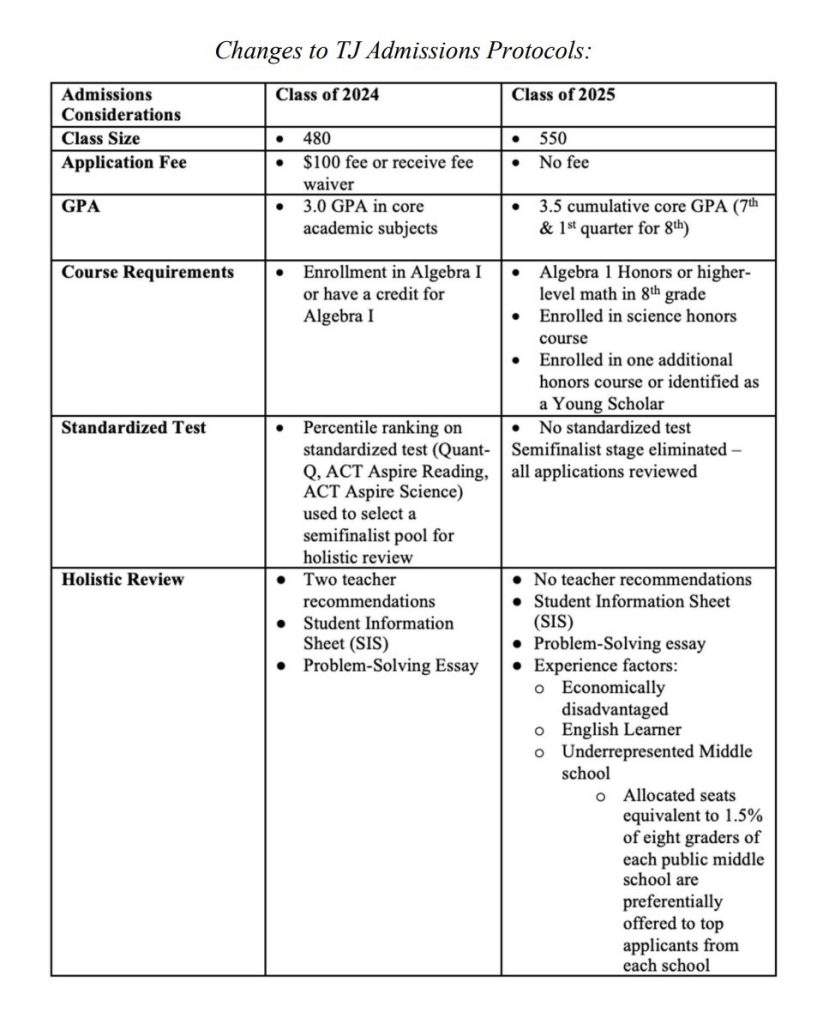
Share

“Many academics admit that the number of nonfaculty staff has grown to uncomfortable levels”

Maya Sen:

. A recent report showed that Stanford has roughly one administrator for every student—an unflattering statistic that calls into question higher ed’s priorities. But administrators have proliferated in part because of government requirements that won’t disappear with a funding cap. Universities receiving grants, for instance, must comply with important but costly regulations to protect the safety of human subjects as well as data privacy.

On the other side of the balance sheet, cutting university funding affects more than academics. Research institutions can be local economic engines, creating jobs and driving innovation. The University of Alabama, the state’s largest employer, received $334 million in NIH funds in 2024 alone. Capping indirect costs at 15% would cost it around $70 million a year, shrinking its economic footprint.

There’s a better solution than a blanket cap. Universities could instead commit to addressing administrative bloat and shoring up research integrity—both reasonable points that academics themselves have flagged. Given the choice, many researchers would rather see more money flow to actual research than administration. And adopting replication policies for research findings, already standard in many top academic journals, would bolster integrity.

Indirect cost rates of 70% are likely a thing of the past, but smart maneuvering could give universities a win, hand Republicans a victory, and keep vital research on solid footing.

Share

K-12 Tax & $pending Climate: “Government debt has exceeded $36 trillion and continues mounting, with no end in sight

James Baker and John Diamond:

Budget hawks have been rare in Washington since 2010, when the bipartisan Simpson-Bowles commission put forth a comprehensive plan to reduce spending and increase revenue, only to see it sink. Today, the problem is dire. Our ratio of federal debt held by the public to gross domestic product has grown from 61% in 2010 to 100% this fiscal year. Left uncorrected for another four years, we will surpass the historic high of 106% that America hit at the end of World War II.

It’s little wonder that more Republicans and Democrats are voicing concerns that American global power—backed by economic strength—is threatened by growing budget deficits. It’s time lawmakers seek solutions rather than argue about who’s to blame.

Several factors drive deficit spending, including an aging population and rapidly rising medical costs. But the major reason is reckless spending.

President Trump deserves credit for trying to make the federal bureaucracy more efficient to reduce deficits. His decision to create the Department of Government Efficiency put a much-needed brake on wasteful government spending.

We caution the president, however, against relying on tariffs to raise revenues. Tariffs engender ill will among allies and other trading partners and allow China to seize a greater global role. Further, tariffs risk domestic inflation by raising the costs of goods. As the president will remember, high prices caused political problems for Democrats last fall.

Share

civics: Our three part system and governance

www

Over the past century the Congress has created a whole series of quasi-independent boards and commission to carry out a variety of hybrid functions on the basis that the areas in which they operate are specialized, and appointed board members/commissioners with expertise in these areas are best able to carry forward the intentions of Congress. This has spawned the attack of the three and four letter agencies on the Executive Branch — FTC, SEC, ICC, NLRB, FCC, MSPB, etc. Some have a limited connection to a traditional Executive Branch Department, but Congress designed them to operate largely independent from the Department. Others, by design, are independent of any other Department. 

But who do the heads of these agencies work for? The Trump Administration is flexing its own lawfare muscles to argue that the heads of these boards/commissions/agencies/offices, where they wield executive power to enforce the law, work for the President. Because they wield power that is derived from the President, they cannot do so without being accountable for their conduct to the President. The Trump Administration is arguing it is a separation of powers violation for Congress to limit a President’s ability to remove them from office, i.e., stop them from asserting the executive power they derive only from him.

Share

The decline in friendliness

Karol Markowicz:

Loneliness is a silent killer. A US surgeon general’s report from 2023 found it as dangerous as smoking, “associated with a greater risk of cardiovascular disease, dementia, stroke, depression, anxiety, and premature death” — while upward of 60% of Americans feel lonely on a regular basis, surveys have found.

Along with the impact on personal well-being, the trend is dangerous for America itself. A nation that lacks interpersonal relationships is a lower-trust society, more prone to crime and unrest.

Share

The United Kingdom has been accused of launching a political “foreign cyber attack” on the United States following the issuance of a secret snooping order to Apple

Duncan Campbell:

An unprecedented letter from the US Congress, released today, accuses the UK of “a foreign cyber attack waged through political means”. The claim refers to a Home Office secret demand last month (reported by Computer Weekly here, hereand here) that Apple break the security protecting its Advanced Data Protection cloud security system to let British spies into anyone’s secure files.

In a letter to the recently appointed US Director of National Intelligence (DNI) Tulsi Gabbard, senator Ron Wyden of Colorada and representative Andy Biggs of Arizona bluntly ask the administration to kick the UK out of the 65-year-old UK-USA signals intelligence sharing agreement, commonly known as Five Eyes, if they do not now withdraw the demand to Apple.

”If the UK does not immediately reverse this dangerous effort, we urge you to reevaluate US-UK cyber security arrangements and programmes as well as US intelligence sharing with the UK,” the new DNI was advised. 

Politically, on other issues, the signatories are on opposite sides of US politics. Wyden is a liberal democrat who has campaigned for healthcare and the environment; Biggs is a loud Trump supporter and a noted organiser of the “MAGA squad”.  Wyden, from Oregon, serves on the Senate Intelligence and Finance Committee; Biggs, from Arizona, chairs the House Judiciary Subcommittee on Crime and Federal Government Surveillance.  

Share

Blogging in the aged of “ai”

Giles

My post about blogging as writing the tutorial that you wished you’d found really took off on Hacker News. There were a lot of excellent comments, but one thing kept coming up: what’s the point in blogging if people are using ChatGPT, Claude and DeepSeek to spoon-feed them answers? Who, apart from the AIs, will read what you write?

I was asking myself the same question when I started blogging semi-regularly again last year, and this post is an attempt to summarise why I decided that it was worthwhile. The TL;DR: blogging isn’t just about being read — it’s about learning and thinking, and having a durable proof that you can do both.

Let’s start off by summarising the two big reasons to blog about what you’ve learned, as you learn:

  • It helps you make your newly-gained knowledge concrete.
  • It will help other people in the future — they might be looking for the information you blogged about, and find it on your blog.
Share

Legislation and Homeschooling

Hanna Schmid:

Democratic state lawmakers are making another attack on parents’ rights and educational choice in Illinois. A bill would require homeschooling parents to file annual reports to avoid truancy charges, be credentialed and have their curriculum reviewed.

A bill filed by Democrats in the Illinois General Assembly would attack parental rights and educational choice in Illinois, seeking to undermine 75 years of homeschooling freedoms granted by the Illinois Supreme Court in People v. Levison.

It would make Illinois the first state in the nation to increase restrictions on parents’ freedom to educate their own children. It would also make it easier to create additional restrictions on homeschooling.

Illinois already made history in 2023 when it became the first state to remove a private school choice program for 15,000 low-income students and limit parents’ educational options. It did so after intense pressure from teachers unions, which have put $20 million into campaigns since 2010, including funding 4 in 5 lawmakers as of 2023.

House Bill 2827 was filed by state Rep. Terra Costa Howard, D-Lombard, and has been co-sponsored by eight other Democratic members of the House as of Feb. 18. Teachers unions have invested over $2 millionin the nine sponsors’ campaigns.

Share

Universities are failing the social bargain once again by not having honest debates about the NIH funding.

Vinay Prasad:

During the covid-19 pandemic, universities made one big mistake. above all else. They refused, consistently to host any debates on the most important policy issues of the day. For instance, no university debated school closures in 2020 or 2021 to my knowledge. There are only a handful of debates about lockdown, largely outside of universities. No University had a debate on mask mandates or masking in 2020 or 2021. No University had a debate on whether or not vaccines should be mandated, including to people who have already had covid, and that those who don’t comply should be terminated. 

These are some of the most consequential public policy decisions of the 21st century and universities did not host debates. They did so at their peril, and now popular opinion of universities is in the toilet. 

Against this backdrop comes reforms to the NIH funding system. Universities are making the exact same error as before. They refuse to host debates on what the right indirect cost rate should be. They refuse to debate whether or not the current system of study sections is optimized.

Share

Wellness and athletics

Kelly Meyerhofer:

Sarah’s death prompted the athletic department to pour more money into mental health resources. Her family channeled their pain into purpose, forming the Sarah Shulze Foundationin her honor. Her friends, too, became mental health advocates.

Despite the NCAA’s recent increased focus on mental health, collegiate athlete suicide rates are on the rise, according to a 2024 study. Although the rate remains lower than the general population, researchers said more prevention efforts are warranted. Suicide is now the second most common cause of death among collegiate athletes, second only to accidents. 

The pressures on this population only continue to mount. The expansion of the Big Ten this year to include West Coast teams increases travel demands. Social media has opened up athletes to online abuse, especially as more states legalize sports betting. A new era where athletes can monetize their brand creates expectations from companies and collectives for athletes to live up to their endorsement deals.

Share

How do parents choose Milwaukee schools?

Quinton Klabon:

This is 1 of the coolest things I have done. We did an unbiased, deep poll of Black and Latin Milwaukee parents to see how and why they pick the schools they do. 🧵

In short, parents lack the information they need to make the best match for their children.

We were shocked by some of our findings. Here are 5 key points based on how the parents responded:

  1. They must travel far for what they want. Parents most wanted schools with great academics (35%) and extracurriculars (15%), but also preferred a school that was close (22%). But too few good options are near their homes; 25% of parents had switched their child’s school within the last 3 years. Seeking quality, 85% sent their children to a school outside their neighborhood. In fact, 29% enrolled in a school more than 15 minutes’ drive away. Without good schools in every neighborhood, blight will dissolve the fabric of communities.
  2. Families with the least resources struggle to choose schools. Parents who were unmarried or cohabitating, lower-earning, who seldom or never attend religious services, and are younger were less likely to know of great schools, prioritized distance over academics, and switched schools more often. For example, only 27% earning under $40,000 made academics their top reason for choosing their kids’ schools, while 43% earning over $40,000 did. That leads to lots of student disruption and too many low-performing schools, particularly on the North Side.
  3. Parents cannot choose the highest-performing schools if they do not know what they are. Thirty-eight percent of north siders had never heard of Saint Marcus; 34% of south siders had never heard of Reagan. Nearly 50% had no name recognition of terrific options like UCC, LUMIN, and ALBA. If even top schools with waiting lists have less name recognition than your average TikTok star, why are we surprised when parents move away?
  4. Milwaukee Public Schools are their default choice. Ninety percent who picked a traditional MPS school for their oldest child also enrolled their other children in traditional MPS schools. However, only 75% of private-school parents and 55% of charter-school parents had all of their children in choice. Many parents only use choice-school alternatives after trying MPS.
  5. Parents do not want their children to stay in Milwaukee. Only 32% wanted their children to settle down in Milwaukee someday, and only 20% more hoped for Milwaukee County. Black and low-earning parents were especially skeptical. It does no good for our region if we produce talent that buys a plane ticket out the first chance they get. Better schools will keep our families here.

The Report:

Massive student turnover, low academic performance, and distaste for Milwaukee are the consequences of a school system that overwhelms parents,” said Quinton Klabon, IRG Senior Research Director. “Families will continue to leave the city without higher-quality schools and an easy way to discover them.” 

Share

“New Trier High School Led On Woke Education. It Should Lead The Way Out”

Mark Glennon

February 28. It’s probably coincidence, but remarkably so.

That date eight years ago marked the beginning of the backlash against school practices and policies that, today, go widely under the label of “DEI” – diversity, equity and inclusion. That was Seminar Day at New Trier High School in north suburban Chicago.

This February 28 marks the culmination of that backlash. It’s the Department of Education’s announced deadline for schools of any kind to put a firm end to DEI.

It’s not, however, the legal aspect of the federal government’s mandate that should matter, important as that is. Instead, willing compliance with the spirit of the new policy is simply the right thing to do, and there are reasons why New Trier should lead the way. Seminar Day pioneered the misguided and divisive approach to “social justice” issues now ridiculed as “woke.” Its critics were right then and their warnings came to pass. America ultimately agreed and rejected wokeness in schools and elsewhere, contributing in no small part to November’s election results.

Seminar Day was a mandatory, all-day event with the stated goal of “understanding today’s struggle for racial civil rights.” But the problem, from its critics’ perspectives, was that the agenda was brazenly one-sided, divisive, and radically that of the political left. Understanding civil rights, according to Seminar Day’s teachings, meant force-fed dogma of propositions that are now mostly rejected, such as all whites are oppressors and all blacks victims, micro-aggressions exist everywhere, America is systemically racist and white supremacists are lurking around every corner.

Share

civics: the political money life cycle

datarepublican (small r)

The true cycle of money and power is this:

Soros (among others) used his wealth to install key politicians.

Once in office, they funneled public funds into propaganda and NGOs designed to manipulate us—conditioning voters to elect even more of their kind.

In turn, these politicians ensured Soros and his allies grew richer. But Soros is now just a fragment of the monstrous machine he helped unleash.

What began as his influence has morphed into a self-sustaining Leviathan—one that thrives on our ignorance.

It is up to us, the people, to wake up and destro

Share

Please Commit More Blatant Academic Fraud

Jacob Buckman:

This week, I was thrilled to read about the first well-documented case of explicit academic fraud in the artificial intelligence community. I hope that this is the beginning of a trend, and that other researchers will be inspired by their example and follow up by engaging in even more blatant forms of fraud in the future.

Explicit academic fraud is, of course, the natural extension of the sort of mundane, day-to-day fraud that most academics in our community commit on a regular basis. Trying that shiny new algorithm out on a couple dozen seeds, and then only reporting the best few. Running a big hyperparameter sweep on your proposed approach but using the defaults for the baseline. Cherry-picking examples where your model looks good, or cherry-picking whole datasets to test on, where you’ve confirmed your model’s advantage. Making up new problem settings, new datasets, new objectives in order to claim victory on an empty playing field. Proclaiming that your work is a “promising first step” in your introduction, despite being fully aware that nobody will ever build on it. Submitting a paper to a conference because it’s got a decent shot at acceptance and you don’t want the time you spent on it go to waste, even though you’ve since realized that the core ideas aren’t quite correct.

Share

Wisconsin’s public schools are losing students faster than districts are downsizing their staff

Wyatt Eicholz

Statewide, the number of students enrolled in a traditional district-run public school fell to about 791,956 in the 2024-25 school year. The number has been in steady decline since a slight bump in 2013-14 to over 873,500 students, as figure 1 shows. The rate of decline increased after the 2019-20 school year, with a drop of more than 25,000 students

Over nearly the same period, the number of teachers employed in the state has hovered between about 60,000 and 63,000. As figure 2 shows, district-run schools employed 61,652 teachers statewide in 2009-10. That fell by more than 1,600 teachers to 60,003 in 2011-12, but the number then steadily ticked upward to a second peak of 62,398 in 2021-22. For the 2023-24 school year, the latest for which teacher all staff reports are available, there were 61,514 teachers in Wisconsin’s district-run public schools.

Share

Notes on grade inflation and dumbing-down 

Grey:

Math competitions used to be uncommon or an excuse to skip class, but are now increasingly high-stakes. This has given rise to tutoring services and coaching in an effort to increase one’s score to advance to higher levels of competition. If anything, the problem is not dumbing-down, but that the existing curriculum–even AP courses and taking calculus in high school–is not good enough anymore. To have any hope of distinguishing oneself requires good placings on difficult competitions. This directly contradicts the common narrative on Twitter that prospective college students are unprepared. In reality, all evidence suggests that today’s incoming freshmen, especially at top colleges, are the most academically prepared and qualified of any generation.

A frequently cited statistic of grade inflation is the rise in average GPAs, suggesting that coursework or grading standards have become easier. However, an alternative explanation is that students are earning higher GPAs because they are smarter and better prepared, thanks to the increasingly competitive and selective admissions process at these institutions:

Share

Racism Litigation at the University of California

ABC7

The father of a Palo Alto teen who garnered national attention for getting rejected by 16 colleges and hired by Google as a software engineer has filed a new lawsuit on Feb. 11 against the University of California and five UC campuses — UC Berkeley, UCLA, UCSD, UCSB and UC Davis — as well as the U.S. Department of Education, for racial discrimination.

“What we’re trying to get out of this is a fair treatment for future Asian applicants going forward, including my other kids and my future grandkids,” says Nan Zhong.

His now 19-year-old son, Stanley Zhong, is a co-plaintiff, along with their group called SWORD, Students Who Oppose Racial Discrimination, comprised of other students and families who feel Asian Americans are often discriminated against in the college admissions process.

Stanley Zhong had a 4.42 GPA from Gunn High School and 1590 out of 1600 on the SATs. He also founded his own document-signing startup and tutored underserved kids in coding. His college rejections and his employment offer from Google became a lightning rod in the national debate over the college admissions process.

Share

K-12 Tax & Spending Climate: A fiscal crisis is looming for many US cities

John Ronnie Short:

Cities also spend a lot of money on employees, and many large cities are struggling to fund pensions and health benefits for their workforces. As municipal retirees live longer and require more health care, the costs are mounting.

For example, Chicago currently faces a budget deficit of nearly $1 billion, which stems partly from underfunded retirement benefits for nearly 30,000 public employees. The city has $35 billion in unfunded pension liabilities and almost $2 billion in unfunded retiree health benefits. Chicago’s teachers are owed $14 billion in unfunded benefits. 

Policy studies have shown for years that politicians tend to underfund retirement and pension benefits for public employees. This approach offloads the real costof providing police, fire protection and education onto future taxpayers.

Share

A first-of-its-kind analysis by Nature reveals which institutions are retraction hotspots.

Richard Van Noorden

Two days before the end of 2021, administrators at Jining First People’s Hospital in Shandong, China, issued a highly unusual report. The hospital announced that it had disciplined some 35 researchers who had been linked to fraud in publications, such as fabricating data. These sanctions were part of a countrywide crackdown motivated by concerns about a flood of sham medical papers emanating from hospitals.

The problem was that some young physicians at hospitals had purchased fake manuscripts from paper mills: companies that churn out fraudulent scientific reports to order. These doctors were under pressure because they were required to publish papers to get jobs or earn promotions, says integrity sleuth Elisabeth Bik in California. Sleuths such as Bik soon began spotting signs of this problem, identifying duplicated images in large numbers of papers. They publicized the issue and a wave of retractions followed.

This surge can now be seen in a first-of-its-kind analysis of institutional retraction rates around the globe over the past decade, for which Nature’s news team used figures supplied by three private research-integrity and analytics firms. Jining First People’s Hospital tops the charts, with more than 5% of its total output from 2014 to 2024 retracted — more than 100 papers (see ‘Highest retraction rates’). That proportion is an order of magnitude higher than China’s retraction rate, and 50 times the global average. Depending on how one counts, the hospital could be the institution with the world’s highest retraction rate.

Share

Notes on Parenting & Tutors

Katie Rophie:

At a curriculum night, my son’s English teacher told the gathered parents that tutors should not be writing papers for students. Maybe I am naive, but I was a little shocked. This was a Brooklyn school, not a place with billionaires taking private jets to St. Barts for the weekend. I knew ChatGPT was an issue, which also came up, but this seemed somehow more corrupt and orchestrated. In the midst of the collegial evening, the teacher’s comment suddenly illuminated, for a moment, the ugly fact that rich people weren’t just buying opportunities for their children but were brazenly cheating.

The practice is hardly uncommon. David Blobaum from the National Test Prep Association told me that he was approached by a parent to write a kid’s college essay and he refused. “Honestly, these parents should think of themselves as hiring a criminal, not a tutor,” he said. I heard about another tutor who did write a college essay for a kid, after a certain amount of moral struggle, figuring that if she didn’t do it someone else would.

By now the caricature of rich parents trying to buy a way into the Ivy League for their children is familiar, but some of what I heard was still startling. A tutor at an otherwise legitimate tutoring business told me that the company sends her “a ninth-grade math homework, and I finish it and send it back without ever even meeting the kid.” Or they send a U.S. history paper to be written in the next three hours.

Share

FAFSA data by school

Quinton Klabon:

Here is a fun weekend project. The federal government puts up FAFSA completion for district, charter, AND PRIVATE SCHOOLS.

We do not have data on how many private high schoolers attend college. This is not that (and college is not the only good goal), but there is some relation.

Share

Wisconsin Governor Priorities: “Inseminated person” instead of “mother”

Cathy Kozlowicz:

The bill recognizes same-sex marriage by making references in the statutes to spouses gender-neutral. The terms “wife,” “mother,” “father” and “husband” were replaced with gender-neutral terms, such as spouse and person.

In one section covering artificial insemination, “the husband of the mother” was changed to “the spouse of the inseminated person.”

RGA Executive Director Sara Craig issued a statement Friday: “Wisconsin Governor Tony Evers’ latest left-wing push isn’t just out of touch, it’s offensive to mothers. Being a mother is the greatest privilege I will have in my lifetime, and every mother I know feels the same. If Tony Evers can reduce motherhood to an ‘inseminated person’ then our society is lost.”

President Donald Trump signed an executive order earlier this month to bar transgender student athletes from participating in NCAA women’s sports. On Feb. 21, the Wisconsin Interscholastic Athletic Association, which oversees most of the state’s high-school athletics programs, changed its policies so only athletes “designated as females at birth” will be allowed to compete in girls’ competitions.

——-

Governor Evers “year of the kid” starts by erasing “mothers” and “fathers”

——-

Parents overestimate student achievement, underestimate spending

Related: Act 10

Did taxpayer funded Wisconsin DPI Superintendent Underly Juice Test Scores for Reelection?

The taxpayer funded Madison School District long used Reading Recovery

The data clearly indicate that being able to read is not a requirement for graduation at (Madison) East, especially if you are black or Hispanic”

My Question to Wisconsin Governor Tony Evers on Teacher Mulligans and our Disastrous Reading Results

2017: West High Reading Interventionist Teacher’s Remarks to the School Board on Madison’s Disastrous Reading Results 

Madison’s taxpayer supported K-12 school district, despite spending far more than most, has long tolerated disastrous reading results.

“An emphasis on adult employment”

Wisconsin Public Policy Forum Madison School District Report[PDF]

WEAC: $1.57 million for Four Wisconsin Senators

Friday Afternoon Veto: Governor Evers Rejects AB446/SB454; an effort to address our long term, disastrous reading results

Booked, but can’t read (Madison): functional literacy, National citizenship and the new face of Dred Scott in the age of mass incarceration.

When A Stands for Average: Students at the UW-Madison School of Education Receive Sky-High Grades. How Smart is That?
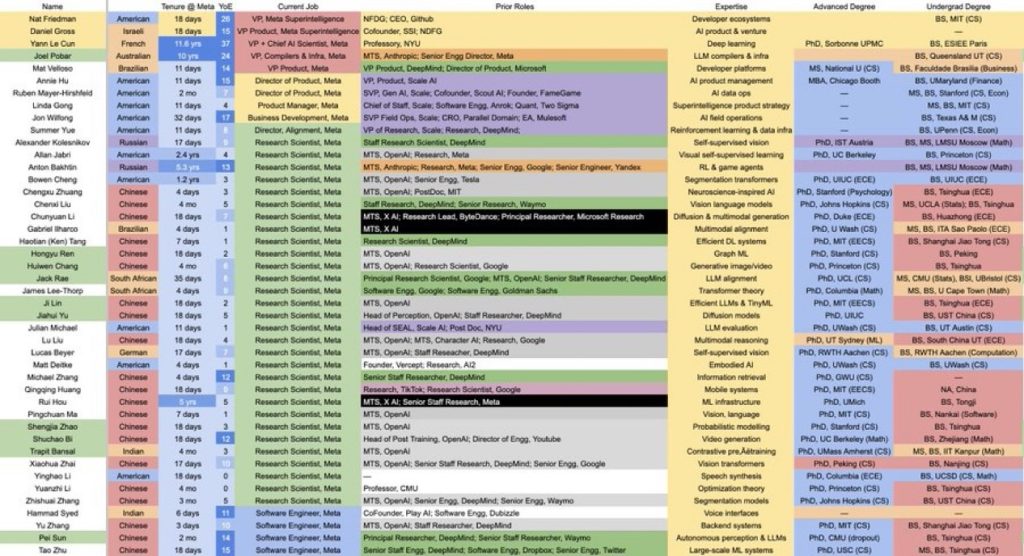
Share

civics: the “first batch of ai civil servants”

Teo summary

China deploys R1 to comprehensively automate their governance. This is probably a bit of a bigger deal than DOGE fights in salt mines.

@layer07_yuxi explains that a lot of compute capacity was locked in 1K A100s-level datacenters, useless for training. All that comes online now.

——

Where did the DeepSeek team attend university? Not in the United States.

——-

Parents overestimate student achievement, underestimate spending

Related: Act 10

Did taxpayer funded Wisconsin DPI Superintendent Underly Juice Test Scores for Reelection?

The taxpayer funded Madison School District long used Reading Recovery

The data clearly indicate that being able to read is not a requirement for graduation at (Madison) East, especially if you are black or Hispanic”

My Question to Wisconsin Governor Tony Evers on Teacher Mulligans and our Disastrous Reading Results

2017: West High Reading Interventionist Teacher’s Remarks to the School Board on Madison’s Disastrous Reading Results 

Madison’s taxpayer supported K-12 school district, despite spending far more than most, has long tolerated disastrous reading results.

“An emphasis on adult employment”

Wisconsin Public Policy Forum Madison School District Report[PDF]

WEAC: $1.57 million for Four Wisconsin Senators

Friday Afternoon Veto: Governor Evers Rejects AB446/SB454; an effort to address our long term, disastrous reading results

Booked, but can’t read (Madison): functional literacy, National citizenship and the new face of Dred Scott in the age of mass incarceration.

When A Stands for Average: Students at the UW-Madison School of Education Receive Sky-High Grades. How Smart is That?
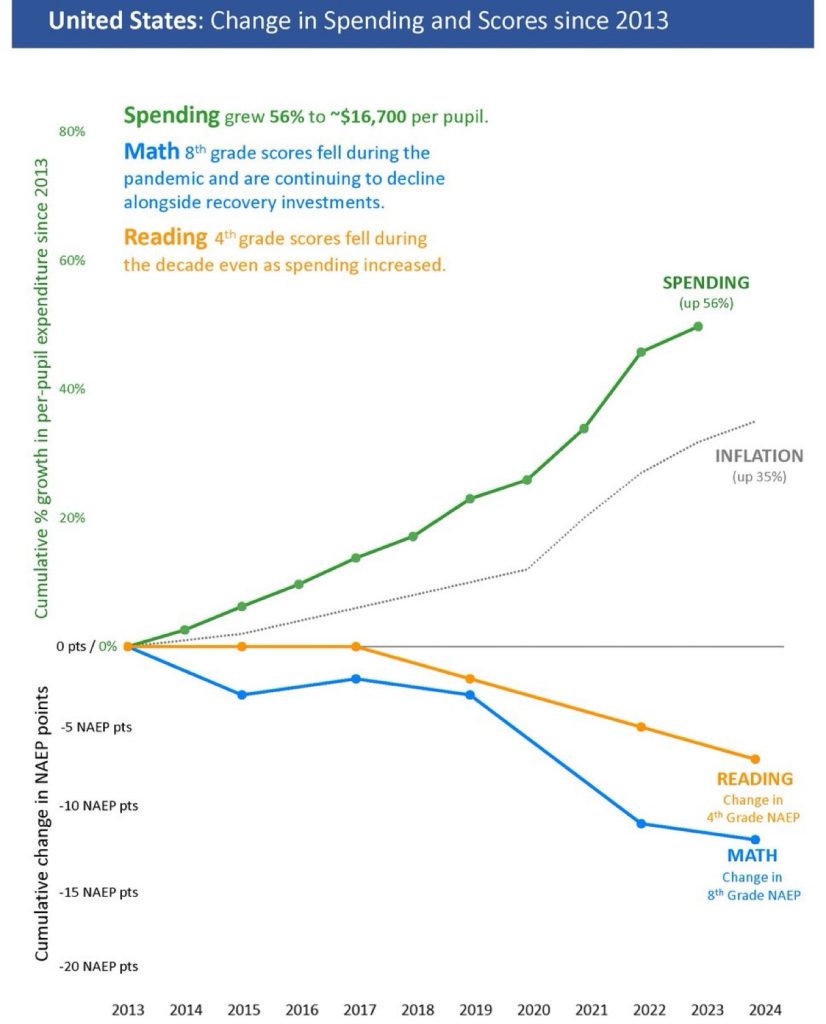
Share

“So we doubled the budget and the result is 80% of CPS students are illiterate and innumerate”

Patrick J. Bayer (Duke University – Department of Economics; National Bureau of Economic Research (NBER)) Peter Q.. Blair (Harvard University – Harvard Graduate School of Education), Kenneth Whaley (University of South Florida):

Tyler Cowen:

I remain happy to provoke my readers:

The United States ranks low among peer countries on the ratio of teacher spending to per capita GDP. Is this (in)efficient? Using a spatial equilibrium model we show that spending on schools is efficient if an increase in school spending funded through local taxes would leave house prices unchanged. By exploiting plausibly exogenous shocks to both school spending and taxes, paired with 25 years of national data on local house prices, we find that an exogenous tax-funded increase in school spending would significantly raise house prices. These findings provide causal evidence that teacher spending in the U.S. is inefficiently low.

——

Parents overestimate student achievement, underestimate spending

Related: Act 10

Did taxpayer funded Wisconsin DPI Superintendent Underly Juice Test Scores for Reelection?

The taxpayer funded Madison School District long used Reading Recovery

The data clearly indicate that being able to read is not a requirement for graduation at (Madison) East, especially if you are black or Hispanic”

My Question to Wisconsin Governor Tony Evers on Teacher Mulligans and our Disastrous Reading Results

2017: West High Reading Interventionist Teacher’s Remarks to the School Board on Madison’s Disastrous Reading Results 

Madison’s taxpayer supported K-12 school district, despite spending far more than most, has long tolerated disastrous reading results.

“An emphasis on adult employment”

Wisconsin Public Policy Forum Madison School District Report[PDF]

WEAC: $1.57 million for Four Wisconsin Senators

Friday Afternoon Veto: Governor Evers Rejects AB446/SB454; an effort to address our long term, disastrous reading results

Booked, but can’t read (Madison): functional literacy, National citizenship and the new face of Dred Scott in the age of mass incarceration.

When A Stands for Average: Students at the UW-Madison School of Education Receive Sky-High Grades. How Smart is That?

Share

UW-Madison ranks 12th for a grad program that doesn’t yet exist

Becky Jacobs

The University of Wisconsin-Madison ranks among the nation’s top graduate schools for a doctoral degree the university doesn’t even offer — yet.

The conundrum in U.S. News and World Report’s rankings is likely explained by UW-Madison’s already strong reputation in the fields of ecology and evolutionary biology, said William Karpus, dean of the university’s graduate school.

Over 100 faculty members conduct research related to ecology and evolution across campus, said Sean Schoville, a professor of entomology. However, the university doesn’t provide a formal graduate degree focused on the topics.

Schoville said he and others at UW-Madison have tried to create a doctoral program focused on these areas for almost five years. They recently received approval from multiple university groups. Next, the proposal is expected to go before the UW system Board of Regents in April.

Share

civics: influence and $pending on the 2025 Wisconsin Supreme Court Election

Scott Bauer and Ali Swenson:

Crawford is benefiting from hefty donations from Democratic philanthropist (billionaireGeorge Soros; Illinois Gov. JB Pritzker; Gloria Page, the mother of Google co-founder Larry Page; and LinkedIn co-founder Reid Hoffman. Schimel pointed to those donations to say big spending by outside forces is “happening on both sides.”

The only outside group spending large amounts of money on Crawford’s behalf is the liberal A Better Wisconsin Together, which says it has spent $1 million on digital and television ads. In the 2023 state supreme court race, the group spent more than $6 million on behalf of the liberal candidate who won and flipped control of the court after 15 years with conservatives in the majority.

Jeff Wagner:

How do you write a story about Musk spending money to support Schimel without mentioning the $1 million and $500K donations respectively from George Soros and JB Pritzker to the Wisconsin Democratic Party which then made a $2 million donation to Crawford?

——-

More.

Share

Math couple solves major group theory problem after 20 years.

Kristina Armitage:

Sylow normalizers, like the subgroups they’re built out of, can tell mathematicians a lot about the original group. But McKay hypothesized that this connection was far stronger than anyone had imagined. It wasn’t just that a Sylow normalizer could give insights into a finite group’s overall structure. He asserted that if mathematicians wanted to compute a crucial quantity that would help them characterize their group, they’d just have to look at one of a particular set of Sylow normalizers: The Sylow normalizer would be characterized by the exact same number.

This quantity counts the number of “representations” of a certain type — ways you can rewrite elements of the group using arrays of numbers called matrices. Such a tally might seem arbitrary, but it gives mathematicians a sense of how the group’s elements relate to each other, and it is involved in calculations of other important properties.

Share

NATO Phonetic Alphabet Converter

www

🎯 Struggling to spell your name or email over the phone? Say it using our official NATO phonetic alphabet!

Share

The Predatory Dynamic in Madison Schools

Dave Cieslewicz:

If you ever wonder what people mean when they use the phrase “word salad”, here’s what they mean:

“There is a predatory dynamic of coming into a district like ours and saying that you are going to resolve something as deep-rooted as racialized inequity through a school that pairs young people with professional opportunities,” Madison School Board member Ali Muldrow said in recent Wisconsin State Journal story.

I know. Gives you a headache just reading it. Let me try to translate.

Muldrow is referring to a proposal for a new charter school in Madison that would focus on preparing students for a career in the trades — plumbing, electrical, carpentry, stuff like that. Careers that pay very well. Careers that give people a sense of pride and accomplishment. Careers that are badly needed as folks in those occupations are aging out.

But Muldrow and most of her fellow board members don’t like this idea because they don’t like charter schools. Any of them. Why? Because when a student attends a charter school in the Madison School District the state money follows the student. In other words, she and her colleagues don’t get to use or control that money. I suppose that’s what she means by a “predatory dynamic,”

Or maybe she means that the school proponents are trying to capitalize on and paper over the community’s concern over “deep-seated racialized inequity” by preparing Black kids for a good job. It just puts off the inevitable fight to the finish in the class struggle.

Or, I don’t know, here’s another theory. Maybe she means that by taking kids out of the Madison schools it prevents them from taking advantage of all the resources that address that deep-seated racialized inequity. Never mind that all that obsession with issues of race has resulted in a yawning — and growing — racial achievement gap. Never mind that Black kids aren’t showing up in those welcoming Madison schools at a rate far higher than their white classmates.

Facebook comments.

“The faulty promises of the McKenzie Foundation’s proposed charter school

Leland Pan:

Forward Career and College Academy would likely leave Madison’s neediest students behind, while evading public accountability.”

Meanwhile:

Parents overestimate student achievement, underestimate spending

Related: Act 10

Did taxpayer funded Wisconsin DPI Superintendent Underly Juice Test Scores for Reelection?

The taxpayer funded Madison School District long used Reading Recovery

The data clearly indicate that being able to read is not a requirement for graduation at (Madison) East, especially if you are black or Hispanic”

My Question to Wisconsin Governor Tony Evers on Teacher Mulligans and our Disastrous Reading Results

2017: West High Reading Interventionist Teacher’s Remarks to the School Board on Madison’s Disastrous Reading Results 

Madison’s taxpayer supported K-12 school district, despite spending far more than most, has long tolerated disastrous reading results.

“An emphasis on adult employment”

Wisconsin Public Policy Forum Madison School District Report[PDF]

WEAC: $1.57 million for Four Wisconsin Senators

Friday Afternoon Veto: Governor Evers Rejects AB446/SB454; an effort to address our long term, disastrous reading results

Booked, but can’t read (Madison): functional literacy, National citizenship and the new face of Dred Scott in the age of mass incarceration.

When A Stands for Average: Students at the UW-Madison School of Education Receive Sky-High Grades. How Smart is That?

Meanwhile:

Parents overestimate student achievement, underestimate spending

Related: Act 10

Did taxpayer funded Wisconsin DPI Superintendent Underly Juice Test Scores for Reelection?

The taxpayer funded Madison School District long used Reading Recovery

The data clearly indicate that being able to read is not a requirement for graduation at (Madison) East, especially if you are black or Hispanic”

My Question to Wisconsin Governor Tony Evers on Teacher Mulligans and our Disastrous Reading Results

2017: West High Reading Interventionist Teacher’s Remarks to the School Board on Madison’s Disastrous Reading Results 

Madison’s taxpayer supported K-12 school district, despite spending far more than most, has long tolerated disastrous reading results.

“An emphasis on adult employment”

Wisconsin Public Policy Forum Madison School District Report[PDF]

WEAC: $1.57 million for Four Wisconsin Senators

Friday Afternoon Veto: Governor Evers Rejects AB446/SB454; an effort to address our long term, disastrous reading results

Booked, but can’t read (Madison): functional literacy, National citizenship and the new face of Dred Scott in the age of mass incarceration.

When A Stands for Average: Students at the UW-Madison School of Education Receive Sky-High Grades. How Smart is That?

Share

notes on taxpayer funding at the US Department of Education

Nat Malkus:

Last Monday, DOGE came for the US Department of Education (ED). Specifically, it came for ED’s research arm, the Institute for Education Sciences (IES), terminating 89 contracts, purportedly valued at $881 million. But how much savings can taxpayers expect from these cuts? 

DOGE’s list of the 89 terminated contracts (unsurprisingly) leaked the day after the cuts were announced. DOGE promised their own receipts by Valentine’s Day, but—in true government fashion—posted them on February 17 (more on that later). Impatient, I started chasing down the receipts myself. 

DOGE’s list included each contract’s vendor and contract number and contract values—which did sum to $881,228,611. This let me match most of DOGE’s list with ED’s most recent complete contract list; however, the “Contract Values” on DOGE list seldom matched the “Current Contract Value” on ED’s list (which was the only value on ED’s list). Whenever the two values did not match, DOGE’s values were always higher, by anywhere from $100 to $31,053,151. 

Unsatisfied, I next matched the full leaked DOGE list to detailed data from USASpending.gov, but I noticed something odd: while the DOGE list’s values often—but not always—matched USASpending.gov contract value, they did not consistently match the same type of contract value.

Share

Where did the DeepSeek team attend university? Not in the United States.

Ryan Allen:

The news that DeepSeek released an AI large language model (LLM) that rivaled OpenAI shocked the world. The small Chinese firm reportedly achieved this feat at a fraction of the price done by the American counterpart, undercutting the business model with a comparable model that is cheaper and open source.

While there have been quibbles about how exactly the DeepSeek team achieved this breakthrough, I was interested in the people behind the model, particularly where they were educated. One claim that I kept hearing was that they were all educated in China, without returnees from American universities. 

It is no secret that Liang Wenfeng, the founder and CEO of DeepSeek, was a graduate of Zhejiang University, receiving both his bachelor’s and master’s degrees in Engineering from the elite Chinese institution. In building his company, ChinaTalkquoted Liang in an interview: 

The team behind the V2 model doesn’t include anyone returning to China from overseas — they are all local. The top 50 experts might not be in China, but perhaps we can train such talents ourselves.

This lack of returnees, or so-called “Sea Turtles” (hǎiguī, 海龟), is fascinating because the trend for years was Chinese students studying in the US and bringing back home innovations. There has been a conception that Chinese universities could not match the US (or other world leaders) in advanced research. The so-called glass ceiling meant that they could achieve a good ranking but could not be among the very elite.

Share

notes on academia, taxpayer funds and meritocracy

Timur Kuran:

All 5 are true: 1) DOGE has scrapped many stupid projects. 2) DOGE has axed many useful academic projects. 3) Universities lost their way, inviting the ongoing massive backlash. 4) The backlash is generally popular. 5) Universities have done little to regain the public’s trust

Share