School Information System

Student Debt: Where It’s Not The Top Campaign Priority For Millennials

Asma Khalid:

Amanda Durio, 31, is a union carpenter. She plans to caucus for Bernie Sanders because she likes his message on “race” and “social classes.”
Asma Khalid/NPR
So far this campaign season, much of the political conversation involving millennials has centered around college debt.

And, no doubt, as we’ve reported previously, student debt and college affordability are major concerns for many young people.

But a majority of young people do not have a bachelor’s degree, according to U.S. Census data analyzed by CIRCLE, the Center for Research and Information on Civic Learning and Engagement at Tufts University, for NPR. CIRCLE found that, in fact, about two-thirds of millennials between the ages of 25 and 34 do not have a bachelor’s degree.

Share

Robots will force experts to find other routes to the top

Andrew Hill:

It comes when futurists concede that a few expert lawyers, consultants or accountants will still be needed, even after cheaper, more efficient computer systems have taken over many of their juniors’ tasks.

It happened last week at a lecture by Richard and Daniel Susskind, which the organisers claimed was the largest ever gathering of senior managers in UK professional services firms.

The father-and-son authors of The Future of the Professions predicted radical change in the sector. But the tense scepticism in the room dissipated as each senior partner or director quietly acknowledged he or she would be a survivor, even if algorithms and artificial intelligence swept away the consultant or solicitor in the next seat.

Share

The Moroz Family – From the Soviet Union to the Liberal Gulag

Marc Randazza:

It is said that if you are a young conservative you have no heart, and if you are an old liberal, you have no brain.

As a 46 year old Liberal, I take offense at half of that, but I would not wish to stop anyone from saying it.

Unfortunately, I feel like an endangered species – the Liberal who embraces dissent and debate. As a Liberal, I have always valued education – as I look at places of education as places where we manufacture Liberals — by educating people. To me, wide open and robust debate and the revelation of knowledge will inevitably drive one to the Liberal view – but to get there, we must tolerate views with which we disagree.

Share

Public Research Universities: Understanding the Financial Model

The American Academy of Arts & Sciences

In the last twenty years, and especially since the onset of the Great Recession, states have dramatically reduced their contributions to public higher education.

While the cuts have affected every public higher education institution, the cuts at public research universities have been the most severe, averaging a 26 percent drop in investment since 2008.

The federal government has not covered this deficit, but has rather scaled back its support for the public research enterprise.

No one has yet devised a workable plan to reverse these trends

Share

University Of Minnesota law school losses expected to total $16M by 2018

Josh Verges:

With applicants down by half since 2010, the University of Minnesota Law School has been buying out faculty, soliciting more donations and accepting cash transfers from the U to cover operating deficits.

Share

Why Don’t People Manage Debt Better?

Emory Nelms and Dan Ariely:

How do we intuitively manage our debts?

Despite its apparent burden on families across the country, many people do not effectively manage their debt. Most individuals juggle multiple kinds of debts, each coming with different terms and interest rates. This diversification of debt requires consumers to make decisions about how to best allocate limited resources to repay them. The most effective way to pay off debt over the long-term is to focus on the loans with the highest interest rates first. Yet evidence has shown time and again that consumers are likely to manage multiple debts in ways that cost them more over time.

Share

Ivy League crybullies vs. survivor of a Soviet labor camp; guess who needs ’emotional support’?

David Bernstein:

It’s hard to tell parody from real life on certain college campuses these days, but I’m pretty sure this article is serious. The article, from the Brown Daily Herald, discusses how Brown students’ emotional and academic well-being is suffering because they are so busy fulfilling their “social justice responsibilities” as student activists. (And here I thought that if my parents were paying $60K a year for me to go to school, my first responsibility would be to study!)

Share

Americans can study in Germany for free, in English. An increasing number are doing it.

Rick Noack:

Tuition to U.S. universities has surged 500 percent since 1985 and continues to rise. But German universities offer free education to everyone — including Americans.

The number of American students enrolled in German universities has risen steadily in recent years. Currently, an estimated 10,000 U.S. citizens are studying at German colleges — nearly all of them for free, according to NBC News.

German universities in most federal states have traditionally been free for German citizens as well as many foreigners, including many American, Chinese and British students. One reason German taxpayers foot the bill is to help attract more skilled workers to the country.

Share

FIRE Announces 10 Worst Colleges for Free Speech: 2016

FIRE:

Among the institutions on FIRE’s annual “worst of the worst” list are a university that fired two faculty members for criticizing the university president’s plan to oust low-performing freshmen, a college that suspended a student for making a six-word joke on social media, and even one university that punished a student for something someone else said—and then went after the student newspaper for reporting on the story.

“This past year, free speech on campus took center stage and became international news,” said FIRE President and CEO Greg Lukianoff. “For those of us who have worked for years on the frontlines, the threat to free speech on campus isn’t a new story. Too often students find their voices silenced, and increasingly their professors are finding themselves in the same boat. If this year’s ‘worst’ list proves anything, it’s that even tenured faculty members aren’t safe from the censor’s muzzle.”

Share

Changing Faculty Employment at Four-Year Colleges and Universities in the United States

Liang Zhang, Ronald G. Ehrenberg, Xiangmin Liu

We use panel data models to examine variations and changes over time in faculty employment at four-year colleges and universities in the United States. The share of part-time faculty among total faculty has continued to grow over the last two decades, while the share of full-time lecturers and instructors has been relatively stable. Meanwhile, the share of non-tenure track faculty among faculty with professorial ranks has been growing. Dynamic panel data models suggest that employment levels of different types of faculty respond to a variety of economic and institutional factors. Colleges and universities have increasingly employed faculty whose salaries and benefits are relatively inexpensive; the slowly deteriorating financial situations at most colleges and universities have led to an increasing reliance on a contingent academic workforce.

Share

Civics: Koch & Bernie Sanders (Nice to see this discussion)

Charles Koch:

Consider the regulations, handouts, mandates, subsidies and other forms of largesse our elected officials dole out to the wealthy and well-connected. The tax code alone contains $1.5 trillion in exemptions and special-interest carve-outs. Anti-competitive regulations cost businesses an additional $1.9 trillion every year. Perversely, this regulatory burden falls hardest on small companies, innovators and the poor, while benefitting many large companies like ours. This unfairly benefits established firms and penalizes new entrants, contributing to a two-tiered society.

Whenever we allow government to pick winners and losers, we impede progress and move further away from a society of mutual benefit. This pits individuals and groups against each other and corrupts the business community, which inevitably becomes less focused on creating value for customers. That’s why Koch Industries opposes all forms of corporate welfare — even those that benefit us. (The government’s ethanol mandate is a good example. We oppose that mandate, even though we are the fifth-largest ethanol producer in the United States.)

Share

Will political winds blow Milwaukee ‘opportunity schools’ away?

Alan Borsuk:

There are so many questions for which I don’t have answers. These are just a few of them:

What will happen to the school reform idea put under the control of the Milwaukee County executive — officially known as the Opportunity Schools Partnership Program — if state Sen. Chris Larson wins election to the office in April? Larson is adamantly opposed to cooperating with the effort, which was created by Republicans in the state Legislature.

What will happen to the idea if Chris Abele wins re-election as county executive? He’s sort of gone along with the idea and named Mequon-Thiensville Superintendent Demond Means as commissioner of education for Milwaukee. But, three months after the appointment, I don’t know what, if anything, is going to result. Means has made it clear he’s not going to do dramatic stuff like take schools away from the Milwaukee Public Schools system.

Are we just waiting until after the April election — or maybe the November election — to see what, if anything, the “opportunity schools” idea will bring? Will the politicians who thought this was a way to kick a few MPS schools into some kind of higher gear want to see more or different action?

Is the “opportunity schools” idea so flawed that we’re better off if nothing happens?

If the title of “education commissioner” doesn’t really mean anything, can I have it, just for kicks? It would look good on a business card.

A whole different front: What am I supposed to think of the change being made in who runs Community High School? This is a small school and maybe a small matter, but it’s much on my mind.

Community was created in 2004 as a charter school within the MPS system. It has been led by two MPS teachers, Jason O’Brien and Roxane Mayeur, and its aim has been to offer “a safe, supportive, and personalized high school experience” that included partnerships with community groups to get students involved in helping people.

Share

Madison Teachers, Inc. Dues, Taxes and Recent Newsletters; Matthews Reflects on Service to MTI

Madison Teachers, Inc. Newsletter (PDF) 1.25.2016 Newsletter:

MTI – Teachers who worked full-time in the Madison Metropolitan School District for the entire calendar year in 2015 (January through December) paid dues/fair share in the amount of $1,042.10. Of that amount, $260 was for WEAC, $183.60 for NEA, $570.00 for MTI, and $28.50 for MTI VOTERS (MTI’s political action committee). Because of wide variances, teachers employed under part-time contracts should check their last payroll check stub in 2015 for the correct amount to use in calculating their taxes.

Madison Teachers, Inc. Newsletter (PDF) 2.1.2016 Newsletter where John Matthews Reflects on 48 years::

Thanks for the opportunity. Many have asked why in the world one would stay in a job for 48 years. My answer is quite simple. My work for MTI was a labor of love, it was working with MTI members – virtually 24/7. It was working for a great group of people in search of social justice. MTI members standing in solidarity and moving forward – willing to take risks when necessary in the mutual interest of all. My days were filled working with individuals who were in search of solutions to work, family, and personal issues – and my effort helped produce solutions and advance rights. Those solutions made careers more enjoyable, more productive, and made member’s personal life, family life and work life better.

MTI has grown into a fantastic union. It is a member-driven union that is among the best in the United States. Whether negotiating to provide better working and living conditions, or engaging in social or political action in search of change which enabled improvements in education or society in general, MTI has been at forefront of such causes. So, in the scheme of things, my 48 year career went by like the blink of an eye.

I can’t imagine working anywhere else where my career could have been more productive, more enjoyable, or more satisfying.

My thanks to each and every MTI member 1968-2016. MTI has a great staff and it will continue moving forward in service to its members.

Keillor Takes the Reins

With John Matthews retiring from MTI, the Cabinet on Personnel, which is made up of the leadership of all five MTI bargaining units, has tapped Doug Keillor to succeed Matthews. Keillor has worked with Matthews for the past 25 years, and is well-known by MTI members. He has worked with Matthews in member service and in negotiations. In recommending that Keillor replace him, Matthews told the Cabinet on Personnel that Keillor has the skill, knowledge, and philosophy to continue the Union’s excellent service to MTI members.

Keillor is eager to continue his work for MTI in his new capacity, working with MTI staff, elected leaders and membership to carry the Union forward.

Madison Teachers, Inc. Newsletter (PDF) 2.8.2016 Newsletter on Seniority:

Rights granted to an employee by the Union’s Contract are among the most important conditions of one’s employment. Those represented by MTI, in each of MTI’s five bargaining units, have a limited number of important SENIORITY protections in critical areas. Contrary to popular opinion, seniority has little relevance in issues such as voluntary transfer where the Union Contract allows the employer to select the most qualified candidate for any vacancy. However, when determining who should be declared “surplus” (above staff requirements in a school or department) or who should be subject to “layoff” (above staff requirements in the District), SENIORITY is the objective factor that limits and controls management’s subjective actions. Because of SENIORITY rights provided by the Union’s Contract, for example, the employer cannot layoff the more senior employee simply because she/he is paid more or may be outspoken.

Madison Teachers, Inc. Newsletter (PDF) 2.15.2016

Workers’ Compensation is a statutory benefit intended to provide compensation for workers who suffer a work-related injury or illness. However, the process does not always work as intended and claims are often delayed and/or denied. Fortunately in such instances, MTI-represented employees can turn to their Union for assistance.

Slips, trips and falls are the some of the most common causes of work-related injuries to District employees. If an employee is injured at work, they need to complete an Injury Report form as soon as possible and, if necessary, visit a doctor to determine what, if any, work restrictions are recommended. If an injury or illness restricts an employee from work, the injured employee needs to submit a Work Status Report form (signed by the medical provider) identifying those restrictions to the District. (Union Advantage #1: members injured on the job can contact MTI staff for assistance with the process. MTI has produced a Workers’ Compensation Fact Sheet for members advising of the process and of their rights.)

Once approved, Workers’ Compensation is supposed to compensate the employee at two-thirds (2/3) of the employee’s wage rate up to certain maximum during a period of temporary disability. (Union Advantage #2: MTI’s Contracts, and next school year’s Employee Handbook, require that injured employees eligible for workers’ compensation receive 100% of wages for the first 180 days of injury.)

Much more on John Matthews, here.

Share

For standardized tests, we’re all morning people (or could use a break)

Cathleen O’Grady:

The idea behind standardized testing is that everyone gets the chance to perform on the same test in the same circumstances. In an ideal world, this should create a system where everyone’s test results are a good indicator of their skills, learning, and hard work.

The reality, of course, is different. Standardized testing faces a host of criticisms, some more valid than others. But even if we assume that everyone walks into a standardized test with the same background, when the test happens matters. The timing of the test itself can have a marked impact on student scores, according to a new paper in PNAS.

The paper found that the later in the day a standardized test was held, the lower the scores were. That’s an important finding, given how much rests on standardized test results. These tests not only form the basis of education policy in countries all over the world, but they’re often also used to decide how funding should be distributed among schools. And, most obvious of all, a test score can determine the course of a student’s life.

Share

When learning a new language, shortcut classes and “hacks” don’t work

Mark Manson:


When I arrived in Buenos Aires in the beginning of 2010, I could barely order food in a local restaurant. Two years later, I calmly explained the mechanics of Russian grammar to a Guatemalan friend… in her native Spanish.

Today, I’m conversationally fluent in both Spanish and Brazilian Portuguese, and low conversational in Russian. I’m not going to blow smoke up your ass and tell you it was easy or that there’s some shortcut or hack. I practiced my ass off. Honestly, I’ve seen the supposed “hacks” for language learning, and none of them worked for me. It took hours of study combined with stumbling through many, many conversations.

Share

trying to repair the Obama administration’s frayed relationship with teachers

Emma Brown:

In one of his first major speeches as acting U.S. secretary of education, John King apologized to teachers for the role that the federal government has played in creating a climate in which teachers feel “attacked and unfairly blamed.”

To many teachers, King’s remarks at a Philadelphia high school late last month was an astonishing and welcome acknowledgment that the Obama administration, in pushing states to link teacher evaluations to student test scores, had helped create systems that seemed as if they were designed to punish teachers instead of help them get better.

Share

On Entitlement

Talia Jane:

When I was a kid, back in the 90s when Spice Girls and owning a pager were #goals, I dreamed of having a car and a credit card and my own apartment. I told my 8-year old self, This is what it means to be an adult.

Now, seventeen years later, I have those things. But boy did I not anticipate a decade and a half ago that a car and a credit card and an apartment would all be symbols of stress, not success.

I left college, having majored in English literature, with a dream to work in media. It was either that or go to law school. Or become a teacher. But I didn’t want to become a cliche or drown in student loans, see. I also desperately needed to leave where I was living — I could get into the details of why, but to sum up: I wanted to die every single day of my life and it took me several years to realize it was because of the environment I was in. So, I picked the next best place: somewhere close to my dad, since we’ve never gotten to have much of a relationship and I like the weather up here. I found a job (I was hired the same day as my interview, in fact) and I put a bunch of debt on a shiny new credit card to afford the move.

Share

The Secret Lives Of Tumblr Teens

Elspeth Reeve:

When Pizza reached 100,000 followers on Tumblr, she posted a picture of a pizza box, takeout chicken wings, and an orange soda spread out on her bed: “pizza and chicken wings 2 celebrate.” One fan replied, “CONGRATULATIONS GIRL! YOU DESERVE IT!” Another: “MOTHER OF GOD 100K?!?!” An anonymous user was unimpressed: “you only have 100k because of ur url.” But Pizza shot that down: “uh no i had 93k before i got this url so excuse u.”

Share

Which Places Benefit Most from State and Local Tax Deductions?

Alan Cole:

Some of the most substantial deductions in the federal tax code are the itemized deductions for state and local income, sales, and real estate taxes. This map shows the variation, by county, in the amounts of these deductions. The measurement used here is mean deduction amount taken per return: in other words, the total of all of the deductions for state and local taxes, divided by number of returns filed. The results show that the benefits of these deductions vary substantially from county to county.

Share

Is Myers-Briggs up to the job?

Murad Ahmed:

On the first day of his new job at the management consultants McKinsey & Company, Alick Varma, then 22, was asked to take a test. The questionnaire quizzed him on aspects of his personality, asking, for instance, whether he would “rather be considered a practical person or an ingenious person?” and whether he considered himself “a ‘good mixer’ or rather quiet and reserved?”

Varma, who joined McKinsey as a business analyst in October 2007, was taking the Myers-Briggs Type Indicator (MBTI) — a personality test that has become a rite of passage for millions of white-collar workers. Since the 1960s, when the test began to be rolled out across corporate America, more than 50 million people around the world are estimated to have taken it.

Myers-Briggs has a particularly strong influence at McKinsey, according to current and former staffers (when contacted for this article, McKinsey said it does not comment on its “internal processes”.) Included in the basic biographical information supplied on the company’s staff profile pages are addresses, educational background — and MBTI personality types. When a team begins a new project, associates often start by discussing their respective personality traits — are you an “E” (extrovert) or an “I” (introvert)?

Share

Uninformed, Irresponsible Journalism Is Killing Needed Education Reform

Caroline Bermudez:

Many of us working in this space can write these pieces on autopilot. They are derivative when we are in dire need of well reported, factually reliable, and original journalism that tells us what we don’t already know and doesn’t consist of hoary canards.

Instead, what we are getting are screeds masked as journalism.

Education reporting has to be more ambitious — and occasionally it is, as shown by the work of Nikole Hannah-Jones in her reporting on school segregation. While our opponents believe we prefer to live in an echo chamber, we would much rather have our work analyzed—even challenged—thoughtfully and without an obvious agenda.

Ambitious, valuable journalism means not using tired phrases such as “corporate reform” or coming to pat conclusions such as “the real problem is persistent poverty.” It does not sneer at data.

It acknowledges the modern wave of the education reform movement cannot possibly be responsible for policies and practices that have been in place for decades. Good journalism is not caricature and it does not look for easy villains and heroes.

Why is this kind of journalism not more common? In concert with the very uncertain future of the industry, it is no secret that education reporting is afforded less respect than other beats.

When The New Yorker allows its film critic to deliver a poorly informed rant, that gives you an indication of the esteem in which education reporting is held.

Share

When Low-Income Parents Go Back to School

Leah Askarinam:

Leon Sykes has eight children at home, works two jobs, and drives for Uber and Lyft on the side. Yet the 34-year-old father has found time to take classes Monday through Thursday from 6 to 9 p.m. to earn his high-school credentials at Academy of Hope, an adult public charter school in Washington, D.C. Sykes is about two years into the program. His wife usually picks up their children, ages 5 to 15, from after-school activities, but he still can’t always make it to class. “Some days, you just have to pick and choose,” he says

Share

Civics: IRS Returns N.C. Man’s Entire Life Savings After Seizing It Through Civil Forfeiture

John Kramer:

It is a major victory for the individual against the seemingly all-powerful IRS. In a single-page letter, sent this morning by fax, the IRS agreed to return a North Carolina convenience store owner’s entire live savings.

The IRS seized $153,907.99 from Ken Quran in June 2014, without any warning or meaningful prior investigation, simply because he repeatedly withdrew cash from his bank in amounts under $10,000.

Ken’s money was seized under so-called “structuring” laws. These laws were designed to target criminals evading bank-reporting requirements. But under IRS policy at the time of the seizure, the IRS applied the structuring laws to seize cash from individuals and businesses accused only of frequent under-$10,000 cash transactions.

Share

State of Charter Authorizing 2015 Report

NACSA:

42 states and the District of Columbia. Collectively, authorizers oversaw 6,716 charter schools serving more than 2.6 million students.

School districts, also called Local Education Agencies (LEAs), make up the largest group of authorizers in the country. In 2014-15, there were 950 school district authorizers in the country, followed by 45 Higher Education Institutions (HEIs), 18 State Education Agencies (SEAs), 17 Not-For-Profit organizations (NFPs), 17 Independent Charter Boards (ICBs), and three (3) Non-Educational Government entities (NEGs), such as a mayor or municipality. Learn more about the different types of authorizers.

Authorizers also vary tremendously in the number of schools they oversee. More than one-half (52%) of all authorizers oversee a single charter school. More than four out of five (85%) authorizers oversee five schools or fewer. By contrast, the largest authorizer in the country, the Texas Education Agency (TEA), oversees 644 charter schools.

Share

Williams College President Calls Off Speech by Controversial Conservative Writer

Nick DeSantis:

Williams College’s president has taken what he called the “extraordinary step” of canceling a student-organized speaking engagement by a conservative writer who has been criticized as racist, The Berkshire Eagle reported.

The president, Adam F. Falk, said in a letter to the campus that he held free speech in “extremely high regard.” But he said he wanted to make it clear that Williams would not play host to John Derbyshire, a former writer for the conservative magazine the National Review. The magazine fired Mr. Derbyshire in 2012 after he wrote a column for another online publication that drew widespread condemnation.

Share

The Regrettable Underenforcement of Incompetence as Cause to Dismiss Tenured Faculty

David M. Rabban:

This essay asserts that the reluctance of universities to dismiss tenured professors for incompetence compromises the traditional and convincing justification for protecting academic freedom through tenure. This justification is most fully elaborated in the 1915 Declaration of Principles of the American Association of University Professors (AAUP). After asserting that society benefits from the academic freedom of professors to express their expert professional views without fear of dismissal, the 1915 Declaration maintained that the grant of permanent tenure following a probationary period of employment protects academic freedom. Yet the 1915 Declaration also stressed that academic freedom does not extend to expression that fails to meet professional standards. Nor, it added, does permanent tenure prevent dismissal for cause, which could include “professional incompetency” as well as misconduct. It reasoned that only fellow faculty members have the expertise to determine departures from professional standards. It, therefore, insisted that a professor is entitled to a hearing by a committee of faculty peers before being dismissed and that professors have an obligation to serve on these committees.

This essay assesses the concerns that explain the overwhelming reluctance of university administrators to bring charges against clearly incompetent tenured faculty and offers suggestions to minimize them. It concludes that administrators should bring charges in appropriately extreme circumstances and should give substantial deference to the decisions of the faculty hearing committee. Doing so would uphold the principle of academic freedom, based on professional competence as determined by peer review, that is at the heart of the 1915 Declaration and that is still convincing today.

Share

Member Lethargy a Boon to Union Coffers

Mike Antonucci:

A largely overlooked portion of the Friedrichs lawsuit is its fall-back argument. In the event the U.S. Supreme Court upholds agency fees, the plaintiffs ask that unions be required to get members to opt-in to paying for non-chargeable activities, rather than require fee-payers to opt-out. In other words, the default status of employees in a bargaining unit would be fee-payer.

I don’t know if this flies as a legal argument, but the unions will fight any effort that requires positive action on the part of members to fund their operations. As a general rule, you always want to be in a position to gain if people do nothing, rather than have to urge them to act. It’s the primary reason we have payroll deduction of income taxes.

We can see the effect in real dollars if we take a look at the difference between the collection of contributions for the California Teachers Association’s ABC PAC and that of the NEA Fund for Children and Public Education PAC.

Share

How should mathematics be taught to non-mathematicians?

Gowers!:

Michael Gove, the UK’s Secretary of State for Education, has expressed a wish to see almost all school pupils studying mathematics in one form or another up to the age of 18. An obvious question follows. At the moment, there are large numbers of people who give up mathematics after GCSE (the exam that is usually taken at the age of 16) with great relief and go through the rest of their lives saying, without any obvious regret, how bad they were at it. What should such people study if mathematics becomes virtually compulsory for two more years?

A couple of years ago there was an attempt to create a new mathematics A-level called Use of Mathematics. I criticized it heavily in a blog post, and stand by those criticisms, though interestingly it isn’t so much the syllabus that bothers me as the awful exam questions. One might think that a course called Use of Mathematics would teach you how to come up with mathematical models for real-life situations, but these questions did the opposite, and still do. They describe a real-life situation, then tell you that it “may be modelled” by some formula, and proceed to ask you questions that are purely mathematical, and extremely easy compared with A-level maths.

Share

More than a quarter of American 15-year-olds are low-performing in at least one subject

Jill Barshay:

But recently the OECD decided to analyze the past decade of test scores in a new way, to see which nations do the best job of educating their struggling students, and what lessons could be learned. This is important because low-performing students are more likely to drop out of school, and less likely to obtain good jobs as adults. Ultimately, they put more strains on social welfare systems and brakes on economic growth. The results were released on February 10, 2016 in an OECD report, “Low-Performing Students: Why They Fall Behind and How To Help Them Succeed.”

Share

No Appetite to Educate: Stacking the Deck Against Children In Poverty

Marina Marcou-O’Malley:

New York State has a massive funding gap between rich and poor schools and it has grown rapidly since Governor Cuomo took office in 2011.

The funding gap between the 100 poorest school districts and the 100 wealthiest is $9,796 per pupil. In a school of 300 students this amounts to $2.9 million annually.

The funding gap grew by $1,772 per pupil since Governor Cuomo ended the state’s commitment to the Foundation Aid formula that was enacted in 2007. The Foundation Aid formula was enacted as a result of the Campaign for Fiscal Equity and was designed to narrow the gap.

If the Foundation Aid Formula were to be fully funded it would close the gap by $2,824 per pupil.

The funding gap closely correlates with graduation gap of 26%. The difference in graduation rates is as staggering as the difference in funding. The high spending, wealthy school districts have a 92% graduation rate, whereas underfunded, poor communities graduate 66% of their
students.

The funding gap is also tied to advanced educational opportunities. Half of the graduating cohort in well-funded, wealthy school districts leaves with the highly coveted Advanced Regents diploma, whereas only 1 in 5 students leave school with an Advanced Regents diploma in underfunded poor districts.

Education Inequality and Income Inequality

Share

Introductory politics class suffers biggest enrollment loss at UW-Madison over last 10 years

Todd Milewski:

Introduction to American Politics and Government course was one of the most-attended at the University of Wisconsin-Madison. Now, it’s barely hanging onto a spot on the list of the 100 highest-enrolled courses.

Enrollments in that introductory-level political science course and a race and ethnicity class have dropped more than any others in the last decade.

In the same period, basic computer programming and engineering design classes have taken off in popularity, but none has been able to knock off General Chemistry I as the school’s most-popular course.

Share

What If America’s Teachers Made More Money?

Alia Wong:

In Oklahoma, Governor Mary Fallin’s proposed budget would allocate $178 million in new money to support a $3,000 raise for every teacher in the state, where teachers earned about $44,000 on average in 2012. “In this unprecedented teacher shortage, it is absolutely critical that we as a state address teacher compensation and give teachers a stronger reason to stay in Oklahoma classrooms,” state schools Superintendent Joy Hofmeister was quoted as saying in response to the plan. In South Dakota, home to the country’s lowest teacher salaries, Governor Dennis Daugaard wants to raise the sales tax by half a cent in an effort to increase teacher pay to $48,500. Tennessee and New Mexico are considering similar proposals, and a controversial bill is making its way through Indiana’s legislature that would in part allow teachers to negotiate extra pay.

Share

70% of white third-graders in the Twin Cities are proficient Only 38% of students of color meet that threshold.

Liz Fedor:

Generation Next reports that 70 percent of white third-graders in the Minneapolis-St. Paul region are proficient in reading, while only 38 percent of students of color meet that threshold.

“More than 1 million people in our state are people of color,” said Craig Helmstetter, Compass project director. About 3 million people live in the Twin Cities metro area, and about 762,000 are people of color.

“Since 1990 the population of color has accounted for nearly all of the growth in Minnesota’s population,” Compass reported. Between 1990 and 2014, Minnesota’s non-Hispanic white population increased by 8 percent, while the population of color skyrocketed by 270 percent.

Because of that dramatic population growth, many immigrant-led organizations are tackling school achievement and employment gaps.

Share

With Viral “Rip & Redo” Video, Both The NYT & Success Academy Could Have Done Better

Alexander Russo:

On Friday morning, this shocking video was published in the Metro Section of the New York Times. On a surreptitious cell phone video, Success Academy Charter Schools (SA) Charlotte Dial berates a student.

If you haven’t already stopped to watch it, you should do so now. It’s only about a minute long. (No time? Not to worry. There’s a GIF version of the key moment further down.)

In an accompanying story, education reporter Kate Taylor wrote that “Interviews with 20 current and former Success teachers suggest that while Ms. Dial’s behavior might be extreme, much of it is not uncommon within the network.”

On Friday afternoon, SA held a press conference to rebut the Times’ coverage and to suggest that the problem was much more isolated than it appeared from the video: “We can’t seem to get a fair shake from the so-called paper of record,” said SA head Eva Moskowitz.

But the Times rejected the high-profile attempt to discredit its reporting, and subsequently posted a roundup of reader comments and classroom expert views. Then came a slew of Tweets, “hot takes” and a couple of explainers from mainstream outlets including Vox and the Washington Post.

Now having read most of the relevant materials, spoken to the Times deputy editor who was in charge of the piece, and gotten some additional explanations from SA itself, there are several key questions that remain unanswered, including:

1) Did the videotape and the accompanying stories of high-pressure teaching at SA schools really make the case that these kinds of practices are characteristic/common problems within the SA charter network — and if so are they any more common than they might be at other comparable NYC public schools?

2) How well or poorly did the Times and SA respond to what was a high-pressure situation for both organizations? What else might they have done to make their cases more compelling and useful to the public and the kids attending these schools?

As you’ll see below, my take is that both organizations could – should – have done better, and, the focus of this site being education journalism rather than PR strategy, that the Times in particular might have taken a few relatively easy steps to be even more careful and thoughtful than it was apparently trying to be.

Share

Education: Millennials have a higher opinion of socialism than of capitalism

Catherine Rampell:

In my column today, I mentioned that one reason millennials prefer Bernie Sanders to Hillary Clinton is that they’re not just willing to look past Sanders’s socialism — they actually like his socialism. It’s a feature, not a bug.

Here are some of the data I was referring to.


In a recent YouGov survey, respondents were asked whether they had a “favorable or unfavorable opinion” of socialism and of capitalism. Below are the results of their answers, broken down by various demographic groups.

Reading, history and critical thinking skills are essential to a functioning democracy.

Meanwhile, Venezuela president raises fuel price by 6,000% and devalues bolivar to tackle inflation.

More.

Share

US Marshals arresting people for not paying their federal student loans

Isaiah Carey:

Believe it or not, the US Marshals Service in Houston is arresting people for not paying their outstanding federal student loans.

Paul Aker says he was arrested at his home last week for a $1500 federal student loan he received in 1987.

He says seven deputy US Marshals showed up at his home with guns and took him to federal court where he had to sign a payment plan for the 29-year-old school loan.

Share

The Hardest IQ Question

WT Gowers:

What is the next term in the following sequence: 1, 2, 5, 14, 41, 122? One can imagine such a question appearing on an IQ test. And one doesn’t have to stare at it for too long to see that each term is obtained by multiplying the previous term by 3 and subtracting 1. Therefore, the next term is 365.

If you managed that, then you might find the following question more challenging. What is the next term in the sequence

Share

State’s first online technical education high school to be based in McFarland district

Doug Erickson:

Leaders of a new online public charter high school in Wisconsin say its focus on career and technical education will help train students for high-paying jobs in fields that desperately need workers, such as construction.

The school, announced in Madison on Wednesday, is to begin offering classes this fall. It will be called Destinations Career Academy of Wisconsin and will be based in the McFarland School District, which already authorizes another online school, Wisconsin Virtual Academy.

According to the new school’s founders, students will be able to get a head start on careers by earning technical and specialty trade credentials and college credits along with their high school diplomas. The venture will be Wisconsin’s first career and technical education online school and potentially a national prototype, said Terry McGowan, president of the International Union of Operating Engineers Local 139.

“Everyone’s watching us,” McGowan said.

The Wisconsin labor union, based in Pewaukee, is a partner in the effort along with Fox Valley Technical College in Appleton and the McFarland School District. The virtual school will use the digital curriculum and academic services of K12 Inc., a for-profit education company based in Herndon, Virginia. The company also provides the curriculum for Wisconsin Virtual Academy.

The new high school will offer career pathways in four clusters: architecture and construction; business, management and administration; health science; and information technology. Students in grades 9-12 will be able to earn dual credits through Fox Valley Technical College, said Nicholaus Sutherland, who will be the new venture’s head of school. He serves in the same capacity for Wisconsin Virtual Academy.

Madison’s $17k/year government schools lack such diverse options. The most recent attempt to change this was rejected by a majority of the School Board.

Share

Will Only One in Two Los Angeles Seniors Graduate This Year?

Education World:

According to The 74 and its partner, LA School Report, Los Angeles Unified School District is scrambling to offer extra assistance to about 15,000 high school seniors that are currently not on track to graduate. The 74 says that as it stands, only one in two LAUSD high school seniors are on track to graduate. “According to internal district reports obtained by LA School Report, an estimated 54 percent of seniors are on track to meet their ‘A through G’ requirements. The actual graduation rate could be even lower as there are several other requirements to graduate,” the article said.

Share

Public Sector Union Density

Mike Antonucci:

Public Sector Union Density. Each year the Bureau of Labor Statistics provides the nation with overall union membership statistics and each year unionstats.com breaks down the figures as much as possible so we can examine the unionization rates in various sectors of the economy.

The picture for teachers’ unions was a little brighter in the 2015 sample. Of the 4,678,590 people employed as elementary, secondary and special education teachers in the United States (both public and private), 2,358,132 were union members (50.4%). The unionization rates for pre-k, kindergarten and higher education were much lower, but that has always been the case.

Share

Standards, Grades And Tests Are Wildly Outdated, Argues ‘End Of Average’

Anya Kamenetz:

Todd Rose dropped out of high school with D- grades. At 21, he was trying to support a wife and two sons on welfare and minimum wage jobs.

Today he teaches educational neuroscience at the Harvard Graduate School of Education. He’s also the co-founder of Project Variability, a new organization devoted to “the science of the individual and its implications for education, the workforce, and society.”

Share

Should Computer Education Cover More Than Just Coding?

Byrd Pinkerton:

But computers are not just about coding. There’s also a lot of theory — and science — behind technology. And those theoretical concepts form the basis of much of computer science education in colleges and universities.

Lisa Singh, an associate professor at Georgetown University, stands behind that theoretical approach.

“We now need to train everybody to understand the basics of computer science,” she says, “and I don’t equate it to just coding. I equate it to principles of thinking.”

There are ways of approaching problems, for example, or of structuring data, that help students program more effectively and more thoughtfully.

Share

Education in America is on the cusp of a dramatic change. Will the country let it happen?

Amy Wang:

Are they ready for the next generation of jobs? Whether there’s truly a shortage of engineers and scientists in the global workforce, either now or in the near future, is actually still a matter of debate.

In the US, that speculation is certainly being treated seriously.

Pressure has been mounting for some years now to bolster the country’s educational standards in STEM (science, technology, engineering, and math) fields, and the White House is now attempting to answer the call with a $4 billion proposal to bring computer science to K-12 students all over the country. Unveiled Feb. 9 as part of the Obama administration’s 2017 education budget, the program is hugely ambitious—if perhaps also a little questionable in its efficacy: As critics have pointed out, $4 billion is chump change next to the country’s overall half-trillion-dollar education budget, and the plan hinges on “continued investments” from states and districts.

Share

College Costs by state and income

College Costs:

WHY DO WE NEED THIS?

The U.S. Department of Education has recently released a (mostly) amazing College Scorecard to see how much various colleges cost and how well they do at graduating students.

There seemed to me to be a few important pieces of information missing, the most important being, “How much will this college cost Me?”

Some colleges and universities adjust their tuition and costs a lot for families’ incomes. Some don’t. You want to know which ones will be right for you.

There’s also no way on their site to match your scores with schools. Sometimes we should reach for the sky, sometimes we should be practical. On College Scorecard, there’s no button for, “Show me only colleges I have a realistic chance of being admitted to.” Here there is. We’ll show the 25th percentiles to show the possibilities.

Share

It’s no surprise if men decide university isn’t for them

Joanna Stern

Male students have become a rare breed in UK universities.

They were first outnumbered by women as far back as 1992 and, since then, the gender gap has increased annually.

Statistics released by Ucas last week show that this year almost 100,000 more women than men have applied for a university place. In England, women are 36 per cent more likely to submit an application than their male peers; among those from disadvantaged backgrounds this rises to 58 per cent.

Share

Indexing the World of Tomorrow

Shannon Mattern:

What New Yorkers know today as Flushing Meadows — the massive park that houses the Mets, the New York Hall of Science, and the Queens Museum of Art — was once a tidal marsh from whose dark waters rose the imposing Mount Corona, a pile of soot and trash and manure immortalized in The Great Gatsby as the “Valley of Ashes.” It was on this unlikely site, in 1930, that Parks Commissioner Robert Moses envisioned an urban oasis. 1 Over the course of three decades, Moses moved mountains and rivers, powerful banks and labor unions, politicians and the press, to remake the park (and the city) in his image. Transforming the Meadows from gray to green involved the reclamation of 1200 acres of marsh and refuse, the eviction of residents and squatters, the diversion of waterways and building of new highways. 2 The 1939 World’s Fair (and another at the same location in 1964) paved the way for a grand public park.

Share

Learning second language can delay ageing of the brain, say scientists

Steve Connor:

Learning a second language can boost thinking skills, improve mental agility and delay the ageing of the brain, according to scientists who believe that speaking minority languages should be positively encouraged in schools and universities.

Studies have found that children and adults who learn or speak another language benefit from the extra effort it takes to handle two sets of vocabularies and rules of grammar.

“Fewer parents speak minority languages to their children because of the perceived lack of usefulness. Many people still think that a minority language makes children confused and puts them at a disadvantage at school,” said Antonella Sorace of the University of Edinburgh.

Share

I no longer understand my PhD dissertation (and what it Means For Mathematics Education)

Junaid Mubeen:

Earlier this week I read through my PhD dissertation. My research was in an area of Pure Mathematics called Functional Analysis which, in short, meant it was self-motivated and void of tangible real-world application. I submitted the thesis in 2011 and after a successful ‘defense’ made a swift exit from research mathematics.

I was curious to see how much of the dissertation I can still grasp, five years after the fact. I figured it couldn’t hurt my ego if I refreshed my mind with past mathematical glories.

Share

‘Back in time 60 years’: America’s most segregated city

Daniel Dale

—On weekday afternoons, Gaulien “Gee” Smith, a prominent Milwaukee barber and businessman, walks out of the Gee’s Clippers shop on North Doctor Martin Luther King Dr., steps into his shiny new limited-edition pickup truck, and begins the 20-minute drive to a parallel universe.

He heads north. Past vacant lots and vacant storefronts. Past the boundary of the city’s north side, where almost all of his customers and almost everybody else is black. He crosses into the suburb of Glendale. The stares begin.

Glendale is home to an Apple Store and a Brooks Brothers and a Swarovski. And white people. A whole lot of white people. Smith, a charismatic 45-year-old black man with a salt-and-pepper goatee, doesn’t need the probing eyes as a reminder.

The white people are why he’s there in the first place.

Smith makes the trip across the invisible race border to pick up two of his sons, one from a private school and one from an elite public school. He chose the schools, in part, for their whiteness.

Share

Making Academia Safe

Scott

At AMNH a lawyer reached out to anthropologist Rebecca Ackermann to help investigate Richmond’s actions. She found three undergraduates who gave accounts of inappropriate behavior. AMNH is still investigating him (he was placed on leave after the initial investigation, and no other punishment was added when Ackermann submitted the other three accusations).

Richmond had already left GWU, but continued to teach at the GWU-run Koobi Fora Field School in Kenya. According to the Science article, immediately after finding out his former co-worker and pupil was accused of sexual misconduct, GWU professor Bernard Wood decided that he wanted to be sure that Richmond’s presence at GWU was not marked by the same type of activity:

In St. Louis [at the conference where the research assistant first came forward], Wood canvassed younger researchers about their experiences with Richmond. He asked everyone the same question: “Does this alleged behavior come as any surprise to you?” But he didn’t get the “yes” he was expecting. Nearly all said that they were not surprised, and two individuals told Wood that they had been the direct subjects of unwanted sexual advances by Richmond.

Wood continued asking questions back at GWU’s Center for Advanced Study of Human Paleobiology (CASHP) that yielded similar responses. Rebecca Ackermann, an anthropologist asked by AMNH’s lawyer to help investigate Richmond’s history, found three undergraduates who gave accounts of incidents of harassment and unwanted contact that occurred at the field school.

Share

The Questions Developed to Cull Students

Scott Jaschik

The policy debate at Mount St. Mary’s University has from the start involved more than President Simon Newman’s comparison of at-risk students to bunnies that should be drowned or killed with a Glock.

Faculty members and the provost (whom Newman has since demoted) objected to plans to give all freshmen a survey and then to use the survey to identify new students who might — in their first weeks in college — be encouraged to quit before Mount St. Mary’s would have to report them as having been enrolled and thus dropping out. The theory behind the plan was to increase the university’s retention rate.

Amid all the attention to Newman’s metaphor and his subsequent firing of two faculty members (one with tenure) for failing to show sufficient loyalty in carrying out his retention plan, relatively little discussion has focused on the questionnaire itself. It is now circulating, and faculty members at Mount St. Mary’s (speaking privately, fearing for their jobs) and outside experts (speaking publicly) say it shows just how problematic the retention program was. (The university also sent a new letter to one of the professors it fired, referring to the possibility of reconciliation, but it is unclear what would happen in the event of meetings the letter appears to propose.)

Share

Why UW-Madison’s plan to become bigger “merit aid” player is bad for U.S. public higher education

Stephen Wurd:

f you are worried about the status of low-income students at the nation’s top public universities, recent news out of Madison, Wisconsin is disheartening.

In December, Inside Higher Ed (IHE) revealed that the University of Wisconsin at Madison is planning to substantially boost the amount of money it spends on non-need-based aid, which is popularly known as “merit aid.” The university’s primary goal is to use this aid to keep top Wisconsin students in the state. In recent years, some of the school’s Big Ten rivals have been luring high-achieving Wisconsin students to their campuses with generous offers of merit aid.

By investing heavily in non-need-based aid, University of Wisconsin officials want to “build a wall around our state and make sure that our own students have every reason to consider us,” Steve Hahn, UW-Madison’s vice provost for enrollment management, told the online publication.

Share

Berkeley Plans a ‘New Normal’

Inside Higher Ed:

The University of California at Berkeley Wednesday morning announced a major initiative aimed at maintaining educational quality while addressing serious budgetary concerns. Chancellor Nicholas Dirks said in a campus message that the university faces “a substantial and growing structural deficit, one that we cannot long sustain,” and introduced what he called a comprehensive strategic planning process to establish a “new normal.”

“We must focus not only on the immediate challenge, but also on the deeper task of enhancing our institution’s long-term sustainability and self-reliance,” he said. “This is a moment not just to stabilize our finances, but also to consider our future as a leading institution of higher education. The guide for this effort has to be our core mission: to enhance the educational experience we provide to students while maintaining our commitment to access, to increase the support we provide for groundbreaking research and scholarship, and to align our public outreach with 21st-century societal needs.”

Share

“Plenty of Resources”: Madison’s school budget ($17K+/student) isn’t so bad

Wisconsin State Journal Editorial:

Cheatham has the right attitude on “repurposing” school resources within existing spending levels. She wants to add three more employees to focus on student academic and career planning, for example. That should help more struggling students graduate. She also wants to advance the district’s technology plan.

Cheatham is proposing $2.1 million in new spending for key priorities. She plans to offset that expense through savings in the district’s central office.

“Rather than continually looking for more funding — kind of piling on each year, adding cost — we’re very strategically looking for the highest and best use of our dollars for the coming year,” Cheatham said.

Sounds good.

Despite the Legislature’s strict limits on public schools, Madison needs to set strong priorities with the money it has.

Madison, at $17,000+ per student spends far more than most government school districts. Columbus, Mississippi spends $6,602 per student….

Share

Generalized Concrete Nonsense, or Why We Teach Factually Wrong Things

Irregular Impression:

So, what is the problem I am talking about? It is really very simple, yet totally unexpected and shocking. It is that a lot of university course material, at least in the field of information technology and computer science, contains significant amounts of factually wrong assertions presented as facts to the unsuspecting students.

In fact, “significant” puts it very mildly. The lecture slides I’ve encountered today contain several capital errors, frequently two or three of them per slide. In order to illustrate the seriousness of these mistakes, I am quoting some actual phrases, definitions and assertions found in the slides in question (translated to English, since the original material is written in Hungarian) that I have encountered.

Share

Economic Conditions and School Climate

Alan Borsuk:

Finnegan and Holme include a set of maps focused on economic and racial trends in the Milwaukee area that show “over the course of four decades, segregation and the concentration of poverty in Milwaukee grew even more severe.” They conclude, “These segregation patterns are important to educational policy because they correspond closely with perceived patterns of school ‘failure.'”

In “Education Next,” a quarterly based out of Harvard and Stanford, Steven Riskin, a professor of economics at the University of Illinois at Chicago, concludes that the average black student nationwide now goes to public school with more white students than a half century ago, but fewer white students than 30 years ago. “The rate of exposure has declined markedly since 1988,” he wrote.

Does segregation hurt education? “The best answer, in my view, is that the consequences of racial segregation for student learning are probably adverse, but not severely so,” Riskin concluded.

The National Bureau of Economic Research, a nongovernment group, issued a paper that concludes that poor minority students in segregated schools are more likely to get involved in crime than those in integrated schools.

Share

K-12 tax and spending climate: US Income Distribution Changes: 1967-2014


Share

No, You Still Can’t Go To High School Online, FTC Says

Jen Wieczner:

Cracking down on the alleged “diploma mills,” the FTC took the opportunity to remind consumers that even as online high school education has proliferated along with online universities, it is often a scam. The websites often promise to sell customers a high school equivalency certificate known as a GED for minimal coursework or a test that can be completed online.

Presumably, the legacy government (taxpayer) funded schools are held to similar standards. Or not?

Share

Increasing black student achievement imperative

Patrick Dobard:

This is important because almost 40 percent of the 45.5 percent of black public school students statewide attend school in one of our districts.

While we work hard daily to serve all students regardless of race, we do recognize and accept a higher calling to ensure we focus intently on serving children who look like us and look up to us as figures of authority in their own towns and cities.

Too many times, the only black people our young people see on a regular basis are being shown on the local news in a negative light.

We decided to work with one another to establish best practices to educate students mired in poverty while advocating for and implementing policies that will accelerate the pace of civil rights acquisition in education. Some of these policies include a more flexible funding model and access to high-quality early childhood services and financial aid opportunities.

Share

The financialization of US higher education

Charlie Eaton, Jacob Habinek, Adam Goldstein, Cyrus Dioun, Daniela García Santibáñez Godoy and Robert Osley-Thomas:

Research on financialization has been constrained by limited suitable measures for cases outside of the for-profit sector. Using the case of US higher education, we consider financialization as both increasing reliance on financial investment returns and increasing costs from transactions to acquire capital. We document returns and costs across four types of transactions: (i) revenues from endowment investments, (ii) interest payments on institutional borrowing by colleges, (iii) profits extracted by investors in for-profit colleges and (iv) interest payments on student loan borrowing by households. Estimated annual funding from endowment investments grew from $16 billion in 2003 to $20 billion in 2012. Meanwhile financing costs grew from $21 billion in 2003 to $48 billion in 2012, or from 5 to 9% of the total higher education spending, even as interest rates declined. Increases in financial returns, however, were concentrated at wealthy colleges whereas increases in financing costs tended to outpace returns at poorer institutions. We discuss the implications of the findings for resource allocation, organizational governance and stratification among colleges and households.

Share

Charter schools once again dominate District 4 race for East Baton Rouge School Board

The Advocate:

Collins and Maxie are both mid-’90s graduates of Baton Rouge public schools — Lee and Capitol high schools, respectively. Both have school-aged children. Collins, 39, has two sons, 18 and 19 years old, who are recent graduates of Belaire and Scotlandville high schools and are now in college. Maxie, 37, has six children, five in school now — two are at Belaire High, and three attend Labelle Aire Elementary.

Collins, however, is backed by traditional public education advocates, including teachers unions and local leaders, such as state Rep. Pat Smith, with ties to the school system.

Maxie, meanwhile, is getting support from business and community leaders who favor greater privatization and expansion of charter schools, public schools run by private organizations.

Share

The number of American teens who excel at advanced math has surged. Why?

Peg Tyre:

On a sultry evening last July, a tall, soft-spoken 17-year-old named David Stoner and nearly 600 other math whizzes from all over the world sat huddled in small groups around wicker bistro tables, talking in low voices and obsessively refreshing the browsers on their laptops. The air in the cavernous lobby of the Lotus Hotel Pang Suan Kaew in Chiang Mai, Thailand, was humid, recalls Stoner, whose light South Carolina accent warms his carefully chosen words. The tension in the room made it seem especially heavy, like the atmosphere at a high-stakes poker tournament.

Share

Is majoring in liberal arts a mistake for students?

Vinod Khosls:

prepared mind, as Louis Pasteur is credited with saying, we’re in danger of becoming a very unlucky nation. Little of the material taught in Liberal Arts programs today is relevant to the future.

Consider all the science and economics that has been updated, the shifting theories of psychology, the programming languages and political theories that have been developed, and even how many planets our solar system has. Much, like literature and history, should be evaluated against updated, relevant priorities in the 21st century.

Share

Scalia High School Commencement Speech

Justice Antonin Scalia:

Movement is not necessarily progress. More important than your obligation to follow your conscience, or at least prior to it, is your obligation to form your conscience correctly. Nobody — remember this — neither Hitler, nor Lenin, nor any despot you could name, ever came forward with a proposal that read, ‘Now, let’s create a really oppressive and evil society.’ Hitler said, ‘Let’s take the means necessary to restore our national pride and civic order.’ And Lenin said, ‘Let’s take the means necessary to assure a fair distribution of the goods of the world.’


“In short, it is your responsibility, men and women of the class of 2010, not just to be zealous in the pursuit of your ideals, but to be sure that your ideals are the right ones. That is perhaps the hardest part of being a good human being: Good intentions are not enough. Being a good person begins with being a wise person. Then, when you follow your conscience, will you be headed in the right direction.”

Nina Totenberg:

Even in some terrorism cases he was something of a purist, declaring that the administration of George W. Bush could not imprison an American citizen indefinitely without charge. On this, his opinion was the most radical on the court, rejecting the more equivocal and prevailing approach of other justices.

“If civil rights are to be curtailed during wartime,” he insisted, “it must be done openly and democratically as the Constitution requires, rather than by silent erosion through an opinion of this court.”


Such unexpected liberal moments, however, were rare. More often, Scalia’s aggressive conservatism, even when it failed to prevail, often framed the debate, and justices once considered centrists came to be viewed as liberals compared with Scalia.

Tara Kole clerked for Judge Scalia: “He knew his mind. He taught me the importance of knowing my own.”

Wisdom in dissent.

Share

University Of Wisconsin 2016-2017 Athletic Budget Set To Increase By $8M+

Jason Galloway:

Still, the university’s athletic board approved an operating expense budget of nearly $122 million for 2016-17 at its meeting Friday, an increase of more than $8 million from the previous year.

Some of the jump comes from the decision to add three new departments to the athletic department’s budget — camps and clinics, the W Club and University Ridge Golf Course — that will add about $6.1 million in both revenue and expenses.

Share

Vouchers: Time for Thinking, Not Rhetoric

Paul Hill, via a kind Deb Britt email:

Will this set off another round in the polarized debate over whether vouchers work? It’s an article of faith on the right that vouchers are always a good thing, and on the left that they always do harm. These extremes are silly: vouchers are simply a way of giving parents the freedom to choose, and whether students benefit depends less on the ways money flows from the government to the school than on the quality of schools available and how well informed parents are.

Vouchers apparently benefit students in localities where students can get access to well-established and effective schools, for example, Catholic schools that already had strong records of success with poor and minority students. Vouchers work a lot less well when the available schools, as in Louisiana, are not particularly coherent, well-run, or effective. To be more effective than Louisiana’s program, vouchers also have to be well-funded: those that pay a lot less than the tuition private schools charge benefit the parents who are already paying tuition but don’t do much for students who need to get out of district-run schools.

Share

Renaissance Florence Was a Better Model for Innovation than Silicon Valley Is

Eric Weiner:

Urban planners the world over yearn to replicate the success of Silicon Valley: witness Thames Valley (England) and Silicon Oasis (Dubai), to name just two of these attempts. Invariably, these well-intentioned efforts fail for the simple reason that they’re trying to replicate the wrong model. Silicon Valley is too new, too now, to glean lessons from. Those hoping to launch the world’s next great innovation hub would be better off looking to an older, even more remarkable genius cluster: Renaissance Florence. The Italian city-state produced an explosion of great art and brilliant ideas, the likes of which the world has not seen before or since. This hothouse of innovation offers lessons as relevant and valuable today as they were 500 years ago. Here are a few of them.

Talent needs patronage. The Medicis of Florence were legendary talent spotters, leveraging their wealth with selective generosity. That was especially true of Lorenzo Medici, better known as Lorenzo the Magnificent. One day when he was strolling through the city, a boy not more than 14 years old caught his eye. The boy was sculpting a faun, a figure in Roman mythology that is half man, half goat, and Lorenzo was stunned by both his talent and his determination to “get it right.” He invited the young stonecutter to live in his residence, working and learning alongside his own children. It was an extraordinary investment, but it paid off handsomely. The boy was Michelangelo. The Medicis didn’t spend frivolously, but when they spotted genius in the making they took calculated risks and opened their wallets wide. Today, cities, organizations, and wealthy individuals need to take a similar approach, sponsoring fresh talent not as an act of charity, but as a discerning investment in the common good.

INSIGHT CENTER

Innovation in Cities
SPONSORED BY DELL AND INTEL®
Fostering sustainable growth in urban areas.
Mentors matter. In today’s culture, we tend to value youth over experience and have little patience for old-fashioned learning models. Ambitious young entrepreneurs want to tear down the corner office, not take lessons from the people in it. However, the experience of innovators in Renaissance Florence suggests this is a mistake. Some of the greatest names in art and literature willingly paid their dues, studying their craft at the feet of the masters. Leonardo da Vinci spent a full decade — considerably longer than was customary — apprenticing at a Florentine bottega, or workshop, run by a man named Andrea del Verrocchio. A good artist but a better businessman, Verrocchio surely spotted the burgeoning genius in the young artist from an “illegitimate” family, but he nonetheless insisted Leonardo start on the bottom rung like everyone else, sweeping floors and cleaning chicken cages. (The eggs were used to make tempera paint before the advent of oil.) Gradually, Verrocchio gave his charge greater responsibility, even permitting him to paint portions of his own artwork. Why did Leonardo stay an apprentice for so long? He could easily have found work elsewhere, but he clearly valued the experience he acquired in the dusty, chaotic workshop. Too often, modern-day mentoring programs, public or private, are lip service. They must instead, as during Leonardo’s time, entail meaningful, long-term relationships between mentors and their mentees.

Share

Liberal intolerance is on the rise on America’s college campuses

Catherine Rampell:

Okay, maybe conservatives are right to freak out about illiberal lefty militancy on college campuses.

Today’s students are indeed both more left wing and more openly hostile to free speech than earlier generations of collegians.

Catherine Rampell is an opinion columnist at The Washington Post. View Archive
Facebook
Google+
Don’t believe me? There are hard data to prove it.

For 50 years, researchers have surveyed incoming college freshmen about everything from their majors to their worldviews. On Thursday, the Higher Education Research Institute at the University of California at Los Angeles released the latest iteration of this survey, which included 141,189 full-time, first-year students attending about 200 public and private baccalaureate institutions around the country.

Share

Why Do Many Big Donors Prefer Charter Schools?

Richard Whitmire:

Recent big-dollar donations from pro-charter philanthropists leave traditional educators sputtering: Why don’t they just donate their money to us?

Good question, and one that was raised in Los Angeles recently in light of a possible huge gift from philanthropist Eli Broad and others that appears headed mostly to charter schools. LAUSD board member Scott Schmerelson wondered out loud, the L.A. Times reported: Why not us?

Share

Punching Above Their Weight in Mississippi

Deborah Fallows:

Jim and I returned to Columbus, Mississippi, recently to see how development in the Golden Triangle was progressing, and to visit one of our favorite schools, The Mississippi School for Mathematics and Science. The MSMS is a two-year public residential school for students of all races, ethnic groups, and economic backgrounds from all over Mississippi. You see a glimpse of the school and some of its students at work in the science labs at the end of this Atlantic video produced this past fall.

Ecru (in green), Starkville (orange), and Edwards (blue), Mississippi are the home towns of the student authors in this post. Columbus, home city of the Mississippi School for Mathematics and Science, is the small red dot near Starkville. (Esri)
Don’t be fooled by the name of the school, with its emphasis on math and science. The school is equally impressive in its humanities programs. We wrote about MSMS here and featured some of the essays from students last year here. We have more for you this year.


Emma Richardson teaches the creative writing class at MSMS, and the essays and poems here are all from her students. This is the first of two collections

Columbus spent $29,817,427.12 during the 2014-2015 school year for 4,516 students or 6,602 per student. Madison, the land of milk and honey spends more than $17,000 per student or 154% more…..

Share

Commentary On Proposed Changes To Wisconsin’s Redistributed K-12 Tax Dollars

Molly Beck:

While I do agree that there was some situations where some districts were gaming the system, and perhaps something needs to be done, it’s clear in talking with the Senate that there isn’t support to bring this bill all the way home,” he said, adding that he expected enough support for the original version of the bill. “Key senators have told me that they’re troubled by” the Vos amendment.

Jagler voted for the Vos amendment even though he worries about the impact on his bill.

Making it more challenging is that lawmakers are hoping to wrap up their work soon. Vos said Tuesday he intends to have the Assembly wrap up its work next week, leaving little time for the Senate to pass its own version of the bill to send to the Assembly for consideration.

More, here.

Share

Learning to be a cog: Homeschooling, Socialization, and the New Groupthink

B K Marcus:

I recently talked to a mom who wants to homeschool her daughter. The girl’s dad objects to the idea because, he insists, home education will fail to prepare her for “the real world.” I find it significant that this man is career military. The real world, as he knows it, is regimented, tightly controlled, and bureaucratized into stasis — at least compared with the very different real world of voluntary exchange and spontaneous order.

If your goal for your children is a lifetime of government work, then by all means send them to public school: the bigger, the better. But if, by “socialization,” you mean ensuring that a child becomes sociable, that he or she develops the intelligence and social reflexes that promote peaceful and pleasurable interactions with larger groups of friends and strangers, then the irony of the what-about-socialization question is that it gets the situation precisely backwards. It is schooled kids, segregated by age and habituated to the static and artificial restrictions of the schooling environment, who demonstrate more behavioral problems while in school and greater difficulty adjusting to the post-school world.

Does “Socialization” Mean Peer Pressure?

While homeschooled kids learn to interact daily with people of all ages, schools teach their students to think of adults primarily in terms of avoiding trouble (or sometimes seeking it). That leaves the social lessons to their peers, narrowly defined as schoolmates roughly their own age.

Share

Each year, in alarming numbers, and with alarming predictability, they leave

Brooke Haycock:

Cornelius, the young people you are about to meet — identified by pseudonyms they chose for themselves — are not the kinds of students generally looked to for answers on how to improve schools. Too often, they are cast as the very problems. The data points that drag schools down, the disciplinary actions, the truancy numbers, the failure rates, the call-outs, the walk-outs, the kick-outs.

These students are telling us in every way they know how that our schools are not working for them. And they are exactly the young people from whom we need to be seeking advice about how to draw them back in.

Similarly, the schools I met them in, which also remain unidentified to protect student privacy, are not the kinds that districts and traditional schools generally look to for exemplar practices. These are the schools of second chance: an alternative school, a comprehensive GED program, and a high school in a secure juvenile detention facility.

Share

How The Chicago Public Schools Failed Laquan McDonald

Sarah Karp:

The videotaped shooting of 17-year-old Laquan McDonald by a Chicago police officer was a criminal act, according to prosecutors who have charged the cop with the teen’s murder.

But the death represented something else: The culmination of a series of failings by other taxpayer-funded systems that are supposed to help at-risk youths.

That’s the conclusion of a two-month Better Government Association investigation that examined the educational and social service agencies serving troubled kids like McDonald, who suffered physical and sexual abuse while in foster care, had emotional and other mental issues, and had been involved with drugs and gangs.

Share

Accounting for the Rise in College Tuition (Federal Tax $ Spending And Student Loans…)

Grey Gordon, Aaron Hedlund:

We develop a quantitative model of higher education to test explanations for the steep rise in college tuition between 1987 and 2010. The framework extends the quality-maximizing college paradigm of Epple, Romano, Sarpca, and Sieg (2013) and embeds it in an incomplete markets, life-cycle environment. We measure how much changes in underlying costs, reforms to the Federal Student Loan Program (FSLP), and changes in the college earnings premium have caused tuition to increase. All these changes combined generate a 106% rise in net tuition between 1987 and 2010, which more than accounts for the 78% increase seen in the data. Changes in the FSLP alone generate a 102% tuition increase, and changes in the college premium generate a 24% increase. Our findings cast doubt on Baumol’s cost disease as a driver of higher tuition.

Share

On institutions And Governance

Tamson Pietsch:

The institution I know best is the university. Universities still work with an understanding of time and human capacity that stretches beyond the frames of annual reports, funding cycles, government elections or even of individual careers. For all their problems, they are still places that recognise the messy, uncertain and often troubling aspects of human life. Universities are founded on an acknowledgement that we are meaning-making creatures, that so much about life is uncertain, and that expertise takes years to develop. Their power lies in their relational character: it is not monetised exchange and short-term benefit that underpins their mission, but rather an encounter with ideas and with each other. With their buildings, books and bequests they draw us into a form of time that stretches out beyond the life of any one of us; and with their bars and playing fields and classrooms they bring us into an engagement with one another. In doing so they equip us with thick forms of connection: knowledge, ethics of participation and relationships that give us ways to live and to flourish in the fractured and fluid world of what sociologist Zygmunt Bauman has called ‘liquid modernity’.

Conversely, institutions atrophy in the absence of governance, interest and competition as Madison’s long term, disastrous reading results illustrate. (MAP commentary)

Share

Aztec app brings historic Mexico codex into the digital age

phys.org:

A 16th century document considered one of the most important primary sources on the Aztecs of pre-Columbian Mexico went digital Thursday with a new app that aims to spur research and discussion.

The Codex Mendoza is a 1542 illustrated report ordered by Spanish viceroy Antonio de Mendoza that details sources of riches, Aztec expansion and territorial tributes, and chronicles daily life and social dynamics.

The new interactive codex lets users page through the virtual document, mouse-over the old Spanish text for translations into English or modern Spanish, click on images for richer explanations and explore maps of the area.

Share

China Wants Male Teachers, and We Should Too

Mark Judge:


China’s approach is wise and much needed, both in Asia and the West. Many female teachers are doing a wonderful job, but schoolboys are in desperate need of male teachers. Boys are by nature more rambunctious, distracted, hyperactive, and physical than girls. This is obvious to anyone with rudimentary observation skills and access to a playground, but I saw it firsthand a few years ago when I was a teacher. Bluntly put, sometimes it takes a male teacher to handle male students.

Experts can conduct all the studies they want to and the government can hand out blue-ribbon panel guidelines on equality in schools, but all a person has to do to be faced with the difference between girls and boys in school is to simply spend a couple weeks—or even a day—as a teacher.

Share

We should reject efforts to repeal College & Career Ready Standards

Jennifer Brown:

I wish I could say that this honor was for jovial purposes.

It wasn’t.

I appeared before the committee not to discuss the amazing job our teachers are doing in classrooms across the state, but instead to defend Alabama’s College and Career Ready Standards from the latest legislative attempt to reverse what the democratically-elected State Board of Education put in place in 2010.

This was not the first time that the basic expectations for what K-12 students in Alabama are supposed to learn in math and English each year were publicly debated before this committee. In fact, it was the sixth.

Share

Enrollment in online courses rises, but their importance to academic chiefs wanes

Jon Marcus:

About 63 percent of chief academic officers consider the likes of massive open online courses, or MOOCS, to be critical to their institutions’ long-term strategies, down from 71 percent last year, the survey, by the Babson Survey Research Group, found.

Twenty-nine percent say the outcomes are inferior to those of face-to-face instruction, up from 26 percent the year before.

Nor are faculty growing more persuaded of the worth of online education. Only 29 percent of academic leaders say their faculty accept the “value and legitimacy” of online courses, a figure that has remained generally flat.

Share

Inside Chicago’s noble schools

Catalyst:

Today, one in every 10 public high school students in Chicago is getting a Noble education. Four of Noble’s 16 campuses are still adding grades. A 17th school, approved last fall despite unprecedented public opposition, opens later this year. And later this month, Noble officials plan to ask for even more schools.

While most Noble campuses are highly rated by CPS, some newer ones lag behind. These sites reflect the network’s move into more troubled and deeply impoverished African-American neighborhoods on the South and West sides, where students come in with more challenges.

“It’s a tough place,” Michael Milkie says of the South Side campuses. “And whether it’s Noble campuses or CPS campuses, even selective-enrollment campuses, [those schools] struggle in some way.”

Share

PostEverything Democrats love universal pre-K — and don’t seem to care that it may not work

Kevin Huffman:

A Tennessee study found that students who attended the state’s pre-k program did worse by third grade than students who had been lotteried out. l

As campaign issues go, promoting preschool for poor kids is about as close to a no-brainer as it gets among progressives.

Indeed, when Hillary Clinton officially launched her campaign last summer with a call for expanded access to prekindergarten, the New York Times reported, “Of all the issues Mrs. Clinton could have delved into, early childhood education is perhaps the most obvious and among the safest.”

Both Clinton and Bernie Sanders have made universal, school-based pre-K a centerpiece of their platforms. Meanwhile, they’ve demonized any opposition. “They aren’t just missing the boat on early childhood education,” Clinton said, “they’re trying to sink it.” Sanders, not to be rhetorically outdone, claimed that “to turn our back on children at that period is disgraceful.”

And why shouldn’t we all fall in line on this issue? We know that children from low-income homes enter kindergarten already significantly behind their wealthier peers. Research shows that they hear about 30 million fewer words, they have significantly lower exposure to books, and their impulse control and self-regulation — often called executive function — tend to be less developed than in higher income children. So it makes absolute sense to look for meaningful interventions between birth and age 5.

Unfortunately, the predominant remedy advocated by those on the left is neither as effective, nor cost-effective, as people tend to think.

Share

More than Access: College Programs in Prison and Transforming Education

Gillian Harkins:

In keeping with the spirit of the epigraphs offered here, this essay raises more questions than it provides answers. Raising questions without answers may be one peculiar provenance of academic inquiry, as Ruth Wilson Gilmore points out. Here answers are primarily the vehicle for further questioning, one temporary constellation of meaning in the broader field of “research.” For activists as well, answers are temporary and situational. But here Gilmore suggests that answers are the vehicle for tactical intervention, one temporary constellation of meaning in the broader field of “politics.” Yet what happens in situations where scholarly research and tactical action overlap? What happens when the roles of “academic” and “activist” are blurred in institutional settings where traditional systems of higher education meet their limit? Kirk Branch’s scholarly research on teaching literacy across educational institutions and systems helps us puzzle out how educators find themselves asking such questions when they work to create broader access to higher education.[3] Branch’s research raises additional questions for this essay: how do we imagine and institute the aims of higher education in systems that reveal the historical tensions or even contradictions between “scholarly inquiry” and “political practice”? What happens when providing education is perceived as a political practice, not merely by teaching scholarly research but also by instituting new systems of educational access? And how can we improve our tactics for providing educational access so that it leads more broadly to education justice?

Share

Why You Should Care About the National Debt Forecast

:

The latest official forecast predicts federal deficits and debt will increase this year and continue growing. National debt held by the public is expected to reach $14 trillion this year, which is equal to about $112,000 per American household, and will continuing growing.

Share

On The “Reading Heavy” SAT

Anemona Hartocollis:

Chief among the changes, experts say: longer and harder reading passages and more words in math problems. The shift is leading some educators and college admissions officers to fear that the revised test will penalize students who have not been exposed to a lot of reading, or who speak a different language at home — like immigrants and the poor.

It has also led to a general sense that the new test is uncharted territory, leaving many students wondering whether they should take the SAT or its rival, the ACT. College admissions officers say they are waiting to see how the scores turn out before deciding how to weight the new test.

“It’s going to change who does well,” said Lee Weiss, the vice president of precollege programs at Kaplan Test Prep, one of the nation’s biggest test-preparation programs. “Before, if you were a student from a family where English was not the first language, you could really excel on the math side. It may be harder in the administration of this new test to decipher that, because there is so much text on both sides of the exam.”

Share

Public schools oppose loss of funding for students they don’t educate

Chris Rickert:

It’s as if taxpayers face paying for a voucher student twice — once through state taxes for vouchers, and again through district property tax levies for, well, I’m not sure what, given that the voucher students are no longer in the districts.

Dan Rossmiller, government relations director at the Wisconsin Association of School Boards, noted “it’s not always the case where the students are moving from a public school to a voucher school.” That’s because some students who have never attended public school are eligible for vouchers, too.

Of course, like other voucher students, their families still have to fall below certain income limits. And in the absence of vouchers, taxpayers would probably still be paying for a lot of low-income students’ education, anyway (just in the public schools, where public schools’ leaders like to keep them).

Rossmiller’s also right that a district can’t simply close a school or lay off a teacher because it loses two or five or 10 students — and the taxpayer funding that comes with them — to voucher schools. There would have to be bigger losses before districts could find offsetting efficiencies, like closing schools.

Still, changes in district enrollments happen all the time for many reasons. Birth rates go up and down, local economies boom or bust, districts provide better or worse education. Students leaving for other public school districts or for voucher-supported private schools are only two of many possibilities.

Share

Richest US universities reel in donors

Stephen Foley:

A record $40.3bn was raised by US colleges and universities in 2015, according to the Council for Aid to Education, but 18 per cent of that went to just 10 institutions — and Stanford University alone raised $1.63bn.

The CAE study was released on Wednesday, the same day the National Association of College and University Business Officers (Nacubo) said that the largest endowments returned an average 4.3 per cent in the most recent financial year, compared with a 2.3 per cent average for the sector.

Evidence of the increasing concentration of wealth among elite institutions will stoke a debate about the best places for wealthy individuals to direct their philanthropy at a time of concern about inequality.

While opponents argue that giving to elite schools perpetuates inequality, many donors say their money supports scholarships and other programmes to widen access.

Share

Insead’s 1-year MBA tops FT rankings

Della Bradshaw:

Insead, the business school with campuses in France, Singapore and Abu Dhabi, has topped the Financial Times’ Global MBA rankings for the first time since they were introduced in 1999.

This is the first time that an MBA programme with a substantial Asian presence has been ranked number one by the FT, and marks a growing interest from elite students in Asian business and business schools. Insead is still the only top-ranked business school to teach its full-time MBA on multiple campuses, with 75 per cent of the 1,000 students studying in both Singapore and Fontainebleau, just outside Paris.

It is also the first time that a one-year MBA programme has been ranked in the top slot. The flagship MBA programmes of the four previous winners — Harvard Business School, Stanford GSB and the Wharton School at the University of Pennsylvania in the US, and London Business School in the UK — are all two-year degrees. Together with Insead, these schools have been ranked in the top five slots for the past three years by the FT.

Share

K-12 Tax & Spending Climate: Illinois Union Showdown

Wall Street Journal:

Illinois Governor Bruce Rauner has the hardest job in America—saving Illinois from public union power—so wish him luck in his latest showdown. For a year he has been trying to negotiate a new contract with the American Federation of State, County and Municipal Employees (Afscme) that represents some 40,000 public workers in Illinois. The talks have been going nowhere, so on Friday he asked the state’s labor relations board to rule on whether the negotiation is at an impasse.

Although the union’s contract expired last summer, a “tolling agreement” means the previous contract’s terms continue until a new contract is signed. That gives union leaders little incentive to bargain in good faith. Mr. Rauner has made deals with other unions, including the Teamsters, and he recently said he’d start a merit-pay system for state workers, giving them a chance to earn bonuses. But Afscme rejected the idea, calling bonuses based on “subjective” criteria “tone-deaf and heartless.”

Afscme leaders prefer the status quo, in which union clout matters more than worker performance. That has been costly for Illinois taxpayers. Between 2005 and 2014, Afscme base salaries increased 49%, to an average base of $66,582 in 2014 from $44,583 in 2005. That cost the state some $3.5 billion more than it would have if salaries had grown at the rate of inflation. State pension obligations to Afscme workers have also grown at an unsustainable pace in the high-tax, slow-growth Illinois economy.

Share

Estimate: Common Core To Cost California Nearly $10 Billion, Nation $80 Billion

Joy Pullman:

A California commission has just decided the technology costs for Common Core tests are an unfunded mandate, which will require state taxpayers to cough up approximately $4 billion more to local school districts, Californian and former U.S. Department of Education official Ze’ev Wurman tells The Federalist.

This adds to the extra $3.5 billion the legislature gave schools for Common Core in spring 2015 and a separate infusion of $1.7 billion Gov. Jerry Brown snagged for Common Core spread across fiscal years 2014 and 2015. That makes a total of approximately $9.2 billion above and beyond existing tax expenditures Californians will pay to have Common Core injected into their state.

Share

Most Eighth Grade Students Are Not Proficient in Geography

US General Accounting Office:

About three-quarters of eighth grade students—the only grade for which trend data are available—were not “proficient” in geography in 2014, according to GAO’s analysis of nationally representative data from the Department of Education (Education). Specifically, these students had not demonstrated solid competence in the subject, and the proficiency levels of eighth grade students have shown no improvement since 1994 (see figure). Geography is generally taught as part of social studies, but data show that more than half of eighth grade teachers reported spending a small portion (10 percent or less) of their social studies instruction time on geography. Further, according to a study by an academic organization, a majority of states do not require geography courses in middle school or high school.

A key challenge to providing geography education is the increased focus on other subjects, according to officials in selected states and K-12 teachers GAO interviewed. These officials and teachers said spending time and resources on geography education is difficult due to national and state focus on the tested subjects of reading, math, and science. GAO’s interviews and review of relevant reports identified a range of other challenges, as well, including:

Report to the Senate Appropriations Subcommittee on Labor, Health and Human Services, Education, and Related Agencies.

Share

“The annual premium cost for family coverage under the district’s private plan is almost $37,000 and includes medical, dental, prescription and vision coverage”

Diane D’amico:

Almost 200 employees under family-plan coverage received $18,500 each, according to information obtained by The Press of Atlantic City through an Open Public Records Act request. The annual premium cost for family coverage under the district’s private plan is almost $37,000 and includes medical, dental, prescription and vision coverage.

By contrast, under a 2010 state law, employees who get their health benefits through the School Employees Health Benefits Program, or SEHBP, can receive no more than 25 percent of the annual premium costs, or $5,000, whichever is less. Just more than half of all school districts are in the state plan.

The high cost of the district’s private insurance plan has caught the attention of the state Department of Education. While the district was approved for an additional $20 million in state aid in November, that approval agreement came with instructions to reduce health insurance costs.

Via Laura Waters.

Share

Why kids — now more than ever — need to learn philosophy. Yes, philosophy.

Steve Nuemann:

The idea that schoolchildren should become philosophers will be scoffed at by school boards, teachers, parents, and philosophers alike. The latter will question whether kids can even do philosophy, while the former likely have only a passing familiarity with it, if any — possibly leading them to conclude that it’s beyond useless.

Yet nothing could be further from the truth. In fact, nothing could be more important to the future well-being of both our kids and society as a whole than that they learn how to be philosophers.

I don’t mean that we should teach kids philosophy the way they would encounter it in college. Adolescents don’t need to dive into dissertations on Plato’s theory of forms or Kant’s categorical imperative. (That kind of study is valuable, too, and should be included in secondary education somewhere, but that’s an argument for another day.) The kind of philosophy I have in mind helps kids become better citizens by turning the classroom into what the philosopher John Dewey called “embryonic society.”

To see why this is vital, just consider the state of discourse in the current presidential election cycle. From issues of racism, economic inequality, gun violence, domestic and foreign terrorism to climate change, the inability of the candidates and their respective parties to engage in fruitful public discourse is a manifestation of our own adult dysfunction writ large.

Share

The hardest IQ question ever

WT Gowers:

What is the next term in the following sequence: 1, 2, 5, 14, 41, 122? One can imagine such a question appearing on an IQ test. And one doesn’t have to stare at it for too long to see that each term is obtained by multiplying the previous term by 3 and subtracting 1. Therefore, the next term is 365.

If you managed that, then you might find the following question more challenging. What is the next term in the sequence

Share

I’m concerned about your academic career if you talk about this publicly

Erica:

What truths would be written if academics weren’t afraid of losing their jobs?

What truths would be written if you followed through, with practice, the type of sovereignty and decolonization you theorize in journals?

All the times I’ve heard some version of “I’m concerned about your academic career if you talk about this publicly”: that’s not concern for me.

I knew about the systems, I knew the stories about these men. We all do. We all do, because academic aunties gossip. And academic auntie gossip saves lives.

But still, I irrationally believed I was safe, or somehow exempt.

Even after, in second year, that time I got out of that ethics professor’s car, downtown, at night, in the middle of winter, and walked home rather than sit beside him after he joked that his seats recline all the way, if I was interested.

Share

“In addition, we see that very few schools actually achieved growth improvements of 5% or more, with changes in growth generally clustering around 0%.” Slide updates on Madison’s $500M+ Government School System

PDF slides from a recent Madison School District Quarterly Board retreat. Readers may wish to understand “MAP” or “Measure of Academic Progress” [duck duck go SIS 2012 Madison and Waunakee results]

Using MAP for Strategic Framework Milestones and SIP Metrics

Feedback from various stakeholders has led us to examine the use of MAP (Measures of Academic Progress) to measure Strategic Framework Goal #1: Every student is on track to graduate as measured by student growth and achievement at key milestones. In particular, we have received three specific questions regarding our use of MAP data for Strategic Framework Milestones and SIP Metrics for 2016-17:

1. What is the best way to measure growth on MAP?

2. How should the district and schools set MAP goals for growth?

3. How should the district and schools set MAP goals for proficiency?

4. Should we track progress based on Proficient-Advanced or Basic-Proficient-Advanced?

In this document, we summarize the key issues for each of these questions and provide our recommendations.
1. What is the best way to measure growth on MAP?

Currently, MMSD uses the percent of students meeting or exceeding fall to spring growth targets on the MAP assessment as both a Strategic Framework Milestone and School Improvement Plan (SIP) metric. In addition, this metric receives significant attention in our public reporting on MAP in other venues and teachers have been trained over the past several years to use it to measure progress at the classroom and student level. We have included growth as a complement to MAP proficiency; it allows us to look not just at how students are performing, but also improvement during the year.

For MAP growth, our initial growth trajectory involved a 10 percentage point improvement each year for the district. This goal has extended to SIPs for the past three years, as schools near district averages have received the goal recommendation of 10% improvement; that recommendation changed to 5% starting in 2015-16. The graph to the right illustrates our original trajectory of 10 percentage points a year, our recommended goals for each year (the previous year’s actual result plus an improvement of 10%), and our actual results from each year.

This graph shows us that the original plan of 10% improvement in growth per year would have placed us around 80% in the current school year. Although we believe in setting ambitious goals, the idea that we would continue to improve 10 percentage points every year likely was not realistic, and now that we are around 60% of students meeting growth targets, we may want to consider a lower target than 10 percentage points each year, as even 5 percentage points is relatively large.

Almost all schools set goals for MAP growth that aligned with a district recommendation: 5%, 10%, or 15%. In addition, we see that very few schools actually achieved growth improvements of 5% or more, with changes in growth generally clustering around 0%.

Recommendation: Schools/groups within 10 percentage points of the MAP growth threshold would receive a recommendation for 2% improvement and schools/groups more than 10 percentage points from the threshold would receive a recommendation for 5% improvement.

## On the other hand, one might view this discussion positively, compared to the use of “facts and figures” ten years ago, in the Math Forum.

2015-16 Analysis: Equitable Distribution of Staffing.

Overview:

Call to Action: Together as a community, we can commit to ensuring all of our students are successful. We must work in partnership, creating an organized effort to lift up our students of color, especially our African American students.

Technology plan One Pager:

The MMSD Information and Technology plan undergirds all three of the goals and five priority areas in the Strategic Framework. The plan includes deliberate preparation, implementation, and monitoring phases to ensure each project’s success. We are learning from emerging best practices, building on successes, spreading out costs and addressing key challenges that arise. Technology is a powerful tool for enhancing teaching and learning and meeting students’ needs in creative, innovative and flexible ways. We are committed to providing more equitable access to technology for all students.

The first cohort (G1) began device implementation this school year after a full year of planning and targeted professional learning. Staff and students from other schools are in need of devices to access core digital resources, intervention programs, linguistic resources, and just-in-time learning. To continue progress towards equitable access and device implementation as stated in the original Tech Plan, we would like to phase in the next cohort of schools (G2) in January 2017 by instating the following actions:

Technology plan budget.

Behavior Education Plan – Draft:

The Behavior Education Plan (BEP), MMSD’s policy for addressing behavior and discipline, was approved by the Board of Education in the spring of 2014 with initial implementation in the fall of 2014. The BEP moves us toward the use proactive approaches that focus on building student and staff skills and competencies, which, in turn, lead to greater productivity and success. Moreover, the BEP is also designed to reflect a commitment to student equity as we hold all students to high expectations while providing different supports to meet those expectations. Ultimately, the BEP seeks to decrease the use of exclusionary practices through the use of progressive, restorative discipline while also impacting the significant disproportionality experienced, in particular, by our African American students, male students, and / or students with disabilities.

Given the complexity of implementing the many layers of the BEP, ongoing implementation of the BEP continues to require differentiated and stable supports for our schools including allocation of resources targeted to the needs of students. BEP focus areas for 2016-2017 include implementation of Positive Behavior Support (PBS) universal school-wide systems, PBS classroom systems and practices, behavior response, and tier 2 and 3 interventions.

Priority Actions for Board Consideration (Draft – February 2016):

Pathways Professional Development – In order to support the planning and implementation of personalized pathways in year one, the District will provide professional development to support the first health services pathway.

$400,000 Grant Total (Grant Funding for Professional Development – pending)

$200,000 -(Direct Grant to support local Professional Development)

$200,000 – (In-Kind Grant for Professional Development)

Major Capital Maintenance- The capital maintenance budget is currently funded at $4.5 million, well below the $8.0 million target level recommended in the latest (2012) facility study.

$500,000 – Provides incremental progress towards annual funding goal of $8,000,000 to maintain our schools. (Funding from Local) – Questions have been raised about past maintenance and referendum spending (editor)

Priority spreadsheet that requires new funding.

Measuring Strategic Framework Goal #3:

Goal 3 of MMSD’s Strategic Framework is that “Every student, family and employee experiences a customer service oriented school system as measured by school climate survey data.” The district’s Climate Survey, first administered in the spring of 2015, provides the data we need to measure progress on this goal. In this document, we introduce our recommendations for using climate survey data to set goals and track progress at the district (Strategic Framework via the Annual Report) and school (SIP) level.

Our recommendations are designed to answer five questions:

1. How should we account for different surveyed groups?
2. What metric(s) should we use?
3. Which dimensions should we include?
4. How should schools set goals?
5. Should schools goal set on focus groups?

Personalized Pathways- Draft

Introduction
Personalized Pathways- Draft 2016-2017
The development of Personalized Pathways is a major strategic priority action for 2016-17. The goal next year is to prepare for and establish the right conditions for a successful launch of Personalized Pathways in the fall of 2017 that will improve the level of engagement for our students, the number of students on track for graduation and our graduation rates. In alignment with state legislation, the continued development and expansion of Academic and Career Plans (ACP) undergirds the development of Personalized Pathways by ensuring that every student graduates with a clear post-secondary plan that has been developed throughout their secondary school experience. The key actions for 2016-17 are outlined below and are essential to improving the readiness levels of our schools and central office staff.

Personnel
Next year, the expansion of ACP to 7th and 10th grade will require a small increase of 1.9 FTE at middle school and 1.5 FTE at high school (total 3.4 FTE) to support these new work streams.

With the continued expansion of ACP to grades 6 through 12 over three years, staffing will need to increase across our middle schools to 3.8 FTE where it will level off for full implementation. ACP expansion at high schools will also need to expand over the next three years to support the number of students needing experiential learning related to college and career exploration, as well as Pathways coordination, leveling off at 6.8 FTE. The funding strategy may include repurposing existing roles or grant opportunities.

Indeed, spending more than $500,000,000 annually for 27K students provides “plenty of resources”.

“The thing about Madison that’s kind of exciting is there’s plenty of work to do and plenty of resources with which to do it,” Mitchell said. “It’s kind of a sweet spot for Jen. Whether she stays will depend on how committed the district is to continuing the work she does. plenty of resources”, Derek Mitchell, 2013.
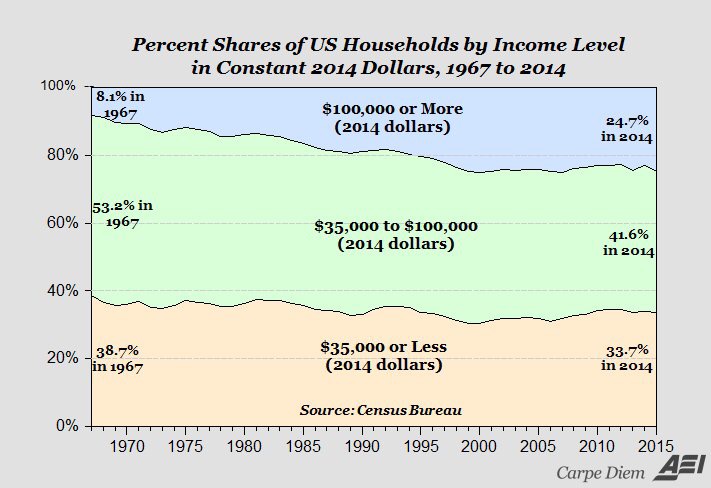
Share

Perhaps Re-Thinking ongoing Madison Schools Budget Growth?

Doug Ericsson:

She described it as “repurposing” existing money and said the approach likely will be the norm going forward.

“It’s a good, positive way of working,” she said. “So rather than continually looking for more funding — kind of piling on each year, adding cost — we’re very strategically looking for the highest and best use of our dollars for the coming year.”

Madison’s government school spending grows annually, yet our community has long tolerated disastrous reading results. This, despite spending more than $17,000 per student during the 2016-2017 school year.

Perhaps, one day, there might be a more structural change in our Frederick Taylor [duck duck go and SIS] era non diverse K-12 school system.

Share

Do Parenting Classes Work?

Elissa Strauss:

2012, British Prime Minister David Cameron launched a pilot program offering parenting classes to low-income families. The government anticipated around 20,000 parents of children under five to show up. Fewer than 3,000 did.

Not easily deterred, Cameron recently announced that he’s going to try this again. As part of a £70 million anti-poverty plan centered around providing more emotional support to families, the government is planning to launch another parenting class program—this time inviting middle class families as well as underprivileged ones. Cameron’s goal appears to be helping more parents as well as shedding the stigma that only poor families need such help; he says he wants it to become “normal, even aspirational, to attend parenting classes.”

Share

May wants UK police commissioners to set up free schools for ‘troubled children’

Alan Travis:

Elected police and crime commissioners should be given the power to set up their own free schools to support “troubled children”, Theresa May has announced.

The move will be part of a major expansion of the powers of police and crime commissioners into the areas of youth justice, probation and court services to be proposed after their second set of elections take place in May.

The home secretary said that the next set of PCCs should “bring together the two great reforms of the last parliament – police reform and school reform” to set up or work with “alternative provision of free schools to support troubled children and prevent them falling into a life of crime”.

Share

Data: Wealthy Paid 55 Percent of Income Taxes in 2014

Tax Foundation:

The IRS recently released preliminary data for Tax Year 2014. The data shows that the U.S. income tax system remains very progressive, with high-income taxpayers paying a disproportionate share of the tax burden relative to their share of the nation’s income, while the majority of taxpayers pay a considerably smaller share relative to their share of total income.

Overall, nearly 149 million taxpayers filed a tax return in 2014. After adjusting for credits and deductions, 52 million filers (35 percent of the total) had no income tax liability, while the remaining 97 million filers paid nearly $1.3 trillion in income taxes.
As my colleague Scott Greenberg wrote last week, in 2014, America’s income tax bill grew by more than 10 percent over 2013, far surpassing the 6 percent growth in incomes. This is a clear indication that the tax code is rigged to insure that tax revenues outpace the growth in the economy.
Much of the growth in income tax payments was generated by taxpayers at the top of the income scale. In 2013, taxpayers earning over $250,000 paid $603 billion in income taxes. By contrast, in 2014, these taxpayers paid $700 billion in income taxes, 16 percent more than 2013.

Share