School Information System

Can Unions Be Sued For Janus Claims?

Will Baude:

Last month the Supreme Court held in Janus v. AFSCME that it is unconstitutional for the states to require public employees to pay labor unions if they choose not to become members (these payments were called “agency fees”). There has been plenty written about what this means for the future of public sector unions and what might happen next. But it turns out that there is another important question: what about the agency fees that unions had been collecting before Janus? Are unions liable for collecting them? Can they be forced to pay them back?

A series of lawsuits have been recently brought in seven states arguing that unions are liable, and now subject to quite significant liability. Noam Scheiber has a story in the New York Times about the suits, (and the lawyer bringing the suits, a former law professor and former Texas solicitor general, Jonathan Mitchell):

Share

The “Intellectual Dark Web” Is Nothing New

Jacob Hamburger:

THE FIRST DISTINCT intellectual movement to have emerged during the Trump presidency is not the alt-right, which rose to prominence during the 2016 campaign. Nor is it democratic socialism, the egalitarian platform that many young progressives have embraced since the Occupy Wall Street movement.

Instead, this movement may well be what some are calling the “intellectual dark web.” It is a heterogeneous group, bringing together neuroscientists, biologists, and psychologists with entrepreneurs, comedians, and sports commentators. Some claim to lean to the left, others to the right. There is nonetheless a common enemy that unites them. Despite their various differences, all members of the movement believe their ideas are being stifled by an epidemic of “political correctness.”

Unlike the actual “dark web” of hidden online networks, this one requires no specialized software to be made accessible. Its ideas can be found in best-selling books and media channels with millions of subscribers. Mathematician and financier Eric Weinstein coined the term intellectual dark web, and he meant to point out not that this group is obscure — it isn’t — but that its figures all pride themselves on upturning conventional beliefs.

Share

Evidence on New York City and Boston exam schools

Susan Dynarski:

New York City is wrestling with what to do with its exam schools. Students at Stuyvesant, Bronx Science, and Brooklyn Tech (the oldest exam schools) perform brilliantly and attend the best colleges. Their students score at the 99th percentile of the state SAT distribution (with Stuyvesant at the 99.9th percentile) and they account for the majority of New York City students attending Harvard, Princeton and Yale.1 These are by any measure elite schools and are revered as jewels of the city school system.

But of the 900 freshmen who enrolled at Stuyvesant this past fall, just 10 were black.2 By state law, admission to these schools is via a specialized, voluntary, admissions test. Mayor Bill de Blasio and others complain that this admissions system perpetuates inequality in opportunity to an excellent education.

A lot of ink has been spilled over the exam schools, in popular news outlets as well as in academic journals. In this piece, I address a narrow but relevant question: the causal impact of these schools on the students who attend them. Do the exam schools produce academically outstanding graduates, or do they simply admit stellar students and enjoy credit for their successes? I also briefly discuss alternative methods the city could use to dole out scarce seats at these over-subscribed schools.

Understanding the effectiveness of any school is a challenge because parents choose their children’s schools. In many cases, the school a child attends is tied to her address, so a parent effectively chooses a school when she picks a residence. In places like New York and Boston, which have district-wide choice, families can choose from dozens of public schools, including charters, magnets and exam schools. And there are private schools for those who can afford them or who have vouchers to subsidize the cost.

Share

Civics: Perspective

Lyle Jeremy Rubin:

I was trained at NSA headquarters as a signals intelligence officer in the Marines. This was about a decade ago, and I was by no means an area specialist. That said, I was privy to relevant briefs. At the time I learned that U.S. cyber operations in Russia, across Russia’s periphery, and around the world already dwarfed Russian operations in size, capability, and frequency. It wasn’t even close, and the expectation was that the gap was about to grow a whole lot wider.

This should hardly come as a surprise. Just compare the defense budgets of the United States and Russia. The president recently signed a gargantuan $700 billion gift to the Pentagon, with marginal dissent from either party or their affiliated media outlets. The budget increase alone ($61 billion) exceeds Russia’s entire annual expenditure ($46). The U.S. military budget now equals more than the combined budgets of China, Russia, Britain, Japan, Saudi Arabia, India, and France. As Vice concluded, “it’s 14 times larger than the Kremlin’s budget.”

Furthermore, covert American operations are deeply invested in interrupting democratic processes not only in Russia, but everywhere else. This includes the heart of Europe, where corporate media is now pretending the United States has always respected happy norms and decorum. It is as if the Snowden leaks never happened. The Defense Department’s tapping of Angela Merkel’s phone never happened. The Obama administration’s spying on the German press, including Der Spiegel, never happened. The same administration’s outing of German government whistle-blowers never happened.

Electoral meddling in particular happens all the time, both to us and by us. The U.S. government rigged the Russian election for Yeltsin in 1996, and then they bragged about it in a cover story for Time. (You can still find the cover online.) This followed the disastrous capitalist “shock therapy” of the early nineties and preceded the rise of the Russian oligarchs. Putin’s brand of nationalist resentment grew out of this moment of extreme collective humiliation. Meanwhile, Hillary Clinton is happily on record pushing for the tampering of Palestinian elections in 2006.

Share

1 big thing: The childless, aging future

axios:

Whichever the case, almost no one seems prepared. People are going to have to work longer, experts say. And the U.S. requires “major reforms” in its programs for the elderly, says Richard Cincotta, director of the Global Political Demography Program at the Stimson Center, and fofrmerly a lead demographer for the U.S. intelligence community. But the government “seems to be nowhere near making the social security reforms that are needed.”

Share

A new digital divide: Young people who can’t use keyboards

Toshihiko Katsuda:

“How do I double click?” “What is a cell in a spreadsheet?”

Mashiko Ishii often hears that her fellow lecturers at Uchida Human Resources Development Center become confused when they are asked such basic questions during training for new employees of IT companies.

Pressing the button of a computer mouse twice and knowing the basic unit for data input in spreadsheets are some of the fundamentals of using a computer, but it is not uncommon for even would-be system engineers to ask such questions.

The reason is clear. As smartphones have become extremely convenient, a growing number of students have never laid their hands on a personal computer.

Lecturers who work with Ishii often start training by teaching students how to use a keyboard.

Share

The Mismatch Effect: A Danger for Students of All Races

Eugene Volokh:

Say that you apply to many schools, including some where other students have much better predictors (chiefly test scores and grades from earlier institutions) than you. And you get in! Maybe it was affirmative action (whether based on race, socioeconomic status, or something else), maybe it was a preference because your relatives had gone to the same school, maybe it was something in your admission essay, maybe it was just luck. Either way, you’re thrilled.

Might you have reason to be less thrilled, and actually not want to go to this highly ranked school? (Conversely, might the school reconsider its policy that led you to be let in?) If the predictors are actually reasonable predictors (and apparently grades and test scores tend to be reasonable predictors), then you can expect you’ll end up lower in the class at the new school than you might be at some other school, precisely because the other students are better than you. The advantage of having a more prestigious degree might be counteracted by the disadvantage of having a less prestigious class rank. But might you end up getting a worse education, being less likely to graduate, and being less likely to pass any professional licensing exams (such as the bar) that you might be expecting to take?

That’s the debate about the “mismatch effect,” which I’ve followed over the years (though from a distance); it has mostly focused on whether race-based affirmative action causes problems (such as lower black bar passage rates) as a result of this effect, but it can also be relevant to many students of all races. I was first exposed to it because of the work of my UCLA School of Law colleague Rick Sander, and Robert Steinbuch at Arkansas / Little Rock has been working in it as well; Rob has been kind enough to pass along these thoughts on the subject:

Share

Thoughts on Mass Tenure Revocation at Vermont Law School in the Shadow of the Market and Beyond Shared Governance

Larry Data Backer:

The reactions are what might be expected, though surprisingly muted (see, e.g., here, here, here, here, and here). In the end, after the hand wringing and acrimony, the substance of this action will likely remain undisturbed. “If the reports are accurate, Vermont has essentially acted as if tenure does not exist. This could potentially raise questions about whether Vermont is in compliance with ABA standard 405, but it is unclear how assertive the ABA or site visit teams will be in enforcing those standards.” (How secure is tenure? (Michael Simkovic)).

For this post I offer some brief thoughts on what is likely to be a very useful and evolving addition to the toolkit of administrators as they continue the hard task of commodifying and capitalizing education within what is still nostalgically referenced as “the university.” The focus is not on the lawyering of protection for those faculty with respect to whom tenure has been made a mockery, though one clothed in the delightfully unctuous ululations of administrator speak. Rather the reflections here focus on the ways in which these actions evidence more generally a perhaps significant changes of power relations within an institution in which the notions of traditional shared governance has withered away. The character of that withering away is itself of interest, as the successful de-professionalization of the faculty has opened the way for their replacement in governance by an emerging corps of professional administrators only some of whom are drawn from their ranks who (ironically) remain protected by tenure.

Share

Unwanted Sterilization and Eugenics Programs in the United States

Lisa Ko:

Coerced sterilization is a shameful part of America’s history, and one doesn’t have to go too far back to find examples of it. Used as a means of controlling “undesirable” populations – immigrants, people of color, poor people, unmarried mothers, the disabled, the mentally ill – federally-funded sterilization programs took place in 32 states throughout the 20th century. Driven by prejudiced notions of science and social control, these programs informed policies on immigration and segregation.

As historian William Deverell explains in a piece discussing the “Asexualization Acts” that led to the sterilization of more than 20,000 California men and women,“If you are sterilizing someone, you are saying, if not to them directly, ‘Your possible progeny are inassimilable, and we choose not to deal with that.’”

According to Andrea Estrada at UC Santa Barbara, forced sterilization was particularly rampant in California (the state’s eugenics program even inspired the Nazis):

Share

The Essay That Helped Bring Down the Soviet Union

Natan Sharansky:

Sakharov’s essay, which coincided with the Prague Spring, helped energize democratic dissident movements that were just budding in a post-Stalinist world. The largest of these was one I would soon join: the so-called refusenik movement to allow the Soviet Union’s long-oppressed Jews the freedom to emigrate.

Some Russian dissidents mistrusted the Zionist movement as particularistic and unpatriotic, fearing it would distract from their broader human rights agenda. Not Sakharov. He supported the refuseniks because he recognized the right to emigrate as a gateway to democratic entitlement that opens everyone to embracing freedom in a closed society.

By the mid-1970s I was serving as Sakharov’s spokesman, and I remember after yet another friend of ours had been sentenced to prison, he told me: “They want us to believe there’s no chance of success. But whether or not there’s hope for change is not the question. If you want to be a free person, you don’t stand up for human rights because it will work, but because it is right. We must continue living as decent people.”

Sakharov’s decency made him a moral compass orienting not just the East, but also the West. He insisted that international relations should be contingent on a country’s domestic behavior — and that such a seemingly idealistic stance was ultimately pragmatic. “A country that does not respect the rights of its own people will not respect the rights of its neighbors,” he often explained.

Share

Partnerships with people on the spectrum yield rich research insights

Nicholette Zeliadt:

There are different views on whether ‘people with autism’ or ‘autistic people’ is the better way to refer to individuals on the spectrum. Some of the people quoted in this article prefer to say ‘autistic,’ but Spectrum’s style is to refer to ‘people with autism.’

It wasn’t until Anna Remington had nearly finished collecting data that she uncovered the flaw in her study.

A couple of years ago, Remington, then a lecturer at University College London, was investigating how people determine whether someone is trustworthy. She and her colleagues showed participants with the condition a series of images of unfamiliar faces, along with some hypothetical information about each person. They then asked the participants, “Would you approach this person — either in a social or financial context?”

Overwhelmingly, the participants with autism said “no,” even in response to characters who had been described as trustworthy. Eventually, one of them pulled her aside to explain: He wasn’t interested in “approaching” anyone.

Share

Steps Toward Super Intelligence I, How We Got Here

Rodney Brooks:

Once again, with footnotes.

God created man in his1 own image.2

Man3 created AI in his3 own image.

At least that is how it started out. But figuring out what our selves are, as machines, is a really difficult task.

We may be stuck in some weird Gödel-like incompleteness world–perhaps we are creatures below some threshold of intelligence which stops us from ever understanding or building an artificial intelligence at our level. I think most people would agree that that is true of all non-humans on planet Earth–we would be extraordinarily surprised to see a robot dolphin emerge from the ocean, one that had been completely designed and constructed by living dolphins. Like dolphins, and gorillas, and bonobos, we humans may be below the threshold as I discussed under “Hubris and Humility”.

Or, perhaps, as I tend to believe, it is just really hard, and will take a hundred years, or more, of concerted effort to get there. We still make new discoveries in chemistry, and people have tried to understand that, and turn it from a science into engineering, for thousands of years. Human level intelligence may be just as, or even more, challenging.

In my most recent blog post on the origins of Artificial Intelligence, I talked about how all the founders of AI, and most researchers since have really been motivated by producing human level intelligence. Recently a few different and small groups have tried to differentiate themselves by claiming that they alone (each of the different groups…) are interested in producing human level intelligence, and beyond, and have each adopted the name Artificial General Intelligence (AGI) to distinguish themselves from mainstream AI research. But mostly they talk about how great it is going to be, and how terrible it is going to be, and very often both messages at the same time coming out of just one mouth, once AGI is achieved. And really none of these groups have any idea how to get there. They are too much in love with the tingly feelings thinking about it to waste time actually doing it.

Share

55% of the US National Debt Is the Result of Repaying Debt with More Debt

Taps Coogan:

The last time the US completely paid off the national debt was in 1840. It was the result of decades of balanced budgets under Presidents James Monroe, John Quincy Adams, and Andrew Jackson.

In the 179 years since 1840 (counting the 2018 budget), the US has run a deficit 109 times and a surplus or balanced budget just 70 times, amounting to a cumulative net deficit of $14.2 trillion. All of the surpluses combined in the last 179 years amount to $580 billion, less than the deficit in 2017 alone ($665 billion).

Since the national debt was last eliminated in 1840, the US has paid a cumulative $7.8 trillion of interest on the national debt. This interest includes repaying principal. Simple arithmetic reveals that 55% the $14.2 trillion in deficit spending since 1840 has, in effect, gone towards servicing the national debt. Put differently, instead of paying down its debt with tax revenue, the federal government has essentially rolled over 55% of its debt since 1840 with new debt. The result is that despite running ‘only’ $14.2 trillion in deficits over that last 179 years, and despite having already repaid all debt issued more than 30 years ago, the national debt today is $21.4 trillion. The difference, $7.2 trillion, represents the cumulative interest the US has paid to fund its deficits minus its modest surpluses. As a result, a full 36% of today’s national debt is, in effect, the interest paid on past debt. Only 45% of the national debt went to spending on actual programs. The rest went to servicing the national debt itself and to rolling the debt over with new debt. It also means that the government has been carrying forward the majority of the national debt going all the way back to 1840 by paying it off with new debt. A portion of the money the government borrowed in 1841 is still being paid for today via rolling the debt forward.

Share

Tulane University awarded $10 million grant to launch national school choice research center

Keith Brannon:

The U.S. Department of Education’s Institute of Education Sciences has awarded a five-year, $10 million grant to Tulane University to study how different approaches to school choice, such as voucher programs and charter schools, can better serve disadvantaged students.

The grant will create the National Center for Research on Education Access and Choice (REACH), a first-of-its-kind center that will be housed at Tulane and led by prominent education scholars from around the country, including Douglas Harris of Tulane, Joshua Cowen and Katharine Strunk of Michigan State University, Julie Marsh of the University of Southern California and Amy Ellen Schwartz of Syracuse University.

Most states have charter school systems, and more than half have voucher or tuition tax-credit policies that allow students to use public funds to attend private schools. School choice programs have delivered some notable successesin cities like Boston, New York and New Orleans but have not succeeded everywhere.

Share

‘My brain feels like it’s been punched’: the intolerable rise of perfectionism

Paula Cocozza:

Tom Nicol thought he had a problem with sleep. He could never get enough. He took “a very disciplined, stripped approach” to his routine. He drank water only at premeditated times, ate according to schedule, avoided caffeine, exercised (but not close to bedtime) and shut down all screens at 9pm. Nicol, a PhD student, was recounting this long list of sleep settings to his student counsellor after yet another bad night, when she told him: “You have perfectionism.”

“I’m not good enough to have perfectionism,” Nicol replied.

It was “one of the most perfectionist things you can say”, he says now. At the time, though, the discovery took Nicol by surprise. He shared his surprise with his partner. “She was like: ‘Well, duh!’” But he needed to be convinced.

On the phone, Nicol, 25, has a persuasive and clear-eyed sense of his own averageness. He is “not particularly” industrious, “quite” messy and has “never been the kind of person who was seen as one of the top achievers”, he says. He recounts these perceived shortcomings with an amiable ease that sounds a lot like contentment. But maybe this, too, is a perfectionist sleight of hand, to present persistent self-criticism as casual self-deprecation. I arrange to visit Nicol at the University of York, where he is in the second year of his doctorate in theoretical chemistry.

Share

Can’t Enter Uni Because of Daddy’s Bad Social Credit – The Blacklist Story That’s Got Weibo Talking

Manya Koetse:

However, the public black list was introduced before this time, with Chinese courts in 2013 starting to publicly give out the names online of people who have not complied with court orders. Additionally, In 2006, the People’s Bank of China (PBOC) also already began operating its own independent Credit Reference Center tasked with managing a national commercial and consumer credit reporting system. With the recent launch of the so-called ‘trust alliance’ (信联), a new unified platform that has access to an enormous number of personal credit data, China’s credit-based society has taken another leap – with state level and commercial organizations joining forces in further developing China’s credit systems. In recent (English-language) media reports, the lines are often blurred between the Social Credit system and a number of private programs, including the Sesame Credit program. These misunderstandings partly come from the fact that both the government’s plans on introducing their ‘Social Credit System’ (社会信用体系) and the Central Bank’s endeavors to build a stronger personal credit industry (个人征信行业) were major developments in the period from 2013-2015 up to the present. Together with the 2013 judicial online blacklist, these policies and programs all built on a stronger credit-based society that governs both economic and social areas.

Share

Civics: Top Voting Machine Vendor Admits It Installed Remote-Access Software on Systems Sold to States

Kim Zetter:

Remote-access software and modems on election equipment ‘is the worst decision for security short of leaving ballot boxes on a Moscow street corner.’

Share

Civics: When a U.S. citizen heard he was on his own country’s drone target list, he wasn’t sure he believed it. After five near-misses, he does – and is suing the United States to contest his own execution

Matt Taibbi:

How to Survive America’s Kill List

Bilal Abdul Kareem is an expert in staying alive.

Born Darrell Lamont Phelps, he grew up just north of the Bronx in Mount Vernon, New York. He did what lots of kids in his neighborhood were doing in the late Seventies and Eighties: He spent his time rolling on the floor laughing to comics like Flip Wilson and Richard Pryor.

Later, after college at SUNY Purchase in Westchester, he decided to try stand-up himself. Hecklers were a problem.

In upscale white clubs where he sometimes performed, audiences would clap politely if his jokes missed. Not so much in the Brooklyn clubs he worked. The mostly black audiences there let him have it when he was off.

“Black folks always want to get involved in the act, you know what I’m saying?” he recalls, laughing. “Then you gotta respond with some ‘Yo mama’s so fat’ jokes just to get them to sit down and shut up.”

Over a decade later, after some major life changes – he’d converted to Islam and found himself working as a TV reporter in the Middle East under his new name, Bilal Abdul Kareem – he again drew upon his stand-up experience to stay alive. Only he wasn’t worried about dying on stage this time. This time it was more serious.

In the waning days of the Battle of Aleppo, as Syrian dictator Bashar al-Assad’s forces closed in on the city, Kareem found himself in a room full of desperate Free Syrian Army rebels.

Share

Researchers produce images of people’s faces from their genomes

The Economist:

CRAIG VENTER, a biologist and boss of Human Longevity, a San Diego-based company that is building the world’s largest genomic database, is something of a rebel. In the late 1990s he declared that the international, publicly funded project to sequence the human genome was going about it the wrong way, and he developed a cheaper and quicker method of his own. His latest ruffling of feathers comes from work that predicts what a person will look like from their genetic data.

Human Longevity has assembled 45,000 genomes, mostly from patients who have been in clinical trials, and data on their associated physical attributes. The company uses machine-learning tools to analyse these data and then make predictions about how genetic sequences are tied to physical features. These efforts have improved to the point where the company is able to generate photo-like pictures of people without ever clapping eyes on them.

In a paper this week in Proceedings of the National Academy of Sciences, Dr Venter and his colleagues describe the process, which they call “phenotype-based genomic identification”. The group took an ethnically diverse group of 1,061 people of different ages and sequenced their genomes. They also took high-resolution, three-dimensional images of their faces, and measured their eye and skin colour, age, height and weight. This information was used as a “training set” to develop an algorithm capable of working out what people would look like on the basis of their genes.

Share

Algorithms and Venture Capital Investing

Dan Primack:

When most venture capitalists want approval to make a new investment, they go to their partners. When venture capitalists at GV do it, they go to something called “The Machine.”

Axios has learned that the firm, formerly known as Google Ventures, for years has used an algorithm that effectively permits or prohibits both new and follow-on investments.

Staffers plug in all sorts of deal details into “The Machine” — which is programmed with all sorts of market data, and returns traffic signal-like outputs. Green means go. Red means stop. Yellow means proceed with caution, but sources say it’s usually the practical equivalent of red.

It was initially designed and used as a due diligence assistant that could be overruled but, according to three sources, it has evolved into a de facto investment committee.

History: GV was formed in 2009 as one of the first venture firms to employ engineers whose primary job was to work with portfolio companies on technical challenges. But, in the early days, there weren’t too many portfolio companies yet, so the engineers were tasked first with building a dealflow management tool dubbed “Vortex,” and then with what would become “The Machine.”

Share

Madison’s K-12 Governance Non Diversity: Police in Schools Meeting

Logan Wroge:

Throughout the public comment period, several people said the presence of police officers inside school can negatively affect students of color and feeds into the “school-to-prison pipeline.”

“Ain’t no amount of training, ain’t no amount of special certificates is going to matter when it comes to black and brown kids, because (police officers) see us as thugs and criminals,” said Bianca Gomez, a member of Freedom Inc., an activist organization focused on issues that affect minority populations.

As Blaska attempted to capture the public comment on his cellphone, others took issue with juvenile speakers being recorded and attempted to block his view by either standing in front of him or putting objects in front of his phone, alleging he runs a racist blog where the youths’ photos would be posted.

Blaska moved about the meeting room, which was held in the McDaniels Auditorium in the district’s Doyle Administration Building, and others continued to follow along and block his phone.

The emotions culminated in a heated face-to-face argument between a woman who had earlier spoke in support of EROs and some people wishing to remove EROs.

Steven Elbow:

A public hearing on a proposal to redefine the Madison School District’s relationship with police descended into chaos Wednesday when factions confronted each other with invective, insults and physical altercations.

The proposal would remove armed educational resource officers from the district’s four main high schools and replace them with at least 20 specially trained school liaison officers that would develop relationships with all district schools and respond to incidents when needed.

The proposal drew no support from 20 people who registered to speak, many of them members of Freedom Inc., a grassroots social justice group that sees the move as an increase in policing efforts. But a small minority of speakers blasted the committee in charge of drafting the new policy for proposing to remove armed officers at East, West, La Follette and Memorial high schools.

“Think of that potential school shooter out there,” said Patrick O’Loughlin, an accountant who teaches business math at a local private high school. “Experience tells us that they think about it for quite some time before acting. What is he going to think when you kick the armed officers off campus?”

O’Loughlin suggested that the draft proposal was intentionally light on statistics supporting the elimination of EROs. He went on to list the kinds of statistics the proposal should have included.

“You can take your statistics and shove them,” said Mahnker Dahnweih of Freedom Inc.

Related:

Gangs and School Violence Forum

Police Calls: Madison Schools 1996-2006

Why did Cops Out of Schools committee ignore its own safety expert?

NBC 15 meeting report.

Free speech and the Madison School Board. Former President Obama on “shutdown culture“.

Madison should kick police officers out of its public high schools, a school board committee is poised to recommend. Instead, they would be replaced by 20 more so “liaison” officers who would be called into the schools only as needed.

A majority of the Madison School Board rejected the proposed Madison Preparatory Academy IB Charter school.

“They’re all rich white kids and they’ll do just fine, NOT!”: 1995-1999 (!)

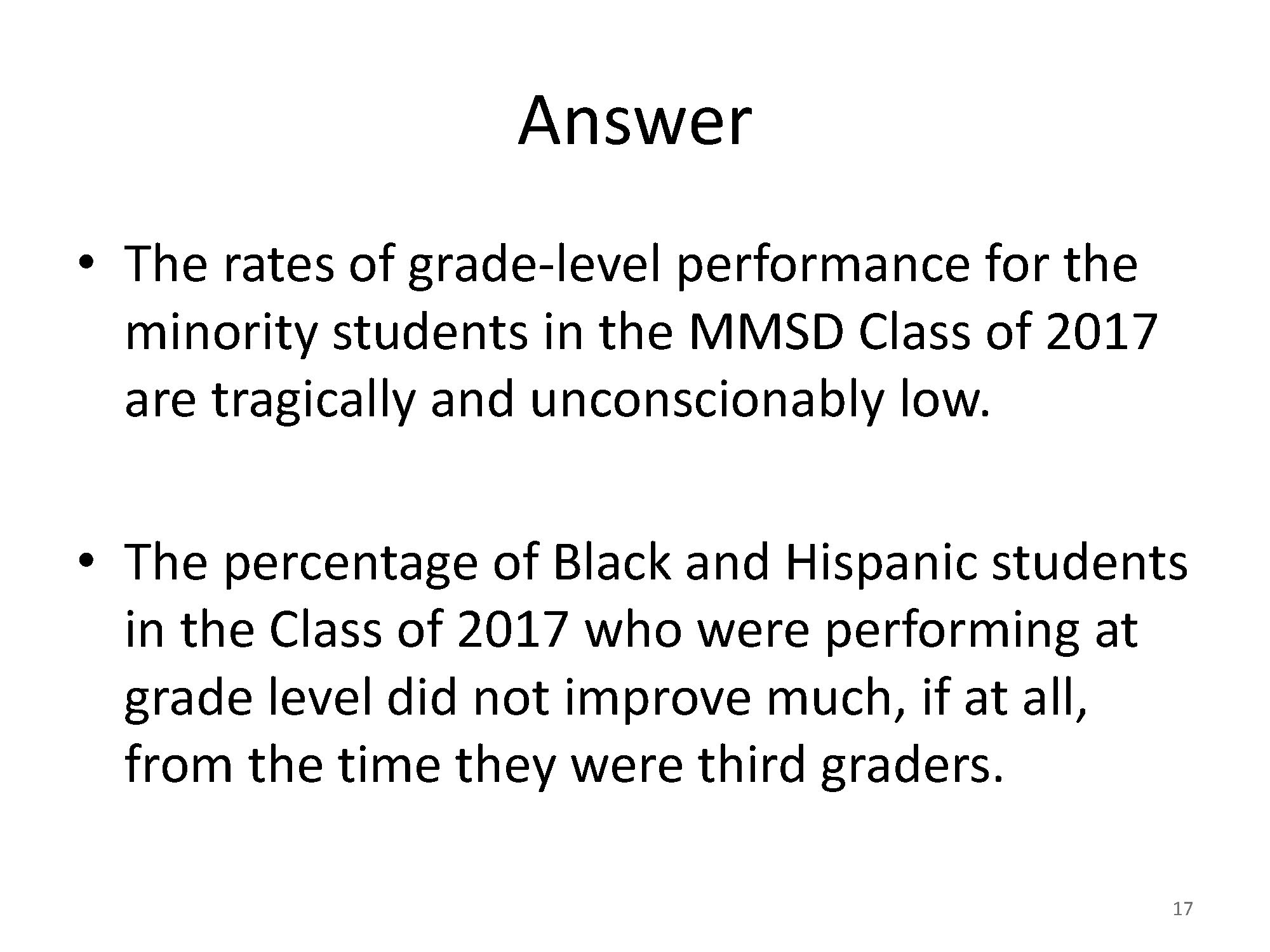
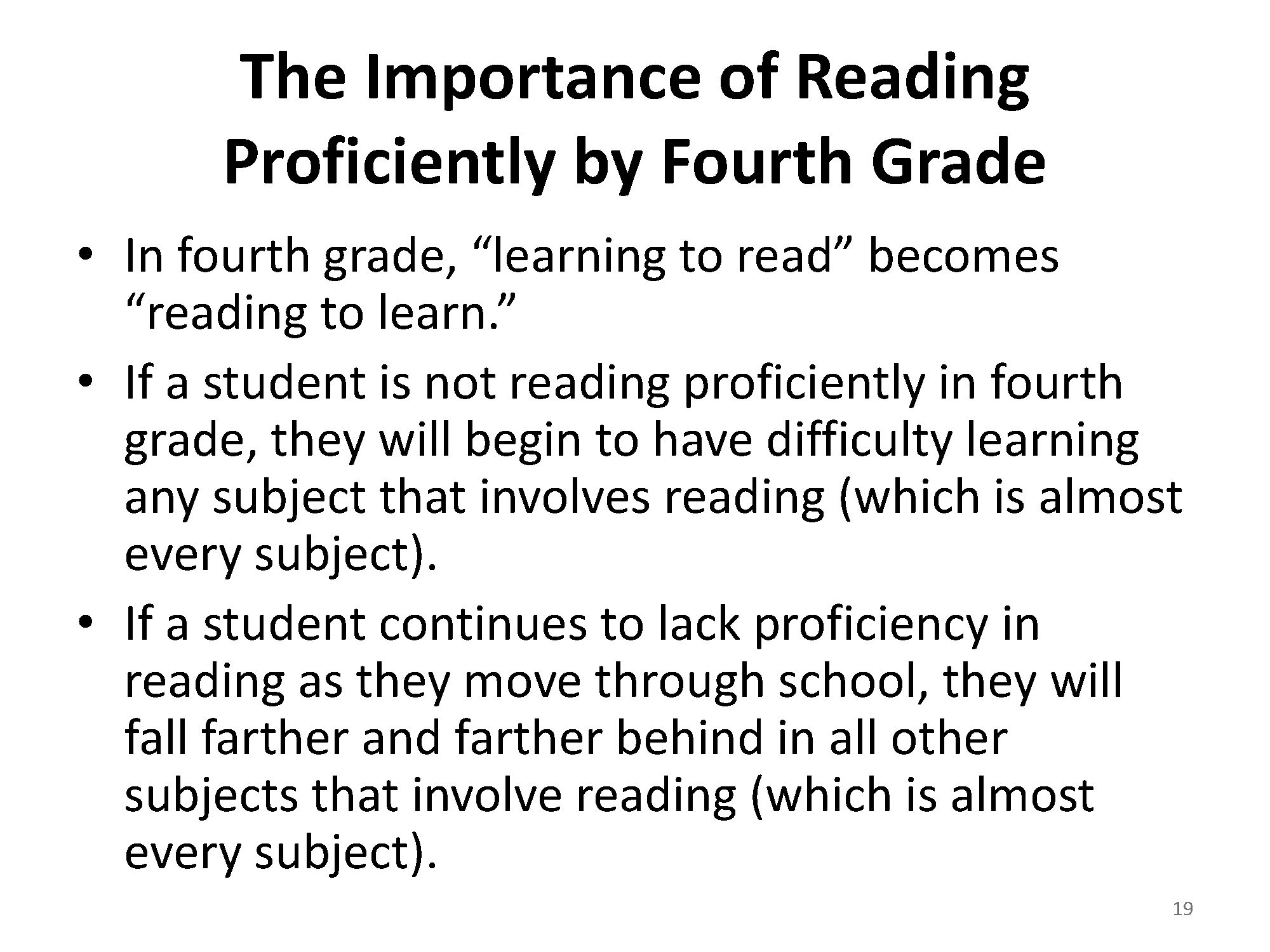
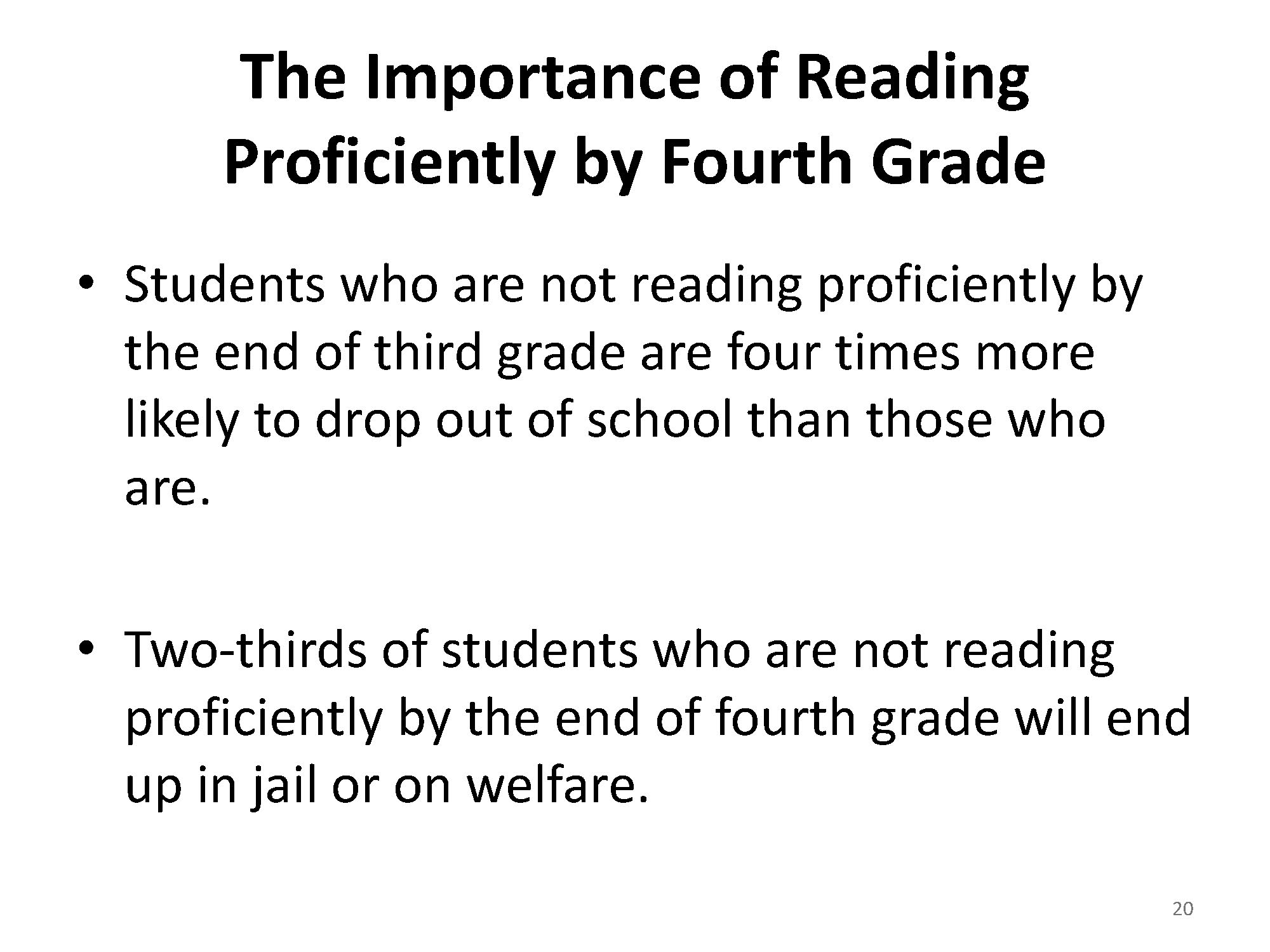
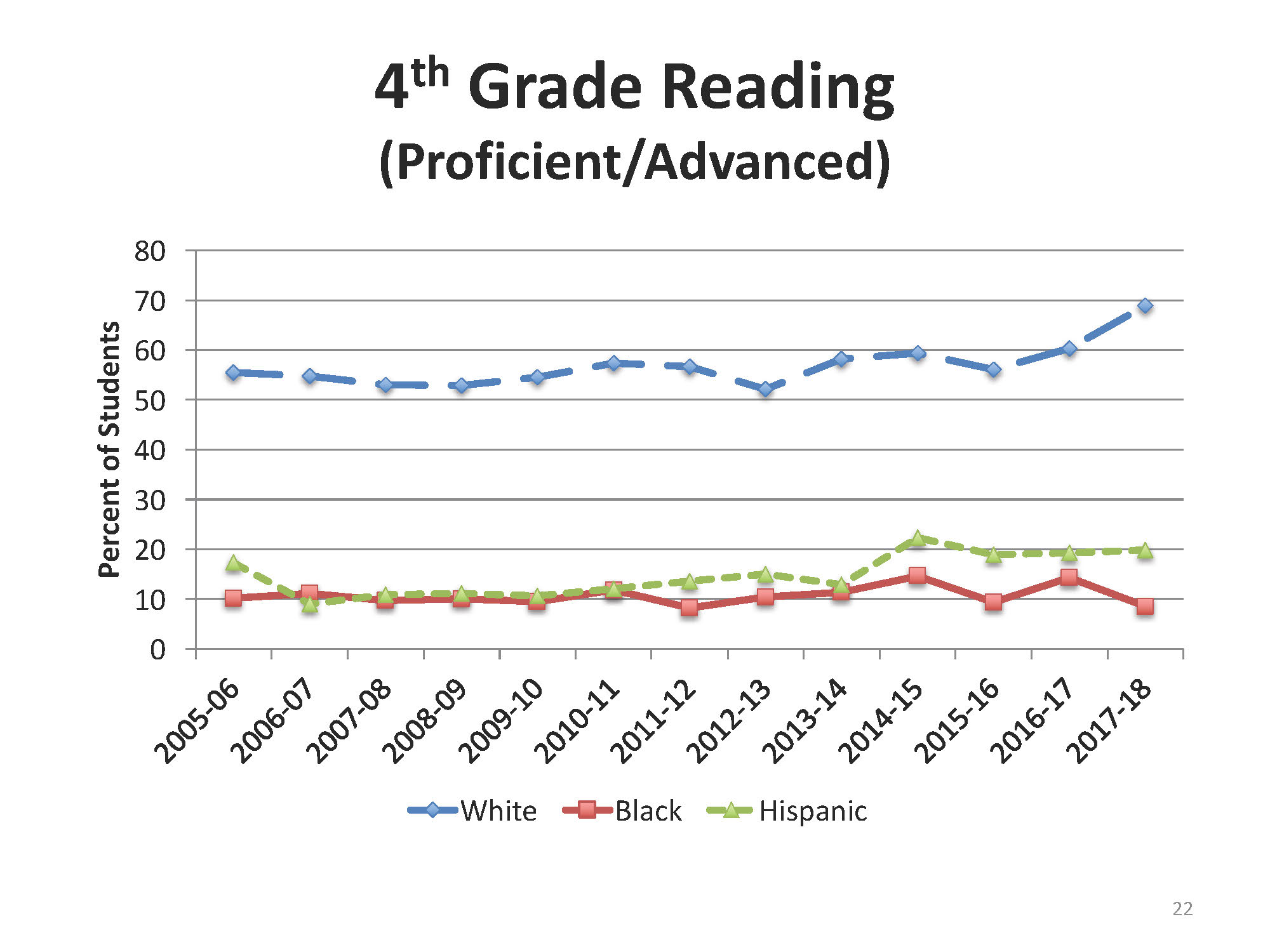
Madison’s long term, disastrous reading results.

The Madison school district spends far more than most: budget details.

What’s different, this time (2013)?

Additional commentary here, and here.

Share

‘I kind of gave up’: how academics in danger rebuild their lives in exile

Tim Judah:

A few minutes after meeting Zaher al-Bakour in a Caffè Nero on Aberdeen’s Union Street, his phone rings and he swipes to decline the call. It is just his sister, he says. Mortified that he should do this to someone WhatsApp-calling him from rebel-held territory in Syria while we chat over croissants and cappuccinos, I suggest that he call her back. She thinks her nine-year-old daughter has typhoid and, since there are no doctors there, wants al-Bakour, an academic who specialises in pharmacology, to analyse the case. He can’t. Though he spends his days in a white lab coat tinkering with test tubes and microscopes, “I’m not a doctor,” he says.

It’s a cruel twist to a modern war. Imagine that, in 1943, you could have called Aberdeen from the Warsaw ghetto. Indeed, in a way al-Bakour, a 27-year-old from conflict-torn Aleppo, has ended up in the granite “grey city” because of the Nazis. He is an exiled academic who has been brought to Britain by the Council for At-Risk Academics (Cara), a British organisation founded in 1933 to help German-Jewish scholars who were fired when Hitler came to power.

Share

China’s ‘red education’ history tours and the rise of communist cosplay

Josephine Ma:

If anyone can best tell the scale and intensity of China’s “red education” drive to promote loyalty to the ruling Communist Party, it’s businessman Yu Meng.

The 36-year-old runs the largest Red Army uniform rental business in Jinggangshan, a city dubbed the “cradle of the communist revolution” deep in the mountains of Jiangxi. Last year alone, his company rented uniforms to 256,000 people taking part in red ideology study tours.

Yu started the Xiangganbian Red Army uniform company 10 years ago. But it’s only in the last three years that the business has really taken off, thanks to the relentless push of patriotic education by President Xi Jinping. Xi has said he wants “faith” in communist rule to be passed down to a new generation as “red DNA”.

Share

Why the Unfair Sex Tribunals of Title IX Are Losing Ground

KC Johnson:

In a reproof to Obama-era guidance on campus sex hearings, Education Secretary, Betsy DeVos issued interim Title IX guidance fair to the accused as well as the accusers. This brought a storm of abuse from the founders of the kangaroo court system, favored by the Obama team.

The lawsuits against the interim guidance issued by DeVos appear to have stalled. So on June 27, a coalition of accusers’ rights organizations invoked an obscure law, the Data Quality Act, to demand “corrections” in the September 2017 guidance issued by DeVos. The effort, which smacks of desperation, doesn’t seem likely to yield a victory for the groups, but that’s probably not the goal—as a fundraiser and publicity effort, the letter probably will serve its purposes.

The accusers’ rights groups claim that the interim guidance falls short factually in six respects, reproduced below:

Share

A Fast-Food Problem: Where Have All the Teenagers Gone?

Rachel Abrams and Robert Gebeloff:

A quarter-century ago, there were 56 teenagers in the labor force for every “limited service” restaurant — that is, the kind where you order at the counter.

Today, there are fewer than half as many, which is a reflection both of teenagers’ decreasing work force participation and of the explosive growth in restaurants.

But in an industry where cheap labor is an essential component in providing inexpensive food, a shortage of workers is changing the equation upon which fast-food places have long relied. This can be seen in rising wages, in a growth of incentives, and in the sometimes odd situations that business owners find themselves in.

This is why Jeffrey Kaplow, for example, spends a lot of time working behind the counter in his Subway restaurant in Lower Manhattan. It’s not what he pictured himself doing, but he simply doesn’t have enough employees.

Mr. Kaplow has tried everything he can think of to find workers, placing Craigslist ads, asking other franchisees for referrals, seeking to hire people from Subways that have closed.

Share

Potential DNA damage from CRISPR has been ‘seriously underestimated,’ study finds

Sharon Begley:

Share

What Knitting Can Teach You About Math

Sara Jensen:

One snowy January day, I asked a classroom of college students to tell me the first word that came to mind when they thought about mathematics. The top two words were “calculation” and “equation.”

When I asked a room of professional mathematicians the same question, neither of those words were mentioned; instead, they offered phrases like “critical thinking” and “problem-solving.”

This is unfortunately common. What professional mathematicians think of as mathematics is entirely different from what the general population thinks of as mathematics. When so many describe mathematics as synonymous with calculation, it’s no wonder we hear “I hate math” so often.

So I set out to solve this problem in a somewhat unconventional way. I decided to offer a class called “The Mathematics of Knitting” at my institution, Carthage College. In it, I chose to eliminate pencil, paper, calculator (gasp) and textbook from the classroom completely. Instead, we talked, used our hands, drew pictures and played with everything from beach balls to measuring tapes. For homework, we reflected by blogging. And of course, we knit.

Share

K-12 Tax & Spending Climate: “suggests that the minimum wage increases led to employment losses in Minnesota, particularly in the restaurant industry and youth demographic most affected by the changes”

Noah Williams:

Over 60% of employees in the restaurant industry in Minnesota work for the minimum wage or less, and workers under the age of 24 account for 54% of minimum wage earners. Following the minimum wage increases limited service restaurant employment fell by 4% in Minnesota relative to Wisconsin. Further, youth employment fell by 9% in Minnesota following the minimum wage increases, while it increased by 10.6% in Wisconsin over the same time period.

In addition, part of the increased wage costs employers faced have been passed on to consumers through higher prices. The relative price of restaurant food in the Minneapolis metro area had fallen by 2% in the four years preceding the minimum wage hikes, but it has risen by 6% in the four years since. On the benefit side, earnings for affected workers grew more rapidly in Minnesota than Wisconsin following the minimum wage hikes, with average annual pay at limited service restaurants increasing by 5.5% more in Minnesota from 2014-2017.

Overall, this evidence is consistent with a competitive market for low wage workers in Minnesota, with the minimum wage increases leading to labor market distortions.

Share

Venmo: how the payment app exposes our private lives

Olivia Solon:

Anyone can track a Venmo user’s purchase history and glean a detailed profile – including their drug deals, eating habits and arguments – because the payment app lacks default privacy protections.
 
 This was the finding of a Berlin-based researcher, Hang Do Thi Duc, who analysed the more than 200 million public Venmo transactions made in 2017. Her aim was to highlight the privacy risk from using a seemingly innocuous peer-to-peer app.
 
 By accessing the data through a public application programming interface, Do Thi Duc was able to see the names of every user who hadn’t changed their settings to private, along with the dates of every transaction and the message sent with the payment. This allowed her to explore the lives of unsuspecting Venmo users and learn “an alarming amount about them”.
 
 The default state for transactions when a user signs up to the app is “public”, which means they can be seen by anyone on the internet. Users can change this to “private” by navigating to the app’s settings, but it’s not clearly highlighted during sign-up.


Share

Health Insurers Are Vacuuming Up Details About You — And It Could Raise Your Rates

Marshall Allen:

With little public scrutiny, the health insurance industry has joined forces with data brokers to vacuum up personal details about hundreds of millions of Americans, including, odds are, many readers of this story. The companies are tracking your race, education level, TV habits, marital status, net worth. They’re collecting what you post on social media, whether you’re behind on your bills, what you order online. Then they feed this information into complicated computer algorithms that spit out predictions about how much your health care could cost them.
 
 Are you a woman who recently changed your name? You could be newly married and have a pricey pregnancy pending. Or maybe you’re stressed and anxious from a recent divorce. That, too, the computer models predict, may run up your medical bills.
 
 Are you a woman who’s purchased plus-size clothing? You’re considered at risk of depression. Mental health care can be expensive.
 
 Low-income and a minority? That means, the data brokers say, you are more likely to live in a dilapidated and dangerous neighborhood, increasing your health risks.
 
 Get ProPublica’s Major Investigations by Email
 “We sit on oceans of data,” said Eric McCulley, director of strategic solutions for LexisNexis Risk Solutions, during a conversation at the data firm’s booth. And he isn’t apologetic about using it. “The fact is, our data is in the public domain,” he said. “We didn’t put it out there.”
 
 Insurers contend they use the information to spot health issues in their clients — and flag them so they get services they need. And companies like LexisNexis say the data shouldn’t be used to set prices. But as a research scientist from one company told me: “I can’t say it hasn’t happened.”

Share

K-12 Governance Diversity; Charlotte Edition – Nearly 1 in 5 NC students are opting out of traditional public schools. Does it matter?

T. Keung Hui:

Nearly 1 in 5 North Carolina students is not attending a traditional public school, and that percentage is likely to continue rising as more families choose alternative education options.

For the third year in a row, enrollment has fallen in North Carolina’s traditional public schools even as the number of students continues to rise in charter schools, private schools and homeschools. The percentage of the state’s 1.8 million students attending traditional public schools has dropped to 80.8 percent and is continuing to fall rapidly.

“Families are more attuned to and used to having choices at their fingertips, and that is entering education as well,” said Brian Jodice, interim president of Parents For Educational Freedom in North Carolina. “We’re no longer in this mindset that because I live at this address or this ZIP code I have to attend this particular school that works for many students but doesn’t have to be the only choice.”

But what’s seen as an expansion of school choice by some is viewed by others as part of an effort to undermine the state’s traditional public schools.

“North Carolina has already embraced the privatization, the ALEC (American Legislative Exchange Council) agenda of dismantling public schools in favor of their donors who’d rather try to monetize what should be a public good,” said Kris Nordstrom, education finance and policy consultant for the N.C. Justice Center’s Education and Law Project.

The education landscape has changed considerably since Republicans took control of the General Assembly after the 2010 election. Changes have included:

A majority of the Madison School Board rejected the proposed Madison Preparatory IB Charter school.

Yet, Madison has long tolerated disastrous reading results.

Share

Oil’s New Technology Spells End of Boom for Roughnecks

Christopher Matthews:

After 20 years in the oil-and-gas industry, Eric Neece was used to its booms and busts. He wasn’t surprised when he was laid off by GE Oil & Gas in Conroe, Texas, in 2015 after oil prices plummeted. He figured his job would come back when prices crept back up.

He was almost right.

Share

You Graduated Cum Laude? So Did Everyone Else

Melissa Korn:

Nearly half of students who graduated from Lehigh University, Princeton University and the University of Southern California this year did so with cum laude, magna cum laude or summa cum laude honors, or their equivalents. At Harvard and Johns Hopkins, more got the designations than didn’t.

Anyone with a grade-point average of at least 3.4 is granted Latin honors at Middlebury College; the number of students graduating with honors has been rising in recent years, the school says, and was north of 50% this spring.

“I’d say that it’s time to reconsider our eligibility criteria,” said Middlebury Interim Provost Jeff Cason.

Share

First space, then auto—now Elon Musk quietly tinkers with education

Mark Harris:

“I just didn’t see that the regular schools were doing the things that I thought should be done,” he told a Chinese TV station in 2015. “So I thought, well let’s see what we can do. Maybe creating a school will be better.”

In an atmosphere closer to a venture capital incubator than a traditional school, today’s Ad Astra students undertake challenging technical projects, trade using their own currency, and can opt out of subjects they don’t enjoy. Children from 7 to 14 years old work together in teams, with few formal assessments and no grades handed out.

Ad Astra’s principal hopes that the school will revolutionize education in the same way Tesla has disrupted transportation, and SpaceX the rocket industry. But as Musk’s sons near graduation age, the future of Ad Astra is unclear. Will Musk maintain interest in the school once his children move on? And even if he does, can a school of fewer than 40 students ever be anything more than a high-tech crèche for already-privileged children?

Share

The Extinction of the Middle Child They’re becoming an American rarity, just when America could use them the most.

Adam Sternbergh:

I don’t need to ask you what you’re doing on August 12, 2018. You’re no doubt planning to attend your local Middle Child Day parade, or take in a lecture on Famous Middle Children Throughout History (Abraham Lincoln, Anne Hathaway, Jan Brady), or perhaps treat your own middle child (or middle children — after all, every child born after the first and before the last is technically a middle) to a special Middle Child’s dinner, then come home and cut your Happy Middle Child Day cake into several perfectly equal pieces, then crack open a bottle of Middle Sister wine to celebrate. (It’s a real product, created for “middle sisters everywhere.”)

Or, more likely, you’re doing none of these things, because you had no idea that August 12 is National Middle Child Day. I am a middle child, and until very recently, I had no idea. Of course, to middle children, this exact brand of ambient neglect is what defines being a middle: Not the lionized firstborn, adored and groomed to succeed, and not the coddled lastborn, the baby of the family, who benefits from inexhaustible attention and experienced parents. No, the middle child is just that — the middle. Excluded, forgotten, shoved into the role of de facto peacemaker among squabbling kinfolk, stripped rudely at an early age of the privileged status as the youngest and taught instead to accept benign indifference from siblings, parents, and the world.

So here’s a suggestion as to how you can spend the next National Middle Child Day: contemplating the extinction of the middle child. Because, like the mountain gorilla and the hawksbill turtle, the American Middle Child is now an endangered species. As the ideal number of children per family has shrunk to two — that’s not me speaking, it’s demographics — the middle child, in a very real sense, is disappearing. According to a study by the Pew Research Center in 1976, “the average mother at the end of her childbearing years had given birth to more than three children.” Read that again: In the ’70s, four kids (or more) was the most common family unit. Back then, 40 percent of mothers between 40 and 44 had four or more children. Twenty-five percent had three kids; 24 percent had two; and 11 percent had one.

Share

Schools borrow retailers’ approach in analyzing consumer databases; triggering online ads

Melissa Korn:

Houston Baptist University found a new way to appeal to prospective graduate students: boats.

The university hired higher-education consulting firm EAB to analyze a vast consumer database aiming to identify potential applicants the same way retailers find shoppers. EAB created a demographic and psychographic profile of Houston Baptist’s enrolled students and found a high percentage had interests in recreational boating and fishing. They also liked to travel, and many had kids, so their schedules were packed tight.

Houston Baptist’s next Facebook advertisement used a picture of a woman fishing with her children, suggesting adults could go to school and still have time for family fun. Another featured a woman checking flight times at an airport, referencing the global opportunities available to business students—75% of whom indicated an interest in travel.

Consumer-driven marketing, as EAB calls it, is the latest step in universities’ efforts to enroll adult students and build up a new revenue stream as the number of new high-school graduates stagnates.

Share

University of Iowa to close 7 centers, slash support to 5 others and cut jobs of 33 people

Kathy Bolten:

In 2008, 49 percent of the universities’ revenue came from state aid and 45 percent from tuition. Last year, tuition generated 63 percent of revenue, compared with 32 percent for state aid.

In addition, the universities have undergone mid-year budget cuts the past two years. In March, both the University of Iowa and Iowa State University were told to find $11 million to cut from their budgets with just three months left in the fiscal year that ended June 30.

The centers that the University of Iowa will close include:

Share

More Students Are Getting Special Help in Grades K-12

Douglas Belkin and Tawnell D. Hobbs:

More students are getting extra help for a range of issues including ADHD and anxiety, data show, with a disproportionate amount of those receiving support attending schools in wealthier districts.

From the 2009-10 school year to 2015-16, the number of public school students in kindergarten through 12th grade granted accommodations known as 504 plans more than doubled, according to a Wall Street Journal analysis of federal data.

504 plans are designed to level the academic playing field for K-12 students who face a variety of physical and emotional challenges by providing services such as extended time for tests, including college entrance exams like the SAT and ACT.

The data show high rates of students receiving accommodations in wealthier districts and lower rates in poorer ones. In some wealthy schools, as many as one in five students receive this type of accommodation.

Awareness and diagnoses of mental-health issues have been rising in recent years, according to the Centers for Disease Control and Prevention. Factors in the lopsided growth include gaps in both resources at schools and information among parents about the plans, advocates say.

Share

Mozart on how to unlock your inner creative genius

Mayo Oshin:

In 1787, one of history’s most prolific and influential music composers had just arrived in Prague for a second time.

Over the next few days, Wolfgang Amadeus Mozart would oversee the rehearsals of the first performance of his new opera — Don Giovanni.

As the final rehearsals were coming to a close, Mozart and the orchestral conductor —Johann Baptist Kucharz, exchanged words in a brief conversation.

During their conversation, Mozart made a distinct comment:

“I have spared neither care nor labor to produce something excellent for Prague. Moreover, It is a mistake to think that the practice of my art has become easy to me. I assure you, dear friend, no one has given so much care to the study of composition as I. There is scarcely a famous master in music whose works I have not frequently and diligently studied.” (1)

The premiere of Don Giovanni – then titled “Il dissoluto punito, ossia il Don Giovanni” took place at the National Theatre — in Prague on October 29 1787.

Share

Large randomized controlled trial finds state pre-k program has adverse effects on academic achievement

straight talk on evidence:

In this report we discuss newly-published findings from a randomized controlled trial (RCT) of Tennessee’s voluntary prekindergarten (pre-k) program for low-income children (Lipsey, Farran, and Durkin 2018). We are highlighting this study for two reasons. First, the effectiveness of state and local pre-k programs is a topic of high policy importance. Approximately 28 percent of the nation’s four-year-olds are enrolled in pre-k programs funded by states, municipalities, or school districts—a number that has grown rapidly over time (Chaudry and Datta 2017)—and policy officials often tout pre-k as a powerful tool for closing school achievement gaps between minorities and whites and increasing earnings later in life (e.g., Executive Office of the President 2015).

Second, this study provides uniquely credible evidence on the topic. It is the first large RCT of a state-funded pre-k program, and one of only two such studies ever conducted of public preschool programs—the other being the national RCT of the federal Head Start program. Other studies of public or private preschool programs have had weaknesses that limit the reliability of their findings, such as lack of random assignment (e.g., Oklahoma universal pre-k, Chicago Child-Parent Centers) or small samples and imperfect randomization (e.g., Perry Preschool Project, Abecedarian Project).

What did the Tennessee study find? Like the Head Start RCT, it found positive effects on student achievement at the end of the pre-k year (e.g., their ability to identify letters and words), but these effects dissipated as children entered elementary school and—in the case of Tennessee—turned modestly negative by third grade, with the control group outperforming the pre-k group in math and science achievement. Here’s a brief overview of the newly-published third-grade findings in Tennessee:

Share

Black men are succeeding in America

W. Bradford Wilcox, Wendy R. Wang, and Ronald B. Mincy:

In recent years, much of the racial news in America has been sobering, if not depressing. Trayvon Martin. Tamir Rice. Walter Scott. Ferguson. Baltimore. And Charlottesville. While many public commentators, like Ta-Nehisi Coates, have underlined the enduring character of racism in America, and the ways in which America’s racial divide has exacted a particular kind of toll on black men and boys, there is today, unheralded, good news about African-American men.

Share

What Effect Did the New Orleans School Reforms Have on Student Achievement, High School Graduation, and College Outcomes?

Douglas N. Harris and Matthew F. Larsen:

The New Orleans school reforms represent the first time in the last century that the traditional U.S. government-driven system of K-12 schooling has been completely replaced by a market-driven one. In 2005, in the wake of Hurricane Katrina, the state took over almost all of the city’s public schools from the local school district and then turned them over to non-profit organizations. These charter schools had autonomy over personnel decisions and almost all other matters and were held accountable to the state through performance-based contracts. Instead of assigning students to schools based on the neighborhoods they lived in, the new system allowed families to choose schools from across the city, and schools began receiving funding based almost entirely on the number of students they attracted.

This study builds on our earlier analysis where we estimated the effect of the entire package of market-based reforms on test scores through 2012. Our method entails essentially subtracting the improvements in New Orleans from those in a carefully matched comparison group of students, schools, and districts elsewhere in Louisiana, and adjusting the result for any remaining demographic differences between the groups. Here, we use this method to examine a wider range of outcomes through 2014. We find that for New Orleans:

Share

Teachers Unions Scramble to Save Themselves After Supreme Court’s Blow

Erica Green:

The American Federation of Teachers and its state affiliates like the New York State United Teachers are hoping to counter Janus with aggressive “recommitment” campaigns. The union has focused on 18 states with the largest numbers of public employees. The day before the Janus decision came down, they reported that of the 800,000 members in those states, they had secured more than 500,000 membership cards over the past five months.

On a recent Saturday, 45 educators — bus drivers, adjunct faculty, teachers — attended a membership organizing institute in Albany’s union headquarters, preparing to fan out for door-knocking in the community. A smartphone app allowed them to access and share information about their potential recruits. But much of the training was focused on a skill that will be crucial for the union’s survival: listening.

Share

Tech’s ‘Dirty Secret’: The App Developers Sifting Through Your Gmail

Douglas MacMillan:

But the internet giant continues to let hundreds of outside software developers scan the inboxes of millions of Gmail users who signed up for email-based services offering shopping price comparisons, automated travel-itinerary planners or other tools. Google does little to police those developers, who train their computers—and, in some cases, employees—to read their users’ emails, a Wall Street Journal examination has found.

One of those companies is Return Path Inc., which collects data for marketers by scanning the inboxes of more than two million people who have signed up for one of the free apps in Return Path’s partner network using a Gmail, Microsoft Corp. or Yahoo email address. Computers normally do the scanning, analyzing about 100 million emails a day. At one point about two years ago, Return Path employees read about 8,000 unredacted emails to help train the company’s software, people familiar with the episode say.

In another case, employees of Edison Software, another Gmail developer that makes a mobile app for reading and organizing email, personally reviewed the emails of hundreds of users to build a new feature, says Mikael Berner, the company’s CEO.

Share

University of Michigan must give student live hearing in sex assault case, court rules

Darcie Moran:

A federal judge has ordered that the University of Michigan allow a live hearing for a student accused of sexual assault.

The student, identified only as “John Doe” in the filings, has alleged that the university is violating his due process rights during an ongoing investigation into whether he violated the university’s sexual misconduct policy.

The decision Friday comes in response to a request for a temporary restraining order and preliminary injunction in the federal lawsuit filed in June. It points to a likelihood the case against the university may be decided in the student’s favor.

The sexual misconduct investigation stems from a complaint a female student raised with UM’s Office of Institutional Equity on March 12, 2018 alleging the male student assaulted her in his residence hall room four months prior. The male student claims in the lawsuit that the sex was consensual.

The lawsuit alleges the university has denied the male student any form of hearing or cross examination, but provides those to students facing all other forms of discipline.

University policy, the lawsuit claims, has “created an environment in which decision-makers at the University are explicitly and implicitly biased against males accused of sexual assault.”

Share

“Every school, school district, and school network needs to clearly decide whether its fundamental role is to educate children, or to provide jobs for adults.”

Aln Borsuk:

“We need to put kids first. We must put the interests of children ahead of the interests of adults, every time. If we are to have any hope of meaningful change, this principle must be our organizing philosophy.

“Every school, school district, and school network needs to clearly decide whether its fundamental role is to educate children, or to provide jobs for adults.

“We must treat the adults — teachers, classroom aides, cafeteria workers, school leaders, etc. — with dignity and respect. Exploitative wages and working conditions are wrong in any setting, and when educators are exploited or demonized, students suffer. But too often, our decisions err on the side of advantaging adults at the expense of kids.”

“We need a comprehensive plan. When it comes to education, no one is leading our city. A few spheres of influence shape the dialogue, make policy and direct funding, but there is no unifying voice to set an agenda, highlight bright spots and call out bad actors across all types of schools.

“We need to build a comprehensive plan to support our schools and students, with the entire community working together toward a common vision.

Share

China Studies Paying for Kids to Boost Population, Report Says

Bloomberg News:

Chinese health authorities are studying the possibility of financial incentives to encourage child birth, local media reported, after decades of population controls left the country with a shrinking workforce.

China’s National Health Commission has organized experts to explore using tax breaks and other benefits to reduce the cost of having children, the Paper, a Shanghai-based news portal, reported Wednesday. The study would assess the effects of rewarding families based on the number of children they have, the report said, without saying where it got the information.

The research is the latest sign that Chinese policy makers believe more dramatic action is needed to defuse a demographic time bomb almost three years after allowing all families to have two children instead of one. Bloomberg News reported in May that China was planning to scrap all limits on the number of children a family can have to reduce the pace of ageing in the country and remove a source of international criticism.

Share

If community colleges want more funding, they have to graduate more students

David Kirp:

California’s community colleges have done a bang-up job of getting students in the door, but a terrible job of making sure they graduate.
Six years after enrolling, less than half of 2.2 million students had earned an associate’s degree or transferred to a university, according to the Legislative Analyst’s Office. Graduation rates are considerably lower for black and Latino students, many of whom come to college ill-served by their high schools and unprepared to do college-level work. And a host of attempts to improve on graduation rates have gone nowhere. Over the last decade, the graduation rate has slipped 1%.
Now the state is taking a blunt approach: using funding levels to force reform. Instead of basing the state dollars that community colleges receive entirely on the number of students who come through the door, as has been the case, the schools will also be rewarded for the number of students who graduate or transfer. Forty percent of state community college money — that’s nearly $2.5 billion — has been tied to the schools’ effectiveness in improving student outcomes and in educating low-income students.

Share

Massachusetts allows school to continue with electric shocks

Jeffrey Delfin:

In 2012, video of electric shock conditioning used inside the Judge Rotenberg Educational Center was released to the public for the first time. It showed 18-year-old Andre McCollins being restrained face down, shouting for help from the people around him. His calls go unanswered, and he is given repeated shocks which cause him to scream in pain.

The footage appears to show McCollins being tortured. The Judge Rotenberg Center (JRC) is not a rogue interrogation facility in a failed state, however, but a facility for children and adults with learning disabilities in Massachusetts.

Last week the facility won another legal challenge, which will allow it to continue to use shock treatment on its students.

Share

709 Crackdown Three Years on: A Tribute to Wang Quanzhang

Yaxue Cao:

As of today, lawyer Wang Quanzhang has been held incommunicado for 1,095 days. Over the 1,095 days, his toddler has grown into a boy who vows to fight the “Monster” that took his father; his wife has metamorphosed from a timid housewife to one of the most recognizable faces of the 709 resistance. With each day, we worry about Wang Quanzhang’s fate: Is he still alive? Has he been so severely debilitated by torture that they can’t even show him? These dreadful thoughts eat at our hearts when we think about Wang Quanzhang, and we don’t know how not to think about him.

Wang Quanzhang is 42 years old. Like most human rights lawyers in China, he was born and raised in the countryside, and came of age with a deep-rooted sense that Chinese society was unjust and unfair.

He graduated from Shandong University in 2000 with a law degree. While still in college in 1999, the brutal, nationwide suppression against Falun Gong began, and he provided legal assistance to Falun Gong practitioners. That makes him one of the earliest defenders of Falun Gong. As a result, he was threatened and his home was raided by police.

After college, Wang Quanzhang took up volunteer work to teach villagers about Chinese law near Jinan, the provincial capital of Shandong. He debated with villagers about whether it was power, or the law, that was supreme in China. The villagers believed that in China, power rules — not the law.

They were right then, and they’re right now.

Share

UBC student uses satellite images to track suspected Chinese re-education centres where Uyghurs imprisoned

Nathan Vanderklippe:

Many nights in the past few months, Shawn Zhang has come home from work at a student legal-aid program and pulled up satellite imagery of a place 10,000 kilometres away.

He is looking for re-education camps in Xinjiang, the Chinese region where, scholars estimate, hundreds of thousands of mainly Muslim people have been forced to undergo political indoctrination. What Mr. Zhang has found has given the Chinese-born University of British Columbia law student, 28, an important role in documenting a system that Chinese authorities call “vocational skills training,” but critics liken to military prisons.

Some of the most revealing details lie in the shadows, which show features that would otherwise be invisible in overhead images. There, in silhouette, lie the barbed-wire-topped fences and guard towers that surround the re-education centres.

Share

How Much Does Being a Legacy Help Your College Admissions Odds?

Melissa Korn:

Top colleges have pledged to become more socioeconomically diverse, but the admissions edge many give to children of alumni may make that goal harder to achieve.

At the University of Notre Dame, the University of Virginia and Georgetown University, the admission rate for legacies is about double the rate for the overall applicant pool, according to data from the schools. At Princeton University, legacies are admitted at four times the general rate, or roughly 30% compared with about 7% overall over the past five years, the school says.

Legacy applicants at Harvard University were five times as likely to be admitted as non-legacies, according to an analysis of admissions data from 2010 through 2015. The numbers—33.6% for legacies and 5.9% for those without parental ties—were submitted in a June court filing for a case claiming Asian students are being discriminated against in the name of greater diversity at the school.

All of those schools have signed on to or plan to join the American Talent Initiative, a Bloomberg Philanthropies-backed effort to enroll 50,000 more low- and moderate-income students by 2025.

Share

A look at “Chicago’s Nation-Leading Educational Gains”

Joyce Foundation:

For the last 30 years, the city of Chicago—from grassroots activists to local foundations to City Hall—has undertaken nothing less than the gut rehab of its public education system. Billions of dollars and untold hours of sweat equity from teachers, parents, principals and community leaders have been invested in the improvement of the Chicago Public Schools.
In the daily rough-and-tumble of the political and fiscal challenges faced by the district, it can be difficult to see the return on this massive collective investment. But the rehab effort is working, and today’s students are reaping real benefits. Hard data show the progress: improved test scores, more graduates and more college-goers.

Recently, new research from Sean Reardon, Professor of Poverty and Inequality in Education at Stanford University, shows that Chicago’s public elementary schools are helping students who start off behind in third grade nearly catch up to the national average by the end of eighth grade. This rate of learning outpaces what happens in 96 percent of all U.S. school districts: urban, rural and suburban. Such a remarkable achievement deserves careful attention, both to understand why it is happening and to discover what lessons could be applied elsewhere.

Reardon’s new findings are not the only evidence of Chicago’s progress. Chicago elementary-school students are the main driver of Illinois’ test score gains on both the state achievement exams and the National Assessment of Educational Progress, a rigorous yet low-stakes test that shows how students compare across the United States. By 2017, Chicago’s high school graduation rate
Janice Jackson (Chicago Public Schools) at the CPS Forum
More of those graduates are starting college. According to an October 2017 report from the University of Chicago Consortium on School Research, a research-practice partnership that supports improvement in Chicago’s public schools, the share of Chicago Public Schools graduates enrolling in 4-year colleges and universities—44 percent—outpaces that of other urban districts, which range from 23 to 38 percent. Across the country, the 4-year college enrollment rate for students graduating from low-income high schools stands at 29 percent, far lower than college enrollment in CPS.

Share

The Department of Education’s Obama-Era Initiative on Racial Disparities in School Discipline: Wrong For Students and Teachers, Wrong on the Law

Gail Heriot:

As the title suggests, the article makes two arguments: (1) The Obama Administration’s aggressive application of disparate impact theory to school discipline, is a bad policy; and (2) It goes beyond the scope of the federal government’s authority too.

I’ll discuss the second argument in another post. Right now, let me give you a taste of the first.

During the Obama Administration, one of the Department of Education’s primary missions was to stop schools from suspending or otherwise disciplining African American students at higher rates than white or Asian American students:

Share

Inside China’s Dystopian Dreams: A.I., Shame and Lots of Cameras

Paul Mozur:

In the Chinese city of Zhengzhou, a police officer wearing facial recognition glasses spotted a heroin smuggler at a train station.

In Qingdao, a city famous for its German colonial heritage, cameras powered by artificial intelligence helped the police snatch two dozen criminal suspects in the midst of a big annual beer festival.

In Wuhu, a fugitive murder suspect was identified by a camera as he bought food from a street vendor.

With millions of cameras and billions of lines of code, China is building a high-tech authoritarian future. Beijing is embracing technologies like facial recognition and artificial intelligence to identify and track 1.4 billion people. It wants to assemble a vast and unprecedented national surveillance system, with crucial help from its thriving technology industry.

Share

K-12 Tax & Spending Climate: By limiting the power of public unions, Janus may help them (States) avert fiscal disaster.

Arthur Laffer and Steve Moore:

The Illinois crisis is so severe that paying the promised pensions would require a 30-year property-tax increase that would cost the median Chicago homeowner $2,000 a year, according to a study from three economists at the Chicago Fed. Not a penny of that added tax money would pay for better schools, police, roads, hospitals or libraries. Already, Illinois’s property taxes are among the country’s highest.

The pension problems have gotten so bad because state lawmakers don’t dare to stand up to powerful government unions. Consider the legendary California Teachers Association, which collects some $240 million a year from its 325,000 members and about 28,000 nonmembers who have been forced to pay fees. The CTA is the most influential political force in Sacramento. It spent twice as much on politics from 2000-10 as the next largest donor—also a government union, the California State Council of Service Employees.

Janus will allow teachers and other government employees to stop funding the union if they oppose its political goals. Under the old Supreme Court precedent, public workers could choose not to join unions, but in 22 states—including California, Illinois and New Jersey—they were required to pay “agency fees” to cover the cost of collective bargaining, including over the pensions now swamping state budgets. Janus has freed such workers from that obligation.

Related links:

Act 10.

Madison Teachers, Inc.

John Matthews

Share

China tightens party control of foreign university ventures

Emily Feng:

The University of Nottingham Ningbo China, the first joint venture university in China, has removed a foreign academic from its management board for being critical of Communist party-backed initiatives.

The management shuffle marks a setback for joint venture universities — legally independent institutions 49 per cent held by a foreign university — which for years have operated in tenuous conditions as China’s Communist party seeks to exert more influence on educational institutions.

The academic, Stephen Morgan, had served as Nottingham Ningbo’s associate provost since 2016. The party objected to the renewal of his contract with the university after he wrote an online essay critical of the 19th party congress, a top meeting of Communist party officials held every five years, according to two people familiar with the situation.

Share

Civics: An Arkansas man complained about police abuse. Then town officials ruined his life.

Radley Balko:

When body-camera footage of an aggressive or abusive police officer goes viral, the response from law enforcement groups is often to caution that we shouldn’t judge the entire system based on actions of a few bad apples. That’s fair enough. But what does it say about the system when the cops gets away with their bad behavior? What if, despite video footage clearly showing that the cops are in the wrong, sheriffs and police chiefs cover for them, anyway? What if local prosecutors do, too? What if even mayors and city attorneys get into the act?

Adam Finley had such an interaction with a bad cop. He was roughed up, sworn at and handcuffed. When he tried to file a complaint, he was hit with criminal charges. The local police chief turned Finley’s wife against him, which (according to both Finley and her) eventually ended their marriage. The fact that video of the incident should have vindicated him didn’t seem to matter.

Finley’s trouble — first reported by the Jonesboro Sun and Stan Morris at NEA Report — began in December 2016 in Walnut Ridge, Ark. It’s a small town of about 5,000 in the northeast part of the state — its charmingly humble claim to fame is that the Beatles once changed planes there. Officer Matthew Mercado of the Walnut Ridge Police Department pulled Finley over, near the railroad yard where Finley works. But Finley hadn’t committed any traffic infraction. Instead, Mercado apparently suspected that Finley didn’t really work for the railroad and therefore was trespassing, or perhaps engaged in some sort of criminal mischief.

The encounter quickly escalated. But as you can see in the video below, the escalation was entirely due to Mercado’s behavior, not Finley’s.

Share

Nearly 1,000 Paintings & Drawings by Vincent van Gogh Now Digitized and Put Online

Open Culture:

The opportunity to see all of Van Gogh’s bedroom paintings in one place may have passed us by for now—an exhibit in Chicago brought them together in 2016. But we can see the original bedroom at the yellow house in Arles in a virtual space, along with almost 1,000 more Van Gogh paintings and drawings, at the Van Gogh Museum in Amsterdam’s site. The digitized collection showcases a vast amount of Van Gogh’s work—including not only landscapes, but also his many portraits, self-portraits, drawings, city scenes, and still-lifes.

Share

How Property Taxes Shape Our Cities

Connor Nielsen:

“In this world, nothing can be said to be certain except death and taxes.”
— Benjamin Franklin

One of the core messages that Strong Towns and Urban3 share is that professionals in urban planning and city finance should work in tandem. Specifically, planners should pay attention to property taxes and assessors should pay attention to planning, because a failure to do so can lead to a multitude of unintended consequences in our cities. Over the next few weeks, I will share a series of articles based on Josh McCarty’s work at Urban3, spotlighting the follies of property taxes wielded indiscriminately.

Property taxes elicit a behavioral impact on urban design, just as planning policy shapes tax revenue. If bricks are taxed higher than wood, wood becomes a more attractive building resource to developers. If larger lots are taxed lower per acre, local government incentivizes larger lots and auto-oriented development.

As a result, property taxes have shaped our cities in ways that are often hard to spot. Throughout history, these nearly invisible forces have encouraged distinctive architectural features that ended up characterizing whole cities. Many of these peculiarities are widespread and date back to the 17th century at least. Here are a few examples:

Share

On populism and the middle class.

Victor Davis Hanson:

Populism is today seen both as a pejorative and positive noun. In fact, in the present age, there are two sorts of populism. Both strains originated in classical times and persisted in the West until today.

One in antiquity was known as the base populism. It involved the unfettered urban “mob,” or what the Athenians disapprovingly dubbed the ochlos and the Romans disparagingly called the turba. Such popular movements were spearheaded by the so-called demagogoi (“leaders of the people”) or in Roman times the more radical popular tribunes.

These were largely urban movements. Protesters focused on the redistribution of property, radical democratization, taxes on the wealthy, the cancellation of debts, vast increases in public entitlements, and civic employment. The French Revolution and European upheavals of 1848 reflect some of the same themes. Today, Occupy Wall Street, Antifa, Black Lives Matter, and the Bernie Sanders phenomenon all stand in the same current. Often, urban intellectuals, aristocrats, and elites—from the patrician Roman Republican street agitator Publius Clodius Pulcher and the Jacobin Maximilien Robespierre, to present-day billionaires like George Soros and Tom Steyer—have sought to assist the urban protesters. Perhaps these gentleman- agitators thought they could offer money, prestige, or greater wisdom, thereby channeling and elevating shared populist agendas.

The antithesis to such radical populism was likely thought by ancient conservative historians to be the “good” populism of the past—and what the contemporary media might call the “bad” populism of the present: the push-back of small property owners and the middle classes against the power of oppressive government, steep taxation, and internationalism, coupled with unhappiness over imperialism and foreign wars and a preference for liberty rather than mandated equality. Think of the second century B.C. Gracchi brothers rather than Juvenal’s “bread-and-circuses” imperial Roman underclass, the American rather than the French Revolution, or the Tea Party versus Occupy Wall Street.

The mesoi, or “middle guys,” both predated and remained somewhat at odds with contemporary radical Athenian democracy. Yet these agrarian property-owning classes were also originally responsible for the Greek city-state and thus for Western civilization itself. The Jeffersonian idea of preserving ownership of a family plot, and passing on farms through codified inheritance laws and property rights, were the themes of the constitutions of the early polis. The citizen—neither a peasant nor a subject—remained rooted to a particular plot of ground, and thereby enjoyed the tripartite rights of citizenship: military service, voting rights in the assembly, and the ability to be self-supporting and autonomous. The mesoi, then, lent stability to otherwise often volatile consensual politics.

Share

This Professor Made Up a Job Offer From Another University. Now He Faces a Criminal Charge.

Megan Zahneis:

In January 2015, Brian R. McNaughton, an associate professor at Colorado State University, sent his administration an offer letter he’d received from another university.

To entice McNaughton to stay, Colorado State raised his base pay by $5,000, a university spokeswoman said. Using offer letters from other institutions as leverage in salary negotiations is common practice at colleges and universities.

There was just one problem with McNaughton’s case: The offer letter was fake.

McNaughton now faces a criminal charge of attempting to influence a public official for allegedly falsifying an offer letter from the University of Minnesota. He has since resigned from his position at Colorado State.

Share

A record number of folks age 85 and older are working. Here’s what they’re doing.

Andrew Van Dam:

Seventy may be the new 60, and 80 may be the new 70, but 85 is still pretty old to work in America. Yet in some ways, it is the era of the very old worker in America.

Overall, 255,000 Americans 85 years old or older were working over the past 12 months. That’s 4.4 percent of Americans that age, up from 2.6 percent in 2006, before the recession. It’s the highest number on record.

They’re doing all sorts of jobs — crossing guards, farmers and ranchers, even truckers, as my colleague Heather Long revealed in a front-page story last week. Indeed, there are between 1,000 and 3,000 U.S. truckers age 85 or older, based on 2016 Census Bureau figures. Their ranks have roughly doubled since the Great Recession.

Share

CHINA INSIGHTChina’s “University Counseling” Business: High School Graduates Pay over $7,500 to Pick the Right University

Chauncey Jung:

Many Chinese high school graduates are willing to pay a high price for the right selection of their higher education institutions. Paying over US$7,550 for so-called ‘university counselors,’ Chinese students pay a higher price for the process preceding their uni years than the total cost of their entire college education.

A recent news item reported by China News Agency on the growing popularity of university counseling services has generated discussions on Chinese social media.

University counseling services have become an especially hot business now that the gaokao, China’s national university entrance exams, are over.

These kinds of counseling services help students to choose the best available institution based on their exam results, but they also include personality tests and the exploration of the potential future majors students could take on.

Share

Civics: California Shopping Centers Are Spying for an ICE Contractor

Dave Maass:

Update 7:30 p.m. July 10, 2018: The Irvine Company provided The Verge with the following response.

“Irvine Company is a customer of Vigilant Solutions. Vigilant employs ALPR technology at our three Orange County regional shopping centers. Vigilant is required by contract, and have assured us, that ALPR data collected at these locations is only shared with local police departments as part of their efforts to keep the local community safe.”

EFF urges the Irvine Company to release the names of the three regional shopping centers that are under surveillance and to provide a copy of the contract indicating the data is only shared with local police. The company should also release the names of which local agencies are accessing its data. We remain concerned and skeptical. EFF would appreciate any information that would clear up this matter. The public deserves greater transparency from The Irvine Company and Vigilant Solutions.

A company that operates 46 shopping centers up and down California has been providing sensitive information collected by automated license plate readers (ALPRs) to Vigilant Solutions, a surveillance technology vendor that in turn sells location data to Immigrations & Customs Enforcement.

The Irvine Company—a real estate company that operates malls and mini-malls in Irvine, La Jolla, Newport Beach, Redwood City, San Jose, Santa Clara and Sunnyvale—has been conducting the ALPR surveillance since just before Christmas 2016, according to an ALPR Usage and Privacy Policy published on its website (archived version). The policy does not say which of its shopping centers use the technology, only disclosing that the company and its contractors operates ALPRs at “one or more” of its locations.

Share

A psychology of the film

Ed Tan:

The cinema as a cultural institution has been studied by academic researchers in the arts and humanities. At present, cultural media studies are the home to the aesthetics and critical analysis of film, film history and other branches of film scholarship. Probably less known to most is that research psychologists working in social and life science labs have also contributed to the study of the medium. They have examined the particular experience that motion pictures provide to the film audience and the mechanisms that explain the perception and comprehension of film, and how movies move viewers and to what effects. This article reviews achievements in psychological research of the film since its earliest beginnings in the 1910s. A leading issue in the research has been whether understanding films is a bottom-up process, or a top-down one. A bottom-up explanation likens film-viewing to highly automated detection of stimulus features physically given in the supply of images; a top-down one to the construction of scenes from very incomplete information using mental schemata. Early film psychologists tried to pinpoint critical features of simple visual stimuli responsible for the perception of smooth movement. The riddle of apparent motion has not yet been solved up to now. Gestalt psychologists were the first to point at the role of mental structures in seeing smooth movement, using simple visual forms and displays. Bottom-up and top-down approaches to the comprehension of film fought for priority from the 60s onwards and became integrated at the end of the century. Gibson’s concept of direct perception led to the identification of low-level film-stylistic cues that are used in mainstream film production, and support film viewers in highly automated seamless perception of film scenes. Hochberg’s argument for the indispensability of mental schemata, too, accounted for the smooth cognitive construction of portrayed action and scenes. Since the 90s, cognitive analyses of narration in film by film scholars from the humanities have revolutionised accounts of the comprehension of movies. They informed computational content analyses that link low-level film features with meaningful units of film-story-telling. After a century of research, some perceptual and cognitive mechanisms that support our interaction with events in the real world have been uncovered.

Share

A tutorial on the free-energy framework for modelling perception and learning

tmorville:

Why is this important/exciting?

R. Bogacz delivers a detailed and beautifully made tutorial on a subject that can be very difficult to understand, Variational Bayes, as seen from Karl Fristons perspective; Namely invoking the Free-Energy principle to motivate Active Inference. In the last decade, Active Inference has gained traction with the wider neuroscientific community, and recently Karl was measured to be the most influential neuroscientist in the modern era.

Share

Back-and-forth exchanges boost children’s brain response to language

Anne Trafton:

A landmark 1995 study found that children from higher-income families hear about 30 million more words during their first three years of life than children from lower-income families. This “30-million-word gap” correlates with significant differences in tests of vocabulary, language development, and reading comprehension.

MIT cognitive scientists have now found that conversation between an adult and a child appears to change the child’s brain, and that this back-and-forth conversation is actually more critical to language development than the word gap. In a study of children between the ages of 4 and 6, they found that differences in the number of “conversational turns” accounted for a large portion of the differences in brain physiology and language skills that they found among the children. This finding applied to children regardless of parental income or education.

Share

Why, for example, were board members approving staff contracts they’d never seen? Why was the district administrator’s salary higher than his contract stipulated?

Annysa Johnson:

One way to make enemies in a small-town school district, it turns out, is to start sniffing around its finances.

Christa Reinert was hardly welcomed when she joined the Mercer School Board in 2016. She’d run, at least partly, in protest after two girls basketball coaches — one a sitting School Board member at the time — allowed players to watch the sexploitation flick “Fifty Shades of Grey” on a road trip.

But things got worse, she says, when she started asking questions:

Why, for example, were board members approving staff contracts they’d never seen?

Why was the district administrator’s salary higher than his contract stipulated?

And why had the community recreation fund in this tiny Northwoods district — with 151 students in a single K-12 school — ballooned in the years after the administrator’s arrival from about $3,000 a year to more than $200,000 on average over the last seven years.

District Administrator Erik Torkelson and School Board members — one of them his mother-in-law — were openly hostile, she said. Torkelson directed his staff to stop providing her documents without an open records request and payment upfront.

$175,000 claw back

So Reinert took her concerns to the state Department of Public Instruction.

DPI issued a finding late last month that the Mercer School District inappropriately spent about $175,000 from its community programs and services account — otherwise known as “Fund 80” — over the 2015-’16 and 2016-’17 school years. Most of that was used to boost wages and benefits for a small group of employees, including Torkelson, without adequate documentation, according to the letter.

DPI also admonished board members for voting on bonuses for administrators, including $11,000 for Torkelson, in closed session.

Large, high spending districts merit attention as well.

Share

Civics: TSA screeners win immunity from flier abuse claims: U.S. appeals court

Jonathan Stempel:

In a 2-1 vote, the 3rd U.S. Circuit Court of Appeals in Philadelphia said Transportation Security Administration (TSA) screeners are shielded by government sovereign immunity from liability under the Federal Tort Claims Act because they do not function as “investigative or law enforcement officers.”

The majority said it was “sympathetic” to concerns that its decision would leave fliers with “very limited legal redress” for alleged mistreatment by aggressive or overzealous screeners, which add to the ordinary stresses of air travel.

Share

Comparing City Street Orientations

Geoff Boeing:

We say the cows laid out Boston. Well, there are worse surveyors. –Ralph Waldo Emerson, 1860
 
 In 1960, one hundred years after Emerson’s quote, Kevin Lynch published The Image of the City, his treatise on the legibility of urban patterns. How coherent is a city’s spatial organization? How do these patterns help or hinder urban navigation? I recently wrote about visualizing street orientations with Python and OSMnx. That is, how is a city’s street network oriented in terms of the streets’ compass bearings? How well does it adhere to a straightforward north-south-east-west layout? I wanted to revisit this by comparing 25 major US cities’ orientations (EDIT: by popular request, see also this follow-up comparing world cities):

Share

Facebook’s Push for Facial Recognition Prompts Privacy Alarms

Natasha Singer:

But Facebook may only be getting started with its facial recognition services. The social network has applied for various patents, many of them still under consideration, which show how it could use the technology to track its online users in the real world.
 
 One patent application, published last November, described a system that could detect consumers within stores and match those shoppers’ faces with their social networking profiles. Then it could analyze the characteristics of their friends, and other details, using the information to determine a “trust level” for each shopper. Consumers deemed “trustworthy” could be eligible for special treatment, like automatic access to merchandise in locked display cases, the document said.
 Another Facebook patent filing described how cameras near checkout counters could capture shoppers’ faces, match them with their social networking profiles and then send purchase confirmation messages to their phones.
 
 In their F.T.C. complaint, privacy groups — led by the Electronic Privacy Information Center, a nonprofit research institution — said the patent filings showed how Facebook could make money from users’ faces. A previous EPIC complaint about Facebook helped precipitate a consent decree requiring the company to give users more control over their personal details.
 

Share

US and China must find ways to control their elites

Rana Foroohar:

Tension between the US and China is driving much of what is happening in the markets today. The analysis has focused on tariffs, currency manipulation, strategic technologies and which country has the most to win or lose in a trade war.

But there is a more important question to be asked when thinking about the future success and stability of each nation: which country will be better able to control its moneyed elites?

In his 1982 work The Rise and Decline of Nations, the economist Mancur Olson argues that civilisations tend to decline when the moneyed interests take over politics. That has clearly happened in both countries, where the levels of wealth inequality are not dissimilar; the top 1 per cent in China own about 30 per cent of the economy; in the US, the figure is 42 per cent. 

Share

Civics: Party Ideology and Chinese Law

Rogier Creemers:

This chapter elaborates on the claim that ideology provides a useful lens to understand the development of the Chinese legal system. In spite of expectations both inside and outside of China, this system does not seem to be evolving towards a “rule of law” in the Western sense of the term. This chapter claims such expectations were based on an approach paying short shrift to the role of the Party in developing the legal system, and its ideology in particular. It further analyses CCP ideology in the light of three political questions: what is the purpose of politics, who should be in charge and what methods should they use. Lastly, it explores the impact of the answers to these questions on the trajectory of law in China. It suggests there many of the perceived flaws in the legal systems are logical consequences of its ideological structuring, or even fundamental features. Specifically, it finds that legal rationality in China remains tightly circumscribed in its scope of application, ideology is a potent tool to provide meaning to political terminology, and discipline the CCP’s organisation.

Share

School District Reform Prompts Parent Protests in Beijing (Madison recently expanded its least diverse schools)

Ding Jie, Li Rongde, Su Xin and Zhou Simin:

A group of 30 parents staged a protest at the education department of Beijing’s Dongcheng district earlier in May to voice their opposition to a sweeping change to the “school district” policy now being tested by the local government.

Under the change, a school district, usually comprised of several neighborhoods, is no longer tied to one specific school. Instead, students in one school district can choose from a list of schools close to their homes depending on the availability of spaces at each of the schools.

Madison recently expanded its least diverse schools: Hamilton Middle and Van Hise Elementary.

Share

Specialized program for Marquette undergraduates with autism disorders gifted $450,000, set to launch fall 2019

Jennifer Walter:

The program is one of only a few throughout the country, Van Hecke said. In-school resources for students with autism are required by law for K-12 schooling, but colleges often lack resources for those students looking to pursue higher education.

Van Hecke said many of these incoming students often have a lifetime of support in place “and then it just stops. Colleges really aren’t set up to handle that.”

Kelli Castillo said DJ was comfortable in high school, doing well in school and enjoying time in the theater group. On the side, he took social skills classes.

“We don’t ever think of him as this kid with Asperger’s. But there are many times when it just comes and hits us in the face,” Kelli Castillo said. “I was blind to think that the comfort level he had in high school would continue in college.”

The selection process for On Your Marq is something that still needs to be sorted out, and Van Hecke doesn’t want to generalize what the first group of participants will be like. A director for the program will be hired between now and next fall, and they will organize interviews for students who have already been accepted to Marquette.

Share

Dozens of Uyghur Children of Xinjiang Village Camp Detainees Sent to Live in Orphanages

Radio Free Asia:

Beginning in April 2017, Uyghurs accused of harboring “strong religious views” and “politically incorrect” views have been jailed or detained in re-education camps throughout the XUAR, where members of the ethnic group have long complained of pervasive discrimination, religious repression, and cultural suppression under Chinese rule.

An officer at the Chinibagh village police station, in the seat of Hotan (in Chinese, Hetian) prefecture’s Qaraqash (Moyu) county, recently told RFA’s Uyghur Service that local government officials were deciding the fates of children who had been left behind after their guardians had been sent for re-education.

“Children left without parents have been sent to orphanages temporarily until their parents are released,” said the officer, who is a resident of nearby Yengisheher village, where sources recently told RFA that around 40 percent of the more than 1,700 residents had been detained in re-education camps.

“The children are being placed in the Qaraqash township orphanage because they have no one to look after them. Their grandparents are too old [to take care of them] and are struggling to look after themselves.”

Share

Watch Out! Here Come the ‘Woke’ Tech Oligarchs.

Joel Kotkin:

Indeed, as researcher Greg Ferenstein suggests, the new oligarchs favor an active state that will subsidize worker housing or even a guaranteed minimum income, and keep their businesses off the hook for providing decent benefits to their ever expanding cadre of gig-economy serfs. He points out that the former head of Uber, Travis Kalanick, was a strong supporter of Obamacare and that many top tech executives—including Mark Zuckerberg and Elon Musk—favor a government-provided guaranteed annual wage to help, in part, allay fears about what happens to most of the workforce as their industries and jobs are “disrupted.”

Geography plays a role here as well. With the biggest concentrations of wealth now in the most “progressive” regions—the Bay Area, Los Angeles, New York, Boston, and Seattle—moguls must operate in an environment dominated by fervent anti-Trump social-justice and green advocacy. Many big tech employees—nearly 40 percent in the Bay Area, by some estimates—are noncitizens, with little reason to be concerned about how the wealth in these corners is, or is not, spread across the nation.

So it’s no surprise that woke employees at Microsoft, horrified by the brutalism of Trump’s immigration policies, have decided not to cooperate with ICE. Not to be outdone, Amazon workers compare their company’s cooperation with immigration authorities to IBM’s collaboration with Nazi Germany. Similarly Google workers are refusing to help with drones used to combat terrorists, while Apple is actively working to make it difficult for police to break into phones used in committing crimes, including in the aftermath of the San Bernardino terrorist massacre.

So powerful, and self-referential, are these companies—and their highly compensated workers—that they are increasingly willing to deny even the idea of national interest when that does not suit their political notions. Unlike businesses that worry about competition or mass opinion, these oligarchic companies can demonize half of the country with impunity. At the end of the day, even Trumpians depend on these systems unless they want to look at Chinese alternatives.

Share

CS50, Harvard’s Largest Class Expands Its Line Up of Courses

Dhawal Shah:

The course is taught every fall by David Malan, and sometimes features guest lectures from tech luminaries like Facebook founder Mark Zuckerberg and the previous CEO of Microsoft, Steve Ballmer. In previous years, this class also has been taught in parallel at Yale.

Every time the course is taught at Harvard, the lectures are recorded and put online. In previous years they were streamed live directly from Harvard’s Sanders Theatre and at one point were even recorded in a Virtual Reality format.

Most recently, the staff behind CS50 added three new courses, each of which could be considered as a sequel to CS50x. They all pick up from where CS50 leaves off. The new courses are as follows:

Share

The discovery of the roundtrip and the beginning of globalisation

Adolfo Arranz & Marco Hernandez:

Marco Hernandez Globalisation is thought to have its beginnings in the 16th century when the Spanish silver dollar went transcontinental. Its acceptance as common currency arose when Spanish navigators in the Philippines established a circular shipping route, known as the tornaviaje, between Asia and the Americas. More than 250 years of uninterrupted trade ensued between Asia and the rest of the world. And the ships playing this route were known as China Ships

Magellan-Elcano circumnavigation

In 1519 a Spanish fleet of five vessels, under the command of Portuguese explorer Ferdinand Magellan, set sail from Seville in search of a route across the Pacific Ocean to East Asia. Magellan was killed in a battle during the voyage, leaving Spanish navigator Juan Sebastian Elcano and 18 surviving crew to become the first to circumnavigate the globe in a single expedition. Their expedition finally returned home to Spain in 1522

Share

Teacher revocations spike under Tony Evers after GOP accuses him of being tardy on issue

Daniel Bice:

“Tony Evers refused to take action when it was time to protect children, but he moved pretty quickly when his political career was in danger,” said Alec Zimmerman, spokesman for the state GOP.

Maggie Gau, spokeswoman for Evers, was dismissive of the criticism: “The Republicans are now attacking Tony for doing his job and disciplining bad actors who could hurt kids? Give me a break.”

Tom McCarthy, a spokesman for DPI, said there are two concrete things that effect the ability to revoke licenses: the facts of the cases and DPI staffing. He said the education agency had experienced some turnover in the past that limited the number of cases the agency could review.

“Nothing about this process has changed in the wake of Andrew Harris or due to any criticism we received,” McCarthy said.

Records show Evers and his agency has revoked or negotiated the surrender of teaching licenses with 86 professional educators between July 2009 to the end of 2017.

During 2010, for instance, DPI revoked the licenses of only two teachers.

Share

Madison’s Spring Harbor Team Wins National African American History Academic Challenge

100 Black Men of Madison, via a kind reader:

For the second consecutive year, a team representing the Madison Chapter of the 100 Black Men of Madison was crowned National Champion of the African American History Academic Challenge at the recently conducted 32nd Annual Conference of the 100 Black Men of America.

The Spring Harbor Middle School team composed of Genesis Woodards, Paul Eichoff and Simon Kellum defeated the team representing the 100 Black Men of Omaha in the Championship round.

The winning team was coached by Sara Leuthold, 8th Grade U.S. History Teacher at Spring Harbor Middle School and mentored by Emmanuel Scarborough.
In the 24 year history of the National 100 Black Men of America African American Academic Challenge, a team representing the 100 Black Men of Madison has been crowned National Champions, seven times and three times since 2012.

This National Recognition is truly a remarkable accomplishment.

It is an outcome of the hard work and dedication by truly gifted students, amazing instruction and preparation by a master educator and the tireless energy and direction provided by a dedicated mentor.

Share

Belt and Router: China Aims for Tighter Internet Controls with Digital Silk Road

Stewart Patrick::

Given the hype surrounding China’s Belt and Road Initiative (BRI), one feature of the massive global infrastructure project has garnered less attention. Beijing aims to create a “digital Silk Road” that will allow it to shape the future of the global internet—and reinforce the Chinese Communist Party leadership at home for decades to come. Under the guise of BRI, China is seeking to export its policy of authoritarian cyber controls, giving countries the right to regulate and censor their own internet. China has already tightened control over its domestic internet, including through the Great Firewall and its Cybersecurity Law. It is now seeking to globalize that approach, while also inserting backdoor mechanisms that could increase its intelligence and propaganda operations in BRI partner countries. China’s plans—running directly counter to U.S. aspirations for a free and open global internet—should be deeply alarming to the United States.

In March 2015, China’s National Development and Reform Commission (NDRC), Ministry of Foreign Affairs, and Ministry of Commerce jointly released the Belt and Road white paper, calling not only for improving infrastructure construction and technical standard systems, but also for “jointly improving the transparency of technical trade measures” and creating an “Information Silk Road,” or a digital Silk Road.

Share

Online program offers easy, cheap way to ‘earn college credit for what you already know’

Kitty Porterfield:

As the cost of a college education continues to skyrocket, one online program offers a way for smart and savvy students to avoid amassing a mountain of debt.

The College Level Examination Program, a credit-by-exam program administered by the College Board, helps students avoid the time commitment and financial burden of taking required general education subjects that they mastered in high school, like algebra, calculus, biology, world language, U.S. history, government and others.

Share

The Coddling of the American Mind: How Good Intentions and Bad Ideas Are Setting Up a Generation for Failure

Greg Lukianoff and Jonathan Haidt:

Overprotecting children hinders them from confronting physical, emotional, and intellectual challenges.

Noting a rise of anxiety and depression among teenagers and threats to free speech on many college campuses, Lukianoff (Unlearning Liberty: Campus Censorship and the End of American Debate, 2012), an attorney and president of the Foundation for Individual Rights in Education, and social psychologist Haidt (Ethical Leadership/New York Univ.; The Righteous Mind: Why Good People Are Divided by Politics and Religion, 2012, etc.) offer an incisive analysis of the causes of these problems and a measured prescription for change. The authors assert that many parents, teachers, professors, and university administrators have been teaching young people to see themselves as fragile and in need of protection: “to exaggerate danger” (even from words), “amplify their first emotional responses,” and see the world as a battle between good and evil. Particularly regrettable is “the creep of the word ‘unsafe’ to encompass ‘uncomfortable,’ ” as students seek to institute trigger warnings on course curricula and to lobby for “safe spaces” where they feel sheltered from ideas they deem emotionally or intellectually difficult to confront. “We teach children to monitor themselves for the degree to which they feel ‘unsafe’ and then talk about how unsafe they feel,” the authors write, and to interpret unpleasant emotions as dangerous. The authors present detailed accounts of the “meltdown into anarchy” on college campuses when “political diversity is reduced to very low levels, when the school’s leadership is weak and easily intimidated,” and when professors and administrators fail to uphold free speech and academic freedom. “Many professors,” write the authors, “say they now teach and speak more cautiously, because one slip or one simple misunderstanding could lead to vilification and even threats from any number of sources.” Social media outlets have inflamed these attacks. The authors offer practical suggestions for parents (allow children independence and nurture self-reliance) and teachers (cultivate intellectual virtues and teach debate skills) to guide children into adulthood.

Share

Wisconsin Education Funding – Part I of Series

Wheeler Report:

State aid, gross school levy, and total costs have seen upward trends almost every year, with the exceptions of Gov. Walker’s first year, when all three went down, and over two years under Doyle, when school levy went down half a percent in 2005 and state aid went down 2.7% in 2009. (In 2009, Doyle removed state funding for schools and replaced it with American Recovery and Reinvestment Act funds provided by the Obama Administration.) Looking at the overall change over 20 years, state school aid changed by +36.48%, levy changed by +77.58%, and total costs by +51.32%.

This graph represents the change of school aids in percentages from the beginning of an administration to the end of an administration, or to the most recent data available, in the case of Gov. Walker. There are also calculations for the difference between the change over from the last year of the previous administration to the first year of the next administration. Change over previous administration has a downward trend for Walker and Doyle in most categories, or a small positive percentage. Having only one fiscal year for McCallum, his percentage change for his administration was 0.0% in most categories but had an upward trend coming from the change over the end of Thompson’s term. Overall, categorical aids have clearly gone up much more than general school aids (96.53% change for categorical aids vs. 29.23% for general school aids). School revenue limits are not affected by categorical aids.

Share

District’s At-Large School Board Elections Violate Voting Rights Act, Court Rules

Mark Walsh:

A federal appeals court has ruled that the at-large voting system for the school board covering Ferguson, Mo., where the police shooting of an African-American man sparked weeks of racial unrest in 2014, violates the Voting Rights Act of 1965.

The seven-member board of the Ferguson-Florissant school district, which serves all or part of 11 municipalities in suburban St. Louis, is elected at large. The district’s student population of 11,200 students is about 80 percent black and 20 percent white.

The school board was all white until 2014, the same year that Michael Brown was shot and killed in an altercation with a white police officer in Ferguson, sparking widespread street protests that focused on police and city policies. (A state grand jury declined to indict the officer who shot Brown and the U.S. Department of Justice concluded that the officer had acted in self-defense.)

Education Week’s Denisa R. Superville visited Ferguson one year after the Brown incident and last year examined efforts to bring greater racial diversity to school boards.

There was one African-American member of the Ferguson-Florissant board in 2014 before the state chapter of the NAACP, represented by the American Civil Liberties Union, sued the district alleging that black voters’ votes were being diluted by the at-large voting system in violation of section 2 of the Voting Rights Act. There are now three black members on the board.

Madison features at large seats (not the case years ago). Changing this would be very useful for competitive and less costly elections.

Share

In favor of deep (and complex) reporting

Amanda Ripley:

The lesson for journalists (or anyone) working amidst intractable conflict: complicate the narrative. First, complexity leads to a fuller, more accurate story. Secondly, it boosts the odds that your work will matter — particularly if it is about a polarizing issue. When people encounter complexity, they become more curious and less closed off to new information. They listen, in other words.

There are many ways to complicate the narrative, as described in detail under the six strategies below. But the main idea is to feature nuance, contradiction and ambiguity wherever you can find it. This does not mean calling advocates for both sides and quoting both; that is simplicity, and it usually backfires in the midst of conflict. “Just providing the other side will only move people further away,” Coleman says. Nor does it mean creating a moral equivalence between neo-Nazis and their opponents. That is just simplicity in a cheap suit. Complicating the narrative means finding and including the details that don’t fit the narrative — on purpose.

The idea is to revive complexity in a time of false simplicity. “The problem with stereotypes is not that they are untrue but that they are incomplete,” novelist Chimamanda Ngozi Adichie says in her mesmerizing TED Talk “A Single Story.” “[I]t’s impossible to engage properly with a place or a person without engaging with all of the stories of that place and that person.”

Usually, reporters do the opposite. We cut the quotes that don’t fit our narrative. Or our editor cuts them for us. We look for coherence, which is tidy — and natural. The problem is that, in a time of high conflict, coherence is bad journalism, bordering on malpractice.

In the midst of conflict, our audiences are profoundly uncomfortable, and they want to feel better. “The natural human tendency is to reduce that tension,” Coleman writes, “by seeking coherence through simplification.” Tidy narratives succumb to this urge to simplify, gently warping reality until one side looks good and the other looks evil. We soothe ourselves with the knowledge that all Republicans are racist rednecks — or all Democrats are precious snowflakes who hate America.
Complexity counters this craving, restoring the cracks and inconsistencies that had been air-brushed out of the picture. It’s less comforting, yes. But it’s also more interesting — and true.

Reporting depth is critical, but rarely found.

A few SIS examples:

Madison’s long term, disastrous reading results.

An emphasis on adult employment.

Expanding Madison’s least diverse schools.

They’re all rich white kids and they’ll do just fine, NOT!

Police calls, Madison area schools 1996-2006.

Share

How the 100 largest marketplaces solved the chicken and egg problem

Eli Chait:

This is the first in a series of essays on the findings from a six month marketplace research project. My co-founders and I sold our last company to OpenTable and spent three years working on products to grow the supply side of OpenTable’s marketplace. There has been a lot written about online marketplaces and our goal was to test these theories by exploring data from a broader set of companies. We started by making a list of every marketplace founded, identifying 4,500 companies in total, then collected public data to classify and compare these companies (read more about the approach).
 
 Company success can be measured in many ways, but in the context of this project, we focused on two key metrics: revenue and capital efficiency (measured as the ratio of revenue to capital raised).1
 
 This post focuses on how the top 100 most successful marketplaces created value for their first users and which of the top three most popular “seeding” strategies has been the most effective. We discovered that one specific marketplace seeding strategy helped companies achieve higher revenue with less capital than other marketplaces.
 
 The chicken and egg problem
 
 A marketplace connects many suppliers to many buyers, typically enabling them to transact with one another and taking a fee for enabling the connection. But since marketplaces create value by aggregating supply and demand this creates the “chicken and egg” problem. What is the value to supply and demand when the marketplace is just getting started and doesn’t yet have many buyers or suppliers? The marketplace’s seeding strategy is how it solves the chicken and egg problem.
 
 OpenTable’s seeding strategy is what Sangeet Paul Choudary calls Standalone Mode and Chris Dixon calls “Single Player Mode.” OpenTable sold software to restaurants that created value for them without requiring any diners on the “buyer” side of the marketplace. They built a unique table management and CRM product (the “Electronic Reservation Book”) and charged a subscription fee for the service. The initial benefit to restaurant customers was the software. Once OpenTable acquired hundreds of restaurants in a city, they started to have a compelling diner value proposition.
 
 From studying the top 100 largest marketplaces (see here for methodology and list of marketplaces) we found that OpenTable’s strategy was actually the most common. This is also the most capital efficient strategy. Marketplaces that use this approach to seed the marketplace were 10x as capital efficient as marketplaces that used the second most popular strategy.

Share

Why nearly 1,000 families are clamoring to get into Spokane’s charter schools

Wilson Criscione:

“I wasn’t challenged at all,” Thompson, 15, tells the Inlander.

After hearing his friends rave about Innovation High School, a Spokane charter school connected to PRIDE Prep Middle School, he asked his mom, Crystal Benvenuti, if he could try to get in. After spending months on the waitlist, Thompson recently found out he’ll be attending Innovation in the fall.

Benvenuti says Innovation, which favors project-based and hands-on learning, is exactly what her son needs.

“This is so something he needs to be in, to be a part of this school,” says Benvenuti.

Share

The Grads Caught in the Battle for China’s Best and Brightest

Wu Huiyuan:

In an otherwise sleepy suburb of Wuhan, hundreds of twentysomethings are rushing in and out of a real estate office, stooped over to protect piles of documents from the heavy rain. In a bid to attract university graduates, these young people can now buy discounted houses in newly built community Linkonggang Youth City — and they’ve pounced on the opportunity.

Dai Huihui tells Sixth Tone that she just snagged a home at 6,800 yuan ($1,060) per square meter, or about four-fifths of market value. Dai graduated almost five years ago, meaning she was nearly ineligible for the program. “I caught the good fortune by its tail,” Dai says.

Like many Chinese cities that lack the allure of Beijing or Shanghai, Wuhan — a metropolis of 12 million — struggles to stand out. To realize its dream of building a knowledge-based economy, the Wuhan government last year launched a set of initiatives to entice a million young university graduates to live and work in the city over the next five years. According to recent figures, some 140,000 university graduates have become official Wuhan residents, suggesting incentive programs like Linkonggang Youth City are drawing crowds. But few seem set on staying.

Share

Yes, Amazon Is Tracking People

Matthew Feeney:

When most people think of the tech giant Amazon, they think of an innovative, consumer-friendly company responsible for affordable deliveries. Recent news is shattering that image.

According to documents obtained by American Civil Liberties Union affiliates in three states, Amazon is providing police departments in Orlando, Fla., and Washington County, Ore., with powerful facial recognition technology.

The documents show that the company’s interests go beyond efficient shopping, and should serve as a reminder not only that police departments ought to be prohibited from using real-time facial recognition technology, but also that most lawmakers have been asleep at the wheel when it comes to the proliferation of surveillance technology

Amazon’s facial recognition service, Rekognition, is designed to identify and track people going about their daily business. This isn’t hyperbole – a Rekognition spokesperson explicitly mentioned real-time tracking and identification at an Amazon Web Services summit earlier this year. The same spokesperson went on to call Orlando a “smart city,” with cameras everywhere that allow authorities to track persons of interest in real time.

Share

Harvard University is fighting to keep its secretive admissions process under wraps

Jillian Berman:

Harvard is embroiled in a lawsuit over its admissions practices.
What exactly does it take to be admitted to a top college? It’s a secret, according to Harvard.

The past couple of weeks have offered an unprecedented look into the way Harvard University evaluates applicants. The details came to light during a lawsuit alleging that the school has discriminated against Asian-Americans hoping for a spot at the school — a claim Harvard vehemently denies. Though the suit has certainly pulled back the curtain on the Harvard admissions process, many details still remain under wraps. Harvard is hoping to keep it that way.

As part of the suit, the school filed a brief late last week arguing that certain documents produced as part of the case — including internal training materials and preliminary snapshots of the school’s admitted class during specific periods of the application cycle — should remain under seal.

Share

On Wisconsin’s (and Madison’s) Long Term, Disastrous Reading Results

Alan Borsuk:

But consider a couple other things that happened in Massachusetts: Despite opposition, state officials stuck to the requirement. Teacher training programs adjusted curriculum and the percentage of students passing the test rose.
A test for teachers

In short, in Wisconsin, regulators and leaders of higher education teacher-prep programs are not so enthused about FoRT, and I don’t know of evidence that the way students are prepared to become teachers has made the adjustments FoRT advocates want. (FoRT support comes generally from the “phonics” side of the reading debate and the higher ed folks are generally “balanced literary” folks.)

According to DPI records, two-thirds of people who took the FoRT test between 2013 and 2016 passed on the first try. Including those who took it two or more times, 85% passed. Pass rates were better for white test-takers than for minority test-takers, which led to concerns that the test keeps a disproportionate number of minority potential-teachers out of classrooms.

Department of Public Instruction officials say many who have not passed FoRT would be good teachers and passing FoRT isn’t the only sign someone will be a good teacher.

DPI proposed steps such as making it easier for more people to get emergency licenses that, at least in the short term, allow them to teach without passing FoRT. FoRT advocates say this will water down the impact the test could have in improving the quality of reading instruction. Proceedings over whether the DPI’s proposed rules will go into effect are underway and have become contentious.

Reid Riggle, an education professor at St. Norbert College and past president of Wisconsin Association of Colleges of Teacher Education, said steps such as FoRT aren’t enough to drive improvement in literacy. The big barriers lie in kids’ lives outside of school. “We have to take a comprehensive look at what the children’s lives are like,” Riggle said. “There has to be a community-based solution. You can’t ask the school district to solve the problem.”

Steve Dykstra, one of the leaders of the Wisconsin Reading Coalition, which supports FoRT, said many Wisconsin education leaders show “deep commitment to incremental change.” He added, “The problem with that is that it doesn’t work.” He said teacher preparation programs haven’t done the introspection needed to see why bigger change is needed.

Dykstra acknowledged that there is an issue with the percent of minority students not passing FoRT. His answer? “So fix it. Teach them what they need to know.”

Evers said “the sheen” has come off of FoRT and there doesn’t seem to be a correlation between high FoRT scores and higher effectiveness in the classroom. (There is no public data on this yet.)

Madison has long tolerated disastrous reading results.

A Capitol Conversation.

University of Wisconsin Madison Professor Mark Seidenberg.

The Wisconsin DPI (lead by Tony Evers) has created a number of ways around the Foundations of Reading teacher content knowledge requirement (MTEL). Recent legislative activity on this important issue.

Wisconsin Reading Coalition:

Alan Borsuk wrote a column, The ‘Read to Lead’ plan – six years later, for the July 1 Milwaukee Journal Sentinel, in which he points out the less-than-hoped-for results of that legislation. What he didn’t address was who or what is behind the disappointing outcomes, and what we should do about it. Should we just abandon the recommendations of Read to Lead, or should we double down to make sure they are implemented as intended? Here are some of his points along with our comments:

The Foundations of Reading Test has not led to rise in statewide reading performance or changed how reading is taught in the classroom. This is not a surprise. There are several factors that make it unlikely that we would see statewide improvement in a short period of time:

  • Practicing teachers were grandfathered, and only new teachers of reading have to take the exam.
  • The exam did not kick in until 2015, so it has really been a factor for less than three years.
    DPI under Tony Evers has been granting emergency licenses to teach for individuals who have failed the FORT: up to 1400 per year according to recent DPI testimony before the legislature’s Joint Committee for Review of Administrative Rules They now seek legislative approval of rule PI-34, which further expands exemptions from the FORT. This dilutes the impact that the FORT was intended to have.

  • The legislature has also granted exemptions from the FORT for individuals who use an online-only path to teaching, as well as some out-of-state teachers moving into Wisconsin.
  • Even teachers who have passed the FORT are limited in what they can do for student achievement if they are employed by balanced literacy districts that require them to teach guessing strategies and whole word memorization. There has been no guidance by DPI to encourage districts to move toward more scientifically-based instruction.
  • There is no data collection system in place that would let us see whether students in classrooms led by “FORT-certified” teachers outperform those in other classrooms.
  • Educator preparation programs have not sufficiently aligned their reading curricula with reading science, as evidenced by only 66-68% of their graduates passing the FORT on the first try. All indications are that new teachers of reading continue to have a weak grasp of reading fundamentals. The expansion of exemptions from the FORT requirement gives these programs even less incentive to improve their coursework. DPI has not set standards or strengthened oversight of educator preparation programs to ensure they are teaching the science of reading.

After several years, the statutory requirement to universally screen kindergartners for reading risk factors was dropped.

Actually, schools are still required to screen all student in grades K4 through 2.

  • The legislature dropped the requirement that the assessment tool be universal. Districts may now use the assessment tool of their choice, as long as it measures phonemic awareness and letter sound knowledge.
  • Screening methods used by some districts are most likely not objective enough or sensitive enough to pick up children at risk for reading failure.
  • Most districts do not appear to screen for rapid naming, which is an important early indicator, or oral vocabulary, which becomes a more important indicator as children age.
  • Children identified as at-risk often do not receive appropriate intervention.
  • There is no data collection system in place that would allow DPI to determine whether the type of screener and form of intervention a district uses has any impact on student achievement.

The Read to Lead Development Fund has dwindled, and the Read to Lead Council is largely inactive.

  • From the beginning, this fund was administered politically rather than scientifically. Grants for scientifically-based initiatives were offset by other grants that carried little potential for significant student growth. This became a disincentive for people to serve on the council.
  • The focus on scientifically-based initiatives seemed to fade further once this program was shifted from the Governor’s office to the Department of Children and Families.
  • Funders interested in effecting change in student reading achievement are more likely to choose the recipients of their grants directly rather than turn their money over to a council that lacks clear grant-making guidelines.

​The Wisconsin replication of the Minnesota Reading Corps has gained some traction and had some success.

  • Some Milwaukee schools have seen positive results from Reading Corps tutors, and expansion to other communities is likely.
  • Fidelity to the program is important, and is ensured by continued oversight from Minnesota.
  • The Reading Corps interventions are solid and effective, but there is only so much the Corps can do to remedy the failures of a school or district’s core reading program. The core reading program needs to successfully serve a much higher percentage of the students, leaving a more manageable number for Reading Corps intervention.

Share

Google Has Been Letting App Developers Gain Access To Users’ Gmails, Unsurprisingly

Janet Burns:

Google has reportedly allowed third-party developers of Android apps to review millions of Gmail messages, which seems about right.

On Monday, a report by The Wall Street Journal drew attention to the fact that access settings for Gmail, Google’s popular email platform, allow users to opt-in to sharing data with developers, which can include users’ personal content and details.

According to the WSJ, third parties have gotten human and AI access to whole Gmail messages, time stamps, and recipients’ addresses, among other things. The report also suggested that Gmail’s associated consent form isn’t explicit enough about that fact that human eyes will be studying users’ content, not just AI.

Share

Facebook Algorithm Flags, Removes Declaration of Independence Text as Hate Speech

Christian Britschgi:

Thomas Cizauskas/John Trumbull/FlickrAmerica’s founding document might be too politically incorrect for Facebook, which flagged and removed a post consisting almost entirely of text from the Declaration of Independence. The excerpt, posted by a small community newspaper in Texas, apparently violated the social media site’s policies against hate speech.

Since June 24, the Liberty County Vindicator of Liberty County, Texas, has been sharing daily excerpts from the declaration in the run up to July Fourth. The idea was to encourage historical literacy among the Vindicator’s readers.

The first nine such posts of the project went up without incident.

“But part 10,” writes Vindicator managing editor Casey Stinnett, “did not appear. Instead, The Vindicator received a notice from Facebook saying that the post ‘goes against our standards on hate speech.'”

The post in question contained paragraphs 27 through 31 of the Declaration of Independence, the grievance section of the document wherein the put-upon colonists detail all the irreconcilable differences they have with King George III.

Share

K-12 Tax & Spending climate: Americans are having fewer babies

Claire Cain Miller:

Americans are having fewer babies. At first, researchers thought the declining fertility rate was because of the recession, but it kept falling even as the economy recovered. Now it has reached a record low for the second consecutive year.
Because the fertility rate subtly shapes many major issues of the day — including immigration, education, housing, the labor supply, the social safety net and support for working families — there’s a lot of concern about why today’s young adults aren’t having as many children. So we asked them.

Wanting more leisure time and personal freedom; not having a partner yet; not being able to afford child-care costs — these were the top reasons young adults gave for not wanting or not being sure they wanted children, according to a new survey conducted by Morning Consult for The New York Times.

About a quarter of the respondents who had children or planned to said they had fewer or expected to have fewer than they wanted. The largest shares said they delayed or stopped having children because of concerns about having enough time or money.

Share

Make no mistake, we are living under a diversity dictatorship

Zoe Strimpel:

When a Cambridge don of Indian heritage announced last week that she would no longer teach for a certain college in protest at “racist profiling and aggression” by the college porters, some onlookers – including yours truly – recoiled.

Among other things, the don was enraged and felt racially insulted that the porters had insisted on calling her “Madam”, as they do all women, rather than “Doctor”, as she’d demanded.

To certain friends and I, however, it seemed highly likely that the porters’ surliness was less racism and more a natural response to an obnoxious, arrogant and imperious member of the intellectual elite telling them what to do.

But these days, that sort of argument counts for nothing…

Share

Days After Exiting Harvard Presidency, Faust Joins Goldman Sachs Board of Directors

Kristine E. Guillaume:

Goldman Sachs Chairman and Chief Executive Officer Lloyd C. Blankfein ’75 praised Faust for leading Harvard through “a decade of growth and transformation” during her presidency in an emailed statement Thursday.

“Her perspective and experience running one of the most complex and preeminent institutions in the world will benefit our board, our firm and our shareholders,” Blankfein wrote.

Faust will become a member of the firm’s governance, public responsibilities, and risk committees.

Her new position likely comes with significant financial perks. Goldman Sachs spokeswoman Ida Hoghooghi wrote in an emailed statement Thursday that Faust will receive an annual grant of restricted stock units valued at $500,000, though the shares underlying the units are not given to directors until after retirement from the board. Directors also earn an annual retainer of $75,000, which they can choose to receive either in cash or in stock units, according to Hoghooghi.

“I mean, is that really what you’re going to focus on?” Blankfein asked in a phone call Thursday, referring to Faust’s salary.

He then mentioned he thinks it is more important to consider why Faust chose to join the firm. He said Harvard and Goldman Sachs have long had a symbiotic relationship in which “a lot” of students from the school “spend years” at the firm after graduating.

Share

To What Extent Does Your State Rely on Property Taxes?

Katherine Loughead:

Property taxes represent a major source of revenue for states and localities. In fiscal year 2015, the latest year of data available, 31.1 percent of total U.S. state and local tax collections came from property taxes, more than any other source of tax revenue. In the same year, 25 states and the District of Columbia raised the greatest share of their tax revenue from property taxes (see Facts and Figures Table 8).

A variety of local political subdivisions have authority to set property tax rates, including counties, cities, school boards, fire departments, and utility commissions. While most tax jurisdictions levy property taxes based on the fair market value of a property, some base the property tax rate on income potential or other factors. In addition, some states place limits on the extent to which property tax rates may increase per year or impose rate adjustments to achieve uniformity throughout the state.

Share