School Information System

Bill Gates Addresses Governors on Improving Education

cspan:

The National Governors Association concluded its 3-day winter meeting today with an address by Microsoft Chairman Bill Gates. Governors from across the country gathered to discuss issues facing states, including job creation and providing education that prepares workers to compete in a global market.
Today’s closing session focused on “Preparing to Succeed in a Global Economy.” Gates talked about the efforts of the Bill and Melinda Gates Foundation to improve education and how education is imperative to remaining competitive in a global economy.
This morning, the Governors were at the White House to meet with President Obama. He discussed with them the ongoing state and federal budget situation as well as the implementation of the health care law. In remarks, the President said that he is open to new ideas on how to lower the cost of health care and the burden on the states, but the quality of care cannot suffer.

Gates notes that US per pupil spending has doubled in the past 20 years and yet the outcomes have not changed that much. Gates advocates “flipping these curves”, essentially spending the same and doing much more.
Gates also noted the decline in the amount of time teachers spend teaching (adult to children) accompanied by an increase in adult staffing levels over the past 20 years.

Share

Monona Grove Teacher Contract Agreement

Peter Sobol:

The MGEA has ratified the contract agreed to earlier today by the board. This contract is for the 2009-2011 school year and will expire June 30th.
The contract mostly maintains the status quo to allow us to complete the year in an orderly fashion even if the current budget repair bill passes. Hopefully it will give us enough time to deal with the implications of the yet to be released state budget and make layoff and staffing decisions with enough knowledge to minimize disruption. The same is true of senior teachers with the option to retire. It also minimizes risk: in the absence of a contract we would be governed only by the complex state statutes if the “budget repair bill” becomes law, and there is a risk that any disputes would end up in litigation without this settlement.
The agreed upon contract provides for 0% salary increase in the first year (2009-10) and 1% in the current year. This is significantly less than inflation and saves the district money relative to what had been budgeted. Given that the MGEA would retain the right to negotiate salaries up to the rate of inflation under the “budget repair bill’ this is probably a deal for the district. A teacher who started in the district this year with a bachelors will receive $31,695 in salary (including the new teacher stipend), a teacher with a master’s and 16 years experience will receive $51,717.

Share

Billions in Bloat Uncovered in Beltway

Damian Paletta:

The U.S. government has 15 different agencies overseeing food-safety laws, more than 20 separate programs to help the homeless and 80 programs for economic development.
These are a few of the findings in a massive study of overlapping and duplicative programs that cost taxpayers billions of dollars each year, according to the Government Accountability Office.
A report from the nonpartisan GAO, to be released Tuesday, compiles a list of redundant and potentially ineffective federal programs, and it could serve as a template for lawmakers in both parties as they move to cut federal spending and consolidate programs to reduce the deficit. Sen. Tom Coburn (R., Okla.), who pushed for the report, estimated it identifies between $100 billion and $200 billion in duplicative spending. The GAO didn’t put a specific figure on the spending overlap.

Share

Extra Money May Not Avert Teacher Layoffs

Michael Howard Saul:

One day after outlining plans to lay off teachers, Mayor Michael Bloomberg said he is unsure whether additional funds from the state would change his call to eliminate more than 6,100 teaching positions.
Earlier this month, as part of his preliminary budget proposal for the fiscal year beginning July 1, the mayor requested $600 million in aid from Albany — $200 million of which he said was needed for New York City’s Department of Education. That additional aid from Albany would close the city’s deficit, he said.

Share

What Wisconsin reveals about public workers and political power.

The Wall Street Journal:

The raucous Wisconsin debate over collective bargaining may be ugly at times, but it has been worth it for the splendid public education. For the first time in decades, Americans have been asked to look under the government hood at the causes of runaway spending. What they are discovering is the monopoly power of government unions that have long been on a collision course with taxpayers. Though it arrived in Madison first, this crack-up was inevitable.
We first started running the nearby chart on the trends in public and private union membership many years ago. It documents the great transformation in the American labor movement over the latter decades of the 20th century. A movement once led by workers in private trades and manufacturing evolved into one dominated by public workers at all levels of government but especially in the states and cities.
The trend is even starker if you go back a decade earlier. In 1960, 31.9% of the private work force belonged to a union, compared to only 10.8% of government workers. By 2010, the numbers had more than reversed, with 36.2% of public workers in unions but only 6.9% in the private economy.

Robert Barro:

How ironic that Wisconsin has become ground zero for the battle between taxpayers and public- employee labor unions. Wisconsin was the first state to allow collective bargaining for government workers (in 1959), following a tradition where it was the first to introduce a personal income tax (in 1911, before the introduction of the current form of individual income tax in 1913 by the federal government).
Labor unions like to portray collective bargaining as a basic civil liberty, akin to the freedoms of speech, press, assembly and religion. For a teachers union, collective bargaining means that suppliers of teacher services to all public school systems in a state–or even across states–can collude with regard to acceptable wages, benefits and working conditions. An analogy for business would be for all providers of airline transportation to assemble to fix ticket prices, capacity and so on. From this perspective, collective bargaining on a broad scale is more similar to an antitrust violation than to a civil liberty.
In fact, labor unions were subject to U.S. antitrust laws in the Sherman Antitrust Act of 1890, which was first applied in 1894 to the American Railway Union. However, organized labor managed to obtain exemption from federal antitrust laws in subsequent legislation, notably the Clayton Antitrust Act of 1914 and the National Labor Relations Act of 1935.

Share

Madison Teachers, Inc. 2011 Candidate Questionnaire

1MB PDF, via a kind reader’s email:. Mayoral Candidate Paul Soglin participated and I found this question and response interesting:


What strategies will you introduce to reduce the 6000+ families who move in and out of Madison Public School classrooms each year?
In the last three years more children opted out of the district than all previous years in the history of the district. That contributed to the increase of children from households below the poverty line rising to over 48% of the kids enrolled.
To stabilize our enrollment we need stable families and stable neighborhoods. This will require a collaborate effort between governments, like the city, the county and the school district, as well as the private sector and the non-profits. It means opening Madison’s economy to all families, providing stable housing, and building on the assets of our neighborhoods.
One decades old problem is the significant poverty in the Town of Madison. I would work with town officials, and city of Fitchburg officials to see if we could accelerate the annexation of the town so we could provide better services to area residents.

Ed Hughes and Marj Passman, both running unopposed responded to MTI’s questions via this pdf document.

MTIVOTERS 2011 School Board Election Questionnaire
Please respond to each ofthe following questions. If you wish to add/clarifY your response, please attach a separate sheet and designate your responses with the same number which appears in the questionnaire. Please deliver your responses to MTI Headquarters (821 Williamson Street) by, February 17, 2011.
General:
If the School Board finds it necessary to change school boundaries due to enrollment, what criteria would you, as a Board member, use to make such a judgement?
Ifthe School Board finds it necessary to close a school/schools due to economic reasons, what criteria would you, as a Board member, use to make such a judgement?
If the School Board finds it necessary, due to the State-imposed revenue controls, to make further budget cuts to the 2011-12 budget, what criteria would you, as a Board member, use to make such a judgement?
IdentifY specific MMSD programs and/or policies which you believe should to be modified, re-prioritized, or eliminated, and explain why.
What should the District do to reduce violence/assure that proper discipline and safety (of the learning and working environment) is maintained in our schools?
Do you agree that the health insurance provided to District employees should be mutually selected through collective bargaining?
_ _ YES _ _ NO Explain your concerns/proposed solutions relative to the District’s efforts to reduce the “achievement gap”.
Should planning time for teachers be increased? If yes, how could this be accomplished?
Given that the Wisconsin Association of School Boards rarely supports the interests of the Madison Metropolitan School District, do you support the District withdrawing from the W ASB? Please explain your rationale.
From what sources do you believe that public schools should be funded?
a. Do you support further increasing student fees? _ _ YES _ _ _ NO
Do you support the Wisconsin Alliance for Excellent Schools’ (WAES) initiative to raise sales tax by 1% to help fund schools?
_ _ YES _ _ NO
Do you support class sizes of 15 or less for all primary grades? _ _ YES _ _ NO
Do you support:
a. The use of public funds (vouchers) to enable parents to pay tuition with tax payers’ money for religious and private schools?
_ _ YES _ _ NO
b. The expansion of Charter schools within the Madison Metropolitan School District? _ _ YES _ _ NO
c. The Urban League’s proposed “Madison Preparatory Academy for Young Men” as a charter school which would not be an instrumentality of the District?
_ _ YES _ _ _ NO
Do you agree that the usual and customary work ofteachers, i.e. work ofthose in MTI’s teacher bargaining unit, should not be performed by others (sub-contracted)?
_ _ YES _ _ NO List MMSD staff and Board member(s) from whom you do or would seek advice.
Is your candidacy being promoted by any organization? _ _ YES _ _ NO
If yes, please name such organization(s). Have you ever been employed as a teacher? If yes, please describe why you left the teaching profession.
Do you support the inclusion model for including Title 1, EEN and ESL students in the regular education classroom? Why/why not?
What grouping practices do you advocate for talented and gifted (TAG) students?
Aside from limitations from lack ofadequate financial resources, what problems to you feel exist in meeting TAG students’ needs at present, and how would you propose to solve these problems?
The Board ofEducation has moved from the development ofpolicy to becoming involved in implementation of policy; i.e. matters usually reserved to administration. Some examples are when it:
a. Decided to hear parents’ complaints about a teacher’s tests and grading. b. Decided to modifY the administration’s decision about how a State Statute should be implemented.
Do you believe that the Board should delegate to administrators the implementation of policy which the Board has created?
_ _ YES _ _ NO
Do you believe that the Board should delegate to administrators the implementation of State Statutes? _ _ YES _ _ NO
Do you support the Board exploring further means to make their meetings more efficient? _ _ YES _ _ _ NO
Do you support a merit pay scheme being added to the Collective Bargaining Agreement _ _ YES _ _ _ NO
If yes, based on which performance indicators?
Do/did/will your children attend private or parochial schools during their K-12 years? Ifno, and ifyou have children, what schools have/will they attend(ed)?
_ _ YES _ _ NO If you responded “yes”, please explain why your child/children attended private parochial schools.
Legislation
Will you introduce and vote for a motion which would direct the Wisconsin Association of School Boards to request the introduction and promote the passage oflegislation to eliminate the revenue controls on public schools and return full budgeting authority to the School Board?
_ _ YES _ _ _ NO
Will you introduce and vote for a motion to direct the Wisconsin Association of School Boards to request the introduction and promote the passage oflegislation to prohibit the privatization ofpublic schools via the use oftuition tax credits (vouchers) to pay tuition with taxpayers’ money to private or religious schools?
_ _ YES _ _ NO
Will you introduce and vote for a motion to direct the Wisconsin Association of School Boards to request the introduction and promote the passage of legislation which will maintain or expand the benefit level of the Wisconsin Family and Medical Leave Act?
_ _ YES _ _ _ NO
Will you introduce and vote for a motion to direct the Wisconsin Association of School Boards to request the introduction and promote the passage oflegislation which will increase the retirement formula multiplier from 1.6% to 2% for teachers and general employees, i.e. equal that of protective employees?
_ _ YES _ _ NO
Will you introduce and vote for a motion to direct the Wisconsin Association of School Boards to request the introduction and promote the passage of legislation which will forbid restrictions to free and open collective bargaining for the selection ofinsurance for public employees (under Wis. Stat. 111.70), including the naming ofthe insurance carrier?
_ _ YES
_ _ NO
Will you introduce and vote for a motion to direct the Wisconsin Association of School Boards to request the introduction and promote the passage of legislation which will guarantee free and open collective bargaining regarding the establishment of the school calendar/school year, including when the school year begins?
_ _ YES _ _ NO
Will you introduce and vote for a motion to direct the Wisconsiu Association of School Boards to request the introduction and promote the passage of legislation to forbid the work of employees organized under Wis. Stat. 111.70 (collective bargaining statute) to be subcontracted?
_ _ YES _ _ NO
Will you introduce and vote for a motion to direct the Wisconsin Association of School Boards to seek passage of legislation which will require full State funding of any State-mandated program?
_ _ YES _ _ NO
Will you introduce and vote for a motion to direct the Wisconsin Association of School Boards to seek passage oflegislation which will provide adequate State funding of public education?
_ _ YES _ _ NO
Do you support a specific school finance reform plan (e.g., School Finance Network (SFN), Wisconsin Alliance for Excellent Schools (WAES), Andrews/Matthews Plan)?
Why/why not? Your Campaign:
Are you, or any of your campaign committee members, active in or supportive (past or present) of the “Get Real”, “ACE”, “Vote No for Change” or similar organizations?
Name ofCampaign Committee/Address/Phone #/Treasurer. List the members ofyour campaign committee.

Share

Inside the multimillion-dollar essay-scoring business

Jessica Lussenhop:

Dan DiMaggio was blown away the first time he heard his boss say it.
The pensive, bespectacled 25-year-old had been coming to his new job in the Comcast building in downtown St. Paul for only about a week. Naturally, he had lots of questions.
At one point, DiMaggio approached his increasingly red-faced supervisor at his desk with another question. Instead of answering, the man just hissed at him.
“You know this stuff better than I do!” he said. “Stop asking me questions!”
DiMaggio was struck dumb.
“I definitely didn’t feel like I knew what was going on at all,” he remembers. “Your supervisor has to at least pretend to know what’s going on or everything falls apart.”
DiMaggio’s question concerned an essay titled, “What’s your goal in life?” The answer for a surprising number of seventh-graders was to lift 200 pounds.

Share

New York Democrat Governor Andrew Cuomo and the unions: The governor’s showdown is more subtle

The Economist:

IN 1975, when New York City teetered toward bankruptcy, Hugh Carey, then the governor of the state of New York, convinced the teachers’ union to invest a significant amount of its pension funds in bail-out bonds. He also persuaded District Council 37 to shelve pay increases for its municipal workers. The unions played a crucial role in saving the city and probably the state with it. Thirty-five years later, during his gubernatorial campaign, Andrew Cuomo gave copies of “The Man Who Saved New York”, an account of Mr Carey’s role in the crisis, to labour leaders. Seymour Lachman, the book’s co-author, reckons that, like Mr Carey, Mr Cuomo wants and needs the unions’ help in surviving the current crisis.
Facing a $10 billion deficit, Mr Cuomo campaigned on pension reform, making it clear he was going to target public-sector unions and sounding more like his Republican neighbour across the Hudson, Chris Christie, than a Democrat. Mr Christie stirred up a lot of headlines when he took on the unions, most recently calling them greedy, selfish and self-interested. Mr Cuomo is less vitriolic, but no less adamant that he wants the unions to do their part. During his budget address on February 1st, in which he declared the state to be “functionally bankrupt”, he called on the state’s public-sector unions to make $450m in concessions. He threatened, as a “last resort”, to lay off up to 9,800 state workers to get the savings needed.

Share

Is America’s best high school soft on math?

Jay Matthews:

By all accounts, he is one of the best math teachers in the country. The Mathematics Association of America has given him two national awards. He was appointed by the Bush administration to the National Mathematics Advisory Panel. For 25 years he has prepared middle-schoolers for the tough admissions standards at Thomas Jefferson High School for Science and Technology, the most selective high school in America.
Yet this year, when Vern Williams looked at the Jefferson application, he felt not the usual urge to get his kids in, but a dull depression. On the first page of Jefferson’s letter to teachers writing recommendations, in boldface type, was the school board’s new focus: It wanted to prepare “future leaders in mathematics, science, and technology to address future complex societal and ethical issues.” It sought diversity, “broadly defined to include a wide variety of factors, such as race, ethnicity, gender, English for speakers of other languages (ESOL), geography, poverty, prior school and cultural experiences, and other unique skills and experiences.” The same language was on the last page of the application.
“This is just one example of why I have lost all faith in the TJ admissions process,” Williams said. “In fact, I’m pretty embarrassed that the process seems no more effective than flipping coins.”

Share

Op-Ed: Rage Simmering Among American Teachers

NPR:

Education historian Diane Ravitch says the teachers on the front lines of labor rallies in Wisconsin reflect growing anger among educators nationwide. Teachers are sick and tired, she says, of being blamed for the ills of America’s public schools.
MARY LOUISE KELLY, host:
Now, as teachers started standing up in union protests in Wisconsin, Diane Ravitch sat down and wrote an opinion piece for CNN’s website titled “Why America’s Teachers are Enraged.” When Diane Ravitch looked at the teachers camping out at Wisconsin’s capital, she connected their demonstrations to what she says is a simmering rage felt among teachers across the country, an anger among educators who feel they’ve been unfairly blamed for everything that’s wrong with schools today. Within a few days, Ravitch’s article was a sensation on social media sites. She got 8,000 comments on Facebook.
We want to hear from teachers and parents, also students out there, about this issue. Do you feel that teachers are unfairly under attack, or do teachers need to rethink the way they do their jobs?

Share

Washington should stick to proven state math standards

Clifford Mass:

IF our state Legislature takes no action this session, Washington state will drop its new, improved math standards for an untested experiment: Common Core “national” standards that have never been used in the classroom and for which assessments have yet to be developed.
And there is a high price tag for such a switch, an expense our state can ill afford. Surprisingly, one of the most profound changes in U.S. education in decades has been virtually uncovered by the national media.
Until two years ago, our state had some of the worst math standards in the country, rated “F” by the Fordham Foundation, and lacking many of the essentials found in standards used by the highest-performing nations. That all changed in 2008, when under the impetus of the state Legislature, a new set of standards, based on world-class math requirements, was adopted.

Share

Why America’s unions are not working any more

Christopher Caldwell:

During the holiday break this winter, a woman in my neighbourhood was at the supermarket with her son when they ran into the son’s teacher. “See you Monday,” the mother said. The teacher gaily informed her she would not be back until mid-month, as she had planned a vacation in Central America. Teachers used to content themselves with the months off they enjoy in summers and at holidays, but they have got used to more. One can understand why American public employees ardently defend their unions, and the benefits they win. But one can also understand why, in a time of straitened budgets, union-negotiated contracts might be among the first places to make savings.
A fierce budget battle has been running for more than a week in Madison, Wisconsin. It goes far beyond salaries and benefits, to touch on the deeper question of whether collective bargaining has any place in government employment. Governor Scott Walker, a Republican elected last autumn with support from the Tea Party movement, believes it does not. His “budget repair” bill not only requires state employees to contribute to their pension and health plans. It would also end collective bargaining for benefits. Democratic senators, lacking the votes to defeat the bill, fled the state, denying the quorum necessary to bring it to a vote.
Mr Walker is not making a mountain out of a molehill. Wisconsin has a $137m budget gap to fill this year and a $3.6bn deficit over the next two. The big year-on-year leap reflects, in part, the expiration of federal stimulus spending, much of which was used to avoid laying off government workers. Citizens of other advanced countries sometimes make the mistake of assuming that the US has a skeletal bureaucracy. That is wrong. Once you include state, county and city employees, it is a formidable workforce and an expensive one. State employees account for up to $6,000bn in coming pension costs. Wisconsin’s difficulties are milder than those elsewhere, which means that similar clashes are arising in other states, especially where Republicans rule.

Share

American Teaching Standards: Don’t know much about history

The Economist:

Many states emphasise abstract concepts rather than history itself. In Delaware, for example, pupils “will not be expected to recall any specific event or person in history”. Other states teach children about early American history only once, when they are 11. Yet other states show scars from the culture wars. A steady, leftward lean has been followed by a violent lurch to the right. Standards for Texas, passed last year, urge pupils to question the separation of church and state and “evaluate efforts by global organisations to undermine US sovereignty through the use of treaties”.
Some states fare better. South Carolina has set impressive standards–for example, urging teachers to explain that colonists did not protest against taxation simply because taxes were too high. Other states, Mr Finn argues, would do well to follow South Carolina’s example. “Twenty-first century skills” may help pupils become better workers; learning history makes them better citizens.

Related: The State of State U.S. History Standards 2011: Wisconsin = F.

Share

Can parents effectively reclaim duties after funding cuts?

Alan Borsuk:

This is a boom time for parental choice in education. Frankly, that’s pretty scary to me.
I’m not talking about the school voucher program or charter schools, or other things like that.
I’m talking about the choices parents make in how they raise their children – how they can do (or not do) things that maximize the chances of their children becoming well-educated, well-balanced, constructive adults.
Since, say, the 1960s, expectations have grown for schools to take care of an increasing range of children’s needs. That goes for academics, of course, but also for social development, recreation, mentoring and, in many cases, providing nutrition, clothing and some basics of health care. That’s especially true for schools serving low-income kids, but you’d be surprised how often it is true in all schools.
I believe that one of the things we are seeing in the continuing chaos in Madison is that the tide is cresting for schools to play such roles. Teachers and staff members are simply going to be unable to do some of the things they’ve done to make up for what parents aren’t doing.

Share

A Simple Approach to Ending the State Budget Standoff

Madison School Board Member Ed Hughes:

Here’s an idea for resolving the state’s budget repair bill crisis. Governor Walker’s budget repair bill is designed to eviscerate public employee unions. But with a few changes it could actually lead to an innovative and productive way of addressing the legitimate concerns with the collective bargaining process, while preserving the most important rights of teachers and other public employees.
Background: A Tale of Two Unions
First, some background that highlights the two sides of the issue for me as a member of the Madison School Board. Early on Friday morning, February 25, our board approved a contract extension with our AFSCME bargaining units, which include our custodians and food service workers. The agreement equips the school district with the flexibility to require the AFSCME workers to make the contributions toward their retirement accounts and any additional contributions toward their health care costs that are required by the budget repair bill, and also does not provide for any raises. But the agreement does preserve the other collective bargaining terms that we have arrived at over the years and that have generally worked well for us.
AFSCME has stated that its opposition to the Governor’s bill is not about the money, and our AFSCME bargaining units have walked that talk.
Our recent dealings with MTI, the union representing our teachers and some other bargaining units, have been less satisfying. Because of teacher walk outs, we have to make up the equivalent of four days of school. An obvious way to get started on this task would be to declare Friday, February 25, which has been scheduled as a no-instruction day so that teachers can attend the Southern Wisconsin Educational Inservice Organization (SWEIO) convention, as a regular school day.

Through a variety of circumstances, I’ve had an opportunity to recently visit with several Dane County (and Madison) businesses with significant blue collar manufacturing/distribution employment. In all cases, these firms face global price/cost challenges, things that affect their compensation & benefits. Likely reductions in redistributed State of Wisconsin tax dollars could lead to significantly higher property taxes during challenging economic times, if that’s the route our local school boards take.

Share

Unions brought this on themselves

David Blaska:

Let’s face it: Teachers union president John Matthews decides when to open and when to close Madison schools; the superintendent can’t even get a court order to stop him. East High teachers marched half the student body up East Washington Avenue Tuesday last week. Indoctrination, anyone?
This Tuesday, those students began their first day back in class with the rhyming cadences of professional protester Jesse Jackson, fresh from exhorting unionists at the Capitol, blaring over the school’s loudspeakers. Indoctrination, anyone?
Madison Teachers Inc. has been behind every local referendum to blow apart spending restraints. Resist, as did elected school board member Ruth Robarts, and Matthews will brand you “Public Enemy Number One.”
When then-school board member Juan Jose Lopez would not feed out of the union’s hand, Matthews sent picketers to his place of business, which happened to be Briarpatch, a haven for troubled kids. Cross that line, kid!
The teachers union is the playground bully of state government. Wisconsin Education Association Council spent $1.5 million lobbying the Legislature in 2009, more than any other entity and three times the amount spent by WMC, the business lobby.
Under Gov. Doyle, teachers were allowed to blow apart measures to restrain spending and legislate the union message into the curriculum. Student test scores could be used to determine teacher pay — but only if the unions agreed.
The most liberal president since FDR came to a school in Madison to announce “Race to the Top” grants for education reform. How many millions of dollars did we lose when the statewide teachers union sandbagged the state’s application?

Share

Chicago’s Urban Prep Academies Visits Madison: Photos & a Panorama

.
Students from Chicago’s Urban Prep Academies visited Madison Saturday, 2/26/2011 in support of the proposed Madison Preparatory IB Charter school. A few photos can be viewed here.
David Blaska:

I have not seen the Madison business community step up to the plate like this since getting Monona Terrace built 20 years ago.
CUNA Mutual Foundation is backing Kaleem Caire’s proposal for a Madison Prep charter school. Steve Goldberg, president of the CUNA Foundation, made that announcement this Saturday morning. The occasion was a forum held at CUNA to rally support for the project. CUNA’s support will take the form of in-kind contributions, Goldberg said.
Madison Preparatory Academy for Young Men would open in August 2012 — if the Madison school board agrees. School board president Maya Cole told me that she knows there is one vote opposed. That would be Marj Passman, a Madison teachers union-first absolutist.
The school board is scheduled to decide at its meeting on March 28. Mark that date on your calendars.
CUNA is a much-respected corporate citizen. We’ll see if that is enough to overcome the teachers union, which opposes Madison Prep because the charter school would be non-union.

Share

Leader of Teachers’ Union Urges Dismissal Overhaul

Trip Gabriel, via a kind reader’s email:

Responding to criticism that tenure gives even poor teachers a job for life, Randi Weingarten, the president of the American Federation of Teachers, announced a plan Thursday to overhaul how teachers are evaluated and dismissed.
It would give tenured teachers who are rated unsatisfactory by their principals a maximum of one school year to improve. If they did not, they could be fired within 100 days.
Teacher evaluations, long an obscure detail in an educator’s career, have moved front and center as school systems try to identify which teachers are best at improving student achievement, and to remove ineffective ones.
The issue has erupted recently, with many districts anticipating layoffs because of slashed budgets. Mayors including Michael R. Bloomberg of New York and Cory A. Booker of Newark have attacked seniority laws, which require that teacher dismissals be based on length of experience rather than on competency.
Ms. Weingarten has sought to play a major role in changing evaluations and tenure, lest the issue be used against unions to strip their influence over work life in schools — just as Republican lawmakers in Wisconsin and Ohio are trying to do this week.

Share

K-12 Tax & Spending Climate: Wisconsin Cities Must Wrestle with Reality

Willie L. Hines, Jr.

As you have surely read, there’s a lot going on in Madison, Wis., these days. The tens of thousands of protesters currently storming the Capitol came about when our new governor, Scott Walker, called a special legislative session in order to introduce a “budget repair bill.” The stated purpose for this emergency session and this bill was that we have a short-term deficit that needs to be addressed.
Gov. Walker and Republican legislators have taken the liberty of extending their scope well beyond that original purpose. Instead of focusing on the short-term deficit as promised, they are using this emergency session as an opportunity to introduce dramatic, systematic changes to how local governments operate all over Wisconsin. The most controversial, which saves no money in the near future and perhaps no money ever unless policymakers make future decisions to cut benefits, is to eliminate collective bargaining for non-public safety employees.

Share

On Science Exams, New York’s Students Fall Short

Fernanda Santos:

Only 18 percent of the city’s public school fourth graders and 13 percent of its eighth graders demonstrated proficiency on the most recent national science exams, far below state and national achievement levels, according to results released Thursday.
Alan J. Friedman, a member of the National Assessment Governing Board, the bipartisan group that oversees the tests, called the city’s results “a big disappointment,” particularly because New York has a number of cultural organizations devoted to science, like the Museum of Natural History and the New York Hall of Science in Queens, which he directed for 22 years.
The exam was given in 2009 to a sampling of 4,300 fourth and eighth graders in the city, or about 3 percent of students in those grades. Nationwide, 33 percent of fourth graders and 29 percent of eighth graders showed proficiency, and in New York State, those numbers were 30 and 31, respectively.

Share

On teachers unions, the devil is in the details

Robert Maranto
:

Here are the fiscal facts. Unlike most employees, few Wisconsin teachers have to contribute more than marginally to their retirement and health care costs. My colleague Bob Costrell, who has done substantial work in Milwaukee, calculates that the city’s public school teachers get a remarkable package of benefits equal to 74% of salary, roughly double the normal benefits for workers calculated by the Bureau of Labor Statistics but in line with other Wisconsin teachers.
And that’s not all. By collective bargaining agreement, the Wisconsin Education Association Council has a lock on health insurance coverage for members, not necessarily a great service for teachers but a wonderful profit center for the union.
What explains this? As one who has served in government and taught public personnel management, the answers are three-fold, and in combination explain why allowing a broad scope for collective bargaining undermines transparency and, ultimately, democracy.
First, teachers unions play a big role in politics, meaning that, as Terry Moe writes in “Teacher Unions and School Board Elections” (published in a Brookings Institution book on school boards), “the fact that school boards are elected means that the teacher unions can actually participate in choosing – or even literally choose – the management they will be bargaining with.”
In the California school districts Moe studies, unions fund candidates and mobilize voters in (low-turnout) school board elections and often recruit the candidates. Unions thus control both sides of the collective bargaining table. Surveys of school board members suggest that business interests, in contrast, have little power.
I have not seen comparable research on Wisconsin, but I suspect similar dynamics.

Share

Showdown in Madison: Labour Law in America

The Economist:

The fight to bring a little private-sector discipline to America’s public sector has begun at last
ELECTIONS, Barack Obama once said, have consequences. The Republicans’ triumph in last year’s mid-terms was seen by many as an instruction from the electorate to hack away at America’s sprawling government. In Washington, DC, that debate has gone nowhere. Both Mr Obama and his foes have produced fantastical budgets, full of illusory savings and ignoring the huge entitlement programmes. A government shutdown is looming. But look beyond the Beltway and something rather more promising is under way.
Unlike the federal government, which can borrow money to plug its budgetary gap, almost all the states are required to balance their budgets. Their revenues have been slashed by the recession; the stimulus funds that saw them through 2009 and 2010 have expired; medical costs are soaring. Tax rises remain unpopular, and so are deep cuts to important state-provided services like schools and the police. So governors are finally confronting the privileges that public-sector employees have managed to negotiate for themselves in recent decades.

Share

A Fund-Raiser Grown Wild

Shirene Saad:

The word “fund-raiser” evokes an image of endless speeches, bland evening gowns and even blander buffets, but Edible Schoolyard’s yearly benefit should veer a little more toward the wild side. With three fabulous hostesses (the food artist Jennifer Rubell, the fashion buyer Julie Gilhart and the 303 gallerist Lisa Spellman) and a storied downtown locale (the Odeon), the event promises to be more Studio 54 than Cipriani Ballroom. “It’s the kind of fund-raiser that I would love to attend, a fund-raiser that is not boring” says Rubell, just back from the opening of her “Engagement” show at the Stephen Friedman gallery in London. “My favorite women in the city will be there, including Lynn Wagenknecht” — the restaurant’s owner — “who came up with the idea.”
The $50 cover charge goes toward supporting Edible Schoolyard, the Alice Waters-founded organization that creates small farms in public schoolyards to reconnect children with the food-growing cycle. “I think kids should be exposed to the aesthetics of food from a very young age,” Rubell says. “And growing food is so exciting.”

Share

Madison School District preparing hundreds of teacher layoff notices

Matthew DeFour & Gena Kittner:

The Madison School District and others across the state are scrambling to issue preliminary layoff notices to teachers by Monday due to confusion over Gov. Scott Walker’s budget repair bill and the delay of the state budget.
Madison may issue hundreds of preliminary layoff notices to teachers Monday if an agreement with its union can’t be reached to extend a state deadline, school officials said Thursday.
The School Board plans to meet at 7 a.m. Friday in closed session to discuss the matter.
The Wisconsin Association of School Boards this week urged local school officials to decide on staff cuts by Monday or risk having potential layoffs challenged later in court.
“It’s hugely important and hugely upsetting to everyone,” said Craig Bender, superintendent of the Sauk Prairie School District, which will issue preliminary notices to 63 of its roughly 220 teachers. “It has a huge effect on how schools can function and how well we can continue to educate all kids.”
Bender said the preliminary notices reflected “a guess” about the number of teachers who could lose their jobs because the state budget has not been released.

Related: Providence plans to pink slip all teachers Due to Budget Deficit
Amy Hetzner & Erin Richards:

The first tremors of what could be coming when Gov. Scott Walker releases his 2011-’13 budget proposal next week are rippling through Wisconsin school districts, where officials are preparing for the worst possibilities and girding for fiscal fallouts.
“I’m completely nervous,” Cudahy School District Superintendent Jim Heiden said. “Walking into buildings and seeing teachers break into tears when they see you – I mean, that’s the level of anxiety that’s out there.”
For the past two weeks, protests in Madison have been the focus of a nation, as angry public-sector workers have descended on the Capitol to try to stop Walker’s proposal to roll back most of their collective bargaining rights, leaving them with the ability to negotiate only limited wage increases.
Next week, the demonstrations could move to many of the state’s 425 school districts, the first local entities that will have to hash out budgets for a fiscal year that starts July 1.

Susan Troller:

Gov. Scott Walker’s secrecy and rhetoric regarding his budget plans are fueling rumors and anxiety as well as a flurry of preliminary teacher layoff notices in school districts around the state.
In Dane County, the Belleville school board voted to send layoff notices to 19 staff members at a meeting on Monday. Both the Madison and Middleton Boards of Education will meet Friday to determine their options and if they will also need to send out layoff notices, given the dire predictions of the governor’s budget which will be announced March 1.
In Madison, hundreds of teachers could receive layoff notices, district officials confirmed. Superintendent Daniel Nerad called it an option that would provide “maximum flexibility under the worst case scenario” in an e-mail sent to board members Thursday evening.
Most districts are bracing, and planning, for that worst case scenario.

Share

Why Has Google Been Collecting Kids’ Social Security Numbers Under the Guise of an Art Contest?

Bob Bowdon:

As the director of The Cartel documentary, one of the things I learned was how poorly the traditional news media cover issues pertaining to children, in that case corruption in public education. Since the film’s release, I often get contacted about other aspects of child protection that I would have never imagined — stories that don’t seem to get attention elsewhere. Like this.
What you’re about to read hasn’t been reported anywhere, and when it was brought to my attention, I could hardly believe it.
It turns out that the company sporting the motto “don’t be evil” has been asking parents nationwide to disclose their children’s personal information, including Social Security Numbers, and recruiting schools to help them do it — all under the guise of an art contest. It’s called, “Doodle-4-Google,” a rather catchy, kid-friendly name if I do say so myself. The company is even offering prize money to schools to enlist their help with the promotion. Doesn’t it sound like fun? Don’t you want your kid to enter too?

Share

NEA to Double Member Dues Contribution to Political War Ches

Mike Antonucci:

Amid substantial membership losses and a $14 million shortfall in its general operating budget, the National Education Association plans to double each active member’s annual contribution to the national union’s political and media funds.
Currently, $10 of each active member’s NEA dues is allocated to these special accounts. The more than $20 million collected each year is then disbursed to state affiliates and political issue campaigns – such as last year’s SQ 744 in Oklahoma. A portion of the money also pays for state and national media buys to support the union’s agenda.
But the most recent numbers show NEA lost more than 54,000 active K-12 members since this time last year. Coupled with less-than-expected increases in the average teacher salary – upon which NEA dues are based – the union will find itself with $14 million less revenue than it had planned. This includes about $500,000 less in the political and media funds.

Share

Oakland teachers, shaping school reforms

Katy Murphy:

These days, it sure seems like a radical idea: asking teachers, rather than telling them, what’s needed to improve their schools.
It’s happening in Oakland, though. You can read more about the purpose and the early work of a largely teacher-led project, the Effective Teaching Task Force, here. The story ran over the weekend.
HOW TO GET INVOLVED: The task force makes a stop tomorrow (Wednesday) on its “Teachers Talking to Teachers” listening tour. This one is for high school and adult education teachers, and it takes place at 2 p.m. Wednesday in the gym of United for Success Academy (Calvin Simmons campus), 2101 35th Avenue. Another event, for pre-k through eighth-grade teachers, is scheduled on March 23, at the same time and place.
Want to represent your school at an Oakland teacher convention in Emeryville April 7-9? Delegate elections — two for each school — are scheduled to take place at faculty meetings the week of March 7-11.

Share

K-12 Tax & Spending Climate: Walker’s claim on health insurance savings for public schools questioned

David Wahlberg:

School districts required to offer health insurance through WEA Trust, a company created by the teachers’ union, would save $68 million a year if employees could switch to the state health plan, Gov. Scott Walker said this week, repeating a claim he made last year.
“That’s one of the many examples of why it’s so critically important to change collective bargaining,” Walker said at a news conference Monday before bringing up the issue again in his public address Tuesday.
Madison-based WEA Trust, created by the Wisconsin Education Association Council, disputes the claim. The insurer says it provides lower-cost choices, and districts can already join the state health plan.
“It’s been an option for them for some time,” said WEA Trust spokesman Steve Lyons.
About 65 percent of the state’s school districts contract with WEA Trust, covering about 35 percent of school employees. Several large districts, including Green Bay, Madison and Milwaukee, don’t offer the plan.

The cost of providing WPS coverage to Madison teachers has long been controversial.

Share

New Way to Check Out eBooks

Katherine Boehret:

Get out your library cards: Now you can wirelessly download electronic books from your local library using the Apple iPad or an Android tablet.
Last week, OverDrive Inc. released OverDrive Media Console for the iPad, a free app from Apple’s App Store. With the app, you can now borrow eBooks for reading on the go with a tablet.
You can already borrow an eBook from a library using an eReader, including the Sony Reader and Barnes & Noble Nook, but you’ll need a PC and a USB cable for downloading and synching. Amazon’s Kindle doesn’t allow borrowing eBooks from libraries.
For the past week, I borrowed and wirelessly downloaded digital books onto tablets primarily using OverDrive, the largest distributor of eBooks for libraries. I tested the OverDrive Media Console for the iPad. I also used the Dell Streak 7 tablet to test the app on the Android operating system; this app also works on Android smartphones. An iPhone app is available.

Share

Back to school for kids, teachers — But back to normal? Not quite

Matthew DeFour & Gena Kittner:

Madison schools will open Tuesday for the first time in a week, but it won’t be just any other school day.
Civil rights icon the Rev. Jesse Jackson will greet East High School students over the loudspeaker in the morning. Students have made posters in support of their teachers. And classrooms likely will be buzzing with discussion over the four-day teacher walkout prompted by Gov. Scott Walker’s proposal to limit collective bargaining.
With that backdrop, district officials have been preparing principals and staff for what could be a dramatic day.
“We know that there’s a lot of emotion here and we need to recognize that there’s a lot of upset and upset in the parent community as well,” Madison Superintendent Dan Nerad said.

Meanwhile: Jesse Jackson to Address Madison East High School Students Tuesday.

Share

Ed Hughes on Madison Teacher Absences & Protest

Madison School Board Member Ed Hughes, via email:

It’s been a non-quiet week here in Madison. Everyone has his or her own take on the events. Since I’m a member of the Madison School Board, mine is necessarily a management perspective. Here’s what the week’s been like for me.
Nearly as soon as the governor’s budget repair bill was released last Friday, I had a chance to look at a summary and saw what it did to collective bargaining rights. Basically, the bill is designed to gut public employee unions, including teacher unions. While it does not outlaw such unions outright, it eliminates just about all their functions.
Our collective bargaining agreement with MTI is currently about 165 pages, which I think is way too long. If the bill passes, our next collective bargaining agreement can be one paragraph — way, way, way too short.
On Monday, Board members collaborated on a statement condemning the legislation and the rush to push it through. All Board members signed the statement on Monday evening and it was distributed to all MMSD staff on Tuesday.

Share

There will be peace in the Valley. But anger in Wisconsin

Brian S. Hall:

It is no coincidence that the night President Obama sat down for a lovely dinner with a dozen of America’s richest executives in Silicon Valley this week, that protests in Wisconsin over budget cuts and union worker rights reached a fever pitch. Though the President paid lip service to the protesters, a well-heeled, well-funded voting bloc he will no doubt rely on heavily for the 2012 presidential race, he understood what mattered most — to him and America.

  • Technology
  • Innovation
  • Globalization
  • Education — as offered by highly competitive colleges and universities that have little to no monopoly power
  • Entrepreneurialism – unshackled from government regulations, free from unionized labor and unfettered by legacy depictions of work and economy and business

Politics may force President Obama to become more actively, more visibly involved in the events of Wisconsin, where public worker unions, essentially America’s last remaining unions, fight for de facto guarantees of job security, lifetime healthcare, lifetime benefits, sanctioned limits on hours worked and on responsibilities blurred. But the President is acutely aware that, as protests in Egypt offered a glimpse into the future, protests in Madison, Wisconsinwere a reminder of America’s past.
This is Tea Party Redux. The Union Strikes Back. Yet just as with the angry tea party protests from two years ago, the song remains the same. Large swaths of Americans, having been party to an unspoken agreement that they would have a guaranteed middle class life, filled with highly targeted government benefits — which they repeatedy insisted they “earned” and which they knew could not survive should they be spread throughout the wider population — so too is it with the government worker unions. Unlike the entirety of the US population, they have a unique sanctuary within the American economy. Just like those in the Tea Party voiced their angry over policies that diminished their unique standing, in America and the world, so too do the protests in Wisconsin reflect anger and fear over exactly the same concerns. Both groups, of course, argued, believed perhaps, that what was good for them was good for workers, good for the middle class, good for America.

Share

K-12 Tax & Spending Climate: Thanks for flying Air USA. Please ignore the exits

Spencer Jakab:

Perhaps this comes from too much time spent on airplanes but this week’s White House budget projections reminded me of nothing more than a pre-flight safety video. The voiceover tells passengers to “stay calm and listen for instructions from the cabin crew in the event of a sudden loss of cabin pressure” as eerily placid actors carefully strap on their oxygen masks or inflate their underseat life vests before attending to their children.
Of course this bears no resemblance to the unbridled panic that would ensue if a hole opened up in the fuselage at 35,000 feet. Perhaps US government economists operate on the same principle as airlines who refrain from showing videos of passengers trampling one another underfoot as the cabin fills with smoke. On the current fiscal trajectory, investors in America’s Treasury market will rush madly for the emergency exits one of these days, but official forecasts assume they will never even break a sweat.
Of all the variables in any budget projection – economic growth, taxes, foreign military engagements – the thorniest is what Treasury investors will do. Discretionary items and even entitlements like social security can be cut but interest must be paid no matter what and, in the absence of perpetual quantitative easing, the government must pay what the market deems fair.

Share

Why school zero tolerance policies make no sense

Valerie Strauss:

The discipline policy in Fairfax County public schools failed Nick Stuban.
Stuban was a 15-year-old football player at W.T. Woodson High School who committed suicide during a disciplinary process that he was forced to undergo after he purchased a capsule of a legal substance.
According to a story by my colleague Donna St. George, he was kept out of school for seven weeks and not allowed on the school grounds to attend weekly Boy Scout meetings, sports events, or driver’s education sessions. He killed himself Jan. 20.
This is not say the disciplinary system drove him to kill himself, or another boy before him in 2009. Suicide is complicated, and the reasons someone decides to take his/her own life are complex and often unknowable.

Share

Milwaukee & Madison Public Schools to be Closed Monday, 2/21/2011 Due to Teacher Absences

Tom Kertscher:

Milwaukee Public Schools is closed Monday for Presidents Day, according to a statement on the home page of the district’s website.
Superintendent Gregory Thornton said in the statement he wants to “assure families that we intend to have classes on Tuesday as scheduled.”
The home page also includes a “fact sheet for families” about the demonstrations in Madison. It says MPS closed schools Friday because more than 1,000 MPS teachers attended the demonstrations. Another day of school will be added to make up for Friday, and teachers who were absent without leave face possible disciplinary action ranging from pay deductions to termination, according the fact sheet.
Members of the Milwaukee Teachers’ Education Association union plan to participate in demonstrations in Madison on Monday.
The Madison Metropolitan School District, which was scheduled to be open for Presidents Day, will close because of “substantial concerns about significant staff absences,” according to a statement issues Sunday evening by the district.
However, classes are scheduled to resume Tuesday because the district “received assurances” that teachers would return then, the statement said.

Share

Gifted Programs Go on Block as Schools Must Do With Less

Jennifer Gollan:

When she was just 3, Teela Huff understood how to add numbers. By third grade, she was tutoring her peers.
“She can explain the problems to you without making you feel stupid,” one of Teela’s classmates wrote of her, according to her father, Tom.
But Teela’s quick mind — she is now a 10-year-old fifth grader but reads at a 12th-grade level — meant her classes at Silver Oak Elementary in San Jose were often boring and frustrating. She finally enrolled in a program for gifted children, where students wrestled with things like mind-bending math riddles and thought-provoking questions like how to survive on a desert island. And she loved it.
Her new adventures in learning ended in September, however, when the Evergreen School District eliminated all programs for its 790 or so gifted children. The move was part of a statewide wave of cuts in a program known as Gifted and Talented Education.

Share

Idealism, confidence about schools’ future seems to run short

Alan Borsuk:

What do we want in the schools our children attend? People have a lot more in common in answering that than you might think.
A warm, caring environment, one where teachers, staff, parents and especially children feel like they count.
Good teachers. Beyond all the debate about how to improve teacher quality, anyone who ever went to school knows there are people who are really good teachers and people who aren’t, because we had them both. And we want our kids to have good ones.
Small classes, or at least ones of reasonable size. The research on class size paints a somewhat mixed picture of how important it really is. A top flight teacher with a few more kids in the class is better than someone who is not very good with fewer kids. That said, show me parents who want larger classes for their kids and I’ll show you really rare parents.
Enriching programs. They come in a lot of different, very good forms, but in every case, these are programs in which children become good at reading and reasonably good at math. Students gain a grasp of science, social studies, history. They get exposure to music and art and physical education. They learn how to learn. Positive character traits and habits are built and reinforced. Students work hard but have fun, too.

Share

Panoramas from Pro-union, Tea Party rallies at the Wisconsin Capitol


Click on the images above to view the full screen panoramas on mac/pc/iPhone/iPad and Android devices. Look for one or two more panoramas tomorrow.


I’ve posted a number of still images, here.
Many Madison residents went about their weekend as always, including the ice fisherman captured in this scene (look closely for the eagle):

Share

Average Milwaukee Public Schools Teacher Salary Plus Benefits Tops $100,000; Ramifications

MacIver Institute:

For the first time in history, the average annual compensation for a teacher in the Milwaukee Public School system will exceed $100,000.
That staggering figure was revealed last night at a meeting of the MPS School Board.
The average salary for an MPS teacher is $56,500. When fringe benefits are factored in, the annual compensation will be $100,005 in 2011.
MacIver’s Bill Osmulski has more in this video report.

Related Links:

Finally, the economic and political issue in a nutshell: Wisconsin’s taxbase is not keeping up with other states:

Share

Madison School District’s “K-12 Literacy Program Evaluation”

Prepared by the Literacy Advisory Committee with support from the Hanover Research Council, 6MB PDF Recommendations and Costs pages 129-140, via a kind reader’s email:

1. Intensify reading instruction in Kindergarten in order to ensure all No additional costs. Professional development provided by central students are proficient in oral reading and comprehension as office and building-based literacy staff must focus on Kindergarten. measured by valid and reliable assessments by 2011-2012. Instruction and assessment will be bench marked to ensure Kindergarten proficiency is at readinQ levels 3-7 {PLAA, 2009).
2. Fully implement Balanced Literacy in 2011-12 using clearly defined, Comprehensive Literacy Model (Linda Dorn), the MMSD Primary Literacy Notebook and the MMSD 3-5 Literacy Notebook.
a. Explore research-based reading curricula using the Board of Education Evaluation of Learning Materials Policy 3611 with particular focus on targeted and explicit instruction, to develop readers in Kindergarten.
b. Pilot the new reading curricula in volunteer schools during 2011-12.
c. Analyze Kindergarten reading proficiency scores from Kindergarten students in fully implemented Balanced Literacy schools and Kindergarten students in the volunteer schools piloting the new reading curricula incorporated into a
Balanced Literacy framework to inform next steps.
d. Continue pilot in volunteer schools in Grade 1 during 2012-13 and Grade 2 durino 2013-14. 2011-12 Budget Addition Request $250,000
3. Incorporate explicit reading instruction and literacy curricula into 6th grade instruction.
…..
3. Review previous Reading Recovery recommendations, with Additional Reading considerations to:

  • Place Reading Recovery Teachers in buildings as needed to (displaced rate when new teacher is hired).reflect the needs of 20% of our District’s lowest performing first graders, regardless of what elementary school they may attend;
  • Analyze the other instructional assignments given to Reading Recovery teachers in order to maximize their expertise as highly skilled reading interventionists
  • Ensure standard case load for each Reading Recovery teacher at National Reading Recovery standards and guidelines (e.g. 8 students/year).
  • Place interventionists in buildings without Reading Recovery. Interventionists would receive professional development to lift the quality of interventions for students who need additional support in literacy.

Additional Reading Recovery and/or Interventionist FTE costs. 1 FTE-$79,915 (average rate when teacher is re-assigned). 1 new FTE-$61,180 (displaced rate when new teacher is hired).

Related:

Share

The Wisconsin Teachers’ Crisis: Who’s Really to Blame?

Andy Rotherham:

On Tuesday, Feb. 15, Secretary of Education Arne Duncan convened hundreds of teachers’-union leaders and school-district leaders in Denver to discuss ways management and labor could work together better. Kumbaya!
Two days later, all hell broke loose in Madison, Wis. The flash point was Republican Governor Scott Walker’s plan to address the state’s budget gap by making public employees contribute more to health care coverage, coupled with a proposal to eliminate collective bargaining for most public employees — including teachers. Democratic state legislators went into hiding to thwart a vote on the measure, and schools closed as thousands of teachers left their classrooms to descend on the state capital.
The two episodes vividly illustrate the hope — and the reality — of labor-management issues in education today. As Madison becomes ground zero for the debate over government spending and public-sector reform, some hard questions are getting lost in political theatrics and overwrought rhetoric. Here are questions Wisconsin’s governor, labor leaders and President Obama should have good answers for but so far don’t:

Share

Charter schools are the Justin Bieber of education reform – a fad gone too far

Sam Gill:

President Obama released his 2012 budget proposal earlier this week to a fanfare of predictable criticism from the right and a few cries from the left. In a budget that saw cuts to many cherished programs, one of the big winners was education – with an 11 percent boost in total funding. Within education spending, however, the popular charter school movement wound up as a slight loser – with proposed funding reduced to $372 million after a pledge of $490 million in last year’s budget.
While some charter school advocates may wring their hands over the slight reduction in proposed funding, the rest of us should be asking whether charter schools have been adequately scrutinized as part of a “tough choices” budget.

Share

Madison Superintendent Nerad calls on teachers to return to classroom

Gena Kittner:

Madison School District superintendent Dan Nerad called on teachers late Thursday to end their protest and return to the classroom.
“These job actions need to end,” Nerad said in an e-mail to families of students. “I want to assure you that we continue to examine our options to more quickly move back to normal school days.”
Madison schools are closed Friday for a third straight day. Nerad also apologized for the closures.
On Thursday, state and Madison teachers union leaders urged their members to report to the Capitol on Friday and Saturday for continued protests against Gov. Scott Walker’s collective bargaining proposal.
“Even though the Madison School District can only react to the group decisions of our teachers, I apologize to you for not being able to provide learning for the last three days to your students,” Nerad said.

Related: Judge denies Madison School District request to stop teacher sick-out and “Who Runs the Madison Schools?

Share

On The Recent Madison Events

Jackie Woodruff, via email:

For the last five years Community and Schools Together (CAST) has worked hard to assure that students in Madison and around the state have access to excellent educational opportunities. With you, we have been amazed by the events at the Capitol this week. The massive outcry is justified. The radical changes contained in Governor Walker’s so-called budget repair bill will harm education and the future of our state.
The bill takes several unnecessary steps, such as limiting a union’s ability to collect dues. These steps have no relevance to budget repair, but are instead about damaging union effectiveness.
Making public education work relies on trust and partnership. Despite Wisconsin’s strong record on public education and despite all the benefits our communities receive from public education, Gov. Walker has decided to break trust and partnership with WEAC and other unions. In so doing, he has unnecessarily broken the state’s relationship with teachers. The outcry has been mobilized by the broad assaults to organized labor, but they are marked most visibly by the many teachers, parents, and students who have provided the core and bulk numbers to the strong protests.
We support the protests and are against the bill. The bill damages our ability as a community to improve our schools. The bill takes an existing, deficient educational policy regarding school funding, leaving caps and constraints on school boards to raise revenues locally, but denies collective bargaining – one of the key measures that was needed to form the original policy. We believe the net effect is extremely damaging to education – destroying a climate of trust and good will that has served as a cornerstone of the collective bargaining process. We may pay less in taxes, but teachers, classrooms and students will suffer.
Quality teachers are essential to quality education, removing their right to bargain collectively demonstrates great disrespect for their contributions and will make it more difficult to attract and retain the quality teachers our children need.
CAST, instead, welcomes reasonable and rational debate on educational funding and policy. We believe that policy should allow collective bargaining, equity, and the opportunity for community involvement to answer critical funding needs schools may have – given the likelihood that the state is unable to fund them appropriately.
CAST also calls for the safety of protesters and for those working to protect public safety at the Capitol. We ask Governor Walker and others responsible for state leadership to open debate, to seek to find rational budget policies that best represent the communities they serve. We look forward to our teachers and students returning to the classrooms, where together they create the foundation for Wisconsin’s future.
Submitted by Jackie Woodruff
Treasurer of CAST
Education is not the filling of a pail, but the lighting of a fire — William Butler Yeats

Share

The State of State U.S. History Standards 2011: Wisconsin = F

Sheldon M. Stern, Jeremy A. Stern

Presidents’ Day 2011 is right around the corner, but George Washington would be dismayed by the findings of this new study by the Thomas B. Fordham Institute. Reviewers evaluated state standards for U.S. history in grades K-12. What they found is discouraging: Twenty-eight states–a majority–deserve D or F grades for their academic standards in this key subject. The average grade across all states is a dismal D. Among the few bright spots, South Carolina earns a straight A for its standards and six other jurisdictions–Alabama, California, Indiana, Massachusetts, New York, and the District of Columbia–garner A-minuses. (The National Assessment’s “framework” for U.S. history also fares well.) Read on to learn how your state scored.

The Wisconsin History Report Card:

Overview
Wisconsin’s U.S. history standards, for all practical purposes, do not exist. Their sole content is a list of ten eras in American and Wisconsin history, followed by a few brief and vague directives to understand vast swaths of history and broad historical concepts. Determining an actual course’s scope, sequence, and content rests entirely on the shoulders of local teachers and districts.
Goals and Organization
Wisconsin’s social studies standards are divided among five strands: geography, history, political science and citizenship, economics, and behavioral sciences. Each strand consists of a “content standard”–a one-sentence statement of the strand’s purpose–and a one- paragraph “rationale” justifying its importance. The history strand also includes short lists of ten chronological/thematic eras for Wisconsin, U.S. history, and world history. The ten listed eras of U.S. history are said to apply to grades 5-12, and those for Wisconsin history to grades 4-12.

Share

Seattle’s Science Curriculum Alignment

Melissa Westbrook:

Seattle Public high schools have a wide variety of really good science classes. They range from the BioTech program at Ballard (celebrating its 10th year in 2011) to Marine Science to Forensics and many others. Here is a link to the SPS page on this issue.
The district is now moving onto science curriculum alignment as part of their overall alignment process. I do understand the idea of alignment so that students who move from school to school (and it happens more than you might think) will find the same level of instruction. This is fine.
The issue is that the district wants to make 4 science classes mandatory for graduation. Those classes are physical science, biology, chemistry and physics.
What that means is that most of the other science classes, unless they get certified as a substitute for one of the four, will be electives (AP and IB science courses will also count as substitutes). With so many other subject requirements for graduation, it is unlikely that most of the elective science classes would survive. It would be a big loss.

Share

Urban Prep Academy of Chicago celebrates perfect college acceptance

WALB

Every member in an Illinois school’s senior class has been accepted into college for the second time in the school’s two-year history.
“No other public school in the country has done this,” said Tim King, CEO and founder of Urban Prep Academy in Chicago.
The school was established to battle the low high school and college graduation rates among black men.
“We are Urban Prep men,” said Israel Wilson, a 2010 graduate and student at Morehouse College. “And at Urban Prep, we believe.”

Share

The 5 Biggest Myths About School Vouchers

Andrew Rotherham:

One of the most contentious budget debates this year may be over something the president did not include in his 2012 spending plan — school vouchers. Now more often called “scholarships,” vouchers have been debated for decades, but support for these initiatives is on the rise.’
Let’s start with D.C. After years of discussion, Congress established a plan in 2004 to give 1,700 students in Washington a voucher of up to $7,500 to attend private and religious schools in the city as alternatives to the frequently lousy neighborhood schools. The program was controversial from the start — it was the first federal funding for vouchers in three decades. But in 2009, under intense pressure from the teachers unions, Congress and the Administration began to dismantle the program and no new students are participating today. New Speaker of the House John Boehner says restoring the program is a top priority.

Share

On Wisconsin

Mike Antonucci:

A lot of people have a lot to say about the union protests in Wisconsin and the governor’s plan to curtail collective bargaining for teachers. Those on the ground are best qualified to hash out the big issues, so I’ll just add three morsels to the conversation.
1) Sickouts. The Madison school district and others were closed yesterday due to teacher sickouts. There has been some debate about whether this constitutes an illegal strike, but for a protest that centers on public employee collective bargaining, it’s ironic that whatever you want to call it, yesterday’s protest was a violation of the Madison teachers’ collective bargaining agreement.
Madison teachers are allowed five personal leave days per year, but are required by contract to notify the principal at least three working days in advance. Since the teachers themselves didn’t have that much notice of the protest, they had to use sick leave. The contract spells out in exacting detail the purposes for which sick leave can be used. Union rallies are not among them.
Some may consider the protest a matter of principle or civil disobedience, That’s all well and good. But remember, the only reason to call in sick is so you still get paid for the day. So go ahead and yell. Just remember who’s paying for the microphone.
The Madison contract also contains this provision:

Therefore, MTI agrees that there will not be any strikes, work stoppages or slow downs during the life of this Agreement, i.e., for the period commencing July 1, 2009 and ending June 30, 2011. Upon the notification of the President and Executive Director of MTI by the President of the Board of Education of the Madison Metropolitan School District of any unauthorized concerted activity, as noted above, MTI shall notify those in the collective bargaining unit that it does not endorse such activity. Having given such notification, MTI shall be freed of all liability in relation thereto.

Whatever you call it, it was certainly an “unauthorized concerted activity.”

Much more here and here.

Share

ACE Statement Regarding MMSD (Madison School District) Actions

Don Severson, via email:

Attached is the Active Citizens for Education statement regarding the MMSD Board of Education and Administration actions related to the Governor’s Budget Repair Bill.
Here is the link to the video of the MMSD Board meeting on 02/14/11
http://mediaprodweb.madison.k12.wi.us/node/601 go to the 9:50 minute mark for Marj Passman.
Letters from the Board and Superintendent to Governor Walker are accessible from the home page of the MMSD website.
http://www.madison.k12.wi.us/

Glaringly, there is no leadership from the Madison Metropolitan School District Board of Education nor administration for the overall good of the community, teachers nor students as evidenced by their actions the past few days. Individual Board members and the Board as a whole, as well as the administration, are complicit in the job action taken by teachers and their union. The Board clearly stepped out of line. Beginning Monday night at its Board meeting, Board member Marj Passman took advantage of signing up for a ‘public appearance’ statement as a private citizen. She was allowed to make her statement from her seat at the Board table instead of at the public podium–totally inappropriate. Her statement explicitly gave support to the teachers who she believed were under attack from the Walker proposed budget repair bill; that she was totally in support of the teachers; and encouraged teachers to take their protests to the Capital. Can you imagine any other employer encouraging their employees to protest against them to maintain or increase their own compensation in order to help assure bankruptcy for the organization or to fire them as employees? All Board members subsequently signed a letter to Governor Walker calling his proposals “radical and punitive’ to the bargaining process. With its actions, including cancellation of classes for Wednesday, the Board has abdicated and abrogated its fiduciary responsibility for public trust. The Board threw their responsibility away as elected officials and representatives of the citizens and taxpayers for the education of the children of the District and as employers of the teachers and staff. The Board cannot lead nor govern when it abdicates its statutory responsibilities and essentially acts as one with employees and their union. Under these circumstances, it is obvious they have made the choice not to exercise their responsibilities for identifying solutions to the obvious financial challenges they face. The Board will not recognize the opportunities, nor tools, in front of them to make equitable, fair and educationally and financially sound decisions of benefit to all stakeholders in the education of our young people.

Don Severson
President, ACE

Much more, here.

Share

Clips from Madison Superintendent Dan Nerad’s News Conference on Closed Schools & Teacher Job Action

Matthew DeFour: (watch the 15 minute conference here)

Madison School District Superintendent Dan Nerad discusses on Wednesday Gov. Scott Walker’s bill, teacher absences, and Madison Teachers Inc.


Related:

Dave Baskerville is right on the money: Wisconsin needs two big goals:

For Wisconsin, we only need two:
Raise our state’s per capita income to 10 percent above Minnesota’s by 2030.
In job and business creation over the next decade, Wisconsin is often predicted to be among the lowest 10 states. When I was a kid growing up in Madison, income in Wisconsin was some 10 percent higher than in Minnesota. Minnesota caught up to us in 1967, and now the average Minnesotan makes $4,500 more than the average Wisconsinite.
Lift the math, science and reading scores of all K-12, non-special education students in Wisconsin above world-class standards by 2030. (emphasis added)
Wisconsinites often believe we lose jobs because of lower wages elsewhere. In fact, it is often the abundance of skills (and subsidies and effort) that bring huge Intel research and development labs to Bangalore, Microsoft research centers to Beijing, and Advanced Micro Devices chip factories to Dresden.

Grow the economy (tax base) and significantly improve our schools….

Share

Colorado school district has wealth, success — and an eye on vouchers

Nicholas Riccardi:

Douglas County, a swath of subdivisions just south of here that is one of the nation’s wealthiest, is something of a public school paradise.
The K-12 district, with 60,000 students, boasts high test scores and a strong graduation rate. Surveys show that 90% of its parents are satisfied with their children’s schools.
That makes the Douglas County School District an unlikely frontier in the latest battle over school vouchers.
But a new, conservative school board is exploring a voucher system to give parents — regardless of income — taxpayer money to pay for their children to attend private schools that agree to abide by district regulations. If it’s implemented, parents could receive more than $4,000 per child.
The proposal’s supporters argue that competition can only improve already-high-performing schools.

Related: A School Board Thinks Differently About Delivering Education, and spends less.
Colorado’s Douglas County School District spends $8512.74 per student ($476,977,336 for 56,031 students in 2009). Madison spent $15,241 per student in 2009, a whopping $6,728.26, 79% more than the “wealthy Denver suburbs”.

Share

Colorado “Governor Hickenlooper’s Class Solidarity”

David Sirota

The Grand Junction Sentinel headline today says it all: “Hickenlooper Proposes Huge Budget Cuts.” Yes, while Colorado’s new governor campaigned on promises of being an education governor, he has just proposed historically massive cuts to Colorado’s already comparatively underfunded public schools. If that wasn’t enough, he had the nerve to pretend he isn’t choosing this path for his state, telling reporters “There’s nothing I’ve ever grappled with as long and hard as” education cuts.
Evidently, we should all shed tears for the allegedly remorseful guv… except, we shouldn’t. Because he’s as much making this choice as circumstances are dictating it.
Yes, it’s true – the new governor must propose a balanced budget and the legislature cannot raise revenues in the short-term. Thus, the education cuts. However, it is also true that this governor has been running around Colorado insisting he cares about education while simultaneously saying he opposes efforts to raise public revenues through any changes to Colorado’s hideously regressive tax code.

Share

Union leader calls for Madison schools to close during planned sickout

Matthew DeFour:

The Madison School District is preparing for “excessive” teacher absences Wednesday, and a teacher union leader urged school be closed because few teachers are expected to show up for work.
School officials announcement Tuesday in a letter to parents they expected many teachers to call in sick Wednesday.
The letter was distributed the same day nearly 800 Madison East High School students — half the school — walked out to participate in a demonstration at the state Capitol protesting Gov. Scott Walker’s proposal to limit public employee bargaining power.
Students at West, Memorial and at other schools around the state — from Shullsburg to Sheboygan — also participated in demonstrations during school hours.
As of Tuesday evening, Superintendent Dan Nerad said a higher-than-usual number of teachers had called in sick for Wednesday, though he declined to disclose exact numbers. He said the district would monitor the expected absences overnight before deciding whether to cancel school.

Jessica Vanegeren and Susan Troller have more.

Share

Open High Blazing New Path

Tom Vander Ark:

Imagine “one-on-one tutoring for every student in every subject” and you get a picture of Open High School, a virtual charter school serving 250 Utah students in ninth and tenth grades, expanding to up to 1500 students 9-12 by 2014.
Aptly named, the Open High School of Utah Trailblazers are forging new paths in multiple arenas,s but what sets them apart is their commitment to use open education resources (OER) where possible and to share what they develop under Creative Commons licenses.
The curriculum is hosted on MoodleRooms learning management system (but they miss their BrainHoney gradebook).

Share

Nerad gets one-year extension as Madison schools superintendent

Matthew DeFour:

The Madison School Board approved a one-year extension of Superintendent Dan Nerad’s contract on a 5-2 vote Monday.
Board members Lucy Mathiak and Arlene Silveira voted against the extension. Maya Cole, Beth Moss, Ed Hughes, Marj Passman and James Howard voted to extend the contract through June 30, 2013.
Only Mathiak and Hughes spoke during the meeting. The board has been discussing Nerad’s contract in multiple closed-door meetings.
Mathiak didn’t address why she voted against the extension but said that she had reviewed board minutes, e-mails, notes of conversations and newspaper articles as she completed an evaluation that she received in December.

Share

Print me a Stradivarius: How a new manufacturing technology will change the world

The Economist:

THE industrial revolution of the late 18th century made possible the mass production of goods, thereby creating economies of scale which changed the economy–and society–in ways that nobody could have imagined at the time. Now a new manufacturing technology has emerged which does the opposite. Three-dimensional printing makes it as cheap to create single items as it is to produce thousands and thus undermines economies of scale. It may have as profound an impact on the world as the coming of the factory did.
It works like this. First you call up a blueprint on your computer screen and tinker with its shape and colour where necessary. Then you press print. A machine nearby whirrs into life and builds up the object gradually, either by depositing material from a nozzle, or by selectively solidifying a thin layer of plastic or metal dust using tiny drops of glue or a tightly focused beam. Products are thus built up by progressively adding material, one layer at a time: hence the technology’s other name, additive manufacturing. Eventually the object in question–a spare part for your car, a lampshade, a violin–pops out. The beauty of the technology is that it does not need to happen in a factory. Small items can be made by a machine like a desktop printer, in the corner of an office, a shop or even a house; big items–bicycle frames, panels for cars, aircraft parts–need a larger machine, and a bit more space.

Share

Q&A with Madison schools superintendent Dan Nerad

Matthew DeFour:

WSJ: What is Madison’s biggest challenge?
DN: Unless we get more of our kids to standards, children will not remain strong and the community will not remain strong. Our vision has to be about advancing learning for all kids while we work to address these very notable achievement gaps for certain groups of kids. It’s not an either-or. It’s not a zero sum. That’s why I believe we can be about a conversation about achievement gaps and we can be about a conversation about how we can better serve talented-and-gifted students.
WSJ: Is that the central tension?
DN: That’s the manifestation. If it’s about human capital development, it has to be about all kids moving forward, but there’s real constraints around that because we do in fact make budget decisions year by year and people feel disaffected by those budget decisions. There’s real concern, and I’m right in line with that concern, that we aren’t doing enough to face these achievement gaps in an aggressive enough way. (Other) people feel very strongly that we’re not doing enough to advance the needs of our advanced learners.
WSJ: Summarize your first 2½ years in Madison.
DN: We immediately jumped into a referendum discussion. The need for that was identified prior to my coming. We spent a considerable amount of time in that first year focused on those issues. From there I worked with the board on some board reorganization. And then it moved into comprehensive strategic planning with our community. From there we did the reorganization of the administration. Creating a teacher and a parent council was part of our thinking about how we do our work differently. And then we had a major focus needed on this current year’s budget. That was a very difficult conversation. We were looking at this huge gap and this huge amount of money. There has been one major thing after another. Take one, it’s significant. Take them all, it’s been very significant. And while I’ve been here 30 months, I’m still learning the culture of this organization and of this community. I’ve tried to be sensitive to the culture and there’s been some tension about how we’ve done our work and has it been sensitive enough to the culture. None of that is lost on me.

Much more on Madison Superintendent Dan Nerad, here.
The Madison School Board votes on the Superintendent’s contract tonight.

Share

Khan Academy Education Videos Arrive in the Bittorrent App Studio

Bittorrent Blog:

Imagine an organization with one mission – to provide a world-class education, for free, to anyone, anywhere. Now imagine having instant access to all that knowledge directly in your BitTorrent or uTorrent client.
Today we launched a brand-new app in collaboration with Khan Academy, a renowned not-for-profit organization fulfilling the mission of global education through video classes. We are extremely honored to support their vision.
The Khan Academy exemplifies the type of content creators for whom we built the App Studio – independent artists looking to build relationships with our global community of over 100 million users. With the Khan Academy, we have the added bonus of helping to promote a worthy cause through technology innovation.

Share

Beating ban stirs debate in S. Korean schools

Jung Ha-Won:

With the new school year starting in March, high school teacher Jennifer Chung is worried about coping without her longtime classroom companion — a hickory stick for smacking misbehaving students.
“I don’t know if I can survive the jungle of 40 restless boys in each class, let alone keeping them quiet with no means to punish them,” said the 36-year-old maths teacher in Gyeonggi province surrounding Seoul.
Education authorities in Seoul, the country’s largest school district with 1.36 million pre-college students, last November banned corporal punishment.
Gyeonggi and one other province followed suit, with the new rule to take effect there in March.

Share

The Tragedy of Elgin Cook & Other Milwaukee Public Schools’ Black Athletes

The Milwaukee Drum:

I’m certain many of you read (or heard) about Milwaukee Hamilton star basketball player Elgin Cook’s sudden departure from the team. I’m also certain you heard his mother has taken him out of state fearing for her son’s life due to his (alleged) role in what led to the Milwaukee King basketball player being shot. If not, click here to read the story on jsonline.
My comments aren’t going to address the drama Cook and the other boy got themselves caught up in. I’m focused on a tragedy that continues to occur with the Black Student-Athlete over and over in Milwaukee Public Schools. I’m sick and tired of reading and hearing about OUR BEST (and average) student-athletes being academically ineligible before, during and after the sports season. What the hell is going on when kids who are being offered scholarships to play in college cannot maintain a simple 2.0 gpa?
Let’s look at Cook for a moment. In the jsonline article, it mentions that he missed the first 3 games of this season due to being academically ineligible. Yet, in October he signed a letter of intent to accept a scholarship to play basketball at Iowa State. How is this possible? It’s one thing for OUR kids to be lacking the grades and preparation for higher learning, but it is another thing when large colleges and universities know they aren’t ready but bring them in anyway.

Share

Closing the Achievement Gap Without Widening a Racial One

Michael Winerip:

There is no more pressing topic in education today than closing the achievement gap, and there is no one in America who knows more about the gap than Ronald Ferguson.
Although he is a Harvard professor based in Cambridge, Mass., Dr. Ferguson, 60, spends lots of time flying around the country visiting racially mixed public high schools. Part of what he does is academic, measuring the causes of the gap by annually surveying the performance, behaviors and attitudes of up to 100,000 students. And part is serving as a de facto educational social worker, meeting with students, faculty members and parents to explain what steps their schools can take to narrow the gap.
The gap is about race, of course, and it inevitably inflames passions. But there is something about Dr. Ferguson’s bearing — he is both big (6-foot-3) and soft-spoken — that gets people to listen.
Morton Sherman, the Alexandria school superintendent, watched him defuse the anger at a meeting of 300 people. “He talks about these things in a professorial way, a kind way,” Dr. Sherman said. “It’s not about him. He doesn’t try to be a rock star, although he is a rock star in this field.”

Share

Parables teach lessons of Milwaukee Public Schools’ struggles

Alan Borsuk:

Three parables for Wisconsin’s educational times:
• No. 1. Once there was an enormous omelet, as big as a city, full of all sorts of stuff. Some of it was great. A lot of it was lousy. Almost nobody liked the omelet. “We can make it better by unscrambling it,” some people said. But you can’t unscramble an omelet. So everyone who tried to do that moved on to other things.
• No. 2. Once there were a bunch of big kids playing baseball. A little kid – well, he used to be a big kid, but things changed somehow – ran up and said he wanted to get in the game. He began throwing rocks at a tree to show how good he could pitch. The big kids said that was nice. Actually, they hoped the little kid would go away.
• No. 3. Once there were children who stood each day at the busiest corner in the city. Everyone could see they were hungry. Drivers who went by said the kids ought to be fed. Politicians said the kids ought to be fed. Everyone said the kids ought to be fed. The end.
OK, so they’re not very entertaining parables. Sorry. I’m not even sure how well they fit what’s going on. In fact, I really hope there’s a much better ending to the third one. The history of the last couple decades around here supports the pessimistic storyline that leads to nothing. But this is a new day. Maybe something good will occur.
Which brings me to the proposal to break up Milwaukee Public Schools into a set of smaller districts.

Share

Wisconsin Teachers Union plan too late to help schools

Chris Rickert:

Under its “performance pay” proposal, teachers would get more for staffing hard-to-staff schools and filling hard-to-fill positions. Pay would also be related to regular employee evaluations — if in some as-yet-undefined, possibly very weak way. WEAC president Mary Bell declined to specify how closely student test scores should track with evaluations and thus pay hikes, for instance.
Protecting pay is, of course, the most important of the union’s objectives in its reform plan. But pay is a function of how much money is available, and while WEAC is advocating paying better teachers better salaries, it’s not in favor of cutting pay for teachers who aren’t so good. This is about a bigger education pie, in other words, not about the same pie cut into different-sized pieces.
Pay is also a function of who’s handing out the raises, and WEAC is doing what it can to ensure those partly or mostly responsible for handing out the raises are as sympathetic as possible.
To wit, it would like to see the majority of the members on a teacher’s evaluation panel be teachers themselves — thus paving the way, it seems to me, for a lot of good reviews.
“It’s an extremely difficult task,” Bell said of evaluating one of your peers, but one that can work because “people care so deeply about the quality of the profession.”

Related: 2010 Fall Election – WEAC: $1.57 million for Four Wisconsin Senators in a Losing Cause.

Share

Texas Governor Perry’s call for $10,000 bachelor’s degrees stumps educators

Ralph K.M. Haurwitz:

When Gov. Rick Perry challenged the state’s public institutions of higher learning this week to develop bachelor’s degree programs costing no more than $10,000, including textbooks, Mike McKinney was stumped.
“My answer is I have no idea how,” McKinney, chancellor of the Texas A&M University System, told the Senate Finance Committee. “I’m not going to say that it can’t be done.”
Tuition, fees and books for four years average $31,696 at public universities in Texas, according to the Higher Education Coordinating Board. Sul Ross State University Rio Grande College is the cheapest, at $17,532.
The governor’s call for low-cost degrees comes as legislative budget writers and the governor himself have proposed deep cuts in higher education funding — cuts that would put pressure on governing boards to raise tuition, not lower it.
But officials of some university systems — whose governing boards are fully populated by Perry appointees — nevertheless struck an upbeat tone, or at least a neutral one. As McKinney, a former Perry chief of staff, put it: “If it can be figured out, we’ve got the faculty that can figure it out.”
A spokesman for the University of Texas System said, “We look forward to reviewing details of the governor’s proposal.”

This is exactly the kind of thinking we need: fresh approaches toward all aspects of education.

Share

Hip Hop Studies at Madison West High School

The Wisconsin State Journal, via several kind reader emails:

Students in a new Hip Hop Studies class at West finished a unit on hip-hop history by writing verses. A few excerpts:
“‘Why do you study hip-hop?
Isn’t it just rappers that never ever stop?’
That right there’s the problem,
People think it’s just angry pop.
And even though they don’t know
They go and talk about the videos
And go and slam it on their shows

One reader notes: “Is this the fabulous programming that we may lose if West (gasp) has real honors classes? “.
Much more, here.

Share

Number of $100,000 retirees skyrocket in California teacher pension system

Brian Joseph:

More proof that pension costs are spiraling out of control: The number of retirees earning $100,000 or more from the California State Teachers’ Retirement System (CalSTRS) has increased dramatically since 2009, according to new data obtained by the nonprofit California Foundation for Fiscal Responsibility.
For those of you not familiar with the foundation, it’s one of the leading advocates for pension reform in California. On its website, the foundation publishes searchable databases of retirees earning $100,000 or more from a couple of state pension systems, including CalSTRS, the pension system for retired California teachers.
The foundation initially obtained the data for its “CalSTRS $100,000 pension club” database in May 2009. Back then there were 3,010 retirees earning $100,000 or more annually from CalSTRS. Earlier this month, the foundation obtained updated data from CalSTRS and the number has grown to 5,308 (5,309 if you count one woman earning $99,998.88).
That’s a 76 percent increase. In less than two years.

Share

School Board Dysfunction

Dr. Joe Harrop:

“In the first place God made idiots. This was for practice. Then He made School Boards.” – Mark Twain in Pudd’nhead Wilson
I was somewhat dismayed by the article in last Saturday’s Daily News about the sudden thud in the bargaining process between the Red Bluff Union Elementary School Board and the teachers’ union. It was a year ago last August when I congratulated the District and the teachers’ union on the agreements they made to stave off fiscal problems for the 2009-2010 school year. Based on the article in the Daily News things are not so harmonious at this point. I have faith that in a community like ours things will work their way out, but it is difficult to tell given the limited statements made by the School Board representative and statements about filing a grievance or an unfair labor practice charge.
Saturday’s article was followed up by coverage of the School Board meeting on February 8; it was equally dismaying.

Share

Proposed Madison Preparatory Academy IB Charter School Budget

Urban Leage of Greater Madison:

The Urban League of Greater Madison (ULGM) is submitting this budget narrative to the Madison Metropolitan School District Board of Education as a companion to its line‐item budget for Madison Preparatory Academy for Young Men (Madison Prep). The budget was prepared in partnership with MMSD’s Business Services office. The narrative provides context for the line items presented in the budget.
Madison Prep’s budget was prepared by a team that included Kaleem Caire, President & CEO of ULGM; Tami Holmquist, Business Manager at Edgewood High School; Laura DeRoche‐Perez, ULGM Charter School Development Consultant; and Jim Horn, ULGM Director of Finance. Representative of ULGM and MMSD met weekly during the development of the Madison Prep budget. These meetings included including Erik Kass, Assistant Superintendent for Business Services and Donna Williams, Director of Budget & Planning. The budget was also informed by ULGM’s charter school design teams and was structured in the same manner as start‐up, non‐instrumentality public charter school budgets submitted to the District of Columbia Public Charter School Board in Washington, DC. DCPCSB is widely regarded as one of the most effective authorizers of charter schools in the nation.
In addition, Madison Prep’s Facilities Design Team is led by Dennis Haefer, Vice President of Commercial Banking with Johnson Bank and Darren Noak, President of Commercial Building with Tri‐North Builders. Mr. Noak is also the Treasurer of ULGM’s Board of Directors. This team is responsible for identifying Madison Prep’s school site and planning for related construction, renovation and financing needs.
……
Budget Highlights
A. Cost of Education
In 2008‐09, the Madison Metropolitan School District received $14,432 in revenue per student from a combination of local, federal and state government and local property taxes. The largest portion of revenue came from property taxes, $9,049 (62.7%), followed by $3,364 in state aid (23.3%), $1,260 in federal aid (8.7%) and $759 in other local revenue (5.3%). That same year, MMSD spent $13,881 per student on educational, transportation, facility and food service costs for 25,011 students for a total of $347,177,691 in spending.
In 2010‐11, MMSD’s Board of Education is operating with an amended budget of $360,131,948, a decrease of $10,155,522 (‐2.74%) from 2009‐10. MMSD projects spending $323,536,051 in its general education fund, $10,069,701 on food service and $8,598,118 on debt service for a total of $342,203,870. Considering the total of only these three spending categories, and dividing the total by the official 2010‐11 enrollment count of 24,471 students, MMSD projects to spend $13,984 per student.3 This is the amount per pupil that ULGM used as a baseline for considering what Madison Prep’s baseline per pupil revenue should be in its budget for SY2011‐12. ULGM then determined the possibility of additional cutbacks in MMSD revenue for SY2011‐12 and reduced its base per pupil revenue projection to $13,600 per student. It then added a 1% increase to it’s per pupil base spending amount for each academic year through SY2016‐17.
ULGM recognizes that per pupil funding is an average of total costs to educate 24,471 children enrolled in MMSD schools, and that distinctions are not made between the costs of running elementary, middle and high schools. ULGM also understands that the operating costs between all three levels of schooling are different. Middle schools costs more to operate than elementary schools and high schools costs more than middle schools.
Reviewing expense projections for middle and high schools in MMSD’s SY2010‐11 Amended Preliminary Budget, ULGM decided to weight per pupil spending in middle school at 1.03% and 1.16% in high school. Thus, in SY2012‐13 when Madison Prep opens, ULGM projects a need to spend $14,148 per student, not including additional costs for serving English language learners and students with special needs, or the costs of Madison Prep’s third semester (summer).
B. Cost Comparisons between Madison Prep and MMSD
Staffing Costs
In 2010‐11, MMSD projected it would spend $67,133,692 on salaries (and benefits) on 825.63 staff in its secondary (middle and high) schools for an average salary of $81,312. This includes teachers, principals and in‐school support staff. In its first year of operation (SY2012‐13), ULGM projects Madison Prep it will spend $1,559,454 in salaries and benefits on 23 staff for an average of $67,802 in salary, including salaries for teachers, the Head of School (principal) and support staff. In its fifth year of operation, Madison Prep is projected to spend $3,560,746 in salaries and benefits on 52 staff for an average of $68,476 per staff person. In both years, Madison Prep will spend significantly less on salaries and benefits per staff member than MMSD.
Additionally, MMSD spends an average of $78,277 on salaries and benefits for staff in its middle schools and $79,827 on its staff in its high schools.

Additional documents: budget details and Madison Prep’s Wisconsin DPI application.
Matthew DeFour:

The high cost results from the likelihood that Madison Prep will serve more low-income, non-English speaking and special education students, said Kaleem Caire, president of the Urban League of Greater Madison, which is developing the charter school. The school also plans to have a longer school year, school day and require students to participate in volunteer and extracurricular activities.
“What we’re asking for is based on the fact that we’re going to serve a high-needs population of kids,” Caire said. “We don’t know yet if what we’re projecting is out of line.”
Caire said the proposal will likely change as potential state and federal revenues are assessed.
A Republican charter school bill circulated in the Legislature this week could also alter the landscape. The bill would allow charter schools to receive approval from a state board, rather than a local school board, and those that don’t use district employees, like Madison Prep, would be able to access the state retirement and health care systems.

Much more on the proposed Madison Preparatory Academy IB Charter school, here.
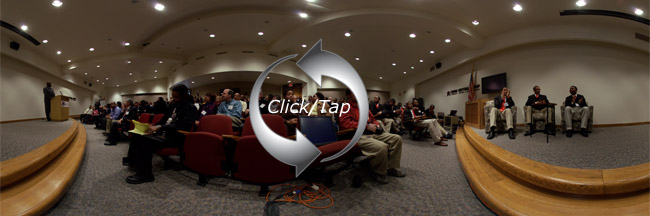
Share

Madison School District Considers 7.64% ($18, 719.470) Property Tax Increase for 2011/2012 Budget

Erik J Kass, Assistant Superintendent for Business Services:

The following analysis is done using the PMA Model information and is looking at the cost to continue budget figures that will be provided to the Board on March 14, 2011. The analysis includes the impact on the median home in Madison, and for that figure we contacted the City of Madison Assessor and were provided that value at $241,217. For comparative purposes ofthe effect on this home, we are using the assumed value from the 2010-11 analysis of$246,041 or 2%morethanthecurrentmedianvalue. Theequalizedpropertyvaluationforthe2011-12 budget year is also projected to decrease by 2.00% as part ofthis analysis.
What is the projected All Funds Property Tax Increase for the 2011-12 Budget Year?
$18,719,470 or a 7.64% increase when compared to 2010-ll actuals.
Where does the projected All Funds Property Tax Increase for the 2011-12 Budget Year come from?
Prior Decisions by the Board ofEducation:
Recurring Referendum from November of 2008: $4,000,000
4-K Levy Increase to start program: $3,554,415
Referendum Debt Service: ($2.327,900)
Subtotal: $5,226,515
Decisions to be made by the Board of Education:
Projected Revenue Limit Growth ($200 per pupil): $7,774,514
Projected Loss in State Aid: $4,515,523
Community Services Fund (MSCR and Non-MSCR): $469,460
Exempt Computer Aid (property tax relief): ($261,927)
Property Tax Chargeback ($4.615)
Subtotal: $13,492,955
Total $18, 719.470

The Madison School District’s 2010-2011 budget increased property taxes by about 9%.

Share

Rhee to lawmakers: Put kids first

Nancy Badertscher:

Michelle Rhee, a national voice on education reform, told state lawmakers Thursday that charter schools and vouchers for low-income students have a place in public education, but in a blend with strong traditional schools.
“Vouchers in and of themselves are not the answer. Charters in and of themselves are not the answer,” said Rhee, who last fall stepped down as chancellor of Washington, D.C., schools after three years in which she was both lauded and derided for her overhaul of the school system.
“The answer in my mind is a really strong traditional public school system. That has very specific strategies to turn around failing schools [and incorporates both vouchers and charters].”
Rhee is on a national tour talking about education reform, particularly teacher evaluations and performance.

Share

New report examines promises, pitfalls of charter school autonomy

The Center on Reinventing Public Education, via a Deb Britt email:

A new report finds that charter schools use the freedoms they have from traditional school district mandates to define and operate schools in innovative new ways. However, expectations about what a school “should look like,” the stress of tight and unstable budgets, and overwhelming administrative demands are powerful forces pulling charter schools back to traditional practice.
This report offers great reason for optimism that charter schools are well positioned to answer President Obama’s call for public schools to innovate. But it also cautions that traditional regulatory structures and weaknesses in capacity must be addressed if they are to fully meet the challenge of innovation.
Based on a four-year study of the teachers, leaders, and academic programs in charter schools in six states, Inside Charter Schools: Unlocking Doors to Student Success observes that “autonomy only creates the opportunity for high-quality schools, it by no means guarantees it.”
Author Betheny Gross, a researcher at the Center on Reinventing Public Education (CRPE) at the University of Washington, argues that autonomy makes it possible for charter schools to:

Share

Anne Arundel Board of Education approves superintendent’s budget

Joe Burris:

The Anne Arundel County Board of Education on Wednesday approved Superintendent Kevin Maxwell’s $968.6 million operating budget recommendations for next year by an 8-1 margin, after one board member unsuccessfully moved to have the budget amended and another complained that it requests too much additional spending as the county aims to be more fiscally responsible.
The board simultaneously approved the $156.9 million capital budget that gives $46.7 million to continuing construction projects at four schools, Northeast High School and Belle Grove, Folger McKinsey and Point Pleasant elementary schools. It also allocates $3.6 million for designs to replace Severna Park High School, $11 million for full-day kindergarten and pre-kindergarten additions, and $14 million for textbooks.
The operating budget for fiscal year 2012 is $37.3 million more than the previous year’s budget. It funds negotiated agreements with unions, the system’s health care obligations and 20 mentor teachers required to fulfill obligations associated with the Race to the Top federal money.

Anne Arundel spends $12,334.69 per student ($931,269,700 2011 budget for 75,500 students).
Locally, the Madison School District’s 2010-2011 budget, according to the “State of the Madison School District Report” is $379,058,945. Enrollment is 24,471 which yields per student spending of $15,490.12.

Share

In Defense of the Blogging Teacher

Mike Antonucci:

Since it hit the Associated Press wires, the story has spread to more than 200 publications. Natalie Munroe, an English teacher at Central Bucks High School, was suspended and faces dismissal for what she wrote about her students and school on her personal blog “Where are we going, and why are we in this handbasket?”

Share

NJEA is Not My Public School Teacher, Says N.J.

New Jersey Left Behind:

While the majority of New Jerseyans love public school teachers, more than half believe that the NJ Education Association (NJEA) is “playing a negative role in improving public education,” according to a Quinnipiac poll released yesterday.
In addition, reports New Jersey Newsroom, 68% of residents favor implementation of a merit pay system and 62% support tenure reform. We’re more split on school choice; the poll found that by a small margin we oppose school vouchers and charter school expansion. From Maurice Carroll of Quinnipiac:

Share

Wisconsin School Administrators Wear Many Hats; Madison Superintendent Dan Nerad tops Compensation list @ $256,715

The Wisconsin Taxpayer:

With state aid stagnant or dropping, state revenue limits tightening, and school compensation costs outpacing revenues, school districts–particularly their administrators–face growing financial pressures. At the same time, in the never-ending search for savings, the work of administrators is receiving greater scrutiny by school boards and the public alike.
Administrators increasingly wear many hats: fiscal expert, economic forecaster, management consultant, marketer, and savvy politician. In small districts, it is no exaggeration to add bookkeeper, guidance counselor, math teacher, handyman, or coach.
How varied approaches to school administration have become is illustrated by two small northern Wisconsin districts, each with about 500 students. One has four administrators (a superintendent, a business manager, and two principals), while the other has just one (a superintendent).
The same can be found among large districts. A relatively large central Wisconsin district has 22 administrators, while a similarly sized district (about 10% more students) has 32 administrators, or nearly 50% more.
These comparisons suggest there is much taxpayers, educators, and school boards can learn about how schools and districts are managed, both in terms of expenditures and work performed…

The comprehensive article mentions:

Among full time Superintendents, highest salaries were Madison ($198,500), Green Bay ($184,000), Racine ($180,000), Milwaukee ($175,062) and Whitefish Bay ($170,850). On the other hand, 49 full-time district heads earned less than $100,000, including those in Augusta ($65,649), Florence ($85,000), Wheatland J1 ($85,517), Cameron ($86,111), Phillips ($87,000) and Wauzeka-Steuben ($87,000).
When benefits are added, districts with the highest total compensation included Madison ($256,715), Milwaukee ($243,365), Green Bay ($239,700), Franklin ($236,573) and Hamilton ($218,617). Benefits include retirement contributions, employer share of Social Security and Medicare, health, life and disability insurance and other miscellaneous benefits such as reimbursement for college courses.

A comparison of 2010 Wisconsin School Administrative costs can be viewed in this .xls file.
Request a free copy of this issue of the Wisconsin Taxpayer, here.

Share

Madison schools superintendent gets mixed grades as contract renewal vote looms

Matthew DeFour:

After 2½ years as Madison schools superintendent, Dan Nerad is still finding his footing.
For Nerad and his supporters, that’s more of a statement about Madison’s slippery and sometimes treacherous political terrain.
But among critics there is frustration that Nerad hasn’t risen to the task, particularly given the high expectations for the former social worker and Green Bay superintendent.
The two views among Madison School Board members and others in the community are circulating as the board weighs whether to extend Nerad’s contract beyond June 2012.
Supporters point to a long list of accomplishments so far despite severe obstacles — implementation of 4-year-old kindergarten after decades of discussion, development of a strategic plan that brought in dozens of community voices and expansion of dual-language immersion programs.

Share

Beating the odds: 3 high-poverty Madison schools find success in ‘catching kids up’

Susan Troller:

When it comes to the quality of Madison’s public schools, the issue is pretty much black and white.
The Madison Metropolitan School District’s reputation for providing stellar public education is as strong as it ever was for white, middle-class students. Especially for these students, the district continues to post high test scores and turn out a long list of National Merit Scholars — usually at a rate of at least six times the average for a district this size.
But the story is often different for Hispanic and black kids, and students who come from economically disadvantaged backgrounds.
Madison is far from alone in having a significant performance gap. In fact, the well-documented achievement gap is in large measure responsible for the ferocious national outcry for more effective teachers and an overhaul of the public school system. Locally, frustration over the achievement gap has helped fuel a proposal from the Urban League of Greater Madison and its president and CEO, Kaleem Caire, to create a non-union public charter school targeted at minority boys in grades six through 12.
“In Madison, I can point to a long history of failure when it comes to educating African-American boys,” says Caire, who is black, a Madison native and a graduate of West High School. “We have one of the worst achievement gaps in the entire country. I’m not seeing a concrete plan to address that fact, even in a district that prides itself on innovative education.”
What often gets lost in the discussion over the failures of public education, however, is that there are some high-poverty, highly diverse schools that are beating the odds by employing innovative ways to reach students who have fallen through the cracks elsewhere.

Related: A Deeper Look at Madison’s National Merit Scholar Results.
Troller’s article referenced use of the oft criticized WKCE (Wisconsin Knowledge & Concepts Examination) (WKCE Clusty search) state examinations.
Related: value added assessment (based on the WKCE).
Dave Baskerville has argued that Wisconsin needs two big goals, one of which is to “Lift the math, science and reading scores of all K-12, non-special education students in Wisconsin above world-class standards by 2030”. Ongoing use of and progress measurement via the WKCE would seem to be insufficient in our global economy.
Steve Chapman on “curbing excellence”.

Share

Charter Location Influences Sustainability

Tom Vander Ark:

Andy Rotherham just published a report with obvious conclusions: sustainability is impacted by location. More specifically, if you open a charter in California, you will spend a lifetime begging for money.
Find the New paper on charter school finance from Bellwether out today (pdf). Press release can be found here and The Wall Street Journal editorial page weighs-in on it here.
Andy summarizes:

Share

Data indicates 5 percent of Rochester graduates ready for college, careers

Erinn Cain:

The New York State Education Department has released data that it said indicates that not all students graduating high school are prepared to enter college or careers.
The data compares graduation rates versus college- and career-ready graduation rate calculations for general education students who entered ninth grade in the 2005-06 school year, through June 2009.
General education graduation requirements for a local diploma include a score of 65 or better on two Regents exams and 55 or better on three Regents exams. The designation of college- and career-ready is defined by graduates who received at least an 80-percent grade on the math Regents exam and 75 on the English Regents exam.
In Rochester, there was a 46.6 percent graduation rate, with only 5.1 percent of graduates being college- and career-ready, said state education officials. This compares to 49.5 and 14.7 percent, respectively, in Syracuse, and 64.5 and 22.8 percent in New York City.

Share

Wisconsin Teachers’ Union Proposed Education Reforms

Wisconsin Education Association Council:

State officers of the Wisconsin Education Association Council (WEAC) today unveiled three dramatic proposals as part of their quality-improvement platform called “Moving Education Forward: Bold Reforms.” The proposals include the creation of a statewide system to evaluate educators; instituting performance pay to recognize teaching excellence; and breaking up the Milwaukee Public School District into a series of manageable-sized districts within the city.
“In our work with WEAC leaders and members we have debated and discussed many ideas related to modernizing pay systems, better evaluation models, and ways to help turn around struggling schools in Milwaukee,” said WEAC President Mary Bell. “We believe bold actions are needed in these three areas to move education forward. The time for change is now. This is a pivotal time in public education and we’re in an era of tight resources. We must have systems in place to ensure high standards for accountability – that means those working in the system must be held accountable to high standards of excellence.”
TEACHER EVALUATION: In WEAC’s proposed teacher evaluation system, new teachers would be reviewed annually for their first three years by a Peer Assistance and Review (PAR) panel made up of both teachers and administrators. The PAR panels judge performance in four areas:

  • Planning and preparing for student learning
  • Creating a quality learning environment
  • Effective teaching
  • Professional responsibility

The proposed system would utilize the expertise of the UW Value-Added Research Center (Value Added Assessment) and would include the review of various student data to inform evaluation decisions and to develop corrective strategies for struggling teachers. Teachers who do not demonstrate effectiveness to the PAR panels are exited out of the profession and offered career transition programs and services through locally negotiated agreements.
Veteran teachers would be evaluated every three years, using a combination of video and written analysis and administrator observation. Underperforming veteran teachers would be required to go through this process a second year. If they were still deemed unsatisfactory, they would be re-entered into the PAR program and could ultimately face removal.
“The union is accepting our responsibility for improving the quality of the profession, not just for protecting the due process rights of our members,” said Bell. “Our goal is to have the highest-quality teachers at the front of every classroom across the state. And we see a role for classroom teachers to contribute as peer reviewers, much like a process often used in many private sector performance evaluation models.”
“If you want to drive change in Milwaukee’s public schools, connect the educators and the community together into smaller districts within the city, and without a doubt it can happen,” said Bell. “We must put the needs of Milwaukee’s students and families ahead of what’s best for the adults in the system,” said Bell. “That includes our union – we must act differently – we must lead.”

Madison’s “value added assessment” program is based on the oft-criticized WKCE examinations.
Related: student learning has become focused instead on adult employment – Ripon Superintendent Richard Zimman.

Share

Study finds funding gap between D.C. specialty and neighborhood schools

Bill Turque:

The two public high schools, 21/2 miles apart in Northwest Washington, serve vastly different student populations. And they do it with vastly different levels of financial support, according to an analysis of school spending by a District advocacy group.
School Without Walls accepts only the city’s most accomplished students after a competitive application process that requires interviews with prospective parents as well. More than 700 students are vying for 120 spots in next year’s ninth-grade class. Those who are admitted will attend classes in a freshly renovated vintage building on the George Washington University campus. District funds per student: $10,257.
Cardozo, near 13th Street and Florida Avenue, is a neighborhood high school that takes all comers in an attendance area that includes about a dozen group homes and homeless shelters. Parole officers and social workers are sometimes the only adults who appear at the school on students’ behalf. The wiring in the cavernous 1916 building was so bad a couple of years ago that when all of the computers were turned on, power in half of the school would go out, said Principal Gwendolyn Grant.
District funds per student: $7,453.

Locally, the Madison School District’s 2010-2011 budget, according to the “State of the Madison School District Report” is $379,058,945. Enrollment is 24,471 which yields per student spending of $15,490.12.

Share

Pennsylvania School voucher debate heats up

Mark Scolforo:

Supporters call them a matter of choice, a lifeline for children stuck in broken schools. Opponents deride them as unconstitutional and unworkable and warn that they will erode conditions in some of Pennsylvania’s most troubled schools.
The debate over taxpayer-paid tuition vouchers to help poor children find alternatives to attending the state’s weakest-performing public schools has emerged as a major item on the legislative agenda for the next six months — perhaps the major item after the state budget.
The voucher issue will come to the fore in the General Assembly on Feb. 16, when the chairman of the Senate Education Committee will lead a hearing on his bill to establish the Opportunity Scholarship and Educational Improvement Tax Credit Act.

Share

Another Closed Session on Madison’s Superintendent Review….. Sixth since August, 2010

The Madison Board of Education:

2. Evaluation of the Superintendent pursuant to Wis. Stat §19.85(1)(c)

Much more on Madison Superintendent Dan Nerad, here.
This search reveals that there have been six closed session meetings since August, 2010 on the Superintendent evaluation. I wonder how this frequency conflicts with the public’s right to know?

Share

What school vouchers have bought for my family

Vivian Butler:

I worried constantly about my daughter Jerlisa when she attended our neighborhood elementary school. I knew that I wanted a better education for her, but I didn’t know how to make that happen. In 2005, I took a chance and applied to the D.C. Opportunity Scholarship Program. Little did I know how much more than $7,500 I would be gaining.
I grew up in the District and attended D.C. public schools. Jerlisa started off the same way. We enrolled her at Gibbs Elementary School for kindergarten, and as the years went by she started to fall behind. There was so much going on around the school and in the classroom. Every morning, I walked with her to school, and every afternoon I waited outside the school gates to walk her home again. She got teased for that, but I was worried about the drug dealers, addicts and bullies in the neighborhood. I didn’t have any other choice. I had to make sure she was safe.
When Jerlisa was in fifth grade, she became anxious and didn’t want to return to school. It was clear to me she wasn’t getting the help that she needed. That’s when I received fliers about the Opportunity Scholarship Program. Although I didn’t know everything about the OSP, I knew I had to do something different, even if it meant getting out of my comfort zone. When you’re a single mother on a fixed income, sometimes simple things like filling out your name, address or income on a form can be a scary thing to do.

Share

Postponing Mandatory Teacher use of Madison’s Infinite Campus System

Superintendent Dan Nerad:

Background information: In 2010, the Board approved a number of administrative recommendations geared toward increasing usage of the Infinite Campus System. The current timeline requires all high school teachers to use grade-level appropriate Infinite Campus teacher tools by the end of the fourth quarter of the 2010-2011 school year.
The administration has been notified by the vendor that significant changes will be made to the Infinite Campus interface in July 2011. Accordingly, if training sessions were to continue as required to meet the current deadline, those same teachers would have to be trained on a new interface only months later.
It would be more prudent to wait until the new interface is available and require full implementation of the Infinite Campus teacher tools at the high schools by the end of the second quarter of the 2011-2012 school year.
D. BOE action requested: Postpone mandatory use of Infinite Campus teacher tools at the high schools until the end of the second quarter of the 2011-2012 school year.

Much more on the Madison School District’s implementation of Infinite Campus, here.
A January, 2010 usage survey.
The system originally lifted off during the fall of 2007. I wonder how much has been spent on it without full use? This type of system can be a useful way for parents, teachers and students to communicate – if it is used…..

Share

The Escalating Arms Race for Top Colleges

Jennifer Moses:

It is no secret that the children of certain families (and we all know who we are) are primed to take a disproportionate share of the places at the best–or at least the most prestigious–colleges. That’s because we’re already sending our kids to the kinds of excellent schools that help prepare them for admission to such colleges.
But just in case our children don’t quite have the stats to make it into, say, Georgetown or UNC on their own steam, you can bet that we, as parents, will do everything in our power to make it happen. We are all caught up in a crazy arms race, where the order of the day (to borrow a useful term from the Cold War) is “escalation dominance.”

Share

Should Everyone Go to College?

Kristina Chew:

In a report issued on February 2nd, Harvard researchers question the value of ‘college for all.’
According to the co-authors of the report, Academic Dean Robert Schwartz and Ronald Ferguson, a Senior Lecturer at Harvard, the US’s four-year colleges are failing students by focusing too much on classroom-based academics and not adequately preparing students for careers. The proposal has sparked immediately concern from educators as it raises the ‘specter of tracking,’ in which students (often from lower-income or disadvantaged backgrounds) are ‘channeled unquestioningly into watered-down programs that curtail their prospects,’ according to EdWeek.
Currently, 42 percent of 27-year-olds in the US have no more than a high school degree. Only 30 percent of Americans earn a bachelor’s degree by the time they are 27. President Obama has stated that he wants to improve the nation’s college graduation rate to 60 percent in 10 years (ABC News). The US now ranks in 12th place in the world for college graduates, In comparison Canada’s college graduation rate is 55.8 percent; in South Korea and Russia, the rate for college graduates is 55.5 percent, according to statistics from the College Board.

Share

Universities On The Brink

Louis Lataif

Higher education in America, historically the envy of the world, is rapidly growing out of reach. For the past quarter-century, the cost of higher education has grown 440%, according to the National Center for Public Policy and Education, nearly four times the rate of inflation and double the rate of health care cost increases. The cost increases have occurred at both public and private colleges.
Like many situations too good to be true–like the dot-com boom, the Enron bubble, the housing boom or the health care cost explosion–the ever-increasing cost of university education is not sustainable.

Share

Brooklyn School Meeting Draws Protest

Barbara Martinez:

Hundreds of protesters descended on Brooklyn Thursday, laying bare the deep philosophical divide that has become central to the Bloomberg administration’s education policy: whether the city should fix failing schools or shut them down.
The dichotomy came to a head this week as the Panel for Educational Policy met twice to vote on whether to shutter 22 schools deemed failures because its students can’t read or do math on grade level.
The panel, which is populated mostly by Bloomberg appointees, voted to close 10 schools at its meeting Tuesday and was expected to vote to close the other 12 Thursday night.
The administration and charter-school advocates argue that some schools are such failures they must be shut down completely and replaced with new schools. Students are allowed to register at the new schools, but for the most part, the new schools start up with different teachers and administrators. The city maintains that the new schools are more effective.

Share

Ending the education wars

Conor Williams:

Recently retired New York City schools chancellor Joel Klein made headlines this week when he told the Times of London that “it’s easier to prosecute a capital-punishment case in the U.S. than terminate an incompetent teacher.” The New York Post blared, “Joel: Easier to ax a killer than a teacher.” The prize for most sensational probably goes to Liz Dwyer’s headline, “Joel Klein Compares Teachers to Murderers.”
There’s plenty of scorched earth between Klein’s words and these headlines, reflecting how unnecessarily polarized the education reform wars remain, even over the smallest changes in policy.

Share

Lessons for Online Learning

Erin Dillon and Bill Tucker:

Advocates for virtual education say that it has the power to transform an archaic K-12 system of schooling. Instead of blackboards, schoolhouses, and a six-hour school day, interactive technology will personalize learning to meet each student’s needs, ensure all students have access to quality teaching, extend learning opportunities to all hours of the day and all days of the week, and innovate and improve over time. Indeed, virtual education has the potential not only to help solve many of the most pressing issues in K-12 education, but to do so in a cost-effective manner. More than 1 million public-education students now take online courses, and as more districts and states initiate and expand online offerings, the numbers continue to grow. But to date, there’s little research or publicly available data on the outcomes from K-12 online learning. And even when data are publicly available, as is the case with virtual charter schools, analysts and education officials have paid scant attention to–and have few tools for analyzing–performance. Until policymakers, educators, and advocates pay as much attention to quality as they do to expansion, virtual education will not be ready for a lead role in education reform.

Share

LIFO is Bad for Kids

EdReformer

“The sponsor of a bill that would make teacher effectiveness the main determining factor during layoffs says that the proposal is worth billions of dollars in school improvement,” the AP in the Tacoma News Tribune reported last week. Senator Rodney Toms thinks seniority protections in teacher contracts that result in last-in-first-out (LIFO) doesn’t make sense for kids.

There’s nothing out there that I could do this year that makes a multibillion-dollar difference in education other than this legislation,” he said. “To leave billions of dollars on the table because we like the status quo is unacceptable.”
Tom said any other initiative aimed at improving student learning as much as one that ensures the best teachers remain in the classroom would cost the state billions of dollars. In other words, if his proposal is ignored and the system remains unchanged, a big potential savings would be lost, he argues.
Tom’s bill, Senate Bill 5399, would require school districts facing layoffs to first lay off teachers who received the lowest average evaluation ratings during their two most recent evaluations, based on a formula that gives a weight of 60 percent to the most recent evaluation and 40 percent to the previous one.

An AIE release today supports Sen. Toms bill:

Share

Los Angeles Schools’ Panel Looking at Race Issues

Leiloni de Gruy:

Acknowledging that the achievement gap between African-American students and those of other races has persisted far too long, the Los Angeles Unified School District has established an African-American Education Working Committee designed to help create a plan to replicate “best practices” district-wide.
The 25-member committee has met twice since it was formed in mid-January, and has yet to determine specifics on what practices will be implemented and how.
But, committee member and Community Coalition lead organizer for youth programs Tonna Onyendu said “The beginning has been about introducing everyone to what the task force is about, and what the purpose is and why we are convening. Then we also made sure we were all on the same page in terms of what the goals of the task force are, which is to improve the educational outcome of African-American students within LAUSD.”

Share

Warning: This Game Is Not for Children

Donna Perry:

In the middle of this winter of our discontent, the rearrangement of a state education Board may be going unnoticed by busy, weary families. But changes announced this week for the state Board of Regents has a whole lot to do with the future opportunities these families can expect for their children, whether they realize it or not. Chairman Robert Flanders, who provided strong leadership as an unwavering supporter of the bold reform vision of state Education Commissioner Deborah Gist, is stepping down and former House Majority Leader and friend to unions and union lawyers, George Caruolo, is Governor Chafee’s pick for new Board Chairman.
Though it may be unfair to prejudge incoming appointments, it’s a foregone conclusion to state that for the Board to lose Judge Flanders and the equally strong Gist supporters Angus Davis and Anna Cano-Morales all at once spells setbacks for the Gist engine for sure. But to characterize this as a victory for the Chafee-Union alliance, and a defeat for the lightning rod Commissioner is to miss the shameful truth. After all, if the leadership of the teachers’ unions wants to reclaim their turf as the unnamed but fully operating Commissioners of Education, what record of victory are they actually trying to reclaim?

Share

West Virginia State superintendent candidates

Davin White:

Deputy State Schools Superintendent Jorea Marple believes pre-kindergarten through 12th-grade education in West Virginia has reached a pivotal point, and the state’s current direction for schools is just beginning to show benefits.
Mark Manchin, executive director of the state School Building Authority, wants to develop policies that help provide a “high-quality, 21st Century education” for children. He also promises to help support teachers and school administrators, provide safe and up-to-date school buildings and work with state lawmakers and the governor to ensure the state Board of Education’s agenda is advanced.
Carolyn Long, chairwoman of the West Virginia University Board of Governors, believes her experience in both higher education and other public schools could help bring “these two cultures together” to serve the needs of West Virginia.

Share

Teacher Licensure in Wisconsin – Who is Protected: The Parents or the Education Establishment?

Mark Schug & Scott Niederjohn:

It has been 10 years since Wisconsin overhauled an old set of rules for state teacher licensure (PI 3 and PI 4) and replaced it with a new set called PI 34. At the time of its approval in 2000, PI 34 was warmly welcomed by state leaders and legislators from both sides of the aisle. It was praised as a way to create a new generation of Wisconsin teachers.
The purpose of this report is to assess PI 34 in an effort to learn whether it has made good on these high expectations.
The underlying issue in this assessment has to do with occupational licensure. Why is it widespread in many states including Wisconsin? There are two viewpoints. The first is that consumers don’t have enough information to make judgments regarding the purchase of services from members of certain occupations. Licensure, according to this view, serves as a means to protect consumers from fraud and malpractice.
The second argument is made by economists. It opposes the first. Prominent economists claim that licensure benefits members of various occupations more than it benefits consumers. It does so by limiting access to the occupations in question, thus reducing competition. Those seeking protection from barriers of this sort believe that the various regulations will eventually enhance their incomes. The costs to consumers include reduced competition and restricted consumer choice.

PI 34’s weaknesses far outweigh its strengths. The weaknesses include the following:

  • PI 34 undervalues the importance of subject-matter knowledge in initial training programs for teachers and in teachers’ professional development activity.
  • PI 34 imposes an overwhelming regulatory system–dwarfing, for example, the regulatory system governing licensure for medical doctors.
  • PI 34 rules for licensure renewal fail to ensure that renewal will depend on demonstrated competence and professional growth. These rules create incentives for pro forma compliance, cronyism, and fraud.
  • PI 34 sets up high barriers (a single, proprietary avenue) for entrance into teaching. It makes licensure conditional on completion of approved training programs requiring, normally, at least two years of full-time enrollment in education coursework. Many highly trained professionals contemplating career changes are deterred by these requirements from becoming teachers, despite demand for their services.
  • PI 34 has no built-in measures for linking teacher licensure to teacher competence. Wisconsin has no evidence that any incompetent teacher has ever been denied licensure renewal.
  • PI 34 enables education producers (WEAC and the DPI) to dominate the licensure system. In this system, parents and students are marginalized.
  • PI 34 is particularly onerous for educators in large urban districts like Milwaukee, where producing academic gains is a challenging problem, and school principals, struggling to hire competent teachers, would benefit greatly from a flexible licensure system.

Related: An Email to Madison Superintendent Dan Nerad on Math Teacher Hiring Criteria.

Share

Think twice About an MBA

The Economist:

Business schools have long sold the promise that, like an F1 driver zipping into the pits for fresh tyres, it just takes a short hiatus on an MBA programme and you will come roaring back into the career race primed to win. After all, it signals to companies that you were good enough to be accepted by a decent business school (so must be good enough for them); it plugs you into a network of fellow MBAs; and, to a much lesser extent, there’s the actual classroom education. Why not just pay the bill, sign here and reap the rewards?
The problem is that these days it doesn’t work like that. Rather, more and more students are finding the promise of business schools to be hollow. The return on investment on an MBA has gone the way of Greek public debt. If you have a decent job in your mid- to late- 20s, unless you have the backing of a corporate sponsor, leaving it to get an MBA is a higher risk than ever. If you are getting good business experience already, the best strategy is to keep on getting it, thereby making yourself ever more useful rather than groping for the evanescent brass rings of business school.

Share

The Children Must Play What the United States could learn from Finland about education reform.

Samuel Abrams via a Mary Battaglia email:

While observing recess outside the Kallahti Comprehensive School on the eastern edge of Helsinki on a chilly day in April 2009, I asked Principal Timo Heikkinen if students go out when it’s very cold. Heikkinen said they do. I then asked Heikkinen if they go out when it’s very, very cold. Heikkinen smiled and said, “If minus 15 [Celsius] and windy, maybe not, but otherwise, yes. The children can’t learn if they don’t play. The children must play.”
In comparison to the United States and many other industrialized nations, the Finns have implemented a radically different model of educational reform–based on a balanced curriculum and professionalization, not testing. Not only do Finnish educational authorities provide students with far more recess than their U.S. counterparts–75 minutes a day in Finnish elementary schools versus an average of 27 minutes in the U.S.–but they also mandate lots of arts and crafts, more learning by doing, rigorous standards for teacher certification, higher teacher pay, and attractive working conditions. This is a far cry from the U.S. concentration on testing in reading and math since the enactment of No Child Left Behind in 2002, which has led school districts across the country, according to a survey by the Center on Education Policy, to significantly narrow their curricula. And the Finns’ efforts are paying off: In December, the results from the 2009 Program for International Student Assessment (PISA), an exam in reading, math, and science given every three years since 2000 to approximately 5,000 15-year-olds per nation around the world, revealed that, for the fourth consecutive time, Finnish students posted stellar scores. The United States, meanwhile, lagged in the middle of the pack.

Share

G.O.P. Governors Take Aim at Teacher Tenure

Trip Gabriel & Sam Dillon:

Seizing on a national anxiety over poor student performance, many governors are taking aim at a bedrock tradition of public schools: teacher tenure.
The momentum began over a year ago with President Obama’s call to measure and reward effective teaching, a challenge he repeated in last week’s State of the Union address.
Now several Republican governors have concluded that removing ineffective teachers requires undoing the century-old protections of tenure.
Governors in Florida, Idaho, Indiana, Nevada and New Jersey have called for the elimination or dismantling of tenure. As state legislatures convene this winter, anti-tenure bills are being written in those states and others. Their chances of passing have risen because of crushing state budget deficits that have put teachers’ unions on the defensive.

Share