School Information System

each for America: Elite corps or costing older teachers jobs?

Greg Toppo:

In 2007, fresh out of the University of Massachusetts-Amherst, Chris Turk snagged a coveted spot with the elite Teach For America program, landing here at Cherry Hill Elementary/Middle School in a blue-collar neighborhood at the city’s southern tip. For the past two years, he has taught middle-school social studies.
One recent afternoon, during a five-week “life skills” summer-school course, Turk tells his five students that their final project, a movie about what they’ve learned, has a blockbuster budget: $70.
“We can go big here,” he says. “We can go grand.”
He might as well be talking about the high-profile program that brought him here.
Despite a lingering recession, state budget crises and widespread teacher hiring slowdowns, Teach For America (TFA) has grown steadily, delighting supporters and giving critics a bad case of heartburn as it expands to new cities and builds a formidable alumni base of young people willing to teach for two years in some of the USA’s toughest public schools.

Share

Schwarzenegger’s plan would reshape education in California

Jason Song & Jason Felch:

The state’s powerful teachers unions criticize the governor’s sweeping proposals, including merit pay for teachers. The plan would help qualify the state for Obama administration funds.
Gov. Arnold Schwarzenegger called on legislators Thursday to adopt sweeping education reforms that would dramatically reshape California’s public education system and qualify the state for competitive federal school funding.
The governor’s proposed legislation, to be considered during a special session that ends by Oct. 5, was met almost immediately by criticism from the powerful state teacher unions, which called Schwarzenegger’s plans rushed and unnecessary.
While Schwarzenegger’s goal is to boost California’s chances to qualify for $4.35 billion in federal grants, known as “Race to the Top,” many of his proposals go far beyond those needed for eligibility, and embrace the Obama administration’s key education reform proposals.
Schwarzenegger’s reforms include:

  • Adopting a merit pay system that would reward effective teachers and give them incentives to work at low-performing campuses;

  • Abolishing the current cap on the number of charter schools that can open every year;
  • Forcing school districts to shut down or reconstitute the lowest-performing schools or turn them over to charter schools’ independent management;
  • Allowing students at low-performing campuses to transfer to a school of their choosing;
  • Requiring school districts to consider student test data when evaluating teachers, something the federal government believes is prohibited under state law.

Share

A Partial Look (School Climate) at the Outbound Madison School District Parent Survey

Samara Kalk Derby:

Madison school district parents dissatisfied with local schools got a boost after a 2007 U.S. Supreme Court decision which trumped state law and made it easier for students living in the district to attend schools in other districts, a practice known as open enrollment.
The case was brought by Seattle parents who challenged the use of race in assigning students to schools, arguing it violated the Constitution’s right of equal protection. The ruling was celebrated by those who favor color-blind policies, but criticized by civil rights groups as a further erosion of Brown vs. Board of Education, the landmark 1954 case that outlawed school segregation.
Last year it became easier in Madison, and in school districts across the country, for white students to transfer even if it meant increasing the district’s racial imbalance.
After a flood of local students left the district last year, Madison Superintendent Dan Nerad decided to investigate why.
“We had an interest in knowing ideas from people that had made the decision for open enrollment,” Nerad says. “We are attempting to learn from those experiences to see if there are some things as a school district that we can constructively do to address those concerns.”
To that end, the district surveyed households of district residents who left Madison schools and transferred to another district for the 2008-09 school year to find out why the families left. The majority of parents who took their kids out of the Madison school district last year under open enrollment said they did so for what the district classifies as “environmental reasons”: violence, gangs, drugs and negative peer pressure. Other reasons were all over the map. Many cited crowded classrooms and curriculum that wasn’t challenging enough.
Only a few responses pointed directly to white flight.

The Private/Parochial, Open Enrollment Leave, Open Enrollment Enter, Home Based Parent Survey, including School Board discussion, can be found here. David Blask comments.

Share

California Governor proposes merit pay for educators

Jason Song & Jason Felch:

Gov. Arnold Schwarzenegger announced this morning a special legislative session focusing on education that he hopes will establish merit pay for teachers, allow students at low-performing schools to transfer to other campuses and use data to track students and educators.
The governor also wants the legislature to abolish a law that bars the use of student test scores in teacher evaluations. Under federal guidelines, states that prohibit the use of student test scores to evaluate teachers cannot apply for $4.35 billion in education stimulus money known as Race to the Top funding.
Some California educational leaders have said federal officials are misinterpreting state law, but Schwarzenegger vowed to do everything necessary to make sure California qualifies for the federal funding.
“This is an incredible opportunity for our students and our schools,” he said at a press conference in Sacramento.
Not all of Schwarzenegger’s proposals apparently would have to be passed by the Legislature to be implemented, but the governor said he hoped state lawmakers could finish their work by early October so the state could meet the deadline to apply for federal funds.

Share

Search for teachers goes overseas

Marketplace:

School districts from Maryland to California are turning their focus outside the United States to fill certain teaching jobs. Gigi Douban reports from Birmingham, Ala.
This just in: Next month, President Obama will appear in a back-to-school special with American Idol Kelly Clarkson and basketball star LeBron James. The 30-minute documentary will air on Viacom stations like MTV and BET. It’s part of an education initiative by the Bill & Melinda Gates Foundation called “Get Schooled.”
Of course, to get schooled, you need to have a qualified instructor. And you’d figure in this job market there’d be plenty of teachers vying for every slot. But from Maryland to California, school districts are turning their focus overseas to fill certain teaching jobs. From Birmingham, Ala., Gigi Douban reports.

Share

What You Should Consider Before Education Graduate School

Eddy Ramirez:

If you’re thinking about going into teaching, take heed of this message from Katherine Merseth, a senior lecturer and director of the teacher education program at Harvard University: “The dirty little secret about schools of education is that they have been the cash cows of universities for many, many years, and it’s time to say, ‘Show us what you can do, or get out of the business.'”
Merseth, who spoke at an event in Washington, D.C., this week as part of a panel about how to improve teacher quality, was not trashing her employer, to be sure. Nor was she discouraging aspiring teachers from going to graduate school. Merseth was taking aim at institutions that produce ill-prepared teachers and yet insist on holding a monopoly in awarding teaching degrees. “It’s high time that we broke up the cartel,” she said. “We need to hold graduate schools of education more accountable.” Merseth says that of the 1,300 graduate teacher training programs in the country, about 100 or so are adequately preparing teachers and “the others could be shut down tomorrow.”

Share

Special-Education Stigmatization
School vouchers may be the best way to curb abuse of public funds.

Marcus Winters & Jay Greene:

Federal law first insisted in 1975 that public schools educate disabled students. Since then, the portion of students receiving special education services has increased 64%. Today, 13.5% of all public school students have been diagnosed with a disability. Special education, it turns out, is no longer particularly special at all.
Taxpayers pay a substantial price for the growth in special education. In New York state, for instance, in 2007, the average special education student cost $14,413 more to educate than a regular-enrollment student.
What has produced such rapid growth in the percentage of American students identified as disabled? Don’t worry–it’s not “something in the water.”
Better means of identification explain part of special education’s expansion. However, a growing body of research points to a less benign cause: Schools see a financial incentive to designate low-achieving students as disabled, while they may not actually be disabled at all.

Share

Grand Rapids Teacher Union Ratifies Contract

Kym Reinstadler:

The Grand Rapids Education Association has ratified a four-year tentative labor agreement with the Grand Rapids school district.
The contract was approved 727-236, with one ballot thrown out.
The Grand Rapids Board of Education has a special meeting to consider the contract at 4:30 p.m. Wednesday at the district’s administration building, 1331 Franklin St. SE.
After informational meetings last week, several teachers said they were frustrated the pact includes no retroactive salary increase for the two years they worked without a contract and a modest 2 percent salary raise for the coming school year.
Many are also dismayed the contract does not cap class sizes, language they say claim they sought to include.

Share

Do Teachers Need Education Degrees?

New York Times via a Doug Newman email:

In a Room for Debate forum in June on the value of liberal arts master’s degrees, one group of readers — teachers and education administrators — generally agreed a higher degree was well worth the investment. They pointed out that pay and promotion in public schools were tied to the accumulation of such credentials and credits, specifically from colleges of education.
But current teacher training has a large chorus of critics, including prominent professors in education schools themselves. For example, the director of teacher education at the Harvard Graduate School of Education, Katherine Merseth, told a conference in March that of the nation’s 1,300 graduate teacher training programs, only about 100 were doing a competent job and “the others could be shut down tomorrow.” And Obama administration officials support a shift away from using master’s degrees for pay raises, and a shift toward compensating teachers based on children’s performance.
Should the public schools reduce the weight they give to education school credentials in pay and promotion decisions? Is this happening already, and, if so, what is replacing the traditional system for compensating teachers?

Share

Teacher salaries raising eyebrows

Jim Siegel & Catherine Candisky:

Some ask if educators are sharing the pain
As scores of Ohioans are seeing their paychecks frozen, cut or taken away, pressure is mounting on teachers unions and school administrators who continue enjoying healthy raises to share in the sacrifice.
While 60 percent of schools are getting a cut in state aid over the next two years, and the rest will see annual increases of less than 1 percent, pay raises for teachers top 5 percent in some districts once all the automatic pay bumps are included.
In light of state workers and many other government-paid employees already taking concessions, such raises are getting the attention of weary taxpayers in many school districts, particularly those asking voters to approve higher taxes.
State Superintendent Deborah Delisle told The Dispatch that it’s time for “a reality check in every single community to see what we are able to sustain.”

Share

Madison School Board Talented & Gifted (TAG) Plan Discussion & Approval

There were several public appearances [4.1MB mp3 audio] Monday evening related to the Madison School District’s Talented & Gifted plan. TJ Mertz, Kris Gomez-Schmidt, Janet Mertz (not related) and Shari Galitzer spoke during the public appearance segment of the meeting. Their comments begin at 3:13 into this mp3 audio file.
The School Board and Administration’s discussion can be heard via this 6MB mp3 audio file. The previous week’s discussion can be heard here. Madison United for Academic Excellence posted a number of useful links on this initiative here.
Finally, the recent Private/Parochial, Open Enrollment Leave, Open Enrollment Enter, Home Based Parent Surveys provides a useful background for the interested reader.

Share

You Need Teachers for School Reform

Marietta English:

Critics of public education love to point fingers. But condemning teachers unions (“Pay Your Teachers Well,” Review & Outlook, Aug. 3) is not only counterproductive to reform, it aims at the wrong target.
School improvement is only possible with the buy-in of teachers, whose collective voices are brought together by their unions. And many unions, notably the two you single out, have initiated a number of successful reforms.
The Baltimore Teachers Union has been deeply involved in efforts to strengthen teaching and learning in city schools, where students have posted double-digit gains the past several years. We are pleased that improvements also are taking place at the KIPP school you highlight. Contrary to your assertion, the union seeks only to have KIPP honor its agreement to pay teachers for their time worked. No other extended-day school in Baltimore has refused to do so.

Share

Bullies: They can be stopped, but it takes a village.

Alan Kazdin & Carlo Rotella:

Let’s say you find out that your child is being bullied by a schoolmate. Naturally, you want to do something right now to make it stop. Depending on your temperament and experience, one or more of four widely attempted common-sense solutions will occur to you: telling your child to stand up to the bully, telling your child to try to ignore and avoid the bully, taking matters into your own hands by calling the bully’s parents or confronting the bully yourself, or asking your child’s teacher to put a stop to it.
These responses share three features:
1) They all express genuine caring, concern, and good intentions.
2) You will feel better for taking action.
3) They are likely to be ineffective.

Share

Hillsborough schools and teachers’ union join hands with Florida voucher advocates to train private school teachers

Tom Marshall:

On a normal day, oil and water just don’t mix.
Public schools and teachers’ unions don’t say nice things about those who support school vouchers, sending kids to private schools with public money. Most of the time, such folks just don’t get along.
But Wednesday wasn’t a normal day.
In a move that experts are calling nearly unprecedented, the Hillsborough County schools and teachers’ union have joined forces with a nonprofit Florida voucher group to help train private school teachers.
Step Up for Students — which runs the state’s tax credit voucher program — plans to spend at least $100,000 on classes for teachers who serve its scholarship students, among the county’s most economically disadvantaged children. The school district and union will provide space in the jointly developed Center for Technology and Education.

Share

EDITORIAL: Revolutionize the classroom

Palm Beach Post:

We hope that the Palm Beach County School District gets the $120 million grant it’s seeking from the Bill and Melinda Gates Foundation. But first we need to deal with the infamous “70 percent” number.
In charts and text, the grant application says several times that only 30 percent of the district’s 13,000 teachers are “effective.” Which means that 70 percent must be “ineffective.” Last week, Laura Green of The Post reported those percentages. Of course, teachers have been outraged.
In a “Management Letter” to employees, Superintendent Art Johnson blamed the media. He said it was “unfortunate” that The Post article “left teachers to believe that 70 percent of PBSD teachers are ineffective.” He said that conclusion was based on a statistic in the application “which indicated that only 30 percent of PBSD reading and math teachers taught students who achieved MORE than a year’s growth in the same year.”
Dr. Johnson’s blame-shifting is disingenuous. His explanation of the statistics is not in the Gates application, so Ms. Green could not have reported it based on that document. Rather than blame The Post, Dr. Johnson should have accepted responsibility for the confusion and moved on.
And now, we will move on – to the proposal itself. The remainder of the district’s application contains remarkable candor and worthy goals. It also hints at – but does not nail down – how to achieve those goals. The foundation’s money and a hefty chunk from the district would help provide those specifics.
A big goal is to close racial achievement gaps. The graduation rate for white students is 87 percent, but it’s 20 points lower for Hispanics and 30 points lower for African-Americans – in a majority-minority district.

Share

Out of College at 17, and en Route to Law School at 19: A Father’s Perspective

Jacques Steinberg:

We’ve published more than 100 comments on our post yesterday about Kate McLaughlin, the California teenager who has already graduated from college and is en route to law school.
Some of you applauded her accomplishments, and her family’s willingness to allow her to fast-track her education. Others saw it as too much too soon. And still others weighed in on whether the law was an appropriate career choice. Many of you wrote that you could identify with Ms. McLaughlin.
Missing from the conversation — other than in the original article in the Orange County Register — were the voices of Ms. McLaughlin and her parents. Earlier today, though, we received a comment sent by Kate’s father, John McLaughlin. We then had a brief phone conversation in which he told me that some of the criticisms posted by readers echoed those that have been lobbed at the family for much of his daughter’s life.

Share

$11,654,078 Additional Madison School District Spending Via the Federal Taxes & US Treasury Borrowing (“Stimulus”)

Madison School District Superintendent Dan Nerad [838K PDF]:

As part of Federal Stimulus funding iliat will be made available the district will receive American Recovery and Reinvestment Act (ARRA) funds to be used over a two year period.
These funds are in IDEA, IDEA EC and Title 1.
Program Costs/FundingiConsultation Service Employment Contract
The district has prepared a two year funding proposal along with a budget analysis for 2009-10 and 2010-11 for each of the sources for your review. The proposal amounts are as follows:
IDEA – $6,199,552
IDEA EC – $293,082
Title I – $5,161,444
Salary Savings
The funding proposals would increase FTE’s and include funding sources during the two year period of the ARRA funds

The proposal includes quite a bit of professional development, such as $400,000 for dual language immersion, $1.48M for 4K staff and $456,000 for 4K furniture and $100,000 for talented & gifted assessment.
Plan B, without 4K spending, includes $1,150,000 for professional development in the following areas: Topics include universal design, differentiation, mental health,
inclusive practices, autism, and quality IEPs.

Share

Madison Public Schools’ Arts education gets needed support

Anne Katz & Barbara Schrank, co-chairwomen, MMSD Arts Task Force, via a kind reader’s email:

Kudos and thanks to the Madison School District Board of Education and Superintendent Dan Nerad for their support of arts education opportunities for all students, with additional thanks to members of the Arts Education Task Force.
The task force of art teachers and citizens has worked since 2007 with Board members and administrative and teaching staff on a plan that supports, enhances and sustains arts education in Madison’s public schools. The Board approved the plan on July 20.
In adopting the plan, the Board showed support of the arts as a priority for a quality public education.
The process took hard work by committee members, administrative and teaching staff and input from over 1,000 community members who have been thoughtful, inquisitive and dedicated to nurturing students’ talent and creativity through the arts. These plans will move forward with leadership, support and a strong partnership between the district and the community.
We are proud to live in a community with educational leaders who understand that arts and creativity are essential components of a 21st century education.

Share

1 Year Summary of Madison’s Implementation of “Standards Based Report Cards”

Notes and links on “Standards Based Report Cards” here.

Share

An Education Lived

David Steiner [PDF], via a kind reader’s email:

Two lucky accidents served to take this education out of the realms of the ordinary.
First, the Perse had, years earlier, been home to a remarkable teacher of English who had invented something called the “mummery system.” The English classrooms had as a result been converted into mummeries–small theatres complete with stages, costumes, lights, and sound. Four mornings a week, half the class would perform scenes from Shakespeare while the other half would watch and then critique. On some of these days, we would instead have to recite poems or engage in debates with our classmates. On the fifth day we would discuss other readings or study grammar. I owe much to those many hours of oral presentations–it gave me the skills I would one day use in the Oxford Union Society, and a life-long ease with the demands of public speaking. More importantly, acting Shakespeare gave us a familiarity with those plays that went well beyond what was available through reading alone.
The second piece of luck was our history teacher, one “Charlie T,” a gentleman of indeterminate age, whose grimy ancient gown trailing halfway down his torn tweed jacket belied a mind of brittle precision, extraordinary passion, and relentlessly demanding standards. Only once in the seven years in which I studied with Mr. T. did I see him use notes (during a lecture on some military campaigns in Turkey). His memory for detail rivaled any I have ever encountered, and his ability to weave these details into compelling accounts left an indelible impression. Several of Mr. T.’s students would later become noted historians–one of international renown. While my pre-O level years–marred by dyslexia–passed with no sign of academic distinction, Charlie T.’s teaching produced a hint of better to come.

David Steiner is the new New York State Commissioner of Education.

Share

Depth vs. Breadth

Jason Sterlace:

The school year is approaching, and teachers around the nation are trying not to think too much about tweaking our courses for the next go-round. Most of us have been blowing it off for months and we really have to give it some thought here in early August. Part of my current focus is inspired by an article printed in the Washington Post this past February. Jay Matthews wrote on the age old educators’ debate of breadth vs depth:

The debate goes like this: Should they focus on a few topics so students have time to absorb and comprehend the inner workings of the subject? Or should they cover every topic so students get a sense of the whole and can later pursue those parts that interest them most?
The truth, of course, is that students need both. Teachers try to mix the two in ways that make sense to them and their students. But a surprising study — certain to be a hot topic in teacher lounges and education schools — is providing new data that suggest educators should spend much more time on a few issues and let some topics slide.

One of the (probably) unintended side effects to standardized testing is that teachers get together to parse the numbers and figure out what they can afford to skip over in our subjects. Standardized tests become predictable to some degree, enough that teachers can figure out which chapters are valued and which ones are not. In fact, that’s the whole point–make sure that every teacher knows what chapters are considered the most important. Make sure they know to cover those topics well.

via Jay Matthews.

Share

Charter Schools Eschew Teacher Tenure

Danielle Williamson:

The agreement between teachers and management at the North Central Charter Essential School is similar to one that may be found at almost any traditional public school. There is a salary scale with lanes and steps, and stipends for extra duties. Some teachers serve as representatives for the larger group in a “collaborative bargaining process.”
Absent from the school’s teachers’ employee handbook, however, is a clause that gives veteran teachers job protection. “Professional status,” more commonly known as tenure, doesn’t exist there. Everyone is an employee at will, and a teacher of 10 years can be dismissed as easily as a first-year educator.
“If a teacher is not a fit, we have to be honest about that,” said Patricia May, principal of the Fitchburg school. “That’s not working for anybody.”
Having no union affiliations appears to be working for the area’s charter schools. Despite a full-court press from the state’s second largest teachers union, charter schools in Central Massachusetts haven’t hopped onto the union bandwagon. Statewide, only one charter school has signed up with the American Federation of Teachers in the two years the organization has been approaching charters, which are publicly financed but operate outside of school districts.

Share

Education reforms will never work unless teaching attracts more high-fliers

The Economist:

“I SET up a Fantasy Football competition between some of my toughest pupils,” one young man explains. “They get goal-keeping points for good attendance, and defence points for behaving well. Good punctuation and spelling translate into their midfield performance, and coming up with good ideas, into attack.” Around the room, pens scribble furiously. “Pupil X hated me,” a woman tells the group; she describes how she changed that with weekly phone calls to his parents and postcards praising his (intermittent) good behaviour. More notes are made.
This is the Teach First summer institute: six weeks in Canterbury, a southern cathedral city, at the end of which nearly 500 new university graduates will teach full-time, for £15,000 ($24,500) a year, in some of England’s toughest schools. The 360 who started the programme last year are here too, handing on to the raw recruits their tips for coping with bad behaviour and keeping lessons fresh, and demonstrating to their tutors what they have learned. In another year, those old hands will be qualified teachers, trained on the job and in tutorials and summer schools.
Recruiting the right kind of teachers has been difficult in England for some time, and though recession has brought temporary relief, the task is getting bigger as those hired to teach the baby boom near retirement. Head teachers, worn down by constant official policy changes and an avalanche of paperwork, are retiring early. A study in 2007 by McKinsey, a consultancy, concluded that countries whose students perform well tend to recruit teachers from the top of the class. But a recent report by Politeia, a think-tank, found that the bar for getting into teacher training in England is, by international standards, unusually low. Trainee teachers can resit basic literacy and numeracy tests as often as they like–and 13% need at least three goes at the latter. Around 1,200 each year graduated with the lowest class of degree, a third.

Share

Internal NEA Report on Performance Pay Calls for “Creating a Positive

Mike Antonucci:

ver since candidate Barack Obama began promoting the concept of performance pay in 2007, the National Education Association has labored to generate a coherent strategy to stay ahead of the issue. The union realizes a consistent “no, no, no” may be satisfying and direct, but is harmful to its public image and its relationship with moderate Democrats and Republicans alike.
Last year, NEA assigned its teacher quality department to visit six locations that had established alternative compensation models and to interview union officers, members and staff to determine the lessons and pitfalls of various approaches. The results were compiled in a 51-page report (labeled “Not For External Distribution” and “intended for NEA leaders and staff only”) titled Alternative Compensation Models and Our Members. I have uploaded the document to EIA’s Declassified page.
The six locations were the local school districts of Denver and Eagle County, Colorado, Hamilton County, Tennessee, Helena, Montana, and Manitowoc, Wisconsin, along with the state of Minnesota, which has its statewide Q Comp program.
Reactions to the programs were all over the map, with some teachers loving the new system and others hating it, but a few common sentiments were expressed. The most important of these was the lack of simplicity. Many teachers didn’t understand exactly how their pay or bonuses were being generated and were forced to trust the district administrators to correctly apply and compute the pay. This is problematic for a lot of reasons, not the least of which is knowing how much should be in your check each pay period. This complexity makes the clarity of the traditional salary schedule more appealing by comparison.

Share

Federal Tax Receipts Decline 18%, Dane County (WI) Tax Delinquencies Grow

Stephen Ohlemacher:

The recession is starving the government of tax revenue, just as the president and Congress are piling a major expansion of health care and other programs on the nation’s plate and struggling to find money to pay the tab.
The numbers could hardly be more stark: Tax receipts are on pace to drop 18 percent this year, the biggest single-year decline since the Great Depression, while the federal deficit balloons to a record $1.8 trillion.
Other figures in an Associated Press analysis underscore the recession’s impact: Individual income tax receipts are down 22 percent from a year ago. Corporate income taxes are down 57 percent. Social Security tax receipts could drop for only the second time since 1940, and Medicare taxes are on pace to drop for only the third time ever.
The last time the government’s revenues were this bleak, the year was 1932 in the midst of the Depression.
“Our tax system is already inadequate to support the promises our government has made,” said Eugene Steuerle, a former Treasury Department official in the Reagan administration who is now vice president of the Peter G. Peterson Foundation.

Channel3000.com recently spoke with Dane County Treasurer Dave Worzala on the growing property tax delinquencies:

While there aren’t any figures for this year, property tax delinquencies have been on a steep climb the last few years, WISC-TV reported.
Delinquencies increased 11 percent in 2006, 34 percent in 2007 and 45 percent in 2008, where there is now more than $16 million in unpaid taxes in the county.
“It affects us in that we have to be sure that we have enough resources to cover county operations throughout the year even though those funds aren’t here. And we do that, we are able to do that, but 40 percent increases over time become unsustainable,” said Dane County Treasurer David Worzala.
“I can see that there are probably some people that either lost their jobs or were laid off, they’re going to have a harder time paying their taxes,” said Ken Baldinus, who was paying his taxes Thursday. “But I’m retired, so we budget as we go.”
Big portions of those bills must go to school districts and the state. Worzala said the county is concerned about the rise in delinquencies because if the jumps continue the county could run into a cash flow issue in paying bills.

Resolution of the Madison School DistrictMadison Teachers, Inc. contract and the District’s $12M budget deficit will be a challenge in light of the declining tax base. Having said that, local schools have seen annual revenue increases for decades, largely through redistributed state and to a degree federal tax dollars (not as much as some would like) despite flat enrollment. That growth has stopped with the decline in State tax receipts and expenditures. Madison School District revenues are also affected by the growth in outbound open enrollment (ie, every student that leaves costs the organization money, conversely, programs that might attract students would, potentially, generate more revenues).

Share

Minnesota Teachers Now Have New Opportunity to Start and Run District Schools

Teacher Partenerships:

eacher professional partnerships (TPPs) are formal entities, organized under law (partnerships, cooperatives, limited-liability corporations, etc.), that are formed and owned by teachers to provide educational services. TPPs may enter into contracts to manage entire schools, a portion of a school or to provide some other educational service. Teachers are in charge and they manage or arrange for the management of the schools and/or services provided. The school district is not managing the school; nor is a district-appointed single leader in charge (e.g. a principal).

Share

The Tradeoff Between Teacher Wages and Layoffs to Meet Budget Cuts

Marguerite Roza via a Deb Britt email:

School districts faced with large budget gaps could avoid some or all teacher layoffs by rolling back salaries. While this option may not work for all districts, a new analysis shows that district officials–and teachers unions–could both serve students and teachers by trimming classroom pay.
Marguerite Roza based her analysis on the fact that 93 percent of school districts in the U.S. negotiate and structure teacher-pay according to a fixed salary schedule, consisting of annual as well as step increases. Step increases average 3.16 percent a year. The annual increase for the salary schedules she calculated at the average Consumer Price Index (CPI) for the 1997–2007 period at 2.87 percent. The total for the two, at 6.03 percent, may not make sense this year, says Roza.
In a simple chart, she provides five possible decision-options showing how, if salaries are rolled back, fewer teachers get laid off and class sizes increase by fewer students.

Share

Oregon Symphony’s outreach program falls silent

David Stabler, via a kind reader’s email:

The drums have gone quiet. The gongs no longer shimmer. The bells go unchimed. The instruments that kids in small towns around Oregon used to hit, rub and scrape as part of the Oregon Symphony’s award-winning outreach effort went quiet this summer.
Another victim of the economy.
The Roseburg-based Ford Family Foundation, the program’s primary funder, suffered losses to its endowment and declined to continue paying the program’s $150,000 annual cost, said Norm Smith, the foundation’s president.
Since 2002, the Oregon Symphony has “adopted” a different town each two years: Klamath Falls, North Bend, Redmond, Baker City, Estacada, La Grande, Cove, Tillamook. The idea was to flood the zone with repeated trips by symphony musicians. Break into tactical units and invade the schools, fill community centers, start a jazz band, launch a string orchestra. Then go back the next year to water the seeds.
What made the program unusual was the effort to make music a lasting presence. Unlike in other outreach efforts, the orchestra didn’t just show up, coach a few kids, play a concert and get back on the bus. The focus encouraged local teachers to design a music curriculum for years to come and involved arts groups in adding a concert series to bring performers to town, using Oregon Symphony staff for ideas and follow-up.

Share

More on Wisconsin, California and New York’s Law Against Tying Teacher Pay to Class Performance

PBS NewsHour:

“If you set and enforce rigorous and challenging standards and assessments, if you put outstanding teachers at the front of the classroom, if you turn around failing schools, your state can win a ‘Race to the Top’ grant that will not only help students out-compete workers around the world, but let them fulfill their God-given potential,” President Obama said.
Some reforms are controversial.
The reforms touted by the Obama administration have supporters and detractors.
California, New York and Wisconsin have laws against tying teacher pay to how their students perform in class. Teacher unions, which are organizations with teacher members that use collective bargaining to get better pay and benefits, are also wary of teacher pay reform.
“The devil really is in the details. On the issues where you have differences, you try to work those out,” Randi Weingarten, president of the American Federation of Teachers, told the Washington Post.
As head of schools in Chicago, Secretary Duncan started a program that paid some teachers according to how their students performed to see if it worked.

Share

“What if it has all been a huge mistake?”

The Chronicle Review
July 27, 2009
A Rescue Plan for College Composition and High-School English
By Michael B. Prince:

The new administration in Washington promises fresh resources for our failing school systems. The need is great. Yet at a time when every penny counts, we had better be sure that new investments in education don’t chase after bad pedagogical ideas.
I propose a rescue plan for high-school English and college composition that costs little, apart from a shift in dominant ideas. For the sake of convenience and discussion, the rescue plan reduces complex matters to three concrete steps.
First, don’t trust the SAT Reasoning Test, especially the writing section of that test, as a college diagnostic, and don’t allow the writing test to influence the goals of high-school English.
The news last year that Baylor University paid its already admitted students to retake the SAT in order to raise the school’s ranking in U.S. News and World Report would be funny if it weren’t so sad. The test is a failure.
Even the manufacturer of the SAT admits that the new test, which includes writing, is no better than the old test, which didn’t. As The Boston Globe reported on June 18, 2008: “The New York-based College Board, which owns the test, released the study yesterday showing that the current SAT rated 0.53 on a measure of predictive ability, compared with 0.52 for the previous version. A result of 1 would mean the test perfectly predicts college performance. Revising the SAT ‘did not substantially change’ its capacity to foretell first-year college grades, the research found.”
How could this happen? College professors frequently ask their students to write. Shouldn’t a test that includes actual writing tell us more about scholastic aptitude than a test that doesn’t? Yes, unless the test asks students to do something categorically different from what college professors generally ask their students to do. Is that the problem with the SAT? You be the judge.
The following essay question appeared on the December 2007 SAT. It was reprinted on the College Board’s Web site as a model for high-school students to practice; it was subsequently disseminated by high schools and SAT-prep Web sites. The question runs as follows:
“Think carefully about the issue presented in the following excerpt and the assignment below.
“‘Our determination to pursue truth by setting up a fight between two sides leads us to believe that every issue has two sides–no more, no less. If we know both sides of an issue, all of the relevant information will emerge, and the best case will be made for each side. But this process does not always lead to the truth. Often the truth is somewhere in the complex middle, not the oversimplified extremes.’
“[Adapted from Deborah Tannen, The Argument Culture]

(more…)

Share

Madison School District Strategic Planning Update, with Links

Madison Board of Education President Arlene Silveira, via email:

TO: MMSD Strategic Planning Committee
Good afternoon,
I am writing to provide you with a Board update on the MMSD strategic plan. Before getting into details, I again want to thank you for all of the time and effort you put into development of the plan. It is appreciated.
On July 21, the Board of Education held our second meeting to review the strategic planning document that you, our community-based strategic planning committee, submitted. The Board unanimously approved the following components of the new strategic plan. The mission, beliefs and parameters were approved with no changes to the plan you submitted. Some language in the strategic objectives was modified for clarity and completeness.

We have not yet approved any of the action plans.

Much more on the Strategic Planning Process here.

Share

A story from the trenches — send me more!; DAVID STEINER ELECTED COMMISSIONER OF EDUC FOR NY; As Charter Schools Unionize; Must unions always block innovation in public schools?; NEA Discovers It Is a Labor Union; So You Want to Be a Teacher for America?

1) If you read anything I send out this year, let this be it. One of my friends responded to the survey I sent around a couple of weeks ago by emailing me this story of his experience as a TFA teacher in the South Bronx a decade ago (though he’s no longer there, he is still (thankfully) very much involved with educating disadvantaged kids). It is one of the most powerful, heart-breaking, enraging things I have ever read — and perfectly captures what this education reform struggle is all about. Stories like this about what REALLY goes on in our failing public schools need to be told and publicized, so please share yours with me:

Whitney,
Thanks so much for putting this survey together. It brought back some memories well beyond the few questions about what it was like to teach in the South Bronx with TFA back in the late nineties. I want to emphasize here that I no longer teach in the Bronx, so I have little idea how things have changed and have seen the current Administration take a number of important steps that may be making a great impact. I’m not close enough to the ground to know, but my guess is that there are still plenty of schools in the Bronx and in every other low-income community in the country that reflect some of the miserable stuff I saw in my school. You should really start collecting a book of stories like these. Among all the people I know who’ve done TFA, these stories are just a few among many sad ones.
As I filled out the survey, I was first reminded of the art teacher in our school. She was truly a caricature of bad teaching. Like something out of the movies. She spent almost every minute of every day screaming at the top of her lungs in the faces of 5-8 year olds who had done horrible things like coloring outside the lines. The ART teacher! Screaming so loud you could hear her 2-3 floors away in a decades old, solid brick building. When she heard I was looking for an apt, she sent me to an apt broker friend of hers. I told the friend I wanted to live in Washington Heights. “Your mother would be very upset with me if I let you go live with THOSE PEOPLE. We fought with bricks and bats and bottles to keep them out of our neighborhoods. Do you see what they have done to this place?” This same attitude could be heard in the art teacher’s screams, the administration’s ambivalence towards the kids we were supposed to be educating and the sometimes overt racism of the people in charge. The assistant principal (who could not, as far as I could tell, do 4th grade math, but offered me stop-in math professional development for a few minutes every few months with gems like “these numbers you see here to the left of the zero are negative numbers. Like when it is very cold outside.”) once told me “I call them God’s stupidest people” referring to a Puerto Rican woman who was blocking our way as we drove to another school. She also once told me I needed to put together a bulletin board in the hallway about Veteran’s Day. I told her we were in the middle of assembling an Encyclopedia on great Dominican, Puerto Rican and Black leaders (all of my students were Dominican, Black or Puerto Rican). “Mr. ____, we had Cin-co de May-o, and Black History Month, and all that other stuff. It is time for the AMERICAN Americans.”
Not everyone in the school was a racist. There were many hard working teachers of all ethnicities who did not reflect this attitude at all. But the fact that the leadership of the school and a number of the most senior teachers was either utterly disdainful of the students they taught, or has completely given up on the educability of the kids, had a terrible effect on overall staff motivation. And many of the well-meaning teachers were extremely poorly prepared to make a dent in the needs of the students even if they had been well led. The Principal told more than one teacher there that “as long as they are quiet and in their seats, I don’t care what else you do.” This was on the day this person was HIRED. This was their first and probably last instruction. He never gave me a single instruction. Ever. And I was a new teacher with nothing but TFA’s Summer Institute under my belt. The Principal proceeded to get a law degree while sitting in his office ignoring the school. When we went to the Assistant Superintendent to report that the school was systematically cheating on the 3rd grade test (i.e., the third grade team met with the principal and APs, planned the cheating carefully, locked their doors and covered their windows and gave answers) she told the principal to watch his back. A few months later, inspectors came from the state. After observing our mostly horrible classes for a full day, they told us how wonderful we were doing and that they had just come down to see what they could replicate in other schools to produce scores like ours. And the list goes on and on.
Like when I asked the principal to bring in one of the district’s special education specialists to assess two of my lowest readers, both of whom had fewer than 25 sight-words (words they could recognize on paper) in the 3rd grade, he did. She proceeded to hand one of the students a list of words that the child couldn’t read and tell her to write them over again. Then she went to gossip with the Principal. After explaining to him in gory detail, IN FRONT OF THE STUDENT, that she had just been “dealing with a case where a father had jumped off a roof nearby and committed double-suicide with his 8 year old daughter in his arms”, she collected the sheet with no words on it, patted the child on the head and left. No IEP was filed nor was I allowed to pursue further action through official channels (I lobbied the mother extensively on my own). I never asked for her to come back to assess the other student.
Our Union Rep was said to have tried to push another teacher down a flight of stairs. The same Union Rep, while I was tutoring a child, cursed out a fellow teacher in the room next door at the top of her lungs so the child I was tutoring could hear every word. When I went to address her about it, the other teacher had to restrain the Rep as she threatened to physically attack me. And when the cheating allegations were finally take up by city investigators, the same Union Rep was sent to a cushy desk job in the district offices. I hear that most of the people I’m referencing here are long gone now, and some of them actually got pushed out of the system, but how rare can this story really be given the pitiful results we see from so many of our nation’s poorest schools and how far the system goes to protect horrible teachers and administrators like the ones I worked with?
At the same time as all of this was happening, by the way, the few good teachers in the building often became beaten down and disillusioned. One of the best in my building was consistenly punished for trying to make her corner of the school a better place for learning. They put her in a basement corner with no ventilation, no windows and nothing but a 6-foot-high cubicle-style partition separating her from the other 5 classrooms in the basement. After fighting the good fight she went to teach in the suburbs. When I got a financial firm to donate 20 computers, the principal said he didn’t have the resources to get them setup for use and refused to allow them into the school. When I had my students stage a writing campaign to get the vacant lot behind the building turned into a playground, the principal wanted me silenced.
The saddest thing about the whole damn mess was that our K-3 kids still REALLY WANTED TO LEARN. Every day they came eager for knowledge. And every day this cabal of cynicism, racism and laziness did everything within their powers to drain it out of them. It was unreal. Don’t get me wrong. There were some good teachers there. And some well meaning, but poor teachers. But in many classrooms, the main lesson learned was that school became something to dread, many adults thought you were capable of very little, and some adults couldn’t be bothered to lift a finger.
I hope if any of the good, hard-working teachers who fought so hard to rid the school of this mess read this, they’ll know I’m not lumping them in with the rest. But the problem was, when I addressed the worst practices in the school at a staff meeting, the bad teachers laughed and the good teachers took it the hardest and thought I was criticizing them.
Thanks again for the survey. Let’s make these stories known.

(more…)

Share

The Dad Who Holds Schools to the Rules

Emily Alpert:

David Page says the problem is that parents are on their own. Teachers have a union. So do principals. School board members get to vote plans up or down and top administrators make decisions in the salmon-pink offices of San Diego Unified.
But parents are often too intimidated to speak up or too star-struck with school staffers to question them, Page said. Education is a world loaded with its own numbing lingo — categorical funding, supplement not supplant, program improvement — and it seems overwhelming to understand it, let alone to fight it.
“They think, ‘They make six figures and they’re educated. Who am I to second guess them?'” Page said.
Yet Page has done just that. If parents at the poorer schools in San Diego Unified did have a union, he might be their leader, with all the fans and foes that entails. Seventeen years after the father of six first walked into a parents’ meeting at Ross Elementary in Kearny Mesa, unsure of his rights and unfamiliar with the jargon, Page has become a human encyclopedia on the rules that govern funds for disadvantaged kids and a dogged fighter for parents in communities sometimes left out of decisions.
He is one of the few parents across the state that jets to Sacramento for meetings of the state Board of Education, pores over complex regulations on education spending, and explains it all to befuddled parents at the school district committee that oversees funds for children in poverty, which he has led for six years. Page also leads the nonprofit California Association of Compensatory Education and sits on the board of the Family Area Network, which advises the state on parent involvement.

Share

As More Charter Schools Unionize, Educators Debate the Effect

Sam Dillon:

Dissatisfied with long hours, churning turnover and, in some cases, lower pay than instructors at other public schools, an increasing number of teachers at charter schools are unionizing.
Labor organizing that began two years ago at seven charter schools in Florida has proliferated over the last year to at least a dozen more charters from Massachusetts and New York to California and Oregon.
Charter schools, which are publicly financed but managed by groups separate from school districts, have been a mainstay of the education reform movement and widely embraced by parents. Because most of the nation’s 4,600 charter schools operate without unions, they have been freer to innovate, their advocates say, allowing them to lengthen the class day, dismiss underperforming teachers at will, and experiment with merit pay and other changes that are often banned by work rules governing traditional public schools.
“Charter schools have been too successful for the unions to ignore,” said Elizabeth D. Purvis, executive director of the Chicago International Charter School, where teachers voted last month to unionize 3 of its 12 campuses.
President Obama has been especially assertive in championing charter schools. On Friday, he and the education secretary, Arne Duncan, announced a competition for $4.35 billion in federal financing for states that ease restrictions on charter schools and adopt some charter-like standards for other schools — like linking teacher pay to student achievement.

Share

Sparks fly over Wisconsin budget’s labor-related provisions

Steven Walters & Stacy Forster:

As the dust settles around the new state budget, partisan disagreement continues over the boost that unions – particularly education unions – got by making it easier for them to sign up thousands of new members and by repealing the 3.8% annual limit on teachers’ pay raises.
The provisions passed because Democrats, who got control of the Legislature for the first time in 14 years, partnered with Democratic Gov. Jim Doyle to advance changes the governor and unions had been pushing for years.
Unions traditionally help elect Democratic politicians. The largest teachers union, the Wisconsin Education Association Council, spent about $2.1 million before last November’s elections, with much of that backing Democrats.
Most of the labor-related provisions in the budget were added to provide people with “good, family-supporting jobs,” said Rep. Mark Pocan (D-Madison), co-chairman of the Legislature’s Finance Committee.
“The idea that we’re shifting back to the worker, rather than just big business and management, that’s part of what Democrats are about,” Pocan said.
It also helped that the two top Democratic legislators, Assembly Speaker Mike Sheridan of Janesville and Senate Majority Leader Russ Decker of Weston, are veteran labor leaders.
Sheridan is the former president of a Janesville union for General Motors; Decker was a union bricklayer when he was elected president of the Central Wisconsin Building Trades.
In a statement, Sheridan said Assembly Democrats focused on giving workers struggling through the recession “an opportunity to negotiate for better working circumstances or wages.” They also made sure the budget included tax breaks to help businesses create and protect jobs, he said.
Republican leaders say taxpayers will be the ultimate losers, when they must pay public employees higher wages and better benefits.
Republicans also say Doyle and Democratic legislative leaders approved the changes to thank unions for their campaign cash and endorsements before last November’s elections. The Democrats also are laying groundwork to win support heading into the 2010 elections, GOP lawmakers say.

One striking example of lobbying effectiveness during challenging economic times: the budget includes a change to arbitration rules between school districts and teacher unions:

To make matters more dire, the long-term legislative proposal specifically exempts school district arbitrations from the requirement that arbitrators consider and give the greatest weight to
revenue limits and local economic conditions. While arbitrators would continue to give these two factors paramount consideration when deciding cases for all other local governments, the importance of fiscal limits and local economic conditions would be specifically diminished for school district arbitration.

This is obviously the kind of thing frequently seen in Washington…. It would be interesting to see the players (and money) behind this legislation. In related local news, the Madison School District and the local teacher union have yet to agree to a new contract. Perhaps this arbitration change plays a role in the process?

Share

Charter schools need a shout-out in Madison action plans

Scott Milfred:

Yet try to find any mention of charter schools in the Madison School District’s new strategic plan and you’ll feel like you’re reading a “Where’s Waldo?” book. You almost need a magnifying lens to find the one fleeting reference in the entire 85-page document. And the words “charter school” are completely absent from the strategic plan’s lengthy and important calls for action.
It’s more evidence that much of liberal Madison clings to an outdated phobia of charter schools. And that attitude needs to change.
Nearly 10 percent of Wisconsin’s public schools are charters. That ranks Wisconsin among the top five states. Yet Madison is below the national average of 5 percent.
Charter schools are public schools free from many regulations to try new things. Parents also tend to have more say.
Yet charters are held accountable for achievement and can easily be shut down by sponsoring districts if they don’t produce results within a handful of years.
One well-known Madison charter school is Nuestro Mundo, meaning “Our World” in Spanish. It immerses kindergartners, no matter their native language, in Spanish. English is slowly added until, by fifth grade, all students are bilingual. My daughter attends Nuestro Mundo.
It was a battle to get this charter school approved. But Nuestro Mundo’s popularity and success have led the district to replicate its dual-language curriculum at a second school without a charter.
The School Board has shot down at least two charter school proposals in recent years, including one for a “Studio School” emphasizing arts and technology.
Madison School Board President Arlene Silveira told me Friday she supports adding charter schools to the district’s action plans in at least two places: under a call for more “innovative school structures,” and as part of a similar goal seeking heightened attention to “diverse learning styles.”

I agree. I believe that diffused governance, in other words a substantive move away from the current top down, largely “one size fits all” governance model within the Madison public schools is essential.

Share

Chicago Report: STILL LEFT BEHIND

Civic Committee of The Commercial Club of Chicago
June 2009
KEY FINDINGS 150K PDF
Most of Chicago’s students drop out or fail. The vast majority of Chicago’s elementary
and high schools do not prepare their students for success in college and beyond.
There is a general perception that Chicago’s public schools have been gradually
improving over time. However, recent dramatic gains in the reported number of CPS
elementary students who meet standards on State assessments appear to be due to
changes in the tests made by the Illinois State Board of Education, rather than real
improvements in student learning
.
At the elementary level, State assessment standards have been so weakened that most
of the 8th graders who “meet” these standards have little chance to succeed in high
school or to be ready for college
. While there has been modest improvement in real
student learning in Chicago’s elementary schools, these gains dissipate in high school.
The performance of Chicago’s high schools is abysmalwith about half the students
dropping out of the non-selective-enrollment schools, and more than 70% of 11th
grade students failing to meet State standards
. The trend has remained essentially flat
over the past several years. The relatively high-performing students are concentrated
in a few magnet/selective enrollment high schools. In the regular neighborhood high
schools, which serve the vast preponderance of students, almost no students are
prepared to succeed in college
.
In order to drive real improvement in CPS and fairly report performance to the public,
a credible source of information on student achievement is essential. Within CPS
today, no such source exists. CPS and the State should use rigorous national
standardized tests. Also, the Board of Education should designate an independent
auditor with responsibility for ensuring that published reports regarding student
achievement in CPS are accurate, timely and distributed to families and stakeholders
in an easily understood format.
Efforts to provide meaningful school choices to Chicago’s families must be aggressively
pursued–including expanding the number of charter and contract schools in
Chicago. Most of these schools outperform the traditional schools that their students
would otherwise have attended; and the choices that they offer parents will help spur
all schools in CPS to improve.

Share

Madison School District Strategic Planning Update

On July 21, the Board unanimously approved the following components of the new strategic plan.

  • Mission
  • Beliefs
  • Parameters
  • Strategic Objectives

We have not yet approved any of the action plans.
New Mission: Our mission is to cultivate the potential in every student to thrive as a global citizen by inspiring a love of learning and civic engagement, by challenging and supporting every student to achieve academic excellence, and by embracing the full richness and diversity of our community.
Strategic Objectives:

Student
We will ensure that all students reach their highest potential and we will eliminate achievement gaps where they exist. To do this, we will prepare every student for kindergarten, raise the bar for all students, create meaningful student-adult relationships, and provide student-centered programs and supports that lead to prepared graduates.
Curriculum
To improve academic outcomes for all students and to ensure student engagement and student support, we will strengthen comprehensive curriculum, instruction and assessment systems in the District.
Staff
We will implement a formal system to support and inspire continuous development of effective teaching and leadership skills of all staff who serve to engage and support our diverse student body while furthering development of programs that target the recruitment and retention of staff members who reflect the cultural composition of our student body.
Resource/Capacity
We will rigorously evaluate programs, services and personnel through a collaborative, data-driven process to prioritize and allocate resources effectively and equitably, and rigorously pursue the resources necessary to achieve our mission.
Organization/Systems
We will promote, encourage, and maintain systems of practice that will create safe and productive learning and work environments that will unify and strengthen our schools, programs, departments and services as well as the District as a whole.

Next steps:
We did not approve any action plans. We went around the table and listed our priority areas and the Administration will develop action plans to support those areas and bring them back to the Board in August. There will be plenty of opportunity for discussion around the action plans brought forward. We have structured our process this way to ensure we keep moving forward as the plan is Important for setting the future direction of the District.
Arlene

Share

My Totally Unscientific Teacher Quality Survey

My survey:

Based on your experience working in a traditional public school serving primarily low-income and/or minority students, what percentage of the teachers you worked with were (the numbers in the three boxes must add up to 100):

  • Good/great (you would be happy to have your child in the class)
  • Fair, but improvement is possible (you would have reservations having your child in the class)
  • Horrible and unlikely to ever improve (you would NEVER permit your child to be in the class)

46 people responded and here were the results:
Good/great: 20%
Fair: 35%
Horrible: 45%
This is obviously a very skewed group of mostly TFA teachers in the worst schools, but nevertheless I’m shocked that the horrible number is so high. If this figure is even close to being right, then the problem is even bigger than I thought. I’ll have to think about the implications of this, but one obvious one is the enormous importance of changing union contracts (and other factors) that make it impossible to remove horrible teachers — and let’s be clear, everyone knows who they are. There may be some tough calls regarding whether to keep certain teachers in the “fair” category, but horrible ones who are unlikely to ever improve need to find another line of work — but, esp in this economy, they will fight to the death to keep their very nice jobs…
2) Here’s a comment from one person who responded to the survey:
Good/great: 50%
Fair: 30%
Horrible: 20%

I taught in NYC for 5 years, from 2002-2007; I taught 5th grade, all subjects, and I was not TFA, but was NYCTF. One quibble with your survey and its framing: I would not want my daughter in any classroom in my school, regardless of the teacher quality. The curriculum (Teacher’s College reading and writing; Everyday Math, virtually zero science, social studies, art and music) was either bad or nonexistent, and the social environment (harsh, chaotic) was not fit for any child. I agree that teacher quality is huge, but it’s not enough to overcome all other problems. Great schools are great schools when all or most of the moving parts (teachers, administrators, curriculum, accountability, environment, seriousness of purpose, parental involvement, et al) are working. Planes can fly if they lose an engine, even two. They can’t fly on one. At least not for very long.

Share

Madison School Proposed Board Strategic Plan Discussion – Audio

The Madison School Board discussed the proposed Strategic Plan [PDF] last evening. Listen to this discussion via this 85MB mp3 audio file. Much more on the proposed Strategic Plan here. Some recent written questions from the Board to the Administration can be found here.

Share

Singapore Math Workbook Only Purchase Discussion (No textbooks or teacher guides) at the Madison School Board

26MB mp3 audio file. Marj Passman, Lucy Mathiak and Maya Cole raised a number of questions regarding the purchase of $69K worth of Singapore Math Workbooks (using Federal tax dollars via “Title 1“) without textbooks or teacher’s guides at Monday evening’s Board Meeting. The purchase proceeded, via a 5-2 vote. Ed Hughes and Beth Moss supported the Administration’s request, along with three other board members.
Related Links:

The Madison Math Task Force Report [3.9MB PDF] found that local elementary school teachers used the following curricular materials (page 166):

What, if anything has the Math Task Force report addressed?

Share

Duncan to Principals: Release Your Inner Warrior!

Lesli Maxwell:

In his campaign for turning around the nation’s worst public schools, U.S. Education Secretary Arne Duncan this morning called for a cadre of “warrior principals.”
Speaking to principals from across the country, Mr. Duncan said that without strong leaders, any effort to dramatically transform the thousands of public schools that have failed for decades would be futile. He challenged the leaders to “take on the toughest job in America.”
“We need a team of warrior principals to leave the easier places and go into the most underserved communities with a chance to build a new team,” Mr. Duncan said to the roughly 350 principals who are in Washington this week for the annual meeting of the National Association of Elementary School Principals and National Association of Secondary School Principals. Mr. Duncan said he would need to enlist about 1,000 principals a year, over the next five years.
The secretary has been pushing hard for turning around thousands of failing schools, and has already implored other groups of educators, including the charter school movement, to get involved in that work. Mr. Duncan also asked the principals to work on fixing the “broken” teacher evaluation system by developing evaluations that are “fair, thoughtful, but meaningful.”

Share

History Is Scholarship; It’s Also Literature
Before we can educate graduate students about good writing,

Stephen J. Pyne:

History is a book-based discipline. We read books, we write books, we promote and tenure people on the basis of books, and at national meetings we gather around book exhibits. But we don’t teach our graduate students how to write books.
It’s an odd omission. We view statistics, geographic-information systems, languages, oral-history techniques, paleography, and other methodologies as worthy of attention in doctoral study–but not serious writing. Yet careers rise and fall on the basis of what we publish.
It may be that the scientific model of the grant-supported article is becoming more dominant, or that the simple production of data has become a sufficient justification for scholarship. Surely one reason is that research seminars offer enough time to compose an essay or a journal article but not a book, or even a book chapter. Perhaps an obsession with historiography has blocked interest in historical writing as literature, or the belief has arisen that the best way to meet the challenges of postmodern literary criticism is to deny its claims altogether, particularly since the contamination of memoir by fictional devices has tainted the whole question of applying “literary” techniques, borrowed from fiction, to nonfiction sources.
It may be simply that most of us don’t know how to teach writing–real writing, which is to say, finding the means to express what we want to say. Instead we defer to the off-the-shelf formulas of the favored journals and the thesis-evidence-conclusion style of traditional dissertations. We take students’ ideas for books and turn them into dissertations, and then expect them to magically reconvert them back into the books that originally motivated their imaginations and that their subsequent careers will require. While at least some historians are keen to unpack prose, few are eager to teach how to pack it properly in the first place. Whatever the reasons, serious writing isn’t taught. There isn’t even an accepted name for it.
Over the years my curiosity about that tendency ripened into concern. Then, a few years ago, while visiting at Australian National University, I was asked to lead a seminar on writing. That inspired me to offer a graduate course at my own institution on the theory and practice of making texts do what their writers wished. It would be English for historians, just as we might offer statistics for ecologists or chemistry for geologists. It’s been the best teaching experience of my career.
Initially I thought most of the students who enrolled would come from history; almost none of them did. Instead, my students came from biology, anthropology, journalism, English, geography, communications, and undeclared majors who strolled in more or less off the streets. The only historian who took it did so as an override in defiance of her program of study. What all of the students shared was a desire to write better, and generally to write something other than the oft-cribbed, formulaic prose required of their disciplines.

(more…)

Share

Charter Schools Gain in Stimulus Scramble
Cash-Strapped States, Districts Signal Expansion of Public-Education Alternative Despite Some Teachers’ Strong Opposition

Rob Tomsho:

Some cash-strapped states and school districts are signaling a major expansion of charter schools to tap $5 billion in federal stimulus funds, despite strong opposition from some teachers unions.
Charter schools are typically non-unionized, publicly funded alternative schools that have been widely promoted by conservatives as a needed dose of competition in public education.
Last month, the Louisiana legislature voted to eliminate that state’s cap on new charter schools. The Tennessee legislature recently passed a bill expanding charter schools after U.S. Education Secretary Arne Duncan personally lobbied Democrats who had been blocking it. And the Rhode Island legislature reversed a plan to eliminate funding for new charters after Mr. Duncan warned such a move could hurt the state’s chances for grant money.
The most striking example may be in Massachusetts. Gov. Deval Patrick and Boston Mayor Tom Menino — both Democrats with histories of strong labor support — are proposing new state laws that would give them broader power to overhaul troubled schools, open more charter schools and revamp collective-bargaining agreements.
Mr. Menino, who oversees the Boston schools, wants Massachusetts communities to be able to transform traditional public schools into district-controlled charter schools and link teachers’ pay to performance.
Formerly a charter-school critic, Mr. Menino said he is fed up with opposition from the Boston Teachers Union. “I’m just tired of it,” he said. “We’re losing kids.”

Share

Online education: Raising Alabama

The Economist:

An experiment in levelling the playing field
ON A sweltering day in Alexander City, Alabama, summer school was in full swing. Two girls were reading “Julius Caesar” as two others wrestled with maths. A boy worked his way through a psychology quiz, and a teacher monitored an online discussion with students from around the state: Was Napoleon the last enlightened despot or the first modern dictator?
This is not a traditional classroom scene, but it has become common enough in Alabama. The state has many small, rural schools. Because of their size, and the relative scarcity of specialised teachers, course offerings have been limited. Students might have had to choose between chemistry or physics, or stop after two years of Spanish. But thanks to an innovative experiment with online education, the picture has changed dramatically.
In 2005 the governor, Bob Riley, announced a pilot programme called Alabama Connecting Classrooms Educators and Students Statewide, or ACCESS. The idea was to use internet and videoconferencing technology to link students in one town to teachers in another. It was something of a pet cause for Mr Riley, who comes from a rural county himself. He was especially keen that students should have a chance to learn Chinese.
……..
Joe Morton, the state superintendent of schools, points to the number of black students taking AP courses. In 2003, according to the College Board, just 4.5% of Alabama’s successful AP students (those who passed the subject exam) were black. In 2008 the number was up to 7.1%. There is still a staggering gap–almost a third of the state’s students are black–but the improvement in Alabama was the largest in the country over that period. “That makes it all worthwhile right there,” says Mr Morton.

Share

Connecticut Schools, Charters, Politics, Parents and the Achievement Gap

Sam Dillon:

Connecticut is another Northern state where achievement gaps are larger than in states across the South, the federal study shows. That is partly because white students in Connecticut score above the national average, but also because blacks there score lower, on average, than blacks elsewhere”.

This validates my personal belief, and something that I have been saying for several years now, that Connecticut does not have great public schools, rather, it has one of if not the highest percentages of households with 4-year and advanced college degrees (CT, NJ and MA are always at the top of this list). This high percentage of well educated households makes Connecticut’s public schools look good — it is the household that is the difference maker, not the public schools. To prove my point, why is it that not one DRG B school does not outperform just one DRG A school?…or just one DRG C school out perform just one DRG B school?…makes no sense if the school were in fact the difference maker. DRG = Demographic Reference Group which is how the Dept. of Ed. here in CT groups all of its school districts to rate performance and other statistical data. It is generally rated by median household income but size of the community and other socioeconomic factors are part of the equation too. A = the most wealthy communities (also the “best” schools) and it goes down form there.
…it is all about socio-economics not how great Connecticut’s public schools are, which they are not.
Connecticut’s high-performing, public charter schools are making a difference, and that is an objective statement based on proven data.
We should do everything in our powers to embrace the proven Achievement First (Amistad Academy) model and replicate it far and wide. Why it is being stiff-armed by our legislators and the teachers union is simply bewildering. But then again both have proven to put their interests (political careers and pay checks) first and Connecticut’s children second — the teachers union is particularly good at that.

Share

CAST July 09 MMSD Budget Statement

via a TJ Mertz and Jackie Woodruff email: July 15, 2009
The school referendum approved overwhelmingly by Madison Metropolitan School District voters in November 2008 was based on a “Partnership Plan” that promised to maintain educational quality, initiate a community-wide strategic planning process, and mitigate the impact on property tax-payers in a variety of ways.
While the school district remains committed to the principles of this Partnership Plan, with the uncertain economy many things have changed since November. Most significantly, the recently enacted state budget has left MMSD facing what now looks like a $9 million reduction in state aid as well as requiring an almost $3 million reduction in expenditures for the 2009-10 school year.
As the MMSD Board of Education seeks ways to address the shortfalls created by the state budget, Community and Schools Together (CAST) believes it is important that the community recognize that this problem was created by state officials, not local decisions. The reductions in revenues and in funding for targeted programs (via categorical aids) will impact every district in the state. Madison is one of about 100 districts that have had their general state aid cut by 15%, but almost all districts are experiencing significant reductions in state support and will be contemplating higher than anticipated property tax increases.
These cuts come after 16 years of inadequate funding, annual cuts in most districts as well as reductions of the state’s portion of education costs in recent years. This recent state budget moves us further away from the sustainable, equitable and adequate educational investments that are needed to keep Madison and Wisconsin strong and competitive.
It is also important that the community understand that the tax and revenue projections in the Partnership Plan and those used in the preliminary district budget passed in May were good projections made in good faith based on the best available information. That preliminary budget strengthened education and held property tax mil rate increase to 1¢ (far below the 11¢ increase anticipated prior to the referendum).
In the coming months the Board of Education must find ways to meet the shortfalls created by the state budget. There are no good choices.
These choices involve some combination re-budgeting and re-allocating, potential new cuts, use of the district’s recently growing fund balance, temporarily employing targeted stimulus monies, or increasing the local tax levy. CAST urges the Board to retain their commitment to quality education and community involvement. We also ask the community to take advantage of opportunities to let all our state and local elected officials know that Madison values education.
###
Community and Schools Together (CAST) is a grass roots organization dedicated to securing sustainable, adequate and equitable public education investments in Madison and Wisconsin.
(Contact) CAST Co-Chairs:
Thomas J. Mertz – 608-255-1542, Carol Carstensen – 608-255-8441, Troy Dassler — 608-241-5183

Share

Teachers are key for students who like learning and remain curious

Greg Toppo via a kind reader’s email:

People are naturally curious, so why is school such a chore for so many kids? University of Virginia cognitive scientist Daniel Willingham set out to learn why in his new book, Why Don’t Students Like School? Part of the answer, he finds, is that thinking can be just plain hard. Unless conditions are right, we’ll actually try to avoid the process of thinking. A teacher’s challenge, the author says, is to “maximize the likelihood that students will get the pleasurable rush that comes from successful thought.” The author chats about the learning process.
Q: After all we’ve learned about the mind and brain, why is it so difficult to make school enjoyable for students?
A: School is all about mental challenge, and that is hard work, make no mistake. Still, people do enjoy mental work or, more exactly, people enjoy successful mental work. We get a snap of satisfaction when we solve a problem. But solving a problem that is trivially easy is not fun. Neither is hammering away at a problem with no sense you are making progress.
So the challenge for a teacher is to find that sweet spot of mental difficulty, and to find it simultaneously for 25 students, each with a different level of preparation. To fight this problem, teachers must engage each student with work that is appropriate for his or her level of preparation. This must be done sensitively, so that students who are behind don’t feel like second-class citizens. But the fact is they are behind, and pretending that they are not does them no favors.

Share

Madison School Board Discussion: Private/Parochial, Open Enrollment Leave, Open Enrollment Enter, Home Based Parent Surveys

22MB mp3 audio file. A summary of the survey can be seen here. The Board and Administration are to be commended for this effort. It will be interesting to see how this initiative plays out.

Share

Fine Arts Task Force Report Discussion – Audio

The Madison School Board’s discussion last evening via a 42MB mp3 audio file. An interesting discussion, particularly with respect to the School District’s interaction with the community and the Teaching & Learning Department. Much more on the Fine Arts Task Force here.

Share

Should High Schools Bar Average Students From Rigorous College-Level Courses and Tests?

Jay Matthews:

Fifteen years ago, when I discovered that many good high schools prevented average students from taking demanding courses, I thought it was a fluke, a mistake that would soon be rectified.
I had spent much time inside schools that did the opposite. They worked hard to persuade students to take challenging classes and tests, such as Advanced Placement, International Baccalaureate and Cambridge, so students would be ready for the shock of their first semester at college, which most average students attend. The results were good. Why didn’t all schools do that?
I still don’t have a satisfactory answer. It always comes up this time of year because of my annual rankings of public high schools for Newsweek, which is based on schools’ efforts to challenge average kids as measured by participation in AP, IB and Cambridge tests.
Many school superintendents and principals who run schools that restrict access to those college-level courses and tests have disappointing results on the Newsweek list. Some of them object to my methodology. It is clear from my conversations with them that they are smart and compassionate people.

Share

What about a 2 Year Salary Freeze for K-12 Educators?

UW-system public educators not only have a 2 year freeze but a reduction of just over 3% via furloughs. WHY would K-12 public educators by exempt?! The QEO has been REPEALED effective IMMEDIATELY this month!
More: Freeze needs to include Janesville Education Association members:

FULL DISCLOSURE! Yes, I know some readers are going to be pointing the finger at me asserting: YOU hypocrite! YOU were a member of WEAC and JEA from 1971 through your retirement in June 2000. TRUE! I was a member of WEAC and JEA through the WI K-12 public education funding formula (QEO, State Revenue Cap, 2/3 aid) from its inception (1993-95 WI State Budget) through my retirement in June 2000. I served as the Co-chair of the Joint Legislative Committee representing the JEA from January 1998 through June 2000. I am very PROUD of the work which the Joint Legislative Committee did to study the issues of K-12 public education funding in WI and the recommendations which were issued in September 1998 with the goal of influencing the fall 1998 elections. The Joint Legislative Committee became a very effective advocate for effective reform of the K-12 public education funding formula in WI. The Committee was directly involved in the organization of the Wisconsin Alliance for Excellent Schools through co-chair, Virginia Wyss, President of the Janesville Board of Education. Virginia continues to be actively involved in the leadership of WAES. (WAES – URL: http://www.excellentschools.org)

Share

Task force on Minn. high schools taking shape

AP:

A task force asked to suggest ways to design an accountability system for Minnesota high schools is seeking suggestions itself.
The panel created this spring by the Legislature is soliciting advice through July 15 on the key issues it should tackle.
From there, the task force plans to produce a report on high school assessments and accountability. Preliminary recommendations could be out this fall, and the goal is to deliver a final report to the state education commissioner and lawmakers by year’s end.

Share

New Index Will Score Graduate Students’ Personality Traits

Daniel de Vise:

The Educational Testing Service wanted to help graduate school applicants prove they are more than a set of test scores. So it developed a tool to rate students across a broad sweep of traits — creativity, teamwork, integrity — that admission tests don’t measure.
The Personal Potential Index, unveiled this week, looks suspiciously like another set of scores. An applicant’s personality is distilled into six traits, and the applicant is rated on each of them by various professors and former supervisors on a scale of 1 to 5.
Officials with the nonprofit organization, based in Princeton, N.J., say the index marks the first large-scale attempt to codify the elusive, subjective attributes that make up a successful grad student. The goal is to raise the share of students who finish graduate school. Non-cognitive, or “soft,” skills are considered crucial to success in higher education.

Share

Madison School District: Private/Parochial, Open Enrollment Leave, Open Enrollment Enter, Home Based Parent Surveys

Kurt Kiefer, MMSD Chief Information Officer [1.3MB PDF]:

This memo is a summary of the results from the surveys completed during the past school year with various parent groups whose children reside within the MMSD attendance area but receive certain alternative education options. Also included are results of the survey conducted with non-residents who attend MMSD schools via the Open Enrollment program (Le., Open Enrollment Enter).


Background
Groups were surveys representing households whose students were enrolled in one of four different educational settings: MMSD resident students attending private/parochial schools, MMSD resident students attending other public schools via the Open Enrollment program, non-resident students attending MMSD schools via the Open Enrollment program, and MMSD resident students provided home based instruction.


The surveys were conducted between December 2008 and February 2009. The surveys were mailed to households or they could complete the survey online. Two mailings were conducted – the initial mailing to all households and a second to non-respondents as a reminder request. Total group sizes and responses are provided below.

This document will be discussed at Monday evening’s Madison School Board meeting.
UPDATE:

Share

Everybody Hates The Teachers’ Unions Now

Mickey Kaus:

When Father Hesburgh throws down … How can we know when the tide of respectable opinion has decisively turned against the teachers’ unions? When a panel that includes Father Hesburgh, Birch Bayh. Bill Bradley, Eleanor Holmes Norton and Roger Wilkins goes medieval on them, saying their resistance to reforms designed to hold schools accountable has hurt “disadvantaged students” and led to “calcified systems in which talented people are deterred from applying or staying as teachers …”
Here are two undiplomatic grafs from the report’s final page:

The unions have battled against the principle that schools and education agencies should be held accountable for the academic progress of their students. They have sought to water down the standards adopted by states to reflect what students should know and be able to do. They have attacked assessments designed to measure the progress of schools, seeking to localize decisions about test content so that the performance of students in one school or community cannot be compared with others. They have resisted innovative ways-such as growth models-to assess student performance.
In their attack on education reform, the national unions have often been unconstrained by considerations of propriety and fairness. They have sought to inject weakening amendments in appropriations bills, hoping that they would prevail if no hearings were held and the public was unaware of their efforts. They have used the courts to launch an attack on education reform, employing arguments that could imperil many federal assistance programs going back to the New Deal. They have failed to inform their own members of the content of federal reform laws.

Locally, it will be interesting to see what substantive changes, if any, come out of the current Madison School District / Madison Teachers, Inc. bargaining.

Share

An Alternative Path to Teaching

Kevin Brown:

The recent job market reminds me of when I finished my doctorate in the mid-1990s. Though the market was not as saturated then, it definitely was not conducive to finding a job. I applied to more than 100 colleges and universities, garnering only a phone interview at one college, where I happened to know two people on the search committee. I made it to a final cut of 10, but no further.
However, I knew that I wanted to teach, so I adjusted my plans and applied for positions at independent high schools (also known as “private schools,” but they do not care for that designation). For those struggling in this job market, I would suggest that this path has numerous benefits and few drawbacks, especially for someone beginning a career.
First, independent schools have talented, often highly motivated students. At the first school I worked at, I taught sophomores and juniors, not in Advanced Placement classes or even Honors classes. The sophomores read The Scarlet Letter, among other works, and the curriculum for the juniors included Beowulf, The Canterbury Tales, Hamlet, Macbeth, Jane Eyre, Tess of the D’Urbervilles, Heart of Darkness, and the British Romantic poets. Teachers assigned works such as Moby-Dick to their classes, and none of us were disappointed in the students’ responses to the level of difficulty. In fact, we had to move through Heart of Darkness quickly, as the end of the semester was approaching, and neither of my junior classes complained about the pace or load for what is a difficult read for the college sophomores I now teach in a non-majors course at a four-year, liberal arts university.

Related: via Janet Mertz.

Share

Indiana providing teaching fellowships in Science, Technology, Engineering & Mathematics (STEM)

The Woodrow Wilson National Fellowship Foundation:

The Woodrow Wilson Indiana Teaching Fellowship seeks to attract talented, committed individuals with backgrounds in the STEM fields–science, technology, engineering, and mathematics–into teaching in high-need Indiana high schools. Learn more…
Funded through a $10 million grant from the Lilly Endowment, the Fellowship offers rigorous disciplinary and pedagogical preparation, extensive clinical experience, and ongoing mentoring. Eligible applicants include current undergraduates, recent college graduates, midcareer professionals, and retirees who have majored in, or had careers in, STEM fields.

When will the MMSD and the State of WI follow suit?
Related:

Share

More Rigorous Requirements for Teacher Education Will Encourage Programs To Emphasize Clinical Training, Focus on Critical Needs of P-12 Schools

The National Council for Accreditation of Teacher Education, via a kind reader’s email:

As part of the first major revision of teacher education requirements in 10 years, i nstitutions seeking the NCATE seal of approval must either demonstrate that they are on track to reach an “excellent” level of performance, rather than remain at an “acceptable level,” or make transformative changes in key areas, such as:

  • strengthening the clinical focus of their programs to better prepare educators to meet the needs of today’s P-12 students and foster increases in student learning
  • demonstrating the impact of their programs and graduates on P-12 student learning
  • increasing knowledge about what works in teacher education to improve P-12 student learning, using a research and development strategy to build better knowledge and help institutions use that knowledge to improve programs, and
  • addressing critical needs of schools, such as recruiting talented teachers and bolstering teacher retention.

The new accreditation strategy, approved by the NCATE Executive Board last month, creates two alternative pathways to accreditation. The Continuous Improvement track raises the target level of performance beyond the “acceptable” level. The second pathway, the Transformation Initiative track, encourages institutions to build the base of evidence in the field about what works in teacher preparation and help the P-12 schools they serve address major challenges, from raising student achievement to retaining teachers.

Share

Houston Community College Has Global Appeal

Larry Abramson:

America’s community colleges suffer from an image problem at home, but some are experiencing a boom — especially when it comes to foreign student enrollments.
Take Houston Community College. Thanks in part to an aggressive outreach campaign, the school has the highest percentage of international students of any community college in the U.S.
Betting On An American Education
Even if there were ivy on the walls of Houston Community College, it would wither in the Texas heat. The drab buildings of the school’s Gulfton neighborhood campus are typical community college architecture, but that doesn’t scare anyone away.
Sejal Desai came here after the college’s fame spread — via word of mouth — to the small city she comes from in India.

Share

What it’s Like to Teach Black Students

Marty Nemko:

Despite almost 50 years of large and accelerating efforts to improve the school achievement of African-American students, the gap between their achievement and that of whites and Asians remains about as large as ever.
Yet proposals for what to do about it seem basically unchanged: Spend more money and divert existing money to reduce class size and train teachers better, have more students take a rigorous college prep curriculum, work on improving self-esteem, eliminate ability-grouped classes, use cooperative-learning techniques, and reassign top teachers to schools with a high percentage of African-American students.
I have become especially doubtful about whether those approaches will work better in the future than they have in the past when I read this report from the trenches. Usually, we hear only from politicians and education leaders (who also are politicians) spouting lofty rhetoric. Occasionally, we hear of a promising program, but which never turns out to be scalable. Or we see a Hollywood movie about some amazing teacher.
We rarely, however, hear from a more typical teacher who, day to day, teaches low-achieving African-American kids. So it was with interest that I read this truly depressing account from a teacher. I’ve edited out a couple of unnecessarily snarky sentences, which are irrelevant to the issue. Nonetheless the essay is long yet, I believe, worth your time.)

Share

Seniority vs. Effectiveness

Seattle: Support Great Teachers:

As a Seattle community, we can and must speak up to improve the effectiveness of every school, in every neighborhood.
We, the undersigned, ask our leaders to do the following:
1. Delay the immediate assignment of replacement teachers until the effects of attrition and retirement are understood. Keep successful teams intact.
2. In the new contract between the teachers’ association and the school district, change the layoff policy to prioritize effectiveness. Put in place a system that promotes, rewards and protects teamwork, expertise, best teaching practices and each site’s unique programmatic needs.
3. Ensure that all kids have consistent access to highly effective teachers.
4. Give our principals the tools they need to support and retain effective teachers within their individual schools.

Share

Massachusetts Teachers Union Votes Down Advanced Placement Grant

Mike Antonucci:

Today’s lesson comes courtesy of Bernadette Marso, president of the Leominster Education Association in Massachusetts. Her members just voted down, by a 305-47 margin, a five-year, $856,000 grant from the Advanced Placement Training and Award Program. The program, among other things, pays teachers of Advanced Placement courses bonus money “if they successfully recruit more students to take AP courses and if the students perform well on the end-of-the-year AP exam.”

Some district officials and parents complained about the union decision because the bonuses were just one part of the program, which includes professional development and a subsidy to offset the AP exam fee for the students. But the union stood firmly opposed.

“We understand that some people will not understand the vote, but we confronted this from a union perspective,” Marso said. “We have a fair and equitable contract with the district, and to have a third party come in and start paying certain teachers more money than other hard-working teachers goes against what a union is all about.”

It will be interesting to see how the Madison School District’s contract negotiations play out with respect to community 4K partners and other curriculuar issues.

Share

Note to Union: Don’t Mess With Success at This High-Achieving Charter Middle School

Jay Matthews:

Sometime last year, while negotiating a teacher contract for the KIPP Ujima Village charter middle school in Baltimore, founder Jason Botel pointed out that his students, mostly from low- income families, had earned the city’s highest public school test scores three years in a row. If the union insisted on increasing overtime pay, he said, the school could not afford the extra instruction time that was a key to its success, and student achievement would suffer.
Botel says a union official replied: “That’s not our problem.”
Such stories heat the blood of union critics. It is, they contend, a sign of how unions dumb down public education by focusing on salaries, not learning.
Baltimore Teachers Union President Marietta English, who was at the meeting, denied Botel’s account. But, she added, teacher salaries and working conditions are her priority as a negotiator. I think the union leader is right.

Share

Charter Schools Win a High-Profile Convert: Boston Mayor

Jon Keller:

Tom Menino, the longtime Democratic mayor of this city, is not known for rocking the boat or for eloquence. But earlier this month he stunned many in the city when he gave a powerful speech about school reform.
The speech took aim at the lack of progress in dozens of low-performing, inner-city Boston public schools, many of which have not met adequate yearly progress for five years running.
“To get the results we seek — at the speed we want — we must make transformative changes that boost achievement for students, improve quality choices for parents, and increase opportunities for teachers,” Mr. Menino said. “We need to empower our educators to quickly innovate and implement what works.” With that, Mr. Menino abandoned nearly two decades of personal opposition to nonunion charter schools, which have been bitterly resisted by Massachusetts teachers unions and their political allies. “I believe that the increased flexibility that charters provide can . . . help us close the achievement gap,” he declared.

Share

SIS Interview: University of Wisconsin Education Professor Adam Gamoran


Dr. Adam Gamoran (Dr. Gamoran’s website; Clusty search) has been involved with a variety Madison School District issues, including controversial mandatory academic grouping changes (English 10, among others).
I had an opportunity to briefly visit with Dr. Gamoran during the District’s Strategic Planning Process. He kindly agreed to spend some time recently discussing these and other issues (22K PDF discussion topics, one of which – outbound open enrollment growth – he was unfamiliar with).
Click here to download the 298MB .m4v (iTunes, iPhone, iPod) video file, or a 18MB audio file. A transcript is available here.

Share

Who Are We as Americans?

Nat Hentoff:

resident Obama, in his May 21 speech at the National Archives Museum in Washington said that “we can defeat Al Qaeda …if we stay true to who we are…anchored in our timeless ideals.” A much more somber note, however, was in a warning by retiring Supreme Court Justice David Souter the day before at Georgetown University Law Center.
Deeply concerned at how little knowledge Americans have of how this republic works, Justice Souter cited as an example that the majorities of the public can’t name — according to surveys — the three branches of government.
Who we are, Souter continued, “can be lost, it is being lost, it is lost, if it is not understood.” What is needed, he said, “is the restoration of the self-identity of the American people. … When I was a kid in the eighth and ninth grades, everybody took civics. That’s no longer true. (Former Justice) Sandra Day O’Connor says 50 percent of schools teach neither history nor civics.” Justice Souter continued that when he was in school, “civics was as dull as dishwater, but we knew the structure of government.”
This alert to the citizenry was almost entirely ignored by the press.
Admirably, O’Connor is trying to engage students in learning who they are as Americans through her Web site: Our Courts – 21st Century Civics (www.ourcourts.org). The site asks students what part of government they would most want to be a part of. And she invites teachers to click and “find lesson plans that fit your classroom needs.”

I complete agree with Hentoff. These words are particularly relevant when elected officials, such as Democrat Charles Schumer advocate biometric ID cards for all workers:

“I’m sure the civil libertarians will object to some kind of biometric card — although . . . there’ll be all kinds of protections — but we’re going to have to do it. It’s the only way,” Schumer said. “The American people will never accept immigration reform unless they truly believe their government is committed to ending future illegal immigration.”

The Obama Administration is advocating easy sharing of IRS data… (not good).

Share

School of the Future: Lessons in failure

Meris Stansbury:

When it opened its doors in 2006, Philadelphia’s School of the Future (SOF) was touted as a high school that would revolutionize education: It would teach at-risk students critical 21st-century skills needed for college and the work force by emphasizing project-based learning, technology, and community involvement. But three years, three superintendents, four principals, and countless problems later, experts at a May 28 panel discussion hosted by the American Enterprise Institute (AEI) agreed: The Microsoft-inspired project has been a failure so far.
Microsoft points to the school’s rapid turnover in leadership as the key reason for this failure, but other observers question why the company did not take a more active role in translating its vision for the school into reality. Regardless of where the responsibility lies, the project’s failure to date offers several cautionary lessons in school reform–and panelists wondered if the school could use these lessons to succeed in the future.

Share

Do charter schools work?

The Economist:

AMERICA’S universities are the best in the world, but the kindest verdict on its schools is “could do better”. It spends enough on them–around the rich-world average of 3.8% of GDP–but its pupils do poorly in tests of reading, writing and mathematics, and too many drop out before completing school. Teaching attracts few ambitious and able graduates; school leaders have little autonomy. The solution, to free-marketeers, seems obvious. Give taxpayers’ money not to a state-run monopoly, but to independent schools.
Since Minnesota started the experiment in 1991, most states have introduced independent, or charter, schools in some form. Evaluations have been broadly positive, but their enemies, including the politically powerful teachers’ unions, can fairly claim that more research is needed. Do charter schools’ pupils do better at tests because they have been coached intensively at the expense of a broad education? Do charters mean the most motivated students cluster in a few schools, to the detriment of the majority? Do they kick out–or coax out–the toughest to teach?

Share

Unions seek bigger role in charter schools

Libby Quaid:

As the Obama administration pushes for more charter schools, a teachers’ union is pushing for a bigger role in them.
It’s a new development for the charter school movement, a small but growing — and controversial — effort to create new, more autonomous public schools, usually in cities where traditional schools have failed.
On Tuesday in New York, the United Federation of Teachers expects to formalize a contract with teachers at Green Dot New York Charter School in the Bronx, a high school run by Green Dot, a nonprofit group that operates charter schools. Ten other New York charter schools are unionized.
And last week in Chicago, teachers voted to unionize three Chicago International Charter School campuses run by Civitas, a Chicago-based nonprofit organization.
Education Secretary Arne Duncan made a point of talking about unions in a speech Monday in Washington to a national charter school conference.

Share

“Revolutionize Curriculum”? – Madison School’s Proposed Strategic Plan

I supported use of the term “revolutionize curriculum” as part of the proposed Madison School District Strategic Plan. The words contained in the document can likely be used to support any number of initiatives.
The term “revolutionize” appealed to me because I believe the School District should get out of the curriculum creation business (generally, the “Teaching & Learning Department“).
I believe, in this day and age, we should strive to hire the best teachers (with content knowledge) available and let them do their jobs. One school district employee could certainly support an online knowledge network. Madison has no shortage of curricular assets, including the UW Math Department, History, Physics, Chemistry, Engineering, Sports and Languages. MATC, Edgewood College, UW-Milwaukee, UW-Whitewater and Northern Illinois are additional nearby resources.
Finally, there are many resources available online, such as MIT’s open courseware.
I support “revolutionizing” the curriculum by pursuing best practices from those who know the content.
Dictonary.com: “revolutionize“.
Britannica on revolution.

Share

The Madison School District’s Strategic Plan, By the Numbers

Via a kind reader’s email:

Culturally Relevant/Cultural Relevance 40
Standards 24
Content 21
Measure (including measurement) 28
DPI 2
TAG 17
Special Education 8
ELL 2 (it comes up 45 times, but the other 43 were things like ZELLmer)
inclusion 0
differentiation 0
science 2
mathematics 0
literacy 4
reading 7 (of these, three were in the appendix with the existing ‘plan’)
African American 7
Hmong 1 (and not in any of the action plans)
Latino or Latina 0
Hispanic 0
Spanish speaking or Spanish speakers 0
Anyone see a problem here?????

The free Adobe Reader includes a text search field. Simply open the proposed document (773K PDF) and start searching.
The Proposed Strategic Plan, along with some comments, can be viewed here.
Interested readers might have a look at this Fall, 2005 Forum on Poverty organized by Rafael Gomez (audio/video). Former Madison School Board member Ray Allen participated. Ray mentioned that his daughter was repeatedly offered free breakfasts, even though she was fed at home prior to being dropped off at school. The event is worth checking out.
I had an opportunity to have lunch with Madison Superintendent Dan Nerad last summer. Prior to that meeting, I asked a number of teachers and principals what I should pass along. One of the comments I received is particularly relevant to Madison’s proposed Strategic Plan:

  1. Curriculum: greater rigor
  2. Discipline: a higher bar, much higher bar, consistent expectations district wide, a willingness to wrestle with the negative impact of poverty on the habits of mind of our students and favor pragmatic over ideological solutions
  3. Teacher inservice: at present these are insultingly infantile
  4. Leadership: attract smart principals that are more entrepreneurial and less bureaucratic, mindful of the superintendent’s “inner circle” and their closeness to or distance from the front lines (the classrooms)

I know these are general, but they are each so glaringly needy of our attention and problem solving efforts.

Notes and links on Madison’s Strategic Planning Process.

Share

Eastern Michigan University Newest Safety Tool is Crime Mapping

USNewswire:

One of the most important tools in crime prevention and safety is getting an accurate and timely picture of what is going on.
Eastern Michigan University and the City of Ypsilanti are taking that picture one step further.
By partnering with EMU’s Institute for Geospatial Research, EMU’s Department of Public Safety and the Ypsilanti Police Department have created a mapping/tracking system for area crime.
“We saw an opportunity to use EMU resources to help the campus and the community by providing timely, accurate information that enhances the safety of our campus,” said Sue Martin, president of EMU.
“This is part of our commitment to having a transparent police agency,” said Greg O’Dell, executive director of public safety at EMU. “With this addition to our Web site, people have total access to a lot of information.”
“We want to increase the awareness of what’s going on out there. If we increase awareness, people will have a better understanding of what is going on and take appropriate action,” said O’Dell.
The crime mapping application is located on the DPS Web site (http://geodata.acad.emich.edu/Crime/Main.htm) and provides users with a visual representation of where crime is occurring by adding markers to a map of the campus and the city. The application uses the Google mapping Web interface to plot the points where crimes occur.
“DPS posts the data daily to its Web site and the application looks at that data and maps it,” said Mike Dueweke, manager of EMU’s Institute for Geospatial Research.

Share

Rigid Athletic Tracking

The New York Times reports that the Stamford, Connecticut public schools may finally achieve the goal of eliminating academic tracking, putting students of mixed academic ability in the same classes at last. The Times reports that “this 15,000-student district just outside New York City…is among the last bastions of rigid educational tracking more than a decade after most school districts abandoned the practice.”
If that newspaper thinks Stamford has taken too long to get rid of academic tracks for K-12 students, how would they report on the complete dominance of athletic tracking in schools all over the country? Not only does such athletic tracking take place in all our schools, but there is, at present, no real movement to eliminate it, unbelievable as that may seem.
Athletes in our school sports programs are routinely tracked into groups of students with similar ability, presumably to make their success in various sports matches, games, and contests more likely. But so far no attention is paid to the damage to the self-esteem of those student athletes whose lack of ability and coordination doom them to the lower athletic tracks, and even, in many cases, may deprive them of membership on school teams altogether.
It is also an open secret that many of our school athletic teams ignore diversity entirely, and make no effort to be sure that, for example, Asians and Caucasians are included, in proportion to their numbers in the general population, in football, basketball, and track teams. Athletic ability and success are allowed to overwhelm other important measures, and this must be taken into account in any serious Athletic Untracking effort.
In Stamford, some parents are opposed to the elimination of academic tracking, and have threatened to enroll their children in private schools. This problem would no doubt also arise in any serious Athletic Untracking program which could be introduced. Parents who spend money on private coaches for their children would not stand by and see the playing time of their young athletes cut back or even lost by any program to make all school sports teams composed of mixed-ability athletes.
The New York Times reports that “Deborah Kasak, executive director of the National Forum to Accelerate Middle Grades Reform, said research is showing that all students benefit from mixed-ability classes.”
Perhaps it will be argued that all athletes benefit from mixed-ability teams as well, but many would predict not only plenty of losing seasons for any schools which eliminate Athletic Tracking programs, but also very poor scholarship prospects for the best athletes who are involved in them. Just as students who are capable of excellent academic work are often sacrificed to the dream of an academic (Woebegone) world in which all are equal, so student athletes will find their skills and performance severely degraded by any Athletic Untracking program.
Nevertheless, when educators are more committed to diversity and equality of outcomes in classrooms than they are in academic achievement, they have eliminated academic tracking and set up mixed-ability classrooms.
Surely athletic directors and coaches can be made to see the supreme importance of some new diversity and equity initiatives as well, and persuaded, at the risk of losing their jobs, to develop and provide non-tracked athletic programs for our mixed-ability student athletes. After all, winning games may be fun, but, in the long run, people can be led to realize that being politically correct is much more worthwhile than real achievement in any endeavor in our public schools. As the Dean of a major School of Education recently informed me: “The myth of individual greatness is a myth.” [sic] The time for the elimination of Athletic Tracking has now arrived!
15 June 2009
Will Fitzhugh
The Concord Review
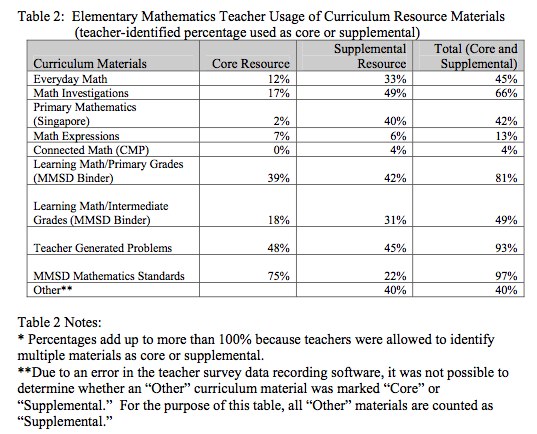
Share

Our Changing World


This graphic, from Boeing’s Current Market Outlook (2009-2028) provides a very useful look at the changes our children are facing. The Asia Pacific region is forecast to take delivery of more airplanes than North America, with Europe close behind. We should substantively consider whether the current systems, curriculum and organizations, largely created in the Frederick Taylor model over 100 years ago, are up to the challenge….
Locally, the Madison School District’s Proposed Strategic Plan will be discussed Monday evening.
Related: China Dominates NSA Coding Contest.

Share

Global Academy Presentation to the Dane County Public Affairs Council Audio / Video


Watch the May 27, 2009 video here, or listen via this mp3 audio file.
Bill Reis: Coordinator, Global Academy [Former Superintendent, Middleton-Cross Plains School District]
Dean Gorrell: Superintendent, Verona Area Schools
To a significant degree talented and gifted students in our schools are under-served. These students are often left to do it on their own, particularly if that talent is in only one or two areas.  Finally, there is something being done about that.  Not only is the Global Academy going to be a reality, but surprise beyond belief, eight area school districts, including Madison, are actually cooperating and going to be part of the Global Academy.  The presentation and discussion will focus on

What is the rationale and data to support this educational experience?
What school districts are involved and how will it be financed?
What students will be served by the Academy? How will students be selected?
What will be the curriculum and methodology for instruction?
Will these students be prepared for post high school education and work?
Will there be partnerships with MATC, other colleges and universities, community persons and organizations?
How will the students relate with their home schools?

Thanks to Jeff Henriques for recording this event.

Share

Connecticut District Retools High School Math Instruction

Jessica Calefati:

Mathematics teachers in one coastal Connecticut school district were frustrated with students’ inability to retain what they learned in Algebra I and apply it to Algebra II, so they decided to approach high school mathematics instruction in a new way. The teachers shrank the number of topics covered in each course by about half and published their custom-made curriculum online last fall, the New York Times reports.
The new curriculum’s lessons were written by Westport, Conn., teachers and sent to HeyMath! of India, a company that adds graphics, animation, and sound to the lessons before posting them on the Web. But teachers say the new curriculum is as much about bringing classroom instruction into the digital age as it is about having the opportunity to teach students fewer concepts in greater depth.
Westport’s decision to rewrite its math curriculum is part of a growing trend to re-evaluate “mile-wide, inch-deep” instruction. In 2006, the National Council of Teachers of Mathematics pushed for more basic math skills instruction, and two years later a federal panel of investigators appointed by then President George W. Bush also urged schools to whittle down their elementary and middle school math curricula.

Share

Data-Driven Schools See Rising Scores

John Hechinger:

Last fall, high-school senior Duane Wilson started getting Ds on assignments in his Advanced Placement history, psychology and literature classes. Like a smoke detector sensing fire, a school computer sounded an alarm.
The Edline system used by the Montgomery County, Md., Public Schools emailed each poor grade to his mother as soon as teachers logged it in. Coretta Brunton, Duane’s mother, sat her son down for a stern talk. Duane hit the books and began earning Bs. He is headed to Atlanta’s Morehouse College in the fall.
If it hadn’t been for the tracking system, says the 17-year-old, “I might have failed and I wouldn’t be going to college next year.”
Montgomery County has made progress in improving the lagging academic performance of African-American and Hispanic students. See data.
Montgomery spends $47 million a year on technology like Edline. It is at the vanguard of what is known as the “data-driven” movement in U.S. education — an approach that builds on the heavy testing of President George W. Bush’s No Child Left Behind law. Using district-issued Palm Pilots, for instance, teachers can pull up detailed snapshots of each student’s progress on tests and other measures of proficiency.
The high-tech strategy, which uses intensified assessments and the real-time collection of test scores, grades and other data to identify problems and speed up interventions, has just received a huge boost from President Barack Obama and Education Secretary Arne Duncan.

Related notes and links: Wisconsin Knowledge & Concepts (WKCE) Exam, Value Added Assessments, Standards Based Report Cards and Infinite Campus.
Tools such as Edline, if used pervasively, can be very powerful. They can also save a great deal of time and money.

Share

Truth In Teaching

NY Times Editorial:

Education reform will go nowhere until the states are forced to revamp corrupt teacher evaluation systems that rate a vast majority of teachers as “excellent,” even in schools where children learn nothing. Education Secretary Arne Duncan was right to require the states that participate in the school stabilization fund, which is part of the federal education stimulus program, to show — finally — how student achievement is weighted in teacher evaluations. The states have long resisted such accountability, and Mr. Duncan will need to press them hard to ensure they live up to their commitment.
A startling new report from a nonpartisan New York research group known as The New Teacher Project lays out the scope of the problem. The study, titled “The Widget Effect,” is based on surveys of more than 16,000 teachers and administrators in four states: Arkansas, Colorado, Illinois and Ohio.
The first problem it identifies is that evaluation sessions are often short, infrequent and pro forma — typically two or fewer classroom observations totaling 60 minutes or less. The administrators who perform them are rarely trained to do the evaluations and are under intense pressure from colleagues not to be critical. Not surprisingly, nearly every teacher passes, and an overwhelming majority receives top ratings.

Share

On California’s Hard Copy Textbook Purchase Ban

Rupert Neate:

“Textbooks are outdated, in my opinion,” said the film-star-turned-politician. “For so many years, we’ve been trying to teach exactly the same way. Our children get their information from the internet, downloaded on to their iPods, and in Twitter feeds to their phones. Basically, kids feel as comfortable with their electronic devices as I was with my pencils and crayons
“So why are California’s school students still forced to lug around antiquated, heavy, expensive textbooks?”
State officials said textbooks typically cost between $75 (£46) and $100, far more than their digital equivalents.
A spokesman for Pearson said it has been planning for the switch from printed text to digital for a decade, but conceded that the company will collect less money per unit from digital sales. The company added the move would allow it to save money on printing and distribution costs.

I have been a slow, but generally pleased user of electronic books (stanza, kindle and open source) on my iphone. It is time to transition and save money….
Matthew Garrahan & Andrew Edgecliffe-Johnson have more:

“But our students still learn from instructional materials in formats made possible by Gutenberg’s printing press. It’s nonsensical – and expensive – to look to traditional hard-bound books when information is so readily available in electronic form.”
However, with California facing a record $24bn budget deficit the state could struggle with high start-up costs – particularly as Mr Schwarzenegger has pledged to make digital text books available to each of the state’s 2m students.
“The main practicality is that until students have full and equal access to computers, this would be very difficult to phase in,” wrote Citigroup analysts in a research note.
The state is one of the biggest purchasers of school textbooks in the world so the transition to digital learning could have big implications for publishers, such as Pearson, owner of the Financial Times.

Share

Madison School Board OK’s 1 More Year of Infinite Campus, with More Oversite

Monday evening’s Madison School Board meeting included approval of another year of Infinite Campus along with (and this is quite important) a motion requiring that within six months, administration document use of IC and identify barriers to use where they exist, with the purpose of achieving 100% implementation by the end of 2012 or sooner.
Successful implementation of this student and parent information portal across all schools and teachers should be job one before any additional initiatives are attempted.

Share

The Examined Working Life

Lauren Mechling:

The Swiss essayist Alain de Botton has cultivated a following by unpacking the psychological and philosophical underpinnings of our everyday lives.
His 1997 breakout book “How Proust Can Change Your Life” imparted practical lessons to be found in Marcel Proust’s classic “In Search of Lost Time.”
He has also written books and hosted television programs on travel, love, and architecture. In his latest book, “The Pleasures and Sorrows of Work,” he examines of the activity we spend most of our waking hours doing: our jobs.
To research this project, Mr. de Botton, who lives in London, shadowed members of various professions including an accountant, a rocket scientist, a cookie manufacturer, and an inventor. He answered our questions by email.

Share

Strong correlation found between school rankings and parental education

Deanie Wimmer:

State education leaders have come up with their own analysis in response to our KSL Schools high school rankings. In April, KSL unveiled a comprehensive database on Utah high schools. The state’s findings pertain to every parent.
Our KSL Schools research project ranked the top Utah high schools as Park City, Davis, Skyline, Viewmont, Lone Peak and Timpview. State Education leaders compared our rankings to census data showing communities ranked with the percentage of adults who have college degrees.
Superintendent Larry Shumway said, “I thought there would be some correlation, but what I was surprised to see was almost perfect correlation.”
The State Office of Education found Park City had the most college educated adults, with 52 percent. The communities that follow virtually mirror our list.

Share

Male lecturers pass the test

Siu Sai-wo:

City University president Way Kuo came from a science background, but has a keen interest in educational work. When he was in the United States, he spent a lot of time on educational research despite his busy school administrative duties.
Professor Kuo recently published Clarifying Some Myths of Teaching and Research (Clusty), which he jointly penned with education psychologist Mark E Troy, detailing the results of a study on 10,000 students and 400 teachers.
The study explores the relationship between research work and quality of teaching, and explodes – or confirms – certain myths within education circles, as the book title suggests.
Kuo was invited by the Hong Kong University Graduates Association to give a speech on his new book, and many interesting education- related issues were raised during the talk.
One of the questions concerned whether scholars who engage in research work perform worse in teaching, and whether class size affects teaching performance.

Share

Five Ways to Fix America’s Schools

Harold Levy:

AMERICAN education was once the best in the world. But today, our private and public universities are losing their competitive edge to foreign institutions, they are losing the advertising wars to for-profit colleges and they are losing control over their own admissions because of an ill-conceived ranking system. With the recession causing big state budget cuts, the situation in higher education has turned critical. Here are a few radical ideas to improve matters.
Raise the age of compulsory education. Twenty-six states require children to attend school until age 16, the rest until 17 or 18, but we should ensure that all children stay in school until age 19. Simply completing high school no longer provides students with an education sufficient for them to compete in the 21st-century economy. So every child should receive a year of post-secondary education.
The benefits of an extra year of schooling are beyond question: high school graduates can earn more than dropouts, have better health, more stable lives and a longer life expectancy. College graduates do even better. Just as we are moving toward a longer school day (where is it written that learning should end at 3 p.m.?) and a longer school year (does anyone really believe pupils need a three-month summer vacation?), so we should move to a longer school career.

Share

Coaches struggle to find balance between work and family

Tom Wyrich:

Keith Hennig has a 3-year-old boy named Trevor and a 1-year-old named Brady. He wants to watch them grow up. Not in the brief moments between school and basketball practice. Not in the late-night hours when he would get home from a game or an open gym.
“I hate it during the winter season because I leave when it’s dark out, and when I come home it’s dark out,” Hennig says. “It’s almost depressing.”
Long before he led the Kentwood High girls basketball team to the state championship in March, Hennig, only 32, had decided that it would be his last season. But Hennig discovered that, as with any addiction, it’s one thing to decide to quit. It’s quite another to go through with it.
For two weeks after the championship game, he walked past the state championship trophy every day and saw his girls in the halls at Kentwood, where he is a history teacher. He remembered all those moments that made the late nights and early mornings worth it. He was going through withdrawal.

Share

Peanut Butter Politics & The Widget Effect

Jonathan Alter:

“education is the dullest of subjects,” Jacques Barzun wrote in the very first sentence of his astonishingly fresh 1945 classic, Teacher in America. Barzun de- spised the idea of “professional educators” who focus on “methods” instead of subject matter. He loved teachers, but knew they “are born, not made,” and that most teachers’ colleges teach the wrong stuff.
Cut to 2009, when Barack Obama thinks education is the most exciting of subjects. Even so, Obama and his education secretary, Arne Duncan, get Barzun. They understand that the key to fixing education is better teaching, and the key to better teaching is figuring out who can teach and who can’t.
Just as Obama has leverage over the auto industry to impose tough fuel–economy standards, he now has at least some leverage over the education industry to impose teacher-effectiveness standards. The question is whether he will be able to use it, or will he get swallowed by what’s known as the Blob, the collection of educrats and politicians who claim to support reform but remain fiercely committed to the status quo.
Teacher effectiveness-say it three times. Last week a group called the New Teacher Project released a report titled “The Widget Effect” that argues that teachers are viewed as indistinguishable widgets-states and districts are “indifferent to variations in teacher performance”-and notes that more than 99 percent of teachers are rated satisfactory. The whole country is like Garrison Keillor’s Lake Woebegon, except all the teachers are above average, too.

Related: teacher hiring criteria in Madison.

Share

US Federal Government Stimulus / Splurge Funds and Wisconsin School District Budgets

Jason Stein:

The possible cuts come on top of other proposed changes to school finance, including ending an effective 3.8 percent cap on teacher pay and benefits in July 2010.
“I think you can argue that this is the worst state budget for public schools in a generation,” said Todd Berry, president of the Wisconsin Taxpayers Alliance, who said a few districts may have to consider closing.
UW-Madison economist Andy Reschovsky said the Madison School District could see a net cut in aid of $4.1 million, or 4.6 percent, possibly forcing program cuts, teacher layoffs and big increases in property taxes. His analysis, which is less precise when looking at any single district, suggests the falling aid could set up Madison schools to raise property taxes by up to 7 percent.
Stimulus math
Over the next two years, the state would cut direct aid to schools by nearly $300 million under a budget proposal that still must be approved by the Assembly and Senate and signed by Doyle. Over that period, the federal government is expected to pump $350 million in stimulus money directly into schools through two main streams. The money would mainly have to be used to help poor and special education students.
Doyle’s budget director, Dave Schmiedicke, noted the budget uses some additional stimulus money and $55 million in state money not included in Reschovsky’s analysis to offset part of the increase in property taxes.

Related: Wisconsin K-12 Tax and Spending Growth: 1988-2007

Share

Leaving “No Child Left Behind” does not depend on more teachers or more money, but selfless children

via email:

It’s time to move away from “differentiated curriculum” which is really segregated learning, to student-centered cooperative education.
It’s time to embrace what the children have to teach our world: their cooperative, creative, and compassionate spirit.
It’s a shame we continue to spend more money to prevent children from sharing learning and ideas with each other and our world.
Us adults would stand to learn much on how to alleviate economic woes, if we cooperated with the regenerative spirit that children keep trying to impart in our world.
I’ve been a sub for a while in this district that continues to bow down to parents who care only about self-serving educational models while exploiting resources, schools, and our community.
Since I’ve resolved that I probably will never be hired as a full-time teacher, I’ve written a book recently published called The Power of Paper Planes: Co-Piloting with Children to New Horizons.

Dave Askuvich, daskuvich@hotmail.com

Share

2008-2009 Madison West High School ReaLGrant Initiave update

57K PDF, via a kind reader’s email:

The School Improvement Committee has spent this year investigating academic support models in other schools to begin to develop an effective model for West High School. The committee visited Memorial High School, Evanston High School, Wheeling High School, and New Trier High School, in IL. Some of the common themes that were discovered, especially in the Illinois schools, were as follows:

  • Many schools have an identified academic team who intervene with struggling students. These teams of support people have clearly defined roles and responsibilities. The students are regularly monitored, they develop both short and long term goals and the students develop meaningful relationships with an adult in the building. The academic support team has regular communication with teaching staff and makes recommendations for student support.
  • There are mandatory study tables in each academic content areas where students are directed to go if they are receiving a D or F in any given course.
  • Students who are skill deficient are identified in 8th grade and are provided with a summer program designed to prepare them for high school, enhanced English and Math instruction in 9th grade, and creative scheduling that allows for students to catch up to grade level.
  • Some schools have a family liaison person who is able to make meaningful connections in the community and with parents. After school homework centers are thriving.
  • Social privileges are used as incentives for students to keep their grades up.

Recommendations from the SIP Committee

  • Design more creative use of academic support allocation to better meet the needs of struggling students.
  • Create an intervention team with specific role definition for each team member.
  • Design and implement an after school homework center that will be available for all students, not just those struggling academically.
  • Design and implement student centers and tables that meet specific academic and time needs (after school, lunch, etc.)
  • Identify a key staff person to serve in a specialized family liaison role.
  • Develop a clear intervention scaffold that is easy for staff to interpret and use.
  • Design and implement enhanced Math and English interventions for skill deficient students.

Related topics:

Share

Alternative Teacher Certification Works

UW-Madison professors Peter Hewson and Eric Knuth took up a valid cause in their May 15 guest column when they voiced concerns about having under-prepared teachers in Wisconsin classrooms.
But they’re off base in implying that alternative certification programs such as the American Board for Certification of Teacher Excellence, proposed in SB 175, will mean more students won’t have effective teachers.
Research has shown otherwise.
A recent study in “Education Next” showed states with genuine alternative certification programs see higher test scores and more minority teachers. A Brookings Institute study from 2006 showed that teachers who have come through colleges of education are no more effective than teachers who come through an alternative certification program or no certification program at all.
In addition, ABCTE’s rigorous teacher preparation program includes nearly 200 hours of workshops on topics such as pedagogy and classroom assessment. Our exams are difficult, with only 40 percent of candidates passing on the first try. As a result, our teacher retention rate is 85 percent after three years, compared to less than 65 percent for traditional certification routes.
I understand Hewson and Knuth’s motivation for suggesting that an alternative to traditional certification may not produce great teachers. That philosophy is good for their employer, but not — as research has shown — any better for students.
/– David Saba, president, ABCTE, Washington, D.C./

Share

An Email to Madison Superintendent Dan Nerad on Math Teacher Hiring Criteria

Thanks much for taking the time from your busy schedule to respond to our letter below.  I am delighted to note your serious interest in the topic of how to obtain middle school teachers who are highly qualified to teach mathematics to the MMSD’s students so that all might succeed.  We are all in agreement with the District’s laudable goal of having all students complete algebra I/geometry or integrated algebra I/geometry by the end of 10th grade.  One essential component necessary for achieving this goal is having teachers who are highly competent to teach 6th- through 8th-grade mathematics to our students so they will be well prepared for high school-level mathematics when they arrive in high school.
The primary point on which we seem to disagree is how best to obtain such highly qualified middle school math teachers.  It is my strong belief that the MMSD will never succeed in fully staffing all of our middle schools with excellent math teachers, especially in a timely manner, if the primary mechanism for doing so is to provide additional, voluntary math ed opportunities to the District’s K-8 generalists who are currently teaching mathematics in our middle schools.  The District currently has a small number of math-certified middle school teachers.  It undoubtedly has some additional K-8 generalists who already are or could readily become terrific middle school math teachers with a couple of hundred hours of additional math ed training.  However, I sincerely doubt we could ever train dozens of additional K-8 generalists to the level of content knowledge necessary to be outstanding middle school math teachers so that ALL of our middle school students could be taught mathematics by such teachers.
Part of our disagreement centers around differing views regarding the math content knowledge one needs to be a highly-qualified middle school math teacher.  As a scientist married to a mathematician, I don’t believe that taking a couple of math ed courses on how to teach the content of middle school mathematics provides sufficient knowledge of mathematics to be a truly effective teacher of the subject.  Our middle school foreign language teachers didn’t simply take a couple of ed courses in how to teach their subject at the middle school level; rather, most of them also MAJORED or, at least, minored in the subject in college.  Why aren’t we requiring the same breathe and depth of content knowledge for our middle school mathematics teachers?  Do you really believe mastery of the middle school mathematics curriculum and how to teach it is sufficient content knowledge for teachers teaching math?  What happens when students ask questions that aren’t answered in the teachers’ manual?  What happens when students desire to know how the material they are studying relates to higher-level mathematics and other subjects such as science and engineering?
The MMSD has been waiting a long time already to have math-qualified teachers teaching mathematics in our middle schools.   Many countries around the world whose students outperform US students in mathematics only hire teachers who majored in the  subject to teach it.  Other school districts in the US are taking advantage of the current recession with high unemployment to hire and train people who know and love mathematics, but don’t yet know how to teach it to others.  For example, see
http://www.reuters.com/article/domesticNews/idUSTRE54L2W120090522
If Madison continues to wait, we will miss out on this opportunity and yet another generation of middle schoolers will be struggling to success in high school.
The MMSD has a long history of taking many, many year to resolve most issues.  For example, the issue of students receiving high school credit for non-MMSD courses has been waiting 8 years and counting!  It has taken multiple years for the District’s math task force to be formed, meet, write its report, and have its recommendations discussed.  For the sake of the District’s students, we need many more math-qualified middle school teachers NOW.  Please act ASAP, giving serious consideration to our proposal below.  Thanks.

Share

Bursting the Higher Ed Bubble

David Frum:

“Will Higher Education be the Next Bubble to Burst?” So asks a recent op-ed in the Chronicle of Higher Education. The question is powerful. Data points:

  • Over the past quarter-century, the average cost of higher education has risen at a rate four times faster than inflation–twice as fast as the cost of health care.
  • Tuition, room, and board at private colleges can cost $50,000 per year or more.
  • The market crash of 2008 inflicted terrible damage on college endowments. The Commonfund Institute reports that endowments dropped by an average of 23 percent in the five months ending Nov. 30, 2008.

Authors Joseph Cronin and Howard Horton (respectively a past Massachusetts secretary of Education and the president of the New England College of Business and Finance) comment:

Share

Shake-up in Seattle schools coming soon

Danny Westneat:

Maybe it was brought on by lean times. Or maybe long-simmering angst about the state of Seattle schools is finally boiling over on its own.
But the decision this month to lay off 165 of Seattle schools’ newest teachers in a “last hired, first fired” manner has got some of liberal Seattle suddenly sounding more like a conservative red state.
More than 600 school parents have signed an online petition, at supportgreatteachers.com, that calls out the teachers union for causing “great distress and upheaval” in the schools. At issue is the policy of choosing who gets laid off solely by seniority.
“Wake up and see how union refusal to consider merit is damaging the profession and our kids,” wrote one parent.
“We want the best teachers, not the oldest, teaching our kids,” wrote another.
“Teacher unions are an anachronism,” said another.
The organizers of the petition are a group of parents called Community and Parents for Public Schools. They agree what they’re doing is very un-Seattle.

Share

Superintendent Dan Nerad’s Response to “Action Needed, Please Sign on…. Math Teacher Hiring in the Madison School District”

Madison School District Superintendent Dan Nerad via email:

Dr. Mertz-
Thank you for sharing your thoughts regarding this critical issue in our middle schools. We will continue to follow the conversation and legislative process regarding hiring Teach for America and Math for America candidates. We have similar concerns to those laid out by UW Professors Hewson and Knuth (http://www.madison.com/wsj/home/forum/451220). In particular they stated, “Although subject-matter knowledge is essential to good teaching, the knowledge required for teaching is significantly different from that used by math and science professionals.” This may mean that this will not be a cost effective or efficient solution to a more complex problem than many believe it to be. These candidates very well may need the same professional learning opportunities that we are working with the UW to create for our current staff. The leading researchers on this topic are Ball, Bass and Hill from the University of Michigan. More information on their work can be found at (http://sitemaker.umich.edu/lmt/home). We are committed to improving the experience our students have in our mathematics class and will strive to hire the most qualified teachers and continue to strengthen our existing staff.
Dan Nerad

Share

At-Risk Need a Mix of Good Teachers, Social Service Help

Jay Matthews:

Karen Kaldenbach, an 18-year-old high school senior in Arlington County, remembers vividly what life was like when she was 11: “I saw Social Services almost as much as I saw my mother, who was always drunk. Her best friends, alcohol and money, were always there for her. She spent so much time with them, she couldn’t raise my little sister and me. Social Services always came to talk to me at school. They asked questions about my family. My response? A lie, always.”
Such stories are not uncommon in the Washington area. They often end unhappily. Yet these days, Kaldenbach is thriving, with a supportive adoptive mother, plus awards, scholarships and an acceptance letter from George Mason University.
We are in the midst of a national debate, its outcome uncertain, over what should be the emphasis of efforts to fix public schools. Some say the focus should be on improving teaching. Only in the classroom, they say, is there a chance to give students — particularly those in poverty — the tools they need to succeed. Others say teachers cannot reach those children until their family lives, shaken by parental joblessness or mental or physical illness, are straightened out by government action.

Share

Hiring Math Teachers…… Former Bear Stearns Trader is Now Teaching High School Math on Long Island, NY

Peter Robison pens an interesting look at the current opportunity to hire teachers with a strong math background, advocated locally by Janet Mertz & Gabi Meyer:

After Irace got his termination papers in June from JPMorgan Chase, he called “Brother K.”
Brother Kenneth Hoagland, the principal at Kellenberg, a private Catholic institution, taught Irace at Chaminade High School in Mineola, New York.
Hoagland called Irace in for an interview in August, when he needed a replacement for a math instructor on leave. A month later, the former trader was teaching quadratic equations and factoring to freshmen in five 40-minute periods of algebra a day. He enrolled in refresher math classes at Nassau Community College, sometimes learning subjects a day or two ahead of the kids. This semester, he’s teaching sixth-graders measurements and percentages.
Conditioning Drills
Seated at wooden desks, 21 to 39 in each class, they get excited when he flashes the animated math adventures of a robot named Moby onto a classroom projector. After school, Irace, now 198 pounds (90 kilograms), puts a whistle on a yellow cord around his neck and runs girls through conditioning drills as an assistant coach for the lacrosse team. The extra coaching stipend runs $1,000 to $2,000 for the season.

Share

Wisconsin bill to boost math and science teachers risky for students

Peter Hewson & Eric Knuth:

While this legislation is well-intentioned, it will ultimately do more harm than good — and it is the children in the most troubled schools who will pay the price.
Here’s why: SB 175 is intended to attract math and science professionals (engineers and scientists) into teaching, based on the belief that they have the necessary subject-matter knowledge. The bill would allow them to get teaching licenses almost entirely on the basis of written tests (a math test, for example), as long as they receive some loosely specified form of mentoring during their first year on the job.
There’s nothing wrong with using written tests, and mentoring new teachers is a great idea. But neither is sufficient to protect children from dangerously under-prepared teachers.
Although subject-matter knowledge is essential to good teaching, the knowledge required for teaching is significantly different from that used by math and science professionals. A well-constructed certification program gives beginning teachers a crucial knowledge base (of math or science as well as about teaching) and helps them develop the skills and practices that bring this knowledge to life.
There’s a reason that so many certification programs immerse new teachers in classroom tasks gradually: It gives them a chance to make their mistakes and sharpen their skills in more controlled, lower-stakes contexts before handing them primary responsibility for a classroom of students.

Share

Report Prompts Call for Rules on Restraining Students

Maria Glod:

Citing “disturbing” reports of schoolchildren harmed when teachers physically restrained them, U.S. Education Secretary Arne Duncan called on state school chiefs yesterday to develop plans this summer to ensure that restraints are used safely and sparingly.
Virginia and Maryland have policies that call on teachers to use other means to calm students and to turn to physical restraint only when a student is in danger of hurting himself or others. D.C. law provides no guidance on the issue for public schools but restricts public money from going to private schools if they restrain students in ways that are physically dangerous.
Duncan’s announcement came a day after federal investigators revealed word of hundreds of allegations that youngsters were improperly held, bound or isolated in schools over the past two decades. Investigators with the Government Accountability Office highlighted a 2002 case in Texas that involved a teacher who now works in Loudoun County. Teacher Dawn Marie Hamilton lay on a 14-year-old boy who refused to stay in his seat, and the boy died, according to the report.

Share

Tracking and Inequality: New Directions for Research and Practice Presentation by UW School of Education Professor Adam Gamoran

via a kind reader’s email:

Good afternoon. We’d like to invite you to Memorial High tomorrow afternoon for a discussion hosted by our Equity Team. Professor Adam Gamoran, Interim Dean of the UW School of Education, will be presenting paper titled Tracking and Inequality: New Directions for Research and Practice. His article is attached. We will begin at 4:15pm and should end around:15pm, and we’ll meet in the Wisconsin Neighborhood Center, which is in the Southwest corner of the building. Please park on the Mineral Point Rd. side of the building, and enter through the doors closest to Gammon Rd. There will signs to direct you from there. Have a good week, and we hope to see you tomorrow afternoon…Jay

Jay Affeldt
James Madison Memorial High School
Professional Development School Coordinator
Project REAL SLC Grant Coordinator
201 South Gammon Road
Madison, WI 53717
jaffeldt@madison.k12.wi.us
608-442-2203 fax
608-663-6182 office

Share