School Information System

Have Kid, Will Travel: Meet the parents who still like trips

Janis Cooke Newman,Bonnie Wach:

This week the Travel Section kicks off a monthly column dedicated to the idea that just because you’ve become a parent, it doesn’t mean you have to become an armchair (or playground-bench) traveler.
The column will be written alternately by two moms who’ve refused to let babylust sublimate wanderlust: Bonnie Wach, former editor of Where Magazine, travel book author and a regular contributor to the Chronicle and USAToday.com; and Janis Cooke Newman, a frequent contributor to these pages, as well as to the travel sections of the Los Angeles Times, Dallas Morning News and the Miami Herald. For this first column, Bonnie and Janis write about why – despite the fact that neither can afford to employ Brangelina’s nanny staff – they believe in the credo “Have Kid, Will Travel.”
Bonnie: Ten minutes into a six-hour flight across the country, with my infant son shrieking in my ear as he yanked the hair of my elderly seatmate and stomped cheerfully on my husband’s loins, the words of those sage philosophers, Johnson & Johnson, became painfully prescient: Having a baby changes everything. Especially the part of everything that involved me thinking that kids under 2 in their parents’ laps for six hours constitutes a “free” ride.
It occurred to me suddenly that I was anchored to a wailing little ball of carry-on luggage, and that my grand notions of not letting a child get in the way of my travel plans was absurd.
We managed to weather that first bout of turbulence through the good graces of Ernest & Julio Gallo and my seat neighbor’s mercifully defective hearing-aid battery, and when I got home, I considered my options: Obviously, I couldn’t give up my child, but as a journalist who has dedicated a good part of her career to writing about travel, I was also not willing to give up my traveling.

Share

More on Madison West Side Boundary Changes

channel3000:

Parents on the west side are speaking out about proposed plans that would change school boundaries for more than 100 children.
The Madison School Board drew up four possible plans that would affect students attending Falk, Stephens and Crestwood elementary schools, and all possibilities drew a lot of criticism.
The school board said their “plan A” would divide 151 students living in the Valley Ridge neighborhood between Crestwood and Falk elementary schools. That plan, released in December, garnered strong opposition, leading the board to propose three new plans.
Their “plan B” would call for Valley Ridge students to stay at Stephens Elementary and move students from other neighborhoods, including Spring Harbor and Junction Road.
Their “plan C” calls for the pairing of Stephens and Crestwood schools and “plan D” would call for Crestwood and Falk pairing up.
School board officials said if any of the schools were paired, students would attend one school from kindergarten through second grade, and then move to the other school for grades three through five.

Much more, here.

Share

Nerad Selected As Madison School District’s New Superintendent

channel3000:

Green Bay school superintendent Daniel Nerad has been chosen to become the Madison school district’s next superintendent.
The Madison Metropolitan School District’s Board of Education announced on Monday night that it unanimously selected Nerad as the new superintendent. Nerad has conditionally accepted, pending a final background check, contract negotiations and a site visit by a board delegation, according to a district news release.
Nerad is currently the superintendent of the Green Bay Area Public School District.
Nerad will replace current Superintendent Art Rainwater, who turned 65 on New Year’s Day, and is scheduled to retire on June 30. Nerad is scheduled to take over on July 1.

WKOW-TV:

A Madison School District spokesman said school board members voted unanimously to select Green Bay Schools Superintendent Dan Nerad as the next superintendent of Madison’s public schools.
District spokesman Ken Syke said Nerad has conditionally accepted the position, pending a background check, contract negotiations and a site visit to Green Bay by a delegation from the school board.
The offer to Nerad was reported exclusively by wkowtv.com, hours before the school district spokesman’s announcement.
School Board members had identified Nerad, Miami-Dade Public Schools administrator Steve Gallon, and Boston Public Schools Budget Director James McIntyre as the three finalists for the position.
Nerad, 56, is a Wisconsin native who was named state superintendent of the year in 2006.

Kelly McBride:

The Madison Metropolitan School District has chosen Green Bay school superintendent Daniel Nerad to be its next superintendent.
Madison School Board president Arlene Silveira made the announcement tonight during a 7 p.m. news conference in Madison, saying Nerad was a unanimous choice for the job.
Nerad, 56, who has almost 33 years experience with the Green Bay district, would replace retiring Madison superintendent Art Rainwater. He is expected to begin work in Madison on July 1. Rainwater retires June 30.
Nerad has been superintendent in Green Bay since 2001.

Share

Gallon drops out of Madison superintendent race

Andy Hall, via a reader’s email:

high-ranking Miami-Dade Public Schools official says he withdrew his candidacy to become superintendent of the Madison School District, leaving just two educators from Green Bay and Boston in the running to head Wisconsin’s second-largest school district.
“My withdrawal is in no fashion any reflection on the people of Madison or the school district,” Steve Gallon III, who oversees Miami-Dade’s alternative education schools and programs, said Monday afternoon.
Gallon said he believes the School Board was notified of his decision before it began its deliberations Saturday to name its top pick to succeed Superintendent Art Rainwater, who is retiring on June 30.
Gallon, a Miami native, said “people in Wisconsin were great” last week during his visit. He said it would be “presumptuous” of him to discuss his reasons for stepping aside, and Board President Arlene Silveira “would be a better position to share” the details.
Silveira said according to the school board’s consultant Gallon took another superintendent’s job.

Related: WKOW-TV report on the MMSD’s offer to Dan Nerad.

Share

Green Bay Superintendent Offered Madison Position

WKOW-TV:

Two sources close to the process of selecting a new Madison Schools Superintendent tell 27 News the position has been offered to Green Bay School District Superintendent Daniel Nerad.
Green Bay School District spokesperson Amanda Brooker told 27 News Nerad, 56, would not comment Monday on the selection process.
Madison School Board President Arlene Silviera also declined comment.
School Board members had identified Nerad, Miami-Dade Public Schools administrator Steve Gallon, and Boston Public Schools Budget Director James McIntyre as the three finalists for the position.

Share

Middle School Report Cards Future?

I just received an e-mail from a parent stating the Middle School report cards are converting to the elementary format of 1 – 4 and they are dropping the A – F grading system. She spoke to Lisa Wachtel, Head of Teaching and Learning to confirm that this is the direction the district is headed.
DO any of you have any info on this? They claim it is on the website but other than the Standards Base System info, which is pretty general I can not locate this info. This greatly concerns me if it is true.
Related: Can We Talk 3: 3rd Quarter Report Cards.

Share

Educating Teen Parents; Keeping Them In School

WKOW-TV:

It’s difficult to juggle homework and parenthood. More than 6,000 Wisconsin teens gave birth in 2006. Nationally, about half of teenagers who get pregnant will drop out of school.
Teen moms in Madison have another option.
The School Age Parent Program or SAPAR was founded almost four decades ago to help teen moms stay in school.
The full-day program allows teen moms to successfully juggle class, doctor’s appointments and motherhood.

Share

Texas School District Challenges State “Robin Hood” Finance System

Terrance Stutz:

Protests from this small school district nestled in the Texas Hill Country are reverberating across the state’s school finance landscape.
School board members – backed by parents and local business owners – have decided to say “no” when their payment comes due next month under the state’s “Robin Hood” school funding law.
Wimberley is one of more than 160 high-wealth school districts – including several in the Dallas area – that are required to share their property tax revenue with other districts. But residents here insist that their students will suffer if they turn the money over to the state.
“We’re not going to pay it,” said Gary Pigg, vice president of the Wimberley school board and a small-business owner. “Our teachers are some of the lowest-paid in the area. Our buildings need massive repairs. We keep running a deficit – and they still want us to give money away.
“It’s unconstitutional – and I’m ready to go to jail if I have to.”
Mr. Pigg and the rest of the Wimberley school board voted last fall to withhold the payment of an estimated $3.1 million in local property taxes – one-sixth of the district’s total revenue – that was supposed to be sent to the state under the share-the-wealth school finance law passed in 1993. The law was passed in response to a series of court orders calling for equalized funding among school districts.

Wisconsin’s school finance system takes a similar approach: High property assessement values reduce state aids. Unlike Texas, Wisconsin simply redistributes fewer state tax dollars to Districts with “high” property values, such as Madison. Texas requires Districts to send some of their property tax receipts to the state to be redistributed to other districts. School finance has many complicated aspects, one of which is a “Robin Hood” like provision. Another is “Negative Aid“: If Madison increases spending via referendums, it loses state aid. This situation is referenced in the article:

Regarding the possibility of a tax hike, Mr. York noted that an increase would require voter approval – something that is not likely to happen with residents knowing that a big chunk of their money will be taken by the state.

One of the many ironies in our school finance system is that there is an incentive to grow the tax base, or the annual assessment increases. The politicians can then point to the flat or small growth in the mill rate, rather than the growth in the total tax burden.
Finally, those who strongly advocate for changes in Wisconsin’s school finance system must be ready for unintended consequences, such as reduced funding for “rich” districts, like Madison. Madison’s spending has increased at an average rate of 5.25% over the past 20 years, while enrollment has remained essentially flat (though the student population has changed).

Share

School For Autistic Children Raising $250,000 For Operational Costs

channel3000:

WISC-TV first told the story of Common Threads back in October when the school opened.
Common Threads is a place where children can learn to overcome some of the communications challenges of autism.
It also provides support and services for families who aren’t able to get it anywhere else.
“I don’t know what else we’d do,” said mother Krysia Braun. “Honestly I’d probably have to go to preschool with him in order to make sure that he was getting the most out of it. If you’re going to spend money to go to private school, the kids need the support, and we find it at Common Threads”
On Sunday, the school held a fundraiser hoping to raise the $250,000 needed for the school’s operational costs.
“It’s necessary to help with our operating expenses during the first year of startup,” said Common Threads executive director Jackie Moen. “We are assimilating the children in slowly so they are fully supported and then they feel comfortable and understood and then we’ll bring in perhaps one to two children a week.”

Share

Nuestro Mundo’s Principal Leaving School

Wisconsin State Journal:

Nuestro Mundo Principal Gary Zehrbach, who has headed the Madison School District’s only English-Spanish charter school since its opening in 2004, is leaving his post at the end of this school year.
District officials hope to name his replacement in April.
“It has been a very difficult decision to make, and yet the time has come for me to return to Arizona to be closer to my family,” Zehrbach said Tuesday in a letter to parents.

Share

Bill Strickland: Rebuilding America, one slide show at a time

TedTalks:

With subtle accompaniment by longtime friend Herbie Hancock, and a slide show that has opened the minds (and pocketbooks) of CEOs across the country, Bill Strickland tells a quiet and astonishing tale of redemption through arts, music and unlikely partnerships.
Why you should listen to him:
Bill Strickland’s journey from at-risk youth to 1996 MacArthur ‘genius’ grant recipient would be remarkable in itself, if it were not overshadowed by the staggering breadth of his vision. While moonlighting as an airline pilot, Strickland founded Manchester Bidwell, a world-class institute in his native Pittsburgh devoted to vocational instruction in partnership with big business- and, almost incidentally, home to a Grammy winning record label and a world class jazz performance series. Yet its emphasis on the arts is no accident, as it embodies Strickland’s conviction that an atmosphere of high culture and respect will enervate even the most troubled students.
With job placement rates that rival most universities, Manchester Bidwell’s success has attracted the attention of everyone from George Bush, Sr. (who appointed Strickland to a six year term on the board of the NEA) to Fred Rogers (who invited Strickland to demonstrate pot throwing on Mister Rogers’ Neighborhood). And though cumbersome slide trays have been replaced by PowerPoint, the inspirational power of his speeches and slide shows are the stuff of lecture circuit legend.

Share

The Boy in The Window

Jane Hammons:

By the end of the 2007 school year, he had grown faint. The wide toothy smile and copper-colored skin less defined, the baseball cap diminishing into the background of the poster-sized photograph. Dead for more than a year, Juan Carlos Ramos greets everyone from the window at the corner of Portland and Masonic streets in Albany. As August rolled around and parents began buying new backpacks and school supplies, readying their children for the 2007 school year, the family of Juan Carlos Ramos looked for a new picture to replace the one from which he had begun to fade. In September mylar balloons floated from the railing in front of the window and a colorful Feliz Cumpleaños banner hung across the window celebrating the birth of a young man who will never grow older, who will always be 19.
News of the February 2006 stabbing at the unsupervised party held by an Albany High School student at her parents’ home in the Berkeley Hills arrived on Saturday, a day after the stabbing. Ron Rosenbaum, then principal of Albany High School, sent an e-mail to the AHS e-tree that described in very general terms what had happened. At the time, my older son was a junior at AHS. He was on a camping trip with the Student Conservation Association, a group he volunteers with. When he returned on Sunday, I talked with both of my sons, the youngest a ninth-grader, telling them what had happened, asking them if they knew either Juan Carlos Ramos or the Oppelt children who had held the party. The answer was no to both.
They were not interested in discussing the event in any length, and I had little information. But I reminded them that if they were ever to find themselves in a similar situation that they had an obligation to call 911, whether or not they were implicated in any wrongdoing. I imagined that students would be talking about the party, and I warned my sons against participating in gossip. What I did not anticipate was that on Monday morning, the grassy median in front of Albany High School would be covered with local news vans and reporters, no doubt because the murder had happened in the Berkeley Hills and not in Richmond or Oakland, where similar events rarely attract such attention.

Share

On Madison Boundary Changes

Dear Board,
As the opening of a new school is coming close, I was surprised to some extent that the plans were changed with such a short amount of time left before the new year.
So………..I dug up my West Side Long Term Planning Binder and reviewed all the data presented to us, as a member of that committee, and remembered the HOURS we spent debating and reviewing the pros and cons of each plan. I believe this is a very hard process and I am sad it is being altered at this late date.
I think one thing many of us felt on the Long Range Planning Committee was even with the new school and addition to Leopold we did not devise a Long Term Plan. My #1 suggestion to the board would be to revisit the plan of “making the map look better” and balancing the income levels but TO MAKE IT A LONG TERM plan and say in 6 years this is what we are going to do. (and stick to it) I think when you spring it on families that in a few months Johnny has to switch schools, we parents are too invested and comfortable with the school and protest the change. But if a 6 Year Plan was in place with some options to start at the new school, grandfather for a couple of years the protest would be great but families would have lots of time to accept the change and deal with it. It would also be a LONG TERM PLAN.

(more…)

Share

A Look At Alexandria’s Superintendent Search

Daniela Deane:

School Board Chairman Claire M. Eberwein said that 18 people have formally applied for the job Perry left Jan. 18 and that search consultants indicate eight are highly qualified. More possible candidates have been identified from a pool of 141 people who expressed interest. The application deadline is Feb. 19.
Experts aren’t surprised that the job is drawing interest despite Perry’s abrupt exit after more than six years. They credit the attractiveness of Alexandria and the surrounding region as a place to work and live.
In May, the board voted 5 to 4 to seek a new schools chief. The way Perry was suddenly removed caused consternation among some residents. Minutes after she left, a locksmith changed the locks.
“There was widespread dismay at how the process went,” said Kitty Porterfield, a 29-year employee of Northern Virginia school systems and author of a new book, “Getting It Right: Why Good School Communication Matters.” She said, “The community is very wary now.”
Looking ahead, William Campbell, a PTA president and a member of the superintendent advisory search committee, said he wants a superintendent who did not rise through the traditional school ranks, perhaps a chief executive of a business.
Houston said some school systems have recruited such candidates recently with mixed results. “Some of them have been a disaster,” Houston said. “The jury’s still out on that model.”
Finding a superintendent these days isn’t easy, despite the hefty salary the position commands, experts say. For the Alexandria job, the board is advertising an annual salary of about $230,000 and a “comprehensive and competitive” benefits package.
“The superintendency has lost a lot of its luster,” said Jay P. Goldman, editor of the school administrator association’s magazine. “There was a time, not that long ago, when the pinnacle of one’s career would be to rise to superintendent. That day is gone.”
Goldman said many educators now view the top job in a school district as “an impossible, can’t-win position. They’re often brought in as the knight in shining armor. Expectations are unreal. Communities expect overnight success and every ill solved in a year or two.”

Share

At Elite Prep Schools, College-Size Endowments

Geraldine Fabrikant:

When Curtis Thomas, a 14-year-old from a poor family living in St. Rose, La., arrived here two years ago to attend Phillips Exeter Academy, he brought little more than a pair of jeans and two shirts. That would hardly do at a 227-year-old prep school where ties are still required for boys in class.
So Curtis’s history teacher, armed with Exeter funds, took him shopping for a new wardrobe.
That outlay was just a tiny fraction of what Exeter spends on its students. With its small classes, computers for students receiving financial aid, lavish sports facilities and more, Exeter devotes an average of $63,500 annually to house and educate each of its 1,000 students. That is far more than the Thomas family could ever afford and well above even the $36,500 in tuition, room and board Exeter charges those paying full price.
As a result, like the best universities to which most of its students aspire, Exeter is relying more and more on its lush endowment to fill the gap.
Despite Exeter’s expanding commitments, which include a new promise to pay the full cost for any student whose family income is less than $75,000, the school’s endowment keeps growing. Last year — fueled by gifts from wealthy alumni and its own successful investments — it crossed the $1 billion mark, up from just over $500 million in 2002.

Share

Cram to Pass Online School Bill

Wisconsin State Journal Editorial:

The Legislature may actually complete an important assignment quickly and on time, earning high marks from voters.
Yes, we are talking about the Wisconsin Legislature, the same group of truants who logged one of the longest and latest budget stalemates in state history last year.
Maybe the Capitol gang is finally learning the importance of punctuality and cooperation.
Let ‘s hope so.
Key lawmakers announced a compromise bill Thursday that will keep open a dozen online schools in Wisconsin. The proposal also seeks to improve the quality of learning delivered via computer to educate more than 3,000 students in their homes.
The state Court of Appeals had put the future of virtual education in jeopardy last month. The District 2 Court in Waukesha ruled that the Wisconsin Virtual Academy, based in suburban Milwaukee, violates state laws controlling teacher certification, charter schools and open enrollment.

Share

Endgame: Madison Superintendent Candidate Summary

Andy Hall:

The Madison School Board will meet behind closed doors this morning to begin determining which of the three finalists it’d like to hire to replace Superintendent Art Rainwater, who retires June 30.
Three men from Miami, Boston and Green Bay who share an obsession for education but offer sharply differing backgrounds visited Madison this week to compete for the job of heading Wisconsin’s second-largest school district.

Candidate details, including links, photos, audio and video:

We’ll soon see what the smoke signals from the Doyle building reveal.

Share

Child Tax Credit #3

Gerald Prante:

Regardless of whether one supports a stimulus package, the agreed-upon package by the House leadership and the White House could almost rival AMT in terms of the amount of complexity it adds to the 2008 tax system. Not only do we have the government sending out checks to those who have no income tax liability (thereby requiring some method to reduce their tax liability), the proposal calls for yet another child tax credit. Yes. Make it three child tax credits.
We have the regular child tax credit, which gives everyone $1,000 per child with a floor at zero income tax liability (which is phased-out at $110,000). Then we have the additional child tax credit for those who are hit by that floor, thereby making the child tax credit refundable. But now we have a new child tax credit for $300 per child available to all, which is subject to different phase-out ranges than the current child tax credit. Furthermore, this is in addition to the personal exemption that a tax return gets for each child (which for someone in the 15 percent bracket is worth $525 for 2008) and other credits that are linked to children such as education credits, the credit for child and dependent care expenses, and the Earned Income Tax Credit.
nd if last night’s Republican debate is any guide to the future of child tax credit policy, it may someday be the case that if you have a child, you just won’t have to file a tax return at all. In all seriousness, though, what is the difference between these child tax credits and the government establishing a program called “Paying You to Have Kids” whereby HHS would write out checks to every family, paying each one $2,000 per child?

Share

Democracy works for virtual schools. Hallelujah

Jo Egelhoff:

Congratulations to virtual school students, virtual school families, forward-thinking school districts around the state**, and to all Wisconsinites dedicated to high quality education for all. As reported in several news outlets yesterday, legislators have agreed to a compromise that guarantees the survival of virtual schools in Wisconsin.
**Thank you Lee Allinger, AASD Superintendent, and your staff, for preparing testimony in support of continuation of Wisconsin Connections Academy.
Thank you and congratulations to the Coalition of Virtual School Families, who issued this press release of thanks (and relief) yesterday.
But mostly, hallelujah! for democratic process and to kids and families who made a difference. Kids and families – 1100 of whom showed up in Madison last week to plea for their cause. Wow.
And congratulations to State Rep. Brett Davis and Senator John Lehman, who were able to reach across the aisle (political pressure didn’t hurt – see above) and find a solution.

Share

Parents Fight Plan To Shift Kids To Falk

Andy Hall:

The new elementary school being built on Madison’s Far West Side, already mired in controversy over its name, now is part of a second emotional debate: Which students should be uprooted from their current schools when school attendance boundaries are redrawn this year to accommodate the new school and recent population changes?
A well-organized group of dozens of Stephens Elementary parents is fighting the Madison School District’s proposal to move 83 students from Stephens to Falk Elementary. The students would be among 524 at seven elementary and middle schools affected by the proposal, which is known as Plan A.
Parents in the Valley Ridge neighborhood contend their children, most of whom are from middle-class backgrounds, would receive an inferior education at Falk because the school already has an extraordinarily high number of low-income and other students who need extra attention.
Fifty-three percent of Falk’s students qualify for free or reduced-price lunches, compared to an average of 36 percent at elementary schools in the Memorial High School attendance area.

More here.

Share

New York Measuring Teachers by Test Scores

Jennifer Medina:

New York City has embarked on an ambitious experiment, yet to be announced, in which some 2,500 teachers are being measured on how much their students improve on annual standardized tests.
The move is so contentious that principals in some of the 140 schools participating have not told their teachers that they are being scrutinized based on student performance and improvement.
While officials say it is too early to determine how they will use the data, which is already being collected, they say it could eventually be used to help make decisions on teacher tenure or as a significant element in performance evaluations and bonuses. And they hold out the possibility that the ratings for individual teachers could be made public.
“If the only thing we do is make this data available to every person in the city — every teacher, every parent, every principal, and say do with it what you will — that will have been a powerful step forward,” said Chris Cerf, the deputy schools chancellor who is overseeing the project. “If you know as a parent what’s the deal, I think that whole aspect will change behavior.”

Share

“Some People Never Learn”

The Future of Things:

Researchers at the Max Planck Institute for Human Cognitive and Brain Sciences in Leipzig, Germany have found a genetic factor that affects our ability to learn from our errors. The scientists demonstrated that men carrying the A1 mutation, which reduces the amount of dopamine D2 receptors in the brain, are less successful at learning to avoid mistakes than men who do not carry this genetic mutation. This finding has the potential to improve our understanding of the causes of addictive and compulsive behaviors.

Share

Madison Superintendent Candidate Dan Nerad’s Public Appearance


Watch a 28 minute question and answer session at Monona Terrace yesterday
, download the .mp4 video file (168mb, CTRL-Click this link) or listen to this 11MB mp3 audio file. Learn more about the other candidates: Steve Gallon and Jim McIntyre.
I spoke briefly with Dan Nerad yesterday and asked if Green Bay had gone to referendum recently. He mentioned that they asked for a fifth high school in 2007, a $75M question that failed at the ballot. The Green Bay Press Gazette posted a summary of that effort. The Press Gazette urged a no vote. Clusty Search on Green Bay School Referendum, Google, Live, Yahoo.
Related Links:

  • Dr. Daniel Nerad, Superintendent of Schools — Green Bay Area Public School District, Green Bay, Wisconsin [Clusty Search / Google Search / Live Search / Yahoo Search ]
  • Desired Superintendent Characteristics
  • Five Candidates Named
  • Learn more about the three candidates
  • NBC15
  • Hire the best
  • Susan Troller:

    Dan Nerad believes it takes a village to educate a child, and after three decades of being a leader in Green Bay’s schools, he’d like to bring his skills here as the Madison district’s next superintendent.
    Nerad, 56, is superintendent of the Green Bay public school system, which has just more than 20,000 students.
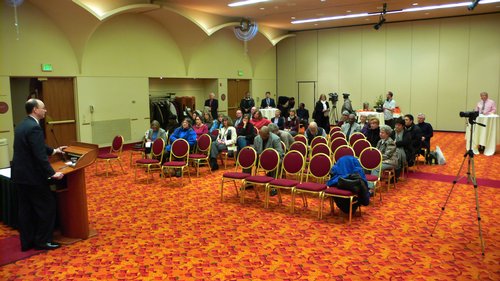
    At a third and final public meet-and-greet session for the candidates for Madison school superintendent on Thursday at the Monona Terrace Convention Center, Nerad spoke of his passion for helping students and his philosophies of educational leadership.
    Speaking to a crowd of about 70 community members, Nerad began his brief remarks by quoting Chief Sitting Bull, “Let us put our minds together and see what kind of life we can make for our children.”
    “I believe the ‘us’ must really be us — all of us — working to meet the needs of all children,” he said. Several times during his remarks, he emphasized that education is an investment in work force development, in the community and in the future.
    He also said that he believes it’s a moral commitment.
    Nerad talked about his efforts to create an entire district of leaders, and the importance of a healthy, collaborative culture in the schools. He said he saw diversity as “a strong, strong asset” because it allows kids to learn in an atmosphere that reflects the world they are likely to live in.


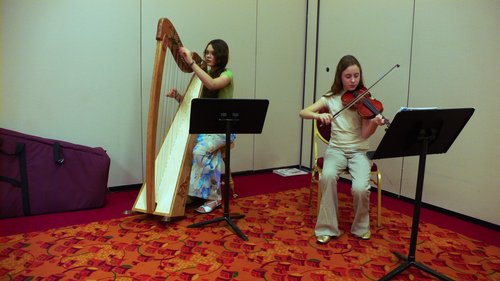
Emma Carlisle and Cora Wiese Moore provided music during the event. Both attend Blackhawk Middle School.

Share

Students flocking to online study as a flexible way to work for degree

Amy Rolph:

Forget those uncomfortable, plastic classroom chairs and their 12-inch, fold-down, wannabe-desk extensions.
Millions of college students around the country attend class from living-room sofas, kitchen tables, home offices and even park benches — part of an ever-escalating trend of attending school online.
The trend is being set largely by community colleges, with their propensity for nontraditional students who need an easier, more flexible way to earn degrees. The number of students taking online classes in Washington has jumped 75 percent in just four years.
In Seattle, North Seattle Community College is leading the way with a course catalog that lists an increasing number of online options.
Sabrina Hutchinson, a busy staffing account manager and recruiter who works as an event planner on the side, enrolled at North Seattle this quarter to see whether she could juggle two jobs and college classes. It had been more than a decade since Hutchinson attended college. She decided on the high-tech option: an online course examining how the study of dinosaurs overlaps with a number of scientific fields.

Share

Wis. Lawmakers Announce Deal to Keep Virtual Schools Open

AP:

Wisconsin lawmakers announced a compromise Thursday that would allow virtual schools to remain open and receive the same amount of state aid.
The breakthrough potentially resolves an emotional debate over online education that has been watched closely in national education circles. A court ruling and a stalemate in the Legislature had threatened to close a dozen Wisconsin schools starting as early as next year.
The compromise rejects a Democratic plan that would have cut the schools’ funding in half, after an outcry from school superintendents and other advocates. Instead, they would continue to get nearly $6,000 for each open-enrollment student.
The plan announced by Democratic and Republican lawmakers at an afternoon news conference also would add new regulations to ensure quality education at the schools. Rep. Brett Davis, R-Oregon, said the state’s dozen virtual schools would be allowed to continue operating with few changes.
“Allowing parents to choose virtual schools helps keep Wisconsin a national leader in education policy,” said Davis, chair of the Assembly education committee.

Share

Wisconsin Governor Doyle on Teacher Pay

Alan Borsuk:

It was definitely not one of his spotlighted points, but Gov. Jim Doyle, in his State of the State address this week, said he wants to see the overall pay structure of teachers in Wisconsin improved and he will make proposals in that direction when the next round of the state budget process starts a year from now. From the text released by the governor’s office, here is what Doyle said:
“We need high standards for our students and our teachers, but we have a compensation system that rewards neither. The system is broken. It’s a relic from a political fight a half a generation ago. From Waukesha to Wausau, school districts, parents, and taxpayers have all had enough.

Share

Virginia Parents Resist Math “Investigations” Curriculum

Ian Shapira:

A group of Prince William County parents is mounting a campaign to repeal a new elementary school math curriculum, using an Internet discussion group and an online petition to gather support and fuel criticism.
The group, whose members include parents from such elementary schools as Westridge, Ashland and Springwoods as well as teachers from various schools, plans to present the Prince William County School Board in February with its petition, which has about 500 names. Parents in the group, whose Web site ( http://www.pwcteachmathright.com) lists several of their complaints, say that the Investigations curriculum is putting their children behind grade level and is too convoluted.
The group’s formation comes right after the school system presented a year-long study of the curriculum that showed 80 percent of second-graders and 70 percent of first-graders are proficient on all 10 subtests of the Stanford Diagnostic Mathematics Test. The school system wants to continue studying the program and incorporate data from student performance on the state Standards of Learning exams.
School Board member Julie C. Lucas (Neabsco) said in an interview that she wants to examine the program inside a classroom to assess its effectiveness. She added that she has been hearing positive reviews from at least one principal in her district but that she wants to withhold making public comments until she visits schools.
The Investigations program has been undergoing a phased-in implementation since the School Board adopted its materials in 2006. In the 2006-07 academic year, kindergarten through second grade started the program; this year, third-graders began it; and next year, fourth-graders will use the material.
Investigations teaches children new ways of learning mathematics and solving problems. For instance, a student may not need to learn how to add 37 and 23 by stacking the figures on top of each other, and carrying the numbers. They may learn to add up the tens and then combine the seven and three to arrive at 60.

Related:

  • Math Forum Audio / Video
  • Madison School District’s Math Task Force
  • Clusty Search: Math Investigations
  • Teaching Math Right website:

    Why this website?
    …Because our children – ALL children – deserve a quality mathematics education in PWCS!!
    In 2006 PWCS directed mandatory implementation of the elementary school mathematics curriculum TERC – “Investigations in Number, Data, and Space” in all PWCS elementary schools. The traditional, proven, successful mathematics program was abandoned for a “discovery learning” program that has a record of failure across the country.
    Of all the VA Department of Education approved elementary math text/materials, “Investigations” least adequately supports the VA Standards of Learning. Yet it was somehow “the right choice” for PWCS children. Parents of 2nd and 3d graders are already realizing the negative impact of this program in only a year and a half’s worth of “Investigations.” Children subjected to this program end up two years behind where they should be in mathematics fluency and competency by the end of 5th grade. PWCS is committed to experimenting with our children’s future. We think our children and our tax dollars deserve better.

Share

Madison Superintendent Candidate James McIntyre’s Public Appearance


Watch a 28 minute question and answer session at Monona Terrace yesterday
, download the .mp4 video file (195mb, CTRL-Click this link) or listen to this 12.3MB mp3 audio file. Watch [64MB mpeg4 download – CTRL-Click]or listen to a short, informal chat. Learn more about the other candidates: Steve Gallon and Dan Nerad
Related Links:

  • Dr. James McIntyre, Chief Operating Officer – Boston Public Schools, Boston, Massachusetts [Clusty Search / Google Search / Live Search / Yahoo Search]
  • Desired Superintendent Characteristics
  • Five Candidates Named
  • Learn more about the three candidates
  • WKOW-TV
  • NBC15
  • Hire the best
  • Susan Troller:

    The students in an alternative high school in East St. Louis inspired Jim McIntyre when he was their teacher and continue to inspire him today as an administrator in the Boston public school system.
    McIntyre, 40, spoke late Wednesday afternoon at Monona Terrace to a crowd of around 50 people at the second of three public meet-and-greet sessions for the final candidates vying for the job of Madison school superintendent.
    “Teaching in East St. Louis was a life-changing experience,” McIntyre explained.
    “Many of my students were children who lived under very, very difficult circumstances. When you were able to eliminate some of the distractions they faced and get them engaged in school, they were smart, talented students,” he said.
    But for some, the odds were so difficult, and their lives so daunting that hope was hard to maintain.
    “My brightest student, my best student, took his own life because he just didn’t see any future. It’s with me every day,” McIntyre said.
    McIntyre, 40, is currently the chief operating officer of the Boston public school system, which has an operating budget of about $800 million. Before becoming chief operating officer about two years ago, McIntyre was budget director of the district, which serves about 57,000 students, for 8 years.
    He says he tries to bring a student-centered focus to his job managing facilities, food service, safety, transportation and all other aspects of his job.

Share

Employers Want New Way to Judge Graduates Beyond Tests, Grades

Mary Beth Marklein:

Colleges have been scrambling over the past year to respond to recommendations from a national commission that they be clearer to the public about what students have learned by the time they graduate.
Sometime in the next several weeks, for example, a national online initiative will be launched that allows families to compare colleges on measures such as whether they improve a student’s critical-thinking skills.
Tools for such measurements were recommended by the national commission, which was created by Education Secretary Margaret Spellings. The group released its recommendations in late 2006.
Now, a sampling of the nation’s employers have weighed in. And they are not terribly impressed.

Share

Madison Superintendent Candidate Steve Gallon’s Public Appearance


Watch a 28 minute question and answer session at Monona Terrace yesterday
, download the .mp4 video file (175mb, CTRL-Click this link) or listen to this 11.3MB mp3 audio file. Learn more about the other candidates: Jim McIntyre and Dan Nerad.
Related Links:

  • Dr. Steve Gallon, District Administrative Director – Miami/Dade Public Schools, Miami, Florida [Clusty Search / Google Search / Live Search / Yahoo Search]
  • Desired Superintendent Characteristics
  • Five Candidates Named
  • Learn more about the three candidates
  • WKOW-TV
  • NBC15
  • Hire the best
  • Susan Troller:

    As a life-long resident of southern Florida, school superintendent candidate Steve Gallon III grimaced, then grinned, when asked about how he liked Wisconsin weather.
    Known as a motivational speaker as well as a top teacher, principal and administrator in the Miami/Dade County public school system, Gallon quickly got back on message: He sees his experiences as an educator and a leader as a good match for the school district here, especially given its rapidly changing demographics and challenges in funding.
    He said the issue of underperforming students is not so much one of ethnicity but of economics.
    “What we have to do is embrace the reality that gaps in achievement exist,” Gallon said. Much of it, he said, has to do with economic disadvantage.
    “It’s the 800-pound gorilla in the room. You must acknowledge that work needs to be done before you’re going to be successful in dealing with it,” he said.
    Gallon, 39, is one of three finalists for the position of school superintendent here. He talked with community members and the media in a meet and greet session late Monday afternoon at Monona Terrace. There will be similar sessions today and Wednesday for candidates James McIntyre, chief operating officer for the Boston public schools and Daniel Nerad, superintendent of the Green Bay district.
    In responses to questions from the audience, Gallon applauded the notion of working closely with the resources of the University of Wisconsin, said he believed in the least restrictive environment for special education students and cautioned that problems facing schools in terms of funding weren’t likely to be solved easily.

Share

More Students Head Overseas In Freshman Year

Anjali Athavaley:

Callie Broughton had an eventful freshman year at Florida State University — in Spain.
Ms. Broughton, now a 20-year-old junior, opted to study abroad in Valencia through a program for first-year students at Florida State. For one year, she lived in an apartment and took classes with other FSU students at the university’s Valencia Study Center. In her spare time, she explored Europe.
There were downsides to going abroad the first year of college. “Missing Thanksgiving and stuff I had never missed in 18 years was definitely weird,” she says. But the benefits outweigh the disadvantages: “You’re getting to see the world at such a young age,” she says. Ms. Broughton, an education major, is now a student recruiter for the program.
Freshman year has typically been considered a time for students to settle in and try living on their own for the first time, plan their course schedules and decide on a major. Now, a growing number of schools are expanding their study-abroad options for first-year students. “This was something that was very rarely done at all up until a few years ago,” says Brian Whalen, president and chief executive of the Forum on Education Abroad and executive director of the Office of Global Education at Dickinson College in Carlisle, Pa.
Spending freshman year abroad presents challenges for younger students: easy access to alcohol, lack of supervision and, given the weak dollar, surprisingly high prices for basic goods and services.

Share

Top Issue For D.C. Schools? Parents.

David Nakamura and Jennifer Agiesta:

Seven in 10 D.C. residents believe the city’s public schools are performing inadequately, with the lack of parental involvement still cited as the biggest problem facing the nearly 50,000-student system, a Washington Post poll has found.

Share

Why Arts Education Matters

Stephanie Perrin:

For years, we have watched arts classes give way to the seemingly more “practical” courses that politicians and policymakers assume have a direct link to professional and economic success. But in an increasingly globalized economy, one in which an ability to innovate and to imagine new possibilities is critical to America’s ability to compete, we still train our young people very narrowly to work in an industrialized society.
As the country contemplates reauthorization of the federal No Child Left Behind Act, political and policy leaders must recognize that an education in and through the arts, as a central part of a total school program, allows schools to better address these challenges than a curriculum that defines success as aptitude in literacy and math only.

Share

Monona Grove Student Targeted In Racially Motivated Incident

Channel3000:

On Friday, several students got into an altercation, stemming from what some are describing as racially driven harassment.
Renee Roach said that her son, LeBraun, has been the targeted by a group of white students because of his race. LeBraun Roach is black. Roach said that her son has been taunted with racial slurs at school.
The day before the altercation at the school, several white students allegedly dropped a deer carcass on the windshield of a car at Roach’s home. The family said this wasn’t the first incident directed at their son. They said their driveway was blocked with Christmas trees just days earlier.
“My wife and kids are scared. That’s understandable when you find a dead deer in your driveway; you kind of wonder what else could be next. Are they going to throw something through the window?” said Arthur Roach, who found the deer carcass.

WKOW-TV has more.

Share

Wisconsin State Tax Receipt Growth Slows from 3% to 1%

Steven Walters:

Collections of the three most important Wisconsin taxes increased less than 1% in the second half of 2007 – falling far short of the 3% assumed growth needed to cover state expenditures this year and raising fears that deep spending cuts will be necessary.
Preliminary state Department of Revenue totals show the personal and corporate income tax and the sales tax brought in $5.13 billion from July through December, an increase of only 0.8% over the same period in 2006.
Those three taxes account for $9 out of every $10 in general-fund taxes.
Every unexpected 1% drop in collections from those taxes means state government will have $120 million less a year to spend. If tax collections don’t pick up, the shortfall would quickly wipe out the projected $67 million surplus Capitol leaders had hoped for this fiscal year and force reductions across state government.
Democratic Gov. Jim Doyle said he will warn of the economic downturn in his sixth “state of the state” message Wednesday. Many states are facing economic slowdowns, and California must fix a $14.5 billion shortfall, Doyle noted.
In his speech, Doyle said, “I’m going to talk pretty directly that this is a challenge that we have ahead of us, and we have to face up to it. Unless the national economy just totally goes into the tank, this is something we can manage and get through. But it’s going to be pretty tough.”

A reduction in the rate of State tax receipt increases makes it unlikely that there will be meaningful reform in redistributed state tax dollars flowing back to local school districts.

Share

Milwaukee School Board board objects to federal provisos

Alan Borsuk:

With millions of dollars in aid to schools at stake, the Milwaukee School Board has put the brakes on a main element of a plan to get MPS off the list of districts not measuring up under the federal No Child Left Behind law.
“I dare them to take money out of kids’ classrooms,” board member Jennifer Morales said. She has led the charge to oppose two steps required under a plan the board agreed to in September for dealing with MPS’ label of District Identified for Improvement under the federal law.
Morales said she had reached the point of refusing to cooperate any further with the requirements of what she called a failed law distracting MPS from doing things that actually improve student achievement.
“Now is the moment when we just say ‘enough,’ ” she said. “If we don’t hold the line and say, ‘No way, we’re not going to play this stupid game and waste the taxpayers’ money,’ who is?”
At a meeting Thursday night, board members reluctantly approved one of the steps in the DIFI plan, but halted the other. The board voted to delay hiring required under the plan, yet a disputed reading program will begin.

Share

Rethinking Principal Priorities of Training

Jay Matthews:

Cities across America have long hunted for tougher, better-trained principals to turn around struggling schools full of impoverished children. A major university and an influential group of educators in Texas are proposing a provocative way to meet the demand: They say urban principals of the future can skip the traditional education school credentials and learn instead about business.
The nascent movement toward an alternative path to school leadership is driven by the troubles facing schools in the District and elsewhere as would-be reformers argue that a key to raising student achievement is to overhaul personnel, from the central office down to the classroom. The change also comes amid growing debate over which of a principal’s many duties are most important. School leaders often feel like the combined mayor, police chief and schoolmaster of a town with a population of 1,000 or more.
Education schools, where most principals are trained, emphasize teaching and managing children. But organizers of a new Rice University program for “education entrepreneurs,” and some top education officials in the Washington area, say an inner-city principal cannot succeed without enough business smarts to manage adults. For example, they say, principals need to know how to recruit great employees and fire bad ones.
Rice, which has no education school, is launching a master’s of business administration program this year to prepare principals for several Houston schools.

Share

Clarion Call: “Windows on College Readiness”

“Your essay, which I have now read twice, is terrific.
You are way ahead of everyone on this.”
email 17 January 2008 from: Education Reporter Sara Rimer of the New York Times

This is the one she refers to:
The Bridgespan Group, working for the Bill & Melinda Gates Foundation, has just released a report called “Reclaiming the American Dream.” The study was intended to find out how to get more U.S. high school students prepared for and through college.
Much of the report is about getting kids to go to college, and it finds that if there is enough money provided, and if parents, peers, counselors and teachers say going to college is important, more high school students are likely to go.
The major weakness of the report, in my view, is its suggestions for the kind of high school work that will help students to do college work and to graduate.
One of the concluding statements is that “Inertia is particularly difficult to overcome when people are unaware that a problem exists or that the potential for solving it is real.” What a useful insight. What they recommend for high school students is “a rigorous college preparatory curriculum.” What could be wrong with that?
Two very simple and basic things are wrong with that. Current “college preparatory” curricula, including AP courses, do not include the reading of complete nonfiction books or the writing of serious research papers.
That is almost as if we had a crisis in preparing high school football players for success in college and recommended a standard preparation program which did not give them practice in running, blocking and tackling. ACT found last spring that 49 percent of the high school students it tested could not read at the level of college freshman texts. And the Chronicle of Higher Education reported on a survey in which 90 percent of college professors thought high school students were not well prepared in reading, writing and doing research. A true college education requires reading serious books and writing substantial papers although many schools have watered their requirements down. High school students should be ready for in-depth study.

(more…)

Share

A Discussion on School Models (Traditional, Charter and Magnet)


Madison Superintendent Art Rainwater and Rafael Gomez held an interesting discussion on school models recently [Announcement].

Read the transcript
Watch the Video
or listen to the event (41mb mp3 audio)


Related:

Share

Martin Luther King Photo Essay

Time Magazine:

King’s unique vision reshaped the landscape of American politics and society. In his brief life, he redefined what it means to be black in the United States, and, by extension, what it means to be an American.

Share

Education Push Yields Little for India’s Poor

Somini Sengupta:

With the dew just rising from the fields, dozens of children streamed into the two-room school in this small, poor village, tucking used rice sacks under their arms to use as makeshift chairs. So many children streamed in that the newly appointed head teacher, Rashid Hassan, pored through attendance books for the first two hours of class and complained bitterly. He had no idea who belonged in which grade. There was no way he could teach.
Another teacher arrived 90 minutes late. A third did not show up. The most senior teacher, the only one with a teaching degree, was believed to be on official government duty preparing voter registration cards. No one could quite recall when he had last taught.

Share

Two-Year Colleges Go Courtin’ Overseas

Jane Porter:

Marketing an obscure Wyoming community college to Vietnamese high schoolers presents special challenges. Many have never heard of Wyoming, and, if they have, it’s usually thanks to the movie Brokeback Mountain. So when recruiter Harriet Bloom-Wilson from Northwest College in Powell, Wyo., visits the International High School in Ho Chi Minh City, she focuses on the college’s nurturing, small-town environment. That’s what sold “Grace” Thienan Nguyen, 19. The business major also notes she can transfer to a full-fledged university.
An American Ivy League education has long been prized by wealthy families in Asia, the Middle East, and elsewhere. Now more and more middle-class kids, whose English-language skills won’t pass muster at universities, are discovering two-year programs. Keen to attract these kids and stand out in a crowded field, schools are ramping up their global marketing efforts.
It’s no secret why Nguyen and her peers are descending on community colleges. Besides being easier to get into than universities, they also cost far less. “The notion of smart shopping for international education has really begun to spread,” says Peggy Blumenthal, executive vice-president of the Institute of International Education.

Share

Pioneering research shows “Google Generation” is a myth

British Library [1.5MB PDF]:

  • All age groups revealed to share so-called “Google Generation” traits
  • New study argues that libraries will have to adapt to the digital mindset
  • Young people seemingly lacking in information skills; strong message to the government and society at large

A new study overturns the common assumption that the “Google Generation” – youngsters born or brought up in the Internet age – is the most web-literate. The first ever virtual longitudinal study carried out by the CIBER research team at University College London claims that, although young people demonstrate an apparent ease and familiarity with computers, they rely heavily on search engines, view rather than read and do not possess the critical and analytical skills to assess the information that they find on the web.

Share

Seattle school parents pressured to pay

Alison Krupnick:

It’s time to call attention to a key issue plaguing Seattle Public Schools — class size. Despite public comments from district officials challenging the relevance of class size to academic achievement, every teacher I’ve spoken with has cited large class size as one of the biggest impediments to effective pedagogy.
In 2000, voters approved Initiative 728 by nearly 72 percent. This measure provided state funding to reduce class sizes. But, our state’s piecemeal approach to education funding has proved ineffective. Seven years later, class sizes in Seattle remain high.
The district’s response to underfunded schools has been larger classes and leaner services. Frustrated by inadequate state funding and district allocation of these limited funds, parents who “believe” in public schools are put in the difficult position of having to subsidize them.
Though we’re supposed to pay for enhancements, PTAs routinely “buy down” class size by supporting volunteer and paid-tutor programs so that the adult-student ratio in the classroom can be reduced and teachers are able to work with smaller groups, thus meeting the needs of students at both ends of the spectrum and in-between. At our school, “academic support” makes up roughly 50 percent of our PTA budget.

Share

And Then There Were 3: Finalists for the Madison Superintendent Job

Madison Board of Education:

Following a first round of interviews with the five semifinalists, the Board of Education has selected three candidates as finalists for the position of Superintendent of the Madison Metropolitan School District.
In alphabetical order, the three candidates are:
Dr. Steve Gallon, District Administrative Director – Miami/Dade Public Schools, Miami, Florida [Clusty Search / Google Search / Live Search / Yahoo Search]
Dr. James McIntyre, Chief Operating Officer – Boston Public Schools, Boston, Massachusetts [Clusty Search / Google Search / Live Search / Yahoo Search]
Dr. Daniel Nerad, Superintendent of Schools – Green Bay Area Public School District, Green Bay, Wisconsin [Clusty Search / Google Search / Live Search / Yahoo Search ]
The Board interviewed the candidates last evening and today.
Each of the three finalists will spend a day in Madison on January 22, 23 or 24. In addition to a second interview with the Board, the candidates will visit some schools and see parts of Madison, talk to attendees at the Community Meet and Greet, and speak with district administrators.
The community is invited to the Meet and Greets scheduled from 4:00 to 5:15 p.m. at the Monona Terrace Community and Convention Center on January 22, 23 and 24. In the first hour, attendees will be able to briefly meet and greet the candidate as part of a receiving line. From 5:00 to 5:15 p.m. each day, the candidate will make a brief statement and might take questions. The session will end promptly at 5:15 p.m.
The schedule for visits by the finalists:
Tuesday, January 22 Steve Gallon
Wednesday, January 23 James McIntyre
Thursday, January 24 Daniel Nerad
On January 26 or 27, the Board will identify a preferred finalist. To ensure the Board’s research will be as comprehensive as possible, a Board delegation is expected to visit the finalist’s community during the week of January 28. The announcement of the appointment of the new Superintendent is scheduled for early February.

Related:

(more…)

Share

Madison School Superintendent Finalists Named Later Today

Susan Troller:

And then there will be three.
Members of the Madison School Board will narrow the field of candidates for the next superintendent of the school district from five to three late today. School Board President Arlene Silveira said she expected that the three final candidates would be named sometime late this afternoon or early evening, following three candidate interviews today and two on Friday.
The five candidates are: Bart Anderson, county superintendent of the Franklin County Educational Service Center in Columbus, Ohio; Steve Gallon, district administrative director of the Miami/Dade Public Schools; James McIntyre, chief operating officer of the Boston Public Schools; Daniel Nerad, superintendent of schools, Green Bay Public Schools and Marguerite Vanden Wyngaard, chief academic officer, Racine Public School District.
The Capital Times asked candidates why they would like to come to Madison and what accomplishments have given them pride in their careers. Anderson, McIntyre and Vanden Wyngaard were interviewed by phone, and Nerad responded by e-mail. Steve Gallon did not respond to several calls asking for his answers to the two questions.

Related:

(more…)

Share

Parents have new tool to help choose among MPS schools

Dani McClain:

Olusanya is one of thousands of parents scrambling to find good school fits for their families during MPS’ three-week enrollment period, through next Friday.
A new tool in the search this year is the Milwaukee School Chooser, a 100-plus-page directory of MPS schools and charters, independent charters and private schools, published this month by the local affiliate of the San Francisco-based Great Schools organization.
Milwaukee is at the front of the national conversation about parental choices largely because of its charter schools and the Milwaukee Parental Choice voucher program, said Jodi Goldberg, who directs Great Schools’ local office, which opened in November.
“It seemed like a great opportunity to come in and work on behalf of parents so that no matter what their needs are, they know what’s available to them,” said Goldberg, a longtime Milwaukee education activist who is married to MPS School Board member Danny Goldberg.
Great Schools’ efforts in Milwaukee are funded by the Walton Family, Joyce and Robertson foundations.

Share

Suspending Students is Exactly the Wrong Idea

Joel McNally:

We talk so much about the value of education and the need to do something to reduce dropouts that it may surprise some people that nearly half of all the freshmen in the Milwaukee Public Schools have been ordered not to come to school.
In fact, beginning in the sixth grade, more than a third of every grade level until senior year is suspended and told to stay away from school for up to three days at a time. Many are repeatedly told not to attend school.
The good news is that Milwaukee Superintendent William Andrekopoulos, after more than five years on the job, has finally noticed the destructive practice he has been presiding over and decided to do something about it.
Andrekopoulos says Milwaukee may have the highest suspension rates in the country. He has asked outside educational experts, the Council on Great City Schools, to examine Milwaukee’s suspension policies and recommend ways to keep more kids in school.
The highest in the country. Hmmm. That sounds familiar. What else have we read recently about Milwaukee Public Schools leading the country? Oh, we remember now. MPS also had the lowest reading scores in the country.

Share

Migration has once again become a touchy political issue

The Economist:

UNTIL recently, politicians who inveighed against immigration could expect support from an angry minority of voters in many Western countries. Some, like Australia’s Pauline Hanson, won moments in the limelight and then faded away. Others got closer to political power: in France in 2002 the anti-immigrant Jean-Marie Le Pen reached the run-off stage of the presidential election; Denmark’s centre-right government has been kept in office with support from an anti-migrant party; and in Austria in 2000 Jörg Haider’s far-right party joined a coalition government. On each occasion this was controversial, but could be explained as a quirk of the electoral system, not a reflection of widespread anti-migrant sentiment.
Today, however, hostility to immigration is becoming mainstream. Britain’s prime minister, Gordon Brown, whose Labour government has allowed remarkably high rates of immigration for years, recently called for “British jobs for British workers”, a meaningless slogan previously used by the far-right National Front. The opposition Conservatives’ leader, David Cameron, says he wants to see “substantially lower” immigration. Both government and opposition say they will keep out workers from Bulgaria and Romania, along with those from any other new EU members, for as long as possible.

Share

Teaching assistant charged with student sexual assault

Mike Miller:

A Waunakee teaching assistant, put on unpaid leave recently after being caught up in a federal investigation into child pornography, was charged today with repeated sexual assault of a child for having an affair with a freshman student while he was working at Madison La Follette High School.
Anthony Hirsch, 32, admitted to police during the child porn investigation that he had a year-long affair with the girl, which included sexual activity. The girl, now 19, confirmed that for police.
Hirsch, along with the sexual assault charge, was also charged today with knowingly possessing child pornography. He faces a possible maximum term of prison and extended supervision of 60 years on the sexual assault charge, and a maximum of 25 years of prison and extended supervision on the child pornography charge.
The criminal complaint filed today does not say how police determined that Hirsch and the La Follette student were having an affair, but during the course of the investigation into the child pornography allegations police asked Hirsch if he had ever had a sexual relationship with a child. Documents filed in support of obtaining search warrants for the residences of those thought to be involved in child pornography often quotes studies which show those who are involved in viewing child pornography are likely to have assaulted children in the past.

Share

Pennsylvania Acts to Bolster High School Requirements

Sean Hamill:

A requirement that students pass a series of state exams before being allowed to graduate from Pennsylvania’s public high schools was unanimously approved Thursday by the State Board of Education.
The requirement faces a yearlong review process involving, among other groups, the state House and Senate Education Committees. If the measure survives, Pennsylvania will join 22 other states with similar requirements, according to the Center on Education Policy, an advocacy group in Washington.
Four additional states — Arkansas, Maryland, Oklahoma and Washington — will require graduation exams by 2012, two years before the Pennsylvania requirement would take effect. Connecticut is debating the idea.
Policy makers like the requirement because “communities are telling them that American kids are leaving high school without adequate skills,” the education center’s president, John F. Jennings, said in a telephone interview on Wednesday.

Share

More on Wisconsin Virtual Schools

A Reader’s comment:

The article about Virtual Schools seems a bit tabloidish. It certainly paints a very different picture than the Milwaukee Journal Sentinal article. 15% local enrollment is very different from the 100% local enrollment that this author says will be enforced. She also doesn’t seem to consider the fact that it’s not surprising that WEAC would strongly support a former teacher regardless of the Virtual Schools issue. Maybe she was being sarcastic? Maybe she was trying to make a point about the $500 thing (which I agree is ridiculous)? All I know is that John Lehman was a good teacher who did all the extra stuff like coaching groups of high schoolers in the Model U.N. competitions. I also support Virtual Schools. I just don’t know what the exact right way to do that is. Should they get exactly the same amount as a brick and mortar school? Probably not. What is the right percentage? I dunno. Does a requirement on percentage local enrollment help or hinder the students? I dunno. Please describe why 15% local enrollment is harmful. Please describe why 50% of the usual dollar amount is too little. Facts will convince me. Bashing a good teacher and really nice guy does nothing to convince me.

James Wigderson:

The march on Madison to restore Wisconsin Virtual Academy and protect Wisconsin’s schools had over 1100 people participate today. I received this note from Brian Fraley that I thought I would pass along. It sounds like turnout even exceeded Brian’s hopes and expectations:
We had to cut off pre-rally registration at the concourse ballroom before all of three Milwaukee Buses arrived. WE had 975 registered on site today, 140 on Milwaukee buses. So we easily had a crowd of more than 1100 thats not including walk ups. In 6 days!
Out of a safety concern we asked 150 or so to head back to the Concourse and head to capitol at 2 instead. And it still took 15 minutes for the throng to enter the Capitol!

Share

WEAC wins hands down. What else is new?

Jo Egelhoff:

Unbelievable nerve. One Wisconsin Now, one of many mouthpieces for the state teachers union is badmouthing Assembly Education Committee Chair Rep. Brett Davis. Davis authored legislation that would make minor modifications to state statutes, allowing virtual schools to operate without question (and without continuous challenge in the courts by WEAC).
So One Wisconsin Now wants to discredit Rep. Davis by citing 2 contributions – totaling all of $500 – from officers of the company that operates the Wisconsin Virtual Academy.
So Rep. Brett Davis can be bought off for $500. That’s ridiculous on its face. The sophomoric effort by One Wisconsin Now to question Davis’ integrity – and apparently thereby question the validity of his legislation is whining in the school yard.
$142,525. Now that’s serious money.
A FoxPolitics piece last week summarized WEAC’s repeated challenges – and current court victory over Wisconsin’s public virtual schools. The issue is competing bills – corrective legislation introduced by Rep. Davis, mentioned above, and a bill introduced by Sen. John Lehman that would slash funding for online schools by 50% and would disallow open enrollment from outside a school district.
So just how badly does WEAC want to shut down virtual schools? For his 2006 Senate race, WEAC made independent expenditures favoring Senator Lehman in the amount of $142,525. Wow. That’s huge.

Hundreds of Wisconsin students ask lawmakers to save virtual schools.
Additional Commentary here and here.

Share

Dropout Solutions That Work

Jay Matthews:

am starting this column with a chart, something journalists are never supposed to do. I found it on page 179 of a new book with one of those titles, “The Price We Pay: Economic and Social Consequences of Inadequate Education,” that scholars consider necessary but discourages readers. I beg you to stay with me, because this particular chart is surprising and important (I have changed the formatslightly to make it easier to absorb).
Table 9-1. Interventions that Demonstrably Raise the High School Graduation Rate
(Intervention — Extra high school graduates if intervention is given to 100 students)
1. Perry Preschool Program (1.8 years of a center-based program for 2.5 hours per weekday, child-teacher ratio of 5:1; home visits; group meetings of parents.) 19 extra graduates.
2. First Things First (Comprehensive school reform based on small learning communities with dedicated teachers, family advocates and instructional improvement efforts.) 16 extra graduates.

Amazon Link. Clusty Search.

Share

Meet and Greet the 3 Madison Superintendent Candidates

Via a Ken Syke email:

You are invited to meet and greet each of the three finalists for the Superintendent position of the Madison School District.
The Board of Education has scheduled a Community Meet and Greet for each of the finalists on January 22, 23 and 24. The sessions will be from 4:00 to 5:15 p.m. at the Monona Terrace Community and Convention Center [Map] in rooms on Level 4.
One finalist will be present each day.
In the first hour, you will be able to briefly meet and greet the candidate as part of a receiving line. From 5:00 to 5:15 p.m. each day, the candidate will make a brief statement and might take questions. The session will end promptly at 5:15 p.m.
No RSVP is necessary.
This weekend, the Board will select the three finalists from among five semifinalists named on January 7.
The community is invited to this Meet and Greet so please forward this to anyone who might be interested in attending.
The announcement of the new Superintendent is scheduled for early February. For more information about the Superintendent selection process, see the MMSD Today article at http://www.madison.k12.wi.us/today/756.htm.
Thanks for your interest in and support of the Madison School District.

Related:

Share

State Education and School District Data

Schooldatadirect:

The State Education Data Center (SEDC) is a new service of the Council of Chief State School Officers, funded by the Bill & Melinda Gates Foundation as part of the Council’s National Education Data Partnership. The SEDC will position itself as a leading voice on public education data and will focus on two work strands: (1) serving as a national advocacy leader for quality education data collection, standards, and use; and (2) serving as the nation’s provider of a free, easy-to-use website featuring state education data and analytic tools.

Share

The Translators: The Media and School Choice Research

Andrew Rotherham:

The Media play a pivotal role in determining how and why research influences public opinion with regard to policy. Political scientists Shanto Inyengar and Donald Kinder have shown through experimental research involving televised news how the presentation of news stories can have a powerful impact on what Americans think about issues.1 Prominent columns and articles, especially in the big East Coast papers, influence political behavior among the policy and political elites and offer signals about elite thought and opinion on key issues. The debates about the research on school choice illustrate the broader challenges the media face when translating research for public consumption.
At a superficial level, school choice is a relatively easy debate for the media to cover. It can be simplified into arguments for and against vouchers, charter schools, and altering the definition of “public” schooling, and these arguments are often boiled down to an easy framework of “public” versus “private.” Likewise, the question of increases in test scores fits readily into a debate about whether school choice is “working” or not. While such framing greatly oversimplifies the issues, it nonetheless drives much of the coverage precisely because it offers easy contrasts.

Share

In Praise of Nerds

The Economist:

“AND then, just to show them, I’ll sail to Ka-Troo, and bring back an It-Kutch, a Preep, and a Proo, a Nerkle, a Nerd, and a Seersucker, too!” That typically nifty passage comes from Dr Seuss’s “If I Ran the Zoo”. The book was published in 1950 and contains the first use of the word “nerd”. How very unfortunate that Dr Seuss, whose verbal pyrotechnics have given so much pleasure to so many children, should also have given them, however innocently, the ghastly label “nerd”.
The precise meaning of the word (in its post-Seuss sense) is hard to pin down, as David Anderegg, a child psychologist and academic, argues in this thoughtful and warmly sympathetic book. It denotes a bundle of different qualities: “some combination of school success, interest in precision, unselfconsciousness, closeness to adults and interest in fantasy.”
But the word is no less powerful for its vagueness. Children intuitively understand what a nerd is, with terrible clarity. The bottom line, Mr Anderegg reckons, is that American kids grow up knowing that “nerds are bad and jocks are good”. (His focus is exclusively American: in many other countries academically high-achieving children are revered by their peers.) And this matters because these stereotypes become the basis for choices that children make about their identity and future.
Striving to do badly
Mr Anderegg draws on scores of interviews with his young patients to show what being called a nerd can do to a child. Some are driven to despair or suicide. But most cope by bending to peer pressure. “The kids who will really be hurt by the nerd/geek stereotypes are the kids who will shut down parts of themselves in order to fit in.” When these bright children start switching off their own lights to avoid being branded nerds, it is bad news for everyone—and for the economy. Mr Anderegg points to declining school performance and college enrolment in science subjects in America, and to the fact that employers in certain fields are now having to look abroad to find the best graduates.

Nerds: Who They Are and Why We Need More of Them @ Amazon. Clusty.

Share

Wisconsin at Center of National Debate Over Virtual Schools

AP:

Seventh grader Marcy Thompson is caught in the middle of a national policy debate that could close her school and help determine the future of online education.
Thompson is one of a growing number of students nationwide trading home schooling and public schools for virtual ones where licensed teachers oversee her progress from afar.
She is enrolled in the Wisconsin Virtual Academy, a charter school based north of Milwaukee, but spends her days 130 miles away at home studying everything from literature to algebra under her mother’s guidance and a curriculum provided by the school district.

Share

Racine academic chief Marguerite Vanden Wyngaard, eyes two superintendent posts

Dani McClain:

Racine Unified’s academic director heads into her next round of interviews for the Madison Schools superintendent job on Friday.
Marguerite Vanden Wyngaard, who joined Racine Unifed in November 2006 after a stint as an assistant superintendent in Ann Arbor, Mich., is one of five semi-finalists for the Madison job, she said Monday.
Vanden Wyngaard and Green Bay Schools Superintendent Daniel Nerad are the two Wisconsin-based educators in the running, the Green Bay Press-Gazette reported last week. Schools officials from Miami, Fla. and Boston have also made it to the semi-final round. The Madison school board will next narrow the field to three candidates, Vanden Wyngaard said.
Sue Kutz, vice president of Racine Unified’s school board, said she was shocked to hear that Vanden Wyngaard was interested in the Madison job. Racine Unified is on the hunt for a replacement for interim superintendent Jackson Parker, who stepped in after Tom Hicks resigned in August.
“She has expressed to me several times that she wanted to be superintendent of Racine Unified, so I was kind of surprised,” said Kutz, who is chairing the search committee for the district’s new leader.
Vanden Wyngaard said she still plans to throw her hat in the ring for the Racine job and will meet the February 20 application deadline. She acknowledged that her interviews in Madison could be viewed as a lack of commitment to her current employer, but said she’s trying not to worry much about whatever speculations might be afloat.
“I have a mission for urban education, so I’m looking to be in a place that will help me fulfill that goal,” Vanden Wyngaard said Monday. “If the community and the board believe that my candidacy here is important and that I can lead the district toward strategic change, then it won’t matter. If I’m the person for the job in Racine, it’ll happen.”

Vanden Wyngaard is one of five candidates for the Madison Superintendent postion.

Share

Latest MMSD Today


is available here. This issue includes a look at graduation rates.

Share

What is the Evidence that Acceleration Works?

Belin-Blank Center @ the University of Iowa:

The international educational community needs a comprehensive collection of articles on research and policy in acceleration. To fulfill IRPA’s mission to serve as that clearinghouse, we will use this Web site to organize, reflect on, and make available research on acceleration.
As a starting point, we make available the 11 articles that form the research core of Nation Deceived, provide links to National Center for Education Statistics (NCES) studies on acceleration options for high school students, and list titles of books, handbooks, and book chapters that touch on some aspect of acceleration.
This site is in its infancy. As it matures, it will encompass extant research as well as new work from IRPA and researchers dedicated to providing answers about acceleration.

Share

Madison police respond to gun call at Sherman Middle School

Jesse Russell:

All is well after an incident earlier today when police responded to a “gun” call at Sherman Middle School. According to the Madison Police Department “an 11-year-old student discharged a cap gun inside the boy’s locker room.” While the gun was lime green students passing by only heard the sound of the cap gun discharging. Full report below:

Share

New Jersey Overhauls School Finance

Craig McCoy:

Over the objections of big-city Democrats and suburban Republicans, Gov. Corzine’s sweeping overhaul of how New Jersey pays for public education passed the Legislature last night.
Corzine and his allies in the Legislature say the measure would more fairly distribute nearly $8 billion in annual state education aid.
The bill would hike this year’s state education funding by 7 percent. Some districts would see an increase of as much as 20 percent, and all would get at least a 2 percent increase.
But urban lawmakers bitterly predicted the bill would harm 31 disadvantaged school districts, including those in Camden, Newark and others that have received tens of millions in extra school aid in recent years.
Republicans, meanwhile, criticized a part of the law that would for the first time allocate a big chunk of state special-education aid based on the relative wealth of communities.
As a result, affluent schools would get less per handicapped student, under the theory that local taxpayers can more easily pick up that cost.
As Corzine pushed to get the bill through yesterday on the last day of the lame-duck legislative sessions, its passage became a cliff-hanger in the Senate.
There, Democratic leaders initially could only muster 20 “yes” votes – one short of a majority – after the chamber’s six African American senators, all Democrats, linked up with Republicans to vote against the measure.

Share

DOUBLE VISION

When was the last time a college history professor made it her business to find out the names and schools of the best high school history students in the United States?
When was the last time a college basketball coach sat in his office and waited for the admissions office to deliver a good crop of recruits for the team?
When was the last time a high school history teacher got scores of phone calls and dozens of visits from college professors when he had an unusually promising history student?
When was the last time a high school athlete who was unusually productive in a major sport heard from no one at the college level?
Not one of these things happens, for some good reasons and some not-so-good reasons.
Before you think of the reasons however, we should be aware that sometimes the high school coach who is besieged with interest from the colleges is the same person who is ignored by colleges as a teacher. And sometimes the athlete who gets a number of offers from college coaches is the same person who, as an outstanding student, draws no interest at all. Not only do they observe this demonstration of our placing a higher value on athletics than on academics at the high school level, but their peers, both faculty and student, see it as well, and it teaches them a lesson.
Now it is obvious that if college coaches don’t scramble for the best high school athletes they can find, they may start to lose games, and, before long, perhaps their jobs as well.

(more…)

Share

Math 234 at the University of Wisconsin Madison for High School Students

Via Ted Widerski’s email:

The UW Math dept has decided to offer a section of Math 234 (3rd semester Calculus) at 7:45 am in the fall of 2008. This course will be taught by Professor Andreas Seeger and will meet at 7:45 – 8:35 on MWF for 3 credits. The UW has chosen this time as being somewhat convenient for high school students, as many students can take this course and return to their high school in time for 2nd period.
Madison Schools have 26 students in grades 11 or below that will be completing Calculus II this year. Combined with students in neighboring school districts, there is a possibility that a large percentage of the class will be made of area high school students.
For those students that plan to elect this course, each District has a deadline for accessing the Youth Options [Clusty | Google] program. In Madison, that deadline is March 1. Therefore, I would encourage you to speak with students and parents in your building and make them aware of this opportunity. Also, please pass on this info to other key people in your building such as guidance counselors, math department chairs and Calculus teachers.
If you have questions or concerns, feel free to contact me.
Ted Widerski
Talented and Gifted Resource Teacher
Madison Metropolitan School District
545 W Dayton Street
Madison, WI 53703
(608)442-2152

Related: Credit for non-mmsd courses.

Share

Sun Prairie High group supports black students

Pamela Cotant:

Alisha Berns ‘ enthusiasm for the Sun Prairie Scholar Society speaks volumes.
“I really get excited. I don ‘t sleep well the night before, ” said the Sun Prairie High School junior. “It ‘s a nice getaway. I ‘m very comfortable being here. ”
Sarah Benish, a school counselor at Sun Prairie High School, wanted to increase black students ‘ participation in advanced level courses, so she did some research and started the Sun Prairie Scholar Society last year. The student members are selected on academic success.
The society, which is called S Cubed for short, supports the academic success of high-achieving black students through group advising, supporting individual student goals, providing a space for students to connect, assisting students in reaching their highest academic potential and helping students find purpose in their learning.
“I really wanted to support these students and help them access opportunities, ” said Benish, who is in her third year at the high school. “This group has been a highlight of my work here and I have learned so much from the students. “

Share

Where Have all the Students Gone? An Update

An update to Barb Schrank’s November, 2005 post:

Comments from a reader:

At $6,000 per child that’s about $16 million per year. At $9,000 per child, that’s about $23 million per year. If we kept 332, that would be $2-3 million more per year.
Also, MMSD not only lost students, which has a negative effect on what the district gets under revenue caps, we’ve increased our low-income population, which means that for every dollar the district gets, more of those dollars need to be spent on non-instructional services.
If the district does not consider the economic development implications of its decisions, we’re likely to

  • see more go to school outside MMSD, or
  • for the non-low income students who go to school here increased family dollars will be spent on private aspects of education- lessons, tutoring, etc.

Madison’s population in 2000 was 208,054 and is estimated to be 223,389, according to the census bureau. Madison’s poverty rate is estimated to be 13%, according to the Small Area Estimates Branch [Website].

District Enrollment
2000-2001
Enrollment
2006-2007
Per Student Spending (06/07 Budget) Administrators Total Staff ACT % Tested (05-06) ACT Comp Score
Madison 25,087 24,755 $12,422 91.5 3544.6 61.1 24.2
Verona 4222 4540 $12,113 22 603.4 69.6 23.6
Middleton-Cross Plains 5125 5640 $12,822 21 756.3 73 24.5
Waunakee 2836 3357 $11,987 14 427.6 70.7 23.3
Sun Priarie 4776 5946 $11,238 20 741.3 62.6 23
McFarland 1951 2017 $11,853 9.5 251.2 64 23.7
Monona Grove 2702 2885 $12,289 13 388 71.4 22.6
Oregon 3430 3588 $11,572 15 465.1 59.2 23.2

Data sources:

Thanks to a number of readers for the updated information.

Share

Principals’ Life Lesson 23: Why new programs don’t work

Ms. Cornelius:

Here’s the point: administrators either respect their teachers and staff as professionals, or they don’t. Professionals are given the tools they need to succeed by their management. Time, support and responsibility are three of the most important tools managers give to those they supervise. Administrators, you are managers for your teachers and staff. You would think I wouldn’t have to say that, either, but I DO.

Indeed.

Share

Tutoring the 3-Rs and developing other “literacies”

Bob Parvin:

This site is about literacy–basic reading and writing and numeracy, and other “literacies:” celestial, geographic, economic, biological, nutritional, etc.
I am a retired resident of San Francisco with a long-time interest in child and adult literacy. I am offering my free program on the Web to help parents and tutors teach children to read, write, spell, and reckon. I have also included a program on English grammar and composition for good measure. In addition I have Web pages reflecting my interest in other subjects in which I want to be “literate.”
If you have an interest in any these subjects, I invite you to check them out:

Tutoring for Mastery of Reading and Writing and Arithmetic
Tutoring English Grammar and Composition
Finding and Reading eBooks
Beginning Urban Skywatching
Physical Geography of the U.S.
Economic Literacy
Global Warming and Warning
Approaching the Bible
Islam: One American’s Findings
DNA: Life’s Common Denominator
Nutrition: What should we eat?
Help for Microsoft Windows XP
Bread Machine Baking
Tips for No-Knead Bread Baked in a Pot
Links to Video Performances of Great Arias
The Home Library, an electronic home reference library
Recollections of an Old Farm Boy

Share

Teacher Essay Brings $60,000 Award

Susan Troller:

An enterprising teacher at Stephens Elementary School on Madison’s west side wrote a prize-winning essay that will bring her school $60,000 worth of laptop computers, digital camera/camcorders, computer monitors and software from Samsung Electronics and Microsoft.
Allison Milley, who is a special education teacher for fourth- and fifth-grade students, wrote a 100-word essay describing how her students would benefit from the high tech products. Over 8,200 schools entered the contest.
“The kids were really excited when they found out we were chosen,” Milley said. She said that she heard about the contest through a listserve for parents, students and teachers who are involved with special education.
Milley explained that special education students often find it especially helpful to use computers in learning to read and write.

Share

Ed schools put diversity before math

Jay Greene & Catherine Shock:

A good education requires balance. Students should learn to appreciate a variety of cultures, sure, but they also need to know how to add, subtract, multiply, and divide. Judging from the courses that the nation’s leading education colleges offer, however, balance isn’t a goal. The schools place far more emphasis on the political and social ends of education than on the fundamentals.
To determine just how unbalanced teacher preparation is at ed schools, we counted the number of course titles and descriptions that contained the words “multiculturalism,” “diversity,” “inclusion,” and variants thereof, and then compared those with the number that used variants of the word “math.” We then computed a “multiculturalism-to-math ratio”—a rough indicator of the relative importance of social goals to academic skills in ed schools. A ratio of greater than 1 indicates a greater emphasis on multiculturalism; a ratio of less than 1 means that math courses predominate. Our survey covered the nation’s top 50 education programs as ranked by U.S. News and World Report, as well as programs at flagship state universities that weren’t among the top 50—a total of 71 education schools.
The average ed school, we found, has a multiculturalism-to-math ratio of 1.82, meaning that it offers 82 percent more courses featuring social goals than featuring math. At Harvard and Stanford, the ratio is about 2: almost twice as many courses are social as mathematical. At the University of Minnesota, the ratio is higher than 12. And at UCLA, a whopping 47 course titles and descriptions contain the word “multiculturalism” or “diversity,” while only three contain the word “math,” giving it a ratio of almost 16.

Share

West Side Parents Angry About Proposed School Boundaries Charge

channel3000.com:

Some in a big Madison neighborhood are outraged over the latest plan to change West Side school boundaries to make way for a new school opening near Hawk’s Landing next fall.
Residents in the Valley Ridge neighborhood are pledging to start a petition drive and to do whatever it takes to stop the proposal.
The new, yet-to-be-named school on the far West Side has prompted officials to try to rearrange boundary lines on the West Side. But, the boundary lines are different than initially proposed and some in Valley Ridge said they are in shock.
“I feel very deceived,” said parent and homeowner Beth Todd, vice president of the Glenn Stephens PTO.
Todd, her husband and other parents said they were always told their children would not be affected by the new boundary changes in meetings with school officials before the referendum for the new school passed.
Currently, Valley Ridge children go to Stephens school as well as Jefferson Middle School. But under a new proposal, that would all drastically change, and, some contend, for no good reason.

Share

Sparring over (Wisconsin) online schools

Andy Hall:


Key Republican and Democratic leaders launched competing efforts on Thursday to rewrite Wisconsin ‘s laws for online schools, just weeks before families begin filling out applications to transfer from their traditional home school districts.
Their proposals, described as attempts to clarify confusion after a recent court ruling, quickly came under attack from the opposing party.
Rep. Brett Davis, R-Oregon, chairman of the Assembly Education Committee, proposed that online schools, also known as virtual schools, be allowed to continue operating with few restrictions. About 3,000 Wisconsin students attend online schools.
Sen. John Lehman, D-Racine, chairman of the Senate Education Committee, said he ‘s introducing a measure restricting online schools to half of the approximately $6,000 in state aid they currently receive for each student who transfers from a home district.
“I really believe it ‘s important to wring the profits out of these operations, ” said Lehman, who contends that Davis ‘ approach forces taxpayers to pay too much to online schools such as the Northern Ozaukee School District ‘s Wisconsin Virtual Academy. The district north of Milwaukee, with curriculum from a Virginia-based firm, K12 Inc., operates the online school that was the focus of the recent court ruling.

Share

A look at the UW’s People Program

Anita Weier:

“It’s ultimately not about what color you are. Everybody brings something to the university community.”
Cydny Black was reflecting on her first semester at the University of Wisconsin-Madison, after starting out last fall with a scholarship from the Pre-college Enrichment Opportunity Program for Learning Excellence (PEOPLE) program, which recruits, readies and funds tuition for minority and low-income students for the university.
One of three PEOPLE students from Madison high schools interviewed by The Capital Times at the start of the fall semester, the 18-year-old African-American said she has really enjoyed herself on a campus that is more than 80 percent white.
She is also succeeding in school. She achieved a 3.75 grade point during the semester, higher than her 3.3 average in high school.
“Anyone who says you can’t do it if you didn’t in high school is wrong,” she said.
The PEOPLE program was established because UW-Madison has struggled for years to attract and retain minority students through graduation. But all three students interviewed last semester — Black, Aaron Olson and Summer Becker — are adapting well so far.

Share

Waukesha School Board Cuts Administrators to Save Teacher Positions

Amy Hetzner:

The School Board sacrificed administrative staff for teaching positions as part of nearly $1.3 million in program reductions approved Wednesday night for the 2008-’09 year.
The savings generated by eliminating the School District’s last staff member dedicated to implementing its gifted-and-talented program, as well as the equivalent of one-third of its department chairmen, helped keep the staff needed to preserve an eight-period day at the middle schools.
The board also voted to reduce the amount of money it distributes to building sites for discretionary spending by $200,000, or 3%, to cover some of the costs of a middle-school program that gives students one period every day for enrichment or extra help.
“None of us wants to make these cuts,” board member Kurt O’Bryan said. But he said the district paid its department chairmen more and gave them more time than did other school districts, and that administrative reductions would hurt students less than teacher layoffs.

Share

Punishing the Best

Scott Daubenspeck:

When Jay Schalin asserted in his Jan. 1 Point of View article “Misguided agenda for universities” that “the presence of disengaged students will only lessen a high school’s ability to focus on students who are interested in learning,” he skimmed over the larger problem of the falling educational standards caused by such policy initiatives.
When schools cater to business and popular demands to increase graduation rates and college attendance rates, they are forced to pass less intelligent and less productive students simply to meet the new quotas, usually by curving tests or lowering expectations for the same grade. This demeans and devalues a high school diploma or bachelor’s degree in the job market due to the ease of obtaining one as well as the higher number of potential employees with such degrees. In such cases, the best students are punished, suffering through a dull curriculum for little payoff without postgraduate education.

Share

Unschooling Your Kids

WKOW-TV:

Since they were young, Christian and Georgina McKee have been able to learn what ever they wanted at their own pace.
And although reading came natural to Christian- Georgina didn’t pick up the skill until she was eight.
“We knew if we sat her down and forced her to read, we would have had a very unhappy child and probably a child who probably would think that she couldn’t rather than she could,” says mother Alison McKee.
It’s called “unschooling.”
Mckee says unlike other home schooling methods- it gives children complete educational freedom.

Share

Kids in the lab: Getting high-schoolers hooked on science

Kate Tillery-Danzer:

While this might be typical work for a graduate student in the life sciences, Ballard is a senior at Madison West High School who is still shy of his 18th birthday. His work with the University of Wisconsin-Madison’s Center for Eukaryotic Structural Genomics is part of the Youth Apprenticeship Program (YAP), an innovative project that gives exceptional high-school students an opportunity to get exposure and experience in their desired careers.
Created in 1991, the program is run by Wisconsin’s Department of Workforce Development, with collaboration from universities, schools and businesses. Statewide, more than 10,000 students have participated in 22 different program areas. This year, Ballard is one of nine Dane County students enrolled in YAP’s biotechnology focus, which offers a taste of working science that they can’t get in high school.
“Working in the research lab is amazing,” says Ballard, who plans to pursue both an M.D. and Ph.D. after college. “It’s meaningful. There is a point (to it). In high school, you do your labs and it’s not contributing to human knowledge in any way.”

Related:

Share

Asian American Students and School Stereotypes

Jay Matthews:

The surge in the number of Asian Americans the past four decades has affected many sectors of society, particularly public schools. On the whole, Asian American students tend to perform well on standardized tests and have a high rate of acceptance into some of the most selective high schools and colleges. The energy and ambition shown by many of these students has both improved our schools and fueled stereotypes. For example: All those hard-working Asian kids, some people say, are raising the grading curve and putting too much pressure on the rest of us.
I have often wondered what Asian American students think about this. Fortunately, one of them has just completed a very small but intriguing study that shines a surprising light on this often overlooked issue.
The study, ” ‘Too Many Asians at this School’: Racialized Perceptions and Identity Formation,” was written by Jenny Tsai as her senior college thesis for the social studies department at Harvard last year. If you e-mail Tsai at jenny.tsai@post.harvard.edu, she will send you a copy. What she describes is not a cabal of brainiacs trying to steal all the academic glory from their non-Asian competitors, but a collection of industrious and ambitious American teenagers trying to emulate their equally achievement-oriented white classmates, while society and government shove them into an artificial group called “Asians and Pacific Islanders” on the census forms.

Share

Tennessee School Districts to Administer Teacher Incentives

Natalia Mielczarek:

State-mandated bonuses to help recruit tough-to-find teachers and reward great ones will look different from district to district in Tennessee.
Much-awaited guidelines out last month from the state Board of Education are broad — basically, they direct districts to put in place some sort of plan and launch it by the start of the 2008-09 school year.
That differs from other states experimenting with pay-for-performance. In Texas, for instance, some rewards are tied to specific student achievement on standardized tests. Those behind the Tennessee law say there’s good reason to keep it flexible enough for districts to explore options.
“The best chance for it to have a positive impact is to have those plans bubble up from the system level,” said Gary Nixon, executive director of the state Board of Education. “They’ll have to work with their teachers’ associations to come up with a plan that works for them. It’s better than it coming from the state.”
Teachers unions, which will have to approve the plans in districts where they have bargaining power, opposed the measure in the legislature last year. They said it didn’t address the underlying issue of low teacher pay and may not be fair.
Sen. Joe Haynes, D-Goodlettsville, who serves on the state legislature’s education committee, said pay incentives have merit if they’re distributed correctly.

Share

Quality Counts State K-12 Survey: Wisconsin = C+


Editorial Projects in Education Research Center [1.2MB PDF]:

The 12th annual edition of Education Week’s Quality Counts continues the cradle-to-career framework launched in last year’s report. But it also reintroduces some of the categories in which we have graded states in the past, though some of the indicators and the grading have changed. The cradle-to-career perspective emphasizes the connections between K-12 education and other systems with which it intersects: preschool education, other social and economic institutions, and further education and training.
To emphasize this approach, the Editorial Projects in Education Research Center last year created two new state-performance measures: the Chance-for-Success Index and the K-12 Achievement Index. These indicators, respectively, capture key learning foundations and outcomes at various stages in a person’s life and the performance of the states’ public schools. Coupled with that heightened attention to outcomes, the 2007 edition of Quality Counts examined a series of policies that states could pursue to better align public education from preschool to postsecondary education and into the workplace.

Share

The 2007 Public Education Quotes of the Year

Mike Antonucci:

6) “There’s a group out there that thinks all you need to be a teacher is a bachelor’s degree, a background check and to pass a computerized test, but you know they’re not going to send them to teach where the wealthy folks are. They’re going to send them to teach where Ray-Ray, Little Willie, Little Man, Too-Sweet, and Chiquita are in the classroom.” – National Education Association President Reg Weaver, delivering the keynote speech before the Oklahoma Center for Innovation in Teaching Excellence in Tulsa. (November 2 Tulsa World)
4) “Too often, union leaders like to have unquestioning, uninformed members who don’t raise too many questions about what they’re doing.” – Deborah Lynch, candidate for president of the Chicago Teachers Union. (April 26 YouTube video interview)
1) “People take money every day for things I would not do… there are people that are paid to be assassins. Sometimes it’s just not worth the sacrifice you would have to make for the money.” – Metro Nashville Education Association President Jamye Merritt, explaining why her union opposes performance pay. (January 7 Tennessean)

Share

We need a new definition of accountability

Anthony Cody:

America’s schools have fallen into a giant trap. This trap is epic in its dimensions, because the people capable of leading us out of it have been silenced, and the initiative that could help us is being systematically squashed.
Policymakers and the public have been seduced by a simple formulation. No Child Left Behind posits that we have troubled schools because they have not been accountable. If we make teachers and schools pay a price for the failure of their students, they will bring those students up to speed.
But schools are NOT the only factor determining student success. Urban neighborhoods are plagued by poverty and violence and recent reports in The Chronicle show that as many as 30 percent of the children in these neighborhoods suffer from post-traumatic stress disorder. Fully 40 percent of our students are English learners, but these students must take the same tests as native English speakers. Moreover, a recent study provides strong evidence that family-based factors such as the quality of day care, the home vocabulary and the amount of time spent reading and watching television at home account for two-thirds of the difference in academic success for students. Nonetheless, NCLB holds only the schools accountable.
Teachers are realizing that this is a raw deal. We can’t single-handedly solve these problems, and we can’t bring 100 percent of our students to proficiency in the next six years, no matter how “accountable” the law makes us, and no matter the punishments it metes out. But if we speak up to point out the injustice and unreasonableness of the demands on our schools, we are shouted down, accused of making excuses for ourselves and not having high expectations for our students. Thus, teachers have been silenced, our expertise squandered.

Share

Pre-K Expansion Measure’s Varying Standards Faulted

V. Dion Haynes:

Early childhood experts and parents expressed support yesterday for a measure before the D.C. Council that would extend pre-kindergarten programs to 2,000 more 3- and 4-year-olds in the city.
Although researchers and education advocates at the council hearing agreed that pre-K can boost academic achievement in later years, debate centered on what constitutes a high-quality program for D.C. students.
A provision in the measure, introduced last month by council Chairman Vincent C. Gray (D), would require pre-K teachers in traditional public schools, charters and new community-based programs funded through the proposal to have a bachelor’s degree in early childhood education, child development or family studies immediately. Teachers in existing community-based programs would not be required to have their bachelor’s degrees until 2014.
That point drew opposition.
“Pre-K teachers with BA degrees achieve better results,” said Libby Doggett, executive director of Pre-K Now, which is advocating for expanded early childhood programs in the city. “Permitting some classrooms to do it one way and others to do it another way is the wrong approach,” she added.

Share

Why the Public Schools?

Laurent Lafforgue:

Since my forced resignation from the High Council of Education, I have received hundreds of testimonials from teachers, parents, students and plain citizens of all social groups. Among these messages I have been particularly struck by those parents who have written me, in substance, “We have been so deceived, and we are so appalled, by what has become of the schools that we have decided to remove our children from there, and to teach them ourselves.” Or, “We have joined with other parents and are pooling our talents to form our own classes for our children”. Or, again, “Despite the financial sacrifice it represents, we have placed our children into private schools.” And finally, those most numerous messages which say: “Our children go to school, yes, but every evening we put them to work using old textbooks, and do what we can to give them the kind of rigorous instruction that is no longer given in their classes. But what a labor for them, and what a responsibility for us!”
That parents should go so far as to remove their children from school, to teach them themselves, at home, or to form parallel classes for them in which they, themselves, are the teachers, to prefer a school to which they must pay the fee to the free public school, or to impose on their children and themselves the burden of a night school added to the day school they consider to be nothing but a holding pen, all this became and remains for me a theme of profound dismay. And I notice as well that these are surely the parents who enjoy a high level of education and – for those who can pay the fees of a private school – of income. And then I think of the other children, who do not have the benefits of having been born into families similarly favored.
Students, all the students, are the primary victims of the destruction of the school. This destruction has resulted from educational policies of all the governments of the last few decades. It is not the teachers who are responsible for it, for they are victims themselves: firstly in that they have been prevented from teaching correctly, by the publication of national curricula which are increasingly disorganized, incoherent and emptied of content; then because the knowledge gaps accumulated by their students over the course of years have made the conditions of teaching ever more difficult, and have exposed them to incidents of increasing incivility and violence on the part of adolescents who have never been taught either the elementary understandings, the habits of work, or the self-control which are indispensable to the progress of their studies; and finally because the younger generation of teachers has suffered from an already degraded educational program, so that their own understanding is less certain than that of their elders, and, with the exception of some well tempered characters, has been disoriented by the absurd training so prodigally distributed by the teachers colleges.

Clusty Search: Laurent Lafforgue.

Share

Kids Learn Politics Young in New Hampshire

Claudia Parsons:

New Hampshire and Iowa have historically been the first states to make their choice in the state-by-state battle to pick presidential candidates in November’s election. Iowa voters decide today and New Hampshire next Tuesday. Kids may not be able to vote but every politician knows the value of a picture with a cute baby. And in New Hampshire, many parents seem determined to get their children involved in the election process. Some children are already veterans of the candidate meet-and-greet. “I used to hate it when I was little but not any more, I like going now,” said 14-year-old Bjarna O’Brien after meeting Republican presidential hopeful John McCain at a diner in the town of Derry. By now, Bjarna has developed opinions which she says are only partly shaped by her mother, who home schools the sisters. She says McCain is not tough enough on illegal immigration and that abortion is “worse than murder.” John Kelly, an 11-year-old who met McCain by chance at another New Hampshire diner on Tuesday, talks fluently about the need to do more for the middle class and about Republican hopeful Mitt Romney’s record of raising taxes.

Share

Madison School Superintendent Candidates

Madison School District Press Release:

Following their meeting this evening with Superintendent search consultants from Hazard, Young and Attea & Associates, Ltd., the Board of Education has selected five applicants as semifinalists for the position of Superintendent of the Madison Metropolitan School District.
In alphabetical order, the five applicants are:

The semifinalists were chosen from among 25 persons who sought the position currently held by Art Rainwater. Rainwater will retire on June 30, 2008, with the new Superintendent scheduled to begin on July 1.

Related Links:

Share

Recognize (Wisconsin Virtual School’s) school’s success

Kathy Hennings [Hennings teaches at the Wisconsin Virtual Academy]:

Imagine if you were a member of a union whose actions hurt children and cost you your job.
Welcome to my world.
I am a teacher with the Wisconsin Virtual Academy, one of Wisconsin’s most successful public virtual schools. Prior to working at WIVA, I spent 30 years employed in traditional brick-and-mortar public schools. I am also a dues-paying member of the Wisconsin Education Association Council.
Public virtual schools offer students a unique opportunity within the public school realm. A rigorous and rich curriculum, which meets Wisconsin standards, is provided for each child enrolled. In my school, licensed, experienced teachers instruct students and partner with parents (who strongly value their child’s education) to ensure the curriculum is carried out. Online scripted lessons, written by professionals in the field, are presented to the students at their own pace. Because a student does not need to move along with the masses in a classroom of 25 to 30, individualized attention can be given.
……….
That WEAC, my union, doesn’t care that these schools successfully educate kids at a substantial savings to taxpayers is a disgrace.
I hope the Supreme Court and lawmakers who may address this situation will agree with parents and teachers and not with WEAC. Otherwise, 3,000 kids in a half-dozen schools across the state will be forced out of the public schools that work best for them.

Much more on the Wisconsin Virtual Academy & WEAC’s lawsuit – supported by the Wisconsin Department of Public Instruction, here.

Share

UW-Madison: Saturday Enrichment 2008

UW Madison School of Education Outreach:

The Saturday Enrichment Program provides a student-centered environment to explore a wide range of interests and new academic areas to empower 5th-8th graders to ask and learn about career options, interests, and choices. Students utilize state-of-the-art campus resources and interact with UW-Madison faculty, staff and community professionals in this pre-college program sponsored by the School of Education. This program has open enrollment with course registrations on a first come, first served basis.

Share

Schools failing to nurture gifted children

Julie Henry:

Bright children are being failed by teachers who do not stretch them enough or give them the individual attention they need, Government research has found.
Gifted pupils are routinely put in the wrong ability groups and are set targets that are too low, a study by the Department for Children, Schools and Families discovered. In many schools, young people who show early promise are left to fall behind.
Almost a quarter of the 140,000 children who achieve an above-average level 3 in assessments at the age of seven do not go on to score high marks in tests at 11.
The results are a significant blow to the Government, which has spent almost £400 million in the past decade on gifted and talented programmes in an attempt to convince many middle-class parents that bright children will be nurtured in the state sector.
The report, Able Pupils Who Lose Momentum, found shortcomings in the 37 primaries across England visited by Government advisers.

737K PDF Complete Report.

Share

I’d welcome a Bloomy run centered on education

Rev. Al Sharpton:

There was a time when Presidents and presidential candidates took bold and principled steps on critical issues of the day. Candidate John Kennedy helped free the Rev. Martin Luther King Jr. from jail on a ludicrous charge during the 1960 campaign. President Dwight Eisenhower used federal troops to protect the right of the Little Rock Nine to attend an integrated school. Some wonder if we may ever see such leadership again, particularly on issues we care about.
Next week, Mayor Bloomberg is attending a bipartisan meeting in Oklahoma hosted by former Sen. David Boren that is intended, as Boren puts it, to be “shock therapy” for all presidential candidates to grapple with the issues rather than each other, and, if they don’t, perhaps Bloomberg will run.
As one who has employed shock therapy on occasion to get the system to work, I support such a meeting – and am keenly interested in what a Bloomberg candidacy would mean for America. If I were his adviser (which I am not), I would urge him to base the core of his domestic platform on the notion that education is the civil rights issue for the 21st century, because without it, one cannot pursue the American Dream.
This focus on education would not be new to the mayor. He demanded – and received – control of the city’s unwieldy education system so that one person could be held accountable. He has challenged all of us, including me, to reevaluate our notions of what constitutes a sound and basic education, and he has made progress, however imperfect. Innovative programs like new small schools have improved graduation rates, while the achievement gap between white students and students of color has narrowed. And now city public schools receive report cards as well as their students.

Share

Immigrant influx to Chicago suburbs spawns foreign language schools for kids

Russell Working:

Art and Maria Guelis are well-educated Russians who speak their native language at home, read Tolstoy and Dostoevski and watch Internet TV programs out of Moscow. But their 7-year-old son, George, always answers his parents in English.
Determined to pass on their linguistic heritage, the Guelises recently adopted a time-honored immigrant strategy that is burgeoning in Chicago’s suburbs. They enrolled him in Saturday language classes in addition to his public schooling.
George attends a Russian school in Naperville, one of scores of weekend foreign language schools springing up in houses of worship and cultural centers as migration from Chicago and the high-tech industry in DuPage County bring a polyglot populace to the suburbs.

Share

State of California’s Children

Children Now:

The new 2006-07 California Report Card: The State of the State’s Children identifies critical issues affecting children’s well-being and threatening to compromise public health and the economy. This nonpartisan report assigns letter grades to individual issues, such as a “C-” in early care and education, a “C-” in K-12 education, and a “B-” in health insurance. Recommendations are provided for how policymakers can better address children’s basic needs for growing into productive adults.
The report presents the most current data available on the status of California’s children, who represent 27% of all Californians and 13% of the nation’s kids:

  • 760,000 California children, ages 0-18, don’t have health insurance.
  • One in three of California’s 6- to 17-year-olds is obese or overweight.
  • About 58% of California’s 3- and 4-year-olds do not attend preschool.
  • About 60% of California’s 2nd- to 11th-graders did not meet state goals for math and reading proficiency in 2006.
  • As many as 30% of the state’s children live in an economically-struggling family, able to pay for only the most basic needs.

Jill Tucker:

California received its annual State of the State’s Children report card Thursday, bringing home grades few parents would view with pride.
The state posted a C average on the health and education of California’s 9.5 million children, according to the report’s authors at Children Now, an Oakland advocacy group.
But raising its marks will be a challenge with the state facing a budget deficit of $14 billion over the next 18 months. Across-the-board cuts are expected for all state services, including health care and education.
The annual Children Now assessment judged the state’s performance on a range of issues, including health insurance, asthma, child care, public education, infant and adolescent health and obesity.
The highest mark was for after school programs, which earned a B+. Obesity received the lowest mark, of D+.
Overall, the grades changed little this year from the past two report cards – and that’s not good enough, said Children Now President Ted Lempert, a former state legislator.
“Policymakers have to stop saying kids are their priority when we have a long, long way to go,” he said.

Share

Are You Smarter Than an Eighth Grader?

Richard Rusczyk:

How about a really, really smart eighth-grader?
Here’s your chance to find out. We’ve built a game that allows users to go head to head on middle school level math problems. Here’s the game. The problems are primarily contributed by the folks at MATHCOUNTS, which is the starting point in challenging math studies for many of the top students today (as it was for me over 20 years ago). MATHCOUNTS is a national contest that brings together many of the top students from across the US.
Because of the audience of our site, students (and you) get a chance to participate with some of the best students in the world. Right now, for example, there is a past National MATHCOUNTS champion and an International Math Olympiad gold medalist playing the game. (Yes, they’re probably better at the game than I am!) This audience is an example of one of the many great benefits of the internet—just 10-15 years ago, a bright student could easily get all the way to college believing he or she is the smartest person in the world.

Share

Madison middle schoolers learn to be entrepreneurs

Andy Hall:

Demetrius Sims’ quest to become an entrepreneur began one day after school, when he joined 36 other middle school students — triple the number expected — for a workshop aimed at helping them land jobs during this winter’s holiday break.
“Babysit. Shovel. Melt ice. Christmas gift wrapping,” Demetrius, 11, wrote as instructor Sara Winter, career development specialist for the Urban League of Greater Madison’s Careers Program, told the students to list jobs they could perform.
“What else can I do?” Demetrius said softly to himself as Winter pressed the students to come up with as many types of jobs as possible.

Share

More Leaders Need Apply

Wisconsin State Journal Editorial:

If there ‘s one institution in Madison that needs strong leaders to tackle huge challenges, it ‘s the city ‘s school district.
Unfortunately, only two people are seeking two open School Board seats in the coming spring election. The deadline for declaring a candidacy was Wednesday.
That means voters won ‘t have any choice in who will serve, barring any late write-in campaigns.
That ‘s a shame — one that Madison can ‘t afford to repeat.
he rigors of a campaign test potential board members and help the community choose which direction to take the district.
Competitive School Board campaigns also draw considerable and much-needed attention to huge local issues, such as the increasing number of children who show up for kindergarten unprepared, rising health insurance costs for school employees, shifting demographics, school security and tight limits on spending.

Share

2008 Wisconsin New Play Development Project

Wisconsin Wrights:

Wisconsin Wrights was created in fall 2006 through a partnership between the UW-Madison Division of Continuing Studies in Theatre, the UW-Madison University Theatre, and the Madison Repertory Theatre. Support for our inaugural year was also provided by Edenfred/Terry Family Foundation and the UW-Madison Anonymous Fund. Three finalists received a one week workshop and residency through Edenfred and University Theatre and received public readings in June 2007. The Madison Repertory Theatre selected one of the three works, “Recovering the Real Me” by Kurt McGinnis Brown, for further development through the 2007 Madison New Play Festival which will take place October 20-21 and October 27-28, 2007. For more details on the Madison New Play Festival click here. (Please note that the name of “Recovering the Real Me” has been changed to “Accent Adios.”) .
The deadline for submissions for Wisconsin Wrights 2008 has been extended to January 14, 2008 with the selection process taking place from January through early April 2008. Finalists will be announced in mid-April 2008 with finalists eligible for several play development opportunities. Three finalists will receive a one week workshop coordinated by University Theatre with a director, dramaturg and full cast and will be featured with public readings June 5, 6 & 7, 2008. These workshops provide an extraordinary opportunity for the expansion and exercise of the playwriting craft, exploration of characters, and constructive critique by caring, invested artists. One finalist will be selected by the Madison Repertory Theatre to take part in their Fall 2008 Madison New Play Festival and one finalist will be selected by the Milwaukee Chamber Theatre for a staged reading in March 2009.

Share

Madison School Board Candidates are “Shoo-ins”

Susan Troller:

Ed Hughes, a Madison attorney, and Marj Passman, a retired local teacher, will fill two Madison School Board seats in the spring election on April 1. They are running unopposed for seats now held by Lawrie Kobza, a single-term board member, and Carol Carstensen, who has served since 1990 and is by far the most senior member of the board.
In fact, when Hughes and Passman join the board, only Johnny Winston Jr. will have served more than one three-year term.
James Ely, an East High School custodian who had filed papers Dec. 27 with the City Clerk’s Office to register as a candidate for Carstensen’s Seat 7, decided to withdraw from the race because he was unable to complete the necessary filing information to change his candidacy to a run for Kobza’s Seat 6.
Hughes is running for Seat 7, and Passman is the candidate for Seat 6. Neither Hughes nor Passman has previously served on the board, although Passman lost a race last year against Maya Cole.

Share

Youth Advisers Bring Order and an Empathetic Ear

Avis Thomas-Lester:

Havoc was the order of the day at Bladensburg High School in Prince George’s County.
Students were fighting, skipping classes and stealing cars from the parking lot.
Officials were stymied until they sought help two years ago from a national program designed to help schools by reaching out to troubled youths. Enter the youth advisers of the Violence-Free Zone, a program of the District-based Center for Neighborhood Enterprise, who let the students know that they were there to help them. The advisers also brought a stronger message: Control of Bladensburg was going to return to the adults.
“Kids can’t be controlled by cameras, curfews and cops,” said Robert L. Woodson, president and founder of the Center for Neighborhood Enterprise. “Those are threats, and they won’t respond to that. . . . The Violence-Free Zone inspires them to obey the rules by providing life witnesses to them [who show] that just because you are from a dysfunctional household or a troubled neighborhood, you don’t have to be a troubled person.”

Share