School Information System

Input of teachers unions key to successful entries in Race to the Top

Nick Anderson:

Delaware’s surprising first-place finish in a fierce battle for federal school-reform dollars highlights a tension in President Obama’s education agenda: He favors big change, but he also prizes peace with the labor unions that sometimes resist his goals.
Obama often has challenged unions, even voicing support last month for a Rhode Island school board’s vote to fire all the teachers at a struggling high school. But his administration built the $4 billion Race to the Top contest in a way that rewarded applications crafted in consultation with labor leaders.
The announcement that Delaware had won about $100 million highlighted that all of the state’s teachers unions backed the plan for tougher teacher evaluations linked to student achievement. In second-place Tennessee, which won about $500 million, 93 percent of unions were on board.

Share

TIP/School voucher study results

Stacy Forster:

Reports on the third-year evaluation of the Milwaukee Parental Choice Program will be released in Madison on Wednesday, April 7.
The reports on growth, school switching, testing, integration and other measures of the 20-year-old program will be released by the evaluation team at the University of Wisconsin-Madison in Room 313 of the Pyle Center, 702 Langdon St., from 9:30 a.m.-12:30 p.m.
The evaluation team includes professor John Witte of UW-Madison’s La Follette School of Public Affairs; Patrick Wolf, Jeffery Dean, Jonathan Mills and Brian Kisida, all of the School Choice Demonstration Project at the University of Arkansas; Joshua Cowen of the University of Kentucky; David Fleming of Furman University; Meghan Condon of UW-Madison; and Thomas Stewart of Qwaku & Associates.
The Wisconsin Legislature authorized the evaluation in 2005 to learn how well the program, the oldest and largest urban educational voucher program in the United States, is working. The maximum voucher amount in 2007-08 was $6,607, and approximately 20,000 children used vouchers to attend secular or religious private schools.
The general purposes of the evaluation are to analyze the effectiveness of the Milwaukee Parental Choice Program in terms of longitudinal student achievement growth and grade attainment, drop-out rates and high school graduation rates. The former will be primarily accomplished by measuring and estimating student growth in achievement as measured by the Wisconsin Knowledge and Concepts Examinations in math and reading in grades three through eight during a five-year period.

Share

Top 10 Myths in Gifted Education


Via a kind reader.

Share

Film: A Right Denied – The Critical Need for Genuine Education Reform

via a kind reader’s email:

Whitney Tilson and True South Studios present A Right Denied: The Critical Need for Genuine Education Reform. Education reformer Whitney Tilson gives the most in-depth exploration ever committed to film of the twin achievement gaps that threaten our nation’s future: between the U.S. and our economic competitors, and between low-income, minority students and their more affluent peers. After spending more than two decades on the front lines, witnessing first-hand public education’s shocking failures and remarkable successes, Mr. Tilson was inspired to assemble a powerful and at times unsettling presentation about the twin achievement gaps and what must be done to address them. He utilizes the latest data and research to paint the most detailed portrait of American public education ever committed to film. More importantly, he presents us with a way forward so our nation can deliver on its promise to all of its children and ensure its long-term future.

Share

University of Wisconsin System plan would boost graduates 30% by 2025

Sharif Durhams:

University of Wisconsin System leaders are crafting a plan to boost the number of degrees the schools award each year by 30% over the next 15 years, a move that would make the universities even more of an engine that makes the state’s economy attractive for businesses.
The goal is to boost the percentage of Wisconsin residents who have college degrees or some professional certificate from a university or college. To meet it, the schools would have to confer 33,700 degrees in 2025, up from today’s rate of about 26,000 a year. If the universities meet the goal, they will award 80,000 more degrees over the next 15 years than they would otherwise.
UWM would be a major player in the plan, UW System President Kevin Reilly said. Officials could announce as early as Monday how many additional degrees the urban campus would produce under the plan.
Meeting the goal would come at an up-front cost for the state, Reilly said. The universities would have to make the case to state lawmakers to reverse a long-term trend in which a shrinking share of the budget for the campuses comes from the state. Reilly also said the state would have to help increase faculty salaries, which lag behind salaries at peer universities in other states.

Interesting.
Related: Wisconsin State Tax Based K-12 Spending Growth Far Exceeds University Funding.

Share

In today’s society, teachers must fill gap

Eugene Kane:

The recent disclosure that African-American fourth-graders in Wisconsin have the worst reading skills in the entire country came as a shock to many Milwaukeeans.
Keisha Arnold wasn’t among them.
Her 10-year-old son has experienced reading problems and poor grades at his Milwaukee school for some time. Arnold has been frustrated with her inability to find a way to address the problem.
“I just don’t understand why he can’t seem to get the help he needs,” said Arnold, 28, a single parent who returned to Milwaukee a few years ago after living in Phoenix.
When she returned to her hometown, she enrolled her son in a local charter school. “I didn’t want him to go to MPS because I didn’t think he’d get a good education there,” she explained.
But it didn’t take long for Arnold to recognize that deficiencies in her son’s reading and math skills were not being addressed.
She met with his teachers and sought additional tutoring, but her son’s grades failed to improve.

Share

Desegregation and schools: No easy answers

The Economist:

IN 1971, a young black lawyer brought up in rural North Carolina under Jim Crow laws argued on behalf of a boy from Charlotte called James Swann before the United States Supreme Court. In that case, Swann v Charlotte-Mecklenburg Board of Education, the court held that school districts may use busing, quotas and other such methods to ensure integration. Nearly 40 years later that same lawyer, Julius Chambers, stood once again before nine people, this time the Wake County board of education, and this time as a concerned citizen rather than an advocate, to plead a case: that the county ought to retain its programme of assigning pupils to schools based on levels of family income. His suit failed: on March 23rd the board voted 5-4 to abandon that policy.
That vote ended a decade-long experiment. In 2000 Wake County’s school board decided to integrate its schools by income level rather than race. No more than 40% of students at any one school should be receiving free or subsidised lunches (which are given to children from poor families). Evidence dating back more than 40 years shows that schools with too great a concentration of poor pupils are undesirable. Teachers do not stay, and poor pupils tend to perform worse when they are put with others who are poor.

Share

How About Interdistrict Teacher Choice?

New Jersey Left Behind:

The New York Times education writer, Winnie Hu, had no trouble in Saturday’s paper distinguishing some of NJ’s wealthy and high-performing school districts from our poor, low-performing ones: Cresskill, Montclair, Ridgewood, Millburn, Westfield, West Windsor-Plainsboro and Glen Ridge, she writes, “have long attracted families because they offer some of the best public education in the state. But now many of these top school systems are preparing to reduce the academic and extracurricular opportunities that have long set them apart.”

“Have long set them apart.” It’s an irony-free description of NJ’s educational inequity despite decades of Abbott compensation and the hard line of accountability etched from No Child Left Behind legislation. Among are 591 school districts (and 566 municipalities) are intractably poor, failing schools. Leveling the playing field in NJ is a quixotic task. Sword-yielding education reformers tilt at the windmills of an inculcated culture of disparity with little appreciable difference in student achievement. We can’t cure poverty; we can’t break down district barriers unless we find the cohones to desegregate and move to county-wide districts, an unlikely scenario. School choice is an embryonic concept with a long, slow learning curve (although the DOE just received 36 charter applications, a new record).

Share

Two Madison School Board Candidates on “Places to Cut the Budget”

The Capital Times.
Watch a recent Madison School Board Candidate Forum here. The spring election is tomorrow, April 6, 2010.

Share

Education’s Sacred Cows

Dan Haley:

It was a Race to the Top, but Colorado, amazingly, finished close to the bottom.
Of the 16 finalists for President Obama’s cash giveaway for education reform, only New York and Washington, D.C. — areas with some of the country’s worst schools — finished below Colorado. It was an embarrassing plummet for a state whose bid just a year ago looked so promising.
Colorado had been at the forefront of education reform since Gov. Roy Romer ushered in CSAPs and then-state lawmaker Bill Owens pushed for charter schools. Even Denver Public Schools for the past five years have been incubators for what are now emerging as national reforms.
This was Colorado’s race to lose. And we did.
Obama dangled $4.35 billion in front of states to spur them into developing innovative education-reform plans. But Colorado’s plan lacked ambition, bold ideas and statewide impact. It also failed to build great teachers and leaders, according to the Obama administration’s scoring system.

Share

Hong Kong Model school under threat as rolls fall

Liz Heron:

Six years ago, the then-principal of a small primary school in Sheung Wan was fired with enthusiasm for two key government policies – small-class teaching and integrated education for children with special needs.
Leung Wai-ming ploughed HK$1 million of his money into San Wui Commercial Society School to employ extra teachers and buy state-of-the-art materials and equipment for special needs teaching.

Share

Montclair teenager gives New Jersey Gov. Chris Christie an education

Paul Mulshine:

The kids weren’t buying it. One girl gave the Gov a quiz on the state Constitution. After first noting that the state Constitution provides for “a thorough and efficient system of free public schools,” the student noted the school board was likely to make drastic budget cuts. She then asked: “What does it mean if the superintendent and the school board say the budget they approved cannot provide for that thorough and efficient system?”
Wow, I thought, these kids are sharp — a lot sharper than their governor, it turned out.
The girl had made a point of repeating, as if to a dull student, that in our Constitution the adjectives “thorough and efficient” modify the noun “system.” This is a key legal point. For a moment there, I wondered if the kids had been reading the Rutgers Law Journal. I’m thinking of the excellent article by legal scholar Peter Mazzei in which he traced the language back to New Jersey’s 1873 constitutional convention, at which time it clearly implied equal distribution of state aid to all school districts.
As for the Gov, he hadn’t done his homework. Christie responded that “we have two constitutional issues at conflict here. One is the constitutional obligation to balance and the budget and the other is the constitutional obligation to provide a thorough and efficient education.”

Share

Discipline disparities merit a long look from education reformers

Rhonda Graham:

Two weeks ago Secretary of Education Arne Duncan said he wanted to tackle the disparity in how students of different races with discipline problems are treated in public schools.
Earlier this month, the Civil Rights Division of his federal agency informed Delaware’s largest school district that it is opening an investigation involving the same issue.
Then on Monday, Duncan announced that Delaware is one of two first-round winners in the federal Race To the Top education reform competition. It now has $100 million to spend on strengthening standards and assessment, supporting quality educators, developing data systems to better measure student performance, and turning around failing schools.
Talk about intended consequences.

Share

India’s Right to Education Act: A Critique

Ajay Shah:

The `Right of Children to Free and Compulsory Education Act 2009′ (RTE Act) came into effect today, with much fanfare and an address by Prime Minister Manmohan Singh. In understanding the debates about this Act, a little background knowledge is required. Hence, in this self-contained 1500-word blog post, I start with a historical narrative, outline key features of the Act, describe its serious flaws, and suggest ways to address them.
Historical narrative
After independence, Article 45 under the newly framed Constitution stated that The state shall endeavor to provide, within a period of ten years from the commencement of this Constitution, for free and compulsory education for all children until they complete the age of fourteen years.
As is evident, even after 60 years, universal elementary education remains a distant dream. Despite high enrolment rates of approximately 95% as per the Annual Status of Education Report (ASER 2009), 52.8% of children studying in 5th grade lack the reading skills expected at 2nd grade. Free and compulsory elementary education was made a fundamental right under Article 21 of the Constitution in December 2002, by the 86th Amendment. In translating this into action, the `Right of Children to Free and Compulsory Education Bill’ was drafted in 2005. This was revised and became an Act in August 2009, but was not notified for roughly 7 months.

Share

Fiscally responsible school budgeting

Dallastown Area School District Superintendent Stewart Weinberg:

The school budget is an opportunity for the board and the administration to financially describe the academic aspirations for all children. It’s the means for a district to implement and follow through on its strategic plan. In strategic plans we find the vision and scope for delivering the educational program. The budget must articulate this vision for academic excellence.
It is imperative that each school district, each year, re-examine all of its revenue sources and expenditures. School districts are primarily funded by local real estate taxes. In Dallastown, nearly 78 percent of revenue sources come from local sources — 85 percent of which are local real estate taxes. State sources make up about 21 percent; federal and other sources make up the remai

Clusty Search: Stewart Weinberg.

Share

Mitch Henck & Don Severson on the Madison School District’s Budget

13.1mb mp3.
Mitch Henck & Don Severson.
Much more on the 2010-2011 Madison School District budget here.

Share

Milwaukee Public Schools “Progress Report”

Erin Richards:

Milwaukee Public Schools today provided some response to the not-so-much-progress progress report recently issued by an independent expert who’s overseeing the implementation of an educational improvement plan in the district.
In a letter, MPS Superintendent William Andrekopoulos and School Board President Michael Bonds tell Alan Coulter, the independent expert, that it’s unfortunate his report doesn’t “accurately reflect the incredible efforts underway by the District” and that it seems he has been “factually deprived of pertinent information” regarding MPS’ progress.
In an e-mail today, Roseann St. Aubin, district spokeswoman, also said there appears to be a communication problem between the Department of Public Instruction in Madison and Coulter in New Orleans.
But, she also said that Coulter is required to do these progress reports under the settlement agreement between Disability Rights Wisconsin and the Wisconsin Department of Public Instruction, and that MPS is not a party to this settlement.

Share

K-12 Tax & Spending Climate: Taxes Per Person Comparison

Greg Mankiw:

Some pundits, reflecting on the looming U.S. budget deficits, claim that Americans are vastly undertaxed compared with other major nations. I was wondering, to what extent is that true?
The most common metric for answering this question is taxes as a percentage of GDP. However, high tax rates tend to depress GDP. Looking at taxes as a percentage of GDP may mislead us into thinking we can increase tax revenue more than we actually can. For some purposes, a better statistic may be taxes per person, which we can compute using this piece of advanced mathematics:
Taxes/GDP x GDP/Person = Taxes/Person

Share

A Madison School District Property Tax Increase Outlook (39% over the next 6 years) including 4 Year Old Kindergarten (4K)

Madison School District 102K PDF:

2009-2010 Adopted: 3.85%
2010-2011 “Projected”: 12.22%
2010-2011 “Cost to Continue”: 11.82%
2011-2012 “Projected”: 8.88%
2012-2013 “Projected”: 6.03%
2013-2014 “Projected”: 4.47%
2014-2015 “Projected”: 3.23%

The document projects that the Madison School District’s tax on a “typical” $250,000 home will increase from $2,545.00 in 2009-2010 to $3,545 in 2014-2015, a 39% increase over 6 years. Significant.
The District’s total property tax levy grew from $158,646,124 (1998-1999) to $234,240,964 (2009-2010); a 47.6% increase over that 11 year period.
The proposed 2010-2011 budget increases property taxes by 11.8% to $261,929,543
Background:

  • Madison School District 5 Year Budget Forecast
  • Madison School District Financial Overview:

    1) Impact of State’s finance on MMSD finances and budget projections
    We utilized two separate papers from the legislative fiscal bureau (attached) and a presentation given by Andrew Reschovsky to provide detail to the board of education. Unfortunately projections at this point in time are showing a shortfall for the 2011-13 biennial budget of approximately $2.3 million. Without knowing if there will be another stabilization type package to help ease this burden, chances are funding for education and many other State funded programs will be looked at for possible reduction.

Share

A Summary of Research that Supports the Instructional Resource Teacher Positions (IRTs) in Madison’s Elementary Schools

Madison School District: [1.5MB PDF]

Professional development is the manner with which we all learn and grow in our profession. The needs of our students continue to grow and change. The expectations of teachers continue to develop. Larry Wilson once said, “Our options are to learn the new game, the rules, the roles of the participants, and how the rewards are distributed, or to continue practicing our present skills and become the best players in a game that is no longer being played.” Just as we expect doctors, lawyers, and other professions to be current on the latest research and methods, our teachers need to continue developing their skills through professional development.

  • “Professional development is the key to the success of a school.” (Holler, Callender & Skinner, 2007)
  • “One of the most cost-effective methods for making significant gains in student performance on standardized tests is providing teachers with better content knowledge and instructional methods to enhance the curriculum.” (Holler, Callender & Skinner, 2007)
  • “In the history of education, no improvement effort has ever succeeded in the absence of thoughtfully planned and well-implemented professional development.” (Guskey & Yoon, 2009)
  • ‘A school culture that invites deep and sustained professional learning will have a powerful impact on student achievement.” (Brandt, 2003)
  • According to research, high-quality teaching has about five times more statistical effect than most feasible reductions in class size (Greenwald, Hedges, & Laine as cited in Frank & Miles, 2007).
  • “We have a rich, untapped pool oftalent in the millions ofmediocre teachers that are currently in the classroom. Rather than dismiss them, we need to help them grow. If we could move two million teachers from ‘mediocre talent’ to even ‘mediocre- strong’, it would have an incredible effect on student outcomes… Rather than focusing on punishing bad schools and teachers, we need to develop a culture of development and growth.” (Scott, 2010.)

Fascinating.
Clusty search: “Instructional Resource Teacher“. Madison School District Instructional Resource Teacher Search.

Share

Education commissioner praises public schools for performance gains but says deep cuts are overdue

Abigail Crocker:

Rhode Island’s new education boss told a large crowd of Bristol and Warren residents last Thursday night that their towns have gotten a great deal for nearly two decades, but it’s time to settle up. The message was frustrating and disappointing to many in attendance.
Department of Education Commissioner Deborah Gist confirmed that a proposed funding formula would slash into the Bristol Warren Regional School District’s revenue stream each year for the next 10 years, escalating to a $9.1 million reduction by 2020. Her message was delivered to a large crowd packed into the Mt. Hope High School auditorium to hear her speak.
Half the reduction is elimination of a regionalization “bonus” that has been given to the school district each year since the two towns merged their school systems in the early 1990s. Ms. Gist said the state simply does not have the resources to continue to fund the district at the level it has been. However, Ms. Gist offered one small carrot — she said the state would help pay for students requiring a high level of specialized services.
According to Ms. Gist, the proposed funding formula would distribute enough funds to each district so all can adhere to the Basic Education Plan, an outline of standards Rhode Island students must achieve.

Share

Teaching One Child at a Time

Shukla Bose:


Educating the poor is more than just a numbers game, says Shukla Bose. She tells the story of her groundbreaking Parikrma Humanity Foundation, which brings hope to India’s slums by looking past the daunting statistics and focusing on treating each child as an individual.

Share

2010 Broad Prize Urban School District Finalists

The Broad Prize for Urban Education:

Charlotte-Mecklenburg Schools, N.C.
Gwinnett County Public Schools outside Atlanta
Montgomery County Public Schools, Md.
Socorro Independent School District, El Paso, Texas
Ysleta Independent School District, El Paso, Texas

Share

Inventive New Private School Hits Old Hurdles

Jenny Anderson:

The founders of the Blue School aspired to create something different: a private school not fixated on the Ivy League prospects of preschoolers and devoid of admissions hysteria. An education that, as they put it, “you don’t have to recover from.”
The school was in the East Village, not uptown, and its leaders were not bluebloods but the founders and spouses of the Blue Man Group, the alternative theater troupe.
The school, which is entering its fourth year, has remained true to its progressive roots, with “imagination stations” and “glow time.” Children help direct the curriculum, and social and emotional skills are given equal weight to reading and math.

Share

Enforcing School Standards, at Last

New York Times Editorial:

Washington has historically talked tough about requiring the states to reform their school systems in exchange for federal aid, and then caved in to the status quo when it came time to enforce the deal. The Obama administration broke with that tradition this week.
It announced that only two states — Delaware and Tennessee — would receive first-round grants under the $4.3 billion Race to the Top initiative, which is intended to support ambitious school reforms at the state and local levels. The remaining states will need to retool their applications and raise their sights or risk being shut out of the next round.
That includes New York State, which ranked a sad 15th out of 16 finalists.

Share

Demographic Dislocation

Scott Jaschik:

What if the Supreme Court had banned affirmative action? What if colleges moved away from the use of affirmative action on their own?
A new study by two Princeton University researchers uses admissions data from elite colleges to portray what would happen in such a world without affirmative action. In short, black and Latino enrollment would tank, while white enrollments would hardly be affected. The big winners would be Asian applicants, who appear to face “disaffirmative action” right now. They would pick up about four out of five spots lost by black and Latino applicants.

Share

Monterey County schools Superintendent Nancy Kotowski gets veto power over Alisal district

Maria Ines Zamudio:

Nancy Kotowski, Monterey County superintendent of schools, will start overseeing the Alisal Union School District today after the state Board of Education unanimously appointed her as an interim state trustee.
Citing “the need to protect public interest,” the board decided to name Kotowski on Tuesday afternoon during an emergency meeting in Sacramento. She will have veto power over the Salinas district’s board of trustees until the state appoints a permanent trustee — and outlines his or her responsibilities and power — in May.
“My immediate goal is establish stability and prepare the District for an effective community meeting with the State Board of Education on April 14,” Kotowski said Tuesday. “This will be done by focusing all efforts on teaching and learning in the classrooms of the District.”
In March, the board assigned a state trustee to oversee two school districts in Monterey County: Greenfield Union and Alisal Union. The decision came after the districts chronically failed to meet academic standards set by the No Child Left Behind Act. The state board also found that problems “managing adult relationships” were ruining the districts’ ability to improve student achievement.

Share

Teachers fighting back in Florida

Valerie Strauss:

Even if you don’t live in Florida, you should pay attention to what is going on there.
Teachers, parents and even students in the Sunshine State call it the “Education Debacle.” And they are no longer sitting quietly, hoping that common sense will magically prevail with state legislators seemingly intent on passing legislation affectionately called a “hammer” on the teaching profession by its sponsor.
They are taking to the streets, literally and digitally, to transmit their horror over legislation that would end teacher job security, increase student testing and tie teacher pay to student test scores. It also prohibits school districts from taking into account experience, professional credentials or advanced degrees in teacher evaluation and pay.

Share

Dealing with the (School) District

Charlie Mas:

In it, Catbert, the Evil Human Resources Director, explains that leadership is the art of trading imaginary things in the future for real things today.
This is precisely the art of leadership practiced by Seattle Public Schools. Think of all of the imaginary future things they have promised in exchange for real things in the present. Then remember how few (if any) of the imaginary future things ever materialized.
When dealing with the public, the real thing they want in the present is usually your willingness to accept a change that is unacceptable and the imaginary thing in the future is some action that will mitigate the damage done by the change.
For example, if the APP community won’t kick up too much of a fuss over the split of the program, then the District will deliver an aligned, written, taught and tested curriculum concurrent with the split. The APP community didn’t oppose the split, but the District never delivered – and now clearly never will deliver – the promised curriculum.

Share

Houston Superintendent Terry Grier on Public School Change: Curriculum, Extended School Year

KPFT & Growing up in America [10MB mp3 audio interview]. An interesting governance interview (about 60 minutes). Much more on Terry Grier.

Share

High-Tech Cheating Abounds, and Professors Bear Some Blame

Jeffrey Young:

A casual joke on Twitter recently let slip a dirty little secret of large science and engineering courses: Students routinely cheat on their homework, and professors often look the other way.
“Grading homework is so fast when they all cheat and use the illegal solutions manual,” quipped Douglas Breault Jr., a teaching assistant in mechanical engineering at Tufts University. After all, if every answer is correct, the grader is left with little to do beyond writing an A at the top of the page and circling it. Mr. Breault, a first-year graduate student, ended his tweet by saying, “The profs tell me to ignore it.”
While most students and professors seem to view cheating on examinations as a serious moral lapse, both groups appear more cavalier about dishonesty on homework. And technology has given students more tools than ever to find answers in unauthorized ways–whether downloading online solution manuals or instant-messaging friends for answers. The latest surveys by the Center for Academic Integrity found that 22 percent of students say they have cheated on a test or exam, but about twice as many–43 percent–have engaged in “unauthorized collaboration” on homework.

Share

K-12 Tax & Spending Climate: Wisconsin Government Employment Per Capita 8.2% Smaller Than U.S. Average

Wisconsin Taxpayers Alliance:

Wisconsin had 8.2% fewer state and local government employees per capita than the national average in 2008. The state had 50.35 full-time equivalent (FTE) employees for every 1,000 state residents vs. 54.82 for the U.S. and ranked 41st nationally, according to a new study from the Wisconsin Taxpayers Alliance (WISTAX). The study, “Wisconsin’s Public Workforce,” details public employment and pay using 2008 Census figures, the most recent available. WISTAX is a nonprofit, nonpartisan organization dedicated to public policy research and education.
The study also compares public employee salaries and total compensation (salaries plus benefits) at the state and local levels. The average salary for a Wisconsin state employee was $53,703, 4.3% higher than the national average ($51,507). State salaries here were above those in Michigan but below salaries in Minnesota, Iowa, and Illinois. When estimated benefits were added to salaries, total compensation averaged $71,000. That was 5.9% above the national average, but still below Iowa and Minnesota.

Share

Why Florida didn’t win the Race to the Top

The Economist:

HEY THERE, talented recent university graduate! I’d like to offer you a job in an extremely challenging and rewarding field. The pay is based almost entirely on performance metrics–you know, what they used to call “commission” in the old days. The better you do, the more you earn! Of course the worse you do, the less you earn, but don’t focus on that–you’re a winner, you’ll do great. We can offer you a five-year contract to start. By “contract” I mean we’ll let you work for us, if things work out, but we can of course fire you at any time. And after that you’ll have solid contracts! Each contract lasts one year, and we can decide to let you go at the end if you’re not performing up to our standards. And by that time, you’ll be earning…well, actually, you’ll be paid at exactly the same rate as when you started out. We’re prohibited by law from paying you more just because you’ve worked for us longer. If, however, you want to go get qualified in some new technical field or obtain an advanced degree, then…we can’t raise your pay either. We basically just pay you a flat standardized commission depending on how well you perform on the mission.

Share

KIPP visitor’s critique, KIPP leader’s response

Jay Matthews:

A reader signing in as “suegjoyce” recently posted a comment on this blog describing her visit to a KIPP middle school “in the Delta.” KIPP is the Knowledge Is Power Program, the most successful charter school network in the country and the subject of my most recent book. I was pleased to see suegjoyce’s comment, since I have been urging readers curious about KIPP to ignore the myths they read on the Internet and instead visit a KIPP school. The vast majority of people I have encountered online with negative opinions of KIPP give no indication that they have ever been inside one of those schools, so she was setting a good example.
She had some critical things to say. She was not specific about which KIPP middle school she visited, but only one has the word “Delta” in its title, the KIPP Delta College Preparatory School in Helena-West Helena, Ark. So I asked Scott Shirey, executive director of the KIPP schools in that area, to respond. Neither Scott nor I know how to reach suegjoyce, but if she sees this and has more to say, I would be delighted to post her thoughts prominently on the blog.

Share

2010 Madison School Board Candidate Forum


Thanks to Jeff Henriques for recording this event.
Beth Moss and Maya Cole are running unopposed while Tom Farley faces James Howard in the one contested seat.

Share

Maryland Senate Votes to Increase the Dropout Age from 16 to 18

John Wagner:

It’s become a common lament this session among lobbyists and journalists and other Annapolis insiders: not much is happening.
Perhaps, but in case anyone missed it, two bills with major implications for Maryland education policy cleared the Senate on Wednesday without much fanfare.
One would gradually raise the state’s dropout age from 16 to 18. The other would create a new tax credit with the hope of stemming the tide of Catholic school closures. Debate over both measures has been heavily colored by concerns over the state’s fiscal situation. Neither has made it through the House.

Share

Poor Strategy, Muddled Efforts and Strong Opposition Killed the Doyle-Barrett plan to Overhaul Milwaukee’s Crisis Ridden Schools

Alan Borsuk:

It was an off-the-record conversation early last summer with a major figure in education politics in Wisconsin. I suggested that if a serious move was made to put the Milwaukee Public Schools under mayoral control, the outcome would be decided by a few specific people.
“Gwen Moore?” the source suggested.
No, but what an interesting thought. And it pointed to several key reasons that the proposal, when it came a couple months later from Gov. Jim Doyle and Milwaukee Mayor Tom Barrett, faltered from the start, never picked up momentum, and soon became a dead idea walking.
When Moore, the popular congresswoman who is influential among Milwaukee’s African Americans, promptly came out against mayoral control, her decision pointed to three major flaws in the Doyle-Barrett plan:
*** There is almost no evidence that Doyle and Barrett prepared a strategy for building support for the idea before they went public. Was the fight even worth instigating if it had garnered so little support over the preceding years, and there was so little evidence anything had changed?

Share

Yale delays switch to Gmail

David Tidmarsh:

The changeover to Google as Yale’s e-mail provider has been put on hold.
Information Technology Services has decided to postpone the University’s move from the Horde Webmail service to Google Apps for Education, a suite of communication and collaboration tools for universities, pending a University-wide review process to seek input from faculty and students. After a series of meetings with faculty and administrators in February, ITS officials decided to put the move on hold, Deputy Provost for Science and Technology Steven Girvin said.
“There were enough concerns expressed by faculty that we felt more consultation and input from the community was necessary,” he said in an e-mail to the News.
The idea to switch to Google Apps for Education — which includes popular programs such as Gmail, Google Calendar and Google Docs — arose during an ITS internal meeting around Christmas, computer science professor Michael Fischer said. After ITS notified faculty members and administrators of the plan in February, several expressed reservations about the move, and ITS officials decided to convene a committee to discuss the situation.
Google has been at the center of a number of recent controversies relating to privacy, security and intellectual property issues. The introduction of the Google Buzz social networking service in February, which automatically allowed Gmail users to view the contacts of members in their address books, raised concerns among privacy advocates. [White House Deputy CTO’s ties with Google revealed via Buzz]

Interestingly, the Madison School District has used its website and Infinite Campus system to advocate on behalf of (private company) Google, for a fiber network deployment in Madison.
While I strongly support pervasive high speed networks, I don’t agree with the District’s advocacy, in this case. They should, simultaneously, link to privacy concerns, such as those expressed at Yale, regarding Google’s services.

Share

Madison School District Administration PR on Budget Tax & Spending Discussions

Madison School District, via a kind reader’s email:

Video Answers to Budget Questions
Answers from Superintendent Dan Nerad and Asst. Supt. for Business Services Erik Kass
Recorded on March 24
At their meeting on March 22, the Board of Education took actions related to the 2010-11 budget. What did they do regarding their use of taxing authority?

Much more on the 2010-2011 budget here.
Tangentially related with respect to ongoing tax & spending growth during the “Great Recession”: What Does Greece Mean to You by John Mauldin.

Share

Swedish School Choice – 1100 schools….

BBC:

When I travelled to Sweden to report on their school system, I took some company – the Conservative party’s policy document Raising the Bar, Closing the Gap – its action plan for raising standards in schools, creating more good school places and making opportunity more equal.
It describes an educational utopia, a land where new schools can open up anywhere to meet parental demand. Even better, the increased competition for pupils forces standards up. The blueprint is based on similar reforms introduced in Sweden in 1992 as part of a sweeping New Labour-style reform programme to give more choice in public services.
I thought it was really good that I could choose the new school. I had a choice
Mimmi Kindstrom
There are now more than 1,100 such schools in Sweden, funded by the state, but operated independently.
I visited one of them. Kallskollen was one of the very first to be set up when the Swedish education system went from being one of the most centrally controlled, to being one of the most liberal.

Fascinating. Tom Vander Ark has more, with a link to Kunskapsskolan (Translation)

Share

History of School Reform Offers Glimmer of Hope

Laura Impellizzeri:

Saving Schools: From Horace Mann to Virtual Learning” (Belknap Press, 336 pages, $25.95) by Paul E. Peterson: Education reformers have left the essential teacher-pupil relationship untouched for more than a century, fighting instead for changes outside the classroom: desegregation, teacher pay hikes, funding equality, increased testing, vouchers and changes in curriculum.
Harvard University government professor Paul Peterson argues that although many of those efforts have been well-intentioned, even noble, American schools haven’t kept pace with changes in society. And they’re just not very good.
In a compelling and enlightening narrative, “Saving Schools: From Horace Mann to Virtual Learning,” Peterson traces a variety of reform movements by profiling their leaders or other key players. Horace Mann fostered public schools nationwide, creating a global model in the 19th century; in the early 1900s, John Dewey pushed for education that respected children as individuals and erased social strata; the Rev. Martin Luther King Jr., in leading the civil rights movement, forced schools to start doing as courts and legislators told them; Albert Shanker pushed for better pay and conditions for teachers; a series of “rights” reformers tried to improve quality across the board, while a series of scholars measuring their work found precious little benefit, and that led to the “adequacy” and choice movements, including the push for publicly funded vouchers and charter schools, which together involve less than 10 percent of U.S. schoolchildren.

Share

Merkel seeks to defuse Turkish schools row

Delphine Strauss:

Angela Merkel on Monday sought to calm tensions over first-language schooling for Germany’s Turkish immigrant community during a visit to Turkey aimed at strengthening trade ties and steadying a difficult bilateral relationship.
Some 3m Turks live in Germany and trade between the two countries is worth $23bn annually. But political sensitivities over the integration of migrants, and Ms Merkel’s reluctance to back Turkey’s European Union membership bid, frequently place strains on the partnership.
The latest irritant in the relationship was Ankara’s request, revived shortly before the German chancellor’s visit, to open Turkish-language secondary schools in Germany.

Share

Lawmakers Say Needs of Rural Schools Are Overlooked

Sam Dillon:

An Oklahoma senator complained that federal rules on teacher credentials had driven thousands of experienced educators out of rural schools. A North Carolina lawmaker complained that formulas for distributing federal education money favored big-city districts at the expense of poor students in small towns.
And a senator from Alaska wanted to know how school-turnaround strategies based on firing ineffective instructors would work in a remote village on the Bering Sea that she said already had tremendous teacher turnover.
Lawmakers who represent rural areas told Secretary of Education Arne Duncan in a hearing Wednesday that the No Child Left Behind law, as well as the Obama administration’s blueprint for overhauling it, failed to take sufficiently into account the problems of rural schools, and their nine million students.

Share

Delaware, Tennessee Win US Race to the Top Grants

Neil King, Jr.:

The Obama administration has decided to award just two states–Delaware and Tennessee–with hundreds of millions in education grants, the culmination of a hard-fought competition that originally drew applications from 40 states, according to people familiar with the decision.
That the administration has picked only two states, and passed up states like Florida and Louisiana that were widely seen as favorites, will surprise many in the education world.
The grants, the first of two rounds under the administration’s $4.35 billion Race to the Top program, are designed to reward states that are pushing ahead on tough teaching standards to overhaul lagging schools.
The fact that just two states won will placate critics, who warned that the administration appeared to be watering down its own standards for the awards. Skeptics have also raised concerns that the Race to the Top program, a cornerstone of the administration’s education policy, would reward states making big promises instead of only those best prepared to impose real change.

Share

Research concludes that students don’t learn more science under Chicago Public Schools College-Prep-for-All Policy

Nicholas Montgomery & Elaine Allensworth:

A Chicago Public Schools policy that dramatically increased science requirements did not help students learn more science and actually may have hurt their college prospects, according to a new report from the Consortium on Chicago School Research at the University of Chicago.
The science policy was part of a larger CPS initiative to expose all students to a college-preparatory curriculum by increasing course requirements across a range of subjects.
Though CPS high school students took and passed more college-prep science courses under the new policy, overall performance in science classes did not improve, with five of every six students earning Cs or lower. College-going rates declined significantly among graduates with a B average or better in science, and they dipped for all students when researchers controlled for changes in student characteristics over time.

Commentary from Melissa Westbrook.

Share

Madison East High’s theater doesn’t do justice to school’s rich performing arts tradition

Susan Troller:

When the curtain goes up at East High, the school’s talented musicians, singers, dancers, actors and spoken-word artists have a well-deserved reputation for creating an enchanting world onstage. That’s good, because East’s real-life theater is one of the most awkward, uninspiring performance venues in the county, if not the state.
Consider the orange plastic bowling chairs, bolted to a concrete floor. These backbreakers may have been the height of utilitarian chic when East’s original theater was remodeled in the early 1970s, but they’re hardly conducive to long performances. In fact, after a two-hour play or a 90-minute concert, ardent fans have been heard quietly cursing the theater’s discomfort even as they praise the quality of the performances.
Then there’s the cramped, inadequate size of the theater, also a legacy of the remodeling that transformed the original, elegant Jazz Age theater with a 765-seat capacity into two study halls, one of which now doubles as the theater/auditorium.

Share

What does authentic learning mean, if anything?

Jay Matthews:

Those of us who wallow in educational jargon have all heard the term “authentic.” It seems to mean lessons that connect to the real world, like a physics class visiting a nuclear power plant or an English class performing a play by Edward Albee.
But like all fashionable terms, its meaning can evolve, or be distorted, depending on your point of view. I often use it to describe the powerful effect of telling Advanced Placement students in inner city schools that they are preparing for the same exam that kids in the richest school in the suburbs are taking. That makes their studies seem more authentic. Am I misusing the word?
How do you use it? Is it important in schools? Or is it just another buzz word gone bad?
I raise this intriguing issue, which had not occurred to me before, because of an email from Carl Rosin, an English and interdisciplinary/gifted class teacher at Radnor High School, 12 miles west of Philadelphia:

Share

Comments on School District Budget Transparency

Melissa Westbrook:

Meg Diaz pulled together a chart (which I will post later on) that shows some of the “foundation, institutions and private donor contributions to SPS for 2009-2010”). It’s quite interesting reading to see how much some PTAs raise. There are some schools that have real money going through them like McGilvra PTA, $252,558 for a staffing grant, Laurelhurst PTA with $161,000, JSIS PTA, $280,000, Salmon Bay PTA $101,000). New School Foundation gave South Shore $1.2M.
Hey, bless all these people for raising this money and donating it.
But a lot of this says “PTA Supplemental Staffing”. Again, the PTA is not there to backfill staff or fix buildings and it is very sad that this is what is happening. (I know at least one school that does not allow this because of the worry of it being sustainable and I’m sure it is quite a heavy worry for parents to keep up this level of fundraising.) Given that this is happening, I’m a little surprised at how little engagement and respect parents receive given that kind of support and largesse.

Share

2 Sisters Improve Reading Online

Tom Vander Ark:

When I was superintendent in Federal Way, two of our best reading teachers happened to be sisters, Gail Boushey and Joan Moser. I had the good fortune to run into them on a flight this week. They’ve published two great books, The Daily 5 most recently, and run an online professional development site, The Daily Cafe–a great business model and resource. It’s great to see a couple edupreneurs doing well by doing good.

Share

The Turnaround Myth: Failing schools are best shut down.

Wall Street Journal:

Like its predecessor, the Obama Administration is focusing its education policy on fixing failed schools. Education Secretary Arne Duncan calls for a “dramatic overhaul” of “dropout factories, where 50, 60, 70 percent of students” don’t graduate. The intentions are good, but a new study shows that school turnarounds have a dismal record that doesn’t warrant more reform effort.
“Much of the rhetoric on turnarounds is pie in the sky–more wishful thinking than a realistic assessment of what school reform can actually accomplish,” writes Tom Loveless of the Brookings Institution. “It can be done but the odds are daunting” and “examples of large-scale, system-wide turnarounds are nonexistent.”
Mr. Loveless looked at 1,100 schools in California and compared test scores from 1989 and 2009. “Of schools in the bottom quartile in 1989–the state’s lowest performers–nearly two-thirds (63.4 percent) scored in the bottom quartile again in 2009,” he writes. “The odds of a bottom quartile school’s rising to the top quartile were about one in seventy (1.4 percent).” Of schools in the bottom 10% in 1989, only 3.5% reached the state average after 20 years.
Conversely, the best schools tended to remain that way. Sixty-three percent of the top performers in 1989 were still at the top in 2009, while only 2.4% had fallen to the bottom. School achievement, or lack thereof, is remarkably persistent, and California’s worst schools were all the subject of numerous reform attempts in “finance, governance, curriculum, instruction, and assessment,” writes Mr. Loveless, a former California public school teacher.

Share

Iowa Association of School Boards dismisses Kilcrease

Clark Kauffman:

Maxine Kilcrease’s stint as the head of the Iowa Association of School Boards began one year ago with her breaking down and crying during a mock job interview, and it ended Thursday when she was fired for alleged misconduct.
Just 10 months ago, the association’s directors praised Kilcrease for her “experience in financial management.”
On Friday, a different board president denounced Kilcrease for misleading the board about finances, raising her salary to $367,000 without board approval and circumventing bidding requirements for purchases.

Share

More on Diane Ravitch & School Choice

Alan Borsuk:

Milwaukee, in the strongly revised opinion of Diane Ravitch, is almost a textbook example for showing that the prediction that the tide of school choice will lift all educational boats is wrong.
“One might wonder about how much (Milwaukee Public Schools) is coming apart at the seams because of the competition,” Ravitch said in a telephone conversation. “The competition was supposed to make things better.”
A few years ago, Ravitch was a prominent voice for that latter sentiment. But in a way that has caused a stir in education circles nationwide, she now has come down emphatically in the opposite camp when it comes to private school vouchers, charter schools and the testing-based accountability regimen that is at the heart of the No Child Left Behind education law.
Those ideas just haven’t worked, she argues in “The Death and Life of the Great American School System: How Testing and Choice Are Undermining Education.” It is time to return to emphasizing better curriculum and instruction as the key to better success, she says, and it is time for emphasizing the needs of the mainstream of public school students.

Share

NJEA responds to Christie’s heavy criticism

Tom Hester, Sr.:

Under public pressure from Gov. Chris Christie to renegotiate contracts with local school boards and being accused by him as part of the problem of high education costs and not part of the solution, the 200,000-member state teachers’ union criticized him in return Friday.
New Jersey Education Association President Barbara Keshishian said Christie has chosen the welfare of residents who earn over $400,000 annually over full school funding for the benefit of children.
“The choice could not be more stark: tax cuts for millionaires, or full school funding for New Jersey kids,” Keshishian said. “Just a few weeks into his term Governor Christie has staked out his position, slashing nearly $1.5 billion from state aid to schools and higher education.
“At the same time, he has rejected out of hand any consideration of reinstating a very modest tax on the very wealthiest New Jersey residents, those making more than $400,000 per year,” she said. “Last year, that surcharge generated nearly $1 billion in revenue for the state, enough to close much of the hole that his reckless budget opened in local school budgets.”

Share

Senate Votes to Overhaul Student-Loan Industry

Corey Boles:

The Senate voted to implement a major shakeup of the student loan industry Thursday, in a move that will lead to the most dramatic changes in the way college loans will be made since the Clinton era.
Under the proposal, all private lenders will be banned from originating student loans, with the federal Department of Education stepping in to become the sole provider of loans through a government-backed program.
The overhaul bill still needs to clear the U.S. House once more before it is sent to President Barack Obama for his expected signature. The House is scheduled to consider the bill later Thursday, and Democratic leaders have expressed confidence that it should be approved in that vote.

Share

Doubts About Diversity Training

Idea of the Day:

Today’s idea: Though diversity training has been widely embraced by corporate America, there’s little evidence so far that it works, sociologists find.
Work | In The Boston Globe, Drake Bennett reports on studies by researchers at Princeton, Yale, Columbia and elsewhere finding little empirical support for the idea that diversity training programs change attitudes or behavior. He describes one wide-ranging survey of more than 800 companies that points to what doesn’t work, and what might:
Some training programs were more effective than others: Voluntary programs were better than mandatory ones, and those that focused on the threat of bias and harassment lawsuits were worse than those that did not. But even the better programs led only to marginal changes. And those that were mandatory or discussed lawsuits — the vast majority of the programs the researchers examined — slightly reduced the number of women and minorities in management. Required training and legalistic training both make people resentful, the authors suggest, and likely to rebel against what they’ve heard.

Share

Time to Pull the Plug on New Covenant Charter School

Peter Murphy:

It’s never easy closing a school, but sometimes it needs to happen if policymakers take accountability issues seriously. District school closures, particularly outside New York City, are rare. By contrast, the unique accountability and oversight of charter schools is integral to the bargain they make, which includes the ultimate accountability of closing their doors for underperformance.
This has always been the case for charter schools, of which eight have been closed since 2004, when the initial schools first came up for their five-year charter renewal (another conversion charter was revoked in 2001).
In some instances, it’s a close call whether or not to close a charter school. Like any school, charters can make mistakes and need more time to implement corrections to show better academic results. Charter school authorizers have typically granted additional time in the form of a short-term renewal of their charters. In most cases, short-term renewals were just the right approach, as these charters took the extra time to show better results to earn them a subsequent full five-year renewal.

Clusty Search: New Covenant Charter School – Albany, NY.

Share

Principal Bans Hugs in Oregon Middle School

Allan Brettman:

A ‘culture’ of hugging that reportedly got out of control led an Oregon middle school principal to outlaw the displays of affection, Oregonlive.com reported.
After students would “scream and run down the hallway and jump into each other’s arms,” the school decided enough was enough and have halted hugs as well as other behaviors deemed detrimental to teaching and learning, Oregonlive.com reported.
Principal Allison Couch told Oregonlive.com that the ban came after a school bus incident resulted in a call to police, but did not describe what happened.

Share

Obama Retreats on Education Reform

Karl Rove:

“Teaching to the test” means teaching real skills.
In a week dominated by health care, President Barack Obama released a set of education proposals that break with ideals once articulated by Robert F. Kennedy.
Kennedy’s view was that accountability is essential to educating every child. He expressed this view in 1965, while supporting an education reform initiative, saying “I do not think money in and of itself is necessarily the answer” to educational excellence. Instead, he hailed “good faith . . . effort to hold educators responsive to their constituencies and to make educational achievement the touchstone of success.”
But rather than raising standards, the Obama administration is now proposing to gut No Child Left Behind’s (NCLB) accountability framework. Enacted in 2002, NCLB requires that every school be held responsible for student achievement. Under the new proposal, up to 90% of schools can escape responsibility. Only 5% of the lowest-performing schools will be required to take action to raise poor test scores. And another 5% will be given a vague “warning” to shape up, but it is not yet clear what will happen if they don’t.

Share

New York parents turn up heat on ‘bake sales’ ban

Jonathan Birchall:

New York city’s standard-setting efforts to improve the heatlh of its citizens have provoked resistance in the past from bar owners, fastfood restaurants and global food and drink companies.
But this week it was the turn of parents selling muffins, brownies and spinach empanadas on the steps of City Hall.
About 300 people turned out to oppose new city regulations that in effect ban school “bake sales” – an all-American fundraising staple where students and parents sell homebaked cakes and cookies to fund museum trips and equip their sports teams.
The sales, which can raise as much as $500 a time, have fallen foul of efforts by the Department of Education to improve the nutritional quality of foods available in schools as part of its battle against rising levels of childhood obesity.

Share

5 S.F. school principals under fire

Jill Tucker:

Five principals at the helm of struggling San Francisco schools will be forced within the next few weeks to make a gut-wrenching choice: Fight for their jobs – a battle that could cost their schools millions of dollars – or leave.
Last week, the principals found out their sites had been placed on the state’s list of schools that are persistently the lowest-performing. Statewide, 188 schools are on the list, and each one can qualify for up to $2 million annually in federal grants for the next three years. But in exchange, they must undergo a major overhaul, starting with naming a new principal.
The schools have less than five months to come up with a reform plan, apply for the funding, and put everything in place by the first day of school in the fall.

Share

Illinois State Senate OKs school vouchers

Dave McKinney:

Parents with students in the lowest-performing elementary schools in Chicago could obtain vouchers to move their children into better-performing private schools under a plan that passed the Illinois Senate on Thursday.
The voucher legislation pushed by Sen. James Meeks (D-Chicago) passed 33-20, with three voting present, could affect thousands of children in the lowest-performing 10 percent of city schools. It now moves to the House.
“By passing this bill, we’ll give 22,000 kids an opportunity to have a choice on whether or not they’ll continue in their failing school or go to another non-public school within the city of Chicago,” Meeks said.
“Just as we came up with and passed charter schools to help children, now is an opportunity to pass this bill so we can help more children escape the dismal realities of Chicago’s public schools,” Meeks said.

Share

A Look at Arne Duncan’s VIP List of Requests at Chicago Schools and the Effects of his Expansion of Charter Schools in Chicago

Amy Goodman & others, via a Laura Chern email:

When President Obama’s Education Secretary, Arne Duncan, was the head of Chicago’s Public Schools, his office kept a list of powerful, well-connected people who asked for help getting certain children into the city’s best public schools. The list–long kept confidential–was disclosed this week by the Chicago Tribune. We speak with the Chicago Tribune reporter who broke the story and with two Chicago organizers about Duncan and his aggressive plan to expand charter schools. [includes rush transcript]
JUAN GONZALEZ: When President Obama’s Education Secretary, Arne Duncan, was the head of Chicago’s Public Schools, his office kept a list of powerful, well-connected people who asked for help getting certain children into the city’s best public schools. The list–long held confidential–was disclosed this week by the Chicago Tribune.
The paper reports that the nearly forty pages of logs show admissions requests from twenty-five aldermen, Mayor Daley’s office, the state House Speaker, the state attorney general, the former White House social secretary, and a former United States senator. The log noted “AD”–initials for Arne Duncan–as the person requesting help for ten students and a co-requestor about forty times.
A spokesman for Duncan denied any wrongdoing and said Duncan used the list, not to dole out rewards to insiders, but to shield principals from political interference.
AMY GOODMAN: Duncan was chief executive of the Chicago schools, the nation’s third-largest school system, from 2001 to 2009. During that time, he oversaw implementation of a program known as Renaissance 2010. The program’s aim was to close sixty schools and replace them with more than 100 charter schools. Now as President Obama’s Education Secretary, Duncan is overseeing a push by the administration to aggressively expand charter schools across the country.

Share

Decision makes schools chief loathed and loved

Wayne Drash:

Superintendent Frances Gallo combed the classrooms of embattled Central Falls High School. Teachers and students were gone for the day. Gallo was hunting for a particular item: an effigy of President Obama.
She hoped the rumor of its existence wasn’t true.
Gallo had fired all the high school teachers just a month earlier, igniting an educational maelstrom in Rhode Island’s smallest and poorest community while winning praise from the president.
The teachers union lampooned her; hate mail flooded her inbox. For weeks, she’d prayed every morning for the soul of the man who wrote: “I wish cancer on your children and their children and that you live long enough to see them die.”
It was one thing to take barbs from opponents — another thing altogether if the division was infecting classrooms. Teachers assured the superintendent that the school battle wasn’t seeping into lesson plans. So, when CNN asked her about the rumor of the effigy, Gallo took it upon herself to get to the bottom of it.

Share

War on Teachers Escalates

Christopher Paslay:

Last month’s wholesale firing of 74 teachers at Central Falls High School in Rhode Island exemplified America’s rising anti-teacher sentiment. Both President Obama and Education Secretary Arne Duncan praised Superintendent Frances Gallo’s decision, and Newsweek writers Evan Thomas and Pat Wingert called the firings a “notable breakthrough.”
This is an excerpt from my commentary in today’s Philadelphia Inquirer, “War on teachers escalates”. Please click here to read the entire article. You can respond or provide feedback by clicking on the comment button below.

Share

Education lessons are lost on Obama

Steve Chapman:

I can’t pinpoint the moment the Obama administration went wrong on the subject of education. But I can pinpoint the moment when it demonstrated it can’t be taken seriously.
I can’t pinpoint the moment when the Obama administration went wrong on the subject of education. But I can pinpoint the moment when it demonstrated that it can’t be taken seriously.
It happened on Monday, March 15, when Education Secretary Arne Duncan was expounding to reporters about revising the No Child Left Behind law. The new policy, he asserted, “is going to revolutionize education in our country.”
No, it’s not. We have been at the task of education for a long time, and one thing we know is that you cannot revolutionize it. The American system of schooling is vast, complicated, self-protective, slow to change and even slower to improve.
On these points, No Child Left Behind, or NCLB, leaves no doubt. It was inaugurated with grand promises eight years ago. “As of this hour, America’s schools will be on a new path of reform, and a new path of results,” exulted President George W. Bush upon signing it.

Share

School Reform: The Next Test

The Economist:

HEALTH reform was supposed to be the crowning achievement of Barack Obama’s first year as president. Instead it has riled Republicans, alienated leftists and exhausted everyone else. However, on March 15th Mr Obama presented Congress with a plan that ought to have a greater chance of support: reforming No Child Left Behind (NCLB), America’s main federal education programme. Everyone agrees that America’s public schools are floundering, and NCLB is widely considered to have failed.
NCLB, enacted in 2002, transformed education policy. It gave the federal government a crucial role in education, forcing states to set standards and hold their schools accountable for meeting them. Schools that failed to make progress would face financial sanctions. All students were to be proficient in reading and maths by 2014. George Bush championed the law; Congress supported it wholeheartedly.

Share

Some St. Cloud students start their school day before the dawn

Tim Post:

At 6:30 or 7:00 each morning, you may just be rolling out of bed or finishing up that first cup of coffee. But some students at St. Cloud Technical and Community College have already been in their first class of the day.
Because of a demand for courses in the health sciences, the school now offers a 6:30 a.m. anatomy course.
It’s part of a nationwide trend. Because of skyrocketing enrollment, community colleges are scheduling classes at unusual times to squeeze more students in.
Things move quickly during Liz Burand’s 6:30 a.m. physiology and anatomy course. She begins her pre-dawn class with a short quiz, then moves into a brief discussion about the cross-section of cells featured on the test.
After that, Burand runs a video showing an up-close, and rather gory, throat surgery.

Share

Test time for Madison school board candidates James Howard and Tom Farley

Lynn Welch:

Madison voters will soon be put to a test, perhaps one of the more important ones they’ve faced in recent years. On April 6, they’ll get to decide who will fill an open seat on the Madison Metropolitan School District Board of Education during its biggest financial crisis.
It’s apt, then, that the opposing candidates — James Howard and Tom Farley — also be put to the test. We gave them a series of essay questions on a range of pertinent topics, from how they’d cut the school budget to challenges they’ve faced with their own children in Madison schools.
Their answers, lightly edited for length and style, follow.
Isthmus: What are two specific programs you would suggest cutting or policies you would suggest changing due to ongoing budget challenges, and why?
Howard: In Wisconsin, for 17 years, since 1993, we have had a school funding plan that caps a school district’s annual revenue increase at 2.1%, although the actual cost to run a school district has averaged 4% during those years. Secondly, the state of Wisconsin is supposed to pay two-thirds of the cost of schools. This has never happened. So I’d suggest lifting the revenue caps and legislating complete state funding of public education.
Farley: Certainly, the state’s funding formulas and current economic cycles have had a major effect on this current budget crisis. However, budget challenges will be “ongoing” until the district addresses our own systemic issues. Policies regarding talented and gifted students should be based on national best practices. We should also address length of school year and school day, which are far too limiting and lag other countries.

Share

Yet another reason for school reform

Wisconsin State Journal Editorial:

Worst in the nation?
What an embarrassment.
More importantly, what a loss of young talent for our state.
Wisconsin must do better when it comes to teaching students – especially black students – to read.
Black fourth-graders in Wisconsin just posted the lowest reading scores among the 50 states and the District of Columbia, according to the 2009 National Assessment of Educational Progress.
Only 9 percent of black fourth-graders in Wisconsin performed at or above the proficient level. That compares to 38 percent of white fourth-graders, itself a discouraging number.
Those percentages increase to 38 percent for blacks and 75 percent for whites when fourth-graders who can read at a “basic” level are included.

Share

Education chief closes struggling Texas school

Associated Press:

Texas Education Commissioner Robert Scott ordered the closure Thursday of a small school district near Houston that has been plagued by years of poor performance on state academic tests.
Kendleton ISD, a 78-student district southwest of Houston that serves elementary students through the sixth grade, is scheduled to be annexed July 1 to the neighboring Lamar Consolidated school district. Scott’s order is pending approval by the U.S. Department of Justice.
Kendleton received state ratings of “academically unacceptable” for the last four years, most recently due to poor performance on the writing portion of the Texas Assessment of Knowledge and Skills. Previously, the ratings were caused by poor performance in reading, math and science.

Share

At Stuyvesant, Interpreting Parent-Teacher Night

Susan Dominus:

They were too old to be high school students, but not old enough to be the parents. They were lingering near Room 236 at Stuyvesant High School, a group of 20 young people, all of them Asian, standing awkwardly together, waiting for the moment when their peripheral but crucial role would become clear to the main characters at the event, the vaunted parent-teacher night.
Two big signs at the school entrance, one written in Chinese, explained their mission: Parents in need of interpreters could find them by Room 236. (Teachers supervised the writing of the signs, noted Harvey Blumm, who coordinated the event, “so we’d know they didn’t say, ‘Go find a bathroom and stick your head in it.’ “)
Sally Liu, 26, a university graduate student in film, came because she knew what it was like to be lost in a sea of English. Lin Lin Cheng, who is 18 and studying paleontology, had some extra time during her spring break. And Ying Lin, 19, an undergraduate interested in business, had always wanted to see the inside of Stuyvesant.

Share

Performance Evaluations – School Board

Charlie Mas:

With all of this talk about Performance Management I thought it would be a good time to review the Performance of the Board Directors and the Board as a whole. I know that the Board does their own self-assessment, but I can’t find it. Besides, it is impossible for anyone to hold themselves accountable. I simply have no faith in self-policing.
For accountability purposes we need some objectively measurable outcomes for the Board job.
The Board job, as I have often written, has three components.
First is to serve as the elected representatives of the public. This includes:

Share

Florida Senate kills teacher tenure pay system; raises tied to student success

Josh Hafenbrack:

In a major shift, the salaries of Florida’s 167,000 teachers could soon be tied to student test scores, rather than seniority and education level.
The state Senate on Wednesday approved a controversial bill by a 21-17 vote to dismantle teacher tenure, a decades-old system in which educators’ pay is based on years of experience and whether they earn upper-level degrees.
New teachers hired after July 1 would work on one-year contracts and face dismissal if their students did not show learning gains on end-of-year exams for two years in any five-year period. For them, job security would be based soley on two factors: standardized scores and job reviews by principals. Existing teachers would have future pay raises tied to student scores and reviews but would keep their current job security.
“It takes a sledgehammer to the teaching profession,” Sen. Dan Gelber, D-Miami Beach, said Wednesday.

Share

Stanford Seeks to Create a New Breed of Engineer

John Wildermuth:

Stanford is training a new type of engineer for a fast-changing world and James Plummer wants to get the word out that students needn’t be a total techie to apply.
“We’re looking for kids who think of the world in terms of finding solutions to big problems, like global warming, international development, the environment,” Plummer, dean of the School of Engineering, said in an interview. “We want to attract students … who might have a wider world view” than those in the traditional math- and science-laden programs featured at the nation’s top technical schools.
“We are not – and should not be – a technical institute,” Plummer told the university’s Faculty Senate last month. “If (students) come here, they can take advantage of all the other pieces of this campus, which are equally as good as the School of Engineering.”
The approach has advantages when recruiting the kind of students Stanford wants, Plummer said. But it has also brought the engineering school some grief, both from the professional group that accredits it and from the employers who hire the graduates.

Share

Parents & The Detroit Public Schools

Marisa Schultz:

Less than five months after Detroit voters passed a $500.5 million school construction plan, nearly half of the 18 schools that were to be rebuilt or renovated are now headed for closure or plans for them have been altered.
The changes have outraged some supporters of the Proposal S bond who say they feel cheated for voting for a plan they were told would mean new construction or renovation in their neighborhood, but instead their schools will be shuttered as soon as this summer, according to the facilities plan released this week by Robert Bobb, emergency financial manager for Detroit Public Schools.
“It’s a slap in the face to the community,” said Tia Shepherd, whose children’s schools, Cooley High School and Bethune Academy, were slated for $17 million in upgrades but now are closing. “Our community got shortchanged twice.”

Share

Schools use referendums to balance budgets

Gina Duwe:

When Parkview Superintendent Steve Lutzke talks to fellow superintendents, the question isn’t, “Are you going to referendum?”
The question is, “When are you going to referendum?”
Declining enrollments and increasing costs that exceed revenue limits plague the Orfordville-based Parkview School District and its neighbor to the west, Brodhead. The results are referendums in both districts April 6 asking voters for permission to exceed state revenue caps.
“They have a lot of company,” said John Ashley, executive director of the Wisconsin Association of School Boards.
Parkview and Brodhead join 34 other districts in the state planning 48 referendums on next month’s ballot. Of those, 26 referendums are to exceed revenue caps.

Share

A School District PTA Tax?

Melissa Westbrook:

Thanks to Julie for the alert about Rep. Reuven Carlyle blog thread about the so-called PTA tax that the district is levying on funds raised by PTAs (3.3%). The district hasn’t even publicly announced this but it has been confirmed by several school principals. Shame on the district for not even having the courage of their convictions to publicly say this.

Share

Wisconsin’s fourth-grade readers lose ground on NAEP Test

Amy Hetzner:

The latest scorecard gauging how well Wisconsin’s students read compared with their classmates in other states showed little change from previous years, but the rest of the nation’s fourth-graders have been catching up and Wisconsin’s black students now rank behind those in every other state.
“Holding steady is not good enough,” state schools Superintendent Tony Evers said about the results. “Despite increasing poverty that has a negative impact on student learning, we must do more to improve the reading achievement of all students in Wisconsin.”
Fourth-graders in Wisconsin posted an average score of 220 on the 500-point reading test administered in 2009 as part of the National Assessment of Educational Progress, also known as the nation’s report card. That represented a three-point drop from two years before and translated to a 33% proficiency rate.
It also matched the national average score for fourth-graders. In 1994, Wisconsin students bested the nation’s fourth-grade average by 12 points.

Share

Driven Young Man With a Basketball Mission

Daniel Libit:

De La Salle and Foreman High Schools battled for the 4A state basketball sectional semifinals March 10 in a packed Maywood gym, but in many ways, the most interesting action was unfolding in the north bleachers. There, two rows up from the floor, Daniel Poneman held court in his usual fashion.
Every few moments, Mr. Poneman stood up to greet someone he knew, and by the end of the evening, it seemed as if he had exchanged handshakes and hugs with half of those in attendance. The gym was one giant flowchart before him. Even as Mr. Poneman tracked the action, a recruiter from Purdue, a local basketball legend, and a former Foreman coach who has since moved to Niles North High School all passed — very noticed — before Mr. Poneman’s well-trained eyes.
“I really wouldn’t call him a scout,” said Nate Pomeday, an assistant coach at Oregon State. “I would call him more of a professional networker.”

Share

The takeover takedown

Charlie Sykes:

Even in a year of notable failures-from the stimulus to health care reform-the collapse of efforts to reform the Milwaukee Public Schools stands out as an epic flop. As veteran education reporter Alan J. Borsuk writes in our cover story, the stars seemingly were aligned for a mayoral takeover of the dysfunctional system.
“[Y]ou had the president of the United States, the secretary of education, the governor of Wisconsin and the mayor of Milwaukee-all Democrats-coming down firmly for what they wanted to see happen in the Democratic-controlled Wisconsin Legislature.
“And they didn’t prevail.”
The debate over the mayoral takeover, writes Borsuk, “could have been a real chance to discuss how to energize the deeply troubled MPS system. It could have been a catalyst for re-energizing the whole subject of improving education in Milwaukee. “Instead, it became a plodding tour of why things don’t change easily in Milwaukee….”

Share

Charter pros, foes sharpen knives

Daniel Massey:

Amid a sea of moms and dads wearing T-shirts declaring themselves “Proud charter parents” and kids waving handmade signs that read, “I am College Bound,” Daniel Clark grabbed a microphone at P.S. 92 in Harlem earlier this month and told the more than 150 people gathered for a Department of Education hearing that his son Daniel Jr. and four friends now proudly call themselves the “Geek Five.”
Mr. Clark says his son was a “super slacker” before he arrived at the Democracy Prep charter school two and half years ago. But the eighth grader “now goes around telling everyone he’s going to be mayor–and he believes it.”

Share

D.C. Schools Chanceller Rhee taps media adviser Anita Dunn to help improve image

Bill Turque:

Schools Chancellor Michelle A. Rhee, whose image has been frayed by a series of high-profile news controversies, is turning to former White House communications director and veteran Democratic media consultant Anita Dunn for help.
A D.C. schools spokeswoman confirmed Friday that the agency is negotiating a contract with Dunn’s firm, Squier Knapp Dunn. The objective is to more effectively handle the heavy load of local and national news media attention that Rhee attracts and to help roll out major stories to greater strategic advantage. The spokeswoman said Dunn has devoted time to District school issues but would not elaborate.

Share

Commentary: It’s change or die for the Detroit Public Schools

Nolan Finley:

Robert Bobb’s vision for radically restructuring Detroit’s failing education system is validated by the decision of Kansas City to shutter half of its schools.
Bobb intends to tear apart the Detroit Public Schools and rebuild the district on a foundation of small, nimble schools that are responsive to the needs of all children and fully accountable for how students perform. Everything will change, from how schools are managed to how teachers teach, and schools that don’t perform will be quickly shut down.
His proposals are raising howls from the special interests that benefit from keeping things as they are, as well as from some parents who aren’t willing to endure the sacrifice — closed schools and more rigorous standards — to make the changes possible.

Share

Obama’s Education Proposal Still a Bottomless Bag

Neal McCluskey:

This morning the Obama Administration officially released its proposal for reauthorizing the Elementary and Secondary Education Act (aka, No Child Left Behind). The proposal is a mixed bag, and still one with a gaping hole in the bottom.
Among some generally positive things, the proposal would eliminate NCLB’s ridiculous annual-yearly-progress and “proficiency” requirements, which have driven states to constantly change standards and tests to avoid having to help students achieve real proficiency. It would also end many of the myriad, wasteful categorical programs that infest the ESEA, though it’s a pipedream to think members of Congress will actually give up all of their pet, vote-buying programs.
On the negative side of the register, the proposed reauthorization would force all states to either sign onto national mathematics and language-arts standards, or get a state college to certify their standards as “college and career ready.” It would also set a goal of all students being college and career ready by 2020. But setting a single, national standard makes no logical sense because all kids have different needs and abilities; no one curriculum will ever optimally serve but a tiny minority of students.

Share

Madison School District Outbound Open Enrollment Applications 2010-2011 School Year; As of 3/18/2010


Complete Report 36k PDF, via a kind reader:

The pattern of an increasing number of open enrollment transfer applications continued this spring. As of March, 18, 2010 there were 765 unique resident MMSD students applying to attend non-MMSD districts and schools. The ratio of number of leaver applications to enterer applications is now 5:1.
It is important to note that not all applications result in students actually changing their district or school of enrollment. For example, for the 2009-10 school year although 402 new open enrollment students were approved by both MMSD and the non-resident districts to attend the non-resident district, only 199 actually were enrolled in the non-resident district on the third Friday September 2009 membership count date. Still, the trend has been upward in the number of students leaving the district.

Related: 2009 Madison School District Outbound Open Enrollment Parent Survey.
A school district’s student population affects its tax & spending authority.

Share

“Anything But Knowledge”: “Why Johnny’s Teacher Can’t Teach”

from The Burden of Bad Ideas Heather Mac Donald, Chicago: Ivan R. Dee, 2000, pp. 82ff.
America’s nearly last-place finish in the Third International Mathematics and Sciences Study of student achievement caused widespread consternation this February, except in the one place it should have mattered most: the nation’s teacher education schools. Those schools have far more important things to do than worrying about test scores–things like stamping out racism in aspiring teachers. “Let’s be honest,” darkly commanded Professor Valerie Henning-Piedmont to a lecture hall of education students at Columbia University’s Teachers College last February. “What labels do you place on young people based on your biases?” It would be difficult to imagine a less likely group of bigots than these idealistic young people, happily toting around their handbooks of multicultural education and their exposés of sexism in the classroom. But Teachers College knows better. It knows that most of its students, by virtue of being white, are complicitous in an unjust power structure.
The crusade against racism is just the latest irrelevancy to seize the nation’s teacher education schools. For over eighty years, teacher education in America has been in the grip of an immutable dogma, responsible for endless educational nonsense. That dogma may be summed up in the phrase: Anything But Knowledge. Schools are about many things, teacher educators say (depending on the decade)–self-actualization, following one’s joy, social adjustment, or multicultural sensitivity–but the one thing they are not about is knowledge. Oh, sure, educators will occasionally allow the word to pass their lips, but it is always in a compromised position, as in “constructing one’s own knowledge,” or “contextualized knowledge.” Plain old knowledge, the kind passed down in books, the kind for which Faust sold his soul, that is out.
The education profession currently stands ready to tighten its already viselike grip on teacher credentialing, persuading both the federal government and the states to “professionalize” teaching further. In New York, as elsewhere, that means closing off routes to the classroom that do not pass through an education school. But before caving in to the educrats’ pressure, we had better take a hard look at what education schools teach.
The course in “Curriculum and Teaching in Elementary Education” that Professor Anne Nelson (a pseudonym) teaches at the City College of New York is a good place to start. Dressed in a tailored brown suit, and with close-cropped hair, Nelson is a charismatic teacher, with a commanding repertoire of voices and personae. And yet, for all her obvious experience and common sense, her course is a remarkable exercise in vacuousness.
As with most education classes, the title of Professor Nelson’s course doesn’t give a clear sense of what it is about. Unfortunately, Professor Nelson doesn’t either. The semester began, she said in a pre-class interview, by “building a community, rich of talk, in which students look at what they themselves are doing by in-class writing.” On this, the third meeting of the semester, Professor Nelson said that she would be “getting the students to develop the subtext of what they’re doing.” I would soon discover why Professor Nelson was so vague.
“Developing the subtext” turns out to involve a chain reaction of solipsistic moments. After taking attendance and–most admirably–quickly checking the students’ weekly handwriting practice, Professor Nelson begins the main work of the day: generating feather-light “texts,” both written and oral, for immediate group analysis. She asks the students to write for seven minutes on each of three questions; “What excites me about teaching?” “What concerns me about teaching?” and then, the moment that brands this class as hopelessly steeped in the Anything But Knowledge credo: “What was it like to do this writing?”

(more…)

Share

At Compton school, teen tutors and adult students learn from each other

Nicole Santa Cruz:

As part of a Compton Adult School tutoring program, adults trying to pass the California High School Exit Examination get an assist from Palos Verdes High students.
Brandy Rice eyed the test question.
She thought of what her tutor directed her to do: Read the entire sentence. Read all the answers.
Instead of playing multiple-choice roulette with the answers as she had so many times before, she followed the directions.
Rice, 26, was one of 20 Compton Adult School students in a tutoring program for the California High School Exit Examination. The tutors weren’t teachers, but teenagers from Palos Verdes High School.
The tutors carpooled from the green, laid-back beach community on a hill to Compton every Saturday for five weeks. Most had never before been to Compton and weren’t used to getting up at 7 a.m. on a weekend.

Share

First choice for charters, second (or third) chance for players

Josh Barr:

Check out at the boys’ basketball rosters for Friendship Collegiate and the Kamit Institute for Magnificent Achievers and the number of transfers on each team is striking. Nearly all of the players on both rosters started their high school careers elsewhere before transferring to one of the two D.C. public charter schools.
“We’re cleaning up, we’re the last stop,” KIMA Coach Levet Brown said. “Do you think I could get a Eugene McCrory if he was doing well somewhere else?”
Indeed, McCrory — who has committed to play for Seton Hall and was selected to play in the Capital Classic — attended C.H. Flowers and Parkdale in Prince George’s County and Paul VI Catholic in Fairfax during his first three years of high school.

Share

“Are you a PC or a Mac?”: an interview with Principal David Elliott on the tech focus of Seattle’s Queen Anne Elementary

Mary Cropp:

Among piles of paperwork and shelves crowded with books on edu-topics, David Elliott’s office at Coe Elementary is crammed with pictures of baseball teams he has coached, crayoned drawings, and letters with childish handwriting careening all over the page. There’s a lot of stuff that he is going to need to haul out of here at the end of June when he moves to become principal at Queen Anne Elementary.
Elliott concedes that a recent shift in focus at this soon-to-open school, coupled with a lack of publicity, has a lot of parents scratching their heads about whether or not to enroll their child in this so called “Option School.” And time is running out — the Open Enrollment period will come to a close on March 31st. To that end, Elliott sat down with me earlier this week (full disclosure: my kids go to Coe Elementary) to discuss this new venture he is heading up. Elliot’s answers to my questions are in italics.

At first Seattle Public Schools said that Queen Anne Elementary was going to be a Montessori school. Now it is going to have a “technology” focus. How did that change come about?

Share

School Districts Losing Public Support: Kansas City

Nicholas Riccardi:

The Kansas City, Mo., district is closing nearly half its campuses after 10 years of dwindling student population. It’s what happens when a district loses support of the public it is meant to serve.
During the warm months, when students at Westport High School got too hot, they cooled down by moving to one of the many vacant classrooms on campus. It was one of the advantages of having 400 students assigned to a school that could hold 1,200.
The downside became apparent last week, though, when the Kansas City school board voted to close Westport and 25 other schools — nearly half of the district’s campuses.
Big-city districts shutter schools all the time. Cities such as Denver and Portland, Ore., have seen childless young families repopulate their urban cores and have adjusted accordingly.
But what is happening in Kansas City is different in scale than anywhere else in the country. It’s an extreme example of what happens when a school system loses the support of the public it’s meant to serve.

Share

We don’t know how to fix bad schools

Rod Dreher:

From Slate’s review of Dianne Ravitch’s new book, in which the former advocate of No Child Left Behind and charter schools admits they’ve failed. Excerpt:

The data, as Ravitch says, disappoints on other fronts, too–not least in failing to confirm high hopes for charter schools, whose freedom from union rules was supposed to make them success stories. To the shock of many (including Ravitch), they haven’t been. And this isn’t just according to researchers sympathetic to labor. A 2003 national study by the Department of Education (under George W. Bush) found that charter schools performed, on average, no better than traditional public schools. (The study was initially suppressed because it hadn’t reached the desired conclusions.) Another study by two Stanford economists, financed by the Walton Family and Eli and Edythe Broad foundations (staunch charter supporters), involved an enormous sample, 70 percent of all charter students. It found that an astonishing 83 percent of charter schools were either no better or actually worse than traditional public schools serving similar populations. Indeed, the authors concluded that bad charter schools outnumber good ones by a ratio of roughly 2 to 1.
Obviously, some high-visibility success stories exist, such as the chain run by the Knowledge Is Power Program, or KIPP, which I’ve previously discussed here. But these are the decided exceptions, not the rule. And there’s no evidence that a majority of eligible families are taking advantage of charters, good or bad. “While advocates of choice”–again, Ravitch included–“were certain that most families wanted only the chance to escape their neighborhood school, the first five years of NCLB demonstrated the opposite,” she writes. In California, for example, less than 1 percent of students in failing schools actually sought a transfer. In Colorado, less than 2 percent did. If all this seems a little counterintuitive, Ravitch would be the first to agree. That’s why she supported charters in the first place. But the evidence in their favor, she insists, simply hasn’t materialized.

Share

The foibles of progressive schooling prompt a search for a better alternative

Warren Kozak:

Here’s how my formal education began: On a September morning in 1957, my mother and I walked the block and a half to 53rd Street School on Milwaukee’s northwest side. We went to the school office, she filled out some forms, said goodbye and “see you at lunch.” Here was another Kozak for the Milwaukee Public Schools to educate.
There was, of course, no choice, which made the entire process much simpler. Since we weren’t Catholic, the parochial alternative wasn’t an option, and if there were any private schools in Milwaukee at the time (there was one), I’m sure my parents never considered it.
There was good reason for my parents’ carefree attitude. The public school system in Milwaukee circa 1957 was first-rate. The teachers were committed professionals. The curriculum had not changed appreciably since my parents’ day. They were satisfied with their experience and found the public schools perfectly adequate for their children.

Share

Preschool education: Should it be extended?

Laura Bruno:

One by one the preschoolers washed their hands after having their milk and snacks and sat on a rug, waiting for teacher Jill Dunlop 001 ? 0008.00 00001to introduce the letter of the day.
Using a Hippopotamus hand puppet, Dunlop sounded out the letter “h” and asked the five children, ages 3 to 5, to each identify words such as house, horse and hammer from various pictures on her easel. The abilities of the children ranged from 4-year-old Emma, who can write her name, to 3-year-old Kimberly, a native Spanish speaker who is so painfully shy she doesn’t speak a word during the 2 1/2 hour class.
At Butler’s Aaron Decker School, these preschoolers are learning to become students three days a week this year, down from five days last year. Local voters rejected the school budget last year, forcing cuts, including the preschool program. Federal stimulus funding was used to restore the limited program, so it’s unclear if the program will survive next year.
“We’re trying to hold on as much as we can. Three days is better than no days,” said Virginia Scala, Decker’s principal.

Share

Meaningful Academic Work

Will Fitzhugh
The Concord Review
22 March 2010
In Outliers [2008], Malcolm Gladwell writes [p. 149-159] that: “…three things–autonomy, complexity and a connection between effort and reward–are, most people agree, the three qualities that work has to have if it is to be satisfying…Work that fulfills these three criteria is meaningful.” (emphasis in the original)
One of the perennial complaints of students in our schools is that they will never make use of what they are learning, and as for the work they are asked to do, they often say: “Why do we have to learn/do/put up with this?” In short, they often see the homework/schoolwork they are given to do as not very fulfilling or meaningful.
In this article I will argue that reading good history books and writing serious history research papers provide the sort of work which students do find meaningful, worth doing, and not as hard to imagine as having some future use.
In a June 3, 1990 column in The New York Times, Albert Shanker, President of the American Federation of Teachers, wrote:


“…It is also worth thinking about as we consider how to reform our education system. As we’ve known for a long time, factory workers who never saw the completed product and worked on only a small part of it soon became bored and demoralized, But when they were allowed to see the whole process–or better yet become involved in it–productivity and morale improved. Students are no different. When we chop up the work they do into little bits–history facts and vocabulary and grammar rules to be learned–it’s no wonder that they are bored and disengaged. The achievement of The Concord Review’s authors offers a different model of learning. Maybe it’s time for us to take it seriously.”

His point has value twenty years later. Even the current CCSSO National Standards recommend merely snippets of readings, called “informational texts,” and “literacy skills” for our students, which, if that is all they get, will likely bore them and disengage them for the reasons that Mr. Shanker pointed out.
Students who read “little bits” of history books have nothing like the engagement and interest that comes from reading the whole book, just as students who “find the main idea” and write little “personal essays,” or five-paragraph essays, or short “college” essays, will have nothing comparable to the satisfaction that comes from working on and completing a serious history research paper.
Barbara McClay, a homescholar from Tennessee, while she was in high school, wrote a paper on the “Winter War” between Finland and the Soviet Union. In an interview she was asked why she chose that topic:

“I’ve been interested in Finland for four years or so, and I had read a book (William Trotter’s A Frozen Hell) that interested me greatly on the Winter War; after reading the book, I often asked people if they had ever heard of the Winter War. To my surprise, not only had few of them heard about it, but their whole impression of Finnish-Soviet relations was almost completely different from the one I had received from the book. So there was a sense of indignation alongside my interest in Finland in general and the Winter War in particular: here was this truly magnificent story, and no one cared about it. Or knew about it, at least.
“And it is a magnificent story, whether anyone cares about it or not; it’s the stuff legends are made of, really, even down to the fact that Finland lost. And a sad one, too, both for Finland and for the Soviet soldiers destroyed by Soviet incompetence. And there’s so much my paper couldn’t even begin to go into; the whole political angle, for instance, which is very interesting, but not really what I wanted to write about. But the story as a whole, with all of its heroes and villains and absurdities–it’s amazing. Even if it were as famous as Thermopylae, and not as relatively obscure an event as it is, it would still be worth writing about.
“So what interested me, really, was the drama, the pathos, the heroism, all from this little ignored country in Northern Europe. What keeps a country fighting against an enemy it has no hope of defeating? What makes us instantly feel a connection with it?”

Perhaps this will give a feeling for the degree of engagement a young student can find in reading a good nonfiction history book and writing a serious [8,500-word, plus endnotes and bibliography] history research paper. [The Concord Review, 17/3 Spring 2007]
Now, before I get a lot of messages informing me that our American public high school students, even Seniors, are incapable of reading nonfiction books and writing 8,500 words on any topic, allow me to suggest that, if true, it may be because we need to put in place our “Page Per Year Plan,” which would give students practice, every year in school, in writing about something other than themselves. Thus, a first grader could assemble a one-page paper with one source, a fifth grader a five-page paper with five sources, a ninth grade student a nine-page with nine sources, and so on, and in that way, each and every Senior in our high schools could write a twelve-page paper [or better] with twelve sources [or better] about some historical topic.
By the time that Senior finished that paper, she/he would probably know more about that topic than anyone else in the building, and that would indeed be a source of engagement and satisfaction, in addition to providing great “readiness” for college and career writing tasks.
As one of our authors wrote:

…Yet of all my assignments in high school, none has been so academically and intellectually rewarding as my research papers for history. As young mathematicians and scientists, we cannot hope to comprehend any material that approaches the cutting edge. As young literary scholars, we know that our interpretations will almost never be original. But as young historians, we see a scope of inquiry so vast that somewhere, we must be able to find an idea all our own.
In writing this paper, I read almanacs until my head hurt. I read journal articles and books. I thought and debated and analyzed my notes. And finally, I had a synthesis that I could call my own. That experience–extracting a polished, original work from a heap of history–is one without which no student should leave high school.”

This paper [5,500 words with endnotes and bibliography; Daniel Winik, The Concord Review, 12/4 Summer 2002] seems to have allowed this student to take a break from the boredom and disengagement which comes to so many whose school work is broken up into little bits and pieces and “informational texts” rather than actual books and term papers.
If I were made the U.S. Reading and Writing Czar at the Department of Education, I would ask students to read one complete history book [i.e. “cover-to-cover” as it was called back in the day] each year, too. When Jay Mathews of The Washington Post recently called for nonfiction book ideas for high school students, I suggested David McCullough’s Mornings on Horseback, for Freshmen, David Hackett Fischer’s Washington’s Crossing for Sophomores, James McPherson’s Battle Cry of Freedom for Juniors, and David McCullough’s The Path Between the Seas for all Seniors. Naturally there could be big fights over titles even if we decided to have our high schools students read nonfiction books, but it would be tragic if the result was that they continue to read none of them. Remember the high school English teacher in New York state who insisted that her students read a nonfiction book chosen from the New York Times nonfiction bestseller list, and a big group of her female students chose The Autobiography of Paris Hilton…
When I was teaching United States History to Sophomores at the public high school in Concord, Massachusetts in the 1980s, I used to assign a 5-7-page paper (at the time I did not know what high schools students could actually accomplish, if they were allowed to work hard) on the Presidents. My reasoning was that every President has just about every problem of the day arrive on his desk, and a paper on a President would be a way of learning about the history of that day. Students drew names, and one boy was lucky enough to draw John F. Kennedy, a real coup. He was quite bright, so, on a whim, I gave him my copy of Arthur Schleshinger, Jr.’s A Thousand Days. He looked at it, and said, “I can’t read this.” But, he took it with him and wrote a very good paper and gave the book back to me. Several years later, when he was a Junior at Yale, he wrote to thank me. He said he was very glad I had made him read that first complete history book, because it helped his confidence, etc. Now, I didn’t make him read it, he made himself read it. I would never have known if he read it or not. I didn’t ask him.
But it made me think about the possibility of assigning complete history books to our high school students.
After I began The Concord Review in 1987, I had occasion to write an article now and then, for Education Week and others, in which I argued for the value of having high school students read complete nonfiction books and write real history research papers, both for the intrinsic value of such efforts and for their contribution to the student’s preparation for “college and career.”
Then, in 2004, The National Endowment for the Arts spent $300,000 on a survey of the reading of fiction by Americans, including young Americans. They concluded that it was declining, but it made me wonder if anyone would fund a much smaller study of the reading of nonfiction by students in our high schools, and I wrote a Commentary in Education Week [“Bibliophobia” October 4, 2006] asking about that.
No funding was forthcoming and still no one seems to know (or care much) whether our students typically leave with their high school diploma in hand but never having read a single complete history book. We don’t know how many of our students have never had the chance to make themselves read such a book, so that when they get to college they can be glad they had that preparation, like my old student.
As E.D. Hirsch and Daniel Willingham have pointed out so often, it takes knowledge to enrich understanding and the less knowledge a student has the more difficult it is for her/him to understand what she/he is reading in school. Complete history books are a great source of knowledge, of course, and they naturally provide more background to help our students understand more and more difficult reading material as they are asked to become “college and career ready.”
Reading a complete history book is a challenge for a student who has never read one before, just as writing a history research paper is a challenge to a student who has never been asked to do one, but we might consider why we put off such challenges until students find themselves (more than one million a year now, according to the Diploma to Nowhere report) pushed into remedial courses when they arrive at college.
It may be argued that not every student will respond to such an academic challenge, and of course no student will if never given the challenge, but I have found several thousand high school students, from 44 states and 36 other countries, who did:

“Before, I had never been much of a history student, and I did not have much more than a passing interest for the subject. However, as I began writing the paper, the myriad of facts, the entanglement of human relations, and the general excitement of the subject fired my imagination and my mind. Knowing that to submit to The Concord Review, I would have to work towards an extremely high standard, I tried to channel my newly found interest into the paper. I deliberately chose a more fiery, contentious, and generally more engaging style of writing than I was normally used to, so that my paper would better suit my thesis. The draft, however, lacked proper flow and consistency, and so when I wrote the final copy, I restructured the entire paper, reordering the points, writing an entirely new introduction, refining the conclusion, and doing more research to cover areas of the paper that seemed lacking. I replaced almost half of the content with new writing, and managed to focus the thesis into a more sustained, more forceful argument. You received that final result, which was far better than the draft had been.
In the end, working on that history paper, [“Political Machines,” Erich Suh, The Concord Review, 12/4, Summer 2002, 5,800 words] inspired by the high standard set by The Concord Review, reinvigorated my interest not only in history, but also in writing, reading and the rest of the humanities. I am now more confident in my writing ability, and I do not shy from difficult academic challenges. My academic and intellectual life was truly altered by my experience with that paper, and the Review played no small role! Without the Review, I would not have put so much work into the paper. I would not have had the heart to revise so thoroughly; instead I would have altered my paper only slightly, enough to make the final paper a low ‘A’, but nothing very great. Your Concord Review set forth a goal towards which I toiled, and it was a very fulfilling, life-changing experience.”

If this is such a great idea, and does so much good for students’ engagement and academic preparation, why don’t we do it? When I was teaching–again, back in the day 26 years ago–I noticed in one classroom a set of Profiles in Courage, and I asked my colleagues about them. They said they had bought the set and handed them out, but the students never read them, so they stopped handing them out.
This is a reminder of the death of the book report. If we do not require our students to read real books and write about them (with consequences for a failure to do so), they will not do that reading and writing, and, as a result, their learning will be diminished, their historical knowledge will be a topic for jokes, and they will not be able to write well enough either to handle college work or hold down a demanding new job.
As teachers and edupundits surrender on those requirements, students suffer. There is a saying outside the training facility for United States Marine Corps drill instructors, which says, in effect, “I will train my recruits with such diligence that if they are killed in combat, it will not be because I failed to prepare them.”
I do realize that college and good jobs are not combat (of course there are now many combat jobs too) but they do provide challenges for which too many of our high school graduates are clearly not ready.
Some teachers complain, with good reason, that they don’t have the time to monitor students as they read books, write book reports and work on serious history research papers, and that is why they can’t ask students to do those essential (and meaningful) tasks. Even after they realize that the great bulk of the time spent on complete nonfiction books and good long term papers is the student’s time, they still have a point about the demands on their time.
Many (with five classes) now do not have the time to guide such work and to assess it carefully for all their students, but I would ask them (and their administrators) to look at the time put aside each week at their high school for tackling and blocking practice in football or layup drills in basketball or for band rehearsal, etc., etc., and I suggest that perhaps reading books and writing serious term papers are worth some extra time as well, and that the administrators of the system, if they have an interest in the competence of our students in reading and writing, should consider making teacher time available during the school day, week, and year, for work on these tasks, which have to be almost as essential as blocking and tackling for our students’ futures.
=============
“Teach by Example”
Will Fitzhugh [founder]
Consortium for Varsity Academics® [2007]
The Concord Review [1987]
Ralph Waldo Emerson Prizes [1995]
National Writing Board [1998]
TCR Institute [2002]
730 Boston Post Road, Suite 24
Sudbury, Massachusetts 01776-3371 USA
978-443-0022; 800-331-5007
www.tcr.org; fitzhugh@tcr.org
Varsity Academics®
www.tcr.org/blog
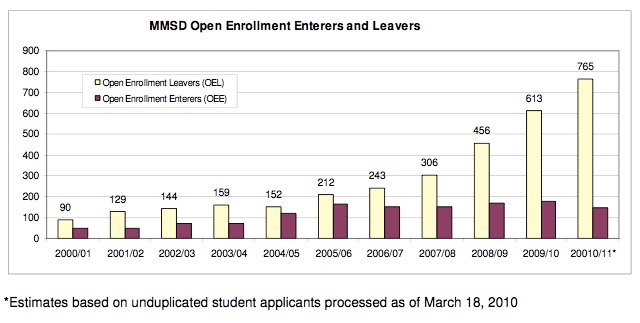
Share

The World Needs All Kinds of Minds

Ted Talks:

Temple Grandin, diagnosed with autism as a child, talks about how her mind works — sharing her ability to “think in pictures,” which helps her solve problems that neurotypical brains might miss. She makes the case that the world needs people on the autism spectrum: visual thinkers, pattern thinkers, verbal thinkers, and all kinds of smart geeky kids.

Share

Tweak Hartford’s Teacher Seniority System To Preserve School Strengths

Hartford Courant:

It is easy to get drawn into the union-management aspects of public education and forget that the schools are there for the kids. What the kids need are stars in the classroom: great teachers.
With that in mind, the public should support the effort by Hartford school leaders to change from a system of district-wide teacher seniority to one of school-based seniority.
The city’s Board of Education voted Tuesday to ask the State Board of Education to step in and change this contractual guarantee. The state board has the authority to intervene in low-achieving schools to alter a union contract, but to date has never done so.
Under the current rules, the least experienced teachers are the first to be laid off and can be “bumped” by more experienced teachers from any school in the district. This can result in a disruptive shuffle of teachers among various schools.
Supporters of the proposed change say this endangers the quality of specialty schools, where particular themes or methods require teachers to have special qualifications or training.

Share

“Don’t blame teachers unions for our failing schools”

For the motion: Kate McLaughlin, Gary Smuts, Randi Weingarten Against the motion: Terry Moe, Rod Paige, Larry Sand Moderator: John Donvan:

Before the debate:
24% FOR 43% AGAINST 33% UNDECIDED
After the debate:
25% FOR 68% AGAINST 7% UNDECIDED
Robert Rozenkranz: Thank you all very much for coming. It’s my pleasure to welcome you. My job in these evenings is to frame the debate. And we thought this one would be interesting because it seems like unions would be acting in their own self interest and in the interest of their members. In the context of public education, this might mean fighting to have the highest number of dues paying members at the highest possible levels of pay and benefits. With the greatest possible jobs security. It implies resistance to technological innovation, to charter schools, to measuring and rewarding merit and to dismissals for almost any reason at all. Qualifications, defined as degrees from teacher’s colleges, trump subject matter expertise. Seniority trumps classroom performance. Individual teachers, perhaps the overwhelming majority of them do care about their students but the union’s job is to advocate for teachers, not for education. But is that a reason to blame teachers unions for failing schools? The right way to think about this is to hold all other variables constant. Failing schools are often in failing neighborhoods where crime and drugs are common and two parent families are rare. Children may not be taught at home to restrain their impulses or to work now for rewards in the future, or the value and importance of education. Even the most able students might find it hard to progress in classrooms dominated by students of lesser ability who may be disinterested at best and disruptive at worse. In these difficult conditions, maybe teachers know better than remote administrators what their students need and the unions give them an effective voice. Maybe unions do have their own agenda. But is that really the problem? Is there strong statistical evidence that incentive pay improves classroom performance? Or is that charter schools produce better results? Or that strong unions spell weak educational outcomes, holding everything else constant? That it seems to us is the correct way to frame tonight’s debate, why we expect it will give you ample reason to think twice.

Share

Learning Without Schools: Four Points To Free Yourself From The Educational Get-Certified Mantra

Robin Good:

I guess we can agree: the world is changing at an increasingly faster pace, and the volume of information is growing at an explosive rate.
Change is the name of the game these days and who lives and works off the Internet knows how true this indeed is. But… how are we preparing and equipping our younger generations to live and to cope with such fast-paced scenario-changing realities and with the vast amount of information we drink-in and get exposed to without any crap-filtering skills?
Excerpted from my guest night at Teemu Arina’s Dicole OZ in Helsinski, here are some of my strong, uncensored thoughts about school and academic education in general.
In this four-point recipe I state what I think are the some of the key new attitudes we need to consider taking if we want to truly help some of your younger generations move to a higher level of intellectual and pragmatical acumen, beyond the one that most get from our present academic system.

Share

Public Education Reform: Still Separate But Not Equal in 2010

Tamara Holder:

In 1954, Brown v. Board of Education (of Topeka) ruled that separate was not equal. The ruling allowed for the integration of students from all races and socio-economic status to receive an equal education under the same roof. But now, America’s public school system is in shambles, and the poorest kids are the only ones underneath the rubble. (For example, Chicago’s public schools have dwindled from 75,000 students to 25,000 students, thanks to charter schools and private schools.)
No Child Left Behind was a complete failure.
Now, it is the duty of the administration to fix America’s destroyed public education system.

Share

How brains learn to see: Pawan Sinha

Ted Talks:

Pawan Sinha details his groundbreaking research into how the brain’s visual system develops. Sinha and his team provide free vision-restoring treatment to children born blind, and then study how their brains learn to interpret visual data. The work offers insights into neuroscience, engineering and even autism.

Share