Wisconsin Early Literacy Screener Report: 2024-2025
Developed by Barb Novak, PhD Director, Office of Literacy:
School and District level data (.xlsx). Act 20 annual reporting.
——
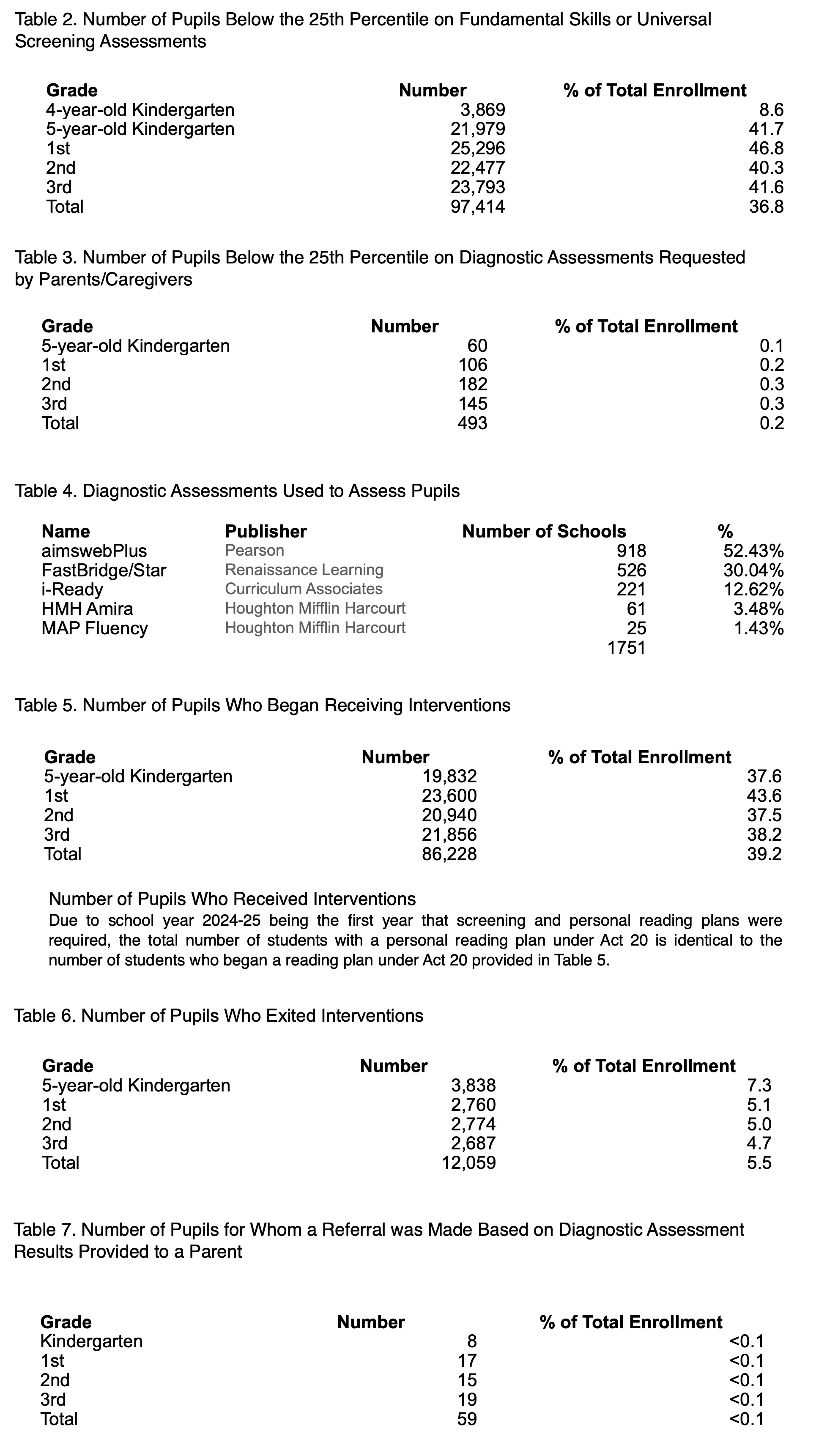
Nearly 44% of Madison School District 4K through third graders scored below the 25th percentile on an early literacy screener required under a 2023 state law, the state Department of Public Instruction reported Monday,
The results were slightly worse than for students in those grades statewide. About 37% of them scored in the bottom quartile
Results varied widely by grade in the Madison and other school districts. More than half of Madison’s kindergartners and first graders, for example, scored in the bottom quartile, while only 13% of students in 4-year-old kindergarten scored in the bottom quartile.
…..
Act 20 was spurred by disappointing state standardized test results in English/language arts. As of last school year, only 51.6% of students were deemed to be meeting or exceeding standards in that area. In the Madison district, it was 47.3%.
——-
-
Over a third of early-grade students fell below the 25th percentile at least once, triggering mandatory intervention and underscoring widespread early literacy challenges.
-
District trajectories vary dramatically from kindergarten to third grade, suggesting inconsistent instruction, questionable screener reliability, or both.
-
Poverty and disability remain strong predictors of low reading performance, but standout districts show that strong implementation of evidence-based reading practices can meaningfully improve outcomes.
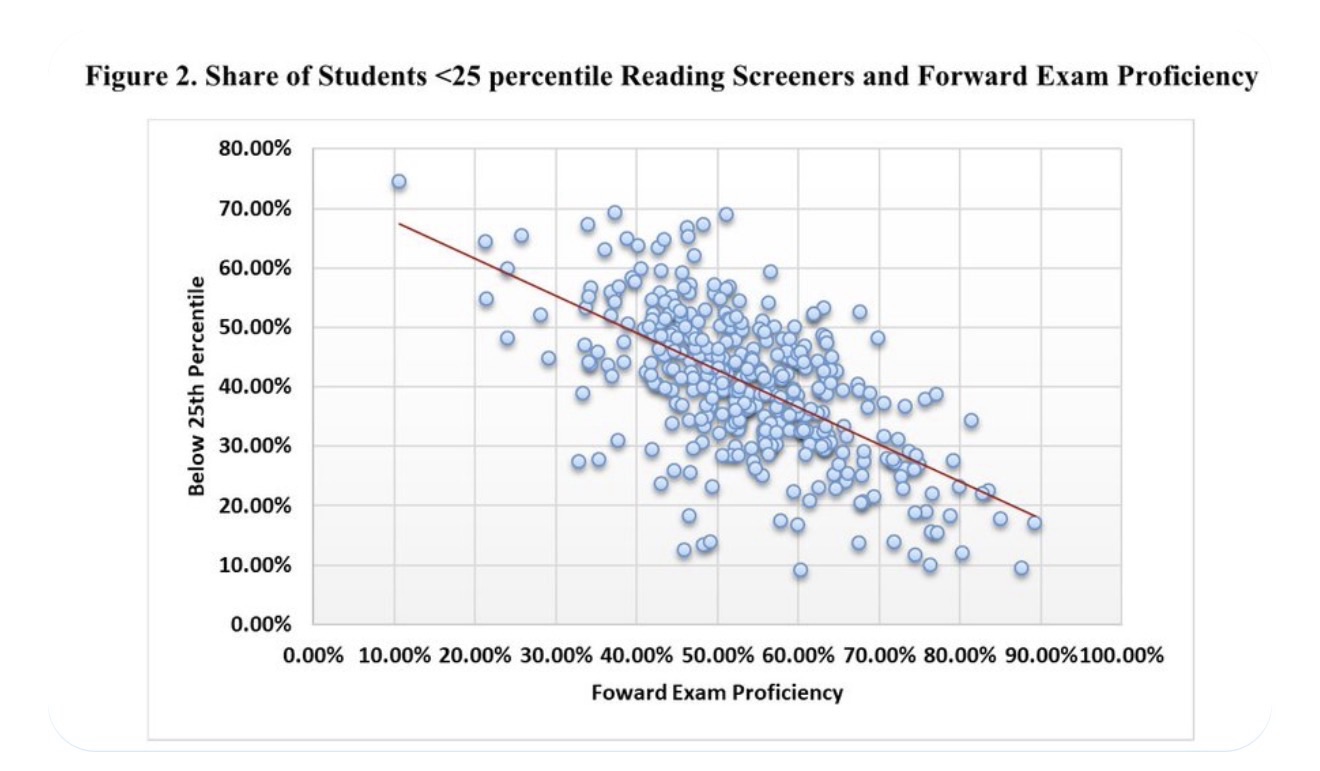
As with all school data, it is important to adjust student demographics in assessing school performance as these factors, unfortunately, play a large role in student outcomes. To account for this reality, I use a regression analysis to measure the impact of these variables on the reading data, then use that data to make predictions about outcomes for each district. Districts that have fewer students below the 25th percentile than predicted are arguably doing a good job in reading education relative to other districts.The results of the regression predicting the share of students below the 25th percentile are depicted in Table 3. First, it is important to note that the percentage of African American students does not show up as a significant predictor here. This is the first academic outcome data I’ve ever examined in Wisconsin where this is the case. What is not unusual is that student poverty is a key predictor. A district with 100% low-income students would be expected to have 31.43% more kids below the 25th percentile than a district with no students in poverty. Similarly, the share of students with disabilities matters here. A school with 100% of students with disabilities would be expected to have 72.77% more students below the 25th percentile.
——–
🎯This is probably one of the smartest things I’ve heard a Canadian Minister of Education say. It gets to the heart of why scores never improve. The people who created the problem are always given the job of fixing the problem.
——
Did taxpayer funded Wisconsin DPI Superintendent Underly Juice Test Scores for Reelection?
——-
Only 31% of 4th graders in Wisconsin read at grade level, which is worse than Mississippi.
——-
Madison taxpayers have long supported far above average (now > $25,000 per student) K-12 tax & spending practices. This, despite long term, disastrous reading results.
Madison Schools: More $, No Accountability
The taxpayer funded Madison School District long used Reading Recovery…
The data clearly indicate that being able to read is not a requirement for graduation at (Madison) East, especially if you are black or Hispanic”
My Question to Wisconsin Governor Tony Evers on Teacher Mulligans and our Disastrous Reading Results
2017: West High Reading Interventionist Teacher’s Remarks to the School Board on Madison’s Disastrous Reading Results
Madison’s taxpayer supported K-12 school district, despite spending far more than most, has long tolerated disastrous reading results.
“An emphasis on adult employment”
Wisconsin Public Policy Forum Madison School District Report[PDF]
WEAC: $1.57 million for Four Wisconsin Senators
Friday Afternoon Veto: Governor Evers Rejects AB446/SB454; an effort to address our long term, disastrous reading results
Booked, but can’t read (Madison): functional literacy, National citizenship and the new face of Dred Scott in the age of mass incarceration.
When A Stands for Average: Students at the UW-Madison School of Education Receive Sky-High Grades. How Smart is That?