School Information System

Referendum Climate: Stupid Budget Tricks

Michael Granof:

STATE governments across the country are reeling from the effects of the current economic downturn. New York, facing a $26.2 billion deficit over the next three years, is particularly hard hit. Like most other states, it is looking to balance its budget mainly by cutting spending.
But if history is a guide, governors and legislators across the country will seek to avoid the difficult choices that are required. Instead, they will likely pass the costs of the services that we enjoy today on to our children and grandchildren, through creatively deceptive budgeting.
This is a time-honored practice. In 1991, the State of New York sold Attica prison to none other than itself. The buyer was a state agency that financed the $200 million purchase price by issuing bonds. The agency then leased the prison back to the state, with the lease payments being equal to the debt service on the bonds.
In substance, of course, the transaction was nothing more than a borrowing arrangement — the equivalent of borrowing $200 million from the buyers of the bonds. Nevertheless, the state booked the entire sale price as revenue for the year. The previous year, the state sold the Cross Westchester Expressway to the New York Thruway Authority — in other words, to itself.

Share

As Program Moves Poor to Suburbs, Tensions Follow

Solomon Moore:

rom the tough streets of Oakland, where so many of Alice Payne’s relatives and friends had been shot to death, the newspaper advertisement for a federally assisted rental property in this Northern California suburb was like a bridge across the River Jordan.
Ms. Payne, a 42-year-old African-American mother of five, moved to Antioch in 2006. With the local real estate market slowing and a housing voucher covering two-thirds of the rent, she found she could afford a large, new home, with a pool, for $2,200 a month.
But old problems persisted. When her estranged husband was arrested, the local housing authority tried to cut off her subsidy, citing disturbances at her house. Then the police threatened to prosecute her landlord for any criminal activity or public nuisances caused by the family. The landlord forced the Paynes to leave when their lease was up.
Under the Section 8 federal housing voucher program, thousands of poor, urban and often African-American residents have left hardscrabble neighborhoods in the nation’s largest cities and resettled in the suburbs.
Law enforcement experts and housing researchers argue that rising crime rates follow Section 8 recipients to their new homes, while other experts discount any direct link. But there is little doubt that cultural shock waves have followed the migration. Social and racial tensions between newcomers and their neighbors have increased, forcing suburban communities like Antioch to re-evaluate their civic identities along with their methods of dealing with the new residents.

Why is crime rising in so many American cities? The answer implicates one of the most celebrated antipoverty programs of recent decades by Hanna Rosin @ the Atlantic Monthly:

Lately, though, a new and unexpected pattern has emerged, taking criminologists by surprise. While crime rates in large cities stayed flat, homicide rates in many midsize cities (with populations of between 500,000 and 1 million) began increasing, sometimes by as much as 20percent a year. In 2006, the Police Executive Research Forum, a national police group surveying cities from coast to coast, concluded in a report called “A Gathering Storm” that this might represent “the front end … of an epidemic of violence not seen for years.” The leaders of the group, which is made up of police chiefs and sheriffs, theorized about what might be spurring the latest crime wave: the spread of gangs, the masses of offenders coming out of prison, methamphetamines. But mostly they puzzled over the bleak new landscape. According to FBI data, America’s most dangerous spots are now places where Martin Scorsese would never think of staging a shoot-out–Florence, South Carolina; Charlotte-Mecklenburg, North Carolina; Kansas City, Missouri; Reading, Pennsylvania; Orlando, Florida; Memphis, Tennessee.
Memphis has always been associated with some amount of violence. But why has Elvis’s hometown turned into America’s new South Bronx? Barnes thinks he knows one big part of the answer, as does the city’s chief of police. A handful of local criminologists and social scientists think they can explain it, too. But it’s a dismal answer, one that city leaders have made clear they don’t want to hear. It’s an answer that offers up racial stereotypes to fearful whites in a city trying to move beyond racial tensions. Ultimately, it reaches beyond crime and implicates one of the most ambitious antipoverty programs of recent decades.

Related:

Share

School Program Puts Focus On Graduation, Not Grades

Ian Shapira:

Bria Heard, 14, a rising sophomore in Prince William County, had a couple of options after she failed world history last year. She could retake the course over six weeks in summer school or during the next school year and try to improve her grade.
Or, she could choose a fairly novel program available in the school system. She could do the course work using a new computer-based program that would not improve her grade, but would allow her to earn the credits needed to stay on track to graduate in four years. To her, the benefits outweighed the cost of not getting a better grade. The program is free and can be completed in days.

Share

Virginia Weighs Wider Index to Certify Schools

Chris Jenkins:

Gov. Timothy M. Kaine (D) is reviewing a plan that would require all Virginia high schools to meet certain graduation-rate requirements by 2014 to receive accreditation under a new assessment system.
Under the proposal, state officials would use a computer system to track students throughout their academic careers to determine the number of diplomas, GEDs and other certificates that schools award during any given year. Schools would receive accreditation based on those results. Current accreditation standards are based on pass rates on the annual Standards of Learning exams.
As part of the accreditation process, schools would be rated on a points system. For instance, schools would be awarded 100 points for each student who received a diploma; the school would earn 75 points if a student received a general equivalency diploma. If a student earned a certificate of completion, given to those who don’t earn high-school diplomas or their equivalent, the school would receive 60 points.

Share

Referendum Climate: Wisconsin 9th in State / Local Tax “Burden”

Gerald Prante @ Tax Foundation [340K PDF]:

For 18 consecutive years the Tax Foundation has published an estimate of the combined state-local tax burden shouldered by the residents of each of the 50 states. For each state, we calculate the total amount paid by the residents in taxes, and we divide those taxes by the total income in each state to compute a “tax burden” measure.
We make this calculation not only for the most recent year but also for earlier years because tax and income data are revised periodically by government agencies, and in our own methodology to take advantage of new datasets.
The goal is to focus not on the tax collectors but on the taxpayers. That is, we answer the question: What percentage of their income are the residents of this state paying in state and local taxes? We are not trying to answer the question: How much money have state and local governments collected?

Related: Milwaukee Journal-Sentinel Editorial on McCain & Obama’s deficit spending plans.

Share

Where’s the Data on Smaller Class Sizes?

Kevin Carey:

You see it all the time, in the brochures and advertisements from liberal arts colleges and other non-gargantuan institutions. “Small class sizes,” they promise, and for good reason, because everyone knows that small classes are better than large. No cavernous lecture halls where the professor is little more than a distant stick figure, they say — raise your hand here, and someone will stop and listen. Plus, he or she will be a real professor, the genuine tenure-track article, not a part-timer or grad student but someone who really knows his or her stuff. Because everyone knows that real professors are better than the other kind.
Except, they don’t.
Nobody actually knows whether small classes are better than large. Pascarella and Terenzini’s How College Affects Students, the bible of such matters, says “We uncovered 10 studies that focus on the effects of class size on course learning. All of the investigations are quasi-experimental or correlational in design …. Unfortunately, five of the studies used course grade as the measure of learning … the conflicting evidence and continuing methodological problems surrounding this small body of research make it difficult to form a firm conclusion.”

Share

Shakespeare for Gifted Students

Carol Fertig:

Shakespeare never grows old. He was an outstanding observer of life and created many immortal characters that profess human nature. His characters often capture traits that are universal. He used rich literary devices, compelling plots, and had an enduring wisdom and wit. He also wrote many unforgettable lines that are imbedded in our culture. He continues to be the most-quoted author in the English language.
There are many resources available to help teach about Shakespeare. Here are just a few.

Share

Longer Year for Fairfax Teachers, Incentive Programs

Michael Alison Chandler:

Schools nationwide are looking for ways to pay striving or successful teachers more so they can attract and keep talent. The District and Prince George’s County are offering financial incentives for exceptional teachers in challenging schools. Arlington County is enabling qualified teachers to skip a step on the salary schedule.
Fairfax’s move toward a year-round teacher schedule is unusual, said Allan Odden, a University of Wisconsin professor who studies alternative teacher pay and who has advised Dale. But Odden said the notion of giving teachers more responsibilities in exchange for more pay is gaining momentum in public education. He said a “cadre of teacher leaders” in a school has proven to be critical for student achievement.
Fairfax’s “teacher leadership” program began in summer 2006 with extended contracts for about 600 teachers at 24 schools, issued through competitive grants. The contracts add nine, 14 or 24 days to the traditional 194-day schedule. They can increase salaries as much as 12 percent.

Share

Milwaukee-area school districts grapple with sex-ed policies

Erin Richards:

For parents like the Timmermons in Milwaukee, who diligently pre-screen G-rated movies and forbid their daughter from playing with the made-up and mini-skirted Bratz dolls, when and how to start talking about the human body and sex can be a bit of a mystery.
Schools face a similar dilemma. Many districts teach what’s broadly known as human growth and development, but the thoroughness of the information varies widely among districts, schools and classrooms, based on an informal survey of schools by the Journal Sentinel.
Over the summer, Milwaukee Public Schools is addressing the unevenness in its human growth and development curriculum by revamping the entire program from kindergarten through high school, and making a plan to train teachers on how to deliver the information.

Share

The Wisconsin Center for Education Research was founded 44 years ago this month.

via email:

Part of the School of Education at the University of Wisconsin-Madison, the Wisconsin Center for Education Research receives $29 million in current funding from the National Science Foundation, the U.S. Department of Education, and private foundations.
One of WCER’s strengths is the interdisciplinary nature of its work. While most of its researchers make their academic home in the School of Education, one-third come from other fields, including astronomy, business, chemistry, economics, engineering, human ecology, law, mathematics, sociology, and social work. Each discipline brings its own way of learning and thinking. Together these researchers focus on problems of learning, teaching, assessment, and policy in today’s education systems.
In August 1964 then-University president Fred Harvey Harrington signed an agreement with the U.S. Office of Education to establish what was then called the Wisconsin Research and Development Center for Learning and Re-education. “It was an adventure of opportunity that was in line with the University’s traditional commitment to innovation and experimentation in teaching, to the union of basic and applied research, and to outreach tying the Madison campus to progress in the state and beyond,” he writes in the introduction to the book, The Wisconsin Center for Education Research: 25 Years of Knowledge Generation and Educational Improvement” (WCER, 1990).
WCER’s funding sources represent a broad mix of federal, private, state, and district level agencies. Of $29 million in current funding, fees for service account for 44%, while private foundations account for 21%. The U.S. Education Department accounts for 19% of current funding and the National Science Foundation 7%. The State of Wisconsin and school districts including Milwaukee and Chicago account for 9%. This array of sources attests to WCER’s breadth of research across disciplines, and its depth of reach from the federal level to local school districts.
The establishment of the Center, Harrington wrote, was “a part of a major movement of our time—the conscious attempt to enlist higher education in research-and-action efforts to help solve pressing problems and improve the quality of life in the U.S. and abroad.”
A list of 48 education experts and topics of research interest is available. Contact Paul Baker, pbaker@wisc.edu

Share

Given Half A Chance: Black Males in Public Schools are Driven to Drop Out

The Schott Foundation for Public Education:

50+ Years Post Brown v. Board of Education, Schott Foundation Report Reveals that States and Districts Fail to Educate the Majority of Male Black Students
The release of the 2008 Schott Foundation Report entitled “Given Half a Chance: The Schott 50 State Report on Public Education for Black Males,” details the disturbing reality of America’s national racial achievement gap. State-by-state data demonstrate that districts with large Black enrollments educate their White, non-Hispanic peers, but fail to educate the majority of their Black male students.

Individual state reports (Wisconsin):

This section includes United States Department of Education National Center for Education Statistics state and district data for Black and White male students for states in which there are districts listed in the preceding section and for those districts themselves. Data are also included from the United States Department of Education Office of Civil Rights 2004 Elementary and Secondary School Survey concerning Special Education, Gifted and Talented and Discipline reports; National Assessment of Educational Progress; and Advanced Placement.

Tammerlin Drummond has more.

Share

Milwaukee’s Rufus King Out of 2009 Boys Basketball Tournament

Art Kabelowsky:

Altered test scores, illegal recruiting force decision
After a five-month internal investigation by Milwaukee Public Schools officials produced evidence of recruiting and test-score tampering, the Rufus King boys basketball team has been barred from competing in the 2009 state tournament.
Though the tournament ban was an internal sanction, King’s basketball program has also been placed on probation for the next two school years by the Wisconsin Interscholastic Athletic Association.
Also, a King assistant boys basketball coach has been fired from his coaching position, although MPS Communications Director Roseann St. Aubin said Wednesday that the former coach was allowed to retain his full-time job at a different MPS facility.
The Journal Sentinel has received a copy of a letter from King principal Marie Newby-Randle that was mailed Wednesday to every family with a student enrolled at King for 2008-’09.

Share

Teacher Lobbying Raises Union’s Ire

Bill Turque:

A community group that supports D.C. Schools Chancellor Michelle A. Rhee’s proposed salary and bonus package for teachers has hired a small group of instructors at $1,000 a week to lobby colleagues for the plan, drawing accusations from union leaders of interference with the collective bargaining process.
A spokesman for Strong Schools DC, founded in May by half a dozen local philanthropists with a history of involvement in education issues, said five public school teachers were employed “to spread the word” about Rhee’s plan. A recruiting e-mail, sent by one of the teachers, said the group was prepared to hire as many as 20 “teacher contract outreach coordinators.”
But Todd Lamb, the spokesman, said the group has decided to pull back for the moment, principally because contract talks between Rhee and the Washington Teachers’ Union have not concluded.

Share

Primary schools: the shocking truth

Deborah Orr:

This year’s Sats results suggest, for the third year in a row, that only 67 per cent of pupils are achieving the writing standard required of them. For boys, the figure is worse, with just 60 per cent able to put pencil to paper with any proficiency. I use the word “any” advisedly. I think that many people would be pretty shocked to see the unimpressive level of literacy that is needed for pupils to manage a pass. Yet the numbers achieving even this modest benchmark, teachers themselves say, offer an exaggerated picture of the writing ability of schoolchildren.
Nearly all secondary schools now feel obliged to re-test their intake when they start this new phase of their education. They cannot trust what Sats tell them, and feel obliged to find out for themselves what sort of remedial input a child really needs. Such measures attest that the problem is not marginal. It is not without the bounds of probability to infer that as many as half of all boys are going into secondary education without having mastered the basic skills needed to express their thoughts on paper. How dismal.
This miserable state of affairs gives the lie to the fantasy that has been long promulgated by the Government, which insists that primary education is fine, and all the trouble begins at secondary school. Of course pupils will run into difficulties at secondary school, if the groundwork laid down in their previous six years of education has not been thorough. This has been happening for years.

Share

Two Forums Set on a Potential Madison School Referendum

Tamira Madsen:

At this juncture, several board members won’t say if they favor a referendum, instead choosing to wait to hear what the public has to say and to discover what Nerad’s recommendations are. But it is widely expected that a referendum will be the path they will take in order to close a gaping hole in the budget.
One other topic of discussion that was brought up at Monday’s meeting was Nerad’s stance on implementing 4-year-old kindergarten. Nerad and Eric Kass, the district’s assistant superintendent of business services, are working on a cost analysis of bringing 4K to the district. Fully exploring the options of how the program can be funded until it generates revenue is Nerad’s main concern, and though Kass is gathering the data, the district won’t be ready to present the data in time for a possible fall referendum.
“My preference would be to see if there are any other options short of a referendum to address the first two years of the funding,” Nerad said. “I will also say that I haven’t closed my mind at all because if those other options don’t work, then we need to have the discussion about addressing this in any other way.”

Related:

  • Much more on the local referendum climate here.
  • Andy Hall:


    The property tax effect of a potential referendum will be unveiled in two weeks, Madison schools Superintendent Daniel Nerad said Monday.
    At the Madison School Board’s meeting on Aug. 18, Nerad plans to recommend whether the School Board should ask voters for additional money to avoid deep budget cuts.
    The district’s budget shortfall is projected to be $8.2 million in the 2009-10 school year and about $5 million each of the following three years.
    The referendum could appear on the Nov. 4 ballot.

  • TJ Mertz
  • Madison School District: Current Financial Condition.
Share

Exploring the perils of taking grandparental school funding

Carol Lloyd:

There’s a common, often unacknowledged reason private schools host Grandparents Day, at least in the Bay Area: The gray hairs are footing the bills. With yearly tuition ranging from about $6,000 to more than $29,000, and many families mortgaged to the gills, “going private” is often an option only in the most hypothetical sense. The Bank of Grandparents has been doing swift business with Bay Area families for decades. “Historically, grandparents or other relatives often paid tuition,” says Denise McCarthy, who directed Presidio Hill School during the 1970s and is now running for the San Francisco Board of Supervisors in District 3. “In the ’70s … private school tuition was expensive, relatively speaking,” she recalled. Even then, she says, her school celebrated a Grandparents Day and hit up the silvering community members for donations.

Share

It’s Never to Late to Educate

Sam Whiting:

We all have the recurring nightmare of sitting in a college exam with two empty blue books and a sheet of essay questions. You are given the option of answering three out of five, but you go down the sheet and can’t answer one. You have nothing to write and three hours to not write it.
Then you wake up in a panic. If in possession of a college diploma, you will look for it in the dead of night. If found, it will provide about 10 minutes of reassurance. There are only two ways to stop the panic, and psychotherapy is more expensive and less fun than going back to school. At the very least, being a student again will supply new fodder for anxiety dreams to replace the ones that are 30 or 40 or 50 years old.
No matter how “too old for school” you think you are, you are not as “too old” as Hazel Soares of San Leandro. At age 93, Soares is entering her junior year (or years) at Mills College in Oakland. An art history major, she’s taking it nice and slow – slow enough to walk across the stage and accept her diploma at age 100.

Share

Texas Teachers group sues to stop plan to help dropouts

Gary Scharrer:

A teachers group asked the courts Tuesday to stop Texas Education Commissioner Robert Scott from giving tax dollars to private groups to educate school dropouts.
The Texas Education Agency proposal resembles a school voucher program, which state lawmakers expressly prohibited last year, the Texas State Teachers Association said in its motion for an injunction.
Scott has approved a preliminary plan that would award up to $6 million to 22 school districts, community colleges and private organizations chosen to participate in an experiment to help 1,000 school dropouts achieve a high school diploma.
The Harris County Department of Education and school districts in Pasadena and San Antonio were among 19 school systems, charter schools and community colleges selected to participate.
The inclusion, however, of Community Action Inc. of Hays, Caldwell and Blanco Counties, the Christian Fellowship of San Antonio and the San Antonio-based Healy-Murphy Center triggered the lawsuit.

Share

School needs bold blueprint, not formula fiddling

Jim Wooten:

Governors one after another have tinkered with public education inputs and funding formulas, promising all the while to succeed where their predecessors had failed. Had those approaches worked —- more inputs and revised formulas recommended by blue ribbon commissions —- schools would be fixed by now.
They aren’t.
It’s the model that’s broken, not the funding formulas.
Across the country industries beset by new marketplace dynamics —- industries that include newspapers, health care providers and all others, automobiles among them, that compete globally —- are frantically at work reinventing their business models.
Education’s marketplace changed decades ago. The best hope now is to stop fighting the marketplace and, instead, let competition work. Give parents choice —- and the means to exercise it. Improve public schools, yes. But don’t keep children prisoners until the system is perfected.

Share

5 Ways to Motivate Students

Jay Matthews:

My Post colleague Marc Fisher had a terrific rant on his Raw Fisher blog last week about a story I did on the strange case of Matthew Nuti. Matthew is a bright if somewhat disorganized 16-year-old, recently expelled from the very selective Thomas Jefferson High School for Science and Technology because his grade point average slipped below 3.0.
Marc objected to this new and extraordinary school policy. “Grades are a means of communication and motivation,” he said. They won’t work in that way, Marc said, if you turn “mediocre grades into a death sentence.” You can’t motivate a corpse, just as you can’t urge greater effort out of a student who has been kicked out of your school.
Marc’s reminder of the importance of motivation in education inspired me to resurrect one of the best books I have read on the topic, and add it to the Better Late Than Never Book Club, my official list of works I should have read when they actually arrived in the mail. This latest entry is a particularly hideous example of my slothful tendencies. “Engaging Minds: Motivation and Learning in America’s Schools” by David A. Goslin was published in 2003.

Share

Many tweens watching ‘R’ films despite restriction

Greg Toppo:

Researchers know what your tween saw last summer: savage beatings, severed heads, murder, rape and torture.
In a study released Monday in the journal Pediatrics, researchers from Dartmouth Medical School estimate more than 2.5 million children ages 10 to 14 watch the typical violent, R-rated movie.
A few movies, such as Blade, Hollow Man and Bride of Chucky, claim what researchers say are huge child audiences — as many as 7.8 million, including an estimated 1 million 10-year-olds.
“Ten isn’t far away from believing in Santa Claus,” says researcher Keilah Worth.

Share

Success in education

Arthur Rothkopf:

Jan Morrison of the Gates Foundation recently posed a rhetorical question that perfectly sums up the state of K-12 education: “Do our schools still look like they did in the 1950s – now ask yourself, do our companies still look like they did in the 1950s?”
The answer is quite clear – the world economy has changed dramatically since the 1950s, and any company that refuses to keep up is soon out of business. The same cannot be said of American schools, where the curricula are largely unchanged since the 1950s and classroom technology isn’t much better. Even our school calendar is still based on an agrarian society. How many bushels of corn has your child harvested this summer?
Although our schools are not going out of business, their results are akin to a company ready to file for Chapter 11. While 90 percent of the fastest-growing jobs in America require some postsecondary education, about a third of our nation’s students do not even finish high school in four years. Our highest-performing state, Massachusetts, can only boast that 51 percent of its eighth grade students are proficient in math. There is a growing consensus that education reform is critical to our nation’s competitiveness, and there should be when confronted by statistics like these.

Share

District Wants to Stay on 4 Day Week

Lisa Schencker:

One of Utah’s smallest school districts wants to move to a four-day week permanently, saying the schedule has helped increase instructional time for many students.
Tiny Rich School District in northern Utah asked state education leaders Friday to consider allowing it to continue holding school four days a week in the future. The schedule saves the district about $1,500 a week in transportation costs, said Ralph Johnson, Rich school board president.
Beginning Monday, many state government offices will also be open only four days a week in a move meant to lower energy costs for the state and employees.
But saving energy is not the main reason the district wants to continue the four-day schedule, which started two years ago and is due to continue next year under an agreement approved by the Utah State Board of Education. Rich, which last school year had 436 students attending four schools, conceived the arrangement to deal with sports and activities.

Share

Marking Sats Has Always Been A Total Fiasco

Liz Brocklehurst:

The Sats disaster is depressing, but I’m afraid that as someone who’s marked them for ten years, it’s not altogether surprising. In the early days of the National Curriculum tests — the Sats — I was a Key Stage 2 Science marker, sworn to Masonic-like secrecy about this mysterious testing process. In my innocence I had expected it to be a straightforward procedure, but I hadn’t allowed for the serial incompetence, the human error, the vagaries of postal deliveries, and most important: the political pressure.
Several times my expected parcels of scripts were initially sent to another marker by mistake, and I received scripts for the wrong subject; scripts of pupils would routinely be missing without explanation, requiring query letters and a wait for a response — all of which delayed the process. We markers came to accept such things as the norm, including the frequent change of the official organisation charged with overall responsibility for the marking process (each time with the empty promise that things would be so much more efficient under the new body).

Share

Keeping The Concord Review Afloat

Kathleen Kennedy Manzo:

A year ago, Will Fitzhugh was wondering if the next issue of The Concord Review, the renowned history journal he founded in 1987 to recognize high school students’ outstanding history research papers, would be the last. On a tattered shoestring budget, Fitzhugh has just published the Summer 2008 edition [18/4], and with some support from schools and other fans in the private sector, he has hopes for four more issues over the next year.
But the former high school history teacher is proceeding mostly on a wing and a prayer, and a driving passion for promoting rigorous academic work for teenagers. Last year, the salary for the curmudgeonly 71-year-old was a measly $8,600. This for a scholar who has won widespread praise among education thinkers in the country for demanding, and rewarding, excellence and earnestness in the study of history. Thousands of high school students—mostly from private schools, but many from public schools, including diverse and challenged ones—have responded with work that has impressed some prominent historians and many college-admissions officers.
So how is it that such an undertaking is only scraping by, while other worthy programs, such as the National Writing Project and the Teaching American History Grants, manage to garner millions of dollars each year in federal and foundation support?
Right now, the Review is staying afloat on the commitment of Fitzhugh and some 20 secondary institutions that have ponied up $5,000 each to join a consortium that was created a year ago to cover the costs of publishing the journal. The National Writing Board, also founded by Fitzhugh, brings in some money from students who pay for an evaluation of their research papers that can be sent in with their college applications.
Why is it that some extraordinary efforts in education, which seem to have vision and the right end goal, struggle so?

Share

100 Black Men Back to School Picnic on Saturday August 23rd at Demetral Park at 10:30 a.m.

2008 Back to School Picnic
100 Black Men of Madison 12th Annual Back to School Picnic will be held on Saturday August 23rd, rain or shine at Demetral Park located on Commercial and Packers Avenue at 10:30 am.
Over 1,500 free backpacks filled with school supplies will be distributed to students in kindergarten thru eighth grade.
In addition, free hamburgers, hot dogs and beverages will be served. This event is first come, first served. Students must be in attendance to receive a backpack.
The purpose of this event is to assist students at the beginning the school year with the supplies needed for academic success and to reduce the achievement gap.
For more information please contact, Wayne Canty at 285-6753 or wcanty@kraft.com.
http://www.100blackmenmadison.org/

Share

On Washington’s Next State Superintendent

Seattle Times Editorial:

In the race for the Superintendent of Public Instruction, two deserve to move beyond the primary: incumbent Terry Bergeson and Randy Dorn, a former lawmaker and union leader.
Both candidates must spend the time between the primary and the general election engaging the public far more than they have. Both are guilty of too many sound bites and political salvos and few compelling ideas on education funding, graduation requirements and the role of standardized testing.
That’s for starters. The next state schools chief should be able to articulate the complexities of the persistent challenges of the day — a growing special-education population, dropout rates and racial disparities in academic achievement — and then offer cogent solutions to them.

Share

Milwaukee Schools Urged to Revise Discipline Policy

Alan Borsuk:

A team of national experts has urged a major overhaul in the way Milwaukee Public Schools handles behavior issues in schools, saying MPS does not do enough to deal with problems short of suspending students and may have the highest suspension rate of any urban school system in America.
“District staff members need to mobilize to meet this challenge” of dealing with behavior issues in ways that don’t involve suspensions but are more effective in improving both a student’s behavior and academic work, the team said in a report to MPS officials.
Superintendent William Andrekopoulos said in an interview that changes in line with the report’s recommendations are under way, including a new policy in which every parent will be given a written statement this fall on the disciplinary practices that will be used in a child’s classroom.
The report, submitted several months ago, is the second in two years by a team from the Council of Great City Schools that was critical of major aspects of what goes on in MPS classrooms. In both cases, the reports were not made public until a Journal Sentinel reporter asked for them. In 2006, a report from the council criticized academic practices and low achievement by students, called for more direction from the central administration of what was being done in schools, and said people involved in MPS, from the School Board to the classroom, “appear fairly complacent.”

Madison police calls near local high schools 1996-2006.

Share

On Priority Number 1: Educate our Kids

Letters to the Editor regarding David Brooks: “The Biggest Issue”

A big thank you to David Brooks. We need to focus on education and, in particular, how to close the educational gap between children who begin life with large human capital resources and those who don’t.

Share

On Math Curriculum Reduction

Emily Messner:

The students swapped stories of little sisters, brothers and cousins who were taking above-grade-level math and getting good grades, yet did not seem to have a firm grasp of the material. The curriculum is being “narrowed and shallowed,” Walstein said. “The philosophy is that they squeeze you out the top like a tube of toothpaste. That’s what Montgomery County math is.”
Several students nodded their heads. This thesis has become Walstein’s obsession: In its drive to be the best, please affluent parents and close the achievement gap on standardized tests, the county is accelerating too many students in math, at the expense of the curriculum — and the students. The average accelerated math student “thinks he’s fine. His parents think he’s fine. The school system says he’s fine. But he’s not fine!” Walstein declares on one occasion. On another, Walstein is even less diplomatic. ” ‘We have the best courses and there’s no achievement gap and everything is wonderful,’ ” he says, parroting the message he believes county administrators are trying to project.
“The problem is, they’re lying!”

Math Forum audio / video links.

Share

Racine’s Superintendent Candidate Meets the Community

Pete Selkowe:

In Shaw’s educational universe, “It’s the teachers who are important.” His goal — doubling the number of kids in the “advanced:” category in five years — focuses on teachers. “Most of the variable is teachers so you focus on teaching. You try to use techniques that are effective with different kinds of kids.” And he also would use a pay-for-performance plan to reward the best teachers.
Although he’s been a professor at UW-Madison for five years, he had a key criticism: “At the University of Wisconsin, the best teachers get the best kids. That system is not working. We need to share the best teachers with the kids who are struggling.” And he wants to improve teaching at Unified first by speeding up the hiring process, cutting through the delays that let the best new grads commit early to other districts, and by developing our existing teachers through active coaching. “Teachers working with other teachers, not just lectures. Professional development must be embedded in the schedule,” he said.

Share

Madison police calls near local high schools: 1996-2006

Madison School District Safety Coordinator
Luis Yudice
(retired police officer and East High graduate) at a recent
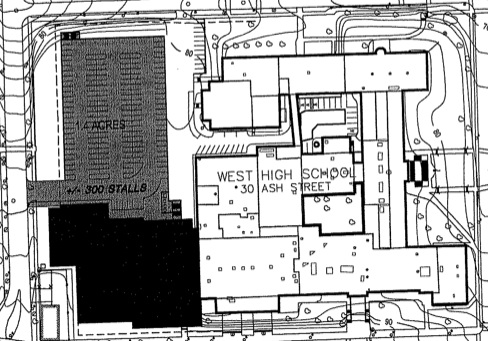
West High School neighborhood crime discussion (10/18/2007):

Big picture perspective:

Our community really has changed a lot within the past five years. I sense a great deal of stress within the police department.

Citywide issues:

  • Increasing violence involving girls. He has looked at a lot of data with the District Attorney’s office. Girls are extremely angry.
  • Angry parents are coming into the schools.
  • Increasing issues in the neighborhood that end up in the schools. Mentioned South Transfer Point beating and that Principal Ed Holmes mediated the situation at an early stage.
  • Growing gang violence issue, particularly in the east side schools. We do have gang activity at Memorial and West, but most of the issues are at La Follette and East. Dealing with this via training and building relationships.
  • What the schools are experiencing is a reflection of what is going on in the community.

Madison Police Chief Noble Wray, via Bill Lueders @ Isthmus (7/30/2008):

He (Wray) began by talking about perceptions of crime, and especially the notion that it’s getting worse in Madison. He stressed that it wasn’t just the media and public who felt this way:
If I would ask the average beat cop, I think they would say it’s gotten worse.
But, he added, Worse compared to what?

The absence of local safety data spurred several SIS contributors to obtain and publish the police call data displayed below. Attorney and parent Chan Stroman provided pro bono public records assistance. Chan’s work on this matter extended to the Wisconsin Attorney General’s office.

A few important notes on this data:

  • 13% of the records could not be
    geocoded
    and therefore are not included in the summary information. The downloadable
    1996-2006 police call data .zip file
    is comprehensive, however.
  • Clicking on the numbers below takes the reader to a detail page. This page includes all matching police calls and a downloadable .csv file of same. The .csv file can be opened in Excel, Numbers, and many data management tools.
  • This summary is rather brief; I hope others download the data and have a look.

Police Calls within 0.25 miles of Madison High School Areas (1996–2006)
Year Madison East Area Edgewood Area La Follette Area Memorial Area West Area
General Police Calls
1996 1285 392 324 869 728
1997 1351 455 403 896 750
1998 1340 343 488 875 703
1999 1281 352 477 969 772
2000 1391 300 528 888 933
2001 1476 305 480 769 1034
2002 1470 363 491 886 1019
2003 1362 349 403 865 921
2004 1455 346 449 989 1012
2005 1311 325 465 994 917
2006 1221 330 389 1105 838
Weapons Incident / Offense
1996 5 0 3 4 6
1997 5 0 3 4 0
1998 10 0 5 2 1
1999 10 0 5 4 0
2000 4 0 6 2 5
2001 3 0 3 0 0
2002 11 0 3 5 5
2003 4 1 1 4 5
2004 4 0 9 7 4
2005 9 0 6 6 2
2006 10 1 5 7 3
Drug Incident
1996 10 0 10 9 7
1997 16 0 7 6 4
1998 12 1 8 10 6
1999 18 0 7 18 4
2000 16 2 13 17 12
2001 18 0 10 20 12
2002 22 0 14 16 12
2003 23 2 18 15 8
2004 26 0 20 17 7
2005 19 0 17 20 12
2006 24 2 11 15 8
Arrested Juvenile
1996 59 1 35 28 38
1997 72 0 83 52 29
1998 21 0 34 17 14
1999 16 0 29 24 7
2000 42 0 76 14 15
2001 52 0 66 19 15
2002 51 0 69 13 12
2003 9 0 9 9 3
2004 8 0 8 9 4
2005 11 0 10 7 3
2006 6 0 21 11 4
Bomb Threat
1996 1 0 0 0 1
1997 1 0 1 0 0
1998 4 2 0 0 1
1999 7 0 15 0 1
2000 4 0 17 2 1
2001 1 0 8 10 11
2002 2 0 9 0 4
2003 1 0 2 1 11
2004 6 0 4 0 6
2005 1 0 4 0 0
2006 3 0 0 0 4

Related Links

Share

Assimilation, Integration and Education

The Economist, from Berlin:

Share

School Board to Focus on Money

Andy Hall:


In the first major test for newly hired Superintendent Daniel Nerad, Madison school officials this week will begin public discussions of whether to ask voters for additional money to head off a potentially “catastrophic” $8.2 million budget gap for the 2009-10 school year.
The Madison School Board’s meetings in August will be dominated by talk of the possible referendum, which could appear on the Nov. 4 ballot.
The public will be invited to speak out at forums on Aug. 12 and 14.

Related:

Props to the District for finding a reduced spending increase of $1,000,000 and looking for more (The same service budget growth, given teacher contract and other increases vs budget growth limits results in the “gap” referred to in Hall’s article above). Happily, Monday evening’s referendum discussion included a brief mention of revisiting the now many years old “same service” budget approach (28mb mp3, about 30 minutes). A question was also raised about attracting students (MMSD enrollment has been flat for years). Student growth means additional tax and spending authority for the school district.
The Madison school board has been far more actively involved in financial issues recently. Matters such as the MMSD’s declining equity (and related structural deficit) have been publicly discussed. A very useful “citizen’s budget” document was created for the 2006-2007 ($333M) and 2007-2008 ($339M) (though the final 2007-2008 number was apparently $365M) budgets. Keeping track of changes year to year is not a small challenge.

Share

McCain on Education at the Urban League

Jazz Shaw:

Nowhere are the limitations of conventional thinking any more apparent than in education policy. After decades of hearing the same big promises from the public education establishment, and seeing the same poor results, it is surely time to shake off old ways and to demand new reforms. That isn’t just my opinion; it is the conviction of parents in poor neighborhoods across this nation who want better lives for their children.
Just ask the families in New Orleans who will soon have the chance to remove their sons and daughters from failing schools, and enroll them instead in a school-choice scholarship program. That program in Louisiana was proposed by Democratic state legislators and signed into law by Governor Bobby Jindal. Just three years after Katrina, they are bringing real hope to poor neighborhoods, and showing how much can be achieved when both parties work together for real reform. Or ask parents in the disadvantaged neighborhoods of Washington, D.C. whether they want more choices in education. The District’s Opportunity Scholarship program serves more than 1,900 boys and girls from families with an average income of 23,000 dollars a year. And more than 7,000 more families have applied for that program. What they all have in common is the desire to get their kids into a better school.
Democrats in Congress, including my opponent, oppose the D.C. Opportunity Scholarship program. In remarks to the American Federation of Teachers last month, Senator Obama dismissed public support for private school vouchers for low-income Americans as, “tired rhetoric about vouchers and school choice.” All of that went over well with the teachers union, but where does it leave families and their children who are stuck in failing schools?

Beth Fouhy:

John McCain, the father of private school students, criticized Democratic rival Barack Obama on Friday for choosing private over public school for his kids.
The difference, according to the Arizona Republican, is that he — not Obama — favors vouchers that give parents more school choices.
“Everybody should have the same choice Cindy and I and Sen. Obama did,” McCain told the National Urban League, an influential black organization that Obama will address on Saturday.

Share

Exceptions Boost Local & Statewide School Ratings (Texas)

Laurie Fox, Holly Hacker & Terrence Stutz:

More schools from North Texas and across the state improved their annual performance ratings this year helped by higher student test scores and, in many cases, special exceptions from the state.
A Texas Education Agency report Friday showed a slight decline in the number of school districts and campuses that were rated academically unacceptable, the state equivalent of an F.
Most of those were tripped up by poor showings in science and math on the Texas Assessment of Knowledge and Skills, state officials said.
The number of schools getting the highest marks jumped from a year ago. Statewide, 996 out of more than 7,500 campuses – a record number – were rated exemplary, which is equal to an A. In North Texas, 260 schools hit that mark, up from 184 last year.
Three area districts – Highland Park, Carroll and Lovejoy – were named exemplary overall.

Share

2008 Streetball & Block Party next Saturday August 9th at Penn Park; 12 noon to 7 pm

Via a Johnny Winston, Jr. email:

The Johnny Winston, Jr. 2008 Streetball and Block Party will be held on Saturday August 9th from 12 noon to 7:00 p.m. at Penn Park (South Madison – Corner of Fisher and Buick Street). “Streetball” is a full court, “5 on 5” Adult Men’s Basketball tournament featuring some of the best basketball players in the City of Madison, Milwaukee, Beloit, Rockford and other cities. The rain date for basketball games only is Sunday August 10th.
The “block party” activities for youth and families include: old and new school music by D.J. Double D and Speakerboxx DJ’s; funk and soul music by the Rick Flowers Band, youth drill and dance team competition, free bingo sponsored by DeJope Gaming; face painting and youth activities sponsored by Madison School and Community Recreation, YMCA of Dane County, Dane County Neighborhood Intervention Program; The Boys & Girls Club of Dane County, the Madison Children’s Museum, pony rides by “Big Bill and Little Joe” and more. This event includes information booths and vendors selling a variety of foods and other items.
This is a safe, family event that has taken the place of the “South Madison Block Party.” The Madison Police Department and other neighborhood groups are supporting this as a positive activity for the South Madison community. Over the past seven years, $10,000 has been donated to charitable programs that benefit South Madison and support education such as the Boys & Girls Club and the Southside Raiders Youth Football and Cheerleading Teams.
In all, this event will provide a wonderful organized activity for neighborhood residents to enjoy this summer. If you have any questions, would like to volunteer or discuss any further details, please feel free to call (608) 347-9715; e-mail at: johnnywinstonjr@hotmail.com or www.madisonstreetball.com. Hope to see you there!
Please feel free to forward this information to other interested persons or organizations.

Share

Eric Hainstock: Free at Last
Prison may be the best thing that ever happened to Eric Hainstock

Bill Lueders:

Eric Hainstock’s first letter to Isthmus, dated April 15, 2008, got right to the point: “When I was 15 years old I shot my high school principal. I never meant for this to happen. He grabbed me from behind and I got scared. I was already pretty stressed, so that freaked me out even more. Please don’t get me wrong, I am not blaming Mr. Klang for grabbing me. But I am blaming him, the teachers, social services and the school as a whole for never listening to me…. No one ever listened.”
Like other communications to follow, the letter is a plaintive appeal for understanding, with a heavy dollop of self-pity. “No one ever listened”? Perhaps it felt that way to Hainstock.
“I want my story told,” wrote Hainstock, now 17, who picked Isthmus on the recommendation of his “celly,” a former Madison resident. “I want all the social service agencies to listen, the schools, parents all over the state.” He pegged his purpose as altruistic — to make sure no one else would ever have to “live in the hell that I did.” (Quotations from Hainstock’s letters have been edited for spelling and style.)

Share

Externalities in the Classroom: How Children Exposed to Domestic Violence Affect Everyone’s Kids

Justin Wolfers
Many teachers believe that a “few bad apples” can spoil a whole classroom, reducing the learning of everyone in the room. While this is part of the folk wisdom of teaching, it has been surprisingly difficult to find these effects in the data.
But a very convincing new paper, by Scott Carrell of U.C. Davis and Mark Hoekstra of U.Pitt, “Externalities in the Classroom: How Children Exposed to Domestic Violence Affect Everyone’s Kids” (available here), suggests that these effects can be pretty big.
The real difficulty in this style of research is to find a useful proxy for whether or not a classroom is affected by a disruptive student. Previously researchers have used indicators like whether a student has low standardized test scores, but as any teacher knows, the under-performing kids may not be the disruptive ones. And if you analyze only a weak statistical proxy for classroom disruption, you get weak estimates, even when the true effects are large.
The truly innovative part of the Carrell and Hoekstra study begins with their search for potentially disruptive kids: they looked for those coming from particularly difficult family situations. In particular, they combed through court records and linked every domestic violence charge in Alachua County, Florida to the county schooling records of kids living in those households.
It’s a sad story: nearly 5 percent of the kids in their sample could be linked to a household with a reported domestic violence incident. (And given under-reporting, the true number may be much larger.)
The costs of this dysfunction are even more profound. Kids exposed to domestic violence definitely do have lower reading and math scores and greater disciplinary problems. But the effects of this dysfunction are not limited to the direct victims of this violence: kids exposed to kids exposed to domestic violence also have lower test scores and more disciplinary infractions.

(more…)

Share

31 Travel Scholarships, Fellowships, and Grants to Fund Your Next Trip Abroad

Emma Jacobs:

Do your have a worthwhile project or field of study that involves traveling? If so, consider having your travels funded through a grant, fellowship, or travel scholarship.
Begin by contemplating where you want to go and potential projects you could build around those destinations. (Or vice versa.) Always wondered how sustainable agriculture works in Guam? How about local conservation practices in Central America? Once you have a clear vision of a travel / research project, begin looking for funding possibilities that give you the most freedom to pursue your goals.
When applying, take advantage of the resources and support systems you have. Your school, present or past, will have an adviser who can help you navigate the application process.

Share

Older Cars LA Teens Like

LA Times:

The 1980s versions of Mercedes sedans create a maintenance challenge for teens (and/or their parents), but the brand clout this marque carries may justify a part-time job. Money is sure to be spent, because these 30-year-old vehicles usually have well over 250,000 miles on their odometers.

Share

What Happens from Elementary to Middle School?

Ray Cox:

As we have read, the Accountability Ratings have been published and Kent mentioned something that troubles me as a middle school teacher. We have a ton of elementary schools with Recognized and Exemplary ratings but the number of middle schools with similar ratings is almost nil.
I’m not placing the blame or accusing anyone of anything in this post but I’m just befuddled as to why these kids move from an elementary school with such high marks and the middle school they go to can only scrounge up an “acceptable” rating.

Share

On Ted Widerski

Jordan Ellenberg:

I didn’t know Ted very well. I met him last year, when I spoke at the Middle School Math Fest he organized in Madison. I expected to lecture to a dozen or so overachieving and dutiful students — instead, I found the CUNA cafeteria packed with close to a hundred pre-teens, still fizzy and enthusiastic after a full morning of math activities led by an equally energetic cadre of teachers and high school students from Madison East. And Ted, fizzier if possible than the pre-teens themselves, at the center of it all. Very few people have the drive and know-how even to put together an event like this, let alone to make it such a success. Madison was lucky to have somebody like Ted helping young students find joy in math; from the Cap Times article linked above, it sounds like the students who learned from Ted in the classroom were pretty lucky too.

Via Isthmus.

Share

To Speak Out Against the City’s School System, One Man Turns to the Power of Parody

Jennifer Medina:

Nearly 50 New York City school principals were fired immediately in what Schools Chancellor Joel I. Klein declared a “warning shot across the bow.” Blackwater USA was awarded a no-bid contract to take over school security. And a national education foundation offered a $100 million endowment to any university that established a degree in “high-stakes test-taking.”
Those satirical news items, which appear on an education blog, are always slightly off-kilter, but several have seemed believable enough to prompt inquiries to the Education Department’s headquarters from parents and journalism students asking to follow up on a story they saw elsewhere.
“The best part is when people can’t distinguish their reality from the reality that is made up,” said Gary Babad, the writer of dozens of mock news items dealing with the Education Department. “I think of it as a kind of therapy and my form of quiet dissent. And it’s a stress reliever.”

Share

Camp Codependence

A response to last week’s NYT story on summer camps by Judy Warner.

I’m sure we all read, with equal parts disgust and delectation, The Times’ story last week on affluent parents who just can’t let go when their children abandon them for sleep-away camp.
In case you missed it, the article presented fathers and mothers so used to instant service that they call camp directors at all hours of the day and night to sound the alarm if they suspect Junior isn’t using sunscreen. It showcased “high-end” sleep-away camps that employ full-time “parent liaisons” just to handle such phone calls and e-mail traffic, “almost like a hotel concierge listening to a client’s needs,” as a camp consultant put it.

(more…)

Share

Bypassing School Boundary Maps

Michael Alison Chandler:

Despite a court ruling this week that upheld the School Board’s decision to reshuffle high schools for hundreds of western Fairfax County students, many parents have found a way to bypass the new boundary map and send their children to campuses of their choice.
More than a third of the 226 rising freshmen who were to be added to the roster of South Lakes High School for the coming year have transferred to nearby high schools for curricular reasons, school system records showed. Most of the 85 students who left the Reston school applied to pursue Advanced Placement classes not offered at South Lakes High. By contrast, nine incoming freshmen transferred from the school last year for similar reasons.

Share

Why teens drop out from Santa Clara County schools

Sharon Noguchi:

Gavin Neves needed a job. A Broadway High School student felt threatened in class. Margarita Craig got pregnant.
California high school students who drop out believe there’s a good reason to leave school. Even in complicated circumstances, the trigger point can often be summed up in one word. Fear. Poverty. Boredom. Failure. Addiction.
Though schools offer myriad programs to catch troubled teens, the dropout rate is higher than educators ever suspected. Data released last week suggests that 24 percent of teens drop out of high school, nearly double the previous estimate of 13 percent.
In Santa Clara County, the rate of students who drop out over a four-year period is 20.2 percent, less than the statewide figure, but still “ghastly,” according to Dan Moser, associate superintendent of the East Side Union High School District.
Struggling students cite a variety of pressures pushing them out of the school doors for good. Their stories suggest there will be no easy solution to solving the dropout crisis.

Share

Future looking bleak for state education?

Victoria Camron:

The vast majority of low-achieving students in Colorado are not making enough progress to reach grade level in three years, according to growth model date the Colorado Department of Education released Tuesday.
Lt. Gov. Barbara O’Brien is optimistic the new information — which compares individual students’ academic growth to their academic peers over time — will help educators determine which strategies work and which don’t, she said.
“It’s about helping students get the education they need,” O’Brien said Tuesday when the Colorado Student Assessment Program test results were released at the Department of Education in Denver.

Share

How I Got Here: Dr. Risa Lavizzo-Mourey

Dennis Nishi:

Risa Lavizzo-Mourey grew up with two parents who were also opinionated doctors that often brought work into their Seattle home. She followed their lead, and upon graduating from Harvard University, began teaching at the University of Pennsylvania. Her specialty: geriatrics. She later chaired several federal advisory committees including a White House task force on healthcare reform. Today she is the first African-American – and the first woman — to head the Robert Wood Johnson Foundation, the largest philanthropy dedicated to health care in the U.S. Despite a full schedule, she also practices medicine at a community health clinic in New Jersey. Writer Dennis Nishi spoke with Dr. Lavizzo-Mourey about her career path. Edited excerpts follow.

Share

Time to Eliminate Taj Mahal School Building Projects

Open Education:

As education expenses continue to grow, strapped taxpayers have begun pushing back on state and local governments. In the tiny State of Maine, many school districts are finding that passing a school budget for the upcoming school year a sincere challenge.
Even the tiny town of Monmouth, home to one of Maine’s finest public school systems, has seen such a rebellion, leaving school officials without a school budget for 2008-09. With another school year set to begin in less than a month’s time, Monmouth finds itself in an extremely challenging position.

Share

The Biggest Issue

David Brooks:

Why did the United States become the leading economic power of the 20th century? The best short answer is that a ferocious belief that people have the power to transform their own lives gave Americans an unparalleled commitment to education, hard work and economic freedom.
Between 1870 and 1950, the average American’s level of education rose by 0.8 years per decade. In 1890, the average adult had completed about 8 years of schooling. By 1900, the average American had 8.8 years. By 1910, it was 9.6 years, and by 1960, it was nearly 14 years.
As Claudia Goldin and Lawrence Katz describe in their book, “The Race Between Education and Technology,” America’s educational progress was amazingly steady over those decades, and the U.S. opened up a gigantic global lead. Educational levels were rising across the industrialized world, but the U.S. had at least a 35-year advantage on most of Europe. In 1950, no European country enrolled 30 percent of its older teens in full-time secondary school. In the U.S., 70 percent of older teens were in school.
In “Schools, Skills and Synapses,” Heckman probes the sources of that decline. It’s not falling school quality, he argues. Nor is it primarily a shortage of funding or rising college tuition costs. Instead, Heckman directs attention at family environments, which have deteriorated over the past 40 years.

Related:

Share

Michigan High-School Students Will Have Increased Chances to Develop Science and Engineering Skills

Business Wire:

To help meet the economic and business challenges ahead and retain Michigan’s position as the state with the highest percentage of engineers in the nation, Michigan high-school students will get significantly increased chances to develop critically needed engineering, science and math skills in 2009, thanks to a restructuring of the FIRST Robotics Competition (FRC) in Michigan.
“Although it is impossible to predict the future, including the economic opportunities and challenges Michigan may face, it is clear that to re-energize our economy we need more than a favorable business tax environment and financial incentives alone,” said Bloomfield, Mich. resident and FIRST in Michigan Director, Francois Castaing.
“We need a steady flow of new engineers and technicians who will help existing and new industries tackle international competition and environmental challenges,” he continued. “Michigan needs the next Larry Page to start another Google or to invent a new fuel from crab grass.”

Share

History Books

Will Fitzhugh
The Concord Review
29 July 2008
Katherine Kersten tells me that at Providence Academy in Plymouth, Minnesota, high school history students are required to read James McPherson’s Battle Cry of Freedom [946 pages] and Paul Johnson’s History of the American People [1,104 pages] in their entirety.
It seems likely to me that when these students get to college and find reading lists in their courses in History, Political Science, Economics, and the like, which require them to read nonfiction books, they will be somewhat ready for them, having read at least two serious nonfiction books in their Lower Education years.
For the vast majority of our public secondary students this may not be the case. As almost universally, the assignment of reading and writing is left up to the English departments in the high schools, most students now read only novels and other fiction.
While the National Endowment for the Arts has conducted a $300,000 study of the pleasure reading habits of young people and others, no foundation or government agency, including the National Endowment for the Humanities, has show an interest in asking whether our secondary students read one complete nonfiction book before graduation and if so, what book would it be?

(more…)

Share

Kalamazoo’s lesson: Educate and they will come

Jeff Bennett:

More than a year ago, Kaiser Aluminum Corp. was looking for a spot to build an $80 million office-and-research center that would employ 150 workers.
After considering cities in three different states, the maker of aluminum products settled on Kalamazoo, Mich., a once-prosperous manufacturing city that had lost thousands of jobs in the last decade or so.
One of the draws: The Kalamazoo Promise, a program that provides at least partial college tuition to all graduating seniors who spent their high-school years in the city’s public schools.
Just as Kaiser was gearing up its search, a group of wealthy philanthropists who have remained anonymous unveiled the Promise as a gift to the city. The lure of the program as a benefit for Kaiser employees, and its potential to produce a highly educated work force, proved a big attraction, says Martin Carter, vice president and general manager of common alloy products at Foothill Ranch, Calif.-based Kaiser.

Share

The Greatest Scandal

Wall Street Journal Editorial:

The profound failure of inner-city public schools to teach children may be the nation’s greatest scandal. The differences between the two Presidential candidates on this could hardly be more stark. John McCain is calling for alternatives to the system; Barack Obama wants the kids to stay within that system. We think the facts support Senator McCain.
“Parents ask only for schools that are safe, teachers who are competent and diplomas that open doors of opportunity,” said Mr. McCain in remarks recently to the NAACP. “When a public system fails, repeatedly, to meet these minimal objectives, parents ask only for a choice in the education of their children.” Some parents may opt for a better public school or a charter school; others for a private school. The point, said the Senator, is that “no entrenched bureaucracy or union should deny parents that choice and children that opportunity.”
Mr. McCain cited the Washington, D.C., Opportunity Scholarship Program, a federally financed school-choice program for disadvantaged kids signed into law by President Bush in 2004. Qualifying families in the District of Columbia receive up to $7,500 a year to attend private K-12 schools. To qualify, a child must live in a family with a household income below 185% of the poverty level. Some 1,900 children participate; 99% are black or Hispanic. Average annual income is just over $22,000 for a family of four.

Share

Hearing scheduled on English education Funding

Paul Davenport:

A federal judge in Phoenix has scheduled a wide-ranging November hearing on the adequacy and funding of Arizona’s programs for educating students who are learning English.
In the meantime, U.S. District Judge Raner C. Collins on Friday left intact a state mandate that school districts begin using a new instructional model that many districts contend is inadequately funded.

Share

Milwaukee-area high schools strive for Newsweek ranking

Amy Hetzner:

Few could call Milwaukee’s Rufus King High School shy about divulging how it stacks up on Newsweek magazine’s annual report on the nation’s best public high schools.
“Newsweek: Top-Ranked School in Wisconsin” blares the headline on the school’s Web site, with a link to the magazine’s site and a rundown on how Rufus King has topped other Wisconsin schools in previous years of comparisons.
This honor distinguishes the school, Rufus King Principal Marie Newby-Randle says in a written statement on the Web site, and it proves its students “are truly among the brightest and the best.”
Colleges have their U.S. News & World Report rankings.
American high schools have the Challenge Index.

The only Madison area high school to make the list was Verona at #808.
Related: Dane County, WI AP Course Offerings.

Share

Changed lives

Patrick McIlheran:

Ahmad Hattix looks preoccupied as he is about to be relaunched.
It could be because he has spectators – his father, his fiancée, young children bouncing around in a hallway at Gateway Technical College in Racine, where he’s about to graduate. Maybe he’s just eager to get moving.
Which happens. People assemble around tables, officials speak, men come up to receive certificates. Hattix, now smiling, makes several trips, as he has not only graduated but has earned some other honors. He is a changed man.
Hattix has been changed by technical education, by Gateway’s “boot camp” in the sort of high-end computerized metalworking called CNC machining. Hattix, 31, of Racine has a prison record and practically no job experience. But thanks to the boot camp, he has bright prospects. As of his graduation July 18, he already has a job offer in Kenosha.

Share

Why I Am a TV Loser

Jay Matthews:

Compton is a successful high-tech entrepreneur who made himself into an first-rate polemicist. His one-hour documentary film, “Two Million Minutes,” pushes our most sensitive cultural buttons. He argues that kids in India and China are studying much harder than U.S. students. In the film he chronicles two fun-loving teens in Carmel, Ind., an affluent Indianapolis suburb, and shows how little attention they pay to their homework compared to two students of similar age in China and two in India.
I interviewed Compton and responded to his film twice, in a Feb. 11 column and in a piece in the spring issue of the Wilson Quarterly. I confessed I, too, was distressed to see, in his film, Carmel High’s Brittany Brechbuhl watching “Grey’s Anatomy” on television with her friends while they were allegedly doing their math homework. I said I agreed we had to fix our high schools, not because of the threat of international competition but to end the shame of having millions of low-income students drop out and fail to get the education they deserve. I said I admired Compton’s consistency in insisting that his daughters spend more time on their studies just as he wants all American teens to do.

Share

California school districts ending or reducing bus service for students

Seema Mehta:

Thousands more California students will have to find their own way to school this fall, as districts slash bus routes to cope with budget shortfalls and high fuel costs.
Critics worry that the cuts will increase traffic around schools, shift costs to parents already struggling with rising gas prices and prompt more absenteeism, hurting students’ academic achievement. But paramount is the fear that the reductions will endanger students as more walk or drive to school.
“All the parents, we’ve been scrambling to try to work out carpools,” said Wayne Tate, whose second-grader’s bus to Castille Elementary, two miles from their home in Mission Viejo, was eliminated. “For somebody that young, that’s a pretty long way to walk or ride a bike. All you need is one kid getting hit to realize that maybe the [savings] wasn’t worth it.”
Districts say they have no choice.

Share

Out of Sight

Pamela Colloff:

For the 140 students lucky enough to attend the Texas School for the Blind, life is about team sports, class plays, American Idol parties, and prom night. In fact, it’s the one place where they can see themselves for who they really are: typical teenagers.
Three days before the prom at the Texas School for the Blind and Visually Impaired, I stopped by House 573, a small girls’ dormitory on the school’s campus, in Austin. Tammy Reed, House 573’s sturdy, perpetually good-natured dorm manager—beloved for, among other things, her Tuesday night American Idol viewing parties, which include running commentary and hot wings—was telling me why the prom was the most thrilling night of the year for her girls. “Blind students usually don’t get asked to the prom,” she said as we sat at the kitchen table, which had been taken over by curling irons, cans of hair spray, bobby pins, Q-tips, nail polish, and costume jewelry. “And if they go to the prom, they end up standing against the wall. Everyone comes to our prom, and there won’t be a kid there who doesn’t dance.”

Share

In Cambodia, learning the lessons of graft

Don Lee:

Before leaving for Chompovon Primary School on the outskirts of the capital, students say, their parents give them 10 to 15 cents of pocket money. That’s enough to buy some breakfast cakes and rice — and pay their teachers a few cents before they walk into class.
The fee, a widespread practice in Cambodia’s public schools, is a kind of informal toll that students must pay. If they don’t, parents say, they risk receiving a lower grade or even being demoted.
Here, schoolchildren are taught at an early age what it takes to get ahead. And it only gets worse as they grow up. At every turn, Cambodians pay under the table: for a birth certificate, a travel visa, a fair ruling from a judge.
Transparency International, a corruption-fighting organization based in Berlin, says the majority of Cambodia’s public servants earn their living by collecting bribes.

Share

The Final Bell:
Is closing an underperforming high school part of the solution to what ails our public education system—or part of the problem?

Paul Burka:

Seven years ago, I watched my daughter, Janet, receive her diploma from Johnston High School, in East Austin. No parent will ever do that again: In June, Johnston ceased to exist. A few days before this year’s graduation ceremony, Texas education commissioner Robert Scott informed the Austin Independent School District that he was invoking the nuclear option authorized by the Texas Education Code to close the school after five consecutive years of “academically unacceptable” performances on the Texas Assessment of Knowledge and Skills test. Scores improved this year, but not enough to save the school. State rules mandate that three fourths of Johnston’s teachers and half of its students be reassigned when the 2008—2009 academic year begins (some students and teachers can opt to remain at the current campus, which will be “repurposed”). The Johnston name will be expunged, and AISD must produce a plan for some sort of educational triage.
I was saddened to read about Johnston’s fate—but not surprised. For almost two years I had served on its campus advisory council (CAC) with other parents, teachers, administrators, and representatives of the community. I knew Johnston’s problems all too well. In one of my first meetings, we learned that 50 percent of the freshman class had failed all four core courses (English, math, science, social studies) the previous year. In an educational environment dominated by high-stakes testing, Johnston got the black mark, but the roots of the problem reached back into the elementary and middle schools that had failed to prepare their students for high school.

Share

Big change for welfarist Sweden: School choice

Malin Rising:

Schools run by private enterprise? Free iPods and laptop computers to attract students?
It may sound out of place in Sweden, that paragon of taxpayer-funded cradle-to-grave welfare. But a sweeping reform of the school system has survived the critics and 16 years later is spreading and attracting interest abroad.
“I think most people, parents and children, appreciate the choice,” said Bertil Ostberg, from the Ministry of Education. “You can decide what school you want to attend and that appeals to people.”
Since the change was introduced in 1992 by a center-right government that briefly replaced the long-governing Social Democrats, the numbers have shot up. In 1992, 1.7 percent of high schoolers and 1 percent of elementary schoolchildren were privately educated. Now the figures are 17 percent and 9 percent.
In some ways the trend mirrors the rise of the voucher system in the U.S., with all its pros and cons. But while the percentage of children in U.S. private schools has dropped slightly in recent years, signs are that the trend in Sweden is growing.

Share

Woman to coach Fennimore varsity boys

Tyler Mason:


When Allison Meyer was a forward on the Fennimore High School girls basketball team in the mid-1990s, all eyes were on her. On her way to winning all-conference honors her sophomore through senior seasons, Meyer ‘s play turned quite a few heads.
Now, she ‘s back at her alma mater turning heads again — for a different reason.
Earlier this summer, the 29-year-old Meyer was named Fennimore boys varsity basketball coach. She will replace Mark Fifrick, who stepped down after 12 seasons.
Fifrick approached Meyer — who coached the school ‘s junior varsity boys team the past two years — and encouraged her to go after the job.

Share

OSU to sponsor proposed Tulsa charter school

April Marciszewski:

Oklahoma State University has agreed to sponsor a proposed charter high school in Tulsa that would recruit juniors and seniors from across the state to study arts and other subjects “through the lens of art,” as leaders described it.
The Oklahoma School for the Visual and Performing Arts is still seeking the Legislature’s approval to create the school and to fund about $5 million annually for operations, said David Downing, the school’s co-chairman with his father-in-law, John Brock, a retired Tulsa oilman and philanthropist.
Leaders plan to raise $20 million in private donations to pay for land, buildings and equipment, Downing said.
The school would be the artistic equivalent of the Ok-lahoma School for Science and Mathematics in Oklahoma City.

Share

Dear Parents: Please Relax, It’s Just Camp

Tina Kelley:

A dozen 9-year-old girls in jelly-bean-colored bathing suits were learning the crawl at Lake Bryn Mawr Camp one recent morning as older girls in yellow and green camp uniforms practiced soccer, fused glass in the art studio or tried out the climbing wall.
Their parents, meanwhile, were bombarding the camp with calls: one wanted help arranging private guitar lessons for her daughter, another did not like the sound of her child’s voice during a recent conversation, and a third needed to know — preferably today — which of her daughter’s four varieties of vitamins had run out. All before lunch.
Answering these and other urgent queries was Karin Miller, 43, a stay-at-home mother during the school year with a doctorate in psychology, who is redefining the role of camp counselor. She counsels parents, spending her days from 7 a.m. to 10 p.m. printing out reams of e-mail messages to deliver to Bryn Mawr’s 372 female campers and leaving voice mail messages for their parents that always begin, “Nothing’s wrong, I’m just returning your call.”

Share

On Superintendent Leadership

PBS Newshour:

An ongoing series takes a look at Paul Vallas in New Orleans and Michelle Rhee in Washington, DC.

Share

Will West High School’s Tierney Chamberlain “Get In the Picture”?

West High School senior Tierney Chamberlain is one of six East Coast finalists in the reality-t.v. show “High School Musical: Get In the Picture.” Watch the performance that moved her from semi-finalist to finalist.
As many of you surely know, Tierney has a huge and amazing voice. Check out this 2006 video of her singing the national anthem. Tierney was last seen in the role of Cassie in West’s spring, 2008, production of “A Chorus Line.”
Tierney, our hats are off to you back here in Madison, not just at West, but all over town. You are an AMAZING talent. We’re rooting for you all the way!

Share

Greater Rome Chamber of Commerce supports education sales tax

Bryant Steele:

The board of directors of the Greater Rome Chamber of Commerce voted unanimously Thursday to support the third phase of the special purpose, local option sales tax for education.
Floyd County citizens will go to the polls on Sept. 16 to vote on SPLOST III.
“Rome and Floyd County have a commitment to offering superior educational opportunities for our children,” said Randy Quick, chairman of the Chamber board and general manager of South 107. “Education is often identified by current employers as necessary to their continuation of business.”
Quick said prospective businesses and industries exploring expansion and relocation to Rome and Floyd County look at the educational opportunities offered.

Share

Attention all faculty and staff: The principal is out of the building. Again.

Ray Cox:

I thoroughly enjoy working for my principal. He’s a great guy, has a no-nonsense approach to dealing with discipline and doesn’t try to micromanage the staff. He’s not perfect (e.g. he still requires me to wear a tie), but after reading all of the comments about other principals, he does an outstanding job. That said, I would very much enjoy to see him more at school, not off at DISD-mandated principals’ meetings.
Now, I don’t know the exact number he has gone to meetings across Dallas, but it’s often more than once a week, and usually half a day or longer. He tries to make it every morning, give the announcements, meet with parents, etc., but then he’s off in a flash to learn about some new initiative, see how our OHI scores are faring, or TAKS test security guidelines. And when we hit the AYP list the first time, he was gone almost twice as much. I’ve yet to see the man take a day off and I wonder how he maintains his sanity sitting in meetings all the time.

Share

A TASTE OF WISCONSIN CULTURE BRINGS PROCEEDS TO THOSE IN NEED

Bulleh Bablitch:

Local brat/hot dog sale donates proceeds to Project Liberia
WHAT: A good ol’ fashioned Wisconsin cookout, complete with brats, hot dogs and soda,
will donate proceeds to Project Liberia , a burgeoning non-profit organization, dedicated to helping children and families in Liberia , West Africa recover from a devastating civil war.
WHEN: Saturday, July 26 10:30 a.m.-5 p.m.
WHERE: Super Wal-Mart 2101 Royal Ave., Monona
WHO: Supporters of Project Liberia and Sports for Africa
WHY: Project Liberia is a collection of individual programs designed to meet some of
the most pressing needs for a nation recovering from a devastating civil war. Each venture — from building a community center, developing a micro-loan system and bringing sports equipment to children in villages and orphanages — has been developed to enhance the physical, mental, emotional and spiritual fiber of the people of Liberia. 501(c)(3) status pending.

Bulleh Bablitch, Project Liberia, Inc. 608-577-6711

Share

Who’s better at math? Subtract gender

Emily Johns:

Scores from 7 million students nationwide show that girls and boys do equally well on tests. But Minnesota’s high school girls still lag.
When it comes to math scores, high school girls are measuring up, reports a national study challenging the persistent notion that boys are naturally better with numbers.
The University of Wisconsin-Madison study released Thursday in the journal Science reported that, overall, U.S. girls and boys got equal math scores, from second through 11th grades. The results of the study, the largest of its kind, represented marked improvement over a 1990 study showing measurable differences in complex problem-solving, starting in high school.

Share

In Memory of Randy Pausch …

“Last Lecture” Professor Randy Pausch, 47, Dies
Tara Parker-Pope
The New York Times

Randy Pausch, the Carnegie Mellon computer science professor whose last lecture became an Internet sensation and bestselling book, has died of pancreatic cancer. He was 47.

(more…)

Share

The Odd World of E-School Teachers

Ian Shapira:

For Trinity Wilbourn, teaching high school via the Internet offers a heartening and maddening prism into the teenage mind-set.
Sitting one day at her home office overlooking a golf course, the Prince William County teacher received a snarky comment in all capital letters from a devil-may-care summer school student. But the next moment, she marveled at another male student’s frank e-mail: “[W]hen I first went to high school, I did not know who I was for awhile. . . . I tried being someone I could not be.”
“I feel like, what kind of guy is going to say that out loud in his class?” Wilbourn said.
Educators who supplement or replace their day jobs with online teaching for local public schools are discovering that the perks of working at home come with hurdles: grappling with awkward or confusing lines of communication with their pupils; gauging student performance without seeing facial expressions; and struggling to withstand the urge to check e-mails from students during weekends.

Share

Madison rapped for preschool gap

Bill Lueders:

Jeff Spitzer-Resnick says the case could spur the Madison school district to offer 4-year-old kindergarten and amp up its assistance to dozens of families.
“My clients can afford preschool,” says Spitzer-Resnick, an attorney with Disability Rights Wisconsin, a nonprofit public-interest law firm. “The people who most need help and most stand to benefit are the ones who can’t.”
Spitzer-Resnick is representing the parents of a 4-year-old special needs child. A district evaluation in mid-2007 determined that the child qualified for special education services, as is mandated for 3- and 4-year-olds by state and federal law.
But the Madison district does not offer 4-year-old kindergarten and has only nominal programming for kids in this category. And so the parents (whom Isthmus is not naming to protect their child’s privacy) asked Disability Rights Wisconsin to argue that the district must pay the costs of a private preschool they used as an alternative.

Share

Madison Referendum Climate: Local Property Tax Bite & Entitlements

Wisconsin State Journal Editorial: “Tame State’s Tax Bite on Homes”:

The poor rating should serve as yet another warning to state and local leaders not to jack up this worst-of-all tax even higher. It also should energize groups such as The Wisconsin Way, which is brainstorming for creative and fair ways to reduce our state ‘s property tax burden while growing our high-tech economy.
If anything, the Taxpayers Alliance ranking Tuesday minimized the pinch many Wisconsin homeowners feel. That ‘s because the group looked at the burden on all properties together — homes, businesses, farms and other land.
If you single out just homes, a different study last year suggested Wisconsin property taxes rank No. 1 in the nation. The National Association of Home Builders compiled property tax rates on a median-valued home in each state. Only Wisconsin and Texas (which doesn ‘t have a state income tax) exceeded $18 per $1,000 of property value.
In its report Tuesday, the Taxpayers Alliance measured the property tax bite more broadly. It ranked states based on ability to pay. It found that Wisconsin ‘s property tax burden eats up about 4.4 percent of personal income here.

Mark Perry – “A Nation of Entitlements“:

These middle class retirement programs, Social Security, Medicaid and Medicare, cost more than $1 trillion annually (about the same as the entire economic output of Canada, the 13th largest ecoomy in the world, see chart above), and will cause federal spending to jump by half, from 20% of the economy to 35% by 2035. This tsunami of spending is a major threat to limited government because it runs on auto-pilot with automatic increases locked in by each program’s governing laws. While other programs are constrained through annual budgets, entitlements get first call on resources. Other goals such as defense or national security must compete for an increasingly smaller share of what’s left.

Share

Danel Nerad, stop shutting out student input

Natalia Thompson:

A case in point: When a class of local elementary school students wrote emails to district officials last year expressing their disappointment over a canceled field trip, the district responded by reprimanding their teacher. (See “The Danger of Teaching Democracy,” 2/7/08.) Apparently, Rainwater didn’t appreciate the teacher’s efforts to give her students a little civics lesson.
That’s not to say the district doesn’t listen to students at all. Each year, students complete a school climate survey, which gathers their opinions on the fairness of school policies and the effectiveness of support services.
But if students want to share what’s on their minds on their own terms? Forget it.

Share

D.C. Schools Chief Institutes Tough Changes, Weathers Controversy

John Merrow @ NewsHour:

JOHN MERROW: … when she announced she would close the 23 chronically under-enrolled schools. Ongoing protests did not slow Rhee down. By the end of the school year, she had removed 36 principals, 22 assistant principals, and 121 employees in her central office.
She also revealed plans to overhaul 27 additional schools that had failed to meet federal standards for academic improvement.
MICHELLE RHEE: I’m proud of the fact that we have made some very difficult decisions that there was very vocal opposition to, that we stuck to our guns.
ADRIAN FENTY: We have a once-in-a-lifetime opportunity to make this school system excellent. And to the extent we can allow her to do that, as free from outside obstacles as humanly possible, the faster she will move.
JOHN MERROW: Last year, D.C. voted to dissolve the elected school board. Unlike her predecessors, Rhee reports to one person alone: the mayor.
Has he ever said no to you?
MICHELLE RHEE: No.
JOHN MERROW: Never?

Share

Texas schools with high dropouts get a break in state rankings

Terrence Stutz:

Texas schools with student dropout problems are getting a break in the state’s performance ratings this year – a move likely to spare dozens of school districts and campuses from being slapped with “academically unacceptable” ratings.
State Education Commissioner Robert Scott has decided to excuse schools that fail to meet minimum criteria under the new federal definition for dropouts as long as their passing rates for all student groups on the Texas Assessment of Knowledge and Skills are satisfactory.
The decision means that no school district or campus can receive an unacceptable rating solely for dropout or student completion rates that fall short of the federal standards.
Those standards basically require a high school completion rate of at least 75 percent and an annual dropout rate of no more than 1 percent of the students in grades 7 and 8. The current completion rate refers to the percentage of ninth graders from five years ago who graduated in the Class of 2007.

Share

A test used by business schools to help choose students is at the centre of a controversy

The Economist:

IT WOULD make great material for a business ethics course. In late June ScoreTop.com, a website that helped users prepare for the Graduate Management Admission Test (GMAT), was shut down following allegations that it had published questions being used in current GMAT exam papers. The Graduate Management Admissions Council (GMAC), the business-school body that created the test, intimated that test-takers’ scores might be cancelled if they had abused access to “live” questions (though the council later said it was concentrating on users who may have posted the offending material).
Ominous rumblings from GMAC sparked a flurry of virtual hand-wringing on websites and in the blogosphere. “As the site always maintained that all the questions are its own material there is not much a student can do”, complained one ScoreTop customer posting on BusinessWeek.com. Students are not the only ones fretting. A multi-million dollar industry of test-preparation publishers and training schools has grown up to help aspiring business moguls prepare for the GMAT and the ScoreTop scandal has caused consternation among its ranks. “These threats put users [of test-preparation materials] in a strange position,” wrote a GMAT trainer. “What do you do when sites tell you they have great practice material but you have no clue if its [sic] legal or not?”

Share

School Gets Funds To Open:
Achievement First Institution Is Considered Key To City’s School Reform

Jeffrey Cohen:

A charter school whose widely anticipated opening in Hartford was threatened by a lack of cash will open this school year, city officials said Tuesday.
City hall spokeswoman Sarah Barr said in a press release that the Achievement First charter school, run by the same group that operates the acclaimed Amistad Academy in New Haven, will open to 252 students “thanks to public and private support.”
Barr, along with officials at the public school system and Achievement First, declined to say where the money for the school was coming from. A press conference is scheduled for this morning to announce the opening and the funding source.
“The plan is to announce that at tomorrow’s press conference,” Patricia Sweet, an Achievement First official, said Tuesday.

Share

Oakland Military Institute

Darren:

Earlier today I had the high privilege of visiting and being given a tour of the Oakland Military Institute, a charter school in the Oakland (California) School District. Summer school was in session so I did get to see some cadets, but I look forward to visiting again some time when the full student population is present–that’s the only way to get a true feel for a school.
The school board and local teachers union were hostile to the creation of OMI from the very beginning; it was only the persistence of then-Mayor Jerry Brown (former CA governor, current attorney general), that allowed the school to get off the ground. For its first few years, OMI was located at the former Oakland Army Base. But that facility became needed, and OMI had to find a new home. There was a closed elementary school in a residential neighborhood…

Share

Ohio Governor’s Conversation on Education

Ted Strickland:

In my State of the State address this year, I outlined six principles that will guide me as I draft my plan for education. We will follow these in pursuit of one clear standard: schools that rank among the best in the world and meet the needs of every Ohio child.
This is not an issue that can be fixed overnight. It involves a grassroots effort and collaboration among communities, governmental leaders and education stakeholders to develop a plan and put it into action.
That’s why I’m holding regional meetings across Ohio. I want to give you the opportunity to vet proposed ideas for creating a system of education that is innovative, personalized and linked to economic prosperity.
As we conduct these conversations, I will engage parents and students, teachers and school administrators, business and community leaders, school board members, and education advocates across the state.

Share

Planned “Global School” A Positive Trend

Wisconsin State Journal Editorial:

Six school districts in Dane County are showing that when the going gets tough, the tough come up with smart ideas.
Administrators in the six districts hope to pool resources and work with Madison Area Technical College to offer courses in specialized skills that might not otherwise be possible.
The administrators hope to launch by 2010 what ‘s being called The Global Academy, a hybrid of career-related high school and college courses for high school juniors and seniors from the Verona, Middleton-Cross Plains, Belleville, McFarland, Mount Horeb and Oregon school districts.
Changing enrollments, higher expenses, taxpayer angst and the state ‘s faulty school financing system are making it harder for individual districts to provide as many courses or offer new ones.

Share

Forget credit; some students attend summer school to ace classes in fall

Stella Chavez:

Julie Chang is spending the summer learning calculus at a college prep school. In the fall, she’s going to take calculus again, as a junior at Plano Senior High.
Her strategy is simple: Learn as much as possible about the subject over the summer so there’s a good chance of acing the class when it really counts – during the school year.
And maybe she can reach her goal of being valedictorian for the Class of 2010

Share

L.A.’s Santee school to team up with Trade-Tech College

Gale Holland:

Mayor Villaraigosa announces a program to train students in culinary arts and tourism while they complete high school. The goal is to prepare them for both a career and further college education.
A $1.2-million program designed to curb galloping high school dropout rates will send Santee Education Complex students to Los Angeles Trade Technical College to train in culinary arts and tourism Mayor Antonio Villaraigosa announced Tuesday.
Funded by a grant from the James Irvine Foundation,, the three-year program will combine college classes with hands-on work experience to produce graduating seniors who are both college-ready and qualified to join the workforce, officials said. Currently, nearly half of Santee’s mostly low-income students drop out.

Share

The Disadvantages of an Elite Education

William Deresiewicz:

It didn’t dawn on me that there might be a few holes in my education until I was about 35. I’d just bought a house, the pipes needed fixing, and the plumber was standing in my kitchen. There he was, a short, beefy guy with a goatee and a Red Sox cap and a thick Boston accent, and I suddenly learned that I didn’t have the slightest idea what to say to someone like him. So alien was his experience to me, so unguessable his values, so mysterious his very language, that I couldn’t succeed in engaging him in a few minutes of small talk before he got down to work. Fourteen years of higher education and a handful of Ivy League dees, and there I was, stiff and stupid, struck dumb by my own dumbness. “Ivy retardation,” a friend of mine calls this. I could carry on conversations with people from other countries, in other languages, but I couldn’t talk to the man who was standing in my own house.
It’s not surprising that it took me so long to discover the extent of my miseducation, because the last thing an elite education will teach you is its own inadequacy. As two dozen years at Yale and Columbia have shown me, elite colleges relentlessly encourage their students to flatter themselves for being there, and for what being there can do for them. The advantages of an elite education are indeed undeniable. You learn to think, at least in certain ways, and you make the contacts needed to launch yourself into a life rich in all of society’s most cherished rewards. To consider that while some opportunities are being created, others are being cancelled and that while some abilities are being developed, others are being crippled is, within this context, not only outrageous, but inconceivable.

Share

All the privileged must have prize

John Summers:

The banality and sense of entitlement of rich students at Harvard left John H. Summers feeling his teaching had been degraded to little more than a service to prepare clients for monied careers
I joined the staff of the Committee on Degrees in Social Studies at Harvard University in 2000. As tutor, then as lecturer, I advised senior theses, conceived and conducted freshman and junior seminars and taught the year-long sophomore tutorial, Social Studies 10, six times. The fractured nature of my appointment, renewed annually for six successive years while never amounting to more than 65 per cent of a full-time position in any one year, kept me on the margins of prestige and promotion even as it kept me there long enough to serve three chairmen of social studies, two directors of study and three presidents of Harvard.
The post-pubescent children of notables for whom I found myself holding curricular responsibility included the offspring of an important political figure, of a player in the show business world and the son of real-estate developer Charles Kushner.

Share

Support Grows for Disabled Job Seekers

Suzanne Robitaille:

Lucy Shi, a job seeker who has a genetic condition that causes short stature, says she’s happy to be singled out as a disability candidate as she hunts for a position in New York.
A graduate of New York University, Ms. Shi, 25, recently interviewed with several Wall Street firms at a recruiting event geared toward people with disabilities who aim to develop professional business careers. “It’s hard to have a disability that’s so visible, and it’s just nice to be able to talk to recruiters without competing with the rest of the world,” says Ms. Shi, who believes many interviewers view her as a child because of her height.

Share

100 Useful Reference Sites You’ve Never Heard Of

Laura Milligan:

Beyond Google, Wikipedia and other generic reference sites, the Internet boasts a multitude of search engines, dictionaries, reference desks and databases that have organized and archived information for quick and easy searches. In this list, we’ve compiled just 100 of our favorites, for teachers, students, hypochondriacs, procrastinators, bookworms, sports nuts and more.

Share

Schools & Unions: Learning their lesson – Can a teachers’ union be an engine for reform?

The Economist:

THE election on July 14th of Randi Weingarten as president marks a new era for the American Federation of Teachers (AFT), or so the union says. For years teachers’ unions have been demonised as the main obstacles to school reform, often with good reason. Now the AFT is billing Ms Weingarten as a “reform-minded advocate”. With American students lagging, Ms Weingarten insists that “the union is the solution.” She has some convincing to do.
If any teachers’ union were to promote reform, it would be the AFT, America’s second-biggest. While the larger National Education Association has historically been less nimble, the AFT’s president from 1974 to 1997, Al Shanker, supported accountability and even some pay-for-performance schemes. (“I used to shy away from bribery,” he reportedly said, “but I’ve come to the conclusion that it has a place.”) Today the AFT supports such bonuses, if negotiated with a local union. It also represents teachers in more than 70 charter (publicly funded but self-governing) schools, in ten states.

Share

Jump In On Dropouts

Boston Globe Editorial:

DROPPING OUT of high school isn’t just a teenager’s personal problem. It’s a loss for the Massachusetts economy, which needs educated workers.
Recognizing that schools can’t single-handedly solve this problem, a promising bill in the state House would bring in powerful partners to help.
In the 2006-07 school year, more than 11,000 teenagers – nearly 4 percent of the state’s public high school students – dropped out. More troubling is the cumulative number of students who enter ninth grade but, four years later, fail to graduate. Statewide, while 81 percent of the class that entered ninth grade in 2003 graduated on time in 2007, 9 percent dropped out. And 6.6 percent were still in school.
Time can be punishing. Once dropouts reach their 20s, they are no longer seen as youngsters in need of academic help. And their own motivation to get a high school degree can fade. That’s why the state needs a dropout prevention and recovery system that can respond quickly when students quit school. It also needs more alternative programs that meet the needs of young adults who seek diplomas, but who won’t sit in a classroom full of younger students.

Share

Camp Leads a Drumbeat for a Marching Band’s Style

Samuel Freedman:

As his extended family gathered around the table for dinner last Christmas, Ben Brock received one final present. It was a scrapbook, each page adorned with photos of him as a child and handwritten notes from his relatives. Then, on the last sheet, the names of his mother, sister, uncles and aunts appeared, with a dollar figure next to each.
Those numbers reflected the money they had pledged to send Ben, 16, almost as far from his home in Seattle as it was possible to go within the continental United States. At the end of that journey lay the dream he had nurtured since watching the movie “Drum Line” in sixth grade: to become part of the Marching 100, the renowned band at Florida A&M University.
So on a gauzy gray morning seven months later Ben and his snare drum strode onto the dewy grass of the band’s practice field on the Tallahassee campus. He had been awakened at 5 a.m. and the day’s last rehearsal would not end until 10 p.m. His feet screamed. His shoulders ached. Gnats swarmed around his face, daring him to break rhythm and lose composure.

Share

Referendum Climate: Wisconsin Net Property Tax Levies up 5.7% in 2008; Madison’s up 6.9%

WisTax:

Net property taxes in Wisconsin rose 5.7% in 2008, the largest increase since 2005, the year before the recent levy limits on municipalities and counties were imposed. A new report from the Wisconsin Taxpayers Alliance (WISTAX) found that while gross property taxes climbed 6.2%, state lawmakers increased the school levy credit $79.3 million to $672.4 million to lessen the impact on property taxpayers. The new study, “The Property Tax in National Context,” notes that 2006 property taxes here were ninth highest nationally and higher than those in all surrounding states.
According to the new study, school levies rose the most, 7.4%. With the recent state budget delayed until October 2007, school aids were unchanged from 2006-07. Since school property taxes are tied to state aids through state-imposed revenue limits, the budget delay resulted in higher school property taxes, WISTAX said. Now in its 76th year, WISTAX is a nonprofit, nonpartisan public-policy research organization dedicated to citizen education.
County and municipal levy increases were limited by state lawmakers to the greater of 3.86% or the increase in property values due to new construction. There were exceptions to the limits, particularly for new debt service. The WISTAX report noted that, with a slowing real estate market, statewide net new construction growth was 2.5%. However, municipal property taxes climbed 5.0%, and county levies were up 4.5%.
Among the three types of municipalities, municipal-purpose property tax levies in cities (5.3%) grew fastest, followed by villages (4.6%) and towns (4.2%). The report noted that the state’s two largest municipalities had above-average increases: Milwaukee was up 9.0%, while Madison’s municipal levy climbed 6.9%. The largest county increases were in Eau Claire (19.2%), Polk (13.5%), Door (12.4%), and Pierce (12.3%) counties.

Related: Wisconsin State Tax revenues up 2.9%.

Share

Educators debate gulf dividing schools, students

Andy Gammill:

Ruby Payne and Jawanza Kunjufu had never shared the stage before Friday, but their careers have intertwined for years in a debate over how American teachers differ from their students.
Both believe teachers fail to make connections with students because of differences in cultural backgrounds. Payne, a white former principal, believes poverty is the root of that disconnect. Kunjufu, a black educator, says that theory ignores race.
The two have sparred in writing and in separate appearances but spoke together for the first time Friday at Indiana Black Expo to a room of hundreds of educators from around the state.
“They do not agree on many issues, but they have agreed on one important thing: They have agreed to come together and talk to us and help us better understand their views,” Brownsburg Schools Superintendent Kathleen Corbin said in an introduction.

Share

International education ‘a fundamental need’ today

Linda Lantor Fandel:

Ellen Estrada is principal of Walter Payton College Prep High School on the near north side of Chicago, near downtown. The public magnet school, which opened in 2000, is named in honor of the legendary Chicago Bears football player, who died shortly before it opened. In 2006, Walter Payton won a prestigious Goldman Sachs Prize for Excellence in International Education. Almost all students take four years of a foreign language and have the opportunity to travel abroad. Videoconferences have been held with students in Iraq, South Africa, Morocco, China and Chile, among other places. The school’s reputation for nurturing global citizens brought U.N. Secretary General Ban Ki-moon to the school for a visit in February. Estrada was interviewed by Linda Lantor Fandel, deputy editorial-page editor.

Share

Chicago high school emphasizes fundamentals – and a world view

Linda Lantor Fandel:

Jordan Nolan didn’t have to show up after school on a Friday in late May for a discussion about the invisible children of Uganda. Neither did about 30 other teenagers sprawled on couches and chairs in a classroom at Walter Payton College Prep High School in Chicago.
But after a brief presentation by four students, they engaged in a spirited, hour-long debate about just whose responsibility it is to try to end a civil war fought with kidnapped child soldiers.
The turnout wasn’t surprising, not even at the end of a week near the end of the school year.
Not at a public high school that’s an American showcase for how to prepare young people for a globally competitive economy in the 21century.
While the national and international conversation grows louder about how to define a world-class education, Payton is a real-life laboratory.

Share

Brookfield man who ran ads now says he opposed high school upgrades

Lisa Sink:

A neurosurgeon who spent $4,230 of his own money to run newspaper ads challenging a $62.2 million referendum to upgrade two Brookfield high schools said Monday that he wishes he would have spent another $10,000 to get it defeated.
Brookfield resident James Hollowell had said in March that his ads were not trying to advocate for or against the building plan and were merely to urge residents to investigate the accuracy of district information.

Share

First Lady defends criticized ‘No Child’ tests

Greg Toppo:

No Child Left Behind can’t catch a break lately on the campaign trail. Barack Obama last week slammed its “broken promises” and John McCain called it “a good beginning” that “has to be fixed.”
Ask first lady Laura Bush and she’ll tell you that, come what may, the 2002 education law, championed by President Bush, will be a lasting part of her husband’s legacy.
Its requirement for annual testing in reading and math for virtually all children in grades three through eight has led critics to charge that it focuses too much on testing, but Mrs. Bush says she doesn’t buy it.
“We would never go to a doctor and say, ‘I’m sick, you can’t try to diagnose me … you can’t use any kind of test,” she says.

Share