School Information System

A Case Study in Lifting College Attendance

David Lepnhardt:

Sydney Nye was a straight-A student with an SAT score high enough to apply to any college in the country. When her senior year of high school in Wilmington, Del., started about nine months ago, she had dreams of becoming a chemical engineer.

But she did not spend much time dreaming about where she would go to college. The notion of attending anything other than a local college seemed too far-fetched. She knew her parents — a dental assistant and a hairdresser, neither of whom had attended college — would have a hard time paying the nearly $100 application fee to elite colleges, let alone the tuition.

Fortunately, Ms. Nye lives in the state that has arguably become the most aggressive at trying to ensure that its college-ready teenagers attend college.

Around the same time that she was turning her attention to college applications, Delaware’s governor, Jack Markell, announced a program called Getting to Zero. Its goal was to get all high-school seniors with an SAT score of at least a 1,500 (out of 2,400) on the SAT to enroll in college. In recent years, state data show, about 20 percent of such teenagers did not.

Share

Information technology and higher education

Steve Hsu. Worth a look.

Share

Expanding the Reach and Lifelong Impact of Teachers

For years I have been reporting on and learning from ASCD, previously the Association for Supervision and Curriculum Development. Its characteristic challenge to teachers in “The Myth of Student Engagement” (inservice.ascd.org, April. 15) begins:

“Each day that you enter your classroom, are you educating students? Or are you teaching at them?

“Do your lessons only improve their academic knowledge? Or do they foster their personal growth?”

And then: “You could shift your perspective to stop teaching at students and begin learning about them.”

In a few places around the nation, it’s not only ASCD asking and doing something about these questions. Before examining where this is happening, I cannot resist starting with a single teacher who is answering those questions by herself — without the exceptionally knowledgeable and creative ASCD staff.

Share

On College Debt & lack of K-12 Math Teaching

Heidi Moore:

And the contract terms on private college loans are rigid to the point of cruelty. Borrowers have almost no say and little ability to renegotiate the terms if financial trouble occurs – an inevitability. Many private lenders don’t allow students to pay down the principal of a loan, which means endless payments just to cover the high interest, without ever chipping away at the real amount. Payment options like forbearance are temporary and restricted; prepayment or consolidation are largely forbidden. The most dangerous part for such a significant debt is that there is no escape, no way to ease the burden.

Private or publicly guaranteed student loans are a sideshow. Our K-12 schools should be teaching basic math, skills that students can use to understand the implications of their choices.

Share

With Focus on Competencies, Colleges Rethink Business Models

Kirk Carapezza and Mallory Noe-Payne:

This classroom in Nashville looks more like your traditional conference room. All of the students are over 21 and some of them have been sent here by their employers. From behind a one-way window, Doctor Charla Long stares in, observing their work.

“They have to come up in 45 minutes a consensus on these policy issues. And so you start to see how do they work with one another. Are they mean to each other?” Long explained.

Long is dean of the College of Professional Studies at Lipscomb, a small private university. She’s an outspoken advocate for giving working adults college credit for what they know how to do.

Share

The Latest Student-Loan Charade

Wall Street Journal:

You can tell an election is coming, because President Obama is promising more student-loan relief to young people who are growing less enthralled with his economic record. The latest exercise unveiled Monday is also supposed to make these young people forget the loan burden that earlier free lunches supposedly provided. The taxpayer losses will come on some other President’s watch.

Specifically, Mr. Obama announced an expansion of the burgeoning disaster known as his Pay As You Earn program. This gift from taxpayers caps monthly student-loan payments at 10% of a borrower’s discretionary income, regardless of how much the borrower owes. Even better, the borrowers have their debts entirely forgiven after 20 years—or merely 10 years if they work in government or nonprofits. Those who work outside the profit-making economy don’t even have to report the forgiven loans as income.

Share

On Wisconsin’s Teacher Tenure Practices

StudentsFirst:

During a reduction in force (RIF), Wisconsin requires that layoffs are conducted in order of inverse seniority. To ensure effective teachers are retained, the state should require districts to base dismissals during a RIF on performance and explicitly prohibit seniority from being a factor in these decisions except as a tie-breaker for similarly rated teachers.

Share

White Students Dominate Chicago’s Test-Admittance Public Schools

Steve Bartin:

According to the U.S. Census Bureau, Chicago’s population peaked a long time ago. In 1950, Chicago had 3. 6 million people. Recent estimates put Chicago’s population at 2.7 million. With the growth of American suburbs, many Chicago families have fled to public schools in the suburbs. Chicago’s horrible public schools have been an embarrassment for Chicago’s elite. A recent Chicago Tribune editorial estimated that only “only 8 of 100 freshmen who enter Chicago public high schools manage to get a college diploma.”

In an attempt to keep white families from fleeing Chicago, the second Mayor Daley came up with a plan: test-admittance-only public high schools. This was a reasonable solution for gentry liberals who pay high property taxes but didn’t want to leave the city or couldn’t afford to send their children to private schools. These select public high schools produce college bound students while “limiting” gentry liberal’s children from being exposed to children from “troubled backgrounds”. This is a sensitive subject because Chicago’s Public School System is only 9.2% white, while being 39.7% African-American.

Being admitted to these select magnet schools can often determine whether a family stays in Chicago or moves elsewhere. Recently, Daniel Hertz made news by graphically showing how Chicago’s middle class has being largely eliminated since 1970. The new Chicago is still a one-party town, but is now a coalition of rich and poor with a residual government worker middle class. White children have left Chicago’s Public School system leaving minorities as the majority. But, who gets into the selective public high schools? The Chicago Sun-Times reports:

Share

Explaining Asian Americans’ academic advantage over whites

Amy Hsin & Yu Xie:

We find that the Asian-American educational advantage over whites is attributable mainly to Asian students exerting greater academic effort and not to advantages in tested cognitive abilities or socio-demographics. We test explanations for the Asian–white gap in academic effort and find that the gap can be further attributed to (i) cultural differences in beliefs regarding the connection between effort and achievement and (ii) immigration status. Finally, we highlight the potential psychological and social costs associated with Asian-American achievement success.

Via Laura Waters.

Share

Sports Should Be Child’s Play

David Epstein:

The heightened pressure on child athletes to be, essentially, adult athletes has fostered an epidemic of hyperspecialization that is both dangerous and counterproductive.

One New York City soccer club proudly advertises its development pipeline for kids under age 6, known as U6. The coach-picked stars, “poised for elite level soccer,” graduate to the U7 “pre-travel” program. Parents, visions of scholarships dancing in their heads, enable this by paying for private coaching and year-round travel.

Share

“Of 275,000 teachers statewide, 2.2 teachers are dismissed for unsatisfactory performance per year–0.0008 percent”

Students Matter:

We think it’s simple: reward and retain passionate, motivating, effective teachers and hold those accountable who are failing our children. By striking down the following laws, Vergara v. California will create an opportunity for lawmakers, teachers, administrators and community leaders to design a system that’s good for teachers and students. Because when it comes to educating our kids, there should only be winners.

Permanent Employment Statute: The permanent employment law forces administrators to either grant or deny permanent employment to teachers after an evaluation period of less than 16 months—before new teachers even complete their beginner teacher induction programs and before administrators are able to assess whether a teacher will be effective long-term.

Dismissal Statutes: The process for dismissing a single ineffective teacher involves a borderline infinite number of steps, requires years of documentation, costs hundreds of thousands of dollars and still, rarely ever works. Out of 275,000 teachers statewide, 2.2 teachers are dismissed for unsatisfactory performance per year on average, which amounts to 0.0008 percent.

“Last-In, First-Out” (“LIFO”) Layoff Statute: The “LIFO” law forces school districts to base layoffs on seniority alone, with no consideration of teachers’ performance in the classroom.

Share

Autism costs ‘£32bn per year’ in UK

Helen Briggs:

The economic cost of supporting someone with autism over a lifetime is much higher than previously thought, research suggests.

It amounts to £1.5m in the UK and $2.4m in the US for individuals with the highest needs, say UK and US experts.

Autism cost the UK more than heart disease, stroke and cancer combined, said an autism charity.

But only £6.60 per person is spent on autism research compared with £295 on cancer, according to Autistica.

The research looked at the costs to society of autism spectrum disorders (ASD) in both the UK and US.

Madison Mayor Paul Soglin on Special Education spending (2007).

Share

The Value of Autism

Lisa Domican:

My name is Lisa Domican and I am the mother of 2 healthy, energetic, engaging and good-looking teenagers; who are both very autistic.

I co-created the Grace App along with my daughter Grace and a very clever young Games developer called Steve Troughton-Smith.

Grace App is a picture communications system for smart phones that has enabled 30,000 non-verbal people with autism or other communication disabilities to ask for what they want.

Unlike the multitude of picture speaking apps that followed, Grace app was created to be owned and controlled by the person who needs it. The goal is to give the user, the person with the disability, total control over what they want to communicate, and the means to do it independently.

Share

Reading: The Struggle

Tim Parks:

The conditions in which we read today are not those of fifty or even thirty years ago, and the big question is how contemporary fiction will adapt to these changes, because in the end adapt it will. No art form exists independently of the conditions in which it is enjoyed.

What I’m talking about is the state of constant distraction we live in and how that affects the very special energies required for tackling a substantial work of fiction—for immersing oneself in it and then coming back and back to it on numerous occasions over what could be days, weeks, or months, each time picking up the threads of the story or stories, the patterning of internal reference, the positioning of the work within the context of other novels and indeed the larger world.

Every reader will have his or her own sense of how reading conditions have changed, but here is my own experience. Arriving in the small village of Quinzano, just outside Verona, Italy, thirty-three years ago, aged twenty-six, leaving friends and family behind in the UK, unpublished and unemployed, always anxious to know how the next London publisher would respond to the work I was writing, I was constantly eager for news of one kind or another. International phone-calls were prohibitively expensive. There was no fax, only snail mail, as we called it then. Each morning the postino would, or might, drop something into the mailbox at the end of the garden. I listened for the sound of his scooter coming up the hairpins from the village. Sometimes when the box was empty I would hope I’d heard wrong, and that it hadn’t been the postino’s scooter, and go out and check again an hour later, just in case. And then again. For an hour or so I would find it hard to concentrate or work well. You are obsessed, I would tell myself, heading off to check the empty mailbox for a fourth time.

Share

Are lectures a good way to learn?

Philip Dawson:

Imagine a future where university enrolment paperwork is accompanied by the statement:

Warning: lectures may stunt your academic performance and increase risk of failure.

Researchers from the United States have just published an exhaustive review and their findings support that warning. They read every available research study comparing traditional lectures with active learning in science, engineering and mathematics. Traditional lecture-based courses are correlated with significantly poorer performance in terms of failure rates and marks.

Share

Taking the learning tablets

The Economist:

WHO killed Edgar Allan Poe? The mysterious death of the 19th-century author features in a new online school curriculum from Amplify, the education arm of News Corp. Pupils follow clues that require close reading of Poe’s stories (the assassin’s identity varies, to prevent cribbing), and take machine-graded comprehension and vocabulary tests along the way. Another section teaches mathematics by setting quests, such as an Alaskan dog-sled race for which pupils must plan, budget and manage provisions.

Two decades of fitting classrooms with computers and whiteboards have gobbled rich countries’ school budgets and done little for attainment. But the latest technology promises to improve teaching methods, rather than merely shifting them from blackboard to screen, and to give all children the personalised education once only available to the rich. Game-style lessons let pupils progress at their own pace, getting instant feedback at every step. Even homework is more fun: when Pearson (a part-owner of The Economist) supplied tablet-based courses to schools in Alabama, they were such a hit that Wi-Fi was installed on school buses so it could be done en route.

Share

Getting started in data science: My thoughts

Trey Causey:

There’s no denying that ‘data scientist’ is a hot job title to have right now, and for good reason. It’s a tremendously fun and challenging field to be in, and despite all of the often undeserved hoopla that surrounds it, data scientists are doing some pretty amazing things. So it’s no surprise that many people are clamoring to find out how to become data scientists. As I run a blog that attempts to teach some basic data science using sports analytics, I often get email asking how one gets started in data science and/or how quickly one can learn the prerequisites for being a data scientist. Instead of replying to these all the time, I thought I’d write my thoughts up here.

In short, there are lots of great, free resources out there for the motivated autodidact. I’ll list some of them here. The more nuanced take, though, is that I’m highly skeptical that many or even most people can ‘become’ a data scientist through MOOCs and tutorials. And certainly not quickly enough to be qualified to get a job as a data scientist before the data scientist salary market comes crashing back down to earth.

Share

Judge Rules Union Priorities Violate Kids Civil Rights

Stephanie Simon:

A court ruling on Tuesday striking down job protections for teachers in California deals a sharp blow to unions — and will likely fuel political movements across the nation to eliminate teacher tenure.

Los Angeles Superior Court Judge Rolf M. Treu found five California laws governing the hiring and firing of teachers unconstitutional. But it was his language, more than the ruling itself, that will shake the political debate.

Treu found that the statutes permit too many grossly incompetent teachers to remain in classrooms across the state — and found that those teachers shortchange their students by putting them months or years behind their peers in math and reading.

He ruled that such a system violates the state constitution’s guarantee that all children receive “basic equality of educational opportunity.” In a blunt, unsparing 16-page opinion, Treu compared his ruling to the seminal federal desegregation case Brown v. Board of Education, decided 60 years ago last month. “The evidence is compelling. Indeed, it shocks the conscience,” Treu wrote.

Share

Teacher Benefits Still Eating Away at District Spending; 25.8% of Madison’s $402,464,374 2014-2015 budget

Chad Alderman, via a kind reader:

The Census Bureau’s latest Public Education Finances Report is out, and it shows that employee benefits continue to take on a rising share of district expenditures.

The table below uses 20 years of data (all years that are available online) to show total current expenditures (i.e. it excludes capital costs and debt), expenditures on base salaries and wages, and expenditures on benefits like retirement coverage, health insurance, tuition reimbursements, and unemployment compensation. Although it would be interesting to sort out which of these benefits have increased the most, the data don’t allow us to draw those granular conclusions. But they do tell us that teachers and district employees are forgoing wage increases on behalf of benefit enhancements.

From 2001 to 2012 alone, public education spending increased 49 percent, but, while salaries and wages increased 36 percent, employee benefits increased 96 percent. Twenty years ago, districts spent more than four dollars in wages to every one dollar they spent on benefits. Now that ratio has dropped under three-to-one. Benefits now eat up more than 20 percent of district budgets, or $2,363 per student, and those numbers are climbing.

Much more on Madison’s 2014-2015 budget, here.

Share

How Bill Gates pulled off the swift Common Core revolution

Lyndsey Layton:

The pair of education advocates had a big idea, a new approach to transform every public-school classroom in America. By early 2008, many of the nation’s top politicians and education leaders had lined up in support.

But that wasn’t enough. The duo needed money — tens of millions of dollars, at least — and they needed a champion who could overcome the politics that had thwarted every previous attempt to institute national standards.

So they turned to the richest man in the world.

On a summer day in 2008, Gene Wilhoit, director of a national group of state school chiefs, and David Coleman, an emerging evangelist for the standards movement, spent hours in Bill Gates’s sleek headquarters near Seattle, trying to persuade him and his wife, Melinda, to turn their idea into reality.

Share

Bright Diligent High School Students of History

Here are some of the essays which won Ralph Waldo Emerson Prizes after being published in Volume 24 of The Concord Review.

Kathleen Wenyun Guan of Singapore, a Senior at the United World College of Southeast Asia, had published a 6,103-word history research paper on the One Child Policy in China. (Georgetown School of Foreign Service)

Maya Tulip Lorey, of Oakland, California, a Senior at the College Preparatory School of Oakland, had published a 5,792-word history research paper on residential segregation in Berkeley, California. (Stanford)

Jonathan Slifkin, of New York, a Senior at the Horace Mann School in the Bronx, had published an 8,017-word history research paper on Brazilian Independence. (Harvard)

Iris Robbins-Larrivee, of Vancouver, a Junior at the King George Secondary School in Vancouver, had published a 14,212-word history research paper on French Canadian Nationalism. (McGill)

Rebecca Grace Cartellone, of Hudson, Ohio, a Senior at Western Reserve Academy in Hudson Ohio, had published a 7,111-word history research paper on the Three Gorges Dam. (Columbia)

Gao Wenbin, of Qingdao, Shandong, China, a Senior at Qingdao No. 2 Middle School in Shandong, had published a 16,380-word history research paper on Chinese Liberalism. (Yale)

——————————
“Teach with Examples”
Will Fitzhugh [founder]
The Concord Review [1987]
Ralph Waldo Emerson Prizes [1995]
National Writing Board [1998]
TCR Institute [2002]
730 Boston Post Road, Suite 24
Sudbury, Massachusetts 01776-3371 USA
978-443-0022; 800-331-5007
www.tcr.org; fitzhugh@tcr.org
Varsity Academics®
tcr.org/bookstore
www.tcr.org/blog

Share

1 in 10 Students Enrolled Exclusively in Online Courses

David Nagel:

A little more than 12 percent of all American post-secondary students were enrolled exclusively in online courses or online degree programs in 2012, according to the latest figures released by the National Center for Education Statistics, with another 13 percent taking at least some courses online.

On the whole, more than one-quarter — 25.8 percent — of post-secondary students took at least some courses online in fall 2012 (the latest period for which data are available).

Among undergraduates, 2.6 million (14.2 percent) took just some courses online, with 2 million (11 percent) taking their courses exclusively online.

The percentage of students taking courses exclusively online spiked among post-baccalaureate students, with 22 percent (639,343) enrolled exclusively online. Another 7.8 percent (227,467) took just some courses online.

According to the new report, “Enrollment in Distance Education Courses, by State: Fall 2012,” public two-year colleges had the highest percentage of students taking just some courses online (17.3 percent, or 1.2 million students), followed by public four-year institutions, at 15.1 percent (1.2 million). About 16 percent, or 2.4 million, of all students enrolled at public institutions took just some courses online, with 8.3 percent (1.25 million) taking all of their courses online.

Share

A speech for high school graduates

Steven Wolfram:

Last weekend I gave a speech at this year’s graduation event for the Stanford Online High School (OHS) that one of my children has been attending. Here’s the transcript:
Thank you for inviting me to be part of this celebration today—and congratulations to this year’s OHS graduates.

You know, as it happens, I myself never officially graduated from high school, and this is actually the first high school graduation I’ve ever been to.

It’s been fun over the past three years—from a suitable parental distance of course—to see my daughter’s experiences at OHS. One day I’m sure everyone will know about online high schools—but you’ll be able to say, “Yes, I was there when that way of doing such-and-such a thing was first invented—at OHS.”

Share

NEA Aims to Revive Organizing as Membership Drops

Stephen Sawchuck:

The nation’s largest teachers’ union is attempting to revive a fundamental labor principle: organizing.

With its membership down by more than 230,000 members over the past three years, the National Education Association is imploring local affiliates to better engage current and potential members. It has launched a Center for Organizing to provide tools and training, has put millions of dollars behind local affiliates’ plans, and is pushing regional support staff to lead the charge.

Not since the 1970s, when its teachers helped win public-sector collective bargaining laws across the country, has organizing been such a priority for the 3 million-member NEA. What’s more, the union is promoting membership as an avenue to better teaching and learning conditions, rather than relying on traditional recruitment drives.

“I can stand here until you sign a membership form, but the minute I leave, you need to see the value in that engagement,” summarized Jim Testerman, the director of the NEA Center for Organizing, of the case he expects organizers to make.

The work is not without its challenges, union officials acknowledge. Among them is getting affiliates who have been locked into a “service” mentality — handling grievances and collective bargaining — to add the more active role of organizing to their “to do” list.

Share

Colleges are full of it: Behind the three-decade scheme to raise tuition, bankrupt generations, and hypnotize the media Tuition is up 1,200 percent in 30 years. Here’s why you’re unemployed, crushed by debt — and no one is helping

Thomas Frank:

The price of a year at college has increased by more than 1,200 percent over the last 30 years, far outpacing any other price the government tracks: food, housing, cars, gasoline, TVs, you name it. Tuition has increased at a rate double that of medical care, usually considered the most expensive of human necessities. It has outstripped any reasonable expectation people might have had for investments over the period. And, as we all know, it has crushed a generation of college grads with debt. Today, thanks to those enormous tuition prices, young Americans routinely start adult life with a burden unknown to any previous cohort and whose ruinous effects we can only guess at.

On the assumption that anyone in that generation still has a taste for irony, I offer the following quotation on the subject, drawn from one of the earliest news stories about the problem of soaring tuition. The newspaper was the Washington Post; the speaker was an assistant dean at a college that had just announced a tuition hike of 19 percent; and the question before him was how much farther tuition increases could go. “Maybe all of a sudden this bubble is going to burst,” he was quoted as saying. “How much will the public take?”

Share

Bloomberg @ Harvard

There is an idea floating around college campuses—including here at Harvard—that scholars should be funded only if their work conforms to a particular view of justice. There’s a word for that idea: censorship. And it is just a modern day form of McCarthyism.

Dennis Saffran, via Will Fitzhugh:

I wasn’t looking forward to Michael Bloomberg’s speech at my daughter’s Harvard commencement last week. As an active New York City Republican, I have decidedly mixed feelings about the former mayor, a Democrat-turned-Republican-turned-independent and prominent social liberal. While I admired his successful anti-crime policies, I was less enthusiastic about his nanny-state hectoring on public health and driven to distraction by his instinctual reliance on (and seeming obliviousness to the bias of) liberal “experts” on a range of other issues. And, though I agree with many of his positions on gun control, I’ve always been put off by his morally superior tone, which can make him sound as if he’s blaming gun violence on law-abiding gun owners in the flyover states and the outer boroughs. In short, while the billionaire mayor did some great things and left New York City a better place, he often seemed to me the very embodiment of a “limousine liberal.” And it was this Michael Bloomberg that I expected to show up at Harvard. “It’s going to be all guns and trans fats,” I joked to a conservative friend of my daughter’s the night before the speech. The mayor, I assumed, would play it safe, and play up to his liberal audience.

I was splendidly wrong. Speaking at the epicenter of academic leftism, Bloomberg forcefully challenged growing intolerance and ideological rigidity on campus—which he bluntly called “modern day McCarthyism”—and declared that “a liberal arts education must not be an education in the art of liberalism.”

He set out his main themes early in the speech: that “great universities . . . lie at the heart of the American experiment in democracy” as “places where people of all . . . beliefs [can] debate their ideas freely and openly”; that “tolerance for other people’s ideas, and the freedom to express your own, are inseparable values” that form a “sacred trust” undergirding democratic society; that this trust “is perpetually vulnerable to the tyrannical tendencies of monarchs, mobs, and majorities”; and, pointedly, that “lately, we have seen those tendencies manifest themselves too often, both on college campuses and in our society.” Perhaps to reassure his audience, Bloomberg picked a conservative cause—opposition to the so-called Ground Zero mosque—as his first example of this tendency. But he quickly tied his defense of the mosque back to his central point: “We cannot deny others the rights and privileges that we demand for ourselves. And that . . . is no less true at universities, where the forces of repression appear to be stronger now than they have been since the 1950s.”

Bloomberg alluded to a recent proposal in The Harvard Crimson to jettison academic freedom in favor of an Orwellian concept of “academic justice” that would shut down “research promoting or justifying oppression” or “countering” the supposed “goals” of the “university community” to oppose “racism, sexism, and heterosexism.” The proposal echoed similar proposals at other elite universities. Bloomberg warned his liberal listeners of a new McCarthyism of the Left paralleling the Red Scare tactics of the fifties:

Share

A Learning Secret: Don’t Take Notes with a Laptop

Cindy May:

“More is better.” From the number of gigs in a cellular data plan to the horsepower in a pickup truck, this mantra is ubiquitous in American culture. When it comes to college students, the belief that more is better may underlie their widely-held view that laptops in the classroom enhance their academic performance. Laptops do in fact allow students to do more, like engage in online activities and demonstrations, collaborate more easily on papers and projects, access information from the internet, and take more notes. Indeed, because students can type significantly faster than they can write, those who use laptops in the classroom tend to take more notes than those who write out their notes by hand. Moreover, when students take notes using laptops they tend to take notes verbatim, writing down every last word uttered by their professor.

Obviously it is advantageous to draft more complete notes that precisely capture the course content and allow for a verbatim review of the material at a later date. Only it isn’t. New research by Pam Mueller and Daniel Oppenheimer demonstrates that students who write out their notes on paper actually learn more. Across three experiments, Mueller and Oppenheimer had students take notes in a classroom setting and then tested students on their memory for factual detail, their conceptual understanding of the material, and their ability to synthesize and generalize the information. Half of the students were instructed to take notes with a laptop, and the other half were instructed to write the notes out by hand. As in other studies, students who used laptops took more notes. In each study, however, those who wrote out their notes by hand had a stronger conceptual understanding and were more successful in applying and integrating the material than those who used took notes with their laptops.

Share

Productivity And The Education Delusion

Danny Crichton:

There is a constant tension about education in labor economics these days. On one hand, education is strongly correlated with income and employability. Workers with college degrees, or even just some university-level courses, are significantly more likely to have a job and to be paid better, as well. This is borne out by today’s U.S. jobs report, which showed a decrease of unemployment for college graduates, but an increase of unemployment for high school graduates.

The tension comes when you look at the government’s projections for job growth over the next decade. The jobs with the highest expected growth are also among the jobs that are least likely to provide a living wage, occupations like personal care aides (median salary: $19,910 per year), retail sales people ($21,110 per year), home health aides ($20,820 per year), food preparation workers ($18,260 per year), and the list goes on. In fact, of the top 20 occupations with greatest expected job growth, only two of the categories are above the current median wage of the country.

This is the largest problem facing society this century.

There has been much discussion over the past few weeks about Thomas Piketty and his book, Capital in the Twenty-First Century. Piketty focuses on the increasing divergence of the income and wealth distributions between the top percentile and everyone else. Left mostly unanalyzed in the book, however, is how people at the top of the labor market are able to leverage their abilities so much more than those in the middle or base of the market due to a combination of technology and finance.

Share

Math & History

[I asked her about some of her experiences with math and history. Will Fitzhugh]

Jessica Li (Class of 2015)
High School Junior, Summit, New Jersey
24 May 2014
[6,592-word Sophomore paper on Kang Youwei…
Ralph Waldo Emerson Prize 2014]

My interest and involvement in mathematics was inspired by my family and my own exploration. My family instilled in me a strong love of learning in general but especially of mathematics. In elementary and early middle school, I mostly participated in various smaller math contests, practiced contest and advanced math on my own, and took higher-level math classes in school. In late middle school and high school, I first began to see the true beauty of mathematics when I began reading pure and applied math research papers written by graduate students and professors. At first, these papers were, of course, very difficult to understand. But gradually, through persistence and great effort, I began to understand them more and enjoy reading them more.

Before high school, especially in early middle school, my parents had provided more assistance in extracurricular academic pursuits, specifically giving me suggestions about what programs I should look into, what books I might want to read based on my interests, helping me through some challenging problems, etc. Around the beginning of high school, my involvement in mathematics became more independent of my family. They certainly supported me in everything I did, but I began to find my own route and chart my own path. Through participating in summer programs, contests, and online courses I found, I built a network of like-minded peers who shared more information with me about other math-related opportunities. Specifically, in summer 2012, I attended AwesomeMath Summer Program where I met International Math Olympiad participants, medalists, and coaches as well as many other talented young mathematicians.

In summer 2013, I attended the Hampshire College Summer Studies in Mathemats, a six-week math research program with interesting seminars and courses on a variety of different topics including 4D geometry, theoretical computer science, complex analysis, algebraic topology, set theory, graph theory, group theory, and more. For several years, I have participated in the American Mathematics Competition, American Invitational Mathematics Exam, the United States Mathematical Talent Search (where I received a Gold medal), and Math Madness (where I was in the top four in the country). I have written for Girls’ Angle Bulletin, the journal of Girls’ Angle. I recently conducted my own research and placed in the top three of my category and won a special computing award at the North Jersey Regional Science Fair and was published in the Journal of Applied Mathematics and Physics. Earlier this year, I was accepted to the MIT PRIMES-USA program, a year-round research program with MIT. Only thirteen students in the nation were accepted this year. Last week, I presented my research at the MIT PRIMES Conference.

I try my best not to take all of these wonderful mathematical opportunities for granted. I realize that many other students of all ages do not have the same opportunities as I do to explore mathematics. I have created programs for underprivileged students to learn contest mathematics and showcase their abilities.

In my school, I have worked to involve more girls in mathematics and get more girls interested in the subject through making presentations, suggesting programs, organizing contests and research courses, leading the Mu Alpha Theta research team, giving project ideas and research guidance, sharing posters and math games, etc. This summer, I will be traveling to different states to present at local schools about snowflake and virus symmetries, a main focus of my MIT PRIMES-USA project. The puzzles I designed and 3D-printed to share information about snowflake and virus symmetries will be featured in the Museum of Mathematics in New York City and hopefully other museums as well. My MIT PRIMES-USA project was featured at the Undergraduate Research Symposium at the Illini Union and in a presentation to the head of the Illinois Geometry Lab. My school, specifically the entire mathematics and science departments, honored me with the Rensselaer Medal for Mathematics and Science for my mathematics and science accomplishments in contests, research success, and for involving other students in math.

I have also used my mathematical knowledge and abilities in my other STEM (science, technology, engineering, and math) activities. I have used statistical analysis in my environmental engineering projects on microbial fuel cells, cellulosic ethanol, and invasive species control. I also used the leadership skills I gained from getting more people, especially underprivileged students and girls, interested in mathematics to involve students worldwide in environmental engineering and research through a nonprofit organization I founded.

Though I have not used much math in computer science, my interest in math led me to study Java, Matlab, and C/C++ on my own. I have created a number of apps to help clean-water charities and the blind.

My typical family vacation has always been centered around museums. For as long as I can remember, I have loved visiting museums, reading the books about the museum exhibits and artifacts before and after the visit, listening to the tour guides, doing my own research on related topics, etc. I did not, however, conduct my own historical research and write a paper on my research until tenth grade. In my history 10 course, each student was required to write a research paper on a topic of their choice based on a relevant book. I had always been interested in Chinese history, because of its close connection to my family history and my roots. So, I read The Chinese in America by Iris Chang, an author who I was already familiar with after reading The Rape of Nanking. My paper focused on a comparison of the challenges faced by Chinese immigrants in mainland China and in America during the mid 20th century. I loved completing the project. Even though I was only required to write a four-page paper, I wrote twenty pages including a poem from the point of a view of a Chinese immigrant. I also used my computer science skills to create a game that teaches others about the information I learned from my research.

In the middle of tenth grade, I heard about The Concord Review through a friend who knew about my interests and abilities in history and suggested that I may be interested in submitting a research paper to the journal. I was very interested in taking on the challenge to improve my reading, writing, and research skills and to share my work with high school history students, teachers, and other historians. I had some difficulty deciding upon a topic to research.

Around this time in my history 10 class we were learning about the Opium War. After some thought, I decided to complete my research paper on Chinese modernization. I was fascinated by the progress China had made in terms of modernization in the last century and was interested in investigating further. I wanted to shed light on this topic that is not so well known to high school students and others. Before beginning my research paper when I asked teachers, other adults, and friends for advice, they all emphasized the importance of reading other history research papers on similar topics.

Not only would I learn more information relevant to my topic of choice but I would also be more familiar with the style of academic writing featured in high-level, very well-respected journals such as The Concord Review, which is unique at the secondary level. I spent the winter and spring of tenth grade in the library, reading dozens of books and papers on Chinese modernization. In the early spring, I finalized my topic—the rise and fall of Kang Youwei, a prominent reformer in the late Qing Dynasty who is little known, yet had a tremendous influence on Chinese modernization. For the rest of the spring, I focused on reading literature specifically about Kang and those movements and figures related to him and his effects.

I began writing my paper in the beginning of the summer and focused on editing and rewriting for the remainder of the summer. My history 10 teacher found time in her summer to help edit my paper and provide helpful suggestions for improving it. Finally, in August, I was ready to submit my (6,592-word) final paper to The Concord Review. My paper was accepted for publication later in the Winter 2013 issue. I was so excited and honored to be able to share my work with The Concord Review subscribers and others worldwide.

Even though I am not working on a new history project right now, I have continued pursuing my interest in history through reading papers and books and completed a shorter project this year on mental hospitals. I look forward to continuing my history studies and research in college and beyond. Before conducting my own history research, and writing history research papers, I never thought I would continue to study history after high school because I had always thought my main interest would be in math and engineering. But now, I realize the value of history research and academic writing in any career and life path I choose, and also simply to satisfy my curiosity about the past, the present, and the future.

The Rise & Fall of Kang Youwei (PDF).

“I am simply one who loves the past and is diligent in investigating it.”

K’ung-fu-tzu (551-479 BC) The Analects

Share

Nobody. Understands. Punctuation.

Still Drinking:

n the first day of what would be a depressing and alienating two-year trudge under the fluorescent lights of a rural high school, a soft-spoken bald man stood in front of my English class and looked at the ceiling as if trying to remember what he was going to say.

“So. In the past few years, you’ve all learned that an essay should be five paragraphs. The first paragraph states your argument and includes a topic sentence. You develop your argument over the next three paragraphs, and finish with a conclusion paragraph that starts with the words ‘in conclusion’ or something.”

Silent assent from thirty smallish heads.

“Forget it.”

Small gasps. Heresy!

“They probably taught you never to start a sentence with ‘and’ or ‘but.’ Forget it. Don’t use adverbs? Forget it. Forget,” he pointed at us, “all of it.”
My class drove multiple teachers to tears, and substitutes swore blood oaths on our principal’s desk sealing their promise never to teach again until we were all dead and buried under crossroads, but this man never even had to raise his voice. He’s among the pivotal figures that made me want to write, and not give up for all the years I was terrible at it.1 He understood writing, and just as important, he understood his students.

Share

Frustrated Scholar Creates New Way to Fund and Publish Academic Work

Avi Wolfram- Arent:

In 2011, Tim Peterson was your archetypal frustrated academic. He’d just landed a paper in the journal Cell but had grown disillusioned with the publishing process after nine months of back-and-forth among his team, the reviewers, and the editors.

“I was just totally disgusted by the whole process,” says Mr. Peterson, now 37 and working as a postdoctoral fellow in biology at Harvard University. “I remember when I stood up and said I don’t want to be a part of this anymore.”

So Mr. Peterson began to think. Then he taught himself to code. And finally, on May 14, all that thinking and coding converged to form a website, Onarbor.

The site is intended as a publishing and funding platform for academics, kind of like a Kickstarter for scholarly work. Among its features is that it allows donors to support projects with either Bitcoin or Dogecoin, two popular cryptocurrencies.

Share

Information Processing: Rare mutations and severe intellectual disability

Steve Hsu:

The paper below describes rare de novo mutations which cause severe intellectual disability. See also Structural genomic variants (CNVs) affect cognition.

By the principle of continuity, I suspect that rare variants of smaller negative effect on cognitive ability also exist. These alleles, although harder to detect, would account for part of the observed population variation in the normal range. As discussed in an earlier post (Common variants vs mutational load), these are likely responsible for additional heritability not included in the h2 ~ 0.5 due to common variants estimated from GCTA.

Share

An Update on Georgia Tech’s online Program

Carl Straumshein:

Administrators at the Georgia Institute of Technology are optimistic but “not declaring victory” after one semester of its affordable online master’s degree program in computer science. While the program has been well-received by students, administrators are still striving to solve an equation that balances cost, academic quality and support services.
“We’re not all the way there yet, but I couldn’t ask for a much better start,” Zvi Galil, dean of the College of Computing, wrote last month in an email to Georgia Tech faculty on the one-year anniversary of the program’s announcement.

The initiative has been closely watched since last spring’s announcement — and not just because of the dramatic savings it offers compared to the university’s on-campus program. A three-credit-hour online course costs less than a single credit hour of face-to-face education — $402 versus $472, based on spring 2013 tuition rates. The goal is to get much larger than a traditional program could sustain, but also much smaller than the average MOOC.

The savings gap may narrow as Georgia Tech scales the program. “We hope to be able to stick with this tuition, but whether this is the right tuition, we don’t know yet,” said Galil, who estimated an enrollment of a few thousand students could be enough to balance the budget.

Share

Echoes from the Gap

Education Trust, via a kind email:

You really want to know what makes this school different?” high school Principal John Capozzi leaned in, “Talk to a kid like James.” A “tough kid from the Bronx,” James transferred to Elmont Memorial High School in New York, where he slid silently into seats in the back of his classes and waited for the same bad experience that met him at every school before. But this time, it never came.

“He was in my first period class when I was still teaching,” Capozzi recalled. “And, this one particular day, the kids were really whiney — ‘why all these rules,’ ‘why all this work,’ ‘nya, nya, nya.’ And, as they were complaining about things, James — who never said anything in class — looks up and says, ‘You guys don’t know what you have here. You got teachers who care, who want you to do your work. Y’all wouldn’t last one minute in a bad school.’

“So you want to know what makes this school different?” challenged Capozzi. “Talk to a kid who’s been somewhere else.”

Ten years later and Capozzi’s words remain one of the best pieces of advice I’ve ever received.

In the last few decades, education leaders, researchers, and advocates have amassed rich lessons from adults in high-performing schools: lessons about effective practices, leadership, and what it takes to sustain real change. These contributions, distilled in studies, books, and reports, have provided sharp insight into the workings of successful schools and have shifted the national conversation from one of whether educating all students is even possible to one of how best to do it.

Share

Suburban teens are on a mission to boost Milwaukee schools

Edgar Mendez

Chandlar Strauss and Danielle “Dani” Fleming, a couple of 16-year-olds from the suburbs, might seem an unlikely pair to be so deeply invested in the educational outcomes of Milwaukee students.

But every Tuesday since the beginning of the school year, they’ve been hitting the halls of Milwaukee College Prep’s Lloyd Street Campus to tutor, and the two recently staged a fundraiser that brought in $30,000 to help them play their own small part in an ambitious effort.

“We want to close the educational gap that exists between the city and suburbs and build a relationship between the communities,” Strauss said.

Fleming, of Mequon, and Strauss, of Whitefish Bay, are lifelong friends who were side by side in hospital cribs when they were born.

The teens have now created Kids4Kids, an organization they hope will support efforts in Milwaukee to expand high-performing schools. The two are encouraging like-minded suburban teens to join their effort.

“We’re hoping to recruit students from Nicolet, Shorewood and other places to volunteer (tutor) at schools in Milwaukee,” Fleming said.

Their organization recently hosted a dance for high schoolers at Rail Hall in Walker’s Point that raised nearly $30,000 — with donations still coming in, Strauss said.

Share

The Future Of College Financial Aid, According To The Man Who Influences Billions Of It

Troy Onink:

With college costs continuing to rise and the US economy still sputtering, financial aid for college is more important than ever to families trying to foot the bill. The big question then is what is the future of college financial aid? For that answer I turned to the man at the top, Justin Draeger, the President of the National Association of Financial Aid Administrators (NASFAA). The nation’s college aid professionals make up NASFAA’s membership, allowing Draeger to keep his finger on the pulse of what is going on with billions in college aid. Ahead of NASFAA’s annual conference later this month in Nashville, Mr. Draeger took time for the Q&A below.

1. Admissions Deans offer admission to more students than they have room for because they know that not all of those students will enroll. For the same reason, financial aid officers award millions more in aid than is actually budgeted. How do admissions and financial aid professionals collaborate to fill a college’s seats without breaking the financial aid bank?

Generally, the planned collaboration between admission and financial aid offices occurs through an institution’s enrollment management plan and/or policies. This is typically derived from intricate statistical analyses that calculate the probability of students choosing to attend, the students’ expected financial need, and the institutional financial aid dollars available at the school.

Share

UW Badgers rank second in country for athletic spending

Rich Kirchen:

The University of Wisconsin-Madison athletic department spent the second-highest amount of money on its athletic program among public universities in 2013, trailing only the University of Texas, according to new figures compiled by USA Today.

UW generated $149.14 million in revenue through athletics and spent $146.7 million, USA Today said. Texas collected $165.7 million and spent $146.8 million.

Wisconsin’s expenditures jumped more than $44 million in 2013 primarily due to higher buildings and grounds costs. However, UW’s contributions, which count as revenue, increased almost as much, by about $39 million.

UW ranked first among Big Ten schools. Michigan was fourth overall with $131 million in expenditures and $143 million in revenue and Ohio State was fifth overall with $116 million in expenses and $139.7 million in revenue.

Share

Fixing The PhD

Joshua Rothman:

Everyone knows that English departments are in trouble, but you can’t appreciate just how much trouble until you read the new report from the Modern Language Association. (The M.L.A. is the professional association for teachers of literature and language.) The report is about Ph.D. programs, which have been in decline since 2008. These programs have gotten both more difficult and less rewarding: today, it can take almost a decade to get a doctorate, and, at the end of your program, you’re unlikely to find a tenure-track job. Motivated by “concern about the future of humanistic study,” the M.L.A. asked a committee of eight scholars to go on a listening tour, talking to professors, administrators, students, and “employers outside the academy” about how the system might be fixed. Professors are always complaining about “committee work”; judging by the report this one produced, this was the least fun committee imaginable.

The core of the problem is, of course, the job market. The M.L.A. report estimates that only sixty per cent of newly-minted Ph.D.s will find tenure-track jobs after graduation. If anything, that’s wildly optimistic: the M.L.A. got to that figure by comparing the number of tenure-track jobs on its job list (around six hundred) with the number of new graduates (about a thousand). But that leaves out the thousands of unemployed graduates from past years who are still job-hunting—not to mention the older professors who didn’t receive tenure, and who now find themselves competing with their former students. (The report name-checks these groups, but, strangely, makes no effort to incorporate them into its overall estimate.) In all likelihood, the number of jobs per candidate is much smaller than the report suggests. That’s why the mood is so dire—why even professors are starting to ask, in the committee’s words, “Why maintain doctoral study in the modern languages and literatures—or the rest of the humanities—at all?”

Share

The Case for Banning Laptops in the Classroom

Dan Rockmore:

A colleague of mine in the department of computer science at Dartmouth recently sent an e-mail to all of us on the faculty. The subject line read: “Ban computers in the classroom?” The note that followed was one sentence long: “I finally saw the light today and propose we ban the use of laptops in class.”

While the sentiment in my colleague’s e-mail was familiar, the source was surprising: it came from someone teaching a programming class, where computers are absolutely integral to learning and teaching. Surprise turned to something approaching shock when, in successive e-mails, I saw that his opinion was shared by many others in the department.

My friend’s epiphany came after he looked up from his lectern and saw, yet again, an audience of laptop covers, the flip sides of which were engaged in online shopping or social-media obligations rather than in the working out of programming examples. In a “Network”-inspired Peter Finch moment, he quickly changed the screen of his lecture presentation to a Reddit feed and watched some soccer highlights. That got everyone’s attention.

Share

Kenosha School Board settles lawsuit over Act 10 dispute

Erin Richards:

Kenosha schools and the teachers union were at odds over the issue of automatic dues deduction for non-union members. Supporters of the contract argued the agreement and terms within it, such as the provision for automatic dues deduction, were legal because of the Colás decision.

Kenosha Unified spokeswoman Tanya Ruder explained the School Board negotiated with the unions and signed the agreement on Nov. 12 only after receiving notice from the Wisconsin Employment Relations Commission in October that the unions were still the certified collective bargaining representative of the teachers.

Legal rulings after that agreement resulted in WERC then informing Kenosha that the unions were not, in fact, certified collective bargaining representatives at the time, Ruder said.

That meant the union didn’t actually represent the employees in November when the collective bargaining agreements were reached, Ruder said.

Much more on Act 10 here.

Locally, Madison continues to automatically deduct union dues from teacher paychecks.

Share

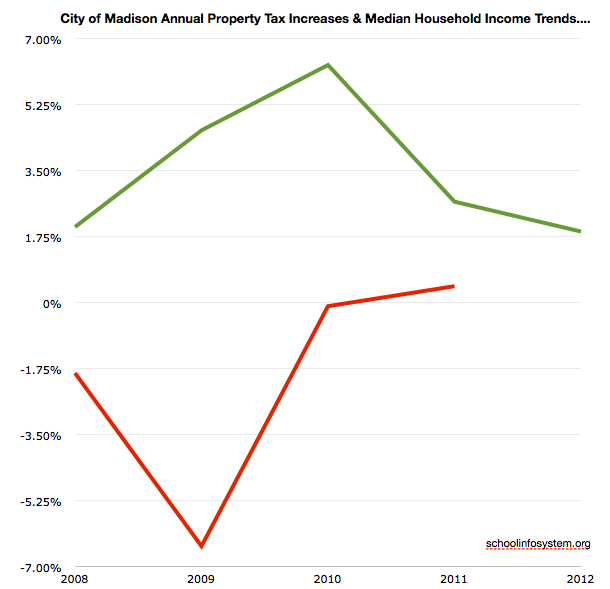
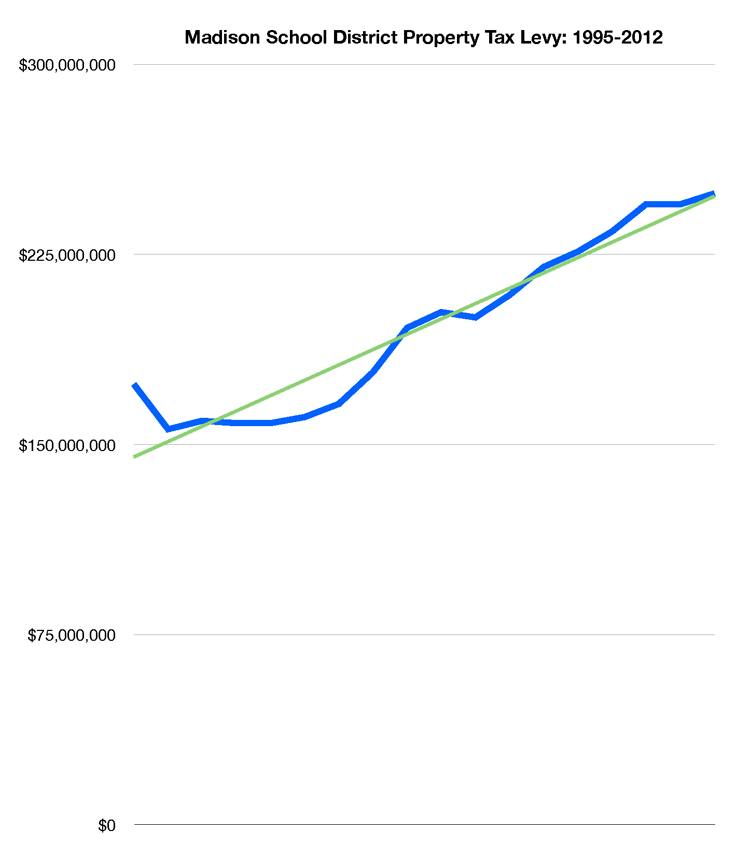
Madison’s Property Taxes Per Capita 2nd Highest in WI; 25% of 2014-2015 $402,464,374 Budget Spent on Benefits


Tap the chart to view a larger version.

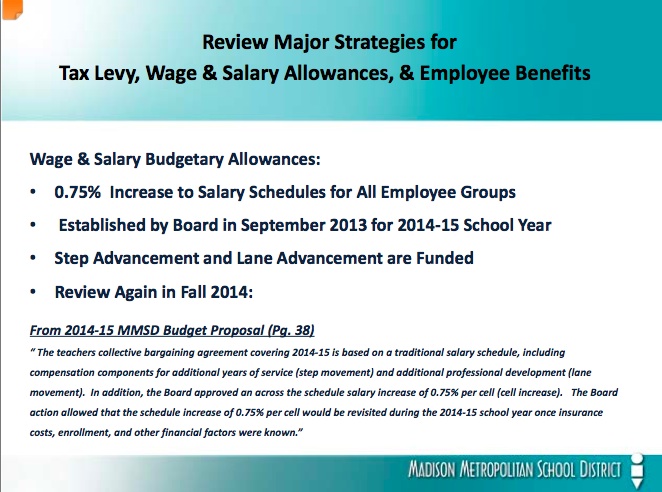
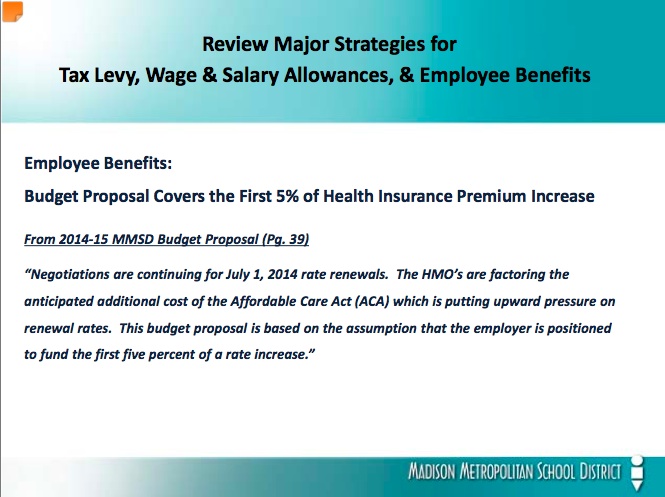
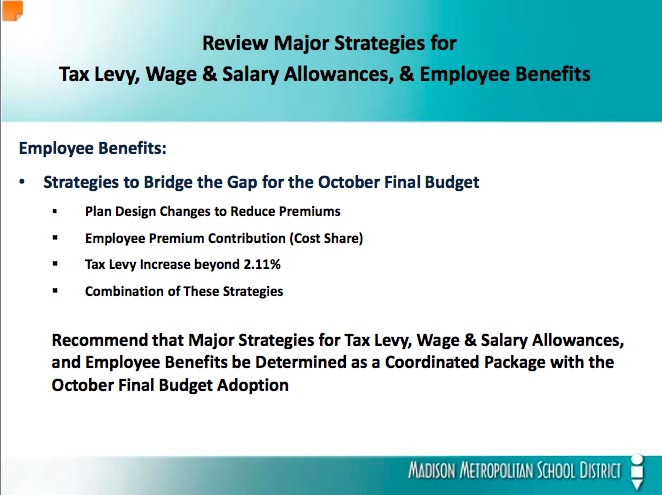
A few slides from the School District’s fourth 2014-2015 budget presentation to the Board:


I am surprised to see Physician’s Plus missing from the healthcare choices, which include: GHC, Unity or Dean.


The slides mention that the “Budget Proposal Covers the First 5% of Health Insurance Premium Increase”.

Madison Schools’ 2014-2015 v4 budget document (PDF).

Deeper dive:

2014-2015 Madison Schools’ Budget

Long term, disastrous reading results.

Healthcare costs have long been a somewhat contentious issue, including decades of expensive WPS coverage.

Questions about recent maintenance referendum spending.

Middleton’s property taxes are about 16% less than Madison’s for a comparable home.

Wisconsin per capita property tax data via the May 30, 2014 WISTAX Focus Newsletter.

Share

Mining Student Results & Metadata: “massive increase in the demand for proficiency-based adaptive learning”

David Liu:

Recently, we celebrated Knewton’s sixth birthday. It seems that each year brings more progress and change than all the previous years combined, and this past year was no different.

We’re using our latest round of funding ($51 million) to continue to extend our technological leadership and support rapid growth globally, including a new office across the pond in London. Our partnerships with leading education companies brought Knewton-powered products to over 4 million students in 250,000 classrooms in 120 countries around the globe. We expect to have over 7 million students using products powered by the Knewton platform by the end of this year.

I joined Knewton back in 2010. The company was still getting off the ground, but the vision was the same as it is today — to provide personalized learning for everyone on the planet. Every individual deserves the opportunity to maximize their learning potential. It’s inspiring to see how far we’ve come, and to go to work every day knowing that we’re helping to make education more effective and accessible for students worldwide.

In the past year, we’ve seen a massive increase in the demand for proficiency-based adaptive learning, both in the U.S. and internationally. While it was always Knewton’s vision to create an adaptive learning platform to benefit every student in the world, it wasn’t always straightforward for education companies and others to understand this mission. Now, these organizations are using our platform to push the envelope to create products that will have a meaningful impact on student outcomes. Knewton enables our partners to focus on innovating new content and user experiences — while leveraging Knewton’s infrastructure and network effects to provide powerful personalization for students and actionable metrics for instructors.

Share

Polarizing Plutocracy: Our Broken Higher Education System

Kathleen Geier:

The American political system is broken, and one unmistakable sign of it is our inability to bring down soaring levels of student debt or to regulate predatory for-profit colleges. The best solution the Obama administration has been able to propose in this area is a college ratings system that would evaluate colleges on the basis of factors like graduation rates and graduates’ earnings and debt loads.

Frankly, the idea that a ratings system will fix what ails American higher education is a little nuts. It views education as if it were a market like any other, and treats colleges like consumer products. “It’s like rating a blender,” burbled Education Department official Jamienne Studley last week to the New York Times. But while blenders can be tested in a lab, employment statistics can be all too easy to game, as anyone who’s followed recent reporting about bogus law school employment rates can attest.

By taking an approach to regulation that emphasizes “transparency” of information, the Obama administration also places the burden of evaluating schools on students and their families. Less affluent students, who often are poorly advised during the college application process in general, won’t fare particularly well under this system. A more aggressive approach is needed to protect them from the predatory for-profits. For many in this group, far more generous financial aid is needed to make going to college an economically rational decision in the first place.

Share

Who Profits from the Master’s Degree Pay Bump for Teachers?

Matthew Chingos:

The fact that teachers with master’s degrees are no more effective in the classroom, on average, than their colleagues without advanced degrees is one of the most consistent findings in education research. In a study published in 2011, Paul Peterson and I confirmed this finding by comparing the student achievement of the same teachers before and after they earned master’s degrees, and found no impact.[1]

This finding may be non-controversial among researchers, but it has largely been ignored by policymakers. Ninety-six percent of the 112 major U.S. school districts included in the National Council on Teacher Quality (NCTQ) Teacher Contract Database pay teachers with MA degrees more than those with BA degrees, with an average difference of $3,205 in the first year of teaching, $4,176 in the fifth year, and $8,411 at the top of the salary schedule. The size of this pay bump varies widely, topping out at over $30,000 in three districts in Maryland.[2]

It is not surprising that teachers respond to these incentives by earning MA degrees. In 2011-12, nearly half of U.S. teachers held such a degree. However, it comes at a price. As higher education costs continue to rise, teachers are going deeper into debt in order to earn these degrees. The proportion of education MA students with graduate debt increased from 49 to 60 percent between 2004 and 2012, and median graduate debt levels increased (in constant dollars) from $27,455 to $35,350. Factoring in undergraduate debt pushes the 2012 figure to $50,879.

Teachers also generally receive annual years of service increases.

Share

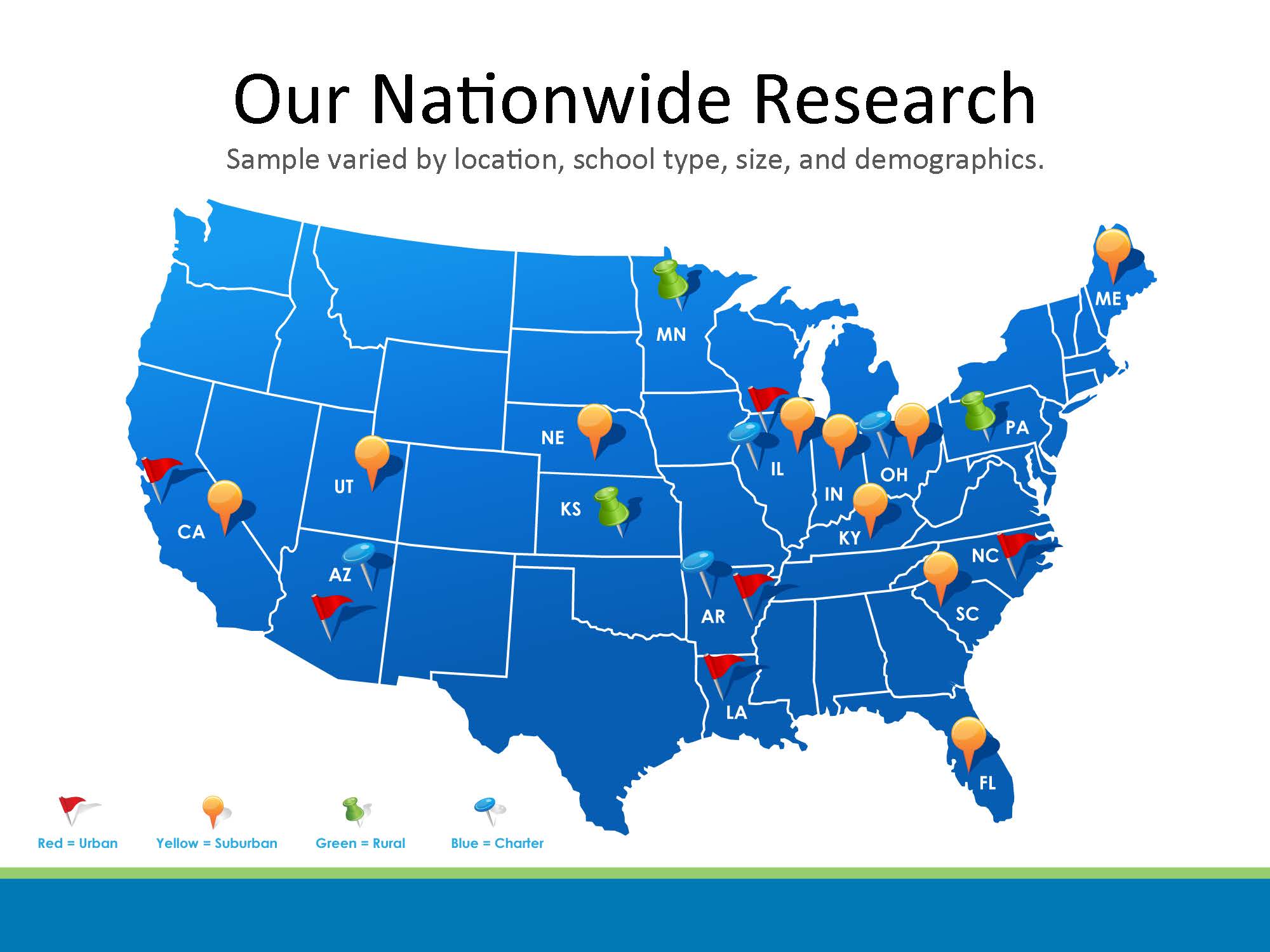
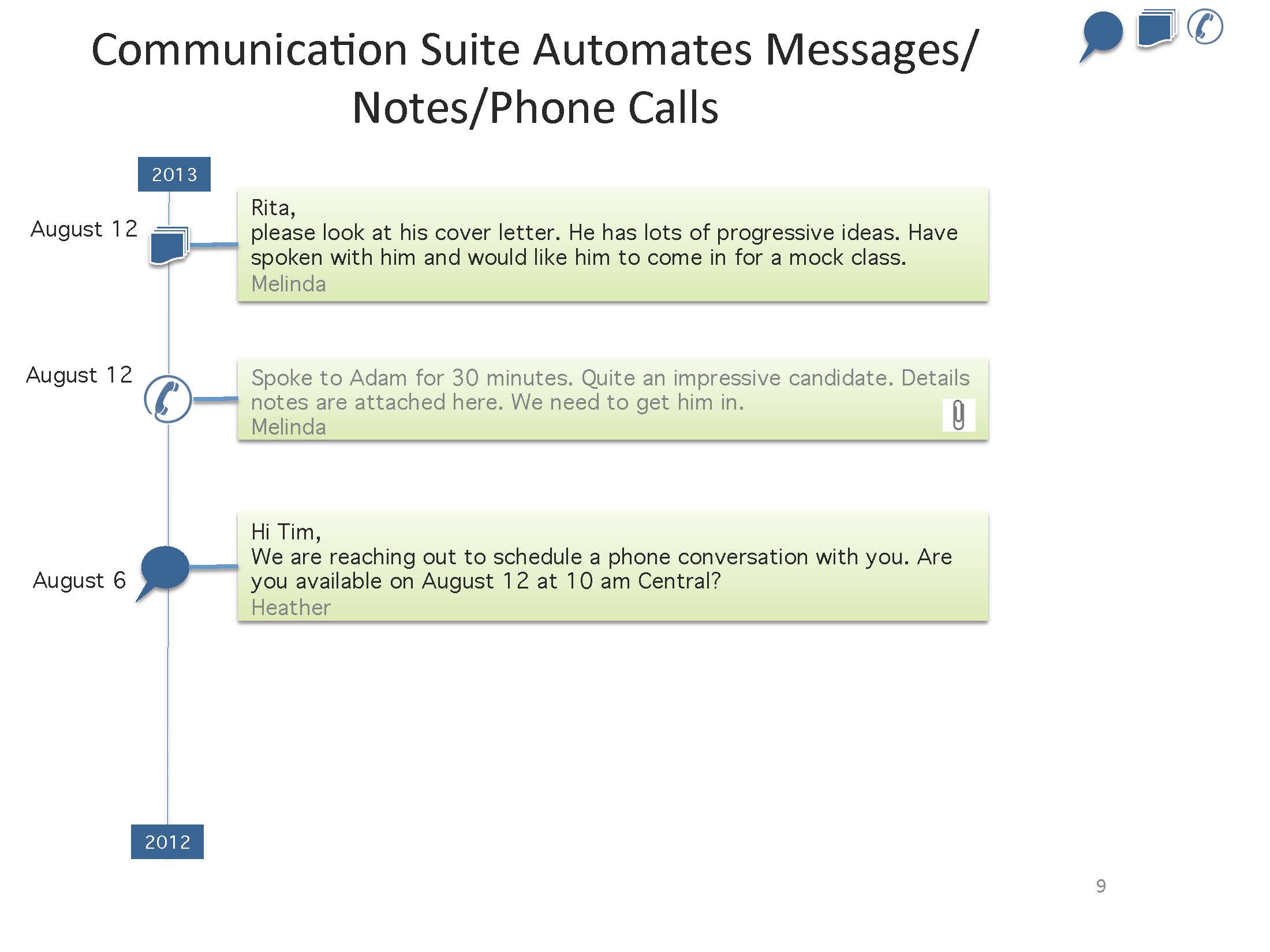
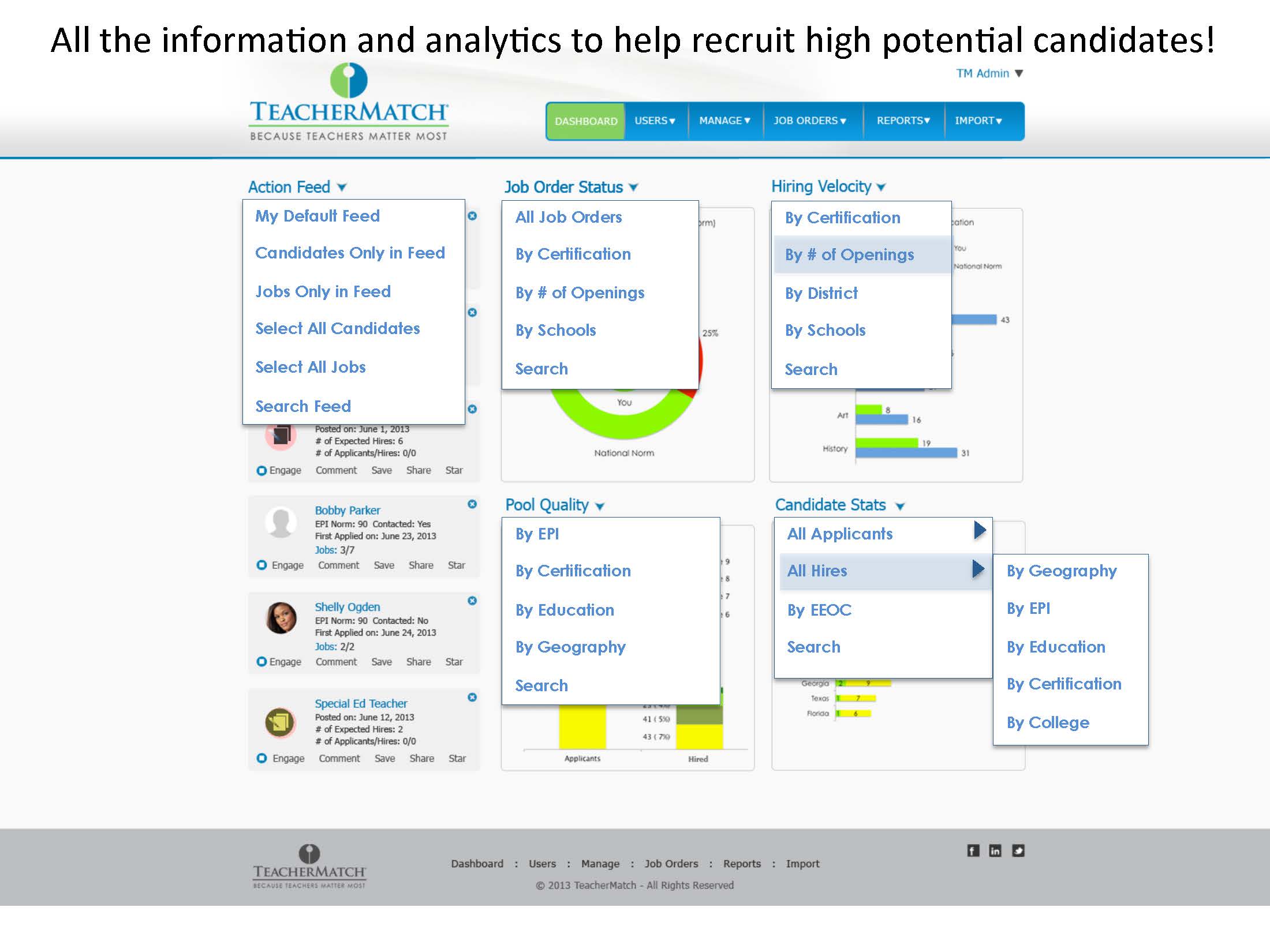
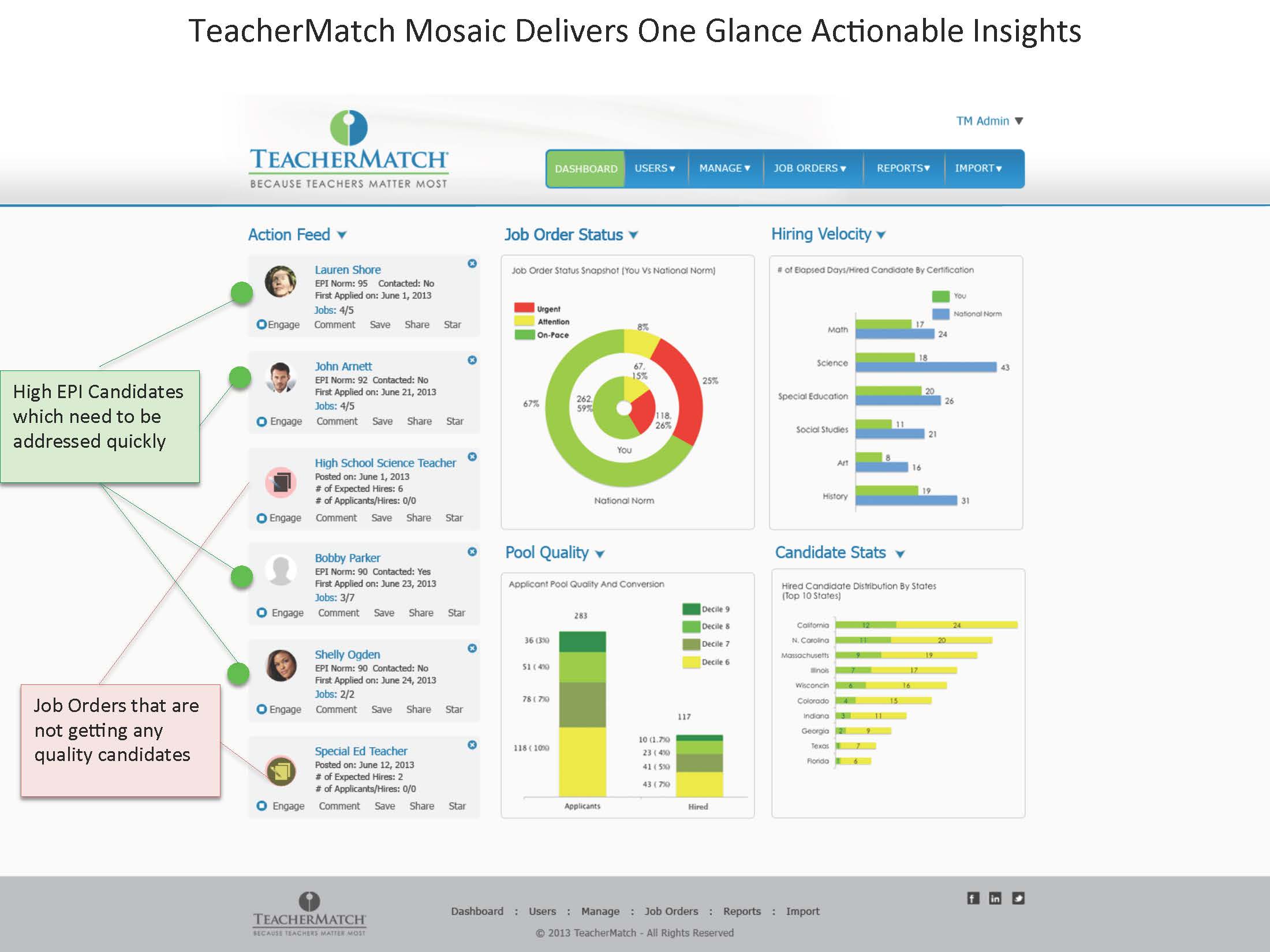
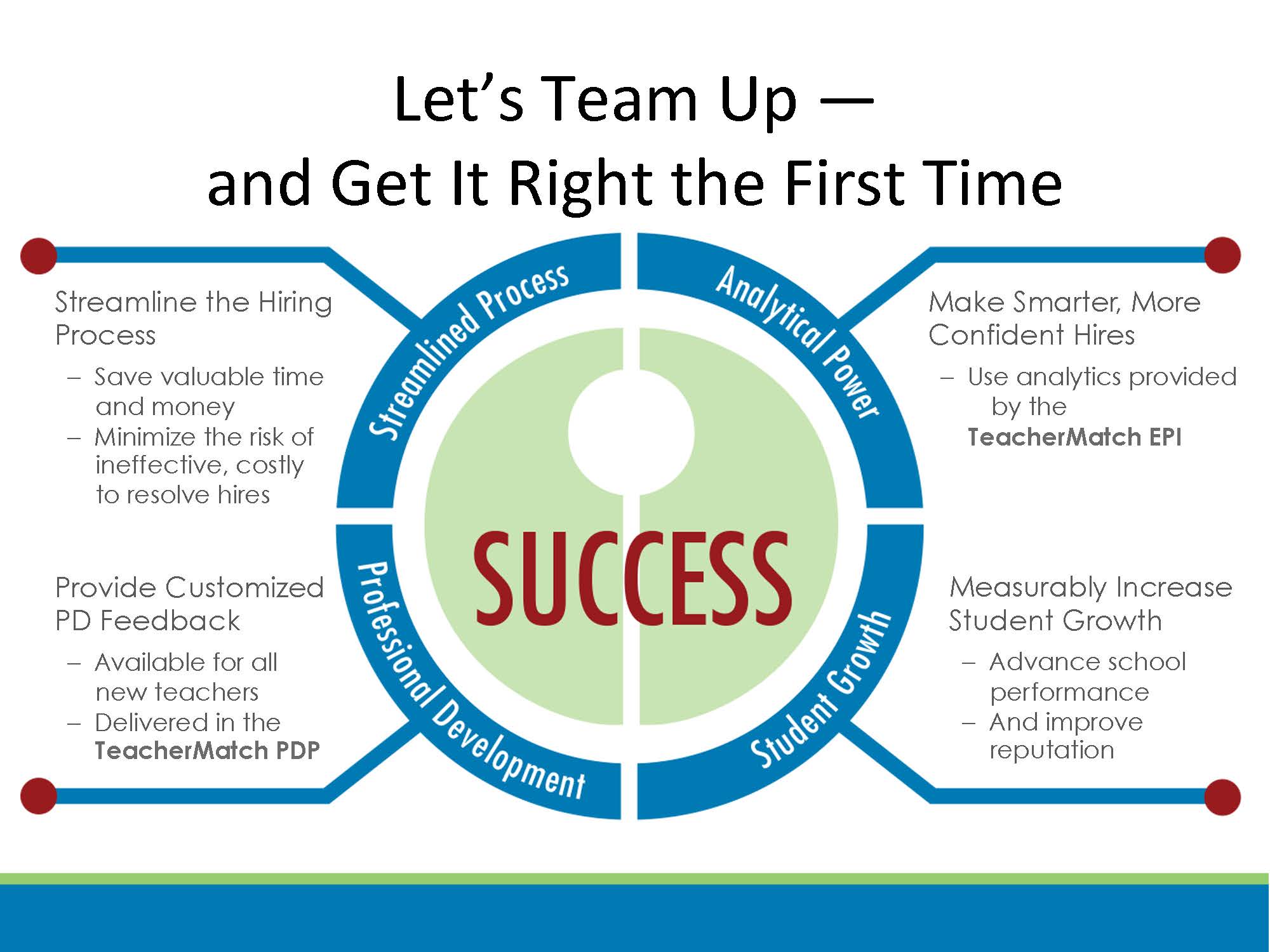
TeacherMatch Presentation to the Madison School Board


4MB PDF presentation. https://www.teachermatch.org. Duckduckgo search.

Fascinating. Humans create the software, reports and decision support process…

Share

University slated for $20 million cut to administrative spending; Minnesota President Kaler’s budget for next year axes more than 100 top leadership positions.

Ann Millerbernd:

The University of Minnesota’s administrative spending is slated for $20 million in cuts next year.

President Eric Kaler proposed the cuts at a Board of Regents meeting earlier this month as part of a larger plan to reduce administrative spending by $90 million over six years, following widespread criticism of the institution’s pay to top executives.

The plan cuts 115 full-time administrative positions, mostly through methods like retirement, voluntary layoffs and by leaving some positions vacant when employees’ contracts expire, said Associate Vice President for Budget and Finance Julie Tonneson.

Administrative employees will feel the weight of $20 million in administrative cuts as part of the institution’s $90 million savings goal, and University managers say those cuts will eliminate positions and create more work for current employees.

Jobs cuts include two associate program director positions in the College of Biological Sciences and 12 spots in the College of Education and Human Development.

Share

A review of Coursera & other Education Apps

Kit Eaton:

MASSIVE Open Online Courses — or MOOCs — are a snowballing revolution in education.

Thousands of courses from some of the world’s finest institutions are available free online, covering everything from astrophysics to the arts. For each course, students, sometimes numbering in the thousands, take part from home — where they view video lectures, take tests and submit essays through a Web interface. It’s a digital classroom with no actual “room,” and where you can study more or less when you like.

Nowadays of course, your smartphone means you can also study when you’re on the move.

Coursera’s free iOS and Android app is perhaps the very best way to take part in a MOOC through a phone or tablet — maybe during your commute to work or your lunch break. The app gives you limited access to Coursera’s list of available courses as well as any you have already signed up for.

Share

The Key to Better US News College Rankings

Ry Rivard:

What would it take for a well-regarded institution — such as the University of Rochester, and a few dozen more like it — to be among U.S. News & World Report’s top 20 national universities? Hundreds of millions of dollars and a prayer, according a new peer-reviewed paper co-written by a former Rochester provost and his staff.

The study, published by the journal Research in Higher Education, argues that small movements in the rankings are simply “noise” and that any kind of sustained upward movement is both immensely expensive and nearly impossible.

Ralph Kuncl, a former Rochester provost who is now president of University of Redlands, in California, co-wrote the paper, which was a decade in the making. He started thinking about changes in the rankings when he was vice provost at Johns Hopkins University.

He said “the trustees would go bananas” when Johns Hopkins dropped in the rankings. The administration would then have to explain what had happened.

Share

Teacher Education School Qualification Commentary

Chris Rickert:

I guess when you’re 76 years old and on the verge of retirement after more than 50 years in the same field, there’s really no need to pull your punches.

Madison East High School biology teacher Paul du Vair proved that in a Sunday story in this newspaper, where he says the “greatest failure in education” is how little experience professors of education have in the classroom.

“They have no idea what goes on in our schools,” he said.

Provocative words from someone who owes at least part of his long and successful career to his college education. But are they true?

No doubt plenty of education professors, especially researchers, at UW-Madison lack teaching experience and haven’t logged significant time in the classroom. But plenty of them have, too.

At least one instructor in each of the School of Education’s licensure areas — the sciences, art, English, etc. — has “extensive teaching experience,” according to Cheryl Hanley-Maxwell, a former special education teacher and the School of Education associate dean responsible for teacher preparation.

And she estimated that about 75 percent of the faculty that students encounter when doing their education-related coursework, and nearly all faculty in areas such as teaching methods and classroom management, have teaching experience.

Related: Wisconsin adopts one aspect of Massachusetts’ teacher content knowledge requirements – MTEL.

Wisconsin rated D+ in teacher NCTQ State Teacher Policy Handbook.

Share

Most Madison teachers will get a good raise

Wisconsin State Journal

The president of the Madison teachers union just lamented an “embarrassingly low” wage increase for his members of 0.25 percent.

But that doesn’t include automatic pay raises most teachers will receive for their years of experience.

A large majority of Madison school teachers (in past years it has ranged from two-thirds to three-quarters of educators) will get longevity raises averaging between 2 percent and

3 percent, according to the district.

Add that to the 0.25 percent and the real raise for most Madison teachers will be about 10 times more than advertised.

In addition, a smaller group of teachers will get extra pay for completing higher education coursework toward advanced degrees. And under the district’s new contract for the 2015-16 year, teachers who supervise certain extracurricular clubs as well as those who take on work related to special education can earn more.

Much more, here.

Share

Parents fight student data mining (do they use google & Facebook?)

Stephanie Simon:

Moms and dads from across the political spectrum have mobilized into an unexpected political force in recent months to fight the data mining of their children. In a frenzy of activity, they’ve catapulted student privacy — an issue that was barely on anyone’s radar last spring — to prominence in statehouses from New York to Florida to Wyoming.

A months-long review by POLITICO of student privacy issues, including dozens of interviews, found the parent privacy lobby gaining momentum — and catching big-data advocates off guard. Initially dismissed as a fringe campaign, the privacy movement has attracted powerful allies on both the left and right. The American Civil Liberties Union is pushing for more student privacy protection. So is the American Legislative Exchange Council, the organization of conservative legislators.

Share

Academic Journal on Publisher Price Gouging: Resignations threat over Taylor & Francis ‘censorship’

Paul Jump:

A journal’s editorial board has been left on the brink of resignation after an eight-month standoff with its publisher Taylor & Francis over the publication of a debate on academic publishing and the profits made by major firms.

The debate, in the journal Prometheus: Critical Studies in Innovation, was due to appear last September, but was delayed by Taylor & Francis and published only at the end of last month.

Its “proposition” paper, “Publisher, be damned! from price gouging to the open road”, by four academics from the University of Leicester’s School of Management, criticises the large profits made by commercial publishers on the back of academics’ labours, and the failure of the Finch report on open access to address them.

The paper compares academic publishing with the music industry, which, it says, has “booming” sales after lowering prices in the face of widespread piracy. It suggests that “doing nothing to prevent the trading of electronic copies of our academic work” could also force prices down in publishing.

Share

Facing low enrollment, Minnesota Law School gets a $2.2 million boost

Tyler Gieseke:

As its enrollment continues to drop, the University of Minnesota’s Law School is set to receive more money to fight financial woes.

President Eric Kaler’s proposed budget for next year includes a $2.2 million allocation to help the Law School cover a loss in tuition revenue, an issue plaguing law schools nationwide.

The University’s Law School has had relatively consistent enrollment over the past few years, but Dean David Wippman said the applications to the school and the number of first-year students are sharply declining.

In fall 2014, he said, about 180 students will enroll, compared to about 220 first-year students in 2013.

“That’s a pretty significant drop,” Wippman said.

Nationally, the number of applicants to American Bar Association-approved schools has dropped by more than 10 percent in each of the past three years, while first-year enrollment has dropped by more than 7 percent each year.

Share

When No One Is Safe From Measles

Lisa Beyer:

Chalk up another demerit for the antivaccine movement: So far, 2014 is shaping up as the worst year for confirmed cases of the measles since it was declared eliminated as an endemic disease in 2000 in the U.S.

Most of the news and media coverage of the outbreak has focused on the fact that 69 percent of the 288 people sickened so far hadn’t been vaccinated against measles.

This, of course, shouldn’t be a surprise. People who don’t get immunized are prone to getting sick. What’s more noteworthy is that 10 percent of those who’ve fallen ill had been vaccinated and another 20 percent may have been but weren’t sure. Given that almost all the cases originated with unvaccinated individuals, this means vaccine rejecters are spreading a preventable disease not only to their own families but to the rest of the population as well.

Share

Mathematicians Urge Colleagues To Refuse To Work For The NSA

Kashmir Hill:

In January, the math community had its big event of the year — the Joint Mathematics Meeting — where 3,000 mathematicians and math students gathered to talk about new advances in the field and jostle for jobs. The National Security Agency is said to be the largest employer of mathematicians in the country and so it always has a sizeable presence at the event to recruit new candidates. This year, it was even easier for the agency as the four-day conference took place at the Baltimore Convention Center, just 22 minutes away from NSA headquarters in Fort Meade. Thomas Hales, a professor at the University of Pittsburgh, who describes himself as a “mathematician who’s upset about what’s going on,” is dismayed at the idea of the brightest minds in his field going to work for the agency. In reaction to the Snowden revelations — which started exactly a year ago – about NSA’s mass surveillance and compromising of encryption standards, Hales gave a grant to the San Francisco-based civil liberties group Electronic Frontier Foundation to fly a representative to Baltimore to try to convince mathematicians young and old not to go help the agency with data-mining and encryption-breaking.

Share

Big Data, Common Core, and National Testing

Pioneer Institute:

May 2014 A Pioneer Institute White Paper by Emmett McGroarty, Joy Pullmann, and Jane Robbins New technology allows advocates for education as workforce development to accomplish what has long been out of their reach: the collection of data on every child, beginning with preschool or even earlier, and using that data to track the child throughout his/her academic career and his/her progression through the workforce. This paper explores the many initiatives that the federal government has worked with private entities to design and encourage states to participate in, in order to increase the collection and sharing of student data, while relaxing privacy protections. The authors offer recommendations to protect student privacy, including urging parents to ask what kinds of information are being collected on digital-learning platforms and whether the software will record data about their children’s behaviors and attitudes rather than just academic knowledge. If parents object to such data-collection, they should opt out. The authors also urge state lawmakers to pass student privacy laws, and they recommend that Congress correct the 2013 relaxation of FERPA.

Share

IPads, Galaxys, and other devices are becoming staples of special-ed classrooms.

Gail Robinson :

Eleven-year-old Matthew Votto sits at an iPad, his teacher at his elbow. She holds up a small laminated picture of a $20 bill.

“What money is this?” she asks. Matthew looks at the iPad, touches a square marked “Money Identification,” and then presses “$20.” “Twenty,” the tablet intones, while the teacher, Edwina Rogers, puts another sticker on a pad, bringing Matthew closer to a reward.

They race through more questions. “What day of the week is it?” “What is the weather outside?” “What money is this?” In most cases Matthew, who has autism, answers verbally, but he is quicker and seems more comfortable on the device.

Share

A Decade of Degrees Universities are constantly changing and Northwestern is no exception. Its history—old and new—is written in the creation, destruction, and changing popularity of its majors.

North by Northwestern:

Had your great-great-great-grandfather, or thereabouts, bought a $100 “perpetual scholarship” when the University first opened its doors on November 5, 1855, he would have had five departments and two degrees to pick from. Today, not only do you have the ability to attend NU and not be a Methodist man, but you also have 94 different majors to pick from, according to CAESAR.

The path from the University of 1855 to today is filled with antiquated majors and abandoned programs. For instance, in the years following World War I, the University introduced “Military Science” and “Physical Education and Hygiene” to broaden its course offerings, though both programs have since been abandoned. Those programs didn’t get very long in the spotlight: To be prepared for wartime jobs during World War II, more Northwestern students studied math, physics and chemistry.

The period after the war saw a huge change in Northwestern’s curriculum. New majors in “Naval Science” and “Home Economics” were created, presumably on the basis of the idea that sailing and sewing were vital anti-Soviet trades. In light of the struggle against communism, classes in “Western Civilization” to teach “democratic values” grew in popularity. This was accompanied by a renewed emphasis on the sciences to keep Moscow from beating us to the moon. The ’70s brought new technology and new fields of study: In 1971, the Department of Computer Science was created, closely followed in 1972, by the African-American Studies department.

Share

The Declining Fortunes of the Young since 2000

Beaudry, Paul, David A. Green, and Benjamin M. Sand:

We document that successive cohorts of college and post-college degree graduates experienced an increase in the probability of obtaining cognitive jobs both at the start of their careers and with time in the labor market in the 1990s. However, this pattern reversed for cohorts entering after 2000; profiles of the proportion of a cohort in cognitive occupations since school completion fall and become flatter with successive cohorts. Since cohort-wage profiles display a similar pattern, these findings appear to fit with a strong increase in demand for cognitive tasks in the 1990s followed by a decline in the 2000s.

Tyler Cowen includes a few more links.

Share

Two educators, two very different visions, one question

Kate Torovonick May:

Take two education activists with very different theories — and give them a chance to work together on a goal they both care about. That’s the thinking in the video above, the kick-off of Microsoft’s new Work Wonders project, which pairs up unlikely collaborators to spark new ideas. Watch as TED Prize winner Sugata Mitra joins forces with TEDx speaker Adam Braun to tackle a bold mission: Use technology to rethink education in severely underserved communities.

They’re a bit of an odd couple. Mitra, who created the School in the Cloud to enable kids to explore questions that matter to them on their own, believes that traditional schools are becoming more and more obsolete; meanwhile Braun, who founded Pencils of Promise to rally communities in the developing world to build schools, believes that traditional classrooms are the answer to opening up opportunity.

Above, watch the first in a series of mini-docs following this collaboration as it unfolded over the past three months. This episode shows Mitra and Braun meeting for the first time and thinking about how the other’s talents could help strengthen their own vision.

Microsoft, a longtime TED partner, will be revealing more episodes over the next month, so you can join the pair as they explore how to adapt Mitra’s Self-Organized Learning Environment (SOLE) tools for use in three Pencils of Promise schools in Ghana, with the help of Office 365 products and services, and how to build a SOLE starter kit to roll out across Pencils of Promise’s global network. This kit, designed with the needs of underserved communities in mind, could even get distribution far beyond that.

Share

How my school rejected an app made for students

theiostream

In Sep 16, 2013, I pushed the first commit to PortoApp’s GitHub repo. Back then, I wanted to make an experiment on managing sessions on iOS. I shamelessly got chpwn’s news:yc’s authentication model, copied his entire login controller by hand and I logged in at my school’s server.

Then, I implemented a news parser for the school’s website. Then, I made a grades viewer/simulator. Then, I displayed the school’s memos decently (and to do so I had to write a whole ASP.NET view state parser in C). The last pre-release commit was in 23 Apr 2014.

Roughly one month later (today), after finishing a four-hour test, my school called me for a meeting. I met with the Educational Councillor (a somewhat psychologist for student issues), the Educational Vice-Director, the Educational Technology Director and the IT Department Director of the school. They told me I was infringing copyright over their website’s content and had the “challenge to think about how what I did was ethically wrong”. It was a big sermon on how I’d be sued if it was the real world, and how they were being so friendly by talking to me, and so on. They never said it, but they naturally meant that there would be legal consequences for me if I did not remove connecting to their website as a feature in my app. In other words, I should turn it into a generic “grade calculator”.

Share

Olin College Commencement Speech

John Seely Brown:

Good afternoon. Today is a very special day for those of you graduating and your parents but it is also a special day for the world.

Here at Olin you have had a unique kind of educational experience – one that I wish more graduating seniors had had from our colleges and universities across the globe and certainly one that I personally wish I had had.

Yes, I went to Brown University – also a great school – but I was trained to be just a technical geek – worshiping technical problems that could be solved with mathematics, physics and computation.

Problems were like clocks; we viewed them as mechanisms that we could take apart, analyze, and solve through aggregating partial solutions. All problems were seen as technical in nature, isolated from the contexts that made them messier to work on.

But you are different – you have learned that many significant problems are, at their root, socio-technical. And that the problem, as stated, is almost never the real problem. You have learned how to unpack the problem as it is integrally associated with the context in which it is embedded.

You see the problem from many angles – the social, the cultural and the institutional as well as just the technical.

In design parlance you have learned to unpack and extend the brief – a talent you will find critical for all things as you venture forth from here today.

I did not have the luxury of your education but experiences quickly taught me the importance of looking beyond the problem as stated – to follow the problem out into its situated context and let it take you to its roots.

Share

How Much Does It Cost to Recruit a Star College Athlete?

Jonah Newman:

My colleague Brad Wolverton has a terrific story this week that takes you inside the big-time college-sports recruitment process through the eyes of Marvin Clark, a promising high-school basketball player who dreams of playing in the NBA.

Mr. Clark was heavily recruited by half a dozen colleges, whose coaches flew to Kansas to see him play, brought him and his mother to their campuses for VIP tours, and gave him hours of personal attention on top of the hundreds of text messages they sent him. Mr. Clark’s story got us thinking: What does it cost for a college to recruit a single athlete?

We looked at four of the universities that pursued Mr. Clark most vigorously: Indiana University at Bloomington, and Iowa State, Kansas State, and Michigan State Universities.

Share

Dumping Everyday Math? The Future of Seattle Elementary Math Education Will Be Decided on Wednesday

But I would suggest an even more important vote will occur on Wednesday, one that will decide the future of tens or hundreds of thousands of Seattle students over the next decade: the Seattle School Board’s vote on the future elementary math curriculum.

As I have noted in previous blogs, Seattle Public Schools is now using a grossly inferior math curriculum, Everyday Math. Most school districts in the area (and around the country) have dropped it because it fails to provide basic competency in elementary-level mathematics, crippling students’ ability to learn algebra and higher mathematics later in their career. Everyday Math is a prime example of “fuzzy math,” with students spending much their their time inventing their own algorithms, writing long essays, using calculators, and doing group projects. Everyday Math is a wonderful example of the tendency to jump on the latest fad, which may sound good, but fails in the classroom.

So you would think the district would be doubly sure not to make a serious mistake again.

Last month, a committee established by the district provided their recommendation of a possible new curriculum. Their rankings were:

1. EnVision Math
2. Go Math!
3. Math in Focus (MIF), which is a U.S. version of Singapore Math.

As I explained in my last blog of the subject, their evaluation was a great disappointment. Math in Focus, based on the extraordinarily successful Singapore Math approach, was downgraded because it advanced student’s too rapidly (compared to the latest fad, the Common Core standards). Go Math! is glossy and weak. EnVision, their top choice, is glossy and full of excessive reading and writing, making it a poor choice for students who do not have strong English skills. But better than Everyday Math for sure.

Much more on Everyday Math, here.

Related: Math Forum audio/video.

Locally, Madison has also used Everyday Math.

Share

Burning Down the House : The End of Juvenile Prison

Jessica Pishko:

WHEN the Center for Investigative Reporting recently visited the Santa Cruz County Juvenile Hall — widely considered one of the best juvenile detention centers in the country — they found remarkably prison-like conditions, ranging from the bare, concrete walls to the use of solitary confinement as a method of disciplining youth. There are currently no federal or state laws that regulate the use of solitary confinement for juvenile offenders, despite overwhelming evidence of its harmful effects. But the abuses don’t stop there. A 2012 report by the Bureau of Justice Statistics, a division of the Department of Justice, determined that youth held in adult prison facilities suffered less instances of sexual violence than their peers in juvenile facilities. And in some facilities, the rate of juvenile recidivism is over 80 percent, meaning that the bulk of these young people will eventually add to the burgeoning prison population.

There seems to be a consensus that the prison system as a whole isn’t working, and this is particularly true when it comes to juvenile detention. The United States incarcerates more young people under the age of 18 than any other industrialized country in the world. (By comparison, South Africa, our closest competitor, incarcerates its youth at one-fifth the rate of the United States.) Most juveniles who are sent to these facilities are from racial minorities. Many of them suffer abuses in prison that are heinous for adults and potentially ruinous for youth — solitary confinement, rape, repeated physical abuse, deprivation of sunlight, insufficient food and affection. Perhaps worst of all, children leave these facilities with additional traumas under their belts and no promise that their outside lives will improve.

And yet, despite protestations from all political parties that our society values children, despite the proliferation of New York Times bestsellers on how to raise children, despite growing scientific evidence that the confinement of adolescents may profoundly stunt their brain development, despite the fact that juvenile crime is steadily declining, change has not followed. Why?

Share

Roll Call: The importance of teacher attendance

National Council on Teacher Quality:

This report breaks down teacher attendance for 40 districts in the nation’s largest cities in the 2012-2013 school year. We identify districts with the greatest percentage of teachers with excellent attendance as well as those with the biggest percentages of chronically absent teachers. In addition to identifying districts that are leaders and laggards in school attendance, the report takes a look at the impact of school poverty levels on teacher attendance and whether or not policies to curb absences made a difference.

Share

Brightest UK girls’ among physics A-level dropouts

Judith Burns:

A teacher-run study is canvassing this year’s students’ attitudes to the subject and will track how many return for A2 physics in September.

Physics has a higher student dropout rate after AS-level than most subjects.

“It always upsets me when we lose them but the biggest upset is when we lose high performing girls,” said study co-ordinator, Ronan McDonald.

Mr McDonald, who teaches physics at a London state school, said the study emerged from a discussion on an online physics teachers’ forum.

Steep rise
Teachers want to know why girls are more likely than boys to drop physics, often despite getting better grades.

Share

Dads on patrol provide positive example in classrooms

Dannika Lewis:

Usually when we think about the parent heading to a PTO meeting, our minds go to moms, but a program in Sun Prarie schools is trying to change that.

They’re called WatchDOGS, DOGS standing for “Dads Of Great Students.”

Every morning at Horizon Elementary School, Principal Rainey Briggs introduces the men who came in for the day to look after the halls and participate in classrooms to the entire student body.

Briggs said the program has grown to be so popular that they had to add days when dads come in.

“It gives us another set of eyes in the building. It gives us another person in the classroom who really wants to be that positive role model for kids from a male’s perspective,” Briggs said.

Share

Why School Boards Shouldn’t Have a Say in Charter School Authorization

Laura Waters:

It starts here:

Last week Assemblyman Troy Singleton (D-Camden) released a bill that updates New Jersey’s 20-year-old charter school law. The draft of the bill invests local school boards with the power to control 30 percent of an aspiring charter’s application score…

What’s wrong with delegating charter approval to democratically-elected school board members? After all, local districts pay tuition and transportation for charter school students. Shouldn’t community representatives have power to deter perceived threats to traditional district dominance?

Share

Computer Science and Math

Dean Chen:

I came across an interesting discussion regarding the role math in computer science education on SIGCSE’s (ACM Special Interest Group on Computer Science Education consisting of CS professors) mailing list. Brad Zanden, a professor in the department of electrical engineering and computer science at the University of Tennessee, started the conversation with:

I understand that discussing the role of math in CS is one of those religious war type issues… After 30 years in the field, I still fail to see how calculus and continuous math correlate with one’s ability to succeed in many areas of computer science… I have seen many outstanding programmers who struggled with calculus and never really got it. I also constantly see how what I consider to be excessive continuous math requirements in our program (calculus 1, 2, and 3, plus linear algebra) stops students from entering computer science…

Share

Borrowing Against the Future: The Hidden Costs of Financing US Higher Education

Charlie Eaton, Cyrus Dioun, Daniela García Santibáñez Godoy, Adam Goldstein, Jacob Habinek and Robert Osley-Thomas

America’s higher education system is gaining a reputation for high costs and large inequities. In 2012, the U.S. spent $491 billion on higher education1 and twice2 as much per student than comparable industrialized countries. Where is all that money going?

Scholars have offered several explanations for these high costs including faculty salaries, administrative bloat, and the amenities arms race.3 These explanations, however, all miss a crucial piece of the puzzle. In fact, financing costs for college institutional debts, equity investments in for-profit colleges, and student loans have also come to soak up a growing portion of educational expenditures by households, taxpayers, and other private funders of higher education.

In recent years, students’ families and colleges have increasingly sought capital from three main financial markets. Public colleges faced declining state appropriations, and the average cost of tuition, room, and board increased much faster than grant aid for needy students.4 This pushed families to borrow increasing amounts from student loan markets to pay for college costs.5 Private and public colleges increased institutional borrowing, particularly from municipal bond markets for capital projects.6 And the rapid growth of for-profit colleges was fueled by equity investors that provided them with capital. All of this financing comes at great cost, in the form of either interest payments or profits earned to satisfy equity investors.

In this report, we estimate – for the first time – the total cost to the American higher education system of reliance on capital from each of these markets. The report covers the years for 2002 to 2012 – the only years for which adequate data are available.7 For student loans, we estimate the total interest paid annually on all outstanding student loans — both private and federal. For institutional borrowing, we describe total interest payments on college and university debts — the largest share of which went to funding amenities.8 In the case of for-profit colleges with capital from equity markets, we estimate the costs to students and taxpayers of profits made by these institutions —and the vast share of revenue they brought in from federal student aid programs — to satisfy stock shareholders and private equity investors. Except where noted, our estimates cover all colleges that received federal Higher Education Act Title IV funds9 and granted two-year, four-year, or graduate degrees between 2002 and 2012.

Share

Trafficked Teachers: Neoliberalism’s Latest Labor Source

George Joseph:

Between 2007 and 2009, 350 Filipino teachers arrived in Louisiana, excited for the opportunity to teach math and science in public schools throughout the state. They’d been recruited through a company called Universal Placement International Inc., which professes on its website to “successfully place teachers in different schools thru out [sic] the United States.” As a lawsuit later revealed, however, their journey through the American public school system was fraught with abuse.

According to court documents, Lourdes Navarro, chief recruiter and head of Universal Placement, made applicants pay a whopping $12,550 in interview and “processing fees” before they’d even left the Philippines. But the exploitation didn’t stop there. Immediately after the teachers landed in LAX, Navarro coerced them into signing a contract paying her 10 percent of their first and second years’ salaries; she threatened those who refused with instant deportation. Even after they started at their schools, Navarro kept the teachers dependent on her by only obtaining them one-year visas before exorbitantly charging them for an annual renewal fee. She also confiscated their passports.

“We were herded into a path, a slowly constricting path,” said Ingrid Cruz, one of the teachers, during the trial, “where the moment you feel the suspicion that something is not right, you’re already way past the point of no return.” Eventually, a Los Angeles jury awarded the teachers $4.5 million.

Share

Little brother, if I had to go to college again

Adam Morgan:

My brother recently moved away from home to begin his first semester of college. I thought about my first semester of college and how much I changed during those four years. As I put myself in his shoes I thought to myself – what would I do differently if I had to go through college one more time? What would I do the same?

So a few weeks ago I sat down and wrote an email for him. I didn’t write it in an attempt to push him towards a different path. I wrote it because I think I would want him to do the same if he’d finished college before me. Here you go.

Start a business

Take something you’re good at, working out, and turn it into a business on the side. Be a physical trainer for people during your free time. Thanks to your classes, your days will be predictable and scheduling sessions will be easy. If there’s one thing [name redacted] and I both regret looking back, it’s not taking advantage of the freedom and free time you have in college.

Share

Students Paying Bigger Share of Public College Costs

Adrienne Lu:

Once public university tuition goes up, it rarely, if ever, goes down.

Since the Great Recession ended, states have been struggling to control tuition costs with a patchwork of tuition freezes, more student aid and additional state funds.

Caught in the middle are students and their families, who have had to pick up a growing proportion of the cost of college by paying higher tuition. Average tuition and fees at public four-year colleges grew from $7,008 to $8,893, or 27 percent, from 2008-09 to 2013-14, according to a study by the College Board.

State and local funding for public colleges and universities is finally on the rise again in many states, after hitting bottom in fiscal year 2012. States appropriated 5.7 percent more to higher education in fiscal 2014 compared to the previous year, ranging from an increase of 27.3 percent in New Hampshire to a cut of 8.1 percent in Wyoming.

Despite the recent upswing, however, states are still spending an average of 23 percent less per student on higher education than they did when the recession hit at the end of 2007, according to the Center on Budget and Policy and Priorities.

Share

The Death Of Expertise

Tom Nichols:

I am (or at least think I am) an expert. Not on everything, but in a particular area of human knowledge, specifically social science and public policy. When I say something on those subjects, I expect that my opinion holds more weight than that of most other people.

I never thought those were particularly controversial statements. As it turns out, they’re plenty controversial. Today, any assertion of expertise produces an explosion of anger from certain quarters of the American public, who immediately complain that such claims are nothing more than fallacious “appeals to authority,” sure signs of dreadful “elitism,” and an obvious effort to use credentials to stifle the dialogue required by a “real” democracy.

Share

Universities can’t fulfill the myth, but they can’t become vocational schools either

Chris Lee:

Is it time to rethink higher education? I’m someone who went through the system and I’m now, to a greater or lesser extent, contributing to its maintenance, so it seems strange that I should advocate its dismantling. Yet I’m beginning to think that I ought to.

Unlike most rants of this nature, I have no complaints about the modern standard of education. The myth of falling standards has been with us since the Roman republic decided that they wanted the south of France as their personal back garden. If they really were falling for that long, we would all be living in caves wondering how our fore bearers were able to create this thing called fire.

Indeed, I think that students today learn a hell of a lot more than I did in my day. Although I may mourn the fact that Lagrangian mechanics is now a footnote on the way to a physics degree, that is not a sign of falling standards, but rather tells us that it is more important to learn other things to obtain a relevant education.

Share

Madison Teachers, Inc. Contract Ratification Meeting – Tuesday, June 3!

MTI Website:

This meeting is scheduled to consider ratification of Contract terms for 2015-16 for all five MTI bargaining units. This is a membership meeting. 2013-14 membership cards are required for admission.

Those who need assistance with membership issues, and those who are not members at this time and wish to join to enable participation in the meeting can be assisted by reporting to the “MTI Membership Table”.

This meeting will be conducted under MTI Bylaws and Roberts Rules of Order.

Notice of the meeting will also be on MTI’s webpage (www.madisonteachers.org), MTI Facebook, and by email to all who have provided MTI with their home email address.

Related:

Teacher Union Collective Bargaining Continues in Madison, Parent Bargaining “like any other union” in Los Angeles.

Act 10.

Mary Burke.

Share

Will the Madison School Board Prove Mary Burke Wrong (or Right)?

James Wigderson, via a kind reader:

We should not have been surprised when Democratic candidate for governor Mary Burke voted with the rest of the Madison school board to negotiate a contract extension with the teachers union. After all, it was just a month ago that Burke told the Milwaukee Journal Sentinel in a video recorded interview that she believes she didn’t need Act 10 to get the same concessions from the unions. “I think it was only fair to ask for contributions to health care and to pensions, um, but I think those could have been negotiated, ah certainly firmly but fairly.”

Let’s set aside that negotiating a contract extension with the union is likely a violation of the law, as attorney Rick Esenberg of WILL informed the school board. Okay, that’s a little bit like saying to the dinosaurs, “setting aside that giant meteor head towards Earth…”

But setting the issue with the law aside, we’re about to about to see whether Burke’s claim is correct that she is capable of achieving the benefits of Act 10 without having to rely upon the powers granted by Act 10 to local government bodies. If we’re to use upon history as our guide, Burke is unlikely to prove anything except that the passage of Act 10 by Governor Scott Walker and the legislature was necessary.

After the passage of Act 10, Madison teachers staged a massive “sick out” in order to protest Walker’s reforms. Despite a public statement from then-WEAC President Mary Bell to go back to work and a request by the Madison Metropolitan School District to cancel a scheduled day off, Madison’s teachers continued to stay out of work to continue the protest. In fact, a MacIver investigation discovered that John Matthews of Madison Teachers, Inc. lied about the union’s involvement in planning the protest.

Against that background, and a determination not to be bound by the terms of Act 10, the Madison teachers union and the school district negotiated the first contract extension into 2013. Instead of the 12.6 percent health care contribution called for under Act 10 and even supported by Bell, the district was only able to negotiate a 5 percent health care contribution. The agreement did allow an increase to 10 percent the following year.

Related:

Teacher Union Collective Bargaining Continues in Madison, Parent Bargaining “like any other union” in Los Angeles.

Act 10.

Mary Burke.

Share

The White Privilege Moment

Cory Weinberg:

When Bill O’Reilly decried on his show last week a course on white privilege supposedly starting at the Harvard University Kennedy School of Government, he said his working class roots make him “exempt” from white privilege. Scholars across the country could have told the Fox News commentator that he got the concept wrong.

The concept of white privilege – with roots in the 19th century, a resurgence in 1980s feminist scholarship and now making a mainstream splash – doesn’t point fingers at white supremacy or racist acts, but at structural and historical problems in society. White privilege is about the way white people are treated, generally favorably, regardless of what is in their hearts and minds. And Harvard officials aren’t starting a course on the topic, despite what you might hear on Fox.

But despite misconceptions and misinformation, Paul R. Croll, assistant professor of sociology at Augustana College, sees the recent discussion as part of a watershed moment for the academic field. “It’s a complex, deep sociological idea being brought into the mainstream, and it’s not easy to understand always. But even an angry discussion opens the door,” Croll said. “Bill O’Reilly saying ‘I don’t have white privilege’ is still Bill O’Reilly saying ‘white privilege.’ ”

Share

St. Paul schools to put iPads in hands of all students

Anthony Lonetree:

The St. Paul School District plans to become the largest in the state to put iPads in the hands of all students.

The decision, to take effect in the 2015-16 school year, was announced Friday by Superintendent Valeria Silva and represents a reversal of the stance taken by the district in 2012.

That year, the district sought and won voter approval of a $9-million-per-year technology initiative dubbed “Personalized Learning Through Technology.” Its proponents insisted that the initiative was not about supplying devices to students. They emphasized instead the creation of a “teaching and learning platform,” or Facebook-like Web page, through which teachers and students could interact — with the goal of giving students the power to learn anytime, anywhere.

But the district and Dell, its partner in the project, have failed to develop a customized platform that could serve students and teachers “directly enough or quickly enough,” Silva said. That work has been halted — with Dell agreeing to refund the $665,000 it has been paid in the form of future technology upgrades.

Share

School Board answers to MTI, not to students, taxpayers —

Norman Sannes

Nothing has changed in the past 30 years. The love affair between the Madison School Board and Madison Teachers Inc. Executive director John Matthews is still in full bloom.

The latest pending agreement to extend the existing union contract is proof. The ensuing litigation could cost Madison taxpayers a great deal. The Wisconsin Institute for Law and Liberty has already promised to challenge this if the School Board caves to MTI.

MTI is not about our kids. It never has been (other than indoctrinating liberalism). The union’s opposition to the Madison preparatory charter school is further proof.

The School Board is supposed to be looking out for the kids and the taxpayers, but their first priority continues to be MTI and the demands from Matthews.

Related: Madison Governance Status Quo: Teacher “Collective Bargaining” Continues; West Athens Parent Union “Bargains Like any other Union” in Los Angeles.

Share

How BASIC Opened Up Computers to All of Us

Dan Rockmore:

Fifty years ago, at 4 a.m. on May 1, 1964, in the basement of College Hall at Dartmouth College, the world of computing changed forever. Professor John Kemeny, then the chairman of the mathematics department at Dartmouth and later its president, and Mike Busch, a Dartmouth sophomore, typed “RUN” on a pair of computer terminals to execute two programs on a single industrial-sized General Electric “mainframe” computer. The programs were written in Basic (Beginner’s All-purpose Symbolic Instruction Code), a fledgling computer language designed for the everyman, by Prof. Kemeny, Professor Tom Kurtz and a team of eager students.

Back then, using a computer was almost exclusively the privilege of a select minority of scientists and engineers who were conversant in the early languages of assembly code and Fortran. Prof. Kemeny, who had been a programmer on the Manhattan Project for Richard Feynman and an assistant to Albert Einstein, and Prof. Kurtz, a former student of the computing pioneer John Tukey, saw great potential in computers for advancing teaching and research, but they realized that this would require a whole new level of accessibility.

Basic was the first programming language designed specifically for nonengineers and nonmathematicians. It was easy to learn (“LET X = 5,” “IF X = 5 THEN Z = 10,” “PRINT X”), and at the same time, mainframe computers were starting to use timesharing—a system that let them more quickly handle multiple requests from terminals (a novel form of which was created by a team of Dartmouth undergraduates). As a result, an environment of interactive and available computing took over the campus. The pieces were in place for a global transformation as wide-ranging as the Industrial Revolution.

Share

What are the humanities good for?

Adam Kotsko:

Simply because the humanities are often critical in their approach does not mean that they lead people to contest existing political arrangements. Many if not most of the greatest humanistic scholars of all time were enthusiastic advocates — precisely in the context of their scholarly work — of policies that we now regard as self-evidently abhorrent.

Similarly, we should not be misled by the superficial similarities between certain humanistic habits of thought and certain desirable moral dispositions. Humanistic methods of inquiry have no more inherent moral force than do the various methodologies of the natural sciences.

Nor is it prudent to construe the difference between the humanities and other intellectual disciplines that model themselves on the natural sciences as that between the “qualitative” and the “quantitative.” Every intellectual discipline works with empirical facts of some kind (quantitative), and every intellectual discipline relies on concepts and theories (qualitative). And even if we could somehow claim that the humanities had a monopoly on the qualitative aspect as compared to the “merely empirical” sciences, that still would not give us grounds for believing that the humanities are more meaningful and hence that the study of the humanities leads necessarily to a more meaningful life.

Share

‘Legendary’ teacher retires after more than 50 years in the classroom

Molly Beck

Classroom 3027 in the northeast corner of Madison East High School’s third floor looks — and smells — like a biology textbook come to life.

Schools of mounted fish and five tanks worth of swimming ones watch the classroom from their perches. Small turtles to giant tortoise shells hang on one wall. A reindeer hoof hangs on another.

Underneath the wall decorations, filling shelves and bookcases, are about 400 small jars with yellowing labels tapped out on a typewriter: “cat uterus,” “elegant spider,” “human ovaries” and “golden hamster.” There are human brains, a kidney and a cancerous uterus preserved in formaldehyde.

Also among them is the preserved “Lord Ribbit Baron of Barphe” — the African-clawed frog that lived for 30 years in the classroom, unsurprisingly named by high school freshmen.

To Paul du Vair, the collection is a scrapbook of a teaching career he leaves at 76 years old, an age possibly unmatched by any Madison teacher before him, when he retires this month after more than 50 years, including 34 at East.

Share

Universities can’t fulfil the myth, but they can’t become a vocational school either

Chris Lee:

Is it time to rethink higher education? I’m someone who went through the system and I’m now, to a greater or lesser extent, contributing to its maintenance, so it seems strange that I should advocate its dismantling. Yet I’m beginning to think that I ought to.

Unlike most rants of this nature, I have no complaints about the modern standard of education. The myth of falling standards has been with us since the Roman republic decided that they wanted the south of France as their personal back garden. If they really were falling for that long, we would all be living in caves wondering how our fore bearers were able to create this thing called fire.

Indeed, I think that students today learn a hell of a lot more than I did in my day. Although I may mourn the fact that Lagrangian mechanics is now a footnote on the way to a physics degree, that is not a sign of falling standards, but rather tells us that it is more important to learn other things to obtain a relevant education.

No, my complaint is that universities do not fill the role that there were supposed to play, and they are very inefficient at fulfilling the role that they actually play.

Share

Madison’s Latest Superintendent, one year hence: Deja Vu?

My simple thoughts on Madison’s latest Superintendent, Jennifer Cheatham:

How is the new Superintendent Doing?

Our community faces several historic challenges:

Despite spending double the national average per student, Madison’s reading results are a disaster. The Superintendent has been talking about this and there are indications that at least administrative attention to this urgent problem has changed.

Perhaps the most significant challenge our community faces is that school districts largely remain as they were a century ago: doing the same thing over and over yet becoming more costly each year. The rest of the world is obviously not standing still (www.wisconsin2.org)

The organizational stasis continues despite:

A. The information revolution:
I had dinner with some college students recently. All bright and motivated, they mentioned using the Khan Academy and many other online resources to learn. Sometimes supplementing coursework and in other cases replacing inadequate classroom lectures.

B. A few public schools are re-thinking their models:
Some Wisconsin Public schools are moving toward year around schedules:

Madison, meanwhile, seems largely content with the status quo:

C. Substantial growth in property taxes over the years, despite big changes in homeownership trends, demographics (rental growth) and the local economy.

https://www.schoolinfosystem.org/2013/06/09/madison_schools_89/

http://www.waxingamerica.com/2006/02/nineteen_financ.html

D. Michael Barry (the Madison School District’s Business Services Director) recently confirmed to me via email that 25% of the District’s 2014-2015 budget is spent on benefits (!)

Those trends will be very difficult to address within the current structure.

In summary: two big challenges: disastrous reading problems and an organization structure created for 1914.

It is too early to tell how things are going, though the District could certainly share reading results throughout the most recent school year, via its test results.

The interested reader would do well to review previous Superintendent coverage before, during and after. It is revealing. Pat Schneider takes a quick survey, here.

Henry Whitehead:

Dear Editor: While I bet much of sleepy Madison loved your article on new super-intendent Jennifer Cheatham, I found it both revolting and a perfect microcosm for the extreme flaws in the way we talk about student issues in Madison. The Madison School District and local media refuse to ever put the focus of these types of conversations on students. “Locals,” to you, means 11 bureaucrats and one graduated student. I have no interest in hearing from self-serving members of various boards and committees.

What I want, and what I never get, is testimonies from actual kids in the district who are struggling, who have had a problem during their K-12 years, and who could be better served by the Madison School District. I want to hear from a kid whose only meal comes at school, telling me the actual truth about whether their situation has improved or worsened, not 12 nearly identical, nondescriptive praises by adults. Put the focus where it belongs.

Share

MIT and Harvard release de-identified learning data from open online courses

MIT News:

“We are excited to be able to present the data behind the reports we released in January. This step opens the door to more sophisticated analyses that build on what we have already done,” says co-lead researcher Isaac Chuang, a professor in MIT’s electrical engineering and computer science and physics departments. “MITx and HarvardX are committed to upholding learner privacy as well as advancing learning research. These data are a public good.”

Harvard’s Andrew Ho, Chuang’s co-lead, adds that the release of the data fulfills an intention — namely, to share best practices to improve teaching and learning both on campus and online — that was made with the launch of edX by Harvard and MIT in May 2012.
Ho and Chuang anticipate that the data will offer insight to other educational researchers. Moreover, the methods used to protect learner privacy comply with FERPA (Federal Education Rights and Privacy Act) regulations, which govern the release of such data. The practice should inform the release of future datasets from edX and offer lessons more broadly.

Share

OLPC Memo 5: Education and Psychology

Marvin Minsky:

What goals do we want our schools to achieve? Most parents agree that their children should learn about History, Language, Science and Math, and get some instruction in Health, Sports, and Art. Most parents also want their children taught to behave in what they regard to be civilized ways. And surely, most parents would also agree that schools should help children learn good ways to think. However, while schools have good ways to teach facts about subjects, many pupils still fail to build adequate skills for applying that knowledge. [[1]]

But if “good thinking” is one of our principal goals, then why don’t schools try to explicitly teach about how human Learning and Reasoning work? Instead we tacitly assume that if we simply provide enough knowledge, then each child’s brain will ‘self-organize’ appropriate ways to apply those facts. Then would it make sense for us to include a subject called “Human Psychology” as part of the grade-school curriculum? I don’t think that we can do this yet, because, few present-day teachers would agree about which “Theories of Thinking” to teach.

So instead, we’ll propose a different approach: to provide our children with ideas they could use to invent their own theories about themselves! The rest of this essay will suggest some benefits that could come from this, and some practical ways to accomplish it—by engaging children in various kinds of constructive, computer-related projects.

Share

Business School, Disrupted

Jerry Useem

The question: Should Harvard Business School enter the business of online education, and, if so, how?

Universities across the country are wrestling with the same question — call it the educator’s quandary — of whether to plunge into the rapidly growing realm of online teaching, at the risk of devaluing the on-campus education for which students pay tens of thousands of dollars, or to stand pat at the risk of being left behind.

Share

5 facts about today’s college graduates

Drew DeSilver:

1 Only about 56% of students earn degrees within six years. The National Student Clearinghouse, a nonprofit verification and research organization, tracked 2.4 million first-time college students who enrolled in fall 2007 with the intent of pursuing a degree or certificate. The completion rate was highest (72.9%) among students who started at four-year, private, nonprofit schools, and lowest (39.9%) among those who started at two-year public institutions.

2 Business is still the most common major. According to the National Center for Education Statistics, about a fifth (20.5%) of the 1.79 million bachelor’s degrees conferred in 2011-12 were in business. Business has been the single most common major since 1980-81; before that, education led the way. The least common bachelor’s degrees, according to the NCES, were in library science (95 conferred in 2011-12), military technologies and applied sciences (86) and precision production (37).

Share

Who or What Broke My Kids?

Brooke Powers:

I am Desperate

I am on a desperate search to find out who or what broke my students. In fact I am so desperate that I stopped class today to ask them who broke them. Was it their parents, a former teacher, society, our education system or me that took away their inquisitive nature and made math only about getting a right answer? I have known this was a problem for a while but today was the last straw.

A Probability Lesson Gone Wrong

It started out innocently enough working on the seventh grade Common Core standard 7.SP.C.5 about understanding that all probabilities occur between zero and one and differentiating between likely and unlikely events which I thought would be simple enough. After the introduction and class discussion we began partner work on this activity from the Georgia Common Core Resource Document (see page 9). The basic premise of the activity is that students must sort cards including probability statements, terms such as unlikely and probable, pictorial representations, and fraction, decimal, and percent probabilities and place them on a number line based on their theoretical probability. I thought it would be an interactive way to gauge student understanding. Instead it turned into a ten minute nightmare where I was asked no less than 52 times if their answers were “right”. I took it well until I was asked for the 53rd time and then I lost it. We stopped class right there and proceeded to have a ten minute discussion on who broke them.

Share

Brentwood parents of special education students unite to call for school district reform

Paula King:

Parents of special education students who recently protested in front of Brentwood Union School District headquarters are calling for districtwide reform, including greater inclusion for special needs children on campuses and an end to alleged retaliation against proactive parents by district officials.

Parents for Special Education Reform claim that their children are being treated unfairly and even excluded from grade-level field trips. Group members said parents who advocate on behalf of their children by filing complaints against the district with the state or taking legal action are being targeted.

An independent agency needs to help guide the district with its special education program, according to the group. Recently, 13 Brentwood families filed complaints with the federal Office for Civil Rights in San Francisco, and a six-month investigation into the retaliation and discrimination claims is underway.

Share

Teaching children about school shootings

Gillian Tett:

Last week, my daughters experienced a very modern American childhood ritual. The teachers at their Manhattan school suddenly locked the classroom door and told everyone to hide under their desks, or inside the cupboard. Then somebody walked along the corridor outside, banging on the doors in a menacing manner, shouting, “Let me in.”

The teacher kept the door shut and told the children to silently crouch down, as part of a so-called Code Red drill. “It was very scary,” one of my daughters observed. “But this is what we have to do if a stranger comes into school.”

Welcome to one of the quirks of America in 2014. When I was a child at a British school 30 years ago, I often took part in fire drills, to prepare for the remote risk of a fire. But these days, American schools are not just conducting fire evacuations. In the wake of recent attacks on educational establishments – such as the tragic shootings in Newtown, Connecticut in late 2012, or the attacks on a California college last week – they are actively drilling children on how to respond to violent attacks as well.

These drills vary across the country. In some American schools, teachers have decided that they want “realistic” drills, so children huddle in places such as the gym while somebody fires a blank gun. In other establishments, teachers keep the threat relatively vague. Meanwhile, in the trendier parts of Brooklyn, the schools are so worried about psychological distress that they offer counselling to pupils after the drills.

Share

New Orleans Public Schools go 100% Charter

Lyndsey Layton:

The second-graders paraded to the Dumpster in the rear parking lot, where they chucked boxes of old work sheets, notebooks and other detritus into the trash, emptying their school for good.

Benjamin Banneker Elementary closed Wednesday as New Orleans’ Recovery School District permanently shuttered its last five traditional public schools this week.

With the start of the next school year, the Recovery School District will be the first in the country made up completely of public charter schools, a milestone for New Orleans and a grand experiment in urban education for the nation.

Locally, Madison continues with its agrarian era school structure, unchallenged.

Share

Is Harvard really better than Yale? This startup may have the answer

Leo Mirani:

When American high school students—and foreign students keen on studying in the US—survey their choice of universities, they can consult one of any number of rankings and listings. Or they can trudge through the websites of dozens on colleges to make up their own minds. Either way, it’s a bit of a chore.

The website Onlyboth.com seeks to may make that process easier with a program that crawls through the thicket of available data and pulls out useful insights and comparisons. The startup’s co-founders, Raul Valdez-Perez, formerly a research faculty member at Carnegie Mellon’s computer science department, and his colleague Andre Lessa, collected data from several sources, chiefly the federal government, to create a database of each US university’s special characteristics. Type in a college name, and the website shows how it compares to its neighbors and peers, as well across lists.

Share

I will send my children private if I can’t get them into a (UK) grammar

Sally & Richard Greenhill:

As grammar schools come under scrutiny yet again – this time for creating an “unequal society” – one alumna of the state-school system argues that the answer is really to create more of them

The latest row to embroil the Education Secretary, Michael Gove – whether he did or didn’t want Of Mice and Men taken off the GCSE syllabus – took me juddering back to my schooldays.

That slender volume was a standard text at my comprehensive. I’d always had the suspicion that, being a novella, it was chosen because it was easier to read than, say, a weighty Dickens tome. And far easier to teach, too, when it was common for staff to spend up to two-thirds of a 50-minute lesson performing crowd control.

Share

Madison Governance Status Quo: Teacher “Collective Bargaining” Continues; West Athens Parent Union “Bargains Like any other Union” in Los Angeles

Ben Austin, via a kind email:

Last week was an important moment in the Parent Power movement.

On Friday, LAUSD Superintendent John Deasy came to West Athens Elementary School in South LA to sign a groundbreaking Partnership Agreement with the leadership of the West Athens Parents Union, called the “Aguilas de West Athens” (AWA) – all without the parents having to gather a single Parent Trigger petition.

This negotiated Partnership Agreement is the result of collaboration and cooperation on the part of both the school district and parents. It invests $300,000 in new staffing positions (including a school psychologist and psychiatric social worker) to address issues of school climate and student safety; increases focus on Common Core implementation and professional development for teachers; and commits to strengthening parent voice and parent power in the school over the coming year.

There has been a ton of good media coverage (which you can read on our blog here), but we thought you might be most interested in hearing directly from the parents themselves who have led this effort. Below is a short video from Winter Hall, one of the parent leaders from West Athens, sharing her story about why she got involved and how the Parents Union was able to win these changes for their kids:
Winter Play

The efforts at West Athens are an important barometer of where the idea and the movement behind parent trigger are heading in California. As more and more districts come to terms with the political power and moral authority that organized parents now possess, we will continue to see more and more proof points of parents able to use their power to create “kids first” reforms at their school, regardless of whether or not they actually use the law to “trigger” the change.

Thank you again for your support. We will continue to keep you updated on everything happening at West Athens Elementary and elsewhere.

Parent Revolution

Related MTI (Madison Teachers, Inc.) Red Fills Doyle Auditorium; Collective Bargaining to Begin.

Related links:

Oconomowoc & Madison.

Madison’s Distastrous Reading Results.

2005: When all third graders read at grade level or beyond by the end of the year, the achievement gap will be closed…and not before.

2008: Commentary & Links on Madison’s reading results.

Share

Efforts to Curb College Costs Face Resistance Schools, Lawmaker Balk at Rules on Career Training, New Rating System

Josh Mitchell:

Obama administration initiatives intended to help restrain soaring college costs are facing resistance from schools and from a bipartisan bloc of lawmakers looking to protect institutions in their districts.

Groups representing colleges and universities this week formally opposed the administration’s plan to more tightly oversee programs that officials say leave students in steep debt but with weak job prospects. The new rules cover for-profit schools along with career-training programs—those that lead to certificates, but not degrees, in a given field, such as mechanics or cosmetology—at public schools and nonprofits. A bipartisan group in Congress is seeking ways to kill the plan, which the administration wants to have in place by November.

At the same time, the administration is planning to delay the rollout of its signature higher-education initiative: a college-rating system that would score institutions based on their affordability and quality. Education Department officials, hoping to have that proposal in place by late 2015, said they need more time to draft the rules after criticism from school officials unnerved by the prospect of federal officials’ making value judgments on a school’s worth.

Stop subsidizing student loans. That one move will solve many problems.

Share

From Invisible to Visible: Being Able To “See” the Crisis in Learning

Rukmini Banerji:

Engagement and Understanding: The First Step in Assessment and Action

The group of mothers sitting in the sun in a village in north India was happy to chat. We talked about children and about their school. “Are they going to school?” I asked. “Of course,” said the mothers proudly. Some went further to say, “we even send them for private coaching after school.” “How are they doing with their education?” The common word for education in Hindi is the same as reading-writing. The chatter stopped. One mother looked at me sternly and said, “How do we know? We are illiterate. Anyway, that is the business of the school and of the teachers.”

For decades it has been assumed that schooling leads to learning. This is the assumption that has been widely held by parents and practitioners, policymakers and public. It is also assumed that “more is better”—more years of schooling are better than less. It is only recently that the world is beginning to realize that schooling does not necessarily lead to learning. For many in India and in other countries, at ground level and at higher levels, this is a new learning. Accustomed to years of measuring inputs and expenditures, the switch to measuring outcomes—especially learning outcomes—is new and still unfamiliar. We are just beginning to figure out how to think about learning beyond, and in addition to, schooling.

Share

MOOCs’ disruption is only beginning

Clayton M. Christensen and Michelle R. Weise:

JOURNALISTS, AS 2013 ended, were busy declaring the death of MOOCs, more formally known as massive open online courses. Silicon Valley startup Udacity, one of the first to offer the free Web-based college classes, had just announced its pivot to vocational training — a sure sign to some that this much-hyped revolution in higher education had failed. The collective sigh of relief from more traditional colleges and universities was audible.

The news, however, must have also had the companies that had enthusiastically jumped on the MOOC train feeling a bit like Mark Twain. When newspapers confused Twain for his ailing cousin, the writer famously quipped, “The report of my death was an exaggeration.” Undoubtedly pronouncements over MOOCs’ demise are likewise premature. And their potential to disrupt — on price, technology, even pedagogy — in a long-stagnant industry is only just beginning to be seen.

How important is disruption in higher education? Tuition costs have been ballooning faster than general inflation and even faster than health care. And what do we get in return? Nearly half of all bachelor’s-degree holders do not find employment or are underemployed upon graduation. At the same time, employers have not been satisfied with degree candidates. Two recent Gallup polls showed that although 96 percent of chief academic officers believe they’re doing a good job of preparing students for employment, only 11 percent of business leaders agree that graduates have the requisite skills for success in the workforce. And this is all occurring while higher education leaders were convinced that they were innovating all along.

Share