School Information System

Study: Half of black males, 40 percent of white males arrested by age 23

Peggy Binette:

Nearly half of black males and almost 40 percent of white males in the U.S. are arrested by age 23, which can hurt their ability to find work, go to school and participate fully in their communities.

A new study released Monday (Jan. 6) in the journal Crime & Delinquency provides the first contemporary findings on how the risk of arrest varies across race and gender, says Robert Brame, a criminology professor at the University of South Carolina and lead author of the study.

The study is an analysis of national survey data from 1997 to 2008 of teenagers and young adults, ages 18

Share

TV Watching and Computer Use in U.S. Youth Aged 12–15, 2012

Kirsten A. Herrick, Ph.D., M.Sc.; Tala H.I. Fakhouri, Ph.D., M.P.H.; Susan A. Carlson, Ph.D.; and Janet E. Fulton, Ph.D.:

Were there differences by sex in the percentage of youth who watched TV or used a computer for 2 hours or less daily?

Were there differences by race and Hispanic origin in the percentage of youth who watched TV or used a computer for 2 hours or less daily?
Were there differences by weight status in the percentage of youth who watched TV or used a computer for 2 hours or less daily?

Nearly all (98.5%) youth aged 12–15 reported watching TV daily.
More than 9 in 10 (91.1%) youth aged 12–15 reported using the computer daily outside of school.

In 2012, 27.0% of youth aged 12–15 had 2 hours or less of TV plus computer use daily.

Among youth aged 12–15, girls (80.4%) were more likely to use the computer 2 hours or less daily when compared with boys (69.4%).
Fewer non-Hispanic black youth aged 12–15 (53.4%) reported watching 2 hours or less of TV daily than non-Hispanic white (65.8%) and Hispanic (68.7%) youth.

Excessive screen-time behaviors, such as using a computer and watching TV, for more than 2 hours daily have been linked with elevated blood pressure, elevated serum cholesterol, and being overweight or obese among youth (1–3). Additionally, screen-time behavior established in adolescence has been shown to track into adulthood (4). The National Heart, Lung, and Blood Institute-supported Expert Panel and the American Academy of Pediatrics (AAP) recommend that children limit leisure screen time to 2 hours or less daily (5,6). This report presents national estimates of TV watching and computer use outside of the school day.

Share

Making School Choice Work

Michael DeArmond, Ashley Jochim, Robin Lake, via a kind Deb Britt email:

Survey finds many city parents are choosing their child’s public school but challenges remain.

School choice is increasingly the new normal in urban education. But in cities with multiple public school options, how can civic leaders create a choice system that works for all families, whether they choose a charter or district public school?

To answer this question, CRPE researchers surveyed 4,000 parents in eight cities (Baltimore, Cleveland, Denver, Detroit, Indianapolis, New Orleans, Philadelphia, and Washington, D.C.) with high degrees of school choice. The researchers also conducted interviews with government officials, choice advocates, and community leaders in four cities, and looked at how many different agencies oversee schools in 35 cities.

The study found that:

In the eight cities surveyed, the majority of parents are actively choosing a school for their children.

Parents face significant barriers to choosing schools, including inadequate information, transportation, and lack of quality options.

Challenges facing families are not confined to the charter or district sector.

Responsibility for schools often falls to multiple parties, including school districts, charter school authorizers, and state agencies, weakening accountability and making it difficult for leaders to address the challenges facing parents.

Share

Are Universities Going the Way of Record Labels?

Martin Smith:

If you spent the 1990s plucking songs from a stack of cassettes to make the perfect mixtape, you probably welcomed innovations of the next decade that served your favorite albums up as individual songs, often for free. The internet’s power to unbundle content sparked a rapid transformation of the music industry, which today generates just over half of the $14 billion it did in 2000—and it’s doing the same thing to higher education.

The unbundling of albums in favor of individual songs was one of the biggest causes of the music industry’s decline. It cannibalized the revenue of record labels as 99-cent songs gained popularity over $20 albums. It also changed the way music labels had to operate in order to maintain profitability. The traditional services of labels: identifying artists; investing in them; recording, publishing, and distributing their work; and marketing them—are now increasingly offered a la carte.

Pressure from labels then had downstream effects on content creators, specifically artists. The top one 1 per cent of artists now take home 77 per cent of revenue, and the rest is spread across an increasing number of artists. The pain of the record labels is forced on artists through smaller royalty payments.

Share

As New York City Expands Pre-K, Private Programs Fear Teacher Drain

Kyle Spencer:

When Michelle Arvelo returned to her prekindergarten classroom on June 30 after a weeklong vacation in the Dominican Republic, 18 exhilarated 4-year-olds sprinted to the door to greet her, wrapping their arms around her thin frame and inquiring about her tan, her haircut and whether her plane had a co-pilot in the cockpit.

Her boss at Cypress Hills Childcare Center in Brooklyn, which runs a year-round preschool, was thrilled to see her, too. But she was also worried that Ms. Arvelo might soon be departing again, this time permanently.

Ms. Arvelo has applied to the city in the hope of getting one of the new prekindergarten teaching jobs opening up in public schools. Directors who oversee dozens of independently run programs like Cypress Hills say that they cannot compete with the salary and benefits offered by the Education Department, so a program that promises to be a boon for families of young children may end up being a loss for them, an unintended consequence of Mayor Bill de Blasio’s prekindergarten expansion.

Share

K-12 Tax & Spending Climate: The Intellectuals’ Hostility to the Market Economy

Matt McCaffrey:

The intellectuals are a paradoxical product of the market economy, because “unlike any other type of society, capitalism inevitably and by virtue of the very logic of its civilization creates, educates and subsidizes a vested interest in social unrest.” Like Hayek, Schumpeter described intellectuals broadly as “people who wield the power of the spoken and the written word.” More narrowly, “one of the touches that distinguish them from other people who do the same is the absence of direct responsibility for practical affairs.” That is, intellectuals do not participate in the market (at least not in the areas they write about), and do not generally rely on satisfying consumers to earn a living. Add to this their naturally critical attitude—which Schumpeter argues is the product of the essential rationality of the market economy—and it is easy to see why intellectuals would be hostile to the market.

In other words, intellectuals are often out of place in entrepreneurial societies. The growth of the intellectual class is not a response to consumer demand, but to the expansion of higher education. Passing through the higher education system does not necessarily confer valuable skills, but it often does convince graduates that work in the market is beneath them:

Share

Higher Ed, Clinton Extravagance, and an American Pathology

Josh Hedtke:

Hillary Clinton gave a Luskin Thought Leadership lecture at UCLA last March for which she raked in $300,000 in speaking fees. The appearance was one of at least eight lectures she gave at various universities throughout the past year. Her minimum speaking fee at said universities was reportedly $200,000.

There has been outrage among some students of these universities, who lambaste their administrators for doling out stratospheric speaking fees while students are left to grapple with tuitions that have increased by 500 percent over the last thirty years.

In defense of Clinton’s exploits, it’s been noted that the fees she was paid did not come out of the pot of money funded by tuition but rather from privately donated grants. For instance, at UCLA, the Luskin Lecture for Thought Leadership fund established in 2011 by benefactors Meyer and Renee Luskin paid her fee.

The nascent Luskin Lecture for Thought Leadership program has thus far brought in three speakers: Bill Clinton, Hillary Clinton, and Kofi Annan, all of whom are, incidentally (or not?), of the liberal bent.

It is correct to point out that, because she was paid by a private donation, it is not as if her speaking fee directly diminished the school’s ability to pay for classroom resources and the like.

Share

Young First-Time Mothers Less Likely to be Married, Census Bureau Reports

The percentage of young first-time mothers who are married is dropping, according to Fertility of Women in the United States: 2012, a report released today by the U.S. Census Bureau.

In the early 1990s, at least half of all first births to mothers younger than age 23 occurred in marriage. Since 2005, more young mothers were cohabiting (38 percent) than were married (24 percent) at the time of their first birth. However, the majority of all women continue to have their first child within marriage.

Fertility of Women in the United States: 2012 uses data from the 2012 American Community Survey and the 2012 Current Population Survey. The report examines women’s marital status at the time of their first births, the completed fertility of women up to age 50 and the fertility patterns of young women. Fertility patterns are shown by race, ethnicity, age, citizenship and employment status, as well as state of residence.

Share

Embattled teacher unions to go after ‘toxic testing’

Laura Waters:

National Education Association (NEA) President Lily Eskelsen García on the use of student test scores to evaluate teacher effectiveness:

They’re “the mark of the devil.” “For us, one thing is clear. Before anything is going to get better: It’s the Testing, Stupid. Better yet, it’s the stupid testing.”

New Jersey Education Association (NJEA) Vice President Marie Blistan on the use of student test scores to evaluate teacher effectiveness:

“We need to safeguard against a test-taking tsunami that enriches private corporations’ wallets but impoverishes our students.”

Denver, the site of the NEA’s annual meeting last week, is a long way from Trenton but you’d never know it from the sound bites.

During this past year the rhetoric from both the national teacher union leadership and N.J.’s state chapter have grown progressively more rancorous. The bicoastal target of ire is, ostensibly, the practice of linking student test scores to teacher evaluations.

Share

American Teens Achieve Mediocrity In Financial Literacy, Local math & reading background

Michelle Hackman:

When it comes to financial literacy around the world, American teens are middling.

The United States may fuel the world’s largest economy and operate its most robust financial system. But compared to the financial prowess of teenagers in 17 other countries, U.S. teens come off downright mediocre.

That’s according to a new study published Wednesday by the Organization for Economic Cooperation and Development as part of its Program for International Student Assessment, conducted once every three years.

The OECD, a 34-nation organization based in Paris, surveyed 15-year-old students in 13 member nations and five other nations throughout 2012 to ascertain their level of familiarity with the financial system as they neared adulthood.

“Finance is part of everyday life for many 15-year-olds, who are already consumers of financial services, such as bank accounts,” the report said. “As they near the end of compulsory education, students will face complex and challenging financial choices, including whether to join the labor market or continue with formal education and, if so, how to finance such study.”

Unfortunately, this is unsurprising. Read two useful articles on local math difficulties and long term disastrous reading results.

The OECD report.

Share

Building a Community for High Schoolers Who Code

Avi Romanoff:

Last September, the day before PennApps 2013f, a 48-hour, 1,000+ student hackathon at the University of Pennsylvania, I created a Facebook Group called “PennApps HS Hackers” for the dozen or so high school students who were also attending the event.

If the words “hacker” and “hackathon” evoke mental images of scary-looking criminals breaking into computers, I can assure you we’re nothing like that. Hackers, in the original spirit of the term, are programmers and designers who use technology to build things — not destroy things. Hackathons are events where hackers of all kinds come together to collaborate on new projects and compete for prizes, often on college campuses.

Turns out I picked an incredible time to start a community — the hackathon scene exploded in rhythm with my Facebook Group. In the course of a school year, the group would grow to include high schoolers from all 50 states and more than a dozen countries, organizers from nearly every major U.S. college hackathon, founders of high school hackathons and hacker meetups, and even the president of the well-known startup incubator, Y Combinator.

Share

For years we’ve been telling kids to sit still and pay attention. That’s all wrong.

Annie Murphy Paul:

Today’s educational technology often presents itself as a radical departure from the tired practices of traditional instruction. But in one way, at least, it faithfully follows the conventions of the chalk-and-blackboard era: EdTech addresses only the student’s head, leaving the rest of the body out.

Treating mind and body as separate is an old and powerful idea in Western culture. But this venerable trope is facing down a challenge from a generation of researchers—in cognitive science, psychology, neuroscience, even philosophy—who claim that we think with and through our bodies. Even the most abstract mathematical or literary concepts, these researchers maintain, are understood in terms of the experience of our senses and of moving ourselves through space.

This perspective, known as “embodied cognition,” is now becoming a lens through which to look at educational technology. Work in the field shows promising signs that incorporating bodily movements—even subtle ones—can improve the learning that’s done on computers.

Share

Allowance Lessons: Teaching Kids How to Save and Spend Properly

Anne Marie Chaker:

Allowance has undergone a major overhaul at the McDermott household this summer.

Beatrice McDermott, 14, and her younger brother, Jack, 11, started getting $10 a month three years ago. Their parents paid them for a set of daily chores like setting the table, clearing dishes and emptying their lunch boxes after school.

But “it wasn’t truly teaching them how to save or spend,” says their father, Matthew McDermott, 45, a Washington, D.C. information technology manager. He and his wife, Christina Gorski McDermott, 43, would find crumpled up bills around the house. “These guys had no sense of money,” he says.

Share

Teacher pension rescue to cost LAUSD $1.1 billion

Yaha Gracile:

LA Unified must come up with $16 million this year to pay an unexpected bill as a result of legislation signed by Governor Jerry Brown aimed at rescuing the state’s teachers retirement pension system known as CalSTRS, but the district’s total increase is much higher, estimated to reach an extra $1.1 billion over the next seven years.

While teachers and school districts across the state will see their contribution rates increase, LAUSD, the largest school district in the state, will pay the lions-share.

The rescue, which will help address a $74 billion shortfall in the teachers pension fund, requires school districts to radically raise their contributions to the fund from the current rate of 8.25 percent, to a rate of 19.1 percent by 2020. Teachers will see a more modest step up, from 8.15 percent to an eventual 10.25 percent of their salary, over the same seven year period. The state’s contribution will rise from 3 percent to 6.3 percent.

But In real dollar terms, the pension contribution price tag for LAUSD is steep: it will eventually more than double by the end of the phase-in period, from its current payment of $213 million per year, to $493 million per year by 2020.

Share

Exploitation, Hard Work and Motivation: Wall Street and the School House Part II

David Kaib:

Ho explains the compensation process on Wall Street as driven by a culture of high risk / high reward. Prior to being hired, as we saw before, non-monetary concerns are central to recruitment. But after being hired there is a denial that there is any motivation other than financial reward. Ho reports that her informants insisted that this is how jobs should be structured: “They enter into a ‘risk-reward’ bargain they fully accept, and it is through this experience that investment bankers learn ‘who is flexible and who can accept change.’” (274) Why is this flexible stance so important? Because of the strategy of no strategy: “to have no long term plans”, thus allowing “immediate responsiveness ” to a changing market. (275) Change is highly valued, partly to facilitate the taking of great risks. If these didn’t work out, they could land at another firm, and if the firms got into trouble, everyone assumed the government would bail them out (something the rest of us do not enjoy). That is, the risk that they accept is related to their immediate jobs, not their long-term prospects, the health of their firms or the systematic risks they impose on the world beyond.

Reformers have often engaged in attacks on public school teachers insisting that—as a class—they do not work hard, they are overpaid, and that “tenure,” meaning due process, allows lazy and unethical teachers to remain in their jobs forever leaving administrators with no recourse. These claims are made all the more strongly if those teachers are protected by a union. Teachers are lambasted for having summers off, for resisting increases in their hours (generally without any increase in pay). Traditionally teaching has been seen as a profession, which entails having a voice in how schools are run, a certain level of control over what is taught and how, and requiring significant training and an apprenticeship. Reformers have sought to challenge these notions, by placing power in the hands of “supermen” and introducing inexperienced and untrained but ‘smart’ TFA recruits to replace experienced teachers.

Share

Pro-Sports Moochers and the True Cost of “Student Athletes”

Andrew Helms:

“Right now the NCAA is like a dictatorship,” said Kain Colter, starting quarterback for the Northwestern University football team this past January. “No one represents us in negotiations. The only way things are going to change is if players have a union.”

Colter’s push to form a union with his Northwestern teammates has reignited a long-simmering debate over the status of college athletes. It’s no secret that many institutions of higher learning cohabitate with athletic programs that are professional in everything but name, and that the NCAA clings to the clever verbal conjunction “student-athlete” in order to claim that scholarships alone provide athletes with equitable compensation for their labor. But as billion-dollar television contracts continue to stuff NCAA coffers, it’s difficult to not agree with civil rights historian Taylor Branch’s conclusion that the current system carries a “strong whiff of the plantation.”

Share

Arne Duncan, Larry Summers, and the Higher Education Myth

Bob Samuels:

I am currently working on a book, The Politics of Higher Education, Jobs, and Inequality. One of my main arguments is that there is a bipartisan consensus that higher education is the solution to all of our economic and social problems. There are several problems with this stance: 1) producing more people with college degrees does not create more good jobs; 2) higher education itself magnifies economic and social inequality; 3) political officials focus on higher education so they don’t have to talk about underemployment, exploitive labor practices, globalization, automation, de-unionization, de-professionalization, privatization, poverty, the minimum wage, and social welfare programs; and 4) the belief in higher education as a fair meritocracy serves to justify inequality.

These myths surrounding higher education and the economy were on full display during Arne Duncan’s and Larry Summers’ presentations at the Aspen Festival of Ideas this week. Duncan argued that since the value of having a college degree has never been greater, we have to find ways of making colleges and universities more accountable. For Duncan, this means that instead of the government simply giving schools more money with no strings attached, we need to judge higher education institutions on outputs like their graduation rates and number of Pell Grant students. Although these are important issues, they do not address the question of educational quality. Instead, the Obama administration is developing their own method of rating and ranking schools, and this feeds into the logic of the meritocracy and the idea that we know how to judge learning in a quantifiable way.

Share

College Discount Escalation

Ry Rivard:

Private colleges are continuing unabated their strategy of setting high sticker prices while giving most of their students steep discounts, according to the latest survey of private colleges by the National Association of College and University Business Officers.
The colleges, many of which are struggling to meet enrollment goals, are taking in only 54 cents for every $1 they claim to charge in tuition.

The “high tuition, high discount” business model is often confusing to students and parents, but it’s how things are done at most private colleges: the colleges charge high prices and then offer students they want huge discounts. The discount comes in the form of need-based aid for low-income students and “merit” aid for students with characteristics that make them desirable to a college. At wealthy colleges, endowments may have actual funds to replace lost tuition revenue, but most colleges are just waiving the chance of getting more.

This so-called discount rate – the college’s aid dollars as a percentage of tuition and fees – is again at an all-time high.

Share

Commentary on Charter & Traditional Public Schools

Dave Zweifel:

Lafer’s report details how Rocketship teaches only basics like reading and math with “live” teachers, while the rest of the curriculum is taught online. There are no art, music or gym classes.

The teachers are recent education school grads who have volunteered for a couple of years with Teach for America, a private national program that was modeled after the Peace Corps, but aimed at American schools in poor and troubled neighborhoods.

Like many recently formed charter school companies, Rocketship uses the savings from its educational model to expand its schools throughout the country. Meanwhile, one of its directors runs a for-profit company that provides thousands of educational materials to the schools.

Indeed, it’s these kind of behind-the-scenes financial relationships that have raised eyebrows throughout the educational community.

To be sure, charter schools can be public schools if the school districts set them up to be accountable to the board and administrators. Madison has established three such charters — Wright Middle School, Badger Rock and Nuestro Mundo — that appear to have had good results experimenting with different educational methods and providing a different academic focus.

Related: The rejected Madison Preparatory Academy IB Charter School.

Share

“Value-added measures are the Mark of the Devil”

Caitlin Emma:

Eskelsen García already has fiery words for the feds, who she holds responsible for the growing use of “value-added measures,” or VAMs, an algorithm that aims to assess teacher effectiveness by student growth on standardized tests. The idea has gained traction under the Obama administration through waivers from No Child Left Behind and the administration’s signature Race to the Top program. But studies, including some funded by the Education Department, have cast doubt on the validity of the measures.

VAMs “are the mark of the devil,” Eskelsen García said.

The algorithms do aim to account for variables such as student poverty levels. But Eskelsen García said they can’t capture the complete picture.

The year she taught 22 students in one class and the year she taught 39 students in one class — “Is that factored into a value-added model? No,” she said. “Did they factor in the year that we didn’t have enough textbooks so all four fifth-grade teachers had to share them on a cart and I couldn’t send any books home to do homework with my kids?”

“It’s beyond absurd,” she added. “And anyone who thinks they can defend that is trying to sell you something.”

Locally, Madison schools have been spending money and time on value-added assessment for years.

Share

A Billionaire Mathematician’s Life of Ferocious Curiosity

William Broad:

James H. Simons likes to play against type. He is a billionaire star of mathematics and private investment who often wins praise for his financial gifts to scientific research and programs to get children hooked on math.

But in his Manhattan office, high atop a Fifth Avenue building in the Flatiron district, he’s quick to tell of his career failings.

He was forgetful. He was demoted. He found out the hard way that he was terrible at programming computers. “I’d keep forgetting the notation,” Dr. Simons said. “I couldn’t write programs to save my life.”

After that, he was fired.

Share

Self-Delusion Spreads from Professional to Graduate Education; Consternation Curiously Absent

Bernie Burk:

I want to be clear at the outset: I love literature. I was an English major, and I’ve never regretted it for a moment. I seriously considered pursuing a Ph.D. in English. I could not have a deeper faith in the liberal arts as a path to the betterment of all mankind.

So imagine my dismay at some recent reportage in the Chronicle of Higher Education. Graduate programs in languages and literature are suffering troubles all too familiar to the readers of these pages: In these straitened times, the tenure-track academic appointments for which a doctoral degree is the traditional and necessary preparation are available for only about 60% of the recipients of doctorates in language or literature (a number chillingly reminiscent of the 56%-57% of the last two law-school graduating classes who managed to find a full-time, long-term job requiring a law license within 9-10 months of graduation, though when you exclude school-funded and self-employed positions as well as a few other confounders and irrelevancies, that number is closer to 53%). The Modern Language Association (a trade group for college and graduate educators and scholars in language and literature analogous to AALS) recently released a report conceding “[w]e are faced with an unsustainable reality.”

The solution? Simple—dismiss the “reality” as “wrong”:

Share

Conversations on the Rifle Range 3: The Broom in the Store Room, Multiple Answers, and the Rituals of Groupthink – See more at: http://oilf.blogspot.com/2014/07/conversations-on-rifle-range-3-broom-in.html#sthash.y48Wbg1F.dpuf

Barr Garelick, via a kind email:

I believe strongly in how math should be taught, and even more strongly in how math should not be taught. Nevertheless, when I am involved in teaching it as I believe it should be taught, I feel vaguely guilty, as if I am doing something against the rules and perhaps even wrong. That’s how groupthink works. It is an acculturation process.

I am reminded of a job I had as a nighttime janitor at the University of Michigan Medical School the summer between my sophomore and junior years. The janitors put up with the college kids who worked with them, but they also could give us a hard time. On my first day, the supervisor told me to get a broom from the store room. This was an initiation rite. No matter which broom I laid a hand on, someone piped up “That’s mine!” In fact all the brooms had been claimed except one which belonged to someone who was not there. That one was off limits as well, but the supervisor finally said with an air of reluctance, “Well you may as well use that one. He probably won’t be coming back.” And true enough, he never did and the broom was mine. Several weeks later, another “new guy” joined the ranks and he was told to find a broom. Though I had found this initiation procedure ridiculous, when the new guy put a hand on my broom, to my horror I heard my voice booming “THAT’S MINE!”

My algebra classes used a book published by Holt (referred to as Holt Algebra). The team of authors include a math professor (Dr. Edward Berger) and a math reformer (Steven Leinwand). The book is fairly traditional, as evidenced by something the math department chair had said during the teacher workday I talked about earlier. Sally, the person from the District office had been telling us about the Common Core approach to teaching math—more open ended problems, more discussion, more working in groups, more problems that have multiple right answers. The math department chair brought up the point that it’s hard to do all this because the books they use just don’t have those types of problems in them. “Most of the problems can only be solved one way,” he lamented.

Nevertheless, the book does cater to some of the current groupthink trends in math education. When teaching the first unit for the first year Algebra 1 course, I wanted to focus on how to express certain English statements in algebraic symbols; for example, “4 less than a certain number” can be written as x – 4. While Holt Algebra does do this, it tends to focus more on the other way around—taking an algebraic expression such as 4/x and translating it into English. While most algebra books do this (as did mine from 50 years ago), the good ones tend to focus more on going from English to algebra. Holt Algebra spends more time going from algebra to English. In addition, it asks students to find two ways of expressing it, thus satisfying the “more than one way to solve a problem” motif that supposedly builds “deep understanding”.

“How are we supposed to find two ways to say this? What does this mean?” a girl named Elisa in my 6th period class asked me. She had told me on the first day that she was bad in math and requested to sit in front so she could see better and not be distracted.

“How would you say 4/x in words?” I asked. No answer. “What are you doing with the 4? Multiplying by x? Dividing by x?”

“Oh, dividing,” she said. “OK, so ‘4 divided by x’?”

Share

At Sea in a Deluge of Data

Alison J. Head and John Wihbey:

This spring, more college students than ever received baccalaureate degrees, and their career prospects are brighter than they were for last year’s graduates.

Employers responding to this year’s National Association of Colleges and Employers’ “Job Outlook 2014 Survey” said they planned to increase entry-level hiring by almost 8 percent. But what they may not realize is that these seemingly techno-savvy new hires could be missing some basic yet vital research skills.

It’s a problem that we found after interviewing 23 people in charge of hiring at leading employers like Microsoft, KPMG, Nationwide Insurance, the Smithsonian, and the FBI. This research was part of a federally funded study for Project Information Literacy, a national study about how today’s college students find and use information.

Nearly all of the employers said they expected candidates, whatever their field, to be able to search online, a given for a generation born into the Internet world. But they also expected job candidates to be patient and persistent researchers and to be able to retrieve information in a variety of formats, identify patterns within an array of sources, and dive deeply into source material.

Share

Charters Catch On Fast in Newark Parents Increasingly Look Outside District Schools

Leslie Brody:

In the debut of a system that lets families apply to charter schools and district schools at the same time, Newark got an eye-opening lesson: More than half of the applicants for kindergarten through eighth grade ranked charters as their first choice.

The application numbers, supplied by the state-operated district, show the popularity of charters at a time when Superintendent Cami Anderson’s One Newark reorganization plan faces heated opposition from some residents.

One part of the complex plan aims to make it easier for children to sign up for schools outside their neighborhoods. Ms. Anderson said the application data show many families want greater choice.

“Universal enrollment is giving us a real sense of demand and allowing families of all learners, including those who struggle, more options,” she said. Some critics, meanwhile, say the superintendent’s push to consolidate, overhaul and restaff many district schools has created such uncertainty that it hastened a flight to charters.

Via Laura Waters.

Share

K-12 Tax & Spending Climate: America’s Public Sector Union Dilemma

Lee Ohanian:

There is much less competition in the public sector than the private sector, and that has made all the difference.

Since the Great Recession began in 2008, there has been a growing criticism of public sector unions, reflecting taxpayer concerns about union compensation and unfunded pension liabilities. These concerns have led to proposals to change public sector union policy in very significant ways. Earlier this month, voters in Ohio defeated by a wide margin a law that would have restricted union powers, although polls showed broad support for portions of the law that would have reduced union benefits. In Wisconsin, a state with a long-standing pro-union stance, Governor Scott Walker advanced policy in February that would cut pay and substantially curtail collective bargaining rights of many public sector union workers. In Florida, State Senator John Thrasher introduced legislation that would prevent governments from collecting union dues from union worker state paychecks. And it is not just Ohio, Wisconsin, and Florida that are attempting to change the landscape of public unions. Cash-strapped governments in many states are considering ways to reduce the costs associated with public unions.

It is important to determine why public unionization rates are so much higher than in the private sector, and whether public union employees are excessively raising costs to taxpayers. Public sector workers may be paid significantly more than private sector workers and their pensions and job security are often higher than in the private sector. Factoring in the lower likelihood of dismissal and layoffs in the public sector, public sector compensation may be 10 percent higher than market rates.

I calculate that bringing public sector wages closer in line with private sector wages by reducing them by 5 percent can reduce state fiscal deficits considerably. For California, which is among the most fiscally strapped states in the nation, reducing state worker wages by 5 percent would reduce the state deficit by about 15 percent. Moreover, some public sector workers, such as California prison guards, are paid far in excess of competitive levels, reflecting a strong union and effective lobbying that has fostered rapid compensation growth. Other unions, such as teacher unions, do not drive up compensation nearly as much, but instead have substantial negative impact by protecting poor teachers, which in turn reduces the quality of public education and reduces human capital.

Share

Why People Used to Have Children

Sister Y:

The nineteenth and twentieth centuries have been characterized by a massive decline in fertility, beginning in rich Western countries and spreading all over the world. It is a transformation that is still underway in poor countries today.

Technological advances have, over the same period, radically decreased child mortality and increased life span. Modern parents need not have many children to ensure that one or two survive; almost all children survive to reproductive age. But Darwinian genetic interests cannot explain the modern decline in fertility (if Darwinian interests dominated, fertility should increase with increased survival, as observed in many historical elites). Rather, the fertility decline to present levels is mostly an economic response to the changing value of children, and to the changing economic relationship of parents and children. The economic transformation is not spontaneous, but the product of cultural transformation through education.

The economic value of children has decreased, but this is not the most important cause of the fertility decline. The transformation of countries from predominantly agricultural to predominantly urban reduced the value of children, especially where the industrial employment of children was restricted. Each child’s labor contributed positive value to a family farm or cottage industry, but in an urban setting, children began to have negative economic value. Indeed, the fertility decline correlates somewhat – though not perfectly – with the transformation from agrarian to city life.

But the fertility decline is not merely the product of a price effect – of people having fewer children because children are more costly. Children are not normal goods (or even inferior goods, as might be surmised from low fertility among the highest income groups): they become not goods at all, but rather bundles of claims on their parents. This transformation is a culturally-controlled change in direction of the flow of resources. Before the fertility decline, resources flowed from children to parents (and even up to grandparents and kin); after the transformation, resources flowed from parents to children. In Mass Education as a Determinant of the Timing of the Fertility Decline, John Caldwell argues that the vector of this cultural transformation has been mass education. He characterizes it as the replacement of “family morality,” in which children are expected to “work hard, demand little, and respect the authority of the old,” with “community morality,” in which children are dependent on their parents to become future productive citizens (perhaps even upwardly mobile) for the good of the country.

Share

Revisitng Kristof’s criticism of academic irrelevance

D.E. Wittkower, Evan Selinger and Lucinda Rush:

Some time has passed since Nicholas Kristof published his controversial Op-Ed “Professors, We Need You!“, and the time is ripe for us to approach the issue afresh. After briefly revisiting the controversy, we’ll offer some thoughts about how to promote public engagement by changing academic cultures and incentives.

When Kristof’s Op-Ed came out back in February, it provoked widespread discussion about whether academics—particularly in the social sciences and humanities—are socially relevant. Much of the heat stemmed from Kristof’s biting central claim: “Some of the smartest thinkers on problems at home and around the world are university professors, but most of them just don’t matter in today’s great debates.”

Rebuttals to Kristof came swiftly and appeared in different venues.

The New York Times itself published critical responses that highlighted the existence of socially relevant academic contributions in lots of places, including “use inspired research” and “blogs, TED talks, congressional and expert-witness testimony, support of social movements, advice to foundations, consultation with museums, summer programs for schoolteachers and work with prisoners.”

This crucial point that a wider net needs to be cast for defining ‘engagement’ was expressed elsewhere, too. Undeniably, counter-examples abound, including in high profile fora. “Kristof need only open the pages of the Nation, the New York Review of Books, the London Review of Books, the Boston Review, The American Conservative, Dissent, The American Prospect.” Indeed, a recent article in The Chronicle of Higher Education suggests that there’s actually robust public academic engagement occurring. “Spend a few hours reading news and opinion pieces, surfing interesting blogs, or dipping into conference-based hashtags on Twitter, and you will find academic voices speaking out—everywhere.”

Shortly after Kristof’s piece ran, the hashtag #EngagedAcademics gained traction on Twitter. Its creator Chuck Pearson lamented that when Kristof wrote about academics he was referring to “research one schools,” and perpetuating an argument predicated upon undue, elitist assumptions: “It still assumes that academics are those pipe-smoking, office-dwelling, masses-disdaining figures from another place. In other words—as the New York Times is so prone to do, when talking about higher education—it assumes that regional universities and state colleges don’t exist. It assumes that teaching-centered liberal arts colleges don’t exist. It assumes that most church-affiliated schools don’t exist. Good heavens, don’t even speak of the community colleges. And it assumes that everyone who could possibly serve as a public intellectual is a FULLPROF or is on the path to FULLPROF status. Non-tenure-track instructors? Visiting professors? God forbid, adjuncts?”

Share

New York Schools Chief Advocates More ‘Balanced Literacy’

Javier Hernandez:

The reading lesson began like any other. Tara Bauer, a teacher at Public School 158 on the Upper East Side of Manhattan, took her perch in front of a class of restless fourth graders and began reciting the beginning of a book about sharks.

But a few sentences in, Ms. Bauer shifted course. She pushed her students to assume the role of teacher, and she became a mediator, helping guide conversations as the children worked with one another to define words like “buoyant” and identify the book’s structure.

“Turn and talk,” she said as she raced around the classroom, prodding students to share their impressions.

The student-led approach to reading and writing used by Ms. Bauer, which is known as balanced literacy, is poised to make a comeback in New York City classrooms. The new schools chancellor, Carmen Fariña, wants more schools to adopt aspects of balanced literacy, including its emphasis on allowing students to choose many of the books they read.

The move, while cheered by proponents of this method, is seen by some as a departure from recent trends in the city and nationwide.

The city’s Education Department turned away from balanced literacy several years ago amid concerns that it was unstructured and ineffective, particularly for low-income children. And Ms. Fariña is facing sharp resistance from some education experts, who argue that balanced literacy is incompatible with the biggest shift in education today: the Common Core academic standards.

Via Will Fitzhugh.

Much more on “balanced literacy”, here.

Share

The ‘Balanced Literacy’ Hoax

Chester Finn:

My chief mentor, the late Daniel Patrick Moynihan, occasionally warned against “semantic infiltration,” which he correctly attributed to the late arms-control expert, Fred Ikle. It is, of course, the judo-like practice of using terms that are appealing to an audience as fig leaves for practices that the same audience would find repugnant—turning one’s own language against one’s interests, you might say.

Moynihan noted, for example, that countries that style themselves “democratic republics” are almost never either democratic or republics.

So it is with “balanced literacy,” which has reared its head once again in New York City, as schools chancellor Carmen Farina places Teachers College professor Lucy M. Calkins back on the English language arts curricular and pedagogical throne that she briefly occupied a decade ago until Joel Klein learned what a catastrophe that was.

Balanced literacy is neither “balanced” nor “literacy,” at least not in the sense that poor kids taught to read via this approach will end up literate.

Rather, it flies in the face of “scientific reading instruction” (phonics, phonemic awareness, etc.) and reinstates the disastrous approach to early reading known as “whole language.”

– via Will Fitzhugh

Much more on “balanced literacy”, here.

Share

The Looming Crisis in Higher Education

Martin Kich:

The “real problem” behind the exploitation of adjunct faculty is quite obvious: universities have continued to produce a reasonable number of Ph.D.’s but no longer are willing to hire a reasonable number of them into full-time, never mind tenure-track, positions.

This situation will change when enrollment in graduate programs starts to contract, and even to crater, because students confront the reality that they have significantly less than a fifty percent chance of finding full-time employment after completing their doctorates—when they confront the reality that the majority of them are spending up to a decade or more in graduate school, and in the process accumulating far more debt on average than undergraduates accumulate, all in order to earn a wage comparable to what they could earn as an “associate” at WalMart.

Because the current pool of adjunct faculty has been built up over several decades but is continually eroded by the grim realities of such employment, any sudden decline in graduate enrollments will have a very significant and immediate impact.

Share

Walking Without Papers at ASU, The “New American University”

Tressie McMillan Cottom

It has been an eventful news cycle for Arizona State University.

Last week they announced a partnership with Starbucks employees that went from press release to critical analysis in about 48 hours. I chimed in with a few thoughts on a public college extracting revenue from Starbucks employees. It turns out that the public university will invest more in the partnership than Starbucks, who can ostensibly afford it.

This week the university billing itself as the “New American University” is back in the news with a more personal story about class (and race and gender). ASU campus police arrested professor Ersula Ore for jaywalking on a campus street. You can watch the video here:

Folks are circulating petitions, expressing outrage and support. This being the Internet, more than a few folks are also making the case in support of the campus police. You’ll find plenty of questions and critique along that gamut. I have a few different questions.

Call me odd but I wonder just want an Arizona State University professor has to deserve the university’s support when the campus police assaults and arrests them?

Share

Academia and the people without jobs

Ryan Anderson

The 1960s are over. When are we going to wake up and realize that it’s 2014 and our academic paradise is a smoldering ash heap, a sad leftover from thirty something years of complete and utter demolition? We no longer have a booming economy and tons of federal money going into the university system. The days of cheap, accessible higher ed are done and gone. And yet, we keep churning out graduate students as if they, too, are going to end up as university professors. As if each and every one of them will soon have their own hip little office full of books, dedicated students, and bright, starry-eyed careers ahead of them. It’s not happening. Paradise. In. Ashes.

In other words: there are no jobs in academia.

I’m a graduate student in anthropology. Ya, the discipline that Forbes rated as the “least valued” in all of the land. Lucky me. Over the years, people have often asked me: “Anthropology eh? So what are you going to do with that?” My response was invariably a version of something like “Well, there’s a LOT I can do with anthropology.” That usually followed with me thinking—hoping—that there actually was something on the other side.

Share

Arboretum walk introduces children to bugs

Pamela Cotant:

Some of the tiniest inhabitants of the 1,260-acre UW Arboretum captivated young participants during a June Family Walk.
The free walk, which is held from 1:30 to 2:30 p.m. every second Sunday, focused on insects last month.
Favorites for Jamison Wagner, 8, were the caterpillar and a spider.

“The spittlebugs were kind of cool, too,” said Jamison, who will be a third-grader at Randall Elementary School.

Other sitings on the walk led by naturalist Kristin Lamers included a stink bug, a butterfly, ants, flies, a weevil and other beetles.

Jane Lowy, 8, who will be a third-grader at Crestwood Elementary School, was enjoying the walk because she loves to be outside.

“It’s going great,” she said. “I like discovering all the bugs and plants and making observations.”

Danyon Wagner was on the walk with his wife, Sarah Wagner, their daughter, Claire Wagner, 4, who will be a kindergartner at Franklin Elementary School, and Jamison.

Share

Get with the program with coding for kids

Sarah Mishkin:

Preparing young children for the future by enrolling in Mandarin classes is very last year. The thing to do now is teach them to code. Thanks to a host of new apps, websites, and even a popular board game featuring turtles, the least technical of parents or teachers can introduce kids to programming.

Homework

The goal of most of the apps and games designed to teach children computer science is not to instruct them in actual coding, but to use a visual interface with drag and drop commands to show how to think like a programmer.

That point is that they get kids thinking about basic logic structures – such as the concept that an action, gesture or particular input can trigger a defined response – and introduce them to the idea that a sequence of commands strung together can create something.

Share

“We are spending billions of dollars in our K-12 system and these kids ought to be able to meet these standards”

Scott Rothschild:

In the world of remedial education, Shine Adams, a Kansas University student, is the exception rather than the rule.

Adams, 38, dropped out of high school, worked for several years and then decided he needed to get his diploma and then a college degree.

Adams got his GED, then, using remedial courses, passed several math classes to satisfy his math requirement and is now working on a degree in social work.

He said he couldn’t have gotten where he is without remedial courses.

But for most students, the remedial courses, sometimes referred to as developmental education, aren’t working.

“We need to do things differently,” said Susan Fish, state director of adult education at the Kansas Board of Regents.

In Kansas, 42 percent of first-time students in two-year colleges and 16 percent in public, four-year colleges enroll in at least one remedial course.

Most students who enroll in remedial courses do not graduate.

State officials say the statistics are cause for alarm as they try to increase the number of people with degrees to meet workforce demands.

“We are spending billions of dollars in our K-12 system and these kids ought to be able to meet these standards. We need to be more honest with ourselves,” said Kansas Board of Regents Chairman Kenny Wilk.

A new report recommends some targeted funding increases and program changes.

The Developmental Education report was put together over the past year by regents staff and leaders at community colleges, four-year colleges and technical colleges.

Share

Shaping a School System, From the Ground Up

Claire Martin:

In the fall of 2011, an eclectic group of people from the San Francisco Bay Area began making regular trips to Lima, Peru. Among them were architects, mechanical engineers, ethnographers, communication designers and education specialists.

They were all employees of the design company Ideo, which is perhaps best known for designing the first laptop computer and the first Apple computer mouse. But now Ideo had been hired by a Peruvian businessman, Carlos Rodriguez-Pastor, to work on a new type of project: designing a network of low-cost private schools from scratch, including the classrooms, the curriculum, the teacher-training strategies and the business model.

Mr. Rodriguez-Pastor was “trying to break the traditional school model,” he recalled in a recent interview. “We thought, why not get different perspectives rather than build on what we think we know?”

Share

Technology Use in Special Education Classrooms

Gail Robinson:

Eleven-year-old Matthew Votto sits at an iPad, his teacher at his elbow. She holds up a small laminated picture of a $20 bill.

“What money is this?” she asks. Matthew looks at the iPad, touches a square marked “Money Identification” and then presses $20. “20,” the tablet intones, while the teacher, Edwina Rogers, puts another sticker on a pad, bringing Matthew closer to a reward.

They race through more questions. “What day of the week is it?” “What is the weather outside?” “What money is this?” In most cases, Matthew, who has autism, answers verbally, but he is quicker and seems more comfortable on the device.

Share

New Pittsburgh Private School offers Student Jobs to offset tuition

Max Radwin:

A new Catholic high school opening this fall in Emsworth will provide jobs to students to help them pay their tuition and gain work experience.
 
 Holy Family Academy will open its doors to about 70 students Aug. 18, with plans to use its work-study program to give students something substantial to put on their resumes that also helps pay more than half of their Catholic school tuition.
 
 The new high school will be on Ohio River Boulevard in a building the Pressley Ridge School for Autism currently occupies. Pressley Ridge’s lease has expired, and it will be moving to a different location.

Share

Why the cool kids from middle school may have trouble down the line

Aisha Sultan:

It was, of course, a popular mean girl who made my life miserable in middle school.

She made a point to ask me, in front of whatever audience she could rally around her, if I had attended the big party from the weekend. (I never had.) If I had found a boyfriend. (Nope.) If even I had a clue about the fantastic life she and her friends led. (Not really.)

While her needling seemed like the end of the world when I was 11 and 12, it taught me to have a great deal of compassion for the marginalized as I grew up. I’ve wondered what happened to my young tormentor as the years passed. A new study out of the University of Virginia suggests she should have been nicer.

Published last month in the journal of Child Development, it followed the “cool kids” from middle school for a decade. It’s true what they say about peaking too young. The socially precocious teens in middle school fell lower on the social hierarchy by high school. And in their early 20s, they had more problems with drugs and alcohol, more trouble with the law and were less competent in their friendships.

What’s surprising is that the middle school “fast-track,” as measured in this study, seems tame compared to the images put forth in current pop culture. One of the markers identified middle schoolers who reported becoming seriously romantically involved at this age, as in making out with a boyfriend or girlfriend but not going further than that.

Share

Politics & University Admissions

Jon Cassidy:

Speaker Joe Straus and two of his top lieutenants in the Texas House, Reps. Dan Branch and Jim Pitts, sent more letters to the president of the University of Texas on behalf of applicants than anyone else whose correspondence was included in a recent inquiry into admissions favoritism.

Chancellor Francisco Cigarroa’s office recently reviewed 86 “recommendation” letters, almost all of them from lawmakers, sent to UT President Bill Powers instead of through the proper channels.

The inquiry wasn’t exhaustive — those were just the letters uncovered by UT Regent Wallace Hall. Lawmakers launched impeachment proceedings against Hall last June, just two weeks after he began investigating whether the university was giving special treatment to the friends and family of lawmakers.

An update, here.

Share

School should be year-round

Wausau Daily Herald:

More than 40 percent of Wausau School District students are attending summer school this year. That’s about the same proportion of students who took summer classes last year, and it’s considered pretty good participation for the Summer Learning program.

It should be 100 percent. A three-month summer vacation is bad for students, and it’s especially bad for at-risk students.

Story: 40 percent of Wausau district kids in summer school

The problem with a long summer break is that, when students are out on vacation for months on end, they tend to forget a lot of what they’ve learned. Research shows that they are especially likely to forget things that require memorization, such as multiplication tables or grammatical rules.

Locally, Madison appears unable to change any material aspect (the stillborn proposed Madison Preparatory Academy IB Charter School) of its agrarian era K-12 organization, one that spends double the national average per student and has long tolerated disastrous reading results.

Share

Two big Brazilian education firms, now in the process of merging, show how universities can do both quantity and quality

the Economist:

IN THE United States worries about private, for-profit universities’ high cost and dubious quality abound. A congressional inquiry in 2012 acknowledged that the sector, which trebled enrolment during the previous decade, gave students who were older, poorer and often less well-prepared for further study than those at public or non-profit institutions their best chance of a degree. But it concluded that soaring fees and drop-out rates meant that a majority left with nothing more than extra debt.

Elsewhere in the Americas, though, the story is far more positive. After equally hectic expansion, Brazil’s for-profit institutions have three-quarters of the country’s higher-education market—and fees are low and quality is rising fast. And since a degree boosts wages by a bigger multiple in Brazil than in any other country tracked by the OECD, a club of mostly rich countries, graduates can make back their tuition fees in just a few years.

Soon Brazil will become home not only to the world’s liveliest for-profit education sector, but to its biggest for-profit higher-education firm, too. Last month the antitrust regulator, CADE, approved the purchase by Kroton, the biggest such firm in Brazil, of Anhanguera, the second-biggest, to create a giant with a stockmarket value of around 18 billion reais ($8 billion).

Share

The Economics of Fake Degrees

Scott McLemee:

It’s surprising how many house pets hold advanced degrees. Last year a dog received his MBA from the American University of London, a non-accredited distance-learning institution. It feels as if I should add “not to be confused with the American University in London,” but getting people to confuse them seems like a pretty basic feature of the whole AUOL marketing strategy.

The dog, identified as “Peter Smith” on his diploma, goes by Pete. He was granted his degree on the basis of “previous experiential learning,” along with payment of 4,500 pounds ($7,723). The funds were provided by a BBC news program, which also helped Pete fill out the paperwork. The American University of London required that Pete submit evidence of his qualifications as well as a photograph. The applicant submitted neither, as the BBC website explains, “since the qualifications did not exist and the applicant was a dog.”

Share

July 2, 2014 Is an MBA worth it?

Kyle Van Pelt:

I have wavered back and forth on the decision to go get an MBA for years. It has always appeared so prestigious and valuable to me. But I have always wondered, is it really that valuable? I have even gone through the trouble of thoroughly researching schools that I would go to, weighed the pros and cons and even spoken to friends who have gotten their MBAs from local state schools all the way up to Ivy League. Every time I venture into those deep waters I come out with the same conclusion; as valuable as it may seem from afar an MBA is not worth the money. Today I was having coffee with an entrepreneur who has those three letters after their name and they confirmed my thoughts.

Their perspective was that starting a business or helping build one early on is just as good and most likely better, than getting an MBA.

Ultimately it boils down to practicality versus theory. Working on a brand new business, such as a startup, is real life hard knocks business school and experience is the best professor. The resounding answer I hear from people who went to business school is that theory can only teach you so much but the network you gain is invaluable. I have a hard time ponying up $100,000+ for a network, some theory and a lot of times a stigma that you don’t deserve. People, unfairly, tend to turn their noses up at those three letters.

There are cases where getting an MBA is worth it, but they are increasingly becoming edge cases. One of my friends who went to Harvard Business School specifically stated that getting an MBA didn’t make sense unless you own a balance sheet. That helps move past theory into the realm of practicality.

Share

Lawsuit Challenges New York’s Teacher Tenure Laws

Al Baker:

An education advocacy group on Thursday threw down the first challenge to New York’s teacher tenure laws in the wake of a landmark court decision in California last month finding such laws there unconstitutional.

A lawsuit filed in State Supreme Court on Staten Island argues that the tenure laws violate the State Constitution’s guarantee of a “sound basic education” by making it difficult to fire bad teachers and by protecting the most veteran teachers in the event of layoffs, regardless of their quality. The suit, filed against city and state education officials, names as plaintiffs 11 public school students whose parents belong to a group known as the New York City Parents Union.

The road ahead is less than certain in either state.

Already, the California Federation of Teachers has vowed to appeal the decision in the case, Vergara v. California. And union leaders, legal analysts and others said it would be difficult to gain any traction on the issue in New York’s judiciary.

Share

In state tuition rules tighten

Ron Lieber:

Figuring out how to pay in-state college tuition for a college student who grew up elsewhere is the ultimate money hack.

At desirable flagship universities in states like Michigan and Colorado, the difference between in-state and out-of-state tuition for students who get no financial aid can now approach $100,000 per undergraduate degree. And some families may also enjoy thumbing their noses at state legislators who expect affluent parents’ out-of-state tuition to subsidize the ever-lower budget allocations those representatives provide to higher education.

So it should come as little surprise that a service like In-State Angels has emerged to help high school graduates establish residency in another state. This is legal, though complicated, so once the company succeeds, it asks for roughly 10 to 15 percent of the ultimate savings as a fee.

Share

The Misguided Freakout About Basement-Dwelling Millennialist

Derek Thompson:

More than ever, young people are living in their parents’ basements.

You’ve surely heard that one before. The Washington Post, the New York Times, the New Republic, Salon, and others have repeated it over and over in the last few years. More than 15.3 million twentysomethings—and half of young people under 25—live “in their parents’ home,” according to official Census statistics.

There’s just one problem with those official statistics. They’re criminally misleading. When you read the full Census reports, you often come upon this crucial sentence:

It is important to note that the Current Population Survey counts students living in dormitories as living in their parents’ home.

When you were adjusting to your freshman roommate, you were “living with your parents.” When you snagged that sweet triple with your best friends in grad housing, you were “living with your parents.” That one time you launched butt-rattling bottle rockets at the stroke of midnight off your fraternity roof? I hope you didn’t make too much noise. After all, you were “living with your parents,” and mine definitely went to bed around 11.

Share

Conversations on the Rifle Range 2: Negative Numbers, Back-to-School Night, a Tattooed Man and a Mysterious Stranger

Barry Garelick:

Barry Garelick, who wrote various letters under the name Huck Finn and which were published here is at work writing what will become “Conversations on the Rifle Range”. This will be a documentation of his experiences teaching math as a long-term substitute. OILF proudly presents episode number two:

My back-to-school night was held on a Thursday evening during the first full week of school. Like most back-to-school nights, it was designed to give parents a peek at what goes on in their child’s school-day. And like most back-to-school nights that I’ve been to, parents shuffled from class to class, following their child’s schedule with somnambulistic fervor—each class lasting 10 minutes.

Of course, it wasn’t an exact replica of a school day: the school used block schedules, with hour and fifty minute classes and odd and even-period classes alternating every other day. I had three classes held during second, fourth and sixth periods—which meant that I taught every other day.

This was my first ever back-to-school night as a teacher. Parents from my three classes showed up, though attendance was fairly sparse. I assured all that I was certified to teach math, and that I would follow the teacher’s lessons and grading procedures. I had a list of topics that I would be teaching in my algebra classes and pointed to them. People nodded vaguely. I then said “I teach by providing instruction, worked examples, and lots of problems.” People nodded vaguely again. So far so good.

I was teaching the two-year sequence of Algebra 1. It is designed for students who are having difficulty in math. My high school, being very small, only offered the 2-year sequence. Students, who for whatever reason did not take Algebra 1 in 8th grade, unless they went to summer school, were therefore stuck with the two–year sequence of algebra, regardless of their ability to handle the one-year course in 9th grade. Two of my classes were the first year of the two-year sequence, and one was the second year.

I was most curious about the parents who showed up for my sixth period class “first year” algebra 1 class) since the students in that class were the most difficult. Out of 25 students, perhaps four were actually intent on learning anything. In fact the parents of a girl named Laura—one of the good students—showed up. She had two sets of parents. Her biological father was there; he bore tattoos on his neck including one of a poorly drawn heart with a number inside it. The step-dad and mother were there as well, along with Laura’s little sister—everyone but my student. And then there was a man who arrived late and sat in the back, looking somehow familiar, with a bored look on his face, slouched at a desk.

Part I: Not your mother’s algebra 1 & the guy who really knows.

Share

Remedial Education: Know a Problem to Fix It; Revisiting Madison’s Math Task Force

Inside Higher Education

Remedial education is getting plenty of attention from state lawmakers. Yet there is little consistency in how states track students’ college preparedness and subsequent progress through remedial coursework.

That’s the central finding of a new report from the Education Commission of the States. The education policy think tank also released a companion report today that takes a first crack at creating a national “framework” for how to measure and report on remediation.

Via Noel Radomski.

Madison’s controversial use of reform Math curricula lead to the creation of a task force six years ago. I wonder if anything has changed?

Share

Pupils on free school meals for only a year become ‘invisible underachievers’

Richard Adams:

Children who qualify for free school meals for just one year become “invisible underachievers” who receive little government support but achieve similar results to those who remain on free school meals during their entire school career.

Research from education data analysts FFT found that the group makes up around 7% of year 11 pupils, meaning that almost 40,000 students suffer similar levels of deprivation but receive fewer of the benefits, in most cases because their household income is just above the £16,000 threshold.

Those who received FSM for only one year average a D grade at GCSE – only slightly above those who are on the meals continuously, but almost a grade lower than pupils who have never received them.

Locally, Madison plans to expand its “free meal” program. Will this address Madison’s long standing disastrous reading results?

Share

The Changing Economic Advantage from UK Private Schools

Francis Green , Stephen J. Machin, Richard Murphy & Yu Zhu :

Despite its relatively small size, the private school sector plays a prominent role in British society. This paper focuses on changing wage and education differentials between privately educated and state educated individuals in Britain. It reports evidence that the private/state school wage differential has risen significantly over time, despite the rising cost to sending children to private school. A significant factor underpinning this has been faster rising educational attainment for privately educated individuals. Despite these patterns of change, the proportion attending private school has not altered much, nor have the characteristics of those children (and their parents) attending private school. Taken together, our findings are consistent with the idea that the private school sector has been successful in transforming its ability to generate the academic outputs that are most in demand in the modern economy. Because of the increased earnings advantage, private school remains a good investment for parents who want to opt out, but it also contributes more to rising economic and social inequality.

Share

“And the dream at Berkeley is to do social work and then go work for Google or Facebook”

Conor Freidersdorf:

The Chancellor of UC Berkeley, Nicholas Dirks, formerly spent years as a professor at Columbia University. In an Aspen Ideas Festival* panel on the state of the humanities, he summed up the difference between Ivy Leaguers in New York City and graduates of the institution he now runs. “You know, the tradition at Columbia is that you read Aristotle and then you go to Goldman Sachs,” he said. “And the dream at Berkeley is to do social work and then go work for Google or Facebook.”

He added, “All the stereotypes have a lot of truth to them. What I do find interesting is that at Berkeley, about 70 percent of students are taking some computer science across the curriculum. And this, I think, is a national phenomenon. At Stanford I think it’s 90 percent, but that’s Stanford. But we’re actually trying to introduce data science and data analytics into the core arts and sciences curriculum.”

He also noted the decline in English majors at his rival institution:

Share

A new front has opened in the Common Core wars — over testing contracts.

Stephanie Simon & Caitlin Emma:

The high-stakes battle is undermining one of the Obama administration’s most prized initiatives: its vision, backed by more than $370 million in federal funds, of testing students across the country on a common set of exams in math, reading and writing.

The administration wants children in Mississippi to be measured against the same bar as children in Massachusetts or Michigan. But now a testing revolt is spreading across the country, adding to a slew of troubles for the Common Core initiative, which began as a bipartisan effort but has come under fire from parents and teachers across the political spectrum.

Share

Wealth by degrees The returns to investing in a university education vary enormously

The Economist:

IS A university degree a good investment? Many potential students are asking the question, especially in countries where the price of a degree is rising, as a result of falling government subsidies. Recent research suggests that the conventional wisdom remains true: a university degree pays handsomely. In America and the euro zone, for example, unemployment rates for graduates are far below average. Yet the benefit of university varies greatly among students, making an investment in higher education a risky bet in some circumstances.

Share

In Major Announcement, FIRE Says It Will Sue Every College With a Speech Code Until Speech Codes Die Forever

Robby Soave:

The Foundation for Individual Rights in Education announced a major litigation effort Tuesday against universities that maintain clearly illegal speech codes.

With help from the law firm of Davis Wright Tremaine, FIRE is suing several universities that manifestly and unconstitutionally deprive their students of First Amendment rights.

“Universities’ stubborn refusal to relinquish their speech codes must not be tolerated,” said FIRE President Greg Lukianoff during a press conference.

For now, suits have been filed against Ohio University, Iowa State University, Chicago State University, and Citrus College in California. These universities have all trampled students’ free speech rights, according to FIRE.

Lukianoff explained that FIRE would not hesitate to expand the suits until all universities abandon their speech codes, which were ruled unconstitutional decades ago but have endured at more than 50 percent of colleges, according to the foundation’s research.

Share

What Stiglitz Misses On Inequality: The Responsibility Of Economists

Steve Denning:

It is a not novel thought that each profession is acutely aware of the problems caused by others but is often unconscious of the problems for which it is responsible. The education system stifles learning by teaching to the test. Doctors and pharmaceutical companies prescribe medicines that cause new diseases that require new cures. Engineers create time-saving devices that end up wasting large amounts of our time. So it is not entirely a surprise that economists are also blind to problems that their profession has engendered.

Share

My hero: Lord Harris, the Conservative millionaire who is saving schools

Michael Gove:

We don’t put up many statues these days. Ours is a post-heroic age, and it is assumed that no one really deserves to be put on a pedestal. But I know of many people who deserve to be remembered for acts of overlooked heroism.

The teachers who dedicate their lives to helping children from disadvantaged homes to achieve their potential are my heroes. Long after others have given up, they refuse to accept failure. Some of these heroes, like David Sellens in Thomas Jones primary in London’s North Kensington, work in local authority schools; some, like Dame Sally Coates of Burlington Danes in London’s White City, run academies; others, like Liam Nolan in Birmingham, have opened free schools. But none inspires my admiration as much as a carpet salesman who left school, as my parents did, when he was just 15.

Share

At time of austerity, eight universities spent top dollar on Hillary Clinton speeches

Philip Rucker & Tosalind Helderman:

At least eight universities, including four public institutions, have paid hundreds of thousands of dollars for Hillary Rodham Clinton to speak on their campuses over the past year, sparking a backlash from some student groups and teachers at a time of austerity in higher education.

In one previously undisclosed transaction, the University of Connecticut — which just raised tuition by 6.5 percent — paid $251,250 for Clinton to speak on campus in April. Other examples include $300,000 to address UCLA in March and $225,000 for a speech scheduled to occur in October at the University of Nevada at Las Vegas.

Share

Media Reality Check on Madison’s K-12 Tax & Spending

Molly Beck, writing for the Wisconsin State Journal:

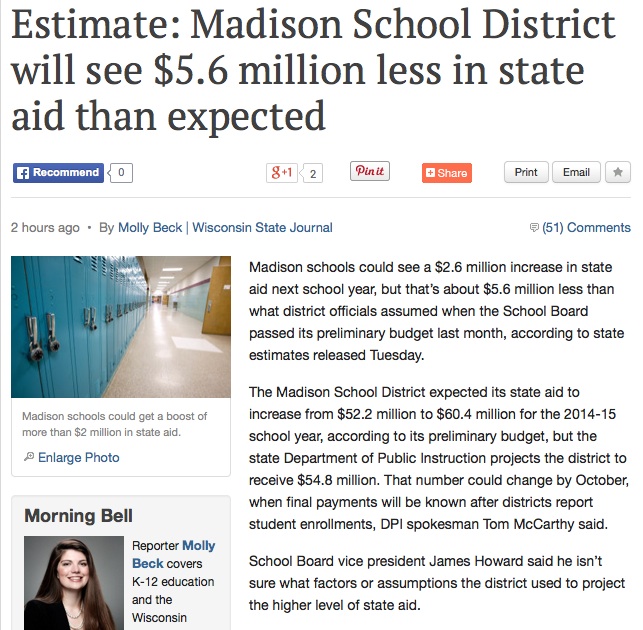
Madison schools could see a $2.6 million increase in state aid next school year, but that’s about $5.6 million less than what district officials assumed when the School Board passed its preliminary budget last month, according to state estimates released Tuesday.

The Madison School District expected its state aid to increase from $52.2 million to $60.4 million for the 2014-15 school year, according to its preliminary budget, but the state Department of Public Instruction projects the district to receive $54.8 million. That number could change by October, when final payments will be known after districts report student enrollments, DPI spokesman Tom McCarthy said.

School Board vice president James Howard said he isn’t sure what factors or assumptions the district used to project the higher level of state aid.

“That’s a very good question, and that’s one we’ll all be looking for an answer for,” said Howard. “If the preliminary budget is based on that $60 million state aid estimate, then that’s going to be an issue.”

District spokeswoman Rachel Strauch-Nelson said officials expected state aid would cover more of the district’s costs under Wisconsin’s complex funding formula.
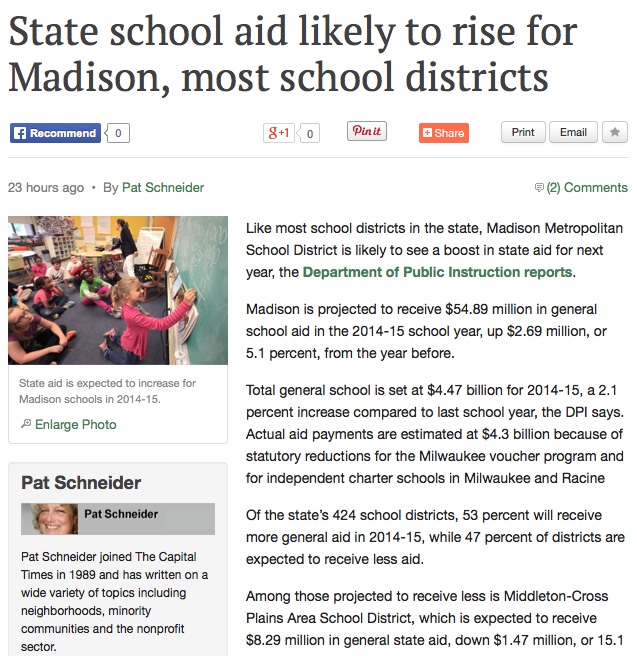
Pat Schneider writing for the Capital Times:

Like most school districts in the state, Madison Metropolitan School District is likely to see a boost in state aid for next year, the Department of Public Instruction reports.

Madison is projected to receive $54.89 million in general school aid in the 2014-15 school year, up $2.69 million, or 5.1 percent, from the year before.

Total general school is set at $4.47 billion for 2014-15, a 2.1 percent increase compared to last school year, the DPI says. Actual aid payments are estimated at $4.3 billion because of statutory reductions for the Milwaukee voucher program and for independent charter schools in Milwaukee and Racine

Of the state’s 424 school districts, 53 percent will receive more general aid in 2014-15, while 47 percent of districts are expected to receive less aid.

Among those projected to receive less is Middleton-Cross Plains Area School District, which is expected to receive $8.29 million in general state aid, down $1.47 million, or 15.1 percent, from the year before.

Enrollment and property values are big influences on the state general aid calculation, says Tom McCarthy, DPI communications officer. Aid increases with increased enrollment and decreases as property values rise, he said.

Perhaps Capital Newspapers might dive a bit deeper and share historic hard numbers with readers?

Remarkable.
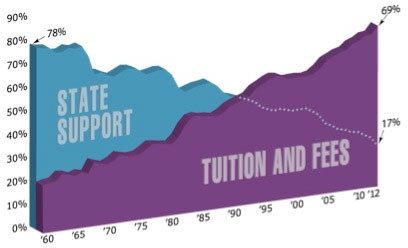
Share

In fact, US teachers earn above average for the developed world at every grade and experience level. They earn even more than teachers in Finland!

Amanda Ripley:

Do they earn as much as they should? No, they do not (more on that below). This is a serious, intellectual job that demands serious pay. But if we keep exaggerating how bad our teachers have it, no one will want to become a teacher–and policy makers will continue to dismiss salary increases as an unimaginably expensive reform.

On the other hand, if we ground the conversation in facts, we might discover that the situation is not as overwhelmingly hopeless as we thought.

First things first: What does the evidence show about how well US teachers are paid? There are different ways to compare salaries. One way is the straightfoward way: compare teacher salaries across countries. To do this, you take a country’s average teacher salary at different grade and experience levels, convert the figure into equivalent US dollars using Purchasing Power Parities to adjust for cost-of-living differences, and see how things stack up.

When you do this, as the OECD does, then you find out a startling truth: US teachers make more than teachers in Finland at every grade and experience level.

The pay gap is most glaring for elementary teachers. Here is the average salary (in equivalent USD converted using PPPs) for new elementary-school teachers in 15 countries:

1. Luxembourg $64,043

2. Germany $47,488

3. Switzerland $47,330

4. Denmark $43,461

5. United States $37,595

6. Netherlands $36,626

7. Spain $35,881

8. Canada $35,534

9. Australia $34,610

10. Ireland $33,484

11. Norway $33,350

12. Belgium (Fl.) $32,095

12. Belgium (Fr.) $31,515

13. Austria $31,501

14. Portugal $30,946

15. Finland $30,587

Share

Report: Charter schools don’t have higher student exits

Joey Garrison:

It delivered one of the biggest blows in Nashville’s fight over charter schools — a spreadsheet compiled by Metro Nashville Public Schools that suggested a suspiciously high number of students exit charters midyear and return to traditional schools.

The implication: Charters were weeding out low-performing students before end-of-year testing, improving the schools’ results.

But more than one year after a debate on student attrition widened a gulf between charters and the district, a team of Vanderbilt researchers contends there is no evidence of a larger exodus of students from charters.

Instead, a 75-page Vanderbilt Capstone study conducted at the request of Metro Schools calls poverty the root of a widespread mobility problem in Davidson County — students routinely moving from one school to another.

It recommends that the Metro school system improve its data collection on why students transfer, conduct exit interviews when students leave and enhance communication with transfers within both charter operators and the district.

Share

An unholy alliance De Blasio’s embrace of the teachers union isn’t progressive; it’s political

Wayne Barrett:

I am a progressive, have been one since the 1960s, when I became a New York City public school teacher for a few years and learned that my union, the United Federation of Teachers, was much better at representing my interests than those of the kids I taught. It shouldn’t have come as such a surprise.

What was true then is true now.

Though the union masquerades to this day as an advocate for children, its job is to advance the interest of teachers. On some issues, like class size, decent salaries and school funding, teachers, parents and students are natural allies. On others, like protecting bad teachers behind seniority and tenure walls and resisting any form of effective evaluation, they are on a decades-long collision course.

As someone who’s spent a lifetime on the left, covering politics for nearly 40 years at the Village Voice, I’ve long been angered by the refusal of many on my side to even acknowledge that the UFT is a special-interest group. It’s never been more disturbing than it is now, six months into the first term of a mayor who is simultaneously a progressive paragon and an advance man for the union. We haven’t lived with that kind of contradiction before.

Share

New York State Challenge Planned on Teacher Tenure Law

Leslie Brody:

A new advocacy group is helping parents prepare a challenge to New York’s teacher tenure and seniority laws, contending that they violate children’s constitutional right to a sound basic education by keeping ineffective teachers in classrooms.

Campbell Brown, a former CNN anchor who has been a critic of job protections for teachers, launched the group, Partnership for Educational Justice, in December. She said six students have agreed to serve as plaintiffs, arguing they suffered from laws making it too expensive, time-consuming and burdensome to fire bad teachers.

The preparations to challenge the state’s tenure laws this summer follow a landmark ruling in California earlier this month. Los Angeles Superior Court Judge Rolf M. Treu struck down the state’s laws on tenure, dismissal and seniority, saying they disproportionately saddled poor and minority students with incompetent teachers. Evidence that ineffective teachers hurt learning, he wrote, “shocks the conscience.”

California unions that intervened in the case, Vergara v. California, said they would appeal, and legal analysts predicted the ruling would inspire similar suits around the country.

Share

The Two Cultures of Mathematics

WT Gowers:

In his famous Rede lecture of 1959, entitled “The Two Cultures”, C. P. Snow argued that the lack of communication between the humanities and the sciences was very harmful, and he particularly criticized those working in the humanities for their lack of understand- ing of science. One of the most memorable passages draws attention to a lack of symmetry which still exists, in a milder form, forty years later:

A good many times I have been present at gatherings of people who, by the standards of the traditional culture, are thought highly educated and who have with considerable gusto been expressing their incredulity at the illiteracy of scientists. Once or twice I have been provoked and have asked the company how many of them could describe the Second Law of Thermodynamics. The response was cold: it was also negative. Yet I was asking something which is about the scientific equivalent of: Have you read a work of Shakespeare’s?

I would like to argue that a similar sociological phenomenon can be observed within pure mathematics, and that this is not an entirely healthy state of affairs.

Share

Harris v. Quinn ruling: Unions hit, but not fatally

Stephanie Simon:

Share

An Update On Redistributed Wisconsin Tax Dollars for K-12 Budgets

Molly Beck:

Whether the district will need to scale back its planned spending for the 2014-15 school year is a “good question,” Howard said. “I’m not sure what it means.”

McCarthy said Madison’s aid has only hit the $60 million mark once, during the 2008-09 school year when total state aid levels peaked at $4.7 billion. The district received $58.4 million during the 2012-13 school year, which was about $11 million more than the district projected at the time, but aid has ranged between $43.2 million and $52.2 million since the 2009-10 school year.

In the last three years, the district has ended up receiving more in state aid than DPI’s July 1 figures predicted. Last year, the district received about $2.6 million more than DPI first estimated and $4.2 million more in 2012. In 2011, the district received less than $1 million more.

Much more on the Madison School District’s 2014-2015 budget, here.

UP, DOWN & TRANSPARENCY: MADISON SCHOOLS RECEIVED $11.8M MORE IN STATE TAX DOLLARS LAST YEAR, LOCAL DISTRICT FORECASTS A POSSIBLE REDUCTION OF $8.7M THIS YEAR.

Share

Delhi University’s first cutoffs soar to 100% in three colleges

Times of India:

NEW DELHI: As expected, cutoffs for admission into Delhi University’s undergraduate courses went sky high as colleges released the first list late on Monday. For BSc computer science, the bar was as high as 100% in at least three colleges — Acharya Narendra Dev (95-100), Atma Ram Sanatan Dharm (98-100) and Shyama Prasad Mukherjee (97-100).

Though ‘popular’ colleges didn’t raised the bar too high — there wasn’t much scope for it either — cutoffs in other colleges increased by as much as 20 percentage points for some courses as compared to 2012-13, when the same programmes were last on offer.

Share

Explaining Tuition Hikes at the University of Michigan

Student Union of Michigan:

This is part of an ongoing series of printable pamphlets designed to explain how money flows through public research universities in general and the University of Michigan in particular. The pamphlets are intended to clarify arguments and push back against pervasive and seemingly “common sense” narratives about the crisis of public higher education that impede, rather than advance, meaningful political action. We hope tactics and strategies will emerge from these counter-narratives—after all, we can’t fight what we don’t understand. Download the printable version of this pamphlet here and see the Resources page for the entire series.

Why has tuition grown so much and so fast at the University of Michigan? According to the administration, it has to do with “the long-term decline in state funding.”[1] We’re going to show you why this story is at best incomplete and at worst manipulative. It’s true that since the 1970s politicians around the country have cut budgets for many social services, including public higher education. Using the chart on the following page, the administration argues that state funding made up 78% of U-M’s general fund budget in the 1960s, but by 2012 this number had fallen to 17%. The chart suggests that tuition has increased to replace it, and the two streams are about equal.

So what’s missing from the administration’s story?

First, it’s important to recognize that the university’s budget is far more complex than the chart suggests. There’s not just two streams of revenue into the university. The general fund only represents a small piece of the university’s operating activities. As the pie chart on the next page indicates, other significant revenue sources include federal research grants (about $1 billion), distributions from the endowment (about $400 million), and gifts (about $150 million).[2] Why is this important? It shows that, even when we take the state’s budget cuts into account, overall revenue at U-M is actually increasing significantly. Over the last decade, for example, total revenue for operating activities (excluding the health system) has jumped from about $2.2 billion to $3.4 billion per year.[3] During that same period, state funding fell by just $41 million, while the revenue generated by student tuition increased by an astronomical $466 million. Even if state funding had remained constant, there would still be a lot more money floating around in the system, and students are more than making up for the difference.

Share

How Teacher Prep Programs Are Failing New Teachers — And Your Kids

Joy Resmovits:

As education policymakers untangle the implications of last week’s California court ruling that declared teacher tenure laws unconstitutional, an education think tank says its comprehensive survey of college teacher preparation programs shows they rarely provide new teachers with solid skills for the classroom.

The National Council on Teacher Quality, a Washington group that advocates tougher teacher evaluations, said its second annual evaluation of teacher preparation programs, released on Tuesday, found that only 7 percent performed well enough to achieve “top status.” Only 1 in 15 programs provide new teachers with “solid preparation,” according to the group’s director, Kate Walsh. Three out of four programs “fail to insist that applicants meet even modest standards,” the group wrote, meaning at least a 3.0 grade point average, or scoring above the 50th percentile on the ACT or SAT.

“The whole set of issues that Vergara concerned itself with were what happened to teachers when they’re already in the classroom,” Walsh said, referring to the Vergara v. California tenure case. “The Vergara case, as supportive as we were of it, is emblematic of the country’s focus on teacher quality. That’s been very encouraging … but we’ve had the debate with almost no regard for teacher selection or preparation. The debate in that respect has been short-sighted.”

UW-Madison School of Education Dean on the NCTQ Results: “Don’t mean much”.

Share

A startling waste of precious classroom time

Jay Matthews:

Lucia and Ignacia Barajas are sisters who attend Compton High School in southern Los Angeles County. They want an education, but their school seems unable to give them enough time to get one.

During the 2011-2012 school year, Lucia’s biology teacher went on maternity leave. For two months there were nothing but short-term substitutes in the class, most staying only a few days. In the fall 2013 semester, Ignacia’s American history class had more than 10 substitute teachers, and some days none at all. The restless students waited outside the door until they were sent to the library or another classroom.

Wasting time is common in the nation’s low-income schools. Class schedules can be a mess at the beginning of the year, forcing students to wait days in the library for their assignments. Lockdowns because of neighborhood violence detract from learning time. Teacher absence rates are high, and instructors will often quit mid-year with no good replacements available.
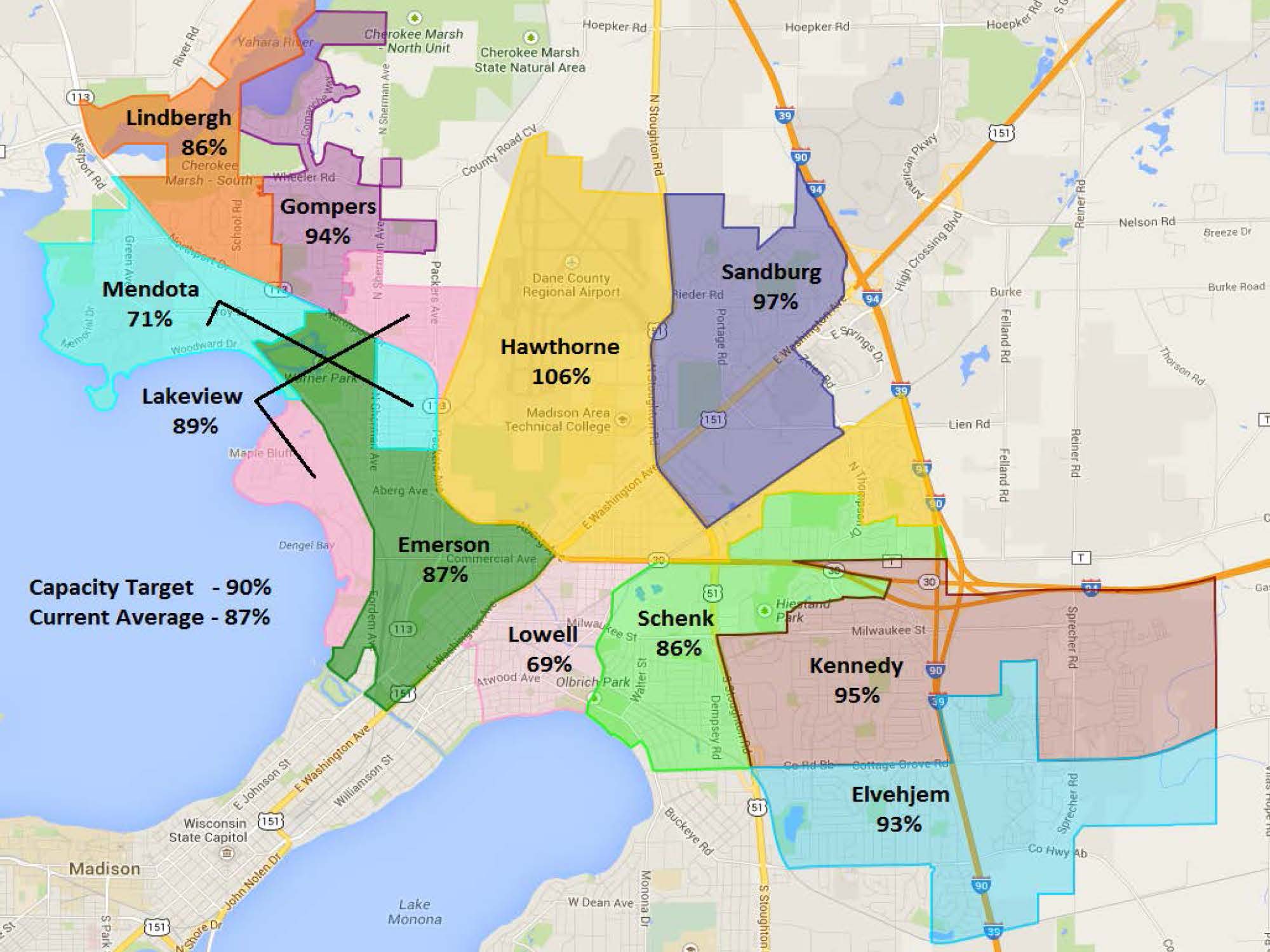
Share

Misleading Brookings study latest attempt to bury student debt crisis

Malcolm Harris:

For the last few years, even higher education’s most ardent boosters have admitted the industry has a serious cost problem. They try to console borrowers with stories about the value — both transcendent and practical — of a college diploma. The best salespeople liberally sprinkle in empathy for families who are paying truly outrageous attendance costs. As student debt grows unabated, however, we’re now witnessing the emergence of a new line: The problem is not so bad.

Earlier this week, a report from the Brookings Institution made waves for implying that the answer to its titular question “Is a Student Loan Crisis on the Horizon?” is “no.” The report’s authors Beth Akers and Matthew Chingos conclude, after a very narrow evaluation of cherry-picked data sets, that borrowers can afford the cost of higher education, and that the system is not out of whack. David Leonhardt, managing editor of the New York Times explainer vertical The Upshot, more or less reprinted a dissent-free summary of the report as fact on the paper’s third page — near-perfect traction for Brookings.

Some other commentators have poked holes in the Brookings report, but the Times placement means it’s probably too late. Already in offices and classrooms and bars across the nation, citizens who fancy themselves well informed are no doubt third-hand-explaining away the student debt crisis. Maybe the incoming class of 2018 took a deep sigh of relief when they opened Tuesday’s paper and emailed it around. Akers and Chingos have changed the conversation on student loans, but not for the better. At least not for borrowers.

Share

9 Things I Learned as a Software Engineer

Manuel Ebert:

Three years ago I was working in a neuroscience lab in Barcelona, busy putting electrodes on people and teaching classes on cognitive systems. Today I design and write software for a living.

Of course back in science I wrote a lot of software — if you want to make any sense of 40 GB of brain scan data you’ll have to roll up your sleeves and write scripts to crunch those numbers, and I was always a good programmer. But it wasn’t until I quit my job (and possibly my future) in academia and started working for a small and ambitious start-up that I understood what being a software engineer — and more importantly, being in the business of software engineering — is really about. It’s not knowing more programming languages, libraries, algorithms, and design patterns. It’s a mindset.

Share

Poor progress of UK disadvantaged pupils a waste of talent, says Alan Milburn

Richard Adams:

England’s education system is wasting young talent “on an industrial scale” because of poor progress made by the brightest disadvantaged children once they leave primary school, Alan Milburn, chair of the Social Mobility and Child Poverty Commission, said after publication of a report detailing the educational differences that emerge by the age of seven.

Advertisement

The report found that children from poor or disadvantaged backgrounds who achieve the highest levels at primary school have in most cases fallen behind their less able but better-off peers by the time they sit GCSE exams five years later.

Of almost 8,000 disadvantaged students who achieved top grades in English and maths standardised tests at age 11, only 900 went on to study at an elite university. But if disadvantaged children performed as well at secondary school as their better off peers, another 2,200 would later study at the likes of Oxford or Manchester universities.

Related:“They are all rich white kids & they will do just fine – not”.

Share

LAUSD shifts gears on technology for students

Howard Blume:

Los Angeles school district officials have allowed a group of high schools to choose from among six different laptop computers for their students — a marked contrast to last year’s decision to give every pupil an iPad.

Contracts that will come under final review by the Board of Education on Tuesday would authorize the purchase of one of six devices for each of the 27 high schools at a cost not to exceed $40 million.

In the fall, administrators, teachers and students at those schools will test the laptops to determine whether they should be used going forward.

What they learn will affect the future of an ongoing effort to provide computers for all students in the nation’s second-largest school system.

Share

Nearly 40% of Fairfax County, VA Requires additional English Instruction

at Rees Shapiro

The kindergartners of the Class of 2026, who finished their first year in Fairfax County schools Wednesday, constitute the largest and one of the most ethnically, culturally and socioeconomically diverse groups of students the county has seen, a fact that school system administrators say could pose significant challenges in the decade to come. 

Long an enclave of predominantly white, middle-class families with a top-class school system, Fairfax has experienced a dramatic demographic shift in recent years that is nowhere more obvious than in the county’s kindergarten classrooms. The white student population is receding and is being replaced with fast-growing numbers of poor students and children of immigrants for whom English is a second language. 

More than one-third of the 13,424 kindergartners in the county this year qualified for free or reduced-price meals, a federal measure of poverty, and close to 40 percent of the Class of 2026 requires additional English instruction, among the most ever for a Fairfax kindergarten class.

The demographic changes in Fairfax are likely to have long-term implications for the school system: Most of this year’s kindergarten class will spend the next 12 years in county schools. Schools officials believe that the challenges that come with a less-affluent and less-prepared population will exacerbate the system’s struggles with a widening achievement gap for minorities and ballooning class sizes.

The rising enrollment — the overall student body has surged by more than 22,000 since 2004 — is not sustainable at the current funding level, schools officials said, which could intensify already contentious battles for tax dollars with the county’s Board of Supervisors. School Board member Ted Velkoff (At Large), chairman of its Budget Committee, said the increasing number of immigrant families in Fairfax has affected — and will continue to affect — the school system’s bottom line.

Share

CUNA Mutual & Madison School District Financial Partnership grows again

Molly Beck

CUNA Mutual Group has promised more than $1 million to a new program aimed at training and keeping new teachers developed by the Madison School District and the UW-Madison School of Education.

Officials announced the company’s $1.2 million commitment Thursday at Wright Middle School. It is the largest grant the organization has awarded, said CUNA Mutual Foundation executive director Steve Goldberg.

“This is also the largest opportunity we’ll ever have to make a difference in the future trajectory of our community and especially the young people who live here,” Goldberg said.

The money will fund the mentoring of 150 new teachers starting this fall and for the next three years. District spokeswoman Rachel Strauch-Nelson said the district will “be working to develop a sustainable model for years” after that.

The project, dubbed “Forward Madison,” would provide mentors and coaches for new teachers, improve professional development for teachers, and create a program for district students to become teachers to diversify teaching ranks. The CUNA Mutual grant only pays for the mentoring.

CUNA funds have been involved in a number of Madison School District programs over the years. How have they performed?

My sense is that Madison has added many “programs” over the years, yet the District’s long term disastrous reading problem, remains.

Madison Schools’ Administration has “introduced more then 18 programs and initiatives for elementary teachers since 2009”.

I asked a former Madison Superintendent if the program, coaching and “professional development” program growth reflected an inability to address the core issues? The then Superintendent responded that “there is some truth to that”.

Perhaps the monolithic structure has run its course.

Share

The Miseducation of America: The movie ‘Ivory Tower’ and the rhetoric of crisis and collapse

William Deresiewicz

While I was watching Ivory Tower, a documentary about the state of college in America that appears in select theaters this month (the movie also airs on CNN this fall), it occurred to me that of the many problems with higher education these days, not the least concerns the way we talk about it. “Efficiency,” “art-history majors,” “kids who graduate with $100,000 in debt,” “the college bubble,” the whole rhetoric of crisis and collapse: The public discourse is dominated by sound bites, one-liners, hearsay, horror stories, and a very great deal of misinformation.

Higher ed is not unique in this respect, of course, but it is particularly bad. College, as the movie points out, was always treated as a black box: 18-year-olds were inserted at one end, 22-year-olds came out the other, and as long as the system appeared to be working, no one bothered to inquire what happened in between. Americans, as a result, have very little understanding of what college is about—how it works, what it’s for, what larger social benefits it offers—and those employed in higher education have had very little practice in explaining it to them. The debate has been left to the politicians, the pundits, and increasingly, the hustlers and ideologues. Few who talk about college in public understand it, and few who understand it talk about it.

Ivory Tower, for the most part, is an honorable exception. The movie, directed by Andrew Rossi (Page One: Inside the New York Times), covers a lot of territory, and it covers it patiently, clearly, and thoughtfully. The headline issues of ballooning tuition and student debt are placed in their historical context: institutional competition, expansion, and borrowing; administrative bloat; the rise of the “party track” and its concomitant amenities as public universities have turned to full payers from out of state to deal with budgetary shortfalls; and the long-term withdrawal of public funding—the shift from taxes to student loans—that has been the fundamental factor in creating the entire mess.

Share

Americans think we have the world’s best colleges. We Don’t

Kevin Carey:

Americans have a split vision of education. Conventional wisdom has long held that our K-12 schools are mediocre or worse, while our colleges and universities are world class. While policy wonks hotly debate K-12 reform ideas like vouchers and the Common Core state standards, higher education is largely left to its own devices. Many families are worried about how to get into and pay for increasingly expensive colleges. But the stellar quality of those institutions is assumed.

Yet a recent multinational study of adult literacy and numeracy skills suggests that this view is wrong. America’s schools and colleges are actually far more alike than people believe — and not in a good way. The nation’s deep education problems, the data suggest, don’t magically disappear once students disappear behind ivy-covered walls.

The standard negative view of American K-12 schools has been highly influenced by international comparisons. The Organization for Economic Cooperation and Development, for example, periodically administers an exam called PISA to 15-year-olds in 69 countries. While results vary somewhat depending on the subject and grade level, America never looks very good. The same is true of other international tests. In PISA’s math test, the United States battles it out for last place among developed countries, along with Hungary and Lithuania.

Share

Firing Bad Teachers: A Superintendent and a Teacher’s Union Official Debate

Conor Freidersdorf:

Dr. John E. Deasy, Superintendent of the Los Angeles Unified School District, supports the California lawsuit against the state’s tenure, layoff and termination rules. He believes that the current system has a disparate impact on the quality of education offered to poor students and minorities, and is therefore unconstitutional.

Randi Weingarten is the president of the American Federation of Teachers (a separate entity from the California Teacher’s Association, which represents Golden State teachers). Her organization opposed the lawsuit. “While teachers led their classrooms, a judge in a Los Angeles courtroom said that for students to win, teachers have to lose,” the AFT stated after the plaintiffs won the case, which is being appealed. “Vergara v. California was a blow to public education everywhere, but especially demoralizing to hundreds of thousands of teachers who dedicate their lives to lifting up California’s students…Our opponents have spent months—and millions—vilifying California teachers to push a political agenda. We’re fighting back—in the media, on the ground, in the legislature and in the courts.”

These two shared a stage in Aspen this weekend, where they debated the lawsuit, teacher tenure, accountability, and related issues. The video of the entire panel is here:

Share

Why Teenagers Act Crazy

Richard Friedman:

ADOLESCENCE is practically synonymous in our culture with risk taking, emotional drama and all forms of outlandish behavior. Until very recently, the widely accepted explanation for adolescent angst has been psychological. Developmentally, teenagers face a number of social and emotional challenges, like starting to separate from their parents, getting accepted into a peer group and figuring out who they really are. It doesn’t take a psychoanalyst to realize that these are anxiety-provoking transitions.

But there is a darker side to adolescence that, until now, was poorly understood: a surge during teenage years in anxiety and fearfulness. Largely because of a quirk of brain development, adolescents, on average, experience more anxiety and fear and have a harder time learning how not to be afraid than either children or adults.

Share

Facebook has conducted a secret massive psychology experiment on its users to find out how they respond to positive and negative messages – without telling participants

Harriet Alexander:

Over 600,000 Facebook users have taken part in a psychological experiment organised by the social media company, without their knowledge.

Facebook altered the tone of the users’ news feed to highlight either positive or negative posts from their friends, which were seen on their news feed.

They then monitored the users’ response, to see whether their friends’ attitude had an impact on their own.

“The results show emotional contagion,” wrote a team of Facebook scientists, in a paper published by the PNAS journal – Proceedings of the National Academy of Scientists of the United States.

Share

Anatomy of a Swim Meet

Juliana Miner:

I have three kids, and they all swim on a swim team every summer. I decided to capture my experience at a morning swim meet, for those of you not in the water cult.

6:00 a.m.: Wake up, drink coffee. Wake up grouchy children.

6:45 a.m.: Arrive at pool. Parking lot is already full. Let the kids out and park far away. Carry/drag chairs, bags and a cooler as if I were large pack animal. It occurs to me suddenly that as mother of three there is no denying that I am a large pack animal.

6:58 a.m.: Small miracle occurs. I find a great place to set up chairs, etc. Next to friends. With a good view of the pool. In full shade. Wish I’d brought a sweatshirt actually, it’s kind of chilly.

7:00 a.m.: Kids jump into the freezing cold pool for warm-ups and exchange looks with each other like — WHY DO WE DO THIS AGAIN?

7:30 a.m.: Children begin harassing me for money for the snack bar. I try to hand them something healthy from the cooler. Suddenly every other kid at the swim meet is eating large, chocolate-frosted doughnuts.

Share

Over 100,000 African-American Parents Are Now Homeschooling Their Children

Dr. Jawanza Kunjufu:

We hear so much about the plight of Black children and their low test scores. We have not heard that African American children who are homeschooled are scoring at the 82% in reading and 77% in math. This is 30-40% above their counterparts being taught in school. There is a 30% racial gap in schools, but there is no racial gap in reading if taught in the home and only a 5% gap in math.

What explains the success of African American students being taught by their parents? I believe that it’s love and high expectations. I am reminded of Booker T. Washington High School. They were honored several years ago for producing the greatest turnaround as a Recovery school. The principal had the opportunity to pick and choose her staff and emphatically stated, “If you want to teach in this school you must love the students”. Researchers love promoting that the racial gap is based on income, marital status, and the educational background of the parents. Seldom, if ever, do they research the impact of love and high expectations.

Since the landmark decision, Brown vs. Topeka in 1954, there has been a 66% decline in African American teachers. Many African American students are in classrooms where they are not loved, liked, or respected. Their culture is not honored and bonding is not considered. They are given low expectations – which helps to explain how students can be promoted from one grade to another without mastery of the content.

There are so many benefits to homeschooling beyond academics. Most schools spend more than 33% of the day disciplining students. And bullying has become a significant issue. One of every 6 Black males is suspended and large numbers are given Ritalin and placed in Special Education. These problems seldom, if ever, exist in the Homeschool environment.

Another major benefit is the summer months. Research shows that there is a 3 year gap between White and Black students. Some students do not read or are involved in any academic endeavor during the summer. Those students lose 36 months or 3 years if you multiply 3 months times 12 years (grades first -12) Homeschool parents do not allow academics to be forsaken for 3 months.

Finally, in the homeschool environment, parents are allowed to teach their children

Related: Madison’s long term disastrous reading results.

Share

Why I’m No Longer a Professor

John Beck:

I have been a professor for 25 years—most of my professional life. Even when I had full-time corporate jobs, I always took salary cuts to be able to maintain my professor role…because teaching has given me about as much joy as anything in my life. Watching students learn, improve, and gain confidence is an amazing thing! But, last spring, for the first time in three decades—since I first imagined emulating my favorite high school teachers—I realized I have no compulsion to ever be in front of a classroom ever again.

The morning after I realized the joy had gone out of my work, I saw a news article about suicides among 50-something men in the US going up by 50%. And I understood.

I now comprehend how others who have lost their passion for their jobs might lose their passion for life at the same time. If I had always defined myself and my worth by my teaching profession, the realization that teaching is no longer offering me any joy came as an awful discovery.

Fortunately, I am not on the verge of sharpening straight razors and filling bathtubs. My whole life, I’ve been a bit of a…a…and I’m going to make up a word here: a polyopus. In other words, I’ve always had multiple jobs at any given time. Though I’m giving up on teaching, I’m not giving up on life. I still love writing and advisory work—I’m sure I’ll continue those.

Still, leaving the classroom is heartbreaking; teaching has always been a big part of my life. As an adjunct, visiting, or full professor, I’ve taught in more than a dozen business schools around the world—all these job comings and goings because of one event twenty-five years ago.

So where did the joy go?

I think it went where the joy of work goes for many people of my age. It wasn’t just one thing; it was an accumulation. Perhaps the work itself—if it could be done in a vacuum—would continue to be attractive and even fun. But organizations, bosses, and coworkers impinge in ways that subtract more and more from the joyful (or good) parts until there is none left. I think there’s also less resilience toward all those interferences as I age. In the process, joy eventually became a casualty.

It’s important to note two things: 1) I am one of the lucky teachers working in higher education where I could exercise a lot of autonomy compared to teachers in primary and secondary schools; and 2) that none of the interventions in the stories above had much to do with my real job of preparing young people to be leaders of tomorrow’s organizations. But today’s organizations get in the way—impeding, what I believe is, my pretty damn hallowed calling of being a teacher. My obligation is to impart to students all the most important things that I’ve ever learned in my life—then challenge them to be better and smarter than I ever hoped to be.

Share

Wealth by degrees The returns to investing in a university education vary enormously

The Economist:

IS A university degree a good investment? Many potential students are asking the question, especially in countries where the price of a degree is rising, as a result of falling government subsidies. Recent research suggests that the conventional wisdom remains true: a university degree pays handsomely. In America and the euro zone, for example, unemployment rates for graduates are far below average. Yet the benefit of university varies greatly among students, making an investment in higher education a risky bet in some circumstances.

The value of a degree, like so much else in economics, boils down to supply and demand. The gap between average pay for university graduates and those with secondary-school degrees is commonly called the “college wage premium”. When firms are hungry for skilled workers their demand for university graduates grows, and the premium tends to rise. When the supply of graduates grows faster than that of less-educated workers, in contrast, the premium will stabilise or fall.

Share

The Rise Of The A**hole Sports Dad (And How To Avoid Turning Into One)

Drew Magary:

Children, in general, suck at sports. And as a parent, watching them suck evokes all kinds of emotions—fierce protectiveness, embarrassment, self-loathing (Oh God, I gave them those genes)—which many of us have difficulty handling. My kid played second-grade basketball this winter, and when she failed to make a shot the entire season, it took everything in my power not to storm the court, clear out an area around the basket with police tape, and let her shoot until she got the fucking thing in.

Being a sports parent is a remarkable test of self-restraint. We’re so used to being sports fans and watching pro and college sports played at a high level that it’s jarring to witness children flail as they learn the idea of sports: competing, knowing the rules, positioning yourself to make a play, etc. This is assuming your child even wants to learn. Half the time, my kid stood at midcourt chatting with friends, only to have the ref come up and say, “Hey, guys, you have to actually play now.” And this is before you factor in all the other parents and coaches acting like dicks and raising your blood pressure even more.

That’s when the yelling begins. That’s when you go from silently clapping to breaking the ice with a “Get back on D, son!” to going Full Pitino. That crazy dad next to you, drenching everyone in frothed spittle? He was you once. And if you aren’t careful, you could become him. Here’s how to keep that from happening.

1. Only the coach gets to coach. He (or she) is the one who volunteered his time for the gig. He’s the one who planned the practices and coordinated the schedule and reserved court time at the nearby Sportsthunderplex. He’s the one who drags that big-ass mesh bag filled with balls from his car every weekend. If you’re not willing to make that sacrifice, you don’t get to show up on game day and act like you’re Nick Saban.

2. Don’t get too jealous of that one good kid on the field. Every kiddie game features at least one child who is a genetically superior mutant sent from the future. She can make shots. She plays tight defense. She runs fast. She never gets distracted by shiny whistles. This mini Bron-Bron will NEVER be your kid. Your kid will look like an invalid by comparison, and that is (deep breath) okay. At this level, every sports league is an experiment. Some kids get the hang of it right away. Some kids are late bloomers. And some kids want practice to end so they can go watch Frozen for the sixtieth time. So don’t get discouraged when a ringer comes along. Chances are that kid will burn out and become an alkie by 17, and you’ll have the last laugh!

Share

How a Russian mathematician constructed a decision tree – by hand – to solve a medical problem

MathML:

Here’s an excerpt from Love and Math, a book by Edward Frenkel. The author writes about mathematics and his career. One of the stories is about how during his studies in the 80s he built a decision tree to help with kidney transplants. There was no machine to learn from data so humans had to do the work.

The third, and last, medical project I worked on was the most interesting one for me. A young doctor, Sergei Arutyunyan – who also needed help to analyze his data for a thesis – and I had a great rapport. He was working with patients whose immune systems were rejecting transplanted kidneys. In such situation the doctor has to make a quick decision whether to fight for the kidney or remove it, with far-reaching consequences: if they kept the kidney, the patient could die, but if they removed it, the patient would need another one, which would be very difficult to find.

Share

Madison “Strategic Framework Process” Update; a few tweets

Meeting agenda, here.

Related: Superintendnet Cheatham’s Rotary Club Talk – 2013

Share

There are no free lunches: not even ‘free’ school lunches

Chris Rickert:

Madisonians usually aren’t too keen on doling out public subsidies to people who don’t need them.

There’s that old saw about “tax breaks for millionaires,” of course, but also past outrage over a proposed taxpayer loan for Edgewater hotel renovators and brewing discontent over a potential taxpayer loan for the Judge Doyle Square developer.

Providing government-funded breakfast and lunch to every student in seven Madison public schools, though, probably won’t inspire similar objections about welfare for the schools’ middle- and upper-class children.

Free meals for some 2,800 children at Allis, Falk, Lake View, Leopold, Mendota, Sherman and Wright schools could start next year through a 4-year-old federal program to provide meals to all students at schools in high-poverty areas. On average, about 77 percent of students at the seven Madison schools were “economically disadvantaged” last school year, according to data from the state Department of Public Instruction. That means about 2,100 students were already eligible for subsidized meals though the federal government’s long-standing — and necessary — free-and-reduced-price lunch program.

But if the schools are accepted into the program, parents of the rest will no longer have to buy the Cheerios, juice boxes, and peanut-butter-and-jelly fixings they’ve proved capable of buying until now.

Assuming a 10 percent increase in meals, up to $1.5 million in federal dollars would cover the cost-shifting, according to district spokeswoman Rachel Strauch-Nelson. That would make the program cost-neutral for the district — if not for taxpayers at large.

Share

Creative destruction: A cost crisis, changing labour markets and new technology will turn an old institution on its head

The Economist:

HIGHER education is one of the great successes of the welfare state. What was once the privilege of a few has become a middle-class entitlement, thanks mainly to government support. Some 3.5m Americans and 5m Europeans will graduate this summer. In the emerging world universities are booming: China has added nearly 30m places in 20 years. Yet the business has changed little since Aristotle taught at the Athenian Lyceum: young students still gather at an appointed time and place to listen to the wisdom of scholars.

Now a revolution has begun (see article), thanks to three forces: rising costs, changing demand and disruptive technology. The result will be the reinvention of the university.

Off campus, online

Higher education suffers from Baumol’s disease—the tendency of costs to soar in labour-intensive sectors with stagnant productivity. Whereas the prices of cars, computers and much else have fallen dramatically, universities, protected by public-sector funding and the premium employers place on degrees, have been able to charge ever more for the same service. For two decades the cost of going to college in America has risen by 1.6 percentage points more than inflation every year.

Share

Madison Schools Propose a $24,000,000 Maintenance Referendum & Property Tax Increase; above $402M budget; 4%+ tax increase looms

The Madison School District (1.4MB PDF).

“All elementary boundaries are due for a long term review”. Agreed. A look at the maps below along with the wide demographic variation across Madison public public schools indicates that addressing boundaries is job #2 – after dealing with the long term disastrous reading results.

Going to referendum prior to addressing boundary and demographic issues appears to be a “cart before horse” strategy.

It will be interesting to see how gubernatorial candidate Mary Burke addresses this question.

Presentation slides (tap to view a larger version):


Related: Open questions from the 2005 maintenance referendum lead to calls for an audit.

Share

UCLA math star Terence Tao wins $3-million prize

Larry Gordon:

UCLA mathematics professor Terence Tao already has a bevy of prestigious awards for his work in such fields as number theory and harmonic analysis. Now he is adding one more lucrative prize.

Tao, 38, has been named one of five winners of the new Breakthrough Prize in Mathematics, an award that provides $3 million to each of its recipients from a fund established by high-tech titans in Silicon Valley and Russia.

Share

The $124,421 Man How to pay off a mountain of student debt in six (long) years

Chadwick Matlin:

The debt began the same way all debts do: in the hollow space between what one wants and what one has.

I picked Tufts University because it seemed impressive enough. Friends like me—Jewish, precocious, pimpled—were already enrolled, and they liked it just fine. Plus, the grounds were well kept during my visit. What else does a 17-year-old, especially one who’s prone to making inarticulate decisions, need? For whatever reason, Tufts felt like somewhere I should stay for a while.
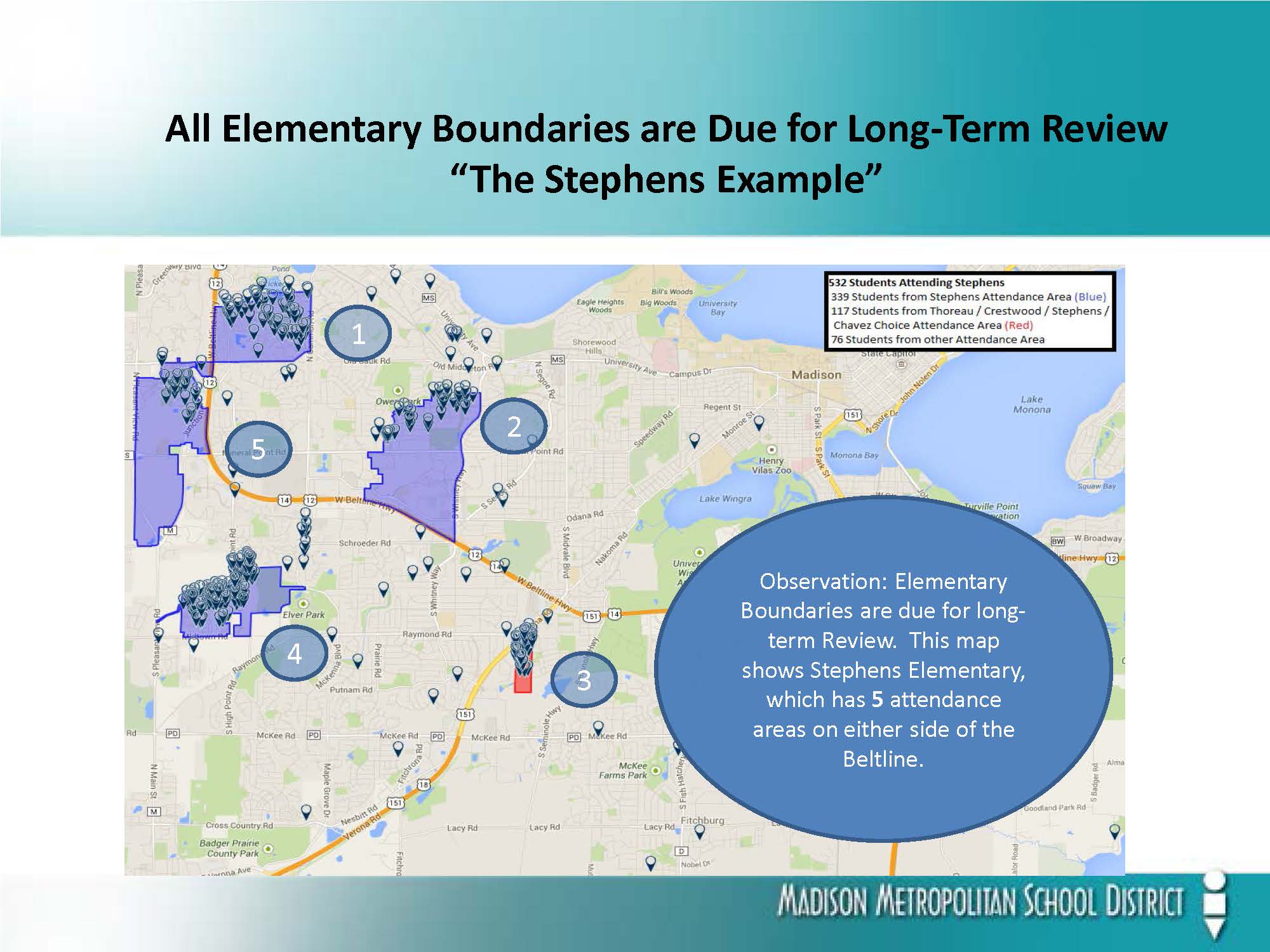
In December 2002, the winter before graduation, Tufts agreed, tossing in a freshman-year grant of $12,000 based on my financial need. I happened to be on a bus heading for Boston when I got the good news. I sank down in my seat, relieved that it could be that easy.

Months later, in the basement of my house in a middle-class town in Fairfield County, Connecticut, I found a letter addressed to me that I hadn’t seen before. Someone had already opened it, and there was a notice inside.

Share

Michigan spends $1B on charter schools but fails to hold them accountable

Jennifer Dixon:

Michigan taxpayers pour nearly $1 billion a year into charter schools — but state laws regulating charters are among the nation’s weakest, and the state demands little accountability in how taxpayer dollars are spent and how well children are educated.

A yearlong investigation by the Detroit Free Press reveals that Michigan’s lax oversight has enabled a range of abuses in a system now responsible for more than 140,000 Michigan children. That figure is growing as more parents try charter schools as an alternative to traditional districts.

In reviewing two decades of charter school records, the Free Press found:

Are all publicly funded schools held to the same oversight standards?

Share

Commentary on Wisconsin’s Recent K-12 Spending; No mention of Substantial Growth During Recent Decades


Pat Schneider:

Wisconsin has had the second deepest slash in per-student spending in the nation since 2008 — second only to Alabama — according to a study by the Center on Budget and Policy Priorities.

Spending per pupil in Wisconsin was down $1,038 from 2008 for the school year just ended. Alabama cut per-pupil spending by $1,242.

Alabama and Wisconsin led the list of at least 35 states providing less funding per student than they did before the recession hit.

Wisconsin spending per pupil is 15.3 percent lower than in 2008, making it among 14 states where per-pupil spending remains at least 10 percent lower than before the economic recession.

The state cuts to education leave local school districts forced to cut services, raise taxes or both, notes the study. The cuts also hamper economic recovery by reducing the number of teaching jobs and school district workers’ buying power, the authors say.

A deeper dive: Wisconsin K-12 Spending Dominates Redistributed Tax Dollars.


More, here.

Lastly, the article lacks any discussion of K-12 spending effectiveness. Compare state NAEP performance, here.

Share

California voters reject tenure, layoff rules for public school teachers

Marill Bassallone:

The PACE/USC Rossier School of Education Poll showed that two-thirds of voters (68 percent) agree that the state should do away with “Last In, First Out,” a policy that requires the newest K-12 teachers be laid off first, regardless of merit. Just 17 percent said California should continue to conduct teacher layoffs in order of seniority, according to the poll. PACE stands for Policy Analysis for California Education.

California voters also largely opposed the state’s tenure laws for public school teachers, according to the poll. Six in 10 California voters said teachers should not continue to receive tenure, as it makes firing bad teachers difficult. Twenty-five percent of voters said the state should keep tenure for public school teachers to provide them job protections and the freedom to teach potentially controversial topics without fear of reprisals.

Share

One-time Jindal ally blasts Common Core move

Stephanie Simon:

A longtime ally of Louisiana Gov. Bobby Jindal is accusing the governor of violating the civil rights of poor children with his abrupt decision last week to renounce the Common Core academic standards.

State Superintendent John White has previously said the governor had no authority to scrap the Common Core or to pull out of a federally funded consortium that has been developing new reading, writing and math tests aligned to the academic standards.

On Wednesday, he ramped up his rhetoric considerably, telling POLITICO in an interview that Jindal is breaking the law, trampling the state constitution — and crushing the dreams of low-income minority students.

Share

What The $1+ Trillion Student Debt Bubble Is Being Spent On

Tyler Durden:

By now everyone knows there is an unprecedented student debt bubble, amounting to well over $1 trillion and rising at a rate of nearly $200 billion per year. However, what is far less known, is what all these hundreds of billions in government loan proceeds are being spent on. The following two charts should shed some light on this all important matter just how Government money goes from Point A to Point B, using indebted to the hilt students as a pass-thru.

First, the change in the number of higher education employees since the mid-1970s, broken down by job category. One can almost see why preserving the status quo of the Keynesian religion is the lifetime goal of most professors.

And then, the change in average salaries across the higher education spectrum. It would appear the only thing Krugman would want more than being a tenured op-ed writer, pardon professor, is CEO of a private college.

Share

Maths and science ‘should be studied up to age 18’: UK Royal Society Report by committee of education experts recommends baccalaureate-style qualification, and better-equipped laboratories

Richard Adams:

All pupils should study maths and science until the age of 18 as part of a broad-based, baccalaureate-style qualification, the Royal Society has recommended in a report on the future of education.

The report, written by a committee of scientists, education experts, teachers and former education secretary Charles Clarke, calls for increased investment in practical and problem-solving work in science and mathematics education from reception until sixth form, including access to adequately equipped laboratories and well-trained teachers.

Share