School Information System

K-12 Tax & Spending Climate-The history of inequality: breaking the camel’s back

The Economist:

ANGUS MADDISON, who died in 2010, was among the most influential of economic historians; his book on the world economy over the past 2,000 years is a classic. Now, one of the institutions he worked for, the Organisation for Economic Co-operation and Development, has teamed up with the University of Utrecht to produce an account of the conditions of life in 25 countries since 1820. It details everything from builders’ wages in 1920s Japan to homicide rates in 19th-century Italy. It bridges the gap between Maddison’s macroeconomic panorama and microeconomic studies by historians such as Peter Laslett, author of “The World We Have Lost”, about early modern England.

For the most part, the findings confirm what is suspected, if not known in such detail. The number of years in education has increased everywhere. Average heights have risen almost everywhere (by 1.1cm more in America in 1820-1990 than in China). The purchasing power of construction workers’ wages has grown everywhere, though in Britain the rise was tenfold in 1820-2000; in Indonesia it was only twice.

There is an exception to this generalisation, though: inequality. You would expect that the world of the Qing dynasty, Tsar Nicholas I and the British East India Company would be more unequal than today’s. Yet in China, Thailand, Germany and Egypt, income inequality was about the same in 2000 as it had been in 1820. Brazil and Mexico are even more unequal than they were at the time of Simón Bolívar. Only in a few rich nations—such as France and Japan—do you find the expected long-term decline in income inequality.

What is true for individual countries is also true if you treat the world as a single nation. The study uses the Gini coefficient, a measure of income inequality in which zero represents perfect equality—everyone has the same income—and 100 perfect inequality—one person has everything. The global Gini rose from 49 in 1820 to 66 in 2000. But this was not caused by widening disparities between rich and poor within countries (inequality in its usual sense). Inequality of that sort fluctuated for 130 years to 1950, before falling sharply in 1950-1980, in what the report calls an egalitarian revolution. Since 1980 it has risen again (as Thomas Piketty, a French economist, has shown), back to the level of 1820.

That implies the two-century rise in global inequality must come from elsewhere: from what is called “between-country inequality”, the gap between rich and poor nations. This gap has widened sharply. In 1820 the world’s richest country—Britain—was about five times richer than the average poor nation. Now America is about 25 times wealthier than the average poor country. The Gini coefficient for between-country inequality stood at only 16 in 1820 (ie, very low). It soared to 55 in 1950, and has been stable since. The driving force of inequality since 1820, in other words, has been industrialisation in the West.

Share

Lessons From “The Smartest Kids in the World”

Laura Isensee

The data is clear: Finland, South Korea and Poland are outpacing the United States in grade-school education.

Many kids there can make complex arguments and solve challenging problems.

Journalist Amanda Ripley tells what it’s like to be a student in one of these education superpowers in her book: “The Smartest Kids in the World —and How They Got That Way”.

Share

The Secret Sauce of College Admissions

Dr. Brian Mitchell:

Moody’s issued a report last week pointing to a basic discrepancy in how we view college admissions that underscores the collapse of the college tuition-dependent finance model.

In its report, Moody’s noted that applications to private colleges rose 70 percent from 2004 to last year but the annual total of new high school graduates rose only five percent. The credit rating agency argued that the rise in applications created a perception of far greater selectivity than actually occurred at many colleges and universities.

While the argument made centered upon private colleges and universities, the same may be said for many public sector institutions. Indeed, it seems that the only group isolated from this perception was a handful of the most selective colleges and universities, whether private or public. In these cases, global branding, consumer perceptions, alumni “feeder” and job placement networks, and financial aid policies may play a larger role to assure more broadly-based, genuinely highly selective admission classes.

The truth is that selectivity is often based on how you measure and value it. Many colleges and universities have “carve out,” “conditionally accepted,” or wait list graduates lined up to create the illusion of far greater selectivity than actually exists. Thus, while the aggregate applicants/admit number may be correct, the route to acceptance may vary widely depending on what each candidate brings to the table.

Share

The Plot Against Public Education How millionaires and billionaires are ruining our schools.

Bob Herbert:

Bill Gates had an idea. He was passionate about it, absolutely sure he had a winner. His idea? America’s high schools were too big.

When a multibillionaire gets an idea, just about everybody leans in to listen. And when that idea has to do with matters of important public policy and the billionaire is willing to back it up with hard cash, public officials tend to reach for the money with one hand and their marching orders with the other. Gates backed his small-schools initiative with enormous amounts of cash. So, without a great deal of thought, one school district after another signed on to the notion that large public high schools should be broken up and new, smaller schools should be created.
This was an inherently messy process. The smaller schools—proponents sometimes called them academies—would often be shoehorned into the premises of the larger schools, so you’d end up with two, three or more schools competing for space and resources in one building. That caused all sorts of headaches: Which schools would get to use the science labs, or the gyms? How would the cafeterias be utilized? And who was responsible for policing the brawls among students from rival schools?
But those were not Gates’s concerns. He was on a mission to transform American education, and he would start with the high schools, which he saw as an embarrassment, almost a personal affront. They were “obsolete,” he declared. “When I compare our high schools to what I see when I’m traveling abroad,” he said, “I am terrified for our workforce of tomorrow.”
There used to be a running joke in the sports world about breaking up the Yankees because they were so good. Gates felt obliged to break up America’s high schools because they were so bad. Smaller schools were supposed to attack the problems of low student achievement and high dropout rates by placing students in a more personal, easier-to-manage environment. Students, teachers and administrators would be more familiar with one another. Acts of violence and other criminal behavior would diminish as everybody got to know everybody else. Academic achievement would soar.

Related: Madison’s disastrous reading results.

Small Learning Communities.

English 10.

Share

Adobe is Spying on (students) Users, Collecting Data on Their eBook Libraries

Nate Hoffelder:

Adobe has just given us a graphic demonstration of how not to handle security and privacy issues.

A hacker acquaintance of mine has tipped me to a huge security and privacy violation on the part of Adobe. That anonymous acquaintance was examining Adobe’s DRm for educational purposes when they noticed that Digital Editions 4, the newest version of Adobe’s Epub app, seemed to be sending an awful lot of data to Adobe’s servers.

My source told me, and I can confirm, that Adobe is tracking users in the app and uploading the data to their servers. (Adobe was contacted in advance of publication, but declined to respond.)

Share

Technology in Schools (Reading?)

Meghan Murphy:

For an entire school year Hillsborough, New Jersey, educators undertook an experiment, asking: Is the iPad really the best device for interactive learning?

It’s a question that has been on many minds since 2010, when Apple released the iPad and schools began experimenting with it. The devices came along at a time when many school reformers were advocating to replace textbooks with online curricula and add creative apps to lessons. Some teachers welcomed the shift, which allowed their students to replace old poster-board presentations with narrated screencasts and review teacher-produced video lessons at any time.

Four years later, however, it’s still unclear whether the iPad is the device best suited to the classroom. The market for educational technology is huge and competitive: During 2014, American K-12 schools will spend an estimated $9.94 billion on educational technology, an increase of 2.5 percent over last year, according to Joseph Morris, director of market intelligence at the Center for Digital Education. On average, he said, schools spend about a third of their technology budgets on computer hardware.

Madison’s disastrous reading results.

Share

K-12 Tax & Spending Climate: “Wage Growth listless & apartment rents are growing at a faster rate than household income”

Anthony Sanders

US Treasury Secretary Jacob Lew repeated First Lady Michelle Obama’s talking points that “the US Economy is Moving Strongly in the Right Direction!” It has been six years since the Great Recession ended in June 2009.

This misleading statement will be repeated many, many times leading up to the mid-term elections in November.

Let’s review the facts.

Real median household income and average earnings growth are NOT moving strongly in the right direction. In fact, their movement is rather listless. And apartment rents are growing at a faster rate than household income.

Treasury Secretary Lew did mention the declining unemployment rate, but failed to discuss the massive dropout from the labor force that has been occurring. The labor force fell by 97,000 in the latest jobs report. Those not in the labor force increased by 315,000.

So, Mr. Lew is correct that there is improvement … in sheer numbers of jobs added, but not true about the QUALITY of jobs.

And you wonder why mortgage purchase applications are in the toilet? Hint: it ISN’T overly tight credit standards. It’s a lack of income growth and inability to meet DTI requirements.

Share

Is Google Making Students Stupid?

Nick Romeo:

One of the oldest metaphors for human interaction with technology is the relationship of master and slave. Aristotle imagined that technology could replace slavery if devices like the loom became automated. In the 19th century, Oscar Wilde foresaw a future when machines performed all dull and unpleasant labor, freeing humanity to amuse itself by “making beautiful things,” or simply “contemplating the world with admiration and delight.” Marx and Engels saw things differently. “Masses of laborers are daily and hourly enslaved by the machine,” they wrote in the Communist Manifesto. Machines had not saved us from slavery; they had become a means of enslavement.

Today, computers often play both roles. Nicholas Carr, the author of the 2008 Atlantic cover story “Is Google Making Us Stupid?”, confronts this paradox in his new book, The Glass Cage: Automation and Us, analyzing the many contemporary fields in which software assists human cognition, from medical diagnostic aids to architectural modeling programs. As its title suggests, the book also takes a stand on whether such technology imprisons or liberates its users. We are increasingly encaged, he argues, but the invisibility of our high-tech snares gives us the illusion of freedom. As evidence, he cites the case of Inuit hunters in northern Canada. Older generations could track caribou through the tundra with astonishing precision by noticing subtle changes in winds, snowdrift patterns, stars, and animal behavior. Once younger hunters began using snowmobiles and GPS units, their navigational prowess declined. They began trusting the GPS devices so completely that they ignored blatant dangers, speeding over cliffs or onto thin ice. And when a GPS unit broke or its batteries froze, young hunters who had not developed and practiced the wayfinding skills of their elders were uniquely vulnerable.

Share

Philadelphia School Reform Commission Cancels Teacher Union Contracts

Kristen Graham and Martha Woodall:

In a stunning move that could reshape the face of city schools, the Philadelphia School Reform Commission voted Monday to unilaterally cancel its teachers’ contract. The vote was unanimous.

The Philadelphia Federation of Teachers was given no advance word of the action — which happened at an early-morning SRC meeting called with minimal notice — and which figures to result in a legal challenge to the takeover law the SRC believes gives it the power to bypass negotiations and impose terms.

Jerry Jordan, PFT president, called the move “cowardly” and vowed to fight it strongly.

“I am taking nothing off the table,” a clearly angry Jordan said at an afternoon news conference. Job actions could be possible, once he determines what members want to do. “We are not indentured servants.”

Share

Standing desks are coming to schools

Ben Schiller:

Increasing numbers of adults are throwing away their office chairs in favor of standing desks, believing that staying on their feet during working hours will improve their health. Should we be encouraging kids to do the same?

Yes, according to a study from three schools in Texas. It shows that when kids are given the opportunity to stand during classroom time, they burn more calories and seem to have greater attention span.

Share

Use grades to improve remedial placement

Judith Scott-Clayton, Peter M. Crosta & Clive Belfield:

At an annual cost of roughly $7 billion nationally, remedial coursework is one of the single largest interventions intended to improve outcomes for underprepared college students. But like a costly medical treatment with non-trivial side effects, the value of remediation overall depends upon whether those most likely to benefit can be identified in advance. This NBER working paper uses administrative data and a rich predictive model to examine the accuracy of remedial screening tests, either instead of or in addition to using high school transcript data to determine remedial assignment.

The authors find that roughly one in four test-takers in math and one in three test-takers in English are severely mis-assigned under current test-based policies, with mis-assignments to remediation much more common than mis-assignments to college-level coursework. Using high school transcript information—either instead of or in addition to test scores—could significantly reduce the prevalence of assignment errors. Further, the choice of screening device has significant implications for the racial and gender composition of both remedial and college-level courses. Finally, if institutions took account of students’ high school performance, they could remediate substantially fewer students without lowering success rates in college-level courses.

Via Noel Radomski.

Share

Inspire students in manufacturing

Vince Bertram, Via Erich Zellmer:

American manufacturing has faced many challenges over the past few decades. Today, it is facing a new one: Employers cannot find enough qualified workers with the knowledge and skills needed to meet the industry’s job demands.

The National Association of Manufacturers reports more than 600,000 unfilled jobs this year. There simply aren’t enough workers with the science, technology, engineering and math (STEM) knowledge and skills needed for these and other high-tech, high-skill jobs. Schools must prepare our students now, and that preparation must start at an early age.

As the country continues to rebound from the Great Recession, manufacturing is among the fastest-growing economic sectors. The Institute for Supply Management’s manufacturing index climbed to 59% in August, representing the 15th consecutive month of growth and the highest reading since March 2011.

Share

Cash & Awards fail to improve test results

Richard Adams:

Offering rewards such as cash payments or free trips make pupils work harder in class but fail to improve their exam results, according to an intensive £1.6m study involving 10,000 children.

The project involved pupils studying for GCSE exams at 63 schools in deprived areas across England, and was aided by a team of academics that included superstar professors such as Steven Levitt, the co-author of Freakonomics, and John List of the University of Chicago.

Share

Higher Education’s Aristocrats

David Francis Mihalyfy:

Last week, the Barack Obama Foundation announced that the University of Chicago is one of four finalists to house the Obama Presidential Library, according to its mission of finding a site that reflects “President Obama’s values and priorities throughout his career in public service.”

If Obama chooses UChicago, however, he risks tying his legacy to the American university that perhaps most exemplifies higher education’s current crisis of mission. Rather than being institutions that prioritize free inquiry, research, and high-quality education, universities are increasingly acting like the worst of Wall Street, where anything goes in order make a buck for the people at the top.

The latest sign of identity crisis at UChicago? Hefty pay raises to a large number of top staff, who have enriched themselves at great cost to their institution.

New analysis of tax data from publicly available IRS 990 forms shows that eight high-level UChicago administrators have received more than $7.6 million in compensation increases since 2007-2008, even as the school moved toward and suffered a credit downgrade.

Share

Germany’s great tuition fees U-turn

Howard Hotson:

During the past eight years, university tuition fees were introduced into most west German federal states. Yet in a few months, every single state will have abolished them. These facts raise a series of topical questions that cast current English higher education policy in a fresh and revealing light.

Why did Germany introduce tuition fees in the first place? The answer, in short, is that politicians favoured the idea. Self-styled “modernisers” had been advocating tuition fees since German reunification in 1990. Cultural differences between east and west initially hindered this plan, but the main obstacle was a federal law banning tuition fees, which echoed provisions guaranteeing free education in the constitutions of individual states. In 2005, however, the Federal Constitutional Court in Karlsruhe ruled that moderate fees, coupled with affordable loans, would safeguard these constitutional provisions. Within two years, a cascade of laws had swept through most of the federal Länder. The attraction of shifting some of the funding burden to individual beneficiaries was irresistible. So was the compulsion to imitate the changes made elsewhere, lest universities in one’s own state should remain less well funded, and the public purse more stretched, than in neighbouring states.

Seven out of 10 states in west Germany introduced fees in 2006 or 2007; an eighth, Bremen, was prevented from doing so by a lawsuit. Only two – Rheinland-Pfalz and Schleswig-Holstein – resisted the tide completely.

If such unanimity had been maintained, policymakers would now be declaring these changes inevitable. Yet within a single electoral cycle, their long-sought policy was comprehensively overturned. The only state still charging tuition fees in 2014, Lower Saxony, will cease to do so at the end of this academic year.

Share

Ranking Universities Based on Career Outcomes

Navneet Kapur:

More than ever, students go to college because they want to get jobs — good jobs. To that end, students and parents want to know which schools give them the best chance at getting a desirable job after graduation. This is where we can help.

By analyzing employment patterns of over 300 million LinkedIn members from around the world, we figured out what the desirable jobs are within several professions and which graduates get those desirable jobs. As a result, we are able to rank schools based on the career outcomes of their graduates.

Defining “desirable jobs”
We define a desirable job to be a job at a desirable company for the relevant profession. For example, we define desirable finance jobs as finance jobs at companies desirable for finance professionals.

We start with identifying desirable companies for each profession.We let the career choices of our members tell us how desirable it is to work at a company. To illustrate this, imagine there are two companies, A and B. If more finance professionals are choosing to leave company A to work at company B, the data indicates that getting a finance job at B is more desirable. This is based on the hypothesis that when a professional moves from one company to another, she gives the company she moves to a strong vote of confidence.

Explore Linkedins’ University rankings.

Share

Teacher Union Money Talks: NEA and AFT together spend roughly $700 million per year

Dmitri Mehlhorn:

One of the most-hotly debated questions is how strong is the National Education Association and the American Federation of Teachers compared to the school reform movement. When it comes to the money that is key to political influence, there is no doubt: The NEA and AFT together spend roughly $700 million per year, consistently, on a broad spectrum of political communication activities opposed to reform. This means that the financial (and political) muscle of the two unions is far greater than that of school reform organizations such as Democrats for Education Reform, StudentsFirst (for which I used to work), Stand for Children, Black Alliance for Educational Options, and the American Federation for Children.

To understand the unions’ advantages, start with the AFT and NEA national budgets. The AFT has 1.6 million members and generated $233 million in revenue (net of borrowing) as of 2013-2014, according to this week’s Dropout Nation analysis of financial data; the NEA had 3.1 million members and national revenues of $387 million in 2012-2013. This total is only the beginning. Although teachers have “unitary dues” where they pay once for national, state, and local affiliates, the state and local portions of the bill vary greatly and can be quite significant. In the state of New Jersey, for instance, compulsory dues come to $936 per teacher, less than $200 of which go to national. In Chicago, the compulsory dues that the AFT’s Chicago Teachers Union deducts from paychecks amount to $1,060 per teacher a year, several hundred dollars more than go to Illinois and national combined. Average dues of nearly $1,000 per year appear quite common.

The $63 million spent by Walton family on ed reform last year < 1/10th amount spent by NEA and AFT.

Share

Nation’s Largest Teachers Union Plans To Spend More Than $40 Million In 2014

Jacob Fischler:

The nation’s largest teachers union plans to spend between $40 and $60 million in this year’s election cycle, two sources at the National Educational Association told BuzzFeed News.

On Monday, the American Federation of Teachers, which has about half the membership of the NEA, said it would spend about $20 million in the same time frame. Those numbers encompass all election spending, from Senate races down to local ballot measures.

While AFT President Randi Weingarten said they are spending more this year than they’ve spent in any cycle before, NEA Political Director Karen White said her union’s estimate is roughly on par for what they usually spend in non-presidential election years.

In an internal memo White sent last week to top NEA leaders, she wrote that education is “emerging as a top issue” in some of tighter gubernatorial races and in the country as a whole.

Share

Commission: Evaluate some home-schooled kids for emotional issues (!)

Ken Dixon:

Parents who home-school children with significant emotional, social or behavioral problems would have to file progress reports prepared by special education program teams, under a proposal being considered by the governor’s Sandy Hook Advisory Commission.

Commission members acknowledged Tuesday that the proposal, contained in a tentative section of the panel’s final report, could be controversial and prompt opposition from parents of home-schooled children across the state.

But the commission, which is preparing its final report to Gov. Dannel P. Malloy, said tighter scrutiny of home-schoolers may be needed to prevent an incident such as the December 2012 slaughter of 20 first-graders and six adults at Sandy Hook Elementary School in Newtown. The murders were carried out by Adam Lanza, a disturbed 20-year-old who had been home-schooled by his mother, Nancy Lanza, whom he also shot to death on the morning of his murder spree.

Share

Madison Schools’ Mental Health Programs Cheered

Kelly Meyerhoffer:

Eight years ago, a community health report from the Fox Valley uncovered an alarming trend among local high school students: one in four reported experiencing depression, and more than one in 10 had attempted suicide.

An experiment soon followed that placed licensed therapists with expertise in children’s mental health in elementary, middle and high schools.

“We decided if students had trouble making their appointment (at community clinics), let’s bring the appointment to them,” said Mary Wisnet, one of the program’s officers.

Share

Online Learning is Just as Effective as Traditional Education, According to a New MIT Study

Lauren Landry:

More than 7.1 million students are currently taking at least one online course. Despite the apparent popularity, however, educators have given the trend low marks.

But a new study from MIT suggests naysayers should think otherwise. Massive open online courses are not only effective, researchers have discovered, they are as effective as what’s being traditionally taught in the classroom — regardless of how prepared or in the know students are.

Researchers’ findings have been published in the International Review of Research in Open and Distance Learning, and co-author David Pritchard, MIT’s Cecil and Ida Green Professor of Physics, knows they will be controversial.

“A number of well-known educators have said there isn’t going to be much learning in MOOCs,” said Pritchard to MIT News, “or if there is, it will be for people who are already well-educated.”

The group, comprised of researchers from MIT, Harvard and Tsinghua University, completed a before-and-after test on students taking “Mechanics ReView,” an introductory mechanics course offered on massive open online learning platform edX. Researchers then conducted a similar test on students taking the class residentially, discovering:

Share

Pub school teachers earn 21% more than pvt school teachers, on average. Both earn less than other comparable workers

Bureau of Labor Statistics:

A study using Current Population Survey data shows that, from 1996 to 2012, elementary, middle, and high school teachers earned less than other college graduates, but the gap was smaller for public school teachers and smaller still if they had union representation; moreover, the mitigating effects are stronger for female than male teachers, so the within-gender pay gaps are much larger for male teachers.

The current school choice debate has many possible consequences, not just for students, but also for teachers. Broadly speaking, schools are either publicly or privately funded. Public schools are funded by the government through federal, state, and local taxes, and most are part of a larger school system. Elected school board members and education officials implement and oversee strict rules and procedures that public schools must follow. Private schools do not receive government money and thus have to raise their own funds. Private school officials may have more leeway to run schools as they see fit, but funders and others may play a significant administrative role.

Given the proliferation in school privatization, this article analyzes the fundamental differences between the two sectors with regard to teacher staffing and pay disparities. We employ the Current Population Survey (CPS) to document differences between teachers in the two sectors with regard to unionization density, gender and race or ethnicity, educational attainment, and relative pay gaps between public and private sector teachers and between both and other college graduates.

The debate about school privatization and the push toward both publicly and privately funded charter schools should include differences in teacher staffing and relative pay by school ownership. Staffing and pay differences across type of ownership may be due to or may influence factors such as teacher cohesion and student achievement. For example, teachers may trade off between pay and safer schools or smaller class sizes. (The pupil–teacher ratio in 2010 was 16.0 for public schools and 12.2 for private schools.)1 Or it could be that lower paid teachers desire to work at higher paying schools but competition prevents them from finding such employment.

Share

Did primary school teachers in England game the phonics check?

Richard Adams:

The phonics check, a simple test of reading given to five and six year-olds at the end of year one of primary school in England, comprises words and “pseudo-words” that children are expected to pronounce. In 2012 and 2013, the Department for Education announced in advance what the “pass” mark was to be. Looking at the chart below, with the yellow line for 2012 and blue line for 2013 results, can you guess what the pass mark out of 40 was?

Share

Opponents to N.J.’s Urban Hope Act keep changing their arguments

Laura Waters

Charter school opponents were in mourning this week after they failed to derail a set of amendments to a 2012 bill called the Urban Hope Act that permits the opening of hybrid district/charter schools in Camden, Trenton, and Newark.

Save Our Schools-N.J., Education Law Center, and New Jersey Education Association had mounted a vigorous lobbying campaign against the amendments, citing the “undemocratic transfer of Camden public education to private control.”

But the campaign was fruitless; on Monday the N.J. Senate, by a vote of 32-1, approved several tweaks to Senate Bill 2264. These modest amendments extend the deadline for charter school applications by one year — from January 2015 to January 2016 — and give permission for new charter schools to use abandoned public school space that has “undergone substantial reconstruction,” in lieu of the newly-constructed facilities mandated by the 2012 law. The bill now goes before the N.J. Assembly.

It’s worth noting how the rhetoric of these school choice opponents has changed over the past two years.

More, here.

Related: gubernatorial candidate and Madison school board member Mary Burke speaks out in favor of the status quo and opposes vouchers.
.

Share

K-12 Tax & Spending Climate: The Great Decoupling The rapid advance of machine learning presents an economic paradox: productivity is rising, but employment may not.

Erik Brynjolfsson:

The Quarterly: Jeremy, how big a deal are machine-learning algorithms for employment and the workforce? And what should we do about it?

Jeremy Howard: I think it is important to think about the policy implications here. Government leaders need to be aware that, right now, computers are as good as or better than humans at most of the tasks people involved in information-processing jobs do. That is 65 percent of the American workforce. So is this wonderful or is this a tragedy? It actually depends entirely on how governments respond. Scenario number one is a disparity in economic power, in which the folks with the data and the algorithms have—and add all of—the economic value, and the rest of the workforce adds little or none.

That scenario could create an awful social disruption. Scenario number two is to accept that in this new world, there’s a large group of people who can’t really add economic value anymore, but that doesn’t mean they don’t get to live a decent human life. So we have to start thinking about the policy implications—like a basic living wage, which Germany will be introducing, or a negative income tax, which has been off the agenda for decades but deserves to be back on it. I think people should start to think about these policy implications because the point at which we need to make decisions will be upon us suddenly.

Share

Splitting classes by ability undermines efforts to help disadvantaged children, finds research into English primaries

Richards Adams:

Splitting pupils as young as six into classes based on ability – known as streaming – makes the brightest children brighter but does little to help the rest to catch up, according to new research into schools in England.

The analysis of the progress made by 2,500 six and seven-year-olds in state primary schools in England, conducted by academics at the Institute of Education in London, found that the use of streaming appears to entrench educational disadvantage compared with the results of pupils who were taught in all-ability classes.

But, does the other approach make a difference? Madison’s experience with English 10 and small learning communities has not moved the needle.

Share

Facebook and OkCupid’s psychological studies were illegal under Maryland law, professor argues

Brian Fung:

“What Facebook and OkCupid did wasn’t just unethical. It was illegal.”

So says James Grimmelmann, a law professor at the University of Maryland who’s taking aim at the social media sites for conducting psychological research on its users without properly informing them. Now Grimmelmann is calling on Maryland Attorney General Doug Gansler to force Facebook and OkCupid to stop conducting tests on Maryland residents.

Facebook created a firestorm earlier this year when it acknowledged it had published a scientific paper on mood manipulation based on a secret experiment it did with some users’ newsfeeds. The experiment, conducted in 2012, hid emotionally charged content from nearly 700,000 English-speaking users’ newsfeeds to try to learn whether emotions were contagious on the network. Turns out they are; “sadder” newsfeeds made people more likely to post sad things, and “happier” newsfeeds made people more likely to post happy things.

Share

Bad behavior is the elephant in the classroom

Tom Bennett:

Finally, Ofsted address one of the most serious impediments to children’s learning in the UK: low-level disruption. It’s amazing how much time and money is invested in poking through the grisly entrails of neuroscience, cognitive psychology and school structures in order to establish how we can squeeze a carat or two more gold out of the school goose’s ileum, when there’s piles of the stuff to be scooped up elsewhere.

Behaviour. It’s always been about behaviour. From the day I stepped into a classroom, the biggest obstacle I faced in getting students from average A to brilliant B was how they behaved, or didn’t. My first day, a student started dealing skunk at the back of the room; by the end of it, someone had told me to f*** Off, twice (and that was just the head, ho ho). But they weren’t the biggest problems for teaching; the Kryptonite for learning was the low-evel stuff – the chatting, the sullen refusals, the phones, the rocking, the headphones, paper-throwing. Everything that doesn’t look like anything special in description, but collectively erodes the lesson like a universal solvent.

I’ve been writing about this since before the first incarnation of Noel Edmonds. I’ve been running the TES behaviour forum for almost six years, and working with hundreds of schools, coaching, training and advising on behaviour. And this report is spot-on.

Share

An Interview with Robb Rauh, CEO of Milwaukee College Prep

Alan Borsuk:

Life, liberty and the pursuit of happiness – what’s more at the core of America’s identity than those words? But what do they mean if you’re living in the central city of Milwaukee?

Robb Rauh, the CEO of Milwaukee College Prep, a set of four high-performing schools with about 1,900 students on the north side, focused on those questions as he set the context for the mission of the schools during an “On the Issues with Mike Gousha” session Tuesday in Eckstein Hall.

Life? Infant mortality rates are much higher in Milwaukee than in the nation and even in some third-world countries, Rauh said, and life expectancy is lower than elsewhere. Liberty? Wisconsin has the highest incarceration gaps between white and black people in the nation. The pursuit of happiness? “One of the things that defines happiness is being able to have choices in life,” Rauh said, and without at least a high school degree, a person’s choices are limited. The overall situation of African American children in Wisconsin has been described as the worst or one of the worst in the United States.

“We want to prove that it can be done,” to bring terms like life, liberty, and the pursuit of happiness to life by increasing the educational success and opening the doors to better futures for children, particularly along the North Avenue corridor where all four Milwaukee College Prep schools are located, Rauh said. Among schools in Milwaukee with high percentages of African American students, all four schools are at or near the top of the list when it comes to scores in the newly-released state report cards.

Share

A New Start on Accountability

Paul Hil, l Robin Lake & Michael Petrilli, via a kind Deb Britt email:

Every child should be in a school where he or she can learn effectively. That’s not a controversial goal in itself, but the methods meant to accomplish it can become hot buttons. That’s the case with No Child Left Behind (NCLB), which made the goal a national policy. It’s also becoming the case with the Common Core, under which states commit to educate children to rigorous standards.

Actions taken in pursuit of the goal are controversial because they are difficult and complicated. There is a lot of work of many kinds to be done: improving teacher training, experimenting with more effective methods, and continuously improving learning opportunities for children. Moreover, none of these tasks are enough by themselves. What ties them together is accountability—the use of standards, measures, judgments, and remedies to ensure that students are making significant progress over time and, if some are not, ensure that they have access to better opportunities.

Share

Cracking the literacy code together

John Fallon:

It’s difficult for me to imagine the frustration of not being able to read a newspaper headline or a note written by my daughter. For 800 million people illiteracy is a sad and limiting reality. Illiteracy impacts both adults and children, and doesn’t discriminate based on geography. One in ten people is illiterate, and yet the ability to communicate in writing is the entry point to education and the most basic building block that’s required for almost every skill needed to thrive in today’s world.

What’s more, most of us are now, to some extent, required to interact with technology in order to complete even the simplest of tasks, such as applying for a job. Digital interaction is no longer optional. Literacy has become something more involved than recognising and forming words on paper. The literacy of today requires a fluency with not only words, but with the very technology that carries and amplifies them.

Related: Madison’s disastrous long term reading results.

Share

Deja Vu on Madison Math: Algebra: The most-failed class for Madison freshmen

Molly Beck:

“When you look at the data, there’s something not working, clearly,” she said. “And if you know being on track in ninth grade is key to a student’s success then it’s our obligation to change that.”

She said the district will be strengthening the quality and consistency of algebra instruction across schools so that courses in each school approach the class the same. After the district’s review of high school curriculum is complete, the ninth-grade algebra requirement and graduation requirements could change.

Like Madison, districts across the state are looking at ways to improve rates at which students pass algebra and are also developing new curriculum that includes algebraic concepts as early as kindergarten, said Department of Public Instruction spokesman Tom McCarthy.

Signe Carney, who has taught math at Memorial High School for 18 years, said part of the reason for the algebra failure rate is that “people are OK with saying, ‘I’m bad at math,’ and they will never say they can’t read. People think they can or can’t, and if they think they can’t, they won’t succeed.”

Another factor is that algebraic concepts build on each other, so it’s hard to catch up if students miss days, she said.

Related:

What impact do high school mathematics curricula have on college-level mathematics placement? by James Wollack & Michael Fish @ UW Center for Placement Testing.

Math Forum Audio & Video (2008!).

Connected Math.

Everyday Math

Share

Delaware attempts to restructure school governance

Matthew Albright:

The Delaware Department of Education says six low-income schools in Wilmington are failing, and the way to fix them is to make the more than 200 teachers reapply for their jobs – and to hire elite principals at each school who won’t have to follow most district rules while earning annual salaries of $160,000.

Mark Murphy, secretary of education, says it’s necessary for teachers to reapply for their jobs to ensure that every educator in the six “priority” schools has the commitment and skill to improve student achievement, as measured by the state’s standardized tests.

Outrage is bubbling among teachers, parents and school administrators in the schools – Bancroft Elementary, Stubbs Elementary and Bayard Middle in the Christina School District and Warner, Shortlidge and Highlands elementary schools in Red Clay School District.

They contend this is a state takeover, not a school turnaround.

The state asks that districts sign a Memorandum of Understanding by month’s end to begin establishing a plan for each school, all of which serve students who come from neighborhoods grappling with poverty.

Share

“Actually, public education is getting better, not worse”

Catherine Rampell:

I suspect other, less nefarious factors affect perceptions more. With college becoming the norm, the types of workers with no more than a high school diploma are more likely to be in the lower part of the talent distribution today than they were a generation ago. Employers might conflate this shifting composition of high-school-educated workers with a diminishing quality of high school education itself.

The truth is, today’s young people do need more, or at least different, kinds of training and education to succeed in the global marketplace for talent. And plenty of policy changes — like making the most challenging school districts more attractive places to work — could help improve outcomes for our most disadvantaged students. But in the meantime, let’s stop denying the measurable, if modest, progress that U.S. schools have made in the last half-century.

Share

Rethinking one-size-fits-all teacher compensation models

Chris Rickert:

Or be happy for the co-workers whose good work and unique skills have them moving up in the real world, where, generally speaking, good work and unique skills are and should be well-compensated?

It’s not always about us, in other words, perhaps especially in public education.

Eyster said salary schedules “are not reflective of commitment and productivity” but that the bigger question across the working world is, “can you talk about what you’re paid?”

Hopefully, we can talk about it in public education.

Because whatever the benefits of a one-size-fits-all model of compensation, they are outweighed by the benefits of compensation practices flexible enough to attract the best, most-qualified teachers.

Even better, taxpayers who see districts doing all they can to hire the best will have little excuse for underpaying them.

Share

LA teachers group offers solutions for a post-Vergara world

Craig Clough:

As the key speaker, Villaraigosa threw his support behind the Vergara ruling — and the group’s ideas to accommodate it.

“When you take extreme positions, like tenure, that says you can’t ever fire anybody… that’s extreme,” he said. “The other extreme is that we shouldn’t have teacher unions and due process. But what Vergara said was, this is uber-due process; this is way beyond.”

Teach Plus works to elevate the influence of teachers in policy discussions, and yesterday’s forum “is an example of that,” said John Lee, executive director of Teach Plus Los Angeles, referring to 10 Teach Plus fellows, all of them LA classroom teachers, who spent the summer researching Vergara.

The researchers compiled their findings in a policy brief, “Valuing Performance and Honoring Experience: Teacher Solutions for a Post-Vergara Profession.”

First up was tenure, which currently gives teachers extensive due process rights after 18 months. California is only one of five states that awards tenure within two years, according to the Teach Plus presentation.

Share

Why Girls Get Better Grades Than Boys Do

Enrico Gnaulati:

As the new school year ramps up, teachers and parents need to be reminded of a well-kept secret: Across all grade levels and academic subjects, girls earn higher grades than boys. Not just in the United States, but across the globe, in countries as far afield as Norway and Hong Kong.

This finding is reflected in a recent study by psychology professors Daniel and Susan Voyer at the University of New Brunswick. The Voyers based their results on a meta-analysis of 369 studies involving the academic grades of over one million boys and girls from 30 different nations. The findings are unquestionably robust: Girls earn higher grades in every subject, including the science-related fields where boys are thought to surpass them.

Less of a secret is the gender disparity in college enrollment rates. The latest data from the Pew Research Center uses U.S. Census Bureau data to show that in 2012, 71 percent of female high school graduates went on to college, compared to 61 percent of their male counterparts. In 1994 the figures were 63 and 61 percent, respectively. In other words, college enrollment rates for young women are climbing while those of young men remain flat.

This begs a sensitive question: Are schools set up to favor the way girls learn and trip up boys?

Share

Vaulting to Great Heights in Allentown

Deb Fallows:

The Parkettes. It sounds like a ’60s girl band, but it’s not. If you’ve dipped into the world of gymnastics beyond watching the Olympics every four years, you probably already know that the Parkettes—the name applies to the team, the building, and the program—is a national training center for U.S. gymnasts in Allentown, Pennsylvania.

In many ways, the Parkettes is indeed a product of the ’60s, and the story of their origin is a heartwarming, classic American saga. Donna Strauss, who founded the club with her husband Bill, told me about its early days as we walked around the cavernous 35,000 square foot space that is its home. The floor was bustling with girls flying from one uneven bar to another, muscling through sets of pull-ups, pounding at top speed toward a leaping flip over the vault, and walking on their hands in rows, with precise upside-down posture across the floor. Doing anything they were doing looked impossibly, implausibly difficult.

Share

Deja vu: School report card shows vulnerable students left behind in Madison

Jeff Spitzer-Resnick:

Black, Hispanic and low-income students, as well as students with disabilities and English language learners, show proficiencies well below those of the district as a whole, Jeff Spitzer-Resnick points out on his blog.

“While overall the Department of Public Instruction considered that MMSD ‘meets expectations,’ a closer examination of vulnerable student populations suggests many MMSD students are not receiving an education which will prepare them adequately for adulthood,” writes Spitzer-Resnick, an attorney who has blogged before about school district accountability.

Citing information from the Report Card detail available here on the DPI website, Spitzer-Resnick compares district-wide levels of proficiency in reading and math with consistently lower levels among students of color, low-income students and those with disabilities or limited English language skills.

Hardly a recent issue, unfortunately. Madison’s long term disastrous reading results.

More, here.

Meanwhile, Madison continues to support wide low income variation across its schools.

Share

The Single Best Idea for Reforming K-12 Education; ” Stop Running the system for the sake of the system”

Steve Denning:

I have been asked for my “single best idea for reforming K-12 education”. When you only have one shot, you want to make it count. So I thought I would share my idea here, in case anyone has a brighter insight.

Root cause: factory model of management
To decide what is the single best idea for reforming K-12 education, one needs to figure out what is the biggest problem that the system currently faces. To my mind, the biggest problem is a preoccupation with, and the application of, the factory model of management to education, where everything is arranged for the scalability and efficiency of “the system”, to which the students, the teachers, the parents and the administrators have to adjust. “The system” grinds forward, at ever increasing cost and declining efficiency, dispiriting students, teachers and parents alike.

Given that the factory model of management doesn’t work very well, even in the few factories that still remain in this country, or anywhere else in the workplace for that matter, we should hardly be surprised that it doesn’t work well in education either.

But given that the education system is seen to be in trouble, there is a tendency to think we need “better management” or “stronger management” or “tougher management”, where “management” is assumed to be the factory model of management. It is assumed to mean more top-down management and tighter controls, and more carrots and sticks. It is assumed to mean hammering the teachers who don’t perform and ruthlessly weeding out “the dead wood”. The thinking is embedded in Race to the Top and No Child Left Behind.

These methods are known to be failing in the private sector, because they dispirit the employees and limit their ability to contribute their imagination and creativity; they frustrate customers, and they are killing the very organizations that rely on them. So why should we expect anything different in the education sector?

Much more on a focus on adult employment, here.

Share

The Good in Standardized Testing

Lelac Almagor:

I was still in college the first time someone cried in a parent-teacher conference with me. I had found a summer job at a free enrichment program for public school students. One of our students had just taken her first-ever standardized test, a practice version of the entrance examination for an elite magnet high school. She had scored in something like the fourteenth percentile.

“I don’t understand,” her mother told me. “She does all her work in school. She does her homework. She does extra. I stay on top of her grades from the beginning. Always, she is getting As. Always, I think she is doing well.”

Even then, at the beginning of my teaching career, I could see how this had happened. A quiet, diligent, well-behaved girl who turned in all her assignments—of course her grades were great. But she couldn’t read grade-level texts. Neither could many of her classmates at their majority-minority, wrong-side-of-the-tracks public school.

Our summer program offered open enrollment and free enrichment; it tended to attract motivated students with motivated parents. The kids largely earned decent grades. Still, we took for granted that most would need remediation, extra support in basic skills they should have mastered long before middle school. Our strongest students would have qualified as just barely at grade level relative to national norms. What we called striving for excellence was really a pitched battle to break even.

Share

Only 36 percent of Americans can name the three branches of government

Reid Wilson:

Wednesday marked national Constitution Day, the 227th anniversary of the signing of the U.S. Constitution. But only 36 percent of Americans can actually name the three branches of government the Constitution created.

That’s according to a new survey from the Annenberg Public Policy Center, and it shows a huge percentage of Americans might need to take a civics refresher course.

Only 38 percent of Americans knew the Republican Party controls the U.S. House of Representatives, while 17 percent think Democrats are still in charge. The number of people who knew Republicans were in charge has dropped 17 percent since the last time Annenberg asked, back in 2011, right after Republicans reclaimed control.

An identical number, 38 percent, knows Democrats run the Senate, while 20 percent believe Republicans control the upper chamber. Only 27 percent knew it takes a two-thirds majority of the House and Senate to override a presidential veto.

Share

What U.S. schools can learn from Poland

Hechinger Report

By any measure, Poland has made remarkable education progress since the fall of the Berlin Wall. On the most recent 2012 international tests of 15-year-olds, known as PISA tests, Poland ranked 9th in reading and 14th in math among all 65 countries and sub-regions that took the test. It used to be on par with the United States, a mediocre performer. In math, for example, Poland gained 2.6 points a year between 2003 and 2012 while the rest of the world, on average, remained unchanged.

And on Sept. 9, 2014, when the Organization for Economic Co-operation and Development (OECD) released its annual indicators, “Education at a Glance 2014,” another important indicator appeared: Poland’s college graduation rate is soaring. In 2012, 25 percent of Poland’s adults held a college degree, up from only 11 percent in 2000. At that rate, it could soon eclipse the United States, where more than 40 percent of adults have a college degree (this includes two-year degrees).

“Poland is an interesting case study,” said Andreas Schleicher, director of education at the OECD. “It used to be modest. It is now at the frontier, in little more than a decade.”

Share

Despite proven academic success of NYC’s charter schools, the mayor and unions are waging a war on city’s charter kids

Mark Perry:

The profiles of four Harlem charter schools, operated by Success Academy Charter Schools are displayed above, based on new 2014 data from the SchoolDigger website and national school database. All four Harlem Success Academy charters serve primarily minority student populations (all are 93.5 to 97.1% black and Hispanic) and low-income households (75 to 80% of students at these schools qualify for free or discounted lunch), and yet all are ranked academically higher than about 97% of all schools in New York state based on 2013-2014 standardized test assessments in math and reading.

What a truly amazing academic success story! Harlem Success Academy 3, an elementary school where 95.2% of the students are black or Hispanic and 80% are from poor households who qualify for free or discounted lunch, performed better on standardized reading and math tests than 99.5% of all elementary schools in the state.

Q1: With those kinds of impressive, eye-popping academic results for some of the city’s most at-risk student populations in Harlem, couldn’t that proven record of academic success be replicated in all public schools? Wouldn’t you think that these Harlem charter schools would be recognized as academic models for the rest of the city and the state? After all, the students at all four of the Success Academy charter schools in Harlem are performing at the same or higher level as students in the tony and upscale Scarsdale school district, where about 90% of the students are white or Asian, less than 1% are black, 0% of the students qualify for free/reduced lunch, and the median household income is $221,531.

Share

New Orleans is home to the nation’s first all-charter district. Is this the future of education?

Ana Kamenetz

Bright and early one hot Wednesday morning in July, Nathlynn Dellande went to choose a new school for her grandchildren. Chloe, 7, was heading into the second grade, and her brother, Ashton Jr., 5, was starting kindergarten.

Dellande lives in historically black, middle-class New Orleans East. She at first assumed Chloe and Ashton Jr. would go to Lake Forest Charter Elementary, a well-regarded local school, alongside the neighbors she calls “my kids”: “They play ball outside and I keep freeze pops for them,” she says. “When I go to the grocery, they all run and help me bring everything in.”

It’s what nearly every family looks for: a quality neighborhood school, in a neighborhood that’s worked hard to come back. This area flooded badly during Hurricane Katrina, and there are still abandoned homes on Dellande’s block.

Share

In the School-to-Work Transition, Can We Teach a Growth Mindset and Grit to Help Youth Succeed ?

World Bank:

How can we best help children and youth succeed in life? This question is a top concern among parents, educators and policymakers all over the world. Growing attention has focused on the key role of socio-emotional skills, such as grit (perseverance) and motivation to overcome obstacles and failures, in the path to success. Recent prominent examples of the spotlight on this topic are Salman Khan’s (of the online Khan Academy fame) Huffington Post blog on the subject, and the recent LinkedIn post by World Bank Group President Jim Yong Kim.

This is not just another policy fad. It is backed by a burgeoning body of empirical research. Carol Dweck’s “growth mindset” theory posits that individuals who believe that their intelligence or their skills are not fixed, but, rather, can be improved through effort and dedication, are more likely to succeed. In her Mindset book, Dr. Dweck demonstrates how children with growth mindsets perform better in school compared to their fixed-mindset peers, and how people with similar talents in sports, music, or management are more likely to succeed when they hold growth mindsets. She advises parents and teachers to change the way we praise children: Saying “I am really impressed with how hard you worked to solve this problem,” rather than “You solved it so quickly, you are so smart!”

In their research, Angela Duckworth and colleagues have added that the belief that change through self-mastery is possible leads to sustained effort for achieving one’s goals. They have written extensively on Grit as a strong predictor of success, whether at school, the workplace, marriage or the military.

Share

Students on the First Amendment

Knight Foundation: Future of the First Amendment Survey 2014 – Full report.

Share

Washington, DC District of Change Podcast

DC Public Library

On Wednesday, Sept.10, Amanda Ripley, author of “The Smartest Kids in the World and How They Got That Way,” led a discussion on the state of education in the District of Columbia. Scott Cartland, former principal, Janney Elementary School, current principal, Wheatley Education Campus; Alexandra Pardo, executive director, Thurgood Marshall Academy Public Charter High School; and Andria Caruthers, principal, West Education Campus joined Ripley.

The panelists discussed if the District’s attempts to improve public education over the past few years have been successful.

More via Michael Alison Chandler.

Share

Teacher group: Math is ‘the domain of old, white men’

Danette Clark:

According to a Teach for America website, culturally responsive teaching in math is important because “math has traditionally been seen as the domain of old, White men.”

As reported earlier this week, Teach for America groups across the country are committing themselves to “culturally responsive teaching,” a radical pedagogy used by communist Bill Ayers and other blatant anti-American indoctrinators.

The site, Culturally Responsive Teaching, Teach for America, says that because math is seen as a domain for old, white men, many students cannot identify with it. Therefore, educators should find ways to relate math to the lives of their students.

Related: Math Forum, Connected Math, Everyday Math and English 10.

Math Task Force and When A Stands for Average.

Share

EC Book Review: Building a Better Teacher

Amanda Ripley:

A refreshing new book chronicles how teachers are made—not born–and what it will take to move the U.S. into the next frontier of education reform.

If you have time to read only one chapter of one book this fall, consider the first pages of Building A Better Teacher, a new book by journalist Elizabeth Green. It opens with you—the reader–temporarily cast as the protagonist. You’re a teacher walking into a 5th grade classroom. It sounds contrived, I know, and yet it works.

“Your job, according to the state where you happen to live and the school district that pays your salary,” Green writes, “is to make sure that, sixty minutes from now, the students have grasped the concept of ‘rate.’”

What do you do?

In this way, we walk through the hundreds of micro-decisions a teacher must make in a single hour. Do you call on Richard, a new African-American student who says he hates math but has his hand raised anyway? If he’s wrong, will he shut down for the rest of class?

You call on Richard. His answer makes no sense to you. Do you correct him yourself right away? Or do you call on the white girl next to him who has the right answer more often? You decide to ask the rest of the class if anyone can explain what Richard was thinking. No one responds. You feel the dread creep in. But then Richard speaks up. “Can I change my mind?”

Share

With Tech Taking Over in Schools, Worries Rise

Natasha Singer:

At a New York state elementary school, teachers can use a behavior-monitoring app to compile information on which children have positive attitudes and which act out. In Georgia, some high school cafeterias are using a biometric identification system to let students pay for lunch by scanning the palms of their hands at the checkout line. And across the country, school sports teams are using social media sites for athletes to exchange contact information and game locations.

Technology companies are collecting a vast amount of data about students, touching every corner of their educational lives — with few controls on how those details are used.

Share

K-12 Tax & Spending Climate: Young Households Are Losing Ground in Income, Despite Education

Floyd Norris:

The Federal Reserve Board’s newly released 2013 Survey of Consumer Finances indicates that the median family headed by someone under 35 years of age earned $35,509 in 2013 dollars. Adjusted for inflation, that is 6 percent less than similar families reported in the first such survey, in 1989.

Since 1989, the Fed has conducted extensive interviews of consumers every three years. Respondents are asked about their family’s income in the previous year, as well as about wealth, debt, education and attitudes toward financial issues. The results are released by family, not by individual, so the median family income may include the income of both spouses. Single-person households are included in the family calculations.

As can be seen in the charts, younger families have fallen further and further behind older families as time has passed. Nearly a quarter-century after the first survey was taken, families headed by people over 55 generally have higher incomes, after adjusting for inflation, than their predecessors did. But those in groups under 55 generally earn less than their predecessors.

Share

San Diego’s School District Now Has a Military-Grade Armored Truck Share Tweet

John Dyer:

South Africa deployed them en masse for the first time during the apartheid era. The United States left some behind in Iraq, allowing the Islamic State militants to seize them in their reign of terror. Now, the San Diego Unified School District has one too.

Yes, we’re talking about armored military trucks, designed to withstand land mines and improvised exploding devices, or IEDs.

On Wednesday, news that the school district’s police department recently acquired a 14-ton mine-resistant ambush protected vehicle, or an M-RAP, caused a stir in San Diego. The school district’s police force, which employs real cops but is separate from the city’s police department, received the truck for free from the same federal program that gave military equipment to the Ferguson, Missouri police and other cities around the country. The district spent $5,000 shipping the thing from Texas.

San Diego School Board Trustee Scott Barnett said the police didn’t ask whether they could have the vehicle. If they had asked, he would have argued against it. The schools need to keep kids safe, he said, but educating students is their primary mission. He thought the M-RAP was overkill.

Share

Teacher tenure: Ruling will improve equity of education

Randy Ward:

Expert witnesses in the Vergara v. California trial overwhelmingly convinced a judge what all of us in education leadership circles already know: that five state statutes governing teacher employment rules violate the California Constitution by denying students access to a quality public education. Many cheered the verdict, while others, including state Superintendent of Public Instruction Tom Torlakson, saw it as “anti-teacher.”

Torlakson said in a statement that those who “support this case shamelessly seek to blame teachers who step forward every day to make a difference for our children.” I cannot think of anything further from reality.

Share

Education successes offer template for Oklahoma

The Oklahoman:

STUDENT achievement has surged dramatically in several countries around the world, surpassing the United States. Journalist Amanda Ripley convincingly suggests those nations’ experiences should inform education policy in Oklahoma.

In writing “The Smartest Kids in the World and How They Got That Way,” Ripley reviewed other nations’ school systems and interviewed foreign-exchange students. (This included a look at Oklahoma.) She discussed her findings at a luncheon last week hosted by Stand for Children, which advocates for better schools.

The Programme for International Student Assessment (PISA) is an international test for 15-year-olds administered in reading, math and science. In recent years, students in about 40 of 60 participating countries have demonstrated significant improvement in at least one subject area. “And some of these are complicated countries,” Ripley said. “They’re not all Finland. You’re now seeing countries like Estonia, Vietnam, Canada, Poland, countries with significant levels of child poverty that dramatically improved their outcomes and their equities.”

Share

Online education company edX offering free high school courses

Matt Rocheleau:

The online-learning collaborative edX, a partnership between Harvard University and MIT, is expanding its reach beyond higher education and will begin offering courses geared toward high school students.

Edx plans to unveil its first free classes for younger students Wednesday, when most of the new courses will open for enrollment. The 26 high school courses were created by 14 institutions — including MIT, Georgetown and Rice universities, the University of California Berkeley, Boston University, Wellesley College, and Weston Public High School.

The online classes, available to anyone in the world, will cover such subjects as computer science, calculus, geometry, algebra, English, physics, biology, chemistry, Spanish, French, history, statistics, and psychology.

To date, edX has offered only college-level courses. And, while a smattering of high school-level massive open online courses exist, company officials said edX is the first provider of so-called MOOCs to offer an organized set of free high school curriculums.

Related:

Credit for non-Madison School District Courses.

English 10.

Share

New Jersey Teachers Union Spent $60m over the past 15 years on Campaigns & Lobbying

John Mooney:

The political spending by the New Jersey Education Association is no secret anymore, with the latest numbers — in the tens of millions — continuing to astound.

A new report by the state’s election finance commission tallied more than $57 million spent by the teachers union on political campaigns and lobbying in the past decade and a half — more than double its nearest rival.

RELATED LINKS
ELEC Spending Report
And a third of that total came last year alone for the election of the governor and the entire Legislature — more than four times the next-highest spender.

But with that money always comes the question as to whether the NJEA is getting the same political bang for its buck anymore, especially under a combative administration led by Gov. Chris Christie.

Related: WEAC: $1.57M for four Senators

Share

In Which I Extract My Kid From the Clutches of Traditional Schooling

JD Tuccille:

I can’t say it was the stress-induced puking that caused my wife and I to finally pull our son from his brick-and-mortar charter school. We’d been contemplating yanking him from a classroom setting for the past year or so. Over the summer, we ran him through a battery of academic tests and encouraged him to study math and Spanish online. The results were enlightening, but we thought he might be a little young for a full online education. And then the nervous tic developed as the start of school approached. That decided us well before he barfed at the thought of the next day’s schedule of classes.

Anthony’s (he started insisting on his full name) charter school is a good effort of the type. During a July meet-and-greet, the school principal and his teacher were amenable to a flexible approach—especially one that takes into account the flawed math genes I handed off to him. He grasps some lessons about math, while others on exactly the same concepts might as well be written in Sanskrit. They said they’d work with him. And they tried.

But a classroom is fundamentally a classroom. It has a structured day, and a bunch of kids requiring the divided attention of a teacher. The kids are part of a group, and mostly they’re taught as part of that group.

And my kid is now twitching and puking at the thought of school. This does not work for me.

Share

Election Grist: Madison Teachers Inc. has been a bad corporate citizen for too long

David Blaska:

Teachers are some of our most dedicated public servants. Many inspiring educators have changed lives for the better in Madison’s public schools. But their union is a horror.

Madison Teachers Inc. has been a bad corporate citizen for decades. Selfish, arrogant, and bullying, it has fostered an angry, us-versus-them hostility toward parents, taxpayers, and their elected school board.

Instead of a collaborative group of college-educated professionals eager to embrace change and challenge, Madison’s unionized public school teachers comport themselves as exploited Appalachian mine workers stuck in a 1930s time warp. For four decades, their union has been led by well-compensated executive director John A. Matthews, whom Fighting Ed Garvey once described (approvingly!) as a “throwback” to a different time.

From a June 2011 Wisconsin State Journal story:

[Then] School Board member Maya Cole criticized Matthews for harboring an “us against them” mentality at a time when the district needs more cooperation than ever to successfully educate students. “His behavior has become problematic,” Cole said.

For years, Madison’s school board has kowtowed to Matthews and MTI, which — with its dues collected by the taxpayer-financed school district — is the most powerful political force in Dane County. (The county board majority even rehearses at the union’s Willy Street offices.)

Erin Richards & Patrick Marley

Joe Zepecki, Burke’s campaign spokesman, said in an email Wednesday that he couldn’t respond officially because Burke has made clear that her campaign and her duties as a School Board member are to be kept “strictly separate.” However, on the campaign trail, Burke says she opposes Act 10’s limits on collective bargaining but supports requiring public workers to pay more for their benefits, a key aspect of the law.

John Matthews, executive director of Madison Teachers Inc., said the contracts were negotiated legally and called the legal challenge “a waste of money and unnecessary stress on district employees and the community.”

The lawsuit came a day after the national leader of the country’s largest union for public workers labeled Walker its top target this fall.

“We have a score to settle with Scott Walker,” Lee Saunders, the union official, told The Washington Post on Tuesday. Saunders is the president of the American Federation of State, County and Municipal Employees. A spokeswoman for Saunders did not immediately return a call Wednesday.

AFSCME has seen its ranks in Wisconsin whither since Walker approved Act 10. AFSCME and other unions were instrumental in scheduling a 2012 recall election to try to oust Walker, but Walker won that election by a bigger margin than the 2010 race.

“When the union bosses say they ‘have a score to settle with Scott Walker,’ they really mean Wisconsin taxpayers because that’s who Governor Walker is protecting with his reforms,” Walker spokeswoman Alleigh Marré said in a statement.

Molly Beck:

Kenosha School District over teacher contracts after the board approved a contract with its employees.

In Madison, the School District and School Board “are forcing their teachers to abide by — and taxpayers to pay for — an illegal labor contract with terms violating Act 10 based upon unlawful collective bargaining with Madison Teachers, Inc.,” a statement from WILL said.

Blaska, a former member of the Dane County Board who blogs for InBusiness, said in addition to believing the contracts are illegal, he wanted to sue MTI because of its behavior, which he called coercive and bullyish.

“I truly believe that there’s a better model out there if the school board would grab for it,” Blaska said.

MTI executive director John Matthews said it’s not surprising the suit was filed on behalf of Blaska “given his hostile attacks on MTI over the past several years.”

“WILL certainly has the right to challenge the contracts, but I see (it as) such as a waste of money and unnecessary stress on district employees and the community,” said Matthews, adding that negotiating the contracts “was legal.”

In August, the Wisconsin Supreme Court ruled Act 10 constitutional after MTI and others had challenged its legality. At the time, union and district officials said the contracts that were negotiated before the ruling was issued were solid going forward.

Under Act 10, unions are not allowed to bargain over anything but base wage raises, which are limited to the rate of inflation. Act 10 also prohibits union dues from being automatically deducted from members’ paychecks as well as “fair share” payments from employees who do not want to be union members.

Superintendent Jennifer Cheatham said Wednesday the district has not yet received notification of the suit being filed.

“If and when we do, we’ll review with our team and the Board of Education,” she said.

School Board vice president James Howard said the board “felt we were basically in accordance with the law” when the contracts were negotiated and approved.

Molly Beck

A lawsuit targeting the Madison School District and its teachers union is baseless, Madison School Board member and Democratic gubernatorial candidate Mary Burke said Thursday.

The lawsuit filed Wednesday by the conservative nonprofit Wisconsin Institute for Law & Liberty on behalf of well-known blogger David Blaska alleges the school district, School Board and Madison Teachers Inc. are violating Act 10, Republican Gov. Scott Walker’s signature law that limits collective bargaining.

The union has two contracts in effect through June 2016. Burke voted for both of them.

“I don’t think there is a lot of substance to it,” Burke said of the lawsuit. “Certainly the board, when it negotiated and approved (the contracts), it was legal then and our legal counsel says nothing has changed.”

Pat Schneider:

At any rate, Esenberg said, he doesn’t consult with Grebe, Walker or anyone else in deciding what cases to take on.

“The notion that we think Act 10 is a good idea because it frees the schools from the restraints of union contracts and gives individual employees the right to decide whether they want to support the activities of the union — that shouldn’t surprise anyone,” Esenberg said.

WILL is not likely to prevail in court, Marquette University Law School professor Paul Secunda told the Wisconsin State Journal. “They negotiated their current contract when the fate of Act 10 was still up in the air,” said Secunda, who also accused Esenberg of “trying to make political points.”

Esenberg contends the contract always was illegal.

Todd Richmond

The school board, district and union knew they could not negotiate anything more than wage increases based on inflation under the law, the lawsuit alleges. Despite the institute’s warnings, they began negotiations for a new 2014-15 contract in September 2013 and ratified it in October. What’s more, they began negotiating a deal for the 2015-16 school year this past May and ratified it in June, according to the lawsuit.

Both deals go beyond base wage changes to include working conditions, teacher assignments, fringe benefits, tenure and union dues deductions, the lawsuit said.

Taxpayers will be irreparably harmed if the contracts are allowed to stand because they’ll have to pay extra, the lawsuit went on to say. It demands that a Dane County judge invalidate the contracts and issue an injunction blocking them from being enforced.

“The Board and the School District unlawfully spent taxpayer funds in collectively bargaining the (contracts) and will spend substantial addition(al) taxpayer funds in implementing the (contracts),” the lawsuit said. “The (contracts) violate the public policy of Wisconsin.”

2009 Ripon Superintendent Richard Zimman speech to the Madison Rotary Club:

“Beware of legacy practices (most of what we do every day is the maintenance of the status quo), @12:40 minutes into the talk – the very public institutions intended for student learning has become focused instead on adult employment. I say that as an employee. Adult practices and attitudes have become embedded in organizational culture governed by strict regulations and union contracts that dictate most of what occurs inside schools today. Any impetus to change direction or structure is met with swift and stiff resistance. It’s as if we are stuck in a time warp keeping a 19th century school model on life support in an attempt to meet 21st century demands.” Zimman went on to discuss the Wisconsin DPI’s vigorous enforcement of teacher licensing practices and provided some unfortunate math & science teacher examples (including the “impossibility” of meeting the demand for such teachers (about 14 minutes)). He further cited exploding teacher salary, benefit and retiree costs eating instructional dollars (“Similar to GM”; “worry” about the children given this situation).

Related:

“Since 1950, “us schools increased their non-teaching positions by 702%.”; ranks #2 in world on non teacher staff spending!”

Act 10

Madison’s long term reading problems, spending, Mary Burke & Doyle era teacher union friendly arbitration change.

Madison Teachers, Inc.

WEAC (Wisconsin Teacher Union Umbrella): 4 Senators for $1.57M.

John Matthews.

Understanding the current union battles requires a visit to the time machine and the 2002 and the Milwaukee County Pension Scandal. Recall elections, big money, self interest and the Scott Walker’s election in what had long been a Democratic party position.

The 2000-2001 deal granted a 25% pension “bonus” for hundreds of veteran county workers. Another benefit that will be discussed at trial is the controversial “backdrop,” an option to take part of a pension payment as a lump-sum upon retirement.

Testimony should reveal more clues to the mysteries of who pushed both behind the scenes.

So what does it mean to take a “backdrop?”

“Drop” refers to Deferred Retirement Option Program. Employees who stay on after they are eligible to retire can receive both a lump-sum payout and a (somewhat reduced) monthly retirement benefit. Employees, upon leaving, reach “back” to a prior date when they could have retired. They get a lump sum equal to the total of the monthly pension benefits from that date up until their actual quitting date. The concept was not new in 2001, but Milwaukee County’s plan was distinguished because it did not limit the number of years a worker could “drop back.” In fact, retirees are routinely dropping back five years or more, with some reaching back 10 or more years.

That has allowed many workers to get lump-sum payments well into six figures.

Former deputy district attorney Jon Reddin, at age 63, collected the largest to date: $976,000, on top of monthly pension checks of $6,070 each.

And, Jason Stein:

The Newsline article by longtime legal writer Stuart Taylor Jr. alleges that Chisholm may have investigated Walker and his associates because Chisholm was upset at the way in which the governor had repealed most collective bargaining for public employees such as his wife, a union steward.

The prosecutor is quoted as saying that he heard Chisholm say that “he felt that it was his personal duty to stop Walker from treating people like this.”

The Milwaukee Journal Sentinel has requested to speak with the former prosecutor through Taylor and has not yet received an answer.

In a brief interview, Chisholm denied making those comments. In a longer statement, an attorney representing Chisholm lashed out at the article.

“The suggestion that all of those measures were taken in furtherance of John Chisholm’s (or his wife’s) personal agenda is scurrilous, desperate and just plain cheap,” attorney Samuel Leib said.
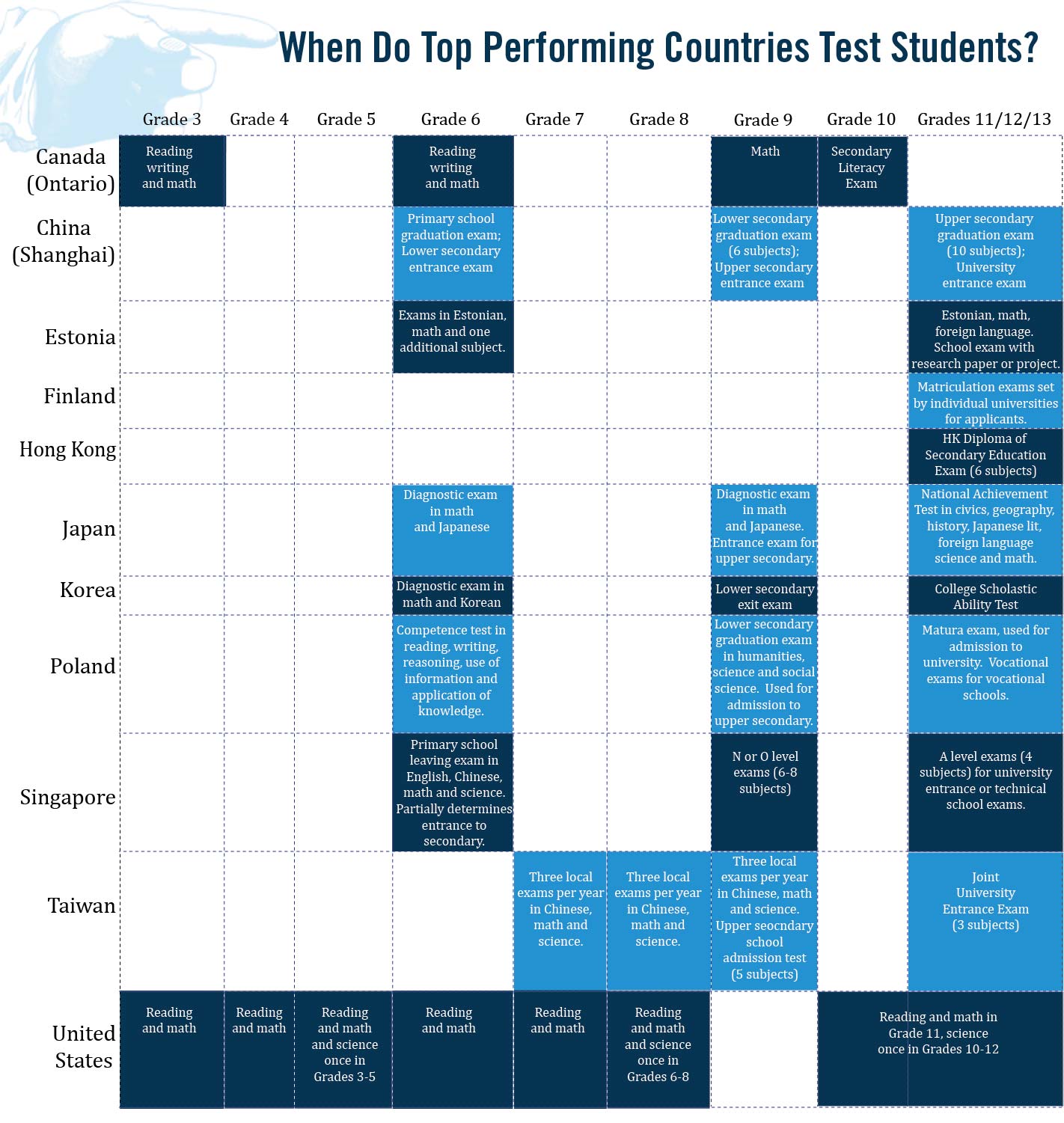
Share

What Do Schools Risk By Going ‘Full Google’?

Anya Kamanetz:

Kaitlin Morgan says, this year, her school district is going “full Google.”

Morgan teaches U.S. and world history and advises the yearbook at Woodlake Union High School in California’s Central Valley. At Woodlake, “full Google” means a plan to have one Google Chromebook for every two students by the spring, running Google Apps.

The Chromebook is a relatively cheap, stripped-down laptop. It’s become popular in the education world, with 85 percent of its U.S. sales last year going to the ed market.

And the Chromebook is just the beginning. Already, Google Apps for Education claims 30 million active users around the world. The free, Web-based software works on any device and allows teachers and students to use Gmail with their own .edu address.

It’s the beginning of what Google calls the “paperless classroom” — moving assignments, class discussions, feedback, tests and quizzes online.

Share

College-rating proposal shines spotlight on powerful lobby

Jon Marcus:

The annual meeting of the National Association of Independent Colleges and Universities this year had the tone of a revival meeting.

“We have been under steady, unrelenting pressure,” declared the organization’s president, David Warren, who spoke of “an overreaching executive branch” he said sought to use unreliable statistics to measure the effectiveness of higher-education institutions that are vastly different from each other.

Warren was talking about proposed ratings of colleges and universities the White House says would help consumers see what they’re getting for their tuition dollars. He said these would fail to capture “the specific mission of an institution at whose core is where value can be found.”

Share

Most university undergrads now taught by poorly paid part-timers

Ira Basen::

Kimberley Ellis Hale has been an instructor at Wilfrid Laurier University in Waterloo, Ont., for 16 years. This summer, while teaching an introductory course in sociology, she presented her students with a role-playing game to help them understand how precarious economic security is for millions of Canadian workers.

In her scenario, students were told they had lost their jobs, their marriage had broken up, and they needed to find someplace to live. And they had to figure out a way to live on just $1,000 a month.

Share

Suit seeks to derail Camden Renaissance schools

Julia Terruso:

A group of Camden public school advocates and parents has filed a lawsuit against the state education commissioner, saying he did not properly assess the “financial and segregative impact” of approving two Renaissance schools to open in the city.

Mastery and Uncommon Schools were approved July 7 by acting Commissioner David Hespe and opened elementary schools earlier this month.

Save Our Schools New Jersey, a group that has frequently been critical of the new administration of the state-run district, has asked Hespe to rescind his approval of the schools.

The lawsuit claims the Renaissance schools would drain traditional public schools of needed funds and exclude disabled and minority students – an impact they say the commissioner failed to consider in his one-page approval.

Mastery and Uncommon, along with KIPP, which was approved in 2012, have contracts with the district to collectively serve more than 9,000 students in the district of 15,000 by 2024.

Of the 15,000 students, 11,500 currently are in traditional public schools and 3,500 are in charter schools.

“The schools must not be allowed to open . . . under a cloud of constitutional and statutory uncertainty,” said Princeton-based attorney Richard E. Shapiro in a letter to Hespe days before the suit.

The lawsuit was filed Aug. 21, but Save Our Schools member and Camden mother MoNeke Ragsdale, one of three people named as complainants in the suit, said the group wanted to wait until after the school year started to announce the legal action.

via Laura Waters

Share

A teacher ‘marketplace’ emerges in post-Act 10 Wisconsin; Remarkable

Molly Beck:

“The great irony is that Act 10 has created a marketplace for good teachers,” said Dean Bowles, a Monona Grove School Board member.

Fellow board member Peter Sobol said though the law was billed as providing budget relief for school districts and local government, it could end up being harder on budgets as districts develop compensation models that combine their desire to reward good teachers and the need to keep them. Knowing how many teachers each year will attain the leadership responsibilities and certifications that result in added pay will be difficult.

Monona Grove is developing a career ladder to replace its current salary schedule. The new model is still being drafted by a committee of district administrators, school board members and teachers, but its aim will be to reward “increased responsibility, leadership, ‘stretch assignments’ and other contributions to the district and school missions,’ ” according to the district.

“We thought we could do better,” Monona Grove School District superintendent Dan Olson said, adding that the message to parents is that with the new model, “we’ll be able to keep our good teachers.”

Bowles said the process should result in a district being a place that might not offer the highest pay in the state, but be a place teachers want to work.

“ ‘Attract and retain’ is one of the goals on that list, and in my judgment that does not boil down to” just salary, he said. “It’s also, ‘This is a place I hope you want to be,’ and our kids will benefit from it.”

Ironically, Madison rates not a mention….

Act 10 notes and links.

Share

Poverty in the suburbs

Reihan Salam:

When I was a small child, something called “the suburbs” kept snatching away my friends, like a monster hiding under the bed, but worse. Over time, I’ve come to appreciate why my friends moved. The urban neighborhoods of my Brooklyn youth were a little rough around the edges, and they didn’t offer growing families much in the way of elbow room. I couldn’t fall asleep without the sweet sound of sirens blaring, but not everyone felt the same way. The suburbs have long been a welcome refuge for families looking for a safe, affordable place to live.

But for many Americans, the suburbs have become a trap. This week, Radley Balko of the Washington Post vividly described the many ways bite-sized suburban municipalities in St. Louis County prey on poor people. Towns too small or too starved of sales tax revenue to sustain their own local governments stay afloat by having local law enforcement go trawling for trumped-up traffic violations, the fines for which can be cripplingly expensive, and which only grow more onerous as low-income residents fail to pay them. Those who can afford lawyers know how to massage a big fine into a smaller one. Those who can’t dread their run-ins with local police, who often come across less like civic guardians and more like cash-thirsty pirates. The resentment and distrust that follows is, according to Balko, crucial for understanding the recent unrest in Ferguson, Missouri.

Share

Book Discussion on The Smartest Kids in the World

cspan 3 via Richard Askey:

Amanda Ripley talked about her book, The Smartest Kids in the World: And How They Got That Way. In her book she followed three American high-school students who each spent a year in a high-scoring foreign school system, in Finland, South Korea, and Poland.

She spoke in the Science Pavilion of the 2014 National Book Festival, which was held August 30 by the Library of Congress at the Walter E. Washington Convention Center in Washington, D.C. close

Ripley mentioned that in her observation principals spend up to half their time on sports matters.

Share

Colorado joins campus football arms race with stadium deal

Michael McDonald:

The University of Colorado is joining the athletic-facilities arms race with a $155 million football stadium overhaul as it seeks to revive a struggling program and keep pace with conference competitors.

The public university sold a record $304 million of tax-exempt bonds last month, according to data compiled by Bloomberg. It will use $100 million for the stadium on the flagship Boulder campus, and $25 million will go toward a parking garage. The rest will refinance debt and fund projects such as a $49 million student village, bond documents show.

via Noel Radomski.

Share

Grading Teachers, With Data From Class

Farhad Manjoo:

Halfway through the last school year, Leila Campbell, a young humanities teacher at a charter high school in Oakland, Calif., received the results from a recent survey of her students.

On most measures, Ms. Campbell and her fellow teachers at the Aspire Lionel Wilson Preparatory Academy were scoring at or above the average for Aspire, a charter system that runs more than a dozen schools in California and Tennessee.

Share

New technology helps students learn Chinese

Mark Niu:

Students at the Council on International Educational Exchange in Shanghai are trying out special software.

They’re taking the world’s first fully-automated spoken Chinese Test. It questions, evaluates, and scores without ever involving a human assessor.

The test and technology were created in collaboration with Peking University and the Silicon Valley company Pearson, located in Menlo Park, California.

Pearson says with around 50 million people are now learning Chinese globally. Its software seeks to help international companies and higher education institutions assess Chinese language skill faster and more accurately.

Share

The Evolution Of The Employee

Jacob Morgan:

This concept and the visual was taken from my new book which came out today called, The Future of Work: Attract New Talent, Build Better Leaders, and Create a Competitive Organization.

One of the things I have been writing about and have tried to make clear over the past few months is that work as we know it is dead and that the only way forward is to challenge convention around how we work, how we lead, and how we build our companies. Employees which were once thought of expendable cogs are the most valuable asset that any organization has. However, the employee from a decade ago isn’t the same as the employee who we are starting to see today. To help show that I wanted to share an image from my upcoming book which depicts how employees are evolving. It’s an easy way to see the past vs the future.

Yet, our K-12 structures remain unchanged, from their agrarian era roots.

Share

The New History Wars

James Grossman:

WITH the news dominated by stories of Americans dying at home and abroad, it might seem trivial to debate how history is taught in our schools. But if we want students to understand what is happening in Missouri or the Middle East, they need an unvarnished picture of our past and the skills to understand and interpret that picture. People don’t kill one another just for recreation. They have reasons. Those reasons are usually historical.

Last month, the College Board released a revised “curriculum framework” to help high school teachers prepare students for the Advanced Placement test in United States history. Like the college courses the test is supposed to mirror, the A.P. course calls for a dialogue with the past — learning how to ask historical questions, interpret documents and reflect both appreciatively and critically on history.

Share

The Vexing Legacy of Lewis Terman

Mitchell Leslie:

To the Los Angeles juvenile authorities in 1923, Edward Dmytryk was an ordinary runaway trying to escape a vicious father who tore up his schoolbooks and clubbed him with a two-by-four. Mr. Dmytryk wanted his 14-year-old son back — if only, as the caseworker suspected, because Edward brought home vital income.

While the authorities deliberated, a letter arrived from Professor Lewis Terman, the nation’s most famous psychologist and the man who had planted the term “IQ” in America’s vocabulary. He wasn’t a relative or family friend; he had never even met the boy. But the Stanford professor believed Edward deserved a break because he was “gifted” — a word Terman coined to describe the bright kids he devoted his life to researching.

Edward’s high score on an IQ test had qualified him for Terman’s pathbreaking Genetic Study of Genius. Terman, who had grown up gifted himself, was gathering evidence to squelch the popular stereotype of brainy, “bookish” children as frail oddballs doomed to social isolation. He wanted to show that most smart kids were robust and well-adjusted — that they were, in fact, born leaders who ought to be identified early and cultivated for their rightful roles in society.

Though the more than 1,000 youngsters enrolled in his study didn’t know it at the time, they were embarking on a lasting relationship. As Terman poked around in their lives with his inquisitive surveys, “he fell in love with those kids,” explains Albert Hastorf, emeritus professor of psychology. To the group he always called “my gifted children” — even after they grew up — Terman became mentor, confidant, guidance counselor and sometimes guardian angel, intervening on their behalf. In doing so, he crashed through the glass that is supposed to separate scientists from subjects, undermining his own data. But Terman saw no conflict in nudging his protégés toward success, and many of them later reflected that being a “Terman kid” had indeed shaped their self-images and changed the course of their lives.

Share

gap, Latin America must produce better teachers

The Economist:

THE Liceo Bicentenario San Pedro is a modern secondary school in Puente Alto, a gritty district of Santiago in Chile. Opened in 2012, the school nestles amid the vestiges of a shantytown where urban sprawl meets the vineyards of the Maipo valley. Most of its pupils are drawn from families classed as “vulnerable”. Yet in national tests it ranks fourth among municipal (ie, public) schools in Chile.

The school has done well by hiring committed young teachers and by offering them more time for preparation and in-service training, according to Germán Codina, the mayor of Puente Alto. When Bello strolled around the liceo recently, he saw teachers who visibly commanded the attention of their pupils. Sadly, it is far more common in Latin American schools to see inattentive children talk among themselves while a teacher writes on the blackboard. It is schooling by rote, not reasoning. And it imposes an unacceptable handicap on Latin Americans.

Share

Is De-Skilling Killing Your Arts Education?

F Scott Hess:

In 1974, when I was a freshman art student at a small Midwestern liberal arts college in Wisconsin, I wanted to learn to draw the human figure. One untenured professor took me under his wing and encouraged that process, but the department chair, an alcoholic abstract painter, stumbled into the studio late one evening while I was studying a plaster head that showed the muscles of the face. He slowly looked at me, then at the head. “This is not art!” he screamed, lifting the cast high and smashing it on the cement at his feet. Pleased with his stirring defense of Western Civilization, he staggered out the door.

Over the years my representational painting colleagues have expressed many similar stories, some funny in retrospect, coming as they do from the lucky few who successfully survived the vicissitudes of our academic art institutions. My experience was by no means an isolated incident for me. Other professors in other institutions purposely scribbled crude ‘corrections’ over carefully drawn works, daily held my work up to ridicule because of its style, or browbeat any opinion that tried to breach their academic dogma. I was a stubborn young cuss and held my ground. I often heard from fellow students, “I want to draw like you, but I don’t dare!”

Share

Reading and Curricular Suggestions & Links as the school year begins

Wisconsin Reading Coalition via a kind email:

With the beginning of a new school year, here is some timely information and inspiration.

You can make a difference: At WRC, we are often focused on top-down systemic change that can improve reading outcomes for students across our state. However, bottom-up, individual efforts are equally important. A letter from Colin Powell, Alma Powell, and Laysha Ward in the Washington Post reminds us that as individuals we can be part of the solution. “Imagine that you have an envelope beneath your chair, containing the name of a child in need and within your reach. He or she is heading back to school now but is at risk of not finishing. There are students like this in every community across the country, just waiting for someone to connect with them. This school year, we challenge you to find your Nico Rodriguez: Reach out directly to your local school, parent-teacher association or a relevant nonprofit with an offer to volunteer. . . Whatever path you choose, know that everybody can do something, starting today.” If you are in the Milwaukee area, please consider volunteering for one of the reading tutor pilots through Milwaukee Succeeds. We at WRC have a personal investment in programs at St. Catherine’s School at 51st and Center and Northwest Catholic School at 41st and Good Hope. With as little as an hour a week, you can participate in providing Orton-Gillingham-based intervention to struggling K5-2 students. Contact Audra Brennan at 414-336-7038, or abrennan@milwaukeesucceeds.org

​Adult literacy issues: In his recent article, Time to knock out illiteracy, James Causey of the Milwaukee Journal Sentinel highlighted the reading difficulties of boxing champion Floyd Mayweather, and suggested that Mayweather address his reading issues and become a “better role model for black boys across America, who have the worst reading scores of any group in the nation.” Rapper 50 Cent and disc jockey Charlamagne Tha God have publicly humiliated Mayweather by pointing out his reading difficulties. Causey states: “It’s hard to feel sorry for Mayweather because he loves playing the bad guy in the ring and he’s made enough money to afford the best tutors and educators in the world. Which begs the questions, why hasn’t he learned to read yet?” Mary McFadden, a Milwaukee adult basic education tutor, responded in an opinion comment: “I can think of a few reasons. Reading difficulties are not the result of a lack of intelligence or a lack of effort. Unfortunately, effective programs for adults with learning disabilities or learning challenges are available but not very prevalent. Also, seeking help means having to tell someone you have a problem, which is difficult for many people. . . . I believe that greater pressure should be applied to 50 Cent to become a role model by educating himself on learning disabilities, apologizing for his cruel behavior and encouraging people to celebrate each other’s strengths while showing empathy and compassion as we all struggle with our weaknesses.”

You can’t learn if you’re not there: Wisconsin Superintendent Tony Evers sent some important information to school principals concerning the importance of student attendance, particularly in the early years of school. Resources and strategies for improving attendance are included. “The evidence from Wisconsin is irrefutable: students with good attendance in Kindergarten through Grade 2 have higher rates of reading and math proficiency in later grades. Good attendance in the early years also predicts good attendance rates throughout a student’s K-12 education. Data reveal that repeated early absence has negative educational implications for children.”

Setting the bar on Smarter Balanced assessment: Anyone with opinions on appropriate and fair cut scores for the upcoming Smarter Balanced assessments may participate in the achievement level setting process. An online national panel requires just three hours over two days during a window from October 6 through 17. Don’t complain if you don’t participate. Click here to register.

A win for the good guys: The Federal Trade Commission recently announced a settlement of its action against Infant Learning, Inc. and its owner for false educational claims related to its “Your Baby Can Read” product. The final order in the U.S. District Court for the Southern District of California imposes monetary judgements exceeding $185 million, which will be suspended after the owner pays $300,000. The Federal Trade Commission works for consumers to prevent fraudulent, deceptive, and unfair business practices and to provide information to help spot, stop, and avoid them. To file a complaint in English or Spanish, visit the FTC’s online Complaint Assistant or call 1-877-FTC-HELP (1-877-382-4357). The FTC enters complaints into Consumer Sentinel, a secure, online database available to more than 2,000 civil and criminal law enforcement agencies in the U.S. and abroad. The FTC’s website provides free information on a variety of consumer topics. Like the FTC on Facebook, follow us on Twitter, and subscribe to press releases for the latest FTC news and resources.

Focus on dyslexia: Wisconsin FACETS offers a free telephone workshop on September 24 from 12-1 PM. The program, titled “Red Flags of a Struggling Reader,” will be presented by Cheryl Ward. Register online at www.wifacets.org, or contact Sandra McFarland at 877-374-0511 or smcfarland@wifacets.org. Also, the National Center for Learning Disabilities (NCLD), has dyslexia basics, a free dyslexia toolkit, top 10 resources, and more on its website. A video on the dyslexic brain is also available.

It’s a big job: Lest we forget, effective reading intervention is not an easy or quick fix, particularly when begun at third grade or later. A recent New York Times article discusses the third-grade retention movement in multiple states, and the summer school programs that are seeking to avoid that outcome for students. It highlights the importance of teaching reading the right way from the start, and intervening early when problems surface. (Note: you may have to close numerous pop-up windows to read this article.)

Literate Nation Virtual Boot Camp: The Literate Nation organization will offer a free virtual boot camp on how to create literacy change in your community. This is a live webcast of a 1-1/2 day event in Denver, CO, that runs from Saturday, October 18 through Sunday, October 19. Participate individually or form your own group. Click here to register.

Share

Acting French: It’s hard to learn a new language. But it’s way harder to learn a new culture.

Ta-Nehisi Coates:

spent the majority of this summer at Middlebury College, studying at l’École Française. I had never been to Vermont. I have not been many places at all. I did not have an adult passport until I was 37 years old. Sometimes I regret this. And then sometimes not. Learning to travel when you’re older allows you to be young again, to touch the childlike amazement that is so often dulled away by adult things. In the past year, I have seen more of the world than at any point before, and thus, I have been filled with that juvenile feeling more times then I can count—at a train station in Strasbourg, in an old Parisian bookstore, on a wide avenue in Lawndale. It was no different in Vermont where the green mountains loomed like giants. I would stare at these mountains out of the back window of the Davis Family Library. I would watch the clouds, which, before the rain, drooped over the mountains like lampshades, and I would wonder what, precisely, I had been doing with my life.

I was there to improve my French. My study consisted of four hours of class work and four hours of homework. I was forbidden from reading, writing, speaking, or hearing English. I watched films in French, tried to read a story in Le Monde each day, listened to RFI and a lot of Barbara and Karim Oullet. At every meal I spoke French, and over the course of the seven weeks I felt myself gradually losing touch with the broader world. This was not a wholly unpleasant feeling. In the moments I had to speak English (calling my wife, interacting with folks in town or at the book store), my mouth felt alien and my ear slightly off.

Share

Turkey’s education row deepens as thousands placed in religious schools ‘against their will’

Hurryet Daily News:

Turkey’s secondary education examination row has deepened, amid reports that thousands of students, including some non-Muslims, have been placed in Islamic vocational schools for the upcoming school year.

After the results for the national primary to secondary education (TEOG) examination were announced earlier this month, there were a number of reports that around 40,000 students had been placed in religious “imam-hatip” schools against the will of their families.

Education Ministry Deputy Undersecretary Muhterem Kurt confirmed that a total of 9,802 students had been placed in schools far away from the districts where they live, but stressed that there was “no need to panic.” Kurt told daily Milliyet that there would be an opportunity for re-allocation in mid-September.

According to the new system, students failing to get into their top-preferred school as a result of the exam are placed in schools nearest to their area. However, many claim that too many regular schools have been turned into imam-hatip schools in recent years, making it difficult for some children to avoid a religion-focused education even if they do not want it.

Share

America’s public schools remain highly segregated, by choice?

Reed Jordan:

Fifty million children will start school this week as historic changes are under way in the U.S. public school system. As of 2011 48 percent of all public school students were poor* and this year, students of color will account for the majority of public school students for the first time in US history.

What is surprising about these shifts is that they are not leading to more diverse schools. In fact, the Civil Rights Project has shown that black students are just as segregated today as they were in in the late 1960s, when serious enforcement of desegregation plans first began following the passage of the 1964 Civil Rights Act.

Despite our country’s growing diversity, our public schools provide little contact between white students and students of color. We’ve mapped data about the racial composition of US public schools to shed light on today’s patterns at the county level. These maps show that America’s public schools are highly segregated by race and income, with the declining share of white students typically concentrated in schools with other white students and the growing share of Latino students concentrated into low-income public schools with other students of color.

Related: Madison has long supported wide variation in school demographics.

Share

Looking at the Numbers: What Scales in K-12, Anyway?

Alex Hernandez:

Last week, I heard the following exchange between an education entrepreneur and a philanthropist for 9,358th time:

Education entrepreneur: “I want to start a [insert new idea].”

Philanthropist: “Great. How is it going to scale?”

I work for an education philanthropy with the word “growth” in its name. I love the scale. And even I finally cracked. What do we mean when we say “scale” in education?!

I haphazardly started listing out K12 organizations, programs, policies and ideas, along with estimates of the number of students reached per year. Student reach statistics were drawn from the National Center for Education Statistics, organizational websites, articles and other general web research, and spanned 2012 to 2014. (Disclaimer: this is an informal thought exercise, not a PhD dissertation). Here’s what I came up with:

Share

Pisa tests to include many more Chinese pupils

Sean Coughlan:

There will be a much wider sample of Chinese pupils taking part in the next round of the international Pisa tests.

Shanghai took part in the most recent tests and had the highest results.

But there were claims that the city was not representative of schools in other parts of China.

The Organisation for Economic Co-operation and Development (OECD) which runs the tests has announced that Beijing, Jiangsu and Guangdong will take part, alongside Shanghai.

The Pisa tests, taken every three years by 15-year-olds, have become one of the most influential international benchmarks for education standards.

Share

When Chinese children forget how to write

Celia Hatton:

In China, it takes blood, sweat and months of studying dictionaries to become a Character Hero.

Millions tune in every week to watch teenagers compete for the title. Character Hero is a Chinese-style spelling bee, but in this challenge, young contestants must write Chinese characters by hand.

Every stroke, every dash must be in the correct spot.

After two tense rounds, Wang Yiluo is bumped from the contest. She bows to the panel of celebrity judges and quickly exits the bright lights of the television studio.

Backstage, she admits that she spent months studying dictionaries to prepare for the contest. The stakes were high; at 17, this was the last year she could appear on the show.

“I wanted to compete before I was too old,” she explained.

Share

Teacher Evaluations in an Era of Rapid Change: From “Unsatisfactory” to “Needs Improvement”

Chad Aldeman & Carolyn Chuong:

Over the last four years, states implemented remarkable changes to their teacher evaluation systems. Rather than rating all educators as either “satisfactory” or “unsatisfactory,” school districts use new multi-tiered evaluation systems to identify their best (and weakest) teachers. States now require districts to incorporate measurements of student academic growth and rubrics from higher-quality classroom observations into their ratings of teachers and principals. And teachers and principals are starting to receive financial incentives or face potential consequences based on these evaluation results.

But after the initial rush of reforms, progress stalled. The rollout of new evaluation policies slowed down as districts faced implementation challenges and increasing public backlash against teacher evaluation reforms.

Via Laura Waters.

Share

Drugging our Kids

Karen De Sa

They are wrenched from abusive homes, uprooted again and again, often with their life’s belongings stuffed into a trash bag.

Abandoned and alone, they are among California’s most powerless children. But instead of providing a stable home and caring family, the state’s foster care system gives them a pill.

With alarming frequency, foster and health care providers are turning to a risky but convenient remedy to control the behavior of thousands of troubled kids: numbing them with psychiatric drugs that are untested on and often not approved for children.

An investigation by this newspaper found that nearly 1 out of every 4 adolescents in California’s foster care system is receiving these drugs — 3 times the rate for all adolescents nationwide. Over the last decade, almost 15 percent of the state’s foster children of all ages were prescribed the medications, known as psychotropics, part of a national treatment trend that is only beginning to receive broad scrutiny.

“We’re experimenting on our children,” said Los Angeles County Judge Michael Nash, who presides over the nation’s largest juvenile court.

Share

Reinventing American K-12 Education

Mary Dooe & Genevieve Wilson:

How do we reinvent American education?

An Unconventional Education Toolbox

You can start at the very beginning, with preschoolers and kindergarteners.

Dr. Roberta Ness, author of “Genius Unmasked” and Dean of the School of Public Health at the University of Texas, explains why Maria Montessori’s method for teaching was so successful. Montessori schools, which have a bit of a cult following in Silicon Valley, encourage creativity and inquisitiveness in a way that traditional schools don’t.

Share

School Boards: “a frog at the bottom of a deep well trying to guess what is going on above based on leaves and birds flying by”

Laura Waters:

Late Sunday night yet another Trenton Board of Education member resigned, leaving only four members of the nine-member, mayor-appointed group, one less than a quorum and, thus, unable to approve any district appointments, allocations, contracts, or programming initiatives. According to the Trenton Times, Roslyn Council sent in her formal letter of resignation to Trenton Mayor Eric Jackson, following the lead of Sasa Olessi-Montano and Mary Taylor Hayes, who both resigned earlier this summer. Another member resigned earlier in the year.

But not to worry: While the Times notes that “[i]n the meantime the school board will be unable to take action on any school district items with the start of the school year two weeks away,” the district attorney, Kathleen Smallwood Johnson said “there is nothing that is essential to the start of the school year that would require board approval.” Mayor Jackson will, accordingly, take his time and appoint new members in “another week or so.”

Actually, at the meeting on Monday that was cancelled due to lack of a quorum, the published Agenda has 91 pages of recommendations, including approval of annual contracts with preschool providers, a “Proposal for Bilingual/English as a Second Language Department for the 2014-2015 school year at a cost not to exceed $272,812.00,” updated math curricula, and new supervision and intervention programs at various city schools intended to “provide students…with a safe environment before and after the regular school day.”

Share

Where are first graduates of Chicago’s Urban Prep?

Lolly Bowean:

As a student in the first class of Urban Prep Charter Academy for Young Men, Tyler Beck found himself enveloped in a nurturing environment where teachers came in early and stayed late to help tutor struggling students. There, the boys formed a brotherhood and learned affirmations that kept them pumped up to achieve.

“We were taught, ‘Each one reach one,’ and ‘It takes courage to excel.’ We all learned to help each other because we all wanted to succeed,” Beck said. “There were people who could say they’d been right where you were from and they could say they knew what your life was like.”

But four years later, at the idyllic East Coast private college to which Beck was accepted, the atmosphere was dramatically different. And even though he had earned a full academic scholarship to attend, Beck was not prepared.

Related: the proposed Madison Preparatory Academy IB Charter School, rejected by a majority of the Madison School Board.

Share

Textbook Prices: Don’t Shop Online

Carl Staumshein:

Faculty members at George Washington University are once again free to tell students they can save money by buying their textbooks online, after the university initially urged professors to stop pointing students to sources other than the campus bookstore.

In a letter dated July 17, the university reminded faculty members of its “contractual obligation” with Follett, which runs the campus bookstore. Since the company has the “exclusive right” to provide textbooks and other course materials for all of the university’s courses, “alternative vendors may not be endorsed, licensed or otherwise approved or supported by the university or its faculty.”

The letter irked many faculty members — not only did it prevent them from helping students save some money on textbooks, but it also seemed to prohibit them from listing on their syllabuses open educational resources, online exercises and other content that could help students understand the material.

Share

Healthcare cost growth pushed to faculty

Colleen Flaherty:

Institutions say complying with the Affordable Care Act has caused them to pass on some costs to employees, according to a new survey from the College and University Professional Association for Human Resources.

Since the act began to take effect, some 20 percent of institutions have made changes to benefits in an effort to control associated costs, the survey says. About the same percentage of colleges are considering making changes, or making further changes, in the year ahead. Of those institutions that have made changes so far, 41 percent have increased employees’ share of premium costs. Some 27 percent have increased out-of-pocket limits, while about one-quarter increased in-network deductibles or dependent coverage costs, or both. Some 20 percent increased employees’ share of prescription drug costs.

Healthcare spending has long been a significant issue in the Madison Schools. 25.62% (!) of the District’s 2014-2015 budget ($402,464,374) is spent on benefits.

Share

Making School Choice Work Requires Leadership

Robin Lake, via aaa kind Deb Britt email:

This commentary was originally published in Education Week on August 18, 2014.

It’s a truism in public policy that every solution breeds a new problem. School choice has created new possibilities for families desperate for better options, but it can also create serious access challenges for disadvantaged families. In localities where many state and local agencies can sponsor schools, fragmented governance makes solving those challenges difficult. This is evident in cities where parents now have many school choices and districts must compete for students.

New and promising schooling options exist via charter and private schools, but many families still can’t make them work for their children. Districts and charter authorizers protect their own schools from closure, so weak schools persist, and overall quality stagnates. Recognizing that the best schools have little advantage over weaker ones, the best educators and charter providers go elsewhere.

The Center for Reinventing Public Education, which I direct, recently conducted research in high-choice cities and unearthed both good and bad news for school choice advocates. We found that many parents, including many from highly disadvantaged backgrounds, are now actively choosing their children’s schools and getting access to their first or second choices.

Yet our research also shows that too many parents face serious barriers to finding good schools. They report having trouble getting high-quality information to inform their choices, navigating different eligibility and application requirements, and finding adequate transportation.Parents with the least education and those who have children with special needs report the most-significant barriers to the choice process.

A recent Detroit Free Press series exposed such problems in Detroit’s charter schools. Michigan’s choice system was designed to break up dysfunctional district monopolies as quickly as possible by creating many different statewide charter authorizers. But these entities, funded by fees from the schools they authorize, have little incentive to close low-performing schools. This has created a fragmented governance system in which no one agency has the incentive to care about all of the city’s students.

Share

How to properly fund education (hint: not more taxes)

Jonathan Butcher:

First, Arizona should stop paying for ghost students.

Arizona schools can apply for additional funding for current-year enrollment growth, but they do not have to adjust for enrollment decreases in the same year. Traditional school payments are generally not updated until the following year, which means schools get funding for students who aren’t in their classrooms anymore.

As Goldwater Institute research has reported, the state pays about $125 million for empty seats every year.

Traditional school payments should be based on the number of students in the classroom, with payments updated accordingly throughout the year.

Taxpayers already pay more for schools in the lowest-performing districts than the highest-achieving districts. According to data from the Arizona Auditor General’s Office, the average expenditure per child in a “D” district (Arizona has made it nearly impossible to earn an “F”) is $11,900. For districts that earned an “A” on their report card, the average taxpayer expense per child is $9,200.

• The second step the Legislature should take is to eliminate seat-time requirements.

The late Sen. Chester Crandell was a visionary when it came to updating Arizona’s school-finance formula in this way. Two years ago, he led the passage of legislation that created a performance-funding pilot program for Arizona schools. Instead of paying schools based on how long students sit behind their desks each year, Crandell’s program based up to half of participating schools’ funding on how well students are learning.

Share

Heavy Adult Employment Focus in the Milwaukee Public a Schools

Erin Richards

But after Tyson made his offer, an MPS teacher who also is a teachers’ union employee submitted a plan to reopen Lee as a district-run charter school.

The School Board was said to be considering both options. It was scheduled to discuss the potential sale or lease of several empty buildings, including the Lee building, in closed session Tuesday night.

Despite enrollment declines of 1,000 or more students each year for nine years — before an increase in 2013-’14 — the School Board and district administration have been averse to selling their public property to nondistrict school operators. Voucher and nondistrict charter school operators compete with the district for students, and more students attending those schools means potentially fewer students — and less state aid money — coming to MPS.

Supporters of successful private voucher and independent charter schools believe there shouldn’t be so many roadblocks to those schools obtaining building space to expand. St. Marcus’ state achievement test scores are some of the highest in the city for schools with predominantly low-income, minority students.

St. Marcus will be paying around $80,000 a year to lease the Aurora Weier site, which will be called the St. Marcus Early Childhood Center, North Campus. Tyson said they may eventually buy the building.

Up to 250 young children could be served at the new site by next year, Tyson said.

This year, even with the new early childhood site opening, Tyson said about 200 children remain on the waiting list to get into St. Marcus.

An interview with Henry Tyson.

Share

21% of University of Wisconsin System Freshman Require Remedial Math

Karen Herzog:

Regent Margaret Farrow said K-12 must be a strong partner in preparing high school students for college. “We’re not, quite frankly, creating this situation we’re trying to solve.”

Starting next year, all 11th graders in Wisconsin pubic schools will be required to take the ACT college-readiness exam that universities use in their admissions process, Farrow noted. She said she’s concerned about what those test results will show.

“I think we’re doing all we can, but we need help because these are our kids,” Farrow said. “If they aren’t making it, this state and this country aren’t making it. … This is an emergency. This is a tragedy happening.”

The UW’s freshman math remediation rate of 21% is below the national average of 25% to 35%, according to Cross.

UW Regent Jose Vasquez bristled at the UW System taking on “a problem that is really our cohort’s problem,” referring to K-12. “The problem was not created by the university and I’m not convinced we can solve it within the university.”

He advocated earlier intervention in high school.

However, “it’s in all of our best interest to work together on this,” Cross said.

Related: Math Forum.

Madison’s math review task force. Have the results of the task force made a difference?

Share

Fixing Our National Accountability System

National Center on Education & The Economy:

In this new report, Marc Tucker, NCEE’s President, calls for replacing the current system of test-based accountability with a system much more likely to result in improvements in student performance. Tucker points out that the current system has not only failed to improve the performance of the at-risk students it was designed to help, but has alienated the best of our current teachers and created an environment in which able young people choosing careers are less likely to choose teaching.

The report explains that the countries in which student performance is outstripping the achievement of American students are not using accountability systems like ours, which they view as more appropriate for industrial-era blue-collar workers than the kind of professionals they want in their schools.

Fixing Our National Accountability System argues for a much needed alternative to the kind of punitive accountability measures now dominating American policy. Fixing accountability will not just require a different accountability system but a different kind of education system altogether.

Share

MIT Offers STEM Institute for Middle School Students

Joshua Bolkan:

Students entering grades 6-9 in the Boston, Cambridge and Lawrence, MA area recently had an opportunity to learn about science, technology, engineering and math (STEM) concepts thanks to a STEM Summer Institute offered by MIT’s Office of Engineering Outreach Programs.

The institute was taught by 15 instructors, mostly graduate and undergraduate students, who “worked closely with expert mentors to prepare their curricula, and academic advisors provided additional student and instructional support,” according to an MIT news release.

Share

PDK/Gallup Poll on Public Education

Phi Delta Kappa International:

Are Americans convinced that the common core will improve education? And what about federal programs supporting school accountability and charter schools? Do these programs have American’s support or is it time to go back to the drawing board for school reform?

Related: wary of growing federalism.

Share

S.F. teachers miss more school than students on average

Jill Tucker:

If last year’s numbers hold steady, the 4,100 teachers in San Francisco, on average, will each be absent about 11 times this school year, about once every three weeks. That’s four to five days more than a typical student, out of 180 days total.

About seven of those days were for sick or personal leave, and the rest were training days offered or required by the district.

Share

Diane Ravitch: Campbell Brown Shouldn’t Worry Her Pretty Little Head About Education Policy

Jonathan Chait:

Paul Farhi profiles Campbell Brown, the former CNN anchor turned education-reform activist, who is working to end strict teacher tenure protections. Naturally, this enrages teacher-union evangelist Diane Ravitch, who not only disagrees with Brown’s position, but expresses offense that anybody should listen to Brown at all:

“I have trouble with this issue because it’s so totally illogical,” says Diane Ravitch, an education historian. “It’s hard to understand why anyone thinks taking away teachers’ due-process rights will lead to great teachers in every classroom.”

Share

Compton, California School Board Approves AR-15 Rifles for Campus Police

Conor Friedersdorf:

The school board in Compton, California, has voted to arm campus police officers with AR-15 rifles, according to the Los Angeles public radio station KPPC. Some parents and students are expressing discomfort, citing the same sorts of concerns sparked by the militarized police force of Ferguson, Missouri. In Compton, the local police union says its officers are hardly alone in seeking such weapons:

Currently, the following School Districts authorize their Police Officers to deploy these weapons; Los Angeles School PD, Baldwin Park School PD, Santa Ana School PD, Fontana School PD, San Bernandino School PD.

The police union goes on to defend the semi-automatic rifle for campus police officers:

Share

California lieutenant governor wants ADs’ jobs tied to academics

Steve Berkowitz:

California Lt. Gov. Gavin Newsom wants the jobs of college athletics directors at the state’s public schools to be tied to athletes’ academic performance.

In letters this week to the chief executive officers of the University of California and the California State University system, Newsom that AD’s contracts “should stipulate aggressive benchmarks for improvement in graduation and academic progress rates” and make the AD’s subject to dismissal if those benchmarks aren’t met.

An “athletic director’s contract should stipulate aggressive benchmarks for improvement in graduation and academic progress rates or face termination, period,” the letter said

The letters went out as three Division I schools in the state — Cal-Berkeley, Fresno State and Sacramento State — are looking for new athletics directors. Andrea Koskey, a spokeswoman for Newsom, said he is seeking to have this stipulation included in the contracts of the new hires, then added to other deals as deals are renewed or vacancies occur.

Share

“More Rigor is Needed” – Madison Superintendent Jennifer Cheatham; Possible?

Pat Schneider:

Middle schools in the Madison Metropolitan School District have become caring environments for students, but aren’t rigorous enough to prepare them for high school academic work, says Superintendent Jennifer Cheatham.

“We know there are quite a few things that highly effective schools do that we have not been doing in both our middle and our high schools,” Cheatham told Madison School Board members Monday during a review of a district report on coursework in the high schools.

“We haven’t established a coherent approach to instruction, as you’ve heard me say again and again, but we are making progress. We’ve all spent quality time in our middle and high school classrooms, and in middle schools in particular, we’ve made tons of progress in creating very caring environments, but the level of rigor and academic challenge isn’t where it needs to be,” Cheatham said.

Related:

Madison’s High School Coursework Review

English 10

Connected Math and https://www.schoolinfosystem.org/?s=%22Everyday+Math%22″>Everyday Math

High School Redesign & Small Learning Communities.

At the end of the day, given the District’s long term disastrous reading results, is it possible to see meaningful achievement improvement with an agrarian / Frederick Taylor era structure?

Share