School Information System

Former D.C. Schools Chief Aims To Put ‘StudentsFirst’

NPR:

It’s not only Republicans like Wisconsin Gov. Scott Walker and New Jersey Gov. Chris Christie who are challenging unions. When it comes to teachers unions, increasingly it’s Democrats like Michelle Rhee, the former chancellor of the public school system in Washington, D.C.
Rhee led the school district for almost three years. While she was there, she tied pay increases to merit rather than tenure and fired hundreds of teachers who she said were underperforming.
Those moves angered teachers unions across the country and made Rhee one of the most controversial figures in education reform. Now, she’s heading up an education advocacy group based out of Sacramento, Calif., called StudentsFirst. With it, she tells Weekend All Things Considered host Guy Raz, she hopes to create a powerful lobby to push for education reform.

Share

At Madison’s All-City Spelling Bee, the winning word is a surprise but not a trick

Dean Mosiman:

After a morning of handling knotty words, Kira Zimmerman seemed almost stunned when asked to spell “peril” to win the All-City Spelling Bee on Saturday.
The defending champion, Vishal Narayanaswamy, had just narrowly missed on “receptacle,” which Zimmerman then spelled correctly, leaving her the final, five-letter challenge.
She asked the Bee’s pronouncer, Barry Adams, to repeat the word, paused almost like she suspected a trick, and then said, “Ohh, peril … p-e-r-i-l” and won the hefty traveling trophy for her school and the honor of representing Madison in the Badger State Spelling Bee on March 26 at Edgewood College.
As the Hamilton Middle School eighth-grader posed for pictures, her first thought was of getting a doughnut her father, David Zimmerman, had promised during a break if she won. Then she talked about winning and moving to the state championship.

Share

Unions brought this on themselves

David Blaska:

Let’s face it: Teachers union president John Matthews decides when to open and when to close Madison schools; the superintendent can’t even get a court order to stop him. East High teachers marched half the student body up East Washington Avenue Tuesday last week. Indoctrination, anyone?
This Tuesday, those students began their first day back in class with the rhyming cadences of professional protester Jesse Jackson, fresh from exhorting unionists at the Capitol, blaring over the school’s loudspeakers. Indoctrination, anyone?
Madison Teachers Inc. has been behind every local referendum to blow apart spending restraints. Resist, as did elected school board member Ruth Robarts, and Matthews will brand you “Public Enemy Number One.”
When then-school board member Juan Jose Lopez would not feed out of the union’s hand, Matthews sent picketers to his place of business, which happened to be Briarpatch, a haven for troubled kids. Cross that line, kid!
The teachers union is the playground bully of state government. Wisconsin Education Association Council spent $1.5 million lobbying the Legislature in 2009, more than any other entity and three times the amount spent by WMC, the business lobby.
Under Gov. Doyle, teachers were allowed to blow apart measures to restrain spending and legislate the union message into the curriculum. Student test scores could be used to determine teacher pay — but only if the unions agreed.
The most liberal president since FDR came to a school in Madison to announce “Race to the Top” grants for education reform. How many millions of dollars did we lose when the statewide teachers union sandbagged the state’s application?

Share

For the Love of Math!

Helen:

You’ve heard this a million (10 to the power of 6) times, but it is frightening. In the 2009 (41 X 49) Program for International Student Assessment US 15-year-olds ranked 25th (4! + 1) among 34 (square root of 1156) countries in math falling behind Canada, New Zealand, Finland, and Asian countries such as China, South Korea, Japan, Singapore, and Hong Kong.
To counter this sad trend, stop by The Math Salon at Mosaic Coffeehouse on February 28th from 4-6 PM:

Share

Chicago’s Urban Prep Academies Visits Madison: Photos & a Panorama

.
Students from Chicago’s Urban Prep Academies visited Madison Saturday, 2/26/2011 in support of the proposed Madison Preparatory IB Charter school. A few photos can be viewed here.
David Blaska:

I have not seen the Madison business community step up to the plate like this since getting Monona Terrace built 20 years ago.
CUNA Mutual Foundation is backing Kaleem Caire’s proposal for a Madison Prep charter school. Steve Goldberg, president of the CUNA Foundation, made that announcement this Saturday morning. The occasion was a forum held at CUNA to rally support for the project. CUNA’s support will take the form of in-kind contributions, Goldberg said.
Madison Preparatory Academy for Young Men would open in August 2012 — if the Madison school board agrees. School board president Maya Cole told me that she knows there is one vote opposed. That would be Marj Passman, a Madison teachers union-first absolutist.
The school board is scheduled to decide at its meeting on March 28. Mark that date on your calendars.
CUNA is a much-respected corporate citizen. We’ll see if that is enough to overcome the teachers union, which opposes Madison Prep because the charter school would be non-union.

Share

Leader of Teachers’ Union Urges Dismissal Overhaul

Trip Gabriel, via a kind reader’s email:

Responding to criticism that tenure gives even poor teachers a job for life, Randi Weingarten, the president of the American Federation of Teachers, announced a plan Thursday to overhaul how teachers are evaluated and dismissed.
It would give tenured teachers who are rated unsatisfactory by their principals a maximum of one school year to improve. If they did not, they could be fired within 100 days.
Teacher evaluations, long an obscure detail in an educator’s career, have moved front and center as school systems try to identify which teachers are best at improving student achievement, and to remove ineffective ones.
The issue has erupted recently, with many districts anticipating layoffs because of slashed budgets. Mayors including Michael R. Bloomberg of New York and Cory A. Booker of Newark have attacked seniority laws, which require that teacher dismissals be based on length of experience rather than on competency.
Ms. Weingarten has sought to play a major role in changing evaluations and tenure, lest the issue be used against unions to strip their influence over work life in schools — just as Republican lawmakers in Wisconsin and Ohio are trying to do this week.

Share

Film: The Finland Phenomenon & A Counter View

Inside the World’s Most Surprising School System, via a kind reader’s email.
The PISA survey tells only a partial truth of Finnish children’s mathematical skills:

The results of the PISA survey (http://www.jyu.fi/ktl/pisa/) have brought about satisfaction and pride in Finland. Newspapers and media have advertised that Finnish compulsory school leavers are top experts in mathematics.
However, mathematics teachers in universities and polytechnics are worried, as in fact the mathematical knowledge of new students has declined dramatically. As an example of this one could take the extensive TIMSS 1999 survey, in which Finnish students were below the average in geometry and algebra. As another example, in order not to fail an unreasonably large amount of students in the matriculation exams, recently the board has been forced to lower the cut-off point alarmingly. Some years, 6 points out of 60 have been enough for passing.
This conflict can be explained by pointing out that the PISA survey measured only everyday mathematical knowledge, something which could be – and in the English version of the survey report explicitly is – called “mathematical literacy”; the kind of mathematics which is needed in high-school or vocational studies was not part of the survey. No doubt, everyday mathematical skills are valuable, but by no means enough.

Share

On Science Exams, New York’s Students Fall Short

Fernanda Santos:

Only 18 percent of the city’s public school fourth graders and 13 percent of its eighth graders demonstrated proficiency on the most recent national science exams, far below state and national achievement levels, according to results released Thursday.
Alan J. Friedman, a member of the National Assessment Governing Board, the bipartisan group that oversees the tests, called the city’s results “a big disappointment,” particularly because New York has a number of cultural organizations devoted to science, like the Museum of Natural History and the New York Hall of Science in Queens, which he directed for 22 years.
The exam was given in 2009 to a sampling of 4,300 fourth and eighth graders in the city, or about 3 percent of students in those grades. Nationwide, 33 percent of fourth graders and 29 percent of eighth graders showed proficiency, and in New York State, those numbers were 30 and 31, respectively.

Share

On teachers unions, the devil is in the details

Robert Maranto
:

Here are the fiscal facts. Unlike most employees, few Wisconsin teachers have to contribute more than marginally to their retirement and health care costs. My colleague Bob Costrell, who has done substantial work in Milwaukee, calculates that the city’s public school teachers get a remarkable package of benefits equal to 74% of salary, roughly double the normal benefits for workers calculated by the Bureau of Labor Statistics but in line with other Wisconsin teachers.
And that’s not all. By collective bargaining agreement, the Wisconsin Education Association Council has a lock on health insurance coverage for members, not necessarily a great service for teachers but a wonderful profit center for the union.
What explains this? As one who has served in government and taught public personnel management, the answers are three-fold, and in combination explain why allowing a broad scope for collective bargaining undermines transparency and, ultimately, democracy.
First, teachers unions play a big role in politics, meaning that, as Terry Moe writes in “Teacher Unions and School Board Elections” (published in a Brookings Institution book on school boards), “the fact that school boards are elected means that the teacher unions can actually participate in choosing – or even literally choose – the management they will be bargaining with.”
In the California school districts Moe studies, unions fund candidates and mobilize voters in (low-turnout) school board elections and often recruit the candidates. Unions thus control both sides of the collective bargaining table. Surveys of school board members suggest that business interests, in contrast, have little power.
I have not seen comparable research on Wisconsin, but I suspect similar dynamics.

Share

New Mexico House scrutinizes school promotion

Barry Massey

School administrators and teachers raised questions Wednesday about the potential costs of a proposal backed by Republican Gov. Susana Martinez to stop promoting public school students who lack basic skills in reading.
Legislation under consideration by the House Education Committee will stop third-graders from moving to the fourth grade if they aren’t proficient in reading starting in the 2012-13 school year. A student could be held back one year and schools will be required to provide students with programs to improve their performance.
In testimony to the committee, educational groups suggested that school districts will need additional money for remedial and intensive instruction to help struggling students.
“We know that if we are going to do effective remediation, there are going to be costs associated with that,” said Tom Sullivan of the New Mexico Coalition of School Administrators.

Share

In Wisconsin’s long shadow, unions and tea partyers face off across US

Patrick Jonsson:

Protests sparked by a push from Wisconsin Republicans to gut collective bargaining for unions – in order to balance the state budget – continue to spread, with several state capitals witnessing vitriolic faceoffs between union protesters and tea party activists this week.
About 300 union protesters and about 100 tea party activists taunted one another in front of the gold-domed Georgia Capitol in Atlanta on Wednesday, in a scene echoing similar standoffs earlier in the week in Columbus, Ohio; Des Moines, Iowa; and Denver, Colo.
Meanwhile, deadlock continues in Madison, Wis., ground zero of the debate over public-sector union benefits and their impact on deficit-burdened state coffers. Democratic senators there have decamped for Illinois in protest – and to thwart a quorum for a vote on the union-targeting legislation. A similar episode is playing out in Indiana, where the state legislature is also controlled by Republicans.

Share

Measure to give Utah Governor control over education advances

Lisa Schencker

A resolution that could give the governor control over Utah education moved one step closer to becoming law Tuesday.
Meanwhile, the sponsor of another resolution that sought to amend the state constitution to make it clear that the state school board’s control and supervision over education is “as provided by statute,” said he will likely no longer push that measure.
The Senate voted 23-6 to give preliminary approval to SJR9, which seeks to amend the state constitution to place public and higher education under the governor’s control. The Senate must now vote on the resolution one more time for it to advance to the House.
In order to take effect, SJR9 would ultimately have to pass the House and Senate by a two-thirds majority. The question would then be put to voters in the 2012 general election.

Share

The Enormous Technological Challenges Facing Education

Thomas:

Advances in technology continue to change how adults view and interact with the world. Of course, those same advances are available to teachers and the youngsters who populate their classrooms.
These developments are leading to enormous challenges for teachers regarding the role digital devices can and should play in the learning process. For some educators, the view is that technology should only be utilized as a tool to help facilitate student understanding and mastery of the current curriculum. For other educators, technology is as fundamental to learning as reading and writing and therefore must become a separate segment of the school curriculum.

Share

The Zen of Grading

Ruthann Robson:

As law professors, we spend a substantial amount of time engaged in the activity of reviewing exams, papers, and other “evaluative devices” with the purpose of assigning our students grades. Personally, I estimate that I have spent over four thousand hours (almost six months of days and nights, or a year of long summer days) hunched over student work during my teaching career. It can be difficult not to consider student exams as a mere obstacle, a chore of the most unpleasant type to endure, and the worst part of our otherwise usually rewarding work as professors. Grading law school exams has been declared a “deadening intimacy with ignorance and mental fog” which saps a professor’s pedagogical and scholarly energies.I It is a “terrible occupation,” a “cloud,” a task which we accomplish with less efficiency and more distaste as our teaching career advances.2 Professorial engagement with Blue Books, in which most law student exams continue to be written, is deemed tedious and boring, leading to a “corrosive negativity” regarding the intellectual abilities of our students as well as a destructive influence upon our own character.3

Share

Oakland teachers, shaping school reforms

Katy Murphy:

These days, it sure seems like a radical idea: asking teachers, rather than telling them, what’s needed to improve their schools.
It’s happening in Oakland, though. You can read more about the purpose and the early work of a largely teacher-led project, the Effective Teaching Task Force, here. The story ran over the weekend.
HOW TO GET INVOLVED: The task force makes a stop tomorrow (Wednesday) on its “Teachers Talking to Teachers” listening tour. This one is for high school and adult education teachers, and it takes place at 2 p.m. Wednesday in the gym of United for Success Academy (Calvin Simmons campus), 2101 35th Avenue. Another event, for pre-k through eighth-grade teachers, is scheduled on March 23, at the same time and place.
Want to represent your school at an Oakland teacher convention in Emeryville April 7-9? Delegate elections — two for each school — are scheduled to take place at faculty meetings the week of March 7-11.

Share

Future of education? Droids teaching toddlers

Charles Choi:

Robots could one day help teach kids in classrooms, suggests research involving droids and toddlers in California.
A robot named RUBI has already shown that it can significantly improve how well infants learn words, and the latest version of the bot under development should also be able to wheel around classrooms, too.
The idea to develop RUBI came to Javier Movellan, director of the Machine Perception Laboratory at the University of California, San Diego, when he was in Japan for research involving robots and his kids were in a child care center.
“I thought, ‘Let’s bring robots to the child care center,’ and the children got really scared. It was a really horrible experience,” Movellan recalled. “But it showed that the robots really got their attention, and that if we got the experience right, it could be potentially very powerful at evoking the emotional responses we’d want.”

Share

Teaching quality and bargaining

The Economist:

SCOTT LEMIEUX passes along a pretty useful point to keep in mind, courtesy of his friend Ken Sherrill.
Only 5 states do not have collective bargaining for educators and have deemed it illegal. Those states and their ranking on ACT/SAT scores are as follows:South Carolina – 50th
North Carolina – 49th
Georgia – 48th
Texas – 47th
Virginia – 44thIf you are wondering, Wisconsin, with its collective bargaining for teachers, is ranked 2nd in the country.
As Mr Lemieux says, this doesn’t show that collective bargaining makes school systems better. But it makes it pretty hard to argue the converse.

Share

Data for Action 2010: DQC’s State Analysis

Data Quality Campaign:

This presentation discusses the results of the DQC’s sixth annual state analysis Data for Action 2010, a powerful policymaking tool to drive education leaders to use data in decision making.

Share

Pennsylvania’s Unaccountable Voucher Bill

Lawrence Feinberg:

In support of Pennsylvania’s Senate Bill 1, which would provide taxpayer-funded vouchers to private schools, voucher evangelists have been citing a report by the Foundation for Educational Choice, “A Win-Win Solution: The Empirical Evidence on How Vouchers Affect Public Schools.” However, a review of the report by the National Education Policy Center finds no credible evidence that vouchers have improved student achievement.
Located at the University of Colorado at Boulder, the National Education Policy Center aims to provide high-quality information on education policy. Its review found that the “Win-Win” report, “based on a review of 17 studies, selectively reads the evidence in some of those studies, the majority of which were produced by voucher advocacy organizations.
“Moreover, the report can’t decide whether or not to acknowledge the impact of factors other than vouchers on public schools. It attempts to show that public school gains were caused by the presence of vouchers alone, but then argues that the lack of overall gains for districts with vouchers should be ignored because too many other factors are at play.” The review goes on to note that “existing research provides little reliable information about the competitive effects of vouchers, and this report does little to help answer the question.”

Share

Detroit Schools’ Cuts Plan Approved

Matthew Dolan:

The state of Michigan approved a plan for Detroit to close about half of its public schools and increase the average size of high-school classrooms to 60 students over the next four years to eliminate a $327 million deficit.
The plan was submitted in January by Robert Bobb, Detroit Public Schools’ emergency financial manager, as a last-ditch scenario if the district couldn’t find new revenue sources, which it hasn’t so far. Final approval came after Mike Flanagan, the state superintendent of public instruction, cleared Mr. Bobb’s initial plan with some new requirements, including that the district not file for bankruptcy protection during Mr. Bobb’s remaining months in office.
The state approved the plan in a Feb. 8 letter, which the Detroit public-schools district released Monday.
Mr. Bobb said the deep cuts were necessary if the district hoped to be solvent again without additional state aid. But he said the strategy was ultimately ill-advised because it will likely drive even more students away, depriving the district of needed state funds, which Michigan apportions on the basis of enrollment.

Share

New Way to Check Out eBooks

Katherine Boehret:

Get out your library cards: Now you can wirelessly download electronic books from your local library using the Apple iPad or an Android tablet.
Last week, OverDrive Inc. released OverDrive Media Console for the iPad, a free app from Apple’s App Store. With the app, you can now borrow eBooks for reading on the go with a tablet.
You can already borrow an eBook from a library using an eReader, including the Sony Reader and Barnes & Noble Nook, but you’ll need a PC and a USB cable for downloading and synching. Amazon’s Kindle doesn’t allow borrowing eBooks from libraries.
For the past week, I borrowed and wirelessly downloaded digital books onto tablets primarily using OverDrive, the largest distributor of eBooks for libraries. I tested the OverDrive Media Console for the iPad. I also used the Dell Streak 7 tablet to test the app on the Android operating system; this app also works on Android smartphones. An iPhone app is available.

Share

A review of A Dictionary of Modern English Usage

Barton Swaim:

The third edition of the work of the brilliant and cantankerous Englishman H. W. Fowler’s Dictionary of Modern English Usage, published in 1996, signaled the triumph of the descriptivist view of language–the view, that is, that the lexicographer’s duty is merely to describe the language as it’s used, not to make pronouncements about how it ought to be used. It also signaled the triumph of tedium over enjoyment, and of abstract truth over utility. Edited by the late R. W. Burchfield, The New Fowler’s Modern English Usage, as the third edition was titled, addressed all the significant questions about English grammar and usage and explained with sufficient clarity the ways in which those questions have been addressed in the past.
But it only gave unambiguous counsel if there were some practical reason for it, and then only in the mildest terms: “this use should probably be eschewed.” If you wanted to know whether “their” may refer to singular antecedents, for example (If someone isn’t doing their job, they should be fired), Burchfield told you that “the issue is unresolved, but it begins to look as if the use . . . is now passing unnoticed.” Maybe the issue is “unresolved,” one thought, but could you please resolve it and tell me whether I should write “they” or “he” or “he or she” and so avoid sounding like an ignoramus to an educated audience? For his part, Fowler–the original Fowler–had called this use of the plural pronoun a “mistake.” He acknowledged rare instances of the use in Fielding and Thackeray, but suggested that “few good writers” could get away with it.

Share

Final report of the Governor’s Task Force on Transforming Education in Kentucky

11.5MB PDF

The keys to success lie beyond K-12 education. It is critical to ensure that the earliest learners – those birth to age 5 – come to school prepared for learning in a school setting and that college students not only enter college but also succeed.
The recommendations made in this report align with and support these values. In addition to initiatives already underway, the task force recommends the following priorities, as well as the complete recommendations found in the full report:

  • Reorganize the Early Childhood Development Authority; create a system of support, including parent education, for students at all levels of kindergarten readiness; and create common school readiness standards and instruments.
  • Include sufficient funding in the state budget to improve access to effective, high-quality preschool programs.
  • Require, beginning in 2012-2013, collaboration among state-funded preschool, Head Start, and qualified child care programs in order to access state funding.
  • Create family literacy programs dedicating new state resources to provide comprehensive family engagement in all schools, especially the Commonwealth’s lowest achieving schools.
  • Raise the compulsory school age, effective in 2016, from 16 to 18 with state-funded supports for students at risk of dropping out.
  • Create an advisory council, the Advanced Credit Advisory Council, to recommend policies, legislation, and a comprehensive funding model for advanced secondary coursework, college credit during high school, and early graduation options for the 2012 General Assembly.
  • Establish a steering committee to develop a comprehensive statewide plan for implementing a new model of secondary career and technical education with an emphasis on innovation, integration of core academics, 21st-century skills, project-based learning, and the establishment of full-time CTE programs, for implementation in the 2012 General Assembly.
  • Implement policies to enhance and expand virtual and blended learning, including funding options to ensure equitable access to students across the Commonwealth.
  • Include funding in the state budget to expand programs in Kentucky to recruit high-quality teacher candidates, including those who may enter through alternative certification routes.
  • Ensure school districts incorporate a balance of technology-enhanced formative and summative assessments that measure student mastery of 21st-century skills.

Share

Back to school for kids, teachers — But back to normal? Not quite

Matthew DeFour & Gena Kittner:

Madison schools will open Tuesday for the first time in a week, but it won’t be just any other school day.
Civil rights icon the Rev. Jesse Jackson will greet East High School students over the loudspeaker in the morning. Students have made posters in support of their teachers. And classrooms likely will be buzzing with discussion over the four-day teacher walkout prompted by Gov. Scott Walker’s proposal to limit collective bargaining.
With that backdrop, district officials have been preparing principals and staff for what could be a dramatic day.
“We know that there’s a lot of emotion here and we need to recognize that there’s a lot of upset and upset in the parent community as well,” Madison Superintendent Dan Nerad said.

Meanwhile: Jesse Jackson to Address Madison East High School Students Tuesday.

Share

K-12 Tax & Spending Climate: Federal, state and local debt hits post-WWII levels

Steven Mufson:

The daunting tower of national, state and local debt in the United States will reach a level this year unmatched just after World War II and already exceeds the size of the entire economy, according to government estimates.
But any similarity between 1946 and now ends there. The U.S. debt levels tumbled in the years after World War II, but today they are still climbing and even deep cuts in spending won’t completely change that for several years.
As President Obama and Republicans squabble over whose programs to cut and which taxes to raise, slow growth and a rising tide of interest payments – largely beyond their control – are making the job of fixing the budget much harder than in the past. Statehouses and governors face similar challenges.

Share

K-12 Tax & Spending Climate: Why Isn’t Wall Street in Jail?

Matt Taibbi:

Financial crooks brought down the world’s economy — but the feds are doing more to protect them than to prosecute them
Instead, federal regulators and prosecutors have let the banks and finance companies that tried to burn the world economy to the ground get off with carefully orchestrated settlements — whitewash jobs that involve the firms paying pathetically small fines without even being required to admit wrongdoing. To add insult to injury, the people who actually committed the crimes almost never pay the fines themselves; banks caught defrauding their shareholders often use shareholder money to foot the tab of justice. “If the allegations in these settlements are true,” says Jed Rakoff, a federal judge in the Southern District of New York, “it’s management buying its way off cheap, from the pockets of their victims.”
To understand the significance of this, one has to think carefully about the efficacy of fines as a punishment for a defendant pool that includes the richest people on earth — people who simply get their companies to pay their fines for them. Conversely, one has to consider the powerful deterrent to further wrongdoing that the state is missing by not introducing this particular class of people to the experience of incarceration. “You put Lloyd Blankfein in pound-me-in-the-ass prison for one six-month term, and all this bullshit would stop, all over Wall Street,” says a former congressional aide. “That’s all it would take. Just once.”
But that hasn’t happened. Because the entire system set up to monitor and regulate Wall Street is fucked up.
Just ask the people who tried to do the right thing.

Share

There will be peace in the Valley. But anger in Wisconsin

Brian S. Hall:

It is no coincidence that the night President Obama sat down for a lovely dinner with a dozen of America’s richest executives in Silicon Valley this week, that protests in Wisconsin over budget cuts and union worker rights reached a fever pitch. Though the President paid lip service to the protesters, a well-heeled, well-funded voting bloc he will no doubt rely on heavily for the 2012 presidential race, he understood what mattered most — to him and America.

  • Technology
  • Innovation
  • Globalization
  • Education — as offered by highly competitive colleges and universities that have little to no monopoly power
  • Entrepreneurialism – unshackled from government regulations, free from unionized labor and unfettered by legacy depictions of work and economy and business

Politics may force President Obama to become more actively, more visibly involved in the events of Wisconsin, where public worker unions, essentially America’s last remaining unions, fight for de facto guarantees of job security, lifetime healthcare, lifetime benefits, sanctioned limits on hours worked and on responsibilities blurred. But the President is acutely aware that, as protests in Egypt offered a glimpse into the future, protests in Madison, Wisconsinwere a reminder of America’s past.
This is Tea Party Redux. The Union Strikes Back. Yet just as with the angry tea party protests from two years ago, the song remains the same. Large swaths of Americans, having been party to an unspoken agreement that they would have a guaranteed middle class life, filled with highly targeted government benefits — which they repeatedy insisted they “earned” and which they knew could not survive should they be spread throughout the wider population — so too is it with the government worker unions. Unlike the entirety of the US population, they have a unique sanctuary within the American economy. Just like those in the Tea Party voiced their angry over policies that diminished their unique standing, in America and the world, so too do the protests in Wisconsin reflect anger and fear over exactly the same concerns. Both groups, of course, argued, believed perhaps, that what was good for them was good for workers, good for the middle class, good for America.

Share

Dawn of the dumbest school data

Mr. Teachbad:

Dawn of the dumbest data … data-driven dementia… data: It keeps teachers busy. Take your pick. But these cats at my school really have to be stopped.
As you may suspect, we here at my school are “data-driven.” That’s right. There is no substitute for data. And the best thing about it, from an administrator’s point of view, is that you don’t have to worry about how long it takes teachers to collect the data or if it is really of any value in the first place. Just collect that data and tell everybody that you are collecting it and using it to make data-driven decisions … for the kids. The rest, my friend, will fall into place. No worries.
Here is our scenario:

Share

More schools convert to charters as California education funds dip

Associated Press:

More traditional neighborhood schools are looking to operate as charters because they can get huge increases in funding as well as flexibility in how they use it.
The latest example is El Camino Real High School, one of Los Angeles Unified School District’s star schools.
Although conversions are holding steady at about 10 percent of new charters nationally, in California they’re on the rise. Long a forerunner in the charter school movement, the Golden State saw a jump in the number of conversions from six in 2009 to 16 in 2010, according to the California Charter School Association.
It’s a troubling pattern for school districts — every student enrolled in a charter means a funding loss, and defections of their own schools and principals are a blow to district esteem.

Share

Gifted Programs Go on Block as Schools Must Do With Less

Jennifer Gollan:

When she was just 3, Teela Huff understood how to add numbers. By third grade, she was tutoring her peers.
“She can explain the problems to you without making you feel stupid,” one of Teela’s classmates wrote of her, according to her father, Tom.
But Teela’s quick mind — she is now a 10-year-old fifth grader but reads at a 12th-grade level — meant her classes at Silver Oak Elementary in San Jose were often boring and frustrating. She finally enrolled in a program for gifted children, where students wrestled with things like mind-bending math riddles and thought-provoking questions like how to survive on a desert island. And she loved it.
Her new adventures in learning ended in September, however, when the Evergreen School District eliminated all programs for its 790 or so gifted children. The move was part of a statewide wave of cuts in a program known as Gifted and Talented Education.

Share

Jeopardy is just the start for Watson

Christopher Caldwell:

Americans must be either very excited about the artificial intelligence that IBM has built into a new computer called “Watson” or very scared. This week, when Watson competed on ABC’s Jeopardy against two of the best players in the quiz show’s history, the network got its highest ratings in six years. Crammed full of data from reference books and trained to understand questions in regular human speech, Watson wiped its human rivals out, correctly answering questions on everything from who wrote the Études-Tableaux for piano (Sergei Rachmaninoff) to who designed the Emmanuel College chapel at Cambridge (Christopher Wren).
The feat has been compared to the 1997 victory of IBM’s chess-playing computer, Deep Blue, over Garry Kasparov, the world’s champion at the time. But for a computer to master language is a far more unsettling encroachment on the sanctum of uniquely human behaviours than superiority in a game played on an 8-by-8 grid. Outside the walls of IBM headquarters, Watson has provoked mostly anxiety – over the practical question of what jobs it will destroy, and the metaphysical question of whether talking machines will erode our sense of what it means to be human.
To some extent, this is a misunderstanding. Watson is not a smart machine that has shown its intelligence by winning at Jeopardy. It is a Jeopardy-playing machine which, after years of tinkering by dozens of IBM’s top scientists, now works reasonably well. As big as a room, it combines a supercharged version of the grammar check on your word-processing software with a supercharged version of Google’s “I’m feeling lucky” button.

Share

Idealism, confidence about schools’ future seems to run short

Alan Borsuk:

What do we want in the schools our children attend? People have a lot more in common in answering that than you might think.
A warm, caring environment, one where teachers, staff, parents and especially children feel like they count.
Good teachers. Beyond all the debate about how to improve teacher quality, anyone who ever went to school knows there are people who are really good teachers and people who aren’t, because we had them both. And we want our kids to have good ones.
Small classes, or at least ones of reasonable size. The research on class size paints a somewhat mixed picture of how important it really is. A top flight teacher with a few more kids in the class is better than someone who is not very good with fewer kids. That said, show me parents who want larger classes for their kids and I’ll show you really rare parents.
Enriching programs. They come in a lot of different, very good forms, but in every case, these are programs in which children become good at reading and reasonably good at math. Students gain a grasp of science, social studies, history. They get exposure to music and art and physical education. They learn how to learn. Positive character traits and habits are built and reinforced. Students work hard but have fun, too.

Share

Panoramas from Pro-union, Tea Party rallies at the Wisconsin Capitol


Click on the images above to view the full screen panoramas on mac/pc/iPhone/iPad and Android devices. Look for one or two more panoramas tomorrow.


I’ve posted a number of still images, here.
Many Madison residents went about their weekend as always, including the ice fisherman captured in this scene (look closely for the eagle):

Share

Madison School District’s “K-12 Literacy Program Evaluation”

Prepared by the Literacy Advisory Committee with support from the Hanover Research Council, 6MB PDF Recommendations and Costs pages 129-140, via a kind reader’s email:

1. Intensify reading instruction in Kindergarten in order to ensure all No additional costs. Professional development provided by central students are proficient in oral reading and comprehension as office and building-based literacy staff must focus on Kindergarten. measured by valid and reliable assessments by 2011-2012. Instruction and assessment will be bench marked to ensure Kindergarten proficiency is at readinQ levels 3-7 {PLAA, 2009).
2. Fully implement Balanced Literacy in 2011-12 using clearly defined, Comprehensive Literacy Model (Linda Dorn), the MMSD Primary Literacy Notebook and the MMSD 3-5 Literacy Notebook.
a. Explore research-based reading curricula using the Board of Education Evaluation of Learning Materials Policy 3611 with particular focus on targeted and explicit instruction, to develop readers in Kindergarten.
b. Pilot the new reading curricula in volunteer schools during 2011-12.
c. Analyze Kindergarten reading proficiency scores from Kindergarten students in fully implemented Balanced Literacy schools and Kindergarten students in the volunteer schools piloting the new reading curricula incorporated into a
Balanced Literacy framework to inform next steps.
d. Continue pilot in volunteer schools in Grade 1 during 2012-13 and Grade 2 durino 2013-14. 2011-12 Budget Addition Request $250,000
3. Incorporate explicit reading instruction and literacy curricula into 6th grade instruction.
…..
3. Review previous Reading Recovery recommendations, with Additional Reading considerations to:

  • Place Reading Recovery Teachers in buildings as needed to (displaced rate when new teacher is hired).reflect the needs of 20% of our District’s lowest performing first graders, regardless of what elementary school they may attend;
  • Analyze the other instructional assignments given to Reading Recovery teachers in order to maximize their expertise as highly skilled reading interventionists
  • Ensure standard case load for each Reading Recovery teacher at National Reading Recovery standards and guidelines (e.g. 8 students/year).
  • Place interventionists in buildings without Reading Recovery. Interventionists would receive professional development to lift the quality of interventions for students who need additional support in literacy.

Additional Reading Recovery and/or Interventionist FTE costs. 1 FTE-$79,915 (average rate when teacher is re-assigned). 1 new FTE-$61,180 (displaced rate when new teacher is hired).

Related:

Share

The Wisconsin Teachers’ Crisis: Who’s Really to Blame?

Andy Rotherham:

On Tuesday, Feb. 15, Secretary of Education Arne Duncan convened hundreds of teachers’-union leaders and school-district leaders in Denver to discuss ways management and labor could work together better. Kumbaya!
Two days later, all hell broke loose in Madison, Wis. The flash point was Republican Governor Scott Walker’s plan to address the state’s budget gap by making public employees contribute more to health care coverage, coupled with a proposal to eliminate collective bargaining for most public employees — including teachers. Democratic state legislators went into hiding to thwart a vote on the measure, and schools closed as thousands of teachers left their classrooms to descend on the state capital.
The two episodes vividly illustrate the hope — and the reality — of labor-management issues in education today. As Madison becomes ground zero for the debate over government spending and public-sector reform, some hard questions are getting lost in political theatrics and overwrought rhetoric. Here are questions Wisconsin’s governor, labor leaders and President Obama should have good answers for but so far don’t:

Share

Reno’s IB High School

Wooster IB High School: Reno, NV

# Design and implement strategies to meet high expectations while providing the support necessary to maintain student engaegment. (RIGOR)
# Embrace the teaching and learning of the core academic skills that build on foundations, connect to real-world applications, and ensure success beyond the classroom. (RELEVANCE)
# Encourage individuals to be self-advocating and responsible by promoting a positive, safe and accepting environment. (RELATIONSHIPS)
# Act with integrity and honesty, with a strong sense of fairness and high expectations for the diginty of the individual, group and community. (RESPECT).

Wooster’s website includes a course syllabus.

Share

Charter schools are the Justin Bieber of education reform – a fad gone too far

Sam Gill:

President Obama released his 2012 budget proposal earlier this week to a fanfare of predictable criticism from the right and a few cries from the left. In a budget that saw cuts to many cherished programs, one of the big winners was education – with an 11 percent boost in total funding. Within education spending, however, the popular charter school movement wound up as a slight loser – with proposed funding reduced to $372 million after a pledge of $490 million in last year’s budget.
While some charter school advocates may wring their hands over the slight reduction in proposed funding, the rest of us should be asking whether charter schools have been adequately scrutinized as part of a “tough choices” budget.

Share

Nampa police: Idaho Superintendent of Public Instruction Tom Luna threatened, vehicle vandalized

Idaho Press Tribune:

Idaho Superintendent of Public Instruction Tom Luna’s vehicle was vandalized overnight at his Nampa home and he and his family have received threats, he told police.
“Yes, he has made us aware of threats to him and family members and we are looking into those, and we are aware of those, and we are doing what we can to provide protection,” Nampa Police Deputy Chief Craig Kingsbury said.
On Saturday night, a man who identified himself as a teacher reportedly showed up at Luna’s mother’s home in Nampa in order to speak with her about the superintendent’s contentious education reform plan. Luna happened to be at his mother’s house at the time, Department of Education spokeswoman Melissa McGrath said.
“The man was very angry… the superintendent did feel threatened,” she said. The man eventually left after Luna spoke to him for several minutes. Luna told the man it was an inappropriate place and time, and later filed a police report, McGrath said.

Share

The State of State U.S. History Standards 2011: Wisconsin = F

Sheldon M. Stern, Jeremy A. Stern

Presidents’ Day 2011 is right around the corner, but George Washington would be dismayed by the findings of this new study by the Thomas B. Fordham Institute. Reviewers evaluated state standards for U.S. history in grades K-12. What they found is discouraging: Twenty-eight states–a majority–deserve D or F grades for their academic standards in this key subject. The average grade across all states is a dismal D. Among the few bright spots, South Carolina earns a straight A for its standards and six other jurisdictions–Alabama, California, Indiana, Massachusetts, New York, and the District of Columbia–garner A-minuses. (The National Assessment’s “framework” for U.S. history also fares well.) Read on to learn how your state scored.

The Wisconsin History Report Card:

Overview
Wisconsin’s U.S. history standards, for all practical purposes, do not exist. Their sole content is a list of ten eras in American and Wisconsin history, followed by a few brief and vague directives to understand vast swaths of history and broad historical concepts. Determining an actual course’s scope, sequence, and content rests entirely on the shoulders of local teachers and districts.
Goals and Organization
Wisconsin’s social studies standards are divided among five strands: geography, history, political science and citizenship, economics, and behavioral sciences. Each strand consists of a “content standard”–a one-sentence statement of the strand’s purpose–and a one- paragraph “rationale” justifying its importance. The history strand also includes short lists of ten chronological/thematic eras for Wisconsin, U.S. history, and world history. The ten listed eras of U.S. history are said to apply to grades 5-12, and those for Wisconsin history to grades 4-12.

Share

NJ education chief: Overhaul teacher tenure, pay

Geoff Mulvihill:

New Jersey’s acting education commissioner on Wednesday unveiled a plan to overhaul the way teachers are evaluated — and the consequences of poor evaluations.
Under the concept unveiled by Christopher Cerf, many key decisions about teachers — including whether they receive lifetime tenure protections, how big their raises are and which ones are laid off when budgets are slashed — would be based largely on how much their students progress.
Cerf said making the changes are essential to improving schools in New Jersey, where the public education system by many measures is among the best in the nation — but with a serious caveat. Schools in the state’s impoverished cities generally perform poorly — and at great expense.

Share

Seattle’s Science Curriculum Alignment

Melissa Westbrook:

Seattle Public high schools have a wide variety of really good science classes. They range from the BioTech program at Ballard (celebrating its 10th year in 2011) to Marine Science to Forensics and many others. Here is a link to the SPS page on this issue.
The district is now moving onto science curriculum alignment as part of their overall alignment process. I do understand the idea of alignment so that students who move from school to school (and it happens more than you might think) will find the same level of instruction. This is fine.
The issue is that the district wants to make 4 science classes mandatory for graduation. Those classes are physical science, biology, chemistry and physics.
What that means is that most of the other science classes, unless they get certified as a substitute for one of the four, will be electives (AP and IB science courses will also count as substitutes). With so many other subject requirements for graduation, it is unlikely that most of the elective science classes would survive. It would be a big loss.

Share

Urban Prep Academy of Chicago celebrates perfect college acceptance

WALB

Every member in an Illinois school’s senior class has been accepted into college for the second time in the school’s two-year history.
“No other public school in the country has done this,” said Tim King, CEO and founder of Urban Prep Academy in Chicago.
The school was established to battle the low high school and college graduation rates among black men.
“We are Urban Prep men,” said Israel Wilson, a 2010 graduate and student at Morehouse College. “And at Urban Prep, we believe.”

Share

The 5 Biggest Myths About School Vouchers

Andrew Rotherham:

One of the most contentious budget debates this year may be over something the president did not include in his 2012 spending plan — school vouchers. Now more often called “scholarships,” vouchers have been debated for decades, but support for these initiatives is on the rise.’
Let’s start with D.C. After years of discussion, Congress established a plan in 2004 to give 1,700 students in Washington a voucher of up to $7,500 to attend private and religious schools in the city as alternatives to the frequently lousy neighborhood schools. The program was controversial from the start — it was the first federal funding for vouchers in three decades. But in 2009, under intense pressure from the teachers unions, Congress and the Administration began to dismantle the program and no new students are participating today. New Speaker of the House John Boehner says restoring the program is a top priority.

Share

On Wisconsin

Mike Antonucci:

A lot of people have a lot to say about the union protests in Wisconsin and the governor’s plan to curtail collective bargaining for teachers. Those on the ground are best qualified to hash out the big issues, so I’ll just add three morsels to the conversation.
1) Sickouts. The Madison school district and others were closed yesterday due to teacher sickouts. There has been some debate about whether this constitutes an illegal strike, but for a protest that centers on public employee collective bargaining, it’s ironic that whatever you want to call it, yesterday’s protest was a violation of the Madison teachers’ collective bargaining agreement.
Madison teachers are allowed five personal leave days per year, but are required by contract to notify the principal at least three working days in advance. Since the teachers themselves didn’t have that much notice of the protest, they had to use sick leave. The contract spells out in exacting detail the purposes for which sick leave can be used. Union rallies are not among them.
Some may consider the protest a matter of principle or civil disobedience, That’s all well and good. But remember, the only reason to call in sick is so you still get paid for the day. So go ahead and yell. Just remember who’s paying for the microphone.
The Madison contract also contains this provision:

Therefore, MTI agrees that there will not be any strikes, work stoppages or slow downs during the life of this Agreement, i.e., for the period commencing July 1, 2009 and ending June 30, 2011. Upon the notification of the President and Executive Director of MTI by the President of the Board of Education of the Madison Metropolitan School District of any unauthorized concerted activity, as noted above, MTI shall notify those in the collective bargaining unit that it does not endorse such activity. Having given such notification, MTI shall be freed of all liability in relation thereto.

Whatever you call it, it was certainly an “unauthorized concerted activity.”

Much more here and here.

Share

Barcode-to-Bibliography App Makes College Ridiculously Easy

David Zax:

Sometimes a technology comes along that is so great it seems almost unjust to former generations. Aviation. The personal computer. The polio vaccine.
One gets the same feeling today when considering a new app out for iPhone and Android. Quick Cite, a 99-cent app, automates the task of putting together a bibliography–that arduous list of books, articles, and other sources consulted that goes at the end of a master’s thesis of PhD dissertation. The first thought you have is, “How much time scholars will henceforth save!” The next thought you have is, “Anyone who got a PhD before the year 2011 was a poor sucker.”
The app works by using the smartphone’s camera to scan the barcode on the back of a book. Then it emails you a citation formatted to fit one of four common bibliographic styles: APA, MLA, Chicago, or IEEE. The app was one of seven developed over seven sleepless days by seven undergraduates at the University of Waterloo. Thus they called the week-long experiment in coding creativity and class-cutting “7Cubed,” and even made a little video about it.

Share

Colorado school district has wealth, success — and an eye on vouchers

Nicholas Riccardi:

Douglas County, a swath of subdivisions just south of here that is one of the nation’s wealthiest, is something of a public school paradise.
The K-12 district, with 60,000 students, boasts high test scores and a strong graduation rate. Surveys show that 90% of its parents are satisfied with their children’s schools.
That makes the Douglas County School District an unlikely frontier in the latest battle over school vouchers.
But a new, conservative school board is exploring a voucher system to give parents — regardless of income — taxpayer money to pay for their children to attend private schools that agree to abide by district regulations. If it’s implemented, parents could receive more than $4,000 per child.
The proposal’s supporters argue that competition can only improve already-high-performing schools.

Related: A School Board Thinks Differently About Delivering Education, and spends less.
Colorado’s Douglas County School District spends $8512.74 per student ($476,977,336 for 56,031 students in 2009). Madison spent $15,241 per student in 2009, a whopping $6,728.26, 79% more than the “wealthy Denver suburbs”.

Share

Iowa Governor Unveils New Preschool Plan

Nina Earnest:

Iowa Gov. Terry Branstad unveiled on Tuesday his new preschool program designed to award scholarships to low-income families, setting aside $43.6 million in state appropriations.
“By providing all Iowa children the opportunity to attend preschool, we will reduce the need for special-education services and for children to repeat grades,” Branstad said in a press release.
The Iowa Preschool Scholarship eliminates universal preschool for 4-year-olds, but it aims to provide $3,000 scholarships to eligible 4-year-olds who attend at least 10 hours of preschool a week beginning in the 2011-12 school year.
Under the annual scholarship, families pay costs on a sliding scale depending on federal poverty guidelines up to 300 percent poverty. The plan means higher income families to pay full tuition.

Related: Madison’s planned 4K program.

Share

Google, China, and Chinese College Students – Part III

Brian Glucroft:

A speech which was seen by many in the US as a strong step in the right direction or even as not strong enough was in fact a gift to the Chinese government.
Before Hillary Clinton’s speech, for many Chinese students the conflict was between Google and the Chinese government. After the speech, it was Google / US government vs the Chinese government – US interests vs Chinese interests. Concerns this might be the case were earlier expressed on this site here and here.
An analysis of Clinton’s words misses the point. Most of the students didn’t know them. All that mattered to the students was that the US government had aligned itself with Google and now “Google” & “US government” were synonymous. The existence of such a close partnership was not at all a stretch for Chinese students to believe since they were already very accustomed to a blurry line, if any, between government and business in their own country – often associated with corruption.

Share

Role for Teachers Is Seen in Solving Schools’ Crises

Sam Dillon:

Secretary of Education Arne Duncan, convening a two-day labor-management conference here on Tuesday, argued that teachers’ unions can help solve many of the challenges facing public schools.
But as the conference opened, that view was under challenge in a number of state capitals.
Republicans in several states have proposed legislation in recent weeks that would bar teachers’ unions from all policy discussions, except when the time comes to negotiate compensation. In Tennessee and Wisconsin, Republicans have proposed stripping teachers’ unions of collective bargaining rights altogether.
Education historians said the unions were facing the harshest political climate since states began extending legal bargaining rights to schoolteachers decades ago.
The conference, convened by the Department of Education, drew school authorities and teachers’ union leaders from 150 districts across the nation to Denver to discuss ways of working together. To participate, each district’s superintendent, school board president and teachers’ union leader had to sign a pledge to collaborate in good faith to raise student achievement.

Share

Rhee’s five big missteps

Jay Matthews

Richard Whitmire’s deft and revealing book about former D.C. schools chancellor Michelle A. Rhee chronicles a difficult time in the history of the city’s schools, when good people fought hard against one another because of sharply contrasting views on how to help our children.
The book is “The Bee Eater,” the title a reference to a moment when Rhee as a young teacher gained respect from her unruly Baltimore students by killing and swallowing a wayward insect flying around her classroom. The point was that this young woman had a taste for aggressive, if sometimes unappetizing, action.
The question of Rhee – her history, her iron confidence, her successes and failures – is still a hot topic. I got twice the usual page views on my blog last week just by raising the issue of her early teaching results. In this book, Rhee fans like me will enjoy remembering her unexpected success in bringing energy and sanity to the District’s central office, closing 23 underused schools and getting an innovative new teachers contract. Her critics will nod as they read of her needlessly alienating city officials and good teachers and carelessly reawakening the race issue. Whitmire makes his admiration for Rhee clear but seems as baffled by some of her decisions as many of her friends were.

Share

Big moment for Chicago schools

Chicago Tribune:

Chicago’s school reform movement faces one of the most important moments in its too-short history. Don’t underestimate what’s happening right now. The future of a school system with 415,000 children is at stake.
Here’s why:
The most powerful and persistent champion of Chicago school reform, Mayor Richard Daley, will leave office in May.
No one knows who will be leading the Chicago Public Schools in a few months. The quite capable interim CEO, Terry Mazany, and chief education officer, Charles Payne, are on a short-term lease. The next mayor will choose the next CEO. No major candidate for mayor has identified who would get the job in his or her administration.

Share

Open High Blazing New Path

Tom Vander Ark:

Imagine “one-on-one tutoring for every student in every subject” and you get a picture of Open High School, a virtual charter school serving 250 Utah students in ninth and tenth grades, expanding to up to 1500 students 9-12 by 2014.
Aptly named, the Open High School of Utah Trailblazers are forging new paths in multiple arenas,s but what sets them apart is their commitment to use open education resources (OER) where possible and to share what they develop under Creative Commons licenses.
The curriculum is hosted on MoodleRooms learning management system (but they miss their BrainHoney gradebook).

Share

Nerad gets one-year extension as Madison schools superintendent

Matthew DeFour:

The Madison School Board approved a one-year extension of Superintendent Dan Nerad’s contract on a 5-2 vote Monday.
Board members Lucy Mathiak and Arlene Silveira voted against the extension. Maya Cole, Beth Moss, Ed Hughes, Marj Passman and James Howard voted to extend the contract through June 30, 2013.
Only Mathiak and Hughes spoke during the meeting. The board has been discussing Nerad’s contract in multiple closed-door meetings.
Mathiak didn’t address why she voted against the extension but said that she had reviewed board minutes, e-mails, notes of conversations and newspaper articles as she completed an evaluation that she received in December.

Share

Print me a Stradivarius: How a new manufacturing technology will change the world

The Economist:

THE industrial revolution of the late 18th century made possible the mass production of goods, thereby creating economies of scale which changed the economy–and society–in ways that nobody could have imagined at the time. Now a new manufacturing technology has emerged which does the opposite. Three-dimensional printing makes it as cheap to create single items as it is to produce thousands and thus undermines economies of scale. It may have as profound an impact on the world as the coming of the factory did.
It works like this. First you call up a blueprint on your computer screen and tinker with its shape and colour where necessary. Then you press print. A machine nearby whirrs into life and builds up the object gradually, either by depositing material from a nozzle, or by selectively solidifying a thin layer of plastic or metal dust using tiny drops of glue or a tightly focused beam. Products are thus built up by progressively adding material, one layer at a time: hence the technology’s other name, additive manufacturing. Eventually the object in question–a spare part for your car, a lampshade, a violin–pops out. The beauty of the technology is that it does not need to happen in a factory. Small items can be made by a machine like a desktop printer, in the corner of an office, a shop or even a house; big items–bicycle frames, panels for cars, aircraft parts–need a larger machine, and a bit more space.

Share

Q&A with Madison schools superintendent Dan Nerad

Matthew DeFour:

WSJ: What is Madison’s biggest challenge?
DN: Unless we get more of our kids to standards, children will not remain strong and the community will not remain strong. Our vision has to be about advancing learning for all kids while we work to address these very notable achievement gaps for certain groups of kids. It’s not an either-or. It’s not a zero sum. That’s why I believe we can be about a conversation about achievement gaps and we can be about a conversation about how we can better serve talented-and-gifted students.
WSJ: Is that the central tension?
DN: That’s the manifestation. If it’s about human capital development, it has to be about all kids moving forward, but there’s real constraints around that because we do in fact make budget decisions year by year and people feel disaffected by those budget decisions. There’s real concern, and I’m right in line with that concern, that we aren’t doing enough to face these achievement gaps in an aggressive enough way. (Other) people feel very strongly that we’re not doing enough to advance the needs of our advanced learners.
WSJ: Summarize your first 2½ years in Madison.
DN: We immediately jumped into a referendum discussion. The need for that was identified prior to my coming. We spent a considerable amount of time in that first year focused on those issues. From there I worked with the board on some board reorganization. And then it moved into comprehensive strategic planning with our community. From there we did the reorganization of the administration. Creating a teacher and a parent council was part of our thinking about how we do our work differently. And then we had a major focus needed on this current year’s budget. That was a very difficult conversation. We were looking at this huge gap and this huge amount of money. There has been one major thing after another. Take one, it’s significant. Take them all, it’s been very significant. And while I’ve been here 30 months, I’m still learning the culture of this organization and of this community. I’ve tried to be sensitive to the culture and there’s been some tension about how we’ve done our work and has it been sensitive enough to the culture. None of that is lost on me.

Much more on Madison Superintendent Dan Nerad, here.
The Madison School Board votes on the Superintendent’s contract tonight.

Share

Khan Academy Education Videos Arrive in the Bittorrent App Studio

Bittorrent Blog:

Imagine an organization with one mission – to provide a world-class education, for free, to anyone, anywhere. Now imagine having instant access to all that knowledge directly in your BitTorrent or uTorrent client.
Today we launched a brand-new app in collaboration with Khan Academy, a renowned not-for-profit organization fulfilling the mission of global education through video classes. We are extremely honored to support their vision.
The Khan Academy exemplifies the type of content creators for whom we built the App Studio – independent artists looking to build relationships with our global community of over 100 million users. With the Khan Academy, we have the added bonus of helping to promote a worthy cause through technology innovation.

Share

Closing the Achievement Gap Without Widening a Racial One

Michael Winerip:

There is no more pressing topic in education today than closing the achievement gap, and there is no one in America who knows more about the gap than Ronald Ferguson.
Although he is a Harvard professor based in Cambridge, Mass., Dr. Ferguson, 60, spends lots of time flying around the country visiting racially mixed public high schools. Part of what he does is academic, measuring the causes of the gap by annually surveying the performance, behaviors and attitudes of up to 100,000 students. And part is serving as a de facto educational social worker, meeting with students, faculty members and parents to explain what steps their schools can take to narrow the gap.
The gap is about race, of course, and it inevitably inflames passions. But there is something about Dr. Ferguson’s bearing — he is both big (6-foot-3) and soft-spoken — that gets people to listen.
Morton Sherman, the Alexandria school superintendent, watched him defuse the anger at a meeting of 300 people. “He talks about these things in a professorial way, a kind way,” Dr. Sherman said. “It’s not about him. He doesn’t try to be a rock star, although he is a rock star in this field.”

Share

Parables teach lessons of Milwaukee Public Schools’ struggles

Alan Borsuk:

Three parables for Wisconsin’s educational times:
• No. 1. Once there was an enormous omelet, as big as a city, full of all sorts of stuff. Some of it was great. A lot of it was lousy. Almost nobody liked the omelet. “We can make it better by unscrambling it,” some people said. But you can’t unscramble an omelet. So everyone who tried to do that moved on to other things.
• No. 2. Once there were a bunch of big kids playing baseball. A little kid – well, he used to be a big kid, but things changed somehow – ran up and said he wanted to get in the game. He began throwing rocks at a tree to show how good he could pitch. The big kids said that was nice. Actually, they hoped the little kid would go away.
• No. 3. Once there were children who stood each day at the busiest corner in the city. Everyone could see they were hungry. Drivers who went by said the kids ought to be fed. Politicians said the kids ought to be fed. Everyone said the kids ought to be fed. The end.
OK, so they’re not very entertaining parables. Sorry. I’m not even sure how well they fit what’s going on. In fact, I really hope there’s a much better ending to the third one. The history of the last couple decades around here supports the pessimistic storyline that leads to nothing. But this is a new day. Maybe something good will occur.
Which brings me to the proposal to break up Milwaukee Public Schools into a set of smaller districts.

Share

Wisconsin Teachers Union plan too late to help schools

Chris Rickert:

Under its “performance pay” proposal, teachers would get more for staffing hard-to-staff schools and filling hard-to-fill positions. Pay would also be related to regular employee evaluations — if in some as-yet-undefined, possibly very weak way. WEAC president Mary Bell declined to specify how closely student test scores should track with evaluations and thus pay hikes, for instance.
Protecting pay is, of course, the most important of the union’s objectives in its reform plan. But pay is a function of how much money is available, and while WEAC is advocating paying better teachers better salaries, it’s not in favor of cutting pay for teachers who aren’t so good. This is about a bigger education pie, in other words, not about the same pie cut into different-sized pieces.
Pay is also a function of who’s handing out the raises, and WEAC is doing what it can to ensure those partly or mostly responsible for handing out the raises are as sympathetic as possible.
To wit, it would like to see the majority of the members on a teacher’s evaluation panel be teachers themselves — thus paving the way, it seems to me, for a lot of good reviews.
“It’s an extremely difficult task,” Bell said of evaluating one of your peers, but one that can work because “people care so deeply about the quality of the profession.”

Related: 2010 Fall Election – WEAC: $1.57 million for Four Wisconsin Senators in a Losing Cause.

Share

Texas Governor Perry’s call for $10,000 bachelor’s degrees stumps educators

Ralph K.M. Haurwitz:

When Gov. Rick Perry challenged the state’s public institutions of higher learning this week to develop bachelor’s degree programs costing no more than $10,000, including textbooks, Mike McKinney was stumped.
“My answer is I have no idea how,” McKinney, chancellor of the Texas A&M University System, told the Senate Finance Committee. “I’m not going to say that it can’t be done.”
Tuition, fees and books for four years average $31,696 at public universities in Texas, according to the Higher Education Coordinating Board. Sul Ross State University Rio Grande College is the cheapest, at $17,532.
The governor’s call for low-cost degrees comes as legislative budget writers and the governor himself have proposed deep cuts in higher education funding — cuts that would put pressure on governing boards to raise tuition, not lower it.
But officials of some university systems — whose governing boards are fully populated by Perry appointees — nevertheless struck an upbeat tone, or at least a neutral one. As McKinney, a former Perry chief of staff, put it: “If it can be figured out, we’ve got the faculty that can figure it out.”
A spokesman for the University of Texas System said, “We look forward to reviewing details of the governor’s proposal.”

This is exactly the kind of thinking we need: fresh approaches toward all aspects of education.

Share

Hip Hop Studies at Madison West High School

The Wisconsin State Journal, via several kind reader emails:

Students in a new Hip Hop Studies class at West finished a unit on hip-hop history by writing verses. A few excerpts:
“‘Why do you study hip-hop?
Isn’t it just rappers that never ever stop?’
That right there’s the problem,
People think it’s just angry pop.
And even though they don’t know
They go and talk about the videos
And go and slam it on their shows

One reader notes: “Is this the fabulous programming that we may lose if West (gasp) has real honors classes? “.
Much more, here.

Share

Playground politics: Devolving power over schools while tightening purse strings requires guile

The Economist:

THE success of the government’s bid to create new “free schools”–funded by the state, but able to set conditions for staff, pick and choose from the national curriculum, and so on–rests on its ability to wrest power from local authorities and give it to community groups. The policy is a key element of David Cameron’s “Big Society”, but suffers from the same difficulty as the overall project: pushing through devolution in a time of austerity is tricky.
The aim of free schools, which are based on American and Swedish models, is to give parents more choice and promote competition. New schools can be established by parents, teachers, charities, religious outfits, universities, private schools and not-for-profit groups. They will be given public funds based on how many pupils enroll, with those from poor families attracting a premium.

Share

School Board Dysfunction

Dr. Joe Harrop:

“In the first place God made idiots. This was for practice. Then He made School Boards.” – Mark Twain in Pudd’nhead Wilson
I was somewhat dismayed by the article in last Saturday’s Daily News about the sudden thud in the bargaining process between the Red Bluff Union Elementary School Board and the teachers’ union. It was a year ago last August when I congratulated the District and the teachers’ union on the agreements they made to stave off fiscal problems for the 2009-2010 school year. Based on the article in the Daily News things are not so harmonious at this point. I have faith that in a community like ours things will work their way out, but it is difficult to tell given the limited statements made by the School Board representative and statements about filing a grievance or an unfair labor practice charge.
Saturday’s article was followed up by coverage of the School Board meeting on February 8; it was equally dismaying.

Share

Tiered Diplomas Abandoned in Rhode Island

Susan Moffitt:

Advocates for low-income, minority students and students with special needs, including the Rhode Island Disability Law Center and The Autism Project of Rhode Island scored a major victory in Providence last week when Education Commissioner Deborah Gist announced she would scrap a plan for a three-tiered high school diploma system tied to standardized test scores.
The plan called for students with high scores to receive an “Honors” diploma, those with average scores to earn a “Regents” diploma, and ones who score “partially proficient” to be granted a basic Rhode Island diploma. Children who fail the test would have the opportunity to take it again. If they fail a second time, but other requirements are achieved, they could still graduate with a certificate.
Opponents claimed the proposal created a state-sanctioned caste system that would stigmatize struggling students and haunt them when seeking future employment or college admission. Based on recent test scores, they countered that almost all students who were poor, minorities, had disabilities, or were learning English would get the lowest tier diploma, if they even got one at all.

Share

Gov. John Kitzhaber plans a powerful Oregon education board, connecting school funding to performance

Kimberly Melton:

Gov. John Kitzhaber aims to fix Oregon’s broken school funding system by consolidating power and money into a single board for all levels of education — a board that he would chair.
What youths need, he says, is a system that allows them to improve at their own pace, with funding that is targeted at schools and programs that are getting results.
On Friday, the governor ordered the creation of an investment team to design the framework for an Oregon Education Investment Board that would oversee education for children from birth through college. He will name the 12 members of the team next week.

Share

Proposed Madison Preparatory Academy IB Charter School Budget

Urban Leage of Greater Madison:

The Urban League of Greater Madison (ULGM) is submitting this budget narrative to the Madison Metropolitan School District Board of Education as a companion to its line‐item budget for Madison Preparatory Academy for Young Men (Madison Prep). The budget was prepared in partnership with MMSD’s Business Services office. The narrative provides context for the line items presented in the budget.
Madison Prep’s budget was prepared by a team that included Kaleem Caire, President & CEO of ULGM; Tami Holmquist, Business Manager at Edgewood High School; Laura DeRoche‐Perez, ULGM Charter School Development Consultant; and Jim Horn, ULGM Director of Finance. Representative of ULGM and MMSD met weekly during the development of the Madison Prep budget. These meetings included including Erik Kass, Assistant Superintendent for Business Services and Donna Williams, Director of Budget & Planning. The budget was also informed by ULGM’s charter school design teams and was structured in the same manner as start‐up, non‐instrumentality public charter school budgets submitted to the District of Columbia Public Charter School Board in Washington, DC. DCPCSB is widely regarded as one of the most effective authorizers of charter schools in the nation.
In addition, Madison Prep’s Facilities Design Team is led by Dennis Haefer, Vice President of Commercial Banking with Johnson Bank and Darren Noak, President of Commercial Building with Tri‐North Builders. Mr. Noak is also the Treasurer of ULGM’s Board of Directors. This team is responsible for identifying Madison Prep’s school site and planning for related construction, renovation and financing needs.
……
Budget Highlights
A. Cost of Education
In 2008‐09, the Madison Metropolitan School District received $14,432 in revenue per student from a combination of local, federal and state government and local property taxes. The largest portion of revenue came from property taxes, $9,049 (62.7%), followed by $3,364 in state aid (23.3%), $1,260 in federal aid (8.7%) and $759 in other local revenue (5.3%). That same year, MMSD spent $13,881 per student on educational, transportation, facility and food service costs for 25,011 students for a total of $347,177,691 in spending.
In 2010‐11, MMSD’s Board of Education is operating with an amended budget of $360,131,948, a decrease of $10,155,522 (‐2.74%) from 2009‐10. MMSD projects spending $323,536,051 in its general education fund, $10,069,701 on food service and $8,598,118 on debt service for a total of $342,203,870. Considering the total of only these three spending categories, and dividing the total by the official 2010‐11 enrollment count of 24,471 students, MMSD projects to spend $13,984 per student.3 This is the amount per pupil that ULGM used as a baseline for considering what Madison Prep’s baseline per pupil revenue should be in its budget for SY2011‐12. ULGM then determined the possibility of additional cutbacks in MMSD revenue for SY2011‐12 and reduced its base per pupil revenue projection to $13,600 per student. It then added a 1% increase to it’s per pupil base spending amount for each academic year through SY2016‐17.
ULGM recognizes that per pupil funding is an average of total costs to educate 24,471 children enrolled in MMSD schools, and that distinctions are not made between the costs of running elementary, middle and high schools. ULGM also understands that the operating costs between all three levels of schooling are different. Middle schools costs more to operate than elementary schools and high schools costs more than middle schools.
Reviewing expense projections for middle and high schools in MMSD’s SY2010‐11 Amended Preliminary Budget, ULGM decided to weight per pupil spending in middle school at 1.03% and 1.16% in high school. Thus, in SY2012‐13 when Madison Prep opens, ULGM projects a need to spend $14,148 per student, not including additional costs for serving English language learners and students with special needs, or the costs of Madison Prep’s third semester (summer).
B. Cost Comparisons between Madison Prep and MMSD
Staffing Costs
In 2010‐11, MMSD projected it would spend $67,133,692 on salaries (and benefits) on 825.63 staff in its secondary (middle and high) schools for an average salary of $81,312. This includes teachers, principals and in‐school support staff. In its first year of operation (SY2012‐13), ULGM projects Madison Prep it will spend $1,559,454 in salaries and benefits on 23 staff for an average of $67,802 in salary, including salaries for teachers, the Head of School (principal) and support staff. In its fifth year of operation, Madison Prep is projected to spend $3,560,746 in salaries and benefits on 52 staff for an average of $68,476 per staff person. In both years, Madison Prep will spend significantly less on salaries and benefits per staff member than MMSD.
Additionally, MMSD spends an average of $78,277 on salaries and benefits for staff in its middle schools and $79,827 on its staff in its high schools.

Additional documents: budget details and Madison Prep’s Wisconsin DPI application.
Matthew DeFour:

The high cost results from the likelihood that Madison Prep will serve more low-income, non-English speaking and special education students, said Kaleem Caire, president of the Urban League of Greater Madison, which is developing the charter school. The school also plans to have a longer school year, school day and require students to participate in volunteer and extracurricular activities.
“What we’re asking for is based on the fact that we’re going to serve a high-needs population of kids,” Caire said. “We don’t know yet if what we’re projecting is out of line.”
Caire said the proposal will likely change as potential state and federal revenues are assessed.
A Republican charter school bill circulated in the Legislature this week could also alter the landscape. The bill would allow charter schools to receive approval from a state board, rather than a local school board, and those that don’t use district employees, like Madison Prep, would be able to access the state retirement and health care systems.

Much more on the proposed Madison Preparatory Academy IB Charter school, here.
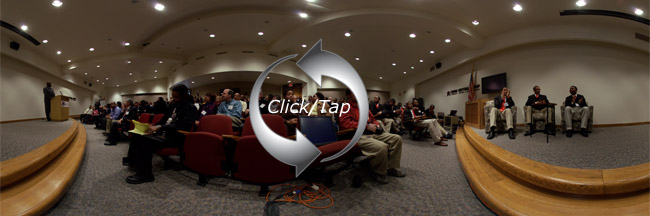
Share

Council: Strive for high grade points, not big political points

Elise Swanson:

After Detroit, Milwaukee is the country’s most segregated city. The Milwaukee Public School District (MPS) has an endemic racial achievement gap, in which, in terms of aggregate statistics, African American students perform three to four years below their European American counterparts in both math and reading. Combine this with a general dearth of resources — as is common to virtually all of public education — and you have a recipe for inadequate schooling that is failing its almost 90,000 students.
The crisis in Milwaukee is indicative of the educational crisis roiling the nation. Across the United States, school districts are facing enormous budget deficits, decreasing enrollment and intense pedagogical and ideological debates questioning the very foundations of modern education. The debate is particularly vociferous here in Wisconsin, where the Wisconsin Education Association Council feels threatened by Governor Scott Walker’s educational platform. This past Tuesday, however, WEAC introduced a series of reforms it would endorse, many of which took observers by surprise, and received mixed reactions.
The reform drawing the most ire is the proposal to carve up MPS into multiple smaller districts to make them more manageable, and thus more successful. However, as pointed out by one observer, this separation of districts would probably mirror racial divisions within the city, compounding instead of alleviating racial achievement gaps.

Share

Rhee to lawmakers: Put kids first

Nancy Badertscher:

Michelle Rhee, a national voice on education reform, told state lawmakers Thursday that charter schools and vouchers for low-income students have a place in public education, but in a blend with strong traditional schools.
“Vouchers in and of themselves are not the answer. Charters in and of themselves are not the answer,” said Rhee, who last fall stepped down as chancellor of Washington, D.C., schools after three years in which she was both lauded and derided for her overhaul of the school system.
“The answer in my mind is a really strong traditional public school system. That has very specific strategies to turn around failing schools [and incorporates both vouchers and charters].”
Rhee is on a national tour talking about education reform, particularly teacher evaluations and performance.

Share

New report examines promises, pitfalls of charter school autonomy

The Center on Reinventing Public Education, via a Deb Britt email:

A new report finds that charter schools use the freedoms they have from traditional school district mandates to define and operate schools in innovative new ways. However, expectations about what a school “should look like,” the stress of tight and unstable budgets, and overwhelming administrative demands are powerful forces pulling charter schools back to traditional practice.
This report offers great reason for optimism that charter schools are well positioned to answer President Obama’s call for public schools to innovate. But it also cautions that traditional regulatory structures and weaknesses in capacity must be addressed if they are to fully meet the challenge of innovation.
Based on a four-year study of the teachers, leaders, and academic programs in charter schools in six states, Inside Charter Schools: Unlocking Doors to Student Success observes that “autonomy only creates the opportunity for high-quality schools, it by no means guarantees it.”
Author Betheny Gross, a researcher at the Center on Reinventing Public Education (CRPE) at the University of Washington, argues that autonomy makes it possible for charter schools to:

Share

Can Breaking the Milwaukee Public Schools Down Into Smaller Districts Work When Schools are Financially Dysfunctional on a Singular Level?

The Maciver Institute:

One of the biggest stories of the past week has been the Wisconsin Education Association Council’s recommendation to fragment Milwaukee Public Schools into smaller districts. According to WEAC, this would create “more manageable components” as well as “drive greater accountability within the system.” However, a look at how Milwaukee’s public schools operate as separate entities suggests that these schools will run into problems regardless of the size of their district.
In 2009, Milwaukee’s schools carried over operating debts of over $8 million into the new school year. Of the 148 schools surveyed in October of 2010, 93 (62.8%) finished the preceding school year in the red. 42 of these schools racked up debts of more than $100,000. 20 more overspent their budgets by $40,000 or more.
As the MacIver Institute has previously noted, schools like Bradley Tech (running a deficit of over $750,000), Vel Phillips (-$475k), Audubon Middle (-$436k), and Wedgewood (-$382k) are some of the city’s biggest offenders. While some schools have been able to create careful surpluses with their funds, the system as a whole has shown to be flawed. In all, the city’s school-by-school deficits added up to over $10.7 million dollars in 2009-2010 alone.

Share

Forget Mandarin. Latin is the key to success

Toby Young:

On the face of it, encouraging children to learn Latin doesn’t seem like the solution to our current skills crisis. Why waste valuable curriculum time on a dead language when children could be learning one that’s actually spoken? The prominence of Latin in public schools is a manifestation of the gentleman amateur tradition whereby esoteric subjects are preferred to anything that’s of any practical use. Surely, that’s one of the causes of the crisis in the first place?
But dig a little deeper and you’ll find plenty of evidence that this particular dead language is precisely what today’s young people need if they’re going to excel in the contemporary world.
Let’s start with Latin’s reputation as an elitist subject. While it’s true that 70 percent of independent schools offer Latin compared with only 16 per cent of state schools, that’s hardly a reason not to teach it more widely. According to the OECD, our private schools are the best in the world, whereas our state schools are ranked on average 23rd.
No doubt part of this attainment gap is attributable to the fact that the average private school child has advantages that the average state school child does not. But it may also be due to the differences in the curriculums th

Share

NJEA is Not My Public School Teacher, Says N.J.

New Jersey Left Behind:

While the majority of New Jerseyans love public school teachers, more than half believe that the NJ Education Association (NJEA) is “playing a negative role in improving public education,” according to a Quinnipiac poll released yesterday.
In addition, reports New Jersey Newsroom, 68% of residents favor implementation of a merit pay system and 62% support tenure reform. We’re more split on school choice; the poll found that by a small margin we oppose school vouchers and charter school expansion. From Maurice Carroll of Quinnipiac:

Share

School testing shows we have no idea what’s happening in Bountiful

Chris Selley:

“The Fraser Institute released its controversial B.C. elementary school rankings today,” a TV news anchor intoned earlier this week, “and this year a school in the polygamous community of Bountiful topped the list. That’s giving opponents of the rankings more ammunition.”
The report continued with Susan Lambert, president of the B.C. Teachers’ Federation, saying that “everyone who has anything to do, credibly, with the public education system, will tell you that the rankings are worthless.” (The thousands of parents who consult the rankings don’t count, as they should have realized by now.) “It’s just another example of how … meaningless the rankings are, and that we should pay no attention to them.”
And then the Fraser Institute’s Peter Cowley rebutted: “How is it possible that … a president of a teachers’ union can say, on the basis of the evidence that shows that [the school is] doing well, for one year, in reading, writing and math skills at Grades 4 and 7, we have to invalidate those results because of [the community’s religious] beliefs?”
And that was pretty much it. It was the line most media outlets took, and it was almost completely beside the point.

Share

Minnesota AP class results continue to improve, still behind national average

Tom Weber:

More high school seniors are taking Advanced Placement courses in Minnesota and scoring higher on the tests, but the state’s rankings are still below national averages.
According to new data from the College Board, more than 15,000 Minnesota high school seniors took an AP course last year, and nearly 10,000 of them scored at least a three on an AP test. A score of three to five usually allows students to gain college credit for that class.
Students have other options to take advanced coursework in Minnesota schools, including throughout the International Baccalaureate program. Tuesday’s report was confined to the AP program.

18.3% of Wisconsin high school seniors completed school with at least one successful AP experience. Wisconsin’s report can be found here.

Share

Graduates, but Ill-Prepared Big Disparity Reported Between Getting a Diploma and College-Readiness Rates

Barbara Martinez:

New York state high-school students’ college and career readiness lags far behind the graduation rates that most school districts post, according to data from the state Department of Education.
Across the state, the graduation rate in 2009, the last year for which figures are public, was 77%. But only 41% of high-school students were prepared for a career or college, the state said. The state defines students as college- and career-ready if they score at least an 80 on the state’s math Regents exam and at least a 75 on the English Regents exam. New York students receive a high-school diploma if they achieve a score of at least 65 on Regents tests.

Share

MacIver’s Christian D’Andrea Reacts to WEAC Reform Plans

Christian D’Andrea:

“WEAC unveiled their strategy Tuesday in the form of a pre-emptive strike as Governor Scott Walker prepares his upcoming budget proposal, which most insiders agree will have a significant impact on school funding and the way our schools operate.
“The organization’s main focus is to break Wisconsin’s largest district into multiple pieces by 2015. According to WEAC leaders, this move would create a more manageable system in the schools that have become a collective albatross hanging from the neck of Wisconsin’s public education.
“[I]n its current configuration, we do not believe MPS can be fixed. It is simply too big,” said WEAC President Mary Bell. Bell later went on to say that despite the state union’s buy-in, the local Milwaukee Teachers’ Educational Association (MTEA) isn’t on board.
“While MPS is fraught with problems, a reduction of size won’t be a panacea, nor will it make things much clearer in Wisconsin’s largest city. While WEAC’s change of heart is refreshing given their recent track record on education reform, they are resorting to a drastic step without fully exploring their other options for reform that are politically more feasible. MPS is only the 33rd largest school district in the country by enrollment, and while some of the cities that are larger than Milwaukee nationally have their own problems, many operate successfully despite a glut of students.

Share

Madison schools superintendent gets mixed grades as contract renewal vote looms

Matthew DeFour:

After 2½ years as Madison schools superintendent, Dan Nerad is still finding his footing.
For Nerad and his supporters, that’s more of a statement about Madison’s slippery and sometimes treacherous political terrain.
But among critics there is frustration that Nerad hasn’t risen to the task, particularly given the high expectations for the former social worker and Green Bay superintendent.
The two views among Madison School Board members and others in the community are circulating as the board weighs whether to extend Nerad’s contract beyond June 2012.
Supporters point to a long list of accomplishments so far despite severe obstacles — implementation of 4-year-old kindergarten after decades of discussion, development of a strategic plan that brought in dozens of community voices and expansion of dual-language immersion programs.

Share

Beating the odds: 3 high-poverty Madison schools find success in ‘catching kids up’

Susan Troller:

When it comes to the quality of Madison’s public schools, the issue is pretty much black and white.
The Madison Metropolitan School District’s reputation for providing stellar public education is as strong as it ever was for white, middle-class students. Especially for these students, the district continues to post high test scores and turn out a long list of National Merit Scholars — usually at a rate of at least six times the average for a district this size.
But the story is often different for Hispanic and black kids, and students who come from economically disadvantaged backgrounds.
Madison is far from alone in having a significant performance gap. In fact, the well-documented achievement gap is in large measure responsible for the ferocious national outcry for more effective teachers and an overhaul of the public school system. Locally, frustration over the achievement gap has helped fuel a proposal from the Urban League of Greater Madison and its president and CEO, Kaleem Caire, to create a non-union public charter school targeted at minority boys in grades six through 12.
“In Madison, I can point to a long history of failure when it comes to educating African-American boys,” says Caire, who is black, a Madison native and a graduate of West High School. “We have one of the worst achievement gaps in the entire country. I’m not seeing a concrete plan to address that fact, even in a district that prides itself on innovative education.”
What often gets lost in the discussion over the failures of public education, however, is that there are some high-poverty, highly diverse schools that are beating the odds by employing innovative ways to reach students who have fallen through the cracks elsewhere.

Related: A Deeper Look at Madison’s National Merit Scholar Results.
Troller’s article referenced use of the oft criticized WKCE (Wisconsin Knowledge & Concepts Examination) (WKCE Clusty search) state examinations.
Related: value added assessment (based on the WKCE).
Dave Baskerville has argued that Wisconsin needs two big goals, one of which is to “Lift the math, science and reading scores of all K-12, non-special education students in Wisconsin above world-class standards by 2030”. Ongoing use of and progress measurement via the WKCE would seem to be insufficient in our global economy.
Steve Chapman on “curbing excellence”.

Share

Generation net: The youngsters who prefer their virtual lives to the real world

Liz Thomas:

Children are often happier with their online lives than they are with reality, a survey has revealed.
They say they can be exactly who they want to be – and as soon as something is no longer fun they can simply hit the quit button.
The study also shows that, despite concerns about online safety, one in eight young people is in contact with strangers when on the web and often lies about their appearance, age and background.
Researchers for children’s charity Kidscape assessed the online activities of 2,300 11- to 18-year-olds from across the UK and found that 45 per cent said they were sometimes happier online than in their real lives.
The report – Virtual Lives: It is more than a game, it is your life – lays bare the attitudes of children today to the internet and includes revealing insights into how they feel when they are on the web.

Share

Charter Location Influences Sustainability

Tom Vander Ark:

Andy Rotherham just published a report with obvious conclusions: sustainability is impacted by location. More specifically, if you open a charter in California, you will spend a lifetime begging for money.
Find the New paper on charter school finance from Bellwether out today (pdf). Press release can be found here and The Wall Street Journal editorial page weighs-in on it here.
Andy summarizes:

Share

Data indicates 5 percent of Rochester graduates ready for college, careers

Erinn Cain:

The New York State Education Department has released data that it said indicates that not all students graduating high school are prepared to enter college or careers.
The data compares graduation rates versus college- and career-ready graduation rate calculations for general education students who entered ninth grade in the 2005-06 school year, through June 2009.
General education graduation requirements for a local diploma include a score of 65 or better on two Regents exams and 55 or better on three Regents exams. The designation of college- and career-ready is defined by graduates who received at least an 80-percent grade on the math Regents exam and 75 on the English Regents exam.
In Rochester, there was a 46.6 percent graduation rate, with only 5.1 percent of graduates being college- and career-ready, said state education officials. This compares to 49.5 and 14.7 percent, respectively, in Syracuse, and 64.5 and 22.8 percent in New York City.

Share

The takeaway language of slang

James Sharpe

In the Preface to his Dictionary of the English Language, Samuel Johnson informed his readers that there was one aspect of his compatriots’ discourse that he was unwilling to engage with. “Of the laborious and mercantile part of the people”, he wrote,
“the diction is in a great measure casual and mutable; many of their terms are formed for some temporary or local convenience, and though current at certain times and places, and in others utterly unknown. This fugitive cant, which is always in state of increase or decay, cannot be regarded as any part of the durable materials of a language, and therefore must be suffered to perish with other things unworthy of preservation.”
Yet, as Johnson must have been aware, published works recording this “casual and mutable” English had existed since Thomas Harman added a glossary of canting terms to his Caveat or Warening for Commen Cursetors of 1567 and, indeed, a generation after Johnson dismissed what we would call slang as “unworthy of preservation”, a very different view was being propounded. For Francis Grose, the antiquary and former military man, author of A Classical Dictionary of the Vulgar Tongue, published in 1785, it was a matter of regret that “terms of well-known import, at New-market, Exchange-alley, the City, the Parade, Wapping, and Newgate”, and which also “find their way into our political and theatrical compositions”, were not recorded in conventional dictionaries. Indeed Grose (as had Johnson) managed to establish a patriotic slant to his dictionary-making. Referring to a recent dictionary of “satyrical and burlesque French”, he claimed that with “our language being at least as copious as the French, and as capable of the witty equivoque”, his dictionary was fully justified. He pursued this theme further, adding that

Share

Michigan Board of Education raises proficiency scores for MEAP and MME

Kyle Feldscher:

Don’t be surprised if a surprising number of Michigan school districts fall short of proficient scoring after next year’s round of standardized state testing.
The Michigan Board of Education approved higher cut scores, or scores that mark proficiency, for both the Michigan Educational Assessment Program (MEAP) and Michigan Merit Exam (MME) tests at a board meeting Tuesday. According to experts, the new standards will be more honest about how well students are doing on the tests.
“It’s going to make a real difference in the share of kids who are being labeled proficient and in the share of schools passing AYP (Adequate Yearly Progress),” said Susan Dynarski, associate professor of economics, education and public policy at the University of Michigan. “Michigan has been Lake Woebegone — right now 95 percent of our third graders are labeled as proficient in math and under the new standards, it would become 34 percent.”

Share

Laura Bush to announce 2nd education initiative from Bush Institute

Jamie Stengle:

The George W. Bush Institute’s second big education initiative will seek to improve graduation rates by focusing on middle school as a foundation for future success.
Former first lady Laura Bush is set to announce the initiative, called “Middle School Matters,” Wednesday in Houston at Stovall Middle School in the Aldine school district.
She says research has shown that 6th through 8th grade is a crucial time and that many high school dropouts essentially dropped out in middle school. One goal will be to ensure students are prepared for high school.

Share

Mansfield Arabic Program On Hold

CBS DFW:

A Mansfield ISD program to teach Arabic language and culture in schools is on hold for now, and may not happen at all.
The school district wanted students at selected schools to take Arabic language and culture classes as part of a federally funded grant.
The Foreign Language Assistance Program (FLAP) grant was awarded to Mansfield ISD last summer by the U.S. Department of Education.
As part of the five-year $1.3 million grant, Arabic classes would have been taught at Cross Timbers Intermediate School and other schools feeding into Summit High School.
Parents at Cross Timbers say they were caught off-guard by the program, and were surprised the district only told them about it in a meeting Monday night between parents and Mansfield ISD Superintendent Bob Morrison.

Share

Wisconsin Teachers’ Union Proposed Education Reforms

Wisconsin Education Association Council:

State officers of the Wisconsin Education Association Council (WEAC) today unveiled three dramatic proposals as part of their quality-improvement platform called “Moving Education Forward: Bold Reforms.” The proposals include the creation of a statewide system to evaluate educators; instituting performance pay to recognize teaching excellence; and breaking up the Milwaukee Public School District into a series of manageable-sized districts within the city.
“In our work with WEAC leaders and members we have debated and discussed many ideas related to modernizing pay systems, better evaluation models, and ways to help turn around struggling schools in Milwaukee,” said WEAC President Mary Bell. “We believe bold actions are needed in these three areas to move education forward. The time for change is now. This is a pivotal time in public education and we’re in an era of tight resources. We must have systems in place to ensure high standards for accountability – that means those working in the system must be held accountable to high standards of excellence.”
TEACHER EVALUATION: In WEAC’s proposed teacher evaluation system, new teachers would be reviewed annually for their first three years by a Peer Assistance and Review (PAR) panel made up of both teachers and administrators. The PAR panels judge performance in four areas:

  • Planning and preparing for student learning
  • Creating a quality learning environment
  • Effective teaching
  • Professional responsibility

The proposed system would utilize the expertise of the UW Value-Added Research Center (Value Added Assessment) and would include the review of various student data to inform evaluation decisions and to develop corrective strategies for struggling teachers. Teachers who do not demonstrate effectiveness to the PAR panels are exited out of the profession and offered career transition programs and services through locally negotiated agreements.
Veteran teachers would be evaluated every three years, using a combination of video and written analysis and administrator observation. Underperforming veteran teachers would be required to go through this process a second year. If they were still deemed unsatisfactory, they would be re-entered into the PAR program and could ultimately face removal.
“The union is accepting our responsibility for improving the quality of the profession, not just for protecting the due process rights of our members,” said Bell. “Our goal is to have the highest-quality teachers at the front of every classroom across the state. And we see a role for classroom teachers to contribute as peer reviewers, much like a process often used in many private sector performance evaluation models.”
“If you want to drive change in Milwaukee’s public schools, connect the educators and the community together into smaller districts within the city, and without a doubt it can happen,” said Bell. “We must put the needs of Milwaukee’s students and families ahead of what’s best for the adults in the system,” said Bell. “That includes our union – we must act differently – we must lead.”

Madison’s “value added assessment” program is based on the oft-criticized WKCE examinations.
Related: student learning has become focused instead on adult employment – Ripon Superintendent Richard Zimman.

Share

The takeaway language of slang

James Sharpe:

In the Preface to his Dictionary of the English Language, Samuel Johnson informed his readers that there was one aspect of his compatriots’ discourse that he was unwilling to engage with. “Of the laborious and mercantile part of the people”, he wrote,
“the diction is in a great measure casual and mutable; many of their terms are formed for some temporary or local convenience, and though current at certain times and places, and in others utterly unknown. This fugitive cant, which is always in state of increase or decay, cannot be regarded as any part of the durable materials of a language, and therefore must be suffered to perish with other things unworthy of preservation.”
Yet, as Johnson must have been aware, published works recording this “casual and mutable” English had existed since Thomas Harman added a glossary of canting terms to his Caveat or Warening for Commen Cursetors of 1567 and, indeed, a generation after Johnson dismissed what we would call slang as “unworthy of preservation”, a very different view was being propounded. For Francis Grose, the antiquary and former military man, author of A Classical Dictionary of the Vulgar Tongue, published in 1785, it was a matter of regret that “terms of well-known import, at New-market, Exchange-alley, the City, the Parade, Wapping, and Newgate”, and which also “find their way into our political and theatrical compositions”, were not recorded in conventional dictionaries. Indeed Grose (as had Johnson) managed to establish a patriotic slant to his dictionary-making. Referring to a recent dictionary of “satyrical and burlesque French”, he claimed that with “our language being at least as copious as the French, and as capable of the witty equivoque”, his dictionary was fully justified. He pursued this theme further, adding that

Share

Starving Charters A new study shows the funding bias against non-traditional schools.

The Wall Street Journal:

Look quickly and you might think that charter schools have it easy, given the celebrated documentary “Waiting for ‘Superman,'” the efforts of reformers like Michelle Rhee and Joel Klein, and the support of the Obama Administration. That’s why a report out Tuesday is a needed corrective: It demonstrates how government policies regularly discriminate against charters.
Published by Bellwether Education Partners, a reform-minded advocacy group, the report examines the finances of Aspire Public Schools, a network of 30 California charter schools with 9,800 students from kindergarten through high school. With extended school days and years, innovative curricula and other hallmarks of charter autonomy, Aspire ranks as California’s single best school system serving a majority of very poor students. Yet it operates with margins of only 0.6%, or $60 per student, which make it harder to scrape together funds to open new schools.

Share

More charters, more choices

Baltimore Sun:

Montgomery County is rightly proud of its public school system, which is widely regarded as one of the best in the state. Perhaps that’s why, nearly eight years after state lawmakers passed a law allowing for the establishment of charter schools — alternative institutions that receive public funds but operate independently — the Montgomery County school board has yet to approve a single application to open one.
Is that because no one has come up with a credible plan for a school that would give parents more choices for educating their children? Or is it because local school officials simply don’t want the competition?
The state school board looked into the matter last year, after Montgomery County school officials turned down the applications of two groups that wanted to set up new charter schools in the district. What they found goes a long way toward explaining why school reform advocates like the Washington-based Center for Education Reform have rated Maryland’s charter school law as one of the weakest in the nation. Despite passing important reforms last year regarding lengthening of the time it takes teachers to earn tenure and linking student test scores with teacher evaluations, lawmakers need to take another look at strengthening the state’s charter school law if Maryland is to build on those gains.

Share

Welcome to our urban high schools, where kids have kids and learning dies.

Gerry Garibaldi:

In my short time as a teacher in Connecticut, I have muddled through President Bush’s No Child Left Behind act, which tied federal funding of schools to various reforms, and through President Obama’s Race to the Top initiative, which does much the same thing, though with different benchmarks. Thanks to the feds, urban schools like mine–already entitled to substantial federal largesse under Title I, which provides funds to public schools with large low-income populations–are swimming in money. At my school, we pay five teachers to tutor kids after school and on Saturdays. They sit in classrooms waiting for kids who never show up. We don’t want for books–or for any of the cutting-edge gizmos that non-Title I schools can’t afford: computerized whiteboards, Elmo projectors, the works. Our facility is state-of-the-art, thanks to a recent $40 million face-lift, with gleaming new hallways and bathrooms and a fully computerized library.
Here’s my prediction: the money, the reforms, the gleaming porcelain, the hopeful rhetoric about saving our children–all of it will have a limited impact, at best, on most city schoolchildren. Urban teachers face an intractable problem, one that we cannot spend or even teach our way out of: teen pregnancy. This year, all of my favorite girls are pregnant, four in all, future unwed mothers every one. There will be no innovation in this quarter, no race to the top. Personal moral accountability is the electrified rail that no politician wants to touch.

Share

Pennsylvania School voucher debate heats up

Mark Scolforo:

Supporters call them a matter of choice, a lifeline for children stuck in broken schools. Opponents deride them as unconstitutional and unworkable and warn that they will erode conditions in some of Pennsylvania’s most troubled schools.
The debate over taxpayer-paid tuition vouchers to help poor children find alternatives to attending the state’s weakest-performing public schools has emerged as a major item on the legislative agenda for the next six months — perhaps the major item after the state budget.
The voucher issue will come to the fore in the General Assembly on Feb. 16, when the chairman of the Senate Education Committee will lead a hearing on his bill to establish the Opportunity Scholarship and Educational Improvement Tax Credit Act.

Share

What school vouchers have bought for my family

Vivian Butler:

I worried constantly about my daughter Jerlisa when she attended our neighborhood elementary school. I knew that I wanted a better education for her, but I didn’t know how to make that happen. In 2005, I took a chance and applied to the D.C. Opportunity Scholarship Program. Little did I know how much more than $7,500 I would be gaining.
I grew up in the District and attended D.C. public schools. Jerlisa started off the same way. We enrolled her at Gibbs Elementary School for kindergarten, and as the years went by she started to fall behind. There was so much going on around the school and in the classroom. Every morning, I walked with her to school, and every afternoon I waited outside the school gates to walk her home again. She got teased for that, but I was worried about the drug dealers, addicts and bullies in the neighborhood. I didn’t have any other choice. I had to make sure she was safe.
When Jerlisa was in fifth grade, she became anxious and didn’t want to return to school. It was clear to me she wasn’t getting the help that she needed. That’s when I received fliers about the Opportunity Scholarship Program. Although I didn’t know everything about the OSP, I knew I had to do something different, even if it meant getting out of my comfort zone. When you’re a single mother on a fixed income, sometimes simple things like filling out your name, address or income on a form can be a scary thing to do.

Share

Postponing Mandatory Teacher use of Madison’s Infinite Campus System

Superintendent Dan Nerad:

Background information: In 2010, the Board approved a number of administrative recommendations geared toward increasing usage of the Infinite Campus System. The current timeline requires all high school teachers to use grade-level appropriate Infinite Campus teacher tools by the end of the fourth quarter of the 2010-2011 school year.
The administration has been notified by the vendor that significant changes will be made to the Infinite Campus interface in July 2011. Accordingly, if training sessions were to continue as required to meet the current deadline, those same teachers would have to be trained on a new interface only months later.
It would be more prudent to wait until the new interface is available and require full implementation of the Infinite Campus teacher tools at the high schools by the end of the second quarter of the 2011-2012 school year.
D. BOE action requested: Postpone mandatory use of Infinite Campus teacher tools at the high schools until the end of the second quarter of the 2011-2012 school year.

Much more on the Madison School District’s implementation of Infinite Campus, here.
A January, 2010 usage survey.
The system originally lifted off during the fall of 2007. I wonder how much has been spent on it without full use? This type of system can be a useful way for parents, teachers and students to communicate – if it is used…..

Share

It May Be a Sputnik Moment, but Science Fairs Are Lagging

Amy Harmon:

Rarely have school science fairs, a source of pride and panic for generations of American students, achieved such prominence on the national stage. President Obama held one at the White House last fall. And last week he said that America should celebrate its science fair winners like Sunday’s Super Bowl champions, or risk losing the nation’s competitive edge.
Yet as science fair season kicks into high gear, participation among high school students appears to be declining. And many science teachers say the problem is not a lack of celebration, but the Obama administration’s own education policy, which holds schools accountable for math and reading scores at the expense of the kind of creative, independent exploration that science fair projects require.

Share

Should Everyone Go to College?

Kristina Chew:

In a report issued on February 2nd, Harvard researchers question the value of ‘college for all.’
According to the co-authors of the report, Academic Dean Robert Schwartz and Ronald Ferguson, a Senior Lecturer at Harvard, the US’s four-year colleges are failing students by focusing too much on classroom-based academics and not adequately preparing students for careers. The proposal has sparked immediately concern from educators as it raises the ‘specter of tracking,’ in which students (often from lower-income or disadvantaged backgrounds) are ‘channeled unquestioningly into watered-down programs that curtail their prospects,’ according to EdWeek.
Currently, 42 percent of 27-year-olds in the US have no more than a high school degree. Only 30 percent of Americans earn a bachelor’s degree by the time they are 27. President Obama has stated that he wants to improve the nation’s college graduation rate to 60 percent in 10 years (ABC News). The US now ranks in 12th place in the world for college graduates, In comparison Canada’s college graduation rate is 55.8 percent; in South Korea and Russia, the rate for college graduates is 55.5 percent, according to statistics from the College Board.

Share

Idaho Superintendent of Schools Luna’s proposed changes to education opposed by local school board

Idaho State Journal:

Pocatello-Chubbuck School District 25 has officially come out against an education reform plan backed by State Superintendent of Public Instruction Tom Luna, arguing it adds new costs at a time when the state can’t cover existing expenses.
School board members, who hosted a special meeting Tuesday to discuss the plan, even took exception with the name of Luna’s plan, called “Students Come First.”
“The legislation itself is insulting in its title, thinking that any one of the school boards in this state would not put children first,” board members wrote in the document they authored outlining their position on the plan.
They noted past policy changes, including core standards and heightened graduation requirements, involved considerable input and time for research. Luna’s proposed legislation, they argue, wasn’t based on sufficient input or extensive research. They suggest implementing pilot programs to test various aspects of the plan, which could be used to measure success or as a basis for modifications.

Share

Rhode Island education chief says schools can’t put off improvements

Jennifer Jordan
:

Education Commissioner Deborah A. Gist is putting the brakes on regulations that require high school students to reach at least “partial proficiency” on state tests in order to graduate. She’s pushing the 2012 deadline back two years.
But she says Rhode Island’s high schools can’t continue to dole out diplomas to students who cannot read, write or compute at a high-school level.
Schools must do more to help students reach the higher goals, and state education officials must find better ways to support schools, she says.
“We need people to understand we are not putting a two-year pause in place,” Gist said in an interview Friday.

Share

Arab World Built Colleges, but Not Jobs Unemployment, Broad Among Region’s Angry Youth, Is High Among Educated

David Wessel:

The anger of demonstrators in Tunisia and Egypt runs, too, through 25-year-old Saleh Barek al-Jabri.
Mr. Jabri, the son of a Yemini bus driver, says he answered his government’s call for young people to study petroleum engineering, enrolling in a course at Yemen’s Hadhramaut University for Science and Technology. Officials visited his school to offer encouragement. An oil minister came through to promise jobs. Mr. Jabri excelled, finishing fifth in his class.
But after graduating last year, he has yet to find work. Classmates with family connections got what few jobs existed. Mr. Jabri moved to Yemen’s capital, San’a, where he shares a single room with two other unemployed recent graduates.
“I had dreams,” Mr. Jabri says. “They’ve all evaporated.”

Share

Wisconsin Legislature mulls changes to open enrollment program

Matthew DeFour:

As families begin to enroll their students Monday in virtual schools or neighboring districts through the state’s open enrollment process, the Legislature is debating changes to the program.
The Senate approved a bill this week that would extend the enrollment period from three weeks in February to three months, starting this year. The bill still needs approval in the Assembly and the governor’s signature.
The changes would make it easier for parents who want to enroll their students in public schools outside their own district, but may not be thinking about that decision in February, said Sen. Luther Olsen, R-Ripon, who introduced the bill.
Democrats opposed the changes, however, saying the wider window will cause administrative hassles and uncertainty for school districts about proper staffing levels as they try to budget for the next school year.

Much more on open enrollment, here.

Share

Minnesota Governor Mark Dayton lays out K-12 education plan

Doug Belden:

Gov. Mark Dayton pledged Friday to increase funding for K-12 education and laid out a plan that focuses on early learners and reducing achievement disparities between student groups.
But there was no detail on how much the plan would cost or how it would be accomplished with the state facing a $6.2 billion deficit.
Dayton deferred questions about funding to his Feb. 15 budget presentation, saying Friday’s announcement was about fulfilling a campaign pledge to provide more money to schools.
He’ll propose increasing aid each of the next two years, he said, “no excuses, no exceptions.”
Dayton promised last year as a candidate to spend more on schools every year, but softened that stance because of the state’s financial problems.
Dayton’s seven-point education plan, titled “Better Schools for a Better Minnesota,” calls for investment in early-childhood initiatives — led by Education Commissioner Brenda Cassellius — and all-day kindergarten, as well as a push to increase the number of children ready for kindergarten and to ensure all children are reading by third grade.

Share