School Information System

The High School Dropout’s Economic Ripple Effect

Gary Fields:

Mayors Go Door to Door, Personally Encouraging Students to Stay in the Game for Their Own Good — and for the Sake of the City
As the financial meltdown and economic slump hold the national spotlight, another potential crisis is on the horizon: a persistently high dropout rate that educators and mayors across the country say increases the threat to the country’s strength and prosperity.
According to one study, only half of the high school students in the nation’s 50 largest cities are graduating in four years, with a figure as low as 25% in Detroit. And while concern over dropouts isn’t new, the problem now has officials outside of public education worried enough to get directly involved.
The U.S. Conference of Mayors [PDF Report] is focusing its education efforts on dropouts. Mayors in Houston and other Texas cities go door to door to the homes of dropouts, encouraging them to return to school. Atlanta Mayor Shirley Franklin meets on weekends with students and helps them with life planning. Other cities, like Milwaukee and Kansas City, Mo., have dropout prevention programs.
Some new studies show far fewer students completing high school with diplomas than long believed. “Whereas the conventional wisdom had long placed the graduation rate around 85%, a growing consensus has emerged that only about seven in 10 students are actually successfully finishing high school” in four years, said a study by the Editorial Projects in Education Research Center, a nonprofit group based in Bethesda, Md. It was released this year by America’s Promise Alliance, a nonpartisan advocacy group for youth. In the nation’s 50 largest cities, the graduation rate was 52%.

Share

Universal preschool hasn’t delivered results

Shikha Dalmia & Lisa Snell:

Early education advocates want you to believe that the case for universal preschool is so airtight that raising any questions about it is an act of heresy. But there is a strong and growing body of literature showing that preschool produces virtually no lasting benefits for the majority of kids.
Proponents of universal preschool claim that when kids attend quality preschools, they grow up to be smarter, richer and more law-abiding. But this is a fairy tale not based on research.
More kids who attend preschool enter kindergarten knowing their ABCs and counting their numbers than their stay-at-home peers, it is true. But these gains fade, as study after study has shown.
Consider Oklahoma and Georgia, two states that have spent billions implementing universal preschool. Georgia’s fourth-grade National Assessment of Educational Progress (NAEP) reading score in 1992, when it embraced universal preschool, was 212 – three points below the national average. Last year, after years of universal preschool, it was 219 – still one point below the national average. Its math score was three points below the average in 1992. Last year, it was 235 – four points below the national average.

Share

In wake of turmoil, Madison Memorial students seek solutions

Mark Pitsch:

More parental involvement. Peer-to-peer mentoring. Community programs.
Those are some of the ideas students, parents and others offered in the wake of a fight at Memorial High School last week between black and Latino students and early closure of the school Friday amid rumors of a gun at the school.
Tim Maymon, whose two teenagers attend Memorial and who had another graduate this year, said he believes the school is safe, that his children aren’t in danger and that the racial tension is limited to small groups of students.
But he also said some students — including those involved in the altercation last week — aren’t getting proper parental guidance.
“The two groups need more parental control,” Maymon said. “There’s a lot of people promoting their kids to fight and be stupid. Any smart parent would want to see their kids be safe and egging them on to fight is not safe.”

Share

Madison 2008 Referendum: Vote ‘yes’ and expect more

Wisconsin State Journal Editorial:

It’s a difficult time for Madison schools to be asking property taxpayers for more money.
But it also is a very tough time for Madison schools to be reducing services for students — a large and growing percentage of whom need extra or tailored help to succeed.
That’s why Madison should vote “yes” on its school referendum Nov. 4 — with one big demand in return. Moving forward, school leaders and, especially, the teachers union need to commit to more innovation and evaluation of existing school programs.
That means more charter and specialty schools to excite parents and to give struggling students concrete evidence of a successful career path after graduation

Much more on the November, 2008 Madison referendum here.

Share

Obama Questioned on Vouchers
MANY MINORITY PARENTS ARE AT ODDS WITH THE DEMOCRATIC NOMINEE ON THE ISSUE OF SCHOOL CHOICE.

Kelly Petty:

Minority voters have long favored the Democratic Party’s push for increased federal funding for public schools. But over the past few years, some of these voters have embraced the conservative-backed idea of private-school vouchers for low-income students.
Pro-voucher voters among racial minorities overwhelmingly support Barack Obama, but they are baffled by the Democratic nominee’s opposition to vouchers. They also say they are frustrated that Democratic leaders appear to be more concerned about keeping the peace with teachers unions — which adamantly oppose vouchers — than about finding alternatives that could advance desperately needed education reforms for minority students.
Obama’s “change” message has attracted millions of minorities, particularly African-Americans. Yet he cannot afford to lose minorities who are demanding greater school choice for their children.
In February, Obama seemed open to the idea of private-school vouchers. In an editorial board meeting with the Milwaukee Journal-Sentinel, he was asked about his opposition to Wisconsin’s voucher program. If he saw more proof that vouchers are successful, Obama said, he would “not allow my predispositions to stand in the way of making sure that our kids can learn…. You do what works for the kids.”
But at the American Federation of Teachers convention this year, Obama repeated his attack against spending government money to help low-income students attend private schools. He criticized John McCain’s school-choice reform as “using public money for private-school vouchers,” and he called instead for overhauling public schools.

Share

Moving the Los Angeles Schools to the 21st Century

Charles Kerchner, a professor at Claremont Graduate University and a specialist in educational organizations, educational policy and teacher unions, writes::

While the financial markets have reached the point of panic, a longer-running crisis has enveloped Los Angeles’ school system. For at least a decade, people have called the Los Angeles Unified School District a system in crisis. Even when it does things well, it gets little credit.
In a crisis, a special type of politics is supposed to take hold. People of all political stripes are supposed to come together to fashion a solution, the very kind of politics we are witnessing in response to the financial markets’ dysfunction. But unlike that situation, there is no sure resolution of the school’s systemic failure, and no sense of urgency. So LAUSD bumps along in a state of permanent crisis.
Getting past permanent crisis and creating a 21st century institution of public education requires only that those interested in the district’s future learn from its history. After half a decade of studying efforts to transform the district, my colleagues and I have five policy ideas that we think would move the district beyond permanent crisis.

Charles Kerchner’s website. Clusty Search on Kerchner.

Share

German Embassy Promoting (& Funding) German Language Programs

German Missions to the United States:

PASCH-Partnerschools
“Education creates prospects – multilingualism opens new horizons. With our partner schools abroad we not only want to give children access to the German language and education but also to awaken an interest in and understanding for each other. Openness to cultural diversity and tolerance towards other people’s distinctiveness are not mutually exclusive. To help children grasp this even better we need, more than ever, places where they can meet, learn and be creative together. The earlier we realize that we are an international learning community, the more capable we will be of solving our shared problems. Our partner schools abroad want to contribute towards that goal.”
— Federal Foreign Minister Frank-Walter Steinmeier
Federal Foreign Minister Frank-Walter Steinmeier has launched the “Schools: Partners for the Future” Initiative. Its goal is to build up a worldwide network of at least 1000 partner schools through which to awaken young people’s interest in and enthusiasm for modern-day Germany and German society. Additional funds to the tune of 45 million euro have been earmarked for the initiative in 2008. It will be coordinated by the Federal Foreign Office and implemented in cooperation with the Central Agency for Schools Abroad, the Goethe-Institut, the Educational Exchange Service of the Standing Conference of the Ministers of Education and Cultural Affairs of the Länder in the Federal Republic of Germany and the German Academic Exchange Service.

PDF Brochure and Teacher’s Abroad.
The Smith Academy of International Languages in Charlotte, NC received a $22,101 grant recently:

Ambassador Klaus Scharioth visited the Smith Academy of International Languages in Charlotte, North Carolina, to present a check for $22,101 on September 22, 2008. The school is one of the 16 new members in the US of the worldwide partner school network, which currently has around 500 partner schools.

Share

The Anti-Schoolers

Penelope Green:

ONE morning early last month, long after that frantic hour between 7 and 8 when most New York City parents were hustling their 4-, 5- and 6-year-olds out the door and into their first day of kindergarten, Benny Rendell, the 5-year-old son of Joanne Rendell, a novelist, and Brad Lewis, a New York University professor, lay sprawled asleep in his bed, enjoying what his mother described as his first day of unkindergarten.
Benny stayed asleep, as is his habit, until well past 11 a.m., while his mother, whose first book, “The Professors’ Wives’ Club,” was just published by NAL Accent, worked on her new novel. When Benny awoke, he and his mother slowly made their way to a friend’s house in Brooklyn, with Benny reading the subway stops out loud on the way, and counting out change at a vegetable stand.
They spent the afternoon in a Fort Greene backyard; while Benny played with his pals in the mud, the grown-ups looked on, and shared a cold one.

Share

“Madison Schools Referendum Prospects Look Good”

Jason Shephard:

November’s referendum seeks to permanently increase the revenue cap for operating costs by $5 million in 2009-10, and an additional $4 million in both 2010-11 and 2011-12, for a total of $13 million. These increases would be permanent.
The projected tax hike on an average $250,000 home is $27.50 in 2009, $70.60 in 2010, and $91.50 in 2011, for a total three-year increase of $189.60.
To demonstrate fiscal discipline, Nerad has committed to making $1 million in cuts this year, including $600,000 in staff positions, even if the referendum passes. And Nerad pledges $2.5 million in additional spending cuts in the two subsequent years. The district will also transfer $2 million from its cash balance to offset the budget deficit.
Other savings will come from a new fund that allows the district to spread out capital costs over a longer period of time, remove some costs from the operating budget, and receive more state aid.
“We are committed to making reductions, finding efficiencies and being good stewards of tax dollars,” Nerad says. “We realize this is a difficult time for people. At the same time, we have an obligation to serve our children well.”
Don Severson, head of the fiscally conservative watchdog group Active Citizens for Education and a persistent referendum critic, wishes the district would have developed its new strategic plans before launching a ballot initiative.
“This money is to continue the same services that have not provided increases in student achievement” and come with no guarantees of program evaluations or instructional changes, Severson says.

Much more on the November, 2008 Madison referendum here.

Share

ACE Update on the November 2008 Madison Referendum, Information Session Tonight

REMINDER: The MMSD district is holding its second of four “Information Sessions” regarding the referendum tonight (Thursday, October 16), 6:30 pm, Jefferson Middle School. You are urged to attend.
The Madison Metropolitan School District seeks approval of the district taxpayers to permanently exceed the revenue cap for operations money by $13 million a year. In the meantime, to establish that new tax base over the next three years, a total of $27 million in more revenue will have been raised for programs and services. The district has also projected there will continue to be a ‘gap’ or shortfall of revenue to meet expenses of approximately $4 million per year after the next three years, thereby expecting to seek approval for additional spending authority.
Whereas, the Board of Education has staked the future of the district on increased spending to maintain current programs and services for a “high quality education;”
Whereas, student performance on the Wisconsin Knowledge and Concepts Exams has languished at the 7, 8, and 9 deciles (in comparison with the rest of the state’s schools where 1 is the highest level and 10 is the lowest) in 4th, 8th and 10th grade reading, math, science, social studies and language arts exams for the past five years. The total percentage of MMSD students performing at either “proficient” or “advanced” levels (the two highest standards) has consistently ranged in mid 60%s to mid 70%s;
Whereas, the district Drop Out Rate of 2.7% (2006-07) was the highest since 1998-99. With the exception of two years with slight declines, the rate has risen steadily since 1999.
Whereas, the Attendance Rate for all students has remained basically steady since 1998-99 in a range from 95.2% (2005-06) to a high of 96.5% (2001-02);
Whereas, the district Truancy Rate of students habitually truant has risen again in the past three years to 6.0% in 2006-07. The truancy rate has ranged from 6.3% (1999-2000) to 4.4% in 2002-03;
Whereas, the district total PreK-12 enrollment has declined from 25,087 (2000-01) to its second lowest total of 24,540 (2008-09) since that time;
Whereas, the district annual budget has increased from approximately $183 million in 1994-1995 (the first year of revenue caps) to approximately $368 million (2008-09);
Whereas, the board explains the ‘budget gap’ between revenue and expenses as created by the difference between the state mandated Qualified Economic Offer of 3.8% minimum for salary and health benefits for professional teaching staff and the 2.2% average annual increases per student in the property tax levy. The district, however, has agreed with the teachers’ union for an average 4.24% in annual increases since 2001;
Whereas, the district annual cost per pupil is the second highest in the state at $13,280 for the school year 2007-08;
The Madison Metropolitan School District seeks approval of the district taxpayers to permanently exceed the revenue cap for operations money by $13 million a year. In the meantime, to establish that new tax base over the next three years, a total of $27 million in more revenue will have been raised for programs and services. The district has also projected there will continue to be a ‘gap’ or shortfall of revenue to meet expenses of approximately $4 million per year after the next three years, thereby expecting to seek approval for additional spending authority.
Whereas, the Board of Education has staked the future of the district on increased spending to maintain current programs and services for a “high quality education;”
Whereas, student performance on the Wisconsin Knowledge and Concepts Exams has languished at the 7, 8, and 9 deciles (in comparison with the rest of the state’s schools where 1 is the highest level and 10 is the lowest) in 4th, 8th and 10th grade reading, math, science, social studies and language arts exams for the past five years. The total percentage of MMSD students performing at either “proficient” or “advanced” levels (the two highest standards) has consistently ranged in mid 60%s to mid 70%s;
Whereas, the district Drop Out Rate of 2.7% (2006-07) was the highest since 1998-99. With the exception of two years with slight declines, the rate has risen steadily since 1999.
Whereas, the Attendance Rate for all students has remained basically steady since 1998-99 in a range from 95.2% (2005-06) to a high of 96.5% (2001-02);
Whereas, the district Truancy Rate of students habitually truant has risen again in the past three years to 6.0% in 2006-07. The truancy rate has ranged from 6.3% (1999-2000) to 4.4% in 2002-03;
Whereas, the district total PreK-12 enrollment has declined from 25,087 (2000-01) to its second lowest total of 24,540 (2008-09) since that time;
Whereas, the district annual budget has increased from approximately $183 million in 1994-1995 (the first year of revenue caps) to approximately $368 million (2008-09);
Whereas, the board explains the ‘budget gap’ between revenue and expenses as created by the difference between the state mandated Qualified Economic Offer of 3.8% minimum for salary and health benefits for professional teaching staff and the 2.2% average annual increases per student in the property tax levy. The district, however, has agreed with the teachers’ union for an average 4.24% in annual increases since 2001;
Whereas, the district annual cost per pupil is the second highest in the state at $13,280 for the school year 2007-08;

(more…)

Share

Picturing Wisconsin School Trends

Wisconsin Taxpayers Alliance:

Wisconsin schools budgeted to spend $9.94 billion last year, or $11,522 per pupil. About 58% of that went to instruction. Over the past decade, increases in per pupil spending have averaged 4.0% per year. Meanwhile, statewide enrollments have dropped for five consecutive years.
T he world in which Wisconsin public schools operate today is markedly different from the one in the early 1990s. Enrollments and expenditure trends, and spending and staffing patterns, have all changed–in some cases, dramatically. But, simple pictures often tell the story.
One of the most noticeable developments over the past 20 years has been the ebb and flow of student numbers. The “baby boom echo” led to K-12 enrollments rising from 757,050 in 1990 to 874,042 in 2003. Since then, however, the student count dropped to 863,660 in 2008, the fifth consecutive year of decline.

Share

Input Sought for Arts and Creativity Meeting

Wisconsin Department of Public Instruction:

Educators and community members are invited to provide examples of promising programs focusing on the arts and creativity in schools, communities, or the workplace. The information will be used to help Wisconsin infuse creativity, the arts, innovation, and entrepreneurship into education at the state and local levels in Wisconsin.
The request comes from the Wisconsin Task Force on Arts and Creativity in Education, which has worked over the past six months toward a statewide plan to strengthen arts and creativity education in the state.

Share

Madison School district hopes to be anchor for homeless students

Pat Schneider:

That is sometimes the function — although not the intent, really, of the TEP program — which provides academic and emotional support for students whose chaotic life circumstances can set them grades behind their classmates.
The Zavala kids are among more than 280 students identified as homeless in the school district in the first six weeks of the school year. That number is a rolling count, updated throughout the school year as the district as students become homeless.
The district is on pace to exceed last year’s total, which was up sharply from the year before. The nation’s growing economic crisis is a likely culprit for at least some of the increase. One longtime TEP teacher says more homeless students are coming from established Madison families, not just those who have recently arrived to the city without housing.
As a result, homeless students are now in the attendance areas of schools all over the city — and not just those near homeless shelters and motels used to house homeless families. As a result, school officials this year are re-examining how best to use their limited resources, said Nancy Yoder, director of alternative programs. The school district now spends more than $750,000 on homeless services, but more district dollars are highly unlikely, Superintendent Dan Nerad said Thursday. District officials are preparing for a November referendum asking voters to approve increasing their spending limit by a total of $13 million over the next three years just to preserve current programs.

Share

On Milwaukee’s Schools: A clearer picture of the district’s financial problems is essential, but a broader discussion of its challenges also must take place.

Milwaukee Journal – Sentinel Editorial:

Gov. Jim Doyle and Milwaukee Mayor Tom Barrett will hire a consultant within the next week to get a clearer picture of Milwaukee Public Schools’ financial underpinnings.
Their joint announcement Saturday feels like progress. But it’s only a first step.
Yes, by all means, learn as much as possible about the district’s troubled books. But then take action to shore up those finances and focus on other looming issues — namely the question of governance.
That broader discussion is essential. It’s one that Doyle and Barrett must lead. But before that, they agree that they need to know what works financially and what doesn’t within the district. Fair enough, because if money is the problem, then an audit will help them deliver that message to the public.

Share

Seattle School District’s Community Advisory Approach

Via a kind reader’s email [900K PDF]:

THE CASE FOR CHANGE
Seattle Public Schools has pockets of excellence and many outstanding principals, teachers and programs. WASL scores have improved consistently over the last five years and SAT scores surpass state and national averages. However, we cannot accept a system with a 59% graduation rate and a 22% dropout rate. We cannot accept the lack of proficiency demonstrated in core subjects, particularly in math. We cannot accept a system with uneven school quality. And we cannot accept the glaring, persistent achievement gap among student groups.
We cannot accept a system facing years of multimillion dollar structural deficits. Nor can we accept the burdensome, complex and inadequate state-funding model to which the District is subjected.
We cannot accept these conditions and results. Instead, we must view this as an opportunity for decision makers to demonstrate true leadership and respond to this call to action.
WHAT IT WILL TAKE
It begins with leadership, including:

  • More forceful direction from the Superintendent and greater unity and cohesion on the part of the School Board
  • Greater mission clarity and a more focused and concise strategic plan;
  • An organizational culture-shift that values creativity, fosters adaptability, demands accountability and rewards innovation, teamwork and risk-taking.

It will take resourcefulness to increase investment inacademic outcomes. This will entail a financial strategy truly driven by student achievement goals and aimed at improved outcomes for all.
It will take a resolute approach to establishing long-term fiscal viability. This must include an honest assessment of demographic realities and opportunities for improved operational and program efficiencies across the board. Business as-usual cannot continue.

Related:

Share

Charter Success in LA

Wall Street Journal Editorial:

With economic issues sucking up so much political oxygen this year, K-12 education hasn’t received the attention it deserves from either Presidential candidate. The good news is that school reformers at the local level continue to push forward.
This month the Inner City Education Foundation (ICEF), a charter school network in Los Angeles, announced plans to expand the number of public charter schools in the city’s South Central section, which includes some of the most crime-ridden neighborhoods in the country. Over the next four years, the number of ICEF charters will grow to 35 from 13. Eventually, the schools will enroll one in four students in the community, including more than half of the high school students.
The demand for more educational choice in predominantly minority South Los Angeles is pronounced. The waitlist for existing ICEF schools has at times exceeded 6,000 kids. And no wonder. Like KIPP, Green Dot and other charter school networks that aren’t constrained by union rules on staffing and curriculum, ICEF has an excellent track record, particularly with black and Hispanic students. In reading and math tests, ICEF charters regularly outperform surrounding traditional public schools as well as other Los Angeles public schools.

Share

Bringing Special-Needs Schools Closer to Home

Winnie Hu:

Tom Holohan, a 16-year-old with autistic symptoms, grew up paralyzed by fear and anxiety about leaving his family’s home. But for the last two years, Tom has had to commute to a Connecticut boarding school that specializes in treating his disability, returning on weekends to his home in Farmingdale, N.Y.
“There’s always this thing inside you that you want to be home,” said Tom, who attended five day schools here on Long Island and tried home schooling before his local school district sent him to the Connecticut school, Devereux Glenholme. “I mean, I got used to living there, but every day I think about what’s going on at home. It’s really difficult.”
Next year, Tom is hoping to attend Westbrook Preparatory School, a $2.5 million institution that will be New York State’s first residential school for students with high-functioning autism and that was founded after intense lobbying by parents, including Tom’s mother, Maureen Holohan, 48, who is on the school’s governing board. The new school, to serve 24 middle and high school students with average or above-average intelligence but in need of significant emotional and social support, is part of a statewide push to bring special education students back from out-of-state private schools by creating publicly financed alternatives closer to home.

Share

2008 Madison Schools’ Referendum – Key Issues

1. Mortgage on future property with permanent increase: Asking taxpayers to refinance/mortgage their futures and that of the school district with a permanent increase of $13 million yearly for the operations budget. It has been stated the district needs the money to help keep current programs in place. It is expected that even after 3 years of this referendum totaling $27 million, the Board is projecting a continued revenue gap and will be back asking for even more.
2. No evaluation nor analysis of programs and services: The Board will make budget cuts affecting program and services, whether or not this referendum passes. The cuts will be made with no assessment/evaluation process or strategy for objective analyses of educational or business programs and services to determine the most effective and efficient use of money they already have as well as for the additional money they are asking with this referendum.
3. Inflated criteria for property value growth: The dollar impact on property to be taxed is projected on an inflated criteria of 4% growth in property valuation assessment; therefore, reducing the cost projection for the property tax levy. The growth for property valuation in 2007 was 3.2% and for 2008 it was 1.0%. Given the state of the economy and the housing market, the growth rate is expected to further decline in 2009. [10/13 Update: The above references to property valuation assessment growth are cited from City of Madison Assessor data. See ACE document “Watch List Report Card” [2008 Referendum Watch List 755K PDF] for State Department of Revenue citations for property valuation base and growth rate used for determination of MMSD property tax levy.]
4. No direct impact on student learning and classroom instruction: There is District acknowledgement of a serious achievement gap between low-income and minority student groups compared with others. There are no plans evident for changing how new or existing money will be spent differently in order to have an impact on improving student learning/achievement and instructional effectiveness.
5. Lack of verification of reduction in negative aid impact on taxes: District scenarios illustrating a drastic reduction in the negative impact on state aids from our property-rich district is unsubstantiated and unverified, as well as raising questions about unknown possible future unintended consequences. The illustrated reduction is from approximately 60% to 1% results by switching maintenance funds from the operations budget and 2005 referendum proceeds to a newly created “Capital Expansion Fund–Fund 41” account. [Update: 10/13: The reduction in the negative aid impact will take affect regardless of the outcome of the referendum vote. See the ACE document “Watch List Report Card” [2008 Referendum Watch List 755K PDF] for details.]

(more…)

Share

Students take a step for safety in surveying their walks to school

Tony Barboza:

Garfield Elementary pupils note broken sidewalks, speeding motorists and other hazards in hopes that Santa Ana will correct them.
n the first day of class, Chris Marx asks his fifth-grade students how they get to school and what they encounter along the way.
Even though most students at Garfield Elementary in Santa Ana walk only a few blocks to class, they often trudge over broken sidewalks and through littered alleyways, rub up against graffiti-covered walls and step over rubble from construction sites. Some dodge roving dogs, homeless people or gang members.
“You ask the kids how many times they’ve heard gunshots and there are some hands raised,” Marx said.
Students at thousands of schools nationwide walked en masse to school Wednesday in events timed for International Walk to School Day, meant to encourage physical fitness and to reduce carbon emissions.

Share

Madison School District 2008-2009 Enrollment

The Madison School District has published it’s “Third Friday September” 2008 enrollment counts. Total enrollment is 24,189; down slightly from 24,268 in 2007. The District’s newest school: Olson Elementary, opened with 273 students.
45% of MMSD students are classified as low income (43% in 2007; 39% in 2005).
Related: a look at enrollment changes in suburban Dane County schools.
The two schools slated to close in 2007 (but later reversed): Lapham and Marquette elementary have the following enrollments:

2008 2007 2006 2005
Lapham 229 219 231 219
Marquette 221 207 232 225
Share

School Buses: Still Vehicles for Change
High Transportation Costs Are Forcing Kids Back To Neighborhood Schools, Limiting Diversity

Robert Thomsho:

A generation ago, the yellow school bus became a symbol of school desegregation, with thousands of the iconic vehicles ferrying minority children away from schools in their own neighborhoods to others in higher-income white areas.
Although the Supreme Court has tightly restricted such overt racial integration efforts in recent years, buses are still crucial to many magnet schools, open-enrollment programs and other school-choice strategies designed to encourage diversity and provide options for students in low-performing schools, as is required under the No Child Left Behind law.
But more and more school districts are curtailing bus service for such programs as a result of higher fuel costs and other financial pressures. That has sparked fears that the only choice for many students will be neighborhood schools attended by classmates of their own race and economic background, which has the unintended effect of re-segregating schools.
“Basically, you can’t have racial and class diversity of any sort if you don’t provide transportation,” says Gary Orfield, co-director of the Civil Rights Project, a research group at the University of California at Los Angeles. “This is kind of closing the last door for urgently needed opportunities for kids who are in schools that are really dysfunctional and inadequate.”

Share

California boarding schools? It’s not an oxymoron

Carla Rivera:

As a young woman living in Southern California, Kelly Boss never thought much about boarding schools. They were a mystery or at most a cinematic fancy embodied by Brookfield of “Goodbye, Mr. Chips” or the Welton Academy of “Dead Poets Society.”
That changed when her daughter Mackenzie learned about the Thacher School in Ojai and its horse and outdoor program. Although she would never have imagined her daughter there, the Bosses came to view it as the perfect fit.
But Kelly Boss understood the reactions of other parents who appeared aghast at the idea.
“Other mothers look at you like how can you possibly send your daughter away, and I’ve had parents say, you two don’t look like you don’t get along,” said Boss, a Santa Barbara resident.
Although boarding schools have a long tradition in Europe and the Northeast, Californians are still apt to equate them with troubled youths or disinterested parents.

Share

A Public Hearing on Madison’s November, 2008 Referendum

Channel3000:

Taxpayers got a chance to ask the questions Tuesday night about the upcoming multimillion dollar Madison school referendum.
More than a dozen people turned out to Sherman Middle School for the first of four public hearings across the city.
Superintendent Dan Nerad gave a brief presentation before opening the forum up for questions.
Voters questioned everything from Fund 80 to the Capital Expansion Fund and student achievement.
Active Citizens for Education said they would like to have seen the referendum scheduled for the spring in order to give the district time to re-evaluate programs that they say are not working – programs that could be cut or changed.
“Where they’re talking about maintaining current programs and services it’s not getting good results,” said ACE’s Don Severson. “You look at the achievement gap, look at increased truancy, look an an increased drop-out rate, decreased attendance rates, more money isn’t going to get different results.”
Referendum supporters, Communities And Schools Together, know the $13 million referendum will be a tough sell, but worth it.
“I think it is going to be a hard sell,” said CAST member and first-grade teacher Troy Dassler. “We really need to get people out there who are interested still in investing in infrastructure. I can think of no greater an investment — even in the most difficult tough times that we’re facing that we wouldn’t invest in the future of Madison.”

Tamira Madsen:

School Board President Arlene Silveira was pleased with the dialogue and questions asked at the forum and said she hasn’t been overwhelmed with questions from constituents about the referendum.
“It’s been fairly quiet, and I think it’s been overshadowed by the presidential election and (downturn with) the economy,” Silveira said. “People are very interested, but it does take an explanation.
“People ask a lot of questions just because it’s different (with the tax components). Their initial reaction is: Tell me what this is again and what this means? They realize a lot of thought and work has gone into this and certainly this is something they will support or consider supporting after they go back and look at their own personal needs.”
Superintendent Dan Nerad has already formulated a plan for program and service cuts in the 2009-2010 budget if voters do not pass the referendum. Those include increasing class sizes at elementary and high schools, trimming services for at-risk students, reducing high school support staff, decreasing special education staffing, and eliminating some maintenance projects.
Nerad said outlining potential budget cuts by general categories as opposed to specific programs was the best route for the district at this juncture.

Share

A Marshall Plan for Reading

Sol Stern:

In the new paper, however, they concluded that “systematic differences in school quality appear much less important in explaining the differences in test-score trajectories by race, once the data are extended through third grade; Blacks lose substantial ground relative to Whites within the same school and even in the same classrooms. That is, including school- or teacher-fixed effects [does] little to explain the divergent trajectories of Black and White students between kindergarten and third grade. . . . By the end of third grade, even after controlling for observables, the Black-White test-score gap is evident in every skill tested in reading and math except for the most basic tasks such as counting and letter recognition, which virtually all students have mastered.”
How to narrow this yawning gap? Start by thinking more concretely about the cognitive deficits of those Harlem ten-year-olds Fryer mentioned. Inner-city black children, research shows, begin school with only half the vocabulary of white middle-class children. Typically, they soon fall behind in trying to decode how the written English language blends the sounds made by letter combinations into words. “Difficulties in decoding unfamiliar words rapidly are at the core of most reading problems,” says Reid Lyon, former head of reading research at the National Institutes of Health.

Share

Breaking up the Milwaukee School District would foster needed change

Ted Kanavas:

It’s time. The Milwaukee Public Schools system, crumbling for years under the weight of financial non-management and academic breakdown, cannot be allowed to fail another generation of Wisconsin children. The future of our entire state is put at risk by the status quo, and the time to address this crisis is now.
The problems of the district are vast and well-documented. New money is spent on remodeling buildings that now sit vacant. Union contacts are negotiated to favor job security and benefits, pushing academic performance aside. Graduation rates hover around 50% (with many graduates needing remedial help before even thinking about a college class). School Board members fly around the country but are not seen inside of the schools.
The fact of the matter is that, over time, MPS evolved into a system to provide jobs for adults instead of one that focused on educating students. It’s poorly managed, with more than 200 principals reporting to one superintendent, creating a bureaucracy built to fail. I urge you to visit some of the schools and ask yourself: Would I allow my child to attend this school? I have, and I would not.

Share

Cash for Test Scores: The impact of the Texas Advanced Placement Incentive Program

C. Kirabo Jackson:

Cash incentives for high school students to perform better in school are growing in popularity, but we understand very little about them. Does paying students for better Advanced Placement (AP) test scores encourage enrollment in AP classes? Does it lead to more students taking the tests and achieving passing scores? Do cash incentives lead to more students going to college?
I set out to determine the impact of a cash incentive program operating in a number of Texas high schools. The Advanced Placement Incentive Program (APIP) is a novel initiative that includes cash incentives for both teachers and students for each passing score earned on an Advanced Placement exam. The program is targeted to schools serving predominantly minority and low-income students with the aim of improving college readiness. The APIP was first implemented in 10 Dallas schools in 1996 and has been expanded to include more than 40 schools in Texas. The National Math and Science Initiative awarded grants to Arkansas, Alabama, Connecticut, Kentucky, Massachusetts, Virginia, and Washington to replicate the APIP and plans to expand these programs to 150 districts across 20 states.
Using data from the Texas Education Agency, I evaluated how the APIP affected education outcomes in participating schools in the years following implementation. I studied whether the program increased AP course enrollment and the share of students sitting for AP (or International Baccalaureate [IB]) examinations. Since improved AP outcomes may not necessarily reflect increased learning and could come at the expense of other academic outcomes, I also looked beyond these immediate effects to the broader set of outcomes, such as high school graduation rates, SAT and ACT performance, and the percentage of students attending college.

Share

How NCLB Ignored the Elephant in America’s Classroom — POVERTY

Jim Trelease:

A politician after politician and CEO after CEO have pontificated for 20 years about what is wrong in American schools, all the while offering simple-minded solutions (higher expectations girded by more high-stakes testing), nearly all have ignored the great elephant in the classroom: poverty. Their behavior said, “If we pretend it isn’t there, either it will go away or cease to exist.”
Before looking at the single most intelligent approach to urban school woes (see Harlem solution below), let’s look at what most impacts the classroom from outside the classroom. It is the weight of poverty that rides the at-risk child like a six-ton elephant. Consider the observations of Pulitzer-winning reporter David K. Shipler:

About 35 million Americans live below the federal poverty line. Their opportunities are defined by forces that may look unrelated, but decades of research have mapped the web of connections. A 1987 study of 215 children attributed differences in I.Q. in part to ‘social risk factors’ like maternal anxiety and stress, which are common features of impoverished households. Research in the 1990’s demonstrated how the paint and pipes of slum housing — major sources of lead — damage the developing brains of children. Youngsters with elevated lead levels have lower I.Q.’s and attention deficits, and — according to a 1990 study published in The New England Journal of Medicine — were seven times more likely to drop out of school.
Take the case of an 8-year-old boy in Boston. He was frequently missing school because of asthma attacks, and his mother was missing work so often for doctors’ appointments that she was in danger of losing her low-wage job. It was a case typical of poor neighborhoods, where asthma runs rampant among children who live amid the mold, dust mites, roaches and other triggers of the disease.”1

The inherent suggestion in NCLB is that all of that will go away if we just expect more of our teachers and students. That is an insult to both of them and it diminishes the enormity of the problem while doing nothing to solve it.

Related: “Limit Low Income Housing“.

Share

High School Taps Institute on Ethics

Leonel Sanchez:

East County’s largest school district has introduced a character education program that aims to reduce cheating and other bad conduct by promoting ethical behavior.
“What you allow, you encourage,” said ethics expert Michael Josephson, who is working with the Grossmont Union High School District on the Character Counts program. “It’s about helping kids form better values, make better choices.”
The Josephson Institute of Ethics plans to release in a few weeks its 2008 national survey of student attitudes and behavior.
Two years ago, the institute’s survey of more than 30,000 students showed alarming rates of cheating, lying and theft at schools across the United States.
Six out of 10 high school students said they had cheated at least once during a test during the past year.

Share

Maya Angelou Public Charter School offers hope and an education to kids in trouble

James Forman:

The job of a juvenile public defender is as much social worker as lawyer. In Washington, D.C., the juvenile court still operates, at least on paper, as the founders of the system envisioned over a century ago. Judges are supposed to provide for the care and rehabilitation of the child, as well as protect the safety of the community. In practice, this means that if a lawyer can find a program in the community that meets a client’s needs, there is a decent chance that the judge will put the child there instead of locking him up (see Figure 1).
The more I learned about Eddie’s life, the more depressed I became. When he was eight, he was physically abused by his stepfather, who resented the competition for Eddie’s mother’s attention. When he was 10 he began to act out in school, picking fights with other kids and refusing to do his homework. Eventually, he was forced to repeat two grades. At age 13, he was kicked out of school and referred to an “alternative” school for troubled kids. He wandered in and out of this school–nobody really kept track of his attendance–for a few years, until he was arrested and sent to Oak Hill. And now, at maybe the lowest point in an unremittingly dismal life, Eddie was asking me to get him “a program” so that he could go home. As I struggled to respond to Eddie’s request, my depression turned to hopelessness. I knew that the city was throwing all kinds of resources into this case. There was money to pay the police who had arrested Eddie, money for the prosecutor who charged him, money for the expert witness who came to court and testified that Eddie’s fingerprints were found in the house. There was money to pay me, the public defender. And there would be money for the state–on behalf of we the people–to incarcerate Eddie in a juvenile prison, at a cost of more than $50,000 a year.

Share

Chicago Parents Seek More Public School Input

Chicago Tribune:

Parents of Chicago public school students living on the West Side overwhelmingly want to have more of a say on school decisions and want better communication from the district when it comes to school-restructuring efforts, according to the findings of a five-month survey released Friday.
The survey conducted by the Parents & Residents Invested in School & Education Reform (PRISE Reform), queried 504 households of students in the 6th through 12th grades in the Humboldt Park, Garfield Park and Austin neighborhoods.

Share

Cash Incentives for Students and Teachers Boosts Performance on SAT and Advanced Placement Tests

Kirabo Jackson:

A cash incentive program that rewards both teachers and students for each passing score earned on an Advanced Placement (AP) exam has been shown to increase the percentage of high ACT and SAT scores earned by participating students, and increase the number of students enrolling in college, according to new research by Cornell University economist Kirabo Jackson published in the fall issue of Education Next. The program appears to have the biggest impact on African American and Hispanic students, boosting participation in AP courses and exams.
The Advanced Placement Incentive Program (APIP) is targeted to Texas schools serving predominantly minority and low-income students. On average, there is a 22 percent increase in the number of students scoring above 1100 on the SAT or above 24 on the ACT in schools with the APIP. The increase rises each year the program is in place so that by the third year there is roughly a 33 percent increase.
The percentage increases in students achieving higher SAT and ACT exam scores are similar among white, African American, and Hispanics students–about 5 percentage points from the third year on. However, the differences in impact relative to the prior performance of each group are sizable, notes Jackson. While there is about a 12 percent relative increase in white students scoring above 1100 on the SAT or above 24 on the ACT, there is a 50 percent relative increase for Hispanics and an 80 percent relative increase for black students.

Share

Starting Over (Again) in New Orleans

Caitlin Corrigan:

Aug. 29, 2008, marked the end of the second week of my second year teaching at Craig Elementary school, one of nearly 35 public schools that make up the Recovery School District, a state run system created in 2005 to reform New Orleans’ failing schools.
The date had a much greater significance for my students and our city, of course — it was both the three year anniversary of Hurricane Katrina’s devastating landfall, and the day before Mayor C. Ray Nagin would declare a mandatory evacuation in preparation for what could be “the storm of the century,” Hurricane Gustav.
As we neared dismissal that day, my students buzzed around the wooden shelves that housed their binders of classwork.

Share

Madison School District Facing Class-Action Lawsuit Over Open Enrollment

Channel3000:

he Madison Metropolitan School District is facing a federal class-action lawsuit.
An East High School parent claims a request to transfer her daughter out of the district was been denied based on race.
The class-action lawsuit, filed in federal court on Wednesday, claims the Madison school district discriminated against a white, female student who wanted to transfer from East High School using open enrollment.
At the time, in the 2006-2007 school year, the transfer request was denied because it would increase the racial imbalance in the district. It was the district’s policy at the time, but that policy was changed earlier this year after a Supreme Court ruling involving school districts in Seattle and Louisville, WISC-TV reported.
“I believe this district had a policy that was absolutely consistent with state law,” Madison Schools Superintendent Daniel Nerad said. “When there was a legal decision by the highest court of the land… that was no longer a factor. I believe the district responded very responsibly in making a change in the policy.”

Much more on open enrollment here.
More:

Andy Hall has more:

In the 2006-07 school year, Madison was the only one of the state’s 426 school districts to deny transfer requests because of race, rejecting 126 white students’ applications to enroll in other districts, including online schools, records show.

Share

3 Madison schools offer free fresh fruit, veggies

The Capital Times:

The Fresh Fruit and Vegetable Program has expanded to 56 schools in Wisconsin this year, including three Madison elementary schools, providing free fresh fruit and vegetables during the school day to all students wanting a quick nutritious snack.
The state received $870,994 in the national farm bill for the program, which works out to $51 per student for the 17,000 state students served.
The program started in 2002 as a way to combat obesity in kids. Funding is geared to schools with a higher incidence of students from economically disadvantaged families.
Madison schools getting funding through the program for fresh fruits and vegetables include Falk Elementary ($15,700), Glendale Elementary ($20,696) and Hawthorne Elementary ($16,312).

Share

Owl Creek neighborhood raises red flags for city, schools

Sandy Cullen:


The first thing the school principal noticed was the large number of new students coming from a tiny, isolated neighborhood that didn’t exist two years ago.
Then it was the repeated fights — which would begin on the bus ride home, fester in the neighborhood, then come back to school the next day, said Glendale Elementary School Principal Mickey Buhl.
And there were other troubling signs — youngsters shaving their eyebrows and cutting their hair in ways that Buhl said indicated flirtation with the idea of gangs. Glendale staff who went to the Owl Creek neighborhood, off Voges Road on the southeast side near McFarland, saw an unfinished development sandwiched between two industrial parks and far from stores, social services and bus lines.
Madison police also noticed problems. From March 1 to June 30 of this year, police responded to 81 calls for service, ranging from theft to battery, in the tiny development, said Lt. Carl Strasburg.

Related: Police calls near Madison area high schools: 1996-2006.

Share

Autonomy “Key to School Success”

BBC:

Independent schools get better results than state schools because they have the freedom to tailor teaching to the needs of their pupils, researchers say.
A University of Buckingham report found social background and ability were not the only factors behind higher grades in private schools.
The study said autonomy meant decisions were made close to the classroom.
The findings showed how the quality of education could be improved in the state school sector, the report added.

Share

The New Paternalism in Urban Schools

David Whitman:

By the time youngsters reach high school in the United States, the achievement gap is immense. The average black 12th grader has the reading and writing skills of a typical white 8th grader and the math skills of a typical white 7th grader. The gap between white and Hispanic students is similar. But some remarkable inner-city schools are showing that the achievement gap can be closed, even at the middle and high school level, if poor minority kids are given the right kind of instruction.
Over the past two years, I have visited six outstanding schools. (For a list of schools, see sidebar.) All of these educational gems enroll minority youngsters from rough urban neighborhoods with initially poor to mediocre academic skills; all but one are open-admission schools that admit students mostly by lottery. Their middle school students perform as well as their white peers, and in some middle schools, minority students learn at a rate comparable to that of affluent white students in their state’s top schools. (For one impressive example, see Figure 1.) At the high school level, low-income minority students are more likely to matriculate to college than their more advantaged peers, with more than 95 percent of graduates gaining admission to college. Not surprisingly, they all have gifted, deeply committed teachers and dedicated, forceful principals. They also have rigorous academic standards, test students frequently, and carefully monitor students’ academic performance to assess where students need help. “Accountability,” for both teachers and students, is not a loaded code word but a lodestar. Students take a college-prep curriculum and are not tracked into vocational or noncollege-bound classes. Most of the schools have uniforms or a dress code, an extended school day, and three weeks of summer school.

Share

India’s Cram-School Confidential: Two Years, One Test, 40,000 Students

Eric Bellman:

Town Fills With Teens Studying Full-Time For a College Entrance Exam; ‘Bansalites Rock’
KOTA, India — Hoping to boost his chances of getting into a top college, Rohit Agarwal quit his high school and left home.
The 16-year-old moved from the far northeast corner of India in June, with two suitcases and a shoulder bag. He took a two-hour flight and a six-hour train ride to the dusty town of Kota, India’s cram-school capital.
More than 40,000 students show up in the arid state of Rajasthan every year, looking to attend one of the 100-plus coaching schools here. These intensive programs, which are separate from regular high school, prepare students for college-entrance exams. In Kota, most of the schools focus on the prestigious Indian Institutes of Technology.
The seven IITs nationwide are statistically tougher to get into than Harvard or Cambridge. While around 310,000 students took the entrance exam this April, only the top 8,600 were accepted. A whopping one-third of those winners in the current academic year passed through Kota’s cramming regimen.

Share

Working Without a Safety Net: How Charter School Leaders Can Best Survive on the High Wire

Christine Campbell & Betheny Gross, via a kind reader’s email:

When charter school directors step into the job, they step onto a high wire with no safety net below them. Though they take on a broader set of responsibilities than traditional public school leaders, charter directors rarely have the “back office” administrative support of a district central office. Instead, it is up to them to secure and manage facilities, recruit students and teachers, raise and manage funds, and coordinate curriculum and instruction.
How are charter school leaders facing this challenge? In Working Without a Safety Net: How Charter School Leaders Can Best Survive on the High Wire, authors Christine Campbell and Betheny Gross explain that today’s charter school directors, though deeply motivated by their school’s mission and the students they serve, can have their confidence shaken by many of the extras they face.
Drawing from a six-state survey, the authors find that, like traditional public school principals, today’s charter school directors often come to their positions from other jobs in education and with training from schools of education. However, charter school leaders tend to be younger and newer to leadership positions; many have only a couple years of experience in school administration.

Share

Clarke Street School is focus of new college-going effort

Alan Borsuk:

About eighty first- and second-graders at Clarke Street School are being offered a deal that could shape their lives.
Mayor Tom Barrett and a group of local philanthropists will be at the school today to say they will pay for extra help for the children, both in and out of school, and will guarantee that the children will be able to pay for college, provided the kids and their families follow through and make it that far.
It is the first Milwaukee effort of the I Have a Dream Foundation, an effort that grew out of a businessman’s impulsive decision in 1981 to offer to pay for college when he spoke to a group of sixth-graders in New York’s Harlem. I Have a Dream efforts are under way in 29 cities.
Barrett, who has been closely involved in putting together the effort, announced in his “state of the city” address in February that Ted and Mary Kellner, major figures on Milwaukee’s charitable scene, would be the lead sponsors for the first-graders at Clarke. Barrett will announce today that the Brady Corp. Foundation will be the lead sponsor for the second grade. Other area organizations and charities, including Milwaukee Public Schools itself, also will support the effort.
The guarantee of affordable higher education is based on donors providing “the last dollar” students would need, beyond other financial help, to carry their educations beyond high school, with in-state tuition as the minimum total amount.

Share

2008 Education Next-PEPG Public Opinion Survey

William G. Howell, Martin R. West and Paul E. Peterson:

Americans think less of their schools than of their police departments and post offices
Americans clearly have had their fill of a sluggish economy and an unpopular war. Their frustration now may also extend to public education. In this, the second annual national survey of U.S. adults conducted under the auspices of Education Next and the Program on Education Policy and Governance (PEPG) at Harvard University, we observe a public that takes an increasingly critical view both of public schools as they exist today and, perhaps ironically, of many prominent reforms designed to improve them.
Local public schools receive lower marks than they did a year ago. More significantly, perhaps, survey respondents claim that their local post offices and police forces outperform their local schools. Meanwhile, support for the most far-reaching federal effort to reform public schools–the No Child Left Behind Act–has slipped. A considerable portion of the public remains undecided about charter schools. And the poll found no enthusiasm for the use of income rather than race as a basis for assigning students to schools.
This does not mean that Americans are unwilling to explore alternate ways of educating young people. A large majority of Americans would let their child take some high school courses for credit over the Internet. An equally large majority favor the education of students with emotional and behavioral disabilities in separate classrooms rather than “mainstreaming” them, as is common practice. A plurality support giving parents the option of sending their child to an all-boys or all-girls public school. And a rising number of Americans know someone who is home schooling a child.

Share

Madison School Referendum Training 10/2/2008

Via a Matt Calvert email:

Community and Schools Together

Referendum Training
Thursday, October 2, 2008
7:00 PM (We’ll be done at 8 so you can catch most of the v.p. debate)
MTI Conference Room
821 Williamson St. (parking available)
Familiarize yourself with the details of the referendum.
Get information to share with others.
Sign up for opportunities to meet with groups or staff tables before the November election.
RSVP to Matt Calvert at 255-9417 or calvert.matthew@gmail.com

Share

Wilmette Agrees to a 5 Year Teacher’s Contract

Chicago Tribune:

The contract includes average salary increases of 5 percent the first two years and 5.5 percent the last three, according to the release. It also adds 20 minutes per day to the schedule for kindergarten through 4th-grade teachers.

Wilmette Education Association and Wilmette Public Schools.

Share

Bilingual Debate: English Immersion

Lance Izumi & Bruce Fuller:

In this installment of Education Watch, Bruce Fuller and Lance T. Izumi discuss the candidates’ positions on bilingual education. Go to Mr. Fuller’s post.
Lance T. Izumi, a senior fellow in California studies and the senior director of education studies at the Pacific Research Institute for Public Policy, is the co-author of the book “Not as Good as You Think: Why the Middle Class Needs School Choice.” (Full biography.)
Making effective appeals to Hispanic voters is a tricky business. Barack Obama’s education proposals are a case in point.
Mr. Obama’s campaign notes that, “African-American and Latino students are significantly less likely to graduate than white students,” which is true. To combat such achievement gaps, Mr. Obama’s education plan specifically advocates, among other things, “transitional bilingual education” for English-learners. Yet, the question for Mr. Obama is whether his commitment to bilingual education, which emphasizes classroom instruction in languages other than English, overrides his interest in closing achievement gaps.

Share

Investigation into the LA School District’s Administration

Beth Barrett:

Managing almost 900 schools and more than 650,000 students is a huge task. But a Daily News review of salaries and staffing shows LAUSD’s bureaucracy ballooned by nearly 20 percent from 2001 to 2007. Over the same period, 500 teaching positions were cut and enrollment dropped by 6 percent.
The district has approximately 4,000 administrators, managers and other nonschool-based employees – not including clerks and office workers – whose average annual salary is about $95,000. About 2,400 administrators are among the 3,478 LAUSD employees who earn more than $100,000 annually.
Meanwhile, the average salary for an LAUSD teacher is $63,000. And the average household income in Los Angeles County is less than $73,000.
The Daily News obtained the LAUSD salaries database through the California Public Records Act. The database – searchable by name, job title and salary range – is posted at dailynews.com.
“(The bureaucracy) grows whether it’s fat or lean times,” said United Teachers Los Angeles union leader A.J. Duffy, a longtime critic of the district’s administrative staffing.

Share

DCPAC Dan Nerad Meeting Summary

A video tape of the entire presentation and discussion with Dr. Nerad may be viewed by visiting this internet link: https://www.schoolinfosystem.org/archives/2008/09/ madison_superin_10.php

Dan Nerad opened his remarks by stating his commitment to efforts for always continuing change and improvement with the engagement of the community. He outlined four areas of focus on where we are going from here.

  1. Funding: must balance district needs and taxpayer needs. He mentioned the referendum to help keep current programs in place and it will not include “new” things.
  2. Strategic Plan: this initiative will formally begin in January 2009 and will involve a large community group process to develop as an ongoing activity.
  3. Meet people: going throughout the community to meet people on their own terms. He will carefully listen. He also has ideas.
  4. Teaching and learning mission: there are notable achievement gaps we need to face head-on. The “achievement gap” is serious. The broader mission not only includes workforce development but also helping students learn to be better people. We have a “tale of two school districts” – numbers of high achievers (including National Merit Scholars), but not doing well with a lot of other students. Low income and minority students are furtherest away from standards that must be met. Need to be more transparent with the journey to fix this problem and where we are not good. Must have the help of the community. The focus must be to improve learning for ALL kids, it is a “both/and” proposition with a need to reframe the issue to help all kids move forward from where they are. Must use best practices in contemporary assessment, curriculum, pedagogy and instructional methods.

Dr. Nerad discussed five areas about which he sees a need for community-wide conversations for how to meet needs in the district.

  1. Early learning opportunities: for pre-kindergarten children. A total community commitment is needed to prevent the ‘achievement gap’ from widening.
  2. High schools: How do we want high schools to be? Need to be more responsive. The curriculum needs to be more career oriented. Need to break down the ‘silos’ between high school, tech schools and colleges. Need to help students move through the opportunities differently. The Small Learning Communities Grant recently awarded to the district for high schools and with the help of the community will aid the processes for changes in the high schools.
  3. School safety: there must be an on-going commitment for changes. Nerad cited three areas for change:

    a. A stronger curriculum helping people relate with other people, their differences and conflicts.

    b. A response system to safety. Schools must be the safest of sanctuaries for living, learning and development.

    c.Must make better use of research-based technology that makes sense.

  4. Math curriculum and instruction: Cited the recent Math Task Force Report

    a. Good news: several recommendations for curriculum, instruction and policies for change.

    b. Bad news: our students take less math than other urban schools in the state; there are notable differences in the achievement gap.

  5. Fine Arts: Cited recent Fine Arts Task Force Report. Fine arts curriculum and activities in the schools, once a strength, has been whittled away due to budget constraints. We must deal with the ‘hands of the clock’ going forward and develop a closer integration of the schools and community in this area.

(more…)

Share

Packers Launch Anti-Steroid Initiative in 7 Wisconsin High Schools

Green Bay Packers:

The Green Bay Packers will partner with seven Wisconsin high schools to implement the NFL ATLAS & ATHENA Schools Program, a nationally-acclaimed initiative designed to promote healthy living and reduce the use of steroids and other drugs among high school athletes.
The high schools, Ashwaubenon, Columbus, De Pere, Gibraltar, New Holstein, Two Rivers and West De Pere, will complete the program sessions during the 2008-09 school year. The schools were chosen based on interviews with program administrators and school-wide commitment from the principal, athletic director and coaches.
This local opportunity was created as a result of a $2.8 million grant from the NFL Youth Football Fund to Oregon Health & Science University (OHSU). The Green Bay Packers, other NFL teams and the NFL Players Association all contribute to the NFL Youth Football Fund. The NFL grant is one of a series of improvements to the NFL and NFL Players Association’s policy and program on anabolic steroids and related substances. It will be used to disseminate ATLAS and ATHENA to 36,000 high school athletes and 1,200 coaches in 80 high schools during the 2008-2009 school year. Participating teams include the Arizona Cardinals, Baltimore Ravens, Chicago Bears, Kansas City Chiefs, Miami Dolphins, Minnesota Vikings, Oakland Raiders, Pittsburgh Steelers, San Diego Chargers, San Francisco 49ers, Seattle Seahawks, St. Louis Rams, and Washington Redskins.

Share

Madison 2008 Referendum: Watch List Report Card

10/6/2008 update
Active Citizens for Education presents this “Watch List Report Card” as a means of reporting relevant information, facts and analyses on topics appropriate for consideration by taxpayers in voting on the Madison Metropolitan School District referendum question November 4, 2008.
This document is dynamic in nature, thus it is updated on a regular basis with new information and data. Questions, analyses, clarifications and perspectives will be added to the entries as appropriate. Review Ratings will be applied to report the progress (or lack thereof) of the Board of Education and Administration in its plans, data, information, reports and communications related to the referendum.
The question which shall appear on the ballot is as follows:

“Shall the following Resolution be approved?
RESOLUTION AUTHORIZING THE SCHOOL DISTRICT BUDGET TO EXCEED REVENUE LIMIT FOR RECURRING PURPOSES
BE IT RESOLVED by the School Board of the Madison Metropolitan School District, Dane County, Wisconsin that the revenues included in the School District budget be authorized to exceed the revenue limit specified in Section 121.91, Wisconsin Statutes, for recurring purposes by: $5,000,000 beginning in the 2009-2010 school year; an additional $4,000,000 beginning in the 2010-2011 school year (for a total of $9,000,000); and an additional $4,000,000 beginning in the 2011-2012 school year (for a total of $13,000,000 in 2011-2012 and each year thereafter).”

(Source: MMSD Administration 09/15/08)
Continue reading here (277K PDF).

Share

“Open Detroit School District to Choices”

Stephen Henderson:

When I covered the Detroit Public Schools for the Free Press in the mid 1990s, writing umpteen stories about failed programs, stolen money and incompetent management, I reached a point where it seemed to me better just to shut the system down and start fresh, to build something that worked, rather than continuing with what clearly didn’t.
People laughed when I would say that out loud. What would you do with the kids? You can’t just give up on the whole thing.
But who’d be laughing now? If I said it’s time to embrace the rapid decommissioning of the very idea of a Detroit Public Schools system, would I even get a chuckle?
The truth is that the system is imploding, and every family with the ability to roll with something other than DPS appears to be grabbing that choice. The student population plummeted by an estimated 17,000 over the past year, equal to the total number of people living in Auburn Hills.

Share

Wisconsin State Tax Based K-12 Spending Growth Far Exceeds University Funding

via WISTAX

WISTAX published a fascinating chart in their most recent issue of FOCUS [Page 1, Page 2]:

However, the state pledge to provide two-thirds of schools revenues in 1996-97 changed the budget landscape. By 2006-07, state-tax support for the UW System had almost doubled during Ihe 25 years prior. However, inflation (CPI, up 115%). school aids/credits (320%). and overall slate GPR expenditures (222%) rose more.

Related:

Further proof that there is no free lunch. The ongoing calls for additional state redistributed tax dollars for K-12 public education will likely have an effect on other programs, as this information illustrates. I do think that there should be a conversation on spending priorities.

Share

Madison Schools “Individual Endowments”

Foundation for Madison Public Schools:

The Foundation for Madison’s Public Schools developed the Individual School Endowment Initiative, which is unique in the country. This initiative was designed to build an endowment fund for each of the 48 schools in the district. Through the generosity of John Taylor and the Clay-Price Fund, each school was offered a challenge grant of $5,000. Schools needed to raise $5,000 toward the establishment of an endowment fund in order to earn the $5,000 match and establish their $10,000 Individual School Endowment Fund. We are thrilled to announce that as of June, 2007, all 48 schools had met the match and established endowment funds. 32 schools have endowment fund balances greater than $20,000 and 6 schools have over $50,000 in their endowments. This initiative has raised over $1.45 million and endowment balances continue to grow. Our long-term goal is to see every school have a $50,000 endowment as well as a mutually beneficial relationship with a community partner. To that end, we have established our Adopt-A-School Program.

2008 FMPS Grants:

$10,000
Madison – Our History
Dept of T/L
This proposal would support the completion of Phase II of this project to write a book, Madison-City of Four Lakes, Our History and Our Home and the accompanying curriculum for third grade history instruction for Madison schools. Phase II includes funding for the graphic artist to complete the layout for the book and printing 2000 copies and the web based construction.
$9,120
AVID Summer Training
East High School
AVID is a program designed to provide underachieving and underserved populations training for skills they will need to be successful in advanced level high school courses and four year college programs. This grant would support summer training for teachers at the AVID institute.
$9,900
Literacy Initiative Grant
East High School
This proposal would fund 5 and 1/2 days of training for 12 East High teachers to learn content area reading strategies across all major content areas. The professional development is part of a sustained coordinated effort to improved literacy at East. Funds would also support some of the materials necessary to implement literacy instruction.

Share

District Improvement Plan

East Hartford Public Schools [300K PDF]:

The East Hartford Public Schools District Improvement Plan represents the evolution of work begun five years ago. Although it has undergone several transformations as a result of extensive professional development, it continues to serve as the blueprint for action and a path to excellence.
The generally upward trajectories in student achievement confirm the application of researched-based strategies can make a difference in student achievement. This result has provided encouragement and motivation to staff.
Although pleased with the district’s accomplishments and the progress we have made, sustained focus, reinforcement, and fidelity of implementation must continue to be priority. Accomplishments, along with current work in progress, encompass many important areas of focus:

Kate Farrish:

The board of education has unanimously endorsed a state-mandated district improvement plan that aims to raise standardized test scores, reduce school suspensions and narrow significant achievement gaps between black and white students and poor students and their wealthier peers.
Superintendent of Schools Marion H. Martinez will present the plan, approved Monday night, to the State Board of Education on Oct. 2. It will then be detailed for the public at a local board meeting on Oct. 6. The state requires such plans when districts or schools have been deemed “in need of improvement” under the federal No Child Left Behind Act.
The plan calls for raising the percentage of students reaching proficiency in reading, writing and math scores on the Connecticut Mastery Test and Connecticut Academic Performance Test by at least 15 points over the next three years. It also calls for reducing the test score gap between racial and ethnic groups and socioeconomic groups by 30 percent in the same three years. Currently, for example, there is a 30 percent average gap in reading scores between those groups in grades 3 to 9, and the plan calls for the gap to be narrowed by 9 percentage points — a 30 percent drop — by 2010-11.

Share

Beware of the Easy School Fix

Jay Matthews:

When fixing schools, beware of miracle cures. Every week people send me ideas they say will change the future of education and lead all humanity to enlightenment. So, when management expert William G. Ouchi let me look at his new work on the surprising power of total student loads per teacher, or TSL, I was skeptical.
He says when middle or high school principals are given control of their schools’ budgets — a rare occurrence in big districts — they tend to make changes in staffing, curriculum and scheduling that sharply reduce TSL, the number of students each of their teachers is responsible for. Some urban districts have TSLs approaching 200 kids per teacher. But after principals get budgeting power, the load drops sharply, sometimes to as low as 80 kids per instructor. When that happens, the portion of students scoring “proficient” on state tests climbs. A group of New York schools had a surge of 11 percentage points after they reduced average TSL by 25 students per teacher.
I hear the mumbles out there. Yes, correlation is not causation. Test scores are not a perfect measure. Many other factors could explain the rise in achievement. For instance, the principals might be using their new powers to hire good teachers and fire bad ones.

Share

K-12 Outreach & Distance Education

Texas Tech University, via a kind reader’s email:

TTUISD has a comprehensive curriculum – coursework is offered in all required subject areas from kindergarten through high school. Our Credit by Examinations (CBEs) allow students to test out of subjects.
TTUISD offers all courses required for a high school diploma in the state of Texas. Our elementary level lesson plans require no prior teaching experience to use, and all TTUISD courses are written by Texas-certified teachers.
TTUISD high school students may choose between a Minimum Graduation Plan and a Recommended Graduation Plan (College Preparatory Program). Students who successfully complete high school requirements and pass the exit-level TAKS will earn an accredited Texas high school diploma.
Students must take a minimum of four full courses to be considered a full-time TTUISD student. CBEs do not count when determining full-time student status.

Perhaps nearby UW-Madison will give K-12 another try?

Share

McCain, Obama Advisers to Debate Education

Mitchell Landsberg:

On Oct. 21, the education advisors to the two candidates — Lisa Graham Keegan for McCain; Linda Darling-Hammond for Obama — will face off in a debate at Teachers College, the venerable education school at Columbia University in New York. The debate, which begins at 4 p.m. PDT, will be webcast by Education Week. The moderator will be Susan Fuhrman, the president of Teachers College.
In the meantime, you can read the education platforms for McCain here and Obama here. And here is Edweek’s blog on the campaign. For those who don’t want to go to that much trouble, we’ll helpfully reduce the platforms to fit on the head of a pin: McCain believes in school choice and local control; Obama believes in an expansion of early childhood education and increased federal funding for education.

Share

Use of School Budgets in State Funding Lawsuit Questioned

Laura Diamond:

Gov. Sonny Perdue has asked the attorney general’s office to determine whether school districts can use state and local school money to pay for a lawsuit over how Georgia funds education.
The Consortium for Adequate School Funding in Georgia, a group of about 50 mostly rural systems, filed the suit in 2004. The trial was scheduled to begin next month, but the group withdrew the action last week after the case was assigned to a new judge. Consortium leaders, who argue insufficient state funding has resulted in low student achievement, said they will file a new lawsuit.
In a letter Perdue sent to the attorney general’s office Tuesday, he cited a provision in the state constitution that requires school money be spent on schools, academics and support programs.
“Taxpayers in these school districts need to know that their education tax dollars have been used to pay lawyers suing the state instead of in their children’s classrooms,” Perdue said Thursday in a news release. “My hope is that in the future decisions on school funding will be made through the public policy process, not in a courtroom where the plaintiffs’ lawyers are paid with local education tax dollars to battle defense lawyers paid with state tax dollars.”

Share

Reinventing the School Lunch

TedTalks:

Speaking at the 2007 EG conference, “renegade lunch lady” Ann Cooper shares her passionate belief in remaking the school lunch. She uses scathing language to describe how most American kids are fed at the noon bell, out of cans, boxes and plastic bags — sowing the seeds of the obesity epidemic that is spreading from the US around the globe. But, she says, there’s a coming revolution in the way kids eat at school — local, sustainable, seasonal and even educational food. (Recorded December 2007 in Los Angeles, California. Duration: 19:42.)

Share

You say “accountability,” I say “longitudinal study”

Milwaukee’s Public Policy Forum:

In a report released last week that did not get press other than a post on the education blog of the Journal Sentinel, the Legislative Audit Bureau rehashed the first-year findings of the School Choice Demonstration Project’s study of the Milwaukee Parental Choice Program (MPCP). Interestingly, the Bureau found the study’s data cannot provide information about performance in individual schools. In response, a prominent school choice lobbying group has called for test scores to be reported annually on a school-by-school basis.
The overall findings, released last February, were not as positive as education reform supporters had anticipated. The Audit Bureau re-analyzed the data and confirmed these findings. For example, the sample of choice students in the private schools had lower reading scores on state standardized tests than a matched sample of MPS students at three of six grade levels. At all six grade levels tested, the private school students scored lower than a random sample of MPS students. In nearly all cases, however, the differences were not statistically significant.

Share

“Data Driven” Education Research

Javier Hernandez:

Roland G. Fryer Jr., a Harvard economist, has often complained that while pharmaceutical companies have poured billions of dollars each year into studying new drugs and Boeing devoted $3 billion to develop the 777 jet, there has been little spent on efforts to scientifically test educational theories.
Now Dr. Fryer has quit his part-time post as chief equality officer of the New York City public schools to lead a $44 million effort, called the Educational Innovation Laboratory, to bring the rigor of research and development to education. The initiative will team economists, marketers and others interested in turning around struggling schools with educators in New York, Washington and Chicago.
Backed by the Broad Foundation, founded by the billionaire philanthropist Eli Broad, and other private groups, the research is intended to infuse education with the data-driven approach that is common in science and business, Dr. Fryer said. He compared the current methods of educational research to the prescriptions of an ineffective doctor.

Share

Weekly Update

This past week on the board I have moved in varied circles, hopefully which may lead our district in a new and better direction as we improve our connections with the broader community.
Early in the week the Madison Board of Education approved the submission of two resolutions for the state school board association’s annual meeting. I was happy to be an author of one and to get assistance from the Middleton/Cross Plains board on the second.
One meeting that I’m always happy to attend is with community organizers and childcare providers working to bring quality early childhood education to all students in Madison. We met at a local business, Ground Zero coffee shop, and enjoyed much in the way of conversation and goal-setting. If you would like to learn how to get involved in this effort feel free to contact me and I will put you in touch with some great people working on behalf of young children and through an investment in our future.
In addition, I may start holding listening sessions at local businesses to better communicate with the community.
Personal blog, RSS Feed.

Share

Madison High School Students Organize and Push Referendum

Tamira Madsen:

Kaley Stroup has seen the impact school budget cuts have had on classmates and friends at La Follette High School.

Officials at La Follette were forced to drop the Italian language program from the curriculum for the 2008-09 school year, and students had to scramble to restructure their class schedules.

Stroup said elimination of the courses put many seniors like her in a tough situation when thinking ahead to college.

“Their schedules are messed up now because colleges want you to have four years of the same foreign language, and they’ve had to switch to French and Spanish, and it’s thrown things off for them,” Stroup said.

She is part of a group of Madison Metropolitan School District students intent on bolstering community approval for the school referendum so deeper budget cuts won’t have to be made going forward. Leaders of the group hope to have some two dozen students getting out the word about voting “yes” on Nov. 4.

Much more on the 2008 Madison Referendum here.

Share

The Special Needs Kindergarten Crunch

Christine Gralow:

It’s the third week of pre-school. Kids are still settling in, and many are still crying when their parents drop them off in the morning. During these first weeks of school, pre-school teachers do a lot of waiting and wondering — waiting patiently for the separation tears to end and wondering what fascinating young characters will begin to emerge in this year’s class. My students’ parents, however, are already thinking about next year — they’re worried about getting their kids into kindergarten.
As a pre-school special needs teacher in New York, I’ve learned that the city’s culture of cut-throat competition extends to kindergarten admissions. And from that, an unexpected part of my job has evolved — providing psychological and emotional support to parents as they undertake the daunting task of finding an appropriate placement for their child. Securing a good spot in an oversubscribed New York City kindergarten, whether public or private, is difficult enough for most parents. But for the parents of children with special needs, it is especially challenging.

Share

“Let’s You and Him Fight over School Vouchers”

Political Insider:

David Poythress called. The only announced Democratic candidate for governor wanted to pick a fight with Eric Johnson over school vouchers.
“To re-direct public money from public education into unregulated private entities with the magical expectation that somehow the private sector was going to remedy all the education problems in the state — that’s just wrong. It’s not going to happen,” Poythress said.
Johnson, currently the Senate president pro tem, has seized on the voucher issue as a likely ticket to the Republican nomination for lieutenant governor in 2010.
To set the stage:

Share

Locke High: The Real Charter Challenge

Paul Tough:

The new union-friendly charter school in the Bronx I wrote about last week is not the only big project that Green Dot Public Schools has taken on this fall. The other is the attempted transformation of Locke High School in the Watts neighborhood of Los Angeles. The school, which currently has about 2,500 students, has long been notorious as one of the worst in the city, with what the L.A. Times recently described as a “reputation for student fisticuffs and an appallingly high dropout rate.”
Green Dot was founded by Steve Barr, a garrulous, outspoken Irish American in his late 40s who helped start Rock the Vote in 1990 and nine years later decided his role in life was to run high schools. His organization now manages 10 of them, mostly in L.A., and his new mission is to transform the way public education works in the city (and then in the rest of the country).

Share

Perceiving the World in Alternative Terms

Mark Edmundson:

Because really good teaching is about not seeing the world the way that everyone else does. Teaching is about being what people are now prone to call “counterintuitive” but to the teacher means simply being honest. The historian sees the election not through the latest news blast but in the context of presidential politics from George Washington to the present. The biologist sees a natural world that’s not calmly picturesque but a jostling, striving, evolving contest of creatures in quest of reproduction and survival. The literature professor won’t accept the current run of standard clichés but demands bursting metaphors and ironies of an insinuatingly serpentine sort. The philosopher demands an argument as escapeproof as an iron box: what currently passes for logic makes him want to grasp himself by the hair and yank himself out of his seat.
Good teachers perceive the world in alternative terms, and they push their students to test out these new, potentially enriching perspectives. Sometimes they do so in ways that are, to say the least, peculiar. The philosophy professor steps in the window the first day of class and asks her students to write down the definition of the word “door.” Another sees that it’s hard to figure out how the solar system works by looking at the astronomy book. So he takes his friends outside and designates one the sun, the other the earth and gets them rotating and revolving in the grassy field. (For reasons of his own, he plays the part of the moon.) The high-school teacher, struck by his kids’ conformity, performs an experiment. He sends the hippest guy in the class off on an errand and while he’s gone draws pairs of lines on the board, some equal, some unequal. When the hip kid comes back, the teacher asks the class, who are in on the game, which lines are the same length and which are different and, as they’ve been instructed, they answer the wrong way. They’re surprised at how often the cool kid disobeys the evidence of his own eyes and goes along with the pack. A few hours later, at home, they’re surprised at how good they were at fooling their friend and how much pleasure they took in making him the butt of the experiment.

Share

Engaging students in discussion on the achievement gap

A. David Dahmer:

Two hundred students from 23 school districts across the country will convene in Madison for the annual Minority Student Achievement Network (MSAN) Student Conference Sept. 24-27. This year’s theme will be “Futura De La Juventud: Laying Foundation, Affirming Our Identity, Building Relationships.”
“One of the things that the conference is really focused on is engaging the kids in discussion about the achievement gap and what barriers that students of color face in their school environment,” says Lisa Black, special assistant to the Superintendent for Race & Equity and the planning chair for the MSAN Conference. “Our goals really are to increase access to post-secondary options.”
African American and Latino students from around the country will gather at Monona Terrace to share experiences and develop strategies for improving student academic achievement and school climate in their home districts.
Black stresses that the students have really taken ownership of the planning for the conference.
“The students really set the agenda. We shared with them what MSAN is all about and they studied the gap and all the data in the district, and they are taking it from there,” she says. “It’s important that their voices and views are heard, and [that] it’s not always adults setting the agenda.”
Each year, MSAN holds a student conference in a different city across the United States where teams of students of member district schools engage in discussion and plan for follow up activities related to improving the effectiveness of their schools in educating African American and Latino youth.

Share

How Well Do You Know Your State Board of Education?

Katy Vine:

Ever wonder who decides what your kids are taught in school? It’s not their principals and teachers. Nor is it their school’s superintendent. The Legislature, maybe? Not quite; the Legislature’s responsibility is to write the education code, fund the schools, and keep the state’s commitment to an accountability system. Every once in a while a lawmaker might pass a bill that authorizes Bible classes or requires daily recitation of the pledge of allegiance to the Texas flag, but the Legislature isn’t responsible for curriculum. Okay, then, how about the Texas Education Agency and the commissioner of education? Sounds right, but you’re wrong again. The TEA’s role is simply (or not so simply) to administer the education code.
Ready for the answer? The folks who decide what Texas schoolchildren will learn are the fifteen members of the State Board of Education. Don’t worry if you can’t name a single one. Almost nobody can! Members of this obscure panel are elected in down-ballot races that generate about as much media attention as an appointment to the Funeral Service Commission, but they are the ones who determine the classroom content for every public- or charter-school student in Texas. The board, currently composed of ten Republicans and five Democrats, oversees the process that establishes curriculum standards–known as Texas Essential Knowledge and Skills–and adopts or rejects textbooks. Members serve four-year terms and receive no financial compensation. (You heard right: They do this for free.) So how well do you know the powerful volunteers who control your children’s education? Take this quiz and see.

Share

What Happens When a School District Fails?

Jessica Calefati:

Students, families, and educators in Georgia still are struggling to make sense of how a school district recently lost its accreditation and what impact the ruling will have on the students’ chances of getting into competitive colleges. The Southern Association of Colleges and Schools, one of the nation’s major accrediting agencies, revoked the Clayton County school system’s accreditation in late August after the district’s leaders failed to achieve eight of nine mandates for improvement set by SACS in February. Some of the unmet mandates include establishment of a responsible school board, removal of outside influences that disrupt the district’s ability to function, and adherence to a code of ethics.
SACS Chief Executive Officer Mark Elgart said the board’s problems permeated the system, but that dysfunction did not directly affect the quality of learning offered by the 50,000-student district located just south of Atlanta. Revocation of accreditation, he said, was the only way to prevent further damage to that system. The last school system to lose its accreditation in the United States was Florida’s Duval County in 1969.

Share

Education Awareness Building in Hawaii

The Learning Coalition:

Everyone seems to have an opinion about education and they seem more than happy to share it. Nelson Mandela called education the most powerful tool you can use to change the world, while Mark Twain joked that he never let his schooling interfere with his education.
One thing we can agree on: We all want our children to have the best education possible — one that will help them to achieve their potential in life, no matter which path they choose.
Our kids in Hawaii deserve our best efforts to give them a good start on life, and we have a unique opportunity to do just that. With a culturally rich and ethnically diverse student population, Hawaii represents a microcosm of the world’s future. We have teachers, principals and administrators deeply committed to equipping our children with the knowledge and skills they’ll need, and parents ready to support them in their efforts. We have a Board of Education responsible for setting policies and standards to ensure all children a quality education, regardless of their economic background or ZIP code. By working together and coordinating our efforts, we have the potential to transform our island state into an educational model for others to emulate.

Share

Inside Bay Area KIPP Schools

Jay Matthews:

One of the benefits of finding public schools that work is the chance to study them and discover exactly what they are doing that other schools are not doing. Sadly, this rarely seems a blessing to the educators at those schools, who have to fill out surveys, sit for long interviews and have strangers recording their every move. Often they feel like Michael Phelps might have felt, told to take a drug test every time he won an Olympic gold medal.
I sense these often intrusive assessments have been particularly galling for many teachers at KIPP (Knowledge Is Power Program). It has become the most studied school network in the country, one more indication that it is probably also the best. KIPP serves children from mostly low-income minority families at 66 schools in 19 states and the District, a network way too big for most researchers to handle. But since KIPP began to expand in 2001 from the two successful charter middle schools created by co-founders Dave Levin and Mike Feinberg, scholars have been examining pieces of the growing enterprise.
KIPP has cooperated with the research; one of its “Five Pillars” — its philosophy of success — is “Focus on Results.” Five independent studies of KIPP have been done so far. A sixth has just been released, available at http://policyweb.sri.com/cep/publications/SRI_ReportBayAreaKIPPSchools_Final.pdf.

Share

Mentoring, in addition to metal detectors, are needed to curb violence in schools.

Milwaukee Journal – Sentinel Editorial:

The stabbing at Hamilton High School last week, in which a 15-year-old girl was attacked with a knife by another girl in a bathroom, came on the day the school was to roll out its airport-quality metal detector.
But while metal detectors can keep weapons out of schools when properly used, we believe no machine could have guaranteed this attack wouldn’t have happened. Students can be attacked anywhere. In order to get a handle on violence, more mentoring is needed among at-risk youth.
The Violence-Free Zones program, now in use in seven local high schools, has been successful in reducing violence and suspensions by offering a big brother, big sister type of approach.

Police calls at and near Madison high schools: 1996-2006.

Share

History Scholar

Will Fitzhugh, The Concord Review
9/18/2008
College scholarships for specific abilities and achievements are not news. There are football scholarships and volleyball scholarships and music scholarships and cheerleading scholarships, and so on – there is a long list of sources of money to attract and reward high school students who have talent and accomplishments if those are not academic.
Consider an example: there is a high school student in Georgia, in an IB program, who spent a year and a half working on an independent study of the Soviet-Afghan War in the 1980s. This paper, a bit more than 15,000 words, with endnotes and bibliography was published in the Fall 2008 issue of The Concord Review, the only journal in the world for the academic research papers of secondary students, and it is a strong candidate for the Ralph Waldo Emerson Prize. If he were an outstanding baseball player, a number of college baseball coaches would have heard about him, and would be doing what they could to persuade him to accept an athletic (baseball) scholarship to their colleges.
But suppose he were not a HS athlete, but only a HS history students of extraordinary academic promise at the high school level. Would college professors of history know about and take an interest in his work? No. Would there be college history scholarships competing for him? No. Would his teacher, who worked with him on his independent study, attract attention from his peers at the college and university level? No.
I hope I am wrong, but based on what I have found out so far, there are no college scholarships available specifically for outstanding secondary students of history. There is abundant moaning and gnashing of teeth by edupundits and professors about the widespread ignorance of history among our young people, but when someone shows unusually strong knowledge of history at the Lower Education Level, no one pays any attention at the Higher Education Level.
In 21 years of working to publish 824 history research papers by secondary students of history from 44 states and 34 other countries in The Concord Review, I have not learned of a single instance of an author being offered a college scholarship based on their academic work in history.
When we lament that our adolescents seem more interested in sports than in academics, we might consider how differently we celebrate and reward those activities. High school coaches who are well known to and almost treated as peers by their college counterparts, receive no attention at all for their work as teachers, no matter how unusually productive that work may happen to be. Higher Education simply does not care about the academic work being done by teachers and students at the Lower Education level.
Behavioral psychology argues that by ignoring some behavior you will tend to get less of if, and by paying attention to and rewarding other behavior you are likely to find that there is more of it.
I know that students are being recruited for college scholarships in cheerleading, and I would dearly love to hear from anyone who can tell me of students being recruited for their specific academic work in a high school subject, like history, literature, physics, Chinese, chemistry and so on.
I realize there are scholarships for disadvantaged students, for students of high general intellectual ability, and the like, but where are the scholarships for specific HS academic achievement? After all, athletic and dance scholarships are not awarded on the basis of general tests of physical fitness, but because of achievement in the actual performance of particular athletic or artistic activities.
It is said that you get what you pay for, and it seems likely that you get more of what you value and reward in academics as well. If we continue to overlook and ignore the academic achievement of our secondary-level scholars of history and other subjects, that does not mean that some students will no longer work hard in their areas of academic interest. There may be fewer of them, and fewer teachers who see the point of putting in the extra coaching time with exceptionally diligent students, but if we continue down this road, at least folks in Higher Education ought to be aware that they are working just as hard to discourage good academic work at the secondary level as anyone, and they should stop complaining about the attitudes toward scholarship of the students in their classrooms, which, after all, are in part a result of their own contempt for and neglect of academic work at the secondary (aka “pre-college”) level.
Will Fitzhugh [founder], Consortium for Varsity Academics® [2007]
The Concord Review [1987], Ralph Waldo Emerson Prizes [1995]
National Writing Board [1998], TCR Institute [2002]
730 Boston Post Road, Suite 24, Sudbury, Massachusetts 01776 USA
978-443-0022; 800-331-5007, www.tcr.org; fitzhugh@tcr.org, Varsity Academics®
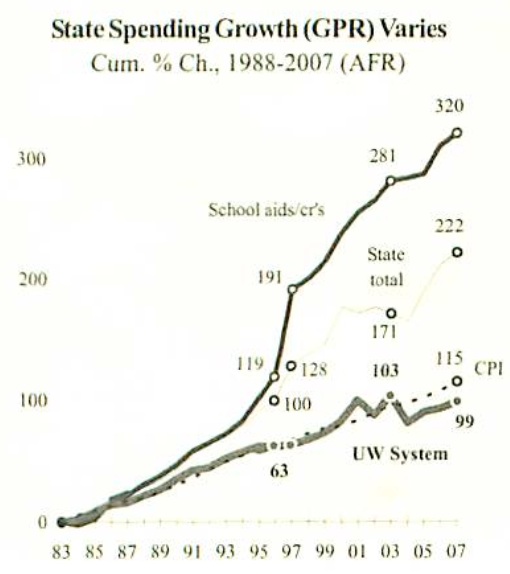
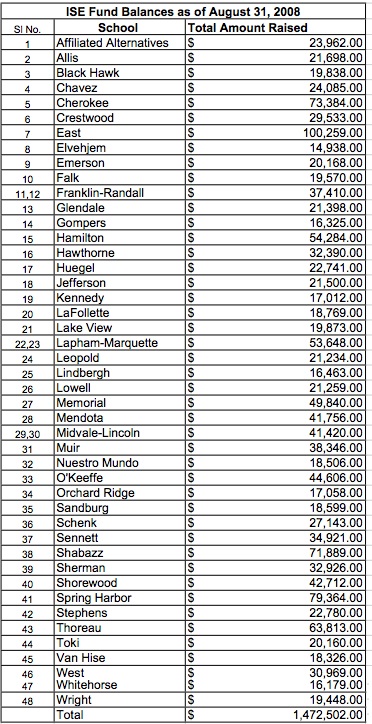
Share

Madison Superintendent Dan Nerad’s Remarks at a Dane County Public Affairs Council Event

Watch the 70 minute presentation and discussion or listen to this 29MB mp3 file

I took a few notes (with apologies for their brevity):

Dan Nerad:

Revisit strategic plan in January with local stakeholders. Preferred to lead with strategic plan but budget came first.
Hopes (MMSD) literacy programs are maintained.
He wants to listen to the community.
The District’s mission is teaching and learning.
The District has several strengths and some notable weaknesses, including achievement gaps.
Schools have a broader mission than workforce development, including helping students be good people.
Achievement gap is a significant issue. There is a compelling need to face an issue that affects Madison’s viability. These are not quick fix kind of issues. We need to talk more openly about this.
If I speak openly, I hope that people will be supportive of public education.
He wishes to reframe conversation around improvements for all students.
Five areas of discussion:

  1. 4k community conversation
  2. SLC grant (More here).  Use the grant to begin a conversation about high schools. The structure has been in place for over 100 years. Discussed kids who are lost in high school.
  3. Curriculum can be more workforce based. Green bay has 4 high schools aligned with careers (for example: Health care).
  4. Revisit school safety
  5. Curriculum
    – safety plan and response system
    – schools should be the safest place in the community
    – technology is not the complete answer
    math task force; Madison high school students take fewer credits than other Wisconsin urban districts
    – reaffirms notable  math achievement gap

  6. Fine Arts task force report: Fine arts help kids do better academically,

Erik Kass, Assistant Superintendent of Business Services:

Discussed budget gaps.
Plans to review financial processes.
He previously worked as a financial analyst.
Goal is to provide accurate, honest and understandable information.

Jonathan Barry posed a useful question (46 minutes) on how the current MTI agreement prohibits participation in alternative programs, such as Operation Fresh Start (“nobody shall educate that is not a member of Madison Teachers”). Barry mentioned that a recent United Way study referenced 4,000 local disconnected youth (under 21). This topic is relevant in a number of areas, including online learning and credit for non-MMSD courses. This has also been an issue in the local lack of a 4K program.

Share

Madison’s Leopold Elementary School’s Overcrowding in the News

Click to view a map displaying Leopold and nearby schools.

Tamira Madsen:

Five days after Madison Metropolitan School District and Madison School Board officials learn if voters approved a referendum to help finance the district budget, they’re expected to vote on options to ease overcrowding at Leopold Elementary.
And those fixes, especially the long-range ones, won’t be cheap.
Overcrowding at the largest elementary school in the district has been a hot-button topic the past several years, and the School Board has put the issue at the top of its priority list. Leopold had 718 students last year (new figures aren’t available yet), making it more than double the size of many district elementary schools and larger even than all but one middle school.
A decision can’t come quickly enough for the Leopold community, as evidenced by the 130 parents, teachers and faculty who attended a meeting Sept. 9 at the school. District officials were there to outline a variety of options (see them at www.mmsd.org/boe/longrange) they’re considering for the south Madison school located on Post Road.

Distance from Leopold Elementary to:

Share

New school year, new programs in Minneapolis, St. Paul

James Sanna:

As a host of new charter schools opened this year in the metro area, trying to lure disaffected parents away from public school systems, both Minneapolis and St Paul public schools are rolling out new programs and programming changes to keep these families – and the state funding dollars that come with them – in the school systems. In particular, Minneapolis public schools have fired the opening salvo in a multi-year offensive against their poor reputation, with a thorough-going re-design of district high schools.
St Paul
Fortunately for St. Paul Public Schools (SPPS), the district does not have as serious a credibility problem as Minneapolis Public Schools (MPS). St Paul school board members Tom Goldstein and Keith Hardy told this reporter in July that district leadership believes not all parents want a “one-size-fits-all” public school. Some parents, Hardy said, are looking for specific types of programming, such as gender-segregated education or career-specific training in high school, and the district has to provide these or risk losing these families to charter schools.

Share

The Death of WKCE? Task Force to Develop “Comprehensive Assessment System for Wisconsin”

The Wisconsin Department of Public Instruction [150K PDF], via a kind reader’s email:

Wisconsin needs a comprehensive assessment system that provides educators and parents with timely and relevant information that helps them make instructional decisions to improve student achievement,” said State Superintendent Elizabeth Burmaster in announcing members of a statewide Next Generation Assessment Task Force.
Representatives from business, commerce, and education will make recommendations to the state superintendent on the components of an assessment system that are essential to increase student achievement. Task force members will review the history of assessment in Wisconsin and learn about the value, limitations, and costs of a range of assessment approaches. They will hear presentations on a number of other states’ assessment systems. Those systems may include ACT as part of a comprehensive assessment system, diagnostic or benchmark assessments given throughout the year, or other assessment instruments and test administration methods. The group’s first meeting will be held October 8 in Madison.

A few notes:

.

Share

Read On Wisconsin Website Launched

Via a Jessica Doyle email:

Greetings and welcome to the updated website! Read On Wisconsin, is my book club for students and book-lovers across the state. I hope you will get involved in this statewide book club by reading and discussing fascinating books. This year’s top picks are recommended by students and educators across the state. Through the club, students, teachers, and parents can read and discuss award-winning books in and outside of the classroom.
I hope you will use the improved Student and Teacher Web Logs, and the Events section to keep you informed of school visits. I really encourage you to post your opinions and reactions to the books.

Share

Massachusetts Lowers Science Standards

Worcester Telegram:

The state Board of Elementary and Secondary Education this week took a step back from educational excellence by approving “emergency rules” that will permit high school students to appeal for relief from the MCAS science requirement after just one failure.
The change undermines a key goal of the state’s education reform effort: to ensure all high school graduates have achieved at least minimal competence in science.
An appeals process exists for English or math requirements. However, students are eligible to appeal only after failing those portions of the MCAS tests three times — a policy that, properly, gives students an incentive to improve their skills.

Share

Want Schools to Work? Meet the Parents

Sandra Tsing Loh, making sense, continues her whirlwind media tour, this time at the Washington Post (thanks to a kind reader’s email for this link):

Yea, public school parents’ priorities are routinely placed below those of building inspectors, plant managers, even, given an errant bell schedule, cafeteria workers. Although, teachers are down in the bunkers with us, too. You’d be amazed how many extraordinary schoolteachers, who’ve served faithfully, conscientiously, daily for 40 years, just keep their heads down at this point.
Since most politicians have never dealt with U.S. public schools as customers themselves (in the same way that precious few of them put their own children in the Army), it might shock you, Mr. Future President, how poorly parents are treated out here in Public-School-Landia. You know how when you walk into a Wal-Mart or a McDonald’s, someone greets you with, “Hello! May I help you?” It’s startling how seldom you can expect this basic courtesy in public schools, how often we parents approaching the counter are treated as felons, or more often simply ignored by the frantically typing office-administrator-type-person. It’s a peculiar thing, in this 21st century. Forget best-practice research and technology-driven classrooms. I really believe if anyone in the multibillion-dollar industry called U.S. public education were ever listening to us, improved schools would start, simply, with this: “Hello! May I help you?”
Where does this culture of committee-oriented time wastage — even for parents who work — spring from? Here’s a clue. L.A. Unified recently faced such a budget shortfall that the district was actively recruiting potential save-our-schools spokesparents to submit their resumes and come to the central offices for “media training” if selected. Cut to the bone as it is, though, next year’s budget still slates a hefty $78.8 million for consultants (last year a consultant was paid $35,000 to teach our superintendent how to use a computer). And yes, I realize that I’m getting off-message by noting that our school district wastes money.. . . That’s like waving red meat in front of America’s seniors, who’ll probably vote to cut taxes again! Even though it’s not the bureaucracy, but the children who get squeezed. That’s all budget cuts mean, in the end. My kids have their assemblies on cracked asphalt. Now the cracked asphalt will have weeds.
But here’s the good news, Mr. Future President. In a testament to the incredible can-do American spirit (and I mean that in the most drop-dead-serious way), activist public school parents are fighting back against U.S. public education’s wasteful and unresponsive corporate “professionalism.” (Remember George Bernard Shaw’s quip about the professions being “conspiracies against the laity”?) City by city, homegrown “parents for public schools”-style Web sites are springing up daily, little rebel force fires on the horizon. From New York to Chicago, Seattle to San Francisco and beyond, activist parents are starting to blog their outrage over millions of education dollars wasted on non-working computer technology, non-child-centered programs and, of course, those entities whose education dollars are never, ever cut — the standardized-testing companies.

Some years ago, I sketched a chart illustrating the influence of various factions on our nearly $400M local school system. Topping the list were Administrators of both the school system and local teachers union. Far down were teachers (think of the “downtown math police”) and parents. Further still were students themselves. Taxpayers were not represented.
Observing public education rather closely for a number of years, it seems to me that all players, especially teachers, parents and students, would be better off with a far more diffused governance model (charters, smaller districts/schools, choice?).

Share

School Choice Better Choice for Poor

Amy Hall:

Barack Obama, whose campaign is heavily funded by teachers unions, plans to funnel more money into the existing public education system. In this system, poor kids remain the only ones who don’t get to choose which school they attend. Mr. McCain is a strong supporter of school choice and has a record of this in Arizona.
As a teacher of 30 years, I am outraged that the liberal leaders in this country pretend to champion the poor, while, through their opposition to school choice, they act to keep the poor uneducated and poor.

Share

Are Too Many People Going to College?

Charles Murray:

America’s university system is creating a class-riven nation. There has to be a better way.
To ask whether too many people are going to college requires us to think about the importance and nature of a liberal education. “Universities are not intended to teach the knowledge required to fit men for some special mode of gaining their livelihood,” John Stuart Mill told students at the University of St. Andrews in 1867. “Their object is not to make skillful lawyers, or physicians, or engineers, but capable and cultivated human beings.” If this is true (and I agree that it is), why say that too many people are going to college? Surely a mass democracy should encourage as many people as possible to become “capable and cultivated human beings” in Mill’s sense. We should not restrict the availability of a liberal education to a rarefied intellectual elite. More people should be going to college, not fewer.
Yes and no. More people should be getting the basics of a liberal education. But for most students, the places to provide those basics are elementary and middle school. E. D. Hirsch Jr. is the indispensable thinker on this topic, beginning with his 1987 book Cultural Literacy: What Every American Needs to Know. Part of his argument involves the importance of a body of core knowledge in fostering reading speed and comprehension. With regard to a liberal education, Hirsch makes three points that are germane here:

Share

An Innovative Program That Could Serve as a Model for At Risk Children

Paul Tough:

The reason I think the Harlem Children’s Zone is so important–the reason I wrote a whole book about the program–is that I think it’s the closest thing we have to a model for the kind of collaboration I was referring to yesterday.
What Geoffrey Canada has constructed in Harlem is a comprehensive set of integrated programs that currently serve 8,000 kids in a 97-block neighborhood, starting at birth and going all the way through college. It is based on two innovative ideas. The first is what Canada calls the Conveyor Belt–a system that reaches kids early and then moves them through a seamless series of programs that try to re-create the invisible cocoon of support that surrounds middle-class and upper-middle-class kids throughout their childhoods. The Conveyor Belt starts with Baby College, a nine-week program that provides expecting parents and parents of young children with new information about effective parenting strategies. The next stop is an all-day language-focused pre-kindergarten for 200 4-year-olds, who then graduate into a K-12 charter school that has an extended day and an extended year and employs some of the intensive academic practices developed in the KIPP schools. Throughout their academic careers, students at the school have access to social supports: after-school tutoring, a teen arts center, family counseling, and a health clinic.

Share

Young, inexperienced teachers recruited to New Orleans

Greg Toppo:

Amid the tag-team commotion of three new teachers prepping a science class for summer school finals one recent morning, one teacher sits alongside a student for what seems an eternity.
The exchange is perfectly ordinary, except that in post-Katrina New Orleans, little is ordinary.
The student, a young mother forced to move four times in the 15 months after the storm, is 20 years old.
Her teacher is 22.

Share

2008 Presidential Candidates & School Choices

Sandra Tsing Loh:

As usual, Bruce Fuller and Lance Izumi , my fellow Education Watch contributors, make some fascinating points, none more startling to me than Lance’s casual throw-away that Barack Obama sends his children to private school. As a rabid public school Democrat, I crumpled in despair at the news.
Look, I am not in politics, I get no money from foundations, I do not get invited to lecture on third world eco-sustainability on luxury cruises. I have no highly placed blue-state friends and I will soon be a divorced woman because my die-hard Democratic husband will not brook any dissent, public or private, about our party.

Candidate websites: Bob Barr, McCain/Palin, McKinney/Clemente, Obama/Biden
Megan Mcardle @ the Atlantic has more.

Share

Property Tax Effect – Madison School District

As the cost of running the district continues to rise, and as Madison homeowners and families find it increasingly difficult to make ends meet, it is easy to think that our property taxes are also ever rising. But that’s not the case, at least as regards the portion that goes toward our schools. Over the past 15 years, the schools’ portion of Madison property taxes has declined 6%, on average. The decrease is 9% if you adjust for today’s higher enrollment figures (1993 = 23,600; 2007 = 24,200). And it plunges to a 36% decrease if you adjust for inflation; (a dollar today is worth 30% less than it was 15 years ago).
The chart below, based on local funding of MMSD and data from the city assessor’s office, shows the recent history of school mill rates, the rate that is applied to your assessed property value to determine how much you contribute towards Madison schools (10 mills = 1.0% of the assessed property value). The reported rate has dropped from 20 mills to 10, but property values have doubled thanks to the general rise in home prices (termed “revaluations” by the assessor’s office), so the rate is more appropriately captured below by the “Net of Revaluations” line. That line is then adjusted for school enrollment (the red line), and inflation (the heavier blue line).

There are three important caveats to the above statements: 1.) school taxes are lower on average, but if your home has increased in value by more than about 110% since 1993, then you will be paying more for schools; 2.) it is the schools portion of property taxes that is lower on average; the remaining portion of property taxes that pays for the city, Dane County, Wisconsin, and MATC, has risen; 3.) other sources of Madison school funding (state and federal funds, and grants and fees) have also gone up; (I have not done the much more complicated calculation of real increase in funding there).
That the infamous schools’ portion of property taxes has declined over these past 15 years is quite a surprising result, and certainly counterintuitive to what one might expect. How is this possible? First, the school finance structure put in place by the state years ago has worked, at least as far as holding down property taxes. The current structure allows about a 2% increase in expense each year, consistent with the CPI (Consumer Price Index) at the state level. (In fact, local funding of the MMSD has increased from $150 million in 1993 to $209 million in 2007, equivalent to about a 2.4% increase each year.) Of course, the problem is that same structure allows for a 3.8% wage hike for teachers if districts wish to avoid arbitration, an aspect that has essentially set an effective floor on salary increases (with salaries & benefits representing 84% of the district budget). The difference between the revenue increases and the pay increases, about 1-2% annually, is why we face these annual painful budget quandaries that can only be met by cuts in school services, or by a referendum permitting higher school costs, and taxes.
The second reason today’s property taxes are lower than they have been historically is growth, in the form of new construction (i.e. new homes & buildings, as well as remodelings). What we each pay in school property taxes is the result of a simple fraction: the numerator is the portion of school expenses that is paid through local property taxes, while the denominator is the tax base for the entire city (actually the portion of Madison and neighboring communities where kids live within the MMSD). The more the tax base grows, the larger the denominator, and the more people and places to share the property taxes with. Since 1993, new construction in Madison has consistently grown at about 3% per year. Indeed, since 1980 no year has ever seen new construction less than 2.3% nor more than 3.9%. So every year, your property taxes are reduced about 3% thanks to all the new construction in town. I leave it to the reader to speculate how much the pace of new construction and revaluations will decline if the schools here should decline in quality.
FYI, the figure below shows how new construction and revaluations have behaved in Madison since 1984, as well as total valuations (which is the sum of the two).

Share

Goal by Goal

Steven Davis:

I WAS born and raised in Milwaukee, the youngest of five children. My mother worked as a postal clerk, and my father was a welder and line supervisor.
My parents set a goal that all of their kids would go to college. All five of us have college degrees. My mother had started college at 16, but had finished only a year and half when her mother became ill and she had to quit. My father never had the means to go to college.
Recently, my mother told me, “Our best friends were the people at our credit union.” My parents borrowed money at the beginning of each school year and hurried to try to pay back that loan before the next school year started.
Their unspoken message was that the sky is the limit. They never said that because you are an African-American, you can go only this far or do only this or that. They just said, “Go for it.”

Share

Does Spending More on Education Improve Academic Achievement?


Dan Lips & Shanea Watkins:

Debates about how to improve public education in America often focus on whether government should spend more on education. Federal and state policy makers proposing new education programs often base their arguments on the need to provide more resources to schools to improve opportunities for students.
Many Americans seem to share this view. Polling data show that many people believe that government allocates insufficient resources to schools. A poll conducted annually from 2004 through 2007 found that American adults list insufficient funding and resources as a top problem facing public schools in their communities.[1]
While this view may be commonly held, policy makers and citizens should question whether histori cal evidence and academic research actually support it. This paper addresses two important questions:
How much does the United States spend on public education?
What does the evidence show about the relationship between public education spending and stu dents’ academic achievement?
The answers to these questions should inform federal and state policy debates about how best to improve education.
Twenty-nine states and the District of Columbia face budget shortfalls totaling approximately $48 billion for fiscal year 2009.[2] Even more states could face shortfalls in the near future. At the federal level, long-term budgets face a challenging fiscal climate. Pro jected growth of entitlement programs is expected to place an ever-increasing burden on the federal budget, limiting the resources available for other purposes, including education.[3]

Related: Charts – Enrollment; Local, State, Federal and Global Education Spending

Share

Teach for America hopes to place teachers in Milwaukee

Alan Borsuk & Dani McClain:

With the announcement of a $1 million grant from the Waukesha-based Kern Family Foundation on Monday, Teach for America stands on the brink of opening operations here, with the goal of putting 30 teachers in Milwaukee Public Schools classrooms by next fall.
The arrival of Teach for America, a national force in motivating high-caliber college graduates to teach in low-performing urban schools, would bolster efforts by prominent education organizations to improve the quality of new MPS teachers and principals.
Three other nationally significant organizations have begun recruiting or training new teachers and principals in MPS, and the School Board and MPS administration have been open to all of their efforts.
The surge of interest could be shown simply by listing the panelists at a Monday luncheon of the Greater Milwaukee Committee, an influential community group:

Share

Public TV documentary details Green Bay East High School shooting threat in 2006

Warren Gerds:

Coming at a difficult topic from many angles, a new TV documentary examines the 2006 threats of violence against Green Bay East High School.
“Any School, Any Time” is a compelling hour.
It seeks balance and perspective in a case where deadly harm appears to have been averted.
Everything is told through a sophisticated technique that uses no narration, which could take on a slant. Rather, only the voices of people interviewed or recorded in news conferences, court or jail are heard.
Also, instead of quick sound bites, key people are allowed to be heard at length so explanations are fleshed out. This includes the Brown County district attorney, a representative of the U.S. Secret Service, Green Bay police chief, defense attorneys, a forensic psychiatrist and presiding judge.

Share

Colorado Amendment 59: does it shore up education or undermine TABOR?

Benry Morson:

It seemed like a good idea at the time.
Amendment 23, approved by voters in 2000, required funding increases to raise the state’s support for public schools to the national average.
But when Colorado’s economy soured in the early part of this decade, legslators found themselves slashing other programs — such as health care and higher education — to keep the promise to public schools.
Amendment 59 on the Nov. 4 ballot would resolve that problem in the future by creating a savings account for schools to be filled when economic times are good and spent when times are bad.
During those lean years, the legislature balanced the budget with “a lot of baling wire and duct tape,” said House Speaker Andrew Romanoff. “This (Amendment 59) is a much more responsible way to balance the budget.”

Share

Sex ed in schools: Little connection between what’s taught, teen behavior

Sharon Jayson:

Another pregnant teenager in the limelight has focused new attention on just how much teens know about sex and when they know it.
This pregnant teen, of course, is the 17-year-old daughter of Republican vice presidential nominee Sarah Palin, and the pregnancy has reignited the national debate over two different approaches to sex education: abstinence-only vs. comprehensive. But as it turns out, there’s no systematic tracking of what U.S. schools are teaching kids about sex — and either way, there seems to be little connection between what they’re taught and their behaviors, researchers say.

Share

We scrutinize MPS because we care about the community

Thomas Koetting:

Q. It seems sometimes that the Journal Sentinel does nothing but bash the Milwaukee Public Schools. There are a lot of people working for MPS who work hard to make a difference in kids’ lives. They are writing grant proposals to make it possible for kids to attend camps they couldn’t otherwise attend, and creating programs to keep kids involved in school and off the streets. As a former camp counselor and volunteer in the classroom, I know how important these things are.
A. I share your concern that our coverage can seem, at times, negative – not just about MPS, but about any number of community institutions we cover. It is an issue we talk about a great deal because we don’t just report on this area – we live here ourselves. What I would ask you to think about is that what drives us to report what may seem like a negative story is actually our concern, our passion, for our community.
When we write about a school board member going to a convention but never attending its sessions, it is because that money could have been used to improve the educational experience of students and teachers. When we write about the failure of the $102 million Neighborhood Schools Initiative building plan, it is because that money could have been used for other projects to transform the lives of students, teachers and staff alike. When we write about the district receiving a low level of funding to educate disabled children, it is because other districts seem to be taking better advantage of available money to improve the lives of children who already face so many challenges.

Share

Grand Prairie (Texas) parents drop schools not making grade

Katherine Leal Unmuth:

Rae Ann Forester was losing confidence in Grand Prairie High School’s academic program. Even though she was president of the Parent Teacher Student Association, she took a decisive step away from the school.
Parents whose children attend struggling public schools may feel like there’s no way out. But Ms. Forester and other persistent parents are taking control of their children’s education and finding options.
“What do you do in a school that’s low-performing?” Ms. Forester asked. “If we can’t get what we need from that specific campus, we do what we need to as a family. I do want people to have options, and that’s what I’m advocating.”
After the Texas Education Agency rated Grand Prairie High School “academically unacceptable” the previous two years, the school’s poor reputation prompted some families to act.

Share

School districts walk fine line between integration, discrimination

Kerry Lester:

The U.S. Supreme Court’s June 2007 decision to strike down integration plans in two public school districts was based on a simple premise: discrimination is discrimination.
“The way to stop discrimination on the basis of race,” Chief Justice John Roberts declared, “is to stop discriminating on the basis of race.”
In the wake of that ruling, large, ethnically diverse districts are now finding themselves in uncharted waters.
Though prohibited from using race-conscious measures to integrate their schools, districts also must ensure academic success for all students – regardless of skin color or neighborhoods in which they live.
The class-action racial bias suit pending against Elgin Area School District U-46 is one of the first major school discrimination cases to be decided since last year’s Supreme Court ruling.
Its outcome, experts say, could have for far-reaching effects.
“Class-action school cases are relatively rare,” said Michael Kaufman, Academic Dean and Director of the Child Law and Education Institute at Loyola University Chicago. “This case will almost by definition have profound implications in regards to remedies after last summer’s ruling.”

Share

You’re invited to attend the first national GREEN CHARTER SCHOOLS CONFERENCE November 7-9, 2008 in Madison, Wisconsin

The conference is presented by the Green Charter Schools Network, UW-Madison’s Nelson Institute for Environmental Studies, and many partnering educational and environmental organizations.
SEE CONFERENCE PROGRAM & ONLINE REGISTRATION HERE
Conference Keynoters:
William Cronon is UW-Madison Professor of History, Geography & Environmental Studies. His research seeks to understand the history of human interactions with the natural world and how we depend on the ecosystems around us to sustain our material lives, He is the author of several books, including Uncommon Ground: Rethinking the Human Place in Nature and Nature’s Metropolis: Chicago and the Great West.
Morgan Brown — Assistant Commissioner Morgan Brown oversees charter school programs, special education policy, food and nutrition services, adult basic education, and American Indian education programs at the Minnesota Department of Education (MDE). Previously, he served as the Assistant Deputy Secretary for the Office of Innovation & Improvement at the U.S. Department of Education.

Share

24/7 School Reform

Paul Tough:

In an election season when Democrats find themselves unusually unified on everything from tax policy to foreign affairs, one issue still divides them: education. It is a surprising fault line, perhaps, given the party’s long dominance on the issue. Voters consistently say they trust the Democrats over the Republicans on education, by a wide margin. But the split in the party is real, deep and intense, and it shows no signs of healing any time soon.
On one side are the members of the two huge teachers’ unions and the many parents who support them. To them, the big problem in public education is No Child Left Behind, President Bush’s signature education law. Teachers have many complaints about the law: it encourages “teaching to the test” at the expense of art, music and other electives, they say; it blames teachers, especially those in inner-city schools, for the poor performance of disadvantaged children; and it demands better results without providing educators with the resources they need.
On the other side are the party’s self-defined “education reformers.” Members of this group — a loose coalition of mayors and superintendents, charter-school proponents and civil rights advocates — actually admire the accountability provisions in No Child Left Behind, although they often criticize the law’s implementation. They point instead to a bigger, more systemic crisis. These reformers describe the underperformance of the country’s schoolchildren, and especially of poor minorities, as a national crisis that demands a drastic overhaul of the way schools are run. In order to get better teachers into failing classrooms, they support performance bonuses, less protection for low-performing teachers, alternative certification programs to attract young, ambitious teachers and flexible contracts that could allow for longer school days and an extended school year. The unions see these proposals as attacks on their members’ job security — which, in many ways, they are.
Obama’s contention is that the traditional Democratic solution — more money for public schools — is no longer enough. In February, in an interview with the editorial board of The Journal Sentinel in Milwaukee, he called for “a cultural change in education in inner-city communities and low-income communities across the country — not just inner-city, but also rural.” In many low-income communities, Obama said, “there’s this sense that education is somehow a passive activity, and you tip your head over and pour education in somebody’s ear. And that’s not how it works. So we’re going to have to work with parents.”

Share

Cry for change resounds in St. Paul schools

Emily Johns:

The St. Paul School District this fall is planning on engaging community members, parents and school district staff in an indepth discussion about the district’s future with one major premise: Things need to change.
The district, which serves about 38,800 students, faces considerable challenges. It has made more than $93 million in budget cuts over the last nine years. Only half its students are proficient in reading, the achievement gap between white students and students of color is among the widest in the nation, and federal and state expectations for student achievement are accelerating.
The district “is at a crossroads,” according to a presentation that district staff made to school board members on Thursday night. “Business as usual is not a sustainable option for achieving our mission.”
The St. Paul district’s efforts to comply with federal and state desegregation laws over the past 30 years and retain students have resulted in a complex network of magnet and neighborhood schools.

Share

A Look Back at a 2001 Dayton School Board’s Results

Scott Elliott:

Let’s remember back for a moment to the excitement of 2001. Gail Littlejohn, a retired corporate attorney, and three allies won four seats on the school board, taking control with a majority and promising big changes that would help lead the district back to respectability.
And for the first few years, the Kids First team had a remarkable run of successes. They replaced a well meaning but floundering superintendent with an efficient manager in Percy Mack, a move that was well received in the community. They put a reform in place that emphasized teacher training and focused on math and reading instruction. They got the NAACP and the state to agree to settle the 20-year-old desegregation case, bringing millions in cash and releasing the district from court supervision. They got a huge bond issue passed to rebuild all the schools in the city. Eventually, Dayton even had enough test score gain to jump from “academic emergency to “continuous improvement” in the state ratings. And for at least those first few years, Kids First got support from the rest of the school board, business leaders and much of the community.

Share

Finland’s Lesson: Education

Andres Oppenheimer:

Like many other foreign journalists, I made the obligatory pilgrimage to Helsinki, Finland, to learn how this country has climbed to the top spots in key international rankings measuring economic, political and social success. The answer, I was told, is amazingly simple.
First, the facts. Finland ranks first among 179 countries in Transparency International’s index of the least corrupt nations in the world (the United States is No.20); No.1 in Freedom House’s ranking of the world’s most democratic countries (the U.S. ranks No.15); No.1 in the world in 15-year-old students’ standardized test scores in science (the U.S. ranks No.29), and is among the 10 most competitive economies in the World Economic Forum’s annual competitiveness index (the U.S. topped the list this year).
A small country of 5.3 million, which only two decades ago was by most measures the poorest country in northern Europe, Finland also boasts the headquarters of the world’s biggest cellphone maker — Nokia — and cutting-edge paper and pulp-technology firms.

Share

Indiana Governor Candidates Discuss Education

Niki Kelly:

ill Long Thompson unveiled a handful of education initiatives Wednesday while Republican Gov. Mitch Daniels introduced five campaign commercials, three of which focus on his own education proposals.
The two face off in November’s gubernatorial election.
“I don’t have all the answers, but we are not meeting our objectives,” Long Thompson said at a Statehouse news conference Wednesday.
One of her proposals is to provide a free book every month to all Hoosier children from birth to age 5. This is modeled after Tennessee’s partnership with Dolly Parton’s “Imagination Library,” but Long Thompson’s program would be paid for with private donations.
She also wants to allow kids who need the extra time and help to attend a fifth year of high school in an effort to improve Indiana’s graduation rate of about 76 percent.

Share