School Information System

School ditches rules and loses bullies

TVNZ:

Ripping up the playground rulebook is having incredible effects on children at an Auckland school.
Chaos may reign at Swanson Primary School with children climbing trees, riding skateboards and playing bullrush during playtime, but surprisingly the students don’t cause bedlam, the principal says.
The school is actually seeing a drop in bullying, serious injuries and vandalism, while concentration levels in class are increasing.
Principal Bruce McLachlan rid the school of playtime rules as part of a successful university experiment.
“We want kids to be safe and to look after them, but we end up wrapping them in cotton wool when in fact they should be able to fall over.”

Share

Those SATs and APs Were Hard – To Afford

Benjamin Tonelli:

With college-admission deadlines quickly approaching, my debt to the College Board keeps growing. Two SAT tests, five subject tests and six Advanced Placement (AP) tests later, I am ready to report my scores through the College Board website to the 10 colleges to which I am applying. On top of the total $102 I paid to take the SAT, $114 for the subject tests, and $534 for the AP tests, the College Board now demands $11.25 for each electronic submission of the test scores to the schools on my list.
It seems odd that the College Board–a nonprofit whose CEO, David Coleman, was pulling in $750,000 as of 2012–cannot send a few numbers over the Internet for just a dollar or two, or maybe even free. Instead, I am shoveling out another $100-plus just for electronic submissions, another contribution to the swelling pockets of the College Board (annual revenue in 2011-2012: more than $750 million).
With almost complete control over the business of pre-college standardized testing, the College Board squeezes every penny it can from high-school students–or their parents. The company charges at every turn while attempting to “connect students to college success,” loading on additional fees for every missed deadline and “rush” delivery of electronically sent scores, scores that apparently otherwise take weeks to navigate the labyrinth that is the World Wide Web.
The College Board should behave more like the nonprofit it claims to be. Lowering the cost of the SAT would encourage more students whose parents make modest incomes to retake the test and compete against students from higher income households who often take the test upward of four times, aiming for higher scores. (I took the test twice.)

Share

Big names dominate FT MBA ranking top spots

Laurent Ortmans:

The FT Global MBA ranking and the English football Premier League have one thing in common. Pundits may argue about who will head the table, but most years there is little doubt about the top five.
So it is for 2014: Harvard Business School fended off competitors and kept the crown it regained last year. This is the fifth time Harvard has topped the rankings since they began in 1999. Stanford Graduate School of Business remained second, while London Business School leapfrogged the Wharton school at the University of Pennsylvania, pushing the latter into fourth place. Columbia Business School and Insead are joint fifth.
The FT ranking is based on two surveys of the business schools and their alumni who graduated in 2010. MBA programmes are assessed according to the career progression of their alumni, the school’s idea generation and the diversity of students and faculty.
Harvard leads the field for idea generation, coming first for research and second for its doctoral programme. The school’s alumni also boast the second-highest average salary three years after graduation (behind Stanford) and above-average salary increase. Harvard is also among the top schools for career progression and its MBA was the most highly commended by graduates from other schools.

Share

A Student’s Thoughts on Education

Rhett Allain:

Sometimes I see a video or a blog post and think to myself…”yeah!” This is one of those times. This is a short speech from Tennessee student Ethan Young. He talks about education and issues such as common core and evaluations. Go ahead and watch the whole thing (only 5 minutes long).
Let me just point out a few of his points:
In regards to Common Core, Ethan says that “rigorous” standards are just a buzz word.
Common Core standards represent a mistrust of teachers.
Ethan claims that part of the problem with the administrative side of education (evaluation, standards, testing) is that we (the people) try to apply the same management model to education that we use for nuclear reactors.
Great quote: “Why don’t we just manufacture robots instead of students? They last longer and always do what they’re told.”
Another great quote regarding the measurement of teaching: “If everything I learned in high school was a measurable objective, I haven’t learned anything.”
What is the point of education? It is to free minds and to inspire. We do not teach to train for careers, those will come naturally.
All great points. When I think about the educational process, there are two other important pieces that present interesting ideas.
Lockhart’s Lament (pdf). This is an excellent essay from Paul Lockhart where he looks at the state of mathematics education. He creates an excellent analogy between the way we learn art and math. It’s a great essay.
Sir Ken Robinson’s Changing Education Paradigms (youtube). In this video, Robinson gives a great historical perspective as a reason for some of the way education works today.

Share

California public school students file suit to nix tenure law, saying it keeps bad teachers in classroom

Julie Watson:

Nine California public school students are suing the state over its laws on teacher tenure, seniority and other protections that the plaintiffs say keep bad educators in classrooms.
The case that goes to trial Monday in Los Angeles Superior Court is the latest battle in a growing nationwide challenge to union-backed protections for teachers in an effort to hold them more accountable for their work. The nonjury trial is expected to wrap up in March.
“The system is dysfunctional and arbitrary due to these outdated laws that handcuff school administrators,” said Theodore J. Boutrous, the lead attorney on the case sponsored by an educational reform group.
States across the nation have weakened teaching job protections, including generations-old tenure, to give administrators more flexibility to fire bad teachers.

Share

Measuring Alternative Educational Credentials

US Census Bureau:

The U.S. Census Bureau today released the first-ever report examining the prevalence of non-degree certifications and licenses among American adults and their importance to the employment market. The report found that alternative credentials provide a path to higher earnings, underscoring that traditional educational attainment is just one way for workers to attain the skills needed in today’s global economy.
A skilled workforce is an essential part of a modern, innovative economy. However, many U.S. employers today are struggling to find workers with the skills to fill some of the 3.9 million open jobs. That is why, for the first time, the Commerce Department is focusing on skills training as part of its Open for Business Agenda.
The report, Measuring Alternative Educational Credentials, found that in fall 2012, 50 million U.S. adults, or one in four, had obtained a professional certification, license or educational certificate apart from a postsecondary degree awarded by colleges and universities. The report shows that, in general, these alternative credentials provide a path to higher earnings. Among full-time workers, the median monthly earnings for someone with a professional certification or license only was $4,167, compared with $3,433 for one with an educational certificate only; $3,920 for those with both types of credentials; and $3,110 for people without any alternative credential.

Share

Houston Launches Ambitious 1-to-1 Computing Initiative

Benjamin Harold:

Undeterred by the high-profile problems experienced by other large school systems attempting to put digital devices in the hands of their students, the Houston Independent School District began distributing more than 18,000 laptop computers to high school students and staff members this month.
It’s the first phase of a multi-year plan that, unlike troubled initiatives elsewhere, will be defined by “realistic expectations” and a cautious implementation plan, said Lenny Schad, the chief technology officer for the 210,000-student district.
“We are going to have bumps in the road,” Schad said in a telephone interview. “But I feel very confident that when those bumps occur, we will be able to react, address the problems, and move on.”
The Houston initiative, known as PowerUp, aims to distribute roughly 65,000 laptops–enough for every high school student and high school teacher in the district–by the 2015-16 school year. Eventually, the initiative is expected to cost about $18 million annually; this year, the Houston ISD is dishing out $6 million, all of it existing funds that were reallocated from other sources. The 2013-14 school year is being devoted to a step-by-step pilot program, and Schad–who previously oversaw implementation of a successful “bring your own device” initiative in Texas’ 66,000-student Katy Independent School District–said the district is entering the 1-to-1 computing fray with eyes wide open.

Related: The Madison School District’s latest technology plan.

Share

What Drives Success?

Amy Chua & Jed Rubenfeld:

A SEEMINGLY un-American fact about America today is that for some groups, much more than others, upward mobility and the American dream are alive and well. It may be taboo to say it, but certain ethnic, religious and national-origin groups are doing strikingly better than Americans overall.
Indian-Americans earn almost double the national figure (roughly $90,000 per year in median household income versus $50,000). Iranian-, Lebanese- and Chinese-Americans are also top-earners. In the last 30 years, Mormons have become leaders of corporate America, holding top positions in many of America’s most recognizable companies. These facts don’t make some groups “better” than others, and material success cannot be equated with a well-lived life. But willful blindness to facts is never a good policy.
Jewish success is the most historically fraught and the most broad-based. Although Jews make up only about 2 percent of the United States’ adult population, they account for a third of the current Supreme Court; over two-thirds of Tony Award-winning lyricists and composers; and about a third of American Nobel laureates.

Share

Poverty and the education opportunity gap: Will Obama step up in SOTU?

Kevin Welner:

Tuesday’s State of the Union address will apparently focus on issues of wealth inequality in the United States. The impact of poverty is extremely important for issues such as housing, nutrition, health and safety. Additionally, education researchers like me have been hollering from the rooftops, hoping policymakers and others will understand that poverty is the biggest impediment to children’s academic success. So this focus is long overdue and certainly welcome. Yet I worry that the president will slip from an accurate diagnosis to unproven and ineffectual treatments.
The diagnosis is straightforward. I expect that the president will have no trouble describing enormous and increasing wealth gaps. We learned from Oxfam last week that “the world’s 85 richest people own the same amount as the bottom half of the entire global population,” which is over 7 billion people.
In the United States, the picture is just as shocking. In a 2013 UNICEF report on child poverty in 35 developed countries, the United States came in 34th, second to last–between Bulgaria and Romania, two much poorer countries overall. Twenty-three percent (23%) of children in the US live in poverty.

Share

Authenticity in assessment, (re-)defined and explained

Grant Wiggins:

What is “authentic assessment”?
Almost 25 years ago, I wrote a widely-read and discussed paper that was entitled: “A True Test: Toward More Authentic and Equitable Assessment” that was in the Phi Delta Kappan. Download it here: Wiggins.atruetest.kappan89 I believe the phrase was my coining, made when I worked with Ted Sizer at the Coalition of Essential Schools, as a way of describing “true” tests as opposed to merely academic and unrealistic school tests. I first used the phrase in print in an article for Educational Leadership entitled “Teaching to the (Authentic) Test” in the April 1989 issue. (My colleague from the Advisory Board of the Coalition of Essential Schools, Fred Newmann, was the first to use the phrase in a book, a pamphlet for NASSP in 1988 entitled Beyond standardized testing: Assessing authentic academic achievement in secondary schools. His work in the Chicago public schools provides significant findings about the power of working this way – Authentic-Instruction-Assessment-BlueBook.)

Share

A somewhat connected (one end of the class spectrum) view of the State of Madison’s $395M Public School District

Mary Erpenbach (and This story was made possible by supp​ort from Madison Gas & Electric, Summit Credit Union, CUNA Mutual Foundation and Aldo Leopold Nature Center.):

Today, Caire’s tone has moderated. Somewhat.
“Teachers are not to blame for the problems kids bring into the classroom,” he says. “But teachers have to teach the kids in front of them. And Madison teachers are not prepared to do that. Now we have two choices: Make excuses why these kids can’t make it and just know that they won’t. Or move beyond and see a brighter future for kids.”
Many parents back him up. And many parents of students of color say that their experience with Madison’s public schools–both as students here, themselves, and now as parents–is simply much different and much worse than what they see white students and parents experiencing.
“I just always felt like I was on as a parent, like every time I walked through the door of that school I would have to go to bat for my son,” says Sabrina Madison, mother of a West High graduate who is now a freshman at UW-Milwaukee. “Do you know how many times I was asked if I wanted to apply for this [assistance] program or that program? I would always say, ‘No, we’re good.’ And at the same time, there is not the same ACT prep or things like that for my child. I was never asked ‘Is your son prepared for college?’ I never had that conversation with his guidance counselor.”
Hedi Rudd, whose two daughters graduated from East and son from West, says it has been her experience that the schools are informally segregated by assistance programs and that students of color are more likely to be treated with disrespect by school personnel. “Walk into the cafeteria and you’ll see the kids [of color] getting free food and the white students eating in the hall. I walked into the school office one day,” she recalls. “I look young and the secretary thought I was a student. She yelled, ‘What are you doing here?’ I just looked at her and said, ‘Do you talk to your students like that?'”
Dawn Crim, the mother of a daughter in elementary school and a son in middle school, says lowered expectations for students of color regardless of family income is an ongoing problem. “When we moved to Madison in 1996, we heard that MMSD was a great school district … and for the most part it has been good for our kids and family: strong teachers, good administrators, a supportive learning environment, and we’ve been able to be very involved.”
But?
“Regarding lower expectations for kids of color, not just disadvantaged kids, we, too, have experienced the lower expectations for our kids; overall there is a feeling and a sense of lower expectations,” Crim says. “And that should not come into play. All of our kids should be respected, pushed, have high expectations and should get the best education this district says it gives.”
In the meantime, the school district has been running programs in partnership with the Urban League of Greater Madison, UW-Madison, United Way of Dane County, the Boys and Girls Club of Dane County, and other organizations–all designed to lift scholastic achievement, close the gap, and get more kids graduated and on to college.
The Advancement Via Individual Determination program known as AVID (or AVID/TOPS, when coordinated with the Teens Of Promise program) is run by the district and the Boys and Girls Club here, and is a standout in a slew of public/private efforts to change the fate of students of color in Madison.
…..
At the end of the last school year, a total of four hundred forty-two students did not graduate on time from high school in Madison. One hundred nine were white, eighty-six were Hispanic, thirty-three were Asian and one hundred ninety-one were African American. If the graduation rate for African American students had been comparable to the eighty-eight percent graduation rate of white students, one hundred forty more African American students would have graduated from Madison high schools.
But they did not. While it’s true that the district actively searches out students who did not graduate on time, and works with them so that as many as possible do ultimately graduate, the black-and-white dividing line of fifty-five/eighty-eight remains for now the achievement gap’s stark, frightening, final face. What can be said is that many more Madisonians are paying attention to it, and many people in a position to make a difference are doing their level best to do something about it.
……
“One of the reasons we haven’t been as successful as we could be is because we’ve lacked focus and jumped from initiative to initiative,” she (Cheatham) says of the Madison schools.

Related: notes and links on Mary Erpanbach, Jennifer Cheatham and Madison’s long term disastrous reading scores.
Background articles:
Notes and links on the rejected Madison Preparatory IB Charter School.
When all third graders read at grade level or beyond by the end of the year, the achievement gap will be closed…and not before (2005).
Notes and Links on the Madison K-12 Climate and Superintendent Hires Since 1992.
My Life and Times With the Madison Public Schools
Latest Madison Schools’ 2013-2014 $391,834,829 Budget.

Share

Teacher teams, instructional materials bring Common Core to Madison students

Nora Hertel:

Fourth grade teacher Carissa Franz starts her lessons by outlining the Common Core standards she and her students will focus on. Franz is in her second year at Ray W. Huegel Elementary School, and uses the standards to drive her teaching this year.
She and teachers throughout Madison are integrating the new Common Core State Standards, adopted by State Superintendent Tony Evers in 2010, into their curriculums with the help of new Common Core-aligned materials and district-supported teacher teams
The changeover to Common Core is a deliberate process. Franz meets monthly with the superintendent as part of a teacher advisory board that shares the “voice of the teachers” with the district, she said.
Every week, she meets with a group of teachers representing each grade level in her school to discuss how to align the standards and the math materials used district-wide with the needs of Huegel’s classrooms.

Share

Latest Milwaukee Public schools reform plan reveals deep needs, discontent

Erin Richards:

Class size: 49 students.
Number of principals in six years: five.
Percentage of student turnover in a school year: 55%.
To the people who teach in them, those are some of the characteristics of “failing” public schools in Milwaukee, 48 in all.
To the superintendent who oversees them, the latest potential solution is to turn some into charter schools.
The teachers’ response, at least for one day this past week, was to blast that idea and provide a vivid picture of the problems in their chronically underperforming schools, problems that never seem to get addressed by a revolving door of district reforms.
Once again, they said at a board committee meeting Thursday, the options on the table — and there are three in all — fail to address their biggest roadblocks to improvement. Almost every one of their students is poor. On average, one in four has a special need, usually an emotional or behavioral disorder. Many have unstable families and grow up in lives infused with violence.
Meanwhile, teachers said, their best resources to combat these issues have been cut. There are fewer art and music classes, despite district efforts lately to restore such specials. Class sizes can soar to between 40 and 50 students, inhibiting any kind of one-on-one attention. There is no additional staff to man in-school suspension rooms, so disruptive pupils affect the learning time — and likely, the ultimate reading and math test scores — of other students.

Much more on the Milwaukee Public Schools, here.

Share

Milwaukee Public Schools, Wisconsin Legislature on collision course over lowest performing schools

Alan Borsuk:

Commitment. What does that mean? What does it call for?
We’re about to get some very interesting and important lessons in “commitment” in terms of schools in Milwaukee — which is to say I’m quite interested in what will happen at two meetings scheduled for this coming Thursday, in part because of what happened at a meeting last Thursday.
I choose the term “commitment” for specific reasons:
For one, at Thursday night’s meeting of a Milwaukee School Board committee, Superintendent Gregory Thornton put forth a plan for dealing with 25 or so of the lowest performing schools in the Milwaukee Public Schools system. One of the few details that was given was that this group of schools now would be known as “commitment schools.”
Here’s a second reason: It was clear at the meeting that a primary commitment of a full-house audience of about 300 — as well as of what appeared to be a majority of the School Board — was to solving MPS’ problems within the traditional public school system and fighting those who are pushing for more charter schools that would have leaders and teachers who are not MPS employees.
The commitment to actual improvement seemed to vary among people in the crowd.

Share

Seattle Redefines Curriculum, v6

Charlis Mas:

Seattle Public Schools has re-defined the word “curriculum” no fewer than six times in the past four years. It seems to change with each new Chief Academic Officer, Assistant Superintendent of Teaching and Learning, or Executive Director of Curriculum. It also changes anytime the District needs to weasel or make other people (the Board or members of the public) appear ignorant.
Here is the most recent definition provided. It comes with the FAQ on Common Core:

Share

Hungary’s Students Rally for Decentralized Education

Veronika Gulyas:

Several Hungarian student, undergraduate and teacher associations and groups joined Saturday to rally against the government’s centralizing education policy.
Some 700-800 people demonstrated on the birthday of Rozsa Hoffmann, state secretary for education.
The demonstrators at the “For a Free Education” spoke against the government’s policies saying the centralized system that was set up last year to handle all school-related matters from personnel to procurement has failed.
“There’s no paper in my school since early December,” Andras Meleg, a high school student, said in his speech at the demonstration in Budapest, in front of the ministry responsible for education.
The government moved schools that were previously under local government management to the central government’s care early last year. It introduced obligatory religion or ethics lessons at schools and a five-time-a-week physical education class countrywide, even in schools where the resources aren’t adequate. The government also nationalized the schoolbook-market and increased teachers’ working hours.

Share

Highly Educated, Highly Indebted: The Lives of Today’s 27-Year-Olds, In Charts

Jordan Weissman:

What’s are today’s young adults really like? For those who’ve spent too much time gazing into the dark recesses of Thought Catalog or obsessing over “Girls,” the Department of Education has a new report that offers up some enlightening answers.
In the spring of 2002, the government’s researchers began tracking a group of roughly 15,000 high school sophomores–most of whom would be roughly age 27 today–with the intention of following them through early adulthood. Like myself, many of those students graduated college in 2008, just in time to grab a front-row seat for the collapse of Lehman Brothers and the economic gore fest that ensued. In 2012, the government’s researchers handed their subjects an enormous survey about their lives in the real world. Here, I’ve pulled together the most interesting findings.
(One important note: I’ve shorthanded this group as “today’s 27-year-olds.” But again, not all of the study participants are precisely that age.)

Share

Deconstructing PISA: Implications for Education Reform and Fighting Poverty

Elaine Weiss and Dr. Thomas W. Payzant:

Every three years, American policymakers eagerly anticipate the release of scores for the Programme for International Student Assessment (PISA). While any single test, no matter how strong, can explain only a limited amount about our education system, PISA provides some unique insights, testing students’ ability to apply knowledge and skills both in and out of school. It is taken only by 15-year-olds, making it a decent proxy for the “college-and-career readiness” that is the focus of current debates.
The 2013 headline is basically that the United States falls right in the middle of the pack, as it has for several decades. The U.S. Department of Education and its allies used those rankings to argue that U.S. schools are “stagnating” and to advance specific reforms it says will fix them. However, average scores may obscure and confuse more than they inform. Indeed, scores from individual states that have their own PISA rankings offer more policy-relevant insight than overall U.S. rankings. This makes sense — U.S. education looks more like a diverse patchwork than a unified system. Public investments in schools, and in students and their families, vary greatly across states, as do other policies that may boost or depress scores. Luckily, this year, three states received individual PISA rankings — as if they were independent countries. This can help us connect the dots between those disparities and scores.
Massachusetts is the good news story. If it were its own country, it would rank sixth in reading of 65 countries and economies included, behind only Singapore, Japan, Korea, and the Chinese regions of Shanghai and Hong Kong. Its students rank just above Finland and Canada, some of the world’s best readers. Though its math scores are slightly lower, Massachusetts keeps company with Belgium and Germany and is only slightly behind Finland and Canada, ranking 16 of 65. In science, Massachusetts ranks 11th, ahead of Canada and Germany. Connecticut, the second of three states with its own scores, falls just below Massachusetts, ranking 9th in reading, 18th in math, and 17th in science.

Share

The Achievement Gap as Seen Through the Eyes of a Student

Robin Mwai and Deidre Green
Simpson Street Free Press
The achievement gap is very prevalent in my school on a day-to-day basis. From the lack of minority students taking honors classes, to the over abundance of minority students occupying the hallways during valuable class time, the continuously nagging minority achievement gap prevails.
Upon entering LaFollette High School, there are visible traces of the achievement gap all throughout the halls. It seems as if there is always a presence of a minority student in the hallway no matter what the time of day. At any time during the school day there are at least 10 to 15 students, many of whom are minorities, wandering the halls aimlessly. These students residing in the halls are either a result of getting kicked out of class due to behavior issues, or for some, the case may be that they simply never cared to go to class at all. This familiar scene causes some staff to assume that all minority students that are seen in the halls during class time are not invested in their education. These assumptions are then translated back to the classroom where teachers then lower their expectations for these students and students who appear to be like them.
While there are some students of color who would rather spend their school time in the halls instead of in the classroom, others wish for the opportunity to be seen as focused students. Sadly many bright and capable minority students are being overlooked because teachers see them as simply another unmotivated student to be pushed through the system. Being a high achieving minority student in the Madison school District continues to be somewhat of a rarity–even in 2014. Three out of the four classes I am taking this semester at La Follette High School, which uses the four-block schedule, are honors or advanced courses. Of the 20 to 25 students in those honors classes, I am one of a total of two minority students enrolled.
Even though a large percentage of the student body is made up of minority students, very few of theses students are taking honors or advanced classes. These honors courses provide students with necessary skills that help prepare them for college. These skills include: critical thinking, exposure to a wider variety of concepts, and an opportunity to challenge their own mental capacities in ways that non-honors courses don’t allow. This means that the majority of the schools’ population is not benefiting from these opportunities. Instead, they are settling for lower-level courses that are not pushing them to the best of their abilities.
It is unfortunate that so many of our community’s young people are missing out on being academically challenged in ways that could ultimately change their lives. This all too familiar issue is a complex community problem with no simple solutions. However it is one that should be addressed with the appropriate sense of urgency.
Robin Mwai is a Sophomore at LaFollette High School and serves as a staff writer for Dane County’s Teen Newspaper Simpson Street Free Press. Deidre Green is a LaFollette High School Graduate and is now a UW-Madison Senior. She is also a graduate of Simpson Street Free Press and now serves as Managing Editor.

Share

New IPEDS Data: A graphical view of online ed by state and by sector

Phil Hill:

Reader Mike Himmelstein has rightly pointed out that our analysis of the new IPEDS data would benefit from using visualization tools instead of just tables. This comment led me to a multi-day investigation of which data visualization tool would best integrate into a WordPress blog while maintaining interactive data exploration. I tried MicroStrategy (great tool but cannot share without login), IBM Many Eyes (good public tool but limited in formatting), and several variations of Google Charts (not as rich in features as MicroStrategy, but close, and supports public sharing). In the end I’ve ended up using the Visualizer plugin to display Google Charts. All data below is for degree-granting institutions.
Let’s first look at the state-by-state data in a Geochart. This data tracks online ed in public higher ed institutions as of Fall 2012. I’m showing the data broken out by undergraduate and graduate students. The color scale is based on the percentage of students taking at least one online course, but if you hover over a state you can also see the percentage of students taking all of their courses online.

Share

Madison School District’s Updated “Technology Plan” Slides


The Madison School District (1MB PDF):

Every school will be a thriving school that prepares every student to graduate from high school college, career, and community ready.
Highlights of the Tech Plan
Devices available to all students when needed to personalize learning and increase digital literacy
Resources for staff that will strengthen high-quality instruction
Flexible learning spaces for discovery, collaboration, and creation
Upgraded infrastructure for fast, reliable systems
Improved data systems to help tailor learning based on students’ needs
Professional learning to engage staff in ongoing learning around instructional technology

Much more on the District’s Technology Plan, including prior initiatives such as “Infinite Campus”, here.

Share

Middleton School District holds listening session on academic integrity

Channel3000:

Middleton High School has a new policy in place for students during finals week after district officials made changes amidst cheating allegations.
Parents had the chance to attend a listening session Wednesday night at Middleton High School to learn more about recent academic integrity issues.
Last month, 250 students had to retake an Advanced Placement math test because a few allegedly cheated on tests using their cellphones.
District officials said it’s been a wake-up call, and they now have a new policy in place. On test days, students have to put their cellphones in a basket and will get them back when everyone has turned in their tests.
District officials said most teachers already have policies like this, but now the rule is official.

Share

Nonrenewal of Contract

Madison Teachers, Inc. Newsletter, via a kind Jeanie Kamholtz email (PDF):

Sections IV-I and IV-J of the MTI Teacher Collective Bargaining Agreement set forth the procedures which principals are contractually required to use when management notifies a teacher that he/she is being considered for non-renewal of contract. By Contract, the District is obligated to advise a teacher before May 1, if they are considering non-renewal. Under Wisconsin State Statutes, such a notice must be delivered to the teacher on or before May 15. Such notice could also be on one’s evaluation that must occur by April 15 per your Collective Bargaining Agreement.
MTI staff should be present at any and all meetings
between the teacher and any administrator in this regard, given that the meeting may indeed affect the teacher’s continued employment status. The teacher has the legal right to MTI representation and does not have to begin or continue a meeting without representation. See the reverse side of your MTI membership card.
For probationary teachers, a request for a hearing before the Board of Education must be submitted within five (5) days of the teacher’s receipt of the notice that the Board of Education is considering non-renewal of the teacher’s contract. For non-probationary staff, a request for arbitration must be made within fifteen (15) days of a non-renewal notice. It is extremely important for any teacher receiving such a notice to immediately contact MTI.

Share

CEOs debate role of profit in education — State chiefs pledge to protect student privacy — New school choice bills

Stephanie Simon, with help from Caitlin Emma and Libby Nelson

CEOs DEBATE THE ROLE OF PROFIT IN EDUCATION: Top executives from Microsoft, Pearson, Discovery Education, Intel and other firms will gather in Davos, Switzerland today for a roundtable on education during the World Economic Forum. Joined by academics from Harvard and Stanford, the group will mull the risks and benefits of making a profit motive more central to education; swap tips on connecting corporations, schools and governments; and consider how to ensure that ed tech products rise or fall based on their impact in the classroom, not just their marketing budgets.
— The discussion will focus on the concept of “shared value,” which posits that companies can address social problems — and, not incidentally, boost profits — by intervening in K-12 and higher education. For example, Intel has sent anthropologists into schools to observe students using technology, in hopes of developing new products that drive up both sales and academic achievement. A report outlines other case studies: http://politico.pro/1aPtXpF

Share

Estonia the new Finland? Surprising Test Results For Some Of The World’s Richest Students

>

Jan Diehm & Joy Resmovits:

The WorldPost has gotten the first look at the math scores of students at every socioeconomic decile from the 65 countries that participate in the Programme for International Student Assessment. What they reveal about the correlation between wealth and a student’s academic performance is surprising.
The data was provided to The WorldPost by Pablo Zoido, an analyst at the Organisation for Economic Co-operation and Development, the group behind PISA. It shows that students’ wealth does not necessarily make them more competitive on an international scale. In the United States, for example, the poorest kids scored around a 433 out of 700 on the math portion of PISA, while the wealthiest ones netted about a 547. The lower score comes in just below the OECD average for the bottom decile (436), but the higher score also comes in below the OECD average for the top decile (554).
“At the top of the distribution, our performance is surprisingly bad given our top decile is among the wealthiest in the world,” said Morgan Polikoff, a professor at the University of Southern California’s School of Education who reviewed the data.

Share

The Future of Employment: How Susceptible are Jobs to Computerization?

Carl Benedikt Frey & Michael A. Osborne:

We examine how susceptible jobs are to computerisation. To assess this, we begin by implementing a novel methodology to estimate the probability of computerisation for 702 detailed occupations, using a Gaussian process classifier. Based on these estimates, we examine expected impacts of future computerisation on US labour market outcomes, with the primary objective of analysing the number of jobs at risk and the relationship between an occupation’s probability of computerisation, wages and educational attainment. According to our estimates, about 47 percent of total US employment is at risk. We further provide evidence that wages and educational attainment exhibit a strong negative relationship with an occupation’s probability of computerisation.

Share

The coming Calculus MOOC Revolution and the end of math research

Math Babe:

I don’t usually like to sound like a doomsayer but today I’m going to make an exception. I’m going to describe an effect that I believe will be present, even if it’s not as strong as I am suggesting it might be. There are three points to my post today.
1) Math research is a byproduct of calculus teaching
I’ve said it before, calculus (and pre-calculus, and linear algebra) might be a thorn in many math teachers’ side, and boring to teach over and over again, but it’s the bread and butter of math departments. I’ve heard statistics that 85% of students who take any class in math at a given college take only calculus.
Math research is essentially funded through these teaching jobs. This is less true for the super elite institutions which might have their own army of calculus adjuncts and have separate sources of funding both from NSF-like entities and private entities, but if you take the group of people I just saw at JMM you have a bunch of people who essentially depend on their take-home salary to do research, and their take-home salary depends on lots of students at their school taking service courses.

Share

The Death Of Expertise

Tom Nichols:

I am (or at least think I am) an expert. Not on everything, but in a particular area of human knowledge, specifically social science and public policy. When I say something on those subjects, I expect that my opinion holds more weight than that of most other people.
I never thought those were particularly controversial statements. As it turns out, they’re plenty controversial. Today, any assertion of expertise produces an explosion of anger from certain quarters of the American public, who immediately complain that such claims are nothing more than fallacious “appeals to authority,” sure signs of dreadful “elitism,” and an obvious effort to use credentials to stifle the dialogue required by a “real” democracy.
But democracy, as I wrote in an essay about C.S. Lewis and the Snowden affair, denotes a system of government, not an actual state of equality. It means that we enjoy equal rights versus the government, and in relation to each other. Having equal rights does not mean having equal talents, equal abilities, or equal knowledge. It assuredly does not mean that “everyone’s opinion about anything is as good as anyone else’s.” And yet, this is now enshrined as the credo of a fair number of people despite being obvious nonsense.

Share

3 Myths That Block Progress for the Poor

Bill Gates:

By almost any measure, the world is better than it has ever been. People are living longer, healthier lives. Many nations that were aid recipients are now self-sufficient. You might think that such striking progress would be widely celebrated, but in fact, Melinda and I are struck by how many people think the world is getting worse. The belief that the world can’t solve extreme poverty and disease isn’t just mistaken. It is harmful. That’s why in this year’s letter we take apart some of the myths that slow down the work. The next time you hear these myths, we hope you will do the same.

Share

Moneyball and Faculty Rankings

Paul Caron

How are scholars ranked for promotion, tenure and honors? How can we improve the quantitative tools available for decision makers when making such decisions? Can we predict the academic impact of scholars and papers at early stages using quantitative tools?
Current academic decisions (hiring, tenure, prizes) are mostly very subjective. In the era of “Big Data,” a solid quantitative set of measurements should be used to support this decision process.

Share

‘Lefty hypocrisy’ in the Madison School District

Chris Rickert:

But the writer’s view of Madisonians as a bunch of liberals whose actions belie their highfalutin ideals rings true when it comes to at least one Madison institution: the schools.
Despite decades of embarrassing gaps in achievement between white and minority and poor and rich students, the Madison School District has:
Moved slowly to ramp up the AVID/TOPS (Advancement Via Individual Determination/Teens of Promise) program, which has been shown to boost academic achievement among the district’s students of color, who make up more than half the student body. It served 7 percent of middle and high school students in 2012-13, up from 0.2 percent when AVID was introduced in 2007-08 (TOPS was added a year later).
Done nothing to change regressive union rules that make teachers’ career advancement and promotion almost entirely a matter of their seniority and degree attainment — as opposed to, say, their ability to engage and educate students of color and poor students.
Turned down a bid by the Urban League of Greater Madison to create a charter school that would have focused on serving poor and minority students.
Declined to broach the idea of year-round school despite research showing that students from poor families suffer most from the “summer slide.”
Declined to seek changes to a school board elections system that has already basically ensured a win for the one white candidate on the ballot this April. The black candidate and the Latino candidate will have to fight it out for the other districtwide seat.
None of this is news. What is new, however, is the attention Madison’s long-standing race-based disparities in the schools and other areas are getting from the politically liberal people who run this town.

Share

Madison Schools’ Proposed Tech Plan & “Zero Based Budgeting”

Pat Schneider:

The board is being asked to approve the Tech Plan before it sets out the district’s annual budget later in the year, which Cheatham said will allow district administration “to move confidently toward implementation planning.”
“We’re confident we can fund major priorities of our district, as outlined in our strategic plan, through our zero-based budgeting process while also funding the Tech Plan, which undergirds those priorities,” she said. “We don’t believe we will be having to make major trade-offs.”
The zero-based budget process – new for MMSD – starts from scratch, allowing evaluation of all spending. “We will need to make tough decisions about work we will no longer fund that is not tightly aligned with those priorities,” Cheatham said.
What those might be, Cheatham said she can’t yet say.

Share

Cheating Probe Roils Philadelphia School System

Stephanie Banchero:

Nearly 140 teachers and administrators in Philadelphia public schools have been implicated in one of the nation’s largest cheating scandals, according to district officials, who also said Wednesday that they will spend the next few weeks disciplining or firing dozens of employees.
The Pennsylvania attorney general’s office also is conducting a criminal investigation into the allegations, according to a person familiar with the matter.
Three principals were fired late last week as part of the probe, which grew out of a 2009 state analysis of questionable erasure patterns on test booklets on the Pennsylvania System of School Assessment math and reading exams. The district, which wouldn’t discuss the specific allegations, said those involved “violated basic testing integrity, ethical and moral standards.”

Share

How Liberal-Arts Majors Fare Over the Long Haul

Beckie Supiano:

Skepticism over the value of a college degree, especially one in the liberal arts, is common these days. Rising college prices, increasing levels of student debt, and a still weak job market all heighten doubts. Return on investment has become a popular research question, and a higher-education association released on Wednesday a report arguing that a liberal-arts major is a worthwhile choice.
In recent years, new data have helped paint a detailed picture of what college graduates earn. Analyses have focused on what they make by major, or by degree program at particular colleges.
On Wednesday the Association of American Colleges and Universities–a champion of liberal education–stepped into the fray with a report, based on data from the U.S. Census Bureau’s American Community Survey, that examines the payoff of a liberal-arts degree over the course of a career.

Share

Republicans tout school choice to woo minority vote

Stephanie Simon:

Republicans eager to attract black and Latino voters believe they have hit on an ideal magnet: school choice.
Led by Republican National Committee Chairman Reince Priebus, with high-profile contributions from House Majority Leader Eric Cantor (R-Va.) and Kentucky Sen. Rand Paul (R-Ky.), the GOP is pushing an election-year initiative to talk up school choice at every turn.
Calling for more charter schools, vouchers and tax credits to help parents pay private school tuition fits with the party’s mantra that the government works best when it gets out of the way and lets the free market flourish. But top strategists say it’s more than that: Talking about helping poor minority children softens the GOP’s image and lets candidates offer a positive vision instead of forever going on the attack. And unlike immigration reform, school choice is politically safe; there’s no chance of blowback from the tea party.
Plus, the photo ops are great. As the conservative advocacy group FreedomWorks put it in a strategic planning document: “Focus on kids and the future = excellent media opportunity.”

Share

In the Name of Love

Miya Tokumitsu:

“Do what you love” is the mantra for today’s worker. Why should we assert our class interests if, according to DWYL elites like Steve Jobs, there’s no such thing as work?
“Do what you love. Love what you do.”
The commands are framed and perched in a living room that can only be described as “well-curated.” A picture of this room appeared first on a popular design blog, but has been pinned, tumbl’d, and liked thousands of times by now.
Lovingly lit and photographed, this room is styled to inspire Sehnsucht, roughly translatable from German as a pleasurable yearning for some utopian thing or place. Despite the fact that it introduces exhortations to labor into a space of leisure, the “do what you love” living room – where artful tchotchkes abound and work is not drudgery but love – is precisely the place all those pinners and likers long to be. The diptych arrangement suggests a secular version of a medieval house altar.

Share

An MLA Story

Lee Skallerup Bessette:

It is late December 2007. I am attending my first MLA Conference in Chicago, with the hopes of finding a job. I have a number of promising interviews lined up, and I am filled with hope. 2007 has been a good year for me (completed and defended the dissertation, had my first child, successfully teaching various classes in a relatively well-paying adjunct position), and the number of interviews I have received is the icing on the cake for me. My husband and daughter have accompanied me, in part for moral support, in part because I am still breastfeeding. My department, even though I am an adjunct, is funding a part of my trip. The rest goes on credit cards, on the seemingly reasonable gamble that I will get a job that will allow me to eventually pay off this trip. An investment, a necessity of the nature of the profession.
We stay at a non-conference hotel, using a new site that gives you a reduced rate, but requiring that you pay in advance. We receive word from the site that our stay may be “disrupted” for vague reasons, and it is too late for us to rebook anywhere else, so we keep our plans as they are. Turns out, the “disruption” consists of striking hotel workers who picket the front of the hotel. It is easy to walk quickly past the strikers, head down against the Chicago winter cold and wind. More disruptive is my daughter who is confused by the time change and cold weather, causing me to stay up all night before my day with two job interviews.
While the MLA interviews were not successful, I was offered a tenure-track job that academic job cycle. We packed up and moved across the country, on our own dime, with the hopes of starting my academic career, proving stability for my growing family (I was pregnant again) and the career I had been dreaming of for year. I literally never gave those striking hotel workers another thought.

Share

Student Debt, Free Public Higher Ed, and Federal Loan Sharks

Bob Samuels:

As I go around the country talking to different groups about my book on how to make public higher education free, I continue to encounter student debt horror stories, but there is perhaps no story more horrible than the recent Congressional Budget Office report on how the federal government raked in over $50 billion last year in profits from student loans. It turns out that after the feds took over the destructive private loan industry, the result was not to give students the best deal possible, but to cash in on the fact that the government can borrow money at virtually no interest and lend it to students at a much higher rate (of course the government profits go up much higher when students default or are penalized for late payments). In fact, the average student loan defaulter pays a penalty of over 100% of the principal, and the federal government is very good at collecting these debts.
Although I do not think it was the intention of the Obama administration to turn indebted students into cash cows, a systemic analysis tells us that the federal government is profiting from the state reduction of funding for public higher education, which in turn has helped to cause the increase in student tuition at public institutions, which increases student debt, and at the same time, increases in the number of students going to high-cost, low-performing for-profit colleges.

Share

“Sly” and Madison Teachers, Inc. John Matthews Podcast

36MB mp3 audio. Also available here.

Share

Is Berkeley Still a Public University?

Anonymous:

In the last month of 2013 we were treated to two celebrations of the enduring public character of UC Berkeley. Not surprisingly Frederick Wiseman’s documentary ‘At Berkeley’, with its portrayal of Cal’s senior managers battling against the twin forces of a dis-investing state and a student movement resisting tuition hikes, got all the attention. Yet of arguably greater significance was an article by UC Berkeley’s Executive Vice Chancellor and Provost, George Breslauer, that outlined the new common sense and guiding philosophy of Berkeley’s senior management at that time and perhaps still now.
Wiseman and Breslauer are fiercely critical of a political culture that has enabled the state to disinvest from higher education. According to Breslauer, even after the passage of Proposition 30 state funds now account for just 14% of Berkeley’s total budget, down from 30% in 1999 and 70% in 1971. Although, if one includes ‘restricted’ monies from federal and local government about 40% of Berkeley’s revenue comes from public sources, the withdrawal of state funding has indeed been calamitous. Despite this Breslauer’s polemic is that Berkeley is now more of a public university than it used to be in the fabled Master Plan era.
Breslauer’s contention is that UC Berkeley serves California more effectively now: our student population is more representative of its population, while our graduates contribute more to public service and the state’s economic growth than ever before. He lacks historical data to substantiate any of these claims. It is not even clear what metrics could be used to establish that Cal graduates, or the research conducted at Berkeley, contribute more to the state’s economy and public service than Stanford.

Share

Eating in School Cafeterias Isn’t Apartheid and Other Things I Shouldn’t Have to Tell Grown People

Tressie McMillan Cottom:

There is a troubling pattern of racialized rhetoric to education activism. The latest to come to my attention is from Grant Wiggins, president of Authentic Education. He begins the short post with a definition of apartheid and ends it by making a parallel to teachers having separate eating and bathroom facilities from students.
I’m not kidding:

Huh! Where is there apartheid like this now?
In schools everywhere. Separate eating places and toilets for teachers and for students.

Wiggins clearly says that he being a little provocative. He underestimates himself. In eliding the racialized history of class distinctions he is being majorly provocative in all of the worst ways. He isn’t alone.
I have talked about how class analysis of contemporary higher education labor issues baldly ignores the racist roots of its activism. Too often the rhetoric coming from real, substantive, meaningful education activists lazily deploys racist imagery and history to evoke emotional responses. Poorly paid teachers and adjuncts are slaves, education is a new civil rights movement (as if Brown v Board wasn’t both about education and the “old” civil rights movement), and teacher bathrooms are apartheid.

Share

A Bang, and Then a Whimper: Some Thoughts On the Death of Cooper Union

Angus Johnston:

Cooper Union, as it has existed for the last century and a half, is dead.
“As we work together to find new ways to get The Cooper Union onto stable financial ground,” the board chair wrote in a statement released after yesterday’s unprecedented vote to impose tuition, “we will also work together to develop a contemporary mission for the institution.”
Got that? The old mission has been retired, but the college still exists, so a new mission must be found.
“Despite the changes, our admissions will continue to be based strictly on merit,” the statement said. And that will certainly be true, in a narrow sense, for now. But applications have already begun to fall — early admissions requests dropped by a third this year. The imposition of tuition will degrade the applicant pool, and it will change it. The students who apply, and the accepted students who choose to attend, will become both richer and less talented.
How did this happen? There’s a lot we don’t know. Despite the statement’s promises of inclusiveness and transparency there was no specific discussion of the board’s process in the statement — not even a vote count, much less a list of who voted which way. The Cooper Union board of trustees are not, in this sense, accountable to the Cooper Union community. One wonders how the process would have differed if individual trustees had known from the start that they would be voting and defending their votes in public.
The one trustee who did vote in public was Alumni Trustee Kevin Slavin. He published an essay laying out his intentions on Thursday, and a Facebook post discussing the meeting and the vote last night.

Share

Learn About Maps

Map School:

What is a map? Examples of maps are common, interspersed in driving directions, visualizations, and political boundary disputes. Let’s look deeper and think about the fundamental elements of maps from the eye of the creator.
Maps are fundamentally composed of data. Data is in the abstract, composed of billions of points or just a few polygons, or a photo-like recording of colors and temperature. It is important that data is not specific to a certain usage.

Share

Hey, guilty liberals, how about OK for Madison Prep?

David Blaska:

Nobody does guilt like a Madison liberal! The president of the Madison School Board tells me that I really didn’t make that. All along, I have been swimming in the water of white privilege.
I wish Ed Hughes had told me about white privilege when, growing up on the farm, I was mucking out the old barn with a shovel. I knew I was swimming in something but I didn’t think it was white privilege.
Ed is an honorable public servant, mindful of the dismayingly poor unemployment, incarceration, and graduation rates among people of color here in the Emerald City.
“We white folks pretty much get to set the rules in Madison,” Hughes apologizes. He meant “liberal white folks.” They’ve been running Madison for 40 years, since Paul Soglin first became mayor. It’s 50 years since LBJ’s Great Society. Something besides the Obamacare website ain’t workin’.
Allow this Madison minority — I’m a conservative — to propose a fix: If a crusading young black educator named Kaleem Caire returns to the Madison School Board with a plan for a school focused on tackling minority underachievement, give it a chance! Ed, you voted with the majority to kill Madison Prep.

Much more on the rejected Madison Preparatory Academy IB Charter School, here.

Share

Search Committee for Dean of the University of Florida College of Law – Candidates

University of Florida. Nice to see the public information.

Share

The Danger of Telling Poor Kids That College Is the Key to Social Mobility

Andrew Simmons:

A 12th-grader wrote a college admissions essay about wanting to pursue a career in oceanography. Let’s call her Isabella. A few months ago, we edited it in my classroom during lunch. The writing was good, but plenty of 17-year-olds fantasize about swimming with whales. Her essay was distinctive for another reason: Her career goals were not the highlight of the essay. They were just a means of framing her statement of purpose, something surprisingly few personal statements actually get around to making.
The essay’s core concerned the rhetoric that educators had used to motivate her and her peers–other minority students from low-income communities. She’d been encouraged to think of college foremost as a path to socioeconomic mobility. Since elementary school, teachers had rhapsodized about the opportunities that four years of higher education could unlock. Administrators had rattled off statistics about the gulf in earnings between college graduates and those with only high-school diplomas. She’d been told to think about her family, their hopes for her, what they hadn’t had and what she could have if she remained diligent. She’d been promised that good grades and a ticket to a good college would lead to a good job, one that would guarantee her financial independence and enable her to give back to those hard-working people who had placed their faith in her.
Thankfully, Isabella decried this characterization as shortsighted and simplistic. My guess is that only students like her ever have to hear it.

Share

A few “Tweets” on Madison Superintendent Jennifer Cheatham’s Meeting with the Wisconsin State Journal


I’m glad to see the apparent focus on doing a few things well. This is the only way forward given the District’s disastrous reading results. That said, I was disappointed when the new Superintendent largely continued the “same service” budget approach during the 2013-2014 financial discussions.
The District’s 2x per student spending (above the national average) has supported numerous initiatives, likely preventing a focus on those that are truly meaningful for our students. For example, Kerry Motoviloff noted that Madison Schools Administration has “introduced more than 18 programs and initiatives for elementary teachers since 2009”. Steven Sinofsky’s latest is also worth reading in this context.

Share

Congress is considering better background checks for teachers. Why won’t unions support the bill?

Campbell Brown:

When a Michigan middle-school teacher was denied $10,000 in severance pay last month, the local teachers union filed a grievance against the school board on his behalf. Given the union’s mission to defend the rights of educators, this would appear to be routine. Not so fast: The teacher is a convicted sex offender.
Neal Erickson was sentenced in July to a 15- to 30-year jail term after acknowledging that he had sexual relations with a male student beginning when the boy was 14 years old. The school board denied him severance once he was charged. But the local chapter of the National Education Association thinks this criminal deserves his severance, which says a lot about the mindset of teachers unions, which are also trying to weaken a bipartisan bill in Washington that would help keep sexual predators out of schools.

Share

New voucher plan for Wisconsin special-needs students revives dispute

Erin Richards

A proposal to allow special-needs students to attend private schools at taxpayer expense is being revived, the latest effort by Republicans in the Legislature to give parents more options outside traditional public schools.
The proposal is a revamped version of a measure that failed in Gov. Scott Walker’s 2013-’15 budget.
That measure would have allowed 5% of students with disabilities to attend schools outside their home districts with the help of a taxpayer-funded voucher. As part of a broader compromise, the portion on students with disabilities was dropped in favor of a limited expansion of private school vouchers statewide.
The revived Wisconsin Special Needs Scholarship bill is scheduled to be introduced Tuesday by State Sens. Leah Vukmir (R-Wauwatosa) and Alberta Darling (R-River Hills), and Reps. John Jagler (R-Watertown) and Dean Knudson (R-Hudson).
The primary concern of those who oppose special-needs vouchers is that private schools are not obligated to follow federal disability laws. They point to examples in other states where — in their eyes — underqualified operators have declared themselves experts, opened schools and started tapping taxpayer money.

Share

Madison School Board candidate on Theft Arrest

Molly Beck:

About 14 years ago, school board candidate Michael Flores climbed into a green Plymouth Neon that was left idling outside a Middleton hotel with the keys still in the ignition.
The car’s owner — whom Flores didn’t know — was inside the hotel delivering pizza when Flores drove away. Flores, who said that he was intoxicated at the time, was arrested after police found him and the car about 20 miles away in east Madison, according to court records.
Flores, who was 22 at the time, pleaded guilty in 2000 to taking and driving a vehicle without the driver’s consent and was accepted to the Dane County District Attorney’s deferred prosecution program for first-time offenders. After about nine months of counseling and paying back the pizza deliveryman’s lost wages as part of the program, the felony charge against Flores was dismissed in 2001.
“It was a blessing in disguise,” said Flores. “It really showed me how fragile freedom can be. You make a mistake and it can be the end of your life as you know it. It was very scary. I have to kind of breathe sometimes … I still feel that. It’s good to remember because it keeps you from making the same mistake.”

Share

Technology & Jobs: The effect of today’s technology on tomorrow’s jobs will be immense–and no country is ready for it

The Economist:

INNOVATION, the elixir of progress, has always cost people their jobs. In the Industrial Revolution artisan weavers were swept aside by the mechanical loom. Over the past 30 years the digital revolution has displaced many of the mid-skill jobs that underpinned 20th-century middle-class life. Typists, ticket agents, bank tellers and many production-line jobs have been dispensed with, just as the weavers were.
For those, including this newspaper, who believe that technological progress has made the world a better place, such churn is a natural part of rising prosperity. Although innovation kills some jobs, it creates new and better ones, as a more productive society becomes richer and its wealthier inhabitants demand more goods and services. A hundred years ago one in three American workers was employed on a farm. Today less than 2% of them produce far more food. The millions freed from the land were not consigned to joblessness, but found better-paid work as the economy grew more sophisticated. Today the pool of secretaries has shrunk, but there are ever more computer programmers and web designers.
Remember Ironbridge
Optimism remains the right starting-point, but for workers the dislocating effects of technology may make themselves evident faster than its benefits (see article). Even if new jobs and wonderful products emerge, in the short term income gaps will widen, causing huge social dislocation and perhaps even changing politics. Technology’s impact will feel like a tornado, hitting the rich world first, but eventually sweeping through poorer countries too. No government is prepared for it.

Share

Fla. Unveils Rating System for Its Universities Based on Cost, Number of Pell Grants, Graduates’ Earnings

Susan Jones:

Under a new rating system for Florida’s state universities, schools must meet the state’s definition of an excellent school to earn state funding.
The benchmarks set by the Florida State University System’s Board of Governors will influence who gets into the school (Pell Grant students are favored) and what subjects students study (STEM degrees encouraged).
The new system is “designed to reward university excellence and improvement and maximize the return on investment for Florida students,” the Board of Governors said on Thursday.
Similar to the federal plan outlined by President Obama last August, the Florida model is intended to provide students with “a first-class education at an affordable cost, providing the best-possible opportunities for graduates to obtain and create good jobs and contribute to a successful Florida workforce,” the Board of Governors said.

Share

Madison’s race gap wide and deep, community leaders say

Lynn Danielson:

In a December Cap Times cover story titled “Justified Anger,” the Rev. Alex Gee of Fountain of Life Covenant Church shared a first-person account of the racial discrimination he has experienced and sees all around him in Madison, and challenged our community to become concerned and involved. The story resonated with readers — it was one of the Cap Times’ best-read stories of 2013 and sparked lively discussions on social media and letters to the editor.
Both the Rev. Gee and the Cap Times are moving ahead to keep the conversation going about Madison’s racial discrimination problem — and to work on solutions.
The Cap Times opinion section is running a series of columns by community members responding to the Rev. Gee and sharing their views on the way forward. This week, there are four.
Gloria Ladson-Billings, a professor in UW-Madison’s department of curriculum and instruction, writes that “nice” Madison is in denial about its racism. Ladson-Billings recounts how when she toured Madison schools nearly two decades ago, she predicted there would be no African-Americans in advanced math classes, and many in the “basic” science class. When she turned out to be correct, her white colleagues on the tour thought she was clairvoyant. Another striking anecdote she relays is how a diversity expert who conducted training here was rebuffed and attacked when he dared suggest Madisonians had issues with race — the only time he’d experienced such a reaction despite delivering a similar message in numerous communities.

Share

An Open Letter to the People of Purdue

Mitch Daniels:

One year ago today I took up my new assignment as your Purdue colleague. I did so with the deepest respect for Purdue’s great history and traditions, but also in the knowledge that we have entered a period of momentous change for all of higher education, with predictions in many quarters of upheaval or even widespread failure of long-standing institutions. Fortunately, one of Purdue’s strongest traditions is that of constant innovation, of continuous improvement, of steadily striving to build “one brick higher.”
In August, after months of consultation with faculty and other campus leadership, we announced a series of actions aimed at propelling our university further forward in both its teaching and discovery missions, and to addressing head-on many of the challenges now confronting all of higher education. Before I or anyone could devise a catchy label for the ten selected initiatives, an informal colloquialism stuck, and they have become known as the Big Moves. As a slogan, it may be pedestrian, but the ambition it embodies is not: Successful implementation would stamp Purdue as a global leader in areas that we believe fit our historic land-grant mission, and matter most to the society of today.
The Morrill Act, which Abraham Lincoln signed in 1862, committed the nation to construct new colleges with two principal goals: to throw open the doors of higher education to a much wider swath of the population, and to promote technological progress in “agriculture and the mechanical arts.” At its sesquicentennial, the act’s purposes are at least as relevant as at its inception. One study after another informs the nation that economic success requires thousands more engineers, scientists, and technologically adept citizens.

Share

Is the American School System Damaging Our Kids?

Peter Gray:

Parents send their children to school with the best of intentions, believing that formal education is what kids need to become productive, happy adults. Many parents do have qualms about how well schools are performing, but the conventional wisdom is that these issues can be resolved with more money, better teachers, more challenging curricula, or more rigorous tests. But what if the real problem is school itself?
The unfortunate fact is that one of our most cherished institutions is, by its very nature, failing our children and our society.
Children are required to be in school, where their freedom is greatly restricted, far more than most adults would tolerate in their workplaces. In recent decades, we’ve been compelling them to spend ever more time in this kind of setting, and there’s strong evidence that this is causing psychological damage to many of them. And as scientists have investigated how children naturally learn, they’ve realized that kids do so most deeply and fully, and with greatest enthusiasm, in conditions that are almost opposite to those of school.

Share

ACEing Autism teaches kids the joy of tennis at FDR High

Bob Kampf:

Every tennis game starts with love.
Nowhere is that more evident than at FDR High School when tennis coach Bob Mayerhofer gathers his varsity players together to teach some of Hyde Park’s autistic children about their favorite sport.
“Before I retired from teaching,” said Mayerhofer, “I had been involved with Special Olympics and I wanted to find some way to keep helping young people with special needs.”
His wishes were granted when he learned about a program known as ACEing Autism, which was started in Boston in 2008 by tennis professional Richard Spurling and his wife, Shafali Spurling Jeste, a child neurologist. The program, which is offered free to children with autism spectrum disorders, currently spans six states, including Massachusetts, Tennessee, Texas, Florida, California and New York.
Hyde Park’s program was brought to fruition by Mayerhofer along with Lynn Forcella, the mother of an autistic child and other parents of autistic children, with support from Aviva Kafka, Assistant Superintendent for Special Education in Hyde Park. The program is one of only four active in the state. The others are located in Dobbs Ferry and Ithaca, and at Riverside Park in New York City.

Share

The Common Coring of Private Schools

Andrew J. Coulson & Jason Bedrick:

Should private schools be primarily accountable to parents or to government bureaucrats?
That’s the central question the Thomas B. Fordham Institute seeks to answer in the report it released Tuesday. The institute proposes that state governments should require private schools to administer state tests to all students participating in school-choice programs, and that the results should be publicized. Any private school the state deemed “persistently underperforming” would be expelled from the choice program.
”
The Fordham Institute’s recommendation for regulating subsidized private schools is dangerous.”
This policy is well-intentioned, but a bad idea. It isn’t supported by the evidence and would be detrimental to the hundreds of thousands of students participating in school-choice programs nationwide.
First, the evidence: It is telling that the Fordham Institute cites only one study that suggests its policy “may boost student achievement.” Problematically, one of the authors of that study has already publicly cautioned against drawing this conclusion, noting that his finding is “enticing and suggestive but hardly conclusive.”
But even if the support of that one study were not in question, it would still only be one study. And a single study, no matter how carefully executed, is not a scientific basis for policy.

Much more on the “Common Core”, here.

Share

U.S. To Release More FAFSA Data, May Open Form To Web Developers

Inside Higher Ed:

The U.S. Education Department plans to provide guidance counselors and state agencies with more information about students who are filling out the Free Application for Federal Student Aid, known as the FAFSA, Obama administration officials said Wednesday at the department’s so-called “Datapalooza” event.
The goal is to boost the rate at which students, especially those from low-income backgrounds, complete the FAFSA.
The department will “responsibly” share data with high school guidance counselors on which of their students have begun the FAFSA so they can work with those students on actually completing the forms, according to a department fact sheet. Department officials will also share that information with state student aid agencies “early” this year, the White House announced separately on Thursday.

Share

The Tenure System Is Broken

KerryAnn O’Meara:

For the last 15 years, I have been involved in the study and reform of academic reward systems. Academic reward systems are fascinating to study because they reflect assumptions, values, goals, and aspirations held by institutions and fields.
I have studied academic reward system change in such areas as redefining scholarship, post-tenure review, stopping the tenure clock, and efforts to include ways to appraise new and diverse approaches to scholarly dissemination in the tenure process. My work has caused me to reflect on the current state of dominant academic reward systems, the assumptions that guide them, and the specific things I would like to see colleges and universities NOT do anymore, and start changing.
Universities pay a major price by not acknowledging bias and expanding their definitions of scholarship.
As a preamble to what I want us not to do anymore, I set forth the following principles. Most colleges and universities are charged with the goal of advancing knowledge within and through a diverse, inclusive community. By inclusive, I mean inclusive of both diverse individuals and diverse contributions to knowledge. Second, academic reward systems are about the valuing of professional lives and contributions. They are symbolic and concrete artifacts of what an institution values and aspires to become. Third, academic reward systems should ensure that faculty making excellent contributions to scholarship, teaching, and service should be retained and advanced. Yet, what excellence looks like in 2013 may differ from what it looked like in 1960 and 50 years from now.

Share

Martin Luther King 2014 Essay Contest

Milwauee Journal-Sentinel:

‘Nonviolence . . . the most potent weapon’ is the theme of this year’s the Rev. Martin Luther King Jr. student essay contest. The winning essays are published in this section. The contest, in its 31st year, is sponsored by the Milwaukee Teachers’ Education Association and the Journal Sentinel.

Share

Tristram Hunt talks tough on classroom discipline

Patrick Wintour:

The shadow education secretary, Tristram Hunt, is to promise that every school in England and Wales will have a teacher dedicated to maintaining order.
He will say these specialist discipline teachers will be required to add simulated exercises to their training to ensure all who qualify are “classroom ready”.
Hunt is known to believe that discipline is the single biggest issue that motivates most voters about education, and in an article designed to court readers of the Sun, he promises to outflank the education secretary, Michael Gove, by being tough on classroom behaviour.
“For any great teacher, at the heart of it is behaviour management and concentration in the classroom,” he writes, adding “standards in our schools and kids getting jobs depend on it”.
Successive education secretaries have promised to act on discipline with policies ranging from quicker expulsions of disruptive children to improved pupil referral units.
It is not clear how much substance lies behind Hunt’s promise, made in a speech in which he sets out his plans for teachers to be subject to relicensing.

Share

How Teachers Can Best Use Technology

Rick Hess, via a kind reader’s email:

Education beats across the country have been speckled with nightmarish headlines about education technology failures in schools: big iPad acquisitions gone awry, melted chargers, broken screens, and students accessing social media on their school-granted devices. It seems like we haven’t had a lot to cheer about when it comes to digital learning. But who is really to blame here?
Of course, safety, security, and smooth execution of device roll-outs are important, but implementation glitches are to be expected when a school introduces any new system — both as devices need improving and as students, teachers, and administrators acclimate to using new technology.
Vilifying education technology is the wrong lesson. Technology is not the problem. As I point out in my new book, Breakthrough Leadership in the Digital Age, what’s more important is how schools plan to use it.

Related: Madison Superintendent Cheatham’s proposed $31,000,000 five year technology plan.

Share

How Do You Teach Kids the Value of Money?

JD Roth:

At the grocery store yesterday, I passed a man and his daughter in the snack aisle. She was maybe ten or eleven, a little overweight, and begging for cookies. He was tall and muscular, a blue-collar type, clearly exasperated with her. “You have no conception of how hard your mother and I work to earn money, do you?” he said. There was desperation in his voice.
This brief encounter has been in my mind ever since. It reminds me of something I read over at the Seeds of Wisdom forum. Jim Anthony shared a story about how he is teaching his six-year-old the value of money. Anthony doesn’t like the idea of just giving his son money — he thought it created an “entitlement mentality” — but he doesn’t like the idea of tying the allowance to chores, either.

Share

Give competency-based college programs a chance: Column

James Piereson and Naomi Schaefer Riley:

As students spend the next few weeks completing their college applications, a question is hanging in the air: Is college worth it? It’s not only students who are wondering. It’s also employers who are starting to question what a college degree tells them about potential hires. Maybe a top name will suggest a student who performed well on the SATs, but the truth is that employers often have no idea what they’re getting.
As Carol Schneider, president of the Association of American Colleges and Universities, recently toldInsideHigherEd, “Our employer studies show that employers basically find the transcript useless in evaluating job candidates.” The people doing the hiring these days have no idea if students can write a coherent paragraph. And the courses listed on their transcripts do not really tell employers what skills they have actually mastered. According to the Department of Education, in 2012 there were more than 1,500 academic programs students could choose for a major. That number increased by more than 350in the decade before. What employer keeps track of what those programs entail?
This problem is not exactly new and the solution has been clear to many for years. As Charles Murray wrote in his 2008 book, Real Education, “The solution is not better degrees, but no degrees. Young people entering the job market should have a known, trusted measure of their qualifications they can carry into job interviews. That measure should express what they know and are able to do, not where they learned it or how long it took them to learn it.”

Share

More College Does Not Beget More Economic Prosperity

George Leef:

In his first address to Congress President Obama argued that the U.S. needs to put far more people through college so that our economy will remain competitive with those of other nations. He set forth a goal of again having “the highest proportion of college graduates in the world.”
Failure to raise our educational attainment level, on the other hand, “is a prescription for economic decline.”
The President’s thinking is shared by many others. Economic success, both individually and at the national level, tends to correlate with education. People (and countries) with little education are mostly poor, while people (and countries) with very advanced education are mostly wealthy. Therefore, it’s tempting to jump to the conclusion that partaking of more education will boost an individual’s income and that a country can increase prosperity by “investing” more in education.
Resist that temptation, which is based on fallacious reasoning. True, education correlates with prosperity and economic growth, but one of the crucial lessons of logic is that correlation does not necessarily imply causation. We must apply it here.
People who have high intelligence and ambition often earn college and advanced degrees. Sometimes that formal education is important in their later success, but many say that their education had very little to do with it. Conversely, some extremely successful people dropped out of college or never attended at all. And as those ridiculous Occupy Wall Street protests taught us, huge numbers of college graduates are unemployed or employed only in jobs that don’t call for anything more than basic trainability.

Share

On Privilege and the Ph.D.

Kate Bahn:

I’m certainly not the first Ph.D. candidate who, with the end of graduate school in sight, has wondered: If I had to do it all over again, would I still pursue a doctoral degree?
The answer? Yes. But what’s been on my mind lately is why that’s my unequivocal response. After all, I haven’t had a full-time job in over five years, and I’ve racked up some student debt (albeit less than many of my peers) in the process. That’s something I wouldn’t have been disposed to do in the first place if it weren’t for my family background.
You might say advanced degrees run in my family. My mother has a Ph.D. in biology and is happily employed as a toxicologist in the private sector. Her father was a doctor; his brothers were another doctor and a lawyer. In fact, that side of my family is thick with Ph.D.’s, M.D.’s and J.D.’s. And while my dad was the first member of his family to go to college, he went on to earn an M.B.A. and worked in finance for years before ultimately turning in a more artistic direction. As a result, my parents take terminal degrees for granted–they’re just a step on the way to having a career you enjoy.
After working for a few years post-college, when I felt like I could go no higher on the career ladder without an advanced degree, I entered a master’s program. At the time, I thought an M.A. would be enough to get me where I wanted to go–into the upper echelons of a labor union or economic-policy think tank. But two semesters into a master’s program in economics, I realized I had so much more to learn! I couldn’t possibly tackle it all in a master’s program. I entered a Ph.D. program, aware of the intellectual difficulty, but not fully registering what it meant to pursue a doctorate and how privileged I was to be able to do so.

Share

Why I Let My Daughter Get a ‘Useless’ College Degree

Randye Hoder:

My oldest child, Emma, just returned to campus after a long holiday break to finish up her last semester of college.
But even before she has put the final period on her senior thesis, friends and family have been bombarding me with one question: What is she going to do after graduation?
The job market is, after all, awfully tough. Just this month the Federal Reserve Bank of New York released a study showing that “recent graduates are increasingly working in low-wage jobs or working part-time,” if they’re lucky enough to find work at all.
The bright spot, according to the Fed analysis, students who majored in STEM (Science, Technology, Engineering and Mathematics–areas in which recent graduates “have tended to do relatively well, even in today’s challenging labor market.” But Emma is a student of the much-maligned humanities–an American Studies major with a focus on the politics and culture of food at a small liberal arts school.
For quite a while, I tripped all over myself to describe how her field of study is so trendy right now that I’m not the least bit worried she will find a decent job. “Emma’s concentration and interests could lead her in any number of directions,” I would tell people. “Writing for a food blog. Working at a nonprofit that improves health and nutrition for the urban poor. Managing social media for a food-related startup.”

Share

“Best Education Degrees”


Best Education Degrees

At Best Education Degrees our mission is simple. We want to help you find the best school to help you further your career in education.
Whether you are a teacher or administrator or educational consultant, your goal is to get the best education you can get, given your current circumstances. Many times educators are already in the workforce and looking to learn new skills and specializations. But working full time comes with added challenges. Thankfully today’s world offers many excellent options including part-time and online degree programs.

Compare the states here.

Share

Charter Schools Are Public Schools

The Wisconsin State Journal:

Wisconsin has 243 charter schools.
Every one of them is a public school.
So don’t buy the “privatization” scare tactics surrounding legislation to expand chartering options across the state. Charter schools aren’t privatizing public education. They’re invigorating public education by trying new approaches to learning.
Charter schools cost the public less per student than traditional public schools. They often serve higher concentrations of minority and low-income students. And they are accountable for better results.
Local school boards have authorized the vast majority of charter schools in Wisconsin. Only UW-Milwaukee, UW-Parkside in Racine, Milwaukee Area Technical College and the city of Milwaukee are able to establish charter schools without local school board support.

Share

The Growth of College Grads in Dead-End Jobs (in 2 Graphs)

Jordan Weissman:

These post-recession years have not been gentle on young college grads, and by now, you’ve heard plenty of stories about students matriculating from campus to life as a barista. But how many B.A.’s are really out there toiling in dead-end jobs? A new report from the Federal Reserve Bank of New York offers us an answer this week, which I think can be summed up as: Fewer than you probably think, but definitely more than we’re used to.
Using Census data, the bank’s researchers found that, through 2012, roughly 44 percent of working, young college graduates were “underemployed,” meaning they were in a job that did not require their degree. While the number sounds pretty daunting, it’s not actually without precedent. It’s about the same rate as in 1994.

Share

Read This Before You Apply to Grad School

Megan McArdle:

If you’re thinking about going to graduate school, read this (Google docs non open version or .xlsx version) before you apply. It’s an open spreadsheet where graduates have posted about their debt levels, why they acquired so much debt, and how they’re planning to pay it off.
Note that a lot of these people had funding. Before they go to grad school, people are warned that you shouldn’t go unless you’re fully funded (tuition paid, some sort of research or teaching stipend). And that’s absolutely correct. If a Ph.D. program admits you without funding, it’s telling you that it doesn’t care whether you come; the program is willing to take your money, but not willing to invest in you. That means you won’t have access to the opportunities and support required to have a viable career in academia.

via Karen Kelsky

Share

Why doesn’t Darren think he will ever leave the estate?

Tabularusa Education:

Today is one of the worst days of the school year. They call it ‘Future Thinking’ day, I call it a complete nightmare. The whole school is off timetable and kids are directed to a series of ‘workshops’ or talks that aim to get kids to start thinking about life beyond school. It’s a great idea in principle, but unsurprisingly disastrous in practice. It goes a bit like this:
Period 1: Take tutor group to a talk from the Head in the assembly hall. Listen to him talk about the importance of getting a C. Die a little inside.
Period 2: Take tutor group to a ‘team work’ workshop, where they will carry out the types of trust exercises you might encounter on an episode of The Apprentice. Chaos ensues almost immediately and the facilitator (a poor unsuspecting woman from the real world) appears to regret ever agreeing to the gig.
Period 3: Off we go again! This time to a CV writing workshop run by the Head of PSE. Sit at the back and try not to get annoyed as name-calling, rudeness and idleness go unpunished.

Share

World’s First Massive Online Degree Program Starts Today

Sebastian Thrun:

Today, marks the first day in class for Georgia Tech’s new online Master’s degree in Computer Science program, which Georgia Tech, Udacity, and AT&T have jointly developed. This is a very big day for us. Udacity’s mission is to democratize higher education. With this program, we are making a top-notch computer science education available to a much broader group of students. And we are doing this at a price point of less than 20% of an on-campus education. I believe this is a watershed moment for students around the world.
We are very pleased with the application numbers for this new program. A total of 2,360 students applied within the 3-week application period. This is about 75% more than normally apply for the on-campus degree over the duration of an entire year. Of this pool, 375 have been accepted and start today and several others have deferred admission.

Share

Union? Yes!

Madison Teachers, Inc. Solidarity eNewsletter via a kind Jeannie Kamholtz email (PDF):

School district employees received some encouraging news prior to winter break. Wisconsin school employees chose “UNION” by large margins. Between November 29 and December 19, 2013 the Wisconsin Employment Relations Commission (WERC) conducted recertification elections for over 500 local unions representing over 56,000 classroom teachers, clerical/technical workers, educational assistants, bus drivers, custodial workers and other school district employees. Over 98% of those voting, voted Union YES!
Of the 39,872 total votes cast, 39,107 voted to recertify their union, with only 765 (less than 2%) voting against recertification. Annual union recertification elections are mandated by Governor Walker’s Act 10. In his ruling in MTI’s lawsuit, Judge Colas found requiring such elections to be unconstitutional. That decision was reversed by the Supreme Court, with Chief Justice Abrahamson and Justice Walsh Bradley expressing strong dissent, in a 26 page opinion. Not surprisingly, Dane County school districts had a particularly strong showing; Monona Grove teachers had nearly 90% of all eligible voters cast ballots and, of those, nearly 96% voted Union YES. But it wasn’t only the Dane County districts that voted Union. Even those school districts in largely conservative counties voted affirmatively. Waukesha teachers voted 648-14 to maintain their Union as their certified bargaining agent; Wauwatosa teachers 367-7; and West Allis Educational Assistants voted 47-1. The largest school districts in the state also enthusiastically voted Union YES. Appleton Substitute teachers voted 159-2; La Crosse Secretaries voted 40-0; Milwaukee teachers voted 3,728-35 and Milwaukee Ed Assistants voted 875-10.

Share

North Kentucky more inspirational than the Ivy Leaguers

Felipe Fernández-Armesto:

Eat your heart out, Harvard. You’re not as good as Northern Kentucky University.
It may seem like an embarrassing admission to make in a magazine that produces the world’s most influential international university rankings, but I mistrust academic league tables: I can never convince myself that there are suitable criteria for comparisons of value. I cannot bear to read the listings because rich, old and prestigious institutions exert routine, predictable preponderance. Of course, Harvard University is insuperable for wealth, recruiting power, research funding, social cachet, networking opportunities, quality of plant and for the size of the library. But if we shift focus and ask how much difference an undergraduate education at Harvard (or Yale or Princeton or Stanford or Oxford or Cambridge or any of their elite lookalikes) makes to most of their students’ lives, we have to acknowledge that it probably doesn’t amount to very much.

Share

Small, New University Does Something Radical — Only Hires Professors Who Want To Teach And Only Admits Students Who Want To Learn

George Leef:

Is a college degree worth what it costs? More and more Americans are questioning the conventional wisdom that it is, as the price tag climbs while the educational value (at least for many students) falls.
That isn’t either a “right” or a “left” critique. Honest observers from all over the political landscape realize that to a great extent, colleges and universities are run more for the benefit of their faculty, than for the benefit of their students.
Two well-known liberal writers, Andrew Hacker and Claudia Dreifus made that point in their 2011 book Higher Education? “The schools almost function for (the professors), for their aspirations and interests. Students come and go every four years, administrators will move on, but the tenured stay on in Bloomington, College Park, and Chapel Hill, accumulating power, controlling resources, reshaping the university according to their needs,” they write.
The libertarian Peter Thiel, a Stanford graduate, thinks that the pursuit of the college degree is a waste of time for bright and energetic young people. He has established Thiel Fellowships for people like that, enabling them to bypass college and start their productive careers years sooner.
But just because much of our higher education system is now a poor value for students who really want to study, we shouldn’t think that worthwhile schools have disappeared. In fact, just a few years ago, a new, very small university was created — the University of Minnesota Rochester (UMR) – that does just what a college is supposed to do.

Share

The Common Coring of Private Schools

Andrew J. Coulson and Jason Bedrick:

Should private schools be primarily accountable to parents or to government bureaucrats?
That’s the central question the Thomas B. Fordham Institute seeks to answer in the report it released Tuesday. The institute proposes that state governments should require private schools to administer state tests to all students participating in school-choice programs, and that the results should be publicized. Any private school the state deemed “persistently underperforming” would be expelled from the choice program.
“The Fordham Institute’s recommendation for regulating subsidized private schools is dangerous.”
This policy is well-intentioned, but a bad idea. It isn’t supported by the evidence and would be detrimental to the hundreds of thousands of students participating in school-choice programs nationwide.
First, the evidence: It is telling that the Fordham Institute cites only one study that suggests its policy “may boost student achievement.” Problematically, one of the authors of that study has already publicly cautioned against drawing this conclusion, noting that his finding is “enticing and suggestive but hardly conclusive.”

Share

Undergraduate student expansion not dependent on further sales of student loans

The Royal Society:

The Universities Minister David Willetts yesterday confirmed there was no “direct connection” between the plans to expand student places and the Government’s intention to sell off student debts.
Appearing before the House of Commons Business, Innovation and Skills (BIS) Select Committee, Mr Willetts said the sell-off would act as “cash flow assistance”, and chimed with the Coalition’s plan to reduce the net debt. He noted that “if you can hold down Public Sector Net Debt, it makes it easier to have policies such as more students”.
Funding the cost of expansion through the sell-off of loans, such as the ‘new style’ income-contingent student loans, has been likened in some quarters to a ‘Ponzi’ scheme. Both policies were mentioned in the Chancellor’s Autumn Statement, which seemed to offset the costs of expansion of student places with the money generated by selling of parts of the post-1997 student loan book.

Share

University of Texas Graduate Earning Website

University of Texas System:

Given that traditional revenue streams in higher education are declining across the country, and the cost of getting an education is increasing, it is critical for students, along with their families, to make informed decisions about their academic careers. The UT System has developed this website and complementary online tool that provide valuable data about employment earnings for the first five years after graduation, as well as average student loan debt, for graduates by degree major.
Even as the cost of earning a degree is rising, having a college degree has become a minimum requirement for even entry-level jobs in many fields. To finance an education, students and their families must find the right balance of available grant and scholarship aid and family financial contributions, with student loans making up the difference. Based on The Federal Reserve Bank of New York’s 2011 estimate, 37 million borrowers owed $870 billion in student loan debt. And, while debt itself is not inherently bad, uninformed borrowing decisions can lead to burdensome debt loads.

Share

Madison School district’s plan redistributes wealth — to the wealthy

Chris Rickert:

There’s not much evidence showing that children learn any more effectively by way of computer screen than by way of pencil, paper, chalkboard and textbook.
Although at the very least, the Madison School District’s $31 million plan to put a tablet or netbook in the hands of every student will familiarize them with the kinds of technology necessary to function in modern-day America.
What I can’t figure out is why a community as fond of wealth redistribution as Madison would want to spread some of the school district’s wealth to the already wealthy.
The district has said that it’s open to the possibility of students bringing their own computer devices to school. But for now, it’s planning to lease new tablets or netbooks for every child regardless of his or her family’s ability to lease or buy their own.
With few exceptions, this is contrary to the way the district and the community treat other student necessities — which tablets or netbooks might soon become.

Related: Madison Superintendent Jennifer Cheatham proposes $31 million, five-year technology plan.

Share

James Howard not convinced discipline plan will end racial disparities in Madison schools

Pat Schneider:

Madison school board member James Howard is not convinced a proposed Student Conduct and Discipline Plan will end a pattern of suspending and expelling disproportionately high numbers of African-American students.
“It’s not clear to me that it will,” Howard says. “I could never vote for a code that does not address those disparities and disproportionalities.”
Howard, currently the school board’s sole African-American member, is leading the board committee overseeing the revamp of the discipline plan.
The plan includes a chart that matches up examples of student misconduct with appropriate responses from teachers and school administrators. If a student’s misbehavior escalates, the responses escalate as well. The stated goal of the plan is to give kids the “space to make mistakes, learn from them and receive support to make changes in their behavior.”
But Howard says research shows that adopting positive behavior support models, while reducing the total number of suspensions and expulsions, does little to erase racial disparities. And while the proposed plan spells out step-by-step responses to misconduct, Howard says he is not yet convinced that component will address the inconsistencies in enforcing discipline between schools and even within schools.

Share

“Who Is Carmen Fariña?” Mayor De Blasio’s new schools chancellor is a longtime champion of failed progressive pedagogy.

Sol Stern:

In his press conference introducing Carmen Fariña as New York City’s next schools chancellor, Mayor Bill de Blasio suggested that he had picked her over several other candidates because she was on the same page with him in opposing Bloomberg-era education reforms. Most of the city’s education reporters took the new mayor’s spin and ran with it, even though Fariña had served loyally as Michael Bloomberg’s second-highest-ranking education official. Daily News columnist Juan Gonzalez predicted that Fariña would now bring “revolutionary” changes to the department of education that she left in 2006. A headline in The Hechinger Report claimed that Fariña wanted DRAMATIC–EVEN JOYFUL–DEPARTURE FROM BLOOMBERG ERA. But that depends on what Bloomberg era you’re talking about: during the years that she served in the administration, Fariña was fully on board with its education policies.
In fact, considering Fariña’s pivotal role during the first Bloomberg term in shaping the Department of Education’s radical initiatives, portraying her as a dissident from within seems absurd. Mayor Bloomberg took control of the schools in June 2002, but he knew little about what actually went on in the city’s classrooms. He appointed Joel Klein, a corporate lawyer with no background in instructional issues, as his first schools chancellor. Bloomberg and Klein deferred virtually all decision-making on classroom instruction and curriculum to a cadre of veteran progressive educators led by Diana Lam, Klein’s first deputy chancellor for teaching and learning. Lam and Fariña convinced Klein to introduce the constructivist “balanced-literacy” reading and writing program, developed by Lucy Calkins of Columbia Teachers College, along with a fuzzy constructivist-math program called Everyday Math, into just about every elementary school classroom in the city. (Klein would eventually realize that adopting balanced literacy was a serious mistake.)
In an early 2003 speech presenting his administration’s new education reforms, Mayor Bloomberg declared that the “experience of other urban school districts shows that a standardized approach to reading, writing, and math is the best way to raise student performance across the board in all subjects,” and therefore that “the chancellor’s office will dictate the curriculum.” And so it did. Lam soon became embroiled in a nepotism scandal and had to resign. Fariña then took over as deputy chancellor for instruction. She became the DOE’s enforcer, making sure that all teachers in the elementary schools toed the line and implemented Calkins’s constructivist methods for teaching reading and writing. Teachers received a list of “nonnegotiable” guidelines for arranging their classrooms, including such minute details as the requirement that there must be a rug on the floor for students to sit on in the early grades and that nothing but student work be posted on the walls.
Balanced literacy has no track record of raising the academic performance of poor minority children. No independent research study has ever evaluated its methodology. Nevertheless, it was popular in education schools because it promulgated two of progressive education’s key commandments: that teachers must abandon deadening “drill and kill” methods and that students are capable of “constructing their own knowledge.” Progressives such as Calkins evoked ideal classrooms, where young children naturally find their way to literacy without enduring boring, scripted phonics drills forced on them by automaton teachers. Instead, in a balanced-literacy classroom, students work in small groups and follow what Calkins calls the “workshop model” of cooperative learning. The program takes for granted that children can learn to read and write naturally, with minimal guidance. Calkins rejects E.D. Hirsch’s finding (based on an overwhelming consensus in cognitive-science research) that the key to improving children’s reading comprehension is grounding them in broad knowledge, which she and other progressives dismiss as “mere facts.” Calkins also believes that her model classrooms promote “social justice” for all. In an interview I conducted with her at the time the DOE selected her program, she told me that “It’s a great move to social justice to bring [balanced literacy] to every school in the city.”
That’s what Fariña tried to accomplish in the early years of the Bloomberg administration–including the social-justice part. She was instrumental in creating the most centralized, top-down instructional system in the recent history of American public education. Agents of the deputy chancellor (euphemistically called “coaches”) fanned out to almost all city elementary schools to make sure that every teacher was marching in lockstep with the department of education’s new pedagogical approach. Under the rubric of “professional development,” DOE central headquarters launched an aggressive campaign to force teachers to teach literacy and math only one way–the progressive way. Each of the city’s 80,000 teachers got a six-hour CD-ROM laying out the philosophy behind the new standardized curriculum and pedagogy. The CD portrayed the world of progressive education writ large, with all its romantic assumptions about how children learn. In addition to inculcating Calkins’s balanced literacy, the DOE’s training manual celebrated the theories of an obscure Australian education guru–Brian Cambourne of Wollongong University in New South Wales, a leader of the whole-language movement (a cousin of balanced literacy) then dominating Australian public schools. Cambourne’s ideas gave city teachers not only more balanced literacy (or whole language) theory, but also a warrant for social-justice teaching.
Cambourne claims that as a young teacher, he discovered that many of his poorly performing students were actually quite bright. To his surprise, almost all demonstrated extraordinary competence in performing challenging tasks. The son of the local bookie, for example, “couldn’t learn basic math,” according to Cambourne, “but could calculate the probability the Queen of Spades was in the deck faster than I could.” Cambourne decided that children learn better in natural settings, with a minimum of adult help–a staple of progressive-education thought. Thus the role of the educator should be to create classroom environments that stimulate children but also closely resemble the way adults work and learn. Children should no longer sit in rows facing the teacher; instead, the room should be arranged with work areas where children can construct their own knowledge, much as in Calkins’s workshop model of balanced literacy.
Such constructivist assumptions about how to teach literacy were enforced with draconian discipline in city schools for several years. Progressives like Calkins, Cambourne, and Fariña don’t insist that more learning occurs when children work in groups and in “natural” settings because they’ve followed any evidence. To the contrary, as much as it tells us anything on this issue, science makes clear that, particularly for disadvantaged children, direct, explicit instruction works best. But under Fariña, reeducation sessions for teachers were meant to overcome dissenting opinion and drive home the progressive party line. To quote the directives to teachers included on the CD: “Your students must not be sitting in rows. You must not stand at the head of the class. You must not do ‘chalk and talk’ at the blackboard. You must have a ‘workshop’ in every single reading period. Your students must be ‘active learners,’ and they must work in groups.”
As I reported at the time, some brave teachers objected. At Junior High School 44 in Manhattan, a teacher tried to point out to his supervisor, quite reasonably, that some teachers feel more comfortable with and get better results through direct instruction and other traditional methods. The school’s literacy coach, sent by the DOE, then responded: “This is the way it is. Everyone will do it this way, or you can change schools.”
Calkins was grateful for Carmen Fariña’s efforts in advancing her instructional agenda, her career, and her organization’s bottom line. (Calkins’s Readers and Writers Program at Teachers College received over $10 million in no-bid contracts from the city.) Calkins expressed her appreciation in a forward she penned for Fariña’s book, A School Leader’s Guide to Excellence, coauthored with Laura Koch, Fariña’s closest associate and collaborator at the DOE. “When Carmen and Laura took the helm of New York City’s school system, teachers, staff developers, and principals across the entire city let out a collective cheer of enthusiasm,” Calkins writes. She conjures a glorious history: “Within a week [of Fariña’s promotion to deputy chancellor for instruction] our education system began to change. Educators at every level could feel possibility in the air; the excitement was palpable.” And because of Fariña’s magic, “sound practices in the teaching of reading and writing became the talk of the town–the subject of study groups and hallway conversations in every school . . . The entire city began working together afresh to meet the challenge of improving education for all children.”
In reality, though, the balanced-literacy advocates failed in this task. The city’s eighth-grade reading scores on the National Assessment of Educational Progress (NAEP) tests barely budged over 12 years, despite a doubling of education spending–from $12 billion to $24 billion. There was no narrowing of the racial achievement gap. (In sounding his tale of two cities theme, Mayor de Blasio makes no accounting for the failure of progressive education programs to reduce the academic achievement gap between poor and middle-class children.)
Recognizing balanced literacy’s meager results, Chancellor Klein reverted to a system of more autonomous schools, giving principals far more discretion over instructional matters. Klein apparently came to believe that he had been misled by Fariña and Calkins. The chancellor then became a supporter of Hirsch’s Core Knowledge curriculum, with its focus on direct instruction and the teaching of broad content knowledge. He set up a three-year pilot program, matching ten elementary schools using the Hirsch early-grade literacy curriculum against a demographically similar cohort of ten schools that used balanced literacy. The children in the Core Knowledge schools significantly outperformed those in the schools using the Calkins approach.
Still opposing the direct teaching of factual knowledge, Fariña recently shrugged off the pilot study, saying that not enough schools were involved. But if Fariña is serious about that criticism, she now has an opportunity to run a much larger evaluation of Core Knowledge. As a result of the city’s adoption of the Common Core State Standards and of aligned curricula emphasizing the “rich content knowledge” that the standards require, 71 elementary school principals have chosen to use Hirsch’s Core Knowledge literacy program in their schools.
Let Fariña visit and study those schools over the next year. If she really is committed to changing the tale of two cities, as she and the new mayor claim to be, one way to start would be to cast aside ideology and judge whether those Core Knowledge classrooms, drenched in “mere facts,” are actually the key to narrowing the devastating knowledge gap between middle-class kids and poor children, who begin school with little knowledge of the world and with a stunted vocabulary. She might also find that there is at least as much “joy” in classrooms in which children get taught explicitly about the world around them as there is in classrooms in which children “construct” their own knowledge.
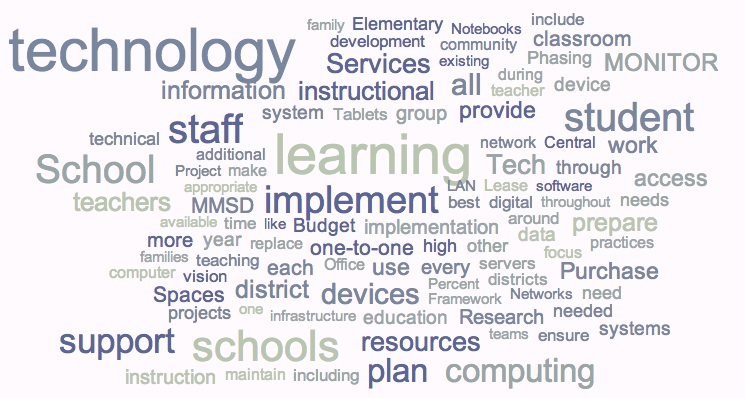
Share

The University Has No Clothes: The notion that a college degree is essentially worthless has become one of the year’s most fashionable ideas, with two prominent venture capitalists (Cornell ’89 and Stanford ’89, by the way) leading the charge.

Daniel Smith:

Pity the American parent! Already beleaguered by depleted 401(k)s and gutted real-estate values, Ponzi schemes and toxic paper, burst bubbles and bear markets, he is now being asked to contend with a new specter: that college, the perennial hope for the next generation, may not be worth the price of the sheepskin on which it prints its degrees.
As long as there have been colleges, there’s been an individualist, anti-college strain in American culture–an affinity for the bootstrap. But it is hard to think of a time when skepticism of the value of higher education has been more prominent than it is right now. Over the past several months, the same sharp and distressing arguments have been popping up in the Times, cable news, the blogosphere, even The Chronicle of Higher Education. The cost of college, as these arguments typically go, has grown far too high, the return far too uncertain, the education far too lax. The specter, it seems, has materialized.
It’s no surprise, given how the Great Recession has corroded public faith in other once-unassailable American institutions, that college should come in for a drubbing. But inevitability is just another word for opportunity, and the two most vocal critics are easy to identify and strikingly similar in entrepreneurial self-­image. In the past year or so, James Altucher, a New York-based venture capitalist and finance writer, has emerged through frequent media appearances as something of a poster boy, and his column “8 Alternatives to College” something of an essential text, for the anti-college crusade. The father of two young girls, Altucher has a very personal perspective on college: He doesn’t think he should pay for it. “What am I going to do?” he asked last March on Tech Ticker, a popular investment show on Yahoo. “When [my daughters are] 18 years old, just hand them $200,000 to go off and have a fun time for four years? Why would I want to do that?” To Altucher, higher education is nothing less than an institutionalized scam–college graduates hire only college graduates, creating a closed system that permits schools to charge exorbitant ­prices and forces students to take on crippling debt. “The cost of college in the past 30 years has gone up tenfold. Health care has only gone up sixfold, and inflation has only gone up threefold. Not only is it a scam, but the college presidents know it. That’s why they keep raising tuition.”

Share

The Early-Decision Racket

James Fallows

In 1978 Willis J. Stetson, known as Lee, became the dean of admissions at the University of Pennsylvania. The new job was quite a challenge. Penn at the time was in a weak position. In an era when big-city crime rates were still rising, its location in West Philadelphia was a handicap. Its promotional efforts took pains to point out that despite its name, the University of Pennsylvania was a private university and a member of the Ivy League, like Yale and Harvard, not of a state system, like the University of Texas. But within the Ivy League, Penn had acquired the role of backup or safety school for many applicants. “I would estimate that in the 1970s maybe forty percent of the students considered Penn their first choice,” Stetson told me recently. For the rest, Penn was the place that had said yes when their first choice had said no.
Stetson’s job, and that of the Penn administration in general, was to make the school so much more attractive that students with a range of options would happily choose to enroll. Through the next decade the campaign to make Penn more desirable was a success. As urban life became safer and more alluring, Penn’s location, like Columbia’s, became an asset rather than a problem. Stetson and his staff traveled widely to introduce the school to potential applicants. When Stetson first visited the Harvard School, a private school for boys in California’s San Fernando Valley, he found that few students had even heard of Penn. The school is now coed and known as Harvard-Westlake, and of the 261 seniors who graduated last June, more than a quarter applied to Penn. The Lawrenceville School, in New Jersey, and Phillips Exeter Academy, in New Hampshire, have in recent years sent more students to Penn than to any other college. Colleges may complain bitterly about rankings of their relative quality, especially the “America’s Best Colleges” list that U.S. News & World Report publishes every fall, but a college is quick to cite its ranking as a sign of improvement when its position rises. When U.S. News published its first list of best colleges, in 1983, Penn was not even ranked among national universities. Last year it was tied with Stanford for No. 6–ahead of Dartmouth, Columbia, Cornell, and Brown in the Ivy League, and of Duke and the University of Chicago.

Share

Schools and Citizens

Robin West:

It is no surprise, given the stakes, that education reform is now one of the major battles in American politics. Particularly at the municipal and state levels–from Washington, D.C. to Boston to Chicago–it has created upheaval not only in schools, but also in elections, as Democrats and unions have parted ways and new pressure groups have emerged to funnel cash toward candidates who espouse the reform movement’s vision.
All of this leaves Diane Ravitch, a historian and assistant secretary of education under Presidents George H. W. Bush and Bill Clinton, troubled. In her new book Reign of Error, she mounts a well-documented and generally compelling case against the agenda of the “corporate school reform movement” of the last twenty-five years. She takes on its advocacy of testing and accountability as a means of raising the quality of low-performing schools; its promotion of for-profit, nonprofit, and cyber charter schools; its urge to replace professional educators with inexperienced college graduates and swap school board members, superintendents, and principals for corporate executives.
These are familiar complaints. Ravitch’s particular contribution is to unpack the philosophical assumptions guiding the reform movement. Reformers’ goals–higher test scores for all students and a reduced gap in achievement between affluent and poor, white and nonwhite–seem admirable. But Ravitch argues that their achievement comes at the cost of replacing both the ideal and the experience of education as a public good–provided by publicly financed, publicly controlled institutions that aspire to educate future citizens for their public responsibilities and adult lives–with an understanding of education as a private commodity chosen by parents. This commodity, like others, would be produced by rival corporations motivated by profit. Corporations would seek to educate not for the responsibilities of citizenship but for success in competitive markets. The philosophical and ideological commitment to the corporate over the public, Ravitch contends, threatens real damage not only to the education of mostly low-income children, but, more broadly, to our republic and the social compact and civil society on which it rests.

Share

Independent charter school debate highlights ideological divide

Erin Richards:

A contentious proposal to expand independent charter schools in Wisconsin worries public-school advocates because it would further reduce aid to traditional districts and open the door for more private companies to run public schools.
But advocates of the bill, in a vigorous debate in Madison on Thursday, argued that’s largely the point — that it would offer more public-school options to families, as well as bring Wisconsin’s charter-school law in line with other states.
There are hints that such a change is too controversial to pass the Senate, primarily because of the financial effect it could have on school districts statewide. But that didn’t stop a robust, seven-hour debate about Assembly Bill 549 in the Assembly’s Committee on Urban Education — much of which revolved around differing ideologies about how to provide quality options for all in public education.

Share

School Climate: Bowhunting in America

The Economist:

THEODORE “TEDDY” ROOSEVELT, soldier, president and outdoorsman, once summed up his vision for America as a “doctrine of the strenuous life”. Hunting lay at the heart of that doctrine: the virile business of learning to shoot straight, to track beasts through brutal heat or cold and to master “buck fever”–a nervous excitement felt in the face of prey that must be suppressed by effort of will. Years before he declined to blast a bear tethered to a tree by his hosts on a 1902 hunt, spawning admiring newspaper cartoons and the worldwide teddy-bear industry, Roosevelt crafted and promoted a “credo of fair chase”.
In addition to encouraging sportsmanship, his vision of the American hunt was democratic. Though he crossed oceans to shoot lions and scaled mountains to hunt bears, Roosevelt deplored Europe’s elitism, with its royal forests and aristocratic estates wherein lisping sons of privilege chased their father’s deer for sport. Closer to home Roosevelt and his allies were dismayed by the near-extinction of the buffalo and other species, driven by such forces as gun technology and competition for land.

Share

StudentsFirst Evaluates Wisconsin Schools (D+)

studentsfirst:

Wisconsin can improve many of its educational policies to make its public school system more student-centered. Specifically, the state can do more to prioritize teacher effectiveness in decision-making and empowering parents with information and quality choices.
Despite educator evaluations that include student academic growth as a significant factor, Wisconsin continues to prioritize seniority, rather than effectiveness, in its personnel decisions. Wisconsin empowers parents with choices through public charter schools and a model opportunity scholarship program that prioritizes low-income students stuck in low-performing schools. However, the state lacks a strong charter accountability framework that holds authorizers accountable for school performance. Wisconsin also does not empower parents with accessible information regarding school and classroom performance, nor does it guarantee that no student will be placed with an ineffective teacher for two consecutive years.

Laura Waters takes a look at New Jersey’s report card.

Share

Madison Superintendent: Teachers Must Get on Board with Tech Plan

Pat Schneider:

“When a teacher tells me they want to opt out of using technology because of their lack of comfort, it means students are not getting access to tools that have become an essential part of life, certainly of work life,” Cheatham told school board members Monday. “I don’t think that’s fair. I don’t think that’s okay. We need to demand that all students have access to technology they will be expected to use when they go on to college and career.”
Cheatham’s remarks came at the end of a meeting where school board members heard an outline of her district technology plan, which calls for a one-to-one ratio of devices to students and teachers by the 2018-2019 school year.
“It’s scary. We’re asking people to think differently about the profession,” Cheatham said, recalling resistance to the daily use of email by some teachers when that technology emerged. “But an adult’s comfort level shouldn’t be something that stops us from doing the right thing for kids.”

It may well be time to simply let teachers buy their own equipment via a stipend.

Share

Defending the Humanities and Heather Mac Donald

Peter Wood:

Heather Mac Donald may be the Ida Tarbell of our age: a writer who combines a meticulous eye for facts, intellectual brilliance, a sure sense of the historical moment, and deep moral seriousness. Tarbell is famous for her History of the Standard Oil Company, serialized in McClure’s Magazine between 1902 and 1904, and is celebrated today by the Left for her having struck a blow against Big Business. She even merited her own postage stamp in 2002, along with three other women journalists.
It may be a while before Mac Donald wins such philatelic immortality. Like Tarbell, she is a deft expositor of the excesses of large enterprises that have grown unaccountable and corrupt. But Mac Donald’s preferred topics are big city government and, increasingly, academia. The Left has a hard time coming to grips with the prospect that the latter day equivalent of Standard Oil may be the University of California.
Witness the splenetic rage of Rebecca Schuman writing on Slate. The occasion was the republication in The Wall Street Journal of an essay that Mac Donald first published in City Journal: “The Humanities Have Forgotten Their Humanity.” Mac Donald offered a fer instance of why students across the country are forsaking majors in the humanities and minimizing the number of courses they take in the traditional humanistic departments. Her essay explains what happened at UCLA in 2011, when the English Department deep-sixed its requirements in “the cornerstones of English literature” in favor of some theory-besotted junk. Schuman’s rebuttal takes the form of a series of snotty rhetorical questions meant to imply that Mac Donald is a cultural ignoramus.

Share

Singapore will introduce programming lessons in public schools to boost the economy

Terence Lee:

The Infocomm Development Authority of Singapore (IDA), a government agency in charge of the country’s internet industry, has announced plans to progressively introduce software programming classes into public schools, giving students an opportunity to write code in a classroom setting. The news was first reported on Good Morning Singapore in mandarin yesterday.
Given the rapidly changing nature of the technology industry, the agency hopes to roll out these classes quickly in the next few months with the ultimate aim of keeping the Singapore economy at the top.
“Infocomm technology is getting to be more pervasive, and we all recognize that it’s going to be a strategic catalyst for [Singapore’s] competitive advantage,” said James Kang, assistant chief executive of the government chief information office at IDA.
To be sure, topics like programming and 3D printing are already available in some schools as extra-curricular activities with IDA’s help, so it’s unclear for now how these classes differ from previous initiatives, and how the IDA works with the education ministry to introduce the field. Tech in Asia has contacted the agency for more details.

Related: Madison considers more hardware for schools.

Share

Humanities scholarship is incredibly relevant, and that makes people sad.

Natalia Cecire:

The humanities are often represented as an irrelevant, moribund, and merely preservationist field, passing on old knowledge of old things without producing anything new. That’s why it keeps having to be “defended” by people saying, “no! old shit matters too!” (It does–witness one chapter from Washington Irving’s 1819-20 Sketch-Book of Geoffrey Crayon, Gent. getting rebooted yet again, this time as a goofy paranormal procedural–but this already accepts a basic misrepresentation of humanities scholarship.)
Yet it’s precisely the production of new knowledge in the humanities that powerfully influences the everyday lives of Americans, and which leads to pearl-clutching by those who insist on the humanities’ irrelevance. David Brooks, for example, is very sad that the humanities have failed to be stagnant. He claims that humanities enrollments have substantially declined (factually untrue) since the rise of critical theory and its concurrent attention to race, class, gender, sexuality, and disability in the 1980s. But the humanities didn’t just turn to these categories for kicks (still less because it was “fashionable,” as culture-wars critics like Alan Sokal have claimed); turning to them was the result of research. Through research, scholars found out that these categories were complicated, powerful, and important for understanding culture. Brooks seems to suppose that doing research that has a broad impact makes your field irrelevant. This is deranged.*

Share

Academic Kindness A record of unsolicited kindness, unexpected goodwill, and excessive generosity in academia.

Academic Kindness:

was spending time at my undergraduate school’s library putting the final touches on my Masters thesis, and I stopped in to the student union for lunch. While in line, I ran into a professor emeritus that I had taken classes from as an undergraduate. He asked what I was up to, as well as asking why I was on campus a year or so after graduating. I told him about my thesis, and that I was graduating in two weeks, and he told me to submit my CV to the department chair.
Two weeks later?
Masters degree in one hand and a very lucrative adjunct position in the other! This same department also went out of its way (when I was leaving!) to help me with my Ph.D. application materials.

Share

Thinking beyond ourselves: The “crisis” in academic work

Melonie Fullick:

In the past few weeks some interesting and contentious threads of discussion have been unwinding on “Academic Twitter”, in particular one that’s focused on the current conditions of the academic job market in the United States. It seems the debate was kicked off by a post from Rebecca Schuman at Pan Kisses Kafka blog, who criticized a UC Riverside department for the practice of sending out interview requests only five days before the interviews would take place at the annual MLA conference. This provoked a response from Claire Potter in her blog Tenured Radical, in which she insisted that there had to be reasonable explanations for the process. Potter also critiqued the tone of Schuman’s post, describing it as a “hissy fit”. Multiple follow-up posts ensued.
After the exchange between Schuman and Potter, the flames were further fanned by Karen Kelsky’s response at The Professor Is In, wherein she made a comparison between the denial of privilege by the tenured and the denial of racism by white people. The comparison is inappropriate, but Kelsky’s analysis of the advantages of the tenured hit home, and it set off another intense discussion about the responsibilities of tenured faculty in a context where non-tenured peers/colleagues are working in exploitative conditions.
I think there have been a couple of things happening in this debate. One of them is the underlying issue itself – the job market and hiring practices and, at root, the culture of academe and its professionalization process. This is tied closely to the nature of the academic workforce, which in the United States now comprises over two-thirds temporary and/or contingent faculty positions (hence “New Faculty Majority”); tenure is becoming exceptional. But also emerging from this heated exchange about academic working conditions is the question of how we talk with each other, and the issue of the “policing” of people’s participation in the name of civility or professionalism as illustrated in Potter’s response to Schuman.

Share

Government Policy and Tuition in Higher Education

Angela K. Dills, Rey Hernández-Julián, Nathan Hale:

Listed tuition–essentially the sticker price–for US colleges has increased significantly, even after adjusting for inflation. For all institutions of higher education, that increase averages 71 percent since 1990 and 36 percent since 2000.1 Tuition has increased faster in public, four-year institutions, where the increase has averaged 126 percent since 1990 and 62 percent since 2000, but listed tuition has increased in all categories–public and private, for-profit and not-for-profit, two-year and four-year. Private schools’ prices started in 1990 at much higher absolute levels, so although their increases since then have generally been lower in terms of percentage, they were often higher in terms of dollar amount.
In the 2013 State of the Union address, President Obama stated that “taxpayers cannot continue to subsidize the soaring cost of higher education. Colleges must do their part to keep costs down, and it’s our job to make sure they do.” In the same speech, the president argued that policies such as tax credits, grants, and subsidized loans have been important policy tools to “make college more affordable.” In 2007 President George W. Bush signed into law a bill that increased the maximum Pell Grant award–in order, he said, to “help millions of low-income Americans earn a college degree.” 2 Both presidents failed to mention that the policies they supported could themselves have been responsible for some of the increase in tuition. Considering two effects of the subsidies–direct price reduction and higher sticker prices–at the same time is important for understanding the intended and unintended consequences of higher education subsidies.

Share

Association of New Brunswick Teachers: what’s really happening with bargaining?

AUNBT:

If you’re reading this alongside the latest bargaining updates from UNB management, you could be forgiven for wondering if you’d strayed into a parallel universe. UNB management continues to assure the world that they are committed to a negotiated agreement. “Faculty are the lifeblood of any university”, we are told. “We are committed to continuing to negotiate to achieve a new collective agreement,” another email to students insists. Yet there has been little progress on key issues. UNB’s administration seems keen on continuing, but not on concluding, the contract negotiations that began ten months ago.
AUNBT has a simple response to these protestations: send a bargaining team to the table with an actual mandate to bargain.
Negotiating requires that the people in UNB management who make the decisions stop hiding in their offices and board rooms and roll up their sleeves. Merely sending a team to sit in a row at a long table day after day does not amount to negotiating. Denying that team a real bargaining mandate is not negotiating. Refusing even to discuss issues is not negotiating.
No-one strikes recreationally. Certainly not in New Brunswick in January. AUNBT is the only NB faculty union that has never gone on strike. But over 90% of our full-time members have become so frustrated with spending priorities at UNB that they are willing to take that step now. We are not willing to continue to circle the drain. AUNBT members came to UNB to contribute to a nationally competitive comprehensive university. Yet we are discovering that our work is not valued and that the current senior administration refuses to take concrete action to maintain our reputation and standing.

Share

Madison Superintendent Jennifer Cheatham proposes $31 million, five-year technology plan

Molly Beck:

All students in the Madison School District would have their own tablets or notebook computers by the 2018-19 school year under a five-year, $31 million plan proposed by Superintendent Jennifer Cheatham.
If approved, the plan would increase the district’s current
$1.5 million annual technology budget to $4.2 million in the 2014-15 school year to start upgrading the district’s network infrastructure, upgrade or equip classrooms and libraries with new technology or computers, and provide notebook computers to all district teachers and administrators. Elementary teachers also would get tablet computers under the plan.
Costs to upgrade are projected to increase each of the five years of the plan for a total of $31 million spent in that time. Afterward, the annual budget for technology would be about $7 million per year going forward.
…..
Madison School Board members, who formally received the plan at their meeting Monday, were mostly optimistic about the plan. Board member T.J. Mertz questioned whether the program needed to be as extensive as it’s proposed given what he said were other unmet needs in the district and given research that he called “universally disappointing” surrounding such initiatives.
Mertz said in an interview after Monday’s board meeting that he agrees with the majority of the investments in technology under the plan, “but then there’s a third or a quarter where I think it’s going overboard.”
As an example, Mertz said he questions whether every kindergarten student needs their own tablet computer.

Prior to spending any additional taxpayer funds on new initiatives, I suggest that the District consider (and address) the status of past expensive initiatives, including:
Infinite Campus: is it fully implemented? If not, why? Why continue to spend money on it?
“Standards based report cards“.
Connected Math.
Small Learning Communities.
And of course, job number one, the District’s long term disastrous reading scores.
Madison already spends double the national average per student ($15k). Thinning out initiatives and refocusing current spending on reading would seem to be far more pressing than more hardware.

Share

The shame of Cooper Union

Felix Salmon:

The Cooper Union Board of Trustees today managed to snatch defeat from the jaws of victory. It was a depressing and yet entirely predictable vote, which resulted in a depressing and yet entirely predictable statement.
You might remember the tragedy of Cooper Union — the way in which a unique and irreplaceable institution was destroyed by the inflated egos of overpaid technocrats. Well, after many months of outcry and outrage, a glimpse of hope appeared in December: a detailed and hopeful 54-page Working Group Report was submitted to the board, explaining how the institution could still, amazingly continue without charging tuition. Today, the board voted on whether to adopt the report.
As Kevin Slavin explains, the stakes could hardly be higher:

If the vote goes one way, a new, lean, careful Cooper Union will tiptoe forward, tuition-free. It will require equal parts deep sacrifice, wild ambition, and straightforward pragmatism. And it will uphold a 150+ year tradition of free undergraduate education.
If it goes the other way, all of that will disappear. Not just the free tuition, but everything that was built on it. In its place we’ll find a tragic fraud. A joke. A zombie.

Share

For better or worse, Walton Family Foundation plays role in Milwaukee

Alan Borsuk:

What do you say to someone who has given more than $30 million to helps schools and educators in Milwaukee?
My parents taught me to say thank you. Seems like a good practice.
But it’s not that simple when that someone is the Walton Family Foundation, the philanthropic arm of the mega-billions heirs of Sam Walton, the founder of Wal-Mart. Their generous, but ideological-oriented support leaves many people saying thank you and many others wishing the Waltons would go away.
The role of a dozen or so foundations with the assets to have nationwide impact in promoting change in education frequently brings out strong opinions.
The dividing line, not surprisingly, is often over ideas such as school choice, private school vouchers, independent charter schools, and the roles of entrepreneurs and teachers unions. Several of the big foundations, including Walton, strongly support what many call “reform” ideas.
You would think Milwaukee would be a primary venue for the philanthropic titans. We have the oldest and one of the largest urban voucher programs and an energetic charter school sector. But for whatever reasons, we haven’t seen that much of the “billionaire boys club,” as Diane Ravitch, an adamant and leading critic, has called it.
The Bill & Melinda Gates Foundation, the giant among giants, put quite a bit of money into launching small high schools in Milwaukee a dozen years ago or so, leaving behind a few good schools but not too much overall. Otherwise, we’ve been kind of low on the Gates priority list, at least compared to some other places.

Share

Age of Ignorance

Charles Simic:

Widespread ignorance bordering on idiocy is our new national goal. It’s no use pretending otherwise and telling us, as Thomas Friedman did in the Times a few days ago, that educated people are the nation’s most valuable resources. Sure, they are, but do we still want them? It doesn’t look to me as if we do. The ideal citizen of a politically corrupt state, such as the one we now have, is a gullible dolt unable to tell truth from bullshit.
An educated, well-informed population, the kind that a functioning democracy requires, would be difficult to lie to, and could not be led by the nose by the various vested interests running amok in this country. Most of our politicians and their political advisers and lobbyists would find themselves unemployed, and so would the gasbags who pass themselves off as our opinion makers. Luckily for them, nothing so catastrophic, even though perfectly well-deserved and widely-welcome, has a remote chance of occurring any time soon. For starters, there’s more money to be made from the ignorant than the enlightened, and deceiving Americans is one of the few growing home industries we still have in this country. A truly educated populace would be bad, both for politicians and for business.

Share