College Rankings
Wall Street Journal and Times Higher Education:
Harvard took the top spot in our rankings of U.S. colleges, followed by Columbia University. Analyze the data, compare schools and create your own customized rankings.
Wall Street Journal and Times Higher Education:
Harvard took the top spot in our rankings of U.S. colleges, followed by Columbia University. Analyze the data, compare schools and create your own customized rankings.
U.S. Customs and Border Protection agents need to have “reasonable suspicion” to carry out “advanced” searches on electronic devices, including smartphones and tablets, that belong to individuals entering or exiting the country, the agency announced Friday.
The updated rules allow agents to continue to inspect information that’s stored on a device, not in the cloud. But from now on, they can’t copy that information or connect to an external device to analyze the contents, unless they have reasonable suspicion of criminal behavior.
The new homegrown CEO of the Chicago Public Schools said Thursday that the sprawling school system she just inherited needs an independent inspector general, calling the one whose probes ousted two of her predecessors “an honest person.”
Janice Jackson — a former teacher and principal with children enrolled in the country’s third-largest district that educated her — ascended to CEO after last month’s resignation of Forrest Claypool, who replaced the currently imprisoned Barbara Byrd-Bennett. She is Mayor Rahm Emanuel’s fifth appointed CEO since he took office in 2011, and the eighth schools leader CPS high schoolers have known since starting kindergarten. Her role as acting CEO is expected to become permanent pending school board approval later this month.
As she works to rebuild trust and instill stability in the troubled school system, Jackson said she met “early on” with Nicholas Schuler, the independent watchdog who caught Claypool lying repeatedly during an ethics probe sparked by the Chicago Sun-Times. He also is credited with handling the day-to-day investigation of Byrd-Bennett.
At Wright State University in Ohio, the French horn and tuba professors are out. So is the accomplished swimming team.
At Kansas State, Italian classes are going the way of the Roman Empire.
And at the University of Central Missouri, The Muleskinner, the biweekly campus newspaper, is publishing online-only this year, saving $35,000 in printing costs.
Just as many universities believed that the financial wreckage left by the 2008 recession was behind them, campuses across the country have been forced to make new rounds of cuts, this time brought on, in large part, by a loss of international students.
It’s been eight years since the internet philosopher David Weinberger wrote, “Transparency is the new objectivity.” It’s been 16 years since Bill Kovach and Tom Rosenstiel said, in their great book The Elements of Journalism, “The willingness of the journalist to be transparent about what he or she has done is at the heart of establishing that the journalist is concerned with the truth.”
So transparency is not a new idea in journalism. But we’re finally starting to see what it means to build a value proposition around it. For my final post in what has been a devastating — but also inspiring — year for the public service press, I will try to summarize what is involved when transparency becomes the primary means of trust production.
It means you show your work. And at least eleven other things:
Liu Hu spent two decades pushing hard at the bounds of censorship in China. An accomplished journalist, he used a blog to accuse high-level officials of corruption and wrongdoing and to publish details of misconduct by authorities.
In late 2013, he was arrested and accused of “fabricating and spreading rumours.” Late in 2016, a court found him guilty of defamation and ordered him to apologize on his social-media account, which at the time had 740,000 followers. If he was unwilling to do that, the court said, he could pay $115 to publish the verdict on an authorized website. Mr. Liu paid the money.
Then, he said, the judge raised the fee to $2,900.
But in the midst of Mr. Liu’s attempt to seek legal redress early in 2017, he discovered that his life had abruptly changed: Without any notice, he had been caught up in the early reaches of a social-credit system that China is developing as a pervasive new tool for social control – one expected to one day tighten the state’s grip on its citizens. Critics have called it an Orwellian creation – a new kind of “thought police.”
Two advocacy groups have taken legal action in Orleans Parish Civil District Court against the New Orleans Center for Creative Arts over the expulsions of two students seen on campus surveillance video smoking what appeared to be — but what they say was not — marijuana.
The Louisiana Justice Institute has asked for an injunction against the school on behalf of Families and Friends of Louisiana’s Incarcerated Children, alleging a state open meetings law violation, breach of contract and a violation of the students’ right to due process.
“My clients got pranked on Halloween,” Tracie Washington of the Louisiana Justice Institute said. “Everyone knows it was a practical joke, but they (NOCCA) will not back down.”
Charisse A. Gulosino
Elif Şişli-Ciamarra:
This study provides the first systematic analysis of the composition of charter school governing boards. We assemble a dataset of charter school boards in Massachusetts between 2001 and 2013 and investigate the consequences of donor and founder representation on governing boards. We find that the presence of donors on the charter school boards is positively related to financial performance and attribute this result to the donors’ strong monitoring incentives due to their financial stakes in the school. We also show that financial outcomes are not generated at the expense of academic outcomes, as the presence of donors on the boards is also associated with higher student achievement. Founder representation on charter school boards, on the other hand, is associated with lower financial performance but higher academic achievement.
As more and more schools (currently 72 since the Dear Colleague letter, and counting) have found themselves on the losing end of due process decisions, a handful of institutions have resisted in a troubling manner. Rather than acknowledge that court decisions showed the need to reform their unfair procedures, schools instead have maneuvered to neuter an accused student’s efforts to go to court.
The trend started a few months ago at Penn State. After a temporary restraining order blocked the university from suspending a student, the university abruptly announced (without informing the court) that it was withdrawing the student’s guilty finding—but would re-try him, subject to eliminating some (but not all) of the procedural defects in the investigation identified by the court. The accused student’s lawyer filed a contempt motion; the day before the hearing on the motion, Penn State withdrew plans for a new disciplinary hearing for the student.
Then came Texas, where the university president overturned a not guilty finding after the accuser—whose father was a major donor to the school—had filed an appeal. The accused student sued; the judge in the case scheduled a hearing, at which the president was scheduled to testify. Less than a week before the hearing, Texas announced that the president had cancelled his guilty finding, and would submit the accuser’s appeal to another, unnamed Texas administrator. But the court called the university’s bluff, and refused to cancel the hearing. That morning, just before the president was to take the stand, the two sides settled, and the university permanently withdrew the guilty finding.
In Madison, for example, the total tax bill for a $200,000 home in the Madison School District assessed at 100 percent of its fair market value was $4,632, fourth highest in the county. The highest was $4,988 for a Madison home in the Verona School District, followed by $4,850 for a Madison home in the Monona Grove School District and $4,685 for a Fitchburg home in the Verona School District.
The lowest for a home of the same profile was $2,649 in the town of Bristol in the Columbus School District.
Tax bills began arriving in mailboxes in mid-December. The deadline for owners to pay at least the first installment of their property taxes is Jan. 31.
The initial deadline is the same in Madison, but the city has switched from two to four installments, with the second installment due March 31, the third May 31 and the final on July 31, the latter date the same as other municipalities in the county.
Madison spends far more than most, now nearly $20,000 per student.
the U.S. and landed in western Maine. They planned to grow potatoes. Instead they were taken in for a summer by a kind family, the Adamses, whose ramshackle farm was a mess, a melange of dogs and cows and chickens and broken tractor equipment. To Bernd, the place was paradise, as he writes in his 2007 memoir, The Snoring Bird, recalling the adventures he shared with the two eldest Adams kids, Jimmy and Billy. The boys built a raft out of barn wood and spent countless hours watching baby catfish and white-bellied dragonflies. The Adamses taught Bernd English. He killed a hummingbird with his slingshot. He ran around barefoot and shirtless.
Bernd Heinrich is now 77 years old and the author of 21 books. The vaunted biologist E. O. Wilson speaks of him as an equal, calling him “one of the most original and productive people I know” and “one of the best natural-history writers we have.” Runners also revere him, for his speed and for his 2002 book, Why We Run. “He was the first person of scientific stature to say that ultramarathoning is a natural pursuit for humans,” says Christopher McDougall, author of the 2009 bestseller Born to Run. “He did the research himself, in 100-plus-mile races.”But let’s set aside the literary plumage for a moment. In many ways, Bernd remains the same inquisitive kid who found bliss in his first American summer. He still runs, though no farther than about 12 miles at a time. He still watches wildlife, intently, and he still climbs trees. Sometimes he even climbs trees in snowshoes. In old age, he is embracing the joys of youth anew.
And he has returned to the Maine woods, to a 640-acre plot about 15 miles from that old farmhouse where he spent the summer of 1951. He owns a pickup truck and drives without compunction, but he does not have running water, phone service, or a refrigerator. He heats solely with wood and relies on a small solar panel to power his laptop and Wi-Fi router. He sometimes goes two months without ever leaving the property.
Bernd is hardly a hermit. For the past three years, he has shared the homestead with his partner, 57-year-old Lynn Jennings, a nine-time U.S. cross-country champion and the 10,000-meter bronze medalist at the 1992 Barcelona Olympics. It’s a happy and fruitful arrangement. Over the past five years, Bernd has staged a late-life creative tear that calls to mind Johnny Cash or Georgia O’Keeffe, churning out a steady stream of academic papers, columns for Natural History magazine, and four books, including The Naturalist’s Notebook, a just-published guide cowritten with Nathaniel Wheelwright, as well as 2016’s One Wild Bird at a Time, which renders certain jays and blackbirds on his property as unique individuals, as fully realized as Elaine and Kramer on Seinfeld.
In 2015-’16, Wisconsin was home to just over a million school-aged children. About 860,000 attended public schools. About 123,000 attended private schools: about 90,000 who paid tuition, and about 33,000 who used vouchers. About 20,000 children were home-schooled.
Vouchers are taxpayer-funded tuition subsidies that help children attend private schools, the vast majority of which are religious. In Wisconsin, the annual voucher payments will rise to about $7,500 per K-8 pupil and around $8,000 per high school student this fall.
To qualify for a voucher in the statewide program, students have to come from families earning no more than 185% of the federal poverty level, or about $45,000 for a family of four or about $52,000 if the parents are married. The income limit for the Racine and Milwaukee programs is 300% of the federal poverty level.
Vouchers are different than charter schools, which are fully public schools that are privately operated, often by nonprofits. Charter schools receive freedom from some state rules and school district oversight in exchange for demonstrating higher-than-average student achievement, the terms of which are outlined in their charters, or contracts.“School choice” refers to vouchers and charters and other options parents can choose outside their assigned neighborhood school. But vouchers are the most controversial because they usually support religious schools that don’t have to follow all the same rules as public schools. Private schools that accept vouchers are not legally obligated to serve all children with special needs, and they do not have to disclose all the same data as public schools.
Voucher schools spend substantially less per student than traditional taxpayer funded school districts.
Locally, Madison spends nearly $20,000 per student annually, despite tolerating long term, disastrous reading results
Julia Angwin Noam Scheiber and Ariana Tobin:
A few weeks ago, Verizon placed an ad on Facebook to recruit applicants for a unit focused on financial planning and analysis. The ad showed a smiling, millennial-aged woman seated at a computer and promised that new hires could look forward to a rewarding career in which they would be “more than just a number.”
Some relevant numbers were not immediately evident. The promotion was set to run on the Facebook feeds of users 25 to 36 years old who lived in the nation’s capital, or had recently visited there, and had demonstrated an interest in finance. For a vast majority of the hundreds of millions of people who check Facebook every day, the ad did not exist.
IN 1979, the California poet Robert Hass published his now-famous poem, “Meditation at Lagunitas.” Hass’s poem criticized poststructuralist literary theory (which he called “the new thinking”) for disregarding particulars in favor of “the luminous clarity of a general idea,” and for adopting a pathologically mournful philosophy of language in which “a word is elegy to what it signifies.” As a consequence of this sort of thinking, Hass wrote, “everything dissolves: justice, / pine, hair, woman, you and I.” This eloquent lament did not stop the rise of literary theory (neither did Steven Knapp and Walter Benn Michaels’s blistering essay “Against Theory,” published a few years later). And, although much has changed in the intervening years — theory is no longer all “about loss,” in Hass’s words — the place of theory in the academy seems secure. Fewer people may “do” theory now, but it survives as a kind of conventional wisdom, a default approach to how literary scholars treat language and read texts.
Nevertheless, if theory was as problematic as Hass’s poem intimated 40 years ago, shouldn’t we be more suspicious of the conventional wisdom that is its legacy? According to Toril Moi, the answer is yes. Her important new book, Revolution of the Ordinary, makes a case for rejecting the approach to language that the “theory project” produced. Like the speaker of Hass’s poem, Moi believes that the way literary theories think about language has corrosive ethical and political consequences. Unlike Hass, she does not counter theory with poetry. Nor does she offer a substitute theory to correct the problems of the old. Instead, she looks to philosophy, particularly to “ordinary language philosophy” — by which she means the work of Ludwig Wittgenstein and, to a lesser extent, J. L. Austin, as interpreted by Stanley Cavell. For Moi, this philosophical constellation promises to renovate literary studies by reconnecting our language to the world from which theory severed it.
The state’s theory of the crime fell apart this past October, when Potkin and a team from the Innocence Project presented nearly a week’s worth of testimony from several renowned entomologists and a medical examiner, each of whom demonstrated why the state’s narrative never made any scientific sense. In short, had Bailey been slaughtered in the pre-dawn hours and his body left outside all day in the summer heat, as the state claimed, blowflies — nature’s swift and ubiquitous first responders to scenes of death — would have quickly colonized his remains, leaving visible clusters of eggs in his various wounds.
Still, the prosecution would not be bowed: At the October hearing, prosecutor Sandra DiGiacomo tried to peddle the notion that flies in Las Vegas behave unlike flies everywhere else in the world. It didn’t work. In a detailed opinion filed December 19, Judge Stefany Miley concluded that the testimony of Lobato’s experts was credible, and had a jury heard such evidence, she might have been acquitted. Miley granted Lobato a new trial.
Urban Pulse is a framework that uses computational topology techniques to capture the pulse of cities. This is accomplished by first modeling the urban data as a collection of time-varying scalar functions over different temporal resolutions, where the scalar function represents the distribution of the corresponding acitivy over the city. The topology of this collection is then used to identify the locations of prominent pulses in a city. The framework includes a visual interface that can be used to explore pulses within and across multiple cities.
To tell the story of what sugar does to your brain, you have to start with the thought that triggers your need for a hit of sweetness.
It often happens in the afternoon when your brain, which runs on sugar, starts to get hungry.
To satiate the craving your brain activates a string of neurons, often referred to as the reward pathway, which pump the chemical dopamine into your brain.
All of a sudden you need a chocolate bar or that sweet pastry you saw at lunchtime.
If you act on that craving, the reward pathway then switches mode, pumping chemicals such as beta-endorphins into your brain, generating feelings of pleasure.
In December, doctors at a VA hospital in Oregon decided to admit an 81-year-old patient. He was dehydrated, malnourished, plagued by skin ulcers and broken ribs — in the medical professionals’ opinion, he was unable to care for himself at home. Administrators, however, overruled them.
Was there no bed for this poor man? No, the facility had plenty of beds; in fact, on an average day, more than half of the beds are empty, awaiting patients. Was there no money or medicine to care for him? No, and no. Reporting by the New York Times suggests that Walter Savage was, perversely, turned away because he was too sick. Very sick patients tend to worsen the performance measures by which VA hospitals are judged.
Although decades of research show that people tend to see themselves in the best possible light, we present evidence that people have a surprisingly grim outlook on their social lives. In 11 studies (N = 3,293; including 3 preregistered), we find that most people think that others lead richer and more active social lives than they do themselves. We show that this bias holds across multiple populations (college students, MTurk respondents, shoppers at a local mall, and participants from a large, income-stratified online panel), correlates strongly with well-being, and is particularly acute for social activities (e.g., the number of parties one attends or proximity to the “inner circle” of one’s social sphere). We argue that this pessimistic bias stems from the fact that trendsetters and socialites come most easily to mind as a standard of comparison and show that reducing the availability of extremely social people eliminates this bias. We conclude by discussing implications for research on social comparison and self-enhancement. (PsycINFO Database Record.
Not only is it possible, but it is becoming more and more likely to happen soon.
The reason it hasn’t happened yet is because nobody has applied the correct strategy yet. I do not think it would take heroic feats of execution, given the right strategy. In order to compete with Google’s strategy, or understand why it can be beaten in the first place, it is helpful to understand it:
Despite Google’s profits, talent, and maturity, the number of ways a user can possibly search for something is very limited. The way that Google Search presents results to the user, given an input query, is also out of the user’s hands. The user, no matter how savvy, cannot instruct Google to use a different kind of search algorithm. Nor can the user see the details of the algorithm that is chosen for them, as it is a highly guarded trade secret.
This is of course a deliberate choice on Google’s part. There are a few reasons, in my opinion, why Google’s strategy is successful:
Arvind, Hemanth and Marc actually only came to the United States to attend university. Arvind Thiruvengadam and Hemanth Kappanna are both from India, from Chennai and Bangalore, respectively, while Marc Besch is from Biel, Switzerland. They all ended up in West Virginia, not exactly the America you dream of when you come from Chennai or Bangalore. Probably not even when you come from Biel.
Attached to West Virginia University is an institute for emissions research – also, perhaps, not the field of study you dream of when you’re around 30 and aspiring to a career in auto engineering. The institute is called the Center for Alternative Fuels Engines and Emissions (CAFEE), located in an unprepossessing corrugated iron structure in a clearing in the hills of West Virginia. In other words, in the middle of nowhere. The nearest town is Morgantown, the nearest place you might have heard of, Pittsburgh.
This is where Arvind, Hemanth and Marc began measuring emissions. First truck emissions and then passenger cars – until they accidentally uncovered a scandal that brought the world’s biggest carmaker at the time to its knees. The emissions tests carried out by Arvind, Hemanth and Marc have already cost the Volkswagen company around 25 billion euros, mainly in buybacks, fines and settlements, and that is by no means the end of it. Because of a study written by these three students, former VW managers are wanted by the FBI, one has been arrested in the U.S. and others are in custody in Germany. One German politician called the diesel scandal “the biggest industrial scandal since World War II.”
Storch said, “We noticed behavior that (led) us to search the belongings of two students” that turned up individual BB guns on school property. The high school’s educational resource officer, a Madison police officer dedicated to each of the city’s four high schools, was notified, and the students were taken to offices, according to Storch.
Related: Police calls to Madison schools.
Ministers are being urged to fine schools that are informally excluding poorly performing pupils, amid mounting evidence that some institutions are attempting to game the exam system.
Hundreds of cases of children being removed from schools on tenuous and potentially illegal grounds have been reported to a charity offering legal advice to parents. Experts blame the rise of so-called “off-rolling” on schools that are under pressure to improve performance.
Children with special educational needs and disabilities (Send) are thought to be the most affected by the informal methods designed to move them out of a school without recording their departure as an official exclusion. With pressure mounting on the Department for Education to act, Anne Longfield, the children’s commissioner for England, said some schools were “abandoning their responsibility” to give a decent education to their children. She told the Observer it was “increasingly clear that some schools are gaming the system by taking children they think won’t get good results off their rolls before they sit their exams. Any school that does this is abandoning their responsibility to children, passing the buck to others who are often ill-equipped and don’t have the support they need to provide a good education. As a result, very vulnerable children are falling through the gaps in the education system, increasing the chances they will then go on to lead difficult adult lives.
Leilany Medina, 11, loves books so much that she’d like to become a librarian. But even she sometimes forgets to return books on time, especially if she hasn’t quite finished. And she’s racked up some late fines.
But local libraries are providing a way out for such book lovers, and creating new lures for other children, who haven’t caught the reading bug, by doing away with late fees, automatically signing up students for library cards through their schools and allowing them to “read away” their fines and fees.
The most recent move was a vote last week by Los Angeles County supervisors to end late fees for patrons under 21 at county-run libraries, effective immediately. That did not help Leilany because officials offered no amnesty for past fines.
So on Thursday, Leilany went to the East Los Angeles Library, a county facility, to read off $4 in late fees. Students can eliminate debt at a rate of $5 an hour under a program that took effect in June.
“You tell them you’ll read and they’ll sign you in and you start,” said Leilany, a fifth-grader at Morris K. Hamasaki Elementary in East L.A. “When your head starts losing the book you can stop reading and they tell you how much money they took away.”
She’s especially fond of fairy tales and Megan McDonald’s “Judy Moody” series, about a third-grader with many notable emotional states.
I manage the Linux labs at my college campus, but I also maintain the Windows and Distance Learning Center labs from time to time, especially during testing periods. During finals week, this can be incredibly frustrating, since sitting in a lab, watching students take a final is so much more boring than taking the final itself. I’m not even allowed to have a phone.
Most Finals are boring, unrestricted ones, but a few online professional certifications and placement tests are very strict in their requirements. How we set up for these tests is to boot the computer into a temporary Live OS, which does not save any settings, and automatically opens Firefox full screen in Incognito mode.
Firefox is the only thing that is allowed to run, and if the window closes, the computer reboots, resetting the OS back to defaults. If the user leaves the page set by the test taker, the browser closes. If they open a terminal or other program not allowed by that test (like a calculator) then the system is locked until a proctor (usually me) unlocks the screen.
Last year I worked undercover at a temp agency in Los Angeles. While I took the assignment for an article I was working on, I’d also been unemployed for over a year. It seemed I was in that middling space of over-qualified for entry-level jobs, under-qualified for the jobs I most desired, and aged out or irrelevant as a labor union organizer, where I’d gained the bulk of my work experience.
One altered resume later I joined a temp agency and became the biggest ghost of them all, a member of America’s invisible workforce: people who ship goods for big box stores like Wal-Mart or Marshalls, sort recyclables for Waste Management, fulfill online orders for Nike, bottle rum for Bacardi. I’d found my squad, a cadre of screw-ups, felons, floozies, single moms, the differently abled, students, immigrants, the homeless and hungry, the overqualified and under-qualified, all of us ghosted by the traditional marketplace.
***
How could so many teachers, principals, and superintendents believe that minority students have equal educational opportunities, when study after study has shown that minority students are disproportionately suspended and expelled from school? How could they be unaware of the statistics that show clear racial disparities in graduation rates and college attendance? Although the achievement gap has been at the center of our national conversation on education for decades, many educators seem blissfully (or intentionally?) unaware of it. It’s dumbfounding.
At the same time, this may help explain why so many educators across the country take a dim view of charter schools, most of which enroll low-income students of color who have been underserved by the traditional public school system. If you have deluded yourself into believing that things in traditional district schools are fine for kids of color, then of course there isn’t any need for charter schools.
I use standardized test scores from roughly 45 million students to describe the temporal structure of educational opportunity in over 11,000 school districts—almost every district in the US. For each school district, I construct two measures: the average academic performance of students in grade 3 and the within-cohort growth in test scores from grade 3 to 8. I argue that third grade average test scores can be thought of as measures of the average extent of educational opportunities available to students in a community prior to age 9. Growth rates in average scores from grade 3 to 8 can be thought of as reflecting educational opportunities available to children in a school district between the ages of 9 and 14.
I document considerable variation among school districts in both average third grade scores and test score growth rates. Importantly, the two measures are uncorrelated, indicating that the characteristics of communities that provide high levels of early childhood educational opportunity are not the same as those that provide high opportunities for growth from third to eighth grade. This suggests that the role of schools in shaping educational opportunity varies across school districts. Moreover, the variation among districts in the two temporal opportunity dimensions implies that strategies to improve educational opportunity may need to target different age groups in different places. One additional implication of the low correlation between growth rates and average third grade scores is that measures of average test scores are likely very poor measures of school effectiveness. The growth measure I construct does not isolate the contribution of schools to children’s academic skills, but is likely closer to a measure of school effectiveness than are measures of average test scores.
Locally, Madison spends far more than most, achieving average results.
As the year draws to a close, so has EFF’s long-running Freedom of Information Act lawsuit against the Drug Enforcement Agency about the mass phone surveillance program infamously known as “Hemisphere.”
We won our case and freed up tons of records. (So did the Electronic Privacy Information Center.) The government, on the other hand, only succeeded in dragging out the fake secrecy.
In late 2013, right as the world was already reeling from the Snowden revelations, the New York Times revealed that the AT&T gives federal and local drug enforcement investigators access to a phone records surveillance system that dwarfs the NSA’s. Through this program, code-named Hemisphere, police tap into trillions of of phone records going back decades.
It’s been five long years of privacy scandals, and Hemisphere has faded somewhat from the headlines since it was first revealed. That was long enough for officials to rebrand the program “Data Analytical Services,” making it even less likely to draw scrutiny or stick in the memory. Nevertheless Hemisphere remains a prime example of how private corporations and the government team up to help themselves to our digital lives, and the lengths they will go to to cover their tracks.
To determine where the most experienced teachers work in the Madison School District, the Cap Times analyzed staff data from the 2016-2017 school year collected by the Wisconsin Department of Public Instruction. DPI’s all-staff report catalogs salary, position, experience level and demographic data of all faculty and staff in the state’s public schools.
The analysis found Madison’s most experienced teachers work at Metro High, the school housed inside the Dane County Jail. The five teachers at Metro High School have an average of 19.4 years of teaching experience. Badger Rock Middle School on Madison’s south side had the least experienced teachers with an average of 6.5 years in the classroom. Across the district, the average teacher has 12.18 years of experience. Statewide, the average is 14 years. The Cap Times excluded teachers who were not assigned to one school from our analysis.
I have noticed that I find it far easier to write down mathematical proofs without making any mistakes, than to write down a computer program without bugs.
It seems that this is something more widespread than just my experience. Most people make software bugs all the time in their programming, and they have the compiler to tell them what the mistake is all the time. I’ve never heard of someone who wrote a big computer program with no mistakes in it in one go, and had full confidence that it would be bugless. (In fact, hardly any programs are bugless, even many highly debugged ones).
Yet people can write entire papers or books of mathematical proofs without any compiler ever giving them feedback that they made a mistake, and sometimes without even getting feedback from others.
u see, I have this skipping rope, and I just wave it around, and I let my imagination go free,” says Alma Deutscher, trying to explain the inexplicable. “Before this I would pick up sticks and wave them around, and some sticks were better than others but this was the best.”
She brings a purple plastic skipping rope out from under the table, and strokes the silver tinsel tassels at either end. It’s the sort of toy favoured by children in playgrounds everywhere but for Deutscher this rope is also a tool — a kind of divining rod — that aids and inspires a quite astonishing flow of creativity. As well as being a talented pianist and violinist, this little girl has already composed two concertos, a symphonic piece and a full-length opera — and she is 12 years old.
We are seated in a corner of Café Rouge in Dorking, just south of London, a week before she flies out to San José to begin rehearsals for the US premiere of Cinderella, the opera she started composing at the age of eight.
Since the first documented use of an LRAD sound cannon on protesters by Pittsburgh Police during the 2009 G20 summit, LRAD use by police against activists appears to be on the rise. The Pittsburgh Police Bureau used it again in 2011 during the Super Bowl, the New York Police Department has used it several times including the Eric Garner protests and during Occupy, the Oakland Police Department also used it against Occupy protesters, and more recently and perhaps most prominently, an LRAD was deployed during the Ferguson unrest and the Standing Rock protests.
From time to time people express amazement at how I can get so much done. I, of course, aware of the many hours I have idled away doing nothing, demur. It feels like nothing special; I don’t work harder, really, than most people. Nonetheless, these people do have a point. I am, in fact, a fairly prolific writer.
Part of it is tenacity. For example, I am writing this item as I wait for the internet to start working again in the Joburg airport departures area. But part of it is a simple strategy for writing your essays and articles quickly and expertly, a strategy that allows you to plan your entire essay as you write it, and thus to allow you to make your first draft your final draft. This article describes that strategy.
Begin by writing – in your head, at least – your second paragraph (that would be the one you just read, above). Your second paragraph will tell people what your essay says. Some people write abstracts or executive summaries in order to accomplish this task. But you don’t need to do this. You are stating your entire essay or article in one paragraph. If you were writing a news article, you would call this paragraph the ‘lede’. A person could read just the one paragraph and know what you had to say.
But how do you write this paragraph? Reporters will tell you that writing the lede is the hardest part of writing an article. Because if you don’t know what the story is, you cannot write it in a single paragraph. A reporter will sift through the different ways of writing the story – the different angles – and find a way to tell it. You, because you are writing an article or essay, have more options.
This research aims to answer how educators can incorporate ethnic/racial identity development in the classroom for youth of color who are driven to pursue Whiteness. This quest begins by understanding Whiteness and its role within ethnic/racial identity and educational systems. The societal avoidance of discussing race furthers the perpetuation of Whiteness as the norm and removes the value of marginalized histories and voices. We can witness the preservation of Whiteness through immigration laws, the void of ethnic/racial identity exploration in schools, and the mono-cultured representation in classrooms. Therefore, this research explores assimilation and the racialization of immigrants through a macro-, micro-, and meso-level analysis.
This qualitative research incorporates interviews from five educators in an attempt to capture their experiences with assimilation, their insights for classroom environment, and their reflections on the ethnic/racial identity journey of youth. Findings from these educators are categorized into three themes: 1- Assimilation, Shame, and Validation, 2- Exploration & Inclusion of Ethnic/Racial Identity, 3- Educators’ Identities and Reflections. This research emphasizes that positive ethnic/racial identity is not grounded in the belittlement of others or superiority of oneself, but the celebration of all. Implication for future professional practice is intentional ethnic/racial identity exploration in adults and youth to further empowerment and empathy.
Quick and eager, she was labeled a gifted student, only to discover, she said, that meant receiving less attention from teachers. When she asked for challenging work or encouragement, she said, some teachers warned her about being too big for her britches.
Beginning in middle school, her parents sent her to summer academic programs at Purdue University, where she learned how other students could take advanced-placement classes for college-credit at their high schools.
Before her freshman year at Covington High School, she wrote in her diary: “I do want to get out of here as soon as possible, & everyone knows it.”
The teenager set her sights on the Indiana Academy for Science, Mathematics, and Humanities, a state-sponsored boarding school for bright high school juniors and seniors. Her mother was immovably opposed.
It’s a common sight on Japanese mass transit: children troop through train cars, singly or in small groups, looking for seats.
They wear knee socks, polished patent leather shoes, and plaid jumpers, with wide-brimmed hats fastened under the chin and train passes pinned to their backpacks. The kids are as young as six or seven, on their way to and from school, and there is nary a guardian in sight.
Parents in Japan regularly send their kids out into the world at a very young age. A popular television show called Hajimete no Otsukai, or My First Errand, features children as young as two or three being sent out to do a task for their family. As they tentatively make their way to the greengrocer or bakery, their progress is secretly filmed by a camera crew. The show has been running for more than 25 years.
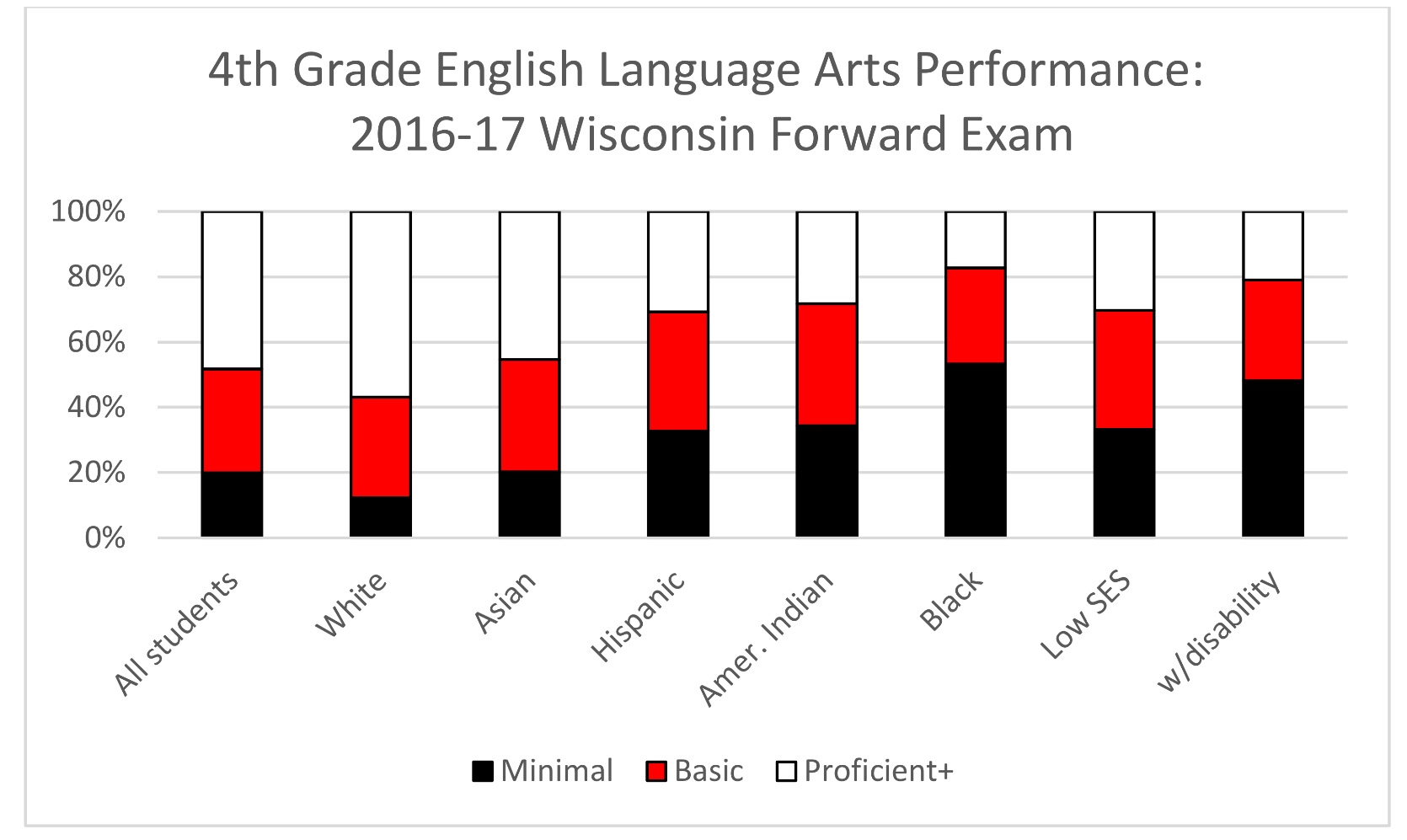
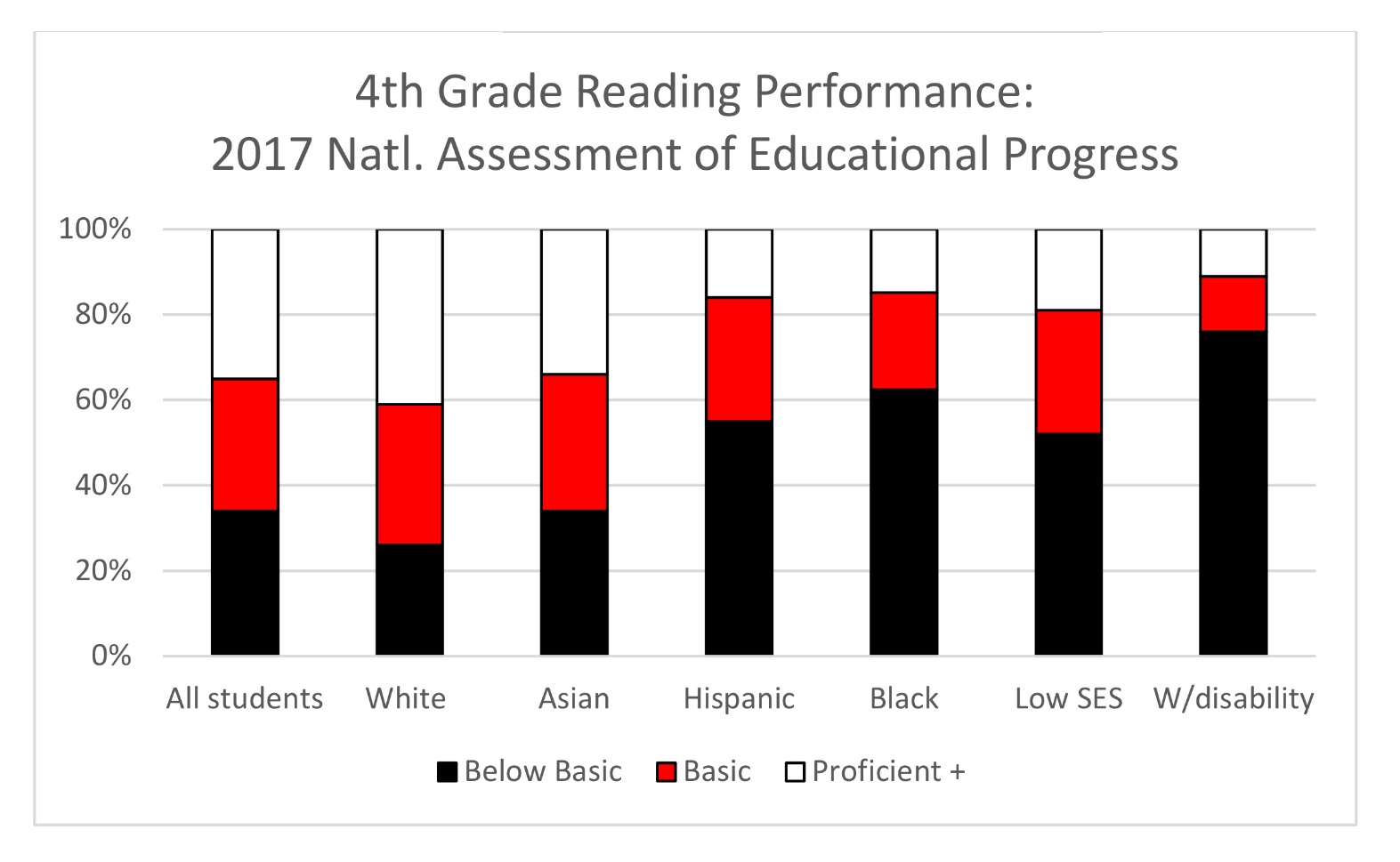
In other words, third-grade scores are probably strongly influenced by poverty and home life, while growth from third to eighth grade is probably more influenced by the quality of schooling. They have little to do with each other:
Growth rates better isolate the contribution to learning due to experiences during the schooling years. Grade 3 average scores are likely much more strongly influenced by early childhood experiences than the growth rates….Some caution is warranted in interpreting the average growth rates as pure measures of school effectiveness. Nonetheless, relative to average test scores (at grade 3 or any grade), the growth rates are closer to a measure of school effectiveness.
If we take the growth rates, then, as rough measures of school effectiveness, then neither socioeconomic conditions nor average test scores are very informative about school district effectiveness. Many districts with high average test scores have low growth rates, and vice versa. And many low-income districts have above average growth rates. This finding calls into question the use of average test scores as an accountability tool or a way of evaluating schools.
Locally, Madison spends far more than most, for average results.
When Kevin Carrico landed back in Australia on Monday after spending a week in Hong Kong, his friend sent him a link to the front page of a Hong Kong tabloid.
It was covered with pictures of Carrico and details of his trip.
It seems reporters for the paper, Wen Wei Po, which is believed to have close ties to Beijing, had been following him all week, reporting details of who he met, where he went, even when he returned to his hotel to change his shirt.
There were photographs of the US-Australian academic, who works for Macquarie University in Sydney where he researches Chinese history and society, standing in the street. Another shows him at the airport about to leave the country and a third shows him in conversation with a friend in a restaurant, that was clearly taken by someone sitting a few tables away.
“Wen Wei Po is very, very closely linked with the Liaison Office, which is Beijing’s office in Hong Kong,” Carrico said. “I don’t know if this is an attempt to build up pressure to get me banned from Hong Kong, or to intimidate me from returning to Hong Kong.”
Carrico is a US citizen and Australian permanent resident and has just received a large research grant from the Australian government to undertake a project examining tensions between Beijing and Hong Kong.
In the fall of 1909, when two wonder boys converged on Harvard—among the first, and for a time the most famous, prodigies of the modern era—their parents proudly assumed a Pygmalion role. Norbert Wiener, the nearly 15-year-old son of the university’s first professor of Slavic languages, Leo Wiener, arrived as a graduate student in (at his father’s direction) zoology. William James Sidis (namesake and godson of the renowned Harvard psychologist who had been a mentor to his father, Boris Sidis) was admitted at 11 as a “special student” after strenuous lobbying by his father.
The two superprecocious sons of two very upwardly mobile Russian immigrants, outspoken men with accents and bushy mustaches, inspired suspense. The arrival of these brilliant boys with unusual pedigrees fit the mission of Harvard’s outgoing president, Charles William Eliot, a liberal Boston Brahmin and staunch believer in equality of opportunity. He aimed to open the university’s doors to “men with much money, little money, or no money, provided that they all have brains.” And not just brains, Eliot warned complacent WASPs, who mistook “an indifferent good-for-nothing, luxurious person, idling through the precious years of college life” for an ideal gentleman or scholar. Eliot had in mind an elite with “the capacity to prove by hard work that they have also the necessary perseverance and endurance.”
In a lot of ways, understanding quantum mechanical equations in an effort to predict what will happen between reactants such as atoms and molecules resulting in complex phenomena in chemistry can be exhausting, and mind boggling to many. Yet, without the theoretical insights, experimental chemists would largely be unable to understand what they are observing.
Researchers at The University of New Mexico, led by Distinguished Professor of Chemistry Hua Guo, have been working with experimentalists to help them gain an understanding by providing theoretical interpretations of experimental observations.
“When scientists probe molecules they see spectral features, but it is very difficult to interpret those features because they are just lines in the spectrum,” said Guo. “That’s where we come in and provide a theoretical interpretation of their experimental observations.”
Internet giants face a multimillion-pound tax raid unless they agree to help combat the terrorist threat to Britain, which is at its worst “for 100 years”, the security minister revealed last night.
Ben Wallace accused internet firms of being “ruthless profiteers” that cost government a fortune by failing to assist the security services in identifying terrorists and stamping out extremism online.
Mark Skidmore and Andy Henion:
Earlier this year, a Michigan State University economist, working with graduate students and a former government official, found $21 trillion in unauthorized spending in the departments of Defense and Housing and Urban Development for the years 1998-2015.
The work of Mark Skidmore and his team, which included digging into government websites and repeated queries to U.S. agencies that went unanswered, coincided with the Office of Inspector General, at one point, disabling the links to all key documents showing the unsupported spending. (Luckily, the researchers downloaded and stored the documents.)
Now, the Department of Defense has announced it will conduct the first department-wide, independent financial audit in its history (read the Dec. 7 announcement here).
The Defense Department did not say specifically what led to the audit. But the announcement came four days after Skidmore discussed his team’s findings on USAWatchdog, a news outlet run by former CNN and ABC News correspondent Greg Hunter.
“While we can’t know for sure what role our efforts to compile original government documents and share them with the public has played, we believe it may have made a difference,” said Skidmore, the Morris Chair in State and Local Government Finance and Policy at MSU.
You might ask why people of lesser means don’t head to less expensive areas than Santa Barbara — it’s a fair question, and I’ve written about people who eventually did make such a move. In Santa Barbara, the answers I got were the same ones I’ve heard elsewhere in coastal California. People hold open the option of leaving, but many are connected to specific places by history, family and employment connections, and they’re not quite ready to give up on a turnaround, move to a place they don’t know, and start over from scratch.
Besides that, local economies rely on those of lesser means, so where are they supposed to live?
A range of different Danish resources, datasets and tools, are presented. The focus is on resources for use in automated computational systems and free resources that can be redistributed and used in commercial applications.
Trevor Aaronson:
“The government intercepts Americans’ emails and phone calls in vast quantities using this spying law and stores them in databases for years,” said Patrick Toomey, staff attorney for the American Civil Liberties Union’s National Security Project. “FBI agents around the country then go searching through that trove of data as a matter of course, including in domestic criminal investigations. Yet, over almost a decade, only a handful of individuals have ever received notice.”
First this white paper spotlights: the failure of America’s antitrust enforcement to “protect the process of competition,” from three enduring and extending, intermedia monopolies and four active market cartelizations; and the causes of this systemic failure, i.e. lax and asymmetric antitrust enforcement driven by an anticompetitive U.S. Government Internet-first industrial policy and law.
The U.S. Government is the problem here. America’s Internet-first industrial policy experiment and law in the bipartisan 1996 Telecom Act1 and in the bipartisan 1997 U.S. Framework for Global Electronic Commerce,2 has proven twenty years later to be an inherently pro-monopolization policy in heavily-favoring the economic and competitive interests of Internet intermediary platforms and technologists over non-Internet competition or consumer interests. This bipartisan Internet policy failure, calls for bipartisan solutions.
This paper summarizes the evidence of America’s three standard monopolizing distribution networks — Google Standard Data, Facebook Standard Social, and Amazon Standard Commerce — and how U.S. lax and asymmetric antitrust enforcement facilitated their respective dominances and consumer harms. Then this paper summarizes four ignored, derivative cartelization dynamics taking control of America’s information economy today: i.e. intermedia cartelization bottlenecking the economy; digital advertising cartelization; search ecosystem cartelization; and cartelization of U.S. Internet startup financing.
Second, this white paper spotlights how U.S. Internet-first industrial policy standards have conflicted with, undermined, and arbitraged U.S. antitrust enforcement, and the otherwise sound Chicago School antitrust consumer welfare standard, for online intermediary platforms. These competition-distorting, Internet-first industrial policy standards are: 1) Competition Double Standard, where the 1996 Telecom Act now regulates the same technologies oppositely, despite the full Internet convergence of communications and information technologies since 1996; 2) Wild West Standard, that makes it U.S. policy that Internet companies be unfettered by Federal or State regulations that apply to every other business; and 3) Tech Welfare Standard, that uniquely protects “interactive computer services” with immunity from responsibility for negligence or consumer endangerment. No surprise that standards designed to heavily-advantage Internet companies, succeed and spawn serial monopolizations and cartelizations. Inputs drive outputs.
Facebook announced that it will no longer use “Disputed Flags” — red flags next to fake news articles — to identify fake news for users. Instead it will use related articles to give people more context about a story.
Why it’s happening: The tech giant is doing this in response to academic research it conducted that shows the flags don’t work, and they often have the reverse effect of making people want to click even more. Related articles give people more context about what’s fake or not, according to Facebook.
Why it matters: Facebook’s Sheryl Sandberg says Facebook is a technology company that doesn’t hire journalists. Without using editorial judgement to determine what’s real and what’s not, tackling fake news will forever be a technology experiment.
To assist this weakness of our nature, many methods have been proposed, all of which may be justly suspected of being ineffectual; for no art of memory, however its effects have been boasted or admired, has been ever adopted into general use, nor have those who possessed it appeared to excel others in readiness of recollection or multiplicity of attainments.
There is another art of which all have felt the want, though Themistocles only confessed it. We suffer equal pain from the pertinacious adhesion of unwelcome images as from the evanescence of those which are pleasing and useful; and it may be doubted whether we should be more benefited by the art of memory or the art of forgetfulness.
In April 2016, the Public Policy Forum published Help Wanted: An analysis of the teacher pipeline in metro Milwaukee.2 This was the third in a series of reports on public school educators in the Milwaukee area. Help Wanted set out to better understand how the public teacher workforce in the Greater Milwaukee region had changed in recent years, whether the region faces a shortage of teachers, and how conditions are likely to trend in the future. Overall, the report found a challenging situation characterized by a shrinking supply of new teachers to replace a steady stream of existing teachers leaving the workforce.
Since the report’s release, national teacher workforce studies, local and national media reports, and anecdotal accounts from K-12 stakeholders have continued to point to teacher shortages as an ongoing reality of the K-12 landscape. That is the case in both public and private schools, and across both Greater Milwaukee and the State of Wisconsin as a whole. While debate about this issue often focuses on its potential relationship to Wisconsin Act 10 – Wisconsin’s controversial 2011 law that restricted public employee collective bargaining – nationwide evidence of teacher shortages suggests Wisconsin’s struggles to maintain a stable teacher supply are related to a larger set of forces.
A key feature of Help Wanted was the use of Wisconsin Department of Public Instruction (DPI) data to analyze the pace at which teachers were moving in and out of the metro Milwaukee and Wisconsin teaching workforce, and how those teachers were distributed in terms of age and years of experience. With two additional years of data now available, this report provides an update on trends in these indicators that we hope will be useful to education leaders, policy makers, and stakeholders.Whereas the first report spanned the 2009-10 through and 2013-14 school years, this updated analysis encompasses 2009-10 to 2015-16. We place particular emphasis on areas in which we observe considerable changes in trends over the two subsequent years. Our intent is to help inform policymakers and citizens about the dynamics of the teacher workforce in metro Milwaukee. We do acknowledge, however, that each district possesses its own distinct experiences, challenges, and successes with regard to teacher retention and recruitment.
Strawn capped off an historic season with a dominating 78-42 win over Balmorhea to claim the Class 1A Six-Man Division II state championship Wednesday at AT&T Stadium.
The Greyhounds went 15-0 en route to the title — the second in school history — by compiling 488 yards of total offense. Strawn’s top-ranked defense held Balmorhea, the state’s top-ranked offense, to 394 yards and a season-low in points.
Strawn kicker K-Lani Nava not only made school history, but also state history as the senior became the first female to play and score in a championship football game. Nava converted 9 of 10 extra point attempts for the Greyhounds.
Read more here: http://www.star-telegram.com/sports/dfwvarsity/prep-football/article190908829.html#storylink=cpy
Caroline Fraser’s Prairie Fires: The American Dreams of Laura Ingalls Wilder is a subtle, intelligent and quietly explosive study not just of a woman whose Little House books have sold more than 60m copies in 45 languages, but of a very particular way of life, the life of the American pioneer. Looking deeply at the circumstances of the small farmers of the Great Plains, it examines how intricately connected their existence was to popular ideas about the American character. Prairie Fires is also an investigation of the practice of writing: of myth-making versus truth-telling, of the art of consolation, and of a strange sort of hair-raising, unboundaried, literary interdependence that developed in later life between Laura Ingalls Wilder and her writer daughter Rose Wilder Lane.
Laura Ingalls was born in Wisconsin in 1867, two years after Abraham Lincoln died, living until 1957 when “All Shook Up” by Elvis topped the charts. The backdrop to her birth was one of extreme violence, race hatred and revenge played out in the US-Dakota (or Sioux) war of 1862, culminating in a massacre clearing the way for “thousands of white families to seek their fortunes on the Great Plains”. The Ingallses were one such family. Charles Ingalls, Laura’s father, was “charming, cheerful, and musical”. He was also “an incomparable storyteller”. Laura’s mother, Caroline, who grew up close to destitution with a widowed mother and five siblings, was serene by nature, “not passive but quietly powerful”.
During the many long journeys the Ingallses undertook in their basic wagon, continually seeking better conditions in which farming and family might somehow thrive, Caroline calmly fried corncakes and brewed coffee, keeping morale afloat against the stunning landscape.
Private schools are lowering tuition, ramping up marketing and targeting traditionally underrepresented communities to reverse a national enrollment decline.
Enrollment in private schools for grades pre-K to 12, including parochial schools, dropped by 14%—to 6.3 million in 2016 from 7.3 million in 2006, according to data from the U.S. Census Bureau. Overall school enrollment was nearly flat during that time, with public schools educating 2% more students to reach almost 52 million in 2016, the data shows.
Researchers and private-school associations attribute the decline to a host of factors: more affordable Catholic schools have closed; traditional public schools provide better options; families cut their budgets after the 2007 recession; and charter schools and other alternatives have expanded. School voucher programs and tax-credit scholarship programs have spread to just over a dozen states and are believed to have helped private-school enrollment some, but not enough to make up losses dating back years.
Six years after Gov. Scott Walker and state Republicans made labor unions’ ability to retain members much more difficult, fewer than half of the state’s 422 school districts have certified unions.
In the latest certification election — held in November and required by Walker’s signature 2011 legislation known as Act 10 — staff and teachers in 199 school districts voted to remain in a bargaining unit, or 47 percent, according to the Wisconsin Employment Relations Commission.
Notes and links: Madison Teachers, Inc. and WEAC.
Right now in Riyadh, Saudi Arabia, the World Chess Championships are underway. But some world champions are noticeably absent: The Israeli players were blocked from participating when Saudi Arabia denied them visas.
Chess — a game that I have loved since I first sat down at a board — is pure. It doesn’t care about gender, ethnicity, nationality, status or politics. But too often the countries, organizations and people who enforce the rules in the world of chess are anything but.
This is a subject I know something about.
I was the second-highest-ranked player for girls under 18 in the world in 2016. I am the second-highest-ranked female chess player in Iranian history. And yet my passion for the game has taken me thousands of miles away from my home in Tehran to seek citizenship here in the United States.
“You got a choice to make, man. You could go straight on to heaven. Or you could turn right, into that.”
We are in Los Angeles, in the heart of one of America’s wealthiest cities, and General Dogon, dressed in black, is our tour guide. Alongside him strolls another tall man, grey-haired and sprucely decked out in jeans and suit jacket. Professor Philip Alston is an Australian academic with a formal title: UN special rapporteur on extreme poverty and human rights.
General Dogon, himself a veteran of these Skid Row streets, strides along, stepping over a dead rat without comment and skirting round a body wrapped in a worn orange blanket lying on the sidewalk.
The two men carry on for block after block after block of tatty tents and improvised tarpaulin shelters. Men and women are gathered outside the structures, squatting or sleeping, some in groups, most alone like extras in a low-budget dystopian movie.
We come to an intersection, which is when General Dogon stops and presents his guest with the choice. He points straight ahead to the end of the street, where the glistening skyscrapers of downtown LA rise up in a promise of divine riches.
Heaven.
Then he turns to the right, revealing the “black power” tattoo on his neck, and leads our gaze back into Skid Row bang in the center of LA’s downtown. That way lies 50 blocks of concentrated human humiliation. A nightmare in plain view, in the city of dreams.
Alston turns right.
Deborah Blum
Director of the Knight Science Journalism program at MIT and author of The Poisoner’s HandbookThe Touch of Madness (David Dobbs, Pacific Standard)
A beautifully rendered exploration of the slow, relentless creep of schizophrenia into the life of a brilliant graduate student, her slow recognition of the fact, and the failure of her academic community to recognize the issue or to support her. Dobb’s piece functions both as an inquiry into our faltering understanding of mental illness and our cultural failure to respond to it with integrity. It’s the kind of compassionate and morally-centered journalism we should all aspire to.
This is one of my last year-end “Best” lists and, as holds true for all my lists, I’m being pretty picky about what ends up here.
You might also be interested in:
Who should succeed Carmen Fariña as New York City schools chief? Eva Moskowitz, the charter school CEO who runs a small-district-sized network within the city, has some ideas.
Less than a day after news broke that Fariña would step down in early 2018, Moskowitz distributed a list of 14 people she sees as a strong fit to run the nation’s largest school system. They include Malika Anderson, the former leader of Tennessee’s state-run Achievement School District; Denver schools chief Tom Boasberg; and Indianapolis superintendent Lewis Ferebee.
She also gives a nod to Andres Alonso, who worked with Fariña in New York City more than a decade ago before running Baltimore’s schools and was rumored to be on de Blasio’s shortlist four years ago.
“I should note that not all all of the leaders highlighted below are charter school supporters,” Moskowitz wrote in a note accompanying the list, underlining those words. “Mayor de Blasio and I have had profound disagreements about how best to educate our children since I was the City Council’s Education Chair and he was a fellow City Councilman, but we share the deep belief that we need the best possible person leading our schools.”
The list underscores how present Moskowitz aims to be in the city’s education politics, even as she has said she is not currently considering a run for mayor. It also puts Mayor Bill de Blasio in potentially a difficult position: Some of the people on the list have New York City connections or good relationships with people on all sides of education debates, but Moskowitz’s imprimatur could work against them.
Cary Funk, Brian Kennedy and Elizabeth Podrebarac Sciupac:
The potential genetic modification of humans and its ramifications have long been debated, but a recent scientific breakthrough in gene editing – a technique known as CRISPR – has raised the urgency of this conversation. In March and April of 2015, two separate groups of scientists published essays urging the scientific community to impose limits on genomic engineering, and the National Academies of Sciences, working in cooperation with the United Kingdom’s Royal Society and the Chinese Academy of Sciences, convened an international summit to discuss the science and policy of human gene editing. (For more details on these developments, see “Human Enhancement: The Scientific and Ethical Dimensions of Striving for Perfection.”)
A project within the Stanford 100 Year Study on AI, The AI Index is an initiative to track, collate, distill and visualize data relating to artificial intelligence.
It aspires to be a comprehensive resource of data and analysis for policymakers, researchers, executives, journalists and others to rapidly develop intuitions about the complex field of AI
In September of last year, we noted that Facebook representatives were meeting with the Israeli government to determine which Facebook accounts of Palestinians should be deleted on the ground that they constituted “incitement.” The meetings — called for and presided over by one of the most extremist and authoritarian Israeli officials, pro-settlement Justice Minister Ayelet Shaked — came after Israel threatened Facebook that its failure to voluntarily comply with Israeli deletion orders would result in the enactment of laws requiring Facebook to do so, upon pain of being severely fined or even blocked in the country.
The predictable results of those meetings are now clear and well-documented. Ever since, Facebook has been on a censorship rampage against Palestinian activists who protest the decades-long, illegal Israeli occupation, all directed and determined by Israeli officials. Indeed, Israeli officials have been publicly boasting about how obedient Facebook is when it comes to Israeli censorship orders:
Facebook just got one step closer to becoming the literal embodiment of its name. On Tuesday, the company announced it’s rolling out several new facial recognition features on its platforms. Once you agree to let Facebook use your face data, you gain access to new tools the company says will help protect your privacy and block catfishing attempts.
In a blog post, the company described the new features that will soon be available to users who turn face recognition on with “a simple on/off switch”:
Every large and successful institution has an immune system – a collection of individuals who are prepared to mobilize at the slightest sign of any “outside” ideas or people in order to ensure that these foreign bodies are neutralized and that the existing institution survives intact and can continue on course. Just like the immune system all organisms have, this institutional immune system is adept at recognizing foreign bodies as soon as they appear and very effective at protecting the institution from infection. It is in fact what has helped large institutions to survive – they are in fact “built to last.”
But here’s the paradox: the immune system that has given large institutions extraordinary resilience in the past may be the very thing that makes these institutions so vulnerable today. In more stable times, institutional immune systems are very effective at keeping institutions focused and on course, resistant to the distractions that might lead to their downfall. In more rapidly changing and volatile signs, this same immune system can become deadly by resisting the very changes that are required for the survival of the institution.
I’ve been writing about the Big Shift for quite a while now. Long-term forces that have been playing out for decades on a global scale are leading to a profound shift in how institutions will need to operate in order to survive, much less thrive, in the decades ahead.
The lessons from childhood storybooks are decidedly different in China and the United States, and align with the lessons the respective countries impart in the classroom, UC Riverside research finds.
There is a widely held perception – and some research to affirm it – that East Asian schools outperform schools in North America. A recent study published by UC Riverside psychologist Cecilia Cheung skirts the link between storybooks and school performance, but asserts that the lessons taught in Chinese schools could start early.
“The values that are commonly conveyed in Chinese (vs. U.S.) storybooks include an orientation toward achievement, respect for others – particularly the elderly – humility, and the importance of enduring hardship,” Cheung said. “In the U.S. storybooks, protagonists are often portrayed as having unique interest and strength in a certain domain, and the themes tend to be uplifting.”
For her study, published in the Journal of Cross-Cultural Psychology, Cheung compared storybooks in the U.S. and Mexico with those in China.
She chose 380 storybooks recommended by education ministries in the respective countries, for children aged 3 to 11. The study considered three core aspects of learning-related qualities: beliefs (views about the nature of intelligence), motivated cognitions (achievement, determination), and behaviors (effort, overcoming obstacles).
But of course there is no hate speech exception to the Free Speech Clause, as the Supreme Court unanimously reaffirmed this year in the Slants case. Private universities aren’t legally bound by this (except in California, where a state law applies Free Speech Clause rules to them); but public universities, such as Texas A&M and UT, certainly are. And while universities aren’t barred from condemning speech they disapprove of, this statement — especially if read by students who aren’t up on First Amendment law — strikes me as suggesting that the universities will actually punish such speech (since it’s not “free speech,” and since it’s not “accepted”). Yet such punishment of “[un]welcome” viewpoints would be unconstitutional.
Of course, in common with most such statements, this one doesn’t even try to define “hate speech,” and the words it uses to describe the concept help show how perilously broad and vague it can be. “Inappropriate messages” are apparently not “accepted if they “are meant to provoke.” Creating hostility is also forbidden; presumably they don’t include all hostility (hostility to President Trump? hostility to alleged racists?), but mean hostility based on race, religion, national origin, sex, sexual orientation, and so on — but that would still cover, say, harsh condemnations of various religious views (Muslim, evangelical Christian, Scientologist, etc.), expression of traditional religious views about homosexuality, and much more (perhaps opposition to “multicutural[ism]”?). “Diversity of thought” they seem to value, but diversity of thought on these subjects appears to be too much (at leaast if it’s “[i]nappropriate” and “meant to provoke”).
And what exactly does “disingenuous misrepresentation of free speech” mean here?
Tom Coomer, 79, outside of the Walmart where he works five days a week in Wagoner, Okla, on Nov. 16. Coomer used to work at the McDonnell Douglas plant in Tulsa before it closed in 1994. He and many of his co-workers could never replace their lost pension benefits and face financial struggles in their old age. (Nick Oxford for The Washington Post)
Tom Coomer has retired twice: once when he was 65, and then several years ago. Each time he realized that with just a Social Security check, “You can hardly make it these days.”So here he is at 79, working full-time at Walmart. During each eight-hour shift, he stands at the store entrance greeting customers, telling a joke and fetching a “buggy.” Or he is stationed at the exit, checking receipts and the shoppers that trip the theft alarm.
“As long as I sit down for about 10 minutes every hour or two, I’m fine,” he said during a break. Diagnosed with spinal stenosis in his back, he recently forwarded a doctor’s note to managers. “They got me a stool.”
‘IQ tests just measure how good you are at doing IQ tests.’ This is the argument that is almost always made when intelligence-testing is mentioned. It’s often promoted by people who are, otherwise, highly scientifically literate. You wouldn’t catch them arguing that climate change is a myth or that vaccines might cause autism. But saying that IQ tests are useless is just as wrong as these notions: in fact, decades of well-replicated research point to IQ tests as some of the most reliable and valid instruments in all of psychological science.
So what does an IQ test – which might consist of, for example, shape-based puzzles, timings of how quickly you can check through lists of meaningless symbols, memory tests, and vocabulary measures – actually tell you? The strongest correlation is perhaps unsurprising: an IQ score is highly predictive of how people will do in school. One large study found that IQ scores at age 11 correlated 0.8 (on a scale of -1 to 1) with school grades at age 16. Surely this gives us some basis for calling these measures ‘intelligence tests’. But that’s just the beginning: higher IQ scores are predictive of more occupational success, higher income, and better physical and mental health. Perhaps the most arresting finding is that IQ scores taken in childhood are predictive of mortality. Smarter people live longer, and this association is still there after controlling for social class.
Under Daniels, things have been generally cheery at Purdue. With return on investment increasingly important to students, given the price of attending and the corresponding debt, Purdue has something to sell: static costs and a good job if you graduate, especially in the science, technology, engineering, and math (STEM) fields. Since Daniels started in 2013, undergrad applications and enrollment have hit record levels, as have alumni donations, graduation rates, and the number of startups launched by researchers. Purdue has added 75 tenure-track positions in engineering and increased the number of students earning STEM degrees by 24 percent, with big gains among women (40 percent) and underrepresented minorities (65 percent). Daniels has rolled out initiatives that range from the audacious, such as interest-free financial aid in exchange for a percentage of future earnings, to the alcoholic: Boiler Gold, a craft beer that went on sale in West Lafayette this fall, is a collaboration among a local brewer, the university, and its food science department.
Daniels’s moves are driven by necessity. Founded in 1869, Purdue was part of a wave of public universities established after the Civil War that helped expand the middle class and propel the research advances that fueled the manufacturing boom in the 20th century. Today, tighter public spending means more schools are getting less state funding. Some, including the University of California at Berkeley, UCLA, Michigan, North Carolina, Texas, and Virginia, have replaced that loss with a combination of jacked-up tuition, even-more-jacked-up out-of-state tuition, successful sports programs, and donations from exuberant—and wealthy—alumni. Other large public universities, especially in the Midwest, have struggled to replace state funding cuts, making it tough to keep faculty from seeking higher salaries and bigger research budgets elsewhere. Professors at Midwestern public universities make about 30 percent less than their Northeastern counterparts.
The Meteor-M N2 is a polar orbiting Russian weather satellite that was launched on July 8, 2014. Its main missions are weather forecasting, climate change monitoring, sea water monitoring/forecasting and space weather analysis/prediction. Meteor-M N2 transmits images using the digital LRPT protocol at around 137.1 MHz with can be received with an RTL-SDR. The chipset of RTL dongles was created with the intention of doing DVB-T (digital TV) and DAB (digital radio) demodulation , however a curious linux developer named Antti Palosaari, discovered that these cheap TV adapters are actually Sofware Defined Radios (SDR)!
Although it’s impossible to say for sure, Trofim Lysenko probably killed more human beings than any individual scientist in history. Other dubious scientific achievements have cut thousands upon thousands of lives short: dynamite, poison gas, atomic bombs. But Lysenko, a Soviet biologist, condemned perhaps millions of people to starvation through bogus agricultural research—and did so without hesitation. Only guns and gunpowder, the collective product of many researchers over several centuries, can match such carnage.
Having grown up desperately poor at the turn of the 20th century, Lysenko believed wholeheartedly in the promise of the communist revolution. So when the doctrines of science and the doctrines of communism clashed, he always chose the latter—confident that biology would conform to ideology in the end. It never did. But in a twisted way, that commitment to ideology has helped salvage Lysenko’s reputation today. Because of his hostility toward the West, and his mistrust of Western science, he’s currently enjoying a revival in his homeland, where anti-American sentiment runs strong.
When Dacheca Fleurimond decided to give birth at SUNY Downstate Medical Center earlier this year, her sister tried to talk her out of it.
Her sister had recently delivered at a better-rated hospital in Brooklyn’s gentrified Park Slope neighborhood and urged Fleurimond, a 33-year-old home health aide, to do the same.
But Fleurimond had given birth to all five of her other children at the state-run SUNY Downstate and never had a bad experience. She and her family had lived steps away from the hospital in East Flatbush when they emigrated from Haiti years ago. She knew the nurses at SUNY Downstate, she told her sister. She felt comfortable there.
As you may probably know, DeepMind has recently published a paper on AlphaZero [1], a system that learns by itself and is able to master games like chess or Shogi.
Before getting into details, let me introduce myself. I am a researcher in the broad field of Artificial Intelligence (AI), specialized in Natural Language Processing. I am also a chess International Master, currently the top player in South Korea although practically inactive for the last few years due to my full-time research position. Given my background I have tried to build a reasoned opinion on the subject as constructive as I could. For obvious reasons, I have focused on chess, although some arguments are general and may be extrapolated to Shogi or Go as well. This post represents solely my view and I may have misinterpreted some particular details on which I am not an expert, for which I apologize in advance if it is the case.
Chess has arguably been the most widely studied game in the context “human vs machine” and AI in general. One of the first breakthroughs in this area was the victory of IBM Deep Blue in 1997 over the world champion at the time Garry Kasparov [2]. At that time machines were considered inferior to humans in the game of chess, but from that point onwards, the “battle” has been clearly won by machines.
As the private Dwight School in Manhattan gears up to open a new campus, it is recruiting dozens of American teachers with perks such as free housing and tuition for their children.
The rub is that the new site is almost 7,000 miles away in Dubai, a city on the Persian Gulf where summer days often top 105 degrees, public kissing by couples is frowned upon and women are expected to dress conservatively.
Jaya Bhavnani, a 65-year-old science teacher at Dwight’s Upper West Side campus who has lived in Dubai before, says she is thrilled to be joining the school’s newest branch. “It’s the most Westernized city in the Middle East, as long as you can respect some basic social norms” while there, Ms. Bhavnani said.
Dwight is among the latest schools to venture into Dubai in the United Arab Emirates, a federation of monarchies where Islam is the official religion. A fast-growing business hub, Dubai has 299 English-language international options for preschool through high school, more than any other city in the world. They cater largely to transient expats and local families seeking educations they believe will prepare their children to get into top universities in the U.S. and elsewhere—as well as careers in a global economy.
Dubai’s embrace of English-language international schools is part of a proliferation, especially in the Middle East and Eastern Asia. Now 9,319 operate world-wide, up from 2,584 in 2000, according to ISC Research, which tracks such data. They serve more than 5 million students in preschool through high school and earn more than $47 billion in fees. The group predicts these numbers will nearly double in a decade.
There was once a girl in Shanghai whose name was Sun Shuying but who was referred to within her family as either Third Daughter or Third Sister. Although she was born in the Year of the Sheep – 1931 – she looked like a plump little monkey; at least that’s what one of Eldest Sister’s suitors thought when he came courting under a balcony and saw Third Sister leaping about. “She’s totally annoying and you should ignore her,” was Eldest Sister’s yelled advice to her Romeo below.
Big sisters everywhere are like that and on the whole – so Third Sister always told herself when she looked back (which she didn’t tend to do, preferring to face forward) – there were plenty of happy moments in her childhood. She loved the symmetry of the rosewood baxianzhou or “eight fairies table” where the whole family – parents, grandmother and five children – could sit together, waited on by the servants.
[The new tax law imposes] a 21-percent tax on annual compensation in excess of $1 million paid to the five highest-paid employees of a nonprofit group — including college presidents, chancellors, and coaches. For medical professionals, however, compensation that is directly related to medical or veterinary services would not be taken into account. …
According to an analysis by The Chronicle, America’s private, nonprofit colleges had 158 million-dollar employees in the 2015 calendar year, excluding medical staff members. The highest earners primarily included chief executives, athletics staff members, and investment officers. Mike Krzyzewski, head coach of the men’s basketball team at Duke University, topped the list, earning $7.4 million in 2015.
A federal judge in Detroit on Wednesday lifted the temporary restraining order a major teachers union won against the conservative group Project Veritas and denied a request for a preliminary injunction.
A Wayne County circuit judge in September blocked Project Veritas, a group run by provocateur James O’Keefe, from disclosing videos of other information it obtained in an undercover operation carried out against the American Federation of Teachers chapter in Detroit.
AFT Michigan alleged that Project Veritas operative Marisa Jorge used the name Marissa Perez and posed as a University of Michigan student to gain access to the chapter as an intern. The group claimed Jorge “unlawfully accessed and transmitted proprietary and confidential information and engaged in unlawful and unauthorized surveillance of” employees.
AFT Michigan had sought an injunction citing a strong likelihood of success with respect to violations of the Michigan Uniform Trade Secrets Act, the Michigan Eavesdropping Act and Jorge’s breach of fiduciary duty, all of which failed to hold up in court.
Shan Carter and Michael Nielsen:
Historically, different answers to this question – that is, different visions of computing – have helped inspire and determine the computing systems humanity has ultimately built. Consider the early electronic computers. ENIAC, the world’s first general-purpose electronic computer, was commissioned to compute artillery firing tables for the United States Army. Other early computers were also used to solve numerical problems, such as simulating nuclear explosions, predicting the weather, and planning the motion of rockets. The machines operated in a batch mode, using crude input and output devices, and without any real-time interaction. It was a vision of computers as number-crunching machines, used to speed up calculations that would formerly have taken weeks, months, or more for a team of humans.
In the 1950s a different vision of what computers are for began to develop. That vision was crystallized in 1962, when Douglas Engelbart proposed that computers could be used as a way of augmenting human intellect. In this view, computers weren’t primarily tools for solving number-crunching problems. Rather, they were real-time interactive systems, with rich inputs and outputs, that humans could work with to support and expand their own problem-solving process. This vision of intelligence augmentation (IA) deeply influenced many others, including researchers such as Alan Kay at Xerox PARC, entrepreneurs such as Steve Jobs at Apple, and led to many of the key ideas of modern computing systems. Its ideas have also deeply influenced digital art and music, and fields such as interaction design, data visualization, computational creativity, and human-computer interaction.
Let me begin with thanks to the Lowy Institute for bringing me all the way to Sydney and doing me the honor of hosting me here this evening.
I’m aware of the controversy that has gone with my selection as your speaker. I respect the wishes of the Colvin family and join in honoring Mark Colvin’s memory as a courageous foreign correspondent and an extraordinary writer and broadcaster. And I’d particularly like to thank Michael Fullilove for not rescinding the invitation.
This has become the depressing trend on American university campuses, where the roster of disinvited speakers and forced cancellations includes former Secretaries of State Henry Kissinger and Condoleezza Rice, former Harvard University President Larry Summers, actor Alec Baldwin, human-rights activist Ayaan Hirsi Ali, DNA co-discoverer James Watson, Indian Prime Minister Narendra Modi, filmmaker Michael Moore, conservative Pulitzer Prize-winning columnist George Will and liberal Pulitzer Prize-winning columnist Anna Quindlen, to name just a few.
1. Moore’s Law plus the internet makes smart people smarter, and stupid people less smart.
2. Manipulable people can be reached with a greater flood of information, so over time as data on them accumulate, they become more manipulable.
3. It is often easier to manipulate smart people than stupid people, because the latter may be oblivious to a greater set of cues and clues.
4. Social media bring smarter people together with the less smart more than used to be the case, Twitter more so than Facebook. Members of each group are appalled by what they experience. The smarter people see the lesser smarts of many others. The less smart people — who often are not entirely so stupid after all — can see how manipulated the smarter people are. They also see that the smarter people look down on them and attack their motives and intellects. Both groups go away thinking less of each other.
4b. The smarter people, in reacting this way, in fact are being manipulated by the (stupider) powers that be.
5. “There is a performative dimension that renders both sides more rigid and dishonest.” From a correspondent.
Gene editing is often thought of as a technique from a futuristic villain, best used to create killer mosquitoes or vaccine-resistant diseases.
But there, tucked within the nearly 70-page National Security Strategy unveiled Dec. 18 by the Trump administration, was a short paragraph devoted to research and innovation. The document included the areas where the United States should prioritize investment to “maintain our competitive advantage.” And while the White House listed more conventional national security technologies, such as encryption and autonomy, the strategy also specifically mentioned gene editing.
Already, the main research arms of the U.S. national security sector have devoted resources and teams toward gene editing in the past few years.
The Beginning of a Backlash
“I think you do enormous good … but your power sometimes scares me,” said Republican Senator John Kennedy of Louisiana in October to the general counsels of Facebook, Google, and Twitter at the first major congressional hearing on Big Tech in years. The topic was Russian interference with the 2016 presidential election, but the testimony illuminated the platforms’ domination of large parts of American life, without any interest in managing that control. Malign actors could so easily penetrate platform defenses because there weren’t any. Facebook has five million advertisers at any one time; it couldn’t possibly vet them if it tried.
Furthermore, tech firms have no incentive to interfere with the source of so much revenue. That’s why ProPublica could list discriminatory rental housing ads excluding races and ethnicities in 2016, and then again in 2017, after Facebook claimed to fix the problem. That’s why Google is purging videos and disabling comments on YouTube’s predatory, sexualized user content aimed at children, but not always removing the predators’ accounts. Allowing the narrowest possible targeting and the maximum possible targets has built the most lucrative ad mechanism in history, and it generates big bucks, even if the bill is paid in rubles.
The hearings were important more for their explanatory power than for the technicalities of election integrity. “The end of the story is not Russia hacking the election, but that gross harm exists,” says Marshall Steinbaum, research director at the Roosevelt Institute. It filled out the picture on these platforms, whose operations we understand as much as the proverbial blind man feeling around an elephant. “We need to make sure that the public fully understands the scope of the problem we face, and how it could be dramatically worse, given the speed at which these companies are growing,” says Lina Khan, legal policy director at the Open Markets Institute.
We don’t know how our data is handled. We don’t know how algorithms nudge us into certain apps or products. We don’t even have a confirmed figure of Amazon Prime memberships (recent estimates range between 52 million and 85 million households). There are nearly 270 million fake and duplicate accounts on Facebook, a number they quietly updated only in November.
Platforms like Google have invested heavily in the academic research establishment. The search giant has funded around 100 public research papers since 2009, with up to $400,000 in seed money for each, according to data from The Wall Street Journal. Most of the research papers failed to disclose Google’s funding; Google even gives notes on the studies before they get published. This academic payola tilts the debate about how these businesses work, and in whose interest.
I am excited to announce the launch of The Crypto University [www.thecryptouniversity.io] — an online school to learn about all things crypto & blockchain.
My buddy Ryan (Ryan Chadha) and I have been looking closely at the crypto space (and no —not just Bitcoin) for quite some time now and we are fascinated by the potential some of these cryptos have to solving the inefficiencies that exist in industries such as accounting, real estate and finance.
What is equally fascinating (and slightly frightening) is the sheer number of people putting money into the crypto space without completely understanding what exactly they are putting money into.
Let’s talk a little about “human capital.” What does that mean?
Malcolm Harris: Generally speaking, human capital is the skills, abilities, talents, accomplishments, and resumes that go with you when you work. It refers to the relationship between workers and owners. What some people get wrong is thinking that we own our human capital, and that we can sell it. That’s not true. We don’t own ours, and nobody is legally allowed to own human capital—[i.e. slaves]—anymore.
You say that kids today take fewer risks, and it’s partly a result of parents adopting a “risk elimination” approach to childrearing.
Through various means, we’re forcing or compelling kids to take fewer risks. Children are living increasingly conservative lives, especially compared to the immediately preceding generations. And some people talk about it like millennials are wusses, scaredy-cats, we need our mommies—stuff like that—but that’s all irrelevant because children do not raise themselves or define the world in which they come to be. In other words, we have to look for the sources of that risk-averse behavior with practices elsewhere.
Vietnam is deploying a 10,000-member military cyber warfare unit to combat what the government sees as a growing threat of “wrongful views” proliferating on the internet, according to local media.
Force 47 has worked pro-actively against distorted information, Tuoi Tre newspaper reported, citing Nguyen Trong Nghia, deputy head of the general politics department under the Vietnam People’s Military. The disclosure of the unit comes as the Communist government pressures YouTube Inc. and Facebook Inc. to remove videos and accounts seen damaging the reputations of leaders or promoting anti-party views.
“In light of a history of declined enrollment is some classes, (Wachter) put forth a very reasonable and appropriate plan to focus the University’s resources on better aligning to the needs of northern Wisconsin,” UW System President Ray Cross said. “She has maintained a robust program array that closely resembles those of her peer institutions and remains dedicated to the success of her students.”
UW System Board of Regents President John Robert Behling said that the board “has full confidence in Chancellor Wachter and she deserves credit for her leadership. Eliminating or suspending programs with low enrollment can be difficult and controversial, but Chancellor Wachter has made the right decision for the University.”
The Faculty Senate vote came at the end of a week in which the Superior City Council narrowly rejected a resolution calling on university administration and the UW System to rescind the program suspensions, and in which the Douglas County Board passed a resolution to “encourage the UWS administration to put a hold on all suspended major and minor programs until such time that the administration, the faculty and students can meet in accordance with the governance policy in a public forum as it has been done with prior issues.”
Pew Research Center studies a wide array of topics both in the U.S. and around the world, and every year we are struck by particular findings. Sometimes they mark a new milestone in public opinion; other times a sudden about-face. From an increase in Americans living without a spouse or partner to the impact of Donald Trump’s presidency, here are 17 findings that stood out to us in 2017:
1Partisan divides dwarf demographic differences on key political values. The average gap between the views of Republicans and Republican-leaning independents and Democrats and Democratic-leaning independents across 10 political values has increased from 15 percentage points in 1994 to 36 points today. Two decades ago, the average partisan differences on these items were only slightly wider than differences by religious attendance or educational attainment, and about as wide as differences across racial lines. Today, the partisan gaps far exceed differences across other key demographics.
Historian and entrepreneur Thaddeus Russell has a bone to pick with American higher education. It’s not simply that maverick opinions that stray from a liberal-progressive orthodoxy get squashed in classroom discussions and tenure decisions. Russell says the federal Department of Education effectively manages an accreditation system that controls the number and character of elite institutions by insisting that “serious” colleges and universities have dorms, dining halls, and a whole host of things completely unrelated to higher learning.
As the founder and proprietor of the online Renegade University, the fight is both personal and practical for Russell, whose 2010 book, A Renegade History of the United States, offers up one of the most original and provocative readings of the American experience. “People who operate on the fringes of society,” says Russell, “who have operated against social norms…have opened spaces that were later occupied by the mainstream and established things that we now take for granted.” In his telling, it’s not august statesmen and high-minded citizens but the pushers, prostitutes, and outliers who have enabled the radical lifestyle, cultural, and political freedoms we take for granted.
Max Rust, Scott Calvert and Shibani Mahtani:
Murder in America is deeply local.
Homicides in the U.S. rose about 9% last year, according to the Federal Bureau of Investigation, and more than one-third of the increase was concentrated in neighborhoods where just one-third of Chicago residents live. Meanwhile, improvements in areas where 30% of Los Angeles residents live accounted for one quarter of the 13% drop in U.S. murders between 2002 and 2014.
The Wall Street Journal analyzed the locations of thousands of homicides in four cities: Chicago and Baltimore, where violence has risen to or near 1990s levels in the past two years; and Los Angeles and Washington, D.C., where meaningful declines in violence have been sustained since the 1990s.
So what’s the scoop on this conductor guy?” a friend once asked after I took her to an orchestral concert, the first one she had ever seen. “Do they really need him, or is he just there for show?” Her question was a good one. Anyone who has witnessed a performance by the conductorless Orpheus Chamber Orchestra knows that a couple of dozen classical musicians can give a shapely, polished performance of a symphony by Haydn or Mozart without a conductor. Any well-drilled symphony orchestra can do the same thing.
After nationalizing student lending, the Obama Administration sought to reduce the government’s $1.3 trillion loan portfolio by allowing disgruntled borrowers to discharge their debt. Last week Education Secretary Betsy DeVos ended this fraud against taxpayers.
After driving Corinthian Colleges out of business in 2014, the Education Department implemented a haphazard process to forgive loans of students who claimed to have been ripped off by the defunct for-profit. Tens of thousands of claims poured in, overwhelming department staff.
The backlog of claims ballooned after predatory regulators forced the closure of ITT Technical Institute in 2016. Liberal groups urged the Obama Administration to forgive loans of borrowers who had attended other for-profits, spurring the department to initiate a “borrower defense” rule-making to allow students who purported misrepresentations by their colleges to discharge their loans. The midnight rule, finalized last November, authorized the Education Department to discharge debts on a class-wide basis—for instance, all borrowers who had attended a certain college within the last five years.
The Obama Administration approved roughly 15,000 claims between June 25, 2015 and January 1, 2017. During President Obama’s final three weeks in office, the department hurried out 16,000 approvals. No claims were denied. The total taxpayer tab for discharges: $450 million.
Obama officials left a backlog of 48,000 claims, many of which were flagged for rejection. But the Education Department had not developed a process for denying claims or a system to prevent fraud—to wit, borrowers who alleged misrepresentations by colleges despite suffering no apparent injury.
“They have played an important role in health, adding healing properties to medicines, and they have been used to give scent to perfumes. A study of Ayurvedic practices in India gives an understanding of how spices can work for the well-being of the body. Such beliefs and practices are becoming widely accepted in Western society’s search for a healthy diet and sense of wellness.”
But, she admits, the use of spices was slow to catch on in Australia.
“Until recent times, Australian cooking in general has had very little to do with spice. In the formative years of white settlement in this country, diet and eating habits were entirely inappropriate to resources, climate and lifestyle.”
The job market in the U.S. is brimming right now with fresh and exciting opportunities for professionals in a range of emerging roles.
New types of jobs means new potential for workers at all levels, especially for those looking to change careers. Overall, job growth in the next decade is expected to outstrip growth during the previous decade, creating 11.5 million jobs by 2026, according to the U.S. Bureau of Labor Statistics. Even further, it’s estimated that 65% of children entering primary school today will ultimately hold jobs that don’t yet exist.
To help find those up-and-coming roles and to better understand what skills are needed to succeed, we analyzed LinkedIn data from the last five years, as well as some survey data, to identify which jobs and skills are on the rise, what they’re replacing, and what these trends indicate about the jobs market in the years to come.
Here’s what we found:
Since the beginning of the Great Recession in 2007, the history major has lost significant market share in academia, declining from 2.2% of all undergraduate degrees to 1.7%. The graduating class of 2014, the most recent for which there are national data, included 9% fewer history majors than the previous year’s cohort, compounding a 2.8% decrease the year before that. The drop is most pronounced at large research universities and prestigious liberal arts colleges.
This is unfortunate — not just for those colleges, but for our economy and polity.
Of course it’s not just history. Students also are slighting other humanities disciplines including philosophy, literature, linguistics and languages. Overall, the core humanities disciplines constituted only 6.1% of all bachelor’s degrees awarded in 2014, the lowest proportion since systematic data collection on college majors began in 1948.
Conventional wisdom offers its usual facile answers for these trends: Students (sometimes pressured by parents paying the tuition) choose fields more likely to yield high-paying employment right after graduation—something “useful,” like business (19% of diplomas), or technology-oriented. History looks like a bad bet.
Politicians both draw on those simplicities and perpetuate them—from President Barack Obama’s dig against the value of an art history degree to Sen. Marco Rubio’s comment that welders earn more than philosophers. Governors oppose public spending on “useless” college majors. History, like its humanistic brethren, might prepare our young people to be citizens, but it supposedly does not prepare workers—at least not well paid ones.
The diminished prospects for attorneys in recent years extends this logic, as the history major has long been considered among the best preparation for law school. The other conventional career path for history majors is teaching, but that too is suffering weak demand due to pressure on public school budgets.
A historian, however, would know that it is essential to look beyond such simplistic logic. Yes, in the first few years after graduation, STEM and business majors have more obvious job prospects—especially in engineering and computer science. And in our recession-scarred economic context, of course students are concerned with landing that first job.
Over the long run, however, graduates in history and other humanities disciplines do well financially. Rubio would be surprised to learn that after 15 years, those philosophy majors have more lucrative careers than college graduates with business degrees. History majors’ mid-career salaries are on par with those holding business bachelor’s degrees. Notably these salary findings exclude those who went on to attain a law or other graduate degree.
The utility of disciplines that prepare critical thinkers escapes personnel offices, pundits and politicians (some of whom perhaps would prefer that colleges graduate more followers and fewer leaders). But it shouldn’t. Labor markets in the United States and other countries are unstable and unpredictable. In this environment—especially given the expectation of career changes—the most useful degrees are those that can open multiple doors, and those that prepare one to learn rather than do some specific thing.
All liberal arts degrees demand that kind of learning, as well as the oft-invoked virtues of critical thinking and clear communication skills. History students, in particular, sift through substantial amounts of information, organize it, and make sense of it. In the process they learn how to infer what drives and motivates human behavior from elections to social movements to board rooms.
Employers interested in recruiting future managers should understand (and many do) that historical thinking prepares one for leadership because history is about change— envisioning it, planning for it, making it last. In an election season we are reminded regularly that success often goes to whoever can articulate the most compelling narrative. History majors learn to do that.
Everything has a history. To think historically is to recognize that all problems, all situations, all institutions exist in contexts that must be understood before informed decisions can be made. No entity—corporate, government, nonprofit—can afford not to have a historian at the table. We need more history majors, not fewer.
James Grossman is the executive director of the American Historical Assn. @JimGrossmanAHA
Via Will Fitzhugh (The Concord Review).
“The dialogue now taking place was not about the literature curriculum but about English teachers being required to teach historical documents—and without context, if they followed guidelines from the standards writers on ‘close reading.’…. As high school history teacher Craig Thurtell states: “This approach [close reading] also permits the allocation of historical texts to English teachers, most of whom are untrained in the study of history, and leads to history standards [Common Core’s literacy standards for history] that neglect the distinctiveness of the discipline.”
Historians Want to Put Events in Context. Common Core Doesn’t.
That’s a Problem.
For an October 2017 conference sponsored by an affiliate of the California Association of Teachers of English, I was invited to give an informal talk on a chapter in my book, The Death and Resurrection of a Coherent Literature Curriculum. Chapter 8 centered on how English teachers could create coherent sequences of informational and literary texts to address civic literacy.
I presented initial remarks on Chapter 8 and then asked for questions. But instead of questions about Chapter 8, the concerns were mostly about the requirement in Common Core’s English language arts (ELA) standards for English teachers to teach Founding documents. In particular, one teacher expressed at length the problems she was facing in teaching “The Declaration of Independence.” She wanted to know why English teachers were compelled to teach historical documents. Her academic background was not in history, and she was not the only one in the audience upset about this requirement. But something had happened.
The dialogue now taking place was not about the literature curriculum but about English teachers being required to teach historical documents—and without context, if they followed guidelines from the standards writers on “close reading.” The dialogue also touched on the “literacy” standards that content teachers were to address in order to teach reading and writing in their classes.
Why were “literacy” standards for other subjects in Common Core’s ELA document and what had researchers found on English teachers teaching “informational” texts (required by Common Core’s ELA standards) and on content teachers teaching reading and writing (required by Common Core’s “literacy” standards)? I sympathized with both English teachers who didn’t feel comfortable teaching foundational historical documents and history teachers who had presumably studied the context for documents now being taught by their English colleagues. Common Core’s ELA document makes clear that the motivation for these standards and requirements was the standards writers’ concern about the low reading skills of many American students graduating from high school.
As a response to teachers’ concerns at this conference, this essay first clarifies how the K-12 study of history ever got tangled up in Common Core’s ELA standards. It then explains why reading in a history class is not like reading in a literature class.
The story begins with the rationale for the contents of a document titled, “Common Core Standards for English Language Arts and Literacy in History/Social Studies, Science, and Technical Subjects.” The bulk of the 66-page document is on English language arts standards. But the last seven pages provide “literacy” standards for the other subjects in grades 6-12. The introduction to the whole document justifies Common Core’s literacy standards on the grounds that college readiness means being able to read, write, and speak in all subject areas. That is the basis for entangling the study of history in the final version of Common Core’s ELA document.
The attempt to make English teachers responsible for teaching high school students how to read history, science, and mathematics textbooks relaxed after critics made it clear that English teachers could not possibly teach students how to read textbooks in other disciplines. Their criticism was supported by the common sense argument that teachers can’t teach students to read texts on a subject they don’t understand themselves, as well as by the total lack of evidence that English teachers can effectively teach reading strategies appropriate to other disciplines and thereby improve students’ knowledge in that discipline.
Via Will Fitzhugh (The Concord Review).
Stephen J. Blumberg, Ph.D., and Julian V. Luke :
Preliminary results from the January–June 2017 National Health Interview Survey (NHIS) indicate that the number of American homes with only wireless telephones continues to grow. More than one-half of American homes (52.5%) had only wireless telephones (also known as cellular telephones, cell phones, or mobile phones) during the first half of 2017—an increase of 3.2 percentage points since the first half of 2016. Nearly three-quarters of all adults aged 25-34 were living in wireless-only households; more than two-thirds (70.7%) of adults renting their homes were living in wireless-only households. This report presents the most up-to-date estimates available from the federal government concerning the size and characteristics of this population.
Thank you for taking the time to talk to Quillette Professor Haier. You’ve spent forty years studying intelligence and have compiled your knowledge into a new book accessible to the general reader called The Neuroscience of Intelligence, which looks fascinating from its précis.
Firstly, can you tell us how you became interested in intelligence research, and how you came about studying intelligence through neuroimaging?
When I started graduate school at Johns Hopkins in 1971, I was interested in social psychology and personality theories. That year Professor Julian Stanley was starting the Study of Mathematically and Scientifically Precocious Youth. I worked on his first talent search passing out pencils for 12 and 13 year old kids taking the SAT-Math exam [a standardized test used for college admission in the US]. The kids had been nominated by their math teachers as the best students in their class. Many of these kids scored as high on this test as college freshman at Hopkins. How they got this special math talent was a fundamental question and it certainly looked like something that came “naturally” since they had not yet had many math courses in school. This started my interest in individual differences in mental abilities, and intelligence was the most interesting and controversial mental ability.
Emeritus Professor Richard Haier
It was after grad school during my first job at the National Institute of Mental Health that I learned more about genetics and how to study the brain with EEG. All these threads came together when I moved to Brown University and started my own lab to study intelligence. In the 1980s, the first neuroimaging with positron emission tomography (PET) became available and I joined my former NIMH colleagues who had moved to UC Irvine and acquired a PET scanner. I used my access to the scanner to study intelligence and brain function, including a study of math reasoning in college men and women, bringing me full circle back to the Hopkins study. Over the next 30 years, neuroimaging developed further with MRI and other technologies that I used to follow the intelligence data even deeper into the brain.
I just read your article in Atlantic magazine and was blown away by the brutal honesty displayed there, especially coming from someone whose career depends on the very system being criticized. I taught philosophy at several public and private colleges and universities in the 70s, and I chose to leave the field in 1980 because of the degradation in education that was taking place even then. I often said that, in my experience, out of a class of thirty students only about five would normally possess the minimum requirements for a college student: the ability to read and write with competence, and a modicum of intellectual curiosity.
I clearly remember two moments that crystallized for me my decision to leave teaching.
Appalled and shocked by the illiteracy displayed in my students’ papers, I once began a class (comprised of freshmen through seniors) by writing on the board three words: cats, cat’s, cats’. I then asked if anyone could explain the difference. About ten seconds elapsed before one (very brave) student raised her hand, began “I think …” and then proceeded to explain the difference correctly. I said, “This is third grade stuff. Why do most of you not know it?”
Several said they were never taught it. I then asked, “Didn’t your high school teachers correct this sort of thing on your papers?” to which several responded, “We never had to write any papers in high school.”
“What did you do in English class?” I asked. Answers: Listened to records, watched videos, talked about movies and current events.
Second crystallizing event. I had a young man in my Intro to Philosophy class who got so little right on his mid-term exam that it was hard to believe, even more so because he attended class, stayed awake, and seemed to take notes. So I asked him to come in to see me. I asked to see his notes, and they seemed to be hitting the main points. I was stumped.
In May of 2014 the school board authorized the purchase of 300+acres for the new Thompson High School complex.
Planned for a 2000-2200 student capacity the new school is conveniently located within a mile of the existing high school which was built in 1986 for a maximum of 800 students but now serves nearly 1900.
The new complex located between Thompson Road and Kent Dairy Road feels set apart in a field of dreams.