20 Charts
Ready for some joyful leaps?
Charts, lots of charts. Chartstravaganza is here!
Ready for some joyful leaps?
Charts, lots of charts. Chartstravaganza is here!
On Friday night, President Trump ordered the U.S. military to conduct a bombing attack against the government of Syria without congressional authorization. How can this be constitutional, given the fact that Article I, Section 8 of America’s founding document declares that “The Congress shall have Power … To declare War”?
The deeply bizarre and alarming answer is that Trump almost certainly does have some purported legal justification provided to him by the Justice Department’s Office of Legal Counsel — but no one else, including Congress, can read it.
The Office of Legal Counsel is often called the Supreme Court of the executive branch, providing opinions on how the president and government agencies should interpret the law.
The story of Chinese characters begins with, of all things, turtle bellies.
The kings of the Shang Dynasty—which ruled from the 16th to the 11th centuries BC—had questions. Questions about what the king should do, like whether to “perform a ritual for Father Ding and offer to him thirty captives from the Qiang nomad tribe as well as five penned sheep,” according to one translation (pdf, p. 5). As with many ancient human-rights abusers, the king turned to his royal soothsayers to decide the lives of these captives.
The soothsayers etched these pressing questions directly onto the shoulder blades of oxen and the under-shells of turtles, which are also known as plastrons. They then poked the inscribed animal parts with hot metal rods until cracks formed. The shapes of the cracks served as omens, telling the king whether offering captives was a good idea or a very bad one. Often, the answers were etched directly onto the bones and shells, right next to the prophetic cracks.
Machine learning algorithms are not like other computer programs. In the usual sort of programming, a human programmer tells the computer exactly what to do. In machine learning, the human programmer merely gives the algorithm the problem to be solved, and through trial-and-error the algorithm has to figure out how to solve it.
This often works really well – machine learning algorithms are widely used for facial recognition, language translation, financial modeling, image recognition, and ad delivery. If you’ve been online today, you’ve probably interacted with a machine learning algorithm.
But it doesn’t always work well. Sometimes the programmer will think the algorithm is doing really well, only to look closer and discover it’s solved an entirely different problem from the one the programmer intended. For example, I looked earlier at an image recognition algorithm that was supposed to recognize sheep but learned to recognize grass instead, and kept labeling empty green fields as containing sheep.
The roots of Hood’s story lie in the mountains of Puerto Rico, where, in the 1970s, Hood’s mother, Lydia Torres, saw an ad for bilingual teaching jobs in Milwaukee that paid considerably more than what her family was living on. The family moved to Milwaukee and Hood’s mother taught for MPS for three decades. Roberto Torres, Hood’s father, worked in a factory in Milwaukee and was a member of the 440th Airlift Wing of the Air Force Reserve, then based at Mitchell Field.
Hood was born in Milwaukee in 1980. She excelled in school, learning to read early and skipping first grade. She entered Morse Middle School’s gifted and talented program as a 10-year-old sixth-grader. Her family had high expectations and she saw herself as “an achiever personality.”
But she hit a roadblock. Her grades fell sharply. “I remember feeling very frustrated,” she said. She was insecure, depressed. “I was thinking, man, I thought I was smart. . . . It was super excruciating.”
She made it through middle school and ninth grade at Hamilton High. In the summer after ninth grade, she read a magazine story about a woman with attention deficit disorder who struggled in school. It sounded a lot like her own story. The result: Hood went on medication for ADD and her academic performance rose.
She entered Marquette University at 16. She struggled in college early on, and later saw that she was depressed. But she graduated in 4½ years.
The app follows the common structure of teaching ever more advanced skills, starting with basic words and phrases like “Je suis un garçon,” and working up to complex topics like business and religion. In the past, if a skill section had been too long or complex, people would have gotten frustrated and dropped off. The new design gets around the problem by offering five levels for each skill, designated by crown icons. Students have to complete only the first level to move on to new skills; but if they want more practice on, say, the Spanish passive voice, they can now get it.
I tried the system in German, which I know well, and French and Spanish, in which I’m abysmal. Skill Levels solves one of my biggest language-learning problems: I forget stuff. (Perhaps I’m not alone.) Instead of having to go back over old exercises to refresh, say, my knowledge of Spanish food names, I can try a new level in that category, with new exercises and funny phrases, that reenforce the material.
California voters may soon be asked to decide whether their state is too big and should broken into three, separate states. Venture capitalist Tim Draper, who pushed for a six-state proposal, now has a three-state proposal called “CAL3,” according to CBS San Francisco.
Draper did not have enough signatures to get his six-state measure on the California ballot in 2016. For this new proposal, he needs 366,000 signatures. On Thursday, he announced that he has more than 600,000 signatures.
“I’m proud to announce we’ve collected more than enough signatures to qualify for the 2018 ballot,” Draper said.
If the proposal passes, the Bay Area, along with counties north of Merced, would be considered as Northern California. Along the coast, from Monterey to Los Angeles, would be California and the counties to the east would be Southern California.
The US is starting to admit that it has a spending problem.
According to the latest Monthly Treasury Statement, in March, the US collected $210.8BN in receipts – consisting of $88BN in individual income tax, $98BN in social security and payroll tax, $5BN in corporate tax and $20BN in other taxes and duties- a drop of 2.7% from the $216.6BN collected last March and a clear reversal from the recent increasing trend…
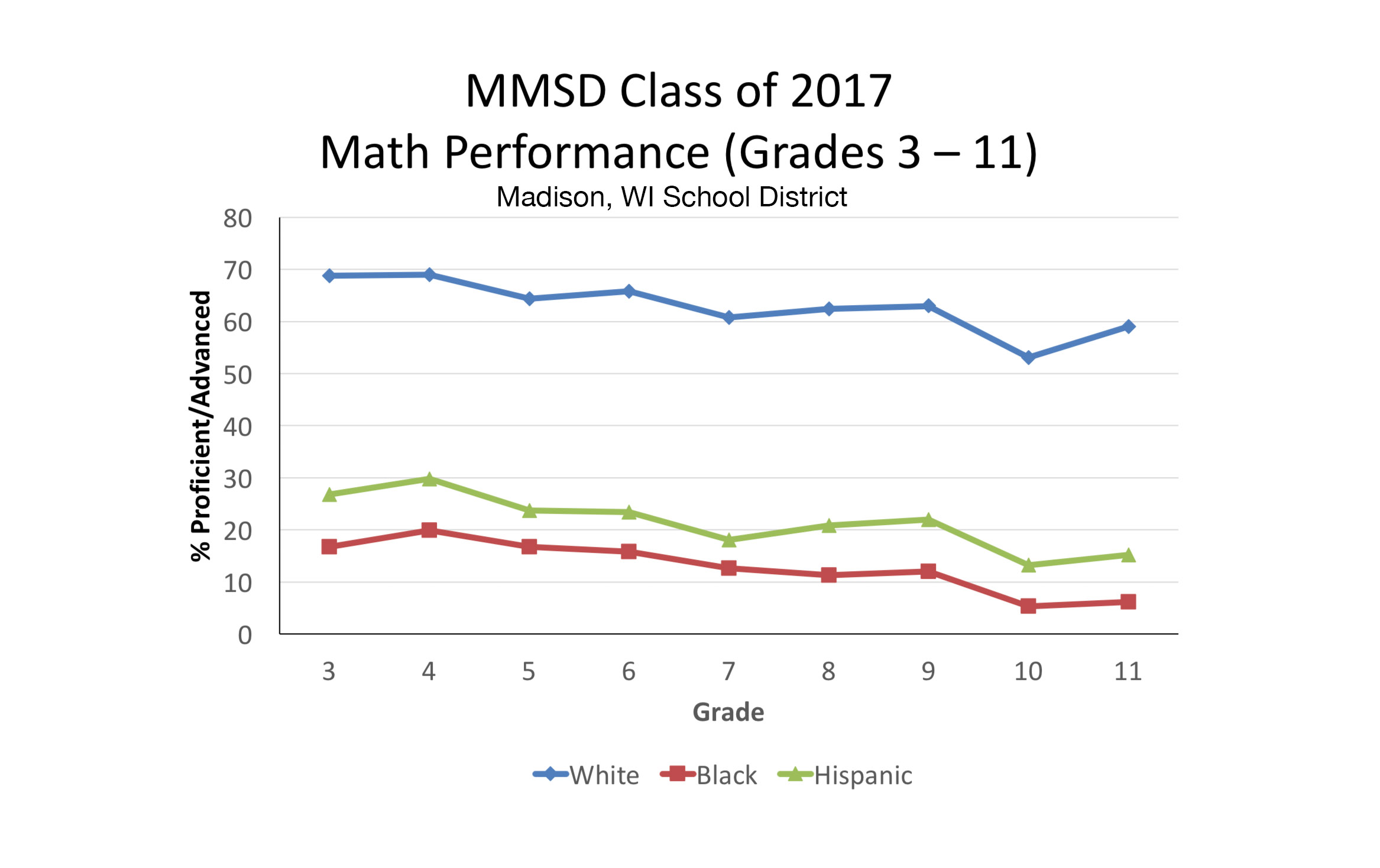
Madison spends nearly $20,000 per student, far more than most K-12 taxpayer supported Districts.
A school-based healthy lifestyle programme delivered to 6-7-year-old children and their parents made no difference to children’s weight, diet or activity levels. Around 1 in 4 remained overweight or obese.
The NIHR-funded year-long programme was delivered in 54 primary schools in one region of England. Teachers were trained to provide an additional 30 minutes of physical activity a day and deliver cookery workshops with parents each term. It also included activities with a local football club, Aston Villa.
Children in schools that took part were no less likely to be overweight or obese after 15 or 30 months, and their diet and exercise levels did not improve. Less than one in six schools managed to deliver the activity sessions as planned.
Cognitive scientists have known for decades that simply mastering comprehension skills doesn’t ensure a young student will be able to apply them to whatever texts they’re confronted with on standardized tests and in their studies later in life.
One of those cognitive scientists spoke on the Tuesday panel: Daniel Willingham, a psychology professor at the University of Virginia who writes about the science behind reading comprehension. Willingham explained that whether or not readers understand a text depends far more on how much background knowledge and vocabulary they have relating to the topic than on how much they’ve practiced comprehension skills. That’s because writers leave out a lot of information that they assume readers will know. If they put all the information in, their writing would be tedious.
But if readers can’t supply the missing information, they have a hard time making sense of the text. If students arrive at high school without knowing who won the Civil War they’ll have a hard time understanding a textbook passage about Reconstruction.
Students from less educated families are usually the ones who are most handicapped by gaps in knowledge. Another panelist—Ian Rowe, who heads a network of charter schools serving low-income students in New York—provided a real-life example during his remarks. A sixth-grader at one of his schools was frustrated that a passage on a reading test she’d taken kept repeating a word she didn’t understand: roog-bye. The unfamiliar word made it hard for her to understand the passage. When Rowe asked her to spell the word, it turned out to be rugby.
Wisconsin ranked 34th nationally reading, our lowest ranking to date
Wisconsin has just one (!) teacher content knowledge requirement: Foundations of Reading. The Tony Evers lead DPI has been attempting. to weaken this lone requirement.
Compare Massachusett’s MTEL.
Many links on UW-Madison Professor Mark Seidenberg’s new book:
“Too often, according to Mark Seidenberg’s important, alarming new book, “Language at the Speed of Sight,” Johnny can’t read because schools of education didn’t give Johnny’s teachers the proper tools to show him how”
Nearly every state includes measures of college- and career-readiness in their accountability plans under the Every Student Succeeds Act, and the quality of classroom assignments can help gauge whether students are being prepared for success beyond high school.
What is Equity In Motion?
In this series, we look at how issues or equity are playing out in the daily activities of schools and educators. Specifically, do classroom assignments reflect the more rigorous standards for college- and career-readiness?
Math Forum audio and video.
Phred Dvorak and Yasufumi Saito
:
Silicon Valley, long the undisputed king of venture capital, is now sharing its throne with Asia.
A decade ago, nearly three-quarters of the world’s financing of innovative, tech-heavy startups and young companies took place in the U.S., with American investors plowing money into mostly U.S.-based venture firms.
Entire communities are falling apart as small farms go under, said John Peck, executive director of Family Farm Defenders, a Madison based advocacy group.
Grain mills, car dealerships and hardware stores suffer. The local tax base erodes. Churches and schools struggle or close.
“The multiplier effect on the rural economy is huge. It’s why you are seeing all these boarded-up small towns,” Peck said.
Wisconsin lost 500 dairy farms in 2017, and about 150 have quit milking cows so far this year, putting the total number of milk-cow herds at around 7,600 — down 20% from five years ago.
A public university president in Oregon gives new meaning to the idea of a pensioner.
Joseph Robertson, an eye surgeon who retired as head of the Oregon Health & Science University last fall, receives the state’s largest government pension.
It is $76,111.
Per month.
That is considerably more than the average Oregon family earns in a year.
Oregon — like many other states and cities, including New Jersey, Kentucky and Connecticut — is caught in a fiscal squeeze of its own making. Its economy is growing, but the cost of its state-run pension system is growing faster. More government workers are retiring, including more than 2,000, like Dr. Robertson, who get pensions exceeding $100,000 a year.
The state is not the most profligate pension payer in America, but its spiraling costs are notable in part because Oregon enjoys a reputation for fiscal discipline. Its experience shows how faulty financial decisions by states can eventually swamp local communities.
A group of teachers and parents sued, arguing the law didn’t apply to Evers because of the powers granted to him by the state constitution. A Dane County judge agreed with them in 2012 and the state Supreme Court upheld that ruling in 2016.
In 2017, Walker signed a new, similar law. Evers did not follow that law in the way that he wrote new rules, saying he didn’t need to because of the past court rulings.
Soon afterward, a group of teachers and local school board members represented by the conservative Wisconsin Institute for Law & Liberty asked the Supreme Court to take up anew whether Evers had to follow the law on writing state rules.
Under Friday’s ruling, the high court agreed to decide that case.
The 2016 decision was unusual in that two liberals — Shirley Abrahamson and Ann Walsh Bradley — joined with conservatives Michael Gableman and David Prosser to rule on the side of Evers’ allies.
Wisconsin ranked 34th nationally reading, our lowest ranking to date
Wisconsin has just one (!) teacher content knowledge requirement: Foundations of Reading. The Tony Evers lead DPI has been attempting. to weaken this lone requirement.
Compare Massachusett’s MTEL.
Many links on UW-Madison Professor Mark Seidenberg’s new book:
“Too often, according to Mark Seidenberg’s important, alarming new book, “Language at the Speed of Sight,” Johnny can’t read because schools of education didn’t give Johnny’s teachers the proper tools to show him how”
Landers’ first conflict with her public school came when her 17-year-old son witnessed a high school classmate threaten a third student with a knife and reported it to the school authorities under promised anonymity. A week later, the knife-wielding student threatened her son for making the report, and Landers found the school’s response frustrating at every turn. She filed a separate report with the police, who told her that if it happened again, her son should step off campus and call 911.
“We don’t know what happens in the school,” she says the officers told her. Still, the school claimed it couldn’t remove the threatening student from her son’s bus route or classes.
“The other student has rights, too,” she says administrators told her.
Landers didn’t know it at the time, but it was the first of many times she would hear that phrase in place of disciplinary action against students who endangered her children with behavior went far beyond the normal playground spats most of us remember from our own childhoods.
The dire financial condition of pension funds across the US has been a frequent topic here at The Sounding Line. At the core of the problem is a simple reality: pension funds have promised to pay out more in retirement benefits than they receive in funding. A new report from the Pew Charitable Trust shines light on the scope and causes of this underfunding problem.
Every year since at least 1999, US state and local pension funds have paid out more in benefits to retirees than they receive in contributions from current workers. The result has been increasingly negative cash flows.
The State Pension Funding Gap (2016).
Madison spent 25% of its budget on benefits in 2014-2015 “unsustainable”.
Where we’ve gotten in trouble, he notes, is when we “[deny] the existence of human nature, with its messy needs for beauty, nature, tradition and social intimacy” — leading us to believe that we can radically reshape humans through technology and reason alone into a better, more efficient existence.
Political scientist James Scott (the source of Pinker’s comments) calls this movement “High Modernism.” He’s not a fan.
Scott blames the technocratic hubris of High Modernism for some of the great social engineering disasters of the 20th century, from Stalin’s famine-inducing farm collectivization, to our own country’s failed mid-century urban renewal projects, which, to quote Pinker, too often “replaced vibrant neighborhoods with freeways, high-rises, windswept plazas, and brutalist architecture.”
Technology has undoubtedly created massive benefits for humanity. But it can cause problems — shifting into High Modernism territory — when it ignores, or even tries to replace our complex humanity instead of working with it.
As the warmer, spring weather bought a much-needed reprieve to James Madison Memorial High School students this week, so did a fresh, fun option for school lunch.
This week, REAP Food Group and the Madison Metropolitan School District launched Uproot by Reap, a food truck that will serve healthy, locally sourced lunch options for Madison high school students. The truck will rotate between Madison’s four comprehensive high schools Tuesday through Friday, spending one day at each campus.
Students who qualify for free and reduced lunch are able to use their status for no-cost or discounted meals from the truck, just like in the school’s cafeteria.
People who want to open public charter schools in Kentucky have written Republican House Speaker David Osborne and Majority Floor Leader Jonathan Shell, urging them to reconsider a decision not to create a funding mechanism for public charter schools.
Time is running out because state legislators return to Frankfort Friday to begin the final two days of the 2018 session.
Since the 2017 General Assembly approved charter schools for the first time in Kentucky, people who want to open the schools have generally been quiet. But this week, Gus LaFontaine, director of a Richmond private school he wants to transition into a tuition-free public charter school, and people who want to open charter schools in Northern Kentucky and in Jefferson County wrote to lawmakers about their need for a funding mechanism. On Wednesday, they talked about their plans for charter schools in a public conference call led by Joel Adams, executive director of the Kentucky Public Charter Schools Association.
There was a bit of good news for California in the federal government’s latest round of academic test results: it’s one of seven states that registered four-point gains in reading comprehension among eighth-graders.
But that positive morsel in the 2017 National Assessment of Educational Progress (NAEP) testing of fourth- and eighth-graders released this week was more than offset by stagnation in other overall trends and, even more unfortunately, by continuation of what educators call the “achievement gap.”
That is the yawning differential of academic skills within socioeconomic and ethnic subgroups.
Take, for example, that increase in eighth grade reading, from a 2015 score of 259 on a 500-point scale to 263 in 2017.
That’s still below the designated “proficiency” level for the nation of 280 and while California’s average scores for white and Asian students reach that level, those for black and Latino students are about 30 points lower, a gap that is fundamentally unchanged over the last 10 years of NAEP testing. Not surprisingly, eighth grade “English-learners” in California fall 50 points behind students deemed to be proficient in English.
Wisconsin post lowest ever ranking on 2017 naep reading.
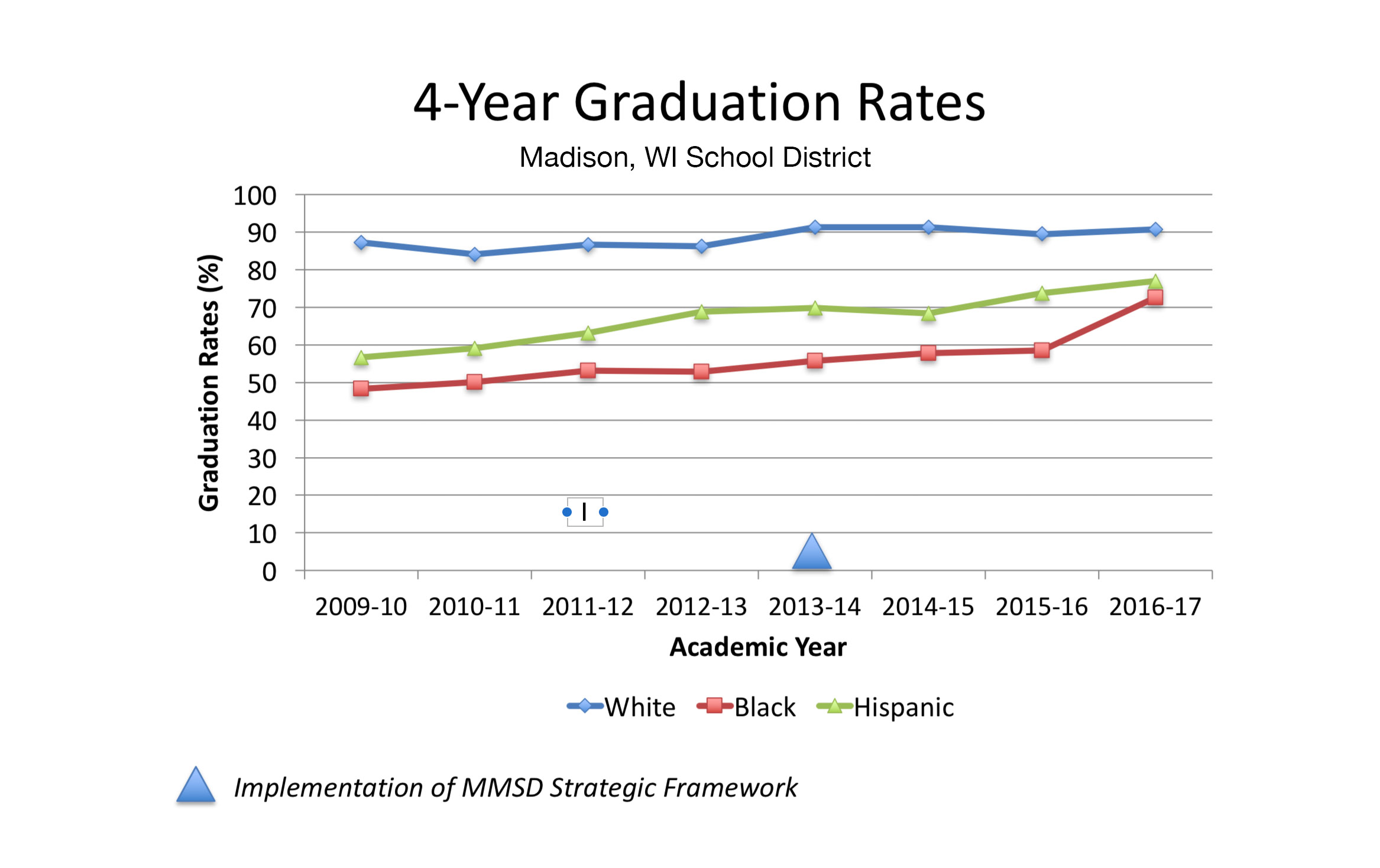
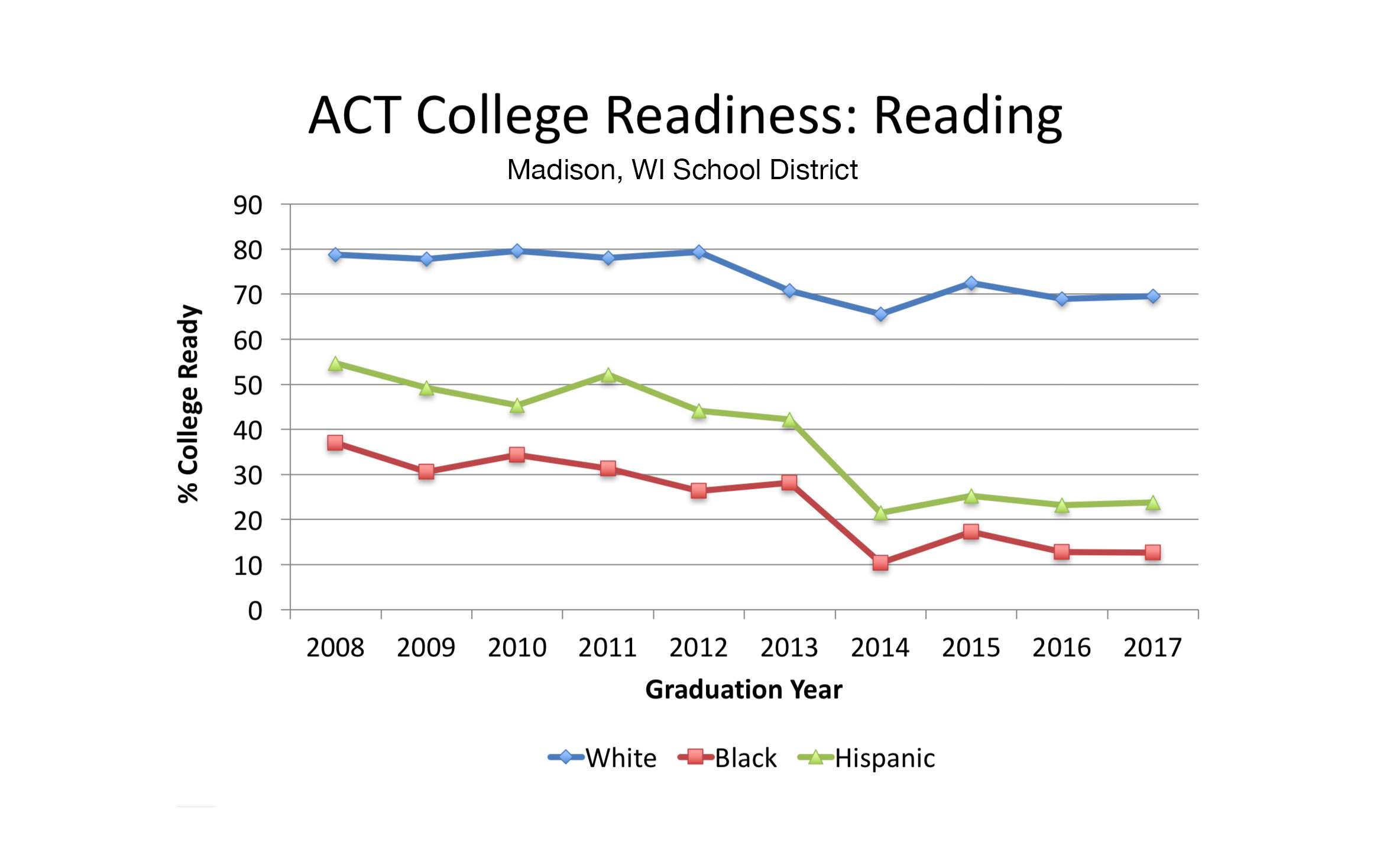
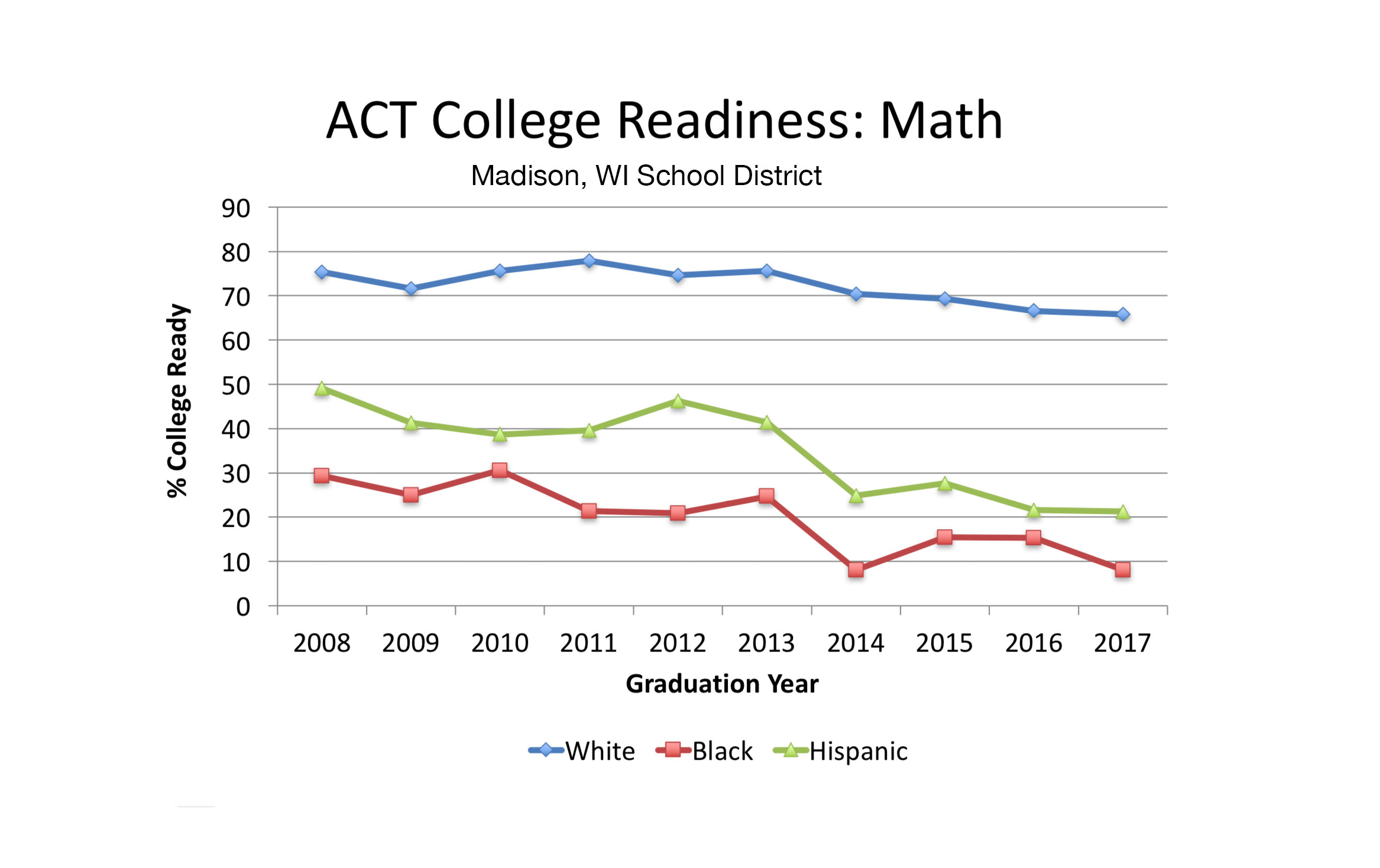
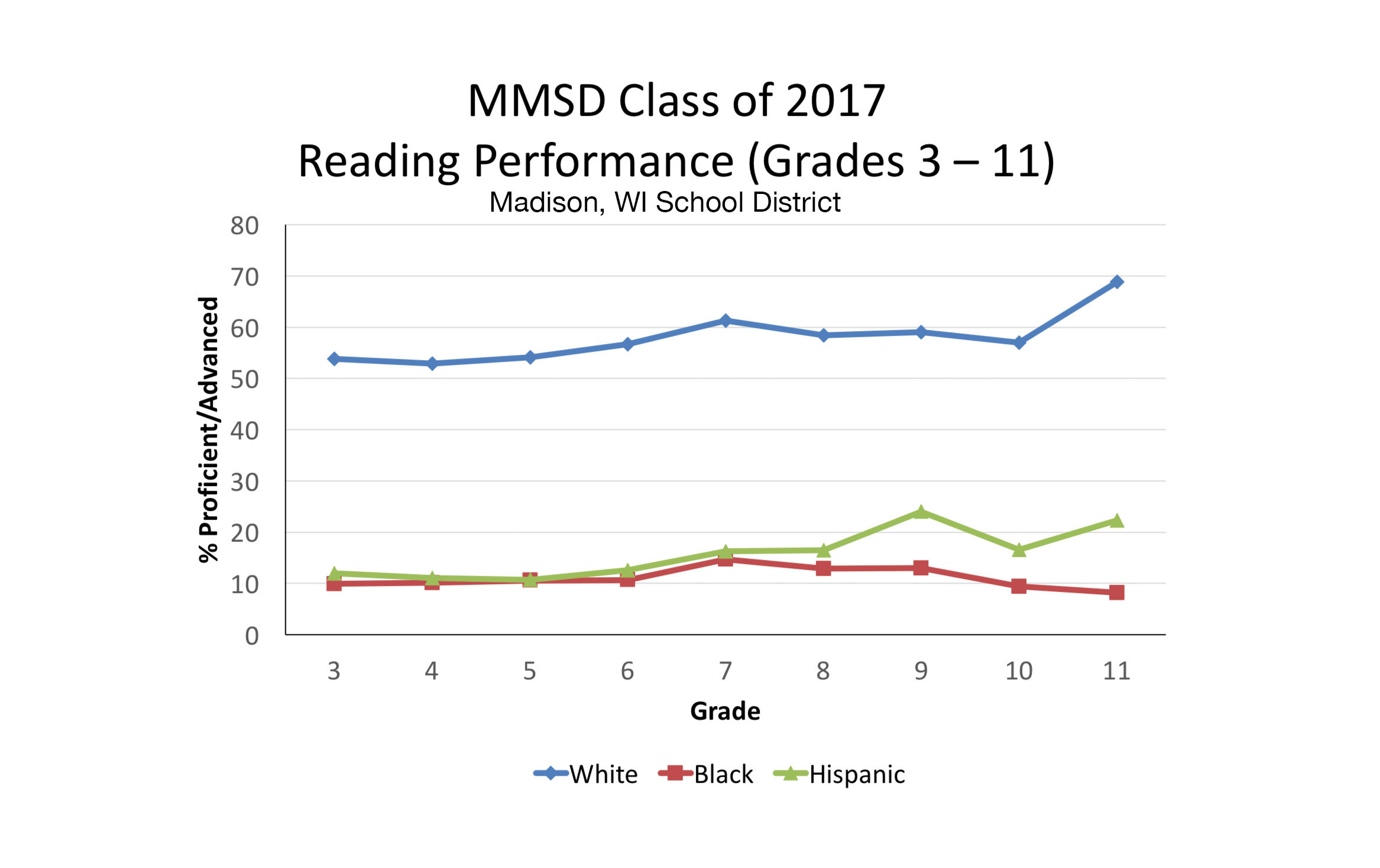
Madison’s long term disastrous reading results.
In fact, the opposite is happening. Because these are video format, they often get preferred treatment in Google’s search results, as it helps their search results seem more diverse when including video, images, and other non-link content.
So in a time when countless news publications and blogs are barely scraping by, they now also have this growing obstacle deal with.
And if you think it’s tough now, just wait a few more years before it gets out of hand as AI inevitably becomes smarter, faster, and more efficient.
Thanks for reading.
Law prof leading recall against judge says Stanford can punish alumni with impunity
Think you’ve survived “the campus rape frenzy” just because you’ve graduated? Think again.
Stanford University started a Title IX inquiry into a graduate because his accuser was inspired by #MeToo and decided to right the alleged wrongs against her eight years after they took place.
And one of its law professors, best known for leading a recall attempt for a judge for giving a lenient ruling to a convicted rapist, divines its authority to punish alumni in an ambiguous administrative policy.
The Stanford Daily reports that 2014 graduate Ellery Dake sent letters in January to “seven former Stanford football players, six of whom she said verbally degraded her and one of whom allegedly raped her.”
Morgan Frank, Manuel Cebrian, Hyejin Youn, Lijun Sun and Iyad Rahwan:
In new research, Youn and colleagues seek to understand how machines will disrupt the economies of individual cities. By carefully analyzing the workforces of American metropolitan areas, the team calculated what portion of jobs in each area is likely to be automated in coming decades.
They found that, in general, small cities will have higher portions of their workforce replaced by machines than large cities. The reason: While cities of all sizes have many easily automated jobs (like card dealers, fisherman, cashiers, and accountants), large cities like Boston also have larger shares of managerial and knowledge professions (like lawyers, scientists, and software developers). Since these jobs require knowledge and skills that cannot easily be taught to a machine, they will offset the total impact of automation. In smaller cities, fewer of those offsetting jobs exist.
Based on this finding, Youn says small cities could see an exodus of workers, as well as exacerbated income inequality, since robots are likely to hollow out the middle class there. And large cities are not entirely immune. Las Vegas, for example, has two million people in its metropolitan area, but its economy relies heavily on an industry whose jobs are likely to be automated.
So-called parental control apps on smartphones might suck at actually protecting kids from iffy stuff on the internet, new preliminary research from the University of Central Florida suggests. And unsurprisingly, they also seem to drive a wedge between teens and parents.
Researchers first surveyed over 200 pairs of parents and teens (ages 13 to 17) online. About half of the parents said they at least sometimes used these apps, which can block certain websites, limit screen time, and track children’s online activity. They found that parents who relied on these apps were more likely to be stricter and authoritarian, meaning they’re often demanding and rarely willing to listen to their kids or meet them halfway. But, seemingly counterintuitively, the teens whose parents reported having these apps were also more likely to report being exposed to unwanted explicit content, online harassment, and problems with other kids.
“The takeaway here is that parents should not treat parental control apps as a magic bullet to keep their teens safe online,” senior author Pamela Wisniewski, an assistant professor of engineering and computer science at UCF, told Gizmodo via email.
The thing is, they’re not. Or at least, a lot of evidence suggests that people aren’t really one certain kind of learner or another. In a study published last month in the journal Anatomical Sciences Education, Husmann and her colleagues had hundreds of students take the vark questionnaire to determine what kind of learner they supposedly were. The survey then gave them some study strategies that seem like they would correlate with that learning style. Husmann found that not only did students not study in ways that seemed to reflect their learning style, those who did tailor their studying to suit their style didn’t do any better on their tests.
Last year, two-thirds of all principal discretion seats at the city’s selective enrollment schools went to students from the city’s wealthiest neighborhoods while less than four percent went to students from the poorest areas, Chicago Public Schools data shows. Principals at the 11 test-in schools can admit 5 percent of their coveted freshmen seats through this process. That was 164 seats last year.
The disparity was most pronounced in four of the five most sought-after schools. At Lane, Northside, Payton, and Jones high schools last year, between 87 and 100 percent of the students admitted through principal discretion lived in the highest income areas. None came from the lowest income areas.
All this in reaction to my modest view that “empire” can mean a variety of things, is capable of good as well as evil, raises ethical questions worth thinking about, and requires sophisticated moral evaluation.
Incontinent abuse on Twitter is, sadly, so common as to be unremarkable. But this was remarkable, since its author is a senior academic at one of Britain’s most…
Unions keep details about the numbers and location of their fee-payers close to the vest, but I have those details for the California Teachers Association. For K-12 teachers and in almost all regions of the state, the number of fee-payers is small, ranging from 2 to 5 percent.
There are two key cities where the percentage is much higher — Los Angeles and San Diego. Fee-payers comprise about 11.8 percent of the United Teachers Los Angeles bargaining unit. For the San Diego Education Association it’s about 8.2 percent. For both of these locals, the loss of representation fees will have an immediate and significant impact on their budgets.
CTA is advising all local affiliates to construct contingency budgets for the 2018-19 school year, projecting various levels of membership loss, the worst-case scenario being a 40 percent drop.
I doubt that much of a loss will happen in a single year to any K-12 local, but it may be a different story for CTA’s higher education affiliates.
Last month the Wisconsin Freedom of Information Council did something unexpected. Members voted to award one of its Openness Awards — or Opees — to Gov. Scott Walker.
That’s the same guy who has fought the disclosure of political donors, whose administration directed cabinet secretaries to avoid creating publicly accessible records while conducting official business and two years ago tried to gut the state’s open records law.
But in 2016, Walker issued directives ordering state agencies to step up their responses to public records requests. As a result, said FOIC president Bill Lueders, state agencies have responded to records requests more promptly.
The “student-led” event – in which faculty and staff are invited to participate – is planned for April 20 at Oak Ridge High School. Here is a portion of the news, sent by a student, about the event:
“Inspired by the strong young people that have been victimized by acts of gun violence in their own schools and now fight against it, ORHS students are organizing a rally against gun violence. This event will be held on April 20th, the nineteenth anniversary of the Columbine High School shooting, in solidarity with schools around the country that are also holding events on this day. This rally will include students discussing how gun violence has affected their lives: original student poetry readings, student art exhibits, student-led songs, and student speeches. Furthermore, there will be stations set up where students can register to vote and write letters to their elected officials.
“Although this event is primarily by and for the students of Oak Ridge High School, the organizers are working closely with the administration to ensure that this event is constructive, minimally disruptive, and inclusive to as many students, teachers, and staff as possible.”
Well meaning employment regulation often backfires. When the law makes it risky for employers to hire, they may do less of it. The current employment situation for Millennials – with its curious emphasis on unpaid internships as a prelude to actual employment may be in part a response to the difficulties employers face in dismissing an employee who turns out to be unsuitable. Many Millennials find they need an extensive track record of successful work – even though it is unpaid – in order to land their first paying job. This was not true for previous generations.
Stephanie Stamm, Tripp Mickle and Jessica Kuronen:
The smartphones, Facebook accounts and other technology products deeply embedded in modern life help people get more things done every day. They also gather more information about us than we often realize.
But Facebook’s crisis over how it handles and protects user data has led some to ask: What data am I giving up?
Imagine “Sally” sets up a pizza-and-movie night with her friend “Kristen.” The Wall Street Journal reviewed privacy statements to assess just how much data could be unknowingly shared on top of the price of that pepperoni pie.
Sam Schechner and Natalia Drozdiak:
When European Union antitrust chief Margrethe Vestager fined Alphabet Inc.’s GOOGL -2.20% Google €2.4 billion last June for abusing its dominance to clobber rivals, Josh Hawley in Missouri took notice.
Mr. Hawley, the state’s attorney general, launched his own antitrust investigation into the same allegations in November and has demanded a copy of all evidence Google has given the EU. Other state attorneys general are talking to Missouri about sharing information, according to people familiar with the discussions. “We are all watching the European proceedings,” says Mr. Hawley.
Ms. Vestager, a 49-year old Dane, has become the public face of Europe’s effort to rein in technology firms and the de facto global regulator for the U.S.’s tech giants. Her approach to companies such as Google and Apple Inc. is having a ripple effect around the globe, influencing regulatory action not only in the U.S. but in countries including Brazil, India and Russia.
Teachers and the teachers’ union. Don’t expect a happy workforce. The union has turned up the volume on its unhappiness and it remains a powerful force, even without the bargaining powers it had before Act 10, which dramatically curtailed collective bargaining for most public employees, including teachers. Beyond the union itself, it won’t be easy for MPS to attract and retain top teachers, given the renewed money crunch.
Principals. You can advocate all sorts of things as superintendent, but carrying them out depends a lot on the 150 or so principals running schools. I suspect if Driver were candid, she’d say that she worries about the quality of principals overall. And there is concern that a wave of retirements is coming. Good luck finding great principals.
Student achievement. Driver accomplished some things as superintendent, but the most important big picture point to me is that student achievement didn’t change much. A few indicators improved a bit. Overall, the situation continues to be deeply alarming. Year after year, one in five students in MPS (and in the private school voucher program) rates as proficient in reading. Fewer than that are proficient in math. Is it Driver’s fault that things haven’t improved much? Obviously, there’s lots of blame to share. But, ultimately the coach is judged by how the team does on the field. The team is chronically beleaguered.
Relationships. This was Driver’s biggest strength. She connected with all sorts of people — community leaders, philanthropists, business leaders, elected officials, leaders from elsewhere in Wisconsin. This translated into both tangible and intangible support for MPS. But relationships require a lot of tending, especially with so many competing interests. Driver will be a tough act to follow on this front.
Matthew Mitchell & Anne Philpot:
Over the past six decades, occupational licensing has expanded rapidly. In 1950, just 5 percent of all US workers needed a license to do their jobs. Today, one in four Americans must be licensed by a state to do his or her job. When federal licensing requirements are included, the number approaches 30 percent.
As we documented in a recent public interest comment filed with the Federal Trade Commission, a consensus among economists and policy experts on the left and the right has emerged in recent years. That consensus suggests that licensure in the United States is excessive, limits competition, raises consumer prices, has a disparate impact on certain communities, and has little or no effect on either quality or public safety.
Just when we thought we knew everything important about the age of sail and its impact on the world, along comes research that exposes our collective myopia when gazing at the past. Ships carried all sorts of things across the oceans, including commodities, disease, and ideas. But as archaeologist and author Mats Burström shows, ships also scattered bits of their homelands—quite literally—around the world.
Today, ships use water as ballast, in the process delivering microscopic organisms to international ports. But once upon a time, mariners relied on solids—bricks, stones, and gravel—to lend their ships stability. In four centuries of sailing, they left millions of tonnes of material around the globe from Canada to India.
The public so far still does not disdain the tech oligarchs as they do Wall Street or energy firm but they are clearly threatened, both politically and in their wallets. Their once seemingly unstoppable hold of the capital markets also has started to slip somewhat as investors begin to worry about a potential decline in social media as well as technical failures undermining the value of companies like Uber, Tesla and Snapchat.
Not that the oligarchs will change their ways without coercion. Mark Zuckerberg, amid the uproar, still seems determined to block privacy protections in California or elsewhere. Facebook’s arrogance has even incited tension between the tech overlords, with Apple’s Tim Cook assaulting Mark Zuckerberg for privacy violations. The fact that Cook did this in Beijing, world capital of advanced surveillance, makes the public spanking ever more bizarre.
John Tierney and John Stossel:
As Tierney points out, though, the Left’s opposition to important advances like genetically modified food and the study of human genetics (among others) has done much more damage than, say, conservative creationists, who have zero impact on scientific funding or decision-making.
Wisconsin Reading Coalition, via a kind email:
The Wisconsin legislature has approved a Study Committee on Identification and Management of Dyslexia, with Rep. Bob Kulp as Chair and Sen. Patty Schachtner as Vice Chair.
SCOPE: The Study Committee is directed to review current screening, identification, school intervention, and treatment protocols for dyslexia in K-12 schools; to examine the effects of current state statutes and regulations on literacy outcomes for students with dyslexia; and to evaluate the effects of dyslexia on literacy outcomes in the state. The committee shall study recent research on evidence-based instructional techniques for students with dyslexia; determine the components and costs of successful dyslexia education practices and laws in other states; and identify institutional obstacles to academic attainment for these students. The committee shall consider legislation to implement screening for characteristics of dyslexia in early grades; to ensure that reading instruction and intervention practices incorporate relevant research findings from the University of Wisconsin; to improve the partnership between parents, educators, counselors, and others on early identification and effective interventions for dyslexic learners; and to enhance statewide access to updated resources and training on dyslexic education.
This is a timely development, as today’s release of the 2017 4th grade reading scores from the National Assessment of Educational Progress shows Wisconsin students with disabilities have an average score of 177, while the national average for that group of students is 184. 10 points on the NAEP is approximately one grade level, so this is a substantial difference. Within Wisconsin, students with disabilities score 2% advanced, 9 percent proficient, 13% basic and 76% below basic.
Good reading instruction is good reading instruction, regardless of which students are receiving it. All students need to learn the same skills to become proficient readers, with some of them requiring more time and more explicit instruction to master skills. Since students with dyslexia receive much of their reading instruction and early intervention in the general education classroom, and 65% of ALL Wisconsin 4th graders perform at a basic or below basic level, we are hopeful that this study committee will make suggestions that will benefit ALL readers. Improvements in teacher preparation as well as professional development are of central importance to any meaningful change.
Congratulations to Decoding Dyslexia-Wisconsin for advocating successfully for this committee
On a cool February day in 1917, storied inventor Alexander Graham Bell gave the graduating class of McKinley Manual Training School a rousing speech that would later sound a bit like prophecy.
“Now, it is very interesting and instructive to look back over the various changes that have occurred and trace the evolution of the present from the past,” Bell said, after recalling the incredible transformation wrought by electricity and automobiles alone. “By projecting these lines of advance into the future, you can forecast the future, to a certain extent, and recognize some of the fields of usefulness that are opening up for you.”
In 1876, Bell himself had patented the device known as the telephone, which used wires to transmit the sound of human speech. As this device spread, its capabilities allowed voices to cross enormous distances. In 1915, one such “wireless telephony” system had allowed a Virginia man to speak to another in Paris while a man in Honolulu listened in — a distance of 4,900 miles (about 7,886 kilometers), setting the record for the longest distance communication at that time.
Bell marveled at this achievement and the change it had already created, predicting that “this achievement surely foreshadows the time when we may be able to talk with a man in any part of the world by telephone and without wires.” At the time of Bell’s speech, the U.S. had an estimated 11.7 million working telephones; by the year 2000, that number had risen to nearly 103 million.
Extrapolating forward, Bell predicted a future in which this technology allowed people to pretty much anything remotely: “We shall probably be able to perform at a distance by wireless almost any mechanical operation that can be done at hand,” he said. And he wasn’t wrong.
Wisconsin Reading Coalition, via a kind email:
The 2017 scores from the National Assessment of Educational Progress have been released, and the news is not good for Wisconsin. All the data is available in the NAEP Data Explorer at https://www.nationsreportcard.gov/ndecore/landing.
We will do a detailed analysis soon, but here are some important takeaways from the 4th grade reading test:
- Wisconsin ranked 34th nationally, our lowest ranking to date
- The Wisconsin average score is 220 (down 4 points from two years ago, and 2 points lower than the national average)
- Our black students ranked 49th (3rd from last)
- Our white students ranked 41st (lower than white students in Alabama and Mississippi)
- Our black-white gap was tied for 5th largest in the country
- 65% of Wisconsin students were not proficient in reading: 34% were below basic, 31% basic, 27% proficient, and 8% advanced
- All of our racial sub-groups, as well as low SES students and students with disabilities performed below the national average for their particular sub-group
Charts from the Urban Institute:


Wisconsin ranks 22nd amongst the States in per student spending at $11,375.
Madison currently spends nearly $20,000 per student, far more than most school districts. Yet, we’ve long tolerated disastrous reading results.
Matthew Ladner on charters and the “lost decade”.
It’s easy for us armchair-quarterbacks of education to cast stones at teachers and principals who give diplomas to students who didn’t earn them. But a more constructive conversation would start with a mea culpa: We have made a complete hash of the policies governing high schools and what’s expected of young people seeking to graduate from them. Until we fix that, we should expect the cheating and gaming to continue.
Our first mistake was to set sky-high goals around graduation rates, while allowing local officials great discretion in defining what it takes for students to earn a diploma. If this mistake sounds familiar, it’s because it’s the same one we made when we set near-universal proficiency in reading and math as a national goal under No Child Left Behind, but let states define “proficiency” as they saw fit.
Both sides of this equation are off. As my colleague Brandon Wright pointed out recently, almost a third of students leaving eighth grade are achieving “below basic” in math and reading, according to the National Assessment of Educational Progress. For low-income students, it’s 40 percent, and for African American students it’s more than half. Roughly speaking, these students are entering ninth grade achieving at or below a sixth-grade level.
Getting almost all of these students to meet high school graduation standards within four years, as federal and state policies expect, is utterly unrealistic—unless the standard for graduation is set at a ridiculously low level, or winked at while being applied. And because most states no longer have graduation or end-of-course exams in place to act as a check—a worrying policy drift in its own right, and one that’s gotten far too little attention—local officials and educators can and do engage in the soft bigotry of low expectations.
Ive not seen clarification on the assertions contained in Karen Rivedal’s 11 March article.
The federal budget deficit hit $598 billion in the first half of the 2018 fiscal year, according to the Congressional Budget Office, quickly outpacing the deficits of recent years.
At the same point in 2017, the deficit was $78 billion lower. That year, the entire deficit amounted to $666 billion, just 11% higher than the amount the U.S. government had to borrow in the first half of 2018.
The fast-increasing deficit expanded as government outlays grew 2.5 times faster than revenues. On the revenue side, which was up 2 percent over last year, the GOP tax reforms ate into individual tax revenue, and slashed corporate tax revenue by $22 billion, or 22 percent.
On the spending side, Social Security outlays increased $19 billion, or 4 percent, while interest payments on debt increased $18 billion, or 12 percent. Meanwhile, disaster relief efforts drove Homeland Security spending up $14 billion, a 56 percent increase. Defense spending also rose $12 billion — a 4 percent increase.
What is happening to national politics? Every day in the US, events further exceed the imaginations of absurdist novelists and comedians; politics in the UK still shows few signs of recovery after the “national nervous breakdown” of Brexit. France “narrowly escaped a heart attack” in last year’s elections, but the country’s leading daily feels this has done little to alter the “accelerated decomposition” of the political system. In neighbouring Spain, El País goes so far as to say that “the rule of law, the democratic system and even the market economy are in doubt”; in Italy, “the collapse of the establishment” in the March elections has even brought talk of a “barbarian arrival”, as if Rome were falling once again. In Germany, meanwhile, neo-fascists are preparing to take up their role as official opposition, introducing anxious volatility into the bastion of European stability.
But the convulsions in national politics are not confined to the west. Exhaustion, hopelessness, the dwindling effectiveness of old ways: these are the themes of politics all across the world. This is why energetic authoritarian “solutions” are currently so popular: distraction by war (Russia, Turkey); ethno-religious “purification” (India, Hungary, Myanmar); the magnification of presidential powers and the corresponding abandonment of civil rights and the rule of law (China, Rwanda, Venezuela, Thailand, the Philippines and many more).
For a lot of higher level courses in Machine Learning and Data Science, you find you need to freshen up on the basics in maths – stuff you may have studied before in school or university, but which was taught in another context, or not very intuitively, such that you struggle to relate it to how it’s used in Computer Science. This specialisation aims to bridge that gap, getting you up to speed in the underlying maths, building an intuitive understanding, and relating it to Machine Learning and Data Science.
In the first course on Linear Algebra we look at what linear algebra is and how it relates to data. Then we look through what vectors and matrices are and how to work with them.
Arizona colleges can’t give in-state tuition to young immigrants covered under the Deferred Action for Childhood Arrivals program, the Arizona Supreme Court ruled Monday.
The court issued a brief decision order saying justices unanimously agreed with the Arizona Court of Appeals’ ruling that said existing federal and state laws don’t allow the Maricopa Community Colleges to grant in-state tuition rates for DACA recipients.
A full opinion further explaining the court’s ruling will be released by May 14, the order states.
The court released the order Monday to allow Maricopa Community Colleges students and the state to have as much time as possible to plan for those affected by the ruling.
More than 2,000 DACA recipients, commonly referred to as “dreamers,” currently attend community college or a state university in Arizona and pay in-state rates. The ruling will make DACA recipients pay much more to attend these schools, as out-of-state rates are about triple the cost of in-state tuition.
Successful entrepreneurs must understand they’re the minority. Most businesses fail and most 18 year-olds don’t have what it takes to start, let alone run their own business. I certainly would have been lost at that age trying to make a go at it on my own.
I get what Ohanian is trying to say here. There are plenty of problems with the higher education system. It’s too expensive. Most students aren’t given enough guidance in terms of how their preferred area of study will lead to actual employment or how much that employment will pay. Student loans can also be a huge burden after school for many.
In many ways, much like personal finance, people are mostly on their own when it comes to figuring these things out, which is a shame.
And then there’s the fact that it’s a tad ridiculous that so many employers require a college degree to even be considered for a position in the first place. Unfortunately, just because the current system isn’t perfect doesn’t mean young people can avoid it all together.
Farmers’ advocacy groups called on Congress Monday to reauthorize, “with adequate funding,” a program that provides mental health services to distressed American farmers and their families.
“Despite the growing need,” notes a letter to House and Senate agricultural committees signed by 36 rural and farming organizations, the Farm and Ranch Stress Assistance Network (FRSAN) “has never received funding, leaving many producers without access to important behavioral health services.”
WHO: Michael Brown, a senior at Mirabeau B. Lamar High School in Houston
WHAT: Brown was accepted into twenty top universities with full-ride scholarships
WHY IT’S SO GREAT: It’s harder than ever to get into the country’s most prestigious universities, so the already impressive feat of getting into an Ivy League institution is all the more admirable today. And finding a way to pay for higher education is a crucial part of any but the wealthiest students’ application strategy. Michael Brown, a senior at Lamar High School in Houston, has managed to accomplish that (and more)!
On March 28, Brown opened the last of twenty acceptance letters from top universities. Not only was he accepted into his long-time dream school, Stanford, but he was also granted admission into schools like Harvard, Princeton, Northwestern, and Yale. He was also awarded a full ride to each school through a mix of scholarships and grants. And he earned an additional $260,000 in scholarships outside of his school applications. And—no, just kidding.
POLITICIANS love to talk about spending. To simplify, Democrats win leftist votes by calling it investment and promising more of it. Republicans secure conservative votes by calling it waste and pledging to make cuts. Talking candidly about how to collect the revenues that fund government is more ticklish, especially when the pain is likely to be broadly shared.
This may help to explain why a surprising number of American states are facing a revenue crisis, even as the broader economy enters its ninth year of recovery. With unemployment at a 17-year low and stockmarkets near all-time highs, one might expect state coffers to be overflowing. Yet many states find themselves struggling to collect enough revenue to balance their budgets—as most are legally obliged to do. According to the National Association of State Budget Officers, 27 states saw their revenues fall below expectations last year. While states have been grappling with rising health-care and pension-fund costs for decades, many recent woes can be blamed on sluggish revenue growth. If things do not pick up soon, states will be unprepared when a new recession strikes.
The Chinese government has banned online retailers from selling the Bible, moving in the wake of new rules to control the country’s burgeoning religious scene.
The measures to limit Bible sales were announced over the weekend and began taking effect this week. By Thursday, internet searches for the Bible came up empty on leading online Chinese retailers, such as JD.com, Taobao, and Amazon, although some retailers offered analyses of the Bible or illustrated storybooks.
The retailers did not respond to requests for comment, although Thursday is the start of a long holiday weekend in China.
The move aligns with a longstanding effort to limit the influence of Christianity in China. Among China’s major religions — which include Buddhism, Taoism, Islam and folk beliefs — Christianity is the only one whose major holy text cannot be sold through normal commercial channels. The Bible is printed in China but legally available only at church bookstores.
Often called the “nation’s report card,” the National Assessment of Educational Progress (NAEP) reading and mathematics assessments are administered to a representative sample of fourth- and eighth-grade students in each state every two years. NAEP scores offer something rare in education policy: data that are standardized across states and across time. Policymakers and pundits seize upon these data as evidence to support their preferred policies. But comparing NAEP scores assumes that states serve the same students—and we know they don’t.
A better way to compare and talk about NAEP performance is to use adjusted NAEP scores that account for demographic differences across students in each state. These adjusted scores allow for students to be compared with their demographically similar peers using factors such as race, receipt of special education services, and status as an English language learner. These are factors we know can affect test results, yet they are not shown in NAEP scores. The interactive tool below brings those adjusted NAEP scores to life.
Via a kind activist.
Much more on NAEP, here.
Reform movements succeed when the methods, motivation & moment converge. We are reaching such a time.
As feared, the new results from the National Assessment of Educational Progress show that national trends are mostly flat. Coming on the heels of some modest declines in 2015, the 2017 scores amount to more bleak news. It’s now been almost a decade since we’ve seen strong growth in either reading or math, with the slight exception of eighth grade reading. There’s no way to sugarcoat these scores; they are extremely disappointing.
Much more on NAEP, here.
Related: Stretchtargets.org
The self-proclaimed RV capital of the world gives a glimpse of what the American economy looks like when operating at full tilt.
High-school students around here skip college for factory jobs that offer great pay and benefits. For-hire signs sprout like roadside weeds. And workers are so flush that car dealers can’t keep new pickups on the lot.
At the same time, the strains are showing. Employers can’t hang on to employees, and house prices are zooming. The worker shortage prompted a local Kentucky Fried Chicken restaurant to offer $150 signing bonuses. A McDonald’s failed to open for lunch last fall because managers couldn’t corral enough hands at $8 an hour to serve the lines waiting at the door.
A lot of people are selling Enlightenment these days. After the Brexit vote and the election of President Trump, David Brooks published a paean to the “Enlightenment project,” declaring it under attack and calling on readers to “rise up” and save it. Commentary magazine sent me a letter asking for a donation to provide readers “with the enlightenment we all so desperately crave.” And now there’s Steven Pinker’s impressive new book, “Enlightenment Now,” which may be the definitive statement of the neo-Enlightenment movement that is fighting the tide of nationalist thinking in America, Britain and beyond.
Do we all crave enlightenment? I don’t. I like and respect Mr. Pinker, Mr. Brooks and others in their camp. But Enlightenment philosophy didn’t achieve a fraction of the good they claim, and it has done much harm.
Boosters of the Enlightenment make an attractive case. Science, medicine, free political institutions, the market economy—these things have dramatically improved our lives. They are all, Mr. Pinker writes, the result of “a process set in motion by the Enlightenment in the late 18th century,” when philosophers “replaced dogma, tradition and authority with reason, debate and institutions of truth-seeking.” Mr. Brooks concurs, assuring his readers that “the Enlightenment project gave us the modern world.” So give thanks for “thinkers like John Locke and Immanuel Kant who argued that people should stop deferring blindly to authority” and instead “think things through from the ground up.”
A survey conducted by the Pew Research Center reveals that most Americans online (~75%) understand the requirements for a strong password and that they should not conduct sensitive transactions on public WIFI, but beyond that, their online security literacy drops significantly. For example, only about 54% can identify a phishing attack (which suggests that half of adults online are clicking on suspicious links); only 39% understand the private browsing is not private from their ISP; and only 10% can identify an example of multi-factor authentication. What is surprising about this data is that while education is a factor in online security literacy, age is less so. Users aged 65 and older were seemingly just as knowledgeable as users in the age range of 18-29; while online literacy bias in general is weighted toward younger users, the Pew survey suggests that overall there is a shared standard of what we know and what we don’t know.
Our complicated relationship with Facebook is rooted in this murky understanding of online security and how the web works. When Facebook was founded in 2004 access was limited first to Harvard students and then opened to other colleges before extending to high school students and then the general public. From the very beginning the requirement for joining the site was rooted in transparency: you need a valid email address to join—in the early days of the platform, that meant an email address registered to the college you were attending—and you need to reveal your name. Connecting with others was dependent upon revealing a fundamental aspect of self, which countered the online expectations of an experience mediated by a username that afforded the individual some anonymity.
Through gradually widening circles of inclusion, Facebook normalized sharing facets of a person’s real identity. Sharing names in a closed social community such as a college campus is easy but as people move on and their offline networks grew wider, the business decision to open Facebook to everyone under this guise of increasing and maintaining connectivity and relevance to users eased user into sharing their names—and the other aspects of self—with a widening audience of both people and services.
I made this chart last year as a bonus award on Kickstarter but am now making it available as a free download. Just right click on the above image (or long press on your mobile) and then select save.
UPDATE: I shared this on Twitter and it’s my first tweet to reach over 10k RT’s! Anyway, here’s a few comments based on the feedback I’ve received:
The idea that we learn better when taught via our preferred modality or “learning style” – such as visually, orally, or by doing – is not supported by evidence. Nonetheless the concept remains hugely popular, no doubt in part because learning via our preferred style can lead us to feel like we’ve learned more, even though we haven’t.
Some advocates of the learning styles approach argue that the reason for the lack of evidence to date is that students do so much of their learning outside of class. According to this view, psychologists have failed to find evidence for learning styles because they’ve focused too narrowly on whether it is beneficial to have congruence between teaching style and preferred learning style. Instead, they say psychologists should look for the beneficial effects of students studying outside of class in a manner that is consistent with their learning style.
Much more on “learning styles“, here
There is no easy fix. Creating economically diverse campuses is complicated and costly. Higher education did not cause and will not cure economic inequity. But as colleges struggle to come up with the right formula, the odds against children who come from families earning the median income or less actually graduating from college seem to grow more formidable.
The wealthy spend tens of thousands each year on private school tuition or property taxes to ensure that their children attend schools that provide a rich, deep college preparatory curriculum. On top of that, many of them spend thousands more on application coaches, test-prep tutors and essay editors. They take their children on elaborate college tours so that their children can “find the right fit” at schools with good names and high graduation rates. Enrollment strategists at these same schools seek applicants from areas where the data they buy confirms that income levels and homeownership are high.
For years now, the US Department of Agriculture has been flirting with the latest and greatest DNA manipulation technologies. Since 2016, it has given free passes to at least a dozen gene-edited crops, ruling that they fall outside its regulatory purview. But on Wednesday, March 28, the agency made its relationship status official; effective immediately, certain gene-edited plants can be designed, cultivated, and sold free from regulation. “With this approach, USDA seeks to allow innovation when there is no risk present,” US Secretary of Agriculture Sonny Perdue said in a statement.
The agency’s logic goes like this: Gene editing is basically a (much, much, much) faster form of breeding. So long as a genetic alteration could have been bred in a plant—say a simple deletion, base pair swap, or insertion from a reproductively compatible relative—it won’t be regulated. Think, changes that create immunity to diseases, hardiness under tough weather conditions, or bigger, better, tastier fruits and seeds. If you want to stick in genes from distant species, you still have to jump through all the hoops.
At first glance, Dark Hammer [PDF] looks a lot like any other science fiction comic book: On the front cover, a drone flies over a river dividing a city with damaged and burning buildings. But this short story in graphic form comes from the Army Cyber Institute at West Point, in New York. The ACI was set up to research cyber challenges, and it acts as a bridge between different defense and intelligence agencies and academic and industry circles.
“Our mission is to prevent strategic surprise for the army…to really help the army see what’s coming next,” explains Lt. Col. Natalie Vanatta, the ACI’s deputy chief of research. Dark Hammer is the first of four recently released comic books set in the near future that depict some of the emerging threats identified by the ACI. The books are free and downloadable by all, but they are primarily intended for “junior soldiers and young officers to get them to think about—well, what if the next 10 years doesn’t look like the last 80?” says Vanatta. The choice of format is unusual but far from unprecedented, she adds. “The army really has a large history of using graphic novels or fiction to help our workforce understand somewhat intangible concepts.”
The school board’s Committee on Accountability, Finance and Personnel will take up two other cost-saving proposals on Tuesday, including one to restructure employee health care benefits. According to the administration’s analysis, that proposal would save up to $17.4 million by:
Eliminating coverage of spouses who have access to insurance elsewhere or charge employees extra to keep them on their plan ($7.9 million).
Raising co-pays for doctors visits to $35, urgent care to $50 and emergency rooms to $175 ($4.3 million).
Increasing employee contributions for their health care to 7% for low-wage workers and as much as 19% for those earning $101,000 or more (up to $3.2 million).
Eliminating a long-term disability benefit that has cost the district about $2.3 million in premiums since January 2017, but reaped benefits for just four employees totaling $47,534 ($2 million).
The committee also will consider a proposal to explore the creation of near-site health clinics for employees that could save an estimated $700,000 annually.
25% of Madison’s 2014-2015 budget was spent on benefits.
Facebook will tighten its requirements to place political advertisements on its platforms and officially endorsed bipartisan legislation in the Senate that would regulate online ads, Mark Zuckerberg, the company’s chief executive, announced Friday.
Zuckerberg’s announcement came four days before he is scheduled to speak to lawmakers in Washington.
In a Facebook post Friday, Zuckerberg officially endorsed the Honest Ads Act to regulate digital ads that could appear across the internet — including on social media like Facebook and Twitter.
But YouTube is accused of avoiding this responsibility simply by saying that YouTube kids is only to be used by those over 13. The CCFC says that Google knows that YouTube is the most recognizable brand among kids aged between six and 12.
This is borne out, according to officials, because Google boasts to advertisers about how well it can access children. The CCFC also highlights programs like Google Preferred, where companies can pay more to get airtime on popular, rugrat-friendly channels.
Many school distrocts, including Madison, use Google (youtube parent) services.
One of the least discussed parts of America’s income tax is how progressive it is, and the tax overhaul didn’t change that fact. In 2018, top earners will pay a higher share of income taxes.
The individual income tax matters—a lot—because it is the largest single source of U.S. revenue. And its share has risen in recent years. For 2018, it could raise 50% of total federal revenue, according to estimates from Congress’s Joint Committee on Taxation, up from about 48% last year.
So who pays what share of this tax?
IRS data aren’t available until long after people file, so estimates for 2017 and 2018 come from the Tax Policy Center, a nonpartisan research group.
They divided about 175 million American households into five income tiers of roughly 65 million people each. The income includes earnings from wages and investments plus untaxed amounts, such as from health coverage. These additions nearly double the income of people in the lowest tier and add about 20% for those in the highest tier.
Others say the issue is one of priorities, pointing to big increases in nonteaching school staff, like aides, custodians, and counselors, and greater teacher retirement costs.
Higher pay means teachers are more likely to stay in the classroom. That’s linked to increased student achievement.There’s a lot of variation in how much teachers are paid, with particularly low pay in Arizona, Oklahoma, and West Virginia. Teacher pay ranges from an average of about $42,000 a year in South Dakota to nearly $80,000 in New York. Another report, from the Education Law Center, which supports more school funding, compares early career teachers’ pay (not including benefits) to pay for similarly educated young professionals in each state. In almost all cases, teachers are paid less. Teachers in Arizona made 73 percent of similar nonteachers, among the worst in the country. Teachers in Oklahoma (78 percent) and West Virginia (79 percent) didn’t have it much better. Kentucky teachers actually came out ahead of teachers elsewhere but still lagged behind nonteachers.
Higher pay means teachers are more likely to stay in the classroom. That’s linked to increased student achievement. The policy argument for paying teachers more is straightforward: You’ll attract and keep better teachers. That’s largely backed up by research. Several studies have shown that even relatively modest increases in teacher pay can decrease teacher turnover.
“Unsustainable benefit growth”.
The Party is based on a concept by the author Lucy Hawking and is written by Sumita Majumdar, who drew on her own experiences as a person with autism in similar social situations. Throughout the film, viewers hear Layla’s thoughts, voiced by the autistic teenager Honey Jones. The storyline was developed after extensive focus groups and interviews with people on the autism spectrum as well as with input from the National Autistic Society, the Autism Research Trust and the University of Cambridge Autism Research Centre.
The visual and auditory effects in the film were based on scientific research about the kinds of symptoms seen in autistic individuals, such as difficulties with processing faces, and hypersensitivity to lights, loud noises and strong odours. Interviews conducted with autistic women also revealed they had issues with how things sound during a meltdown, including having difficulties distinguishing between sounds, hearing echoing voices and being unable to process the other information around them.
“My parents don’t want to just throw money around now,” Ms. Shahverdian said as she walked across Pasadena’s 53-acre campus, heading toward her English class. “I’m getting a great education at a fraction of the cost.”
Community colleges have long catered to low-income students who dream of becoming the first in their families to earn a college degree. And for many, that remains their central mission. But as middle- and upper-middle-class families like the Shahverdians face college prices in the hundreds of thousands of dollars, more of them are looking for ways to spend less for their children’s quality education.
“This is about social norms,” said Sara Goldrick-Rab, a professor of higher education policy and sociology at Temple University in Philadelphia. “More middle-class parents are saying, I’m not succumbing to the idea that the only acceptable education is an expensive one.”
Free Initiatives
In recent years, Pasadena City College has had a 320 percent increase in students whose parents make more than $100,000 a year, to 828 students last year from 197 in 2007. And it’s not alone.
Drive down Massachusetts Avenue, one of the main thoroughfares in the tony, hyper-educated city of Cambridge, and you will spot two handsome Episcopal churches located a few blocks apart. Both houses of worship are usually festooned with rainbow flags, Black Lives Matter banners, statements on transgender rights and so on. The churches epitomize what might be called “Harvard Christianity”—a Christianity that is fully conformed to modern liberalism and the opinions of the meritocrats who teach and study at the elite university nearby.
But other strands of Christianity—those that conform themselves to the faith’s timeless moral teaching and uphold its sexual anthropology—are not so welcome at the university. Indeed, Harvard is now determined to ostracize, censor, and ultimately root out orthodox Christianity from a university that was founded to train ministers in the Puritan tradition. That is the inevitable conclusion to be drawn from the school’s little-noticed decision this year to suspend and defund the largest evangelical fellowship on campus.
The Northwestern European countries have the highest potential for resilience to the impact of fake news due to the quality of education, free media and high trust among people. At the other extreme are the Balkan countries, which would be more vulnerable to the negative influence of fake news and the “post-truth” phenomenon mainly because of controlled media, deficiencies in education and the low level of trust among people.
These are the findings of a new edition of the Media Literacy Index by the European Policies Initiative (EuPI) of the Open Society Institute – Sofia. The index assesses the resilience potential to fake news in 35 European countries, using indicators for media freedom, education and trust in people. As the indicators have different importance, they are assigned different weight in the model. The media freedom indicators have the highest weight (Freedom House and Reporters without Borders) along with the educationindicators (PISA) with reading literacy having the highest share among them. The e-participation indicator (UN) and trust in people (Eurostat) have smaller weight relative to the other indicators.
According to the Index 2018 findings, the countries which are better equipped to deal with the impact of post-truth and fake news are the countries from Northwestern Europe – the Scandinavian states as well as the Netherlands, Estonia and Ireland. This coincides with the conclusions of other surveys and experts opinions, which single out these countries in regard to their capacity to tackle fake news. The countries with the lowest results are in Southeastern Europe – from Croatia to Turkey – along with their immediate neighbors Hungary and Cyprus. As a rule, the reasons for these results are the poor or mediocre performance in education as well as the controlled (not free) media. Such countries are most likely to be vulnerable to fake news and the ensuing negative effects.
Madison has long tolerated disastrous really results, despite spending far more than most, now nearly $20,000 per student.
Rongcheng was built for the future. Its broad streets and suburban communities were constructed with an eye to future expansion, as the city sprawls on the eastern tip of China’s Shandong province overlooking the Yellow Sea. Colorful billboards depicting swans bank on the birds — one of the city’s tourist attractions — returning there every winter to escape the Siberian cold.
In an attempt to ease bureaucracy, the city hall, a glass building that resembles a flying saucer, has been fashioned as a one-stop shop for most permits. Instead of driving from one office to another to get their paperwork in order, residents simply cross the gleaming corridors to talk to officials seated at desks in the open-space area.
At one of these stations, Rongcheng residents can pick up their social credit score.
In what it calls an attempt to promote “trustworthiness” in its economy and society, China is experimenting with a social credit system that mixes familiar Western-style credit scores with more expansive — and intrusive — measures. It includes everything from rankings calculated by online payment providers to scores doled out by neighborhoods or companies. High-flyers receive perks such as discounts on heating bills and favorable bank loans, while bad debtors cannot buy high-speed train or plane tickets.
But the conventional wisdom masks a deeper trend: America’s geography continues to be reshaped by a polarized pattern of socioeconomic sorting. This process is driven by a selective population shift of the most affluent, the best-educated, and the young to expensive coastal metros like the San Francisco Bay Area, Los Angeles, Seattle, and the New York–Boston–Washington corridor, with the less affluent and less educated flowing into cheaper Sunbelt metros, and the even less advantaged trapped in Rust Belt areas.
That is the basic pattern documented in a new analysis by urban economist Issi Romem, who charts the socioeconomic status of the domestic migrants to and from America’s largest metro areas between 2005 and 2016. Romem finds a selective class-based sorting of Americans. Those moving to expensive coastal metros, according to his analysis, have significantly higher incomes and higher levels of education than those moving out, and are considerably younger.
How did Uber’s ratings become more inflated than grades at Harvard? That’s the topic of a new paper, “Reputation Inflation,” from NYU’s John Horton and Apostolos Filippas, and Collage.com CEO Joseph Golden. The paper argues that online platforms, especially peer-to-peer ones like Uber and Airbnb, are highly susceptible to ratings inflation because, well, it’s uncomfortable for one person to leave another a bad review.
The somewhat more technical way to say this is that there’s a “cost” to leaving negative feedback. That cost can take different forms: It might be that the reviewer fears retaliation, or that he feels guilty doing something that might harm the underperforming worker. If this “cost” increases over time—i.e., the fear or guilt associated with leaving a bad review increases—then the platform is likely to experience ratings inflation.
The paper focuses on an unnamed gig economy platform where people (“employers”) can hire other people (“workers”) to do specific tasks. After a job is completed, employers can leave two different kinds of feedback: “public” feedback that the worker sees, and “private” reviews and ratings that aren’t shown to the worker or other people on the platform. Over the history of the platform, 82% of people have chosen to leave reviews, including a numerical rating on a scale from one to five stars.
John Rula, Fabián E. Bustamante and Moritz Steiner:
We find that cellular traffic represents 16.2% of all global traffic in December 2016. We show that the fraction of traffic traversing cellular links varies widely across countries and continents. For example, while only 16.6% of U.S. traffic is cellular, cellular composes 63% of all traffic in Indonesia and 95.9% of all traffic in Ghana.
I have spent the past few days watching old videos of the civil-rights era, the King era, and there is something unexpectedly poignant in them. When you see those involved in that momentous time, you notice: They dressed as adults, with dignity. They presented themselves with self-respect. Those who moved against segregation and racial indignity went forward in adult attire—suits, dresses, coats, ties, hats—as if adulthood were something to which to aspire. As if a claiming of just rights required a showing of gravity. Look at the pictures of Martin Luther King Jr. speaking, the pictures of those marching across the Edmund Pettus bridge, of those in attendance that day when George Wallace stood in the schoolhouse door and then stepped aside to the force of the federal government, and suddenly the University of Alabama was integrated. Even the first students who went in, all young, acted and presented themselves as adults. Of course they won. Who could stop such people?
I miss their style and seriousness. What we’re stuck with now is Mark Zuckerberg’s .
Facebook ’s failings are now famous and so far include but are perhaps not limited to misusing, sharing and scraping of private user data, selling space to Russian propagandists in the 2016 campaign, playing games with political content, starving journalism of ad revenues, increasing polarization, and turning eager users into the unknowing product. The signal fact of Mr. Zuckerberg is that he is supremely gifted in one area—monetizing technical expertise by marrying it to a canny sense of human weakness. Beyond that, what a shallow and banal figure. He too appears to have difficulties coming to terms with who he is. Perhaps he hopes to keep you, too, from coming to terms with it, by literally dressing as a child, in T-shirts, hoodies and jeans—soft clothes, the kind 5-year-olds favor. In interviews he presents an oddly blank look, as if perhaps his audiences will take blankness for innocence. As has been said here, he is like one of those hollow-eyed busts of forgotten Caesars you see in museums.
But he is no child; he is a giant bestride the age, a titan, one of the richest men not only in the world but in the history of the world. His power is awesome.
The U.S. Department of Justice is looking into whether communications among officials at competing colleges about early-decision applicants violate antitrust laws, the latest in a series of investigations the federal government has launched into higher-education admission practices in recent months.
The Justice Department sent letters to a number of colleges and universities this week asking that they preserve emails and other messages detailing agreements with other schools regarding their communications with one another about admitted students and how they might use that information.
It wasn’t clear how many schools received the letters. The news was reported Friday evening by Inside Higher Ed.
Many elite colleges admit upward of 40% of their first-year classes through early admissions, including binding early-decision programs under which applicants commit to attending the school if accepted. In another early-admissions option, some institutions bar students from applying early to other private colleges, but allow them to submit early applications to public universities.
In a letter dated April 6, a copy of which was reviewed by The Wall Street Journal, the Justice Department asked schools to preserve documents that detail formal or informal agreements to share the identities of accepted students with people at other colleges.
This wouldn’t be the first time, of course. YouTube has implemented a policy against “hate speech”—a grab-bag category that includes vile stuff, such as explicit racism, but which is so amorphous that it can easily encompass anything that raises a moderator’s hackles. “There is a fine line between what is and what is not considered to be hate speech,” YouTube acknowledges, and the company ended up apologizing after newly hired staff pulled the plug on right-wing videos and whole accounts that didn’t violate anything other than somebody’s sense of propriety.
Ditching “hate speech” became a popular goal for tech companies last summer, after lethal political violence in Charlottesville, Virginia. To that end, Twitter—which once described itself as “the free speech wing of the free speech party”—implemented a creepy Trust and Safety Council to “ensure that people feel safe expressing themselves on Twitter.” Inevitably, that resulted in a purge of not just open bigots, but also people with edgy politics or trollish behavior.
Facebook, which warns that speech that “attacks people based on their actual or perceived race, ethnicity, national origin, religion, sex, gender or gender identity, sexual orientation, disability or disease is not allowed” ran into its own trouble trying to parse among vigorous debate, run-of-the-mill meanness, and forbidden hate speech. ProPublica reviewed more than 900 posts alleged to violate such content rules and found that Facebook’s “content reviewers often make different calls on items with similar content, and don’t always abide by the company’s complex guidelines.” In response, the social media giant noted the difficulty in distinguishing between hateful and heated in “content that may be controversial and at times even distasteful” but which “does not cross the line into hate speech.”
YouTubeIf Jesus was right about how ye shall know them by their fruits, then we might have a good test case for gleaning what the journalism establishment (such as a thing exists) considers an important threat to a free press.
In one corner we have a must-run cookie-cutter anti-“fake news” promotional video ordered up by the conservative-leaning Sinclair Broadcast Group to its most-in-the-nation 193 local-TV-news outlets, at a time when the company’s controversial merger with Tribune Co. is being held up by anti-trust regulators at the Justice Department. In the other we have a Sex Trafficking Act passed overwhelmingly by Congress (388-25 in the House, 97-2 in the Senate) despite being vociferously opposed on free speech grounds by the American Civil Liberties Union, the Electronic Frontier Foundation, and reliable civil libertarians such as Sen. Rand Paul (R-Ky.) and Sen. Ron Wyden (D-Oregon), the latter of whom warned that “Civic organizations protecting their right to free speech could be [ruined] by their more powerful political opponents” and that subsequently there could be “an enormous chilling effect on speech in America.”
Are richer countries also the happiest?
This chart compares GDP per capita with the self-reported happiness of citizens In each country.
The resulting correlation Is quite clear, especially early on In a country’s development. However, as GDP per capita rises, this relationship tends to have a tot more variance – and certain regions and countries become obvious outllers that are worth Investigating In more detail.
Critics of the proposal say it is evidence of the UW System’s move toward becoming more technical college than university, part of a retreat from higher education supported by conservatives across the country.
“There’s a certain part of society that views higher education as job training and ignores the larger calling of higher education to provide an educated electorate and citizenry,” said Andy Felt, a UW-Stevens Point math professor and president of the local chapter of AFT-Wisconsin, a labor union without collective bargaining rights. There’s a part of the Republican Party, Felt said, that resists adequately funding public education, K-12 and higher education, at the levels required to fulfill its higher calling.
The U.S. Department of Homeland Security wants to monitor hundreds of thousands of news sources around the world and compile a database of journalists, editors, foreign correspondents, and bloggers to identify top “media influencers.”
It’s seeking a contractor that can help it monitor traditional news sources as well as social media and identify “any and all” coverage related to the agency or a particular event, according to a request for information released April 3.
The data to be collected includes a publication’s “sentiment” as well as geographical spread, top posters, languages, momentum, and circulation. No value for the contract was disclosed.
Superintendent Cheatham,
We saw the article in the Wisconsin State Journal on Monday, March 26th and found the tone of your quotes in the article disturbing and provocative. We have heard similar concerns from MTI membership.
The primary concerns center around the impression given that MMSD staff is not engaging in proactive work around student behavior, and are engaging in actions that fail to “warn” students before more serious behaviors occur. The article on the front page appeared to place blame on educators in schools.
The reality is that MTI members, leaders and staff have been calling for more interventions, more support and more accountability for student behaviors at the lower tiers. The call for changes to the current climate in our schools is resounding across MMSD. We know that you have heard this as well in your visits to schools. The idea that staff is not intervening with students out of fear or for other reasons is a willing and political deflection of responsibility from administrators (primarily non-school based) onto teachers and other staff in our schools. Our data and other measures of climate are a product of many factors that include a sense of frustration around a lack of consistently effective supports for our staff and students around behavior education.
We fully recognize a need to change outcomes for our students and the need to engage in work that reduces disparities around achievement and discipline. The way to do this is to develop systems that increase shared accountability and maximize supports at the individual student and classroom level. Engaging in shared leadership that includes staff, students, families, community and administration is critical, and that level of collaboration doesn’t currently exist here.
If the WSJ article represented your sentiments inaccurately then you should clarify to MMSD staff and the public. Your words do matter a great deal to your staff. We look forward to hearing from you.
Sincerely,
MTI Board of Directors
Andrew Waity, Karen Vieth, Andrew Mayhall, Cari Falk, Kira Fobbs, Jessica Hotz, Michael Jones, Kerry Motoviloff, and Peter Opps
Related:
Gangs and school violence forum.
Madison’s long term, disastrous reading results.
Madison spends nearly $20,000 per student, far more than most K-12 Districts.
And, the comics have weighed in:

by Alan Talaga and John Lyons.
A group that is suing Harvard University is demanding that it publicly release admissions data on hundreds of thousands of applicants, saying the records show a pattern of discrimination against Asian-Americans going back decades.
The group was able to view the documents through its lawsuit, which was filed in 2014 and challenges Harvard’s admissions policies. The plaintiffs said in a letter to the court last week that the documents were so compelling that there was no need for a trial, and that they would ask the judge to rule summarily in their favor based on the documents alone.
The plaintiffs also say that the public — which provides more than half a billion dollars a year in federal funding to Harvard — has a right to see the evidence that the judge will consider in her decision.
Harvard counters that the documents are tantamount to trade secrets, and that even in the unlikely event that the judge agrees to decide the case without a trial, she is likely to use only a fraction of the evidence in her decision. Only that portion, the university says, should be released.
A new study in PS: Political Science combines elements of prior research on gender bias in student evaluations of teaching, or SETs, and arrives at a serious conclusion: institutions using these evaluations in tenure, compensation and other personnel decisions may be engaging in gender discrimination.
“Our analysis of comments in both formal student evaluations and informal online ratings indicates that students do evaluate their professors differently based on whether they are women or men,” the study says. “Students tend to comment on a woman’s appearance and personality far more often than a man’s. Women are referred to as ‘teacher’ [as opposed to professor] more often than men, which indicates that students generally may have less professional respect for their female professors.”
Although the university is coy about the exact number of Tiger-Tiger marriages, Princeton tour guides are often asked about matrimonial prospects, and sometimes include apocryphal statistics — 50 percent! Maybe 75! — in their patter. With an insular campus social scene, annual reunions and a network of alumni organizations in most major cities, opportunities to find a special someone wearing orange and black are many.
People care about matrimony for good reason. Society has been profoundly shaped by what academics call assortative mating: the tendency of people to marry others resembling themselves. Educationally assortative mating rose for decades after World War II, as more people went to college and more good jobs were reserved for college graduates. Income inequality is now significantly driven by well-paid college graduates marrying one another, and by poorly paid high school dropouts doing the same.
But a recent analysis of education and economic mobility complicates this story. At Princeton, and in the American higher education system as a whole, there remains a strong correlation between marriage and economic class. Even for college graduates, where you’re going depends a lot on where you came from.
This club doesn’t organize intramural sports or plan keg parties or produce the yearbook. It pores over dense financial documents to examine how the university handles its money. One kind of risky deal they unearthed, the students in the group say, cost the school more than $130 million at a time when tuition was increasing much faster than the national average.
Across the state, at the University of Michigan, lecturers and graduate students negotiating for higher salaries and benefits have been drilling into that institution’s operating budget, finding what they say is a $377 million surplus it’s enjoying from their comparatively low-paid labor.
Aaron Smith and Monica Anderson:
Facebook and YouTube dominate this landscape, as notable majorities of U.S. adults use each of these sites. At the same time, younger Americans (especially those ages 18 to 24) stand out for embracing a variety of platforms and using them frequently. Some 78% of 18- to 24-year-olds use Snapchat, and a sizeable majority of these users (71%) visit the platform multiple times per day. Similarly, 71% of Americans in this age group now use Instagram and close to half (45%) are Twitter users.
As has been the case since the Center began surveying about the use of different social media in 2012, Facebook remains the primary platform for most Americans. Roughly two-thirds of U.S. adults (68%) now report that they are Facebook users, and roughly three-quarters of those users access Facebook on a daily basis. With the exception of those 65 and older, a majority of Americans across a wide range of demographic groups now use Facebook.
When China’s Communists hold their 19th Party Congress in October, the choreography of the event will be as stiff as ever and broadcast the image of a rigid and unchanging political system. This image is wrong. With the help of Big Data and Artificial Intelligence, the Chinese leadership is thoroughly reshaping its approach to economic and social governance. China’s determined pursuit of the digital transformation presents a fundamental challenge to democratic political systems.
Technological innovation may be tilting the systemic competition between models of political and economic governance in China’s favour. Ten years ago, the internet revolution seemed to present a threat to authoritarian rulers. Today, the Big Data revolution plays into their hands.
China’s Communist Party has embraced this opportunity and is equipping the country’s political system with the hardware and software that the digital transformation provides. In this reconfigured system, central co-ordination and control, termed “top-level design” by the Xi Jinping leadership, are intended to become an asset, not a restraining factor, for technological innovation, economic performance and political stability.
Of course, not all blame should lay with Driver herself. The job of Milwaukee superintendent is, quite simply, hamstrung from pursuing most meaningful reform by a school board that is beholden to the interests of the teachers union. Expectations for big, bold reforms that could improve the academic outcomes for Milwaukee’s students weren’t all that likely from Driver, or anyone in that position.
Nevertheless, how should Driver’s term be evaluated? Perhaps what will be emphasized most by Driver’s supporters is that all Milwaukee schools moved out of “failing” status on the state report card. However, it is important to emphasize that this was less a result of improvement in the schools than a result of changes to the report card that took student poverty into account.
The female share of college enrollments has been going up and up, to the point where women now make up a majority of undergraduates and in many graduate and professional programs. Many attribute this growth to societal changes and federal gender-equity laws. A new book, however, argues that several other laws may have had a significant and typically ignored impact. Those laws not only didn’t seek to promote the education of women, but their unintended consequences may have horrified some of their congressional sponsors. The impact of these laws is significant, the book argues.
The principle of equal opportunity holds so distinguished a place in U.S. history that it even appears in drafts of the country’s founding documents.1 This idea has been interpreted in various ways, but it is typically understood to mean that success should depend on hard work, that opportunities to get ahead should not be affected by the circumstances of birth, and that the labor market should allow for free and open competition among children from all social origins.
But is the United States realizing this frequently expressed commitment to equal opportunity? According to a recent survey, only 64 percent of Americans now believe that opportunities for mobility are widely available, the lowest percentage in the roughly three decades the question has been tracked.2 Concern is also growing among scholars and policymakers that the ideal of equal opportunity, which has always been difficult to realize, is not being pursued as effectively as circumstances demand. This sense has been partly fueled by research, much of it by The Pew Charitable Trusts, showing that those born into the top or bottom of the economic ladder are quite likely to remain there as adults.3
Given the substantial body of research on economic mobility, one might imagine that little remains unknown. This is not the case. Although it is well established that a person’s income is related to that of his or her parents, some uncertainty remains about exactly how strong this relationship is. Among studies that rely on the intergenerational elasticity (IGE), the estimates of mobility range widely, making it difficult to reach a consensus on how evenly or unevenly opportunity is distributed. (For an explanation of the IGE, see the sidebar on Page 2.)
In previous research, the IGE estimates have varied widely, with recent estimates based on administrative data ranging from as low as 0.34 to as high as 0.6.4 Because of this variability, the actual level of economic persistence across generations remains unclear.5
Back in 2013, I was the first person to notice students graduating from the top universities in the country were avoiding law school in droves. … Graduating students from the top universities in the country applying to law schools dropped 6.7% from 2016 to 2017. Since 2008, applicants are down a staggering 44.9%.
The Yemen crisis has been dubbed by Amnesty International “the forgotten war,” so perhaps it is fitting that MIT conveniently experienced some amnesia regarding Saudi-led injustices as it leapt at the chance to build high-profile, and likely profitable, connections with a foreign power. This most recent controversy surrounding MIT fits a foul pattern which has come into relief in an era featuring increased emphasis on morality and social duty: the MIT administration has reliably commented on political matters when it is easy to do so, but it has strategically chosen to remain silent on matters of injustice for which it shares culpability.
The administration has made clear its support of DACA students, ensured that high school students could peacefully protest without jeopardizing their chances of admission, spoken out against President Trump’s early-2017 travel ban on seven Muslim-majority countries, and criticized the white supremacist rally in Charlottesville, VA. Yet, in the case of MBS’s visit, MIT has not publicly justified its decision to hold this forum in the face of the online petition or in-person protest, instead only publishing a news article praising the potential of the forum to expand Saudi Arabia’s economy. Many people have speculated that MBS is using his trip to the U.S. to rebrand himself as a positive, transformative force for Saudi Arabia and consequently pave over his human rights violations. By holding this forum and further developing its relationship with Saudi Arabia, the MIT administration is sending the signal that it not only approves of MBS’s rebranding mission, but it is even willing to actively participate in it. The administration is demonstrating that it is open to building relationships that empower war criminals, as long as it can expand its global influence in the meantime.
“A Nation at Risk”, the damning report that sparked the modern education reform movement, turns 35 this year. The Ronald Reagan Foundation and Institute is marking the anniversary with a daylong summit to discuss progress since the report’s release and the future of American education.
The report, released during Ronald Reagan’s presidency, warned of a “rising tide of mediocrity” in American schools that demanded national attention.
The Reagan Institute Summit on Education, slated for April 12 in Washington, D.C., will convene a diverse group of education and political leaders, including Sen. Lamar Alexander of Tennessee, Rep. Virginia Foxx of North Carolina, Newark Mayor Ras Baraka, State Superintendents John White of Louisiana and Carey Wright of Mississippi, and Télyse Masaoay, a Vanderbilt University student, among others.
However, I was somewhat heartened to see a dissent by two Justices (Sotomayor and Ginsburg). The dissent argued that the majority had “misapprehend[ed] the facts and misapplie[d] the law,” and that a jury could have found that the use of deadly force was clearly unreasonable. The dissent also went on to make a second point, however, one that I think is quite important to emphasize:
related: prosecutor immunity in action.
The Department of Homeland Security has confirmed that it has detected evidence of mobile snooping devices around Washington, DC.
The devices could be the work of foreign governments or entities, however, DHS hasn’t determined their origin, the agency said in a letter. At issue are what are known alternatively as Stingrays, IMSI catchers or cell-site simulators. The devices essentially act as fake cellphone towers, and as mobile devices connect to them, the devices are able to snoop on the traffic that goes through.
Thousands of teachers and sympathetic demonstrators in Oklahoma gathered on Tuesday, for a second straight day, at Oklahoma’s state Capitol to demand higher teacher pay and increased education funding. The protests were sparked by Oklahoma’s Republican governor, Mary Fallin, signing a bill last week that increased teachers’ pay by 15 to 18 percent—not enough, walkout supporters say, for teachers who are often stuck paying for school supplies out of pocket, in a state that pays teachers well below the national average.
There were similar scenes in Kentucky on Monday, when thousands of teachers and sympathetic demonstrators rallied at the state Capitol in Frankfort in opposition to significant changes to public pensions attached to a sewage bill and passed speedily Thursday night by Republicans in the Legislature. Efforts to overhaul the state’s pension system have been contentious for some time. In October, Kentucky Gov. Matt Bevin said that opponents of his pension reform efforts lacked “the sophistication to understand what’s at stake” in negotiations.
Timely text messages in the summer about key dates and must-do tasks help ensure more high school graduates make it to their chosen colleges in the fall, the Madison School District has learned in a three-year study funded by a Madison-based nonprofit here and in two other cities.
The program, which backers say helped increase enrollment in two-year colleges by 3 to 9 percentage points, essentially works by keeping high school counselors active in the lives of their former students during the three months after they’ve graduated.
“We do a hand-off (to colleges), more so than a (drop) and we’re done,” said Jen Wegner, the Madison district’s director for personalized pathways and career/technical education.