School Information System

Chinese girl adopted by American family miraculously reunited with her birth parents on Hangzhou’s Broken Bridge

Enid Tsui:

Twenty-two years ago, a heavily pregnant Qian Fenxiang hid herself and her three-year-old daughter on a houseboat on a secluded Suzhou canal, 120km away from her home in Hangzhou, and waited.

Six weeks later, she gave birth on the boat to a second daughter, a child who should have been aborted under China’s draconian one-child policy, introduced in 1979 as a means to reduce poverty.

Xu Lida, her husband, had cut the cord with a pair of scissors he had sterilised with boiling water and, for a do-it-yourself delivery, all seemed to be going well – until the placenta wouldn’t drop. It was a dangerous complication, but hospital care was out of the question. Fortunately for the couple, there was a small clinic near where they were moored, and a doctor who agreed to help without alerting the authorities.

Share

K-12 Tax & Spending Climate: Americans are drowning in debt. Here’s where they have it the worst.

Christopher Ingraham:

Nearly half the residents of Louisiana have debt that has gone into collections, making that state America’s capital of past-due debt, according to a new national map of indebtedness released by the Urban Institute this week.

The debt numbers are derived from anonymized consumer-level records shared with Urban’s researchers by a major credit bureau. Unpaid bills that creditors have either closed or are trying to collect are considered “in collections.” For example, unpaid credit card debt typically goes into collections after 180 days, according to the Urban Institute.

Share

HP’s keyboard logger

zwclose:

TL;DR: HP had a keylogger in the keyboard driver. The keylogger saved scan codes to a WPP trace. The logging was disabled by default but could be enabled by setting a registry value (UAC required). Get the list of affected hardware and patch here:

Share

60 Free bitcoin lectures

Princeton.

Share

What Happens When the Government Uses Facebook as a Weapon?

Lauren Etter:

Ressa, something of a journalistic legend in her country, had invited five candidates for the 2016 Philippine presidential election to a Rappler forum called #TheLeaderIWant. Only Duterte showed on this January afternoon. So, after the crowd stood for the national anthem, Ressa introduced the lone candidate and his running mate. “The stage is yours,” she said to applause.

For the next two hours, Duterte, under bright lights, sat in a white leather chair as Ressa lobbed questions that had been crowdsourced on Facebook, the co-sponsor of the forum. This was a peak moment for both interviewer and subject. While the event elevated Ressa and her four-year-old company, it also gave the then-mayor of Davao City, known as “the Punisher” for his brutal response to crime in the southern Philippine city, an exceptional opportunity to showcase his views. It was broadcast on 200 television and radio stations, and viewing parties on more than 40 college campuses across the Philippines tuned in as the event was livestreamed.

The Philippines is prime Facebook country—smartphones outnumber people, and 97 percent of Filipinos who are online have Facebook accounts. Ressa’s forum introduced Duterte to Filipino millennials on the platform where they live. Duterte, a quick social media study despite being 71 at the time of the election, took it from there. He hired strategists who helped him transform his modest online presence, creating an army of Facebook personalities and bloggers worldwide. His large base of followers—enthusiastic and often vicious—was sometimes called the Duterte Die-Hard Supporters, or simply DDS. No one missed the reference to another DDS: Duterte’s infamous Davao Death Squad, widely thought to have killed hundreds of people.

“At the beginning I actually loved it because I felt like this was untapped potential,” Ressa says. “Duterte’s campaign on social media was groundbreaking.”

Until it became crushing. Since being elected in May 2016, Duterte has turned Facebook into a weapon. The same Facebook personalities who fought dirty to see Duterte win were brought inside the Malacañang Palace. From there they are methodically taking down opponents, including a prominent senator and human-rights activist who became the target of vicious online attacks and was ultimately jailed on a drug charge.

And then, as Ressa began probing the government’s use of social media and writing stories critical of the new president, the force of Facebook was turned against her.

Share

Madison K-12 Status Quo? Anna Moffit, Mary Burke running for re-election to Madison school board in 2018

Lisa Speckhard Pasque:

Madison School Board members Anna Moffit and Mary Burke have announced they will be running for re-election in 2018.

In April, the terms will expire for seats 1 and 2 on the Madison Metropolitan School Board, currently occupied by Moffit and Burke. Burke has filed a declaration of candidacy with the Madison city clerk’s office and Moffit said she had done the same, although it’s not yet reflected on the city’s website.

Moffit ran unopposed for seat 1 in 2015, emphasizing advocacy for students with disabilities. Moffit has a son with autism and speaks out for people with disabilities outside her role as a school board member. She’s a former elementary school teacher and while on the board has been a proponent of Natural Circles of Support, a social and emotional support program for students of color.

All School Board seats are at-large, but the Seat 1 member oversees Allis, Glendale, Lindbergh, Schenk and Shorewood elementary schools, Sherman and Whitehorse middle schools and Memorial high school.

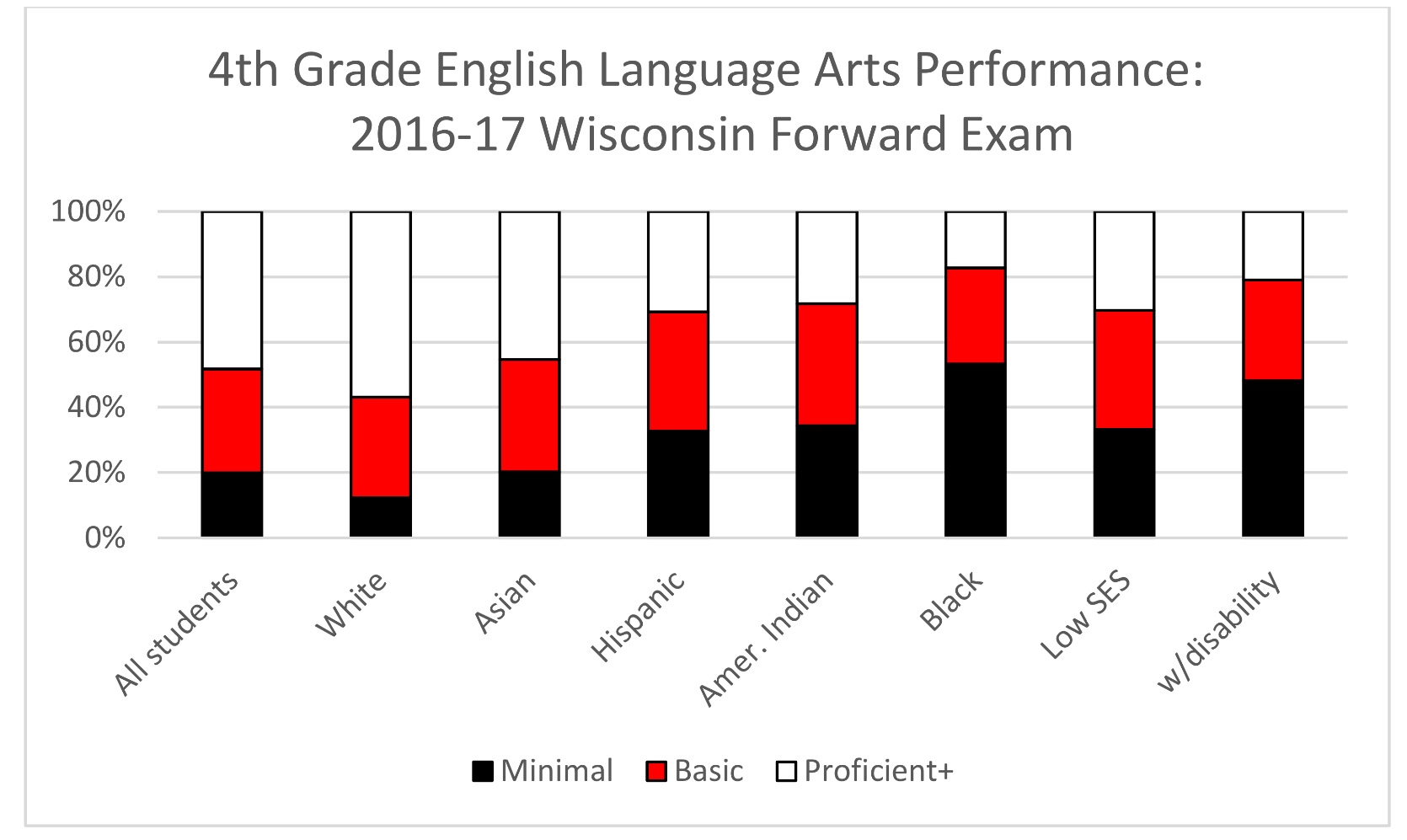
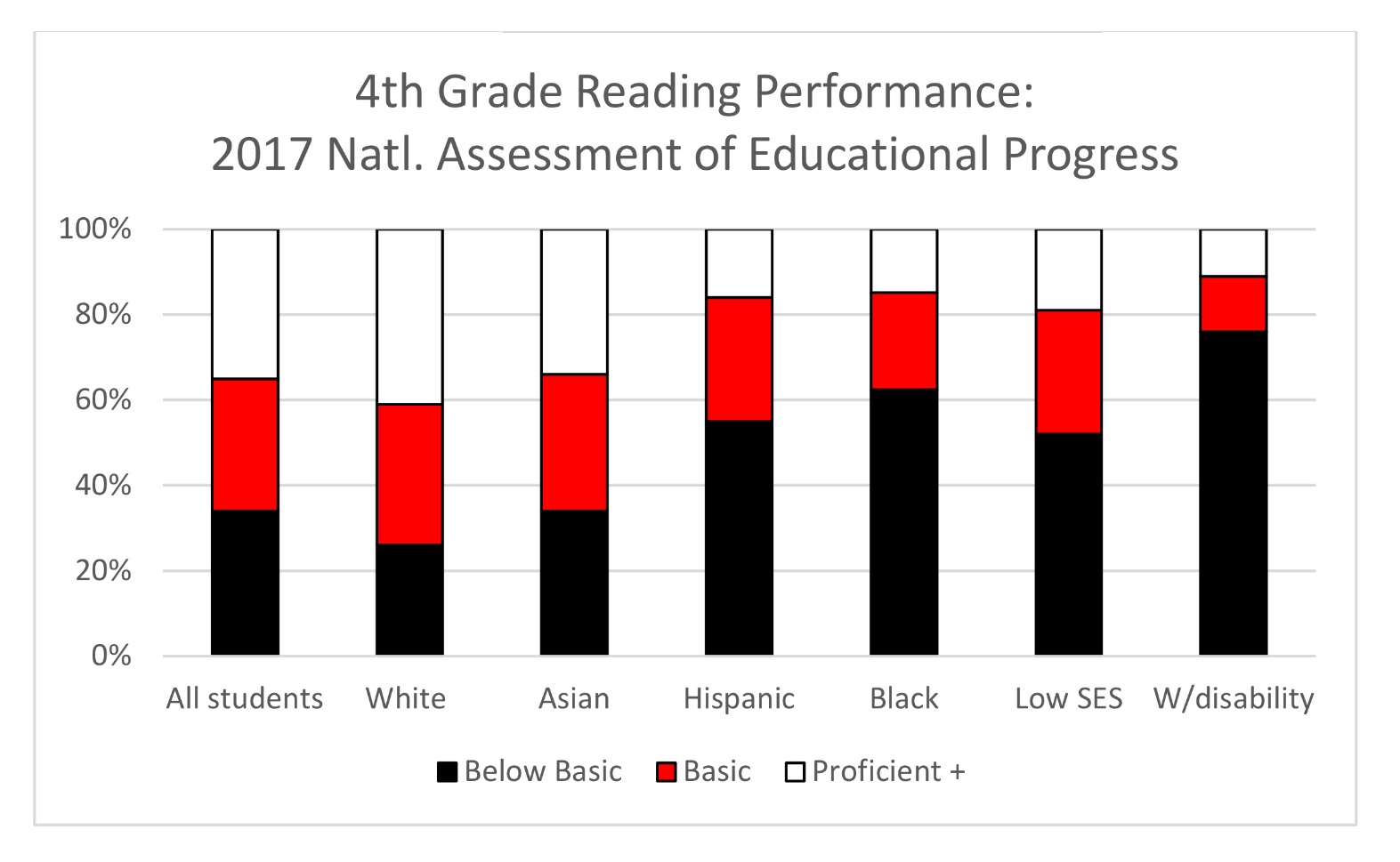
Madison has long tolerated disastrous reading results, despite spending far more than most.

2017 Madison School Board election notes and links.

More school board links

Madison spends far more than most, for average results.

Share

When Cronyism Met Political Correctness at the University of Texas

Mark Pulliam:

As an alumnus of the University of Texas Law School and the father of a recent UT graduate, I pay close attention to what is going on at my alma mater. Sadly, I have witnessed at UT many of the ailments afflicting higher education generally: rising tuition, declining academic performance, bloated administrative bureaucracy, curricula infected with identity politics, officious “diversity” enforcers who abuse their authority, and a climate of political correctness that overreacts to every passing fad.

At the same time, Texas politics have a sordid tradition of cronyism and, as the flagship of the state’s public university system, UT is no exception.

Money talks, sometimes quite loudly. UT has long been regarded as a prized fiefdom for the benefit of a powerful clique of wealthy donors and influential legislators who enjoy perks, such as invitations to watch football games from the UT President’s exclusive suite and preferential admissions to UT for their unqualified offspring. In the Lone Star State, the ultimate status symbol for Brahmins is membership in the UT inner circle.

When former governor Rick Perry attempted—unsuccessfully—to implement higher education reform a few years ago which would have disrupted the cozy status quo, he was met with furious resistance. The UT crony crowd circled the wagons and repulsed the reforms. One of Perry’s appointees to the UT Board of Regents, Dallas businessman Wallace Hall, barely escaped impeachment and prosecution (on trumped-up charges) for exposing a back-door admissions scandal that led to the resignation of UT’s president, Bill Powers. (For details, see my American Thinker article).

Share

Everyone On Madison aims to teach computer literacy and bridge the digital divide, Reading?

Shelly Mesch:

The entry-level syllabus for the program can seem too simple to people who use computers on a daily basis. But for some, a step-by-step and bare-bones lesson helps them get back on track when they’ve spent time outside of the digital sphere.

Jerriesene Alexander came to the class to brush up on her computer skills. She used computers years ago, but so much has changed that she thought a refresher course would help her navigate complex programs and be comfortable with terminology.

Mitchell Julius was required to participate in the program through his enrollment in the Catholic Multicultural Center’s culinary job training program. He said he already had some familiarity with computers but still benefited from the course.

Madison has long tolerated disastrous reading results, despite spending far more than most.

A is for average.

Share

China child abuse claims: kindergarten company reveals more complaints

Reuters:

The major company whose kindergarten in Beijing is under investigation over child abuse allegations, has said it is aware of more complaints by parents at some of its schools elsewhere in China.

The comments from company RYB Education on Wednesday came a day after police said they had detained a teacher suspected of using sewing needles to discipline children, though they added that some other claims of child abuse were unfounded.

The New York-listed company, which describes itself as China’s largest early childhood education service provider, said in a statement after the police report: “RYB is deeply saddened to learn about the latest findings in the follow-up report.”

“The company also understands that there have been additional parent complaints regarding other RYB-branded kindergartens and will continue to cooperate fully with the police and other authorities in this matter.”

Share

The World Might Be Better Off Without College for Everyone

Bryan Caplan:

Thanks to tenure, I have a dream job for life. Personally, I have no reason to lash out at our system of higher education. Yet a lifetime of experience, plus a quarter century of reading and reflection, has convinced me that it is a big waste of time and money. When politicians vow to send more Americans to college, I can’t help gasping, “Why? You want us to waste even more?”

How, you may ask, can anyone call higher education wasteful in an age when its financial payoff is greater than ever? The earnings premium for college graduates has rocketed to 73 percent—that is, those with a bachelor’s degree earn, on average, 73 percent more than those who have only a high-school diploma, up from about 50 percent in the late 1970s. The key issue, however, isn’t whether college pays, but why. The simple, popular answer is that schools teach students useful job skills. But this dodges puzzling questions.

Share

“White Women Tears”—Critical Theory on Lindsay Shepherd

Uri Harris:

As I mentioned in the first article, Critical Theory is a methodology developed by a group of Marxian social scientists during the early-to-mid 20th century, motivated by the belief that traditional scientific methodology—which concerns itself with describing, explaining, and predicting the world—is ineffective at producing societal change. Instead, they defined a purpose for their science: to liberate people from oppression. This idea can be traced back to Karl Marx’s famous statement that “Philosophers have hitherto only interpreted the world in various ways; the point is to change it”.

Initially, the focus of Critical Theory was on the oppressive nature of mass consumerism—which is closely linked to capitalism—but it gradually expanded to cover almost every area of human relations: language, social institutions, family structure, pedagogy, gender, race, and health, to name a few. There is virtually no area that can’t be studied through Critical Theory:

Share

The Importance of Dumb Mistakes in College

Jim Reische:

It seemed like a good idea at the time.

Not so much afterward, when I got driven downtown in handcuffs for spray-painting “Corporate Deathburgers” across a McDonald’s.

I earned myself a long night in jail for my lack of judgment. But my family and friends — and perhaps most important, my college, the University of Michigan — never learned about the episode (until now). Because in 1985, a college student could get a little self-righteous, make a bad decision, face consequences and then go home, having learned a “valuable lesson.”

Share

Civics: The U.S. Media Yesterday Suffered its Most Humiliating Debacle in Ages: Now Refuses All Transparency Over What Happened

Glenn Greenwald:

If this were, in fact, a deliberate attempt to cause a false and highly inflammatory story to be reported, then these media outlets have an obligation to expose who the culprits are – just as the Washington Post did last week to the woman making false claims about Roy Moore (it was much easier in that case because the source they exposed was a nobody-in-DC, rather than someone on whom they rely for a steady stream of stories, the way CNN and MSNBC rely on Democratic members of the Intelligence Committee). By contrast, if this were just an innocent mistake, then these media outlets should explain how such an implausible sequence of events could possibly have happened.

Thus far, these media corporations are doing the opposite of what journalists ought to do: rather than informing the public about what happened and providing minimal transparency and accountability for themselves and the high-level officials who caused this to happen, they are hiding behind meaningless, obfuscating statements crafted by PR executives and lawyers.

Related: Ben Rhodes.

Share

Lorde of the Flies: Why College Students Reject Reason

Jillian Kay Melchior:

The experience of being an outsider is central to the poetry of Audre Lorde. So it’s curious that Lorde, who died in 1992, has posthumously become the ultimate insider on American campuses, providing an ideological foundation for today’s social-justice warriors.

It’s hard to overstate Lorde’s influence. Each spring, Tulane hosts a “diversity and inclusion” event called Audre Lorde Days. The Ford Foundation’s president, Darren Walker, quoted Lorde in his 2017 commencement address at Oberlin, describing her as “one of my sheroes.” The University of Utah has an Audre Lorde Student Lounge, as well as LORDE Scholars, an acronym for Leaders of Resilience, Diversity and Excellence. The University of Cincinnati hosts an Audre Lorde Lecture Series each semester and is working on the Audre Lorde Social Justice Living-LearningCo mmunity, which will offer “gender inclusive” housing, activities, collective projects and a supplemental curriculum. The university’s LGBTQ Center director even has a tattoo of a Lorde quote on her arm.

Share

Bad News for the Highly Intelligent

David Z. Hambrick, Madeline Marquardt:

There are advantages to being smart. People who do well on standardized tests of intelligence—IQ tests—tend to be more successful in the classroom and the workplace. Although the reasons are not fully understood, they also tend to live longer, healthier lives, and are less likely to experience negative life events such as bankruptcy.

Now there’s some bad news for people in the right tail of the IQ bell curve. In a study just published in the journal Intelligence, Pitzer College researcher Ruth Karpinski and her colleagues emailed a survey with questions about psychological and physiological disorders to members of Mensa. A “high IQ society”, Mensa requires that its members have an IQ in the top two percent. For most intelligence tests, this corresponds to an IQ of about 132 or higher. (The average IQ of the general population is 100.) The survey of Mensa’s highly intelligent members found that they were more likely to suffer from a range of serious disorders.

The survey covered mood disorders (depression, dysthymia, and bipolar), anxiety disorders (generalized, social, and obsessive-compulsive), attention-deficit hyperactivity disorder, and autism. It also covered environmental allergies, asthma, and autoimmune disorders. Respondents were asked to report whether they had ever been formally diagnosed with each disorder, or suspected they suffered from it. With a return rate of nearly 75%, Karpinski and colleagues compared the percentage of the 3,715 respondents who reported each disorder to the national average.

Share

Destruction Of Black Wealth During The Obama Presidency

Ryan Cooper and Matt Bruenig:

The People’s Policy Project is proud to release its first formal paper. Co-authored by Ryan Cooper and Matt Bruenig and designed by Jon White, it uses data from the Survey of Consumer Finances to track the evolution of African-American wealth during the Obama presidency, and how that wealth was affected by housing policy choices made by the administration.

The paper finds that while President Obama had wide discretion and appropriated funds to relieve homeowners caught in the economic crisis, the policy design his administration chose for his housing program was a disaster. Instead of helping homeowners, at every turn the administration was obsessed with protecting the financial system — and so homeowners were left to drown.

As a result, the percentage of black homeowners who were underwater on their mortgage exploded 20-fold from 2007 to 2013.

Share

IQ decline and Piaget: Does the rot start at the top?

James R. Flynn, , Michael Shayer:

The IQ gains of the 20th century have faltered. Losses in Nordic nations after 1995 average at 6.85 IQ points when projected over thirty years. On Piagetian tests, Britain shows decimation among high scorers on three tests and overall losses on one. The US sustained its historic gain (0.3 points per year) through 2014. The Netherlands shows no change in preschoolers, mild losses at high school, and possible gains by adults. Australia and France offer weak evidence of losses at school and by adults respectively. German speakers show verbal gains and spatial losses among adults. South Korea, a latecomer to industrialization, is gaining at twice the historic US rate.

When a later cohort is compared to an earlier cohort, IQ trends vary dramatically by age. Piagetian trends indicate that a decimation of top scores may be accompanied by gains in cognitive ability below the median. They also reveal the existence of factors that have an atypical impact at high levels of cognitive competence. Scandinavian data from conventional tests confirm the decimation of top scorers but not factors of atypical impact. Piagetian tests may be more sensitive to detecting this phenomenon.

Share

How brands secretly buy their way into Forbes, Fast Company, and HuffPost stories

Jon Christian:

In late October, TechCrunch editor-at-large John Biggs noticed a Facebook Messenger request from someone he didn’t know, a man named Varun Satyam. When Biggs accepted the request, Satyam introduced himself as a marketer for technology startups. He was looking for coverage of some clients, he said, and he was willing to pay Biggs to write about them.

It was a bold opening move, and an unethical proposition for any journalist who wants to retain their credibility. But Biggs wasn’t surprised. He estimates that he receives two or three similar offers each month, and he doesn’t take them seriously.

“They’re stupid,” said Biggs. “Organic press is far more effective and anyone with a brain can see through them.”

But solicitations like Satyam’s may be more successful than Biggs is aware. Interviews with more than two dozen marketers, journalists, and others familiar with similar pay-for-play offers revealed a dubious corner of online publishing in which publicists, ranging from individuals like Satyam to medium-sized “digital marketing firms” that blur traditional lines between advertising and public relations, quietly pay off journalists to promote their clients in articles that make no mention of the financial arrangement.

Share

100 Years. 100 Million Lives. Think Twice.

Laura Nicolae:

In 1988, my twenty-six-year-old father jumped off a train in the middle of Hungary with nothing but the clothes on his back. For the next two years, he fled an oppressive Romanian Communist regime that would kill him if they ever laid hands on him again.

My father ran from a government that beat, tortured, and brainwashed its citizens. His childhood friend disappeared after scrawling an insult about the dictator on the school bathroom wall. His neighbors starved to death from food rations designed to combat “obesity.” As the population dwindled, women were sent to the hospital every month to make sure they were getting pregnant.

My father’s escape journey eventually led him to the United States. He moved to the Midwest and married a Romanian woman who had left for America the minute the regime collapsed. Today, my parents are doctors in quiet, suburban Kansas. Both of their daughters go to Harvard. They are the lucky ones.

Roughly 100 million people died at the hands of the ideology my parents escaped. They cannot tell their story. We owe it to them to recognize that this ideology is not a fad, and their deaths are not a joke.

Last month marked 100 years since the Bolshevik Revolution, though college culture would give you precisely the opposite impression. Depictions of communism on campus paint the ideology as revolutionary or idealistic, overlooking its authoritarian violence. Instead of deepening our understanding of the world, the college experience teaches us to reduce one of the most destructive ideologies in human history to a one-dimensional, sanitized narrative.

Share

New Data Suggest Chicago’s Schools Are Better Than You Might Think

Whet Moser:

At the New York Times blog The Upshot, Emily Badger and Kevin Quealy have a piece on a new set of data from Stanford University: test scores from 11,000 school districts that have been analyzed to see which ones achieve the most growth from their students.

Way up near the top is Chicago. It’s one of a handful in which, based on the scores, students progress the equivalent of six years in just five, and it’s the only very large school district for which that’s the case. (Schaumburg also comes in above six years.)

This shouldn’t actually be a surprise. I’ve written before about data that indicates this same trend: Chicago Public Schools students start well behind their peers, but then make substantial progress as they move through the system. (Again, this is based on test scores, which are not the be-all and end-all of an education, but it’s what we have for a bird’s-eye view of American public education.)

Share

1.4 Billion Clear Text Credentials Discovered in a Single Database

Julio Casal:

Now even unsophisticated and newbie hackers can access the largest trove ever of sensitive credentials in an underground community forum. Is the cyber crime epidemic about become an exponentially worse?

While scanning the deep and dark web for stolen, leaked or lost data, 4iQ discovered a single file with a database of 1.4 billion clear text credentials — the largest aggregate database found in the dark web to date.

None of the passwords are encrypted, and what’s scary is the we’ve tested a subset of these passwords and most of the have been verified to be true.

Share

Sir Andrew Wiles on the struggle & beauty of mathematics

Roger Highfield :

One of the world’s greatest mathematicians, Sir Andrew Wiles, made a rare public appearance in the Science Museum this week to discuss his latest research, his belief in the value of struggle, and how to inspire the next generation.

Sir Andrew made global headlines in 1994 when he reported that he had cracked Fermat’s Last Theorem, so named because it was first formulated by the French mathematician Pierre de Fermat in 1637.

His triumph while working in Princeton marked the end of a long gruelling struggle for Sir Andrew, who first became entranced by the theorem in the early sixties, when he was 10 years old.

Why did Fermat exert such a tight grip on him? The romance of this mathematical story, ‘captivated me’, he said. ‘Fermat wrote down this problem in a copy of a book of Greek mathematics. It was only found after his death by his son.’

Share

How Students Get Banished to Alternative Schools

Heather Vogell:

In October 2014, less than two months after entering North Augusta High School in Aiken County, South Carolina, Logan Rewis paused to drink from a fountain in the hallway between periods. As he straightened up, water fell from his mouth onto the shoe of his social studies teacher, Matt Branon, who was standing nearby. Logan says it was an accident, but Branon thought Logan had spat at him.

“My bad,” the 15-year-old with bushy sandy-brown hair and blue eyes says he told Branon after the teacher confronted him.

Branon, who is also the school’s baseball coach, was incensed. “Freaking disgusting,” he shouted at Logan as the teen walked away. Branon pursued Logan and grabbed the freshman by his backpack.

“Get your freaking hands off me,” Logan recalls yelling. School officials say he used a different “f” word.

Share

California in a ‘literacy crisis’ with children who can’t read: suit

Associated Press:

One of the plaintiffs is an 11-year-old student identified only as Katie T. When she completed fifth grade at La Salle, she was at the reading level of a student just starting third grade and was given no meaningful help, the lawsuit said.

State assessments found 96 percent of students at the school were not proficient in English or math, according to the lawsuit. Only eight of the school’s 179 students were found to be proficient when tested last year.

David Moch, another plaintiff, is a retired teacher who taught at La Salle for 18 years. Moch said he had fifth graders in his kindergarten class.

Teachers were not given training or help to deal with the situation and programs that did seem to make a dent were discontinued, Moch said.

“I chose to teach at La Salle because I wanted to help,” he said. “Every day I was there, I witnessed students’ lack of access to literacy.”

Madison has long tolerated disastrous readign results, despite spending far more than most, now nearly $20,000 per student.

Share

A ‘portfolio’ of schools? How a nationwide effort to disrupt urban school districts is gaining traction

Matt Barnum:

Several years ago, Indianapolis Public Schools looked like a lot of urban school districts. The vast majority of students attended traditional public schools, though enrollment was dwindling, and the district had an adversarial relationship with its small but growing number of charter schools.

That’s no longer true. The district is actively turning over schools to charter operators, and it’s rolling out a common enrollment system for district and charter schools that could make it easier for charters to grow. Nearly half of the district’s students now attend charters or district schools with charter-like freedoms.

Share

State Report Cards Information Difficult to Find, Confusing to Use, Data Advocacy Group Says

Carolyn Phenicie:

Despite some improvements, most states are falling short in the report cards they use to share essential school data, the advocacy group Data Quality Campaign argues in a new report.

Specifically, the group said, information is hard to find and difficult to understand, and isn’t being separated out based on students’ race, income, disability status, or other legally required characteristics. California is particularly egregious for its confusing color-coded dashboard, one advocate said.

Share

U.S. ranks No. 13 in new collaborative problem-solving test

Jill Barshay:

The United States may be known for its rugged individualism. But it turns out American teens are, surprisingly, much better at group collaboration than at individual academic work. That’s according to a new, unusual version of the Program for International Student Assessment, or PISA, which tested collaborative problem-solving skills among 15-year-olds in more than 50 countries and regions around the world in 2015. Those results were released last week.

The PISA is known for its testing of high school students around the world, especially in math and reading. In general, nations with high math and reading scores also tended to do well on this new collaboration test. Singapore, Japan, Hong Kong and South Korea topped the new social skills ranking (see chart below), and they’re also among the top 10 for individual student achievement.

But for some countries, there was a big deviation. For example, the United States ranked 39th in math on the 2015 PISA test. But in collaborative problem-solving, the U.S. ranked 13th. For China, it was the opposite. Four regions in mainland China, including Beijing and Shanghai, collectively ranked 6th in math and in 2015. But these Chinese regions ranked 26th in collaborative problem-solving.

Share

How to read 100 books in a year (and still have a life)

Forrest Brazeal:

The stack.

You have one. So do I. It’s sitting on your bedside table now, or on the floor, or spread around the house – that growing, tottering, guilt-inducing pile of books that you are absolutely going to read.

Soon. One of these days. When you’re not so busy.

I know how you feel. I’m pretty busy, too. But I got tired of feeling guilty about all those unread books, so at the beginning of 2017 I decided to take action.

I decided to see if I could read one hundred books this year, without cutting anything else – school, work, family, side projects – out of my life.

You Already Have Time To Read

I won’t bury the lede. Here’s the secret I learned: despite how busy I might be, I didn’t need to “make time to read”. I didn’t have to wait for the perfect opportunity, like a long evening cuddled by the fire. (I haven’t lit a fire in my fireplace in three years. I don’t have time.)

Share

The digital hippies want to integrate life and work – but not in a good wa

Evgeny Morozov:

The digital turn of contemporary capitalism, with its promise of instantaneous, constant communication, has done little to rid us of alienation. Our interlocutors are many, our entertainment is infinite, our pornography loads fast and arrives in high-definition – and yet our yearnings for authenticity and belonging, however misguided, do not seem to subside.

Beyond the easy fixes to our alienation – more Buddhism, mindfulness and internet detox camps – those in the digital avant-garde of capitalism have toyed with two solutions. Let’s call them the John Ruskin option and the De Tocqueville option. The former extended the philosophy of the Arts and Crafts movement, with its celebration of craftsmanship and romantic, artisanal labour by Ruskin, William Morris and their associates, into the realm of 3D printers, laser cutters and computerised milling machines.

Makerspaces and fablabs were to be a refuge from the office, with workers finally seizing the means of production. “There is something unique about making physical things. These things are like little pieces of us and seem to embody portions of our souls,” mused Mark Hatch, CEO of TechShop, a chain of mostly US makerspaces, in The Maker Movement Manifesto in 2014.

The De Tocqueville option hailed the use of digital tools to facilitate gatherings in the real world in order to reverse the trends described by Robert Putnam in his bestselling Bowling Alone. The idea was that, thanks to social networks, people would be able to find like-minded enthusiasts, creating a vibrant civil society à la De Tocqueville.

Share

In a Deeply Flawed ‘Analysis,’ the Associated Press Blames Public Charter Schools for America’s Segregated Cities

Robin Lake, via a kind Deb Britt email:

History repeats itself. Unfortunately, so does irresponsible analysis. For the 20 or so years that I’ve been studying charter schools, the attacks on charters have morphed over time. Early on, it was said that charter schools were going to admit only the most advantaged students. When that clearly didn’t come to pass, the attack line shifted to assertions that charters were more racially segregated than other schools. A study in the early 2000s by Gary Orfield seemed to confirm that: It showed that racial concentration in charter schools was higher than in nearby district schools.

But when researchers Zimmer, Gill, and Booker took a closer look, they found that kids attending racially concentrated charter schools had come from equally racially concentrated district schools. It turned out, charters were simply locating in majority-minority low-income neighborhoods and serving the at-risk kids who live there. Los Angeles is about 80% Hispanic. New Orleans is more than 80% black. Charter schools that locate in those cities are trying to serve those students. This is not segregation; this is school founders doing exactly what policymakers hoped they would do (as required in most state charter laws): serve kids most in need of a better education.

Now, a new Associated Press story is resurrecting an attack that should have been laid to rest, with headlines asserting that charter schools “put growing numbers in racial isolation.” The AP repeats Orfield’s old methodological mistake by interpreting high rates of racial concentration as “causing” segregation. If students are simply moving from one all-black school to another, there is no impact on overall segregation of schools. But there likely is an increase in learning.

The article includes some titillating stats: Charters are more “racially isolated” than district-run schools, and racially isolated schools are more likely to have low test scores. I hope it comes as no surprise to the AP education reporters that poverty is well known to be highly correlated with low proficiency rates. But they do seem ignorant of the important fact that charter schools have a strong track record in overcoming the odds of high poverty. They also fail to consider that parents choose charters, rather than being forced to send their children there.

Share

Tsinghua Professor in the Bull’s Eye for Alleged Plagiarism

Matthew Walsh:

A professor at one of China’s most prestigious universities has been accused of plagiarizing large parts of a book about the country’s longstanding archery tradition from a 30-year-old textbook on a similar tradition in Japan.

Peng Lin, a history professor at Tsinghua University in Beijing, and Han Bingxue, an assistant researcher at the school’s Center for Chinese Ritual Studies, were chief editors of a 2016 book on Chinese ritual archery that online critics allege copied more than 20 excerpts from a 1986 book on kyudo — a form of archery associated with the samurai class of feudal Japan.

A popular Weibo microblog account for archery aficionados, “Target Archery Studies,” posted the allegations on Saturday in a lengthy article that has since been shared more than 3,000 times.

Share

The Legal Status of Charter Schools in State Statutory Law

Preston C. Green, III Bruce D. Baker Joseph O. Oluwole:

Given the recent increase in charter schools as an alternative to the traditional public education system, this Article explores the legal status and position of charter schools. Charter schools exhibit many characteristics of private schools, particularly in terms of management, but also retain many public school features. Thus, this Article explores areas of the law where charter schools were either classified as public or private in terms of state statutes or regulations, discussing recent and some pending litigation. First, this Article discusses whether charter schools, charter school boards and officials, or educational management organizations which manage charter schools are entitled to governmental immunity, thus classifying them as public entities. Second, this Article examines the interplay between charter schools, their boards, and their management organizations and whether they are subject to public accountability laws, as their public school counterparts are. Third, this Article surveys whether charter schools are subject to state prevailing wage statutes. Fourth, this Article examines whether charter schools are required to follow the same student expulsion requirements as public schools. This Article proceeds to tally the results of this litigation, discussing both whether charter schools are subject to the same laws and regulations as public schools in their districts and whether charter schools and their officials are public entities under the law, and thus subject to the same rules governing the action of public officials. This Article concludes that often times, this distinction is not clear in state statutory requirements as they currently stand, and that legislators should take care in drafting charter school legislation, so that charter schools have a clear set of rules to follow and courts have a clear set of rules to apply in litigation. The status quo is particularly troubling with regard to student disciplinary issues and educational management organizations’ fiduciary obligations, and this Article urges legislators to address these issues.

Share

China’s A.I. Advances Help Its Tech Industry, and State Security

Paul Mozur and Keith Bradsher:

During President Trump’s visit to Beijing, he appeared on screen for a special address at a tech conference.

First he spoke in English. Then he switched to Mandarin Chinese.

Mr. Trump doesn’t speak Chinese. The video was a publicity stunt, designed to show off the voice capabilities of iFlyTek, a Chinese artificial intelligence company with both innovative technology and troubling ties to Chinese state security. IFlyTek has said its technology can monitor a car full of people or a crowded room, identify a targeted individual’s voice and record everything that person says.

Share

Estimating the Cost of Waiting for Nearly Perfect Automated Vehicles

Nidhi Kalra, David G. Groves :

How safe should highly automated vehicles (HAVs) be before they are allowed on the roads for consumer use? This question underpins much of the debate around how and when to introduce and use the technology so that the potential risks from HAVs are minimized and the benefits maximized. In this report, we use the RAND Model of Automated Vehicle Safety to compare road fatalities over time under (1) a policy that allows HAVs to be deployed for consumer use when their safety performance is just 10 percent better than that of the average human driver and (2) a policy that waits to deploy HAVs only once their safety performance is 75 or 90 percent better than that of average human drivers — what some might consider nearly perfect. We find that, in the long term, under none of the conditions we explored does waiting for significant safety gains result in fewer fatalities. At best, fatalities are comparable, but, at worst, waiting has high human costs — in some cases, more than half a million lives. Moreover, the conditions that might lead to comparable fatalities — rapid improvement in HAV safety performance that can occur without widespread deployment — seem implausible. This suggests that the opportunity cost, in terms of lives saved, for waiting for better HAV performance may indeed be large. This evidence can help decisionmakers better understand the human cost of different policy choices governing HAV safety and set policies that save more lives.

Share

All-minority charters: Is it segregation?

Joanne Jacobs:

Some inner-city families prefer “cultural homogeneity,” AP concedes.

Others simply want a safe, effective school.

Test scores tend to be higher at integrated schools, reports AP. Only 20 percent of students reach proficiency at traditional public schools that are racially isolated, according to the AP analysis. By contrast, 30 percent reach proficiency at all-minority charters.

That’s not great. But it’s better.

Some low-income black students in Milwaukee reach high school unable to read, Howard Fuller, the former superintendent told AP. Talking about integration is a “waste of time,” he said. “How do these kids get the best education possible?”

Share

The languages that take the most (and least) time to learn, per the US Foreign Service

Nikhil Sonnad:

Learning a new language takes time. But according to US diplomatic training guides, there are many languages that Americans should be able to learn in under a year.

The map below shows how long it takes to learn almost 70 different languages, estimated by the Foreign Service Institute, which teaches these languages to would-be or current diplomats.

Countries on the map are colored according to how much time it takes to learn the local language: The darker-colored the country, the longer it takes.

Share

24 ideas for improving the Local Control Funding Formula

John Fensterwald:

With Gov. Jerry Brown retiring a year from now, EdSource asked two dozen school leaders, student advocates, legislators and other astute observers to suggest the most important improvements needed to make his landmark education law, the Local Control Funding Formula, more effective, equitable and truer to its promise. Their insightful recommendations touched on the key aspects of the law — its need-based funding formula, school accountability requirements and a focus on school improvement through local control. There was some common ground, plenty of disagreement and one response in verse. Their recommendations are summarized below and my own observations are in a separate column.

Share

How to mobilize group intelligence

Beth Simone Noveck:

PDF version
French President Francois Hollande shakes hands with visitors at COP21 in Paris.

French President François Hollande greets people at the 2015 world climate-change summit in Paris.Credit: Philippe Wojazer/EPA

Big Mind: How Collective Intelligence Can Change Our World Geoff Mulgan Princeton University Press: 2017.

Diagnosed with type 1 diabetes at the age of 14, Dana Lewis got used to hassle: using a portable glucose monitor to measure her blood sugar levels, and then calculating with a second device whether and when to inject herself with the insulin that she also carried. She set alarms overnight lest her blood sugar drop fatally low. In 2013, dissatisfied with the lack of innovation by conventional medical-device firms, she created an artificial, do-it-yourself pancreas system that administers the right amount of insulin automatically. Later, she decided to make the technology available to all those with the illness who were willing to build their own system. The resulting Internet community now has 400 ‘DIY diabetics’ who share readings online and collaboratively improve the device over time.

This example illustrates, as Geoff Mulgan writes in Big Mind, that in the Internet era it is an anachronism to assume that “intelligence resides primarily in the space inside the human skull”. Online, large-scale group collaboration is encouraging the emergence of collective intelligence — the focus of Mulgan’s lucid and far-ranging book. After founding the think tank Demos, Mulgan served as director of the UK government’s Strategy Unit and head of policy under former prime minister Tony Blair. Today he leads the London-based innovation foundation Nesta.

Share

Reading Interventionist Teacher’s Remarks to the School Board on Madison’s Disastrous Reading Results


Transcript (via a machine learning app – apologies for errors):

I am currently the reading interventionist teacher at West High School.

I’ve been there for 4 years. Previous to that I’ve been in the school district as a regular ed teacher for about 20 years. I started in the early 90s.

I have (a) question I want to ask you guys. What district-wide systems are in place as we use our map data to monitor the reading student achievement?

Student by student, not school by school but also school by school and provide support for the school the teachers and the students that need it.

And especially to help students who score in the bottom percentiles who will need an intervention which is significantly different than differentiation.

I was (a) TAG coordinator (talent and gifted coordinator) for 4 years at Hamilton and I have extensive background with the talent and gifted and differentiation training.

( and teaching of teachers). Now I’m in interventionist and they are significantly different we need interventions to serve the lowest scoring kids that we have.

Here’s my data from this year and this is why I’m here:

Of the 65 students plus or minus it kind of changes this year 24 of them are regular ed students.

Another way to say they don’t have an IEP so there is no excuse for that reading intervention in (that group).

12 of those 24 have been enrolled in Madison School since Pre-K kindergarten or kindergarden. 12 students have been in Madison Schools.

They have High attendance. They have been in the same (you know) feeder school they have not had high mobility. There is no excuse for 12 of my students to be reading at the first second or third grade level and that’s where they’re at and I’m angry and I’m not the only one that’s angry.

The teachers are angry because we are being held accountable for things that we didn’t do at the high school level. Of those 24 students, 21 of them have been enrolled in Madison for four or more years.

Of those 24 students one is Caucasian the rest of them identify as some other ethnic group.

I am tired of the district playing what I called whack-a-mole, (in) another words a problem happens at Cherokee boom we bop it down and we we fix it temporarily and then something at Sherman or something at Toki or something at Faulk and we bop it down and its quiet for awhile but it has not been fixed on a system-wide level and that’s what has to change.

Thank you very much.

– Via a kind reader.

Despite spending much more than most, now nearly $20,000 per student, Madison has long tolerated disastrous reading results.

Share

Resisting the Postmodern Ascendancy: An Interview with Ernest Suarez

Brian Russell Graham :

The Association of Literary Scholars, Critics, and Writers (ALSCW) is an academic association which meets at its annual conference (until now in the United States) to discuss literary matters. It is attended by a broad range of literary types: university professors, novelists, and poets, not to mention school teachers. In addition to the excellent quality of the academic endeavors conducted at its conferences, what makes the association noteworthy is that it has an appealing contrarian quality. It was set up to counter what its founders saw as a negative trend in the study of literature, which emerged over the course of the 1970s and ‘80s. The Association describes its own history as follows:

In 1994, a group of professors of literature, critics, and imaginative writers, tired of lamenting the overly politicized debate about literary study in the academy, joined together to create a different kind of organization, one aimed at combating this intellectual partisanship. The founders represented many unique perspectives and literatures from ancient to modern, but shared a common exasperation with the narrow theoretical and sociological discourse that seemed to have gained ascendancy in the United States, Canada, and the United Kingdom in the eighties and nineties. We wanted a renewed and enlarged field of study, more freedom of thought and expression, and more lively exchange between scholars and literary artists.

We represented no political agenda. Our members ranged across a broad ideological (or non-ideological) spectrum. What held us together was the desire to create a forum where lovers of the word could carry on spirited literary debate and examine the arts of writing.

I attended the association’s conference this year and interviewed its president, Professor Ernest Suarez of the Catholic University of America (Washington D.C.). Approaching the interview, I had a small number of points of reference in mind which I thought explained in part of the emergence of the ALSCW. Each point entails the putative weakening of political diversity in English departments and an emerging hegemony of the Left in that domain.

Share

Men Are Better At Maps Until Women Take This Course

Andrew Curry:

Sheryl Sorby, a professor of engineering education at Ohio State University, was used to getting A’s. For as long as she could remember, she found academics a breeze. She excelled in math and science in particular, but “I never thought there was a subject I couldn’t do,” she says matter-of-factly.

So when she started engineering school, she was surprised to struggle in a course most of her counterparts considered easy: Engineering graphics. It’s a first-year course that sounds a bit like a glorified drawing class to a non-engineer.

The hardest part is orthogonal projection, a fundamental engineering task. Given a top, front, and side view of an object, engineers must be able to mentally synthesize two-dimensional representations into a three-dimensional object. It’s easy—if you’re good at what psychologists call mental rotation.

Sorby wasn’t. To her surprise and confusion, she found herself overwhelmed. “It was the first time I wasn’t able to do something in a classroom,” she says. “I didn’t realize I had poor spatial skills.”

Share

It’s Gonna Get a Lot Easier to Break Science Journal Paywalls

Adam Rogers:

Anurag Acharya’s problem was that the Google search bar is very smart, but also kind of dumb. As a Googler working on search 13 years ago, Acharya wanted to make search results encompass scholarly journal articles. A laudable goal, because unlike the open web, most of the raw output of scientific research was invisible—hidden behind paywalls. People might not even know it existed. “I grew up in India, and most of the time you didn’t even know if something existed. If you knew it existed, you could try to get it,” Acharya says. “‘How do I get access?’ is a second problem. If I don’t know about it, I won’t even try.”

Acharya and a colleague named Alex Verstak decided that their corner of search would break with Google tradition and look behind paywalls—showing citations and abstracts even if it couldn’t cough up an actual PDF. “It was useful even if you did not have university access. That was a deliberate decision we made,” Acharya says.

Then they hit that dumbness problem. The search bar doesn’t know what flavor of information you’re looking for. You type in “cancer;” do you want results that tell you your symptoms aren’t cancer (please), or do you want the Journal of the American Medical Association? The search bar doesn’t know.

Share

The Electronic Computers, Part 4: The Electronic Revolution

Tech History:

We have now recounted, in succession, each of the first three attempts to build a digital, electronic computer: The Atanasoff-Berry Computer (ABC) conceived by John Atanasoff, the British Colossus projected headed by Tommy Flowers, and the ENIAC built at the University of Pennsylvania’s Moore School. All three projects were effectively independent creations. Though John Mauchly, the motive force behind ENIAC, knew of Atansoff’s work, the design of the ENIAC owed nothing to the ABC. If there was any single seminal electronic computing device, it was the humble Wynn-Williams counter, the first device to use vacuum tubes for digital storage, which helped set Atanasoff, Flowers, and Mauchly alike onto the path to electronic computing.

Only one of these three machines, however, played a role in what was to come next. The ABC never did useful work, and was largely forgotten by the few who ever knew of it. The two war machines both proved themselves able to outperform any other computer in raw speed, but the Colossus remained a secret even after the defeat of Germany and Japan. Only ENIAC became public knowledge, and so became the standard bearer for electronic computing as a whole. Now anyone who wished to build a computing engine from vacuum tubes could point to the Moore School’s triumph to justify themselves. The ingrained skepticism from the engineering establishment that greeted all such projects prior to 1945 had now vanished; the skeptics either changed their tune or held their tongue.

Share

A Map Showing How Much Time It Takes to Learn Foreign Languages: From Easiest to Hardest

openculture.org:

Do you want to speak more languages? Sure, as Sally Struthers used to say so often, we all do. But the requirements of attaining proficiency in any foreign tongue, no doubt unlike those correspondence courses pitched by that All in the Family star turned daytime TV icon, can seem frustratingly demanding and unclear. But thanks to the research efforts of the Foreign Service Institute, the center of foreign-language training for the United States government for the past 70 years, you can get a sense of how much time it takes, as a native or native-level English speaker, to master any of a host of languages spoken all across the world.

Share

Water’s water everywhere

Jerry Fodor:

Sometimes I wonder why nobody reads philosophy. It requires, to be sure, a degree of hyperbole to wonder this. Academics like me, who eke out their sustenance by writing and teaching the stuff, still browse in the journals; it’s mainly the laity that seems to have lost interest. And it’s mostly Anglophone analytic philosophy that it has lost interest in. As far as I can tell, ‘Continental’ philosophers (Derrida, Foucault, Habermas, Heidegger, Husserl, Kierkegaard, Sartre and the rest) continue to hold their market. Even Hegel has a vogue from time to time, though he is famous for being impossible to read. All this strikes me anew whenever I visit a bookstore. The place on the shelf where my stuff would be if they had it (but they don’t) is just to the left of Foucault, of which there is always yards and yards. I’m huffy about that; I wish I had his royalties.

Share

Do You Hear What I Hear? It’s The Sound of Fear-Mongering and Parent-Shaming

Vesia Hawkins:

The Associated Press’ story blaming charter schools for re-segregating schools has the ed reform community in a tizzy. Thought-leaders, policymakers, and advocates have lit up Twitter, and rightfully so, crying foul about a story that supports the tragically irresponsible claim made by the NAACP and AFT (American Federation of Teachers union) last summer.

I get it. People are afraid. As more charters experience success, the greater the potential for the closure of traditional public schools, thus, job loss. So the strategy to label charter schools agents of segregation is a pretty desperate attempt to save jobs, maintain control of marginalized families, and protect the business of masking shit as free and appropriate education.

Share

College athletes’ devil’s bargain: play or learn

Orin Starn:

Duke Blue Devil fans have pleasurably watched rival UNC’s cheating scandal..

But we should not be so smug. Our cloistered university has its very own sports scandal. Every year, Duke athletes collectively miss classes by the thousands. Their absences are curiously registered as “short term illnesses,” but team travel is the real reason. Planes, buses and a private jet – only for Coach K’s hoopster royalty – transport Duke players to games nationwide. “Unrivalled Ambition,” the Athletic Department’s strategic plan is hubristically entitled. We must have top sports teams, because, well, we are Duke. All about excellence.

But sports excellence comes at a price. It’s a full-time job being a Division I athlete, about 40 hours a week according to an NCAA study. A college athlete’s life? Practice. Games. Travel. Playing from behind on schoolwork.

Share

Policymakers must reckon with a world in which companies invest in intangible assets

Martin Wolf:

Please use the sharing tools found via the email icon at the top of articles. Copying articles to share with others is a breach of FT.com T&Cs and Copyright Policy. Email licensing@ft.com to buy additional rights. Subscribers may share up to 10 or 20 articles per month using the gift article service. More information can be found at https://www.ft.com/tour.
https://www.ft.com/content/a01e7262-d35a-11e7-a303-9060cb1e5f44

This transformation of the economy demands a rethink of public policy. Here are five challenges. First, frameworks for protection of intellectual property are more important. But this definitely does not mean these protections must be still friendlier to the owners of such property. Intellectual property monopolies may indeed be necessary, but, like all monopolies, they can be costly. Second, since synergies are so important, policymakers need to consider how to encourage them, including via policies on telecommunications and urban development. Third, financing intangibles is hard. For traditional collateral-backed bank lending, it is almost impossible. The financial system will need to change. Fourth, the difficulty of appropriating gains from investment in intangibles might create chronic under-investment in a market economy. Government will have to play an important role in sharing the risks. Finally, governments must also consider how to tackle the inequalities created by intangibles, one of which (insufficiently emphasised in this book) is the rise of super-dominant companies.

Messrs Haskel and Westlake have mapped the economics of a challenging new economy. It is a world in which many of the old rules do badly. We need to reimagine policy, carefully.

Share

Madison Spends far more – for average results

How effective is your school district?

Madison spends nearly $20,000 per student while Anne Arundel County school District spends about $14,500, or 27% less.

Despite spending far more than most, Madison has long tolerated disastrous reading results.

Share

Oracle’s $43M Public High School

:

Tech companies ship all kinds of products to public schools: laptops, online writing programs, learn-to-code lessons and more.

Now Oracle, the business software services giant, is trying the opposite tack: bringing a public charter school to the company.

At its lush campus with a man-made lake here, Oracle is putting the finishing touches on a $43 million building that will house Design Tech High School, an existing charter school with 550 students. The sleek new school building has a two-story workshop space, called the Design Realization Garage, where students can create product prototypes. It has nooks in the hallways to foster student collaboration.

And when the school moves here in early January, Oracle employees will be available to mentor students in skills like business plan development and user-experience design.

Share

“U.S. fourth-graders’ performance in reading literacy declined between 2011 and 2016” on the PIRLS

US National Center for Education Statistics::

The Progress In International Reading Literacy Study (PIRLS) 2016 is the fourth administration of this international comparison since the initial administration in 2001. PIRLS is used to compare over time the reading skills of 4th-grade students and is designed to align broadly with reading curricula in the participating countries. The results, therefore, suggest the degree to which students have learned the reading concepts and skills likely to have been taught in school. In 2016, there were 58 education systems (including countries and other education systems) that participated at grade 4.

The focus of the report is on the performance of U.S. students relative to their peers in other education systems in 2016, and on changes in reading achievement since 2001. For a number of participating education systems, changes in achievement can be documented over the last 15 years, from 2001 to 2016.

In addition to framing the reading literacy of U.S. students within an international context, the report shows how the reading literacy of U.S. 4th-graders varies by student background characteristics and contextual factors that may be associated with reading proficiency. Following the presentation of results, a technical appendix describes the study design, data collection, and analysis procedures that guided the administration of PIRLS 2016 in the United States and in the other participating education systems.

Madison has long tolerated disastrous reading results, despite spending more than most, now nearly $20,000 per student.

Share

Shocking Stat of the Day: From 80% of Kids to 9% in One Generation

Let Grow:

From the Policy Studies Institute work on “children’s independent mobility” in Britain comes this:

1971:

*Approximately half of children’s journeys were made on foot

*80% of 7- and 8-year-old children got to school unaccompanied by an adult

.

1990:

• 30% of children under ten years old are allowed to travel
alone to places (other than school) within walking distance

• 9% of 7- and 8-year-old children got to school
unaccompanied by an adult, whilst levels of car ownership and use were fairly similar

Why don’t we see this for what it is? A heist! We have STOLEN children’s freedom! They are transported from locked space to locked space like prisoners. And we are expected to be their jailers.

Share

Lost Einsteins: The Innovations We’re Missing

David Leonhardt:

Much of human progress depends on innovation. It depends on people coming up with a breakthrough idea to improve life. Think about penicillin or cancer treatments, electricity or the silicon chip.

For this reason, societies have a big interest in making sure that as many people as possible have the opportunity to become scientists, inventors and entrepreneurs. It’s not only a matter of fairness. Denying opportunities to talented people can end up hurting everyone.

Share

How the CIA made Google Inside the secret network behind mass surveillance, endless war, and Skynet—

Nafeez Ahmed:

In the wake of the Charlie Hebdo attacks in Paris, western governments are moving fast to legitimize expanded powers of mass surveillance and controls on the internet, all in the name of fighting terrorism.

US and European politicians have called to protect NSA-style snooping, and to advance the capacity to intrude on internet privacy by outlawing encryption. One idea is to establish a telecoms partnership that would unilaterally delete content deemed to “fuel hatred and violence” in situations considered “appropriate.” Heated discussions are going on at government and parliamentary level to explore cracking down on lawyer-client confidentiality.

What any of this would have done to prevent the Charlie Hebdo attacks remains a mystery, especially given that we already know the terrorists were on the radar of French intelligence for up to a decade.

There is little new in this story. The 9/11 atrocity was the first of many terrorist attacks, each succeeded by the dramatic extension of draconian state powers at the expense of civil liberties, backed up with the projection of military force in regions identified as hotspots harbouring terrorists. Yet there is little indication that this tried and tested formula has done anything to reduce the danger. If anything, we appear to be locked into a deepening cycle of violence with no clear end in sight.

Share

KIPP Houston, BBVA Compass reach $1.8M deal for campus naming rights

Jacob Carpenter:

L eaders of KIPP Houston and BBVA Compass on Monday celebrated a $1.8 million naming-rights agreement that will help fund the charter network’s newest campus.

Under the deal, which has been in the works for more than a year, the campus of KIPP Nexus on Houston’s northwest side will be called BBVA Compass Opportunity Campus. The agreement marks the first time a KIPP network has sold naming rights to a campus, continuing a slow-moving trend of schools selling naming rights to facilities as a way to generate revenue.

Share

The Other Student Debt Crisis

David Scobey:

But the punitive policy is self-defeating. Far from strengthening repayment and retention, it erodes students’ capacity to persist, to graduate, to transfer or to re-enroll — and to repay what they owe. Most of those who stop out must soon add loan payments to the stressors that led to their unpaid balances in the first place. About one in six late payers have their accounts referred to collection agencies, which typically add fees of up to 30 percent.

A bursar’s hold, in short, is less likely to serve as the opening of a negotiation than as the closing of a door. It blocks the student’s access to past and future credits and the college’s access to revenues. “Strictly enforcing unpaid balances,” conclude the researchers at EAB, “is a lose-lose proposition for institutions and students.”

Beneath these impacts on revenues and retention lies a more basic problem. The punitive policy misrecognizes students, leading institutions to ignore much of what they know or could easily discover about those who owe money. Four-fifths stop out in good academic standing. Most have completed and paid for credits in previous semesters. And what they owe averages 10 to 20 percent of their unsettled bill.

Share

The Death of Scholarship Leftists are limiting academic work to demonstrations of leftist dogma

Warren Treadgold:

Not so long ago, leftists on campus insisted that there was no discrimination against conservatives in academic hiring. They claimed professors were hired on the basis of merit (and “diversity”), and few if any meritorious (or “diverse”) conservatives wanted to be professors anyway. The left now has a new and better argument for not hiring or tolerating conservative professors, formulated by a former conservative—the University of Pennsylvania’s Damon Linker. Writing in the Week in August 2017, Linker claims that conservatives are not hired as professors in the humanities because they cannot produce “scholarship,” which “in our time is defined as an effort to make progress in knowledge.” Such progress requires addressing “the concerns of the present.” Specifically, Linker wrote that scholarship is needed “on such topics as ‘Class in Shakespeare,’ ‘Race in Shakespeare,’ ‘Gender in Shakespeare,’ ‘Transgender in Shakespeare,’” and so on. The problem, according to Linker, is that conservatives prefer to write on themes like “Love in Shakespeare” or “God in Shakespeare,” and “centuries of people have written and thought about” such things.

Share

Improving Palliative Care with Deep Learning

Anand Avati*, Kenneth Jung, Stephanie Harman, Lance Downing, Andrew Ng, Nigam Shah:

We build a program using Deep Learning to automatically identify hospitalized patients having palliative needs

While 80% of Americans prefer to spend their final days in their home, only 20% actually do. More than 60% of deaths in the US happen in an accute care hospital, most of the patients receiving aggressive care in their final days. We build a program using Deep Learning to identify hospitalized patients with a high risk of death in the next 3-12 months by only inspecting their Electronic Health Record data. Such patients are automatically brought to the attention of the Palliative Care team with notifications. This helps the Palliative Care team to be engaged early enough to ensure patients have their Goals of Care recorded, and provide their services while it is still meaningful.

Share

The Closing of the American Mind

Jacob Hamburger:

Allan Bloom was an elitist. He saw himself as a champion of excellence in an age of vulgarity. While a professor at the University of Chicago between 1979 and 1992, he sought to immerse his students in only the most classic works of philosophy and literature. Someone looking to define the “Western canon” could do worse than to dig up his course syllabi. In his personal style, he embodied high culture nearly to the point of caricature. His friend Saul Bellow captured him in the novel Ravelstein as a man who wore expensive European suits, lived in a Hyde Park apartment lavishly decorated with French art, and bragged of listening to Mozart on a state-of-the-art stereo system. A lifelong Francophile, he made regular jaunts to Paris over the course of four decades. Yet Bloom insisted that for all his erudition, he was merely a product of America’s democratic promise. Well into his fifties, he often spoke of himself as a simple “Midwestern boy,” the Indiana-born son of Jewish immigrants who received the best gift a meritocratic democracy could offer: a great education. Bloom thought of himself as proof that, thanks to its universities, anyone can make it in America.

So when thirty years ago Bloom addressed a group of Harvard students and faculty as “fellow elitists,” he was not being entirely ironic. The quip came in response to controversies surrounding his 1987 best seller The Closing of the American Mind, which defended an idiosyncratic vision of higher education in the United States. Bloom saw the liberal education traditionally offered at exclusive colleges and universities as the fulfillment of democratic ideals, but condemned his fellow professors for having abandoned this crucial responsibility. Closing received an onslaught of criticism for its “elitism,” particularly from fellow academics such as Richard Rorty and Martha Nussbaum, who also observed correctly that his book was at times rambling, historically sloppy and philosophically one-sided. Bloom in turn accused his critics of projecting their own intellectual privilege onto him. “‘Elite’ is not a word I care for very much,” Bloom explained. “It is imprecise and smacks of sociological abstraction.” But no matter how elites are defined—whether in terms of wealth, prestige or knowledge—it is clear that “bad conscience accompanies the democrat who finds himself part of an elite.” Bloom pushed back against this bad conscience by suggesting that academic elitism was in fact healthy for American democracy.

Like Tocqueville, whom he admired and cited incessantly, Bloom aimed to explore the ways in which the democratic principles of liberty and equality shape American society. Unlike the French aristocrat, however, Bloom based his observations on a far smaller sample: college students “materially and spiritually free to do pretty much what they want with the few years of college they are privileged to have—in short, the kind of young persons who populate the twenty or thirty best universities.” Bloom believed these students represented the best of a democratic society, mainly because they enjoyed an unparalleled form of liberty. One of the fundamental guarantees of democratic society is the freedom of self-determination, or the “pursuit of happiness.” Bloom saw the proper exercise of this freedom as something that a philosophical education can help teach—the pursuit of happiness, after all, presumably involves attempting to know what happiness is. An education in the humanities, like Chicago’s Core curriculum, allowed undergraduates to devote four years to literature and philosophy. Under the guidance of wise teachers and classic texts, they learned to challenge their most deeply held beliefs according to the highest standard of reason. This philosophical overhaul of the self, what Bloom referred to as “liberal education,” amounted to no less than the perfection of democratic autonomy. Not only, then, could elite college students choose a rewarding professional career after graduation, but more importantly, they had been given the most “authentic liberation” a democracy can provide.

Share

The Baltimore Cops Studying Plato and James Baldwin

David Dagan:

Sitting in a classroom one day in September, a police officer studied a passage from James Baldwin’s 1966 essay on policing in Harlem, “A Report from Occupied Territory,” and read a few lines out loud: “Some school children overturned a fruit stand in Harlem. This would have been a mere childish prank if the children had been white … but these children were black, and the police chased them and beat them.”

An instructor, standing in the back of the room, pressed the cop for his reaction: “Tell me, does that give you any basis for our understanding of any modern circumstance?”

It was humanities hour at the city police department’s in-service training facility, and Detective Ed Gillespie was presiding, a gun on his hip and literature on his lips. Officer training is front and center in the national conversation about police reform, with advocates and progressive police departments alike promoting lessons on de-escalation, implicit bias, and the like. Gillespie thinks cops need something else, too: the humanities. In his classes, he teaches them Plato, Steinbeck, Dostoevsky, and Baldwin.

Share

Federico García Lorca has often been criticized for exoticizing marginalized groups, but this translation finds new depth in his handling of race.

Bécquer Seguín :

In Poet in Spain, a new volume of translations of Federico García Lorca’s poetry by Sarah Arvio, we see a wide-ranging exhibition of Lorca’s curiosity about marginalized groups—from his fascination with 14th-century Persian poetry in The Tamarit Divan to his idealization of Andalusia’s Romani history in Gypsy Ballads. “I think that being from Granada inclines me toward a sympathetic understanding of persecuted peoples. Of gypsies, of blacks, of Jews, … of Moors, which we all carry inside,” he said in an interview in 1931.

Statements like these sometimes sit uncomfortably in the minds of contemporary readers for good reason. Lorca’s earnest interest in race as a subject can sometimes seem misguided, its simultaneous fixation on the essence, victimhood, and grandeur of other racial identities troubling. Such criticisms certainly have some truth to them. But it’s also true that Lorca’s poetry turned a sharp lens on Spain’s cultural diversity at a moment when Francisco Franco’s regime would soon push for ethnic and regional identities to be subsumed under a single idea of Spanishness. Whether revisiting Lorca’s views on race was Arvio’s main intention in composing this new volume, it’s hard to say. But her selection, deliberately or not, records the beginning, middle, and end of his poetic excavation of an alternative, multiethnic Spanish history.

Share

How Reuters’s Revolutionary AI System Gathers Global News

Technology Review:

“The advent of the internet and the subsequent information explosion has made it increasingly challenging for journalists to produce news accurately and swiftly.” So begin the research and development team at the global news agency Reuters in a paper on the arXiv this week.

For Reuters, the problem has been made more acute by the emergence of fake news as an important factor in distorting the perception of events.

Nevertheless, news agencies such as the Associated Press have moved ahead with automated news writing services. These report standard announcements such as financial news and certain sports results by pasting the data into pre-written templates: “X reported profit of Y million in Q3, in results that beat Wall Street forecasts … ”

So there is significant pressure on other news agencies to automate news production. And today, Reuters outlines how it has almost entirely automated the identification of breaking news stories. Xiaomo Liu and pals at Reuters Research and Development and Alibaba say the new system performs well. Indeed, it has the potential to revolutionize the news business. But it also raises concerns about how such a system could be gamed by malicious actors.

Share

How the Index Card Cataloged the World

Daniela Blei:

Like every graduate student, I once holed up in the library cramming for my doctoral oral exams. This ritual hazing starts with a long reading list. Come exam day, the scholar must prove mastery of a field, whether it’s Islamic art or German history. The student sits before a panel of professors, answering questions drawn from the book list.

To prepare for this initiation, I bought a lifetime supply of index cards. On each four-by-six rectangle, I distilled the major points of a book. My index cards—portable, visual, tactile, easily rearranged and reshuffled—got me through the exam.

Share

Animated gifs on frugality regulations published

Xinhua:

The top anti-graft body of the Communist Party of China (CPC) released 16 animated gifs on the eight-point frugality code to mark the fifth anniversary of the code’s release on Sunday. The CPC Central Commission for Discipline Inspection (CCDI) published the gifs on its website, featuring the content and the significance of the code.

and here they are-http://www.ccdi.gov.cn/yw/201712/t20171203_112964.html 八项规定表情包来啦!, on the occasion of the 5th anniversary of the release of the “8 regulations”

Share

Indiana Should Lower the Compulsory Schooling Age

Shawnta Barnes:

The compulsory school age dictates when children must attend school according to each state’s law. In Indiana, the compulsory school start age is seven. Dr. Jennifer McCormick, Indiana State Superintendent of Public Instruction, released her areas of focus for the next legislative session and lowering the compulsory age from seven to five is one of her priorities. I agree the age should be lowered, but I think we should aim for six instead five.

According to data pulled by Education Commission of the States and released in their November 2017 report, the most common school start age is six.

Share

Parents protest over vermin infesting South Side elementary school

Juan Perez:

A persistent rodent problem and a string of failed health inspections at a South Side elementary school drove infuriated parents and community members to protest the building’s conditions on Thursday morning, leading to a brief confrontation outside the school.

“Our children should not even be in the building with mice,” Mollison Elementary School council member Yolanda Redman said, shortly after a group of adults was barred from entering the building. “This wouldn’t happen in any other community. It wouldn’t happen in Lincoln Park, it wouldn’t even happen in Hyde Park — and that’s right down the street.”

Share

Civics: Apple, Google and Censorship on China

Bloomberg:

Apple has come under fire for cooperating with Chinese authorities in removing apps that give users there uncensored communications. In November, Apple complied with government orders to pull Microsoft Corp.’s Skype phone and video service from the Chinese version of its popular app store. Cook used an earnings call with investors to justify such moves, saying it obeyed the laws of the markets where it operates.

“Much has been said of the potential downsides of AI, but I don’t worry about machines thinking like humans. I worry about people thinking like machines,” he said. “We all have to work to infuse technology with humanity, with our values.”

Share

The Six Laws of Technology Everyone Should Know

Christopher Sims:

Three decades ago, a historian wrote six laws to explain society’s unease with the power and pervasiveness of technology. Though based on historical examples taken from the Cold War, the laws read as a cheat sheet for explaining our era of Facebook, Google, the iPhone and FOMO.

You’ve probably never heard of these principles or their author, Melvin Kranzberg, a professor of the history of technology at Georgia Institute of Technology who died in 1995.

What’s a bigger shame is that most of the innovators today, who are building the services and tools that have upended society, don’t know them, either.

Fortunately, the laws have been passed down by a small group of technologists who say they have profoundly impacted their thinking. The text should serve as a foundation—something like a Hippocratic oath—for all people who build things.

1. ‘Technology is neither good nor bad; nor is it neutral’

Michael Sacasas:

Dr. Melvin Kranzberg was a professor of the history of technology at the Georgia Institute of Technology and the founding editor of Technology and Culture. In 1985, he delivered the presidential address at the annual meeting of the Society for the History of Technology in which he explained what had already come to be known as Kranzberg’s Laws — “a series of truisms,” according to Kranzberg, “deriving from a longtime immersion in the study of the development of technology and its interactions with sociocultural change.”

I’ll list and summarize Kranzberg’s laws below, but first consider this argument by metaphor. Kranzberg begins his address by explaining the terms of the debate over technological determinism. He notes that it had become an “intellectual cliche” to speak of technology’s autonomy and to suppose that “the machines have become the masters of man.” This view, which he associated with Jacques Ellul and Langdon Winner, yielded the philosophical doctrine of technological determinism, “namely, that technology is the prime factor in shaping our life-styles, values, institutions, and other elements of our society.”

Share

Wisconsin Accountability System Under the “Every Student Succeeds Act”

American Institutes for Research (AIR):

Wisconsin annually differentiates across all public schools based on scores for the individual federally-required accountability measures (not annual summative ratings for all schools/all students based on all indicators). Schools for comprehensive support and improvement, targeted support and improvement, and additional targeted support and improvement are identified using the following composite index (see also “School Improvement Categories”).

WI also proposes to maintain a “separate” state accountability system that incorporates additional accountability measures and generates an annual 1 to 5 star rating (see Appendix D of the Wisconsin ESSA State plan for additional details).

WI provides 3 composite index weighting schemes: schools in which English learners (ELs) make up at least 10% of the population, school in which ELs are less than 10% of the population but the minimum N size is met, and schools that do not meet the minimum EL N size.

Summary of State Accountability Snapshots.

Much more on the “Every Student Succeeds Act“.

Share

Underscores, Optimization & Arms Races A dozen years ago, the web started to reshape itself around major companies like Google. We can understand the genesis of today’s algorithmic arms race against the tech titans just by looking at a single character.

Anil Dash:

By the time we realized that we’d gotten suckered into a neverending two-front battle against both the algorithms of the major tech companies and the destructive movements that wanted to exploit them, it was too late. We’d already set the precedent that independent publishers and tech creators would just keep chasing whatever algorithm Google (and later Facebook and Twitter) fed to us.
 
 Now, the challenge is to reform these systems so that we can hold the big platforms accountable for the impacts of their algorithms. We’ve got to encourage today’s newer creative communities in media and tech and culture to not constrain what they’re doing to conform to the dictates of an opaque, unknowable algorithm. We have to talk about the choices we made in those early days, even at risk of embarrassing ourselves by showing how naive we were about the influence these algorithms would have over culture.

Share

Sara Goldrick-Rab wins Grawemeyer Award in Education

Janet Cappiello:

A Temple University professor who conducted painstaking research into the modern struggle to pay for a college education in the United States has won the 2018 University of Louisville Grawemeyer Award in Education.

Sara Goldrick-Rab, professor in Temple University’s College of Education, published her findings in her award-winning 2016 book, “Paying the Price: College Costs, Financial Aid and the Betrayal of the American Dream.”

In it, Goldrick-Rab finds that U.S. students have been left behind by soaring costs combined with a financial aid system that has not kept up with demand. The result is a generation that, during a time when a college education is ever more important, is unable to get ahead because of crushing debt and unfinished degrees.

Share

Is it time to change the undergraduate curriculum?

Charles Day:

My two oldest nieces, Miriam and Sarah, are both 16. Later this year, they will start their respective searches for a place at college in earnest. Their experiences will be different, not just because Miriam is interested in science and Sarah is interested in teaching. Miriam lives in Conwy, an ancient town of 15 000 people in North Wales. Sarah lives in Olney, a Maryland suburb of 34 000 outside Washington, DC.
When it comes to undergraduates, the university systems of the UK and the US are significantly different. In the UK, students typically study just one subject for three years—physics, in my case. In the US, students spend less time studying a major; more on other subjects.

Share

100 Black Men of Madison organizes toy drive for high school students who take care of their siblings

Amber Walker:

As some of Madison’s high school students balance classes, jobs and home responsibilities, two local organizations are lending a hand to ease their burden this holiday season.

The Madison chapter of 100 Black Men, in partnership with the United Way of Dane County, organized “Christmas for Children With Responsibilities.” The toy drive is for Madison high school students who are the primary caregivers for their younger siblings.

Now in its second year, the drive collects gift cards, new toys, books and games for kids ages 0-12. Care packages are assembled and discreetly distributed to the high school students to give to their younger siblings.

Much more on the 100 Black men, here.

Share

Post-Act 10 teacher workforce stabilizes, but exodus of younger teachers troubling, study says

Annysa Johnson

According to the report released Friday by the nonpartisan Public Policy Forum, Wisconsin still has fewer teachers than it did before Act 10, which curtailed collective bargaining for public school teachers and most other public employees. However, overall turnover has diminished, and the supply of new teachers is sufficient to fill those slots, the report says.

Still, the report noted a troubling trend: a rise in the number of teachers who leave the profession before retirement age, particularly in the first five years.

In Wisconsin and especially Milwaukee, the departure of teachers in their 20s, 30s and 40s is growing steadily and accounts for the largest share of teacher turnover, according to the study — a trend that over time could put a greater pressure on teacher demand than that already created by shortages in the teacher pipeline.

Much more on Act 10, here.

Share

A Call to Reform Undergraduate Education

Colleen Flaherty:

What was once a challenge of quantity in American undergraduate education is increasingly a challenge of educational quality. In other words, getting as many students as possible to attend college means little if they’re not learning what they need to and — crucially — if they don’t graduate. That’s the recurring message of a new report, “The Future of Undergraduate Education, The Future of America,” from the American Academy of Arts and Sciences.

More than a challenge, the report says, delivering on educational quality and completion is a must — not only for institutions but the country. The U.S. is more diverse and technology based than ever, and workers can expect to change careers multiple times, it says, perhaps eventually transitioning to jobs that don’t yet exist. College-educated Americans also enjoy a higher quality of life than their high school-educated peers across a variety of measures and are more able to pay off college debt.

Simply put, the report says, “The completion of a few college courses is not a sufficient education in the 21st century.”

Share

Can these Chicago high schools survive?

Juan Perez Jr. and Jennifer Smith Richards :

Between classes, Theron Averett Jr. walks past rooms stacked with empty desks and an off-limits area where he’s heard there’s an empty swimming pool. “I’ve never seen it,” he says. He climbs a stairwell where a rainbow-colored mural carries a two-word message for Tilden High School’s students: “Dream Big.”

Averett was one of 250 students enrolled this year at the South Side campus, which Chicago Public Schools says has room for about 1,900 students.

Dwindling enrollment has cut Tilden’s budget. The school now offers only a small slate of classes. Tilden’s football team forfeited most of its season for a lack of players, leaving homecoming without a game to celebrate. Last year’s graduating class, on average, scored 14.5 on the ACT, far short of what’s considered college-ready.

In Chicago, where funding follows students, Tilden is one of more than a dozen shrinking neighborhood high schools that has been starved of resources, leaving students like Averett to prepare for their futures in largely empty buildings that can make dreaming big a daily struggle.

“Why should we go without because of our student body?” asked Averett, who dreams of attending college and pursuing a career in law enforcement. “I feel like it’s unfair. We should get the high school treatment too. But, you know, it is what it is.”

Share

Civics: Uber’s use of encrypted messaging may set legal precedents

Paresh Dave, Heather Somerville:

Top executives at Uber Technologies Inc used the encrypted chat app Wickr to hold secret conversations, current and former workers testified in court this week, setting up what could be the first major legal test of the issues raised by the use of encrypted apps inside companies.

The revelations Tuesday and Wednesday about the extensive use of Wickr inside Uber upended the high-stakes legal showdown with Alphabet’s Inc (GOOGL.O) Waymo unit, which accuses the ride-hailing firm of stealing its self-driving car secrets.

Share

The algorithms that seduce our children

Hannah Kuchler:

This holiday season, a seven-year-old called Ryan could be compiling your child’s Christmas list. By piling toys into a kid-sized hillock of consumerism, this YouTube sensation has attracted 9.7 million subscribers. “Ryan ToysReview”, started by his parents when Ryan was just three and a half, enjoys one of the largest followings on YouTube, on a par with popular influencers such as Zoella. Ryan now has his own Android app and has signed a deal with Pocket.Watch, a kid’s entertainment company, to create books and merchandise.

In his most famous video, which has almost 800 million views, his mum wakes Ryan from a red car-shaped bed, merchandise from the Disney movie Cars. She presents him with a Cars-branded egg the size of a pilates ball. Emerging from under a blanket with a Cars motif, he picks up an inflatable Cars-themed mallet and breaks the egg open to reveal toys. Behind the camera, his mother whoops and commentates.

Ryan ToysReview is one of a new youthful YouTube genre — others are EvanTubeHD and Hailey’s Magical Playhouse. Ryan himself makes the most of the memes that you only know if you have a small YouTube-watcher: the “surprise egg” with a grand reveal, the bad kid/bad baby joke, or the finger family, where he pretends his fingers are people. These memes help children to discover his channel. And once they have watched one surprise egg video, YouTube’s algorithm serves up more in the “Up Next” sidebar, where “surprise egg” has more than 10 million results.

The tech industry is under scrutiny for how its algorithms manipulate adults but little attention has been paid to how algorithms seduce children, who are far more susceptible than their parents. Children often lack the self-control or even the means to change the channel.

Share

Elite colleges are making it easy for conservatives to dislike them

Jack Goldsmith, Adrian Vermeule:

Drew Gilpin Faust, the president of Harvard University, has been lobbying in Washington against a Republican proposal to tax large university endowments and make other tax and spending changes that might adversely affect universities. Faust says the endowment tax would be a “blow at the strength of American higher education” and that the suite of proposals lacks “policy logic.” Perhaps so, but they have a political logic. We hope that Harvard and other elite universities will reflect on their part in these developments.

The proposed tax and spending policies aimed at universities are surely related to the sharp recent drop in support by conservatives for colleges and universities. According to a recent Pew Research Center report, 58 percent of Republicans and Republican-leaning independents say that colleges and universities have a negative effect on the way things are going in the country, a figure that has grown significantly in the past two years. This development likely reflects four related trends.

First is the obvious progressive tilt in universities, especially elite universities. At Harvard, for example, undergraduate students overwhelmingly identify as progressive or liberal and the faculty overwhelmingly gives to the Democratic Party. Even Harvard Law School, which has a handful of conservative scholars and a new conservative dean, is on the left end of law school faculties, which are themselves more progressive than the legal profession.

Share

Some people really benefit from hearing advice that everyone knows


Embed
Patrick McKenzie
:

Your idea is not valuable, at all. All value is in the execution. You think you are an exception; you are not. You should not insist on an NDA to talk about it; nobody serious will engage in contract review over an idea, and this will mark you as clueless.

Technologists tend to severely underestimate the difficulty and expense of creating software, especially at companies which do not have fully staffed industry leading engineering teams (“because software is so easy there, amirite guys?”)

Charge more. Charge more still. Go on.

The press is a lossy and biased compression of events in the actual world, and is singularly consumed with its own rituals, status games, and incentives. The news necessarily fails to capture almost everything which happened yesterday. What it says is important usually isn’t.

Share

Stanford University data glitch exposes truth about scholarship

Nanette Asimov:

Leaked documents from a Bermuda-based law firm, Appleby, show that schools have increasingly turned to secretive offshore investments, which let them swell their endowments with blocker corporations, and avoid scrutiny. (Max Whittaker/The New York Times)
A student discovered in February that the files were accessible to all business school students and employees, and informed the school about the vulnerability. He also downloaded the information and spent months studying financial aid data from 2008 to 2015. The result was a 378-page statistical analysis that revealed the difference between the school’s claim of fairly awarded scholarships and what it had actually been doing.

“All fellowships are need-based,” claims the school’s website, which was updated on Wednesday. Before then, the site included an assurance that the business school “does not offer merit-based scholarships.”

But it does discriminate — often favoring female applicants, international students, and those with backgrounds in finance, says the report by Adam Allcock, a Stanford business school student from the United Kingdom who found and analyzed the data. The school “represents its financial aid system to students as ‘non-merit-based,’ while operating it as ‘merit-based’ by secretly rating students and manually deciding how much (scholarship money) they should receive,” Allcock wrote in the analysis obtained by The Chronicle. He asked that the report not be shared publicly because he has returned the data to the school, which has not disputed its findings.

Share

The Model Book of Calligraphy (1561–1596)

Public Domain Review:

Pages from a remarkable book entitled Mira calligraphiae monumenta (The Model Book of Calligraphy), the result of a collaboration across many decades between a master scribe, the Croatian-born Georg Bocskay, and Flemish artist Joris Hoefnagel. In the early 1560s, while secretary to the Holy Roman Emperor Ferdinand I, Bocksay produced his Model Book of Calligraphy, showing off the wonderful range of writing style in his repertoire. Some 30 years later (and 15 years after the death of Bocskay), Ferdinand’s grandson, who had inherited the book, commissioned Hoefnagel to add his delightful illustrations of flowers, fruits, and insects. It would prove to be, as The Getty, who now own the manuscript, comment, “one of the most unusual collaborations between scribe and painter in the history of manuscript illumination”. In addition to the amendments to Bocksay’s pages shown here, Hoefnagel also added an elaborately illustrated section on constructing the letters of the alphabet which we featured on the site a while back.

Share

K-12 Tax & Spending Climate: playground for elites

Joel Kotkin and Wendell Cox:

The revival of America’s core cities is one of the most celebrated narratives of our time—yet, perhaps paradoxically, urban progress has also created a growing problem of increasing inequality and middle-class flight. Once exemplars of middle-class advancement, most major American cities are now typified by a “barbell economy,” divided between well-paid professionals and lower-paid service workers. As early as the 1970s, notes the Brookings Institution, middle-income neighborhoods began to shrink more dramatically in inner cities than anywhere else—and the phenomenon has continued. Today, in virtually all U.S. metro areas, the inner cores are more unequal than their corresponding suburbs, observes geographer Daniel Herz.

Signs of this gap are visible. Homelessness has been on the rise in virtually all large cities, including Los Angeles, New York, and San Francisco, even as it declines elsewhere. Despite numerous exposés on the growth of suburban poverty, the poverty rate in core cities remains twice as high; according to the 2010 census, more than 80 percent of all urban-core population growth in the previous decade was among the poor. For all the talk about inner-city gentrification, concentrated urban poverty remains a persistent problem, with 75 percent of high-poverty neighborhoods in 1970 still classified that way four decades later.

Share

Does D.C. Charter Schools’ Autonomy Come at the Cost of Public Accountability? (How does this compare with traditional school governance?)

Rachel Cohen:

On a Monday night in late April, the D.C. Public Charter School Board convened for its monthly meeting with plans to vote on new charter school applications. One network, DC Preparatory Academy, submitted two requests for expansion: one to increase their student enrollment ceiling, and one to open a new elementary and middle school campus. Founded in 2003 and already operating five campuses, DC Prep is considered among the highest performing charter networks in the city. It was no surprise when the Charter Board’s staff recommended that the board vote in favor of the school’s proposals.

Yet around three hours into the meeting, when it finally came time to vote, board members started asking DC Prep leaders surprisingly tough questions. Board chairman Darren Woodruff noted that at DC Prep’s elementary campus in Anacostia, the out-of-school suspension rate stood at 6.9 percent, nearly double the charter sector’s average. And DC Prep’s Edgewood middle school campus, he said, had an out-of-school suspension rate of 27.9 percent, up from 18 percent the year before. For special education students, the suspension rate was dramatically higher—45 percent.

Woodruff was particularly troubled by the kindergarten suspensions. “I am struggling mightily to understand the logic behind suspending out-of-school 5-year-olds,” said Woodruff. “… I have been in education now for over 30 years and I can’t come up with an explanation that makes sense. I would love to hear anyone from your organization justify a 40 percent suspension rate for 5-year-olds who have disabilities. That’s the reason I will not vote for the expansion.”

Share

The Two-Board Knot: Zoning, Schools, and Inequality

Salim Furth:

Old Town Road traces a choppy, swerving path that marks the southern edge of Trumbull, Connecticut. It is shaded by maples and oaks that frame the sensible New England homes of an affluent suburb. Across the double yellow lines of Old Town Road are similar homes in the city of Bridgeport, one of the poorest places in Connecticut.

Last July, Trumbull’s Planning and Zoning Commission approved a zoning change to allow a 202-unit apartment complex to replace a vacant office building a few blocks away from Old Town Road. Key to getting approval was that the apartment building was designed with only one- and two-bedroom units; the developer estimates that only 16 school-age children will live among the 202 new units.1 For Trumbull’s residents, eager to maintain their school district’s third-in-the-state ranking,2 a larger influx of potentially poor students might have been a deal-breaker.

According to Zillow’s estimate, the three-bedroom house at 1230 Old Town Road could sell for $287,000. Across the street in Bridgeport, a very similar home at 1257 Old Town Road is worth only $214,000. The Zillow interface helpfully informs the prospective buyer that any children living at 1230 Old Town Road have the right to attend Frenchtown Elementary School, rated 9 out of 10 by GreatSchools. Children on the south side of the street attend the Cross School, which rates a 2,3 and is part of the worst municipal school district in the state, according to the state’s own ranking.4

Madison’s non diverse K-12 governance model rejected the proposed indepedent Madison Preparatory IB Charter School. This, despite spending more than most (now nearly $20,000 per studentf) and tolerating long term, disastrous reading results.

Madison recently expanded its least diverse schools.

Share

House GOP To Cap Amount Of Student Loans For Law School, Eliminate Public Service Loan Forgiveness

Douglas Belkin,
Josh Mitchell and
Melissa Korn
:

The Republican-controlled U.S. House of Representatives this week will propose sweeping legislation that aims to change where Americans go to college, how they pay for it, what they study and how their success — or failure — affects the institutions they attend.

The most dramatic element of the plan is a radical revamp of the $1.34 trillion federal student-loan program. It would put caps on borrowing by parents and students and eliminate some loan-forgiveness programs for students. …

As part of its plan to slow the growth of federal student loans, graduate students and parents of undergraduates would face so-far-unspecified caps on how much they could borrow for tuition and living expenses—instead of borrowing whatever schools charge. The change could cut into enrollment and potentially siphon off billions of dollars a year from universities.

The bill would also end loan-forgiveness programs for public-service employees, who currently can make 10 years of payments and then have their remaining debt forgiven, tax-free.

It would preserve an option known as “income-driven repayment,” which ties borrowers’ monthly bills to their earnings, but would eliminate the ability of borrowers to have balances forgiven under them. Currently, borrowers can make payments of 10% or 15% of their discretionary incomes—as determined by a formula—and have remaining balances forgiven after 20 or 25 years. Under the bill, borrowers would pay 15% of discretionary incomes for as long as it took to cover the amount they would have paid under a 10-year standard repayment plan. Current participants in both programs would be grandfathered in.

Share

“It’s never too early to run for the Madison School Board” – redux

Wisconsin Elections Commission:

School District Offices

ELIS-5 Ballot Access Checklist for School District Candidates

ETHCF-1 Campaign Registration Statement
EL-162SD Declaration of Candidacy and Memorandum Regarding Felony Convictions

EL-169 Nomination Paper for Nonpartisan Office

Unfortunately, Wisconsin charges (substantially) for voter data, unlike many other states.

Share

Parents now spend twice as much time with their children as 50 years ago

Economist:

Except in France

Share

Confessions from A Recovering Academic; Or, The Problems with Proffered Solutions To N.J.’s Segregated Schools (with apologies to Emily Dickinson)

Laura Waters:

The Civil Rights Project has a new academic paper out called “New Jersey’s Segregated Schools Trends and Paths Forward,” a follow-up to a report on the same subject supplemented by new data from 2010-2015. This release of this report has been dutifully covered by N.J. traditional media outlets (see the Star-Ledger, NJ Spotlight,, NJ Today) by reciting a few talking points: N.J. is more diverse than it used to be — there’s a “remarkable increase in the proportion of students attending multiracial schools over the past twenty-five years” — but we’re still the sixth most segregated school system in the nation; one-fourth of Black students attend schools where enrollment is 90 percent non-white; the Abbott rulings, which direct vast amounts of money towards 31 poor districts, (some no longer poor) erased funding inequities (um, not really) but did nothing to integrate schools;

Share

Marriage-material Style: How China’s Young Females Hunt Husbands Through Self-Betterment

Elephant Room:

For the majority of us including me and Yan, the persons in these photos are entirely different individuals with unique backgrounds and life trajectories. Besides the facts that they are all pretty and relatively young, what else? What’s the point of placing them together at the beginning of an article (Elephant Room is not a platform for showcasing pretty young Asian girls, in case you are new…) ?

Well oh well, Ladies and Gentlemen –

May we have the honor to introduce you Marriage-material Style 好嫁风, an emerging Chinese fashion and life style aims to educate, help and incubate young females to become – well guess what – marriage materials.

Share

Estonian official: Cyber must be part of core military education

Aaron Mehta:

NATO’s nations need to work to incorporate cyber training into their overall military strategy as opposed to treating it as a specialty, according to a top Estonian military official.

“The knowledge of cyber must be spread out into a larger, conventional force,” Col. Kaupo Rosin, Estonia’s chief of military intelligence, told Defense News during a recent visit here.

Rosin raised his concern that within Estonia, the military academies are not teaching cyber in that context. That’s part of a broader trend that has stretched across NATO’s members in which cyber is seen as a specialty and not part of an integrated, core curriculum.

Share

Cornell University Is Investigating This Controversial Research About Eating Behaviors

Stephanie Lee:

Cornell University has launched an investigation into the work of Brian Wansink, the food behavior and marketing expert who has come under fire for scientific misconduct allegations over the last year, BuzzFeed News has learned.

“An internal investigation by the University is underway, in compliance with our internal policies and any external regulations that may apply,” Vice President for University Relations Joel Malina said by email on Tuesday.

The school declined to share any more details, including exactly when the investigation began, how many papers are being reviewed, or whether the investigation involves the federal Office of Research Integrity.

Share

K-12 Tax & Spending Climate: Madison’s high property taxes

Ann Althouse:

One of many reasons we left Seattle after my husband retired was for lower property taxes,” writes mockturtle in the comments to my post about the GOP tax bill, where I mention that Meade and I pay more than $17,000 in property taxes on our house in Madison.

We’re still here, so that means that so far with think it’s worth it, but the high property tax does bother us, and when we think about where else we might want to live, taxation is a factor. But I care a lot about living somewhere that is interesting to me, and I want a house where I can walk out the door and, right from that point, have many interesting walks.

One of the places I’d consider is the one mockturtle says she left: Seattle. Washington State has the benefit of no income tax, but obviously the revenue must be found in some other way.

Sure, there are lots of places with low taxes, but name one where I’d enjoy living. We have many things here that we love, and I would not move to a worse place. $17,000 is a lot, but only the last $X thousand is spent on things I’d carve off the budget if I were given the power to structure the whole thing. And if they tried to hand that power over to me, I wouldn’t even take it. That’s not my line of work and not my expertise or my joy in life.

Madison schools spend far more than most, now nearly $20,000 per student. This, despite long term, disastrous reading results.

Share

What the future of work will mean for jobs, skills, and wages

James Manyika, Susan Lund, Michael Chui, Jacques Bughin, Jonathan Woetzel, Parul Batra, Ryan Ko, and Saurabh Sanghvi :

The technology-driven world in which we live is a world filled with promise but also challenges. Cars that drive themselves, machines that read X-rays, and algorithms that respond to customer-service inquiries are all manifestations of powerful new forms of automation. Yet even as these technologies increase productivity and improve our lives, their use will substitute for some work activities humans currently perform—a development that has sparked much public concern.

Building on our January 2017 report on automation, McKinsey Global Institute’s latest report, Jobs lost, jobs gained: Workforce transitions in a time of automation (PDF–5MB), assesses the number and types of jobs that might be created under different scenarios through 2030 and compares that to the jobs that could be lost to automation.

The results reveal a rich mosaic of potential shifts in occupations in the years ahead, with important implications for workforce skills and wages. Our key finding is that while there may be enough work to maintain full employment to 2030 under most scenarios, the transitions will be very challenging—matching or even exceeding the scale of shifts out of agriculture and manufacturing we have seen in the past.

Share

A Comprehensive List of How Texans Mispronounce Places With Spanish Names

John Nova Lomax:

The Texas map draws inspiration from as many cultures as any state in America. There’s Czech: Praha, Moravia, Dubina. And German: Breslau, New Baden, New Ulm, and New Braunfels, to name just a few. Scattered across the landscape are small towns with names coming from the Polish (Panna Maria), Swiss (New Bern), Norwegian (Oslo), Danish (Danevang) and Russian (Marfa, Odessa) pioneers who got there first. Plus, to visit most of the great European cities, you never have to leave the Lone Star state: We’ve got Paris, Rome, Athens, New London, Berlin, and Dublin (plus Edinburg if you’ve forgive the un-Scotsman-like spelling).

But aside from family names and others deriving from English and Native American sources (Comanche, Quanah, and anything with Caddo attached), Spanish is the most common wellspring of inspiration for our place names. Often as not, we Texans butcher it, whether we are referring to a town or a street or a river. (Although maybe not so often as those Californians do.)

Yes, we get a few right. We completely nail Laredo, Del Rio, Seguin, Comal (as in the county), and aside from some emphasis and flattened vowels, mostly do okay with El Paso, San Antonio, Bandera, and Concho (again, as in the county). Bosque County is sort of a typically Texan hybrid: locals pronounce it “boskie,” which is close to the Spanish “bose-kay,” but not all the way there, yet nevertheless much closer than “bosk” or “boss-cue,” to rhyme with barbecue.

Share

Little House, Small Government

Vivian Gornick:

Caroline Fraser’s Prairie Fires: The American Dreams of Laura Ingalls Wilder is an impressive piece of social history that uses the events of Wilder’s life to track, socially and politically, the development of the American continent and its people. The frontier, by definition, has always been a place just beyond the point where land meets sky. In America that longing to move beyond the horizon, which is common to all cultures, became not only synonymous with an idea of the national character, but a vital ingredient in the American brand of democracy. The historian Frederick Jackson Turner ardently believed, in fact, that “that restless, nervous energy, that dominant individualism” attributed to the frontier was the major influence on American democracy’s development.

What the people in the covered wagons did not grasp was that to a large extent they were pawns in the hands of political and business interests—especially those of the railroads—that needed to see ground broken across the entire continent. The pioneers never understood the hucksterism behind the “go west, young man” rhetoric that urged them to go where none had gone before, with no hard knowledge of what actually lay before them. All the pioneers knew—in their fantasies, that is—was that just over the horizon lay adventure, opportunity, possible wealth, and certain freedom.

The first Homestead Act, passed in 1862, promised 160 acres of uninhabited land (forget the Native Americans who were actually there) to anyone who would clear and farm it for a good five years. And indeed, by the turn of the twentieth century 270 million acres of land—about 10 percent of the American continent—had been given away to 1.6 million people. What the Act did not say was that to reach this land one had to journey through hell; live for years like an animal; and then deal forever with the torments of wolves, blizzards, tornadoes, failed crops, swarms of locusts, isolation, and penetrating loneliness. The unpublicized reality was that more lives were broken on the frontier than prospered, more homesteads abandoned, more miners exploited and cheated, more ranchers killed as they defended their cattle. Nevertheless, the settlers kept coming and coming and coming. For the most part they were people like Wilder’s father, Charles Ingalls, a man who saw the trek west as a chance to reimagine himself every time his homesteading failed (which it did repeatedly) and the family was back in the covered wagon, heading out once more into the place where others were not.

Share

Frugal alum gives Thomas More students 13 million reasons to say thanks

Jim Stingl:

In life, Leonard Gigowski ran a corner grocery store. The bachelor loved ballroom dancing and pigeon racing.

In death, he found a way to help generations of students pay their tuition at St. Thomas More High School, his own alma mater back when it was called St. Francis Minor Seminary.

This quiet and frugal man left $13 million in a scholarship fund that covers up to half the tuition for needy students who don’t qualify for the private school choice program and its state aid payments.

“He lived a very simple life, nothing extravagant whatsoever in his lifestyle. For the most part, he saved his money and wanted to provide a legacy, which he did,” said Larry Haskin, Leonard’s lawyer and friend who helped him set up the Leonard Gigowski Catholic Education Foundation.

Share

Many Wisconsin school districts fail test on open records

Tom Kamenick and Libby Sobic :

The ugly: Of the 20 largest school districts, eight (Eau Claire, Elmbrook, Janesville, Kenosha, Madison, Sheboygan, Wausau and Wauwatosa) would not fulfill our requests without payment. The fees ranged from $15 to, in Madison’s case, more than $1,000.

According to the Madison School District’s attorney, the district does not have a system for tracking open records requests, hence its extremely high fee in this case. While records custodians are allowed to charge for locating records, school districts that need so much time to locate records are apparently not doing a good job of tracking requests. It should not be so hard to find out how well any government entity complies with the law.

The takeaway: Walker’s executive order led to measurable improvements in the response time of state agencies. School districts and other local governments can use the same processes, including better training and tracking systems, to achieve similar improvements.

Appleton’s budget is $201,399,239 for 15,169 students, about $13,277 per student.

Green Bay plans to spend roughly $272,000,000 during the 2017-2018 school year for 21,000 students, about $12,952 per student.

Madison spends far more, nearly $20,000 per student.

Share

Mapping the Future: Cartography Stages a Comeback

wired:

Cartography is the new code. Increasingly, everything from your takeout delivery to your UberPool route is orchestrated not just by engineers but by cartographers. Between 2007 and 2015, the number of grads earning master’s degrees in cartography increased annually by more than 40 percent on average. And as advanced satellites, digital mapping tools, and open-source geographical software progress, the demand for cartographers is projected to grow nearly 30 percent by 2024.

Modern cartographers are as much data analysts as they are map producers. Flagship GIS systems by software companies like Esri have been democratized by an explosion of open-source alternatives like Carto and MapBox. “We are absolutely inundated with volumes of geospatial data,” says Mike Tischler, director of the US Geological Survey’s National Geospatial Program, “but with no means to effectively use it all.”

Which is why, as tasks from house-hunting to solving public-health crises depend on sophisticated map integration, cartography grads are being snapped up by Silicon Valley. “Ten years ago someone with geospatial expertise may have been siloed from the engineering team,” says Grubhub CTO Maria Belousova. “Today a huge portion of our team works on spatial search and route optimization.” Data-savvy mappers are charting that digital frontier.

Share

Remarks on the Decline of American Empire

Stephen Hsu:

1. US foreign policy over the last decades has been disastrous — trillions of dollars and thousands of lives expended on Middle Eastern wars, culminating in utter defeat. This defeat is still not acknowledged among most of the media or what passes for intelligentsia in academia and policy circles, but defeat it is. Iran now exerts significant control over Iraq and a swath of land running from the Persian Gulf to the Mediterranean. None of the goals of our costly intervention have been achieved. We are exhausted morally, financially, and militarily, and still have not fully extricated ourselves from a useless morass. George W. Bush should go down in history as the worst US President of the modern era.

2. We are fortunate that the fracking revolution may lead to US independence from Middle Eastern energy. But policy elites have to fully recognize this possibility and pivot our strategy to reflect the decreased importance of the region. The fracking revolution is a consequence of basic research from decades ago (including investment from the Department of Energy) and the work of private sector innovators and risk-takers.

3. US budget deficits are a ticking time bomb, which cripple investment in basic infrastructure and also in research that creates strategically important new technologies like AI. US research spending has been roughly flat in inflation adjusted dollars over the last 20 years, declining as a fraction of GDP.

4. Divisive identity politics and demographic trends in the US will continue to undermine political cohesion and overall effectiveness of our institutions. (“Civilizational decline,” as one leading theoretical physicist observed to me recently, remarking on our current inability to take on big science projects.)

Share