School Information System

L.A. charter schools get a chance to grow, but how big?

Howard Blume:

A groundbreaking plan to open 51 new Los Angeles schools and 200 existing ones to possible outside control has Randy Palisoc feeling as if salvation is just steps away. A new $54-million campus he covets is rising a block from where his award-winning charter school operates in a rented church.
Palisoc is among many with big dreams since the Los Angeles Board of Education approved its landmark school control resolution last week. The management of about a fourth of all district schools could be up for grabs.
As a result, leading charter school operators anticipate accelerated growth for their organizations and better facilities for some current schools. An 11-school nonprofit group controlled by Mayor Antonio Villaraigosa is eyeing a new high school south of downtown and may bid for more existing campuses. Momentum is building for internal district proposals.
And even the powerful teachers union, which vigorously opposed the plan, is preparing to take part.

Share

University of Texas Drops Merit Program for Need-Based Aid

Tom Benning:

An increase in the number of students seeking financial aid has prompted the University of Texas at Austin to phase out its multimillion-dollar National Merit Scholarship program starting next year so it can use the money for need-based scholarships.
The university enrolled 281 National Merit Scholars last year — second only to Harvard University — and says it will honor all current scholarships but not offer them to freshmen next year.
Coming amid the recession and climbing college costs, the move by the state’s largest university could signal a renewed emphasis on need-based aid by the country’s colleges, experts said. Many schools have spent the past decade using scholarship money to attract high-performing students.
“This gets back to equity in college — which should be the primary goal of student aid,” said Justin Draeger, vice president of public policy at the National Association of Student Financial Aid Administrators.
The National Merit Scholarships are awards that go to about 8,200 students a year, based in part on their scores on the College Board’s PSAT exam, a standardized test typically taken during the junior year of high school. The program gives winners $2,500 apiece, but corporations and some colleges also finance merit scholarships through the program. The University of Texas at Austin was one of about 200 universities that paid for merit awards, promising $13,000 over four years.

Share

Comic Bill Cosby lends support to Detroit schools

Corey Williams:

Bill Cosby had heard about the tough-as-nails, uncompromising man tackling fraud and improving education throughout the Detroit’s public schools, and wanted to help.
So the 72-year-old actor, comedian and activist decided to loan the district his celebrity as Detroit tries to hold off plummeting enrollment amid a fiscal crisis that a few weeks ago spurred suggestions of a possible bankruptcy.
“All around the United States of America – in the cities and the counties – our public education is suffering and has been suffering. Cuts, cuts, cuts,” Cosby told reporters Tuesday as he began a day that would take him from shooting commercials to visiting homes in a far northwest Detroit neighborhood.
He has joined “I’m In,” emergency financial manager Robert Bobb’s $500,000 campaign to stop the flow of students leaving the district – and maybe persuade parents who have sent their children elsewhere to give Detroit another shot.

Share

Arizona’s Private School Tax Credit Program

The East Valley Tribune:

Day 1: Aug. 1, 2009
THE FIX : The tuition tax credits law was supposed to revolutionize school choice for disadvantaged children. Instead it fostered a rigged system that keeps private education a privilege for the already privileged.
NO OVERSIGHT: The state has no way of ensuring that $55 million a year in tax credits really goes toward scholarships for private school students as the law intended.
Day 2: Aug. 4, 2009
HOW-TO GUIDE: Many private schools teach parents how to skirt the law by lining up donors for their children.
PLOT TWIST : The tale of Maricopa County Schoolhouse Foundation begins with criminal indictments and fraud, but ends as an example of tuition tax credits’ promise for serving the underprivileged.

Kevin Carey has more.

Share

How trendy tutors hook pupils hungry for help

Tanna Chong & Yau Chui-yan:

heir faces gaze from billboards and the backs of buses everywhere: well-groomed, serious-looking professionals, often with catchy nicknames. The accompanying text spells out their expertise in various school subjects, such as maths and English.
They may be sitting serenely in their office suites or surrounded by beaming youngsters holding up handfuls of “A” result slips. But this highly public face of the celebrity tutors – who make as much as HK$1 million a month from the desperate desire of parents to ensure their children get good grades at all cost – is only part of the publicity machine Hong Kong’s frenzied cram-school industry has built up to lure pupils.
Schools use a web of incentives including star performances, free gifts and gift-redemption points that have children pressing their parents to send them to tutors who have become as much of a status symbol as a designer handbag, and just as expensive.
The stakes will get higher still as uncertainties over the new secondary school curriculum – which Form One pupils will follow for the first time when classes resume this week – and, in due course, the increase in senior secondary pupils it will produce stokes demand for tuition.

Share

Is A College Education Worth The Debt?

NPR:

A college degree has long been considered a golden ticket to success in this country. But with the current economic recession, some question whether obtaining a college degree is worth going into debt. Boyce Watkins, a professor of finance at Syracuse University; author Richard Vedder, a professor of economics at Ohio University, discuss how many are rethinking their high hopes of a college education. The men are joined by Hunter Walker, a recently-enrolled graduate student at Columbia School of Journalism, who recently wrote about his educational debt worries on the tabloid Web site Gawker.com.

Share

K-12 Tax & Spending Climate: Madison proposes settlement with Walgreens in property tax dispute

Nick Heynen:

The city of Madison would pay Walgreen Drug Stores $495,000 in interest-free property tax refunds under the terms of a proposed settlement presented to the City Council on Tuesday.
The proposed settlement comes after the Wisconsin Supreme Court ruled last summer the city had improperly assessed the property value of two Madison stores. The city reimbursed Walgreens about $248,000 for tax years 2003 and 2004 after that case. This new settlement would reimburse the company for extra taxes it paid from 2005 through 2008. Walgreens’ challenge of its 2009 assessment remains unsettled.
About $181,000 of the $495,000 would come out of the city’s operating budget. The remaining $314,000 would be returned to the city in the coming year from the state and county governments as well as Madison Area Technical College and the Madison Metropolitan School District, city comptroller Dean Brasser said.

Share

Girls and Dieting, Then and Now

Jeffrey Zaslow:

One day in January 1986, fourth-grade girls at Marie Murphy School in Wilmette, Ill., were called down to the principal’s office.
A stranger was waiting there to ask each girl a question: “Are you on a diet?”
Most of the girls said they were.
“I just want to be skinny so no one will tease me,” explained Sara Totonchi.
“Boys expect girls to be perfect and beautiful,” said Rozi Bhimani. “And skinny.”
I was the questioner that day. As a young Wall Street Journal reporter, I had gone to a handful of Chicago-area schools to ask 100 fourth-grade girls about their dieting habits. Researchers at the University of California at San Francisco were about to release a study showing 80% of fourth-grade girls were dieting, and I wanted to determine: Was this a California oddity, or had America’s obsession with slimness reached the 60-pound weight class?
My reporting ended up mirroring the study’s results. More than half of the 9-year-old girls I surveyed said they were dieting, and 75%–even the skinniest ones–said they weighed too much. I also spoke to fourth-grade boys and learned what the girls were up against. “Fat girls aren’t like regular girls,” one boy told me. “They aren’t attractive.”

Share

Minneapolis schools present new overhaul plan

Tom Weber:

The Minneapolis school district has finished updating a wide-ranging overhaul plan that will close several schools and change the way students are transported.
The district first proposed the plan in April and is presenting a final version to school board members Tuesday night. A final vote is expected in about three weeks.
The effort, called “Changing School Options,” addresses a number of aspects of how the district is run — from transportation to curriculum to which programs and school buildings remain in use. The aim is to save millions of dollars but also make instruction more equitable throughout the district.
The original plan called for closing schools, returning some magnet schools to regular community schools, and changing busing options for students. It was tabled a week after it was proposed because Superintendent Bill Green said the votes weren’t there to assure passage by the board. The new plan still proposes many of the same changes but has been altered in ways some board members found crucial to assuring their vote.
For board chair Tom Madden, the new plan includes more details on issues like attendance boundaries. “Parents can now look at it and see exactly how they fit into the plan, and they couldn’t do that before,” he said.

Share

Professors Embrace Online Courses Despite Qualms About Quality

Marc Parry:

They worry about the quality of online courses, say teaching them takes more effort, and grouse about insufficient support. Yet large numbers of professors still put in the time to teach online. And despite the broad suspicion about quality, a majority of faculty members have recommended online courses to students.
That is the complicated picture that emerges in “The Paradox of Faculty Voices: Views and Experiences With Online Learning,” part of a two-volume national study released today by the Association of Public and Land-Grant Universities–Sloan National Commission on Online Learning.
The major survey of public colleges and universities found that 70 percent of all faculty members believe the learning outcomes of online courses to be either inferior or somewhat inferior, compared with face-to-face instruction.
Professors with online experience are less pessimistic. Among those who have taught or developed an online course, the majority rated the medium’s effectiveness as being as good as or better than face to face. But in a potentially controversial finding, even among professors who have taught online, fully 48 percent feel it is either inferior or somewhat inferior.

Share

Bad Student Writing? Not So Fast!

Laurie Fendrich:

It would be good for the blood pressure of everyone involved in criticizing education–state legislators, education policy professionals, professors, school administrators, parents–to take a deep breath. Put aside the statistics, the studies, the anecdotes, and take a look at the big picture.
Here’s what Edith Hamilton had to say about education, in The Echo of Greece (1957), one of her many trenchant books on the subject of the ancient Greeks:
“If people feel that things are going from bad to worse and look at the new generation to see if they can be trusted to take charge among such dangers, they invariably conclude that they cannot and that these irresponsible young people have not been trained properly. Then the cry goes up, ‘What is wrong with our education?’ and many answers are always forthcoming.”
Note the droll and ironic, “and many answers are always forthcoming.” Perhaps studying people who lived so long ago–people who invented the very idea of education as a route to genuine freedom, and understood freedom to be worthwhile only when coupled with self-control–gave Hamilton one of those calm, stoical uber-minds that comprehends competing pronouncements about education never to be more than opinion.

Share

Midland Public Schools International Baccalaureate FAQ

Midland, Michigan Public Schools:

The Midland Public Schools has created a Q & A sheet for parents and students curious about the International Baccalaureate (IB) Diploma Programme.
Q: What is the International Baccalaureate (IB) Diploma Programme?
A: The IB Diploma Programme is a comprehensive and challenging pre-university curriculum for juniors and seniors recognized worldwide.

Q: What exactly does the Diploma Programme involve?

A: The IB Diploma Programme requires students to take six IB classes, three for one year (SL – standard level), and three for two (HL – higher level). Students will also take the Theory of Knowledge (TOK) class, and log 150 hours of Creativity/Action/ Service (CAS), which essentially is service to community, involvement in activities and participation in various school-based extracurricular programs. In addition, they will conduct an individual research project culminating in a paper of not more than 4,000 words.
Q: What options are available for my student?
A: Students must take part in all aspects of the IB Diploma Programme in order to earn an IB Diploma. Students may also select individual IB courses and earn IB certificates in those classes. Or, students may sign-up for an IB class, partake in all of the curricular requirements, and earn no IB certificate or diploma since their assessments will not be sent out for external scoring. The IB diploma is separate from the MPS diploma.
Q: What classes will be offered?
A: MPS will offer courses in each curricular area: English – World Literature 1 & 2, Second Language – French, German or Spanish, Science – Physics 1 & 2, Math – Math Studies 1 & 2 (Advanced Algebra & Pre-Calculus) and Math HL 1 & 2 (Advanced Algebra-Trigonometry & AP Calculus BC), Social Studies – History of the Americas & World Topics, and The Arts – Studio Art and Musical Perspectives. In addition, Psychology may count under either Social Studies or The Arts, as will the Business courses of Marketing Management and Entrepreneurship. TOK will be at the core.

Share

Significant Gender Gap on the PSAT Math Test

Mark Perry:

The table above (click to enlarge) is based on PSAT scores in 2008 for college-bound juniors for males and females taking the mathematics exam, showing the results for the five geographical regions of the U.S. For both males and females, the highest scores were in the Midwest states, similar to the findings for the SAT test results, reported yesterday on the NY Times Economix blog, “Why The Midwest Rules on the SAT.”
The results also show a significant gender gap in favor of males for the mean math test scores in all five regions, with mean male test scores ranging from 3.2 points higher in the Midwest (52.2 for males vs. 49 for females)to a low of 2.5 points higher in the South (50 points for males vs. 47.5 for females). In all five regions, the standard deviation of male test scores was higher than the standard deviation of female test scores, confirming previous findings of greater variability in male intelligence/scores on standardized tests.

Share

21st Century Skills: The Challenges Ahead

Andrew Rotherham & Daniel Willingham:

To work, the 21st century skills movement will require keen attention to curriculum, teacher quality, and assessment.
A growing number of business leaders, politicians, and educators are united around the idea that students need “21st century skills” to be successful today. It’s exciting to believe that we live in times that are so revolutionary that they demand new and different abilities. But in fact, the skills students need in the 21st century are not new.
Critical thinking and problem solving, for example, have been components of human progress throughout history, from the development of early tools, to agricultural advancements, to the invention of vaccines, to land and sea exploration. Such skills as information literacy and global awareness are not new, at least not among the elites in different societies. The need for mastery of different kinds of knowledge, ranging from facts to complex analysis? Not new either. In The Republic, Plato wrote about four distinct levels of intellect. Perhaps at the time, these were considered “3rd century BCE skills”?
What’s actually new is the extent to which changes in our economy and the world mean that collective and individual success depends on having such skills. Many U.S. students are taught these skills–those who are fortunate enough to attend highly effective schools or at least encounter great teachers–but it’s a matter of chance rather than the deliberate design of our school system. Today we cannot afford a system in which receiving a high-quality education is akin to a game of bingo. If we are to have a more equitable and effective public education system, skills that have been the province of the few must become universal.

Share

Good Books Don’t Have to Be Hard

Lev Grossman:

A good story is a dirty secret that we all share. It’s what makes guilty pleasures so pleasurable, but it’s also what makes them so guilty. A juicy tale reeks of crass commercialism and cheap thrills. We crave such entertainments, but we despise them. Plot makes perverts of us all.
It’s not easy to put your finger on what exactly is so disgraceful about our attachment to storyline. Sure, it’s something to do with high and low and genres and the canon and such. But what exactly? Part of the problem is that to find the reason you have to dig down a ways, down into the murky history of the novel. There was once a reason for turning away from plot, but that rationale has outlived its usefulness. If there’s a key to what the 21st-century novel is going to look like, this is it: the ongoing exoneration and rehabilitation of plot.
Where did this conspiracy come from in the first place–the plot against plot? I blame the Modernists. Who were, I grant you, the single greatest crop of writers the novel has ever seen. In the 1920s alone they gave us “The Age of Innocence,” “Ulysses,” “A Passage to India,” “Mrs. Dalloway,” “To the Lighthouse,” “Lady Chatterley’s Lover,” “The Sun Also Rises,” “A Farewell to Arms” and “The Sound and the Fury.” Not to mention most of “In Search of Lost Time” and all of Kafka’s novels. Pity the poor Pulitzer judge for 1926, who had to choose between “The Professor’s House,” “The Great Gatsby,” “Arrowsmith” and “An American Tragedy.” (It went to “Arrowsmith.” Sinclair Lewis prissily declined the prize.) The 20th century had a full century’s worth of masterpieces before it was half over.

Share

Learning Isn’t For Nine Months; It’s Forever

Jay Matthews:

Maybe our whole back-to-school tradition is the problem.
We think of education as a year-to-year thing. Start school in late summer. Finish in late spring. Then repeat. Learning doesn’t work like that. Our fixation on the calendar is getting in the way.
When I was young, I didn’t understand that. I accepted the rhythms set by my parents and teachers. So it was a shock to leave school and discover that when working and raising a family, it no longer mattered so much what time of year it was. I had to get that kid potty-trained, and soon! I had to write that story. I had to convince the foreign editor I could succeed overseas. I had to find a publisher for that book idea. I had to master new skills and absorb new information quickly and competently, or my plans for myself and my family were in jeopardy.
The Post tried giving standard job evaluations, sort of grown-up June report cards, but they didn’t last. My job was to produce stories that interested readers, a real-world test not tied to the calendar.

Share

NEA Internal Survey on Health Care Reveals “Huge Divide Between NEA Executives and Presidents and Rank and File

Mike Antonucci:

The National Education Association has appeared front and center in the debate over reform of the health care and insurance system, spending hundreds of thousands of dollars on lobbying and media buys. But a 2008 internal survey of NEA members and officers on health care issues indicates varying levels of enthusiasm for proposed reforms.
Though the survey itself was not made available to EIA, the union’s collective bargaining and member advocacy department has been briefing union activists on its findings throughout 2009. I have posted a link to the relevant information on EIA’s Declassified page. The report included statistics such as the average health insurance premium paid in 2007 by NEA members was $603 for employee-only coverage – about 12.6% of the total cost. Eight affiliates reported members paid nothing.
NEA commissioned the polling firm of Greenberg Quinlan Rosner to learn member and officer attitudes about health care reform. Most of those surveyed were concerned about the system, but satisfied with their own health care. NEA members were also more favorably disposed towards government health care programs than the average American.
Still, the survey found that NEA members were “split on whether government or employers should provide health care” and that a “Massachusetts-style proposal [is] susceptible to arguments against it.”

Share

Student’s visit to Vietnam is lesson in college culture

Ja’Nay Carswell:

The third time proved to be a charm for Adam Croglia of Amherst, a senior political science major at Hobart and William Smith Colleges in Geneva.
After visiting Vietnam as a tourist twice before with his family–for a month in 2006 and again in 2007 — Croglia went again for 11 weeks this summer as an intern with the Institute of International Education, an organization in Ho Chi Minh City promoting cultural exchange. Croglia, who returned home earlier this month, said his latest trip was very rewarding and culturally enriching.
“Vietnam is a rapidly developing country with a remarkable desire to globalize,” said Croglia, who traveled through a grant funded by his college. “Living there opened my eyes in a way I couldn’t get from visiting.”
In Ho Chi Minh City, Croglia advised and educated Vietnamese students interested in pursuing an education at American colleges and universities.
“I had the opportunity to reach many Vietnamese students,” he said. “Through my presentations both in Ho Chi Minh City and around the country, I think I presented to a total of about 1,500 people.”
Croglia, 20, gave presentations throughout the country on resumes, personal statements and relationship building. The 2006 St. Joseph’s Collegiate Institute graduate said the students were very receptive and intrigued by American culture and education.

Share

Seize opportunity for education reform in Wisconsin

Tim Cullen:

Three factors have conjoined this month to make education reform in Wisconsin a real possibility in the next year and a half:

  • The announcement by Gov. Jim Doyle not to seek re-election but serve out his term.
  • The tragic, but courageous incident involving Milwaukee Mayor Tom Barrett, a promoter of education reform in Wisconsin’s largest city.
  • The potential of qualifying for new federal education dollars.

The logjam created by the state teachers union’s political activities — which contribute millions of dollars per election year almost entirely on behalf of Democrats — has led over the past 15 years to no educational policies put forward by Democrats or Republicans.
Some individual legislators have had proposals, but they have not gone far in the legislative process.
The political ground rules in Madison have been too crassly partisan on both sides of the aisle. It goes like this: If the Democrats control Madison, Wisconsin Education Association Council gets what it wants. If Republicans control Madison, WEAC gets nothing that it wants.
This is disheartening to the many people across the political spectrum who want reform and progress.
The newly aligned stars offer a chance to break the logjam. Doyle lacks the need for WEAC because he is not running again. Barrett’s popularity has surged after he was injured when he came to the aid of a woman threatened by a pipe-wielding attacker. And the federal aid is a carrot.
Reformers have been helped by President Barack Obama’s secretary of education, who called one Wisconsin law on education “ridiculous.” That law currently makes Wisconsin ineligible for its share of $4 billion of federal education money.
Wisconsin now has a chance to take advantage of this alignment to make dramatic fixes to the Milwaukee public school system, change Wisconsin law so teachers can be at least partially evaluated by student test scores, and make long overdue changes in K-12 educational funding formulas.
The funding formulas currently in place will, with no doubt, increase property taxes, increase class sizes, and increase teacher layoffs.
One more entity needs to get its star aligned — the state Legislature. The Democrats do need WEAC in 2010. But I believe there are good people in the Legislature who, I hope, will grab this moment.
The goal of public education is clear and simple: improve student achievement. There are three major items that accomplish this:

  • Better family structure and parental involvement in schools.
  • Adequate funding — without involving students in the unpopular reliance on property taxes, the most unpopular tax of all. Think about it, the funding of our prisons does not involve the property tax wars, but paying to educate our children does.
  • Appreciated teachers who continue to stimulate students to improve and are evaluated and rewarded for outstanding performance.

These times for reform do not come often.
Cullen, former state Senate majority leader, is a member of the Janesville School Board.

Share

Using Tests Smartly

Elizabeth Hartley Filliat:

Several letters to the editor on Aug. 24 (“A New Initiative on Education“) express concern that greater reliance on standardized tests for students will, in one writer’s words, leave “little room for passion, creativity or intellect.”
This possibility could occur, but with wise guidelines from Education Secretary Arne Duncan, this need not occur. The main purpose of standardized testing should be to assess the yearly advancement (or lack thereof) of individual students, not to punish teachers.
Students cannot learn if they are not taught at the level at which they are functioning. It is haphazard to teach “Romeo and Juliet” to a ninth-grade student who is reading on a fifth-grade level.
For educators to stick their collective heads into the sand is foolhardy. Educators must come out of the Dark Ages, use test results for diagnostic purposes and then teach students with precision and creativity.

Share

Arne Duncan Has Become a National Embarrassment, Part II

Leonie Haimson:

In a previous column, I reported how Arne Duncan has become an embarrassment here in New York City for his misuse of statistics and his slavish support of our billionaire Republican mayor, Michael Bloomberg, who is running for re-election to a third term. Duncan also called a series of blatantly propagandistic articles that supported Bloomberg’s education record as “thoughtful,” published in the NY Post, the tabloid owned by Rupert Murdoch.
But the problem is much larger than this: Duncan’s policies now threaten to alienate voters nationwide. The latest embarrassment is a national “tour,” where Duncan plans to join Al Sharpton and Newt Gingrich in cities around the country, pushing for more privatization, including the proliferation of more charter schools.
The fact that Duncan is joining these two disreputable figures reveals troubling insensitivity on his part. The last time Gingrich got involved in the education issue, Newt proposed forcibly removing children from inner-city parents to put them in orphanages and boarding schools.

Share

Can Poor Spelling Derail a Career?

Toddi Gutner:

I’m mentoring a young, ambitious engineer in our company. He’s competent and demonstrates his energetic drive every day. However, he constantly makes spelling and grammatical errors in his writings. I’ve asked him to utilize spell-checking and re-read his emails. But mistakes such as confusing “our” with “are” and “there” and “their” aren’t picked up with the computer tools. It’s been over a year and he’s still making these mistakes. What would you suggest as an appropriate next course of action? I am not sure if there are any additional classes he can take to improve his grammar/spell-checking skills.
A: While it is clear you have casually mentioned to your mentee about his spelling and grammatical errors, it sounds like it is time you have a more formal, direct discussion with him about his mistakes. It may be that he doesn’t fully understand the gravity of the problem and the impact it can have on his career. “He needs to know that these mistakes are getting in the way of his success and that his lack of professionalism and inaccuracy is unacceptable,” says Brad Karsh, president of JobBound, a career consulting firm.

Share

A Look at Public & Private School Per Student Spending in the Washington, DC Area

Michael Birnbaum:

Private schools without religious affiliation spend almost twice as much per student as their public and Catholic counterparts and more than double that of other Christian schools nationwide, according to a new study.
In the Washington area, there are about 330 private schools with enrollments above 50 students, according to Education Department data. Two-thirds have some religious affiliation, and a quarter are members of non-Catholic Christian school associations. Although it is not surprising that some private schools spend more per student than public and faith-based schools, just how much more has not previously been documented.
“There are a lot of urban legends that drive the policy discussions,” said Bruce D. Baker, a professor at Rutgers University and the author of the study. He said that private schools tend to be costlier than the commonly accepted figures in policy debates, especially conversations about school vouchers.
The secular private schools analyzed in the study spent $20,100 on each student in the 2007-08 school year vs. $10,100 in public schools. Nonparochial Catholic schools tended to spend roughly the same as public schools. (Parochial schools were not included in the study because their tax data are not publicly available and because their finances are so tied to those of the Catholic Church.) Members of two of the largest associations of Christian schools spent $7,100 — several thousand dollars less per student than their public peers.

Share

Educating America
Bold action required to change schools so they can prepare students to compete

Las Vegas Sun:

Since being confirmed by the Senate this year, Education Secretary Arne Duncan has been rolling out an aggressive plan to overhaul the nation’s lagging public school systems. It is time, in his words, for “fundamental reform.”
Congress, at President Barack Obama’s urging, is putting billions of stimulus dollars into education. It is a stunning amount of money, and this is a time like none other for American schools.
The nation has a high-school dropout rate of 30 percent, Duncan said, and those who graduate are behind students in other nations. With American students competing for jobs in a world economy, it is important they have the best education possible.
“As the president has said many times, we have to educate our way to a better economy,” Duncan said Wednesday in a meeting with the Las Vegas Sun’s editorial board.
As the former chief executive of the public school system in Chicago, Duncan understands the variety of issues facing education, including public safety concerns and money woes. He understands the need for change and wants to upend the status quo. Duncan has put together a broad array of plans that, if implemented, could significantly improve schools. To wit:
A well-rounded education. The emphasis under the No Child Left Behind Act, the Bush administration’s hallmark education policy, was standardized testing that covered a few subjects. Principals and teachers across the country, consequently, “teach to the test.” The result often has been a limited curriculum. Duncan wants to see children receive a well-rounded education including physical education, art and music. He said he wants public school students “to have the opportunities private school students have always had.”

Share

Safer Schools

Philadelphia Enquirer:

The Philadelphia School District should move quickly to fix flaws in the expulsion process of its zero-tolerance discipline policy.
The district had not expelled any students in the four years prior to Superintendent Arlene C. Ackerman’s arrival. But officials recommended 156 expulsions last school year. An expulsion can last for up to a year.
The School Reform Commission recently voted to expel 65 students, and at least 25 cases are in the pipeline.
A “no-nonsense” disciplinary policy is long overdue in a school system where students and staff often feel unsafe. But a backlog in expulsion cases left dozens of students in limbo for months. That is unacceptable.
These lengthy delays deny students due process and can unfairly harm innocent students waiting for a hearing. If the system is ill-equipped to handle the high volume of expulsion cases, then it needs to be fixed.
A parent of an Olney West High School student said her son spent five months at an alternative disciplinary school waiting for a hearing in which he was eventually exonerated. By then, he had missed most of his senior year.
The Education Law Center says suspended students facing possible expulsion should get a hearing within 10 days. The district contends it is not required to meet that timeline. OK, but it has to do better than have students miss most of an academic year before their case is heard.

Share

Accountability in Public Schools

New York Times Editorial:

The Obama administration laid down an appropriately tough line in late July when it released preliminary rules for the $4.3 billion pot of money known as the Race to the Top Fund. The administration rightly sees it as a way to spur reform by rewarding states that embrace high standards and bypassing those that do not.
Federal regulations are often modified in line with criticisms that arise during the legally mandated comment period. But Education Secretary Arne Duncan will need to hold firm against the likes of the National Education Association, the nation’s largest teachers’ union, and others who are predictably clinging to the status quo.
The administration plan would award grants based on how well state applications cover several topic areas. States must, for example, submit plausible plans for improving teacher effectiveness, equalizing teacher quality across rich and poor schools. They must also show how they would turn around failing schools.

Share

Innovation proposals aim to transform Michigan education

Lori Higgins:

Be bold. Be dramatic. Think big.
That’s what state Superintendent Mike Flanagan asked school leaders to do in coming up with plans to reimagine how kids are educated. He said it’s necessary to produce better-educated students who are more prepared to compete with their peers around the world.
This reimagine process has the potential to radically transform education in Michigan, where a quarter of students fail to graduate high school on time. Student achievement has seen only modest gains in some subjects, and has actually worsened in others. A troubling 40% of high school students failed the reading portion of the Michigan Merit Exam the last two years.
The reimagine plans could help Michigan win a slice of more than $4 billion in federal funds pledged for states with promising plans to innovate education.
Proposals so far reflect an array of ideas. For instance, students would be able to take college courses at their high school in Fitzgerald Public Schools in Warren. And in Oxford, students will be fluent in Spanish or Mandarin Chinese by the eighth grade — and start learning a stringed instrument in kindergarten.

Share

Pledge Allegiance to Core Knowledge

Jay Matthews:

THE MAKING OF AMERICANS
Democracy and Our Schools
By E.D. Hirsch, Jr.
Yale Univ. 261 pp. $25
It’s not easy being E. D. Hirsch, Jr. If the inventive 81-year-old had been a business leader or politician or even a school superintendent, his fight to give U.S. children rich lessons in their shared history and culture would have made him a hero among his peers. Instead, he chose to be an English professor, at the unlucky moment when academic fashion declared the American common heritage to be bunk and made people like Hirsch into pariahs.
In this intriguing, irresistible book, Hirsch tells of life as the odd man out at the University of Virginia. Twelve years ago, for instance, he decided to give a course at the university’s education school. As a bestselling author and leader of a national movement to improve elementary school teaching, he thought students would flock to hear him. Instead, he rarely got more than 10 a year. Be grateful for that many, one student told him. They had all been warned by the education faculty not to have anything to do with someone demanding that all students take prescribed courses in world and American history.

Share

The “Future of Reading”: Students Get New Assignment: Pick Books You Like

Motoko Rich:

For years Lorrie McNeill loved teaching “To Kill a Mockingbird,” the Harper Lee classic that many Americans regard as a literary rite of passage.
But last fall, for the first time in 15 years, Ms. McNeill, 42, did not assign “Mockingbird” — or any novel. Instead she turned over all the decisions about which books to read to the students in her seventh- and eighth-grade English classes at Jonesboro Middle School in this south Atlanta suburb.
Among their choices: James Patterson’s adrenaline-fueled “Maximum Ride” books, plenty of young-adult chick-lit novels and even the “Captain Underpants” series of comic-book-style novels.
But then there were students like Jennae Arnold, a soft-spoken eighth grader who picked challenging titles like “A Lesson Before Dying” by Ernest J. Gaines and “The Bluest Eye” by Toni Morrison, of which she wrote, partly in text-message speak: “I would have N3V3R thought of or about something like that on my own.”
The approach Ms. McNeill uses, in which students choose their own books, discuss them individually with their teacher and one another, and keep detailed journals about their reading, is part of a movement to revolutionize the way literature is taught in America’s schools. While there is no clear consensus among English teachers, variations on the approach, known as reading workshop, are catching on.

Share

Smart Child Left Behind

Tom Loveless & Michael Petrilli, via a kind reader’s email:

AS American children head back to school, the parents of the most academically gifted students may feel a new optimism: according to a recent study, the federal No Child Left Behind law is acting like a miracle drug. Not only is it having its intended effect — bettering the performance of low-achieving students — it is raising test scores for top students too.
This comes as quite a surprise, as ever since the law was enacted in 2002, analysts and educators have worried that gifted pupils would be the ones left behind. While the law puts extraordinary pressure on schools to lift the performance of low-achieving students, it includes no incentives to accelerate the progress of high achievers.
Yet the new study, by the independent Center on Education Policy, showed that more students are reaching the “advanced” level on state tests now than in 2002. This led the authors to conclude that there is little evidence that high-achieving students have been shortchanged.

Share

Milwaukee’s for-profit colleges do well during recession

Joel Dresang:

At a ceremonial opening of the Bayshore campus of Bryant & Stratton College last week, Peter Pavone alluded to the ballooning popularity of career colleges.
Nine years ago, Bryant & Stratton had 123 students in Milwaukee, said Pavone, the college’s director of Milwaukee campuses. This fall, local enrollment will be around 2,000, including about 100 at its new site, a 37,000-square-foot suite with a capacity for 750 students.
“We’ve had a nice story,” Pavone told a small gathering in the school’s library, overlooking Bayshore Town Center.
Away from the celebration, down the hall from Pavone’s remarks, Michael Anderson was installing equipment for the school’s information technology lab.
Anderson, who’s 39, first turned to career colleges when he got downsized as a production worker at Master Lock. He enrolled in computer classes at Milwaukee Career College and has stayed on there as an instructor. Now, through an affiliation agreement with Bryant & Stratton, he’s continuing to advance his education.
“For a lot of people, they don’t want to go to a traditional college,” Anderson said. “They want specialized skills. They don’t have a lot of time to go back to school.”

Share

To Survive, a Catholic School at Newark Abbey Makes Way for a Rival

Winnie Hu:

Gone are the crucifixes in every classroom and the carvings of the Virgin Mary from the airy, red-brick building that has been home to St. Mary’s School at the Newark Abbey since 2001.
The fixtures were relocated — along with St. Mary’s — to make way for a charter school, Robert Treat Academy, to open a second campus here this month. It is the first time that the Benedictine monks have allowed a nonreligious school to operate on the grounds of the monastery, whose Victorian-style towers span two city blocks in the Central Ward.
The arrangement generates $150,000 a year in rent for the Newark Abbey, which also operates a Roman Catholic high school for boys, St. Benedict’s Preparatory, and underpins a more ambitious plan to share not just space but also resources. Robert Treat is proposing that its students be allowed to use a swimming pool and field house on the grounds and have future access to St. Benedict’s Latin and advanced math teachers, and is envisioning sending more of its eighth-grade graduates to St. Benedict’s.

Share

How Kennedy Took Politics Out of Education

Jay Matthews:

It is startling to realize, as we consider the legacy of Massachusetts Sen. Edward M. Kennedy, that this very liberal, very partisan Democrat was key to the consensus that has unified the two parties on education policy for the last two decades.
.
I was slow to pick up on this. It wasn’t until I looked carefully at the presidential candidate positions in 2000 that I understood how much the two parties agreed on how to make public schools better. George W. Bush and Al Gore were very different people, but their education platforms, once you got past their favorite wedge issue, vouchers, were nearly identical. Both wanted to use test scores to make schools accountable for improving achievement. If Gore had gotten to the White House, he would have produced a law similar to No Child Left Behind.
For some time I have attributed this to the good sense of education experts on both sides of the aisle. The people guiding the candidates on this issue have seen what works in schools, particularly in low income neighborhoods, and have rescued their parties from the kind of anti-testing rhetoric that was so popular with teacher union leaders.

Share

A Reaffirmation of Why I Became an Educator

Gina Greco:

“Impersonal, disconnected, and unfulfilling.” That is how I would have answered if you asked me 10 years ago what I thought of online teaching. As a teacher, I feed off the energy of the crowd and thrive on exciting and entertaining my students to the point of drawing even the most resistant into attending class. When the economy and my growing family necessitated that I teach online as well as in the classroom, I couldn’t have been more surprised by the satisfaction and joy that could come from a distance-learning program.
It is not easy. First there are the students themselves. They are generally older, multicultural, and have work and family commitments. Many are in the military or have a spouse in it. Many are single mothers. Some see this chance for an education as their only chance in life, their last option.
To effectively work in the distance-learning realm, your students need to feel close to their classmates and professors, despite the miles between us. Establishing a bond, a common ground, a supportive arena for thought and expression may mean the difference between a successful, compassionate classroom and a lost, detached one.

Share

To Take or Not to Take AP and IB

Jay Matthews:

The Question:

Is it better for college admissions to take an IB or AP class and receive a C or D or take a standard class and receive an A or B? Our office is decidedly split on this matter. The majority of us feel that it is better to make the grade since GPA is the first cut often for college admissions. We usually advise our students that if they are going to take an IB or AP class they need to get an A or B in the class, and to take an IB or AP class in their strength area.

My Answer:

The high school educators and college admissions officers I know best have convinced me that EVERY student going to college should take at least one college-level course and exam in high school. AP, IB or Cambridge are the best in my view, although a dual enrollment course and test given by the staff of a local college is also good. Students need that taste of college trauma to be able to make a smooth transition their freshman year.
When you consider actual situations, the threat of a bad grade from taking AP or IB fades away. A student strong enough to have a chance of admission to a selective college, the only kind that pays close attention to relative GPAs of their applicants, will be strong enough a student to get a decent grade in an AP or IB class, and a decent score on the exam. If they do NOT get a good grade in the course or the exam, then they are, almost by definition, not strong enough to compete with other students trying to get into those selective colleges. Their SAT or ACT score will show that, even if they don’t take AP or IB, and I suspect their overall GPA even without AP or IB will not be that great. If you know of a straight-A, 2100 SAT student who did poorly in an AP course, let me know, and I will revise my opinion. But I have never encountered such a student in 20 years of looking at these issues.

Share

Dissertations Are Long and Boring

Macy Halford:

This indisputable fact is the impetus behind the genius blog Dissertation Haiku, which explains itself thus:

Dissertations are long and boring. By contrast, everybody likes haiku. So why not write your dissertation as a haiku?

aI guess that graduate-student writers are just like any other kind of writer in that they do want someone, anyone, to enjoy their work, regardless of how specialized or mind-numbingly dull the subject might be–hence the hundreds who have posted to the blog. So far, my favorite comes from one Mary O’Connor, who is studying ecology at the University of North Carolina, Chapel Hill. She writes that her dissertation deals with “the effects of temperature on food webs using coastal marine plants and animals. In general, as water warms by small amounts, fish and crustaceans eat more seaweed. Thus, warming predictably changes energy flow in food webs and the abundance of marine plants and animals.” I appreciate the importance of this research (and even find it intriguing), but for the sake of this post, I’ll give it a big yawn. Now for the haiku:

Hungry herbivores,
It’s warm; feel your tummies growl?
Graze down hot seaweed.

Share

The Rubber Room: The battle over New York City’s worst teachers.

Steven Brill:

In a windowless room in a shabby office building at Seventh Avenue and Twenty-eighth Street, in Manhattan, a poster is taped to a wall, whose message could easily be the mission statement for a day-care center: “Children are fragile. Handle with care.” It’s a June morning, and there are fifteen people in the room, four of them fast asleep, their heads lying on a card table. Three are playing a board game. Most of the others stand around chatting. Two are arguing over one of the folding chairs. But there are no children here. The inhabitants are all New York City schoolteachers who have been sent to what is officially called a Temporary Reassignment Center but which everyone calls the Rubber Room.
These fifteen teachers, along with about six hundred others, in six larger Rubber Rooms in the city’s five boroughs, have been accused of misconduct, such as hitting or molesting a student, or, in some cases, of incompetence, in a system that rarely calls anyone incompetent.
The teachers have been in the Rubber Room for an average of about three years, doing the same thing every day–which is pretty much nothing at all. Watched over by two private security guards and two city Department of Education supervisors, they punch a time clock for the same hours that they would have kept at school–typically, eight-fifteen to three-fifteen. Like all teachers, they have the summer off. The city’s contract with their union, the United Federation of Teachers, requires that charges against them be heard by an arbitrator, and until the charges are resolved–the process is often endless–they will continue to draw their salaries and accrue pensions and other benefits.
“You can never appreciate how irrational the system is until you’ve lived with it,” says Joel Klein, the city’s schools chancellor, who was appointed by Mayor Michael Bloomberg seven years ago.
Neither the Mayor nor the chancellor is popular in the Rubber Room. “Before Bloomberg and Klein took over, there was no such thing as incompetence,” Brandi Scheiner, standing just under the Manhattan Rubber Room’s “Handle with Care” poster, said recently. Scheiner, who is fifty-six, talks with a raspy Queens accent. Suspended with pay from her job as an elementary-school teacher, she earns more than a hundred thousand dollars a year, and she is, she said, “entitled to every penny of it.” She has been in the Rubber Room for two years. Like most others I encountered there, Scheiner said that she got into teaching because she “loves children.”
“Before Bloomberg and Klein, everyone knew that an incompetent teacher would realize it and leave on their own,” Scheiner said. “There was no need to push anyone out.” Like ninety-seven per cent of all teachers in the pre-Bloomberg days, she was given tenure after her third year of teaching, and then, like ninety-nine per cent of all teachers before 2002, she received a satisfactory rating each year.

Share

On the New Literacy

Clive Thompson:

As the school year begins, be ready to hear pundits fretting once again about how kids today can’t write–and technology is to blame. Facebook encourages narcissistic blabbering, video and PowerPoint have replaced carefully crafted essays, and texting has dehydrated language into “bleak, bald, sad shorthand” (as University College of London English professor John Sutherland has moaned). An age of illiteracy is at hand, right?
Andrea Lunsford isn’t so sure. Lunsford is a professor of writing and rhetoric at Stanford University, where she has organized a mammoth project called the Stanford Study of Writing to scrutinize college students’ prose. From 2001 to 2006, she collected 14,672 student writing samples–everything from in-class assignments, formal essays, and journal entries to emails, blog posts, and chat sessions. Her conclusions are stirring.
“I think we’re in the midst of a literacy revolution the likes of which we haven’t seen since Greek civilization,” she says. For Lunsford, technology isn’t killing our ability to write. It’s reviving it–and pushing our literacy in bold new directions.
The first thing she found is that young people today write far more than any generation before them. That’s because so much socializing takes place online, and it almost always involves text. Of all the writing that the Stanford students did, a stunning 38 percent of it took place out of the classroom–life writing, as Lunsford calls it. Those Twitter updates and lists of 25 things about yourself add up.
It’s almost hard to remember how big a paradigm shift this is. Before the Internet came along, most Americans never wrote anything, ever, that wasn’t a school assignment. Unless they got a job that required producing text (like in law, advertising, or media), they’d leave school and virtually never construct a paragraph again.

Share

Artificial life is only months away, says biologist Craig Venter

Mark Henderson:

Artificial life will be created within four months, a controversial scientist has predicted. Craig Venter, who led a private project to sequence the human genome, told The Times that his team had cleared a critical hurdle to creating man-made organisms in a laboratory.
“Assuming we don’t make any errors, I think it should work and we should have the first synthetic species by the end of the year,” he said.
Dr Venter, who has been chasing his goal for a decade, is already working on projects to use synthetic biology to create bacteria that transform coal into cleaner natural gas, and algae that soak up carbon dioxide and turn it into hydrocarbon fuels. Other potential applications include new ways of manufacturing medicines and vaccines.
Dr Venter’s prediction came after scientists at his J. Craig Venter Institute, in Rockville, Maryland, announced that they had developed a new method of transplanting DNA into bacteria, promising to solve a problem that has held up the artificial life project for two years.

Share

Fall Sports Underway…..


Share

Reforming Los Angeles’s Schools

Los Angeles Times Editorial:

It’s not a total coincidence that, on the day after the Los Angeles Unified school board passed the first major reform to turn around its lowest-performing campuses, the Obama administration announced that it would target billions of federal dollars to districts that reconfigured their persistently failing schools.
From the start, board Vice President Yolie Flores Aguilar said her reform initiative was inspired by U.S. Education Secretary Arne Duncan’s “Race to the Top” campaign, which will funnel stimulus money to troubled schools that commit to transforming their operations. Passed by the board Tuesday, Flores Aguilar’s resolution allows district and outside groups to submit competing proposals for operating 50 new schools, as well as up to 200 schools that have failed to meet federal improvement goals for several years.
The signs of a new era were visible at L.A. Unified headquarters even before the vote. Thousands of parents representing both sides crowded into the building and filled the streets outside, a level of involvement too rarely seen in debates over local schools. And though the usual amount of posturing took place on the dais, there was a greater openness among board members about the role of labor unions in reform attempts.

Share

My summer at the Woodstock for technologists

Simon Daniel:

It’s not every day you move an atom with a mouse click. But this is precisely what I do one day at the Singularity University, a new institution supported by Google and Nasa, which aims to educate a select group of entrepreneurs and scientists about the rapid pace of technology.
The class of 40 students – who are taking time out of their working lives – has settled into a busy routine. Our 12-hour days are crammed with experiments, visits to technology centres including IBM and Willow Garage, and discussion with experts. The purpose is to open our eyes to the pace of change and future possibilities.
On Wednesday we arrive at IBM Almaden research centre, a series of black glass buildings in the hills near San Jose. Unassuming office doors open to reveal scientists working away in a scene reminiscent of a sci-fi movie. We meet Kevin Roche, who is building complex machines that can deposit thin films of atoms to form nano-scale devices.
This is where, in 1989, the physicist Donald Eigler built a scanning tunnelling microscope and demonstrated the ability precisely to manipulate individual atoms by rearranging xenon atoms to spell out IBM. In homage, we use a similar machine and write SU (for Singularity University) by selecting iron atoms with a mouse and nudging them across the screen.
We open another door and witness magnetic “racetrack” memory experiments. This is the idea of storing data in magnetic field domains that can then slide or “race” along nano-wires so they can be read quickly. The idea may help our future portable devices to store hundreds of times more video.

Share

Up-and-comer offers advice from other parents

Jen Leo:

Trekaroo (www.trekaroo.com) aims to answer the parental cry for a more family-oriented, review-centric travel site.
What works: When it comes to traveling with kids, sometimes the only people moms can trust for advice are other moms. Trekaroo is focused solely on family travel and offers tips, hotel reviews and destination information for children of all ages.
It’s well on its way to becoming the Yelp.com of family travel. Users can dive into the latest reviews from the home page or look for what other parents (and some kids) have said about the hotels, theme parks, zoos and other attractions they’ve visited.
Two features are especially convenient for time-stretched moms and dads – the age filter that allows you to amend your search results to a specific age range and the amenities search for a quick look at accommodations with cribs, adjoining rooms, child care programs, laundry facilities and more.

Share

A Southwest Area Madison Meeting on Crime, Including A Number of Madison School Officials

David Blaska:

While the mayor and his staff were conspicuously absent, other government institutions were well represented: Madison School Board president Arlene Silveira (middle aged white female) and members Beth Moss, Maya Cole, Marge Passman, Ed Hughes, and three school principals (all middle aged, white, of varying genders). Police Captain Jay Lengfeld (middle aged, white, male) and neighborhood officers Justine Harris (young white female) and John Amos (middle aged white male) attended. So did County Sheriff Dave Mahoney (middle aged white male), which impressed me greatly. As well as a number of alders and county board members, including Ald. Jed Sanborn and Supv. Diane Hesselbein (young white male and female, respectively), who told me she danced with my brother Mike (older white male) at a function in the Dells. (Ald. Pham-Remmele [older asian female] was called away to visit her seriously ill and aging mother [even older asian female] in California.) Did not see The Kathleen. Here’s who else wasn’t there: Bicycle Boy (young, white and stupid)!
The people speak
The very first “citizen” to speak was an Orchard Ridge older white male whom I did not recognize. The fellow bordered on racism when he said “the complexion” of the neighborhood had changed. Perhaps it was just an unfortunate choice of words. “Put the problem people somewhere else,” he demanded. But he was the only person who spoke that way Wednesday night at Falk.
On the other extreme was Lisa Kass (older white female) who (wouldn’t you know it?) is a school teacher. “Just because someone is different doesn’t mean people are bad,” she said, demonstrating a flair for tautologies. Other than the first speaker (arguably), no one alleged different.
Here is the most racist thing your host can say: Let’s have two sets of behavior, one for one race and a lesser standard for another race. That is separate but unequal!
Then Kass (she teaches our children?) committed the sin of moral equivalence. One of the Bill of Rights prohibits loud noise after 10 p.m. weekdays and 11 p.m. weekends.
“Where is the prohibition against leaf blowers at 7:30 in the morning?” she demanded.
Hey, for my money, add it to the list. Pisses me off, too. Still, it is hard to see 200 people taking an hour and a half out of a weekday evening to bitch about leaf blowers and lawn mowers — either in Green Tree or Allied Drive. Hey, at least the blowers and mowers are keeping their properties tidy! Or, is “neat” now prima facie evidence of racism?
Yes, leaf-blowing in the early morning is inconsiderate and annoying but yelling the M-F word is inconsiderate, annoying, obscene, morally offensive, and disturbing.
Then Ms. Kass hand-slapped her seatmate Florenzo Cribbs (young black male), president of Allied Drive-Dunn’s Marsh neighborhood. Prior to the event Cribbs encouraged his e-mail list to attend the meeting. “DON’T LET THE PROWER STRUCTOR THAT ALLOWED THE PROBLEWS CREAT THE RULES FOR TRY TO FIX THE PROBLEMS.”

Share

The Overhaul of Wisconsin’s Assessment System (WKCE) Begins

Wisconsin Department of Public Instruction [52K PDF]:

Wisconsin will transform its statewide testing program to a new system that combines state, district, and classroom assessments and is more responsive to students, teachers, and parents needs while also offering public accountability for education.
“We will be phasing out the Wisconsin Knowledge and Concepts Examinations (WKCE),” said State Superintendent Tony Evers. “We must begin now to make needed changes to our state’s assessment system.” He also explained that the WKCE will still be an important part of the educational landscape for two to three years during test development. “At minimum, students will be taking the WKCEs this fall and again during the 2010-11 school year. Results from these tests will be used for federal accountability purposes,” he said.
“A common sense approach to assessment combines a variety of assessments to give a fuller picture of educational progress for our students and schools,” Evers explained. “Using a balanced approach to assessment, recommended by the Next Generation Assessment Task Force, will be the guiding principle for our work.”
The Next Generation Assessment Task Force, convened in fall 2008, was made up of 42 individuals representing a wide range of backgrounds in education and business. Tom Still, president of the Wisconsin Technology Council, and Joan Wade, administrator for Cooperative Educational Service Agency 6 in Oshkosh, were co-chairs. The task force reviewed the history of assessment in Wisconsin; explored the value, limitations, and costs of a range of assessment approaches; and heard presentations on assessment systems from a number of other states.
It recommended that Wisconsin move to a balanced assessment system that would go beyond annual, large-scale testing like the WKCE.

Jason Stein:


The state’s top schools official said Thursday that he will blow up the system used to test state students, rousing cheers from local education leaders.
The statewide test used to comply with the federal No Child Left Behind law will be replaced with a broader, more timely approach to judging how well Wisconsin students are performing.
“I’m extremely pleased with this announcement,” said Madison schools Superintendent Dan Nerad. “This is signaling Wisconsin is going to have a healthier assessment tool.”

Amy Hetzner:

Task force member Deb Lindsey, director of research and assessment for Milwaukee Public Schools, said she was especially impressed by Oregon’s computerized testing system. The program gives students several opportunities to take state assessments, with their highest scores used for statewide accountability purposes and other scores used for teachers and schools to measure their performance during the school year, she said.
“I like that students in schools have multiple opportunities to take the test, that there is emphasis on progress rather than a single test score,” she said. “I like that the tests are administered online.”
Computerized tests give schools and states an opportunity to develop more meaningful tests because they can assess a wider range of skills by modifying questions based on student answers, Lindsey said. Such tests are more likely to pick up on differences between students who are far above or below grade level than pencil-and-paper tests, which generate good information only for students who are around grade level, she said.
For testing at the high school level, task force member and Oconomowoc High School Principal Joseph Moylan also has a preference.
“I’m hoping it’s the ACT and I’m hoping it’s (given in) the 11th grade,” he said. “That’s what I believe would be the best thing for Wisconsin.”
By administering the ACT college admissions test to all students, as is done in Michigan, Moylan said the state would have a good gauge of students’ college readiness as well as a test that’s important to students. High school officials have lamented that the low-stakes nature of the 10th-grade WKCE distorts results.

(more…)

Share

Vote could open 250 L.A. schools to outside operators

Howard Blume & Jason Song:

In a startling acknowledgment that the Los Angeles school system cannot improve enough schools on its own, the city Board of Education approved a plan Tuesday that could turn over 250 campuses — including 50 new multimillion-dollar facilities — to charter groups and other outside operators.
The plan, approved on a 6-1 vote, gives Supt. Ramon C. Cortines the power to recommend the best option to run some of the worst-performing schools in the city as well as the newest campuses. Board member Marguerite Poindexter LaMotte dissented.
The vote occurred after a tense, nearly four-hour debate during which supporters characterized the resolution as a moral imperative. Foes called it illegal, illogical and improper.
The action signals a historic turning point for the Los Angeles Unified School District, which has struggled for decades to boost student achievement. District officials and others have said their ability to achieve more than incremental progress is hindered by the powerful teachers union, whose contract makes it nearly impossible to fire ineffective tenured teachers. Union leaders blame a district bureaucracy that they say fails to include teachers in “top-down reforms.”

Share

U.S. school lunch reform may open opportunity menu

Lisa Baertlein:

School lunch is back on the U.S. policy menu for the first time in decades, thanks to President Barack Obama’s drive to make school food more nutritious and healthy.
Like any reform effort in Washington these days, the school lunch overhaul is vulnerable to a growing government deficit. But some companies and investors are getting in the game early with small projects that could some day grow into big business catering to millions of school children.
The U.S. government pays much of the bill for school food. Efforts to replace the processed and nutrition-poor foods still on many student lunch trays come with a higher price tag that many schools cannot afford. Businesses can help close the gap.
U.S. natural foods grocer Whole Foods Market Inc (WFMI.O) has teamed with Chef Ann Cooper — best known for her high-profile partnership with Chef Alice Waters at Berkeley Unified School District — to launch the Lunch Box project (thelunchbox.org/), an expanding online guidebook to help school “lunch ladies” serve healthier food.

Share

A hastily passed education law is part of the president’s plan to take control of all aspects of Venezuelan society

The Economist:

THE first time Hugo Chávez made a serious attempt to reshape the Venezuelan education system, the resulting political battle contributed to the coup that in 2002 briefly ousted him from the presidency. A new education law, shoved through parliament on the night of August 13th after minimal debate, already has the opposition talking of civil disobedience.
The government claims that the law will overcome centuries of exclusion, at last giving the children of the poor equal access to education. But its critics argue that it fails to deal with the key causes of inequality–low-quality teaching, crumbling buildings and widespread truancy in state schools. Whereas Mr Chávez’s Ecuadorean ally, Rafael Correa, seems sincere in his drive to raise educational standards (see next story), the focus of the Venezuelan leader’s reforms is on ensuring the intrusion of politics at every level. Mariano Herrera, an educationalist, predicts that the result will be greater inequality, not less.
Teaching is to be rooted in “Bolivarian doctrine”, a reference to Mr Chávez’s ill-defined Bolivarian revolution–supposedly inspired by Simón Bolívar, a leader of Latin America’s 19th-century independence struggle. Schools will come under the supervision of “communal councils”, indistinguishable in most places from cells of the ruling socialist party. Central government will run almost everything else, including university entrance and membership of the teaching profession.
Couched in vague terms, the law acquires coherence when seen against the president’s professed intention to establish revolutionary hegemony over Venezuelan society. In a 2007 campaign on a referendum on constitutional change, Mr Chávez lectured a bemused public on the writings of Antonio Gramsci, an Italian communist who died in 1937. In essence, Gramsci said that to eliminate the bourgeois state one must seize the institutions that reproduce the dominant class’s thought-patterns.

Share

K-12 Tax & Spending Climate: Stimulus Funds “Fall Short” & A Worsening US Debt Outlook

Stacy Teicher Khadaroo:

The announcement earlier this year that roughly $100 billion in federal stimulus funds would flow to public schools came with great expectations – both for saving jobs and for fostering reforms in education. But the way the money is being used so far is decidedly more mundane.
In a new survey of 160 school-district leaders, 53 percent say they have not been able to use the money to save teaching positions in core subject areas or special education. And 67 percent say the opportunity to direct the money to reforms has been limited or nil.
“Everybody appreciated getting the money …, but primarily all the money did was help to backfill the budget deficits they were already facing,” says Daniel Domenech, executive director of the American Association of School Administrators (AASA) in Arlington, Va., which released the survey Tuesday.
The majority of survey respondents did prioritize saving various personnel positions, along with investing in professional development. Other top uses of the money included buying technology, equipment, and supplies for classrooms and paying for school repairs.
Survey respondents cited several key reasons for not being able to focus more on reforms.
The money is coming through several streams, and the most flexible one, known as State Fiscal Stabilization, was primarily used to fill holes left by declining state and local funding.

Sarah O’Connor, Edward Luce & Krishna Guha:

The CBO released sharply higher deficit projections predicting the 10-year deficit would reach $7,140bn, some $2,700bn more than it had thought in March. Unlike the White House’s calculations, the CBO estimate assumes all policies will stay exactly as they are.
“If you include the administration’s fiscal plans, this implies a deficit increase way in excess of $10 trillion over the next decade – the numbers are deeply alarming,” said Bill Gale, a senior economist at the Brookings Institution.
The deficit projections are a political millstone for the Obama administration as it seeks to promote health reform and other priorities. However, there is no sign of a rebellion in the bond market, where 10-year Treasuries were on Tuesday yielding 3.44 per cent. This suggests the market still sees a weak recovery ahead, even though data on house prices and consumer confidence suggested the recession was ending.

Share

What Should Colleges Teach? Or, becoming Alarmed at College Students Inability to Write a Clean English Sentence

Stanley Fish:

A few years ago, when I was grading papers for a graduate literature course, I became alarmed at the inability of my students to write a clean English sentence. They could manage for about six words and then, almost invariably, the syntax (and everything else) fell apart. I became even more alarmed when I remembered that these same students were instructors in the college’s composition program. What, I wondered, could possibly be going on in their courses?
I decided to find out, and asked to see the lesson plans of the 104 sections. I read them and found that only four emphasized training in the craft of writing. Although the other 100 sections fulfilled the composition requirement, instruction in composition was not their focus. Instead, the students spent much of their time discussing novels, movies, TV shows and essays on a variety of hot-button issues — racism, sexism, immigration, globalization. These artifacts and topics are surely worthy of serious study, but they should have received it in courses that bore their name, if only as a matter of truth-in-advertising.
As I learned more about the world of composition studies, I came to the conclusion that unless writing courses focus exclusively on writing they are a sham, and I advised administrators to insist that all courses listed as courses in composition teach grammar and rhetoric and nothing else. This advice was contemptuously dismissed by the composition establishment, and I was accused of being a reactionary who knew nothing about current trends in research. Now I have received (indirect) support from a source that makes me slightly uncomfortable, the American Council of Trustees and Alumni, which last week issued its latest white paper, “What Will They Learn? A Report on General Education Requirements at 100 of the Nation’s Leading Colleges and Universities.”

Share

Charter School Struggles To Find Students

NPR:

In continuation of the program’s focus on education issues, guest host Jennifer Ludden checks in with Kavitha Cardoza, a reporter for NPR member station WAMU-FM in Washington, D.C., about enrollment problems at the National Preparatory Public Charter School, which is opening next month. More than a third of students in the nation’s capitol are enrolled in charter schools — the largest percentage in the country. But National Prep is having trouble meeting its enrollment figures.

Share

A Proposed Milwaukee Public Schools “Accountability” Office

Erin Richards:

Milwaukee Public Schools should create a new accountability services office that can provide the district with much-needed transparency, oversight and an annual fiscal review, Milwaukee School Board President Michael Bonds said Tuesday.
Bonds’ proposal to comprehensively reform the school system’s financial operations isn’t directly related to the issue of who should run MPS, but the announcement came on the heels of a news conference he joined at City Hall this week to oppose letting Mayor Tom Barrett appoint members of the School Board and choose the next superintendent.
Gov. Jim Doyle and Barrett this month made public their plans for the mayor to appoint the School Board and pick the superintendent of MPS.
After the news conference at City Hall, local and state political leaders started taking sides: opposing mayoral control on the grounds that it’s undemocratic, or supporting Barrett and mayoral control because a long-failing district needs an overhaul.
Milwaukee Ald. Tony Zielinski said the mayoral control plan was aimed at taking away voter rights, and he’s been joined in opposition by School Board members Terry Falk and Annie Woodward, state Reps. Christine Sinicki and Annette Polly Williams, both Milwaukee Democrats, as well as members of the NAACP, Milwaukee Innercity Congregations Allied for Hope, the LGBT community and the Service Employees International Union.

Share

Ohio School District Report Cards

Julie Carr Smyth:

A record 116 Ohio school districts have been rated excellent and overall student achievement returned to a 10-year high last year, but the statewide graduation rate fell to its lowest in five years, the state’s latest rankings show.
Data released Tuesday show that more schools and districts were rated effective or higher. However, test scores in the fifth and eighth grades — entry points to middle and high schools — failed to meet targets in reading, math, science and social studies. The statewide graduation rate for the previous year also fell to 84.6 percent.
And the Youngstown schools descended into academic emergency, the first district to receive the state’s lowest ranking since the 2004-05 school year. A special distress commission will be dispatched to the Steel Belt city to help administrators on the problem.
About 15 charter schools could be closed for failing to meet state academic performance standards, said state Superintendent Deborah Delisle.
The rankings will serve as a benchmark for judging the success of an overhaul of the state’s ailing public school system that Gov. Ted Strickland championed in his January State of the State address and during this spring’s state budget-writing process.

Share

Parents Scramble as Ax Falls on After-School Programs

Sue Shellenbarger:

A critical safety net for working parents is unraveling, and many are bracing to pay a hefty price.
As schools open their doors this month and next, closings and cutbacks at thousands of after-school programs nationwide have parents scrambling to make alternative arrangements. Some are forging new child-care alliances with neighbors, or turning their work or sleep schedules upside down to watch their children after school. A growing number will leave young schoolchildren home alone, or in the care of siblings.
Taken together, the trend will mark a significant shift this fall in the quality of family and neighborhood life in some locales, forcing parents to find new ways of coping

Share

Teacher Pay Should Change

Jay Matthews:

I am not a big fan of merit pay for high-performing teachers unless the entire school staff is rewarded. But I have no doubt that our current teacher pay upgrade and certification system, based largely on education school credits, is dumb and should be changed.
You disagree? Then let me introduce you to Jonathan Keiler, a social studies teacher at Bowie High School in Prince George’s County, where school starts Monday.
It is difficult to argue that Keiler, 49, is anything but one of his county’s best teachers. He is the only member of the Bowie High faculty with National Board Certification, having passed a competitive series of tests of his classroom skills that has become a gold standard for American educators. He has a bachelor’s degree in philosophy and history from Salisbury University and a law degree from Washington and Lee University. He served four years as an Army Judge Advocate General officer, then was a partner in a private law firm in Bethesda until, as he puts it, he “got sick of law and became a social studies teacher at my alma mater.”
He teaches a survey course called Practical Law, as well as Advanced Placement World History and AP Art History. More students signed up for his classes this year than he had periods to teach them. He coaches Bowie’s Mock Trial team, the most successful in the county. He has published articles on military history and law in several magazines.

Share

Kewaskum High school offer much longer orientation to incoming freshmen

Amy Hetzner:

The hallways of Kewaskum High School were hushed, with only the odd staff member quietly shuffling down its corridors, while the school’s field house rang with the sound of more than 130 student voices.
“V-I-C-T-O-R-Y, that’s our freshman battle cry!” groups of ninth-graders chanted from the bleachers.
With almost a week to go before the start of the school year, nearly three-quarters of Kewaskum High’s freshman class has chosen to spend the next few days learning about its new school. Freshmen will look for their lockers, track down classroom teachers and meet or reacquaint themselves with their classmates.
And, hopefully, they will get a head start on what educators consider the most important year of high school.
“If you talk to any high school principal, what they’re going to tell you is that when a kid is most likely to fail is in that freshman year,” Kewaskum High School Principal Christine Horbas said. “So to get them off on the right foot, I think, is very, very important.”
Many schools hold orientation nights or freshman-only times on the first day of school. Kewaskum tried some of those ideas, too, before launching a full warm-up week this year.
The extra time means Kewaskum can hold more fun activities for the ninth-graders – such as teaching them school cheers or playing four-way tug-of-war – as well as refresh skills such as writing exam answers and making measurements.

Meanwhile, TJ Mertz wonders what is happening with the Madison School District’s “Ready, Set, Go” conferences.

Share

Many Students Stranded by Computer Bug

Nelson Hernandez & emma Brown:

Students at many Prince George’s middle and high schools began their year on the sidelines Monday when a problem with the county’s new computer system left hundreds of them with gaps in their class schedules.
Superintendent William R. Hite Jr. said he did not know how many students were affected by the problem, but he said “most” of the county’s 22 high schools had reported problems. At Eleanor Roosevelt High School in Greenbelt, the county’s largest school, with an enrollment of more than 2,700 students, more than 600 were without schedules, according to parents and staff members.
The glitch mainly affected students enrolled in “singleton” classes — generally upper-level or special classes that have smaller enrollments than mandatory core courses. Hite called the situation “unacceptable and inexcusable.”
“I don’t know if it was a technical issue, with schedules just being dropped, or if they were put in incorrectly,” Hite said. “We have every available body that can work on schedules working on schedules. . . . I expect this to be resolved by the end of the week.”

Share

Will Legislature Approve Takeover of Milwaukee Public Schools?

Bruce Murphy:

Back in the mid-1990s, the idea of the mayor taking over Milwaukee Public Schools was occasionally floated, but never got anywhere because Mayor John Norquist was seen as overbearing, too eager to amass more power. No one has ever made the same accusation of his successor.
Indeed, when Tom Barrett first ran for mayor in 2004, he proposed such a governance change, and in the face of criticism, backed off within two days. “I don’t want to be the piñata on this issue,” he told me at the time.
In the last couple years, Barrett has gotten increasing pressure, from the business community, from local community activists, from Gov. Jim Doyle, to take over the schools. But he kept dragging his feet. Perhaps the final convincer was U.S. Secretary of Education Arne Duncan, who has offered the carrot of federal funding for Milwaukee Public Schools should that happen. If a governance change was ever going to happen, the time to do so was clearly now.
Under the proposed change, the mayor would directly appoint the MPS superintendent, and would appoint school board members, with Common Council approval. The idea is being attacked, with the same bizarre argument offered over and over.

Share

Minority Share of SAT Takers Hits 40 Percent

Nick Anderson & Emma Brown:

Four out of 10 students who take the SAT are racial or ethnic minorities, the College Board reported Tuesday morning, a milestone for the nation’s most widely used college admissions test. But some performance gaps are widening in comparisons of scores by race and family income.
For the 1,530,128 students in the high school Class of 2009 who took the 3-hour 45-minute test, the composite scores were 501 in critical reading, down one point from the year before; 515 in mathematics, unchanged; and 493 in writing, down one point. The grading scale is 200 to 800 points for each section.
Over the past decade, math scores have risen four points and reading scores dropped four.
The College Board, a nonprofit organization based in New York that oversees the test, stressed participation trends, not the scores. The 40 percent minority share of test-takers was up from 38 percent a year ago and 29.2 percent in 1999.

Share

Kaplan’s Tutoring Business Made the Grade

Keith Winstein:

When Stanley Kaplan began tutoring high schoolers for the Scholastic Aptitude Test in his Brooklyn, N.Y., basement in 1946, the exam was surrounded by secrecy.
The student’s score was confidential, revealed only to a college-admissions office and sometimes a guidance counselor — never to the test taker. The test was uncoachable, according to the College Entrance Examination Board, which oversees the SAT. “If the Board’s tests can regularly be beaten through coaching then the Board is itself discredited,” the Board wrote in a 1955 report.
Mr. Kaplan, who died Sunday at age 90, changed that. Initially derided as a “cramming school,” his private tutoring business eventually launched a $2.5 billion test-preparation industry.
Mr. Kaplan used to pay his grammar-school classmates a dime to let him tutor them for coming tests, but his own history with testing and admissions was troubled. He adopted the middle name Henry after a teacher confused him with another student with the same name and gave Mr. Kaplan the wrong grade. In the mid-1930s, he took the New York Board of Regents college-entrance examination, and received a terrible score — it turned out to be another grading error.
Mr. Kaplan launched his tutoring service after being rejected from five medical schools in the late 1930s, despite graduating second in his class at the City College of New York. Mr. Kaplan attributed the rejections to being Jewish and his public-college pedigree.
“I remember the admissions process before standardized testing, and I believe tests open doors, not close them,” he wrote in a 2001 memoir. “I might have been accepted to medical school if I had been able to display my true potential to admissions officials.”

Share

Would you ace a Milwaukee School Board quiz?

Eugene Kane:

With the new school year set to begin next week, it’s time for a back-to-school quiz.
Not for students. This one is for parents with children in Milwaukee Public Schools or anyone concerned about the future of MPS.
In the past few weeks, the future of MPS has been widely debated due to a blockbuster announcement about a plan to take over control of MPS from the Milwaukee School Board and give it to the mayor of Milwaukee.
Under this plan, endorsed by both Gov. Jim Doyle and state Superintendent of Public Instruction Tony Evers, the Milwaukee School Board would become an appointed body rather than an elected one and the responsibility for choosing the next superintendent would lie with the mayor instead of School Board members.
This kind of thing has been attempted in other cities, with no clear track record of success or failure. But just the fact that Barrett, Doyle and others even floated this trial balloon suggests they think it’s an idea whose time has come. Which raises the question:
How much do people know about their Milwaukee School Board? Get your No. 2 pencils ready:

Share

9th Graders in a Separate School

Wendy Hundley:

In 1997, the Lewisville school district moved its ninth-graders into a separate school as a short-term solution to overcrowding at Lewisville High School.
But the temporary move turned permanent when officials discovered some unexpected benefits from giving freshmen a school of their own: test scores and attendance improved while disciplinary problems and even teen pregnancy rates dropped – from 40 in 1996 to zero the next year.
Today, Killough Lewisville High School North – the district’s ninth-grade center that opened in 2005 – is one of LISD’s crowning jewels. It achieved an exemplary rating from the Texas Education Agency and was named the No. 1 public high school in the state three years ago by Texas Monthly magazine.
It’s been so successful, in fact, that Lewisville school officials are now making plans to create ninth-grade centers for Hebron, Flower Mound and Marcus high schools.
But at the same time they’re replicating the ninth-grade model throughout the district, school officials plan to add sophomores to the mix at Killough – a move that has upset parents who feel that the school should remain a freshman haven.
“The ninth-grade center has been great for Lewisville. It’s been such a success,” said Susan Arthur, whose daughter will attend Killough this year. “We don’t understand why they’ve taken it away.”

Share

The lost baggage of modern literature

Rosie Blau:

When Alain de Botton became the writer-in-residence at Heathrow airport this week, he claimed to be producing “a new kind of literature” to engage with the modern world. BAA, which owns Heathrow, has paid the novelist and philosopher £30,000 ($50,000, €34,800) for his seven-day residency at Terminal Five and to write a 20,000-word book. The “literary flow chart” of life among the baggage handlers and sniffer dogs will be published next month.
This is not the first time a company has appointed a literary figure and sought publicity for its cultural largesse. In 2003, Australian novelist Kathy Lette spent three months as writer-in- residence at the £1,200-a-night Savoy hotel in London. Marks and Spencer, Tottenham Hotspur football club, London Zoo and Toni & Guy hairdressers have all taken in authors to produce great works – or just great publicity.
There’s nothing wrong with patronage, of course – its history is as long as the history of art itself. Titian got his big break in 1511, paid to paint three frescoes in Padua. Michelangelo actually lived with Lorenzo de’ Medici, his benefactor.
In literature, arguably the earliest writer in residence was Britain’s poet laureate: in 1668, Charles II appointed John Dryden to spin his verse for the Restoration years. In The Bulgari Connection in 2001, Fay Weldon became the first known novelist to accept payment to mention a company – the Italian jeweller features more than a dozen times.

Share

Education’s future bright but barriers hinder progress, leaders say

Icess Fernandez:

cation in the Shreveport-Bossier City area is on the dawn of a new era, but barriers at the local and state levels could stifle the potential for improvement, new local education leaders said.
“What education will look like in 10 to 15 years will not be recognizable to many of us because of the ways it will be delivered and ways we will be cooperating,” said Centenary College President B. David Rowe. “The ones who don’t cooperate, the ones who don’t change, the ones who don’t collaborate will be left behind.”
Rowe, Caddo schools Superintendent Gerald Dawkins, Bossier schools Superintendent D.C. Machen and Bossier Parish Community College Chancellor Jim Henderson are among the area’s newest educational leaders. Between them, they are responsible for educating about 70,000 students.
They all have vast experiences in education from working with the state’s technical and community colleges to more than 30 years in the same local school system. All four leaders, however, are relatively new to their positions — ranging from a few weeks to about one year on the job.

Share

Lowe and Behold
The controversial (Texas) State Board of Education has a new chair. Here’s how she can keep it from becoming the State Board of Embarrassment.

Paul Burka:

The State Board of Education is the most dysfunctional agency in Texas government. This is quite an achievement, considering the competition: the Texas Department of Insurance, which allows the highest home insurance rates in the land; the Texas Commission on Environmental Quality, which changes names every few years but not its polluter-friendly policies; the Public Utility Commission, whose chairman, responding to a petition this summer to prohibit electric utilities from disconnecting low-income and elderly customers until the heat wave broke, argued that it wasn’t really unusually hot. And let us not forget the Texas Department of Transportation, which can’t abide the idea of a highway without a tollbooth on it.
But there is nothing like the idiosyncratic, bitterly divided SBOE, whose fifteen elected members are charged with overseeing public education in Texas. They decide what Texas schoolchildren are supposed to learn. They establish statewide curriculum standards. They determine whether textbooks include the required material. They set graduation requirements. They are responsible for investing the Permanent School Fund, the endowment for the public schools. They accept or reject requests to establish innovative charter schools. At least, that’s what the SBOE is supposed to do. What it has really done, for two decades or more, is argue incessantly over peripheral issues: the theory of evolution, sex education, role models for women.
For the past sixty years, the board has been composed of people from the education community: school board members, teachers, administrators. They have operated in relative obscurity and discharged their duties in a routine way. About the only time the SBOE made news was when critics like Mel and Norma Gabler, of Longview, began showing up at meetings to complain that textbooks under consideration had a liberal, anti-Christian point of view. But by the nineties, a new group of conservatives, many motivated by their religious beliefs, targeted the board for a takeover. They have been so successful that today they are the majority faction, and the SBOE has become the front line of the culture wars in Texas.

Share

Robert Bobb hits streets to coax students back to school

Corey Williams:

Felicia Harvey has two reasons for sending her children to the Detroit Academy of Arts & Sciences: They are learning at the charter school and she doesn’t trust their education – or safety – to the city’s historically poor public schools.
Detroit Public Schools emergency financial manager Robert Bobb is walking some of the city’s toughest neighborhoods to bring back Harvey and other parents who have abandoned the district by the thousands.
It’s an imposing sales job, especially with the district’s $259 million deficit and his decision to close 29 schools and lay off more than 1,000 teachers before classes start Sept. 8.
“You hear all the negative,” Harvey said this week following a surprise visit from Bobb to her west side home. “My theory is change doesn’t come overnight. I’m not saying I’m willing to put my foot in the door. I have to wait and see.”

Share

Dream of a Common Language. Sueño de un Idioma Común.

Nate Blakeslee:

The graduates of a radical bilingual education program at Alicia R. Chacón International, in El Paso, would have no trouble reading either of these headlines. What can they teach the rest of us about the future of Texas?
On (En) a warm spring morning in east El Paso, I watched a science teacher named Yvette Garcia wrap duct tape around the wrists of one of her best students. We were in a tidy lab room on the first floor of Del Valle High School, in the Ysleta Independent School District, about two miles from the border in a valley once covered with cotton and onion fields but long since swallowed up by the sprawl of El Paso. Garcia taped a second student around the ankles, bound a third around the elbows, and so on, until she had temporarily handicapped a half-dozen giggling teenagers, whom she then cheerfully goaded into a footrace followed by a peanut-eating contest. It was a demonstration of the scientific concept of genetic mutation–or at least I think it was. The lab was taught entirely in Spanish, and my limited skills didn’t allow me to follow a discussion of an advanced academic concept. But these kids could grasp the lesson equally well in Spanish or in English, because they had been taught–most of them since elementary school–using a cutting-edge bilingual education program known as dual language.
In traditional bilingual classes, learning English is the top priority. The ultimate aim is to move kids out of non-English-speaking classrooms as quickly as possible. Students in dual language classes, on the other hand, are encouraged to keep their first language as they learn a second. And Ysleta’s program, called two-way dual language, is even more radical, because kids who speak only English are also encouraged to enroll. Everyone sits in the same classroom. Spanish-speaking kids are expected to help the English speakers in the early grades, which are taught mostly in Spanish. As more and more English is introduced into the classes, the roles are reversed. Even the teachers admit it can look like chaos to an outsider. “Dual language classes are very loud,” said Steven Vizcaino, who was an early student in the program and who graduated from Del Valle High in June. “Everyone is talking to everyone.”

Share

Schools Boost Science, Math With Hands-On Teaching

Christy Goodman:

To answer the age-old question “When am I going to use this?,” school systems in Calvert, Charles and St. Mary’s counties are working to enrich their science, technology, engineering and mathematics programs by using hands-on teaching, guest speakers and real-world experiments and applications.
Charles is expanding its Gateway to Technology to all middle schools after a successful pilot program last year, school system spokeswoman Katie O’Malley-Simpson said. The program is part of the nationally recognized Project Lead the Way curriculum, which supports engineering and science.
“It focuses on showing, rather than telling, students how to use engineering in everyday problems,” O’Malley-Simpson said. “They see that because they are applying their skills as they learn them.”

Share

New education clash in Venezuela

BBC:

Venezuelan police have fired teargas to stop thousands of protesters against a new education law from breaking past a security cordon in the capital Caracas.
Protesters accuse the government of President Hugo Chavez of indoctrinating children into backing socialist values.
Health officials said dozens of people were treated for minor injuries.
Rallies for and against the law, which passed last week, have been held for over a week. Last Friday’s protests also met a tough response from police.
Elsewhere in the capital on Sunday, thousands of Chavez supporters held a counter-rally.
They say the new law will give everyone equal access to education, regardless of their economic position.
‘Bolivarian Doctrine’
The government says changes to the law – which among other things, broadens state control over schools and makes the education system secular – were long overdue.
But the Catholic Church and university authorities in Venezuela have opposed the law.

Share

What Teachers Have Learned

New York Times:

In a Room for Debate forum this week, experts discussed the value of education degrees, which often drive pay and promotion in public school systems. Many readers, who are teachers, offered their views on whether teacher prep programs are necessary for the classroom, or if other factors, like subject-matter expertise and life experience, matter more. Here are excerpts from their comments.
The Value of Epiphanies
I teach high school English and journalism, and have for more than twenty years. The students in my journalism classes are among the highest achieving students in the school; traditionally more than half of the top ten students each year are in enrolled in my classes. During the summer and after school I teach remedial English skills to students who did not pass our state standardized test.
To evaluate and pay teachers according to student performance based on standardized test scores will not produce better teachers, or better students. If a teacher helps a non-reader to become a reader, if a teacher helps a student realize the value of knowing how to write well, if a teacher opens up just a small window for further learning to occur, he is a fine teacher. Extra pay is not given to teachers who provide epiphanies and a foundation for lifelong learning. How sad it would be to give extra pay to teachers who turn out top-notch standardized test-takers.
— Pamela

Share

each for America: Elite corps or costing older teachers jobs?

Greg Toppo:

In 2007, fresh out of the University of Massachusetts-Amherst, Chris Turk snagged a coveted spot with the elite Teach For America program, landing here at Cherry Hill Elementary/Middle School in a blue-collar neighborhood at the city’s southern tip. For the past two years, he has taught middle-school social studies.
One recent afternoon, during a five-week “life skills” summer-school course, Turk tells his five students that their final project, a movie about what they’ve learned, has a blockbuster budget: $70.
“We can go big here,” he says. “We can go grand.”
He might as well be talking about the high-profile program that brought him here.
Despite a lingering recession, state budget crises and widespread teacher hiring slowdowns, Teach For America (TFA) has grown steadily, delighting supporters and giving critics a bad case of heartburn as it expands to new cities and builds a formidable alumni base of young people willing to teach for two years in some of the USA’s toughest public schools.

Share

Teach for America eligible for stimulus

Libby Quaid:

Teach for America and programs like it could benefit from a $650 million competitive grant fund for school reforms pushed by President Barack Obama.
The money is part of the economic stimulus law, which provided $5 billion to help Obama overhaul schools. Most of the money is for states, but $650 million will go directly to school districts and nonprofits.
In a speech Thursday to school superintendents, Education Secretary Arne Duncan spent some time telling the story of Teach for America.
Begun in 1990, the nonprofit recruits recent college graduates to teach in poor communities for at least two years. The group will send an unprecedented 4,100 recruits into the classroom this fall.

Share

Low expectations result in cancerous achievement gap

By ADAEZE OKOLI and DEIDRE GREEN
Okoli, 15, and Green, 18, write for The Simpson Street Free Press, a local newspaper for Dane County teenagers.
Who first decided that being intelligent had a direct relation to being white?
That may seem like a harsh question. But it’s one many high-achieving minority students face every day. When a young minority student chooses to study after school, rather than play basketball, he or she is often ridiculed for “acting white.” This is just plain wrong. And it is an idea born of low expectations.
It’s time we admit the truth. Low expectations damage the chances for success for many kids — especially minority kids. And it’s something we need to guard against here in Dane County.
Many government-funded after-school programs lack substance. They focus on recreation rather than academic achievement. At their core, these programs try to keep students busy and off the streets. That’s OK. But it’s not helping them build a promising future.
Academic success, on the other hand, does. Academic support should be the top priority for after-school programs and in local neighborhood centers.
The same principle should apply in our schools. We don’t have the dollars anymore to spend on fluff. Schools should focus as much time as possible on core subjects. Those who are behind should spend the bulk of their time studying math, science, history, books, music and arts.
To proceed otherwise is to reinforce low expectations, which are a cancer. The achievement gap is just a symptom.
By the time many minority students reach high school, they are behind and unlikely to catch up. Students sense the low expectations. Some teachers stop talking to the kids they believe don’t have potential. The whole nasty reality just keeps repeating itself and discourages these students.
Not all will go to college. But all will benefit from regular exposure to books, science and writing. This means continued high expectations for all students in the critical high school years. It’s never, ever too late to benefit from education.
Brigadier General Marcia Anderson recently told The Simpson Street Press about a trip she took to Ethiopia. She and her colleagues handed out candy to school children until it was gone. Then Anderson gave them pens.
She said the kids were extremely grateful for their pens — much more so than they had been for the candy.
There’s an important and obvious message in this story. Anderson noticed quickly how important school was to these kids. They carried their textbooks so preciously.
These Ethiopian kids share the same dreams as our forefathers. It’s a dream shared by millions of immigrants from all over the world who came to the United States to find a better life.
This dream they believed so fiercely is often called the American dream. It’s a dream that promised equal opportunity and a chance to succeed.
Many kids today have lost sight of that dream. And that’s a shame, given how much our ancestors sacrificed so that we could have a shot at that dream.
Being a hard worker and attaining high goals is in the fabric of our American heritage. All the people who came to America came here with a dream of success. Those who were brought here in chains worked even harder to pursue the American dream.
Success does not come without hard work. And no one should ever be ridiculed for trying to attain an education.
Related posts:

https://www.schoolinfosystem.org/archives/2006/07/acting_white_1.php

https://www.schoolinfosystem.org/archives/2006/01/theyre_all_rich.php
And of course, the new MMSD TAG Plan has — as one of its highest priorities — the early identification and ongoing support of high potential/high ability students of color and poverty —

https://www.schoolinfosystem.org/archives/2009/08/madison_school_136.php

Share

US Students are Average on International Tests

US Department of Education:

Major findings include:
Reading
In PIRLS 2006, the average U.S. 4th-graders’ reading literacy score (540) was above the PIRLS scale average of 500, but below that of 4th-graders in 10 of the 45 participating countries, including 3 Canadian provinces (Russian Federation, Hong Kong, Alberta, British Columbia, Singapore, Luxembourg, Ontario, Hungary, Italy, and Sweden).
Among the 28 countries that participated in both the 2001 and 2006 PIRLS assessments, the average reading literacy score increased in 8 countries and decreased in 6 countries. In the rest of these countries, including the United States, there was no measurable change in the average reading literacy score between 2001 and 2006. The number of these countries that outperformed the United States increased from 3 in 2001 to 7 in 2006.
Mathematics
The 2007 TIMSS results showed that U.S. students’ average mathematics score was 529 for 4th-graders and 508 for 8th-graders. Both scores were above the TIMSS scale average, which is set at 500 for every administration of TIMSS at both grades, and both were higher than the respective U.S. score in 1995.
Fourth-graders in 8 of the 35 other countries that participated in 2007 (Hong Kong, Singapore, Chinese Taipei, Japan, Kazakhstan, Russian Federation, England, and Latvia) scored above their U.S. peers, on average; and 8th-graders in 5 of the 47 other countries that participated in 2007 (Chinese Taipei, Korea, Singapore, Hong Kong, and Japan) scored above their U.S. peers, on average.
Among the 16 countries that participated in both the first TIMSS in 1995 and the most recent TIMSS in 2007, at grade 4, the average mathematics score increased in 8 countries, including in the United States, and decreased in 4 countries. Among the 20 countries that participated in both the 1995 and 2007 TIMSS at grade 8, the average mathematics score increased in 6 countries, including in the United States, and decreased in 10 countries.
In PISA 2006, U.S. 15-year-old students’ average mathematics literacy score of 474 was lower than the OECD average of 498, and placed U.S. 15-year-olds in the bottom quarter of participating OECD nations, a relative position unchanged from 2003.
Fifteen-year-old students in 23 of the 29 other participating OECD-member countries outperformed their U.S. peers.
There was no measurable change in U.S. 15-year-olds’ average mathematics literacy score between 2003 and 2006, in its relationship to the OECD average, or in its relative position to the countries whose scores increased or decreased.
Science
The 2007 TIMSS results showed that U.S. students’ average science score was 539 for 4th-graders and 520 for 8th-graders. Both scores were above the TIMSS scale average, which is set at 500 for every administration of TIMSS at both grades, but neither was measurably different than the respective U.S. score in 1995.
Fourth-graders in 4 of the 35 other countries that participated in 2007 (Singapore, Chinese Taipei, Hong Kong, and Japan) scored above their U.S. peers, on average; and 8th-graders in 9 of the 47 other countries that participated in 2007 (Singapore, Chinese Taipei, Japan, Korea, England, Hungary, the Czech Republic, Slovenia, and the Russian Federation) scored above their U.S. peers, on average.
While there was no measurable change in the average score of U.S. 4th-graders or 8th-graders in science between 1995 and 2007, among the other 15 countries that participated in the 1995 and 2007 TIMSS at grade 4, the average science score increased in 7 countries and decreased in 5 countries; and among the other 18 countries that participated in both the 1995 and 2007 TIMSS at grade 8, the average science score increased in 5 countries and decreased in 3 countries.
In PISA 2006, U.S. 15-year-old students’ average science literacy score of 489 was lower than the OECD average of 500, and placed U.S. 15-year-olds in the bottom third of participating OECD nations. Fifteen-year-old students in 16 of the 29 other participating OECD-member countries outperformed their U.S. peers in terms of average scores.
Technical notes about the data sources, methodology, and standard errors are included at the end of this report.
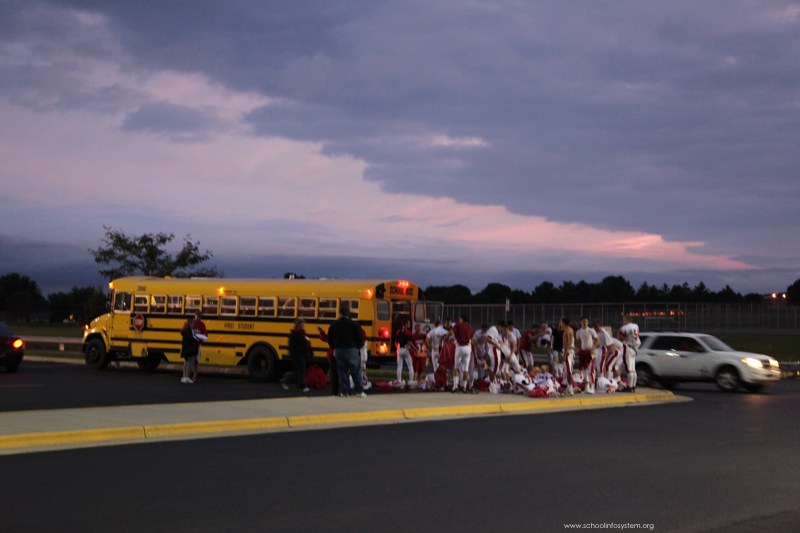

Joanne has more.

Share

Cost of education too high when result is ignorance

Ewa Wasilewska:

If, as Aristotle said, “Education is the best provision for old age,” there is not much ahead for an increasing number of college graduates.
I don’t know what is happening, but grading student exams and college papers is becoming a chore, not the pleasant learning experience it used to be. Every semester seems to prove that more and more students should not be in college because they simply don’t care and/or don’t have the skills to take and pass courses at any level.
Plagiarism is a huge problem. It seems that every take-home exam and paper is an invitation to googling. Then, the procedure is as simple as “cut and paste,” usually from Wikipedia but, if more creative, from the first 10 hits. Some students don’t even bother to change fonts or formatting. Some plagiarized my own writing! Others invest their time in one general paper that ends up in a variety of courses regardless of the topic assigned.
After an initial denial, “I didn’t do it!” that takes an instructor 10 minutes to 10 days to prove otherwise (university procedures), the next customary response is either “I didn’t know,” or “I do it all the time and other professors have no problem with my work.”

Share

Wolfram|Alpha Chemistry 101

Wolfram:

This week the American Chemical Society (ACS) is holding its Fall 2009 National Meeting & Exposition in Washington, DC, USA. In honor of professional chemists, educators, and students, we’re celebrating chemistry this week. If you are attending the meeting and would like a personal introduction to Wolfram|Alpha or the technology behind it, drop by the Wolfram Research booth, #2101.
Wolfram|Alpha contains a wealth of chemistry data, and provides you rapid computations that ensure accuracy and save time. Wolfram|Alpha is also an incredible learning tool, especially for new chemistry students looking for ways to learn, understand, compare, and test their knowledge of chemistry basics. Many of the topic areas found on an introductory or advanced course syllabus can be explored in Wolfram|Alpha.
Need to compute how many moles are in 5 grams of iron? Query “how many moles are in 5 grams of iron?”, and Wolfram|Alpha quickly computes your input and returns a result, along with unit conversions.

Share

Schools fight families over autism service dogs

Lindsey Tanner:

Like seeing-eye dogs for the blind, trained dogs are now being used to help autistic children deal with their disabilities. But some schools want to keep the animals out, and families are fighting back.
Two autistic elementary school students recently won court orders in Illinois allowing their dogs to accompany them to school. Their lawsuits follow others in California and Pennsylvania over schools’ refusal to allow dogs that parents say calm their children, ease transitions and even keep the kids from running into traffic.
At issue is whether the dogs are true “service dogs” – essential to managing a disability – or simply companions that provide comfort.

Share

NEA Slams Obama’s School Reform Plan

Jay Matthews:

Here’s a dispatch from my colleague Nick Anderson on the national education beat:
The nation’s largest teachers union sharply attacked President Obama’s most significant school improvement initiative on Friday evening, saying that it puts too much emphasis on a “narrow agenda” centered on charter schools and echoes the Bush administration’s “top-down approach” to reform.
The National Education Association’s criticism of Obama’s $4.35 billion “Race to the Top” initiative came nearly a month after the president unveiled the competitive grant program, meant to spur states to move toward teacher performance pay; lift caps on independently operated, publicly funded charter schools; and take other steps to shake up school systems.
The NEA’s statement to the Department of Education came a week before the end of the public-comment period on the administration’s proposal, and it reflected deep divisions over the White House’s education agenda within a constituency largely loyal to the Democratic Party.

Share

Following High School Football

NPR:

NPR is kicking off a new project Friday. Sports correspondents Tom Goldman and Mike are going to take the field with high school football teams across the country this season. They will go to practices and games, hit the weight room and sit in the stands with the boosters.

Share

Urban schools use marketing to woo residents back

Zinie Chen Sampson:

Most students try not to think about school during the summer. But a number of them took to the streets on a sweltering August day to talk up public education to people who might normally enroll their children in private or parochial schools.
Clad in T-shirts promoting “The Choice,” about 100 students, parents and administrators went door-to-door on a recent Saturday, asking Richmond homeowners to give their neighborhood schools a second look. Joining them was Virginia’s first lady Anne Holton, a product of city schools.
The $50,000 campaign by a school system still trying to rebound from a long history of racial segregation and white flight is an example of efforts under way in several cities to retain students. School districts are highlighting improvements to halt declining head counts so they can retain their funding, especially in light of drastic state budget cuts.
“People are still stuck with perceptions of yesteryear, and are not really aware of what we have to offer today,” Richmond Superintendent Yvonne Brandon said. “It’s not perfect, but be a part of the solution and become invested now.”
Like other urban school districts, Richmond, where 88 percent of students are black, 7 percent are white, and 71 percent are eligible for free or reduced-price lunches, has struggled on many fronts.

More here.

Share

Jeff Raikes talks about first year as Gates Foundation CEO

Kristi Heim:

Jeff Raikes has kept a pretty low profile in his first year as chief executive of the Bill & Melinda Gates Foundation. The man who built Microsoft Office now runs the largest private foundation in the world, which gives out more than $3 billion a year from an endowment of $30 billion.
Raikes recently talked about the fallout of the economic crisis on the foundation, the importance of risk taking and failure in philanthropy, and his experience working with Melinda Gates, which he said has been the most fun. He spoke at a breakfast last week sponsored by the Puget Sound Business Journal. (I couldn’t get in, but thanks to the Seattle Channel I was able to watch it here).
Not a lot of what he said was new, but he did reveal some insights from his first year, including how serious the stock market plunge hit the Gates Foundation.
“The biggest impact by far is on our partners and the people that our partners and we strive to serve,” he said. “It’s one of those things if you think about it you get a little depressed.”

Share

Latino groups back Milwaukee Schools Mayoral takeover proposal; opponents rally at church

Georgia Pabst & Jessa Garza:

Two leading Latino organizations voiced support for the takeover of Milwaukee Public Schools proposed by Gov. Jim Doyle and Mayor Tom Barrett, while nearly 150 people rallied against the plan Friday at a north side church.
Darryl D. Morin, Wisconsin director of the League of United Latin American Citizens, said his organization spent the last two years holding seminars on local educational issues and decided to endorse the proposal after evaluating various options.
But he also called for a mandatory reauthorization for the takeover so that voters could determine whether the new system is working.
“There’s an educational crisis in Milwaukee, and the primary question is how long will we wait,” he said. “It’s time to rise up together and say now is the time. Milwaukee can’t afford to fail its future.”
He was joined by Maria Monreal-Cameron, president and CEO of the Hispanic Chamber of Commerce of Wisconsin, who said the city stands at a crossroads.
“We need to try something different because the current educational system is broken, and we need to fix it,” she said.
Their endorsement of the proposed takeover is the first organized public support for the plan, which has drawn fire from many, including School Board President Michael Bonds.

Share

Wisconsin again rated poorly in efforts to improve schools

Alan Borsuk:

There it was again last week: A chart from a reputable national education organization that put Wisconsin at the top of the list, provided you were standing on your head.
The New Teacher Project, a private, nonprofit organization that has done a lot of work with Wisconsin and Milwaukee education, created a scorecard of the chances of each state to win some of the $4.35 billion to be given out by the U.S. Department of Education to places where there are bold, well structured plans to improve low-performing schools.
Wisconsin had the worst scorecard of all 51 candidates (including the District of Columbia).
A few weeks ago, there was a report from the National Assessment of Educational Progress, a program created by the federal government, on the racial gaps in reading and math achievement for fourth- and eighth-graders. The gaps were generally wider in Wisconsin than anywhere else. The scores of African-American students were lower in Wisconsin than in any other state – Mississippi, Louisiana, you name it.
A couple of years ago, Education Sector, a nonprofit organization, rated the states on how they were dealing with the No Child Left Behind education law. Wisconsin was rated as doing the best job in the country of evading the consequences of the law. The organization called it the Pangloss index, after a fictional character who believed everything was in its best possible condition even when it wasn’t. We were the most Panglossian state, so to speak.

Share

Schwarzenegger’s plan would reshape education in California

Jason Song & Jason Felch:

The state’s powerful teachers unions criticize the governor’s sweeping proposals, including merit pay for teachers. The plan would help qualify the state for Obama administration funds.
Gov. Arnold Schwarzenegger called on legislators Thursday to adopt sweeping education reforms that would dramatically reshape California’s public education system and qualify the state for competitive federal school funding.
The governor’s proposed legislation, to be considered during a special session that ends by Oct. 5, was met almost immediately by criticism from the powerful state teacher unions, which called Schwarzenegger’s plans rushed and unnecessary.
While Schwarzenegger’s goal is to boost California’s chances to qualify for $4.35 billion in federal grants, known as “Race to the Top,” many of his proposals go far beyond those needed for eligibility, and embrace the Obama administration’s key education reform proposals.
Schwarzenegger’s reforms include:

  • Adopting a merit pay system that would reward effective teachers and give them incentives to work at low-performing campuses;

  • Abolishing the current cap on the number of charter schools that can open every year;
  • Forcing school districts to shut down or reconstitute the lowest-performing schools or turn them over to charter schools’ independent management;
  • Allowing students at low-performing campuses to transfer to a school of their choosing;
  • Requiring school districts to consider student test data when evaluating teachers, something the federal government believes is prohibited under state law.

Share

Michelle Rhee in Washington, DC

Jane Renaud, Cat McGrath & David Wald:

The lack of sustained leadership has plagued the Washington, DC public school system for decades. Our nation’s capital, home to fifty thousand students, boasts one of the worst school districts in the country. Two thirds of students are far behind in reading, in math, three quarters.
In June 2007 new mayor Adrian Fenty assumed control of the ailing school system, firing the incumbent superintendent and replacing him with Michelle Rhee. Some questioned her lack of experience managing a public school system. Others felt she was exactly what was needed – a change agent from outside the district. In July the city council unanimously voted her in. Since then she has plotted a deliberate, and frequently controversial, course.
This series follows Michelle Rhee’s attempts to reform one of the most challenged school districts in America. Can Rhee provide a model of reform for the entire country, delivering on her promise of an excellent education for every child?

Share

Tech tips for term time

Paul Taylor:

Over the next month or so, high school and college students across the world will return to the classroom or begin higher education courses for the first time.
In the past they would have taken pens, paper and textbooks but today’s backpacks are laden with laptops, smartphones and other electronic devices.
The choice facing students and their parents is often bewildering so I set out to sift through the options and identify some of my favourite devices for the next generation of scholars.
When my eldest children went to university a decade ago they took with them a desktop PC, printer and a cheap mobile phone. But today most students prefer a laptop for everyday use, and perhaps an all-in-one machine for the dorm along with a multi-function printer, copier and scanner. For communications they want Skype or another low-cost messaging service such as SightSpeed or ooVoo .
In terms of handsets, bragging rights go to those packing a latest-generation smartphone such as Apple’s iPhone, BlackBerry’s Curve, or HTC’s Google Android-powered Magic. Alternatively, students want a text-centric handset with a full qwerty-keyboard such as Nokia’s N97 or the Windows Mobile-powered Danger Sidekick .

Share

U.S. vs. China: Thoughtful Chinese Author Says U.S. Schools are Better

Jay Matthews:

In my debates with American high-tech entrepreneur Bob Compton, I argue that U.S. schools are way ahead of the Chinese, and likely to stay there, at least in the production of creative, job-producing go-getters like Bob. Bob says I am not seeing what a great threat the rapidly improving Chinese education system is to our global economic superiority. Now we have a new book, “Catching Up or Leading the Way: American Education in the Age of Globalization,” by someone who knows more about this than either Bob or me: Michigan State education professor Yong Zhao.
Just one of his chapters, number 4, “Why China Isn’t a Threat Yet,” is worth the $27 cost of the book. Born and raised in China himself, Zhao (pronounced Jow) describes in detail what our schools are doing well, and not so well, and does the same with China. He concludes that we are still ahead in developing creative thinkers. The Chinese won’t be able to catch up until they do something about—don’t laugh–their awful college entrance tests.

Share

A Partial Look (School Climate) at the Outbound Madison School District Parent Survey

Samara Kalk Derby:

Madison school district parents dissatisfied with local schools got a boost after a 2007 U.S. Supreme Court decision which trumped state law and made it easier for students living in the district to attend schools in other districts, a practice known as open enrollment.
The case was brought by Seattle parents who challenged the use of race in assigning students to schools, arguing it violated the Constitution’s right of equal protection. The ruling was celebrated by those who favor color-blind policies, but criticized by civil rights groups as a further erosion of Brown vs. Board of Education, the landmark 1954 case that outlawed school segregation.
Last year it became easier in Madison, and in school districts across the country, for white students to transfer even if it meant increasing the district’s racial imbalance.
After a flood of local students left the district last year, Madison Superintendent Dan Nerad decided to investigate why.
“We had an interest in knowing ideas from people that had made the decision for open enrollment,” Nerad says. “We are attempting to learn from those experiences to see if there are some things as a school district that we can constructively do to address those concerns.”
To that end, the district surveyed households of district residents who left Madison schools and transferred to another district for the 2008-09 school year to find out why the families left. The majority of parents who took their kids out of the Madison school district last year under open enrollment said they did so for what the district classifies as “environmental reasons”: violence, gangs, drugs and negative peer pressure. Other reasons were all over the map. Many cited crowded classrooms and curriculum that wasn’t challenging enough.
Only a few responses pointed directly to white flight.

The Private/Parochial, Open Enrollment Leave, Open Enrollment Enter, Home Based Parent Survey, including School Board discussion, can be found here. David Blask comments.

Share

K-12 Tax & Spending Climate: Madison Firefighter’s Union New 2 Year Contract

Mayor Dave Cieslewicz:

Yesterday a two year contract agreement with city firefighters was ratified by the union membership. It’s a good deal for both the union and the city and its taxpayers. The agreement, which still needs to be approved by the City Council, calls for what is essentially a two year pay freeze with a modest 3% increase at the end of the contract period in 2011.
Other levels of government are using furloughs (which are essentially pay cuts) and layoffs to cut their budgets, but I think the city should take a different approach. After all, the city provides many basic direct services that will have a very noticeable impact for our customers if they are cut back. We can’t shut down the fire department or the police department for one day a month. We can’t just not pick up the garbage for a week. It’s far better for our residents if we can manage our way through these tough budget years while keeping our city staff intact to the greatest extent that we can. But if we’re going to do that, then we’ll need cooperation from our unions on wage and benefit settlements.
That kind of cooperation is exactly what we got from Local 311. The firefighters gave us a responsible start to negotiations with the other dozen unions that represent city employees. I said from the start of this recession that we need to approach our challenges with the understanding that we’re all in this together. This settlement is a very strong indication that we’re moving in that direction.

The Madison School District (Board member Johnny Winston, Jr. is a firefighter) and Madison Teachers Union are still working on a new contract. It will be interesting to see how that plays out.
There are at least two interesting challenges to an agreement this year:

  1. The elimination of “revenue limits and economic conditions” from collective bargaining arbitration by Wisconsin’s Democratically controlled Assembly and Senate along with Democratic Governer Jim Doyle:

    To make matters more dire, the long-term legislative proposal specifically exempts school district arbitrations from the requirement that arbitrators consider and give the greatest weight to
    revenue limits and local economic conditions. While arbitrators would continue to give these two factors paramount consideration when deciding cases for all other local governments, the importance of fiscal limits and local economic conditions would be specifically diminished for school district arbitration.

  2. The same elected officials eliminated the QEO, a 3.8% cap (in practice, a floor) on teacher salaries and wages in addition to “step” increases based on years of experience among other factors:

    As the dust settles around the new state budget, partisan disagreement continues over the boost that unions – particularly education unions – got by making it easier for them to sign up thousands of new members and by repealing the 3.8% annual limit on teachers’ pay raises.
    The provisions passed because Democrats, who got control of the Legislature for the first time in 14 years, partnered with Democratic Gov. Jim Doyle to advance changes the governor and unions had been pushing for years.
    Unions traditionally help elect Democratic politicians. The largest teachers union, the Wisconsin Education Association Council, spent about $2.1 million before last November’s elections, with much of that backing Democrats.
    Most of the labor-related provisions in the budget were added to provide people with “good, family-supporting jobs,” said Rep. Mark Pocan (D-Madison), co-chairman of the Legislature’s Finance Committee.
    “The idea that we’re shifting back to the worker, rather than just big business and management, that’s part of what Democrats are about,” Pocan said.
    It also helped that the two top Democratic legislators, Assembly Speaker Mike Sheridan of Janesville and Senate Majority Leader Russ Decker of Weston, are veteran labor leaders.

Share

Harvard, Ivy Leagues Bust Tuition Cost Bubble:

John Wasik:

A high-priced college may not be worth the price of admission.
As the economy forces more students out of the classroom and graduates into under- or unemployment, a college enrollment bubble may be starting to deflate.
The recession, combined with rising college costs, has accelerated a college affordability crunch that is exacerbated by shrinking family incomes, diminished home equity and reduced household wealth.
As many as one-third of all private colleges surveyed by the National Association of Independent Colleges and Universities (Complete Report) said they expected enrollment to drop in the next academic year.
Almost 40 percent of those colleges said some of their students dropped out due to personal economic reasons and a quarter said full-time attendees switched to part time. Half said families had to cut back their expected contributions as the value of college savings plans dropped 21 percent last year.
The job market is so awful that I have encountered several graduates this summer who weren’t able to line up full-time employment, even though they had sound academic records. Some are even “taking the year off” or doing internships.

Share

Education Secretary Criticizes Steep Rise in College Costs

Jack Kadden:

In an interview to be broadcast on the Tavis Smiley program on PBS, Secretary of Education Arne Duncan predicts that as tuition continues to rise, students will increasingly turn to schools that are “smarter and more creative” about lowering the cost of a college education.

But let me tell you Tavis, what I think is going to happen is parents of students are really smart, and those schools where tuition is going up exponentially high, folks have a lot of options out there. You’ve seen some other universities be smarter and more creative and go to three-year programs, and go to no-frills programs, I think you are going to see them capture a larger share of the marketplace. Again, parents of students are going to vote with their feet and when costs are skyrocketing, we think those colleges are going to pay a price for it.

Mr. Duncan also describes the Obama administration’s efforts to make a college education more accessible, including more money for Pell grants, Perkins loans and tuition tax credits.

Share

Performance Management in Portfolio School Districts

Robin Lake & Paul Hill, via a Deb Britt email:

Under pressure from state standards-based reform and No Child Left Behind, and with increasing competition from schools of choice, urban school districts are looking for ways to offer a high-performing mix of schools that meet the diverse needs of their communities.
Many districts see themselves as portfolio managers, operating some schools in the traditional way, hiring independent groups to run other schools, and holding all schools accountable under the same performance standards.
Portfolio management requires school districts to do three things they were not designed to do: judge the performance of individual schools, decide which are effective enough to continue supporting, and decide whether to shore up struggling schools or create new ones. Districts currently adopting a portfolio strategy, partially or fully, include New York, Chicago, New Orleans, Denver, Philadelphia, Hartford, and the District of Columbia. Many other districts are considering the strategy.
Performance Management in Portfolio School Districts provides ideas for portfolio school districts and others that are trying to manage schools for performance. Based on studies of other government agencies and businesses that have shifted from inputs- to performance-based accountability, this report:

Complete report: 1.3MB PDF.

Share

California Governor proposes merit pay for educators

Jason Song & Jason Felch:

Gov. Arnold Schwarzenegger announced this morning a special legislative session focusing on education that he hopes will establish merit pay for teachers, allow students at low-performing schools to transfer to other campuses and use data to track students and educators.
The governor also wants the legislature to abolish a law that bars the use of student test scores in teacher evaluations. Under federal guidelines, states that prohibit the use of student test scores to evaluate teachers cannot apply for $4.35 billion in education stimulus money known as Race to the Top funding.
Some California educational leaders have said federal officials are misinterpreting state law, but Schwarzenegger vowed to do everything necessary to make sure California qualifies for the federal funding.
“This is an incredible opportunity for our students and our schools,” he said at a press conference in Sacramento.
Not all of Schwarzenegger’s proposals apparently would have to be passed by the Legislature to be implemented, but the governor said he hoped state lawmakers could finish their work by early October so the state could meet the deadline to apply for federal funds.

Share

South Park meets Harvard Business School

Simon Daniel:

Sometimes you aim for the moon and get surprisingly close. This summer I’m at Nasa Ames research centre in California, attending Singularity University, a new institution that aims to educate “a cadre of leaders” about the rapid pace of technology and to address humanity’s grand challenges, such as climate and health (www.singularityu.org).
The university is the brainchild of Peter Diamandis, who founded the X-Prize challenge to encourage private spaceflight, and Ray Kurzweil, a futurist in exponential technologies. It is supported by Google, Nasa and ePlanet Ventures.
I’m part of the inaugural “student” class of 40 entrepreneurs and scientists from around the world, selected from more than 1,200 applications.
The nine-week course promises lectures and discussions with some of the world’s best technologists (such as internet pioneers Vint Cerf and Bob Metcalfe), Nobel laureates and NGO leaders to share ideas, undertake practical experiments and build businesses. The goal is ambitious – to work out how technology could help a billion people within 10 years.
Arriving at the campus, housed on Federal land, I pass through the nearby town of Mountain View, which is adorned with university flags emblazoned with messages such as “How would you feed a billion people?”

Share

Ivy League Schools Learn A Lesson in Liquidity

James Stewart:

Just a year ago, in the midst of the subprime meltdown, many of the nation’s top universities and colleges were reporting significant gains. This year, the University of Pennsylvania is being hailed for Ivy League-leading results–with a decline of 15.7% for its fiscal year ended in June.
Results from other schools are still trickling in, but Harvard University has said it is expecting to report a drop of 30%, and Yale University about 25%. Considering the size of these endowments, these are staggering losses in absolute terms–many billions in the case of both Harvard and Yale.
Students soon will be heading back to larger classes, curtailed extracurricular activities and cheaper dining-hall fare. But the results are also of more than academic interest to investors like me, who have to some degree modeled their portfolios on the diversified asset-allocation model pioneered by Yale’s chief investment officer, David Swensen. What I refer to as the Ivy League approach for individuals calls for diversification along similar lines as the large university endowments–equities (domestic and foreign), fixed income, and real assets (which includes commodities and real estate), but with a much higher allocation to so-called nontraditional asset categories: emerging-market equities and debt, energy and commodities. Yale allocated just 10% to U.S. equities and 4% to fixed income, with 15% in foreign equities and 29% in so-called real assets as of June 30, 2008.

Share

Families, Activists Rally to Restore 216 Rescinded Washington, DC Tuition Vouchers

Michael Birnbaum:

Classes in District public schools start Monday, and 216 students are hoping they won’t have to go back. About 70 parents, children and activists joined Thursday in front of the U.S. Department of Education to encourage Secretary of Education Arne Duncan to award vouchers to help the students pay for private school.
The students, who were offered vouchers worth as much as $7,500 toward tuition from the D.C. Opportunity Scholarship Program this spring before Duncan rescinded them in the face of the program’s uncertain future, were left to find placements in public and charter schools. Some families have complained that by the time the vouchers were rolled back, there were few spots available at competitive public schools.
“We’re hoping that Secretary Duncan is going to look out the window so he can see how strongly the parents support it,” said Virginia Walden Ford, executive director of D.C. Parents for School Choice, one of the groups that organized the protest. “They just put families into a bad situation.”

Share

Stars Aligning on School Lunches

Kim Severson:

ANN COOPER has made a career out of hammering on the poor quality of public school food. The School Nutrition Association, with 55,000 members, represents the people who prepare it.
A meal from the cafeteria at P.S. 89 in Manhattan does not contain processed food.
Imagine Ms. Cooper’s surprise when she was invited to the association’s upcoming conference to discuss the Lunch Box, a system she developed to help school districts wean themselves from packaged, heavily processed food and begin cooking mostly local food from scratch.
“All of a sudden I am not the fringe idiot trying to get everyone to serve peas and carrots that don’t come out of a can, like that’s the most radical idea they have ever heard of,” she said.
The invitation is a small sign of larger changes happening in public school cafeterias. For the first time since a new wave of school food reform efforts began a decade ago, once-warring camps are sharing strategies to improve what kids eat. The Department of Agriculture is welcoming ideas from community groups and more money than ever is about to flow into school cafeterias, from Washington and from private providers.
“The window’s open,” said Kathleen Merrigan, the deputy secretary of agriculture. “We are in the zone when a whole lot of exciting ideas are being put on the table. I have been working in the field of sustainable agriculture and nutrition all my professional life, and I really have never seen such opportunity before.”

Share

A Last-Minute Dash for Tuition

Melissa Korn:

Weeks or even days before classes start, hundreds of thousands of college students nationwide still don’t know whether they’ll be able to cover their tuition bills this year.
In Michigan, the state legislature continues to battle over the Michigan Promise Grant, a merit award of up to $4,000 given to 96,700 students. The State Senate recently passed a bill to cut it entirely and eliminate another $56 million in need-based aid for this school year.
In Illinois, the need-based Monetary Award Program was halved last month, leaving about 145,000 students without a spring-semester payout. The full award used to total nearly $5,000.
In Utah, the state cut the tuition subsidy to 40% from 75% in its New Century Scholarship, a merit program in which students earn their associates degrees while in high school.
And in Pennsylvania, a state budget impasse is leaving 172,000 students unsure what funding they will get from the state Higher Education Assistance Agency. The maximum award is slated to be $4,700 for students who attend in-state schools.

Share

Lost in Immersion: Speaking French on the Web

Katherine Boehret:

If you’ve ever learned a foreign language, you know the vast difference between completing workbook activities and speaking with others. The latter experience can involve sounding out unfamiliar accents or guttural pronunciations and, though intimidating, is ultimately more rewarding. By immersing yourself in a language and navigating through situations, you learn how to speak and eventually think in that language.
Rosetta Stone has long used visual learning without translations by pairing words with images –one of the ways a baby learns to speak. For the past week, I’ve been testing its newest offering: Rosetta Stone Totale (pronounced toe-tall-A), which is the company’s first fully Web-based language-learning program. It aims to immerse you in a language using three parts: online coursework that can take up to 150 hours; live sessions in which you can converse over the Web with a native-speaking coach and other students; and access to Rosetta World, a Web-based community where you can play language games by yourself or with other students to improve your skills.
Totale costs a whopping $999, so if you aren’t serious about learning a language it’s a tough sell. Rosetta Stone says this program is comparable to an in-country language-immersion school. The company’s most expensive offering before Totale was a set of CDs (lessons one, two and three) that cost $549, included about 120 hours of course work and had no online components.

Share

Wisconsin Ranks 3rd in ACT Testing

Amy Hetzner & Erin Richards:

Wisconsin maintained its third-place ranking on the ACT college admissions test, with this year’s graduating high school seniors posting an average composite score of 22.3 for the third year in a row, according to data scheduled to be released Wednesday.
That average placed Wisconsin behind only Minnesota and Iowa among states where the ACT was taken by a majority of the Class of 2009.
But within the state’s scores were causes for concern. The average composite score – the combined performance on the ACT’s English, math, reading and science tests – for African-American students fell from 17 to 16.8. With the average composite score for Wisconsin’s white students at 22.9, the state had one of the largest gaps between the two racial groups in the nation.
According to a report from ACT Inc., such scores indicate only 3% of the state’s African-American test-takers are ready for college in all four tested areas, compared with 33% of white students. In Milwaukee Public Schools, spokeswoman Roseann St. Aubin said 6% of district test-takers were deemed college-ready in all four areas.
“Overall, Wisconsin students did well on this national test,” state schools Superintendent Tony Evers said in a news release. “However, the results show areas for improvement.”
Average composite scores on the ACT, the most popular of the two main college admissions tests in Wisconsin, varied from district to district in the Milwaukee area.
Because the ACT is a voluntary test, schools’ average scores can vary based on the number of students who take it from one year to the next. An increase in test-taking usually leads to a score drop.

Share