School Information System

Op-Ed: ‘Higher Education’ Is A Waste Of Money

Talk of the Nation:

Professor Andrew Hacker says that higher education in the U.S. is broken.
He argues that too many undergraduate courses are taught by graduate assistants or professors who have no interest in teaching.
Hacker proposes numerous changes, including an end to the tenure system, in his book, Higher Education?
“Tenure is lifetime employment security, in fact, into the grave” Hacker tells NPR’s Tony Cox. The problem, as he sees it, is that the system “works havoc on young people,” who must be incredibly cautious throughout their years in school as graduate students and young professors, “if they hope to get that gold ring.”
That’s too high a cost, Hacker and his co-author, Claudia Dreifus, conclude. “Regretfully,” Hacker says, “tenure is more of a liability than an asset.”

Share

Teachers and teachers unions: Get on board or get out of the way

Leonard Pitts:

A year or two ago, I received this e-mail. The writer was upset with me for arguing that school principals should have the power to fire teachers who do not perform. As numerous educators have told me, union protections being what they are, dumping a teacher — even a bad one — is an almost impossible task.
My correspondent, a teacher, took issue with my desire to see that changed, noting that without those protections, she’d be at the mercy of some boss who decided one day to fire her.
In other words, she’d be just like the rest of us. The lady’s detachment from the reality most workers live with struck me as a telling clue as to why our education system frequently fails to educate. When you can’t get fired for doing bad work, what’s your impetus for doing good?
Many of us seem to be wondering the same thing.

Share

Ignorance By Degrees Colleges serve the people who work there more than the students who desperately need to learn something.

Mark Bauerlein:

Higher education may be heading for a reckoning. For a long time, despite the occasional charge of liberal dogma on campus or of a watered-down curriculum, people tended to think the best of the college and university they attended. Perhaps they attributed their career success or that of their friends to a diploma. Or they felt moved by a particular professor or class. Or they received treatment at a university hospital or otherwise profited from university-based scientific research. Or they just loved March Madness.
Recently, though, a new public skepticism has surfaced, with galling facts to back it up. Over the past 30 years, the average cost of college tuition and fees has risen 250% for private schools and nearly 300% for public schools (in constant dollars). The salaries of professors have also risen much faster than those of other occupations. At Stanford, to take but one example, the salaries of full professors have leapt 58% in constant dollars since the mid-1980s. College presidents do even better. From 1992 to 2008, NYU’s presidential salary climbed to $1.27 million from $443,000. By 2008, a dozen presidents had passed the million-dollar mark.
Meanwhile, tenured and tenure-track professors spend ever less time with students. In 1975, 43% of college teachers were classified as “contingent”–that is, they were temporary instructors and graduate students; today that rate is 70%. Colleges boast of high faculty-to-student ratios, but in practice most courses have a part-timer at the podium.

Related: Ripon Superintendent Richard Zimman:

“Beware of legacy practices (most of what we do every day is the maintenance of the status quo), @12:40 minutes into the talk – the very public institutions intended for student learning has become focused instead on adult employment. I say that as an employee. Adult practices and attitudes have become embedded in organizational culture governed by strict regulations and union contracts that dictate most of what occurs inside schools today. Any impetus to change direction or structure is met with swift and stiff resistance. It’s as if we are stuck in a time warp keeping a 19th century school model on life support in an attempt to meet 21st century demands.” Zimman went on to discuss the Wisconsin DPI’s vigorous enforcement of teacher licensing practices and provided some unfortunate math & science teacher examples (including the “impossibility” of meeting the demand for such teachers (about 14 minutes)). He further cited exploding teacher salary, benefit and retiree costs eating instructional dollars (“Similar to GM”; “worry” about the children given this situation).
Zimman noted that the most recent State of Wisconsin Budget removed the requirement that arbitrators take into consideration revenue limits (a district’s financial condition @17:30) when considering a District’s ability to afford union negotiated compensation packages. The budget also added the amount of teacher preparation time to the list of items that must be negotiated….. “we need to breakthrough the concept that public schools are an expense, not an investment” and at the same time, we must stop looking at schools as a place for adults to work and start treating schools as a place for children to learn.”

Share

Plagiarism Lines Blur for Students in Digital Age

Trip Gabriel:

At Rhode Island College, a freshman copied and pasted from a Web site’s frequently asked questions page about homelessness — and did not think he needed to credit a source in his assignment because the page did not include author information.
At DePaul University, the tip-off to one student’s copying was the purple shade of several paragraphs he had lifted from the Web; when confronted by a writing tutor his professor had sent him to, he was not defensive — he just wanted to know how to change purple text to black.
And at the University of Maryland, a student reprimanded for copying from Wikipedia in a paper on the Great Depression said he thought its entries — unsigned and collectively written — did not need to be credited since they counted, essentially, as common knowledge.
Professors used to deal with plagiarism by admonishing students to give credit to others and to follow the style guide for citations, and pretty much left it at that.

Share

No Christianity Please, We’re Academics

Timothy Larsen:

I had lunch this summer with a prospective graduate student at the evangelical college where I teach. I will call him John because that happens to be his name. John has done well academically at a public university. Nevertheless, as often happens, he said that he was looking forward to coming to a Christian university, and then launched into a story of religious discrimination.
John had been a straight-A student until he enrolled in English writing. The assignment was an “opinion” piece and the required theme was “traditional marriage.” John is a Southern Baptist and he felt it was his duty to give his honest opinion and explain how it was grounded in his faith. The professor was annoyed that John claimed the support of the Bible for his views, scribbling in the margin, “Which Bible would that be?” On the very same page, John’s phrase, “Christians who read the Bible,” provoked the same retort, “Would that be the Aramaic Bible, the Greek Bible, or the Hebrew Bible?” (What could the point of this be? Did the professor want John to imagine that while the Greek text might support his view of traditional marriage, the Aramaic version did not?) The paper was rejected as a “sermon,” and given an F, with the words, “I reject your dogmatism,” written at the bottom by way of explanation.

Share

Autism and the Madison School District

Michael Winerip, via a kind reader:

People with autism are often socially isolated, but the Madison public schools are nationally known for including children with disabilities in regular classes. Now, as a high school junior, Garner, 17, has added his little twist to many lives.
He likes to memorize plane, train and bus routes, and in middle school during a citywide scavenger hunt, he was so good that classmates nicknamed him “GPS-man.” He is not one of the fastest on the high school cross-country team, but he runs like no other. “Garner enjoys running with other kids, as opposed to past them,” said Casey Hopp, his coach.
Garner’s on the swim team, too, and gets rides to practice with a teammate, Michael Salerno. On cold mornings, no one wants to be first in the water, so Garner thinks it’s a riot to splash everyone with a colossal cannonball. “They get angry,” the coach, Paul Eckerle, said. “Then they see it’s Garner, and he gets away with it. And that’s how practice begins.”

Share

Not as Web Savvy as You Think Young people give Google, other top brand search results too much credibility

Erin White:

Google it. That’s what many college students do when asked to read an excerpt of a play for class, write a resume or find the e-mail address of a politician.
They trust Google so much that a Northwestern University study has found many students only click on websites that turn up at the top of Google searches to complete assigned tasks. If they don’t use Google, researchers found that students trust other brand-name search engines and brand-name websites to lead them to information.
The study was published by the International Journal of Communication.
“Many students think, ‘Google placed it number one, so, of course it’s credible,'” said Eszter Hargittai, associate professor of communication studies at Northwestern. “This is potentially tricky because Google doesn’t rank a site by its credibility.”
In the published, study 102 students at the University of Illinois at Chicago sat at computers with researchers. Each student was asked to bring up the page that’s usually on their screen when they start using the Web.

Share

Girl is mother of the woman

Meredith May:

I never gave much credence to the theory that one’s personality is formed by first or second grade, until I recently found my elementary school report cards.
Reading what my teachers wrote about me at Tularcitos Elementary in Carmel Valley in the late 1970s, I realized I am in many ways the same person – just bigger.
By second grade, I was already exhibiting signs of becoming a bookworm:
“Not too interested in physical education. Would prefer to stay in room and work. Works very hard in classroom; I often have to throw her out at recess.” – Second-grade report card, December 1977.

Share

School Tenure Crackdown Teachers Face Tougher Hurdle as Student Test Scores Are Given More Weight

Barbara Martinez:

New York City principals are getting tougher: They denied tenure or continued the probation of a record 11% of teachers in the school year just ended, according to Department of Education data released Thursday.
Five years ago, less than 1% of teachers found themselves in the same predicament. Principals this year also gave hundreds more teachers “unsatisfactory” ratings.
The results come amid a push by schools chancellor Joel Klein for greater teacher accountability and a harder stance on tenure. In a letter to teachers in February, he said tenure had become “an expectation more than an honor.” He had also called on principals for the first time to consider student test scores when making tenure decisions, and the latest results show that they did.
“Our principals are retaining top teachers and they are dismissing low-performing teachers,” said John White, a deputy chancellor. “They are doing it as part of a culture shift of using evidence of student learning.”

Share

On the ordinary virtues of paying attention

Les Back:

“You do not interest me. No man can say these words to another without committing a cruelty and offending against justice,” writes philosopher Simone Weil. To turn a deaf ear is an offence not only to the ignored person but also to thinking, justice and ethics. Coleridge’s Ancient Mariner is cursed because no one will listen to his story. The Italian chemist-turned-writer Primo Levi was preoccupied with this fable because of his fear that on returning from Auschwitz people like him would be either ignored or simply disbelieved. Regardless, listening gets a very mixed press amongst critics and intellectuals. There is a suspicion of “wistful optimism” or the quasi-religious appeal to “hold hands” and play priest at the confessional. These qualms miss the centrality of listening to a radical humanism which recognises that dialogue is not merely about consensus or agreement but engagement and criticism. This is something that Primo Levi understood.

Share

Study: Working mothers not necessarily harmful to child development

Daniel de Vise:

A new study finds that babies raised by working mothers don’t necessarily suffer cognitive setbacks, an encouraging finding that follows a raft of previous reports suggesting that women with infants were wiser to stay home.
Researchers at Columbia University say they are among the first to measure the full effect of maternal employment on child development — not just the potential harm caused by a mother’s absence from the home, but the prospective benefits that come with her job, including higher family income and better child care.
In a 113-page monograph, released this week, the authors conclude “that the overall effect of 1st-year maternal employment on child development is neutral.”
The report is based on data from the most comprehensive child-care study to date, the National Institute of Child Health and Human Development Study of Early Child Care. It followed more than 1,000 children from 10 geographic areas through first grade, tracking their development and family characteristics.

Share

ABA Considers Dramatic Changes This Weekend in Law School Accreditation Standards, Including Dilution of Tenure

TaxProf:

The Clinical Legal Education Association accuses the committee of sandbagging the process by posting some of the material only three days in advance of the meeting:
I write for the executive committee of the Clinical Legal Education Association (CLEA) to express our concerns regarding the document entitled “Draft, Security of Position, Academic Freedom, and Attract and Retain Faculty” dated July 15, 2010, which was posted on the web site of the Standards Review Committee on July 20, only three days in advance of the Committee’s meeting to begin to discuss the issues it raises. This “Draft” proposes the elimination of the longstanding provisions in Standard 405 addressing tenure and other forms of security of position for law faculty.
First, it is troubling that this proposal, which raises issues that are fundamental to the structure of legal education, is posted so late that interested persons and organizations cannot provide comments prior to the Committee beginning its deliberations on those issues. …

Share

McGill will no longer require MCAT Medical school is hoping to attract more francophones to the program

Karen Seidman:

McGill University’s medical school may have an Ivy League reputation, but it no longer has something that most of the top medical schools on the continent do -a requirement for all students to write the Medical College Admission Test.
Beginning this month, Canadian students who studied at a Canadian university before applying to McGill medical school will no longer be required to write the MCAT -the widely used admissions test that measures students in physical sciences, verbal reasoning, biological sciences and a written sample. Students typically spend about three months studying for the exam.
In making the decision, McGill is aligning itself with francophone or bilingual universities here and elsewhere in Canada that also don’t require the MCAT because the test has no French equivalent. Students from outside the country will still have to write the MCAT.

Share

Are Lunch Ladies Part of Recipe for Good Schools?

Linda Lutton:

In Chicago, dozens of lunch ladies are leaving the schools they’ve worked at–sometimes for years. That’s because those schools are being “turned around”–a strategy that involves removing the entire staff at failing schools to “reset” the culture there. It’s a strategy Education Secretary Arne Duncan is now pushing nationwide. But a question is: Is it necessary to remove lunch ladies, janitors, and security guards to create better schools?
In mid-June, the lunch ladies at Deneen Elementary School on the city’s south side were serving up one of their last meals.
LUNCH LADY: How are you? What do you want? Carrots or salad?
Fewer than half of kids meet standards here on state tests, so Deneen is being forced to start over. As a “turnaround,” every adult has to leave, from the principal to the teachers to the seven lunch ladies. Veronica Fluth was Deneen’s cook. After insisting I put on a hair net, she gave me a tour of her spotless kitchen.

Share

On the ordinary virtues of paying attention

Les Back:

“You do not interest me. No man can say these words to another without committing a cruelty and offending against justice,” writes philosopher Simone Weil. To turn a deaf ear is an offence not only to the ignored person but also to thinking, justice and ethics. Coleridge’s Ancient Mariner is cursed because no one will listen to his story. The Italian chemist-turned-writer Primo Levi was preoccupied with this fable because of his fear that on returning from Auschwitz people like him would be either ignored or simply disbelieved. Regardless, listening gets a very mixed press amongst critics and intellectuals. There is a suspicion of “wistful optimism” or the quasi-religious appeal to “hold hands” and play priest at the confessional. These qualms miss the centrality of listening to a radical humanism which recognises that dialogue is not merely about consensus or agreement but engagement and criticism. This is something that Primo Levi understood.

Share

Understanding Digital Natives

Frédéric Filloux:

They see life as a game. They enjoy nothing more than outsmarting the system. They don’t trust politicians, medias, nor brands. They see corporations as inefficient and plagued by an outmoded hierarchy. Even if they harbor little hope of doing better than their parents, they don’t see themselves as unhappy. They belong to a group — several, actually — they trust and rely upon.


“They”, are the Digital Natives.


The French polling institute BVA published an enlightening survey of this generation: between 18-24 years of age, born with a mouse and a keyboard, and now permanently tied to their smartphone. All of it shaping their vision of an unstable world. The study is titled GENE-TIC for Generation and Technology of Information and Communication. Between November 2009 and February 2010, BVA studied hundred young people in order to understand their digital habits. Various techniques where used: spyware in PCs , subjective glasses to “see what they see”, and hours of video recording. (The 500 pages survey is for sale but abstracts, in French, are here ; BVA is considering a similar study for the US market). Here are the key findings:

Share

I don’t want to find God to find a good school

Pippa Crerar:

A few weeks ago I was asked to a friend’s son’s christening. “We haven’t found God, just a really good church school” she scrawled across the bottom of the invitation. In days gone by I might have huffed and puffed about the hypocrisy of it all. But now I’m a parent myself and school admission is hovering on the horizon.
We share the dilemma faced by thousands of families across London. Our home is just about equidistant between a fairly average Church of England school and a local primary that has been in special measures for the past two years. The idealist in me says stand by your principles — I believe in community and the impact supportive parents can have on a school. The parent in me says: do whatever is best for your child’s education.
But the choice, such as it is, also makes me cross. Why are so many inner London schools still so poor that parents feel they have to lie about religion, compromise their principles, or even — and most can’t afford this option — move house to secure a half-decent place? We’re not even on to secondary yet.
Education Secretary Michael Gove claims he gets it. His academies bill — passed in the Commons last night– allows schools to opt out of local authority control and be directly funded by government. They will have greater freedom over the curriculum and teachers’ pay and access to extra funds currently administered by councils.

Share

The Case for $320,000 Kindergarten Teachers

David Leonhardt, via a Rick Kiley email:

How much do your kindergarten teacher and classmates affect the rest of your life?
Economists have generally thought that the answer was not much. Great teachers and early childhood programs can have a big short-term effect. But the impact tends to fade. By junior high and high school, children who had excellent early schooling do little better on tests than similar children who did not — which raises the demoralizing question of how much of a difference schools and teachers can make.
There has always been one major caveat, however, to the research on the fade-out effect. It was based mainly on test scores, not on a broader set of measures, like a child’s health or eventual earnings. As Raj Chetty, a Harvard economist, says: “We don’t really care about test scores. We care about adult outcomes.”
Early this year, Mr. Chetty and five other researchers set out to fill this void. They examined the life paths of almost 12,000 children who had been part of a well-known education experiment in Tennessee in the 1980s. The children are now about 30, well started on their adult lives.

Complete PDF Report.

Share

Does Language Influence Culture?

Lera Boroditsky:

Do the languages we speak shape the way we think? Do they merely express thoughts, or do the structures in languages (without our knowledge or consent) shape the very thoughts we wish to express?
Take “Humpty Dumpty sat on a…” Even this snippet of a nursery rhyme reveals how much languages can differ from one another. In English, we have to mark the verb for tense; in this case, we say “sat” rather than “sit.” In Indonesian you need not (in fact, you can’t) change the verb to mark tense.
In Russian, you would have to mark tense and also gender, changing the verb if Mrs. Dumpty did the sitting. You would also have to decide if the sitting event was completed or not. If our ovoid hero sat on the wall for the entire time he was meant to, it would be a different form of the verb than if, say, he had a great fall.
In Turkish, you would have to include in the verb how you acquired this information. For example, if you saw the chubby fellow on the wall with your own eyes, you’d use one form of the verb, but if you had simply read or heard about it, you’d use a different form.

Share

The listeners: On the ordinary virtues of paying attention

Les Back:

“You do not interest me. No man can say these words to another without committing a cruelty and offending against justice,” writes philosopher Simone Weil. To turn a deaf ear is an offence not only to the ignored person but also to thinking, justice and ethics. Coleridge’s Ancient Mariner is cursed because no one will listen to his story. The Italian chemist-turned-writer Primo Levi was preoccupied with this fable because of his fear that on returning from Auschwitz people like him would be either ignored or simply disbelieved. Regardless, listening gets a very mixed press amongst critics and intellectuals. There is a suspicion of “wistful optimism” or the quasi-religious appeal to “hold hands” and play priest at the confessional. These qualms miss the centrality of listening to a radical humanism which recognises that dialogue is not merely about consensus or agreement but engagement and criticism. This is something that Primo Levi understood.

Share

London Business School Admissions manager Oliver Ashby fields questions on the MBA admissions process and career prospects for new grads

Bloomberg:

Among the top international MBA programs, a berth at London Business School (London Full-Time MBA Profile), is among the most coveted in all of Europe. As a result, the competition to get in is getting fiercer. During a live chat on July 21, Oliver Ashby (screen name: OliverAshbyLBS), manager of recruitment and admissions at LBS, fielded questions from the audience and Bloomberg Businessweek reporter Francesca Di Meglio (screen name: FrancescaBW) about what it takes to get accepted at LBS and what career opportunities lie in store for graduates. Here are edited transcripts of the chat:
Kwabena: What does LBS look at when it comes to selecting candidates for its programs?
OliverAshbyLBS: This is a very good question. At London Business School we take a holistic view when assessing applications. All our programs require a GMAT score, references, and some form of essay. We also believe that cultural fit is hugely important.

Share

Are iPads, Smartphones, and the Mobile Web Rewiring the Way We Think?

Gregory Lamb:

It took an offer to appear on a national TV show for Wade Warren to reluctantly give up what he calls his “technology” for a week.
That was the only way, his mother says, that he would ever pack his 2006 MacBook (with some recent upgrades, he’ll tell you), his iPad tablet computer, and, most regretfully, his Nexus One smart phone into a cardboard box and watch them be hustled out the door of his room to a secret hiding place.
Wade, who’s 14 and heading into ninth grade, survived his seven days of technological withdrawal without updating his 136 Twitter followers about “wonky math tests” and “interesting fort escapades,” or posting on his photography product review blog, or texting his friends about… well, that’s private. But he has returned to his screens with a vengeance, making up for lost time.

Share

I will write your college essay for cash

Emily Brown:

I’m a broke writer who can’t find a gig in the recession, so I decided to save myself — by helping students cheat
My clients never fail to amuse.
“Can I have a military discount?” one asked.
“Do you give student discounts?” asked another.
No and no, I thought, hitting Delete on those e-mails. In the business of doing other people’s homework, there are no discounts of any kind. (Who needs my services besides students, anyway?) All sales are final, and all payment is upfront. No one gets free credit — well, they get credit from their instructors, plus high grades and lots of compliments.
I entered this business purely by accident. A victim of the craptastic economy, I’ve done all sorts of things for money. I’ve cleaned maggots out of other people’s kitchens. I’ve scraped cat poop off carpets. I’ve watched small screaming children for hours at a time. But doing college homework for cash? That one took me by surprise. It began innocently. Having tutored writing at a small private school, I decided to offer my services to the larger market via Craigslist. Soon, a prospect contacted me.

Share

How People Learn: It Really Hasn’t Changed

Bersin & Associates:

Over the last several months I have been in many meetings with HR and L&D professionals talking about the enormous power of formalized informal learning. As we walk through out enterprise learning framework and talk with people about the need to expand their concept of training, I am reminded of the work we did back in 2003 and 2004 when I wrote The Blended Learning Book® (which is just as important to understand today as ever before).
Here are a few of the jewels I want to remind everyone to consider.
1. Mastery Means Being Able to Apply Knowledge

Share

Senator James Webb (D-VA) on Affirmative Action and Race

Ilya Somin:

In his much-discussed recent Wall Street Journal op ed, Virginia Senator James Webb makes some good points about affirmative action and race, but also some key mistakes and omissions. On the plus side, Webb’s article highlights the contradictions between the “diversity” and compensatory justice rationales for affirmative action. He also correctly suggests that slavery and segregation inflicted considerable harm on southern whites as well as blacks; it is therefore a mistake to view these injustices as primarily a transfer of ill-gotten wealth from one race to another. On the negative side, Webb is very unclear as to his own position on affirmative action. He also seems to blame racism and the historic economic backwardness of the South on the machinations of a small elite. The reality was more complicated. Low-income southern whites were often much more supportive of racism and segregation than economic elites were, and Jim Crow might have been less virulent without their support.
I. Competing Rationales for Affirmative Action.
One of Webb’s best points is that affirmative action has resulted in preferences for groups that cannot claim to be victims of massive, systematic injustices inflicted in the United States:

Clusty Search: James Webb, Ilya Somin.

Share

New evidence that the minimum wage has hurt teenage workers.

Wall Street Journal:

Today marks the first anniversary of Congress’s decision to raise the federal minimum wage by 41% to $7.25 an hour. But hold the confetti. According to a new study, more than 100,000 fewer teens are employed today due to the wage hikes.
Economic slowdowns are tough on many job-seekers, but they’re especially hard on the young and inexperienced, whose job prospects have suffered tremendously from Washington’s ill-advised attempts to put a floor under wages. In a new paper published by the Employment Policies Institute, labor economists William Even of Miami University in Ohio and David Macpherson of Trinity University in Texas find a significant drop in teen employment as a direct result of the minimum wage hikes.

Share

Which college grads snag the best salaries

Blake Ellis:

Attending school in California and becoming an engineering major can really pay off for college graduates — by thousands of dollars a year.
According to a report released Thursday from salary-tracker PayScale.com, petroleum engineering majors and graduates of Harvey Mudd College are taking home the biggest paychecks.
While mid-career salaries fell 1.5% overall between 2009 and 2010, engineers, scientists and mathematicians continued to rake in the big bucks, as well as students who graduated from Ivy League schools.

Share

Grade inflation is making students lazy

Daniel de Vise:

College students study a lot less now than in the 1960s, yet they get better grades.
For students, these trends must seem like marvelous developments. But they raise questions about both declining rigor and potential grade inflation in higher education.
In a forthcoming study in the journal Economic Inquiry, economist Philip Babcock finds the trends linked. As Babcock related in an e-mail, when the instructor “chooses to grade more strictly, students put in a lot more effort.” And when the professor gives easy A’s, students expend less effort.
The finding relates to an earlier study, cited in a previous post here, showing that professors who get high ratings from their students tend to teach those students less. (The minimal effort required in those classes apparently fuels the professor’s popularity.)
Babcock, an economist at the University of California, Santa Barbara, reviewed two sets of research literature that document crisscrossing trends.

Share

Family life key ingredient in infant IQ

Andrew Duff-Southampton:

An infant’s intelligence is shaped more by family environment than by the amount of omega 3 fatty acid from breast milk or fortified formula, new research shows.
Scientists followed 241 children from birth until they reached four years of age to investigate the relationship between breastfeeding and the use of DHA-fortified formula in infancy and performance in tests of intelligence and other aspects of brain function.
Details appear in the Archives of Disease in Childhood.
After taking into account the influence of mothers’ intelligence and level of education, researchers found no relationship between the estimated total intake of DHA in infancy and a child’s IQ.

Share

A setback for German education reformers

The Economist:

“SCHOOL reform chaos?” asked a frowning satchel depicted on posters plastered around Hamburg. “No thank you.” The sorrowful satchel was the mascot of a citizens’ rebellion against a proposed school restructuring in the city-state. Voters rejected the plan in a referendum on July 18th. The stinging defeat for Hamburg’s government, a novel coalition between the conservative Christian Democratic Union (CDU) and the Green Party, has national consequences, as it may make the CDU-Green alliance a less appealing model for a future federal government. Ole von Beust, Hamburg’s mayor, announced his resignation before the result, saying he had done the job for long enough. He is the sixth CDU premier to leave office this year. Chancellor Angela Merkel, who leads the CDU, must now promote a new generation of leaders.
More important are the implications for schools. Hamburg’s plan was a bold attempt to correct a German practice that many think is both unjust and an obstacle to learning. In most states, after just four years of primary school children are streamed into one of several types of secondary school: clever kids attend Gymnasien, middling ones Realschulen and the slowest learners Hauptschulen, which are supposed to prepare them for trades. (A few go to Gesamtschulen, which serve all sorts.) Early selection may be one reason why the educational achievement of German children is linked more closely to that of their parents than in almost any other rich country. Children at the bottom often face low-wage drudgery or the dole.

Share

Is college still worth it?

Todd Finkelmeyer:

Christina Garcia had her heart set on going to the University of Washington in Seattle.
But with annual out-of-state tuition topping $25,000, the recent Cedarburg High School graduate and her family calculated it would cost more than $40,000 per year to go to school at her first college choice. In the end, it only made sense to head to another UW — the University of Wisconsin-Madison.
That decision came as a pleasant surprise to Garcia’s father, a dentist in suburban Milwaukee, who has been “putting money aside” over the years with the idea of helping his two children get through college. Likewise, Garcia’s grandmother had also been saving.
“It’s funny, because grandma said, ‘Don’t worry, I’ve got enough to pay for college,'” says Daniel Garcia, Christina’s father. “But she was thinking about when I went to college. I’m like, ‘That won’t cover one semester today.’ ”

Share

There’s Only One Way to Stop a Bully

Susan Engel & Marlene Sandstrom, via a Rick Kiley email:

HERE in Massachusetts, teachers and administrators are spending their summers becoming familiar with the new state law that requires schools to institute an anti-bullying curriculum, investigate acts of bullying and report the most serious cases to law enforcement officers.
This new law was passed in April after a group of South Hadley, Mass., students were indicted in the bullying of a 15-year-old girl, Phoebe Prince, who committed suicide. To the extent that it underlines the importance of the problem and demands that schools figure out how to address it, it is a move in the right direction. But legislation alone can’t create kinder communities or teach children how to get along. That will take a much deeper rethinking of what schools should do for their students.
It’s important, first, to recognize that while cellphones and the Internet have made bullying more anonymous and unsupervised, there is little evidence that children are meaner than they used to be. Indeed, there is ample research — not to mention plenty of novels and memoirs — about how children have always victimized one another in large and small ways, how often they are oblivious to the rights and feelings of others and how rarely they defend a victim.

Share

Once a Leader, U.S. Lags in College Degrees; Wisconsin Ranks 23rd


Click for a larger version.

Tamar Lewin, via a Rick Kiley email:

Adding to a drumbeat of concern about the nation’s dismal college-completion rates, the College Board warned Thursday that the growing gap between the United States and other countries threatens to undermine American economic competitiveness.
The United States used to lead the world in the number of 25- to 34-year-olds with college degrees. Now it ranks 12th among 36 developed nations.
“The growing education deficit is no less a threat to our nation’s long-term well-being than the current fiscal crisis,” Gaston Caperton, the president of the College Board, warned at a meeting on Capitol Hill of education leaders and policy makers, where he released a report detailing the problem and recommending how to fix it. “To improve our college completion rates, we must think ‘P-16’ and improve education from preschool through higher education.”

The complete 3.5MB PDF report is available here.

Share

‘The friend of my enemy is my enemy’: Virtual universe study proves 80-year-old theory on how humans interact

Physorg:

Social networks are made up of different types of social interactions. This multi-relational aspect is usually neglected in the analysis of large social networks. A monochrome representation, such as provided by mobile phone data (see figure 1), leads to a gross representation of the system. The richness of the interactions can only be uncovered by identifying the nature of the links between people (represented by the different colours in figure 2). Because players are immersed in a virtual world in online games, all their actions/communications are stored in log files, resulting in rich data.
A new study analysing interactions between players in a virtual universe game has for the first time provided large-scale evidence to prove an 80 year old psychological theory called Structural Balance Theory. The research, published today in PNAS, shows that individuals tend to avoid stress-causing relationships when they develop a society, resulting in more stable social networks.

Share

DREAM-LOGIC, THE INTERNET AND ARTIFICIAL THOUGHT

David Gelernter:

This is the second in a series of essays by Gelernter commissioned by Frankfurter Allgemeine Zeitung. The German translation was published on June 22nd (“Ein Geist aus Software“).
DAVID GELERNTER is a professor of computer science at Yale and chief scientist at Mirror Worlds Technologies (New Haven). His research centers on information management, parallel programming, and artificial intelligence. The “tuple spaces” introduced in Nicholas Carriero and Gelernter’s Linda system (1983) are the basis of many computer communication systems worldwide. He is the author of Mirror Worlds, and Drawing a Life: Surviving the Unabomber.

Share

Could we have a low-cost version of UW?

Jack Craver:

Tuition inflation has always been a subject that has fascinated me. How can our political system stand idly by as our public universities increase tuition at double the rate of inflation? How could a trend that is so harmful to the middle-class (I’m not even talking working class — nobody cares about them) stand stronger against the will of the people than even the most powerful Wall Street banks?
What is more fascinating is that nobody seems to have a definitive explanation for why students have to pay more and more every year. Liberals blame declining state support, while conservatives tend to place the blame on wasteful administration and high professor salaries.
All of these points inevitably show up in every discussion of the issue, in addition to an unavoidable observation about campus life these days: It’s a lot nicer.

Craver makes an excellent point. It seems that higher education is spending more and more on expensive student facilities. One might refer to it as an “arms race” for student dollars.

Share

Parents fret about Milwaukee Public Schools’ middle-high school hybrids

Erin Richards:

When Kim Lecus heard that the Fritsche Middle School program would move into Bay View High School in the fall of 2010, she immediately was concerned about the impact on her daughter, who just finished seventh grade at Fritsche.
The emerging middle/high model at Bay View may offer student Lindsey Lecus a greater variety of accelerated courses, but in her mother’s eyes, it comes with a serious price: the mixing of vulnerable adolescents with older teenagers.
The Milwaukee School Board has approved an increasing number of sixth through 12th grade schools in the city. Board members think it will improve the transition for students from middle to high school and will consolidate space in the district.
The “best” way to serve children in the delicate and hormonally charged years between ages 11 and 13 – something national researchers have wrestled with for years – is still unclear. Underscoring that point is Milwaukee, where the emergence of more 6-12 schools is coming just a few years after former superintendent William Andrekopoulos championed moving middle schoolers in with elementary students in K-8 schools.
“It’s not like any other time period in life,” said Trish Williams, executive director of EdSource, a non-profit group that recently studied the effects of grade design on middle schoolers at more than 300 schools in California.

Share

The art of slow reading

Patrick Kingsley:

Has endlessly skimming short texts on the internet made us stupider? An increasing number of experts think so – and say it’s time to slow down . . .
If you’re reading this article in print, chances are you’ll only get through half of what I’ve written. And if you’re reading this online, you might not even finish a fifth. At least, those are the two verdicts from a pair of recent research projects – respectively, the Poynter Institute’s Eyetrack survey, and analysis by Jakob Nielsen – which both suggest that many of us no longer have the concentration to read articles through to their conclusion.
The problem doesn’t just stop there: academics report that we are becoming less attentive book-readers, too. Bath Spa University lecturer Greg Garrard recently revealed that he has had to shorten his students’ reading list, while Keith Thomas, an Oxford historian, has written that he is bemused by junior colleagues who analyse sources with a search engine, instead of reading them in their entirety.

Share

Five secrets to stop the entitlement epidemic

Amy McReady:

Many parents are frustrated these days by a feeling of entitlement by today’s youth. Whether it’s getting almost anything they ask for or expecting everything to be done for them, today’s kids have learned how to get their way and the problem is out of control like a run-away train.
So who’s to blame? It’s easy to point to Hollywood and Madison Avenue, but while they may contribute to the issue, the real problems start at home.
Pampering and overindulging
The biggest culprits of the entitlement epidemic are parents who pamper and overindulge their kids. No parent intends to raise a child who feels the world owes him a living; instead, the problem starts small and continues to fester. A toddler throws a tantrum at the store and her tired, overworked mom buys a toy to keep her happy and quiet. Years later, Dad is eventually worn down by his teenager’s dramatic threat that her “life will come to an end” if she doesn’t get the latest and greatest Smartphone. The “quick fix” does nothing to solve the challenge at hand — it only sets the stage for the next incident.

Amy McReady.

Share

Parenting: When the Ties That Bind Unravel

Tara Parker-Pope:

Therapists for years have listened to patients blame parents for their problems. Now there is growing interest in the other side of the story: What about the suffering of parents who are estranged from their adult children?
While there are no official tallies of parents whose adult children have cut them off, there is no shortage of headlines. The Olympic gold medal skier Lindsey Vonn reportedly hasn’t spoken to her father in at least four years. The actor Jon Voight and his daughter, Angelina Jolie, were photographed together in February for the first time since they were estranged in 2002.
A number of Web sites and online chat rooms are devoted to the issue, with heartbreaking tales of children who refuse their parents’ phone calls and e-mail and won’t let them see grandchildren. Some parents seek grief counseling, while others fall into depression and even contemplate suicide.
Joshua Coleman, a San Francisco psychologist who is an expert on parental estrangement, says it appears to be growing more and more common, even in families who haven’t experienced obvious cruelty or traumas like abuse and addiction. Instead, parents often report that a once-close relationship has deteriorated after a conflict over money, a boyfriend or built-up resentments about a parent’s divorce or remarriage.

Share

Tough lesson in high school econ

Christine Armario, Terence Chea:

Students graduating from high school this spring may be collecting their diplomas just in time, leaving institutions that are being badly weakened by the nation’s economic downturn.
Across the country, mass layoffs of teachers, counselors and other staff members — caused in part by the drying up of federal stimulus dollars — are leading to larger classes and reductions in everything that is not a core subject, including music, art, clubs, sports and other after-school activities.
Educators and others worry the cuts could lead to higher dropout rates and lower college attendance as students receive less guidance and become less engaged in school. They fear a generation of young people could be left behind.

Share

Raising Money on the Street: Positive Force Basketball Organization


Share

Flexibility for higher ed, and maybe some help

David Sarasohn:

This is a life’s work,” says Jay Kenton, the Oregon University System’s vice chancellor for finance and administration. “I’ve been working to change this for 30 years.”Flexibility for higher ed.
“This” is not Oregonians’ understanding of the importance of a national-class higher education system, why some states regard their universities as economic engines, why it’s a problem to be among the lowest higher-ed-funding states in the country. Changing that could be more than a life’s work; it could take at least until Oregon State wins a Rose Bowl.
Kenton’s goal, expressed in a proposal from the State Board of Higher Education earlier this month, is to loosen the Legislature’s control over the state universities’ budgets, control that has not lightened an ounce while the state’s fiscal contribution has become almost weightless.

Share

Economy’s impact on public schools

Megan:

I was contacted by a reporter working on a story for Gannett News Service about the economy and its impact on public schools. At my kids’ former school (AS#1) we got hit with the triple whammies of the budget cuts, drop in enrollment, and a decline in parent involvement, so I feel that my experience isn’t exactly typical. I thought this blog would be a great place to get a broad response. Here is a modified version of the email the reporter sent me (edited to fit a public forum). If you’d rather contact the reporter directly to give a quotable account of your experience, you can email me at megan_mcblog@yahoo.com.
Here’s the story overview:

Share

Bedside Table: Words, Words, Words

The Economist:

Robert Lane Greene is an international correspondent for The Economist, currently covering American politics and foreign policy online. His book on the politics of language around the world, “You Are What You Speak”, will be published by Bantam (Random House) in the spring of 2011.
Monitors of language-usage are often seen as either scolds or geeks. Which book do you recommend to convey what is fascinating about language?
After years of reading about language for pleasure and then researching for my own book, I’d still refer anyone who asks back to the book that lit a fire for me a decade or so ago: Steven Pinker’s “The Language Instinct” (written about by The Economist here). You can take or leave Mr Pinker’s case that all human languages share a few common features, and that those features are wired into our grey matter (rather than, say, an extension of our general intelligence). But whatever your views on this subject, it’s hard to read the book and then happily go back to seeing language as a set of iron-bound rules that are constantly being broken by the morons around you. Instead, you start seeing this human behaviour as something to be enjoyed in its fascinating variability.

Share

Many doctors don’t feel obliged to report incompetence

Tiffany O’Callaghan:

More than one in three American physicians say that they do not always feel a responsibility to report colleagues who are impaired or incompetent, according to a new report from researchers at the Mongan Institute for Health Policy at Massachusetts General Hospital. The findings, published in the July 14 issue of the Journal of the American Medical Association, are based on the survey responses of 1,900 physicians throughout the U.S. specializing in internal medicine, pediatrics, cardiology, general surgery, family medicine, psychiatry and anesthesia. Of those who responded, only 64% said that it was their professional obligation to report any colleagues who were significantly impaired — due to substance abuse or mental illness — or incompetent.
The findings suggest that self-regulation in the medical profession may not be enough to ensure that ill-equipped physicians aren’t potentially harming patients, the researchers say. For example, of the doctors who responded to the poll, 17% said they knew of physicians who were practicing despite impairment or incompetence in the previous three years, yet of those who witnessed sub-par performance, only two thirds said they had taken steps to report it.

Share

Study sheds light on how psychiatric risk gene disrupts brain development

Physorg:

A research group led by Dr. Li-Huei Tsai from the Massachusetts Institute of Technology had recently discovered that the psychiatric risk gene, Disrupted in Schizophrenia-1 (DISC1), is an essential regulator of the proliferation of early brain cells (known as neural progenitor cells) via inhibition of a molecule called GSK3? and modulation of the Wnt signaling pathway. Disruptions in the Wnt pathway, which is critical for embryonic development, have previously been linked with developmental defects and with various human diseases.
“Our recent finding was particularly interesting because one of the actions of lithium, the most common mood disorder drug, is to inhibit GSK3?.” explains Dr. Tsai. “Although DISC1 was one of the first psychiatric illness risk genes to be identified and we know that it plays a key role in brain development, the mechanisms by which DISC1 is regulated remain unknown.” In this study, Dr. Tsai and colleagues built on earlier work and investigated how DISC1 is regulated during cortical development by looking for novel DISC1-interacting proteins.

Share

Why Morning People Rule the World Morning people are more proactive – and therefore more successful in their professional lives — according to new research.

Courtney Rubin:

To paraphrase F. Scott Fitzgerald, the morning people are different from you and me – or so says new research.
Early birds are more proactive than evening people – and so they do well in business, says Christoph Randler, a biology professor at the University of Education in Heidelberg, Germany.
“When it comes to business success, morning people hold the important cards,” Randler told the Harvard Business Review of his research, some of which originally appeared in the Journal of Applied Social Psychology. “[T]hey tend to get better grades in school, which gets them into better colleges, which then leads to better job opportunities. Morning people also anticipate problems and try to minimize them. They’re proactive.” (Not that evening people are life’s losers: They’re smarter and more creative, and have a better sense of humor, other studies have shown.)

Share

Sometimes, Good Parents Produce Bad Kids

Neil Conan:

When kids act out, it’s often the parents who get the blame.
Whether they’re getting in trouble in school or misbehaving with family, many parents worry they’re doing something wrong. But that may not always be the case.
Guests:
Dr. Richard Friedman, professor of psychiatry at Weill Cornell Medical College in New York
Po Bronson, author of NurtureShock

Share

House bill would make school lunches healthier

Mary Clare Jalonick:

House Democrats are moving forward on first lady Michelle Obama’s vision for healthier school lunches, propelling legislation that calls for tougher standards governing food in school and more meals for hungry children.
A bill approved by the House Education and Labor Committee Thursday would allow the Agriculture Department to create new standards for all food in schools, including vending machine items. The legislation would spend about $8 billion more over 10 years on nutrition programs.
“This important legislation will combat hunger and provide millions of schoolchildren with access to healthier meals, a critical step in the battle against childhood obesity,” Mrs. Obama said in a statement after committee passage.
Some Republicans on the committee expressed concern about how the bill would be paid for, but three of them ended up voting for it. The legislation was approved on a 32-13 vote.

Share

High school drug testing shows no long-term effect on use

Greg Toppo:

New research paints a decidedly mixed picture when it comes to mandatory drug testing for high school students trying out for sports or other extracurricular activities: While testing seems to reduce self-reported drug use in the short term, it has virtually no effect on teens’ plans to use drugs in the future.
A U.S. Department of Education study, out today, surveyed students at 36 high schools that got federal grants to do drug testing. Half of the schools had already begun testing for marijuana, amphetamines and other drugs; the other half had not.

Share

We Are What We Choose

Jeff Bezos:


As a kid, I spent my summers with my grandparents on their ranch in Texas. I helped fix windmills, vaccinate cattle, and do other chores. We also watched soap operas every afternoon, especially “Days of our Lives.” My grandparents belonged to a Caravan Club, a group of Airstream trailer owners who travel together around the U.S. and Canada. And every few summers, we’d join the caravan. We’d hitch up the Airstream trailer to my grandfather’s car, and off we’d go, in a line with 300 other Airstream adventurers. I loved and worshipped my grandparents and I really looked forward to these trips. On one particular trip, I was about 10 years old. I was rolling around in the big bench seat in the back of the car. My grandfather was driving. And my grandmother had the passenger seat. She smoked throughout these trips, and I hated the smell.

Share

The origins of literacy: Reading may involve unlearning an older skill

The Economist:

LEONARDO DA VINCI had many talents, including the ability to read (and write) mirror-writing fluently. Most adults find this extremely difficult, but new evidence suggests that recognising mirror images comes naturally to children. The 7th Forum of European Neuroscience, held in Amsterdam this week, heard that learning to read requires the brain’s visual system to undergo profound changes, including unlearning the ancient ability to recognise an object and its mirror image as identical.
Stanislas Dehaene, a cognitive neuroscientist at the French medical-research agency, INSERM, believes that skills acquired relatively recently in people’s evolutionary past must have piggybacked on regions in the brain that originally evolved for other purposes, since there has not been time for dedicated neural systems to develop from scratch..

Share

Accepting That Good Parents May Plant Bad Seeds

Richard Freidman:

“I don’t know what I’ve done wrong,” the patient told me.
She was an intelligent and articulate woman in her early 40s who came to see me for depression and anxiety. In discussing the stresses she faced, it was clear that her teenage son had been front and center for many years.
When he was growing up, she explained, he fought frequently with other children, had few close friends, and had a reputation for being mean. She always hoped he would change, but now that he was almost 17, she had a sinking feeling.
I asked her what she meant by mean. “I hate to admit it, but he is unkind and unsympathetic to people,” she said, as I recall. He was rude and defiant at home, and often verbally abusive to family members.

Share

Behavior problems in school linked to 2 types of families

R & D Magazine:

Contrary to Leo Tolstoy’s famous observation that “happy families are all alike; every unhappy family is unhappy in its own way,” a new psychology study confirms that unhappy families, in fact, are unhappy in two distinct ways. And these dual patterns of unhealthy family relationships lead to a host of specific difficulties for children during their early school years.
“Families can be a support and resource for children as they enter school, or they can be a source of stress, distraction, and maladaptive behavior,” says Melissa Sturge-Apple, the lead researcher on the paper and an assistant professor of psychology at the University of Rochester.
“This study shows that cold and controlling family environments are linked to a growing cascade of difficulties for children in their first three years of school, from aggressive and disruptive behavior to depression and alienation,” Sturge-Apple explains. “The study also finds that children from families marked by high levels of conflict and intrusive parenting increasingly struggle with anxiety and social withdrawal as they navigate their early school years.”
The three-year study, published July 15 in Child Development, examines relationship patterns in 234 families with six-year-old children. The research team identified three distinct family profiles: one happy, termed cohesive, and two unhappy, termed disengaged and enmeshed.

Share

UC online degree proposal rattles academics

Nanette Asimov:

Taking online college courses is, to many, like eating at McDonald’s: convenient, fast and filling. You may not get filet mignon, but afterward you’re just as full.
Now the University of California wants to jump into online education for undergraduates, hoping to become the nation’s first top-tier research institution to offer a bachelor’s degree over the Internet comparable in quality to its prestigious campus program.
“We want to do a highly selective, fully online, credit-bearing program on a large scale – and that has not been done,” said UC Berkeley law school Dean Christopher Edley, who is leading the effort.

Matthew Ladner has more.

Share

Are we witnessing the denationalization of the higher education media?

Kris Olds:

The denationalization of higher education – the process whereby developmental logics, frames, and practices, are increasingly associated with what is happening at a larger (beyond the nation) scale continues apace. As alluded to in my last two substantive entries:
‘Bibliometrics, global rankings, and transparency’
‘The temporal rhythm of academic life in a globalizing era’
this process is being shaped by new actors, new networks, new rationalities, new technologies, and new temporal rhythms. Needless to say, this development process is also generating a myriad of impacts and outcomes, some welcome, and some not.
While the denationalization process is a phenomenon that is of much interest to policy-making institutions (e.g., the OECD), foundations and funding councils, scholarly research networks, financial analysts, universities, and the like, I would argue that it is only now, at a relatively late stage in the game, that the higher education media is starting to take more systematic note of the contours of denationalization.

Share

Trials on drug testing in Hong Kong schools are prudent given the threat to young people

Lai Tung-kwok:

The objectives of the drug-testing trial scheme in Tai Po schools were made abundantly clear at the outset. It was meant to strengthen the resolve of students to stay away from drugs. With the support of their parents, more than 12,400 students have joined the scheme voluntarily to make that pledge. Now they are in a better position to say “no” to their peers when tempted to try drugs.
The scheme is also meant to assist students troubled by drugs and to motivate them to seek help. Since the scheme was announced last summer, the Counselling Centres for Psychotropic Substances Abusers serving Tai Po have received some 80 self-referral cases involving youngsters, more than double the number over the same period in the previous year.

Share

What is the Education Revolution really all about?

Charlie Mas:

The League of Education Voters is trying to co-opt dissent by creating a campaign called Education Revolution and using a lot of incendiary language and images, but not taking any action.
It got me thinking about what the Revolution really is or should be. Help me clarify my thinking on this.
I think that the Revolution is about re-defining and re-purposing the District’s central functions and responsibilities. The change will come when the role of the central administration is defined. What do we want the District’s central administration to do? And what DON’T we want them to do?
Ideally, the District’s headquarters will take responsibility for everything that isn’t better decided at the school building level. They should relieve the school staff of those duties. They should:
1) Provide centralized services when those services are commodities and can achieve economies of scale. For example, HR functions, facilities maintenance, data warehousing, contracting, food service, procurement, accounting, and transportation.

Well worth reading.

Share

Helena school board gets earful on sex ed proposal

Matt Gouras:

A proposed sex education program that teaches fifth graders the different ways people have intercourse and first graders about gay love has infuriated parents and forced the school board to take a closer look at the issue.
Helena school trustees were swamped Tuesday night at a hearing that left many of the hundreds of parents in attendance standing outside a packed board room. They urged the school board in this city nestled in the Rocky Mountains to take the sex education program back to the drawing board.
The proposed 62-page document covers a broad health and nutrition education program and took two years to draft. But it is the small portion dealing with sexual education that has drawn the ire of many in the community who feel it is being pushed forward despite its obvious controversial nature.

Share

California’s school funding system and report of an ACT inequity

Katy Murphy:

Most people I’ve spoken with about California’s school finance system, regardless of their political views, seem to think it’s a mess. The researchers on the Governor’s Committee on Education Excellence described it as “the most complex in the country, lacking an underlying rationale and transparency.”
Mike Kirst, the Stanford University education Professor Emeritus I interviewed today, said he wouldn’t even call it a system. He called it “an accretion of incremental actions that don’t fit together and that make no sense.”
Will the courts finally force the deadlocked state Legislature to overhaul the formulas and regulations that dictate how California allocates money to its schools (and how much)? The nonprofit Public Advocates law firm hopes so. It filed suit today in Alameda Superior Court on behalf of a coalition of advocacy groups, students and parents, saying the status quo denies students the right to a meaningful education.

Share

When Did Cheating Become an Epidemic?

Room for Debate:

For as long as exams and term papers have existed, cheating has been a temptation. But with Web technology, it’s never been easier. College professors and high school teachers are engaged in an escalating war with students over cutting and pasting articles from the Internet, sharing answers on homework assignments and even texting answers during exams. The arms race is now joined between Web sites offering free papers to download and sophisticated software that can detect plagiarism instantly

Share

On Facebook, Telling Teachers How Much They Meant

Susan Feinstein:

Darci Hemleb Thompson had been on the lookout for Alice D’Addario for many years. From her home in Hampton, Va., Ms. Thompson, 49, who is married and has a 12-year-old daughter, was determined to find Ms. D’Addario on the Internet. She tried every search engine and networking site she could find.
About 18 months ago she hit the jackpot.
“Nice to see one of the greatest teachers of all time on Facebook!” Ms. Thompson wrote on Ms. D’Addario’s wall. “I love to go to your page just to see your smiling face. Even your eyes still smile. You are an amazing person!”
Ms. D’Addario was Ms. Thompson’s Advanced Placement history teacher at Walt Whitman High School in Huntington Station, on Long Island, in 1977.

Share

The Twins Who Test Better

Jeremy Singer-Vine:

Female twins who shared the womb with a brother are better at visualizing shapes being rotated than those who shared the womb with a sister, according to a study in Psychological Science. Sex differences in mental rotation tasks–in which participants try matching rotated versions of 3-D block figures–have been linked to testosterone levels, with males outperforming females from an early age. Previous studies have reported that female twins from opposite-sex pairs are exposed to higher levels of testosterone in the womb than those from same-sex pairs. That degree of testosterone exposure appears to masculinize certain physiological features, such as finger-length ratios. In the present study, 804 twins, the average age of which was 22 years old, performed a mental rotation test in which they matched figures that were identical but rotated. Out of a maximum score of 24, females with a twin sister scored 9.01 on average, while females with a twin brother scored 10.26–a statistically significant difference after the researchers factored in age, birthweight and other variables. Male twins from same-sex pairs scored 12.87, while those from opposite-sex pairs averaged 13.74, but the difference between the two groups wasn’t statistically significant.
Caveat: Environmental differences between same-sex and opposite-sex twins might have influenced rotation test scores.

Share

Parents’ Real Estate Strategy: Schools Come First

Christine Haughney:

When Ann and Jonathan Binstock started shopping for an apartment in Manhattan in 2007, their first call was not to a real estate broker. Instead, they hired an educational consultant, to show them where the best schools for their daughter, Ellen, were. After the consultant suggested the most desirable zones , they chose a two-bedroom apartment near Public School 87 on the Upper West Side. Public records show it cost $1.975 million.
Ms. Binstock said the family’s apartment “was a stretch financially.”
“We ended up buying the apartment that we live in now based on the schools,” she added. “All of our money is in our little two-bedroom apartment.”
Now Ellen is entering second grade, and the Binstocks are finding that plenty of other parents shared their real estate strategy: P.S. 87 has become so overcrowded with students that, in first grade, Ellen had no gym class, and her lunch started before 11 a.m. It has a waiting list. The Binstocks heard that a neighboring school, P.S. 199, was also crowded, with its own waiting list.

Share

Cutting and Pasting: A Senior Thesis by (Insert Name)

Brent Staples, via a kind reader’s email:

A friend who teaches at a well-known eastern university told me recently that plagiarism was turning him into a cop. He begins the semester collecting evidence, in the form of an in-class essay that gives him a sense of how well students think and write. He looks back at the samples later when students turn in papers that feature their own, less-than-perfect prose alongside expertly written passages lifted verbatim from the Web.
“I have to assume that in every class, someone will do it,” he said. “It doesn’t stop them if you say, ‘This is plagiarism. I won’t accept it.’ I have to tell them that it is a failing offense and could lead me to file a complaint with the university, which could lead to them being put on probation or being asked to leave.”
Not everyone who gets caught knows enough about what they did to be remorseful. Recently, for example, a student who plagiarized a sizable chunk of a paper essentially told my friend to keep his shirt on, that what he’d done was no big deal. Beyond that, the student said, he would be ashamed to go home to the family with an F.

Share

How Diversity Punishes Asians, Poor Whites and Lots of Others

Russell K. Nieli:

When college presidents and academic administrators pay their usual obeisance to “diversity” you know they are talking first and foremost about race. More specifically, they are talking about blacks. A diverse college campus is understood as one that has a student body that — at a minimum — is 5 to 7 percent black (i.e., equivalent to roughly half the proportion of blacks in the general population). A college or university that is only one, two, or three percent black would not be considered “diverse” by college administrators regardless of how demographically diverse its student body might be in other ways. The blacks in question need not be African Americans — indeed at many of the most competitive colleges today, including many Ivy League schools, an estimated 40-50 percent of those categorized as black are Afro-Caribbean or African immigrants, or the children of such immigrants.
As a secondary meaning “diversity” can also encompass Hispanics, who together with blacks are often subsumed by college administrators and admissions officers under the single race category “underrepresented minorities.” Most colleges and universities seeking “diversity” seek a similar proportion of Hispanics in their student body as blacks (since blacks and Hispanics are about equal in number in the general population), though meeting the black diversity goal usually has a much higher priority than meeting the Hispanic one.
Asians, unlike blacks and Hispanics, receive no boost in admissions. Indeed, the opposite is often the case, as the quota-like mentality that leads college administrators to conclude they may have “too many” Asians. Despite the much lower number of Asians in the general high-school population, high-achieving Asian students — those, for instance, with SAT scores in the high 700s — are much more numerous than comparably high-achieving blacks and Hispanics, often by a factor of ten or more. Thinking as they do in racial balancing and racial quota terms, college admissions officers at the most competitive institutions almost always set the bar for admitting Asians far above that for Hispanics and even farther above that for admitting blacks.

Share

Islamic Schools in US Raise Hopes, Fears

Mohamed Elshinnawi:

As the population of Muslims in the United States continues to grow, so too does the number of Islamic schools serving Muslim families across the nation.
American Muslims see these schools as a way to provide their children with a combination of good, mainstream education and training in the essentials of their faith. But critics fear some of these schools might expose Muslim children to radical Islamist views.
Religious education
Education has always been very important to the Muslim community in the United States. And like many other families, Muslim parents have educational options. They can send their children to secular, county-administered public schools or private academies while providing religious training at home or on weekends.

Share

Gates Foundation playing pivotal role in changes for education system

Nick Anderson:

Across the country, public education is in the midst of a quiet revolution. States are embracing voluntary national standards for English and math, while schools are paying teachers based on student performance.
It’s an agenda propelled in part by a flood of money from a billionaire prep-school graduate best known for his software empire: Bill Gates.
In the past 2 1/2 years, the Bill & Melinda Gates Foundation has pledged more than $650 million to schools, public agencies and other groups that buy into its main education priorities.
The largest awards are powering experiments in teacher evaluation and performance pay. The Pittsburgh school district landed $40 million, Los Angeles charter schools $60 million and the Memphis schools $90 million. The Hillsborough County district, which includes Tampa, won the biggest grant: $100 million. That has set the nation’s eighth-largest school system on a quest to reshape its 15,000-member teaching corps by rewarding student achievement instead of seniority.

The Gates Foundation funded a Small Learning Community initiative at Madison West High School

Share

K-12 Tax & Spending Climate: Today’s Pithy, Cautionary Note on Economic Trends

Bharat Balasubramanian, via Jim Fallows:

“I will state that there will be a polarization of society here in the United States. People who are using their brains are moving up. Then you have another part of society that is doing services. These services will not be paid well. But you would need services. You would need restaurants, you would need cooks, you would need drivers et cetera. You will be losing your middle class.
“This I would not see in the same fashion in Europe, because the manufacturing base there today can compete anywhere, anytime with China or India. Because their productivity and skill sets more than offset their higher costs. You don’t see this everywhere, but it’s Germany, it’s France, it’s Sweden, it’s Austria, it’s Switzerland…. So I feel Europe still will have a middle level of people. They also have people who are very rich, they also have people doing services. But there is a balance. I don’t see the balance here in the US.”

Share

En-visioning Madison: Join the Urban League in a Community-Wide Outreach Campaign

Andrew Schilcher
Volunteer Coordinator
Urban League of Greater Madison
, via email:

Good Morning,
I am contacting you today because our President & CEO, Kaleem Caire, our Board of Directors, and our team would like to extend an invitation to you and your agency to get involved with the Urban League of Greater Madison’s Community Outreach Campaign. The campaign is aimed at gathering information about the current needs of its residents and the vision of its residents for the future of Madison. Madison’s Mayor Dave Cieslewicz has pledged to work in partnership with the Urban League on establishing a vision for the city that includes ideals, interests, needs, and values of all residents. The campaign is just the beginning of this process.
The outreach campaign will enable us to go much deeper and further than telephone or electronic polling of registered voters offers. Instead, this boots-on-the-ground campaign will involve volunteers discussing with residents, business owners, and passers-by issues and topics that define the community’s outlook on the present and future. Organizations and individuals who participate in the campaign will have the benefit of getting out into communities to talk with residents and build a sense of community. All individual and agency volunteers will receive a full report on what we learned at the end of the campaign.
By participating in this campaign, you will not only actively help to develop a deep understanding of our Greater Madison community, but also shape the future of our community as well. To support this effort, volunteers are needed to do the door-to-door and business outreach in targeted neighborhoods and commercial districts. Training and a t-shirt will be provided free of charge, and volunteers are only needed to commit to one (3 hour) shift every week for as many weeks as you can participate. This campaign is scheduled to run from the middle of July through the end of September 2010.
I hope that you and your agency will be able to join us in our efforts to enhance the sense of community, inclusion, and common understanding of our city’s value and purpose among all who live and work in the capital of the Badger State, and improve the quality of life and for all of our city’s children and families.
Please forward this call for volunteers to any service committees or engaged employees or patrons of your agency. We need all the support we can get to help shape Madison into a welcoming, supportive, and prosperous place for all people who make this their home.
If you, or any member of your agency have any questions, or wish to get involved, please contact me at aschilcher@ulgm.org or 608.729.1225.
Thank you for your time and consideration.
Andrew Schilcher
Volunteer Coordinator
Urban League of Greater Madison
2222 South Park Street, Suite 200
Madison, WI 53713
Main: 608-729-1225
Fax: 608-729-1205
Email: aschilcher@ulgm.org
Internet: www.ulgm.org
Facebook: Click Here

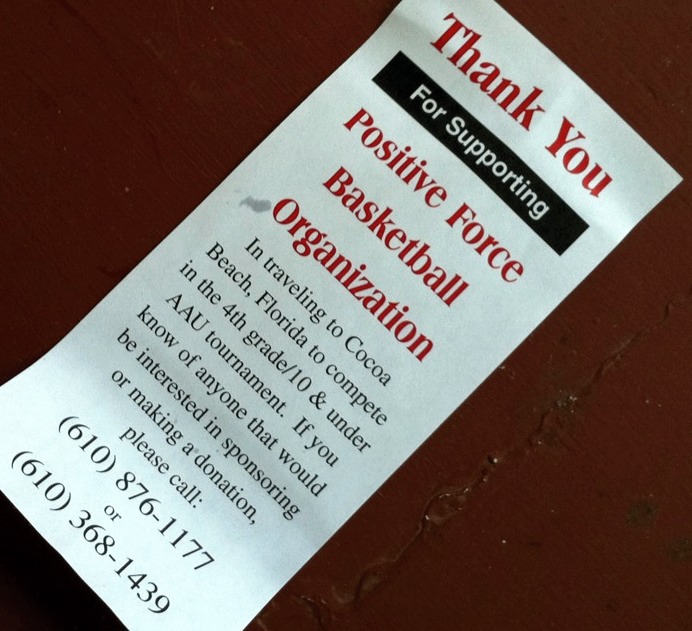
Share

What They’re Doing After Harvard: Teach for America now attracts 12% of all Ivy League seniors. The program’s founder explains why it beats working on Wall Street.

Naomi Schaefer Riley, via a Rick Kiley email:

In the spring of 1989 Wendy Kopp was a senior at Princeton University who had her sights set on being a New York City school teacher. But without a graduate degree in education or a traditional teacher certification, it was nearly impossible to break into the system. So she applied for a job at Morgan Stanley instead.
Thinking back to the bureaucratic hurdles of getting a job in a public school, Ms. Kopp tells me it “seemed more intimidating than starting Teach for America.” Which is exactly what she did as soon as she graduated.
What began as a senior thesis paper has since grown into a $180 million organization that this fall will send 4,500 of the best college graduates in the country to 100 of the lowest-performing urban and rural school districts. A few months ago, Teach for America (TFA) received an applicant pool that Morgan Stanley recruiters would drool over. Their 46,000 applicants included 12% of all Ivy League seniors, 7% of the graduating class of the University of Michigan at Ann Arbor, and 6% from U.C. Berkeley. A quarter of all black seniors at Ivy League schools and a fifth of Latinos applied to be teachers in the 2010 corps. It is, I’m told by some recent grads, one of the coolest things you can do after college.

Share

8 Theories on Why College Kids Are Studying Less

Max Fisher:

College students today are spending less time studying than they did in the past, according to a recent report. The University of California study finds that the average student at a four-year college in 1961 studied about 24 hours a week. Today’s average student hits the books for just 14 hours. That downward trend has been consistent across all kinds of schools, majors, and students. But why is this happening? Here are a few thoughts and theories, many of them courtesy of the very thoughtful commenters at Mother Jones, where blogger Kevin Drum asked “professors and current students” to suggest explanations.

  • Study Leaders Cite Professor Apathy The Boston Globe’s Keith O’Brien writes, “when it comes to ‘why,’ the answers are less clear. … What might be causing it, they suggest, is the growing power of students and professors’ unwillingness to challenge them.”
  • Modern Technology Not to Blame The Boston Globe’s Keith O’Brien says the study leaders don’t think so. “The easy culprits — the allure of the Internet (Facebook!), the advent of new technologies (dude, what’s a card catalog?), and the changing demographics of college campuses — don’t appear to be driving the change, Babcock and Marks found.” Why so sure? “According to their research, the greatest decline in student studying took place before computers swept through colleges: Between 1961 and 1981, study times fell from 24.4 to 16.8 hours per week (and then, ultimately, to 14).”

Share

Gender gap persists among top test takers

Karl Bates-Duke:

While performance differences between boys and girls have narrowed considerably, boys still outnumber girls by more than about 3-to-1 at extremely high levels of math ability and scientific reasoning.
At the same time, girls slightly outnumber boys at extremely high levels of verbal reasoning and writing ability.
Those are the findings of a recent study that examined 30 years of standardized test data from the very highest-scoring seventh graders. Except for the differences at these highest levels of performance, boys and girls are essentially the same at all other levels of performance.
The findings come from a study performed by Duke University’s Talent Identification Program, which relies on SAT and ACT tests administered to the top 5 percent of 7th graders to identify gifted students and nurture their intellectual talents. There were more than 1.6 million such students in this study.

Share

Everett makes kids walk to school to save money

Associated Press:

Children in Everett will be walking up to a mile to get to school next year. The budget saving plan has some parents worried about traffic and safety.
The school board says the plan will save the district more than $400,000.

Share

Why Intelligent People Fail

Accelerating Future:

Content from Sternberg, R. (1994). In search of the human mind. New York: Harcourt Brace.
1. Lack of motivation. A talent is irrelevant if a person is not motivated to use it. Motivation may be external (for example, social approval) or internal (satisfaction from a job well-done, for instance). External sources tend to be transient, while internal sources tend to produce more consistent performance.
2. Lack of impulse control. Habitual impulsiveness gets in the way of optimal performance. Some people do not bring their full intellectual resources to bear on a problem but go with the first solution that pops into their heads.
3. Lack of perserverance and perseveration. Some people give up too easily, while others are unable to stop even when the quest will clearly be fruitless.
4. Using the wrong abilities. People may not be using the right abilities for the tasks in which they are engaged.

Share

Andy Grove: How America Can Create Jobs The former Intel chief says “job-centric” leadership and incentives are needed to expand U.S. domestic employment again

Andy Grove:

Friedman is wrong. Startups are a wonderful thing, but they cannot by themselves increase tech employment. Equally important is what comes after that mythical moment of creation in the garage, as technology goes from prototype to mass production. This is the phase where companies scale up. They work out design details, figure out how to make things affordably, build factories, and hire people by the thousands. Scaling is hard work but necessary to make innovation matter.
The scaling process is no longer happening in the U.S. And as long as that’s the case, plowing capital into young companies that build their factories elsewhere will continue to yield a bad return in terms of American jobs.

There has been quite a bit of commentary on Grove’s Bloomberg article online: Bing, Clusty, Google and Yahoo.

Share

Lecturers should provide powerpoint handouts before the lecture

The British Psychological Society:

The common-sense arguments for and against providing students with slide handouts before a lecture are well rehearsed. Having the handouts means students need take fewer notes, therefore allowing them to sit back and actually listen to what’s said. Withholding the handouts, by contrast, entices students to make more notes, perhaps ensuring that they’re more engaged with the lecture material rather than mind-wandering.
Elizabeth Marsh and Holli Sink began their investigation of this issue by surveying university students and lecturers. The student verdict was clear: 74 per cent said they preferred to be given slide handouts prior to the lecture, the most commonly cited reason being that having the handouts helps with note-taking. The lecturers were more equivocal. Fifty per cent said they preferred to provide handouts prior to the lecture, but 21 per cent said they never gave out handouts and 29 per cent preferred to distribute afterwards. The most common lecturer reason for retaining handouts was students wouldn’t pay attention if they had the handouts.

Share

All Joy and No Fun: Why parents hate parenting.

Jennifer Senior:

There was a day a few weeks ago when I found my 2½-year-old son sitting on our building doorstep, waiting for me to come home. He spotted me as I was rounding the corner, and the scene that followed was one of inexpressible loveliness, right out of the movie I’d played to myself before actually having a child, with him popping out of his babysitter’s arms and barreling down the street to greet me. This happy moment, though, was about to be cut short, and in retrospect felt more like a tranquil lull in a slasher film. When I opened our apartment door, I discovered that my son had broken part of the wooden parking garage I’d spent about an hour assembling that morning. This wouldn’t have been a problem per se, except that as I attempted to fix it, he grew impatient and began throwing its various parts at the walls, with one plank very narrowly missing my eye. I recited the rules of the house (no throwing, no hitting). He picked up another large wooden plank. I ducked. He reached for the screwdriver. The scene ended with a time-out in his crib.
As I shuffled back to the living room, I thought of something a friend once said about the Children’s Museum of Manhattan–“a nice place, but what it really needs is a bar”–and rued how, at that moment, the same thing could be said of my apartment. Two hundred and 40 seconds earlier, I’d been in a state of pair-bonded bliss; now I was guided by nerves, trawling the cabinets for alcohol. My emotional life looks a lot like this these days. I suspect it does for many parents–a high-amplitude, high-frequency sine curve along which we get the privilege of doing hourly surfs. Yet it’s something most of us choose. Indeed, it’s something most of us would say we’d be miserable without.

Share

50 Open Source Tools that Replace Ed Apps

Douglas Crets:

Here is the opening paragraph, which includes a pretty big number, but I don’t know what this writer means by “the educational community”, or what he means by “support and services for open source software by 2012″:

The educational community has discovered open source tools in a big way. Analysts predict that schools will spend up to $489.9 million on support and services for open source software by 2012, and that only includes charges related to operating systems and learning management systems. Teachers, professors and home schoolers are using open source applications as part of their educational curriculum for a wide variety of subjects.

There is no link to the number or to the analysts, so I don’t know from where the information comes. I’d like to say right away that I don’t like that the writer of this blog post is saying that these open source tools “replace” existing tools or software. I don’t think there is any way for one person to measure that. I think it is helpful, though, to say that these open source tools may work well in cooperation with existing software, or as accents for software that already exists.

Share

The Sexual Revolution and Children How the Left Took Things Too Far

Jan Fleischhauer and Wiebke Hollersen:

Germany’s left has its own tales of abuse. One of the goals of the German 1968 movement was the sexual liberation of children. For some, this meant overcoming all sexual inhibitions, creating a climate in which even pedophilia was considered progressive.
In the spring of 1970, Ursula Besser found an unfamiliar briefcase in front of her apartment door. It wasn’t that unusual, in those days, for people to leave things at her door or drop smaller items into her letter slot. She was, after all, a member of the Berlin state parliament for the conservative Christian Democrats. Sometimes Besser called the police to examine a suspicious package; she was careful to always apologize to the neighbors for the commotion.
The students had proclaimed a revolution, and Besser, the widow of an officer, belonged to those forces in the city that were sharply opposed to the radical changes of the day. Three years earlier, when she was a newly elected member of the Berlin state parliament, the CDU had appointed Besser, a Ph.D. in philology, to the education committee. She quickly acquired a reputation for being both direct and combative.
The briefcase contained a stack of paper — the typewritten daily reports on educational work at an after-school center in Berlin’s Kreuzberg neighborhood, where up to 15 children aged 8 to 14 were taken care of during the afternoon. The first report was dated Aug. 13, 1969, and the last one was written on Jan. 14, 1970.

Share

Bill Cosby on education, responsibility at Essence

Chevel Johnson:

Bill Cosby used his trademark humor and storytelling style to chide hundreds gathered Saturday at the Essence Music Festival’s empowerment seminars into talking to their children about real life and, in the process, keeping it simple.
“We’ve got to lay it out for them,” Cosby said when asked about how to help cut the rate of teen pregnancies in America. “Let’s tell them about life. You’re 14 and having sex. OK. So, what kind of job do you have?”
Cosby, who received a standing ovation when he walked on stage, said the African-American community must get involved if change is going to occur in any area.

Share

GREATER FOOLS: Financial Illiteracy

James Surowiecki:

Halfway through his Presidency, George W. Bush called on the country to build “an ownership society.” He trumpeted the soaring rate of U.S. homeownership, and extolled the virtues of giving individuals more control over their own financial lives. It was a comforting vision, but, as we now know, behind it was a bleak reality–bad subprime loans, mountains of credit-card debt, and shrinking pensions–reflecting a simple fact: when it comes to financial matters, many Americans have been left without a clue.
The depth of our financial ignorance is startling. In recent years, Annamaria Lusardi, an economist at Dartmouth and the head of the Financial Literacy Center, has conducted extensive studies of what Americans know about finance. It’s depressing work. Almost half of those surveyed couldn’t answer two questions about inflation and interest rates correctly, and slightly more sophisticated topics baffle a majority of people. Many people don’t know the terms of their mortgage or the interest rate they’re paying. And, at a time when we’re borrowing more than ever, most Americans can’t explain what compound interest is.
Financial illiteracy isn’t new, but the consequences have become more severe, because people now have to take so much responsibility for their financial lives. Pensions have been replaced with 401(k)s; many workers have to buy their own health insurance; and so on. The financial marketplace, meanwhile, has become a dizzying emporium of choice and easy credit. The decisions are more numerous and complex than ever before. As Lusardi puts it, “It’s like we’ve opened a faucet, and told people they can draw as much water as they want, and it’s up to them to decide when they’ve had enough. But we haven’t given people the tools to decide how much is too much.”

Share

Don’t Know Much About History?

Marist Poll:

There’s good news for American education. About three-quarters of residents — 74% — know the U.S. declared its independence from Great Britain in 1776. The bad news for the academic system — 26% do not. This 26% includes one-fifth who are unsure and 6% who thought the U.S. separated from another nation. That begs the question, “From where do the latter think the U.S. achieved its independence?” Among the countries mentioned are France, China, Japan, Mexico, and Spain.

Valerie Strauss has more.

Share

Don’t burn Jamie Oliver over school dinners

Rose Prince:

It is agreed, then, that bad eating habits are a government problem. Up to now, you would have been forgiven for thinking that all social ills are to be cured by television presenters. Then this week, the Health Secretary took Jamie Oliver and his well-intentioned – if sadly ineffective – efforts to reform school dinners to task. Take-up of meals is down, argued Andrew Lansley, suggesting that Jamie’s formula for school dinner reform is not working. I would suggest Andrew Lansley aims his guns in a different direction.
Oliver has often talked of his frustration and, indeed, has even burst into tears at the refusal of sinners to convert to his way of eating, or stay faithful afterwards. But their diets are not his fault, or his responsibility. He valiantly highlighted an important issue. Millions watched; the previous government made a lot of the right noises, but they never ran with Oliver’s campaign.

Share

Minn. high school graduate inspired to paint

The Associated Press:

Inspired by the realist style of Edward Hopper, recent Century High School graduate Ali Sifuentes snapped a few nighttime photographs of Silver Lake Foods on north Broadway hoping to recreate the scene in an oil painting.
“I’ve been by there many times and after studying the building I thought I’d try to recreate the cinematic contrast between light and dark colors,” Sifuentes said. “The building has a fantasy sort of feel and it seemed ideal for this style of painting.”
Sifuentes believes Hopper, a well-known American artist that often focused on urban and rural scenes depicting modern American life, was sending a message about himself and people of his time.
“I’m basically trying to do the same thing, only I’m showing what the present looks like,” Sifuentes said.

Share

Recalling The Life Of Benjamin Franklin, Scientist

Ira Flatow:

Benjamin Franklin was a printer, politician, diplomat and journalist. But, despite only two years of schooling, he was also an ingenious scientist. Nobel Prize-winning chemist Dudley Herschbach and Franklin biographer Philip Dray discuss the achievements of America’s first great scientist.

Share

Students Know

Douglas Crets:

Does online learning help you with your strengths and weaknesses? Rick says, “I needed help with writing, and it works very well.”
What makes people choose one school over another? Or, choose to go to virtual school? Sydney, “As a general statement, when anyone esee the world laptop, they say ‘I want to go to that school.’ Besides that, I like it because it’s a new school. We were going into a new setting, nobody knew each other.”
How do laptops help you learn? Sydney: “It’s obvious that laptops and textbooks are two different things. Time is evoloving and so is technology. You can look up so much more. You can see more than what you are already given.”
Aaron, “We are able to check our grades 24/7. I can see what I scored immediately.”

Share

Blood test for Down’s syndrome

Rebecca Smith:

The new test works by extracting the DNA of the foetus from the mother’s blood and screening it for Down’s syndrome and other abnormalities.
At present, pregnant women are given the odds on whether they are carrying a child with Down’s syndrome, and if they want to know for certain they have to undergo one of two invasive processes; either amniocentesis or chorionic villus sampling. The first involves taking a sample of fluid from around the foetus and can, in some cases, cause a miscarriage even if the woman is carrying a healthy foetus. The second requires taking a fragment of the placenta.
The new test involves the same equipment needed for amniocentesis testing, but uses blood instead of amniotic fluid and is not invasive.
So far, researchers have been able to prove the technique works in principle and have described the results as “promising”. They hope to use the same method to detect other abnormalities in an unborn child’s DNA such as Edwards’ syndrome, which causes structural malformations in the foetus, and Patau’s syndrome, which can result in severe physical and mental impairment and is often fatal.

Share

Plagiarism Inc. Jordan Kavoosi built an empire of fake term papers. Now the writers want their cut.

Andy Mannix:

A CAREFULLY MANICURED soul patch graces Jordan Kavoosi’s lower lip. His polo shirt exposes tattoos on both forearms–on his right, a Chinese character; on his left, a cover-up of previous work. Curling his mouth up into a sideways grin, the 24-year-old sinks back into his brown leather chair.
“I mean, anybody can do anything,” he says, gazing out a window that overlooks the strip-mall parking lot. “You just have to do whatever it takes to get there.”
Kavoosi is in the business of plagiarism. For $23 per page, one of his employees will write an essay. Just name the topic and he’ll get it done in 48 hours. He’ll even guarantee at least a “B” grade or your money back. According to his website, he’s the best essay writer in the world.
Kavoosi’s business, Essay Writing Company, employs writers from across the country. Most of the customers are high school or college students, but not all. In one case, an author asked Kavoosi’s crew to write a book to be published in his own name.
To be sure, there are ethical implications to running a business that traffics in academic fraud. The services Kavoosi offers are the same as those exposed in the University of Minnesota’s 1999 basketball scandal, during which an office manager admitted to doing homework for players.
“Sure it’s unethical, but it’s just a business,” Kavoosi explains. “I mean, what about strip clubs or porn shops? Those are unethical, and city-approved.”

Share

“I Don’t Want To Be A Smarty Anymore”

Tamara Fisher:

One day this year, one of my elementary gifted students went home and proclaimed (in obvious distress) to his mom that he didn’t want to be a “smarty” anymore. Turns out the kids in his class had been teasing him about his very-apparent intelligence. In his meltdown, he expressed that he just wanted to be normal, that he wanted to know what it was like to not worry about everything so much, that he just wanted to be a regular kid and not “stick out” so much all the time.
I wondered how many of my other students wished at times that they weren’t so intelligent. What were their thoughts on the “love/hate” relationship gifted individuals sometimes have with their giftedness? As a means of offering you some insight into the mind of a gifted child, here are their responses to the prompt, “Sometimes I wish I wasn’t so smart because…” [To their credit, about half of the kids said they were glad they were intelligent. I’ll post those responses separately.] [All names are student-chosen pseudonyms.]
“I get taken advantage of. People ask to be my partner or work with me on a paper and I am stuck doing all the work. The only thing they do is make sure their name is on the paper or project.” Charlotte, 8th grade

Share

Acting White: The Ironic Legacy of Desegregation

John McWhorter:

In 2000, in a book called Losing the Race, I argued that much of the reason for the gap between the grades and test scores of black students and white students was that black teens often equated doing well in school with “acting white.” I knew that a book which did not focus on racism’s role in this problem would attract bitter criticism. I was hardly surprised to be called a “sell-out” and “not really black” because I grew up middle class and thus had no understanding of black culture. But one of the few criticisms that I had not anticipated was that the “acting white” slam did not even exist.
I was hardly the first to bring up the “acting white” problem. An early description of the phenomenon comes from a paper by John Ogbu and Signithia Fordham in 1986, and their work was less a revelation of the counterintuitive than an airing of dirty laundry. You cannot grow up black in America and avoid the “acting white” notion, unless you by chance grow up around only white kids. Yet in the wake of Losing the Race, a leading scholar/activist on minority education insisted that he had never encountered the “acting white” slander–while shortly thereafter describing his own son doing poorly in school because of precisely what Ogbu, Fordham, myself, and others had written about. Jack White, formerly of Time, roasted me in a review for making up the notion out of whole cloth. Ogbu (with Astrid Davis) published an ethnological survey of Shaker Heights, Ohio describing the “acting white” problem’s effects there in detail, while a documentary on race and education in that town explicitly showed black students attesting to it. Both book and documentary have largely been ignored by the usual suspects.
Stuart Buck at last brings together all of the relevant evidence and puts paid to two myths. The first is that the “acting white” charge is a fiction or just pointless marginal static. The other slain myth, equally important, is that black kids reject school as alien out of some sort of ingrained stupidity; the fear of this conclusion lies at the root of the studious dismissal of the issue by so many black thinkers concerned about black children. Buck conclusively argues that the phenomenon is a recent and understandable outgrowth of a particular facet of black people’s unusual social history in America–and that facet is neither slavery nor Jim Crow.

Clusty Search: Acting White: The Ironic Legacy of Desegregation, by Stuart Buck.
Related: Madison Teachers’ Harlem trip’s aim is to aid ‘culturally relevant’ teaching.

Share

The Retention Guru

Jennifer Epstein:

Two decades ago, Xavier University could only count on three of every four freshmen returning for sophomore year. Even fewer made it to graduation.
Today, though, close to 9 of every 10 students who start freshman year at the Jesuit university in Cincinnati makes it back the next fall. Seven in 10 will graduate in four years, and another one will likely graduate in the two years after that.
The quality of students Xavier admits hasn’t changed, nor have its academic standards. The biggest difference is one man – Adrian A. Schiess, a retired U.S. Army lieutenant colonel — and his day-in, day-out devotion to keeping students at Xavier.
Since 1990, Schiess, a former professor of military science at Xavier, has been the university’s full-time director for student success and retention, an on-campus guru whose job responsibilities all lead to the same goal: helping any student who wants to be at Xavier stay at Xavier.
“There’s no magic to retention,” he says. “The key is hard work and a position like mine — having someone who has focused responsibility from the university to guide and steer efforts to keep students here.”
At other colleges, Schiess says, retention is an afterthought. “All the enrollment management people are really thinking about is admissions and financial aid. They might say, ‘You get them, you pay for them and you keep them,’ but they end up taking the third part as a given — but it really isn’t.”

Share

Worried About a Moody Teen?

Elizabeth Bernstein:

Everyone warns parents about the drama of the teen years–the self-righteous tears, slamming doors, inexplicable fashion choices, appalling romances.
But what happens when typical teen angst starts to look like something much darker and more troubling? How can parents tell if a moody teenager is simply normal–or is spinning out of control? This may be one of the most difficult dilemmas parents will ever face.
Studies show that about 20% of teenagers have a psychiatric illness with depression, anxiety and attention-deficit hyperactivity disorder being among the most prevalent. Yet parents of teens are often blind-sided by a child’s mental illness. Some are unaware that mental illnesses typically appear for the first time during adolescence. Or they may confuse the symptoms of an actual disorder with more normal teen moodiness or anxiety.

Share

School Vouchers in DC Produce Gains in Both Test Scores and Graduation Rates

Paul Peterson:

One should not under-estimate the impact of the DC school voucher program on student achievement. According to the official announcement and the executive summary of the report, school vouchers lifted high school graduation rates but it could not be conclusively determined that it had a positive impact on student achievement.
Something about those findings sounds like a bell striking thirteen. Not only is the clock wrong, but the mechanism seems out of whack. How can more students graduate from private schools if they weren’t learning more? Are expectations so low in the private sector that any one can graduate?
Peering beneath the press release and the executive summary into the bowels of the study itself one can get some, if not all the answers, to these questions.
Let’s begin with the most important–and perfectly uncontested–result: If one uses a voucher to go to school, the impact on the percentage of students with a high school diploma increases by 21 percentage points (Table 3-5), an effect size of no less than 0.46 standard deviations. Seventy percent of those who were not offered a school voucher made it through high school. That is close to the national average in high school graduation rates among those entering 9th grade four years earlier. As compared to that 70 percent rate among those who wanted a voucher but didn’t get one, 91 percent of those who used vouchers to go to private school eventually received a high school diploma.

Share

The National Study of Charter Management Organization (CMO) Effectiveness: Report on Interim Findings

Robin Lake, Brianna Dusseault, Melissa Bowen, Allison Demeritt, Paul Hill, via a Deb Britt email:

Charter management organizations (CMOs), nonprofit entities that directly manage public charter schools, are a significant force in today’s public K-12 charter school landscape.
CMOs were developed to solve serious problems limiting the numbers and quality of charter schools. The CMO model is meant to meld the benefits of school districts–including economies of scale, collaboration among similar schools, and support structures–with the autonomies and entrepreneurial drive of the charter sector.
In the late 1990s and early 2000s, the major philanthropies funding charter schools invested heavily in CMOs and similar organizations, spending an estimated total of $500 million between 1999 and 2009. Ultimately, those who invest in CMOs want to achieve a significantly higher number of high-quality schools in the charter school sector. Their investments in CMO growth have been targeted to specific urban school districts that have been considered difficult, if not impossible, to reform.

Share

Online Bullies Pull Schools Into the Fray

Jan Hoffman:

The girl’s parents, wild with outrage and fear, showed the principal the text messages: a dozen shocking, sexually explicit threats, sent to their daughter the previous Saturday night from the cellphone of a 12-year-old boy. Both children were sixth graders at Benjamin Franklin Middle School in Ridgewood, N.J.
“I said, ‘This occurred out of school, on a weekend,’ ” recalled the principal, Tony Orsini. “We can’t discipline him.”
Had they contacted the boy’s family, he asked.
Too awkward, they replied. The fathers coach sports together.
What about the police, Mr. Orsini asked.
A criminal investigation would be protracted, the parents had decided, its outcome uncertain. They wanted immediate action.
They pleaded: “Help us.”

Share

Support for Summer Writers: Why Aren’t You Writing?

Kerry Ann Rockquemore:

Last month, I was contacted by a faculty member I had met several years ago at a conference (I’ll call her Claire). Our conversation began like many I’ve had recently, with tears in response to a negative and critical annual review. Claire is a brilliant social scientist, incredibly hard-working, and passionately committed to her scholarship, her institution and her students. While Claire is an award-winning teacher, and far exceeded her college’s service expectations, her publication record was significantly below her department’s standards. Her chair was clear that her lack of publications was problematic and she left the meeting feeling an almost desperate sense of urgency to move several manuscripts forward this summer.
Of course, I suggested she make a summer plan and join a writing group that would motivate and support her throughout the summer. Last week, when I was writing about resistance to writing I couldn’t help but think of Claire, so I decided to give her a call. Unfortunately, she had done very little writing: only three short sessions in the 30 days since we last spoke. When I asked Claire what was holding her back, she had difficulty identifying anything specific. She readily acknowledged having more free time and fewer responsibilities than she did during the academic year. But despite knowing that this was an important summer for her to be productive and having a general sense that she should try to write every day, somehow her days kept flying by without any progress on her manuscripts.

Share

Do You Have the Ox Factor?

Susie Boyt:

I was standing on what used to be the stage on what used to be called the Old Hall at the school I used to attend. It was a stage on which I’d won minor acclaim as Dame Crammer (“Girls! Girls! Cease this vulgar brawl at once!”) and Lady Lucre (“Hark! Here comes Sir Jaspar, your first cousin once removed and twice convicted”). My Mother Abbess from The Sound of Music had done her mountain climbing in the New Hall round the corner, and my “When the Lord closes a door somewhere he opens a window” had brought the house down for some reason. It wasn’t even meant to get a laugh.
I had been invited to my old school to fire the pupils up about Oxford University. I’d sent round a warning in advance. “I had quite a mixed time,” I wrote, “but I will try to stay positive.”
I dressed smartly, but not luxuriously, for my talk. My schooldays had had a shabby, down-at-heel flavour due to slender means, so I was eager to make a fresh impression. When I was there the establishment had boasted girls so shiny it was pointless trying to keep up, let alone compete. The girls with curls had their hair straightened on Saturday mornings at their mothers’ beauty parlours, and the girls with straight hair had theirs curled. This evening my hair was newly cut and freshly curled, my nails short and neat, my outlook springy and optimistic.
My shoes and handbag very nearly matched. In fact, there was nothing about me that was remotely macabre. Apart from the 3cm thread hanging from the hem of my pencil skirt, I was damn near immaculate.
The room, containing about 60 teenagers and their parents, crackled with anxiety. It felt as though the souls in the Old Hall wanted Oxford almost more than life itself. Various experts spoke before me.

Share

Scary things in U.S. report on school vouchers: “The Program significantly improved students’ chances of graduating from high school”

Valerie Strauss:

This isn’t actually about vouchers. It’s about a new government report (pdf) on a school vouchers program in Washington, D.C., that reveals just how perversely narrow our view of “student achievement” has become.
Issued this week by the Education Department, the report is the final evaluation of the D.C. Opportunity Scholarship Program ordered by Congress.
The program was the first federally funded private school voucher program in the country. Since 2004, more than 3,700 students — most of them black or Hispanic — have been awarded scholarships, each worth up to $7,500 tuition. Since Congress refused to reauthorize the program, no new students are being accepted.
The new evaluation of the program is remarkable for how it describes student achievement. It says: “There is no conclusive evidence that the OSP affected student achievement.”
What is student achievement? In this report it is all about standardized test scores. The evaluation says:
“On average, after at least four years students who were offered (or used) scholarships had reading and math test scores that were statistically similar to those who were not offered scholarships.”

I wonder how much was spent per student in the voucher schools vs the traditional public districts?
Somewhat related: Wisconsin Senator Russ Feingold voted to kill the DC Voucher program, along with the Democrat majority.

Share