School Information System

“Students and Their Needs Come First” – Madison School Board Member Ed Hughes

via greatmadisonschools.org:

One in particular — the addition of more AP classes will certainly not be a detriment in the college application process. However, the most selective colleges generally expect applicants to have taken the AP classes at their high school if they are available.
The idea that this new plan will promote segregation is particularly pernicious and about 180 degrees off the mark as far as the intent of the program goes.
Finally, the point of choosing a curriculum for our schools is to determine the best courses for our students to take, not the courses that teachers most want to teach. Students and their needs come first.
Thanks a lot for taking the time to write.
Ed Hughes, Madison School Board

Share

If it’s a pretend administrator, is it a real observation?

Ms. Cornelius

We have the most wonderfullest idea that has been created by our district administration this year, and it has had amusingly unforeseen consequences for Ms. Cornelius.
Here’s the deal: the Powers That Be have revived the farcical “Leadership Cadre.” What might this be, you ask? Well, remember that our district has an absolutely stellar record of hiring district employees for administration jobs– and by stellar I imply events so rare as to be separated by light-years.
But wait! Let’s get some teachers who have administrative certification– and frankly, no hope in hell of actually being hired– fill in when one of our peripatetic assistant principals gets to go jaunting off to a conference in Orlando or Bimini or Noo Yawk. Boom! Voila! “Leadership Cadre!” These chumps members of the Leadership Cadre will then garner administrative experience. Forget that whilst these ersatz nabobs are substitute nabobing, they will not be fulfilling the function for which they were hired and for which a school district exists: namely, teaching students. No; let the students eat substitutes!
Now, there is one particular dewy-eyed dreamer who leapt at this chance– whom I will call “Bob,” since “Sawed-Off Runt” seems far too brutal, if apropos. I can see the attraction of administration for Bob. He only puts eight grades in the gradebook per semester as it is, but if he becomes an AP he has figured out that that number will drop to zero. And that’s less, right? (Did I mention Bob teaches math?)

Share

Daring goal on Virginia higher education

The Virginian – Pilot

Del. Kirk Cox and Gov. Bob McDonnell were a study in contrasts last week as they spoke to a commission tasked with recommending higher education reforms.
Cox, the second-ranking member of the House Appropriations Committee, repeatedly warned his audience that money is scarce, and increased spending on public universities is a worthy goal when prosperity returns to the commonwealth.
McDonnell promised greater investment in the near term and rewards for universities that increase graduation rates and beef up science, engineering, math and technology majors. He later estimated new state aid could total between $30 million and $100 million next year. He was vague about the source.

Share

Ten seek five-at large seats on Rockingham County Board of Education

Mary Dolan

On the 11-seat Rockinghom County Board of Education five seats are at-large spots, meaning residents of any part of the county can seek to fill them. This year, 10 people, including three incumbents, have filed for those five seats.
The incumbents:
Lorie McKinney
What sets you apart/qualifies you?
I feel that having children in our school system makes a big difference on how you look at things. I have a child in middle school and a child in elementary school. Plus I have family members in our system that range from kindergarten through 12th grade. I work with the public and receive a lot of information across the county on what is happening in our schools. I will always put the best interest of our children first.
How would you deal with an ever-tightening budget?
The current school board, along with our superintendent, has been looking at this for two years now. We have only hired when we could, due to state funding and the increase in classroom size from fourth to 12th grade due to new state standards. We are looking at every possible thing we can to keep from letting people go.
What’s the No. 1 problem/priority in your mind for the schools right now?
Our budget; we can only hope and pray that our state does not take any more money from our schools.

Share

Whither Michelle Rhee? Lessons Learned

National Journal

It came as no surprise to District of Columbia residents when Michelle Rhee announced her resignation this week as chancellor of D.C. Public Schools. That her resignation (and tenure) made national news illustrates the depth of the education debates that she sparked. She leaves as her legacy the mass firings of teachers rated as minimally effective, increased emphasis on charter schools, and expanded use of standardized tests. Unafraid to publicly speak her mind, she has been alternately applauded or scorned by educators, depending on their views and positions in the broader educational system.
For education policymakers, how significant is Rhee’s very public struggle with a major city’s public school system? Does it help or hurt the debate to have a face and a name attached to it? Can educators take policy cues from her experience, or are the lessons to be learned largely about politics?

Share

Portland schools: Time to translate reforms into better student results

Carole Smith

It hasn’t been an easy week at Portland Public Schools. For the first time in nearly 30 years, the Portland School Board voted to close a high school campus. The school board also endorsed bringing needed changes to all our high schools, which will increase graduation rates, close the achievement gap and guarantee every Portland student a well-rounded education at any of our neighborhood schools.
This past week I heard from hundreds of people upset about the loss of their school. For me, proposing to close Marshall was a heart-wrenching decision, but a necessary one. A decade-long enrollment decline — driven by Portland’s changing demographics — has drained more than 2,500 students from our high schools. Coupled with a shrinking state investment in education, we simply do not have the dollars to provide a rich, well-rounded high school education to students on all our current campuses.

Share

Maury County schools to open Monday as budget impasse continues

Nicole Young:

Schools will be open in Maury County on Monday, but the system’s future is uncertain as the school board and county commission continue to disagree on a budget.
School Board Chairman Shay Daniels and Director of Schools Eddie Hickman met with the county mayor and chairman of the Maury County Commission for about two hours Friday afternoon to discuss options for the district, Daniels said.
“We knew the commission was meeting on Monday so it makes sense for schools to be in session that day,” Daniels said. “We hope the outcome of the commission meeting will allow us to use reserve fund money to balance our budget and move forward.”
The Monday meeting, scheduled for 9 a.m., will mark the fifth time the Maury County Commission has seen the schools budget. The school board has submitted three different budgets at past meetings. The current budget proposal has been shot down twice.

Share

California can’t improve college completions without rethinking developmental education at its community colleges

California educates about one-quarter of all community college students in the nation, but large portions of community college students enter unprepared for college-level work. As a result, policy discussions in California and nationally are focusing increasingly on ways to improve student success in developmental or basic skills programs at community colleges.
State policymakers, community college system leaders, and local campus leaders and faculty all have a part to play in making this happen. Much of the work toward these objectives necessarily involves K-12 education as well.
This report sets out the issues involved, drawing heavily from a recent EdSource study that was commissioned by the California Community Colleges Chancellor’s Office to provide a deeper understanding of the system’s challenges and opportunities related to developmental education. It also highlights recent state policy actions and the broader context within which those actions were taken.

Share

Madison Memorial High students get lesson in immigration

Pamela Cotant

When Memorial High School opened its doors last year for the immigration/migration project — which helped students learn about their backgrounds — officials were astonished when more than 400 people showed up.
So the school decided to do it again, and the recent open house for the event drew 677 people.
Besides the numbers and the interaction of the families at the night of the event, social studies teacher Kristin Voss likes the idea that students are sitting down to talk to family members and are learning something about their classmates as well.
The project has revealed “a handful of immigrants in classrooms” or the children of immigrants, Voss said.
The students discover information they never knew about family members, and a couple of students learned they had a common relative from the 1860s.

Share

Santa Cruz Education Foundation hosts ‘Waiting for Superman’ screening, discussion

Kimberly White:

A packed audience watched failure after failure by generations of politicians, federal and state officials and public school teachers Saturday during a screening of “Waiting for Superman,” a documentary film that won the Audience Award for Best Documentary at the 2010 Sundance Film Festival.
The screening, hosted by the Santa Cruz Education Foundation at the Nickelodeon Theatre, was followed by a short discussion by local educators.
“It’s a powerful movie,” former Assemblyman John Laird said after film concluded. “The issues are more complex than in some ways they were represented in the movie, but I’m hoping that it focuses everybody on this issue and brings people together toward improvements.”

Share

Students caught in middle of Monona Grove contract dispute

MATTHEW DeFOUR

Monona Grove teachers receive the best post-retirement benefit package in Dane County, according to the Wisconsin Association of School Boards. Qualifying teachers may retire at 55 and receive district-covered health and dental insurance until age 70. They also receive a payout over three years based on their Social Security allowance.
Depending on projected health care costs, a 2009 retiree earning the maximum benefit would receive $281,000 to $421,000 in benefits, school boards association attorney Bob Butler said.
To retain those benefits over the years, the union has conceded short-term compensation increases, putting their salaries in the middle-to-bottom range compared with neighboring districts, Wollerman said. Gerlach said the healthy benefit package was put in place years ago to encourage retirements and attract new teachers.
The School District’s contentious proposal breaks teachers into three groups: those 10 years away from retirement, new hires and everyone in between. The first group wouldn’t be affected by the major changes. New teachers would receive $1,300 a year while employed toward a Health Reimbursement Account and no post-retirement payout. Teachers in the district that are more than 10 years from retirement would have their district health and dental benefits capped at retirement levels, lose coverage once eligible for Medicare and have their stipend capped at $50,000 total.

Share

A Reformer Departs: Michelle Rhee

Paul Gigot:

Gigot: So you said when you resigned this week that for reform to continue, the reformer had to leave. With respect, that seems a bit contradictory. Why did you feel you had to go?
Rhee: Well, the new presumptive mayor-elect in Washington, D.C., Vincent Gray, and I decided that the best thing to do for the city would be for me to step aside, because we really want to make sure that the entire city now can embrace the reform efforts. And certainly for some members of the community, to have me continue to be associated with the reforms was not going to allow them to do that. I asked my deputy chancellor to step in in my place. I asked my entire management team to stay in place through the end of the school year. And to be honest, I mean, those folks are the brains and the talent behind the reforms, and so I feel like, by doing this, it would allow the reforms to continue on, and they could do it in a way where the entire city could get behind it.
Gigot: OK, when you came to see us a few months ago, you had said that one of the secrets of your success was the support you had had from Mayor Adrian Fenty–that when you got into trouble, he always backed you up. Do you think the new mayor is going to back up your successor?
Rhee: Well, I think he has to. His commitment is not to roll back the clock and to continue the reforms as aggressive as we’ve been doing them over the last 3½ years. And in order to do that, you have to give your unequivocal support. My deputy has been working with me since day one. She knows what the political support looks like to get this work accomplished, and I don’t think she’s going to settle for anything less.

Share

Complex Wisconsin aid formula means some school districts get more, many get less

Amy Hetzner:

he majority of school districts in the Milwaukee area will get more money this school year from the state’s largest pot for education but not enough to make up for losses they suffered last school year, according to data released Friday.
Thirty-seven of the 50 school districts in Milwaukee, Ozaukee, Washington and Waukesha counties will receive less state general aid in 2010-’11 than they did in the 2008-’09 school year, information from the state Department of Public Instruction shows. For seven of those districts, aid fell by at least one-fifth over that two-year period.
“We’ve been hit pretty hard the last couple of years,” said Keith Marty, superintendent of the Menomonee Falls School District, where general aid from the state is expected to decline to $10.85 million for the current school year, about 27% less than what the school system received two years ago.
Under state-imposed revenue limits, school districts can make up aid losses by increasing their property tax levies. Some districts with large aid losses last year ended up with double-digit percentage levy increases to make up the difference. At least part of those increases can be offset by school levy credits that are sent to municipalities to help reduce residents’ overall tax bills.

Share

2010 Wisconsin Charter School Awards

151K PDF, via a Laurel Cavalluzzo email:

On Friday night, October 15th at Discovery World in Milwaukee, The Wisconsin Charter Schools Association (WCSA) announced the winners of annual awards in four categories, as well as two career achievement honorees:
Charter School Teacher of the Year: First Place: Lyndee Belanger, Milwaukee Academy of Science (Milwaukee) Second Place: Jim Johnson, Elementary School for Arts and Academics (Sheboygan) Third Place: Sarah Brown, Veritas High School (Milwaukee)
Charter School Innovator of the Year: First Place: Marcia Spector, Exec. Director, Seeds of Health (Milwaukee) Second Place: Tedd Hamm, Coordinator of Educational Development, Director/Principal, Sheboygan Area School District Third Place: Parents of Highland Community School (Milwaukee)
Charter Schools of the Year:
First Place: Bruce Guadalupe (Milwaukee) Second Place: Seeds of Health Elementary School (Milwaukee) Third Place: Highlands Community School (Milwaukee)
The two Career Achievement Award went to: Jeff Nania, Executive Director of Wisconsin Waterfowl Association (Portage) Patricia Jones, Founder and former Director of The Brompton School (Kenosha)

Share

High schoolers barred from college-level courses

Jay Matthews:

Each year when I ask high schools around the country to fill out the form for my annual America’s Best High Schools list, I try to add a question to illumine an issue on which there is little research. This was my extra question for 2010:
“May any student at your school enroll in AP American History or AP English Literature if they want to? (If not, we would like to know what qualifications they must have — a certain GPA? a teacher’s recommendation?)”
I just calculated the results. They suggest the widespread habit of restricting access to AP may be losing strength, although not fast enough to suit me or the AP teachers who have influenced me on this issue.
I am beginning to contact schools for the 2011 list. Any that haven’t heard from me by Thanksgiving and think they qualify — a school needs to have given as many AP, International Baccalaureate or Cambridge tests as it had graduating seniors — should e-mail me at mathewsj@washpost.com.

Share

Supt. Ackerman’s critique of the “Reform Manifesto”

Arlene Ackerman:

This was written by Philadelphia Schools Supt. Arlene Ackerman. She was one of 16 big-city school district chiefs who signed onto a reform “manifesto” published in the Washington Post this week that was long on rhetoric and short on substance. It was initiated by New York City Schools Chancellor Joel Klein and signed by D.C. Schools Chancellor Michelle Rhee, who has since resigned, and 14 others.
Yesterday Ackerman told me that she had not seen the final version of the manifesto — which views charter schools as a big answer to urban school failure, bashes teachers unions and supports market-driven “fixes” to schools — and though an aide gave permission for her name to be added to it, she does not agree with it. Here is her statement.
By Arlene Ackerman
Some may feverishly await the arrival of Superman to resolve the problems that overwhelm our public education system, while others prefer to enlist with the personality of the day or prescribe to the scripted agenda of the hour. However, my preference, which remains unchanged for the past 42 years, has been to tackle school reform through collaborative efforts, with the start and end goal of providing quality educational opportunities for all children who attend public schools. Period.

Share

The Backstory on the Madison West High Protest

Madison School Board Member Ed Hughes:

IV. The Rollout of the Plan: The Plotlines Converge
I first heard indirectly about this new high school plan in the works sometime around the start of the school year in September. While the work on the development of the plan continued, the District’s responses to the various sides interested in the issue of accelerated classes for 9th and 10th grade students at West was pretty much put on hold.
This was frustrating for everyone. The West parents decided they had waited long enough for a definitive response from the District and filed a complaint with DPI, charging that the lack of 9th and 10th grade accelerated classes at West violated state educational standards. I imagine the teachers at West most interested in this issue were frustrated as well. An additional complication was that West’s Small Learning Communities grant coordinator, Heather Lott, moved from West to an administrative position in the Doyle building, which couldn’t have helped communication with the West teachers.
The administration finally decided they had developed the Dual Pathways plan sufficiently that they could share it publicly. (Individual School Board members were provided an opportunity to meet individually with Dan Nerad and Pam Nash for a preview of the plan before it was publicly announced, and most of us took advantage of the opportunity.) Last Wednesday, October 13, the administration presented the plan at a meeting of high school department chairs, and described it later in the day at a meeting of the TAG Advisory Committee. On the administration side, the sense was that those meetings went pretty well.
Then came Thursday, and the issue blew up at West. I don’t know how it happened, but some number of teachers were very upset about what they heard about the plan, and somehow or another they started telling students about how awful it was. I would like to learn of a reason why I shouldn’t think that this was appallingly unprofessional behavior on the part of whatever West teachers took it upon themselves to stir up their students on the basis of erroneous and inflammatory information, but I haven’t found such a reason yet.

Lots of related links:

Share

School Board member Marj Passmon on the Proposed Madison High School Changes

via email:

It was the intention of the Administration to first introduce the plan to HS staff and administrators and get some input from them. If you read the Plan then you know that it never discusses anything relating to current electives or student options and, I, personally, would never vote for any plan that does.
Although I admire the students for their leadership and support of their school, both they and their teachers seem to have leaped to certain conclusions. I am not saying that this is a perfect plan and yes, there are elements that may need to be worked on but to immediately jump on it without asking any questions or presenting suggestions for improvement does not speak well of those who helped to spread rumors.
It is now up to MMSD Administrators to explain to the staff and students what this Plan is actually about and, perhaps then, the West Staff can have a more objective discussion with their classes.
Marj
———————————–
Marjorie Passman
Madison Board of Education
mpassman@madison.k12.wi.us

Lots of related links:

Share

Oppressive debt forces governments – and West Bend schools – to make tough choices

John Schmid:

After living beyond its means for decades and shifting its debt onto future generations, an entire society is seeing the bills come due earlier than expected. And Kelly Egan’s students are about to pay the price.
Egan teaches high achievers in math and reading, a job that barely survived budget cuts last year – but the reprieve was short-lived. At the end of this school year, the position is almost certain to disappear along with dozens more in West Bend, adding to the hundreds of thousands of public employees nationwide whose employment has been cut short by the meanest economic downturn since the 1930s.
“Parents ask, ‘What should we do with our children as the West Bend School District continues to cut and cut and cut programs,’ ” said Egan, a 20-year veteran who is likely to be reassigned to teach the regular curriculum.
For the first time since the Depression, virtually every strata of American government is caught in the same viselike squeeze: Cities, counties and states find themselves deep in debt and lacking rainy day reserves to tide them over in hard times. Even with federal stimulus funds, local governments are laying off police officers and teachers, closing firehouses and selling public assets. During the past two years, state and local governments nationwide have cut 242,000 jobs, and public schools have shed an additional 200,700, according to the U.S. Bureau of Labor Statistics.

Share

EDUPUNDIT MYOPIA

Will Fitzhugh, via email:

The consensus among Edupundits is that teacher quality is the most important variable in student academic achievement.
I argue that the most important variable in student academic achievement is student academic work.
Edupundits have chosen very complex subject matter for their investigations and reports. They study and write about dropouts, vouchers, textbooks, teacher selection and training, school governance, budgets, curricula in all subjects, union contracts, school management issues, and many many more.
Meanwhile, practically all of them fail to give any attention to the basic purpose of schools, which is to have students do academic work. Almost none of them seems inclined to look past the teacher to see if the students are, for instance, reading any nonfiction books or writing any term papers.
Of course all of the things they do pay attention to are vitally important, but without student academic work they mean very little. Now, I realize there are state standards in math and reading, and some states test for writing after a fashion, but no state standards ask if students have read a history book while they were in school or written a substantial research paper, and neither do the SAT, ACT, or NAEP tests.

Share

Michelle Rhee talks education issues

John King. Video

Share

K-12 Literacy Alignment Related to Equity

Superintendent Daniel Nerad:

As part of the curriculum review cycle to provide a systematic, ongoing method for the MMSD to update its curricular materials in each of the content areas, base line data is currently being acquired from each school, K-12in literacy. An additional goal ofthis review cycle is to provide all students with equitable access to research-and standards-based curricular materials and programs district wide.
Attached are matrixes that went to all schools seeking information about the Core Practices, Interventions, Assessments, and Resources in each ofthe buildings. Please note: these documents are a tool to gather information. It is NOT to evaluate buildings or individual teachers. Curriculum and Assessment will use the information provided to determine ways to better support the schools and more equitable ways.
This questionnaire is being distributed to the Instructional Resource Teachers at the elementary level, the Learning Coordinators at the middle level, and the Literacy Coaches at the high school leveL The intention is to gather information from a literacy expert who serves the entire school as the focus oftheirjob. We have also asked these staffmembers to confer with other literacy experts who work in their building: Read 180 teachers or six grade Literacy Coaches, for example. Once the information is shared with principals it will be returned day on Wednesday, October 27, 2010.
This gathering of information serves several initiatives within the strategic plan including better support the schools and more equitable ways.

Share

Madison School District’s Proposed 5 Year Budget Planning Parameters

Superintendent Dan Nerad:

Attached you will find the PMAIClient Checklist completed for your consideration as the Administrations recommendation for the parameters that will make up the 5 year budget projection. The major areas and comments about those areas are as follows:
EXPENDITURE ASSUMPTIONS
Projected %Salary Increase
These have been intentionally left blank, as the committee will need to have a conversation about how to handle these going forward. This section, along with the next section (Projected Benefits) comprise approximately 85% of the entire model projection. We will need to address the issue of how these line item projections could impact future negotiations with all employee groups.
Projected Benefits
We have worked with our Human Resources Department to provide the best possible projections at this point in time.
We have assumed an increase in WRS over the next 3 years of .6% and the assumed this would flatten out.
For Health Insurance, we have used a weighted average based upon the number of plans we have with each separate health plan, along with a projected increase for each plan.
General Fund Assumptions
Historically Administration has tied this increase to the annualized Consumer Pricing Index (CPI-U), which hovered around approximately 2%.
Currently through the month of August, 2010 the annualized CPI-U is at 1.1%. We are recommending that all consumable budgets be increased by 2% in order to allow schools and departments the ability to meet the increasing needs and price increases.
Utilities Assumptions
Administration has worked with Madison Gas and Electrict (MG&E), the City of Madison, and our independent natural gas consultant Select Energy to prepare the recommended rates of utility increase.

Related: Madison School District Chart of Accounts.

Share

A comparison of Madison Schools Staff Education, Years of Experience and Turnover

Andreal Davis, Assistant Director of Equity & Family Involvement:

The Board of Education information requests from the August 9, 2010 Board meeting are listed in the attached document (Attachment A). The following are the information requests that have been addressed in the attached documents:
Staff age and experience – rationale and implications for these data. We do not have staff age by school yet, but we have staff experience by school.
Staff Experience by School – Elementary School (Attachment B-1)
Staff Experience by School – Middle School (Attachment B-2)
Staff Experience by School – High School (Attachment B-3)
Staff Experience by School – Other (Attachment B-4)
Average experience of teachers by school (Attachment C)
Teacher turnover by school and include all staff categories not just instructional and administrative; Le., custodial, clerical, technical. food service
September 30, 2010 Memo to Board of Education regarding Turnover Data (Attachment D-1) School Turnover Summary – Annual Report by Employee Group (Attachment D-2) School Turnover Summary – Annual Report by Location (Attachment D-3)
A final report will be completed by November 11 as part of a discussion at the regular Board of Education meeting on November 29.

Share

An Update on Madison’s Proposed 4K Program

Superintendent Dan Nerad:

Purpose: The purpose of this Data Retreat is to provide all BOE members with an update on the progress of 4K planning and the work of subcommittees with a recommendation to start 4K September, 2011.
Research Providing four year old kindergarten (4K) may be the district’s next best tool to continue the trend of improving academic achievement for all students and continuing to close the achievement gap.
The quality of care and education that children receive in the early years of their lives is one of the most critical factors in their development. Empirical and anecdotal evidence clearly shows that nurturing environments with appropriate challenging activities have large and lasting effects on our children’s school success, ability to get along with others, and emotional health. Such evidence also indicates that inadequate early childhoOd care and education increases the danger that at-risk children will grow up with problem behaviors that can lead to later crime and violence.
The primary reason for the Madison Metropolitan School District’s implementation of four year old kindergarten (4K) is to better prepare all students for educational success. Similarly, the community and society as a whole receive many positive benefits when students are well prepared for learning at a young age. The Economic Promise of Investing in High-Quality Preschool: Using Early Education to Improve Economic Growth and the Fiscal Sustainability of States and the Nation by The Committee for Economic Development states the following about the importance of early learning.

Share

AP component of MMSD high school plan is about access and equity, not “TAG”

One of the many pieces of the MMSD administration’s just-introduced high school proposal that has not been made clear is where the prominent AP component comes from. The answer is that it comes largely from a three-year federal grant, a $2.2 Advanced Placement Incentive Program grant that was awarded to the DPI in 2009.
As some of you surely know, there is currently a national trend (supported by significant grant dollars) to increase access to AP courses. The DPI’s “Blended Learning Innovations: Building a Pipeline for Equity and Access” is part of that trend.
The purpose of the grant is to close the race and SES based achievement gaps by increasing the number of AP courses in schools with high levels of poverty and by increasing the participation and success of poor and minority students in AP courses and testing. The MMSD is a partner in the grant.
Please note that both nationally (NAGC) and locally, AP has never been a focus of the “TAG” community. (On the contrary, those of us who worked on the MMSD TAG Plan advocated for consideration of an IB curriculum … which is what’s been proposed for the Madison Preparatory Academy.)
I imagine I am not the only one who would appreciate it if the District (and the press) would be clearer with the community about these points:
1) This high school proposal has been in the works for a long time. (Importantly, it has been in the works since well before the West DPI petition and complaint. The complaint may have sped up the rolling out of the plan, for better and worse, but it did not impact the content of the plan. As evidence, consider the second paragraph of the October 14 letter sent out to the West community: there is no mention whatsoever of 9th and 10th grade honors classes, which is the sole focus and request of the DPI complaint.)
2) The extent to which the DPI’s “equity and access” AP grant is driving the content of the MMSD’s high school proposal.

Share

Poverty in the Suburbs: The poverty gap is closing between suburbs and inner cities

The Economist:

FOR more than half a century, Americans have fled the cities in their millions, heading away from crime and poverty towards better schools and safer neighbourhoods in the suburbs. Now poverty is catching up with them. According to two new reports from the Brookings Institution, over the past decade the number of poor people in the suburbs has jumped by a whopping 37.4% to 13.7m, compared with some 12.1m people below the poverty line in cities. Although poverty rates remain higher in the inner cities, the gap is narrowing.
Suburban areas largely escaped during earlier downturns, but not this time. Support groups say people are using safety-net programmes, such as food stamps or unemployment insurance, who have never applied for them before. They are often making tough choices. “It’s mortgage or food,” observes Paule Pachter of Long Island Cares, a non-profit group on Long Island, one of the first destinations to be populated by escapees from the city.

Share

Protecting School Reform in D.C.

The New York TImes:

It was inevitable that Michelle Rhee, the District of Columbia’s hard-driving schools chancellor, would resign after her boss, Mayor Adrian Fenty, lost last month’s Democratic primary. It was no secret that Ms. Rhee had a strained relationship with Vincent Gray, the presumptive mayor and chairman of the City Council.
Still, Ms. Rhee’s departure is a loss for the nation’s capital. It has unsettled middle-class parents who valued the strong, reform-minded leadership that was setting Washington’s schools on the path back from failure. And it sent a tremor through the private foundations that provisionally committed nearly $80 million to support the school reforms that were started during Ms. Rhee’s tenure.
After Mr. Gray’s clashes with Ms. Rhee, it was good news that he said the right things after her resignation. He pledged to move ahead with the reform agenda, which has strengthened the city’s teacher corps, remade a patronage-ridden central bureaucracy and raised math and reading scores. He said he would keep Ms. Rhee’s senior staff on for the remainder of the school year and named her deputy and longtime associate, Kaya Henderson, the interim chancellor.

Share

New York’s School Climate

Buffalo News:

They agree on the need for more charter schools and see a property tax cap as an important tool to rein in school spending.
They part ways on consolidating school districts and differ greatly on how to reform public education.
Yes, Andrew M. Cuomo and Carl P. Paladino disagree as much as they agree, but, in the eyes of educators, what’s more important is the candidates’ lack of attention to education as a campaign issue.
“It doesn’t seem a priority for either candidate,” said Grand Island Superintendent Robert W. Christmann, who also heads the State Council of School Superintendents. “It seems to be getting short shrift.”

Share

Learning Tools: A Look Inside Austin Polytechnical Academy

Jim Kirk:

In 2005 Dan Swinney, chairman of the Chicago Manufacturing Renaissance Council, approached the Chicago Public Schools for help reviving manufacturing in Chicago. The result was Austin Polytechnical Academy, whose mission is to redefine vocational education in Chicago and beyond, and revive the city’s manufacturing industry by educating the next generation of advanced manufacturers–part engineer and part machinist. Through a diverse curriculum, Polytech aims to prepare students for college but also encourages them to pursue careers in advanced manufacturing that do not require a four-year degree.
This year the school will be graduating its first senior class and Chicago News Cooperative reporter Meribah Knight is following three students, Deandre Joyce, Stran’ja Burge and Marquiese Travae Booker, as they navigate the academic year and carve out their future. Facing a school record of poor academic performance and a community rife with violence, poverty and unemployment, these honor students are determined to stay on track and come out on top. Her first story will be posted on our Web site tonight.

Share

Making something hard to read means it is more likely to be remembered

The Economist:

A PARADOX of education is that presenting information in a way that looks easy to learn often has the opposite effect. Numerous studies have demonstrated that when people are forced to think hard about what they are shown they remember it better, so it is worth looking at ways this can be done. And a piece of research about to be published in Cognition, by Daniel Oppenheimer, a psychologist at Princeton University, and his colleagues, suggests a simple one: make the text conveying the information harder to read.
Dr Oppenheimer recruited 28 volunteers aged between 18 and 40 and asked them to learn, from written descriptions, about three “species” of extraterrestrial alien, each of which had seven features. This task was meant to be similar to learning about animal species in a biology lesson. It used aliens in place of actual species to be certain that the participants could not draw on prior knowledge.
Half of the volunteers were presented with the information in difficult-to-read fonts (12-point Comic Sans MS 75% greyscale and 12-point Bodoni MT 75% greyscale). The other half saw it in 16-point Arial pure-black font, which tests have shown is one of the easiest to read.

Share

No Superman, nor much more waiting, for school choice

Kyle Wingfield

There are no superheroes coming to save the day for students in America’s failing schools, cautions the heart-wrenching new documentary, “Waiting for ‘Superman.’ ”
No superheroes, but students who want choices do face enemies. In fact, they — well, their lawyers — appeared before the state Supreme Court Tuesday.
I’m not talking about teachers unions, whom “Waiting” largely fingers as the obstacles to education reform. They are a huge impediment in some places but the situation’s different in Georgia, and in any case the problem is much broader than that. It covers all those in the education establishment who put preserving their fiefdoms above giving students their best chance at a good education.
And if that doesn’t sum up the school systems suing to overturn the law creating Georgia’s Charter School Commission, I don’t know what does.

Share

Notes and Links on the Madison West High School Student Sit-in

Gayle Worland:

Sitting cross-legged on the ground or perched high on stone sculptures outside the school, about a quarter of West High’s 2,086 students staged a silent 37-minute sit-in Friday morning outside their building to protest a district proposal to revamp curriculum at the city’s high schools.
The plan, unveiled to Madison School District teachers and parents this week, would offer students in each high school the chance to pick from advanced or regular classes in the core subjects of math, science, English and social studies. Students in the regular classes could also do additional work for honors credit.
Designed to help the district comply with new national academic standards, the proposal comes in the wake of a complaint filed against the district by parents in the West attendance area arguing the district fails to offer adequate programs for “talented and gifted” ninth and 10th grade students at West. The complaint has prompted an audit by the state Department of Public Instruction.

Susan Troller:

Okay, everyone, remember to breathe, and don’t forget to read.
A draft copy of possible high school curriculum changes got what could be gently characterized as a turbulent response from staff and students at West High School. Within hours of the release of a proposal that would offer more advanced placement options in core level courses at local high schools, there was a furious reaction from staff and students at West, with rumors flying, petitions signed and social media organizing for a protest. All in all, the coordination and passion was pretty amazing and would have done a well-financed political campaign proud.
Wednesday and Thursday there was talk of a protest walk-out at West that generated interest from over 600 students. By Friday morning, the march had morphed into a silent sitdown on the school steps with what looked like 200 to 300 students at about 10:50 a.m. when I attended. There were also adult supporters on the street, a media presence and quite a few police cars, although the demonstration was quiet and respectful. (Somehow, I don’t think the students I saw walking towards the Regent Market or sitting, smoking, on a stone wall several blocks from school, were part of the protest).

TJ Mertz has more as does Lucy Mathiak.
Lots of related links:

Share

Madison West Students To Protest Proposed School Changes

channel3000.com, via a kind reader’s email:

Lots of related links:

Share

NAS Unearths Censored Study on High School Research Papers

The National Association of Scholars (NAS) has published a long-buried study on the state of the history research paper in American high schools. The 2002 study sponsored by The Concord Review (TCR) went unpublished when its benefactor, the Albert Shanker Institute, found the results unflattering to high school teachers.
In commissioning the study, TCR founder Will Fitzhugh sought to find out why American high schools aren’t doing a better job of teaching students to write–specifically, why so few teachers assign major research papers. 95 percent of teachers surveyed believed that research papers are important, but 62 percent never assigned extended-length essays.
According to the report, the biggest barriers to teachers are time and class size. Most teachers said that grading papers took too much personal time, and that not enough time was provided for this in the school day. Teachers surveyed taught an average of 80 students each. Assigning a 20-page paper then means having 1,600 pages to grade. The Concord Review urged high schools to support teachers by providing more time for them to grade papers.
Fitzhugh considered what may be lost if most high school history teachers never assign a long research paper:

It may very well mean that a majority of our high school students never read a complete nonfiction book on any subject before they graduate. They may also miss the experience of knowing a fair amount about some important topic–more, for instance, than anyone else in their class. They may also miss a fundamental step in their preparation for demanding college work.

“This is an important study, even eight years later,” said Peter Wood, NAS president. “It sheds light on a problem that keeps getting worse and reverberates through college and employment. American high schools should take heed from this study to change their ways and make research paper-writing a priority.” In an introduction to the study, Wood wrote, “[NAS’s] interest in this is part of our broader goal of rebuilding the basis for genuine liberal arts education in the United States.”
The National Association of Scholars advocates for higher education reform. To learn more about NAS, visit www.nas.org.

Share

Meet the Malibu Board of Education Candidates

The Malibue Times

The Malibu Times sent a questionnaire to eight candidates running for four seats on the Board of Education for the Santa Monica-Malibu Unified School District. They were given the same time frame to respond and were limited to 150 words per answer.
There is a feeling by many in Malibu that this city is an afterthought for school district officials. Why does this sentiment exist? What can be done to change this feeling?
This feeling is understandable. Although Santa Monica and Malibu are part of a unified school district, the vast majority of district students and voters come from Santa Monica. All current school board members are from Santa Monica, the central office is in Santa Monica and our two cities are 15 miles apart. If I am elected, I will work hard to change the feeling that Malibu is an “afterthought” and to ensure that Malibu families are heard and feel an integral part of the district.
As a school board member, I will meet regularly with Malibu parents and staff to listen and learn, and address the specific concerns of Malibu schools. I will also develop opportunities for district-wide shared educational and social experiences. Whether we live in Santa Monica or Malibu, we all share the same aspirations for our children and our schools.

Share

Learning to Deal with a Difficult Class

Ms. Socrates:

Overall, my second year as a teacher has been ten times easier than my first year — I am feeling confident and in control, even when I allow the students to take the wheel for a bit. It feels great! But there is one class that I’m still having trouble with.
My largest class happens to also contain about 15 of the most difficult students in the grade. While this means that my other classes are wonderful, devoid of any trouble-makers, this class reduced me to tears yesterday for the first time this year (although I would never actually cry in front of them, I saved it for later). Standing in that room, watching every single student talk without giving me a second thought, I felt like a newbie all over again. What if, I thought, this is how it’s always going to be.
Today, I got back out there and managed to get them somewhat under control. Here’s how.
1. I let my feelings out the night before.

Share

West Virginia Education audit scope concerns teacher group

Associated Press:

Gov. Joe Manchin is open to suggestions about an upcoming audit of public school spending.
That’s the response Thursday from spokesman Melvin Smith, after the West Virginia Education Association called for a wider scope to that review.
The teacher’s group wants other issues considered such as school bus travel times and special needs students.

Share

Charter Schools: The Good Ones Aren’t Flukes

Andrew Rotherham:

Charter schools are all the rage these days. The public is increasingly smitten with them — in this year’s Phi Delta Kappa/Gallup education poll, 68% of respondents said they support charter schools, up from 42% in 2000 — but few people know what charters are. When the education journal Education Next asked Americans some basic questions this summer about charter schools, such as whether they can charge tuition or hold religious services, fewer than 1 in 5 respondents knew the correct answer (which was no in both cases). The confusion is so pervasive that more than half of the teachers surveyed couldn’t answer the questions correctly either.
Quick primer: Charters are public schools that generally operate independently of traditional school districts. Since 1992, they have grown in number from one in Minnesota to about 5,000 in 40 states and the District of Columbia. (Ten states don’t have laws allowing charter schools.) Collectively, they serve about 1.6 million students, and an estimated 420,000 kids are on various waiting lists to get into them. By law, when more students apply to a charter than there are seats available, the school has to hold a lottery to determine who gets in.

Share

Madison West High’s (alcohol) test success: Attending dances there means submitting to random screening

Bill Lueders:

Tanya Lawler was taken aback. Her daughter, returning from West High’s homecoming dance on Sept. 25, mentioned that students were randomly selected to take a breath test as they arrived, to see if they’d been drinking.
While her daughter was not tested, Lawler considers this a “violation of Fourth Amendment rights” because officials lacked probable cause to suspect the people being tested. Her son attended La Follette’s homecoming dance, held the same night, and reported that no testing was done there.
In fact, West is the only high school in Madison that has a formal written policy (PDF) regarding student dances, and the only one that randomly tests students as they enter using “a passive alcohol detection device.” Students and a parent must sign a form agreeing to these rules.
Lawler, who doesn’t remember this form, advised her daughter to refuse this test. “I would rather forfeit the price of the ticket and have her call me. I’d say, ‘No, they’re not going to violate your rights.'”

Share

Philadelphia Free School aims for democratic education model

Liz Gormisky

Maddy Winters knows what she wants. Yes to ballet, no to soccer, yes to astronomy, and definitely yes to hanging out with the older crowd of third and fourth graders on her block.
Just 3 years old, she begged to go to school, but the local public school just won’t do for her parents, Mark Filippone and Marie Winters. In September, Maddy will be enrolled at the Philadelphia Free School, where she will continue to decide what she wants to do all day long.
The Free School, which plans to launch a pilot program in January in South Philadelphia for students ages 4 to 18, follows a democratic model of education, meaning no tests, no curriculum, no bells every 45 minutes, no separation into grades, and no teachers. The adults at the school will be called “staff” and be elected by the students each year. The students will also vote on the school’s budget and serve on a judicial committee that deliberates on misbehaving peers.

Share

Michelle Rhee’s Last Battle

Dana Goldstein

The high-profile head of DC’s schools exits, leaving an uncertain legacy. Will her successor follow through on her reforms–or forfeit millions in federal funds?
As expected, D.C. schools chancellor Michelle Rhee will announce Wednesday that she will step down after three years on the job.
Rhee’s tenure was defined by school closings, teacher dismissals, and incremental student test score gains in one of the poorest-performing and most racially segregated school districts in the nation. A Teach for America veteran who had never before run a school district, Rhee became a national spokesperson for aggressive school reform, unafraid to voice her disdain–often in the media–for teachers unions and for concepts such as cooperation and community buy-in.

Share

Waiting For Superman director Davis Guggenheim

Nathan Rabin

Few documentaries have had as profound an impact as 2006’s An Inconvenient Truth. Davis Guggenheim’s film about Al Gore’s crusade to educate the public about global warming won the Academy Award for Best Documentary Feature, helped Gore snag a Nobel Prize, and incited a culture-wide debate about the film’s subject.
Guggenheim has worked extensively in television and narrative films. He worked as a producer and director on Deadwood and helmed the pilot for the recent Melrose Place remake, in addition to directing films like Gossip and Gracie, a docudrama based on the teenage years of Guggenheim’s wife, actor Elisabeth Shue. But Guggenheim is best known as a muckraking documentarian whose ambitious, zeitgeist-capturing epics forthrightly address major social issues. Guggenheim has made headlines for his latest documentary, Waiting For Superman, an impassioned exploration of the failure of the American public-school system that has incited heated debate and attracted vitriolic attacks from teachers’ unions for its less-than-flattering depiction of them and its evangelizing on behalf of charter schools. The A.V. Club recently spoke with the idealistic filmmaker about making movies about quagmires, being hated on by teachers, and whether President Obama is a cactus.
The A.V. Club: What’s the relationship between your documentary about first-year teachers, The First Year, and Waiting For Superman?

Share

The president of the Minneapolis NAACP branch objects to the superintendent’s call to close North High School.

Corey Mitchell:

The Minneapolis branch of the NAACP on Wednesday urged parents to consider pulling their children out of the Minneapolis School District in response to Superintendent Bernadeia Johnson’s recommendation to close North High School.
Citing multiple school closures on the city’s North Side and low test scores in those that remain, Minneapolis NAACP President Booker Hodges accused Johnson and school board members of failing to educate north Minneapolis’ children, most of whom are black.
Hodges issued a statement calling for parents “who value their children’s education or future [to] seriously consider other options for educating their children.”

Share

More local high schools allowing use of cell phones by students

Gena Kittner:

Verona High School students have been given the green light to text on their cell phones, groove to songs on their mp3 players and update their Facebook pages while strolling between classes, eating lunch and hanging out before and after school.
The school is the latest in Dane County to relax the rules and allow students to use personal electronic devices outside of the classroom. They join an increasing number of area high schools, including Belleville, DeForest, McFarland, Middleton, Oregon Sun Prairie and Stoughton, that have adopted similar policies.
“If you need to get your mom to bring something to school from home you don’t have to hide in the bathroom (to make the call),” Maddie Hankard, a freshman at Verona High School, said in explaining the change.

Share

Redefining School Reform

New Jersey Left Behind

Let’s start with something we can all agree with: some of NJ’s public schools are great and some stink. The worst schools are usually in the most impoverished urban areas. This disparity has remained unchanged through many different education commissioners and both Democratic and Republican administrations.
Another truism: we’ve recognized this fact for decades and have tried mightily to alleviate disparities through additional funding to impoverished districts. This has worked well in a few places and less well in many others.
And another: NJ is broke. We’re spending as much as (or more than) residents can bear for public education. Increased state funding in our neediest districts is not an option.
Let’s continue the truisms: New Jerseyans love their home rule. A Garden State school board and administration in a well-performing district is insular, circumscribed, a world unto itself. Our bulimic state government – scarfing down money and vomiting out regulations and mandates – merely increases a functional district’s isolation and lack of shared responsibility to poor kids outside its wrought iron gates.

Share

Pursue more Madison school alternatives

Wisconsin State Journal:

We sure hope the Madison School District is serious about pursuing more charter and specialty schools.
Superintendent Dan Nerad told the State Journal editorial board on Tuesday he plans to appoint a committee next month to study alternatives to traditional schools.
Giving parents and students more options and innovations will help keep more middle class families in the Madison district. At the same time, charter schools and their spin-offs in Madison have catered to a higher percentage of low-income and minority students. So they’re not elitist.
Teaching students in new ways can boost student interest and effort while getting more parents involved in their children’s educations — a key ingredient for success. And if new approaches don’t work, they can be shut down.

Share

Letter to Madison West High School Families, Staff and Students

Madison Superintendent Dan Nerad, Assistant Superintendent Pam Nash and West High Principal Ed Holmes, via a kind reader’s email:

October 14, 2010
West Families, West Students, and West Staff;
We are writing today to clarify the proposal for high school course offerings in the Madison Metropolitan School District. While discussion and questioning should be part of any change process, the discussion needs to center on factual information.
We have proposed that Advanced Placement offerings be increased in all of our high schools. We have also focused on making an embedded honors option available in 9th and 10th grade English and Social Studies next year and Math and Science the following year at all four high schools. We have also proposed increasing support to students who may not traditionally have participated in an honors or AP course so that rigorous opportunities can become part of every high school student’s transcript.
What we have NOT proposed is the elimination of any electives at any of the high schools. Our current high school offerings vary quite widely across the district and we are striving to make good things available across all attendance areas. Nothing in the proposal prohibits a dynamite elective course from being shared and adopted across the city, in fact, some consistency of elective offerings would be welcomed.
The two pathways are groupings of courses. They are NOT a way to group students. Student and family choice is wide open. We are also proposing a set of assessments that will start in middle school to help inform families, students, and teachers about skills that students have that are strong and skills that need to be supported and improved. Those assessments will be given every year and are meant to be used to inform students and families about student progress and growth and to allow students and families to make informed decisions about future courses.
Please understand that students will still have choices. If they chose not to take an Advanced Placement course and wish to take an elective instead, that option remains.
We regret that incomplete information was used to make students and families upset. The proposal had, and still has the word “draft” on it. We look forward to productive conversations with all of you about ways in which we can now move forward.

Share

The Mess with Madison West (Updated)

TJ Mertz, via email:

[Update: I just got emailed this letter as West parent. Crisis communication is happening. Not much new here, but some clarity}

The first steps with the “High School Curricular Reform, Dual Pathways to Post-Secondary Success” are a mess, a big mess of the administration’s own making.

Before I delve into the mess and the proposal, I think it is important to say that despite huge and inexcusable problems with the process, many unanswered questions and some real things of concern; there are some good things in the proposal. One part near the heart of the plan in particular is something I’ve been pushing for years: open access to advanced classes and programs with supports. In the language of the proposal:

Pathways open to all students. Students are originally identified by Advanced Placement requirements and other suggested guidelines such as EXPLORE /PLAN scores, GPA, past MS/HS performance and MS/HS Recommendation. however, all students would be able to enroll. Students not meeting suggested guidelines but wanting to enroll would receive additional supports (tutoring, skill development classes, AVID, etc.) to ensure success. (emphasis added and I would like to see it added in the implementation).

Right now there are great and at times irrational barriers in place. These need to go. I hope this does not get lost as the mess is cleaned up.

This is in four sections: The Mess; What Next?; The Plan: Unanswered Questions and Causes for Concern; and Final Thought.

Lots of related links:

Share

What’s a 4-Year-Old Doing in Kindergarten?

Tamara Fisher

arent of an early-entrance child: We live in a town where many parents, school board members, and teachers hold their kids back a grade in school so they can excel in sports. When such a choice appears to be an accepted norm, accelerating a young boy into school goes against the local culture. Some parents and teachers have tried to politely ask me if I’ve considered the implications of my son “always being the youngest.” At first, I felt like I had to defend my son and our decision to them. Now, I simply state that “parents try to do what they feel is best for their child. We looked at the research and our child’s readiness and made the decision. He’s thriving in school and sports, too.” If the well-meaning continue to inquire, I share my unique sports perspective: I went to college on a sports scholarship. Were sports important to me? Yes. However, being challenged in school to be a whole person was – and is – more important.
Early entrance to Kindergarten is one excellent option for some highly advanced children. It is the process by which a child enters Kindergarten earlier than he or she otherwise would have according to school or state decreed “cut-off dates.” In Montana, our magical date is September 10th. If the child is five years old on or before September 10th of that year, he gets to go to Kindergarten. If he turns five on September 11th or later, he goes the next year.
To some degree, yes, this system creates a tidy little package whereby decisions are made without, frankly, much thought put into them. It’s cut and dried and easy – and it works for the majority of kids. But readers of this blog know that when one was born does not necessarily determine what one is ready and able to learn. Enter Early Entrance.

Share

Investing in Young Children: New Directions in Federal Preschool and Early Childhood Policy

Ron Haskins & W. Steven Barnett

The introduction of this volume details government spending on three early childhood programs – Early Head Start, Head Start, and home-visiting programs. Co-editors Ron Haskins and Steve Barnett also review enrollment in each type of program, review the contrasting papers presented on each program, and recommend policies designed to increase the returns on investment produced by these early childhood programs.

Share

Washington, D.C. shows its maverick schools chancellor the door.

The Wall Street Journal

Michelle Rhee described her decision yesterday to step down as Washington, D.C., schools chancellor after 3½ years as “heartbreaking.” We share the sentiment. That one of the nation’s most talented school reformers was forced out does not bode well for students, or speak well of the man likely to become D.C.’s next mayor.
Ms. Rhee’s patron was Mayor Adrian Fenty, who lost his bid for a second term to City Council Chairman Vincent Gray in a Democratic primary last month. In Washington, the Democratic primary winner is presumed to be the next mayor, and few believed that Mr. Gray would retain Ms. Rhee’s services, especially since the teacher unions spent more than $1 million to elect Mr. Gray so that he would replace the chancellor.
The Washington Post reports that Ms. Rhee’s resignation “won immediate support from the Washington Teachers’ Union,” a strong signal that her departure is a victory for the adults who run public education, not the kids in failing schools. Ms. Rhee’s tenure was marked by improved test scores and putting the interests of students first. She closed underperforming schools, fired bad instructors, supported school vouchers for low-income families and opened charter schools. She also negotiated a new teachers contract that included merit pay and has become a model for other reform-minded educators and politicians in urban districts across the country.

Share

A New National Report Highlights the Unfair Distribution of School Aid in Many States

Bruce Baker, David Sciarra, Danielle Farrie

Are school finance systems in the 50 states fair? Simply comparing overall funding levels won’t answer that question, according to a groundbreaking report released today.
“Is School Funding Fair? A National Report Card” posits that fairness depends not only on a sufficient level of funding for all students, but also the provision of additional resources to districts where there are more students with greater needs.
The National Report Card rates the 50 states on the basis of four separate, but interrelated, “fairness indicators” – funding level, funding distribution, state fiscal effort, and public school coverage. Using a more thorough statistical analysis, the report provides the most in-depth analysis to date of state education finance systems and school funding fairness across the nation.

Share

K-12 Tax & Spending Climate: Global Debt Clock

The Economist

The clock is ticking. Every second, it seems, someone in the world takes on more debt. The idea of a debt clock for an individual nation is familiar to anyone who has been to Times Square in New York, where the American public shortfall is revealed. Our clock shows the global figure for all (or almost all) government debts in dollar terms.
Does it matter? After all, world governments owe the money to their own citizens, not to the Martians. But the rising total is important for two reasons. First, when debt rises faster than economic output (as it has been doing in recent years), higher government debt implies more state interference in the economy and higher taxes in the future. Second, debt must be rolled over at regular intervals. This creates a recurring popularity test for individual governments, rather as reality TV show contestants face a public phone vote every week. Fail that vote, as the Greek government did in early 2010, and the country can be plunged into imminent crisis. So the higher the global government debt total, the greater the risk of fiscal crisis, and the bigger the economic impact such crises will have.

Share

Wyoming Education candidates debate over teachers

Michelle Dynes:

Candidates for superintendent discussed charter schools and bad teachers at a candidate forum.
LARAMIE — Candidates for state superintendent discussed how they’d address standardized testing and bad teachers during a debate Tuesday at the University of Wyoming.
Former Cheyenne junior high assistant principal and Republican candidate Cindy Hill said Wyoming teachers need measures they can trust and academic leaders. State Senator and Democratic candidate Mike Massie said he believes that struggling teachers should get a year’s worth of additional training and mentoring to get back on track. And if the plan isn’t working, teachers should be fired no matter how long they’ve previously held their position.

Share

Education, local control and taxes

Richard Sibley Lenfest

Anytime the Maine media rains terms such as “taxes,” “economy,” “business climate” and “jobs,” among others, upon the voters and taxpayers of Maine, Libby Mitchell runs for cover under her education umbrella. The fact, and it is fact, is that Maine is already among the nation’s leaders in education spending.
Maine’s population of approximately 1.5 million residents, like that of neighboring New Hampshire, is among the smallest in the nation, yet Maine’s education spending ranks among the highest, ahead of many much larger states, and in the vicinity of the top 20 to 25 percent. Exact position may change incrementally from year to year; nevertheless, Maine is right up there. Do not take my word; go online, visit the Web and check it out yourself.
Maine’s economy is just about non-existent. Five years ago, after Hurricane Katrina ravaged the states of Louisiana and Mississippi, it was Maine that had the worst economy in the U.S. During the 2010 primary season, the figure that was popular and which met no argument from any other politician was that Maine had gained just 65 jobs in the past decade.
Yes, the Maine economy is shedding jobs as fast as it is creating them. While the Maine economy may be somewhat better off at this time, it is in no position to foot Libby’s brand of education spending.

Share

West: TAG Complaint and Proposed High School Redesign Create Perfect Storm

The parent complaint to DPI over MMSD’s failure to comply with WI laws on Talented and Gifted education have combined with administration’s recent proposal to create more consistency across the four major high schools, to create a perfect storm of controversy at Madison West. Within the past 24 hours, allegations that the proposal eliminates all electives have spawned a number of calls and e-mails to the Board of Education, a FB page (Walk-out Against MMSD School Reform) promoting a student walk out on Friday, and a YouTube video http://www.youtube.com/watch?v=-Zgjee-GmGI created to protest the elimination of electives.
As a board member, I have a somewhat different take largely because I know that allegations that the proposal to standardize core high school curriculum is not a product of the DPI complaint. Anyone who has watched MMSD operate, would probably agree that nothing is put together that quickly (the complaint is less than a month old), especially when it involves a proposal.
I also just received the proposal a day or so ago. In full disclosure, I did not take advantage of the briefings conducted for board members who met with the superintendent and assistant superintendent individually or in pairs. I’m a certifiable pain in the neck and thought that any presentations should be made to the board as a whole in an open board or committee meeting, but that is just my issue.) I am just beginning to read and think through what is being proposed, so have no firm opinion yet.
More at http://lucymathiak.blogspot.com/2010/10/west-two-issues-in-perfect-storm.html

Share

Uproar at West High over Madison School District’s Curricular Reform Proposal

Lorie Raihala:

There’s been a great deal of misinformation and angry speculation flying around West High regarding the District’s High School Curricular Reform proposal.
On Tuesday, District administrators unveiled their plan for high school curricular reform at meeting with nearly 200 educators from all four high schools. Several parents attended the subsequent TAG Advisory Committee meeting, during which they also revealed an overview of the plan to this group.
I attended the TAG Advisory meeting. As I understand it, this plan involves increasing the number of accelerated and AP courses and expanding access to these options.
When teachers at West got news of this plan, many were enraged at not being included in its development. Further, many concluded that the District plans to replace West’s electives with AP courses. They’ve expressed their concerns to students in their classes, and kids are riled up. Students plan to stage a walk-out on Friday, during which they will walk down to the Doyle Building and deliver a petition to Superintendent Nerad protesting the proposed reforms.

Lots of related links:

Share

“Stand Up Against the MMSD High School Reform”


via a kind reader’s email.
Related:

220K Draft copy of the Madison School District’s “High School Curricular Reform”.

Share

$12 an Hour for Teachers, $1.7 Million a Year for the Teachers’ Boss: Your Property Tax Dollars at Work in McFarland

Madison School Board Member Ed Hughes

We received the Open Enrollment numbers for this year and they provide much grist for thought. My first reaction is prompted by the fact that 158 MMSD students have open enrolled in the McFarland School District. Since we have to send about $6,800 per student to districts that receive our open enrollers, this means that we’ll be cutting a (perhaps figurative) check in excess of $1,000,000 to the McFarland School District.
Since last year, McFarland has operated a virtual school. This year, according to Gayle Worland’s article in last Sunday’s State Journal, the virtual school has enrolled 813 students, and a grand total of 5 of them live in McFarland.
Actually, it is overly generous to say that McFarland “operates” the virtual school, known as Wisconsin Virtual Academy. More accurately, McFarland has contracted with a publicly-traded corporation, K12, Inc., to operate the charter school, through another organization called Four Lakes Education.

Share

Lauded Harlem Schools Have Their Own Problems

Sharon Otterman

President Obama created a grant program to copy his block-by-block approach to ending poverty. The British government praised his charter schools as a model. And a new documentary opening across the country revolves around him: Geoffrey Canada, the magnetic Harlem Children’s Zone leader with strong ideas about how American education should be fixed.
Last week, Mr. Canada was in Birmingham, England, addressing Prime Minister David Cameron and members of his Conservative Party about improving schools.
But back home and out of the spotlight, Mr. Canada and his charter schools have struggled with the same difficulties faced by other urban schools, even as they outspend them. After a rocky start several years ago typical of many new schools, Mr. Canada’s two charter schools, featured as unqualified successes in “Waiting for ‘Superman,’ ” the new documentary, again hit choppy waters this summer, when New York State made its exams harder to pass.
A drop-off occurred, in spite of private donations that keep class sizes small, allow for an extended school day and an 11-month school year, and offer students incentives for good performance like trips to the Galápagos Islands or Disney World.
The parent organization of the schools, the Harlem Children’s Zone, enjoys substantial largess, much of it from Wall Street. While its cradle-to-college approach, which seeks to break the cycle of poverty for all 10,000 children in a 97-block zone of Harlem, may be breathtaking in scope, the jury is still out on its overall impact. And its cost — around $16,000 per student in the classroom each year, as well as thousands of dollars in out-of-class spending — has raised questions about its utility as a nationwide model.

$16,000 per student is close to Madison’s roughly $15K / student annual spending.

Share

Why aren’t our teachers the best and the brightest?

Paul Kihn & Matt Miller

Why don’t more of our smartest, most accomplished college graduates want to become teachers?
People trying to improve education in this country have been talking a lot lately about boosting “teacher effectiveness.” But nearly all such efforts focus on the teachers who are already in the classroom, instead of seeking to change the caliber of the people who enter teaching in the first place.
Three of the top-performing school systems in the world — those in Finland, Singapore and South Korea — take a different approach, recruiting 100 percent of their teachers from the top third of their high school and college students. Simply put, they don’t take middling students and make them teachers. They tap their best people for the job.
Of course, academic achievement isn’t the whole story in these countries. They screen would-be teachers for other important qualities, and they invest heavily in training teachers and in retaining them for their entire careers. But scholastic prowess comes first: You don’t get through the classroom door in Finland, Singapore or South Korea without having distinguished yourself academically. In the United States, by contrast, only 23 percent of new teachers scored among the top third of SAT and ACT test-takers back in high school. In high-poverty schools, that figure is just 14 percent.

Share

Brave Thinkers: Deborah Gist

Rachael Brown

In your first year as the commissioner of education in Rhode Island, you earned headlines for backing a plan to fire all the high-school teachers in the poorly performing district of Central Falls. Education Secretary Arne Duncan and even President Obama chimed in with support. Did the attention surprise you?
I think that just the visual for people was noticeable, and I think what exactly was happening was misunderstood. I think people seemed to feel that teachers were being blamed for the performance of the school, which was not the way we understood what was happening.
Perhaps overshadowed by the Central Falls controversy, you’ve put forth a dramatic reform agenda aimed at improving teacher quality. To help, you created a new evaluation system that requires an annual review of all teachers.
I think most professionals would be surprised to know [that annual reviews] weren’t already in place. Professionalism is about being respected for the work that you do, being acknowledged for the work that you do, and being accountable for the work that you do. I meet teachers in our state all the time who are more than ready to be held accountable for their work and are very proud of the results that they’re able to see with their students.
What’s gotten the most attention is that evaluations will be primarily based on measures of student growth and achievement.

Share

How To Fix Our Schools? Really?

Judy Molland

How to fix our schools” is the title of a manifesto published on Sunday, October 10, in The Washington Post by Joel Klein, chancellor of the New York City Department of Education, Michelle Rhee, chancellor of the District of Columbia Public Schools, and fourteen other school superintendents across the country.
The Future Of Our Children
The piece starts off well enough:
“It’s time for all of the adults – superintendents, educators, elected officials, labor unions and parents alike – to start acting like we are responsible for the future of our children. Because right now, across the country, kids are stuck in failing schools, just waiting for us to do something.”
Who can disagree with that? The writers continue: “As President Obama has emphasized, the single most important factor determining whether students succeed in school is not the color of their skin or their zip code or even their parents’ income – it is the quality of their teacher.”

Share

Maine Governors 2010: On education

Steve Mistler

When Gov. John Baldacci last year cut $38 million in local education aid to help with a $400 million state budget shortfall, local school districts took it on the chin.
The move forced school districts to consider staff layoffs and program reductions. Later, with less state aid expected and the threat of another cut looming in fiscal year 2011, school districts were forced to consider more layoffs, reduced programing or both.
Education funding was spared in Baldacci’s latest budget adjustment, but the governor warned that the budget he will recommend to the next governor will be well short of the education funding required by state law.
Currently, the state funds just over 42 percent. State law mandates 55 percent, although it hasn’t met the requirement since the law was enacted in 2004. About half of the state’s biennial $5.5 billion budget goes to education.

Share

How Come? A Look at School Administrator Governance

Charlie Mas

If Education Reformers, like our own Superintendent Dr. Maria Goodloe-Johnson, believe that the most critical step we can take to improve our schools and improve outcomes for students is to identify and dismiss all of the bad teachers, then why don’t we see them making a real effort to do that?
Why don’t we see our superintendent speaking to principals regularly and emphatically about following the process to dismiss all of the teachers in their schools that everyone knows are ineffective? If this is so important then why isn’t the superintendent following up with principals about how they are following up on the process to dismiss poor performing teachers? Why don’t we hear about all of the pressure she is putting on principals to cull the staff?
Hey, if this were the primary determinant of student performance – as they claim to believe – then they need to start treating it that way. Even if it takes two years to dismiss a poor performing teacher, I would expect them all to be gone after three years – certainly after four. Superintendent Goodloe-Johnson has had three years and is now in her fourth. Why do we still have this problem – if not for her failure to address it?

Share

Grading School Choice

Ross Douthat

In this fall’s must-see documentary, “Waiting for ‘Superman,’ ” Davis Guggenheim offers a critique of America’s public school bureaucracy that’s manipulative, simplistic and more than a little bit utopian.
Not that there’s anything wrong with that. Guggenheim’s cause, the plight of children trapped in failing schools with lousy, union-protected teachers, is important enough to make his overzealousness forgivable. And his prescription — more accountability for teachers and bureaucrats, and more choices for parents and kids — deserves all the support his film promises to win for it.
But if propaganda has its virtues, it also has its limits. Guggenheim’s movie, which follows five families through the brutal charter school lotteries that determine whether their kids will escape from public “dropout factories,” stirs an entirely justified outrage at the system’s unfairnesses and cruelties. This outrage needs to be supplemented, though, with a dose of realism about what education reformers can reasonably hope to accomplish, and what real choice and competition would ultimately involve.

Share

Michelle Rhee to announce resignation as D.C. schools chancellor on Wednesday

Tim Craig & Bill Turque

D.C. Schools Chancellor Michelle A. Rhee will announce Wednesday that she is resigning at the end of this month, bringing an abrupt end to a tenure that drew national acclaim but that also became a central issue in an election that sent her patron, Mayor Adrian M. Fenty, to defeat.
Rhee survived three contentious years that made her a superstar of the education reform movement and one of the longest-serving school leaders in the city in two decades. Student test scores rose, and the teachers union accepted a contract that gave the chancellor sweeping powers to fire the lowest-performing among them.
But Rhee will leave with considerable unfinished business in her quest to improve teaching, close the worst schools and infuse a culture of excellence in a system that has been one of the nation’s least effective at educating students.

Share

I Teach (Not)

Rosalie Arcala Hall

The academic calendar is symbolic of how an institution values time. It pegs the community to set dates like enrollment and graduations; exam periods and study periods; and holidays and vacations. In my university’s case, what is not contained in the calendar is more instructive than what it actually says. Like many non-modern societies, we take a more malleable approach to time and along with it, a less strict teaching regimen.
My University’s academic calendar is a historical artifact from a former agrarian society that was dependent upon the young’s labor for planting and harvesting. It begins in June and ends in March. Book-ending the semesters are Christian holidays (All Saints/Souls Day in November 1; and Lent in late March/early April). Apart from the requisite two-week holiday for Christmas and New Year (December), we also give way to numerous “public” holidays celebrating heroes and heroic events (about 7 national and 3 local), which under former President Arroyo’s holiday economics scheme invariably were moved to Mondays (and inconveniently announced the week before the holiday!).

Share

Longer school year idea doomed from the start

Matt Pommer

President Barack Obama says America must improve its education system to retain its world economic leadership. Among the ideas he floated in a September talk was extending the school year.
Sound familiar? It should because former Gov. Tommy Thompson sounded the same theme some 18 years ago. Better education would help Wisconsin young people get jobs in the 21st century, Thompson suggested.
A longer school year is unpopular in Wisconsin’s important tourism industry, which has long held clout in the Legislature. That’s why public schools in Wisconsin can’t start in August as they do in some other states.
The tourism industry initially fought to delay any school start until after Labor Day. But that would mean in some years that schools couldn’t open until Sept. 8. The University of Wisconsin, which also is affected by the state law, argued that it would be difficult, if not impossible, to get a full semester completed before the Christmas break.

Share

Why Do Unions Oppose Merit Pay?

Bryan Caplan

Gary Becker off-handedly remarks:

Not surprisingly, teachers unions fight hardest against reforms that change the way teachers are paid, especially when they introduce incentives for teachers to perform more effectively.

I don’t doubt that unions tend to oppose merit pay, but the reasons are unclear. Profit-maximizing monopolists still suffer financially if they cut quality; the same should hold for unionized workers. Why not simply jack average wages 15% above the competitive level, and leave relative wages unchanged?

Tyler Cowen has more.

Share

Smartphones dial up learning experience

Tim Devaney

Caleb Carr was excited to return to classes this fall so he could use a school-issued cell phone — not just to talk, but to learn.
Carr and his classmates at Lutheran High School South in Newport are taking advantage of a $42,000 program from GoKnow, a Dallas-based mobile education company founded in Ann Arbor that equips students with cell phones.
The phones rely on mobile applications that let students — many of whom text faster than they write — take notes, complete assignments and watch presentations from the palms of their hands.
“Homework’s more fun with the phone,” said Carr, a junior at the private school who was part of a student group that tested the phones this summer. “For a teenager to have a phone, it’s a great privilege.”
GoKnow is one of several mobile applications companies with Michigan connections trying to cash in on the mobile technology revolution, encouraging students and teachers to trade notebooks for smartphones they say help pupils learn better.

Share

What the LA Seniority Settlement Does and Doesn’t Do

There has been much concern that somehow the proposed LA Seniority Settlement is eliminating seniority. Lets be clear here – this settlement does not eliminate seniority either at the protected school sites or in the district. This settlement simply means that some schools would be protected from experiencing the mass layoff when budget cuts are required. These schools will not even be protected from cuts. When the district has a cut, say 5 percent of staff in the district, this settlement will mean that only 5 percent of teachers at a protected site can be cut. And, those teachers would be selected based on seniority. What will this mean for other schools at the district? It will mean that more senior teachers will be laid off in the wealthier parts of the district, but isn’t that fair? And how will those layoff decisions be made? That’s right, based on seniority. So, this settlement simply spreads the pain a little more evenly across the district, but still bases decisions on seniority. When there are budget cuts shouldn’t all the schools in the district feel some impact on their teaching staff?
Now on the point of should their be broader reforms to teacher seniority policies. I think the answer is yes. But first, districts must have much better teacher evaluation systems in place. For example, I am a fan of the TAP model in which the teacher evaluation system includes at least 6 classroom observations a year by a combination of administrators and master teachers using an agreed upon evaluation rubric. These measures are combined with value-added assessments and other outcome based measures. Once there are more rigorous teacher evaluation systems, then that system can protect from arbitrary feelings of a principal.

Share

Public input sought tonight on $244M Green Bay school budget

Patti Zarling

The Green Bay School Board hopes to hear from the public this evening about a proposed $244.2 million spending plan for this school year.
A proposed 2010-11 budget for the Green Bay School District includes more money for capital improvements but reduces the number of teaching positions and scales back spending on technology.
Those cuts come despite a surplus of $5.8 million from last year.
Under the proposed $244.2 million budget for 2010-11, the district estimates the owner of a home valued at $100,000 would see about a $30 increase in the school portion of their property taxes, said Alan Wagner, assistant superintendent of business and finances.
The equalized property tax rate for school taxes would be $9.70 per $1,000 of equalized land value. That’s up 63 cents — or 6.9 percent — from $9.07 per $1,000 of property value for 2009-10 under the budget proposal.

Share

Advanced Placement, Gifted Education & A Hometown Debate

Anna Peterson, via a kind reader’s email:

This afternoon, I received an outraged phone call from my sister. “A bunch of obnoxious and pushy parents are demanding West High offer more AP classes. They say West needs to improve talented and gifted classes. Can you believe it? I knew this would happen someday.” Although my sister’s characterization of these parents’ complaints was less than completely accurate, her impressions and outrage will be shared with many members of my high school’s community. This makes me both frustrated and concerned for my former school.
Madison West High School prides itself on its diversity, fine arts programs, and impressive academic achievements, and West prepared most of my classmates well for our college careers. The preparation, however, did not involve many AP classes. Some of my classmates took AP exams for subjects in which they had not had official AP classes, and they often scored well. But many of us took only an AP language exam or maybe an AP calculus test. Historically, West’s teachers have resisted forgoing their own curricula in favor of those dictated by the College Board. And with instructional minutes treated like a precious commodity, I can see why many teachers don’t want to sacrifice the six weeks of school after the AP exams to the severe senioritis that overcame my classmates and myself in the few AP classes I did take. I have great respect for my teachers’ anti-AP position, and I think West is a better school for it. So whether or not these “obnoxious and pushy parents” are demanding AP classes for their gifted children, I share my sister’s skepticism of changing West’s curriculum to fit with that of the College Board.

Complaint Filed Against Madison Schools.

Share

Georgia School Board Report Card

The Atlanta Journal-Constitution

DaShonna Taylor, parent
Grade: B –
“I’m grateful to the school board and transportation department who came together to reinstate the bus routes for my corridor. There’s always room for improvement and it’s early in the (school) year. I just moved to the county and I’m still trying to evaluate some things with the board.”
Kenny Ruffin, Riverdale councilman
Grade: A-
“They’ve pretty much met most of the goals set for them by SACS. They’re the board I would credit with helping restore Clayton County’s school accreditation. The only thing that keeps me from giving them an A is that there’s still a couple of members who still need to work toward working together cohesively for the benefit of the community.”

Madison residents will have an opportunity to evaluate two school board seats in the April, 2011 election. Marj Passman and Ed Hughes currently occupy those positions. The City of Madison Clerk has posted candidate information here.

Share

School Boards: Your Attorney is Not Your Boss

The Oklahoma Editorials

Here’s a reminder for some Tulsa-area school board members: Your attorney is not your boss. So when he advises that you disregard state law, think twice. And think about that part of your oath as a school board member that requires you to uphold state law.
The blatant disregard with which school board members in Broken Arrow and Jenks acted last week in voting not to comply with a new state law is outrageous. Worse yet, several other school boards may follow suit.
At issue is the Lindsey Nicole Henry Scholarship program, which allows children with special needs to attend private school at state expense. Doug Mann, attorney for the Broken Arrow and Jenks boards, advised board members not to pay the scholarships. He said the law is unconstitutional and paves the way for school vouchers.

Share

‘I was not allowed to take AP English’

Jay Matthews:

My column on Charles Hebert Flowers High School requiring a 3.0 grade point average to take an Advanced Placement course, then dropping the rule after I asked about it, inspired many people who have been barred from AP and college prep courses to offer their stories. Here are two accounts from people who suffered because of the still widespread and wrongheaded view that only top students should be challenged. Carolyn Elefant is a lawyer in Washington. Evelyn Nolan is a retired teacher from Prince George’s County, where Flowers High is located.
From Elefant:

Share

On education, reform must be Item 1

Ed Allen

Proponents of State Question 744 are working hard and spending a good deal of money to get a square peg into a round hole. Advocates of SQ 744 don’t seem to realize that the educational landscape has changed; they continue to see public education in one shape, with everyone else seeing another. Proponents of SQ 744 see dollars first; opponents see reform first.
Teachers know better than anyone the challenges brought on by poverty, absentee parents, English language learners, gangs, addiction, etc. In Oklahoma City we know it first hand — our teachers are dedicated professionals because they do what most cannot or will not do, which is to work in an urban environment. Because of our firsthand knowledge, we know reform is an absolute must. While we cannot control some factors, there are many we can. The Oklahoma City American Federation of Teachers, long a proponent of reform, is leading the way to quality schools and improved student achievement.

Share

Teacher who criticised UK education standards to return to school

Nick Collins

Katharine Birbalsingh, 37, was ordered not to come into school on Thursday or Friday after making critical remarks before a speech by Education Secretary Michael Gove at the party conference in Birmingham on Tuesday.
Addressing the audience as a guest speaker, she gave a damning account of standards in schools, saying education had been “so dumbed down that even the children know it.”
The board of governors at St Michael and All Angels Church of England Academy in Camberwell, south London, told Miss Birbalsingh to stay away from the school while they considered her position.
But the French teacher and deputy head has been told that she would be allowed to return to the classroom on Monday after parents voiced their support.
In her speech on Tuesday, Miss Birbalsingh told delegates of a “broken” system which “keeps poor children poor”.

Share

Charter schools deserve even playing field

New Jersey Star Ledger:

Gov. Chris Christie has said he strongly supports charter schools and recently spoke of his plans to ease the way for their expansion. That’s great, but what’s still missing is the money.
And it’s all about the money. Without their fair share of state funding, charter schools will continue to struggle. They’re public schools, but only get a portion of what a local district spends per student — and, even worse, no public funding for facilities at all.
Charter schools allow for innovation and give parents a choice. Some are failing and should be shut down. But many are succeeding wildly and drawing huge waiting lists.
Money is their biggest handicap. Charter schools end up with less because they get none of the so-called “adjustment aid” the state gives out to districts. The disparity is greatest in places like Camden, Paterson or Jersey City, where district schools get the most adjustment aid.

Share

On the Gifted & Talented Complaint Against the Madison School District

Peter Sobol

A group of West High parents have filed a complaint concerning the perceived lack of sufficient gifted and talented programming as mandated by state statute.

A group of 50 parents in the West High School attendance area has asked state education officials to investigate whether the Madison School District is violating state law by denying high-achieving students access to the “talented and gifted” programming parents say they deserve.
In a Sept. 20 complaint to the state Department of Public Instruction made public Tuesday, the parent group argued that freshmen and sophomores at West have limited opportunities for advanced English, biology and social studies classes

I have heard similar complaints expressed by MG parents. (Some of which are addressed by recent changes to the high school science curriculum for freshman and sophomores. )

Much more on the complaint here.

Share

Few study power of school boards

James Salzer and Nancy Badertscher


A small group of people you’ve probably never heard of spend $8 billion of your tax money each year, employ more than 90,000 people and set policies that affect 800,000 area schoolchildren.
Dr. Ricky A. Welkis is one of the few audience members at the sparsely attended Cobb county school board meeting in Marietta recently. Welkis is a school board candidate for post-6 in the upcoming election.
They are elected, but in some cases with fewer than 20 percent of voters casting ballots.
They are your school board members.
Metro Atlanta has some of the best and some of the worst.
There are patterns discernible in their bios: Most have college degrees; most get annual training; but a surprising 40 percent have had financial problems — bankruptcies or liens — even as they control multimillion-dollar and even billion-dollar budgets.
Recently, several metro Atlanta boards have presided over school systems in crisis. Often, those that do are accused of meddling at the schoolhouse.

School Board governance vs. administrative intransigence is a topic worth exploring, per Madison School Board member Lucy Mathiak’s recent blog post. It appears, to this observer, that some board members prefer to go along with the status quo while a few others are trying to drive change.

Share

In tune with the have-nots @ Beethovenfest

Harry Eyres

I didn’t expect that going to hear the Teresa Carreño Youth Orchestra of Venezuela rehearse and play at the Beethovenfest in Bonn would give me a new perspective, not just on Beethoven but also on wealth and poverty and the divide between the haves and have-nots. Many of the teenagers in this orchestra (a younger version of the better-known Simón Bolívar Youth Orchestra of Venezuela) come from the poor barrios of Caracas: what we would call slums, lacking basic amenities and privacy.
No wonder the kids I spoke to were so impressed by what they called the “beautiful” city of Bonn, where the Porsches and Mercedes glide through wide and well-ordered avenues, but where, from the deathly silence that reigns on the streets, you might think an invisible plague had killed the inhabitants.
But these kids obviously have something. In fact, what they have impressed the respectable burghers of Bonn so much that 1,600 of them rose to their feet after a concert consisting of the Fifth Symphonies of Beethoven and Tchaikovsky and then gave themselves up to delirious and quite un-middle-aged clapping and swaying as the orchestra launched into six encores.

Share

Simple vs. Complex In Improving Education

James Warren

It’s neat to see my son, a first grader, get off his Chicago Public Schools bus when it drops him back home. It also reminds me of what’s wrong with our education system.
Mayoral candidates should join me as the bus arrives about 2:45 p.m. That means he has been in school for, at most, five and a half hours. Chicago has the shortest school day of the 50 largest districts in the United States.
Ron Huberman, head of Chicago Public Schools, confirmed to me once that our school year is about seven weeks shorter than New York’s.
The length of the school day is one of many topics being faced as education experiences another paroxysm of interest. It’s partly due to “Waiting for Superman,” a documentary about our flagging schools. Oprah Winfrey did two shows inspired by the movie, while NBC and MSNBC gave the subject a week of serious attention

Share

Singapore Math Is “Our Dirty Little Secret”

Barry Garelick, via email:

The New York Times ran a story on September 30 about Singapore Math being used in some schools in the New York City area. Like many newspaper stories about Singapore Math, this one was no different. It described a program that strangely sounded like the math programs being promoted by reformers of math education, relying on the cherished staples of reform: manipulatives, open-ended problems, and classroom discussion of problems. The only thing the article didn’t mention was that the students worked in small groups.
Those of us familiar with Singapore Math from having used it with our children are wondering just what program the article was describing. Spending a week on the numbers 1 and 2 in Kindergarten? Spending an entire 4th grade classroom period discussing the place value ramifications of the number 82,566? Well, maybe that did happen, but not because the Singapore Math books are structured that way. In fact, the books are noticeably short on explicit narrative instruction. The books provide pictures and worked out examples and excellent problems; the topics are ordered in a logical sequence so that material mastered in the various lessons builds upon itself and is used to advance to more complex applications. But what is assumed in Singapore is that teachers know how to teach the material–the teacher’s manuals contain very little guidance. Thus, the decision to spend a week on the numbers 1 and 2 in kindergarten, or a whole class period discussing a single number is coming from the teachers, not the books.
The mistaken idea that gets repeated in many such articles is that Singapore Math differs from other programs by requiring or imparting a “deep understanding” and that such understanding comes about through a) manipulatives, b) pictures, and c) open-ended discussions. In fact, what the articles represent is what the schools are telling the reporters. What newspapers frequently do not realize when reporting on Singapore Math, is that when a school takes on such a program, it means going against what many teachers believe math education to be about; it is definitely not how they are trained in ed schools. The success of Singapore’s programs relies in many ways on more traditional approaches to math education, such as explicit instruction and giving students many problems to solve, in some ways its very success represented a slap in the face to American math reformers, many of whom have worked hard to eliminate such techniques being used.

Share

Why low standards for education are good

Jay Matthews:

No education scholar in America throws an analytical knuckleball as well as David F. Labaree of Stanford University. You are reading along, enjoying the clarity of his prose and the depth of his research, thinking his argument is going one way when–whoops!–it breaks in another direction altogether.
It is dizzying, but in a fun way, like an intricate rollercoaster. In a recent book, for instance, Labaree showed that education schools like the one that employs him teach theories that have little to do with how schools work but–here comes the twist–that’s okay because education school graduates ignore those courses once they start teaching.
He is at it again in his new book, “Someone Has To Fail: The Zero-Sum Game of Public Schooling.” The book is only 280 pages long, but so rich in contrarian assaults on cherished American assumptions I cannot adequately summarize it. I will describe pieces of it instead, like the thrilling part where Labaree disembowels the argument for higher U.S. school standards made by Bob Compton, the high-tech entrepreneur who produced the film “Two Million Minutes” and completely skewered me once on cable TV.

Share

Annapolis Police Change School Notification Policy

WJZ

Annapolis police are changing the way they share information with schools after it was revealed that a high school senior charged this week with assaulting of a fellow student faced similar charges months ago.
The 17 year old from Annapolis was charged Wednesday with attempted second-degree rape and related counts in a Sept. 29 sexual assault involving a 14-year-old girl outside Annapolis High School. He is awaiting trial on charges he raped another teenager in May.
Anne Arundel County Public Schools officials say police never told them about the earlier allegations.

Share

Tulsa School Districts Defend Special Education Decision

Andrea Eger

Officials with several suburban school districts responded to their critics Thursday, claiming that they have no choice but to disobey a new law that calls for public schools to fund private school scholarships for special education students.
“We have taken this very courageous stand to try to get this law reviewed, not because we want to be sued or because we want to violate the law,” Union Superintendent Cathy Burden said. “We have no way of getting it to the court system without drawing a line in the sand.”
Burden will ask the Union school board on Monday to join the Broken Arrow and Jenks boards in approving measures that state that they do not intend to pay any parent who requests a Lindsey Nicole Henry Scholarship.

Share

Madison’s Planned Dual Language Immersion Program

Silvia Romero-Johnson:

We propose Chavez Elementary as the DLI site for the Memorial attendance area. Of all the elementary schools in this attendance area, Chavez student enrollment of Spanish-speaking English-language learners remained most consistent. This proposal reconunends that Chavez Elementary begin the 2011-2012 school year with two DLI classrooms, similar to Sandburg’s DLI program which opened this school year with two DLI classrooms.
In addition, opening a DLI program at Cesar Chavez Elementary acknowledges the school’s name sake, a Latino civil rights activist. The goals of DLI progrannning to develop cross-cultural understanding and bilingualism support Cesar Chavez’ vision, and the MMSD strategic plan.

Share

An Update on Madison’s Proposed 4K Program Financing: Federal Stimulus Tax Dollars Replace Local Funds, District Proposes Increased Spending on Maintenance & Technology

Superintendent Dan Nerad:

As part of the Education Job Funds recommendation, we are recommending using approximately $4.2 million for funding the shortfall created by beginning this new program in 2011-12. This plan for funding 4-k will continue to have the assumption that property taxes will have to be used to support approximately $3.7 million of the start up costs for this program in 2011-12 as well. The use of these Education Job Funds if approved, creates an opportunity to utilize funds originally targeted for 4-k start up in a different way.
During the process of re-financing the district’s Wisconsin Retirement System (WRS) unfunded pension liability, the Board of Education approved a financing plan that prepared for the use of borrowed funds to support the 4-K start up (See next page). This structure effectively created budget capacity of approximately $4.2 million over the next three years. These funds were targeted originally to pay for a borrowed amount equal to $4.2 million to support the first year of 4-K, but the Federal Education Job Funds created an opportunity for MMSD to re-evaluate this decision.
Administration would propose the concept of utilizing these budget funds, originally meant to re-pay a 4-K borrow of approximately $4.2 million, to support Maintenance and Technology needs over the next two years. Under this idea, MMSD would move forward with borrowing funds as planned, but rather than using these funds to support 4-K, shift the purpose to meet technology and maintenance needs. Itwould be our intent to split these funds equally between these two areas, and work with the Board over the next 6 to 9 months to prioritize needs within these two areas.

Share

Who Will Rescue America’s Schools

Letters to the New York Times:

Kudos to Gail Collins for highlighting the disastrous consequences of children’s having to attend lotteries to learn whether they won a coveted spot in a charter school that might save them from becoming a statistical casualty of our ailing public school system.
“Waiting for Superman” is not the first film to give life to this issue, nor will it be the last. But Ms. Collins’s anger is misplaced when she tells the charters to stop holding theatrical lottery drawings. Federal and state laws require charters to conduct lotteries. And if they were not public, can you imagine the phone calls from angry parents of rejected students demanding to see proof?
Families want to be able to exercise choice rather than be confined to the schools that we might have to wait another 30 years for a Superman to fix. Thanks to the charter idea, students are better served.

Share

Milwaukee Public Schools tries to find long-term change among the fads

Alan Borsuk

I thought the hula hoop was a fad when I was a kid, which is to say, I thought it would be gone in about a month. A half century later, hula hoops are still around.
I thought decentralization of decision making and budgeting for Milwaukee Public Schools a decade ago was a trend, which is to say, it was an important, lasting change in the educational landscape. Now, it’s effectively gone. Just a fad.
Education history is filled with hot subjects of the moment – new ways to teach reading, new ways to handle misbehaving students, new ways to organize the school day. Teachers should stand in the front of the room. Teachers should stand in the back of the room. Teachers should wander around the room.
Most of these ideas leave the stage after a little while. You can make a lot of teachers roll their eyes just by mentioning some of them. Come back next year and we’ll be doing things differently, they say.
I was once at a seminar for reporters and editors on fads, trends, and how to tell the difference. Everyone agreed fads go away quickly, trends stay, and you usually can’t tell which is which until you wait them out. (I’m beginning to think this Internet thing is a trend, for example.)
So what about Michelle Rhee? The new Milwaukee Public Schools’ reading program? The increasing and potent role of the federal government in shaping local education? “Waiting for Superman”? Response to Intervention?

Share

Madison School District 2010-2011 Enrollment Report, Including Outbound Open Enrollment (3.11%)


136K PDF

A few numbers:
Total District Enrollment 24,796 (The Wisconsin DPI enrollment number for Madison is 25,395).
Open Enrollment Leavers: 772
Open Enrollment Enterers: 175
Much more on outbound open enrollment here.
Tax & spending authority are largely based on enrollment.
The most recent 2010-2011 budget document indicates total planned spending of $373,157,148, which yields $15049.08 per student.

Share

N.C. education policy focused on social promotion ends

Gary Robertson

A policy approved more than a decade ago designed to ensure kids were prepared for the next grade by passing a standardized test was eliminated Thursday by the State Board of Education because it contained exceptions and didn’t appear to be effective.
The board agreed to end the requirement that students in third-, fifth- and eighth- grades pass end-of-grade tests to be promoted or end-of-course tests in five high school subjects to graduate. It was removed as the board agreed to approve five broad standards by which schools and teachers will be judged in coming years for student performance.
The testing requirement, which initially took effect in late 1999, was supposed to reduce “social promotion” — students moving on to the next grade even if they hadn’t mastered their grade-level subjects. Critics of the change at the time argued it would hurt minority students the most and the state lacked funding to give the students remedial help.

Share

Charter Education Expanding In Chicago

From a windowless basement office on Chicago’s West Side, Greg White is trying to answer public education’s $2 million-dollar question: What is the top priority for a school in Chicago’s cash-strapped district?
The answer for Mr. White, chief executive of the LEARN Charter School Network — which received two $1 million grants from Oprah Winfrey’s Angel Network and the United States Department of Education last month — is to open a fifth charter school in the network next fall. It is one of 10 charter schools in Chicago that Mr. White said he wanted to open in as many years, which would allow him to hire dozens of out-of-work teachers.
A month ago, those ambitious plans were in jeopardy. Chicago Public Schools approved a budget that cut district financing to charter schools by 6 percent, which could remove more than $400,000 from the network’s budget this year. The two grants will cover the cost of opening the fifth school, Mr. White said.

Share

LA schools seek layoffs system opposed by union

A proposed agreement that would change how teachers are laid off in the nation’s second-largest school district is being hailed as a landmark that could pave the way for changes in urban districts across the nation, but the city’s teachers union said Wednesday that it had “serious concerns.”
The settlement, which must be approved by a judge, would shield up to 45 underperforming schools from teacher layoffs for budget reasons. It also stipulates that vacancies be filled as quickly as possible, and contains a commitment to explore incentives, such as bonuses, to recruit and retain teachers and principals at poorly performing schools, with additional incentives if the school’s academic performance improves.
The agreement stems from a lawsuit by American Civil Liberties Union of Southern California over teacher layoffs at three inner-city schools. The group had filed a class-action suit against the Los Angeles Unified School District in February, saying that mandated seniority-driven layoffs led to the three schools shedding some two-thirds of their teachers, which left students largely in the hands of substitutes.
The ACLU said students were being denied their state constitutional right to a fair and adequate education. It won a temporary injunction in May that prevented more layoffs of first- and second-year teachers who form the bulk of faculties at these schools in improverished areas, which more experienced teachers tend to avoid.

Share

Madison West High School student is arrested for possessing a handgun

Wisconsin State Journal

A 15-year-old student at West High School was arrested Friday for possession of a handgun, according to the Madison Police Department.
A letter sent to parents from principal Ed Holmes said a staff member received information that the student might be in possession of a gun, and contacted the Educational Resource Officer in the building. Police were called at about 11:45 a.m., and with their assistance, the officer located the student on Ash Street with the loaded .22 caliber handgun in his pocket and arrested him.

Search 53726 on crimereports.com.
September, 2010 message from West High School’s principal.

Share

An Update on Madison Preparatory Academy: A Proposed International Baccalaureate Charter School

Kaleem Caire, via email:

October 8, 2010
Greetings Madison Prep.
It was so wonderful to have those of you who were able to join us for the information session Tuesday night (Oct 5) here at the Urban League. We appreciate you dedicating part of your evening to learning about Madison Preparatory Academy for Young Men and we look forward to working with you on this very important project. You are receiving this email because you volunteered to join the team that is going to put Madison Prep on the map!
There are a few things we want to accomplish with this email:
1. Share information about the project management website that we’ve established to organize our communications and planning with regard to developing the school
2. Secure dates and times that you’re are available to attend the first of your selected Design Team meeting(s)
3. Provide, as promised, background information on Madison Prep along with hyperlinks that will help you educate yourself on charter schools and components of the Madison Prep school design
Please SAVE this email as it contains a number of information resources that you will want to refer back to as we engage in planning Madison Prep. There is a lot of information here and we DO NOT expect you to read everything or learn it all at once. Take your time and enjoy the reading and learning. We will guide you through the process. J
PROJECT MANAGEMENT WEBSITE
Today, you will receive an email with a subject line that reads, “You’re invited to join our project management and collaboration system.” Please open this email. It will contain the information you need to sign up to access the Madison Prep Project Management Site. You will need to select a username and password. FYI, Basecamp is used by millions of people and companies to manage projects. You can learn more about basecamp by clicking here. Once in the site, you can click on the “help” button at the top, if necessary, to get a tutorial on how to use the site. It is fairly easy to figure out without the tutorial. If you have spam controls on your computer, please be sure to check your spam or junk mail box to look for emails and posting that we might make through Basecamp. Occasionally, postings will end up there. Please approve us as an email “sender” to you.
We have already posted the business plan for the original school (NextGen Prep) that is the same model as Madison Prep. We’ve also posted other important documents and have set a deadline of Friday, October 15, 2010 for you to review certain documents that have been posted. The calendar shown in Basecamp will include these assignments. Please email me or Ed Lee (elee@ulgm.org) if you have questions about using this site.
DATES FOR DESIGN TEAM MEETINGS
At the Interest Meeting we held on Tuesday (or in other conversation with us), you indicated a preference for getting involved in one of the following design teams. Please click on the name of the team below. You will be taken to www.doodle.com to identify your availability for these meetings. Please share your availability by Monday, October 11 at 12pm so that we can send out meeting notices that afternoon. We will address the dates and times of future meetings at the first meeting of each team. Please note, you do not need to be a “charter school” expert to be involved with this. You will have a lot of fun working towards developing a “high quality public charter school” and will learn in the process.
· Curriculum & Instruction Team. This design team will develop a thorough understanding of the IB curriculum and define the curriculum of the school, including the core and non-core curriculum. At least for the first meeting of this design team, Instructional strategies will be addressed as well. The Instruction team will develop a thorough understanding of the Harkness teaching method, outline instructional best practices, and address teacher expectations and evaluation. Both teams will address special education and English Language Learners (ELL). Additional details will be shared at the first meeting.
· Governance, Leadership & Operation Team. This design team will help develop the school’s operations plan, define the governing structure, and address the characteristics and expectations of the schools Head of School. The Head of School will be the instructional leader and therefore, there will be some overlapping conversations that need to occur with the team that addresses instruction and quality teaching.
· Facility Team. This team will be responsible for identify, planning, and securing a suitable facility for Madison Prep.
· Budget, Finance & Fundraising Team. This team will be involved with developing Madison Prep’s budget and fundraising plans, and will explore financing options for start-up, implementation, and the first four years of the school’s operation.”
· Community Engagement & Support Team. This team will develop strategies and work to establish broad community support for Madison Prep, develop criteria for partnering with others, and establish partnerships that support teaching, learning, leadership, and community engagement.
BACKGROUND ON MADISON PREPARATORY ACADEMY AND CHARTER SCHOOLS
There is a lot of good support and buzz growing around Madison Preparatory Academy for Young Men (charter school). To ensure you have the opportunity to familiarize yourself with charter schools and single gendered school models, we have listed internet resources below that you can visit and review. Just click on the hyperlinks.
Madison Preparatory Academy for Young Men will be an all-male charter school that we intend to open in the Madison area in the fall of 2012. It will serve as a high quality school option for parents as well as a demonstration school for secondary education reform and improvement in Dane County. We want local teachers and schools to learn from Madison Prep, and will take steps
We have attached the two page executive summary again for your review along with a business plan for the school (that will be modified to fit Madison). Madison Prep was originally to be launched as a charter school in Washington, DC and Prince Georges County, Maryland in 2011 and 2013 under Next Generation, an organization I founded in Maryland with my wife and other partners in 2006.
ABOUT CHARTER SCHOOLS
In 2009, there were 5,043 charter schools in the United States compared to 33,740 private schools and 98,916 traditional public schools. Nationally, charter schools enrolled 1,536,079 students in 2009. According to the Wisconsin Charter School Association, there are more than 223 charter schools in Wisconsin serving more than 37,432 students. There are presently just two charter schools in Madison: James C. Wright Middle School on Madison’s South side, founded in 1997 (originally as Madison Middle School 2000).
Until recently, other school districts in Wisconsin have been more open to charter schools. Appleton (14), Janesville (5), Kenosha (6), LaCrosse (4) and Milwaukee (66), Oshkosh (6), Sheboygan (7), Sparta (4), Stevens Point (7), and Waukesha (6) have authorized a significant number of public charter schools when considering the size of their total school district enrollments. However, recent enthusiasm around the formation of Badger Rock School is a sign that Madison area school districts could be more receptive to innovative charter school models that serve a specific community need and purpose. With your support and that of many others, we intend to make a very strong case for Madison Prep and why it’s so desperately needed in our community.
DESIGNING MADISON PREP
In Maryland, our team spent three years researching and designing the school and the curriculum. Members of the founding team were involved in the establishment and/or leadership of Bishop John T. Walker School for Boys , Septima Clark Public Charter School , The SEED Foundation and Public Charter Schools, Sidwell Friends School (where President Obama’s children attend), and Hyde Leadership Public Charter School . We had an expert on international baccalaureate education lead our curriculum design. We also worked closely with the leadership and faculty of other private and charter schools as we developed the business plan, curriculum and education program, including Washington Jesuit Academy , the St. Paul’s School in Baltimore, and Philips Exeter Academy in New Hampshire. The school will utilize the highly regarded college-preparatory International Baccalaureate (IB) curriculum and the teaching methodology will be rooted in Harkness instruction. St. Paul’s also has a school for girls – the St. Paul School for Girls.
Prior to being hired as President & CEO of the Urban League of Greater Madison (ULGM), I shared with our ULGM board that I would look to establish charter schools as a strategy to address the persistent underperformance and failure of our children attending Madison area schools. As we have engaged our community, listened to leaders, researched the issues, and evaluated the data, it is clear that Madison Prep is not only needed, but absolutely necessary.
SINGLE GENDERED PUBLIC SCHOOLS
As of June 2010, there were 540 public schools in the U.S. offering a single-gendered option, with 92 schools having an all-male or all-female enrollment and the rest operating single gendered classes or programs. There were 12 public schools in Wisconsin offering single gendered classes or classrooms (6 middle schools, 5 high schools, and one elementary school).
There are several single gendered charter schools for young men that have garnered a lot of attention of late, including Urban Prep Academies in Chicago – which sent 100% of its first graduating class to college, The Eagle Academy Foundation in New York City, Boys Latin of Philadelphia, and Brighter Choice Charter School for Boys and Green Tech High School in
Albany, NY,
Bluford Drew Jemison Academy in Baltimore.
MORE ABOUT CHARTER SCHOOLS
To learn more about charter schools, visit the following websites:
US Charter Schools
Information Website
Starting a Charter School
National Alliance of Public Charter Schools, Washington, DC
National Association of Charter School Authorizers, Chicago, IL
District of Columbia Public Charter School Board, Washington, DC (one of the best authorizers of charter schools; the local school board will authorize our school)
Center for Education Reform, Washington,
Wisconsin Charter School Association
Madison, WI
Wisconsin Department of Public Instruction (Charter Schools), Madison ,WI
Green Charter Schools Network, Madison, WI
National Council of LaRaza Charter School Development, Phoenix, AZ
Coalition of Schools Educating Boys of Color (COSEBC), Lynn, MA
National Association for Single Sex Public Education Exton, PA
The Gurian Institute,
Colorado Springs, CO
Some of the more highly recognized and notable “networks” of charter
schools:
Green Dot Public Schools, Los Angeles, California
KIPP Schools, San Francisco, CA
Aspire Public Schools, Oakland, CA
Achievement First Schools, New Haven, CT
Uncommon Schools, New York, NY
Other Programs of interest:
America’s Top Charter Schools, U.S. News & World Report (2009)
New Leaders for New Schools, New York,
NY
Teach for America, New
York, NY
Teacher U, New York, NY
Early College High Schools
Charter School Financing (excluding banks):
State of Wisconsin Charter School Planning and Implementation Grants (planning, start-up, and implementation)
Walton Family Foundation, Bentonville, AR (planning, start-up, and implementation; however, only focus in Milwaukee right now but we can talk with them)
Partners for Developing Futures, Los Angeles, CA (planning, start-up, and implementation)
IFF, Chicago, IL (facilities)
Building Hope, Washington, DC (facilities)
Charter School Development Center, Hanover, MD (facilities)
Local Initiatives Support Corporation, New York, NY (facilities)
NCB Capital Impact, Arlington, VA (facilities)
Raza Development Fund, Phoenix, AZ (facilities)
We look forward to getting Madison Prep off the ground with you! WE CAN DO THIS!!
Whatever it Takes.
Onward!
_____________________________________________
Kaleem Caire
President & CEO
Urban League of Greater Madison
2222 South Park Street, Suite 200
Madison, WI 53713
Main: 608-729-1200
Assistant: 608-729-1249
Mobile: 202-997-3198
Fax: 608-729-1205
Email: kcaire@ulgm.org
Internet: www.ulgm.org
Facebook: Click Here
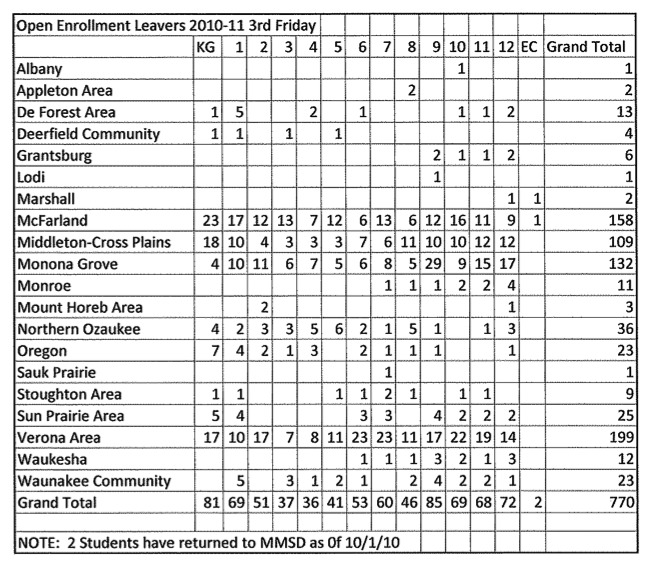
Next Generation Preparatory Academy for Young Men Empowering Young Men for Life 1.5MB PDF and Madison Preparatory Academy Overview 150K PDF.
Related: Kaleem Caire video interview.

Share

Does School Kill Writing?

Bill Morris:

In 1936 the University of Iowa became the first school in the United States to offer a Master of Fine Arts (MFA) degree in creative writing. Forty years later there were only a dozen such programs in the world. Today, according to an article in the current issue of Poets & Writers magazine entitled “The MFA Revolution,” there are nearly 200 creative writing MFA programs worldwide, and at least 4,000 aspiring writers apply to these programs each year in the U.S. alone. “What is clear,” the article concludes, “is that the burgeoning network of fully funded MFA programs is rapidly becoming the nation’s largest-ever patronage system for young artists.”
Whenever the words “patronage” and “artists” appear in the same sentence, questions must be asked. Is this mass patronage system a boon for American fiction, or is it a poison pill? Do creative writing programs nurture genuine talent, or are they spawning a torrent of technically accomplished books that are devoid of felt life? And more broadly: Just what good does schooling of any kind do for a writer?
In The Program Era: Postwar Fiction and the Rise of Creative Writing, Mark McGurl points out the “seemingly banal” fact that virtually all contemporary American fiction writers have attended college. “In previous generations this would not likely have been the case,” McGurl writes, “both because fewer individuals of any kind went to college before the postwar advent of mass higher education and because a college education was not yet perceived as an obvious…starting point for a career as a novelist. Rather, as the un-credentialled, or rather press-credentialled, example of the high school graduate Hemingway makes clear, the key supplementary institution for the novel until mid-century was journalism.”

Share