School Information System

The Obama Setback for Minority Education Steady gains for black and Hispanic students under No Child Left Behind have come to a virtual standstill.

Paul Petersen:

Should federally mandated school accountability and testing requirements be abandoned? With Congress actively considering a major revision of No Child Left Behind, that question has moved to the top of the national education agenda. The Obama administration, teachers unions and some Republicans are joining forces to gut core provisions of the education law that was one of the Bush administration’s crowning achievements.
No Child Left Behind, which began in 2002, focused on the low performance of African-American and Hispanic students. It required that all students, no matter their race or ethnicity, reach proficiency by 2014. Since minority students had the longest road to travel, schools placed special emphasis on their instruction, and measured the quality of their instruction by ascertaining their performance on standardized tests.
Each school was required to report annual test-score results for every student in grades three through eight. (High-school students took only one test in four years.) Although all schools were tested, No Child requirements bore most heavily upon schools that received federal compensatory education dollars, which typically had substantial percentages of minority students.

Share

Getting beyond insults in the school choice debate; Responding to the Madison School Board President on Vouchers, Parents & School Climate

Rick Esenberg, via a kind reader’s email:

Whether or not he is right, we are left with, again, with the very philosophical divide that I identified. Mr. Hughes thinks that centralized and collective decision-making will more properly value diversity (as he defines it) and make better educational choices for children than their parents will.
Of course to describe a philosophical divide does not tell us who has the better of the argument. Mr. Hughes defends his position by relying on a 2007 “study” by the Wisconsin Policy Research Institute which, strictly speaking, was not a study at all and had more to do with the impact of choice on public schools than its value to the families who participate in the program.
The 2007 WPRI publication collected no data on what was actually happening in Milwaukee. It simply took a national data base on the educational involvement of families and extrapolated it to Milwaukee based on the socioeconomic characteristics of Milwaukee families. It was, strictly speaking, nothing more than a calculation. If low income and minority families in Milwaukee behave like low income and minority families nationally, the calculation showed, then, based on certain assumptions, very few would engage in informed decision-making regarding their children’s education.
It was an interesting and thought provoking exercise but one with an obvious limitation. It is not at all clear that national findings would extend to a city with a relatively longstanding and actively promoted choice program. It is possible that the existence of a greater array of educational choices would change the incentives and capacity of parents to engage in the informed and engaged decision-making that would otherwise not happen.
Beyond that, the fact that only a subset of families will exercise a choice tells us precisely nothing about whether they ought to have the opportunity to make one – unless you entertain a presumption against individual choice and a diversity of alternatives in education.
Mr. Hughes argues that education is an “experience good” which is a fancy way of saying that it is something that consumers have a difficult time evaluating before deciding whether to buy it. But, again, the extent to which you think something is that type of good (many things are difficult to be sure about before you try them) and whether, having decided it is, you think that people should have someone else choose for them reflects very philosophical divide I’m concerned with.

We know best” has long been associated with parts of Madison’s K-12 community, despite long term, disastrous reading scores and spending twice the national average per student.
Background: “The notion that parents inherently know what school is best for their kids is an example of conservative magical thinking.”; “For whatever reason, parents as a group tend to undervalue the benefits of diversity in the public schools….”.
It would certainly be useful to spend a bit of time learning about Milwaukee’s experiences, positive and negative with a far more open k-12 climate. The results of Madison’s insular, non-diverse approach are an embarrassment to students, citizens, taxpayers and employers.


Share

A Guantanamo of the Intellect

Apoorvanand:

The Vice Chancellor of Calicut University promptly ordered a probe by a senior dean who, after visiting the internet ( as is the academic practice these days) discovered to his horror that al-Rubaish did have terrorist affiliations. He recommended its removal saying that ‘students would not lose much if they do not read this poem’. One of textbook’s editors explained that, at the time of selection of the poem, there was not much material available online about the poet. He said that they would not have selected this poem if the poet’s background was known to them.
It is an irony of our times that the editors are being shamed for an intellectual act, which was in fact , a creative way to expose the young undergraduates to the emotional impact of the international ‘war on terror’ across continents . Who would dispute that war on terror is a contemporary issue? How does literature react to it? Why and how do the detainees of Guantanamo Bay, the international jail set up by the USA to isolate its prey from life itself, choose poetry as a site to convey their pain and trauma? Most of them were non-poets. Can something they inscribed on the coffee cups or floors of the prison cell, in their desperation to speak, be accorded the exalted status of poetry?

Share

The Coming Online World of the College Drop-In

Eric Rabkin:

Every day, students find it easier to take courses anywhere and anytime and accumulate them into a degree at a growing number of fully accredited institutions. StraighterLine, which Fast Company calls “An eBay For Professors To Sell College Courses Directly To Students”, offers general education courses at $999/year for 10 courses. According to the Education Advisory Board, over 250 institutions across America, from Georgetown University in Washington, D.C., to the University of Southern California in Los Angeles, have accepted at least some of these credits. Without their captive audience, how will most schools survive? One answer, I call “the college drop-in.” In the long run, the drop-in phenomenon should drive a very desirable revolution for educational institutions, for individuals, and for business.
Harvard Business School already outsources one of its entry-level courses to Brigham Young University because the online offering is “so good,” freeing HBS resources–including faculty–for more specialized work. HBS students become BYU drop-ins, and both institutions–and their students–win. Similarly, under-enrolled courses in any specialized subject, for example rarely taught languages or advanced seminars in string theory–can meet their enrollment targets by inviting properly qualified drop-ins from vetted institutions.
Institutions and individuals waste resources–classroom seats–when a course is dropped or unsuccessfully completed. Instead of remaining in residence, a student can retake a single course–or even a single course module–online while working elsewhere in the summer, or in any other semester, dropping in to back and fill or, for underprepared students, dropping in for review or prerequisites so that when they do occupy those seats, they will succeed. Learning success and lowered total costs obviously serve the drop-in student.

Share

If school isn’t teaching your kid to code, this program will (for a fee)

Ki Mae Heussner:

If you want your child to have an early start on becoming the next Zuckerberg or Gates, it’s pretty clear that (for now, at least) you have to take matters into your own hands. According to estimates, less than 2 percent of students study computer programming, and it’s not even offered at 90 percent of U.S. schools.
To help boost those numbers, Mountain View, Calif.-based Tynker introduced its kid-focused learn-to-code program to schools earlier this year. On Tuesday, the company announced a new version of its software that kids can use at home.
Launched publicly in April, Tynker is a programming language inspired by Scratch, a visual programming language developed at MIT, as well as SNAP!, another programming language based on Scratch and created at Berkeley. Instead of making kids learn programming by stringing together words and numbers, it gives them a colorful, drag-and-drop platform to learn the concepts behind coding.
Through kid-friendly animations and creative projects, the browser-based program walks them through the basics and ultimately transitions them out of the visual programming language into traditional Javascript.

Share

A visionary’s final ideas on fixing high schools

Jay Matthews:

Sizer has long preferred smaller schools and less standardized testing, which would seem to put him at odds with current moves toward more testing, teacher assessment, charter schools and pressure for results. But in the new book, he welcomes charters as one part of expanding choices he thinks are good for families and for reform.
He is gently dismissive of those who decry policies they don’t like and insist their changes will solve our problems. Sizer writes that all pundits ought to realize that school reform “WILL be messy, but constructive messiness is the cost of freedom. Growing up is often a painful, if energizing, process, and growing up today may take subtly different but important forms than those with which we are accustomed. . . . The leaders of every New American High School must understand and honor this.”
One suggestion relevant to our local schools comes from his experience at the Francis W. Parker Charter Essential School in Devens, Mass. The school, which Sizer and his wife, Nancy Faust Sizer, helped found, uses oral exams, and he makes a persuasive case for using orals throughout high school.

Share

Distraction

Let’s say the history teacher, a descendant of the 1960s, is talking (of course) about the Vietnam War, and how Walter Cronkite won the Tet Offensive, even though the North lost it, and the student is perhaps paying some attention, but when the teacher shifts to an explanation of the hardships of war in the hot weather and the humidity, the student, effortlessly, may begin to remember what his grandfather told him about the cold at the Chosin Reservoir in 1950, and how easy it was to get frostbitten or even to freeze to death.
The teacher, quite understandably, so often has no idea that the student is no longer listening to, or learning from him, no matter how “great” the teacher is.
Those who say that teacher quality is the most important variable in student academic achievement seem to have forgotten the student’s role in student academic achievement. They have failed to think about, and they have not come to realize, the fact that the student is the sole proprietor of his/her own attention, and that her/his attention is the sine qua non for student academic achievement.
Again, the history teacher might be talking about the rise of organized labor in American life, and the student’s mind could easily slip away to the stories her aunt has told her about the difficult labor she had to go through with her first daughter.
Attention wanders, and in class wandering attention means the end of learning on the current topic for the time being, at least for that student, and for the “education” planned for that class period for any and all distracted students.
What can be done about this wayward-attention phenomenon? We might start by realizing that students own their attention and that we must negotiate with them successfully if we are to convince them to bring that attention to our offerings and to their duties as students. (Doesn’t that sound quaint?–Students have duties?)
With this in mind, we might spend more time explaining why what we are teaching in a given period on any given day is worth the attention we need from students. We can order them to pay attention (that doesn’t work), but we might be able to sell them on the chance that if they give their attention to what we are offering, it might prove to be worth their while.
We won’t sell the opportunity to every one, but some students might be grateful for the respect we pay to their ownership of their own minds and their own attention, and more of them might be willing to give us the benefit of the doubt and give our
presentations and plans their attention on a trial basis. (And some students will surely be influenced by the attention they see their peers giving to the work at hand…)
Then, if what we are teaching is as important and as interesting to us as we hope it will be to them, there is a chance (well-tested in experience) that they may indeed find it of interest to them as well, and they will be, in that subject perhaps, on their way to becoming educated, and more than that even, they might be on their way to deciding to teach themselves more about the subject as well. Thus are scholars born.
————————-
“Teach by Example”
Will Fitzhugh [founder]
The Concord Review [1987]
Ralph Waldo Emerson Prizes [1995]
National Writing Board [1998]
TCR Institute [2002]
730 Boston Post Road, Suite 24
Sudbury, Massachusetts 01776-3371 USA
978-443-0022; 800-331-5007
www.tcr.org; fitzhugh@tcr.org
Varsity Academics®
www.tcr.org/blog

Share

States offer students an incentive to graduate: money

Jon Marcus:

Every year states hand out more than $11 billion in financial aid to college students with no certainty as to whether they’ll ever graduate.
Many states don’t track the money. They simply hand it over and hope for the best, as one educational consultant put it.
It’s a “one-sided partnership,” according to Stan Jones, the president of the advocacy organization Complete College America. “The states provide the funds, but the expectations states have of students are really pretty low.”

Share

Report documents how higher education exacerbates racial inequities

Doug Lederman:

From Horace Mann to President Obama, and legions of politicians and educators in between, education has been heralded as the great equalizer, an institution that can balance (if not undo) racial, ethnic or other inequities that separate segments of society.
If higher education in the United States ever fulfilled that role, it is doing so less and less, not more, as time passes.
That is the stark and in many ways distressing conclusion of a report released today by researchers at Georgetown University: “Separate and Unequal: How Higher Education Reinforces the Intergenerational Reproduction of White Racial Privileged
The report’s assertion that African-American and Latino youth — especially those from low-income backgrounds — are underrepresented at the nation’s 468 most selective four-year colleges and overrepresented at the 3,250 open-access two- and four-year institutions will probably surprise few; that’s a circumstance of long standing.

Share

Beyond Grades

Paul Fain:

Testing firms are offering new ways to measure what students learn in college. Their next generation of assessments is billed as an add-on – rather than a replacement – to the college degree. But the tests also give graduates something besides a transcript to send to a potential employer
As a result, skills assessments are related to potential higher education “disruptions” like competency-based education or even digital badging. They offer portable ways for students to show what they know and what they can do. And in this case, they’re verified by testing giants.

Share

Dread of August: The Kids’ Teacher Assignments As parents worry their kids will get stuck with a dud, more schools are trying to limit their input.

Sue Shellenbarger:

August brings high anxiety for many parents awaiting big news for fall: Who will be their child’s teacher? Will it be someone creative and inspiring? Or will they get stuck with a burnout, a bore or a scary drill-sergeant type?
Now, that angst is being further intensified by a combination of factors, including a less experienced teacher pool, faster gossip grapevines and schools’ increased strategies to limit parents’ involvement in the teacher-placement process.
In fact, school officials are sending a strong message to parents: Don’t ask. A growing number of principals hold parents at bay by sending questionnaires in the spring that ask for general information about a child, but prohibit requesting a specific teacher. More principals are skipping parent input altogether, setting firm policies that teacher assignments are up to the school.

Share

A-to-F systems for grading public schools get new scrutiny

Lyndsey Layton

The high-profile episode underlines some of the pitfalls of grading schools.
“It should give us pause,” said Anne Hyslop, an education analyst at the New America Foundation, a left-leaning think tank. “Any accountability system should be examined, analyzed and updated as needed. You may see some states changing their A-F systems or looking for other models, but it’s a little bit too early to tell.”
Maine, which unveiled school report cards for the first time in the spring, changed the grades for three of 600 schools after errors were caught in the calculations and made those changes public, said Samantha Warren, a spokeswoman for the state education department.
“If there are legitimate things that got screwed up within the accountability system, you want to make sure everyone understands what you did and why,” said Kathy Christie of the Education Commission of the States. “You do not want to do that in a backroom.”

Share

CDC: Childhood obesity rates falling in many states

Cathy Payne:

Obesity rates among preschoolers are falling in many states for the first time in decades, the head of the Centers for Disease Control and Prevention said Tuesday.
Small but significant declines in obesity among low-income preschoolers were found in 18 states and the U.S. Virgin Islands from 2008 to 2011, CDC director Thomas Frieden said at a press telebriefing. “This is the first report to show many states with declining rates of obesity in our youngest children after literally decades of rising rates.”
The numbers are published in the CDC’s latest Vital Signs report. It includes obesity rates from 40 states, the District of Columbia and two U.S. territories. The CDC excluded 10 states because some had changed how they collected data.
Florida, Georgia, Missouri, New Jersey, South Dakota and the U.S. Virgin Islands had the largest absolute decreases in prevalence of obesity, with a drop of at least 1 percentage point, the report says. Obesity rates held steady in 20 states and Puerto Rico. They rose in Colorado, Pennsylvania and Tennessee.
Researchers analyzed weight and height data of about 11.6 million children ages 2 to 4 in federally funded maternal- and child-nutrition programs. The data came from the Pediatric Nutrition Surveillance System.

Share

What I regret most in my life are failures of kindness. […]

George Saunders:

In seventh grade, this new kid joined our class. In the interest of confidentiality, her Convocation Speech name will be “ELLEN.” ELLEN was small, shy. She wore these blue cat’s-eye glasses that, at the time, only old ladies wore. When nervous, which was pretty much always, she had a habit of taking a strand of hair into her mouth and chewing on it.
So she came to our school and our neighborhood, and was mostly ignored, occasionally teased (“Your hair taste good?” – that sort of thing). I could see this hurt her. I still remember the way she’d look after such an insult: eyes cast down, a little gut-kicked, as if, having just been reminded of her place in things, she was trying, as much as possible, to disappear. After awhile she’d drift away, hair-strand still in her mouth. At home, I imagined, after school, her mother would say, you know: “How was your day, sweetie?” and she’d say, “Oh, fine.” And her mother would say, “Making any friends?” and she’d go, “Sure, lots.”
Sometimes I’d see her hanging around alone in her front yard, as if afraid to leave it.
And then – they moved. That was it. No tragedy, no big final hazing.
One day she was there, next day she wasn’t.
End of story.
Now, why do I regret that? Why, forty-two years later, am I still thinking about it? Relative to most of the other kids, I was actually pretty nice to her. I never said an unkind word to her. In fact, I sometimes even (mildly) defended her.
But still. It bothers me.
So here’s something I know to be true, although it’s a little corny, and I don’t quite know what to do with it:
What I regret most in my life are failures of kindness.
Those moments when another human being was there, in front of me, suffering, and I responded…sensibly. Reservedly. Mildly.
Or, to look at it from the other end of the telescope: Who, in your life, do you remember most fondly, with the most undeniable feelings of warmth?

Share

“The School District of Choice in Dane County”

A. David Dahmer:

MMSD School Board President Ed Hughes said that public education these days is under a lot of pointed criticism if not under an outright attack. “Initiatives like the voucher expansion program are premised on the notion that urban traditional public schools are not up to the task of effectively educating a diverse body of students,” Hughes says. “We’re out to prove that they are wrong. We agree with Superintendent Cheatham that in Madison all of the pieces are in place for us to be successful. Following the framework that she will describe to you, we set the goal for ourselves to be the model of a thriving urban school district that is built on strong community partnerships as well as genuine collaboration of teachers and staff. As we do that, we will be the school district of choice in Dane County.”
Cheatham said that Madison has a lot of great things going for it, but also had its share of challenges.
“A continually changing set of priorities has made it difficult for our educators to remain focused on the day-to-day work of teaching and learning, a culture of autonomy that has made it difficult to guaranteed access to a challenging curriculum for all students,” Cheatham said. “The system is hard for many of our students to navigate which results in too many of our students falling through the cracks.”
It starts with a simple but bold vision that every school is a thriving school that prepares every student for college, career, and community. “From now on, we will be incredibly focused on making that day-to-day vision become a reality,” she said.
“Many districts create plans at central office and implement them from the top down. Instead, schools will become the driving force of change in Madison,” Cheatham said. “Rather than present our educators with an ever-changing array of strategies, we will focus on what we know works — high quality teaching, coherent instruction, and strong leadership — and implement these strategies extremely well.”

Related: The Dichotomy of Madison School Board Governance: “Same Service” vs. “having the courage and determination to stay focused on this work and do it well is in itself a revolutionary shift for our district”.
“The notion that parents inherently know what school is best for their kids is an example of conservative magical thinking.”; “For whatever reason, parents as a group tend to undervalue the benefits of diversity in the public schools….”.
Madison’s long term, disastrous reading results.

Share

Getting Beyond the Book Wars

Robin Lake:

I’m often asked how CRPE’s portfolio model differs from the vision put forth in my friend Andy Smarick’s book, The Urban School System of the Future. My first response is, “Not all that much.” Andy’s proposed solution to urban school system dysfunction is one that is nearly identical to the thesis in my colleague Paul Hill’s book Reinventing Public Education and CRPE’s founding ideal nearly 20 years ago:

  • All public schools should operate like charter schools, with autonomy over their educational programs, funding, and staffing.
  • They should be held accountable primarily for results, not inputs, via a performance contract.
  • Families should have access to a broad range of high-quality public school options rather than being assigned to one school.

Andy believes, though, that in the urban school system of the future, state charter authorizers, rather than publicly elected school boards, should oversee all city schools–which is the case now throughout most of New Orleans. If he had his druthers, no school district would have the right to charter.
While I’m a great fan of the transformation of the New Orleans school system, the idea that an all-charter system is the right solution for every big city strikes me as shortsighted. First off, in many cities, charter school authorizers don’t have a good track record. In Cleveland, for instance, the charter sector is at best mediocre, whereas the Cleveland school district, under the leadership of Superintendent Eric Gordon, has a strong plan for transitioning to a portfolio of high-performing autonomous schools, some charter, some district-run. In other cities, like Indianapolis and San Antonio, the charter sector offers a more plausible solution than the district, under the leadership of the city and with help from community-based incubators. In other cities, neither the district not the current charter authorizers are particularly effective governing agencies, so there needs to be a new or different solution.

Share

How to Cheat at Everything: an Encyclopedia of cons

Cory Doctorow:

Simon Lovell’s “How to Cheat at Everything: A Con Man Reveals the Secrets of the Esoteric Trade of Cheating, Scams and Hustles,” is a veritable encyclopedia of cons, scams, tricks and rip-offs. Lovell is a magician by trade, and much of the book is given over to detailed sleight-of-hand HOWTOs for palming, greasing, fixing and cheating cards, dice, coins, and so on. Truth be told, this section bogged down a little for me — unlike, say, The Big Con, which tries to give a representative sample of the world’s con-games, Lovell is bent on detailing all of them. But this is more than made up for by the charming, breezy anaecdotes about rip-off bar-bets, boiler-room operations, and so on. I picked this up as reference for stories — con-jobs are great fiction fodder — but found myself absorbing its message in pro-active self-defense. Reading this thing cover-to-cover can leave you feeling pretty damned paranoid.
Update: Harry sez, “For one summer Simon Lovell was a Councilor at “Camp Island Lake” where he headed up the card magic program. Somehow he had convinced the management to let him teach an activity called “Cheats, Con’s and Swindles” which was very popular. About three weeks in however management shut the activity down because, shockingly, many of the kids taking it were swindling other campers out of cash.”
Evan adds, “Simon Lovell is crazy but extremely nice, I’ve known him for quite a while and seen him perform. He was once gambling with an asshole in Macau who was being rude to a cocktail waitress. To get him back he scammed him out of his car and gave the keys directly to the cocktail waitress as a tip. He was formally trained in Oxford as a mathematician but has spent years in jail for cons and scams. As a joke he once slid into the back seat of his friends car, put a burlap sack over him and while they passed a police car he wiggled around as if trying to escape just to see how the cops would react. He was arrested.”

Share

Home Nation Nation-World August 4, 2013 at 1:00 am Higher education on a path toward worldwide technological revolution

Justin Pope:

Hundreds of investment bankers, venture capitalists and geeky tech entrepreneurs gathered near the pool of the Phoenician, a luxury resort outside Phoenix. The occasion? A high-profile gathering of education innovators, and as guests sipped cocktails, the mood was upbeat.
Major innovations — forged by the struggles of the Great Recession and fostered by technology — are coming to higher education.
Investment dollars are flooding in — a record-smashing 168 venture capital deals in the U.S. alone last year, according to the springtime conference’s host, GSV Advisors. The computing power of “the cloud” and “big data” are unleashing new software. Public officials, desperate to cut costs and measure results, are open to change.
And everyone, it seems, is talking about MOOCs, the “Massive Open Online Courses” offered by elite universities and enrolling millions worldwide.

Share

In automotive industry, college degrees becoming preferred

Michael Gagne:

Look to the nation’s automotive industry for an example of how the economy has changed the middle class during the last 50 years.
In 1968, few mechanics had earned an education further than a high school diploma. Same with factory workers, and other blue collar laborers.
But according to the United States Bureau of Labor Statistics, today’s employers in the automotive industry now prefer to hire mechanics who have undergone a postsecondary education program. In 2007, more than one-third of auto mechanics had postsecondary degrees or certifications of some variety.
Jeffrey Stohl, of the Georgetown University Center on Education and the Workforce, calls it the “upskilling factor” when explaining the present economy’s reliance on workers who have an education beyond a high school diploma.

Share

Can the great American universities take root in Asia?

Harry Lewis:

The news that Chicago Booth Business School’s executive MBA programme would relocate from Singapore was greeted in Hong Kong with as much enthusiasm as the acquisition of a star athlete. Education Secretary Eddie Ng Hak-kim trumpeted that the move would “enhance Hong Kong’s position as a regional education hub, nurture talent to support the growth of our economy, and strengthen Hong Kong’s competitiveness”.
He could have been Hong Kong’s cricket coach welcoming Mark Chapman from New Zealand only a week earlier: “We have a very good opportunity of playing in a World Cup for the first time and with the line-up we have, I think we can do it.”
But the ongoing changes in higher education are more like biological evolution than a cricket match. Extinction too is part of evolution–and several other American outposts in Singapore, including New York University’s Tisch School of the Arts and the hotel school of University of Nevada, Las Vegas (UNLV), are pulling out of the city state with uncertain future plans.
Asia is trying to shortcut a process that took centuries to create the great American universities. And American universities seem to think that an intellectual Bering land bridge has opened. Suddenly they see huge areas with no natural competitors, a promising ecosystem for invasive species.

Share

Confessions of an Application Reader Lifting the Veil on the Holistic Process at the University of California, Berkeley

Ruth Starkman, via a kind reader’s email:

My job was to help sort the pool.
We were to assess each piece of information — grades, courses, standardized test scores, activities, leadership potential and character — in an additive fashion, looking for ways to advance the student to the next level, as opposed to counting any factor as a negative.
External readers are only the first read. Every one of our applications was scored by an experienced lead reader before being passed on to an inner committee of admissions officers for the selection phase. My new position required two days of intensive training at the Berkeley Alumni House as well as eight three-hour norming sessions. There, we practiced ranking under the supervision of lead readers and admissions officers to ensure our decisions conformed to the criteria outlined by the admissions office, with the intent of giving applicants as close to equal treatment as possible.
The process, however, turned out very differently.
In principle, a broader examination of candidates is a great idea; some might say it is an ethical imperative to look at the “bigger picture” of an applicant’s life, as our mission was described. Considering the bigger picture has aided Berkeley’s pursuit of diversity after Proposition 209, which in 1996 amended California’s constitution to prohibit consideration of race, ethnicity or gender in admissions to public institutions. In Fisher v. the University of Texas, the Supreme Court, too, endorsed race-neutral processes aimed at promoting educational diversity and, on throwing the case back to lower courts, challenged public institutions to justify race as a factor in the holistic process.

Share

Turning Around Urban Districts: The Case of Paul Vallas

Larry Cuban:

Turning around low-performing urban school districts is in the same class as CEOs turning around failing companies.
After serving in Chicago for six years, Philadelphia five years, and New Orleans four years, Paul Vallas put the saga of urban superintendents in stark, if not humorous, terms:
“What happens with turnaround superintendents is that the first two years you’re a demolitions expert. By the third year, if you get improvements, do school construction, and test scores go up, people start to think this isn’t so hard. By year four, people start to think you’re getting way too much credit. By year five, you’re chopped liver.”
Vallas’s operating principle, according to one journalist who covered his superintendency in Philadelphia, is: “Do things big, do them fast, and do them all at once.” For over a decade, the media christened Vallas as savior for each of the above three cities before exiting, but just last week, he stumbled in his fourth district-Bridgeport (CT) and ended up as “chopped liver” in less than two years.
Vallas is (or was) the premier “turnaround specialist.” Whether, indeed, Vallas turned around Chicago, Philadelphia, and New Orleans is contested. Supporters point to more charter schools, fresh faces in the classroom, new buildings, and slowly rising test scores; critics point to abysmal graduation rates for black and Latino students, enormous budget deficits, and implementation failures. After Bridgeport, however, his brand-name as a “turnaround specialist,” like “killer apps” of yore such as Lotus 1-2-3 and WordStar, may well fade.
Turning around a failing company or a school district is no work for sprinters, it is marathoners who refashion the company and district into successes. Lee Iaccoco was CEO of Chrysler from 1978-1992; Steve Jobs was CEO from 1997-2011, and Ann Mulcahy served 2001-2009.

Share

New School Test Scores to Be Released This Week Are Expected to Drop

Lisa Fleisher:

New York City and state schools officials have been warning publicly for more than a year that, thanks to harder state tests, scores for elementary- and middle-school students released this week will plummet.
Now the Bloomberg administration, which has long used test scores as evidence of its success, has said the results due this week for third- through eighth-graders can’t be used to gauge overall trends in the city schools.
“You can’t really compare these directly, because they’re not just slightly different tests, they’re dramatically different tests,” said Shael Polakow-Suransky, the city’s chief academic officer. “It’s going to be difficult to make close comparisons with old state exams.”
The tests administered in the spring were the state’s first attempt at measuring higher-level skills that are emphasized by new education standards known in New York as the Common Core Learning Standards. The tests, for example, ask students to do multiple calculations within one math question, while requiring students to think more deeply to answer questions about written texts.

Share

In higher education, the Great Recession’s unlikely impact: an innovation revolution

Associated Press:

Cracks are opening in the traditional, age-old structures of higher education. Terms like “credit hour” and even the definition of what it means to be a college are in flux.
Higher education is becoming “unbundled.” Individual classes and degrees are losing their connections to single institutions, in much the same way iTunes has unbundled songs from whole albums, and the Internet is unbundling television shows and networks from bulky cable packages.
Technology isn’t just changing traditional higher education. It’s helping break it down across two broad dimensions: distance and time.
But that doesn’t necessarily mean, as some contend, the traditional university is dead.

Share

The psychological phenomenon that skews college admissions and hiring

Rachel Feltman:

If you go to a college with tougher grading standards than average, you’re less likely to get into graduate school, new research shows–and there’s a similar problem within the job market. Correspondence bias, a psychological phenomenon that makes us judge people based on their behavior (like GPA) while ignoring context (like the difficulty of the school attended), could be keeping you from getting the jobs you want.
A recent study by researchers at the University of California Berkeley provides evidence that the bias affects hiring and admissions practices. Until now, corresponding author Samuel A. Swift told Quartz, it’s only been observed in the lab. “It’s a psychological idea that’s been around for quite awhile,” Swift said, “and we had relatively little testing whether the phenomenon has an effect in the real world. We always have to wonder if lab studies reflect on reality, and whether people will make the same mistakes they make in the lab in real-world situations.”
To put correspondence bias to the test, Swift and his fellow researchers used actual admissions staff from US colleges in their experiment. When presented with students for admission, the counselors were more likely to select those with higher GPAs–even when they were also told how each student compared to his or her school’s average. Even if a school’s average GPA was questionably high, indicating grade inflation and poor standards, students who managed a 4.0 there were more successful applicants than those who pulled slightly lower GPAs at much tougher colleges.

Share

Open letter to Sal Khan

Christopher:

A year ago, I expressed my concerns on the Washington Post’s blog that your decimal place value videos and exercises failed to incorporate very basic knowledge about how people learn place value.
I wrote that your decimal comparison videos were problematic because they only addressed decimal numbers with the same number of decimal places, and that a very basic, robust finding in rational number learning research is that students do not struggle with these comparisons–because students can treat them like whole numbers and get correct answers. Instead, students struggle with comparisons where the decimals have different numbers of decimal places because here, the whole number place value rules do not apply.
Together with my co-author, I wrote,
A student who thinks that 0.435 > 0.76 is offered nothing in the way of correction on Khan Academy. In fact, one of the top questions on the page for this video (as of July 18, 2012) is “So is .02009 greater than .0207?” This is exactly the sort of question that a competent teacher of arithmetic needs to anticipate and to answer. Khan fails to pose it.
In short, these decimal videos and their accompanying exercises are useless.

Share

Teacher training programs need a reboot

Jane Dimyan-Ehrenfeld:

When the National Council on Teacher Quality released last month its report on teacher training programs, I was not shocked to read that the vast majority of colleges and universities do a poor job of preparing their students to teach. I imagine that many other people who have gone through such programs were equally unsurprised.
I went to a highly ranked liberal arts college and graduated with a special major in sociology, anthropology and education as well as an elementary teaching certificate. I immediately found a job teaching breathtakingly underprivileged students in a persistently failing elementary school in Prince George’s County. I wasn’t prepared to teach my students how to tie their shoes, much less to make up for years of institutional neglect, hunger, poverty, family transience, isolation and other ills. My first year was a nightmarish blur; my second was only slightly less awful. My third had its highlights but was still a daily struggle. There are stories from that time that my parents never heard.
One of the perpetual concerns I held through those three years was how to teach the many special-needs students in my third- and fourth-grade classes who were not being served by the school’s special-education teacher. To gain practical skills to serve the students I now understood would be in my classes, regardless of where I taught, I decided to go to graduate school for special education. I started a one-year master’s program at Teachers College, Columbia University, which has long been regarded as among the best education programs in the country.
I quickly realized that I had made a terrible mistake. My professors seemed uninterested in teaching me anything practical. At that time, in 2000, the academic hero du jour was Lev Vygotsky, with his theory of the zone of proximal development. It seemed not to matter what I did in my teaching placement as long as I wrote every paper and approached all of my lesson planning from a Vygotskian perspective.

Related: The Teacher Prep Review Honor Roll
and Teacher prep resources: Many thanks to IHEs who shared!

Share

A Free Market for Teaching Talent – The $4 Million Teacher South Korea’s students rank among the best in the world, and its top teachers can make a fortune. Can the U.S. learn from this academic superpower?

Amanda Ripley:

Kim Ki-hoon earns $4 million a year in South Korea, where he is known as a rock-star teacher–a combination of words not typically heard in the rest of the world. Mr. Kim has been teaching for over 20 years, all of them in the country’s private, after-school tutoring academies, known as hagwons. Unlike most teachers across the globe, he is paid according to the demand for his skills–and he is in high demand.
Kim Ki-Hoon, who teaches in a private after-school academy, earns most of his money from students who watch his lectures online. ‘The harder I work, the more I make,’ he says. ‘I like that.’
Mr. Kim works about 60 hours a week teaching English, although he spends only three of those hours giving lectures. His classes are recorded on video, and the Internet has turned them into commodities, available for purchase online at the rate of $4 an hour. He spends most of his week responding to students’ online requests for help, developing lesson plans and writing accompanying textbooks and workbooks (some 200 to date).
“The harder I work, the more I make,” he says matter of factly. “I like that.”
I traveled to South Korea to see what a free market for teaching talent looks like–one stop in a global tour to discover what the U.S. can learn from the world’s other education superpowers. Thanks in part to such tutoring services, South Korea has dramatically improved its education system over the past several decades and now routinely outperforms the U.S. Sixty years ago, most South Koreans were illiterate; today, South Korean 15-year-olds rank No. 2 in the world in reading, behind Shanghai. The country now has a 93% high-school graduation rate, compared with 77% in the U.S.
….
No country has all the answers. But in an information-driven global economy, a few truths are becoming universal: Children need to know how to think critically in math, reading and science; they must be driven; and they must learn how to adapt, since they will be doing it all their lives. These demands require that schools change, too–or the free market may do it for them.

The Madison School Board President recently wrote: “The notion that parents inherently know what school is best for their kids is an example of conservative magical thinking.”; “For whatever reason, parents as a group tend to undervalue the benefits of diversity in the public schools….”
Related: www.wisconsin2.org.
Ms. Ripley is an Emerson Fellow at the New America Foundation. This essay is adapted from her forthcoming book, “The Smartest Kids in the World–and How They Got That Way,” to be published Aug. 13 by Simon & Schuster.

Share

An Open Letter to New Teach for America Recruits

Katie Osgood:

It is summertime, which for those of you newly accepted into Teach for America, means you are enduring the long hard days of Institute. I congratulate you on being accepted into this prestigious program. You clearly have demonstrated intelligence, passion, and leadership in order to make it this far.
And now I am asking you to quit.
Exacerbating Inequalities
Teach for America likely enticed you into the program with the call for ending education inequality. That is a beautiful and noble mission. I applaud you on being moved by the chance to help children, of being a part of creating equality in our schools, of ending poverty once and for all.
However, the actual practice of Teach for America does the exact opposite of its noble mission. TFA claims to fight to end educational inequality and yet ends up exacerbating one of the greatest inequalities in education today: that low-income children of color are much more likely to be given inexperienced, uncertified teachers. TFA’s five weeks of Institute are simply not enough time to prepare anyone, no matter how dedicated or intelligent, to have the skills necessary to help our neediest children. This fall, on that first day of school, you will be alone with kids who need so much more. You will represent one more inequality in our education system denying kids from low-income backgrounds equitable educational opportunities.

Share

More Evidence That Colleges Are Giving Money to Those Who Need It Least

Karen Weise:

The private student lender Sallie Mae has released its annual look at “How America Pays for College,” which continues to show how the Great Recession shook up college funding. The share of college costs that parents are shouldering has shrunk in recent years. In 2009-10, parental income and savings covered an average of 37 percent of college costs. This past school year, that fell to 27 percent. The dollar amount parents paid from savings and income fell 35 percent, to $5,727.
At the same time, the share of a family’s college costs covered by grants and scholarships rose to 30 percent from 23 percent. Grants and scholarships, though, were divvied up in different ways. This year, 63 percent of families earning less than $35,000 a year received an average of $6,170 in grants. Just 19 percent of high-income families (earning $100,000 or more) received grants averaging $5,757. Federal Pell Grants, which max out a $5,550, specifically target needy students.
Scholarships went the other way, getting more generous for wealthier families. Thirty-five percent of low-income families got an average of $7,237 in scholarships, while 36 percent of wealthy families got an average of $10,213 in scholarships. The gap reflects the priorities of the colleges: 69 percent of the scholarships for wealthy students come from the schools themselves rather than nonprofit or public sources. This confirms the results of a recent study by the New America Foundation that found that schools are increasingly using aid to lure wealthy students rather than targeting those most in need. So as stagnant incomes continue to stress less affluent families, wealthy parents are getting a helping hand.

Share

With wide-open school choice, marketing becomes name of the game

Alan Borsuk

In a steady trickle, the come-on’s for schools arrive in our mail. Usually in large-postcard format, they offer a photo of cute kids, stylish designs, and upbeat messages about the great program our child needs. They come from individual Milwaukee Public Schools, religious schools, charter schools, even Headstart programs. Some of the schools are at hefty distances from our neighborhood.
Our youngest child graduated from high school eight years ago and none of our kids were ever candidates to go to the schools we hear from. I understand mass mailings are done from broad lists, but are these people serious?
The answer is yes, when it comes to marketing. Selling your school to potential parents has become an imperative in Milwaukee. Mass mail, billboards, tables at community events, door-to-door recruitment, print and electronic advertising, brochures, sidewalk solicitations — they’re all used by many schools. Use of computer-based social media is on the rise, of course.
Children and parents hold the power to make or break schools by deciding where to enroll, and unlike, oh, say, when I grew up, there is little presumption that people will choose the public school nearest to them just because that’s what they’re supposed to do.
You may associate school choice with private schools in the voucher program, charter schools and the thousands of City of Milwaukee kids who enroll in suburban public schools. You’re right — every enrollment decision in those situations is a product of choice, and frequently involves marketing.
But choosing what school you go to is pervasive among MPS parents, as well. There’s a reason the main pillar of MPS enrollment is called the “three-choice” process. In the broad sense of the term, MPS is a powerful example of school choice in action. Again, marketing is a big part of this.

Share

Tony Bennett, Former Indiana School Superintendent, Changed Top GOP Donor’s School’s Grade

Tom LoBianco:

INDIANAPOLIS — Former Indiana and current Florida schools chief Tony Bennett built his national star by promising to hold “failing” schools accountable. But when it appeared an Indianapolis charter school run by a prominent Republican donor might receive a poor grade, Bennett’s education team frantically overhauled his signature “A-F” school grading system to improve the school’s marks.
Emails obtained by The Associated Press show Bennett and his staff scrambled last fall to ensure influential donor Christel DeHaan’s school received an “A,” despite poor test scores in algebra that initially earned it a “C.””They need to understand that anything less than an A for Christel House compromises all of our accountability work,” Bennett wrote in a Sept. 12 email to then-chief of staff Heather Neal, who is now Gov. Mike Pence’s chief lobbyist.
The emails, which also show Bennett discussed with staff the legality of changing just DeHaan’s grade, raise unsettling questions about the validity of a grading system that has broad implications. Indiana uses the A-F grades to determine which schools get taken over by the state and whether students seeking state-funded vouchers to attend private school need to first spend a year in public school. They also help determine how much state funding schools receive.

Madison and Wisconsin Math Data, 8th Grade

Share

AFT Report: How much time do school districts spend on standardized testing? This much.

AFT via Valerie Strauss:

Testing More, Teaching Less: What America’s Obsession with Student Testing Costs in Money and Lost Instructional Time,” released by the American Federation of Teachers, looks closely at two unnamed medium-sized school districts — one in the Midwest and one in the East — through the prism of their standardized testing calendars.
Standardized testing has become the focus of modern school reform since the implementation of the No Child Left Behind law in 2002, and continuing through the Obama administration’s Race to the Top education initiative. Over the years, the time taken up by test prep and testing has risen, as have the costs and the lost instructional time.
The grade-by-grade analysis of time and money invested in standardized testing found that test prep and testing absorbed 19 full school days in one district and a month and a half in the other in heavily tested grades. The Midwestern district spent $600 or more for standardized testing per pupil in grades 3-8; about $200 per student for grades K-2; from $400 to $600 per student for grades 9-11. The Eastern district spent more than $1,100 annually on testing per student in grades 6-11; around $400 per student in grades 1-2; between $700 and $800 per student for grades 3-5.
One of the districts gives 14 different assessments to all students at least once a year in at least one grade, the report said, and some assessments are administered for several subjects multiple times a year, resulting in 34 different test administrations. The other district had 12 different standardized assessments but 47 separate administrations over the course of the year.

Share

How To Actually Use Wikipedia In The Classroom

Edudemic:

With more than half of all US college students now using the site for background information before embarking on an essay, it’s clear that Wikipedia, the online encyclopedia that anyone can edit, has gained a foothold in the classroom. Darren Crovitz and W. Scott Smoot, writing in The English Journal, a publication of lesson ideas for English teachers, described the dimensions of one Wikipedia lesson that unfolded in Smoot’s middle school classroom. The lesson encouraged students to use the site to generate fresh ideas for research topics by looking for gaps in Wikipedia’s information.
Learning To Dig Deeper
Smoot’s ambition was to show how teachers can use Wikipedia to help students ask the right questions for writing research papers. First, he asked his class to shout out historical facts regarding president Abraham Lincoln. He wrote all the facts on the board: born in Kentucky; was president during The American Civil War; freed the slaves; and so on. Smoot then asked students to scroll through Lincoln’s Wikipedia entry, which happens to contain the same information on the board – and not much more.

Share

What can an autistic perspective in novels show us about contemporary subjectivity?

Tom Cutterham:

Christopher Boone loves prime numbers and hates being touched. Oskar Schell has a hyperactive imagination. He won’t swear, but he will say, “Succotash my Balzac, dipshiitake.” The behavioral problems of Christopher and Oskar, the respective narrators and protagonists of The Curious Incident of the Dog in the Night Time and Extremely Loud and Incredibly Close, are never explicitly labeled as autistic spectrum disorders, In a brief statement, worth reading, Mark Haddon has written that “Curious Incident is not a novel about Asperger’s… If anything, it’s a novel about difference, about being an outsider.”but it has been easy for readers to identify them in these terms. As much as both novels have relied on an existing public understanding of autism, they have each — supported by stage and screen adaptations — also helped to construct it. More than any other two books, these have encoded the autistic perspective into a literary trope with its own set of mechanisms and effects.
While both the novels have male protagonists, and males are about four times more likely to have autistic spectrum disorders than females, the most prominent autobiographies of autism have been by women: See Temple Grandin’s Emergence and Donna Williams’ Nobody Nowhere.What distinguishes the autistic person is a difficulty gaining access to other people’s minds. TNI Vol. 18: Family Planning is out now. Subscribe for $2 and get it today. He lacks the ability to reconstruct and predict thoughts, feelings, desires, and reactions. The neurologist Simon Baron-Cohen has called this “mindblindness.” Those who don’t suffer from this problem, on the other hand, unconsciously translate myriad physical and symbolic cues — subtext, allusion, tone, and all the elements of body language. In Baron-Cohen’s terms, we can read minds.

Share

“The notion that parents inherently know what school is best for their kids is an example of conservative magical thinking.”; “For whatever reason, parents as a group tend to undervalue the benefits of diversity in the public schools….”


Where have all the students gone?
Madison School Board President Ed Hughes:

Esenberg sets out to identify the fundamental differences between voucher advocates and opponents. His thesis is that views on vouchers derive from deeper beliefs than objective assessments of how well voucher schools perform or concerns about vouchers draining funds from public schools. To him, your take on vouchers depends on how you view the world.
Esenberg asserts that voucher advocates are united by their embrace of three fundamental principles: that a centralized authority is unlikely to be able to decide what is best for all; that families should be trusted to select their children’s schools since ordinary people are capable of making choices for themselves without paternalistic direction; and that “government does not do diversity, experimentation and choice very well.”
By implication, he asserts that voucher opponents think that a centralized authority will be able to decide what’s best for all, that families shouldn’t be trusted to make choices for their children, and that government control is the best way to foster innovation.
And there you have it. Your views on school voucher expansion are entirely explained by whether you prefer individual freedom, like the voucher advocates, or stultifying government control, like the voucher opponents. In cinematic terms, voucher opponents are the legions of lifeless, gray drones in Apple’s famous 1984 commercial and voucher supporters are the colorful rebel, bravely challenging the control of Big Brother and hurling her sledgehammer to smash mindless conformity. You couldn’t ask for a more sophisticated analysis than that, could you?
While his thesis invites mockery, Esenberg’s short article does present a bit of a challenge to voucher opponents like myself. Can we set out a coherent justification for our opposition that doesn’t depend on the facts that voucher schools drain needed resources from public schools and don’t perform any better? Sweeping those fairly compelling points aside, Esenberg asks, in effect, what else you got?

Mr Hughes anti-voucher rhetoric is fascinating on several levels:
1. The Madison School District’s long term, disastrous reading results. How much time and money has been wasted on anti-voucher rhetoric? Reading has long been job one.
2. Local private schools do not have much, if any availability.
3. Madison spends double the national average per student (some of which has been spent on program explosion). Compare Milwaukee Public and Voucher Schools’ Per Student Spending.
4. Madison’s inability to address its long-term disastrous reading results will bring changes from State or Federal legislation or via litigation.
5. Superintendent Cheatham cited Long Beach and Boston as urban districts that have “narrowed the achievement gap”. Both districts offer a variety of school governance models, which is quite different than Madison’s long-time “one size fits all approach”.
I recall being astonished that previous Madison School District administrators planned to spend time lobbying at the State level for this or that change – while “Rome is burning“. Ironically, Superintendent Cheatham recently said:

“Rather than do a lot of work on opposing the voucher movement, we are going to focus on making sure our schools are the best schools possible and the schools of choice in Madison,” Cheatham said.

Mr. Hughes in 2005:

This points up one of the frustrating aspects of trying to follow school issues in Madison: the recurring feeling that a quoted speaker – and it can be someone from the administration, or MTI, or the occasional school board member – believes that the audience for an assertion is composed entirely of idiots.

A great, salient quote. I would hope that the District would focus completely on the matter at hand, disastrous reading scores. Taking care of that problem – and we have the resources to do so – will solve lots of other atmospheric and perception issues.
In closing, I sense politics in the voucher (and anti-open enrollment) rhetoric. Two Madison School Board seats will be on the Spring, 2014 ballot. One is currently occupied by Mr. Hughes, the other by Marj Passman. In addition, local politics play a role in becoming school board President.

Share

Now Let’s Try Real Student Aid Reform

Neal McCluskey:

The U.S. Senate and House have passed a student loan bill President Obama will almost certainly sign. Bipartisanship lives! But don’t get too excited. Heck, don’t get excited at all: The bill will only deliver minor tweaks to a system that needs elimination, not a screw or two turned a little harder.
The bill, which ties interest rates on federal student loans to 10-year Treasury notes, certainly makes more sense than having Congress arbitrarily set a rate. Student loan rates moving with overall interest rates — not stuck well above or below them — makes sense if you are trying to balance the government’s need for revenue with a desire to furnish loans more cheaply than students would otherwise be able to get them. For supporters of such programs, getting this should have been simple, which is why — despite significant fighting — it ultimately got done.

Share

No, You’re Probably Not Smarter Than a 1912-Era 8th Grader

Smithonian:

In the early years of the 20th century, the students in Bullitt County, Kentucky, were asked to clear a test that many full-fledged adults would likely be hard-pressed to pass today. The Bullitt County Geneaological Society has a copy of this exam, reproduced below–a mix of math and science and reading and writing and questions on oddly specific factoids-preserved in their museum in the county courthouse.
But just think for a moment: Did you know where Montenegro was when you were 12? Do you know now? (Hint: it’s just across the Adriatic Sea from Italy. You know where the Adriatic Sea is, right?)
Or what about this question, which the examiners of Bullitt County deemed necessary knowledge: “Through what waters would a vessel pass in going from England through the Suez Canal to Manila?” The Bullitt geneaological society has an answer sheet if you want to try the test, but really, this question is just a doozie:

Share

L.A. Unified teachers ratings should be disclosed, judge rules

Teresa Watanabe:

The performance ratings of individual teachers in the city school district are matters of keen public interest and should be released to the Los Angeles Times, a judge ordered Thursday.
L.A. County Superior Court Judge James C. Chalfant ruled that the public interest in access to the ratings outweighed any teacher expectations of privacy under the California Public Records Act. He rejected arguments by the Los Angeles Unified School District and United Teachers Los Angeles that the records were confidential personnel information that, if released, would create discord, stigma, embarrassment, difficulty in recruiting teachers and other harm.
“The public has an interest in disclosure of the scores because they reflect on both student achievement and teacher performance, as well as on LAUSD’s choices in allocating time and resources,” Chalfant wrote.

Share

Commentary on New Madison Superintendent Cheatham’s “Style”….

Paul Fanlund

he gist of her framework is hard to argue. It calls for a renewed focus on learning, a school system that makes curriculum consistent across the district and better measures student and teacher performance. In sum, it is a back-to-basics approach that does not require new money, at least for now.
Madison, of course, has been grappling with its changing demographics where many students, especially minority children, struggle academically. In shorthand, it’s called the “achievement gap,” and the approach to date has been a long list of seemingly laudable, logical programs.
Now comes Cheatham saying we don’t need more money, at least not yet, but instead we need to rebuild the foundation. Might some see that as counterintuitive, I wonder?
“It might be,” she responds. “My take is that we were adding on with a big price tag to an infrastructure that was weak. … Does that make sense? The bones of the organization were weak and we didn’t do the hard work of making sure that the day-to-day processes … were strong before deciding to make targeted investments on top of a strong foundation.”
She continues: “That doesn’t mean that there won’t be some targeted investments down the line. I suspect that will be in things like technology, for instance, which is a real challenge … and is going to have a price tag later. I need to make sure that the foundation is strong first.”
Cheatham alludes to her Chicago experience. “Having worked with lots of schools — and lots of schools that have struggled — and worked with schools targeting narrowing and closure of the achievement gap, these fundamental practices” make the biggest difference. “It’s that day-to-day work that ultimately produces results and student learning.”

We shall see. Local media have greeted prior Superintendents, including Cheryl Wilhoyte with style points, prior to the beginning of tough decision-making.
Related: The Dichotomy of Madison School Board Governance: “Same Service” vs. “having the courage and determination to stay focused on this work and do it well is in itself a revolutionary shift for our district”.
Another interesting governance question, particularly when changes to the 157 page teacher union contract, or perhaps “handbook” arise, is where the school board stands? Two seats will be on the Spring, 2014 ballot. They are presently occupied by Marj Passman and Ed Hughes. In addition, not all members may vote on teacher union related matters due to conflict of interests. Finally, Mary Burke’s possible race for the Governor’s seat (2014) may further change board dynamics.
I hope that Superintendent Cheatham’s plans to focus the organization on teaching become a reality. Nothing is more important given the District’s disastrous reading results. That said, talk is cheap and we’ve seen this movie before.

Share

What Do 2,358 College Administrators Do?

Richard Vedder

For at least a half-century, the University of California has been considered the premier system in U.S. public higher education. The Berkeley and Los Angeles campuses always rank among the top 10 state schools, with several other UC campuses close behind.
While the nomination of Janet Napolitano, the secretary of the Homeland Security Department, as the next chancellor of the University of California may have been a surprise, it isn’t a comedown. The system has almost 240,000 students and an operating budget that exceeds $24 billion, almost triple the state budget of Arizona, for example, where Napolitano served as governor and attorney general.
Historically, a lawyer-politician who has never been a college professor, let alone a higher-education administrator, might not have been the preferred choice to lead a huge public university. But that has changed in recent years. Universities – – private as well as public — are very much creatures of the U.S. political scene, highly dependent on federal and state funds. Who better to navigate that world than former elected officials? Napolitano joins such ex-politicians as Mitch Daniels at Purdue University, David Boren of the University of Oklahoma and Kent Hance of Texas Tech University.

Share

District administrators balk at calculating how much each school spends per student

Jill Barshay, via a kind reader email:

Since President Johnson’s War on Poverty Program in 1965, policy makers have been trying to equalize education spending across the United States. The lofty goal is for schools with lots of poor students to have access to the same resources that schools with rich kids have. But researchers and advocates for the poor have pointed to loopholes in Title I funding that effectively allow affluent schools to operate at higher levels of funding than low-income schools. For example, Marguerite Roza at the Center on Reinventing Public Education found that less money is spent on salaries in high-poverty schools than on low-poverty schools within the same district.
Because there can be so much variation in poverty within a school district (just think about the socio-economic differences between Tribeca and the Bronx), the Department of Education is making a big push to calculate exactly how much each school spends on a student. That might sound simple enough. But like any data project, the devil is in the details.
The issue is, how do you allocate administrative and other centralized expenses among schools? For example, say you have an itinerant teacher who spends a few hours at one school, then moves to another, and then another — each day of the week. To properly figure out how much of that teacher’s salary to attribute to each school, districts would need to create some sort of time-and-attendance punchcard system. But who wants to create such an expensive system or put teachers on punch cards?
I attended a boisterous and sometimes acrimonious session on this topic between district bean counters and the U.S. Department of Education at the NCES STATS-DC 2013 Data Conference on July 18, 2013. Many administrators protested the whole idea of counting pennies per school, saying it was too burdensome and impossible. They worried they would have to waste hours figuring out how to allocate all kinds of centralized activities, from computer servers to buses.

Locally, Madison spends a bit more than $15,000 per student, or nearly double the US average.

Share

National Civics, History Tests to Disappear

Haley Stauss

The National Assessment of Educational Progress exams in civics, U.S. history, and geography have been indefinitely postponed for fourth and twelfth graders. The Obama administration says this is due to a $6.8 million sequestration budget cut. The three exams will be replaced by a single, new test: Technology and Engineering Literacy.
Without these tests, advocates for a richer civic education will not have any kind of test to use as leverage to get more civic education in the classrooms,” said John Hale, associate director at the Center for Civic Education.
NAEP is a set of national tests of fourth, eighth, and twelfth graders that track achievement on various subjects over time. Researchers collect data for state to state comparisons in mathematics, reading, science, and writing. The other subjects only provide national statistics and are administered to fewer students. The tests provide basic information about students but do not automatically trigger consequences for teachers, students, and schools.
Students have historically performed extremely poorly on these three tests. In 2010, the last administration of the history test, students performed worse on it than on any other NAEP test. That year, less than half of eighth-graders knew the purpose of the Bill of Rights, and only 1 in 10 could pick a definition of the system of checks and balance on the civics exam.
Science vs. Humanities
Since most civic education is taught to first-semester high school seniors, Hale said, not testing in twelfth grade creates a major gap of information.
“Is it possible to have a responsible citizenry if we don’t teach them civics, history, and the humanities?” said Gary Nash, a professor of history education (sic) at the University of California Los Angeles. Postponing the exams, typically administered every four years, does not mean classroom education in the humanities will be cut. But the cuts indirectly say we can do without civics and U.S. history, Nash said.
Trading the humanities tests for technology tests is necessary to measure “the competitiveness of U.S. students in a science, technology, engineering and mathematics (STEM)-focused world,” said David Driscoll, chair of the NAEP Governing Board, in a statement. “The [Technology and Engineering Literacy] assessment, along with the existing NAEP science and mathematics assessments, will help the nation know if we are making progress in the areas of STEM education.”
Nash agrees the U.S. needs more engineers and scientists: “But what are they without humanities under their belt?” he said.
Excellence in one area flows into others
A summer report from the Commission on the Humanities and Social Sciences explained the need for these subjects this way: “The humanities and social sciences provide an intellectual framework and context for understanding and thriving in a changing world. When we study these subjects, we learn not only what but how and why.”
Nash pointed out that Franklin High School in the Los Angeles Unified School district is 94 percent Latino, and many families are immigrants. Without changing anything in science and math, the school began to emphasize humanities. The scores in science and math improved, testing almost on par with students in Beverly Hills. “It’s about increasing their passion for learning,” he says. Furthermore, giving students a context for learning helps them learn more.
Masters of Our Government
Students must be prepared “to think for themselves as independent citizens,” said Hale. “Civics and Government (& History) is (are) as generative as math; we are not born as great democratic citizens. We aren’t born knowing why everyone should have the right to political speech, even if it is intolerant speech.”
Consider the current events of the last few weeks, he said: the Supreme Court rulings on marriage and the Voting Rights Act, the National Security Administration’s data collection, and Congress debating immigration and student loan rates.
“Our leaders make decisions every day based on interpretations on the proper role of government; we have no way of knowing if these [decisions] are good or bad,” Hale continued. “We are supposed to be masters of our government, not servants of it.”
Cutting the civics tests indicates the government’s priorities, and priorities affect curriculum, Nash noted. He suggested danger for a country that must govern itself if children do not learn how.

—————————–
“Teach by Example”
Will Fitzhugh [founder]
The Concord Review [1987]
Ralph Waldo Emerson Prizes [1995]
National Writing Board [1998]
TCR Institute [2002]
730 Boston Post Road, Suite 24
Sudbury, Massachusetts 01776-3371 USA
978-443-0022; 800-331-5007
www.tcr.org; fitzhugh@tcr.org
Varsity Academics®
www.tcr.org/blog

Share

The MOOC That Roared How Georgia Tech’s new, super-cheap online master’s degree could radically change American higher education.

Gabriel Kahn:

Georgia Institute of Technology is about to take a step that could set off a broad disruption in higher education: It’s offering a new master’s degree in computer science, delivered through a series of massive open online courses, or MOOCs, for $6,600.
The school’s traditional on-campus computer science master’s degree costs about $45,000 in tuition alone for out-of-state students (the majority) and $21,000 for Georgia residents. But in a few years, Georgia Tech believes that thousands of students from all over the world will enroll in the new program.
The $6,600 master’s degree marks an attempt to realize the tantalizing promise of the MOOC movement: a great education, scaled up to the point where it can be delivered for a rock-bottom price. Until now, the nation’s top universities have adopted a polite but distant approach toward MOOCs. The likes of Yale, Harvard, and Stanford have put many of their classes online for anyone to take, and for free. But there is no degree to be had, even for those who ace the courses. Education writer and consultant Tony Bates recently noted that until top institutions begin putting a diploma behind their MOOCs, “we have to believe that they think that this is a second class form of education suitable only for the unwashed masses.”

Share

Texas school strikes devil’s bargain, drops RFID student tracking

Iain Thomson:

The Texas school that expelled a student for refusing to comply with its plan to track pupils with RFID tags has dropped the scheme, saying it just doesn’t work.
In November, Northside Independent School District (NISD) in San Antonio, Texas, began a trial of RFID tracking for students in an attempt to cut down on truancy. The district gets extra funding if students don’t skip out after the register is taken, so NISD spent $500,000 on its “Student Locator Project”.
The school issued students with a lanyard containing the RFID system, and insisted that they be used to get full access to the cafeteria, library, and even some restrooms. One student, Andrea Hernandez, gained national prominence when she was suspended for refusing to wear the lanyard on privacy grounds and because it conflicted with her religious beliefs.
“I feel it’s the implementation of the Mark of the Beast. It’s also an invasion of my privacy and my other rights,” she said at the time.

Share

How Big Data Is Taking Teachers Out of the Lecturing Business

By Seth Fletcher:

When Arnecia Hawkins enrolled at Arizona State University last fall, she did not realize she was volunteering as a test subject in an experimental reinvention of American higher education. Yet here she was, near the end of her spring semester, learning math from a machine. In a well-appointed computer lab in Tempe, on Arizona State’s desert resort of a campus, she and a sophomore named Jessica were practicing calculating annuities. Through a software dashboard, they could click and scroll among videos, text, quizzes and practice problems at their own pace. As they worked, their answers, along with reams of data on the ways in which they arrived at those answers, were beamed to distant servers. Predictive algorithms developed by a team of data scientists compared their stats with data gathered from tens of thousands of other students, looking for clues as to what Hawkins was learning, what she was struggling with, what she should learn next and how, exactly, she should learn it.
Having a computer for an instructor was a change for Hawkins. “I’m not gonna lie–at first I was really annoyed with it,” she says. The arrangement was a switch for her professor, too. David Heckman, a mathematician, was accustomed to lecturing to the class, but he had to take on the role of a roving mentor, responding to raised hands and coaching students when they got stumped. Soon, though, both began to see some benefits. Hawkins liked the self-pacing, which allowed her to work ahead on her own time, either from her laptop or from the computer lab. For Heckman, the program allowed him to more easily track his students’ performance. He could open a dashboard that told him, in granular detail, how each student was doing–not only who was on track and who was not but who was working on any given concept. Heckman says he likes lecturing better, but he seems to be adjusting. One definite perk for instuctors: the software does most of the grading for them.

Share

Spending by Wisconsin unions on lobbyists plummets, records show

Jason Stein:

In just two years, spending by the state’s public employee unions on lobbyists has plummeted from the summit of Wisconsin politics, leaving business interests uncontested at the pinnacle of Capitol lobbying, a new report shows.
The figures show the Wisconsin Education Association Council, the state’s largest teacher union, spent nearly $2.1 million in the first six months of 2011 and $1 million in the first half of 2009, but a mere $84,000 in the first six months of this year. The union is spending less than one-tenth of what it once did.
The preliminary lobbying figures from the Government Accountability Board released this week are just the latest sign of the deep impact of Act 10, Gov. Scott Walker’s 2011 law repealing most collective bargaining for most public employees. The new figures on who’s lobbying state lawmakers follow a recent Milwaukee Journal Sentinel report showing that this same law had crushed the membership and finances of government labor unions as well as eliminating most of their former duties.
The Wisconsin Education Association Council was first or second in spending on lobbying in legislative sessions over the past four years and reached the height of its lobbying efforts in the first six months of 2011, as labor leaders tried feverishly but unsuccessfully to block Walker’s legislation.
But for the first six months of 2013, a critical period in which Republicans sharply expanded taxpayer-financed private voucher schools, WEAC’s lobbying spending was nothing special when compared with the other groups that have filed their lobbying reports with state officials. The once heavyweight contender now ranks 40th in the total spending at the Capitol, with its lobbying so far this year almost exactly matching the spending by two other middleweight interests: Marquette University and a conservation group.

Related:
WEAC: $1.57 million for Four Wisconsin Senators
.

Share

Why Aren’t Teachers Using More Technology in the Classroom?

Justin Boyle:

With all the buzz in the news about education technology, one would think that teachers were integrating cutting-edge teaching tools into their lesson plans faster than edtech startups could pump them into the market.
But according to a nationwide survey by the Software and Information Industry Association (SIIA), that isn’t exactly the case. The report on their findings, presented at the International Society for Technology in Education (ISTE) conference and expo in June 2013, suggests that technology integration in schools remains virtually unchanged from last year and still falls far short of the organization’s determined ideal.
So, what’s going on here? What could be standing in the way of effective technology integration in the classroom? It’s certainly not a lack of innovation on the supply side. Let’s take a look at some of the data and see if we can’t shed some light on things.
The Facts on the Ground
According to SIIA, edtech integration is lagging in all sectors. Postsecondary institutions do seem to have made a relatively successful effort to make use of educational technology in their coursework — perhaps so much so that the perceived importance of continuing to integrate tech at the college level has fallen since last year — but the K-12 educators surveyed reported some troubling truths.

Share

Arts education gets a rare spotlight on the campaign trail

Geoff Decker:

It represents just 1.5 percent of the city schools budget and often gets left out of education stump speeches, but arts education got the mayoral field’s full attention on Tuesday night at a forum at Teachers College Columbia University.
During a rotation of 12-minute interviews with public radio hosts Kurt Anderson and Leonard Lopate, a slew of candidates were each asked a version of the same question: Will you do a better job in funding arts education?
Arts programs in schools across the country have been the first to get cut as districts faced with economic downturns shifted their priorities toward meeting state standards in reading and math. Under the Bloomberg administration, arts spending has wavered around $300 million, or about $300 per student, a disbursement that each candidate said was not good enough.
While all the candidates said they’d spend more than the current annual totals, none pledged a specific dollar amount.
“It’s always dangerous to pick a number,” said Bill Thompson.
Thompson said that arts education had to be a part of how schools are evaluated, an idea that other candidates have proposed as well. When asked how he’d do that, Thompson said he’d require principals to allot more of their schools’ budgets to arts programs and hold them accountable if they didn’t

Share

Mitch Daniels’s Gift to Academic Freedom His skepticism about the merits of a sacrosanct liberal history textbook has sparked an overdue debate.

Benno Schmidt

Most Americans would agree that academic freedom is a sacred right of the academy and crucial to the American experiment in democracy. But what is it really?
That’s the question raised by the Associated Press’s July 16 release of emails between Mitch Daniels, when he was the governor of Indiana, and his staff concerning Howard Zinn’s “A People’s History of the United States.” The emails were written in 2010 and Mr. Daniels, whose second term as governor ended this January, is now president of Purdue University in Indiana.
Published in 1980, Zinn’s “A People’s History” (the author died in 2010 at age 87) has been a staple of Advanced Placement courses at the high-school level and omnipresent in college syllabi for decades. Praised by some for focusing on American history from the ground up, the book has been condemned by others as emblematic of the biased, left-leaning, tendentious and inaccurate drivel that too often passes as definitive in American higher education.
Mr. Daniels falls squarely among the critics. Zinn’s history, the then-governor wrote in February 2010, “is a truly execrable, anti-factual piece of disinformation that misstates American history on every page.” Then Mr. Daniels asked: “Can someone assure me that it is not in use anywhere in Indiana? If it is, how do we get rid of it before any more young people are force-fed a totally false version of our history?”

Share

Schools ask parents to stump up £200 for iPads

Toby Helm:

What price progress? The answer for parents who send their children to state schools for what they thought would be a free education is that it can be very high indeed. More and more parents are being asked to buy tablet computers for their children to use in class, at a cost of several hundred pounds. And the move is drawing grumbles from families on tight budgets and fuelling fears of a “digital divide” in education.
With the use of digital technology expanding quickly in schools, headteachers are keen to be at the forefront of new teaching methods that they believe will save money in the long run on equipment such as books.
Now, ahead of the new school year in September, many schools are asking parents to stump up between £200 and £300 for an iPad or other tablet for their child, or pay for a device in instalments that can vary from £12 to £30 a month, as they rush to keep at the head of the information revolution.
While their introduction is popular with youngsters, parents and teaching unions are raising concerns that those from poorer backgrounds could lose out and that supposedly free state education looks destined to come with increasing built-in costs.
Hove Park school, in Hove, East Sussex, for example, has given parents a choice of three ways to acquire iPads as part of what it calls its “learning transformation” project.
They can send their child to school with their own device, rent one from the school for a minimum of £12.40 a month, or buy one from the school, for between £209 to £300. One parent said: “I’d like to see some evidence that bringing this kind of technology into classrooms is even beneficial to how kids learn. There’s an awful lot of information out there on the net that is plain wrong. I feel quite uneasy about what we might be doing to them and to teaching.”

Share

90 Schools (2 in Dane County) Apply to Join Wisconsin Voucher Program; Madison Schools Governance Dichotomy?

Madison Superintendent Jennifer Cheatham wisely stated:

“Rather than do a lot of work on opposing the voucher movement, we are going to focus on making sure our schools are the best schools possible and the schools of choice in Madison,” Cheatham said.

Just a few days ago, the Madison School Board said this in the “strategic framework document”:

Public education is under sustained attack, both in our state and across the nation. Initiatives like voucher expansion are premised on the notion that public schools are not up to the challenge of effectively educating diverse groups of students in urban settings.
We are out to prove that wrong. With Superintendent Cheatham, we agree that here in Madison all the ingredients are in place. Now it is up to us to show that we can serve as a model of a thriving urban school district, one that seeks out strong community partnerships and values genuine collaboration with teachers and staff in service of student success.
Our Strategic Framework lays out a roadmap for our work. While some of the goals will seem familiar, what’s new is a clear and streamlined focus and a tangible and energizing sense of shared commitment to our common goals.

Madison must focus, laser like on academic achievement.

Share

Changing times mean changing fortunes for Madison public school programs

Nick Sunderland-Saied:

Harris would like to see the city’s youth football programs structured through the Madison Metropolitan School District.
“I think there are so many wonderful benefits of participating in athletics, not just football as a whole,” he said. “And if we were to lock in on those individuals at the middle-school level, I think we could really help turn around some kids that are at disadvantages in every-day life.”
Sense of community
These days Schoessow, who coached Memorial from 1975-1997, makes his home in Houston. He has taught a “Football Theory” course at the University of Texas-San Antonio to aspiring coaches for the past eight years.
Among his coaching disciples are past players Harris and Verona’s Dave Richardson, who will be inducted into the WFCA Hall of Fame with Waunakee’s Pat Rice next March.
Schoessow considers declining participation and sports specialization to be two of the key factors in Madison football’s fall from prominence. He also feels that part of the equation is the sense of community that is prevalent in the suburban programs and simply can’t be matched by the city schools.
“When you have one school and the whole community rallies around (that team), the kids want to play. They see the tradition,” Schoessow said. “To me, the tradition is the biggest thing. And that can be positive or negative. Right now, Madison’s tradition is negative. They lose, and it’s difficult to change that mindset into one of pride. And that’s what these smaller communities have”

Madison’s community & recreation budget will be at least $14,139,795 during the 2013-2014 school year.The lack of serious pre-high school sports programs is an issue is a vis suburban schools. The District should, in my view, focus on its long term, disastrous reading results. Success in that critical curriculum will lead to other opportunities.

Share

Higher Ed: Engine of Inequity

Doug Lederman:

From Horace Mann to President Obama, and legions of politicians and educators in between, education has been heralded as the great equalizer, an institution that can balance (if not undo) racial, ethnic or other inequities that separate segments of society.
If higher education in the United States ever fulfilled that role, it is doing so less and less, not more, as time passes.
That is the stark and in many ways distressing conclusion of a report released today by researchers at Georgetown University: “Separate and Unequal: How Higher Education Reinforces the Intergenerational Reproduction of White Racial Privilege.”
The report’s assertion that African-American and Latino youth — especially those from low-income backgrounds — are underrepresented at the nation’s 468 most selective four-year colleges and overrepresented at the 3,250 open-access two- and four-year institutions will probably surprise few; that’s a circumstance of long standing.

Share

Computer Science Popularity Skyrockets, But What Do Parents Need To Know For Their Kids?

Romotive:

With computer science jobs and education on the rise for Millenials, parents need a 101 why it matters and what it means for their kids.
“Software engineering and programming are far more creative fields than people think”
– Ryan Oksenhorn, Software Engineer
With increased enrollment in computing majors, growing awareness for STEM education for kids, and hot programming jobs out there, it’s safe to say that computer scientists are the new ‘geek chic.’
In 2012 Forbes named software developer the #1 job. Stanford issued apress release stating that computer science is the largest major on campus, and over 90% of Stanford undergrads take at least once computer science course. But the upswing is no surprise, in conjunction with other statistics like this one: This is the fifth straight year of increased enrollment in computing majors by new students, according to a 2012 Computing Research Association (CRA) report. The CRA tracks computing degree and enrollment trends.

Share

A college degree is not the path to the middle class

Timothy Spangler:

A fully fledged intellectual kerfuffle has broken out in recent days over what declining enrollments in US colleges and universities really mean. The fate of Loyola University New Orleans took center stage as both theNew York Times and the Wall Street Journal attempted to identify the right conclusions to draw from a significant decline in student attendance this fall.
A freshman class of 25% fewer students than expected put Loyola squarely in the news cycle, but Loyola is by no means unique. The only problem is deciding just what this actually means in social, political and economic terms.
Against the backdrop of recent political bickering over the fate of the country’s extensive government-backed student loan program, the “free market” in college offers and acceptances provides an intriguing contrast to the stilted platitudes that often get trotted out when talking about the merits of university education.

Share

Efforts to Recruit Poor Students Lag at Some Elite Colleges

Richard Perez-Pena

With affirmative action under attack and economic mobility feared to be stagnating, top colleges profess a growing commitment to recruiting poor students. But a comparison of low-income enrollment shows wide disparities among the most competitive private colleges. A student at Vassar, for example, is three times as likely to receive a need-based Pell Grant as one at Washington University in St. Louis.
“It’s a question of how serious you are about it,” said Catharine Bond Hill, the president of Vassar. She said of colleges with multibillion-dollar endowments and numerous tax exemptions that recruit few poor students, “Shame on you.”
At Vassar, Amherst College and Emory University, 22 percent of undergraduates in 2010-11 received federal Pell Grants, which go mostly to students whose families earn less than $30,000 a year. The same year, the most recent in the federal Department of Education database, only 7 percent of undergraduates at Washington University were Pell recipients, and 8 percent at Washington and Lee University were, according to research by The New York Times.
Researchers at Georgetown University have found that at the most competitive colleges, only 14 percent of students come from the lower 50 percent of families by income. That figure has not increased over more than two decades, an indication that a generation of pledges to diversify has not amounted to much. Top colleges differ markedly in how aggressively they hunt for qualified teenagers from poorer families, how they assess applicants who need aid, and how they distribute the available aid dollars.
Some institutions argue that they do not have the resources to be as generous as the top colleges, and for most colleges, with meager endowments, that is no doubt true. But among the elites, nearly all of them with large endowments, there is little correlation between a university’s wealth and the number of students who receive Pell Grants, which did not exceed $5,550 per student last year.


Related:Travis Reginal and Justin Porter were friends back in Jackson, Miss. They attended William B. Murrah High School, which is 97 percent African-American and 67 percent low income. Murrah is no Ivy feeder. Low-income students rarely apply to the nation’s best colleges. But Mr. Reginal just completed a first year at Yale, Mr. Porter at Harvard. Below, they write about their respective journeys.
Reflections on the Road to Yale: A First-Generation Student Striving to Inspire Black Youth by Travis Reginal:

For low-income African-American youth, the issue is rooted in low expectations. There appear to be two extremes: just getting by or being the rare gifted student. Most don’t know what success looks like. Being at Yale has raised my awareness of the soft bigotry of elementary and high school teachers and administrators who expect no progress in their students. At Yale, the quality of your work must increase over the course of the term or your grade will decrease. It propelled me to work harder.

Reflections on the Road to Harvard: A Classic High Achiever, Minus the Money for a College Consultant by Justin Porter

I do not believe that increasing financial aid packages and creating glossy brochures alone will reverse this trend. The true forces that are keeping us away from elite colleges are cultural: the fear of entering an alien environment, the guilt of leaving loved ones alone to deal with increasing economic pressure, the impulse to work to support oneself and one’s family. I found myself distracted even while doing problem sets, questioning my role at this weird place. I began to think, “Who am I, anyway, to think I belong at Harvard, the alma mater of the Bushes, the Kennedys and the Romneys? Maybe I should have stayed in Mississippi where I belonged.”

Share

A Fix for Teacher Education: the 3-Year Degree

Leah Wasburn-Moses:

“An Industry of Mediocrity”–The Chronicle of Higher Education
“Teacher Training’s Low Grade”–The Wall Street Journal
“Are Teacher Prep Programs Worth the Money?” ­–Marketplace
Headlines were unanimous after the June release of the National Council on Teacher Quality’s national study of teacher-preparation programs. The study’s conclusions were precisely what the public had expected, bolstered by decades of critiques all adding up to the same conclusion: Teacher education is broken. Fortunately, there is a solution that can produce better teachers and do it faster and at less cost.
In the past, education schools were seen as the proverbial stepchild of higher education–a poor fit with the “more rigorous” academic disciplines, singled out for criticism, lowest on the scales of pay and prestige. These days, though, the criticisms leveled at teacher education have begun to resemble those aimed at higher education over all, including that it is too expensive and ineffective.
For example, a four- or even five-year education degree costs the same as other degrees, yet our field has failed to show that teachers who have these degrees are any more effective in the classroom than those licensed through alternative programs, or (in some cases) those who enter teaching with minimal preparation. Programs like Teach for America have capitalized on this point to their great advantage.

Related: The National Council on teacher quality recently rated teacher preparation programs.

Share

Louisiana reinvents high school with private sector help

Stephanie Simon:

Louisiana Gov. Bobby Jindal’s latest plans to reinvent public education with the aid of the business community will accelerate this fall with the launch of a novel program that lets high school students take classes from the private sector on the public dime.
State Superintendent John White said Monday that nearly 3,000 students have enrolled in an array of private-sector classes that the state has agreed to pay for, from math and literature to Japanese and German to hair styling, welding and nail manicuring. The classes, which carry regular high school credits, are taught by an eclectic mix of nonprofits, unions, trade associations and for-profit companies, as well as local colleges.
White said he had only budgeted $2 million for the program but would find another $1 million to cover demand, perhaps by leaving some open jobs in the state education department unfilled. And he plans to expand the program substantially next year. White said he is particularly interested in adding more vocational classes, though an analysis of enrollments that the state provided to POLITICO shows one of the most popular offerings is ACT Prep.

Share

Universal Free College Would Be a Regressive Scandal

Conor Friedersdorf:

In Salon, Mario Goetz harkens back to what he regards as the good old days of higher education in post-World War II California, when the University of California System wasn’t just rapidly expanding but also free:

In their Fall 2012 article in Dissent, Aaron Bady and Roosevelt Institute Fellow Mike Konczal reveal what higher education used to mean and how it was systematically destroyed. Bady and Konczal transport us to 1950s-’60s California, where bipartisan support for a University of California system built the state into a land of prosperity and innovation, a burgeoning middle class sent its children to college for free, and progressive Republicans happily funded education to support inclusion and social mobility for California’s next generation. In 1960, the Donahoe Act, or the Master Plan for Higher Education, represented California’s commitment to educate anyone who wanted to be educated. Despite the concurrent trends of racism, sexism, and American imperialism that pervaded that era, California’s higher education system was a golden example of what America could achieve.
So what happened? Where did it go? In 1966, Ronald Reagan was elected Governor of California and began dismantling the promising work of the past 20 years. Previously, admission had been free, except for a few relatively small fees, but the Reagan government lifted regulations on how much schools could charge in fees, allowing costs to skyrocket. Also, incentives were created for colleges to accept out-of-state students, who would pay higher fees. Both of these strategies shifted the financial responsibility for higher education onto students rather than the state. The process of culturally redefining higher education as not a right, or a public good, but an investment, subject to the whims of the marketplace and corporate capitalism, had begun.

Let me see if I understand this correctly. In the late 1960s and early 1970s, less than one-fifth of American adults earned a bachelor’s degree, and just 36 percent of Americans agreed with the statement that “a college education is very important.” In that era even more than now, the majority of collegians came from relative privilege. And most college grads did very well for themselves — ensuing decades confirm they are much more privileged than their no-degree counterparts.

Share

Video Game Use in Boys With Autism Spectrum Disorder, ADHD, or Typical Development

Micah O. Mazurek, PhD and Christopher R. Engelhardt, PhD:

OBJECTIVES: The study objectives were to examine video game use in boys with autism spectrum disorder (ASD) compared with those with ADHD or typical development (TD) and to examine how specific symptoms and game features relate to problematic video game use across groups.
METHODS: Participants included parents of boys (aged 8-18) with ASD (n = 56), ADHD (n = 44), or TD (n = 41). Questionnaires assessed daily hours of video game use, in-room video game access, video game genres, problematic video game use, ASD symptoms, and ADHD symptoms.
RESULTS: Boys with ASD spent more time than did boys with TD playing video games (2.1 vs 1.2 h/d). Both the ASD and ADHD groups had greater in-room video game access and greater problematic video game use than the TD group. Multivariate models showed that inattentive symptoms predicted problematic game use for both the ASD and ADHD groups; and preferences for role-playing games predicted problematic game use in the ASD group only.

Share

Sports Medicine Physician Advises Parents to Not Let Their Kids Play Football

Science Daily:

“When you have two human beings collide at a high rate of speed — especially if one of them is much bigger than the other — then significant injuries are quite possible,” Tonino said. “I don’t believe it is worth the risk. So I advise parents to try to steer their children to alternative sports. We are just beginning to understand the long-term consequences of injuries sustained at young ages.”
The most common football injuries are knee injuries, especially to the anterior or posterior cruciate ligament (ACL/PCL). Other common injuries are ankle sprains, shoulder injuries and overuse injuries that cause back pain and patellar tendonitis (knee pain). Heat stroke is a significant risk during summer training camp.
A study published in the ournal Pediatricsfound that injury rates were similar in football and baseball. But while only 3 percent of baseball injuries were considered serious (fracture, dislocation, concussion), 14 percent of football injuries were considered serious.
But concussions are Tonino’s biggest concern. Tonino notes that a position statement from the American Medical Society for Sports Medicine says the developing brain differs physiologically from the adult brain. Young athletes may have a more prolonged recovery and are more susceptible to concussions accompanied by a catastrophic injury.

Share

Zero Tolerance Policies Put Students In The Hands Of Bad Cops

Tech Dirt:

Over the past several years, there’s been a rise in the number of law enforcement officers taking up residence in public schools. This rise corresponds with the proliferation of zero-tolerance policies. Combined, these two factors have resulted in criminalization of acts that were once nothing more than violations of school policies, something usually handled by school administrators. As infractions have morphed into criminal acts, the severity of law enforcement “liaison” responses has also escalated.
Here’s a recent example of the severity of the response greatly outweighing the actual infraction.
The incident started when a Delaware State Police trooper, who was on assignment as a school resource officer in the Cape Henlopen School District, questioned the third-grader and a fifth-grader while investigating the theft of $1.
According to court papers, the questioning was so intense, complete with threats of the children being sent to a juvenile facility for lying, that the 8-year-old — who was not a suspect — burst into tears. His parents pulled him out of school because of the January 2008 incident and filed a lawsuit in January 2010 charging the officer violated the child’s rights.
The theft of a dollar shouldn’t have warranted much more than a visit to the principal’s office, if that. But, because of these policies, the school automatically turned it over to a state trooper, who then interrogated two children, presumably attempting to get the 8-year-old to testify against the fifth-grader. Unfortunately, incidents like these are far from rare.

Share

How 12 Countries Spend Education Money (And If It Makes A Difference); Madison spends Twice US average

Katie Lepi:

Locally speaking, what our communities spend on education is a pretty everyday topic, especially if you either have kids in school or are a teacher, changes are that you keep an eye on the school budgets and voting options. But its also interesting to take a look at education spending on a much larger level. This handy infographic below takes a look at the US education spending as compared with eleven other countries – what is the annual spending vs. what are the educational outcomes. Does the amount of money spent correlate at all to better educational outcomes? Keep reading to learn more.
Spending vs. Outcomes: Does Money Make A Difference?

  • The US leads in spending by a LOT – $809.6B per year. The next largest spender is Japan at $160.5B. That’s a pretty huge gap!
  • That translates to $7,743 per student in the US
  • Finland spends only $10B per year (and is the fifth largest spender per student) but has a 100% literacy rate and the highest rank of math and science scores.
  • Australia’s students spend the longest amount of time in school – 21 years.

At roughly $15,000 per student, Madison spends about twice the United States national average.
The recent expert review concluded that the Madison schools have the resources to address the achievement gap.

Share

Successful (Madison) achievement plan will cost plenty — just maybe not in dollars

Chris Rickert:

The ill-fated charter school Madison Preparatory Academy would have cost Madison School District taxpayers about $17.5 million over five years to start addressing the district’s long-standing minority and low-income achievement gaps.
The achievement gap plan introduced by former superintendent Dan Nerad shortly after Madison Prep crashed and burned would have cost about $105 million over five years. Before being adopted, it was whittled down to about $49 million.
And the so-called “strategic framework” proposed last week by new superintendent Jennifer Cheatham?
Nada.
“The really exciting news is we have all the ingredients to be successful,” she told this newspaper.
No doubt that could be thinking so wishful it borders on delusion or, worse, code for “we’re not really all that interested in closing the gap anyway.” But it could also be a harbinger of real change.
“The framework isn’t meant to be compared to the achievement gap plan,” district spokeswoman Rachel Strauch-Nelson said. It’s “not about an array of new initiatives with a big price tag” but about focusing “on the day-to-day work of teaching and learning” and “what we know works.”

Related: The Dichotomy of Madison School Board Governance: “Same Service” vs. “having the courage and determination to stay focused on this work and do it well is in itself a revolutionary shift for our district”..

Share

Is Your College Going Broke? The Most And Least Financially Fit Schools In America

Matt Schifrin, via a kind reader email

In late June, nearly two months after most incoming freshmen had sent in their deposit checks securing places at hundreds of colleges across America, Long Island University’s Post campus, nestled in the wealthy New York City suburb of Brookville, N.Y., was testing a new approach in its efforts to fill up the 250 or so empty seats it had in its class of 2017.
The week of June 24 was “Express Decision Week” at LIU. High school seniors were invited to walk into Post’s Mullarkey Hall any time from 9 a.m. to 7 p.m., transcript, SAT scores and personal statement in hand, and LIU’s admissions officers promised to make an acceptance decision on the spot. All application fees would be waived, and registration for fall classes would be immediate. An identical event was being held simultaneously at LIU’s Brooklyn campus.
Post’s aggressive marketing ploy is eerily reminiscent of the on-the-spot low-docmortgage approvals that occurred during the heady days leading up to the housing crisis. But the product here is bit less tangible than a loan that secures a house. These admissions officers are selling the promise of a better life through post-secondary-school learning.
LIU isn’t alone. Mount Saint Mary College in Newburgh, N.Y. and Centenary College in Hackettstown, N.J. offer similar same-day, on-the-spot admissions events. According to Jackie Nealon, Long Island University’s vice president of enrollment, LIU takes it a step further in the spring and sends admissions officers into Long Island high schools to admit students on location-the academic version of a house call.
If LIU sounds a bit desperate, it is. From a financial standpoint LIU is suffering from a host of ills common to hundreds of colleges today. According to the most recent financial data LIU has supplied to the Department of Education, its Post campus has been running at an operating deficit for three years. Its core expenses, or those essential for education activities, have been greater than its core revenues. Like many other schools, Post is a tuition junkie, with nearly 90% of its core annual revenues derived from tuition and fees.
This year Post raised its tuition and fees by 3.5% to $34,005, yet it offers steep tuition discounts to nearly every incoming freshman. In fact, a quick click over to its website shows the deals available. If your kid is an A student with an SAT score of about 1300 out of 1600, expect at least a $20,000 rebate per year.
This seeming paradox of raising prices while simultaneously offering deep discounts is a way of life among middling and lower-quality colleges in the market for higher education. It’s a symptom of a deeply troubled system where the cachet of elite institutions like Harvard and Yale has led thousands of nonelite schools to employ a strategy where higher prices and deeper discounts are more effective than cutting prices and tightening discounts. According to the National Association of College & University Business Officers, the so-called tuition discount rate has risen for the sixth straight year and is now averaging 45%. In some ways colleges operate like prestige-seeking liquor brands. In other ways they are more like Macy’s offering regular sales days, only quietly.

Behind Forbes College Financial Grades

To do that we created the FORBES College Financial Grades, which measure the fiscal soundness of more than 900 four-year, private, not-for-profit schools with more than 500 students (public schools are excluded). For the purposes of our analysis we used the two most recent fiscal years available from the Department of Education-2011 and 2010. The grades measure financial fitness as determined by nine components broken into three categories.
-Balance Sheet Health (40%): As determined by looking at endowment assets per full-time equivalent (15%), expendable assets (assets that can be sold in a pinch) to debt, otherwise known as a college’s viability ratio (10%) and a similar measure known as the primary reserve ratio (15%). Primary reserve measures how long a college could survive if it had to sell assets to cover its expenses. Schools like Pomona and Swarthmore are so asset-rich, for example, that they could cover expenses for ten years without collecting a penny in tuition. Other well-known schools like Carnegie Mellon and Syracuse have primary ratios of about 1.0, meaning they could last about a year.
-Operational Soundness (35%): A blend of return on assets (10%), core operating margins (10%) and perhaps most important, tuition and fees as a percentage of core revenues (15%). Tuition dependency is the most serious risk facing middling colleges today.
-Admissions Yield (10%): The percentage of accepted students who choose to enroll tells not only how much demand there is from a specific school’s target customers but also gives an indication of the effectiveness of its admissions staff.
-Freshmen Receiving Institutional Grants (7.5%): The most desperate schools use “merit aid” as a tool to lure more than 90% of incoming freshmen.
-Instructional Expenses per Full-Time ?Student (7.5%): Struggling schools tend to skimp in this area.

Share

Why Forbes Removed 4 Schools From Its America’s Best Colleges Rankings

Abram Brown:

Sometime in 2004 Richard C. Vos, the admission dean at Claremont McKenna College, a highly regarded liberal arts school outside Los Angeles, developed a novel way to meet the school president’s demands to improve the quality of incoming classes. He would simply lie.
Over the next seven years Vos provided falsified data-the numbers behind our ranking of Claremont McKenna in America’s Top Colleges-to the Education Department and others, artificially increasing SAT and ACT scores and lowering the admission rate, providing the illusion, if not the reality, that better students were coming to Claremont McKenna. He got away with it thanks to a disturbing lack of oversight; he was trusted to hand-calculate the data and submit it without review. What had made this longtime employee break bad? “He felt the same pressure to deliver as any executive does,” Claremont McKenna spokesman Max Benavidez says. (Vos, who resigned in January 2012, couldn’t be reached for comment.)
Just as an analyst’s upgrade can spark a rally in a specific stock, a college’s move up the rankings usually results in a financial windfall. “There’s institutional pressure at colleges to achieve at all levels, and that includes rankings,” says Troy Onink, a college planning expert and FORBES contributor. “It’s a hypercompetitive world for the best students and for that tuition revenue.”
Claremont McKenna isn’t the only top college that lied. Bucknell University doctored SAT results from 2006 to 2012; Emory University provided numbers for admitted students rather than enrolled ones for more than a decade; and Iona College lied about acceptance and graduation rates, SAT scores and alumni giving for nine years starting in 2002. All have since fessed up and claim to have instituted better practices. As a penalty for their dishonesty-and an acknowledgment of the growing scope of the problem-we are removing the four institutions from our list of the country’s best schools for two years.
Are there other cheaters out there? If there are, they also will be taken off the list. Stay tuned. We will be watching.

Share

Education that’s not to the point

Esther Cepeda:

My belief that the PowerPoint presentation is the worst thing that ever happened to modern education was verified a few months ago while I was observing a training session on the art of marketing complex technology. At one point, the teacher stopped his PowerPoint presentation to rant about the tyranny of PowerPoint presentations.
The trainer bemoaned the skull-numbing effect that an endless stream of bullet points and images has on a listener.
He painstakingly detailed the absolute no-nos of trying to impart important information through such a limited method: Keep the number of slides to a minimum, use as little text on each slide as possible and never, ever, recite your bullet points verbatim.
Then he told us that the newest trend in high-level salesmanship is to perform important presentations without electronic aides. Apparently, top sales professionals have started learning to sketch so they can hand-illustrate their most important concepts on whiteboards during a talk in front of clients.
Such an effort demonstrates two things, the trainer said. “First, it shows the customer that you know your stuff, that you’re not just regurgitating strings of facts because you need to have slides and fill them. And second, it shows your audience that you are tailoring how you impart information in a way that is relevant to them in the moment.”
“Wow!” I thought. “That’s exactly how teaching used to be.”
Well, that’s how it used to be a long time ago when teachers were masters of their subject areas and they shared their wisdom by lecturing and maybe making a few notes on a chalkboard. Back when students were — gasp! –expected to listen and even — double-gasp! — take notes.
That method died sometime after I graduated from college and before I began my graduate-level teacher training nearly a decade later.

Share

Overpricing English-medium schools could hurt Hong Kong’s future, say critics

Linda Yeung:

As his two daughters enjoy their summer holiday, architect Marcin Klocek has school on his mind. The prospect of soaring fees at international schools has left him contemplating sending his children back to his native Poland for their education.
Both his daughters, aged seven and 12, attend the financially troubled Discovery College. Faced with the need to repay a construction loan to the English Schools Foundation (ESF), the Lantau-based college has announced plans to increase fees by 53 per cent over the next five years, taking them above HK$130,000 per year for primary-school pupils and HK$180,000 for those in Year 7 to Year 11.
Discovery College parents, who have formed a 150-strong concern group to fight the fee increase, are not the only ones worried about rising fees.
Parents whose children begin studying at the four kindergartens, five secondary and nine primary schools run by the ESF after 2016 will find the fees much higher than they are now as the government begins phasing out its subsidy to ESF schools.

Share

College Grads Struggling to Enter Workforce

John Lorinc:

The number of new college graduates who claim to be “totally independent” financially is down 26% compared to 2011.
That’s according to a national poll from the PNC Financial Services Group.
This lack of financial security among the younger population is being dubbed the “Failure to Launch” syndrome, and it can have long-term effects.

Share

False memory planted in mouse’s brain

Alok Jha:

Scientists have implanted a false memory in the brains of mice in an experiment that they hope will shed light on the well-documented phenomenon whereby people “remember” events or experiences that have never happened.
False memories are a major problem with witness statements in courts of law. Defendants have often been convicted of offences based on eyewitness testimony, only to have their convictions later overturned when DNA or some other corroborating evidence is brought to bear.
In order to study how these false memories might form in the human brain, Susumu Tonegawa, a neuroscientist at the RIKEN-MIT Center for Neural Circuit Genetics, and his team encoded memories in the brains of mice by manipulating individual neurons. He described the results of the study in the latest edition of the journal Science.
Memories of experiences we have had are made from several elements including records of objects, space and time. These records, called engrams, are encoded in physical and chemical changes in brain cells and the connections between them. According to Tonegawa, both false and genuine memories seem to rely on the same brain mechanisms.
In their work, Tonegawa’s team used a technique known asoptogenetics, which allows the fine control of individual brain cells. They engineered brain cells in the mouse hippocampus, a part of the brain known to be involved in forming memories, to express the gene for a protein called channelrhodopsin. When cells that contain channelrhodopsin are exposed to blue light, they become activated. The researchers also modified the hippocampus cells so that the channelrhodopsin protein would be produced in whichever brain cells the mouse was using to encode its memory engrams.

Share

An online college revolution is coming

Danielle Allen:

If you care about college costs and educational quality, you should care about MOOCs, or “massive open online courses,” which deliver college courses digitally and just might revolutionize higher education. With MOOCs, a lecture course that draws a couple hundred students on campus can be converted to something that draws tens of thousands from around the globe. A seminar for 40 on campus can be reorganized to teach 800 when each on-campus student is deputized to be a virtual seminar leader for 20.
Whether for good or ill, MOOCs augur a disruption of the relationships among students, colleges and trade schools, and the credentials those schools offer — a relationship that has stabilized higher education for at least a century. Yet if done right — a big if, as recent events at San Jose State and Colorado State universities have shown — they may help address the quality and cost of higher education.
What’s the nature of the disruption?
For the moment, providers of MOOCs make their courses available to anyone. There is no admissions process. As in a video game, anyone can start, but you have to master levels that can include very difficult work. For the10 percent who get to the end, the learning is real.
The range of subjects that might become available to everyone through MOOCs is potentially as broad as the array of specialties represented throughout the professoriate at all institutions. Already some of the most successful MOOCs involve not science and technology but rather Greek mythology and modern poetry.

Share

The Dichotomy of Madison School Board Governance: “Same Service” vs. “having the courage and determination to stay focused on this work and do it well is in itself a revolutionary shift for our district”.

The dichotomy that is Madison School Board Governance was on display this past week.
1. Board Member TJ Mertz, in light of the District’s plan to continue growing spending and property taxes for current programs, suggests that “fiscal indulgences“:

Tax expenditures are not tax cuts. Tax expenditures are socialism and corporate welfare. Tax expenditures are increases on anyone who does not receive the benefit or can’t hire a lobbyist…to manipulate the code to their favor.

be applied to certain school volunteers.
This proposal represents a continuation of the Districts’ decades long “same service” approach to governance, with declining academic results that spawned the rejected Madison Preparatory IB Charter School.
2. Madison’s new Superintendent, Jennifer Cheatham introduced her “Strategic Framework” at Wednesday’s Downtown Rotary Club meeting.
The Superintendent’s letter (jpg version) (within the “framework” document) to the Madison Community included this statement (word cloud):

Rather than present our educators with an ever-changing array of strategies, we will focus on what we know works and implement these strategies extremely well. While some of the work may seem familiar, having the courage and determination to stay focused on this work and do it well is in itself a revolutionary shift for our district. This is what it takes to narrow and eliminate gaps in student achievement.

The Madison School Board’s letter (jpg version) to the community includes this statement:

Public education is under sustained attack, both in our state and across the nation. Initiatives like voucher expansion are premised on the notion that public schools are not up to the challenge of effectively educating diverse groups of students in urban settings.
We are out to prove that wrong. With Superintendent Cheatham, we agree that here in Madison all the ingredients are in place. Now it is up to us to show that we can serve as a model of a thriving urban school district, one that seeks out strong community partnerships and values genuine collaboration with teachers and staff in service of student success.
Our Strategic Framework lays out a roadmap for our work. While some of the goals will seem familiar, what’s new is a clear and streamlined focus and a tangible and energizing sense of shared commitment to our common goals.
The bedrock of the plan is the recognition that learning takes place in the classroom in the interactions between teachers and students. The efforts of all of us – from school board members to everyone in the organization – should be directed toward enhancing the quality and effectiveness of those interactions.
There is much work ahead of us, and the results we are expecting will not arrive overnight. But with focus, shared effort and tenacity, we can transform each of our schools into thriving schools. As we do so, Madison will be the school district of choice in Dane County.

Madison School Board word cloud:

Related: North Carolina Ends Pay Boosts for Teacher Master’s Degrees; Tenure for elementary and high-school teachers also eliminated

North Carolina Gov. Pat McCrory, a Republican, signed a budget bill Friday that eliminates teacher tenure and–in a rare move–gets rid of the automatic pay increase teachers receive for earning a master’s degree.
The legislation targets a compensation mechanism that is common in the U.S., where teachers receive automatic pay increases for years of service and advanced degrees. Some research has suggested those advanced degrees don’t lead to improved teaching.
Although a few other states have talked about doing away with the automatic pay increase for advanced degrees, experts say North Carolina is believed to be the first state to do so.
The budget bill–which drew hundreds of teachers to the Capitol in protest earlier this week–also eliminates tenure for elementary and high-school teachers and freezes teacher salaries for the fifth time in six years.
It comes as states and districts across the country are revamping teacher evaluations, salaries and job security, and linking them more closely to student performance. These changes have been propelled, in part, by the Obama administration and GOP governors.

The challenge for Madison is moving away from long time governance structures and practices, including a heavy (157 page pdf & revised summary of changes) teacher union contract. Chris Rickert’s recent column on Madison’s healthcare practices provides a glimpse at the teacher – student expenditure tension as well.
Then Ripon Superintendent Richard Zimman’s 2009 Madison Rotary speech offers important background on Madison’s dichotomy:

“Beware of legacy practices (most of what we do every day is the maintenance of the status quo), @12:40 minutes into the talk – the very public institutions intended for student learning has become focused instead on adult employment. I say that as an employee. Adult practices and attitudes have become embedded in organizational culture governed by strict regulations and union contracts that dictate most of what occurs inside schools today. Any impetus to change direction or structure is met with swift and stiff resistance. It’s as if we are stuck in a time warp keeping a 19th century school model on life support in an attempt to meet 21st century demands.” Zimman went on to discuss the Wisconsin DPI’s vigorous enforcement of teacher licensing practices and provided some unfortunate math & science teacher examples (including the “impossibility” of meeting the demand for such teachers (about 14 minutes)). He further cited exploding teacher salary, benefit and retiree costs eating instructional dollars (“Similar to GM”; “worry” about the children given this situation).

“Budget Cuts: We Won’t Be as Bold and Innovative as Oconomowoc, and That’s Okay”.

Share

North Carolina Ends Pay Boosts for Teacher Master’s Degrees

Stephanie Banchero & Meredith Rutland:

North Carolina Gov. Pat McCrory, a Republican, signed a budget bill Friday that eliminates teacher tenure and–in a rare move–gets rid of the automatic pay increase teachers receive for earning a master’s degree.
The legislation targets a compensation mechanism that is common in the U.S., where teachers receive automatic pay increases for years of service and advanced degrees. Some research has suggested those advanced degrees don’t lead to improved teaching.
Although a few other states have talked about doing away with the automatic pay increase for advanced degrees, experts say North Carolina is believed to be the first state to do so.
The budget bill–which drew hundreds of teachers to the Capitol in protest earlier this week–also eliminates tenure for elementary and high-school teachers and freezes teacher salaries for the fifth time in six years.
It comes as states and districts across the country are revamping teacher evaluations, salaries and job security, and linking them more closely to student performance. These changes have been propelled, in part, by the Obama administration and GOP governors.
North Carolina’s $20.6 billion budget for the fiscal year that began July 1 was crafted by Republican lawmakers and came after the GOP gained control of both legislative chambers and the governor’s office for the first time in 144 years.

Share

Why Are Some People So Smart? The Answer Could Spawn a Generation of Superbabies

John Bohannon

Zhao Bowen is late for a Satanic heavy metal concert. After haggling the doorman down to half price, he pushes into a Beijing bar with a ceiling low enough to punch. He follows the shriek of guitars down a corridor and into a mosh pit lit by strobe lights. It’s hot as hell and looks like it too: Men onstage made up as demons are slashing through a song about damnation–the lyrics are in English–while headbangers worship at their feet. Zhao dives in.
The strobes capture midair collisions of bodies, sprays of sweat. Someone’s glasses fly off and are crushed underfoot. Over the faces of the onlookers spreads that distinctive look of thrill and fear that tends to presage a riot. But just then the song climaxes in a weird screamgasm and the band takes a break. The crowd responds with the ultimate compliment, chanting “Niu bi! ” and pumping their fists. The phrase can be roughly translated as “fuck yeah!” but it literally means “cow’s vagina.”
Zhao blends right in with all the Chinese teenagers in this sweltering rock dungeon. He has big wide-set eyes framed by dark eyebrows and a pair of silvery geek glasses. It makes him look like a friendly cartoon character, and the effect is enhanced by full cheeks that make his head look spherical. He is neither strikingly handsome nor unattractive. Zhao is of average height, average weight.

Share

Think big to control the cost of college

Wisconsin State Journal

But the much bigger question is why young people and their families have to borrow so much money to begin with. Compared with the 400 percent increase in tuition and fees over the last quarter century, the interest rate debate in Congress is a sideshow.
States and universities need to think big, embrace more technology and redesign the traditional classroom to help control expenses on the front end of a college degree.
Wisconsin just froze University of Wisconsin System tuition for the coming two years. That’s a welcome change, though fees and room-and-board rates will still go up.
The governor had proposed a large increase in state aid for universities. State lawmakers canceled the boost after learning UW System had $650 million in reserves it could tap instead.

Share

Beware Star Academia

Robin Hanson:

If, as I have suggested, academia mainly functions to let us affiliate with impressive intellectuals, then academia should be at risk of suffering the same trend. That is, once upon a time we passed around the intellectual arguments and claims that a wide range of speakers could use in many contexts to persuade many listeners. But as we have gained better abilities to pass around the particular ways that particular speakers argue for claims, the above trend in jokes, song, and stories suggests that we did or will switch to focus more on the particular ways that particular intellectuals express claims and arguments, and less on the claims and arguments themselves.
This is a problem because we have stronger reasons to expect that the arguments and claims that many people can use in many contexts to persuade varied listeners are more likely to be true, relative to those designed more to be parts of overall impressive displays by particular persons in particular contexts. If listeners actually care less if claims are true that if claimers are impressive, we should expect that when the audience for intellectuals can get better access to a rich personal display of attempted persuasion, they will lose much of their derived interest in the truth of claims. After all, maybe the audience never really cared that much if the claims were true – they mainly cared about claim truth as evidence of claimer impressiveness.

Share

Summer Vacation Is Evil Camp is fun, but taking school away makes inequality in America worse.

Matthew Yglesias:

There are few more cherished nostrums in American life than the importance of equal opportunities. Unfortunately, one of them is the importance of summer vacation. It’s a cheap way of doing something nice for teachers, but summer vacation is a disaster for poor children and their parents, creating massive avoidable inequities in life outcomes and seriously undereducating the population.
The country claims to take schooling seriously, but the school calendar says otherwise. There’s no other public service that we would allow to just vanish for months at a time. To have no Army in February, no buses or subways in March, airports closed down for all of October, or the police vacationing en masse in December would be absurd. Schools, it turns out, matter a lot, too, and having them shut down all summer critically undermines them.
The entire issue tends to vanish from public debate, because the educated, affluent people who run the debate don’t particularly suffer from it. Summer vacation costs money, but prosperous parents are happy to spend it on their kids. And of course there’s the sentimentality factor. I’ll always treasure tender thoughts of my beloved Camp Winnebago and would one day love to have the experience of picking up my kid from the very same camp I attended when I was young.

Share

Wisconsin stays the course so far amid shifting winds on standards

Alan Borsuk:

National education news:
Item 1: Georgia dropped out last week from a national consortium developing a new generation of standardized tests for kindergarten through 12th graders because the projected cost ($29.50 per student per year) was too high.
Item 2: A few days ago, the House of Representatives passed a bill that would sharply reduce the federal role in education. The vote was almost strictly along party lines. But the bill won’t go anywhere in gridlocked Washington.
Item 3: The American Federation of Teachers released a study last week concluding that excessive standardized testing is taking up large amounts of time and money that could be used for actually educating students.
It seems it was so recently — 18 months ago, maybe? — when there was a high degree of consensus on where things should head in setting expectations for students and keeping an eye on their success. All but five states had signed on to the Common Core initiative outlining things students learn in reading, language arts and math and had joined in one of two big efforts to create tests pegged to the standards. Best as I could see, Wisconsin was one of the states that had the most to gain from these initiatives.
But the national consensus is getting frayed. Opposition to the Common Core, from the left and, more so, from the right, has gained energy. And Georgia is the fifth state to drop out or cut back its involvement in the now-quite-troubled testing consortium it joined.
Where does all this leave Wisconsin?

Share

Grades are in: June’s final exams in math show more failure in Montgomery County Schools


Donna St. George, via a kind reader’s email:

For another semester, Montgomery County high school students flunked their final exams in math courses in startlingly high numbers, according to new figures that show failure rates of 71 percent for Geometry and 68 percent for Algebra 1.
The numbers add to a phenomenon that goes back more than five years and came to widespread public attention this spring, setting off a wave of concern among parents as well as elected officials in the high-performing school system.
Latest math-exam figures show high failure rates persist in the high-performing school system.
The new figures, for exams given in June, show that failure rates worsened in Algebra 1 and Geometry; improved in Precalculus and Bridge to Algebra 2; and stayed fairly even in Algebra 2, Honors Precalculus, Honors Algebra 2 and Honors Geometry.
Overall, 45 percent of high school students in eight math courses failed their June finals — about 14,000 students out of roughly 31,000 enrolled.
Exactly what explains steep failure rates for exam-takers has been an issue of debate in recent months.
In a memo to the school board, School Superintendent Joshua P. Starr released a preliminary figure on test-skipping: As many as 500 students were no-shows for the Algebra 1 exam in June, accounting for one-sixth of the 2,912 students who failed the test.
Starr said student motivation was one of a half-dozen issues under study as a newly created math work group seeks to understand the failure problem and suggest ways to turn it around. Other possible causes cited include alignment between the curriculum and the exam, school system practices and policies, and the “cognitive demands” of the exam.

Related: Math Forum audio & video along with a number of connected matharticles.
2004 (!) Madison West High School math teacher letter to Isthmus on dumbing down the curriculum.

Share

America’s best educated kids don’t go to school

Jack Kelly:

Brian Ray, president of the National Home Education Research Institute, compared home schoolers and public school students on the results of three standardized tests — the California Achievement Test, the Iowa Test of Basic Skills and the Stanford Achievement Test — for the 2007-2008 academic year. With public school students at the 50th percentile, home schoolers were at the 89th percentile in reading, the 86th percentile in science, the 84th percentile in language, math, and social studies.
Socio-economic factors may have a lot to do with why home schoolers do so much better. Virtually all have a mother and a father who are living together. Nearly two thirds of fathers and 62 percent of mothers have a bachelor’s degree or higher.
The explosive growth in home schooling has been fueled by dissatisfaction with public schools.
We spend more per pupil than any other country, but among industrialized nations, American students rank near the bottom in science and math. Only 13 percent of high school seniors knew what high school seniors should know about American history, says the National Assessment of Education Progress. Half of 18 to 24 year olds in a National Geographic Society survey couldn’t locate New York state on a map.
The United States is only major country where young people will not know more than their parents, the education expert for the Organization of Economic Cooperation and Development told the BBC last year.
About 2 million children are home schooled. Since 1999, the number being home schooled has increased 7 percent a year. Enrollment in public schools fell 5 percent between 2005 and 2010.
The first students to leave public schools tend to be the better ones, because their parents care more about education, said University of Tennessee law professor Glenn Reynolds. “When they leave, the overall quality of the remaining students, and thus the schools, will drop.”
When enrollment declines, funding is cut. Because teacher unions are so powerful, first on the chopping block are music, art and athletic programs. (In Buffalo, N.Y., where teachers get free cosmetic surgery, music programs may be eliminated in half the schools.) These cuts make public schools less attractive, accelerating departures.

Share

High Confidence Not Translating Into High Math Scores for American & European Students

Nima Sanandaji, via a kind reader:

Swedish fourth graders are leading the world in mathematics, followed closely by those in other developed European nations, at least if we look at students’ reported self-confidence in the subject. Fully 77% of Swedish students at fourth grade express a high level of confidence about their learning, compared to merely 5% who express a low level. In Austria, Germany, Denmark, and Norway seven out of ten students have high confidence about their mathematics knowledge. One in ten or fewer have low confidence. Self-confidence is somewhat less common amongst US fourth graders, where 67% believe that they perform highly in mathematics and 10% express the opposite view. Unfortunately, this confidence – in America and elsewhere – is not backed up by high achievement.
As shown by the Trends in International Mathematics and Science Study, the average US student with high confidence only scored 551 on the test. This is just half a standard deviation from the average score of 500. The phenomenon where many students believe that they are doing well in mathematics – while they are in fact lagging behind other nations – is even more evident in several European nations. In Sweden the average score of the self-identified high achievers is only 514. The sureness of Swedish students seems to rise from a progressive school system. As more focus is put on promoting self-expression and raising self-esteem than on actual knowledge gathering and hard work, students with only slightly higher international scores identify themselves as being high achievers.

Related: www.wisconsin2.org

Share

What Is A Flipped Classroom?

Jeff Dunn:

Flipped learning has been around for awhile. It’s a rethinking of the standard classroom model that puts students in the driver’s seat. With the influx of technology into education, the flipped classroom model has really taken off. In fact, it’s one of the hottest education trends we’ve been monitoring on Edudemic for the past 4 years. We published a useful guide to flipped classrooms many moons ago but were excited to see an updated visual guide to flipped classrooms from the fine folks at We Are Teachers. It details the basics of flipping, apps that you should use in a flipped classroom, and more.

Share

Preschool Math: Education’s Secret Weapon

Matthew Petersen:

What happens when an educational game designer has young kids?
I’m at an educational conference in Wisconsin taking a break to write an article about the importance of early childhood education. Just as I’m about to start writing I get a call from my 4-year-old son.
“Daddy, this game you made is really hard! I’ve been trying to solve it for three days. I tried everything.”
He’s trying to get through KickBox, a multi-step thinking game I released for the iPad a while back.
“Isn’t it cool when it’s hard to figure something out?” I ask him.
“Yes Daddy, it’s cool, but I need two more lasers. Or maybe a laser that can shoot in two directions at the same time. That would also work.”

Share

First public school seized by parents set to open

Stephanie Simon:

A grand experiment in letting parents seize control of their neighborhood schools is unfolding in an impoverished Mojave Desert town — and lawmakers as far away as Pennsylvania, Florida and Michigan are watching, and pondering the implications for troubled schools in their own states.
Desert Trails Preparatory Academy in Adelanto, Calif., will open for the academic year on Monday as the first school in the nation to have been remade under a law that gives parents the power to take over a low-performing public school and fire the principal, dismiss teachers or bring in private management.
The law, known as “parent trigger“, passed in California in 2010 and has since been adopted by six other states — Connecticut, Indiana, Louisiana, Mississippi, Ohio and Texas — though parents have not yet taken over schools in any of them.
Parent Revolution, a nonprofit dedicated to organizing trigger campaigns, anticipates a surge of interest in other state legislatures as Desert Trails and three other California schools transformed by parent activism reopen over the next month. Parent empowerment has strong bipartisan support in many states — a sign of the diminished clout of teachers unions, which oppose trigger laws but have not been able to stop their traditional allies in the Democratic Party from endorsing the concept.

Share

Student Drought Hits Smaller Universities

Cameron McWhirter & Douglas Belkin:

As Loyola University New Orleans gears up for fall classes next month, the 101-year-old Jesuit University faces a crisis: There will be 25% fewer freshmen than the school had banked on.
“It was a pretty big hit,” said Marc K. Manganaro, provost and vice president for academic affairs.
Getting a targeted number of accepted students to commit to a college’s freshman class–known as the “yield”–has become more crucial for thousands of schools.
Enrollment rates for numerous smaller and lesser-known colleges and universities are falling this year, due to a decline in the U.S. college-age population, years of rising tuition, increasing popularity of Internet courses and a weak job market for recent graduates.
Now, along with preparing for fall courses, Loyola officials are agonizing about how to plug a $9.5 million shortfall in the school’s $163 million annual budget, the result of 221 fewer freshmen than expected.
Since last May, the 5,000-student private college has imposed a hiring freeze, reduced faculty hours, hired outside firms to revamp its marketing and financial aid, and is setting up early-retirement packages for some faculty. If that isn’t sufficient to fill the gap, the school may tap its $275 million endowment. Layoffs are “a last option,” a spokeswoman said.

Share

Minnesota leads the way on preschool education

Arne Duncan:

The best ideas to put children on a path to school success rarely come from Washington.
President Barack Obama has put forward a plan to make high-quality preschool affordable for all children — a vital step in putting young people on a path to a thriving middle class. As I’ve seen firsthand in a pair of visits in the Minneapolis area, that effort builds on the work of states such as Minnesota.
The day began at Pond Early Childhood Family Center in Bloomington, Minn., where I sat with students who sang a song, recited the alphabet and discussed some of their favorite words.
The visit was an inspiring example of great educators helping children get ready for kindergarten in a setting of joy and support.
Later, Gov. Mark Dayton, Education Commissioner Brenda Cassellius and other leaders from business, the military, government and the clergy joined a town-hall discussion at Kennedy Senior High School.

Share

Four Ideas to Fix Higher Education

David Wessel:

Still, the average cost of in-state tuition, room and board ($12,110 a year last year) at a four-year public university, after scholarships and tax breaks, has risen 40% faster than economywide inflation over the past decade, the College Board estimates. Private schools are more expensive (average net cost $23,840), but their inflation-adjusted net price has climbed more slowly, at 9%.
White House insiders say the president is frustrated that increases in federal aid have coincided with–some say, fueled–rising costs in higher education and steep cuts in state funding. “Over the four years of the Obama administration, federal support for higher ed rose by $20 billion and states cut by $10 billion,” says David Bergeron, who recently retired after 30 years at the U.S. Education Department.
Increasingly one hears parallels in Washington being drawn between higher education and health care. Both are heavily financed by the federal government. Both are essential and inefficient. Both are characterized by century-old institutions and habits that may block technology from improving productivity.

Share

”They were afraid that if he went to school, he’d get lazy,'”

David Leonhardt:

An intense man who liked to argue and was fond of helping other researchers, Mr. Tukey was also an amateur linguist who made significant contributions to the language of modern times. In a 1958 article in American Mathematical Monthly, he became the first person to define the programs on which electronic calculators ran, said Fred R. Shapiro, a librarian at Yale Law School who is editing a book on the origin of terms. Three decades before the founding of Microsoft, Mr. Tukey saw that ”software,” as he called it, was gaining prominence. ”Today,” he wrote at the time, it is ”at least as important” as the ” ‘hardware’ of tubes, transistors, wires, tapes and the like.”

Much more on John Tukey, here.

Share

“The question is not whether they can replicate the current experience of going to college. The question is whether they can make it easier to get educated.”

Megan McArdle:

Start with the student population that was using the Udacity courses; many of them were high school students or in the military. These people were not substituting a MOOC for sitting in a college classroom; they were substituting them for not taking the class at all. Even if only 12 percent of students passed one of the classes, that represents a substantial number of people who might otherwise never have learned the material at all.
But possibly even more important is that MOOCs can change the whole approach to learning. In a traditional college classroom, you put a small number of kids in a room and the professor attempts to herd every one of them past the finish line of a passing grade. (Then they mostly forget almost everything they’ve learned.) It’s an intensive approach with a very low failure rate.
MOOCs will always have a very high failure rate. But that’s OK, as long as the cost of trying is low. Don’t have time for class right now? Drop out and come back when you have more time. Didn’t master Taylor Polynomials this time around? Do the course again.
As I’ll talk about in my forthcoming book, failure is often the best way to learn. More tries and more failures are almost always better than fewer tries and a lower failure rate. Letting people try a bunch of stuff, and fail at a lot of it, and then try again, is what makes the U.S. so innovative. We should welcome the ability to try this approach in education.
And it’s not just cost that makes software a particularly effective way to harness the learning power of failure. Software is very good at targeting exactly where a student is going wrong. Unlike a lecturer, or a teaching assistant, software can identify exactly what fundamental concepts a student hasn’t grasped, and let them practice over and over again until they master that concept. And practice, of course, makes perfect.

Share

Study: Charters Edge Out Neighborhood Schools In Special Education

Shaun Heasley:

As charter schools continue to proliferate across the country, a new study finds that they are offering benefits for students with disabilities.
In a report out this week, the Center for Research on Education Outcomes at Stanford University compared the performance of students at charters with that of students attending traditional public schools in 25 states, the District of Columbia and in New York City. The analysis is an update to a similar report issued in 2009.
Overall, the study finds that charters are improving, particularly when it comes to often-underserved groups like poor and minority students and those with disabilities.
To assess students in special education, researchers compared those attending charters to students at traditional public schools by matching children who started out testing at the same level in order to mitigate the influence of their disability. Then, they looked at standardized test results from the same students years later to determine which schools they fared better in.
While gains in reading were similar for the two groups, the report found that special education students at charters saw greater advances in math, equivalent to 14 extra days of learning.
“The results reveal that the charter school sector is getting better on average and that charter schools are benefiting low-income, disadvantaged and special education students,” said Margaret Raymond, director of the Stanford center that produced the analysis.

Share

The Biggest Concern For Schools Deploying iPads

Katie Lepi:

When my mother-in-law recently gotan iPad for her elementary school classroom, her initial response to us was ‘Really? How fast are they going to break that thing?!”
While not all kids are going to break your classroom technology, they’re perhaps less likely than an adult to be careful with it. In the past we’ve looked at a few different options for protecting your classroom tablets, but we haven’t ever really looked at how often they’re actually damaged, and what damage is occurring. The handy infographic from Volume Cases below takes a look at classroom tablet damage, big concerns for schools deploying iPads, and its pretty interesting! Keep reading to learn more.
Broken Tablet Facts

Share

Dissertation Embargoes and the Rights of Scholars: AHA Smacks the Hornet’s Nest

Rick Anderson:

A recent statement by the American Historical Association is generating heated debate about the rights and best interests of junior scholars, the market dynamics for scholarly monographs, and the competing needs of publishers, libraries, authors, and readers.
In its statement, the AHA “strongly encourage(s) graduate programs and university libraries to adopt a policy that allows the embargoing of completed history PhD dissertations in digital form for as many as six years.”
The Association goes on to explain:

Share

College Enrollment Falls as Economy Recovers

Richard Perez-Pena:

The long enrollment boom that swelled American colleges — and helped drive up their prices — is over, with grim implications for many schools.
College enrollment fell 2 percent in 2012-13, the first significant decline since the 1990s, but nearly all of that drop hit for-profit and community colleges; now, signs point to 2013-14 being the year when traditional four-year, nonprofit colleges begin a contraction that will last for several years. The college-age population is dropping after more than a decade of sharp growth, and many adults who opted out of a forbidding job market and went back to school during the recession have been drawn back to work by the economic recovery.
Hardest hit are likely to be colleges that do not rank among the wealthiest or most prestigious, and are heavily dependent on tuition revenue, raising questions about their financial health — even their survival.

Share

5 Levels Of Technology Integration In Curriculum

Terry Heick:

The integration of technology in learning is not new. In the 1980s, many schools had fancy calculators, Macintosh computers, and were even teaching students basic coding.
This kind of integration often happened at the lesson or activity level, meaning that it was often surface-level, tacked-on, and perhaps a bit superficial.
The power of technology is difficult to fully leverage without curriculum-level integration. This means choosing tools, platforms, and policies based on standards, assessment, and instruction. A side benefit to this approach is the possibility of teacher collaboration and “same-pageness.”
The following technology integration matrix we spotted over on zzwriter.com’s excellent blog takes a look at this idea of embedding technology at the curriculum level. Across the top are the levels-similar to our “4 Stages:The Integration of Technology in Learning,” while on the left side are descriptors of what each level might look like in the classroom.

Share

For Danielsons of Osceola, exceptional golf is par for the course: The Danielson siblings Charlie (from left), Lindsay and Casey combined to win 10 WIAA titles in golf.

Gary D’Amato:

Osceola –Their home is miles from anything that could charitably be called a city. They grew up not on a golf course, but on a lake in northwestern Wisconsin, the kind of tranquil place where people vacation to get away from it all, where the call of a loon carries across the sparkling water on a quiet midsummer morning.
It’s a beautiful place, to be sure. But it’s kind of, um, in the middle of, uh…
“Nowhere?” Casey Danielson says, and the rest of the Danielson family laughs with her. “Yes, it is. It’s in the middle of nowhere.”
It’s almost inconceivable that not one, not two, but three exceptional young golfers could come from a place so far removed from the best courses and top-flight competition, not to mention a year-round golf season or an airport.
But this is where Lindsay, Charlie and Casey Danielson grew up. This is home.

Share

Teacher training program uses rigorous preparation to produce great instructors

Ben Velderman
The Match Education organization has developed a reputation over the past 12 years for operating several high-quality charter schools throughout the Boston area. Now the organization is garnering national attention for its approach to training future teachers. It all began in 2008, when Match officials opened a two-year teacher training program for graduate students, known as Match Teacher Residency (MTR). The MTR program only recently graduated its fifth group of students, but it already has a reputation among school leaders for producing the best and most effective first-year teachers in the nation.
“Their teachers are the best from any graduate school of education in America,” says Scott Given, CEO of Unlocking Potential, an organization dedicated to turning around failing schools. “When we have teacher resumes from the grad schools at Harvard, Stanford and Match, we move fastest to consider the Match candidate. It’s not even a close call.”
Other education leaders apparently share Given’s enthusiasm for Match-trained teachers. According to Match officials, all MTR graduates get hired by a high-performing school (usually a charter school) immediately after they complete the program. School leaders seek out MTR graduates not only because they’re well-prepared for the classroom, but because they’re likely to stay there. Of the 110 individuals who have completed the MTR program, 90 percent of them are still in the classroom. That’s a stunning accomplishment – especially in light of new National Council on Teacher Quality analysis that concludes most teacher colleges constitute “an industry of mediocrity” that cranks out thousands of graduates unprepared for the classroom.
The traditional approach to teacher training
So how is Match succeeding in producing effective teachers when so many other programs are failing? To understand that, it’s necessary to understand how the typical teacher prep program is designed. The problems begin with the selection process. Most university-based schools of education will accept almost anyone as a student, as long as they meet modest academic requirements and have a valid student loan account.
Once enrolled, the typical teachers-to-be spend the first couple of semesters reading books and writing papers about the various theories behind classroom management, instructional techniques and discipline. They also spend an alarming amount of time learning how to bring left wing social justice causes into the classroom. After that, they serve part of a semester as a practicum in an actual classroom. This practice mostly involves observing and journaling about how a professional educator handles a classroom. If they’re lucky, the future teachers will eventually be asked to help out with various tasks, such as grading papers or helping struggling students.
It’s only during their last semester that the future teachers are allowed to actually lead a classroom on their own. During those few months, the student teachers get to practice the various theories they’ve been learning about in class. Once they pass their student teaching experience – as determined by feedback from their supervising teacher and observations from their professors – they’ll receive their teaching certificate. As a result of their limited hands-on training, most of these beginning teachers will stumble and fumble their way through their first years on the job. Nearly half of them will become so frustrated and overwhelmed that they’ll walk away from the profession within five years.
‘The only program that kicks people out’
Compare that to Match Education’s approach. Like other leaders of elite organizations, Match officials are extremely selective of whom they let into their program. Match Teacher Residency applicants are carefully screened to ensure they possess the academic skills and mental toughness necessary to become successful, “no excuses” teachers. Despite attracting interest from some of the nation’s top college graduates, Match officials invite less than 10 percent of all applicants to join the MTR program.
Immediately upon entering the program, the future teachers (called “residents”) serve as tutors at one of Match Education’s Boston-area charter schools. Four days a week, the trainees work closely with a small group of struggling students. On Fridays and Saturdays during that first year, the residents also take graduate-level classes in which they’re provided with very specific ways on how to best manage a classroom, teach math and English, and use student data to improve their teaching. These classes also help to advance Match’s vision of social justice, which is to help disadvantaged students flourish academically.
Match residents also participate in weekly teaching simulations. The Match website explains this unique practice: “Residents take turns teaching short lessons to one another, with a (professor) watching. As one resident teaches, the others act as students. They answer questions (sometimes correctly, sometimes not), try to pay attention (but sometimes fail), sometimes misbehave intentionally, and do other things that ‘real students’ tend to do.” After each six-minute practice session, the resident receives very specific feedback from the professor and their peers about areas in which they need to improve. Residents participate in 80 of these practice sessions.
Halfway through their first year, MTR students’ skills are put to the test in one final high-stakes classroom teaching simulation. If a resident demonstrates a basic level of competence in managing a classroom and instructing students, he or she is allowed to move on to the student teaching phase of the program. And if a resident doesn’t meet expectations? “This is the only program that kicks people out for not having adequate skills,” says Scott McCue, MTR’s chief operating officer, “though it’s never been more than 10 percent who are asked to leave.” Another 20 percent may leave the program, for various reasons.
The majority of Match residents move on to student teaching, which lasts from January through May of that first year, and resumes in July for a special summer school session. Each student teacher is observed on a daily basis by their MTR instructor. By the end of their student teaching and the simulations, Match trainees have received hundreds of hours of experience in the classroom – and a full-time job offer from a high-performing, high-needs urban school.
In a promotional video, one MTR graduate explains how her extensive training prepared her to handle whatever comes her way. “Because of that, I know there is nothing that can go wrong in a classroom that can throw me off my guard,” the unidentified teacher says. “I’m like, ‘Seen that, done that. What’s next? Bring it on.'”
‘Obsessively data-driven’
Landing a paid, full-time teaching position doesn’t mean residents are finished with the MTR program. Before MTR students are awarded their Master’s Degree in Effective Teaching from Match, they must first demonstrate their effectiveness over the course of a full school year. To determine this, Match Education officials rely heavily on multiple forms of data – from student growth (as measured through test scores), feedback from student surveys, and performance scores given by school principals.
“We are obsessively data-driven,” McCue says. According to McCue, the biggest source of data comes from “blind evaluations” conducted by third-party observers. The observers visit multiple classrooms in a school and rate each teacher’s performance. The evaluations are considered “blind” because the observer doesn’t know which teachers are from Match and which aren’t. Once an MTR-trainee passes all the quality checkpoints, he or she receives a degree – and their employer receives an educator who can be counted on to produce strong academic results from students.
‘Everything is replicable’
The Match Teacher Residency is undeniably intense, but the program’s rigorous demands serve a greater purpose – namely, to close the achievement gap that exists between America’s white and minority students. The Match website notes that “MTR graduates are expected to teach for two years in a school that serves a majority of high-poverty students.” Graduates can choose to work in a traditional public school setting, but Match officials purposely gear the training “for a specific type of urban charter school that tends to offer a very different experience for teachers and students than the surrounding district schools.” “Because of that, we strongly believe that our graduates will be most effective in these types of charter schools,” the website reads.
But could the Match approach be adopted by traditional teacher colleges? Kate Walsh, president of National Center on Teacher Quality, thinks so. “Everything is replicable to some degree,” Walsh tells EAGnews. She especially likes Match’s practice of having future teachers “ease into the profession” by serving as tutors. “Those teachers are learning in a responsible way how to enter a classroom,” Walsh says.
Match’s “how-to” approach to teacher training won’t appeal to those who believe teaching is an art, not a science. McCue understands that criticism, but firmly believes “there’s more science behind becoming a really effective first-year teacher” than art. “But we’re not experts on becoming a master, 10-year teacher. Maybe there’s more art to that,” McCue says. “Our baseline is that nobody is especially good at this job when they start. But with a data-driven approach, teachers can get real good, real fast.”

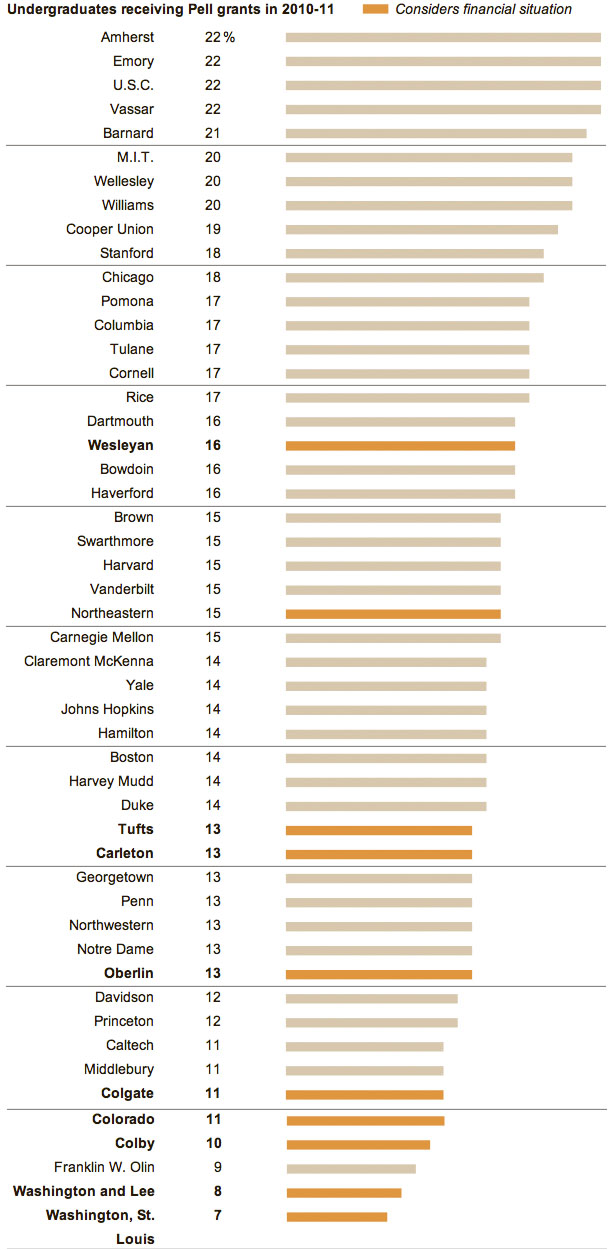
Share

You can’t fire your way to Finland. You actually have to build the capacity of teachers.

Peter Cookson, Jr., via a kind reader’s email

ES: What are your thoughts about evaluating teachers by their students’ standardized test scores? What’s missing from the public debate?
LD-H: Teacher-bashing infuriates me. The commitment of individuals who go into teaching in this country is extraordinary. And many teachers are highly able. We do have a wide range of access to knowledge for teachers, just like we have a wide range of access to knowledge for students. That means that teachers are left with one hand tied behind their backs if they aren’t given the knowledge and the skills they need.
Evaluation has to begin at the very beginning of the career. Finland’s rise to the top of the international rankings is typically attributed by the Finns to the deep training of teachers in a highly professionalized master’s degree program. [In Finland education] students have strong content background, and they study teaching methods while they spend a year in a model school, pursuing a clinically supported internship. In addition, there is a lot of attention to learning how to teach special education students and to personalize teaching for all students. The idea is if you can teach kids who struggle to learn, then you can teach anyone. It really pays off. Finally, teachers learn how to use and conduct research, and [each writes] a thesis in which he or she researches an educational issue as part of the master’s degree.
In Finland there is very little formal evaluation that happens after teachers get into the profession because the bar is so high at the beginning, and there are so many supports to get better. There are some analysts who have claimed, “Oh, if you fire the bottom 10 percent of teachers every year, you’ll get educational outcomes like those in Finland.” In fact, that is not how Finland gets high educational outcomes. You can’t fire your way to Finland. You actually have to build the capacity of teachers.
We ought to be having a conversation about performance assessments for entering the field. [American Federation of Teachers President] Randi Weingarten has called for a “bar exam” for teachers. I’ve been involved in building teacher performance assessments in which beginning teachers demonstrate that they can plan a curriculum, teach it, produce and evaluate student learning. We find that these assessments improve teaching and improve the quality of teacher education.

Related: Wisconsin adopts its first teacher content knowledge licensing requirement – for elementary English candidates, from Massachusetts (MTEL).

Share

How Not to Help the Poor: The Lesson of Soaring College Prices

Josh Freedman:

Whenever policymakers argue over ways to lower the budget deficit, one of the most popular ideas on both sides of the aisle is “means testing” programs like Medicare or Social Security. Instead of cutting everybody’s benefits, the idea is to reduce them for the rich and middle classes while leaving them intact for the poor.
In theory, means-tested programs should be more efficient and progressive because they don’t spend money on those who can pay their own way. But one concern that dogs these proposals is that the programs will lose support and funding as soon as budgets get tight. As the saying often goes: “Programs for the poor are poor programs.”
Over the last several years, we’ve witnessed a high-profile example of that principle in action. Inadvertently, America’s higher education system has become a massive lab experiment, the results of which suggest that means testing social programs can ultimately hurt the very people it is meant to protect.

Share

K-12 Tax & Spending Climate: Detroit bond decision risks raising costs of other states

Stephen Foley and Vivianne Rodrigues

Local governments across the US face potential reviews of their credit ratings and higher funding costs if a financial restructuring proposal for Detroit is endorsed by a bankruptcy judge.
Rating agencies and institutional investors in municipal bonds say they will reconsider their views on so-called “general obligation” (GO) bonds, if Detroit is allowed to treat the owners of these securities as unsecured creditors.
The largest city bankruptcy in US history is being watched closely by people across the $3.7tn municipal bond market, for fear it could upturn long-held assumptions about the relative safety of GO bonds.
Fitch, the credit rating agency, warned it could re-evaluate its approach to GO bonds, depending on the outcome of Detroit’s restructuring, and Moody’s and Standard & Poor’s both said they were monitoring the case closely.

Share