The Frenzy About High-Tech Talent
Pronouncements like the following have become common currency: “The United States is falling behind in a global ‘race for talent’ that will determine the country’s future prosperity, power, and security.” In Falling Behind?, Michael Teitelbaum argues that alarms like this one, which he quotes, are not only overblown but are often sounded by people who do not disclose their motives. Teitelbaum vehemently denies that we are lagging in science, technology, engineering, and mathematics, now commonly abbreviated as STEM. Still, he writes that there are facts to be faced:
In less than 15 years, China has moved from 14th place to second place in published research articles.
General Electric has now located the majority of its R&D personnel outside the United States.
Only four of the top ten companies receiving United States patents last year were United States companies.
The United States ranks 27th among developed nations in the proportion of college students receiving undergraduate degrees in science or engineering.
Madison Schools Tax & Spending Growth Climate….
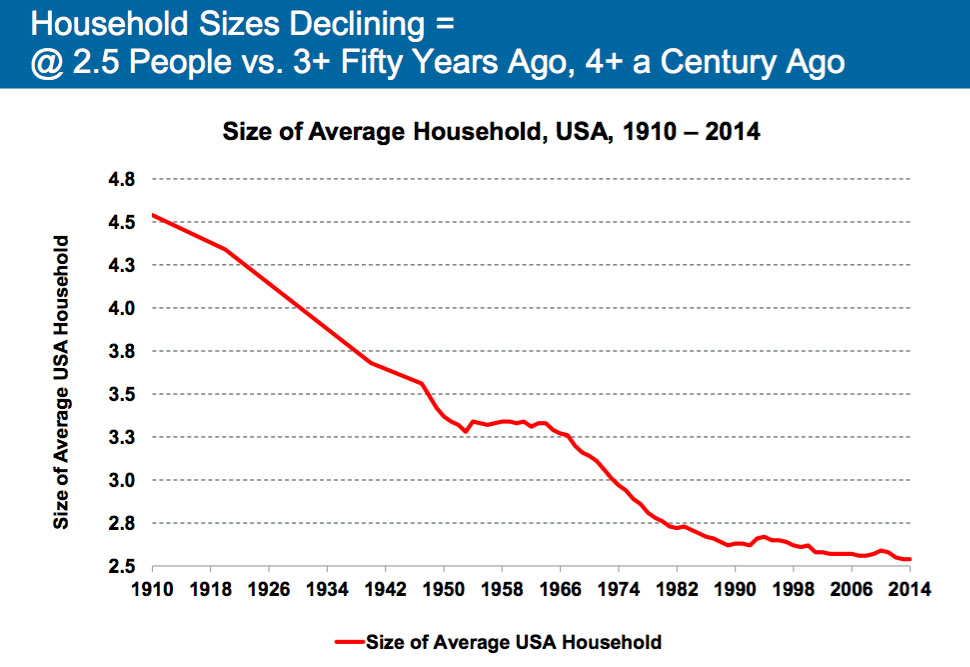
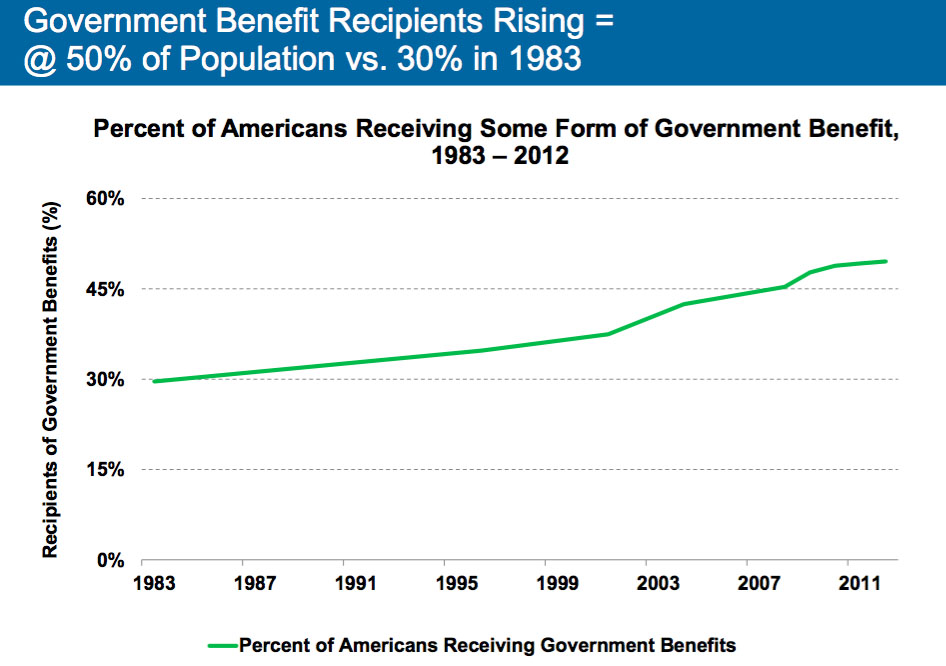
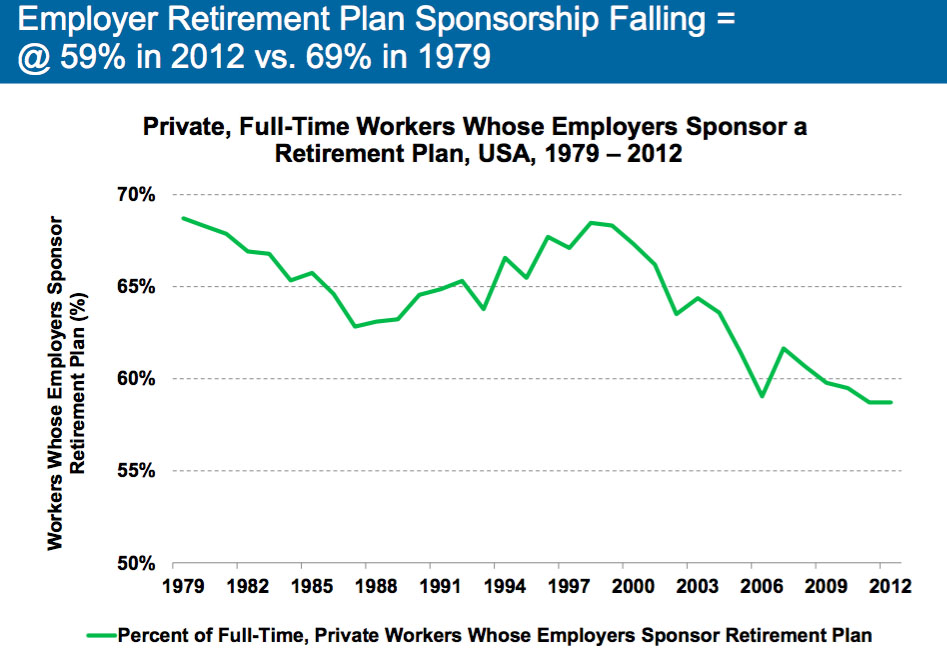
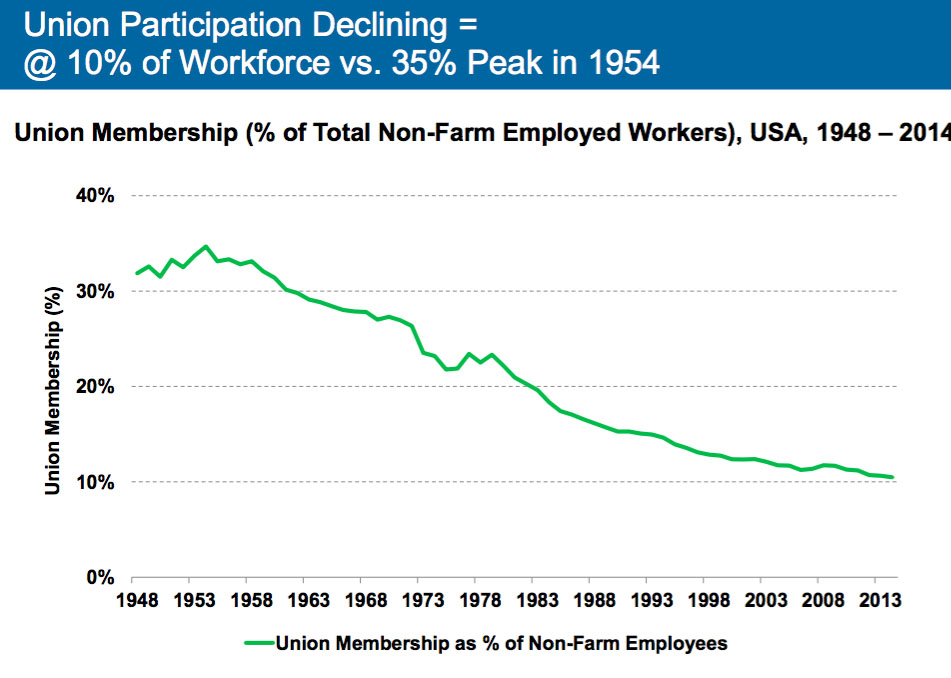
The Madison School District continues to grow its K-12 monoculture, despite long term disastrous reading results.
Against Students
Complaining, censorious, and over-sensitive, university students are destroying their own institutions. Wait, seriously? People think that?
An earlier version of this essay was posted at the blog feministkilljoyWhat do I mean by “against students”? By using this expression I am trying to describe a series of speech acts which consistently position students, or at least specific kinds of students, as a threat to education, to free speech, to civilization, even to life itself. In speaking against students, these speech acts also speak for more or less explicitly articulated sets of values: freedom, reason, education, democracy. Students are failing to reproduce the required norms of conduct. Even if that failure is explained as a result of ideological shifts that students are not held responsible for – whether it be neoliberalism, managerialism or a new sexual puritanism – it is in the bodies of students that the failure is located. Students are not transmitting the right message, or are evidence that we have failed to transmit the right message. Students have become an error mes
Ha, Ha, Ha: Education is sorted out by Hutton, Heffer and Hartley Brewer
Newspaper columnists are like buses you wait for ages for one to write about education and then suddenly three columns turn up at once. Hutton, Heffer and Hartley-Brewer responded in today’s Sundays to the sad, early death of Chris Woodhead, the former Chief Inspector of Schools.
Will Hutton wants everyone to get on his bus. His piece begins in tears and ends in hopelessness. Hutton brought his kids up in Oxford and thought the local comprehensive schools were good enough for his children despite the opinions of those middle class parents who sent their kids to the local private schools. Hutton argues that when Chris Woodhead became head of Ofsted the view of those middle class parents were echoed, he said that there were 15,000 teachers who should be sacked: “…his excoriation of soft teaching methods and praise of his insistence that kids needed to acquire both skills and knowledge for knowledge’s sake.” Hutton says this was echoed by Gove: “…that we need yet more of that [Woodhead’s] energy now to mount the ongoing fight against the liberal/left blob still defending the indefensible.” Then comes an odd bit of logic:
Why Is It So Hard to Kill a College?
Hundreds of colleges in the United States live on the financial margins. Typically small and private, they struggle to pay bills, recruit students, and raise money. Yet few of them fail.
As Sweet Briar College’s projected demise and unexpected revival illustrate, small colleges are a resilient bunch. There are about 1,600 private, nonprofit four-year colleges in the United States, but only a handful close each year. In 2012, the most recent year for which data are available from the National Center for Education Statistics, just two of those institutions shut down.
College leaders and their advisers say that a number of factors keep troubled institutions in business. For one, even broaching the idea of a college’s demise is emotionally fraught. To students, professors, administrators, alumni, and trustees the meaning of their time on a campus depends, in many ways, on the college’s continued existence. Students and alumni may have had life-altering experiences or developed important networks, while professors may have found a community of like-minded people with whom they could picture spending their careers.
Coloring books are suddenly catching on with adults
There are Facebook pages devoted to adult colorers. There are coloring clubs. People who motivate themselves to pay off debt by coloring. Game of Thrones is making a coloring book.
What this means: Coloring is now a normal adult activity.
Thanks largely to a recent wave of publicity over the release of illustrator Johanna Basford’s second coloring book, coloring books as a whole have been enjoying their 15 minutes of fame.
Initiative provides free access to more than 22,000 images of collection materials
To lower barriers to use of its collections, the Ransom Center has adopted an open access policy, removing the requirement for permission and use fees for a significant portion of its online collections believed to be in the public domain.
In conjunction with the release of the policy, the Ransom Center launches Project REVEAL (Read and View English and American Literature), a year-long initiative to digitize and make available 25 of its manuscript collections of some of the best-known names from American and British literature of the nineteenth and early twentieth centuries. Among the authors represented in Project REVEAL are Joseph Conrad, Hart Crane, Thomas Hardy, Vachel Lindsay, Jack London, Katherine Mansfield, Robert Louis Stevenson, and Sara Teasdale.
The Project REVEAL initiative generated more than 22,000 high-resolution images, available for use by anyone for any purpose without restriction or fees. The Ransom Center does, however, ask for attribution alongside the use of its images.
Introducing the Music Data Canvas: 25 Years of Music History
We cleaned and analyzed this data and combined it with YouTube to create a visual interface for exploring the past 25 years of music history and their respective music videos.
The data canvas because wanted to find a more interesting way to display our data than the ways music charts are usually displayed. In this case we were interested in the relationship between the songs beyond just what was on the charts at the same times. The data canvas allows users to visually explore these relationships in ways that are powerful and memorable.
Growing Pains for Deep Learning
Advances in theory and computer hardware have allowed neural networks to become a core part of online services such as Microsoft’s Bing, driving their image-search and speech-recognition systems. The companies offering such capabilities are looking to the technology to drive more advanced services in the future, as they scale up the neural networks to deal with more sophisticated problems.
It has taken time for neural networks, initially conceived 50 years ago, to become accepted parts of information technology applications. After a flurry of interest in the 1990s, supported in part by the development of highly specialized integrated circuits designed to overcome their poor performance on conventional computers, neural networks were outperformed by other algorithms, such as support vector machines in image processing and Gaussian models in speech recognition.
Older simple neural networks use only up to three layers, split into an input layer, a middle ‘hidden’ layer, and an output layer. The neurons are highly interconnected across layers. Each neuron feeds its output to each of the neurons in the following layer. The networks are trained by iteratively adjusting the weights that each neuron applies to its input data to try to minimize the error between the output of the entire network and the desired result.
Although neuroscience suggested the human brain has a deeper architecture involving a number of hidden layers, the results from early experiments on these types of systems were worse than for shallow networks. In 2006, work on deep architectures received a significant boost from work by Geoffrey Hinton and Ruslan Salakhutdinov at the University of Toronto. They developed training techniques that were more effective for training networks with multiple hidden layers. One of the techniques was ‘pre-training’ to adjust the output of each layer independently before moving on to trying to optimize the network’s output as a whole. The approach made it possible for the upper layers to extract high-level features that could be used more efficiently to classify data by the lower, hidden layers.
On Humanities Data
I just want to say at the outset that there are people who specialize in humanities data curation, and I am not one of those people. A number of talented people, including Trevor Muñoz at the University of Maryland and Katie Rawson at the University of Pennsylvania, have started to take a very programmatic look at the data-curation needs of digital humanists. And I encourage you to check out their important work. But you don’t have Trevor or Katie; you have me! So what I can do is share my own perspective and experience on what it means to work with data as a humanist, and where libraries can help.
I’ll start with an anecdote, and I think that anyone who consults on digital humanities projects will be familiar with this scenario. Humanities scholars will sometimes describe elaborate visualizations to me, involving charts and graphs and change over time. “Great,” I respond. “Let’s see your data.” “Data?” they say. “Oh, I don’t have any data.”
Louisiana State’s Firing of Salty Professor Renews Worries About Faculty Rights
Louisiana State University has fired a tenured professor on its Baton Rouge campus against the advice of a faculty panel, raising new questions about the administration’s respect for shared governance and faculty rights.
The Louisiana State University system’s Board of Supervisors voted last week to uphold the firing of Teresa Buchanan, an associate professor of curriculum and instruction, based on accusations she had engaged in sexual harassment and violated the Americans With Disabilities Act.
F. King Alexander, the system’s president, had called for Ms. Buchanan’s dismissal even though a faculty panel that he had appointed to hear her case concluded that the ADA charges against her were unsubstantiated and that she did not deserve to lose her job over the sexual-harassment charges. The latter allegations stemmed mainly from complaints that she had used obscene language in front of students and had spoken disparagingly to them about the sex lives of married people at a time when she was going through a divorce.
Civics: Why We Encrypt
Encryption protects our data. It protects our data when it’s sitting on our computers and in data centers, and it protects it when it’s being transmitted around the Internet. It protects our conversations, whether video, voice, or text. It protects our privacy. It protects our anonymity. And sometimes, it protects our lives.
This protection is important for everyone. It’s easy to see how encryption protects journalists, human rights defenders, and political activists in authoritarian countries. But encryption protects the rest of us as well. It protects our data from criminals. It protects it from competitors, neighbors, and family members. It protects it from malicious attackers, and it protects it from accidents.
Encryption works best if it’s ubiquitous and automatic. The two forms of encryption you use most often — https URLs on your browser, and the handset-to-tower link for your cell phone calls — work so well because you don’t even know they’re there.
Reading Is Forgetting
Tim Parks:
blockquote>There are moments when quite separate fragments of information or opinion come together and something hitherto only vaguely intuited becomes clear. Opening a new book called Forgetting by the Dutch writer Douwe Draaisma, I am told almost at once that our immediate visual memories “can hold on to stimuli for no more than a fraction of a second.” This fact—our inevitable forgetting, or simply barely registering most of the visual input we receive—is acknowledged with some regret since we are generally encouraged, Draaisma reflects, “to imagine memory as the ability to preserve something, preferably everything, wholly intact.”
The same day, I ran across a quotation from Vladimir Nabokov on the Internet: “Curiously enough,” the author of Lolita tells us, “one cannot read a book: one can only reread it.” Intrigued by this paradox, I checked out the essay it came from. “When we read a book for the first time,” Nabokov complains, “the very process of laboriously moving our eyes from left to right, line after line, page after page, this complicated physical work upon the book, the very process of learning in terms of space and time what the book is about, this stands between us and artistic appreciation.” Only on a third or fourth reading, he claims, do we start behaving toward a book as we would toward a painting, holding it all in the mind at once.
Graduating From….. Nursery School
The other day a proud father showed me a photo of his son’s graduation. There was the beaming scholar, diploma in hand, tasselled mortarboard on head, ready to take on the world.
“Congratulations,” I said. But something puzzled me. The kid is only three feet tall. He’s graduating from nursery school.
“Since when do nursery schools have graduation ceremonies?” I asked.
“Oh, they have graduation ceremonies for everything these days,” he said. “It was a big deal. All the parents came. Grandparents too. And of course the nannies.”
Ghetto University: Lessons in Survival
I first applied in 1997 with an application filled out in chalk on the sidewalk of East 128th Street in East Cleveland. I don’t remember exactly what I wrote in my personal essay, but it involved a game with squares and a basketball.
I was a shoo-in. A legacy admission, I thought. Turns out most of my family hadn’t really attended. Well, some uncles, aunts, and cousins had. My parents had, back in the day, but times had changed. It wasn’t the same school anymore. Different courses were being taught.
I watched my older siblings winning pickup games at the basketball court down the street where all the boys in the neighborhood went to play with their shirts off and teenage girls stood court-side and marveled. I marveled. My siblings were pretty good, and eventually I learned to play from watching them.
I had a nice jumper. I could compete with the other boys my age, and I did, but when I played with them my heart would slam relentlessly against my ribs and my throat would try its best to strangle itself. Something would go terribly wrong with my hands. The shots stopped dropping so often I’d pass the ball away whenever I had the chance. This is your world. Take the ball from me. Take from me. Take me. It’s crazy how pressure can thieve your talents. When I was alone, it was nothing but net.
Commentary On Class Size Vs Teacher Qualifications
But others differ on what research shows. Without attracting much attention, SAGE is undergoing a remodeling that is likely to de-emphasize class-size reduction in favor of other efforts that supporters think will have more impact.
Unlike some other major education changes, the new SAGE didn’t emerge from behind closed doors in the middle of the night. The legislature’s Joint Legislative Council, which works on developing legislation, created a bipartisan study committee of legislators and educators that met over several months.
State Sen. Luther Olsen (R-Ripon), who chaired the group, recalled a talk he heard at a national convention of legislators by Andreas Schleicher, an influential figure in studying the success of students around the world. Schleicher cited high-quality teachers and rigorous curriculum as bigger factors in student success than small class sizes.
During the Legislative Council sessions, Sarah Archibald, an aide to Olsen at the time, presented research that said that, while small class sizes help kids, high-quality teaching and high-quality one-on-one tutoring produce more significant results. (Archibald is now an education consultant in Madison.)
“People love small class sizes,” Archibald told me. “I get it.” But class-size reduction “is more expensive and less effective than other strategies.”
“I’d rather have an effective teacher with a large class than an ineffective teacher with a small class,” she said.
Madison has tolerated disastrous reading results for decades, despite any number of programs, inclding SAGE.
Higher Ed and “No Ordinary Disruption”
This review is an argument for postsecondary leaders and emerging leaders to put No Ordinary Disruption on your summer reading list.The consultants from the McKinsey Global Institute who wrote this fine book don’t have all that much to say about higher education. That is good, as postsecondary education is not their speciality. You will need to read this book and apply the ideas back your campus and our industry.
The big idea of No Ordinary Disruption will be a familiar one. Winter is coming. Change is occurring in every industry. The shift to a global information economy is 10 times as fast and 300 times the scale as the last major shift, that from an agricultural to an industrial economy.
“Reeducate them”
IT IS not often that a criminal trial involves a prosecutor pushing for rehabilitation and appropriate counselling”, and a defence lawyer urging the judge to jail his client. But that is what happened at a hearing on June 2nd for Amos Yee, a 16-year-old Singaporean blogger found guilty of circulating an obscene image and insulting Christians.
The rub, in this case, is that the prosecutor was arguing for Mr Yee to be sent to a Reformative Training Centre, a heavily structured programme for young offenders involving military-style training as well as counselling, which can last up to 30 months. Mr Yee’s lawyer was pushing for a short jail term.
As it turns out, both sides will need to wait. At a hearing on June 23rd Mr Yee—who uploaded a cartoon which depicted Singapore’s founding prime minister, the late Lee Kuan Yew, and the late British prime minister, Margaret Thatcher, in a compromising position, and who mocked Christians on his YouTube channel—was remanded for another two weeks. The court is awaiting a psychiatric report after the head psychiatrist for Singapore’s prison system said that Mr Yee may be autistic.
Both Human Rights Watch and the UN Human Rights Office for South-East Asia have called for Mr Yee’s release. The UN body said Mr Yee’s punishment seemed “disproportionate and inappropriate”. Since being found guilty on May 12th, Mr Yee has remained defiant. He has described Singapore’s obscenity laws as “unnecessary [and] inane” and its laws and police as “dumb”. He has derided the Christian God as “fictitious, mass-murdering, sexist, racist [and] sadomasochistic” and has declared: “I have not ‘learnt my lesson’, nor do I see any ‘lesson’ that needs to be learnt.”
The Oligopoly of Academic Publishers in the Digital Era
Vincent Larivière, Stefanie Haustein, Philippe Mongeon:
The consolidation of the scientific publishing industry has been the topic of much debate within and outside the scientific community, especially in relation to major publishers’ high profit margins. However, the share of scientific output published in the journals of these major publishers, as well as its evolution over time and across various disciplines, has not yet been analyzed. This paper provides such analysis, based on 45 million documents indexed in the Web of Science over the period 1973-2013. It shows that in both natural and medical sciences (NMS) and social sciences and humanities (SSH), Reed-Elsevier, Wiley-Blackwell, Springer, and Taylor & Francis increased their share of the published output, especially since the advent of the digital era (mid-1990s). Combined, the top five most prolific publishers account for more than 50% of all papers published in 2013. Disciplines of the social sciences have the highest level of concentration (70% of papers from the top five publishers), while the humanities have remained relatively independent (20% from top five publishers). NMS disciplines are in between, mainly because of the strength of their scientific societies, such as the ACS in chemistry or APS in physics. The paper also examines the migration of journals between small and big publishing houses and explores the effect of publisher change on citation impact. It concludes with a discussion on the economics of scholarly publishing.
How to get a massive discount on college
Have you been accepted to a top college, one that promises to meet 100% of demonstrated financial need? (see list)? If you’re planning on anything near the $60k/year sticker price you are dramatically overpaying. What if I told you that you could attend one of these top schools for free?
They all figure your financial aid the same way. First they collect information about your income and assets using the FAFSA form, then they give you aid (effectively a discount) to make up the gap between what they charge and what they think you can afford. This is absolutely wonderful price discrimination: every industry would love to look deeply into your finances to figure out exactly what you’d be able to pay and charge you that, but only with colleges do we let them.
As a high school senior, you probably don’t have much in terms of income or assets. So why doesn’t the college see you can only pay very little, and give you financial aid for most of the cost of college? Parents. The FAFSA doesn’t just ask about your finances, it also asks about theirs too.
But what if there were a simple way to exclude your parents’ finances from consideration by the college? Where you’d be granted aid based only on your own income and assets? What’s the catch?
No Child Left Unmined
On Facebook, it’s the season where parents are posting pictures of K-12 graduations, including moppets in tiny mortarboards. But unlike a generation ago, today’s smallest graduates are amassing a big data trail. Just as medical and government files have been digitized — some to be anonymized and sold; all susceptible to breaches — student data has entered the realm of the valuable and the vulnerable. Parents are paying attention. A recent study by the company The Learning Curve found that while 71 percent of parents believe technology has improved their child’s education, 79 percent were concerned about the privacy and security of their child’s data, and 75 percent worried about advertiser access to that data.
Request to econ and math people: solve the Delhi University admission problem
Admissions to undergraduate programs in the colleges of Delhi University happen through the so-called ‘cut-off’ system: colleges rank students based on marks in the school-leaving examination and for each program announce a “cut-off” mark. Every student whose score is above the cut-off is eligible to join the program. Since there is a common pool of students applying to different colleges and programs, not all students who are offered admissions in a program join. So the process has to be run in multiple rounds. In each round colleges guess the proportion of those offered admissions who would join. And at the end of each round they must reduce the cut-offs to fill the seats unfilled in the last round. As the cut-offs fall students who get offers from their more preferred programs leave the colleges they had joined in the earlier rounds, creating new vacancies.
Krakauer On Tenure
There is passion in his voice when Krakauer says this. To his thinking, the tenure system is flawed. It’s not fair to junior faculty (tenure review is a form of hazing, he says bluntly) or to women and minorities. Nor is it important to researchers like himself in the natural or computational sciences. They function as academic entrepreneurs raising grants and moving from university to university for a better position. (That’s the new norm, he argues.) Tenure is much more important for the humanities, which can tackle controversial issues that don’t bring in big research grants.
“I wish we could have this conversation,” Krakauer says.
App Academy’s (Real) Tuition Model
App Academy is one of many coding bootcamps that have sprung up in the past few years. For those unfamiliar with the concept, imagine an introduction to development on steroids. Walk in the class a beginner, walk out a few months later with enough knowledge to start working in tech.
App Academy’s shtick is that they don’t charge up front for tuition. Says their homepage: “You only pay us if you find a job as a developer after the program.” Their Program and FAQ pages go into more detail: the fee is 18% of your first year salary, payable over the first 6 months after you start working, and a refundable deposit of $5,000 (or lower in exchange for a higher percentage).
British Academy urges UK government to address numeracy crisis
Count Us In graphicA dramatic improvement in the UK population’s mastery of basic numeracy and statistics needs to happen if the country is to take advantage of the data revolution now sweeping the globe.
That’s the verdict of a major British Academy report Count Us In: Quantitative skills for a new generation.
The UK risks falling behind in the race to tap the potential of “big data”, while the countries’ middling record in numeracy is creating skills deficits for employers and means many citizens and consumers lack the skills to make informed choices.
These are among the warnings of the report, which calls for a transformation in our approach to building numeracy, statistics and data analysis skills to ensure that, within a generation, the UK rises to the challenge of becoming a fully data-literate nation.
Related: Connected Math.
Crippling Student Debt is Forcing Students to Drop Out
The average student who borrowed money for their bachelor’s degree has just over $35,000 in debt. What is perhaps most alarming about this number is how much and how quickly this number is rising. Just from 2014, the number rose almost $2,000 and from ten years ago, the number is roughly $15,000 higher.
The rising cost of colleges, and thus loans, has been decried as a national outrage. U.S. Senator Elizabeth Warren (D-Mass.), who has been so far unsuccessfully working on a bill to lower interest rates on federal student loans, declared the student debt problem “an economic emergency…Forty million people are dealing with $1.2 trillion in outstanding student debt. It’s stopping young people from buying homes, from buying cars and from starting small businesses.”
Free college is not enough: The unavoidable limits of the Kalamazoo Promise
The Promise abruptly reversed the district’s long-running enrollment slide, as the previous blog in this series showed. School enrollment has increased by nearly 25 percent and the city’s population once again has begun to grow. College-going rates have increased significantly, as Brad Hershbein will show later this week. However, there has been no major influx of professional families. In fact, the percentage of students receiving free and reduced lunch increased from 57 percent to 71 percent.
Kalamazoo kids remain poor
More than one-third of children in the district are below the federal poverty line, and 14 percent are in deep poverty—at or below 50 percent of the poverty line. Four in ten live in neighborhoods of highly concentrated poverty (40% poor or more). Income inequality in the Kalamazoo area is above the 80th percentile for US cities—a correlate of low social mobility, according to Raj Chetty, and a predictor of a wide range of social problems in the US and internationally. A recent comparative analysis of social mobility found that Kalamazoo County has lower social mobility for poor children than more than four-fifths of all U.S. counties. While this analysis was based on data that predate the launch of the Promise, there is little evidence —yet — that the Promise has influenced rates of social mobility.
deja vu: Madison, 2015

On November 7, Superintendent Art Rainwater made his annual report to the Board of Education on progress toward meeting the district’s student achievement goal in reading. As he did last fall, the superintendent made some interesting claims about the district’s success in closing the academic achievement gap “based on race”.
According to Mr. Rainwater, the place to look for evidence of a closing achievement gap is the comparison of the percentage of African American third graders who score at the lowest level of performance on statewide tests and the percentage of other racial groups scoring at that level. He says that, after accounting for income differences, there is no gap associated with race at the lowest level of achievement in reading. He made the same claim last year, telling the Wisconsin State Journal on September 24, 2004, “for those kids for whom an ability to read would prevent them from being successful, we’ve reduced that percentage very substantially, and basically, for all practical purposes, closed the gap”. Last Monday, he stated that the gap between percentages scoring at the lowest level “is the original gap” that the board set out to close.
Unfortunately, that is not the achievement gap that the board aimed to close.
In 1998, the Madison School Board adopted an important academic goal: “that all students complete the 3rd grade able to read at or beyond grade level”. We adopted this goal in response to recommendations from a citizen study group that believed that minority students who are not competent as readers by the end of the third grade fall behind in all academic areas after third grade.
“All students” meant all students. We promised to stop thinking in terms of average student achievement in reading. Instead, we would separately analyze the reading ability of students by subgroups. The subgroups included white, African American, Hispanic, Southeast Asian, and other Asian students.
2004: Madison schools distort reading data.
Madison’s reading curriculum undoubtedly works well in many settings. For whatever reasons, many chil dren at the five targeted schools had fallen seriously behind. It is not an indictment of the district to acknowledge that these children might have benefited from additional resources and intervention strategies.
In her column, Belmore also emphasized the 80 percent of the children who are doing well, but she provided additional statistics indicating that test scores are improving at the five target schools. Thus she argued that the best thing is to stick with the current program rather than use the Reading First money.
Belmore has provided a lesson in the selective use of statistics. It’s true that third grade reading scores improved at the schools between 1998 and 2004. However, at Hawthorne, scores have been flat (not improving) since 2000; at Glendale, flat since 2001; at Midvale/ Lincoln, flat since 2002; and at Orchard Ridge they have improved since 2002 – bringing them back to slightly higher than where they were in 2001.
In short, these schools are not making steady upward progress, at least as measured by this test.

2013: Madison’s long term disastrous reading results
In investigating the options for data to report for these programs for 2011-12 and for prior years, Research & Program Evaluation staff have not been able to find a consistent way that students were identified as participants in these literacy interventions in prior years.
As such, there are serious data concerns that make the exact measures too difficult to secure at this time. Staff are working now with Curriculum & Assessment leads to find solutions. However, it is possible that this plan will need to be modified based on uncertain data availability prior to 2011-12.
Proposals to again increase property taxes and school board members’ compensation are in the news (additional school board campaign rhetoric – a bit of history).
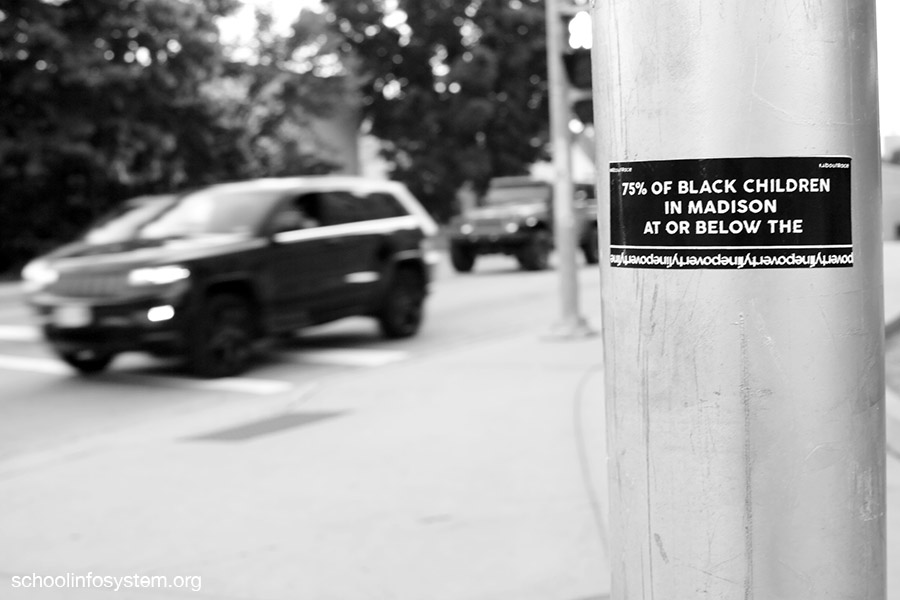
Madison spends roughly double the national average per student.
Unfortunately, Madison resists substantive change at every opportunity.
Compare Madison staffing.
Here’s How Americans Spend Their Working, Relaxing and Parenting Time
The Bureau of Labor Statistics on Wednesday released the 2014 results from the American Time Use Survey. The survey offers the most detailed, up-to-date portrait of how people in the United States spend their time. Here are five of the most striking results, nearly all of which have persisted at near identical rates for the past five years:
Americans still spend more time watching TV than all other leisure activities combined:
The Rise and Fall of Federal College Ratings
On a historical note, the 2013-2015 effort to rate colleges failed to live up to efforts a century ago, in which ratings were actually created but President Taft blocked their release. As Libby Nelson at Vox noted last summer, President Wilson created a ratings committee in 1914, which then came to the conclusion that publishing ratings was not desirable at the time. 101 years later, some things still haven’t changed. College ratings are likely dead for decades at the federal level, but performance-based funding or “risk-sharing” ideas enjoy some bipartisan support and are the next big accountability policy discussion.
I’d love to be able to write more at this time about the path forward for federal higher education accountability policy, but I’ve got to get back to putting together the annual Washington Monthly college rankings (look for them in late August). Hopefully, future versions of the rankings will be able to include some of the new information that has been promised in this new consumer information system.
Act 10 is here to stay
Mitch Henck. much larger forces are at play on Madison’s monolithic “we know best” K-12 world.
Multiplicative reasoning professional development programme
This report looks at a project to develop the ability of teachers to teach topics involving multiplicative reasoning to key stage 3 pupils. It evaluates the effect professional development of teachers in this area had on pupil attainment, and includes teacher and pupil views on the project.
Multiplicative reasoning refers to the use of mathematical understanding to solve problems arising from proportional situations, often involving fractions.
Commentary On Running And Serving On The Madison School Board…
Because members are elected during low-turnout spring elections, special interest groups have a proportionally bigger voice in who wins. In Madison, it’s nearly impossible to win without union support unless you have tons of money.
But under a system of geographically assigned seats, there might be enough grassroots support in, say, a south Madison School Board district to mitigate the union’s influence.
Madison voters have the state Legislature to thank for the school district’s current, inane way of electing board members.
Until 1985, there were no numbered seats, and the top vote-getters for however many seats were up for election were declared the winners.
But in the late 1970s, there was a movement to force board members into one-on-one contests as a way to target specific members amid a broader debate on the board over plans to close some central-city schools.
A binding referendum to move to the current election system failed in 1978, but a bill to do the same was passed a few years later.
Today, School Board president James Howard tells me: “The board’s election process is not on our radar at this time.”
And I suppose it is easier just to hike pay.
Board members definitely work for their money — if not for a more democratic School Board.
Ideally, District academic achievement challengesand its $15k plus per student spending (double the national average) would always be transparent and easy to understand from year to year…
NEARLY three-quarters of the graduates now leaving America’s colleges are saddled with debt
Students who post profiles on SeekingArrangement.com know what they want, so “it’s almost like a business partnership”, says Angela Bermudo, a spokesman for the company. The site hosts some 900,000 profiles of sugar babies enrolled in American universities, up from 458,000 two years ago. Their ranks swelled during the recession and are still growing fast, says Brandon Wade, the site’s founder. A year ago nearly 1,200 students with an e-mail account belonging to an American university posted a profile on the site every day; the daily average has risen to about 2,000. The site has even stopped advertising online. Its ads used to pop up with search results for terms such as “student loan”.
No One Can Figure Out 1917 Multiplication Wheel
NPR:
Math teacher Sherry Read’s classroom is a total mess. The students are gone for the summer, and light fixtures dangle from the ceiling. The floor has a layer of dust. Down the hallway, workers make a racket while they renovate the school, which dates back to the 1890s. They’re working in what has become an archaeological site.
A construction crew at the Oklahoma City school made a startling discovery earlier this month. They found old chalkboards with class lessons that were written almost a century ago, and chalk drawings still in remarkably good condition. So Read doesn’t mind the mess. In fact, she’s amazed.
Related: Math Forum and Connected Math.
On Being Nice
Research labs, like most workplaces, come in two broad varieties: The cut-throat kind, where researchers are always throwing elbows in a quest for prestige, and the collaborative kind, where they work together for the good of the team. And when David Rand first established his Human Cooperation Lab at Yale University, he was clear about the kind of culture he wanted to promote.
Rand’s post-docs help each other and share their expertise willingly, he says. Rand spends some of the lab’s money on social events and happy hours. “Not in a lame, cheesy way, but in a way that’s fun for people,” he told me recently. “It creates bonds among people and makes them not want to cut each other down.”
Can genes predict foreign language learning skills?
Every frustrated language learner has, at some point, proclaimed that they just “don’t have the gift” of picking up foreign languages.
It’s easy to imagine that the aptitude for learning a new tongue exists somewhere beyond our control, perhaps in our blood or brain chemistry, or in the drinking water that flows through Northern Europe and feeds the frustratingly fluent English-speaking Scandinavians from Oslo to Helsinki.
Language teachers will explain to students that anyone can learn a foreign language, and that the skill comes from nurture and not nature. But does biology play any role at all? Is there any part of our DNA that can predict whether or not we can be successful polyglots?
Interview With Mathmetician James Simons
Simons Foundation video.
You Don’t Have to Be a Teacher to Have an Opinion About Education
Education is a public good, funded by taxpayer money. But to some, weighing in on education policy is the exclusive purview of those with classroom experience.
We venture down a slippery slope when we act as gatekeepers on issues with import on all our lives. Do you have to be a doctor to care about health-care policy? A police officer when public safety crises erupt?
A wide swath of Americans are affected by what transpires in schools: taxpayers whose dollars support public education, anyone who has ever attended public schools, parents of public school students and employers looking to hire qualified job applicants.
Ah, we know best…
Our Universities: The Outrageous Reality
Death may be the great equalizer, but Americans have long believed that during this life “the spread of education would do more than all things else to obliterate factitious distinctions in society.” These words come from Horace Mann, whose goal was to establish primary schooling for all children—no small ambition when he announced it in 1848. Others had already raised their sights higher. As early as 1791, exulting in the egalitarian mood of the new republic, one writer declared it “a scandal to civilized society that part only of the citizens should be sent to colleges and universities.”1
How that part has grown is a stirring story. It begins in the colonial period with church-funded scholarships for the sons of poor families. It continued after the Revolution with the founding of public universities such as those of North Carolina and Virginia. In the midst of the Civil War, it was advanced by the Morrill Act, by which Congress set aside federal land for establishing “land-grant” colleges, many of which became institutions of great distinction. By the later nineteenth century, when most colleges still admitted only white men, the cause was advanced again by the creation of new colleges for women and African-Americans.
American Civil War Then & Now
The women who dug the graves, the kids who watched the largest battle in US history – and the slaves forced to help fighters at the front. 150 years after the last shots were fired, Guardian photographer David Levene travelled across the US photographing the sites scarred by the American civil war
First crop of £9,000 tuition fee-paying UK graduates ‘more focused on pay’
The first students to graduate since the imposition of £9,000 annual tuition fees are more focused on securing a well-paid job than their predecessors to pay off their higher levels of debt, according to a major survey of post-university employment.
The survey of 18,000 final year students at 30 universities reported a record proportion had started researching career paths as early as their first year of studies, and more of them undertook work experience to improve their chances of getting a good job after graduation.
More states grade public colleges on performance
rom Maine to Hawaii, some 36 states are allocating money for higher education based, in part, on performance measures designed to reward schools that raise graduation rates, award more high-tech degrees and better prepare students for the job market.
Proponents of the idea say that, as state budget cuts have forced lawmakers to make tough choices, it only makes sense to reward public colleges and universities that get the most bang for every taxpayer buck. But critics of these schemes say they don’t work, and can even produce unintended consequences that end up hurting students in the long run.
Commentary On Wisconsin’s K-12 Tax & Spending Climate
WPR:
Speaking on Wisconsin Public Radio’s “The Kathleen Dunn Show,” Brookfield Republican Rep. Dale Kooyenga downplayed those complaints, drawing a comparison to his experience serving in the U.S. Army.
“You know, before I got into politics, I was in Baghdad, and I was there in 2008 when things were not going well. And you want to talk about a crisis, a crisis is a child in a school in Baghdad in 2008. I mean, that’s to me a crisis. When I look at the Wisconsin education environment, our results are going up,” said Kooyenga.
Kooyenga said that Democrats have been saying for years that Republican changes to Wisconsin schools would gut education and lead the state to lag the rest of the country.
“And the numbers just dont say that. I think you need to look at not only money going into the schools, but you need to look at the outputs. And in every single output in education, we are in a better spot today in 2015 than we were in 2011,” said Kooyenga.
Much more, here.
Harvard Admissions Needs ‘Moneyball for Life
To: Harvard Management Company
From: Harvard Admissions
It’s been several painful weeks since Steve Schwarzman revealed that we denied him admission to the Harvard Class of 1969. As we now all know, the private equity billionaire (net worth: $13 billion and climbing) appeared on the Bloomberg channel and said that the dean of admissions at Harvard wrote to him a few years ago and said, “I guess we got that one wrong.” He also announced his $150 million gift to Yale, to erect a monument to our idiocy.
We in admissions have finished your requested review of the circumstances that led to our catastrophic error. We conclude a) we must improve our attempts at self-abasement and b) Harvard’s admissions process must be overhauled. It has proved imperfectly designed to identify and smile upon those children most likely to become extremely rich.
Pomp and Construction: Colleges Go on a Building Tear
Last week, Cornell University officially kicked off construction of Cornell Tech, a $2 billion science, research and technology campus rising on Roosevelt Island in New York City.
When the first phase of the campus is completed in 2017, it will include three buildings, one of which will be dedicated to business and innovation. When fully completed in 2043, the campus will have 2 million square feet of space on 12 acres serving more than 2,500 graduate students, faculty and staff.
In a city filled with large construction projects—from the $20 billion Hudson Yards development on the far West Side of Manhattan to the $15 billion-plus rebuilding of the World Trade Center—Cornell Tech isn’t one of the biggest deals in New York. But the campus is symbolic of a broader national trend: the rapid expansion of college and university campuses.
Highly trained, respected and free: why Finland’s teachers are different
In a quiet classroom adorned with the joyful creations of small children, Ville Sallinen is learning what makes Finland’s schools the envy of the world.
Sallinen, 22, is teaching a handful of eight-year-olds how to read. He is nearing the end of a short placement in the school during his five-year master’s degree in primary school teaching.
Viikki teacher training school in eastern Helsinki describes itself as a laboratory for student teachers. Here, Sallinen can try out the theories he has learned at the university to which the school is affiliated. It’s the equivalent of university teaching hospitals for medical students.
The school’s principal, Kimmo Koskinen, says: “This is one of the ways we show how much we respect teaching. It is as important as training doctors.”
w N.J. Lies to Students About College and Career Readiness: A Story
This article in South Jersey Magazine is two years old, but it could have been written today. Here, journalist Jayne Jacova Feld profiles a young woman named Rebecca Basenfelder, who graduated from Shawnee High School, part of Lenape Public School district in a suburb of Burlington County, and proudly headed off to Burlington County College. There she discovered herself woefully unprepared for college-level work.
Shawnee High is, according to the N.J. Department of Education’s School Performance Report, a fine school in a middle-class town. (The median household income in Medford, where Shawnee is located, is $83,059 and the median income for a family is $97,135.) The school is strikingly homogeneous: almost all white, with only 6.3% of students qualifying for free or reduced lunch. Test scores look great, with just about every student achieving proficiency or advanced proficiency on N.J.’s non-Common Core-aligned assessment called the High School Proficiency Assessment. The school meets every NCLB target.
Yet here’s Rebecca Basenfelder, one of Shawnee’s proud graduates who, upon arrival at Burlington County College, flunked both the English and math portions of Accuplacer (the college placement test) and spent her entire first year “taking non-credit bearing remedial classes, relearning math she vaguely remembered from middle school and brushing up on her rusty writing skills.” It wasn’t until her second year that she qualified to take college-level coursework.
Spending More & Delivering Less: Why are American schools slowing down so many bright children?
Vicki Schulkin, a Northern Virginia parent, knew her son Matt was bright but did not think this was a problem until some of his teachers began to bristle at the erratic working habits that sometimes accompany intellectual gifts.
“In fourth grade, his English teacher told me early in the semester that he didn’t belong in her high-level class because he wasn’t completing all of his homework,” Schulkin said. That teacher changed her mind after he showed great creativity in a poetry assignment, but other instructors were less understanding.
Related: English 10 and long term, disastrous reading results.
Texas Governor Signs Law To Stop Jailing Kids For Skipping School
Alex Campbell & Kendall Taggert:
Texas will no longer jail kids for skipping school.
Gov. Greg Abbott has signed a bill into law that makes truancy a civil offense rather than a crime. The law goes into effect on Sept. 1.
“Criminalizing unauthorized absences at school unnecessarily jeopardizes the futures of our students,” Abbott said in a statement Friday.
In April, a BuzzFeed News investigation found that more than a thousand teenagers were sent to adult jail on charges stemming from missing school in the past three years. Some students were locked up because of unpaid fines issued by a truancy court and ordered to pay it off by earning “jail credit.”
Students age 17 and above get locked up with adults, sometimes inmates charged with assault, robbery, and other violent crimes. While some students said their jail stint startled them into recognizing the value of school, others said they witnessed adult inmates beating each other and soliciting sex. The overwhelming majority of students charged are poor, and most are black or Hispanic.
BuzzFeed News’ reporting was cited on the state Senate floor during debates over whether and how to change the law. The truancy reform measures were supported by a coalition of Democrats and Republicans, and the law passed with large majorities in both houses.
Advocates for the bill celebrated the news Friday. “We are of course delighted,” said Deborah Fowler, executive director of the advocacy group Texas Appleseed, which pushed for the changes.
Derek Cohen, senior policy analyst for the Texas Public Policy Foundation, known for its conservative Right On Crime campaign, said he was “heartened” by the governor’s decision. “It’s just good common sense policy, and I think the governor realizes that.”
Texas was one of the only states that handled truancy in adult criminal court. In addition to decriminalizing truancy, the new law will require school districts to take more steps to keep students in school before referring them to truancy court, and it will reduce the fines that can be imposed.
Madison Needs To Remove The Blinders
Gee, Kaleem Caire and other black community leaders fought for Madison Prep. It was a proposed charter school aimed at serving young males, mostly black and Hispanic, to be taught predominantly by teachers of color for more effective role modeling.
Berg and several white conservatives in Madison, along with moderate John Roach, supported Madison Prep. It was voted down by white progressives, 5-2.
In 1983, white progressives voted for the Midvale/Lincoln and Randall/Franklin pairing plan 4-3. Berg joined conservative Nancy Harper and board president Salter in opposing the busing plan.
Gee says poor performance and bad behavior can be related to children of color feeling lost in an unfamiliar environment. That can lead to children “working” the teachers or pushing the envelope more than what would happen if teachers of color and similar culture could relate to parents and command more respect in class.
As reported in this paper last Sunday, Gee spoke to Madison School Superintendent Jennifer Cheatham and other school officials about his ideas to close the achievement gap. “They didn’t run out of the room,” Gee said.
It’s not clear if Madison’s education establishment will budge on Gee’s ideas, which include recruiting more parent leaders and working with employers to train young entrepreneurs.
School Field Trips Go Virtual
About 30 fifth-graders let out a collective “ooh!” as a monkey munched on dinner in front of them. The students asked questions of an expert, took notes and waved goodbye to the monkey. Then they returned to their seats at Plaza Vista School about 40 miles south of Los Angeles.
Their virtual field trip to an animal sanctuary in the U.K. was over.
In the wake of recession-era budget cuts and increased pressure on school performance, field trips at some schools consist of a webcam, projection screen and Internet connection instead of permission slips, brown-bag lunches and school buses. The techniques can be used to cut down the cost, time and expense of some real-world trips while expanding the number of possible field-trip-like experiences.
Common Core Is Leaving My Students Behind
The mission of American education is “No Child Left Behind.” For me as a special-education teacher in New York state, that means making my students feel worthwhile and giving them the confidence they need to succeed—academically and socially. Yet New York’s statewide English language arts (ELA) and mathematics exams unduly humiliate children in special education and frustrate the teachers who want them to succeed.
The tests, administered to third- through eighth-graders over six days each spring, evaluate students on uniform Common Core State Standards that have been adopted by most states and emphasize critical thinking. As this newspaper reported in 2013, the first year the tests were administered, many children in New York state “ran out of time, collapsed in tears or froze up.”
Madison Schools’ Plan to Increase Property Taxes by 5% for the 2015-2016 Budget
Madison School District Administration Slideware (PDF).
Much more on the $413,703,424+ 2015-2016 Madison School District budget, here.
MTI President Peg Coyne Retires; President-elect Andy Waity Assumes Presidency
Madison Teachers, Inc. Solidarity Newsletter (PDF), via a kind Jeanie Kamholtz email:
Longtime MTI activist Peg Coyne (Black Hawk), who was elected a year ago to her third term as MTI President, has decided to retire at the conclusion of the school year. Coyne also served as Union President for the 2011-12 and 2013-14 school years, was on the Union’s Bargaining Committee for 12 years (2003-2015), and on the Union’s Board of Directors for five years (2010-2015). She has taught in the District for 42 years.
As a result of her leadership during the Act 10 protests, she spoke several times around the United States, including before the Chicago Teachers Union, at an international labor conference in Minneapolis, and at a social issues conference in Osaka, Japan.
Andy Waity (Crestwood), MTI’s President-elect, will assume the Union’s Presidency at the conclusion of the school year. Given Coyne’s retirement, Waity will serve for two years. Nominations for the remainder of Waity’s At-Large position on the MTI Board will be received at the September 15 meeting of the MTI Faculty Representative Council, or can be made by contacting MTI Executive Director John Matthews (matthewsj@madisonteachers.org 608-257-0491). The election will be held at the October Council meeting. The term expires September, 2016.
Burbank High School teacher’s Shakespeare aversion draws national attention
“High school teachers are supposed to love Shakespeare, and I don’t, so I said I didn’t,” Dusbiber said. “I think the reliance on Shakespeare is something I find odd.”
After 25 years teaching in Sacramento, including the last 13 at Luther Burbank High School, she said she has replaced the Bard’s plays in her classroom with works by nonwhite authors. Dusbiber, who is white, said many of her students come from different ethnic and socioeconomic backgrounds than her own.
In the 2013-14 academic year, 96 percent of Burbank students were nonwhites and 81 percent qualified for free or reduced-price lunches based on household income, according to state data.
Commentary on Wisconsin K-12 Tax & Spending Policies
Madison Teachers, Inc. Solidarity Newsletter (PDF), via a kind Jeanie Kamholtz email:
Governor Walker’s proposed Budget and the gamesmanship being played in the legislature has been compared to the game “whack-a-mole”. Representative Melissa Sargent, a champion for public education, teachers and progressive causes, said of the Budget proposals, “Just when you think we’ve averted one crisis, another initiative is introduced to threaten the progressive traditions of our state.” Sargent added, “The Budget process provides a look inside the corporate-driven policy agenda of the Republican party. Their goal is comprehensive privatization.”
That concept came through loud and clear last week, when the Republican majority on the Joint Finance Committee introduced a proposal which would enable even more funds to be diverted from money-starved public schools to private schools, by expanding the number of parents who can use a State-issued voucher to pay the cost of sending their child to a private school. The funds would come from that child’s area public school system. An investigation by One Wisconsin Now illustrates that a pro-voucher front group donated $122,000 to the campaigns of the Republicans on the Joint Finance Committee.
Senate Democratic Leader Jennifer Shilling said education must be the top Budget priority, that “the needs of children and schools must be addressed before tax breaks for the wealthy and giveaways to special interests (voucher supporters).” Shilling continued, “To fully restore the cuts our schools have seen over the past four years, we need to invest an additional $200 per student above what Walker has proposed.” While the Republican majority brags that they are adding $208 million in school aids, it amounts to only 1⁄2 of 1% over the two-year Budget, and more than 50% of that will not go to schools, but to reducing property taxes.
The Walker Budget would also enable State takeover of the Milwaukee Public Schools, and perhaps the Madison Metropolitan School District. The Budget proposal would enable a “commissioner to convert these schools to charter or voucher schools.” The “commissioner” would have the authority to fire all teachers and administrators in a school district taken over, given the provisions of the proposed law.
A recent amendment would enable anyone with any BA degree to teach English, social studies, math or science, and enable anyone – even without a degree – to teach business, art, music, agriculture or special education.
The Budget will be acted upon this month. It is time to let your objections be heard regarding the school funding crisis being created by the proposed Budget. Contact majority party members of the Joint Finance Committee:
Related: Madison’s long term, disastrous reading results, despite spending more than $15,000 per student, double the national average.
Looking The Part
I still remember the first time someone questioned if I was my dad’s daughter. I was 7 years old, and my family had just begun our summer vacation at Lake Sunapee in New Hampshire. My dad and I went into town to get some hamburgers, buns, and charcoal while my mom and brother unpacked. We quickly raided a small local shop, and at the checkout I felt I deserved a package of Twizzlers for a job well done, and dropped them on conveyor belt. If it had been Mom, the package would have been swiftly returned to the shelf, but Dad never said no. I shimmied toward the exit in quiet victory, waiting for the transaction to be over so I could burst into the sunshine with Twizzlers in hand. As I waited, I heard the cashier comment on my prize.
“Someone’s got a sweet tooth,” she teased good-naturedly.
College-educated men take their time becoming dads
For More Educated Men, Fatherhood Starts LaterAmong dads ages 22 to 44, 70% of those with less than a high school diploma say they fathered their first child before the age of 25. By comparison, less than half (45%) of fathers with some college experience became dads by that age. The likelihood of becoming a young father plummets for those with a bachelor’s degree or more: Just 14% had their first child prior to age 25.
On the flip side, among dads with less than a high school diploma, just 9% entered fatherhood between ages 30 and 44, but among men with a bachelor’s degree or more, a plurality (44%) became a dad between ages 30 and 44.
The US Government’s Predatory Lending Program
Most parents will do just about anything for their children, especially when it comes to education. Predictably, at a time when college costs are exploding and students are staggering under more than $1 trillion in debt, one opportunistic lender is making huge profits on loans to their doting moms and dads.
Less predictably, that lender is the United States government.
The fast-growing federal program known as Parent PLUS now serves 3.2 million borrowers, who have racked up $65 billion in debt helping their kids go to school. The loans have much in common with the regular student loans that have created a national debt crisis and a 2016 campaign issue, but PLUS has much higher interest rates and fees, and far fewer opportunities for loan forgiveness or reductions.
In fact, the PLUS program, which includes similar loans to graduate students, is the most profitable of the 120 or so federal lending programs. That sounds like a good thing, until you remember the government’s profit comes from its own citizens, often citizens of modest means.
Parent PLUS was created in 1980 to provide small loans to help reasonably well-off families finance the American Dream of an undergraduate education. But in an era of skyrocketing education costs, it has grown to look a lot like publicly funded predatory lending, providing almost any borrowers with almost unlimited cash to attend any school with almost no regard to their ability to repay. Thirteen percent of undergraduates now rely on Parent PLUS, and many of their parents are falling into debt traps.
High Expectations
Grit. Resilience. The strength to persist in worthy pursuits past points of frustration.
Going back several years, there’s been a wave of interest in the role these kinds of character traits have in building success in school and, for that matter, in life. Some research suggests building up character assets such as these is as important as building up academic skills.
Leaders of the National Assessment of Educational Progress, the closest thing there is to a national testing program, announced recently that they are aiming to include in tests, starting in 2017, questions aimed at shedding light on how strong character traits are. It’s a significant recognition of how important these “soft skills” are.
The Wisconsin Character Education Partnership held a conference at Alverno College last week. I attended a luncheon at which the South Milwaukee School District, Catholic Memorial High School in Waukesha and Columbus Elementary School in Columbus were among those honored for their character education programs.
This is all very good. I applaud high-quality character programs, schools that make them a part of their own character, and the growing interest in character education. These are things that should be taught at home — and they often are. But they often aren’t. And even if they are, a school is an important place for promoting and enforcing these aspects of being both good and successful.
War, what is it good for?
Morris, a professor of classics and of history at Stanford University, thinks he can distinguish between two kinds of war. The first kind, which he calls “counterproductive war,” is waged by non-state entities against each other and also against what more developed communities exist.
It is the oldest form of war by far, consisting of skirmishes and raids and leading to little but death and destruction. It prevalence was responsible for the fact that, among the simplest known societies such as the Yanomamo of Brazil, as many as 10-20% of all people used to come to a violent end. It goes without saying that a population consisting of tribes, all constantly fighting each other for honor and for resources such as water, cattle and women cannot produce much by way of a civilization. As Morris, quoting Thomas Hobbes, says, its members’ lives are almost certain to be nasty, brutish and short.
Individuals with social phobia have too much serotonin — not too little
Previous studies have led researchers to believe that individuals with social anxiety disorder or social phobia have too low levels of the neurotransmitter serotonin. A new study, however, shows that the situation is exactly the opposite. Individuals with social phobia make too much serotonin. The more serotonin they produce, the more anxious they are in social situations.
You Draw It: How FamilyIncome Predicts Children’sCollege Chances
How likely is it that children who grow up in very poor families go to college? How about children who grow up in very rich families?
We’d like you to draw your guess for every income level on the chart below.
If you think the chances of enrolling in college (or vocational school) are about the same for everyone, you should draw something like this: . If you think the odds are especially harsh for children from the poorest families, but higher for middle- and higher-income children, your drawing would instead look like this: . Or here is one for a situation in which chances level off after a certain income threshold: .
‘More Oxbridge graduates teaching in state schools than independent sector’
The number of Oxbridge graduates teaching in state schools has overtaken those in independent schools, according to analysis by the Sutton Trust, suggesting that high-profile efforts to attract graduates into teaching have paid off.
Using data from a survey of 700 state secondary school teachers, the Sutton Trust study extrapolated that there are 11,000 with degrees from Oxford or Cambridge on staff in England – more than double the number found by a similar survey in 2003.
Moms, Let Dad Be Dad
When Kathryn Kerns asked 30 teens and preteens to come to her laboratory and talk about their parents, many of their dads scored low on a standard yardstick her research team was using to evaluate the parent-child bond.
The children described rich, warm relationships with their fathers, however, says Dr. Kerns, a professor of psychological sciences at Kent State University in Ohio. They said things like, “My dad gives me encouragement to do things,” or, “My dad tells me he thinks I can do well.”
Belle Sherman pupils get schooled in computer coding
A roomful of second- and third-graders could barely sit still Tuesday at Belle Sherman Elementary School as they waited for their after-school class to begin.
“How many of you know what an algorithm is?” Cornell University graduate Arjan Nirh asked the group.
More than half of the 40 7- and 8-year-olds raised their hands.
UC teaching faculty members not to criticize race-based affirmative action, call America ‘melting pot,’ and more
One of the latest things in universities, including at University of California (where I teach) is condemning “microaggressions,” supposed “brief, subtle verbal or non-verbal exchanges that send denigrating messages to the recipient because of his or her group membership (such as race, gender, age or socio-economic status).” Such microaggressions, the argument goes, can lead to a “hostile learning environment,” which UC — and the federal government — views as legally actionable. This is stuff you could get disciplined or fired for, especially if you aren’t a tenured faculty member.
N.J. Charter Schools Receive Less Money From Private Sources Than N.J.’s Traditional Schools
Researchers at the University of Arkansas studied 15 states, including New Jersey, and found that traditional public schools receive more than $2,700 more per student than charters, even with non-public dollars included. The data analyzed is from the 2010-11 school year, the most recent available at the time the study began.
New Jersey was one of only three states in the study where charter schools received less in non-public revenue per pupil than traditional public schools. Traditional public schools received 1.3 percent of funding from private sources, while charters got 1 percent from non-public sources.
The Decline Annoying Real Things About Real Places
In October 2013, the U.S. Department of State eliminated its funding program for advanced language and cultural training on Russia and the former Soviet Union. Created in 1983 as a special appropriation by Congress, the so-called Title VIII Program had supported generations of specialists working in academia, think tanks, and the U.S. government itself. But as a State Department official told the Russian news service RIA Novosti at the time, “In this fiscal climate, it just didn’t make it.” The program’s shuttering came just a month before the start of a now well-known chain of events: Ukraine’s Euromaidan revolution, Russia’s annexation of Crimea, and the descent of U.S.-Russian relations to their lowest level since the Cold War. The timing was, to say the least, unfortunate.
N.J. Teachers’ Pension Woes: the Need for Context and Reform (a response)
Leslie Kan, who blogs about teacher pensions for Bellwether, writes that “New Jersey teacher are furious” because “Governor Christie has shortchanged the pension fund” and they’re expressing their anger by wearing black tee-shirts that show the number of pension payments they’ve made into the system. Kan is on their side: evil Christie promised to make certain pension payments through the 2011 pension reform legislation but he’s “break[ing] his own promise.”
Even worse, she writes, teachers don’t understand that they’re loss is greater than the missed pension payments. They don’t know, she says (and maybe it’s just me who detects a note of condescension here), that they “will actually end up paying out more towards the system in contributions plus interest than what they will get back in benefits. And, “while Governor Christie has shortchanged the pension fund, the system itself is shortchanging the majority of New Jersey teachers. Unfortunately, because of the lack of transparency and byzantine nature of pension systems, many teachers may not realize this.”
Schools ‘ignore bad behaviour’ to fool Ofsted inspectors, says classroom tsar
Some schools and teachers ignore the magnitude of bad behaviour taking place in their classrooms, flattering official statistics and fooling Ofsted inspectors, according to the government’s newly appointed expert on pupil behaviour.
“When Ofsted come calling, loads and loads of schools hoover up the naughtiest kids before inspections,” said Tom Bennett, named by education secretary Nicky Morgan as head of a task force to improve teacher training on classroom behaviour in England.
“From my own experience I’ve known schools that have had very patchy behaviour but they’ve had good ratings simply because the inspectors have only seen certain lessons or certain situations, which are often quite artificial.”
According to Bennett, who also spent six years running nightclubs in Soho, the official paper trail a school is supposed to leave will simply not exist, “because if a school is very bad at recording bad behaviour then it will look pristine. Whereas the opposite might be true”.
UK Schools ‘ignore bad behaviour’ to fool Ofsted inspectors, says classroom tsar
Some schools and teachers ignore the magnitude of bad behaviour taking place in their classrooms, flattering official statistics and fooling Ofsted inspectors, according to the government’s newly appointed expert on pupil behaviour.
“When Ofsted come calling, loads and loads of schools hoover up the naughtiest kids before inspections,” said Tom Bennett, named by education secretary Nicky Morgan as head of a task force to improve teacher training on classroom behaviour in England.
“From my own experience I’ve known schools that have had very patchy behaviour but they’ve had good ratings simply because the inspectors have only seen certain lessons or certain situations, which are often quite artificial.”
According to Bennett, who also spent six years running nightclubs in Soho, the official paper trail a school is supposed to leave will simply not exist, “because if a school is very bad at recording bad behaviour then it will look pristine. Whereas the opposite might be true”.
A Vision For Teacher Training At MIT: West Point Meets Bell Labs
For decades, Arthur Levine, the former president of Teachers College, Columbia University, has tried to imagine a new kind of institution for training teachers. He envisions a combination West Point and Bell Labs, where researchers could study alongside future educators, learning what works and what’s effective in the classroom. That idea is now set to become a reality.
All Possible Humanities Dissertations Considered as Single Tweets
This pedestrian term is actually the key to my historical period.
A disputatious panel at last year’s professional conference revealed the surprising state of the field (it’s as bad as you think).
My historical period, properly understood, includes yours.
What looked like a moment of failure, confusion, or ugliness in this well-known work is better seen as directions for reading the whole.
A problem you thought you could solve defines your field; you can’t imagine the field without the problem.
The only people able to understand this work properly cannot communicate that understanding to you.
Those two apparently incompatible versions of a thing are better regarded as parts of the same, larger thing.
The USC Roski Fiasco Points to the Corrosion of Art Education Nationwide
Last month’s bold decision by an entire MFA class to drop out in protest over mistreatment by school administrators dramatically highlights systemic problems in art education from coast to coast.
Seven graduate students at the University of Southern California’s Roski School of Art and Design left the school on May 15 over the school administration’s changes to their promised funding, faculty and curriculum. The decision, by students Julie Beaufils, Sid Duenas, George EgertonWarburton, Edie Fake, Lauren Davis Fisher, Lee Relvas, and Ellen Schafer, came as a shock, to say the least.
Over the last several years, USC’s MFA program has been viewed as a model of what a graduate experience in studio art should look like: generous scholarship packages, teaching assistantships with cash awards, close ties to Los Angeles cultural institutions like MOCA, and a who’s-who list of visiting artists and faculty (see Entire 2016 MFA Class Drops Out of USC’s Roski School of Art and Design).
Ten current and former USC faculty members recently issued a statement of support of the students, also calling out the disconnected administration.
Scott Walker Is Undermining Academic Freedom at the University of Wisconsin
Walker has said that the proposed tenure changes will provide “more autonomy” for the UW system’s Board of Regents (the governing body that oversees the UW system) and for chancellors to manage the cuts. It would do so by allowing tenured faculty to be laid off at the discretion of the chancellors and Board of Regents.
As a faculty member at UW-Madison, I am heartbroken that my state government has seemingly decided to undermine, instead of prioritizing, the K-16 education system.
As a researcher whose work examines the politics of education in the U.S. and around the world, I am deeply concerned by the threat this legislative shift poses to the ability of public university faculty to conduct research about politically inconvenient facts and teach in politically disfavored fields: the core purposes of faculty tenure and shared governance in public universities.
British Novelist to American Grads: There’s Nothing Virtuous about Being Offended
McEwan did not shy away from addressing the current temper on campus, choosing to focus on the creeping group-think in faculty lounges and discussion sections instead of the all too easy targets of Russian crackdowns on free speech or the “industrial scale” state-sponsored censorship in China. McEwan directly confronted the problem of a country rooted in the tradition of free expression under the First Amendment meekly submitting to what he called “bi-polar thinking” — the eagerness of some to “not side with Charlie Hebdo because it might seem as if we’re endorsing George Bush’s War on Terror.”
McEwan criticized the cowardly behavior of six writers who withdrew from the PEN American Center’s annual gala over their discomfort with the organization’s support for Charlie Hebdo. He argued that the time to “remember your Voltaire” is precisely when confronted with scathing speech that “might not be to your taste” and said he was disappointed that “so many authors could not stand with courageous fellow writers and artists at a time of tragedy.”
Nevada needs Neerav
lighting the world on fire.
Some outliers exist. There’s a low tail, of course, and a battle over whether regulators can shut ’em down fast enough.
There’s a high tail, too—KIPP, Uncommon, AF, YES, Success, High Tech High, Collegiate, etc. Reformy non-profits and ed-tech ventures sometimes supply these exemplars with services, and are sometimes spun out of them.
A lot of the leaders from these top-performing schools show up the day before each New Schools Venture Fund Annual Summit for a smaller get-together. Education reform opponents might liken these meetings to a scene from The Godfather in which crime families gather to discuss how to more effectively commit crimes. My memories of these edu-meetings are less “consiglieres whispering advice to nattily attired bosses” and more “nerdy do-gooders meeting in hallways, excitedly trading tips about English curriculum while trying to keep up with emails from teachers back home (the real work).”
But I recall one gathering with a bit of mafioso feel. Katrina had recently wiped out New Orleans public schools. The big national reformers like TNTP, TFA, and NLNS were already planning big NOLA expansions. Now the smaller organizations, along with each charter “family,” was implored:
Why Scientific American’s Predictions from 10 Years Ago Were So Wrong
Recently, we did an experiment: We took an outdated issue of a respected popular science magazine, Scientific American, and researched exactly what happened to the highly-touted breakthroughs of the era that would supposedly change everything. What we discovered is just how terrible we are at predicting the long arc of scientific discovery.
The daily churn of science news tends toward optimism. You know what I’m talking about: New cure! New breakthrough smashing Moore’s law! New revolutionary technology! I write about science, and I am always uncomfortable trying to predict how a new piece of research will change the future.
That’s because science can be wrong. It can go down dead ends. And even when it doesn’t, almost everything is more complicated and takes longer than we initially think. But just how wrong and how long?
Academic publishers reap huge profits as libraries go broke
CBC:
Think it’s hard to make money in publishing in the digital age? Well, huge profits are still to be had – if you’re a publisher of academic research journals.
While traditional book and magazine publishers struggle to stay afloat, research publishing houses have typical profit margins of nearly 40 per cent, says Vincent Larivière, a researcher at the University of Montreal’s School of Library and Information Science.
The Oligopoly of Academic Publishers in the Digital Era
Vincent Larivière, Stefanie Haustein & Philippe Mongeon
The consolidation of the scientific publishing industry has been the topic of much debate within and outside the scientific community, especially in relation to major publishers’ high profit margins. However, the share of scientific output published in the journals of these major publishers, as well as its evolution over time and across various disciplines, has not yet been analyzed. This paper provides such analysis, based on 45 million documents indexed in the Web of Science over the period 1973-2013. It shows that in both natural and medical sciences (NMS) and social sciences and humanities (SSH), Reed-Elsevier, Wiley-Blackwell, Springer, and Taylor & Francis increased their share of the published output, especially since the advent of the digital era (mid-1990s). Combined, the top five most prolific publishers account for more than 50% of all papers published in 2013. Disciplines of the social sciences have the highest level of concentration (70% of papers from the top five publishers), while the humanities have remained relatively independent (20% from top five publishers). NMS disciplines are in between, mainly because of the strength of their scientific societies, such as the ACS in chemistry or APS in physics. The paper also examines the migration of journals between small and big publishing houses and explores the effect of publisher change on citation impact. It concludes with a discussion on the economics of scholarly publishing.
In Norway, where college is free, children of uneducated parents still don’t go
There’s a saying in famously egalitarian Norway that Curt Rice, the American-born incoming president of the country’s third-biggest university, likes to rattle off: “We’re all sitting in the same boat.”
What it means, said Rice, is that, “To single out anyone, we’re against that. That just does not sit well in the Norwegian soul.”
So all Norwegians have the same tuition-free access to college, no matter what their backgrounds. Every student gets the same allowance for living expenses.
The AtlanticThis story also appeared in The Atlantic
But something surprising is happening in Norway, which explains a similar phenomenon in the United States that has been thwarting efforts to increase the number of Americans pursuing higher education.
I’m a professor. My colleagues who let their students dictate what they teach are cowards.
I’m a tenured professor at Ohio State University. I have taught at the college level for more than 15 years — more than five as graduate student instructor, seven as a tenure-track professor, and three with tenure.
I’m a liberal professor, and my liberal students terrify me
I was a liberal adjunct professor. My liberal students didn’t scare me at all.
When I read about professors being afraid of their own students and changing what they teach in response to that fear, I’m struck by two things. First, I understand why they’re afraid. After my decade and a half in the classroom, I can confidently add to the chorus suggesting that universities increasingly treat students like consumers. As administrators seem more concerned with enrollment dollars than students’ learning, instructors receive a clear message: “The customer is always right.”
Massive endowments, massive tuition, massive debt: Our colleges are out of control and crushing students
Prostitution comes in many forms. Consider the story of a New York University student, who finds that her school — the most expensive in the country — has raised prices yet again, and that she needs $2,000 she doesn’t have to remain enrolled. She visits the financial aid office, where an administrator literally laughs in her face. “He couldn’t believe,” she says, “that anyone would have trouble raising such a small amo
Cheating found to be rife in British schools and universities
British education is experiencing an epidemic of trickery and cheating, ranging from primary school teachers rigging key assessments through to 40,000 university undergraduates disciplined for plagiarism over the past four years.
An investigation by Channel 4 Dispatches, to be screened on Monday night, describes how shady practices and in some cases outright fraud are woven into the fabric of UK education as the use of exam results, league tables and performance indicators increases the pressure on students, teachers and institutions to succeed.
We Have Entered In Age Of Willful Ignorance
o see how we treat the concept of truth these days, one might think we just don’t care anymore. Politicians pronounce that global warming is a hoax. An alarming number of middle-class parents have stopped giving their children routine vaccinations, on the basis of discredited research. Meanwhile many commentators in the media — and even some in our universities — have all but abandoned their responsibility to set the record straight. (It doesn’t help when scientists occasionally have to retract their own work.)
Student “safety” has become a real threat to free speech on campus
FOR an hour or two on a foggy morning last December, some students at the University of Iowa (UI) mistook one of their professors, Serhat Tanyolacar, for a fan of the Ku Klux Klan. MrTanyolacar had placed a canvas effigy based on Klan robes, screen-printed with news cuttings about racial violence, on the Pentacrest, the university’s historic heart. The effigy had a camera in its hood to record public reactions.
The reaction among some black students was to fear for their safety, and that is not surprising. What is more of a puzzle—for anyone outside American academia, at least—is that students and UI bosses continued denouncing Mr Tanyolacar for threatening campus safety even after the misunderstanding was cleared up. In vain did the Turkish-born academic explain that he is a “social-political artist”, using Klan imagery to provoke debate about racism. Under pressure from angry students, university chiefs issued two separate apologies. The first expressed regret that students had been exposed to a “deeply offensive” artwork, adding that there is no room for “divisive” speech at UI. The second apologised for taking too long to remove a display which had “terrorised” black students and locals, thereby failing to ensure that all students, faculty, staff and visitors felt “respected and safe”. An unhappy Mr Tanyolacar feels abandoned by the university. He left Iowa earlier this month, when his visiting fellowship came to an end, and has suspended his teaching career.
“It’s gonna be forever or it’s gonna go down in flames”: Tenure and (In)justice
I don’t have tenure nor a tenure-track job. I was a graduate student, an adjunct, and then a full-time lecturer. My employment in academia was only ever in those positions we call contingent: the contractual, non-tenure track jobs that are either part-time or full-time. Almost two years ago, I quit my lecturer gig to become a freelance writer. I’m off the path that graduate school groomed me for, the tenure-track job. I used to believe that somehow my story was the exception, that most other religious studies PhDs moved onto tenure-track jobs while I fell off the beaten path. Now I realize that I’m not alone and that the opposite is true: contingency is now the exploitative norm in higher education rather than the exception.
In 2011, the American Association of University Professors (AAUP) estimated that 70% of academic laborers were non-tenure track (NTT) faculty while the Coalition of the Academic Workforce (CAW) places the estimate closer to 75%.v Tenure, once a definitive component of employment in higher education, is on the decline while contingent positions have increased dramatically over the last forty years. PrecariCorps, a non-profit foundation aiding adjuncts, estimates that since 1975 part-time NTT faculty increased 286% and full-time NTT faculty increased 259%. Full-time tenured and tenure-track faculty increased by a mere 23% over the same time period. In 2003, twelve years ago, the AAUP noted ominously that at most institutions, “the number of tenure-track positions now available is insufficient to meet institutional teaching and research needs.” The majority of faculty lack the protections of tenure, and they are often an exploited majority.
Ohio School District Bets on Technology in Creating New Learning Model
After a recent high-tech makeover at Reynoldsburg City Schools in this working-class suburb of Columbus, many staples of traditional education are gone.
There are no desks permanently lined up in rows and, in one building, no bells signaling the end of class. College isn’t some far-off place: Students can take classes from a community college on school premises. Most students don’t even have to take gym in high school.
At the heart of the overhaul that is aimed at all grades is a personalized learning model combining computer-based and in-person instruction that the district says has held down costs, sustained above-average test scores and put students in greater control of their learning.
Madison public school students will no longer be allowed to wear clothing with Native American athletic team names, logos or mascots
Madison public school students will no longer be allowed to wear clothing with Native American athletic team names, logos or mascots that depict “negative stereotypes” while at school, after the Madison School Board voted to enact the rule in a unanimous vote last month.
The policy, which goes into effect this fall, might be the first of its kind for a school district, according to students who drafted the proposal.
The new policy also mandates that Madison schools ask visiting teams to leave Native American mascots and logos at home when they play a Madison school. If the other school does not comply, the game may be canceled.
And it would ban other clothing with “negative stereotypes” of race, gender, religion and other characteristics.
Gabriel Saiz, a junior at West High School and a member of the Ponca Tribe, worked with student government and other Native American students to draft the new policy and propose it to the board. He said the proposal wasn’t based on anything he’d seen before.
The Carework and Codework of the Digital Humanities
When it comes to the digital humanities, my most strongly-held belief is that the field, in its most powerful instantiation, can perform a double function: facilitating new digital approaches to scholarly research, and just as powerfully, calling attention to what knowledge, even with these new approaches, still remains out of reach. I will illustrate this double function through the example of the TOME project, a digital tool that I’ve been developing with my colleague at Georgia Tech, Jacob Eisenstein, and a team of several graduate and undergraduate students. Our tool employs topic modeling, a technique that derives from the field of machine learning, to support the interactive thematic exploration of digitized archival collections. (And more on that soon).
But since our test archive consists of a set of abolitionist newspapers, including many held at the AAS, I thought I’d use this particular occasion to work through some of the things that our tool, and the process of its development, have taught us about nineteenth century knowledge production, before considering how digital tools, more generally, do—and do not—help to bring that process of knowledge production to light.
The Harvard IKB School of Engineering
The good people of Dusseldorf, Germany, and specifically the IKB Bank, which specializes in loans to small and medium-size businesses, has kindly endowed Harvard University’s engineering school with a gift of $400m. Harvard President Faust announced the endowment on June 3, the most generous in the University’s history. Strangely, though, the Harvard Engineering School was renamed after hedge-fund manager John A. Paulson, not IKB, and thereby hangs a tale.
You see, the gift by Dusseldorf was not made in its own name. In fact, the money en route to Harvard was taken from IKB through an infamous swindle. Back in early 2007, before the 2008 financial crash, hedge fund manager John Paulson approached Goldman Sachs with the idea of ripping off unknowing investors to the tune of $1 billion. In essence, Paulson would assemble a $1 billion portfolio of toxic assets (known as Abacus) that Goldman Sachs would market to its unsuspecting clients. Paulson would bet against the portfolio, so that the investors’ $1 billion loss would be Paulson’s gain. Goldman would pocket some fees for its service in this treachery against its own clients.
Best classes money can buy
While most seniors in high schools are nervously awaiting the results for the national college entrance exams they wrote on June 7, Gao Ge, a graduate of Shanghai Datong High School, can relax. He has already received offers from many universities, including Carnegie Mellon and Tufts.
Gao is one of the first graduates of the Vermont International Academy program in the school, which offers American-style high-school education to Chinese students.
Gao will also be one of the last graduates of the program.
Beijing and Guangzhou have announced that they will no longer approve international programs like Gao’s in public high schools. Shanghai has reportedly made the same decision.
Long Sentences
Mearcstapa: Boundary Patrollers
When I used to teach Beowulf to undergraduates, I often compared the first parts of the poem to a classic American Western: Grendel and his mother were the outlaws who had harassed and taken over the town, scary liminal figures (OE mearcstapa: boundary-walkers) whose very existence proclaimed that there was something rotten in Denmark. Beowulf himself was also an outsider, like the gun-toting loner who cleans up the Western town, one who can’t really ever fit in. Like the gunfighter riding off into the sunset, he is too much the outsider to be integrated into the community; Beowulf has become too much like the monsters he fights.
I hesitate, in some ways, to begin a “Post-Academic” blog, and to even make the attempt to forge a “post-academic” identity for myself, in part because such an identity positions itself so clearly as just the sort of liminal figure embodied by Beowulf—or Grendel. Which kind of figure I am, after all, may only be a matter of perception or perspective. But Beowulf and Grendel both are symptoms of the rottenness at the heart of Heorot; they are, in a sense, generated by the very structure of the story they find themselves caught up in. I feel a kind of kinship with them both.
And thus perhaps I must speak, or write, precisely because I find myself peculiarly positioned on the borders of academia. Like Beowulf, or Grendel, perhaps I may see more clearly to the heart of matters than do those who live them more from the inside.
Education & Excellence
We have to face the fact that most men and women out there in the world of work are more stale than they know, more bored than they would care to admit. Boredom is the secret ailment of large-scale organizations. Someone said to me the other day “How can I be so bored when I’m so busy?” And I said “Let me count the ways.” Logan Pearsall Smith said that boredom can rise to the level of a mystical experience, and if that’s true I know some very busy middle level executives who are among the great mystics of all time.
We can’t write off the danger of complacency, growing rigidity, imprisonment by our own comfortable habits and opinions. Look around you. How many people whom you know well — people even younger than yourselves –are already trapped in fixed attitudes and habits. A famous French writer said “There are people whose clocks stop at a certain point in their lives.” I could without any trouble name a half of a dozen national figures resident in Washington, D.C., whom you would recognize, and could tell you roughly the year their clock stopped. I won’t do it because I still have to deal with them periodically.
I’ve watched a lot of mid-career people, and Yogi Berra says you can observe a lot just by watching. I’ve concluded that most people enjoy learning and growing. And many are dearly troubled by the self-assessments of mid-career.
What’s Wrong With Deep Learning?
Yan LeCun. PDF.
Exams Around The World
Examinations, tests, assessments—whatever the nomenclature, it’s hard to imagine schooling without them. Testing is the most popular method of quantifying individuals’ knowledge, often with the intention of objectively measuring aptitude and ability.
Test-taking is a dreaded experience that the country’s kids and young adults share with their counterparts across the globe. The ritual at its core doesn’t vary much: Students sit at a table or a computer desk (or sometimes, as shown below, on the floor), pencil and/or mouse in hand, the clock ticking away mercilessly. America for its part is home to what The Atlantic has described as an “alphabet soup” of standardized tests, including: the NAEP, SBAC, PARCC, ACT, and, of course, SAT. Testing has become increasingly notorious in the U.S., to the point that tens of thousands of parents across the country have opted their kids out of standardized tests.
In America, perhaps all the testing helps explain why “all-nighters” and Adderall abuse are the norm on many college campuses. But there is an unhealthy obsession with acing the test abroad, too. Fraudulent college applications are reportedly rampant among students in China—the birthplace of the standardized test—aspiring to attend school in the U.S. And hundreds of people in India were recently arrested in connection with a massive cheating scandal. (Many of those arrested were believed to be family members of the 10th-grade test-takers.) Meanwhile, as NPR has reported, “the relentless focus on education and exams is often to blame” for suicide among teens in South Korea, the leading cause of death for that demographic.