School Information System

Choice plan isn’t about the wealthy

Patrick McIlheran:

Millionaires do screw up everything, don’t they? They’re hovering even now, ghostlike, haunting the working class amid the talk of expanding Milwaukee’s school choice program.
Right now, if you’re poor in Milwaukee – earning $39,000 or less for a family of four – you can take your state aid to any of a selection of superb private schools. Earn any more, as your typical machinist or firefighter would, and it’s either endure the Milwaukee Public Schools, see if you can get into a charter school or pay thousands in tuition.
Gov. Scott Walker proposes lifting the income limit, and letting machinists and firefighters in on the deal. Critics are aghast with the thought that millionaires might benefit, too. Your tax dollars, they gasp, could pick up the $6,442 tab for some millionaire’s son at some private school.
The horror. Not that a $6,442 voucher will take even a millionaire’s kid very far at, say, the University School of Milwaukee, where tuition is $20K a year, should University School decide to take part. Nor will it suddenly relieve any millionaire of the tuition he’s now paying at the more humble St. Parsimonious. Walker’s reform phases in, and parents currently paying tuition can’t get the state aid.

Share

What’s High School For?

Seth Godin:

What’s high school for?
Perhaps we could endeavor to teach our future the following:
How to focus intently on a problem until it’s solved.
The benefit of postponing short-term satisfaction in exchange for long-term success.
How to read critically.
The power of being able to lead groups of peers without receiving clear delegated authority.
An understanding of the extraordinary power of the scientific method, in just about any situation or endeavor.

Share

Chicago Study Finds Mixed Results for AVID Program

Sarah D. Sparks, via a kind reader’s email:

Individual interventions intended to improve academic skills, such as the popular Advancement Via Individual Determination, or AVID, program, may not secure a student’s path to graduation and college without a schoolwide structure to support it, according to a study from the Consortium on Chicago School Research.
In a report set for release in the fall and previewed at the American Educational Research Association convention in New Orleans in April, researchers analyzed how AVID, a study-skills intervention for middle-achieving students, played out in 14 Chicago high schools. They found AVID participants in 9th grade gained little advantage that year over peers not taking part in the program, and remained off track for graduation and college.
The study highlights a potential pitfall for the dozens of student-based interventions aiming to scale up nationwide through private support and programs like the federal Investing in Innovation, or i3, program: As programs move out of the schools for which they were originally developed, their success becomes increasingly dependent on individual schools’ context and capacity.

Madison School District AVID information.

Share

An Open Letter to Arne Duncan

Randy Turner:

Dear Secretary Duncan:
When I first heard that you had written an open letter to the teachers of America, I was afraid to open the envelope.
Considering that it was just last year that you said Rhode Island school board members were “showing courage and doing the right thing for kids” when they fired the entire faculty at a high school, I thought your latest letter might contain a pink slip or at least some sort of reprimand to place in my permanent record.
Instead, I was told just how much you respect me and the hundreds of thousands of teachers in this great country.
Among the things you wrote:

Share

Madison Preparatory Academy Finance Discussion with the Madison School Board

Madison School District 60K PDF:

The review of resources moving forward to be allocated for Madison Prep need further conversation for Administration to gain further direction. At the February 28, 2011 meeting dealing with Madison Prep differing ideas were talked about by various individuals as to the best way to deal with Madison Prep. In order to better understand the direction the board would like administration to head financially with this school, an understanding of what has been done in the past is necessary.
When the finances were completed for Badger Rock, they were put together with the express direction of the majority of the Board that they should break even and not cause reductions in other areas of the district budget. This was accomplished by transferring resources from Sennett Middle School specifically as those kids were moved from Sennett to Badger Rock. This worked for Badger Rock because they defined an attendance area, and agreed that 80% or 40 kids would be from the Sennett attendance area.
For Madison Prep, the issue of transfer becomes more difficult as they will technically pull students from all of our Middle School attendance areas. The amount of funds we are able to segregate for transfer with this model are much less if we are under the same circumstances where we should have a program that breaks even or doesn’t cause reductions in other areas of the budget.

Share

Teachers, MTI head should offer apologies

Tom Consigny:

The April 28 State Journal editorial urged punishment of sick note scammers (some teachers and doctors during the recent protests), and included a column by Chris Rickert titled “Don’t cry for teachers who choose early retirement.” Many taxpayers in Madison and Wisconsin would say “amen.”
It’s ironic and hypocritical that a national radio ad expresses support for Teacher Appreciation Week and touts teachers so soon after over 1,700 Madison teachers didn’t show up for work — 84 of them turning in fraudulent sick notes. The teachers used students as pawns at protest marches and contributed to protester damage at our Capitol.
In the minds of many property taxpayers and even some students, teachers have lost much respect and trust. This could be reversed if teachers and their arrogant union boss John Matthews would express in a public statement regret for their selfish and illegal actions.

Share

Questions & Suggestions for the Madison School District’s Innovation & Alternative Programs

225K PDF: As a result of the presentations and discussion at the first Committee meeting I have some questions and suggestions I want to share with you.
1. Regarding the “Charge” for the Committee: Is the identification and planning for expansion limited to “programs and educational options”?
Recommended suggestions: Think beyond programs, services and projects for processes to affect ‘systemic’ changes.
Much more on the Madison School District’s Innovation & Alternative Programs Initiative, here.

Share

Reality Check: Milwaukee Exceed’s Madison’s Black Not Hispanic 4 Year High School Graduation Rate: 59.5% to 48.3%

Andrew Shilcher, via email:

In response to the press release that the DPI put out today, I did some digging to see where Madison and Milwaukee stacked up. You can check out how each district breaks down for yourself by following the links at the bottom, but here are some of the highlights (if you want to call them that)
According to WINSS
The 4 year graduation rate for Black Not Hispanic students in MMSD for the 2009-2010 school year was 48.3%.
The 4 year graduation rate for Black Not Hispanic students in MPS for the 2009-2010 school year was 59.5%.
The 4 year graduation rates for Hispanic students in MMSD and MPS for the 2009-2010 school year are comparable at 56.7% in MMSD and 59% in MPS.
The statewide average 4 year graduation rate for Black Not Hispanic students for the 2009-2010 school year was 60.5%.
The statewide average 4 year graduation rate for Hispanic students for the 2009-2010 school year was 69%.
I won’t go into the difference between the 4 year rates and Legacy rates, but you can check those out at the links below too. 4 year rates place students in a cohort beginning in their first year of high school and see where things stand within that cohort 4 years later. Legacy rates are a yearly snapshot of the number of graduates for a year compared to the number of students expected to graduate high school for that given year. For a further explanation of this refer to http://dpi.wi.gov/spr/grad_q&a.html.
Here is the link to the press release:
http://dpi.wi.gov/eis/pdf/dpinr2011_43.pdf
Here is the link to MMSD WINSS statistics:
http://data.dpi.state.wi.us/Data/HSCompletionPage.aspx?GraphFile=HIGHSCHOOLCOMPLETION&S4orALL=1&SRegion=1&SCounty=47&SAthleticConf=45&SCESA=05&FULLKEY=02326903““&SN=None+Chosen&DN=Madison+Metropolitan&OrgLevel=di&Qquad=performance.aspx&Group=RaceEthnicity
Here is the link to MPS WINSS statistics:
http://data.dpi.state.wi.us/data/HSCompletionPage.aspx?GraphFile=HIGHSCHOOLCOMPLETION&S4orALL=1&SRegion=1&SCounty=47&SAthleticConf=45&SCESA=05&FULLKEY=01361903““&SN=None+Chosen&DN=Milwaukee&OrgLevel=di&Qquad=performance.aspx&Group=RaceEthnicity

Share

Schools and parental choice: Admission impossible

The Economist:

IS YOUR son an accomplished violinist? Buy a house near one of the many state-funded schools that can now prefer pupils with musical talents, and he will sail to the front of the queue for a place. Is little Johnny a whizz at maths? Alas, only a few scattered patches of England now have academically selective “grammar” schools that can legally admit him ahead of his innumerate friends. Piety might help: have him baptised and attend services regularly and he could win a place at one of the many high-performing church schools.
England’s state schools have an absurdly complex rule book for how they may and may not choose their pupils. (The rest of Britain goes its own way in education policy.) This infuriates conscientious parents and forces them to resort to all sorts of tricks to get their offspring a decent, publicly-funded education. Michael Gove, the education secretary, is bent on overhauling the rules. But it will not be easy.

Share

Who stole the appreciation in Teacher Appreciation Week?

Katie Klein:

This week is Teacher Appreciation Week, and I cannot think of a more appropriate way to express my deep-rooted and sincere gratitude for educators, than using this very public forum.
And to call out the jackasses who seem to neglect the word “appreciation” that educators are so deserving of. Every day.
I have the distinct honor and privilege of knowing a few upper-echelon educators within the area. I also follow a few teachers on Twitter. They are nothing short of amazing.
I’ve witnessed them instruct in front of diverse classrooms full of students, draw up lesson plans over endless cups of coffee and methodically pour their hearts and souls into each day’s activities. They are full of hope. They’re focused on injecting children’s lives with knowledge that will one day mold them into future leaders – future pillars of a community – and adults that will one day change the world. These teachers are selfless.

Share

John Matthews rips MTI contract concessions to the Madison School District

Lynn Welch:

A dispute has developed between Madison teachers and the school district over changes to contracts secured during quickie negotiations in March. John Matthews, executive director of Madison Teachers Inc., is upset about what he calls an “unfair and unreasonable” process.
“The bargaining didn’t have to [involve] so much animosity,” says Matthews. “If they wanted to make revisions, all they had to do is talk with us and we could have worked through something that would be acceptable to both sides. But they didn’t bother to talk about it. You don’t buy good will this way.”
Elsewhere, in an interview with the Wisconsin State Journal, Matthews referred darkly to “the ill will of the board of education and superintendent” toward his members, as shown in these contract talks.
But school board members and district administrators take a different view, saying Matthews and his staff were at the bargaining table and agreed to all changes made to the contracts during an all-night negotiation that ended March 12; MTI members ratified the deal the next day. School Board President Maya Cole suggests that Matthews now has “buyer’s remorse.”

Share

The Tectonic Shift in Education

Jon Rappoport:

During the 1960s, the whole society caved in and gave up the ghost. The education system, such as it was, crashed. I was there, as a teacher, part of that time, and I saw it happen. It foundered on just this point. Repetition. It was as if minds had gone soft and couldn’t perform.
Broadly speaking, the basics of arithmetic went out the window. So did spelling, grammar, and the ability to write coherent sentences. Poof. The amount of scut work it took to build a basic education became unacceptable.
When I read tracts about the intentional undermining of the American educational system, I sense truth in them, but to me the real crash was all about what I’m discussing here.
You can bring up drugs, horrible junk food, the influence of TV and the Internet, large classes, and so on. You can say they all make education a tougher job. Sure, I don’t deny any of that, but the rubber meets the road in REPETITION. The grind. You can either do it or you can’t. If you can’t, everything you learn is faked. It SEEMS to be real, but it isn’t.

Share

I ain’t taking no deep breaths

Miss Brave:

THE TEST is almost upon us! Recently I met with my principal to discuss what grade I’d like to teach next year. After many, many hours of soul-searching I had listed second grade as my first choice on my preference sheet, but there may not be an opening, so I then spent many, many hours agonizing over whether I’d rather move to first grade or stay in third. My principal asked me to be “completely honest” about my reservations in third grade.
“Well,” I said, “I’ve never done test prep before, and I’ve never had a class like this before, so getting this class through test prep has been…”
He finished the sentence for me. “Get me the hell out of third grade?”

Share

If Supermarkets Were Like Public Schools: What if groceries were paid for by taxes, and you were assigned a store based on where you live?

Donald Boudreaux:

Teachers unions and their political allies argue that market forces can’t supply quality education. According to them, only our existing system–politicized and monopolistic–will do the trick. Yet Americans would find that approach ludicrous if applied to other vital goods or services.
Suppose that groceries were supplied in the same way as K-12 education. Residents of each county would pay taxes on their properties. Nearly half of those tax revenues would then be spent by government officials to build and operate supermarkets. Each family would be assigned to a particular supermarket according to its home address. And each family would get its weekly allotment of groceries–“for free”–from its neighborhood public supermarket.
No family would be permitted to get groceries from a public supermarket outside of its district. Fortunately, though, thanks to a Supreme Court decision, families would be free to shop at private supermarkets that charge directly for the groceries they offer. Private-supermarket families, however, would receive no reductions in their property taxes.
Of course, the quality of public supermarkets would play a major role in families’ choices about where to live. Real-estate agents and chambers of commerce in prosperous neighborhoods would brag about the high quality of public supermarkets to which families in their cities and towns are assigned.

Share

Chicago Urban Prep charter school seniors get into Ivy League schools

Noreen S. Ahmed-Ullah, via a kind reader’s email:

Urban Prep Academy will mark another first this year — the city’s all-male, all-African-American charter high school will be sending its first students to an Ivy League school in the fall.
Seniors Matthew Williams and Julius Claybron have been accepted into Cornell University. Williams also has been accepted into Dartmouth College and wait-listed at Harvard and Yale, school officials said.
The students and 102 others in the Class of 2011 announced the colleges they will attend at a ceremony Wednesday at U.S. Cellular Field. They put on baseball caps for their college picks, which included Morehouse, Oberlin, Grinnell and the University of Michigan.

Much more on Chicago’s Urban Prep Academy and the proposed Madison Prep IB Charter school here.

Share

Evaluating Teacher Effectiveness

Thomas J. Kane, Eric S. Taylor, John H. Tyler and Amy L. Wooten:

The Widget Effect,” a widely read 2009 report from The New Teacher Project, surveyed the teacher evaluation systems in 14 large American school districts and concluded that status quo systems provide little information on how performance differs from teacher to teacher. The memorable statistic from that report: 98 percent of teachers were evaluated as “satisfactory.” Based on such findings, many have characterized classroom observation as a hopelessly flawed approach to assessing teacher effectiveness.
The ubiquity of “satisfactory” ratings stands in contrast to a rapidly growing body of research that examines differences in teachers’ effectiveness at raising student achievement. In recent years, school districts and states have compiled datasets that make it possible to track the achievement of individual students from one year to the next, and to compare the progress made by similar students assigned to different teachers. Careful statistical analysis of these new datasets confirms the long-held intuition of most teachers, students, and parents: teachers vary substantially in their ability to promote student achievement growth.

Share

SPECIAL NEEDS SCHOLARSHIPS: Myths and Facts about Wisconsin’s AB 110

Disability Rights Wisconsin (78K PDF), via a kind reader’s email:

Special interests in Washington DC have hired expensive lobbyists who also represent large corporate interests including, General Motors and Proctor & Gamble to try to pull the wool over the eyes ofparents ofchildren with disabilities. They allege that their interest is, “To advocate for parental options in education that empowers low and middle-income families to make choices in where they send their children to school.” (1) These high powered special interests have never approached Disability Rights Wisconsin or any other major Wisconsin disability group to learn from those of us who have been advocating for Wisconsin children with disabilities for over 30 years, to find out what really needs improvement Wisconsin’s special education system. Instead, they have set up a Facebook site which fails to tell the whole truth about the bill they promote.
This fact sheet tells the whole truth about AB 110 and its effort to dismantle special education as we know it and subsidize middle and upper income families who want to send their kids to private school ai taxpayer expense.
Myth# l-AB 110 allows parents the option to choose any other school they want their child to attend if they are unsatisfied with the special education being provided in their public school.
Fact-AB 110 has no requirement in it that forces any school to accept a child who has a special needs voucher.
Myth# 2-Since only children with Individualized Education Programs (IEPs) can receive a special needs scholarship, private schools who accept them must provide them with special education and implement the child’s IEP.
Facts-AB 110 makes no requirement that private schools which accept a special needs scholarship provide any special education or implement any IEP. In fact, AB II 0 does not even require that private schools which accept special needs scholarships have a single special education teacher or therapist on their staff!

Related: Wisconsin Public Hearing on Special Needs Scholarship.

Share

The Evidence Is In: School Vouchers Work

Jason Riley:

‘Private school vouchers are not an effective way to improve student achievement,” said the White House in a statement on March 29. “The Administration strongly opposes expanding the D.C. Opportunity Scholarship Program and opening it to new students.” But less than three weeks later, President Obama signed a budget deal with Republicans that includes a renewal and expansion of the popular D.C. program, which finances tuition vouchers for low-income kids to attend private schools.
School reformers cheered the administration’s about-face though fully aware that it was motivated by political expediency rather than any acknowledgment that vouchers work.
When Mr. Obama first moved to phase out the D.C. voucher program in 2009, his Education Department was in possession of a federal study showing that voucher recipients, who number more than 3,300, made gains in reading scores and didn’t decline in math. The administration claims that the reading gains were not large enough to be significant. Yet even smaller positive effects were championed by the administration as justification for expanding Head Start.

Share

The School I’d Like: here is what you wanted


Dea Birkett:

What makes the ideal school? After entries from all over the country, Dea Birkett reveals the Children’s Manifesto of ideas, from comfy beanbags to soothing music and pets
In January we launched the School I’d Like, asking schoolchildren what would make their perfect school. Hundreds of young people let us know in emails, essays, poems and pictures. From these ideas, we’ve compiled the Children’s Manifesto for the school we’d like, overseen and edited by a panel of 10 children. Some of the ideas are blue-sky thinking: horses and sheep in playgrounds may never be the norm. But many are small and easy to implement. First-aid lessons, a choice of uniform and music instead of bells at break time involve little cost or effort.
Behind these specific, modest requests lie big ideas. The most important aspect of education children want changed is the timetable. They wanted their educational experience to be tailored to them. Sausage-machine schooling, with a one-size-fits-all schedule, is their biggest complaint. They don’t want to do less work (although Friday afternoons off was a popular request). They just want work that enthuses and means something to them.

Share

Sen. Vinehout Says Wisconsin “Can’t Afford” Expanded Voucher Program, Despite a Net Savings of $46.7m to the State in FY 2010

Christian D’Andrea:

Sen. Kathleen Vinehout suggests that we can’t afford expanded school choice in Wisconsin – but history shows that the Milwaukee Parental Choice Program has saved the state hundreds of millions of dollars, especially in areas like Vinehout’s hometown of Alma.
Vinehout’s recent op-ed in the La Crosse Tribune suggested several changes to the proposed 2011 Wisconsin State Budget in order to accommodate potential shifts in fiscal projections over the next two years. One of the Senator’s ideas is to cut any proposed expansions to charter school and MPCP. Her emphasis is clearly worded: “Get rid of the charter school expansion and new private school “choice” vouchers. We can’t afford them.”

Share

Partnership for Assessment of Readiness for College and Careers (PARCC)

PARCC

The Partnership for Assessment of Readiness for College and Careers (PARCC) is a consortium of 25 states working together to develop a common set of K-12 assessments in English and math anchored in what it takes to be ready for college and careers. These new K-12 assessments will build a pathway to college and career readiness by the end of high school, mark students’ progress toward this goal from 3rd grade up, and provide teachers with timely information to inform instruction and provide student support. The PARCC assessments will be ready for states to administer during the 2014-15 school year.
PARCC received an $186 million grant through the U.S. Department of Education’s Race to the Top assessment competition to support the development and design of the next-generation assessment system.

Share

An Oakland Unified School District survey on working conditions

Katy Murphy:

Oakland teachers, counselors, principals and other credentialed school-based staff: Friday is the deadline for completing an anonymous online survey about what it’s like to work at each school in the district.
How much time do you spend on various tasks during the school day? Outside of the regular school day? Are efforts made at your school to minimize interruptions, or routine paperwork? How much time do you have to collaborate with other teachers?
The results will be published online, by school, in June — that is, as long as the response rate is at least 50 percent for a given school. If not, those schools will be omitted from the results.So far, roughly one-third have responded, said Ash Solar, who is facilitating the Effective Teaching Task Force. The goal is at least 80 percent. (You can tell how many people from each school have responded by going here.)

Share

Being Upfront about Teacher pay

Michael Rice:

There has been much gnashing of teeth and consternation going on about teacher pay and a 3% pay cut teachers may be forced to swallow. What gets to me more than anything else is the vile comments that get posted afterward when an article is posted on teacher pay in the local newspapers. Given the comments, one would think that teachers were getting rich and not doing much to earn the vast sums of money they make. I have to say I look at that with bemusement. I guess it is time to put my cards on the table.
For regular readers of the SSS blog, you already know my story. However, many of you don’t. I switched careers in my mid 40’s to become a teacher. I am honored to teach math at Rainier Beach HS. I am in my 6th year. I love my job and I love teaching math to students. I think I have a great job. However, here are the facts of my situation.
I hold an undergrad in Accounting and a Masters in Finance. Before I decided to become a teacher, I worked for a bank in investment accounting. In 2003 (my last full year there), I made $75,000 (that included my bonus), had a defined benefit pension plan that my employer fully funded that would make it possible to retire comfortably after 25 years of service with basically with what I would be making in my last year of working, a 401k that the employer matched dollar for dollar up to 4% of my salary. On top of that, my health care was fully paid for and my wife was on the plan at no charge to me also. The plan was a top notch Blue Cross plan with no co-pays and a very, very large network of doctors, dentists, vision and mental health providers available to us. I also had 4 weeks vacation and every holiday off. I also was given a yearly bus pass, so I did not have to drive downtown.

Share

Whose school is it anyway? Under proposal, taxpayers could pay for experimental charter schools

Susan Troller

Kaleem Caire has spent much of the last year making a passionate, personal and controversial pitch for a publicly funded male-only charter school called Madison Preparatory that would operate independently of the Madison Metropolitan School District. It aims to serve primarily minority boys in grades six through 12 and their families.
Caire, a Madison native and the president and CEO of the Urban League of Greater Madison, has mustered a great deal of community support by highlighting the struggles of and grim statistics surrounding black and Hispanic young boys and men in Dane County, and through telling his own powerful story of underachievement in Madison’s public schools.
“I learned about racism and lower expectations for minority kids when I arrived the first day at Cherokee Middle School, and all the black boys and a few other minorities sat at tables in the back. I was assigned to remedial math, and even when I showed the teacher I already knew how to do those worksheets, that’s where I was stuck,” Caire says.
With its emphasis on discipline, family involvement, preppy-looking uniforms and a non-negotiable stance on being a union-free school, Caire’s proposal for the boys-only middle and high school has won hundreds of enthusiastic supporters, including a number of prominent conservatives who, surprisingly, don’t seem particularly troubled by the school’s price tag.

Some might argue that certain programs within “traditional” public schools are experimental, such as Connected Math and Small Learning Communities among others.

Share

Delaware schools: Christina board rescinds vote on reform

Nichole Dobo:

It came down to one interview.
Christina School District teachers at two of the state’s lowest-achieving schools had 20 minutes to prove their worth.
Each was asked the same questions by a panel that included fellow teachers, district administrators and one state Department of Education official. Their answers were the only factors that determined whether each teacher would remain at Glasgow High School or Stubbs Elementary as part of the district’s Race to the Top reforms.
Nineteen were not asked to stay. They will get a job at another district school.

Share

NEA Affiliates in California and Wisconsin Approach Lean Years Differently.

Mike Antonucci:

Falling enrollment, budget cuts and layoff have led to corresponding declines in membership for most National Education Association state affiliates. Without compensatory action, fewer members mean less dues revenue – a situation these unions have not had to face in recent memory.
As the numbers show quite clearly, even lean times do not mean NEA’s affiliates will become destitute. There is an awful lot of cash flowing through union headquarters around the country. But union officers and representatives are quick to find ways to spend it, particularly on their own employees. Adjusting budgets downwards is not their strong suit.
NEA itself had to revise its budget to account for membership loss and a smaller-than-planned increase in dues. It also froze the pay of its executive officers for the 2011-12 school year.
Two NEA state affiliates – California and Wisconsin – have different troubles to face in different political environments, so we shouldn’t be surprised that they are applying different measures to their fiscal problems.
The California Teachers Association sets its dues level by a formula that involves the average teacher salary over the last three years. With layoffs occurring almost exclusively at the bottom of the salary scale, it actually has the effect of driving up the state’s average teacher salary, and thus the dues level. With fewer members, CTA will raise its dues $8 next fall, to $647. This will mitigate the money lost, but not cover it entirely.
……
WEAC announced the cancellation of its fall convention, citing the uncertainty of whether it will be allowed to bargain the time off for its members. However, holding these events each year is also a budgetary drain, one that other NEA state affiliates have been forced to face.
Despite the serious state of financial affairs, WEAC is allocating up to $2 million for lobbying, legal action and internal communications in order to turn the political tide. It has, and will continue to receive, monetary and manpower assistance from NEA and other affiliates, including California.
These early signs indicate that the likely outcome of the collective bargaining battles in statehouses across the country is financially weaker teachers’ unions – but only relatively. Overall, there may be fewer members and fewer staffers. The unions may require special assessments or higher dues increases just to restore former revenues. But $1.5 billion annually is still an awful lot of money. We may see it applied in concentrated form on the unions’ existential issues, not diffused among feel-good projects.

Share

DFER and the Ultra-Conservative Money Behind the Voucher Movement

Christina Collins:

If you’ve been wondering what’s behind the recent resurgence of voucher bills in Pennsylvania, New Jersey, Florida, Wisconsin and other states, researcher Rachel Tabachnick has done a remarkable job following the money — some of which leads back to Democrats for Education Reform, a group familiar to those who follow school choice debates here in New York. According to her recent two-part series (which can be read here and here), much of the money and support for the voucher movement has come from groups linked to Betsy DeVos,

a former chair of the Michigan Republican Party; daughter of the late Edgar Prince and Elsa Prince-Broekhuizen; sister of Blackwater-founder Erik Prince; and wife of Dick DeVos (son of Richard and Helen DeVos). The Devos side of the family fortune comes from Amway/Alticor, the controversial, multi-tiered home products business. A Center for Public Integrity Report showed that the DeVos family and business interests were the fifth largest contributors in the 2003 -2004 election cycle, with 100% of the donations going to Republicans. Dick and Betsy DeVos have been credited with helping to finance the Citizens United case which allows Super PACs to raise unlimited funds and conceal the donors, meaning that we will no longer know who provides the millions of dollars for the big media campaigns, or reveal the information that I have in this article on the Pennsylvania campaign. The Prince and Devos families have also funded the Family Research Council, Focus on Family, and the ministries of the late D. James Kennedy, all warriors against separation of church and state.

Share

State investigation finds problems with Madison talented and gifted program

Matthew DeFour:

The Madison School District is under added pressure to improve how it identifies and educates talented and gifted students after state officials found its program does not comply with state law.
In revealing shortcomings in the district’s offerings for talented and gifted (TAG) students, the Department of Public Instruction challenges the approach some schools, particularly West High School, have used in which all students learn together.
“The district is going to have to face (the question): ‘How do they reconcile their policy of inclusion with honors classes?’?” said Carole Trone, director of the Wisconsin Center for Academically Talented Youth at UW-Madison. “If parents see the other districts are challenging their students more, they might send their students there.”
Developing a comprehensive system to identify TAG students — including testing and staff training — can be expensive, Trone said. Moreover, districts that don’t identify students from all socioeconomic and cultural backgrounds open themselves up to discrimination lawsuits, she said.
Superintendent Dan Nerad said it’s unclear how much such a revamped program will cost.

Much more on the talented & gifted complaint, here.

Share

Teachers Bring Science to Life, Sponsored by Rayovac

Science & Technology Institute, via a kind reader’s email:

Do you know a teacher who brings learning to life? Whether you’re a student, parent, teacher or school administrator, you can nominate your K-6 teacher for a chance to win an all-expense paid trip to Science in the Rockies, Steve Spangler’s three-day hands-on science teacher training in Denver.

Share

Good golly, our schools desperately need new leadership

Laurie Rogers, via email:

When our school administrators speak to the public, we often hear one or more of the following:

  • Blaming of others – Typical targets include teachers, parents, students, poverty, and a (fake) lack of money.

  • Deceitful presentation of student outcomes – They’ll speak glowingly of some stray statistic that supposedly shows them in a slightly more positive light, but which also depends on the public not knowing the entire truth of it.
  • Astonishing ignorance or accidental honesty. Sometimes the truth comes out of them – in shocking or comical ways.
  • Requests for more money, on the heels of low student achievement. As pass rates go down, the expense per student continues to increase.
  • New policy that will serve their ulterior purpose, but which will make life more difficult for students, parents and teachers.

And so it went, at two recent gatherings for Spokane Public Schools. Teachers were blamed. Administrators praised themselves. The superintendent’s comments caused a stir. And the school board voted to increase class sizes and cut 90 teachers.
…….
Increased expense for unproved programs
Taxpayers pay for scads of district and community programs devoted to reducing dropout rates and increasing on-time graduation rates. As district expenditures skyrocket, parents are still staring at students’ low pass rates, high dropout rates, high rates of college remediation, and low levels of basic skills.
Dr. Stowell praised the district for obtaining a multi-million-dollar grant for Rogers High School, which suffers from particularly low graduation rates. (Please note the illogic of awarding grants to failing programs because they are failing. Failure thus results in more money.) Dr. Stowell said the grant will pay for longer school days, extra teacher pay, a homework center, and – you knew it was coming – a pilot evaluation for teachers.

Share

Learning from Data on Ohio E-Schools

Bill Tucker:

Part I of a new blog series exploring data from Ohio e-schools. While online learning is still new to the vast majority of K-12 students and schools, Ohio has operated “e-schools,” public charter schools that operate entirely online and which students “attend” on a full-time basis, for a decade. As policy debates around online learning grow, what do we know about these schools-who do they enroll and how well do they perform-and what can we learn from Ohio’s e-school experience?
In 2001, the Electronic Classroom of Tomorrow (ECOT), Ohio’s first charter ‘e-school’, opened its doors. Soon there were 27 e-schools across the state. And, despite a moratorium that has prevented any new schools from opening since 2005, total e-school enrollment has skyrocketed to over 29,000 students.

Share

School Choice and Urban Diversity: Many more middle-class parents would live in big cities if they could pick the schools their kids attend.

John Norquist:

With several new GOP governors taking power, shock if not awe pervades the Midwest, particularly among those of us who are Democratic urban dwellers. Perhaps the wave of corporate tax breaks, service cuts to the needy, and transfer of school aid from poor to wealthy districts will be undone with the next swing of the political pendulum. Yet there is one GOP budget provision in Wisconsin that I hope survives.
For 20 years there’s been debate about parental school choice, but only a few places actually have it. Milwaukee has had choice since 1991. At first it was very limited–no religious schools, the program restricted to families with very low incomes, and a cap on total enrollment of 1,000. But parents are now able to choose religious schools, the income limit has been raised to 175% of the federal poverty line ($39,113), and the cap has increased to 22,500 students.
Wisconsin Gov. Scott Walker has proposed allowing any Milwaukee parent, regardless of income, to enroll their children in private and parochial schools. This will address two problems with the current choice program. One, the cap on total enrollment has forced parents onto waiting lists and into lotteries. Two, the income limit has the effect of isolating low-income students from other more affluent students.
Other jurisdictions, including Florida, Arizona and Cleveland, have choice programs. In Washington, D.C., choice was implemented under President George W. Bush and frozen under President Barack Obama. But Florida’s program requires a public school to fail, with failure measured by the state, not by parents. And all choice programs have limitations that undermine the desire of parents to have their children attend a school in which they have confidence. Yet if you think about it, America already has a school choice program in large metro areas. It’s a system that segregates the poor from the rich and works against Americans who want to live in cities. Here’s how it works.

Clusty Search: John Norquist.

Share

Macau private teachers demand more pay

Chloe Lai:

Hundreds of private school teachers marched in Macau yesterday to demand the same wages paid by the city’s handful of government schools.
They formed just part of Macau’s May Day protest. Other marchers included construction workers upset at the hiring of illegal workers because of the property boom.
Around 2,000 protesters took part in what has become an annual show of social discontent in the past few years. The 3,000 patacas cash handout announced by Macau Chief Executive Dr Fernando Chui Sai-on last month appeared to have little bearing on their complaints.
The protest yesterday marked the first time teachers took part as an organised group. There were about 500 and included students marching in support. Most complained about the wage differences between private and government schools – some 40 per cent less, teachers’ leader Choi Leong said.

Share

A New Measure for Classroom Quality

P. Barker Bausell:

OF all the goals of the education reform movement, none is more elusive than developing an objective method to assess teachers. Studies show that over time, test scores do not provide a consistent means of separating good from bad instructors.
Test scores are an inadequate proxy for quality because too many factors outside of the teachers’ control can influence student performance from year to year — or even from classroom to classroom during the same year. Often, more than half of those teachers identified as the poorest performers one year will be judged average or above average the next, and the results are almost as bad for teachers with multiple classes during the same year.
Fortunately, there’s a far more direct approach: measuring the amount of time a teacher spends delivering relevant instruction — in other words, how much teaching a teacher actually gets done in a school day.

Share

Wisconsin Public Hearing on Special Needs Scholarship

Brian Pleva Government Affairs Associate: American Federation for Children-Wisconsin, via a kind reader’s email:

Does contain the info you need?Good afternoon!
I am writing to you because you recently expressed an interest in the bipartisan Wisconsin Special Needs Scholarship Act (Assembly Bill 110).
As you may know, the bill would allow parents to enroll their special needs children in the public or private school of their choice with the education dollars following the child to the new school. The bill, introduced by Representatives Michelle Litjens, Jason Fields & Evan Wynn, and Senators Leah Vukmir & Terry Moulton, has impressive momentum:
-AB 110 has attracted Republican, Democrat, and Independent cosponsors
-32 members of the Assembly have signed on to AB 110, which is over one-third of that house’s current membership
-5 members of the Assembly Committee on Education have signed-on to AB 110, which is almost half of the 11-member committee
Fortunately, Assembly Education Committee Chair Rep. Steve Kestell decided today to schedule a Public Hearing on the Special Needs Scholarship Act for 10:00 am, next Tuesday, May 3rd.
This opportunity can pave the way toward making Special Needs Scholarships in Wisconsin a reality. It is crucial that as many affected families and school leaders as possible attend this public hearing and tell committee members, in their own words, what these scholarships would mean to them.
Please respond to this email and confirm whether you would be able to advocate for this legislation at the public hearing.
One parent wrote on our Facebook page, “It’s so important! Why doesn’t EVERYBODY get that???!!” It may be difficult to comprehend, but there are powerful, special interest groups that don’t get it and will be working to defeat this bipartisan legislation.
While an impressive list of parents who wish to testify is growing, we know that opponents of education reform are always represented at these hearings. Therefore, please forward this email to friends, family, and colleagues who you think will be supportive. The momentum is encouraging, but we must keep it up!
If you have any questions about the bill or public hearing, please feel free to contact me, and check out our website: http://www.specialneedsscholarshipswi.org/.
Thank you!
Brian Pleva
Government Affairs Associate
American Federation for Children-Wisconsin
(608) 279-9484
Assembly
PUBLIC HEARING
Committee on Education
The committee will hold a public hearing on the following items at the time specified below:
Tuesday, May 3, 2011
10:00 AM
417 North (GAR Hall)
State Capitol
Assembly Bill 110
Relating to: creating the Special Needs Scholarship Program for disabled pupils, granting rule-making authority, and making an appropriation.
By Representatives Litjens, Fields, Wynn, Knudson, Nass, Pridemore, Thiesfeldt, Vos, Kleefisch, LeMahieu, Nygren, Strachota, Bernier, Bies, Brooks, Endsley, Farrow, Honadel, Jacque, Knilans, Kooyenga, Kramer, Krug, Kuglitsch, T. Larson, Mursau, Petryk, Rivard, Severson, Spanbauer, Tiffany and Ziegelbauer; cosponsored by Senators Vukmir, Moulton, Galloway and Darling.
An Executive Session may be held on AB 71 at the conclusion of the public hearing.
Representative Steve Kestell
Chair

Wisconsin Special Needs Scholarship Assembly Bill 110 Summary (PDF).

Share

Berkeley struggles to keep guns out of schools

Jill Tucker:

On the morning of March 21, shortly after school began, a Berkeley High School student snuck into a bathroom stall with a gun to show it to a friend.
Suddenly the weapon fired, the bullet ripping through the bathroom’s thin outer wall and across a busy downtown street. Had the boys been facing the other direction, the bullet would have flown into a classroom full of students.
No one was injured, but it was the fifth gun discovered at the district’s two high schools since January, a cluster of incidents that has sent parents into a panic and district administrators scrambling to address the new and disturbing trend.
The presence of guns on campus is not just Berkeley’s problem.
According to state and national surveys, 6 percent of high school students say they have brought a gun to school at least once. That’s the equivalent of at least 210 guns at Berkeley High School with its enrollment of 3,500 students.

Share

What Computer Game Design can Teach us for Lesson Design

Kirsten Winkler:

One of the core features of computer games besides the graphics, sounds and story is something you don’t notice immediately. Some games do not do it very well but some became famous for it: Game Artificial Intelligence.
From the humble beginnings in games like Pacman to the great successes we know today like the Halo series, Game AI showed generations of kids that a computer can be pretty smart and sometimes even mean. Some of the better computer games adapt to the way the player reacts and then find new ways to compete. The aim is of course to keep the player interested in the game and engaged in the sense to make it just as difficult to challenge the player’s skills but on the other hand not to make it too frustrating or impossible to win.
Another part of good game design is that the controls are self explanatory and most gamers won’t be bothered with reading a manual before starting the game. If something is boring and thus means the player understood a strategy or principle of the game there needs to be a way to skip it and move on.

Share

Indiana Governor signs teacher quality bill, part of sweeping education reforms

wane.com:

Governor Mitch Daniels signed Senate Enrolled Act 1 Saturday, a key measure in his comprehensive education reform package that changes the way teachers are evaluated and paid.
According to the governor’s office, for the first time in Indiana, teacher effectiveness will be part of decisions for hiring, salary and promotions.
“Among all the things we can do to make more successful the children of this state, nothing comes close to a better teacher. We are so glad that Indiana has leaped to the forefront by saying to people of all backgrounds and all walks of life, ‘come and teach,'” Daniels said, surrounded by Hoosier teachers from such organizations as Stand for Children, Students First and Teach for America.
Sen. Dennis Kruse, R-Auburn, was the author of the bill; Rep. Robert Behning, R-Indianapolis was the sponsor.
Among provisions, the measure:

Share

New Jersey Gov. Christie calls NJEA a ‘political thuggery operation’ in speech at Harvard

Ginger Gibson:

Gov. Chris Christie took his fight with the state’s largest teacher’s union to Harvard on Friday, repeating his claims that the New Jersey Education Association is the source of most education problems and calling them a “political thuggery operation.”
The governor also acknowledged he has thought about the tough rhetoric he uses when describing the union, but said he would only stop if he is convinced the NJEA is willing to help change “the failed system.”
Speaking to about 250 students and professors at Harvard’s Graduate School of Education, Christie said his battle with the NJEA “is the only fight worth having,” drawing applause.
“They’re there to protect the lowest performers, to protect a system of post-production compensation,” Christie said of the union. “For you to believe that’s for the kids, you have to believe that a child will learn better under the warm comforting knowledge that a teacher pays nothing for their health benefits.”

Richard Perez-Pena:

Conservatives may see Harvard as the heart of liberal darkness, but on Friday it gave a warm, even enthusiastic reception to Gov. Chris Christie and his ideas on education overhaul.
Speaking to almost 200 students and staff members at the Harvard Graduate School of Education, the New Jersey governor drew rounds of applause with his talk of sharply limiting teacher tenure, rigorously evaluating teachers and administrators, curbing the power of teachers’ unions and pledging to appoint more-conservative justices to the State Supreme Court.
Mr. Christie’s first ovation came when he said, “The reason I’m engaging in this battle with the teachers’ union is because it’s the only fight worth having.”
he ground he covered would be familiar to anyone who has watched the town hall-style forums in New Jersey that have made Mr. Christie a YouTube star. There, at least a few detractors usually show up to question him, and his policies and pugnacious statements can make even some supporters uncomfortable.
But here, during Mr. Christie’s 40-minute opening talk and a question-and-answer session of the same length, the response was less equivocal.

Share

UW-Milwaukee holds its 12 charter schools accountable and is getting promising results

Alan Borsuk:

The doorbell wasn’t working when Bob Kattman visited a school recently. Kattman sent the principal an email afterward saying that he expected that wouldn’t be the case the next time he arrived.
Kattman isn’t particularly meddlesome or picky – in fact, his reputation is the opposite. But he has expectations for what he wants to see in a school. An orderly, functioning atmosphere where things like doorbells work is part of the recipe.
Other critical ingredients: strong school leadership, a united and energized staff, a clear academic program (although what the program is can vary widely), a focus on achievement, skillful use of data, an effective character education program for students and a climate in which everyone from the principal to the students is continuously asks how to do things better.
The success overall of the dozen schools in Milwaukee that Kattman oversees as head of the charter school office at the University of Wisconsin-Milwaukee is one of the most important and promising developments on the education scene in Milwaukee and perhaps well beyond.

Share

Education in Turkey: Inspiring or insidious

Delphine Strauss:

In one corner of the courtyard, green-painted railings enclose the tomb of a saint. In another, a pair of 12-year-old boys in spotless white shirts and neatly pressed trousers politely answer visitors’ questions. In Diyarbakir, a city in Turkey’s Kurdish south-east where many children work on the streets or land in jail for throwing stones at security forces, these two have come to prepare for high school entrance exams. Asked what they want to do later, one says “doctor” and the other, grinning, declares “police”.
They are attending a study house run by supporters of Fethullah Gulen – a preacher who has inspired the creation of a vast network of schools and student dormitories that blend academic rigour, especially in the sciences, with a moral education based on Islamic principles.
“It’s not just explaining English or maths – it’s explaining what it means to be a good or bad person,” says the director of Diyarbakir’s 20 study houses. “In this system teachers come to school earlier, become friends with students and care about the relationship….In none of our schools do we teach religion. We tell them what’s right and wrong. We show them good and bad practice, and they decide.”
But in Turkey, opinion is sharply divided between those who see Mr Gulen as a force for social mobility and tolerance, and those who suspect he is insidiously undermining the country’s secular foundations. His followers have been described as “Islamic Jesuits” – and as Turkey’s equivalent of Opus Dei. Yet there is little doubt that the movement he inspires is now an important force shaping Turkish society, part of a broader evolution in which leaders emerging from a religious, business-minded middle class are gradually eclipsing older, fiercely secular, elites.

www.fethullahgulen.org.

Share

The more things change: School finance edition

Steve Prestegard:

Several media outlets, including the Grant County Herald Independent in Lancaster (the first newspaper I worked for, back when Ronald Reagan and the first George Bush were president) and the Wisconsin State Journal, are reporting an unprecedented number of teacher retirements as the latest consequence of Gov. Scott Walker’s attempt to defang public employee unions.
The Herald Independent’s story (to which I can’t post since the Herald Independent is not online, so you’ll have to trust me) includes a number of teachers from not just my days at the Herald Independent, but from my wife’s days as a Lancaster High School student.
That is big news. It would be unprecedented big news if your memory includes only years that begin with the number 2. Back in the late 1980s and early 1990s (and possibly before that), the state would occasionally encourage early retirements as, yes, a way to reduce spending on employee compensation, since the teachers in the classroom the longest were the highest paid given how teachers’ pay is set.
In those days, the “rule of 85” applied — if your age and years as a teacher (or other government employee, although I don’t recall covering other government employee retirements) totaled 85 (for instance, you were 55 years old and you had taught for 30 years), you could retire with full benefits. The “rule of 85” appears to have been replaced by “the rule of 30” — full retirement benefits kick in for anyone in the Wisconsin Retirement System with 30 years’ service, although retiring employees younger than 57 have reduced benefits until their 57th birthday.

Share

McDonnell’s Progressive Agenda: Teacher Performance-Pay

Krystal Ball:

This week Governor McDonnell announced, as part of his “Opportunity to Learn” education reform agenda, an initiative to institute performance-pay at Virginia schools that are designated as “hard to staff.”
While performance-pay is supported by President Obama and Education Secretary Arne Duncan, many Democrats side with teachers unions in opposing performance-pay. I have been critical of many aspects of Governor McDonnell’s education policy including his lack of adequate funding and partisan decision not to participate in Race to the Top. This latest initiative however, is worthy of support.

Share

K-12 Tax & Spending Climate: T he Great Recession’s Impact on State Pension and Retiree Health Care Costs

Pew Center on the States:

In the midst of the Great Recession and severe investment declines, the gap between the promises states made for employees’ retirement benefits and the money they set aside to pay for them grew to at least $1.26 trillion in fiscal year 2009, resulting in a 26 percent increase in one year.
State pension plans represented slightly more than half of this shortfall, with $2.28 trillion stowed away to cover $2.94 trillion in long-term liabilities–leaving about a $660 billion gap, according to an analysis by the Pew Center on the States. Retiree health care and other benefits accounted for the remaining $604 billion, with assets totaling $31 billion to pay for $635 billion in liabilities. Pension funding shortfalls surpassed funding gaps for retiree health care and other benefits for the first time since states began reporting liabilities for the latter in fiscal year 2006.
Precipitous revenue declines in fiscal year 2009 severely depleted state coffers and constrained their ability to pay their annual retirement bills. States’ own actuaries recommended that they contribute nearly $115 billion to build up enough assets to fully fund their promises over the long term, but they contributed only $73 billion–or 64 percent of the total annual bill. This 2009 payment represents a three percentage point decline from the previous fiscal year’s contribution, when they set aside just under $72 billion toward a $108 billion requirement.

Share

Plagiarism and the Web: Myths and Realities

Turnitin.com:

The move to a digital culture is raising a new set of challenges for educators. This study examines the Internet sources that students commonly use and provides educators with ideas to help students develop better citation and writing skills.

Share

Seattle Schools Students Steal Teacher Passwords, Alter Grades

Riya Bhattacharjee:

We just received a tip that Seattle Public School students are using high-tech to steal teacher passwords, hack systems, and alter grades. I am waiting for SPS to confirm this.
According to an email sent by the district’s Chief Informational Officer Jim Ratchford at 11:15 a.m. today to SPS employees, including Interim Superintendent Susan Enfield, Department of Technology Services has determined that network log-in credentials “are being stolen and used to inappropriately access district systems.”
The email, whose subject line reads “Unauthorized Access Warning,” says that the incident “appears to have been going on for the last few weeks, possibly longer.” “At this point, we are aware of this happening at these schools: Ballard, Ingraham, and Sealth. However, all schools and teachers are at risk,” Ratchford says in his email.

Share

Two-thirds of Madison teachers joined protests, district says

Matthew DeFour:

Two-thirds of Madison teachers participated in at least one day of a coordinated four-day absence in February to protest Gov. Scott Walker’s proposal to curb collective bargaining, according to information released by the school district Friday.
According to the district, 1,769 out of 2,655 teachers took time off during the four days without a legitimate excuse. The records also show 84 teachers submitted fraudulent sick notes; 38 received suspensions for failing to rescind the notes by April 15, a deadline set by the district.
The exact number of teachers who caused school to shut down on Feb. 16-18 and 21 was unknown until now. The numbers “validate our decision to close our schools,” Superintendent Dan Nerad said in a statement.
“We realize the challenges that our students’ families experienced as a result of these school closings,” Nerad said. “So we appreciate that we have been able to return since then to normal school schedules and that students have returned to advancing their learning through the work of our excellent staff members.”
Madison Teachers Inc. Executive Director John Matthews acknowledged Feb. 15 that the union was encouraging members to call in sick to attend protests at the Capitol. It was the union’s first coordinated work stoppage since 1,900 out of 2,300 teachers called in sick to protest contract negotiations in September 1997.
On Friday, Matthews emphasized that teachers accepted the consequences of their actions by agreeing to docked pay for the days missed. He called the suspension letters “a badge of honor for standing up for workplace justice.”

Share

Gates to help schools adopt common core standards

Associated Press:

The Bill & Melinda Gates Foundation announced Wednesday it would be investing $20 million to bring new national education standards into the classroom using game-based learning, social-networking and other approaches to capture the imagination of bored or unmotivated students.
The Seattle-based foundation is partnering with the nonprofit arm of one of the largest textbook publishers in the United States to create the new learning tools and offer some of the materials for teachers and school districts to use for free. It is also working with education game developers and an online public school in Florida for this project.
Judy Codding, the Pearson Foundation executive leading the course development team, said during a news conference that her organization already planned to be involved in developing new ways to help teachers adopt the new national education standards that will replace local learning goals in more than 40 states.
The partnership with the Gates Foundation offers the philanthropic side of the textbook company the money it needs to really innovate and try out new ideas that catch kids’ attention, said Codding, former president and CEO of America’s Choice, an education reform company acquired last year by Pearson.

Share

Teachers and the future

Rachel Ida Buff:

On Easter weekend, I went to a wedding in Michigan. The occasion featured a radiant young couple who are expecting their first child in June, amidst a loving community of family and friends. As it happened, many of the people assembled were teachers. And so, on this April weekend, with the countryside greening around us and signs of new life everywhere, I found myself engaged in many conversations about teachers and schooling.
I was struck by the optimism and ambition of many of these young people embarking on careers in education. With their talent and accomplishments, they could select careers that are much more financially rewarding than teaching. But instead, they have chosen the classroom as a site to try to make the world better. They see education as a place to help train young minds and create engaged communities.
One young man, a second-generation teacher, told me that he thinks he affects many more lives as a teacher than he did in his prior work as a student leader and activist. Teaching seventh- and eighth-graders on the south side of Chicago, he explained, forces him to keep learning with his students, to keep their interest and to motivate them.

Share

High school physics teacher perfects the formula for inspiring students

Steve Chawkins:

It was lunch hour and hundreds of Dos Pueblos High School students surged onto the bleachers at the school’s outdoor Greek Theater. The crowd was cheering, the music was thumping and a student-built robot named Penguinbot IV was wheeling and pivoting, sucking up dozens of lightweight balls and shooting them at the young athletes who had ventured onstage.
From a console to one side, teenagers in black, NASA-style jumpsuits guided the 150-pound machine as it weaved and dodged. When the robot and star basketball player Jay Larinan began pelting each other, a girl in the stands screamed, “I believe in you, Jay!” The crowd went wild.
It was the kind of free-spirited scene that gladdens the heart of Amir Abo-Shaeer, the 39-year-old physics teacher who each year leads the school’s robotics team into a rigorous national competition that requires months of preparation and a season’s worth of intense face-offs.

Share

Michigan Gov. Snyder targets teacher performance in sweeping plan

Paul Egan:

Gov. Rick Snyder said today he wants to retool Michigan’s school system so it demands and rewards performance in terms of student achievement.
He detailed changes to merit pay and the teacher tenure system; approval for more charter schools; a new state office devoted to early childhood education; tough anti-bullying measures; a greater emphasis on online education; and a more flexible system in which state funding would follow students wherever they go, rather than being assigned to a particular school district.
Further, the governor announced as many as 23 financially distressed school districts could be placed under emergency managers who have beefed-up powers to scrap collective bargaining agreements under controversial legislation he recently signed into law.
Snyder also expanded “Schools of Choice” plans and said residents of a local district will have the first opportunity to enroll there, but schools will no longer be able to refuse out-of-district students. And he called for consolidation and competitive bidding of school district business and administrative functions.

Share

“Transparency Central” National Review of Education Schools

The National Council on Teacher Qualty:

Higher education institutions, whether they are private or public, have an obligation to be transparent about the design and operations of their teacher preparation programs. After all, these institutions have all been publicly approved to prepare public school teachers.
Here at Transparency Central, you can keep track of whether colleges and universities are living up to their obligation to be open. Just click on a state to learn more about the transparency of individual institutions there.
NCTQ is asking institutions to provide documents that describe the fundamental aspects of their teacher preparation programs: the subject matter teachers are supposed to know, the real-world classroom practice they are supposed to get, the outcomes that they achieve once they enter the classroom. Taken together, the evidence we gathering will answer a key question: Are individual programs setting high expectations for what new teachers should know and be able to do for their students?
A number of institutions have let us know that they do not intend to cooperate with our review, some even before we formally asked them for documents. As a result, we have begun to make open records requests using state “sunshine” (or “freedom of information act”) laws.
We’ll be regularly updating our progress, so come back soon to learn more about our efforts to bring transparency to teacher prep.

Related:

Share

72% Say Taxpayers Not Getting Their Money’s Worth from Public Schools

Rasmussen Reports, via a kind reader’s email:

Voters overwhelmingly believe that taxpayers are not getting a good return on what they spend on public education, and just one-in-three voters think spending more will make a difference.
Nationally, the United States spends an average of about $9,000 per student per year. A new Rasmussen Reports national telephone survey finds that only 11% of voters think the taxpayers are getting a good return on that investment. Seventy-two percent (72%) disagree and say taxpayers are not getting their money’s worth. Sixteen percent (16%) are undecided. (To see survey question wording, click here.)
Thirty-four percent (34%) voters believe student performance will improve if more money is spent on funding for schools and educations programs. A plurality (41%) disagrees and thinks that increased spending will not lead to improve student performance. Twenty-five percent (25%) aren’t sure.
The survey also found that voters tend to underestimate how much is spent on education. Thirty-nine percent (39%) say the average per student expenditure is less than $9,000 per year while only 12% think it’s higher than that. Nine percent (9%) estimate the right amount but a plurality of 40% is not sure. There is a wide range of expenditure on education depending upon the state and region.

Share

Wisconsin School districts’ health plans cost more than businesses’ plans

Rick Rommell:

School districts in southeastern Wisconsin pay significantly more for health insurance than do private businesses – as much as 76% more – and their employees bear much less of the overall cost, an analysis released Wednesday shows.
The relatively small contribution teachers in general make to their insurance coverage drew considerable attention during the superheated debate over Gov. Scott Walker’s budget-repair bill and his bid to sharply limit collective bargaining by most government employees.
Less discussed has been the cost of the insurance plans, which significantly outweigh those offered by private-sector employers, according to an analysis by HCTrends, which describes itself as “a market-oriented forum” on health care issues.
For single coverage, southeastern Wisconsin school districts paid 76% more than private businesses in 2009-’10, according to HCTrends.

MacIver Institute:

School districts in southeastern Wisconsin are paying twice as much for health insurance as private sector companies in Milwaukee, according to a new study by HCTrends. That’s just the beginning of what the group found in its study of school district health insurance expenses in 2010.
“Health plan costs for the region’s teachers are 63 percent higher, on average, than the plans offered at private-sector companies with some union representation, and 80 percent higher than the average single-coverage cost for all private-sector plans,” according to the study.
“This combination of above-average plan costs and below-average employee contributions significantly increases the school district’s health care costs. While the average teachers’ plan costs 80 percent more than the average private-sector plan, the per-employee cost borne by the school district is twice as much as the cost borne by the average employer.”

Share

Foundations Join to Offer Online Courses for Schools

Sam Dillon:

The Bill & Melinda Gates Foundation, the world’s largest philanthropy, and the foundation associated with Pearson, the giant textbook and school technology company, announced a partnership on Wednesday to create online reading and math courses aligned with the new academic standards that some 40 states have adopted in recent months.
The 24 new courses will use video, interactive software, games, social media and other digital materials to present math lessons for kindergarten through 10th grade and English lessons for kindergarten through 12th grade, Pearson and Gates officials said.
Widespread adoption of the new standards, known as the common core, has provoked a race among textbook publishers to revise their current classroom offerings so they align with the standards, and to produce new materials. The Gates-Pearson initiative appears to be the most ambitious such effort so far.

Share

Many factors affect states’ ACT scores

Sunny Schubert:

The achievement gap between white and minority students has nothing to do with aptitude but correlates to socioeconomic factors such as poverty, racism and family structure. Still, it stands to reason that states with higher percentages of lower-performing students will perform lower in the aggregate than states with higher percentages of better performing students.
Results from the National Assessment of Educational Progress test are broken down for ethnicity. The scores show white students in Texas consistently score higher than white students in Wisconsin, and black and Hispanic students in Texas also outscore their Wisconsin counterparts.
As for the writer’s statement that Texas licenses mere four-year college graduates rather than school of education graduates, I say “good for Texas!” It’s ironic that the most engaging teachers at our colleges and universities, such as UW-Madison’s famous chemistry professor Bassam Shakhashiri, would not be allowed to teach in a Wisconsin public school because most have no degrees in education.

Share

Don’t cry for teachers who choose early retirement

Chris Rickert:

One indication of how disingenuous the world of public education has become is the sympathy some of us apparently feel for veteran Madison teachers who feel compelled to retire early.
As this newspaper detailed Sunday, early retirements have spiked over concerns about what Gov. Scott Walker’s bid to curtail public sector collective bargaining rights will mean for teachers’ retirements.
It’s clear teachers beginning their careers today could be subjected to lots of things the private sector has had to endure for a long time (e.g., merit evaluations, higher health care costs). What puzzles me is what veteran teachers risk by working a few more years — especially given the love they express for the job.
Take, for example, teachers’ ability to parlay unused sick days into health insurance coverage or other benefits after they retire.
District spokesman Ken Syke said the district’s legal team has not produced an opinion on this. But teachers union president John Matthews was certain it was a benefit long-time teachers would retain.

Share

Madison Schools Found Non-Compliant on Wisconsin DPI Talented & Gifted Complaint

Madison School District 450K PDF and the DPI Preliminary Audit, via a kind reader’s email:

I. Introduction A.Title/topic-Talented and Gifted Compliance
B. Presenter/contact person -Sue Abplanalp, Jennifer Allen, Pam Nash and Dylan Pauly
Background information- On March 24,2011, MMSD received DPI’s initial findings in the matter ofthe TAG complaint. DPI found MMSD to be noncompliant on all four counts. The Board has forty-five days from the date of receipt ofthe initial findings to petition the state superintendent for a public hearing. If the Board does not request such a hearing, the findings will become final. Once the findings are final, regardless of whether a hearing is held, if there is a finding of noncompliance, the state superintendent may develop with the Board a plan for compliance. The plan must contain a time line for achievement of compliance that cannot exceed ninety days. An extension of the time period may be requested if extenuating or mitigating circumstances exist.
II. Summary of Current Information:
Current Status: Currently, DPI has made an initial finding of noncompliance against MMSD. While the Board is entitled to request a public hearing on the issue of compliance, the administration does not recommend this course of action. Consequently, at this time, the administration is working toward the development ofa response to DPI’s findings, which will focus on remedial steps to insure compliance.
Proposal: Staff are working on a response to the preliminary findings which we will present to the Board when completed. It is the administration’s hope that this response will serve as the foundation to the compliance plan that will be developed once the DPI findings are final. The response will include input from the TAG Advisory Committee, the District’s TAG professionals — our Coordinator and staff. A meeting to begin work one the proposed response is currently scheduled for April28, 2011 from 4:00 p.m.-5:00pm. Subsequent meetings will follow.

Much more on the Wisconsin DPI Parent Talented & Gifted complaint.
Watch Monday evening’s Madison School Board discussion of the DPI Talented & Gifted complaint, here (starts at 128:37). and here.

Share

Madison Schools: Alternative School Redesign (Hoyt, Whitehorse & Cherokee “Mental Health Hubs”) to Address Mental Health Concerns: Phase 1

80K PDF, via a kind reader’s email:

I. Introduction A. Title/topic -Alternative Redesign to Address Mental Health Concerns B. Presenter/contact person- Sue Abplanalp, John Harper, Pam Nash and Nancy Yoder
Background information -The Purpose of this Proposal: Research shows that half of all lifetime cases of mental illness begin by age 14.1 Scientists are discovering that changes in the body leading to mental illness may start much earlier, before any symptoms appear.
Helping young children and their parents manage difficulties early in life may prevent the development of disorders. Once mental illness develops, it becomes a regular part of a child’s behavior and more difficult to treat. Even though doctors know how to treat (though not yet cure) many disorders, a majority of children with mental illnesses are not getting treatment (National Institute of Mental Health).
II. Summary of Current Information: Success is defined as the achievement ofsomething desired and planned. As a steering committee, our desire and plan is to promote a strategic hub in three sites (Hoyt, Whitehorse and Cherokee) that connect, support and sustain students with mental health issues in a more inclusive environment with appropriate professionals, in order to maximize students’ success in middle school and help them achieve their aspirations in a setting that is appropriate for their needs. The new site will also offer mini clinics from a community provider
Current Status: Currently, there is one program housed at Hoyt that serves 28-30 students in self contained settings. There is currently a ratio of 1:4 with 4 staff and 4 special educational assistants assigned to the program. In addition, there is a Cluster Program housed at Sherman with 2 adults and 6-7 students in the program.
Proposal: This proposal leaves approximately half of the students and staff at the current Hoyt site (those students who pose more of a danger to self or others) and removes all of the students and staff from Sherman (no program at Sherman) to the new sites. Students will attend either Whitehorse or Cherokee Middle Schools with a program that provides ongoing professional help and is more inclusive as students will be assigned to homerooms and classes, with alternative settings in the school to support them when they need a more restrictive environment with support from a smaller student ratio and a psychologist or social worker that is assigned to the team.

This initiative was discussed during Monday evening’s Madison School Board meeting. Watch the discussion here (beginning at 180 minutes).

Share

Chicago Teacher’s Union Head Endorses Anti-Labor Bill: A Crisis for Teachers’ Union Reformers?

Lee Sustar:

Teachers’ union activists in Chicago are contending with their union president’s decision to back legislation that all but bans them from striking and makes major concessions to the corporate education “reform” agenda.
Reform groups that lead teachers unions are also having debates in Los Angeles, where the election for the union presidency was recently won by a challenger to the incumbent reform caucus, and in Washington, D.C., where a newly elected officers offered to take a pay freeze to save jobs.
But the biggest controversy is in Chicago, where Chicago Teachers Union (CTU) President Karen Lewis shocked members of the Caucus of Rank-and-File Educators (CORE), a reform group that was the backbone of her candidacy last year, by personally giving the union’s endorsement for sweeping legislation that, among other things, severely restricts teachers’ right to strike, undermines seniority protections for Illinois teachers outside Chicago, and increases the school day without a guaranteed increase in pay.
To make matters worse, Lewis, a founding member of CORE, failed to report that she had already signed off on the legislation when she spoke to union delegates in a videoconference April 13, the day after she agreed to the legislation.

Share

“Let’s Make A Deal on Bargaining” ShareThis (A Legislator’s Perspective – Pro Reform Does Not Mean Anti-Union)

Rep. Mary Ann Sullivan, D – Indianapolis, IN:

Indiana is on the verge of enacting major education reform legislation that will establish a new teacher evaluation system, will be tied to changes in teacher tenure, eliminate “Last in First Out (LIFO),” link teacher compensation to performance measures, and limit some aspects of what can be collectively bargained. Rep. Mary Ann Sullivan (D – Indianapolis) is the co-sponsor of the teacher evaluation bill as well as a companion bill containing the collective bargaining provisions (she is also the co-author of a bill to expand charter schools in Indiana). As a founding member of DFER-Indiana, she has faced incredible hostility from her Democrat colleagues in the House, along with being chastised by the unions especially for her votes and leadership on changing collective bargaining practices. In this post she shares some of her thoughts and beliefs on why she refuses to lose her focus on education reform, and why her commitment to those reforms does not make her anti-union:
For too many Democrats, being pro-labor has been an all or nothing proposition. As a pro-labor Democrat myself, I’ve been criticized when I mention the need for changes and limits to collective bargaining. Seeking change from unions, and teachers’ unions in particular, doesn’t mean I don’t believe in them. Nothing could be further from the truth. I firmly believe unions must step up to the plate and meet the public demand for changes or they run the risk of being left out of the process or worse yet, losing the right to collectively bargain at all. Our teachers need this powerful collective voice and unions must rise to meet the demand for change, one prescribed by many of their members.

Share

Nevada Teachers skeptical of plan to end bonus for degree

Associated Press:

Among the drastic changes planned for Nevada’s K-12 education system — ranked at the bottom of the nation for high school graduation — few strike a nerve like a plan to stop paying higher salaries to teachers with advanced degrees and switch to a pay-for-performance model.
The bill reflects a growing nationwide movement toward performance pay; it’s based on research that shows an advanced degree seldom leads to increased student achievement at the elementary school level, and only sometimes increases it in high school classrooms.
“We’re 50th in the nation,” said Assemblyman Ira Hansen, R-Sparks. “We need radical surgery.”

Share

UK Students Often Unprepared for University Academic Writing

Louise Tickle:

The Guardian highlights a serious problem both in the United Kingdom and the United States: students aren’t comfortable with and sometimes aren’t prepared for academic writing.
Whether the cause is an unsatisfactory education prior to enrollment or a long layoff since a student last studied formally, writing improvement is a priority.
Daphne Elliston cried the first time she had to write an assignment. She put it bluntly:

“I just didn’t know what I was doing.”
The Guardian highlights a serious problem both in the United Kingdom and the United States: students aren’t comfortable with and sometimes aren’t prepared for academic writing.
Hurdles include understanding content and vocabulary unique to academic writing, which can be a stumbling block to understanding the assignment itself. Research, too, is difficult when a student is having trouble with language.
And then they must analyze it, process it and put it into their own words to write the paper. It can be a daunting combination, but colleges and universities are trying to rectify it.
Daphne Ellison said she thought a gap in her education was the reason for her trouble with writing–she continued higher education after many years out of school–but Margi Rawlinson, an academic coordinator at Edge Hill University, says it’s an epidemic not confined to non-traditional students:
“We have people with A-levels who are arriving poorly equipped for academic writing,” she says.
“I think one of the issues at A-level is that they’re not being taught to research independently, and [with essays] it’s not just the writing–that’s only part of it.”

Rawlinson isn’t alone in her assessment. Helena Attlee, a writer in residence at Worcester University and a fellow of the Royal Literary Fund echoes Rawlinson’s diagnoses:
“It seems to me there’s a lack of interface between A-levels and degrees, so the thing that people are required to do to get very good A-levels isn’t equipping them to do what is required to get a degree.”
A variety of support systems are in place for struggling writers, from one-on-one instruction to more detailed irection on particular assignments from professors themselves. School officials are hopeful that increased attention and support can improve an adult student’s poor writing skills. Professor Wayne Martin, when askked whether students can really improve, sums it up:
“Yes, incredibly. And the biggest improvement is generally in the first five weeks,” he says.
—————————
“Teach by Example”
Will Fitzhugh [founder]
The Concord Review [1987]
Ralph Waldo Emerson Prizes [1995]
National Writing Board [1998]
TCR Institute [2002]
730 Boston Post Road, Suite 24
Sudbury, Massachusetts 01776-3371 USA
978-443-0022; 800-331-5007
www.tcr.org; fitzhugh@tcr.org
Varsity Academics®
www.tcr.org/blog

Share

Test, Lies & Race to the Top

Shashi Parulekar:

Obama had his “Sputnik Moment,” when standardized test scores around the world pointed to the mediocrity of American students in reading, math and sciences. There is now a major mantra coming from Washington to all state capitals: the “race to the top” is on, and it doesn’t include a continuation of the downward spiral of test scores. The new modus operandi: Leave aside achievement throughout the years in high school, the stream of G.P.As., the difficulty of courses taken during the years in 9 to 12, and any creative projects done by students. Base everything on standardized tests.
When career prospects, prestige, and job security are connected to one and only one criteria — score on a standardized test — human nature is bound to creep in. Baseball players start taking steroids; Olympic athletes try every means to beat the system. Will it happen to dedicated teachers who are working hard to educate our next generation? Will temptation overtake honesty, integrity and ethical behavior?

Share

The Future: Education Reform Version

Charlie Mas:

It seems to me that the goals of Education Reform are primarily to bring the increases in productivity (and cost reductions) seen in other industries to the education industry. The greatest obstacle to the effort to cut the cost of education is teacher salaries. The cost of education cannot be cut until the cost of teaching is cut. The Education Reform movement seeks paths to cutting the cost of teaching.
While technology has allowed for amazing radical increases in productivity in nearly every other industry, teaching is still, for the most part, done exactly as it was done in pre-industrial times: face-to-face with a personal relationship between a professional teacher and a limited number of students. For there to be any improvement in productivity (and reduction in cost), this model must be broken.
Education Reform is pursuing four paths to increase productivity (and thereby reduce costs).
1. The de-professionalization of teaching. Teachers are professionals. They are expected to work with minimal supervision and direction. They are expected to use their expertise, judgement, and talent to respond improvisationally to student needs. In the Education Reform model, however, teachers are expected to deliver standardized lessons prepared centrally. They can make some small prescribed variations within a prescribed range. The best model for this is how professional bankers have been replaced by non-professionals, sitting in cube farms, wearing headsets, and completing loan application forms by working through a script on a computer screen. The script includes what to say if the customer says this or if the customer says that. Based on this model it isn’t hard to imagine non-professionals in front of a classroom delivering a scripted lesson with scripted responses to expected student questions.

Share

Baltimore makes the grade with school incentives

Matt Kennard:

Nathan Carlberg, 27, is exactly the type of teacher Barack Obama, US president, wants to keep in the system. Fresh-faced and passionate, he troops around room 207 at Commodore John Rogers Elementary School in Baltimore dispensing superlatives to students who get the answers right to his spelling quiz.
“Bingo,” yelps one of the second-graders and jumps up with his paper. Mr Carlberg ambles over. “Let me check,” he says and the class is silent. “He got it right,” shouts Mr Carlberg. The kids erupt, eager to win the next round.
Even a year ago this scene would have been unthinkable at CJR. It ranked as one of the worst five elementary schools in Maryland in 2010 but has since managed to pull itself around. Last year it became a “turnaround school”, which meant every teacher had to reapply for his or her job. Only three were retained.
The turnaround process is one of the signature strategies of Mr Obama’s new school agenda and its flagship Race to the Top programme. It revolves around a simple but controversial notion: giving incentives for innovation. Race to the Top awards money to school districts that can prove they have new strategies for improving teaching and results.

Share

Michigan Gov. Rick Snyder to call for overhaul of outdated public school system in speech Wednesday

Chris Christoff:

Michigan’s public schools need to more rigorously measure students’ academic growth, but with fewer state rules to make that happen, Gov. Rick Snyder said today.
That means more autonomy for individual schools and teachers, and a system to financially reward outstanding teachers who can mentor others.
Also, state schools superintendent Michael Flanagan called for a virtual deregulation of schools, such as eliminating minimum number of hours or days students must attend each year.
That’s a change Snyder hinted he’ll include in his special message on education Wednesday. He said the state should give teachers and schools and the state more flexibility to teach and to lift all students to higher academic standards.

Share

Why edReform isn’t in trouble

Tom Vander Ark:

Richard Whitmire’s latest blog (via Whitney Tilson) suggests that edreform is in trouble “My sense is that the school reform movement — roughly defined as those who believe that schools alone can make a dent in the seemingly intractable problems arising from the confluence of race and poverty — is headed toward a major beat-down.”
Here’s what he’s missing:
1.The Race: A half a dozen examples of the new employment bargain, data systems, and choice landscapes are sufficient to tip a lot of states.
2. The Khan-a-bes: the explosion of informal learning like Khan Academy is enveloping the formal system. It’s now possible for anyone to learn anything anywhere.
3. Online learning. We finally have a massively scalable quality capability. The top half a dozen providers (both nonprofit and for-profit) could provision summer school for any interested student in America.

Share

High School Classes May Be Advanced in Name Only

Sam Dillon:

More students are taking ambitious courses. According to a recent Department of Education study, the percentage of high school graduates who signed up for rigorous-sounding classes nearly tripled over the past two decades.
But other studies point to a disconnect: Even though students are getting more credits in more advanced courses, they are not scoring any higher on standardized tests.
The reason, according to a growing body of research, is that the content of these courses is not as high-achieving as their names — the course-title equivalent of grade inflation. Algebra II is sometimes just Algebra I. And College Preparatory Biology can be just Biology.
Lynn T. Mellor, a researcher in Austin, Tex., who has studied the phenomenon in the state, compares it to a food marketer labeling an orange soda as healthier orange juice.
“Like the misleading drink labels, course titles may bear little relationship to what students have actually learned,” said Dr. Mellor, who has analyzed course completion, test records and other student data in Texas. “We see students taking more and more advanced courses, but still not performing well on end-of-course exams.”

Share

California voters want public employees to help ease state’s financial troubles; York Citizens for Responsible Government

Shane Goldmacher:

California voters want government employees to give up some retirement benefits to help ease the state’s financial problems, favoring a cap on pensions and a later age for collecting them, according to a new poll.
Voter support for rolling back benefits available to few outside the public sector comes as Gov. Jerry Brown and Republicans in the Legislature haggle over changes to the pension system as part of state budget negotiations. Such benefits have been a flashpoint of national debate this year, and the poll shows that Californians are among those who perceive public retirement plans to be too costly.
Voters appear ready to embrace changes not just for future hires but also for current employees who have been promised the benefits under contract.
Seventy percent of respondents said they supported a cap on pensions for current and future public employees. Nearly as many, 68%, approved of raising the amount of money government workers should be required to contribute to their retirement. Increasing the age at which government employees may collect pensions was favored by 52%.

Jennfer Levitz: Tea Party Heads to School
Activists Fight Property-Tax Increases in Bid to Curb Education Spend
:


Trying to plug a $3.8 million budget gap, the York Suburban School District, in the rolling hills of southern Pennsylvania, is seeking to raise property taxes by 1.4%.
No way, says Nick Pandelidis, founder of the York Suburban Citizens for Responsible Government, a tea-party offshoot, of the plan that would boost the tax on a median-priced home of $157,685 by $44 a year to $3,225.
“No more property-tax increases!” the 52-year-old orthopedic surgeon implored as the group met recently at a local hospital’s community room. “If you don’t starve the system, you won’t make it change.”
Fresh from victories on the national stage last year, many local tea-party activist groups took their passion for limited government and less spending back to their hometowns, and to showdowns with teacher unions over pay in some cases. Now, amid school-board elections and local budgeting, they are starting to see results–and resistance.

From the York Suburban Citizens for Responsible Government website:

Higher Spending and Lower Scores: From 2000 to 2009, spending per student (in constant dollars) increased from $11,413 to $15,291 – a 34% increase. Meanwhile 11th grade PSSA reading proficiency remained steady at 71% while math fell from 69% to 62%. This means 29% of students are below acceptable reading levels and 38% are not proficient in math! The York Suburban experience mirrors the national trend where increased spending in the public education system has not resulted in improved student outcomes.

Share

Poor white UK pupils lag behind black peers

Chris Cook:

White schoolchildren in Britain’s poorest communities lag behind peers who are black or of Pakistani or Bangladeshi origin, a Financial Times analysis of more than 3m sets of exam results reveals.
Poor white children even achieve worse average results than deprived pupils for whom English is a second language.
The average black pupil from among the poorest fifth of children, identified by postcode analysis, gains the equivalent of one more GCSE pass at A*, the highest grade, than the average white child from a similar background.
The figures highlight the challenge facing the coalition, which has identified social mobility as one of its top concerns. Earlier this month, the government published a “social mobility strategy”, which stated that “tackling the opportunity deficit…is our guiding purpose”.
Sir Peter Lampl, chairman of the Sutton Trust and Britain’s leading educational philanthropist, said the FT results showed that “if the coalition is really serious about raising social mobility, it will need to find a way to crack the problems of the English white working class”.

Share

Important voice missing in blue ribbon reading discussion

Susan Troller

While working on another story this morning, I kept checking Wisconsin Eye’s live coverage of the first meeting of Gov. Scott Walker’s blue ribbon task force on reading.
Sitting next to the Governor at the head of the table was State Superintendent Tony Evers, flanked by Sen. Luther Olsen, chair of the Education Committee and Rep. Steve Kestell. Also on hand were representatives from organizations like the Wisconsin State Reading Association (Kathy Champeau), teachers and various other reading experts, including a former Milwaukee area principal, Anthony Pedriana, who has written an influential book on reading and student achievement called “Leaving Johnny Behind.” Also on hand was Steven Dykstra of the Wisconsin Reading Coalition.
Dykstra, in particular, had a lot to say, but the discussion of how well Wisconsin kids are learning to read — a subject that gets heated among education experts as well as parents and teachers — struck me as quite engaging and generally cordial.
There seemed to be consensus surrounding the notion that it’s vitally important for students to become successful readers in the early grades, and that goal should be an urgent priority in Wisconsin.
But how the state is currently measuring up to its own past performance, and to other states, is subject to some debate. Furthermore, there isn’t a single answer or widespread agreement on precisely how to make kids into better readers.

Related:

Share

In Kansas City, tackling education’s status quo “We’re not an Employment Agency, We’re a School District”

George Will:

John Covington hesitated before becoming this city’s 26th school superintendent in 40 years. A blunt-talking African American from Alabama, he attended the Broad Superintendents Academy in Los Angeles, which prepares leaders for urban school districts, and when he asked people there if he should come here, their response, he says, was: “Not ‘no,’ but ‘Hell, no!’ ” He says they suggested that when flying across the country he should take a flight that does not pass through this city’s airspace.
How did this pleasant place become so problematic? Remember the destination of the road paved with good intentions.
This city is just 65 miles down the road from Topeka, Kan., from whence came Brown v. Board of Education , the fuse that lit many ongoing struggles over schools and race. Kansas City has had its share of those struggles, one of which occurred last year when Covington took office with a big bang: He closed 26 of the district’s 61 schools. Kansas City had fewer students but twice as many schools as Pueblo, Colo., where Covington had been superintendent.
Thirty-five years ago, Kansas City’s district had 54,000 students. Today it has fewer than 17,000. Between then and now there was a spectacular confirmation of the axiom that education cannot be improved by simply throwing money at it.
In the 1980s, after a court held that the city was operating a segregated school system, judicial Caesarism appeared. A judge vowed to improve the district’s racial balance by luring white students to lavish “magnet schools” offering “suburban comparability” and “desegregative attractiveness.” And he ordered tax increases to pay the almost $2 billion bill for, among other things, an Olympic-size swimming pool, a planetarium, vivariums, greenhouses, a model United Nations wired for language translation, radio and television studios, an animation and editing lab, movie editing and screening rooms, a temperature-controlled art gallery, a 25-acre farm, a 25-acre wildlife area, instruction in cosmetology and robotics, field trips to Mexico and Senegal, and more.

Related: Money And School Performance:
Lessons from the Kansas City Desegregation Experiment
:

For decades critics of the public schools have been saying, “You can’t solve educational problems by throwing money at them.” The education establishment and its supporters have replied, “No one’s ever tried.” In Kansas City they did try. To improve the education of black students and encourage desegregation, a federal judge invited the Kansas City, Missouri, School District to come up with a cost-is-no-object educational plan and ordered local and state taxpayers to find the money to pay for it.
Kansas City spent as much as $11,700 per pupil–more money per pupil, on a cost of living adjusted basis, than any other of the 280 largest districts in the country. The money bought higher teachers’ salaries, 15 new schools, and such amenities as an Olympic-sized swimming pool with an underwater viewing room, television and animation studios, a robotics lab, a 25-acre wildlife sanctuary, a zoo, a model United Nations with simultaneous translation capability, and field trips to Mexico and Senegal. The student-teacher ratio was 12 or 13 to 1, the lowest of any major school district in the country.
The results were dismal. Test scores did not rise; the black-white gap did not diminish; and there was less, not greater, integration.
The Kansas City experiment suggests that, indeed, educational problems can’t be solved by throwing money at them, that the structural problems of our current educational system are far more important than a lack of material resources, and that the focus on desegregation diverted attention from the real problem, low achievement.

Former Madison Superintendent Art Rainwater served in Kansas City prior to taking a position with the local schools.

Share

Preserving the bargain on Milwaukee School Choice

Patrick McIlheran:

State taxpayers are getting a fantastic bargain this year on the education of about one in six Milwaukee children. But how long will they go on getting it?
The bargain is what we spend when a family takes its school aid in the form of a voucher to a private school in Milwaukee’s choice program. Taxpayers shell out $6,442 per child, about 45% as much as the $14,183 per-child cost in the Milwaukee Public Schools, by the latest state figures.
The question is how much longer that can go on. Choice schools cannot charge poor families any more than the voucher, but researchers with the five-year study of school choice report that 82% of such schools have higher per-pupil costs. In the most recent figures, the average choice school spent $7,692 per child.
The voucher just isn’t enough to run a school, said the University of Arkansas’ Brian Kisida, one of the researchers: “How can you hire the best people on half the money?” He said that if he had Gov. Scott Walker’s ear, he’d tell him to keep the rule requiring state tests, flawed as they are, and to raise the grant.
That isn’t happening. Walker’s two-year budget through 2013 freezes the voucher at $6,442, since the state is $3.5 billion in the hole. Walker also cuts how much public schools have, reducing their per-child revenue limit, their most fundamental number, by 5.5% in the first year and freezing it in the second.

Share

Hawaii Fires 10 Teachers for Misconduct in 2 Years

Katherine Poythress:

Only 10 teachers in the entire Hawaii Department of Education have been fired for misconduct in the last two years. That’s 10 out of about 12,000 teachers, or less than one-tenth of 1 percent. The Department also suspended 37 teachers for misconduct over the same period.
Teacher performance and accountability are central to most education reform discussions, and both play a key role in negotiations with the teachers union this year.
A Civil Beat investigation found that over the past two years the district disciplined teachers for misconduct in 42 of its 257 schools, or 16 percent. No teachers were fired on Kauai or the Big Island. Teachers were disciplined on all the islands, with 35 of the cases on Oahu, three on Maui, three on Kauai and six on the Big Island.

Share

Big Cuts for Magnet Schools in Dallas Stir Conflict Over Spending on Education

Morgan Smith:

On a muggy afternoon in mid-April, Mary Ruiz, an animated 18-year-old, bounced through the air-conditioned corridors of her South Dallas high school.
“Excuse the mess,” she said, brushing away a small scrap of paper in an otherwise spotless stairwell, giggling as she added, “I’m acting like this is my house.”
Ms. Ruiz is a senior at the Yvonne A. Ewell Townview Center’s School of Health Professions, a magnet in the Dallas Independent School District. The Townview Center, named for the panorama of the downtown Dallas skyline visible from its north windows, houses six magnets, including programs for law, business and science.

Share

Teaching reforms get lost in Wisconsin budget tumult

Amy Hetzner:

Early in February, leaders of the state’s largest teachers union took what was for them a major step – endorsing a series of reforms they had previously resisted, including performance pay, dividing up Milwaukee Public Schools and tying teacher evaluations to student test scores.
Within a week, however, Gov. Scott Walker released a plan to sharply curb the collective bargaining rights of most public-sector workers, and little more was heard from the Wisconsin Education Association Council about its reform initiatives.
Amid the debate over public workers’ rights in Wisconsin, school reform has gotten lost in recent months, especially changes related to one of the most promising ways to improve academic achievement: focusing on teacher effectiveness.
Walker and his supporters have said that by prohibiting teachers unions from bargaining for anything other than inflation-tied wage increases, school boards are free to implement reforms that WEAC has been unwilling to embrace in the past.

Share

The Army should fix the geographical narrowness of its ROTC programs

Stephen Trynosky:

I don’t know your Year Group cohort, but I think you may not realize how narrow the ROTC’s geographic/outreach footprint has become since 1989 (e.g. closure of 4 of New Jersey’s 7 Army ROTC programs). Sadly, I have been taking on the “if they want it bad enough they will low crawl to ROTC” argument for almost two decades. I didn’t buy that argument as a first year ROTC cadet in 1994 and I buy it even less now.
The Army has allocated only a single Army ROTC instructor battalion to the entire state of Connecticut–which has one of the highest educational attainment levels in the United States and an enormous per capita student population. It is also noteworthy that Connecticut’s population is LARGER than Mississippi’s, over half the size of Alabama’s and FOUR TIMES LARGER than South Dakota’s. Despite its size and student population, Connecticut has just one Army ROTC battalion, while Mississippi has 5, Alabama has 10 and South Dakota has 3. It is misplaced to blame the Yale students for not seeking out Army ROTC — particularly when the program HQ and the Professor of Military Science (PMS) sit 70 miles away in Storrs. Sure, there is some instruction available in New Haven, but the core of the ROTC’s administrative, logistical and outreach capabilities in the state are 70 miles away from New Haven. This reality can not be discounted.
I challenge anyone to find a university comparable to Yale’s size south of the Mason-Dixon line that is 70 miles away from an Army ROTC host institution.

Share

The PhD factory The world is producing more PhDs than ever before. Is it time to stop?

David Cyranoski , Natasha Gilbert , Heidi Ledford , Anjali Nayar & Mohammed Yahia:

Scientists who attain a PhD are rightly proud — they have gained entry to an academic elite. But it is not as elite as it once was. The number of science doctorates earned each year grew by nearly 40% between 1998 and 2008, to some 34,000, in countries that are members of the Organisation for Economic Co-operation and Development (OECD). The growth shows no sign of slowing: most countries are building up their higher-education systems because they see educated workers as a key to economic growth (see ‘The rise of doctorates’). But in much of the world, science PhD graduates may never get a chance to take full advantage of their qualifications.
In some countries, including the United States and Japan, people who have trained at great length and expense to be researchers confront a dwindling number of academic jobs, and an industrial sector unable to take up the slack. Supply has outstripped demand and, although few PhD holders end up unemployed, it is not clear that spending years securing this high-level qualification is worth it for a job as, for example, a high-school teacher. In other countries, such as China and India, the economies are developing fast enough to use all the PhDs they can crank out, and more — but the quality of the graduates is not consistent. Only a few nations, including Germany, are successfully tackling the problem by redefining the PhD as training for high-level positions in careers outside academia. Here, Nature examines graduate-education systems in various states of health.

Steve Hsu has more.

Share

K-12 Tax & Spending Climate: Public-sector pay Too modest or too much?

The Economist:

AMY GARDNER writes in the Washington Post of the emotional injury suffered by government employees when a goodly portion of the public begins to malign them as members of a parasite class who enjoy the ample fruits of less privileged and secure workers’ labour. Efforts in Wisconsin, Ohio and elsewhere to rein in the growth of public-sector salaries, pensions and health benefits have, Ms Gardner reports, “ripped apart how many public workers think of themselves and their role in society.” She considers the case of Judy and Jim Embree “an operating room nurse and paramedic and firefighter” from Ohio, who have been taken aback by increasingly negative attitudes toward public-sector workers. “The divide between those who back union workers and those who don’t comes down to a matter of perception over what qualifies as modest and what is too much,” Ms Gardner writes. Would you say this modest or too much?

Judy Embree earns $63,000. Under current rules, she is eligible to retire in five years, at age 54, after 30 years on the job. Upon retirement, she will be paid about 66 percent of her wages.Jim Embree earns $70,700. He is eligible to retire in two years, at age 50, after 25 years on the job. He will take home 60 percent of his retiring salary.Both Embrees could continue to work and improve their pensions; Judy Embree would qualify for 100 percent of her wages after 44 years of service (at age 68), and Jim would max out after 33 years (at age 58) with 72 percent of his final pay.

Not surprisingly, the Embrees think this just about right. The article concludes with this reflection from Mr Embree:

Share

Keep intact the mission of choice program

Howard Fuller:

It was not easy for me to stand before the state Legislature’s Joint Finance Committee and threaten to withdraw my support from the Milwaukee Parental Choice Program, which I have supported for more than 20 years. But if lawmakers approve Gov. Scott Walker’s proposal to lift the income requirement that has maintained the program for children from low-income families, that is exactly what I will do.
The governor’s plan would dramatically change the program’s social justice mission and destroy its trailblazing legacy as the first and still one of the few in the nation that uses public dollars to help equalize the academic options for children from low-income and working-class families. I did not join this movement to subsidize families like mine, which may not be rich but have resources and, thus, options.
When I got into this battle in 1989, standardized test scores showed Milwaukee was failing to educate poor black children. That’s when state Rep. Annette Polly Williams courageously stepped forth to make sure that poor families were afforded some opportunity to choose schools in the private sector for their children. She shepherded the pioneering voucher program through the Legislature.

Share

Trading the corporate world for the classroom

Susan Troller:

Physicist, neuroscience entrepreneur and businessman, Jon Joseph traded the money and prestige of a flourishing career in corporate America for the opportunity to teach high level calculus, computer science and physics to high school kids. He’s doing his thing in the northern Green County community of New Glarus, teaching at a high school where there were exactly zero Advanced Placement courses less than 15 years ago.
A shortened version of his professional resume includes a Ph.D. in physics with a focus on neuroscience from the University of Wisconsin-Madison. While an assistant professor at UW, he founded the Biomagnetic Research Laboratory for brain research. He left academia for the corporate world in 1989, doing brain research for Nicolet Biomedical and later moving to the NeuroCare Division of VIASYS Healthcare, where he was chief technology officer and VP of engineering and new technology. Most recently, he was part of a startup company called Cyberkinetics, where he was vice president of research and development. He got his teaching certificate in 2006, and previously taught in Madison and Middleton. In New Glarus, he heads up the math and computer science department.
Capital Times: Describe the work you did before you became a teacher.
Jon Joseph: I spent a lot of time b

Somewhat related, from a financial and curricular perspective: The Khan Academy.

Share

Duncan Issues Far More NCLB Waivers Than Predecessors

Michele McNeil:

With Secretary Arne Duncan at the helm, the U.S. Department of Education is gradually–and sometimes quietly–chipping away at key parts of the No Child Left Behind Act as states and districts demand more relief from the elusive goal that all students be what the law terms “proficient” in reading and math by 2014.
The pressure on Mr. Duncan to waive substantial parts of the 9-year-old federal school-accountability law is only growing as Congress continues to drag its feet on reauthorizing the Elementary and Secondary Education Act, of which NCLB is the latest version.
Although President Barack Obama and Mr. Duncan have called for revision of the law by the start of the next school year, draft legislation has yet to be introduced, and school leaders anxious about rapidly approaching deadlines are clamoring for leeway in the meantime.

Share

Writing Teachers: Still Crazy After All These Years

Mary Grabar:

After spending four depressing days this month at a meeting of 3,000 writing teachers in Atlanta, I can tell you that their parent group, the Conference on College Composition and Communication, is not really interested in teaching students to write and communicate clearly. The group’s agenda, clear to me after sampling as many of the meeting’s 500 panels as I could, is devoted to disparaging grammar, logic, reason, evidence and fairness as instruments of white oppression. They believe rules of grammar discriminate against “marginalized” groups and restrict self-expression.
Even noted composition scholar Peter Elbow, in his address, claimed that the grammar that we internalize at the age of four is “good enough.” The Internet, thankfully, has freed us from our previous duties as “grammar police,” and Elbow heralded the day when the white spoken English that has now become the acceptable standard, will be joined by other forms, like those of non-native and ghetto speakers.
Freed from standards of truth claims and grammatical construction, rhetoric is now redefined as “performance,” as in street protests, often by students demonstrating their “agency.” Expressions are made through “the body,” images, and song–sometimes a burst of spontaneous reflection on the Internet. Clothes are rhetorically important as “instruments of grander performance.”

Share

Wis. teachers respond to challenges of budget repair bill

Taylor Nye:

The big news back in my small, rural southeast Wisconsin hometown is that the high school and middle school have a few new teachers. Every time I run into someone from back home, they have to tell me, “Did you hear about the new science/math/Spanish teacher?” Unfortunately, teachers in my hometown and around Wisconsin are not retiring because it’s their time. What we are seeing are effects from Gov. Scott Walker’s Budget Tyranny Bill, and small and large school districts alike will continue to face large turnover in the foreseeable future.
When Walker tried to slash union’s bargaining rights, he opened a legal can of worms. With all the actions that are being brought against his administration over the legality of his moves, it’s difficult to remember that Wisconsin’s teachers are left between a rock and a hard place as long as his measures stand. The educators who are now retiring likely didn’t consider leaving their school systems until it became clear that he was going to put his bill into effect. They have two choices: Take whatever they can get out of early retirement now, or stay on and wait to see what retirement benefits, if any, the unions will be able to bargain for in the future. In addition, there is another worry about continuing to teach — no one knows how expansive future layoffs will be.

Share

Teachers ‘bully other teachers’

BBC:

Bullying in school is a problem for many staff as well as pupils, according to a teachers’ union survey.
The bullies are often other teachers who pick on their staffroom colleagues – with heads and senior staff alleged to be among the worst culprits.
The survey, from the Association of Teachers and Lecturers, says about a quarter of teachers have been bullied by another member of staff.
The union is calling for “robust” policies to tackle such instances.
Teachers report being “driven from their jobs” by bullying head teachers.

Share

RSA Animate – Changing Education Paradigms


via a kind reader’s email.

Share

Full speed ahead for school reforms

Wisconsin State Journal:

If Wisconsin is to improve its public schools, it needs leaders willing to think and act boldly, kick sacred cows and innovate.
State and local officials should keep that in mind as they consider complaints that Gov. Scott Walker’s move to restrict collective bargaining for most public employees risks cutting an essential partner out of education reform plans.
As the State Journal’s six-part series “Labor’s Last Stand” reported in Tuesday’s installment, the complaints are based on the assumption that without teacher unions participating in the development and execution of reforms, those reforms will fizzle.
But framing the success or failure of school reform in terms of dependency on union bargaining is misguided. In the past, teacher unions have led some education reforms but have been roadblocks to others. In fact, it is insulting to individual teachers, school boards and superintendents to believe that nothing can be accomplished without going through a union.

Share

Administrators Lobbying Against Wisconsin Open Enrollment Expansion

John Forester and a kind reader, via email

The SAA’s launching a last-ditch lobbying effort to try to limit the pending bill that will expand the open enrollment period. My transcription of the video alert:
Good afternoon SAA members, this is your lobbyist John Forester coming to you on Thursday afternoon, April the 21st, with a priority legislative alert on Senate Bill 2, having to do with the open enrollment application period. I need you to contact the members of the Assembly Education Committee in support of the SAA’s position on Senate Bill 2.
Senate Bill 2 was amended and passed in the Senate earlier this legislative session. The bill had a hearing in the Assembly Education Committee on April the 7th, and could be voted on by the committee as early as next Tuesday, April the 26th. The SAA is seeking to amend the bill. I have provided for you my testimony on the bill, as well as a Legislative Council memo explaining how the bill was amended in the Senate. You can find contact information for the Committee members on the left side of our website.
Now let me tell you this flat and straight. Some version of this bill is going to pass this legislative session. We are simply trying to get the bill amended to make it less objectionable. Now let me give you some information specifically regarding the bill. If adopted, Senate Bill 2 would expand the open enrollment application period from 3 weeks to the 3 full months of February, March and April. As amended, Senate Bill 2 would also create an alternate open enrollment application process that would allow a parent of a pupil wishing to attend a nonresident school district to apply to that school district if the pupil satisfies at least one of seven criteria established in the bill. Now under this alternate process, applications may be submitted outside the 3 month open enrollment window. The primary focus of our opposition to Senate Bill 2 is the last of the seven criteria in the alternate application process and it reads as follows: “The parent of the pupil and the nonresident school board agree that attending school in the nonresident district is in the best interests of the pupil.” Now because the nonresident school district, assuming it has room for more students, has a financial incentive to accept new open enrollment students, this provision of the bill essentially creates the potential for year-round open enrollment, and I know that I’ve received lots of phone calls from SAA members saying that that’s exactly what this would do. This provision would also provide difficult students and parents with one more weapon to manipulate school districts into making decisions favorable to the student and the parents.
Now we have requested that the committee solve this problem with that criteria number 7 either by deleting the 7th criteria listed in the alternate application process or by changing “nonresident school board” to “resident school board” in the bill language that was referenced earlier. Now I have been told by Assembly Education Committee members that the only way to get the bill changed to the way that we would like is for local school districts to contact the committee members and make the case. I’m doing all that I can on this bill, folks, I need your help and I need it now. So again I’m asking you, especially if the legislators that are members of the Assembly Education Committee are your legislators, please contact them and contact them as soon as possible and ask for this change in the bill. Again, some version of the bill is going to pass, what we want to do is to make the bill a little bit better for us. Again, what it really comes down to is: our response to this legislative alert is going to determine how successfully we can reshape the bill. Again thank you very much for everything you do on a daily basis for the kids here in this state. Thank you for your support and contact those legislators. This is your lobbyist John Forester signing off and Happy Easter.
[emphasis added]
It’s interesting to see the true motivations and conflicts of interest openly expressed. Now who represents the interests of children and their parents, again?

Much more on Wisconsin’s Open Enrollment program here.

Share

How Genius Works

The Atlantic:

Great art begins with an idea. Sometimes a vague or even bad one. How does that spark of creativity find its way to the canvas, the page, the dinner plate, or the movie screen? How is inspiration refined into the forms that delight or provoke us? We enlisted some of America’s foremost artists to discuss the sometimes messy, frequently maddening, and almost always mysterious process of creating something new.

Share

Teacher evaluations called unproductive

Dave Berns:

The assumption behind Gov. Brian Sandoval’s education reform package is that red tape has prevented schools from getting rid of bad teachers, who are increasingly viewed as the greatest impediment to improving public education.
Simply put, the governor wants to make it easier to fire teachers by ending tenure and removing those who fail annual evaluations.
Testifying Saturday on behalf of the reform measure, Assembly Bill 555, Sandoval’s senior adviser, Dale Erquiaga, noted that 0.3 percent of Nevada public school teachers annually lose their jobs because of poor performance. The national average, he said, is 1.5 percent.
The implication: The current process fails to weed out poor teachers.
Erquiaga argued the process is “too hard” and “too cumbersome,” citing research showing 5 to 10 percent of teachers could be replaced for poor performance.

Share

Problems in Wisconsin Reading NAEP Scores Task Force

Wisconsin Reading Coalition, via a kind reader’s email:

Wisconsin’s performance on the reading portion of the National Assessment of Educational Progress (NAEP) is simply unacceptable and unnecessary. Click here to view a summary of the results. Click here for more statistics.
4/25/2011 meeting agenda:
A general and detailed agenda for the April 25th meeting of the Governor’s Read to Lead task force have been released. We feel the important topics in reading reform can be addressed through this agenda.
General:
Introductions
Welcome and opening remarks by Governor Walker on the mission of the Task Force.
A discussion of the current state of reading achievement in Wisconsin
A discussion of current practices as well as ways to improve reading instruction at the classroom level in Wisconsin
A discussion of future topics and future meeting dates.
Adjournment
Detailed:
I. Identifying the problem and its root causes.
A. An overview of the problem in Wisconsin
B. What are the some of the root causes of illiteracy?
1. Teaching methods and curriculum
2. Teacher training and professional development
3. Problematic interventions
4. Societal problems
5. Lack of accountability
6. Others?
C. Why are we doing so much worse than many other states and so much worse, relative to other states, than we did in the past?
II. Reading instruction
A. How are children typically taught to read in Wisconsin schools?
B. How do early childhood programs fit into the equation?
C. How might reading instruction be improved?
D. How do these methods and curricula differ with ELL & special needs students?
E. How quickly could improved reading instruction be implemented?
The attached fact sheet of NAEP scores (PDF), assembled with the assistance of task force and WRC member Steve Dykstra, was attached to the detailed agenda.
————
Governor Walker’s blue ribbon task force, Read to Lead, will have its first meeting on Monday, April 25, 2011, from 9:00 AM to 11:00 AM. The meeting will be held in the Governor’s conference room, 115 East, in the State Capitol. All meetings are open to the public. In addition, WRC will prepare reports on the progress of the task force to send as E-Alerts and post on our website, www.wisconsinreadingcoalition.org. Questions on the task force can be addressed to Kimber Liedl or Michael Brickman in the Governor’s office at 608-267-9096.
In preparation for the meeting, the Governor’s office made this comment:
“As the Milwaukee Journal Sentinel’s education columnist observed on Sunday, “[t]his is not your ordinary task force.” The creation of this task force is an opportunity to improve reading instruction and achievement in our state in an effort to open new opportunities for thousands of children. The MJS also noted that our task force “has diversity of opinion.” This is by design. Governor Walker is not looking for a rubber stamp, but for a robust, yet focused, conversation that will ultimately lead to concrete policy solutions.”

Related: Dave Baskerville: Wisconsin Needs Two Big Goals. (video)

Share

Highs & Lows

It seems that the academic expository writing of our public high school students will rise, or fall, to the level of our expectations. Here are excerpts from narrative essays, written by U.S. public high school students, to illustrate that claim–three have been written to the student’s own high expectations and the other three to our generally low expectations for National Competitions, civics and otherwise:
Excerpt from a 40-page essay written as an independent study by a Junior in a Massachusetts public high school [endnote notation omitted]:

“At first, the church hierarchy was pleased at this outburst of religious enthusiasm and female piety; it was almost a revival. Hutchinson, after all, was a prominent and devout member of the Boston church, and only the most suspicious churchmen found immediate fault in the meetings. But soon, Hutchinson’s soirées became less innocuous. In response to her audience’s interest–in fact, their near-adulation–and in keeping with her own brilliance and constant theological introspection, she moved from repeating sermons to commenting on them, and from commenting to formulating her own distinct doctrine. As Winthrop sardonically remarked, ‘the pretense was to repeat sermons, but when that was done, she would comment…and she would be sure to make it serve her turn.’ What was actually happening, however, was far more radical and far more significant than Hutchinson making the words of others ‘serve her turn.’ She was not using anyone else’s words; she was preaching a new brand of Puritanism, and this is what is now known as Antinomianism.”

————–
Excerpt from a Grand Prize-winning 700-word essay written for a National Competition by a Junior from a public high school in Mableton, Georgia:

“Without history, there is no way to learn from mistakes or remember the good times through the bad. History is more than a teacher to me; it’s an understanding of why I am who I am. It’s a part of my life on which I can never turn back. History is the one thing you can count on never to change; the only thing that changes is people’s perception of it.
It cannot be denied that every aspect of the past has shaped the present, nor that every aspect of the present is shaping and will continue to shape the future. In a sense, history is me, and I am the history of the future. History does not mean series of events; history means stories and pictures; history means people, and yet, history means much more. History means the people of yesterday, today, and tomorrow. History means me.”

—————-
Excerpt from a 30-page independent study by a Junior at a public high school in Worthington, Ohio [endnote notation omitted]:

“Opposition to this strictly-planned agricultural system found leadership under Deng Zihui, the director of rural affairs in the Central Committee of the Communist Party of China (CCCPC). This faction believed that peasants engaged in farming should have freedom in management, and advocated a form of private ownership. To them, peasants should have the power to buy, sell, or lease land, and to manage and employ labor. Zihui saw collectivization as a dangerous and detrimental practice to the Chinese economy. The production-team system that was practiced under collective farming did not maximize agricultural output. Production teams were comprised of around 20 to 30 households in the neighborhood, and net income was based on the performance of the production team as a whole. Individual peasants did not see direct returns for their efforts, and therefore the incentive to work hard did not exist under the production-team system. Consequently, agricultural outputs and farmers’ per capita net income were significantly low; in 1957, each farmer received an average net income of 73.37 yuan.”

—————-
Excerpt from a 750-word Grand Prize-Winning essay for a National Competition by a Sophomore from a public high school in Rochester, Michigan:

“Similar to how courage has changed our country, having courage has helped shaped who I am today. When I was in 7th grade, I befriended two boys with autism in my gym class. I fully knew that being friends with them was not going to help me climb any higher on the social ladder, but I did not care. I had the courage to go against what was socially acceptable in order to do what was right. I soon not only played with them in gym but invited them to sit with my friends at lunch too. Someone had to have the courage to say that they deserved to be treated equally.
Equality is a civic value that Americans take pride in, and it needs to be defended.
Courageous people stand up for what is right in order to preserve these civic values.
Courageous acts in American history are what have molded us into the great nation we are today. They are, in large part, the reason why we became an independent nation and also an important reason why we have our first African-American president. Social and political movements in the U.S. began with one courageous person willing to stand up and go against the crowd. Every downpour has to start with one drop of rain.”

—————-
Excerpt from a 25-page essay by a Junior at a public high school in Manchester, Massachusetts [endnote notation omitted]:

“Paris was the center of medicine in the 19th century, an age which witnessed a revolt against dogmatism and a new emphasis on scientific thought. As universities were freed of political and ecclesiastic control, more social classes were able to attend, and true scientific thought was encouraged. A new type of clinical observation emerged that focused on active examination and explainable symptoms. Furthermore, laboratory medicine, meaning research-based medicine, gained a foothold. As medicine became more systematic, scientists moved away from the four humors view of the body and began conducting experiments in chemistry, notably biochemistry. In 1838, Theodor Schwann and Malthais Schleidan formulated the cell theory, and in 1854, Hugo von Mohl, John Goodsir, Robert Remak, and Rudolf Virchow demonstrated that cells arise from other cells. These two discoveries make up the modern cell theory and the foundation of all biological advances. With the discovery of cells came new opinions about the origins of disease, reviving interest in microbiology. The most widely accepted theory about how disease was spread was the “filth theory.” According to the filth theory, epidemics were caused by miasmatic hazes rising from decaying organic matter. However, some disagreed with this hypothesis. The idea that epidemic diseases were caused by micro-organisms and transmitted by contagion was not new in the mid-19th century. It had been proclaimed by Fracastorius in the 16th century, Kircher in the 17th, and Lancisi and Linne in the 18th. Opposing the filth theory, Jacob Henle proposed the role of micro-organisms again in 1840. Unfortunately, many of his contemporaries viewed him as old-fashioned until some notable discoveries occurred. Bassi, Donné, Schoelein, and Grubi each proved fungi to be the cause of certain diseases. In 1850, bacteria, discovered earlier by Leeuwenhoek, were also confirmed as sources of disease. Even though micro-organisms as the source of disease was well documented, many did not accept this theory until about 20 years later. Nevertheless, people knew something was causing diseases, igniting a public hygiene movement in Europe and the dawn of the preventive medicine age.”

—————–
Excerpt from a First Prize essay by a public high school Sophomore for a National Creative Minds Competition [creative nonfiction writing] organized by the oldest and best-known gifted program in the United States:

“It is summer, one of those elusive, warm days when the world seems at peace. I splash around in the ocean, listening to the voices of the beachgoers mingling with the quiet roar of the waves. When I scoop water into my palm, it is clear, yet all the water together becomes an ocean of blue. Nothing plus nothing equals something; I cannot explain the equation of the ocean. I dip my head under to get my hair wet and to taste the salt once held by ancient rocks. I hold myself up on my hands, imaging I am an astronaut, and explore my newfound weightlessness.
But water is the opposite of space. Space is cold and lifeless, and water is warm and life giving. Both are alien to my body, though not to my soul.
Underwater, I open my eyes, and there is sunlight filtering through the ceiling of water. As I toss a handful of sand, the rays illuminate every drifting grain in turn. I feel as if I can spend forever here, the endless blue washing over me. Though the water is pure, I can’t see very far. There is a feeling of unknown, of infinite depths.
As a little girl, I used to press my face against the glass of my fish tank and pretend I swam with my guppies, our iridescent tails flashing. The world moved so unhurriedly, with such grace. Everything looked so beautiful underwater–so poetic. It was pure magic how the fish stayed together, moving as one in an instant. What was their signal? Could they read minds? how did these tiny, insignificant fish know things I did not?”

————
The questions suggest themselves: What sort of writing better prepares our students for college and career assignments, and must we leave high standards for high school academic expository writing up to the students who set them for themselves? [The more academic excerpts were taken from papers published in The Concord Review–www.tcr.org]
Will Fitzhugh
The Concord Review
19 April 2011
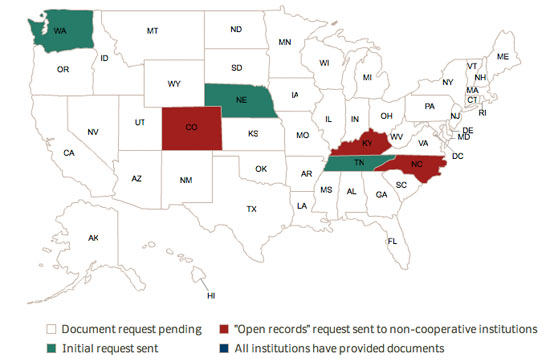
Share

For AP Students, a New Classroom Is Online

Sue Shellenbarger:

When budget cuts wiped out honors French classes at her Uxbridge, Mass., high school, 18-year-old Katie Larrivee turned to the Internet.
These days, Ms. Larrivee, who plans to study abroad in college, practices her pronunciation alone in front of a computer.
“J’ai renforcé ma comprehension de la langue” by taking an advanced-placement French course online, Ms. Larrivee says.
Advanced-placement classes have been booming amid efforts by high-school students and parents to trim college tuition costs and gain an edge in the college-admissions race. A record 1.99 million high-school students are expected to take AP exams next month, up 159% from 2000, says Trevor Packer, vice president, advanced placement, for the College Board, New York, the nonprofit that oversees AP courses and testing. About 90% of U.S. colleges and universities award college credit to high-school students who pass the program’s rigorous subject-matter tests.

Share

Hudson school board will suspend dozens of teachers

Andy Rathburn:

The Hudson school board will suspend dozens of employees whose absences during public worker protests in Madison, Wis., caused district schools to close Feb. 18.
About 40 employees of the Hudson school district, mostly teachers, will be disciplined. Punishment ranges from one to 15 days of unpaid suspension, according to the district.
The length of suspension is based on “the district’s investigation into the actions believed to have been taken by each employee,” said district communications specialist Tracy Habisch-Ahlin in an email. The suspensions are to be served by the end of this school year.
“Having to close schools on Feb. 18 was a serious issue that impacted over 5,000 students along with their parents or caregivers,” said school board president Barb Van Loenen. “As a result, the board spent considerable time listening to our community members and … deliberating an appropriate response for individuals who were involved in the excessive absences.”

Share

Success, Baggage Follow New Chicago Schools CEO

Rebecca Vevea & Crystal Yednak:

Mayor-Elect Rahm Emanuel’s pick to guide the Chicago Public Schools is a New York superintendent who raised test scores and the union’s ire in Rochester, closed under-performing schools and opened new ones-and has quite a task ahead if he is to fulfill the education agenda outlined by his new boss.
“I’ve decided to have a fresh start and hit the reset button on education,” Emanuel said Monday in announcing Jean-Claude Brizard as his choice for chief executive officer of the Chicago Public Schools, along with an entirely new school board and new CPS leadership team.
The appointment raised concerns among the Chicago Teachers Union about Brizard’s contentious relations with Rochester’s teachers. In Brizard, Emanuel has chosen a proponent of charter schools and merit pay who also now must deal with an $820 million budget deficit.
The Chicago Teachers Union, with whom Brizard must start negotiating a new contract, criticized the selection. “We’re disappointed both by the choice of Brizard and by the entire tone that the mayor-elect has adopted,” said Jesse Sharkey, vice president of the Chicago Teachers Union.

Share

Detroit’s Mass Teacher Layoffs May Prove Bellwether For Education Reform Nationwide

Simone Landon:

When districtwide layoff notices hit every one of Detroit Public Schools’ 5,466 unionized employees late last week, an American Federation of Teachers spokeswoman called the move the largest “one fell swoop” firing of teachers in union memory.
More broadly troubling to teachers and education-reform observers, however, was DPS Emergency Financial Manager Robert Bobb’s concurrent announcement that he plans to unilaterally modify the Detroit Federation of Teachers’ collective bargaining agreement, the first test of a sweeping new state law.
Public Act 4, signed by Michigan Gov. Rick Snyder (R) in March, grants the emergency managers of troubled school districts the power to “reject, modify, or terminate one or more terms and conditions of an existing collective bargaining agreement.” Under the law, Bobb could choose to abrogate the Detroit teachers’ contract entirely.

Share

Accountability and Those Children

Jocelyn Huber:

As the call for teacher evaluation and tenure reform intensifies across the country, the hypothetical arguments against holding teachers accountable become frustratingly similar. “How can we hold teachers accountable for students with difficult home lives? What about teachers who have homeless students in their classrooms? What about students whose parents are almost criminally uninvolved in their education? Certainly, it wouldn’t be fair to make teachers responsible for those students.” So, let’s settle this once and for all: making sure that those students get an education is the whole purpose of public education. And the existence of teachers who feel they should only have to worry about the children of involved, employed, and educated parents is part of what drives the fervor for education reform.
Public education should be a refuge for those children. It should be the one place where a child can be certain that his parents’ actions cannot hurt him, and where he can be sure all of the adults have only his best interests at heart. Public education should ensure that EVERY child graduates with the knowledge and skills necessary to succeed in college and in the 21st century job market. It should be the springboard out of generational poverty. Instead of family struggles or background being an excuse to give up on students, it should be the inspiration to work twice as hard to be sure students get the education that could change the course of their lives.

Share

Talkin’ About an Education

Jake Silverstein:

The U.S. Constitution says nothing about public education, but all the state constitutions have clauses addressing it, and reading through them is a mildly inspiring way to spend half an hour. Arkansas: “Intelligence and virtue being the safeguards of liberty and the bulwark of a free and good government, the State shall ever maintain a general, suitable and efficient system of free public schools.” Florida: “The education of children is a fundamental value of the people of the State of Florida.” Idaho: “The stability of a republican form of government depending mainly upon the intelligence of the people, it shall be the duty of the legislature . . .” Massachusetts: “It shall be the duty of legislators and magistrates, in all future periods of this Commonwealth, to cherish the interests of literature and the sciences.” Michigan: “Religion, morality and knowledge, being necessary to good government and the happiness of mankind, schools and the means of education shall forever be encouraged.
The Texas state constitution hits a similar note in Article 7, which states: “A general diffusion of knowledge being essential to the preservation of the liberties and rights of the people, it shall be the duty of the Legislature of the State to establish and make suitable provision for the support and maintenance of an efficient system of public free schools.” Compared with the other states’ fine print, this is pretty good. It isn’t quite as ardent as Michigan’s declaration, but it has considerably more enthusiasm than Wyoming’s (“The right of the citizens to opportunities for education should have practical recognition”). And the idea it articulates, in one long legal sentence, is beautifully straightforward and persuasive: We need a well-educated populace in order to have a functional democracy, so the state should ensure that everyone gets an education. Simple.

Share

Georgia, Wisconsin Education Schools Back Out of NCTQ Review

Stephen Sawchuk, via a kind reader’s email:

Public higher education institutions in Wisconsin and Georgia–and possibly as many as five other states–will not participate voluntarily in a review of education schools now being conducted by the National Council for Teacher Quality and U.S. News and World Report, according to recent correspondence between state consortia and the two groups.
In response, NCTQ and U.S. News are moving forward with plans to obtain the information from these institutions through open-records requests.
In letters to the two organizations, the president of the University of Wisconsin system and the chancellor of Georgia’s board of regents said their public institutions would opt out of the review, citing a lack of transparency and questionable methodology, among other concerns.
Formally announced in January, the review will rate education schools on up to 18 standards, basing the decisions primarily on examinations of course syllabuses and student-teaching manuals.
The situation is murkier in New York, Maryland, Colorado, and California, where public university officials have sent letters to NCTQ and U.S. News requesting changes to the review process, but haven’t yet declined to take part willingly.
In Kentucky, the presidents, provosts, and ed. school deans of public universities wrote in a letter to the research and advocacy group and the newsmagazine that they won’t “endorse” the review. It’s not yet clear what that means for their participation.

Related: When A Stands for Average: Students at the UW-Madison School of Education Receive Sky-High Grades. How Smart is That?:

Lake Wobegon has nothing on the UW-Madison School of Education. All of the children in Garrison Keillor’s fictional Minnesota town are “above average.” Well, in the School of Education they’re all A students.
The 1,400 or so kids in the teacher-training department soared to a dizzying 3.91 grade point average on a four-point scale in the spring 2009 semester.
This was par for the course, so to speak. The eight departments in Education (see below) had an aggregate 3.69 grade point average, next to Pharmacy the highest among the UW’s schools. Scrolling through the Registrar’s online grade records is a discombobulating experience, if you hold to an old-school belief that average kids get C’s and only the really high performers score A’s.
Much like a modern-day middle school honors assembly, everybody’s a winner at the UW School of Education. In its Department of Curriculum and Instruction (that’s the teacher-training program), 96% of the undergraduates who received letter grades collected A’s and a handful of A/B’s. No fluke, another survey taken 12 years ago found almost exactly the same percentage.

Share