School Information System

K-12 Tax & Spending Climate

Francesco Guerrara & Nicole Bullock:

The US public pension system faces a higher-than-expected shortfall of more than $2,000bn that will increase pressure on many states’ strained finances and crimp economic growth, according to the chairman of New Jersey’s pension fund.
The estimate by Orin Kramer will fuel investors’ concerns over the deteriorating financial health of US states after the recession. “State and local governments are correctly perceived to be in serious difficulty,” Mr Kramer told the Financial Times.
“If you factor in the reality of these unfunded promises, their deficits will rise exponentially.”
Estimates of aggregate funding requirement of the US pension system have ranged between $400bn and $500bn, but Mr Kramer’s analysis concluded that public funds would need to find more than $2,000bn to meet future pension obligations.

Share

Wisconsin Mayoral control bill prompts conflicting testimony

Amy Hetzner:

Dozens of speakers passionately disagreed about how to fix Milwaukee Public Schools during a daylong state Senate hearing Tuesday, with the only consensus being that a solution is unlikely to come soon in Madison.
Several hundred people packed the auditorium at MPS’ central office to testify before the Senate Education Committee on a bill that would give the city’s mayor more power over Milwaukee Public Schools and a separate measure that would allow the state’s school superintendent to more easily intervene in failing schools in Wisconsin.
Like the Milwaukee legislators who have split over the mayoral-control legislation, members of the public at the hearing were fairly evenly divided about whether allowing the mayor, rather than the School Board, to appoint MPS’ superintendent was necessary to improve academic performance in the school system or a step backward for democratic representation.
“How in the world does excluding parents from selecting their school leadership encourage them to participate in the education of their children?” Milwaukee resident Mike Rosen said.
Former Milwaukee School Board member Jeanette Mitchell said, however, that she supported mayoral control because it would give education a bigger platform in the city. She exhorted legislators to work together to reach a compromise to help students succeed in city schools.

Share

Remarkable: Three Uncontested Madison School Board Seats for the April, 2010 Election

Gayle Worland:


Three uncontested candidates will run for three-year terms on the Madison school board in April.
Incumbents Beth Moss and Maya Cole are running for school board Seats 3 and 5, respectively. James Howard is running for Seat 4, currently held by Johnny Winston, Jr., who announced in November that he would not seek a third term.
Thomas Farley, director of the nonprofit Chris Farley Foundation and an expected candidate for Seat 4, filed two of the three necessary documents to get his name on the ballot, said Adam Gallagher, deputy clerk for the City Clerk’s office. However, candidates also must file a minimum of 100 signatures of electors who reside in the Madison school district, and only 94 of signatures gathered by Farley by Tuesday’s 5 p.m. deadline met that criteria, Gallagher said.

Wisconsin School Board power may change, due to legislation under consideration at the Capitol.

Share

2010 Likely to See Major Debate On Education

Paul Krawzak & Melissa Bristow:

When it comes to education, Americans may disagree on most of the details, but they do agree on one point: Today’s system is in need of an overhaul. Despite huge hikes in federal, state and local spending on schools in recent decades, policymakers, education advocates and experts, parents, employers and educators concur: The nation’s children need better preparation for 21st century life and careers.
Whatever the system’s good points and whatever its faults, there is strong agreement on the need to revamp for a new decade and radically changing job markets. With unemployment at 10%, many jobs go unfilled because of a shortage of skilled workers. Higher education costs more than too many people can afford and keeps rising much faster than inflation. And too many youngsters are left behind by a system that can’t keep up with changing needs.

Share

How Michigan education reforms will unfold is unclear

Julie Mack:

How sweeping education reforms signed into law Monday will be implemented in Michigan remains unclear to area school officials.
Gov. Jennifer Granholm on Monday signed reforms that make it easier to close failing schools, link teacher pay to performance and hold school administrators accountable. The bills also raise the dropout age from 16 to 18, starting with the Class of 2016; allow up to 32 more charter schools to open each year; give professionals from areas other than education an alternative way to become teachers, and allow for cyber-schools to educate students who have dropped out online.
State Superintendent Mike Flanagan said up to 200 low-performing schools could end up under state control as a result of the new laws.
The legislation is part of Michigan’s effort to win money from the Obama administration’s Race to the Top competition tied to education reform. Michigan could get up to $400 million if it’s among the winners.
Local school boards and unions now face a Thursday deadline to sign a “Memorandum of Understanding” that indicates their support for the reforms. The memorandums are to be included with the state’s Race to the Top application. School districts where the board and union do not sign an agreement risk losing their share of the money.

Share

Preliminary Draft of the Milwaukee Mayoral Control Legislation:
LRB 3737/P2 Milwaukee Transforms Education for All Our Children (TEACH) Act

via a kind reader’s email 180K PDF:

Milwaukee Public Schools Reading & Math Proficiency 15K PDF.

Related: Madison School District Reading and the Poverty Achievement Gap.

Share

As complex investments plunge, 5 Wisconsin school districts pressured over loans

Amy Hetzner:

As five Wisconsin school districts face increased pressure to return millions of dollars in loans, the $200 million in investments they undertook with money from that debt are almost entirely without value and unlikely to pay back when they mature in 2013, according to representatives for the districts.
The districts said in a statement to the Journal Sentinel that one of the investments had stopped paying interest two months ago after a dramatic decline in value. The statement did not indicate which investment had ceased paying interest, but one of the schools’ attorneys, Stephen Kravit, had earlier identified it as an investment devised by the Royal Bank of Canada known as Sentinel Limited Series 2.
The five districts involved – Kenosha, Kimberly, Waukesha, West Allis-West Milwaukee and Whitefish Bay – invested $115 million in Sentinel 2 through trusts, using a combination of existing assets or borrowed money.
The $10 million invested by Whitefish Bay and $5 million by Kimberly were the entire amounts they invested in complicated transactions undertaken in 2006 on the advice of bankers from Stifel, Nicolaus & Co. Inc. The West Allis-West Milwaukee and Waukesha districts invested $40 million each in Sentinel 2 and Kenosha invested $20 million.

Madison’s Assistant Superintendent for Business Services, Erik Kass, formerly worked for the Waukesha School District.

Share

Just the facts, please, as we ponder Milwaukee Public Schools’ change

Alan Borsuk:

The state Senate’s Education Committee will hold a public hearing at the Milwaukee Public Schools central office, 5225 W. Vliet St., at 10 a.m. Tuesday to hear people’s thoughts about proposals to change the way MPS is governed.
Some people – Gov. Jim Doyle and some legislators – seem to think this hearing is a significant step toward legislative action. I’m dubious, for two reasons:
1. Count me as one who thinks the prospects are not good for action in the Legislature on any major changes, especially the idea of giving control of MPS to Milwaukee’s mayor. The Democratic legislative leaders made that clear by not even taking up proposals in December. Republicans aren’t in the mood to help Mayor Tom Barrett, a Democratic candidate for governor. (Today’s political trivia question: How many members of the Senate Education Committee are from Milwaukee? Zero.)
2. I’m tired of the political posturing, on all sides, about change in MPS. With a few exceptions, so little of it is attached to real commitment to doing better. And so much of it pays little attention to the facts, with ideology, belief or just plain incorrect statements trumping careful, focused use of real, live facts.

Share

$4,431,115 Two Year Cost for 4K in Madison

Madison School District Superintendent Dan Nerad 650K PDF:

The Board ofEducation over the past two months has received information relative to the programdesignofa4-kprogramandsomebudgetscenariosrelativetothe4-kprogram. The budget scenarios showed the Community Model Option where the community providers provided to the district the amount necessary to support their programs and two concepts for allowing this fee to decrease.
Over the past month, administration and the community providers have met to discuss the amount to be brought forward as a fee per child for the community early childhood centers. The amount within your packet reflects that amount the early childhood community has asked ofthe district.
Information Contained in your packet: Budget Impact:
The budget impact sheet is reflective of all costs associated with the operation ofa community based model for four-year-old kindergarten. This model reflects the latest numbers proposed by the community for the per child reimbursement, along with an escalator of 3% each year. The model also reflects the latest information from the DPI, that shows we are currently not likely to be eligible to receive the 4-k startup grants with the State of Wisconsin budget. These numbers show a negative budget balance of $4,188,069 in year 1 and a negative budget balance of $243,046in year two, for a total two year negative balanceof $4,431,115. This becomes the target for further information within your packet relative to “Financing Options” for 4-k.

Share

Race to the Top Insights: Part 1

Mchele McNeil:, via a kind reader’s email

I spent the morning in a U.S. Department of Education technical-assistance planning seminar on Race to the Top, and have picked up a lot of interesting tidbits. Many states are in attendance–including Hawaii, Mississippi, New Mexico, North Dakota, and Tennessee (including education commissioner Tim Webb), just to name a few. Interestingly, Texas is also in attendance, I’m told.
The seminar will continue well into the afternoon, but so far, here are the insights I’ve picked up about this $4 billion competition:
Race to the Top Director Joanne Weiss emphasized that there will be a lot of losers in Phase 1 of the application, so states shouldn’t worry if they want to wait until the second round of competition. “We promise there will be plenty of money left in Phase 2,” she said.

Part 2

Share

Madison School District’s Strategic Objectives Performance Measures

Madison Superintendent Dan Nerad 600K PDF:

Attached are the revised performance measures we will use to help monitor progress in meeting the Strategic Objectives Action Steps. Goals for the WKCE scores remained at 100% success rate as that is the requirement in No Child Left Behind legislation. Other goal areas were reduced to 95% as the target.

Related: Madison School District’s Strategic Plan.

Share

Milwaukee school takeover is baffling political battle

Joel McNally:

Why would Milwaukee Mayor Tom Barrett, running for governor, continue an apparently losing fight on a controversial local issue that doesn’t gain him any votes statewide while tearing apart his political base at home?
Barrett’s attempt to seize control of Milwaukee Public Schools from the elected School Board failed to muster enough support in the Legislature recently to even bring up the issue after Gov. Jim Doyle called a special session. The Legislature adjourned without discussing mayoral control.
Meanwhile, the Milwaukee School Board, under the leadership of President Michael Bonds, has narrowed its national search for a new superintendent down to three finalists — two African-Americans and a Latino — all with experience in urban school districts.
Extending an olive branch, Bonds invited Barrett to personally interview the three finalists and make a recommendation to the board.
He also named Barrett to a community panel advising the board on the selection. The diverse committee includes Alphonso Thurman, University of Wisconsin-Milwaukee dean of education, state Rep. Annette Polly Williams, former Mayor Marvin Pratt, private philanthropist Julia Uihlein and prominent Latino, Hmong, American Indian and union leaders.

Share

Seattle Times Editorial “Wrong on Everything”

Charlie Mas:

The Seattle Times has a sort of Year-In-Review editorial about education in today’s paper. Nearly every statement in the editorial is either incorrect, unsubstantiated, or misguided.
“Academic standards were raised” They were? Where? How? By whom? I didn’t see anyone raising any standards this year.
“The Legislature amended the Basic Education Act, a giant leap forward in an 18-year education-reform effort.” Yes, they voted for it, but they didn’t fund it and they are now in Court saying that they are already fulfilling their obligation to funding education, so they are denying it. The amended act is lip service – hardly a step forward, let alone a giant leap.
They said that the delay in making high stakes math and science tests a graduation requirement was a gaffe. No, the gaffe has been miseducating students in math and science for the past ten years. These tests were supposed to be used to hold adults accountable, not students. Where are the adults who have suffered negative consequences for these failures? Why punish the students, the people with the least power to influence the system?

Share

K-12 Tax & Spending Climate: Wisconsin’s Budget Deficit Climbs to $2.71Billion

Jason Stein:

The state of Wisconsin ended its fiscal year last June with a $2.71 billion budget deficit, a new state report shows.
That’s an 8 percent increase over last year’s deficit of $2.5 billion. The report shows the financial challenges ahead for the next state leader who will take over in January 2011 after Gov. Jim Doyle leaves office.
The figures on the shortfall in the state’s main account differ from those in most state reports, which simply figure how much cash the state has. This report, which is prepared according to generally accepted accounting rules, also takes into account spending that the state has promised to make in the future.

Todd Berry:

A week before Christmas, an important report appeared on a Wisconsin government website. There were no press releases from Madison politicians. No headline news stories.
Yet no public official, taxpayer, or citizen can afford to ignore the report’s bottom line: According to its just-released financial statements, state government closed its 2008-09 books with a $2.71 billion deficit in its general fund.
To many readers, this might come as a surprise. By law, state government is supposed to balance its budget. On paper, it does. However, for more than a decade, governors and legislators of both parties have “balanced” budgets through use of accounting maneuvers, timing delays, borrowing, and billions in one-time money.
When the state controller, a CPA, prepares the state’s official financial statements, he must follow generally accepted accounting principles, or GAAP. That means he must reverse the budget gimmicks and accurately represent the state’s true financial condition. When he does this, the budget’s black ink turns red.

Share

The truth about Arne Duncan and the Chicago schools

Jay Matthews:

My colleague Nick Anderson, the Post’s national education reporter, has done a wonderfully balanced and nuanced job of answering a question I am often asked: If Arne Duncan is such a hotshot education secretary, then why are the Chicago schools he once led so bad?
Anderson’s front page story Tuesday provides all the relevant facts—disappointing test score gains, watered-down Illinois state standards, Duncan turnaround projects that didn’t work. But he also puts it in context, showing where Duncan forced some improvements and how daunting Chicago’s problems are.
He also makes it clear that you can’t expect anyone to transform our urban school systems in a big way quickly. The improvements that occur are always on the margins. Those districts will never rise to the level of their suburban neighbors. But you can see Duncan has been working at this very hard for many years, and (if you look at what he has actually said rather than what sloppy writers like me have suggested) he has been honest about how far his home town still needs to go.

Share

2010 Education Appropriations Guide

Jason Delisle:

Congress completed the fiscal year 2010 appropriations process on Dec. 13, 2009, finalizing annual funding for nearly all federal education programs through September 2010 at $63.7 billion, up $1.1 billion from the prior year, excluding economic stimulus funding under the American Recovery and Reinvestment Act. Making sense of the federal education budget and the appropriations process can be a frustrating task for education advocates, state and local policymakers, the media, and the public. The now concluded fiscal year 2010 appropriations process is no exception.
This issue brief is intended to be a helpful guide to the appropriations process and recently enacted fiscal year 2010 education funding. It includes an analysis of funding for major education programs and a timeline of the 2010 appropriations process. It also includes exclusive tables comparing 2010 funding to prior years, the president’s budget request, and funding under the American Recovery and Reinvestment Act.

Complete PDF Report

Share

School district, Austin Education Association reach contract agreement: no salary increases and no benefit changes for two years

Rachel Drewelow:

Austin Public School (APS) District and the Austin Education Association announced Wednesday that they have reached a contract agreement.
The agreement includes no salary increases and no changes to insurance for the duration of the contract — the 2009-2010 and 2010-2011 years. Approximately 85 percent of association members voted this week. Of voters, 91 percent voted yes to ratify the new contract.>

Related: Madison School District & Madison Teachers Union Reach Tentative Agreement: 3.93% Increase Year 1, 3.99% Year 2; Base Rate $33,242 Year 1, $33,575 Year 2: Requires 50% MTI 4K Members and will “Review the content and frequency of report cards”.

Share

Rural school districts using 4-day weeks to save funds

Tom Weber:

When it rained in northern Minnesota a few weeks ago, water leaked into a room in Blackduck High School where students had stored art projects just a few hours earlier. Every project was damaged.
The school district is considering asking voters to approve higher taxes to raise $500,000 to repair the roof. But Superintendent Bob Doetsch is sure that voters would only agree to pay more if they’re convinced the district has done everything possible to save money.
To cut costs, the rural Blackduck, Warroad and Ogilvie school districts decided four months ago to implement a four-day school week as did the MACCRAY district did last year. The four districts say the change hasn’t solved their budget woes, but the shorter week helped. That’s attracted the attention of school officials elsewhere in Minnesota who are considering the change.

Share

City Schools’ New Criteria for Diversity Raise Fears

Crystal Yednak & Darnell Little:

The Chicago public schools’ response to a recent court desegregation ruling — a plan to use students’ social and economic profiles instead of race to achieve classroom diversity — is raising fears that it will undermine the district’s slow and incremental progress on racial diversity.
Chicago schools, like the city itself, are hardly a model of racial integration. But a Chicago News Cooperative analysis of school data shows the district has made modest gains in the magnet, gifted, classical and selective-enrollment schools, where, for nearly 30 years, race has been used as an admission criterion. Those advances may be imperiled in the wake of court rulings that have prompted Chicago Public Schools to look for factors other than race when assigning students to such schools.
Nationwide, court rulings have prompted school districts to seek creative ways to diversify classrooms without using a student’s race as a factor. In Chicago, school officials last week moved ahead with their own experiment.
Instead of race as an admissions factor, they now will use socioeconomic data from the student’s neighborhood — income, education levels, single-parent households, owner-occupied homes and the use of language other than English as the primary tongue — in placing children in selective-enrollment schools.

Share

Alderman Jim Bohl’s MPS Compromise

The Milwaukee Drum:

With competing plans for governing the Milwaukee Public Schools now petering out in Madison, I’m suggesting a modest compromise that gives each side something it wants.
First, give the Mayor of Milwaukee the ability to appoint the MPS Superintendent. The superintendent would be confirmed by the Common Council, and after confirmation, would serve at the pleasure of the mayor.

Share

Rotherham: Detroit schools are on a slow reform path

Andrew Rotherham:

Call it the soft bigotry of low expectations. As pressure increases on teachers unions to mend their ways and become better partners in school reform, the bar for what constitutes meaningful change seems to be getting lower.
In October, the New Haven (Conn.) Federation of Teachers agreed to a new labor agreement that was hailed by both American Federation of Teachers President Randi Weingarten and Secretary of Education Arne Duncan as a breakthrough and national model. Yet the contract was actually a set of promises and processes to potentially undertake reforms after more discussion and mutual agreement.
Maybe the union was playing for time to make more reform-oriented deals away from the crucible of a labor negotiation. Critics were not buying it and argued the entire thing was a ploy. We’ll know who was right by next summer.

Share

Beverly Hills Schools to Cut Nonresidents

Jennifer Steinhauer:

Daniel Kahn has never lived in this city, but he has attended its legendary public schools since the fourth grade. Now in eighth grade, he is vice president of the student council, plays in two school bands and is an A student who has been preparing to tread in his sister’s footsteps at Beverly Hills High School.
But Daniel will almost certainly be looking for a new place to hang his backpack next fall. The school board here intends to do away with hundreds of slots reserved for nonresident children, most of whom live in nearby neighborhoods of Los Angeles where the homes are nice but the city’s public school system is deeply distressed.
The students used to be a financial boon for Beverly Hills, bringing millions of dollars in state aid with them. But California’s budget crisis is changing the way schools are financed in many wealthy cities, suddenly turning the out-of-towners into money losers.

Share

In many area school districts, a need for painful financial cuts

Gayle Worland:

When the Stoughton Area School District shuttered its Yahara Elementary School last June because of declining enrollments, shrinking funds and a failed school referendum in 2005-06, the total $1 million cost savings was meant to help balance the district’s books into the next decade.
But despite that move, plus 68 staff layoffs and reduced bus routes in recent years, the district now faces another gap — of $3 million over the next three years — and the school board is considering taking a referendum to voters in April.
“The sense was that we would be okay for the 2010-11 school year,” former Yahara principal Cheryl Price, now principal of the new Sandhill Elementary School, said of Yahara’s closing. “They knew that this was one fix. But we thought we had a couple of years” without having to make more drastic cuts.
Those cuts could range from more staff reductions, increasing class sizes, raising athletic fees and eliminating talented and gifted programming.

Related: K-12 Tax & Spending Climate.

Share

Arbitrator issues pay proposals for Calvert teachers

Christy Goodman:

An arbitrator recently released recommendations to help end an impasse over the current school year’s contract between the Calvert County Board of Education and the teachers union.
At issue are the terms of the third year of the teachers’ three-year contract. The board suggests a 0.5 percent cost-of-living adjustment, but the Calvert Education Association wants a 4.5 percent increase.
M. David Vaughn of the American Arbitration Association met with a member of the board and the union and recommended that the teachers receive a one-time payment of 1 percent of salary and that a sick leave bank be established.
The board and the teachers are working under the assumptions that all step increases would remain, and a 1.1 percent lump sum increase was included for employees at the highest tiers of the pay scale.

Locally: Madison School District & Madison Teachers Union Reach Tentative Agreement: 3.93% Increase Year 1, 3.99% Year 2; Base Rate $33,242 Year 1, $33,575 Year 2: Requires 50% MTI 4K Members and will “Review the content and frequency of report cards”.

Share

Race to the Top: View from Monona Grove

Peter Sobol:

The district received an initial solicitation from the state DPI regarding “Race to the top” funds. The race to the top funds will be divided into two parts, with half of the funds going to districts that agree to implement programs in 5 areas outlined in the memorandum:

Share

Michigan urban school districts get most stimulus help

AP:

As Michigan school districts fight to cope with state cuts, urban districts have a fallback their suburban and rural counterparts are less likely to get: direct grants from the federal stimulus package.
Schools in low-income areas such as Detroit, Grand Rapids and Flint are getting direct grants from the Recovery Act that easily exceed the cuts of at least $165 per student districts will lose in state aid this fiscal year.
Wealthier suburban districts are getting far less direct help from the stimulus package. That leaves them with fewer sources to tap to avoid teacher layoffs and program cuts that some districts could see starting in January.
Detroit schools are “aggressively pursuing” the Recovery Act cash, spokesman Steven Wasko said. The district expects to receive roughly $800 million over more than two years from all sources of the broad program, including money that could help the district reduce class sizes and build or remodel schools.

Share

K-12 Tax & Spending Climate: New school, old funding problems

Alan Borsuk:

Conrad Farner is like a guy with a beautiful home and an ugly checkbook.
It’s impossible to escape the irony as the superintendent of Greenfield schools conducts a tour of the community’s high school, where the finishing touches are being put on a $48.5 million overhaul that has turned a building that was literally sinking into the ground and, in serious ways, falling apart, into a showcase.
Handsome classrooms, a spacious gym, great theater, terrific swimming pool, a set of new athletic fields. It’s an impressive setting for the 1,200 students (22% of them not from Greenfield, by the way). Only a few parts of the old high school were kept while the new structure was built around it.
But the subject of our conversation is Farner’s strong warnings that the actual work of education in Greenfield schools is being cut, year by year, in ways that are taking a serious toll.
And, he argues, unless something changes quickly in the way Wisconsin funds schools, Greenfield – along with numerous districts across the state – will reach a point where it will simply not be able to pay its bills or will have to go back to voters seeking operating money beyond the state-set limits.
The district budget this year “is not even close to what our students need,” he said in a presentation to the Greenfield School Board before the budget was adopted. He has a list of 122 positions or services that have been eliminated or reduced since 2002-’03.
Some of them are pretty minor. Some of them are matters of doing business smarter and more efficiently. But some of them affect kids in ways that really matter – fewer teaching specialists, fewer counselors, fewer extra-curricular activities. The ratio of students to teachers has risen in Greenfield from 13.8 in 2004-’05 to 15.9 this year, a sizable jump.

Share

Progressive Dane Endorses Beth Moss for Madison School Board

Progressive Dane:

At the December 16, 2009 general membership meeting, Madison Board of Education Member Beth Moss and County Board Supervisors John Hendrick, Al Matano, Kyle Richmond and Barbara Vedder were enthusiastically endorsed for re-election.

Share

‘Duplicitous and Shameful’ Democrats vote to send poor kids to inferior schools.

Wall Street Journal:

The waiting is finally over for some of the District of Columbia’s most ambitious school children and their parents. Democrats in Congress voted to kill the District’s Opportunity Scholarship Program, which provides 1,700 disadvantaged kids with vouchers worth up to $7,500 per year to attend a private school.
On Sunday the Senate approved a spending bill that phases out funding for the five-year-old program. Several prominent Senators this week sent a letter to Majority Leader Harry Reid pleading for a reconsideration. Signed by Independent-Democrat Joe Lieberman, Democrats Robert Byrd and Dianne Feinstein, and Republicans Susan Collins and John Ensign, it asked to save a program that has “provided a lifeline to many low-income students in the District of Columbia.” President Obama signed the bill Thursday.
The program’s popularity has generated long waiting lists. A federal evaluation earlier this year said the mostly black and Hispanic participants are making significant academic gains and narrowing the achievement gap. But for the teachers unions, this just can’t happen. The National Education Association instructed Democratic lawmakers to kill it.

Share

Wisconsin risks stumbling in ‘Race to Top’

University of Wisconsin School of Education Dean Julie Underwood:

President Barack Obama spoke at Wright Middle School in Madison last month and urged our nation to make improving K-12 education a national priority.
The president underscored the critical link between improving education and our nation’s future economy. He called for our schools to push all students to achieve at higher levels.
The president also spoke about our need to raise the bar for student achievement and to close existing achievement gaps. He is offering the states $4.35 billion in competitive “Race to the Top” grants to try to spur improvement.
His call for reform comes at a critical time for our schools. Our graduates face an increasingly competitive world. The future of our state rests on our ability to prepare our students with the knowledge and skills necessary to succeed.
In recent years, however, the real struggle in Wisconsin has been in maintaining the quality public school system created by previous generations. Our public schools operate under a financial system that chokes reform and chips away at quality.

Underwood’s School of Education has a close relationship with the Madison School District via grants and other interactions. Former Madison Superintendent Art Rainwater now works for the School along with former Administrator Jack Jorgenson. Underwood attended the 2008 Madison Superintendent candidate public appearances.

Share

Los Angeles Unified often hands out tenure with little or no review of novice instructors’ ability or their students’ performance.

Jason Felch, Jessica Garrison & Jason Song:

It is a chance L.A. Unified all but squanders, according to interviews with more than 75 teachers and administrators, analyses of district data over the last several years, and internal and independent studies. Among the findings:

  • Nearly all probationary teachers receive a passing grade on evaluations. Fewer than 2% are denied tenure.
  • The reviews are so lacking in rigor as to be meaningless, many instructors say. Before a teacher gets tenure, school administrators are required to conduct only a single, pre-announced classroom visit per year. About half the observations last 30 minutes or less. Principals are rarely held responsible for how they perform the reviews.
  • The district’s evaluation of teachers does not take into account whether students are learning. Principals are not required to consider testing data, student work or grades. L.A. Unified, like other districts in California, essentially ignores a state law that since the 1970s has required districts to weigh pupil progress in assessing teachers and administrators.

Share

We need best education at least cost

Thomas Wasco:

I applaud the work of the Board of Education in their efforts to downsize the district’s infrastructure. During my service on the board, I learned how difficult that process can be when various factions of the community come before the board pleading to save their favorite schools. In fact, many current board members have campaigned for their buildings in the past. They cited educational studies praising the positive influences of small neighborhood schools and how important it was to maintain the configuration at that time. It appears they have now come to realize instead that what they once called warehousing of students does not lead to an adverse learning environment and that larger schools can indeed contribute to student success. That observation is supported by their decision to replace the plan that placed 400 students in each of six buildings to one that has three buildings with approximately 500 students and three with many fewer students.
Now the public is being asked to spend millions on four buildings Ridge Mills, John Joy, Denti and Gansevoort. I suggest that the board reconsider the proposition and look to renovate three buildings. Instead of closing Ridge Mills, they could close both Ridge Mills and John Joy that currently serve a total of 481 students. The combination would still be smaller in size than either Denti or Bellamy (about 500 and 485 students, respectively). The board can renovate either one of the closed buildings and reopen it to provide adequate space for their students and result in one less building for the district to maintain.

Share

A Plan for California’s Failing Schools

Marisa Lagos:

Parents would be able to yank their children out of failing schools and ask any other school in the state to admit them under a compromise bill approved Thursday by the state Senate.
That change and other proposals are part of the state’s plan to compete for President Obama’s Race to the Top grants – up to $4.3 billion for all states and as much as $700 million for California alone.
States have until next month to apply for the federal grants, but political fighting over how to make California as competitive as possible has killed two competing proposals and left little time before the Jan. 19 application deadline.
To qualify, states have been asked to demonstrate a commitment to education reform. Under the bill, California would establish specific plans for failing schools, including closing a school, dismissing the principal and up to half of the teachers, or allowing the school to become a charter school.

Share

More Michigan – Funky Rubber Room!

Andrew Rotherham:

Yesterday we checked in on the Race to the Top debate in Michigan. Today, Detroit News editorial writer and columnist Amber Arellano writes up a guest post on the debate in Motown over the possible arrival of “rubber rooms,” which as we’ve noted on this blog aren’t as fun as the name implies.

Detroit’s New Rubber Room

New York City’s embarrassment is Detroit’s education reform “revolution”

This month the Detroit Public Schools posted the lowest student achievement results in the 40-year history of the NAEP. Educators began weeping when briefed on the news. And city charter schools, once Motown’s hope for change, on average are performing just as terribly as the school district.

As if Detroit’s education reputation couldn’t get any worse, consider: a new teachers’ contract, if ratified today, would create Detroit’s first Rubber Room.

Share

Milwaukee School Board Approves Condom Giveaways

Tom Kertscher:

Without discussion, the Milwaukee School Board voted 7-0 Thursday night to make condoms available at many of the city’s high schools, paving the way to make Milwaukee Public Schools one of the relatively few districts in the nation to provide contraception to students.
The communicable disease prevention program, as the district calls it, could be in place as soon as the 2010-’11 school year.
The proposal sparked some opposition after being made public Dec. 2, but the board approved the condom distribution without much dissent. Comments from the public are not allowed at board meetings and a board committee had voted 5-0 on Dec. 9 to recommend adopting the program.
The condoms will be available free of charge, but only to students in high schools that have school nurses and only after students request them at the nurse’s office, according to a fact sheet circulated by the school district. Up to two condoms will be distributed at a time.
Thursday’s vote does not authorize funding for the program, but the district has said it will not use taxpayer money to buy condoms and instead will seek other sources of funding.

Somewhat related: biggovernment.com and mediamatters.org have been going back and forth on Obama Administration “safe school czar” Kevin Jenning’s K-12 sex education activities.

Share

Rules on teachers, schools could change to snare aid

Dawson Bell:

Determined not to leave up to $400 million in federal funds on the table, state lawmakers appear determined this week to resolve differences in House and Senate bills that mandate significant changes in public schools.
To qualify for the Race to the Top federal stimulus money, Michigan would have to make changes to allow merit pay for teachers, lessen restrictions on opening charter schools, plan for sanctions for underperforming schools and make it easier for people to become teachers. Teachers unions and local school officials have fought the ideas in the past.
Rep. Tim Melton, D-Auburn Hills, said state and federal initiatives will produce “a sea change” in the way troubled schools operate and kids learn. “It’s a huge deal,” he said.
And it’s a lot of money for a state with big money problems. The Democrat-controlled House and Republican-controlled Senate have approved different versions of legislation that must be resolved before Gov. Jennifer Granholm can sign it.

Share

Wisconsin Race to the Top: Governor/DPI Letter and “Memorandum of Understanding”

via a kind reader’s email; Letter from Governor Doyle and Department of Public Instruction Superintendent Tony Evers [107K PDF]:

We are excited to invite you to participate in Wisconsin’s Race to the Top application to the federal government. Through the American Recovery and Reinvestment Act, President Obama and Congress provided $4 billion in competitive grant funding to states that move forward with innovations and reform in education.
Earlier this fall, at our request, the Wisconsin Legislature passed bills to make Wisconsin both eligible and more competitive for the Race to the Top grants. Now our local school district leaders – school board members, superintendents, principals, teachers, and other staff – need to prepare their district for participation in Wisconsin’s grant application. Enclosed is the Race to the Top district memorandum of understanding (MOU) that the federal government requires participating districts to sign as part of the state’s Race to the Top grant application. The MOU provides a framework of collaboration between districts and the state articulating the specific roles and responsibilities necessary to implement an approved Race to the Top district grant.
The MOU is divided into two parts – Exhibit I and Exhibit II. To receive any Race to the Top funding, a district must agree to the activities in Exhibit I. Districts that agree to Exhibit I are eligible, if they so choose, to participate in Exhibit II. In Exhibit II districts will receive additional funding for participating in the additional activities. Exhibit I is included in this information and Exhibit II will be forthcoming in the very near future.

“Memorandum of Understanding” [208K PDF]:

I’m told that Madison’s potential intake of “Race to the Top” funds is less than 1% of the current $400MM budget.
Related: US National Debt Tops Debt Limit.

Share

Put power over California’s schools in hands of parents

Ben Austin:

Let me tell you about my recent trip to Sacramento. It is a story about why we need a revolution.
Earlier this month, Senate leaders introduced a “parent trigger” into California’s “Race to the Top” education reform legislation.
Under the policy, parents at a systemically failing school could circulate a petition calling for change. If 51% of the parents signed it, the school would be converted to a charter school or reconstituted by the school district, with a new staff and new ways of operating. The concept recognized a truth that school officials often discount: Parents are in the best position to make decisions about what’s right for their kids.
Last week, the parent trigger legislation moved to the Assembly Education Committee, chaired by Assemblywoman Julia Brownley (D-Santa Monica). Thousands of parents sent letters, made calls, staged protests and showed up to testify before her committee about the importance of parents taking back power over our schools.

Share

Wauwatosa teachers get raises; district gets health care concession

Amy Hetzner:

The Wauwatosa School Board has ratified a contract that will give steep pay raises to the district’s most experienced teachers while also winning an important concession for the district with a change in retiree health insurance benefits.
The agreement, approved by the board on Monday and by the Wauwatosa Education Association on Friday, increases teachers’ salaries and benefits by 4.76% this school year and by 4.25% in the following year. The top pay for the most experienced teachers will increase by more than 8% to $74,030. Teachers with doctorate degrees can receive annual stipends of $1,415.
With the agreement, district officials were able to accomplish a goal by getting teacher approval to change health insurance benefits for future retirees. While teachers now receive health insurance after they retire based on the number of years they have worked for the district, teachers hired after July 2010 will be awarded stipends tied to their final salaries with which they can pay for their health insurance, said Daniel Chanen, Wauwatosa’s director of human resources.

Share

Bill could solve Milwaukee Public Schools Governance debate

Erin Richards:

A bill that would give the state schools chief more power to fix chronically low-performing schools might improve education in Milwaukee and circumvent the fractious debate over mayoral control, said the chairman of the Senate Education Committee on Tuesday.
Sen. John Lehman (D-Racine) said the education committee took executive action Tuesday to introduce the bill, which Lehman requested be tweaked from an earlier version to zero in on the state superintendent’s attention to a handful of schools in MPS.
A similar bill that passed the Assembly’s education committee earlier this fall was not as specific about what qualified as a low-performing school.
“The state superintendent powers bill has not seen the same kind of ‘draw a line and plant your feet firmly in the sand and don’t move’ that mayoral control has seen,” Lehman said. “The state superintendent powers bill is more about turning to thoughtful public policy on this to see what we can do for Milwaukee Public Schools.”

Share

Will Cleveland High School Become Seattle Superintendent Maria Goodloe-Johnson’s Crown Jewel or Albatross?

Nina Shapiro:

As Seattle Public Schools released new details about its latest transformation plan for perpetually-troubled Cleveland High School over the past week, there’s been a collective eye roll among some teachers there.
“I’ve been here for 15 years and every other year we do this,” says math teacher David Fisher, referring to a long string of ballyhooed overhauls that the Beacon Hill school has embarked on at the behest of the district.
One thing is different: The district is promising to pour money into this reinvention of Cleveland as the School of Science, Technology, Engineering and Mathematics (STEM). It proposes to spend more than $4 million over the first three years, according to a report at last Wednesday’s school board meeting by Superintendent Goodloe-Johnson. That’s a lot of money for a school that is already up and running. (See the breakdown of spending on page 8 of this pdf.)

Melissa Westbrook has more.

Share

Senator Taylor on MPS-Mayoral Takeover: “If the bill comes to the floor in the Senate, it’s going to pass.”

Bill Osmulski:

[Milwaukee…] Wisconsin State Senator Lena Taylor (D-Milwaukee) proclaims that if her bill giving the mayor of Milwaukee control of Milwaukee’s Public Schools comes up in Special Session this week, it will pass the State Senate.
“I believe if the bill comes to the floor in the Senate, it’s going to pass,” Taylor said in an exclusive interview with the MacIver News Service. “I don’t hesitate on that.”
Taylor’s bill, co-authored by Rep. Pedro Colon, (D-Milwaukee) is the result of a compromise between legislative supporters, the mayor and the governor. It grants the mayor authority over MPS and allows him him to pick the superintendent. City residents would still be allowed to elect the school board, but many of its powers would be transferred to the superintendent. Current Milwaukee Mayor Tom Barrett originally wanted the ability to appoint the school board himself.
Some of Taylor’s Democratic colleagues from Milwaukee are opposed to her proposal. Two of them, Milwaukee Senator Spencer Coggs and Representative Tamara Grigsby, recently announced their own proposal, which would allow the mayor more say in MPS, but their plan stops short of handing over full control of the district. The Coggs-Grigsby plan has the support of the teachers’ union and several prominent community activists.

Share

Milwaukee schools face booming retiree health care costs

Erin Richards:

The Milwaukee School Board has spent 20 years ignoring a “fiscal time bomb” in the form of generous and unfunded health insurance benefits for retired MPS teachers and staff that will cost the district $5 billion by 2016, according to a new report by the Wisconsin Policy Research Institute.
On Monday, the president of the conservative institute that conducted the report, George Lightbourn, said the study raises serious questions about the School Board’s ability to provide financial oversight of the district and that it lends support to changing the governance structure of MPS.
The report comes in the same week that the Legislature is expected to convene a special session to consider a bill that would give the Milwaukee mayor power to appoint a superintendent and authority over the district’s budget.
“Even if the mayor took over (the school system), the mayor would have to deal with this thing,” Lightbourn said. “But it’s more likely that somebody who has a different approach to this might actually look at this and if nothing else say: ‘We have to slow down these costs.’ ”

Share

K-12 Tax & Spending Climate: Public United States Debt Rose from 41 to 53% of the Gross Domestic Product in the Past Year

Peterson-Pew Commission on Budget Reform PDF Report

Over the past year alone, the public debt of the United States rose sharply from 41 to 53 percent of gross domestic product (GDP). Under reasonable assumptions, the debt is projected to grow steadily, reaching 85 percent of GDP by 2018, 100 percent by 2022, and 200 percent in 2038.
However, before the debt reached such high levels, the United States would almost certainly experience a debt- driven crisis–something previously viewed as almost unfathomable in the world’s largest economy. The crisis could unfold gradually or it could happen suddenly, but with great costs either way. The tipping point is impossible to predict, but the United States is already hearing con- cerns about its fiscal management from some of its largest creditors, and the country is uncomfortably vulnerable to shifts in confidence around the world.

Wisconsin ranks 10th amongst the States in State-Local debt service. Exploding debt levels mean that it is highly unlikely school districts will see significant new revenues. Like many organizations, they must change and spend precious dollars where most needed and automate elsewhere (virtual learning tools are a natural, as this post demonstrates).

Share

Schools race to — where, exactly? California’s pursuit of federal Race to the Top grants seems directionless, even reckless.

Los Angeles Times:

What wouldn’t California do for $700 million right now? That’s not a rhetorical question. With U.S. Education Secretary Arne Duncan parceling out more than $4 billion to states that conform to his vision of school reform, California’s Legislature is just one of dozens that are frantically revamping their states’ education systems for some of that cash. Should California succeed, its share would be somewhere between $350 million and $700 million.
To obtain the money, Sacramento must pass legislation that would serve as the basis for an application. This has given Gov. Arnold Schwarzenegger a perfect opportunity to push for more parent choice and fewer restrictions on charter schools, while the teachers unions have pushed an agenda that would handcuff the charter movement. There is some merit to both sides’ proposals — charter schools should be more accountable, and parents should have more say in the education process — but they have been poorly executed in ways that could have negative repercussions. Applications for Duncan’s “Race to the Top” grants are due in January, so who has time for a thoughtful debate?

Related: Joe Williams DFER blog. Mike Antonucci looks at the California Teachers Association lobbying.

Share

Repayment sought from teachers union

Bruce Lieberman:

Vista school trustees are seeking reimbursement from the teachers union for about $128,000 in salary payments made to the union’s president over the past three years.
Under a 1995 agreement, the Vista Unified School District has been paying for the union president’s salary, even though that person is on leave from the classroom. In exchange, the union has paid the salary of a replacement teacher, who invariably is on a lower pay scale. As a result, the school district has paid more money to the union than the union has returned to the district.
A court decision last year found that state education laws require school district unions to reimburse school districts for all salary payments they make to union presidents on leave from the classroom, said Myrna Vallely, assistant superintendent for human resources at Vista Unified.

Share

Reforming Education is Critical

Artur Davis:

I am a proud graduate of Montgomery’s public schools, and my progression from the railroad tracks in west Montgomery to the halls of Congress proves that education can transform lives. As governor I will do everything in my power to build a public school system that gives our children the chance to cross the bridge that I have walked.
The next governor of Alabama will need to launch a decade-long effort to revitalize public education. In a century where Alabama’s workers must compete globally, we can no longer afford to sit near the bottom of national categories that rank college affordability and high school graduation rates. We cannot be afraid of reform and we cannot dismiss the possibility that new ideas can work.
I will make it a priority to strengthen Alabama’s nationally recognized early learning programs. Our pre-kindergarten program is an Alabama success story, and many more children in our state should have access to it. Similarly, the Alabama Reading Initiative, which helped produce the biggest jump in fourth-grade reading performance in the country, must be broadened to reach middle school and above.

Share

Who’s Got Michelle Rhee’s Back?

Wall Street Journal:

The Washington, D.C., public school system, with its high dropout rates and low test scores, has long been a national embarrassment. But things seem to be improving under maverick Schools Chancellor Michelle Rhee. So it’s curious that the White House hasn’t done more to support her reform efforts, especially since they track so closely with the Obama Administration’s own stated education goals.
New student test scores released by the U.S. Department of Education last week showed that Washington’s fourth-graders made the largest gains in math among big city school systems in the past two years. D.C.’s eighth-graders increased their math proficiency at a faster rate than all other big cities save San Diego. Washington still has a long way to go, but it’s no longer the city with the lowest marks, a distinction that now belongs to Detroit.
Before Ms. Rhee’s arrival, the nation’s capital went through six superintendents in 10 years. Since taking over as Chancellor in 2007, Ms. Rhee has replaced ineffective principals, laid off instructors based on “quality, not by seniority” and shuttered failing schools. These actions have angered teacher unions to the point of bringing (unsuccessful) lawsuits, yet academic outcomes are clearly improving.

Share

The Closing of New York City Public Schools: A Case of “Persistently Failing DoE Management”

Leo Casey:

With the last of the official announcements of the schools targeted for closure by Chancellor Klein, the final grim toll can be tallied. An unprecedented twenty-one schools have been told that the Department of Education will begin their phase out in September 2010. Fifteen of those schools — a completely disproportionate number — were high schools.*
With this wide swath of devastation, there can be no illusion that this is a process based on an educational calculus. The evidence simply tells a very different story: the Chancellor could not close significant numbers of Elementary and Middle Schools, once 97% of them scored A and B on School Progress Reports that so heavily weighted the wildly inflated and broken state exams. So Klein decided that to reach his targets, he would close high schools in much larger numbers. Among the high schools slated for closure are schools which are in good standing with the New York State Education Department and schools which are meeting their Annual Yearly Progress benchmarks under No Child Left Behind, as well as a school which just received the school-wide bonus. The list includes schools which never received a School Progress grade lower than C, and schools which actually improved on every measure in the School Progress Reports.
Why take a machete to New York City public high schools in this way? The reason is not difficult to decipher. The Chancellor needs a great deal of space in public school buildings to pursue his political and ideological agenda of creating and supporting new charter schools and new DoE schools. Since it had become politically untenable to create that space by closing large numbers of elementary and middle schools, the space would have to be found in high schools.

Share

With Wisconsin’s QEO Gone, schools bargain harder on teachers’ contracts

Amy Hetzner:

So far this school year, the approximately 100 school districts that have reached agreements with their teachers have average settlements that increase salaries and benefits by 3.75%, according to Bob Butler, staff counsel for the Wisconsin Association of School Boards. That compares with an average total compensation increase of 4.11% for teachers in the 2008-’09 school year.
Given that settlements tend to go down the longer negotiations take, Butler said the average increases for 2009-’10 and 2010-’11 are likely to be below what they have been in the past and what was considered a minimum settlement under the QEO law.
The recession, even in growing and financially stable districts, is the main reason behind the settlement drops, Butler said. Even though the Legislature removed the QEO salary restrictions, it left revenue limits in place so that any increase in teacher compensation almost certainly means staff cuts, he said.
In addition, facing pressure from taxpayers, some school districts, such as Whitnall, refused to enact a tax levy up to their state-imposed revenue limits this year.
“We have seen such a drastic reduction in the amount of money we have coming in from the state, it would have been hard to settle at 3.8% even if the QEO still stood there,” Whitnall School Board President Bill Osterndorf said.

Related, 9/25/2009: Madison School District & Madison Teachers Union Reach Tentative Agreement: 3.93% Increase Year 1, 3.99% Year 2; Base Rate $33,242 Year 1, $33,575 Year 2: Requires 50% MTI 4K Members and will “Review the content and frequency of report cards”.

Share

Milwaukee Public Schools have heard the criticism; what’s next?

Alan Borsuk:

I give William Andrekopoulos credit – the school superintendent has invited outside scrutiny of what’s going on in Milwaukee Public Schools, and he hasn’t flinched when that has brought bad news time after time.
He says it takes courage to do this, and, especially compared with the mealy-mouthed way lots of executives in public and private businesses act, he’s right.
“If you don’t put the truth on the table . . .  there will never be a sense of urgency to improve,” he said in a phone conversation. He said he wants his successor – whom the School Board is on pace to pick soon – to have a clear understanding of what the score is.
So here’s some of the score:
In 2006, Andrekopoulos invites the Council of the Great City Schools, a professional organization for big city school administrators, to assess the education program in MPS. The result: A report that is strongly critical, saying efforts in city schools are a hodgepodge of practices, many of them weak. The report also says there is a pervasive lack of urgency about getting better results in MPS.

Share

Wisconsin School Property Tax Levies Set for 2009-10 Tax Bill, Up 6.0%

Wisconsin Taxpayers Alliance:

School property tax levies for 2009-10 are up 6.0%, from $4.28 billion last year to $4.54 billion this year, according to the Wisconsin Taxpayers Alliance (WISTAX), a nonprofit, nonpartisan research organization. The rise in school taxes exceeded last year’s increase of 5.2%, due principally to state budget cuts in aid to K-12 schools.
According to WISTAX, tax changes ranged from increases of 41.2% in Seneca and 32.8% in Gilmanton to reductions of more than 19% in Ladysmith and Sharon J1. However, increases larger than those in prior years were the norm, and 116 districts (27%) of the state’s 425 districts had increases of 10% or more. In another 151 districts, levies were up between 5% and 10%. Only 42 districts cut property taxes.
“Although state budget reductions and tighter school revenue limits have made the headlines,” noted WISTAX President Todd A. Berry, “the more telling stories are coming from budget details.”
For example, schools raised their general fund levies more than 8%, well above the overall 6% increase. They pared back the overall increases by retiring or refinancing debt and by rearranging expenditures formerly charged to a little-known fund exempt from state revenue limits: fund 80, or the community services fund. This fall, 78 of 425 districts trimmed community service levies that fund such items as community recreation and adult classes; 10 districts eliminated the tax altogether. These actions served to reduce what would otherwise have been an 8.2% tax increase.

Share

Bill gives Milwaukee Mayor Barrett mega power over schools

Larry Sandler & Erin Richards:

Milwaukee Mayor Tom Barrett would have more power over the Milwaukee Public Schools superintendent and budget than nearly any other U.S. mayor holds over a big-city school system, under a bill the Legislature is to consider Wednesday.
“If they go ahead with the present plan, it will make for one of the most powerful education mayors in the country,” said Joe Viteritti, a professor of public policy at Hunter College who led a commission to study mayoral control in New York City and has edited a book, “When Mayors Take Charge.”
The bill, sponsored by state Sen. Lena Taylor (D-Milwaukee), would allow the mayor to appoint the superintendent without confirmation by the School Board or Common Council, and would let the superintendent set the school budget and tax levy without a vote by the board or council.
Elected School Board members – who now select the superintendent and approve the budget – would be limited to an advisory role on the budget and would control only such functions as student discipline, community outreach and adult recreation.

Share

The Class War: Public Employees vs. the Rest of Us

Matt Welch:

Nick Gillespie pointed earlier to the latest evidence that federal workers have long since lapped their private sector benefactors in salary and job growth, in addition to their traditional advantages in job security and benefits. (Fun fact! Back in February 2008, before Bear Stearns, Lehman Brothers, and George W. Bush’s disaster socialism, The New York Times reported that Dubya was “in line to be the first president since World War II to preside over an economy in which federal government employment rose more rapidly than employment in the private sector.”)
Here’s an anecdotal sign that conventional wisdom is turning against those who are using the guaranteed revenue stream of tax dollars to pad their paychecks and pensions: A scathing piece from L.A. Times metro columnist Steve Lopez. Excerpt:

A reader sent me a posting for an executive secretary position at the [Department of Water and Power], and the salary range is $68,089 to $97,864, with great benefits. […]
I checked with the personnel department and found that the same position in other city departments starts at $54,000 and ranges up to $72,000.

Share

Let big city mayor pick school chief

Wisconsin State Journal Editorial:

Something big needs to happen with Milwaukee Public Schools to boost student performance and graduation rates.
And Gov. Jim Doyle’s push to give the city’s mayor more influence is worth a shot.
The Legislature should accept Doyle’s call for a special floor session this week to change how Milwaukee chooses its school superintendent.
Doyle wants the city’s mayor, rather than the Milwaukee School Board, to appoint the superintendent. In addition, Senate Bill 405 would give the superintendent more power over the district’s budget, contracts and staff.
If city voters didn’t like the results by 2017, they could change back to the current system through a binding referendum.
The Legislature is already planning to meet this week to OK tougher drunken driving laws. So it can easily take up SB 405 as well. The bill needs quick action to help Wisconsin compete for federal “Race to the Top” innovation grants.

Share

Pulaski teachers protest board vote against union

Chuck Bartels:

Union-represented teachers in the Pulaski County School District stayed home Thursday to protest a school board decision to end recognition of their union.
All 39 schools in the 18,000-student district remained open, with substitute teachers and parent volunteers filling in for the absent teachers, Acting Superintendent Rob McGill said.
“Our first priority was getting students in the classrooms, getting substitutes or volunteers in the classrooms and proper supervision for the students,” McGill said.
“I’ve had no phone calls as far as schools saying (they are) overwhelmed and can’t handle the situation,” he added.
Of the district’s 1,380 teachers, 690 were out Thursday, exactly half. About a dozen teachers are out on a typical day, McGill said.

Share

4K reaches 80 percent of Wisconsin school districts

Wisconsin DPI, via a kind reader’s email:

Eighty percent of Wisconsin school districts offer 4-year-old kindergarten (4K), educational programming that has been growing throughout the state.
Sixteen school districts opened 4K programs this year. The 333 districts that provide 4K programs are serving 38,075 children, an enrollment increase of more than 4,000 from last year. Of the districts providing 4K, 101 do so through the community approach, which blends public and private resources to allow more options for the care and education of all 4-year-olds.
Licensed teachers provide instruction for all public school district 4K programs. In the community approach, some districts provide a licensed 4K teacher in a private child care setting, some contract with Head Start or the child care setting for the licensed teachers, and others bring child care into the licensed 4K public school program or mesh licensed 4K services with a Head Start program. Wisconsin is one of the nation’s leading models for combining educational and community care services for 4-year-olds.

Share

Board of Education Progress Report, December, 2009

Madison School Board President Arlene Silveira, via email:

4-Year-Old Kindergarten (4K): The Board received updates from the community-based 4K planning committee in the areas of: 1) logistics; 2) curriculum; 3) public/community relations; 4) family outreach/involvement; 5) funding. The Board voted to have the District continue to work with the community in planning for 4K with an anticipated start date of September 2010, pending the determination of the availability of the resources necessary to support the new program. A presentation on financial resources will be made to the Board in December.
Financial Audit: As required by state statute, the MMSD hires an independent audit firm to perform an audit of our annual financial statements and review our compliance with federal program requirements. The audit looks at the financial operations of the District. This audit was completed by Clifton Gunderson LLP. The Board received the audit report and a summary from Clifton Gunderson.
When asked what the summary message was that we could share with the community, the response was that the District is in a very sound financial position. Results of operations for 2009 were very positive with $10M added to fund balance. The fund balance is critical to the operation of the District and the cash-flow of the District. We were pleased with the audit outcome.
Math Task Force: The Board approved the administrative response to the 13 recommendations listed in the MMSD Math Task Force Report. The recommendations focused on middle school math specialists; district-wide curricular consistency; achievement gap; assessment; teacher collaboration; parent/community communication; balanced math approach; addressing failing grades in algebra; and algebra in 8th grade. The Board also asked for regular updates on the progress of plan implementation. The Task Force Report is located on the District’s web site.
Enrollment Data: The Board reviewed the enrollment data and projections for the District. One area that stood out was the overcrowding in some of the elementary schools in the La Follette attendance area. The Long Range Planning Committee is starting a series of meetings to study the overcrowding in this area and to develop recommendations for the Board on how to address this issue. It is anticipated that recommendations will be brought back to the Board in February. The Board will have the final say on how to deal with the overcrowding issues.
If you have any questions/comments, please let us know. board@madison.k12.wi.us
Arlene Silveira (516-8981)

Share

Tracking/Grouping Students: Detracked Schools have fewer advanced math students than “tracked schools”

Tom Loveless:

What are the implications of “tracking,” or grouping students into separate classes based on their achievement? Many schools have moved away from this practice and reduced the number of subject-area courses offered in a given grade. In this new Thomas B. Fordham Institute report, Brookings scholar Tom Loveless examines tracking and detracking in Massachusetts middle schools, with particular focus on changes that have occurred over time and their implications for high-achieving students. Among the report’s key findings: detracked schools have fewer advanced students in mathematics than tracked schools. The report also finds that detracking is more popular in schools serving disadvantaged populations.

Valerie Strauss:

A new report out today makes the case that students do better in school when they are separated into groups based on their achievement.
Loveless found that de-tracked schools have fewer advanced students in math than do tracked schools–and that de-tracking is more popular in schools that serve disadvantaged students.

Chester Finn, Jr. and Amber Winkler [1.3MB complete report pdf]:

By 2011, if the states stick to their policy guns, all eighth graders in California and Minnesota will be required to take algebra. Other states are all but certain to follow. Assuming these courses hold water, some youngsters will dive in majestically and then ascend gracefully to the surface, breathing easily. Others, however, will smack their bellies, sink to the bottom and/or come up gasping. Clearly, the architects of this policy have the best of intentions. In recent years, the conventional wisdom of American K-12 education has declared algebra to be a “gatekeeper” to future educational and career success. One can scarcely fault policy makers for insisting that every youngster pass through that gate, lest too many find their futures constrained. It’s also well known that placing students in remedial classes rarely ends up doing them a favor, especially in light of evi- dence that low-performing students may learn more in heterogeneous classrooms.
Yet common sense must ask whether all eighth graders are truly prepared to succeed in algebra class. That precise question was posed in a recent study by Brookings scholar Tom Loveless (The 2008 Brown Center Report on American Education), who is also the author of the present study. He found that over a quarter of low-performing math students–those scoring in the bottom 10 percent on NAEP–were enrolled in advanced math courses in 2005. Since these “misplaced” students are ill-pre- pared for the curricular challenges that lie ahead, Loveless warned, pushing an “algebra for all” policy on them could further endanger their already-precarious chances of success.
When American education produced this situation by abolishing low-level tracks and courses, did people really believe that such seemingly simple–and well-meanin –changes in policy and school organization would magically transform struggling learners into middling or high-achieving ones? And were they oblivious to the effects that such alterations might have on youngsters who were al- ready high-performing?

Related: English 10.

Share

Will Obama’s School Reform Plan Work?

Kim Clark:

America has tried many strategies over the decades to reverse the slow, steady decline in its public schools. Few of these have delivered real results. The “classrooms without walls” of the 1970s, for example, were supposed to open students’ minds to creativity and curiosity. It worked for some kids, but too many others ended up merely distracted. In the ’90s, school vouchers–publicly financed scholarships for low-income students to attend private schools–were praised as a way to give families choices and pressure schools to improve. Vouchers helped a fraction of families across the country but didn’t instigate any real change. The 2002 No Child Left Behind requirements were supposed to guarantee that every kid learned at least the “three R” basics. English and math scores for elementary students did inch up, but the scores of average American high schoolers on international science and math tests continued to sink. The United States currently ranks 17th in science and 24th in math, near the bottom of the developed world.
Now President Obama has launched the Race to the Top campaign to improve schools by holding students to higher standards, paying bonuses to teachers whose students excel, and replacing the worst schools with supposedly nimbler and more intimate charter schools. This time will be different, he insists, because he’s only going to promote strategies proven to help students, and he’s going to reward the winners of his reform race with prize money from a stimulus fund of at least $4 billion, a slice of the more than $100 billion he set aside for education in the stimulus bill.

Share

“Bloomberg to Tie Student Test Scores to Decisions on Teacher Tenure”

Melissa Westbrook:

You can’t say it more plainly than that so I reprinted the headline from this NY Times article.
Apparently NYC already uses test scores as a factor in teacher/principal bonus pay (yes, they have that too), for the grade a school gets (A-F) and for which schools are closed because of poor performance. A lot of this effort is to get Race to the Top money.
The article suggests that the Mayor (he just won his third term despite having said he would follow the law that he couldn’t run again – he got that changed) may put forth his political capital to take on the teachers union.
And from the article of interest to us:
“The mayor also said the state should allow teacher layoffs based on performance rather than seniority, as they are now.”

Share

Expand charter schools? Here’s how

Nelson Smith:

ducation reform advocates have been cheered by the election of Chris Christie as New Jersey’s next governor. A key plank of his education plan is creating more high-quality public charter schools — a goal shared with the administration of President Obama.
Since the first charter school law was passed in 1991, the movement has enjoyed bipartisan support at the federal and state levels. Now, in part because of the emphasis on charters in the administration’s “Race to the Top” competition, we’re seeing a firestorm of renewed interest in many states.
As Carlos Lejnieks, chairman of the a, rightly says, we need to move charters “from mediocre to good; from good to great; and from great to growth.” The good news is that New Jersey has assets to build from and is already doing some things right.
From Ryan Hill and Steve Adubato in Newark to Gloria Bonilla-Santiago in Camden, some of the nation’s leading charter leaders are in New Jersey. In terms of policy, there is no statewide “cap” on the number of charter schools that can be created; the New Jersey Department of Education has created a reasonably rigorous process for approving new charters while adding greater numbers of new schools in recent years; and the statewide public school-finance reforms enacted in 2008 helped establish a more level playing field for charters that had suffered huge disadvantages under the previous funding program.

Share

Now it’s time to manage a school district

Dallas Morning News Editorial:

We have a simple message to newly elected Dallas schools trustees Bernadette Nutall and Bruce Parrott: The politicking is over; now it’s time to manage a school district.
This urging is not to be taken lightly. DISD is making academic progress and beginning to put its battered financial house in order; it must continue to improve in those directions.
Tuesday’s runoff elections give us both hope and cause to pause. Nutall, District 9 trustee, has constructively criticized the school board and administration. We anticipate that she will responsibly hold DISD administration, including Superintendent Michael Hinojosa, accountable to trustees and, ultimately, to taxpayers, parents and students. We recommended her in this race because she’s done strong work in the district as a school-community liaison and brings a grassroots understanding of the issues facing DISD.
However, we’re less certain about Parrott, whose campaign in District 3 consisted of mostly unfocused critiques of DISD, Hinojosa and board incumbents. The new trustee, whose style we’ve found to be potentially combative and unproductive, must deliver more. While we did not recommend him in this election, we hope he proves our concerns unfounded.

Share

Charter Schools Against the Odds

Wall Street Journal Editorial:

Charter schools reached a new milestone this year. According to the Center for Education Reform, more than 5,000 charters are now operating in 39 states and the District of Columbia. Considering that the first charter didn’t open until 1992, and that these innovative schools have faced outright hostility from teachers unions and the education bureaucracy, their growth is a rare gleam of hope for American public schools.
More than 1.5 million students now attend charters, an 11% increase from a year ago. That’s only about 3% of all public school students, but the number has more than quadrupled in the past decade. And it would be much higher if the supply of charter schools was meeting the demand. As of June, an estimated 365,000 kids were on waiting lists.

Share

An Update from the Madison School Board’s Student Member

Sarah Maslin:

4k is really exciting, since it provides a great opportunity for four year olds to get a head start with learning before they get to kindergarten. It’s also a promising step towards eliminating the achievment gap. Right now, we’re smooting out some rough edges– deciding whether to start with all of the buildings and teachers, or whether to “phase in,” starting with 1/3 or 2/3 the amount of resources, and then increase it in the next few years.
However, though there’s still some negotiating to go, the 4k plan seems to be on its way. Another issue that involved a lot of intense discussion was the district’s Reading Recovery Program.
Reading Recovery is a program for first grade students who are really struggling with reading. Targeted at the lowest 20% reading level students, Reading Recovery provides very intense one-on-one training every day which, when continued throughout the year, has very good national results of getting kids back on track.
However, in the last few years, RR in the MMSD has had less success than the national average (42% students finish the program versus around 60% nationally). This lead the district to worry and evaluate the program. At our meeting, we discussed schools that had experienced success with reading recoverey, and other ones that had not. The team that evaluated the program has recommended “full implementation” of reading recovery at schools with the most needy children, which would hopefully increase the success rate at those schools. However, due to limited resources, Reading Recovery can not be implemented at every school.

Share

Just How Long Has The Milwaukee Public Schools Takeover Been Planned?

The Milwaukee Drum:

Troy Shaw (Focus On Diversity) held a panel discussion 3 years ago to discuss something similar to a MPS Takeover. Look at who was on the panel then… interesting how long this issue has been on the table. Dr. Onick tells the audience exactly what he believes should be done with underperforming schools… shut ’em down.

Share

The Race to the Top Starts Now

Antonio Villaraigosa:

It is far past the time for California to step up and reform its education system. As a state, our schools were once the fourth-highest in the nation in reading and math. Now, we now rank below 40. In science, our students were once proudly some of the highest in the nation and now they are now some of the lowest.
This is simply unacceptable.
We have to reform the way we educate our children and, thanks to the Obama administration, we have a chance to do just that.
Thanks to the Race to the Top funds – $4.35 billion worth of competitive grants – states have the opportunity to compete for these funds that are intended to “encourage and reward states that are creating the conditions for education innovation and reform.” Essentially, the White House and Department of Education have issued a challenge to states – come up with a workable plan to fix your failing schools and they will reward you with funding.

Share

Doyle calls special legislative session for Milwaukee Public Schools changes

Patrick Marley:

Citing low Milwaukee Public Schools’ scores on a new national assessment, Gov. Jim Doyle called for a special legislative session for Dec. 16 to give the Milwaukee mayor the power to appoint the school superintendent.
That’s the same day lawmakers hope to pass a bill to toughen drunken driving laws.
Doyle for weeks has pushed for the change to help secure a share of $4.35 billion in federal Race to the Top funds. But he faces strong opposition from some of his fellow Democrats who control the Legislature.
“I am calling a special session of the Legislature because we must act now to drive real change that improves students’ performance, month after month and year after year,” Doyle said in a statement. “The children at Milwaukee Public Schools are counting on the adults around them to prepare them for success.”
But opponents of the plan said they will continue to fight the measure.
“It is disappointing that Gov. Doyle has decided to ignore the will of Milwaukee’s citizens and continue his push for a mayoral takeover of Milwaukee Public Schools,” Rep. Tamara Grigsby (D-Milwaukee) said in a statement. “MPS needs serious reform, but the top-down approach for which he advocates lacks the level of community engagement and consideration that any proposal of this magnitude requires.”

Share

Math Gains Stall in Big Cities

John Hechinger:

Most urban school districts failed to make significant progress in math achievement in the past two years, and had scores below the national average, according to a federal study.
The results, released Tuesday by the Department of Education, offer more ammunition to critics who question claims of academic progress in districts such as New York City. But federal and schools officials said that many of these districts had shown large gains since 2003, and didn’t lose ground despite budget constraints.
Four of the 11 school districts the study has tracked since 2003 — including Washington, D.C., which is in the throes of a turnaround effort — bucked the trend and showed solid gains between 2007 and 2009.
Urban districts are central to federal efforts to improve U.S. education, especially among poor and minority students, who are disproportionately taught in underperforming schools. Congress is likely to look at the fresh data when it considers, as soon as next year, reauthorizing George W. Bush’s No Child Left Behind law, which requires that all students be proficient in reading and math by 2014. The law relies on state tests, but critics — liberals and conservatives — worry that states may be making the tests too easy.

Share

National education group gives N.J. charter school laws a ‘C’ grade

Jeannette Rundquist:

New Jersey’s laws governing charter schools received a “C” from a Washington, D.C. non-profit group that ranked the statutes governing charter schools across the nation.
The Center for Education Reform, which advocates for charter schools and school choice, found New Jersey’s laws fell right in the middle — 17th strongest — among the 40 states and districts that allow charter schools.
Only three places received an “A”: California, Minnesota and the District of Columbia. And only 13 of 40 states have strong laws that do not require revision, according to the report released today.

Share

How to make responsible education reform a reality

Russ Feingold:

Last month, the Government Accountability Office (GAO) released a study, which I requested, reaffirming these concerns, particularly in schools that serve our most disadvantaged students. As Congress undertakes reauthorization of the Elementary and Secondary Education Act (ESEA) next year, NCLB should be overhauled significantly. That is why I am pushing for key reforms of the federal testing mandate, including supporting the development of higher quality tests and ensuring students and schools are measured by more than test scores.
In the coming weeks, I will reintroduce the Improving Student Testing Act, which would provide competitive grants to states and school districts to develop alternatives to multiple choice tests. These assessments measure more complex academic skills, can give a more detailed analysis of student achievement, and can also provide more immediate feedback to teachers and students than the current tests used in most states.

Share

The School Turnaround Folly

Andrew Smarick:

The Obama administration’s Department of Education recently launched what I believe will become its most expensive, most lamentable, and most avoidable folly. Declaring that, “as a country, we all need to get into the turnaround business,” Education Secretary Arne Duncan announced the availability of $3.5 billion in School Improvement Grants.
Years of research have clearly demonstrated that efforts to fix our most persistently failing schools seldom work. Moreover, turnarounds in other fields and industries have the same distressing track record. (This Education Next article fully discusses this matter.)
If the secretary’s declaration were merely rhetorical, it would only demonstrate a lack of appreciation for the sad history of turnarounds. But it’s entirely more worrisome than that. During a speech at the 2009 National Charter Schools Conference, Duncan encouraged the nation’s best charter school operators to move away from their magnificent core competency–starting new schools for disadvantaged students–and get into the turnaround business. If they unwisely take him up on the offer, the opportunity costs could be staggering.
And of course, there is the matter of money. At $3.5 billion, this grant program is mammoth, meaning we are about to spend an enormous sum of money on a line of work with a remarkable track record of failure. Exacerbating the problem, the final guidelines allow for tepid interventions (the “transformation” model) to qualify as a turnaround attempt. While districts could choose to pursue more radical activities, history teaches us that few will.

Share

Milwaukee, Waukesha parents fight for bilingual schools

Georgia Pabst:

Parents at two largely Latino, bilingual schools – one on Milwaukee’s south side and one in Waukesha – are waging battles to save their schools.
Although Kagel and White Rock elementary schools stand 18 miles apart in separate counties, the debates at both fit into the larger, national philosophical issues about bilingualism, small schools vs. large schools, economic pressures on school districts and changing demographics.
At Kagel, a neighborhood school in the heart of Milwaukee’s Latino community, more than 200 parents filled the school’s small gymnasium last month when word leaked out that Kagel was on the list of schools that Superintendent William Andrekopoulos identified for possible closure because of dropping enrollment or performance issues.
Parents reacted with signs that read: “Small school – Ideal scenario” and “Our children’s education is important to us.”
At the meeting, Andrekopoulos assured parents that Kagel, which is 76% Latino, won’t be shut down. But because of low enrollment – 334 students – and increasing district costs, some changes might be in store, such as converting it into an early child education center, he said.
Zuleika Reza, a parent and member of the school’s governance council, said parents don’t want that.
“We want to make it clear that we want to keep it as a small school that’s within walking distance for many families,” she said.

Share

Detroit Teachers Loaning the District 10K over Two years, 1% Raise in the Third Year

Chastity Pratt Dawsey:

Boos and jeers filled Cobo Hall this afternoon as Detroit Public Schools teachers reacted to details in a proposed contract agreement with the district.
The tentative agreement [Master Settlement PDF] includes:

  • Teachers loaning the district $10,000 each over two years with deductions taken from their paychecks.
  • A base salary increase of 1% in the third year of the three-year contract.
  • Increase in health insurance costs.
  • Plus a plethora of school reforms that include a peer evaluation process.

Teachers union president Keith Johnson told the crowd that the contract may not be exactly what they want but the alternative is to have the district declare bankruptcy, possibly leaving many of them unemployed.
“I cannot, I will not gamble, play Russian roulette, call the bluff of the district,” Johnson said.

Share

Berkley schools shift funding tactics, Reduces Spending

Bill Laitner:

District aims to pay some operating costs from a bond
The Oakland County district wants to shift about $2 million of its annual operating costs into a capital rebuilding program financed by a $169.1-million bond. The money would be used to fund capital improvements that reduce energy bills and save maintenance expenses that are paid from the district’s operating costs.
State education experts say Berkley is on the right path.
“A district’s operating fund is almost 100% controlled by what the state allocates,” while a rebuilding program is “100% supported by local taxpayers,” said David Martell, executive director of the Michigan School Business Officials.
“It’s obvious that future funding from the state is going to be constrained,” Martell said.
By slicing operating costs, a district puts more spending under local control, “and that makes sense in today’s economic climate,” agreed Michigan Department of Education spokeswoman Jan Ellis.

Share

An Update on the Madison School District’s Proposed 4K Program

Superintendent Dan Nerad [600K PDF]:

Attached to this memorandum is detailed costing information relative to the implementation of four-year-old kindergarten. We have attempted to be as inclusive as possible in identifying the various costs involved in implementing this program.
Each of the identified options includes cost estimates involving all three program models that have previously been discussed. The first option includes the specific cost requests provided to us by representatives from the community providers. The remaining options include the same costing information for Model I programs (programs in district schools) but vary for Model II and III programs (programs in community-based early learning centers). These options vary in the following ways:

  1. For District Option 1, we have used a 1:10 staffing ratio instead of a 1:8.5 staffing ratio that was submitted by representatives from the community providers.
  2. For District Option 2, we have used a three-year phase-in for the reimbursement to local providers.
  3. For District Option 3, we have used both a 1:10 ratio and a three-year phase-in for reimbursement to local providers.
  4. For District Option 4, we have used both a 1:10 ratio and a two-year phase-in for the reimbursement to local providers.

The District options with a 1:10 ratio were created because this was the staffing ratio that was recommended by the 4K planning committee and is the ratio needed for local accreditation. All Modell costing(in District schools) is based on a 1:15 ratio with the understanding that additional special education and bilingual support to the classroom is provided. The District options employing a two- or three-year phase-in of the

Share

Is the Denver school board’s Andrea Merida an embarrassment or a hero?

Melanie Asmar:

Plenty of folks, including members of the Denver Post editorial board, have been pretty disapproving of new Denver Public Schools board member Andrea Merida in the days since she had herself secretly sworn in hours before a Monday-night board meeting so she could vote on controversial school reforms at the session, highlighted in the video above. Critics have called the move “shameful,” “embarrassing” and “unprofessional.”

This reaction mirrored the responses in the DPS administration building’s fourth-floor cafeteria, where meeting-goers were sent to watch the proceedings on TV once the boardroom was full. There were lots of raised eyebrows and whispers of “Oh-no-she-didn’t!” when Merida took her seat.

The move allowed Merida to vote against the most high-profile reform, the turnaround plan for low-performing Lake Middle School. However, it took that privilege away from eight-year board member Michelle Moss, who Merida was scheduled to replace and who left the meeting in tears.

The Denver School Board has hired a marriage counselor to help members work through their issues.

Share

States Seek Stimulus Funds Tied to Education Reform

John Merrow:

Finally tonight: overhauling the nation’s schools.
A report today says, most states will apply for their share of federal stimulus money tied to education reform.
The NewsHour’s special correspondent for education, John Merrow, offers some historical context on the latest reform efforts.
U.S. PRESIDENT BARACK OBAMA: There we go. It’s done.
JOHN MERROW: The stimulus bill the president signed in February included a new $4.3 billion fund for public schools.
BARACK OBAMA: This is one of the largest investments in education reform in American history. And rather than divvying it up and handing it out, we are letting states and school districts compete for it.
JOHN MERROW: This is where the money will be handed out, at the U.S. Department of Education. It sets the rules for what it’s calling the Race to the Top.
Arne Duncan is the new secretary of education.
ARNE DUNCAN: Really, what I’m trying to do, can we make the Department of Education not the driver of compliance, not the driver of bureaucracy, but the engine of innovation?

Elizabeth Brown has more.

Share

Analysis: Many fed education reforms don’t fit MI

Kathy Barks Hoffman:

Michigan lawmakers are in such a frenzy to qualify for up to $400 million in one-time money for schools from President Barack Obama’s Race to the Top program that they’re rushing through complex changes to the state’s education structure in a matter of weeks.
Yet they can’t agree on how to keep school districts from getting hit by cuts of roughly $300 to $600 per student that have administrators contemplating laying off teachers, closing schools and eliminating busing, among other cost-saving moves.
They could be debating the positives and negatives of a proposal suggested recently by state Rep. Alma Wheeler Smith, a Democratic gubernatorial hopeful, to trim some business tax exemptions and use the money to roll back a business tax surcharge and plug the $500 million hole in the state’s education fund.
They could be looking for ways to restore after-school and preschool programs, both of which have been proven to help students learn and improve test scores, or the college scholarships that encouraged high school students to do better in school.

Share

Notes & Commentary on a Madison School Board & Wisconsin State Representative Mark Pocan Meeting

TJ Mertz:

State Representative Mark Pocan met with the Madison Metropolitan School District Board of Education on Monday, November 30 to discuss “K-12 Funding in Wisconsin and the Impact of the State Budget on School District Finances.” (State Senator Mark Miller, who was also expected, was ill, Liz Stevens from his office attended in his stead). The short version of what transpired is that although Pocan brought Bob Lang and Dave Loppnow from the Legislative Fiscal Bureau as support, they were unable to “shut the lions’ mouths” and the Board got a few nips in. Beyond that, Pocan explained the intent and context of the budget “fix,” emphasized the importance of addressing revenue issues, gave some thoughts on school finance reform, defended parts of his record and more-or-less split the blame for everything bad between Governor Jim Doyle and the economy.
I have to give Pocan some credit and respect for facing the lions and for being very forthright and forthcoming. I’ll even go beyond that and say that when he was talking about what can and should be done and why, he showed understanding and that he cared. It was words, not actions, and I want action from my State Rep.. But at least he didn’t shut the door on action. Let’s help him open that door (more on that below, but think Penny for Kids).

Share

In Search of Education Leaders

Bob Herbert:

For me, the greatest national security crisis in the United States is the crisis in education. We are turning out new generations of Americans who are whizzes at video games and may be capable of tweeting 24 hours a day but are nowhere near ready to cope with the great challenges of the 21st century.
An American kid drops out of high school at an average rate of one every 26 seconds. In some large urban districts, only half of the students ever graduate. Of the kids who manage to get through high school, only about a third are ready to move on to a four-year college.
It’s no secret that American youngsters are doing poorly in school at a time when intellectual achievement in an increasingly globalized world is more important than ever. International tests have shown American kids to be falling well behind their peers in many other industrialized countries, and that will only get worse if radical education reforms on a large scale are not put in place soon.
Consider the demographics. The ethnic groups with the worst outcomes in school are African-Americans and Hispanics. The achievement gaps between these groups and their white and Asian-American peers are already large in kindergarten and only grow as the school years pass. These are the youngsters least ready right now to travel the 21st-century road to a successful life.

Share

Delaware to change education policy as state competes for federal grant

Jennifer Price:

Gov. Jack Markell’s administration today announced planned changes in education policy designed to help Delaware compete for a $75 million federal education grant.
U.S. Secretary of Education Arne Duncan plans to award a portion of the $4 billion federal Race to the Top Fund early next year – and again in 2011 – to states willing to undertake changes in the way schools are run.
Markell wants to help Delaware’s chances of receiving the grant by improving student readiness, ensuring teacher quality, effectively using student data and turning around the state’s lowest-performing schools.
“This is as important as anything we could possibly do to advance our state,” Markell said.
Duncan hasn’t said how many states he expects to win a chunk of the money, but has indicated that only states that lead the way in education reform will have a chance. Based on its student population size, Delaware could receive up to $75 million.

Governor Jack Markell:

To improve the quality of Delaware schools and better prepare Delaware students for college, work and life, the Governor and the Department of Education have created an education reform action plan that represents the input of more than 100 participants, including teachers, administrators, the business community, parents, the disabilities community, higher education leaders, and legislators over the course of several months.
“This action plan [78K PDF] focuses on four specific goals to help ensure that Delaware schools are world-class – improving student readiness, ensuring teacher quality, effectively using student data, and turning around persistently low-performing schools,” said Delaware’s Secretary of Education Lillian Lowery. “It is a plan that takes bold steps and was built from months of discussion from everyone who has a stake in the strength and success of our public schools.”
The Secretary and the Governor will be attending community forums in local districts to discuss the plan in depth and how the plan aligns with efforts to compete with the federal Race to the Top competition for additional federal dollars to invest in public schools.

Share

Granholm urges measures for education reform

Chris Christoff:

Granholm urges measures for education reform.
She called on lawmakers to approve by the end of December legislation to give the state more power to intervene in academically failing school districts, increase the number of “high quality” charter schools, merit pay for teachers and alternative certification for teachers without education degrees.
Those changes are among the criteria the federal government will use to award $4.3 billion in grants to states to improve schools academically.
Earlier today, the Senate Education Committee approved legislation that would create more charter schools, enable state takeover of failing schools and allow alternative certification of teachers.
The House is expected to consider similar legislation.

Share

Too much of a good education? District officials shouldn’t be putting the brakes on effective charter schools.

Bill Green:

During a recent City Council committee hearing, charter-school operators from across the city described their efforts to provide high-quality, safe, accessible educational options for Philadelphia families. Many had been waiting for years to get approval to expand, even as they accommodated students without reimbursement by the school district and kept waiting lists in the hundreds. Others talked about being held to higher standards than district-run schools.
During the same hearing, Philadelphia schools Superintendent Arlene Ackerman spoke of the district’s support for charter schools. It’s time for the School Reform Commission to back up this assertion with clear action.
As the SRC considers amending its charter- school policy to significantly limit charter schools’ ability to expand their enrollment or change their grade configurations, it should demonstrate genuine support for charter schools in several ways. First, it should do away with the district’s proposal to restrict charter school expansion to once or twice every five years, and even then only if they “demonstrate [a] unique or innovative idea that the district is not currently providing.”

Share

U.S. education policy moves the wrong way

Barry Wilson:

The Nov. 22 Sunday Register editorial advocates tying teacher evaluation to test scores. Such action would intensify the role of high-stakes tests in education reform. The editorial seems very much in tune with the Race to the Top policy of the Obama administration, and cites U.S. Education Secretary Arne Duncan in support.
In contrast, the Board on Testing and Assessment of the National Academy of Science sent a very strongly worded 13-page letter last month to Duncan citing concerns about current Race to the Top policies, with particular reference to the use of test scores. The letter specifically cites student-growth models used to evaluate teachers and principals as a practice not ready for implementation.

Share

Madison African American Test Scores Lower than Kenosha’s and for some, lower than Beloits

Susan Troller, via a kind reader’s email:

Madison’s achievement gap — driven in large part by how well white students perform on the Wisconsin Knowledge and Concepts Exam — is significant compared to other urban districts in the state with high minority populations. White students here perform significantly better on the annual tests than students in Milwaukee, Racine, Kenosha and Beloit and scores for Madison’s black students are somewhat better than in Milwaukee or Racine. But black students’ scores in Madison are lower than Kenosha’s and, among younger students, lower than Beloit’s, too.
The point spread between the scores of Madison’s white and black sophomore students on the WKCE’s 2008 math test was a whopping 50 points: 80 percent of the white students taking the test scored in the advanced and proficient categories while just 30 percent of the black students scored in those categories. It’s a better performance than in Milwaukee, where just 19 percent of black students scored in the advanced and proficient categories, or Racine, where 23 percent did, but it lags behind Kenosha’s 38 percent. None of the scores are worth celebrating.
Adam Gamoran, director of the Wisconsin Education Research Center at the University of Wisconsin-Madison, is a nationally known expert whose work has often explored issues related to the achievement gap. He says racism, overt or inadvertent, may make school feel like a hostile environment for black students, and that it needs to be recognized as a potential factor in the achievement gap.
“It would be naive to say it doesn’t exist, and that it’s not a problem for a certain number of students,” Gamoran says. He cites disproportionate disciplinary actions and high numbers of black students referred to special education, as indicators of potential unequal treatment by race.
Green, who attended Madison’s public schools, says when black students are treated unfairly it’s a powerful disincentive to become engaged, and that contributes to the achievement gap.
“There’s plenty of unequal treatment that happens at school,” says Green who, while in high school at La Follette, wrote a weekly, award-winning column about the achievement gap for the Simpson Street Free Press that helped her land a trip to the White House and a meeting with Laura Bush.
“From the earliest grades, I saw African-American males especially get sent out of the classroom for the very same thing that gets a white student a little slap on the wrist from some teachers,” she says. “It’s definitely a problem.”
It manifests itself in students who check out, she says. “It’s easy to live only in the present, think that you’ve got better things to do than worry about school. I mean, it’s awfully easy to decide there’s nothing more important than hanging out with your friends.”
But Green advocates a doctrine of personal responsibility. She encourages fellow minority students to focus on academic ambitions, starting with good attendance in class and following through with homework. She also counsels students to take challenging courses and find a strong peer group.
“The bottom line, though, is that no one’s going to get you where you’re going except you,” she says

Related: “They’re all rich, white kids and they’ll do just fine” — NOT!.

Share

Growing Momentum on Public School Governance Changes: Mayoral Control & National Standards

Steve Schultze:

“Is this level of recklessness something a citizen should even have to contemplate?” asked Lubar, the founder and chairman of Milwaukee investment firm Lubar & Co. In an April 2008 speech, Lubar said Milwaukee County government was such a mess it wouldn’t work even “if Jesus was the county executive and Moses chaired the board of supervisors.”
The current system favors elected officials, public employees and unions, he said Tuesday.
“There are a lot of reasons why the unions and others who want power and want control are going to fight this,” Lubar said. He said change would be difficult, but insisted that a radical overhaul of county government was possible. He called for the election of a governor and legislators who support the overhaul as the best way to bring about the change.
Lubar also endorsed mayoral control of Milwaukee Public Schools, saying he supported the plan advocated by Barrett and Gov. Jim Doyle to give the Milwaukee mayor the power to appoint the MPS superintendent.

Leah Bishop:

Marshall is among a team of educators, scholars and school administrators collaborating to develop a national K-12 standard for English-language arts and mathematics.
“The reason for the initiative is that we have 50 states and 50 sets of standards, which means that a student in Mississippi isn’t necessarily learning the same kind of things as students in Georgia,” Marshall said.
Marshall said students in each state are learning on different levels largely because of notions of equality, access and mobility.
The set of standards provides a better understanding of what is expected of both teachers and students. Though curriculums will not be regulated, there will be a criteria for what needs to be taught.
“The standards are more statements of what students should know and be able to do, not how they are going to learn,” Marshall said.

Anthony Jackson:

To succeed in this new global age, our students need a high level of proficiency in the English Language Arts. The ability of schools to develop such proficiency in students requires the kind of fewer, clearer and higher common core ELA standards that the Common Core State Standards Initiative is constructing. Moreover, benchmarking these standards to exemplary ELA standards from other countries appropriately sets expectations for student performance at a world-class level.
As the comment period ends, we would like to urge that the final common core ELA standards ensure that our students learn not just from the world but about the world. Internationally benchmarked standards will ensure that U.S. students are globally comparable, but not globally competent or globally competitive. For the latter, common core ELA standards must explicitly call out the knowledge and skills that enable students to effectively read, write, listen and speak within the global context for which they will be prepared, or be passed by, in the 21st century. English language arts offers students the chance to deepen their insight into other cultures, effectively gather and weigh information from across the world, and learn how to create and communicate knowledge for multiple purposes and audiences. To support students’ development of the English language skills required in a global economic and civic environment, we urge the English Language Arts Work Group to consider integrating within the common core ELA standards the following essential skills.

My sense is, at the end of the day, these initiatives will simply increase power at the school administrative level while substantially reducing local school board governance. I understand why these things are happening, but have great doubts that our exploding federalism will address curricular issues in a substantive manner. I continue to believe that local, diffused governance via charters and other models presents a far better model than a monolith.
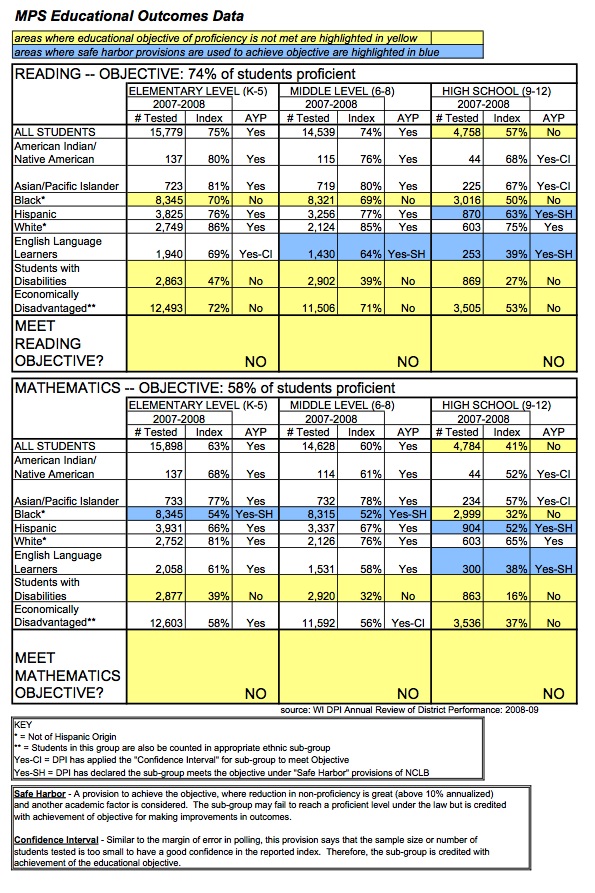
Share

Improving education What to teach?

The Economist:

IN THE long list of problems that plague American education, one is primary: what should students learn? For decades, however, this question has baffled people. In an education system run by the 50 states, success is in the eye of the beholder. Mississippi has different expectations for pupils than Massachusetts does. America as a whole has fallen behind. In a ranking of 15-year-olds in 30 industrialised countries in 2006, American teenagers came a dismal 21st in science and 25th in maths.
Now there is a new drive to set national standards. Arne Duncan, the education secretary, is offering more than $4 billion in total to states that pursue certain reforms–in particular, adopting standards and assessments that prepare students to compete in a global economy. This gives urgency to an effort already under way: the National Governors Association (NGA) and the Council of Chief State School Officers (CCSSO) are in the midst of drafting common standards.

Share

10 biggest K-12 developments of 2010

Tom Vander Ark:

Despite lagging state budgets, 2010 will be a year of great progress in American education. Here’s the 10 biggest developments of the year ahead:

  1. Race to the Top awards will be made in two phases to about 18 states and will set the standard for excellence in state policy. About 30 states will make significant policy changes in preparation for application or after being rejected.
  2. Common Core will be adopted by almost everyone except the Republic of Texas and will lay the groundwork for a new generation of content and assessment
  3. While not likely to pass in 2010, a framework for ESEA (that looks a lot like RttT) will emerge with an improved accountability and student support system
Share

In defense of the good school promise

Tom Vander Ark:

While channel surfing on Thanksgiving morning, I found a school board association meeting where a famous prof was railing on standards and testing with lots of applause from the audience (in a state contemplating delaying college-ready math and science standards until 2015). I agreed with many of his assertions like “America is still best at encouraging differences and entrepreneurship” and “we want to teach everything.” He went to deride standards, testing and a system where everything was “reduced to a single number.” Since lots of my friends are in his camp and want to pitch No Child Left Behind and add more services, it reminded me of why we have NCLB and what the new version should look like.
The primary reason we have a federal law like NCLB is that school boards (and state boards) allowed generations of chronic failure. They cut bad employment deals and asked for more money when things didn’t go well. Teachers that could went to the suburbs. Most low income and minority kids were getting left behind. Anyone committed to equity could see things had to change.
NCLB reflected a consensus that 1) measurement and transparency would help us understand the problem, 2) that a basic template for school accountability would ensure that things would get better for underserved students, and 3) the federal government should play a bigger role in ensuring equity and excellence.

Share

NEA is the Largest Political Spender in America

Mike Antonucci:

Since the rise of the Internet, we have been able to more easily track political spending. The Center for Responsive Politics has led the way in documenting and accounting for all the different ways money is spent on federal campaigns. Alas, tracking similar spending at the state level has been more of a hit-or-miss proposition. Disclosure laws vary from state to state, and electronic reporting of results has been sporadic.
Until now. CRP joined forces with the National Institute on Money in State Politics to produce the first comprehensive report of political spending at both the state and national levels. The organizations combined spending on candidates, parties and ballot initiatives to come up with a total for each of the nation’s special interest groups. The results should give pause to those who think the biggest political spenders must be Big Oil, Wal-Mart and the pharmaceutical, banking and tobacco industries.
By far the largest political spender for the 2007-08 election cycle was the National Education Association, with more than $56.3 million in contributions. The teachers’ union outdistanced the second-place group by more than $12 million.
Believe it or not, the report understates NEA’s spending, since it places political expenditures made in concert with the American Federation of Teachers in a separate category. “NEA AFT’ ranked 123rd in the nation, contributing more than $3.3 million to campaigns in Colorado, Florida and Oregon. (AFT ranked 25th with almost $13.8 million in contributions.)
Just to put this in perspective, America’s two teachers’ unions outspent AT&T, Goldman Sachs, Wal-Mart, Microsoft, General Electric, Chevron, Pfizer, Morgan Stanley, Lockheed Martin, FedEx, Boeing, Merrill Lynch, Exxon Mobil, Lehman Brothers, and the Walt Disney Corporation, combined.

Share

Change looms for schools

Eric Florip:

First, it was the Elementary and Secondary Education Act of 1965. Later it became No Child Left Behind in 2002.
But with the Obama administration now in the White House, talk of a new rewrite of the law has already begun. Education Secretary Arne Duncan addressed the issue publicly in September, calling for changes to the landmark law during a speech to education leaders.
Just don’t expect to call the next version No Child Left Behind.
“We’re going to change the name of the bill,” said Justin Hamilton, a spokesman of the U.S. Department of Education in Washington, D.C. “That was the previous administration’s name for it. That was their bill, not ours.”
Though nothing definitive has been announced, the department is already in discussions about re-authorizing the law in a different form, Hamilton said. Duncan has spent much of his tenure so far traveling the country to gather input, he added.

Share

Minnesota Charter School Program “is out of control”

Tony Kennedy:

Minnesota’s charter school movement, which sparked a national rethinking of public schooling nearly two decades ago, has been infected by an out-of-control financing system fueled by junk bonds, insider fees and lax oversight.
State law prohibits charter schools from owning property, but consultants have found a legal loophole, allowing proponents to use millions of dollars in public money to build schools even though the properties remain in the hands of private nonprofit corporations.
The key to making it all work is the state’s lease aid program, which was created 11 years ago to help spur competition in public education by offering rental assistance to groups promoting alternatives to district schools. In the beginning, many charters were located in dumpy strip malls and received no real-estate grants.

Share

The “Achilles Heel” of Education Reform is Slashed by Michael Bloomberg

Dan Brown:

igh-stakes testing is a bullet train barreling through education reform; you’re either on the train, on the sidelines, or waving your hands in frantic protest, only to be run over.
Last week’s education speech by emboldened New York City Mayor-for-Life Bloomberg (who just dropped nine-figures of his own cash on his re-election bid) is depressing news to people on the ground in schools. Conducting the Testing Express, Bloomberg announced:

“As [Secretary of Education] Arne [Duncan] had said a number of times, ‘A state can’t enter Race to the Top if it prohibits schools from using student achievement data to evaluate teachers and that’s why California just repealed its prohibition on doing so.’

Share

California’s future demands bigger investment in schools

Beatrice Motamedi:

A story on National Public Radio’s Web site about MySpace and Facebook recently quoted students from the Urban School of San Francisco.
I teach at Urban, and what stung me was its description as “an elite private school.” As a journalist and teacher, this kind of thing gets under my skin.
With tuition at $30,800 a year, it’s inevitable that Urban will be stereotyped as a prep school for smarties who exist in a parallel universe of privilege. But as someone who has spent several years teaching in public schools, I also know that California’s per-pupil spending rate of $7,571 a year – watch out, Mississippi, we’re racing you to the bottom – doesn’t provide even the basics, let alone enough for a truly decent education. My hometown of Milwaukee spends twice as much, and still only 46 percent of high school students graduate. The fact is that we could and probably should be spending four times as much on public education as we do now.
At Urban, I’m rarely impressed by excess, just by thoughtful teaching, the resources to support it and kids who work so hard that I sometimes have to tell them to slow down. But stereotypes persist. When I got my job at Urban, a friend who works at a community college promptly checked my delight. “Isn’t that the fancy private school in the Haight?” she asked. “How nice for you.”

Share

Plano Schools’ Boundary Changes

Matthew Haag:

The redrawing of school attendance zones usually upsets some parents, but a set of proposed changes in the Plano school district triggered a war of words the likes of which the district hadn’t seen in years.
Parents not only lambasted the proposed changes, but they also turned on one another, accusing opponents of selfishly thinking only about their own children.
“This school-vs.-school and neighborhood-vs.-neighborhood thing saddened me,” trustee Brad Shanklin said at a board meeting this month.
District officials recently put forth a new set of changes partly designed to quell the anger. And they will find out Tuesday whether they have succeeded.
That’s when residents will have a chance to speak publicly about the latest proposal. The district will host a similar meeting the next night in Spanish. School board members are expected to vote on the boundary changes Dec. 15.
New boundaries are needed to balance student enrollment across Plano ISD after more families moved into the district’s eastern side.

Presentations on the proposed boundary changes: School Board 2.8MB PDF / Staff 1.7MB PDF.

Share

Report finds wide disparities in gifted education

AP:

When Liz Fitzgerald realized her son and daughter were forced to read books in math class while the other children caught up, she had them moved into gifted classes at their suburban elementary school.
Just 100 miles down the road in Taliaferro County, that wouldn’t have been an option. All the gifted classes were canceled because of budget cuts.
Such disparities exist in every state, according to a new report by the National Association for Gifted Children that blames low federal funding and a focus on low-performing students.
The report, “State of the States in Gifted Education,” hits at a basic element of the federal government’s focus on education: Most of its money and effort goes into helping low-performing, poor and minority students achieve basic proficiency. It largely ignores the idea of helping gifted kids reach their highest potential, leaving those tasks to states and local school districts.

Share

The masters of education With the Gates Foundation grant in hand, Memphis City Schools will funnel incentives to develop the best and brightest teachers and seed the system with role models

Jane Roberts:

Kimberly Hamilton arrives and leaves work in the dark so often, custodians at Winchester Elementary School are on alert not to lock her in or out.
“If I leave at 5 o’clock, someone’s putting a hand to my forehead to see if I have a fever,” she says, laughing at the absurdity, but serious about the hours it takes to move children from barely proficient to mastery.
She teaches her third-graders to get along with others, be good citizens, live in a violent society and dream for the future.
The $90 million grant the Bill & Melinda Gates Foundation awarded this month to Memphis City Schools to improve the effectiveness of its teachers offers Hamilton the biggest one-time raise she could ever hope for in public education, going from the $49,000 she earned last year to the $75,000 base pay proposed for the district’s most talented teachers.

Share

Sorry, wisdom’s gone on furlough

David Shapiro:

There’s more drama than learning in local education as we “flASHback” on the week’s news that amused and confused:
• The Board of Education and teachers union question whether $50 million offered by Gov. Linda Lingle is enough to reopen public schools on “furlough Fridays.” That’s the old “no can do” spirit that made our schools what they are.
• U.S. Education Secretary Arne Duncan is sending an aide to Hawai’i to meet state education leaders and visit schools. If he wants to visit on Friday, it’ll cost him $160 million to open the doors.
• Kids from lower-income families may lose out on preschool because of state plans to quadruple costs. They’ve left behind as many K-12 children as they can, so they’re moving down to the nursery schools.

Share

New York City’s Schools Share Space, And Bitterness, With Charters

Jennifer Medina:

Suzanne Tecza had spent a year redesigning the library at Middle School 126 in Williamsburg, Brooklyn, including colorful new furniture and elaborate murals of leafy trees. So when her principal decided this year to give the space to the charter high schools that share the building, Ms. Tecza was furious.
“It’s not fair to our students,” she said of the decision, which gives the charter students access to the room for most of the day. “It’s depriving them of a fully functioning library, something they deserve.”
In Red Hook, Brooklyn, teachers at Public School 15 said they avoid walking their students past rooms being used by the PAVE Academy Charter School, fearing that they will envy those students for their sparkling-clean classrooms and computers. On the Lower East Side, the Girls Preparatory Charter School was forced to turn away 50 students it had hoped to accept because it was unable to find more room in the Public School 188 building.
Mayor Michael R. Bloomberg has made charter schools one of his third-term priorities, and that means that in New York, battles and resentment over space — already a way of life — will become even more common. He and his schools chancellor, Joel I. Klein, have allowed nearly two-thirds of the city’s 99 charter schools to move into public school buildings, officials expect two dozen charter schools to open next fall, and the mayor has said he will push the Legislature to allow him to add 100 more in the next four years.

Share