School Information System

Texas K-12 Tax & Spending Commentary: $10K/student Vs Madison’s $18K

Ross Ramsey:

The grand total is now $10,111 — up $696 from 2008. The feds pay $1,015. The locals pay $5,209 — almost $1,000 more per student than they were paying a year ago. And the state? It pays $3,887 per student, or $339 less than it was paying 10 years ago.

Some of that shift in cost can be attributed to rising property values during a prosperous time in the state’s economic history. When more money comes in from local school property taxes, the state gets a break and doesn’t have to pay as much to keep the schoolrooms open. Some, like former state Rep. Kent Grusendorf, who works on education policy at the conservative Texas Public Policy Foundation, think the local tax is functionally identical to a state property tax — one that is effectively controlled by the state of Texas.

It’s a complex and lumbering system, but some things — like where higher property taxes come from — are easy to figure out. State lawmakers are increasingly reliant on locally raised taxes to pay for education — and property owners shoulder that burden.

Much more, here.

Share

Culture, Gender, and Math

Luigi Guiso, Ferdinando Monte, Paola Sapienza, Luigi Zingales:

results, we classified countries according to several measures of gender equality. (i) The World Economic Forum’s Gender Gap Index (GGI) (10) reflects economic and political
The existence (1), degree (2), and origin (3, 4) of a gender gap (difference between girls’ and boys’ scores) in mathematics are highly debated. Biologically based explanations for the gap rely on evi- dence that men perform better in spatial tests, whereas women do better in verbal recall ones (1, 5, 6). However, the perform- ance differences are small, and their link with math test per- formance is tenuous (7). By contrast, social conditioning and gender-biased environ- ments can have very large ef- fects on test performance (8).
To assess the relative
importance of biological and
cultural explanations, we
studied gender differences
in test performance across
countries (9). Cultural inequal-
ities range widely across
countries (10), whereas re-
sults from cognitive tests do
not (6). We used data from
the 2003 Programme for
International Student Assess-
ment (PISA) that reports on
276,165 15-year-old students
from 40 countries who took
identical tests in mathematics
and reading (11, 12). The
tests were designed by the Organisation for Economic Co-operation and Develop-
ment (OECD) to be free of
cultural biases. They are sufficiently chal- lenging that only 0.6% of the U.S. students tested perform at the 99th percentile of the world distribution.

by country (see chart, above): in Turkey, –22.6, whereas, in Iceland, 14.5. A similar variation exists in the proportion of girls over boys who score above 95%, or 99% of the country-level distribution (fig. S2A).
opportunities,
Math and reading gender gaps. In more gender-equal cultures, the math gender gap dis- appears and the reading gender gap becomes larger. (Top) Gender gaps in mathematics (yellow) and reading (gray) are calculated as the difference between the average girls’ score and the average boys’ score. A subset of countries is shown here (see SOM for complete data set and calculations). In many countries, on average, girls perform more poorly than boys in mathematics. In all countries, girls perform better than boys in reading. The gender gap in mathematics and reading correlates with country measures of gender status within the cul- ture, one of which measures is the GGI (bottom). Larger values of GGI point to a better aver- age position of women in society. Besides USA, the countries are abbreviated as their first three letters, except for PRT, Portugal, and ISL, Iceland.
The gender gap is reversed in reading. On average, girls have reading scores that are 32.7 higher than those of boys (6.6% higher than the mean average score for boys), in Turkey, 25.1 higher and in Iceland, 61.0 higher (see chart). The effect is even stronger in the right tail of the distribution. In spite of the difference in levels, the gender gap in reading exhibits a variation across countries similar to the gender gap in math. Where girls enjoy the strongest advantage in reading with respect to boys, they exhibit the smallest disadvantage (sometime even an advantage) in math. [The correlation between the average gender gaps in mathematics and reading across countries is 0.59 (fig. S4)].
0.81), our statistical model suggests that the mean score performance in mathematics of girls relative to boys would increase by 23 points, which would eliminate the Turkish gender gap in math (see table, p. 1165). In more gender-equal countries, such as Norway and Sweden, the math gender gap disappears. Similar results are obtained when we use the other indicators of women’s roles in society. These results are true not only at the mean level, but also in the tail of the distribution (table S3). In Iceland, the ratio of girls to boys who score above the 99th percentile of the country distribution in math scores is 1.17.
70 60 50 40 30 20 10
0 -10 -20 -30
0.8 0.75 0.7 0.65 0.6 0.55 0.5
TUR
Gender gap, math Gender gap, reading
KOR ITA USA PRT
Women’s emancipation (GGI)
FRA POL
NOR SWE ISL
GGI index Test score differences between girls and boys

Share

The ‘legitimation’ crisis in the US: Why have Americans lost trust in government?

the conversation:

Elections normally decide who is to govern. This upcoming election is about the very legitimacy of the system.

At the final presidential debate, Republican candidate Donald Trump made the remarkable statement that he might not accept the outcome of the election. Even putting this rancorous and divisive presidential election aside, trust in the federal government in general has been in decline for decades.

In 1964 over 70 percent of Americans recorded having trust in the institution, according to polls conducted by the Pew Research Center. By November 2015 it had fallen to 19 percent, less than one in five of Americans. A recent Gallup Poll survey reveals only 20 percent trust in the presidency. Low. But not as low as the only six percent who trust Congress.

Share

The e-waste mountains – in pictures

Anna Leach:

Sustainable development goal target 12.5 is to reduce waste. But with a planet increasingly dependent on technology, is that even possible? Kai Loeffelbein’s photographs of e-waste recycling in Guiyu, southern China show what happens to discarded computers

Share

The truth about boys and books: they read less – and skip pages

Daniel Boffey:

Boys might claim it’s a simple matter of preferring to read magazines or the latest musings of their friends on social media rather than the classics. But two of the largest studies ever conducted into the reading habits of children in the UK have put those excuses to bed.

Boys, of every age, no matter the nature of the literature before them, typically read less thoroughly than girls.

They take less time to process the words, lazily skipping parts with abandon. And they choose books that are too easy for them, meaning they fail to move on to tougher material, it is claimed.

Keith Topping, professor of educational and social research at the University of Dundee, is behind two academic research papers: one using data from 852,295 students in 3,243 schools (a tenth of the 8.4 million children in the UK), and another examining the quiz answers relating to the comprehension of books read by 150,220 children in 967 schools. Between them, they reach a damning conclusion on boys between five and 18 years old: “What they are doing is not particularly good – and they are lagging behind.”

Share

Independent work: Choice, necessity, and the gig economy

James Manyika, Susan Lund, Jacques Bughin, Kelsey Robinson, Jan Mischke, and Deepa Mahajan

The resulting report, Independent work: Choice, necessity, and the gig economy, finds that up to 162 million people in Europe and the United States—or 20 to 30 percent of the working-age population—engage in some form of independent work. While demographically diverse, independent workers largely fit into four segments (exhibit): free agents, who actively choose independent work and derive their primary income from it; casual earners, who use independent work for supplemental income and do so by choice; reluctants, who make their primary living from independent work but would prefer traditional jobs; and the financially strapped, who do supplemental independent work out of necessity.

Share

Increasing Burdens On Young People

Teresa Welsh

The United States is supposed to be a land of opportunity where young people can expect their quality of life will be better than their parents’. But the U.S. isn’t even in the top 20 countries when it comes to opportunities for young people.

The U.S. ranks 23 on a list of 183 countries based on 18 indicators that measure progress for youth ages 15 to 29. Eight of the top 10 countries are in Europe, plus Australia and Japan.

Share

Perils of Eroded civic Knowledge

Karoli Kuns transcribes Souter:

It is a product of civic ignorance.

What I worry about is a remark that Benjamin Franklin made and Susan Leahy quoted Jefferson at the beginning about how “an ignorant people can never remain a free people.”

Democracy cannot survive too much ignorance.

Franklin, in effect, had a comment to which the Jefferson comment is a kind of an answer or a response. You’ve probably heard this but it bears repeating.

Franklin was asked by someone I think on the streets of Philadelphia shortly after the 1787 convention adjourned in what kind of government the constitution would give us if it was adopted. Franklin’s famous answer was “a republic, if you can keep it.” (edited)

You can’t keep it in ignorance. I don’t worry about our losing republican government in the United States because I’m afraid of a foreign invasion. I don’t worry about it because I think there is going to be a coup by the military as has happened in some other places.

Related: Madison’s long term, disastrous reading results.

Share

Google Has Quietly Dropped Ban on Personally Identifiable Web Tracking

Julia Angwin

When Google bought the advertising network DoubleClick in 2007, Google founder Sergey Brin said that privacy would be the company’s “number one priority when we contemplate new kinds of advertising products.”

And, for nearly a decade, Google did in fact keep DoubleClick’s massive database of web-browsing records separate by default from the names and other personally identifiable information Google has collected from Gmail and its other login accounts.

But this summer, Google quietly erased that last privacy line in the sand – literally crossing out the lines in its privacy policy that promised to keep the two pots of data separate by default. In its place, Google substituted new language that says browsing habits “may be” combined with what the company learns from the use Gmail and other tools.

Share

Aberfan: The mistake that cost a village its children

BBC News:

The phrase is one of the most enduring and quoted of modern literature, an almost proverbial reference to the archaic and bygone.

It is the opening line of LP Hartley’s 1953 novel The Go-Between, an eerie story set 50 years on from a tumultuous experience of an adolescent boy; an experience so devastating it propelled him prematurely into adulthood and ruined the rest of his life.

Share

College buyer’s remorse is real

Jessica Dickler

Many millennials don’t know what they owe on their student loans, what interest rate they are paying or whether college was worth it, according to a survey released Thursday by Citizens Bank.

A startling 6 in 10 millennials said they have no idea when their loans will be paid off and more than a third don’t even know the interest rate they are paying. On average, graduates owed about $41,000 in student loans, the report said.

“It is very uncommon for consumers to have such a large amount of debt and yet not know their interest rate or how long their payments are going to last,” said Brendan Coughlin, president of consumer lending at Providence, Rhode-Island-based Citizens Bank, which surveyed over 500 college graduates ages 18 to 35 with student loans.

Share

College presidents see opportunities in ‘disruptions’ of higher education

Derek Quizon:

A panel of university presidents, past and present, talked about the future of higher education at a discussion at the University of Virginia’s Curry School of Education on Thursday.

Online education, affordability and state funding were all topics of discussion at the panel, titled “Disruption in Higher Education.”

Like many college presidents today, former UVa President John T. Casteen III was forced to adapt to a major disruption during the 1990s. During the decade, state funding to the university dropped dramatically, and Casteen and his administration began focusing on private fundraising.

Share

Five myths about genius

Eric Weiner

It’s not always easy to know when we’re in the presence of “genius.” In part, that’s because we barely agree on what it means. In Roman times, genius was not something you achieved but rather an animating spirit that adhered itself to people and places. In the 18th century, Romantics gave genius its modern meaning: Someone with special, almost divine abilities. Today, we’re quick to anoint a “marketing genius” or a “political genius,” oblivious to the fact that true genius requires no such modification. In truth, real geniuses transcend the confines of their particular domains. They inspire and awe. Which is precisely why we should use the word sparingly, lest it lose some of its magic. That’s not the only misconception. Here are some others.

Myth No. 1

Genius is mostly about genetics.

In 1869, a British polymath named Francis Galton published a popular book called “Hereditary Genius.” As the title suggests, Galton argued that genius is determined by genetics, or what he called “inheritance.” That idea stuck. “Genes appear to have a big role in our intelligence and talents,” one website declares. Others breathlessly report that scientists have uncovered a gene that makes some people brilliant.

The truth, though, is that genius is not transmitted genetically like blue eyes or baldness. Genius parents don’t beget genius babies, and there’s no “genius gene.” Genetics is part of the mix, but only part. “Much of the literature concludes that hereditary factors play a minor role at best in the determination of creativity,” University of Minnesota psychologist Niels Waller wrote in Psychological Inquiry.

There are other factors, too. One is hard work — the “drudge theory” of genius. Others suggest that attitude matters as well. A study of young musicians found that it was not the number of practice hours students racked up that determined their success but rather their “long-term commitment .” In other words, genius requires a certain mind-set, an unflappable persistence.

Share

Black-white disparity in student loan debt more than triples after graduation

Judith Scott-Clayton and Jing Li

The moment they earn their bachelor’s degrees, black college graduates owe $7,400 more on average than their white peers ($23,400 versus $16,000, including non-borrowers in the averages). But over the next few years, the black-white debt gap more than triples to a whopping $25,000. Differences in interest accrual and graduate school borrowing lead to black graduates holding nearly $53,000 in student loan debt four years after graduation—almost twice as much as their white counterparts. While previous work has documented racial disparities in student borrowing, delinquencies, and defaults, in this report we provide new evidence that racial gaps in total debt are far larger than even recent reports have recognized, far larger now than in the past, and correlated with troubling trends in the economy and in the for-profit sector. We conclude with a discussion of policy implications.

Share

Commentary (seems to lack data…) on Madison’s K-12 Tax & Spending Increase Referendum

It is unfortunate two recent articles on the upcoming Madison School District tax & spending increase referendum lack data, such as:

Doug Erickson:

To offset cuts in state aid and the tightening revenue caps, Act 10 eliminated collective bargaining over benefits. State employees and other public workers without an existing contract were required to start contributing to their pensions. Once a district’s collectively bargained contract expired, the district also could do things such as switch insurance providers, increase employee benefit contributions, and change work rules — all without needing union approval.

“It took the handcuffs off school boards,” Nygren said.

In Madison, Act 10 ushered in significant changes. Faced with the state-imposed cuts but before Act 10 took effect, employee unions agreed during contract negotiations to major concessions in 2011-12. That included a salary freeze (saving $4 million) and a requirement that employees begin contributing 5.8 percent of their salary toward their state pensions (saving $11 million).

The union also agreed to drop Wisconsin Physicians Service as an insurance provider in 2012, a $5 million savings. WPS was the most costly plan the district offered, and employees who had opted for it had been paying a portion of their monthly premiums.

Union members also had agreed back then to begin paying a percentage of the premiums for the three other insurance options, although the School Board chose not to go that route at that point. That changed this year. The School Board is, for the first time, now requiring all employees to pay something toward their monthly health insurance premiums.

The percentage varies by employee group, with teachers paying 3 percent (6 percent if they don’t participate in the district’s wellness program). This followed the expiration of the district’s final union contract over the summer.

Doug Keillor, executive director of Madison Teachers Inc., the district’s teachers union, said Act 10 alienated public employees and took a “wrecking ball” to public schools.

“The district could keep cutting pay and could keep increasing health insurance contributions, so from that standpoint, the district has not transferred as much of the costs onto the backs of employees as they could,” he said. “But you have to first back up and say, ‘How do you build a quality public school district?’ A district needs to attract people into this profession and keep them. The Legislature didn’t give school boards the tools to do that.”

Sen. Leah Vukmir, R-Brookfield, a member of the Senate Education Committee, argues that most of the discussions about public school funding are wrongly framed from a perspective that more money automatically means higher student achievement.

“Our reforms are working,” she said. “We’ve given the school districts through Act 10 the tools to do more with the resources they have. Those districts that have embraced that are doing really well.”

Amber Walker:

Public education advocates are organizing in support of the upcoming K-12 operational referendum for the Madison Metropolitan School District, which is necessary to maintain a quality education for local students, they say.

On Nov. 8, the district is asking voters to permanently raise its revenue limit authority by $26 million.

The district proposes that this change happens incrementally over the next four school years. MMSD seeks an additional $5 million per year for the 2017-2018 and 2018-2019 school years and an additional $8 million per year for the 2019-2020 and 2020-2021 school years.

Commentary on redistributed state tax collections and spending.

Madison School District 2016 tax & spending increase referendum content. Channel 3000.

I’ve not seen total Madison School District spending data, much less history, amongst the referendum content.

Share

2,000 Seattle teachers wear ‘Black Lives Matter’ shirts to class

Paige Cornwell:

About 2,000 Seattle educators wore Black Lives Matter shirts at their schools Wednesday to call for racial equity in education.

Schools across the district held “Black Lives Matter at School” rallies before classes began for the day. Students, parents and teachers also wore stickers and buttons emblazoned with the “Black Lives Matter” slogan.

The purpose of the day was to affirm that “black lives matter in the public schools,” according to organizers, who are members of Social Equality Educators, a group of educators within the Seattle teachers union. Teachers also wanted to show their support for John Muir Elementary, which had its “Black Men Uniting to Change the Narrative” event canceled last month after receiving a threat over teachers’ plans to wear Black Lives Matter shirts.

Before school started Wednesday at Chief Sealth International High School, dozens of educators and students gathered outside the building and held up banners and signs.

Share

Feeling the Squeeze: Pension Costs Are Crowding Out Education Spending; The Focus On Adult Employment

Josh McGee

Taxpayer contributions to teachers’ retirement plans are expected to grow substantially over the next decade. But the underfunding shortfall is so large that aggregate pension debt will also continue to grow. Retirement costs per pupil are already approaching 10% of all education expenditures. Without meaningful reform, these costs, as well as the aggregate pension debt vowed to teachers’ plans, will continue to rise and continue to crowd out education spending on the state and local levels.
Per-pupil spending on equipment, facilities, and property fell by 26% between 2000 and 2013, likely resulting in a growing backlog of expensive repairs and replacements that will need to be made sometime down the road.

+Spending on instructional supplies (e.g., textbooks) declined by 10% per pupil. More than half of states (29) spent less per pupil on instructional supplies in 2013 than in 2000; in several states, the decline was substantial: Arizona (37%), California (30%), Michigan (39%), and Oklahoma (30%). Teachers’ salaries overall were basically flat between 2000 and 2013, and retirement benefits were reduced in almost every state, sometimes by very large amounts.

The vast majority of taxpayer contributions into teachers’ pension plans are now used to pay down pension debt owed for past service rather than to pay for new benefits earned by today’s teachers. As the value of this debt has increased, most current teachers have experienced stagnant salaries and reduced retirement benefits, while pending on classroom supplies, equipment, and building upkeep has declined relatively or even absolutely.

Related: A focus on adult employment.

Share

Here’s a new college ranking, based entirely on other college rankings

Nick Anderson:

Start with two lists from U.S. News and World Report: national universities and national liberal arts colleges. These rankings, which are based in part on selectivity, wealth and reputational surveys, for decades have been the most prominent in the market.

For the national universities, add:

National university rankings from Washington Monthly, which aim to gauge their contribution to the public good.

Rankings from the Wall Street Journal/Times Higher Education, which include a focus on outcomes such as graduation rates, salaries and student engagement.

Rankings from Times Higher Education world university analysts, only of schools within the United States, which focus on research prowess.
Rankings from Money and Forbes magazines, which in different ways seek to measure value and outcomes. Both include data on salaries of alumni.
Take the sum and divide by six (the number of rankings in play). Order the

Share

The Other Mental Health Crisis

Scott Jaschik

In 2005, a study found that 10 percent of graduate and professional students at the University of California at Berkeley had contemplated suicide. More than half reported feeling depressed a lot of the time. While concerns about undergraduates’ mental health were already growing then and have only increased since, the finding about graduate students surprised and alarmed many experts. And because of Berkeley’s prominence in educating future Ph.D.s and professors, the study was widely circulated.
Ten years later, the graduate student government at Berkeley is releasing a new study. It too finds a high percentage of graduate students showing signs of depression.

The new study is not strictly comparable to the one of a decade ago. This time the Berkeley graduate students were asked a series of questions to measure their life satisfaction and depression levels, rather than asking them if they felt depressed. The graduate students were also asked a series of other questions about their lives so researchers could note apparent relationships between certain factors and good mental health.

Share

Germany shows tuition-free college may not fix higher education in the US

Jon Marcus:

Claudia Niessler wouldn’t have attended a university that charged tuition, though even without it her living expenses in college require her to work as many as 20 hours a week at a supermarket.

Stefan Steinbock pipes in that having to pay tuition would discourage people with good grades but low incomes from getting university degrees. Eliminating financial stress means he can focus on his academics.

But Peter-André Alt contends that being unable to charge tuition means universities are overcrowded and thinly stretched. Meanwhile, hard-pressed taxpayers are unfairly forced to fill the void, even if they don’t go to college or have kids who do.

Niessler and Steinbock are students at Freie Universität in Berlin; Alt is the university’s president. Together, they embody the surprising ambivalence, unexpected nuances, and general pros and cons of tuition-free university in Germany, a model proposed in the US by Democratic presidential candidate Hillary Clinton.

Share

The Meaningless Politics of Liberal Democracies

Emma Green

But Hamid also thinks there’s something lacking in Western democracies, that there’s a sense of overarching meaninglessness in political and cultural life in these countries that can help explain why a young Muslim who grew up in the U.K. might feel drawn to martyrdom, for example. This is not a dismissal of democracy, nor does it comprehensively explain the phenomenon of jihadism. Rather, it’s a note of skepticism about the promise of secular democracy—and the wisdom of pushing that model on other cultures and regions.

“The fear of the Lord is the beginning of wisdom” – Psalm 111:10.

Share

Civics: Taser Explores Concept of Drone Armed With Stun Gun for Police Use

Zusha Elenson

The day when police zap suspects from the sky with drones carrying stun guns may be nearing.

Taser International Inc., known for its stun guns and body cameras, is exploring the concept of a drone armed with a stun gun for use by police. This week, the company held discussions with police officials about such a device during a law-enforcement conference here.

Taser spokesman Steve Tuttle said the company’s advanced research team met with law enforcement customers “to discuss various future concepts” to get feedback.

Share

Thankful and lucky to have helped build Khan

Ben Karen’s:

I volunteered until Sal turned Khan Academy into a real, more-than-one-person company, at which point I joined as our first engineer. I felt deep pride in using the engineering and management lessons I’d learned from Joel and Fog Creek to build a team pointed at KA’s epic mission: “A free, world-class education for anyone, anywhere.”

Now we’re a company of ~120 people. And that group has been steadily adding momentum to the pursuit of our mission, increasing Khan Academy’s impact a little here and a lot there…making me thankful while I just try to hold on:

We serve over 10M active learners monthly (37M+ registered students, 1.5M+ registered educators).

We’ve made thousands and thousands of educational videos, articles, and interactive exercises available for free to all learners (forever). Either by creating ‘em ourselves or partnering with exciting folks like Pixar and Crash Course.

All the content’s available in many different languages across many devices. And we’re aiming at larger and larger learner populations next.
We partnered with College Board to provide free, official SAT test prep, and within one year there’s been a 19% drop in the number of students who paid for SAT prep.

64% of first-generation students at top universities said that Khan Academy played a meaningful role in their education (survey by an independent group).

Share

Laurene Powell Jobs’s $100 Million Mission to Disrupt American High School

Lisa Miller

Since 2001, about $15 billion has been spent by taxpayers and philanthropists trying to boost academic achievement in American public schools. These efforts have largely failed — especially in high school. For the average 17-year-old, reading and math scores have not budged since 1971. On standardized tests, white 17-year-olds still outscore black 17-year-olds by 20 points or more — a stubborn gap, unchanged for 30 years.

Laurene Powell Jobs is undaunted by these facts. To her, the cause of the failure is clear: High schools fail to serve American kids because they were designed a hundred years ago for an industrial society that has ceased to exist. “You can pull all the disaggregated data that you want and get depressed about it,” she told me in June, as we sat drinking wine in the lobby of a downtown Chicago hotel — but what high school needs is a “completely changed design in 25,000 places.” Powell Jobs, who is the widow of Steve Jobs and worth about $18 billion, proposes the overhaul of all high schools neutrally, as though she’s suggesting something ordinary, like a cleanup of the garage. “That’s what we need to do.”

“We should have the best education system in the world!” she continues. “We should! We shouldn’t just have the best military. We shouldn’t just have the best economy. We should have the best education system. Of course we should! Every single person would agree to that!” It is perhaps not surprising that Powell Jobs holds a version of her husband’s disregard for Establishment institutions. But whereas the myth of Jobs portrays him as an enfant terrible, his widow is his opposite: low-key, disciplined, self-contained. At about six feet tall, she looks like a Valkyrie and comports herself like a queen. It’s her insistent optimism, even in the face of dire realities, such as the failure of a generation of school reformers to achieve any substantive gains, that betrays her defiance.

Last month, Powell Jobs announced the details of a $100 million investment in American high school through a contest she helped design called XQ: The Super School Project. She is not naïve to how venture philanthropists can be perceived by the people in the trenches, as unwelcome intruders or self-regarding colonizers. But she has lived in Silicon Valley for half her life, and in her world, “people actually get excited about solving problems. I feel very strongly that the problems we get to solve are really hard, otherwise they would have been solved. Now it’s our turn. We’re going to bring in people from all different disciplines who think about things a little different. Sometimes, they take it to the extreme, so — if we were to do this, which is not plausible, but if we were to colonize Mars, what would be our first step? And so you backwards map. After a couple of decades of living there, you think, Well, this shouldn’t be insurmountable. It’s a lot harder to have an early detection of all cancers than it is to give an excellent education to every kid in our country

Share

Civics: ACLU takes on Fisa court over secret decisions on surveillance laws

Spencer Ackerman:

The American Civil Liberties Union is challenging a secret court to effectively turn its back on deciding the meaning of a broad swath of surveillance and cybersecurity laws without public disclosure.

A motion the ACLU is filing on Wednesday before the controversial foreign intelligence surveillance (Fisa) court, a panel that operates in secret, argues that the first amendment requires the release of numerous classified decisions between 2001 and 2015 that have established a legal foundation for expanding the government’s surveillance activities.

Among the Fisa court opinions sought is an interpretation of the seminal Foreign Intelligence Surveillance Act of 1978 that many suspect will shed light on a reported Yahoo program to scan vast amounts of users’ emails.

Critics of the court, most prominently Oregon Democratic senator Ron Wyden, have said its classified rulings amount to a body of “secret law” that discard congressionally enacted privacy restrictions. The court and its supporters in government rejoinder that the extraordinary sensitivity around US surveillance practices for national security objectives necessitate the secrecy.

Share

The Anti-Helicopter Parent’s Plea: Let Kids Play!

Melanie Thernstrom:

It was a Friday afternoon at Mike Lanza’s house in Menlo Park, Calif., and the boys were going crazy. There were boys playing ball in the street, while in the backyard, boys were skittering along the top of the fence while others were wrestling on the trampoline. The house itself is nothing special — a boxy contemporary, haphazardly furnished — but even by the elevated standards of Silicon Valley, the Lanzas’ play space is extraordinary. It boasts a map of the neighborhood painted on the driveway, a fabulous 24-foot-long play river — an installation art piece, designed for children’s museums — and a two-story log-cabin playhouse with a sleeping loft, whiteboard walls inside for coloring and really good speakers, blasting Talking Heads.

Leo Lanza, who was 5 at the time, was taunting my kids, claiming they were too scared to climb 12 feet to the playhouse roof, using the toe holds, and then leap onto the trampoline, which has no surrounding netting. My daughter, Violet, the only girl there, continued to decorate the playhouse walls with a purple marker. “I don’t care if you get hurt,” she responded airily. Her twin brother, Kieran, scrunched up his round face, turning pink. “That’s not true!” he wailed. “I am not scared.”

Share

U. Michigan hosts racially separate forums, white student reporter booted from one for non-whites

Dave Huber:

Last week the University of Michigan held “diversity” forums sponsored by the Residential College (RC), but some were irked that the events were separated by race — one was for people of color, the other “open to all.”

Because it was geared “to create an open dialogue geared specifically to all people of color involved in the program,” a reporter from The Michigan Daily was asked to leave the forum for non-white students.

The reporter was permitted to attend the other event.

Share

Parents deserve school choice

Kristen Graham

Estelle B. Richman believes teachers – especially those in struggling neighborhoods – need ample resources, and that parents ought to have choices about where their children attend school.

The public servant who was once a licensed school psychologist is well aware of the challenges the School Reform Commission faces.

And, she said, she’s up for it.

Share

The Ivy League Doesn’t Need Taxpayers’ Help

James Pierson & Naomi Schaefer Riley:

Donald Trump criticized universities last month for hoarding their endowments, saying that they “use the money to pay their administrators, to put donors’ names on their buildings.” He added that “many universities spend more on private-equity fund managers than on tuition programs.” Mr. Trump suggested that he would work with Congress to encourage colleges to direct more of their investments toward students.

That’s a laudable—and achievable—goal. Many of the schools with large endowments, such as those in the Ivy League, will protest that they are private institutions, and that the government shouldn’t tell them how to spend their money. But these colleges also receive massive cash transfers from the federal government, giving Washington a way to impel them to put their endowments to more responsible use.

Share

Parents must not become enslaved by the education system – their views need to be heard again

Henry Price:

These are the words of RH Tawney, quoted by the Labour Prime Minister James Callaghan in his renowned Ruskin College Speech on the 18 October 1976 as an answer to the question, ‘what do we want from the education of our children and young people?’

Exactly 40 years on, it is vital that parents ask this question with their heads and their hearts and make their voices heard to influence the state.
We are now used to Prime Ministers speaking out on education, yet Callaghan was aware of the new turf upon which he was treading and makes reference to those who inundated him with advice before the speech; “some helpful and others telling me less politely to keep off the grass”. 

Speaking in the recent aftermath of events around William Tyndale School, Callaghan had touched on tensions between progressive and traditional approaches to education, casting doubt on “new, informal methods of teaching”, yet looking askance at “those who claim to defend standards, but who in reality are simply seeking to defend old privileges and inequalities

Share

Massive school building proposals stand out on Nov. 8th ballot

Barry Adams:

Just six years ago, Sun Prairie opened a new high school for students in 10th through 12th grades, part of a successful $96 million referendum in 2007.

The district now has 2,379 high school students, including ninth-graders who are in a different building. That gives Sun Prairie the second-largest high school population in the state, behind only Kenosha Indian Trail, and voters could be asked to build another high school in two years.

Six of the Sun Prairie School District’s seven elementary schools are over capacity, and more than 1,600 students could be added over the next decade in a city whose population has swelled 57 percent since 2000 to more than 32,000.

Share

Australian students to be taught about ‘male privilege’

BBC

A state in Australia has launched an education programme designed to smash gender stereotypes and tackle the root causes of domestic violence.

The “respectful relationship” curriculum will be mandatory in all schools in Victoria from next year.

Students will explore issues around social inequality, gender-based violence and male privilege.

However, a report on a 2015 pilot trial accused it of presenting all men as “bad” and all women as “victims”.

Pay inequality, anger management, sexual orientation and the dangers of pornography will be among the topics explored by students in the programme, costing A$21.8m (£13.5m; $16.5m).

Share

How I’d teach computer science

Dave Winter:

Assumptions: The software is documented, has users, and bugs, avoiding breakage is important.

0. Set up and install the software on your own server. Verify and demonstrate that it can handle a request. You can add a new page to the site. Authorize a new user.

Share

Less than half of Wisconsin public school students proficient or advanced in math and language arts

Doug Erickson:

On the latest round of statewide tests, fewer than half of Wisconsin public school students in grades three through eight scored proficient or better in English language arts or math.

The results, released Tuesday by the state Department of Public Instruction, showed 42.5 percent of students scored in those top two categories in English language arts, while slightly fewer, 42.3 percent, scored proficient or advanced in math.

The state simultaneously released scores from the ACT college readiness assessment, now required of all high school juniors in Wisconsin. In this second year of the requirement, the composite ACT score for public school students was 20.1 out of a possible 36, up one-tenth of a point from the prior year.

Erin Richards

The results are the latest picture of how publicly-funded students are performing in core subjects statewide.

A 2-year-old statewide ACT exam administered to all juniors offered a look at performance at high schools funded by taxpayers. Juniors in public schools posted an average composite score of 20.1, close to the same as last year. Juniors using taxpayer-funded vouchers to attend private high schools posted a lower overall ACT score — 18.2 — than public schools but made comparatively more improvement from last year.

The Wisconsin Department of Public Instruction made test-score results for all public schools and districts available on the department’s searchable data portal Tuesday. The private-school results can be found in separate spreadsheets on the department’s website.

“The federally required tests give us a look at how kids are doing when compared to a rigorous standard,” DPI Spokesman Tom McCarthy said. “They are not trying to assess whether a student is passing or failing a given grade.”

Share

High-School Graduation Rate Rises in U.S.

Tawnell Hobbs

The U.S. high-school graduation rate is at a high, with gains by minority students narrowing the gap with white students, according to figures released Monday by the White House.

Still, graduation rates among black and Native American students continue to lag white students by double digits, the numbers show.

The overall graduation rate reached 83.2% in 2014-15—up from 79% in 2010-11, the first school year all states used a consistent measurement.

Share

Want college to pay off? These are the 50 majors with the highest earnings.

Danielle Douglas-Gabriel:

Engineering and technology are among the most challenging fields of study in college, but all of that hard work apparently is paying off, as many of the top-earning entry-level jobs are tied to related majors, according to a Glassdoor study released Monday.

The job search engine analyzed more than 500,000 resumes and self-reported salaries to determine which majors pay the most during the first five years after graduation. Eight of the 10 most-bankable majors are tied to engineering or technology, such as computer science, electrical engineering and information technology. Nearly half of the majors listed are in science, technology, engineering and math (STEM) fields, though business-related majors, such as accounting and marketing, crack the top half of the 50 majors listed.

Share

College President Salaries

Alex Usher

The President of Iowa State University was recently reprimanded for crashing one school-owned airplane, overusing the other, and charging the cost to the institution. The institution’s Board is asking serious questions: such as “why they were paying for the President to go back and forth to his family-owned Christmas Tree business in North Carolina,” but not, apparently, “why in God’s name does our university own two aeroplanes?” As one does.

Share

1000 more people shot in Chicago compared with same time last year

Chicago Tribune:

A thousand more people have been shot in Chicago this year compared with the same time last year after a weekend that saw eight people killed and at least 40 wounded, according to police and data compiled by the Tribune.

At least 3,475 people had been shot in the city as of shortly after midnight Monday compared with 2,441 people shot this time last year, an increase of 1,034, according to Tribune data. There have been at least 595 homicides this year compared with 409 this time last year, an increase of 186.

The gun violence over the weekend was at levels usually seen in the summer when shootings typically spike.

Share

Trenton pays out $1.7M to school administrators for unused vacation days

David Foster

A month after Trenton Public Schools outlined its doomsday budget earlier this year, the top brass of the district received fat bonuses.

According to documents obtained by The Trentonian, 55 administrators received a combined $1.7 million in unused vacation time in February and May, and kept working for the district.

That type of payout is generally only made to retiring employees, but this time around, a one-time payment was agreed upon between the Board of Education, the state Department of Education fiscal monitor, and the Trenton Administrators & Supervisors Association (TASA) in the union contract.

Share

Rethinking the Political Economy of Automation

Frank Pasquale

The White House recently released two important reports on the future of artificial intelligence. The “robot question” is as urgent today as it was in the 1960s. Back then, worry focused on the automation of manufacturing jobs. Now, the computerization of services is top of mind.

At present, economists and engineers dominate public debate on the “rise of the robots.” The question of whether any given job should be done by a robot is modeled as a relatively simple cost-benefit analysis. If the robot can perform a task more cheaply than a worker, substitute it in. This microeconomic approach to filling jobs dovetails with a technocratic, macroeconomic goal of maximizing some blend of GDP and productivity.

Share

Competitive School Board Races! Minneapolis, home of a diverse K-12 climate – Compared To Madison’s Monoculture

Erin Hinrichs

Bob Walser’s induction into Minneapolis school board politics has been pleasant, so far. A newbie to the campaign trail, he secured the endorsement of the DFL Party and the Minneapolis Federation of Teachers last spring and has been encouraged by the well-wishes he’s received from constituents in District 4.

“When the community comes together, it’s really, really heartwarming. That’s been the joy of it,” he said, noting people were very positive and supportive of his candidacy at a recent fall festival event. “People are grateful. That’s really affirming.”

A majority of the Madison School rejected the proposed Madison Preparatory IB charter school.

Share

Wisconsin posts largest white-black graduation gap

Erin Richards

State Superintendent Tony Evers announced Monday that as part of the next budget, he’ll ask the Legislature to change state law to allow MPS to start the academic term earlier than Labor Day so that Superintendent Darienne Driver can pursue an aggressive slate of credit-recovery programs for high school students.

“It’s time to look at doing some things differently for Milwaukee Public Schools,” Evers said. “If they can do credit recovery in a robust way, that could raise the graduation rate.”

The achievement gap is so stark in Wisconsin because graduation rates are very high for white students and very low for black students. Almost 93% of white students earn diplomas on time in Wisconsin, which ranks just behind white students in New Jersey (94%) and Texas (93.4%). But Wisconsin’s graduation rate for black students is 64.1%, which ranks 6th lowest among states. Nevada is the worst, with a 55.5% black graduation rate, and Minnesota ranks fourth-lowest, at 62%.

Nationally, 74.6% of black students graduate on time.

Share

Madison School District MAP Scores Report 2015-2016

Madison School District Administration (PDF):

1. The percent of students that tested advanced or proficient on the math portion increased 1% (45% to 46%) and increased 2% on the reading portion (40% to 42%) of the spring MAP test.

2. Proficiency gaps exist between demographic groups on MAP reading and math scores. These gaps are similar to disparities on other standardized tests.

3. All demographic groups saw the same or an increase in the percent of students achieving proficiency in reading and math from fall to spring during both the 2014-15 and 2015-16 school years.

4. Students in each demographic group met their growth goal at more similar rates than the percent achieving proficiency. All demographic groups saw the same or an increase in the percent of students meeting reading growth goals. This is encouraging because students who have a lower score must grow more over the year to meet their goal.

The Madison Metropolitan School District (MMSD) has administered the Measures of Academic Progress (MAP) test in grades 3-8 for the past five school years: 2011-12 through 2015-16. This report focuses on progress made on the percent of students testing at least proficient in math and reading for each of the fall and spring administrations of the test during the 2014-15 and 2015-16 school years and the fall to spring growth of students during each of these school years.


2011-2012 Madison MAP assessment data.

February, 2016:

Almost all schools set goals for MAP growth that aligned with a district recommendation: 5%, 10%, or 15%. In addition, we see that very few schools actually achieved growth improvements of 5% or more, with changes in growth generally clustering around 0%.

Notes and links, here.

Chicago, interestingly, publishes extensive school data, here.

Share

Researchers have measured the cost of using a smartphone around your kids

Lila MacLellan:

Before we had smartphones and iPads, parents ignored their children by getting lost in a newspaper story or keeping one eye on the television. Now parents are distracted by mobile technology more than anything else, according to new research, and the consequences are worse.

In a recent study of caregivers, child-behavior specialists at University of Michigan and Boston Medical Center found that parents feel their phones and tablets command more of their attention than other distractions, in way that’s unpredictable and requires more emotional investment. As a result, their interactions with their kids suffer.

Share

Not in my locker room: Texas HS football coaches give players the Trump talk

Charles Scudder:

In the locker room chaos before school Tuesday morning, the young men of Grapevine High School’s football team scrambled to get ready for a last-minute team meeting.
“Hurry up, hurry up,” head coach Randy Jackson shouted. “Something really important to talk about today, so let’s go!”

The teenage boys who were dressed grabbed folding chairs and set up in the main space of the locker room. Usually, they don’t step on the big red Mustang in the center of the room, but today they needed all the space they could get. Both the junior varsity and varsity squads crammed in to hear what the coach had to say, some lining the halls and craning their necks to see.

Share

K-12 Tax & Spending Climate: Millions of Men Are Missing From the Job Market

New York Times

The working paper by Alan Krueger, a Princeton economist, casts light on this population, which grew during the recession that started in 2007. As of last month, 11.4 percent of men between the ages of 25 and 54 — or about seven million people — were not in the labor force, which means that they were not employed and were not seeking a job. This percentage has been rising for decades (it was less than 4 percent in the 1950s), but the trend accelerated in the last 20 years.

Surveys taken between 2010 and this year show that 40 percent of prime working-age men who are not in the labor force report having pain that prevents them from taking jobs for which they are qualified. More than a third of the men not in the labor force said they had difficulty walking or climbing stairs or had another disability. Forty-four percent said they took painkillers daily and two-thirds of that subset were on prescription medicines. By contrast, just 20 percent of employed men and 19 percent of unemployed men (those looking for work) in the same age group reported taking any painkillers.

Share

The Inequality Fight Dividing Hillary Clinton’s Hometown: Chappaqua, NY

Dana Goldstein

On a hot Thursday afternoon in August, Tatlin McLeod sat on a shaded bench at the Chappaqua train station, sipping an iced drink out of a takeout cup. McLeod lives in the Bronx and commutes to this Westchester County suburb, 35 miles north of Midtown Manhattan. She has been working as a nanny for various Chappaqua families for 13 years. She is black and an immigrant from Jamaica.

Tucked into a set of forested hills, Chappaqua is a hamlet of 1,400 residents, famous as the adopted home of Bill and Hillary Clinton. I grew up in a neighboring village called Ossining, but to me, Chappaqua has always seemed a world apart; almost like the movie set version of a 19th century American suburb. Stately colonials and Victorians are situated on large plots, nary a McMansion in sight. (The Clintons live on a street called Old House Lane.) Many residents can walk from their homes to the train station, where there is an upscale restaurant and coffee shop. Property values reflect the fact that the public schools in Chappaqua are considered some of the best in the nation. The average home price here is more than $840,000, compared with $340,000 in Ossining.

Share

Machine Learning is the New Statistics

Daniel Miessler.

Share

Wisconsin Redistributed Tax Dollars will help taxes, not classrooms

Erin Richards:

About 60% of school districts will get a boost in state aid in 2016-’17, but the money will flow through to property tax relief instead of funding for classrooms, according to new state figures.

Meanwhile, costs to taxpayers for the Milwaukee voucher program and costs to nearly all districts for the expense of running independent charter schools have both dropped. Those changes benefit Milwaukee as well as taxpayers in most other districts getting more aid.

“More state aid doesn’t provide us more money, but it is good news for our Pewaukee taxpayers,” said Pewaukee Schools Superintendent JoAnn Sternke, whose district will see a 19% increase in aid.

In total, $4.58 billion was appropriated for general school aid in 2016-’17, according to figures from the Wisconsin Department of Public Instruction. The money to be distributed is an increase of about $122 million from last year, thanks in part to lawmakers changing the way independent charter schools and private voucher schools are funded.

Share

Commentary on Wisconsin K-12 Tax and Spending Policies

Milwaukee Journal-Sentinel

The report by Dave Umhoefer and Sarah Hauer was the result of a study of the five-year impact of Act 10 during a nine-month O’Brien Fellowship in Public Service Journalism through the Diederich College of Communication at Marquette University.

Among the report’s findings:

Teachers are moving from district to district, creating a year-round cycle of vacancies and turnover as fewer people enter the profession.

An “arms race” for teachers is rewarding the most sought-after educators with five-figure signing bonuses and giving better-paying districts an edge in luring away top talent. Taxpayers win because of a state cap on school spending but that cap has undermined some districts’ ability to fend off the poaching of their teachers.

Underachievers are being rooted out and districts are slowly but steadily linking pay to performance and prizing skill over seniority.

By eliminating the most important elements of collective bargaining, Act 10 gutted unions, which have lost strength and membership and left many veteran teachers demoralized over past influence and compensation.

Not all its effects are bad, and the impact of Act 10 on educational quality statewide may be negligible so far.

Share

The foreign words that seem like English – but aren’t

Matthew Anderson

Before a special night out, a glamorous Parisienne might treat herself to un brushing, at which her hair will be blow-dried and styled. In Moscow, would-be clubbers must first make it past feyskontrol (‘face control’), to ensure that only the beautiful people come in. And those Berliners who just can’t let the party end can carry on at eine Afterhour until well after the sun comes up.

These words – brushing, feyskontrol, Afterhour – seem odd to English ears. We recognise them, sort of, but we’d never use them ourselves – not in those ways, at least. They are borrowed from English but their meanings are new and different; linguists call them pseudo-anglicisms. Sometimes they are English words used to mean something else, other times they are combinations that native speakers find plain weird. Occasionally they’ve been made up to sound like English, but have nothing to do with the language of Shakespeare at all.

Share

Civics: How a Facial Recognition Mismatch Can Ruin Your Life

Ava Kaufman:

t was just after sundown when a man knocked on Steve Talley’s door in south Denver. The man claimed to have hit Talley’s silver Jeep Cherokee and asked him to assess the damage. So Talley, wearing boxers and a tank top, went outside to take a look.

Seconds later, he was knocked to the pavement outside his house. Flash bang grenades detonated, temporarily blinding and deafening him. Three men dressed in black jackets, goggles, and helmets repeatedly hit him with batons and the butts of their guns. He remembers one of the men telling him, “So you like to fuck with my brothers in blue!” while another stood on his face and cracked two of his teeth. “You’ve got the wrong guy,” he remembers shouting. “You guys are crazy.”

Talley was driven to a Denver detention center, where he was booked for two bank robberies — the first on May 14 and the second on September 5, 2014, 10 days before his arrest — and for assaulting an officer during the second robbery.

Share

Wisconsin’s Nigel Hayes on racism, Malcolm X and his new leg tattoo

Andrew Maraniss

Do you think technology is a key to improving the situation, since people can now see it?

Definitely. When you listen to the great speakers or the great peacemakers of the world, the great problem-solvers, the one thing they always rely on to fix any problems is education. Social media is definitely a great way to spread information. I can put out a tweet, and if it goes viral, up to a million people or more can see it.

Share

On Disastous Reading Results


Madison’s long term, disastrous reading results. 

Share

5 Simple Math Problems No One Can Solve

Avery Thompson:

Pick any number. If that number is even, divide it by 2. If it’s odd, multiply it by 3 and add 1. Now repeat the process with your new number. If you keep going, you’ll eventually end up at 1. Every time.

Mathematicians have tried millions of numbers and they’ve never found a single one that didn’t end up at 1 eventually. The thing is, they’ve never been able to prove that there isn’t a special number out there that never leads to 1. It’s possible that there’s some really big number that goes to infinity instead, or maybe a number that gets stuck in a loop and never reaches 1. But no one has ever been able to prove that for certain.

Share

Last art history A-level axed after Michael Gove cull of ‘soft’ subjects

Maev Kennedy

The Association of Art Historians called the decision a significant loss of access to a range of cultures, artefacts and ideas for young people.

It added: “Being able to signpost educational opportunities such as an A-level in art history to students who may never have considered this an opportunity, forms a significant part of our campaign work with partners across west Yorkshire, Bristol, Brighton and Sussex. The loss of that A-level means that for many prospective students of the subject that door will close and future opportunities [will be] lost.”

Share

Maths becomes biology’s magic number

Tom Fielden:

“If you want a career in medicine these days you’re better off studying mathematics or computing than biology.”

This pithy aside was delivered by Sir Rory Collins, the head of clinical trials at Oxford University, in the middle of a discussion about the pros and cons of statins.

It is a nice one-liner, but I didn’t think much more about it until a few days later, when I found myself sitting in a press conference to mark the launch of a new initiative on cancer.
Rubbing shoulders on the panel with the director of the Institute of Cancer Research, Professor Paul Workman, was a scientist I didn’t recognise, but it soon became clear this was exactly what Sir Rory had had in mind.

Dr Andrea Sottoriva is an astrophysicist. He has spent much of his career searching for Neutrinos – the elusive sub-atomic particles created by the fusion of elements in stars like our sun – at the bottom of the ocean, and analysing the results of atom smashing experiments with the Large Hadron Collider at Cern in Geneva.

Share

Universities have turned over hundreds of patents to patent trolls

Harden Katz:

In recent decades, universities have expanded their efforts to patent academic research. It’s not exactly clear, however, who licenses or buys university patents and how they get used.

In 2007, several universities signed a statement promising to be mindful of public interests when licensing or selling their patents. The signatories, including Stanford, MIT, Harvard and the University of California, agreed that public interests wouldn’t be served by turning over patents to companies who “rely primarily on threats of infringement litigation to generate revenue.” In other words, it was conceded that patents shouldn’t be given away to patent trolls. Unfortunately, not all universities have kept their promise.

Share

When Librarians Are Silenced

Francine Prose:

Search the Internet for news stories about public libraries in America and chances are that, sooner or later, the phrase “on the front lines” will come up. The war that is being referred to, and that libraries have been quietly waging since the September 11 attacks, is in defense of free speech and privacy—two concepts so fundamental to our democracy, our society, and our Constitution that one can’t help noting how rarely their importance has been mentioned during the current election cycle. In fact quite the opposite has been true: Donald Trump has encouraged the muzzling of reporters and the suppression of political protest, while arguing that government agencies aren’t doing enough spying on private citizens, especially Muslims. Hillary Clinton has failed to be specific about what she would do to limit surveillance, while her running mate, Tim Kaine, has promised to expand “intelligence gathering.” Meanwhile, public libraries continue to be threatened by government surveillance—and even police interference.

In the most recent such incident, a librarian in Kansas City, Missouri was arrested simply for standing up for a library patron’s free speech rights at a public event featuring a former US diplomat. Both the librarian and the patron face criminal charges. The incident took place last May, but went largely unnoticed until several advocacy groups called attention to the situation at the end of September. In cooperation with the Truman Presidential Library and the Jewish Community Foundation of Greater Kansas City, the Kansas City Public Library had invited Dennis Ross—a former advisor on the Middle East to Presidents George H.W. Bush and Barack Obama, and to former Secretary of State Hillary Clinton, and currently a distinguished fellow at the Washington Institute for Near East Policy—to speak about Truman and Israel at its Plaza Branch. The library hosts between twelve and twenty speakers each month, and though some of the topics and speakers have been controversial, the events have always been peaceful.

Share

Commentary On Milwaukee Schools’ Academic Performance

Alan Borsuk

Or maybe, maybe, it’s all just a way of repackaging the same concerning results — too many kids who can’t read well, do math well or graduate high school are not ready for the world. And maybe it’s just intended to reduce the (sometimes counterproductive) pressure for change.

The letter from Evers was specifically relevant because it said that for at least the foreseeable future, MPS will not have to face the Republican-created law it dreaded, the Opportunity Schools and Partnership Program that was going to give Milwaukee County Executive Chris Abele control of efforts to turn around a few “failing” MPS schools.

Evers said that when the new report cards come out, MPS will not have a rating that would trigger the Opportunity Schools intervention.

Frankly, that Opportunity Schools part of last week’s news didn’t interest me much because I considered the idea dead — no pulse, no breathing — since the resignation in June of the volunteer commissioner, Demond Means, who was also the superintendent of Mequon-Thiensville Schools (no, I never did understand this arrangement).

Share

Juggling Books in Chicago Chicago averts a teachers’ strike with strange pension financing.

Thomas Donlan:

Here’s how it works (watch the mirrors): The school district keeps paying 7% of current teachers’ salaries into their pension fund, but it won’t make pension payments for new teachers. Instead, it pays new teachers 7% more and bills 7% for their pensions.

It’s not a wash, the city hopes: To make savings happen, the city will create a new incentive for experienced teachers to retire—$1,500 per year of service.

If it hangs together, the deal might reduce total spending on salaries for a couple of years, until raises come in the third and fourth contract years, while increasing long-term spending on pensions. It’s perfect for politicians who think only in the short term.

Neither the school district nor Mayor Rahm Emanuel could provide a cost estimate for the new contract.

Share

Mob Rule or Wisdom of Crowds?

Susan Fiske

Our field has always encouraged – required, really – peer critiques. But the new media (e.g., blogs, twitter, Facebook posts) are encouraging uncurated, unfiltered trash-talk. In the most extreme examples, online vigilantes are attacking individuals, their research programs, and their careers. Self-appointed data police are volunteering critiques of such personal ferocity and relentless frequency that they resemble a denial-of-service attack that crashes a website by sheer volume of traffic.
Only what’s crashing are people. These unmoderated attacks create collateral
damage to targets’ careers and well being, with no accountability for the bullies. Our colleagues at all career stages are leaving the field because of the sheer adversarial viciousness. I have heard from graduate students opting out of academia, assistant
professors afraid to come up for tenure, mid-career people wondering how to protect their labs, and senior faculty retiring early, all because of methodological terrorism. I am not naming names because ad hominem smear tactics are already damaging our field. Instead, I am describing a dangerous minority trend that has an outsized impact and a chilling effect on scientific discourse. I am not a primary target, but my goal is to give voice to others too sensible to object publicly.

Share

Pixar and Khan Academy’s Free Online Course for Aspiring Animators

Michelle “Binka” Hlubinka

Up there with being an astronaut, comic book artist, or the President, there’s one job that your average kid would probably love to snag: Working at Pixar. Animation and Pixar enthusiasts of all ages, take note! Pixar in A Box (or PIAB) is a collaboration between Khan Academy and Pixar Animation Studios that focuses on real-Pixar-world applications of concepts you might usually encounter in the classroom. The latest batch of Pixar in a Box gives Makers a rare peek under the hood so that you can get a whiff of the warm engine that keeps those Pixar pistons pumping. There’s no need to register for the course, nor a requirement to watch the lessons in order — just head to their site and start exploring!

Share

NAACP’s Charter School Test: The venerable civil-rights group may sell out poor black children

Wall Street Journal

The national board of the National Association for the Advancement of Colored People will vote this week on a resolution calling for a moratorium on charter schools. If they vote yes, they should also change their storied name because they will be voting to leave black children behind.

Delegates to the NAACP national convention this summer passed a resolution to halt charter-school expansion. Most of the resolution’s complaints against charters, such as that they perpetuate segregation, are spurious. The NAACP’s main gripe seems to be that charters are threatening the union-run public-school monopoly.

Share

Total Government Education Expenditure

Our world in data

Total general government expenditure on education(all levels of government and all levels of education),expressed as a percentage of GDP. Since someobservations for 2014 are not available the mapdisplays the closest available data (2011 to 2014).

Share

Why For-Profit Education Fails

Jonathan Knee:

Earlier this year, LeapFrog Enterprises, the educational-entertainment business, sold itself for $1 a share. The deal came several months after LeapFrog received a warning from the New York Stock Exchange that it would be delisted if the value of its stock did not improve, a disappointing end to the public life of a company that had the best-performing IPO of 2002.

LeapFrog was one of the very last remaining of the dozens of investments made by Michael Milken through his ambitiously named Knowledge Universe. Founded in 1996 by Milken and his brother, Lowell, with the software giant Oracle’s CEO, Larry Ellison, as a silent partner, Knowledge Universe aspired to transform education. Its founders intended it to become, in Milken’s phrase, “the pre-eminent for-profit education and training company,” serving the world’s needs “from cradle to grave.”

Share

Commentary on Madison’s November 2016 Tax & Spending Increase Referendum

Doug Erickson:

The district wants to permanently exceed state-imposed revenue limits by $26 million each year into perpetuity. The additional taxing authority would be phased in over four years, beginning this year. Over those four years, the additional cost to the owner of an average-priced home in the district — currently $254,548 — is estimated to average $35.76 annually.

Channel3000.

Share

Federalism And Schools

Emma Brown

Kahlenberg said he is hopeful that the momentum will continue should Hillary Clinton be elected president. The Democratic nominee chose a running mate, Sen. Tim Kaine (D), who brought up the nation’s history of segregated schools during the one and only vice presidential debate. His wife — Anne Holton, Virginia’s former education secretary — famously helped integrate Richmond Public Schools. And Clinton’s own campaign slogan, “Stronger Together,” is also the name of President Obama’s proposal for a new $120 million grant program to support voluntary integration of public schools.

Correction: An earlier version of this story misreported the year in which there were only two districts seeking socioeconomic integration. The story has been updated.

Share

The Intriguing Possibilities of Catholic School Reform

Rick Hess

While in Milwaukee last week, I had the chance to spend some time visiting with the leadership team for Seton Catholic Schools, a network of about two dozen elementary schools enrolling about 8,300 students. As a Jewish kid who always attended (and taught in) traditional public schools, I always find parochial schools innately interesting. What they’re doing at Seton is doubly so.

In recent decades, Catholic education has confronted a bunch of challenges. A half-century ago, the parochial staffing model relied heavily on nuns—which served to make staffing a no-brainer and to keep costs way down. Because those nuns are no longer there in significant numbers, staffing parochial schools is now a lot more expensive and difficult than it used to be. Charter schools offer a tuition-free alternative for lots of urban families that might have once considered parochial schools. Meanwhile, parochial schooling also has to deal with the same hidebound routines, dated facilities, and ineffective practices that hinder so many urban public schools.

Share

Google Changes Its Tune When it Comes to Tracking Students

Sophie Cope & Jeremy Gillula

Needless to say, our complaint garnered quite a bit of attention—including that of Senator Al Franken, who sent Google a letter asking some detailed questions about its privacy practices. As part of its answer, Google for the first time explicitly stated that even though they do collect information on students’ use of non-GAFE services, they treat that information as “student personal information” and do not use it to target ads.

Additionally, after we filed our complaint, Google published a new GAFE “privacy notice” (which Google is now calling “G Suite for Education”). The webpage was subsequently updated at least couple times this year and currently states, “For Apps for Education users in primary and secondary (K-12) schools, Google does not use any user personal information (or any information associated with an Apps for Education Account) to target ads, whether in Core Services or other Google services accessed while using an Apps for Education account.” 1

Share

Pronouns, Ordinary People, and the War over Reality

Antony Esolen:

Many years ago, the great British neurologist Oliver Sacks, a man with a flair for subtle observations and the clear prose to describe them, wrote a book about strange cases of mental confusion he had encountered. Its title seizes your attention instantly: The Man Who Mistook His Wife for a Hat.

The title was no joke, nor was the man in question blind. His eyes registered the colors and the contours of his wife, but his mind had lost the capacity to interpret the messages correctly. The poor woman had to endure having her husband grasp her head with both hands as if to lift her and place her atop his head. Today, however, Dr. Sacks’s title might not pass muster before the captains of the current sexual and linguistic guard. Let me grasp their preferred title with both hands: The Adult Human Being Who Was Biologically Male but of As Yet Undetermined Sexual Preference and Sexual Identity Who Mistook His or Her or Zis or Xer Committed Life Partner Who Was Biologically Female but Also of As Yet Undetermined Sexual Preference and Sexual Identity for a Hat.

The sane reader will note that the only clear item in that sentence is the hat. The sane reader will also note that, of the two madmen, the man who mistakes his wife for a hat is as clear in the head as a sunny day by comparison with a person who could conceive of that new and “improved” title. At least the man who mistakes his wife for a hat still knows what a man is and what a wife is, though he is unclear about where she or his hat might be. But the person who thinks himself into believing that we cannot tell from ordinary observation who is a man and who is a woman is mad in a special sense. The first madman’s reason is struggling in the fog. The second madman’s reason is gasping for breath, because the second madman himself is throttling it.

Share

The Skills Delusion

Adair Turner

Everybody agrees that better education and improved skills, for as many people as possible, is crucial to increasing productivity and living standards and to tackling rising inequality. But what if everybody is wrong?

Most economists are certain that human capital is as important to productivity growth as physical capital. And to some degree, that’s obviously true. Modern economies would not be possible without widespread literacy and numeracy: many emerging economies are held back by inadequate skills.

Share

ACLU exposes Facebook, Twitter for feeding surveillance company user data

David Kravets:

The American Civil Liberties Union on Tuesday outed Facebook, Twitter, and Instagram for feeding a Chicago-based company their user streams—a feed that was then sold to police agencies for surveillance purposes.

After the disclosure, the social media companies said they stopped their data firehouse to Chicago-based Geofeedia. In a blog post, the ACLU said it uncovered the data feeds as part of a public records request campaign of California law enforcement agencies. Geofeedia touts how it helped police track unrest during protests.

In one document, Geofeedia hailed its service because it paid for Twitter’s “firehose” and because it is the “only social media monitoring tool to have a partnership with Instagram.”

“Geofeed Streamer is unique to Geofeedia and has numerous uses (Ie: Live Events, Protests—which we covered Ferguson/Mike Brown nationally with great success, Disaster Relief, Etc),” said one document (PDF) that Geofeedia sent to a police agency, which was then forwarded to the ACLU.

Following the ACLU post, Twitter tweeted, “Based on information in the @ACLU’s report, we are immediately suspending @Geofeedia’s commercial access to Twitter data.”

Share

UMP to make Open Access books available on JSTOR

Charles Watkinson

In late October 2016 JSTOR will be launching an Open Access program, with titles from University of California Press, UCL Press, University of Michigan Press, and Cornell University Press. University of Michigan Press believes that integrating Open Access monographs with other types of content on JSTOR’s highly used platform, and making records available in library catalogs and discovery services, will increase the usage and impact of these resources. In addition, long-term preservation of the Open Access titles is assured by Portico. “The titles we will initially be including in JSTOR Open are those that libraries participating in the Knowledge Unlatched program have paid to make available,” said Charles Watkinson, Director of the Press. “We are proud to be working with JSTOR on this pilot initiative and look forward to continuing to partner with them to improve the program.”

Share

Meet NJ’s Next Governor Who Will Vote For a National Charter School Moratorium on Saturday

Laura Waters:

Allow me to take a wild guess: New Jersey’s newly-anointed next governor Phil Murphy has never stepped foot in a charter school. Yet on Saturday, he, along with the rest of the NAACP National Board, will vote to call for a moratorium on the expansion of charter schools.

Now allow me a wish: that Mr. Murphy had spent an afternoon last week, as I did, with a young man named Chris Eley. Chris grew up in one of Newark’s South Ward projects, sharing a three-bedroom, one-bathroom apartment with nine other people, including two loving parents and two brothers. In the winter his extended family had no hot water; they first had a working shower when he turned twenty years old.

As a young boy Chris attended Camden St. Elementary School, a traditional Newark public school where 17% of third-graders read at grade-level. He was in the gifted and talented program, spending afternoons in the public library reading about paleontology and was bullied for being a “nerd.” “School felt like a prison,” he told me. “It didn’t have anything to do with learning.”

Chris’s parents were effective, resourceful advocates. When he was ready for 8th grade they filled out an application for TEAM Academy, a Newark public charter school run by KIPP. Despite having to repeat 7th grade in order to catch up with his classmates, he recounted to me the sense of “immersing myself in a community, in a whole new world” where “the academics were challenging.”

For Chris and his family, KIPP was a life-saver. For many education advocates I’ve spoken to, NAACP’s anti-charter position is counter-intuitive. More than 160 African-American education leaders have signed a letter opposing the call for a moratorium. Parents are outraged. Chris Stewart reports that “every day more people are signing on and becoming more resolute about not allowing a retail civil rights organization to sell us down a river. But, to date, the NAACP has shown no interest in meeting with black people that disagree with them — even after repeated requests.”

Derrell Bradford writes today in The 74 that “NAACP’s long-standing resistance to empowering families with school choice remains antiquated and deeply wrongheaded.” Sharif El-Mekki, principal of Mastery Charter School Shoemaker in Philadelphia, calls the vote “alarming and unjust”; he suggests that those puzzled by the anti-choice leanings of this once-proud organization “follow the money,” which leads to anti-charter teacher union leaders who fund NAACP. (For more reactions from African-American leaders, see Education Post’s round-up.)

And here’s another riddle: how did governor-designee Phil Murphy end up as one of the Deciders?

Murphy is white. He went to Harvard and the University of Pennsylvania’s Wharton School. He worked for twenty years at Goldman Sachs, retiring as a Senior Director with a multi-million dollar net worth. He lives in Middletown, NJ on a 6-acre riverfront estate with an estimated value of $9.6 million. He and his wife exercised a form of school choice available to (very) high-income parents: his children went to a N.J. private school called Rumson Country Day School (annual tuition: $29,000) and then to private Phillips Academy Andover boarding school (annual tuition: $54, 000).

Yet Murphy gets to decide whether the powerful NAACP takes a position about whether kids like Chris Eley get to go to public charter schools that offer challenging academic programs or whether they remain “in prison” in chronically-failing traditional schools. What’s wrong with this picture?

Maybe it’s as clear as day. Some of you non-New Jerseyans may be wondering why we’re all so sure who will succeed Chris Christie a year from now. That’s because most of the time the Garden State, at least in gubernatorial elections, practices an arcane form of democracy where party bosses, not real people, decide who wins primaries. As Tom Moran of the Star-Ledger wrote this weekend, after the other top Democratic contenders for governor abruptly dropped out of a race that officially hasn’t started yet and NJEA made an early endorsement,
Murphy won this thing because he spent a ton of money out of the gate, lending his campaign $10 million and funding a “think-tank” to punch out policy ideas. And the party bosses know he’s willing to spend tons more, including writing big checks for them.
“We saw it with Corzine, and we’re seeing it now,” says Brigid Harrison of Montclair State University. “On a gut level, that tells me something is seriously wrong.”

Similarly, the NAACP top bosses will disregard real people — Chris Eley’s parents, for example — when on Saturday they decide to bend to the will of union funders and lobby for the extinction of a form of school choice that non-millionaires can afford.

I wish that Murphy would consider spending an afternoon with Chris Eley who, at the ripe old age of 23, is a budding entrepreneur, real estate agent, motivational speaker, artist, and philanthropist. (If he’s pressed for time,or Chris is, he can go to Chris’ website.) Is that too much to ask for the privileged few who will cast a vote on Saturday for real people who don’t live on riverfront estates and send their kids to private school?

On a gut level, something is seriously wrong.

Share

An Illustrated Look Inside MacArthur “Genius” Danielle Bassett’s Neurology Lab

Lauren Weinstein:

MacArthur Fellow Danielle Bassett says learning works best when you don’t overthink it.

Share

The CIA Says It Can Predict Social Unrest as Early as 3 to 5 Days Out

Frank Konkel:

Last year around this time, CIA stood up its first new office since 1963—the Directorate for Digital Innovation—a seismic shift for the agency that legitimized the importance of technology, including big data and analytics.

According to Deputy Director for Digital Innovation Andrew Hallman, the man tapped by CIA Director John Brennan to run the digital wing, that digital pivot is paying off.

The agency, Hallman said, has significantly improved its “anticipatory intelligence,” using a mesh of sophisticated algorithms and analytics against complex systems to better predict the flow of everything from illicit cash to extremists around the globe. Deep learning and other forms of machine learning can help analysts understand how seemingly disparate data sets might be linked or lend themselves to predicting future events with national security ramifications.

Share

How to Attack the Legal Profession’s Diversity Problem (Perspective)

Deborah Jones Merritt, John Deaver Drinko/Baker & Hostetler :

This month the ABA’s Council, which bears responsibility for accrediting law schools, will consider a proposal to tighten the accreditation standard governing bar passage. The proposed standard is a modest one: It requires simply that three-quarters of a school’s graduates who choose to take the bar exam pass that exam within two years of their first try.

Opponents of the proposal argue that it will diminish diversity in the legal profession. They draw upon data showing that minority applicants pass the bar at lower rates than their white peers. Requiring law schools to meet this modest bar passage standard, they suggest, will close down schools that enroll a substantial number of minority students.

Some of these claims are well intentioned, but they are misguided. They endorse a system of legal education in which minority students disproportionately enroll at low-ranked law schools, pay top tuition to attend those schools, and fail the bar exam at distressingly high rates. This is not a recipe for diversifying the legal profession.

Law schools have much better tools for accomplishing that goal. We could lower tuition, which would help less affluent minorities afford law school. We could award scholarships based on need, rather than LSAT scores. We could reform teaching methods to support first-generation lawyers. We could devote more resources to pipeline programs that offer opportunities to high school and college students.

Share

South Africa’s Insurgent Students

Julian Brown

Amidst an air of distrust and tension, a year after the #feesmustfall movement started, South Africa’s national student protests have once again erupted. Julian Brown looks at how these students are now part of the process of remaking South Africa’s post-apartheid democracy.

Poor communities in South Africa have been protesting for years – sometimes in the glare of publicity, but more often not. Sometimes these protests were immediately effective, leading to the delivery of services or the recognition of specific local complaints – but more often these protests have led to partial or incomplete outcomes, and to communities continuing to reinvent their struggles.

In most cases, these communities have been on the periphery of South Africa’s economic and social order: living in informal settlements, in the inner city’s ‘bad buildings’, or in under-resourced townships. But late last year, protest erupted at the heart of an elite institution.

On 14 October 2015 students at the University of the Witwatersrand, in Johannesburg, protested against a proposed increase in fees for the coming year. Large groups of students blockaded the main entrances to the campus, preventing cars from entering or leaving. They marched out on the thoroughfares around the campus, disrupting traffic and – at points – clashing with the police.

Share

Civics: Subpoena to Encrypted App Provider Highlights Overbroad FBI Requests for Information

Jenna McLaughlin:

The information the FBI is requesting from Open Whisper Systems is “arguably available with a subpoena,” Nate Cardozo, senior staff attorney at the Electronic Frontier Foundation wrote in a Twitter message, but “overproduction is FBI’s goal.”

Overproduction occurs when a company or other target of a subpoena supplies more information than is asked for — either in range or in type.

Facebook, like Open Whisper Systems, requires a court order for more revealing metadata like “message headers and IP addresses” according to its public law enforcement guidelines. Apple tells The Intercept it requires the same standard.

When the Electronic Communications Privacy Act was enacted in 1986, Congress authorized law enforcement to get historical phone records from companies with just a subpoena — determining that this type of information was less sensitive — but not email metadata. For that, they’d need a higher-level court order.

For applications like Signal — which facilitates calls and text messages over the internet between users of the app — it’s unclear whether it falls under the protections of e-mail or phone calls.

Share

Gender differences on the ACT test: Boys score higher on math and science; girls score higher on English and reading

Mark Perry:

Following up on the recent discussion about the gender differences on the SAT math test, the two tables above provide some additional food for thought based on gender differences on the ACT test.

The top table above shows the national test results by gender for the four ACT subject areas (English, reading, math and science reasoning) and the overall composite scores in 5-year intervals from 1995 to 2015 based on data from the Department of Education. Here are some details:

1. An the national level, high school girls have scored consistently higher on the English test over the last 20 years by 0.80 points on average and on the reading test by 0.40 points.

2. High school boys have scored consistently higher on the math test by an average of 1.1 points and on the science test by 0.9 points.

Share

Stanford as incubator

Steve Blank

There are 145 Entrepreneurship Courses at Stanford

Share

Civics: A GRIPPING TALE OF COP CORRUPTION IN CHICAGO

James Warren

Imagine “The Wire,” “Serpico,” “Prince of the City” and “The Shield” rolled into one. It’s why Hollywood producers should read “The Code of Silence” and give Chicago freelance journalist Jamie Kalven a call.

It’s a remarkable, 20,000-word, four-part online series in The Intercept: an unseemly tale of two rank-and-file Chicago cops who stumbled upon a sweeping criminal enterprise among colleagues. But then, they “were hung out to dry” by a corrupt department.

It’s also a tale both of how mainstream media often blows law enforcement coverage and how potentially important stories run smack into journalistic conventions and just get lost.

His expose is like the grittiest fictionalized drama: dirty cops, abject poverty in crime-ridden projects, people wearing wires, murders to silence informants, the good guys being demonized and put in real peril, and ultimately a department hierarchy looking the other way.

Share

A life that added up to something

Charles Krauthammer:

One of the most extraordinary minds of our time has “left.” “Left” is the word Paul Erdos, a prodigiously gifted and productive mathematician, used for “died.” “Died” is the word he used to signify “stopped doing math.” Erdos never died. He continued doing math, notoriously a young person’s field, right until the day he died Friday, Sept. 20. He was 83.

It wasn’t just his vocabulary that was eccentric. Erdos’ whole life was so improbable no novelist could have invented him (though he was chronicled beautifully by Paul Hoffman in the November 1987 Atlantic Monthly).

He had no home, no family, no possessions, no address. He went from math conference to math conference, from university to university, knocking on the doors of mathematicians throughout the world, declaring “My brain is open” and moving in. His colleagues, grateful for a few days collaboration with Erdos – his mathematical breadth was as impressive as his depth – took him in.

Erdos traveled with two suitcases, each half-full. One had a few clothes; the other, mathematical papers. He owned nothing else. Nothing. His friends took care of the affairs of everyday life for him – checkbook, tax returns, food. He did numbers.

He seemed sentenced to a life of solitariness from birth, on the day of which his two sisters, age 3 and 5, died of scarlet fever, leaving him an only child, doted upon and kept at home by a fretful mother. Hitler disposed of nearly all the rest of his Hungarian Jewish family. And Erdos never married. His Washington Post obituary ends with this abrupt and rather painful line: “He leaves no immediate survivors.”

Share

How America Outlawed Adolescence At least 22 states make it a crime to disturb school in ways that teenagers are wired to do. Why did this happen?

Amanda Ripley

One monday morning last fall, at Spring Valley High School in Columbia, South Carolina, a 16-year-old girl refused to hand over her cellphone to her algebra teacher. After multiple requests, the teacher called an administrator, who eventually summoned a sheriff’s deputy who was stationed at the school. The deputy walked over to the girl’s desk. “Are you going to come with me,” he said, “or am I going to make you?”

Niya Kenny, a student sitting nearby, did not know the name of the girl who was in trouble. That girl was new to class and rarely spoke. But Kenny had heard stories about the deputy, Ben Fields, who also coached football at the school, and she had a feeling he might do something extreme. “Take out your phones,” she whispered to the boys sitting next to her, and she did the same. The girl still hadn’t moved. While Kenny watched, recording with her iPhone, Fields wrenched the girl’s right arm behind her and grabbed her left leg. The girl flailed a fist in his direction. As he tried to wrestle her out of her chair, the desk it was attached to flipped over, slamming the girl backwards. Then he reached for her again, extracting her this time, and hurled her across the classroom floor.

Share

K-12 Tax & Spending Climate

American
Interest
:

Pension hawks celebrated in August when a California appeals court upheld a state law limiting the ability of public employees to spike their pensions late in their careers. But with the case possibly headed to the state’s Supreme Court, the battle isn’t over yet. The Marin Independent Journal reports:

Share

Meet the New Math, Unlike the Old Math

Kevin Hartnett

“Overall, there’s a movement towards more complex cognitive mathematics, there’s a movement towards the student being invited to act like a mathematician instead of passively taking in math and science,” said David Baker, a professor of sociology and education at Pennsylvania State University. “These are big trends and they’re quite revolutionary.”

Pedagogical revolutions are chancy endeavors, however. The Common Core math standards were released in 2010 and NGSS in 2013. Now, years on, even enthusiastic early adopters of the Common Core like the state of New York are retreating from the standards. While the ultimate impact of both the Common Core and NGSS is still uncertain, it’s clear these standards go beyond simply swapping one set of textbooks for another — to really take hold, they’ll require a fundamental rethinking of everything from assessments to classroom materials to the basic relationship between teachers and students.

Related: Connected Math and math forum.

Share

No school again? Parents juggle child care and work amid frequent disruptions

Michael Alison Chandler

Five days with no school.

“My head was in the clouds,” said the 27-year old mother, who works five days a week at McDonald’s. “I was thinking, ‘Oh my goodness, what am I going to do?’”

Days off from school create a perennial scramble for working parents. Even when parents plan in advance and have their school calendars sync’ed to their Outlook accounts or penned onto refrigerator calendars, any disruption to complicated family schedules pose a logistical and financial challenge.

Share

“Why Johnny can’t write”

Heather Mac Donald:

American employers regard the nation’s educational system as an irrelevance, according to a Census Bureau survey released in February of this year. Businesses ignore a prospective employee’s educational credentials in favor of his work history and attitude. Although the census researchers did not venture any hypothesis for this strange behavior, anyone familiar with the current state of academia could have provided explanations aplenty.

One overlooked corner of the academic madhouse bears in particular on graduates’ job-readiness: the teaching of writing. In the field of writing, today’s education is not just an irrelevance, it is positively detrimental to a student’s development. For years, composition teachers have absorbed the worst strains in both popular and academic culture. The result is an indigestible stew of 1960s liberationist zeal, 1970s deconstructionist nihilism, and 1980s multicultural proselytizing. The only thing that composition teachers are not talking about these days is how to teach students to compose clear, logical prose.

Predictably, the corruption of writing pedagogy began in the sixties. In 1966, the Carnegie Endowment funded a conference of American and British writing teachers at Dartmouth College. The event was organized by the Modern Language Association and the National Conference of Teachers of English. The Dartmouth Conference was the Woodstock of the composition professions: It liberated teachers from the dull routine of teaching grammar and logic.

The Dartmouth Conference rejected what was called a “transmission model” of English in favor of a “growth model.” In a transmission mode, teachers pass along composition skills and literary knowledge. In a growth mode, according to Joseph Harris, a professor of English at the University of Pittsburgh, they focus on students’ “experience of language in all forms”—including ungrammatical ones. A big problem with the transmission model of English, apparently, is that it implies that teachers actually know more than their students do. In the growth model, in contrast, the teacher is not an authority figure; rather, he is a supportive, nurturing friend, who works with, rather than challenges, what a student has to say. Dartmouth proponents claimed that improvement in students’ linguistic skills need not come through direct training in grammar and style but, rather, would flower incidentally as students experiment with personal and expressive forms of talk and writing.

The Dartmouth Conference and subsequent writing pedagogy reflected the political culture of the time. It was anti-authoritarian and liberationist; it celebrated inarticulateness and error as proof of authenticity. But it was also a response to the looming problem of race. City University of New York (CUNY) began the nation’s first academic affirmative-action program in 1966; other schools would soon follow suit. The movement to legitimate black English began at that time. Confronted with a barrage of students who had no experience in formal grammar or written language, it was highly convenient for professors to learn that students’ natural way of speaking and writing should be preserved, not corrected.

There is a final ideological strand in composition pedagogy that has its roots in the late 1960s: Marxism. Teachers on the radical left began arguing that the demand for literacy oppresses the masses. Writing in Radical Teacher, Massachusetts Institute of Technology humanities professor Wayne O’Neill explains that “it has become important for the ruling class to exclude the potentially radicalizing elements of higher education from the colleges. Thus everywhere along the scale of education there is a relentless march toward the basics.” James Sledd, professor emeritus of English at the University of Texas at Austin, writes in College English that standard English is “essentially an instrument of domination,” and that coercing students to speak properly conditions them to accept the coercion of capitalism. Richard Ohmann, humanities professor at Wesleyan, has pronounced the “decline of literacy…a fiction, if not a hoax.”

The political process

The Dartmouth Conference gave rise to what became known as the process school of composition. Peter Elbow of Evergreen State College is its most influential practitioner. Not all of Elbow’s ideas are bad. He emphasizes that writing is a continuous process, composed mostly of rewriting. He encourages students to think of their essays in terms of multiple drafts, rather than single-shot efforts. He had vigorously promoted “free writing,” a warm-up exercise in which the author writes continuously for a fixed period of time, uninhibited by grammar, punctuation, or logic.

But the drawbacks of the process school cancel its contributions. Elevating process has driven out standards. Rather than judging a piece of student writing by an objective measure of coherence and correctness, teachers are supposed to evaluate how much the student has grown over the course of a semester. The hottest trend in grading—portfolio assessment—grows out of the process school. Elbow created the method after he saw the “harmful effects of writing proficiency exams.”

Among the most harmful of those effects is apparently the assault on self-esteem that results from a poor grade. In portfolio assessment, students’ evaluations are based on drafts of papers, diary entries, letters, and other informal assignments compiled over the course of a semester, rather than on the freestanding merit of a paper or exam. Often the student “collaborates” with the teacher in assigning a grade to the portfolio. Portfolio assessment allows for the radical reduction of standards, imports greater subjectivity into grading, and is extremely time-consuming.

For the process school, politics undermines pedagogy. Elbow added an additional week of free writing to the start of his courses at Evergreen State College when he saw how useful the practice was in “building community” in the classroom. Elbow rails against grading because it interferes with his ability to connect meaningfully with his students. “Good writing teachers like student writing,” he explains, and “it’s hard to like something if we know we have to give it a D.”

In keeping with the anti-authoritarian commitment of process practitioners, students in a process classroom teach each other. Students form small groups to read aloud and comment on each other’s writing, while the teacher surveys the scene benignly. The students may be admonished to say two good, as well as two critical things about each other’s essay—a task that would tax the invention of Shakespeare. Many of the groups I have observed quickly turned their attention to more compelling matters, like last weekend’s parties or the newest sneakers. And no wonder, given the abysmal prose they are supposed to discuss. The following two paragraphs are from a student’s answer on CUNY’s writing-proficiency exam. The question was: “Do you think the personal life of a political candidate…should be considered a factor in determining his or her ability to do the job?”

“We are living in a world that’s getting worse everyday. And what we are doing nothing, just complaining about the other person’s life. We should stop because if we don’t stop by looking on every candidate lifestyle and focus more on how, we could make it better. We all gonna die of, hungry, because we wouldn’t have nothing to eat and no place to life.

“People tends to make mistake in life. We all are humans. That’s why we should never judge a person for the cover of a book. People change in life, most of them tends to learn from their mistake. We live in a world that we should learn to forgive and forget everyone mistake and move forward.”

While peer teaching may have value for more experienced student-writers, for the incompetent—which includes not just remedial students but increasing numbers of all incoming students—it is an egregious case of the blind leading the blind. It ignores the reason students are in remedial classes in the first place and violates the time-honored principle that one learns to write by reading good, not awful, writing.

The process school’s determination to break down hierarchy extends beyond the teacher-student divide. A pioneering freshman composition course at City College combines students who fail the CUNY writing exam with those who passed. Says Acting Provost Mike Aarons: “The idea behind the program [which is being replicated in other areas of the college] is that the more successful students help the less successful.”

Aarons might have added that another idea behind such programs is radical egalitarianism. Individual effort must go to raising the collectivity, not to raising oneself above the collectivity; individual success betrays the good of the whole. The course received a grant from the Fund for the Improvement of Post-Secondary Education—apparently the federal government likes the idea of fighting elitism as well.

In a process classroom, content eclipses form. The college essay and an 18-year-old’s personality become one and the same. Effie Cochran, an English as a second language professor at Baruch College, gushes: “Here I am—teacher-confessor. All these [gay] people are coming out to me through autobiographical reports who wouldn’t come out to a priest.” One process professor recommends that the profession “pay more attention to the experiences of psychotherapists regarding role-modeling, sexual tension, and transference.”

Students who have been told in their writing classes to let their deepest selves loose on the page and not worry about syntax, logic, or form have trouble adjusting to their other classes. A student at St. Anselm’s College complained to her writing teacher that her humanities professor had prevented her from developing her ideas on Homer, Cicero and the Hebrew prophets. His sin? He had insisted on numerous references to the text and correct English prose. “In humanities,” she whined, “I have to remember a certain format and I have to back up every general statement with specific examples. Oh, and that word, ‘I,’ I just used. You would never see that word in one of my humanities papers.” In process-school jargon, the poor humanities student has been denied “access to a personal language.”

With its emphasis on personal experience and expression, the process school forgets that the ultimate task of college writing is to teach students how to think. In the personal essay, assertions need not be backed up by anything more than the author’s sincerity. According to Rolf Norgaard of the University of Colorado, evaluation then becomes a judgment upon students’ lives, their personalities, their souls. But how can you tell a student, he asks, that her experiences or family life were not terribly original or striking?

The process school of writing has spread well beyond college campuses. Washington Irving Elementary School in Chicago introduced process methods six years ago in the hope of improving students’ catastrophic performance in reading and writing. Teachers tossed out their red pencils and workbooks; from then on, students would simply write, unfettered by such enthusiasm-crushing methods as rote learning. Students worked in groups, grades were out, cooperation was in.

The initial response, euphoria, was short-lived. Student groups rarely completed their assignments. They made little progress in mechanics. Some teachers started giving grades and teaching the basics again. But when they handed out incompletes and tried to hold students to higher standards, they caught heat from both parents and the principal, who told them that their expectations were too high. Lesson: Once out of the bottle, the process genie is hard to get back in.

Derrida’s writing lessons

In the early 1980s, a few process teachers started to sense that something was deeply wrong. While they had been unleashing an orgy of self-expression in their classes, across the hall in the literature department, the hippest teachers were preaching that the self was a fiction, a mere product of language. The process theorists, in other words, stumbled across deconstruction. In the 1970s and 1980s, this was not difficult to do, since just about every field in the humanities during that period scrambled to parrot the impenetrable prose of Jacques Derrida, Paul de Man, and Michel Foucault.

What an embarrassment for the poor process teachers! Deconstructionism declared the self dead, and they had been assiduously cultivating it. And what to do about their favorite genre, the personal essay, which seems to presuppose a writing subject, a concept anathema to deconstructionists?

The solution to this dilemma demonstrates the resourcefulness of college professors today. While some process advocates, such as Elbow, have continued their former ways unchanged, many others have simply grafted deconstructive rhetoric onto a process methodology. The result is pedagogical chaos. Students are writing personal essays, but they are deconstructing them at the same time. Such writing assignments are designed with one sole purpose: to make the professor feel that he is at the cutting-edge. They have nothing to do with teaching writing.

Witness the rhetorical sleight of hand of Joel Haefner, a professor at Illinois State University. Haefner manages to demonstrate disdain for process pedagogy, while nevertheless preserving it. “Calls to revive the personal essay,” he writes in College English,

“carry a hidden agenda and rest on the shibboleth of individualism, and concomitantly, the ideology of American democracy…As we interrogate our assumption about the essay genre and its role in a “democratic” and “individualistic” pedagogy, we will find, I think, that it makes more sense to see the essay as a cultural product, as a special kind of collective discourse. Hence there is still a place for the “personal” essay in a collaborative pedagogy.”

This tortured reasoning may preserve Haefner’s credibility with the post-structuralists, but its practical result must tie students up in knots. Here are some of Haefner’s deconstructive writing projects that are intended to “critique the fiction of a singular author”: writing groups create a personal essay that purports to be the work of a single author; individual students write a personal essay using “we”; teams rewrite a personal essay from other singular viewpoints; and (this is my favorite) students are encouraged not to create a unified and coherent first-person-singular voice, but, rather, a mix of “I” speakers.

This borders on pedagogical malpractice. Here are students who are unable to write coherent paragraphs, and they are being encouraged to cultivate an incoherent writing voice.

Multicultural writing

But academia can be cruel. No sooner did writing teachers master deconstructive jargon than a new, improved version came along. After years on the top of the charts, deconstructionism has been pushed aside by multiculturalism. Multiculturalism is both the direct offspring of deconstructionism and its nemesis. The current obsession with racial, sexual, and ethnic difference grew directly out of deconstructionism’s obsession with so-called linguistic difference. But, whereas deconstructionism was a mandarin pursuit that had only contempt for political engagement, multiculturalism asserts the centrality of politics to every human endeavor.

For would-be composition theorists, the most important consequence of multiculturalism has been the reemergence of the self as the central focus of concern. But the new multicultural self is defined exclusively by racial, sexual, and ethnic identity. The multicultural writing classroom is a workshop on racial and sexual oppression. Rather than studying possessive pronouns, students are learning how language silences women and blacks.

As New York Times reporter Richard Bernstein described in his recent book, Dictatorship of Virtue, the University of Texas at Austin exploded in controversy in 1990 over a proposed writing course called “Writing about Difference.” The course text was Racism and Sexism: An Integrated Study, by Paula Rothenberg, a national leader in the movement to inject race and gender into every aspect of the curriculum. “One assumption of this book,” writes Rothenberg, “is that racism and sexism pervade American culture, that they are learned at an early age and reinforced throughout life by a variety of institutions that are part of growing up and living in the United States.” Students in the new writing course would use the text’s readings to explore their own role as oppressors or victims.

In a rare victory for common sense, the course was cancelled after a bitter fight. Most colleges have not been so lucky, however. Students in Muhlenberg College’s Third World Experience composition course, for example, study works by third-world authors to learn how colonialism and gender each have their unique system of oppression. According to two critics of the course at Muhlenberg, it primarily requires that students “wade through the material, applaud, and announce its authenticity.”

Effie Cochran of Baruch College assigns her remedial-writing students role-playing exercises so that women can vent their anger at the discrimination they suffer in and out of school. Whether these performances improve students’ writing skills is anyone’s guess.

The personal essay remains a cornerstone for the multicultural classroom; it is a special favorite of feminists. But it has been supplemented by “ethnography.” David Bleich’s students at the University of Rochester conduct personal ethnographies on social relations in the classroom, observing how their gender, race, and class allegedly determine their response to literary works. The most frequently assigned topic for student ethnographers, however, is popular culture—in other words, describe and respond to your favorite rock video.

Every writing theory of the past 30 years has come up with reasons why it’s not necessary to teach grammar and style. For the multiculturalists, the main reason is that grammatical errors signify that the author is politically engaged. According to Min-Zhan Lu of Drake University, the “individual consciousness is necessarily heterogeneous, contradictory, and in process. The writer writes at the site of conflict.”

It is the goal of current writing theory to accentuate that conflict. Today’s theorists berate former City College professor Mina Shaugnessy, whose book, Errors and Expectations, heralded the remedial-writing movement, for trying to introduce her students—however gently—to academic prose. Min-Zhan Lu write: “We need to contest teaching methods which offer to ‘cure’ all signs of conflict and struggle which the dominant conservative ideology of the 1990s seeks to contain.”

There is a basic law at work in current composition theory: As students’ writing gets worse, the critical vocabulary used to assess it grows ever more pompous. James Zebrowski of Syracuse University claims that doing ethnographies makes students “constructors of knowledge.” John Trimbur of Worcester Polytechnic Institute describes what he calls “post-process, post-cognitivist theory”: It “represents literacy as an ideological arena and composing as a cultural activity by which writers position and reposition themselves in relation to their own and others’ subjectivities, discourses, practices, and institutions.” According to Trimbur, “literacy crises result not from declining skills but from the contention of various interested representations of literacy.” In other words, students who can’t read and write are simply offering up another version of literacy, which the oppressive conservative ideology refuses to recognize. Such double-talk harks back to the 1960s, when open-admissions students were described as coming from a culture where “orality” was dominant.

Wanted: writers

The bottom line to all this nonsense is drastically lowered expectations of student skills. Marilyn Sternglass, a composition theorist at City College, argues that students should be able to pick up the topics for CUNY’s writing-proficiency exam before the test is administered because “responding to the questions cold makes too many demands on students. If they concentrate on content, their mechanics will suffer; if they concentrate on mechanics, they lose their train of thought.” It never occurs to her that such a zero-sum tradeoff indicates precisely what the test is supposed to measure: the inability to write.

Professors are expending vast amounts of energy making excuses for their students. At a 1994 composition conference at the CUNY Graduate Center, Geraldine de Luca, director of freshman English at Brooklyn College, railed against grammatical rules. Though teaching rules in response to individual students’ questions, she said, can be “empowering, the rules have a way of taking over. And some teachers think that’s fine: ‘It’s about time they learned some grammar,’ they say. ‘I knew this stuff when I was in the fifth grade.’ But in what time, in what community, in what country?” asked Luca melodramatically. “Even the concept of error,” she concluded, “is beginning to feel repugnant to me.”

Today, at CUNY and elsewhere, there is a growing movement to abolish the distinction between remedial writing and reading courses and regular freshman courses, on the grounds that placing students in remedial courses injures their self-esteem. Remedial-writing courses at Baruch College and elsewhere are now known as “English as a Second Dialect,” or ESD, courses. Proudly displaying their knowledge of Foucault, composition theorists argue that the category “remedial education” is merely an artificial construct imposed by the ruling class on the oppressed. Marilyn Sternglass of City College quickly corrected me when I asked about students who needed remedial work: “They are ‘judged’ to need remedial classes,” she retorted haughtily.

Professors who exempt students from the very standards that governed them when they were in school feel compassionate, noble, and powerful. But the professors’ power is limited to their world. Though they may be willing to overlook spelling, punctuation, and grammatical errors in favor of a “holistic” approach to student writing, employers are clearly not as generous, as the census survey suggests.

[Heather Mac Donald graduated summa cum laude from Yale, and earned an M.A. at Cambridge University. She holds the J.D. degree from Stanford Law School, and is a John M. Olin Fellow at the Manhattan Institute and a contributing editor to City Journal] – Via Will Fitzhugh.
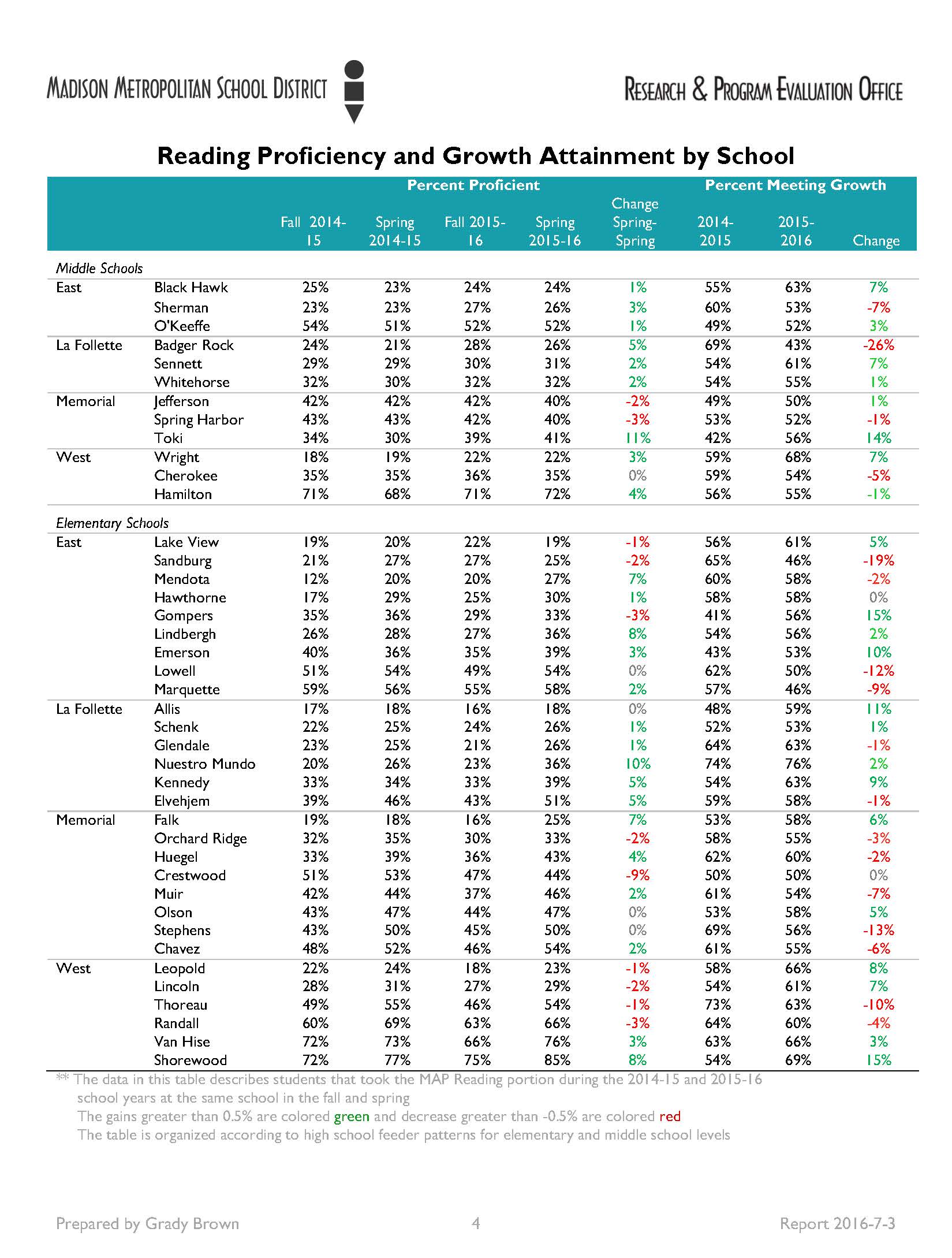
Share

Are We Teaching Composition All Wrong?

Joseph R. Teller

My students can’t write a clear sentence to save their lives, and I’ve had it.

In 10 years of teaching writing, I have experimented with different assignments, activities, readings, approaches to commenting on student work — you name it — all to help students write coherent prose that someone would actually want to read. And as anyone who keeps up with trends in higher education knows, such efforts largely fail.

For a while now, compositionists have been enamored of a pedagogical orthodoxy that assumes the following:

Composition courses must focus on process, not just product.
Students should compose essays that tackle complex issues rather than imitate rhetorical modes (as in the much-maligned “current-traditional” pedagogy of years past).
Writing and reading instruction should be combined in the same course.

After years of experimenting with those three principles, here’s what I’ve learned: They rarely work.

First, a simple truth: Students do not revise. This cuts to the very heart of how most of us teach composition. It is an a priori assumption that a composition course must emphasize revision: Writers learn to make rhetorical decisions based on their audience, and that means the arduous process of “substantial revision.”

But substantial revision doesn’t happen in our courses. I have tried requiring students to write only three essays developed over several drafts, each of which I comment on without a grade. I have used peer workshops to help students respond to each other’s writing. I have used portfolio systems and deferred-grading schemes. I have cajoled; I have encouraged; I have experimented with more rubrics than I can count.

The invariable result? Weak drafts remain weak; stronger drafts get slightly stronger, but not by much.

In peer workshops, while students get more confident in sharing feedback on each other’s work, they generally ignore their classmates’ suggestions. And more often than not, when they do revise based on peer feedback, it’s often unhelpful and inexperienced advice — for example, telling a student that the paper has a clear thesis when it has no coherent argument at all.

How can students make effective rhetorical choices if they do not know what choices exist?

Yes, some professors assert that workshops allow students to find blind spots in each other’s essays. But, as their teacher, I can do that more succinctly and quickly, and it wouldn’t require the loss of another hour of class time.

A second observation: Even when students engage complex issues from readings in their papers, they do not use the basic argumentative structures they need in order to give their ideas voice, cohesion, and support.

In a recent course, I gave students a set of readings on liberal education and its role in a democratic society. Now, class discussion had been interesting, and students had struggled productively to understand Seneca, John Henry Newman, Mike Rose, and Rabindranath Tagore; they had even produced essays with some refreshing insights. But few of their essays contained a clear and unifying argument, and many students seemed unable to focus on one point for more than a paragraph.

Let me put it another way: How can students make effective rhetorical choices if they do not know what choices exist?

If a student’s essay on mass shootings could benefit from a broader discussion of the causes of violence, but the student does not know what it means to argue by causation, then in what sense is an effective rhetorical choice available to her? Writing well involves making rhetorical decisions, but it’s clear that you can’t choose from what you don’t know.

Finally, it’s a mistake to insist that “critical reading” should be as integral to a writing course as the teaching of argumentation, structure, paragraphs, and sentences.

First, study after study shows that reading comprehension is tied to background knowledge and context. So while we can teach general strategies for “reading actively” in our composition courses, there is no such thing as a universal approach to reading aside from a few basic principles: Read slowly and deliberately, annotate as you read, make summary notes, connect to the knowledge you already have. That’s why most composition instructors thematize their courses. We realize that we cannot talk about “reading” very long before we have to talk about reading about something.

Second, because “reading strategies” are context-bound, many composition instructors make their courses about their themes, which leads to two problems: (1) The course becomes more about the content than about writing at the nuts-and-bolts level, and (2) a number of composition instructors, for reasons stemming from the structures of higher education, are not academically qualified to be teaching disciplinary content (e.g., sociology, cultural history, gender criticism) with any semblance of expertise.

That is why students in a composition course can talk about, say, the role of sexism in children’s toys, but can’t write a clear sentence about it. In short, the more time a course focuses on “critical reading” and content, the less time it spends on structure, argument, evidence, logical reasoning, and concise, clear prose — the tools a composition class should give undergraduates.

So how can I help my students write better?

Some of the following injunctions might reek of the “current-traditional.” But they have been my interior manifesto as I move forward with this fall’s set of 100 students:

Students need to write an actual essay and receive feedback on it from me very early in the course. Whether I use neo-Aristotelian rhetoric or process pedagogy, by Week 2 of the semester, students need to have written a short argumentative essay and received feedback on their thesis, use of evidence, and integration of sources. There is no excuse for students to be halfway through the semester without having received this kind of clear response.

Students need to spend less time on difficult texts and more time writing arguments. The more time one spends on content, the less time one has for structure and form. Even if I require only three major essays developed through several drafts, more homework assignments should be short essays that receive clear feedback.
Alternatively, I might structure a course around many short argumentative essays that emphasize rhetorical structure, building up to larger essays. Either way, the point is frequent essays, frequent feedback.
Not every essay requires multiple drafts or peer response. I have foolishly assumed that students cannot submit an essay before having spent at least one class period hashing over a draft with their peers. That should change. Yes, students should be encouraged to read each other’s writing and learn to respond to it. But let’s face it: Unless one believes a writing teacher’s feedback carries no more weight than anyone else’s, this is unnecessary for every essay. (Some academics do claim that a writing teacher’s comments are no more authoritative than any other reader’s, but I doubt such instructors tell their own editors anything like that.)

The writing process is a means to an end. Of course the writing process is important: It can be therapeutic, formative, an aid to figuring out what we believe, the record of a mental life, an endless imaginative resource. But in a freshman composition course, process serves product. Let me put it this way: If a bright student sits down the night before a paper is due and hammers out an excellent essay in one draft, do I fail that paper? If I do, then I am not ultimately interested in helping students write effective essays, but in something else.

Sometimes it’s better to ditch an essay and move forward. Even professional writers admit that, at some point, you throw out a project and start over, or you put a project away to work on later (or never). Substantial revision is part of writing, but not for every project. After all, a number of writing contexts do not require, and might even be hampered by, overwrought attempts at revision. Sometimes writing has to come out adequate the first time. And “process” does not have to be restricted to a single piece. Being a writer is a process, too, a process of moving from one project to another, of learning from what worked the last time and what didn’t, of knowing when to revise and when to hit the delete key.

My job is not to save my students from cultural impoverishment. It is to teach them how to express themselves effectively in writing. The development of cogent, clear prose is at the heart of freshman composition. For too long, I have deluded myself into thinking that my job in a composition course was to introduce students to a rich academic topic, make them read difficult texts, make up for years of barely-more-than-functional literacy and book aversion, teach them to be critical thinkers, and help them understand the oppressive structures of late capitalism — all while helping them write focused arguments, revise, polish paragraphs, and edit sentences. Should college students be expected to read difficult texts? Sure. Should students develop a love of reading? Absolutely. Should students learn to express their views and persuade others in cogent, clear prose? Without question. But that last one is the only unique provenance of a composition course.]

So as much as I want to teach my students to love justice, be passionate about politics, and to think deeply about the future of humanity, they are not legitimate outcomes of a writing course. Neither are fostering a fetishistic love of the writing process or trying to teach “critical reading of difficult texts.”

My guess is that by the end of the semester, my students will hate my course because it is “boring,” “hard,” and “a lot of work.” They probably won’t have life-changing epiphanies about oppressive political structures. And I won’t swear to make them read esoteric academic articles. But if they show up, do the work, and turn off their phones, they just might leave my class able to write a sentence.

Joseph R. Teller is a professor of English at College of the Sequoias.

– Via Will Fitzhugh

Share

The Academic Curtain

Thomas Sowell:

One of the few things that could penetrate the “iron curtain” were ideas conveyed on radio waves. “The Voice of America” network broadcast to the peoples of the Soviet bloc, so that they were never completely isolated, and hearing only what the Communist dictatorships wanted them to hear.

Ironically, despite the victory of democracy over dictatorship that brought the Cold War to an end, within American society there has slowly but steadily developed in too many of our own colleges and universities a set of restrictions on what can be said on campus, either by students or professors, or by outside speakers with views that contradict the political correctness of our time.

There is no barbed wire around our campuses, nor armed guards keeping unwelcome ideas out. So there is no “iron curtain.” But there is a curtain, and it has its effect.

Share

One Hundred Year Study on Artificial Intelligence

ai.stanford.edu

The One Hundred Year Study on Artificial Intelligence, launched in the fall of 2014, is a long-term investigation of the field of Artificial Intelligence (AI) and its influences on people, their communities, and society. It considers the science, engineering, and deployment of AI-enabled computing systems. As its core activity, the Standing Committee that oversees the One Hundred Year Study forms a Study Panel every five years to assess the current state of AI. The Study Panel reviews AI’s progress in the years following the immediately prior report, envisions the potential advances that lie ahead, and describes the technical and societal challenges and opportunities these advances raise, including in such arenas as ethics, economics, and the design of systems compatible with human cognition. The overarching purpose of the One Hundred Year Study’s periodic expert review is to provide a collected and connected set of reflections about AI and its influences as the field advances. The studies are expected to develop syntheses and assessments that provide expert-informed guidance for directions in AI research, development, and systems design, as well as programs and policies to help ensure that these systems broadly benefit individuals and society.

Share

Civics: Hillary Clinton, the Sixth Amendment, and Legal Ethics

Ken White

For some time, Hillary Clinton’s critics have been citing her defense of a 1975 rape case to attack her, and her defenders have been absolving her of any blame. Kathy Shelton — the victim1 in the case — has openly condemned Clinton and asserted that Clinton gratuitously attacked her, and others have criticized Clinton’s description of the case from a recorded interview in the 1980s. The criticisms are (mostly) wrong and the defenses are (mostly) right.

Share

AP® Statistics Student Score Distributions – Global AP Exams – May 2016

AP PDF.

Share

How should mathematics be taught to non-mathematicians?

Gowers Weblog:

Michael Gove, the UK’s Secretary of State for Education, has expressed a wish to see almost all school pupils studying mathematics in one form or another up to the age of 18. An obvious question follows. At the moment, there are large numbers of people who give up mathematics after GCSE (the exam that is usually taken at the age of 16) with great relief and go through the rest of their lives saying, without any obvious regret, how bad they were at it. What should such people study if mathematics becomes virtually compulsory for two more years?

A couple of years ago there was an attempt to create a new mathematics A-level called Use of Mathematics. I criticized it heavily in a blog post, and stand by those criticisms, though interestingly it isn’t so much the syllabus that bothers me as the awful exam questions. One might think that a course called Use of Mathematics would teach you how to come up with mathematical models for real-life situations, but these questions did the opposite, and still do. They describe a real-life situation, then tell you that it “may be modelled” by some formula, and proceed to ask you questions that are purely mathematical, and extremely easy compared with A-level maths.

Share

Key findings about the American workforce and the changing job market

Anna Brown

The employment landscape in the U.S. has undergone profound changes, and the public is adapting to the new realities of the workplace and rethinking the skills they need to compete. A new Pew Research Center survey, conducted in association with the Markle Foundation, and analysis of government data finds that employment in occupations requiring more education and training is on the rise, and many workers are realizing that retraining and upgrading their skills needs to be a lifetime commitment.

Here are six key takeaways on the state of American jobs:

Share

The Pill has been linked to depression. Why isn’t this more of a scandal?

Lara Prendergast

A study came out last week that should have caused great alarm. For 13 years, researchers at the University of Copenhagen studied more than a million women between the ages of 15 and 34 who were taking a type of drug — one that is popular in all developed countries. Taking this drug, the researchers found, correlated with an increase in the risk of depression. The correlation was particularly strong in adolescent girls, who showed an 80 per cent higher chance of being diagnosed with depression.

Usually when a story about women’s health and depression breaks, a phalanx of activists and campaigners pop up all over the media to ‘raise awareness’ of the issue. Last week, however, barely a peep — the papers carried the story and a few online sites ran delicately objective surveys of women on the pill, but there were few howls of outrage.

Share

K-12 Tax & Spending Climate: Can Someone Please Make the Candidates Talk About Social Security?

Bob Kerrey:

Few if any candidates for federal office will tell you that as a consequence of current federal law, young Americans are being screwed in two life-changing ways.

First, under current law, every Social Security beneficiary under the age of 48 will have their promised benefits cut by a third. And second, every young person who works is contributing between $10,000 and $20,000 to the health care and retirement of those lucky Americans who are already drawing benefits under federal law.

In some ways the second screwing is worse than the first. Young workers do not have the defined benefit retirement programs commonly enjoyed by their grandparents, and if they do have health care through their jobs, their annual deductibles are probably greater than what their grandparents paid to have children and attend college.

Perhaps the media will notice that Hillary Clinton and Donald Trump have something very important in common: Both are on Social Security, or at least they are eligible for the old age benefit guaranteed by Social Security.

Share

This 1897 Text Gives 3 Clues Why Today’s Students Can’t Write

Annie Holmquist

Last week the Nation’s Report Card announced that no more than 40% of America’s 4th and 8th graders are proficient in reading and math. Those are scary numbers, but the numbers for writing are even more frightening: only 27% of American 8th and 12th graders attained proficiency.

Why are American students such terrible writers?

Several answers to this question dawned on me while reading through an 1897 text by Dr. Edwin Lewis. Entitled A First Book in Writing English, Dr. Lewis’ book was recommended for freshman and sophomore students and used in places such as Ann Arbor High School around the turn of the 20th century. Needless to say, American schools, students, and even adults regularly violate three principles which Lewis deemed essential to the writing process.

1. They Don’t Read High Quality Literature

As has been previously noted, today’s schools often fail to present their students with many literature selections which demonstrate good examples of vocabulary, sentence structure, and other components of high-quality writing. A thorough and challenging reading program, however, is one of Lewis’ keys to successful writing.

“One of the quickest ways of learning to know good English, is oral reading. For him who would write the language it is therefore a great economy to learn to read it. It is an invaluable habit to read aloud every day some piece of prose with the finest feeling the reader can lend to it. In no other way can one so easily learn to notice and to remember new words. In no other way can one catch the infinitely varied rhythm of prose, and acquire a sense of how a good sentence rises gradually from the beginning and then descends in a cadence. This rise and fall of the sentence is not merely a matter of voice; it is a matter of thought as well.…

If the student reads aloud from writers whose work was natural, unforced, original, he will gradually come to see his own ideas more clearly, feel his own feelings more keenly.”

2. They Skim

The fast-paced age of the internet has trained all of us – adults and children alike – to become text skimmers. But such a practice diminishes thought and understanding, two facets essential to good writing.

“To gain new words and new ideas, the student must compel himself to read slowly. Impatient to hurry on and learn how the tale or poem ends, many a youth is accustomed to read so rapidly as to miss the best part of what the author is trying to say. Thoughts cannot be read so rapidly as words. To get at the thoughts and really to retain the valuable expressions, the student must scrutinize and ponder as he reads. Each word must be thoroughly understood; its exact value in the given sentence must be grasped.”

3. They Don’t Memorize

“Drill and Kill” and the memorization of facts has become a prominent no-no in an age where creativity and feelings are encouraged. But is the de-emphasis on memorization actually depriving children of valuable writing material?

“To the habit of memorizing, many a person is indebted not merely for high thoughts that cheer hours of solitude and that stimulate his own thinking, but for command of words. The degree to which the language of modern writers is derived from a few great authors is startling. Shakespeare’s phrases are a part of the tissue of every man’s speech to-day. Such writers as Charles Lamb bear Shakespeare’s mark on every page. The language of the King James version of the Bible is echoed in modern English prose and poetry. It formed styles so unlike as those of Bunyan, Ruskin, and Abraham Lincoln. Most teachers would declare that a habit of learning Scripture by heart is of incalculable value to a student’s English.”

Would we see American writing ability increase if these three elements were restored to the classroom?

– Via Will Fitzhugh.

Share

The Fallacies of Neoliberal Protest

Russell Rickford:

I’m delighted that you are mobilizing. Your demonstration reflects your recognition that the escalating crisis of racial terrorism requires a firm and uncompromising response.

Your protest in the face of daily atrocities is a sign of your humanity and your determination to live in peace, freedom, and dignity.

But as we demonstrate, we must take pains to avoid certain tactical and programmatic errors that often plague progressive protest in a neoliberal age.

What is neoliberalism?

Neoliberalism is a vicious but cunning form of capitalism. And like all varieties of capitalism, it rests on a foundation of white supremacy.

Share