School Information System

‘For Discrimination: Race, Affirmative Action, and the Law’ by Randall Kennedy

Gerald Early:

One would think that the last thing the American reading public needs is yet another book on affirmative action. Even by the late 1990s, library shelves were groaning with dozens of books, pro and con, on the subject. The positions are clear:
The right is opposed to affirmative action on the grounds that it denies or perverts merit; that it emphasizes the group over the individual; that it generates reverse discrimination, which is pernicious; that it insists on equal results instead of equal opportunity, a goal that is patently un-American and can be realized only through egregious social engineering; and that it intensifies racial consciousness by creating a compensatory racial caste system as a form of bourgeois patronage.

Share

The unintended consequences of laws addressing sex between teachers and students

Betsy Karasik

There is a painfully uncomfortable episode of “Louie” in which the comedian Louis C.K. muses that maybe child molesters wouldn’t kill their victims if the penalty weren’t so severe. Everyone I know who watches the show vividly recalls that scene from 2010 because it conjures such a witches’ cauldron of taboo, disgust and moral outrage, all wrapped around a disturbing kernel of truth. I have similar ambivalence about the case involving former Montana high school teacher Stacey Dean Rambold. Louie concluded his riff with a comment to the effect of “I don’t know what to do with that information.” That may be the case for many of us, but with our legal and moral codes failing us, our society needs to have an uncensored dialogue about the reality of sex in schools.
As protesters decry the leniency of Rambold’s sentence — he will spend 30 days in prison after pleading guilty to raping 14-year-old Cherice Morales, who committed suicide at age 16 — I find myself troubled for the opposite reason. I don’t believe that all sexual conduct between underage students and teachers should necessarily be classified as rape, and I believe that absent extenuating circumstances, consensual sexual activity between teachers and students should not be criminalized. While I am not defending Judge G. Todd Baugh’s comments about Morales being “as much in control of the situation” — for which he has appropriately apologized — tarring and feathering him for attempting to articulate the context that informed his sentence will not advance this much-needed dialogue.

Share

America’s Most Dangerous Football Is in the Pee-Wee Leagues, Not the NFL

Alan Barra:

This weekend, the National Football League would like you to see The Butler, We’re the Millers, or maybe The End of The World–anything but The United States of Football. Sean Pamphilon’s documentary, controversial even before its release, is about the dangers of America’s No. 1 sports obsession, football, from youth leagues to the pros. Pamphilon, a Emmy and a Peabody Award-winning filmmaker who exposed the New Orleans Saints’ “Bountygate” scandal in April 2012, has assembled nearly three years’ worth of investigative reporting on the damage football, as it’s played today at all levels, can do to the human brain.
Like the game itself, The United States of Football is, in turns, exciting, stimulating, and heartbreaking. There’s no other word but that last one to describe what too many hits to the head did to the late, great Baltimore Colts’ Hall of Fame tight end John Mackey: In 2000, when he was just 59, he became the first NFL player to be diagnosed with frontal temporal dementia. In Pamphilon’s film, Mackey’s wife Sylvia feeds him, constantly calling to him “John Mackey!” because, she says, “I don’t want him to forget his name.” The United States of Football also tells the story of Dave Duerson, an 11-year veteran, most notably of the 1985 Chicago Bears Super Bowl champions, who shot himself in the chest in 2011 at age 50. Neurologists later confirmed that Duerson suffered from a neurodegenerative disease linked to concussions.

Share

From Mr Average … to superman

Craig Davidson
:

The needle is 21 gauge, 1.5in. A hogsticker. Forty of them arrived in a package from Greece. Ever received a package from overseas? You get that puff of air when you rip it open – air that’s travelled thousands of miles. Foreign, like stepping into a stranger’s house. The syringe wrapper has instructions in Italian, French, Greek and Arabic – not a word of English. But it’s a needle. Operation is self-explanatory. I had put them out on my work desk a few days ago – an unignorable fact. An invitation. A threat.
Buck up, laddie. Fortune favours the brave.
What’s inside looks like oily urine. 1cc of Equipoise – a veterinary drug normally injected into beef cattle – and 2cc of Testosterone Cypionate: 10 times the testosterone a man my size produces naturally in a week.
It was going into my backside; plenty of meat there. But the sciatic nerve radiates from my hips; plus, if I hit a vein I could go into cardiac collapse. I tucked a bag of frozen corn beneath my underwear to numb the injection site. The hash marks on the syringe were smudged away by my sweaty hands. That couldn’t be a sign of quality medical equipment, could it?

Share

The Rising Costs of a ‘Free’ Public Education

Lindsay Gellman:

The kids are back in school. And you’ve probably shelled out for pencil cases, notebooks, a new backpack–and AP French.
“Free public education” clauses are written into state constitutions nationwide. Yet at many public schools around the country it has become anything but. Schools are charging parents for programs and items that have traditionally come standard–including fees for course supplies, school-run extracurricular activities, transportation and even basic registration fees.
School districts have seen their budgets slashed over the past few years as states cut back funding amid the economic downturn. And this year is no exception, even as the economy continues to slowly improve. Thanks to the federal budget sequester earlier this year, schools nationwide have had to adjust to additional budget cuts of 5%, says Dan Domenech, executive director of the AASA, the School Superintendents Association, a nonprofit public-education advocacy group based in Alexandria, Va.
Parents aren’t happy about having to cover some of the tab. And some are even fighting back.

Share

School Choice Isn’t About Fighting for Resources, It’s About Choosing How To Learn

JD Tuccille:

On a family vacatiEmpty classroom© Valentin Armianu | Dreamstime.comon a few weeks ago, my older nephew’s unhappiness with school was a major topic of conversation. His fifth grade teacher, it turns out, required all of the kids in class to read assigned books at the same rate–sprinting ahead was strictly forbidden. For a kid who just tested at the reading level of a high school senior, this was a pointlessly morale-killing rule that contributed to a very smart boy’s growing discontent with school. Sixth grade is now underway, and so are parental negotiations for a more flexible approach toward education, or else a healthier venue, including home. It’s with this experience in mind that I read research psychologist Peter Gray’s all too accurate piece in Salon comparing modern schools to prisons–horrible, curiosity-crushing institutions that teach all the wrong lessons. His points are excellent in themselves, and provide a major insight into why the school choice debate is often so off-base.
Gray, a professor at Boston College, writes:

Share

2013 Parent Power Index

Center for Education Reform:

September, 2013 Parent Power Index: How does your state stack up! See where your state ranks in ensuring great learning opportunities for your children.

Wisconsin ranks 7th.

Share

Higher Education in America

Derek Bok:

American higher education is the envy of the world. Students flock to this country from all over, and the most highly ranked schools tend to be here. We should be proud!
American higher education is a mess. With high costs, low graduation rates, unhappy faculty members and coddled students, our universities are about to be radically disrupted by massive, technologically driven change. A good thing, too!
How to reconcile these opposing views? At a time when ambitious business-school professors and salivating entrepreneurs predict the end of the university as we know it, and at a time when we have never been more in need of an educated workforce and citizenry, the task of understanding the evolving mission and performance of American higher education has never been more urgent. Thank goodness Derek Bok, a two-time president of Harvard and a judicious, learned analyst of education, has taken on this undertaking. His book is too long to be called a report card, but it is a detailed progress report on the challenges and opportunities facing our nation’s colleges and universities.

Share

Birmingham library turns a decorative leaf

John Murray Brown

People’s Palace’: the £189m Library of Birmingham, which opens on Tuesday
Birmingham officially opened its new public library, one of the largest in Europe, on Tuesday.
At a time when councils across the UK are trimming library services as part of the cuts in public funding, Birmingham city council has delivered a £189m building to grace the city centre.
The building, which has won critical and popular acclaim, replaces the brutalist concrete-clad Central Library, designed by John Madin, the foremost Birmingham architect of the postwar period.
Francine Houben, the new library’s Dutch architect, described it as a “people’s palace”.

Share

Nashville Forecast: Cloudy with a Chance of Charter Schools

Robin Lake, via a kind Deb Britt email:

In the last few years, those at the helm of the Metropolitan Nashville Public Schools (MNPS) have become increasingly hostile to the city’s fast-growing charter school sector. Last year, the school board refused (despite a directive from the state to approve) a charter application from Great Hearts Academy, a respected Arizona charter management organization. This is despite the fact that only about 40% of the district’s students in grades 3-8 are meeting proficiency standards. In the past few weeks, the relationship between the MNPS directors and charter schools has deteriorated to the point that some describe as nuclear war. Schools Director Jesse Register has engaged lawyers to argue that the decade-old charter school law is unconstitutional.
Last week, a Nashville paper called for MNPS to adopt a portfolio strategy, meaning that the district should stop trying to be a monopoly operator of schools. Becoming a portfolio district would not mean that Nashville would put all its schools out to bid to charter schools. It would mean that the district would stop treating the students in Nashville charter schools as somebody else’s responsibility and start seeing its job as ensuring that all children in the city are well served by the public schools, no matter who runs them. If a particular neighborhood was not being well served and a renowned district principal wanted to open a new school there, great. If a high-performing charter school was in a position to open a new school there, great. Portfolio districts don’t have a preference for charters or district-run schools; they prefer whatever arrangement gets good results for kids.

Share

Wisconsin’s school vouchers are a scam

Dave Zweifel:

The recent news release from the State Department of Public Instruction revealing that 67 percent of the applicants to the Walker administration’s expanded school voucher program are already attending private schools elicited cries of “scam” from many quarters.
And well it should have.
That two-thirds of the voucher applicants had their children already enrolled in private schools lays waste the argument by Wisconsin legislative Republicans and the governor that vouchers are needed so poor families can rescue their children from poorly performing public schools.
That has always been a spurious argument, even back in the days when Gov. Tommy Thompson shepherded the nation’s first school choice program through the Legislature for low-income Milwaukee families. It was sold based on the argument that poor families, said to be ill-served by Milwaukee’s public school system, ought to be able to send their children to private schools just as do rich people. So, in order to do that with taxpayers’ money, vouchers were devised to technically make tuition grants to the families, which in turn would use them to pay the private schools.

Dana Goldstein on Sweden’s voucher system.

Share

Downgrading Elite Colleges

Ry Rivard:

Over the past year and a half, the credit ratings of several prestigious liberal arts colleges have been downgraded or assigned a negative outlook by Moody’s Investors Service.
(Note: This article has been updated from an earlier version to note that these ratings were issued over the last 18 months, not the past several months.)
These are institutions — Haverford College, Morehouse College, Oberlin College and Wellesley College – that top students seek out, yet they are showing small but noticeable signs of fiscal stress several years after the end of the recession. Their downgraded ratings are still better than those of plenty of other institutions, and Moody’s has issued plenty of gloomy projects about colleges during the economic downturn. But the recent actions are notable because they affect colleges that are by many measures — money, prestige, history — among the most fortunate in the country.
“We do see pressure on small private colleges as a group and that’s primarily because they don’t have a lot of different things they can do, so they are primarily dependent on tuition revenue,” said a Moody’s analyst, Edie Behr.

Share

Automated Teaching Machine: A Graphic Introduction to the End of Human Teachers

Arthur King & Adam Bessie:

“The machine lasts indefinitely. It gets no wrinkles, no arthritis, no hardening of the arteries . . . Two machines replace 114 men that take no coffee breaks, no sick leaves, no vacations with pay,” proclaims the watch-twirling, hard-hearted CEO Wallace V. Whipple in a particularly prescient 1964 episode of The Twilight Zone. Despite the emotional pleas of the workers and their union, Whipple robo-sources 250,000 factory jobs to the “X109B14 modified, transistorized, totally automated machine.” The machine – a cardboard prop filled with vacuum tubes, twirling doo-dads and feverishly blinking diodes may be hilariously outdated, laughable even. But less laughable, though, is that this cautionary tale has come to pass: Today, 50 years later, American workers need not only compete with foreign labor, but with automatons. It’s no longer science fiction, but common-sense corporate practice.
Mr. Whipple was not a warning, but rather, a muse.
Nowhere has Mr. Whipple inspired more watch-twirling CEOs of late than in the Global Education Reform Movement, which seeks to privatize public education. Last year, Adam Bessie profiled this movement – lead by billionaires, industrialists and the Wall Street elite – in a three-part comic series with graphic journalist Dan Archer “The Disaster Capitalism Curriculum: The High Price ofEducation Reform” (See also episode II, and episode III).

Share

I teach high school on Chicago’s South Side. What would you like to know

Dave Stieber:

For the last seven years, Dave Stieber has taught history and social studies at public schools in Chicago’s South Side. He currently teaches at TEAM in Englewood. Dave will be online today between 12.30pm and 1.30 ET (5.30-6.30 BST) to answer your questions. What would you like to know? Toss your questions in the comments.
My typical work day consists of me waking up at 5am, walking the dog, breakfast, and getting dressed by 5.40. Giving my son and wife a kiss then out the door by 6.10am. I’m on the bus to work and at school by 6.40am.
I’m a morning person, so I need time before kids arrive to get everything set up and prepared and make sure my plans are ready to be carried out. Students come up at 7.30am and class starts at 7.45am.
I have five classes from 7.45am – 3.08pm, with one 48-minute block for meetings, one for preparing my lessons, materials/copies and grading, and another for lunch. Most days I have to stay after school to meet with students or prepare for the next day. Some days I have meetings or a spoken-word club that I along with two other teachers run.

Share

Lots going for Madison schools as classes begin

Wisconsin State Journal:

Madison has plenty of challenges. That’s for sure. Yet the district has a lot going for it, too, as students return to classes Tuesday.
Cheatham has embraced higher standards and will publish annual progress reports. She’s a fan of using student data to measure for results and hold educators accountable.
Yet Cheatham also talks convincingly about supporting principals and teachers. She plans to focus intently on high-quality teaching practices, shared leadership and professional development. Teachers seem to appreciate her call for more consistent priorities and curriculum.
It’s almost a back-to-basics approach, using research and results to inform strategies.
Unlike her predecessor, Cheatham hasn’t proposed a long list of new spending initiatives. Money, of course, matters. Yet Madison already has lots of resources, and it does many things well. Cheatham wants to start with what’s working and build from there.
“The really exciting news is we have all the ingredients to be successful,” Cheatham said this summer.
That’s good to hear.

Share

Seattle schools start Wednesday as teachers approve contract

Linda Shaw:

Union leaders said the pay increases are the biggest that teachers have received in five years. By some counts, the new contract will maintain Seattle as one of the top-paid districts in the Puget Sound area, although some teachers point out that the cost of living is higher here, too.
Though the district succeeded in adding 30 minutes to elementary-school teachers’ workday, putting them on par with their middle- and high-school counterparts, it compromised in how they can use that time, with teachers retaining much flexibility.
The agreement also calls for the district to work toward setting limits in the caseloads for school psychologists, speech therapists, and occupational and physical therapists, and a pledge to add more such employees.
Two other groups within the SEA approved new contracts on Tuesday, too — paraprofessionals, such as classroom aides, and school secretaries.

Share

Madison School District students should expect visible changes this year

Andrea Anderson:

When Madison public school students go back to class Tuesday, they’ll find some lessons will be tougher, according to Superintendent Jennifer Cheatham.
The gradual implementation of the Common Core standards, a series of benchmarks for what students should know and be able to do, will begin this year by helping educators, students and staff understand what the standards are and how instruction will change .
Teachers will implement Close Reading, a practice used to study literacy standards , to become more familiar with the increase in rigor and standards while monitoring how the students and the teachers themselves are faring .
“The study will allow teachers to better understand the standards and learn about what it will take to plan instruction using the standards and learn more about instructional practices necessary to teach the standards and learn about” ways to assess what students are learning, Cheatham said.
An example of a Close Reading lesson would be reading a primary source document in a history class and later answering short-answer questions. Teachers would review how students performed, what challenges there were and what the teacher could do to improve.

Share

Union leader: Pay boost for Madison educational assistants is ‘step in the right direction’

Pat Schneider

The Madison School Board is taking a “step in the right direction” in acknowledging the role of educational assistants in helping students succeed, says a union leader.
The 737 educational assistants in the district had been working without a pay raise since 2009 says Erin Proctor, president of their Madison Teachers Inc. collective bargaining unit.
The $433.6 million budget for the 2013-2014 school year approved Monday also includes a 1 percent salary hike for teachers and administrators. The budget will translate to a 4.47 percent increase in the property tax levy.
The pay increase will boost the starting base wage for educational assistants to $12.58 an hour which, with longevity increases, can rise to more than $20 an hour for some work assignments, according to the labor contract. But educational assistants typically don’t get as many work hours as most full-time workers do, Proctor says.

Much more on the Madison Schools’ 2013-2014 budget, here.

Share

Too easy or too tough?

Nora Hertel:

Some critics of the new Common Core standards embraced by Wisconsin schools feel they set the bar for students too high too early.
Tina Hollenbeck, a former classroom teacher and homeschooler in Green Bay, believes the standards require abstract thinking that’s too hard for children in kindergarten and first grade. “That would be a huge stress that’s coming for these kids.”
Tuyet Cullen, an eighth grade math teacher in Madison, notes that Common Core has children multiplying fractions in fourth or fifth grade. Before, this skill was not usually taken up until sixth grade.
“Are their brains ready for that concept?” Cullen asked. “If (the standards) aren’t developmentally appropriate, they’re going to be too hard.”
Others argue that the standards are too easy.

Share

Disabilities create hurdles to open enrollment

Emily Kram, via a kind reader email:

With a sigh, Michelle Janz put a hand to her face and flipped through a folder of letters, memos and official forms. She shook her head over the mass of paperwork accumulated in eight months.
Nex a sigh, Michelle Janz put a hand to her face and flipped through a folder of letters, memos and official forms. She shook her head over the mass of paperwork accumulated in eight months.
“It shouldn’t be this hard,” she said. “We should have a choice like any other student.”
Janz, who lives in Superior, had spent the better part of a year applying for open enrollment, facing rejection and working through the appeals process. Her goal was to enroll her son, Travis, in another school district.
During the 2012-13 school year, Travis was a special education student at Superior High School. Like a typical 17-year-old, Janz said, Travis loves computers. He also enjoys skateboarding and spending time with his friends.
“Everybody knows Travis,” Janz said. “He loves school, and he loves being around kids.”

Much more on open enrollment, here.

Share

Digital Indians: Find out about the series

Ramaa Sharma:

Over the next few weeks, the BBC wants to take you on an amazing journey through digital India.
Our special Digital Indians series will tell you stories of five successful technological innovators and explore their distinct connections with India.
The tales including a home-grown entrepreneur-turned public servant, a US-born Indian who migrated to his parents’ homeland to work with farmers and a businessman’s daughter who left the country to become the first female engineer at the world’s leading social networking site.
On Tuesday, we’ll give you a short history of India’s digital evolution and introduce you to the subjects of the series.

Share

Race & Poverty: 50 Years After the March

Vauhini Vara:

When we talk about the historic civil-rights gathering whose fifty-year anniversary will be celebrated on Wednesday, we usually call it the March on Washington. In fact, the full name of the event was the March on Washington for Jobs and Freedom; early in his speech, Martin Luther King, Jr., lamented that black Americans lived “on a lonely island of poverty in the midst of a vast ocean of material prosperity.” The marchers had ten demands for Congress, at least four of which were aimed at improving black people’s financial circumstances and narrowing the gulf between black and white Americans’ economic opportunities.
Fifty years later, that gulf hasn’t changed much. By some measures it has widened. In 2011, the median income for black households was about fifty-nine per cent of the median income for white households, up slightly from fifty-five per cent in 1967, according to Census dataanalyzed by the Pew Research Center. But when you considerwealth–that is, everything a family owns, including a home and retirement savings–the difference seems to have grown. Pew found that the median black household had about seven per cent of the wealth of its white counterpart in 2011, down from nine per cent in 1984, when a Census survey first began tracking this sort of data.

Share

Struggle For Smarts? How Eastern And Western Cultures Tackle Learning

Alex Spiegel:

In 1979, when Jim Stigler was still a graduate student at the University of Michigan, he went to Japan to research teaching methods and found himself sitting in the back row of a crowded fourth-grade math class.
“The teacher was trying to teach the class how to draw three-dimensional cubes on paper,” Stigler explains, “and one kid was just totally having trouble with it. His cube looked all cockeyed, so the teacher said to him, ‘Why don’t you go put yours on the board?’ So right there I thought, ‘That’s interesting! He took the one who can’t do it and told him to go and put it on the board.’ ”
Stigler knew that in American classrooms, it was usually the best kid in the class who was invited to the board. And so he watched with interest as the Japanese student dutifully came to the board and started drawing, but still couldn’t complete the cube. Every few minutes, the teacher would ask the rest of the class whether the kid had gotten it right, and the class would look up from their work, and shake their heads no. And as the period progressed, Stigler noticed that he — Stigler — was getting more and more anxious.

Share

I welcome Common Core education standards, but let’s not forget creativity

Ashley Lauren Samsa:

Across the nation, students and teachers are headed back to school. Teachers, such as myself, are furiously preparing their classrooms to welcome students and planning new lessons to ensure that this year is an educational one.
For many across the country, the planning and preparation has taken a new turn with the official adoption of the Common Core education standards – President Obama’s replacement for No Child Left Behind. The Common Core includes new definitions for school success as well as new national standards for core subjects such as reading, writing and math. Before the Common Core, states had the ability to create their own standards, meaning a student in Illinois might be held to one level of expectations while a student in Arkansas might be held to another. This caused many problems in education, especially when students moved from state to state. The Common Core now unites all of the participating states with the same standards that are both rigorous and skills-based with a focus on utilizing technology in the classroom.
In many ways, this is a great thing both for students and for teachers. Main subject classes have long been behind the curve when it comes to utilizing technology in the classroom. Being technologically competent is now considered a vital life skill, not to mention something today’s students need if they are ever going to be employable. English classes in particular have been a little lost in the digital age; when we English teachers went to school, we had been taught to teach literature as an art form for the sake of the appreciation of beauty. Now, with fewer and fewer students going on to study the humanities, we have been tasked with making our classes relevant to the masses. The Common Core’s skills based standards could help us do just that. With the focus no longer on content, we can teach whatever pieces we want in our classroom, as long as students are being taught how to read, write, and think critically.

Share

Inside News Corp’s $540 Million Bet on American Classrooms

Travis Andrews:

This piece is part of Mashable Spotlight, which presents in-depth looks at the people, concepts and issues shaping our digital world.
In the middle of Brooklyn’s high-end Dumbo neighborhood, 20 inner-city children sit around two wooden tables at what appears to be a small summer camp. Tablet computers are scattered across the tables, punctuated by plates of corn chips and bowls of salsa. The kids are restless on this sweltering July afternoon, fidgeting in their chairs and asking the handful of twenty-somethings if they can play Temple Run or maybe just head home for the day.
These kids aren’t technically campers, and these Millennials aren’t counselors. Instead, the children are product testers (paid weekly in $100 Amazon gift cards) for News Corp., the Rupert Murdoch-founded media conglomerate that began Fox News. The “counselors” are News Corp. employees, tasked with recording these children’s every reaction to the educational games into which News Corp. has poured at least $180 million, according to Bloomberg, on top of the $360 million it spent to acquire the technology.

Share

Ideas for Improving Science Education in the U.S.

Claudia Dreifus:

Steven Strogatz, professor of mathematics, Cornell University; author, “The Joy of x: A Guided Tour of Math, From One to Infinity.”
If I could do one thing, I’d get real mathematicians who are math types to become math teachers. K-12 students need someone there with a real feel for the subject matter. Give them the freedom to teach what they want. It has to be discouraging to have to teach to a test and a set curriculum.
Freeman A. Hrabowski III, mathematician; president, University of Maryland, Baltimore County.
When I give talks around the country, I often ask the audience: “How many of you knew you were an English/history type or a math/science type by the time you were in 11th grade?” Almost all the hands go up. And, when I ask why, I often hear, “Because I was better in English.”
The question is: How does someone know that at 15 or 16? The way that math or science works in our lives is not always obvious.
We need to create opportunities to excite students about how math and science connect to real life. Few teachers have opportunities to use their math skills outside the classroom. I would like to see more partnerships involving school systems, the corporate sector and government that provide teachers paid summer work opportunities applying their math skills to real-life problems.

Share

Madison Teachers, Inc. Solidarity Newsletter

Madison Teachers, Inc. Newsletter via a kind Jeanie (Bettner) Kamholtz email (PDF):

WELCOME BACK!
To each and every one of the nearly 5,000 District employees who are represented by MTI, welcome, as the 2013-14 school year begins! MTI is the collective bargaining agent for all teachers and non-supervisory professional staff, educational assistants (EA-MTI), clerical/technical personnel (SEE-MTI), substitute teachers (USO-MTI), and school security assistants (SSA-MTI) who are employed by the Madison Metropolitan School District. It is the Union’s mission to negotiate the best possible Collective Bargaining Agreements, and to provide the best representation and service possible, when assisting members with any Contract or work-related matter. Contact your Union staff at MTI Headquarters (257-0491 or www.madisonteachers.org) should you have a question or need assistance with any Contract or work-related matter.
This school year will be one of challenge as MTI moves to preserve members’ wages, benefits and rights. MTI is one of the few public employee unions with contracts in place, given the devastating impact of Walker’s Act 10.
MTI Greets New Hires
Members of MTI’s Board of Directors, Bargaining Committee and Union staff greeted the District’s newly hired teachers at New Teacher Orientation last Monday. On Tuesday MTI hosted a luncheon for the 250 new members of MTI’s teacher bargaining unit.
MTI President Peg Coyne and MTI Executive Director John Matthews addressed the District’s new teachers during Tuesday’s luncheon. In doing so, Matthews provided a brief history of the Union, its reputation of negotiating outstanding Collective Bargaining Agreements which provide both employment security and economic security, and in explaining the threat to both, given Act 10, said all MTI members would need to pull together to preserve the Madison Metropolitan School District as a quality place to teach.
President Coyne gave a warm MTI welcome to those present, discussed MTI’s structure and stressed the need for member participation in political action, if public employees are to regain the right to collectively bargain and if schools are to be adequately funded.
District retiree Jan Silvers lighted up the room when discussing how her life and career was much more enjoyable and rewarding having MTI as her advocate, especially when it came to the ability to experience religious freedom and work during pregnancy. She was awarded 16 years of back pay plus interest as a result of MTI’s litigation. Teachers, through the early 1970’s, had to advise their principal “immediately upon becoming pregnant” and were obligated to resign when the pregnancy “began showing”. As a result of MTI’s accomplishments, such antiquated and degrading policies are history.

Share

Homeowners can’t afford another tax hike


John Olson:

The Madison School Board and new Madison School Superintendent Jennifer Cheatham sure have the nerve proposing a new tax levy for Madison homeowners that will raise the average homeowner property tax bill in Madison by about $120.
Not only is it hard for those homeowners on fixed incomes (think retirees), but what about all of those public employees who are on reduced incomes as the result of the last several years of public employee bashing?
Most public employees in Madison will be lucky to get 2 percent raises over the course of the last 5 years, not to mention having to pay considerable more for their benefits.
Enough is enough. We all can’t afford to continually pay more.

Much more on the Madison Schools’ 2013-2014 budget, here.

Share

New MMSD director of multicultural and global education excited for new school year

A. David Dahmer:

Silvia Romero-Johnson is the Madison Metropolitan School District’s new executive director of multicultural and global education and she could not be more excited.
“This time of year right now is a very exciting time for me,” she tells The Madison Times. “It’s an exciting time when we start preparing for the year and we get our teams back together. I will be out in the schools on the very first day and after that will be visiting them regularly. It is exciting.”
But late August has always been an exciting time for Romero-Johnson who started out teaching as an English as a Foreign Language teacher in her home country of Argentina. After immigrating to the United States, she was a bilingual resource specialist (BRS), a bilingual classroom teacher, and a program support teacher (PST) for bilingual education programs. Two years later, she became the coordinator for Bilingual Education and Dual Language Immersion.
“I’ve had multiple roles in the District working in classrooms and supporting classrooms,” Romero-Johnson says. “I think I’ve done every position that our division supervises so that gives me experience and hopefully empathy for how the work takes place and how the work is done.”

Share

You would think that white progressives would be the biggest champion of empowering poor families, especially those from historically marginalized communities, with the same opportunities they enjoy. But it isn’t so.

Chris Stewart:

In one exchange with a particularly pharisaical special education teacher in Chicago I asked if she could tell me her story of choosing a school for her black children.
Sadly, that ended our conversation. I’ve asked the question of others too. Still, no response.
It isn’t meant to be a rude question. I’m willing to answer it because it forms the bases for why I care about education policy.
Two factors combined inspire all of my educational activism. The first is my own unremarkable k-12 career, and the second is the fear, worry, and great aspirations I had as a young father.
During my own time in K-12 I witnessed the real disparities in schools. I gained insight, as a kid, into the obvious differences between public and private, rich and poor, safe and dangerous, and so on. This included time in a west coast hippy school, a few poor southern schools, a working class Catholic school, a middle-class Midwestern school, and an ultra-wealthy school for children of privilege.
If we all carry our own experiences (and sometimes baggage) into family decisions about education, that’s mine.
When my first son was born I had all of the normal insecurities a young first-time father might have. But the normal anxieties were accelerated by love, fear, and low income. Suddenly I cared for someone so much more than myself, and I didn’t want my own experience to be his. Specifically, I didn’t want him to work in the service industry as I had up to that point.
There was only one real way to launch him toward his God-given potential, beyond the limitations of income, neighborhood, and demography. Education. It was my one shot at getting him on more equal footing with the children of millionaires I was working for at the time.
Now, many years later, many lessons later, and many confounding choices later, I’ve transformed from unremarkable student, to desperate father, to damn near full-time education activist. Not because my story is special. It’s not. Indeed, my story is too common.
Having seen the immense power of school choice, and the real need for parents to have options when they encounter an educational crossroads for their child, how could I be anything other than a school choice advocate?

via Laura Waters.
Related: A Majority of the Madison school board rejected the proposed Madison preparatory Academy IB charter school.

Share

“It’s the curriculum, stupid”

Daniel Willingham

What is the explanation? According to Ripley, there is a primary postulate running through the psyche of South Koreans, Finns, and Poles when it comes to education: an expectation that the work will be hard. Everything else is secondary. So anything that gets in the way, anything that compromises the work, will be downplayed or eliminated. Sports, for example. Kids do that on their own time, and it’s not part of school culture.
Several consequences follow from this laser-like focus on academic rigor. For example, if schoolwork is challenging kids are going to fail frequently. So failure necessarily is seen as a normal part of the learning process, and as an opportunity for learning, not a cause of shame.
If the academic work for students will be difficult, teachers will necessarily have to be very carefully selected and well trained. And you’ll do whatever is necessary to make that happen. Even if it means, as in Finland, offering significant financial support during their training.
So what is the primary postulate of American education?

Related: Madison’s disastrous reading scores.

Share

Who will prosper in the New World?

Tyler Cowen:

Self-driving vehicles threaten to send truck drivers to the unemployment office. Computer programs can now write journalistic accounts of sporting events and stock price movements. There are even computers that can grade essay exams with reasonable accuracy, which could revolutionize my own job, teaching. Increasingly, machines are providing not only the brawn but the brains, too, and that raises the question of where humans fit into this picture — who will prosper and who won’t in this new kind of machine economy?
Who will do well?
THE CONSCIENTIOUS Within five years we will are likely to have the world’s best education, or close to it, online and free. But not everyone will sit down and go through the material without a professor pushing them to do the work.

Share

Teens, parents struggle to share social media

Heather Kelly:

Carly and her mom are friends on Facebook, but that doesn’t mean they share everything.
The 17-year-old from Marin County, California, has refined her Facebook privacy settings so that her mother can’t see all the posts that fill her Timeline. Her father, meanwhile, never checks the social network.
“Right now, my mom can only see things that I post. She can’t see anything I’m tagged in or anything that my friends say to me on my profile,” said Carly, a high school senior who asked to be identified only by her first name. “She doesn’t know that, though. I’m like, 80% sure that every other teenager has done that too.”
With teen-agers and their parents (grandparents, even) increasingly active on social networks, both generations are joined in a delicate dance over privacy, safety and freedom of expression online.

Via Susan Poling

Share

English Has Been My Pain for 15 Yeara

Antirez:

Paul Graham managed to put a very important question, the one of the English language as a requirement for IT workers, in the attention zone of news sites and software developers [1]. It was a controversial matter as he referred to “foreign accents” and the internet is full of people that are just waiting to overreact, but this is the least interesting part of the question, so I’ll skip that part. The important part is, no one talks about the “English problem” usually, and I always felt a bit alone in that side, like if it was a problem only affecting me, so in this blog post I want to share my experience about English.

Share

Modern parenting may hinder brain development, research shows


Susan Guibert
:

Social practices and cultural beliefs of modern life are preventing healthy brain and emotional development in children, according to an interdisciplinary body of research presented recently at a symposium at the University of Notre Dame.
“Life outcomes for American youth are worsening, especially in comparison to 50 years ago,” says Darcia Narvaez, Notre Dame professor of psychology who specializes in moral development in children and how early life experiences can influence brain development.
“Ill-advised practices and beliefs have become commonplace in our culture, such as the use of infant formula, the isolation of infants in their own rooms or the belief that responding too quickly to a fussing baby will ‘spoil’ it,” Narvaez says.

Share

$10,000 tuition cut pays off for St. Paul’s Concordia University

Maura Lerner:

Last spring, as Linzy Heim was narrowing down her list of college choices, she got a call from the softball coach at Concordia University in St. Paul.
Did she know that the century-old Lutheran college was slashing its tuition by $10,000?
Her mom, Denice, was stunned.
“When we started looking, the tuition was quite frightening,” she said. The price cut helped seal the deal.
Last weekend, Linzy, an All-Star softball pitcher from Plattsmouth, Neb., moved into the freshman women’s dorm, Luther Hall, as part of Concordia’s biggest entering class in decades.

Fascinating. quite different than Madison’s K-12 bubble, where we spend twice the national average per student despite disastrous reading scores.

Share

The case against Algebra II

Nicholson Baker, via a kind Marc Eisen email:

In 1545, Girolamo Cardano, a doctor, a wearer of magical amulets, and a compulsive gambler, published a math book in Latin called Ars Magna. The “great art” of the title was algebra. When Cardano was done, he knew he had come up with something huge and powerful and timeless; on the last page was the declaration, written in five years, may it last as many thousands. The equations in Ars Magna looked very different from the ones we are familiar with — here, for instance, is how Cardano wrote the solution to x3 + 6x = 20:
Rv : cu. : R108 p : 10m : Rv :cu. R108m : 10
But the algebraic rules Cardano described and codified are variants of the techniques that millions of students are taught, with varying degrees of success, today.

Share

Struggle For Smarts? How Eastern And Western Cultures Tackle Learning

As we begin a new school year, this story reminds us that our struggling with learning is not any indicator of a lack of intelligence.
Alex Spiegel
In 1979, when Jim Stigler was still a graduate student at the University of Michigan, he went to Japan to research teaching methods and found himself sitting in the back row of a crowded fourth-grade math class.
“The teacher was trying to teach the class how to draw three-dimensional cubes on paper,” Stigler explains, “and one kid was just totally having trouble with it. His cube looked all cockeyed, so the teacher said to him, ‘Why don’t you go put yours on the board?’ So right there I thought, ‘That’s interesting! He took the one who can’t do it and told him to go and put it on the board.’ ”
Stigler knew that in American classrooms, it was usually the best kid in the class who was invited to the board. And so he watched with interest as the Japanese student dutifully came to the board and started drawing, but still couldn’t complete the cube. Every few minutes, the teacher would ask the rest of the class whether the kid had gotten it right, and the class would look up from their work, and shake their heads no. And as the period progressed, Stigler noticed that he — Stigler — was getting more and more anxious.
“I realized that I was sitting there starting to perspire,” he says, “because I was really empathizing with this kid. I thought, ‘This kid is going to break into tears!’ ”
But the kid didn’t break into tears. Stigler says the child continued to draw his cube with equanimity. “And at the end of the class, he did make his cube look right! And the teacher said to the class, ‘How does that look, class?’ And they all looked up and said, ‘He did it!’ And they broke into applause.” The kid smiled a huge smile and sat down, clearly proud of himself.
Stigler is now a professor of psychology at UCLA who studies teaching and learning around the world, and he says it was this small experience that first got him thinking about how differently East and West approach the experience of intellectual struggle.
“I think that from very early ages we [in America] see struggle as an indicator that you’re just not very smart,” Stigler says. “It’s a sign of low ability — people who are smart don’t struggle, they just naturally get it, that’s our folk theory. Whereas in Asian cultures they tend to see struggle more as an opportunity.”

Share

On this Labor Day, let’s remember what unions have done for America

Fabius Maximus:

To remember the loneliness, the fear and the insecurity of men who once had to walk alone in huge factories, beside huge machines. To realize that labor unions have meant new dignity and pride to millions of our countrymen. To be able to see what larger pay checks mean, not to a man as an employee, but as a husband and as a father. To know these things is to understand what American labor means.
— Adlai Stevenson, in a speech to the American Federation of Labor, New York City on 22 September 1952

Yin & Yang:

“Beware of legacy practices (most of what we do every day is the maintenance of the status quo), @12:40 minutes into the talk – the very public institutions intended for student learning has become focused instead on adult employment. I say that as an employee. Adult practices and attitudes have become embedded in organizational culture governed by strict regulations and union contracts that dictate most of what occurs inside schools today. Any impetus to change direction or structure is met with swift and stiff resistance. It’s as if we are stuck in a time warp keeping a 19th century school model on life support in an attempt to meet 21st century demands.” Zimman went on to discuss the Wisconsin DPI’s vigorous enforcement of teacher licensing practices and provided some unfortunate math & science teacher examples (including the “impossibility” of meeting the demand for such teachers (about 14 minutes)). He further cited exploding teacher salary, benefit and retiree costs eating instructional dollars (“Similar to GM”; “worry” about the children given this situation).

Share

Why I Won’t Try to Publish as I Move Towards Tenure

Brad King:

I believe in science, but I spend almost no time reading the academic literature where the science of my craft (journalism) has traditionally been published. I spend even less time trying to craft research that would get publishing in those outlets.
For most normal human beings, this is not a controversial stance. As a tenure-track professor, this cuts against the grain of how you are normally told to proceed. In the Academy, professors traditionally are expected to do research and then publish that research in one of a number of peer-reviewed journals.
A growing number of faculty, including myself, have begun to reject that road to tenure.
The reason: the academic publishing system is built around a 1-2 year publishing process that requires the best and brightest minds to turn over all of their intellectual property without any compensation for that work.

Share

Edgewood College’s new education dean says schools should opt out of high-stakes tests

Ruth Conniff:

As kids and teachers head back to school, the future of education in our state is a boiling-hot topic.
And no one is more ready to plunge into the roiling waters of school controversy than Tim Slekar, the new dean of the school of education at Edgewood College.
Slekar, who just moved to Madison from Pittsburgh, has been blogging about the dangers of corporate-backed education reform for years atatthechalkface.com. He is also the cohost of the online chalkface weekly radio show on Sundays at 5 p.m. and a founder of United Opt Out, a group that encourages parents and teachers to refuse to participate in high-stakes standardized tests.

Related: NCTQ survey on teacher education quality.

Share

Ashland U. Slashes Tuition by 37%

By Eric Kelderman:

Ashland University, a private institution in Ohio, is joining a small but growing group of colleges that have sharply cut their tuition while also reducing the amount of institutional aid they offer, to come up with a sticker price that’s closer to what students actually pay. That strategy is one of many that smaller institutions are exploring to try to ease concerns about college costs and shore up enrollments.
Instead of being charged an estimated $30,000 for the 2014-15 academic year, the roughly 3,200 undergraduates at Ashland will pay a little less than $19,000–a decrease of 37 percent. And while the university is also reducing the institutional financial aid it offers, it says it is still lowering the net price that most students will pay.
The changes in tuition and aid are meant to reduce the sticker shock that potential students and parents might experience when weighing Ashland against other college choices, campus officials said in a news release.

Share

Stephen Hsu on Cognitive Genomics

Luke Muehlhauser:

Luke Muehlhauser: I’d like to start by familiarizing our readers with some of the basic facts relevant to the genetic architecture of cognitive ability, which I’ve drawn from the first half of apresentation you gave in February 2013:
The human genome consists of about 3 billion base pairs, but humans are very similar to each other, so we only differ from each other on about 3 million of these base pairs.
Because there’s so much repetition, we could easily store the entire genome of every human on earth (~3mb per genome, compressed).
Rather than scanning an entire genome, we can just scan the roughly 10 million locations where humans are likely to differ (these are called SNPs).
Scanning someone’s SNPs costs about $200; scanning their entire genome costs $1000 or more.
But, genotyping costs are falling so quickly that SNPs may be irrelevant soon, as it’ll be simpler and cheaper to just sequence entire genomes.
To begin to understand the genetic architecture of cognitive ability, we can compare it to the genetic architecture of height, since the genetic architectures of height and cognitive ability are qualitatively the same.
For example, (1) height and cognitive ability are relatively stable and reliable traits (in adulthood), meaning that if you measure a person’s height or cognitive ability at multiple times you’ll get roughly the same result each time, (2) height and cognitive ability arevalid traits, in that they “measure something real” that is predictive of various life outcome measures like income, (3) both height and cognitive ability are highly heritable, and (4) both height and cognitive ability are highly polygenic, meaning that many different genes contribute to height and cognitive ability.
All cognitive observables — e.g. vocabulary, digit recall (short term memory), ability to solve math puzzles, spatial rotation ability, cognitive reaction time — appear to be positively correlated. Because of this, we can (lossily) compress the data for how a person scores on different cognitive tests to a single number, which we call IQ, and this single number is predictive of their scores on all cognitive tests, and also life outcome measures like income, educational attainment, job performance, and mortality.
This contradicts some folk wisdom. E.g. parents often believe that “Johnny’s good at math, so he’s probably not going to be good with words.” But in fact, the data show that math skill is quite predictive of verbal skill, because (roughly) all cognitive abilities are positively correlated.
By convention, IQ is normally distributed in the population with a mean at 100 and a standard deviation of 15.

Share

The STEM Crisis Is a Myth

Robert Charette:

You must have seen the warning a thousand times: Too few young people study scientific or technical subjects, businesses can’t find enough workers in those fields, and the country’s competitive edge is threatened.
It pretty much doesn’t matter what country you’re talking about–the United States is facing this crisis, as is Japan, the United Kingdom,Australia, China, Brazil, South Africa,Singapore, India…the list goes on. In many of these countries, the predicted shortfall of STEM (short for science, technology, engineering, and mathematics) workers is supposed to number in the hundreds of thousands or even the millions. A 2012 report by President Obama’s Council of Advisors on Science and Technology, for instance, stated that over the next decade, 1 million additional STEM graduates will be needed. In the U.K., the Royal Academy of Engineering reported last year that the nation will have to graduate 100 000 STEM majors every year until 2020 just to stay even with demand. Germany, meanwhile, is said to have a shortage of about 210 000 workers in what’s known there as the MINT disciplines–mathematics, computer science, natural sciences, and technology.
The situation is so dismal that governments everywhere are now pouring billions of dollars each year into myriad efforts designed to boost the ranks of STEM workers. President Obama has called for government and industry to train 10 000 new U.S. engineers every year as well as 100 000 additional STEM teachers by 2020. And until those new recruits enter the workforce, tech companies like Facebook, IBM, and Microsoft are lobbying to boost the number of H-1B visas–temporary immigration permits for skilled workers–from 65 000 per year to as many as 180 000. The European Union is similarly introducing the new Blue Card visa to bring in skilled workers from outside the EU. The government of India has said it needs to add 800 new universities, in part to avoid a shortfall of 1.6 million university-educated engineers by the end of the decade.

Share

Isn’t Learning Part of ‘Value’?

Richard Hersh:

President Obama has put forth a comprehensive plan to increase higher education value, holding colleges and universities accountable via a rating system based on the “outcomes” of access, graduation rates, graduate earnings and affordability.
It is hard to argue with the President’s intentions, nor the shove-rather-than-nudge strategy he employs, given the decades of higher education’s failure to rein in its costs or improve the success rate of students. The plan affirms higher education’s crucial role in fostering economic and social progress, puts colleges and universities on notice that the time for systemic change is now, not tomorrow, and creates rewards and punishments for institutions and students alike.
The president’s plan largely fails, however, to appropriately tackle the more fundamental value issue – far too little student learning. Myriad studies over the past several decades document that too little “higher” learning is taking place; college students do not make significant gains in critical thinking, problem solving, analytical reasoning, written communication skills, and ethical and moral development.

Share

Big Mother is watching you

Henry Mance:

I spy: technologists are helping parents keep track of their children with new devices, such as the Filip smartwatch
When Apple introduced the Find My iPhone app three years ago, its aim was to help people locate their lost smartphones. But EJ Hilbert, a 43-year-old former FBI officer, had a better idea – installing the app on his three children’s devices, so that he could track them wherever they went.
“They have it on their phone and that’s the way it’s going to be,” says Mr Hilbert, whose day job is investigating cyber crime.
By adapting the Find My iPhone app, Mr Hilbert is part of a wider trend. Until recently technology gave power to the children. Now it is starting to give something back to the parents.

Share

Keep an eye on these top 10 Milwaukee education issues

Alan Borsuk:

Six. The new kids on the block. There are quite a few, but three new schools particularly interest me. They are:
Carmen North. Will the people involved in the successful Carmen High charter school on the south side successfully launch a middle school-high school program in a long-troubled MPS building on the northwest side?
Rocketship Southside Community Prep. This high-profile charter elementary, the first expansion for Rocketship Education beyond its base in San Jose, Calif., will be watched by education activists nationwide who heatedly debate the virtues of the program, which includes a strong component of technology-based learning.
Universal Academy for the College Bound This Philadelphia-based charter school operation is opening elementary and middle schools in two MPS buildings on the north side. The questions I had about how this will go were only compounded when the key Milwaukee leader, Ronn Johnson, was charged recently with sexually assaulting children. But Universal appears intent on weathering the damage that caused.
Seven. MPS leadership. There was a period in the spring when the future of Superintendent Gregory Thornton seemed in doubt.
I still don’t get why School Board members considered putting $80,000 in the budget for a superintendent search.
But last week the board voted to extend Thornton’s contract until 2016. I’d suggest the focus now should be on the rungs below Thornton.
There’s been a lot of change in administrative ranks and a continuing wave of changes in principals. It may be difficult for outsiders (including me) to figure out how this is going, but I know it’s really important.

Share

When Is College Worth It?

Robert VerBruggen:

Today’s RealClearPolicy slate features a piece from Dylan Matthews of the Washington Post claiming that college is a good investment. It pushes back against arguments in the vein of critics like Charles Murray and Richard Vedder, who argue that too many people are going to college.
Several years ago, I wrote a few pieces for National Review outlining the Murray/Vedder view (here’s one from the website), but I hadn’t kept up with the debate, and Matthews’s piece features a lot of newer research on the subject. What follows isn’t necessarily a response, but more of an overview of the topic and a reconsideration of my views in light of the updated evidence. I have six main points to make.
1. It’s not about college, it’s about college-for-all.
Matthews spends a considerable amount of time explaining that attending college is a good idea for the average student. This is true — but to the best of my knowledge, no college critic disputes it. For a lot of high-paying jobs, you simply need a college degree, no matter how smart you are; today’s doctors, teachers, engineers, and so forth would not be nearly so well off if they’d stopped after high school.
What we argue is that not all students benefit from college the way that the average student does, and that efforts to draw even more students to college could do more harm than good, because such efforts are focused on students who today rationally decide that college isn’t for them. We especially bristle at the notion that America should aspire to send all students to college.

Share

State legislation leads to boom in technical education

Celia Llopis-Jepsen:

Seaman High School senior Tori Munsell’s school day starts much like any other student’s. The 17-year-old has three classes in the morning — chemistry, government and British literature.
But in the afternoon, Munsell heads to the Washburn Institute of Technology, where she spends five afternoons a week learning graphic design.
“I feel like this is going to start my career faster,” Munsell said. “I can build a portfolio.”
Munsell is one of 400 high school students enrolled at the technical college so far this semester. They study alongside high school graduates, accruing college credit before even finishing school.

Share

Waiver Watch: Let the Renewal Games Begin

Anne Hyslop:

As Ed Money Watch previously reported, the U.S. Department of Education has placed three states – Kansas, Oregon, and Washington – on “high risk” status for their ESEA waiver plans related to new teacher evaluation systems. If they don’t get up to speed by the end of 2013-14, these states could face a series of increasing sanctions, from losing state administrative or programmatic Title I funding, to losing ESEA flexibility entirely. With the latter, the state would again be subject to all of the requirements and provisions of No Child Left Behind.
Now, the Department has released initial guidelines for all states seeking to renew their waivers this winter. Waivers granted from the first two application windows (November 2011 and February 2012) expire at the end of the current school year. Without the two-year extension, the consequences for these 35 states are the same as for those on high risk: NCLB, in full effect, in 2014-15. I won’t go into the details of the renewal process (yet), but for more analysis take a look at these thorough recaps from Education Week’s Michele McNeil and Politico’s Caitlin Emma.
Instead, I’d like to focus on the challenge the U.S. Department of Education faces in ensuring state compliance with flexibility. The Department has a few tools at its disposal to cajole states into cooperation, but these kinds of punishments are rare, if not unprecedented. Few states have lost Title I funding, administrative or programmatic, under NCLB. And several states have been placed on high risk for their Race to the Top plans, but the Department has yet to follow through on the warning and revoke a portion of states’ funding.

Share

If You Sacrifice Your Child to Prove a Point about Public Education, You are a Bad Person

JD Bentley:

I have a never-ending fascination with the politics of education, principally because I drew the short end of the stick on that count. The district in which I attended school was (is) notoriously bad.
On multiple occasions, I can recall the State taking over the high school due to very poor test scores while also implementing some drastic measures, like removing administrators and scheduling mandatory reading/writing times in unrelated classes like Geometry or Physical Education.
I was so deeply affected by my education due to the inherent contradiction between what I experienced and what people told me I was experiencing.
On the one hand, I had teachers and family telling me that those were the best years of my life, that I was doing something noble and important, that I was being paid for attendance in a currency much more valuable than money-experience, knowledge, wisdom.
On the other hand, I spent most of my weekdays bored out of my mind or overly anxious about something of little consequence. I learned to game the system, doing just enough to satisfy whatever was required of me without devoting myself fully to what I ultimately found to be futile and asinine and an incredible waste of time. I never could believe those were the best years of my life. If I’d thought that had been the pinnacle of my existence, I’d have offed myself years ago.
So, that being the case, I have no sympathy for public education. It caused me nothing but trouble while blaming me for its own trouble. I don’t mean to say all public education is incompetent and ineffective (though perhaps most of it is). I only mean to give some background on why I’m opposed to the ideas presented in Allison Benedikt’s If You Send Your Kid to Private School, You are a Bad Persona.

Share

Nashville Area Chamber of Commerce seeks boost in dual enrollment

Josh Brown:

For some high school students who want to get a head start on college, scraping together the roughly $160 needed to pay for a dual enrollment class in Tennessee can be a barrier.
Now, a coalition of business and education groups is shining light on the issue in a bid to reduce or eliminate the cost for students to participate in the classes, which count both as college and high school credit.
Earlier this year, the coalition led by the Nashville Area Chamber of Commerce commissioned a study to look at how to improve the state’s dual enrollment program. The study, performed by the Community College Research Center at Columbia University, recommended increasing funding for the program.

Much more on dual enrollment here.

Share

High School Journalists Successfully Test Shield Law In Cyberbullying Suicide Case

Natasha Vargas-Cooper:

A trio of Northern California students working for their high school newspaper successfully beat back a legal maneuver on Tuesday to ignore their status as reporters and have their confidential materials subpoenaed in a civil lawsuit related to the suicide of their classmate, 15-year-old Audrie Pott, that was filed by the dead teenager’s family.
The confrontation between a grieving family and school press amplifies a growing issue in the digital era, when the definition of who is or who is not a journalist has been blurred. The withdrawal of this demand, at least for the moment, lays the groundwork for the formal extension of shield laws to high school students.

Share

How Poverty Taxes the Brain

Emily Badger:

Human mental bandwidth is finite. You’ve probably experienced this before (though maybe not in those terms): When you’re lost in concentration trying to solve a problem like a broken computer, you’re more likely to neglect other tasks, things like remembering to take the dog for a walk, or picking your kid up from school. This is why people who use cell phones behind the wheel actually perform worse as drivers. It’s why air traffic controllers focused on averting a mid-air collision are less likely to pay attention to other planes in the sky.
We only have so much cognitive capacity to spread around. It’s a scarce resource.
This understanding of the brain’s bandwidth could fundamentally change the way we think about poverty. Researchers publishing some groundbreaking findings today in the journal Science have concluded that poverty imposes such a massive cognitive load on the poor that they have little bandwidth left over to do many of the things that might lift them out of poverty – like go to night school, or search for a new job, or even remember to pay bills on time.

Share

School is a prison — and damaging our kids

Peter Gray:

Parents send their children to school with the best of intentions, believing that’s what they need to become productive and happy adults. Many have qualms about how well schools are performing, but the conventional wisdom is that these issues can be resolved with more money, better teachers, more challenging curricula and/or more rigorous tests.
But what if the real problem is school itself? The unfortunate fact is that one of our most cherished institutions is, by its very nature, failing our children and our society.
School is a place where children are compelled to be, and where their freedom is greatly restricted — far more restricted than most adults would tolerate in their workplaces. In recent decades, we have been compelling our children to spend ever more time in this kind of setting, and there is strong evidence (summarized in my recent book) that this is causing serious psychological damage to many of them. Moreover, the more scientists have learned about how children naturally learn, the more we have come to realize that children learn most deeply and fully, and with greatest enthusiasm, in conditions that are almost opposite to those of school.

Share

Hackabi Hacking Contest

digibi.fi:

The organiser of the Hackabi hacking competition is the Matriculation Examination Board of Finland.
Competition begins at 0.00 am on 7th August 2013 and ends at 23.59 pm on 1st of September 2013. Dates given are in Finnish summer time (UTC+3). Contestants are given the task of searching for vulnerabilities within the exam operating system. Competition entries have to be confirmed by aworkstation with specifications determined by the Matriculation Examination Board.

Share

Leaving Boys Behind: Gender Disparities in High Academic Achievement

Nicole M. Fortin, Philip Oreopoulos, Shelley Phipps:

Using three decades of data from the “Monitoring the Future” cross-sectional surveys, this paper shows that, from the 1980s to the 2000s, the mode of girls’ high school GPA distribution has shifted from “B” to “A”, essentially “leaving boys behind” as the mode of boys’ GPA distribution stayed at “B”. In a reweighted Oaxaca-Blinder decomposition of achievement at each GPA level, we find that gender differences in post-secondary expectations, controlling for school ability, and as early as 8th grade are the most important factor accounting for this trend. Increases in the growing proportion of girls who aim for a post-graduate degree are sufficient to account for the increase over time in the proportion of girls earning “A’s”. The larger relative share of boys obtaining “C” and C+” can be accounted for by a higher frequency of school misbehavior and a higher proportion of boys aiming for a two-year college degree.

Share

The Advanced Placement backlash: Is the pendulum swinging too far?

Michael and Susan Dell Foundation :

To AP or not to AP? That’s the question raised by a spate of recent stories questioning the value of Advanced Placement programs.The nut of the these stories is simple: AP is failing kids; the program is over-funded; we’ve let it grow too fast on too little evidence. Or as education reporter Liz Bowie from the Baltimore Sun frames it, AP’s expansion “has not lived up to its promise.”
Politico’s Stephanie Simon is far more blunt: AP expansion has resulted in “a lot of time and money down the drain; research shows that students don’t reap any measurable benefit from AP classes unless they do well enough to pass the $89 end-of-course exam.”
But have those dollars truly been been “wasted” as Ms. Simon contends? Or have low-income students like Destiny Miller, the dogged Baltimore County high school senior profiled by Ms. Bowie, really been unfairly “targeted” by a voraciously expanding AP program?

Share

The 2013 Washington Monthly College Guide Is Here

Daniel Luzer:

The 2013 Washington Monthly college rankings are out.
This is our answer to U.S. News & World Report, which relies on crude and easily manipulated measures of wealth, exclusivity, and prestige (basically how fancy they are) for its rankings. Instead, we rate schools based on what they are doing for the country — on whether they’re improving social mobility, producing research, and promoting public service.
The Washington Monthly’s unique methodology yields strikingly different results.
Only two of U.S. News’ top ten schools, Stanford and Harvard, make the Washington Monthly’s top ten. Yale and Dartmouth don’t even crack our top 50
Instead, the University of California – San Diego (our #1 national university for the third year in a row) and the University of Texas – El Paso (unranked byU.S. News but #7 on our list) leave several members of the Ivy League in the dust.
While all the top twenty U.S. News universities are private, 14 of the top twenty Washington Monthly universities are accessible, affordable, high-quality public universities.

Share

South St. Paul students hope to get a degree at same time as diploma

Christopher Magan:

A group of South St. Paul students are taking high school to the next level.
Nineteen students at the small high school will begin their senior years in early September with hopes of not just earning a diploma, but of finishing a two-year college degree. They are taking part in a partnership between their school district and Inver Hills Community College to offer not just college classes, but an associate’s degree to aspiring high schoolers.
“I don’t know what I want to do or where I want to do it, but I do know having a two-year head start will be good,” said Rachel Bakke of West St. Paul, who is enrolled in the program. “In 10 years I’ll thank myself for doing it.”

Share

Final CAEP Standards for Accreditation of Educator Preparation

Counsel for the accreditation of educator preparation:

On August 29, 2013, the CAEP Board of Directors approved new accreditation standards based on consensus recommendations from the CAEP Commission on Standards and Performance Reporting. CAEP requires that educator preparation providers (EPPs) seeking accreditation complete a self study and host a site visit, during which site visitors determine whether or not the provider meets CAEP standards based on evidence of candidate performance, use of data in program self-improvement, and EPP capacity and commitment to quality.
In completing its standards-focused self study, a provider selects one of three pathways: Continuous Improvement (CI), Inquiry Brief (IB), or Transformation Initiative (TI). EPPs with accreditation visits scheduled for January 2014 through Spring 2016 may choose to write the self study and host the visit with (1) NCATE Standards or TEAC Quality Principles only (called legacy visits); (2) NCATE Standards or TEAC Quality Principles and CAEP’s new standards (called dual accreditation); or (3) CAEP’s new standards only(called CAEP pilots).

Share

Finnish authorities mull forceful seizure of students’ mobile phones

yle.fi:

New legislation may give teachers the power to forcibly remove mobile phones if they are being used disruptively during class.
Mobile phones and smartphones in particular can disrupt learning in many schools. The phenomenon is causing officials in the Ministry of Education and Culture to take a long hard look at the problem.
“The biggest issue is disruption. Students interfere with their own learning and that of others. They play games, download material, talk and send messages during classes,” explained Janne Öberg, Counselor with the Ministry of Education and Culture.

Share

Academy Fight Song: “There is no Santa Claus”

Thomas Frank:

his essay starts with utopia–the utopia known as the American university. It is the finest educational institution in the world, everyone tells us. Indeed, to judge by the praise that is heaped upon it, the American university may be our best institution, period. With its peaceful quadrangles and prosperity-bringing innovation, the university is more spiritually satisfying than the church, more nurturing than the family, more productive than any industry.
The university deals in dreams. Like other utopias–like Walt Disney World, like the ambrosial lands shown in perfume advertisements, like the competitive Valhalla of the Olympics–the university is a place of wish fulfillment and infinite possibility. It is the four-year luxury cruise that will transport us gently across the gulf of class. It is the wrought-iron gateway to the land of lifelong affluence.
It is not the university itself that tells us these things; everyone does. It is the president of the United States. It is our most respected political commentators and economists. It is our business heroes and our sports heroes. It is our favorite teacher and our guidance counselor and maybe even our own Tiger Mom. They’ve been to the university, after all. They know.
When we reach the end of high school, we approach the next life, the university life, in the manner of children writing letters to Santa. Oh, we promise to be so very good. We open our hearts to the beloved institution. We get good grades. We do our best on standardized tests. We earnestly list our first, second, third choices. We tell them what we want to be when we grow up. We confide our wishes. We stare at the stock photos of smiling students, we visit the campus, and we find, always, that it is so very beautiful.
And when that fat acceptance letter comes–oh, it is the greatest moment of personal vindication most of us have experienced. Our hard work has paid off. We have been chosen.
Then several years pass, and one day we wake up to discover there is no Santa Claus. Somehow, we have been had. We are a hundred thousand dollars in debt, and there is no clear way to escape it. We have no prospects to speak of. And if those damned dreams of ours happened to have taken a particularly fantastic turn and urged us to get a PhD, then the learning really begins.
The disaster that the university has proceeded to inflict on the youth of America, I submit, is the direct and inescapable outcome of this grim equation. Yes, in certain reaches of the system the variables are different and the yield isn’t quite as dreadful as in others. But by and large, once all the factors I have described were in place, it was a matter of simple math. Grant to an industry control over access to the good things in life; insist that it transform itself into a throat-cutting, market-minded mercenary; get thought leaders to declare it to be the answer to every problem; mute any reservations the nation might have about it–and, lastly, send it your unsuspecting kids, armed with a blank check drawn on their own futures.
Was it not inevitable? Put these four pieces together, and of course attendance costs will ascend at a head-swimming clip, reaching $60,000 a year now at some private schools. Of course young people will be saddled with life-crushing amounts of debt; of course the university will use its knowledge of them–their list of college choices, their campus visits, their hopes for the future–to extract every last possible dollar from the teenage mark and her family. It is lambs trotting blithely to the slaughter. It is the utterly predictable fruits of our simultaneous love affairs with College and the Market. It is the same lesson taught us by so many other disastrous privatizations: in our passion for entrepreneurship and meritocracy, we forgot that maybe the market wasn’t the solution to all things.

Share

South L.A. student finds a different world at Cal: Kashawn Campbell overcame many obstacles to become a straight-A student. But his freshman year at UC Berkeley shook him to the core.

Kurt Streeter:

chool had always been his safe harbor.
Growing up in one of South Los Angeles’ bleakest, most violent neighborhoods, he learned about the world by watching “Jeopardy” and willed himself to become a straight-A student.
His teachers and his classmates at Jefferson High all rooted for the slight and hopeful African American teenager. He was named the prom king, the most likely to succeed, the senior class salutatorian. He was accepted to UC Berkeley, one of the nation’s most renowned public universities.
A semester later, Kashawn Campbell sat inside a cramped room on a dorm floor that Cal reserves for black students. It was early January, and he stared nervously at his first college transcript.
Advertisement
There wasn’t much good to see.
He had barely passed an introductory science course. In College Writing 1A, his essays — pockmarked with misplaced words and odd phrases — were so weak that he would have to take the class again.
He had never felt this kind of failure, nor felt this insecure. The second term was just days away and he had a 1.7 GPA. If he didn’t improve his grades by school year’s end, he would flunk out.
He tried to stay calm. He promised himself he would beat back the depression that had come in waves those first months of school. He would work harder, be better organized, be more like his roommate and new best friend, Spencer Simpson, who was making college look easy.
On a nearby desk lay a small diary he recently filled with affirmations and goals. He thumbed through it.
“I can do this! I can do this!” he had written. “Let the studying begin! … It’s time for Kashawn’s Comeback!”
This is the story of Kashawn Campbell’s freshman year.

Share

UW Law School 2013 Graduation Speech

Judge Barbara Crabb (PDF), via a kind Susan Vogel email:

Dear Raymond, new graduates and their proud guests.
I start today with rousing congratulations to the new graduates.
I realize that some of you may be thinking that condolences are more in order, but I don’t agree. Yes, the market is not great for new lawyers. Yes, many of you have large student loans to worry about. But you are the holders of a degree many people can only dream of acquiring. And that degree is more than a piece of paper. It is evidence that you think differently today–you’ve been taught to do so critically and analytically. You attack problems differently because you have new tools for doing so. You demand proof of propositions you used to take for granted. Best of all, you understand that every complicated problem will, when properly studied, turn out to be even more complicated.
You’ve had three years of study with some great teachers. They’ve opened your minds to new possibilities. They’ve forced you to think harder than you thought you ever could. You may have worked on a law review. You may have taken part in moot problems you might never have imagined. You may have had internships–some of which were in federal court, which has given me a chance to get to know you– and those have enabled you to put into practice your classroom learning. And now, after what loomed as an eternity three years ago, you’re joining the ranks of the legal profession.
Many people have contributed to make this day a reality: parents, spouses, partners, teachers, professors, friends, the taxpayers of the state of Wisconsin. All of them believe that their investment in you is a valuable one.
Yes, the future is uncertain. But uncertainty is a fact of life. I can assure you that you are not the first or the last class to graduate into uncertainty. I always keep in mind that Nathan Heffernan, who was chief justice of the Wisconsin Supreme Court from 1983 to 1995, started his career in the only job he could find at the time of his law school graduation, which was as an insurance claims adjuster.
What is certain is that the world as we know it today will not be the world of tomorrow.
Fifty years ago, people graduating from law school were worried about the war in between the words of the Constitution and the reality of life for so many of the nation’s citizens, but they had no idea of the protests that would take place in a few years as more people began to claim their rightful place in American society. In 1963, those graduates were mostly unaware of the civil rights movement that was simmering in Nashville and that would eventually change our country forever.
The world you are entering is in its usual and fractious state, although the causes and the disagreements are different. It seems possible that governmental functions will reach a permanent condition of stasis unless courageous and enlightened people can find areas in which they can cooperate and compromise. The middle east poses a multitude of threats and opportunities, as do many other areas of the world. The widening income gap in the United States is worrisome, as is the diminution of personal privacy.
The point is that life is never settled or determinable in advance. The next fifty years are as unknowable to you as the last fifty were in 1963 to those, like me, who graduated from law school then. None of us graduates with a script; we all improvise and adjust as we perform our roles in a play in which there are no rehearsals, often finding about.
But it is this very uncertainty for which lawyers are trained. Big challenges, seemingly insoluble problems, conflict of all kinds, confrontations–they’re all grist for the lawyer’s mill. Mediating disagreements, finding common ground, defending the rights of minorities, holding those in power accountable when they abuse their power, finding solutions to problems, helping businesses grow, expand and create jobs, advising nonprofit corporations, defending the Constitution–that’s what your training has prepared you to do.
It is wholly improbable that lawyers will be underemployed for long, given the need for them in every area. With your law degree, you have skills too valuable to go unused for long. Some of you will find those skills indispensable in a job outside the legal profession; some of you will take the more traditional routes of working for a firm, or the government or a nonprofit organization providing legal services. Some of you will end up teaching. Some of you will make your contribution in politics, a field perennially in need of smart, well educated lawyers who understand the world and the Constitution about finding work.
You may have to be innovators and the inventors of your own jobs, as the media keeps predicting. That seems to be part of the future: the stars of the future will be those who can invent not just new products but whole new ways of working.
For those of you with these skills, I challenge you. Imagine a way of integrating technology with legal skills and information. Think about providing legal help to the hundreds of thousands, even millions, of people in our country who need lawyers and cannot afford them. It is a daunting challenge, especially because the only way to make it work is to make it profitable. But it is enormously important.
How can it be good for a democracy to have the kind of mismatch between legal needs and underutilized lawyers that we do? Consider these realities:
The vast majority of people seeking a divorce are unrepresented.
Parents who face the loss of their children in court actions to terminate parental rights have no right to appointed counsel.
Few persons facing foreclosure have counsel, including members of the armed
forces while they are deployed. Legal aid agencies are overworked and lack the funding to add lawyers.
It is clear that the present fee-for-service model isn’t working for these people. It is also clear that reliance on governmental or philanthropic funding is not an answer. We know how untreated medical problems can drag people down; unfilled legal needs can have the same effect. This country needs to learn how to help the millions of people whose lives could be improved and who could be contributors to society if their legal problems were be resolved.
Perhaps it’s time to rethink the assumption that legal services always have to be individualized. Maybe ideas like LegalZoom.com an answer–or at least a marker on the road to something better. Are there other, better ways of delivering and paying for legal services?
I challenge you to come up with new ideas for other problems and to question everything. Does law school have to be three years long? Should lawyers continue to better ways to organize and provide legal services? Can courts be more effective and productive? Are the prison and probation systems doing as good a job as they could of reducing crime rates and turning out offenders ready to take their proper place in the community?
You are in the position to take a fresh look at what is not working as well as it could be in our country. You can help effect change. You can do your part in making the words of the Constitution a reality for more people. You have the legal education and you have a big advantage most of us older lawyers do not, which is an innate awareness of the possibilities of electronic media.
On a personal note, my wish for each of you is to find work to do that will engage all of your talents, provide you challenges and satisfaction, free you from the shadow of debt–and even give you time for a life.
The law has given me unimaginable opportunities. From the vantage point of the judge’s bench, I have seen drama more exciting than any movie; I have seen lawyers of amazing talent. I have had fascinating cases to decide (along with many not so fascinating); some of these cases have been of great interest to the public; others have been important only to the parties. I have learned more about our society than I would have thought possible, about criminal schemes to defraud, about drug conspiracies, about family feuds over money and property, about patent litigation and about all forms of discrimination. I have had a glimpse into the unimaginable misery of the lives of some of the poorest and most deprived members of our society and have seen as well bits of the lives of some of the most fortunate and prominent members. I have seen firsthand how important the law is to people at every level of society and how every person values fairness and a chance to be vindicated. I have seen how lawyers have given them that chance and how hard the lawyers have worked in doing so.
I still believe that the law is an honorable profession and that those who practice it are among the luckiest people I know. Even with its flaws and shortcomings, it remains the bulwark of our society. I hope that you, too, will find your careers rewarding. I hope you will continue the work of your predecessors in improving the profession and in making legal services more accessible to more people. Good luck and congratulations.
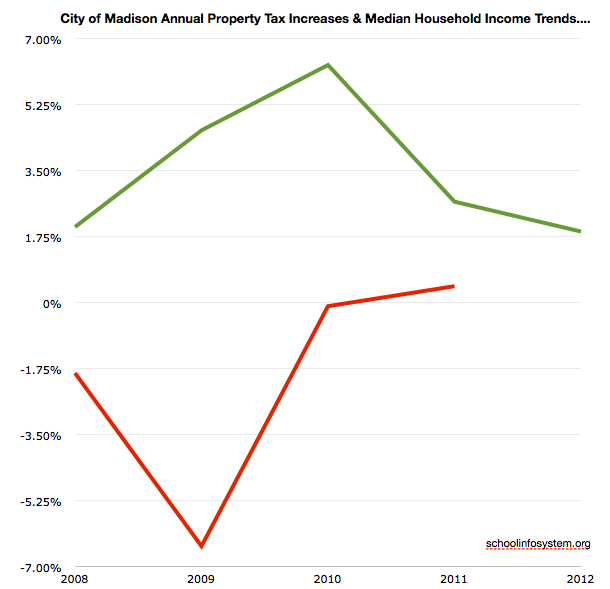
Share

Academic Ranking of World Universities in Mathematics – 2013

Academic Ranking of World Universities:

The 2013 Academic Ranking of World Universities (ARWU) is released today by the Center for World-Class Universities at Shanghai Jiao Tong University. Starting from a decade ago, ARWU has been presenting the world Top 500 universities annually based on transparent methodology and reliable data. It has been recognized as the precursor of global university rankings and the most trustworthy one.

Share

Madison Area high schools ACT results; here are the scores

Todd Milewski

Four Dane County high schools ranked among the top nine in the state for average ACT score by 2013 graduates, according to recent figures from the Wisconsin Department of Public Instruction.
Madison West (fourth), Middleton (sixth), Madison Memorial (eighth) and Waunakee (ninth) all had average scores above 25 on the college admissions exam, which measures students in English, math, reading and science and has a maximum score of 36.
West had the highest state ranking among local schools in English (third) and reading (fourth). Memorial was second in Wisconsin in math, while Waunakee was fifth in science.
All of the 21 Dane County high schools scored above the national composite score of 20.9, while 16 fared better than the state composite of 22.1.

Tap on the map icons to view the percentage of students taking the ACT.
Edgewood High School’s composite ACT score is 25.7. All 146 graduates took the ACT according to its September, 2013 newsletter.

Share

Angry teachers paralyze Mexico City with protests

Mark Stevenson:

This sprawling metropolis of honking cars and 22 million harried people has been brought to its knees, not by an earthquake or its ominous smoking volcanoes, but rather a small contingent of angry school teachers.
Some 10,000 educators protesting a government reform program have in the span of a week disrupted international air travel, forced the cancellation of two major soccer matches, rerouted the planned route of the marathon and jammed up already traffic-choked freeways.
The disruptions have shown how little it takes to push a city that is snarled on a good day over the edge.
Taxi drivers are so desperate they are refusing fares to certain frequently blocked parts of the city, and residents have turned to urban survival skills – driving the wrong way down streets, using rental bikes, clambering over fences and piling into the back of police pickups to get to their destinations.

Share

College Football’s Grid of Shame

Rachel Bachman:

It’s easy to judge a college-football program from afar. To properly praise and ridicule, one needs hard data.
As the season begins Thursday, The Wall Street Journal presents its third annual grid of shame. Because college football is as much about scandal as it is about sport, we have rated all 125 major-college teams on two axes: how good they’re projected to be on the field and how shameful their activities have been off of it.
The ratings are systematic. To rank the teams’ 2013 prospects, we calculated a composite of four 1-through-125 rankings: Athlon, Lindy’s, the Orlando Sentinel and football guru Phil Steele. The shame component is based on five categories: each team’s four-year Academic Progress Rate (APR) figure, the metric the NCAA uses to assess academic performance; recent history of major violations and probation; percentage of athletic-department revenues subsidized by student fees; number of player arrests in the off-season, and a purely subjective, overall “ick” factor. (Sorry, Penn State.)
The results show how loudly you should crow at your next tailgate–or whether you should consider using your diploma as a coaster.
This year, the geeks are taking over. Academic stalwarts Stanford and Northwestern rank among the winners. So does Notre Dame–although the Manti Te’o fake-girlfriend fiasco sent the Fighting Irish plummeting toward the “embarrassing” axis.

Share

Professors Union: It’s Bad Policy To Measure Whether Colleges Help Students

Gregory Ferenstein

One of the largest college teacher unions in the country has taken a rather odd education policy stance: opposition to measuring whether colleges are helping their graduates. In response to President Obama’s push to tie federal college aid to labor-market outcomes, the American Association of University Professors has issued a stern warning against the seemingly uncontentious idea of evaluating colleges before giving them money. “In reality measuring the output of our colleges and universities in a meaningful way is simply not possible,” writes President Rudy Fichtenbaum.
As someone with an advanced degree in the mathematics of social science, I fully appreciate the difficulty in quantifying post-graduate outcomes. But, Fichtenbaum’s opposition isn’t to any specific metric; it’s to the very idea of evaluation- not educational, not civic, not financial- nothing. He wants a blank check, even as colleges fail to improve student outcomes by their own standards.
“Quality education can give students skills that will be useful in helping them find jobs, but it is also about creating better human beings and giving students the knowledge to deal with the myriad of problems we face as a society. I have yet to see a test to measure whether or not someone has become a better human being.”

Share

School is a prison — and damaging our kids: Longer school years aren’t the answer. The problem is school itself. Compulsory teach-and-test simply doesn’t work

Peter Gray:

Parents send their children to school with the best of intentions, believing that’s what they need to become productive and happy adults. Many have qualms about how well schools are performing, but the conventional wisdom is that these issues can be resolved with more money, better teachers, more challenging curricula and/or more rigorous tests.
But what if the real problem is school itself? The unfortunate fact is that one of our most cherished institutions is, by its very nature, failing our children and our society.
School is a place where children are compelled to be, and where their freedom is greatly restricted — far more restricted than most adults would tolerate in their workplaces. In recent decades, we have been compelling our children to spend ever more time in this kind of setting, and there is strong evidence (summarized in my recent book) that this is causing serious psychological damage to many of them. Moreover, the more scientists have learned about how children naturally learn, the more we have come to realize that children learn most deeply and fully, and with greatest enthusiasm, in conditions that are almost opposite to those of school.
Compulsory schooling has been a fixture of our culture now for several generations. It’s hard today for most people to even imagine how children would learn what they must for success in our culture without it. President Obama and Secretary of Education Arne Duncan are so enamored with schooling that they want even longer school days and school years. Most people assume that the basic design of schools, as we know them today, emerged from scientific evidence about how children learn best. But, in fact, nothing could be further from the truth.

Share

White Paper: Maintaining a Focus on Subgroups in an Era of Elementary and Secondary Education Act Waivers

Campaign for High School Equity:

The Campaign for High School Equity raises serious questions about state accountability plans under the Elementary and Secondary Education Act waiver program of the U.S. Department of Education–including whether the use of “super subgroups” could lead to fewer students of color receiving the supports and interventions they need to succeed in school.
In 2011, the U.S. Department of Education announced that states agreeing to certain requirements would become eligible for waivers from core accountability provisions of the current version of the ESEA–the No Child Left Behind federal education law. The waivers allow those states to create systems of accountability and improvement that differ greatly from those required under NCLB. Forty-one states and the District of Columbia have received waivers.
CHSE’s analysis shows the waivers could weaken efforts to highlight inequities, narrow achievement gaps, and improve education for all students. This raises questions as to whether or not struggling students will receive the support and services they desperately need and deserve.

More, here.

Share

Higher Higher Ed Data Central: Why is Tuition Increasing? Not for the Reasons You Think

Andrew Gillen:

The question “why does tuition keep increasing?” is one of the most important questions in all of education policy. But the most common answers to this question–that it’s a result of inadequate state funding, increases in faculty compensation, or even that it might not be rising at all, are individually and collectively inadequate. Let’s take these explanations one at a time.
First up is state funding. Hundreds, if not thousands, of articles and op-eds have attributed the increase in tuition to declines in state funding: If the government cuts funding by $1 per student, the college has to charge each student $1 more. This is logical enough, but the data doesn’t support it. The chart below shows the change in tuition from the previous year, and the change in appropriations (federal, state and local) per student for all 632 public four-year colleges with sufficient data. (Note that figures in this post are enrollment-weighted averages.) The change in appropriations is multiplied by minus one, so if a $1 decrease in state funding per student leads to a $1 increase in tuition, the two bars for each year should be exactly equal. They are not.

Share

45th PDK/Gallup Poll on American Attitudes Toward the Public Schools

William J. bushaw and Shane J. lopez:

As 45 states stand on the brink of one of the most ambitious education initiatives in our lifetime, Americans say they don’t believe standardized tests improve education, and they aren’t convinced rigorous new education standards will help. These are some of the findings in the 45th annual PDK/ Gallup Poll of the Public’s Attitudes Toward the Public Schools.
Results of the poll come in a time of unsettledness in the American education franchise. Recent major reform efforts — No Child Left Behind, Race to the Top, and the Common Core State Standards — face uncertain futures even as the poll lays bare a significant rift between policy makers and ordinary citizens and parents.
For example:
Fewer than 25% of Americans believe increased testing has helped the performance of local public schools.
A majority of Americans reject using student scores from standardized tests to evaluate teachers.
Almost two of three Americans have never heard of the Common Core State Standards, arguably one of the most important education initiatives in decades,
and most of those who say they know about the Common Core neither understand it nor embrace it.

Share

What is algebra?

Dr. Keith Devlin:

We hear a lot about the importance that all children master algebra before they graduate from high school. But what exactly is algebra, and is it really as important as everyone claims? And why do so many people find it hard to learn?
Answering these questions turns out to be a lot easier than, well, answering a typical school algebra question, yet surprisingly, few people can give good answers.
First of all, algebra is not “arithmetic with letters.” At the most fundamental level, arithmetic and algebra are two different forms of thinking about numerical issues. (I should stress that in this article I’m focusing on school arithmetic and school algebra. Professional mathematicians use both terms to mean something far more general.)
Let’s start with arithmetic. This is essentially the use of the four numerical operations addition, subtraction, multiplication, and division to calculate numerical values of various things. It is the oldest part of mathematics, having its origins in Sumeria (primarily today’s Iraq) around 10,000 years ago. Sumerian society reached a stage of sophistication that led to the introduction of money as a means to measure an individual’s wealth and mediate the exchange of goods and services. The monetary tokens eventually gave way to abstract markings on clay tablets, which we recognize today as the first numerals (symbols for numbers). Over time, those symbols acquired an abstract meaning of their own: numbers. In other words, numbers first arose as money, and arithmetic as a means to use money in trade.

Share

Our Design Guidelines for Teaching Programming Talkthroughs

Sophia Westwood:

As we slowly ramp up content creation for Khan Academy Computer Science, I put together this list of design guidelines as a reference point for teaching our programming talkthroughs. We’d like to use them as a starting point to spark a conversation with the teaching community.
It’s our first iteration, and we’re under no illusion that we’ve figured it all out. We know that teaching is complicated and difficult, and we’re still trying to live up to our own guidelines given the time and tool limitations. While we have to strike a balance between covering material, developing strong content, and enhancing the platform, we always like to discuss what we could do better.
So, we would love to hear reactions to these design guidelines based your experiences teaching kids programming. How can we better fulfill these guidelines? How can we support more effective learning within the talkthrough format? What are the tips and tricks you’ve picked up from your teaching or research? Please write a comment, or get in touch with us at compsci-feedback@khanacademy.org.

Share

Cracking the Books: How Well Do State Education Departments Report Public School Spending?

CATO Institute:

Public schools are usually the most costly item in state and local budgets. Yet despite tremendous and persistent spending growth in the last half-century, the public vastly underestimates the true cost of public education.
To better understand the source of this misperception, this report examines the spending data that all 50 state education departments make available to the public on their websites. It reveals that very few state education departments provide complete and timely financial data that is understandable to the general public.
Half of all states report a “per pupil expenditures” figure that leaves out major cost items such as capital expenditures, thereby significantly understating what is actually spent. Alaska does not even report per pupil expenditure figures at all.
Eight states fail to provide any data on capital expenditures on their education department websites. Ten states lack any data on average employee salaries and 41 states fail to provide any data on average employee benefits.
When the state education departments provide incomplete or misleading data, they deprive taxpayers of the ability to make informed decisions about public school funding. At a time when state and local budgets are severely strained, it is crucial that spending decisions reflect sound and informed judgment.

Share

UC 101: Educating Our New President – Lesson #4 Lesson #4 – Overgrown Administrative Bureaucracies

Professor Emeritus Charles:

This lesson will, incidentally, showcase two classical Methods of Inquiry that are ingrained in the academic world: the Scientific Method, involving the collection and analysis of empirical data; the Socratic Method, involving a series of questions put forward to stimulate critical thinking about some puzzle.


The particular objective here is to understand what appears to be long-term cancerous growth of the managerial sector in the University of California. The following graph shows the latest data; and the text after that conveys a sad story of official responses.
The University of California provides a regular tally of its employees, going back over many years, posted at http://www.ucop.edu/ucophome/uwnews/stat/ Here one can see twice-yearly statistics of FTE (Full Time Equivalent) counts in three major categories, with two dozen subcategories:

  • Management (Senior Management Group – SMG, Management & Senior Professionals – MSP)
  • Academic Staff (Faculty, Researchers, Librarians, Student Assistants, etc.)
  • Professional and Support Staff – PSS (Clerical, Fiscal, Health Care, Technical, Craft, etc.)

I have written up several studies starting with this data, and they are posted at http://socrates.berkeley.edu/~schwrtz under the series heading, “Financing the University.”

Share

Biggest Changes in a Decade Greet Students

Stephanie Banchero & Arian Campo-Flores:

Millions of students heading back to school are finding significant changes in the curriculum and battles over how teachers are evaluated, as the biggest revamps of U.S. public education in a decade work their way into classrooms.
Most states are implementing tougher math and reading standards known as Common Core, while teacher evaluations increasingly are linked to student test scores or other measures of achievement. Meantime, traditional public schools face unprecedented competition from charter and private schools.
Supporters say the overhauls will help make U.S. students more competitive with pupils abroad. But others worry that the sheer volume and far-reaching nature of the new policies is too much, too fast. Already, the changes have sparked pushback.

Share

Academic source code dust-up symptom of CS education ills

Ryan Paul:

When San Jose State University student Kyle Brady published the source code of his completed homework assignments after finishing a computer science class, his professor vigorously objected. The professor insisted that publication of the source code constituted a violation of the school’s academic integrity policy because it would enable future students to cheat. Brady stood his ground as the confrontation escalated to the school’s judicial affairs office, which sided with the student and affirmed that professors at the university cannot prohibit students from posting source code.
This conflict reflects some of the broader friction that exists between open source ideological values and an academic system in which collaboration and the ability to repurpose existing work makes it difficult to measure individual achievement. Free culture science fiction novelist Cory Doctorow shared his thoughts about the issue on Thursday in a blog post on BoingBoing. Doctorow suggests that assignments are ultimately more valuable to the students when the work that they produce can have broader purpose than merely fulfilling academic requirements. He also rightly points out that peer review of source code and studying existing implementations are both common practices in the real world of professional software development.

Share

Fairfax County School Board often has millions in extra cash to spend;

T. Rees Shapiro:

Although the Fairfax County School Board faces projected budget deficits and each year asks the Board of Supervisors for more taxpayer money to fund its regular operations, it also has found a creative way to pay for projects and add items to classrooms: a fund filled with millions in leftover cash.
Fairfax’s school system has ended each budget year with an average of $30 million in unspent funds from the system’s budget during the past decade, a budget that topped out at $2.5 billion this past year. The leftover cash, ranging from $4 million to $55 million, is usually generated from savings — such as heating bills that are lower than projected during a mild winter — or from unforeseen revenue increases, including income that was higher than expected from county sales taxes.
The leftover money accounts for about 1 to 2 percent of the school system’s annual budget, but that portion often amounts to a considerable sum worth tens of millions of dollars that can be used at the School Board’s discretion. Over the past 10 years, the leftover funds have added up to more than $305 million.
While the board often elects to use the extra funds to balance the following year’s budget, a sizable figure has been used for what amounts to a school system wish list. The outlays in recent years have included $400,000 for BlackBerry smartphones for administrative staff, $500,000 for adding automatic external defibrillators at schools, $693,000 to place assistant principals in all elementary schools and $375,000 to expand a culinary arts program.
All while the School Board has stared down deficits. In 2015, for example, the school system must address a projected $195 million deficit driven by rising enrollment figures and compensation needs. The school system had about $55 million left over this year and will use about $10 million of that to purchase new school buses and add three positions to the system’s legal staff.
Arthur Purves, president of the Fairfax County Taxpayers Alliance, said he thinks the school system’s millions of dollars in leftover cash are a symptom of a larger problem. He said the extra money, when combined with tens of millions of dollars in reserves and other “extraneous” items, suggests significant “padding” in the annual budget.
“It is suspect,” Purves said, adding that, as a “persnickety tax watchdog,” he thinks the school system budget is bloated with such expenses.

Related: Fairfax plans to spend $2,500,000,000 during the 2013-2014 school year for 184,625 students or $13,541/student, about 14.4% less than Madison’s per student spending.

Share

How to Treat the Freshmen, 1495

Ask the past:

“Statute Forbidding Any One to Annoy or Unduly Injure the Freshmen. Each and every one attached to this university is forbidden to offend with insult, torment, harass, drench with water or urine, throw on or defile with dust or any filth, mock by whistling, cry at them with a terrifying voice, or dare to molest in any way whatsoever physically or severely, any, who are called freshmen, in the market, streets, courts, colleges and living houses, or any place whatsoever, and particularly in the present college, when they have entered in order to matriculate or are leaving.
A friendly reminder for the new academic year: please resist the temptation to terrify the freshmen with spooky voices, at least for the first few weeks.

Share

Introducing ‘The Tuition is Too Damn High’

Dylan Matthews:

According to the U.S. Department of Education, the average annual tuition, fees and room and board at a public college or university in 1964-65 — the first year for which there’s data — was $6,592, in 2011 dollars. By 2010-2011, that had increased to $13,297 — a 101.7 percent increase. The increase for private schools was even more dramatic. Average tuition, fees and room and board in 1964-65 was $13,233 a year; in 2010-2011, it was $31,395, an 137.2 percent increase.
That’s after accounting for inflation. But some experts think that the adjustment lets colleges off the hook — after all, the rising price of college tuition is itself a significant driver of inflation. If you don’t adjust for inflation, college tuition prices increased 297 percent from September 1990 to September 2012, according to the Bureau of Labor Statistics. Medical care prices, by contrast, only increased 152 percent.
You’d think that such enormous price increases would keep consumers away. You’d be wrong. In 1967, 4.3 million people were enrolled in full-time in colleges and universities as undergraduates, amounting to 2.2 percent of the U.S. population.

Share

Madison School Board Passes 2013-2014 Budget, including a 4.5% Property Tax Increase

Jeff Glaze, via a kind reader’s email:

The Madison School Board adopted on Monday a $433.6 million budget for the 2013-14 school year.
The budget and levy both passed by 6-1 votes with board member Mary Burke representing the lone no vote.
The $433.6 million budget includes a $260.4 million tax levy. The levy means homeowners will pay $12.03 per $1,000 of assessed value, up 51 cents from last year.

Much more on the Madison School District’s 2013-2014 budget, here.
Mr. Glaze’s article once again fails to mention Madison’s substantial increase in redistributed state tax dollar receipts one year ago… Remarkable. Perhaps a Washington Post style District investigative finance article might one day occur here.

Share

A separate but equal school for black boys

Jill Tucker, via kind reader’s email:

Alonzo Swift has pretty much settled on Yale University.
The Oakland boy knows he needs to pass fifth grade first and that it’s cold in Connecticut, but he has heard Yale “is a good college” and he’s sure his mom would send him there with plenty of hot chocolate, marshmallows and a warm coat.
“It’s hard to get in there, so you have to be focused,” the 9-year-old said.
Where Alonzo will go to college might still be up in the air, but if he’ll go is not.
At the 100 Black Men of the Bay Area Community School, every student, including Alonzo, is black, male and on the road to college.
If the public charter school is successful, it will – within a decade – significantly boost the number of African American boys graduating from high school in Oakland and heading to a four-year university.

Related: Madison Preparatory Academy IB Charter School, rejected by a majority of the Madison School Board.

Share

“allowing only top students to enroll in teacher-training programs, which are themselves far more demanding than such programs in America”

Annie Murphy Paul:

This is the first hint of how Finland does it: rather than “trying to reverse engineer a high-performance teaching culture through dazzlingly complex performance evaluations and value-added data analysis,” as we do, they ensure high-quality teaching from the beginning, allowing only top students to enroll in teacher-training programs, which are themselves far more demanding than such programs in America. A virtuous cycle is thus initiated: better-prepared, better-trained teachers can be given more autonomy, leading to more satisfied teachers who are also more likely to stay on.
Kim soon notices something else that’s different about her school in Pietarsaari, and one day she works up the courage to ask her classmates about it. “Why do you guys care so much?” Kim inquires of two Finnish girls. “I mean, what makes you work hard in school?” The students look baffled by her question. “It’s school,” one of them says. “How else will I graduate and go to university and get a good job?” It’s the only sensible answer, of course, but its irrefutable logic still eludes many American students, a quarter of whom fail to graduate from high school. Ripley explains why: Historically, Americans “hadn’t needed a very rigorous education, and they hadn’t gotten it. Wealth had made rigor optional.” But now, she points out, “everything had changed. In an automated, global economy, kids needed to be driven; they need to know how to adapt, since they would be doing it all their lives. They needed a culture of rigor.”
Rigor on steroids is what Ripley finds in South Korea, the destination of another of her field agents. Eric, who attended an excellent public school back home in Minnesota, is shocked at first to see his classmates in the South Korean city of Busan dozing through class. Some wear small pillows that slip over their wrists, the better to sleep with their heads on their desks. Only later does he realize why they are so tired — they spend all night studying at hagwons, the cram schools where Korean kids get their real education.
Ripley introduces us to Andrew Kim, “the $4 million teacher,” who makes a fortune as one of South Korea’s most in-demand hagwon instructors, and takes us on a ride-along with Korean authorities as they raid hagwons in Seoul, attempting to enforce a 10 p.m. study curfew. Academic pressure there is out of control, and government officials and school administrators know it — but they are no match for ambitious students and their parents, who understand that passing the country’s stringent graduation exam is the key to a successful, prosperous life.

The Smartest Kids in The World And How They Got That Way By Amanda Ripley

Share

Colleges Set to Offer Exit Tests

Douglas Belkin:

Next spring, seniors at about 200 U.S. colleges will take a new test that could prove more important to their future than final exams: an SAT-like assessment that aims to cut through grade-point averages and judge students’ real value to employers.
The test, called the Collegiate Learning Assessment, “provides an objective, benchmarked report card for critical thinking skills,” said David Pate, dean of the School of Arts and Sciences at St. John Fisher College, a small liberal-arts school near Rochester, N.Y. “The students will be able to use it to go out and market themselves.”
The test is part of a movement to find new ways to assess the skills of graduates. Employers say grades can be misleading and that they have grown skeptical of college credentials.

Share

New Fed Figures for 2011 Show Wisconsin Taxes 10th Highest Nationally Taxes as Percent of Income Rise to 11.8%, Rank Falls from Ninth

Wisconsin Taxpayers Alliance (PDF):

Wisconsin’s state-local tax burden rose from 11.7% to 11.8% of income but its rank fell from 9th to 10th, according to U.S. Census Bureau fi gures. Fiscal year 2011 fi gures were released today and analyzed by the Wisconsin Taxpayers Alliance (WISTAX), a nonpartisan, nonprofi t policy research organization dedicated to citizen education.
In addition to Wisconsin, state-local taxes relative to income rose in 36 other states. Nationally, that percentage rose from 10.7% to 10.9%. Neighboring Illinois saw its tax burden jump from 10.3% (27th) to 11.0% (16th) of income. Minnesota’s taxes climbed from 11.3% (14th) to 11.9% (8th) of income. Minnesota’s jump in rank explains Wisconsin’s drop from 9th to 10th.
“One interesting phenomenon is the increasing similarity of states in the upper midwest,” said WISTAX President Todd A. Berry. “In 2011, ranks for Wisconsin, Minnesota, Illinois, and Iowa were bunched between 8th and 17th.”

Related: A Public Hearing on the Madison Schools’ Proposed 4.5% Property Tax Increase Monday, No Mention of Last Year’s Significant State Tax Dollar Funding Increase.

Share

Number of Wisconsin Teachers, School Staff Increases in 2013

Wisconsin Taxpayers Alliance (PDF):

The number of Wisconsin public school teachers rose modestly in 2013 from 59,384 to 59,540, the Wisconsin Taxpayers Alliance (WISTAX) said today. This ended a three-year decline in teaching positions. Despite the 2013 increase, teacher numbers declined 2.1% during 2011-13, following a drop of 2.6% during 2009-11. These are some of the important findings in WISTAX’s new report, “Post Act 10 School Staffing.” WISTAX is a nonpartisan organization dedicated to public policy research and citizen education.

Share

Test Scores Show Familiar Tale of Two School Systems

Rhonda Rosenberg:

A few months ago we did an analysis of the college-readiness numbers of the system’s high-school graduates. That analysis showed that the system’s college-readiness rate – 22.2% — was largely attributable to a small number of high schools. The 35 schools that made up the top 10 percent of high schools contributed nearly half of the graduates ready for college, while hundreds of other high schools had college-ready rates in the single digits.
That same pattern – a “tale of two school systems” – is echoed in the results of the recent state tests on grades 3-8 based on the Common Core standards. In these most recent tests, as in the college-ready statistics, a minority of high-achieving schools helped camouflage much lower results in the majority of schools.
In these new tests based on the much more demanding Common Core standards, only about 26 percent of grade 3-8 students citywide were judged proficient in reading and 30 percent proficient in math, far below the achievement levels on previous state tests. But even this unimpressive level was not reached by the great majority of elementary and middle schools. In these schools student achievement was lower – sometimes much lower — than the citywide average.
One quarter of schools produce half to two-thirds of proficient students.

Share

Vaccination Coverage Among Children in Kindergarten — United States, 2012-13 School Year

Morbidity and Mortality Weekly Report (MMWR) CDC:

State and local school vaccination requirements are implemented to maintain high vaccination coverage and minimize the risk from vaccine preventable diseases (1). To assess school vaccination coverage and exemptions, CDC annually analyzes school vaccination coverage data from federally funded immunization programs. These awardees include 50 states and the District of Columbia (DC), five cities, and eight U.S.-affiliated jurisdictions.* This report summarizes vaccination coverage from 48 states and DC and exemption rates from 49 states and DC for children entering kindergarten for the 2012-13 school year. Forty-eight states and DC reported vaccination coverage, with medians of 94.5% for 2 doses of measles, mumps, and rubella (MMR) vaccine; 95.1% for local requirements for diphtheria, tetanus toxoid, and acellular pertussis (DTaP) vaccination; and 93.8% for 2 doses of varicella vaccine among awardees with a 2-dose requirement. Forty-nine states and DC reported exemption rates, with the median total of 1.8%. Although school entry coverage for most awardees was at or near national Healthy People 2020 targets of maintaining 95% vaccination coverage levels for 2 doses of MMR vaccine, 4 doses of DTaP†vaccine, and 2 doses of varicella vaccine (2), low vaccination and high exemption levels can cluster within communities, increasing the risk for disease. Reports to CDC are aggregated at the state level; however, local reporting of school vaccination coverage might be accessible by awardees. These local-level data can be used to create evidence-based health communication strategies to help parents understand the risks for vaccine-preventable diseases and the benefits of vaccinations to the health of their children and other kindergarteners.
Vaccination coverage among children entering kindergarten is assessed annually by awardees. Each school year, the health department, school nurse, or other school personnel assess the vaccination and exemption status of a census or sample of kindergarteners enrolled in public and private schools to determine vaccination coverage, as defined by state and local school requirements established to protect children from vaccine-preventable diseases. Among the 50 states and DC, 43 awardees used an immunization information system (IIS) as at least one source of data for some of their school assessment. To collect data, 33 awardees used a census of kindergarteners; 11 a sample of schools, kindergarteners, or both; two a voluntary response of schools; and five a mix of methods. Results of the school-level assessments are reported to the health department. Aggregated data are reported to CDC for public and private schools. Data for homeschooled students were not reported to CDC. All estimates of coverage and exemption were weighted based on each awardee’s response rates and sampling methodology, unless otherwise noted. Of the 50 states and DC, 12 awardees met CDC standards for school assessment methods in 2012-13.§

Share

U.S. government sues to block vouchers in some Louisiana school systems

Danielle Dreilinger:

The U.S. Justice Department is suing Louisiana in New Orleans federal court to block 2014-15 vouchers for students in public school systems that are under federal desegregation orders. The first year of private school vouchers “impeded the desegregation process,” the federal government says.
Thirty-four school systems could be affected, including those of Jefferson, Plaquemines, St. John the Baptist and St. Tammany parishes. Under the lawsuit, the state would be barred from assigning students in those systems to private schools unless a federal judge agreed to it. A court hearing is tentatively set for Sept. 19.
The statewide voucher program, officially called the Louisiana Scholarship Program, lets low-income students in public schools graded C, D or F attend private schools at taxpayer expense. This year, 22 of the 34 systems under desegregation orders are sending some students to private schools on vouchers.

Share

New Governance Model for the Milwaukee Public Schools?

Alan Borsuk

A recovery school district for low-performing schools in the Milwaukee Public Schools system? The news that a group of civic leaders convened last week at the initiative of the Metropolitan Milwaukee Association of Commerce to consider such an idea gave me an instant trip to the land of MPS Structural Reform Ideas Past.
Start with the 1970s, when then-State Rep. Dennis Conta and others proposed redoing school districts in the Milwaukee area so there would be a small number of districts shaped like slices of pie, each including parts of the central city and parts of the suburbs. Caused a big stir, but, of course, it didn’t happen. (I wonder what would have resulted if it had come to pass.)
Jump to the late 1990s: Then-Gov. Tommy Thompson announced he was setting several goals for Milwaukee Public Schools, including test score and attendance improvement, and if they weren’t met, he was going to have the state take over MPS. My assumption is that he thought about it a little more, asking himself, why would I want to take on that mountainous headache? MPS, of course, didn’t meet the goals, but Thompson didn’t pursue the idea.
In 2009, then-Gov. Jim Doyle said he wanted to put MPS under the control of a board appointed by the mayor of Milwaukee. Mayor Tom Barrett kind of seemed to go along. But Doyle and Barrett didn’t do a good job of making the case, community opposition was effective and the idea came to nothing.
In 2010, then-candidate for governor Scott Walker said he thought MPS should be broken up into a set of smaller districts the size of, oh, say, Wauwatosa, where his kids went to school. Never heard any more about that idea, perhaps because Walker realized it was not doable.

Share

Who owns the networked future of reading? The Readmill app shows how in future readers will be able to share their marginalia with others – and authors. But will corporate moneymaking come to dominate?

Damien Walter:

Some years ago, I stumbled on a battered copy of The Silence of the Lambs in a train carriage. It was during one of those lonely chunks of life when reading takes on a new importance, and I found a quite unexpected friend in that rather dark and worrisome tale. The anonymous former owner had doodled on and annotated the book before inexplicably abandoning it to its fate on public transport.
Amusing, insightful and often veering wildly from the actual text, this commentary entirely changed my reading of Thomas Harris’s story of a serial murderer and obsessive police procedure. My anonymous guide was a university student, most likely a young woman, studying the book from a feminist perspective. Harris’s novel is a superior police procedural, but still guilty of that genre’s casual sexism, picked apart by my guide with glee.
I’ve often wished that I could talk to that anonymous commentator. Today, if they were using an e-reader, I might be able to. Readmill is an e-reading app that, on the surface at least, will be familiar to anyone who has read a Kindle book on their smartphone or tablet. But what makes this scrappy indie app a potential Amazon giant-killer is how Readmill helps readers – and writers – talk to each other.

Share

Politics: Obama’s New Education Proposal: Change, or Changed Subject?

Matt Taibbi:

But now it’s Friday, and what do we see in the news? Lots and lots of coverage of the President’s suddenly-urgent new road show around America’s college campuses, where he’s stumping for his “bold” new plan to reduce tuition costs. Obama on Monday and Tuesday was Darth Vader; today, he’s being feted in the New York Times for his ostentatiously progressive-sounding new plan to help the student demographic. From the Times editorial board this morning:
President Obama has been accused of promoting small-ball ideas in his second term, but the proposal he unveiled on Thursday is a big one: using sharp federal pressure to make college more affordable, potentially opening the gates of higher education to more families scared off by rising tuitions. While there are questions to be answered about his plan, his approach – tying federal student aid to the value of individual colleges – is a bold and important way to leverage the government’s power and get Washington off the sidelines.

Share

The Government Profits from Student Debt Defaults

Alex Tabarrock:

The government has also made sure that many laws, such as the Truth in Lending law, do not apply to student loans.
Some student debt can make sense but when 40% of students drop out of college, when even the graduates do not graduate with the degrees that pay and when the job market is weak, student debt can be life-crippling:

Share

Commentary on President Obama’s proposed higher education rating system

Tyler Cowen:

So far I don’t get it. There seems to be plenty of information about colleges, and I doubt if a federal rating system would improve on those ratings already privately available. To the extent that federal system became focal, the incentives to game and scheme it would become massive, and how or whether to punish the gamers, if and when they are caught, would be a political decision. I don’t see that as healthy.
Given that previous educational subsidies mostly are converted into higher rates of tuition and thus captured by the school, the second plank would simply boost the subsidy to high performing colleges. There are plenty of ways to do that and in any case it doesn’t seem to help today’s marginal students, who probably cannot do well in those environments in any case. Furthermore colleges with high graduate earnings are very often those located in or near high-paying cities. Should we be subsidizing on that basis? Should we be giving colleges an incentive to identify and deny admission to potential lower earners? Do we really want the federal government helping to crush humanities majors? And I don’t see that the kind of rating system under discussion here is measuring actual value added, ceteris paribus of course.

Share

The Real Reason College Costs So Much

Alyssa Finley:

Another school year beckons, which means it’s time for President Obama to go on another college retreat. “He loves college tours,” says Ohio University’s Richard Vedder, who directs the Center for College Affordability and Productivity. “Colleges are an escape from reality. Believe me, I’ve lived in one for half a century. It’s like living in Disneyland. They’re these little isolated enclaves of nonreality.”
Mr. Vedder, age 72, has taught college economics since 1965 and published papers on the likes of Scandinavian migration, racial disparities in unemployment and tax reform. Over the last decade he’s made himself America’s foremost expert on the economics of higher education, which he distilled in his 2004 book “Going Broke by Degree: Why College Costs Too Much.” His analysis isn’t the same as President Obama’s.

Share

A Public Hearing on the Madison Schools’ Proposed 4.5% Property Tax Increase Monday, No Mention of Last Year’s Significant State Tax Dollar Funding Increase


More charts on Madison schools’ spending & property tax growth over the years, here.

Karen Rivedal:

The Madison School Board will hold a one-hour public hearing at 5 p.m. Monday on a preliminary $391 million budget proposal for the 2013-2014 school year, in the McDaniels Auditorium of the Doyle Administration Building at 545 W. Dayton St.
After the hearing, the board is to vote on the budget, which includes a $260.4 million property tax levy, increasing the tax bill on an average $230,831 Madison home by about $102. The board will take a final vote on the tax levy in October, after official state aid figures are known.

Related: Madison Schools’ 2013-2014 Budget Charts, Documents, Links, Background & Missing Numbers.
Finally, Rivedal’s article fails to mention this: Up, Down & Transparency: Madison Schools Received $11.8M more in State Tax Dollars last year, Local District Forecasts a Possible Reduction of $8.7M this Year. Local household income changes are unmentioned, as well (national data).
Much more on the 2013-2014 Madison schools’ budget, here.
A Middleton home paid $4,648.16 in 2012 while a Madison home paid 16% more, or $5,408.38. Local efforts to significantly increase property taxes may grow the gap with Middleton..
Rivedal’s article is unfortunately a classic “low information” piece. It would not take much effort to challenge the new Superintendent’s rhetoric on “state funding decline”. The prior year’s significant increase goes unmentioned.
Is it the State Journal’s policy to simply publish rhetoric without investigation?

Share

New Survey: Hispanic Teen Drug Use Significantly Higher Than Other Ethnic Groups, Substance Abuse Becoming Normalized Behavior Among Latino Youth

Cassie Goldberg:

The Partnership at Drugfree.org today released new research from the latest Partnership Attitude Tracking Study (PATS), a nationally projectable survey that tracks teen drug and alcohol use and parent attitudes toward substance abuse among teens. The research, sponsored by MetLife Foundation, shows that Hispanic teens are using drugs at alarmingly higher levels when compared to teens from other ethnic groups. It confirms that substance abuse has become a normalized behavior among Latino youth.
According to the new PATS data, Hispanic teens are more likely to engage in substance abuse when compared to teens from other ethnic groups and are more likely to have abused the following substances within the past year:

Share