California’s Education Paradox: More Money, Worse Results
California has managed to spend 34% more per student since 2019, yet fewer of them can read and do math at grade level.
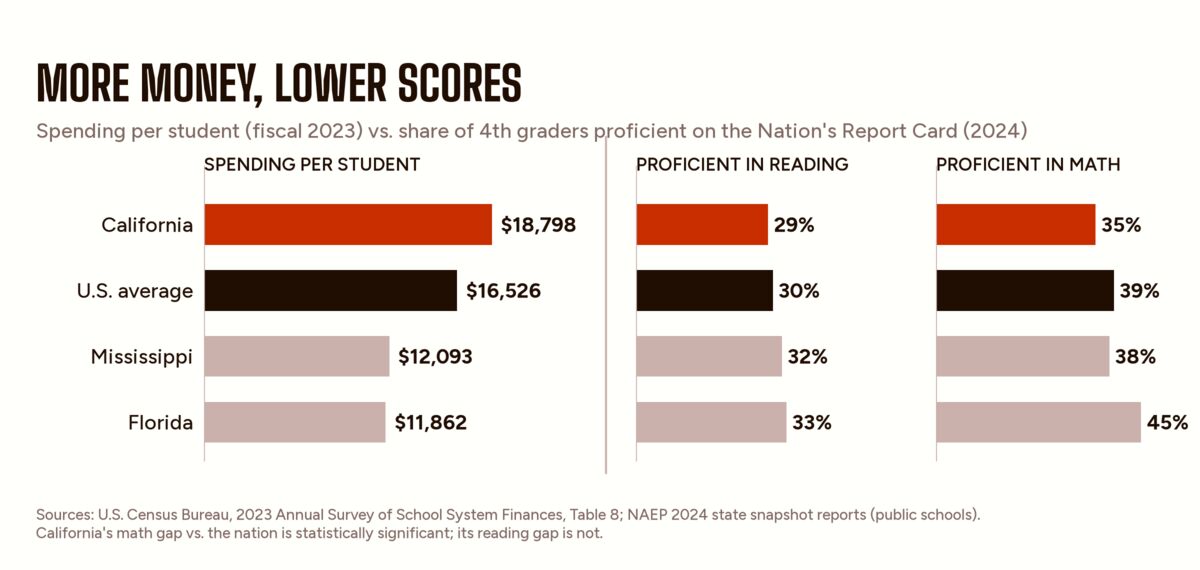
California spent $18,798 per student in fiscal 2023, 14% above the national average. Its 4th graders scored below the national average in math, no better than average in reading, and below several states that spend far less. Only 7% of California’s Black 4th graders read proficiently. From 2018–19 to 2022–23, per-student spending rose 34% while the share of students meeting state standards fell. From 2014 to 2022, California schools lost 382,000 students and added 41,000 non-teaching staff.
What California spends
- Total. The 2025–26 state budget puts TK–12 funding from all sources at $137.6 billion, about $25,155 per student.
- Day-to-day spending. On the Census Bureau’s standard measure, California spent $18,798 per student in fiscal 2023. That is 14% above the U.S. average of $16,526 and ranks 15th of 50 states.
What lower-spending states are getting
Mississippi and Florida spend about $6,700 to $6,900 less per student than California. Both changed how they teach reading. Mississippi’s 2013 literacy law required phonics-based instruction, reading coaches for teachers, and extra help and possible retention for 3rd graders who can’t read. Florida made similar changes starting in 2002. Results from the 2024 Nation’s Report Card:
- 4th grade reading. Mississippi 219, California 212 (average scores). The national average was 214.
- 4th grade math. Mississippi 239, California 233. The national average was 237. California scored below 31 states and jurisdictions.
- 8th grade. The two states scored about the same.
- Low-income 4th graders proficient in reading. Mississippi 24%, California 18%.
- Latino 4th graders. Mississippi 26%, Florida 31%, California 19%.
- Black 4th graders. Mississippi 19%, California 7%. In California, 72% scored below NAEP’s Basic level.
——-
The State of Reading: 2026