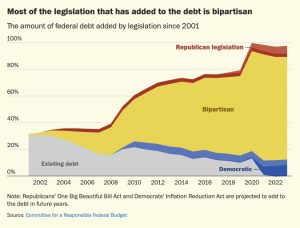
The erosion of America’s fiscal space has been largely bipartisan.
Reforms for greater responsibility will have to be bipartisan too.
The 2030s are crucial because, if present trends continue, the United States will begin running out of fiscal space by the end of the decade.
What does that mean? Think of debt as water inside a pot made of soft clay. The potter is the American workforce, and the government is pouring the water. The national debt is the total accumulation of water in the pot. The amount of room left in the pot is fiscal space.
Fiscal space is the difference between the government’s current level of debt and the maximum amount of debt it could take on before undermining confidence in its ability to pay it back. The government needs fiscal space so that it can manage events, such as major wars, recessions, pandemics or natural disasters, that might require an unexpected surge in borrowing.
The potter can make the pot larger by adding more clay and shaping the clay that is already there. That’s what economic growth does. For most of American history, the government has had plenty of fiscal space because the U.S. economy grew as the population expanded. If a crisis happened, the government could use up some of that fiscal space without having to worry about the pot overflowing.