The Baby Bust Is Forcing a Reckoning at Public Schools
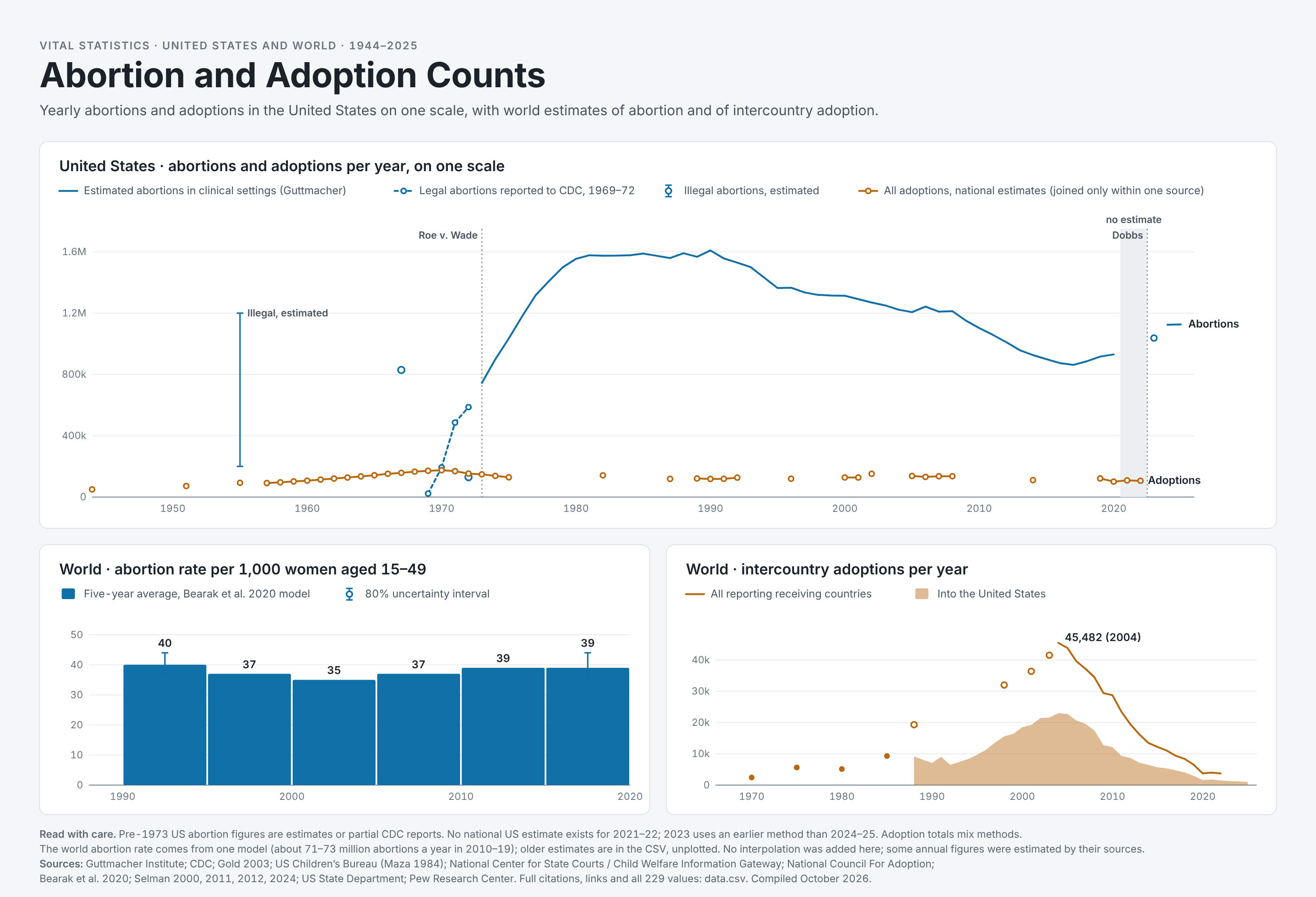
Deeper dive on abortion & adoption data here. [data dictionary]
Worries about rolling back school clubs and laying off teachers in this middle-class city reached a fever pitch earlier this year.
Budget strains in Methuen, a city of about 55,000 near the New Hampshire border, spurred a debate about putting cherished programs like middle-school band and elementary-school science on the chopping block. Also at risk: more than 100 positions, from custodians to teacher specialists.
By May, teachers and parents packed a city council meeting. Class sizes would balloon, they argued. Parent Anney Barrett said she worried her then-fifth-grade son, who plays trombone, would lose the opportunity to perform in a band.
“Cutting fine arts feels like a red line to me,” she said.
Similar scenes are playing out across the U.S. as K-12 student enrollment falls, putting pressure on government funding. A major culprit of falling enrollment is families having fewer children.
The debates hit hard in Massachusetts, which has long prided itself on a top-tier public education. Near Methuen in the Merrimack Valley, Dracut Public Schools are considering closing an elementary school that has shrunk to 210 students from almost 300, eliminating busing for some grades and reducing full-day kindergarten to half. In North Andover, administrators closed an elementary school last year as a result of declining enrollment, redistributing about 200 students.