Notes on k-12 governance and outcomes
Every three years, the OECD publishes the results of its PISA assessments – a worldwide study of how well 15-year-olds do in reading, maths and science. Last week, the results of PISA 2025 were published and were among the most dramatic on record. The average test scores across dozens of countries have fallen precipitously since the last assessment in 2022 – and those scores were themselves down on the 2018 round.
What is going on? Two global trends are likely to be part of the explanation. First, Covid and the pandemic-era school closures may well have had a bigger, and longer-term, impact than we thought. Second, the rising use of technology and social media may be sapping students’ capacity to concentrate.
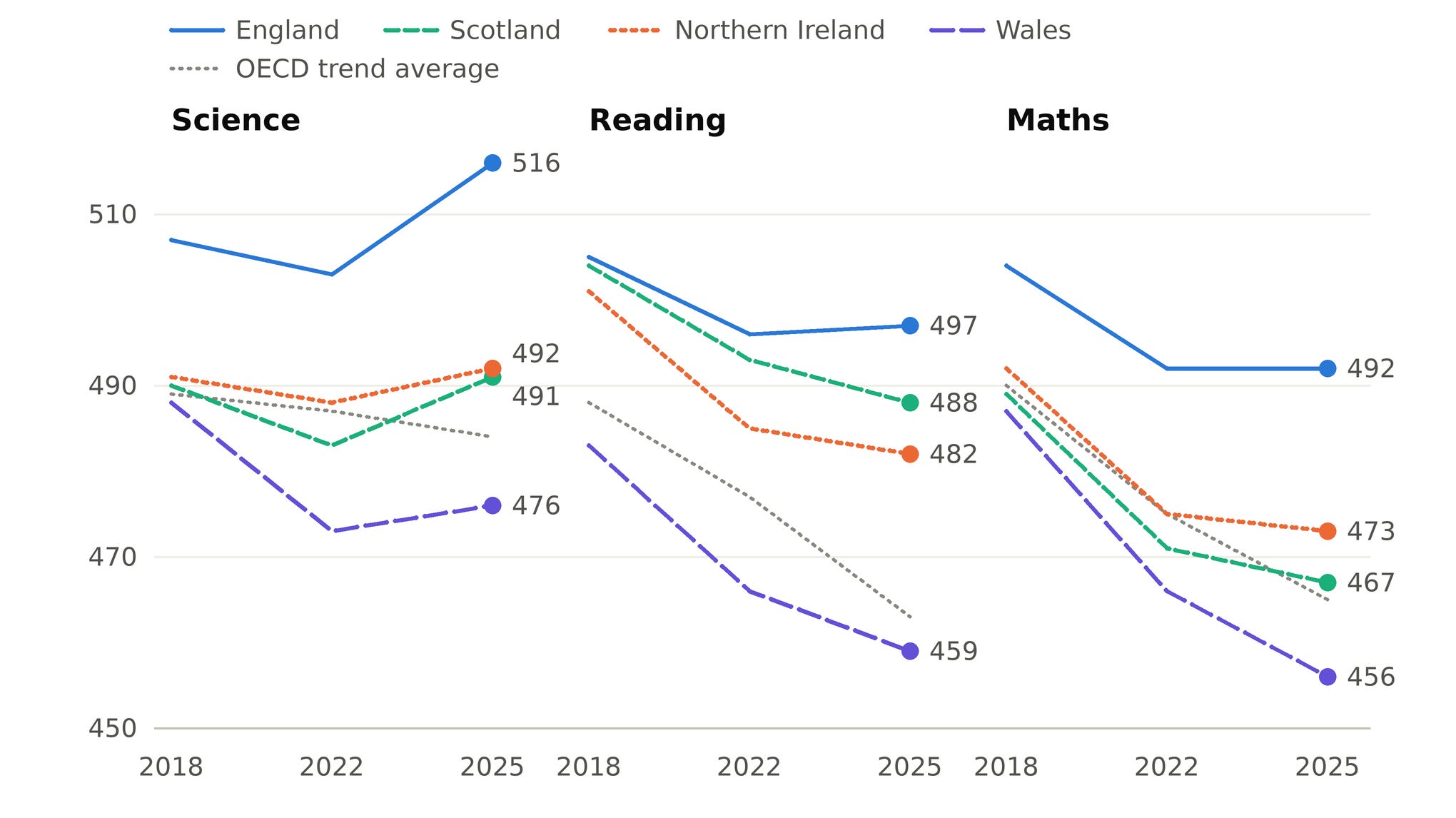
But England has avoided the downward trend: it is in the global top ten for reading, maths and science, and the second highest-performing country outside of East Asia.
Comparing England with the devolved nations is instructive. In 2012, England and Scotland scored around the same, but by 2025, Scottish students had fallen about a year behind in maths and science, and a smaller amount in reading. The scores of students in Northern Ireland, with its selective grammar school system, are around the same as in Scotland, while the scores of students in Wales are even lower.
———
PISA 2025 Results (Volume I) “Future-Ready Students”