The shape of campus censorship on the left and on the right
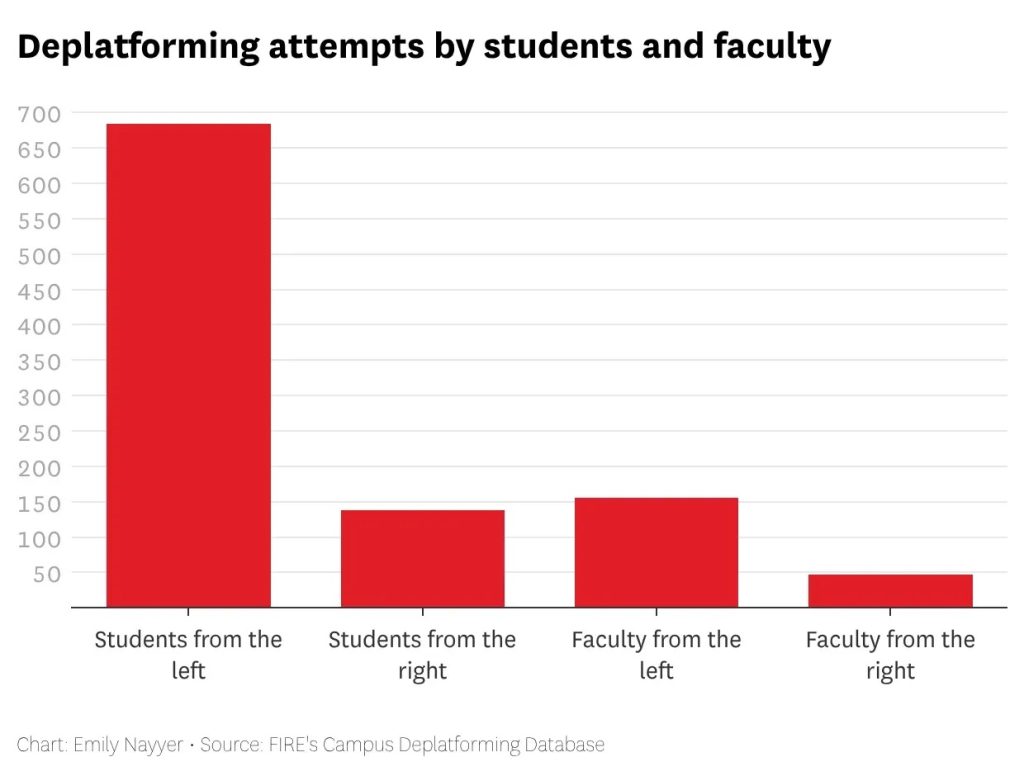
Both sides do it, but not in the same way.
“Censorship is the strongest drive in human nature,” said the late Pulitzer Prize-winning editorial writer Philip Kerby. “Sex is a weak second.”
The data say Kerby was right.
FIRE’s Campus Deplatforming Database has now documented 2,057 attempts to prevent or punish campus expression since 1998, and one fact immediately stands out: censorship campaigns are remarkably bipartisan.
Of the total, 985 attempts came from the right of the expression while 952 came from the left. The rest came from both, from actors whose ideology could not be identified, or they involved non-ideological disputes.
But while censorship efforts from the left and the right occur with similar frequency, they take fundamentally different forms.
Efforts from the left typically originate on campus and are usually led by students, while efforts from the right typically originate off campus and are usually led by activist groups, public officials, or wealthy donors. Efforts from the left tend to use op-eds, social media, and online petitions to get their message across while efforts from the right threaten budgets, launch investigations, and demand resignations.
Another major difference is that efforts from the left tend to be more successful — about 50% succeed, compared to only about 40% from the right.
——
Some usual suspects who like to pretend things aren’t that bad on campus saw the data—showing that roughly 70% of students think professors should be reported for saying “offensive” things—and immediately countered with, “Oh, they’re only saying that about when professors sexually harass them!”
No, they aren’t. The students mean forbidden opinions even if they are, in fact, correct.
I featured the NDSU data a while back but thanks to Stu for sharing it more broadly.
——-
More:
There are so many corners of higher education that have zero interest in helping themselves regain credibility.